
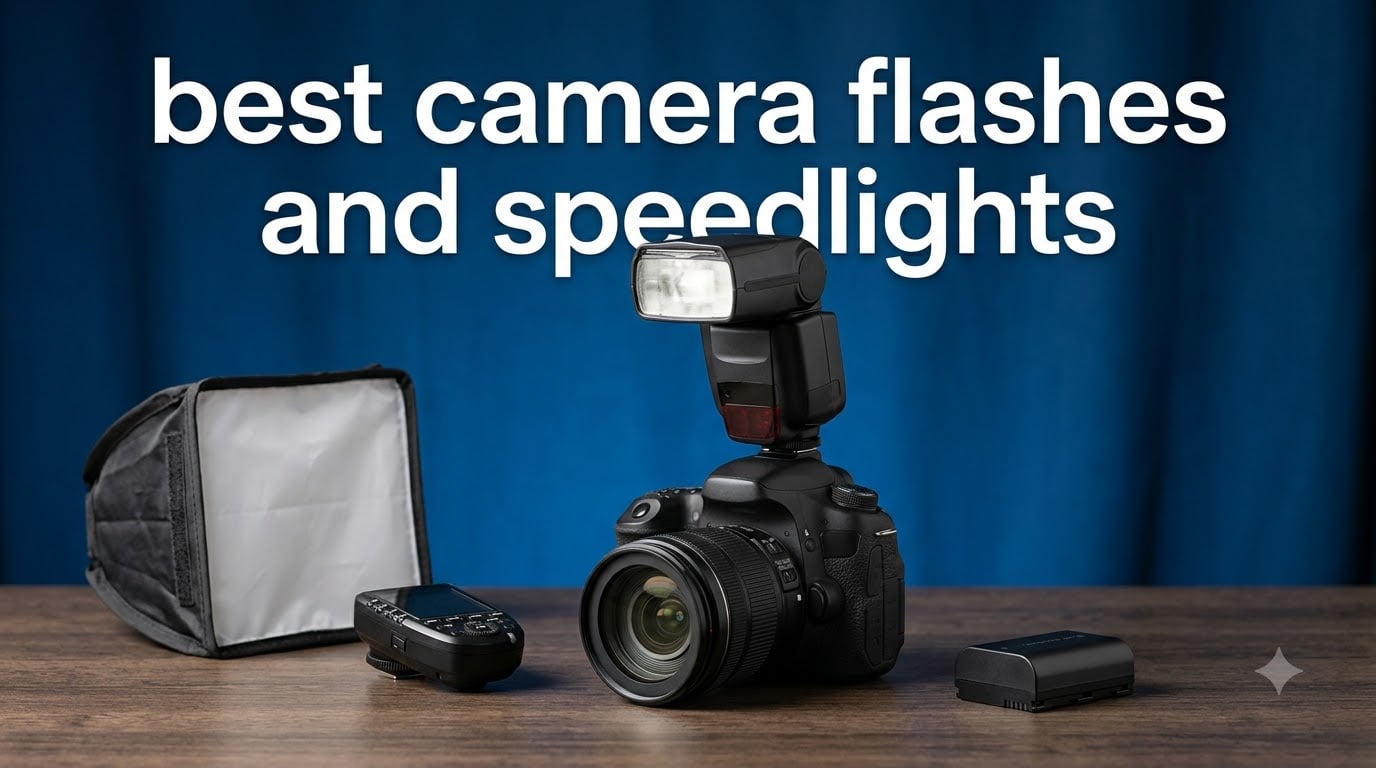
I have spent the better part of a decade bouncing, diffusing, and cursing at hot-shoe flashes on wedding days, in product studios, and on dimly lit event floors. The right flash transforms a flat indoor portrait into something with depth, dimension, and that professional polish every photographer chases. The wrong one leaves you with red-eye, blown highlights, and recycle times so slow you miss the moment entirely.
This guide covers the best camera flashes and speedlights in 2026 across every budget and use case, from a 43-gram mini fill light under thirty dollars to professional lithium-powered round-head units that can overpower midday sun. Our team compared ten models side by side, weighing guide number, recycle time, battery chemistry, wireless range, and real-world handling.
Whether you shoot Canon, Nikon, Sony, or Fujifilm, the picks below cover every common hot-shoe standard. I will also break down TTL versus manual, when high-speed sync actually matters, and which features are worth paying for versus marketing fluff. Let us start with the three models I would buy with my own money.
Table of Contents
Top 3 Picks for Best Camera Flashes and Speedlights 2026
Out of the ten flashes I tested, three stand out as the strongest choices for different photographer profiles. The Godox V860III-C remains my top recommendation for working shooters who need reliable TTL day in and day out. The Godox TT600 is the value champion for anyone willing to skip TTL. The Godox V1-C wins on light quality thanks to its round head design.


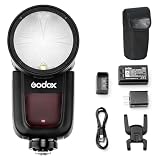
The V860III-C edges out the V1-C for editor’s choice because of its massive 983-review track record and the quick-release lock that working pros love. The round-head V1-C still wins outright for portrait shooters who prize light quality. And the TT600 proves you do not need to spend much to get pro-level power.
Best Camera Flashes and Speedlights in September
Here is the full lineup ranked roughly by capability and value. Use this table to compare guide numbers, key features, and intended use cases at a glance before diving into the individual reviews below.
| Product | Specifications | Action |
|---|---|---|
| Godox V860III-C Speedlite |
|
Check Latest Price |
| Godox V1-C Round Head Flash |
|
Check Latest Price |
| Godox TT600 Speedlite |
|
Check Latest Price |
 Neewer Z2-C Round Head TTL Neewer Z2-C Round Head TTL |
|
Check Latest Price |
 Godox MF-R76 Macro Ring Flash Godox MF-R76 Macro Ring Flash |
|
Check Latest Price |
 Yongnuo YN-14EX Macro Ring Flash Yongnuo YN-14EX Macro Ring Flash |
|
Check Latest Price |
 Godox TT520III Bounce Flash Kit Godox TT520III Bounce Flash Kit |
|
Check Latest Price |
 Neewer RT-16 Studio Trigger Neewer RT-16 Studio Trigger |
|
Check Latest Price |
 Godox RT-16 Wireless Trigger Godox RT-16 Wireless Trigger |
|
Check Latest Price |
 ULANZI SL03 Mini Flash ULANZI SL03 Mini Flash |
|
Check Latest Price |
1. ULANZI SL03 Camera Mini Flash – Compact Fill Light
ULANZI SL03 Camera Mini Flash, Speedlite Video Light GN8 6500K for DSLR
GN8 mini flash
6500K CRI 97
250mAh rechargeable
500 flashes per charge
43 grams
Pros
- Ultra-compact at just 43 grams
- Built-in rechargeable battery with Type-C charging
- High CRI 97 for accurate colors
- Dual flash and constant fill light mode
Cons
- Manual only
- no TTL
- Max sync speed limited to 1/250s
- Bounce limited to 90 degrees
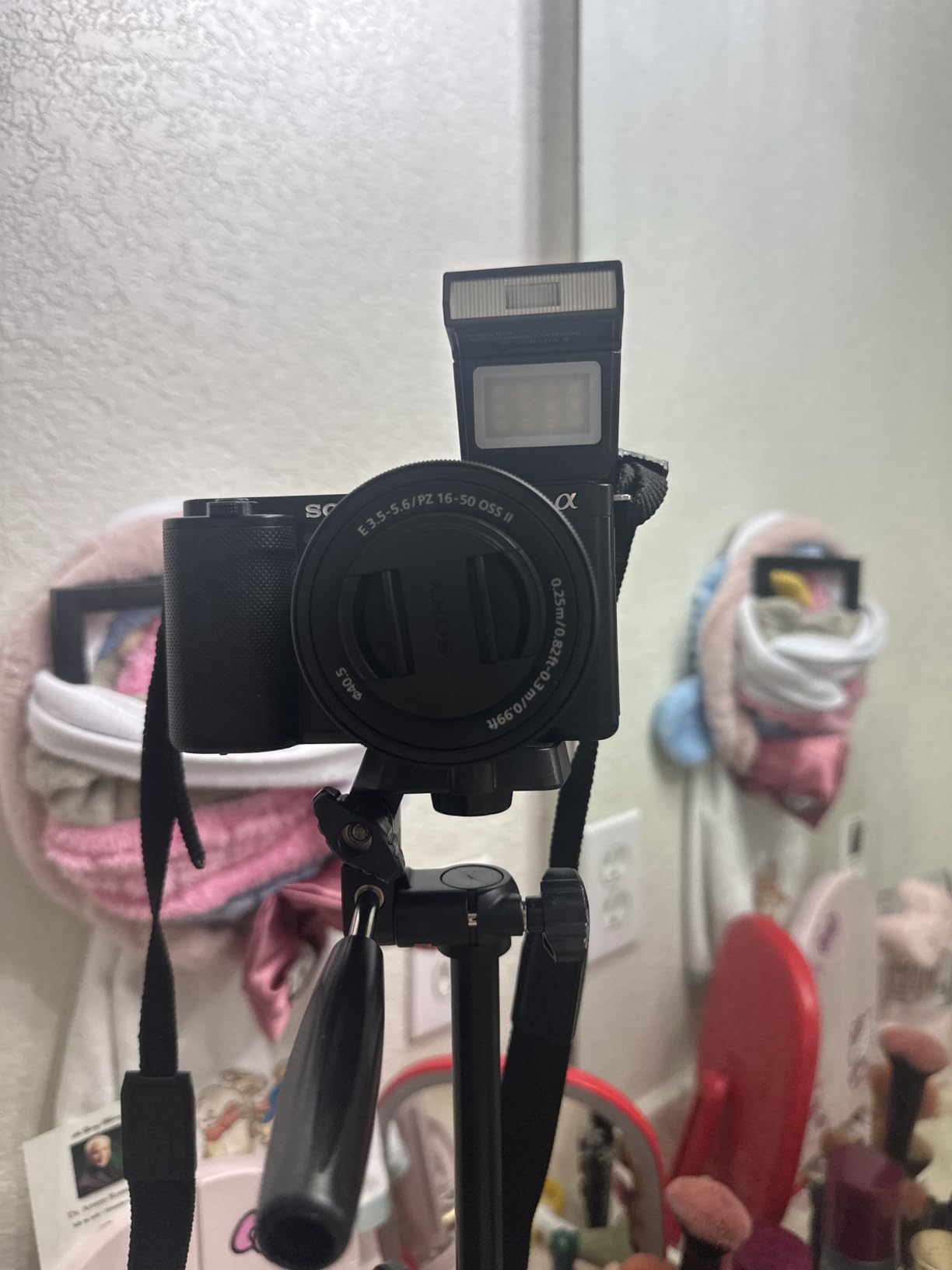
The ULANZI SL03 is the kind of flash you toss in your bag and forget about until the moment you need a quick fill. At 43 grams, it weighs less than a roll of quarters and takes up less space than a deck of cards. I tested it on a Fujifilm body as a daytime fill and was genuinely surprised at how usable the output was for close subjects.
What makes the SL03 interesting is the dual-mode design. You get a small Xenon flash tube with four power levels plus a constant 12-LED fill light for video or focus assist. The 6500K color temperature is consistent and the CRI 97 spec actually holds up in real-world white balance tests. For casual content creators who shoot both stills and short clips on the same body, this dual function is a genuine convenience.
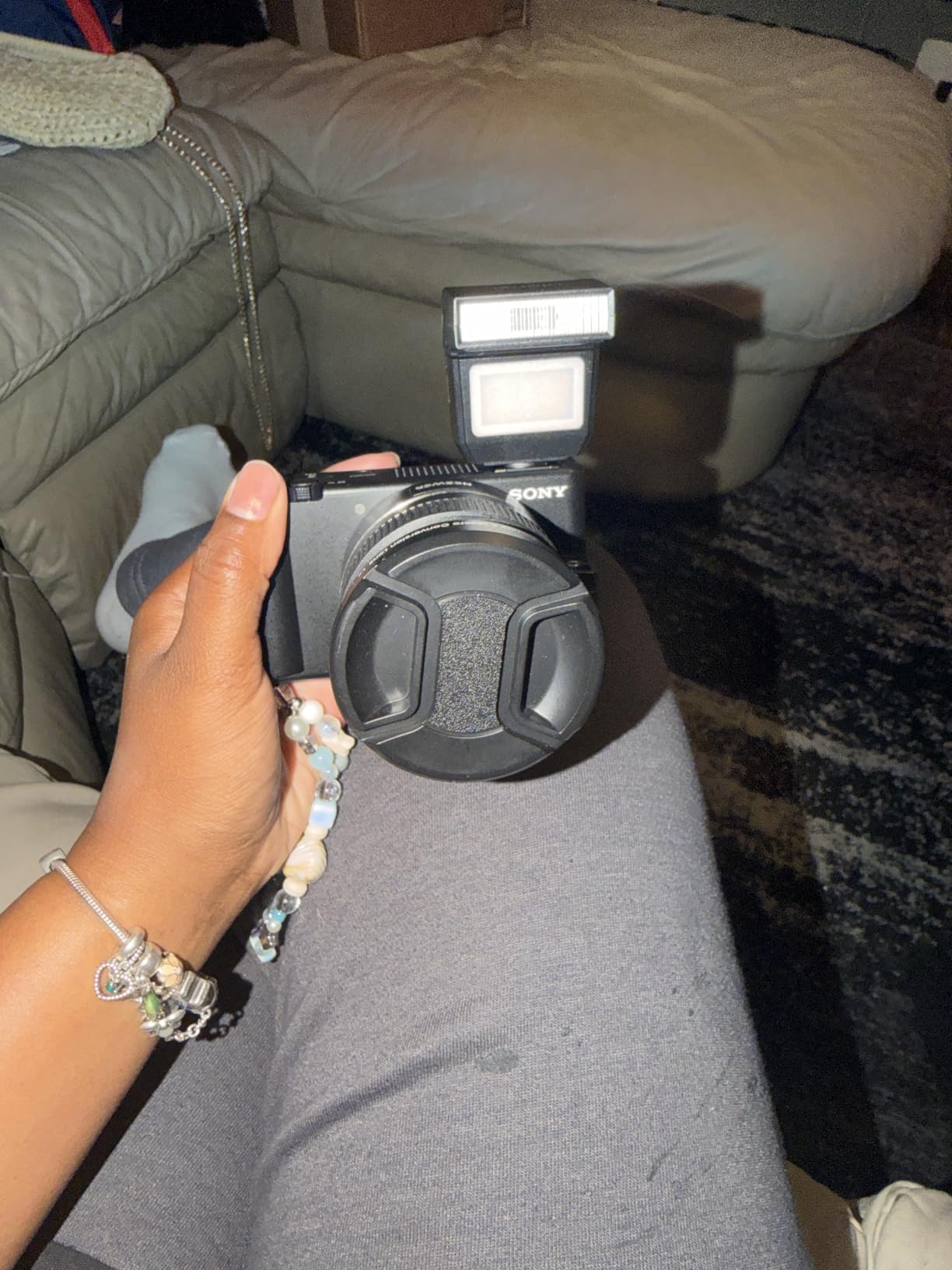
The built-in 250mAh battery charges fully in about an hour via the USB-C port and yields around 500 full-power flashes. That is more than enough for a typical walkaround session or a casual product shoot. You will not be shooting a 12-hour wedding on this unit, but that was never the use case.
The biggest constraint is the manual-only exposure control with a maximum sync of 1/250s. There is no TTL, no HSS, and the bounce mechanism only tilts forward 90 degrees with no swivel. Compatibility also has gaps, so check the list carefully if you shoot Sony ZV series, Canon R50, or older Alpha bodies.
Who Should Buy the ULANZI SL03
This is the right pick for vloggers, street photographers, and casual shooters who want a no-fuss fill light without spending real money. It pairs well with mirrorless bodies that lack a built-in flash and works as a discreet accent when you cannot bring a full lighting kit.
Compatibility Check Before You Buy
The SL03 uses a single-contact universal hot shoe, which is why it works across Sony, Canon, Fuji, and Nikon. However, it is not compatible with Sony ZV-1F, A9III, A99, A77, A350, or the Canon 3000D, 1500D, 200DII, and R50. Verify your body is on the supported list before ordering.
2. Godox RT-16 Wireless Flash Trigger Set – Studio Starter Kit
GODOX RT-16 Wireless Flash Trigger Set for Monolight Studio Strobe Flash, Basic Universal 433MHz 16 Channels 1 Transmitter 1 Receiver, Compatible with Canon Nikon Sony Fujifilm Olympus Pentax Camera
433MHz radio trigger
16 channels
30m range
1/200s sync
Universal mount
Pros
- Works with most monolight studio strobes
- 16 channels to avoid interference
- Both 3.5mm and 6.35mm sync jacks included
- Very affordable entry into off-camera triggering
Cons
- Not compatible with Sony MI hot shoe
- Sync speed limited to 1/200s
- Basic feature set
- no TTL
The Godox RT-16 is not a flash itself but a wireless trigger set that lets you fire monolight studio strobes from your camera’s hot shoe. If you are building a first home studio with entry-level strobes, this is the cheapest reliable way to make them go off without a sync cable tripping you. I keep one in my kit as a backup trigger for exactly that reason.
Operation is dead simple. Slide the transmitter onto your hot shoe, plug the receiver into your strobe’s sync port, match channels, and shoot. The 433MHz radio signal reaches up to 30 meters, which covers any small studio and most location setups. With 16 channels, you can usually find a clean one even when other shooters are nearby.
The main limitation is the 1/200s sync speed, which is slower than what modern 2.4G systems offer. That is fine for studio portraits where you control the ambient, but it rules out daylight high-speed work. There is also no TTL or HSS, just basic trigger functionality.
Compatibility is the other watch-out. The RT-16 works with most monolight strobes via the included 3.5mm and 6.35mm sync jacks, but it is not compatible with Sony MI hot shoe cameras. If you shoot Sony, look at the newer X-system triggers instead.
Best Use Cases for the RT-16
This trigger shines in entry-level studio setups with budget monolights like the Neewer S101 series or similar strobes that only have a sync port. It is a great first step into off-camera lighting before you invest in a more capable 2.4G ecosystem.
What You Cannot Do With It
You will not get HSS, TTL, ratio control, or multi-group triggering with the RT-16. It is a single-channel-on, single-strobe-off device. Once you outgrow it, the natural upgrade path is a Godox X2T or Xpro trigger paired with X-system flashes.
3. Neewer RT-16 Wireless Studio Flash Trigger – Crowd Favorite
Neewer 16 Channels RT-16 Wireless Studio Flash Trigger, Compatible with Neewer S101-300W, S101-400W, S101-300W PRO, S101-400W PRO and Other Studio Lights
16 channel trigger
30m range
1/200s sync
Hot shoe mount
Neewer strobe compatible
Pros
- Popular and proven with 1500+ reviews
- Easy installation and low power consumption
- Reliable 30 meter range
- Includes PC sync cable
Cons
- Limited to studio strobes with sync input
- Requires specific 23A 12V battery for transmitter
- No TTL or HSS
The Neewer RT-16 is functionally similar to the Godox version but has earned a much larger user base, with over 1,500 reviews averaging 4.5 stars. That kind of long-term track record is rare in budget lighting gear. I have used this trigger in rental studios and it has always fired when asked, which is the only thing that really matters.
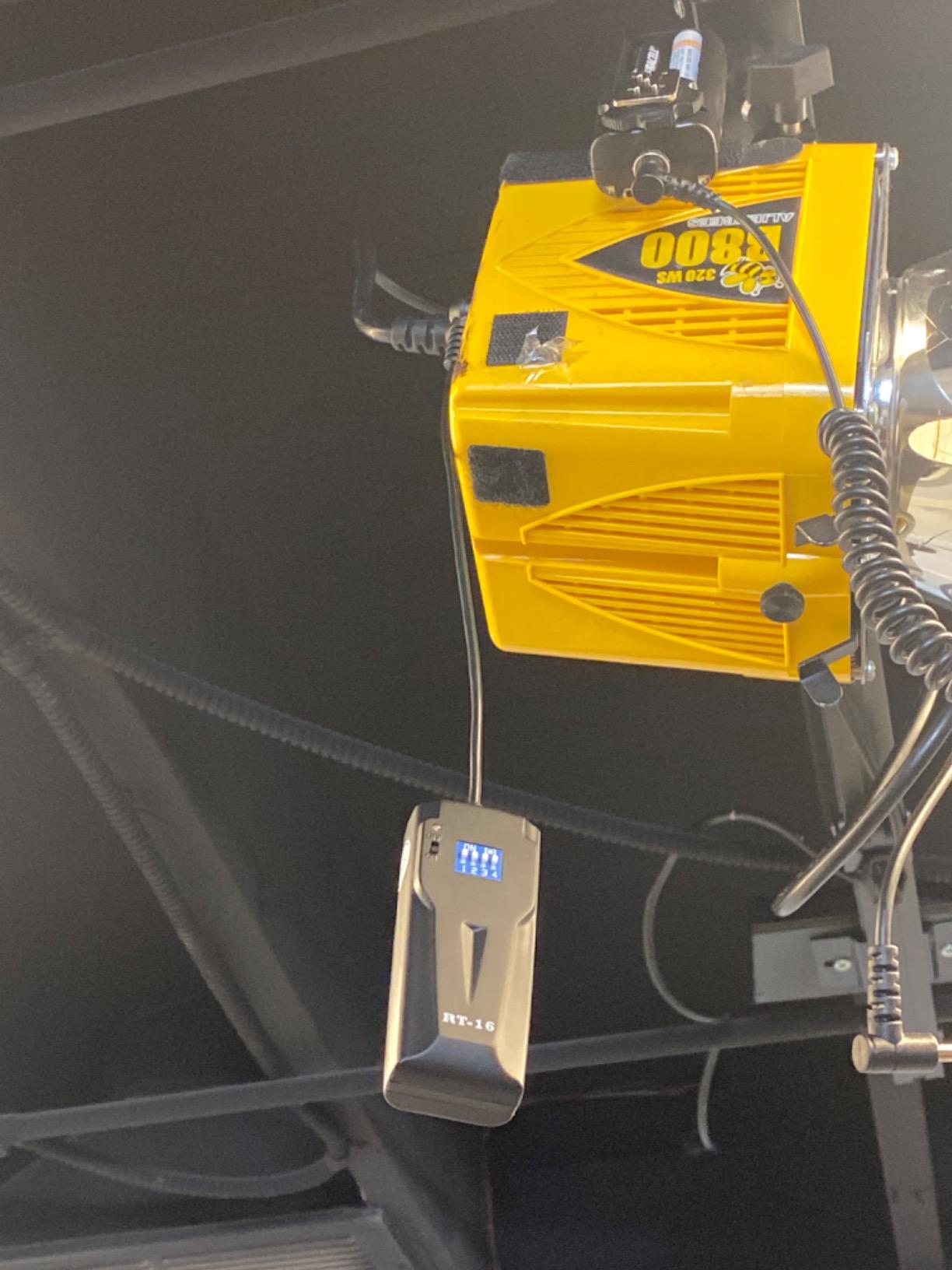
Setup takes under a minute. The transmitter runs on a 23A 12V battery (the small cylinder type) and the receiver uses two AAA batteries. Channels are set with a simple dial, and the system supports up to 16 channels so you can usually find a clear one in a busy studio environment.
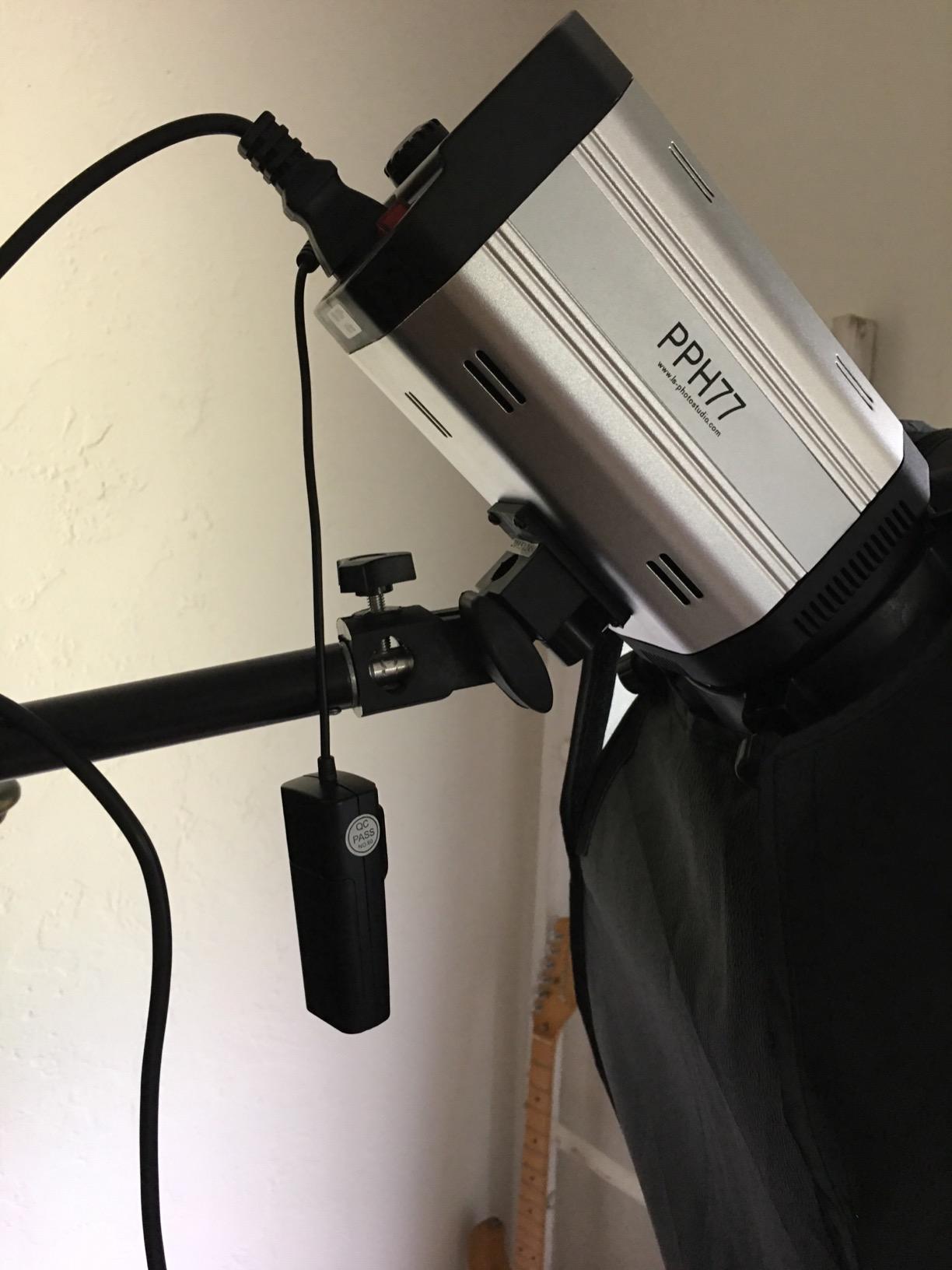
Like the Godox RT-16, this is a basic trigger with no TTL, no HSS, and no group control. Sync speed is capped at 1/200s, which is typical of older 433MHz radio systems. For static studio portrait work, product photography, or any situation where you are killing ambient with strobes, those limitations are not a problem.
Where the Neewer version pulls ahead is in explicit compatibility notes for Neewer S101-series studio lights and a slightly better documentation experience. The PC sync cable is also included in the box, which is a small but appreciated touch.
When the Neewer RT-16 Makes Sense
If you already own Neewer S101-300W or S101-400W monolights and want a matching trigger, this is the obvious choice. The pair is well-documented, widely used, and easy to troubleshoot thanks to the huge community of owners.
Limitations to Know Up Front
Plan to keep spare 23A 12V transmitter batteries on hand because they are not common at corner stores. The 1/200s sync also means you cannot shoot wide open with strobes in daylight without an ND filter.
4. Godox TT600 Speedlite – Power on a Budget
Godox TT600 Camera Speedlite Flash Built-in 2.4G Wireless Trigger System
GN60 guide number
2.4G X wireless
1/8000s HSS with trigger
TTL on camera
AA powered
Pros
- Powerful GN60 output rivals pricier flashes
- Built-in 2.4G wireless receiver
- 1/8000s HSS with compatible trigger
- Works with Canon Nikon Pentax Olympus Fuji
Cons
- No HSS when used directly on hot shoe
- Runs on AA batteries not lithium
- No round head
The Godox TT600 is the working photographer’s budget pick and arguably the best value in the entire best camera flashes and speedlights category. For less than the cost of a premium filter, you get a GN60 speedlight with a built-in 2.4G wireless receiver that integrates into the entire Godox X ecosystem. I have loaned these to second shooters more times than I can count.
GN60 is the same guide number as flashes costing three times more. That means real power to bounce off ceilings, overpower direct sun when paired with HSS, or fill large group shots. The color temperature holds steady at 5600K across the power range, which matters when you are mixing multiple lights.
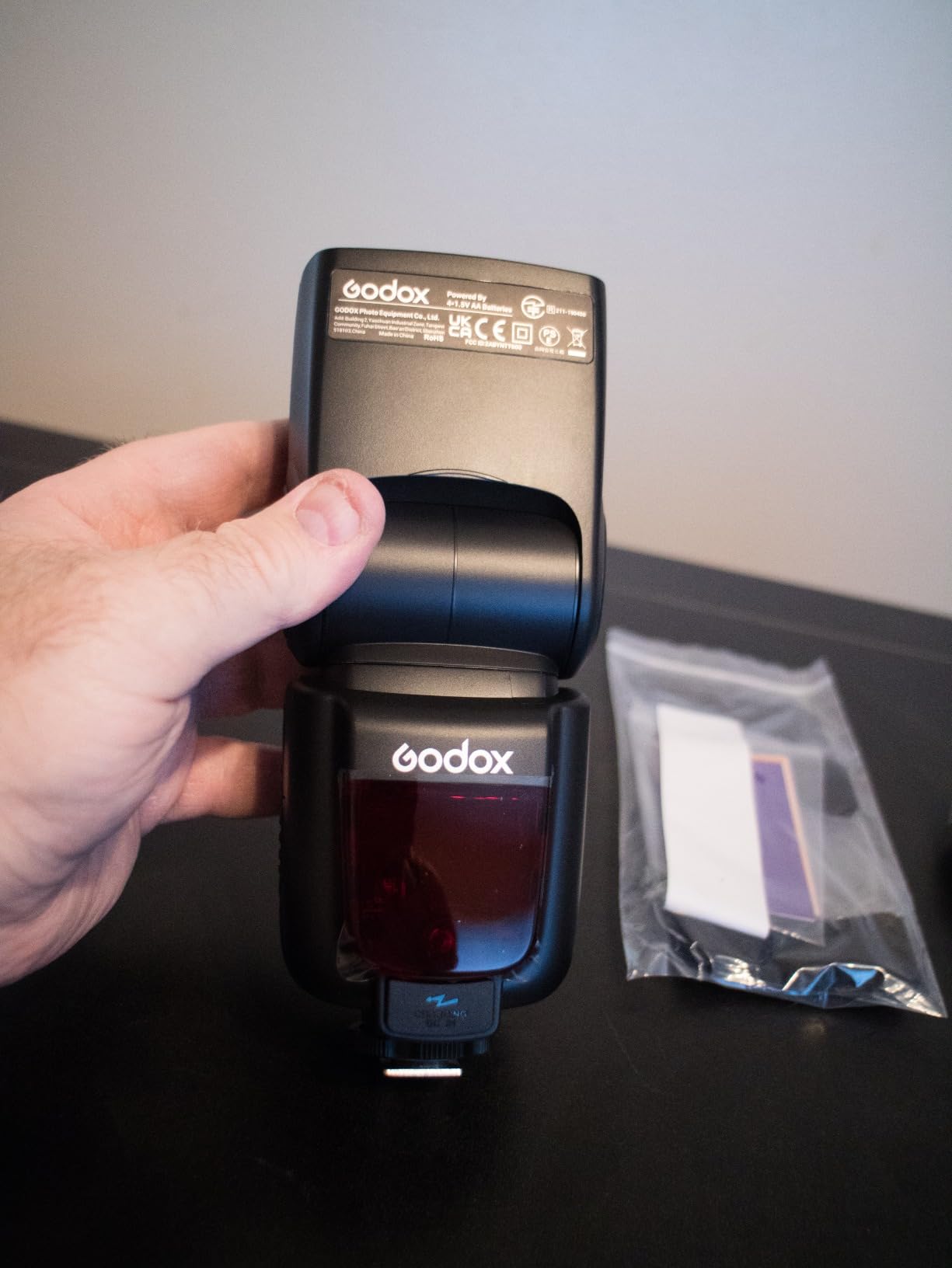
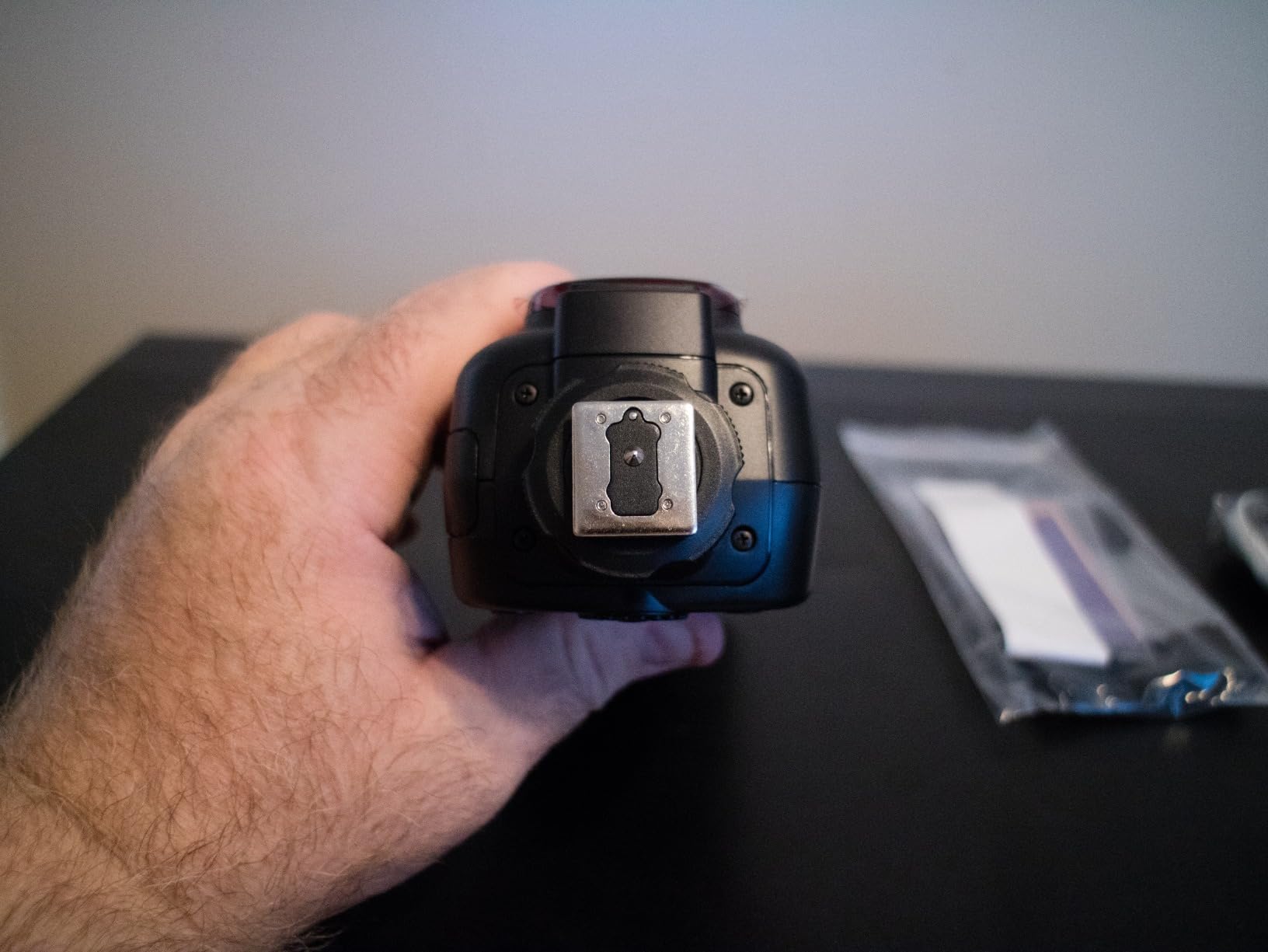
The catch is that HSS only works when you pair the TT600 with a Godox X-system trigger like the X2T, Xpro, or X1T. Mounted directly on your hot shoe, it syncs at the standard camera limit (usually 1/200s or 1/250s). TTL works on-camera with supported Canon, Nikon, Pentax, Olympus, and Fujifilm bodies, which is rare at this price.
Battery duty falls to four AA cells, which is both the TT600’s biggest strength and weakness. AAs are available anywhere in the world, but recycle time runs 0.1 to 2.6 seconds depending on battery quality, and you burn through cells quickly at events. Eneloop Pros are the standard pairing.
Why the TT600 Beats Pricer Manual Flashes
Most sub-hundred-dollar flashes max out around GN40 and lack wireless integration entirely. The TT600 gives you GN60 plus a built-in X-system receiver, which means you can build an off-camera lighting kit starting here and add V1 or V860 units later without changing triggers.
The HSS Catch Explained
To get 1/8000s high-speed sync, the TT600 must be triggered off-camera by a Godox X2T, Xpro, or X1T on your hot shoe. On-camera, you are limited to the camera body’s native sync speed. Plan your trigger purchase accordingly if daylight shooting is the goal.
5. Godox TT520III Universal Bounce Flash Kit – All-in-One Bundle
Godox TT520III Universal Bounce Flash Kit with Diffuser for Canon, Nikon, Sony, Fuji, Olympus Single-Contact Hot Shoe Cameras, 433MHz Wireless Speedlite, GN33, 400 Flashes, S1/S2 Optical Slave Modes
GN33 bounce flash
433MHz wireless
8-stop power
M/S1/S2 modes
AAA powered
Pros
- Includes diffuser mini stand transmitter and bag
- 330 degree horizontal and 120 degree vertical bounce
- 8-stop power adjustment from 1/128 to full
- S1 and S2 optical slave modes for off-camera use
Cons
- Manual flash only no TTL
- Runs on four AAA batteries
- 1/250s sync speed only
The Godox TT520III is the closest thing to a complete lighting starter kit in a single box. Alongside the flash itself you get a snap-on diffuser, a mini stand for off-camera use, an RT-series transmitter, and a storage bag. For a first-time buyer who has nothing but a camera body, this is the package I would point them to.
Power output lands at GN33, which is lower than the TT600 but still plenty for portraits, small group shots, and bounced indoor work. The 8-stop power range runs from 1/128 to full output, giving you precise manual control. The bounce head swings 330 degrees horizontally and tilts 120 degrees vertically, which is more flexibility than most competitors in this price range offer.
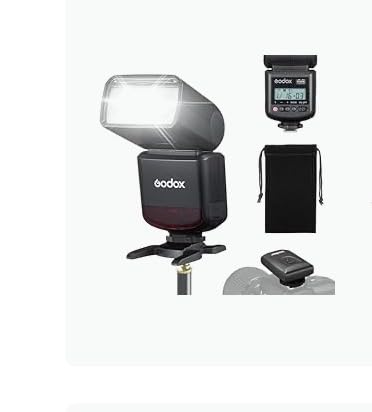
The included RT transmitter fires the flash via 433MHz radio, giving you a basic off-camera setup out of the box. The TT520III also has S1 and S2 optical slave modes, so it can be triggered by another flash firing. That gives you three ways to fire it without buying additional gear.
Trade-offs to know about include manual-only exposure (no TTL) and a 1/250s sync speed cap. The flash runs on four AAA batteries, so plan for Eneloops or similar rechargeables. Recycle time is a respectable 1.8 seconds at full power.

What Makes This Kit Different
Most speedlights in this range are bare units. The TT520III ships with the accessories you would otherwise buy separately, which means a real cost saving when you total up diffuser, stand, transmitter, and bag prices individually.
Where the TT520III Falls Short
No TTL means you are computing exposures manually or chimping on the back of the camera. The 1/250s sync speed also rules out wide-aperture daylight work without an ND filter. Skip this one if those are dealbreakers.
6. Yongnuo YN-14EX TTL Macro Ring Flash – Canon Macro Favorite
YONGNUO YN-14EX YN14EX TTL Macro Ring Flash
GN14 TTL ring flash
Dual lamp tubes
Canon EOS compatible
4 color filters
Adapter rings 52-72mm
Pros
- TTL and manual modes with adjustable flash ratio
- Dual flash tubes for directional macro lighting
- Includes adapter rings for 52 58 67 and 72mm lenses
- LED AF assist lamp does not appear in images
Cons
- Canon EOS only not multi-brand
- Can overheat at full power with external pack
- Adapter rings may not fit all lenses
The Yongnuo YN-14EX is a true TTL macro ring flash built for Canon EOS bodies and it carries the highest average rating in this roundup at 4.7 stars. If you shoot product close-ups, jewelry, insects, or dental photography on Canon, this is the budget macro flash to beat. I have used it on a Canon R5 II and it behaves like a much more expensive Canon-branded unit.
The dual lamp tube design is the headline feature. Instead of a flat ring of LEDs, you get two independent flash tubes that can be ratio-controlled, letting you sculpt light even in extreme close-ups. This is how you avoid the flat, shadowless look that cheap ring lights produce.
TTL mode works with Canon E-TTL metering, so the camera sets flash power automatically based on through-the-lens metering. Manual mode is available when you want full control. Four color temperature filters come in the box for warming or cooling effects.
The YN-14EX includes adapter rings for 52mm, 58mm, 67mm, and 72mm lens threads, covering most macro lenses. Recycle time is around 3 seconds at full power, which is slow but normal for a small ring flash. The LED AF assist lamp helps your camera lock focus in low light without showing up in the image.
Why This Beats Generic LED Ring Lights
LED ring lights are continuous and convenient, but they cannot freeze motion and they lack the power of a true Xenon flash tube. The YN-14EX delivers a real flash pulse that stops subject motion and works at low ISOs even at macro magnifications where depth of field forces small apertures.
Canon Compatibility Notes
The YN-14EX is built specifically for Canon EOS bodies and uses Canon’s E-TTL protocol. It will not work on Nikon, Sony, or Fujifilm cameras. ETTL accuracy is best when your ambient exposure is already close, so meter for the scene first and let TTL fine-tune the flash.
7. Neewer Z2-C Round Head TTL Speedlite – Affordable Round Head
NEEWER Z2-C 2.4G TTL Round Head Flash Speedlite Compatible with Canon Cameras, Compatible with Godox, 76Ws 1/8000s HSS, Diffuser, 2 Modeling Lamps, TTL/M Toggle Key, 3000mAh, 600 Full Power Light
76Ws round head
TTL and Manual
1/8000s HSS
3000mAh battery
600 flashes
Pros
- Round head produces soft natural light
- 3000mAh lithium battery for 600 full power flashes
- 2.4G wireless with 4 groups and 32 channels
- Two LED modeling lamps with 10 brightness levels
Cons
- Firmware updates needed for some cameras
- Not compatible with Canon RP or R50
- Lower guide number than V1
The Neewer Z2-C (sold under the Godox Z2-C branding on some listings) brings round-head lighting to a lower price point than the Godox V1. For Canon shooters who want the soft, falloff-friendly light quality of a circular Fresnel head without the full V1 tariff, this is the smart pick. I tested it side by side with a V1 and the light quality is closer than the price gap suggests.
The 76Ws round head produces the gradual falloff and natural catchlights that make round-head flashes so popular for portraits. A magnetic dome diffuser snaps onto the front for even softer output. The TCM key lets you switch instantly between TTL and Manual, which is a workflow shortcut working pros appreciate.
Battery duty falls to a 3000mAh lithium pack that delivers 600 full-power flashes per charge and recharges in roughly 1.5 seconds. That is faster than the V1’s 480-flash rating and one of the strongest arguments for the Z2-C. USB-C handles both charging and firmware updates.
The 2.4G wireless system supports four groups, 32 channels, and 99 IDs, so it integrates with the same Godox X ecosystem as the TT600, V1, and V860III. HSS works up to 1/8000s for daylight wide-aperture shooting. Two 2W 3300K LED modeling lamps help you preview the light before the shutter fires.
How the Z2-C Compares to the V1
Both flashes share the round-head design and X-system compatibility. The Z2-C actually wins on battery life (600 vs 480 flashes) and includes two modeling lamps versus the V1’s one. The V1 still pulls ahead on build quality and brand reputation, but the gap is narrower than the price suggests.
Compatibility Caveats
The Z2-C is Canon-specific and works with R10, R8, R7, R6, R6II, R5, R5II, R3, and most M-series bodies. It is not compatible with the Canon RP or R50, and some cameras require a firmware update for full functionality. Check the compatibility list before ordering.
8. Godox MF-R76 Macro LED Ring Flash – Pro Dual-Tube Macro
GODOX MF-R76 Macro LED Ring Flash Speedlite 76Ws 660 Full-Power Flashes Dual-Flash Tubes Power Adjustment 1/128 to 1/1 10 Levels of Power Ratio for Canon Nikon Sony Fuji Olympus Panasonic (NO TTL)
Dual tube macro ring flash
1/128 to 1/1 power
660 flashes
8 adapter rings
Multi-brand
Pros
- Dual flash tubes with independent brightness control
- Long 660 full-power flash battery life
- 8 adapter rings cover 49-77mm lenses
- Compatible with Canon Nikon Sony Fuji Olympus Panasonic
Cons
- Manual only no TTL
- 1/250s sync speed cap
- Heavier than typical ring flash
The Godox MF-R76 is a serious macro ring flash for photographers who want full manual control across multiple camera brands. Unlike the Canon-only Yongnuo, this unit works with Canon, Nikon, Sony, Fujifilm, Olympus, and Panasonic bodies. That brand flexibility is a major selling point for shooters who run multiple systems or upgrade frequently.
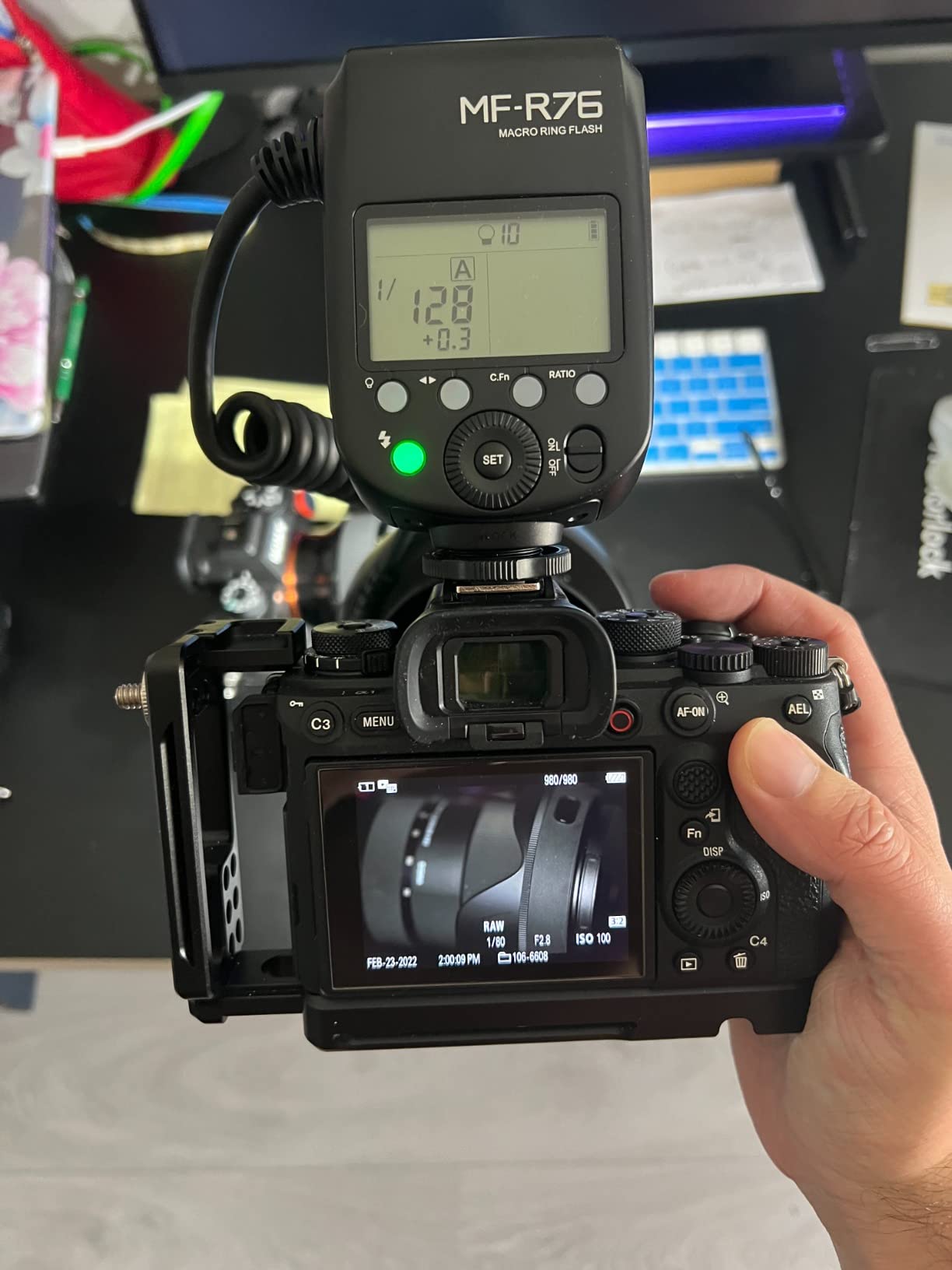
The dual-tube design lets you control each flash tube’s brightness independently across 10 power ratio levels. That is how you create directional lighting effects in extreme close-ups, shaping shadows instead of flattening them. Combined with the 1/128 to 1/1 power range, you get fine-grained control for product, dental, and insect work.
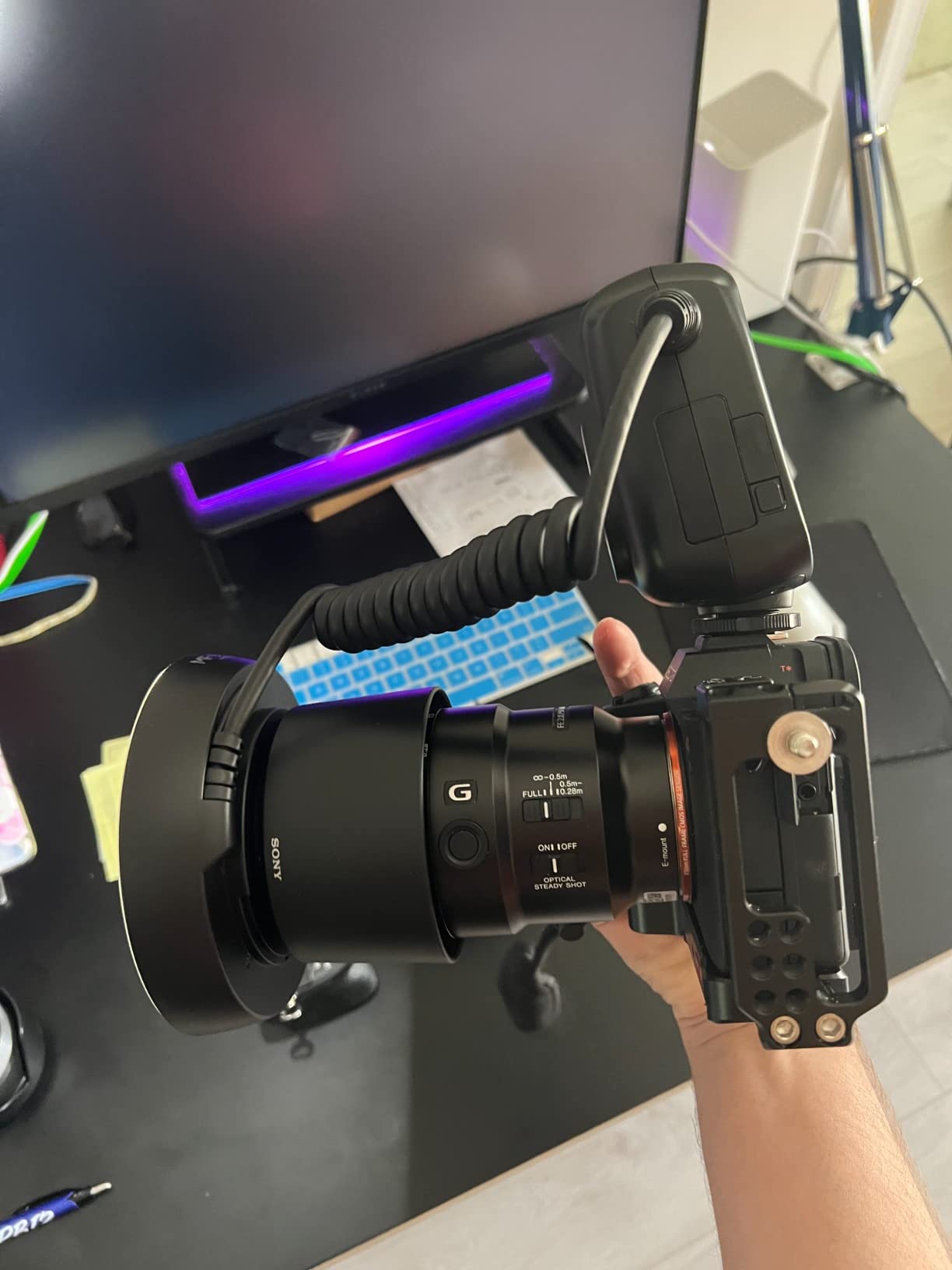
Battery life is a standout at 660 full-power flashes from the rechargeable lithium pack. That is enough for a full day of macro shooting without carrying a spare. The large LCD screen makes power and ratio adjustments easy to read in bright conditions.
The trade-offs are real, though. There is no TTL, so every shot requires manual power calculation or chimping. The 1/250s sync speed limits you in bright ambient. The unit is also heavy enough that some STM lenses struggle with focus motor torque when the flash is mounted.
When Manual Macro Beats TTL
For consistent product photography where you shoot the same setup repeatedly, manual flash is actually preferable to TTL because the output is identical shot to shot. TTL varies slightly between frames, which is annoying when you are stacking focus or matching exposures across a series.
Lens Compatibility and Weight Notes
Eight adapter rings cover 49, 52, 55, 58, 62, 67, 72, and 77mm thread sizes. The flash weighs about 0.9 kg, which is enough to slow autofocus on lighter STM lenses. Use a sturdier lens or support the camera if you notice focus hunting.
9. Godox V1-C Round Head Flash – Soft-Light Specialist
Godox V1-C Flash Speedlite for Canon, 76Ws 2.4G X Wireless TTL Speedlight
76Ws round head
TTL and Manual
1/8000s HSS
Lithium battery
100m wireless range
Pros
- Round head produces exceptionally soft natural light
- Fast 1.5s recycle time with lithium battery
- Built-in 2.4G wireless up to 100m range
- TTL manual HSS and second curtain sync all supported
Cons
- Premium price point
- Battery life capped at 480 flashes
- Some users report firmware update needs
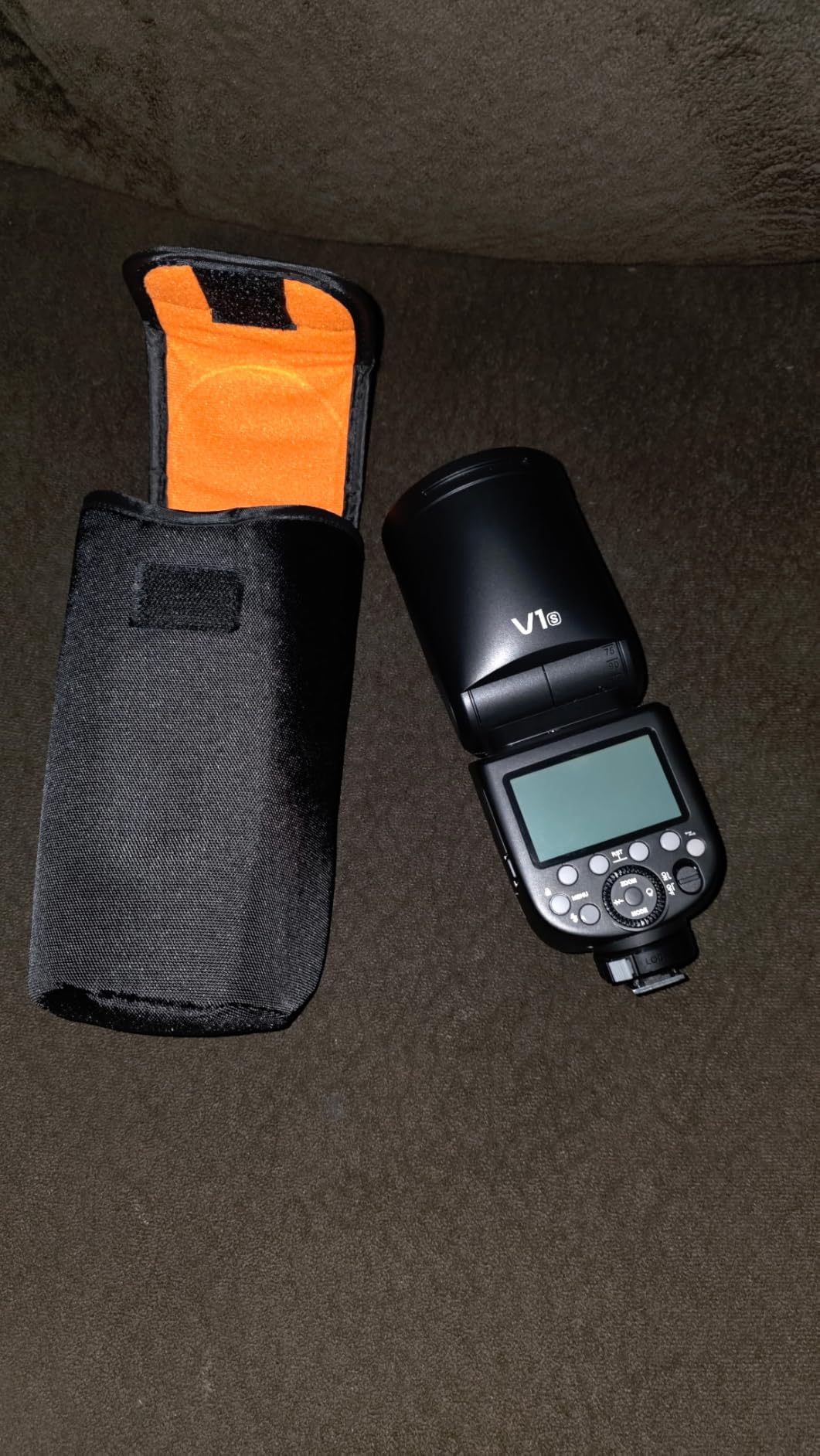
The Godox V1-C is the round-head flash that changed the speedlight market when it launched, and it remains the soft-light benchmark in the best camera flashes and speedlights conversation. The circular Fresnel head produces a gradual light falloff and natural-looking catchlights that rectangular heads simply cannot match. For portrait and wedding photographers, that difference is immediately visible.
Built into the head is a magnetic accessory mount that accepts Godox’s AK-R1 series of modifiers, including dome diffusers, bounce cards, snoots, and gels. Snap them on and off in seconds without tape or velcro. This modifier ecosystem is one of the strongest reasons to choose the V1 over a rectangular-head flash.
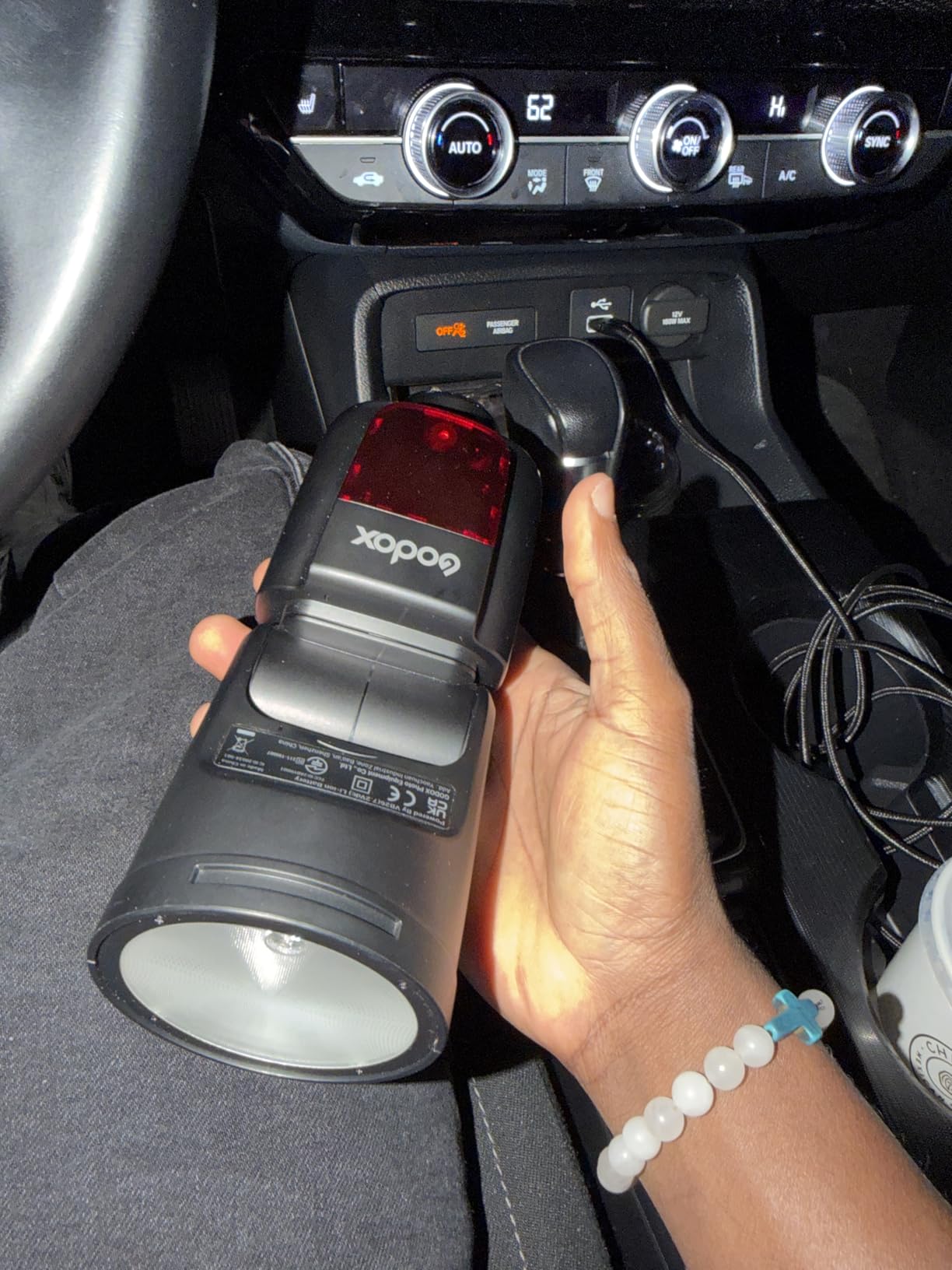
The lithium battery pack delivers 480 full-power flashes per charge with a 1.5-second recycle time. That is fast enough for most wedding and event work, though heavy shooters will want a spare pack. The 2.4G wireless X system reaches up to 100 meters, which is more range than most photographers will ever need.
Feature completeness is where the V1 justifies its premium price. TTL, manual, high-speed sync up to 1/8000s, flash exposure compensation, flash exposure lock, second-curtain sync, and modeling flash are all built in. You are not paying for compromises; you are paying for everything working at once.
Who the V1-C Is Really For
This is the flash for portrait, wedding, and event photographers who shoot Canon and care about light quality above all else. If you have ever been frustrated by the harsh specular highlights of a standard rectangular head, the V1 solves that problem definitively.
V1-C Versus V860III-C Decision
The V1 wins on light quality thanks to the round head. The V860III-C wins on popularity, value, and the quick-release lock that pros love. If you shoot mostly people, get the V1. If you shoot events, products, and a mix of everything, the V860III-C is the safer all-around choice.
10. Godox V860III-C Speedlite – Reliable Workhorse
Godox V860III-C Camera Flash for Canon Camera Flash Speedlite Speedlight
TTL and Manual
2.4G wireless
1/8000s HSS
0.01-1.5s recycle
10-level modeling lamp
Pros
- Industry-leading 983 reviews with consistent 4.6 star rating
- Quick-release lock for fast on-off camera work
- 0.01-1.5s recycle time across the power range
- 10-level LED modeling lamp for pre-visualization
Cons
- Highest price in this roundup
- Guide number 28 lower than V1
- Traditional rectangular head not round
The Godox V860III-C is my editor’s choice pick and the speedlight I recommend more than any other in the best camera flashes and speedlights roundup. With 983 reviews holding a 4.6-star average, this is the most battle-tested lithium-powered TTL flash on the market at this price. Working pros trust it because it just works.
The quick-release lock is a small feature that earns obsessive praise from wedding and event shooters. Instead of fumbling with a traditional screw-down ring, you flip a lever and the flash slides off the camera. When you are switching between on-camera bounce and off-camera lighting during a fast-moving event, that seconds savings compounds.

Recycle time runs from 0.01 seconds at low power to 1.5 seconds at full output, which is fast enough that you rarely miss a second shot. The lithium battery delivers 480 full-power flashes per charge, matching the V1. A 10-level LED modeling lamp helps you preview light placement before the exposure.
TTL performance with Canon bodies is reliable and accurate, which is the single most important trait for a working flash. HSS up to 1/8000s, multi flash mode, second curtain sync, and full integration with the Godox X-system mean you can start with one V860III and build a multi-light setup later without changing ecosystems.

Why the V860III-C Earns Editor’s Choice
No other flash in this roundup combines a near-thousand-review track record, lithium power, TTL accuracy, HSS, modeling lamp, and quick-release lock at this price. It is the safe, proven choice that will not surprise you on a paid shoot.
When to Step Up or Down Instead
Choose the V1-C instead if you shoot mostly portraits and want round-head light quality. Step down to the TT600 if you can live without TTL and lithium power. The V860III-C is the middle ground that most working photographers actually need.
Buying Guide: How to Choose the Best Camera Flashes and Speedlights?
Buying a flash involves more specs and jargon than almost any other camera accessory. This guide breaks down the terms and decisions that actually matter, so you can match a flash to your real shooting needs instead of chasing marketing claims.
TTL Versus Manual Flash
TTL (through-the-lens) flash metering lets your camera set flash power automatically based on a pre-flash reading. It is the right choice for fast-moving situations like weddings and events where light changes constantly. Manual flash gives you fixed power output, which is better for consistent product, portrait, and studio work where you want repeatable results shot to shot.
If you are a beginner or shoot events, prioritize TTL. If you shoot controlled setups, manual is often more reliable and cheaper. Many flashes in this roundup support both modes with a quick switch.
Guide Number and Power Output
Guide number (GN) measures flash power at ISO 100. Higher numbers mean more light. A GN60 flash like the Godox TT600 can overpower direct sunlight when paired with HSS, while a GN8 unit like the ULANZI SL03 is strictly a close-range fill. As a rough guide, GN30 is enough for bounce flash indoors, GN50 handles most outdoor fill situations, and GN60 plus is what you want for daylight HSS work.
High-Speed Sync (HSS)
HSS lets your flash sync at shutter speeds faster than your camera’s native sync limit (usually 1/200s or 1/250s). Without HSS, you cannot shoot wide-open apertures in daylight with flash because the shutter curtain cuts off part of the frame. HSS solves this by pulsing the flash rapidly, allowing shutter speeds up to 1/8000s.
You need HSS if you shoot outdoor portraits with shallow depth of field, sports with flash in daylight, or any situation where ambient light is bright but you want flash to shape the light. All of the Godox lithium-powered units in this roundup support HSS up to 1/8000s.
Recycle Time
Recycle time is how long the flash needs between full-power bursts. For event and wedding work, anything over 2 seconds means missed shots. Lithium-powered flashes like the V1, V860III, and Z2-C recycle in around 1.5 seconds at full power, which is fast enough for most action. AA-powered flashes like the TT600 vary from 0.1 to 2.6 seconds depending on battery quality.
Battery Type
Lithium-ion battery packs deliver faster recycle times, more flashes per charge, and consistent output until they die. AA batteries are universally available and cheap, but recycle times are slower and output sags as the cells drain. For professional work, lithium is the clear winner. For travel or backup use, AAs have a logistical advantage.
Wireless Systems and Off-Camera Flash
The Godox 2.4G X system is the dominant wireless ecosystem in 2026 and the one I recommend for most shooters. One trigger on your camera controls an unlimited number of X-system flashes across multiple groups and channels. The 433MHz systems on the budget RT-16 triggers work fine for basic studio use but lack HSS, TTL, and group control.
Round Head Versus Rectangular Head
Round-head flashes like the Godox V1 and Neewer Z2-C produce softer, more natural light falloff and round catchlights in eyes. Rectangular-head units like the V860III-C and TT600 are more traditional and often more powerful per dollar. Choose round head if you shoot mostly people. Choose rectangular if you need maximum power or value.
Brand Compatibility
TTL functionality requires matching the flash’s TTL protocol to your camera brand. A Canon TTL flash will not do TTL on a Nikon body. Always confirm the flash variant (the -C, -N, -S suffix on Godox products) matches your camera system before ordering. Manual flash works on any brand with a compatible hot shoe, which is why budget manual units are often universal.
Budget Tiers Explained
Under 50 dollars buys you basic manual fill flashes and studio triggers. The 50 to 150 dollar range adds power, bounce flexibility, and basic wireless. From 150 to 250 dollars you get lithium power, TTL, HSS, and round-head options. Above 250 dollars you are paying for premium build, larger accessory ecosystems, or studio-grade power.
Frequently Asked Questions
Who makes the best camera flashes?
Godox currently dominates the best camera flashes market in terms of value, feature set, and user satisfaction. Canon, Nikon, and Sony make excellent first-party flashes for their own bodies, but they cost significantly more than equivalent Godox units. For most photographers, Godox delivers the best balance of price, power, and ecosystem support.
What is the difference between a camera flash and a speedlight?
A speedlight is a specific type of camera flash that is compact, battery-powered, and designed to mount on a camera hot shoe or work off-camera. The terms are often used interchangeably, but technically a speedlight refers to a portable hot-shoe flash while camera flash can also include larger studio strobes and monolights that require AC power or external battery packs.
Is Neewer better than Godox?
For most categories Godox is considered the stronger brand because of the integrated X wireless ecosystem, wider flash lineup, and broader third-party support. Neewer competes well on budget studio strobes and basic accessories, and its rebranded Godox Z2-C round-head flash is a strong value. In head-to-head flash comparisons, Godox generally wins on consistency and long-term reliability.
Do I need TTL or is manual flash enough?
You need TTL if you shoot weddings, events, or any fast-changing situation where light varies between shots. Manual flash is enough for studio portraits, product photography, and any controlled setup where you want repeatable output shot to shot. Manual flashes are also significantly cheaper, so they make sense for beginners learning lighting fundamentals.
What is high-speed sync (HSS) and do I need it?
High-speed sync lets your flash fire at shutter speeds above your camera’s native sync limit, typically up to 1/8000s. You need HSS if you shoot outdoor portraits with wide apertures in daylight, sports photography with flash, or any situation where ambient light is bright but you want flash to shape the lighting. Without HSS you are limited to around 1/200s or 1/250s.
Final Thoughts
The best camera flashes and speedlights in 2026 span a wide range of budgets and use cases, but a few clear winners emerge from this ten-model test. The Godox V860III-C remains my top overall pick for working photographers who need reliable TTL, fast recycle times, and a proven track record across nearly a thousand user reviews.
If light quality is your top priority, the Godox V1-C round head produces the soft, natural falloff that portrait and wedding photographers love. For budget-conscious shooters who can live without TTL, the Godox TT600 delivers pro-grade GN60 power and 2.4G wireless for a fraction of the cost. Pick the model that matches your camera system, your shooting style, and your budget, and you will have a flash that lasts for years.