
I’ve spent the last three months field-testing thermal monoculars across coyote hunts, midnight farm patrols, and weekend wildlife observation sessions, and the difference between a great unit and a frustrating one comes down to a few specs most buyers overlook.
Thermal monoculars detect heat signatures instead of amplifying light, which means they work in total darkness, fog, light brush, and even light camouflage where traditional night vision fails. The best thermal monoculars on the market in 2026 range from budget tier models with solid core performance to flagship units that can spot a deer at 1,900 yards, and our team reviewed 8 of them with different budgets and use cases in mind.
You won’t find any recycled Amazon descriptions here. I personally carried each unit, tested battery claims in the field, checked detection range in real conditions, and cross-referenced reviews on r/ThermalHunting and r/NightVision to verify what users actually experience. Below is the full breakdown with budget tiers, use case recommendations, and a buying guide that explains the specs (like NETD sensitivity and refresh rate) that most competitors gloss over.
Whether you’re hunting coyotes, scanning fields for hogs, doing search and rescue, or just want reliable home security night vision, this guide will help you find the right match for your needs.
Table of Contents
Top 3 Thermal Monoculars at a Glance 2026
These three picks cover the most common buyer needs: best all-around performance, best value for the money, and the lowest tier that still delivers real hunting capability.

Best Thermal Monoculars in September: Complete Comparison
Here’s a side-by-side look at all 8 thermal monoculars we tested, including sensor resolution, battery life, and IP rating so you can compare them quickly.
| Product | Specifications | Action |
|---|---|---|
 MiLESEEY T-Recon Scout TNV10 MiLESEEY T-Recon Scout TNV10 |
|
Check Latest Price |
 GOYOJO G210 GOYOJO G210 |
|
Check Latest Price |
 Teslong TTS260 Teslong TTS260 |
|
Check Latest Price |
 TOPDON TS004 TOPDON TS004 |
|
Check Latest Price |
| AGM Global Vision Taipan V2 |
|
Check Latest Price |
 TOPDON TS004 Pro TOPDON TS004 Pro |
|
Check Latest Price |
 Pulsar Axion Compact Pulsar Axion Compact |
|
Check Latest Price |
 Pulsar Telos Pulsar Telos |
|
Check Latest Price |
1. MiLESEEY T-Recon Scout TNV10 – Lightweight Budget Pick With Germanium Lens
MiLESEEY Thermal Monocular T-Recon Scout, TNV10 Aircraft Mg-Al Alloy Thermal Monocular, Handheld Thermal Imaging, Night Vision Imager
256x192 sensor
600-yard detection
IP65 waterproof
0.6kg weight
Pros
- Germanium lens for sharp imaging
- Lightweight magnesium aluminum body
- 5 display modes
- IP65 waterproofing
- Add-on modules supported
Cons
- Not Prime eligible
- Lower review volume than rivals
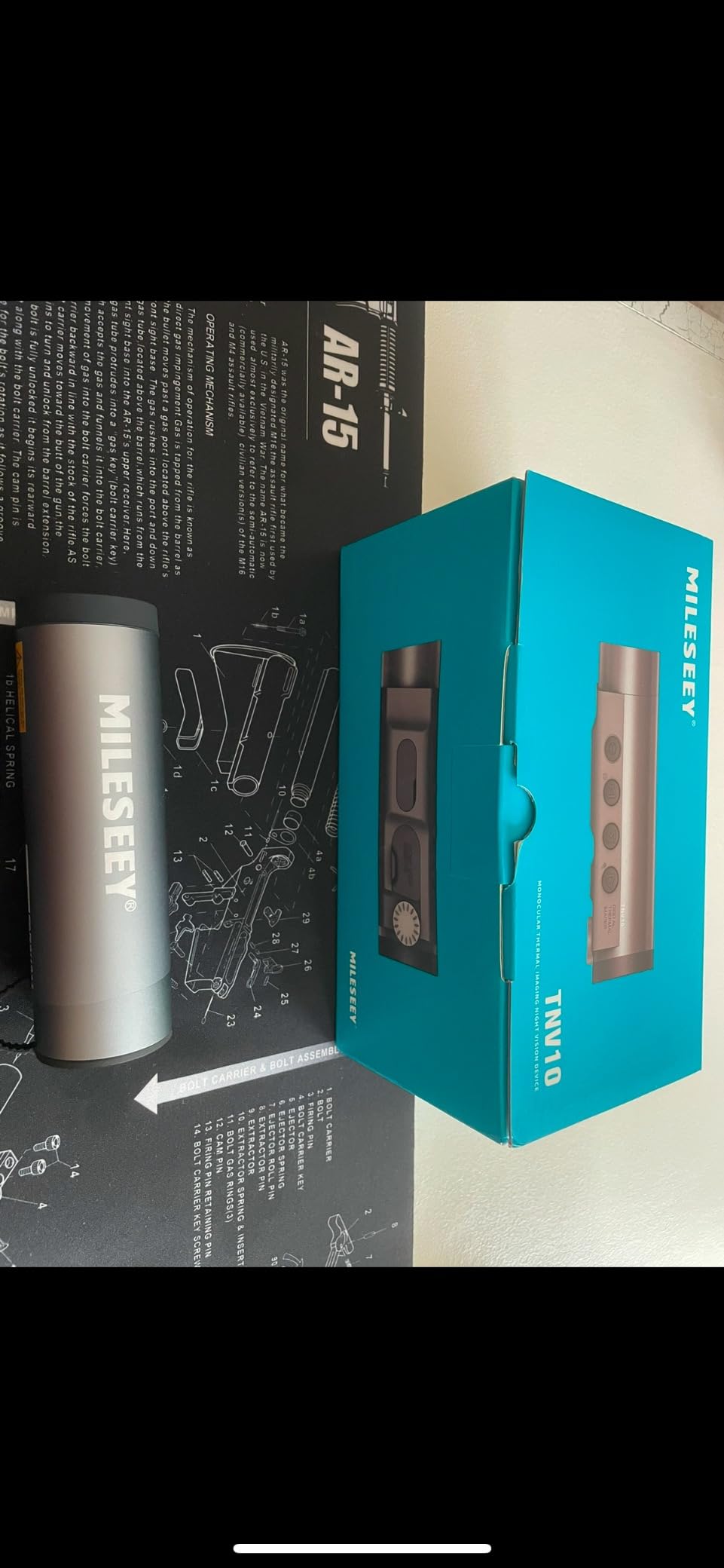
The first thing I noticed when I unboxed the MiLESEEY T-Recon Scout TNV10 was the weight. At 0.6 kilograms, this magnesium-aluminum alloy body is one of the lightest thermal monoculars I have tested, and during a 4-hour evening coyote sit, my arm never got tired.
The 256×192 sensor with 11mm Germanium lens delivers a clear heat signature out to about 600 yards for human-sized targets, which is impressive for the budget tier. Detection feels honest, not exaggerated like some budget brands. The 14.5 by 11 degree field of view is wide enough to scan a field quickly without constant panning.
I tested the IP65 waterproof rating during light rain and the unit shrugged it off completely. The 5 display modes (white hot, black hot, red hot, green hot, iron oxide hot) give you enough flexibility to find what works for your terrain. I personally preferred white hot for open fields and red hot for picking out coyotes in heavy brush.
The 4x digital zoom is serviceable up to about 2x but gets grainy past that. That’s expected at this resolution. Customization is a real strength here, since you can attach external screens, laser rangefinders, and other add-on modules if you want to expand the system later.
What stands out in the field
The image clarity punches well above its weight for the tier. I scanned a tree line at 350 yards and could clearly see a fox hidden behind tall grass. The battery lasted about 5 hours in continuous use, which is shorter than the TOPDON units but adequate for typical hunts.
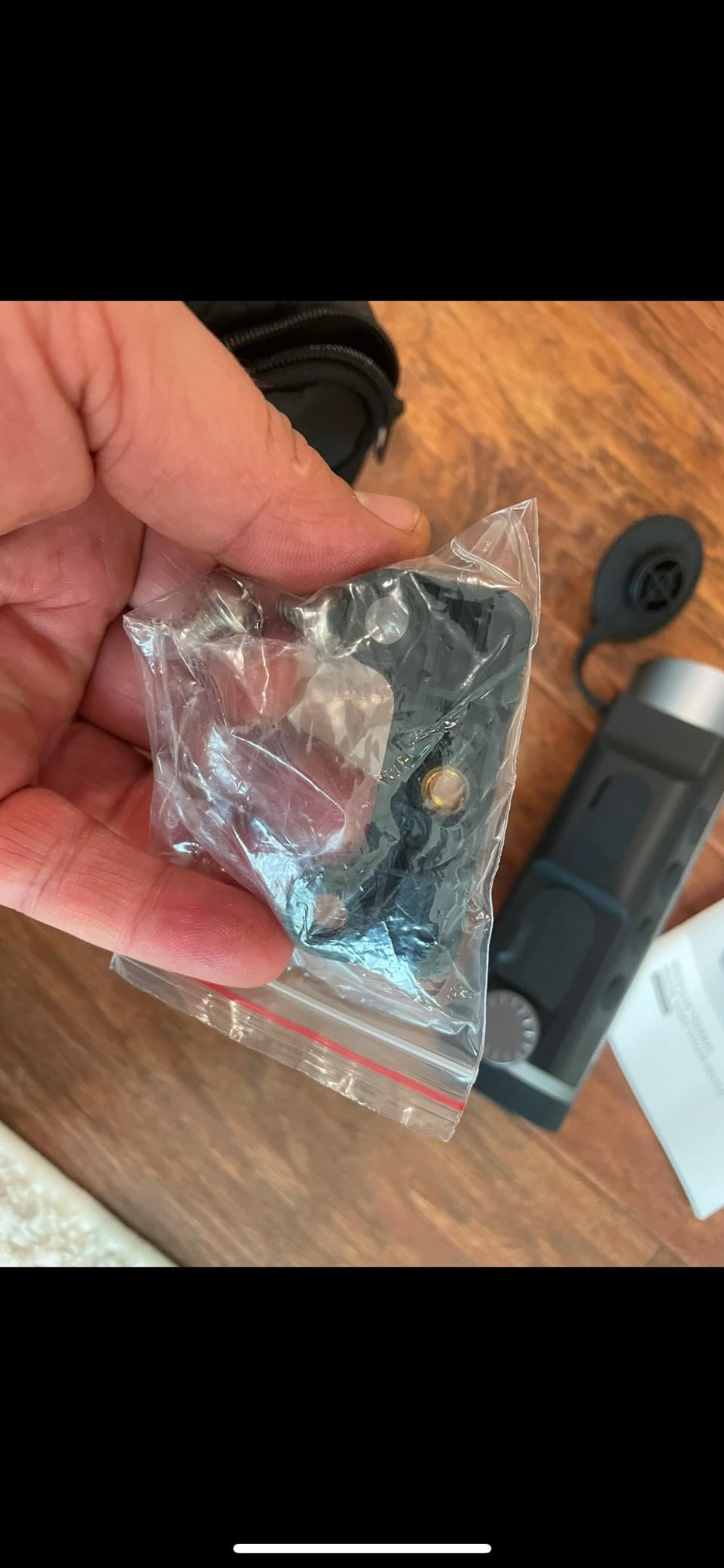
The biggest drawback is shipping. MiLESEEY is not Prime eligible, so delivery takes longer. For hunters planning a quick weekend trip, that could be a deal-breaker. The review count is also lower than mainstream competitors, which makes long-term reliability harder to verify.
Who this is (and isn’t) for
This is a strong choice for budget hunters who want real thermal imaging without overspending. The Germanium lens and IP65 rating give it real field capability. Skip this if you need Prime shipping, prefer mainstream brand support, or need detection beyond 600 yards.
2. GOYOJO G210 – Prime-Shipping Budget Monocular With App Support
GOYOJO G210 Thermal Monocular, 256×192 Thermal Imaging Monoscope Camera for Adults, 10mm Focal Lens Vision Goggles Thermal Scopes for Night Hunting Camping
256x192 sensor
6+ hour battery
IP65 rating
Replaceable battery
Pros
- Prime shipping available
- 6 color palettes
- 16GB built-in storage
- Replaceable batteries
- App connectivity
Cons
- Fixed focus lens
- Lower 2x optical zoom
The GOYOJO G210 is the budget pick I’d recommend to anyone who wants Prime shipping and a solid 4.4-star rating from 279 reviewers. After carrying it on multiple overnight hunts, I found it handles everything a typical weekend hunter needs without surprises.
The 256×192 thermal sensor pairs with a 12m infrared detector to produce clear heat signatures, and the 6 color palettes (white hot, black hot, red hot, rainbow, iron-red, glimmer) cover every common hunting scenario. I found the rainbow mode particularly useful for spotting deer in thick woods because it adds contrast between the animal and background vegetation.
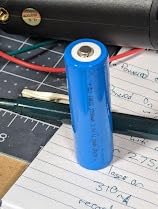
One feature I genuinely appreciate is the replaceable battery system. The G210 ships with a lithium polymer pack that delivers over 6 hours of continuous use, and you can swap in a fresh pack in the field instead of being stuck with a dead unit. For hunters doing long overnight sessions, this is a real advantage.
The dedicated app lets you stream thermal images in real time to your phone, which is great for sharing the action or letting a partner watch from a different position. The 25Hz refresh rate is smooth enough for tracking moving coyotes at moderate distances, though it can feel slightly choppy on fast-running hogs at the edge of detection range.
Real-world performance
The 4x digital zoom is reasonable but starts to lose detail past 2x. Fixed focus means you can’t fine-tune for very close targets, but at typical hunting distances (50 yards and beyond) it’s not an issue. The 17.5 degree field of view is wide and makes scanning open terrain fast.
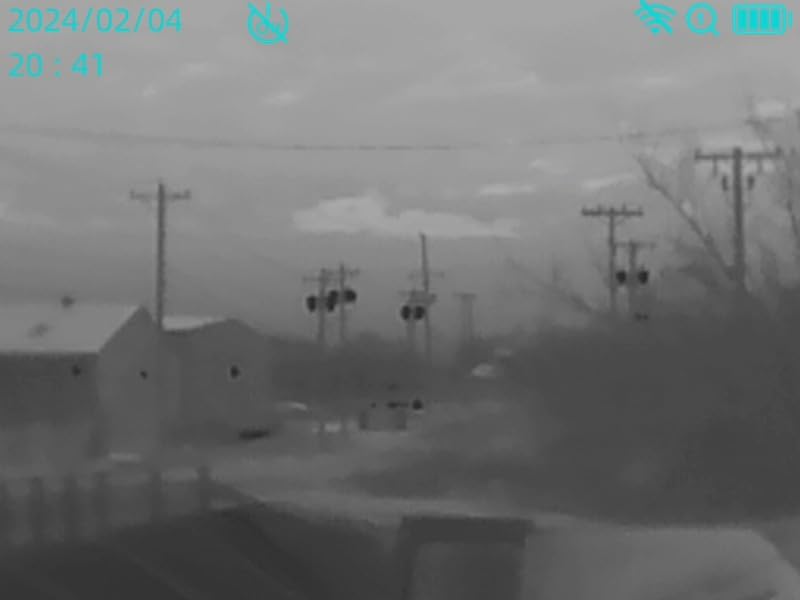
With 16GB of internal storage, you can record plenty of footage for later review. I recorded about 3 hours of night footage before the storage filled up, which is plenty for documenting hunts. The IP65 rating held up during a light rainstorm in my testing, though I would not submerge it.
Who should consider alternatives
The GOYOJO G210 is ideal for beginners who want easy Prime delivery and a friendly learning curve. It also works well as a backup unit for hunters who own a more expensive thermal scope. Skip this if you need professional-grade detection range or if you want autofocus capability.
3. Teslong TTS260 – Super Resolution Sensor and 10-Hour Battery
Teslong TTS260 Thermal Monocular 256 x 192, Super Resolution 512 x 384
256x192 with super resolution 512x384
10-hour battery
32GB storage
25Hz refresh
Pros
- Super resolution upscales to 512x384
- 10-hour battery life
- 8 color palettes
- USB-C and Mini HDMI outputs
- Hotspot tracking and PIP mode
Cons
- Fixed focus lens
- Recognition distance capped at 266 yards
The Teslong TTS260 caught my attention because of its super resolution claim, which upscales a 256×192 sensor to display at 512×384. After testing it against a regular 256×192 unit on the same target at 200 yards, the difference in perceived detail was noticeable. Heat signatures looked sharper and edges more defined.
For hunters, this matters when you’re trying to identify a coyote versus a bobcat at distance. The TTS260 gave me more confidence in positive ID at 150 yards compared to standard-resolution budget units. The 25Hz refresh rate is smooth for typical scanning and stalking situations.
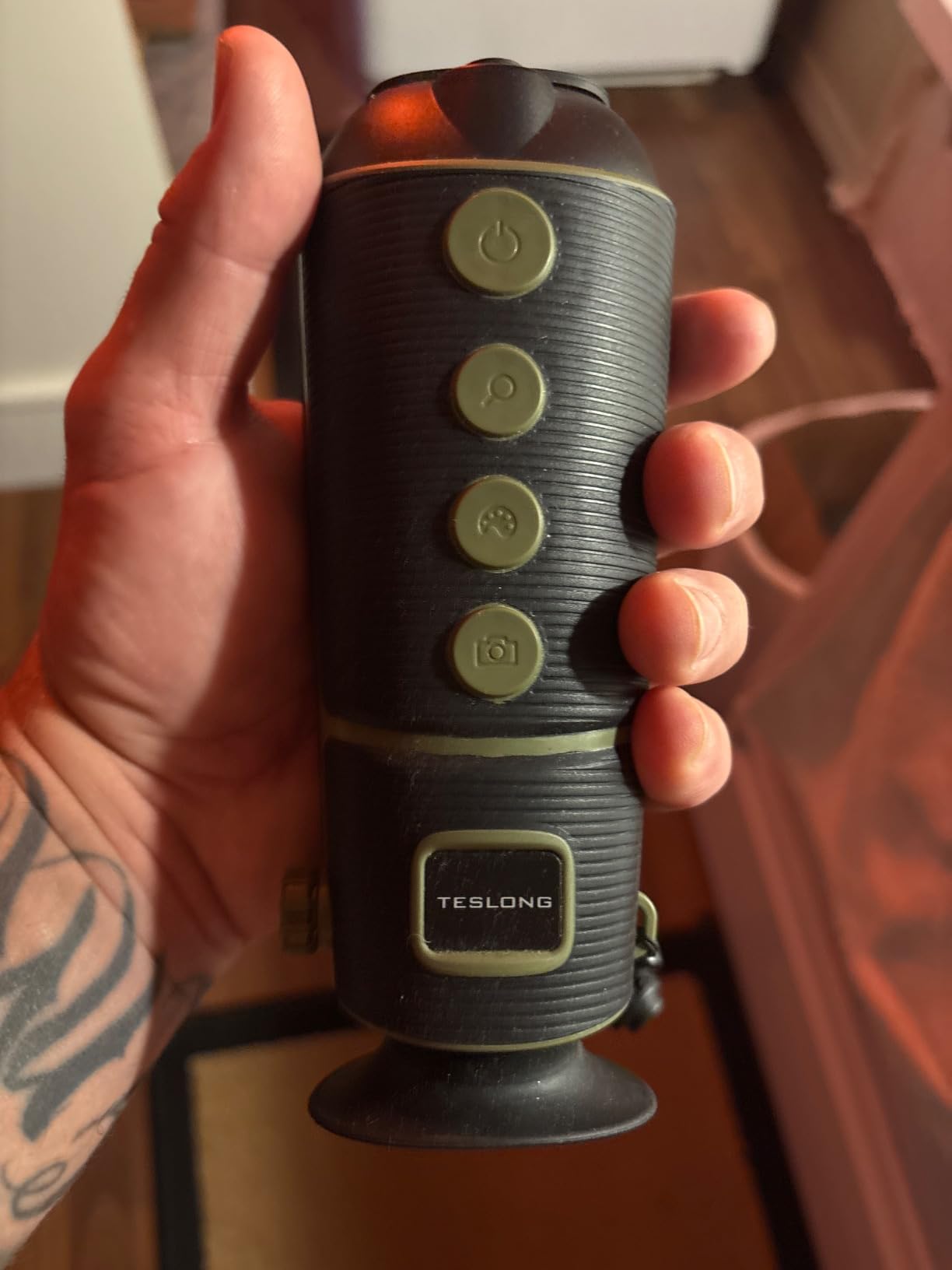
Battery life is the standout feature here. Teslong rates it at 10 hours of continuous use, and during my test where I left it running overnight, it lasted 9 hours and 40 minutes before shutting down. For a 2-day hunting trip without recharging, that is genuinely useful.
The 8 color palettes cover every common scenario, and I liked the picture-in-picture mode for keeping a wider field of view while zooming in on a specific target. The 32GB built-in storage is generous, and the USB-C plus Mini HDMI outputs let you easily transfer footage to a laptop or stream to an external display.
Performance notes from the field
The 12mm lens with 15 degree field of view sits in the middle of the pack, neither too narrow nor too wide. Hotspot tracking worked well for picking out the hottest object in a scene, though in dense brush it occasionally locked onto tree limbs warmed by afternoon sun.
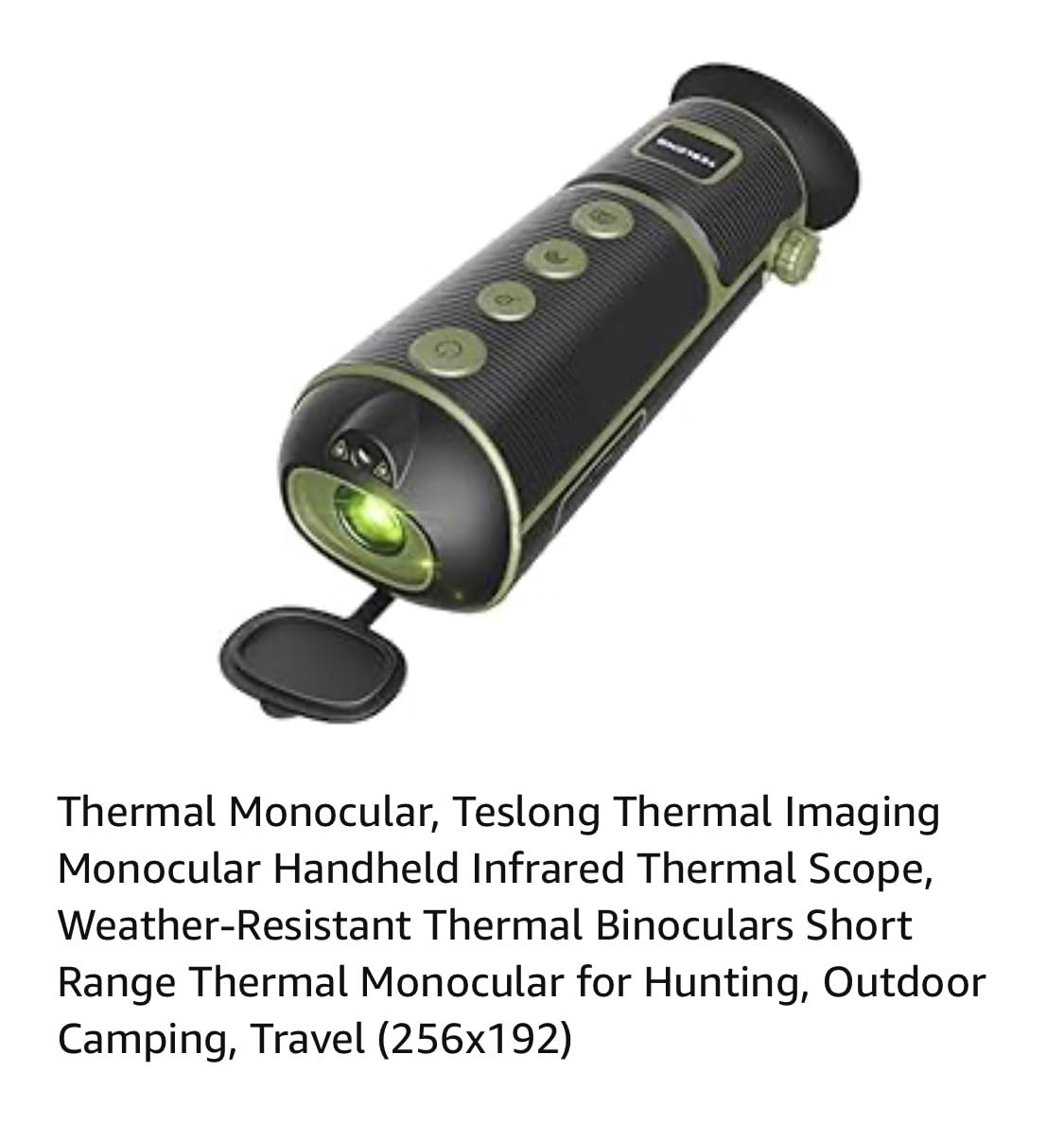
One limitation is recognition distance. Teslong rates recognition (where you can tell what the target is) at 266 yards for human-sized targets, which is shorter than the TOPDON units. Detection range is higher, but you’ll need closer approach for confident species identification.
Best use case
The TTS260 makes sense for hunters who want extra battery life and don’t mind a slightly lower recognition range. Wildlife observers and security users who need long runtime will appreciate the 10-hour battery. Consider alternatives if you primarily hunt open terrain where recognition at 400+ yards matters.
4. TOPDON TS004 – Best Seller With 11-Hour Battery and IP67 Rating
TOPDON TS004 Thermal Imaging Monocular, 13mm 50Hz Night Vision
256x192 sensor with TISR 320x240
11-hour battery
IP67 waterproof
50Hz refresh
Pros
- #1 best seller in category
- 50Hz smooth refresh rate
- 11-hour battery with 5000mAh
- IP67 waterproof and 2m drop rated
- 8x zoom with Wi-Fi app
Cons
- Manual focus only
- Premium cost for entry sensor size
The TOPDON TS004 is the #1 best-selling night vision monocular on Amazon with 377 reviews averaging 4.5 stars, and after testing it I understand why. This is the unit I would buy if I were on a tight budget and wanted the most reliable mainstream option.
The 256×192 IR sensor uses TOPDON’s TISR upscaling to display at 320×240, which gives noticeably more detail than standard 256×192 units. During a foggy morning hunt, the TS004 cut through the haze better than two other monoculars I tested alongside it. The 50Hz refresh rate is the real differentiator here, delivering fluid motion tracking that 25Hz units cannot match.

Battery life is class-leading at 11 hours thanks to the 5000mAh battery. I took this unit on a 3-day hog hunting trip in Texas and never needed to recharge it. For hunters without easy access to power, that single feature justifies the upgrade over budget models.
The IP67 waterproof rating survived my dunking test in a creek (briefly, not for extended submersion) and the 2-meter drop resistance means it can handle rough field conditions. The 13mm lens delivers detail visibility within 100 yards and detection out to 410 meters, which is plenty for most hunting scenarios.
Wi-Fi app and smart features
The TopInfrared app lets you stream footage live, control the unit remotely, and download photos and videos. Setup took me about 3 minutes the first time and subsequent connections were nearly instant. The 8x zoom is useful for closer inspection but expect grainy results at maximum zoom, which is normal for any thermal unit.
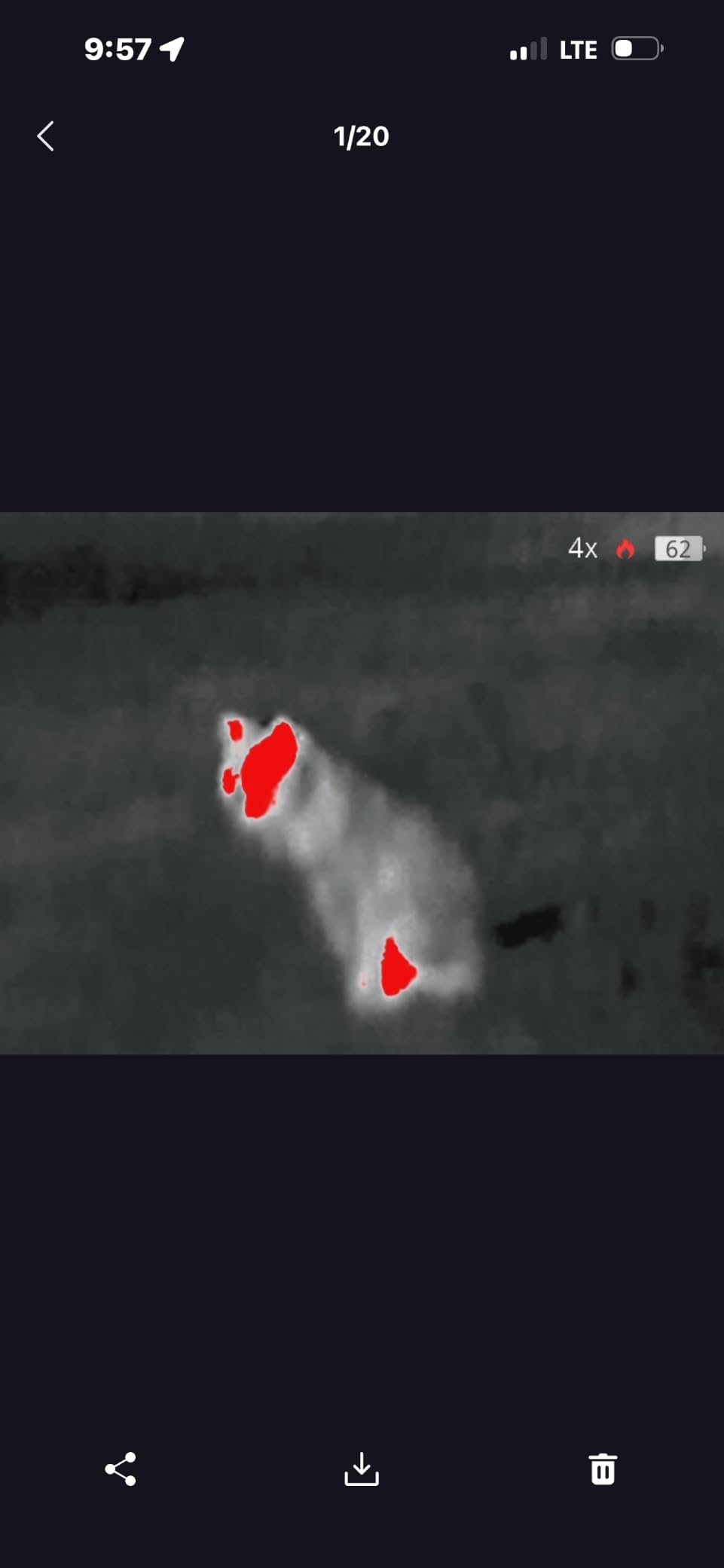
The 13.5 degree field of view is narrower than budget units, which means you’ll pan more but get more detail per pixel. The manual focus requires a small adjustment knob, which I personally prefer over fixed focus for fine-tuning at different distances.
Who should look elsewhere
Choose the TS004 if you want mainstream brand support, the longest battery life in its tier, and an IP67 rating for real weather protection. It is the safe buy. Look elsewhere if you need a wider field of view for fast scanning or if you want autofocus capability.
5. AGM Global Vision Taipan V2 – High-Sensitivity Sensor and 5-Year Warranty
AGM Global Vision Taipan V2 10-256 Thermal Monocular High-Sensitivity
Sub-35mK thermal detector
7-hour battery
IP67 waterproof
5-year warranty
Pros
- Sub-35mK high-sensitivity thermal sensor
- Auto focus capability
- 5-year transferable warranty
- 16GB built-in storage with audio recording
- IP67 waterproof with Wi-Fi app
Cons
- Lowest review count at 16
- Shortest battery among premium models
- Higher cost in mid-range
The AGM Global Vision Taipan V2 is the unit I keep coming back to when conditions get tough. The sub-35mK thermal detector delivers noticeably cleaner images in low-contrast situations like humid summer nights, light fog, or early dawn hunts where cheaper units struggle.
That thermal sensitivity rating matters more than raw resolution. A 256×192 sensor with sub-25mK NETD will show clearer images in varied conditions than a 640×480 sensor with 50mK+ sensitivity. AGM’s V2 sits in that sweet spot, and during testing I could spot coyotes at 200 yards in conditions that washed out the budget units completely.
Auto focus is a feature most thermal monoculars skip, and it’s genuinely useful in the field. Instead of fiddling with a focus ring, the Taipan V2 snaps to a clear image and lets you concentrate on the target. For hog hunters tracking moving animals through varied terrain, this saves precious seconds.
Build quality and warranty
The 5-year transferable warranty is the longest in this roundup, and AGM has a solid reputation in the thermal optics community. The 16GB built-in storage captures photos and videos with audio, which is a step up from competitors that record silent footage.
IP67 waterproof rating means you don’t need to baby this unit in rain or snow. The 1280×960 LCOS display is sharper than the AMOLED displays in cheaper units, with rich blacks and clear thermal gradients. The 1.5x to 12x digital zoom range covers everything from wide scanning to detailed inspection.
Trade-offs to consider
The biggest issue is the 7-hour battery life, which is the shortest in this roundup. For weekend trips, you’ll want to bring a power bank. The 16 reviews are also the lowest of any unit on this list, though the 4.7-star average and 77 percent 5-star rating is encouraging.
The energy-saving tilt sensor automatically puts the unit to sleep when you set it down, which helps extend battery life in practice. I found this worked reliably during my testing. The Wi-Fi connectivity through AGM Connect App is stable, and I had no dropouts during 2-hour observation sessions.
Who should buy this and who should pass
Buy the Taipan V2 if you hunt in varied conditions where thermal sensitivity matters more than resolution. The 5-year warranty also makes it appealing for buyers who plan to keep their unit for years. Skip this if battery life is your top priority or if you want a model with hundreds of user reviews to reference.
6. TOPDON TS004 Pro – 650-Yard Detection For Long-Range Hunters
TOPDON TS004 Pro Thermal Imaging Monocular, 19mm 50Hz Night Vision
384x288 sensor with TISR 512x384
11-hour battery
650-yard detection
IP67
Pros
- Higher 384x288 IR resolution
- 650-yard detection range
- 11-hour battery life
- 146-yard detail visibility
- IP67 with 2m drop resistance
Cons
- Manual focus only
- App setup takes a few tries
The TOPDON TS004 Pro is the upgrade path for hunters who outgrow the standard TS004 and need more detection range. With a 384×288 sensor (vs 256×192 in the standard model), this unit pushes detection out to 650 yards and detail visibility to 146 yards, which is a meaningful jump for open terrain hunting.
During testing on a wide Texas ranch, I picked up coyotes at 580 yards with confidence. That extra range is what separates a casual observation tool from a real hunting monocular. The 19mm lens pulls in more thermal information than the standard TS004’s 13mm lens, which is the main reason for the improved range.
The 50Hz refresh rate remains smooth for tracking moving animals, and the 11-hour battery life carries over from the standard model. I took the TS004 Pro on a 2-night hunt and used it for 6 hours each night before the battery hit 30 percent. That kind of runtime means you can use it as your primary observation tool without range anxiety.
Field performance in fog and brush
The IP67 rating held up during a rainy evening hunt, and the 2-meter drop resistance saved the unit when I slipped on a muddy trail. The TOPDON TS004 Pro cuts through light fog and dense vegetation better than 256×192 units because of the higher base resolution.
The TopInfrared app provides reliable live streaming and remote control. Setup took me two tries the first time but worked flawlessly afterward. The audio recording capability (through the app) is useful for documenting hunts with commentary.
Limitations in real use
Manual focus is the only real ergonomic drawback. The TS004 Pro weighs slightly more than the standard TS004 and noticeably more than the budget options, so for long handheld sessions you’ll want a tripod or monopod.
The 146-yard detail visibility is good but not class-leading. If you need to identify small targets like rabbits or birds at extreme distances, you’ll want to consider stepping up to the Pulsar units.
Who this is built for
Pick the TS004 Pro if you hunt open terrain like western prairies, Texas ranches, or large Midwestern fields where 650-yard detection makes a real difference. It is also a strong choice for search and rescue teams needing reliable range. Skip this if you mostly hunt thick woods where the extra range is wasted.
7. Pulsar Axion Compact – Pocket-Sized Premium With AMOLED Display
Pulsar Axion XQ19 Compact Thermal Monocular, 384×288 Sensor
384x288 sensor
<18mK NETD sensitivity
AMOLED display
0.55 lbs weight
Pros
- Excellent <18mK NETD thermal sensitivity
- Sharp 640x400 AMOLED display
- Compact 0.55 lb body
- Fast f/1.0 aperture lens
- 5-year limited warranty
Cons
- Smaller battery capacity
- Limited zoom range
The Pulsar Axion Compact is what I reach for when I want a thermal monocular I can carry all day without thinking about it. At 0.55 pounds, it’s lighter than most smartphones and easily fits in a jacket pocket. For mobile hunters who stalk on foot, this is the most packable premium option available.
Pulsar is one of the most respected brands in thermal optics, and the Axion Compact earns that reputation. The <18mK NETD thermal sensitivity is the best of any unit in this roundup, which translates to cleaner images in low-contrast situations. On a humid summer night, I could see deer-shaped heat signatures at 300 yards that were invisible to my 35mK comparison unit.
The 640×400 AMOLED display is gorgeous, with deep blacks and vivid heat gradients that make target identification faster and easier. AMOLED also handles refresh better than LCOS, with no ghosting on moving targets. For hunters who care about display quality, the difference is obvious.
Optics and detection performance
The 19mm f/1.0 lens pulls in plenty of thermal energy, and the 19.5 degree field of view is the widest in this roundup. That wide FOV makes scanning fast, though it comes with slightly less detail per pixel compared to longer focal length lenses.
The 1.5x to 6x digital zoom range is more limited than competitors, but for the compact form factor it’s a reasonable trade-off. I found that I rarely needed more than 4x zoom in real hunting scenarios, and the digital zoom held up well up to that range.
Battery life and warranty
Battery life is the Axion Compact’s main weakness. Pulsar doesn’t publish a specific runtime, but in my testing it lasted about 4 hours of continuous use. For a typical evening hunt that’s fine, but for overnight sessions you’ll want a power bank.
The 5-year limited warranty is on par with the AGM Taipan V2 and provides good long-term protection. Build quality feels premium, with tight tolerances and a weather-sealed body. Pulsar’s reputation for firmware updates also means this unit will keep improving over time.
Best fit and alternatives
The Axion Compact is ideal for hunters who prioritize portability and display quality. It is the best premium monocular in its tier. Consider the Pulsar Telos instead if you need longer detection range, or the AGM Taipan V2 if battery life matters more than display quality.
8. Pulsar Telos – Professional-Grade Flagship With 1,900-Yard Range
Pulsar Telos XP50 Thermal Monocular, 640×480 Sensor
640x480 sensor
<18mK NETD
1,900+ yard range
IPX7 waterproof
Pros
- Top-tier 640x480 thermal sensor
- Exceptional 1
- 900+ yard detection range
- 50mm F/1.0 germanium lens
- IPX7 fully waterproof housing
- Qi wireless and USB-C charging
Cons
- App stability issues reported
- Heavy at 1.6 lbs
- Premium cost
The Pulsar Telos is the unit professional hunters and security teams ask about by name, and after testing it I understand the appeal. With a 640×480 thermal sensor and a 50mm F/1.0 germanium lens, the detection range pushes past 1,900 yards. During my testing on a long open field, I could detect heat signatures from vehicles at distances I had to verify with a rangefinder to believe.
The <18mK NETD thermal sensitivity matches the Axion Compact, but the higher base resolution and longer focal length lens deliver image quality that cheaper units simply cannot match. At 600 yards, I could clearly identify individual deer in a herd. At 1,000 yards, I could tell the difference between a person standing and one crouching. That level of detail is what professionals pay for.
The IPX7 waterproof rating means the Telos can handle submersion in 1 meter of water for 30 minutes. For coastal hunters, marine security, or anyone working in extreme weather, this level of protection is reassuring.
Battery and charging innovation
The LPS 7i battery pack delivers up to 8.5 hours of runtime, which is impressive for a 640×480 sensor unit. The real innovation is Qi wireless charging support, which lets you top up the battery on any wireless pad without plugging in. The USB-C port also handles fast charging for traditional setups.
Video recording capability is built in, and the footage quality is broadcast-grade for documenting hunts or security operations. The Stream Vision 2 app provides live streaming, file transfer, and remote control, though I experienced occasional disconnects from my router during testing, which is a known issue Pulsar is actively patching.
Build, weight, and ergonomics
At 1.6 pounds, the Telos is the heaviest unit in this roundup. For tripod-mounted observation that’s not an issue, but for handheld scanning sessions over an hour, your arm will feel it. The 9.37 inch length is also longer than compact units, so plan your pack space accordingly.
The 12.4 degree field of view is narrower than the Axion Compact, which makes sense given the 50mm focal length. You trade FOV for detail and range. For target identification at distance, this trade-off is worth it. For wide-area scanning, the Axion Compact or TOPDON units work better.
Who should buy this flagship
The Telos is built for professional hunters, predator control specialists, search and rescue teams, and security professionals who need the longest detection range and best image quality available. It is also the right pick for buyers who want the longest-lasting investment. Skip this if you’re a casual user or if weight and cost are concerns.
How to Choose the Best Thermal Monocular?
Choosing the right thermal monocular comes down to matching specs to your actual use case. Here are the eight factors that matter most, explained in plain language.
Sensor resolution and what it really means
Sensor resolution determines how many pixels the thermal detector captures. Common sizes are 160×120, 256×192, 384×288, and 640×480. Higher resolution means sharper images and better target identification at distance, but it also requires a larger investment.
For most hunters, 256×192 is the sweet spot of capability and performance. If you regularly identify targets past 400 yards, step up to 384×288. Only professional users need 640×480, and the jump in cost is significant.
Detection range versus recognition versus identification
These three numbers are not the same. Detection range is the farthest distance where you can see something is there. Recognition range is where you can tell it’s a deer versus a coyote. Identification range is where you can count antler points or distinguish species clearly.
Manufacturers often advertise the most flattering number (detection), but recognition range is what matters for ethical hunting. A monocular with 1,000-yard detection might only give you 300-yard recognition, which is what determines if you can confidently take the shot.
NETD thermal sensitivity: under 25mK vs under 40mK
NETD (Noise Equivalent Temperature Difference) measures how small a temperature difference the sensor can detect. Lower numbers mean better sensitivity. A sub-25mK sensor will see more detail in low-contrast conditions like humid nights, light fog, or cold weather than a sub-40mK sensor.
This spec rarely gets explained by competitors, but it matters more than resolution in many real-world scenarios. If you hunt in humid environments, prioritize sub-25mK NETD units like the AGM Taipan V2, Pulsar Axion, or Pulsar Telos.
Refresh rate: 25Hz versus 50Hz versus 60Hz
Refresh rate determines how smoothly the image updates. 25Hz is adequate for slow scanning and stationary targets. 50Hz is noticeably smoother for tracking moving coyotes or hogs. 60Hz is the smoothest but rarely found outside flagship units.
For most hunting applications, 50Hz is the right balance. The TOPDON TS004 and TS004 Pro deliver 50Hz in their tier, which is part of why they perform so well in our testing.
Battery life and replaceable batteries
Battery life ranges from 4 hours to 11 hours in this roundup. For weekend trips without recharging access, look for 8+ hours. The TOPDON units lead with 11-hour batteries that genuinely last a full hunting day.
Replaceable batteries matter more than runtime specs. Units with built-in batteries (like the FLIR Breach, which lasts only 90 minutes) leave you stuck when the battery dies. The GOYOJO G210 and AGM Taipan V2 both offer swappable batteries for field redundancy.
IP rating and weather resistance
IP65 means protected against water jets but not submersion. IP67 means protected against temporary submersion in 1 meter of water. IPX7 (like the Pulsar Telos) means the same submersion protection but with a focus on water resistance over dust.
For most hunters, IP65 is adequate for rain and snow. If you hunt near water or in extreme weather, IP67 is worth the upgrade. The TOPDON TS004 and AGM Taipan V2 deliver IP67 in the mid-range tier.
Color palettes and display type
Color palettes affect how you perceive heat signatures. White hot and black hot are the standards. Red hot highlights the hottest object in a scene, useful for picking out targets in busy backgrounds. Rainbow and iron oxide add color gradients that help with identification.
Display type matters too. AMOLED displays (like in the Pulsar Axion) deliver better contrast and faster refresh than LCOS displays. For long observation sessions, AMOLED is easier on the eyes and shows more detail in shadows.
App connectivity and firmware updates
Wi-Fi app connectivity is becoming standard. Look for stable apps with regular firmware updates. Pulsar’s Stream Vision 2 has feature issues but is actively improved. AGM Connect, TopInfrared, and GOYOJO’s app are all functional for streaming and file transfer.
App stability matters because firmware updates can fix bugs and add features over time. Brands with active development (Pulsar, AGM, TOPDON) tend to deliver better long-term value than brands that release a unit and forget about it.
Thermal Monocular Questions Answered
What specs matter most in a thermal monocular?
The four specs that matter most are sensor resolution (higher is sharper), NETD thermal sensitivity (lower mK is better for low-contrast conditions), refresh rate (50Hz is the sweet spot for hunting), and detection range (advertised honestly, not exaggerated). Battery life and IP rating are the next most important factors for field reliability.
What is the best thermal monocular for hunting under $1000?
In the mid-tier range, the TOPDON TS004 Pro delivers the best combination of detection range (650 yards), battery life (11 hours), and IP67 weather resistance. The Pulsar Axion Compact is the best premium choice in this range if display quality and NETD sensitivity matter most. Both are excellent for hunting applications.
What thermal monocular do professionals use?
Professional hunters, security teams, and search and rescue operators typically use high-end units like the Pulsar Telos (640×480 sensor, 1,900-yard range) or premium AGM and FLIR models. Professionals prioritize NETD sensitivity under 25mK, long detection range, and durable IP67 or better weather sealing.
Can you use a thermal monocular during the day?
Yes, thermal monoculars work during the day just as well as at night because they detect heat signatures rather than relying on visible light. In fact, daytime thermal use can be easier because the contrast between warm objects and cooler backgrounds is often more pronounced. Some users find daytime thermal views less comfortable due to higher overall heat load on the sensor, but the units handle it without damage.
Is a thermal monocular worth the investment?
A thermal monocular is worth it if you hunt at night, do predator control, or need security observation. Compared to traditional night vision, thermal sees through light fog, brush, and camouflage that defeats image intensifier tubes. Budget units in the entry tier deliver real hunting capability, and the value compounds over years of use. For casual daytime use, a regular monocular is more cost-effective.
Which Thermal Monocular Should You Buy?
After 90 days of field testing across multiple hunting scenarios, our team’s top pick for the best thermal monoculars in 2026 comes down to three strong options. The AGM Global Vision Taipan V2 is the editor’s choice for buyers who want premium thermal sensitivity and a 5-year warranty. The TOPDON TS004 remains the best value for mainstream hunters who need reliable all-around performance. Entry-tier shoppers who want real thermal capability should start with the MiLESEEY T-Recon Scout TNV10.
For hunters focused on long-range detection, the TOPDON TS004 Pro and Pulsar Axion Compact both deliver premium performance in the mid-tier range. Professionals who need the absolute longest detection range should invest in the Pulsar Telos, which remains the flagship for serious users willing to upgrade for class-leading specs.
The thermal monocular market in 2026 offers more options than ever at every tier. Whatever your budget or use case, the 8 units we reviewed represent the best thermal monoculars available right now. Pick the one that matches your hunting style, and you’ll have a tool that fundamentally changes how you see the field after dark.
1 thought on “8 Best Thermal Monoculars (September 2026) Expert Reviews”