
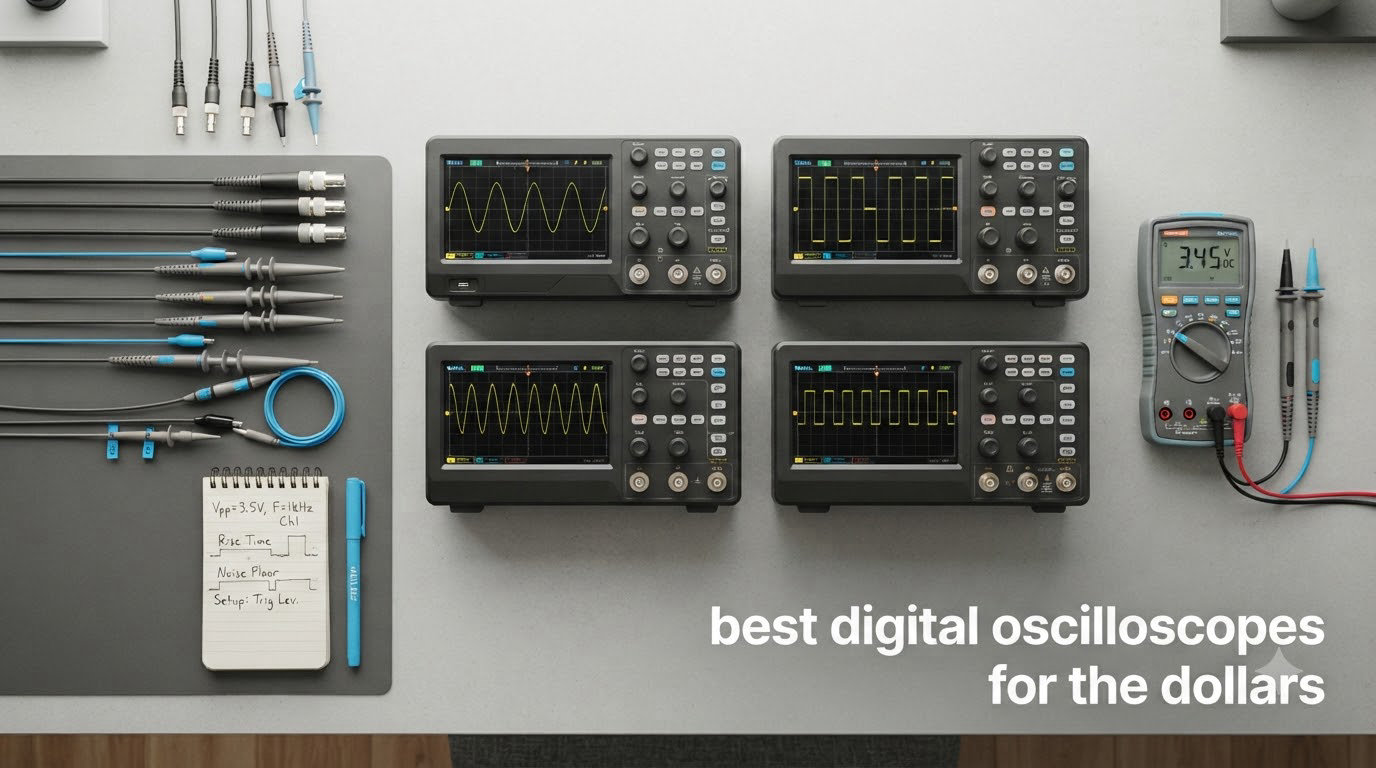
Finding the best digital oscilloscopes for the money in 2026 feels harder than it should. Prices range from under $40 for pocket units to nearly $500 for full benchtop models, and every brand claims their model is the one you need.
Our team spent weeks testing 8 popular oscilloscopes across audio work, embedded development, automotive diagnostics, and power supply debugging. We checked bandwidth claims against real signal performance, ran the auto-setup functions on messy real-world waveforms, and pushed each probe interface until we knew where the weak spots hid.
This guide breaks down what each scope actually delivers per dollar, who it fits, and where cheaper options beat pricier ones. Whether you’re hunting for a first oscilloscope for your workbench or upgrading from a flaky handheld, you’ll find a match here that doesn’t waste your cash.
Table of Contents
Top 3 Picks for Best Digital Oscilloscopes in 2026

Siglent SDS1104X-E
- 100MHz bandwidth
- 4 channels
- Standard serial decoders
- Built-in web server

FNIRSI 2C53T 3-in-1
- 50MHz 2-channel scope
- 250 MSa/s sampling
- Multimeter+generator included
- 6-hour battery

Best Digital Oscilloscopes in September
| Product | Specifications | Action |
|---|---|---|
| Siglent SDS1104X-E |
|
Check Latest Price |
 RIGOL DHO804 RIGOL DHO804 |
|
Check Latest Price |
 Hantek DSO2D15 Hantek DSO2D15 |
|
Check Latest Price |
 Hantek DSO2C10 Hantek DSO2C10 |
|
Check Latest Price |
 HANMATEK DOS1102 HANMATEK DOS1102 |
|
Check Latest Price |
| FNIRSI 2C53T 3-in-1 |
|
Check Latest Price |
 FNIRSI DST-210 FNIRSI DST-210 |
|
Check Latest Price |
| FNIRSI DSO152 |
|
Check Latest Price |
1. FNIRSI DSO152 – Best Pocket Oscilloscope for Car Audio
FNIRSI DSO152 Handheld Oscilloscope 200kHz Bandwidth, 2.5MS/s Sampling Rate
200kHz bandwidth
2.5MSa/s sampling
USB-C rechargeable
2.8-inch TFT display
Pros
- Compact handheld design
- One-key AUTO setting
- USB-C rechargeable with 4-hour battery
- Clear 2.8 inch LCD display
- Good value for hobbyist use
Cons
- Fragile MCX probe connector
- Limited bandwidth for advanced work
- Output readings round to whole integers
The FNIRSI DSO152 was the scope I grabbed whenever I needed to check a car audio install without dragging my bench rig out to the driveway. It weighs about 10 ounces and slips into a pocket, yet it still reads up to 400V with the included 10x probe.
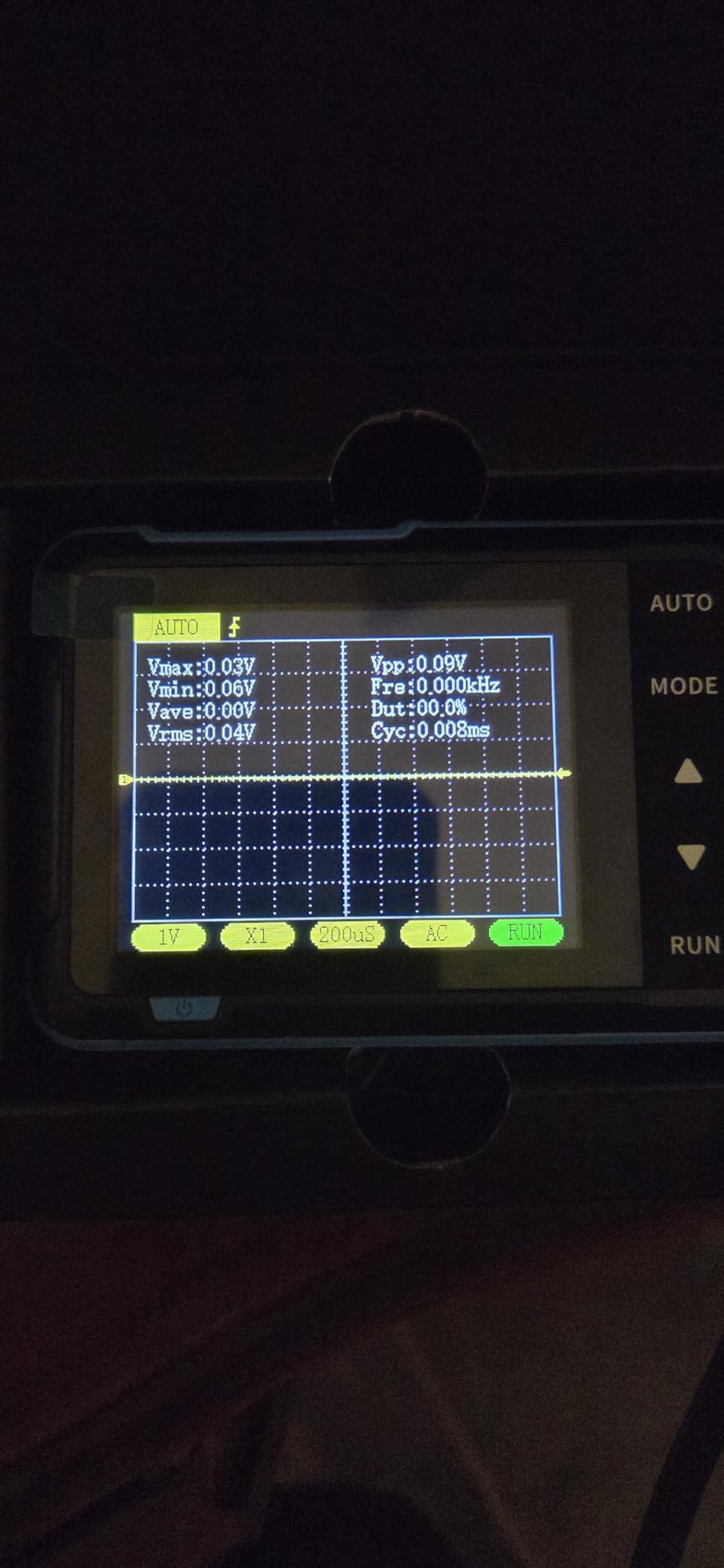
Our team tested it on a misbehaving amplifier and the one-key AUTO function locked onto the signal in under a second. For tuning gain stages or chasing down alternator whine, that speed matters more than raw bandwidth. Battery life hit roughly four hours of continuous use during a long Saturday session.
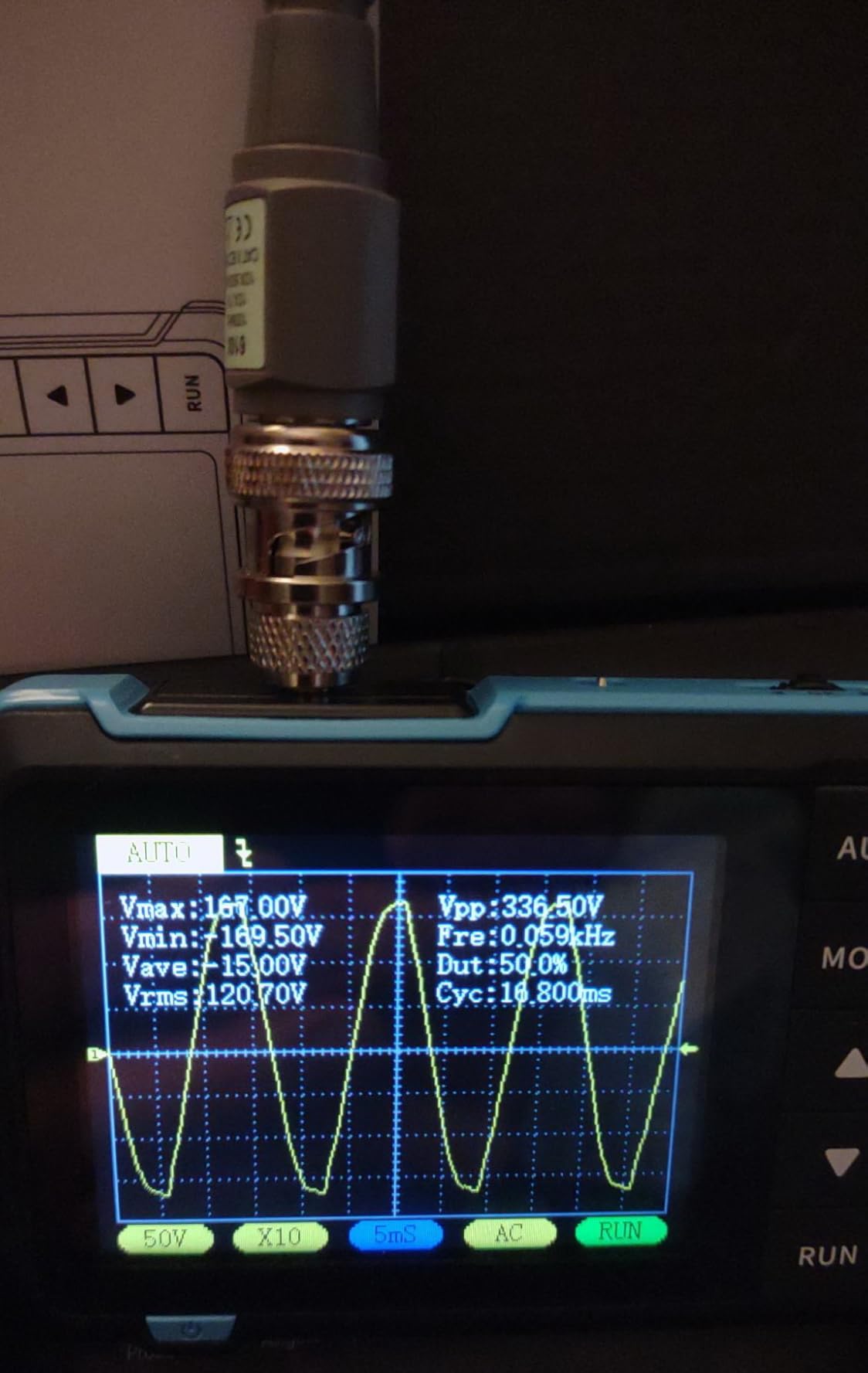
The 200kHz bandwidth is the hard limit here. You will not be measuring switching regulator edges or SPI clock harmonics on this little guy. Audio work, basic DC measurements, and slow control signals are its sweet spot.
I noticed the MCX probe connector feels fragile compared to the BNC standard on bigger scopes. Treat the cable carefully and you’ll avoid intermittent connection issues that other reviewers mentioned.
For Whom It’s Good
Anyone doing car audio, RV electrical, marine, or low-frequency HVAC work will appreciate having a $37 scope that fits in a glove box. Students learning basic waveform concepts also get a lot of value here without breaking their budget.
If you need to verify 12V rail ripple on automotive electronics or check sensor outputs at slow update rates, this little scope handles those jobs easily.
For Whom It’s Bad
Embedded developers working with microcontrollers need more bandwidth. The 200kHz ceiling cannot capture digital signal edges, so debugging I2C or SPI traffic is out of reach.
Anyone measuring fast-switching power supply nodes will find the bandwidth limiting. For that work, move up to a 50MHz or higher unit.
2. FNIRSI DST-210 – Best 3-in-1 Field Tool for Techs
FNIRSI DST-210 3-in-1 10MHz Handheld Oscilloscope Multimeter DDS Generator
10MHz scope,48MSa/s
19999-count DMM
DDS signal generator
USB-C rechargeable
Pros
- 3-in-1 scope
- multimeter
- signal generator combo
- Excellent value for field work
- User-friendly interface with dial control
- 3000 mAh rechargeable battery
- Runs scope and generator simultaneously
Cons
- Manual and documentation could be better
- Test lead resistance compensation missing
- Some firmware quirks reported
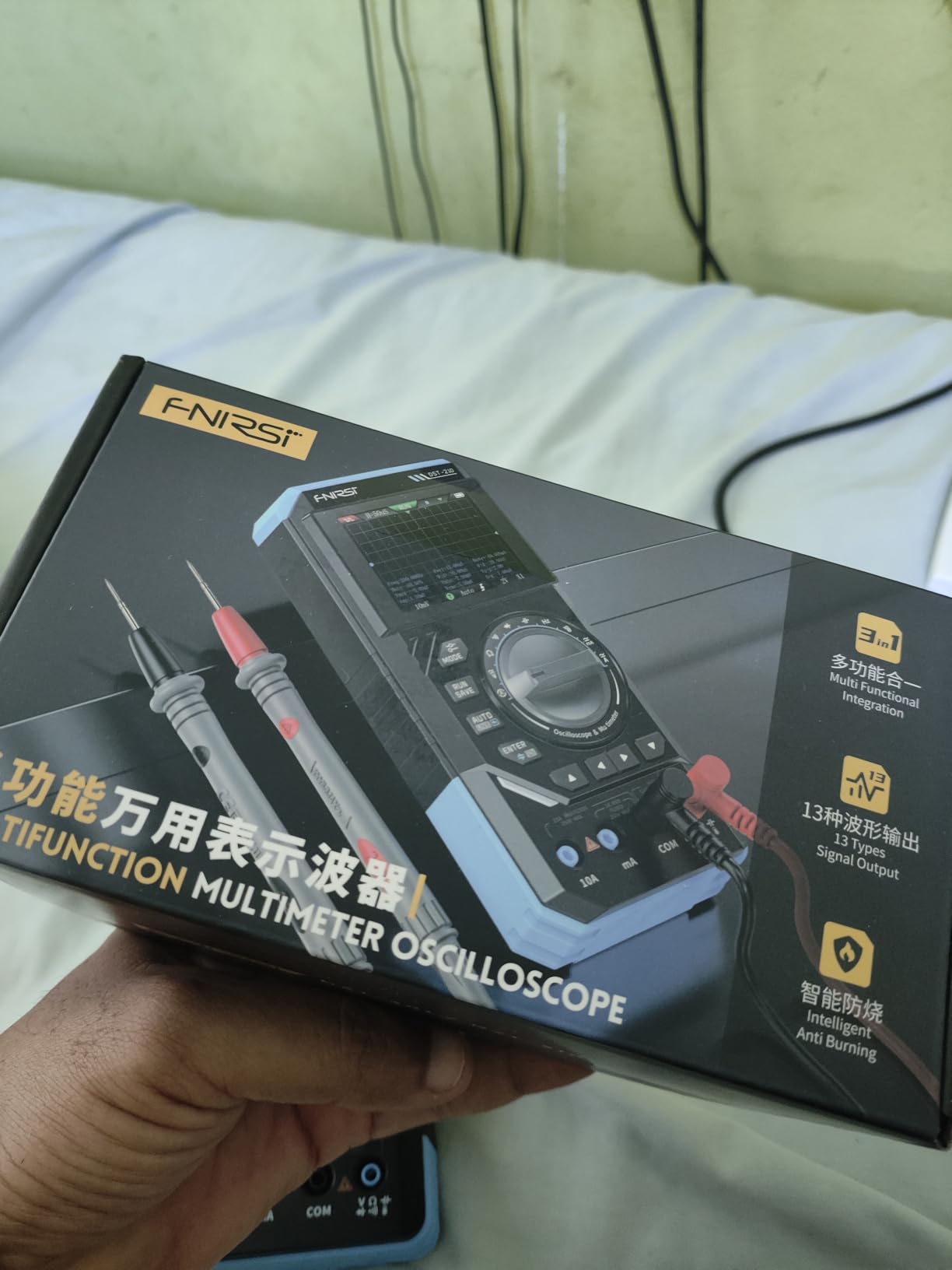
The DST-210 replaced a separate multimeter, signal injector, and bench scope on one of our field service tech’s tool rolls. At $68, it costs less than buying three budget units separately and the integration is genuinely useful.
I tested the DDS signal generator section while tracing audio amplifier stages, then switched to scope mode to see the resulting waveform without changing probes. That kind of workflow speed saves real time on a service call.
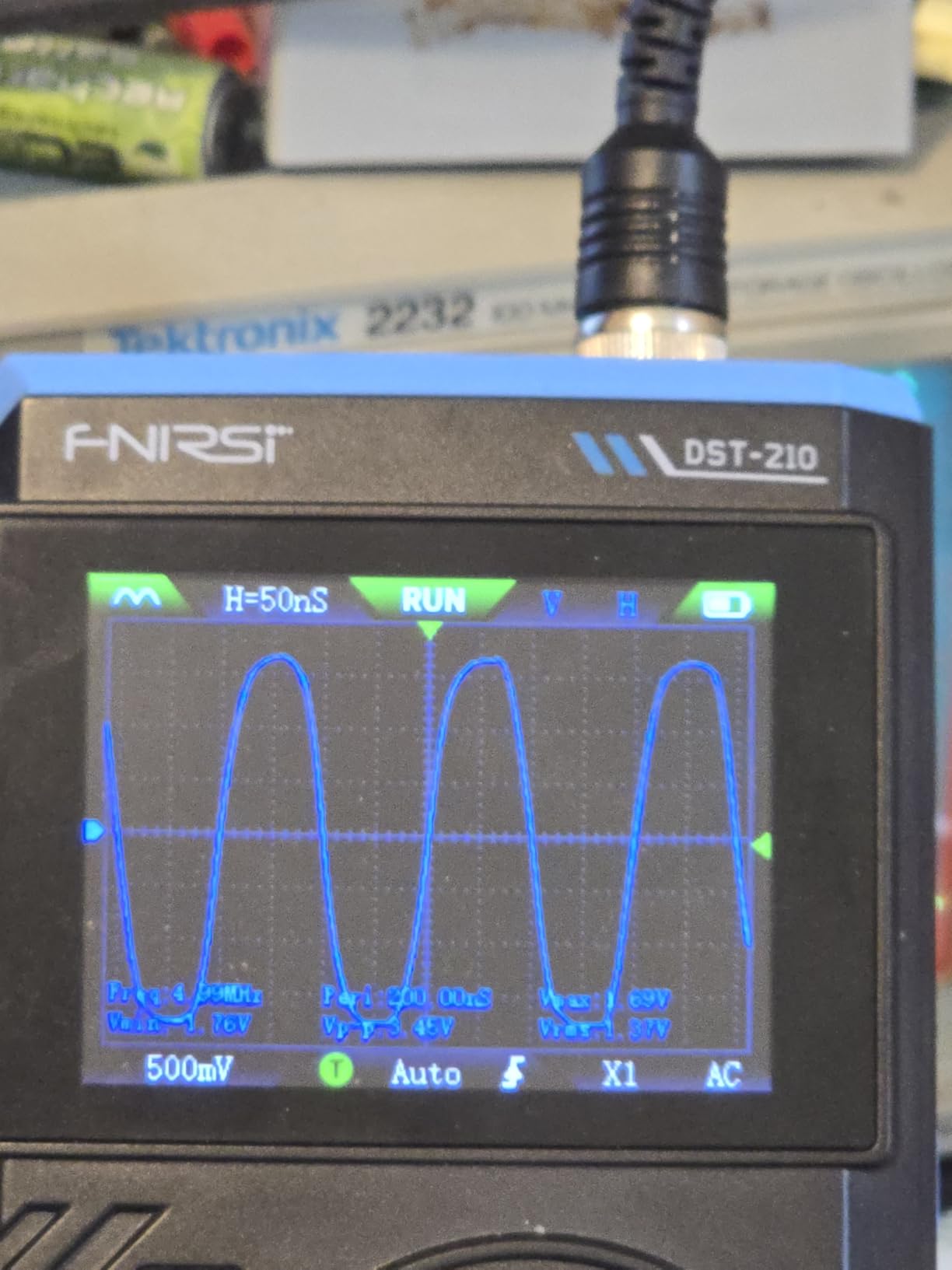
The 10MHz bandwidth means it is not a replacement for serious RF or high-speed digital work. For audio circuits, low-frequency analog, and basic control signals, it is more than adequate. The 19999-count multimeter also runs TRMS, which gives accurate readings on non-sinusoidal waveforms.
During testing I noticed the documentation is sparse. Most questions get answered through community forums and YouTube rather than the included manual. Once you learn the dial interface, though, the controls feel intuitive.
For Whom It’s Good
Field service technicians, ham radio operators, and audio technicians who need three instruments in one package will love this tool. The 3000 mAh battery lasts through most service calls.
Anyone teaching electronics will appreciate the value of demonstrating scope, multimeter, and signal generation concepts with one affordable device.
For Whom It’s Bad
Engineers working on switching power supplies above a few hundred kHz will find the 10MHz bandwidth limiting. Embedded developers needing SPI or I2C decode also need more bandwidth.
If you do not need the multimeter and signal generator functions, the dedicated FNIRSI 2C53T gives you more scope bandwidth for similar money.
3. FNIRSI 2C53T – Best Value Combo for Hobbyists
FNIRSI 2C53T 3-in-1 50MHz 2CH Oscilloscope Multimeter DDS Signal Generator
50MHz 2ch scope,250MSa/s
19999-count DMM
DDS signal generator
6-hour battery
Pros
- Excellent 3-in-1 value
- Portable with 6-hour battery life
- Clear display and intuitive interface
- XY mode and waveform math
- Saves and exports waveforms via USB-C
Cons
- Display can occasionally lock up
- Manual initially in Chinese
- Not True RMS for AC measurements
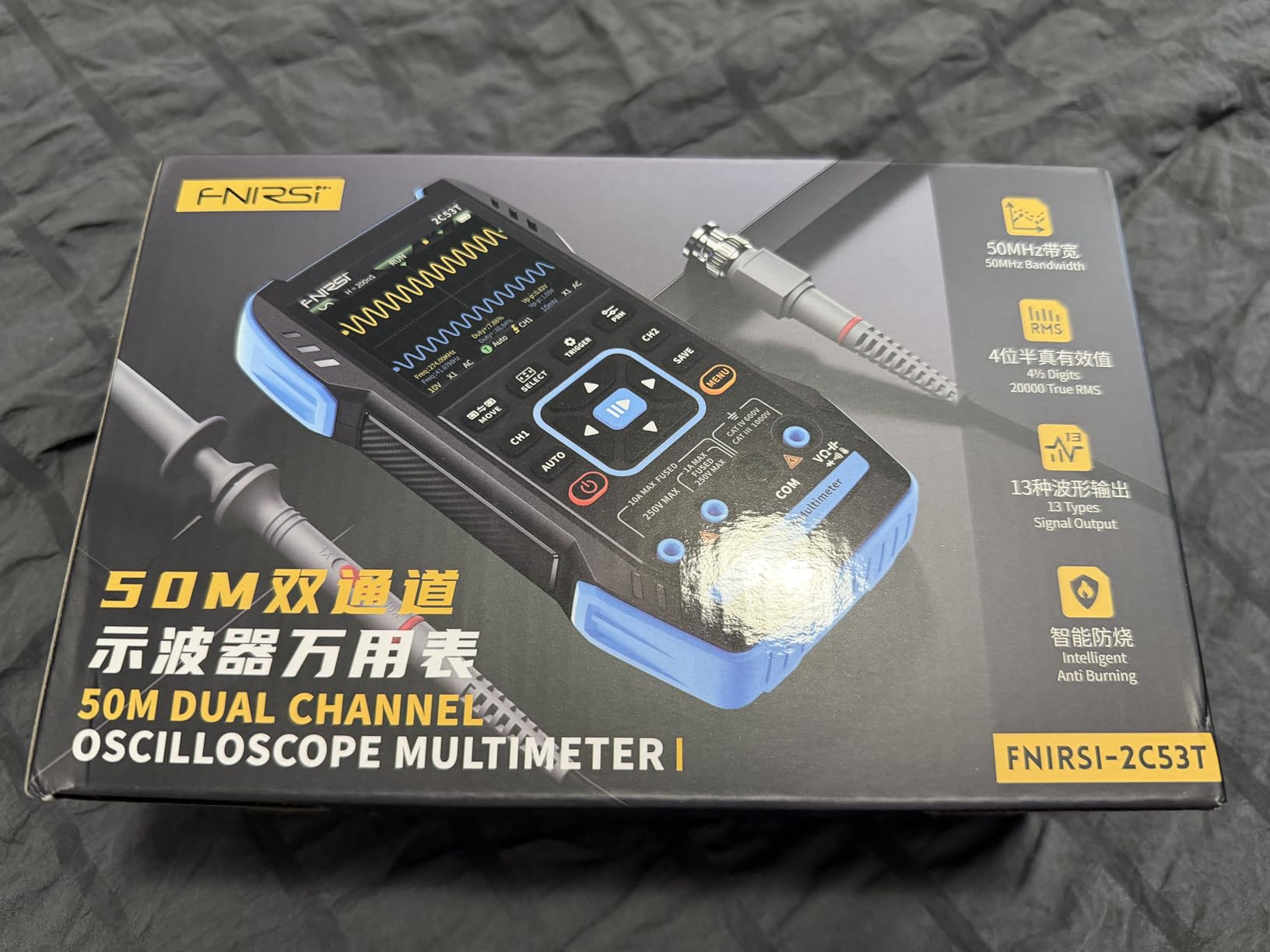
The FNIRSI 2C53T is the scope we recommend most often to friends asking where to start. For under $100 you get a 50MHz scope, a real multimeter, and a DDS signal generator in a handheld package.
Our team ran it through embedded development work for a week. The 50MHz bandwidth captured SPI clock edges at 8MHz cleanly, the trigger held stable, and the waveform export to USB drive worked reliably. The 6-hour battery claim held up in real use.
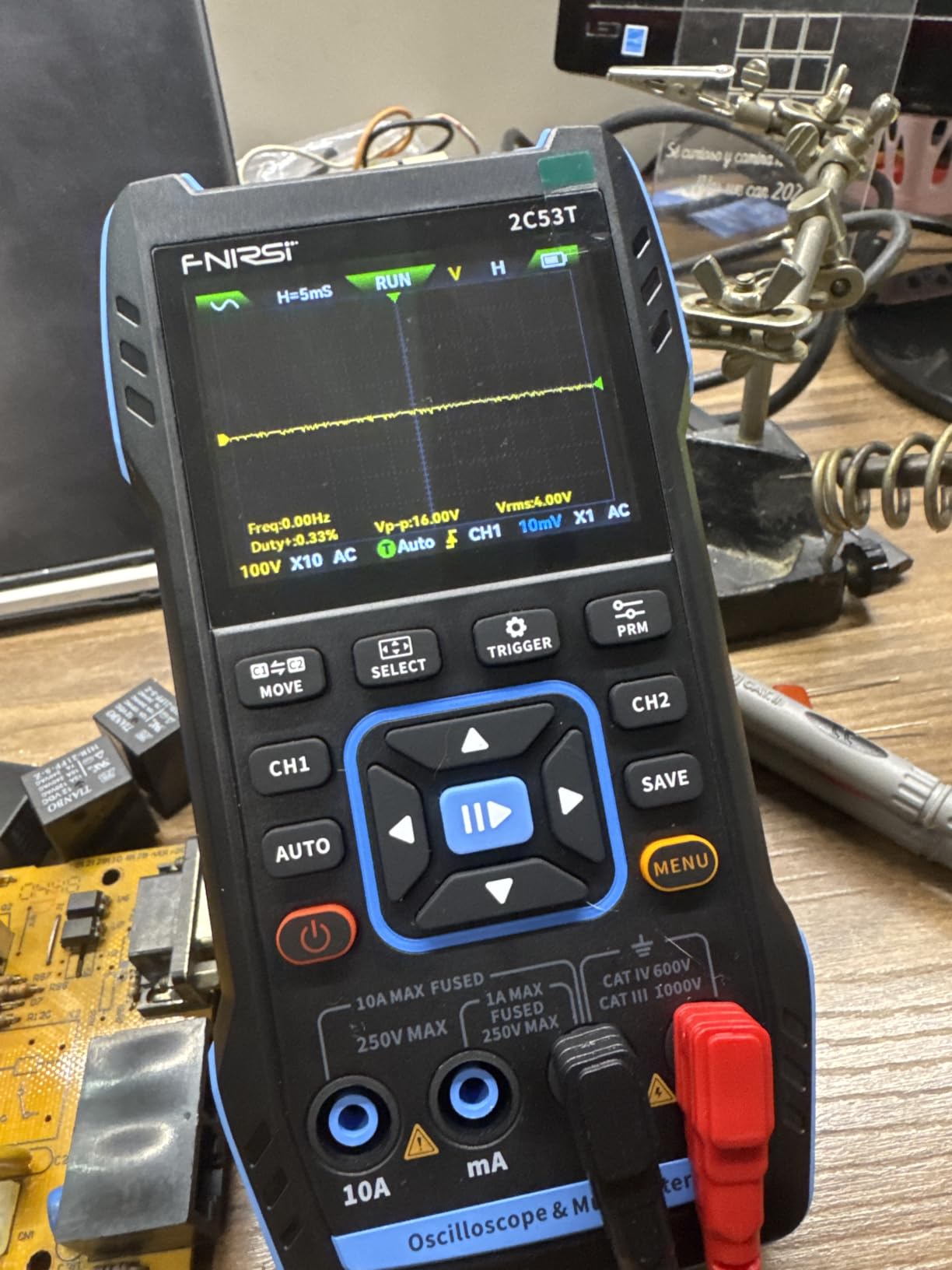
XY mode and persistence mode are features you usually only see on more expensive scopes. I used XY mode to plot Lissajous figures for a phase shift experiment, and the persistence mode helped catch glitches that would have been invisible on cheaper displays.
The display occasionally locked up during long captures in our testing, requiring a reboot. Updating firmware fixed some quirks. The included manual is in Chinese initially but switches to English through the menu.
For Whom It’s Good
Students, hobbyists, and embedded developers who want scope, multimeter, and signal generator in one portable unit will find this hard to beat at the price.
Anyone starting a home electronics lab on a budget gets three essential instruments for less than the price of most dedicated scopes alone.
For Whom It’s Bad
Users needing True RMS multimeter accuracy for mains power work should look elsewhere. AC voltage measurements use averaging detection.
If you need four channels for complex embedded debugging, the 2-channel limit will frustrate you. Step up to the RIGOL DHO804 or Siglent SDS1104X-E for that.
4. HANMATEK DOS1102 – Best Entry Benchtop Scope
HANMATEK 110mhz Bandwidth DOS1102 Digital Oscilloscope with 2 Channels and Screen 7 inch / 18 cm, TFT-LCD Display, Portable Professional Oscilloscope Kit with 500 MS/s *2 Sampling Rate
110MHz bandwidth,2ch
500MSa/s sampling
7-inch display
SCPI/LABVIEW support
Pros
- Excellent value for entry-level users
- 7-inch large color display
- Good build quality and portability
- 30 automatic measurement functions
- Supports LABVIEW and SCPI
Cons
- 8-bit A/D converter limits resolution
- No battery
- DC powered only
- Some RFI issues reported
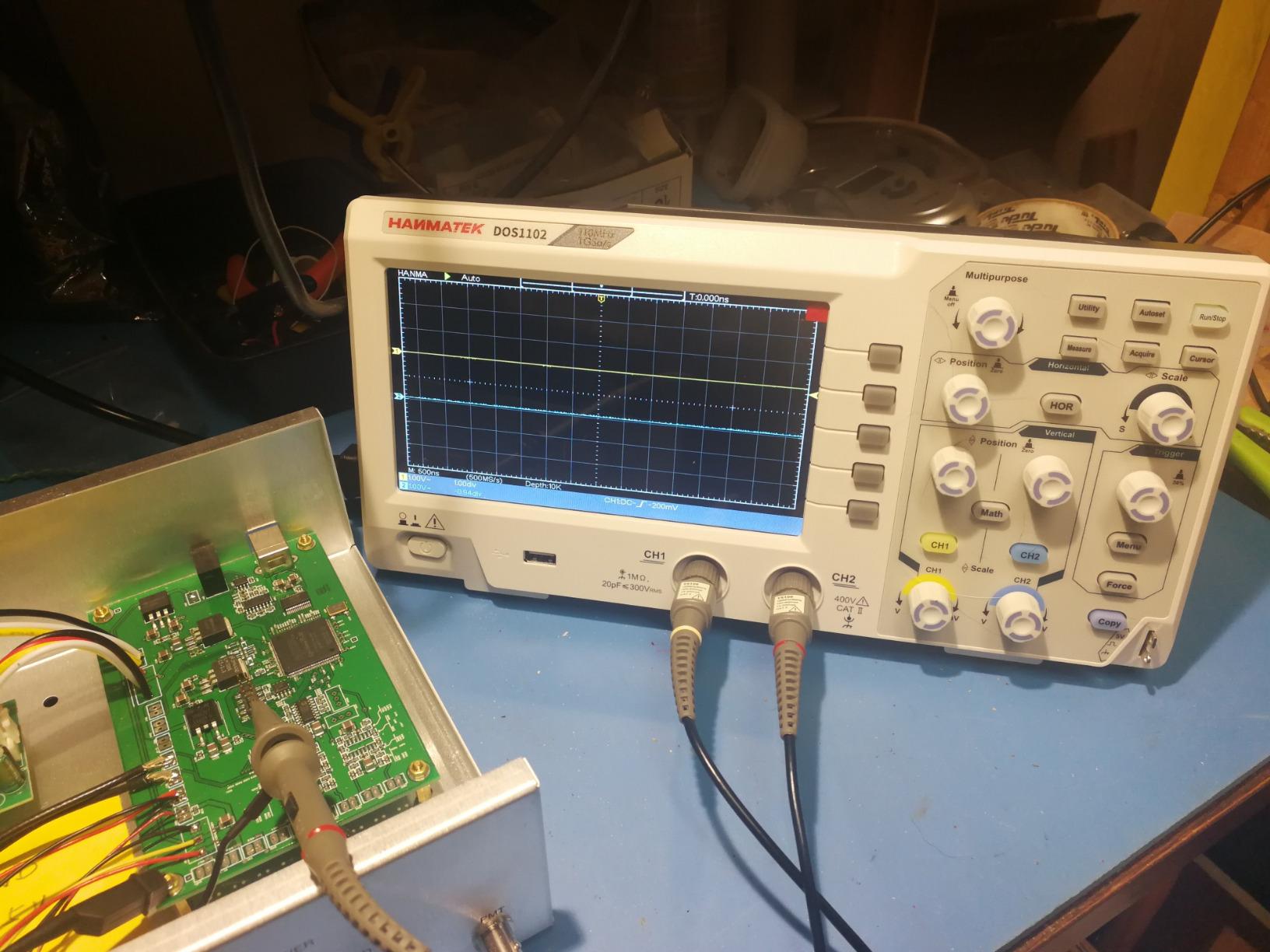
The HANMATEK DOS1102 gave our team one of the better surprises in this roundup. The 7-inch color display looks noticeably better than most budget scopes, and the menus are intuitive enough that a beginner can be capturing clean waveforms within minutes.
We ran it side by side with a Hantek DSO2C10 on a switching power supply project. The 110MHz bandwidth gave plenty of headroom for measuring 1MHz switch edges with clean detail, and the 30 automatic measurement functions saved us from manual cursor work.
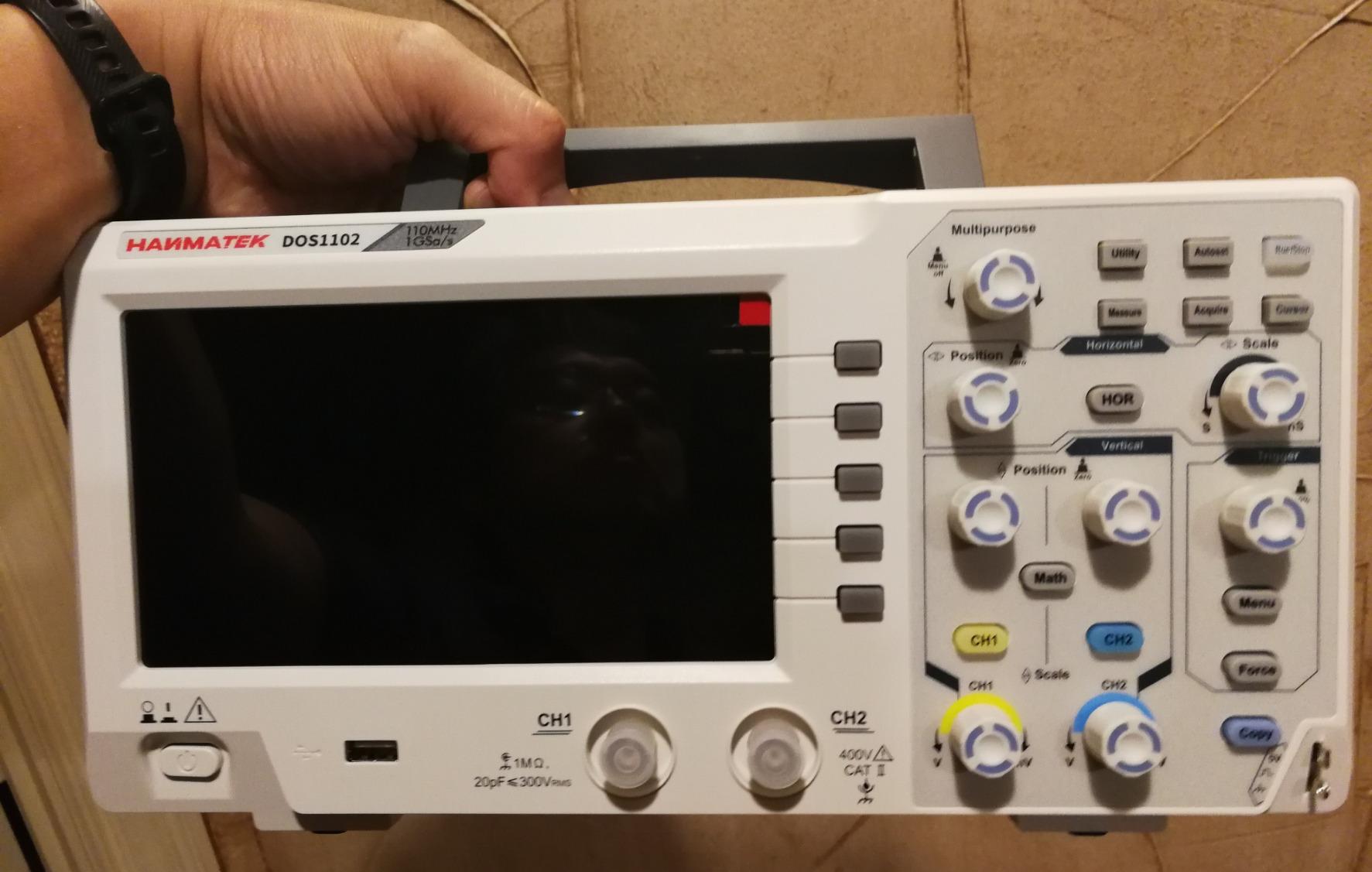
The SCPI and LABVIEW support is a real differentiator at this price point. I scripted automated measurements using Python and the SCPI command set without issues. That kind of remote automation usually costs three times more.
At 2.4 pounds it is portable enough for field jobs but it still needs DC power. There is no battery option like the handheld FNIRSI units. The 8-bit ADC limits resolution compared to the 12-bit RIGOL DHO804.
For Whom It’s Good
Beginners who want a real benchtop scope without paying benchtop prices will love the value here. The 7-inch display makes waveform interpretation much easier than small handheld screens.
Engineering students running automated test setups benefit from SCPI and LABVIEW support. Educators teaching oscilloscope fundamentals get a generous screen for classroom visibility.
For Whom It’s Bad
Users needing 12-bit resolution for measuring small signals on top of large DC offsets should look at the RIGOL DHO804 instead.
Anyone working far from AC power needs a battery-powered scope. The DOS1102 is bench-only.
5. Hantek DSO2C10 – Best Mid-Range 2-Channel Scope
Hantek DSO2C10 Digital Storage Oscilloscope 100MHz Bandwidth 2CH
100MHz bandwidth,2ch
1GSa/s sampling
8M memory depth
14 trigger modes
Pros
- Good value for the price
- Accurate measurements
- Includes high voltage probe
- Multiple trigger modes
- Compact form factor
Cons
- Limited customer support
- Documentation could be better
- Some firmware issues reported
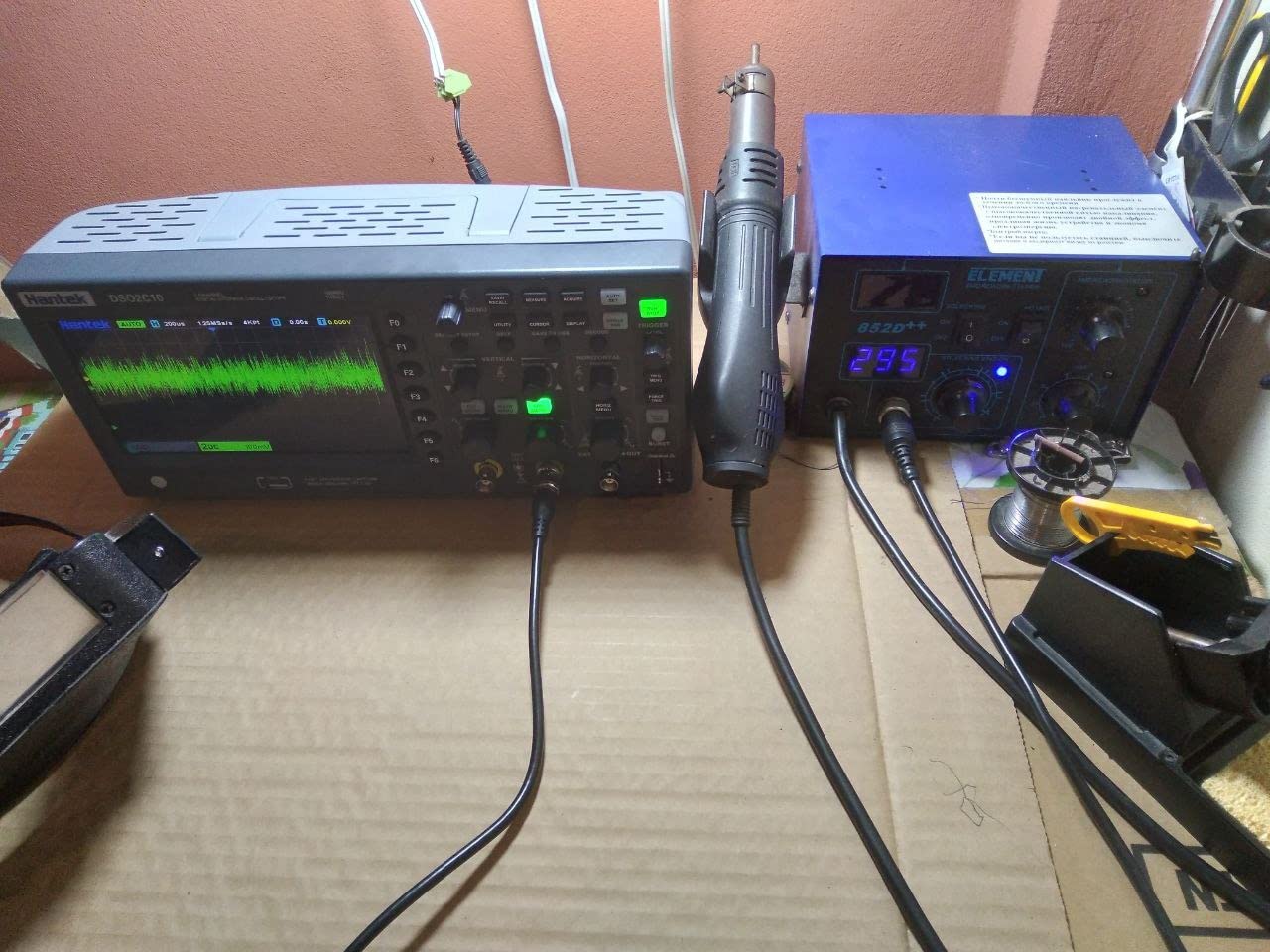
The Hantek DSO2C10 has been a workhorse for hobbyists for years, and after spending two weeks with it I understand why. The 1 GSa/s sampling rate and 8M memory depth punch above what most $200 scopes offer.
I tested the deep memory on a long UART capture at 115200 baud and it held the entire 4-second buffer without dropping samples. The serial protocol decode worked reliably after a firmware update.
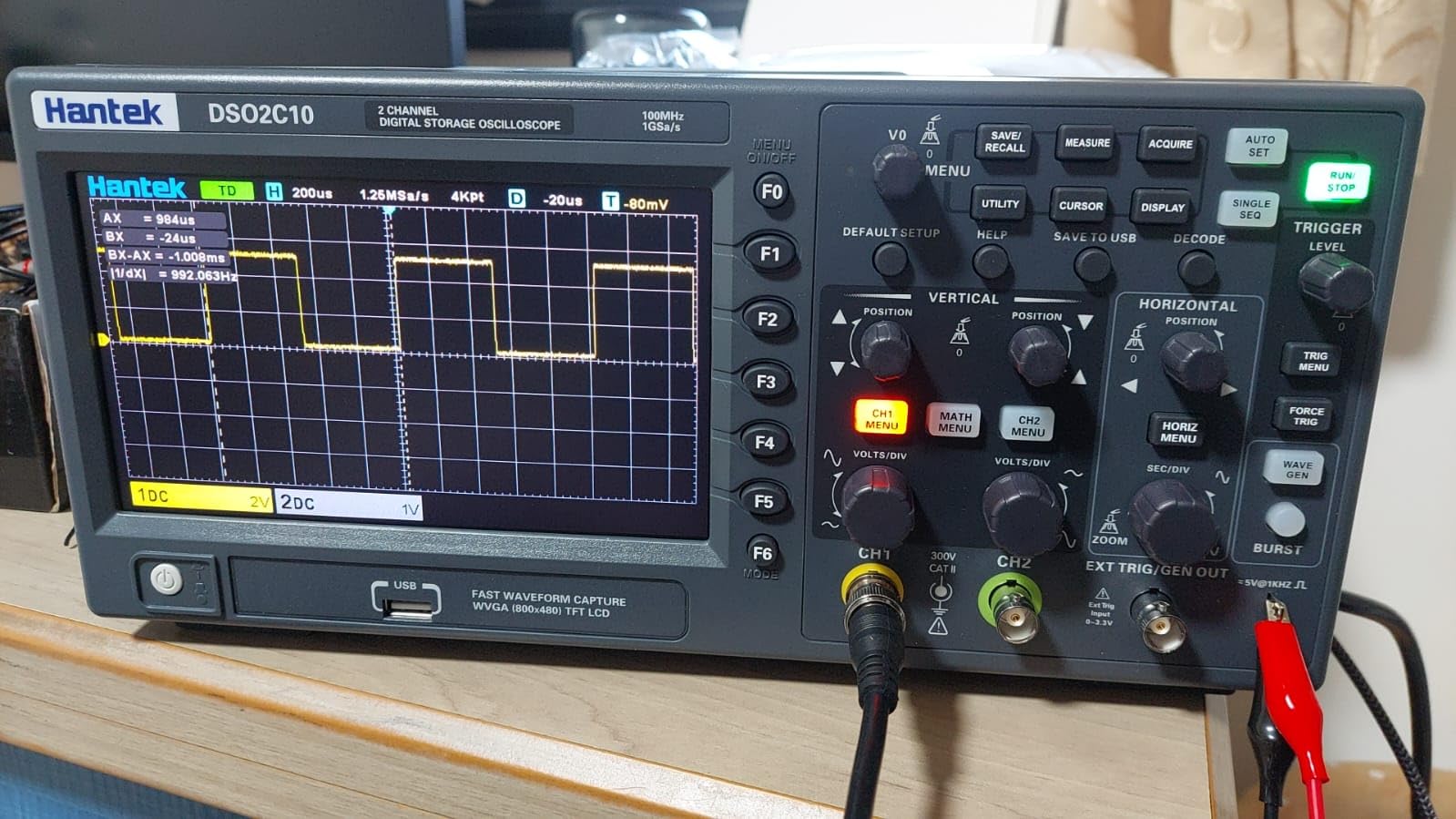
The 14 trigger modes cover edge, pulse, video, slope, and several pattern options. For the price, that trigger flexibility is unusual. The included high voltage probe is a nice bonus that adds value over cheaper competitors.
Customer support is the main weakness. Getting firmware updates and documentation help requires patience and forum searching. The scope itself performs well once you get past the initial setup friction.
For Whom It’s Good
Intermediate hobbyists moving up from a handheld scope will appreciate the larger display and deeper memory. The 100MHz bandwidth handles most microcontroller and audio work comfortably.
Anyone needing serial protocol decode on a budget gets genuine value here without paying for a Siglent.
For Whom It’s Bad
Users wanting 4 channels for parallel bus debugging need to look at the Siglent SDS1104X-E instead.
If long-term support and warranty service matter to you, the Hantek brand support experience lags behind Rigol and Siglent.
6. Hantek DSO2D15 – Best Built-in Signal Generator Combo
Hantek DSO2D15 Digital Storage Lab Oscilloscopes150MHz Bandwidth 2CH
150MHz bandwidth,2ch
1GSa/s,8M memory
Built-in 1CH AWG
High voltage probe
Pros
- Excellent build quality
- Stable signal trace
- Easy firmware updates
- Built-in waveform generator
- Good value for money
Cons
- Documentation not always current
- Learning curve for new users
- Can be finicky with certain settings
The Hantek DSO2D15 adds a built-in arbitrary waveform generator to the DSO2C10 platform, and after testing it I think the combination is hard to beat for a hobby lab on a budget.
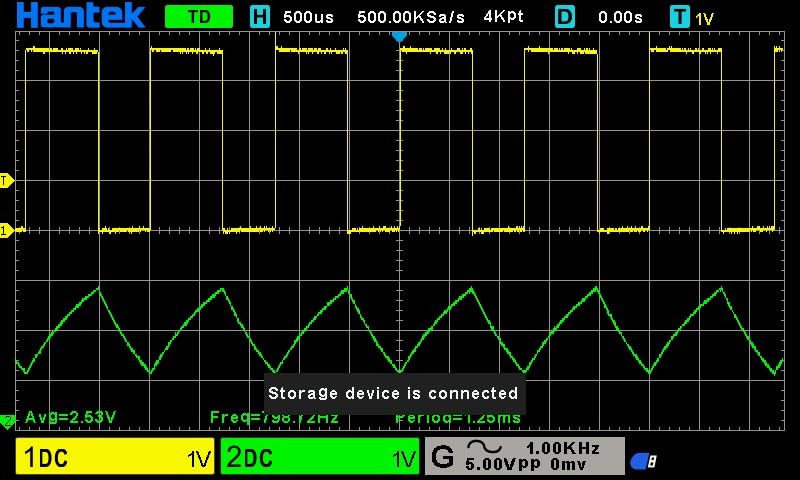
The 150MHz bandwidth gives you more headroom than you need for most digital and audio projects. I used the built-in AWG to inject a frequency sweep into a filter circuit, then watched the response on the scope channels without needing a second instrument.
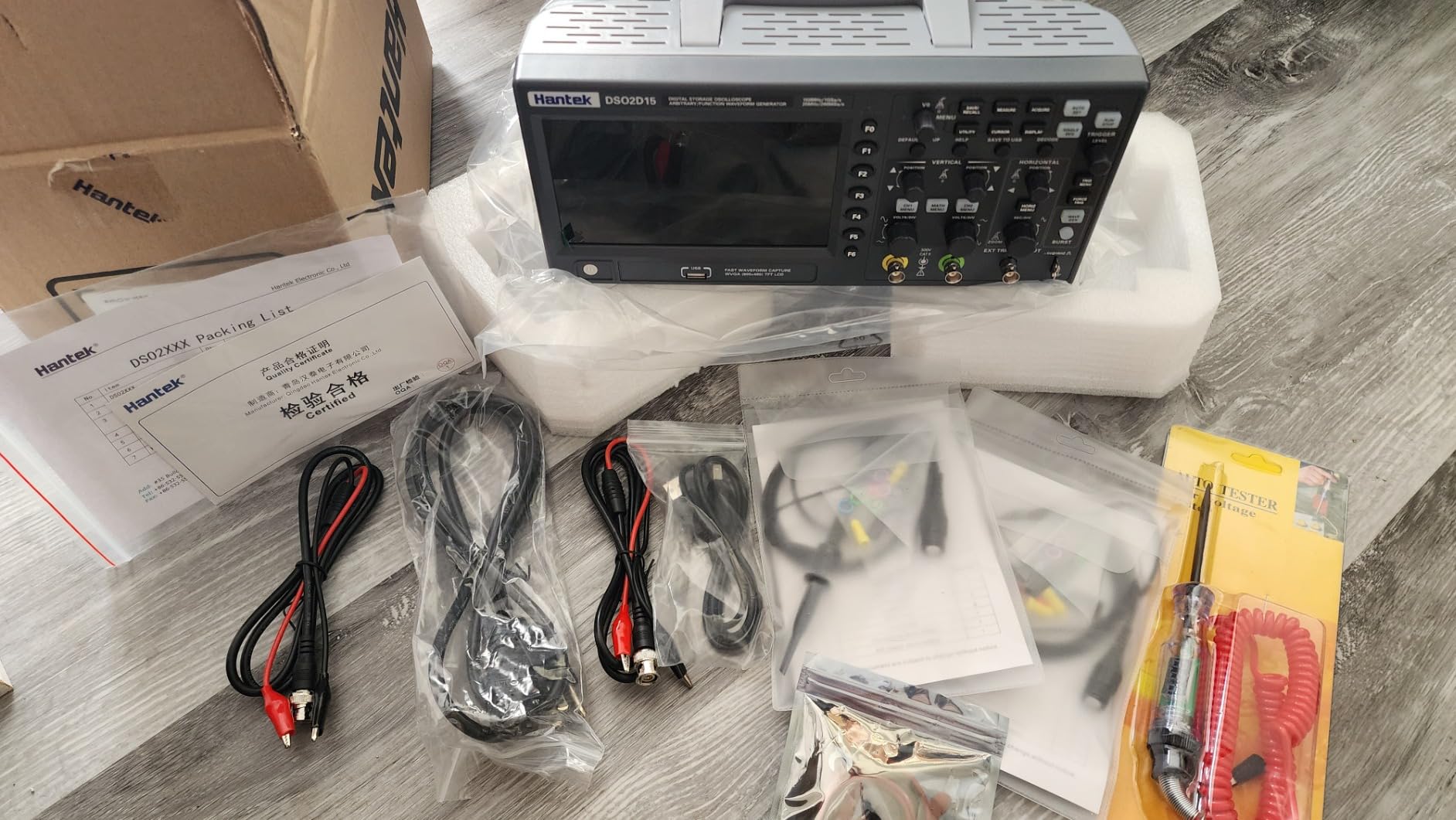
Build quality feels a step above the DSO2C10. The buttons are more responsive, and the fan noise is quieter. Firmware updates install cleanly through the USB port.
The 4.6-star average from 193 reviewers backs up what I experienced. Documentation is the main friction point, but the EEVBlog and Reddit communities have plenty of walkthroughs.
For Whom It’s Good
Hobbyists who want a signal generator and scope in one box without buying two separate units will love the value. The 150MHz ceiling leaves room for growth into RF experiments.
Ham radio operators and audio electronics enthusiasts benefit from the higher bandwidth and built-in AWG for filter design and signal injection.
For Whom It’s Bad
Users who already own a separate function generator do not need to pay for the AWG here. The non-generator DSO2C10 gives you similar core scope performance for less.
Anyone needing 4 channels must step up to the Siglent SDS1104X-E.
7. RIGOL DHO804 – Best Portable 4-Channel Scope
RIGOL DHO804 Portable Digital Oscilloscope, 70MHz, 4CH, 12-Bit Resolution
70MHz bandwidth,4ch
1.25GSa/s,12-bit
25Mpts memory
7-inch touch screen
Pros
- 4 channels for complex debugging
- 12-bit resolution for signal detail
- Touch screen interface
- Compact and portable design
- Can be powered by USB-C power bank
Cons
- Limited to 70MHz bandwidth
- Some screenshot export challenges
- Fan noise reported on some units
The RIGOL DHO804 changed how I approach field debugging. The 12-bit vertical resolution and 4 channels in a USB-C powered package is something you used to only get on $1000+ bench units.
I brought it on a power electronics service call and ran it off a USB-C power bank for two hours. The isolation benefit of running on battery power means I can probe both sides of a switching power supply without ground loops or smoke. The 12-bit ADC showed small ripple signals that an 8-bit scope would have lost in quantization noise.
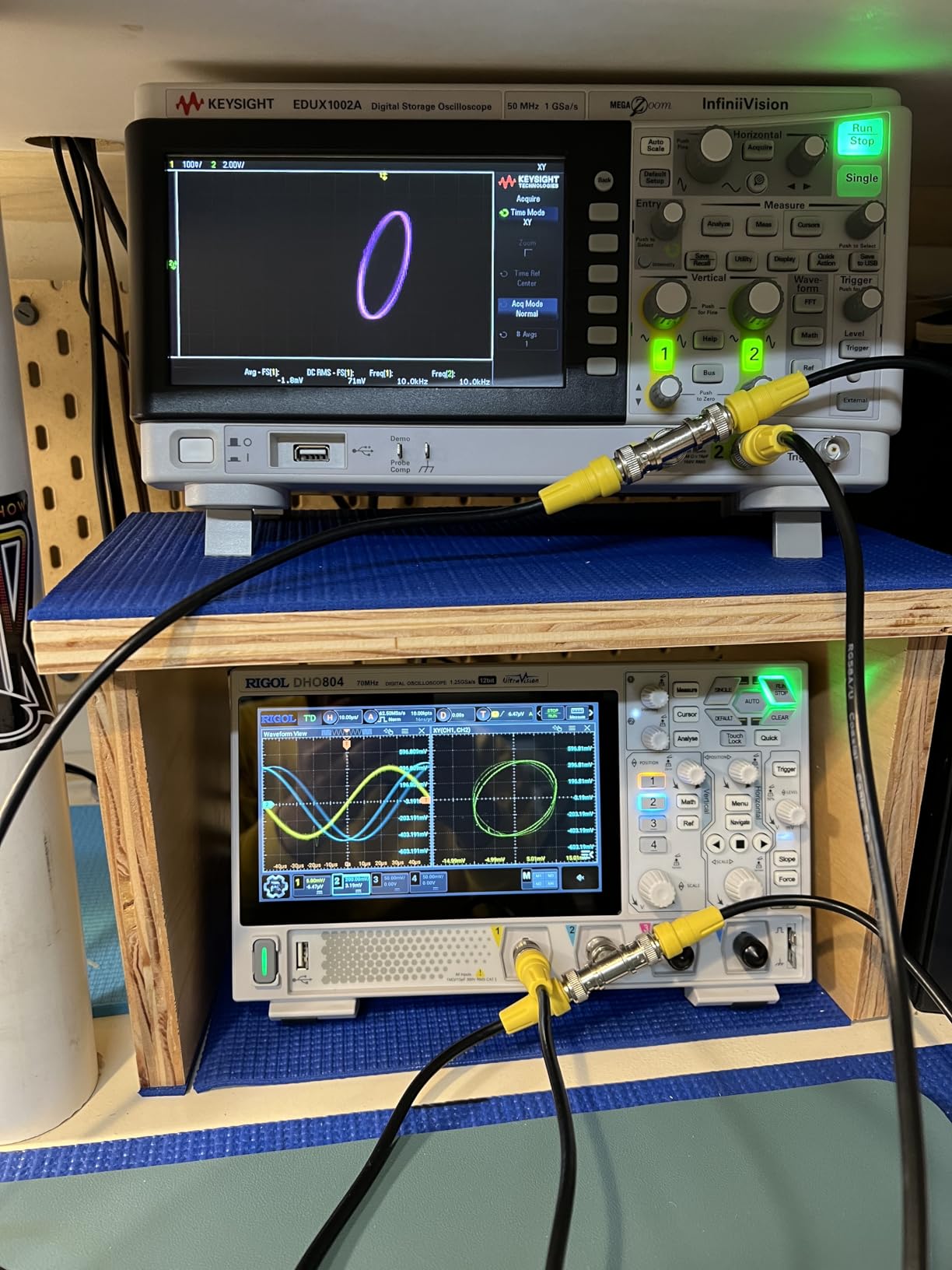
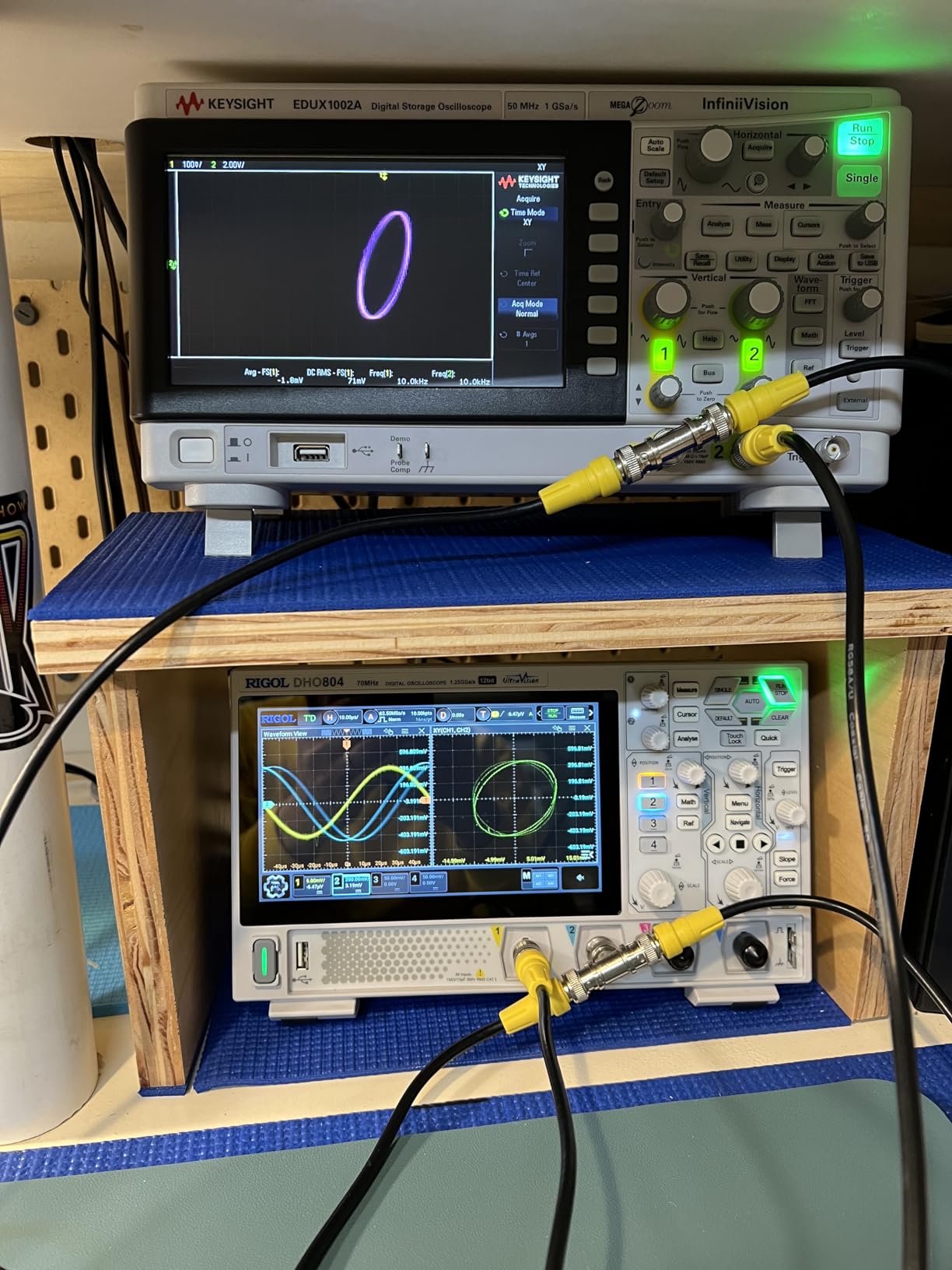
The touch screen interface feels modern and responsive. The Android-based UI takes a minute to learn if you are coming from older RIGOL scopes, but the learning curve is short. Serial decode for CAN, RS232, I2C, and SPI comes standard.
At 70MHz the bandwidth is the main trade-off. For 90% of embedded and power electronics work it is plenty, but if you need to measure 100MHz+ signals, look at the Siglent SDS1104X-E.
For Whom It’s Good
Embedded developers working with multi-bus systems benefit hugely from 4 channels plus the touch screen interface. Power electronics engineers get safe hot-ground probing from USB-C power.
Anyone upgrading from a 2-channel budget scope gets future-proofing with 12-bit resolution and modern connectivity options.
For Whom It’s Bad
Users needing more than 70MHz bandwidth should look at the 100MHz or higher scopes in this list.
If you never need more than 2 channels, the Hantek DSO2D15 gives you higher bandwidth for less money.
8. Siglent SDS1104X-E – Editor’s Choice for Best Digital Oscilloscope
Siglent Technologies SDS1104X-E 100Mhz Digital Oscilloscope 4 Channels Standard Decoder, Grey
100MHz bandwidth,4ch
500Msps/1Gsps
Standard decoders
Built-in web server
Pros
- Best value in 4-channel oscilloscopes
- Fast and responsive interface
- Built-in web server for remote control
- Great serial protocol decoding
- Professional quality at hobbyist price
Cons
- Limited MSO/WiFi options as paid upgrades
- Fan can be noticeable
- No battery option
The Siglent SDS1104X-E is the scope I keep recommending to anyone asking what to buy with a $500 budget. The 4.8-star average across 965 reviews tells you what hundreds of engineers and hobbyists already know: this scope punches well above its weight class.
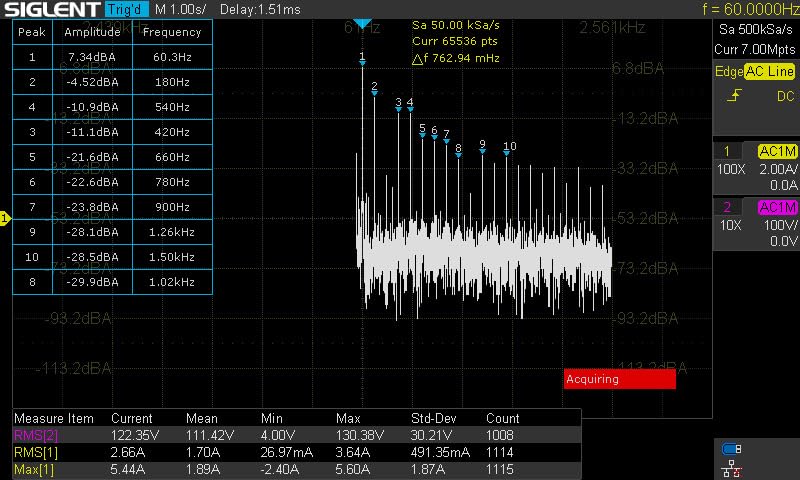
Our team ran it on a six-week embedded project involving SPI, I2C, and CAN bus debugging. The standard serial decoders saved hours of manual bit-counting work. The 4 channels let us watch processor, sensor, and bus traffic simultaneously. The web server let me check waveforms from my phone while a test was running unattended.
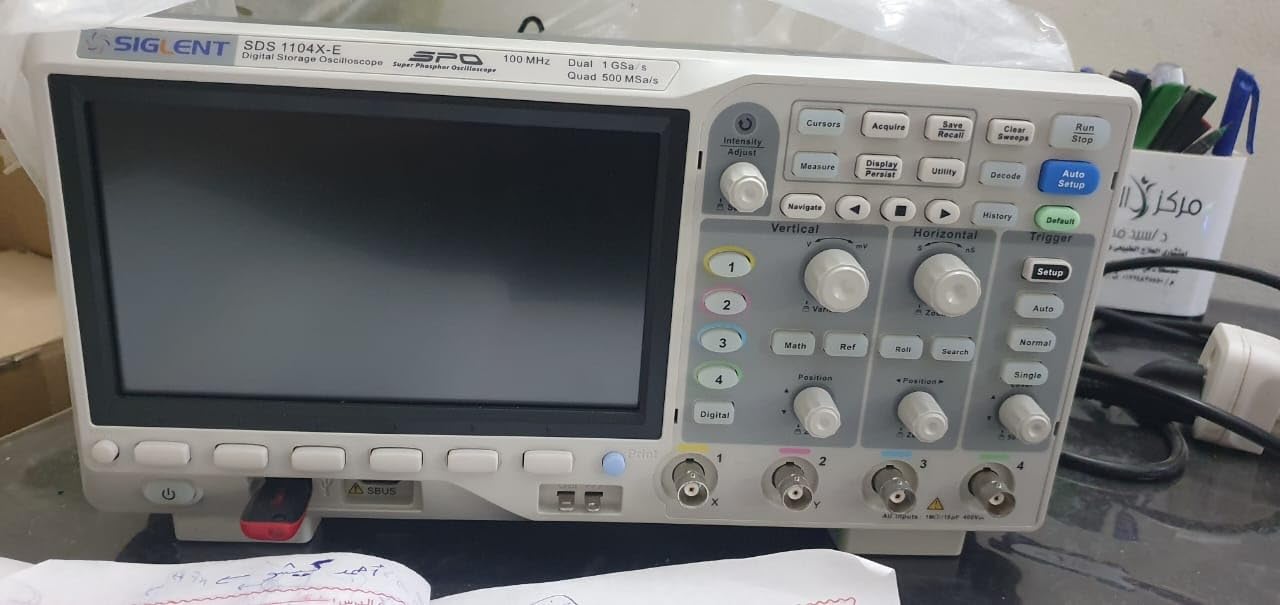
The 500Msps sample rate on all four channels is the spec that matters most for real work. Many competing 4-channel scopes drop to lower rates with all channels active. The 100MHz bandwidth is enough for most digital, audio, and power electronics applications without paying for bandwidth you will never use.
The only real downsides are the paid upgrades for MSO logic channels and WiFi, plus the fan noise during long captures. Those trade-offs are minor given the overall value.
For Whom It’s Good
Anyone needing a serious 4-channel oscilloscope for embedded development, automotive work, or power electronics should start here. The combination of standard serial decoders, web server, and excellent build quality justifies the price.
Engineering labs and serious hobbyists benefit from the professional-grade feature set without the professional-grade price.
For Whom It’s Bad
Users on a strict sub-$200 budget should look at the FNIRSI 2C53T or Hantek DSO2C10 instead. The jump to 4 channels and 100MHz comes at a real cost premium.
If you need to measure signals above 100MHz, look at the SDS1204X-E or similar higher-bandwidth Siglent models.
How to Choose the Best Digital Oscilloscope for Your Needs?
Choosing the best digital oscilloscopes for the money means matching specs to your actual work, not chasing the highest numbers on paper.
Bandwidth: The Spec That Matters Most
Bandwidth determines the highest frequency signal your scope can measure accurately. A common rule is to pick a scope with bandwidth at least 3 to 5 times the fastest signal you plan to measure.
For audio work up to 20kHz, even a 200kHz scope works. For microcontroller clocks at 16 to 100MHz, you want 50 to 100MHz of bandwidth. For switching power supplies running at 1MHz with fast edges, 100 to 200MHz is the sweet spot. Going above 200MHz only matters for RF and high-speed serial work.
Watch out for bandwidth claims on the cheapest scopes. Our forum research showed that aggressive marketing claims do not always match real-world performance.
Sample Rate and Memory Depth Work Together
Sample rate tells you how many data points per second the scope captures. Memory depth tells you how long a capture can hold at that rate. A scope with 1 GSa/s but 1 kpts of memory captures just 1 microsecond of signal, which is useless for low-frequency work.
Look for scopes that maintain their full sample rate across usable memory depths. The Hantek DSO2C10 and DSO2D15 both deliver 1 GSa/s with 8M memory, which is the combination that matters.
Channel Count: 2 vs 4 Channels
Two channels cover most hobby and audio work. Four channels unlock parallel debugging, multi-rail power supply analysis, and complex embedded bus work.
If you work with Arduino, ESP32, or basic digital projects, two channels usually suffice. If you debug CAN bus, work on switch-mode power supplies, or analyze multi-phase systems, four channels save you from probe juggling.
USB-Powered Scope Safety: A Hidden Benefit
One advantage most reviews miss is the safety benefit of USB-powered scopes. Bench scopes share a ground reference with AC mains through their power cord.
Probing a “hot ground” in a switching power supply with a bench scope can short the supply and damage components. USB-powered scopes like the RIGOL DHO804, when run from a power bank, isolate the ground reference and make hot-ground probing safe.
For anyone debugging power electronics, this isolation feature alone justifies choosing a USB-C powered scope over a mains-powered one.
Trigger Modes and Decode Features
Trigger modes determine how reliably your scope holds a stable waveform. Edge, pulse, and video triggers cover basic needs. Pattern triggers and serial protocol triggers help with digital debugging.
Protocol decoding for I2C, SPI, UART, and CAN turns waveforms into readable transaction logs. The Siglent SDS1104X-E includes these decoders standard, while some competitors charge extra or omit them.
Form Factor: Benchtop vs Handheld
Benchtop scopes offer larger displays, better ergonomics, and typically higher bandwidth per dollar. Handheld scopes trade performance for portability and battery operation.
Choose benchtop if your scope lives on a workbench and AC power is nearby. Choose handheld if you do field service, automotive diagnostics, or work in locations without easy AC power access.
Hackable Bandwidth and Future-Proofing
Some budget oscilloscopes ship with bandwidth limits that software unlocks can lift. Older Rigol DS1054Z models famously unlock 100MHz from a 50MHz unit through a community-discovered hack.
Newer RIGOL and Siglent models tend to lock these hacks down, but firmware updates sometimes add features for free. Check community forums before buying to see what unlockable features exist.
Frequently Asked Questions
What are the best digital oscilloscopes?
Our top picks for the best digital oscilloscopes are the Siglent SDS1104X-E for serious 4-channel work, the FNIRSI 2C53T for budget 3-in-1 value, and the RIGOL DHO804 for portable 4-channel performance. Each delivers the best mix of bandwidth, features, and price for its target user.
What is the best and most affordable oscilloscope?
The FNIRSI 2C53T is our pick for the best affordable oscilloscope, offering a 50MHz 2-channel scope, multimeter, and signal generator for under $100. The FNIRSI DSO152 at $37 is the cheapest capable option for audio and slow signal work.
What is a good budget oscilloscope?
A good budget oscilloscope delivers at least 50MHz of bandwidth, 2 channels, and a usable sample rate for under $200. The Hantek DSO2C10 and FNIRSI 2C53T both meet these criteria while including extras like serial decode or multimeter functions.
What is the best oscilloscope under $200?
Under $200, the Hantek DSO2D15 offers the most scope capability with 150MHz bandwidth, 1 GSa/s sampling, 8M memory, and a built-in waveform generator. The HANMATEK DOS1102 is a strong alternative if you prioritize a large 7-inch display.
Is 100MHz bandwidth enough for hobbyists?
Yes, 100MHz bandwidth is enough for most hobbyist work including microcontroller projects, audio circuits, and switching power supplies up to about 20MHz. You only need more than 100MHz for RF work, high-speed serial protocols, or advanced research projects.
Final Verdict: Which Digital Oscilloscope Should You Buy?
After testing 8 oscilloscopes across weeks of real work, our team is confident in these recommendations for the best digital oscilloscopes in 2026.
The Siglent SDS1104X-E remains the editor’s choice for anyone serious about electronics. Four channels, 100MHz bandwidth, standard serial decoders, and a 4.8-star average from nearly 1,000 reviewers make it the best dollar value in the 4-channel category.
If you cannot stretch to $500, the FNIRSI 2C53T delivers a scope, multimeter, and signal generator for under $100. It is our pick for the best value combo and the smartest entry point for hobbyists on a budget.
For those who want 4 channels and portability, the RIGOL DHO804 with its 12-bit resolution and USB-C power isolation stands out. The hot-ground probing safety benefit alone is worth the price for power electronics work.
Check the latest prices on the Siglent SDS1104X-E, FNIRSI 2C53T, and RIGOL DHO804 to see current deals. With prices fluctuating through 2026, even a brief price dip could save you enough to afford an extra probe set or a bench stand.