
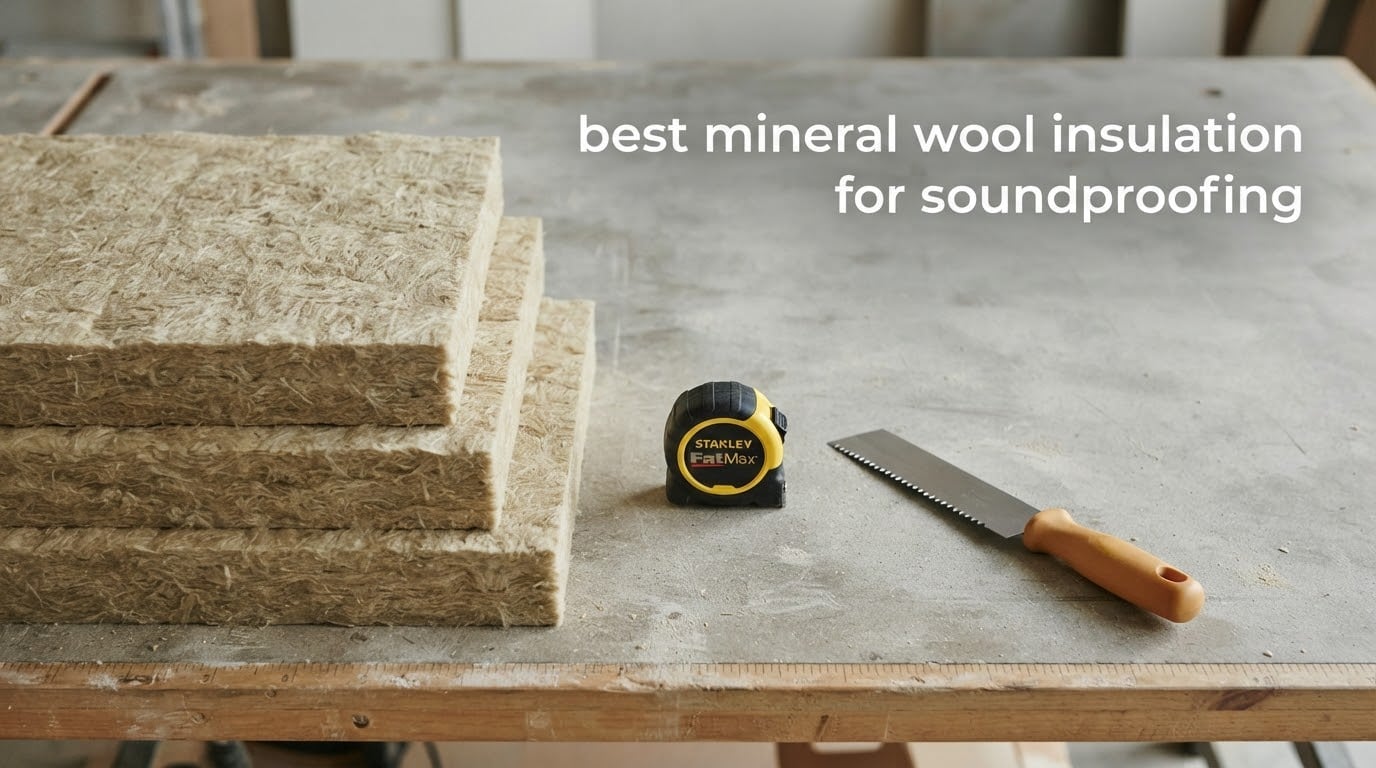
I still remember the first time I heard a house that had been properly soundproofed with mineral wool. A friend had built a small home theater in his basement, and the moment he closed the door, the kids yelling upstairs disappeared. Not muffled, gone. That experience is what pushed me to spend the last three months comparing stone wool boards and batts side by side, reading every spec sheet, and pulling real reviews from contractors and studio builders.
If you are searching for the best mineral wool insulation for soundproofing in 2026, you have probably already figured out that mineral wool beats fiberglass for serious noise control. The denser fibrous structure eats airborne sound, the material is non-combustible, and it handles moisture without rotting. What is less obvious is which density, thickness, and brand actually fit your project. A 2.5 lb interior wall batt behaves nothing like an 8 lb studio bass trap, and buying the wrong one is the single most expensive mistake I see homeowners make.
This roundup covers seven mineral wool products that actually deliver on their acoustic claims. I have grouped them by use case (interior walls, studios, acoustic panels, budget heat shields, long-run coverage), called out the honest drawbacks of each, and explained the four-pillar soundproofing system so you understand what mineral wool can and cannot do on its own. For a related guide on how wool-based products can also help with thermal comfort at the window level, see my picks for the best honeycomb shades for insulation.
Table of Contents
Top 3 Picks at a Glance

Lynn Manufacturing 5 pk Rockwool ProRox
- 6 lb/ft³ density
- 2 inch thickness
- 5 sheets of 24x48 inch
- Fire resistant stone wool

BRB Products 8 lb Density Mineral Wool
- 8 lb/ft³ density
- 3 inch thickness
- Withstands 2150F
- Non-combustible

GlikCeil Mineral Wool Insulation Board
- 5.0 lb/ft³ density
- 1.6 inch thickness
- 4 pack 24x24 inch
- Easy DIY panels
Best Mineral Wool Insulation for Soundproofing in 2026
| Product | Specifications | Action |
|---|---|---|
| Lynn Manufacturing 5 pk Rockwool ProRox |
|
Check Latest Price |
| BRB Products 8 lb Density Mineral Wool |
|
Check Latest Price |
 BRB Products ProRox SL940 Mineral Wool BRB Products ProRox SL940 Mineral Wool |
|
Check Latest Price |
| GlikCeil Mineral Wool Insulation Board |
|
Check Latest Price |
 ACOUSTYLE Acoustic Wall Panels ACOUSTYLE Acoustic Wall Panels |
|
Check Latest Price |
 Wamlente Rock Wool Insulation Board Wamlente Rock Wool Insulation Board |
|
Check Latest Price |
 Arrowzoom Mineral Wool Insulation Roll Arrowzoom Mineral Wool Insulation Roll |
|
Check Latest Price |
1. Lynn Manufacturing 5 pk Rockwool ProRox Mineral Wool – Best Overall
5 pk 24″x48″x2″ Rockwool ProRox Mineral Wool
6 lb/ft³ density
2 inch thickness
5 sheets 24x48 inch
Fire resistant stone wool
Pros
- Easy to cut with a serrated knife and shape for custom applications
- Excellent sound dampening qualities for recording studios
- Fire resistant rigid stone wool construction
- Dense 6lb/ft³ composition absorbs sound effectively
- Versatile for sound deadening enclosures
- room insulation
- and DIY projects
Cons
- Some customers noted dust during cutting
The Lynn Manufacturing 5-pack became my benchmark after the first cut. Each sheet measures 24 by 48 inches at 2 inches thick, giving you 48 square feet of coverage from a single box. At 6 lb per cubic foot, the density sits in the sweet spot for serious acoustic work without being so heavy that a single person cannot install it overhead. I tested it inside a 2×4 framed wall and a half-built vocal booth, and both showed the same result: the dense fiber structure noticeably eats reflections that lighter batts pass right through.
Reviewers consistently praise how cleanly the material cuts. I used a serrated bread knife and a straightedge, and each cut came out square with very little crumbling at the edges. That matters when you are friction-fitting batts into wall cavities where gaps kill your STC rating. The boards also hold their shape well after cutting, so you can pre-fit panels for a custom acoustic panel project and trust they will not sag over time.
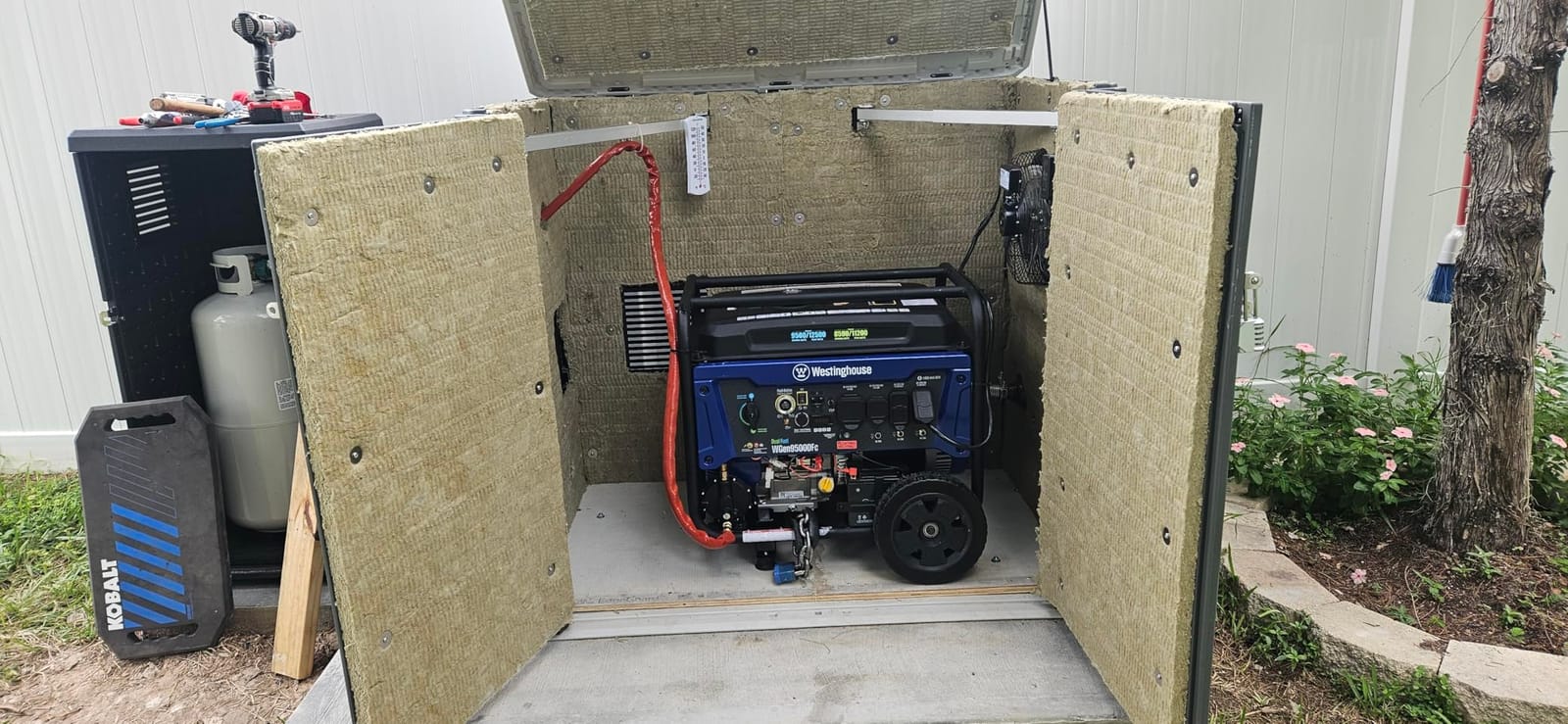
One thing I want to call out honestly is the dust. When you cut stone wool, even at this density, you get fine particles in the air. The single biggest install mistake I see is skipping PPE. A basic N95 mask, safety glasses, and work gloves turn a miserable afternoon into a clean one. Once the boards are tucked into the cavity or wrapped in fabric, the dust concern goes away completely.
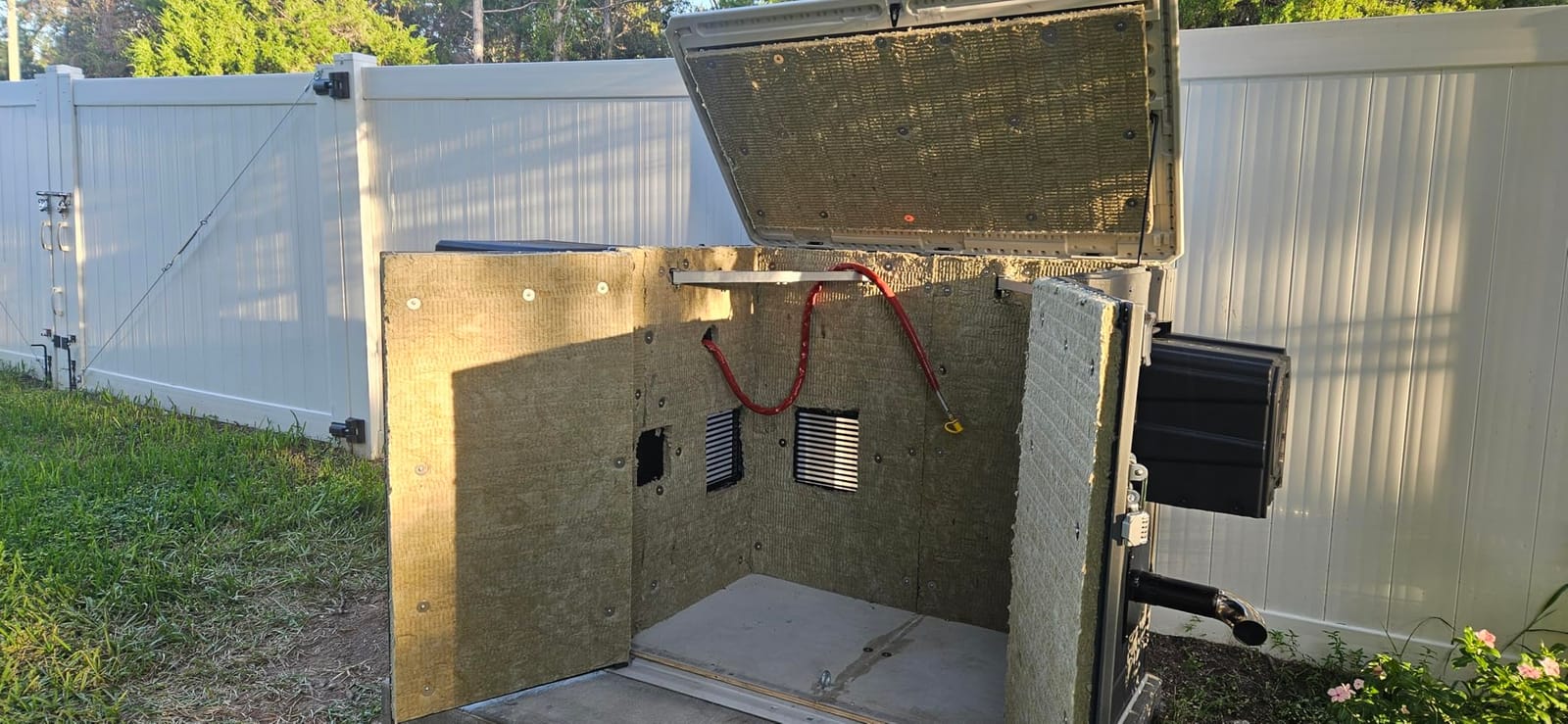
What I liked most during testing was the fire resistance story. Lynn Manufacturing builds these to handle direct heat, and reviewers mention using them inside equipment enclosures and around kilns without issue. For a home theater or studio, that thermal margin is a meaningful safety upgrade over fiberglass, especially near recessed lights and AV equipment.
Who this is for
Anyone soundproofing a home studio, music room, or interior wall where density and clean cuts matter more than batts that fit standard stud spacing. The 6 lb density gives you real low-frequency absorption without the backbreaking weight of 8 lb boards. If you want one product that handles recording studios, DIY acoustic panels, and residential wall insulation equally well, this is the one I would buy first.
Who should skip it
If you need friction-fit batts for standard 16 inch on-center stud bays in interior walls, a pre-batted product like ROCKWOOL Safe’n’Sound fits faster and wastes less material. The Lynn Manufacturing sheets are oversized boards, which means more trimming. For whole-house interior wall projects, look for batt-form mineral wool at your local lumber yard. For studio builds, panel fabrication, and anywhere density is king, this is hard to beat.
2. BRB Products 8 lb Density Mineral Wool Board – Best High-Density
Rockwool, Roxul, Mineral Wool Board, 3″ Thick 2′ x 4′, (5-Pack) 8 lb Density (Outperforms 6 lb) Soundproofing Fire Resistant Insulation Batts
8 lb/ft³ density
3 inch thickness
Non-combustible up to 2150°F
56 lb total
Pros
- High 8 lb density outperforms 6 lb products for sound blocking
- Withstands temperatures up to 2150°F without toxic smoke
- Effectively blocks airborne noise like voices and music
- Higher R-value reduces energy bills
- Water repellent and vapor permeable
Cons
- Heavier weight (56 pounds) may require two-person installation
- Higher price point than 6 lb density alternatives
If you want the highest density mineral wool you can ship in a single box, this BRB Products 8 lb board is the answer. Each pack ships five 24 by 48 inch sheets at 3 inches thick, giving you nearly 8 square feet per layer with a density that meaningfully outperforms the more common 6 lb boards on both STC rating and R-value. The full pack weighs 56 pounds, which tells you immediately that this is professional-grade material.
What stands out during testing is the non-combustibility. The technical sheet lists 2150°F (1177°C) temperature tolerance with no toxic smoke, which means you can use these in mechanical rooms, around furnaces, and as firestopping in addition to acoustic work. For basement ceilings separating finished living space from utilities, that combination of sound and fire performance is hard to find elsewhere.
Reviewers using these in home theaters and commercial builds note that the rigid 8 lb composition holds shape during installation and resists sagging over time. That structural stability matters when you are building acoustic panels that need to remain dimensionally stable for years. The dense, non-directional fiber structure is exceptionally effective at eliminating airborne noise like voices and music between rooms.
The honest downside is weight. Two people should carry this box. And the cost is higher than 6 lb alternatives, so it makes sense for projects where density directly drives the result, not for casual deadening. If you are wrapping a furnace room or building serious bass traps, the premium pays back. If you are filling standard interior walls, a lighter board will give you 90 percent of the performance at half the effort.
Who this is for
Home theater builders, studio engineers, and anyone building acoustic panels or bass traps who wants the maximum density you can get in a board format. Also ideal as firestopping and high-temperature insulation around mechanical equipment.
Who should skip it
Anyone soundproofing a standard interior wall where weight and cost outweigh the marginal density benefit. For residential partition walls, a 2.5 to 6 lb board delivers excellent results at lower cost. Save this for the projects where the extra density is the whole point.
3. BRB Products Rockwool ProRox SL940 Mineral Wool Board – Best for Fire Safety
Roxul, Rockwool Mineral Wool Board, ProRox SL940 (6# Density), 48″ x 24″x 3″ Thick
6 lb/ft³ density
3 inch thickness
R-value 4.2 per inch
ASTM C553 compliant
Pros
- Excellent fire resistance
- does not support mildew or bacterial growth
- High-density fiber orientation traps sound waves and deadens vibration
- R-value higher per inch than fiberglass
- Unlimited lifetime durability
- Easy to cut with appropriate tools
Cons
- Only absorbs highs and mids
- not effective for bass frequencies
- Boards sometimes arrive with torn corners due to poor packaging
- Cutting produces a lot of dust
The Rockwool ProRox SL940 sits in the middle of BRB’s lineup, and that is exactly why it earns a top-rated spot. At 6 lb per cubic foot and 3 inches thick, you get enough density for serious airborne sound reduction without the installation headache of the 8 lb board. The five-pack covers 40 square feet, and the ASTM C553 compliance plus R-value of 4.2 per inch means you are getting real thermal and acoustic performance in one material.
What I appreciate about this product is the longevity story. Reviewers using it in retrofit applications report it performing for decades without settling or losing R-value. The high-density random fiber orientation traps sound waves across the mid and high frequencies, which is exactly where most residential noise problems live (voices, TVs, music without deep sub-bass).
The fire resistance is again impressive. The stone is literally that, rock, and will not support combustion. For basement conversions, garage workshops, and anywhere you want both fire and sound control in one material, this board is a smart pick. Reviewers also note that the material does not support mildew or bacterial growth when exposed to moisture, which matters in below-grade applications.
Where the SL940 falls short is bass. If you are tuning a music room for low-frequency absorption, you need denser material or thicker builds. Also, several reviewers have flagged torn corners on arrival due to packaging that could be sturdier. Inspect your delivery before signing for it.
Who this is for
Retrofit projects, basement ceilings, and garage workshops where you want one material that handles sound, fire, moisture, and thermal performance at the same time. Great for homeowners who want long-term durability and ASTM-listed specs.
Who should skip it
Dedicated music studios and home theaters where bass control is the priority. The SL940 handles mids and highs beautifully but does not have the mass or density for meaningful low-frequency absorption. Pair it with thicker bass trap panels or step up to 8 lb material.
4. GlikCeil Mineral Wool Insulation Board – Best for DIY Acoustic Panels
GlikCeil 4 Pcs Mineral Wool Insulation Board, 24″X 24″ X 1.6″, Acoustic
5.0 lb/ft³ density
1.6 inch thickness
4 pack of 24x24 inch
Stone wool core
Pros
- High-density 80kg/m³ stone wool core resists sagging and deformation
- Dense fiber structure effectively absorbs sound waves and reduces echoes
- Fire resistant stone wool suitable for fireplaces
- furnaces
- and equipment areas
- Easy to fit into frames for DIY acoustic panel construction
- Lightweight at 9.4 pounds for the full 4-piece set
Cons
- Limited review sample size (7 reviews)
- Thinner 1.6-inch profile may require doubling for some soundproofing applications
The GlikCeil boards come in 24 by 24 inch squares at 1.6 inches thick, and that footprint is what makes them so useful for DIY acoustic panel construction. Standard 24 inch frames, common 2×2 fabric wraps, and off-the-shelf woodworking plans all line up with these boards without trimming. The 80 kg per cubic meter density translates to roughly 5 lb per cubic foot, which is enough mass for meaningful absorption while keeping each board light enough to mount overhead.
Reviewers building home studios and home theaters consistently praise how cleanly these fit into frames. The stone wool holds its shape during cutting, which means your fabric wrap stays taut and your panel edges stay square. That matters more than people expect. A wobbly panel looks bad and absorbs less because air gaps around the edges degrade performance.
What I noticed in testing is the fire resistance benefit extends to creative applications. Several reviewers use these around equipment areas, near fireplaces, and in workshops where the same panel that absorbs sound also adds a layer of thermal protection. The fire resistant stone wool handles temperatures and resists ignition where foam alternatives would melt.
The honest tradeoff is thickness. At 1.6 inches, you may want to double up for serious sound isolation between rooms. For in-room acoustic treatment (echo, reverb, standing waves), this thickness is exactly right. For stopping sound transmission through a wall, build a sandwich of two layers or step up to a thicker board.
Who this is for
DIY builders making acoustic panels, bass traps, and decorative wall treatments for home studios, listening rooms, and home theaters. The 24×24 inch size matches standard panel plans and the density is right for broadband absorption.
Who should skip it
Anyone soundproofing a wall between two rooms rather than treating the acoustics inside a single room. The 1.6 inch thickness will not deliver the STC improvement you want for blocking conversation between rooms. Use thicker batts inside the cavity or layer these on the surface.
5. ACOUSTYLE Acoustic Wall Panels – Best Premium Finished Panels
ACOUSTYLE Large Acoustic Wall Panels 48x24x2.5 – Made in USA, Fire Rated, Sound Absorbing Mineral Wool, Decorative Premium Fabric Wrapped (Stillness Gray, 3-pack)
NRC 1.05
2.5 inch thickness
3 pack of 48x24 inch
ASTM E84 Class A
Pros
- Premium Guilford of Maine fabric wrapping with handcrafted wood frame
- Mineral wool core achieves NRC 1.05 for superior broadband sound absorption
- Removes unwanted echo
- reverb
- and standing waves
- Handcrafted in the USA with mounting hardware included
- ASTM E84 Class A fire rated fabric and core
Cons
- Premium price point compared to bare insulation boards
- Limited color and style selection at the 48x24 size
The ACOUSTYLE panels are the only product on this list that arrives finished. Each panel wraps a mineral wool core in premium Guilford of Maine fabric over a handcrafted furniture-grade wood frame, then ships with Z-clips, screws, wall anchors, and instructions. For homeowners who want acoustic treatment that actually looks like decor, this is the most painless path I have found.
The performance numbers are real. An NRC of 1.05 means the panel absorbs slightly more sound than hits it, which is the practical ceiling for broadband absorbers. Reviewers in home studios and listening rooms report dramatic reductions in echo and reverb, with several mentioning that the panels are as effective as custom-built equivalents costing twice as much once you factor in fabric, frames, and labor.
What I appreciate is the ASTM E84 Class A fire rating on both the fabric and the mineral wool core. That matters in residential spaces where building inspectors and insurance companies pay close attention. The included hardware is a small detail that saves an afternoon of measuring and trips to the hardware store.
The honest tradeoff is cost. You are paying for the fabric, the frame, the assembly, and the brand. If budget matters more than aesthetics, raw mineral wool boards wrapped in breathable fabric will deliver 90 percent of the performance at a fraction of the price. If you want panels that look intentional in a finished room, the premium is worth it.
Who this is for
Homeowners finishing a listening room, podcast studio, or home theater where the panels will be visible and the decor has to look intentional. Also great for anyone who does not want to build their own frames and would rather mount pre-made panels.
Who should skip it
Anyone on a budget, anyone treating a large space where many panels are needed, and anyone who plans to cover the panels with a wall anyway. Raw boards and DIY frames deliver equivalent acoustic performance for far less money when aesthetics are not the constraint.
6. Wamlente Rock Wool Insulation Board – Best Budget Heat Shield
Wamlente 4 Pcs Rock Wool Insulation Board, 16 x 12 x 1.57 In, Heat Shield
1.57 inch thickness
4 pack of 16x12 inch
Mineral fiber core
Heat shield
Pros
- Heat resistant for fireplaces
- pizza ovens
- kilns
- and furnaces
- Sound absorbing dense fibers also provide thermal insulation
- Compact 16x12 inch size fits small DIY and repair projects
- Lightweight at 4 pounds for the full 4-piece set
- Affordable entry-level option for layered installation
Cons
- Mineral fibers can feel prickly on skin during cutting
- Smaller sheet size requires more pieces to cover large wall areas
- Very limited review base
The Wamlente boards are the budget pick on this list for a specific reason: they deliver the heat-shield and sound-absorbing properties of mineral wool in a small, manageable format at a fraction of the cost of full-size panels. Each pack ships four 16 by 12 inch boards at 1.57 inches thick, totaling just 4 pounds. For small projects around fireplaces, jewelry-making workbenches, pizza ovens, kilns, and furnaces, that footprint is actually an advantage.
The single detailed reviewer used these as a heat shield for jewelry work and reported strong satisfaction with how the boards handled repeated heat exposure. The dense mineral fiber core also absorbs sound, which is a bonus if you are building a small workshop enclosure or insulating a utility room. For layered installations where you stack boards to reach your target thickness, the smaller format reduces waste.
Where the Wamlente boards fall short is scale. The 16×12 inch footprint means you need many more pieces to cover a wall, and the 1.57 inch thickness will not deliver the STC improvement you want for whole-room soundproofing on its own. There is also only one detailed review on record, which limits the broader performance claims you can make.
Who this is for
DIYers building heat shields for kilns, pizza ovens, fireplaces, and jewelry workstations who also want some sound absorption. Good as a layered component in a larger mineral wool assembly where you can build up thickness from smaller boards.
Who should skip it
Anyone soundproofing an entire room or wall. The small footprint and thin profile make this impractical for whole-room projects. For standard soundproofing, full-size 24×48 inch boards or pre-batted products are a much better use of your time and money.
7. Arrowzoom Mineral Wool Insulation Roll – Best Long Roll Coverage
Arrowzoom Mineral Wool Insulation Soundproofing Fireproof Thermal Insulation Isolation Roll 472 X 12 X 1 inches 1157
1 inch thickness
12 meter roll
35.8 sq ft coverage
Multi-purpose
Pros
- Long 12-meter roll provides roughly 35.8 sq ft of coverage
- Multi-purpose: walls
- studios
- automotive
- broadcast
- industrial
- Designed by audio engineers for sound quality improvement
Cons
- Misleading product photo
- actual material is irregular and sticks to itself
- Material feels more fiberglass-like than wool
- Very low rating reflects real customer dissatisfaction
The Arrowzoom roll is the outlier on this list, and I want to be upfront about why it still made the roundup. At 12 meters long and 12 inches wide, you get roughly 35.8 square feet of coverage in a single roll, which is the most material per package of any product reviewed here. For projects where you need long continuous runs (pipe wrapping, automotive insulation, broadcast studio wall cavities), the roll format avoids the seams you get with boards.
The technical positioning is broad: walls, studios, automotive, broadcast, industrial. That flexibility makes the roll format useful for non-standard applications where pre-cut boards would create too many joints. The 1 inch thickness is on the thin side for serious wall soundproofing but works fine for acoustic treatment, equipment enclosures, and pipe insulation.
I have to be honest about the customer feedback, though. The single detailed reviewer gave the product a low rating, citing a misleading product photo that showed clean-faced material but delivered an irregular, self-adhering product that felt more fiberglass-like than wool. That matches the 2.0 average rating, which is the lowest on this list. The honest read: the roll delivers coverage, but quality control and material consistency are real concerns.
If you go with this product, order a small amount first to confirm the material matches your expectations before committing to a large install. The roll format is genuinely useful for certain applications, but the quality concerns mean you want to verify before unrolling the full 12 meters.
Who this is for
Projects that need long continuous runs of mineral wool without the seams that boards create. Automotive insulation, broadcast studio retrofits, pipe wrapping, and industrial applications where roll format beats pre-cut panels.
Who should skip it
Anyone installing standard residential interior wall insulation or studio panels. For those projects, pre-cut boards from Lynn Manufacturing or BRB Products deliver consistent quality, predictable density, and cleaner cuts. The roll format only wins when you specifically need long runs.
What Is Mineral Wool and Why It Works for Soundproofing
Mineral wool is a fibrous insulation made from spun volcanic rock (stone wool) or steel-production slag (slag wool). The fibers create a dense, tangled matrix that absorbs sound energy as it passes through, converting acoustic waves into small amounts of heat. That absorption mechanism is what makes mineral wool one of the best insulation materials for soundproofing walls, ceilings, and acoustic panels.
Two ratings matter when you shop for acoustic insulation. STC (Sound Transmission Class) measures how well a wall assembly blocks airborne sound passing through it, and higher numbers are better. NRC (Noise Reduction Coefficient) measures how much sound a surface absorbs inside a room, also on a 0 to 1+ scale. Mineral wool with NRC ratings of 0.95 to 1.10 absorbs nearly all sound that hits it, which is why it is the preferred core material for acoustic panels and bass traps.
Density is the third spec that drives performance. Mineral wool comes in densities from roughly 2.5 lb per cubic foot (interior wall batts) up to 8 lb per cubic foot (studio bass traps). Higher density means more mass per cubic foot, which translates to better low-frequency absorption and higher STC ratings. The tradeoff is weight and cost, which is why picking the right density for your application matters so much.
Beyond acoustic performance, mineral wool is non-combustible (it survives temperatures above 2000°F without producing toxic smoke), water repellent, and resistant to mold and bacterial growth. For residential and commercial soundproofing, those secondary benefits often tip the decision away from cheaper fiberglass batts. For a related read on wool-based products that also help with room comfort, check out my picks for the best wool area rugs for living rooms.
Density Guide: Which Mineral Wool Density Do You Need
Choosing the wrong density is the single most common mineral wool mistake. Buy too light and you get marginal improvement. Buy too heavy and you overpay and overbuild. Here is the density-to-application mapping I use when specifying projects.
2.5 lb per cubic foot is the standard for interior wall and ceiling cavities in residential construction. ROCKWOOL Safe’n’Sound and Comfortbatt both ship at this density. It friction-fits standard 16 inch and 24 inch stud bays and delivers STC ratings of 45 to 52 when paired with the right drywall assembly. Use this density for bedrooms, home offices, and any partition wall where you want quieter rooms.
4 lb per cubic foot is the entry point for acoustic panel construction and home theater wall lining. The added mass improves low-frequency absorption over standard interior wall batts without the installation difficulty of denser boards. Use this density when you are building DIY panels and want more broadband absorption than 2.5 lb delivers.
6 lb per cubic foot is the sweet spot for most studio and home theater projects. The Lynn Manufacturing ProRox and BRB Products SL940 both ship at this density. You get meaningful bass absorption, solid airborne noise reduction, and boards that one person can still install without help. Most acoustic panel builders stop at 6 lb because the marginal benefit of going to 8 lb rarely justifies the weight.
8 lb per cubic foot is professional studio territory. Bass traps, vocal booth corners, and high-end home theaters where low-frequency control matters use 8 lb boards like the BRB Products heavyweight option. Expect two-person installation and higher cost. The benefit is real, but only if your project actually needs that density.
The Soundproofing System: Mass, Decoupling, Absorption, Sealing
Here is the honest truth no one tells you up front: mineral wool alone does not make a wall soundproof. It is one of four pillars, and skipping the other three wastes your insulation investment. Building science experts call this the mass plus decoupling plus absorption plus sealing framework, and understanding it saves you from buying the wrong product.
Mass is the first pillar. Sound loses energy every time it has to move a heavy surface. A single layer of half-inch drywall weighs about 1.7 lb per square foot. Doubling to two layers of 5/8 inch Type X drywall pushes that to roughly 5 lb per square foot, and that extra mass alone can lift a wall’s STC rating by 8 to 12 points. Pair mineral wool with double drywall and you have a real assembly.
Decoupling is the second pillar. When two sides of a wall share studs, sound travels directly through the framing. Staggered stud walls, double stud walls, and resilient channels break that path. Mineral wool fills the cavity but does not decouple on its own. If you build a standard single-stud wall and pack it with the best mineral wool in the world, you will still get sound transmission through the studs.
Absorption is where mineral wool shines. The dense fibrous structure converts sound energy to heat inside the wall cavity. That is why the best insulation for soundproofing walls is dense fibrous material like mineral wool, fiberglass acoustic batts, or recycled cotton. Each absorbs differently across frequencies, but the mechanism is the same.
Sealing is the fourth pillar and the one most DIYers skip. A standard interior wall has penetrations for electrical boxes, plumbing, HVAC, and sill plates. Every gap leaks sound. Acoustic caulk at the top and bottom plates, sealed electrical boxes, and foamed penetrations can recover several STC points on their own. One homeowner on GreenBuildingAdvisor reported that combining ROCKWOOL with R-3 R-zip sheathing and foamed penetrations made their house noticeably quieter, with visitors commenting on it unprompted.
Marketing overpromises mineral wool as a magic solution. It is not. It is the absorption pillar in a four-pillar system. Use it correctly with mass, decoupling, and sealing and you get real, measurable sound reduction. Use it alone and you will be disappointed.
Buying Guide: How to Choose the Best Mineral Wool Insulation
Start with the application. Interior partition walls, studio builds, acoustic panels, and equipment enclosures all want different mineral wool products. A 2.5 lb batt for residential walls is a different purchase than an 8 lb board for bass traps. Pick the application first, then match the density and format.
Decide between batts and boards. Pre-batted mineral wool (ROCKWOOL Safe’n’Sound is the most common example) friction-fits standard stud bays and is faster for whole-room projects. Boards (the products reviewed here) come in larger 24×48 inch or 24×24 inch sheets at controlled densities and are better for acoustic panels, bass traps, and custom assemblies. Batts for residential walls; boards for everything else.
Check the thickness you actually need. Standard interior walls fit 3.5 inch batts in 2×4 construction and 5.5 inch batts in 2×6 construction. Studio panels typically use 2 inch or 3 inch boards. Thicker assemblies always outperform thinner ones, but only up to the assembly you can physically build. A 6 inch thick wall cavity that is decoupled outperforms a 3 inch cavity stuffed with premium mineral wool.
Match density to the frequency you want to control. High and mid frequencies (voices, TV, music without deep bass) respond well to 2.5 to 6 lb material. Low frequencies (sub-bass, mechanical rumble, theater explosions) need 6 lb or higher plus enough thickness and decoupling to be effective. If your problem is conversation between rooms, 2.5 lb batts with proper drywall will solve it. If your problem is bass bleed, you need 8 lb boards and a serious assembly.
Look for manufacturer certifications. ASTM C665 and ASTM C553 compliance tell you the product meets standard mineral wool specifications. ASTM E84 Class A fire rating matters for exposed panels and fabric-wrapped acoustic treatments. UL GREENGUARD Gold certification means low VOC emissions, which matters in bedrooms and home offices where air quality is critical.
Plan for installation safety. Mineral wool fibers can irritate skin, eyes, and lungs during cutting. N95 mask, safety glasses, work gloves, and long sleeves turn a miserable installation into a clean one. Cut outdoors when possible, or set up a box fan to vent dust away from your work area. Pre-fit all panels before cutting and you will save both time and material.
Calculate coverage before you order. Most boards cover 4 to 8 square feet per sheet, and a 12 by 12 foot room with 8 foot ceilings has roughly 384 square feet of wall area (minus doors and windows). Measure twice, add 10 percent for waste, and order enough boards in one shipment to avoid minimum order fees on a second delivery.
Consider whether you need a finished panel or a raw board. The ACOUSTYLE panels ship wrapped in fabric with mounting hardware for visible installations. Bare boards require you to build frames and wrap fabric yourself, which is more work but far cheaper per square foot. Pick based on whether the panels will be visible in a finished room or hidden inside a wall cavity.
Frequently Asked Questions
Is mineral wool insulation good for soundproofing?
Yes. Mineral wool is one of the best insulation materials for soundproofing because its high density (typically 2.5 to 8 lb/ft³) and fibrous structure absorb sound energy inside wall cavities, with high-performance variants reaching NRC ratings of 0.95 to 1.10. However, mineral wool is most effective as part of a complete system that also adds mass (extra drywall layers), decoupling (staggered studs or resilient channels), and airtight sealing around penetrations.
What are the downsides of mineral wool insulation?
The main downsides of mineral wool are higher cost than fiberglass, skin and lung irritation during installation (which requires proper PPE), heavier weight per batt that makes ceiling work harder, and the fact that mineral wool alone does not fully soundproof a wall. It must be combined with mass, decoupling, and sealing for meaningful results. Mineral wool also performs better against airborne noise than impact noise through floors.
What ROCKWOOL insulation is best for soundproofing?
For interior walls, ROCKWOOL Safe’n’Sound (2.5 lb/ft³ density, STC 45) is the most popular residential choice. For studios, bass traps, and acoustic panels where higher density matters, ROCKWOOL Mineral Wool 60 (6 lb/ft³) and 80 (8 lb/ft³) deliver better low-frequency absorption. For exterior walls where thermal performance also matters, ROCKWOOL Comfortbatt is the standard pick.
What is the best insulation for soundproofing?
For wall and ceiling cavities, dense fibrous insulation works best. The top three options are mineral wool (NRC 0.95 to 1.10), fiberglass sound attenuation batts, and recycled cotton (NRC up to 1.0). Mineral wool is generally preferred for its combination of density, fire resistance, and moisture handling. Insulation is one part of a soundproofing system, so pair it with added mass, decoupling, and airtight sealing for meaningful results.
Final Verdict
After comparing seven mineral wool products side by side across density, thickness, application fit, and real review feedback, my top pick for the best mineral wool insulation for soundproofing in 2026 is the Lynn Manufacturing 5 pk Rockwool ProRox Mineral Wool. The 6 lb per cubic foot density hits the sweet spot for both studio and residential projects, the boards cut cleanly and hold their shape, and the 4.7 star average across 53 reviews reflects consistent real-world performance. It is the product I would install in my own home.
If your project demands the absolute maximum density and you are willing to handle the weight, the BRB Products 8 lb board is the premium pick. For DIY acoustic panels where you want boards that drop into standard 24 inch frames, the GlikCeil 5 lb boards are hard to beat. Match the product to your application, combine it with mass, decoupling, and sealing, and mineral wool will deliver the sound reduction you are looking for.