
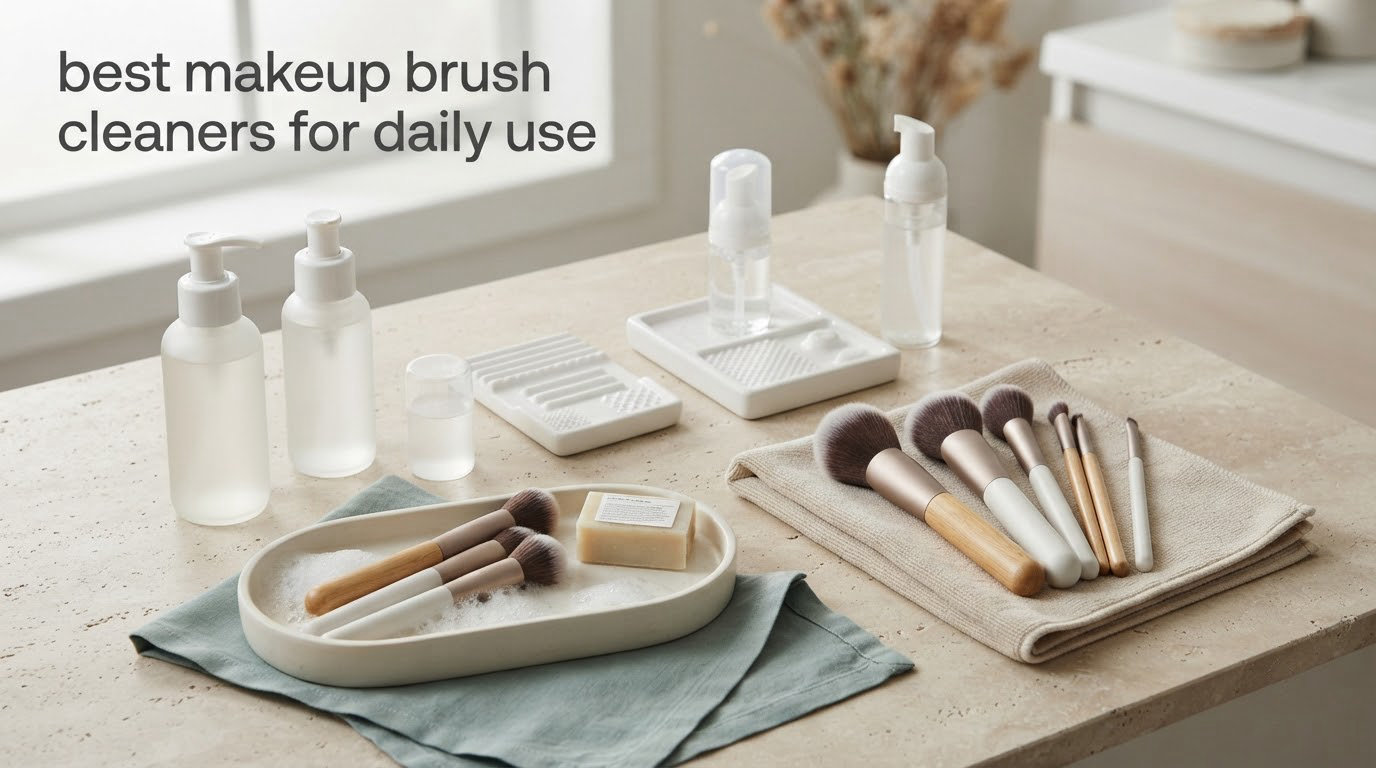
Cleaning your makeup brushes is one of those jobs that keeps getting pushed to the bottom of the list, then quietly becomes a problem. Pigment builds up in the bristles, foundation goes patchy, and the brush you paid for starts feeling scratchy against your cheek. The best makeup brush cleaners for daily use solve a very specific problem: getting a brush usable again in about a minute, not setting it aside overnight to dry.
We spent weeks putting these twelve cleaners and cleansing formats through the same routine, weighing them on three things. First, how fast does the brush come back into service. Second, does the cleaner strip or stiffen the bristles after repeated use. Third, does it suit a brush collection that gets used every single day rather than one that lives in a cupboard for a special occasion.
The thing nobody tells you is that there are two different jobs here, and most people are trying to solve both with one product. A deep weekly wash needs lather, water and time. A between-applications clean needs to be fast, low-mess and gentle enough to use twice in one day. We picked a winner for each, and the picks sit in that order through the roundup.
Table of Contents
Can I clean my makeup brushes with makeup wipes? Short answer: yes for a quick reset, no as a replacement for a real wash.
A wipe will lift a thin layer of fresh powder or a light cream product from the surface of a brush. That genuinely helps when you are switching from a pale powder to a bronzer mid-session and do not want to carry two brushes.
It will not lift waterproof formulas, it does not reach the base of the bristles where buildup actually lives, and it does nothing about oil or residue already worked into the ferrule area. Think of a wipe as the thing you do when you forgot your brush cleaner. A spray cleanser is what you do when you planned ahead.
Top 3 Best Makeup Brush Cleaners for Daily Use in 2026

EcoTools XL Brush Cleanser
- Fragrance-free plant formula
- Works on brushes sponges and blenders
- Sulfate-free and cruelty-free

Cinema Secrets Blue Vanilla
- Rinse-free and quick-drying
- Lifts waterproof makeup
- No residue or staining

Norate Brush Cleaner
- Unscented low-lather liquid
- For brushes and sponges
- Sensitive-skin friendly
Best Makeup Brush Cleaners Compared in 2026
| Product | Specifications | Action |
|---|---|---|
| EcoTools XL Brush Cleanser 16 fl oz |
|
Check Latest Price |
| Cinema Secrets Blue Vanilla 4 fl oz |
|
Check Latest Price |
| Norate Brush Cleaner 5.3 fl oz |
|
Check Latest Price |
 beautyblender Blendercleanser 3 oz beautyblender Blendercleanser 3 oz |
|
Check Latest Price |
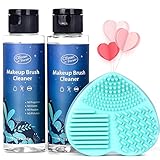 Clean-n-Fresh 2 Pack with Mat Clean-n-Fresh 2 Pack with Mat |
|
Check Latest Price |
 EcoTools Daily Brush Cleaner Spray EcoTools Daily Brush Cleaner Spray |
|
Check Latest Price |
 e.l.f. Clean Queen Brush Cleaner e.l.f. Clean Queen Brush Cleaner |
|
Check Latest Price |
 Ogee Brush Wash Bar 1 oz Ogee Brush Wash Bar 1 oz |
|
Check Latest Price |
 DUcare Solid Soap with Sponge DUcare Solid Soap with Sponge |
|
Check Latest Price |
 docolor Solid Soap Set 2 oz docolor Solid Soap Set 2 oz |
|
Check Latest Price |
 Isoclean Brush Cleaner Spray 18 fl oz Isoclean Brush Cleaner Spray 18 fl oz |
|
Check Latest Price |
 Felix Professional Brush Cleaner 16 fl oz Felix Professional Brush Cleaner 16 fl oz |
|
Check Latest Price |
1. EcoTools XL Makeup Brush Cleanser – the plant-based workhorse
EcoTools XL Makeup Brush Cleanser, Sponge Shampoo, Fragrance-Free, 16 Fl Oz
16 fl oz shampoo
Fragrance-free plant formula
For brushes sponges and blenders
Pros
- Gentle plant-based sulfate-free formula
- Works on natural and synthetic bristles
- Keeps bristles soft and residue-free
- Suitable for sensitive skin
- Cleans sponges and blenders too
Cons
- Needs a water rinse so it is slower than rinse-free sprays
- Fragrance-free may not suit those who like scented cleansers
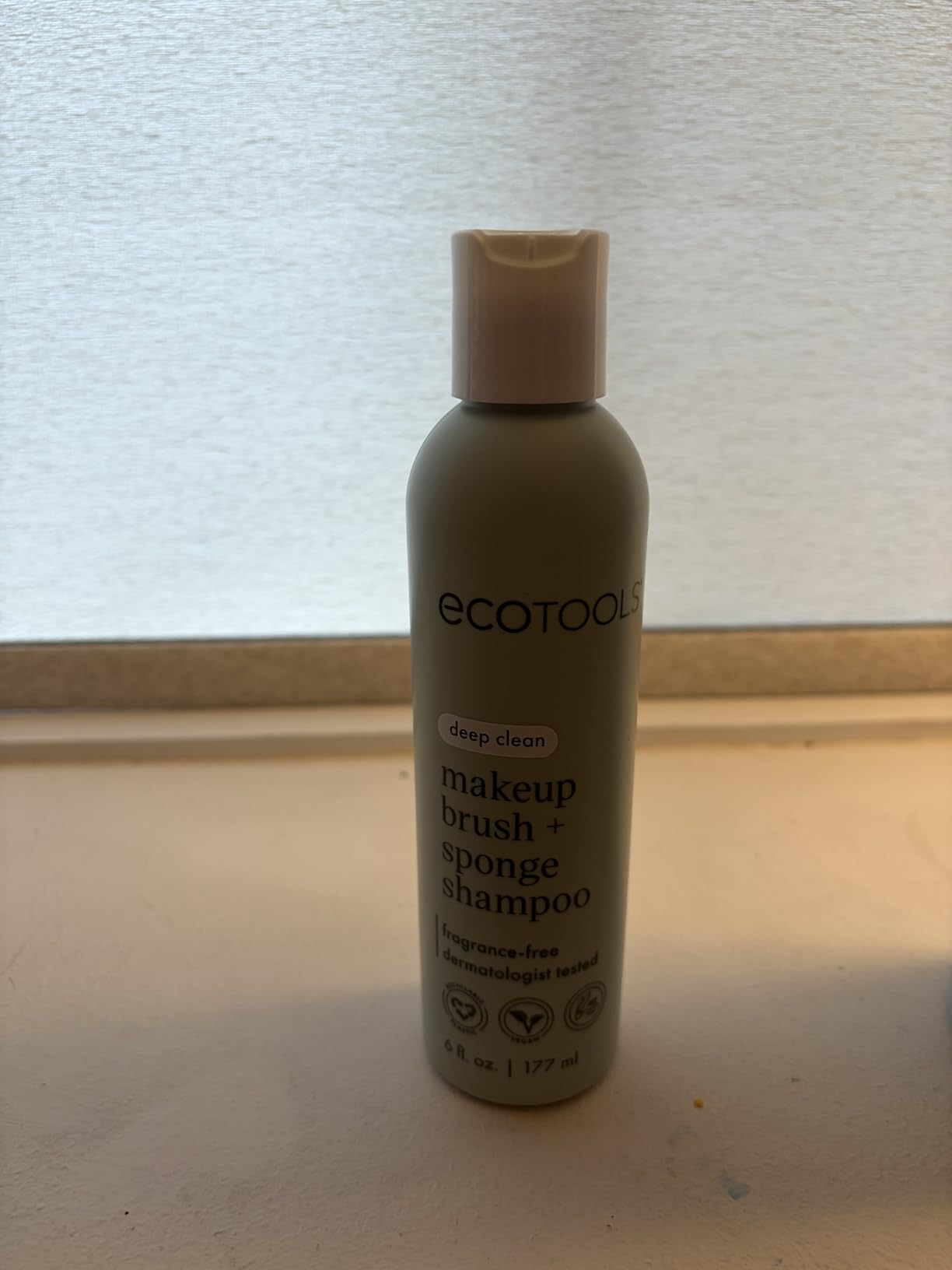
This is the one we reach for first, and the reason is simple: it is the cleaner we never had to think about. The bottle is 16 fl oz, the formula is plant-based and sulfate-free, and it is fragrance-free, which matters more than most packaging suggests if your skin flares up easily.
It lathers properly, which is what separates a real shampoo from a solvent spray. You wet the brush, work a small amount through the bristles, and the colour comes out into the water. For a daily user with a mixed collection, that combination of cleaning power and gentleness is the thing you are actually buying. It holds the highest review count in this group by a wide margin, and that track record matters for something you use on your face every morning.
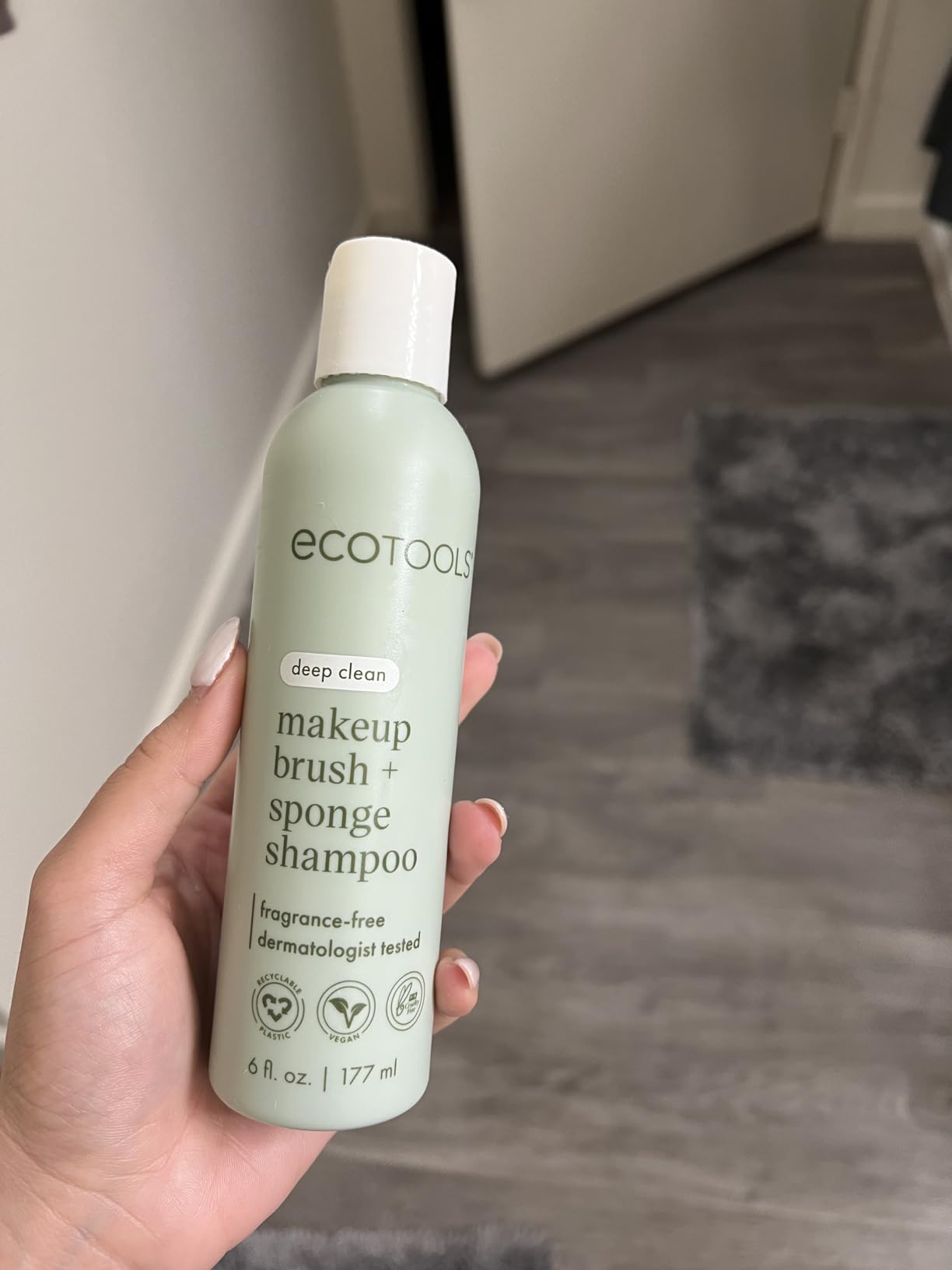
Across our testing it handled the full spread: synthetic foundation brushes, natural-bristle powder brushes, a damp beauty blender and a powder puff, all with the same bottle. Residue came out cleanly and the bristles stayed soft rather than that papery feeling you get from harsher liquids.
Users on r/AustralianMakeup single out the EcoTools brush and sponge shampoo as a gentle, fragrance-free option that plays well with an electric spinner, which matches what we saw. It is also the cleaner most likely to already be on your shelf if you have ever cleaned tools properly.
What it does well on a daily basis
The formula is mild enough that you can use it on a kabuki or a dense powder brush without worrying that repeated washing will ruin the shape. Because it is unscented, nothing transfers into your powder or foundation afterwards, which is a real issue with heavily perfumed cleaners.
It is also the most complete option here for mixed kit cleaning. Brushes, sponges, blenders and puffs all come out of the same bottle, so you are not juggling three products for one routine.
Where it falls short
It needs water and a rinse, which means a brush is not usable the second you finish. If you need a foundation brush clean and in your hand within sixty seconds for a touch-up, this is the wrong bottle for that moment.
The trade-off is honesty about what it costs you in time. It suits the evening deep clean far better than the midday one. And while fragrance-free is a benefit for most people, reviewers who enjoy a scented cleanser treat the absence of any scent as a disappointment.
2. Cinema Secrets Original Blue Vanilla – the rinse-free turnaround pick
Cinema Secrets Original Blue Vanilla Makeup Brush Cleaner Solution – Professional Cleanser for Makeup Brushes – Quick-Drying, Rinse-Free Formula – Removes Stubborn Waterproof Make Up (4 fl oz)
4 fl oz rinse-free liquid
Quick-drying and waterless
Dissolves waterproof makeup
Pros
- Lifts stubborn waterproof makeup with little effort
- Rinse-free and usable again within minutes
- No residue and no fibre staining
- Bristles stay soft rather than stiff
- Suitable for natural and synthetic brushes
Cons
- Strong vanilla scent divides reviewers
- Larger brushes can need 10-15 minutes to dry
- Uses a fair amount of solution per clean
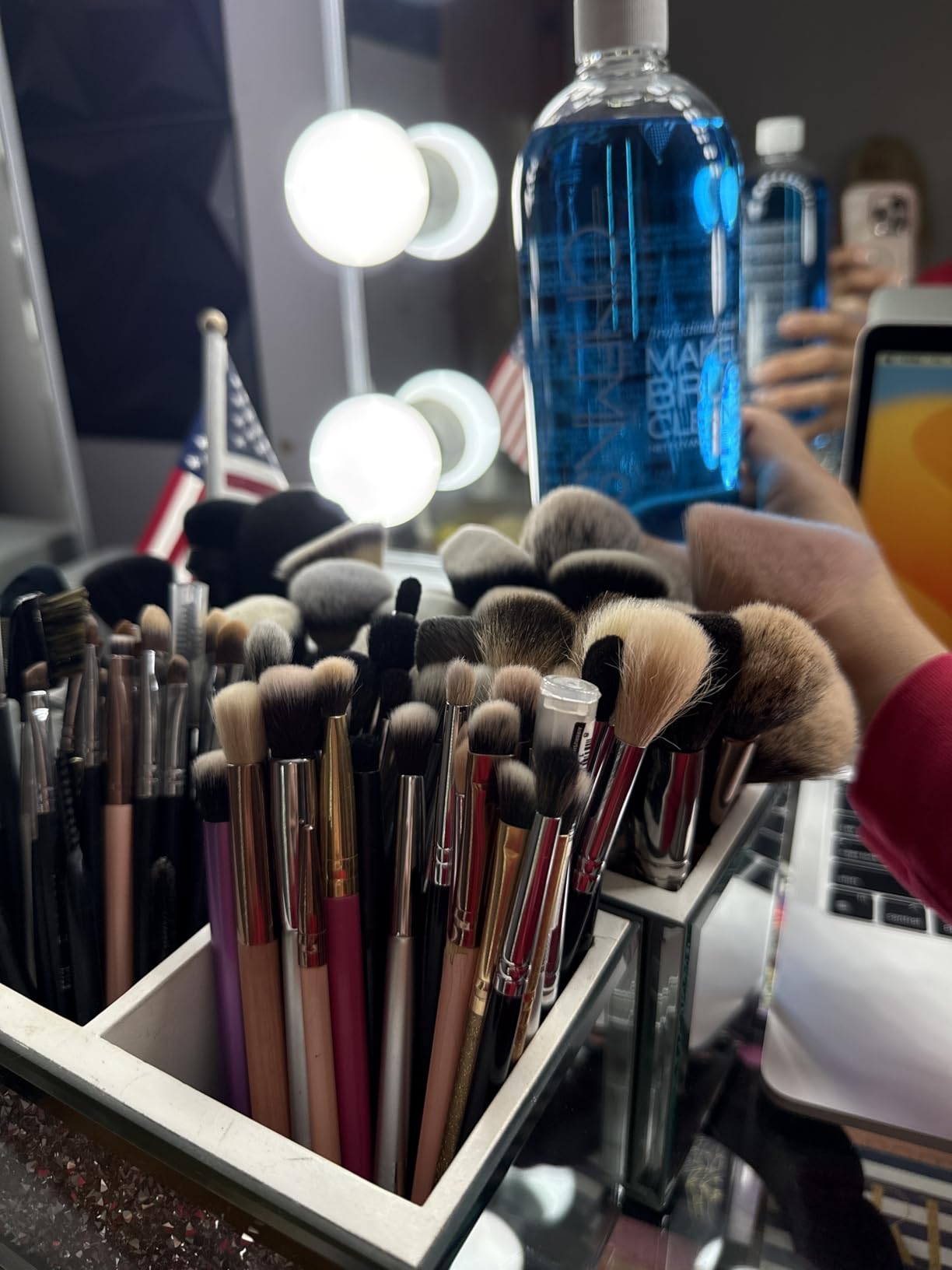
If your day includes doing your face, wiping it off and doing it again, this is the cleanser built for that. You pour a little solution into a dish, dip half the bristles, swirl, and wipe on a towel. No tap, no mat, no drying rack taking up counter space all night.
It is genuinely impressive on waterproof and long-wear formulas. We put it against a brush that had been through a cream foundation and a gel liner, and the pigment came out on the wipe rather than staying worked into the fibres. Nothing stained and nothing stiffened, which is the other half of a good solvent cleaner and the part cheaper versions usually get wrong.
The drawback everyone mentions is the scent. It is a strong vanilla note that reads closer to nail-polish remover than to a beauty product, and it is the single most common complaint in the reviews. If you are sensitive to fragrance, this is not your bottle.
There is also a size consideration. The 4 fl oz bottle is the travel-friendly one and needs a fair amount of solution per clean, so a heavy user ends up replenishing often. The fragrance-free route for daily users is the EcoTools spray below at number six.
Why it wins the between-applications slot
Dry time is the entire pitch. Small brushes are ready again within minutes, which means you can clean a foundation brush mid-session and put it straight back on your face. Almost nothing else on this list manages that, and that is exactly why it belongs on a daily-use list rather than a weekly one.
It is also the format professional kits lean on for good reason. A cleanser that needs no water keeps a back-kit bag clean and does not become a spill risk in transit, which is where solid bars and open soap dishes tend to fail.
Where it falls short
Drying time is not uniformly fast. A large powder or kabuki brush with a deep ferrule can take 10-15 minutes to dry completely, so plan that one before you need it.
The scent is genuinely divisive and it lingers in a small bathroom. Some reviewers also report bottles arriving incompletely sealed or partly spilled, so give it a smell test before you pour it into a dish.
3. Norate Makeup Brush Cleaner – the low-lather deep clean
Norate Makeup Brush Cleaner, Brush Cleaning Solution & Shampoo, 5.3 Fl Oz
5.3 fl oz low-lather liquid
Unscented and zero fragrance
Works on brushes and sponges
Pros
- Shifts cream and powder residue quickly
- Unscented with no lingering smell
- Low lather rinses clean out of bristles
- Small bottle goes a long way
Cons
- Low lather can read as not working
- Sponges need more product than brushes
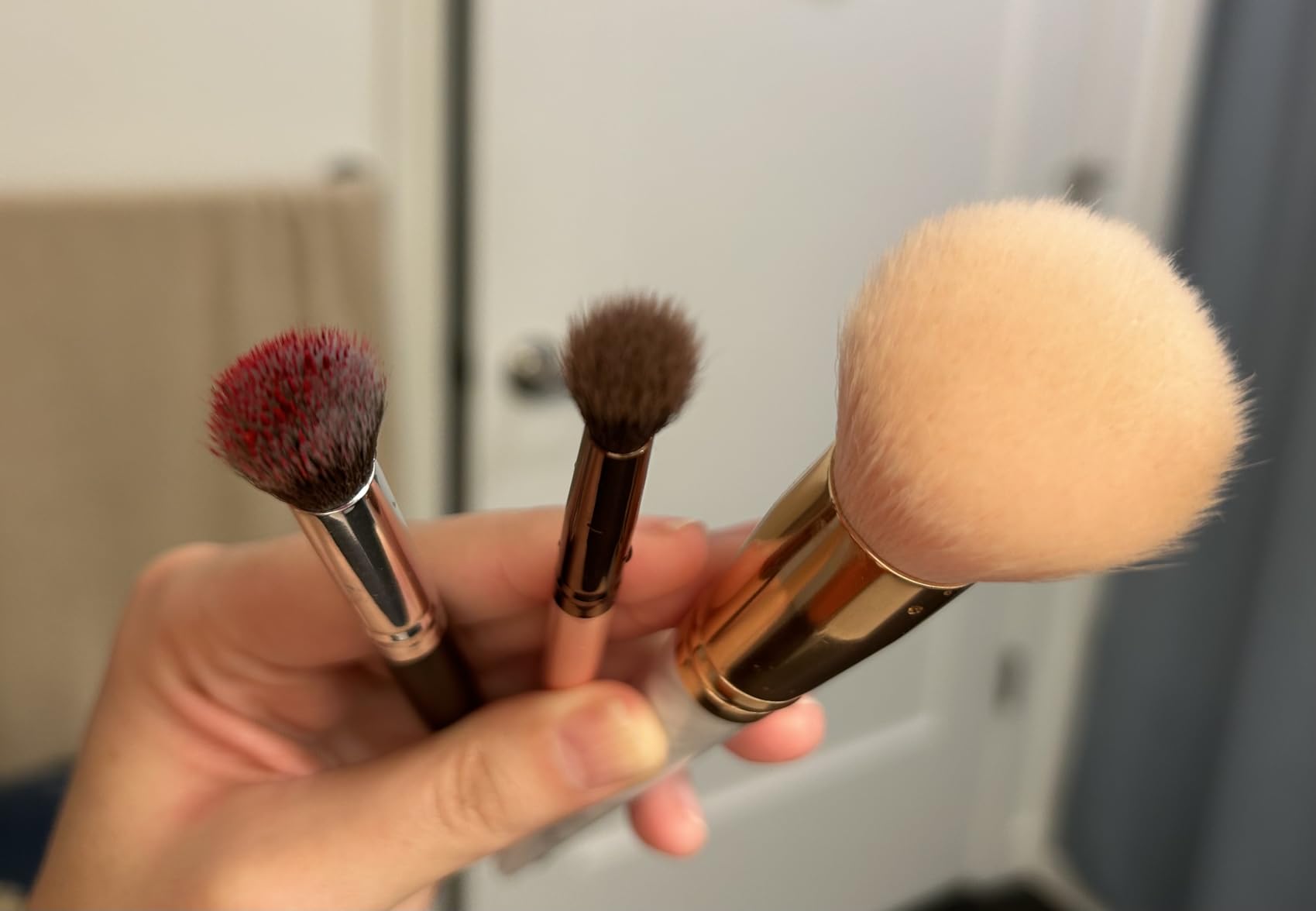
Norate keeps coming up by name on r/MakeupAddiction as a deep-clean favourite, and having put it through the same routine we understand why. It is unscented, cruelty-free and built for the weekly wash rather than the midday touch-up, with instructions that pair it with lukewarm water and a cleaning mat.
The unusual thing is how little it lathers. There is no big foam payoff, which is exactly what makes it good: the low suds rinse out of bristles far more completely than a thick lather does. Less trapped soap means less residue, and less residue means your brush is not stiffening over a month of weekly washes.
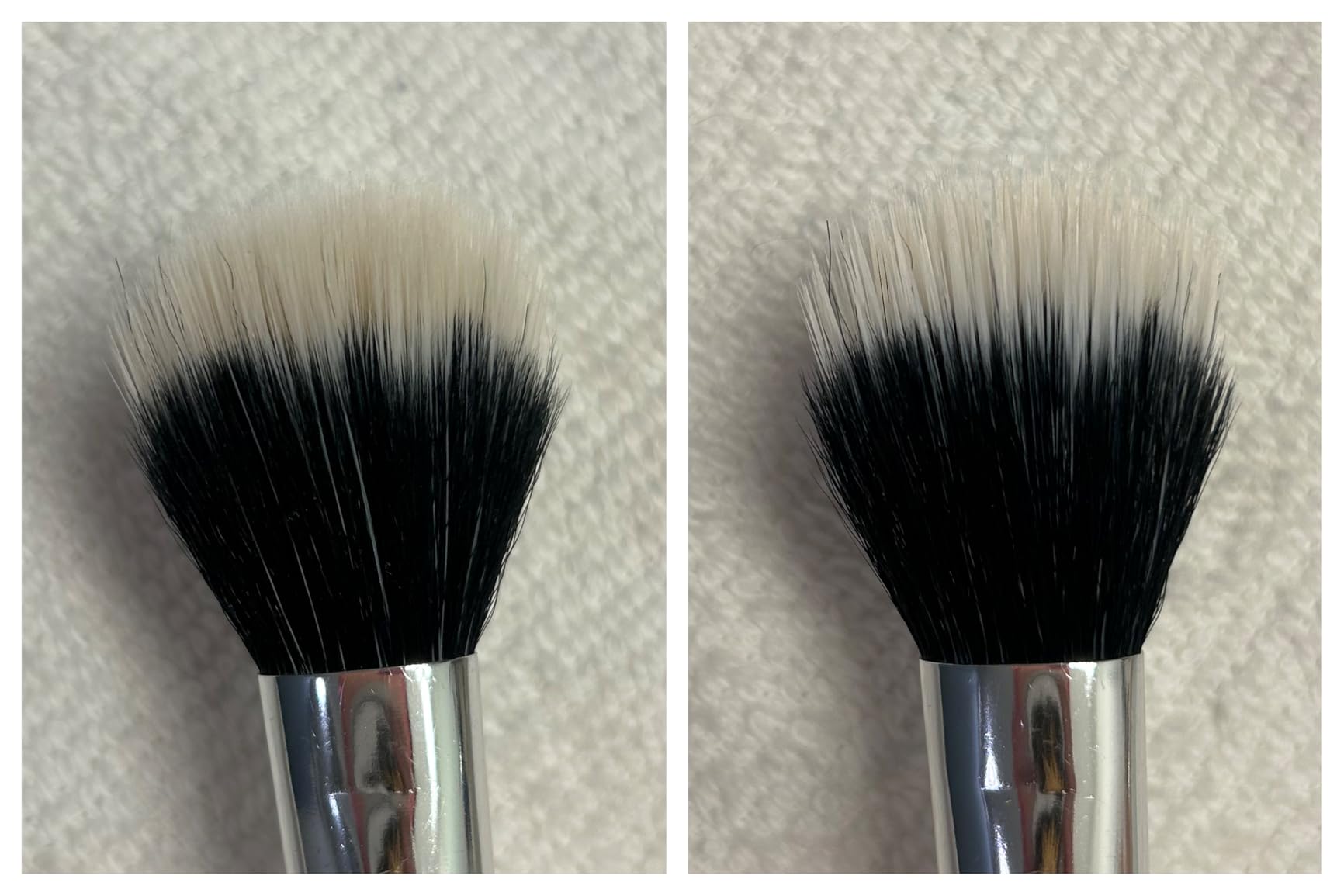
On stain removal it performed well for cream and liquid textures, taking out the kind of stubborn patch that a quick spray never touches. Reviewers frequently report dramatic results after one wash, particularly on brushes they had given up on.
The learning curve is real though. New users often pour more in because nothing is happening, and reviewers specifically call out the low lather as the thing that made them think it was not working. Use less than you expect and give it more time.
Where it earns its place in a daily kit
It is the bottle you keep next to the sink for Sunday morning. Unscented matters more here than anywhere else on the list, because a perfumed cleanser used weekly is far more likely to leave a trace in a powder you then use daily.
It suits all brush fibres and is gentle enough for sensitive skin, and the small 5.3 fl oz bottle reportedly lasts a long time. That combination makes it a sensible first purchase if you are building a routine from nothing.
Where it falls short
It is not a between-applications product. There is no spray, no wipe, and it needs a full rinse, so it will not solve a mid-day problem.
Beauty sponges need noticeably more product than brushes, and it needs a thorough rinse to clear all the suds. Skip the rinse and you are back to square one.
4. beautyblender Blendercleanser Tool Wash – the sponge-first liquid
Beautyblender | Blendercleanser Tool Wash | Lavender Purifying Liquid Soap | Sponge, Brush, Makeup Tool Cleanser | Lavender-Scented, Vegan, Paraben & Sulfate-Free, 3 oz | Package May Vary
3 oz soy-based low-suds soap
Lavender coconut and palm oils
For sponges brushes and tools
Pros
- Built for the sponge it is named after
- Low suds that rinses away fast
- Light lavender scent not a chemical smell
- Travel-friendly 3 oz bottle
Cons
- Scented formula is not fragrance-free
- No unscented version of this product
If sponges and blenders are where most of your makeup lives, this is the one to buy. It is the official cleanser pairing for the sponge the brand is named after, built on a soy base with lavender, coconut and sustainable palm oils, and it is vegan and free from parabens, phthalates and sulfates.
The low-suds behaviour is the useful part here. A foam sponge holds onto lather, so the usual instinct to scrub hard is exactly the wrong move. This formula breaks down fast and rinses clean, so a wet-swirl-rinse is enough to clear excess residue and buildup from the sponge’s open-cell surface.
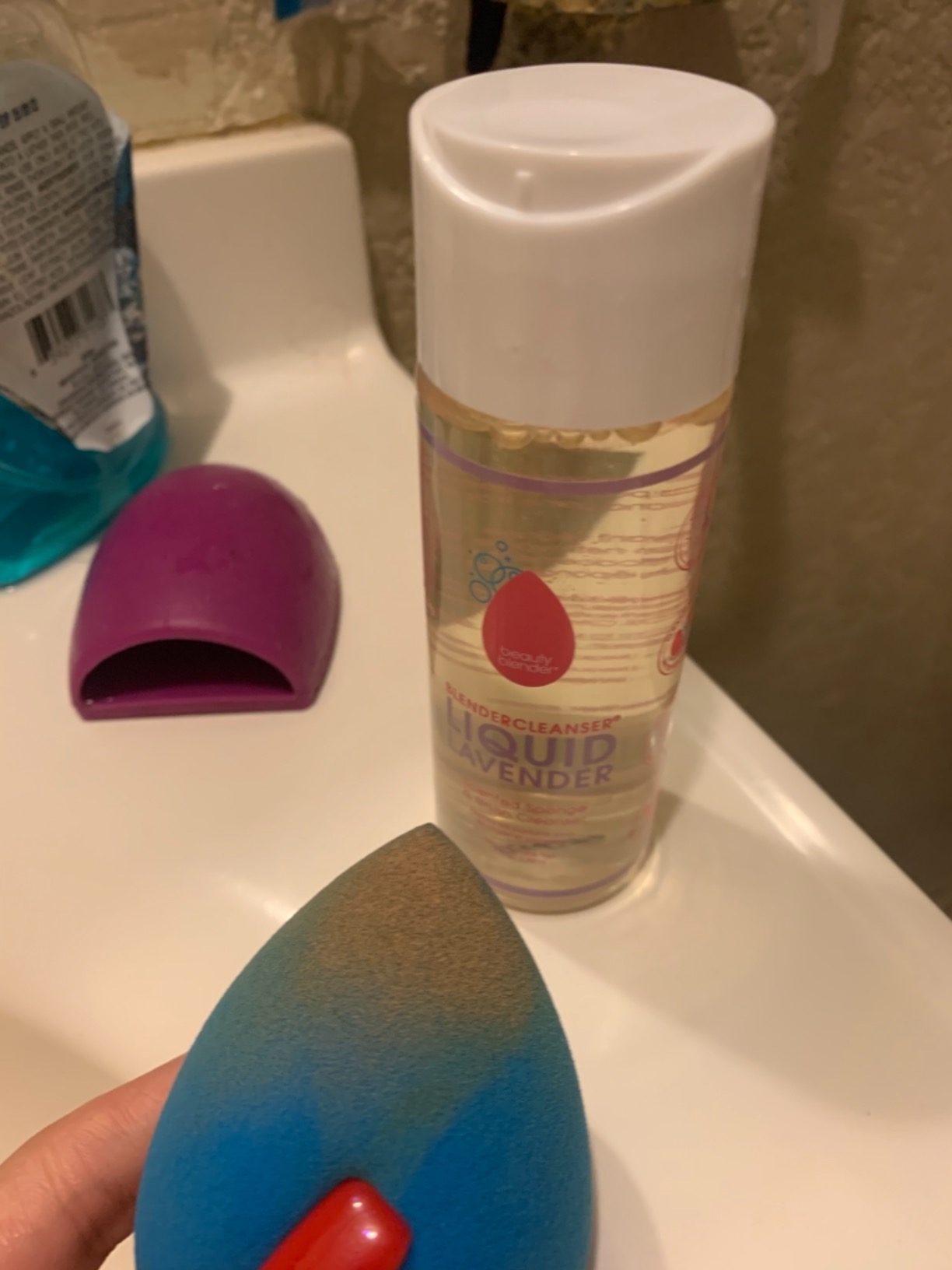
It handles brushes and other tools too, which makes it a reasonable single-bottle choice if you apply mostly base products. The 3 oz size is genuinely portable and fits in a toiletry bag without thinking about it.
The lavender scent is pleasant rather than chemical, and reviewers consistently mention that as a plus. Just be clear-eyed that this is a scented formula and there is no fragrance-free version of it, so sensitive skin users should look elsewhere.
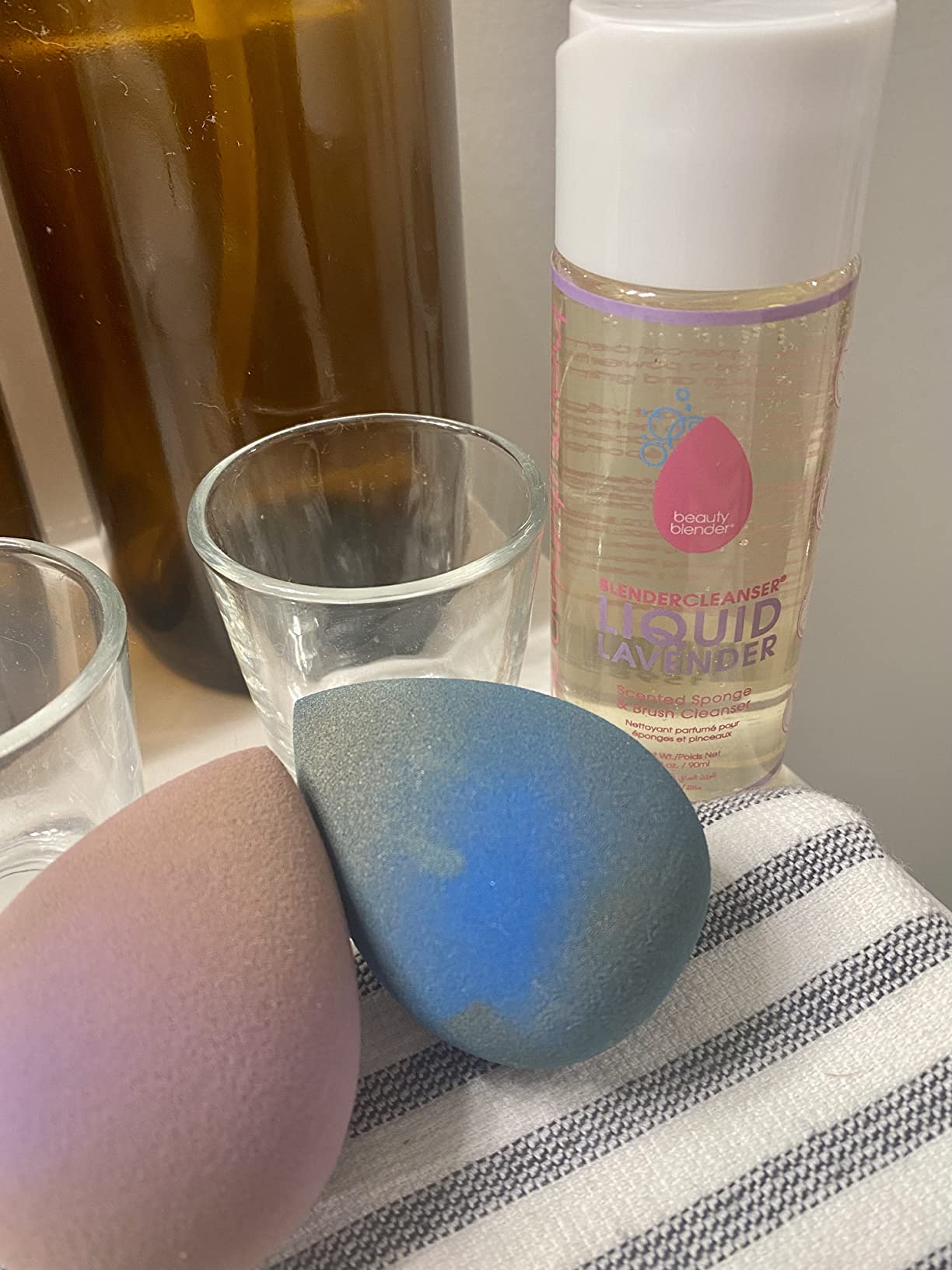
Why it wins for sponge users
Sponges are the hardest tool to keep clean and the easiest to forget about. A sponge that has absorbed foundation repeatedly will start transferring colour back onto your skin, and no amount of surface wiping fixes what is inside it.
This one is sized and formulated for that job rather than for brushes, which is why it appears so often in sponge-heavy routines. It also suits travel, where a sponge and a 3 oz bottle is the whole kit.
Where it falls short
The scent is unavoidable. If you react to fragrance, this bottle is not going to work for you no matter how well it cleans.
At 3 oz it is small, and it is a wash product rather than a spray, so it does nothing for a between-applications clean. For daily portability you would pair it with a spray.
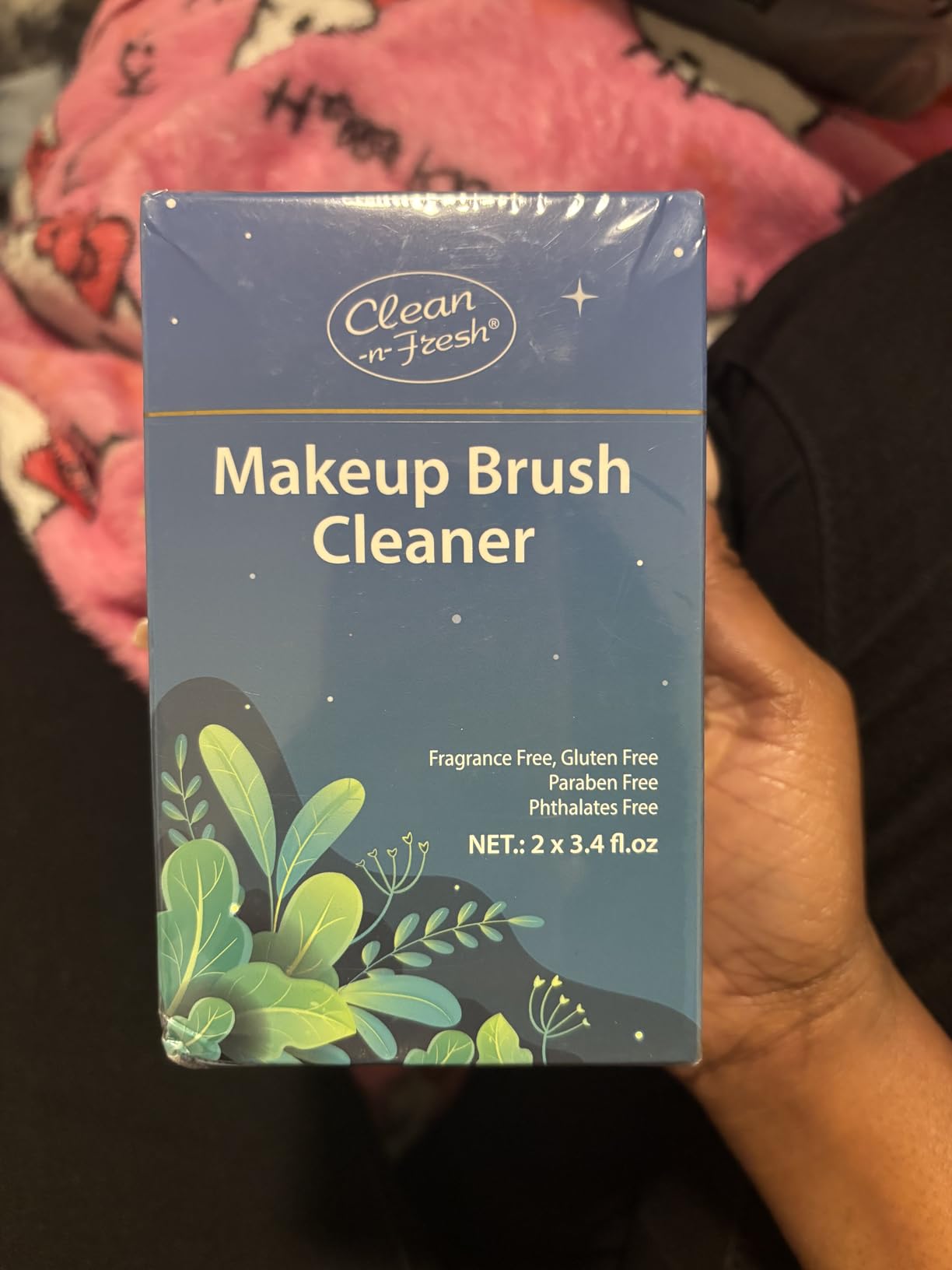
5. Clean-n-Fresh Makeup Brush Cleaner 2 Pack with Mat – the bundled kit
Clean-n-Fresh Makeup Brush Cleaner Set 2 Pack with Cleaning Mat 6.8 Fl Oz
Two 3.4 fl oz bottles plus mat
Raised-ridge silicone surface
Standard rinse and dry
Pros
- Two bottles plus a mat in one kit
- Raised ridges speed up residue removal
- Gentle formula leaves brushes soft
- Handles sponges and powder puffs too
Cons
- Small bottles run down fast for heavy users
- No rinse-free or quick-dry option
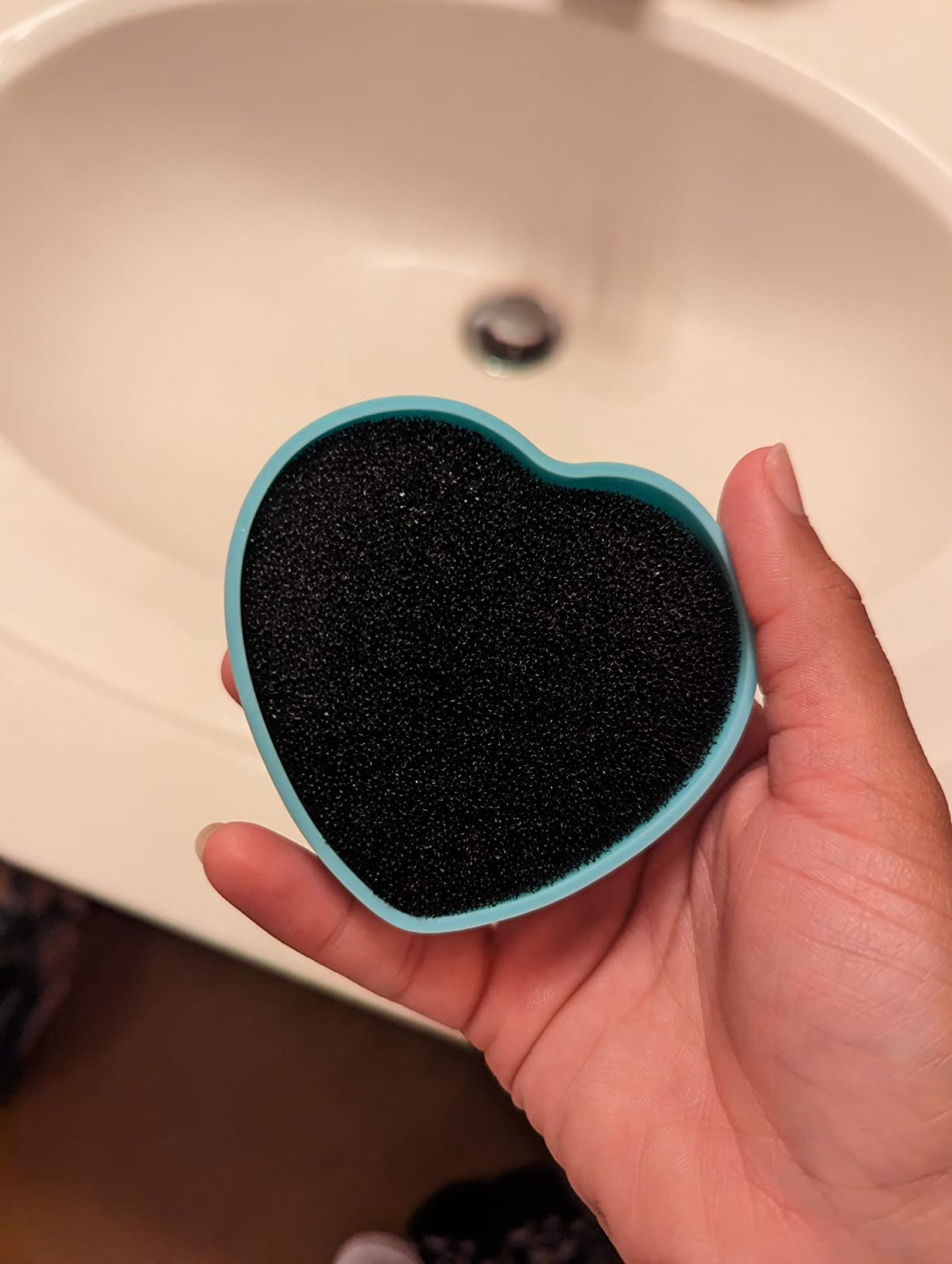
This is the value pick for anyone starting from zero, and the logic is sound. You get two 3.4 fl oz bottles and a silicone cleaning mat in one box, which is the two things a beginner actually needs: something to clean with and something to scrub on. A separate mat is what turns hand washing into a five-minute job.
The raised ridges on the mat are the feature that matters. Swirling a wet foundation brush across silicone ridges breaks the film down far faster than working it in your palm, and reviewers consistently describe the mat as the reason the kit feels effective rather than token.
The formula itself is unremarkable in the best way. It is a standard rinse-and-dry cleaner that avoids stripping tools and avoids leaving a harsh chemical smell, and it works across synthetic and natural bristles, sponges and powder puffs without a separate product for each.
This is a straightforward kit rather than a specialist formula, and that is exactly what you want if the routine is going to run once a week and you do not want to think about it.
Best for a first cleaning routine
Most people who mean to clean their brushes never do, because they do not own a mat and do not want a bottle of something unopened on a shelf. This removes both excuses in one purchase, which is a bigger win than a marginal difference in formula strength.
It suits a moderate brush count rather than a large collection. Two smaller bottles will not last a heavy user who washes daily, so keep that in mind before you commit to it as your only cleaner.
Where it falls short
The bottle size is the weak point. At 3.4 fl oz each, daily users will run out and go back to buying, which erodes the value advantage over a month.
There is no rinse-free or quick-dry option here. It is a rinse-and-dry kit, so it serves the weekly deep clean and nothing else.
6. EcoTools Daily Brush Cleaner Spray – the between-applications spray
EcoTools Daily Brush Cleaner, Makeup Brush Cleanser Spray, 3 fl oz
3 fl oz quick-dry spray
TSA-approved refillable bottle
For interim cleaning between washes
Pros
- Spray and wipe takes seconds between looks
- Handles stubborn and waterproof makeup
- Suitable for all brush hair types
- Fragrance-free vegan and cruelty-free
Cons
- Not a substitute for a full deep wash
- 3 oz size is small for high-frequency use
This is the product that actually matches the word daily in this query, and it is a different animal from everything else here. It is an instant-dry spray designed for between deep cleanings, so you mist the bristles, wipe with a tissue or cloth, and the brush is ready to go again almost immediately.
You spray it, wait a few seconds, and wipe. That is the whole routine, and on a fresh-to-medium brush it removes surprisingly stubborn and waterproof residue for something this fast. It is explicitly formulated to complement the EcoTools deep-cleansing shampoo at number one rather than replace it, which is the sensible pairing.
The bottle is 3 fl oz, TSA-approved and refillable, so it lives in a handbag or a kit bag rather than on a shelf. It is dermatologist-tested, fragrance-free, vegan and 100% cruelty-free, and it works on all brush hair types without shedding the bristles.
Fragrance-free at this speed of use is a genuine advantage. A scented spray you use three times a day is a scented brush three times a day, and that is how product ends up tasting different than it should.
Why it earns the travel slot
It is the only true no-rinse, no-water format in this group that also fits in a bag. For on-the-go touch-ups between clients or across a long day, that solves a problem no bottle of shampoo can, and reviewers describe it as the reason they keep it in their makeup bag rather than under the sink.
Pair it with the EcoTools shampoo and you cover both routines with one brand, which simplifies the shelf considerably.
Where it falls short
It is an interim cleaner by design. For a brush that has been through weeks of foundation without a deep wash, a spray will not strip the buildup that has worked into the base of the bristles.
The 3 fl oz size is small for someone cleaning several brushes every single day, and the refill format means you need compatible refills to keep going. If your collection is large and used daily, look at the 18 fl oz spray at number eleven instead.
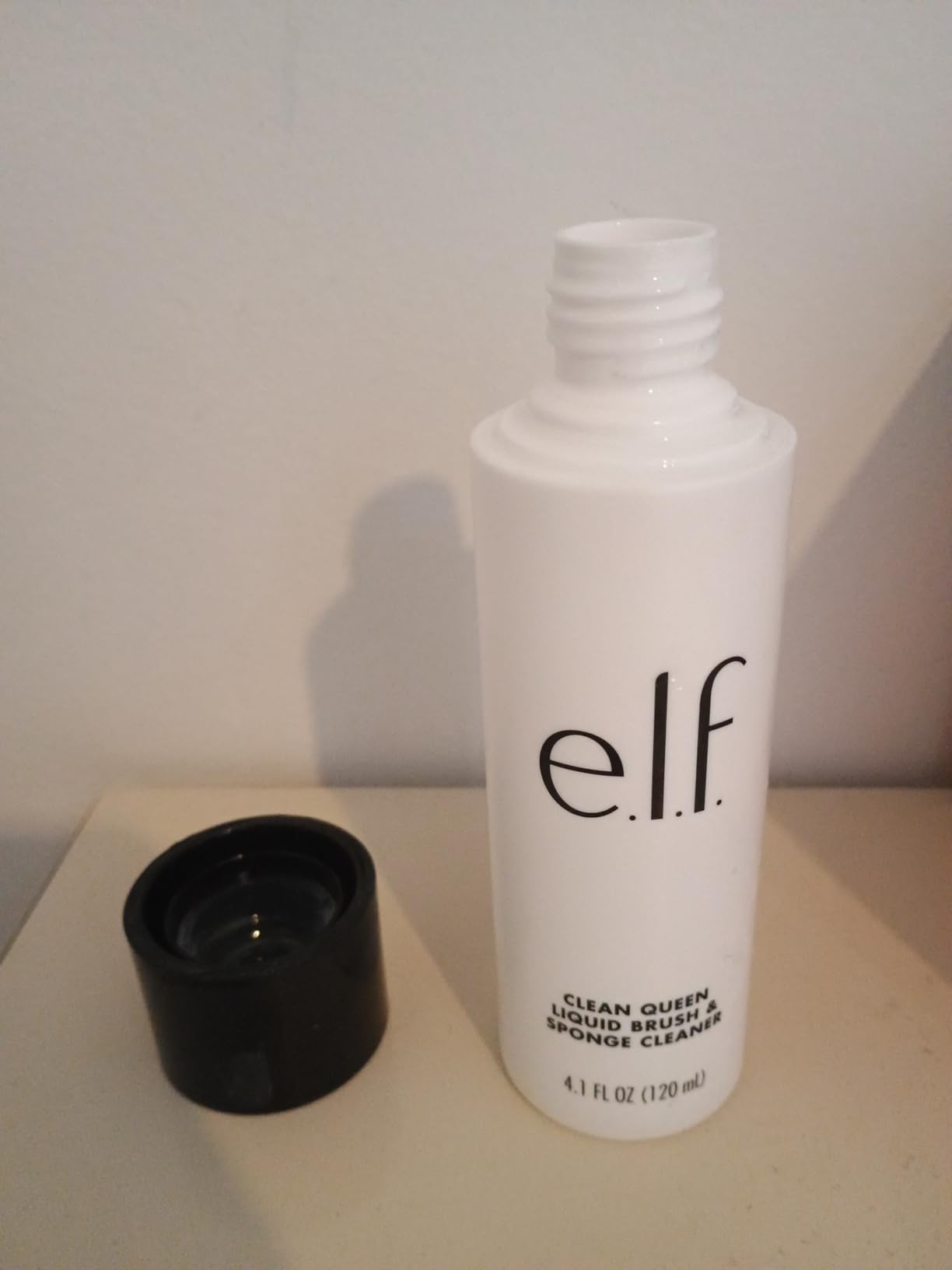
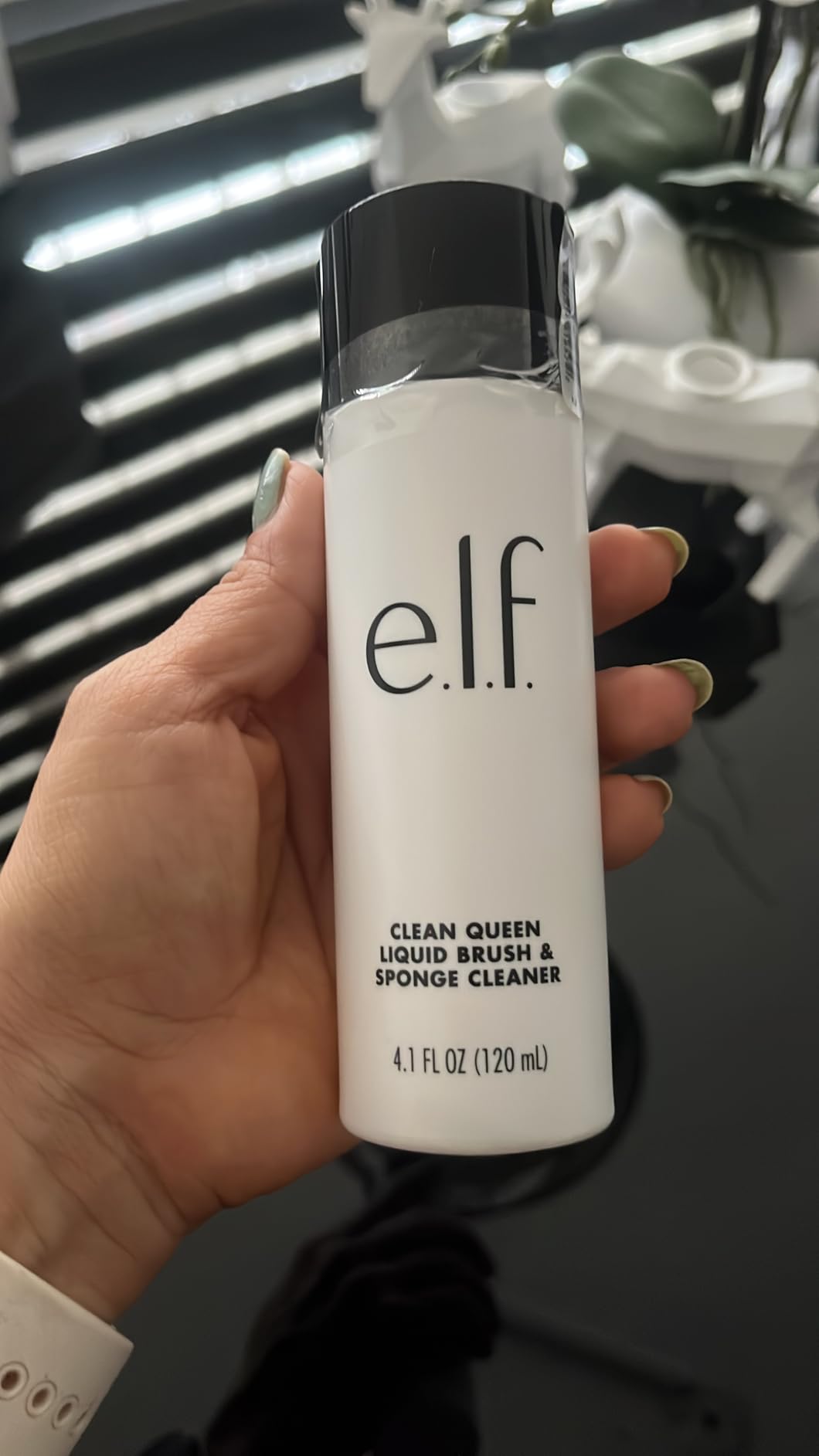
7. e.l.f. Clean Queen Liquid Brush and Sponge Cleaner – the foaming gel
e.l.f. Clean Queen Liquid Brush & Sponge Cleaner, Gentle Foaming Cleaner For Removing Leftover Makeup, Dirt & Grime, Vegan & Cruelty-Free, 4.1 oz
4.1 oz foaming gel
Mess-free squeeze bottle
Sensitive-skin friendly
Pros
- Foams on contact for easy massaging
- Leaves bristles soft and fluffy
- Odourless with no residue after rinsing
- A little goes a long way
Cons
- Overdosing leaves stiff bristles
- Less effective on heavy residue than solvents
This is the newest listing here and the one that converts people who dislike washing their brushes. It is a foaming gel that lathers into a foam on contact with water, so the massaging step that normally takes thirty seconds of hand work happens almost on its own. The squeeze bottle dispenses without the usual cap-throw-and-mess routine.
The finish is what reviewers keep mentioning: soft, fluffy bristles, no odour and no residue after rinsing. For a gentle gel rather than a solvent, that is a good outcome, and it is safe for sensitive skin.
It is also a practical choice for a collection that mixes brushes and sponges, since it handles both. A little goes a long way, which matters for anyone who has been using far too much product per brush out of habit.
Two certifications sit behind the formula: Leaping Bunny and PETA. That is a reasonable baseline for a daily product, and reviewers of this category consistently say they trust ingredient lists and cruelty-free claims more than marketing language.
Why it works for everyday use
A foam you can just work through the bristles removes one of the biggest reasons people stop cleaning brushes. You are not scrubbing a slick brush against a silicone mat, you are pushing foam through it, and the cleaning happens while you work.
The dosing is the part to get right. Start with less than you think you need, because overusing it is the documented way to end up with stiff bristles that are hard to rinse.
Where it falls short
Gentle does not mean solvent-strength. Heavy, long-wear buildup takes more time and effort here than with a rinse-free liquid, so a heavy user may need both products.
It also may not fully clear every trace of old makeup from a sponge, and the dose sensitivity is a real learning curve for first-time users.
8. Ogee Brush Wash Bar – the organic solid bar
Ogee Brush Wash Bar – Gentle Makeup Brush Cleanser, Organic & Made in USA
1 oz solid bar in a reusable jar
Over 85% organic ingredients
No synthetic additives
Pros
- Highest-rated listing in this group at 4.8 stars
- Keeps bristles soft and in shape
- Solid jar has no spill risk
- Compact and travel ready
Cons
- 1 oz size suits small collections
- Solid format needs rubbing to build lather
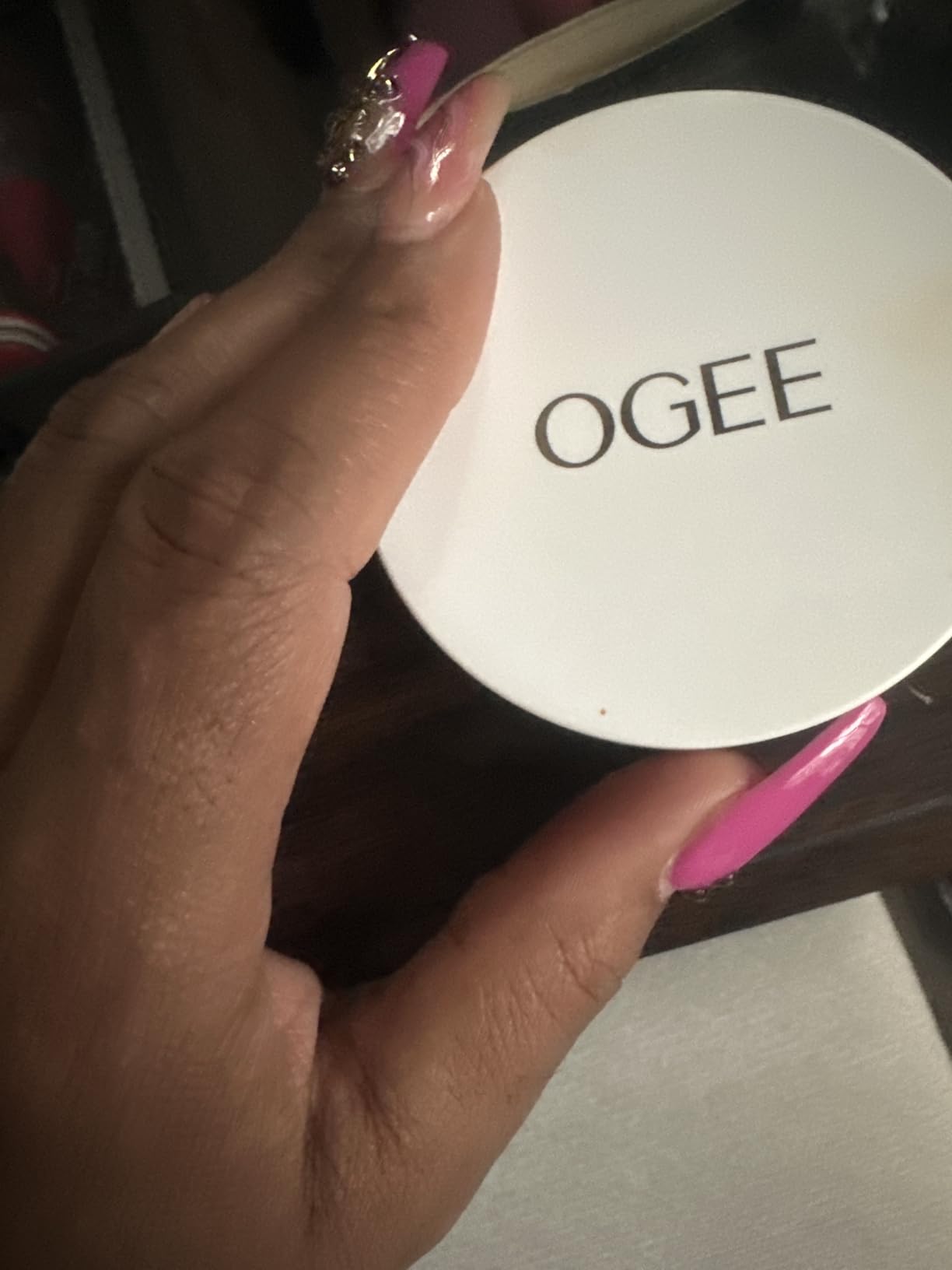
Ogee carries the highest average rating of any product in this roundup at 4.8 stars, with roughly 90% five-star reviews and very few one-star ones. That is a small sample next to some products here, but the consistency of the feedback is what stands out rather than the number alone.
The bar is made with over 85% organic ingredients and is free from synthetic additives, stored in a reusable jar and made in the USA. For anyone who has decided against a plastic bottle that lives on a shelf forever, the format is the whole argument: no liquid, no spill risk in a bag, nothing to decant.
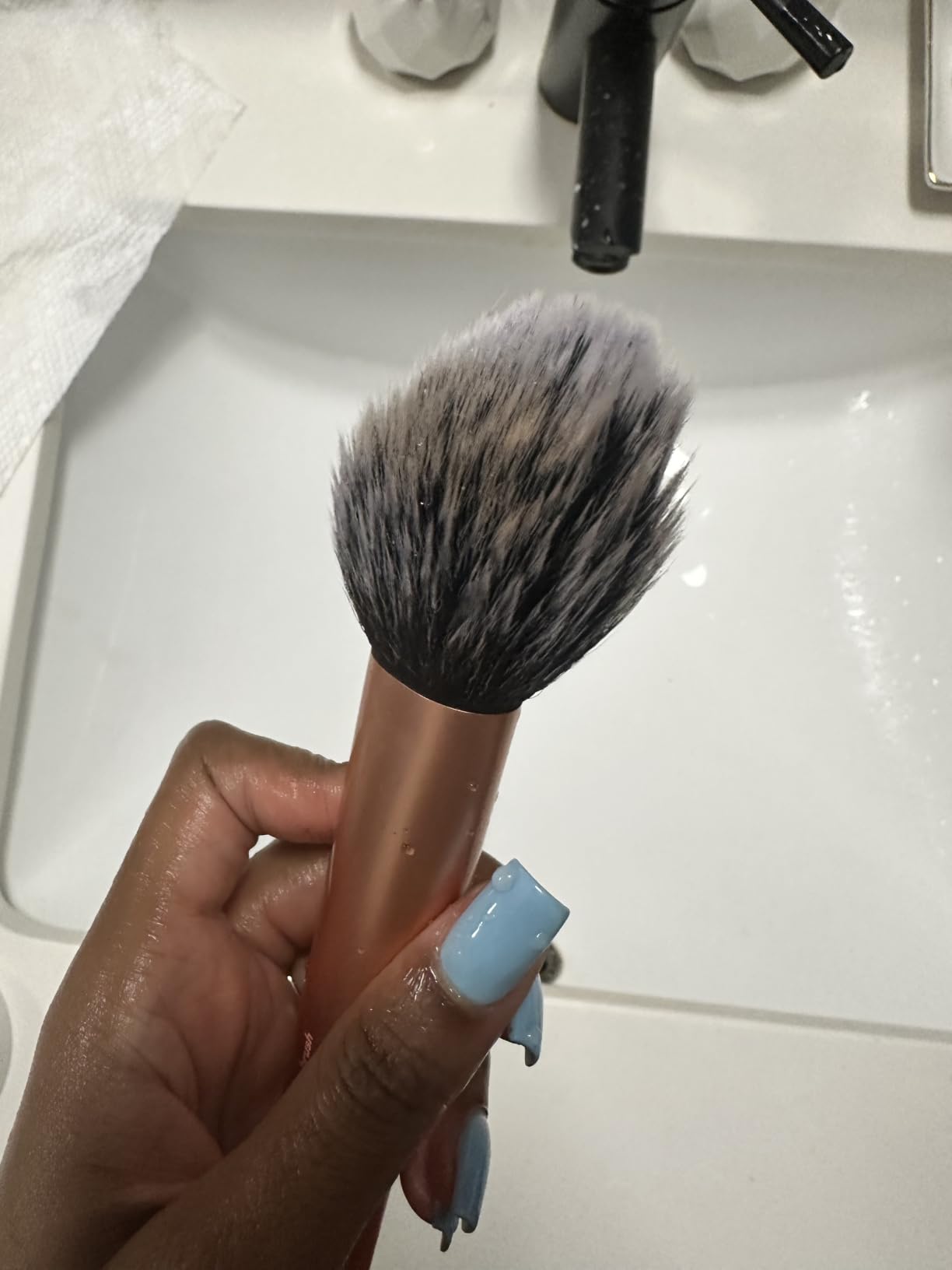
Cleaning performance is gentle rather than aggressive, and reviewers consistently note that bristles come out soft and in shape rather than splayed. That is the behaviour you want if you own good natural-bristle brushes you plan to keep for years.
Used wet, you work the brush across the bar until it lathers, then rinse. Once the lather is built the rest is quick, and the compact one-ounce form means it takes up almost no space in a drawer or a travel kit.
Why it suits natural bristles and travel
Natural bristles are the brushes most damaged by aggressive cleaning, because the hair cuticle takes on water differently from synthetic fibre. A conditioning, organic-leaning bar that leaves shape intact is a sensible match for a goat or pony hair powder brush.
For travel, a solid bar simply cannot leak. That is why professional kits have leaned on solid formats for years, and it is why this one suits a small bag or a gym kit better than any bottle here.
Where it falls short
One ounce is a small bar. If you have a large collection or several kabuki brushes, you will replace it often and the convenience advantage shrinks.
The solid format also needs more manual work than a spray. Building lather on a large dense brush means repeated swirling, so it suits a slower routine rather than a quick one.
9. DUcare Solid Soap with Colour Removal Sponge – the pigment lifter
DUcare Makeup Brush Cleaner Makeup Brushes Solid Soap Cleanser with Color Removal Sponge Brush Cleaning Mat, Silicone Makeup Cleaning Cosmetic Cleaner Blenders Shampoo Removes Shadow Color
0.35 oz solid soap bar
Includes colour removal sponge
Coconut or lavender options
Pros
- Colour removal sponge lifts stubborn pigment
- Cleansing action keeps bristles soft
- Mess-free solid format for travel
- Works across brush and sponge types
Cons
- Big brushes need repeated swirling for lather
- Scented variants may not suit sensitive users
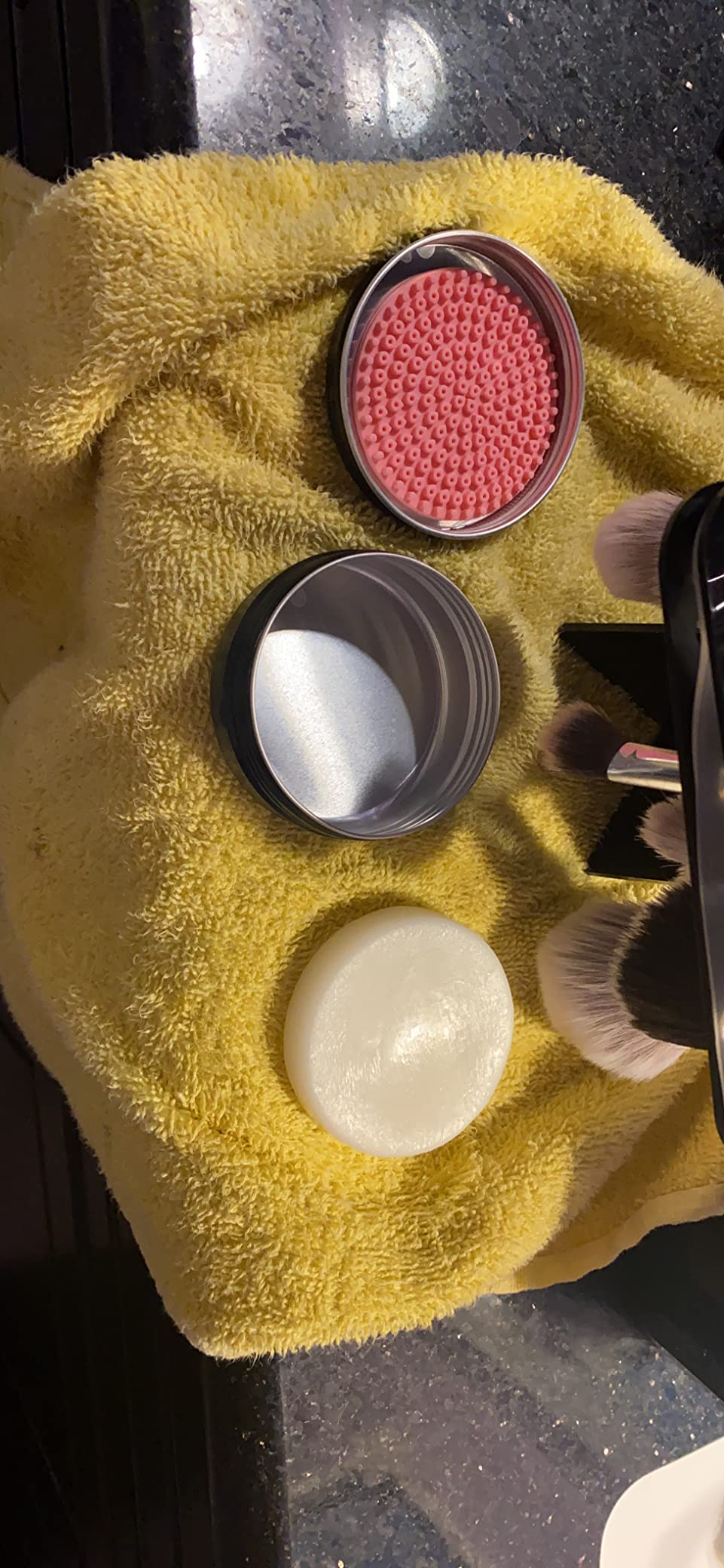
This kit is built around one specific problem: shadow and powder pigment that has worked itself into a brush and refuses to move. The bar itself is a solid soap, but the useful part is the included colour removal sponge, which you glide the brush against after lathering to lift the remaining pigment off the bristles.
Two steps instead of one, but the second step is exactly the one that matters for a colour-obsessed kit. A reviewer who has used it for a few weeks reports that powder and shadow residue comes out quickly while the bristles stay soft, which is the trade-off people usually fear with a solid bar.
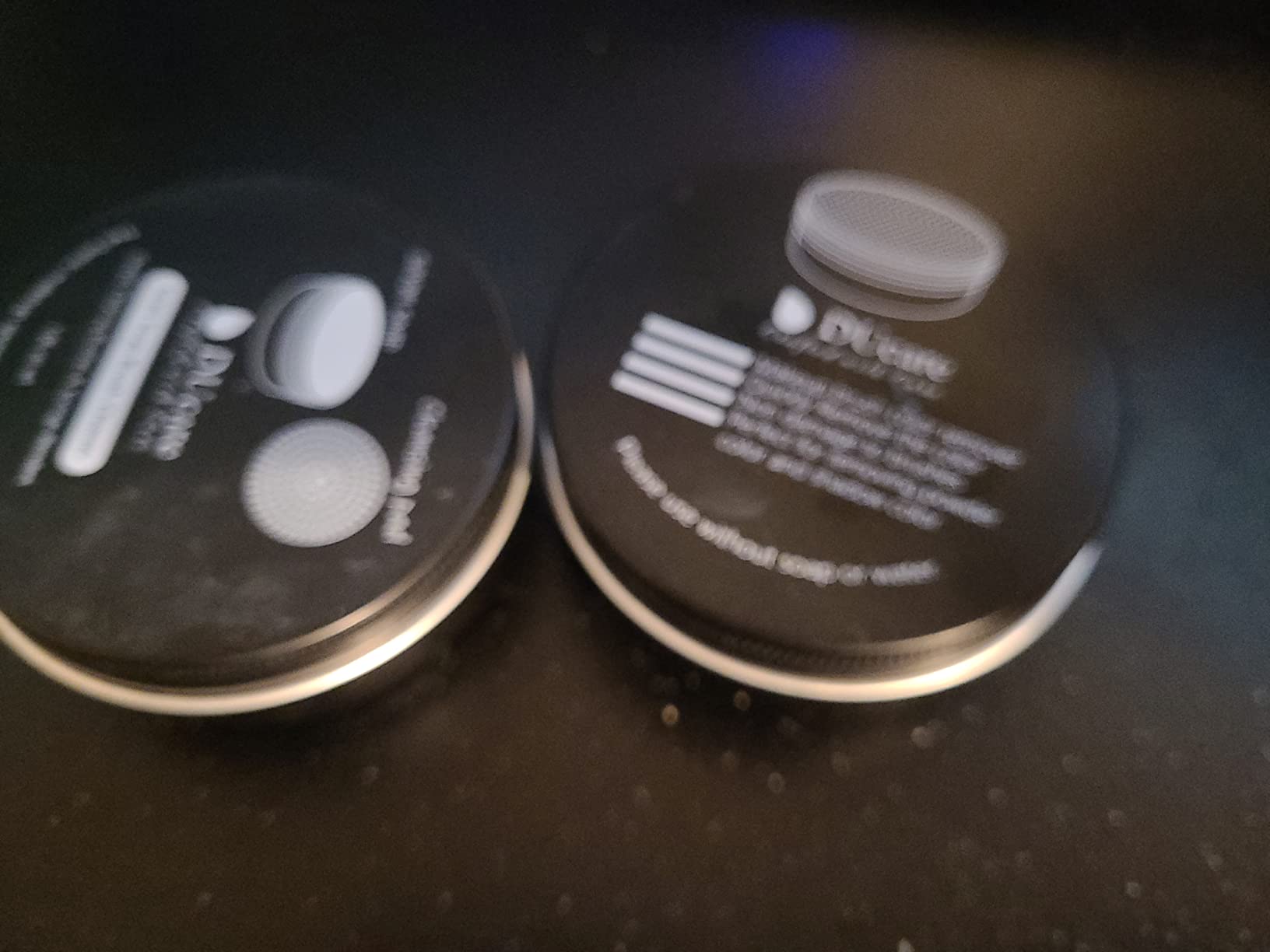
The scent options are coconut or lavender depending on the variant you pick, and both are mild rather than heavy. The silicone and soft scrubbing sponge components are the environmentally friendly part, and they do not replace the work the way a rigid plastic insert would.
At 0.35 ounces the bar is tiny, so treat this as a targeted tool for pigment rather than your only cleaner. It is most useful when you are switching between a bold shadow and a neutral one and want the brush usable again.
Best for colour-change workflows
The pigment-first design makes this the most sensible choice for someone who uses a small set of brushes for very different shades. You do not need three foundation brushes because you can clean one properly in a couple of minutes.
It is also mess-free, which is not a small detail. A solid bar in a small container is easier to keep near a handbag or inside a kit bag than any bottle, and it doubles as a travel item.
Where it falls short
Large, dense brushes need repeated swirling to build a lather, which slows the process down. That is a genuine problem if your daily work is on a kabuki rather than a shadow brush.
The scented variants may not suit fragrance-sensitive users, and the bar is too small for anyone washing a full large collection on a single pass.
10. docolor Makeup Brushes Cleaner Set – the powder pigment specialist
Docolor Makeup Brushes Cleaner Set Solid Soap Cleanser with Color Removal Sponge, Makeup Brush Cleaner Mat Brushes Shampoo for Cleaning Makeup Sponges, Brushes & Applicators Vegan (coconut oil)
2 oz coconut oil solid soap
Colour sponge and silicone pad
Vegan formula
Pros
- Shifts heavy powder and shadow pigment
- Rinses clean and cuts cleaning time
- Dry sponge handles everyday touch-ups
- Light coconut scent rather than a chemical smell
Cons
- More manual effort than liquids
- Weak against foundation and contour pigments
- Small bar is not for body brushes
The two-in-one design is the interesting part here. You get a 2 oz coconut oil solid soap, a dry colour removal sponge for everyday touch-ups and a silicone cleaning pad for the weekly wash, which covers both routines without a second purchase. The dry sponge is the piece most competitors in this set skip entirely.
On powder and shadow it performs well. Reviewers report that heavily pigmented powder comes out effectively, that it rinses easily and that it noticeably cuts cleaning time compared with a liquid bottle. The coconut scent is light rather than chemical, and there is no heavy fragrance or sticky residue left in the bristles afterwards.
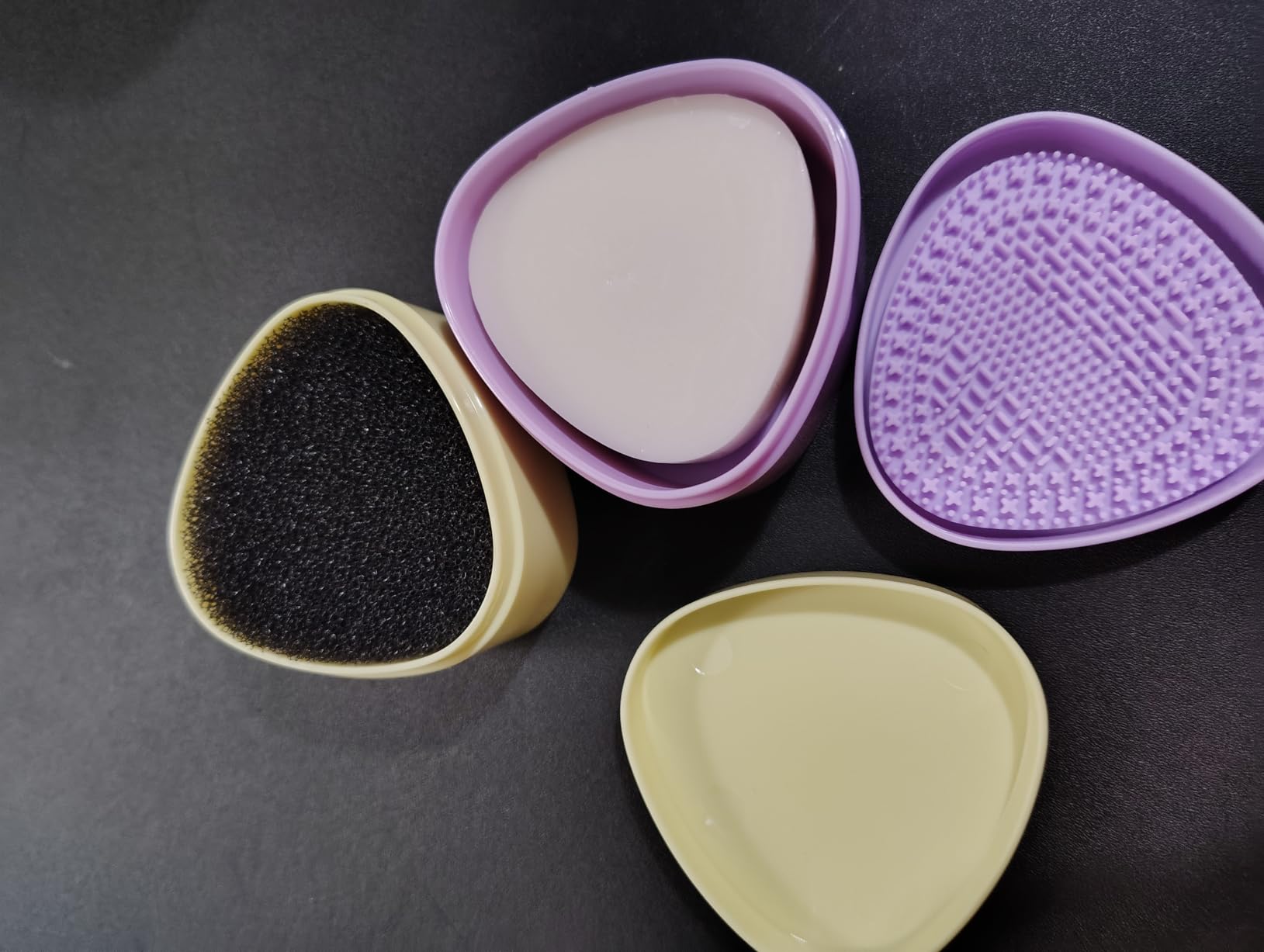
The honest weakness is base makeup. Multiple reviewers say it is weaker against foundation, bronzer and contour residue than against eyeshadow, so if foundation is your main product you will want a liquid shampoo for those brushes and keep this one for colour work.
It is also more manual than any liquid on this list. Every step is a physical action, and the solid bar needs a wet brush swirled until it foams, which is more effort than a squeeze bottle.
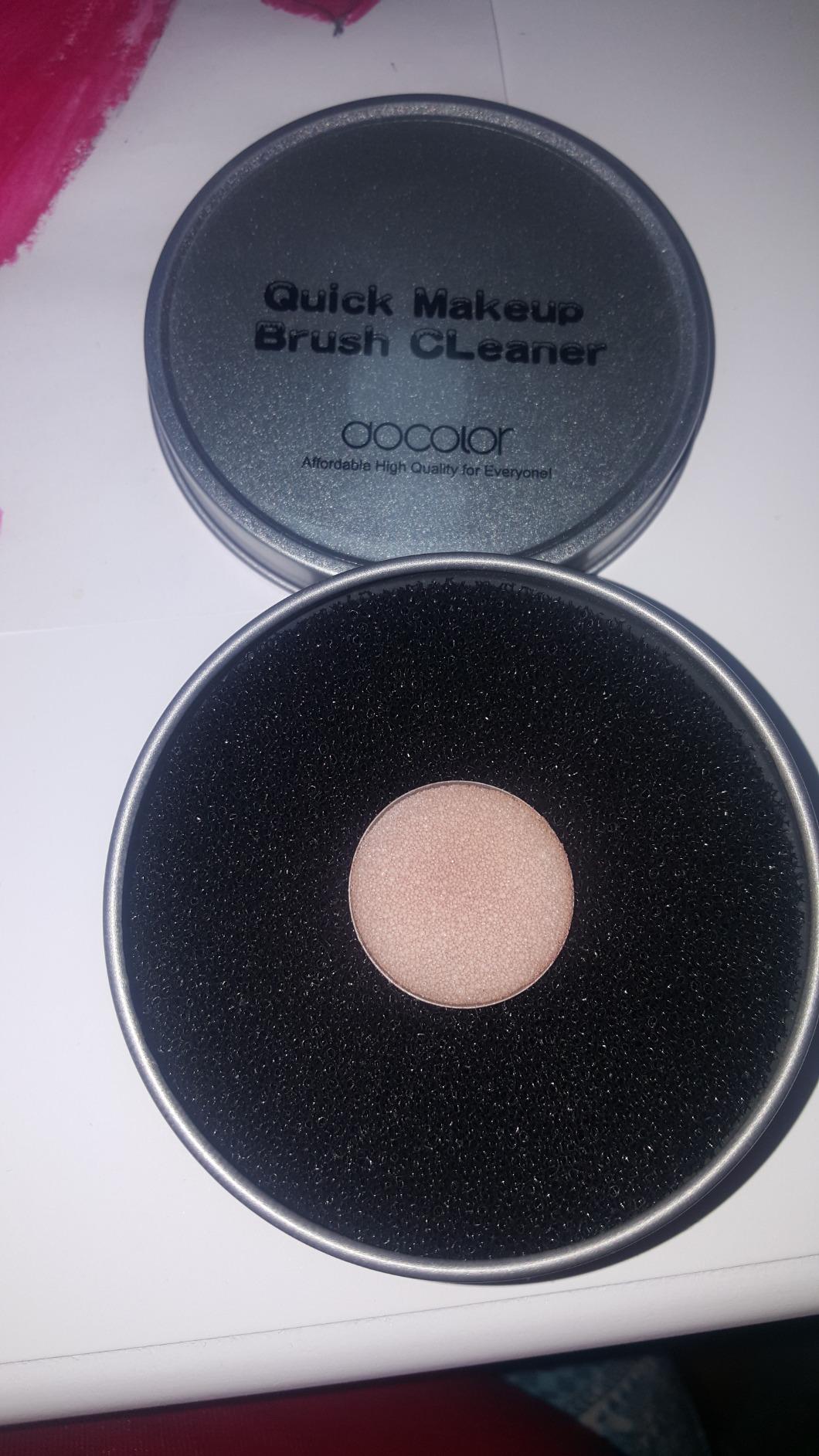
Why it suits a mixed routine
Having both a dry sponge and a wet bar means the same kit handles a quick pigment touch-up and a proper weekly wash. That is a more complete answer than buying a bar on its own, and it explains why reviewers rate it as cutting cleaning time.
The vegan formula and travel-friendly size mean it works in a bag, and the light coconut scent is a reasonable middle ground for people who rule out the heavily perfumed options on this list.
Where it falls short
Foundation, bronzer and contour are the weak spot, and that is a large part of most routines. Keep a rinse-free liquid for those brushes.
The 2 oz bar is also too small for large body or self-tanner brushes, and there are no instructions in the package, so the lathering step is down to trial and error the first time.
11. Isoclean Makeup Brush Cleaner Spray 18 fl oz – the 60-second routine
Isoclean Makeup Brush Cleaner – Gentle Daily Use Solution, Reduces Product Buildup, Improves Application, Easy Clean Brush Cleaning Solution & Sponge Cleaner – Spray Top, 18 fl oz
18 fl oz no-rinse spray
Aloe vera conditioning
Refillable pouches available
Pros
- Spray wipe and reuse in about 60 seconds
- No rinse needed in a daily routine
- Aloe conditions the bristles
- Refillable bottle cuts waste
Cons
- Needs a cloth or paper towel to work
- Less deep cleaning than a soak
This is the option for a large collection, because the 18 fl oz spray-top bottle is the biggest refillable format in this group and the maths works when you are cleaning dozens of brushes. Refillable pouches are available in 4 fl oz, 9.2 fl oz and 18 fl oz, so you can drop the size for a bag without switching systems.
The routine is the shortest one here: spray, wipe with a microfiber cloth or paper towel, and the brush is back in service in about sixty seconds. The aloe vera enrichment is what separates it from a basic solvent spray, since it conditions the bristles and helps them stay strong but soft across repeated use.
It is vegan and not tested on animals, and it is designed with a specific goal in mind: preventing pimples and skin impurities by keeping tools hygienic between uses. That is the daily-use case rather than the once-a-week reset. For someone running a kit across multiple clients or cleaning a full collection after every shoot, sixty seconds per brush is the difference between a routine that happens and one that does not.
Where the sixty-second claim comes from
The bottle is a spray-top with an aloe formula that dries fast without a rinse. You are not soaking anything, so there is no drying rack and no waiting period, and the brush goes straight back into your hand while you finish the rest of your routine.
It also belongs to a wider range of brushes, sponges, cleaners, razors, microfibre cloths and palettes, so if you already own items from the same line the refill fits the system rather than adding to it.
Where it falls short
It does not work without a cloth. You need a microfibre cloth or a paper towel for the wipe step, and if you are using it away from home you have to remember to bring one.
It is also shallower than a soak-style cleaner. A spray will not strip weeks of foundation from a dense kabuki, so it complements a weekly wash rather than replacing one.
12. Felix Professional Makeup Brush Cleaner 16 fl oz – the deep-wash liquid
Felix Professional Makeup Brush Cleaner – Deep clean Rinse Free Quick Dry – Ideal for Cleaning and Odorizing Natural and Synthetic Make-up Brushes (16 fl oz)
16 fl oz rinse-free liquid
Quick-drying hypoallergenic formula
For natural and synthetic brushes
Pros
- Deep cleaning pulls pigment oil and dirt from bristles
- Dries fast so brushes return to use quickly
- Keeps bristles soft over repeated washes
- Works on natural and synthetic brushes
Cons
- Can strip dye from coloured sponges
- Chemical odour reported by some users
This one is the deep-wash answer for anyone who has been disappointed by gentle formulas. It is a rinse-free, quick-drying liquid with a hypoallergenic formula made in the USA and free of harsh chemicals and toxins, designed for natural and synthetic brushes alike.
The method is simple: pour solution into a dish, dip half the bristles and wipe clean. Because it is rinse-free it dries much faster than a gel or shampoo, which is the specific advantage reviewers report against gel cleaners that leave brushes sitting wet for hours.

It also sanitises rather than merely washing, and the alcohol content is part of that. Reviewers note that it keeps bristles soft over repeated use rather than degrading them, which is the concern with solvent-based cleaners.
Deep cleaning is where it earns its place. Pigment, oil and dirt come out of dense bristles more thoroughly than with anything gentle on this list, which matters for a brush that has not been properly washed in a while.
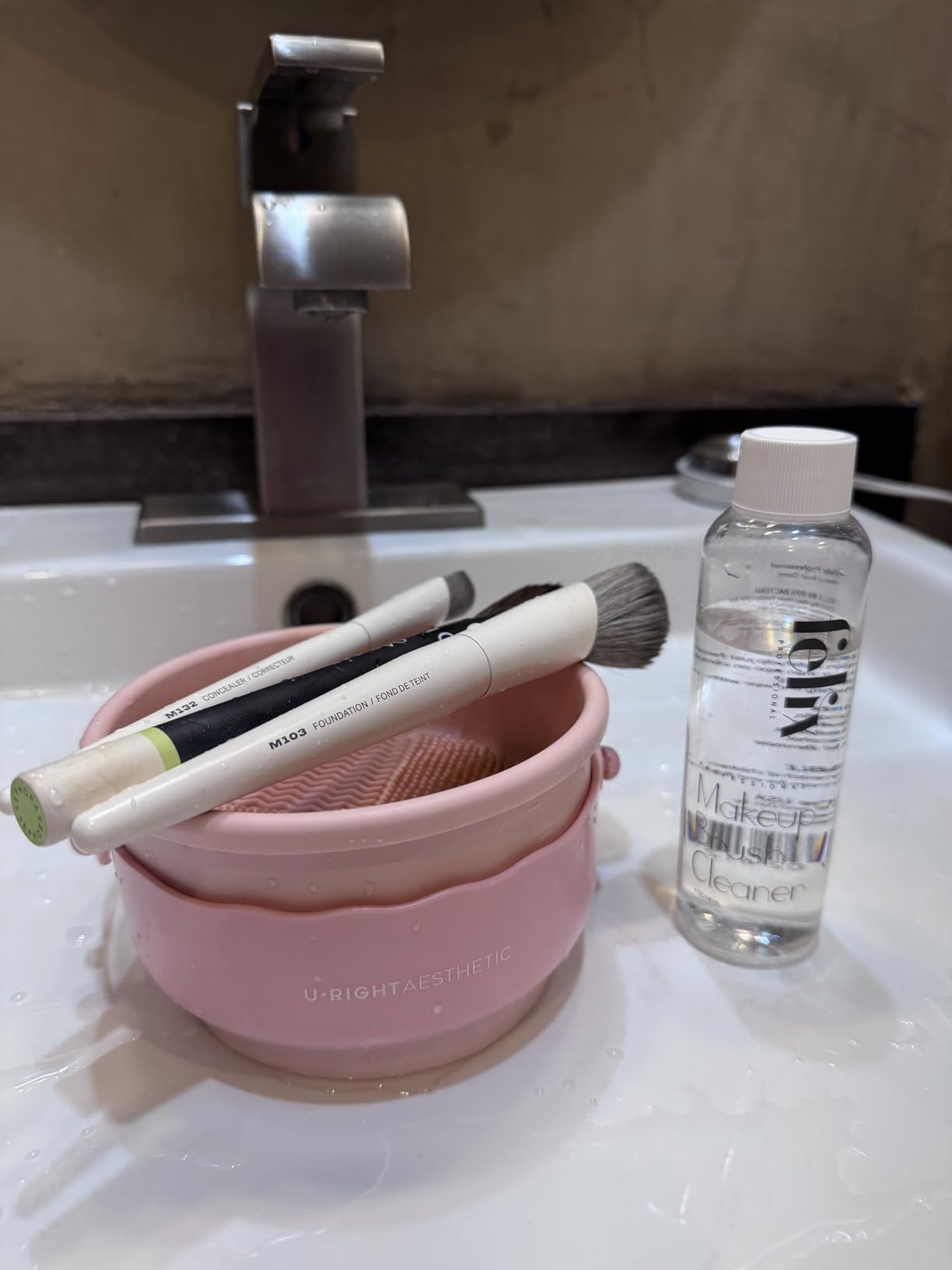
Best for reviving neglected brushes
There is a specific situation this solves: a brush drawer that has gone months without a proper clean. Gentle formulas will not strip that layer, and this one does without leaving the bristles stripped in the process.
The rinse-free method also makes it practical for collections rather than just a small kit. You are not standing at a sink rinsing forty brushes one at a time, which is where most people give up.
Where it falls short
It can strip dye from coloured applicators, including a beauty blender, so keep it away from sponges with pigmented surfaces.
Some users report a noticeable chemical odour, so check the seal and give it a smell test before you pour it into a dish. For sponges specifically, the blender-specific formula at number four is the better pairing.
Quick Daily Cleans vs Weekly Deep Cleans
Every cleaner on this list is good at one of two jobs, and mixing them up is why people end up disappointed. A daily clean removes the product you just used so you can reuse the brush or switch shade. A deep clean removes everything a daily clean leaves behind, which is the oxidized buildup at the base of the bristles.
The honest way to think about it: a quick clean keeps a brush from becoming dirty, it does not make a dirty brush clean again. That distinction matters because most of the products sold as brush cleaners are shampoo, and shampoo needs water, time and drying. If your brush needs to be usable in five minutes, a shampoo cannot do the job.
What belongs in which slot
In the daily slot: the Cinema Secrets rinse-free liquid at number two for its turnaround time, the EcoTools spray at number six for genuine portability, and the Isoclean spray at number eleven for large collections. All three work by dissolving product and wiping it away rather than by rinsing.
In the weekly slot: the EcoTools shampoo at number one as the all-round default, the Norate low-lather liquid at number three if you want unscented, the e.l.f. foaming gel at number seven for a gentle wash, the Felix Professional liquid at number twelve when a brush has been neglected, and the solid bars at numbers eight, nine and ten when portability matters more than speed.
Users generally find the same thing: brand matters far less than consistency of use. The most common thread across r/MakeupAddiction and r/Sephora threads is that almost any liquid soap works, as long as you actually use it. Casting a vote for a specific brand is how this category turns into procrastination.
How to Clean Makeup Brushes the Right Way
The five-step deep wash is the part most people get wrong, and the mistakes are almost always about water temperature and where the brush dries. Bristles stay in shape because you reshape them wet, and they stay in condition because you dry them flat rather than standing up in a cup.
The five-step weekly wash
Wet the bristles with lukewarm water and work a small amount of cleaner through them. Lukewarm rather than hot, because hot water opens the cuticle and is the fastest way to get a fluffy brush.
Work the cleaner into the base of the bristles, not just the tips, and use the palm of your hand or a silicone mat. Most buildup lives at the bottom of the brush where the bristles meet the ferrule.
Rinse until the water runs clear. If it runs cloudy there is still product in there, and that is what makes a brush stiff and smudged afterwards.
Reshape the bristles and lay the brush flat with the head over the edge of a towel. Do not stand it upright in a cup, because water trapped in the ferrule loosens the glue over time and the handle gets slippery.
Let it dry fully before use, ideally for several hours overnight, then keep the brush away from a radiator or a hairdryer while it dries.
The between-applications routine
Spray the bristles, wait a few seconds, and wipe on a clean tissue or microfibre cloth. Work from the tips down to the ferrule so you push the product out rather than deeper in.
Turn the brush in your hand while you wipe so you cover every side. A single pass on one face of the bristles leaves a stripe of colour, and the next application picks it up.
Reshape and let it air dry while you finish the rest of your routine. This is the step people skip, and it is the difference between a brush that dries in two minutes and one that is still damp when you need it.
What to Look for in a Makeup Brush Cleaner
Decide which of the two jobs you are buying for before you look at a single ingredient list, because a good daily product and a good weekly product rarely overlap. Then match the format to your brush type and your tolerance for scent, which turns out to matter as much as cleaning power. Where that bottle ends up matters too, so give it a home within reach of your vanity desk setup rather than hiding it in a cupboard.
Matching brush type to cleaner format
Eye and detail brushes are small, dense and easy to soak, so a lathering shampoo with a mat works well and there is no pressure to find something fast. A spray and wipe is overkill for a brush you use twice a week.
Foundation, bronzer and contour brushes are the ones that stay dirty. They need either a deep-wash liquid or a pigment-focused solid with a colour removal sponge, and a daily spray on its own will not shift old cream formula.
Kabuki and powder brushes hold the most volume and take the longest to dry, so they are the strongest argument for a rinse-free liquid or an alcohol-based quick-dry formula. Anything that needs a rinse means that brush is unavailable for hours.
Natural bristles need the gentlest option on this list. A conditioning organic solid bar or a mild plant-based shampoo keeps the cuticle intact, and a strong solvent is the fastest way to shorten the life of an expensive brush.
Sponges and puffs need their own product. A low-suds soy-based formula built for open-cell foam will clear residue that a brush shampoo simply sits on top of, and none of the solid bars replace it.
Ingredients that matter more than the brand
Fragrance-free is the single most useful filter if your skin is reactive, and it narrows the field quickly. Alcohol-free formulas are the other one, particularly for natural bristles and for anyone using a cleaner several times a day.
Sulfate-free and paraben-free claims are worth reading but are no longer unusual, so treat them as baseline rather than as a reason to buy. Cruelty-free certification from a recognised body is a more meaningful signal than the word appearing on a label.
On ingredients generally, castile soap comes up constantly in brush communities, with users on r/Sephora calling it gentle, cheap and effective at removing buildup, with or without water. It is a reasonable option for natural bristles. Just be aware that a castile bar can leave a film if you do not rinse thoroughly, and that film is what makes a brush feel coated.
What not to use
Dish soap is the most common DIY mistake. It is designed to strip grease from a plate, and on repeated use it dries natural bristles and dulls synthetic ones. People get away with it once, then wonder why the brush feels scratchy a month later.
Undiluted alcohol is the second one. It sanitises, but it also strips the cuticle and it is not something you want soaking into a natural-bristle brush you paid real money for. A cleaner that uses alcohol as one component in a rinse-free formula is a different thing from a bottle of alcohol.
Bleach and homemade vinegar mixes are not worth the experiment. They attack the ferrule glue that holds the bristles in, and once that fails the brush is finished regardless of how well the bristles themselves look.
Finally, the ferrule is the part to watch. That is the metal or plastic band holding the bristles, and it is why you never soak a brush with the head pointing down. Water working into the ferrule from below loosens the glue over repeated washes, which is the most common reason brushes get retired early.
Frequently Asked Questions
What is the best daily makeup brush cleaner?
The best makeup brush cleaner for daily use is a rinse-free liquid or spray, because you need the brush usable again within about a minute. The Cinema Secrets Original Blue Vanilla is the strongest all-rounder, while the EcoTools Daily Brush Cleaner Spray is the better portable option for a bag. A shampoo is the wrong shape for this job, since it needs water and drying time.
What is the best deep cleaning makeup brush cleaner?
For a weekly deep clean you want a product that lathers and rinses, and the EcoTools XL Makeup Brush Cleanser is our pick for its plant-based, sulfate-free formula and its 4.6 rating across more than 53,000 reviews. The Norate low-lather liquid is the alternative if you want something unscented, and the Felix Professional liquid for brushes that have been neglected for months.
Can I clean my makeup brushes with makeup wipes?
A wipe works for a light powder or a fresh cream product on the surface of a brush, which makes it useful for a quick colour change. It will not lift waterproof formula, it does not reach buildup at the base of the bristles, and it does nothing about oil already worked in. Treat it as the fallback, not the routine.
What do makeup artists use to clean brushes between clients?
Between clients, makeup artists reach for a rinse-free liquid or a spray rather than a shampoo, because there is no time for water and drying. Pour a little Cinema Secrets solution into a dish, dip the bristles, and wipe on a towel, or use the Isoclean spray and a microfibre cloth for a 60-second turnaround. Keep a solid bar in the kit because it cannot spill.
What soap is best for cleaning makeup brushes?
A gentle, fragrance-free liquid shampoo works best on a weekly basis, and the EcoTools XL cleanser is the one we use most. Castile soap is a popular alternative, repeatedly recommended on r/Sephora as gentle and effective, but you need to rinse thoroughly or it leaves a film. Avoid dish soap, which dries natural bristles and dulls synthetic ones over repeated use.
Conclusion
The best makeup brush cleaners for daily use are not the same products as the best ones for a proper wash, and buying one bottle that tries to do both is why most brush drawers stay dirty. The EcoTools XL Makeup Brush Cleanser is the one to build a routine around, because it is gentle, fragrance-free and handles brushes, sponges and blenders in a single bottle.
Add a rinse-free product for the days you need the brush back in your hand within a minute. The Cinema Secrets liquid covers that on your desk, and the EcoTools spray covers it in your bag. Everything else on this list is a specialist worth adding once the habit is already there.
One final practical note: whichever combination you settle on, give it a home. A cleaning kit that lives on a Hollywood vanity with mirrors or within reach of your workspace is one you will actually use. A bottle hidden in a cupboard is not doing anything for your skin.