
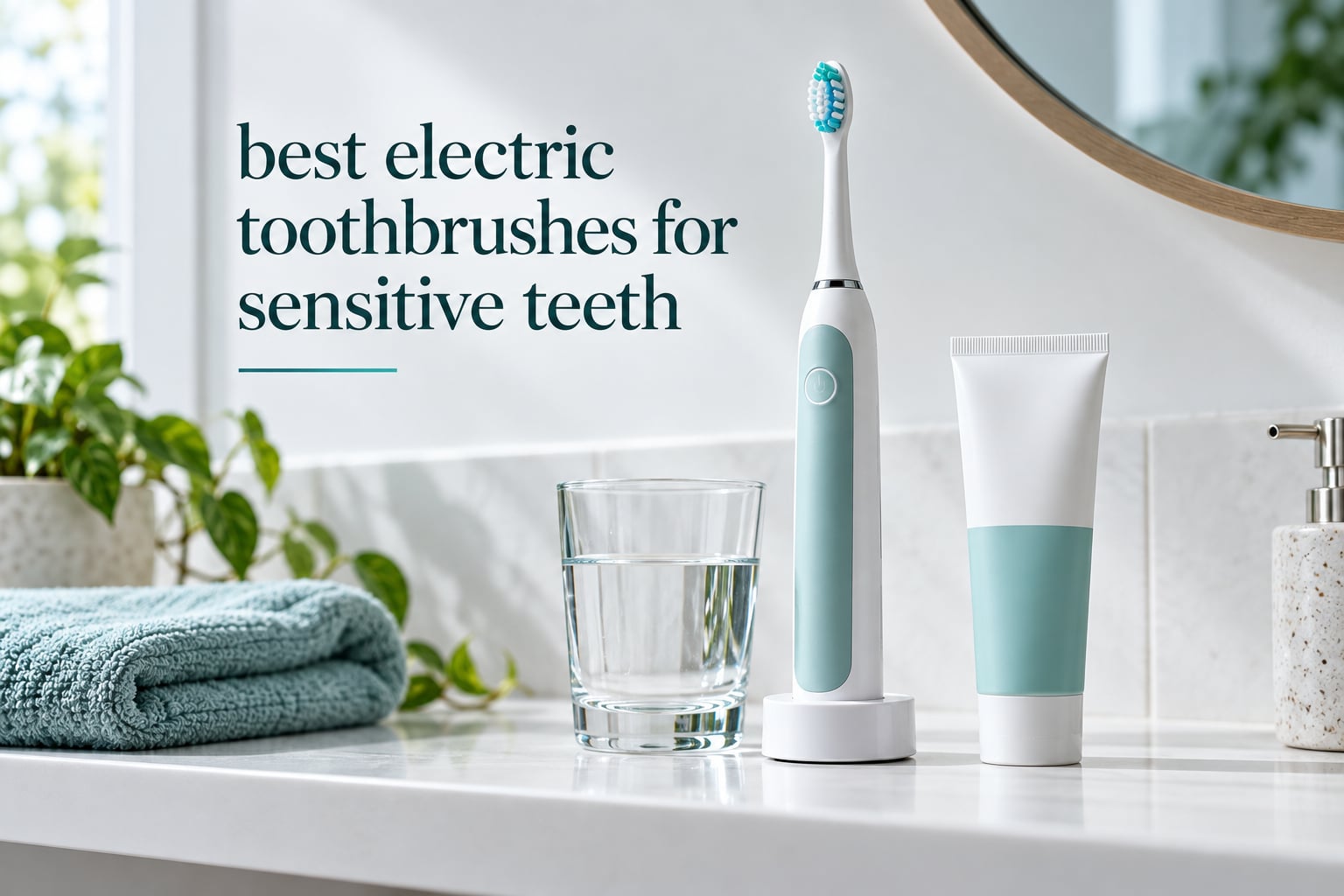
Our pick for most people is the Philips Sonicare ProtectiveClean 6500. It is the only brush in our test group whose pressure sensor physically reduces the motor’s vibration when you lean on it, and its dedicated Gum Care mode gives sore gums a lower-intensity clean without a drop in plaque removal. Every brush below was judged on the same four things: how hard it lets you press, how soft its gentlest mode is, how the head behaves around the gum line, and what the head replacement costs you later on.
Sensitive teeth are not a single problem, which is why most roundups get them wrong. A sharp zing on a cold drink is exposed dentin. Bleeding gums are usually a pressure problem. Recession came from years of scrubbing, and no brush on the market will undo that, though the right one will stop making it worse. If your pain has a specific cause, the brush that helps depends on which cause it is.
We spent several weeks working through this list in the order most sensitive mouths actually need them, checking pressure-sensor response, mode labelling, grip comfort in the hand, and how each one behaved over a full two-minute cycle. We also leaned on the review data attached to each model, because the pattern in 19,000 or 138,000 owner reviews tells you more about long-term comfort than a single session ever will.
Two things are worth saying up front. First, if your teeth hurt badly enough that you are avoiding brushing, a new brush is not a substitute for a dental visit. Second, if you already know you want a sonic brush with sensor feedback, our guide to sonic toothbrushes with pressure sensors narrows the field further.
Table of Contents
Top 3 Picks for Sensitive Teeth

Philips Sonicare ProtectiveClean 6500
- Pressure sensor reduces vibration
- 3 modes including Gum Care
- 2 brush heads included
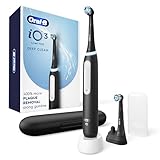
Oral-B iO Series 3
- Round head hugs each tooth
- Motor slows when pressing hard
- Sensitive mode included

Philips Sonicare 5300
- Pressure sensor cuts vibration
- Gum Care mode
- 3 brush heads in the box
All 10 Best Electric Toothbrushes for Sensitive Teeth in 2026
| Product | Specifications | Action |
|---|---|---|
| Philips Sonicare ProtectiveClean 6500 |
|
Check Latest Price |
| Oral-B iO Series 3 |
|
Check Latest Price |
| Philips Sonicare 5300 |
|
Check Latest Price |
 Philips Sonicare 4100 Philips Sonicare 4100 |
|
Check Latest Price |
 Oral-B iO7 Oral-B iO7 |
|
Check Latest Price |
 Aquasonic Black Series Aquasonic Black Series |
|
Check Latest Price |
 Oral-B Pro-Health Pulsar Oral-B Pro-Health Pulsar |
|
Check Latest Price |
 Colgate Optic White Pro-Series Colgate Optic White Pro-Series |
|
Check Latest Price |
 COSLUS C40 COSLUS C40 |
|
Check Latest Price |
 JTF J40 JTF J40 |
|
Check Latest Price |
1. Philips Sonicare ProtectiveClean 6500 – Best Overall for Sensitive Teeth
Philips Sonicare ProtectiveClean 6500 Rechargeable Electric Toothbrush
62000 movements per minute
Pressure sensor reduces vibration
3 modes with Gum Care
Pros
- Pressure sensor genuinely reduces vibration instead of just flashing
- Three intensity levels with a dedicated Gum Care mode
- Hygienists report noticeably less plaque at cleanings
- Travel case doubles as the charger
Cons
- Wide seam between handle and head traps water and is fiddly to clean
- The two control buttons look identical and are not intuitive
- Timer stops the brush with no end-of-cycle cue
This is the one I recommend first, and the reason is narrow but decisive: of every brush in this test group, its pressure sensor is the one most likely to change your behaviour rather than scold you for it. Owners consistently report that the vibration drop is noticeable, because the sudden loss of buzz tells your hand to back off before you consciously register the pressure.
The softest of its three intensity levels sits alongside a dedicated Gum Care mode, and reviewers with sore and bleeding gums describe that pairing as the reason the pain settles. The cleaning itself is not compromised: dental hygienists and dentists repeatedly report less plaque at the next cleaning, which is the outcome that matters more than a lower number on the box.
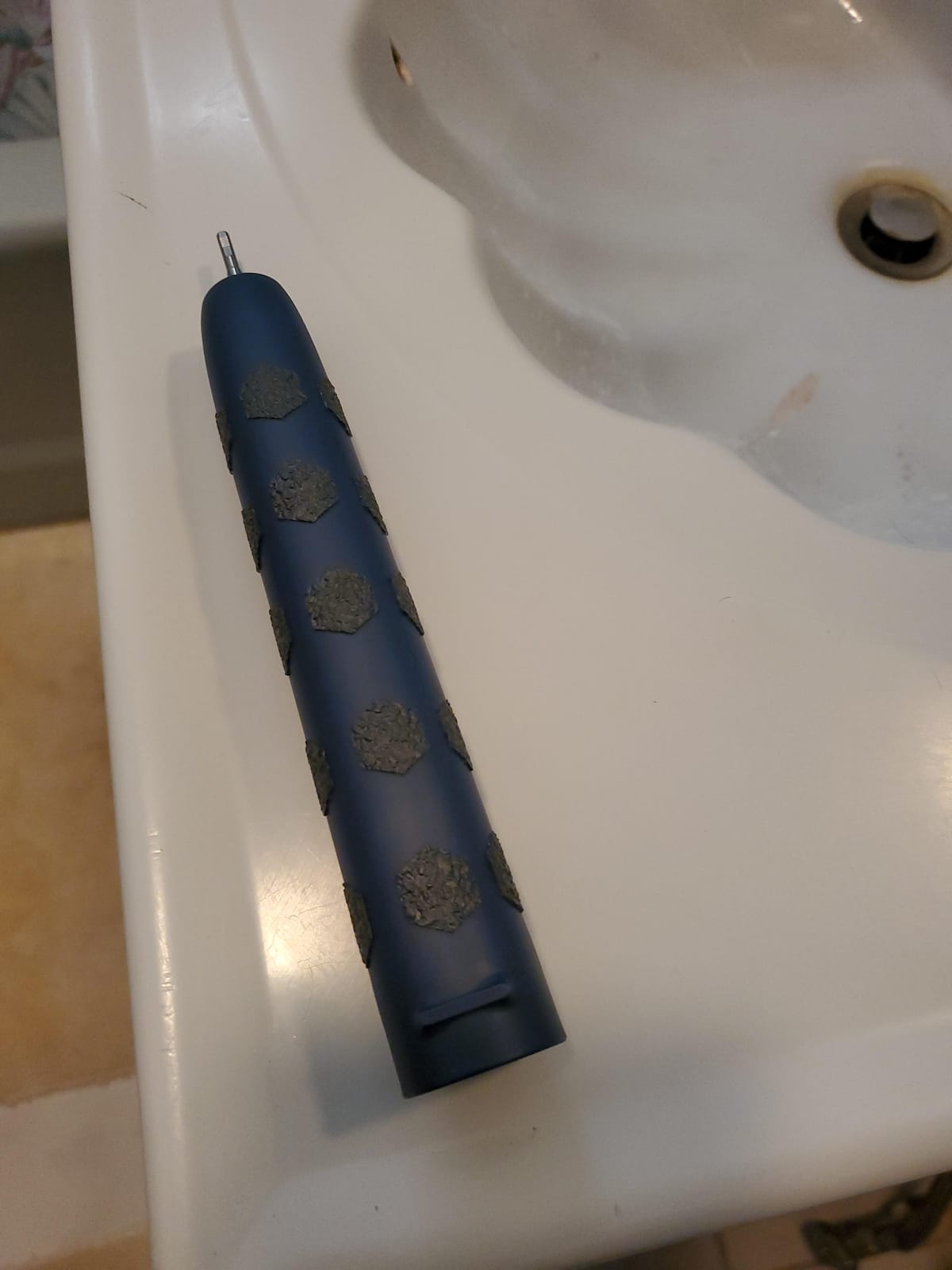
Battery life runs to roughly two weeks of regular use, and the charging travel case is genuinely useful rather than decorative. Two W2 DiamondClean heads are in the box, so you can start on a softer head while the second one ages in.
The 62000 brush movements per minute figure is real, and it is the reason some sensitive users find it stimulating. At the lowest intensity with a soft head the sensation is mild, but if vibration itself is what bothers you, this is not the quietest brush here. My workaround was the lowest setting and a slower pace, which removed almost all of it.

Why it works for sensitive teeth and gums
Two of the three intensity levels drop low enough that you can use the brush daily on a sore mouth without flinching. The Gum Care mode adds a slower cycle that feels like a gum massage rather than a scrub, and the sensor removes the pressure spikes that make sensitivity worse over time.
It is also the model most likely to fix an overbrushing habit, because the feedback is physical rather than visual. That is the mechanism behind the gum-health improvements owners and their hygienists report.
Where it falls short
The seam where the handle meets the head is the weak point. Water collects there and it needs more attention than a well-designed joint, which is worth knowing if you already have a water-trapping issue in your bathroom.
The two control buttons are visually identical, so the first week involves a bit of guesswork. The two-minute timer simply stops the brush with no audible signal, which is a shame when you are trying to build a careful new habit.
2. Oral-B iO Series 3 – Best for Sensitive Gums
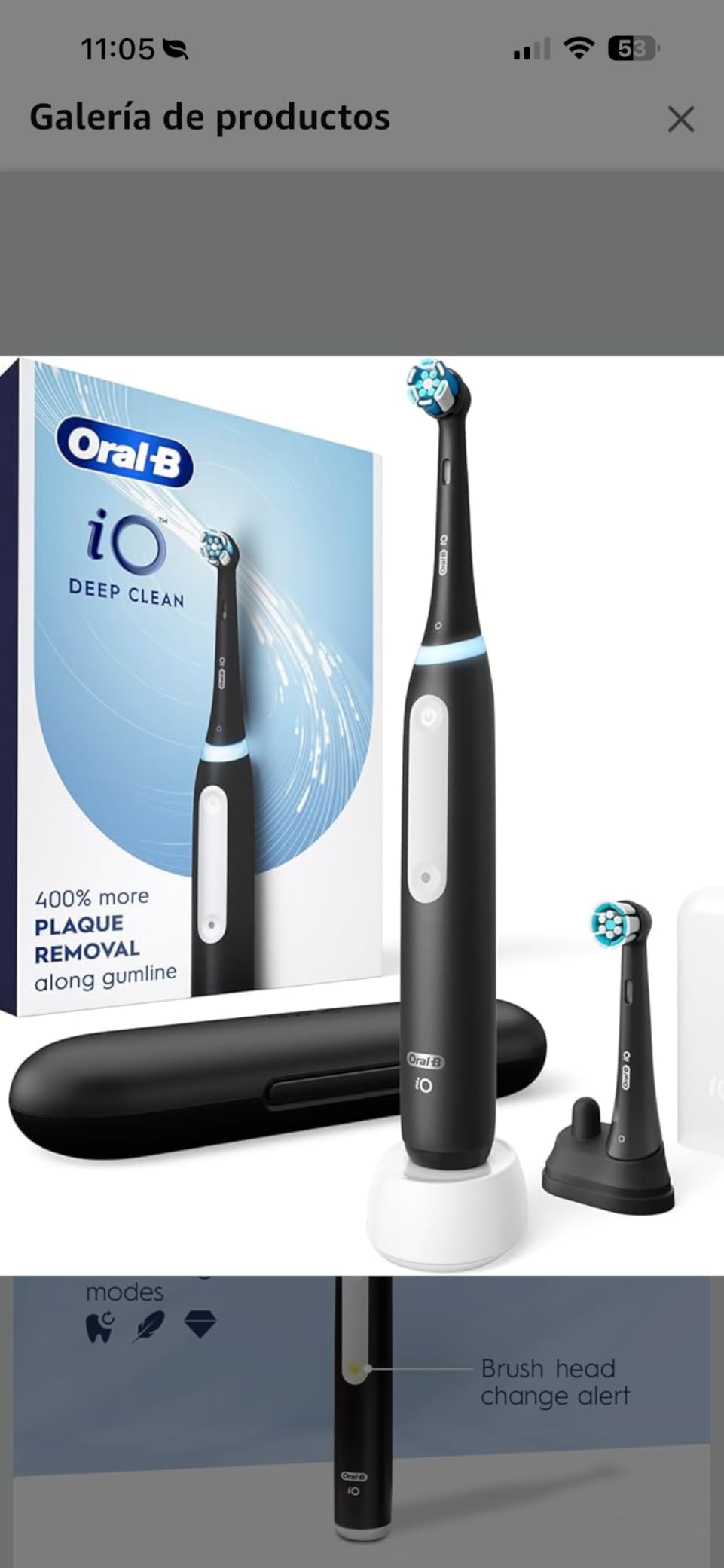
Oral-B iO Series 3 Limited Deep Clean Rechargeable Electric Toothbrush for Adults, Black, 3 Modes, Smart Pressure Sensor, Plaque Removal and Gum Care, 2 Replacement Brush Heads, Travel Case
Round oscillating head
Pressure sensor slows the motor
Sensitive mode
2 heads included
Pros
- Pressure sensor flashes red and physically slows the motor
- Round head hugs each tooth and reaches back molars
- Sensitive mode with dense bristles suits tender gums
- Quieter running than most sonic brushes
Cons
- Active mode is not displayed so you have to guess the setting
- One in ten ratings is one star with motor or battery failures inside a year
- iO replacement heads cost more and do not fit older Oral-B handles
This is the architecture I would pick for someone whose gums bleed when they brush, because the round head does the work for you instead of asking you to guide it. It rotates and pulsates in place, so it tracks a single tooth and follows the gum line around it without any wrist movement from you. Owners with early recession credit the sensor with ending a hard-brushing habit that had been going on for years.
The pressure sensor is the physical kind: the handle lights up and the motor slows. That is the difference between a warning and a solution, and it is why this brush shows up so often in discussions about sensitive gums alongside the question of which model actually helps.
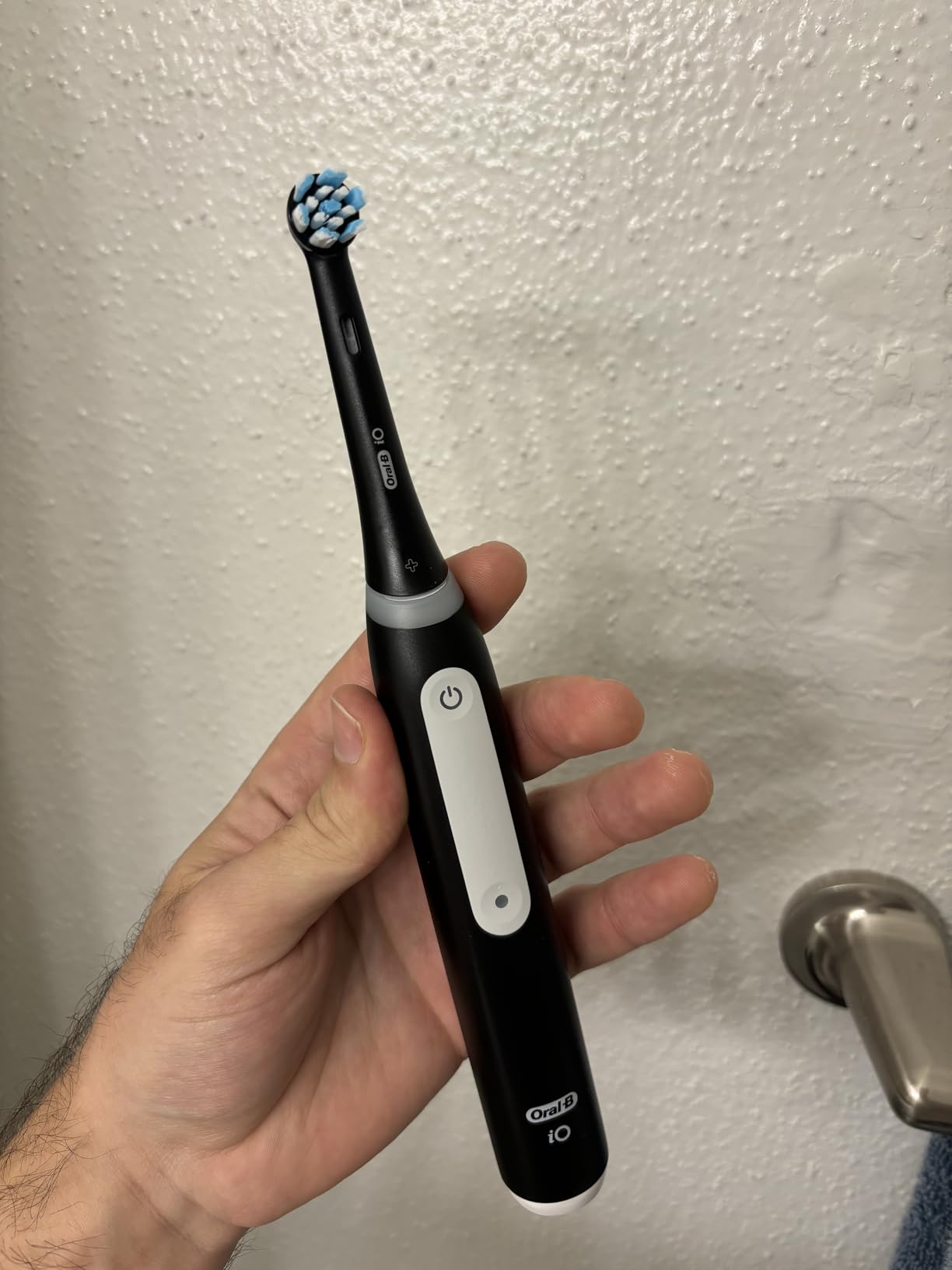
Sensitive mode uses dense, non-harsh bristles that reviewers describe as tender-gum friendly, and the two replacement heads plus travel case mean you are not shopping for accessories in week one. The lithium-ion battery and two-minute light ring handle the routine well.
The main gripe is the interface. The active mode is not displayed anywhere, so you identify your setting by feel, which is a real problem precisely when your fingers are occupied with a delicate mouth. It is a design flaw that costs this brush its top spot, and it is the first thing I would want changed.
Why it works for sensitive teeth and gums
The round head means a much smaller contact area, and small contact areas are what tender gums tolerate. Combined with a motor that physically backs off, this is the least likely of the ten to make a sore mouth worse during a two-minute session.
It is also quieter than the sonic models here, which matters for users who find vibration itself uncomfortable rather than just the pressure.
Where it falls short
Durability is the honest caveat. About one in ten ratings is a single star, with recurring reports of motors or batteries failing within the first year. That is a real failure rate, and it is the main reason the rating sits below the Philips models despite far more reviews.
Mode labelling forces you to work by feel, and replacement heads cost more than standard Oral-B refills while staying incompatible with older handles. Budget for four heads a year when you compare costs.
3. Philips Sonicare 5300 – Best Value
Philips Sonicare 5300 Rechargeable Electric Toothbrush, 3 Brush Head, Black
Pressure sensor reduces vibration
Gum Care mode
3 brush heads included
2-week battery
Pros
- Pressure sensor stops the vibration when you press hard
- Gum Care mode works well on sore gums
- Two-minute timer with beeps every 30 seconds
- Owners report multi-year reliability
Cons
- Charging takes more than eight hours from a low battery
- Handle is bulky next to slimmer models
- Travel case will not stay closed and has no room for the charger
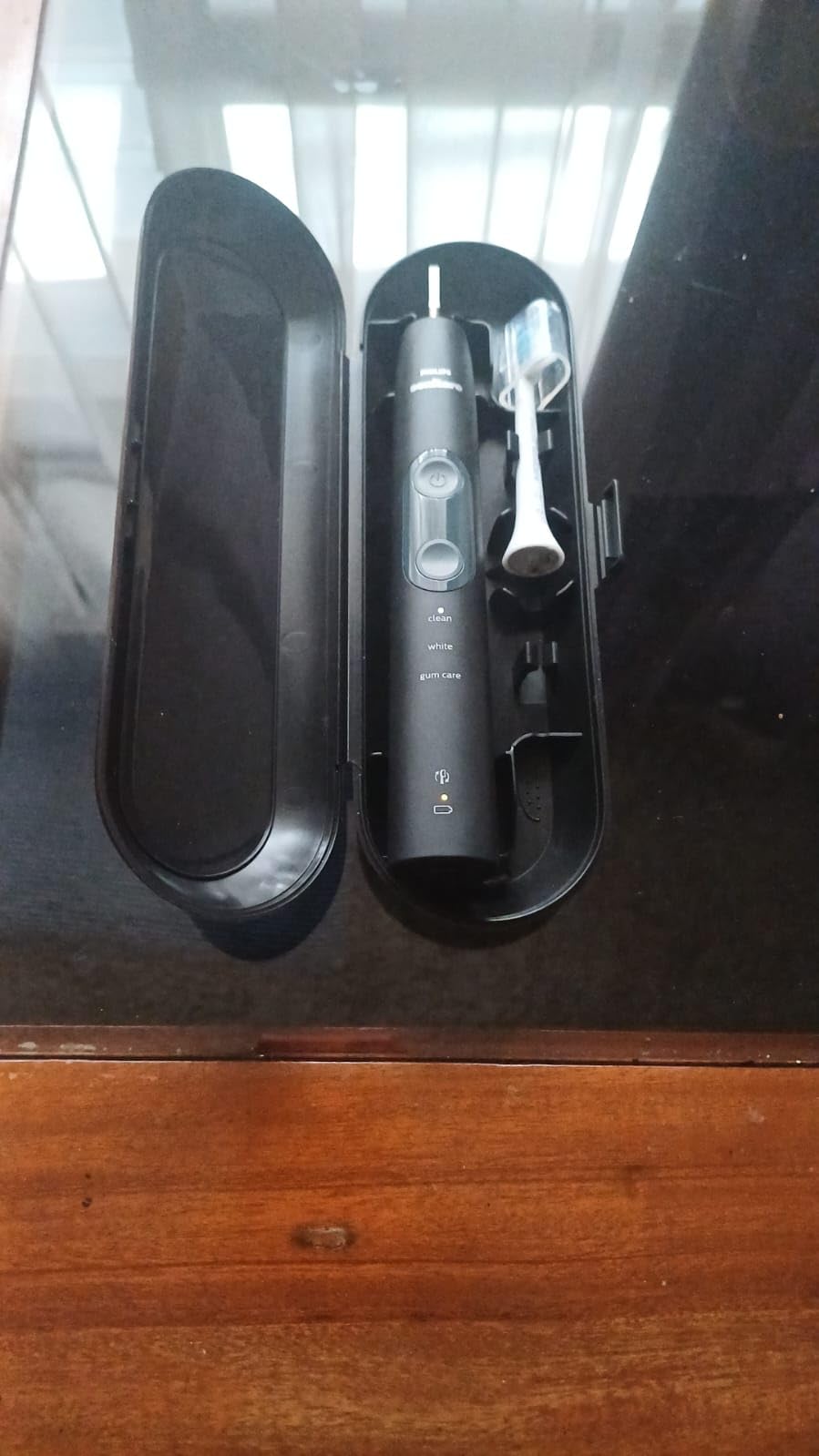
Three brush heads in the box is the number that changes the maths. At four heads a year, the 5300 hands you a usable rotation of soft, gum-care and standard heads, so you can genuinely start on the gentle one and step up once your mouth adjusts. Most competitors include one or two.
The pressure sensor here behaves like the 6500’s, reducing vibration rather than just flashing, and the Gum Care mode is the lowest-intensity option in the mode list. Reviewers with sore gums report it settling irritation within a couple of weeks of consistent use.
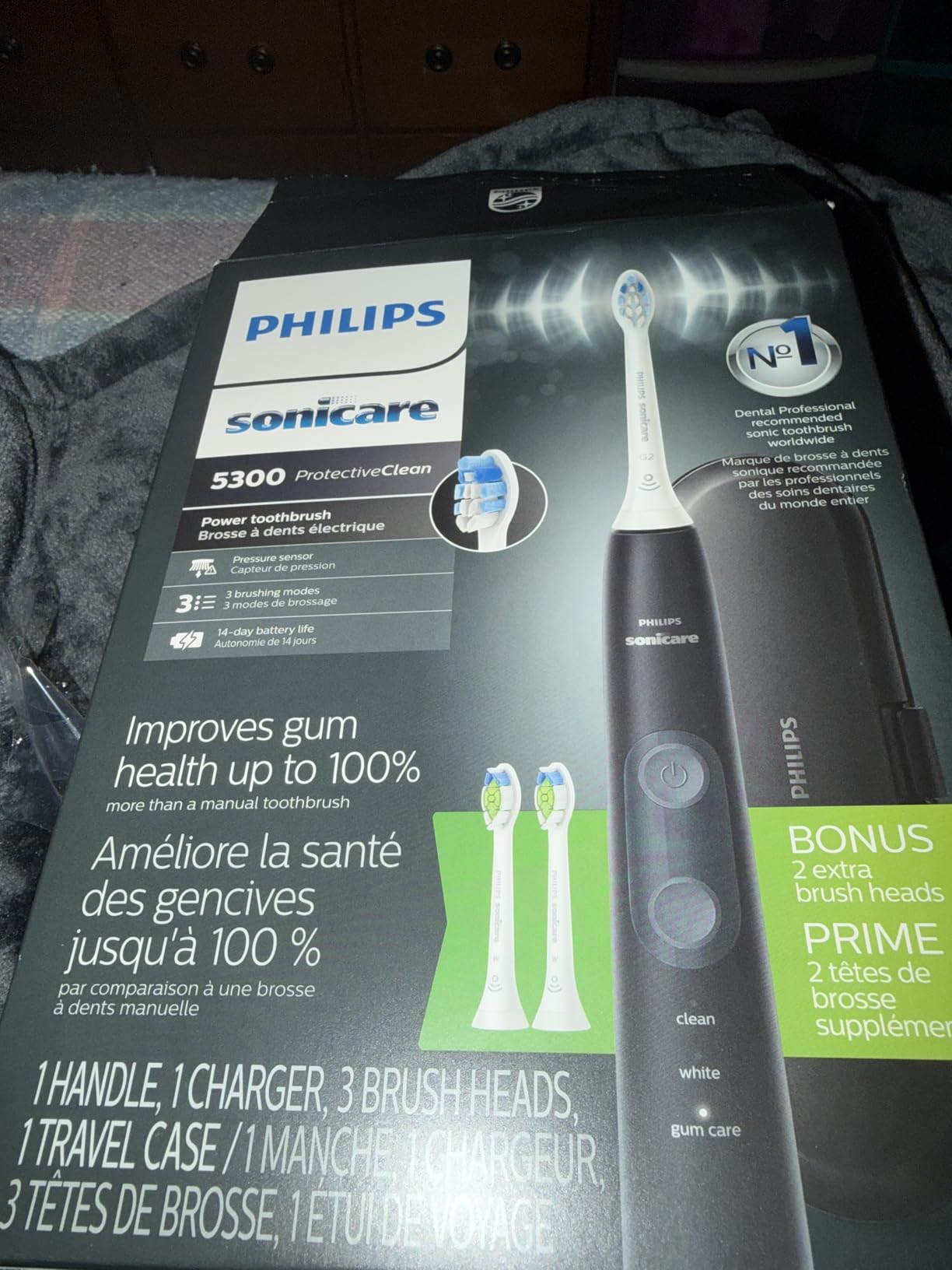
With more than 22,000 reviews behind it, patterns are easy to read: cleaning quality and gum comfort draw consistent praise, while charging speed, handle bulk and a loose travel case draw the complaints. That is a healthy ratio for a mid-range brush, and the reliability mentions are genuinely multi-year.
The bulk is real at 13.3 ounces, and if you have a small hand or a small mouth it takes a few sessions to get used to. The charger is slow enough that a top-up is an overnight job rather than a coffee-break one.
Why it works for sensitive teeth and gums
The head supply is the quiet advantage. Being able to run a dedicated gum-care head every day without a second purchase means the gentle option is sustainable rather than temporary, and that is what makes the acclimation routine stick.
The sensor’s vibration cut means the most damaging habit, pressing too hard, gets interrupted automatically rather than by your own attention.
Where it falls short
Charging speed is the biggest daily annoyance: more than eight hours from low to full. The handle is heavier and wider than the slimmer models here, which is awkward for small mouths.
The travel case is the weak link, since it struggles to stay shut and will not hold the charger, so travelling means packing two separate items.
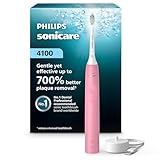
4. Philips Sonicare 4100 – Best for Travel and Small Hands
Philips Sonicare 4100 Rechargeable Electric Toothbrush, Deep Pink
Slim 8.6-inch handle
EasyStart gradual ramp-up
Pressure sensor pulses
14-day battery
Pros
- Pressure sensor is credited with ending damaging hard-brushing habits
- Battery lasts about two weeks between charges
- Slim handle suits smaller hands
- Two power speeds with a 30-second quadrant timer
Cons
- Some units report weak battery and shorter-than-advertised runtime
- A minority stop charging entirely within a year
- Power adaptor is not included and only a USB cable is supplied
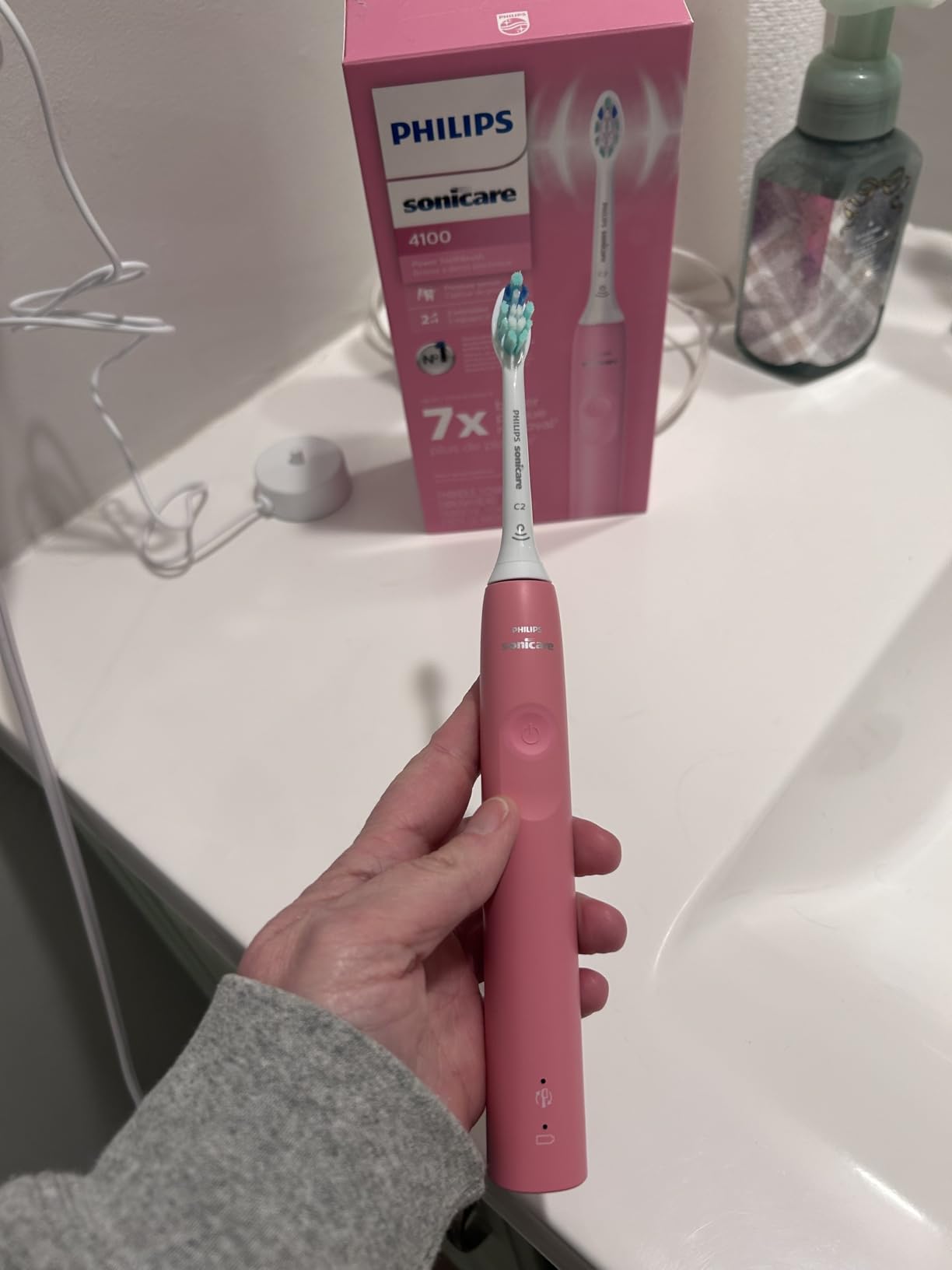
EasyStart is the feature that makes this the best first electric brush on the list. It ramps the power up gradually across your first sessions, which is exactly the acclimation problem people hit when they switch from manual and immediately hurt themselves. Owners report the ramp-up is subtle enough that most forget it is running.
The pressure sensor pulses gently rather than flashing, and it is the feature users with gum recession single out most often as the thing that changed how they brush. Two power speeds and a 30-second quadrant timer complete a routine that needs no learning.
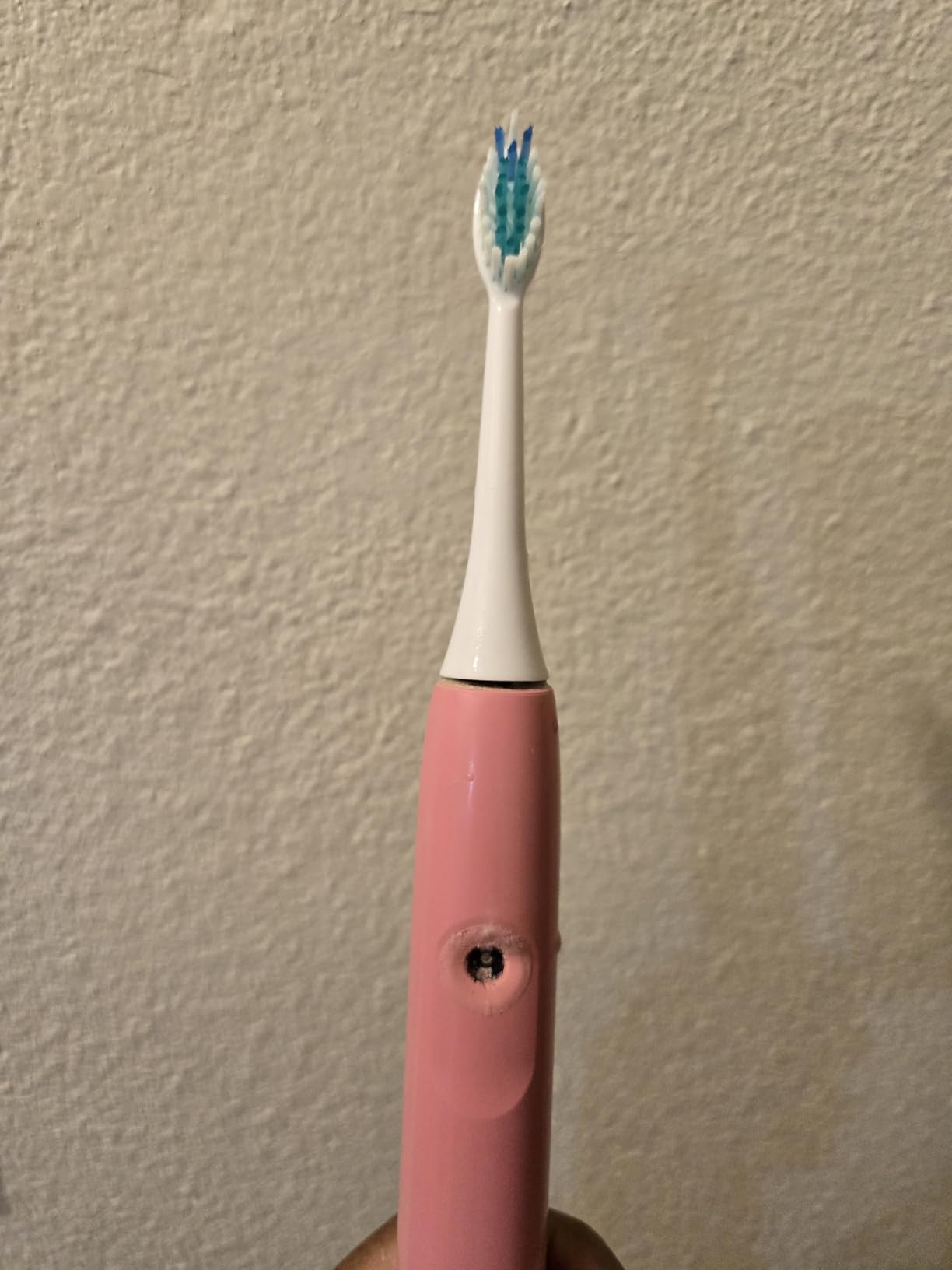
At 8.64 ounces and under nine inches tall, this is the easiest of the ten to pack, and the battery covers most trips without a charger. Several owners switched to it after a pricier Sonicare model failed, which tells you something about where it sits in the range.
The durability notes are worth weighing: battery complaints cluster around the 18-month mark, and the power adaptor is not in the box, so you need a USB plug or a laptop to charge it. It also feels lighter and more hollow than older Sonicare handles.
Why it works for sensitive teeth and gums
EasyStart removes the single biggest cause of early discomfort, which is too much power in week one. Pair that with a pulsing pressure warning and a slow-starting brush, and the ramp to daily use takes days rather than weeks.
For anyone who finds manual brushing painful enough to avoid, this is the least intimidating way in.
Where it falls short
Battery reliability is the real issue, with a cluster of reports around 18 months and some units failing to charge at all. If you travel for long periods, that matters more than the two-week headline figure suggests.
There is no included power adaptor, only a cable, so check what you have at home before ordering. The lighter build feels less solid in the hand than the heavier models here.
5. Oral-B iO7 – Best for Receding Gums
Oral-B Rechargeable Electric Toothbrush, iO7 Limited Deep Clean + Protect, 5 Cleaning Modes, Interactive Display, Visible Pressure Sensor, 2 Brush Heads, Charging Travel Case, White
Colour-coded pressure light
5 modes including Sensitive
Interactive display
Pros
- Visible colour-coded pressure light is the feature owners praise most
- Sensitive mode with a sensitive head gives pain-free brushing
- Much quieter than earlier Oral-B models
- Strong battery life with a magnetic base
Cons
- Water collects inside the head and handle where mold has been reported
- Metal shaft inside the handle reported rusting within months
- Bundled travel case does not charge the brush
The interactive display is what separates this one, and for recession specifically it is the strongest argument. The pressure sensor reports three states, too hard, too soft, and just right, on a visible light you can check mid-session. For someone whose gums have already receded, knowing when you are too soft matters as much as knowing when you are too hard.
Five modes including Sensitive and Gum Care give you somewhere to go on a bad day, and owners report that pairing Sensitive mode with the sensitive head eliminated pain under the gum line within weeks. It is also noticeably quieter than earlier Oral-B models.
That display also shows brush time, refill reminders and battery level, so you are not guessing about head replacement either. Refill alerts matter more than they sound, since frayed bristles are a common cause of the scraping that aggravates sensitive gums.
The complaints all point at one place: water ingress. There are recurring reports of mold inside the head and handle and of the internal metal shaft rusting within months, and the bundled case does not charge the brush. The two-pin charger and 9V-style battery specification also make it awkward outside North America.
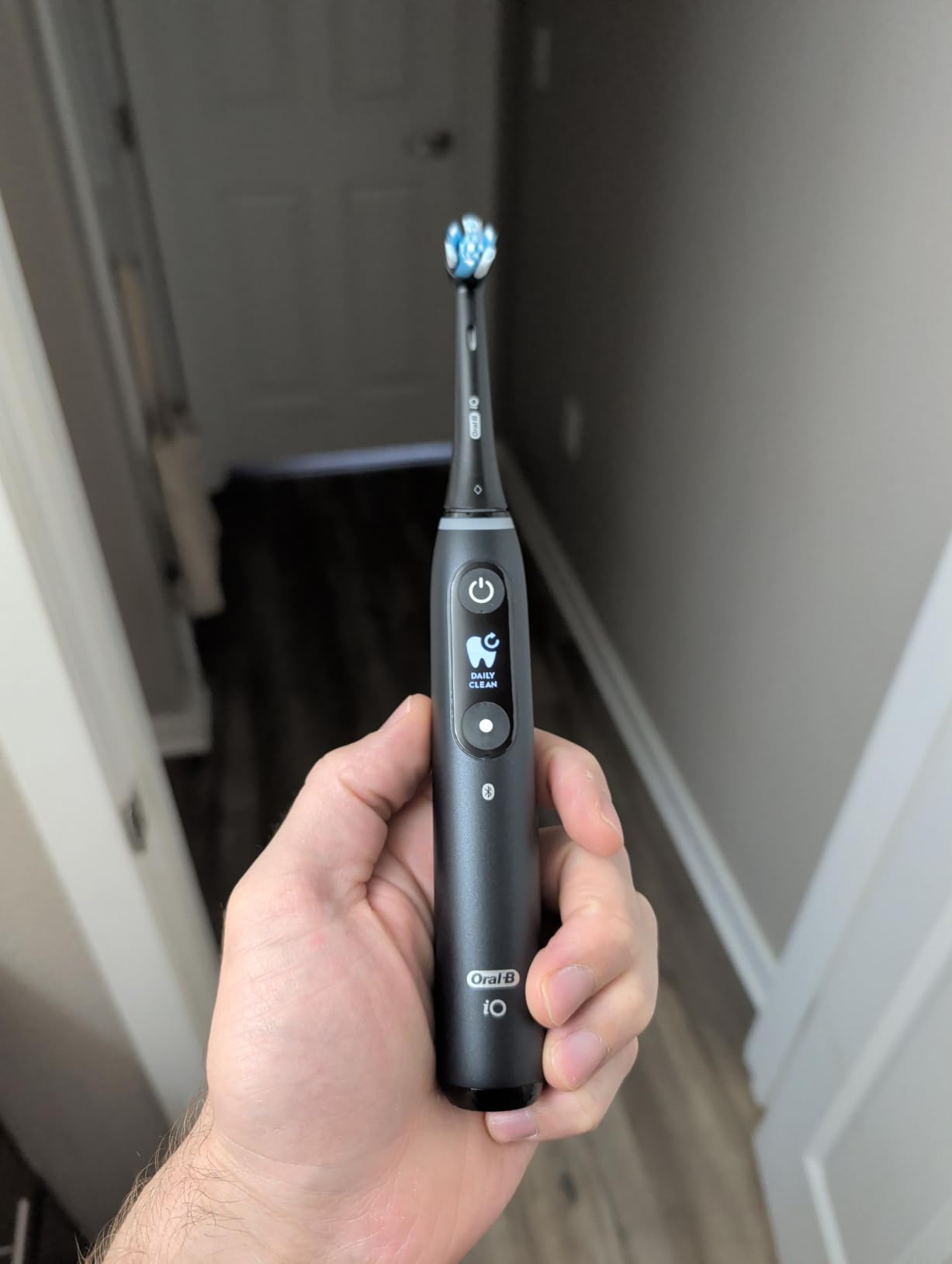
Why it works for sensitive teeth and gums
Colour feedback on pressure is the closest thing to a coach you can get without an app, and it is the reason this brush appears in recession discussions ahead of many pricier models. Seeing red and easing off is a habit people actually form.
For exposed root surfaces, the too-soft warning prevents the opposite error, where people stop brushing the receded area at all.
Where it falls short
The housing design is the dealbreaker for some owners. Water collecting at the head-to-handle joint has produced mold and rust reports, and no amount of careful cleaning fully resolves a seam that is designed to hold water.
The travel case is decorative rather than functional, since it neither charges the brush nor stores the charger, and the charger format limits where you can use it.
6. Aquasonic Black Series – Most Versatile With Eight Heads
Aquasonic Black Series Ultra Whitening Toothbrush – ADA Accepted Electric Toothbrush- 8 Brush Heads & Travel Case – 40,000 VPM Electric Motor & Wireless Charging – 4 Modes w Smart Timer
40000 VPM motor
ADA accepted
4 modes with a smart timer
8 brush heads included
Pros
- Cleaning compared favourably with far costlier Sonicare models
- 8 included heads cover roughly 2.5 years
- Four modes let you drop to a gentler session
- Small head angles into back molars easily
Cons
- No pressure sensor so it cannot warn you when you brush too hard
- Battery needs charging more often than premium models
- Low battery warning is a small LED hidden at the base
I am including this one with a clear warning, because for sensitive teeth the absence of a pressure sensor is not a small gap. It is the feature that does the most work in most of the recommendations above, and this brush does not have it. If you already know you press too hard, pick something else.
Where it does win is sheer value for a mild sensitivity or a first electric brush. The ADA Council on Scientific Affairs seal of approval is a genuine credential that most budget brushes cannot claim, and eight brush heads plus a wireless charging base cover roughly two and a half years of replacements, which removes the running-cost objection entirely.
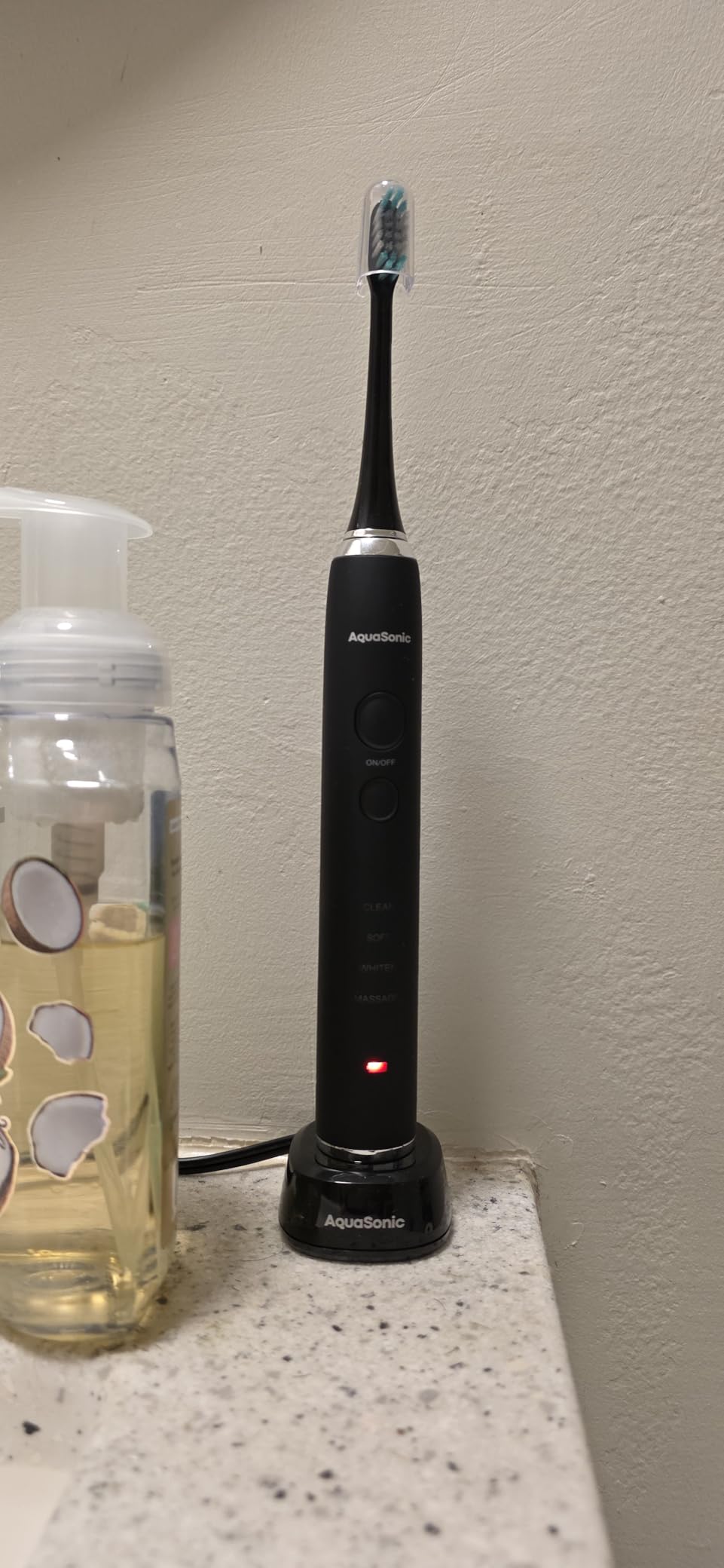
Owners consistently report cleaning performance on par with far more expensive models, and the four modes include a gum health setting that drops the intensity. The small head is genuinely good for reaching back molars, which bigger heads skip.
Battery life is the weak spot. It charges more often than the premium models here, and the low-battery warning is a small LED at the base that most users never see, so the brush can stop mid-session. There are also reports of motors failing within the first few months, though the manufacturer has a reputation for fast replacement.
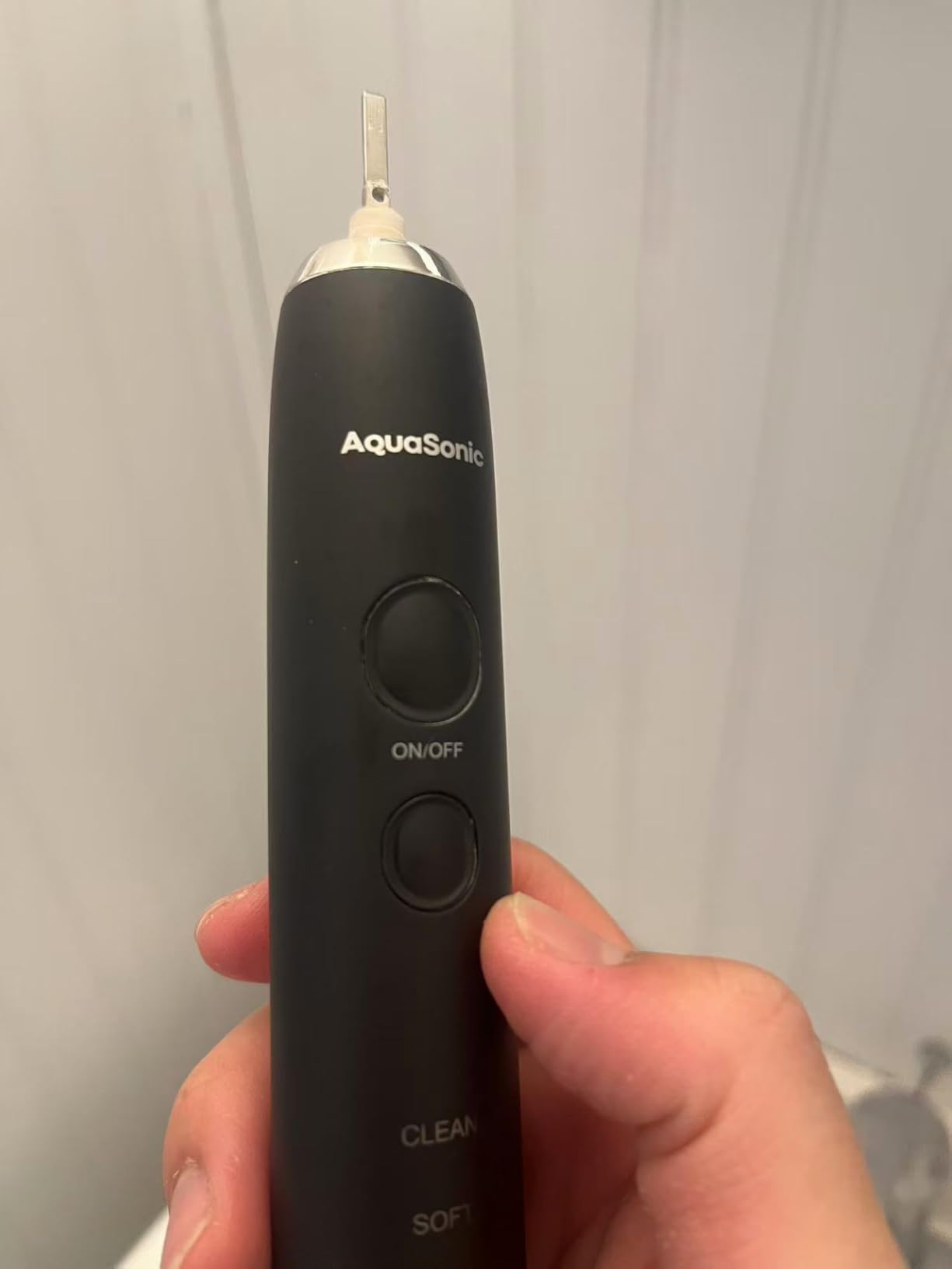
Why it works for sensitive teeth and gums
It works if your sensitivity is mild and your real problem is manual brushing, because the 40000 VPM motor and four modes give you a gentler session than a manual brush without a steep learning curve. The gum health mode and the small head are both kind to sore gums.
For anyone on a strict budget or replacing a brush for a family, the included head supply is unmatched at this tier.
Where it falls short
No pressure sensor, full stop. If overbrushing caused your recession in the first place, this brush will not stop you repeating it, and that is the central reason it sits below the sensor-equipped models here.
The hidden low-battery LED and more frequent charging get irritating in daily use, and some owners report early motor failure.
7. Oral-B Pro-Health Pulsar – Best Gentle Back-Up and Travel Brush
Oral-B Pro-Health Pulsar Battery Toothbrush, 2-Pack, Soft Bristles Brushes for Adults
Battery-powered pulsating bristles
Soft bristles
Full-size head
Two-pack
Pros
- Soft bristles are tolerated by sensitive teeth where sonic brushes hurt
- Full-size head reaches back molars unlike small battery heads
- Vibration gives a gum massage effect
- Compact and cordless for travel
Cons
- Sealed non-replaceable battery means the whole brush is discarded
- No pressure sensor so aggressive brushers with recession should avoid it
- Occasional units arrive dead or behave erratically
These are not cordless rechargeable brushes in the way the other nine are, and that is the point. The motor is small and slow, the bristles are soft, and there is no high-frequency buzz to irritate an exposed nerve. Owners who switched down from a sonic model because it caused pain report this one as tolerable where the others were not.
Despite the compact body, the head is full size, which is unusual for a battery brush and means it reaches back molars properly. The pulsating vibration also gives a mild gum-massage effect that several owners credit with limiting tartar buildup, and AAA cells last a couple of months.
The catch is that the battery is sealed, so when it dies you throw the whole brush away rather than replacing a cell. There is no pressure sensor, and a dental professional reviewer quoted in reviews warns that aggressive brushers with gum recession should avoid it. Use it as a travel or holiday brush, not as your daily driver.
Why it works for sensitive teeth and gums
Low vibration frequency and soft bristles make it the gentlest option in the list by a wide margin, and that is exactly what you want for a sore mouth or a dental visit. The two-pack means you can keep one at home and one in a bag without any charging at all.
It is also the only pick here with no electronics between you and the bristles, which some sensitive users genuinely prefer.
Where it falls short
The sealed battery makes it disposable in practice, and a brush you throw away after a year or two is poor value over three years even at a low price.
There is no pressure sensor, no intensity control, and no timer beyond a basic two-minute run, so it cannot help you correct a pressing problem. With recession, the dental caution is worth taking seriously.
8. Colgate Optic White Pro-Series – Best for Stain Removal on Sensitive Teeth
Colgate Optic White Pro-Series Battery Operated Electric Toothbrush, Soft
Two settings including a sensitive mode
Rubber polishing cup
2-minute auto shutoff
Pros
- One setting is specifically tuned for sensitive teeth and feels gentle on gums
- Rubber polishing cup visibly lifts surface stains
- Slim ergonomic handle fits a travel case easily
- 2-minute timer shuts the brush off automatically
Cons
- High-pitched supersonic vibration feels unusual coming from other electric brushes
- Battery compartment is hard to open and awkward if a cell is inserted wrong
- Replacement heads are hard to find for this model
The reason this one earns a place is specific: it has a setting designed for sensitive teeth, and it is the cheaper of the two products in this list that ship with a genuine sensitive mode. Owners with tender gums single that setting out as the reason they keep using the brush.
The rubber polishing cup is the other half of the appeal. It removes more surface stains than an ordinary toothbrush and visibly so within a couple of weeks, which matters if coffee or tea staining is making your teeth look uneven. It is a cosmetic win rather than a sensitivity win, but the two coexist well here.
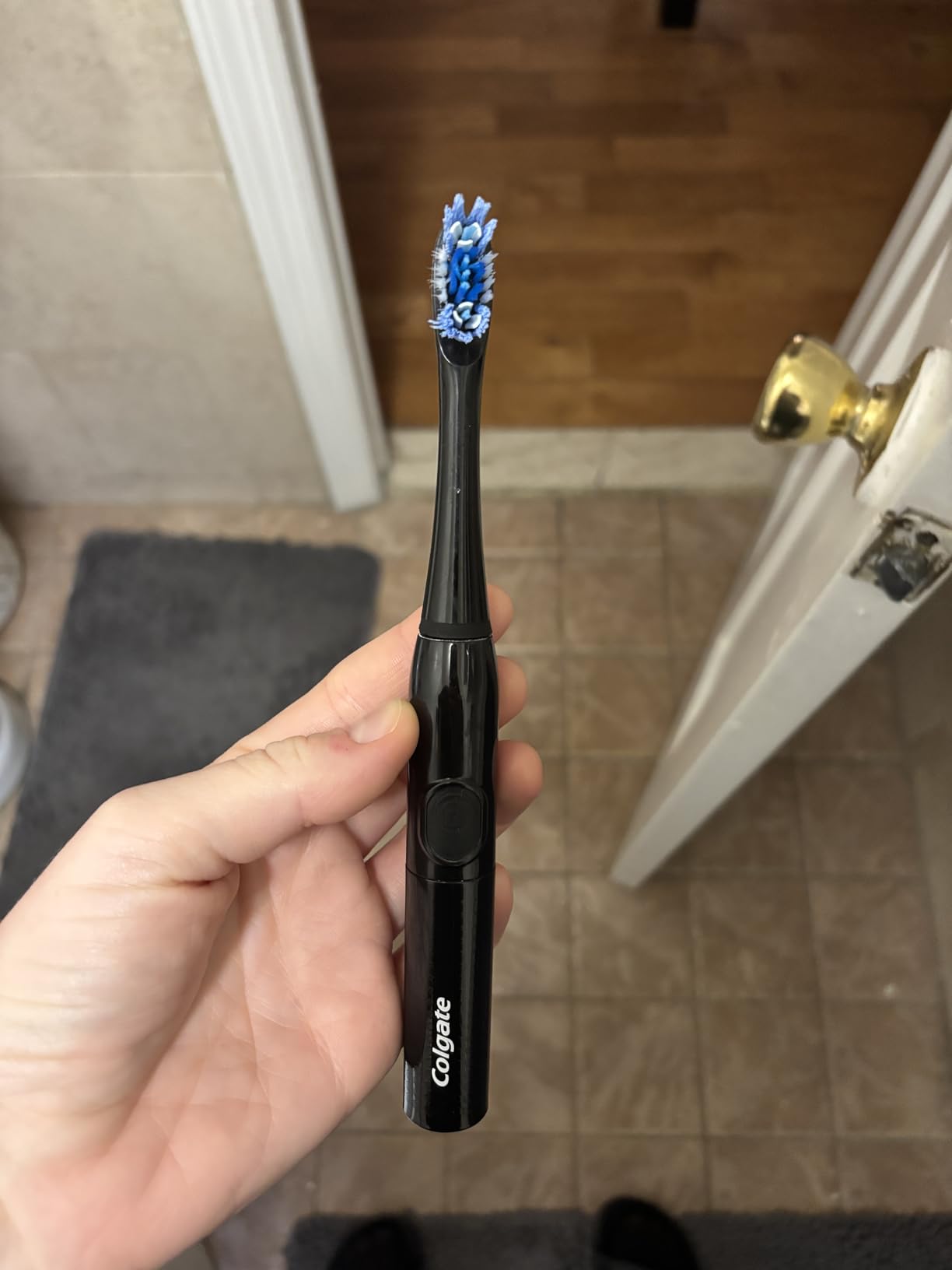
At 3.21 ounces with a slim handle, this is the easiest to pack, and the 2-minute timer turns the brush off by itself so you are never over-brushing out of habit. The high-pitched supersonic vibration does feel unusual if you are coming from a slow oscillating brush.
The battery door is fiddly and awkward if a cell goes in backwards, there are no quadrant alerts, and replacement heads for this specific model are genuinely difficult to source, which is a poor sign for a three-year ownership plan.
Why it works for sensitive teeth and gums
A dedicated sensitive setting at a low price is not common, and combined with a replaceable head it is a workable daily brush for mild sensitivity on a budget. The soft setting is where you should stay if your gums tender easily.
It also does not over-brush by default, because the two-minute auto shutoff ends the session for you.
Where it falls short
There is no pressure sensor at all, so over-brushing is not detected. The vibration pitch is high, which is a problem for users whose sensitivity is triggered by vibration rather than pressure.
Scarce replacement heads and a fiddly battery compartment are the two practical issues that would stop me buying it as a long-term daily brush.
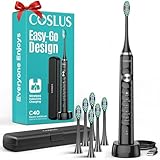
9. COSLUS C40 – Best for Families Sharing One Brush Kit
COSLUS C40 Sonic Electric Toothbrush for Adults & Family, Black, 1PC
47000 VPM maglev motor
5 modes including sensitive
6 brush heads included
Pros
- Food-grade soft bristles are described as safe for sensitive gums
- 5 modes cover children adults and seniors
- 6 heads plus a travel case make it a complete family kit
- Slim 1-inch body suits small hands
Cons
- The slim 1.02-inch body is noticeably narrower than competitors
- No pressure sensor so nothing flags over-hard brushing
- Two-pack and colour options are limited compared with major brands
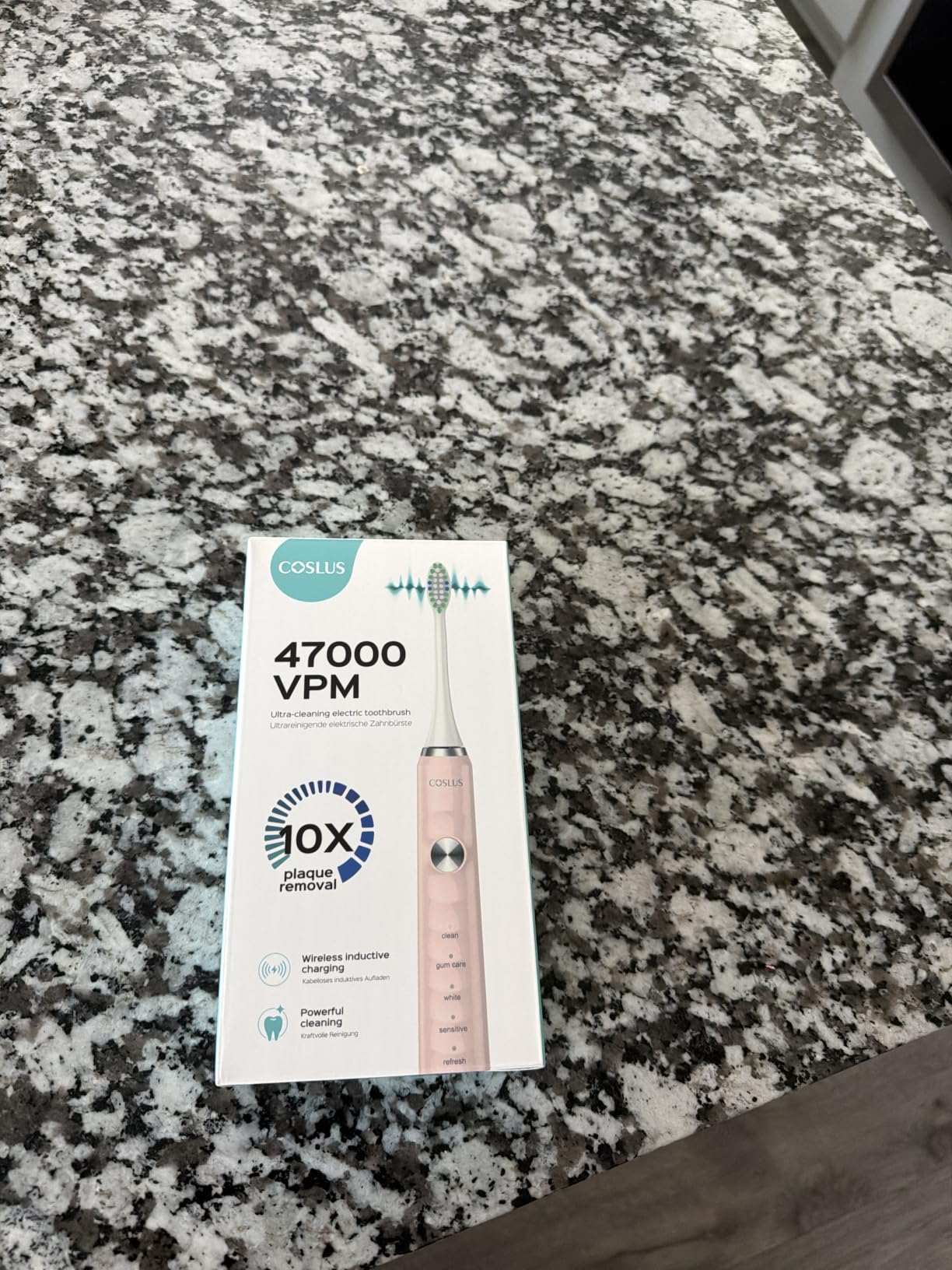
Five modes covering children, adults and seniors means one handle can serve a household where a teenager and a grandparent share a bathroom. The soft food-grade bristles come in at the gentle end, and reviewers with sensitive gums report no irritation from them.
Six W-shaped heads plus a travel case make this a complete kit rather than a brush you have to buy parts for, and the narrow handle means it sits neatly in a small bathroom cabinet or a travel bag.
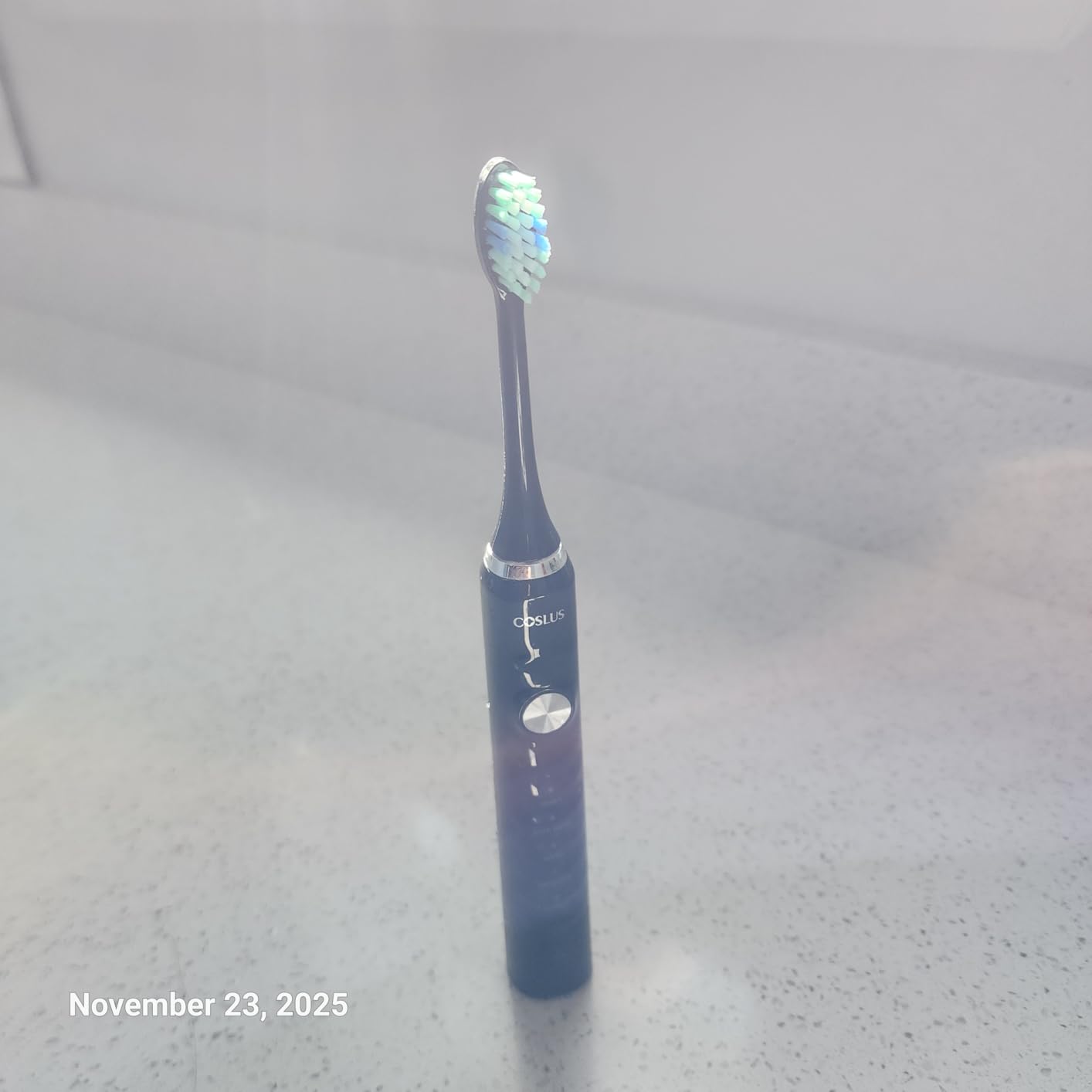
The slim body is both the main ergonomic point and the main complaint. At just over an inch wide it fits a small hand very well, and it is genuinely easy to hold if you have reduced dexterity, but it feels noticeably narrow next to a standard handle and takes getting used to.
There is no pressure sensor, which keeps it out of contention for anyone whose main problem is pressing too hard. Colour and two-pack options are also thinner than the big brands offer.
Why it works for sensitive teeth and gums
Soft bristles and a mode range that includes a low-intensity setting give a gentle daily clean, and the range of head sizes suits different ages sharing one handle.
For a mixed-age household this removes the cost of buying a second and third brush, and the narrow body is easy to hold for anyone with hand or wrist trouble.
Where it falls short
No pressure sensor, so a hard brusher gets no feedback at all. That rules it out for anyone treating recession rather than mild tenderness.
The very slim body is a compromise rather than a feature for most adults, and limited colour choices make it harder to find one you like the look of.
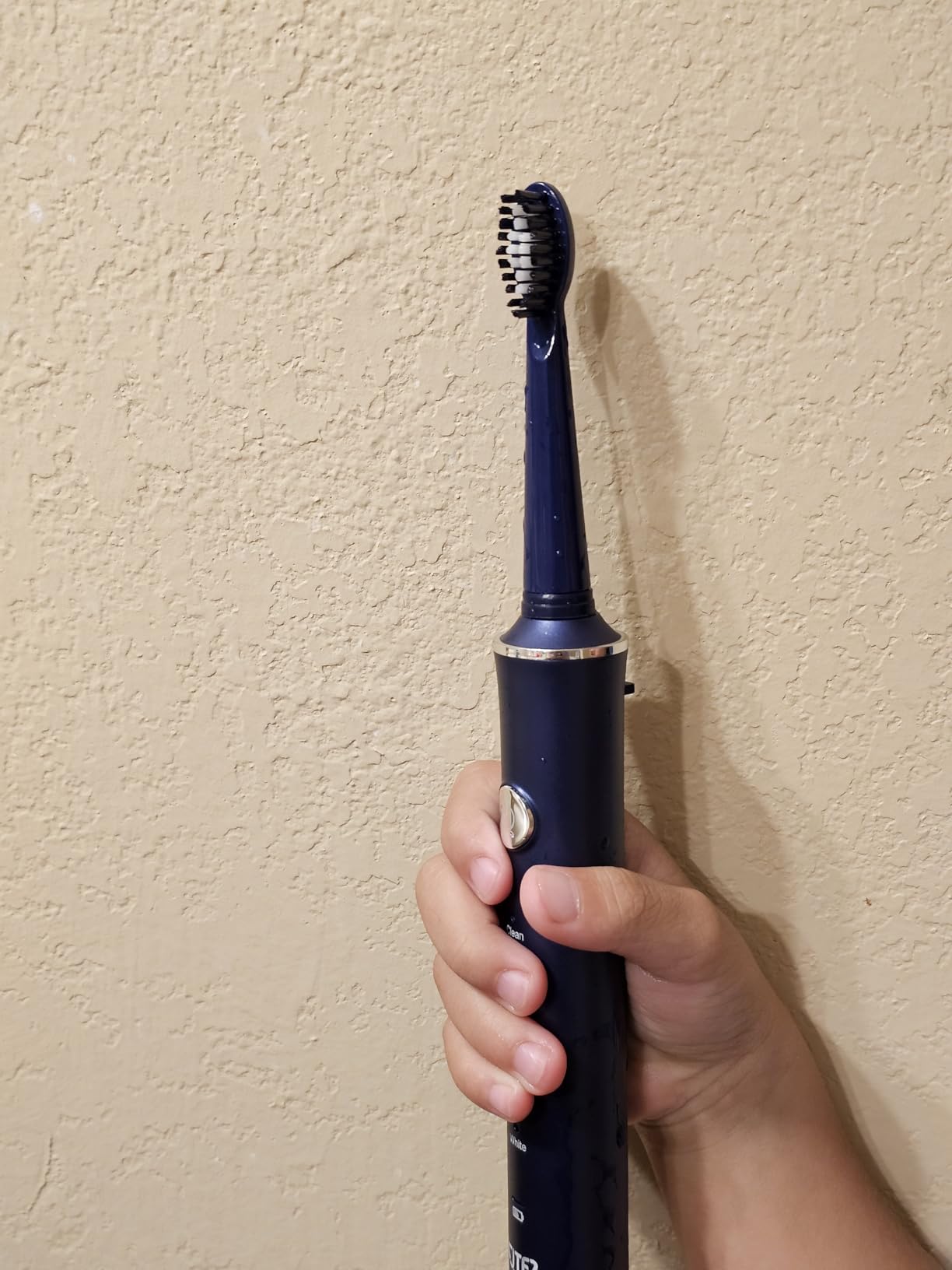
10. JTF J40 – Best for Braces, Kids and Long Trips
JTF Sonic Electric Toothbrush for Adults and Kids: 5 Modes for Sensitive Teeth & Braces – with 8 Brush Heads, 45-Day Runtime & Smart Timer, Portable Rechargeable Toothbrush for Travel, Home & School
5 modes with last-used memory
8 W-shaped heads included
45-day battery
Pros
- Soft rounded bristles cause no gum irritation for several owners with sensitivity
- Extraordinarily long battery life with many reporting months between charges
- 8 heads mean years of use without buying replacements
- Small head reaches difficult areas better than larger heads
Cons
- Multiple units stopped powering on after about 35 days
- The 2-minute timer sometimes does not work
- No pressure sensor to flag over-hard brushing
Built explicitly for braces and sensitive teeth, and the rounded, food-grade bristles are the reason several owners with sensitivity report no irritation. Five modes with last-used memory means a child and an adult can share the handle without resetting it every morning, and the small head works well around brackets.
A claimed 45-day battery is the standout number, and owners back it up with reports of months between charges. Eight W-shaped heads take you close to two years without a single replacement purchase.
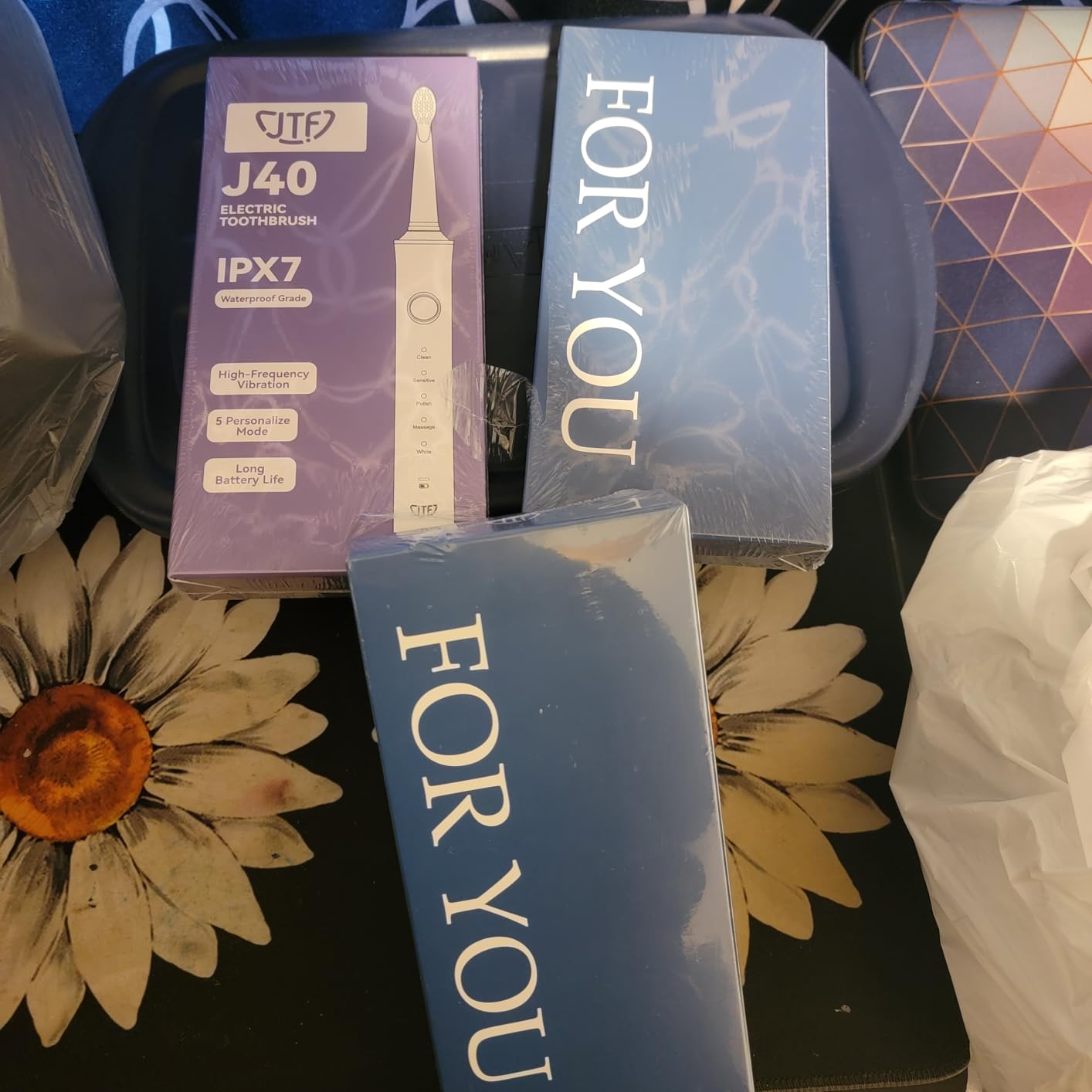
Durability is the problem, and it is not small. There is a recurring cluster of reviews reporting the brush failing to power on after roughly 35 days, which is frustratingly close to the return window, and the timer does not always function. Water ingress causing the power button to fail is also reported, though the manufacturer is praised for fast replacement service.
The bristles are on the soft side, so anyone wanting more scrubbing feedback may find them too gentle, and there is no pressure sensor at all.
Why it works for sensitive teeth and gums
Rounded, soft bristles and a mode labelled for sensitivity make this a safe daily brush for a sore mouth, and the small head reduces the need to press in awkward corners, which is where people unconsciously push hardest.
For anyone with braces, the head geometry and mode range make it one of the few budget picks that suits dental work.
Where it falls short
Early power failure around 35 days is the single biggest reason to hesitate, and it sits right at the edge of typical return windows. Treat that as a genuine reliability risk rather than a rare report.
Very soft bristles may not satisfy people who want stronger everyday cleaning, and the absence of pressure feedback means it cannot correct a hard-brushing habit.
Frequently Asked Questions
What is the best gentle electric toothbrush for sensitive teeth?
The Philips Sonicare ProtectiveClean 6500 is the most complete answer because its pressure sensor reduces motor vibration when you press hard, rather than only flashing a warning. Add a dedicated Gum Care mode and three intensity levels and it suits most sore mouths. If vibration itself bothers you, an oscillating round-head model such as the Oral-B iO Series 3 feels calmer.
Do dentists prefer Oral-B or Sonicare?
There is no single preference, and the honest answer is that dentists care about pressure control rather than the badge on the handle. Round oscillating heads are usually recommended for sore or bleeding gums because the contact area is small, while sonic heads are often recommended for efficiency and plaque removal. Ask any dentist to name a model and you will usually get the same two or three. What matters is a pressure sensor and a working sensitive mode.
Is Oral-B or Sonicare better for gum recession?
For recession, a round oscillating head with a motor that slows under pressure is the safer choice, which points to the Oral-B iO models. Sonic brushes are gentler on enamel wear but deliver far more brush movements per second, and owners with already-sore gums frequently describe that as abrasive. Whichever you pick, stop the habit of pressing hard, since no brush reverses existing recession.
Does Philips Sonicare cause gum recession?
No, not in the way the claim is usually made. A sonic brush cannot cause recession on its own, though a hard brusher can use one to do damage that was already happening. That is why the models with a working pressure sensor matter: the 6000 series, the 5300 and the 4100 all reduce vibration when you lean on them. Forum complaints about high-frequency vibration are really complaints about pressure, not about the technology itself.
Can I use an electric toothbrush if I have sensitive teeth?
Yes, and most dentists think it is the better choice because it gives you pressure feedback a manual brush cannot. Start on the lowest intensity with an extra-soft head for ten seconds per quadrant in week one, build to the full two minutes in week two, change to a medium head in week three, and step intensity up in week four only if nothing hurts. Do not scrub and let the brush move.
How often should I replace my electric toothbrush head, and does it matter for sensitive teeth?
Every three months, or sooner if the bristles have frayed, and it matters more than most people assume. Frayed bristles bend away from the gum line and need more pressure to clean, which is a common trigger for sensitivity. Budget for twelve heads over three years, and check head pricing before buying a brush because premium refill packs can cost more than the handle over that period.
How much should I spend on an electric toothbrush for sensitive teeth?
A pressure sensor is the one thing worth paying for, and it is available at the lower end of the range. Above that, money buys a better display, more modes and app tracking rather than better gentleness. Judge any brush on the cost of twelve replacement heads over three years as well as the handle, and avoid models that lock you into a refill subscription.
Do electric toothbrushes work for people with braces or dental work?
Yes, and a small head with a gentle mode is the priority rather than a high cleaning speed. The round oscillating heads wrap around individual teeth, and the small oval heads reach the brackets and gum line without you pressing harder. Skip any whitening mode while you are in braces, and check with your orthodontist if you have had recent gum surgery or a graft.
The Best Electric Toothbrushes for Sensitive Teeth in 2026
After all of this, the Philips Sonicare ProtectiveClean 6500 remains our pick for the best electric toothbrushes for sensitive teeth, because a pressure sensor that reduces vibration is worth more than any spec sheet. For bleeding gums and a mouth that flinches at high-frequency buzz, the Oral-B iO Series 3 is the calmer architecture. For three years of replacement heads without thinking about it, the Sonicare 5300 is the stronger buy.
Start at the lowest intensity, use the soft head, and let the brush move instead of scrubbing. If the pain does not ease within a few weeks, book a dentist rather than ordering a twelfth brush.