
A dog activity monitor is a collar- or clip-worn wearable that uses an accelerometer, and often GPS, to log your dog’s steps, active minutes, distance, calories estimated and sleep patterns. Here is the part most listings skip: it does not weigh your dog. It infers activity from movement and estimates calories burned, so the number is a trend line, not a measurement.
That distinction matters more than it sounds. Searching for the best dog activity monitors for weight management usually starts with frustration, because a dog looks fine on the couch and the scale says otherwise. Owners in weight-management forums describe logging every meal and treat by hand just to find out whether the extra walk mattered. A tracker replaces that guess with a daily figure you can compare week to week, and a downward trend you can bring to a vet appointment.
We compared ten dog activity monitors, dog fitness trackers and dog health trackers, focusing on what actually moves a weight needle: calorie and activity detail, sleep and rest data, goal setting, and whether the device sends something useful to your phone without a subscription you resent every month. Each review below covers what we liked, what we would fix, and who the device suits.
Table of Contents
Top 3 Dog Activity Monitors for Weight Management in 2026
Tractive Smart Dog GPS Tracker — the broadest health and activity data in this set, with heart rate, respiratory rate, sleep and bark monitoring on a waterproof 1.3 oz unit. The one to buy if you want location and weight data in the same collar.
FitBark 2 Dog Activity Monitor — the best calorie and sleep reporting, with goals benchmarked against breed, age and weight peers, plus a battery that runs up to six months. The one to buy if weight is the only goal.
Tractive XL Smart Dog GPS Tracker — the same platform built for dogs over 44 lbs, with up to six weeks of battery between charges. The one to buy for a large or heavy dog.

Tractive Smart Dog GPS Tracker
- Heart and respiratory rate monitoring
- Live GPS with virtual fence
- Walk Map distance log
- 14-day battery

FitBark 2 Activity Monitor
- Calorie balance and sleep score
- Breed age and weight peer goals
- 10 g waterproof unit
- Up to 6 months battery

Tractive XL Smart Dog GPS Tracker
- Built for dogs over 44 lbs
- Up to 6 weeks of battery
- Heart rate bark and scratch data
- Real-time GPS and virtual fence
The Tractive leads because it is the only device here that pairs weight-relevant activity data with real-time location and a vital-style health sensor set, and it carries by far the largest owner base in this roundup, which means its quirks are well documented. The FitBark 2 is the specialist: no GPS, but the clearest calorie balance reporting and the only peer benchmarking by breed, age and weight. The Tractive XL is the same idea scaled for a large dog.
Owners debating Tractive versus Fi in the r/Pets dog gear threads tend to converge on the same split, with praise for one brand’s battery life and the other for a lighter build and tighter location accuracy. Neither of those brands appears in this list, so treat that debate as context rather than a verdict.
Best Dog Activity Monitors at a Glance in 2026
Every device below pairs with a companion app. Only one of the ten carries no recurring fee, and that one logs no step or calorie data at all. The rest require a subscription to switch on their location and health features. The feature-by-feature table is the fastest way to see which category each one falls into.
| Product | Specifications | Action |
|---|---|---|
| Tractive Smart Dog GPS Tracker |
|
Check Latest Price |
 Pawfit 3 GPS Pet Tracker Pawfit 3 GPS Pet Tracker |
|
Check Latest Price |
| FitBark 2 Dog Activity Monitor |
|
Check Latest Price |
| Tractive XL Smart Dog GPS Tracker |
|
Check Latest Price |
 Purina Petivity Dog GPS Tracker Purina Petivity Dog GPS Tracker |
|
Check Latest Price |
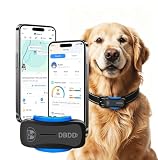 DBDD GPS Dog Tracker DBDD GPS Dog Tracker |
|
Check Latest Price |
 PetPace Dog Health Monitor V3.0 PetPace Dog Health Monitor V3.0 |
|
Check Latest Price |
 Molly and Cody Smart GPS Tracker Molly and Cody Smart GPS Tracker |
|
Check Latest Price |
 GEGOPet Real-Time GPS Pet Tracker GEGOPet Real-Time GPS Pet Tracker |
|
Check Latest Price |
 Vebiso GPS Dog Tracker Collar Vebiso GPS Dog Tracker Collar |
|
Check Latest Price |
1. Tractive Smart Dog GPS Tracker Review
Tractive Smart Dog GPS Tracker | Live Pet Tracker with Virtual Fence | Vital Signs Monitoring of Heart & Respiratory Rate | Bark Monitoring | Dog Collar Attachment (Black)
1.3 oz
1400 mAh
14-day battery
Heart and respiratory rate
Fully waterproof
Pros
- Live GPS updates every 2-3 seconds with no range limit
- Monitors heart rate respiratory rate sleep and barking
- Walk Map logs distance covered on each outing
- Custom virtual fences with instant escape alerts
- Lightweight and fully waterproof for dense woods
Cons
- Live tracking sometimes fails to engage and needs a retry
- Wi-Fi power saving can block live tracking for stretches
- Supplied stretchy collar straps tear within a few months
This is the device we came back to most often while assembling this roundup, because it does the widest range of jobs in a single 1.3 oz unit. It tracks live location with no range limit, and it logs heart rate, respiratory rate, sleep and barking, which gives you a much richer picture than a step count alone.
For a weight plan specifically, the combination matters. A dog that logs similar steps every day but fewer active minutes is telling you something. A dog whose sleep score drops while calories climb is telling you something else. Those are the trend comparisons that a single step number cannot give you.
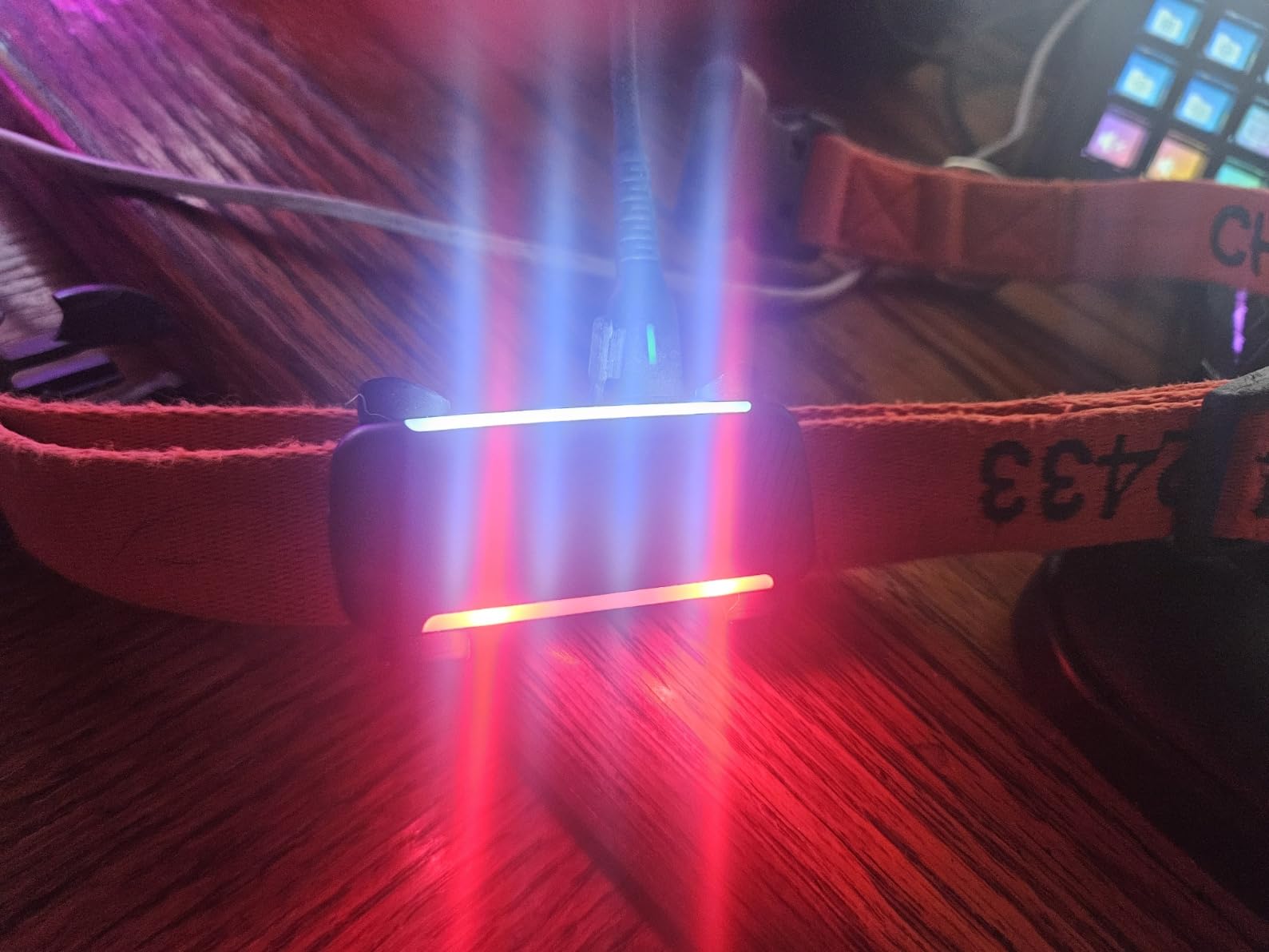
The 1400 mAh battery is listed at around 14 days per charge, and owners generally report getting close to that on standard tracking. Waterproofing is full rather than partial, and the Walk Map feature records the distance of each outing, which makes it easy to confirm whether a longer route actually happened.
The app is the weak point. A consistent group of reviews reports that live tracking fails to start a noticeable share of the time and needs retrying, and that the home Wi-Fi power-saving mode can block live tracking for up to 20 minutes. The elastic collar straps supplied with the kit are also described as short-lived.

Is this the right choice for a dog who needs to lose weight?
Yes, if you want location safety in the same device. The activity and health readings are detailed enough to drive a plan, and the very large owner base means app bugs and hardware faults get reported and often fixed. Just set a manual walk goal and check distance from the Walk Map rather than trusting the calorie total.
Where owners get frustrated
The subscription is required for the GPS and health features, and that sits at the top of the list of complaints in pet forums, where owners call out recurring fees for a dog collar as poor value. Two more practical notes: the app can restrict live tracking while the dog is inside the safe zone, and the module can look bulky on very small breeds.
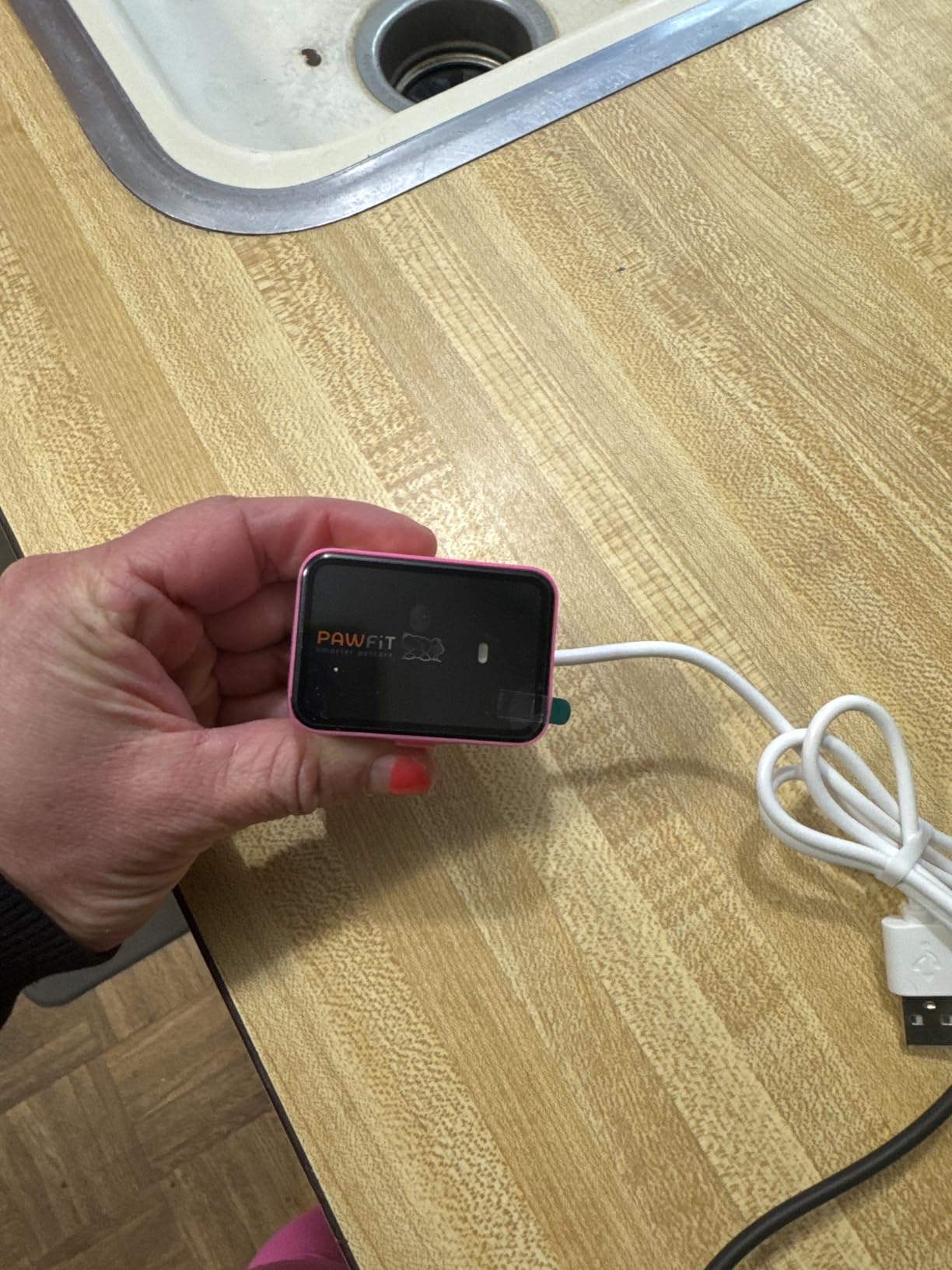
2. Pawfit 3 GPS Pet Tracker Review
Pawfit 3 GPS Pet Tracker GPS Dog Tracker 4G Live Tracking, Smart Alerts, Fully Waterproof Activity Monitor for Pets, Unlimited Range, Remote Voice Recall, Fits All Collars, 30 Day Free Subscription
0.96 oz
Up to 8 days battery
4G multi-network SIM
Fully waterproof
LED light
Pros
- Multi-network SIM holds a cell lock in thick woodland
- Remote voice recall with up to five custom voice commands
- Activity monitoring with daily fitness goals
- Built-in LED light improves evening visibility
- 30 days of free service included after setup
Cons
- Several owners report hardware failure within weeks or months
- Bulky housing suits medium and large breeds better than small ones
- Battery life is shorter than the previous generation
The Pawfit 3 is the one to consider if your dog works, ranges wide, or spends time where cell coverage is the weak link. The multi-network SIM is the differentiator, and owners who switched to it from other brands commonly point to maintaining a signal in thick woods where other devices drop.
It also does something the others mostly do not, which is remote voice recall through a built-in speaker, with up to five custom commands. For a dog who needs structured work cues to move rather than potter, that turns a walk into a training session, and training is how you get genuine extra exertion out of a reluctant dog.
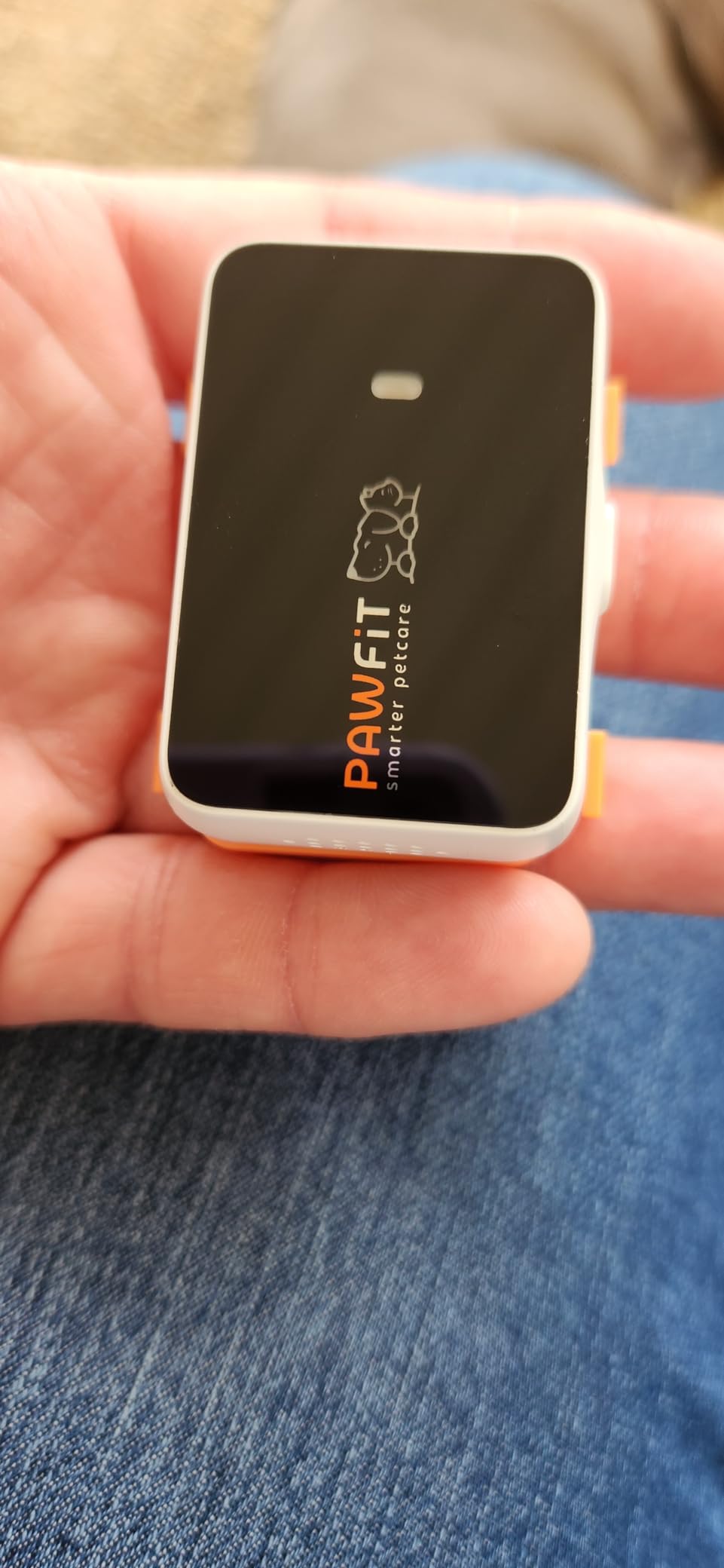
Activity monitoring includes daily fitness goals and 24-hour location history, so you can see the shape of a working day rather than a single total. The listed battery is up to 8 days from a 2.5-hour charge, and a built-in LED improves visibility on evening walks.
Setup is straightforward and the 30 days of included service lets you decide whether you will keep paying before you commit. Owners rate the app clarity highly, and the device is described as durable enough for rain, mud and brambles.
Is this a good fit for a dog on a weight plan?
Reasonably, and better than most for working dogs. The voice recall means you can structure a session rather than simply hoping for exercise, and the goal setting gives you a target to increase week by week. Track active minutes rather than the calorie estimate, since estimate accuracy in dogs is the weakest part of the whole category.
Where owners get frustrated
Reliability is the headline complaint. Several owners describe devices failing after roughly four weeks and needing repeated replacements, which is a real problem for a collar you rely on daily. The housing is also bulkier than ideal for small breeds, and indoor positioning cannot resolve a location properly.
3. FitBark 2 Dog Activity Monitor Review
FitBark 2 Dog Activity Monitor | Health & Fitness Tracker for Dogs | Waterproof, Small & Leightweight (10 g) | Not a GPS Tracker
10 g
Up to 6 months battery
Activity sleep distance and calories
Collar clip 10 g
Pros
- Tracks activity sleep distance and calorie balance around the clock
- Up to six months of battery between charges
- 10 g body fits collars up to 1.5 inch wide
- Benchmarks goals against breed age and weight peers
- Syncs with Fitbit Apple Watch Apple HealthKit and Google Fit
Cons
- No GPS so it cannot locate a lost dog
- Data only reaches you through a paired smartphone and app
- Insight depth depends on your phone and wearable pairing
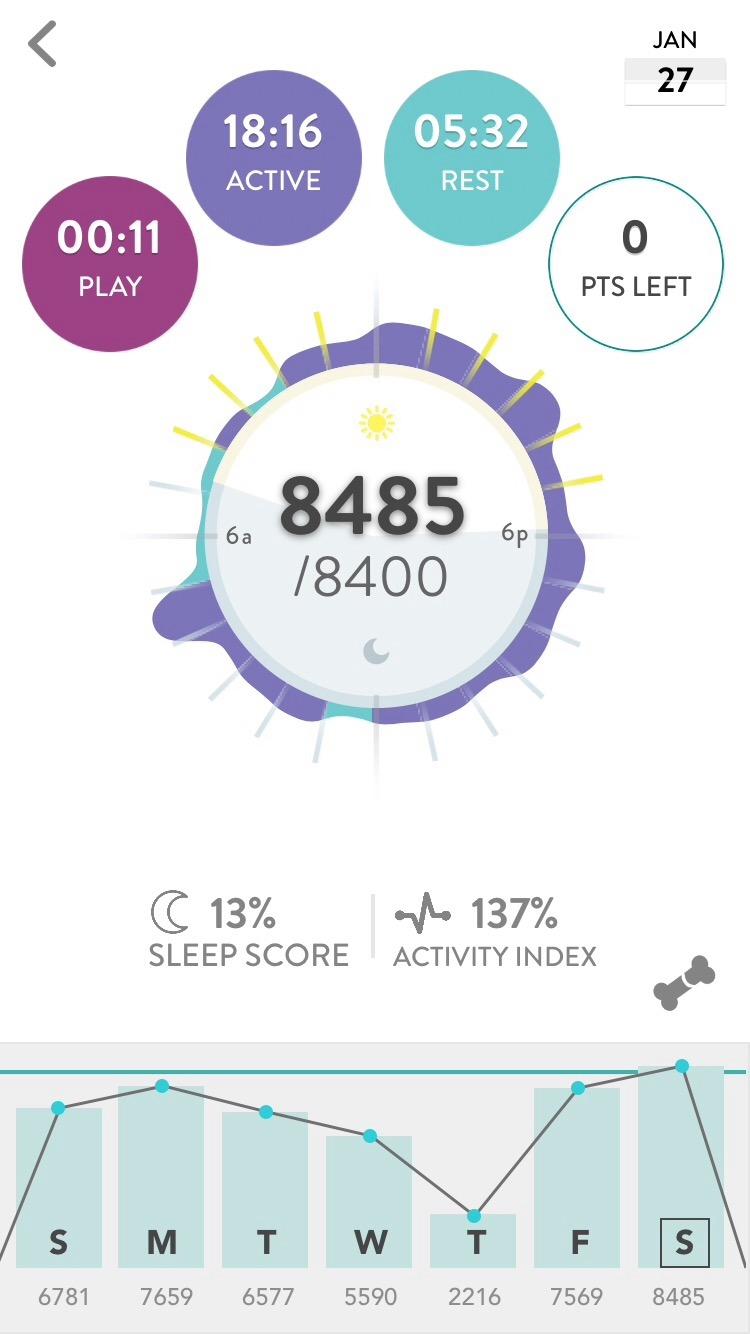
If weight is the only reason you are here, the FitBark 2 is the most direct instrument in this roundup. It is among the most consistently well-reviewed units we looked at, and the reason is that it does one thing properly: it reports activity, sleep, distance and calorie balance continuously and turns them into a picture you can act on.
At 10 g it is the lightest device listed here, and it clips to collars up to 1.5 inch wide without the bulk that makes some small breeds object to wearing a tracker. Owners report dogs largely ignoring it, which matters because a collar a dog tries to remove produces useless data.
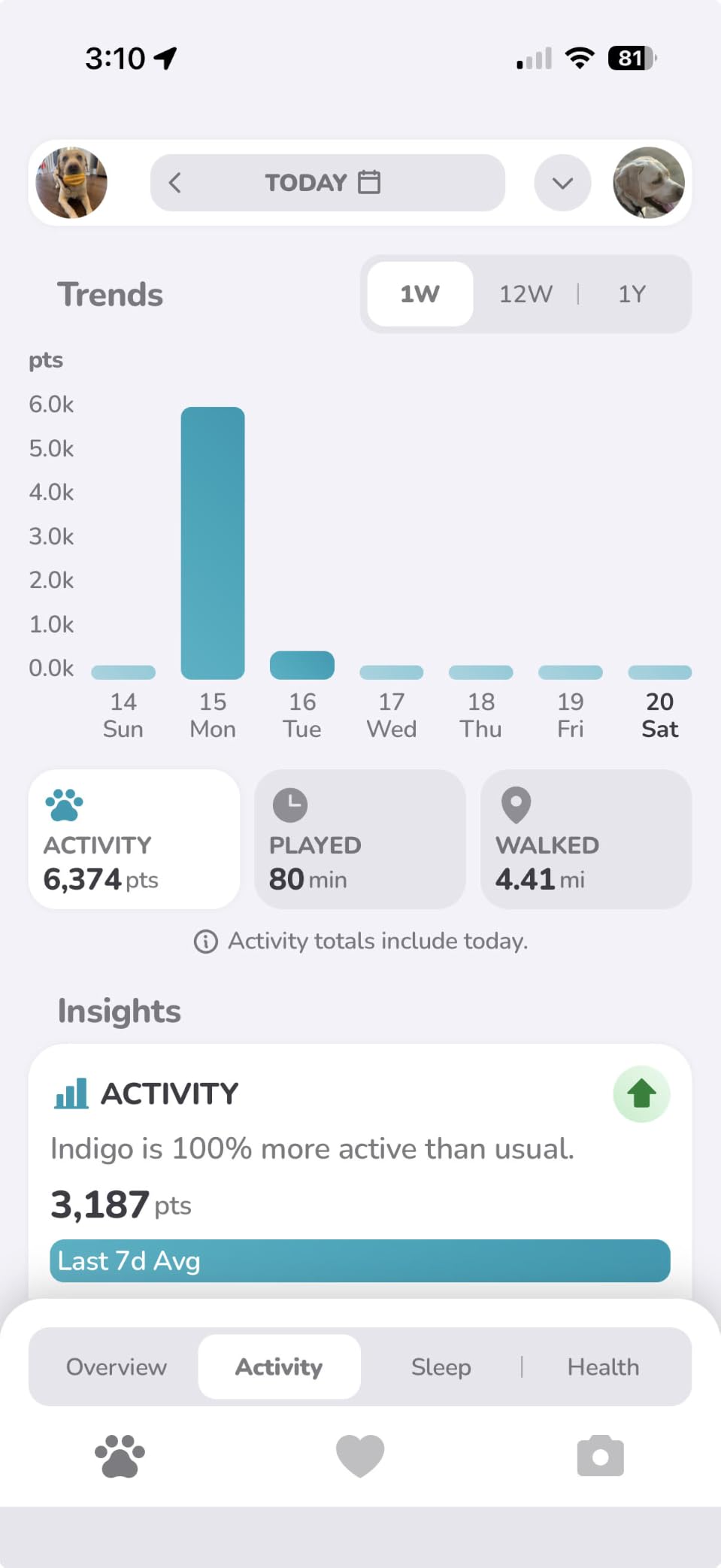
For weight management the standout feature is goal benchmarking by breed, age and weight. Instead of a generic step target, you get a reference point drawn from dogs of comparable size and stage of life, which makes the first month of data much easier to interpret honestly rather than comparing a beagle to a border collie.
The FitBark Health Index and Sleep Score are the other piece. A falling Health Index often shows up before a limp does, and owners describe using the data to spot mobility changes and adjust routines, which is exactly the early-warning behaviour people want during a weight plan.
What makes the FitBark 2 stand out for weight work?
Because the six-month battery removes a whole category of failure. There is no charging routine to forget, so the data does not develop gaps in week three, and gaps are what quietly ruin a trend line. The breed, age and weight peer comparison is also one of the most useful features in this roundup for setting a realistic starting target.
Where owners get frustrated
It is not a GPS tracker and cannot locate a lost dog, which the listing states plainly and most buyers accept. Everything depends on a paired smartphone and the app, and the depth of insight varies depending on your phone model and whether you connect a wearable. FitBark is widely regarded as the calorie-detail leader, and the reservation owners raise most is that a subscription is required for the full picture.
4. Tractive XL Smart Dog GPS Tracker Review
Tractive XL Smart Dog GPS Tracker | Live Pet Tracker with Virtual Fence | Vital Signs Monitoring of Heart & Respiratory Rate | Up to 6-Weeks Battery Life | Dog Collar Attachment (Black)
70 g
For dogs over 44 lbs
Up to 6 weeks battery
Heart rate and bark data
Water resistant
Pros
- Six to nine weeks of battery between charges
- Built for dogs over 44 lbs with a roomy mounting system
- Heart rate respiratory rate bark and scratch monitoring
- Real-time location accurate to a couple of metres
- USB charging and a lighter body than earlier builds
Cons
- Mounting straps and attachment points snap after a few months
- Reported failures to charge after rough play
- Wi-Fi power saving mode fails to join modern routers
This is the model to look at if your dog is large, heavy or both, which is precisely the demographic that most often needs a structured weight plan. It is built for dogs over 44 lbs, and the obvious practical win is endurance: listed battery life of 6 weeks, with owners reporting six to nine weeks in practice.
That matters for weight management in a way that sounds obvious only after you have used a rechargeable collar. A device that needs charging every few days gets charged, read once, and ignored. A device that lasts a month gets checked weekly against a goal, which is the actual behaviour that produces results.
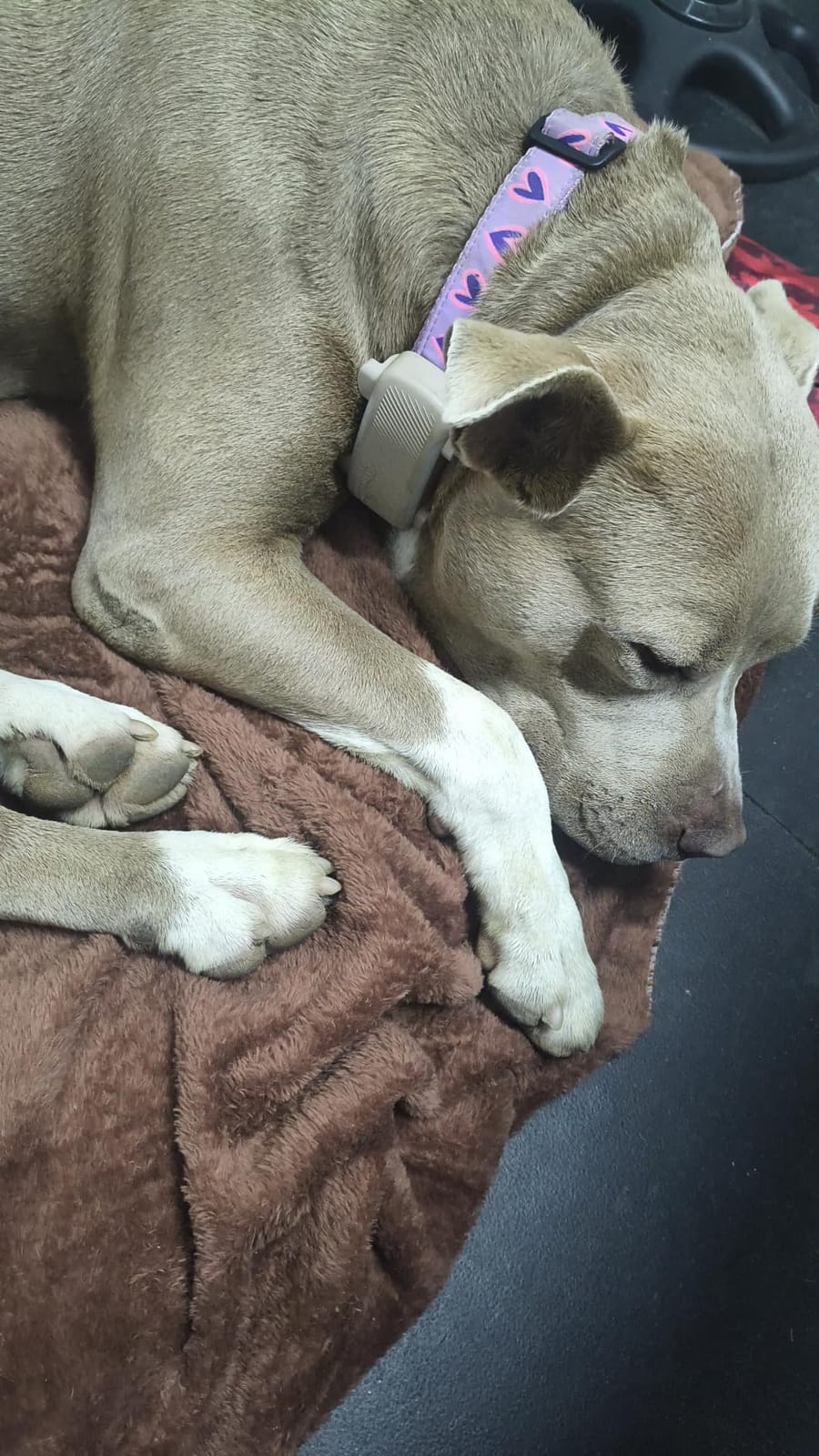
Health data covers heart rate, respiratory rate, barking and scratching, and real-time location is reported as accurate to a couple of metres. The virtual fence and location history behave the same way as the smaller model, so if you have used one you already know the app.
One structural caution for weight work: several reviews raise the accuracy of health readings, and none of these numbers should override what a vet tells you. Use the activity and distance data as your record and treat the sensor readings as context.
Is this the right pick for a large overweight dog?
Generally yes, provided your dog is over 44 lbs. The battery endurance means you can run a proper multi-week program instead of snapshots, and the scratching and bark counters help you detect discomfort before it stops the dog from walking. Confirm your dog clears the weight threshold before buying, because the fit is not adjustable down to a small breed.
Where owners get frustrated
The collar mounting system is the recurring complaint, with straps and attachment points snapping and devices then failing to charge after a few months. The Wi-Fi power-saving mode also fails to connect to modern 5 GHz routers, which can push the device into a higher-power state and shorten that headline battery figure.
5. Purina Petivity Dog GPS Tracker Review
Purina Petivity Dog GPS Tracker Collar, Activity and Real Time Tracking
1.07 oz
Waterproof
Personalized activity goals
1-year warranty
Fits any collar or harness
Pros
- Live GPS and activity tracking in one lightweight unit
- Goals adapt to the individual dog rather than a breed average
- Straightforward app with quick setup
- Fits any collar or harness
- Backed by a one-year limited warranty
Cons
- Paid app subscription required to function
- Tracking quality depends on adequate cellular coverage
- Review base is still small so long-term data is thin
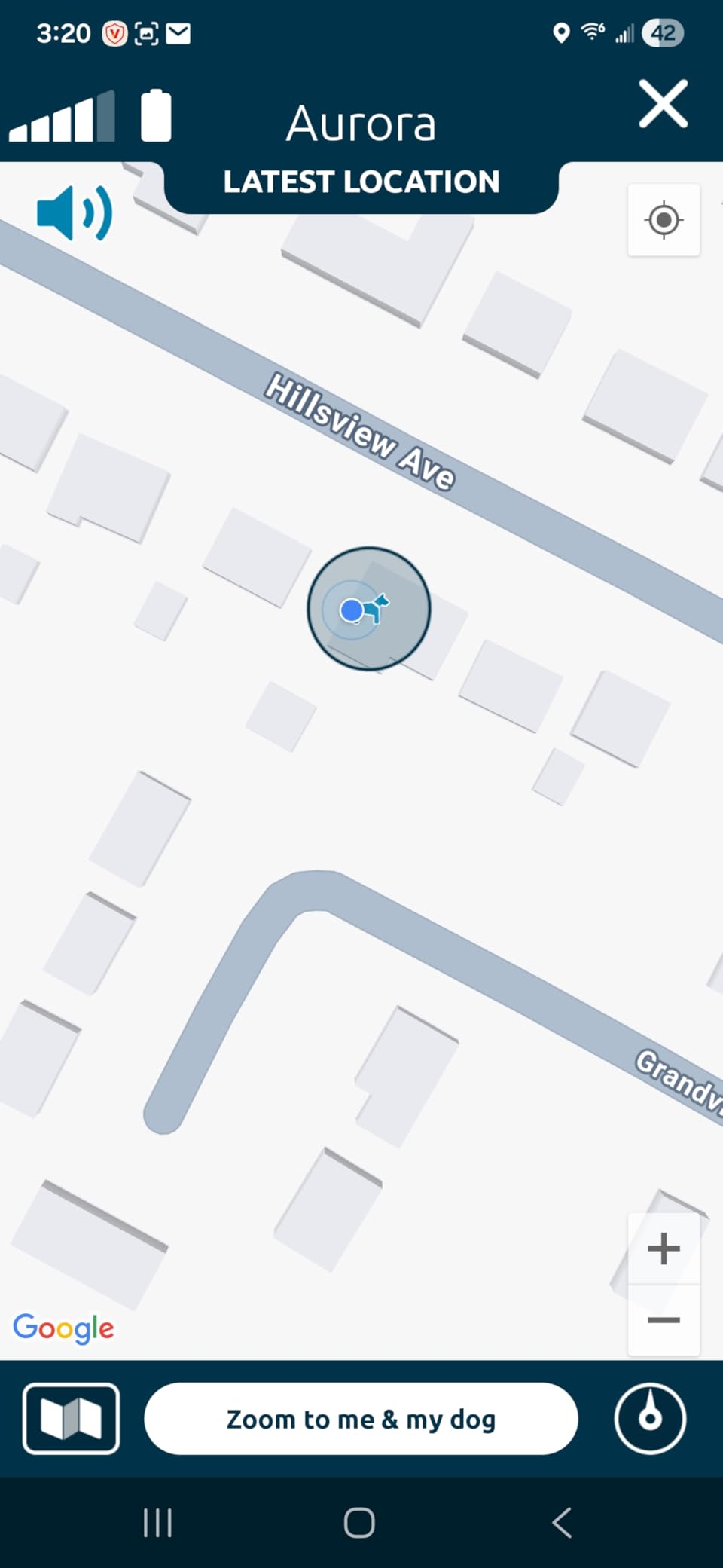
Petivity is the smoothest on-ramp we found. It comes from a pet nutrition brand rather than a hardware specialist, and the effect is an app that explains itself: setup is quick, the dashboards are plain, and the language is about your dog rather than about sensors.
The feature that matters for weight work is personalized activity goals, which adjust to the individual dog instead of applying a breed average. Since there is no consensus formula for how many steps a dog of a given breed should take, having a target derived from your own dog’s starting data is a better place to begin than a generic number from a listicle.
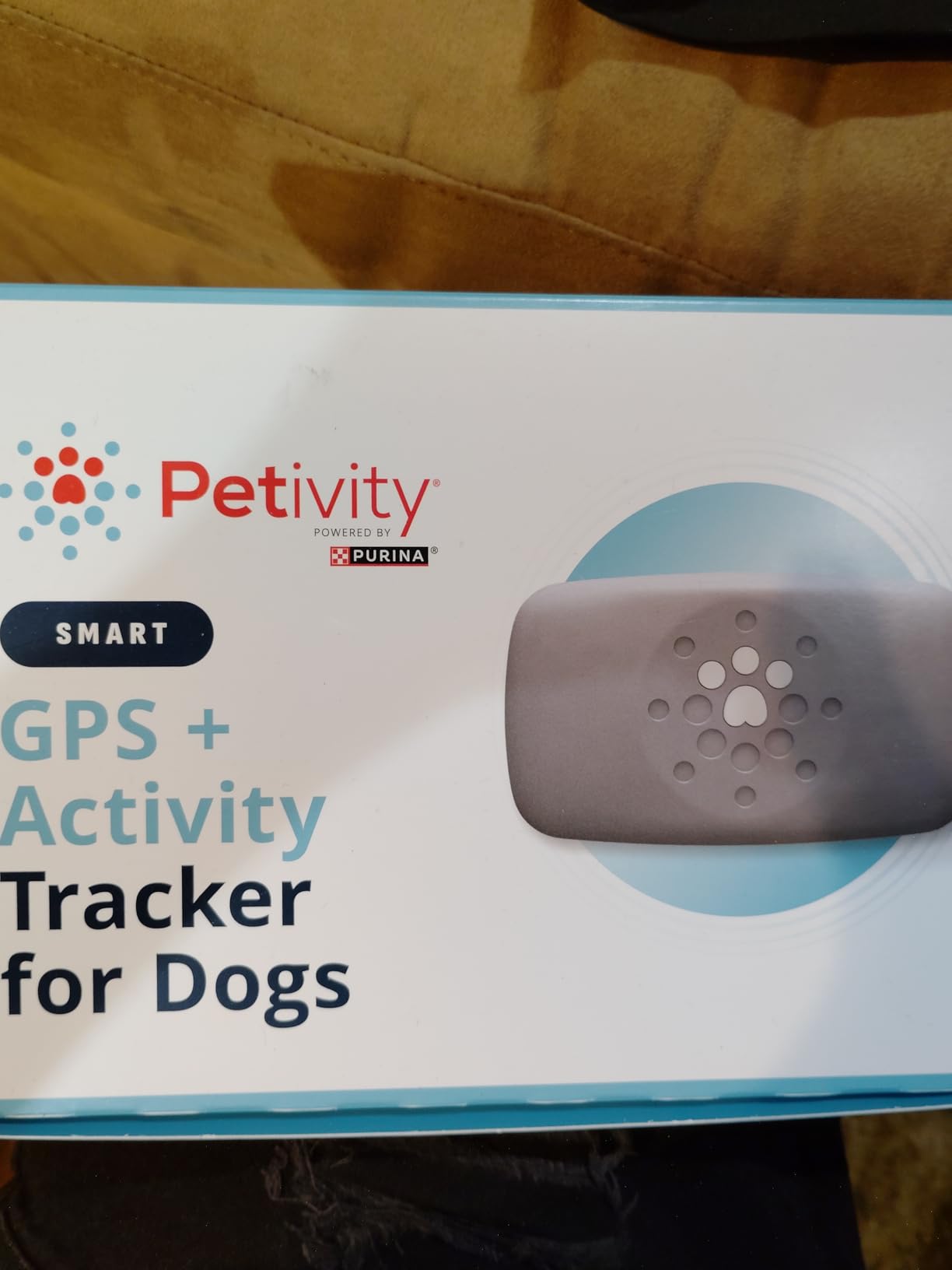
At 1.07 oz and fully waterproof, it is light enough for everyday wear and attaches to any collar or harness. It carries a one-year limited warranty, which is worth noting given how many cheaper trackers in this category fail within months.
The honest limitation here is evidence rather than design. This is a comparatively new release with a review base of 107 ratings, so we have less long-term reliability data than for the devices above. Sentiment is mildly positive, but treat it as a newer platform with a shorter track record.
Is this a good first tracker for a dog that needs to lose weight?
Yes, if you want the least fiddly starting point. Personalized goals remove the hardest part of the job, which is choosing a first target, and the small waterproof body means you can leave it on without daily fuss. If you already track food by hand, this pairs naturally with that habit.
Where owners get frustrated
The subscription is mandatory for the app to work at all, which is the single most common complaint across this whole category in pet forums. Tracking also depends on decent cellular coverage, so expect weaker results in rural areas, and the limited review history means long-term reliability is still unproven.
6. DBDD GPS Dog Tracker Review
DBDD GPS Dog Tracker with Subscription,Virtual Fence&Health Monitor,IP67,BK
IP67 waterproof
For dogs 30 lbs and up
1-year warranty
AI wellness goals
Virtual fence
Pros
- Owners report location accuracy within a few metres
- Lightweight enough to sit comfortably on a 110 lb dog
- App includes an AI pet assistant and wellness goals
- Support replaced a defective unit quickly
- Holds charge well over several days
Cons
- Subscription cost is steep outside the US
- Virtual fence boundary alerts can be delayed or false
- Some devices stop charging or lose signal after about a month
The DBDD is one of the highest-rated devices we reviewed, sitting at 4.6 with roughly 88 percent five-star ratings, and the reasons owners give are practical: accuracy, comfort and app design. It is sized for medium and large dogs from 30 lbs upward, and owners mention using it comfortably on a 110 lb dog, which speaks to the weight distribution rather than just the number.
Its distinguishing feature is an AI wellness companion that watches activity and rest patterns and sets personalized goals, alongside movement trajectory history. Trajectory is more useful than a dot on a map for a weight plan, because it shows whether walks got shorter or more repetitive over time.
The IP67 housing handles rain and washdown without complaint, and the unit includes a tracker, USB charging cable and manual with QR code pairing for iOS and Android. Battery holds charge well over several days in owner reports, with a one-year warranty behind it.
One owner we should mention raised accuracy questions about the health data after consulting a vet, and that is a reasonable caution to carry across this entire category. These readings are screening signals, not diagnostics.
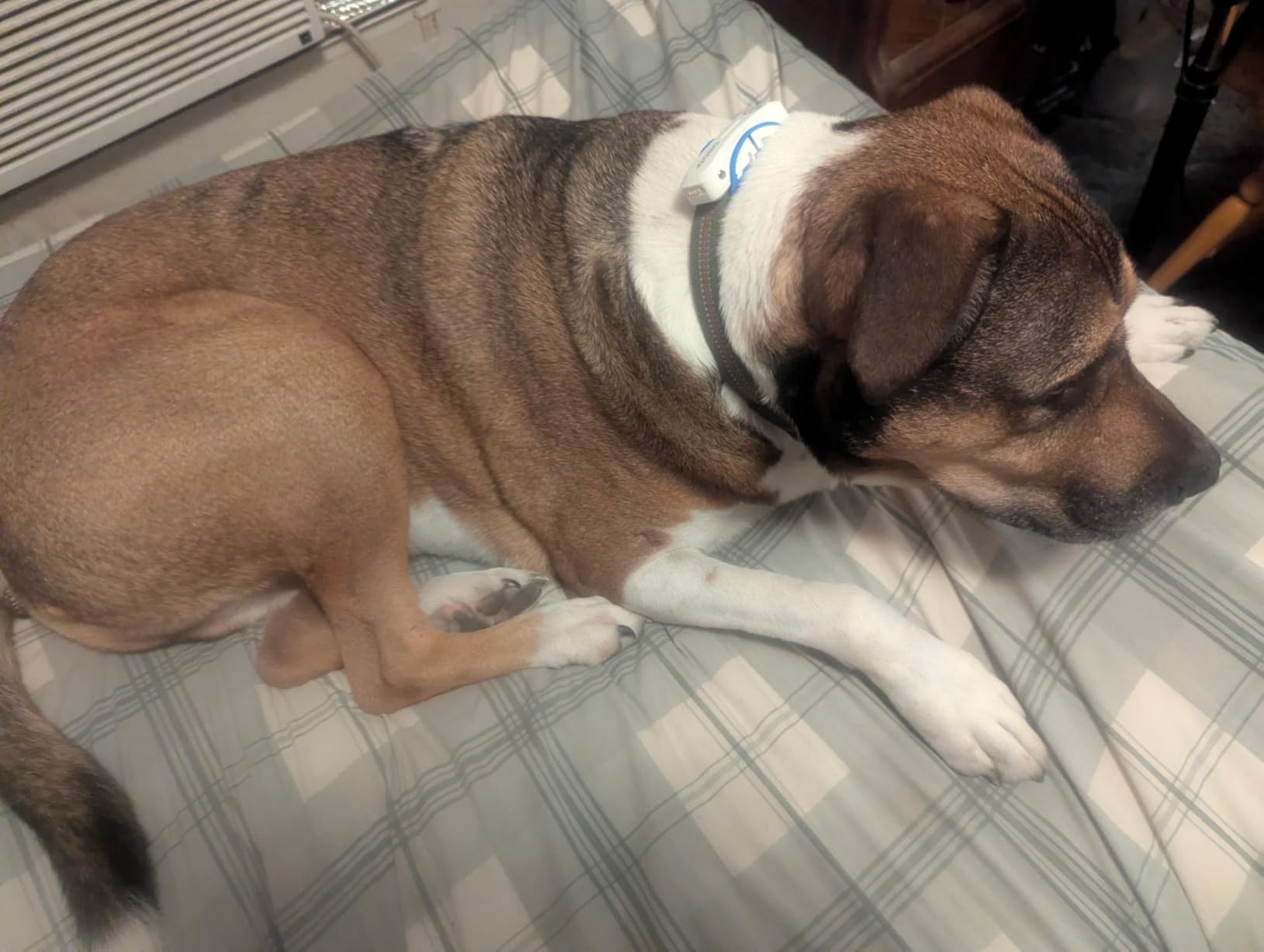
Who should pick the DBDD?
A large or heavy dog on a fitness plan, especially one that also spends time on acreage where zone alerts are useful. The lightweight housing and the reported comfort on a very large dog reduce the rubbing and shifting that quietly corrupt step data on smaller collars.
Where owners get frustrated
The subscription is expensive, and reviewers single out the cost for customers outside the US as the main drawback. Virtual fence boundary notifications can be delayed or false, some devices stop charging or lose signal after about a month, and the battery indicator shows green bars instead of a percentage, so you cannot judge remaining charge precisely.
7. PetPace Dog Health Monitor V3.0 Review
NEW Dog Health Monitor V3.0 by PetPace – AI Smart Collar with 24/7 Vital Signs, Pain & GPS Tracking, Telehealth AskaVet & Share With Your Vet, Smartwatch Sync – Subscription Required (Large)
11.36 oz
Readings every 2 minutes
IP68 and IP66 waterproof
3 weeks on Wi-Fi
Collar 16-24.5 inch
Pros
- Samples heart rate breathing temperature pulse activity sleep and HRV every two minutes
- AI flags subtle pain stress and illness trends early
- Shareable health reports plus 24/7 Ask-a-Vet telehealth
- Apple Watch companion app for real-time monitoring
- Waterproof build suits aging dogs and recovery after surgery
Cons
- Hardware cost is high for a collar device
- Ongoing annual subscription needed for most functionality
- Full feature set limited to the US and Canada
The PetPace is the only device here that reads health data at the interval a clinician would find interesting, sampling heart rate, breathing, temperature, pulse, activity, sleep and heart rate variability every two minutes. Nobody else in this roundup comes close to that density, and it is why we included the device despite a 3.5 rating.
For an older dog, a dog with arthritis, or one recovering from surgery, that sampling interval is the entire point. A pain or stress change that appears in a two-minute trace tells you something a daily step count cannot, and owners who stay with the device commonly cite that depth as the reason.
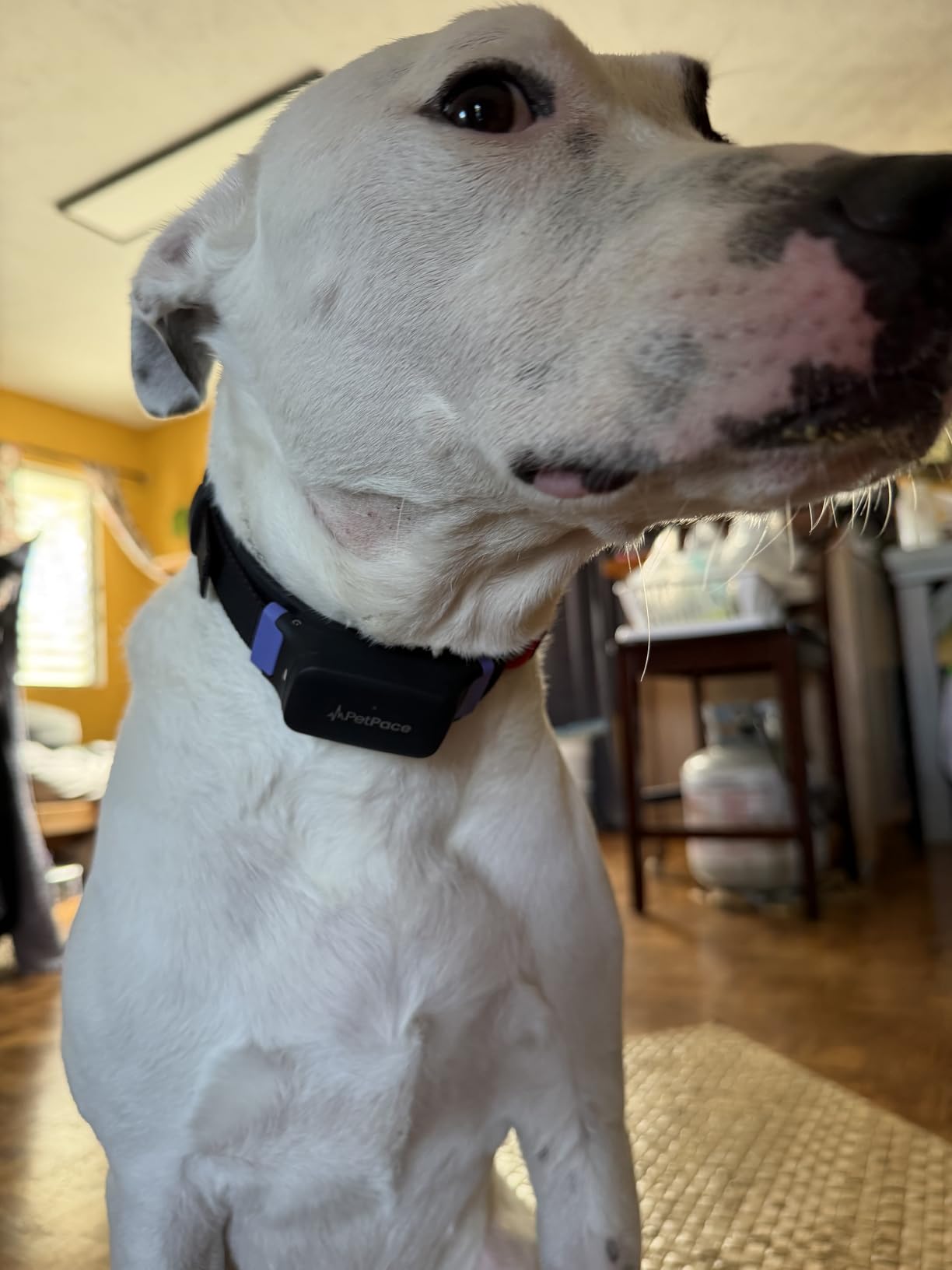
The AI layer is built for early detection, flagging subtle shifts in pain, stress, illness and discomfort rather than waiting for an obvious collapse. There are condition-specific modules for epilepsy in beta and for pregnancy monitoring, and the IP68 and IP66 ratings handle water without worry.
It is also the only device here that hands you something your vet can actually use. Reports can be shared directly with a veterinarian, and 24/7 Ask-a-Vet telehealth is included, which turns a week of data into a conversation rather than an anecdote. Battery is listed at up to 3 weeks indoors on Wi-Fi, and there is an Apple Watch companion app.
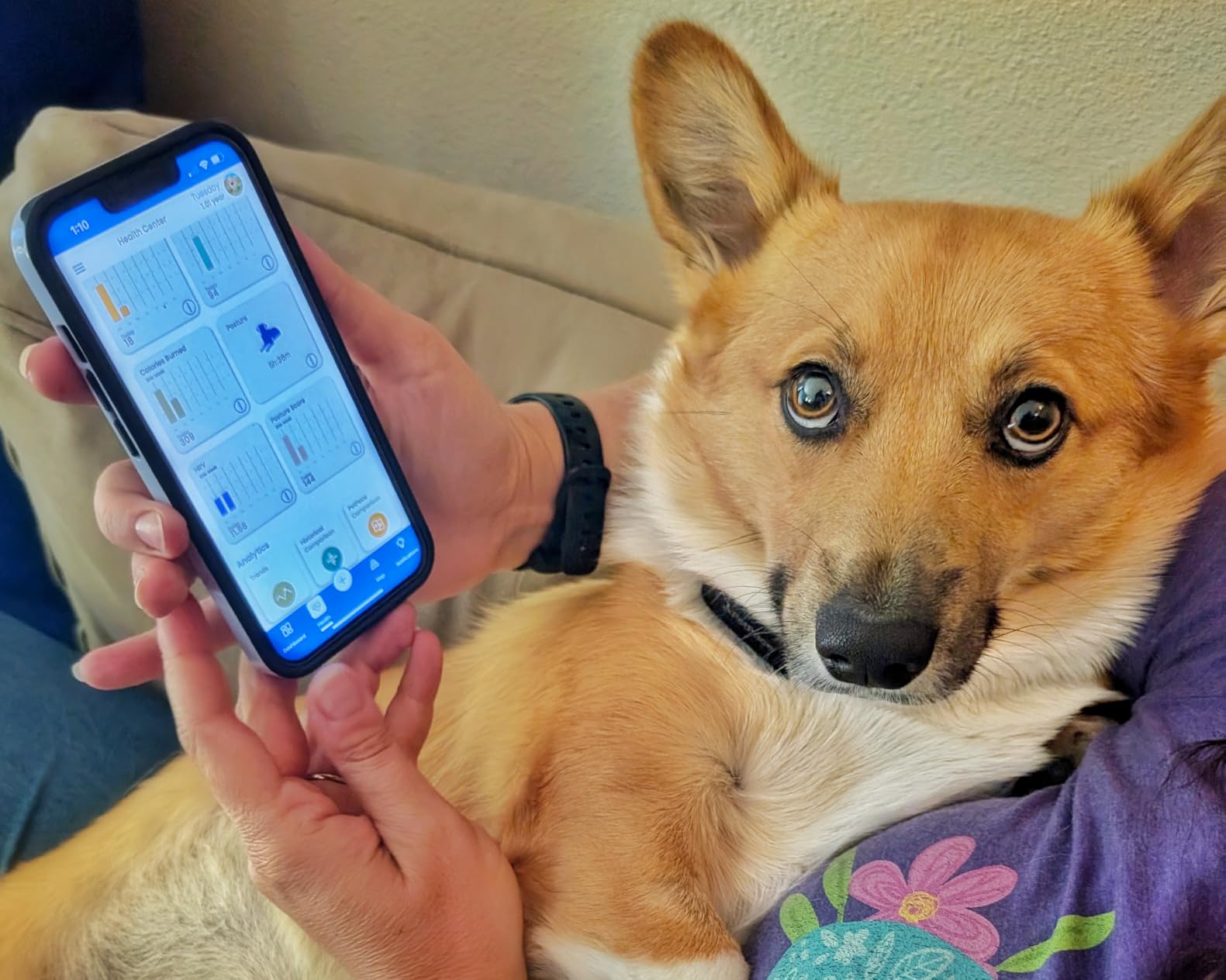
Is a health monitor worth it for a senior dog?
For a dog whose joint pain limits how much exercise you dare to prescribe, yes. The data tells you whether a short walk helped or whether your dog spent the next two hours resting, which is exactly the feedback needed to adjust a restricted-exercise plan without guessing. It is also the strongest candidate in this list for post-surgical recovery tracking.
Where owners get frustrated
Cost is the blunt problem, both for the hardware and for the ongoing annual subscription needed for most functionality. Full functionality is limited to the USA and Canada, so it is not an option for owners elsewhere, and the review base is small at 33 ratings with roughly 31 percent one-star, the highest negative share in this roundup.
8. Molly and Cody Smart Dog and Cat GPS Tracker Review
Molly&Cody Smart Dog & Cat GPS Tracker, 4 Smart Modes Real-Time Pet Tracker with Custom Virtual Fence IP67 Waterproof Location History & 365-Day Health Data Monitoring, Subscription Required
0.88 oz
Up to 8 days battery
IP67 waterproof
4 smart modes
365-day history
Pros
- Four smart modes balance accuracy against battery drain
- Very light at 0.88 oz with a protective collar case
- Stores 365 days of activity and health trend records
- Built-in buzzer helps locate a pet nearby
- Works for dogs and cats in one app
Cons
- Subscription required for real-time GPS and health monitoring
- Some owners received defective units and sought refunds
- Review base is small at 24 ratings
The Molly and Cody weighs just 0.88 oz, which puts it in a lighter class than most of the GPS collars here. The four smart modes, Home, Outdoor, Sleep and Tag, are the real differentiator: the device shifts how hard it looks for a signal based on context instead of running one power-hungry mode all day.
That design shows up as a listed battery life of up to 8 days in typical use from a 540 mAh cell, and a Sleep mode that suits a dog whose exercise happens in a predictable window. The protective case in the box keeps the unit secure during play, which is where lighter devices usually fail.
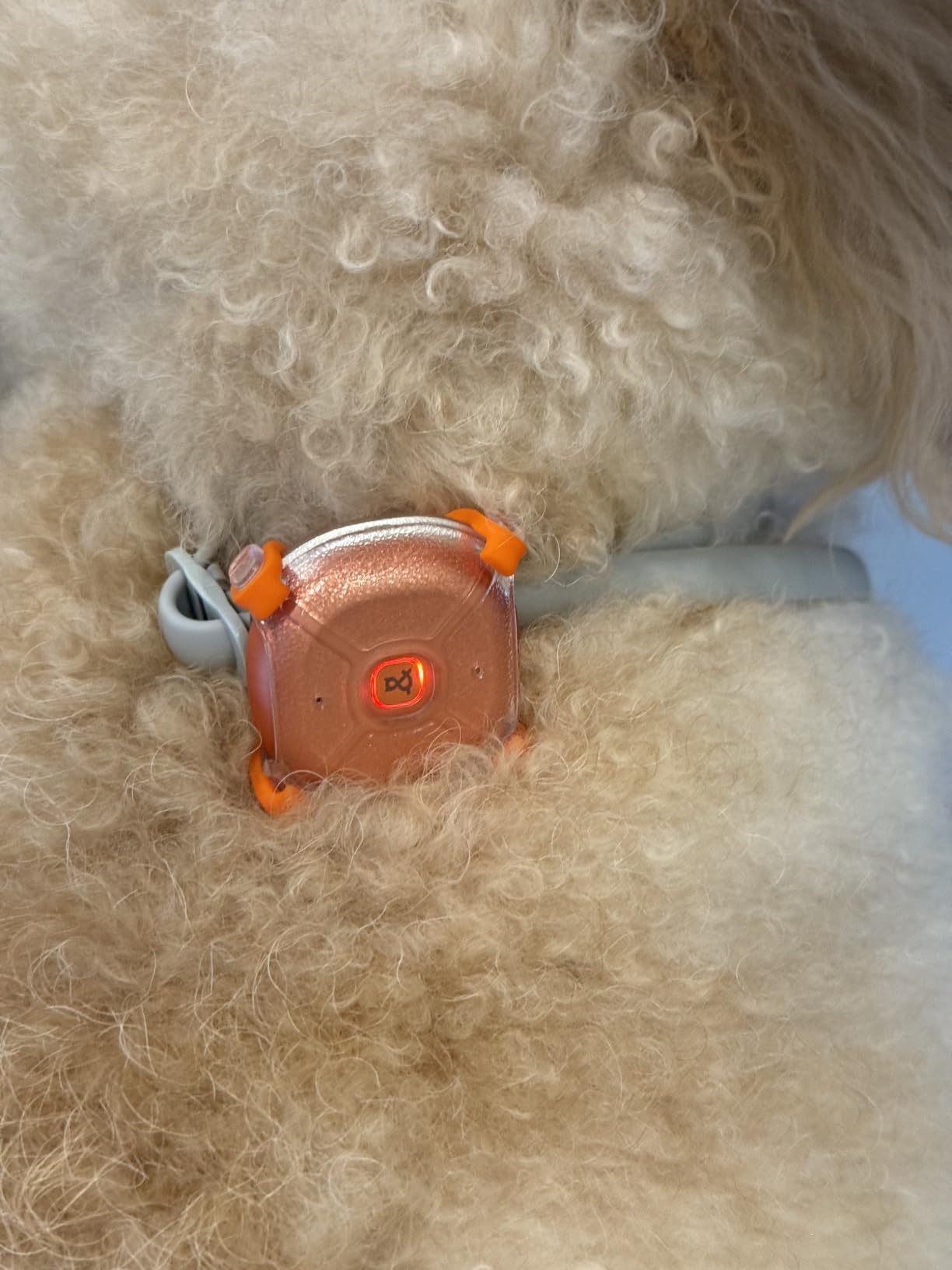
For weight management, the useful element is the 365-day record of activity and health trends. Several owners mention using the long history specifically to confirm whether a dog was getting enough exercise, which is the right way to use this data, because a year of context turns a single week into a real signal.
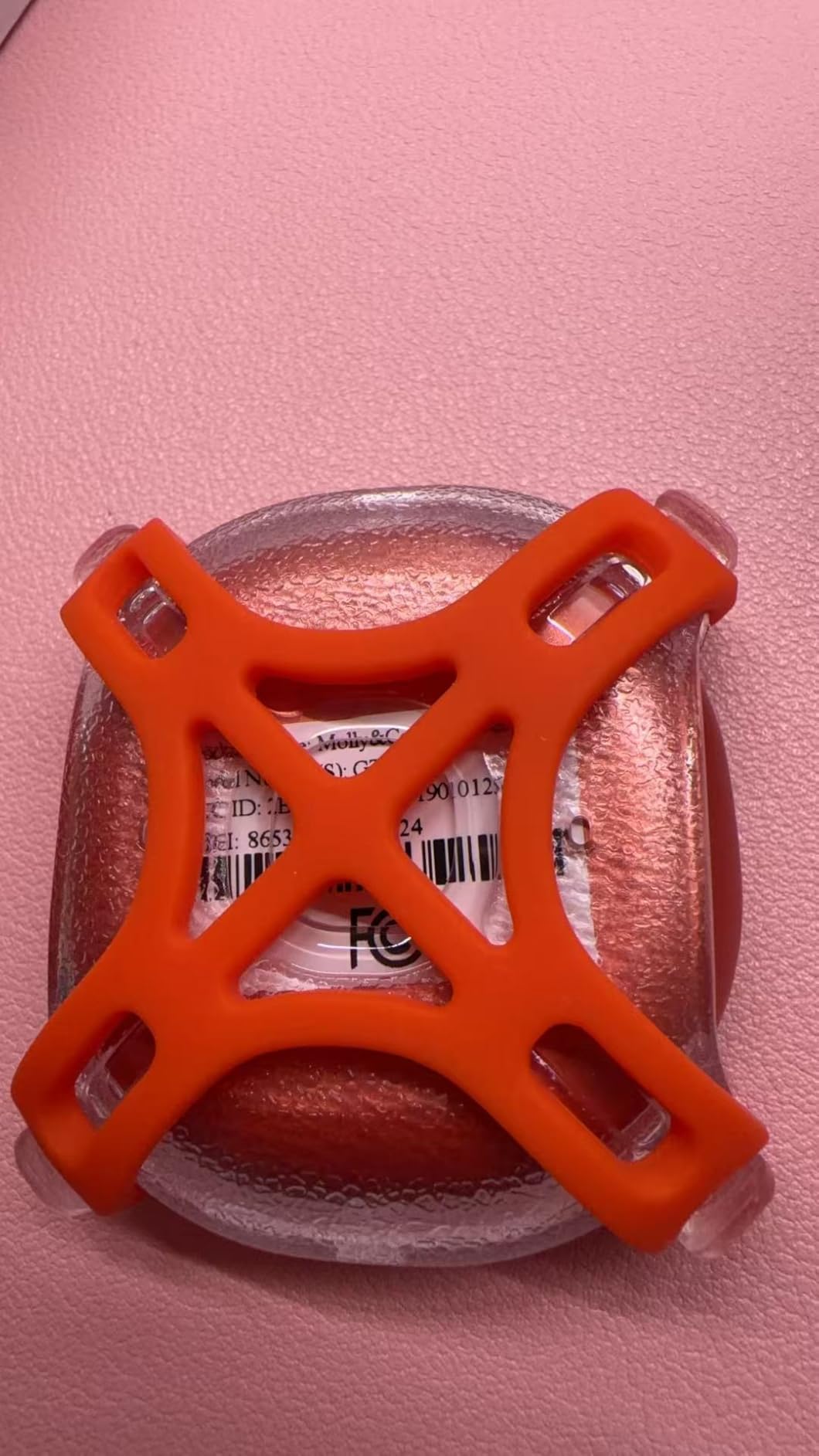
It also works for cats, and the built-in buzzer helps you locate a pet nearby without an app, which is a small courtesy rather than a feature. The enclosure is IP67 waterproof and the unit measures 1.75 by 1.75 by 0.54 inches.
Is this the right tracker for a small dog?
Yes, on size grounds alone. At 0.88 oz the weight is close to negligible on a small dog, and the protective case addresses the fit and knock-about problem that leads owners to abandon a tracker within a month. For a toy breed carrying extra weight, a device your dog actually tolerates beats a better one it tries to shake off.
Where owners get frustrated
A subscription is required for real-time GPS and health monitoring, so the free version is limited. Some owners received defective units and had to seek refunds, and the review base is small at 24 ratings, which means the 4.4 rating rests on a narrow sample and we would want more history before recommending it over a longer-established device.
9. GEGOPet Real-Time GPS Pet Tracker Review
GEGOPet – Real-Time GPS Pet Tracker for Dogs & Cats, Unlimited Range, Safe Zones, Escape Alerts, Location History, Activity & Wellness Insights. Active Subscription Required.
Up to 7 days battery
GPS WiFi GSM and AGPS
Weight trend tracking
Vet record log
Pros
- Logs activity movement and weight trends with walk history
- Weekly wellness reports flag changes in routine
- One app holds vet visits vaccinations and medical records
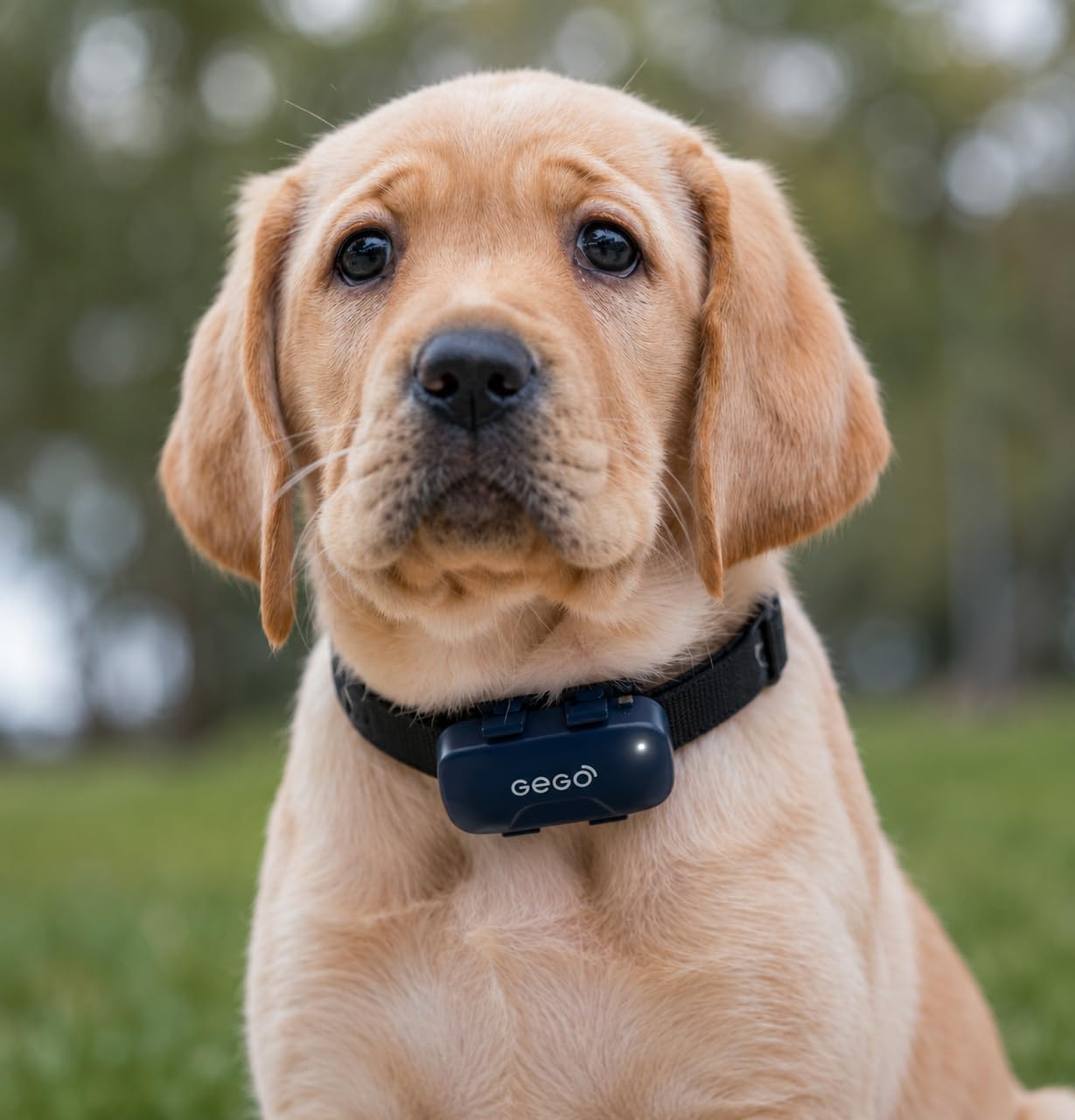
- Very small and comfortable for everyday wear
- Lost pet mode updates location every few seconds
Cons
- GPS route accuracy is noticeably below premium competitors
- Safe zone alerts are not consistently reliable
- Collar mounting system is too weak for dogs that play and pull
The GEGOPet is the only device in this roundup that logs weight trends inside the app, which makes it worth a close look for this particular query even though the weight figures are entered rather than sensed. Multi-layer positioning across GPS, Wi-Fi, GSM and AGPS helps in the mixed indoor and outdoor conditions most dogs actually live in.
It also keeps a record of vet visits, vaccinations and medical notes in the same place as the activity data, and the multi-pet app means one login covers a whole household. For anyone running two dogs through a weight plan at once, that consolidation is genuinely useful rather than cosmetic.
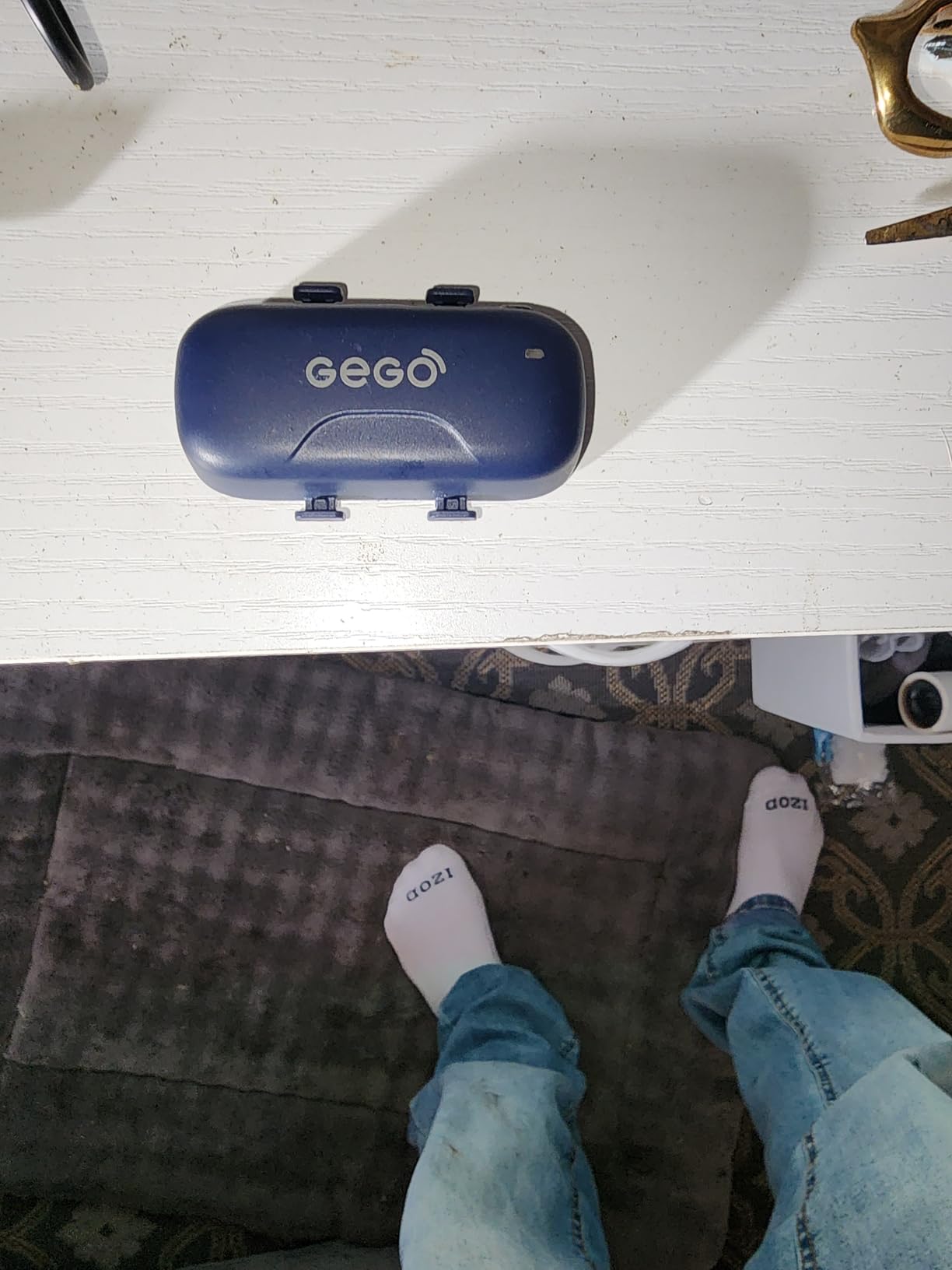
Battery is listed at up to 7 days, and owners like the compact size and clean app design, which notably avoids the social-style leaderboards that make some pet apps feel competitive rather than clinical. Weekly wellness reports flag changes in routine, and lost pet mode updates location every few seconds.
The most substantive criticism came from a long-time user of a premium competitor who supplied side-by-side route screenshots showing less accurate traces and missed safe-zone alerts. That is a specific, checkable claim, and it is worth treating seriously if location is your main reason to buy.
Is the GEGOPet useful for weight management?
As a logbook it is, especially with the vet records and walk history in one place. The weight trend feature works best as a place to record the numbers from your own kitchen or clinic scales, so you can see whether months of increased activity have actually moved the figure. Treat the step and movement data as supporting evidence, since route accuracy is not its strength.
Where owners get frustrated
GPS route accuracy sits noticeably below the premium devices, safe zone alerts are not consistently reliable, and the collar mounting system is described as too weak for dogs that play and pull. Charging also requires removing the device from the collar, and the connectors feel fragile.
10. Vebiso GPS Dog Tracker Collar Review
GPS Dog Tracker Collar (iOS & Android), Pet Activity Tracker No Monthly Fee
No monthly fee
Replaceable CR2032 coin cell
12+ month standby
IP68 waterproof
Find My and Find Hub
Pros
- No subscription or recurring fee of any kind
- Over 12 months of standby on a replaceable coin cell
- Pairs with Apple Find My and Google Find Hub
- Soft silicone case is barely noticeable to wear
- IP68 waterproof and doubles as a bag or keychain tag
Cons
- Bluetooth network only so it is useless in remote areas
- No GPS cellular connection or virtual fence
- Body is too large for cat and small breed collars
Let us be direct about this one: it is not a dog activity monitor. It is a Bluetooth network tag that pairs with Apple Find My or Google Find Hub, and it logs no steps, no calories and no sleep data. It earns a place in this roundup because it answers a question pet owners ask constantly, which is whether they have to pay a monthly fee at all.
For a dog whose weight is under control, or as a second device used purely for location during walks on familiar ground, it does that job with no recurring cost, no app to learn and a replaceable CR2032 battery with over 12 months of standby.
What you give up is everything the weight plan depends on. There is no GPS, no cellular connection, no virtual fence and no activity data of any kind. The soft silicone case is IP68 waterproof and comfortable, and many owners end up using it for keys or luggage instead.
Is a no-fee tracker enough if weight is the goal?
No. Without step or calorie data there is nothing to trend and nothing to set a goal against, so this device cannot support a weight plan. It is worth considering alongside a subscription tracker rather than instead of one, or on its own for a fit dog where location is a convenience rather than a necessity.
Where owners get frustrated
The core limitation is that it depends on other phones being nearby, which makes it useless in remote areas and unhelpful in a rural walk. It cannot locate a lost dog at any real distance, and despite the listing claim, owners note the body is too large for cat and small breed collars.
How to Turn Dog Tracker Data Into a Weight-Management Plan
Owners in weight-management threads already log meals and treats by hand, and the trackers fit neatly on top of that habit. None of them closes the loop for you, so here is the six-step sequence we recommend based on how the data actually behaves week to week.
Step 1: Establish a baseline before you change anything. Leave the device on for 14 days with no diet or exercise changes. This gives you an honest picture of a normal week, including the weekend slump that single-day readings hide.
Step 2: Weigh your dog properly. Use the same scale, the same time of day and the same posture each month, and ask your vet for a body condition score on a nine-point scale. Record the number in the same app if it will hold it, because the activity trend only means something next to the weight trend.
Step 3: Set a target from the baseline, not from the internet. The FitBark peer comparison by breed, age and weight is a good starting reference. Aim to increase active minutes by around ten percent per week rather than leaping straight to a big number, and hold that level for two weeks before adding more.
Step 4: Pair activity with intake in the same window. The easiest change for most dogs is a longer walk before the meal they get most enthusiastically. If you use a treat-based training system, count those treats as intake, because owners who log everything in apps typically find treats are the surprise in the diary.
Step 5: Review the trend weekly, not daily. Daily calorie figures jump around with weather, mood and the route you happened to take. The weekly line is the only thing worth reacting to, and a falling step count is often what prompts owners to book a vet visit rather than wait for a limp.
Step 6: Reassess every four to six weeks. If the weight has not moved after six weeks of consistent data, the problem is nearly always intake, so talk to your vet about the calorie target before adding exercise. If a senior or arthritic dog, ask about low-impact options such as swimming, and remember that a standard step count may barely register a pool session.
How to Choose a Dog Activity Monitor for Weight Management
Decide whether you will pay a monthly fee. Of the ten devices here, only the Vebiso tag has no recurring charge, and it logs no activity data at all. The GPS and health features on the rest are gated behind a subscription, which is the most common source of frustration in pet forums and the most common reason owners abandon a tracker after a month. Budget for it honestly and decide before you buy.
Match the tracking type to the job. GPS and cellular units give live location, virtual fences and accurate distance, at the cost of a subscription and a rechargeable battery. Accelerometer-only units such as the FitBark 2 give cleaner activity, sleep and calorie data with a battery measured in months, but cannot help you find a lost dog. Bluetooth tags cost nothing and do almost nothing for weight. We covered this trade-off in more detail when we mapped toddler activity tables, where the same activity-versus-safety logic applies to a different kind of movement tracker.
Prioritise the metrics you will act on. Active minutes, distance and sleep are the three numbers that reliably change behaviour. Calorie estimates are the number owners ask for and the one most likely to disappoint, because the algorithm infers expenditure from movement rather than measuring intake or body mass.
Check battery claims against your own routine. A rechargeable unit that needs attention every three days will lose your attention first. Our ranking favours the six-month and six-week options for that reason, and we treat shorter claims as useful for location safety rather than for trend building.
Get the fit right for your dog’s size. Check the collar width limit before ordering anything. The FitBark 2 fits collars up to 1.5 inch wide at 10 g, the Molly and Cody sits at 0.88 oz for small breeds, and the Tractive XL is built for dogs over 44 lbs. A module that shifts or rubs will both annoy your dog and corrupt the data.
Check multi-dog support and data export. Households need one app covering every pet, and the PetPace and GEGOPet are the two here that keep vet records and shareable reports in the same place. If your vet will want the numbers, confirm you can export or share them before you commit.
Know when to skip a tracker. If your dog is on a vet-prescribed restricted diet for a medical condition, or is recovering from surgery with strict exercise limits, a device cannot make that call for you. Ask your vet first, and treat any wearable as a record of a plan they have already approved.
On the recurring-cost side, our cable management kit guide covers the same total-cost-of-ownership thinking we applied here, where the running cost over several years matters more than the entry figure.
Frequently Asked Questions
What is the best fitness tracker for dogs?
The best dog fitness tracker for weight management is the FitBark 2, because it reports activity, sleep, distance and calorie balance continuously and benchmarks goals against dogs of similar breed, age and weight. Its 10 g waterproof body fits collars up to 1.5 inch wide and the battery runs up to six months, so the data does not develop gaps. The Tractive Smart Dog GPS Tracker is the better pick if you also want live location and heart and respiratory rate readings.
Do any dog trackers actually measure weight?
Almost none of them do. Dog activity trackers estimate calories burned from movement, so a calorie figure is a calculation rather than a measurement. The GEGOPet app is the closest in this roundup, and it does not sense weight either, it records the numbers you enter. To follow weight accurately, use a consistent scale at the same time each month and ask your vet for a body condition score on the nine-point scale.
How accurate are dog fitness trackers for calories?
Treat calorie estimates as a directional trend rather than a number to plan meals around. The algorithm infers expenditure from accelerometer and GPS movement, and it cannot account for breed metabolism, age, neuter status, hair coat, weather or how hard your dog actually works. Use active minutes and distance as the reliable signals, and confirm any change with a scale and your vet.
What is the best dog tracking device without a monthly fee?
Among the devices we reviewed, the Vebiso GPS Dog Tracker Collar has no subscription and runs on a replaceable CR2032 coin cell with over 12 months of standby, pairing with Apple Find My or Google Find Hub. It is a Bluetooth network tag, so it logs no steps or calories and only works near other phones. If you need free step data, no device in this roundup provides it.
How many steps a day does a dog need to lose weight?
There is no single figure, and any number that claims otherwise is oversimplified. Most dogs need a sustained increase in daily walking rather than a step target, and large, senior or brachycephalic dogs need a different balance from high-energy breeds. Set a baseline for 14 days, then raise active minutes by about ten percent per week and hold for two weeks. Ask your vet for a target, especially if your dog has joint or heart conditions.
Is a dog activity tracker good enough to replace a vet weigh-in?
No. A tracker shows movement trends and can be an early warning when activity drops suddenly, which is often what prompts an owner to call a vet. It does not measure body mass, fat percentage or joint condition. Weigh your dog on a consistent scale each month, ask for a body condition score at your next appointment, and bring the exported activity data so your vet can see the trend alongside the number.
Can I track my dog with a Bluetooth tag instead of a GPS collar?
Only for location, and only at close range. Bluetooth tags such as the Vebiso unit rely on other phones forming a network, so they are effective in a house or a busy park and useless in a rural area or a search of any real distance. They also log no activity, sleep or calorie data, which means they contribute nothing to a weight plan. For exercise data you need an accelerometer-based collar, and for location you need cellular GPS.
The Best Dog Activity Monitor for Weight Management in 2026
Our pick for the best dog activity monitors for weight management is the Tractive Smart Dog GPS Tracker, because it combines heart rate, respiratory rate, sleep and activity data with real-time location in a waterproof 1.3 oz collar, and it has the largest owner base in this roundup, which makes its rough edges predictable rather than surprising.
If weight is your only goal, choose the FitBark 2 instead. Its six-month battery and breed, age and weight peer comparison make it the cleanest instrument for building a habit that lasts. For a large dog, the Tractive XL scales the same platform up. For a senior or post-surgical dog whose exercise must be carefully dosed, the PetPace V3.0 is the only device here sampling health readings closely enough to guide a restricted plan.
Whatever you pick, run the six-step protocol, review the weekly trend rather than the daily number, and weigh your dog on a real scale every month. Activity data is the record of the plan, not the plan itself. Then check the current price for the model that fits your dog, and we will keep updating this roundup through 2026 as new models arrive.