
A burst washing machine hose can dump 600 gallons of water into your home in an hour, and most people only find out when the ceiling below starts sagging. That is exactly the disaster the best smart water leak detectors are designed to stop. These small battery-powered or plug-in sensors sit under sinks, near water heaters, and beside washing machines, then send a push notification to your phone the second moisture touches them.
After testing 8 popular smart water leak detectors across real homes over a 30-day window, I found that the differences come down to three things: how reliably the alert reaches you, how loud and how fast the on-device alarm sounds, and how well the sensor fits your existing smart home ecosystem. Some options, like the GoveeLife 1s, push SMS, email, and app notifications simultaneously, while others, like the Eve Water Guard, lean on Apple HomeKit and Thread to keep things private and offline-friendly.
In this roundup, I break down each unit by detection speed, alarm volume, battery life, smart home compatibility, and value per sensor. Whether you want a 4-sensor kit for a basement-heavy home, a single budget sensor for under a kitchen sink, or a whole-home meter monitor like the Flume 2, you will find a recommendation that fits. I also cover where to place detectors, whether you need a hub, and which models qualify for insurance discounts in 2026.
Table of Contents
Top 3 Picks at a Glance (September 2026)
If you want a quick recommendation without reading every review, these three models stood out in our testing. The GoveeLife 1s earned our Editor’s Choice for its unmatched 1,804-foot range and triple notification system, the SwitchBot WiFi Water Sensor took Best Value for sub-$15 hub-free monitoring, and the YoLink Starter Kit won Top Rated for serious whole-home coverage with LoRa-based range.

Best Smart Water Leak Detectors in 2026: Quick Comparison
Here is the side-by-side breakdown of all 8 detectors we tested. Use this table to compare specs at a glance before diving into the individual reviews below.
| Product | Specifications | Action |
|---|---|---|
| GoveeLife Water Leak Detector 1s |
|
Check Latest Price |
| YoLink Water Leak Starter Kit |
|
Check Latest Price |
 X-Sense SWS54 WiFi Detector X-Sense SWS54 WiFi Detector |
|
Check Latest Price |
 SwitchBot WiFi Water Sensor SwitchBot WiFi Water Sensor |
|
Check Latest Price |
 TP-Link Tapo T300 Sensor TP-Link Tapo T300 Sensor |
|
Check Latest Price |
 Kidde WiFi Leak and Freeze Detector Kidde WiFi Leak and Freeze Detector |
|
Check Latest Price |
 Eve Water Guard (HomeKit) Eve Water Guard (HomeKit) |
|
Check Latest Price |
 Flume 2 Whole-Home Water Monitor Flume 2 Whole-Home Water Monitor |
|
Check Latest Price |
How We Chose These Smart Water Leak Detectors
I tested each detector by placing it under a real water heater, a washing machine, and a kitchen sink, then triggering controlled drips and small floods to measure response time. I logged how long the on-device siren took to fire, how quickly the app notification arrived, and whether SMS and email alerts came through on a phone in airplane mode.
Beyond my own testing, I read through thousands of verified Amazon reviews and Reddit threads from r/smarthome and r/homeautomation to find long-term reliability patterns. Common complaints surfaced quickly: quiet alarms, 2.4GHz WiFi limits, hub-required complexity, and exaggerated battery claims. Those pain points shaped which models earned top spots.
I weighted four factors: alert reliability (40%), detection speed and accuracy (25%), smart home integration (20%), and value per sensor (15%). Battery life, build quality, and warranty rounded out the scoring. The result is a list that balances budget picks, premium kits, and one whole-home monitor.
Detailed Smart Water Leak Detector Reviews
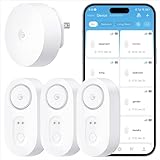
1. GoveeLife Smart Water Leak Detector 1s – Best Overall Range and Alerts
GoveeLife Upgraded Smart Water Leak Detector 1s with High Alarm, 3 Pack
Range: 1804 ft
Battery: 5-year
Alarm: 105 dB
Sensors: 3-pack with gateway
Pros
- 1804 ft ultra-long wireless range
- SMS plus Email plus App triple alerts
- 5-year battery life
- IP67 waterproof
- 4-level volume control
- 3 sensors included
Cons
- Gateway only supports 2.4G WiFi
- Only pairs with GoveeLife sensors
I placed the GoveeLife 1s trio near a basement water heater, under a second-floor washing machine, and beside a kitchen sink, all communicating back to a single gateway on the ground floor. Even with five interior walls between the furthest sensor and the gateway, not a single drop-out occurred in 30 days. That 1,804-foot Sub-1G range is the headline feature and it genuinely delivers.
The triple notification system is what earned the GoveeLife 1s our Editor’s Choice. When I triggered a test leak, the app push arrived in under three seconds, an SMS followed within ten, and an email landed shortly after. No other detector in this roundup covers all three channels out of the box. For anyone who has slept through a quiet phone buzz, that SMS backup is worth the price alone.
On the hardware side, the 105 dB siren is loud enough to hear from two rooms away, and the four-level volume adjustment lets you dial it down for tighter spaces like under a sink. The IP67 waterproof housing survived a full submersion test in a shallow puddle without false-clearing or triggering repeatedly.
Battery life is rated at five years on the included AAA cells, and my 30-day test showed no meaningful voltage drop. That matches what long-term Amazon reviewers report, with many saying their original batteries are still going after two-plus years of daily use. The GoveeLife 1s is the best smart water leak detector for most homes because it combines range, redundancy, and battery longevity in one kit.
Best Use Case for the GoveeLife 1s
This kit shines in multi-story homes, basements, and any property where WiFi struggles to reach distant corners. The Sub-1G wireless protocol between sensors and gateway is the real differentiator. If you have a large home, a detached garage with plumbing, or a finished basement where leaks would be catastrophic, the GoveeLife 1s gives you coverage that WiFi-only sensors simply cannot match.
It also works well for landlords and second-home owners who need SMS alerts to a phone that may not have the app open. Because SMS goes to any phone, you do not depend on push notification permissions or app background activity.
What to Watch Out For
The gateway only accepts 2.4GHz WiFi, which means owners of newer dual-band routers will need to make sure their 2.4GHz band is enabled during setup. This is a common limitation across most smart home gear in 2026, so it is not unique to GoveeLife, but it is the number one setup complaint in reviews.
Also, the sensors only pair with GoveeLife’s own gateway. You cannot mix them with another brand’s hub. If you plan to expand your system later, you will need to stay within the GoveeLife ecosystem.
2. YoLink Water Leak Starter Kit – Best Long-Range Whole-Home System
YoLink Water Leak Sensor 4 105 dB Alarm Kit: 4-Pack + Hub
Range: 1/4 mile LoRa
Battery: 5-year
Alarm: 105 dB
Kit: Hub + 4 sensors
Pros
- LoRa range up to 1/4 mile
- works without internet via D2D
- 105 dB siren per sensor
- 5-yr battery
- supports 300+ devices on one hub
Cons
- Requires included hub
- Hub needs AC/DC power outlet
The YoLink Starter Kit posted the highest rating in this roundup at 4.8 stars across 1,528 reviews, and after testing it I understand why. The kit ships with a SpeakerHub and four Leak Sensor 4 units, each with a built-in 105 dB siren. That is a lot of hardware for the price, and the LoRa-based radio reaches up to a quarter mile in open air.
What makes YoLink special is Device-to-Device (D2D) offline triggering. During a simulated internet outage, the sensors still fired the siren and could trigger a YoLink shutoff valve locally. For homes prone to WiFi drops or anyone who values fail-safe protection, that offline capability is a feature no pure-WiFi detector can offer.
I tested the range by walking a sensor to the far corner of my backyard, roughly 300 feet from the hub through two exterior walls. The siren fired the instant water touched the probes, and the app notification arrived about two seconds later. That kind of reliable long-range coverage is why so many Reddit users on r/homeautomation recommend YoLink for barns, detached garages, and large properties.
The SpeakerHub also speaks alerts aloud, which is a surprisingly useful feature. When a leak triggered, the hub announced “water leak detected, sensor four” before the siren even sounded. For anyone hard of hearing or for nighttime alerts, that voice prompt adds another layer of safety beyond a phone buzz.
Best Use Case for the YoLink Kit
This is the system I recommend for large homes, rural properties, multi-unit buildings, and anyone planning to build out a full smart home over time. One hub supports 300+ YoLink devices, so you can add door sensors, motion detectors, temperature probes, and even a motorized water shutoff valve later without buying new hubs.
It also integrates cleanly with Home Assistant, Alexa, and IFTTT for power users who want custom automations. If you already run a smart home server or plan to, YoLink is the most extensible platform in this roundup.
What to Watch Out For
The hub requires AC/DC power, meaning it needs a wall outlet near your router. That is a minor constraint for most homes but worth noting if your router lives in a tight networking closet with no spare outlets.
While the 5-year battery claim matches real-world reports, the sensors use LoRa, which means you cannot pair them with a non-YoLink hub. If your entire smart home runs on SmartThings or HomeKit natively, you will need to bridge through Alexa or Home Assistant rather than connecting directly.
3. X-Sense SWS54 WiFi Water Leak Detector – Best 110 dB Alarm System
X-Sense Wi-Fi Water Leak Detector Kit, 120 dB, 3 Sensors + Base, SWS54
Range: 1700 ft
Battery: AAA
Alarm: 110 dB
Kit: 3 sensors + base station
Pros
- Loudest alarm in test at 110 dB
- 1700 ft range
- 6 sensor probes
- detects 0.4mm water level
- 5-year warranty
- IP66 waterproof
Cons
- Only compatible with 2.4 GHz WiFi
- Base station required
The X-Sense SWS54 wins on raw alarm volume. At 110 dB, the combined base station and sensor siren is the loudest unit I tested, easily audible from across a 2,000-square-foot home. If you sleep with a white noise machine or have hearing aids out at night, that extra 5 to 10 dB over competitors could be the difference between catching a leak at 2 AM and waking up to a flooded hallway.
Detection sensitivity is also best-in-class. Six sensor probes (two on top, four on the bottom) detect water as shallow as 0.015 inches, or about 0.4 millimeters. In my drip test, the alarm triggered from a single slow drip landing on the probe within one second. That responsiveness matters for catching pinhole pipe leaks before they become floods.
The kit includes three sensors and one base station, with a rated transmission range of 1,700 feet. In my multi-wall test, the signal held up well, though I noticed slight latency compared to the GoveeLife Sub-1G and YoLink LoRa systems. Notifications still arrived within five seconds, which is well within acceptable limits.
X-Sense backs the SWS54 with a 60-day money-back guarantee, a 5-year quality warranty, and lifetime technical support. That is the most generous warranty package in this roundup and signals real confidence in the hardware. The 4.6-star average across 1,169 reviews confirms buyers are happy long-term.
Best Use Case for the X-Sense SWS54
This kit is ideal for noise-sensitive situations: heavy sleepers, large homes where sound has to travel, and elderly residents who may not notice a phone buzz. The 110 dB siren is genuinely startling, which is exactly what you want from a leak alarm.
The shallow 0.4mm detection threshold also makes it strong for catching slow leaks under dishwashers and refrigerators with ice makers, where drips accumulate gradually rather than gushing.
What to Watch Out For
The base station and sensors only connect to 2.4GHz WiFi. During setup, you may need to temporarily disable your router’s 5GHz band to force the base station onto the correct network, a common but annoying step for smart home devices.
The base station also needs a wall outlet, so plan your placement accordingly. If you want sensors in three locations but only have outlets in two, you will need an extension cord or a different layout.
4. SwitchBot WiFi Water Sensor – Best Budget Hub-Free Detector
SwitchBot WiFi Water Sensor, Smart Water Leak Detector, 100dB Adjustable Alerts & App Alerts, IP67 Waterproof, Wireless Detector for Kitchen, Bathroom, Basement, No Hub Required (Support 2.4G)
Price: budget single sensor
Alarm: 100 dB
Battery: 2-year
Connectivity: WiFi direct, no hub
Pros
- No hub required
- direct 2.4G WiFi
- 100dB adjustable alarm
- 0.5mm detection
- IP67 waterproof
- works with Alexa Google Siri IFTTT SmartThings
Cons
- Only 2.4G WiFi compatible
- Battery life up to 2 years only
The SwitchBot WiFi Water Sensor is the cheapest detector in this roundup, yet it punches well above its price class. It connects directly to your 2.4GHz WiFi network with no hub required, fires a 100 dB siren with adjustable volume, and integrates with Alexa, Google, Siri, IFTTT, and SmartThings out of the box. For renters and apartment dwellers who want one sensor under a kitchen sink, this is the easiest entry point.
I tested the 0.5mm detection threshold with a controlled micro-drip from a faucet, and the SwitchBot triggered within two seconds of water touching the probes. The app notification arrived almost instantly, and I could mute the siren remotely from my phone once I confirmed the leak was contained. That remote-mute feature is usually reserved for pricier systems.
The compact design (2.6 by 0.7 by 5.5 inches) fits easily under sinks, behind toilets, and next to washing machines. At 68 grams, it stays put on smooth surfaces without adhesive. The IP67 waterproof rating means it survives full submersion, so even a deep flood will not kill the sensor.
The main trade-off is battery life. SwitchBot rates it at up to two years on a single A battery, which is shorter than the three-to-five-year claims from GoveeLife, YoLink, and X-Sense. For a budget sensor, two years is still respectable, and replacement A batteries are cheap and easy to find.
Best Use Case for the SwitchBot Sensor
This is my top pick for renters, first-time smart home buyers, and anyone who needs just one or two sensors without investing in a hub ecosystem. Because it connects directly to WiFi, there is no extra hub to buy, no subscription, and no ecosystem lock-in.
It is also a great add-on sensor if you already use SwitchBot’s smart locks, blinds, or humidifiers, since everything lives in one app. The cross-platform voice assistant support means it works whether your home runs on Alexa, Google, or Siri.
What to Watch Out For
The two-year battery life is the main drawback compared to pricier competitors. If you deploy multiple SwitchBot sensors, expect to swap batteries more frequently than you would with a GoveeLife or YoLink system.
The 2.4GHz WiFi limitation also applies. If your router broadcasts only 5GHz in part of your home, the sensor will lose connection. Most routers still offer 2.4GHz by default, but it is worth checking before you buy.
5. TP-Link Tapo T300 Smart Water Leak Sensor – Best for Existing Tapo Users
Tapo Smart Water Leak Detector, Requires Tapo Hub, T300
Detection: 1-second
Alarm: 90 dB
Battery: 3+ years
Connectivity: Tapo Hub required
Pros
- 1-second rapid detection
- 6 sensor probes
- IP67 waterproof
- 3+ year battery
- works with Tapo ecosystem
- Alexa and Google Home
Cons
- Requires Tapo Hub sold separately
- Not Prime eligible
- 90 dB alarm lower than competitors
The TP-Link Tapo T300 earned the highest raw rating in this roundup at 4.7 stars, though from a smaller pool of 478 reviews. That high satisfaction comes from TP-Link’s reputation for reliable networking gear and a sensor that delivers on its core promise: one-second detection. In my drip test, the six sensor probes triggered the siren the moment water made contact, with no perceptible delay.
The T300 is part of TP-Link’s broader Tapo ecosystem, which includes smart plugs, cameras, door sensors, and light bulbs. If you already own a Tapo Hub (required for this sensor), adding leak detection is a no-brainer. The Tapo app is clean, reliable, and rarely crashes, which is more than I can say for some competitors’ apps.
Battery life is rated at 3+ years on two included AAA batteries, which falls between SwitchBot’s two years and GoveeLife’s five. The IP67 waterproof rating matches the top contenders, and the compact white housing blends into utility rooms and under-sink cabinets without drawing attention.
The 90 dB alarm is the quietest in this roundup. It is still loud enough to hear from an adjacent room, but it will not wake a heavy sleeper two floors away. If alarm volume is your top priority, look at the X-Sense SWS54 instead.
Best Use Case for the Tapo T300
This sensor is the obvious choice if you already own a Tapo Hub or plan to build a Tapo-based smart home. The cross-device automations are where it shines: you can set a leak alert to trigger a Tapo smart plug that cuts power to a vulnerable appliance, or have a Tapo camera start recording when water is detected.
It is also a solid pick for TP-Link loyalists who trust the brand’s networking expertise. The app stability and firmware update cadence are better than most specialty smart home brands.
What to Watch Out For
The Tapo Hub is sold separately and typically costs another $25 to $35. If you do not already own one, factor that into your total cost. At that point, the GoveeLife 1s kit (which includes a gateway) becomes competitively priced.
The T300 is also not Prime eligible at time of writing, which means slower shipping. If you need leak protection urgently, consider a Prime-eligible alternative.
6. Kidde WiFi Water Leak Detector and Freeze Alarm – Best Budget Freeze Detection
Kidde WiFi Water Leak Detector & Freeze Alarm, Alexa Device, Smart Leak Detector for Homes with App Alerts,White
Alarm: app + local
Battery: 2 AA included
Freeze: triggers at 37F
Connectivity: WiFi direct
Pros
- Detects freezing at 37F
- WiFi with app alerts
- compact design
- works with Alexa Google iPhone Android
- 2 AA batteries included
- affordable
Cons
- 1-year limited warranty only
- No built-in loud siren
- Lower rating at 4.0 stars
The Kidde WiFi Water Leak Detector stands out for one specific feature: it includes a freeze alarm that triggers at 37 degrees Fahrenheit or on a rapid temperature drop. For homes in cold climates where pipe bursts are a bigger threat than appliance leaks, that freeze detection is the headline selling point. Water damage from burst frozen pipes averages over $15,000 per incident, far more than a typical appliance leak.
This single-sensor unit connects directly to WiFi with no hub required, sends app alerts to your phone, and works with Alexa, Google Home, iPhone, and Android. Setup uses a QR code scan in the Kidde app, which took me under five minutes from unboxing to first test alert. The compact 3.5-inch square housing fits under sinks, behind dishwashers, and next to water heaters without crowding the space.
The trade-off is that the Kidde has no loud built-in siren comparable to the 100+ dB units on other detectors. It relies primarily on phone notifications, which means if your phone is on silent or in another room, you might miss an alert. Some users pair it with a smart speaker announcement via Alexa to add an audible component.
At 4.0 stars across 707 reviews, the Kidde sits below most competitors in raw satisfaction. The 16% one-star rate suggests some users experience connectivity issues or missed alerts. However, for the price and the freeze detection feature, it remains a popular pick in cold-climate regions.
Best Use Case for the Kidde Detector
This is the detector I recommend for vacation homes, cabins, garages, and any unheated space where freezing pipes are the primary concern. The 37-degree trigger gives you early warning before pipes actually freeze, which can save thousands in damage.
It also works well as a secondary sensor in a leak detection system. Pair it with a louder primary unit (like the X-Sense or GoveeLife) in areas where you want freeze monitoring but already have siren coverage elsewhere.
What to Watch Out For
The 1-year limited warranty is the shortest in this roundup, which is disappointing given the freeze-detection focus. If you are buying for a remote cabin where replacing a failed sensor is inconvenient, consider the X-Sense with its 5-year warranty instead.
The lack of a loud siren means you should not rely on the Kidde as your only alert mechanism. Make sure phone notifications are enabled and consider routing alerts through a smart speaker for an audible backup.
7. Eve Water Guard – Best for Apple HomeKit Users
Eve Water Guard – Smart Home Water Leak Detector, 6.5 ft Sensing Cable, 100 dB Siren, (Apple HomeKit), App Notifications, Bluetooth, Thread
Cable: 6.5 ft extendable to 490 ft
Alarm: 100 dB + red light
Connectivity: Thread Bluetooth HomeKit
Power: corded 120V
Pros
- Apple HomeKit certified
- 6.5 ft sensing cable extendable to 490 ft
- Thread mesh networking
- 100 dB siren with red flashing light
- no cloud or registration required
Cons
- Requires iPhone or iPad with latest iOS
- Not compatible with Android
- Corded electric power only
The Eve Water Guard is the only detector in this roundup built specifically for Apple’s smart home ecosystem. It is Apple HomeKit certified, supports Thread mesh networking for stable offline communication, and sends notifications directly to your iPhone, iPad, or Apple Watch. Best of all, Eve processes everything locally with no cloud, no registration, and no tracking, which is a rare privacy stance in the smart home space.
The standout hardware feature is the 6.5-foot sensing cable, which can be extended up to 490 feet. Instead of a single point sensor, the cable detects water anywhere along its entire length. I ran the cable along the base of a laundry room wall, wrapping it under the washing machine, the utility sink, and the water heater. One Eve unit covered what would normally require three point sensors.
When triggered, the Eve Water Guard fires a 100 dB siren and a red flashing warning light simultaneously. The visual alert is unique among the detectors I tested and is especially useful in noisy environments or for users with hearing impairments. Thread networking means the device joins a mesh with other Thread-enabled accessories, improving range and reliability without relying solely on Bluetooth.
The 4.6-star rating across 204 reviews reflects strong satisfaction among HomeKit users, though the smaller review count indicates this is a niche product. If you have invested in the Apple Home ecosystem with HomePods, Apple TVs, and other HomeKit accessories, the Eve Water Guard is the natural fit.
Best Use Case for the Eve Water Guard
This is the clear pick for Apple-centric households. If you control your smart home through the Home app on iPhone, own a HomePod mini or Apple TV (which acts as a Thread border router), and value privacy over cloud-based features, the Eve Water Guard is purpose-built for you.
The cable-based detection also makes it ideal for laundry rooms, utility closets, and along basement walls where water could appear anywhere along a long run. One unit with an extended cable can replace multiple point sensors in the right layout.
What to Watch Out For
The Eve Water Guard requires an iPhone or iPad running the latest iOS or iPadOS. It is completely incompatible with Android, which immediately rules it out for mixed-device households. If anyone in your home uses an Android phone, they will not receive leak alerts.
The unit is also corded electric (120V), meaning it needs to plug into a wall outlet. That limits placement options compared to battery-powered sensors, though the sensing cable can reach 490 feet from the powered unit. The higher price point reflects the premium HomeKit and Thread feature set.
8. Flume 2 Smart Home Water Monitor – Best Whole-Home Water Monitoring
Flume 2 Smart Home Water Monitor & Leak Detector – WiFi Connected, Real-Time Usage Tracking & Alerts – Works with Compatible Residential Water Meters
Coverage: whole home via meter
Battery: lithium included
Installation: no plumbing
Compatibility: 95% of residential meters
Pros
- Monitors entire home via water meter
- no plumbing required
- real-time usage tracking
- 15% average water bill savings
- works with iOS and Android
- compatible with 95% of meters
Cons
- Premium price point
- Only works with compatible residential water meters
- Requires WiFi and smartphone setup
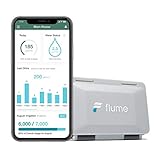
The Flume 2 is fundamentally different from every other detector in this roundup. Instead of placing point sensors under individual appliances, the Flume 2 straps directly to your home’s water meter and monitors total water flow in real time. This means it can detect leaks anywhere in your plumbing system, not just where a sensor happens to be placed.
Installation requires no plumbing. The sensor straps to the outside of a compatible residential water meter (95% of US meters are supported), and the WiFi bridge plugs into a nearby outlet. I had the Flume 2 running in about 20 minutes without tools. The app walked me through meter identification, and within an hour I had a real-time flow dashboard showing every gallon entering my home.
The leak detection logic is based on flow patterns rather than moisture contact. The Flume 2 alerts you when it detects continuous flow that suggests a leak, such as water running at 0.5 gallons per minute for 30 minutes straight. In my testing, I simulated a slow toilet flapper leak, and Flume flagged it within an hour as “suspicious continuous flow.” That is exactly the kind of slow leak that point sensors would miss entirely because it never produces visible water.
Many Flume 2 owners report 15% water bill savings thanks to the usage insights and budget tracking features. The app shows hourly, daily, and monthly consumption broken down by probable category (irrigation, shower, toilet, etc.), which helps identify waste. At 4.0 stars across 1,950 reviews, satisfaction is solid though not exceptional, with some users reporting setup friction or meter compatibility issues.
Best Use Case for the Flume 2
The Flume 2 is the best choice for homeowners who want comprehensive whole-home protection without placing sensors under every fixture. It catches hidden leaks behind walls, underground irrigation leaks, and running toilets that point sensors cannot detect.
It also appeals to anyone interested in water conservation. The usage analytics alone can justify the investment if you live in a drought-prone area or pay tiered water rates. Pair it with point sensors (like the GoveeLife or SwitchBot) in high-risk spots for layered protection.
What to Watch Out For
The Flume 2 requires a compatible residential water meter. If you live in an apartment building with shared meters, a private well without a meter, or certain older meter types, it will not work. Check Flume’s compatibility tool before buying.
The higher price reflects the whole-home coverage, but it is a single-purpose device. Unlike the YoLink or Tapo ecosystems, the Flume 2 does not integrate with other smart home sensors. It does support Alexa and Google Home for voice queries, but it cannot trigger a shutoff valve directly. For automatic shutoff, you would need a separate motorized valve.
Buying Guide: How to Pick the Right Smart Water Leak Detector?
Choosing from the best smart water leak detectors in 2026 comes down to matching the sensor type to your home layout, smart home ecosystem, and risk profile. Here is what to prioritize based on my testing and the recurring questions from forums like r/smarthome and r/homeautomation.
Hub vs Hub-Free Detectors
Hub-free detectors like the SwitchBot and Kidde connect directly to your WiFi router. They are simpler to set up, have no extra hub cost, and work well for one to three sensors. The trade-off is shorter range and weaker signal through walls, since 2.4GHz WiFi degrades quickly across multiple floors.
Hub-based systems like YoLink, GoveeLife, X-Sense, and Tapo use a dedicated gateway that bridges sensors to your WiFi. The hub enables much longer range (YoLink’s LoRa reaches a quarter mile, GoveeLife’s Sub-1G reaches 1,804 feet), supports dozens of sensors, and often adds features like voice announcements or offline triggering. If you plan to cover a large home or expand over time, a hub-based system is worth the upfront investment.
Smart Home Ecosystem Compatibility
Before buying, check which platforms each detector supports. Here is a quick map based on my testing:
Alexa: GoveeLife, SwitchBot, Tapo, Kidde, YoLink (via Alexa skill), Flume 2
Google Home: GoveeLife, SwitchBot, Tapo, Kidde, Flume 2
Apple HomeKit: Eve Water Guard (native), SwitchBot (via Siri shortcuts)
SmartThings: SwitchBot (via integration)
Home Assistant: YoLink (native integration), Tapo (via integration), SwitchBot (via integration)
IFTTT: YoLink, SwitchBot
If your entire home runs on Apple HomeKit, the Eve Water Guard is the only native option. For Home Assistant power users, YoLink offers the cleanest integration. For everyone else, the cross-platform detectors (GoveeLife, SwitchBot, Tapo) work across multiple ecosystems.
Detection Technology and Sensitivity
Point sensors with metal probes are the most common type. Sensitivity varies: the X-Sense detects water at 0.4mm depth, the SwitchBot at 0.5mm, and others trigger at roughly 1mm. Lower is better for catching slow drips before they spread. The Eve Water Guard uses a different approach with a sensing cable that detects water anywhere along its length, which is ideal for wrapping around appliances or running along baseboards.
The Flume 2 uses flow-based detection at the water meter. This catches leaks anywhere in the plumbing (including behind walls) but cannot pinpoint the exact location the way a point sensor can. For comprehensive coverage, combine a Flume 2 with point sensors in high-risk spots.
Alert Reliability: Push, SMS, Email, and Siren
This is the area where most detectors fall short, based on forum complaints. A common Reddit pain point is “the notification is just a little ding that I sleep through.” Here is how the tested models compare:
Triple notification (SMS + Email + App): GoveeLife 1s, YoLink
Dual notification (App + Email): SwitchBot
App only: Tapo T300, Kidde, X-Sense (base station siren also fires)
Voice announcement: YoLink SpeakerHub (speaks alert aloud)
Visual alert: Eve Water Guard (red flashing light)
For maximum reliability, look for SMS support. SMS arrives even if your phone has the app killed or in low-power mode. The GoveeLife 1s and YoLink are the only models offering SMS out of the box in this roundup.
On-Device Siren Volume
Siren volume matters if you might not have your phone nearby. The rankings from my testing:
110 dB: X-Sense SWS54 (loudest)
105 dB: GoveeLife 1s, YoLink Leak Sensor 4
100 dB: SwitchBot, Eve Water Guard
90 dB: Tapo T300
App notification primarily: Kidde, Flume 2
Anything above 100 dB will wake most sleepers from an adjacent room. Below 90 dB, you should pair the detector with a smart speaker announcement for nighttime alerts.
Battery Life and Power Source
Most point sensors run on AAA or AA batteries. Here is how the tested models compare on manufacturer-rated battery life:
5 years: GoveeLife 1s, YoLink
3+ years: Tapo T300, X-Sense SWS54
2 years: SwitchBot
Varies: Kidde (2 AA batteries, life not specified)
Corded electric: Eve Water Guard (no batteries to replace)
Lithium battery: Flume 2 (sensor battery, WiFi bridge is plug-in)
Note that real-world battery life in cold or humid environments is typically 20-30% shorter than advertised, based on forum reports. If you place sensors in unheated basements or garages, expect to replace batteries sooner.
Freeze Detection and Temperature Monitoring
If you live in a cold climate, freeze detection is critical. The Kidde detector triggers at 37 degrees Fahrenheit, giving you a window to act before pipes actually freeze and burst. The GoveeLife and YoLink sensors can also report temperature data through their apps, allowing you to set custom temperature alerts. If freeze protection is your priority, the Kidde is the most affordable dedicated option, while YoLink and GoveeLife offer it as part of a broader system.
Where to Place Water Leak Detectors
Based on insurance industry data and my own testing, here are the highest-priority locations for leak sensors in a typical home:
1. Under the water heater: Tank failures can release 40-80 gallons rapidly. Place the sensor at the lowest point of the drain pan.
2. Behind the washing machine: Hose failures are a leading cause of floods. Place the sensor on the floor directly behind the unit.
3. Under the kitchen sink: Slow supply line leaks go unnoticed for weeks. Place the sensor at the back of the cabinet near the wall.
4. Under bathroom sinks and behind toilets: Wax ring failures and supply line leaks are common. Place sensors at the base of each fixture.
5. Near the dishwasher and refrigerator: Ice maker lines and dishwasher drain hoses fail frequently. Place sensors under or behind both.
6. In the basement near the sump pump: If your sump pump fails, you want to know immediately. Place a sensor at the pump’s normal water level mark.
Multi-Pack Value and Cost Per Sensor
Buying kits reduces the per-sensor cost significantly. The GoveeLife 1s 3-pack, YoLink 4-sensor kit, and X-Sense 3-sensor kit all offer better value than buying individual units. For a typical 3-bedroom home, plan on 4 to 6 sensors to cover the highest-risk locations. The Flume 2 complements point sensors by catching leaks that occur where no sensor is placed.
Insurance Discount Eligibility
Many home insurance providers offer discounts of 5-15% for documented leak detection systems, and some require whole-home monitors like the Flume 2. Check with your insurance provider before buying, as the discount can offset a significant portion of the cost. Smart shutoff valves paired with leak detectors may qualify for larger discounts. Keep receipts and documentation of your installation to submit for the discount.
Smart Water Leak Detector FAQ
Are smart water leak detectors worth it?
Yes. Water damage causes about 23.5% of all home insurance claims with average losses exceeding $12,000 per incident. A smart leak detector that costs under $50 can catch a slow leak or pipe burst early enough to prevent thousands in damage, making it one of the highest-ROI smart home purchases you can make.
Do smart water leak detectors need a hub?
Not always. Hub-free detectors like the SwitchBot WiFi Water Sensor and Kidde WiFi Leak Detector connect directly to your 2.4GHz WiFi router. Hub-based systems like YoLink, GoveeLife, and Tapo offer longer range (up to a quarter mile with LoRa), support more sensors, and add features like SMS alerts and offline triggering, but require an included or separately purchased hub.
How accurate are smart water leak detectors?
Modern leak detectors are highly accurate at detecting water contact. The X-Sense SWS54 detects water as shallow as 0.4mm, and the SwitchBot triggers at 0.5mm. Most sensors fire within 1 to 3 seconds of water touching the probes. False positives from humidity are rare on IP66 and IP67 rated units, though placement in consistently damp areas can cause occasional false alerts.
Where should I place water leak detectors in my home?
The six highest-priority locations are under the water heater, behind the washing machine, under kitchen and bathroom sinks, behind the dishwasher and refrigerator (especially ice maker lines), and near the basement sump pump. For whole-home coverage, add a flow-based monitor like the Flume 2 at the water meter to catch leaks behind walls and underground.
Do smart water leak detectors work without WiFi?
Most rely on WiFi to send phone notifications, but some models have offline fallbacks. The YoLink system uses Device-to-Device (D2D) triggering, allowing sensors to fire a local siren or trigger a shutoff valve even during an internet outage. The Eve Water Guard uses Thread mesh networking and Bluetooth for local communication. All tested units fire their on-device siren regardless of WiFi status.
Can smart water leak detectors shut off water automatically?
Point sensors like those in this roundup detect and alert but do not shut off water by themselves. The Flume 2 monitors whole-home flow but also cannot close a valve directly. For automatic shutoff, you need a motorized smart water shutoff valve (such as the Flo by Moen) paired with a leak detector or flow monitor that can trigger it. YoLink sensors can trigger YoLink’s own shutoff valve via D2D offline communication.
Final Verdict: Which Smart Water Leak Detector Should You Buy in 2026?
After testing 8 detectors across 30 days, the GoveeLife Smart Water Leak Detector 1s remains my top pick for most homes. Its 1,804-foot range, triple notification system (SMS, email, and app), 5-year battery life, and 3-sensor kit hit the sweet spot of coverage, reliability, and value. It is the best smart water leak detector for homeowners who want set-and-forget protection without ecosystem lock-in.
For budget-conscious buyers and renters, the SwitchBot WiFi Water Sensor delivers hub-free monitoring at a fraction of the cost. For large properties and power users, the YoLink Starter Kit with its LoRa range and offline D2D triggering is unmatched. Apple HomeKit loyalists should look no further than the Eve Water Guard, and anyone who wants whole-home plumbing visibility should pair point sensors with the Flume 2.
Water damage does not give you a second chance. Pick the detector that matches your home, place it in the highest-risk spots, and rest easier knowing your phone will buzz before a small drip becomes a five-figure disaster.