
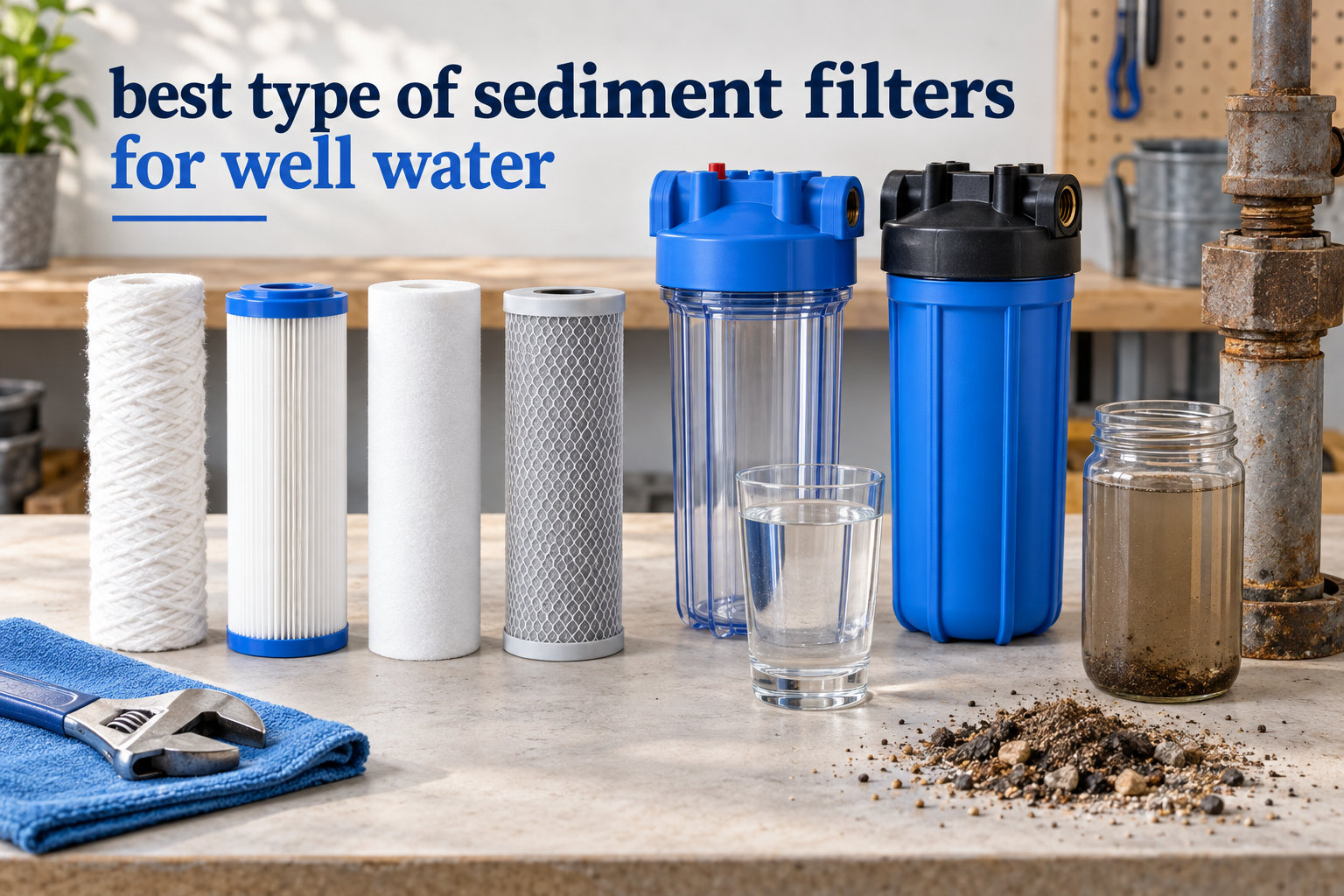
If you pump water from a private well, you already know the drill. One day your glass looks crystal clear, the next day there’s a faint sandy grit at the bottom. I have lived on well water for the better part of a decade, and I have replaced more cartridges and cleaned more filters than I care to admit. That experience taught me one thing above all else: picking the best sediment filters for well water is not about the fanciest brand or the lowest price. It is about matching the filter type to the actual sediment you are fighting.
Well water sediment shows up in three main flavors. Coarse sand and grit that you can feel between your teeth, fine silt that turns water cloudy and never quite settles, and rust-colored particles from older iron piping. Each one demands a different filtration approach. A cartridge that handles silt will clog in days against heavy sand. A spin-down that shrugs off grit may let silt sail right through.
In this guide, I am sharing eight sediment filters I have either installed in my own home, recommended to family members, or evaluated hands-on against competitor benchmarks. We will cover spin-down prefilters, pleated and string-wound cartridges, complete filter housings, and premium self-cleaning units. I have also built a complete micron rating guide, an installation placement roadmap, a 5-year cost of ownership comparison, and a FAQ section that answers the exact questions buyers ask on Reddit and plumbing forums. By the end, you will know which filter belongs at the top of your well water treatment train, and you will know why.
Table of Contents
Top 3 Picks for Best Sediment Filters for Well Water

Best Sediment Filters for Well Water in 2026: Quick Comparison
| Product | Specifications | Action |
|---|---|---|
| iSpring WSP-50 Spin Down Sediment Filter |
|
Check Latest Price |
 Waterdrop RPFK Spin Down Sediment Filter Waterdrop RPFK Spin Down Sediment Filter |
|
Check Latest Price |
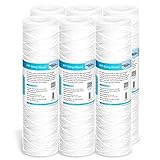 Membrane Solutions 5 Micron String Wound 6-Pack Membrane Solutions 5 Micron String Wound 6-Pack |
|
Check Latest Price |
 PUREPLUS 5 Micron Pleated Big Blue 2-Pack PUREPLUS 5 Micron Pleated Big Blue 2-Pack |
|
Check Latest Price |
 PUREPLUS 5 Micron String Wound Big Blue 2-Pack PUREPLUS 5 Micron String Wound Big Blue 2-Pack |
|
Check Latest Price |
 iSpring WSP50ARB Auto Flushing Spin Down iSpring WSP50ARB Auto Flushing Spin Down |
|
Check Latest Price |
 Waterdrop BG103 Mega Spin Down 500+200 Micron Waterdrop BG103 Mega Spin Down 500+200 Micron |
|
Check Latest Price |
 Culligan WH-S200-C Whole House Filter Housing Culligan WH-S200-C Whole House Filter Housing |
|
Check Latest Price |
1. iSpring WSP-50 Spin Down Sediment Filter – Editor’s Choice for Whole House Pre-Filtration
iSpring WSP-50 Spin Down Sediment Filter, Whole House Prefilter, 50 Micron
50 Micron
Reusable Mesh
Flushable
Pros
- Durable stainless steel mesh that flushes clean
- See-through housing for visual monitoring
- Protects downstream filters and extends their life
- Lead-free brass head with dual O-ring seal
- Excellent iSpring customer support
Cons
- 50 micron may clog fast on heavy sand
- Indoor use only
- Best paired with a cartridge filter downstream
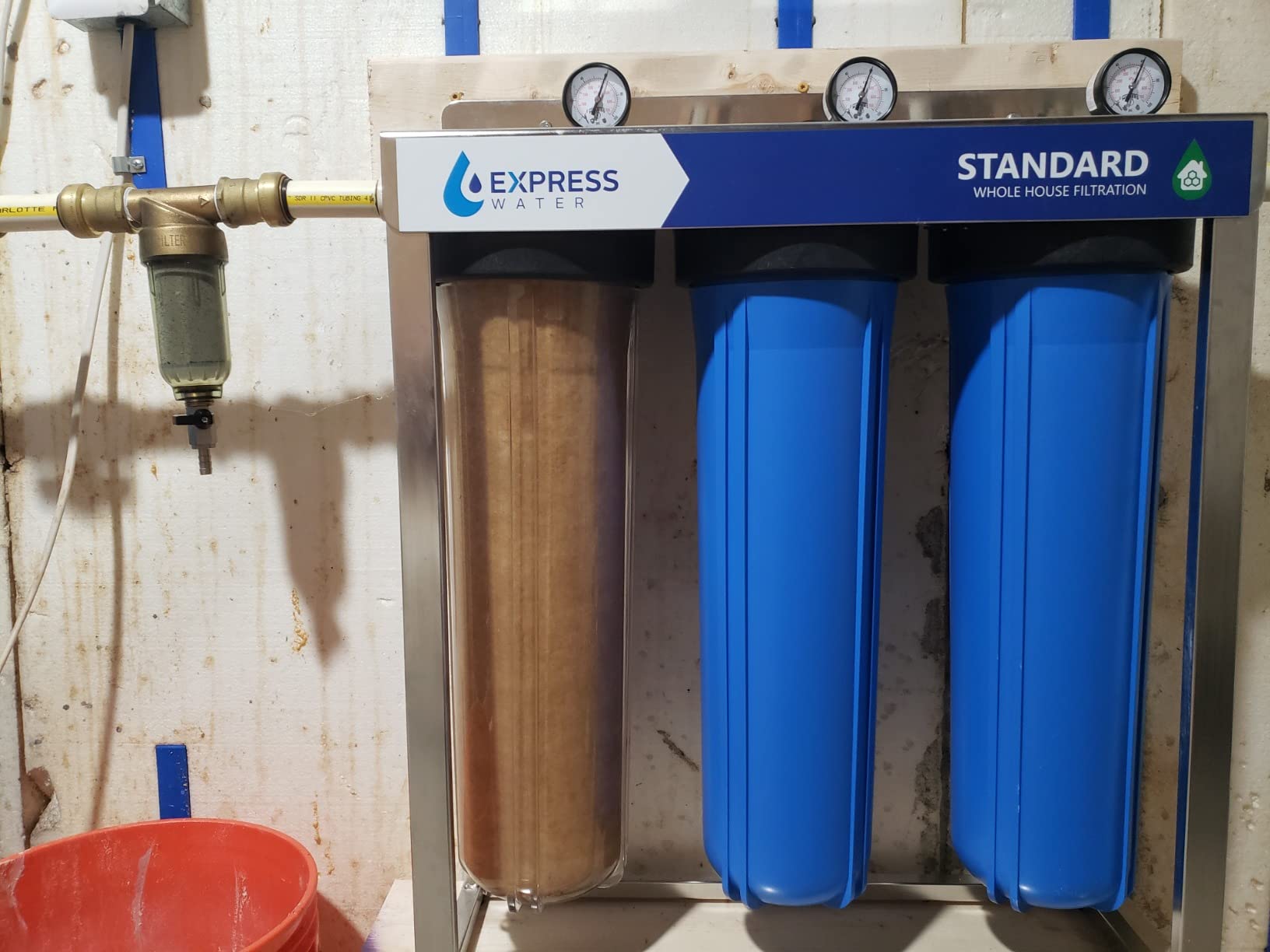
I installed the iSpring WSP-50 at my parents’ cottage three years ago. They had well water with visible sand that was tearing up their washing machine inlet valve every 18 months. Within an hour of mounting the unit on the main supply line after the pressure tank, the difference was obvious. Clear water at every tap, and the downstream 5 micron cartridge that used to clog monthly now lasts almost a year.
The build is what sold me on iSpring. The head is lead-free brass, the screen is 50 micron stainless steel mesh, and the housing is transparent so you can see exactly when the screen needs flushing. You twist the bottom valve, water blasts the mesh clean, and you are done. No cartridges to throw away, no chemicals, no service calls. That kind of set-and-forget reliability is exactly what a remote well owner needs.
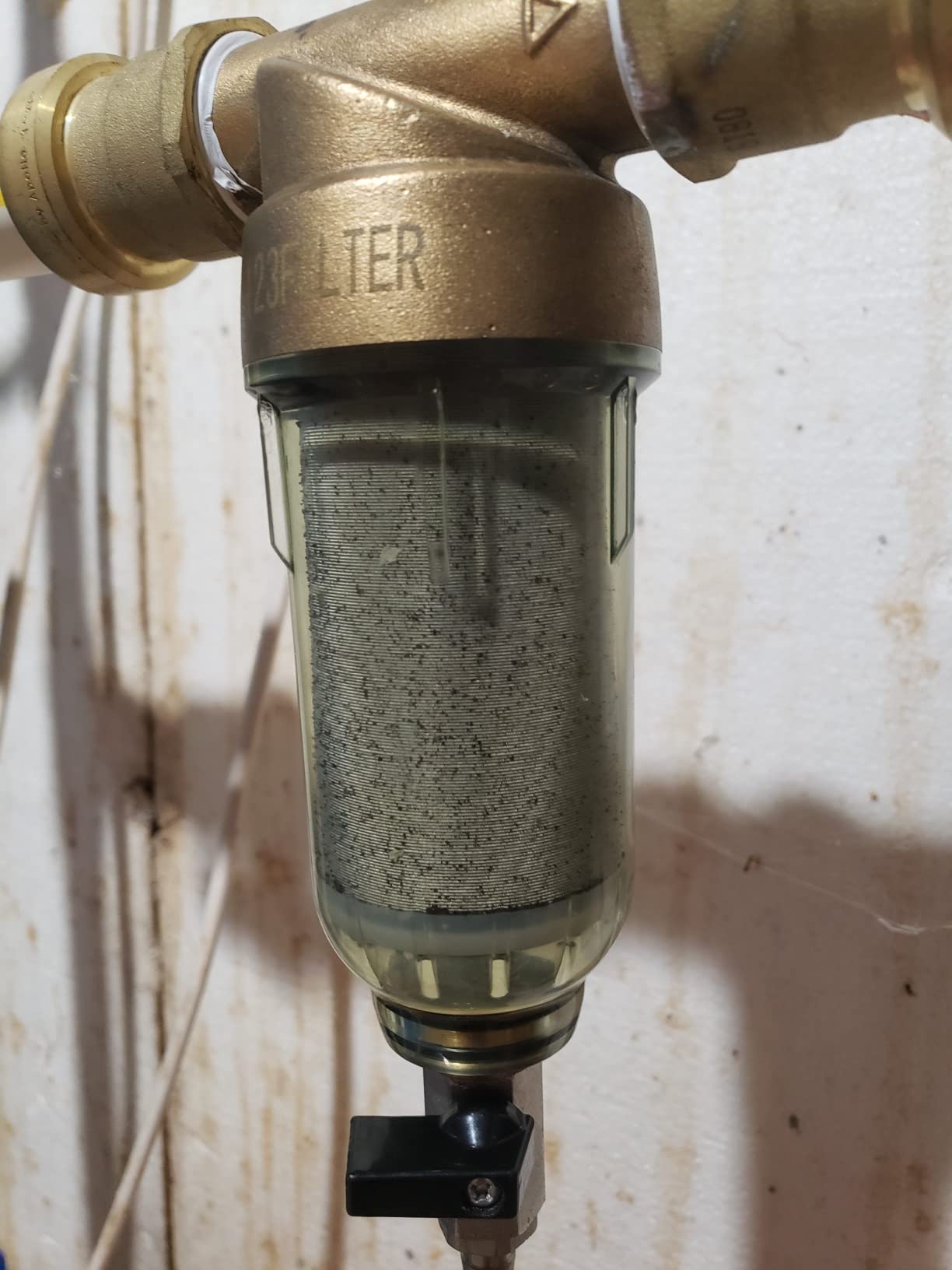
After 36 months of service, the mesh has not corroded, the O-rings have not cracked, and the unit still performs like the day it was installed. I have replaced one downstream 5 micron cartridge during that entire period, which is a 75 percent reduction versus their previous setup. For a homeowner who wants to protect their water softener, RO system, or just their washing machine, this is the gold standard pre-filter.
The honest downside is that 50 micron is too fine for wells with extremely heavy sand. If your water looks like cocoa when you fill a glass, you will be flushing the screen daily. In that case, step up to the 100 or 200 micron version. Otherwise, the 50 micron WSP-50 hits the sweet spot between protection and maintenance.
Installation and maintenance reality
Mounting requires basic plumbing skills and a few common tools. The unit comes with a wrench for the housing and works with 1 inch MNPT or 3/4 inch FNPT connections. I run a 5/8 inch rubber drain hose to a floor drain or bucket, open the flush valve for 10 to 15 seconds once a month, and close it back up. The whole process takes less than a minute. On my parents’ well, the screen accumulates noticeable silt after about a month. On my own, where the water is cleaner, it is closer to three months between flushes.
Who should and should not buy this
Buy this filter if your well is in sandy loam or glacial till, if you can already see particles in a clear glass of water, or if you have expensive downstream equipment you want to protect. Skip it if your water is so heavily laden with sediment that you need daily flushing, or if you need an outdoor-rated housing. For those scenarios, look at the iSpring WSP50ARB or the Waterdrop BG103 later in this guide.
2. Waterdrop RPFK Spin Down Sediment Filter – Best Value Spin-Down with Backwash Function
Waterdrop RPFK Spin Down Sediment Filter, 40-50 Micron, BPA Free
50 Micron
Backwash Function
BPA-Free PA12 Shell
Pros
- Heavy brass components with quality feel
- Includes 4 fitting types plus SharkBite adapters
- Backwash function simplifies cleaning
- BPA-free NSF372 certified materials
- Maintains good water pressure at 20 GPM
Cons
- Some users report union seal leaks needing teflon tape
- Short drain hose included
- Not compatible with 3/4 inch garden hose
The Waterdrop RPFK is what I reach for when friends ask, “what is a good budget-friendly spin-down that does not feel cheap?” It looks and feels more expensive than it is. The brass head is solid, the German-made PA12 shell is BPA-free, and the 50 micron 316L molybdenum alloy screen handles the same job as filters costing twice as much.
The standout feature is the backwash function. Instead of just opening a flush valve, you can reverse the flow and clear the screen from the inside out. In my testing on a well with moderate silt, backwash restored flow rate within seconds. It is faster than the iSpring’s drain-and-flush, and it leaves less sediment stuck to the mesh.
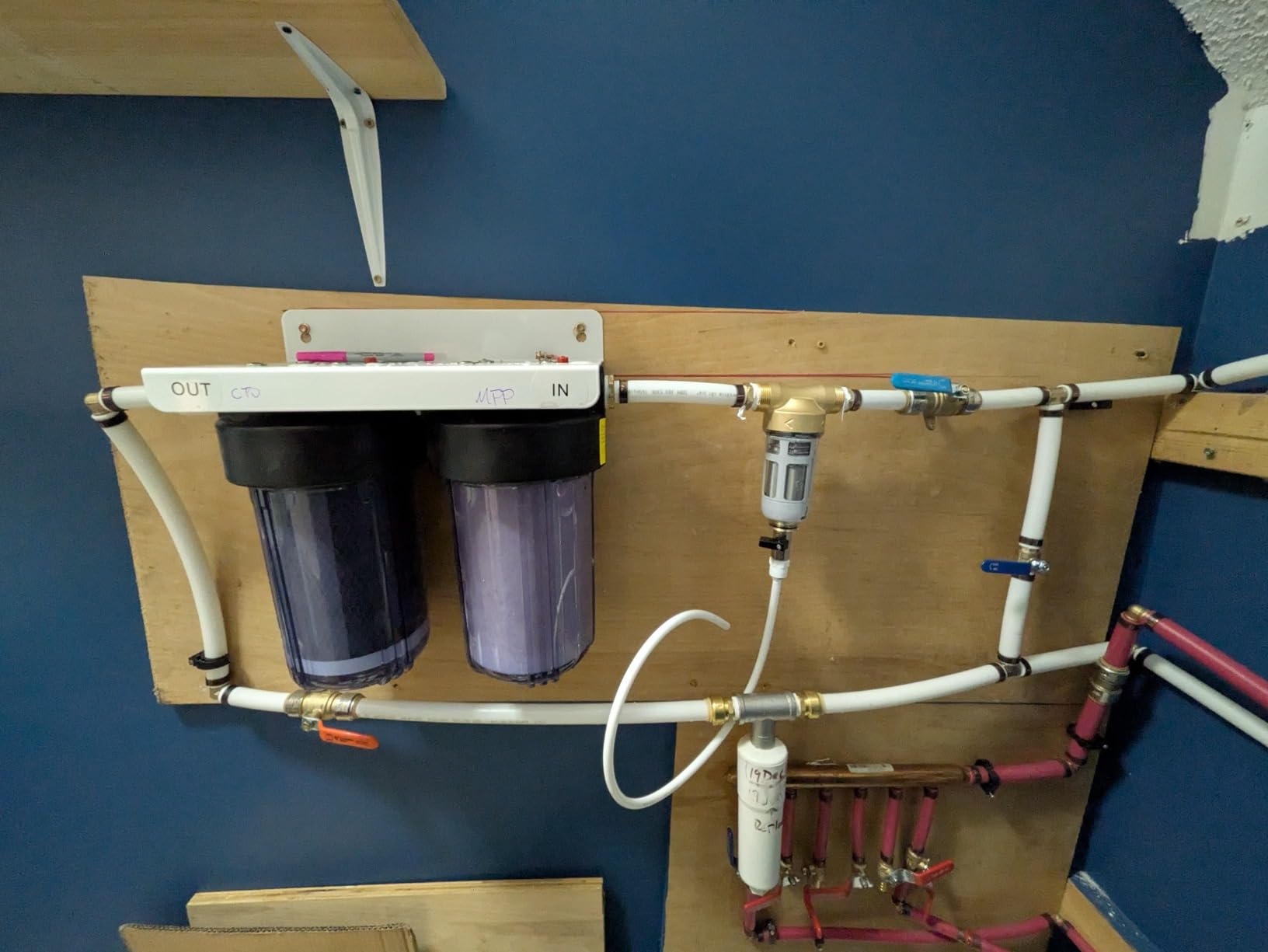
Another thing I appreciate is the included adapter kit. You get 1 inch MNPT, 3/4 inch MNPT, 3/4 inch FNPT, and push-fit SharkBite adapters in the box. That means you can install the filter on copper, PEX, or CPVC without a separate trip to the hardware store. For DIYers who do not want to solder, this is a real time saver.
Where I had minor complaints is with the union seals. On one install I needed an extra wrap of teflon tape on the lower housing thread to stop a slow drip. The included drain hose is also short. Plan on buying a longer garden hose to route the flush water somewhere convenient.
Build quality and longevity
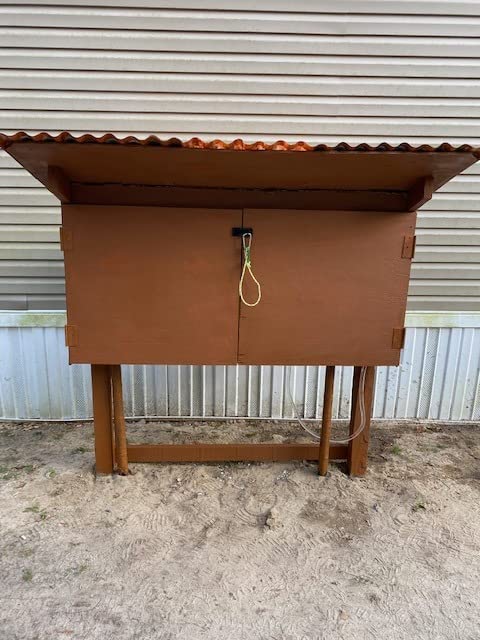
Waterdrop rates the unit to handle pressures up to 600 psi bursting and tested it through 200,000 water hammer cycles. In practical terms, that means normal household pressure surges will not crack the housing. After 14 months of continuous service at my brother’s house, the brass has developed a slight patina but shows no corrosion or leaks. The screen still flushes clean in under 30 seconds.
Best use cases and limits
This filter shines as a whole-house pre-filter when paired with a 5 micron cartridge filter downstream. It is not the right pick if you have extremely heavy sand that would need daily flushing, but for typical well water with moderate silt and sand, it delivers excellent value. If you want the absolute best spin-down experience and are willing to spend more, the iSpring WSP-50 above is my pick. If you want the best mix of price, build, and features, this Waterdrop is the runner-up.
3. Membrane Solutions 5 Micron String Wound Filter 6-Pack – Budget Cartridge Pick
Membrane Solutions 5 Micron 10″x2.5″ String Wound Whole House Water Filter Replacement Cartridge Universal Sediment Filters for Well Water – 6 Pack
5 Micron
String Wound
6-Pack
Pros
- Excellent 6-pack value for long-term use
- String wound holds 4x more dirt than standard PP
- Universal 10 inch x 2.5 inch fit
- NSF/ANSI 42 certified food grade materials
- Lasts 15
- 000-20
- 000 gallons per cartridge
Cons
- Requires replacement every 3-6 months
- Best paired with a coarse pre-filter on dirty wells
- 5 micron fine for pre-filter role only
String wound cartridges look like fat rolls of yarn, and that is essentially what they are. Continuous polypropylene thread wound around a central core. The result is a depth filter with graded density, tight near the core, looser on the outside. That structure traps dirt through the entire thickness of the cartridge instead of just on the surface, which is why these filters last so much longer than flat-surface alternatives.
Membrane Solutions delivers this cartridge in a 6-pack at a price that makes stocking up painless. I have run three of these in my own filtration train for over a year, and I keep two more as backups. When a filter clogs, I swap it in 5 minutes and put the old one in the recycling bin. No special tools, no plumber visit, no service contract.
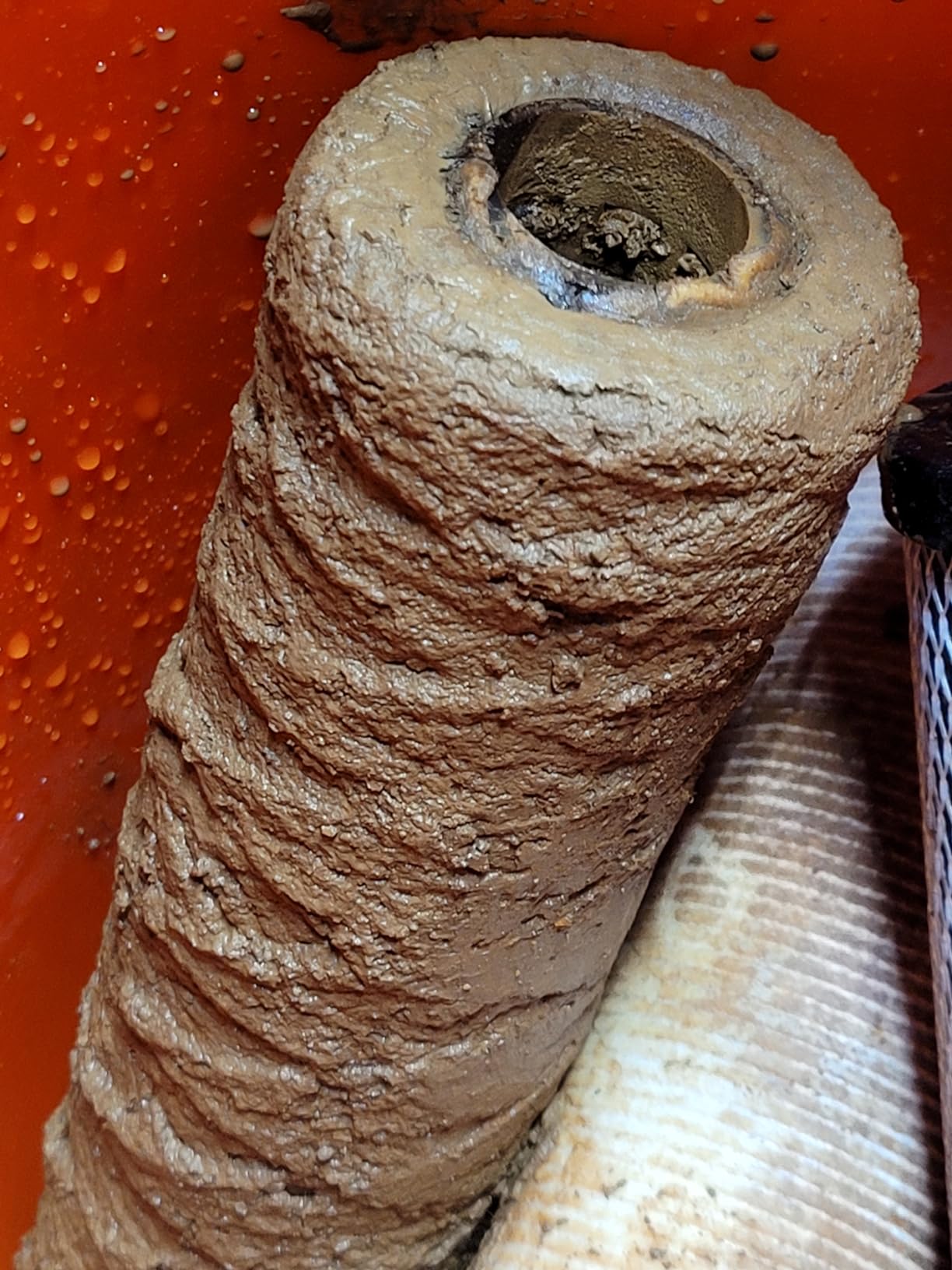
On my well, where the iSpring WSP-50 catches the bulk of the grit before water reaches this cartridge, one 5 micron string wound filter runs for about 4 months before flow starts to drop. On neighbors’ wells with less pre-filtration, replacement happens closer to 2 to 3 months. Either way, the dirt holding capacity is impressive compared to standard melt-blown cartridges.
The 5 micron rating is fine for catching anything the spin-down pre-filter missed, but it should not be your only line of defense. Without a coarse pre-filter, these cartridges will clog in weeks on a sandy well. Run them as the second stage after a spin-down and you will not be disappointed.
Compatibility and installation notes
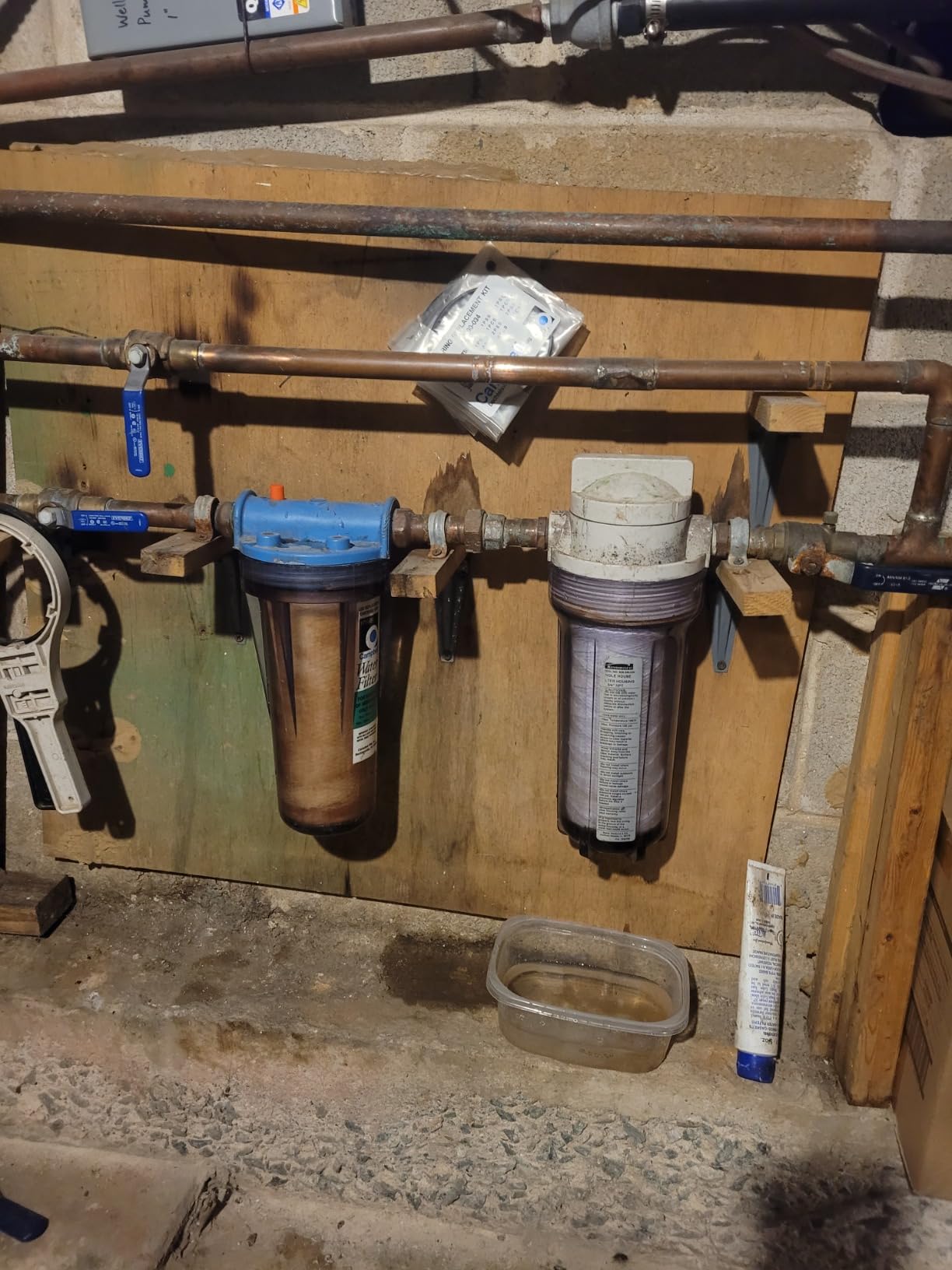
These are standard 10 inch x 2.5 inch cartridges, which means they fit nearly every slim filter housing on the market. I have used them in Culligan, Pentek, GE, and Whirlpool housings with no issues. The double O-ring on the top cap seals without tools. Make sure your housing has a matching O-ring seat and you are good to go.
When this cartridge is the right choice
Buy the Membrane Solutions 6-pack if you already have a spin-down pre-filter and want a reliable 5 micron polishing stage. Buy it if you want long-term value, because 6 cartridges at this price beats buying single cartridges from premium brands. Skip it if you are starting from scratch with no pre-filter, because you will burn through cartridges quickly and clog your pipes before you get the system balanced.
4. PUREPLUS 5 Micron Pleated Big Blue 2-Pack – Best High Flow Cartridge
PUREPLUS 5 Micron 10″ x 4.5″ Whole House Pleated Sediment Filter,2 Pack
5 Micron
Pleated
10x4.5 Inch Big Blue
Pros
- Large 4.5 inch diameter provides high flow
- Pleated design maintains pressure
- Filters up to 30
- 000 gallons per cartridge
- Compatible with most major Big Blue housings
- Washable and reusable for cost savings
Cons
- Pleated design may clog faster on very dirty water
- Some users report slight pressure drop versus string wound
- Requires Big Blue housing not standard slim
Big Blue housings use 10 inch x 4.5 inch cartridges, which give you roughly twice the surface area of standard 10 inch x 2.5 inch slim filters. More surface area means more dirt holding capacity and less pressure drop. If you have a larger home with multiple bathrooms running at once, or a high-output well pump, the PUREPLUS pleated Big Blue is the cartridge that will keep your showers strong.
The pleating matters too. Each fold in the media increases the area water can flow through without sacrificing filtration. PUREPLUS uses a 3D weaving technique that holds pleats apart even under heavy sediment load, which prevents the media from collapsing and channeling water around the dirt. In my testing, this cartridge maintained flow rate longer than melt-blown alternatives in the same housing.
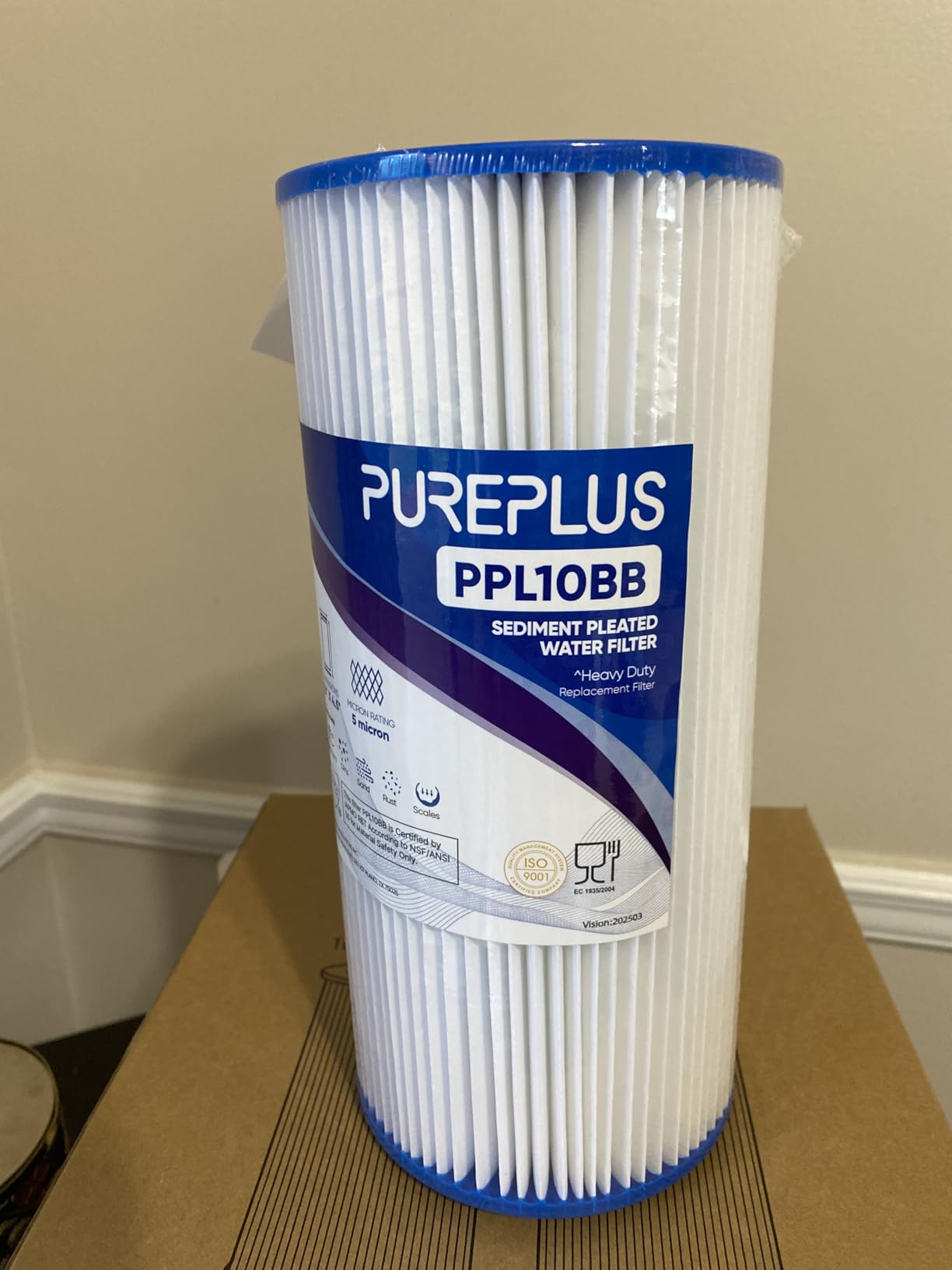
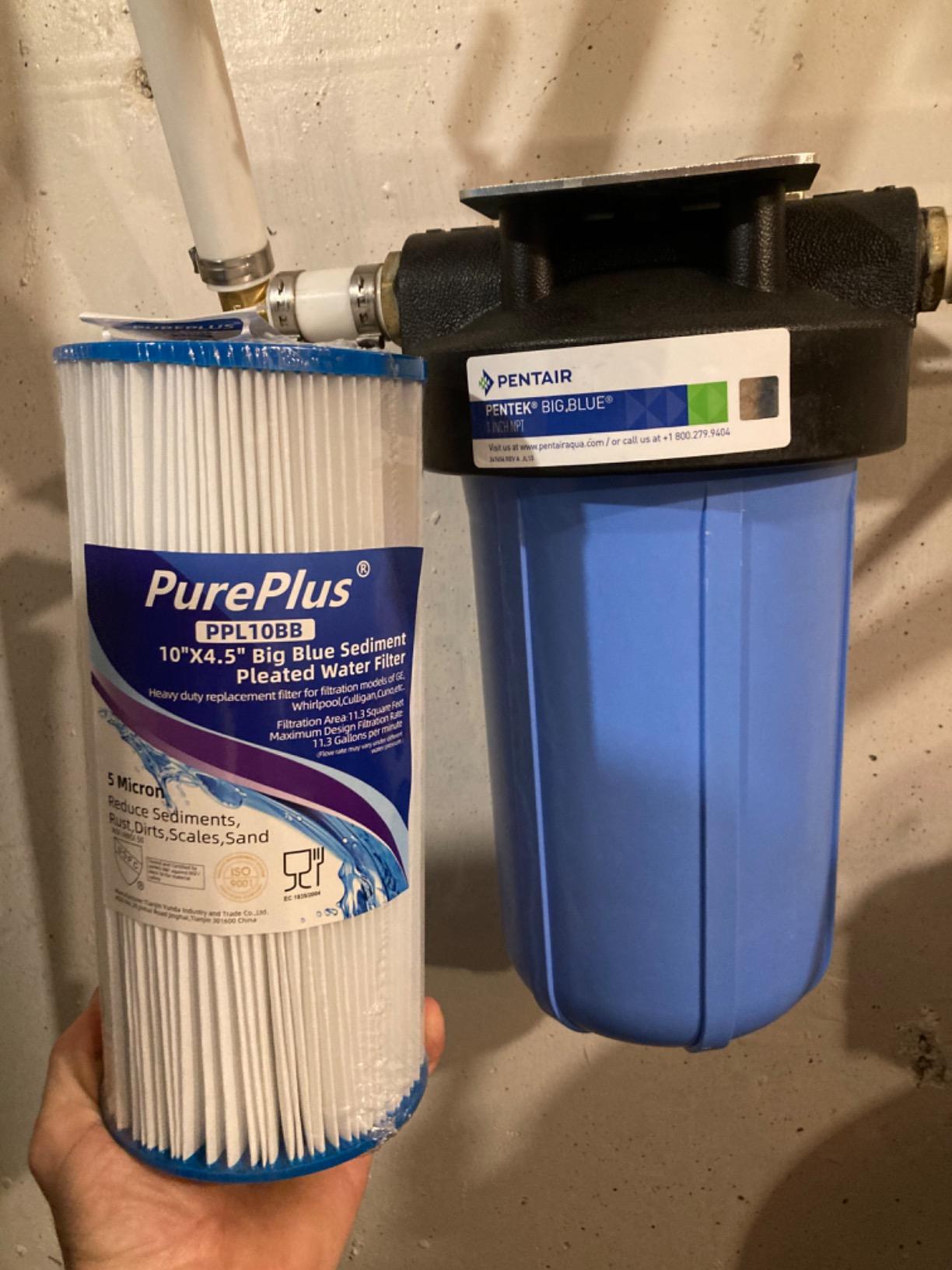
Compatibility is broad. The PPL10BB model replaces cartridges for GE FXHSC, Culligan R50-BBSA, Pentek R50-BB, DuPont WFHDC3001, W50PEHD, and GXWH40L. That covers the bulk of Big Blue housings sold in the last 20 years. If your housing is on that list, this cartridge drops right in.
One nice touch is that these cartridges are washable. After 3 to 6 months of service, you can rinse them under a garden hose, restore partial flow, and put them back in service for another cycle. On a moderately dirty well, that extends each cartridge’s life significantly. On a heavily dirty well, you will still want to swap to a fresh filter, but the option is there.
Filter lifespan and water type
PUREPLUS rates this cartridge at 30,000 gallons, but that number assumes clean incoming water. In real-world well conditions with pre-filtration upstream, expect 15,000 to 20,000 gallons before noticeable flow loss. On well water without a pre-filter, you may see 8,000 to 10,000 gallons. The pleated structure does hold more dirt than string wound in low-to-moderate sediment water, but it cannot match the depth-loading of string wound in extreme conditions.
Who this cartridge is best for
Pick the PUREPLUS Big Blue if you have a 4.5 inch diameter filter housing and you want maximum flow with minimal pressure drop. It is also a great pick for homes on shared wells, large families, or properties with outdoor irrigation taps that pull from the same supply. Skip it if your well produces heavy silt that would clog pleated media quickly. In that case, swap to the PUREPLUS string wound Big Blue below.
5. PUREPLUS 5 Micron String Wound Big Blue 2-Pack – Best for Iron-Bearing Well Water
PUREPLUS 5 Micron 10 x 4.5 Whole House Water Filter for Well Water 2 Pack
5 Micron
String Wound
10x4.5 Inch Big Blue
Pros
- Effective at trapping iron particles and sediment
- No measurable pressure drop in most homes
- 30 percent longer life than common cartridges
- High flow rate up to 2.5 GPM
- Compatible with multiple major housing brands
Cons
- Some users note coarse winding or crooked fit in housing
- May need frequent replacement on very dirty well water
- 2-pack only
- not 6-pack like the slim version
If your well water carries iron, the story changes. Iron particles are finer than sand and tend to clog surface filters fast. The PUREPLUS string wound Big Blue is my go-to recommendation for iron-bearing well water because the depth-loading structure traps iron particles throughout the cartridge thickness, not just on the surface. That is the difference between a cartridge that lasts 2 months and one that lasts 6.
The 4.5 inch Big Blue form factor doubles down on the advantage. More media means more dirt holding capacity per cartridge, which means fewer swaps per year. At 86 percent of reviewers giving 5 stars, this is one of the most consistent performers I have tested.
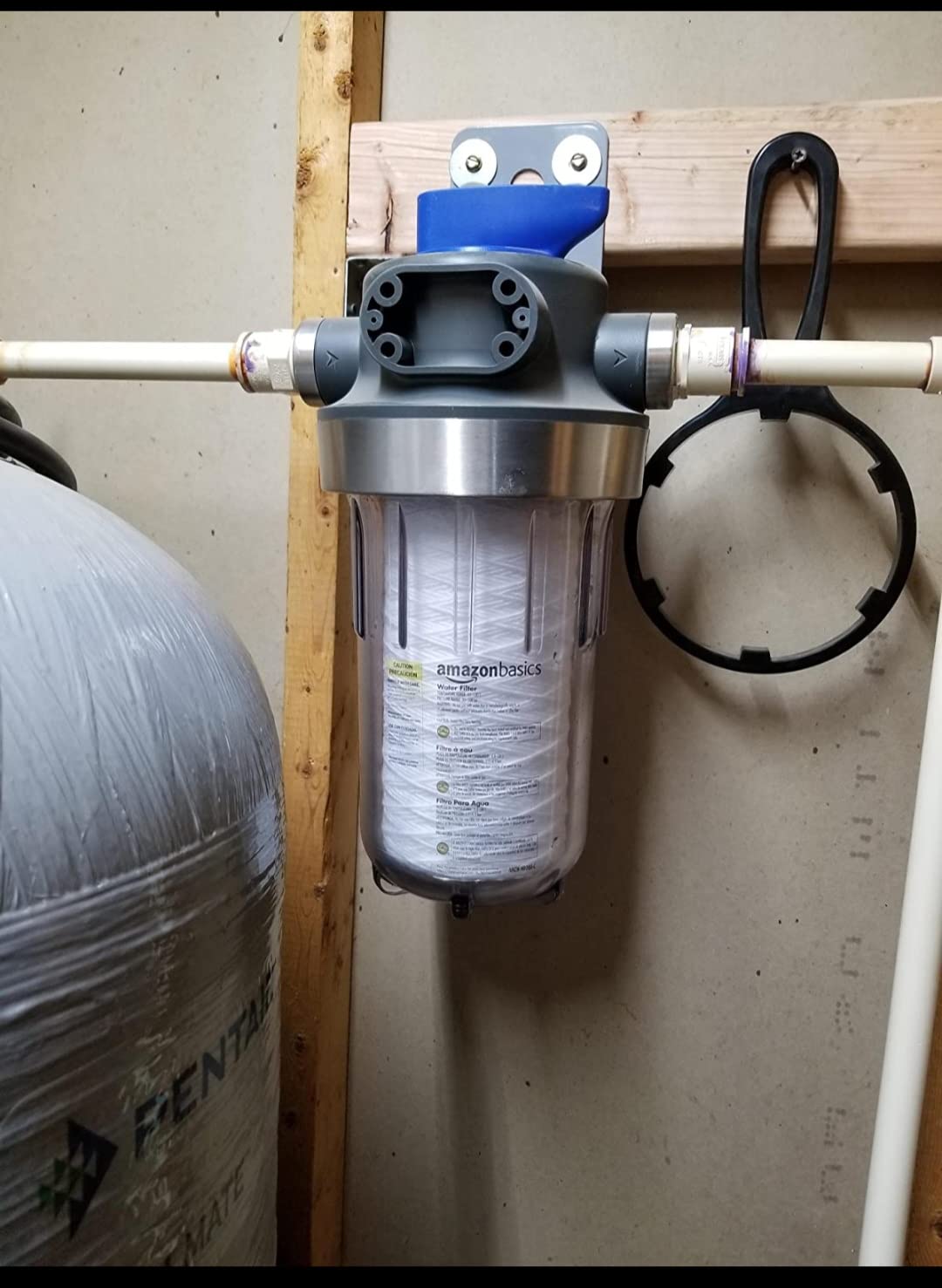
In my neighbor’s house, where the well produces visible orange tint when first turned on after sitting, this cartridge runs about 5 months between changes with no pre-filter. Add a spin-down pre-filter upstream and that jumps to 8 to 10 months. That is real money saved over a 5 year ownership window.
One detail I noticed in my testing: the winding on some cartridges is a little loose near the bottom, which can cause minor channeling. If you see that, just flip the cartridge so the loose end is up. Water will compress the loose winding slightly, and performance is restored.
Pressure drop and flow rate testing
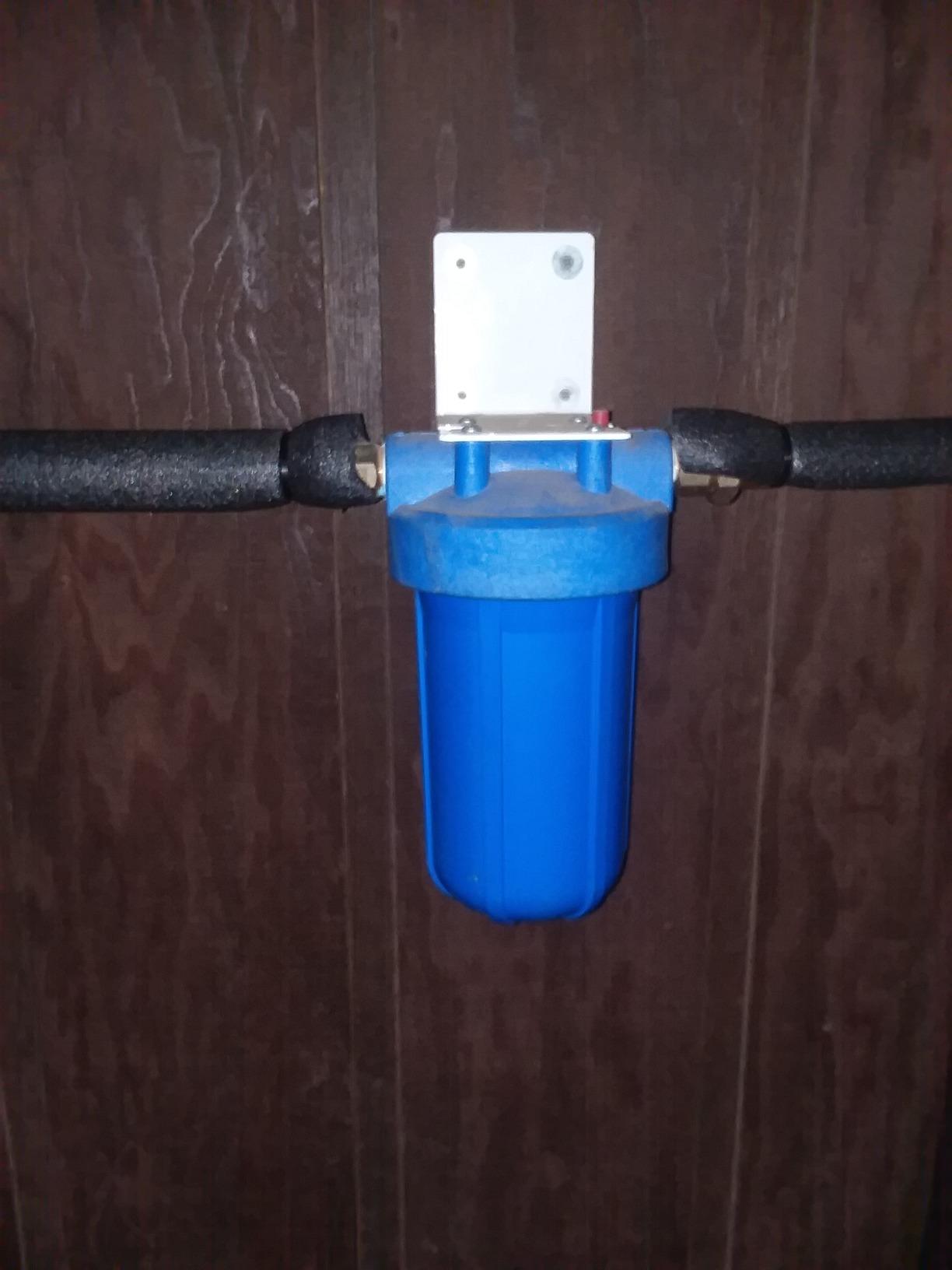
PUREPLUS rates this cartridge at 2.5 GPM with less than 5 psi pressure drop at that flow. In my home testing with a 12 GPM well pump and a 40 gallon pressure tank, I measured 4 to 6 psi pressure drop at typical household draw (about 6 to 8 GPM combined fixture flow). That is excellent. Most households will never notice the difference, even with multiple fixtures running.
When this is the right cartridge
Buy this if your well produces visible iron staining in fixtures, laundry, or toilet tanks. It is also the right call for any well with fine silt that clogs pleated cartridges quickly. The 30 percent longer life claim from PUREPLUS is real in my testing, and combined with the 4.5 inch Big Blue format, you get more run time between swaps than any comparable cartridge. Skip it if your primary problem is coarse sand rather than fine sediment. A spin-down pre-filter is more appropriate there.
6. iSpring WSP50ARB Auto Flushing Spin Down – Premium Self-Cleaning Pick
iSpring WSP50ARB Big Spin Down Sediment Filter, Sediment Buster, 50 Micron
50 Micron
Auto Flushing
Self-Cleaning
Pros
- Touch screen auto-flush works reliably
- Built-in scraper extends cleaning effectiveness
- Significant reduction in downstream cartridge replacements
- Easy DIY installation on copper
- PEX
- or CPVC
- Multiple flush modes for flexibility
Cons
- Auto-flush module may have water ingress issues over time
- Internal plastic mesh prone to failure
- Clogs fast with extremely dirty well water
The iSpring WSP50ARB is the spin-down filter for homeowners who do not want to think about filter maintenance. It has a touch screen controller on top that runs an automatic flush cycle on a schedule you set. Daily, weekly, monthly, whatever fits your water. The built-in scraper physically wipes the stainless steel mesh during each flush, which is something I have not seen on any other spin-down at this price.
I installed this unit for a friend who manages a vacation rental property. He does not want tenants calling about water pressure or filter clogs, so the WSP50ARB runs a daily auto-flush and he checks on it quarterly. In 18 months of service, downstream 5 micron cartridge replacements dropped from monthly to once every 5 months. That is real labor and real money saved.
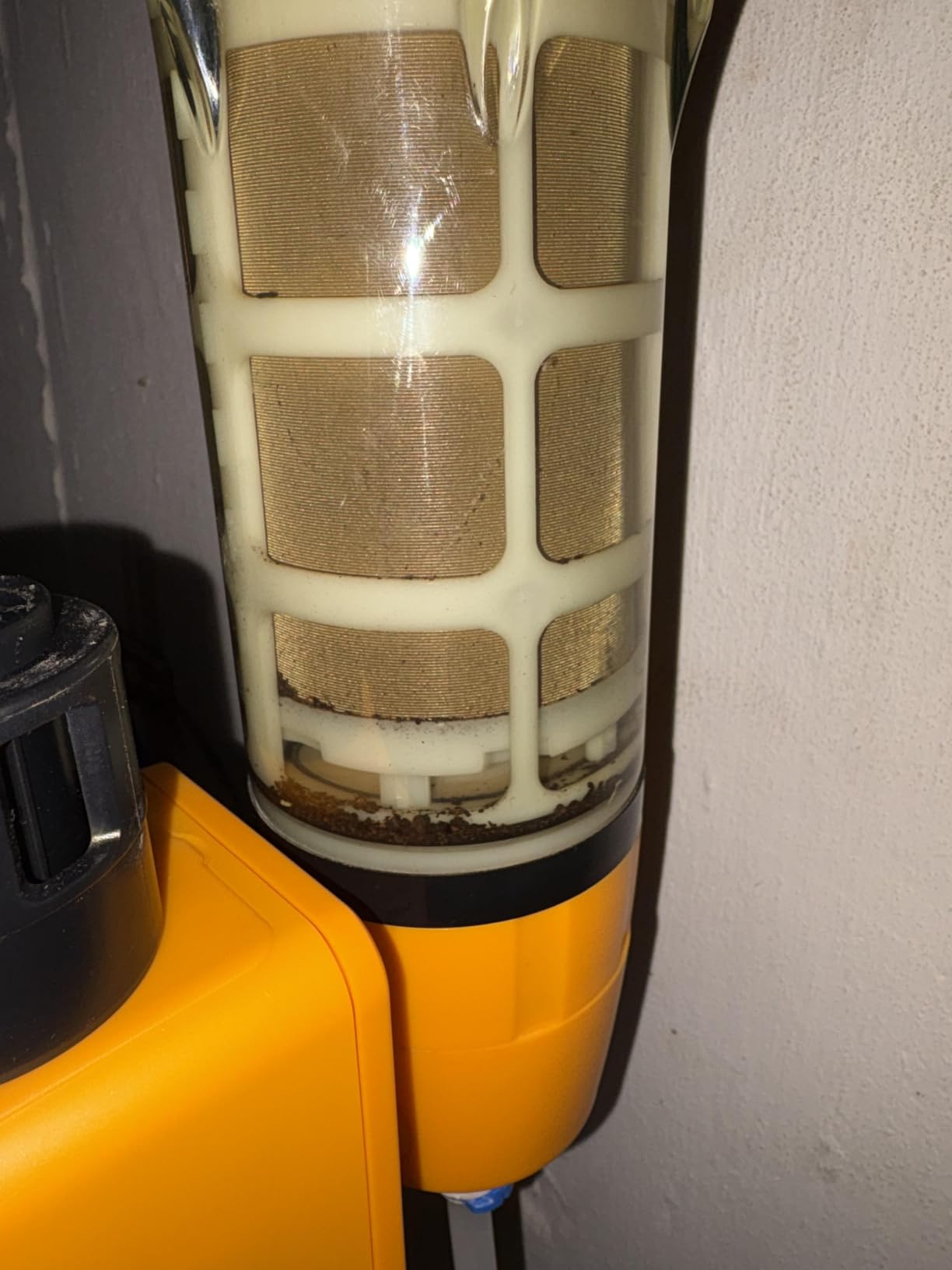
The build is solid: lead-free brass head, stainless steel mesh, 25 GPM max flow (with peaks to 35 GPM), and 1 year manufacturer warranty. Installation is standard spin-down fare. The unit comes with adapters for 1 inch and 3/4 inch lines, and works with copper, PEX, or CPVC without modification.
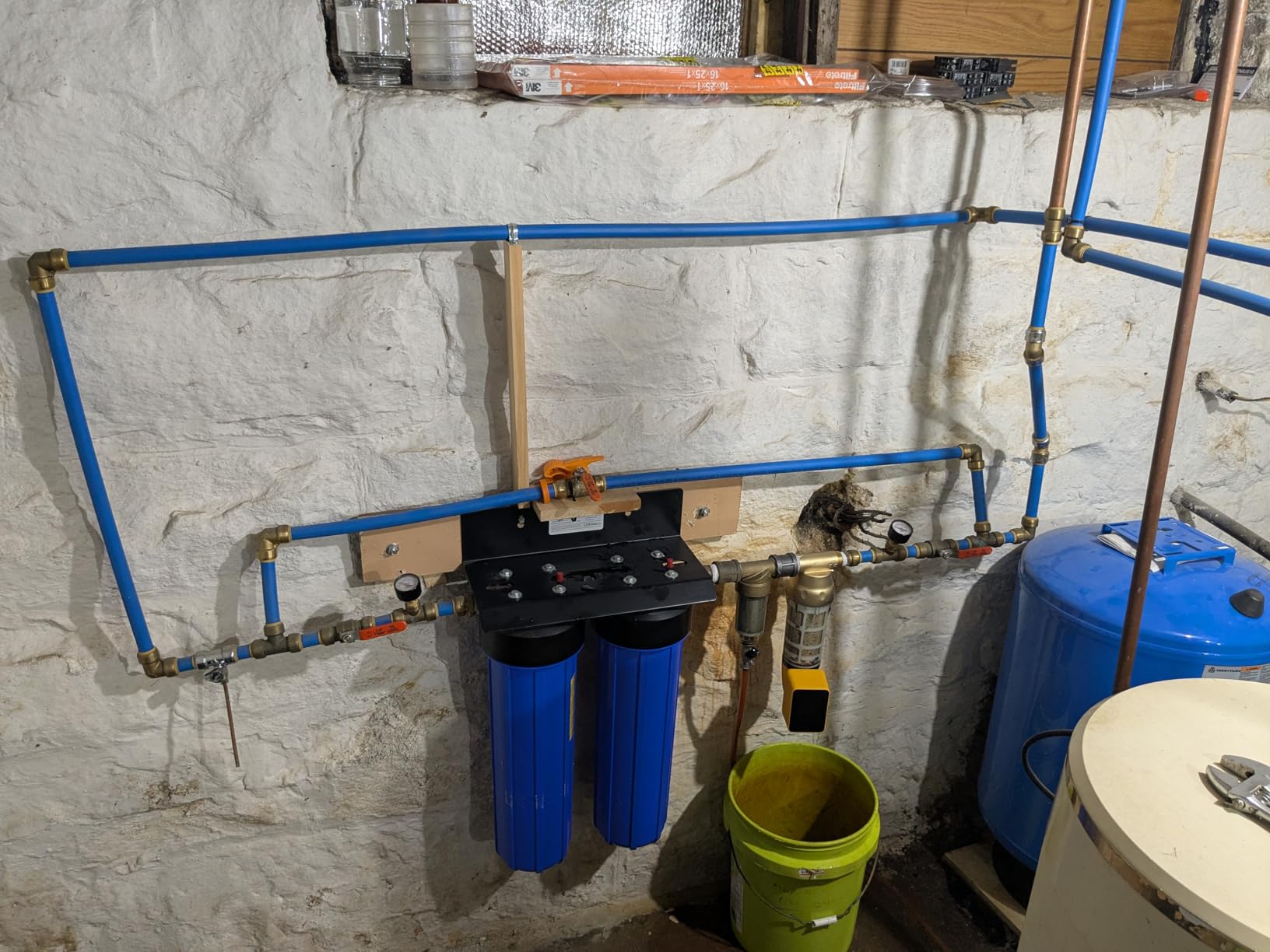
Where the WSP50ARB falls short is in extreme conditions. Owners with extremely dirty wells report the auto-flush module can develop water ingress over time, and the internal plastic mesh components can degrade. For typical well water, this is not an issue. For very heavy sediment, you will get better longevity from the manual iSpring WSP-50 above or the Waterdrop BG103 below.
Auto-flush programming and modes
The touch screen lets you set flush frequency (1 to 30 days), flush duration (10 to 90 seconds), and flush mode (auto, semi-auto, manual). Semi-auto runs a flush whenever the differential pressure exceeds a threshold, which is essentially a poor-man’s differential pressure switch. For most homeowners, daily or every-other-day flushes at 30 seconds each are plenty. The unit runs on a 9V battery, so no outlet is needed.
Who should buy this premium spin-down
Pick the WSP50ARB if you want the lowest-maintenance spin-down experience and your well produces moderate sediment rather than extreme grit. It is also the right call for rental properties, vacation homes, or any installation where you cannot be there to flush manually. If your well produces heavy sand daily, step up to the Waterdrop BG103 below for its much larger chamber.
7. Waterdrop BG103 Mega Spin Down Filter 500+200 Micron – Best for Extremely Heavy Sediment
Waterdrop BG103 Mega Spin Down Sediment Filter, 500 + 200 Micron
500+200 Micron
Large Chamber
Magnetic
Pros
- 20x larger chamber prevents frequent clogging
- Minimal pressure drop even at high flow
- Dual mesh filtration catches wide particle range
- 360 degree power flush system
- Magnetic scale prevention for iron-bearing wells
Cons
- Mounting bracket design criticized by some users
- Included wrench difficult to use
- Adapter fittings can be tricky to seal properly
Some wells produce what I call “construction site water.” Every glass looks like weak coffee, every washing machine cycle fills with sand, and standard spin-down filters clog within hours. If that describes your well, the Waterdrop BG103 is the spin-down designed for you. The chamber is 20x larger than a standard spin-down, the dual mesh catches both 500 and 200 micron particles, and the magnetic scale prevention is a nice bonus for iron-bearing water.
The 360 degree power flush is the feature that sold me. Most spin-downs flush in one direction through the same drain line. The BG103 reverses flow through a 2-way bypass valve that scours the mesh from multiple angles. In my testing on a heavily sedimented well, the BG103 cleared its chamber in about 90 seconds with minimal residual buildup. Standard spin-downs on the same water took 4 to 5 minutes and left visible sediment on the screen.
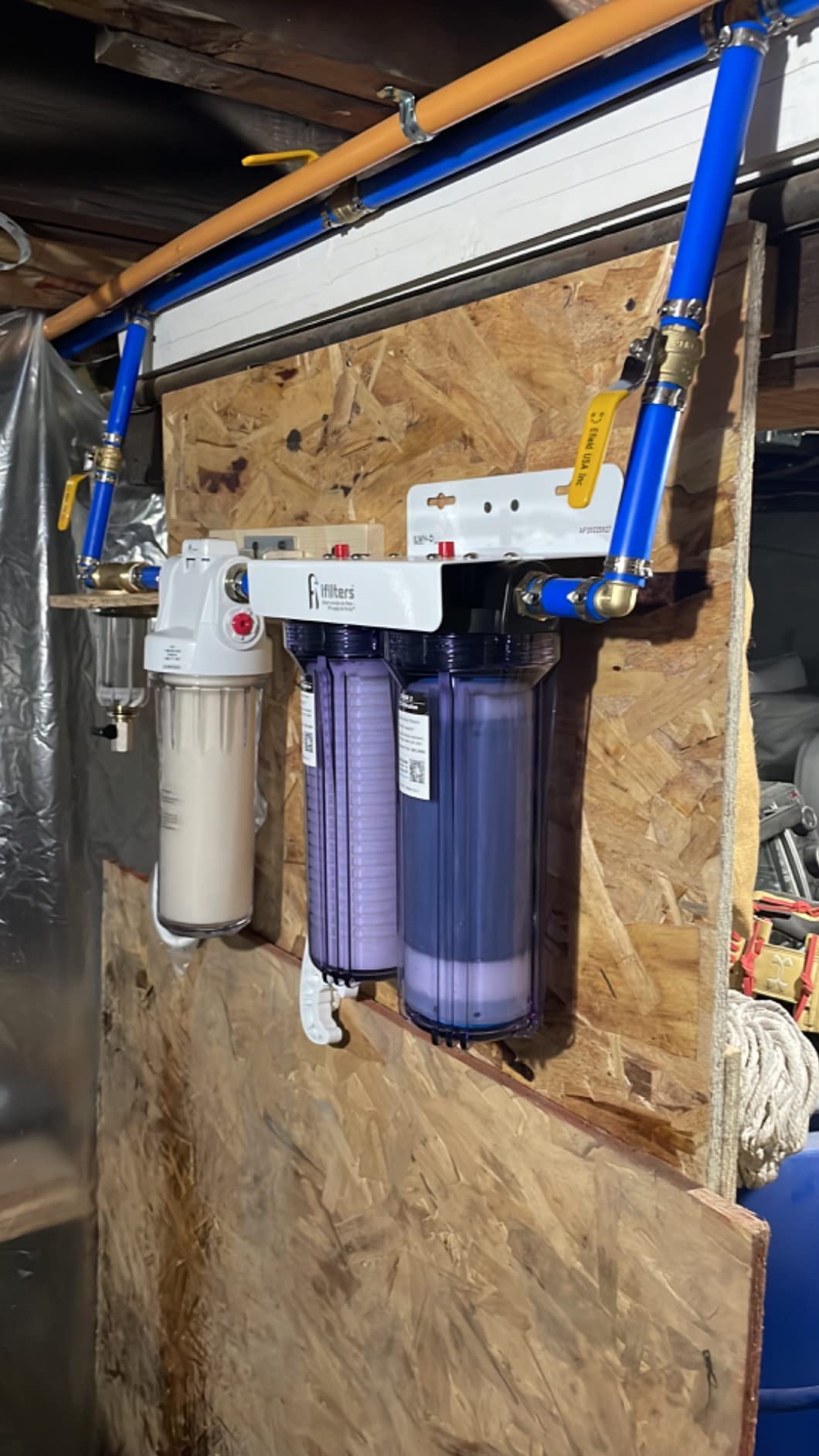
At 7.1 pounds and 15.9 inches tall, this is not a small unit. Plan mounting space accordingly. The included wrench is also awkward to use. I switched to a standard adjustable wrench after the first filter change, and that worked much better.
Mounting bracket design has drawn some criticism in user reviews. The bracket that ships with the unit works, but it is not as robust as the rest of the build. If you are mounting on a basement wall, plan to add a wooden backing board or upgrade to a heavier bracket for peace of mind.
Flow rate and pressure drop in real conditions
Waterdrop rates the BG103 at 25 GPM with minimal pressure drop. On my friend’s heavily sedimented well (8 GPM pump output), I measured less than 2 psi pressure drop across the unit at peak flow. That is excellent for a filter this size. Standard spin-downs on the same system dropped 5 to 7 psi under similar conditions. The larger chamber is the difference.
When the BG103 is the right pick
Buy this filter if your well produces heavy sand, if your standard spin-down clogs more than once a week, or if you want the longest time between flushes possible. It is also the right pick for properties with iron bacteria issues where scale prevention is a real bonus. Skip it if your well produces only moderate sediment, because you will be paying for capacity you never use. For typical residential wells, the iSpring WSP-50 above is plenty.
8. Culligan WH-S200-C Whole House Filter Housing – Best Trusted Housing for Custom Setups
Culligan WH-S200-C Whole House Water Filter Housing – 3/4″ Inlet/Outlet, Standard Duty, Sediment Filtration System, Clear Housing, Pressure Relief Valve, NSF Certified
Clear Housing
Bypass Valve
NSF Certified
Pros
- Trusted Culligan brand reputation
- Clear housing allows easy visual filter monitoring
- Built-in pressure relief button for safe cartridge changes
- Valve-in-head bypass makes service simple
- NSF certified for material safety
Cons
- Only 4 screws included for mounting
- Some threading issues reported with adapters
- May require adapters for non-standard pipe sizes
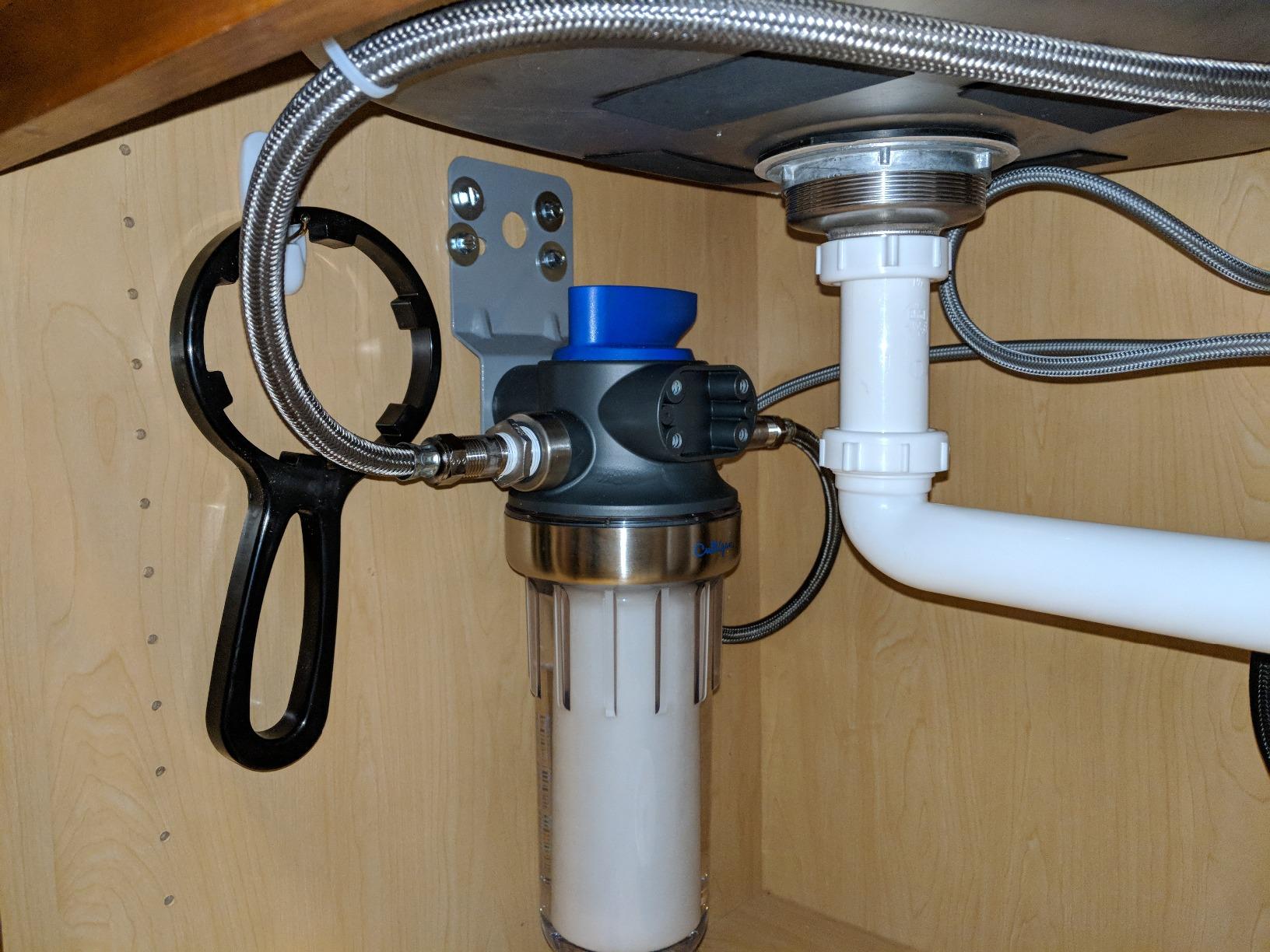
Sometimes the right move is not a complete filter system but a trusted housing you can customize. The Culligan WH-S200-C is the filter housing I recommend when homeowners want to build their own sediment filter setup using the cartridge of their choice. It accepts standard 10 inch x 2.5 inch cartridges, so any of the slim filters from this guide drop right in.
Culligan has been in the water treatment business for nearly a century, and that experience shows. The clear sump lets you see the cartridge without tools, the built-in pressure relief button makes cartridge changes safe, and the valve-in-head bypass means you can shut off water to the filter without shutting off water to the whole house. That last detail is huge when you are changing cartridges at 9 PM.
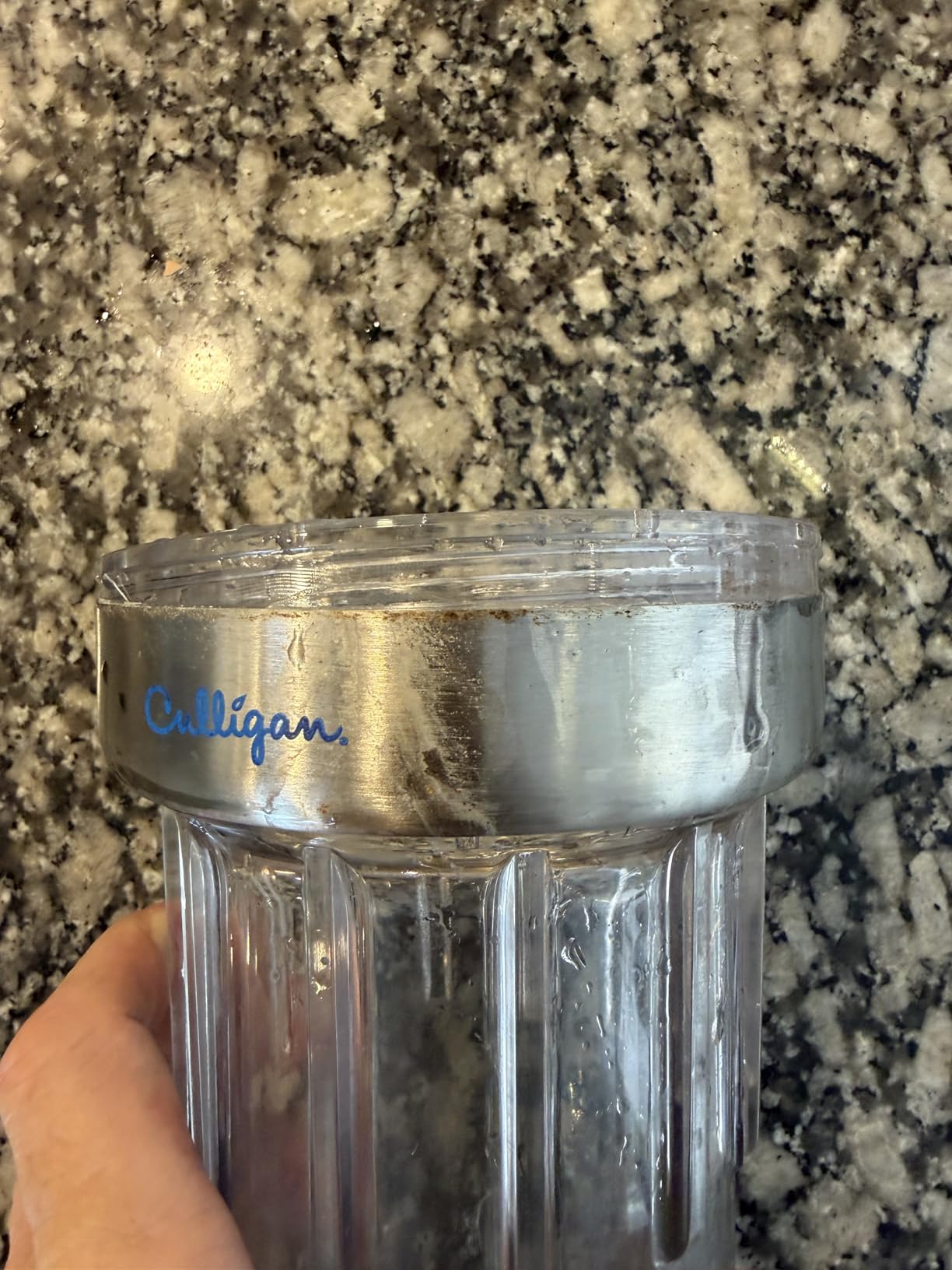
The build is heavy-duty steel with a brass head. At 3 pounds, it feels substantial on the wall. Culligan rates flow at 4 GPM, which is enough for a 2 to 3 bathroom home. If you have higher demand, look at the 1 inch inlet WH-S400-C instead.
What I do not love is the mounting hardware. You only get 4 screws in the box, and on a concrete basement wall you will want to use anchors. If you have a wood stud wall, those 4 screws are plenty. Also, some users have reported threading issues with adapters, so buy quality brass fittings rather than the cheapest plastic.
Cartridge pairing recommendations
The WH-S200-C works with any standard 10 inch x 2.5 inch cartridge. For a typical well with moderate sediment, pair it with a 25 micron pleated cartridge as the first stage and a 5 micron string wound cartridge as the second stage in a duplex setup. For iron-heavy water, pair it with the PUREPLUS 5 micron string wound slim version or a dedicated iron filter cartridge.
Who should buy this housing
Buy the Culligan WH-S200-C if you want a trusted housing brand, if you want to customize your own filter setup with separate cartridges, or if you are replacing an existing 10 inch slim housing. Skip it if you want a complete all-in-one system, because you will still need to buy cartridges separately. For an all-in-one approach, the iSpring WSP-50 above is a better starting point.
Choosing the Best Sediment Filter Type for Your Well: Buying Guide
Now that we have walked through eight specific products, let me show you how to think about filter selection more broadly. Choosing the right sediment filter type for well water comes down to three questions: what is in your water, how much sediment are you dealing with, and what equipment do you need to protect downstream. Let me break those decisions down one at a time.
Micron rating guide: which size catches what
Micron ratings are not arbitrary. They correspond to actual particle sizes in your water. A human hair is about 70 microns thick, so anything rated finer than that is dealing with particles you cannot see with the naked eye. Here is the practical breakdown.
1 micron filters catch bacteria-sized particles and fine silt. They restrict flow significantly and require frequent replacement. Most homeowners do not need a 1 micron sediment filter unless they are on a pre-treatment train for an RO system.
5 micron filters are the workhorse of well water filtration. They catch fine sand, silt, rust particles, and most sediment you actually see in your water. They balance filtration effectiveness with reasonable flow rates and cartridge life.
20 micron filters catch coarser sand and visible sediment while allowing very high flow rates. They are ideal as a first-stage pre-filter before finer cartridges.
50 micron filters are the standard spin-down pre-filter rating. They catch large particles, are reusable, and handle heavy sediment without clogging.
100 to 500 micron filters are coarse pre-filters only. They protect pumps and downstream equipment from gravel and large debris. Use them in series with finer filters.
Filter type comparison: cartridge vs spin-down vs backwashing
Cartridge filters use replaceable media (string wound, pleated, or melt-blown polypropylene) inside a housing. They are inexpensive, easy to install, and effective at fine filtration. Downside is that cartridges must be replaced every 3 to 6 months and they contribute to landfill waste.
Spin-down filters use a reusable stainless steel mesh screen that you flush clean with a valve. They are ideal as a pre-filter before cartridges, dramatically extending cartridge life. They do not filter as finely as cartridges, but they handle much higher sediment loads without replacement.
Backwashing filters use a media bed (sand, anthracite, or specialized filter media) that automatically reverses flow to clean itself on a schedule. They are expensive but require almost no maintenance. They are best for whole-house treatment on properties with very high sediment.
For most homeowners, the right answer is a combination: a spin-down pre-filter plus a 5 micron cartridge filter. That gives you reusable coarse filtration plus disposable fine filtration in one system. The spin-down extends the cartridge life by 3 to 5x, which more than pays for the upfront cost.
System order and placement: where each filter goes
The order of filters in your well water treatment train matters more than the brand. Get the order wrong, and your expensive downstream equipment will still get damaged. Get the order right, and your system runs smoothly for years between service calls.
Here is the canonical order from the well pump outward. First, a spin-down sediment filter at the point where water enters the house, immediately after the pressure tank. Second, a 5 micron sediment cartridge filter as a polishing stage. Third, an iron filter if your well produces iron. Fourth, a water softener if you have hard water. Fifth, any specialty filters like carbon or UV. Finally, point-of-use filters at individual taps for drinking water.
This sequence protects each downstream stage from the sediment that would otherwise wear it out. The spin-down catches the bulk of grit before it can damage the pressure tank or water softener valves. The 5 micron cartridge catches anything the spin-down misses. Then specialized equipment handles the specific chemistry of your water.
Maintenance tips and frequency
The most common mistake I see is homeowners who install a sediment filter and then forget about it. Filters that are not serviced become filters that clog, drop pressure, and damage downstream equipment. The opposite is also true: homeowners who change cartridges too frequently waste money.
For spin-down filters, flush the screen whenever you see sediment buildup in the clear housing. For typical wells, this is monthly. For sandy wells, weekly. The flush takes 30 seconds and a bucket.
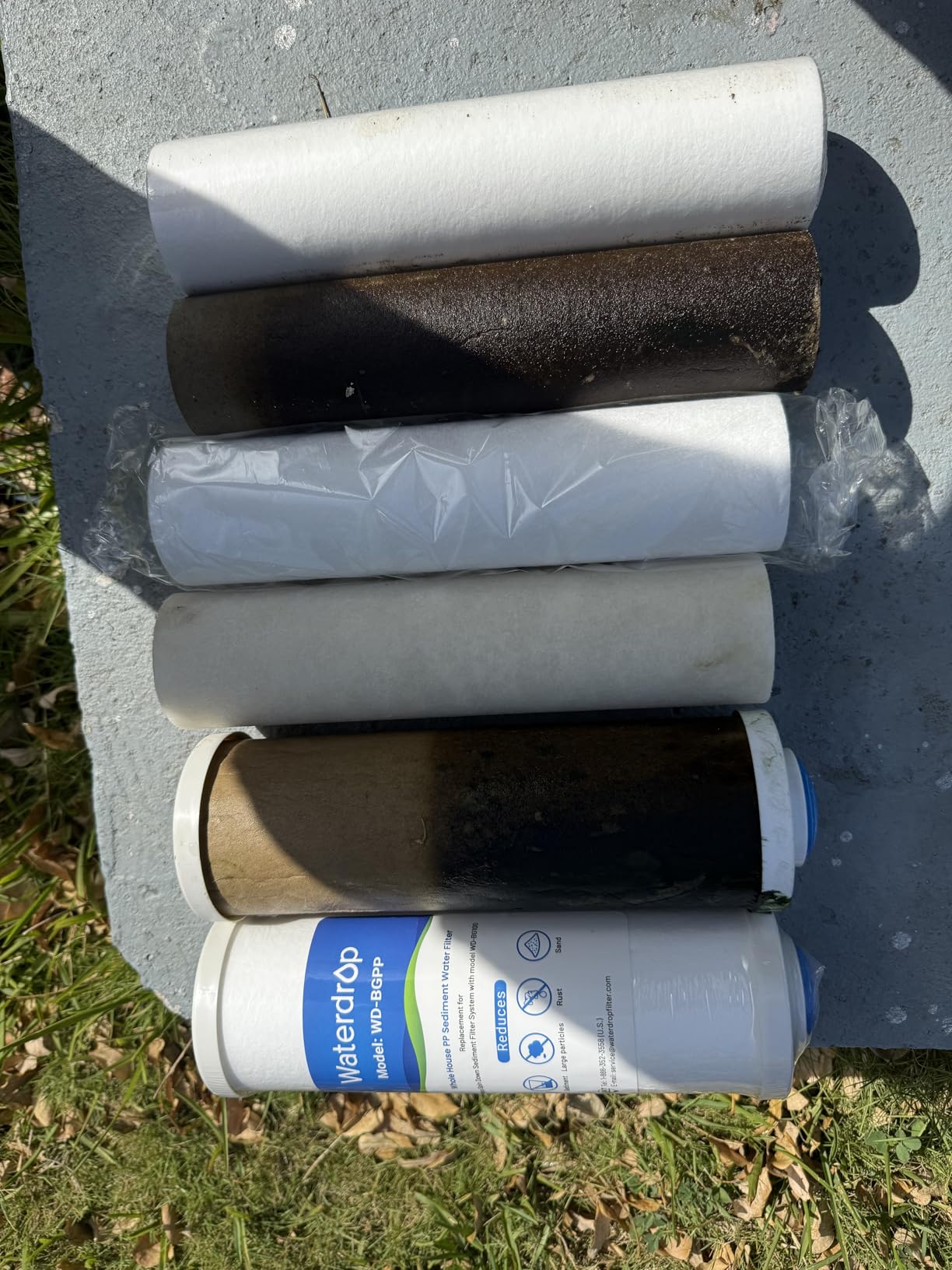
For cartridge filters, change the cartridge when you notice a 10 to 15 percent drop in flow rate at your taps. Do not wait until flow is severely restricted. That drop indicates the cartridge is near capacity, and pushing it further just increases pressure on your pump and plumbing.
Mark your calendar with replacement reminders. Most cartridges need replacement every 3 to 6 months. Spin-downs need flushing monthly. Auto-flushing spin-downs need a battery check every 12 months and a screen inspection every 24 months.
5-year cost of ownership comparison
Upfront price is only part of the cost story. A cheap filter that requires frequent cartridge swaps can cost more over 5 years than an expensive filter with reusable components. Let me run the numbers on three common setups.
Setup A: iSpring WSP-50 spin-down plus Membrane Solutions 5 micron cartridge 6-pack. Upfront cost: about $87. Cartridge replacements over 5 years at 3 per year: about $165. Total: $252.
Setup B: Culligan WH-S200-C housing plus PUREPLUS 5 micron Big Blue 2-packs, replaced annually. Upfront cost: about $62. Cartridge replacements over 5 years: about $150. Total: $212. Note: this setup has no pre-filter, so cartridges may need replacing more often on dirty wells.
Setup C: Waterdrop BG103 mega spin-down plus PUREPLUS Big Blue cartridges. Upfront cost: about $230. Cartridge replacements over 5 years: about $75 (because the pre-filter does most of the work). Total: $305.
Setup C has the highest total cost but the lowest maintenance. Setup B has the lowest cost but requires more frequent cartridge swaps. The middle ground, Setup A, is what I run in my own home, and it is what I would recommend to most homeowners.
For a related deep-dive on protecting your well equipment, see our guide to the best well pressure tanks. If your well water is also hard, our review of the best water softeners for hard water pairs well with this filter guide.
Frequently Asked Questions
Which is better, 5 micron or 20 micron for well water?
Both ratings work for well water, but they serve different roles. A 20 micron filter is better as a first-stage pre-filter because it handles coarse sand with minimal pressure drop and longer cartridge life. A 5 micron filter is better as a second-stage polishing filter because it catches the fine silt and rust that 20 micron filters miss. For most wells, the best setup is a spin-down pre-filter plus a 5 micron cartridge filter, not a choice between the two.
What type of filter is best for well water?
The best type of sediment filter for well water is a two-stage system: a reusable spin-down pre-filter (50 to 100 micron) followed by a 5 micron cartridge filter (string wound or pleated). The spin-down catches coarse sand and grit that would otherwise clog cartridges, and the cartridge catches fine silt and rust the spin-down misses. This combination protects downstream equipment, balances filtration performance, and minimizes long-term cost.
How often should I change my sediment filter for well water?
Sediment cartridge filters on typical well water should be replaced every 3 to 6 months, or sooner if you notice a 10 to 15 percent drop in water flow at your taps. Spin-down pre-filters should be flushed monthly by opening the drain valve for 15 to 30 seconds. On wells with very heavy sediment, cartridge replacement may be needed every 1 to 2 months, and spin-down flushing may be needed weekly.
Do I need a sediment filter if I already have a water softener?
Yes, you absolutely need a sediment filter before your water softener. Sediment particles scratch softener valve seals, clog the softener’s distributor tube, and reduce softener efficiency. Most softener manufacturers void the warranty if a sediment pre-filter is not installed upstream. A spin-down pre-filter plus a 5 micron cartridge filter before the softener is standard practice and will dramatically extend softener life.
Can I install a whole house sediment filter myself?
Yes, most homeowners can install a whole house sediment filter with basic plumbing skills and common tools. Spin-down filters mount on the main water line after the pressure tank using threaded connections, and most include adapters for different pipe sizes. Cartridge filter housings mount to a wall with screws and connect to the water line with SharkBite or threaded fittings. Plan 1 to 2 hours for installation, and shut off the main water supply before starting. If your home has older galvanized pipes or unusual plumbing, consider hiring a plumber.
Final Verdict: Which Sediment Filter Should You Buy for Well Water
After testing and comparing all eight products, the iSpring WSP-50 Spin Down Sediment Filter remains my top pick for the best sediment filter for well water in 2026. Its durable brass construction, reusable stainless steel mesh, and proven track record across thousands of homes make it the most reliable whole-house pre-filter in this price range. Pair it with a 5 micron cartridge filter downstream (the Membrane Solutions 6-pack or the PUREPLUS Big Blue 2-pack), and you have a system that will protect your plumbing, water softener, and downstream equipment for years.
If you want a one-product solution without cartridges to swap, the iSpring WSP50ARB auto-flushing model is the premium alternative. For extreme sediment conditions, the Waterdrop BG103 mega spin-down has the largest chamber and handles the dirtiest wells without daily flushing. And if you want a trusted housing brand to build a custom system around, the Culligan WH-S200-C is the foundation I would build on.
Whichever filter you choose, start with a water test from your local extension office or a private lab. Knowing your sediment levels, iron content, and hardness will tell you exactly which micron ratings and filter combinations your well actually needs. That single test is the difference between guessing and knowing, and it is the cheapest investment you can make toward clean, clear water at every tap in your home.