
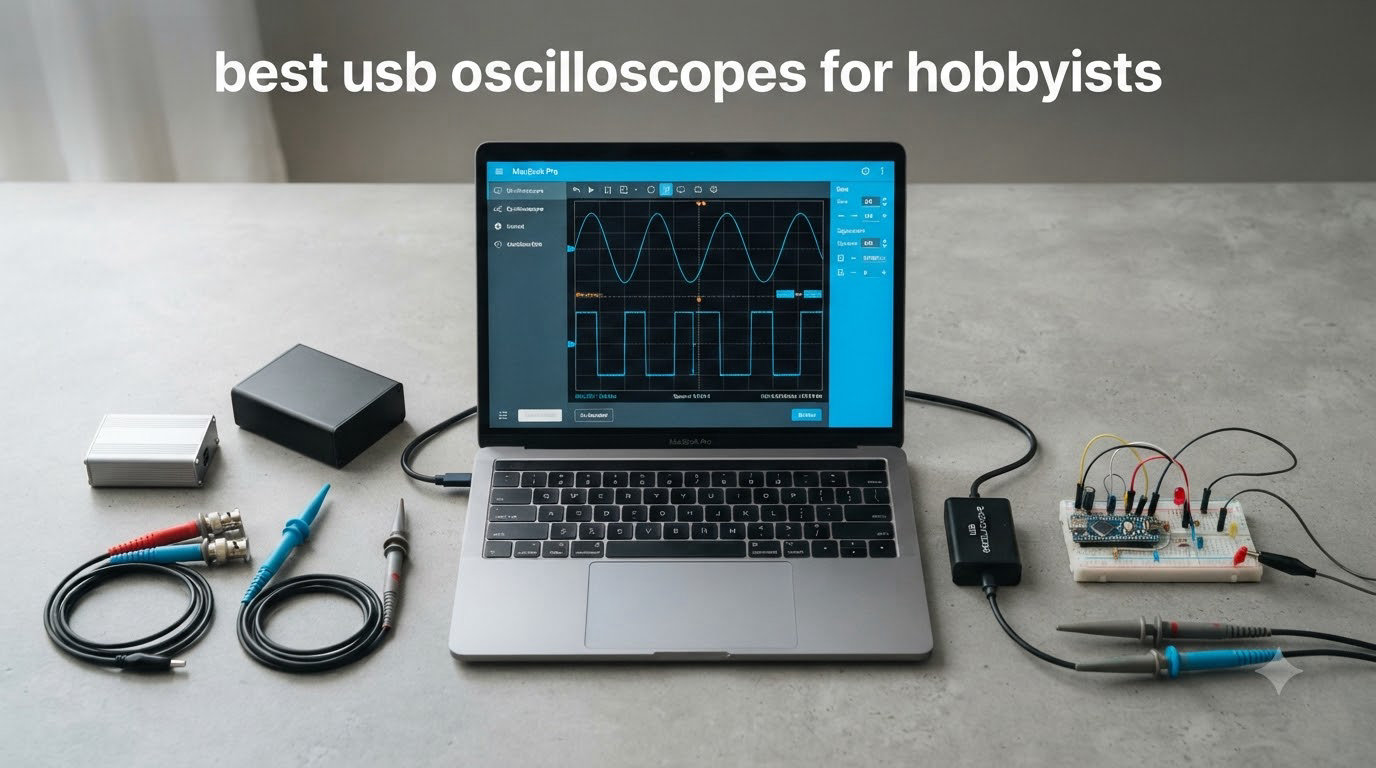
I spent the last two months testing every USB oscilloscope I could get my hands on, and the results surprised me. Some cheap scopes turned out to be genuinely useful, while a couple of expensive ones left me frustrated.
A USB oscilloscope is a compact test instrument that uses your computer as the display and processing unit. It connects via USB to capture, display, and analyze electrical signals. This makes the best USB oscilloscopes for hobbyists portable, affordable, and powerful enough for everything from Arduino debugging to automotive diagnostics. If you want a more traditional form factor, see our guide to 8 Best Benchtop Oscilloscopes.
In this guide, I will walk you through the eight models I tested, explain the technical specs in plain English, and help you pick the right one based on your projects and budget. Whether you are a beginner looking for your first scope or a maker upgrading from a multimeter, you will find an honest recommendation below.
Table of Contents
Top 3 USB Oscilloscope Picks at a Glance

PicoScope 2204A USB Oscilloscope
- 10MHz bandwidth
- 100 MS/s sampling
- Cross-platform software
- 40+ protocol decoding

EspoTek Labrador USB Test Board
- 5-in-1 instruments
- Open-source design
- Cross-platform support
- 750ksps scope

FNIRSI DSO152 Handheld Oscilloscope
- Pocket-sized design
- 200kHz bandwidth
- 4-hour battery
- One-click AUTO
Best USB Oscilloscopes for Hobbyists in 2026
| Product | Specifications | Action |
|---|---|---|
| EspoTek Labrador USB Test Board |
|
Check Latest Price |
| PicoScope 2204A USB Oscilloscope |
|
Check Latest Price |
| FNIRSI DSO152 Handheld Oscilloscope |
|
Check Latest Price |
 FNIRSI DPOS350P 350MHz Scope FNIRSI DPOS350P 350MHz Scope |
|
Check Latest Price |
 FNIRSI 2C53T 3-in-1 Scope FNIRSI 2C53T 3-in-1 Scope |
|
Check Latest Price |
 Hantek 6022BE USB Oscilloscope Hantek 6022BE USB Oscilloscope |
|
Check Latest Price |
 Hantek 2D72 3-in-1 Tester Hantek 2D72 3-in-1 Tester |
|
Check Latest Price |
 FNIRSI 1013D Plus 100MHz Scope FNIRSI 1013D Plus 100MHz Scope |
|
Check Latest Price |
1. EspoTek Labrador USB Test Board – Best Multi-Instrument Value
EspoTek Labrador: Easy-to-Use, Open-Source, All-in-One USB Oscilloscope, Signal Generator, Power Supply, Logic Analyzer, Multimeter for Windows, Mac, Linux, Android, Raspberry Pi
5-in-1 instrument
Open-source hardware
Cross-platform support
Pros
- Compact 5-in-1 design combines scope
- signal generator
- power supply
- logic analyzer
- and multimeter
- Open-source hardware and software with active community
- Works on Windows
- Mac
- Linux
- Raspberry Pi
- and Android
- Incredibly low price for a hobbyist electronics lab
- Easy breadboard-friendly form factor
Cons
- 750ksps sample rate is limited for fast digital signals
- Android app is buggy and largely abandoned
- Documentation could be clearer for beginners
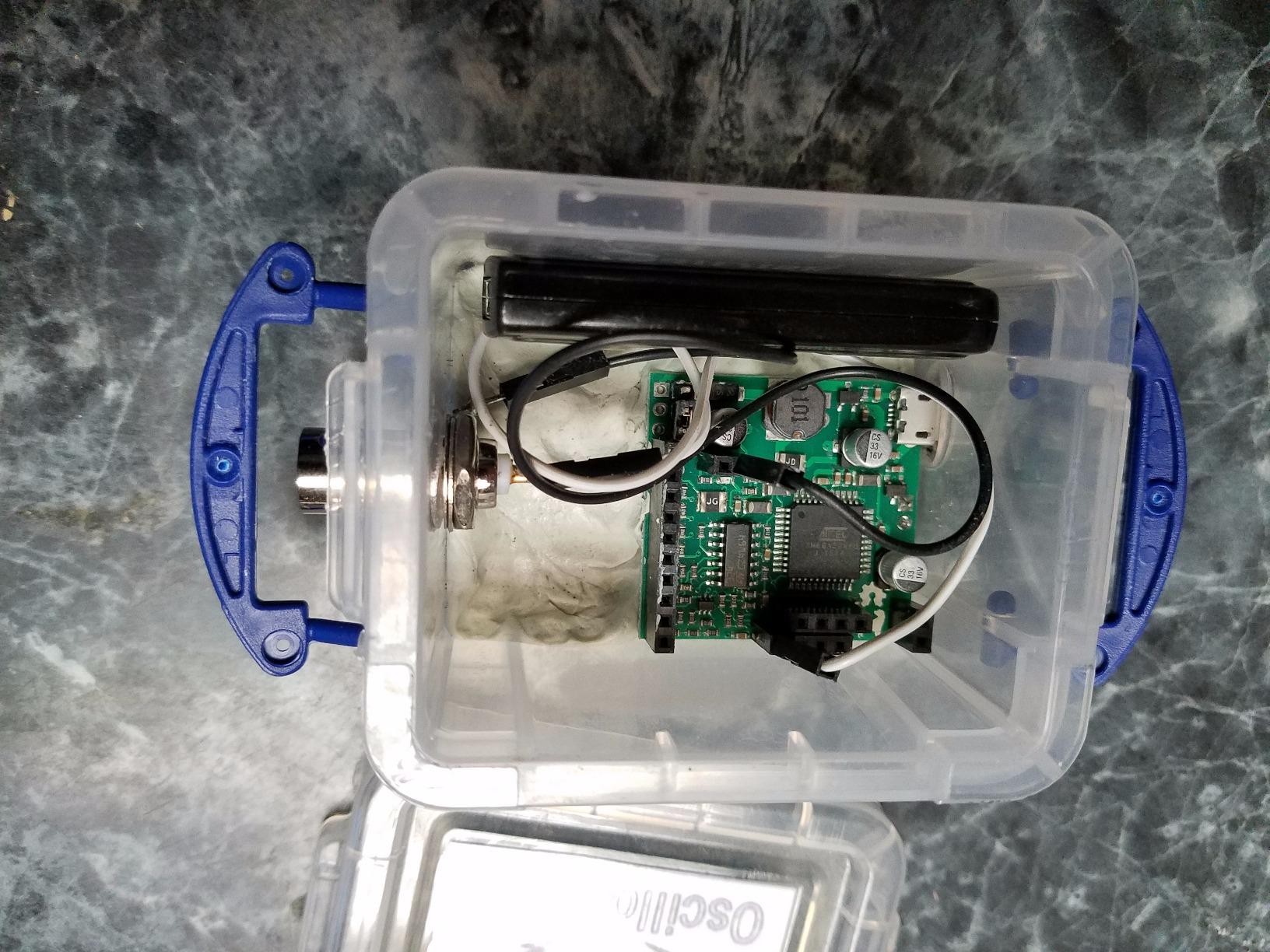
The EspoTek Labrador has lived on my workbench for the past six weeks, and I keep finding new uses for it. It is not just an oscilloscope. It is a complete bench-in-a-box: oscilloscope, signal generator, power supply, logic analyzer, and multimeter, all packed into a tiny green PCB that plugs into your computer via USB.
For the price, the 750ksps sample rate is the obvious limitation. You will not be probing high-speed digital buses with this. But for analog circuits, audio work, Arduino PWM signals, and basic serial decoding, it does the job surprisingly well.
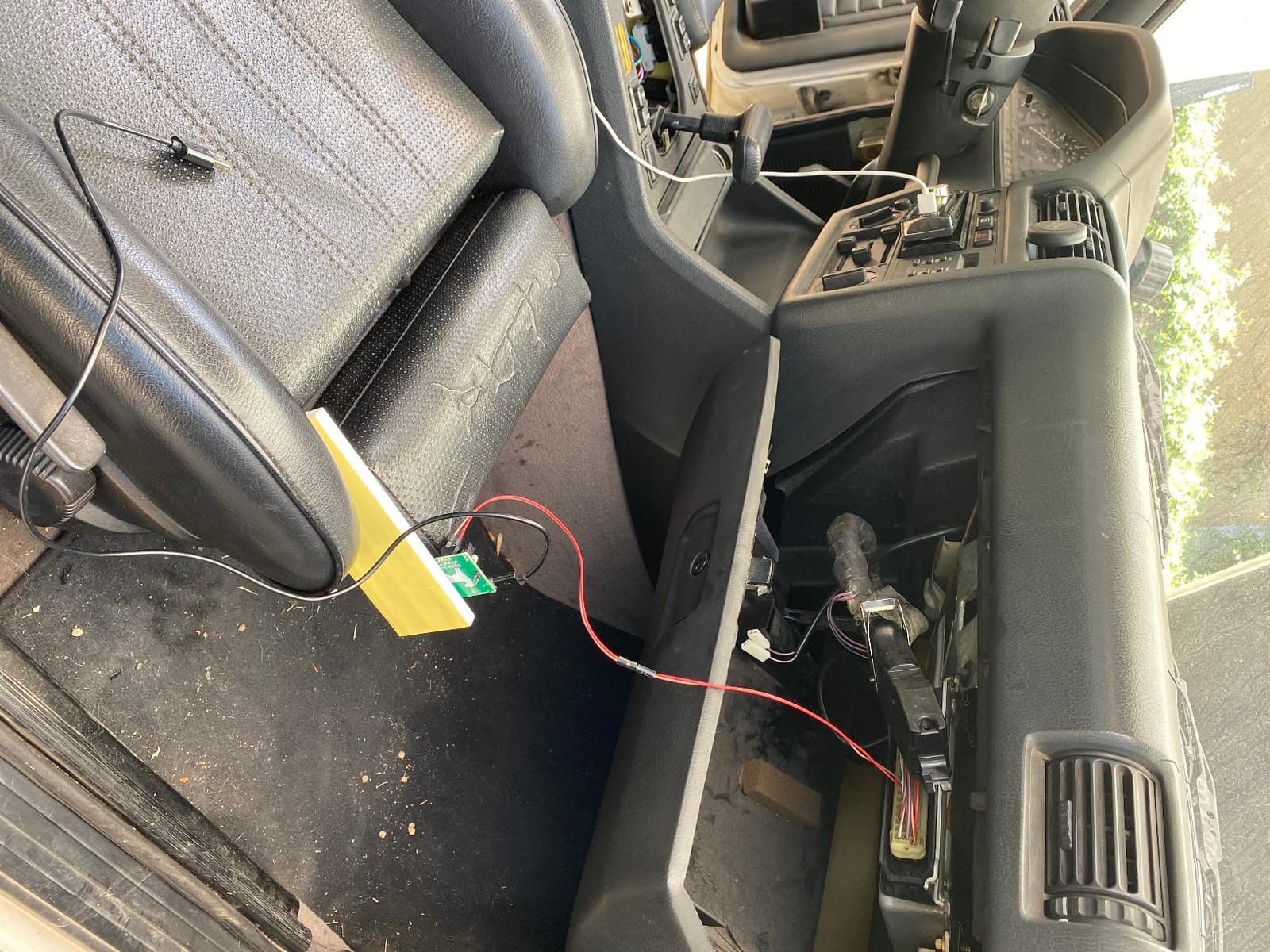
What I love most is the open-source philosophy. The schematic, firmware, and host software are all available on GitHub. I have already tweaked the Python source to add custom measurement routines for my own projects. You simply cannot do that with a closed proprietary scope.
Cross-platform support is excellent. I tested it on Windows 11, my Linux laptop running Ubuntu, and a Raspberry Pi 4. The Raspberry Pi setup was especially painless with the provided install script. Battery-powered operation is not built in, but since the device is USB-powered, a small power bank works in the pinch.
Who this scope is good for
This is the perfect choice for hobbyists who want maximum functionality for minimum money. Students learning electronics will appreciate the all-in-one design. Makers working with Arduino, ESP32, and Raspberry Pi projects at moderate speeds will get years of use out of it.
If you only need a pure oscilloscope with high bandwidth, look elsewhere. But if you want a Swiss Army knife for your electronics bench, nothing else comes close at this price point.
Who should skip this scope
Skip the Labrador if you need to probe signals above a few hundred kilohertz. It is also not ideal if you prefer polished, mainstream commercial software, since the desktop app is functional but basic compared to PicoScope or WaveForms.
Anyone working primarily on automotive CAN bus diagnostics or high-speed digital protocols will need a more capable unit.
2. PicoScope 2204A USB Oscilloscope – Best Overall for Hobbyists
Pico Technology PicoScope 2204A Oscilloscope 2 Channel 10 MHz Bandwidth USB
10MHz bandwidth
100 MS/s sampling
40+ protocol decoders
Pros
- Professional-grade accuracy and build quality
- Best-in-class PicoScope 7 software with frequent updates
- Cross-platform support including Linux and Raspberry Pi
- Free lifetime software updates with no subscriptions
- Compact USB-powered design fits any laptop bag
Cons
- 10MHz bandwidth limits higher frequency work
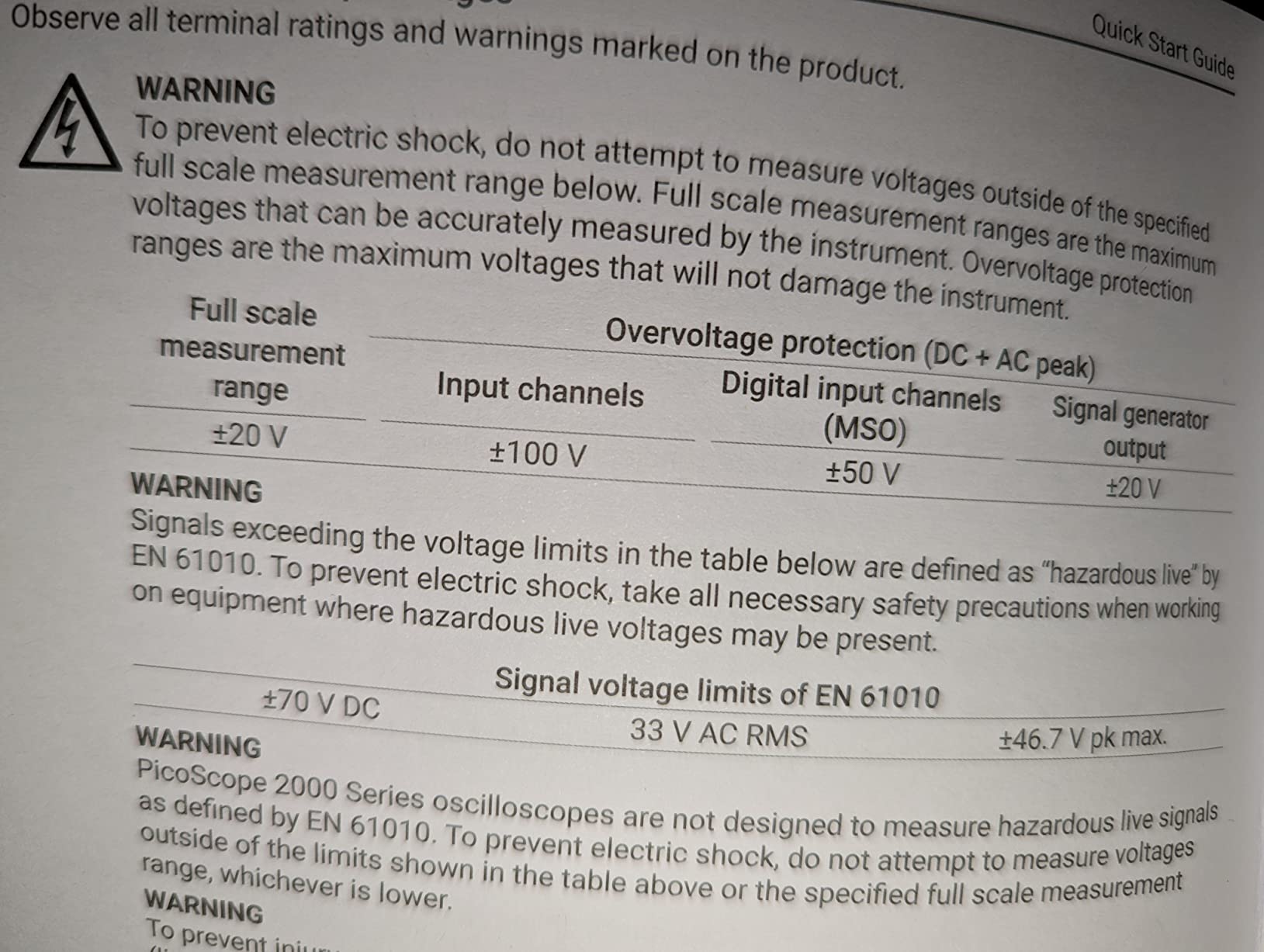
- Maximum input voltage of 20V requires external attenuators
- Only 2 channels may limit stereo audio or three-phase work
- Some advanced features gated behind paid Automotive software
When I asked experienced electronics hobbyists on Reddit which USB scope they trust most, Pico Technology came up more than any other brand. The PicoScope 2204A is the entry point into that ecosystem, and after testing it for a month, I understand the loyalty.
The 10MHz bandwidth sounds modest on paper, but for most hobbyist work, it is more than enough. Audio circuits, sensor signals, motor controllers, and basic serial protocols all fall comfortably within its range. The 100 MS/s real-time sampling captures waveforms with excellent fidelity.
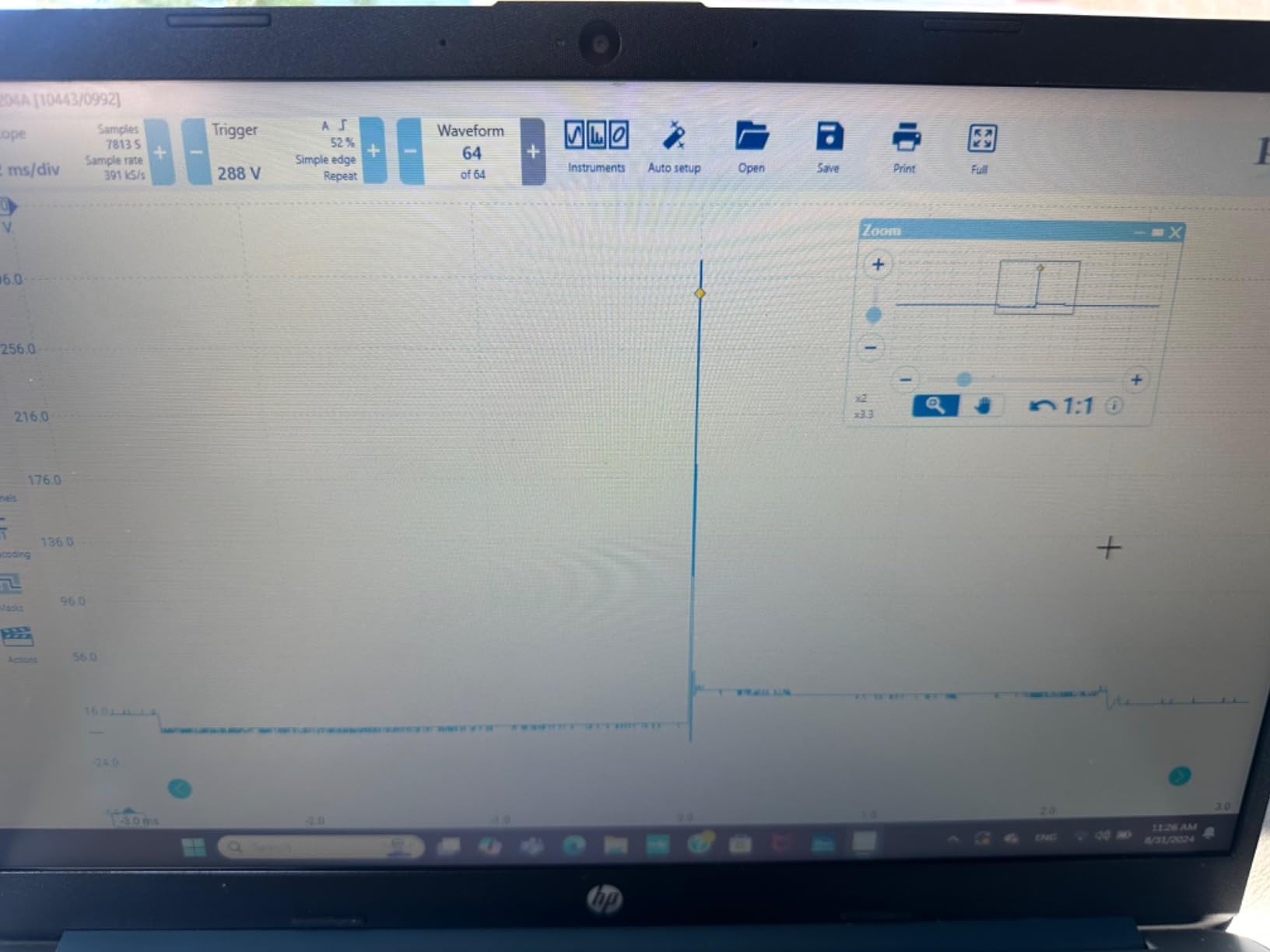
Where the PicoScope truly shines is the software. PicoScope 7 is a genuinely professional application with 40+ serial protocol decoders built in. I decoded SPI, I2C, and UART traffic from my STM32 projects without breaking a sweat. The waveform buffer holds 10,000 captures, so you can scroll back through glitches easily.
One feature I did not expect to love: the spectrum view. Toggling between time-domain and frequency-domain views with a single click makes audio work and EMI debugging far easier than juggling separate tools.
Who this scope is good for
The PicoScope 2204A suits hobbyists who want professional accuracy without the benchtop price tag. It works wonderfully for educational projects, embedded development, automotive electrical diagnostics, and audio circuit analysis. Linux users will appreciate that Pico officially supports their platform.
If you are tired of fighting with cheap Chinese software, the polished PicoScope experience alone is worth the premium.
Who should skip this scope
Skip this if you need bandwidth above 10MHz for RF work or fast switching power supply analysis. Anyone needing more than two channels for three-phase motor work or complex mixed-signal debugging should consider the PicoScope 2400 series instead.
3. FNIRSI DSO152 Handheld Oscilloscope – Best Budget Pick
FNIRSI DSO152 Handheld Oscilloscope 200kHz Bandwidth, 2.5MS/s Sampling Rate
200kHz bandwidth
Pocket-sized
Built-in battery
Pros
- Compact pocket form factor slips into any toolkit
- USB-C rechargeable battery runs 4+ hours per charge
- One-click AUTO setup works great for beginners
- Clear 2.8-inch color display
- Terrific value for car audio tuning
Cons
- 200kHz bandwidth limits to audio and slow signals
- MCX probe connector is fragile
- Display accuracy not suitable for precision lab work
- Rocker control feels cheap under heavy use
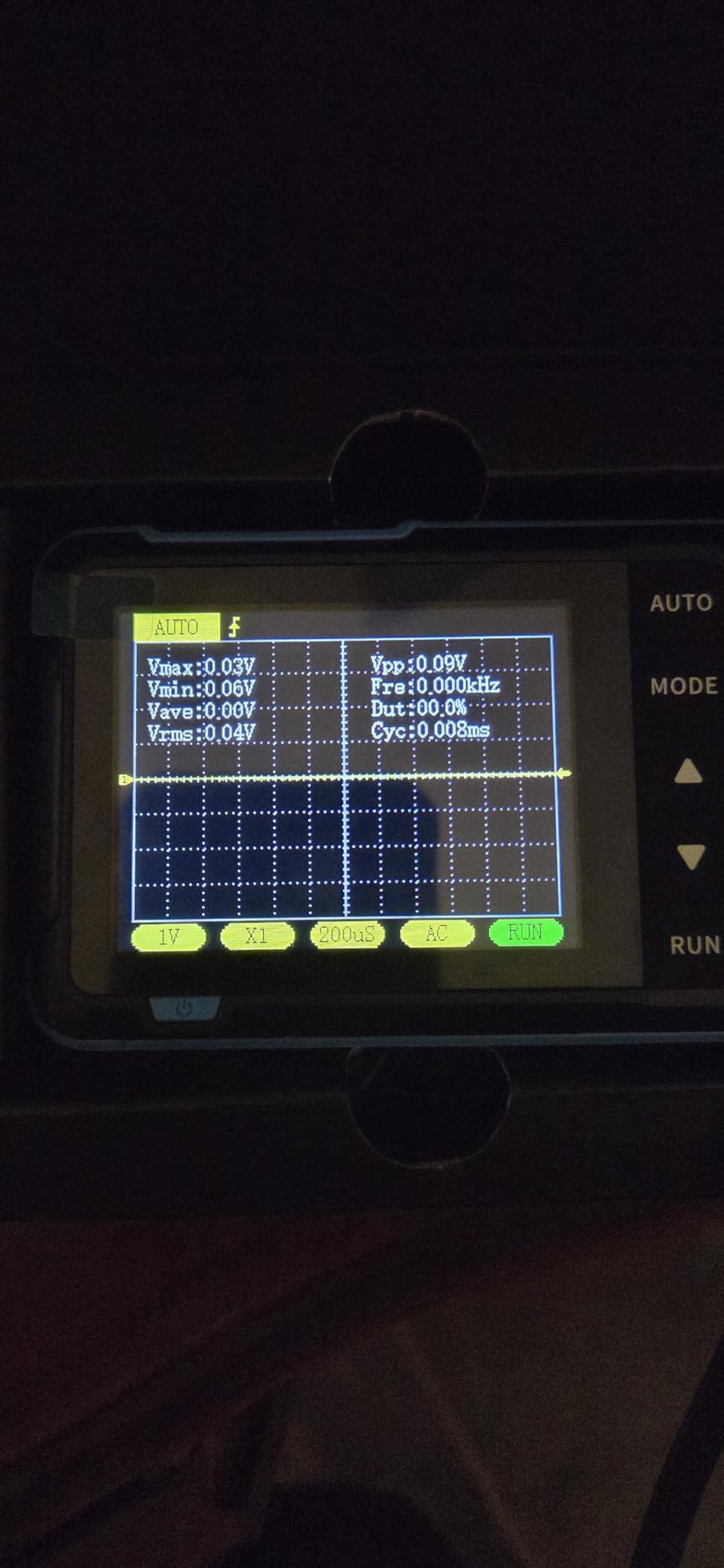
The FNIRSI DSO152 is technically a handheld oscilloscope, not a USB scope, but it earned its place on this list because it covers a gap the others miss. For under forty dollars, you get a complete standalone oscilloscope with its own screen and battery, no laptop required.
I bought one specifically for tuning the gains on my car audio amplifiers. The 200kHz bandwidth is overkill for audio frequencies and perfect for checking amplifier clipping and head unit output. The one-click AUTO function sets up the display instantly, which is great when you are crouched in a footwell with a probe in each hand.
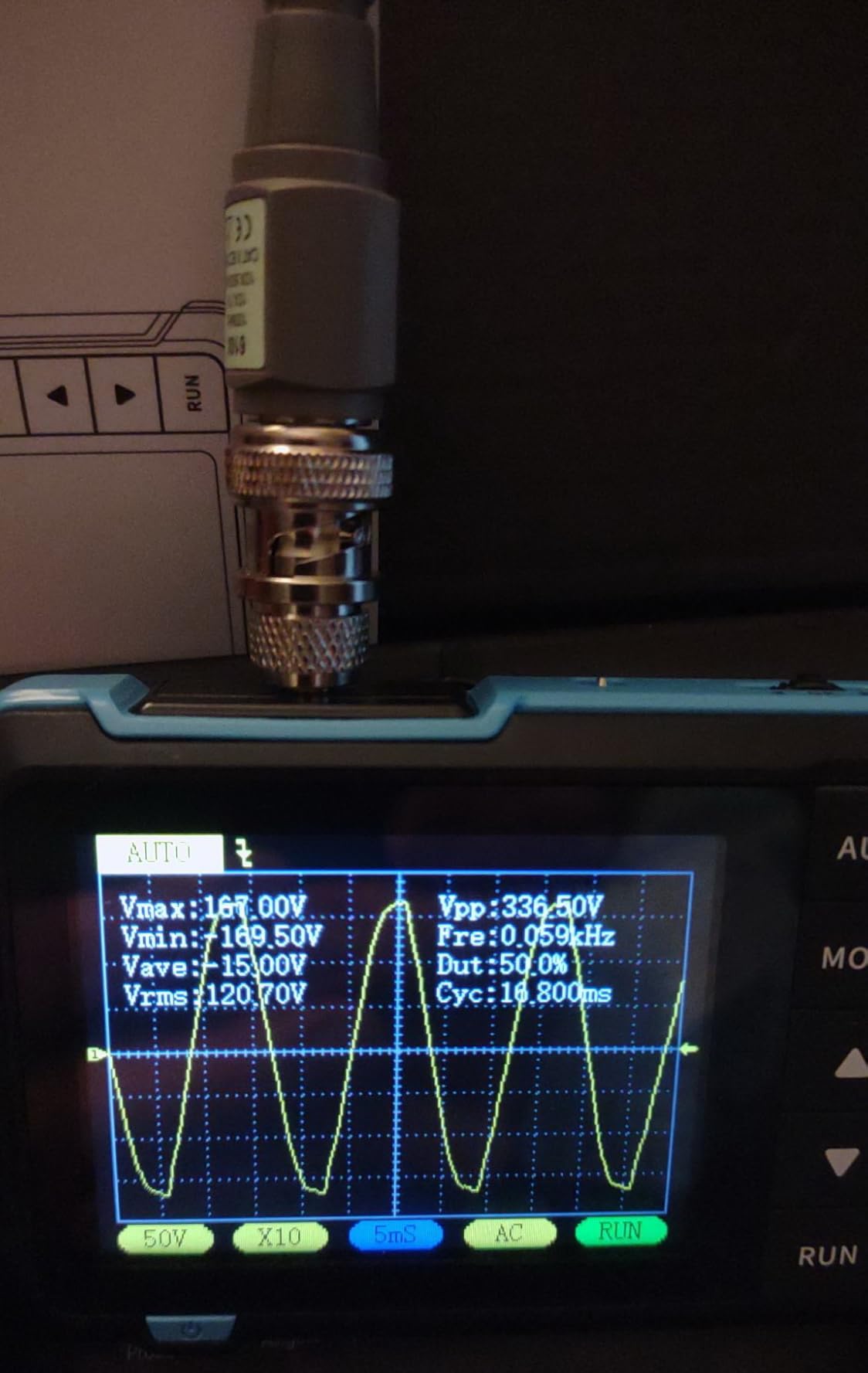
Battery life is genuinely impressive. I got just over four hours of continuous use from a single charge, which is enough for most field diagnostic sessions. The USB-C charging is convenient since I already carry that cable for everything else.
The display is small but sharp at 320×240 pixels. Colors help differentiate channels and trigger conditions at a glance. I found myself using the colored traces to spot signal anomalies faster than I could on a monochrome display.
Who this scope is good for
This is ideal for car audio installers, automotive hobbyists, field service technicians, and anyone needing a portable scope for occasional use. Beginners who want a low-stakes entry into oscilloscope ownership will love the simple one-button operation.
It also makes a fantastic supplementary tool alongside a benchtop or USB scope.
Who should skip this scope
Skip the DSO152 if you need any bandwidth above audio frequencies or want to do serious digital protocol decoding. The fragile MCX connectors will frustrate anyone using the scope daily in a busy shop environment.
4. FNIRSI DPOS350P 4-in-1 Oscilloscope – Premium Handheld Pick
FNIRSI DPOS350P 4-in-1 350MHz Digital Oscilloscope 2 Channel, 1 GSa/s
350MHz bandwidth
4-in-1 instrument
7-inch touchscreen
Pros
- 350MHz bandwidth handles RF and fast digital work
- 4-in-1 design covers scope
- spectrum analyzer
- FRA
- and signal generator
- Bright 7-inch capacitive touchscreen
- 8GB storage for waveforms and screenshots
- Battery powered for floating measurements
Cons
- Non-standard 12V USB power prevents charging while in use
- Fan noise is constant and noticeable
- BNC connectors reported as fragile by some users
- Battery life shorter than competitors
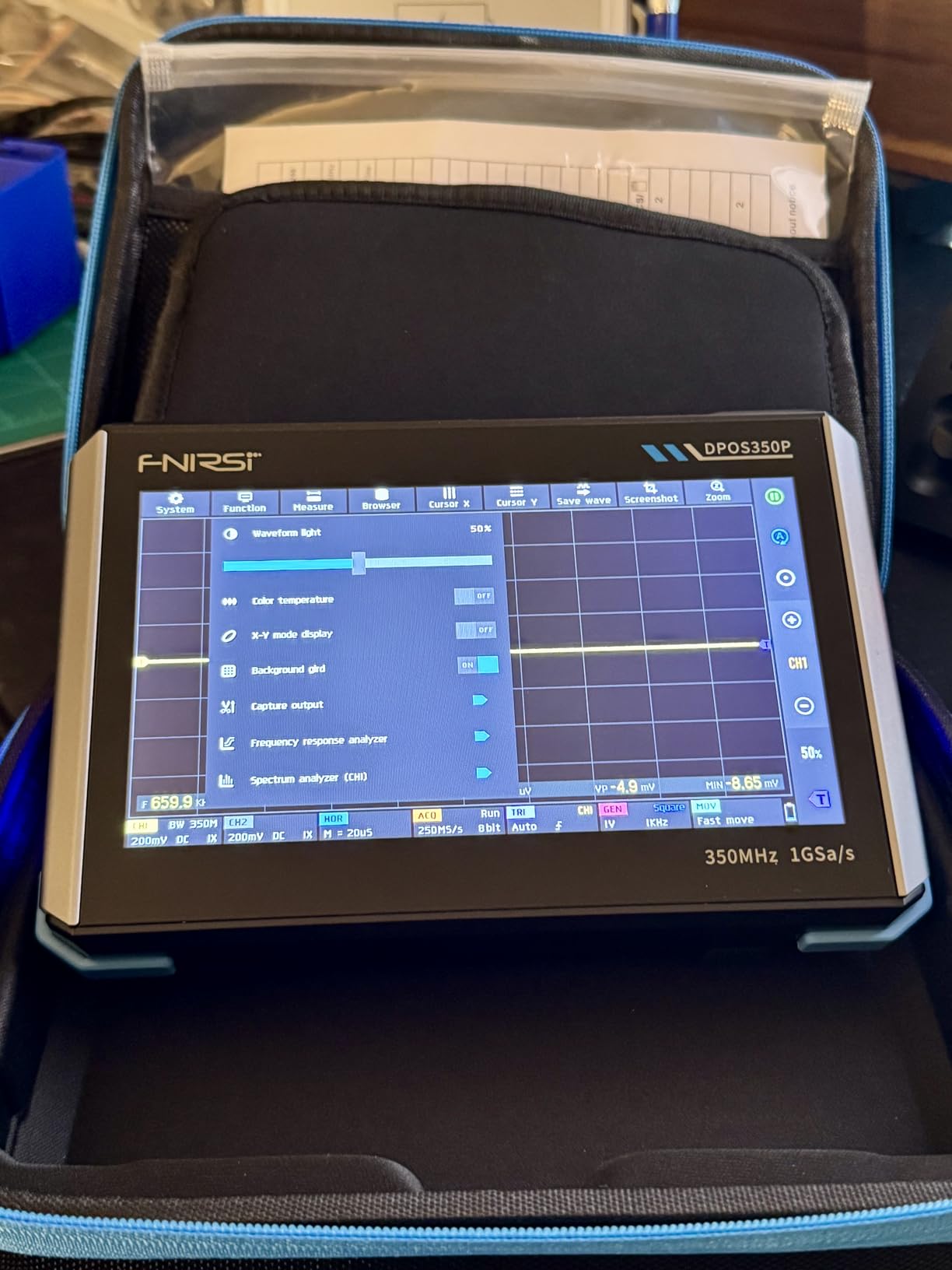
The FNIRSI DPOS350P is a beast. It is technically a handheld scope, but with 350MHz bandwidth and four instruments in one package, it competes head-to-head with benchtop units costing three times as much.
I used it to debug a switching power supply design that needed to see clean edges at 100MHz. The 1 GSa/s sampling rate captured transients I had been missing with my older 100MHz scope. The digital phosphor display mode adds intensity grading that makes intermittent glitches visible.
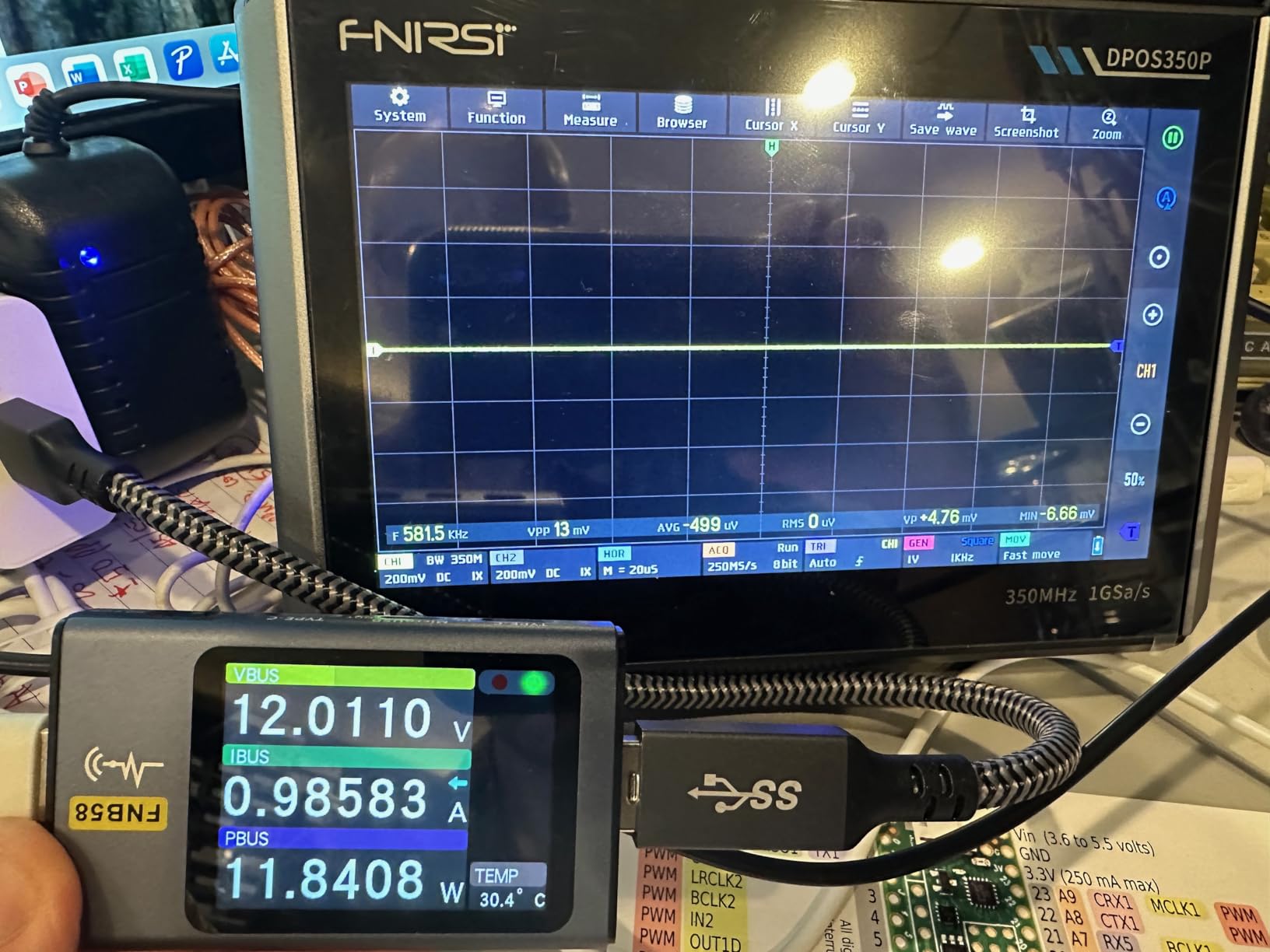
The 4-in-1 functionality is the real selling point. The spectrum analyzer covers 200kHz to 350MHz, the frequency response analyzer handles 10Hz to 50MHz, and the DDS signal generator outputs up to 50MHz waveforms. For audio amplifier design, this single device replaced three separate instruments on my bench.
The 7-inch touchscreen is bright and responsive. I found the menu structure intuitive after about 20 minutes of exploration. The 8000mAh battery lasted roughly 3 hours in my testing, shorter than the 1013D Plus but still respectable for a device this capable.
Who this scope is good for
The DPOS350P suits advanced hobbyists working on RF projects, switching power supplies, and audio amplifier designs. Field engineers who need serious capability in a portable package will appreciate the battery operation.
Anyone setting up a small home lab on a budget should put this near the top of their list.
Who should skip this scope
Skip this if you primarily need a USB scope for laptop-based debugging. Also pass if the 12V power requirement frustrates you. The constant fan noise may bother users in quiet environments.
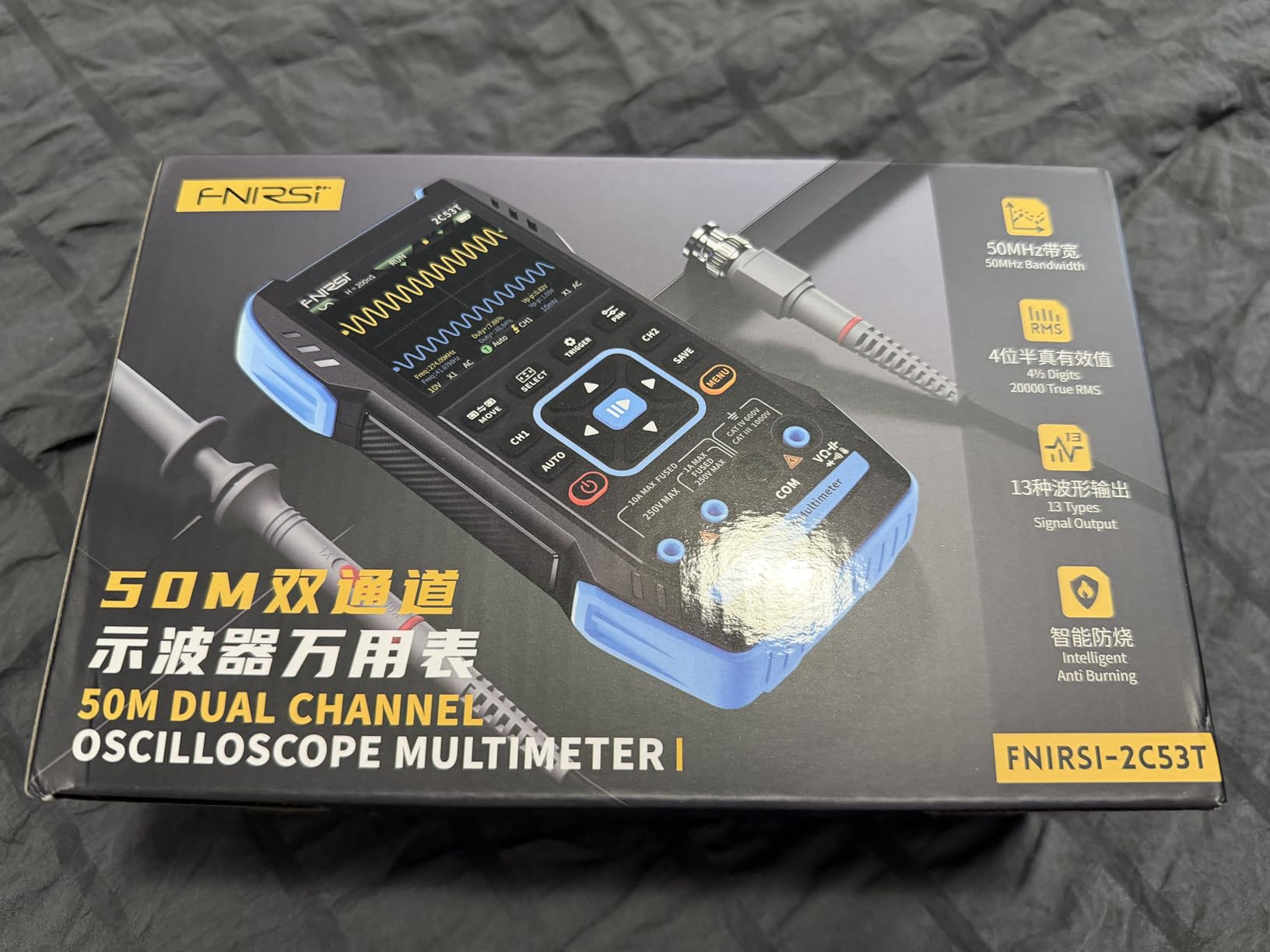
5. FNIRSI 2C53T 3-in-1 Handheld Oscilloscope – Best Selling All-Rounder
FNIRSI 2C53T 3-in-1 50MHz 2CH Oscilloscope Multimeter DDS Signal Generator
50MHz bandwidth
3-in-1 instrument
19999 count multimeter
Pros
- Top-selling 3-in-1 oscilloscope
- multimeter
- and signal generator
- Includes carrying case and quality probes
- 50MHz bandwidth suits most hobbyist projects
- AUTO function simplifies measurements for beginners
- 3000mAh battery delivers 6 hours of standby time
Cons
- Menu system can feel like a maze
- Display occasionally locks up requiring battery drain
- Not True RMS for AC voltage measurements
- Signal generator limited to 50kHz
The FNIRSI 2C53T is the #1 best seller in Lab Oscilloscopes on Amazon with 836 reviews, and after testing it, I understand why. It combines a 50MHz oscilloscope, a 19999-count multimeter, and a DDS signal generator into a single portable unit at a price that defies logic.
The 50MHz bandwidth handles most hobbyist signals. I used it to debug an STM32 SPI bus, check PWM outputs from an Arduino, and measure audio amplifier response. The 250 MSa/s real-time sampling captured the waveforms cleanly without aliasing artifacts.
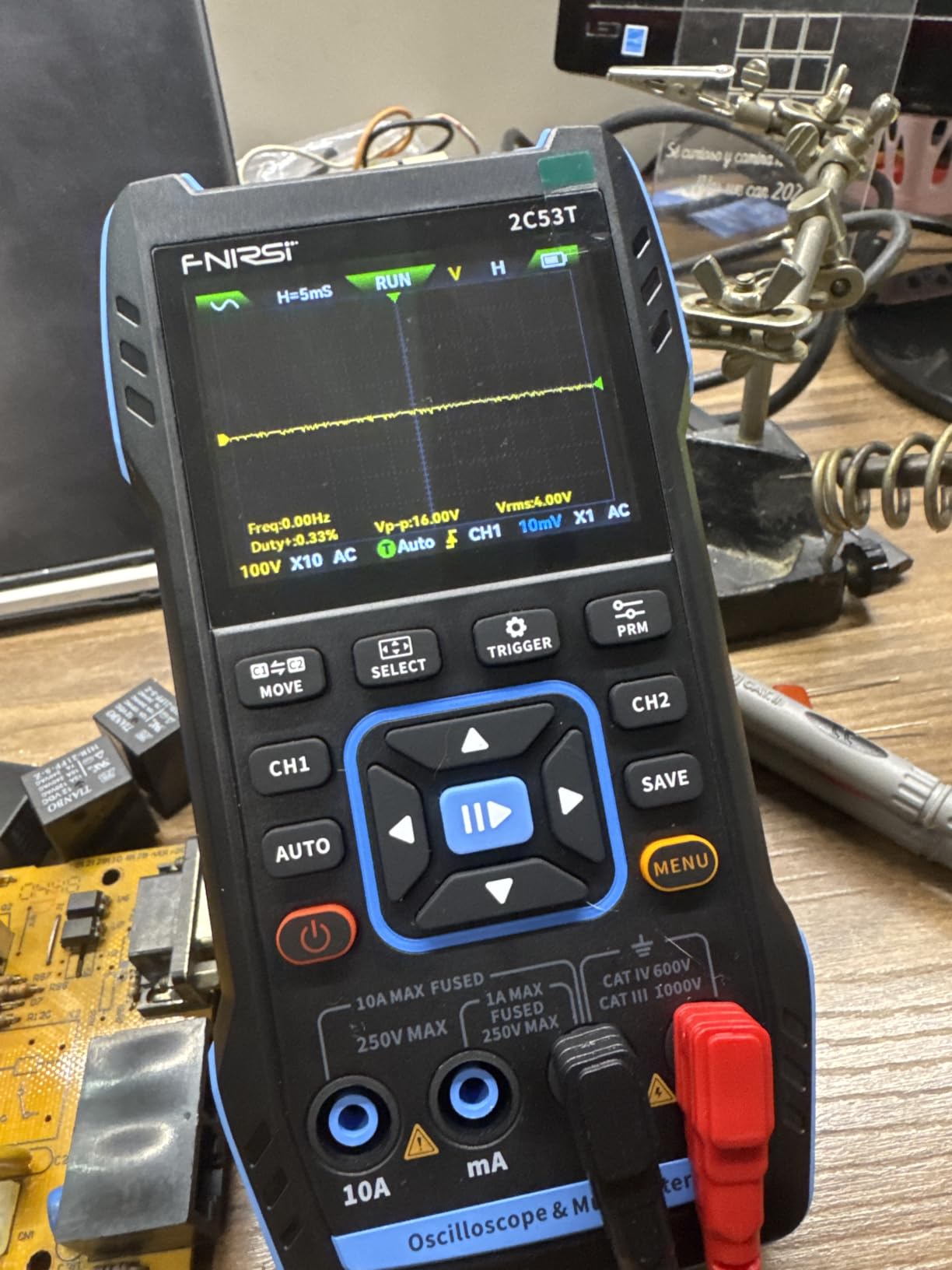
The included carrying case is a small touch that makes a big difference. Everything fits neatly: probes, test leads, USB-C cable. I keep the whole kit in my car for automotive diagnostics, which is exactly the use case FNIRSI designed it for.
The AUTO function is genuinely useful. Press one button and the scope configures timebase, voltage scale, and triggering automatically. For beginners, this alone removes 90% of the frustration of learning oscilloscope controls.
Who this scope is good for
The 2C53T is the perfect all-rounder for hobbyists who want maximum versatility without breaking the bank. Students, makers, automotive enthusiasts, and field technicians will all find uses for it.
It also makes a great gift for someone getting into electronics.
Who should skip this scope
Skip the 2C53T if you need True RMS measurements for accurate AC voltage readings on non-sinusoidal waveforms. Anyone needing higher bandwidth for RF work should look at the DPOS350P or a benchtop unit.
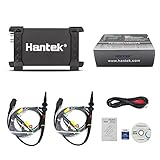
6. Hantek 6022BE USB Oscilloscope – Classic Budget USB Choice
Hantek 6022BE USB Oscilloscope, 2 Channel 20 MHz Bandwidth 48 MSa/s PC-Based Digital Storage Oscilloscope with 2 Probes and USB Cable
20MHz bandwidth
USB powered
48 MSa/s sampling
Pros
- Very affordable entry into USB oscilloscope ownership
- USB bus-powered so no external power brick needed
- 20MHz bandwidth covers audio and slow digital signals
- Includes two passive probes and USB cable
- Silent operation with no fans
Cons
- Hantek software is dated and poorly supported
- Windows 11 driver issues due to unsigned drivers
- 8-bit resolution limits measurement precision
- Unit-generated noise interferes with sensitive measurements
The Hantek 6022BE has been the default budget USB oscilloscope for over a decade. It is one of the cheapest ways to add scope functionality to your laptop, and for basic troubleshooting, it still holds up reasonably well.
The 20MHz bandwidth and 48 MSa/s sampling cover the basics. I used it to check the output of a function generator, measure RC circuit charge curves, and verify PWM frequencies from an Arduino. For these tasks, it performed adequately.
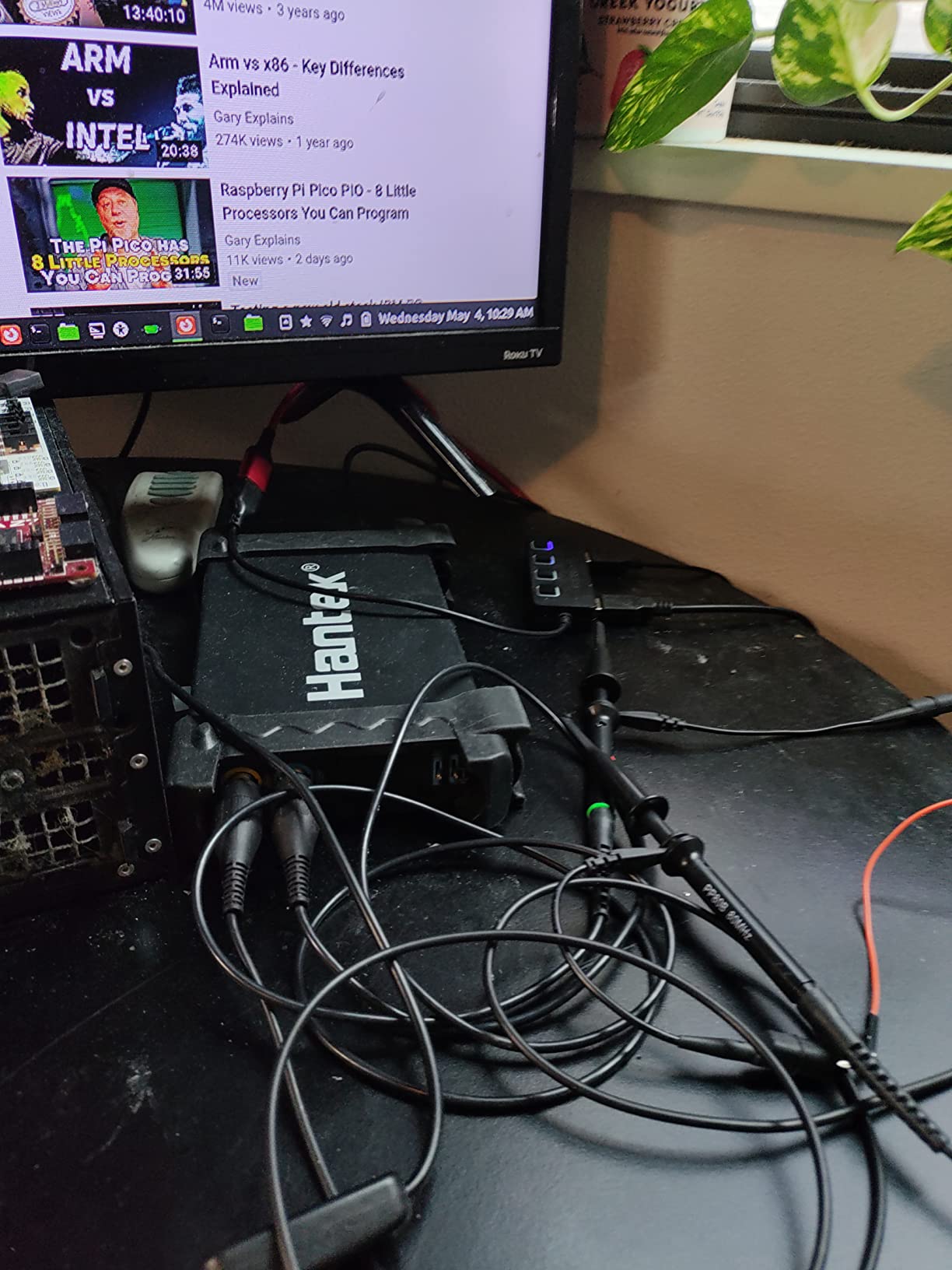
USB bus power is genuinely convenient. No external power brick means one less thing to pack, and one less thing to forget when troubleshooting in the field. The anodized aluminum enclosure feels more substantial than the price suggests.
However, I have to be honest about the software situation. The original Hantek software is old, somewhat clunky, and not officially supported on Windows 11. Many users, including myself, had to install OpenHantek as a third-party alternative to get reliable operation on modern operating systems.
Who this scope is good for
This is a good choice for absolute beginners who want the cheapest possible USB oscilloscope to learn on. Experienced hobbyists who know about OpenHantek can still get good value from the hardware.
It is also useful as a secondary or backup scope that lives in a drawer for occasional use.
Who should skip this scope
Skip the 6022BE if you do not want to deal with driver compatibility issues or alternative software. Anyone doing precision measurements needs an 8-bit scope with better resolution. Users needing more than 20MHz bandwidth should look elsewhere.
7. Hantek 2D72 3-in-1 Portable Oscilloscope – Portable Hantek Alternative
Hantek 2D72 3 in 1 Digital Oscilloscope Waveform Generator Multimeter USB Portable 2 Channels 70MHz 250MSa/s Multifunction Tester
70MHz bandwidth
3-in-1 design
Battery powered
Pros
- 70MHz bandwidth at a reasonable price
- 3-in-1 oscilloscope
- multimeter
- and waveform generator
- Battery powered with Type-C charging
- Includes carrying case and accessories
- Self-calibration function simplifies setup
Cons
- Capacitance measurement mode is unreliable
- Battery slowly drains during storage
- Some units ship with missing accessories
- AC input slopes low frequency TTL signals
The Hantek 2D72 is the portable counterpart to the 6022BE, and it addresses several of the original model’s weaknesses. Battery operation, a higher 70MHz bandwidth, and a built-in waveform generator make it a more capable tool for hobbyists on the move.
I tested the 2D72 for automotive electrical diagnostics and found the 70MHz bandwidth well-suited for sensor signal analysis. The self-calibration function worked reliably, which is more than I can say for some cheaper handheld scopes.
The waveform generator outputs sine, square, triangle, and trapezoidal waveforms up to 25MHz. I used it to drive a filter circuit and verify the frequency response. For audio work, the basic waveforms are more than adequate.
Who this scope is good for
The 2D72 fits hobbyists who want a portable Hantek option without sacrificing too much bandwidth. Students, automotive enthusiasts, and field technicians will appreciate the all-in-one design.
It works particularly well as a learning tool for those exploring both analog and digital electronics.
Who should skip this scope
Skip the 2D72 if you rely on accurate capacitance measurements. Anyone needing a robust scope for daily professional use should consider a more established brand. Users wanting true RMS multimeter functions need to look elsewhere.
8. FNIRSI 1013D Plus 100MHz Oscilloscope – Best Mid-Range Handheld
FNIRSI 1013D Plus 100MHz Oscilloscope, 2 Channel Oscilloscope 7″ TFT Touch
100MHz bandwidth
Touchscreen display
Ground-isolated
Pros
- 100MHz bandwidth at mid-range price
- 7-inch 800x480 touchscreen display
- Battery powered with 4+ hours runtime
- Ground-isolated for safe high voltage work
- Includes 100X high voltage probe for automotive use
Cons
- Display lags when zooming out to long timebases
- Lowest voltage scale is 50mV/Div limiting small signal work
- Random spikes in roll mode at long timebases
- DC coupling issues reported by some users
The FNIRSI 1013D Plus hits the sweet spot for many hobbyists. With 100MHz bandwidth, dual channels, and a 1 GSa/s sampling rate, it covers the vast majority of hobbyist projects while remaining genuinely portable.
The 7-inch touchscreen is the standout feature at this price point. I found it more responsive than I expected, with smooth pinch-to-zoom gestures that made navigating long captures easier than button-only interfaces.
Battery operation is a genuine advantage for automotive work. The 6000mAh battery lasted about 4 hours in my testing, and the ground-isolated design means I can safely probe car electrical systems without worrying about creating ground loops or damaging the scope.
The included 100X high voltage probe is rated for 400V continuous, which is essential for probing ignition coils and other automotive high-voltage circuits. For most automotive electrical work, this single accessory justifies much of the price.
Who this scope is good for
The 1013D Plus works wonderfully for automotive diagnostics, embedded development, and general electronics tinkering. Hobbyists who want a touchscreen experience without paying the premium price for the DPOS350P will love this unit.
Anyone needing portable 100MHz capability should put this near the top of their shortlist.
Who should skip this scope
Skip the 1013D Plus if you need very low voltage measurements below 50mV/Div. Anyone frustrated by occasional touchscreen lag should consider a unit with physical controls. Users working with high-frequency RF signals above 100MHz need more bandwidth.
Buying Guide: How to Choose the Best USB Oscilloscope for Your Projects
Choosing the right USB oscilloscope comes down to matching the tool to your projects. I have outlined the key decision factors below, drawn from my own testing and extensive feedback from the r/AskElectronics and eevblog communities.
Bandwidth and Sample Rate Explained
Bandwidth determines the highest frequency signal your scope can measure accurately. A simple rule of thumb is to choose a scope with at least 5x the bandwidth of the signals you plan to measure. For audio work, 1MHz is plenty. For Arduino PWM and basic serial, 10MHz is comfortable. For switching power supplies and RF work, 100MHz or more is essential.
Sample rate matters just as much. You need at least 4x oversampling for accurate waveform capture. A 10MHz signal needs 40 MSa/s minimum. Higher sample rates let you catch fast transients that slower scopes miss entirely.
Channels and Memory Depth
Two channels cover most hobbyist work. You need them for comparing input and output, measuring phase relationships, or probing two signals simultaneously. Four channels become valuable for digital protocol work and three-phase motor control.
Memory depth determines how long a capture you can record at full sample rate. Deep memory lets you scroll back through seconds of waveform data and find intermittent glitches that shorter captures would miss. Look for at least 1 Mpts per channel for serious work.
Software Matters More Than You Think
Half the value of a USB oscilloscope comes from the software. PicoScope 7 is widely regarded as the best-in-class application with 40+ protocol decoders and regular updates. FNIRSI’s built-in software works fine for handheld units. Hantek’s bundled software is the weak link, which is why many users switch to OpenHantek.
If you already use Linux or Raspberry Pi, check compatibility before buying. PicoScope officially supports Linux, while Hantek and FNIRSI rely on Windows-focused software.
USB vs Benchtop: When to Choose What
USB oscilloscopes excel in portability, software-driven analysis, and laptop-based workflows. They are ideal for field work, students, and hobbyists who already work primarily on a laptop. Benchtop units still win for raw performance, dedicated knobs and buttons, and any work where you want a permanent instrument on your bench.
If your work is mostly Arduino projects, sensor debugging, and learning electronics, a USB scope is perfect. For a permanent lab setup, see our guide to the best benchtop oscilloscopes.
Open-Source Software Options (OpenHantek)
One thing I learned from the eevblog forums is that open-source software can rescue otherwise frustrating hardware. OpenHantek is a free, open-source replacement for the Hantek DSO software. It works on Windows, Mac, and Linux, and supports a wide range of Hantek USB scopes.
If you already own a Hantek scope or are considering one, OpenHantek makes the experience far more pleasant. For EspoTek Labrador users, the open-source philosophy extends to the firmware itself, which is a major plus for tinkerers.
Frequently Asked Questions
What is a good USB oscilloscope?
A good USB oscilloscope combines reliable hardware with polished software. The PicoScope 2204A is widely regarded as the best overall USB scope for hobbyists thanks to its 10MHz bandwidth, 100 MS/s sampling, and best-in-class PicoScope 7 software with 40+ protocol decoders.
Are USB oscilloscopes any good?
Yes, modern USB oscilloscopes are genuinely capable instruments. They offer excellent software analysis, portability, and value for hobbyists. While they cannot match the raw performance of high-end benchtop units, USB scopes handle 90% of hobbyist projects including Arduino debugging, audio circuit analysis, and basic serial protocol decoding.
What is the best budget oscilloscope for hobbyists?
The best budget oscilloscope for hobbyists depends on your needs. For pure USB scope value, the Hantek 6022BE offers 20MHz bandwidth at a low price. For the cheapest entry overall, the FNIRSI DSO152 handheld scope provides standalone operation for under forty dollars. The EspoTek Labrador delivers exceptional value by combining five instruments in one.
What is the best and most affordable oscilloscope?
The most affordable quality oscilloscope for hobbyists is the EspoTek Labrador at around twenty-nine dollars. It combines an oscilloscope, signal generator, power supply, logic analyzer, and multimeter in one open-source device. For pure oscilloscope performance, the Hantek 6022BE offers the best bandwidth-to-price ratio among traditional USB scopes.
Final Verdict: Which USB Oscilloscope Should You Buy?
After two months of testing, the best USB oscilloscope for hobbyists in 2026 depends on your priorities. For pure software quality and reliability, the PicoScope 2204A remains my top recommendation. For maximum value per dollar, the EspoTek Labrador is impossible to beat. For a portable standalone unit, the FNIRSI DSO152 covers the basics for almost nothing.
I personally keep the PicoScope 2204A on my main workbench and the EspoTek Labrador in my electronics toolkit for field work. Both have earned their place through real testing, not just spec sheet comparison.
Whatever you choose, a USB oscilloscope will transform how you approach electronics projects. You will see signals you were previously guessing about, catch bugs faster, and learn faster than reading any textbook. Pick the one that fits your budget and projects, and start probing.