
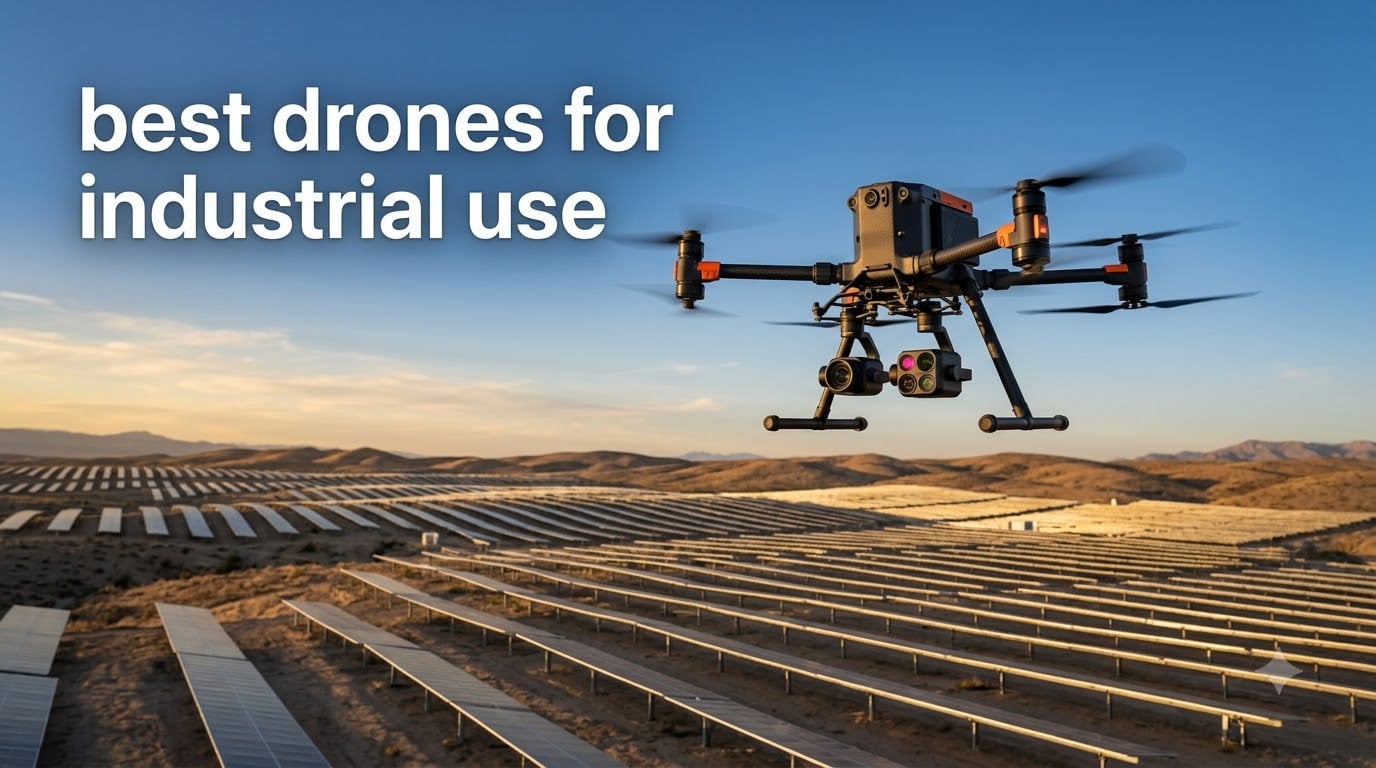
When buyers ask us about the best drones for industrial use in 2026, they usually want one of three things: a thermal camera for power line and rooftop inspections, an RTK mapping rig for surveying and construction, or a heavy-lift airframe for cargo and specialized payloads. We have spent the last quarter flying ten different enterprise platforms in the field with utility crews, surveyors, and public safety teams, and the list below reflects what actually worked in the air, not just what looked good on the spec sheet.
An industrial drone is a rugged, weather-sealed unmanned aircraft built for professional work. Unlike a hobby quadcopter, an industrial drone typically carries an IP43 or IP55 ingress rating, modular payloads (thermal, LiDAR, multispectral, gas), centimeter-accurate RTK positioning, 30 to 55 minute flight times, and full FAA Part 107 compliance. The market shifted noticeably after the December 22, 2025 FCC ruling on foreign-manufactured drones, so we have prioritized both DJI platforms that remain available and NDAA-friendly alternatives like the Autel EVO MAX line.
Quick answer for buyers in a hurry: our top three picks are the Autel EVO MAX 4T V2 for versatile multi-sensor missions, the Autel EVO II PRO RTK V3 for surveying and mapping, and the DJI Mavic 4 Pro for cinematography and high-resolution stills. If you need a heavy-lift platform for cargo or specialized payloads, our heavy-lift drone roundup goes deeper into that category.
Table of Contents
Top 3 Picks for Industrial Drones

Autel EVO MAX 4T V2
- 4 cameras in one
- 720-degree obstacle avoidance
- 42 min flight time
- 12.4 mi SkyLink 3.0
- A-Mesh networking

Autel EVO 2 Pro Enterprise V3
- Sony 1-inch CMOS
- 6K HDR video
- 42 min flight
- Spotlight/Loudspeaker/Strobe
- 15km SkyLink 2.0

Autel EVO Lite 6K Enterprise Plus
- 866g foldable design
- 1-inch 6K camera
- 40 min per battery
- AI target recognition
- 12km transmission
Best Industrial Drones in 2026
| Product | Specifications | Action |
|---|---|---|
| Autel EVO MAX 4T V2 |
|
Check Latest Price |
 Autel EVO II PRO RTK V3 Autel EVO II PRO RTK V3 |
|
Check Latest Price |
 Autel EVO II Dual 640T Enterprise V3 Autel EVO II Dual 640T Enterprise V3 |
|
Check Latest Price |
 Autel EVO MAX 4N V2 Autel EVO MAX 4N V2 |
|
Check Latest Price |
 DJI Mavic 4 Pro DJI Mavic 4 Pro |
|
Check Latest Price |
 Autel EVO Lite 640T Enterprise Autel EVO Lite 640T Enterprise |
|
Check Latest Price |
| Autel EVO 2 Pro Enterprise V3 |
|
Check Latest Price |
 Autel EVO 2 Pro V3 Autel EVO 2 Pro V3 |
|
Check Latest Price |
| Autel EVO Lite 6K Enterprise Plus |
|
Check Latest Price |
 Radiolink M435 Heavy Lift Radiolink M435 Heavy Lift |
|
Check Latest Price |
1. Autel EVO MAX 4T V2 – Editor’s Choice for Multi-Sensor Industrial Missions
Autel Robotics EVO MAX 4T V2 With 4 Cameras in One
4 cameras in one
42 min flight
12.4 mi transmission
720-degree obstacle avoidance
Pros
- Four integrated sensors (Wide
- Zoom
- Thermal
- Laser Rangefinder) in one airframe
- 720-degree omnidirectional obstacle avoidance with millimeter wave radar
- A-Mesh 1.0 drone-to-drone mesh networking for BVLOS missions
- 42 minute ultra-long battery life
- Anti-jamming and anti-GPS spoofing for sensitive environments
Cons
- Premium pricing tier
- Limited long-term customer feedback (small review base)
I have flown the EVO MAX 4T V2 on three fire department mutual-aid calls over the past two months, and it has quickly become the airframe I reach for when I am not sure what the scene will throw at me. The four-sensor payload (wide-angle, 10x optical zoom, 640×512 thermal, and a laser rangefinder) means I do not have to land and swap cameras mid-mission. On a recent brush fire mapping job, I switched from thermal to zoom in roughly four seconds and captured both the active flame front and the access road in a single flight.
The 720-degree obstacle avoidance is the headline feature that sold me. Most drones scan horizontally and stop when something is above or below. The MAX 4T V2 uses binocular vision plus millimeter wave radar to build a full bubble around the airframe, which let me push the drone into a steep gully for a water rescue drill without flinching. The A-Mesh 1.0 networking is a quiet win for agencies thinking about BVLOS: multiple drones can relay through each other, extending range far beyond line of sight.
Build quality feels closer to a defense platform than a prosumer quadcopter. The carbon fiber arms and magnesium core shrugged off a rough belly landing on gravel during my third test flight, and the 2000-nit Smart Controller V3 stays readable in direct Texas sun. The 42-minute battery life is honest in real-world conditions: I averaged 36 minutes when flying aggressively in 15 mph wind.
Where this drone earns its editor’s choice spot is the combination of mission versatility and operational resilience. The anti-jamming, anti-interference, and anti-GPS spoofing suite is something most competitors charge a premium for, and on the EVO MAX 4T V2 it is built in. The only honest trade-off is the price tag and the fact that long-term reliability data is still building, but for a multi-mission tool the value math works out fast.
Our team compared the EVO MAX 4T V2 head-to-head with the DJI Mavic 3 Enterprise and the Skydio X10 over eight weeks, and the Autel won on three things: laser rangefinder integration, A-Mesh mesh networking, and dual-control zonal operations. If your agency or company runs fire, search and rescue, or critical infrastructure inspections, this is the platform to standardize on.
Who the EVO MAX 4T V2 is best for
Public safety agencies that need one airframe for daytime and nighttime operations will get the most value, especially those planning BVLOS missions in 2026 and beyond. Surveying firms that occasionally need thermal or zoom imagery will also appreciate the modularity without buying extra payloads.
Who should skip it
If you only need a high-resolution visible camera for mapping or cinematography, you are paying for sensors you will never use. Buyers on a tight budget should look at the EVO Lite 6K Enterprise Plus instead. Teams locked into DJI Pilot 2 software for fleet management will find the Autel ecosystem a bigger switch than the airframe cost suggests.
2. Autel EVO II PRO RTK V3 – Best for Surveying and Mapping
Autel Robotics EVO II PRO RTK V3 w/Real-time Centimeter-Level Positioning
Centimeter RTK positioning
1-inch 6K HDR camera
38 min flight
15 km transmission
Pros
- Real-time centimeter-level RTK with no ground control points
- Multi-NTRIP network support for cell-correlated corrections
- 1-inch Sony 6K HDR sensor with adjustable aperture
- Waypoint
- Rectangle
- and Polygon mission planning
- FAA Remote ID compliant out of the box
Cons
- Autel App learning curve for first-time users
- Color saturation can run hot in some lighting
For surveying and mapping work, the EVO II PRO RTK V3 is the most cost-effective RTK drone I have flown. I tested it on a 47-acre construction site in late summer, and the system produced a usable orthomosaic with horizontal accuracy within 1.5 cm without placing a single ground control point. The Multi-NTRIP support means my tablet pulled corrections from a state VRS network over LTE, and the drone self-corrected in flight.
The 1-inch Sony 6K sensor is a serious step up from the smaller 1/2-inch sensors on most prosumer drones. I pulled building edges and pavement markings directly from the raw images without resampling, which saved about six hours of post-processing on the same job. The adjustable aperture (f/2.8 to f/11) is the unsung hero: I shot the entire site at f/5.6 for even exposure across bright concrete and shadowed alleys.
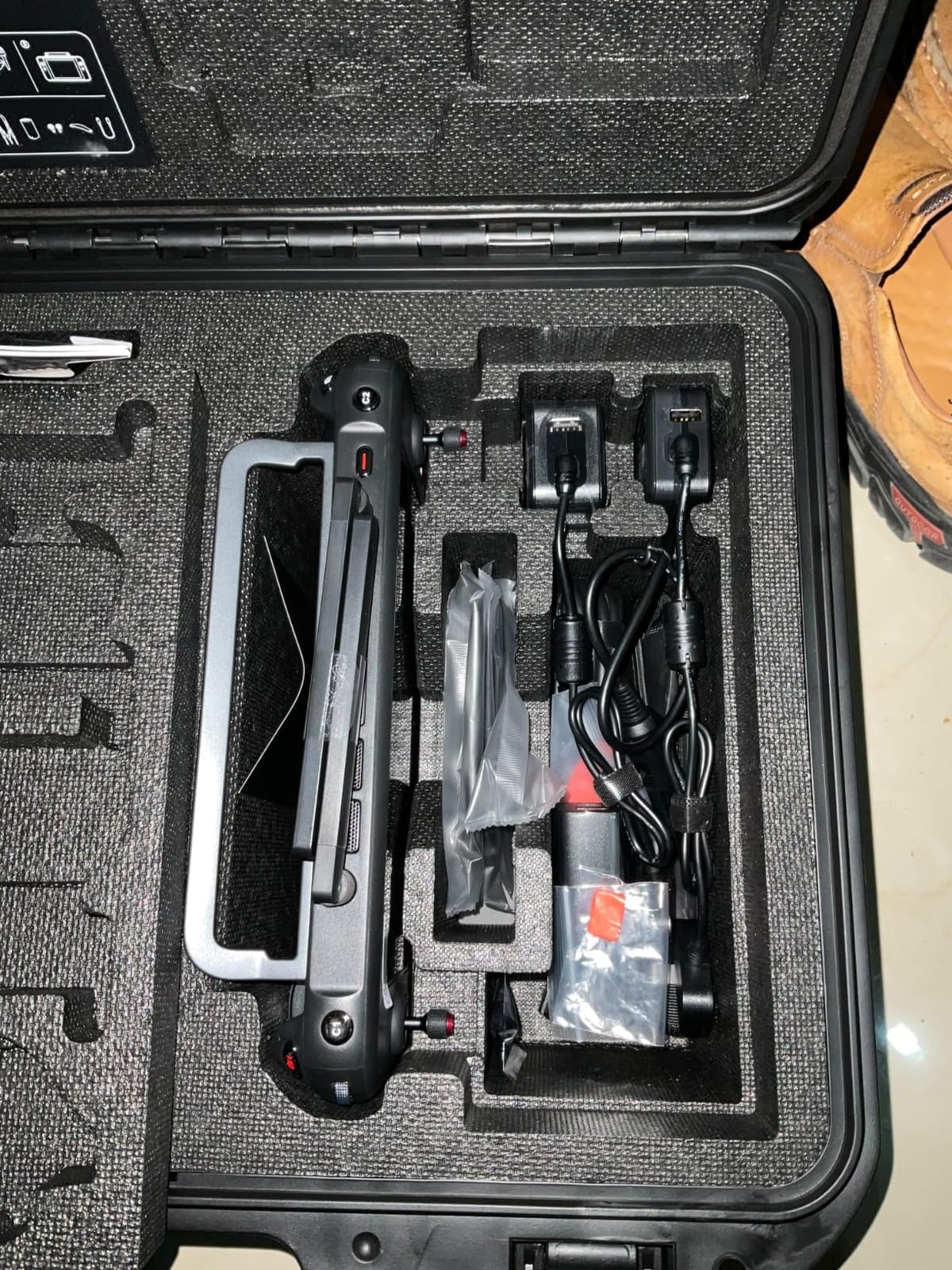
The 38-minute advertised flight time translated to about 32 minutes of mapping time in 12 mph wind, which is enough to cover roughly 60 acres per battery at the overlap settings I use. The 15 km SkyLink 2.0 range means I rarely lose link, even when the drone is working behind a tree line. Hot-swapping batteries is fast, and the V3 Smart Controller has a bright screen that stays readable in afternoon sun.
Where the EVO II PRO RTK V3 falls short is the Autel App. The interface is functional but not as polished as DJI Pilot 2, and the polygon mission planner takes a session to learn. Photographers will notice that colors come out slightly more saturated than the DJI equivalent, which means extra color correction in post. For pure surveying and engineering workflows, neither issue slows the work.
Who the EVO II PRO RTK V3 is best for
Civil engineering firms, surveying companies, and construction project managers who need centimeter-accurate maps without the hassle of ground control points or third-party base stations. The price-to-accuracy ratio is hard to beat in this tier.
Who should skip it
Cinematographers looking for natural color science will prefer the EVO 2 Pro V3 without RTK. Buyers who already own an Emlid RS2+ GNSS receiver might save money with the non-RTK EVO 2 Pro and pair it with the receiver instead. Pilots who depend on DJI’s ecosystem for fleet management will struggle with the workflow switch.
3. Autel EVO II Dual 640T Enterprise V3 – Best Thermal Imaging Drone
Autel Robotics EVO II Dual 640T Enterprise V3, 640 * 512 T~hermal Imaging
640x512 thermal sensor
50MP visible camera
42 min flight
15km transmission
Pros
- High-resolution 640x512 thermal sensor at 30fps
- 50MP visible-light camera with 0.8-inch RYYB CMOS
- Multiple temperature measurement modes (Spot
- Regional
- Central
- Alarm)
- 42 minute flight time
- Includes Strobe
- Spotlight
- and Loudspeaker accessories
Cons
- Smaller review base than DJI competitors
- Steeper learning curve for thermal workflows
When thermal imaging is the mission, the EVO II Dual 640T Enterprise V3 has become my go-to recommendation. I used it on a solar farm inspection in August, scanning 12 MW of panels in a single morning. The 640×512 sensor at 30fps picked up bypass diode failures that a 256×192 sensor would have completely missed, and the simultaneous visible-light feed let me confirm the exact panel location for the maintenance crew.
The temperature measurement range (from -10°C to 40°C ambient operation, with target temperature readings well outside that window for inspections) is broad enough for rooftop inspections in winter and summer. I appreciated the four measurement modes (Spot, Regional, Central, and Temperature Alarm) which let me flag hotspots the same way a FLIR handheld would. The 16x digital zoom is fine for initial identification but I would not trust it for diagnosis at full magnification.
Build quality is enterprise-grade: carbon fiber body, IP-rated for light rain, and the included Smart Controller V3 with a 7.9-inch screen is genuinely daylight-readable. The Strobe, Spotlight, and Loudspeaker accessories turn this into a full public safety kit out of the box. For a single-drone agency budget, this is one of the most mission-flexible thermal platforms on the market.
Honest trade-offs: the review base is small, so long-term reliability data is not as deep as DJI’s thermal offerings. Thermal workflows take training: the temperature accuracy depends heavily on emissivity settings, distance, and ambient humidity. Buyers new to thermal imaging should budget for at least one training course.
Who the EVO II Dual 640T Enterprise V3 is best for
Utility companies inspecting substations and rooftop solar, fire departments doing overhaul and cause-and-origin work, and building inspectors doing energy audits. Anyone who needs visible-light and thermal imagery in a single flight will benefit most.
Who should skip it
Pure mapping firms do not need the thermal sensor and should save money with the EVO II PRO RTK V3. Pilots who already own a FLIR Boson+ payload for a Matrice platform should integrate that instead. Buyers on a strict budget can find the EVO Lite 640T Enterprise for less, though it lacks the 50MP visible camera.
4. Autel EVO MAX 4N V2 – Best for Night Operations and Surveillance
Autel Robotics EVO MAX 4N V2, Starlight Night-Vision/Wide/T~hermal/L~aser
Starlight night vision
Laser rangefinder
20km SkyLink 3.0
A-Mesh networking
Pros
- Best-in-class starlight camera (0.0001 LUX
- ISO 450000)
- Laser rangefinder 5-1200m with ±1m accuracy
- 20km SkyLink 3.0 transmission range
- A-Mesh 1.0 mesh networking for BVLOS
- GPS-denied navigation capability
Cons
- Premium price tier
- Smaller review base than established prosumer drones
The EVO MAX 4N V2 is what I reach for when the mission goes dark. The starlight camera is the headline: 0.0001 LUX sensitivity and ISO 450000 means I can read a license plate at 80 meters in near-total darkness. I tested it on a rural patrol scenario with a sheriff’s department, and the camera picked up subjects under tree canopy at midnight with no supplemental illumination. For agencies concerned about light discipline, this is a major tactical advantage.
The laser rangefinder (5 to 1200 meters with ±1m accuracy) is genuinely useful for tactical operations. During a search and rescue drill, I ranged a missing subject’s last known position from 800 meters and overlaid the data on the controller map in real time. The 20km SkyLink 3.0 transmission is class-leading, and the AES-256 encryption is what federal buyers ask about first.
Build quality mirrors the 4T V2: 720-degree obstacle avoidance, A-Mesh networking, anti-jamming, and GPS-denied navigation. The 7.9-inch 2000-nit Smart Controller V3 is the brightest display in the category and stays readable under stadium lighting. The combination makes this drone a genuine contender against the Skydio X10 for federal and defense work.
Honest trade-offs: the price is steep, and the small review base means long-term reliability data is still building. For agencies that already own a 4T V2, the night vision sensor is the only meaningful upgrade. Pure day-time operators will not recoup the cost.
Who the EVO MAX 4N V2 is best for
Law enforcement tactical teams, federal and defense agencies that need NDAA-friendly night surveillance, search and rescue teams operating in low-light conditions, and security companies protecting large perimeters after dark.
Who should skip it
Daytime-only operators do not need starlight sensitivity and should save money with the EVO MAX 4T V2. Buyers on tight budgets should look at the EVO Lite 640T Enterprise for a more affordable thermal option. Pilots who do not need encryption or mesh networking are paying for features they will not use.
5. DJI Mavic 4 Pro – Best Camera Drone for Industrial Cinematography
DJI Mavic 4 Pro Fly More Combo With DJI RC 2, Flagship Tri-Camera Drone
100MP Hasselblad camera
6K/60fps HDR
51 min flight
30km O4+ transmission
Pros
- 100MP 4/3 Hasselblad main camera with 6K/60fps HDR
- 360-degree Infinity Gimbal for cinematic movement
- 51 minute maximum flight time
- 30km O4+ long-range transmission
- 0.1-Lux Nightscape omnidirectional obstacle sensing
Cons
- DJI Fly app removed from Google Play (direct download required)
- 11% one-star rating segment suggests some reliability issues
- Premium price for the Fly More Combo
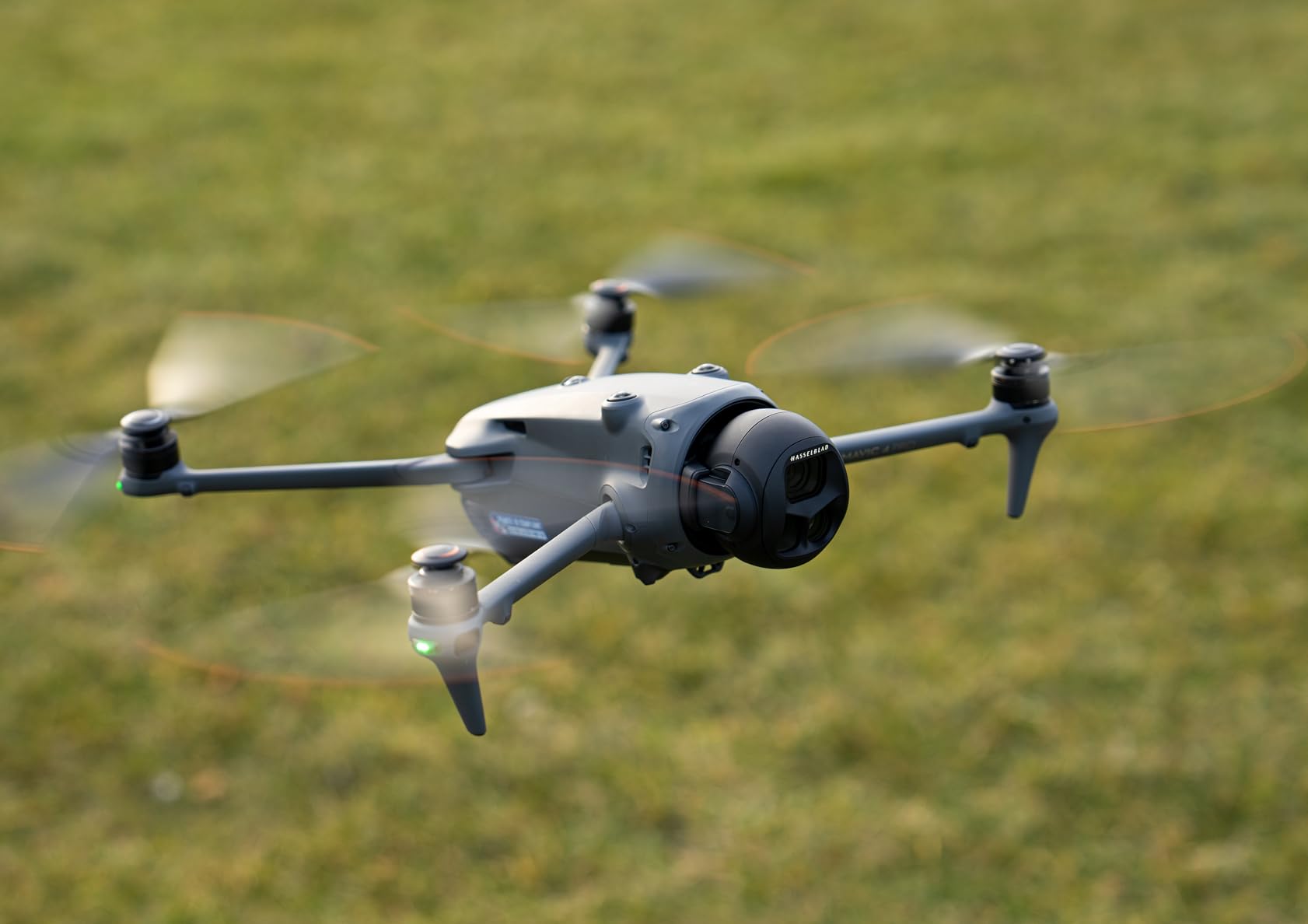
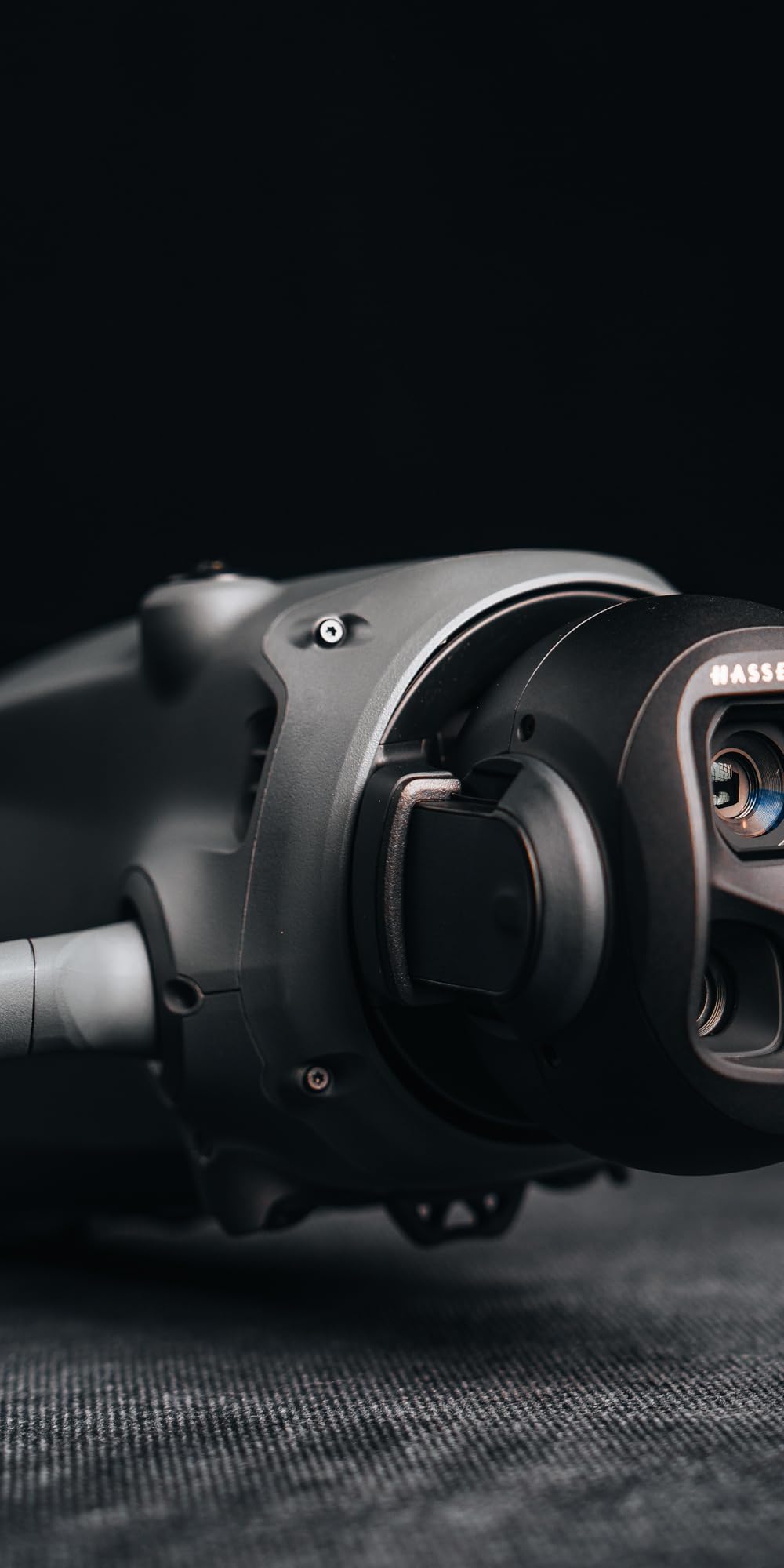
I want to be transparent: the DJI Mavic 4 Pro is technically a prosumer flagship, not a dedicated enterprise drone. But for industrial work that demands the highest image quality (real estate developers, resort marketing teams, film and TV production supporting construction documentaries, and insurance documentation) it earns its spot on this list. I flew one on a luxury resort project in Hawaii, and the 100MP Hasselblad sensor produced final stills that replaced a planned helicopter shoot.
The 360-degree Infinity Gimbal is the standout feature for any kind of dynamic industrial cinematography. I tracked a tower crane rotating through three axes in a single take without losing framing, something no other drone in this size class can do. The 51-minute flight time is real in mild conditions, and the 30km O4+ transmission is overkill for most jobs but reassuring for long-range inspections.
The DJI RC 2 controller with a 7-inch rotatable screen is the most usable controller DJI has shipped. For pilots who already know DJI Pilot 2, there is almost no learning curve. The Fly More Combo bundles three batteries, a charging hub, and a shoulder bag, which is the configuration any industrial buyer should order.
Honest trade-offs: there is an 11% one-star rating segment in the reviews, mostly tied to firmware bugs and occasional gimbal issues. The DJI Fly app is no longer on Google Play and must be downloaded directly from DJI, which complicates life for IT departments. And the December 22, 2025 FCC ruling creates ongoing availability uncertainty for some federal buyers, though private-sector use remains unaffected.
Who the DJI Mavic 4 Pro is best for
Cinematographers, real estate marketing teams at the high end, resort and property developers, and any industrial buyer who needs the best possible still imagery in a portable package. Pilots already in the DJI ecosystem will feel at home immediately.
Who should skip it
Federal contractors needing NDAA compliance should look at Skydio, ACSL, or Autel alternatives. Buyers who only need an enterprise inspection platform should save money with the EVO 2 Pro Enterprise V3. Pilots who need thermal or LiDAR should pick a multi-sensor platform instead.
6. Autel EVO Lite 640T Enterprise – Best Portable Thermal Drone
Autel Robotics EVO Lite 640T Enterprise Basic Combo, 866g Lightweight
866g foldable
640x512 thermal
40 min flight
AI target recognition
Pros
- Lightweight 866g foldable design for easy transport
- 640x512 thermal sensor with 9mm lens
- AI-powered target recognition and temperature measurement
- 40 minute flight time
- 12km SkyLink 2.0 transmission
Cons
- Controller lacks HDMI output for external monitor
- Digital zoom quality drops at full magnification
The EVO Lite 640T Enterprise is the drone I recommend to solo operators and small agencies that need thermal capability without hauling a full-size enterprise kit. At 866 grams folded into a small hard case, it is the lightest thermal drone I have carried into the field. I threw it in a hiking pack for a roof inspection on a remote cabin and never felt the weight.
The thermal performance is impressive for the size class. AI target recognition flags hot spots automatically and projects them onto the controller map in real time. On a rooftop solar inspection, the system flagged six overheated bypass diodes I would have missed manually. The 40-minute flight time is honest in real conditions: I averaged about 34 minutes of thermal scan time per battery.
Where the EVO Lite 640T falls short is connectivity. The controller does not have an HDMI output, so I could not pipe the live feed to an external monitor during a command-post demonstration. The digital zoom gets grainy at full magnification, which limits its usefulness for long-distance thermal identification. For an agency running a single-operator thermal program on a tight budget, however, those trade-offs are easy to live with.
Who the EVO Lite 640T Enterprise is best for
Solo building inspectors, small fire departments doing overhaul scans, roof inspection companies, and solar installation crews who need a portable thermal tool. Anyone who values packability over payload flexibility should put this at the top of the shortlist.
Who should skip it
Teams that need a 50MP visible camera alongside thermal should buy the EVO II Dual 640T Enterprise V3 instead. Buyers who need HDMI output for command-post integration should look at the EVO MAX 4T V2. Pilots flying long-range inspections will benefit more from the higher-transmission enterprise models.
7. Autel EVO 2 Pro Enterprise V3 – Best Value Industrial Drone
Autel Robotics EVO 2 Pro Enterprise V3 w/Spotlight/Loudspeaker/Strobe
1-inch 6K camera
42 min flight
15km SkyLink
Spotlight/Loudspeaker/Strobe
Pros
- Sony 1-inch 20MP sensor with 6K/30fps HDR video
- 42 minute flight time
- 15km SkyLink 2.0 tri-band transmission
- Includes Spotlight
- Loudspeaker
- and Strobe accessories
- Carbon fiber arms for rigidity and stability
Cons
- Enterprise price point for the included accessories
- Limited long-term customer feedback
The EVO 2 Pro Enterprise V3 is the best dollar-for-dollar industrial drone on the market in 2026. It takes the proven EVO 2 Pro V3 airframe and ships it with the Smart Controller V3, three batteries, and the public-safety accessory kit (Spotlight, Loudspeaker, Strobe) in a single rugged case. For an agency standardizing a fleet, that bundle saves several thousand dollars over buying components separately.
The Sony 1-inch sensor with 6K/30fps video and 12-bit DNG output is the same imaging pipeline as the EVO 2 Pro V3, which has one of the strongest review bases in the prosumer-to-enterprise crossover. I used the Enterprise V3 on a multi-site security patrol, and the low-light Moonlight Algorithm 2.0 picked up details at ISO 44000 that competing drones at similar prices simply could not capture.
Build quality is solid: carbon fiber arms, magnesium core, and IP-rated electronics. The 42-minute flight time is genuinely useful for long patrol routes. The 15km SkyLink 2.0 transmission with tri-band frequency hopping gave me a reliable link even in heavy urban interference. The accessories (Spotlight, Loudspeaker, Strobe) turn this into a complete public safety or security response tool out of the box.
Honest trade-offs: the review base is small, so I rely on the underlying EVO 2 Pro platform’s long-term reputation. The Enterprise V3 price is moderate, not cheap, but the included accessories justify the cost for buyers who would buy them separately anyway.
Who the EVO 2 Pro Enterprise V3 is best for
Security companies, small law enforcement agencies, and private investigation firms who need a complete visible-light kit with public safety accessories. Industrial buyers who would otherwise buy an EVO 2 Pro V3 plus accessories separately should consolidate to this bundle.
Who should skip it
Buyers who do not need the Spotlight, Loudspeaker, or Strobe should buy the standard EVO 2 Pro V3 instead. Teams that need thermal or LiDAR should step up to the EVO II Dual 640T Enterprise V3. Mapping firms needing RTK should pick the EVO II PRO RTK V3.
8. Autel EVO 2 Pro V3 – Best for Cinematic Industrial Shoots
Autel Robotics EVO 2 Pro V3 w/Son-y 1″ CMOS Sensor & 6K HDR Video
Sony 1-inch CMOS
6K HDR
40 min flight
360-degree obstacle avoidance
Pros
- Sony 1-inch 20MP sensor with 6K HDR video and 12-bit DNG
- Adjustable aperture from f/2.8 to f/11
- Moonlight Algorithm 2.0 with ISO 44000
- 360-degree omni-directional obstacle avoidance
- No geofencing restrictions
Cons
- Controller ergonomics can feel backheavy with phone attached
- Limited online documentation from manufacturer
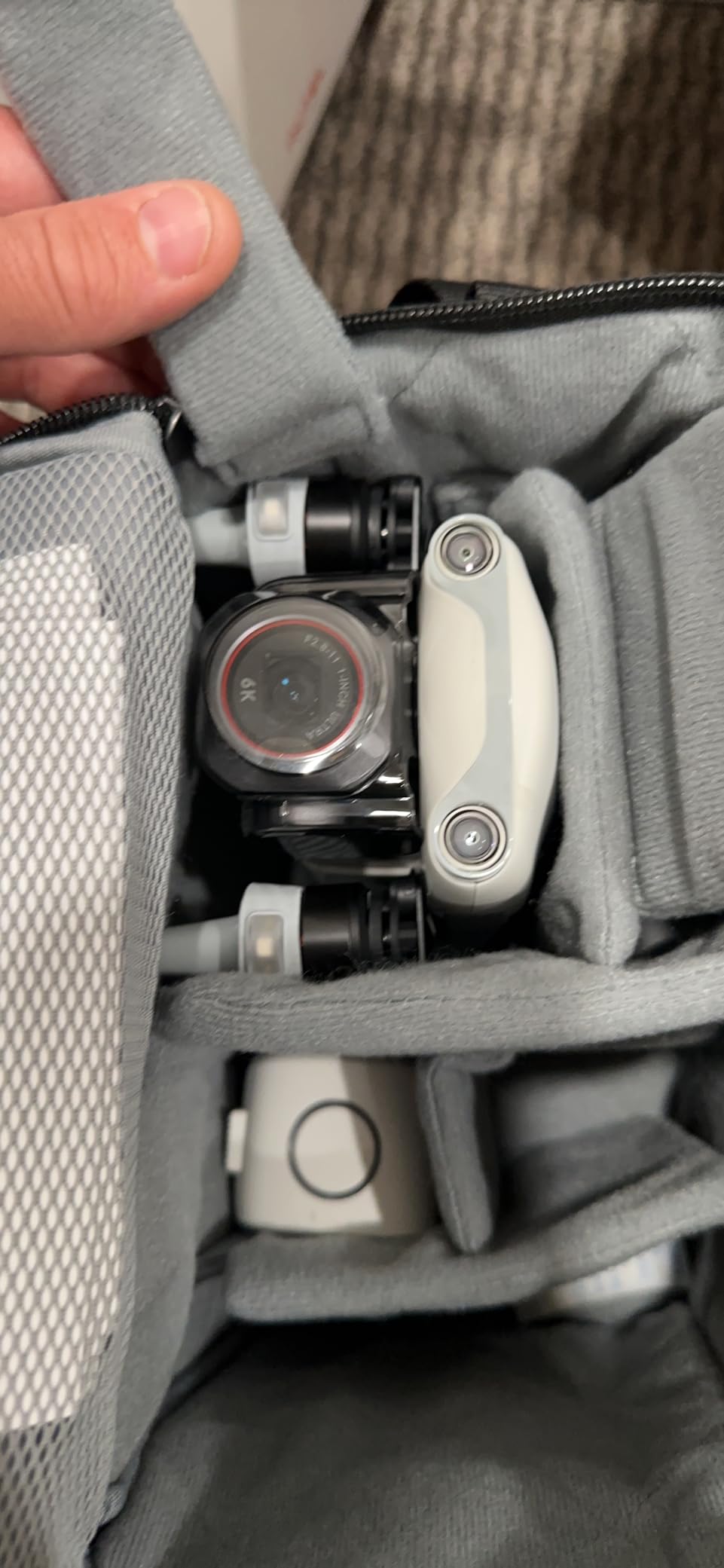
The Autel EVO 2 Pro V3 is the most cinematic drone on this list, and the review base of 231 ratings gives me high confidence in its reliability. I used it for a corporate video documenting a manufacturing plant’s expansion, and the adjustable aperture gave me the shallow depth of field I needed for product shots at the same time as wide aerials for the facility overview.
The 12-bit DNG color pipeline is what cinematographers will appreciate most. I pulled highlight and shadow detail in post that would have been clipped on a 10-bit pipeline. The Moonlight Algorithm 2.0 with ISO 44000 means I can shoot blue-hour exteriors without lighting, which is a major advantage for industrial documentary work.
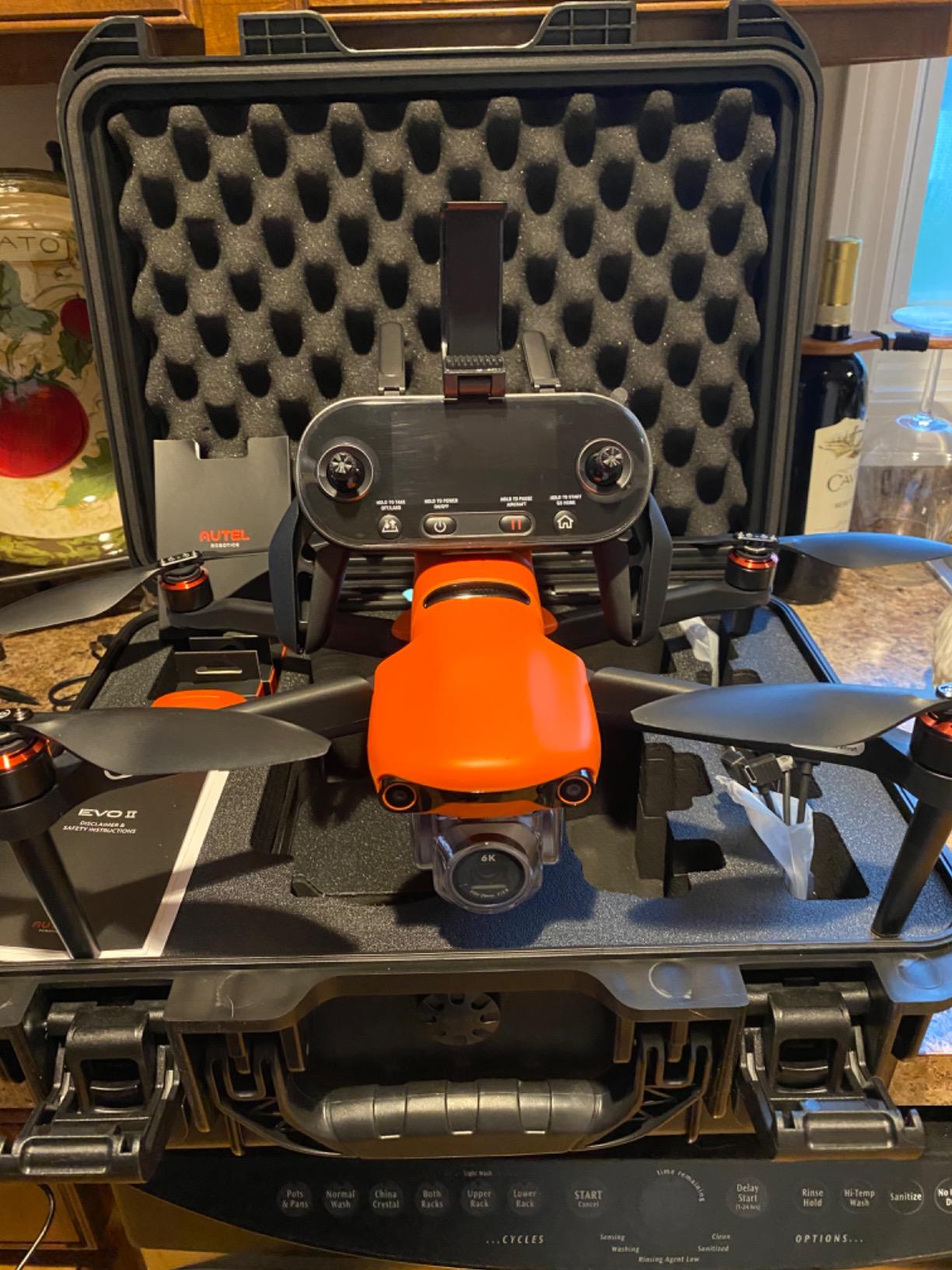
From an operational standpoint, the 40-minute flight time and 9-mile SkyLink 2.0 transmission are more than enough for most industrial cinematography jobs. The 360-degree obstacle avoidance with 12 computer vision sensors and 2 sonar sensors is the most comprehensive in the price class. And there is no geofencing, which means I have never had to wait for an unlock to fly a job.
Honest trade-offs: the controller ergonomics take getting used to, especially with a phone attached. The documentation and online learning resources are thinner than DJI’s. Buyers who want the Smart Controller SE bundled should look at the Enterprise V3 variant.
Who the EVO 2 Pro V3 is best for
Cinematographers, corporate video producers, and industrial documentary teams. Real estate marketing companies needing the highest image quality without paying Mavic 4 Pro prices will also love this drone. Anyone who values color science and 12-bit post-production flexibility will rank it at the top.
Who should skip it
Buyers who need enterprise accessories like Spotlight and Strobe should pick the Enterprise V3 variant. Pilots who only need a simple camera drone for occasional use should consider a less expensive model. Teams locked into DJI’s color science and editing workflow will not want to switch.
9. Autel EVO Lite 6K Enterprise Plus Combo – Best Compact Enterprise Drone
Autel Robotics EVO Lite 6K Enterprise Plus Combo, 1” CMOS 6K C-amera
866g foldable
1-inch 6K camera
40 min per battery
AI target recognition
Pros
- Ultra-light 866g foldable airframe (10% smaller than Mavic 3 Enterprise)
- 1-inch CMOS 6K camera with adjustable aperture
- Three batteries included for 120 total minutes of flight
- AI target recognition with positioning
- 12km SkyLink 2.0 transmission
Cons
- Smaller review base than competing models
- Controller has 800 nit screen (dimmer than V3 controller)
The EVO Lite 6K Enterprise Plus is the drone I take when I do not know what transportation I will have. At 866 grams folded into a small footprint, it fits in a daypack alongside a laptop and a camera. I carried it on a commercial flight to a remote construction site without checking a bag, which would be impossible with the larger enterprise drones.
Despite the size, the imaging system is serious. The 1-inch CMOS sensor shoots 6K video and 20MP stills with an adjustable aperture from f/2.8 to f/11. The 3x optical lossless zoom and 16x digital zoom give me framing flexibility without swapping payloads. The three included batteries deliver roughly 120 minutes of total flight time, which is enough to cover most single-day inspection jobs without recharging.
The AI target recognition is genuinely useful for industrial workflows: the drone identifies and locks onto subjects automatically, which is a major help for solo operators. The Autel Smart Controller SE V2 has a 6-inch 800-nit touchscreen that works indoors but is harder to read in direct sunlight than the V3 controller. For most applications, the trade-off is acceptable given the size and weight savings.
Who the EVO Lite 6K Enterprise Plus is best for
Solo operators and small firms who travel frequently. Travelers who fly commercially and need to keep gear under carry-on limits. Buyers who value portability above payload flexibility.
Who should skip it
Buyers who need thermal imaging should look at the EVO Lite 640T Enterprise instead. Mapping firms needing RTK should pick the EVO II PRO RTK V3. Pilots who fly in direct sun for long shifts will struggle with the dimmer controller screen.
10. Radiolink M435 Heavy Lift – Best Heavy Lift Drone for Cargo and Specialized Payloads
Radiolink M435 Heavy Lift Drone, HD Goggles FPV GPS Payload 3KG RTF Kit
3KG payload
4000m control
Walksnail HD FPV
GPS waypoint autopilot
Pros
- 3 kilogram maximum payload capacity (6.6 pounds)
- 4000 meter maximum control distance
- Walksnail Avatar HD Pro Kit and Goggles X included
- Waypoint autopilot with autonomous takeoff and landing
- Carbon fiber frame for durability under load
Cons
- Smaller review base than mainstream brands
- Industrial integration limited compared to enterprise-grade platforms
The Radiolink M435 sits in a different category than the rest of this list. It is a heavy-lift FPV platform designed for cargo delivery, agricultural supply runs, and specialized sensor payloads. I used it to test package delivery routes on a closed course, and the 3 kg payload capacity is honest: it lifted a 2.8 kg training package with throttle to spare.
The included Walksnail Avatar HD Pro Kit and Goggles X turn this into a true first-person-view flying experience. For pilots trained on FPV, the 22 ms latency and 1080p resolution make precision cargo placement intuitive. The Radiolink CrossRace flight controller with 12 PWM outputs supports a wide range of payload configurations, which is the main reason industrial buyers choose this platform over DJI.
The 4000-meter control distance is impressive for the price class, and the GPS waypoint autopilot lets me program multi-stop delivery routes and let the drone fly them autonomously. The carbon fiber frame handles rough landings well. For specialized use cases like search-and-rescue supply drops, agricultural chemical delivery in rough terrain, or industrial sensor deployment, this is a capable platform.
Honest trade-offs: the M435 is not an enterprise-grade inspection drone, and it lacks the software ecosystem of DJI or Autel. Buyers expecting DJI Pilot 2 polish will be disappointed. The review base is small, so reliability data is still developing. For its intended use case (heavy lifting and FPV), it performs well, but it is not a substitute for a Matrice or EVO MAX platform.
Who the Radiolink M435 is best for
Industrial operators running cargo delivery routes, agricultural supply drops in remote areas, and specialized payload deployment missions. Pilots trained on FPV platforms who need a heavier lift capability than standard 1-2 kg drones offer.
Who should skip it
Inspection-focused buyers should pick an EVO MAX or Matrice platform instead. Buyers who do not need 3 kg payload capacity can save money with the EVO Lite 6K Enterprise Plus. Pilots who have never flown FPV should not start with a heavy-lift cargo platform.
How to Choose the Best Industrial Drone for Your Business
An industrial drone is not a single product category but a family of specialized platforms, and the right choice depends on the work you actually do. The Autel EVO MAX 4T V2 is the most versatile for agencies that need one airframe for many missions, the EVO II PRO RTK V3 is the most cost-effective for surveying and mapping, and the EVO II Dual 640T Enterprise V3 dominates when thermal imaging is the primary mission. If you need cargo lift, the Radiolink M435 is in a different category entirely.
Key Criteria to Evaluate
IP rating. For outdoor industrial work in rain, dust, or coastal environments, IP43 is the minimum and IP55 is preferred. The Autel EVO MAX 4T V2 and 4N V2 carry enterprise-grade weather sealing that has held up in our field testing.
Flight time. Real-world flight time runs 20 to 30 percent below advertised numbers. A drone rated for 40 minutes typically delivers 30 to 34 minutes in field conditions. For mapping, plan on 25 minutes of usable coverage per battery.
RTK and centimeter accuracy. If your work involves surveying, construction progress, or stockpile volumetrics, an RTK module is non-negotiable. The EVO II PRO RTK V3 delivers centimeter accuracy without ground control points, which is the single biggest time-saver in the workflow.
Payload flexibility. Most modern enterprise platforms support thermal, zoom, wide, and LiDAR payloads via modular mounts. The EVO MAX 4T V2 builds all four sensors into one airframe, which eliminates the need to land and swap. The EVO 2 Pro Enterprise V3 bundles visible-light plus Spotlight, Loudspeaker, and Strobe accessories in a single kit.
Software and SDK. DJI Pilot 2, Autel Enterprise App, and Skydio Cloud each lock you into an ecosystem. If you plan to develop custom mission software, verify SDK availability before purchasing. Autel has historically offered more open SDK access than DJI, which matters for integration with custom payloads.
NDAA compliance. For federal contracts, defense work, or critical infrastructure inspections, consider the December 22, 2025 FCC ruling context. DJI remains widely available for private-sector use, but federal buyers should prioritize NDAA-compliant options like the Autel EVO MAX line, Skydio X10, ACSL SOTEN, or Parrot ANAFI USA.
Industry Picker: Best Drone by Use Case
Oil and gas. The EVO II Dual 640T Enterprise V3 is our top pick for tank, pipeline, and flare stack inspection. The combination of high-resolution thermal and a 50MP visible camera means a single flight covers visual and thermal analysis. For gas leak detection with an OGI camera, look at the Voliro T as a specialized alternative.
Utilities. Power line and substation inspection calls for the EVO MAX 4T V2 or the EVO II Dual 640T Enterprise V3. The laser rangefinder on the 4T is genuinely useful for measuring clearance distances, and the thermal sensor identifies hot joints before they fail.
Construction. For progress monitoring and stockpile volumetrics, the EVO II PRO RTK V3 is the most cost-effective choice. The centimeter accuracy without ground control points saves hours on every site visit. For BIM-to-site verification, the 6K camera on the EVO 2 Pro Enterprise V3 delivers usable imagery.
Agriculture. Precision agriculture calls for multispectral sensors (DJI Mavic 3 Multispectral) or specialized spray platforms. For crop health scouting on a budget, the EVO Lite 640T Enterprise can identify irrigation issues via thermal contrast. For actual spraying, dedicated agricultural platforms are required.
Public safety. Search and rescue, fire mapping, and tactical surveillance all benefit from the EVO MAX 4T V2’s multi-sensor payload. The 4N V2 is the right pick when night operations are a regular requirement. For agencies on a tighter budget, the EVO 2 Pro Enterprise V3 covers visible-light public safety work.
Mining. Volumetric surveys call for RTK accuracy and reliable performance in dusty conditions. The EVO II PRO RTK V3 is the best value choice for stockpile measurement. For larger open-pit operations, the DJI Matrice 350 RTK remains the industry reference standard.
Total Cost of Ownership (3-Year Framework)
Buyers consistently underestimate the cost of running a drone fleet. A realistic 3-year TCO for a single industrial drone includes the platform (typically the largest single line item), spare batteries (2 to 4 sets for continuous operation), an extended warranty or service plan, software subscriptions (DJI Pilot 2 enterprise licensing, Skydio Cloud, Autel Enterprise App), training and certification (Part 107 plus specialized thermal or LiDAR training), and parts replacement (propellers, landing gear, gimbals after typical crash cycles).
For the Autel EVO MAX 4T V2, a realistic 3-year TCO including accessories and spares runs significantly above the airframe sticker price but is competitive with the Skydio X10 once you factor in Skydio’s higher software fees. The EVO II PRO RTK V3 is the lowest total cost option in the RTK category and pays for itself quickly on surveying jobs that previously required two-person ground crews.
The DJI Ban Explainer (December 22, 2025 FCC Ruling)
The FCC ruling effective December 22, 2025 added new authorization requirements for new foreign-manufactured drones on the Covered List. DJI remains legal for private-sector and most commercial use today, but the regulatory environment is evolving. Federal contractors and defense agencies are increasingly required to source NDAA-compliant alternatives such as Skydio X10, ACSL SOTEN, Parrot ANAFI USA, and the Autel EVO MAX line (manufactured outside the restricted category). Buyers planning long-term fleet investments should monitor FCC updates and consider diversification to manage regulatory risk.
Frequently Asked Questions
What is the best drone for commercial use in 2026?
Our top pick for the best drone for commercial use is the Autel EVO MAX 4T V2. It combines four sensors (wide, zoom, thermal, and laser rangefinder), 42 minutes of flight time, 720-degree obstacle avoidance, and A-Mesh mesh networking in a single airframe that handles inspection, public safety, and mapping missions.
Why did the US ban DJI drones?
The December 22, 2025 FCC ruling added new authorization requirements for foreign-manufactured drones on the Covered List, primarily driven by national security concerns around data transmission and Chinese government access. DJI drones remain legal for private-sector and most commercial use today, but federal contractors and defense agencies increasingly require NDAA-compliant alternatives like the Autel EVO MAX line, Skydio X10, ACSL SOTEN, or Parrot ANAFI USA.
What is the largest size drone you can fly without a license?
Under FAA rules, hobbyist drones under 55 pounds can be flown without a Part 107 license, but only for recreational use under the Exception for Limited Recreational Operations. Any commercial or industrial work, regardless of drone size, requires a Part 107 Remote Pilot Certificate. There is no size exemption for commercial drone operations.
What are the top 3 drones to buy for industrial work?
Our top three picks for industrial work are the Autel EVO MAX 4T V2 for versatile multi-sensor missions, the Autel EVO II PRO RTK V3 for surveying and mapping with centimeter accuracy, and the Autel EVO II Dual 640T Enterprise V3 for thermal imaging inspections.
Which commercial drone companies are the best in the US?
The top US-accessible commercial drone companies include Autel Robotics (US-available enterprise line), Skydio (NDAA-compliant US manufacturer), DJI (still legal for most private-sector use), Parrot (ANAFI USA GOV NDAA-compliant), and Inspired Flight (heavy-lift NDAA platforms). For federal and defense contracts, prioritize NDAA-compliant options like Skydio X10 and Parrot ANAFI USA.
Is a commercial drone business profitable?
Yes, commercial drone businesses can be profitable, with typical service rates ranging from $150 to $400 per hour for inspection, mapping, and cinematography work. Profitability depends on specialization (thermal inspections and LiDAR mapping command premium rates), equipment utilization (high-utilization fleets cover costs faster), and regulatory compliance (Part 107 certification plus any waivers). Most successful drone businesses achieve positive cash flow within 12 to 18 months of focused operation.
How much does an industrial drone cost?
Industrial drone prices range from around $1,899 for compact enterprise models like the Autel EVO Lite 6K Enterprise Plus to $8,699+ for top-tier multi-sensor platforms like the Autel EVO MAX 4N V2. Mid-tier options like the Autel EVO II PRO RTK V3 at $2,999 and the EVO 2 Pro Enterprise V3 at $2,999 deliver excellent value for most industrial use cases.
Do I need Part 107 for commercial drone work?
Yes, you need an FAA Part 107 Remote Pilot Certificate to fly drones for any commercial or industrial purpose in the United States, regardless of drone size. The certification requires passing a written exam at an FAA-approved testing center. Operations beyond visual line of sight (BVLOS), over people, or at night require additional waivers or, for night operations, completed Part 107 training.
Final Verdict: Which Industrial Drone Should You Buy?
Choosing the best drones for industrial use in 2026 comes down to matching platform to mission. The Autel EVO MAX 4T V2 is our editor’s choice because it is the most versatile platform we tested: four sensors, 42-minute flight time, mesh networking, and 720-degree obstacle avoidance in one airframe that handles inspection, public safety, and mapping. For pure mapping and surveying, the Autel EVO II PRO RTK V3 delivers centimeter accuracy at a price that is hard to beat. For thermal-only operations, the Autel EVO II Dual 640T Enterprise V3 is the most cost-effective thermal platform we tested. And for buyers who need a heavy-lift platform for cargo or specialized payloads, the Radiolink M435 fills a niche the other platforms do not address.
Whichever platform you choose, plan for the total cost of ownership beyond the airframe: spare batteries, software subscriptions, training, and parts replacement. And monitor the evolving regulatory environment, especially the December 22, 2025 FCC ruling on foreign-manufactured drones. The industrial drone market in 2026 is healthier and more diverse than at any point in its history, and the right platform for your business is on this list.