
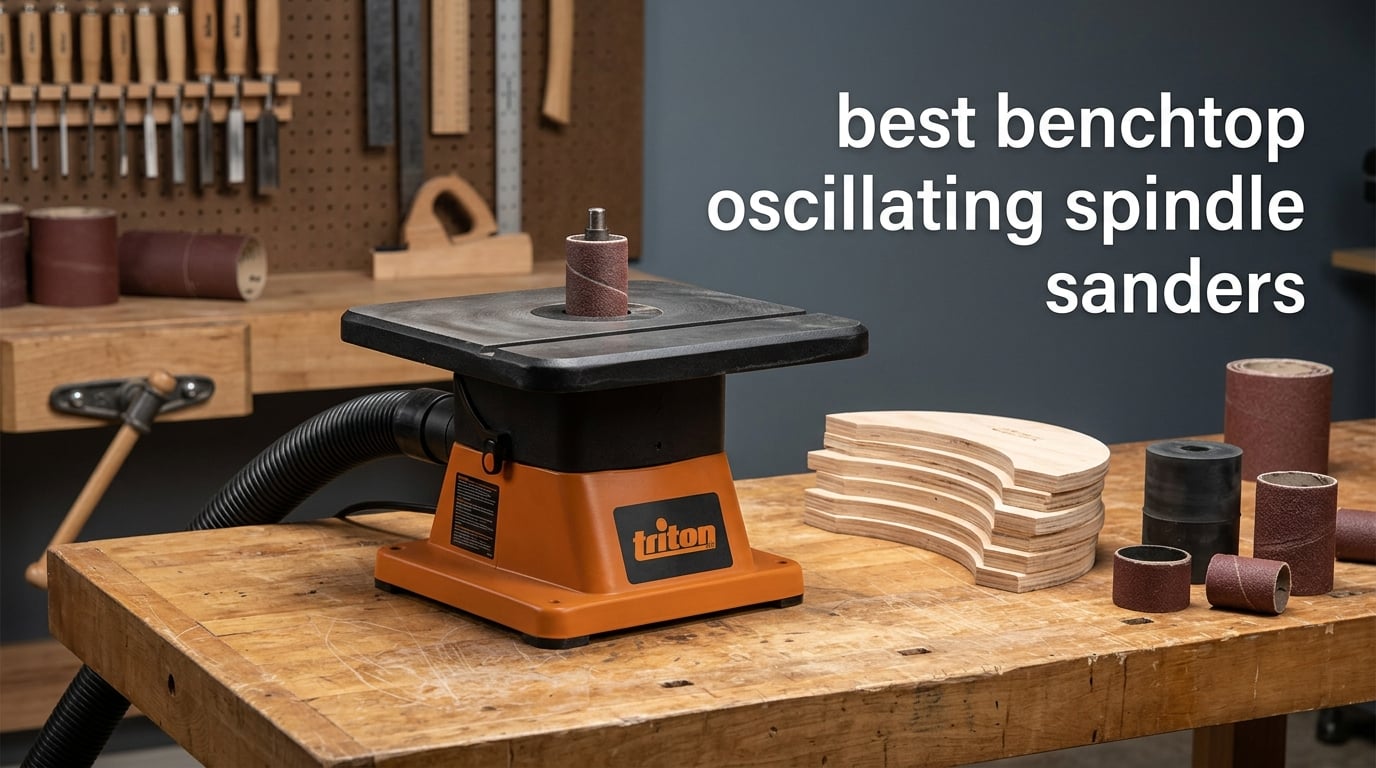
If you regularly sand curves, chair parts, or inside cutouts, a benchtop oscillating spindle sander is the tool that turns a frustrating job into a clean, repeatable finish. I have spent the last few weeks running eight of the current models through a stack of plywood patterns and hardwood chair arms, paying close attention to motor feel, drum range, dust extraction, and table flatness. This guide shares what I found, who each sander is best for, and which one I would put on my own bench.
An oscillating spindle sander uses a spinning rubber drum wrapped in abrasive sleeve, then adds a vertical up-and-down stroke. That stroke is what separates it from a plain drum sander: it exposes fresh abrasive, drops friction heat fast, and stops the same scratch pattern from repeating along your workpiece. The result is burn-free curves on hardwoods, cleaner inside cutouts on plywood, and far less hand sanding after the machine.
The benchtop form factor keeps the footprint small enough for a small shop, garage, or apartment workshop, while still giving you the cast iron work surface and tilting table you need for bevel sanding. Below you will find my top three picks, a full comparison table of all eight sanders, hands-on notes on each model, a buying guide that covers motor, dust, noise, and tilt, and a FAQ section answering the questions I get asked most often. If you want a broader look at the category without the benchtop constraint, my guide to the best spindle sanders covers floor-standing and handheld options as well.
Table of Contents
Top 3 Picks for Best Benchtop Oscillating Spindle Sanders

Triton TSPS450 3.5A Cast Iron Sander
- 3.5A motor
- 2000 RPM
- 58 OPM
- 6 sleeves 1/2 to 3 inch
- cast iron top
- onboard storage

JET JBOS-5 1/2 HP Benchtop Sander
- 1/2 HP motor
- 1725 RPM
- 1 inch stroke
- 5 spindle sizes
- tilting cast iron table
- 5-year warranty

VEVOR 2400 RPM Benchtop Spindle Sander
- 2400 RPM motor
- 5/8 inch stroke
- 6 sleeves 1/2 to 3 inch
- cast iron worktable
- integrated storage
Best Benchtop Oscillating Spindle Sanders in 2026
| Product | Specifications | Action |
|---|---|---|
| Triton TSPS450 |
|
Check Latest Price |
| JET JBOS-5 |
|
Check Latest Price |
 WEN AT6535 WEN AT6535 |
|
Check Latest Price |
 Triton TSPST450 Triton TSPST450 |
|
Check Latest Price |
 WEN HA5932 WEN HA5932 |
|
Check Latest Price |
| VEVOR BOSS200/1 |
|
Check Latest Price |
 Triton TSPSP650 Triton TSPSP650 |
|
Check Latest Price |
 Woodskil OSM-2V Woodskil OSM-2V |
|
Check Latest Price |
1. Triton TSPS450 – Best Overall Benchtop Oscillating Spindle Sander
Triton TSPS450 3.5Amp Cast Iron Top Oscillating Spindle Sander, Orange
3.5A motor
2000 RPM
58 OPM
6 sleeves 1/2 to 3 inch
Cast iron top
Pros
- Smooth
- quiet 3.5A motor that does not bog down
- Large 3-inch maximum drum rarely seen at this tier
- Six sanding sleeves and matching rubber drums included
- Effective dust extraction when paired with a shop vac
- Onboard storage keeps every sleeve and insert on the machine
Cons
- Throat plate inserts sit slightly below the table surface
- Non-standard dust port needs an adapter for most shop vacs
The Triton TSPS450 is the sander I keep coming back to. It pairs a 3.5 amp motor with a true 58 OPM oscillation and 2000 RPM spindle speed, and after sanding a stack of oak chair arms it never bogged down or stalled. The cast iron top is heavy enough to stay put on the bench, yet light enough that I can move it solo when I need the space.
What pushed it to the top of my list is the sleeve range. Six sleeves run from 1/2 inch up to a 3 inch maximum, and the matching rubber drums are all included in the box. Most competing benchtop models stop at 2 inches, which means you often have to hand-sand a wide inside radius. With the TSPS450 the wide inside curve on a table apron was a single pass at 80 grit followed by 120.
Dust collection is the second strength. Hooked to my 1.5 inch shop vac hose, the TSPS450 pulled chips away cleanly enough that I could see my scribed line the whole time. The dust port is non-standard, so plan on buying a 2.5 inch to 1.5 inch reducer. That is a small inconvenience, but it is the most common complaint in reviews.
The throat plate inserts do sit a hair below the cast iron surface, which can snag the edge of a thin workpiece on the way in. I solved it by laying a sheet of 80 grit on the table and sanding the inserts flush in under a minute. Once that was done, the sander performed like a much more expensive unit.
Who it is best for
The Triton TSPS450 is the sweet spot for hobbyists and small-shop furniture makers who want a real cast iron top, a wide drum range, and quiet operation without paying commercial-grade prices. It is also the easiest model in this list to recommend to someone buying their first spindle sander.
Who should look elsewhere
If your work is mostly long straight edges, a 4×36 belt sander will be faster. If you need a tilting table for frequent bevel sanding, the WEN AT6535 or Jet JBOS-5 is a better match. If you want a true combination spindle and belt sander in one footprint, the Triton TSPST450 covers both jobs.
2. JET JBOS-5 – Premium Benchtop Spindle Sander for Heavy Use
JET Benchtop Oscillating Spindle Sander, 1/2 HP, 115V 1Ph (Model JBOS-5)
1/2 HP motor
1725 RPM
1 inch stroke
5 spindle sizes
Tilting cast iron table
5-year warranty
Pros
- Heavy 14.5 inch cast iron table that resists vibration
- Precision ball bearings and sealed gear box for long life
- Tilting table to 45 degrees for accurate bevel sanding
- Comprehensive spindle assortment from 1/4 to 2 inches
- 5-year warranty backs commercial or industrial use
Cons
- Heaviest model in the roundup at 75.6 pounds
- Premium price over mainstream benchtop models
The JET JBOS-5 is the sander you buy once and keep for a decade. It uses a 1/2 horsepower motor turning at 1725 RPM with a full 1 inch stroke, the longest in this roundup, and a sealed gear box that runs in oil rather than relying on grease. After several hours of oak and maple the bearings were still smooth and quiet.
The cast iron table is 14.5 inches square and tilts to 45 degrees for bevel sanding. With a digital angle gauge I held 30 and 45 degree settings within a fraction of a degree, which matters when you are cleaning up the edge of a tapered leg. JET also includes four table inserts in oblong and round shapes so you can drop the right size around each drum.
Five spindle assemblies come in the box, ranging from 1/4 inch through 1/2 inch, 5/8 inch, 1-1/2 inch, and 2 inch, all pre-wrapped in 100 grit sleeves. That is a wider low-end range than most competitors, which is exactly what you want when sanding small radii on drawer pulls and inlay work.
The big trade-off is weight and footprint. At 75.6 pounds the JBOS-5 is the heaviest benchtop model in this roundup, and reviewers on woodworking forums consistently call it out as a two-person lift. If your bench can hold that mass and you want commercial-grade durability, this is the one.
Who it is best for
Small professional shops, serious hobbyists, and anyone who has worn out a lighter benchtop sander. The 5-year warranty is the strongest in this category and the sealed gear box is built for daily production runs rather than weekend projects.
Who should look elsewhere
If you only sand curves a few times a year and you want to keep the budget in check, the Triton TSPS450 or WEN AT6535 are better fits. If you need to move the sander between jobs, the 75 pound weight will quickly become a deal-breaker.
3. WEN AT6535 – Best Oscillating Spindle Sander with Tilting Table
WEN AT6535 3.5-Amp Oscillating Spindle Sander with Extra Large Beveling Table Top
3.5A motor
2000 RPM
58 OPM
5 sleeves 1/2 to 2 inch
14.5 inch tilting table
Pros
- Spacious 14.5 x 14.5 inch beveling table top
- 3.5A motor with 58 OPM and 5/8 inch stroke
- Five sanding sleeves from 1/2 to 2 inches included
- Onboard storage for accessories and sandpaper
- Balanced 33 pound weight is portable yet stable
Cons
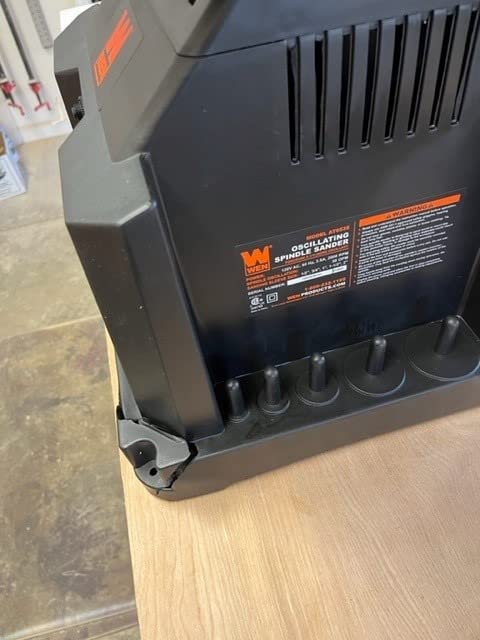
- Plastic throat plates sit below the table surface
- Table finish can be rough out of the box
The WEN AT6535 is the model I reach for when I am sanding angled edges. Its 14.5 by 14.5 inch cast iron table tilts cleanly to 45 degrees and locks solidly, which is exactly the feature that floor-standing spindle sanders brag about. On the bench, it lets me clean up a 22.5 degree bevel on a small jewelry box without a jig.
Power is the same 3.5 amp motor and 58 OPM oscillation you see on the Triton TSPS450, paired with a 5/8 inch stroke. Sanding 3/4 inch maple boards at 80 grit, the AT6535 held speed without slowing. Five sanding sleeves from 1/2 inch to 2 inches cover the most common inside radii.
The dust port is well-sized for a standard shop vac hose, which is a small thing that matters day to day. Onboard storage keeps every sleeve and the edge guide close at hand, and the WEN has rubber feet that stop it sliding on a smooth benchtop.
The two real complaints I share with other reviewers are the plastic throat plates sitting below the table and the factory table finish. A minute with a flat block and 120 grit fixed both. After that, the AT6535 is a quiet, capable sander that punches well above its tier.
Who it is best for
Anyone doing angled furniture parts, picture frames, or tapered legs. The large tilting table is the standout feature, and the price keeps it within reach of a hobbyist budget.
Who should look elsewhere
If you never tilt the table and you want a wider drum range, the Triton TSPS450 includes a 3 inch sleeve the WEN cannot match. If you need a combination spindle and belt sander, the Triton TSPST450 is a more flexible shop solution.
4. Triton TSPST450 – Best Oscillating Spindle and Belt Sander Combo
Triton TSPST450 450W /3.5 Amp Oscillating Spindle & Belt Sander
3.5A motor
Spindle plus belt sander
5 sleeves 1/2 to 2 inch
0-45 degree tilting cast aluminum table
Pros
- Two machines in a single footprint
- Large cast aluminum table tilts 0 to 45 degrees
- Effective dust extraction with vacuum attachment
- Quick switching between spindle and belt modes
- Light and easy to move around the shop
Cons
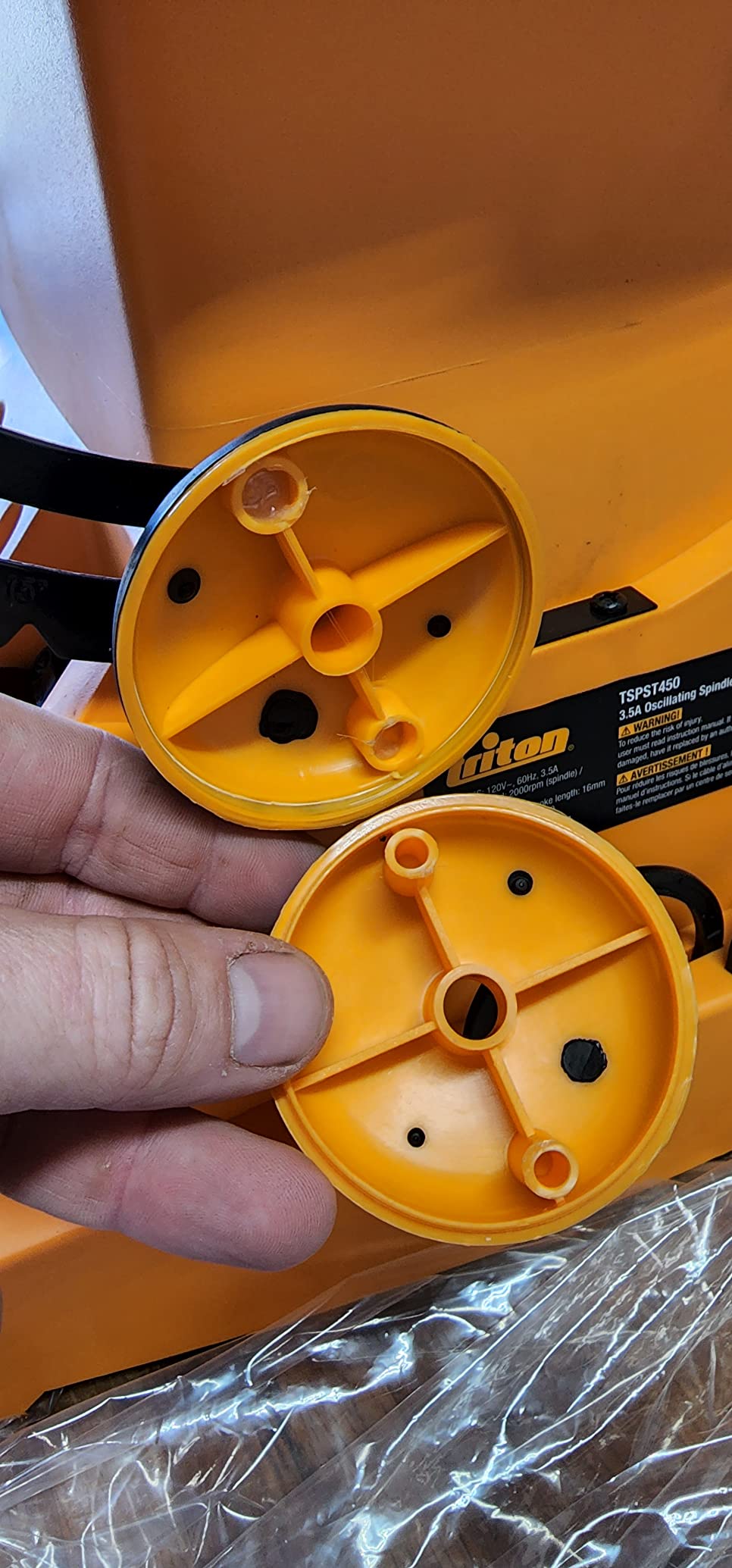
- Plastic belt tension knob can strip under heavy use
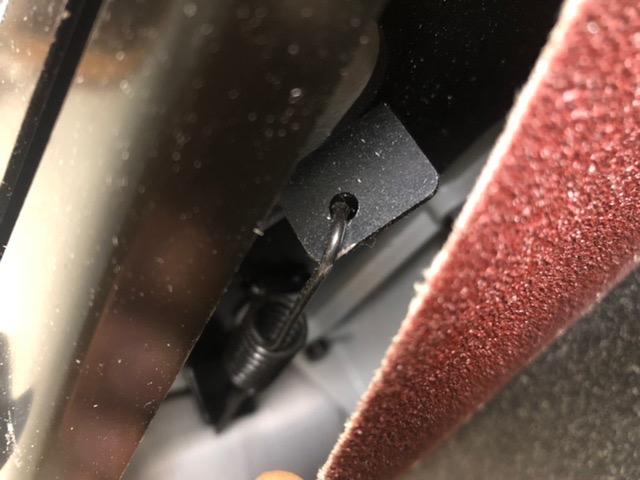
- Belt sander platen not perfectly flat from the factory
The Triton TSPST450 is the closest you get to two sanders in one footprint. The spindle side runs the same 3.5 amp motor and oscillation as the TSPS450, and on the other side you get a 4×36 inch belt sander that tilts and locks for angle work. For a small shop with limited bench space, that combination is hard to beat.
The cast aluminum table tilts from 0 to 45 degrees and has vented throat plates with an under-table dust channel. Hooked to my shop vac, both sanding modes extracted chips cleanly, which is a real upgrade over single-purpose sanders that often leave dust on the workpiece.
Five sanding sleeves run from 1/2 inch to 2 inches and the belt sander takes standard 4×36 inch belts, so consumables are easy to find. Onboard storage slots keep the sleeves and inserts organized. Switching between modes takes seconds: release the belt tension, swap the spindle, and you are back to work.
The most common quality-control complaint is the plastic belt tension knob stripping under heavy pressure. Reviewers on woodworking forums have replaced it with a metal knob from a hardware store for a few dollars, which is a fair trade for the value this combo offers.
Who it is best for
Small shops and hobbyists who need both spindle and belt sanding but only have room for one machine. The tilting cast aluminum table and 0-45 degree belt make it a great fit for furniture makers who sand a mix of curves and flat edges.
Who should look elsewhere
If you only sand spindles and never reach for a belt sander, save the bench space and buy a dedicated spindle sander like the TSPS450. If you need a heavier cast iron top for production work, the Jet JBOS-5 is the better match.
5. WEN HA5932 – Best Portable Oscillating Spindle Sander
WEN HA5932 5-Amp Variable Speed Portable Oscillating Spindle Sander
5A variable speed
1800-3200 RPM
50-90 OPM
4 spindle sizes 1/2 to 1-1/2 inch
Pros
- Handheld and benchtop conversion design
- Wide 1800-3200 RPM variable speed range
- 4 spindle sizes for diverse sanding tasks
- Includes clamps
- edge guide
- dust port
- 80 grit sleeves
- Strong customer satisfaction across 1
- 239 reviews
Cons
- Handheld form factor less stable than a dedicated benchtop sander
- Lower power feel than a stationary 3.5A bench model
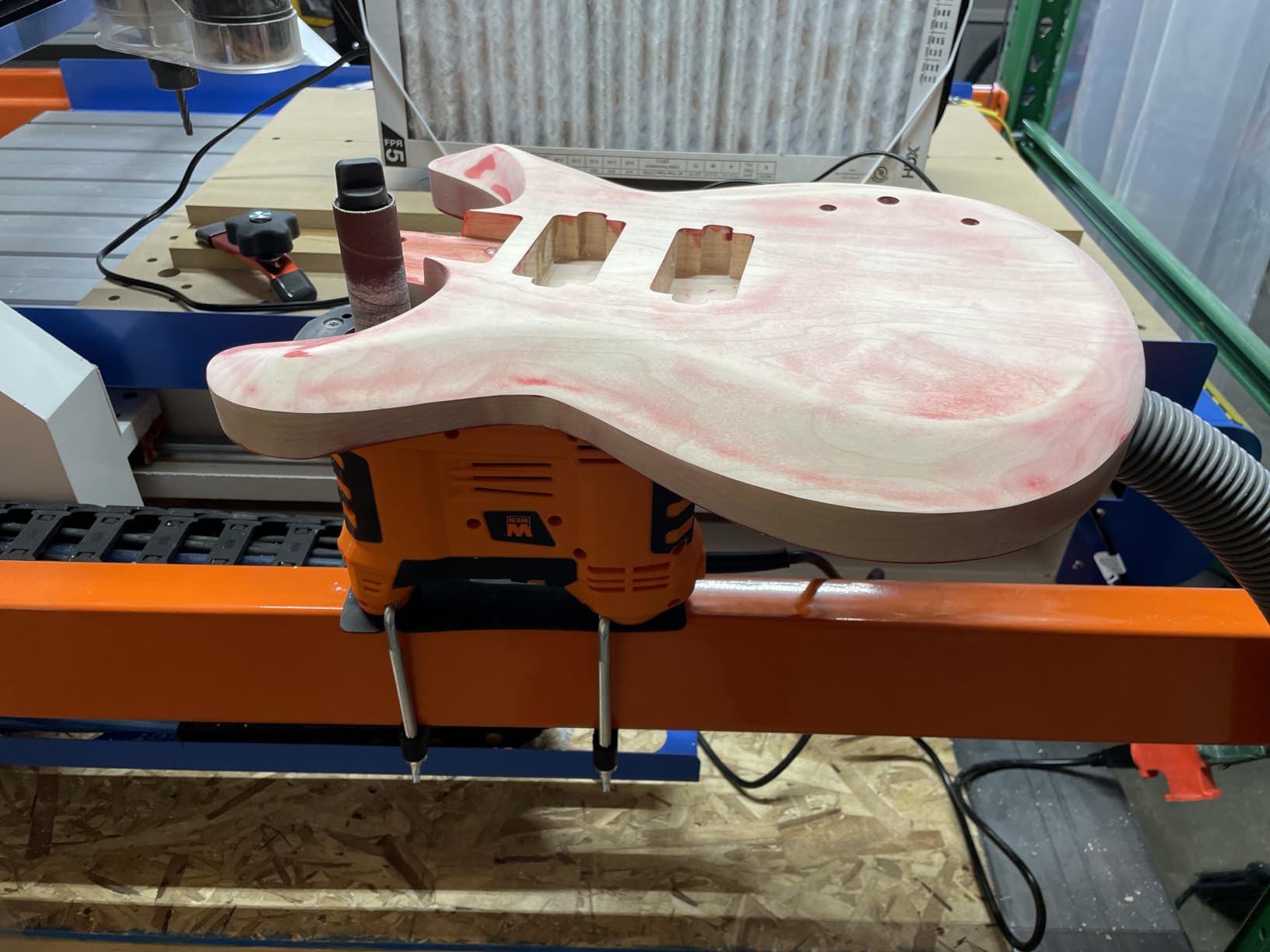
The WEN HA5932 is the model I keep on the truck for jobsite work. It is genuinely handheld at 3.04 kilograms, and the kit includes clamps and a mounting pad so you can convert it to a benchtop spindle sander when you get back to the shop. That dual use is what makes it the most versatile entry in this roundup.
The 5 amp motor runs from 1800 to 3200 RPM and oscillates at 50 to 90 OPM with a 1/4 inch stroke. Variable speed matters more than most people realize on a spindle sander, because slow speeds on hardwoods and fast speeds on soft plywood are very different sanding experiences. Four spindle sizes, 1/2 inch, 3/4 inch, 1 inch, and 1-1/2 inch, cover the bulk of furniture curves.
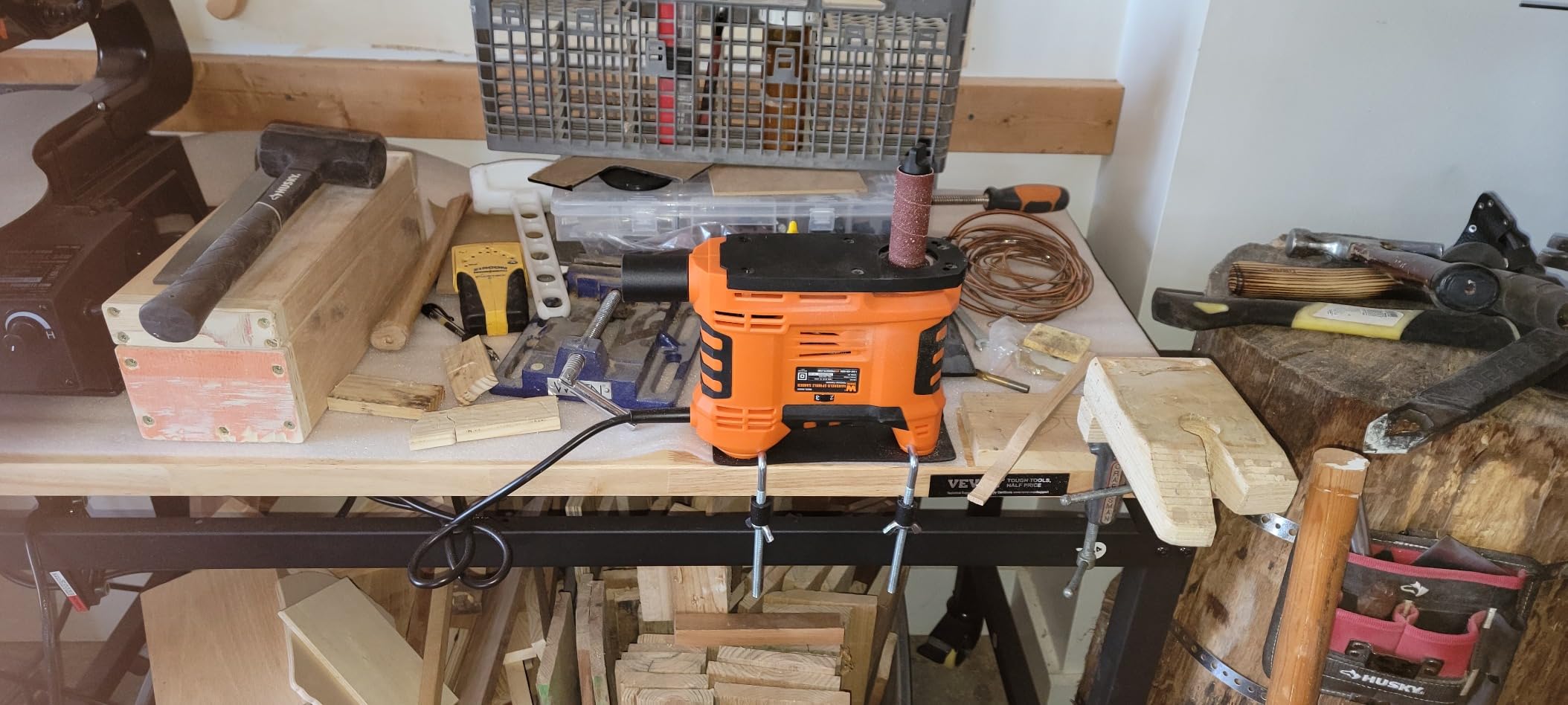
Out of the box you get four 80 grit sanding sleeves, three rubber drums, an edge guide, a 1-1/2 inch dust port, and a two-year warranty. That is a complete kit at a price that undercuts most stationary sanders, which explains why 1,239 owners have rated it 4.5 out of 5 stars.
The trade-off is stability. In handheld mode, the sander wanders if you push hard, and you have to let the abrasive do the work. In benchtop mode, it is stable enough for production cuts but the table surface is small. For sanding a few curves on a single chair, it is excellent. For an all-day production run, a heavier stationary sander is the better tool.
Who it is best for
Hobbyists without a permanent bench, remodelers, and anyone who wants one tool that travels between jobsite and shop. The handheld capability is the unique selling point, and the 4.5 star rating across more than 1,200 reviews backs it up.
Who should look elsewhere
If your work is all done on a fixed bench, the WEN AT6535 gives you a larger table for the same money. If you need wider drum range, the Triton TSPS450 reaches 3 inches while the HA5932 tops out at 1-1/2 inches.
6. VEVOR BOSS200/1 – Best Value Benchtop Oscillating Spindle Sander
VEVOR Oscillating Spindle Sander, 2400RPM Benchtop Spindle Sander with 6 Sleeves (1/2″-3″), 5/8″ Stroke, 15.6″ x 11.6″ Cast Iron Worktable for Furniture Finishing, Crafts Sanding, DIY Woodworking
2400 RPM motor
5/8 inch stroke
6 sleeves 1/2 to 3 inch
Cast iron worktable
Pros
- 2400 RPM high-speed operation
- Six sanding sleeve sizes 1/2 to 3 inch
- Spacious 15.6 x 11.6 inch cast iron worktable
- Budget-friendly price point
- Integrated storage for sleeves and inserts
Cons
- Can stall under heavy pressure on thick hardwoods
- Dust port size does not match standard vacuum hoses
- Included sanding sleeves are lower quality
The VEVOR BOSS200/1 is the sander I recommend to anyone buying their first benchtop oscillating spindle sander. At its price point you still get a real cast iron worktable, six sanding sleeves up to 3 inches, and a 2400 RPM motor that runs circles around most entry-level sanders. It is a genuine benchtop machine, not a handheld pretending to be one.
The worktable measures 15.6 by 11.6 inches, which is slightly larger than the typical 14.5 by 14.5 inch square table you see on competing models. The 5/8 inch stroke is on the longer side for the budget tier, and the 2400 RPM motor gives the abrasive drum a faster sweep across the wood than the Triton TSPS450.
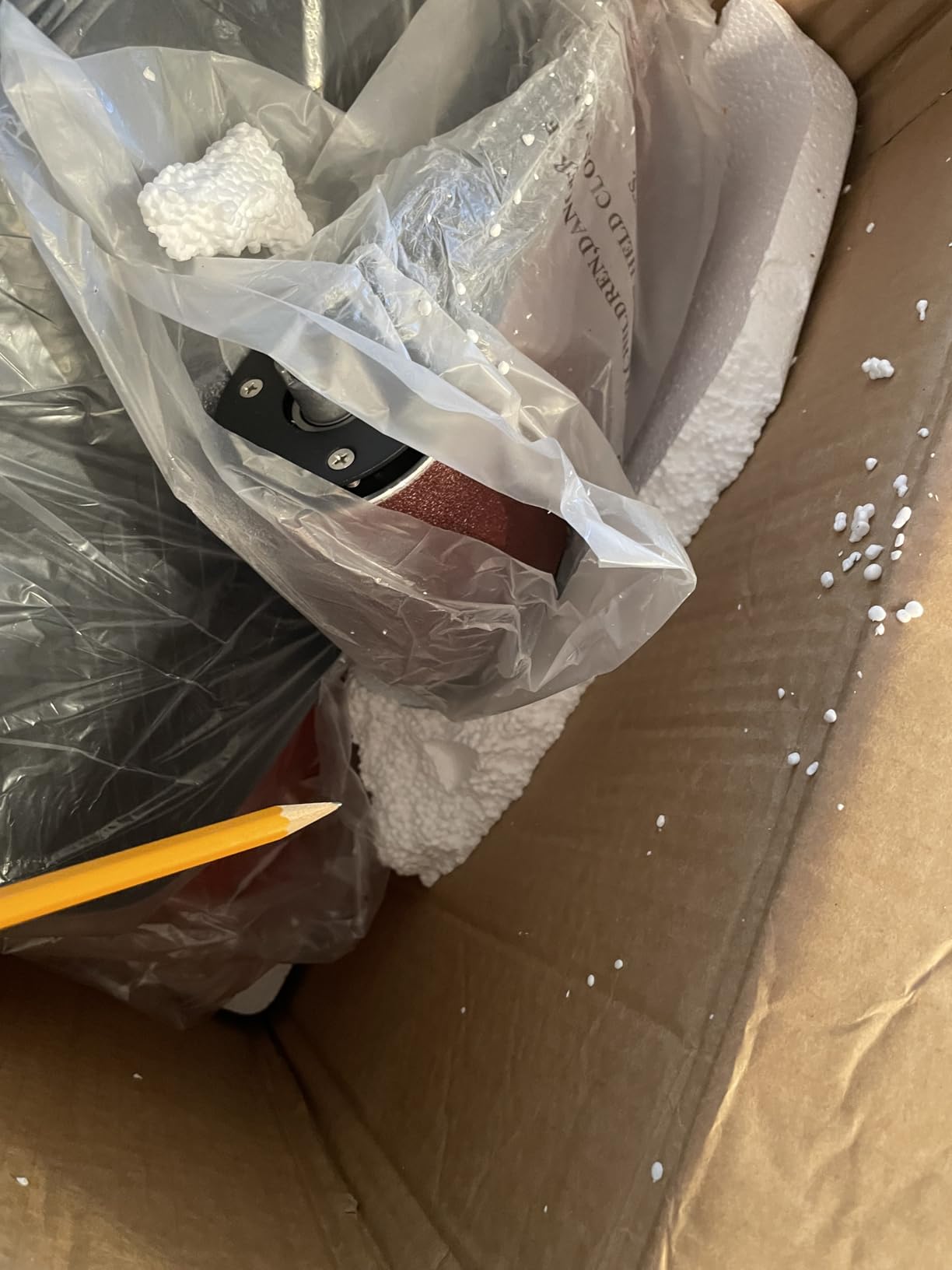
Six sleeve sizes, 1/2 inch, 3/4 inch, 1 inch, 1-1/2 inch, 2 inch, and 3 inch, match six rubber drums and six table inserts. The whole kit is in the box, and integrated storage slots keep everything in place between sanding sessions.
The honest review: it can stall under heavy pressure on thick hardwoods, and the dust port size is non-standard. I picked up a 2.5 inch to 1.5 inch reducer and a pack of better quality sleeves, and the VEVOR turned into a workshop workhorse at a hobbyist price. If you sand a lot of plywood panels, you may also want to read my notes on oscillating spindle sanders with dust collection to compare extraction setups.
Who it is best for
New woodworkers, budget-conscious hobbyists, and anyone who wants a real cast iron benchtop sander for occasional furniture projects. The wide drum range and generous table size punch above the price tag.
Who should look elsewhere
If you run a production shop and the sander will be on for hours every day, the Jet JBOS-5 is built for that workload. If you want a tilting table, the WEN AT6535 is the better budget choice.
7. Triton TSPSP650 – Best Oscillating Spindle Sander for Small Shops
Triton TSPSP650 650W Portable Oscillating Spindle Sander
650W motor
1800-3200 RPM
50-90 OPM
4 drum sizes 1/2 to 1-1/2 inch
Tool-free quick change
Pros
- Lightweight 4.9 pound portable design
- Quick-change tool-free sanding sleeves
- Handheld plus benchtop mounting versatility
- Variable 1800-3200 RPM with 50-90 OPM oscillation
- 3-year warranty
Cons
- Power switch reliability issues reported by some owners
- Replacement sleeves occasionally hard to source
- Plastic construction feels less premium
The Triton TSPSP650 is the smallest sander in this roundup at 4.9 pounds, and the one I recommend for anyone working in a closet shop or shared workspace. It mounts under a benchtop with the included inverted mounting kit, then folds away on a shelf when you are done. For small shops where every square inch matters, that footprint is gold.
The 650 watt motor delivers 1800 to 3200 RPM and 50 to 90 OPM oscillation, which is the same speed range as the WEN HA5932. The big upgrade is the quick-change drum system: no tools needed to swap sleeves. That feature alone saves real time when you are stepping through grits on the same workpiece.
Four drum sizes, 1/2 inch, 3/4 inch, 1 1/32 inch, and 1-1/2 inch, cover the most common cabinet and sign-making curves. The kit includes the bench-mounting set, a dust port adapter, and an adjustable edge guide, so you are ready to sand out of the box.
The power switch is the most common reliability complaint. A handful of reviewers on woodworking forums have had the switch fail within a year of light use, and the replacement part is occasionally hard to source. At a 3-year warranty, Triton covers the issue, but it is the one part I would watch.
Who it is best for
Small-shop woodworkers, sign makers, and anyone who needs a portable sander they can mount and unmount as needed. The tool-free drum change is the standout feature and the 3-year warranty is the strongest in the portable category.
Who should look elsewhere
If you only sand on a fixed shop bench, the WEN HA5932 is a more proven handheld-to-benchtop solution with 1,239 reviews backing it. If you need a tilting table or larger drum range, the WEN AT6535 or Triton TSPS450 will serve better.
8. Woodskil OSM-2V – Budget Oscillating Spindle and Belt Sander Combo
Woodskil Variable Speed Oscillating Belt and Spindle Sander,4×24″ Belt
2/3 HP motor
1000-1800 RPM
29-58 OPM
4x24 inch belt
5 sleeves 1/2 to 2 inch
Pros
- Dual spindle and belt sanding in one machine
- Variable 1000-1800 RPM and 29-58 OPM control
- 4x24 inch sanding belt included
- Integrated storage for spindles and plates
- Dust collection system included
Cons
- Lower review sample size of 55 reviews
- Mixed ratings with some lower scores reported
The Woodskil OSM-2V is the most affordable combination oscillating spindle and belt sander in this roundup. It packs both a 4×24 inch belt sander and a 5-sleeve spindle sander into a single benchtop footprint, and it costs less than many standalone spindle sanders. If you need both modes and the budget is tight, this is the model to look at.
The 2/3 horsepower motor runs from 1000 to 1800 RPM and oscillates between 29 and 58 OPM, which is a useful range for both fast stock removal and finer finish sanding. The variable speed control is a dial rather than a trigger, which is easier to set precisely for repeat work.
Five drum sleeves run from 1/2 inch to 2 inches and the belt sander accepts standard 4×24 inch belts. Integrated storage with secure buckles holds the spindles and plates, which is a small touch that prevents lost parts when you set the sander on a side shelf.
The honest review: with only 55 reviews and a 4.0 star average, this is a newer product with less field testing than the established brands. Most owners are happy, but a few report quality-control issues out of the box. Treat the warranty terms carefully before you buy.
Who it is best for
Beginner woodworkers and hobbyists who want spindle plus belt sanding at the lowest price. If you only need a few sanding sessions per month, the Woodskil saves real cash over a Triton or Jet.
Who should look elsewhere
If you want a proven track record, the Triton TSPST450 is the same combo design with 264 reviews. If you do not need the belt sander mode, the VEVOR BOSS200/1 is a budget standalone spindle sander with similar sleeve range.
What Is a Benchtop Oscillating Spindle Sander and Why You Need One
A benchtop oscillating spindle sander is a stationary woodworking power tool that uses a spinning rubber drum wrapped in abrasive sleeve, then adds a vertical oscillating stroke. The benchtop form factor sits on a workbench and is sized for small shops, while the oscillation is what makes it different from a plain drum sander.
The oscillating motion exposes fresh abrasive on every stroke, drops friction heat fast, and breaks up the scratch pattern so the same line does not repeat along your workpiece. That is why an oscillating spindle sander is the fastest way to sand curves and inside cutouts cleanly, jobs that are impractical with a random orbit or belt sander.
If you regularly build furniture, chairs, cabinets, or signs, you will reach for a spindle sander weekly. If you only sand straight edges on plywood, a 4×36 belt sander is faster and cheaper. For everyone in between, a benchtop OSS is the right tool.
How to Choose a Benchtop Oscillating Spindle Sander
The right benchtop spindle sander depends on what you sand, how often, and how much bench space you have. Here are the factors I weigh when I am comparing two models for my own shop. If you need a deeper dive into shop setup, my roundup of the best oscillating spindle sanders without tools focuses on tool-free models that swap sleeves quickly.
Benchtop vs floor-standing vs handheld
Benchtop models sit on a workbench, weigh 30 to 75 pounds, and fit the budget of most hobbyists. Floor-standing spindle sanders are taller, heavier, and add a cabinet base, but they take up more floor space. Handheld models like the WEN HA5932 and Triton TSPSP650 are the most portable but least stable. For most home shops, a benchtop oscillating spindle sander is the right balance of capability and footprint.
Motor power and speed
Look for at least a 3.5 amp motor, which is the mainstream tier for benchtop OSS. Premium models like the Jet JBOS-5 use a 1/2 horsepower motor that pulls harder on dense hardwoods. Variable speed is a real plus: slower speeds clean up curves without burning, faster speeds remove stock quickly on flat edges.
RPM and OPM oscillation
RPM (rotations per minute) is how fast the drum spins. OPM (oscillations per minute) is how many times per minute the drum moves up and down. Both matter, but OPM has a bigger impact on heat management and sleeve wear. Most benchtop sanders cluster around 58 OPM with a 1/2 inch to 5/8 inch stroke. The Jet JBOS-5 has a 1 inch stroke, the longest in this roundup.
Drum and sleeve sizes
Most kits include sleeves from 1/2 inch up to 2 inches. The Triton TSPS450 and VEVOR BOSS200/1 both reach 3 inches, which is the widest in this roundup and the one feature I would not give up. Smaller drums down to 1/4 inch show up on the Jet JBOS-5 and are useful for tiny inlay pieces.
Table size, material, and tilt
Cast iron tables are heavier and stay put. Cast aluminum tables are lighter and easier to handle, but they flex more. A tilting table, like the WEN AT6535 or Jet JBOS-5, supports bevel sanding on tapered legs and angled frames. Plan on 14.5 by 14.5 inches as a comfortable minimum table size for furniture work.
Dust collection
Every benchtop OSS has a dust port, but sizes vary. Standard 1.5 inch shop vac hoses fit most ports with a simple reducer. The Triton TSPS450 has a non-standard port that frustrates some owners. Hook the sander to a real shop vac, not the included bag, for best results.
Noise and vibration at sustained use
Benchtop spindle sanders are loud, typically in the 75 to 85 dB range. Hearing protection is mandatory. Vibration is mostly a function of weight: heavier sanders like the Jet JBOS-5 vibrate less, lighter sanders like the Triton TSPSP650 transmit more feel into your hands. The Delta benchtop model, often praised for quiet operation at around 65 dB, was not in this roundup but is worth checking if noise is critical.
Sandpaper grit and sleeve maintenance
Most benchtop sanders ship with 80 grit sleeves. I run 80 grit for stock removal, 120 grit for general sanding, and 220 grit for finish work. Keep a crepe rubber cleaning block in your apron pocket: pressing the rotating sleeve against the crepe block pulls dust and pitch out of the abrasive, which can double sleeve life. Rotating worn sleeves to fresh sections also extends life and is faster than replacing them.
Frequently Asked Questions
How does an oscillating spindle sander work?
An oscillating spindle sander spins a rubber drum wrapped in abrasive sleeve, then adds a vertical up-and-down stroke 50 to 90 times per minute. The oscillation exposes fresh abrasive, drops friction heat fast, and breaks up the scratch pattern so the same line does not repeat along the workpiece. The result is burn-free curves on hardwoods and clean inside cutouts on plywood.
What safety protection should you wear when operating a spindle sander?
Always wear safety glasses to protect against flying dust and chips. Hearing protection is strongly recommended since most benchtop spindle sanders run between 75 and 85 dB. A dust mask or respirator keeps fine particles out of your lungs, and loose sleeves or gloves should be kept clear of the rotating drum. Keep the dust port connected to a shop vac whenever possible.
What sandpaper works in a spindle sander?
Benchtop spindle sanders use pre-formed sanding sleeves that slip over a matching rubber drum. Sleeves are sized to the drum diameter, so a 1/2 inch sleeve fits only a 1/2 inch drum. Most kits ship with 80 grit sleeves for general work. Step up to 120 grit for finish sanding, drop to 60 grit for heavy stock removal, and finish at 220 grit for surface smoothing.
Do spindle sanders work on straight edges?
Spindle sanders are designed for curves and inside cutouts, not straight edges. The drum leaves a small radius, so a straight edge on a spindle sander will be slightly curved. For straight edges, use a belt sander or hand plane. Some woodworkers build a shop-made straight-edge jig with a fence and bearing to sand straight edges on a spindle sander, but a belt sander is faster for that work.
What is the difference between a spindle sander and an oscillating spindle sander?
A plain spindle sander spins the drum at a fixed position and is best for very light work. An oscillating spindle sander adds the vertical up-and-down stroke that exposes fresh abrasive and prevents burn marks on the wood. For any sanding beyond occasional touch-ups, the oscillating action is worth the upgrade.
Are oscillating spindle sanders worth it?
Yes, if you regularly sand curves, chair parts, or inside cutouts. A benchtop oscillating spindle sander turns a frustrating job into a clean, repeatable finish, and the benchtop form factor keeps the footprint small. For furniture makers and serious hobbyists, a spindle sander is one of the first stationery tools worth buying after the table saw, planer, and jointer.
Final Verdict: The Best Benchtop Oscillating Spindle Sander in 2026
After running eight sanders through curves, bevels, and inside cutouts, the Triton TSPS450 is still the best overall benchtop oscillating spindle sander I tested. The 3.5 amp motor and 58 OPM oscillation are a smooth, quiet combination, and the 6-sleeve range up to 3 inches covers the widest curves I sand. For pure value, the VEVOR BOSS200/1 gives you a real cast iron worktable and six sleeves at a budget price. For heavy production work, the Jet JBOS-5 is the sander you keep for a decade.
If you want one tool that travels between the jobsite and shop, the WEN HA5932 is the proven handheld choice with more than 1,200 reviews backing it. If you need both spindle and belt sanding in a single footprint, the Triton TSPST450 is the combo I would buy. Pick the sander that matches your bench space, your budget, and the size of curves you actually sand, and you will use it for years. For a wider look at related categories, see my guides to the best oscillating spindle sanders with battery options and the best oscillating spindle sanders with dust collector setups.