
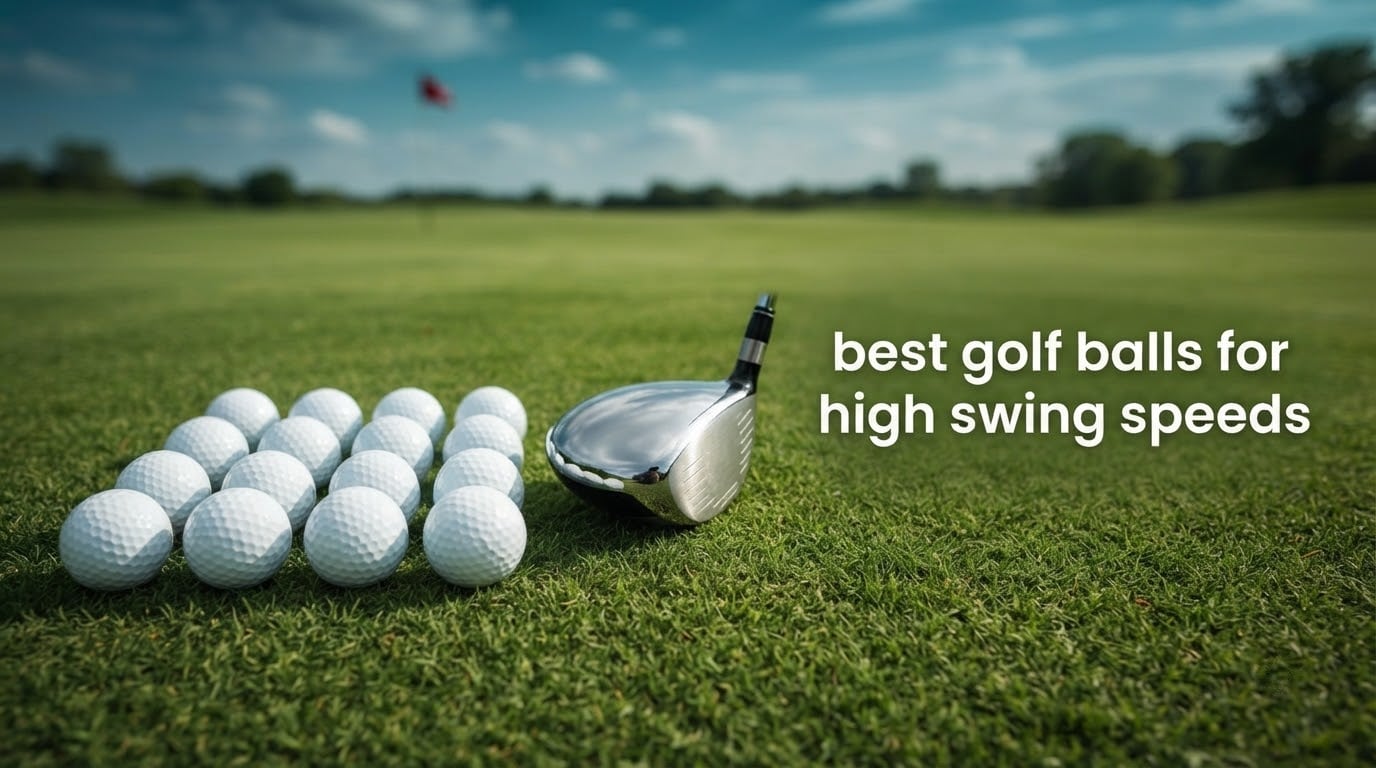
If your driver clubhead speed sits at 105 mph or above, the ball matters more than it does for almost anyone else. A soft, low-compression ball gets crushed at impact and gives back less ball speed than you paid for, and the two outright winners in this class are the Titleist Pro V1x and the Bridgestone Tour B XS, the only ball in our test group the manufacturer states is built for swing speeds over 105 mph.
Here is the short version. Fast swingers need a firm, multi-layer ball with a cast urethane cover and low driver spin, so the core stores energy instead of absorbing it. Below about 95 mph the same logic reverses, and a mid-90s swinger buying a top-end firm ball usually gains feel and control at the cost of a little carry. If you are not sure which band you are in, our best golf balls for slow swing speeds guide covers the other half of the spectrum, and our best golf balls for distance picks focus purely on carry and low spin.
We put ten balls through the same comparison, using the construction details each brand publishes alongside the specifications and owner feedback listed on the product pages. Every ball in this roundup is a multi-layer construction with a urethane or urethane-coated cover, because that combination is the only thing on the market that pairs the low driver spin a 100-plus mph swing needs with wedge spin the ball can actually generate on the way down. We also explain how to measure your own swing speed, since every recommendation in this article hangs on that one number.
Table of Contents
How to Measure Your Driver Swing Speed Before You Buy a Ball
Almost every question in this category is really a swing-speed question in disguise. Golfers ask which ball to use at 100 mph, whether a slow swinger can get away with a Pro V1x, and whether compression ratings are marketing fiction, and all three collapse into the same measurement.
There are three practical routes to a number. A launch monitor is the most accurate and gives you clubhead speed, ball speed, spin and launch angle in one session, and many indoor fitting studios will run one for you. A handheld radar device or a phone shot tracker with a camera on a full swing comes next, and it is accurate enough for band selection if you take twenty swings rather than three. The roughest method is a practice-ground speed screen, but those measure ball speed, not clubhead speed, and ball speed always reads lower than what you actually produce.
As a rough guide, a mid-90s amateur swings the driver at about 95 mph, a low-handicap club player sits in the 100 to 105 range, and scratch-level players and most tour professionals sit above 105. Treat anything inside a 5 mph window as the same band, because the difference in outcome between 104 and 106 is smaller than the difference between a value ball and a tour ball. GolfWRX members have argued the same point from the other direction, noting that course type, handicap and short-game skill often matter more than the raw speed figure, and we agree.
One caution about compression numbers. A MyGolfSpy forum thread questioned the premise outright, and the answer is that compression is a real physical property but the advertised figure is not the number a gauge will read. Independent lab work has found marketed and measured compression differing by ten points or more on some models, so treat the label as a sorting tool rather than a specification. Pair it with our beginner’s golf ball guide if you are still working out the basics of cover material and piece count.
Top 3 Golf Ball Picks for High Swing Speeds in 2026


The Pro V1 takes the top slot because it is the most complete of the ten, balancing lower driver spin with a cast urethane cover that still grips on a wedge. The Vice Pro Plus is the value answer, built specifically for high swing speeds and holding a 4.7 rating across the largest review base in this group. The TP5x is the pick when raw ball speed off the driver is the only thing that matters to you.
All 10 Best Golf Balls for High Swing Speeds Compared in 2026
| Product | Specifications | Action |
|---|---|---|
| Titleist Pro V1 |
|
Check Latest Price |
 Titleist Pro V1x Titleist Pro V1x |
|
Check Latest Price |
 Vice Pro Plus Vice Pro Plus |
|
Check Latest Price |
 TaylorMade Tour Response TaylorMade Tour Response |
|
Check Latest Price |
| TaylorMade TP5x |
|
Check Latest Price |
 Callaway Chrome Tour X Callaway Chrome Tour X |
|
Check Latest Price |
 Srixon Q-Star Tour Divide Srixon Q-Star Tour Divide |
|
Check Latest Price |
 Bridgestone Tour B XS Bridgestone Tour B XS |
|
Check Latest Price |
 Volvik Vivid Volvik Vivid |
|
Check Latest Price |
 Legato LTX3085 Legato LTX3085 |
|
Check Latest Price |
Two things stand out in the full table. Every option is a multi-layer ball, because single-layer and two-piece distance balls cannot generate meaningful wedge spin. And the driver spin story varies more than the cover material does, since that is where the separation between a mid-90s-friendly ball and a genuinely fast-swing ball is created.
1. Titleist Pro V1 – The Most Complete Tour Ball for Fast Swingers
Titleist Pro V1 Golf Balls
Multi-layer
Polyurethane cover
Speed amplifying high-flex casing
1.68 inch diameter
Pros
- Low long game spin from the casing layer
- Excellent distance with a predictable flight
- Soft cast urethane cover for greenside spin
- Highest rated ball in this group with 1560 reviews
Cons
- Softer feel than the firmest balls in this test
- Premium tier compared with the value picks here
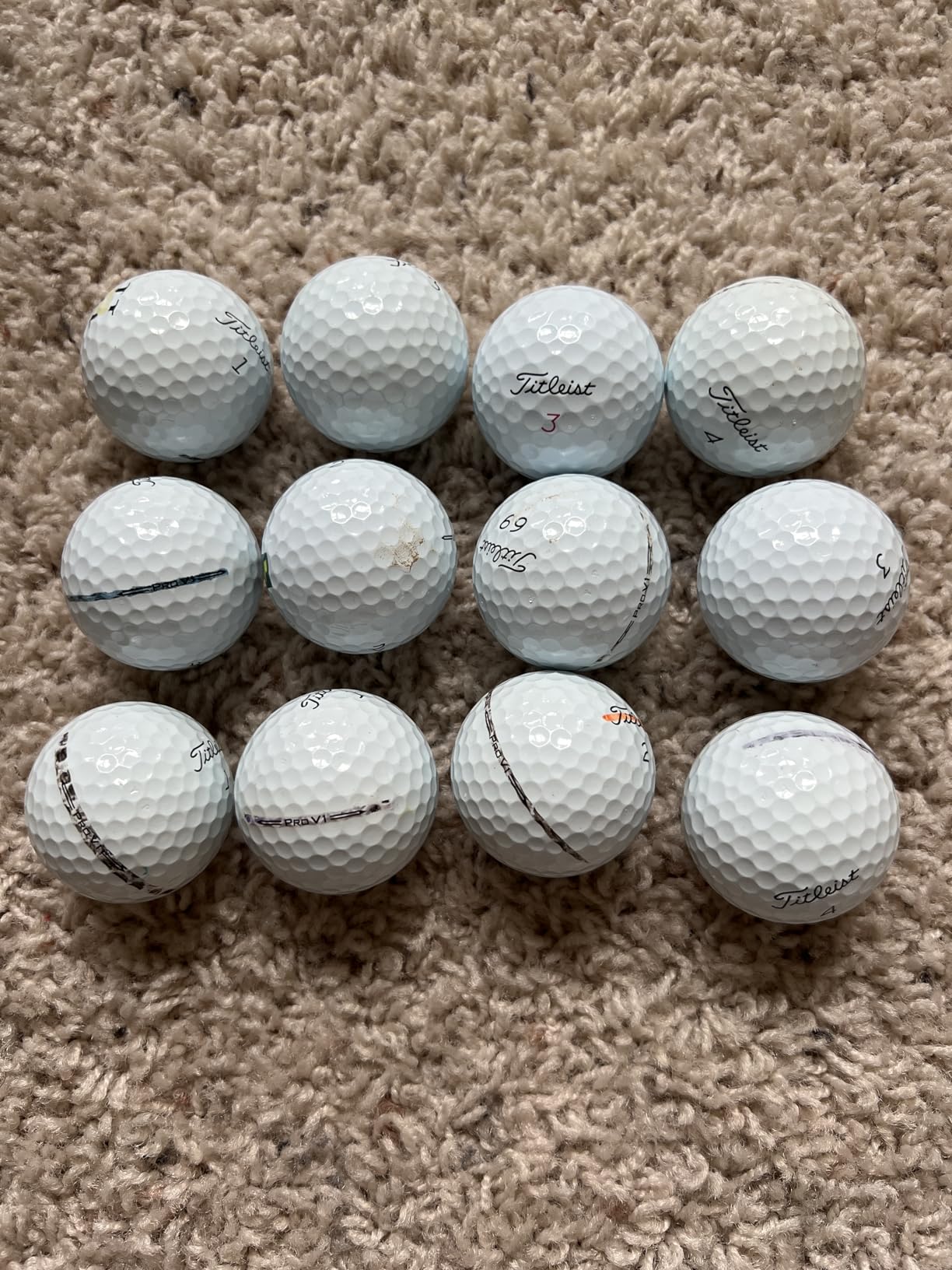
The Pro V1 is the ball I keep coming back to for fast swingers who still want to score from inside 100 yards. It carries a 4.8 rating across 1560 owner reviews, the deepest pool of feedback of anything in this roundup, and the pattern in those reviews is remarkably consistent: distance off the tee, predictable flight, greenside control that does not need adjusting for conditions.
What makes it work at speed is the construction rather than the compression label. Titleist describes a faster high gradient core for ball speed, a speed amplifying high-flex casing layer that keeps long game spin low, and a soft cast urethane elastomer cover that generates the wedge spin. In practice that combination is what keeps a 100-plus mph swing from ballooning while still stopping the ball on a firm green.
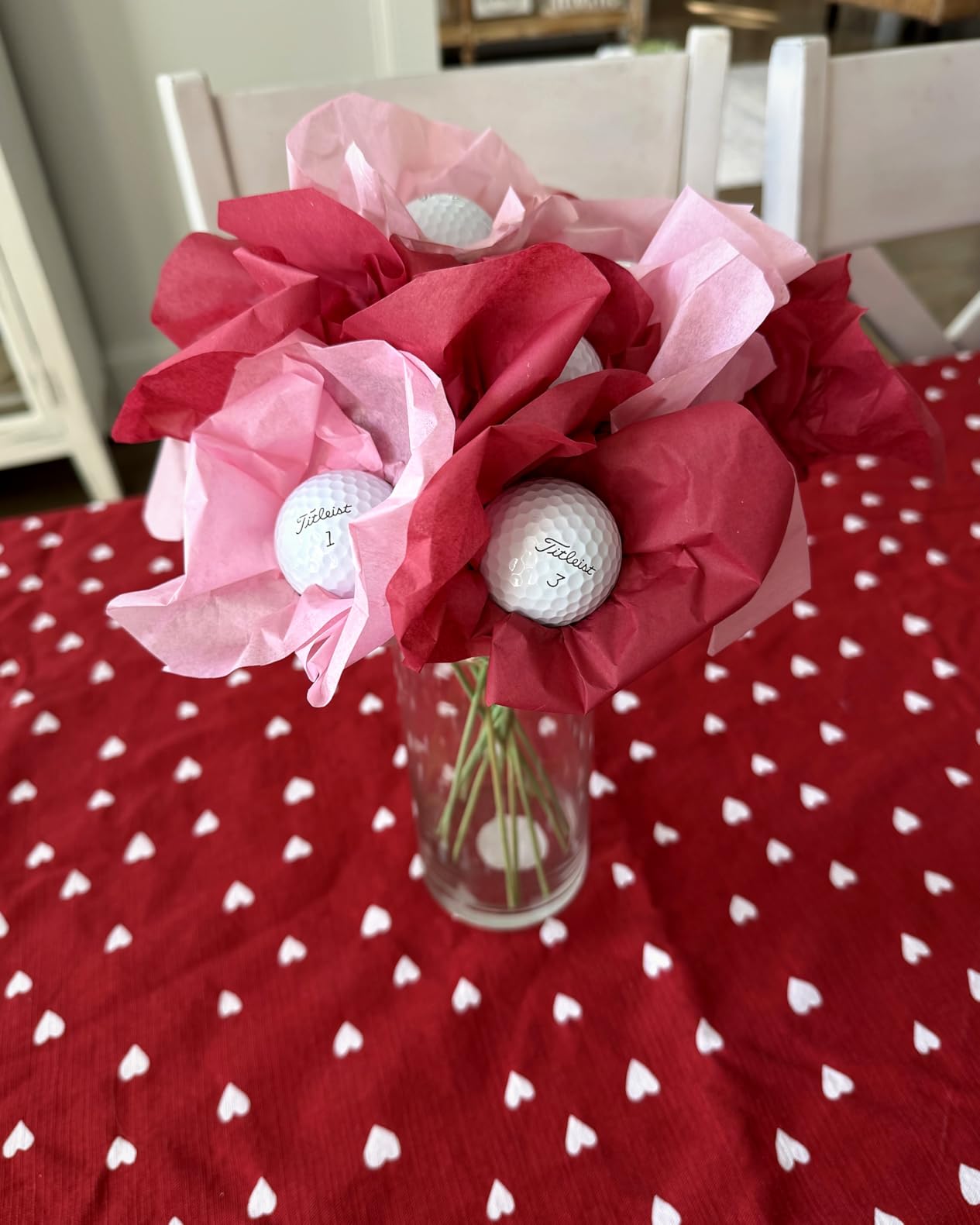
The 388 tetrahedral dimple design is spherically tiled for a penetrating, consistent flight, and reviewers repeatedly describe exactly that: no surprises, same shape of shot with the same swing. Golfers moving up from a distance ball tend to notice the greenside spin first, because it is the first time the ball grips a check chip instead of running out.
The honest drawback is that the Pro V1 is the softest-feeling ball among the firm tour options here, and a few owners note it feels less taut at impact than the Pro V1x or the Tour B XS. If you compress the ball hard and want the most direct energy transfer available, step up a firmness tier. Our golf balls for seniors guide makes the opposite recommendation for players who have lost speed and want it back.
Who the Pro V1 suits at full swing speed
This is the right ball for a low-handicap player in the 100 to 108 mph range who spins the driver slightly more than ideal and wants a single ball that handles a wind round, a firm green, and a wedge approach without changing. It is also the safest choice for anyone who buys one model and expects it to work on every course they play.
Owners also point out that the high-visibility and white variants are both well received, which matters for a fast swinger who sprays into the rough on the way to those long carries. Durability holds up over multiple rounds, which matters when a single round can cost you two balls in the water.
Who should buy something else
Players whose entire reason for playing a premium ball is maximum ball speed should look at the TP5x, which is engineered specifically for low driver spin and higher velocity. Golfers already generating excess driver spin and ballooning into the wind will find the firmer Pro V1x gives a flatter, more penetrating flight instead.
And if your budget stretches to the firmest end but not the top of it, the Vice Pro Plus delivers tour-level construction with an extra-thin urethane cover at a fraction of the tier. For most of our readership in the 105-plus band, that is the smarter buy, and we named it our value pick for exactly that reason.
2. Titleist Pro V1x – Firm, Low Driver Spin and Long Carry
Titleist Pro V1x High #’s
Multi-layer
Polyurethane cover
High gradient dual core
16 ounce dozen
Pros
- Lowest long game spin of the Titleist pair
- High gradient dual core for speed and iron spin
- High flight with strong stopping power
- Owners report large distance gains over other tour balls
Cons
- Firmer feel than the standard Pro V1
- Smaller owner review base than the Pro V1
The Pro V1x is the ball for a fast swinger who genuinely needs less spin, and the sibling of the Pro V1 in every other respect. It shares the cast urethane cover and the multi-layer build, and it swaps the single core for a faster high gradient dual core designed to add ball speed and iron and wedge spin without adding driver spin.
Owners describe 30-plus yards of distance versus other tour balls, and the sentiment is close to unanimous that this is the ball that matched their swing speed. GolfWRX members regularly describe the Pro V1x as the firmest mainstream tour ball available and better matched to a fast swing than the standard Pro V1, and independent robot testing has put it at or near the top of the class for ball speed, which is exactly the reason to choose it.
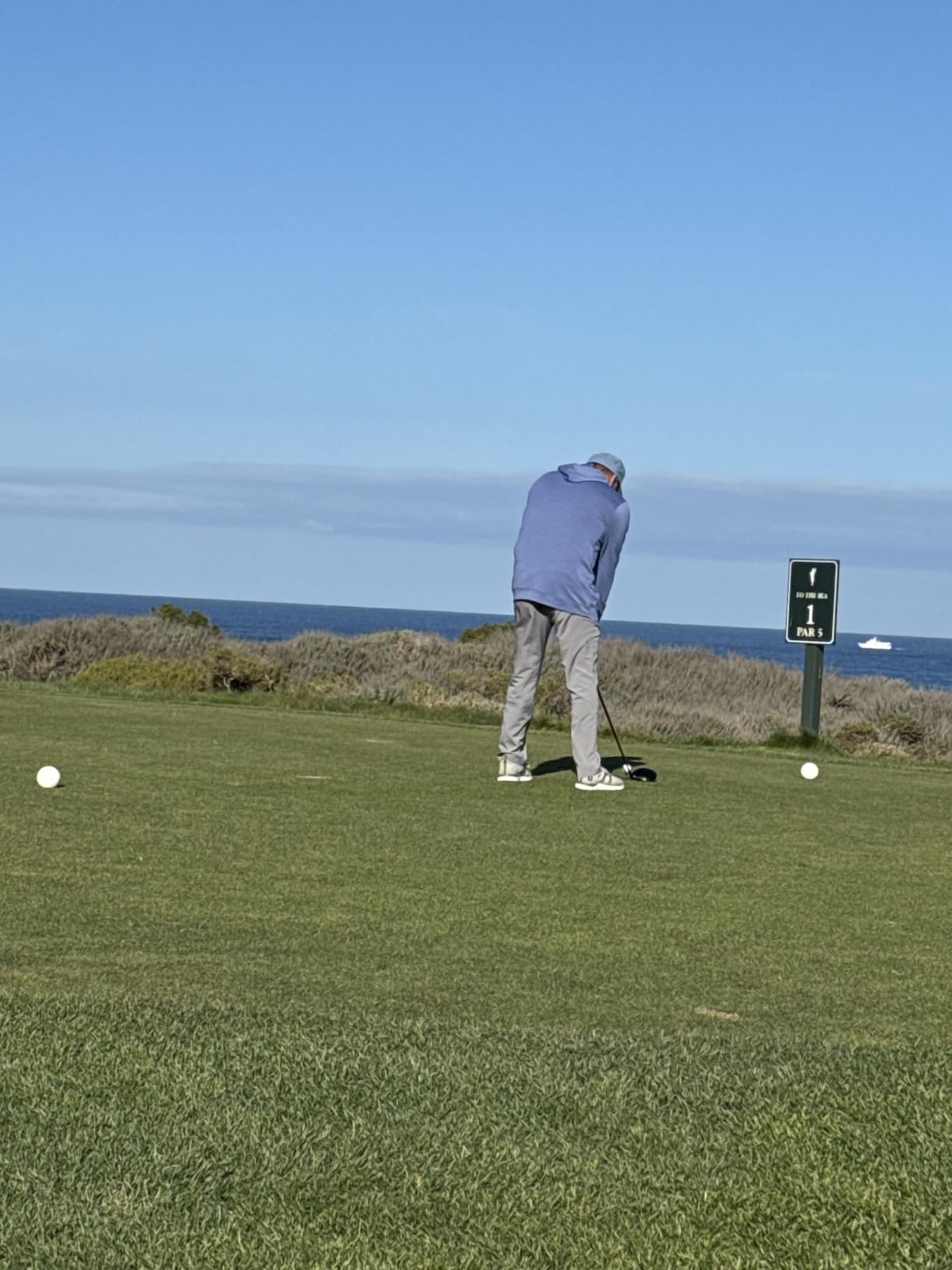
The flight profile is the differentiator. Titleist’s description is explicit that the Pro V1x is the premium performance choice for players seeking maximum distance who need higher flight and more stopping power, and the 348 tetrahedral dimple design is optimised for high and consistent flight. That combination is why it works in a crosswind: low spin plus a stable shape of flight holds a line instead of ballooning.
Be realistic about the review base. At 257 ratings the Pro V1x has a 4.8 average but a much smaller pool than the Pro V1, so the consensus is thinner even though it is just as positive. Several owners bought it specifically because they have lost clubhead speed with age and wanted distance back, which makes it a common recommendation for players who do not fit the fast-swing band at all.
Who the Pro V1x suits at full swing speed
This is the pick for a 105-plus mph player who balloons a wedge, for a links or coastal course where a penetrating trajectory beats extra spin, and for anyone who wants the shortest possible flight time on a long par five. Golfers who already spin the driver heavily get the most out of it, because that extra spin is exactly what the ball is designed to shed.
It also works as a direct-to-consumer upgrade for a mid-90s player who wants a firmer core under a urethane cover. You will not get the Pro V1 softness, but you will get more control around the green and a firmer, more consistent strike.
Who should buy something else
If your handicap is high and your contact is inconsistent, this is not the ball. A firm dual-core design rewards a centred strike, and the launch monitor work in the research is blunt about it: a ball matched to a specific swing speed punishes a swing that does not match it. A mid-90s player with a mid-90s contact rate will lose more off the tee than the extra stopping power gains back.
For that player the Vice Pro Plus gives the same low-spin, urethane-cover package in a design the manufacturer states is for golfers with high swing speeds and the highest performance requirements. It is the identical concept without the top-tier branding.
3. Vice Pro Plus – The Best Value Ball Built for High Swing Speeds
Vice Golf Pro Plus White Golf Balls
4-piece cast urethane
Extra-thin cover
12 balls
16 ounces
Pros
- Explicitly designed for golfers with high swing speeds
- Outstanding driver distance with dependable spin control
- Extra-thin cast urethane cover for full bag performance
- 4177 reviews at a 4.7 average
- Closed alignment line aids aiming
Cons
- Slightly less soft in feel than flagship tour balls
- Alignment line is a single closed design rather than interchangeable
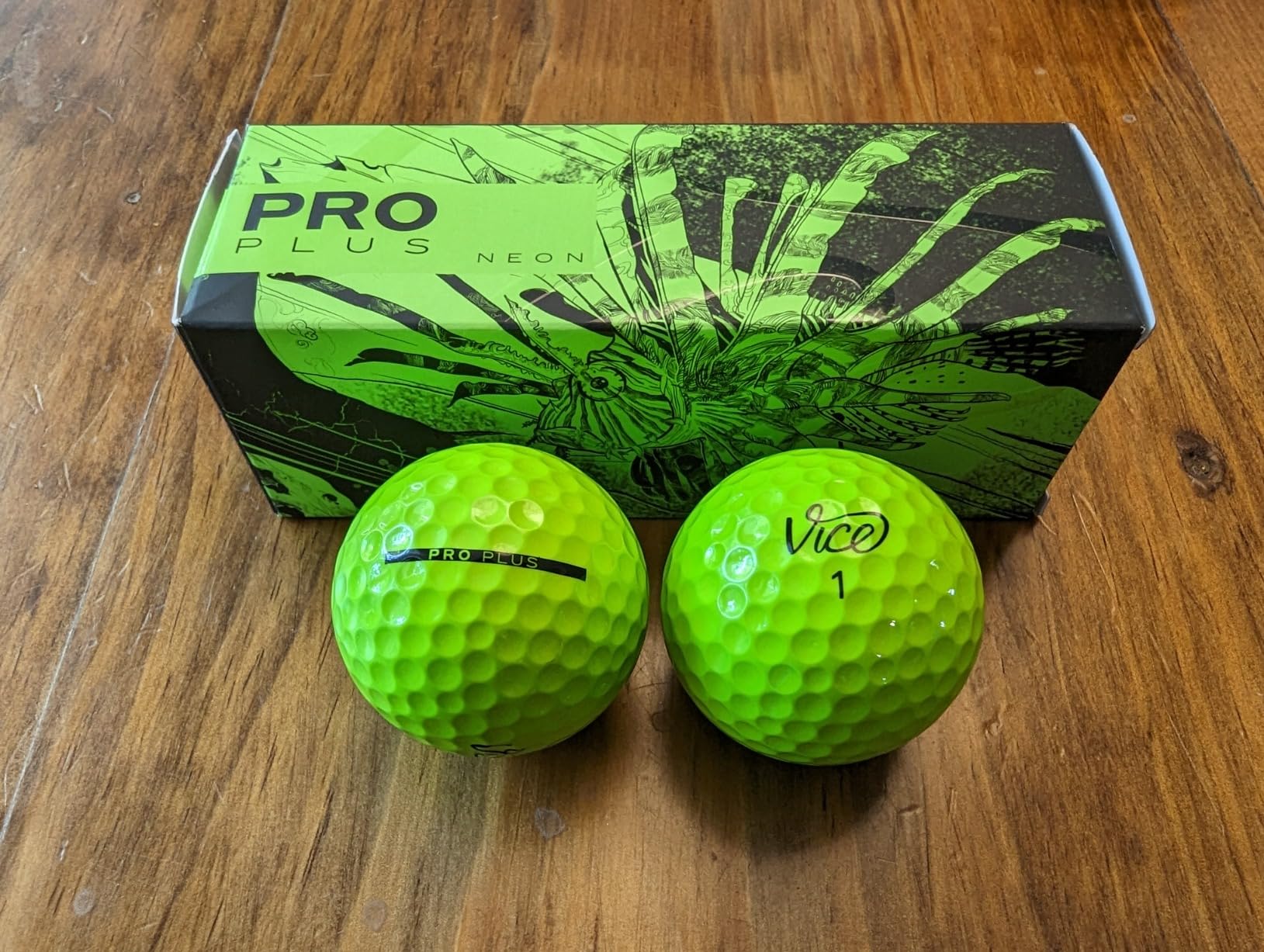
If you take one recommendation from this article and it is not the Pro V1, make it the Vice Pro Plus. It is the only ball in the group the manufacturer describes without hedging as built for golfers with high swing speeds with the highest performance requirements, and it holds a 4.7 rating across more than 4,000 owner reviews.
Construction is 4-piece cast urethane with an extra-thin cover, which is the same category of build as a premium tour ball. Reviewers describe outstanding driver distance and dependable spin control across the bag, and they repeatedly frame it as a dependable tour-quality option for faster swing speeds that avoids the premium-brand cost. For the thousands of golfers asking a forum for a ball that suits a fast swing without the top-tier spend, this is the answer.
Two design details matter more than they sound. The extra-thin cover means the urethane layer is doing the work of generating greenside spin while staying soft under a short club, and the closed alignment line gives a consistent visual reference on putts without a separate marker card. The classic white numbered design is unremarkable, which is a compliment, since nothing about the ball should distract you at address.
The only recurring criticism across thousands of reviews is feel. Owners describe it as slightly less soft than the flagship tour balls at impact, which is a direct trade for the firmness that produces the distance. If you are the kind of player who judges a ball on the sound and feel off the putter first, test a dozen before committing.
Who the Vice Pro Plus suits at full swing speed
It suits anyone in the 95 to 110 mph band who wants tour-level construction without a tour-level budget, and the review pattern suggests it works just as well for a 100 mph club player as it does for a 115 mph sweeper. It is also the natural first upgrade for a player who has been using a two-piece distance ball and wants wedge spin without changing anything else about their game.
Because it is a dozen of a single model, it is also a good ball to hand to a playing partner who swings faster than you. Nobody is being sold a scaled-down version of the ball.
Who should buy something else
Players who putt for a living, or who judge a ball almost entirely on feel, will find the flagship Titleist and Callaway covers more supple. The other trade is greenside: it delivers urethane spin but not at the extreme of the Pro V1x, so if your only goal is stopping power on a hard green the firmer premium balls give you more.
If you are in the 108-plus band and already fit, spend the extra step up to the Pro V1x or the Tour B XS. Below that, this is the value ceiling, and most of our readership should stop here.
4. TaylorMade Tour Response – Soft Hybrid Cover With a Bigger Core
TaylorMade Tour Response Golf Balls, White/Black Stripe, 1 Dozen
3-layer construction
Urethane microcoating
Soft SRI hybrid cover
One dozen
Pros
- Larger core raises COR for more ball speed
- 360 degree ClearPath alignment aids setup and putting
- Urethane microcoating improves shot-to-shot consistency
- Well balanced tour-inspired performance
Cons
- Soft cover feel is tuned more for feel than maximum firmness
- Below the compression tier needed for the fastest swings
The Tour Response sits between a tour ball and a premium player ball, and it is the one in this group most likely to suit a fast amateur who does not want a two-piece or a soft cast urethane feel. It holds a 4.7 rating from 1106 reviews, and the review language is consistently about balance rather than extremes.
The construction change that matters is core size. TaylorMade increased the core to raise core COR for more ball speed, paired with a softer mantle material for feel and spin control, in a 3-layer build. Around that sits a soft SRI hybrid cover with a urethane microcoating, and the coating is described as a thinner, more consistent outer layer that helps the dimple pattern perform the same way from shot to shot.
Low driver spin with mid-low iron spin is the stated design intent, which is the right direction for a high swing speed, just delivered through a softer overall package than the X models. The 360 degree ClearPath alignment is the most-mentioned feature in the reviews, described as subtle and non-distracting, which is the correct target for an aid that has to work for 18 holes.
Who the Tour Response suits at full swing speed
This is the right ball for a 95 to 105 mph player who wants low driver spin and greenside control but prefers a softer feel at impact, and for anyone who is put off by the abruptness of a dual-core tour ball. The consistency of the urethane microcoating is a genuine advantage if you play in heat or cold and want the same ball behaviour in July and January.
It is also the ball we would hand to a fast player who changes their mind every week about whether they want a firm or soft ball, because the Tour Response sits close enough to the middle of this list to satisfy both.
Who should buy something else
Anyone above roughly 108 mph will not extract the distance this ball is capable of giving, because the cover and mantle are tuned for feel and control rather than maximum energy transfer. If ball speed off the driver is your priority, the TP5x or the Chrome Tour X has a firmer platform underneath the same urethane cover idea.
And if your budget is set, note the simpler truth: this ball competes directly with the Vice Pro Plus, which has a firmer 4-piece cast urethane build and a much larger review base. Choose on feel, not on specification.
5. TaylorMade TP5x – Maximum Ball Speed and Lowest Driver Spin
TaylorMade Golf 2024 TP5x Golf Balls, Longest Distance, White, 1 Dozen
5-piece construction
Speed wrapped core
Polyurethane cover
One dozen
Pros
- Lowest driver and long iron spin in this group
- Speed gradient separates long game spin from wedge spin
- Softer sound and responsive feel from the speed wrapped core
- Comparable to the Pro V1 and Pro V1x in owner testing
Cons
- A small number of durability and packaging reports
- Less greenside spin than the firmer premium tour balls
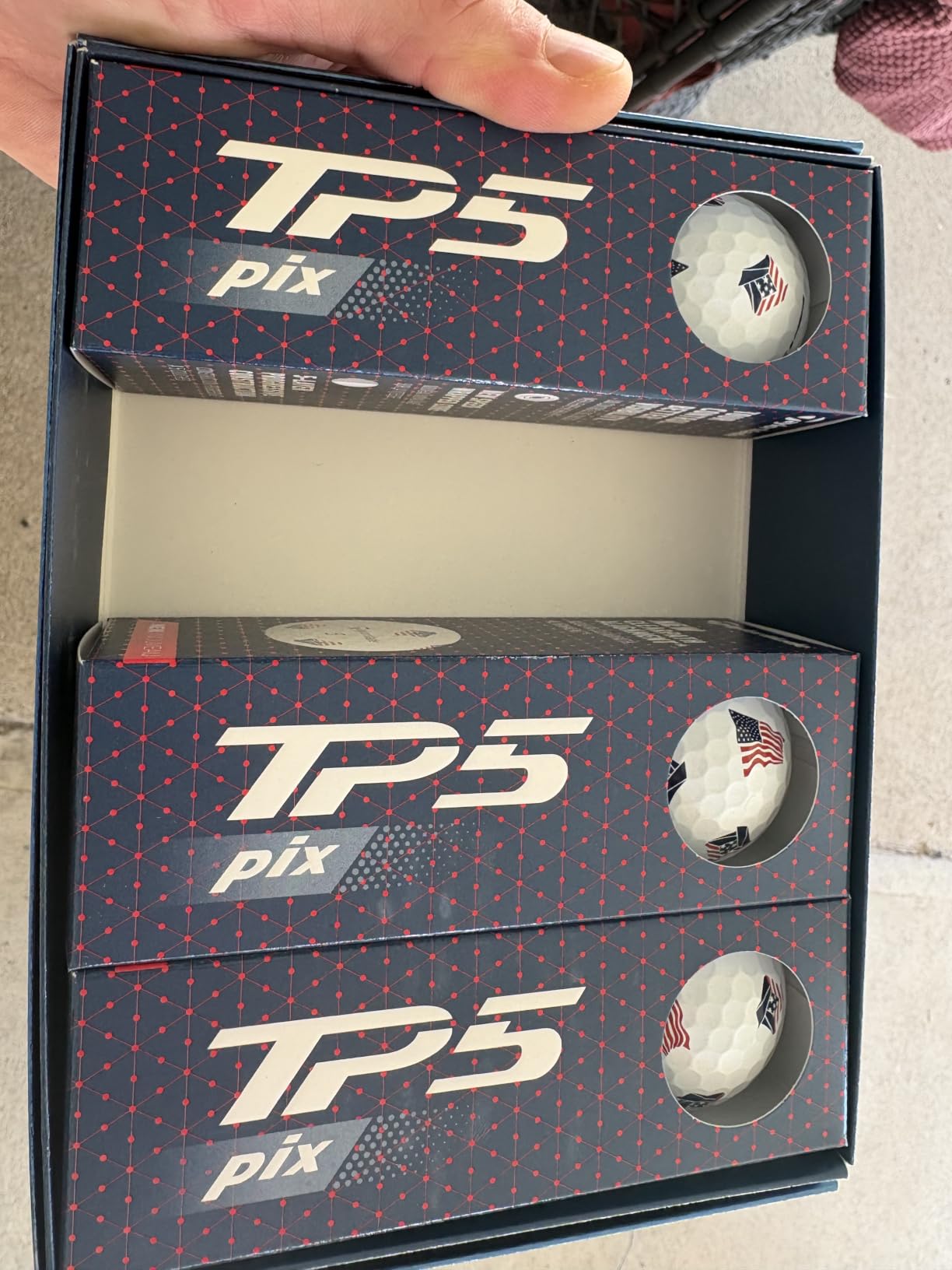
The TP5x is the ball in this group that puts distance first, and for a player whose driver swing speed is the reason they are reading this page, that ordering is the correct one. It holds a 4.7 rating from 818 reviews, and the manufacturer positions it for golfers seeking increased ball speed and low-spin driver and long-iron performance while maintaining greenside control.
Five-layer progressive construction with a speed gradient is the mechanism. The gradient is designed to separate spin between the driver and long irons for lower spin, while promoting higher spin with wedges, which is textbook spin separation. A speed wrapped core sits inside to create a softer sound while promoting a faster, more responsive construction, so you get the low long-game spin without the clicky feel a hard core usually produces.
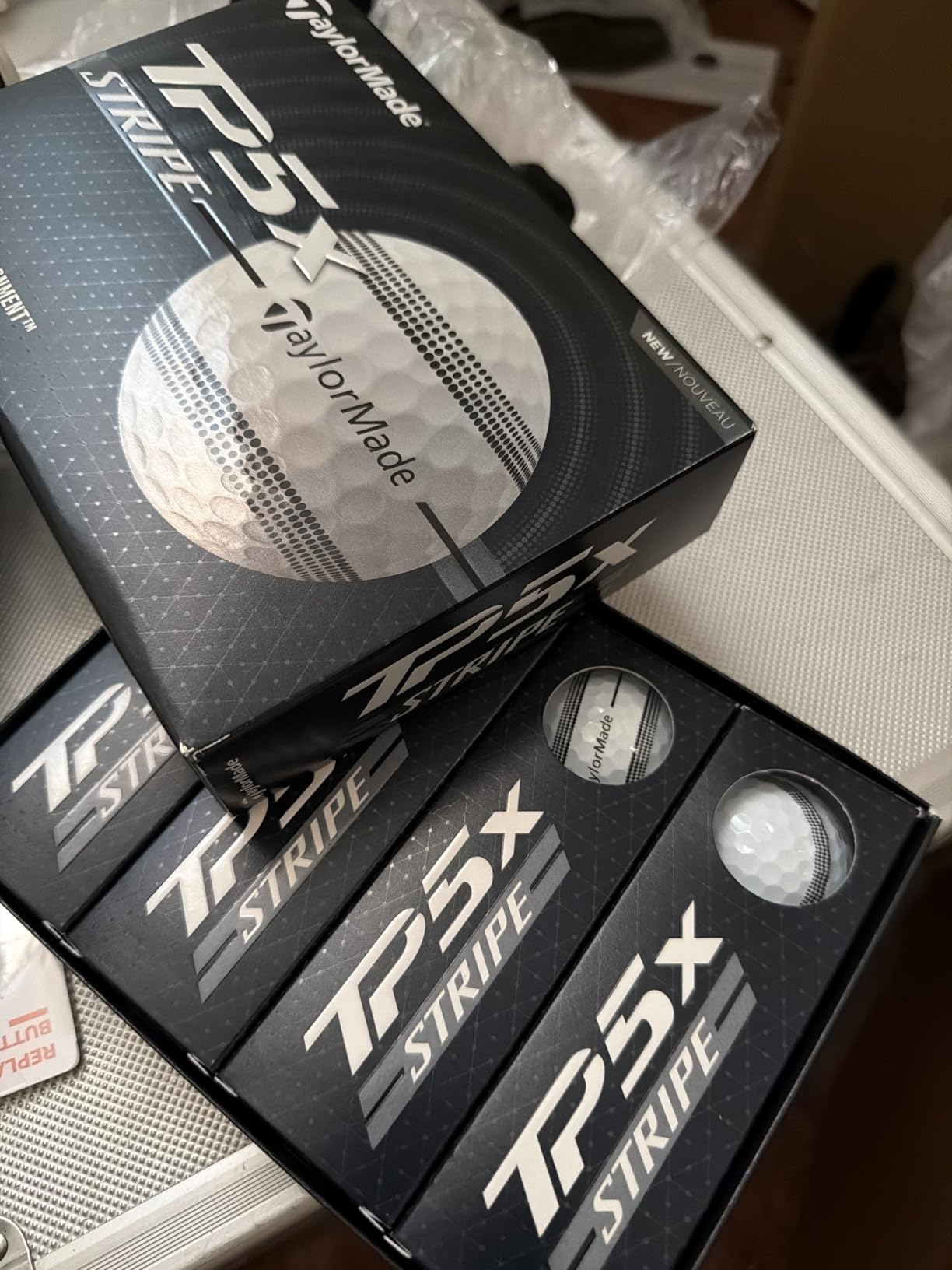
Owners almost never mention the TP5x without comparing it to a Titleist. Reviewers describe it as frequently comparable to the Pro V1, and independent 62-ball robot testing found the TP5x competitive with the Pro V1x at average swing speeds, which contradicts the common assumption that the Titleist always wins for fast swingers. The visible colour options, yellow in particular, come up repeatedly as a positive, along with the subtle alignment stripe that helps on putts without distracting.
The main complaint in the reviews is not performance but packaging, with a small number of buyers reporting durability or packaging issues on arrival. That is a fulfilment problem rather than a golf problem, but it is worth a glance before you tear the box open at the first tee.
Who the TP5x suits at full swing speed
It suits a 100 to 112 mph player who wants the longest carry available without giving up all greenside control, and it is our pick for anyone who says their problem is that the ball is ballooning. The progressive gradient thins the long-game spin while protecting wedge spin, which is the single most useful trade a fast swinger can make.
It also suits a player who wants one ball for the whole bag. The spin separation means the same ball handles a 280-yard drive and a 40-yard wedge, and the responsive feel across the bag is consistently praised in the reviews.
Who should buy something else
If you rely on greenside spin as your primary scoring skill, the 5-layer X platform reduces wedge spin compared with a three-layer urethane ball, and the Pro V1 or the Srixon Q-Star Tour Divide will hold a green harder. A player with an inconsistent strike will also feel the low long-game flight more than a player who strikes it the same way every time.
For pure distance with no concern about greenside behaviour, the Bridgestone Tour B XS is the harder-charging option, built for a higher compression ceiling than anything here.
6. Callaway Chrome Tour X – Firm Feel for Golfers Who Spin the Driver
Callaway Golf Chrome Tour X Golf Balls (True Track (USA)
Multi-layer
Polyurethane cover
Hyper fast soft core
Two year warranty
Pros
- Firm tour-style construction for fast swing speeds
- Owners report 20 to 30 yards of driving distance
- Seamless Tour Aero for consistent flight
- Urethane soft cover keeps greenside control and feel
Cons
- Firm feel can be unforgiving on off-center strikes
- Small owner review base of 102 ratings
The Chrome Tour X is the direct answer to the question GolfWRX users ask most often, which is whether the Chrome Tour X or the TP5x holds a line better in a crosswind. The answer is that the Chrome Tour X is the firmer-feeling of the two, with a lower trajectory, and several owners switching from the TP5x or the Pro V1x report large driver distance gains as a result.
Under the cover is a Hyper Fast Soft Core described as producing exceptionally fast ball speeds, which sounds contradictory until you understand that the softness is in the feel while the total energy transfer is high. A new Seamless Tour Aero design delivers a consistent ball flight on every shot, and the high-performance Tour Urethane Soft Cover handles greenside control and feel.
USA TruTrack alignment is a nice touch and does more than line up your putt. It combines roll feedback, visible spin, alignment and high contrast, so you can actually see the ball’s rotation on a putt, which is a genuine putting aid for anyone who has wondered why a putt broke the way it did.
Who the Chrome Tour X suits at full swing speed
It suits a 105-plus mph player with a low, penetrating flight who plays firm greens and windy courses, and one reviewer describes it explicitly as firm and designed for fast swing speeds while still producing a consistent putting roll. If your issue is a wedge shot that runs 20 yards past the pin, this is the ball to try.
It is also a good choice for a left-to-right prevailing wind, where a low flight with high ball speed holds its line better than a high-spinning ball that climbs and drifts.
Who should buy something else
The firmness that produces the distance is unforgiving on off-centre contact, and that is a real risk for anyone who does not compress the ball consistently. With a 4.8 rating but only 102 owner reviews, the evidence base here is the thinnest of the premium options, so we would test a sleeve before a full dozen.
If you want the same low-flight profile with a softer landing, the Pro V1x gives you a high gradient dual core and higher flight with more stopping power, and it has a far larger body of owner feedback behind it.
7. Srixon Q-Star Tour Divide – Firm Core With Visible Wedge Spin
Srixon Q-Star Tour Divide Golf Balls, Blue/Yellow
Multi-layer
Higher compression core
50/50 matte urethane cover
338 speed dimples
Pros
- Higher compression core gives more ball speed and less sidespin
- Two-tone cover makes wedge spin visible and trackable
- 338 speed dimples reduce drag for a penetrating launch
- Ultra-thin urethane cover with Spin Skin coating
Cons
- Putting roll feels less smooth than cheaper balls
- Stock colourways can vary by listing
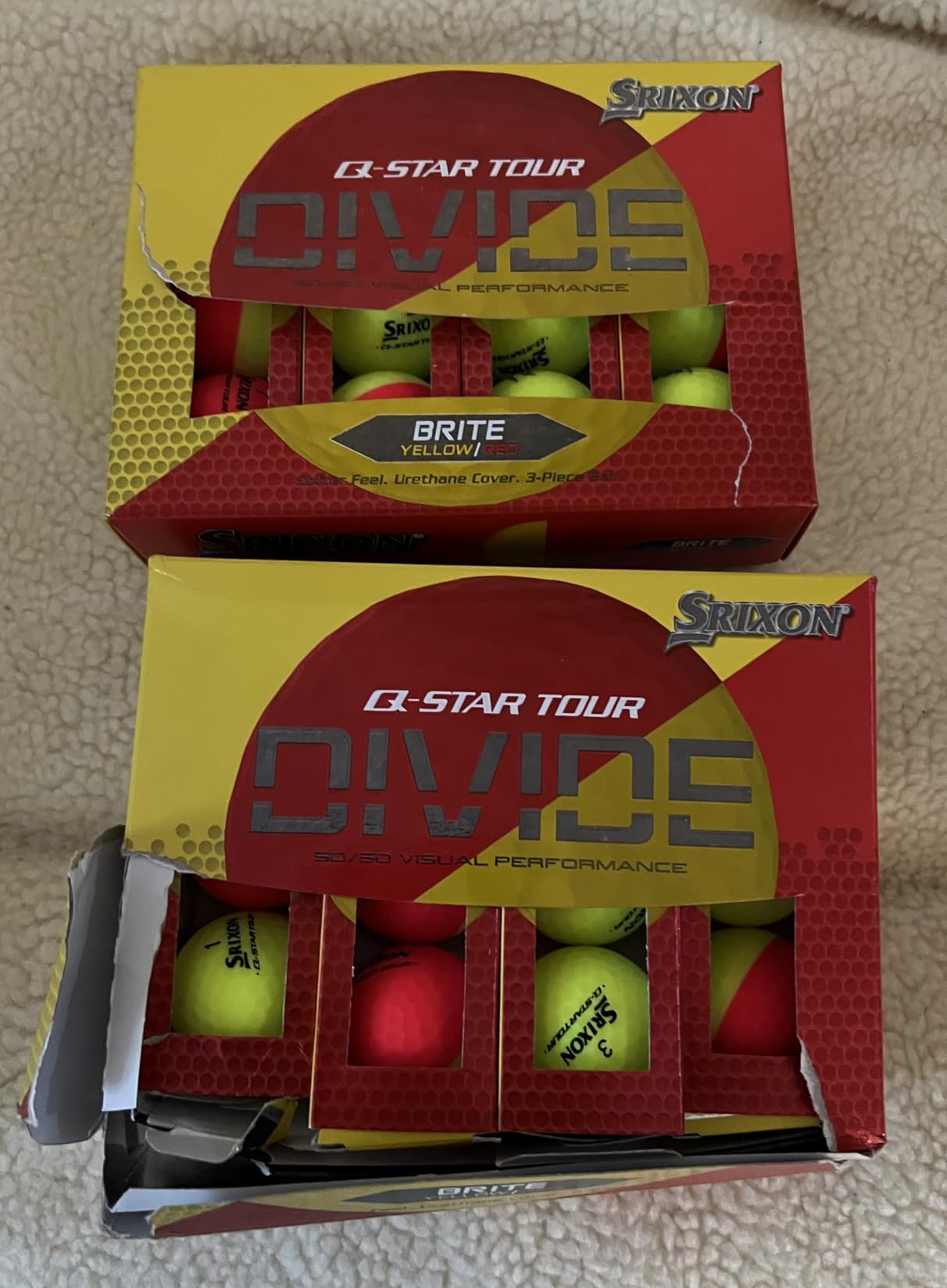
The Q-Star Tour Divide solves a problem nobody else addresses, which is seeing your own spin. Its 50/50 matte urethane cover produces a strobe effect on wedge shots, so the ball’s spin speed and direction become visible in flight, and that feedback is genuinely useful for anyone building a repeatable wedge motion. It is the only ball in this group that makes spin legible.
For a fast swinger the relevant part is the core. Srixon describes a slightly higher compression core delivering better ball speeds, more distance off the tee and reduced long-game sidespin, which is the same firm-core, low-driver-spin logic that makes the Pro V1x and the Tour B XS work at speed. The 338 Speed Dimple design reduces drag for a more penetrating launch and a higher lift coefficient that keeps the ball in the air longer.
Reviewers praise the visibility above everything else, particularly golfers with older eyesight who find a white ball hard to locate in long rough. The ultra-thin urethane cover with a Spin Skin coating is described as softer than the previous generation, delivering short-game spin and feel, and 10 to 20 yards of added distance is a commonly reported gain.
The most common criticism is the putting roll, which some users find less smooth than on cheaper balls. Several buyers also note that some listings carry previous-generation stock, which by all accounts still plays well but is worth knowing if you are comparing against a specific model year.
Who the Q-Star Tour Divide suits at full swing speed
It suits a 100 to 110 mph player who is strong on the greenside game and wants to see what the ball is doing on a wedge shot. If you are trying to learn how much spin you actually generate, or you simply lose balls constantly at 110 mph, the visibility is a real practical advantage rather than a gimmick.
It is also a strong choice in cold or damp conditions where a penetrating, lower-drag ball keeps its distance, and for players who want a firmer core than a 3-piece tour ball without giving up the urethane cover.
Who should buy something else
Anyone who putts a lot and judges a ball by its roll will not love it, and that is the single most repeated theme in the reviews. If your driver speed is under about 95 mph, the higher compression core is working against you, and our slow swing speed guide will serve you better.
For a pure distance play with no interest in the strobe effect, the Volvik Vivid delivers the same low-driver-spin, high-launch idea at a much lower tier, and the Tour B XS is built for a higher compression ceiling still.
8. Bridgestone Tour B XS – Built for Swing Speeds Over 105 mph
Bridgestone Golf Tour B XS Mindset
Multi-layer
Higher compression for 105 mph plus
VeloSurge core mantle
One dozen
Pros
- The only ball here specified for swing speeds over 105 mph
- VeloSurge core and mantle integration for distance
- Excellent greenside spin and stopping power
- Holds up better than the Pro V1 under wedge shots
Cons
- Higher compression suits only the fastest swings
- Smaller owner review base of 150 ratings
The Tour B XS is the only ball in this roundup that names your swing speed on the specification sheet. The listed technical detail reads compression designed for swing speeds over 105 mph, and if you are a genuine 105-plus player with a consistently compressed strike, that is the clearest recommendation in the article.
The construction story is a VeloSurge core and mantle integration for distance, built into a higher compression package than the rest of this list. Bridgestone also positions the ball for players who want additional spin, which is the counter-intuitive part and worth understanding: the compression is high so the ball retains its shape through impact, while the urethane-class cover still generates the wedge spin you need to stop on a green.
Owners report huge distance, strong greenside spin, and better cut resistance under wedge shots than the Pro V1, with several describing a lifetime-best round. A soft feel off the putter and around the greens runs through the reviews too, which is the most surprising part of a ball this firm.
Who the Tour B XS suits at full swing speed
It suits a 108 to 120 mph player with a fast, well-struck release, and anyone playing firm fast greens who needs maximum stopping power out of a low-spin ball. For a player who already generates plenty of wedge spin, the additional spin combined with the high compression makes this an unusually complete package at speed.
It is also the pick if you like the Pro V1x but find its cover scuffs and cuts faster than expected under wedge play, since the cut resistance here is consistently praised.
Who should buy something else
Anyone below about 105 mph. A higher compression ball matched to a slow swing is the textbook mismatch, and the result is a loss of feel and distance for no gain. Forum consensus on this point is consistent enough that we will state it plainly: the compression band has to match the swing, not the ambition.
If your speed is at the top of the amateur range rather than beyond it, the Pro V1x gives you tour-level performance with a far larger review base, and the Vice Pro Plus gives you the same low-spin urethane concept in a softer-feeling build at a lower tier.
9. Volvik Vivid – Low Driver Spin With High-Launch Distance
Volvik Vivid Golf Balls – Matte Red, Dozen
Multi-layer
Nano Bi resilient core
Matte finish
One dozen
Pros
- Low driver spin with high launch and long distance
- Patented matte finish and vivid colours are easy to find
- Minimised glare aids concentration and striking
- Good back spin and greenside workability
Cons
- Standard size version can feel slightly soft
- Occasional reports of distance not carrying as expected
The Volvik Vivid is the reason this roundup is not simply a list of white balls. It pairs a Nano Bi High Energy Resilient Core that produces low driver spin, high launch and more distance with a patented matte finish in vivid colours, and for a 110 mph player who hits four or five balls into trouble a round, seeing your ball is worth as much as any compression number.
Low driver spin plus high launch is an unusual and effective combination. High launch usually costs distance because a ball in the air longer spends more time descending into wind and drag, so a ball that launches high while spinning low is engineering a genuine distance gain rather than trading one for the other. The matte surface also minimises glare, which reviewers connect to better concentration and ball striking.
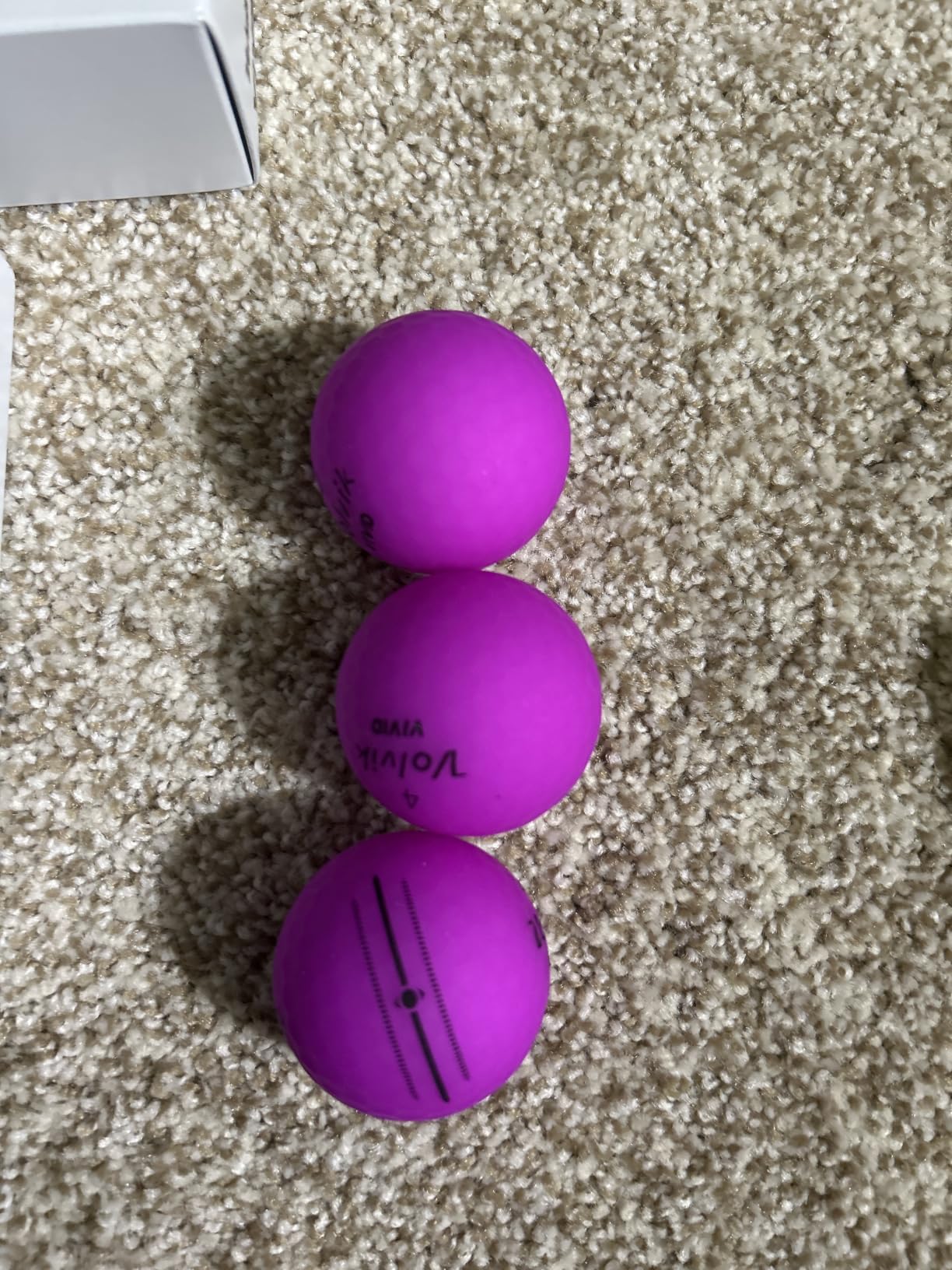
The visibility is the standout in the reviews. Buyers highlight the colours as easy to locate in long rough and across fairways, and they pair that with strong distance and greenside workability. Some users prefer the Large size specifically because it is reported to feel firmer and better, which is the closest thing to a high-speed configuration the range offers.
Two negatives do appear. The standard size is described by some as slightly soft under a fast swing, and a small number of reviewers report distance not carrying as far as they expected. If you take one thing from this section, test the Large size first if your swing is above 105 mph.
Who the Volvik Vivid suits at full swing speed
It suits fast swingers who lose balls, which is nearly all of them, and players who play in low light or play fast, undulating courses where finding the ball costs more strokes than the ball choice ever will. It also works for anyone who struggles to see a white ball against a bright sky or a deep rough.
For a 100 mph player who wants a little more forgiveness than a tour ball gives, the softer feel is an advantage rather than a flaw, and the low driver spin still helps with distance.
Who should buy something else
A player chasing tour-level greenside spin should look elsewhere, because the spin here is good rather than elite and a firm urethane premium ball will hold a green harder. And if you dislike anything other than a traditional white ball, there are nine other options in this article.
The serious competitor here is the Srixon Q-Star Tour Divide, which is also visibility-led but with a firmer core, a urethane cover and better short-game spin. Pay the difference only if your current scores are being hurt by not seeing the ball.
10. Legato LTX3085 – The Most Versatile for Mid-90s Swing Speeds
Legato Golf Balls LTX3085, 3 Piece, Urethane Cover, Yellow, 12 Packs
3-piece urethane cover
85 compression
350 aerodynamic dimples
One dozen
Pros
- 3-piece urethane cover at a value tier price
- Owners report 15-plus yard distance gains
- Durable cover that resists cuts and burrs
- Golf Laboratories tested for consistency
Cons
- 85 compression is soft for a 105-plus mph swing
- Putting feel is described as softer and less defined
The Legato LTX3085 is the one ball in this roundup we would not recommend to a genuine 110 mph swinger, and we include it because it is the honest boundary of the category. At 85 compression it is a mid-90s ball, and the honest answer to a fast swinger reading this review is that it will cost you distance at the tee.
That said, the construction is serious for the tier. Three-piece construction with a urethane cover, 350 aerodynamic dimples for a stable trajectory, and a 1.4 pound dozen, all Golf Laboratories tested. Owners report 15-plus yard gains when moving up from a two-piece ball, and a durable cover that resists cuts and burrs, which matters more than most buyers realise when their short game involves a wedge and a cart path.
The 4.5 rating across 1908 reviews is the lowest average in the group, and the reviews explain it honestly. Golfers with driver swing speeds in the mid-90s to 100 mph are the typical match, the most common negative theme is limited putting feel, and one reviewer notes the ball feels less desirable as pricing rises. Reviewers nevertheless frame it as a value alternative that plays like a premium tour ball.
Who the Legato LTX3085 suits at full swing speed
It suits a player at the lower edge of the high-speed range, roughly 95 to 100 mph, who wants a urethane cover and real distance without spending tour-ball money. It is also a good club-level or gift dozen for a fast-swinging beginner, and the bold Track alignment aid is reported to work well for putting.
If you are a fast swinger who plays maybe ten rounds a year, the maths rarely justifies the premium tier, and this is a defensible place to land.
Who should buy something else
Anyone above about 102 mph. The 85 compression is on the lower side, so the ball is less firm than the builds designed for very high swing speeds, and at speed that softness is where the yards go. If you are in that band, the Vice Pro Plus is the step up, not this ball.
The 4.5 rating also reflects a smaller consistency story than the leaders, and reviewers warn that build consistency varies more between colourways and batches at the value tier. Buy two colourways, test both, and keep the one that goes straighter.
How to Choose a Golf Ball for Your Swing Speed
Pick your band first, then pick the cover, then pick the colour. Almost every mistake we see comes from reversing that order, choosing a ball because a tour professional plays it and only then checking whether their swing resembles yours.
Match compression to speed. The roughly 30 to 105 scale is a measure of how much the ball deforms at impact, and the fast swinger problem is over-compression. If you generate 100 mph, you want the upper-middle of the scale. Independent lab work has found marketed figures differing from gauge readings by ten points or more, so read compression as a category label, not a specification. Under 85 mph, the logic inverts completely and a low compression ball preserves swing speed, which is why our slow swing speed picks look nothing like the list above.
Check the cover, because only urethane makes real wedge spin. A cast urethane cover grips a wedge and holds a green; an ionomer or Surlyn cover, which is what most distance balls use, physically cannot generate the same rpm. Above roughly 100 mph the difference becomes enormous, and independent lab testing has measured urethane balls generating thousands of rpm of extra wedge spin. Every ball we recommend has a urethane or urethane-coated cover for that reason.
Count the layers, and read what each one does. A 3-piece ball is a solid all-rounder with a firm core and a urethane cover. A 4-piece adds a casing or mantle layer to tune long-game spin independently. A 5-layer uses a speed gradient, as on the TP5x, to separate low driver and long-iron spin from high wedge spin within a single ball. More layers is not automatically better, it is more precisely engineered, which is worth paying for only if your swing speed gives the engineer something to solve.
Look for spin separation if you score from inside 100 yards. Low driver spin and high wedge spin from one ball is the single most valuable performance trait for a fast player, because it gives you distance off the tee and stopping power on an approach without changing balls. The TP5x and the Pro V1x both engineer this deliberately, and it is the reason a fast amateur can match a tour player’s ball selection without matching a tour player’s budget.
Factor in course type and ball loss. Wind and firm greens reward low spin and high compression. A soft, high-spin ball is a liability in a crosswind, which is why GolfWRX members reach for the lower-spin options when the course turns windy. Then run the arithmetic nobody else publishes: at 105 mph you will lose two or three balls a month to forced carries, so the cost of a ball you lose is small, but the cost of a ball that costs nothing and performs is also small. Pick the ball that gives you the best numbers, and stop losing them in the water.
Five Mistakes Fast Swingers Make When Buying Golf Balls
1. Buying a soft ball because it feels good in the shop. Soft feels good on a 20 mph practice swing and gives back energy on a 105 mph driver swing. The single most repeated complaint from fast players in the forums is that soft balls lose distance at speed, and they are right. Buy the feel you want in the short game, but do it inside a firm core.
2. Trusting the advertised compression number. Marketed compression and measured compression can differ by ten points or more on the same model. Use the label to sort balls into bands and nothing more. If a ball claims a compression figure that does not match the rest of its category, assume the marketing is aspirational.
3. Buying the most expensive ball instead of the right one. A premium dozen does not make you play better if the compression does not match your swing. Reddit users report swapping to cheaper balls once they trust their swing, citing near-identical full-swing performance, and for a large share of our readership that trade is correct. The value options here are not compromises, they are matches.
4. Forgetting that cold balls lose distance. Balls stored in a car through winter lose ball speed and carry distance. If you play year-round and keep your ball in a hot trunk, keep a second ball at home at room temperature. It costs nothing and the difference on a cold morning is real.
5. Not testing two colourways from the same model. Ball-to-ball inconsistency is more visible at the value tier, and different colour variants of the same model can be made in different factories and behave differently. Play half a round with each, then commit. Fast players feel the difference sooner than slow ones because they are compressing the ball harder.
Frequently Asked Questions
What golf ball should I use with a 100 mph driver swing speed?
A 100 mph swing sits in the 95 to 105 mph band, where a multi-layer ball with a cast urethane cover and low driver spin is the right fit. The Titleist Pro V1, TaylorMade TP5x and Srixon Q-Star Tour Divide all suit this range. You do not need the very highest compression ball at 100 mph, and a top-end dual-core design can feel abrupt.
Can a slow swing speed use a Pro V1x?
Yes, and many golfers do, particularly those who have lost clubhead speed with age and want distance back. The Pro V1x is a premium performance ball built for maximum distance with higher flight and stopping power. It will not be the softest-feeling ball you have ever hit, so if feel matters more than carry, a lower compression option suits you better.
Is the TP5x comparable to the Pro V1?
Owners frequently describe the TP5x as comparable to the Pro V1, citing strong distance, responsive iron play and good greenside feel. Independent 62-ball robot testing found the TP5x competitive with the Pro V1x at average swing speeds. The TP5x produces lower driver and long-iron spin through 5-layer progressive construction, so it is the better choice if you spin the ball too much.
Should I play the TP5x or the Pro V1x?
Play the TP5x if you want the lowest driver spin and the fastest ball speed available, or if you play firm fast greens and want penetrating flight. Play the Pro V1x if you want low driver spin with higher flight and more greenside stopping power, or if you play windy courses and want the ball to hold its shape in the air. Both are multi-layer urethane balls for swing speeds above 100 mph.
Which golf ball is better, the Callaway Chrome Tour X or the TaylorMade TP5x?
The Chrome Tour X is the firmer-feeling ball with a lower, more penetrating flight, and owners switching from the TP5x report large driver distance gains. The TP5x uses 5-layer progressive construction to separate low driver spin from higher wedge spin, giving more short-game control. Choose the Chrome Tour X for wind and firm greens, and the TP5x if you score well with a wedge.
Which golf balls travel the farthest?
Among balls suited to high swing speeds, the Bridgestone Tour B XS is specified for swing speeds over 105 mph and uses a VeloSurge core and mantle integration for distance. The TaylorMade TP5x produces the lowest driver and long-iron spin, and the Callaway Chrome Tour X is reported by owners to add 20 to 30 yards through lower spin. None of them travel meaningfully farther than the others at the same swing speed, so pick on greenside performance instead.
Does golf ball compression really matter for swing speed?
Yes, but less precisely than the advertised number suggests. A fast swing over-compresses a soft ball at impact, which wastes energy and reduces ball speed, and independent lab work has found marketed compression figures differ from gauge readings by ten points or more on some models. Treat the number as a way to sort balls into bands, then confirm with a launch monitor or a range session.
Final Verdict: The Best Golf Balls for High Swing Speeds in 2026
The Titleist Pro V1 is our pick for the best golf balls for high swing speeds because it does the most things correctly at once: low long-game spin, a cast urethane cover that still grips, and the deepest owner feedback base in the category at a 4.8 rating from 1560 reviews. If you spin the driver too much, move up one firmness tier to the Pro V1x. If your speed is genuinely above 105 mph, the Bridgestone Tour B XS is the ball specified for you.
For most fast amateur golfers the honest winner is the Vice Pro Plus, which delivers 4-piece cast urethane construction built for high swing speeds and holds a 4.7 rating across more than 4,000 reviews. Measure your clubhead speed before you order anything, match the compression band to it, and test two colourways before committing a season. If you want the full complement, our golf driver picks cover the other half of your equipment.