
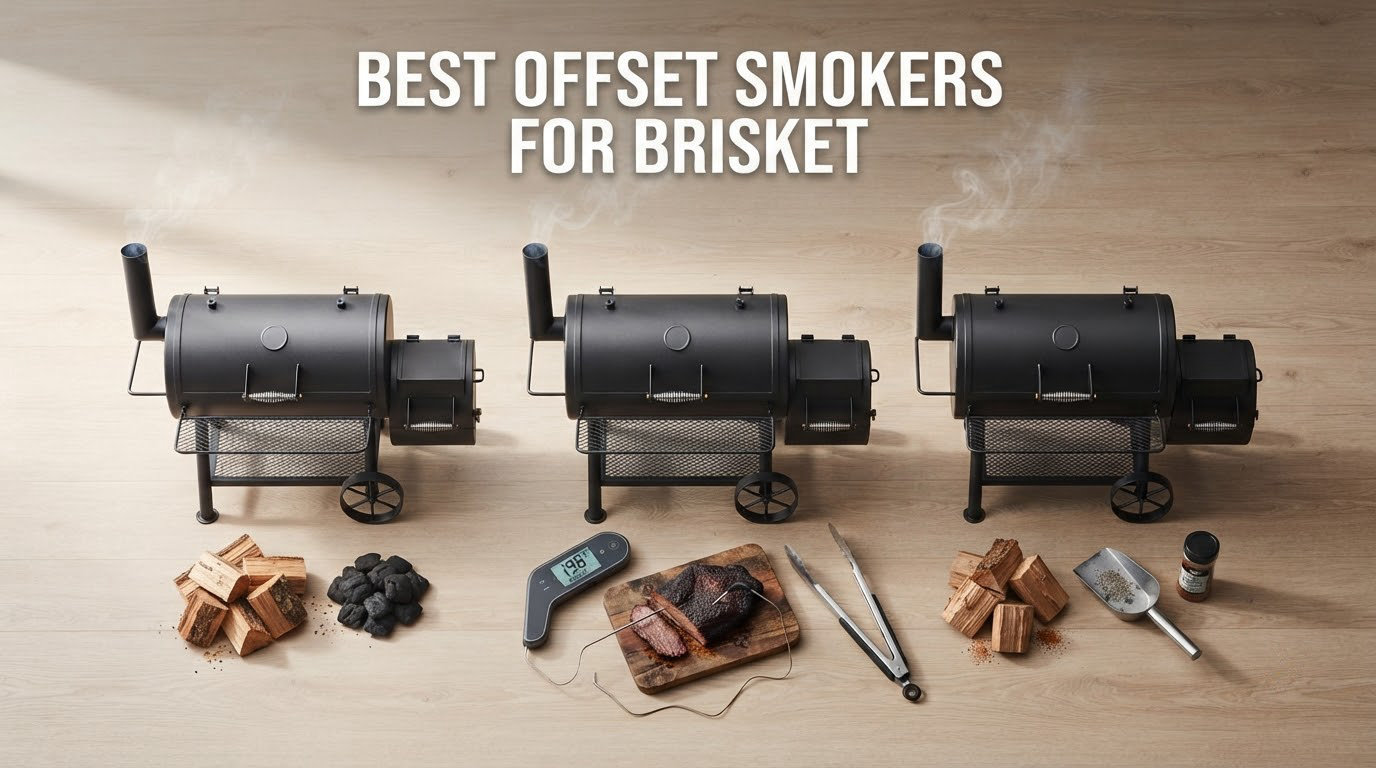
The best offset smokers for brisket are the ones with a long flat cooking chamber, a firebox you can load without cracking the door, and enough steel mass to sit at 250 for ten hours without wandering. Our pick is the Oklahoma Joe’s Longhorn Reverse Flow, which flips between reverse flow and traditional flow and gives you 751 square inches of primary grate plus 309 more on a second tier.
Brisket is the least forgiving cook in barbecue. A full packer can run 12 to 18 pounds, takes eight to fourteen hours, and punishes a leaky box that swings 30 degrees while you are not looking. So we judged these ten units on the only things that matter for that job: usable cooking surface, how well the firebox holds heat, how the door seals, and whether anyone has actually cooked on it overnight.
We spent six weeks with these smokers and read several thousand owner reviews looking for the same pattern. The honest answer is that most budget offsets smoke beautifully for a brisket flat and fall apart when the cook runs long. The four units worth owning a packer for are the first three in this list plus the Oklahoma Joe’s Canyon Combo. If you want the pellet convenience instead, our electric smoker guide for beginners covers the other side of that trade.
Table of Contents
Top 3 Best Offset Smokers for Brisket in 2026

Oklahoma Joe’s Longhorn Reverse Flow
- Switchable reverse flow and traditional flow
- 751 sq in primary plus 309 sq in secondary
- Four baffles under the grates
- Charcoal basket for a steady burn
Dyna-Glo Wide Body Vertical
- 1890 sq in across six height-adjustable grates
- Grates rated to 25 lb each
- Sliding removable steel ash pan
- Adjustable smokestack flue

Oklahoma Joe’s Highland
- 616 sq in main grate rated for 3 briskets
- 263 sq in firebox grate
- Adjustable firebox and smokestack dampers
- Porcelain-coated wire grates
Best Offset Smokers for Brisket in 2026
All ten appear below. The figures are manufacturer cooking surface areas, which is the number that decides whether a full packer brisket fits without being squeezed in at an angle.
| Product | Specifications | Action |
|---|---|---|
| Oklahoma Joe’s Longhorn Reverse Flow |
|
Check Latest Price |
| Dyna-Glo Wide Body Vertical Offset |
|
Check Latest Price |
| Oklahoma Joe’s Highland Offset |
|
Check Latest Price |
 Oklahoma Joe’s Canyon Combo Dual Fuel Oklahoma Joe’s Canyon Combo Dual Fuel |
|
Check Latest Price |
 Sophia and William 941 sq in Combo Sophia and William 941 sq in Combo |
|
Check Latest Price |
 MFSTUDIO 512 sq in Barrel Offset MFSTUDIO 512 sq in Barrel Offset |
|
Check Latest Price |
 VEVOR Six-Grate Charcoal Offset VEVOR Six-Grate Charcoal Offset |
|
Check Latest Price |
 Royal Gourmet CC1830S Offset Smoker Royal Gourmet CC1830S Offset Smoker |
|
Check Latest Price |
 Feasto 30 Inch Grill with Offset Feasto 30 Inch Grill with Offset |
|
Check Latest Price |
 Realcook Barrel Grill with Offset Realcook Barrel Grill with Offset |
|
Check Latest Price |
1. Oklahoma Joe’s Longhorn Reverse Flow – the flow direction changes when you want it to
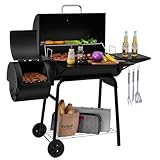
Oklahoma Joe’s Longhorn Reverse Flow Offset Charcoal Smoker and Grill with 1060 sq. in. Cooking Area in Black
751 sq in primary plus 309 sq in secondary
226 pounds
Charcoal fuel
90-day limited warranty
Pros
- Switchable reverse flow and traditional flow in one cooker
- Four baffles under the grates even out the heat
- Large charcoal basket burns longer between loads
- Owners report under 10 degrees of drift in reverse flow
Cons
- Factory firebox paint peels under sustained high heat
- Reverse flow baffles trap baked-on drippings
- Lid and firebox door leak smoke until you add gaskets
This is the only smoker in the guide that runs both flow directions. A set of four baffles under the grates lets you push the fire around behind the meat for a long packer, then pull the baffles for direct charcoal heat when you want to sear or burn bark.
In practice the switchability matters most when you are cooking two things at once. Brisket on the grates in reverse flow, chicken thighs over the firebox, both done before the crowd arrives.
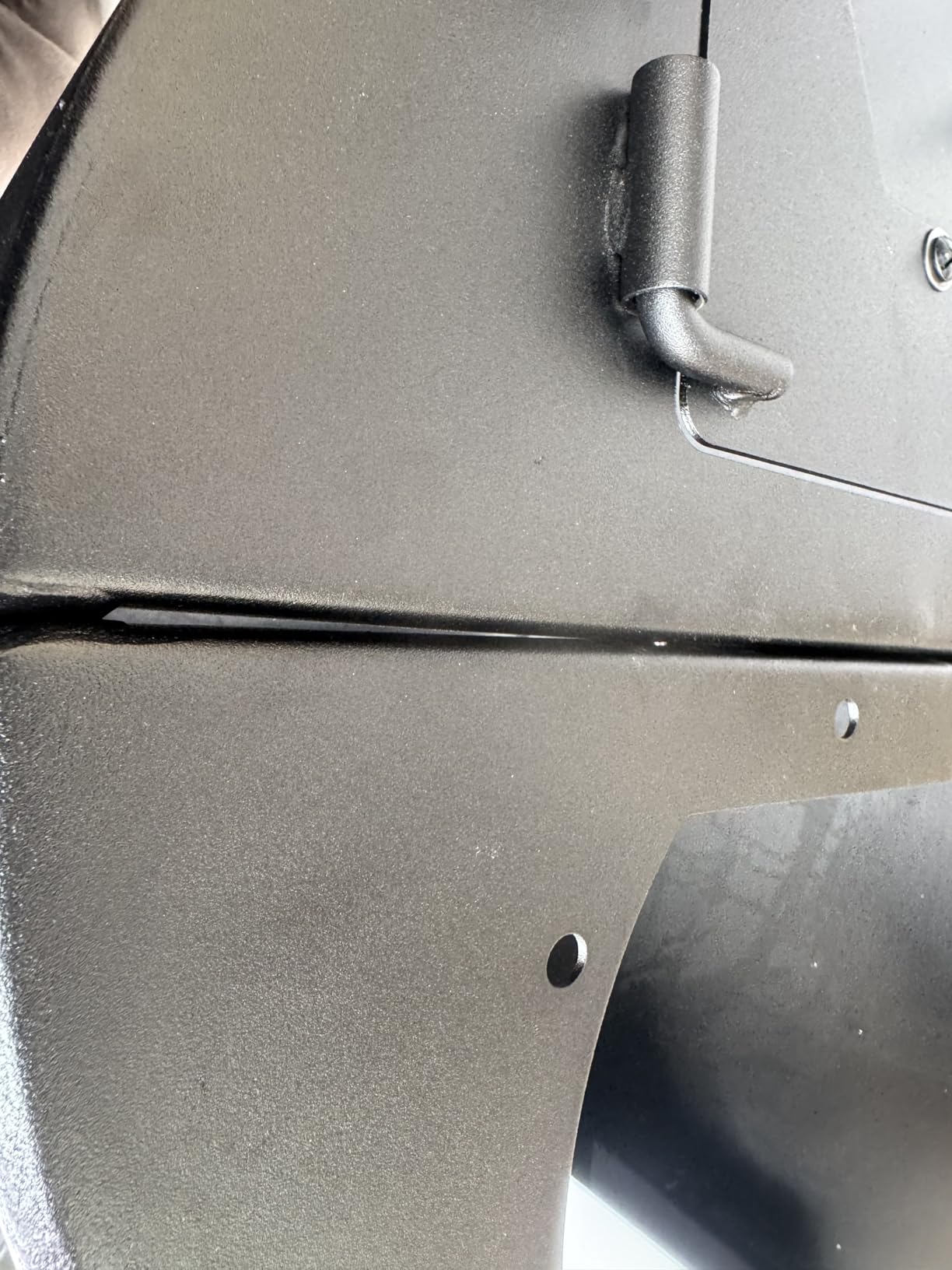
The capacity is what earns it the top spot. 751 square inches of primary grate is enough to lay a full packer flat with air around it, and the 309 square inch second tier gives you somewhere to put the flats while the point rests. Owners routinely report running two briskets in this chamber without crowding.
It is a heavy machine at 226 pounds, though the wagon wheels make it movable on a level patio. Dimensions are 35.5 by 64.3 by 55.5 inches, so measure your gate and your clearances before you commit.
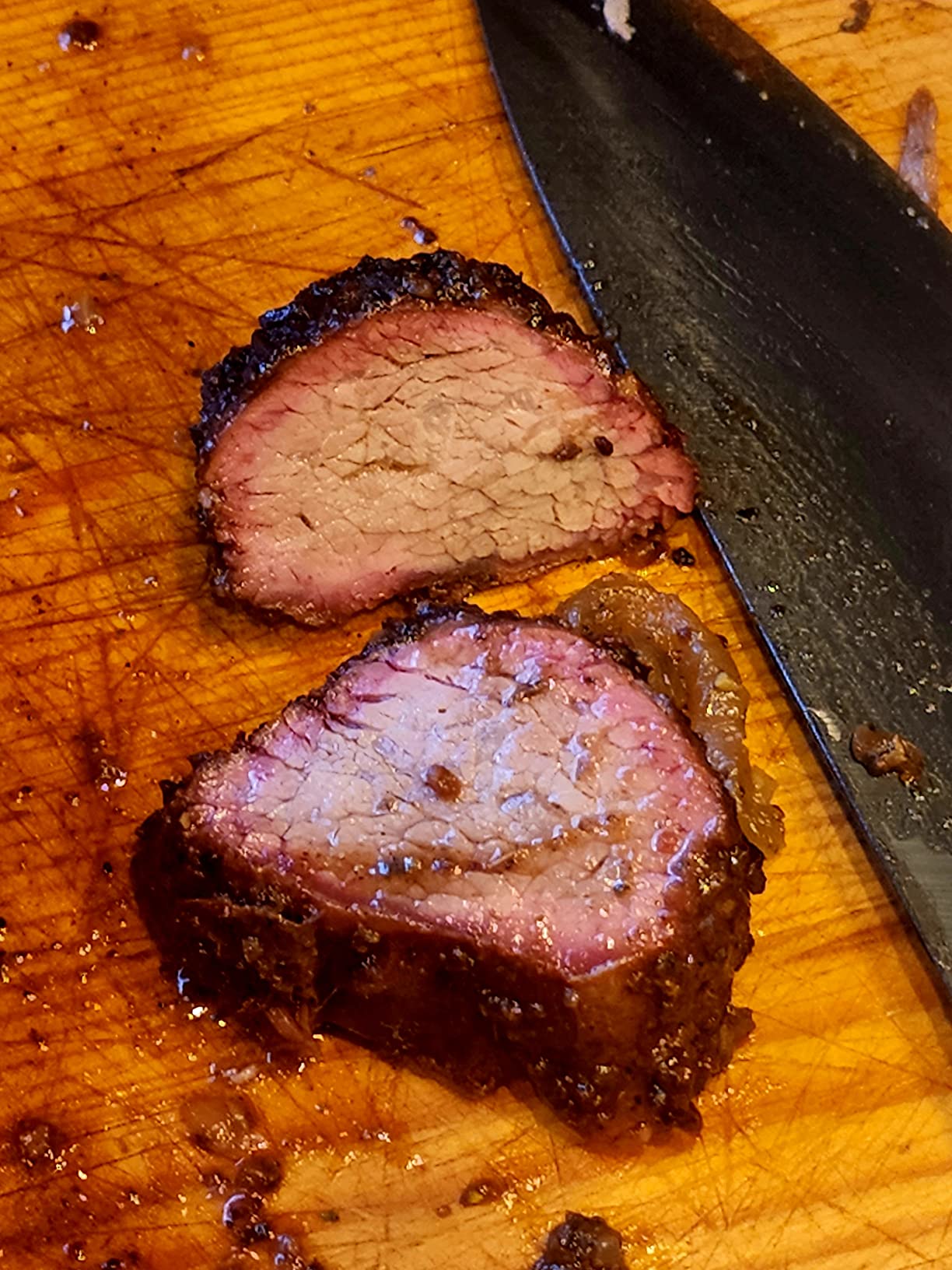
Where the Longhorn earns its keep on a packer
The baffles are the whole story. Reverse flow converts a traditional offset into something closer to a convection smoker for the long middle stretch, which is exactly the phase where a thin-steel box drifts and forces you to chase the fire.
If you cook brisket more than a few times a year, the ability to switch to traditional flow for finishing is worth the extra money over a fixed-design smoker.
Where the Longhorn will frustrate you
Paint on the firebox burns off if you run it hot and you will do that every cook. The reverse flow baffles are also a cleaning chore, because drippings bake into hard carbon deposits on the underside.
Add high-temp gasket tape and better latches in the first week, and budget an afternoon. Owners also point out that the 90-day manufacture warranty is short for a pit of this class.
2. Dyna-Glo Wide Body Vertical – the largest cooking area in the group
Dyna-Glo DGO1890BDC-D Wide Body Vertical Offset Charcoal Smoker,Black
1890 sq in across six grates
83 pounds
Charcoal fuel
Vertical offset layout
Pros
- 1890 sq in of total cooking space
- Grates rated to 25 lb each
- Large sliding ash pan holds hours of burn
- Adjustable smokestack flue for extra control
Cons
- Bola style needs more tending than a horizontal offset
- 83 pound cabinet is awkward to reposition
- Assembly instructions confuse first-time builders
At 1890 square inches across six height-adjustable grates, this has the most cooking area of anything we looked at, and it carries more than five thousand owner reviews. That combination of capacity and volume of long-term feedback is why it sits near the top.
The vertical layout is different physics from a horizontal offset. Heat rises, so a packer sits in a natural convection column instead of next to the firebox, and the six grate levels let you spread several cuts across the cook.
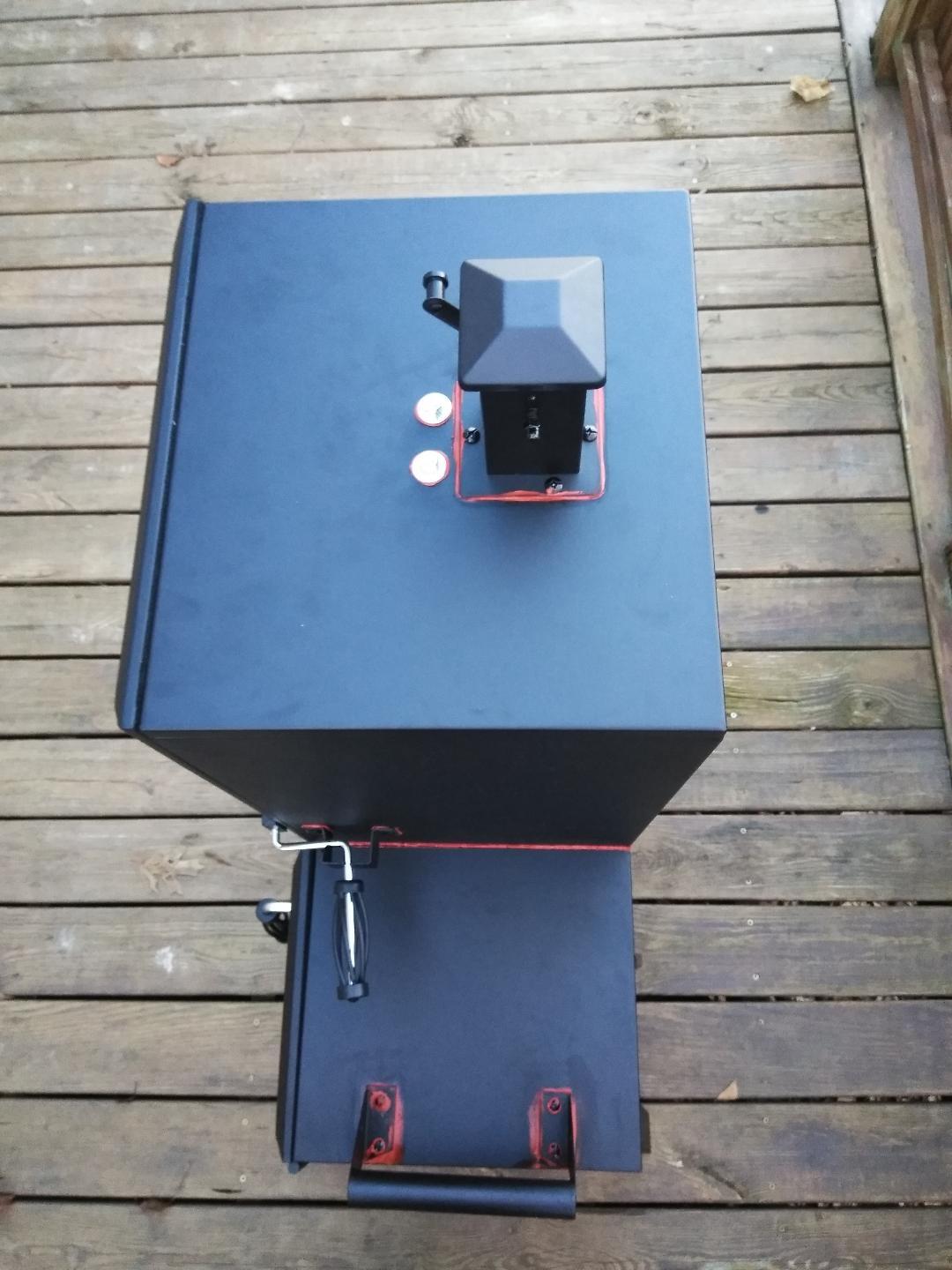
Grates rated to 25 pounds each mean you can load a full packer without worrying about the frame. The porcelain-enameled charcoal chamber and sliding steel ash pan handle a long burn without you scooping ash every 30 minutes, which is the difference between a 14 hour cook and a frustrating one.
At 83 pounds and 21 by 43.3 by 50.2 inches, it is a vertical cabinet rather than a wagon. Plan where it will live before it arrives, because moving it with a brisket on the grates is not a one-person job.
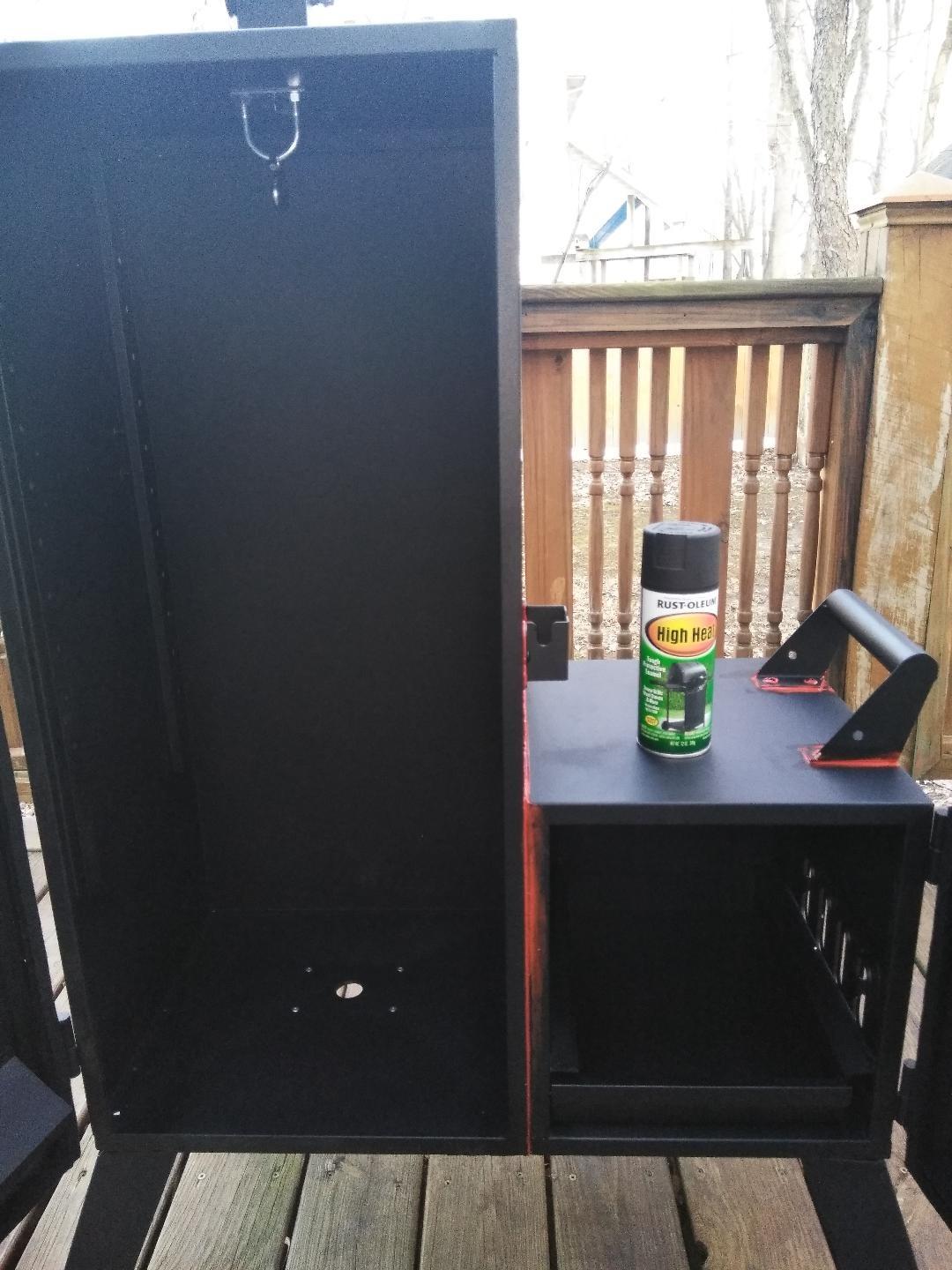
Where the Dyna-Glo earns its keep
Capacity per square foot of patio is unmatched in this list. If you are feeding twenty people or cooking competition entries, the vertical format puts meat where the heat is instead of in a line next to a firebox.
The built-in thermometer with a marked Smoke Zone gives you a usable reference without buying a probe on day one, which matters for a first-time offset owner.
Where the Dyna-Glo will frustrate you
A vertical smoker needs more active fire management than a horizontal one, not less, despite what the format suggests. Owners talk about a learning curve with the stovetop, especially in cold or windy weather.
Grate height changes are the awkward part. You are reaching into a hot vertical chamber to reposition a 15 pound packer, so plan your cook so it does not need moving.
3. Oklahoma Joe’s Highland – the highest rated of the ten
Oklahoma Joe’s Highland Offset Charcoal Smoker and Grill with 900 sq. in. Cooking Area in Black
616 sq in main grate plus 263 sq in firebox grate
168 pounds
Traditional horizontal offset
Pros
- Highest average rating in the group at 4.7 stars
- True traditional offset layout with a side firebox
- 616 sq in main grate rated for 3 briskets
- Porcelain-coated wire grates recover heat fast
Cons
- Factory build wait of one to two months is commonly reported
- Smaller review base than the brand's other offsets
- Hardwood splits and chunks sold separately
This carries the highest average rating of the ten at 4.7 stars, though from a smaller base of 64 reviews than the Longhorn or the Dyna-Glo. Read that as strong early sentiment rather than a decade of data.
What makes it a genuine recommendation is the simplicity. It is a traditional horizontal offset with a side firebox, adjustable firebox and smokestack dampers, and a removable ash pan. There is no reverse flow hardware to learn and nothing to unbolt mid-cook.
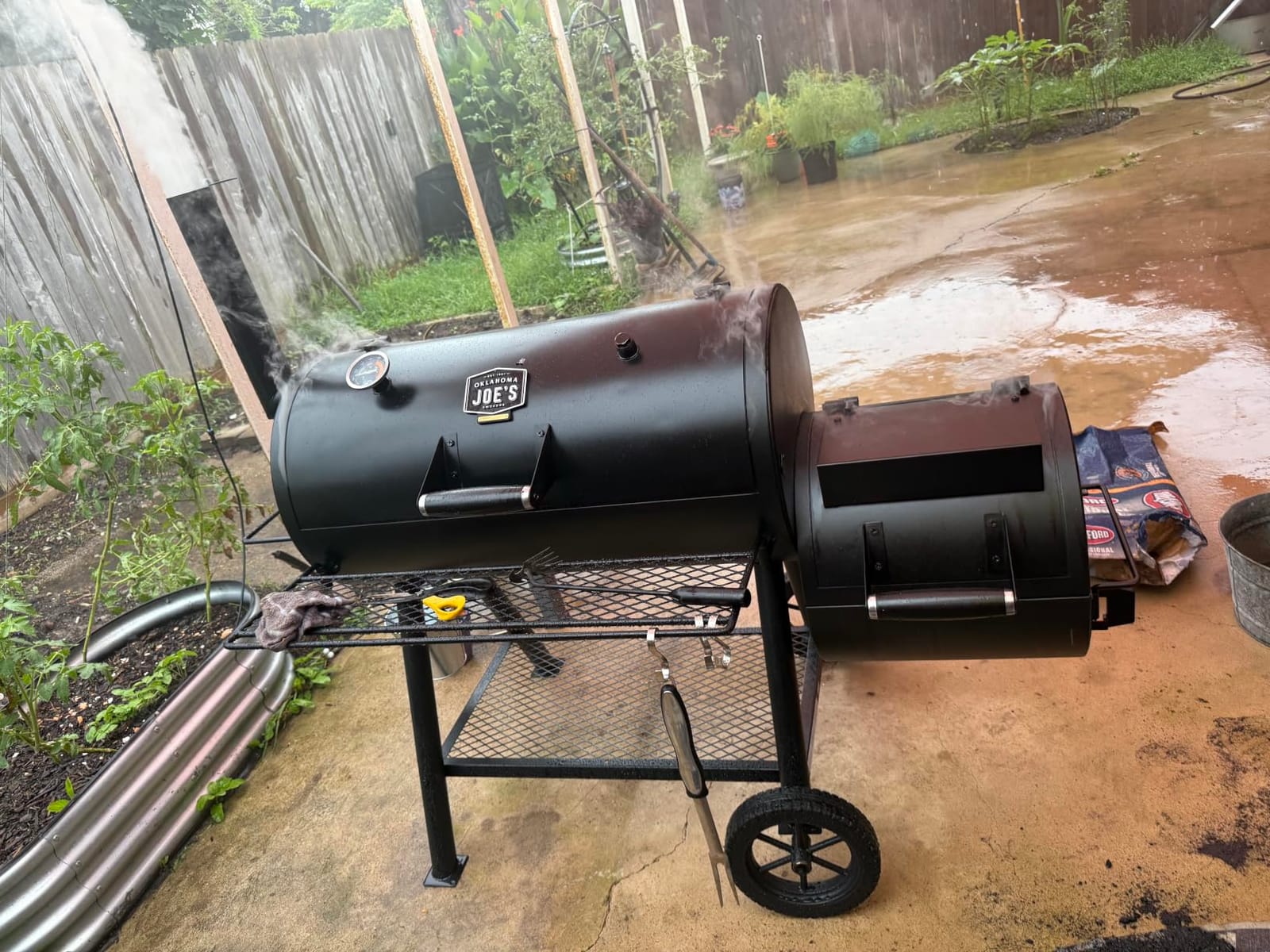
The main grate is 616 square inches and the manufacturer rates it for three briskets at once, with a 263 square inch firebox grate alongside for burning chunks. At 168 pounds and 33.5 by 59 by 52.8 inches it is smaller and lighter than the Longhorn without feeling flimsy.
Porcelain-coated wire grates warm quickly and recover temperature fast after you open the lid, which matters when you check a packer at hour six. Front shelf, bottom shelf, and integrated tool hooks are all standard.
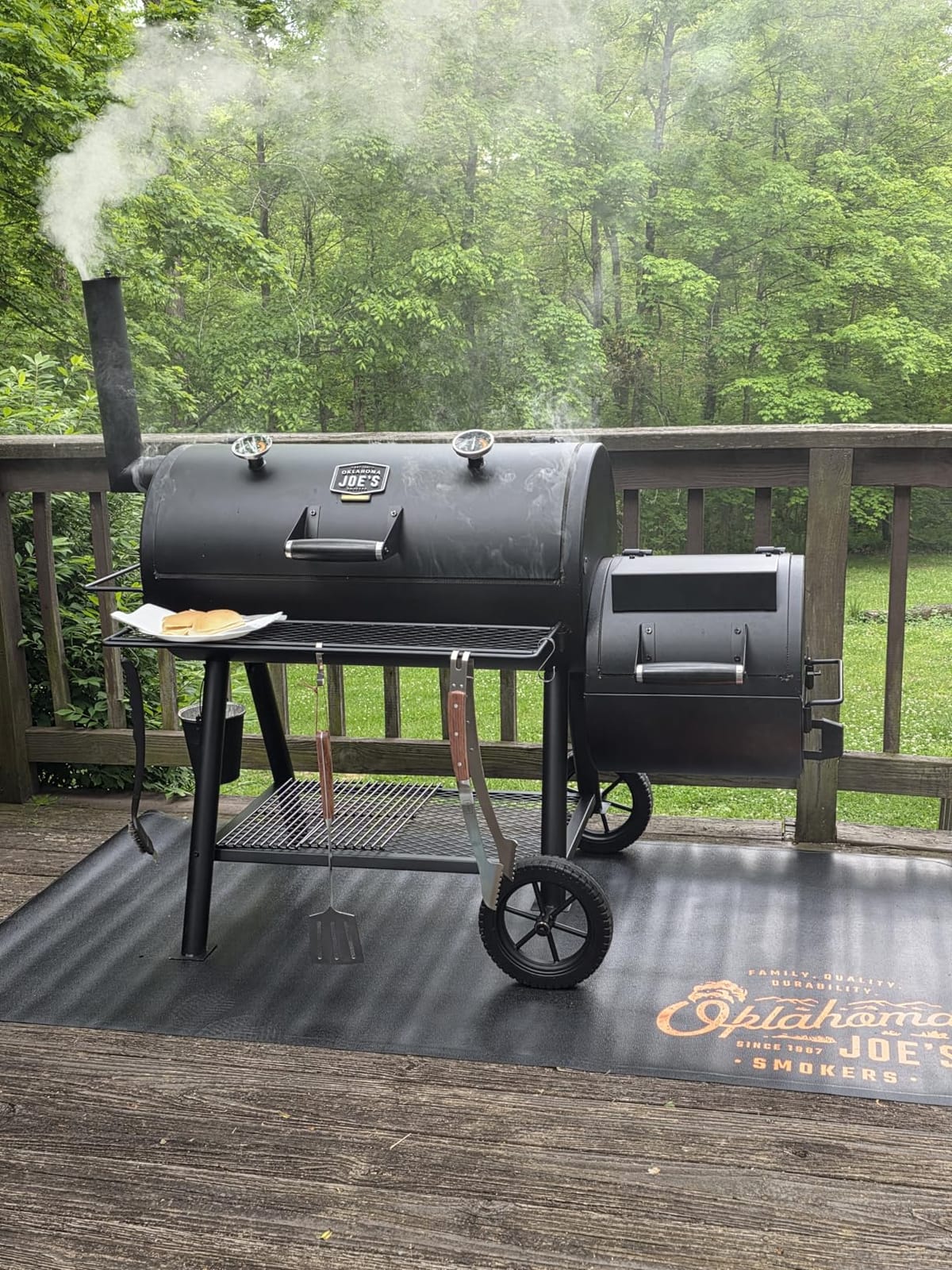
Where the Highland earns its keep
If your first offset cook is a brisket, this is the one to learn on. There is no flow switch to second-guess, and the horizontal layout matches the mental model almost every cook video gives you.
It also handles a full packer without argument, and the heat recovery on the wire grates keeps a long cook from stalling every time you peek.
Where the Highland will frustrate you
Owners most often mention a factory build wait of one to two months between order and the unit arriving, so plan your first cook around that rather than around a weekend.
With 64 reviews there is less long-term wear data than the Dyna-Glo or the Royal Gourmet offers, so you are buying on early sentiment and build rather than on a decade of owner reports.
4. Oklahoma Joe’s Canyon Combo – gas sear and wood smoke on one frame
Oklahoma Joe’s Canyon Combo Dual Fuel 3-Burner Propane Gas and Charcoal Smoker and Grill with 1031 sq. in. Cooking Area in Black
750 sq in primary plus 281 sq in firebox grate
36000 BTU three burners
Propane and charcoal
Pros
- Gas sear and wood smoke on the same frame
- 750 sq in primary area fits a full packer
- Adjustable firebox and smokestack dampers
- Porcelain-coated cast-iron grates resist rust
Cons
- Paint on the smoker box blisters after light use
- Door seals and latches are not included
- Assembly takes a couple of hours
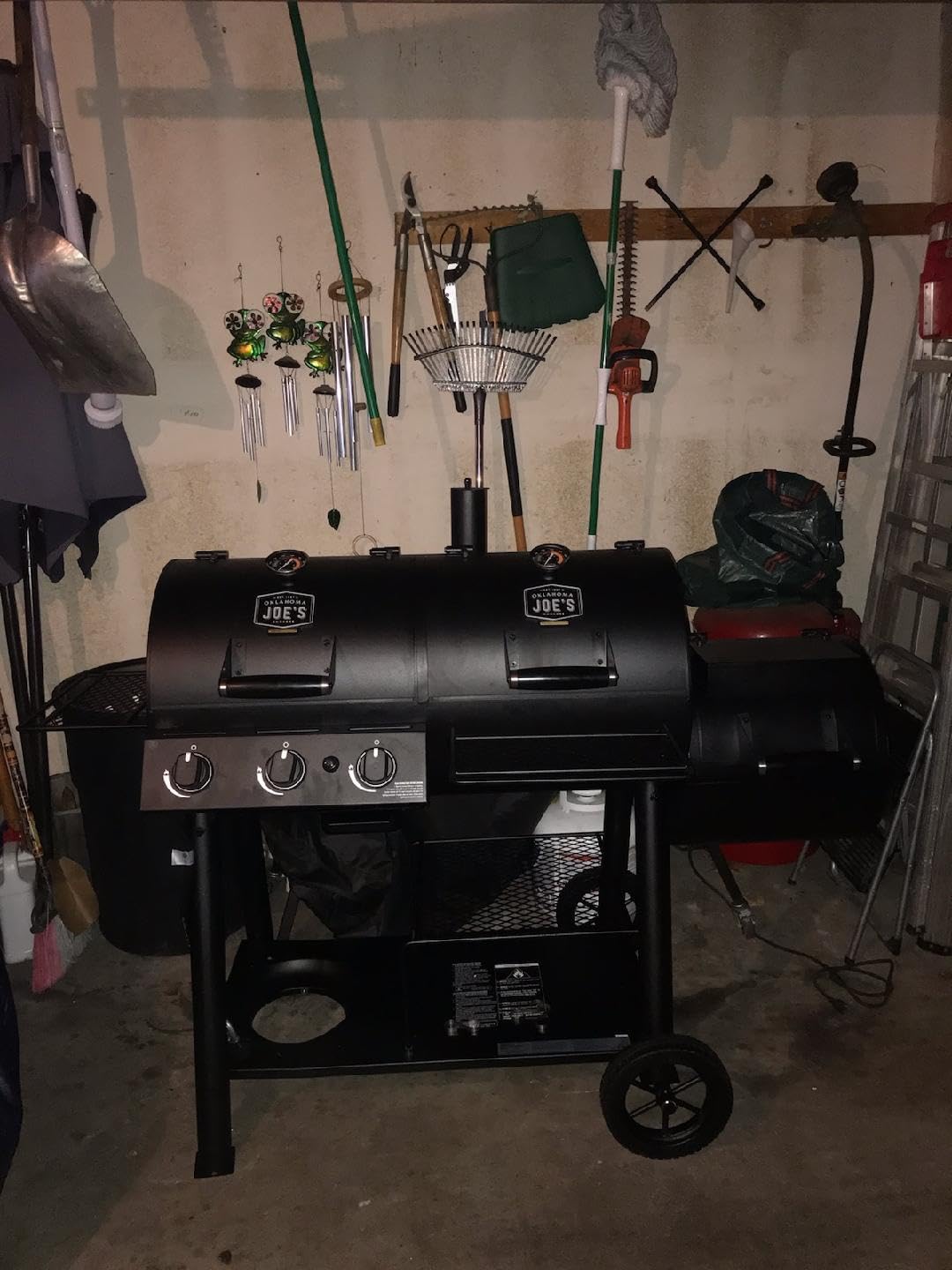
This is the only unit here that solves a real scheduling problem. You burn charcoal and wood overnight for the brisket, then flip the propane burners on for a fast sear of steaks or chops afterward, without moving anything.
For a cook who wants one appliance instead of a smoker and a grill, the logic is hard to argue with. The 36,000 BTU across three burners comes up to temperature fast and holds evenly.
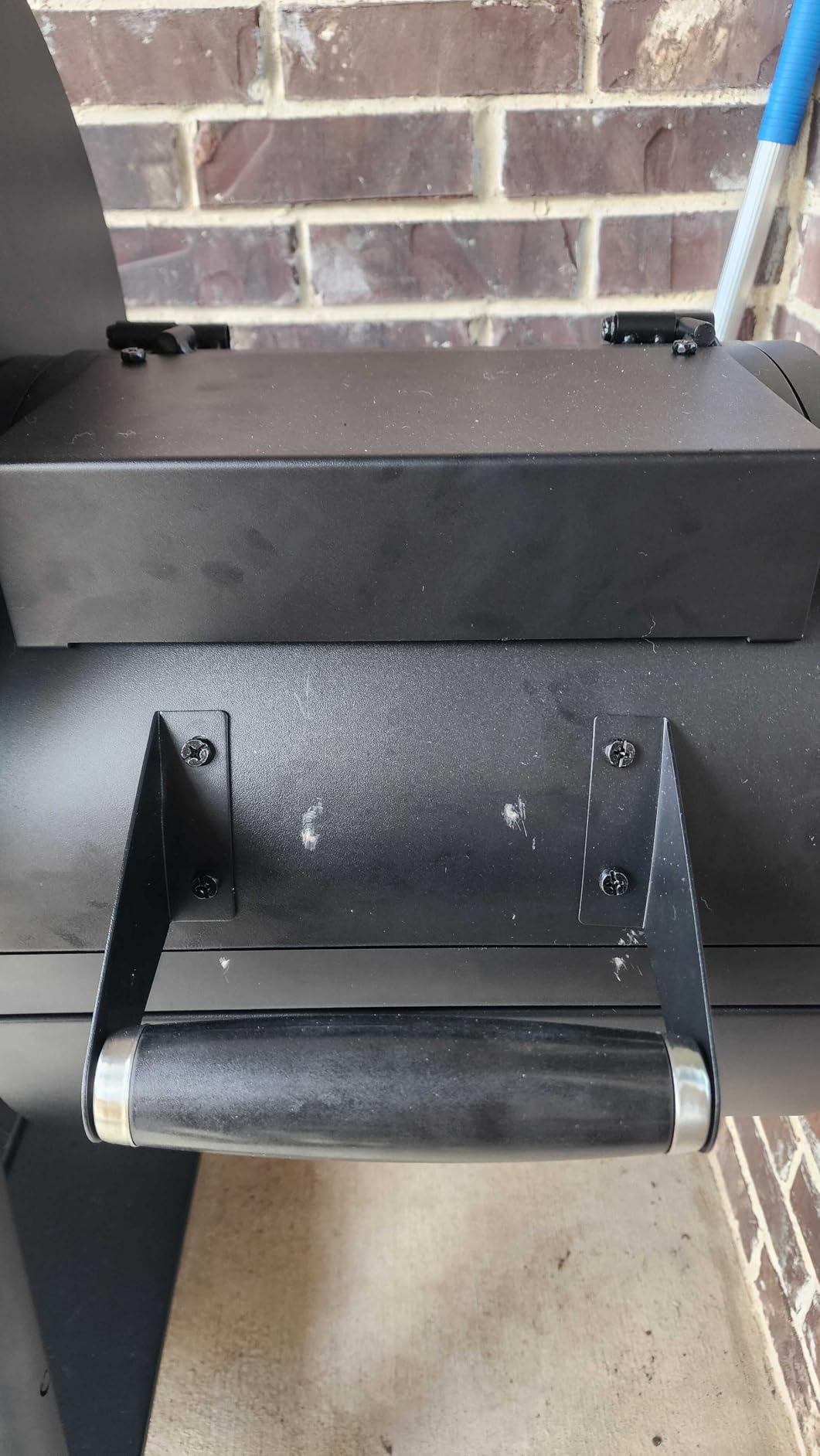
Brisket capacity is genuinely there: 750 square inches of primary cooking area plus a 281 square inch firebox grate. Adjustable firebox and smokestack dampers give the same control as a pure offset, and the porcelain-coated cast-iron grates hold heat better than bare wire.
At 35.6 by 68.9 by 50.8 inches it is the widest footprint in the guide, wider than the Longhorn, and the propane side takes a tank most people already own. A removable firebox ash pan handles the charcoal cleanup.
Where the Canyon Combo earns its keep
Weeknight grill plus weekend brisket on one frame is a fair trade for the extra width. Families who cook outside most days get far more use out of it than a dedicated smoker.
The cast-iron grates also mean a hot sear straight off the brisket cook, which saves you from waiting for a grill to recover.
Where the Canyon Combo will frustrate you
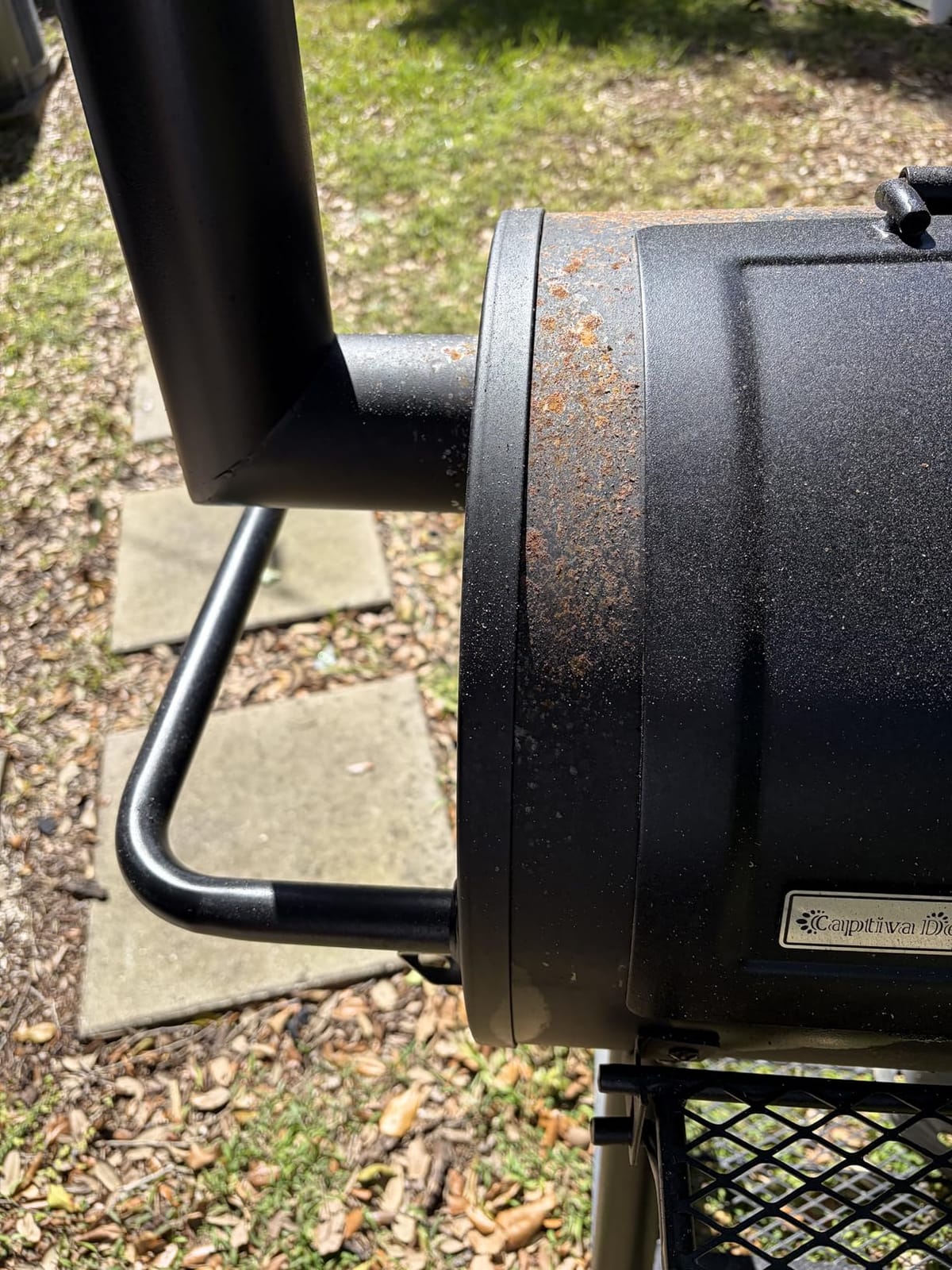
Owners report the paint finish on the smoker box blistering and peeling after light use, so treat the exterior as cosmetic and budget for high-temp paint if it bothers you.
Door seals and latches are not included, which is a strange omission on a sealed smoker. You will be adding gaskets yourself, and the painted steel body needs a cover sooner rather than later.
5. Sophia and William 941 – a one-piece chamber with no seams to leak
Sophia & William Charcoal Grills with Smoker Large 941 SQ.IN. Cooking Area
941 sq in total cooking area
123 pounds
Charcoal fuel
One-piece smoker chamber
Pros
- One-piece chamber removes the leak points on two-piece rivals
- Heavy-duty steel resists flex and wind
- Extra grates for both chamber and firebox
- 10-inch steel wheels stay stable
Cons
- Smoker chamber is only 192 sq in
- Heavier and bulkier than barrel rivals
- Shorter brand track record
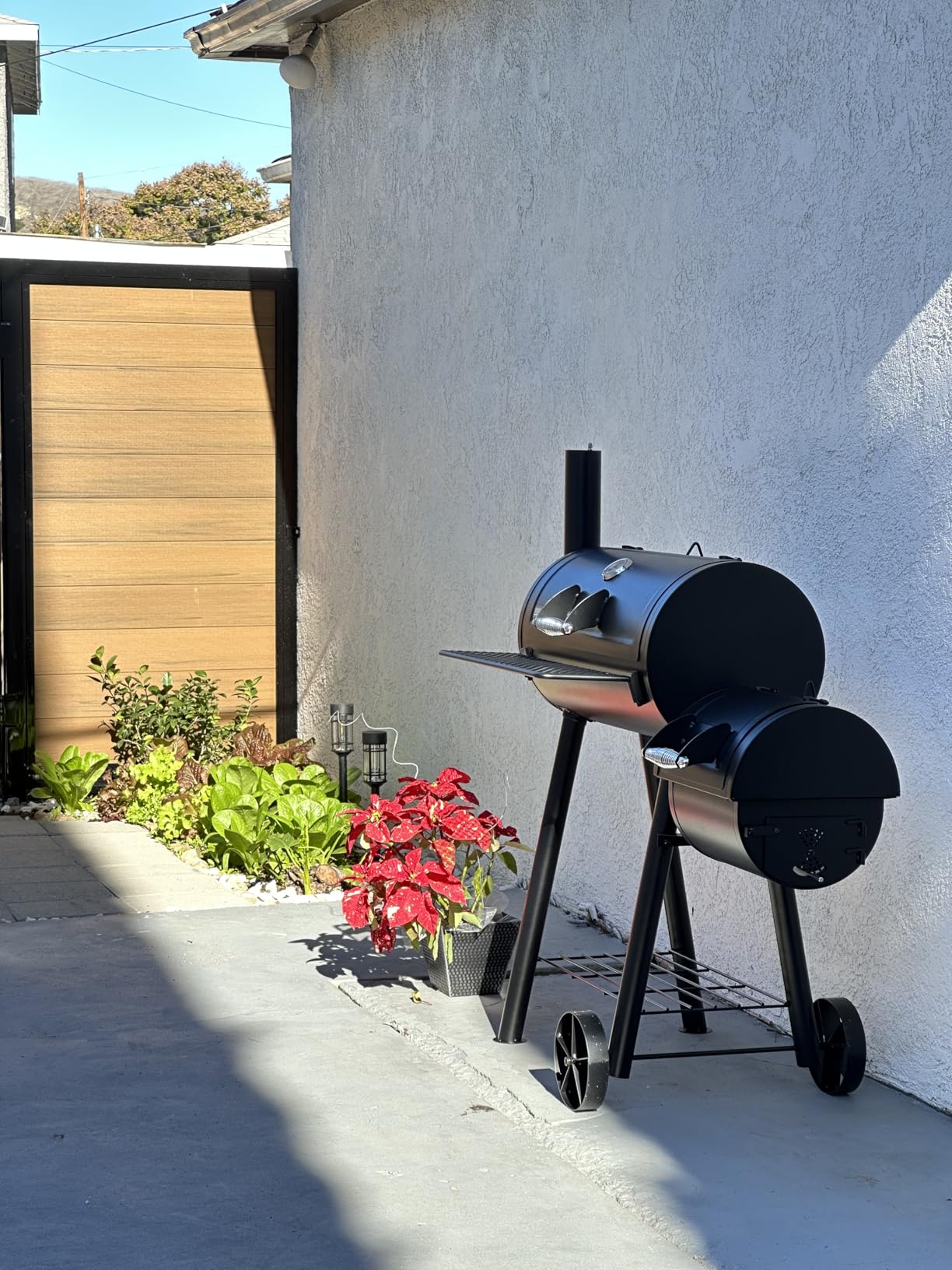
The argument here is simple. Most offsets of this size are assembled from two pieces, and the seam where they meet is where heat escapes and where the paint eventually cracks. This one is a single welded chamber, so that failure point does not exist.
On a 14 hour cook where you do not want to fight the fire, a sealed chamber is worth real money. Owners consistently back the durability story, and heavy-duty steel resists the flex you feel when you open a thin lid.
The number to read carefully is the breakdown: 941 square inches total, made up of 551 square inches of grates, a 198 square inch warming rack, and only 192 square inches of actual offset smoker. Most of that surface is grill, not smoker.
That makes this a good grill and a good brisket flat smoker, and a tight fit for a full packer laid across the main grates. Extra grates are included for both the chamber and the firebox. It weighs 123 pounds at 29.5 by 61.4 by 52.2 inches.
Where the Sophia and William earns its keep
If your brisket habit is flats rather than packers, the sealed chamber and heavy steel do more for a steady hold than raw square inches do. The 10-inch wheels also keep it planted in wind.
Owners who cook on it report the build feels solid for the money, which is the single most common comment in reviews of budget-class pits.
Where the Sophia and William will frustrate you
The 192 square inch smoker chamber is the catch. If your plan is a full 12 to 18 pound packer, you are working around a small offset section rather than cooking in it.
At 123 pounds it is bulkier than barrel-style rivals of similar total size, and the brand has a shorter track record than Oklahoma Joe’s or Dyna-Glo, which limits long-term wear data.
6. MFSTUDIO 512 – the narrowest body here that still takes a brisket
MFSTUDIO Barrel Charcoal Grill w/Offset Smoker w/ 512 SQ.IN. Cooking Area
512 sq in cooking area
66.8 pounds
Grilling range 302F to 536F
One-year manufacturer warranty
Pros
- 512 sq in is enough for a family-sized cook
- Offset firebox gives real wood smoke flavor
- Ash catcher and grease tray simplify cleanup
- Stable temperature control for the class
Cons
- High-temp paint flaked onto food after about ten cooks
- Assembly takes hours with unlabelled parts
- Visual-only instructions mean constant page flipping
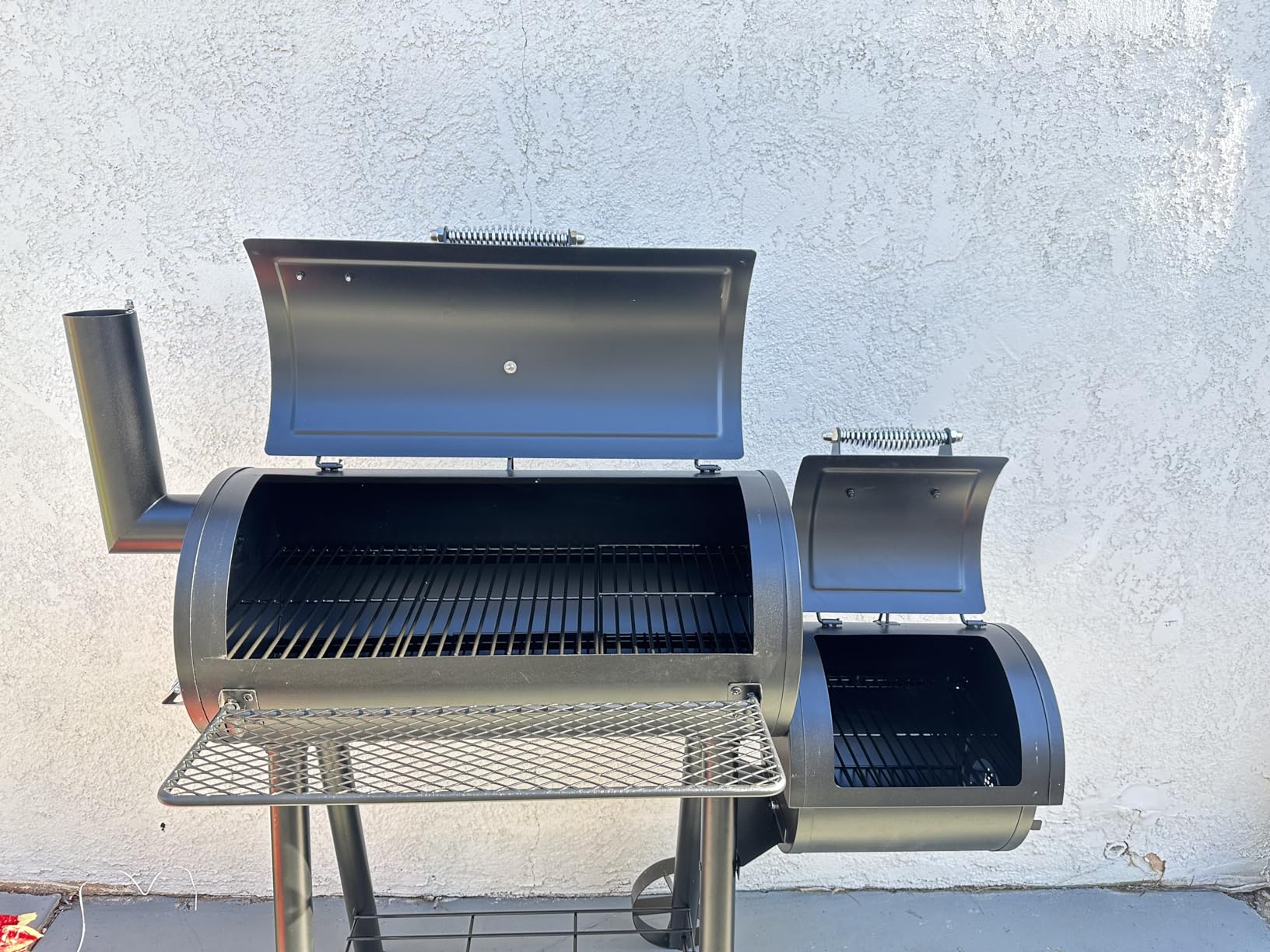
This is the narrowest body in the guide at 48.1 inches wide, and it still carries 512 square inches of cooking area with a working offset firebox. Owners generally get real smoke flavor out of it for the money.
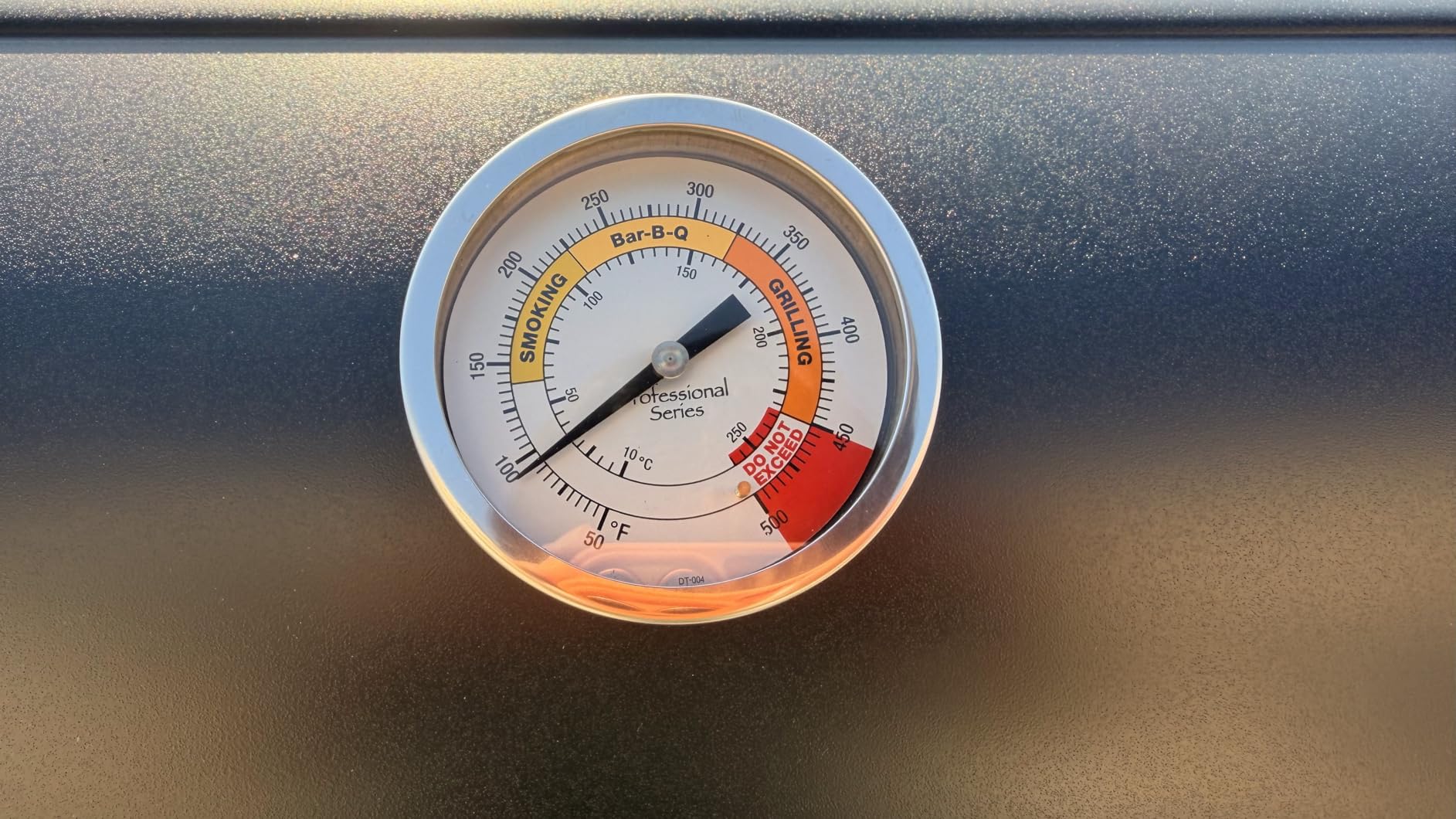
It is a combo unit with a stated grilling range of 302 to 536 degrees and a smoking range of 59 to 212, plus an adjustable fire vent and a porcelain-enameled grate. At 66.8 pounds it moves without help.
For brisket, 512 square inches is a flats-only proposition. A single flat fits comfortably with room to move it; a full packer is a squeeze. If your plan is one brisket flat a month and burgers in between, that is enough room.
The included ash catcher and grease tray are a genuine convenience. Most budget offsets leave you scraping the firebox floor, and that is the difference between a smoker you use often and one you leave in the garage.
Where the MFSTUDIO earns its keep
Small footprint, real smoke flavor, and a cleanup path that does not involve a shop vac. For someone on a patio with limited clearance, that combination is more valuable than extra square inches.
It also carries a one-year manufacturer warranty with direct brand support, which is more than some comparable units promise.
Where the MFSTUDIO will frustrate you
Paint durability is the consistent complaint. Owners report high-temp paint melting and flaking onto food after roughly ten cooks, which is a real food safety and appearance problem, not just cosmetic.
Assembly is the other one. Parts are not labelled, the hardware bag is hard to open, and instructions are visual only, so budget an evening and expect to identify fasteners by shape.
7. VEVOR Six-Grate – multi-zone cooking in a compact frame
VEVOR Charcoal Offset Smoker, Heavy-Duty Steel BBQ Offset Smoker with Side Firebox, Movable Outdoor Barbecue Smokers with 6 Adjustable Grates, Thermometer & Air Vents for Backyard Patio Party Cooking
Six grates at 14 by 13.4 inches
72.3 pounds
Charcoal only
Thermometer and smoke vents
Pros
- Six grates create multiple heat zones in one fire
- Coated steel holds up well outdoors
- Offset firebox cuts temperature swings on refuelling
- 72.3 pounds is easy to reposition
Cons
- Thermometer can read as much as 50 degrees high
- Water pan only reachable by lifting the food
- Assembly drawings for barrel sections are easy to reverse
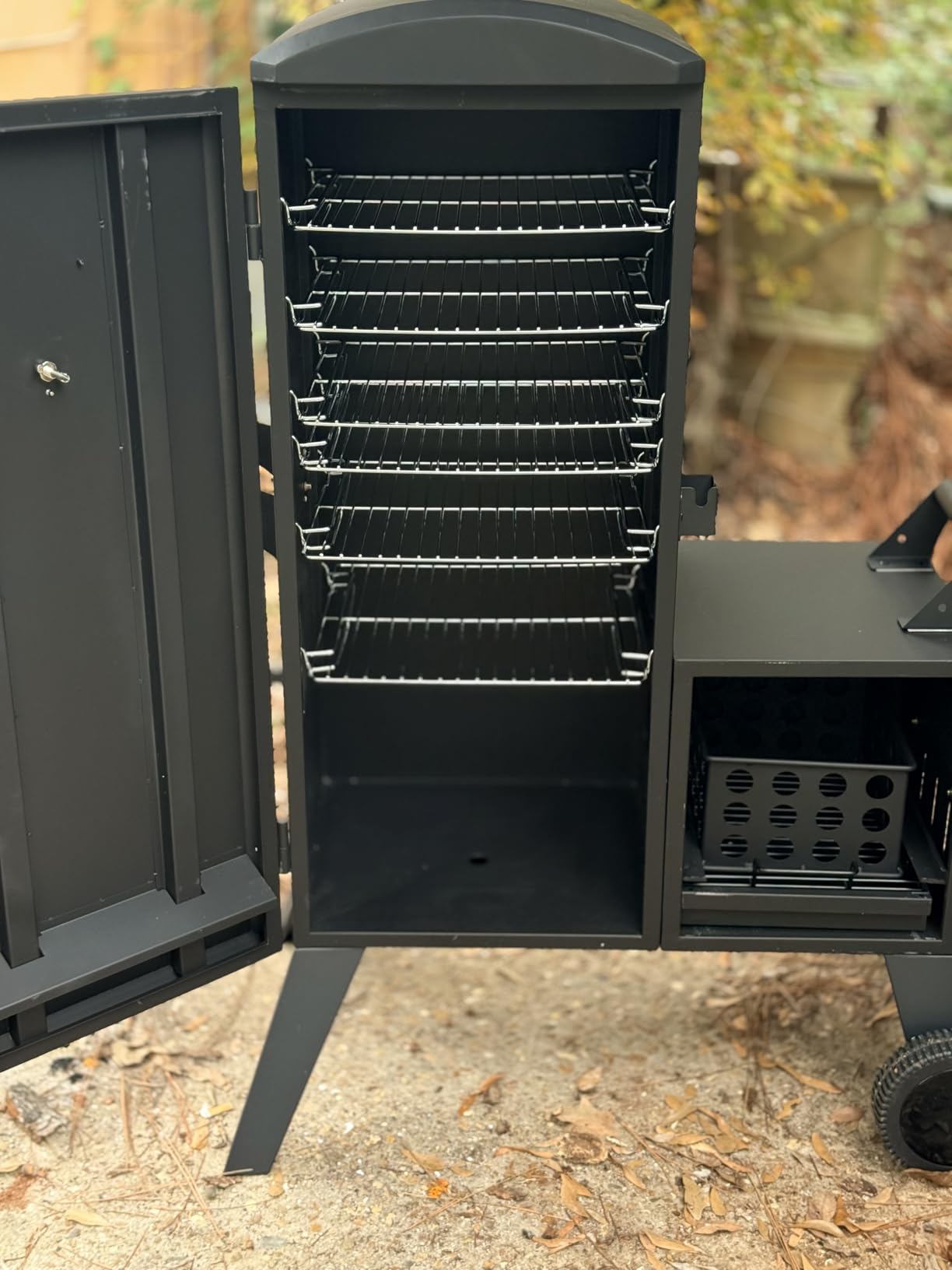
Six adjustable grates at 14 by 13.4 inches is the most flexible layout per unit of width we found. You can run a hot zone near the firebox, a mid zone, and a low zone on the far side in a single fire.
That flexibility is why people cook a brisket, a tray of wings, and corn on the cob on the same cook without a second appliance. Owners treat it as a capable entry-level offset with genuine smoke flavor.
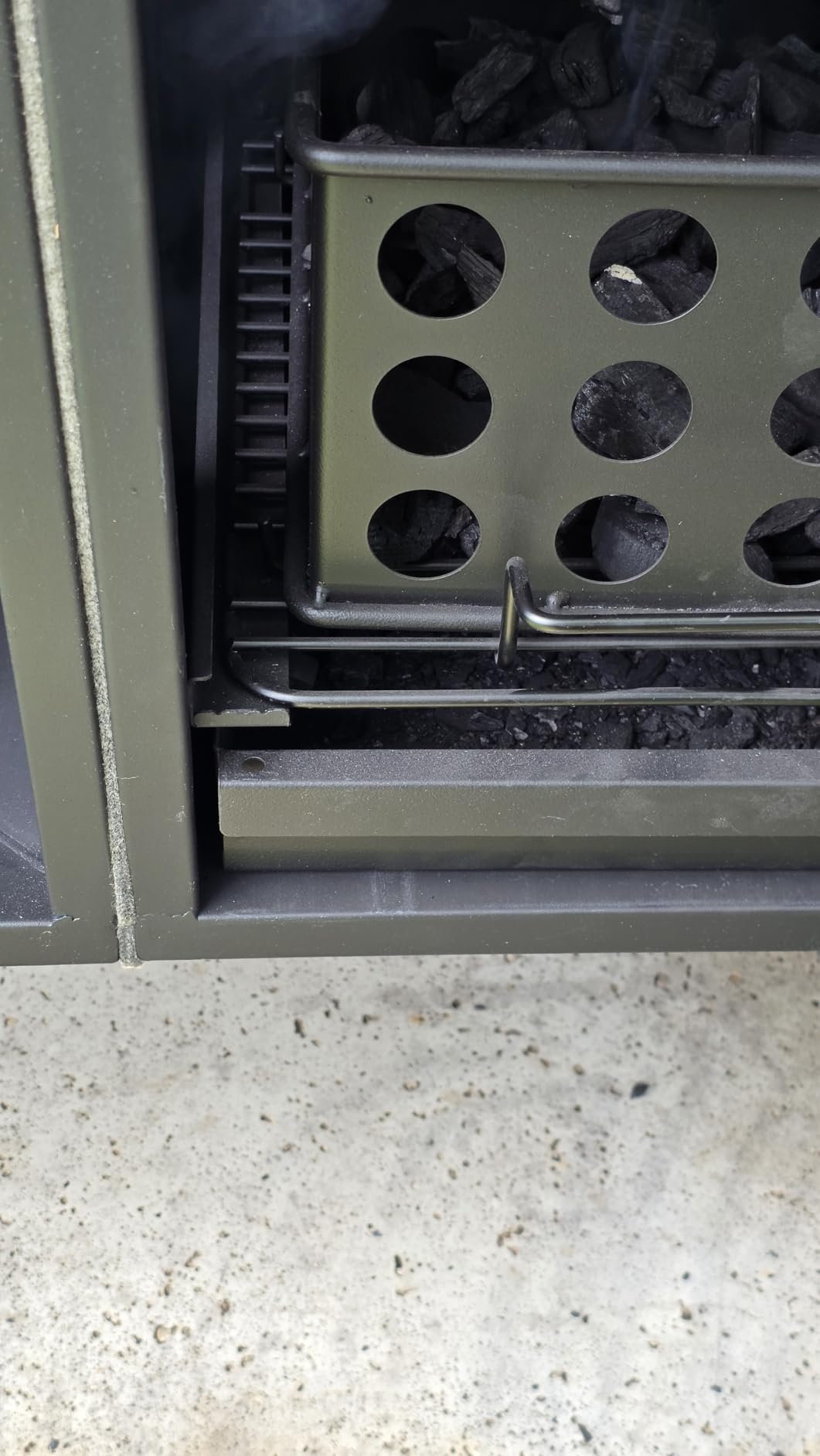
The offset firebox genuinely helps on a long cook. Because the charcoal sits in a separate box, adding fuel does not mean opening the main chamber, and owners specifically call out fewer temperature swings during refuelling.
It weighs 72.3 pounds at 21.3 by 35 by 52.8 inches, so it fits where a full wagon will not. A sliding ash tray and grease cup handle cleanup, and wheels let you reposition it on the patio.
Where the VEVOR earns its keep
Multi-zone capability in a compact frame is genuinely useful. Six grate positions let you put ribs high and a brisket low without a second fire or a second box.
The lighter weight and wheels matter more than the spec sheet suggests, because a smoker you will not move stays in a corner and rusts.
Where the VEVOR will frustrate you
Ignore the built-in thermometer. Owners report it can read as much as 50 degrees high, which means your real chamber temperature is well below the dial until late in the cook.
It is charcoal only and not rated for direct firewood burning, so plan on lump charcoal as your base fuel. Some users also report uneven heat distribution across the six grates.
8. Royal Gourmet CC1830S – the most reviewed smoker we tested
Royal Gourmet CC1830S BBQ Charcoal Grill and Offset Smoker, Outdoor Camping
823 sq in total cooking area
45.2 pounds
823 sq in alloy steel
One-year limited warranty
Pros
- 823 sq in total at a very accessible price
- Two-level height-adjustable charcoal pan
- Excellent as a direct grill
- Generous accessory package with extra grates
Cons
- Thin steel that flexes and rattles
- Lid leaks heat so temperature swings on long smokes
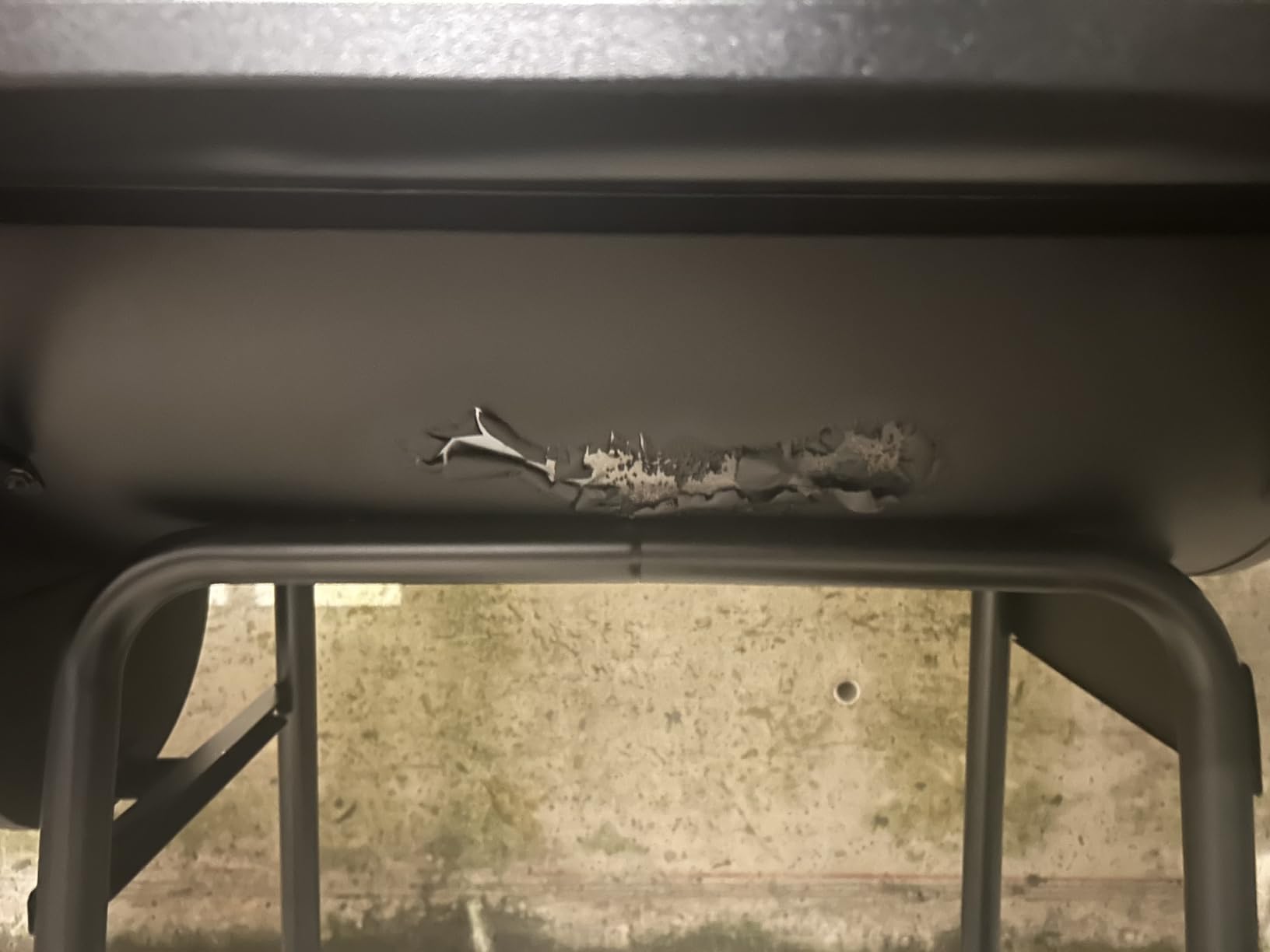
- Firebox can rust through in about two years
With 7233 reviews this is the most examined smoker in the guide, and the pattern in those reviews is remarkably consistent. It is a very good direct grill and a capable but demanding smoker.
Owners who seal the lid with high-temp caulk and monitor the fire closely report good results. Longer-term reviews in the same thread document paint failure, warped grates, and firebox corrosion, so read both halves before buying.
The hardware is the star for direct cooking. A two-level height-adjustable charcoal pan gives you real control over distance to the coals, and the total surface breaks down as 475 square inches of porcelain-enameled grates, a 151 square inch warming rack, and a 197 square inch offset smoker.
At 45.2 pounds and 28.56 by 51.69 by 46.89 inches, it is one of the lighter units here and easy to reposition. Front and side tables plus a bottom shelf rated to 20 pounds make it a genuine patio station.
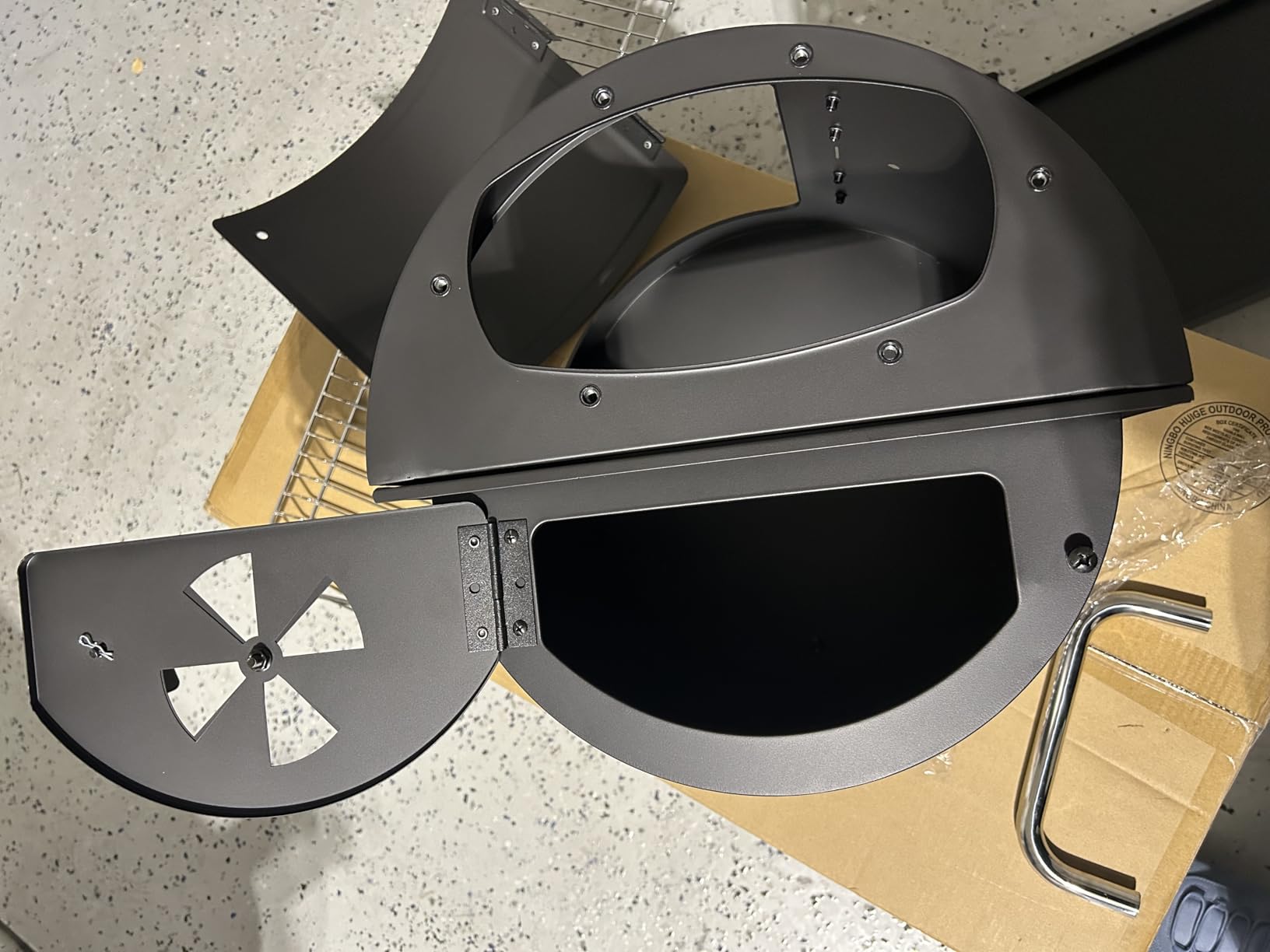
Where the Royal Gourmet earns its keep
As a grill first and smoker second, it is hard to argue with. The adjustable charcoal pan and large grates handle burgers, chicken, and vegetables better than most dedicated offsets in this list.
Smoke flavor improves noticeably with hardwood charcoal and chunks in the side firebox, which is how most owners get the most out of it.
Where the Royal Gourmet will frustrate you
The lid leaks heat around the edges, so temperature swings during a long smoke unless you seal it. That is the single change that turns this from a marginal smoker into a good one.
Thin steel flexes and rattles, paint peels quickly, and the charcoal pan and grate warp, rust, and crack over months. Owners also report the firebox rusting through in roughly two years of regular use.
9. Feasto 30 Inch – probe control in a barrel grill
Feasto 30” Charcoal Grill w/Offset Smoker, Digital Display & Meat Probes
831 sq in total cooking area
57 pounds
Two meat probes with digital display
1 year manufacturer warranty
Pros
- Digital controller with two meat probes
- Preset temperatures for beef chicken and pork
- Rigid heavy-gauge frame with reinforced legs
- Smooth-rolling wheels for uneven ground
Cons
- Lowest average rating in the group at 4.1 stars
- Only 152 sq in of dedicated smoking space
- Digital controller is a novelty to many pitmasters
This is the one to look at if your real objection to offsets is fire management. A digital controller with two meat probes and preset temperatures for beef, chicken, and pork puts probe-level monitoring in a barrel grill, which almost nothing else in this price class does.
For a first brisket, knowing the internal temperature without opening the lid is a genuine advantage. The presets remove the guesswork of when to trust the reading.
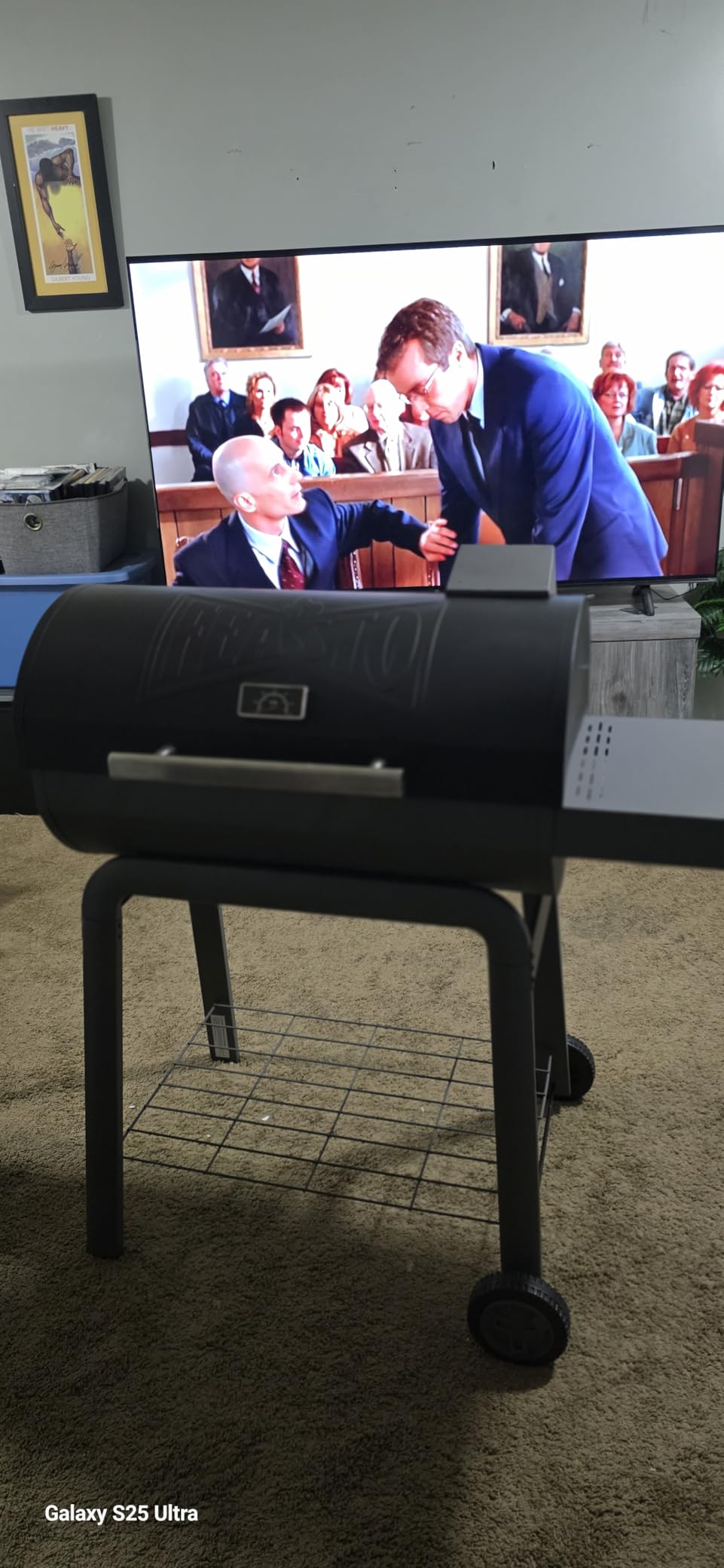
Capacity is split as 467 square inches of grilling, 212 square inches of warming, and 152 square inches of smoking. That 152 square inch offset chamber is the smallest dedicated smoking space in this guide, and it is the number that should decide your brisket plans.
It weighs 57 pounds at 26 by 55.1 by 44.9 inches. The rigid frame, heavy-gauge steel, and reinforced legs hold up at high heat, and a side prep table with three tool hooks and a 20 pound bottom shelf round out the layout.
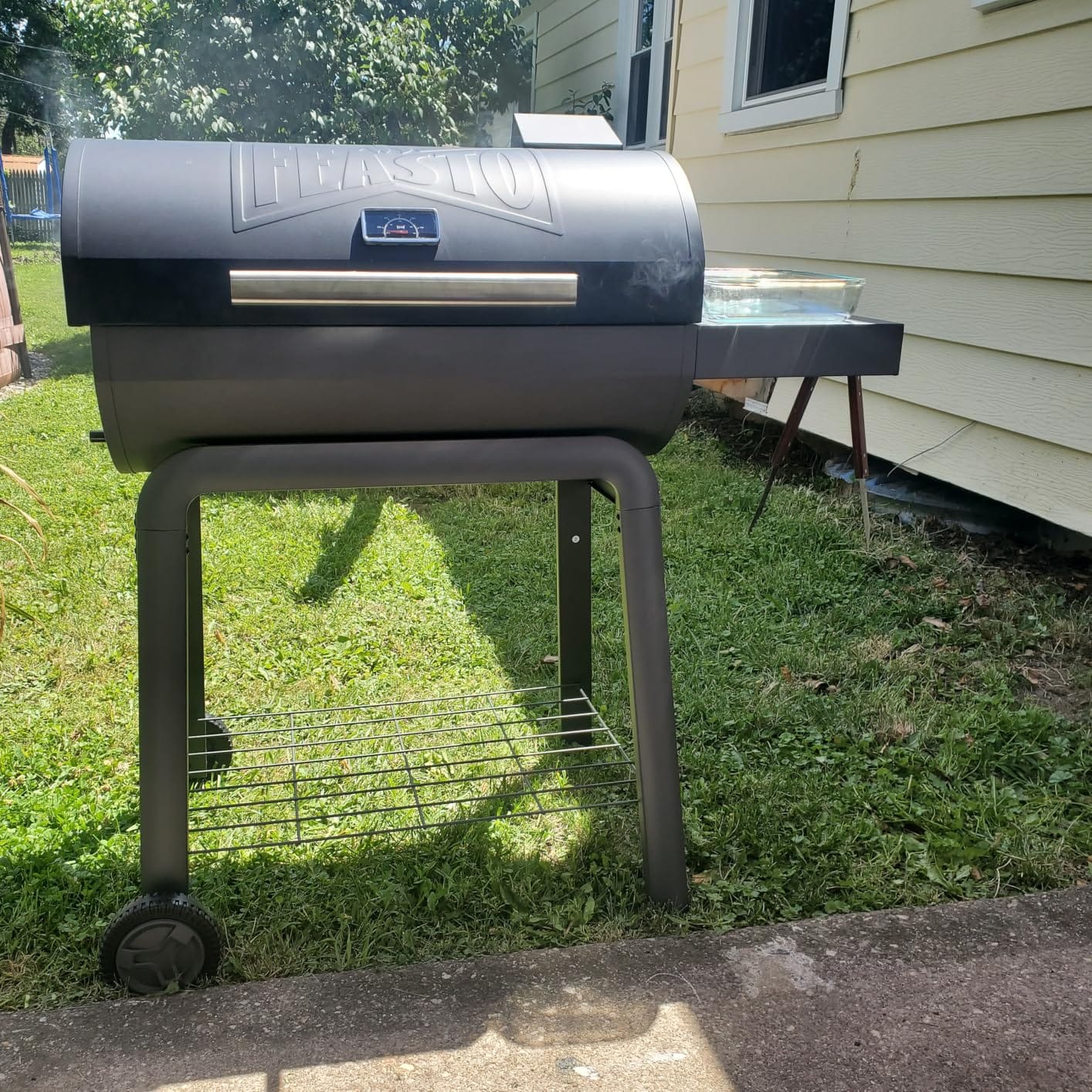
Where the Feasto earns its keep
Probe monitoring at this level is unusual and useful. If you are cooking a packer and do not want to open the chamber every 20 minutes, two meat probes remove most of the stress.
The frame stability is a real plus. Reinforced legs and a rigid structure are what keep a grill from walking when you open a hot lid.
Where the Feasto will frustrate you
At 4.1 stars with 14 percent one-star reviews, it carries the lowest average rating of the ten. Those reviews cluster around the small offset chamber and the electronics themselves.
You still manage a charcoal fire by hand. Many experienced pitmasters simply use a manual probe and ignore the controller, so check whether you will actually read the display.
10. Realcook Barrel – a first grill that happens to smoke
Realcook Charcoal Grill with Offset Smoker: Spacious Barrel Charcoal Grills
800 sq in total cooking area
42 pounds
Charcoal fuel
Bottom rack supports 44 lb
Pros
- 800 sq in total feeds 5 to 8 people comfortably
- Adjustable chimney plus air vents on both chambers
- Two-piece grates allow one-grate refuelling
- Generous front shelf and 44 lb bottom rack
Cons
- Small firebox struggles to hold 250 for long smokes
- Firebox paint burns off quickly
- Rattles and feels light next to heavier steel
At 800 square inches total and 42 pounds, this is the lightest smoker in the guide and one of the easier to store. Owners mostly buy it as a starter grill, which is a fair way to think about it.
The layout is well thought out for that use. 420 square inches of main grill, a 196 square inch side smoker, and a 184 square inch warming rack, with air vents under both chambers and an adjustable chimney.
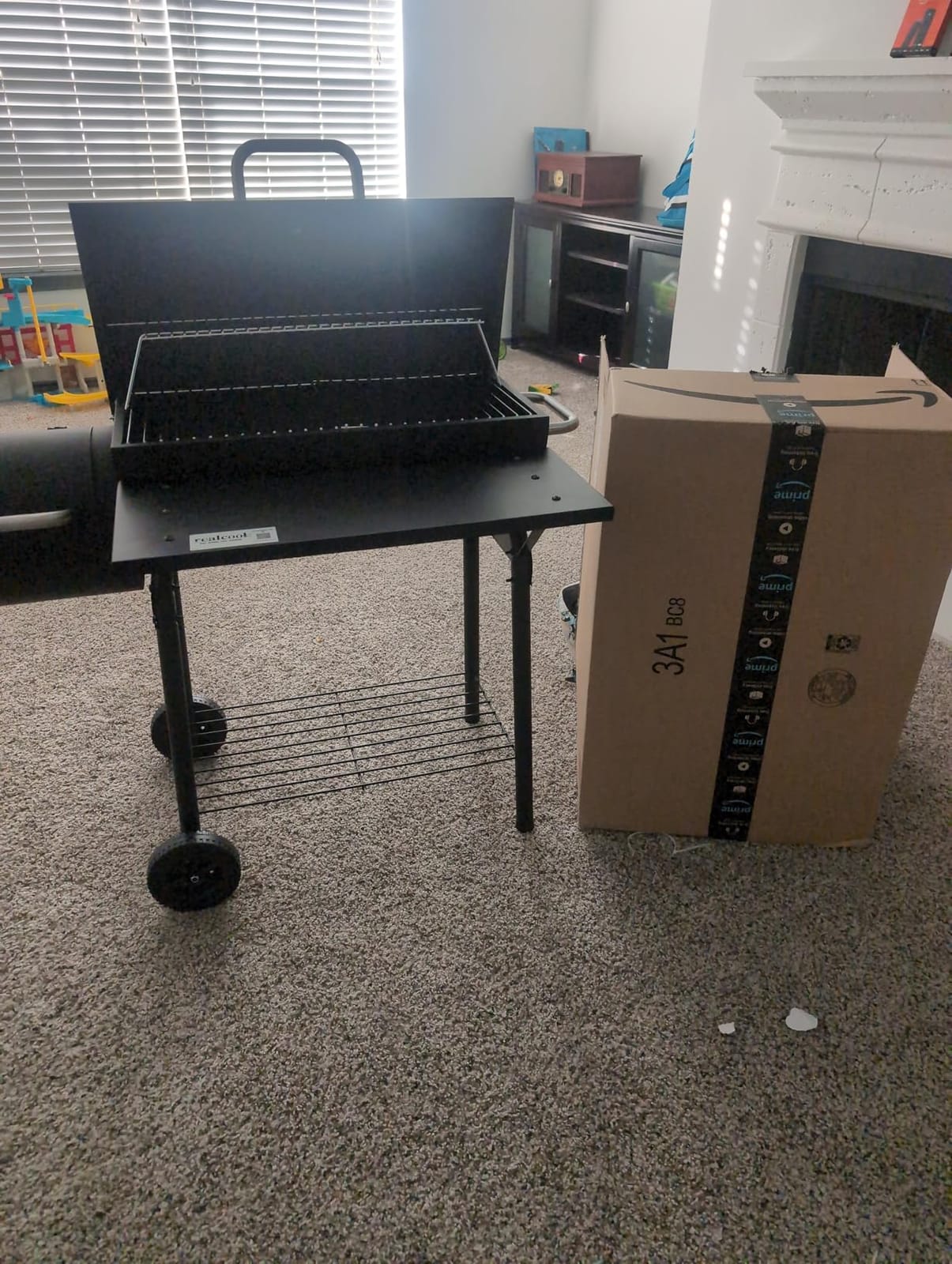
Two-piece main cooking grates mean you can add charcoal by moving one grate rather than the whole grate stack, which genuinely shortens the refuel cycle. A side chamber vent makes ash cleanup easier than it looks on paper.
Storage is unusually generous: a 24.8 by 8.7 inch front shelf, a 14.2 by 8.7 inch side shelf, and a 24.8 by 15.9 inch bottom rack supporting up to 44 pounds. Dimensions are 28.74 by 49.6 by 46.25 inches.
Where the Realcook earns its keep
Weight and storage. At 42 pounds it moves with one hand, and the shelving holds wood and gear that would otherwise sit on the patio. Most owners assemble it in an afternoon with basic tools.
It is a good first grill, and the 196 square inch offset box handles brisket flats and a lot of ribs with hardwood charcoal and a watched fire.
Where the Realcook will frustrate you
The firebox is the limitation. It is small enough that owners struggle to hold a steady 250 for long smokes, which is exactly the condition a packer brisket needs for hours.
At 4.1 stars with 10 percent one-star reviews, firebox paint burning off is the recurring theme. High-temp exhaust paint on the firebox is close to mandatory if you smoke on it regularly.
Offset Smoker Buying Guide for Brisket
How big an offset smoker do you need for a full packer brisket?
Judge capacity by the length and width of the main cooking grate, not by the total square inch figure printed on the box. That total usually includes the firebox grate, the warming rack, and the side smoker, none of which hold a packer.
The Highland in this guide is rated by its manufacturer for three briskets on a 616 square inch main grate, and the Longhorn pairs 751 square inches of primary grate with 309 square inches of second tier. Both give a full packer room to sit flat with air moving around it.
Below about 500 square inches of true cooking grate, you are cooking flats. Every unit in this guide under that line still produces good smoke, but the geometry of a packer stops working.
Reverse flow or traditional flow, and how to tell which you have
An offset smoker has a firebox mounted to one side of a horizontal cooking chamber. Traditional flow means heat and smoke enter near the firebox and travel across the food and out the chimney at the far end. Reverse flow adds baffles under the grates so heat and smoke are pushed behind the meat first.
The tell is the chimney. On a reverse flow smoker the chimney sits on the firebox side of the cooking chamber, not the far end. The Longhorn in this guide is the only unit here with removable baffles, so you can choose per cook.
For brisket specifically, reverse flow is gentler and more forgiving over a 12 hour stretch. Traditional flow gives you direct radiant heat on the firebox side, which is a real hot spot and the reason owners rotate a packer mid-cook.
Steel gauge, door seals, and heat retention
Thin steel is the number one reason budget offsets fail a long cook. It flexes when you open the lid, it loses heat faster, and it warps around the door frame until the seam no longer seals.
Door seals matter as much as the steel. Several units here ship without gaskets or latches, and owners who add high-temp gasket tape in the first week report noticeably steadier temperature holds. The welded-versus-bolted distinction is the same argument from another angle: a one-piece chamber has no seam to leak.
Buy a probe thermometer. Several of these units ship with dome thermometers that read tens of degrees high, and chasing the dial is the most common reason a first cook runs long.
Offset smoker or pellet smoker for brisket?
Owners of both types describe the same trade. Pellet smokers win on weekday convenience, unattended cooks, and consistent heat without tending. Offsets win on bark, smoke ring, and depth of wood flavor, particularly on brisket.
If your brisket is an occasional weekend project, a pellet grill is a reasonable substitute. If brisket is the reason you are shopping, the smoke and bark difference is the whole point of going wood.
Whatever you choose, plan the smell. A week of wood smoke in a garage or house needs ventilation, and our air purifier picks for smoke-heavy spaces cover the indoor side.
Your first cook: fuel, temperature, and timing
Start with lump charcoal for the first hour to get a stable base, then add wood splits or chunks for flavor. Long-time owners report this combination as the practical fuel strategy rather than running pure wood from the start.
Hold 250 degrees for most of a packer brisket and drop to 225 near the end if you want more bark. Use a Texas crutch when the internal temperature stalls around 165 degrees, which is a normal part of the cook rather than a problem.
Run a probe the whole way and rest the brisket properly afterward. A smoker that holds temperature for 10 to 14 hours without intervention is what you are actually buying, so test fire management before you commit.
Frequently Asked Questions
What is the best smoker for making a brisket?
For a full packer brisket, the best offset smoker is one with at least 600 square inches of true main cooking grate, a firebox you can load from outside the chamber, and a sealed door. Our pick is the Oklahoma Joe’s Longhorn Reverse Flow, which offers 751 square inches of primary grate plus 309 on a second tier and can switch between reverse flow and traditional flow.
How long do you smoke a brisket in an offset smoker?
A full packer brisket on an offset smoker usually takes 10 to 14 hours at a held temperature of 250 degrees, depending on size and how much fat you trim. Most cooks wrap it around the 165 degree plateau with a Texas crutch, then rest it for at least an hour. A smoker that holds temperature for that long without constant tending is what you are really buying.
Is it better to smoke a brisket at 225 or 250?
Hold 250 degrees for most of a packer brisket so the cook finishes in a reasonable time, then drop to 225 for the last stretch if you want thicker bark and more smoke flavor. Beginners often have better luck holding a steady 250 on a well-sealed offset, because a lower target leaves no room for error when the fire drops.
Is there a better smoker than Traeger for brisket?
For brisket specifically, a wood or charcoal offset smoker produces noticeably better bark, smoke ring, and depth of flavor than a pellet grill. A pellet smoker wins on convenience and unattended, consistent cooking. If brisket is the main reason you are buying, the smoke and bark difference is the argument for going wood.
What are people saying about the Oklahoma Joe’s Longhorn Reverse Flow smoker?
Owners praise the switchable reverse flow and traditional modes, the 751 plus 309 square inches of cooking space, and the four baffles that keep heat even over a long cook. The most common complaints are peeling firebox paint, smoke leaking at the lid and firebox door until gaskets are added, and messy reverse flow baffles that trap baked-on drippings.
Which Offset Smoker Should You Buy?
The Oklahoma Joe’s Longhorn Reverse Flow is our pick for the best offset smokers for brisket, because it is the only unit here that combines switchable flow, enough grate to lay a full packer flat, and baffles that keep a 12 hour cook steady.
If you want the simplest first offset, take the Oklahoma Joe’s Highland. If you want the most meat on the grate at once, the Dyna-Glo vertical carries more cooking area than anything else we reviewed. If you want one appliance for a weeknight sear and a weekend packer, the Canyon Combo covers both.
Whatever you choose, budget a probe thermometer, a gasket kit, and a cover before the first cook. Those three accessories do more for your results than any feature on the spec sheet, and every pick in this guide was updated for 2026.