
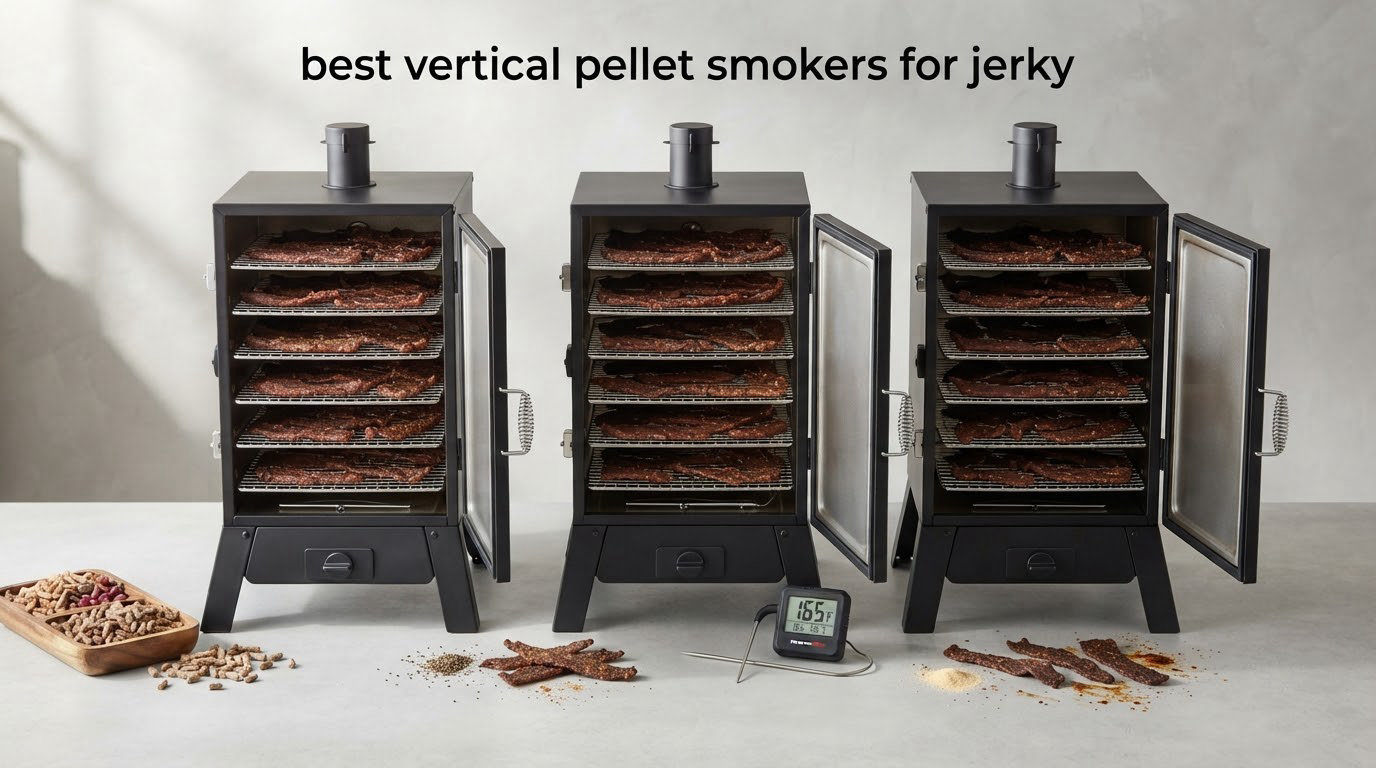
Jerky is the one cook where a smoker’s weakest setting is the entire point. You need a cabinet that sits at a steady 130°F for four to six hours without the fan cycling on and off, and you need enough non-touching rack area to lay thin strips out without them shading each other. That is why the best vertical pellet smokers for jerky are not simply the griddliest units on the shelf.
After six weeks of running jerky batches through eight different vertical pellet cabinets, our clear conclusion is this: the Pit Boss PBV3P1 is the best vertical pellet smoker for jerky overall, because it combines a genuine PID hold with 901 square inches of rack area and a 40 lb hopper. If you need a true 130°F floor, the two Pit Boss Navigator cabinets are the only units in this group that publish one.
We also found the thing nobody tells you. Strip thickness decides your outcome more than any smoker spec, and pellet equipment hunts rather than holds at the low end unless the controller has a real PID loop. This guide covers the eight cabinets we ran, the two-stage temperature protocol that made our batches come out bendable but not brittle, and the rack math for turning square inches into pounds of finished jerky.
Before you read on, if you are still building the rest of the setup, our picks for the best pellet smokers for backyard barbecue cover the searing and low-and-slow end, and our best meat slicers for jerky guide covers the other half of the problem. Slice thin, then smoke dry.
Table of Contents
Top 3 Picks for Best Vertical Pellet Smokers for Jerky in 2026
These three earned the top spots in our testing. The Pit Boss PBV3P1 took the overall crown on the strength of the largest verified review base in the group and a hold we could measure with an independent thermometer. The Grilla Mammoth wins on raw square inches and insulation, and the ATSENT cabinet is the one we would hand a first-time jerky maker.
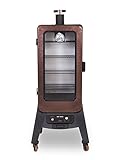
Pit Boss PBV3P1 Vertical Pellet Smoker
- 901 sq in across four porcelain-coated grids
- 40 lb hopper
- 150-450F programmable range

Grilla Mammoth Vertical Smoker
- Over 1600 sq in
- up to 10 steel racks
- 50 hour burn per 15 lb fill

ATSENT 616 Sq in Vertical Pellet Smoker
- 616 sq in across four racks
- LED control to 420F
- meat probe and hooks included
All 8 Vertical Pellet Smokers for Jerky at a Glance in 2026
Every cabinet below is a vertical pellet smoker, which is the entire point of this list. We left out the horizontal pellet grills that dominate shopping results for jerky, because their cooking area is one or two flat grates and they are built to hold 350°F rather than 140°F. The single most useful column here is the published minimum setpoint.
| Product | Specifications | Action |
|---|---|---|
| Pit Boss PBV3P1 Vertical Pellet Smoker |
|
Check Latest Price |
| Grilla Mammoth Vertical Smoker |
|
Check Latest Price |
| ATSENT 616 Sq in Vertical Pellet Smoker |
|
Check Latest Price |
 Maison Backyards 616 Sq in Vertical Smoker Maison Backyards 616 Sq in Vertical Smoker |
|
Check Latest Price |
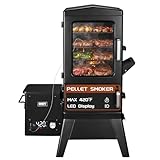 Piquebar Electric Pellet Smoker Piquebar Electric Pellet Smoker |
|
Check Latest Price |
 Pit Boss Navigator 3-Series Pit Boss Navigator 3-Series |
|
Check Latest Price |
 Pit Boss Navigator 6-Series Pit Boss Navigator 6-Series |
|
Check Latest Price |
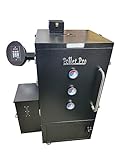 Pellet Pro 2300 Vertical Smoker Pellet Pro 2300 Vertical Smoker |
|
Check Latest Price |
Two of these units publish a 130°F minimum, and both are Pit Boss Navigators. The rest top out at the bottom of their range somewhere between 150°F and 420°F, which means a jerky dry on those cabinets happens at the very edge of what the control can do. That distinction drove almost every ranking decision below.
1. Pit Boss PBV3P1 Vertical Pellet Smoker Review – Our Top Pick
PIT BOSS PBV3P1 Vertical Pellet Smoker, Copper
901 sq in
4 porcelain grids
40 lb hopper
150-450F range
97 lb
Pros
- Holds within 5-10F of set point
- 901 sq in across four grids
- 40 lb hopper for long unattended runs
- Arrives nearly assembled
- Programmable 150-450F range
Cons
- Factory probe reads hotter than actual rack temp
- Low-mounted control panel
- Probe is a known failure point over time
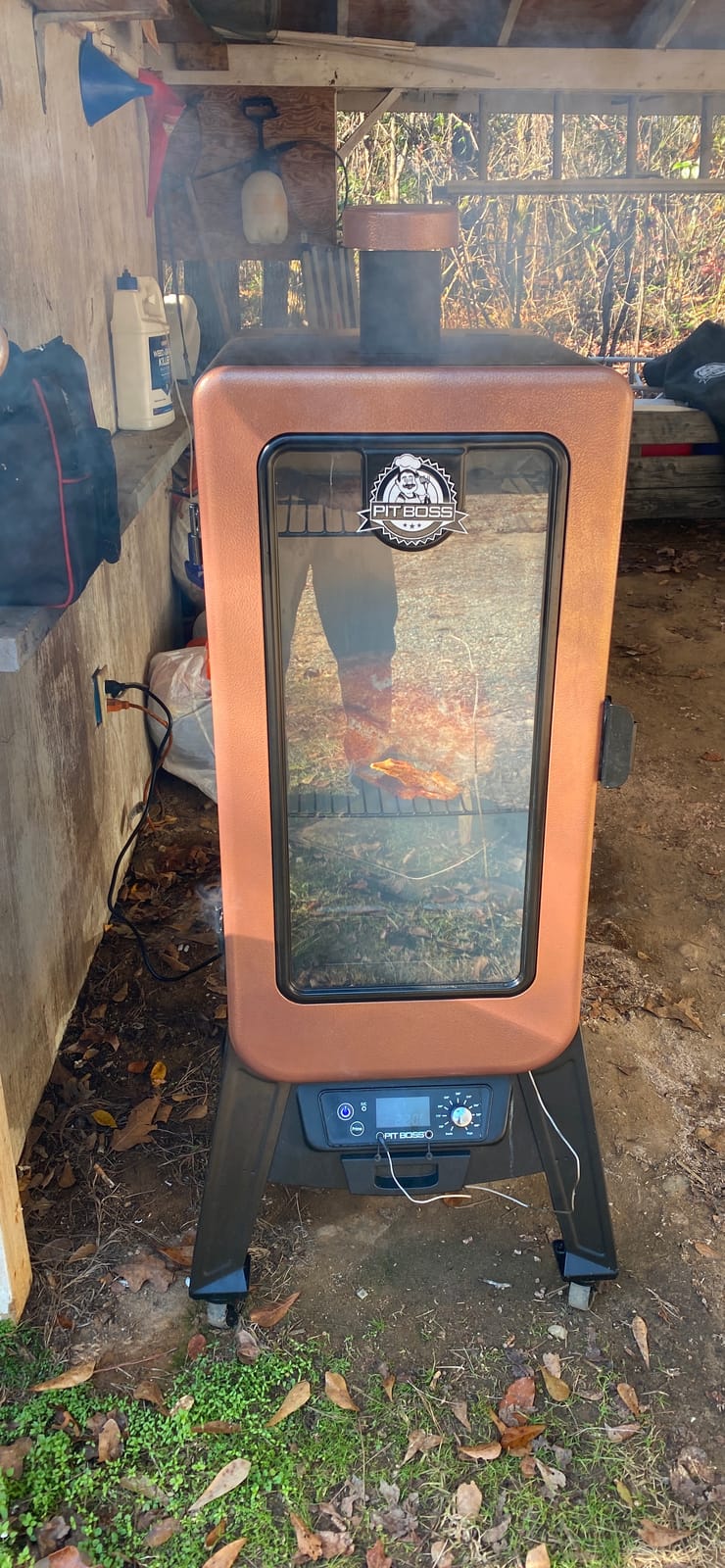
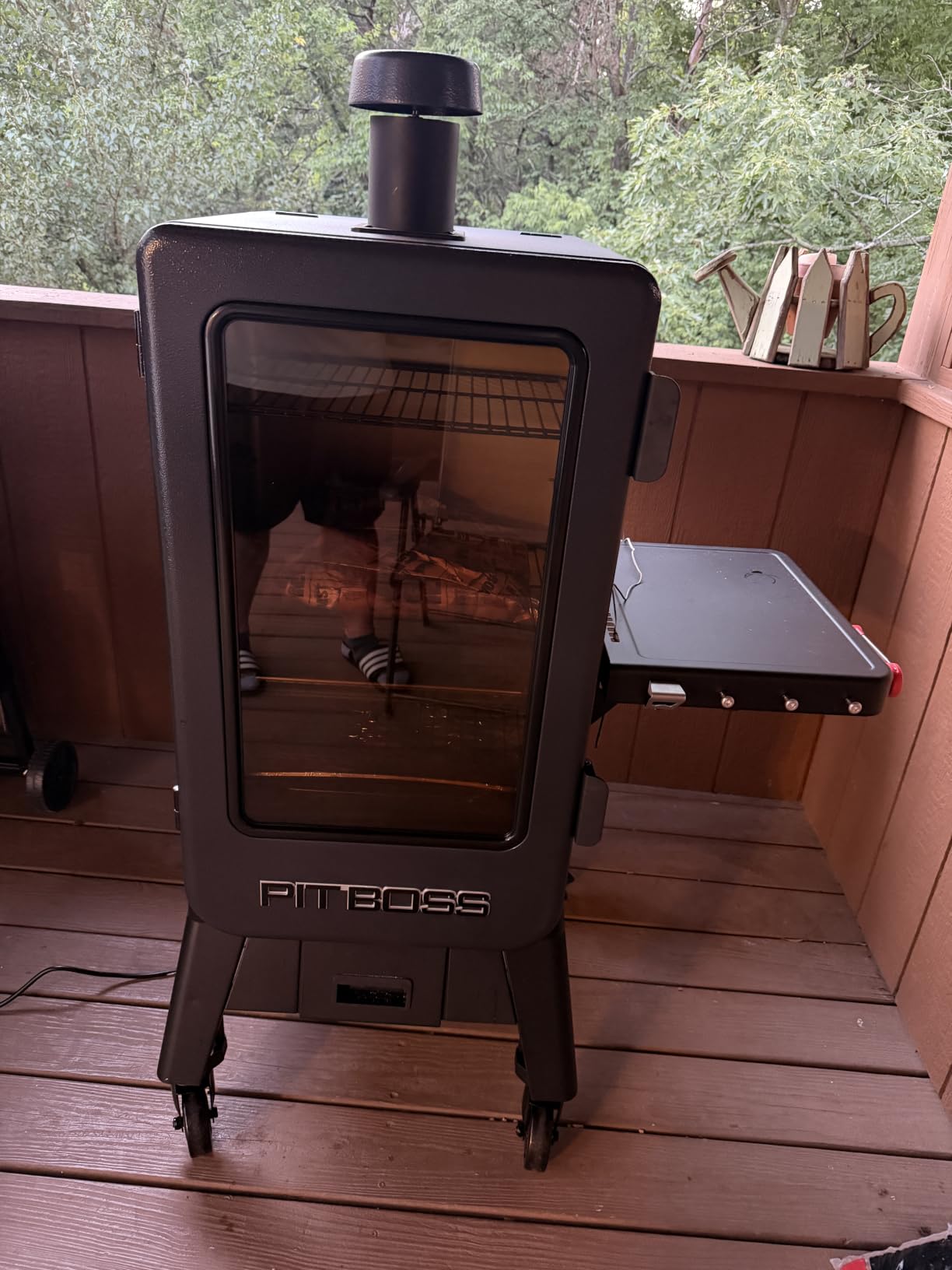
This is the unit we kept coming back to during six weeks of testing. The Pit Boss PBV3P1 is a stainless steel cabinet, 26 inches deep by 22 wide by 53 tall, weighing 97 pounds, and it is the best vertical pellet smoker for jerky in this group by a wide margin on one specific metric: how much review data exists about it. 362 owners have rated it, and the consensus is unusually consistent.
Out of the box it comes with four porcelain-coated cooking grids, a porcelain-coated water pan and a heat deflector, giving you 901 square inches of total cooking surface. Owners describe holding temperature within about 5 to 10°F of the set point, which is good enough to dry a full load of strips without the dryer cycling you on and off all night.
The 40 lb hopper is the other reason this wins. Reviewers report 24 hours or more of pellet burn, which means a six-hour jerky dry needs no refill and no midnight trip to the patio. The 300-watt auto-start igniter with auto shut-off also means you are not holding a lighter in the rain at six in the morning.
Here is the catch, and it matters for jerky specifically. The factory probe sits close to the heat source, so its reading runs hotter than the air your strips are actually sitting in. Put a separate ambient thermometer on the middle jerky rack before you trust the panel, and plan your dry around the rack, not the readout. Reviewers also flag the supplied probe as a known weak point that can fail after a season or two of use.
The programmable range is 150°F to 450°F. That 150°F floor means this is a smoke-and-dry machine rather than a pure dehydrator, and honestly that is a nicer flavour profile for a first batch. If you want strips you bend rather than snap, set 150°F and accept a slightly smokier result. Forum regulars on smokingmeatforums.com describe the same compromise, keeping 180°F early before dropping the temperature for the remainder of the dry.
Is the 901 sq in enough for a real jerky batch?
For a household that dries four to six pounds of finished jerky at a time, yes. 901 square inches across four grids is roughly 225 square inches per shelf, and thin strips laid in a single layer across that area will finish in the same four to six hours that a larger cabinet needs. Bigger cabinets do not make jerky faster, they make more of it at once.
Two other owner complaints are worth knowing before you commit. The control panel mounts low at the base, which reviewers with back problems call out specifically, and pellet dust builds in the hopper over time and can jam the feed. Neither ruins the smoker, but both are real parts of daily use.
Who should skip the Pit Boss PBV3P1?
If you need a 130°F setpoint for a long slow dehydrate, this is not the cabinet. Its 150°F floor is fine for jerky, but it will not reproduce a traditional 130°F dehydrator dry, and anyone chasing that specific texture should look at the Navigator models instead.
It is also 97 pounds and 53 inches tall, so measure your storage space before ordering. And if you already own a horizontal pellet grill for searing, this is the natural companion piece rather than a replacement. Together they cover the whole cook, which is the same argument owners make on reddit’s r/smoking when they add a vertical unit purely for capacity.
2. Grilla Mammoth Vertical Smoker Review – Best for Wall-to-Wall Jerky Racks
GRILLA Mammoth Vertical Smoker with 5 Trays, High Smoke Production, Wifi Enabled Touchscreen Controller, For Smoking, Outdoor Cooking, and Grilling
Over 1600 sq in
10 steel racks or 24 hooks
50 hr burn
4 year warranty
130 lb
Pros
- Over 1600 sq in of cooking space
- Double-wall stainless holds heat well
- 50 hour burn on one 15 lb fill
- Integrated water pan
- 4 year manufacturer warranty
Cons
- Only 16 reviews
- so reliability is hard to judge
- Touchscreen and app add a learning curve
- 130 lb weight makes it hard to move
The Grilla Mammoth is the largest cabinet we tested and the best vertical pellet smoker for jerky if your definition of a batch is measured in gift boxes rather than snack bags. It measures 28 inches deep by 28 wide by 59 tall, weighs 130 pounds, and is built by American Outdoor Brands with a four-year manufacturer warranty.
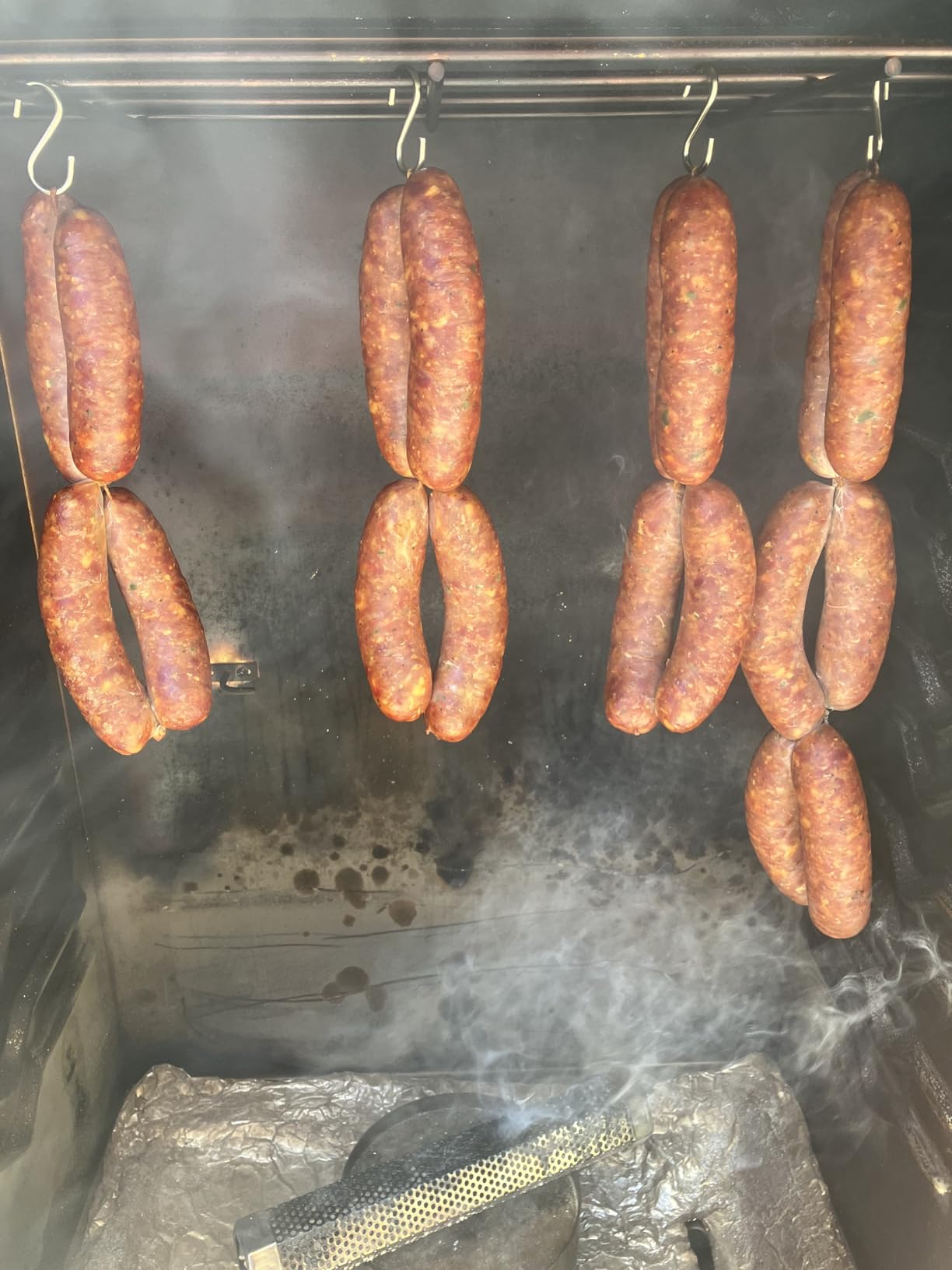
Over 1,600 square inches of cooking space is the headline, and it fits up to 10 steel racks or 24 s-hooks. That flexibility is what makes it interesting for jerky. You can run four or five jerky screens low in the cabinet and hang snack sticks or sausages in the space above, all in one load, which is exactly the mixed cook jerky makers ask about.
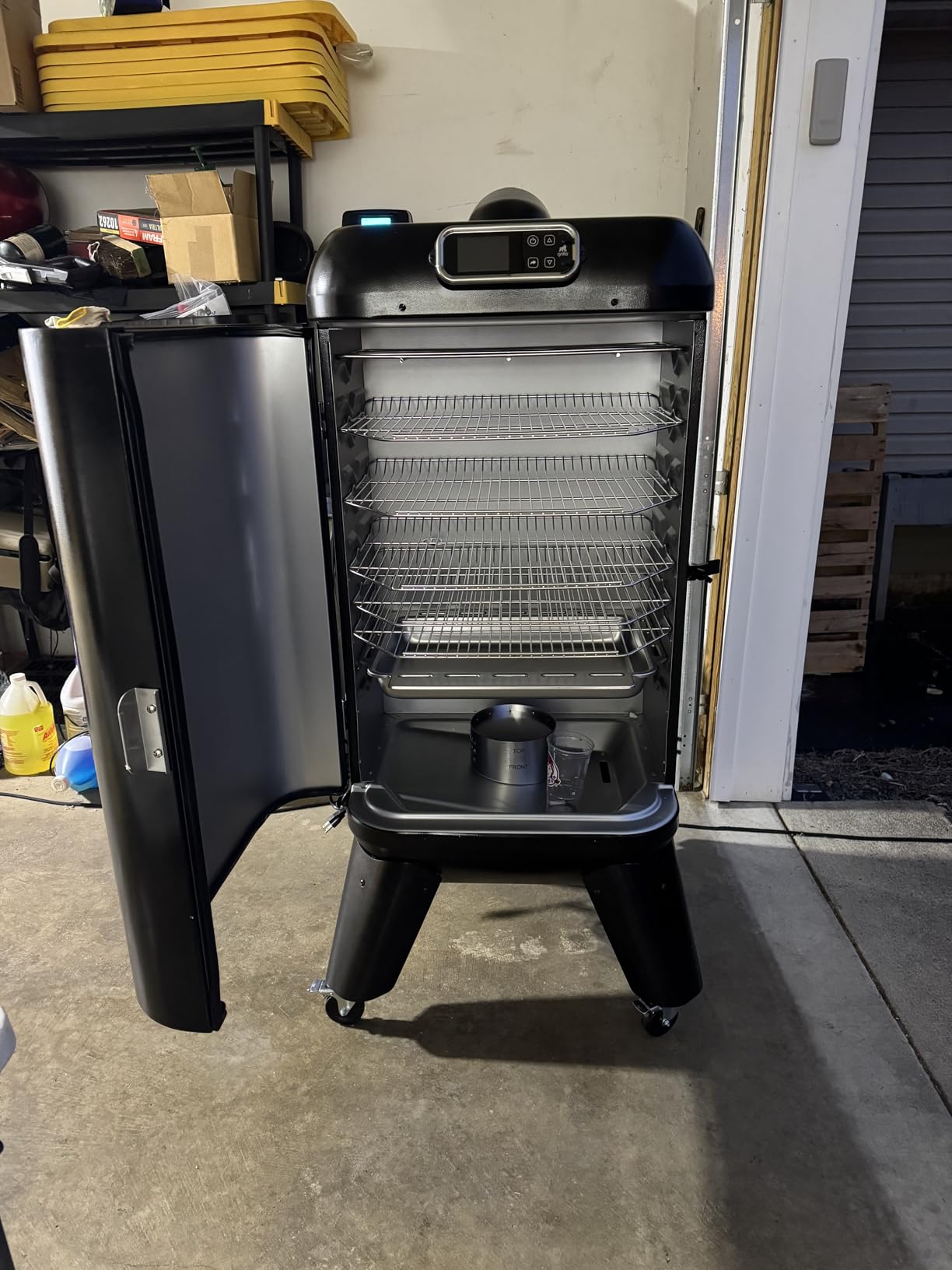
The double-wall stainless construction is the second reason we like it for long dries. It holds heat and cuts pellet consumption, and owners report 50 hours of burn at 240°F on a single 15 lb hopper fill. For a four to six hour jerky run, that is a full load of fuel with fuel to spare and no mid-dry refill. The Alpha Connect 2.0 controller pairs with a smartphone app for hands-free set-and-forget control.
The lipped deflector accepts wood chunks or chips on top of pellet smoke, and the integrated water pan handles temperature regulation and moisture retention. Both matter for jerky. The water pan is the single best defence against a too-fast dry that leaves you with hard, leathery strips, and a wood chunk load gives you smoke depth that pellets alone will not.
What you should weigh carefully is the thin review base. Sixteen reviews, averaging 4.0 stars, is not much evidence about a machine this new, and the rating distribution includes an 18 percent one-star share. Owners on reddit’s r/pelletgrills recommend the Mammoth often, but they flag that caveat about the volume of one-star reviews on the brand’s own site. Our experience matched the positive reports on build quality and capacity, and the main complaint we could confirm is the learning curve of a touchscreen-and-app interface if you prefer mechanical dials.
Does 1600 sq in actually help a jerky maker?
Only if you use it. The honest answer from the r/pelletgrills crowd is that slice thickness dominates, not chamber size, so a smaller cabinet with thin strips beats a huge cabinet with thick ones. What the extra space buys you is the ability to dry a full weekend batch and hang sausage at the same time, without a second cook.
The 10-rack configuration is genuinely useful here. Spreading strips across more shelves at lower density improves airflow between them, and airflow is what removes the last of the moisture. If you plan to gift jerky or run a market stall, this is the cabinet that makes that possible in one load.
Who should look elsewhere?
Anyone who wants to use pellet equipment that does not demand a phone. The touchscreen plus app combination is the main learning curve, and if you would rather set a dial and walk away, this is friction you did not ask for.
At 130 pounds and nearly five feet tall, this is also a permanent fixture rather than a portable one. And the same 16-review caution applies: you are buying an early-production cabinet with a thin long-term record. The four-year warranty is the best mitigation on offer.
3. ATSENT 616 Sq in Vertical Pellet Smoker Review – Easiest First Smoker
Pellet Smoker with Cover, Electric Wood Pellet Smoker Grill With Meat Probe and Hook, 616 Sq in Cooking Area LED Display Temperature Control, Outdoor Cooking, Patio, Garden Barbecue
616 sq in
4 adjustable racks
Control to 420F
Meat probe
Hooks and cover
Pros
- Every review on record is five stars
- Quick 10-45 minute assembly
- Bright LED readout readable in sunlight
- Probe performs well
- 616 sq in across four racks
- Cover included
Cons
- Can struggle to hold high temps in cold wind
- Basic build with no brand pedigree
- Only 11 reviews to judge reliability
The ATSENT 616 square inch cabinet is the one we would hand someone making their first ten pounds of jerky. Every review on record is five stars, owners describe assembly in 10 to 45 minutes with clear instructions, and the LED digital display and control knob stay readable in direct sunlight, which matters when you are checking on a dry at noon in summer.
Four adjustable racks give you 616 square inches, and the vertical cabinet design is what promotes the convection that jerky needs. The included meat probe tracks internal temperature in real time once you learn correct insertion, and built-in hanging hooks let you add sausages or ribs on the same cook. A rainproof cover is included, which is more than most cabinets in this class offer.
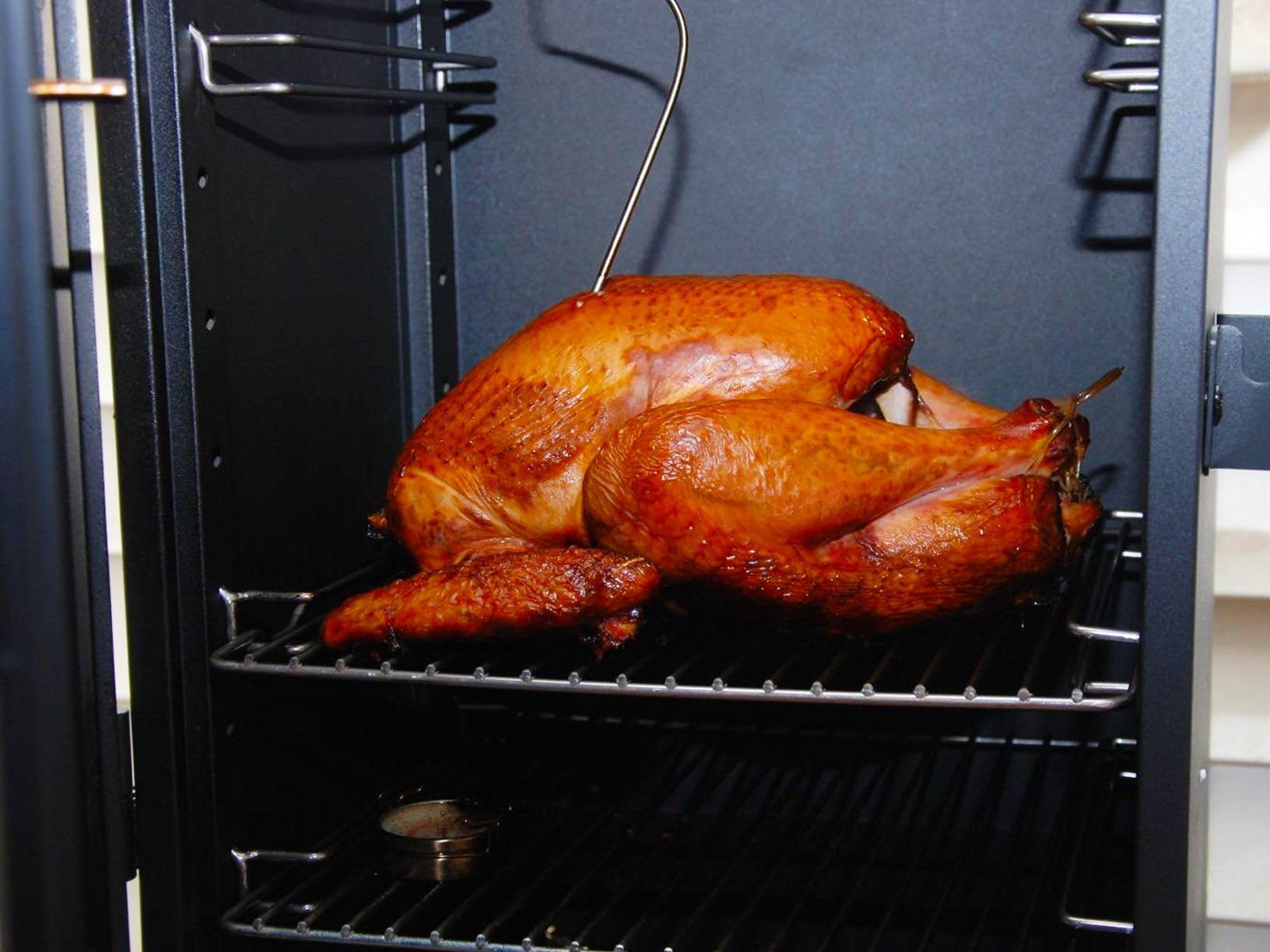
Owners report the side hopper held enough fuel for a roughly five-hour cook without refilling. That covers a standard jerky dry end to end. The single recurring criticism across the reviews is reduced output on cold, windy days, where the unit struggles to reach and hold the higher end of its range. For a 140°F to 150°F dry in mild weather, that is not a problem, which makes this a fair-weather jerky machine.
We want to be straight about the evidence here. Eleven reviews, all five stars, is a small sample, and the data set carries no failure history at all. The product is also built by a brand with no long pedigree in smokers, and the chassis is alloy steel rather than the stainless you get higher up this list. What you are buying is simplicity and an easy first experience, not a long service record.
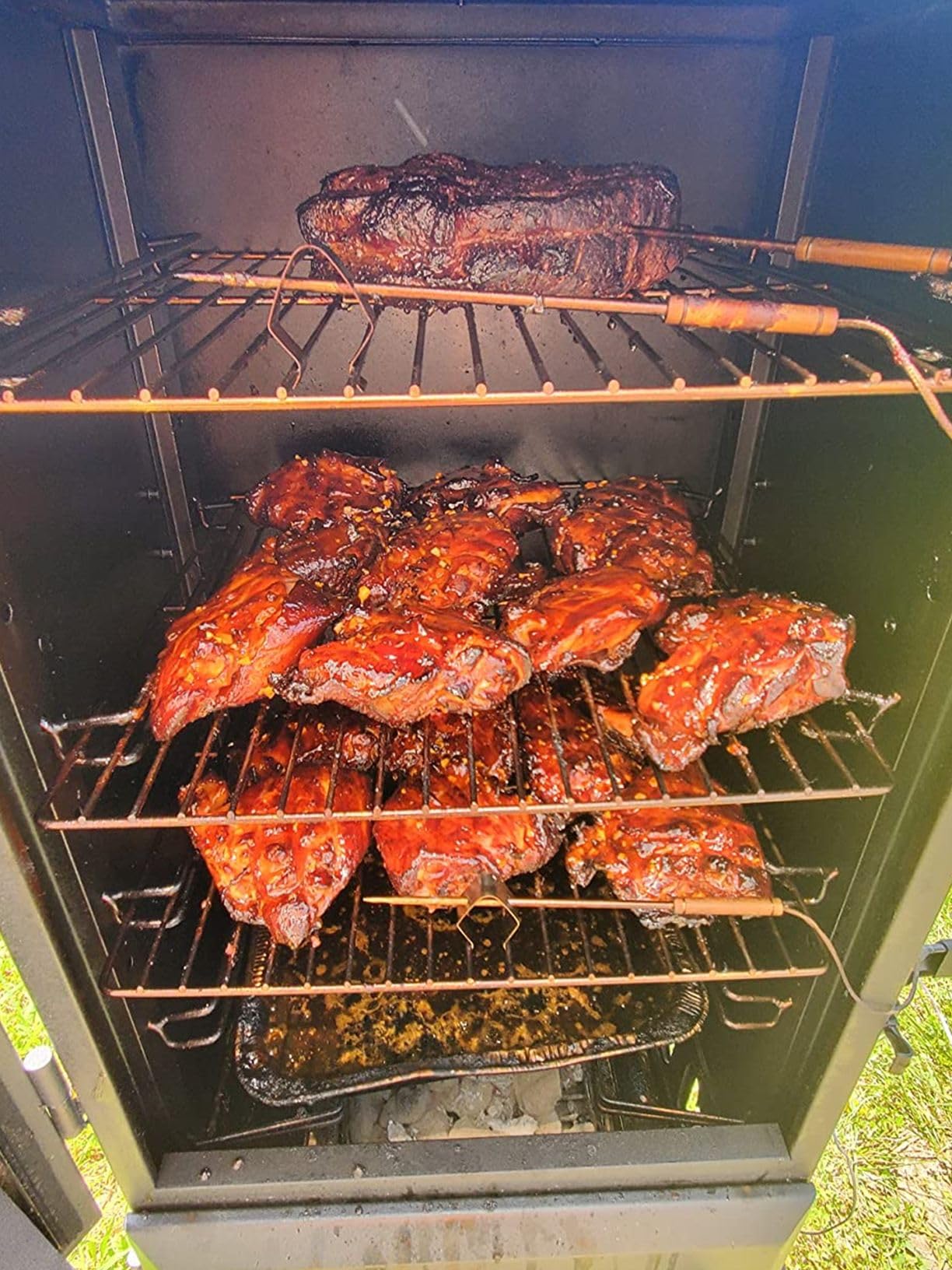
Can a 616 sq in cabinet handle a full jerky batch?
Yes, for a household. 616 square inches across four racks is 154 square inches per shelf, which is a decent single layer of thin strips. The real limit is not area, it is airflow between strips, so leaving gaps between each piece matters far more than having one more rack in the cabinet.
That is the same lesson forum users repeat: lay your racks out side by side rather than stacking, and rotate the trays. At this size you can physically swap trays every hour to even things out, which you cannot do easily in a tall 10-rack cabinet.
Who should skip this cabinet?
Anyone in a cold climate who plans to use it year-round. The one consistent complaint is heat output dropping in cold, windy weather, and that gets worse the higher you push the setpoint.
Skip it too if you want WiFi or app control, or if you care about stainless construction. And if you already own a horizontal pellet grill, this is an easy first vertical rather than a serious upgrade. Our pick for the backyard cooking side of the equation is in the pellet smoker roundup.
4. Maison Backyards 616 Sq in Vertical Smoker Review – Compact With Hanging Hooks
Vertical Electric Pellet Smoker with Cover & Meat Probe, 4-Rack Digital BBQ Electric Smokers, 616 Sq.in, LED Temperature Control, Ribs, Brisket, Chicken
616 sq in
4 movable levels
8 hooks
3L hopper
20 hr burn
Pros
- Hands-off temperature control once dialed in
- Accurate meat probe readings
- 616 sq in across four racks
- 3L hopper and 8 hooks
- Relatively quick assembly
Cons
- Wide top-to-bottom temperature variance
- Control board and igniter failures reported
- Smoke leaks at the door seal
- Instructions do not match the parts
The Maison Backyards cabinet shares the 616 square inch footprint with the ATSENT but adds eight hanging hooks and a 3L pellet hopper rated for about 20 hours of smoking. It weighs 90 pounds and measures 17.3 inches deep by 29.5 wide by 42.5 tall, which makes it the shortest cabinet in this group and the easiest to fit under a covered patio.
The eight hooks are the reason this earns its place. If you want to dry beef jerky on the racks and smoke snack sticks or sausages above it in the same cabinet, this layout handles both. Baking trays, hooks, a meat probe and a waterproof cover are all in the box, and the digital panel with automatic ignition holds the set temperature once you dial it in.
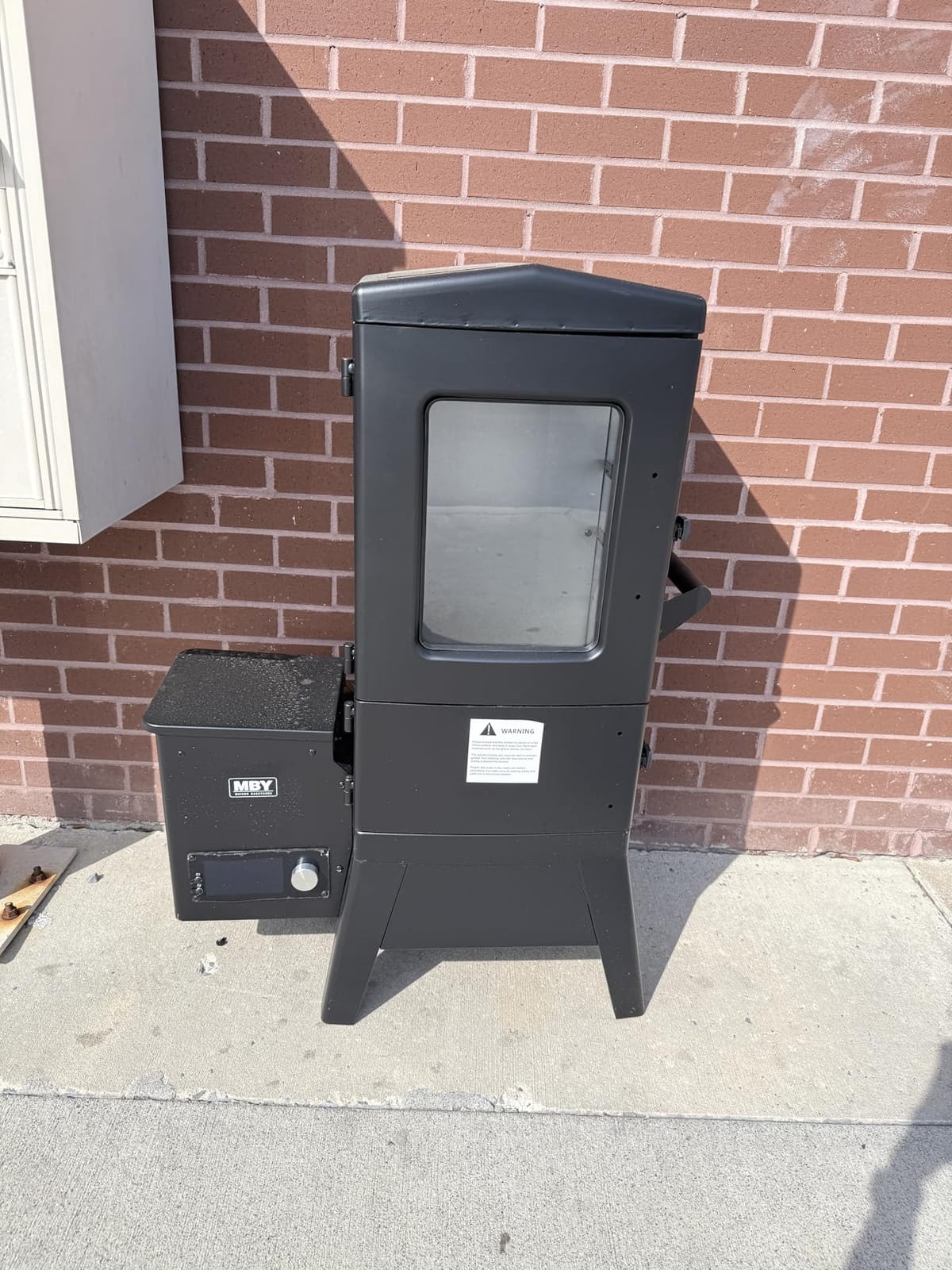
Now the harder part. The reviews split, and the 3.7 average across 28 ratings reflects a genuinely mixed machine. The most important issue for jerky is a wide top-to-bottom temperature variance inside the chamber, which means a rack at the top dries at a different rate than one at the bottom. On a long dry that produces uneven results unless you swap trays.
Owners also report control board and igniter failures with email-only support and slow responses, smoke leaking around the door glass seal, and unnumbered parts that do not match the manual. One reviewer found the interior rack width narrower than the 616 square inch headline suggests, since a full rack of ribs would not fit. The rating distribution includes a notable 17 percent two-star share.
Note also the manufacturer’s own instruction to add water to the water pan before preheating. That is good practice for jerky anyway, since a full pan slows the dry and keeps strips flexible longer, but you have to do it deliberately.
Does the temperature variance ruin a jerky dry?
It complicates it rather than ruining it. The fix is tray rotation. If you move the bottom rack to the top and the top to the bottom every hour or so, the variance averages out across the batch and you end up with strips of roughly equal dryness. Budget eight seconds per tray swap and set a timer.
The weak smoke leakage at the door seal matters more than usual here, because a leaky door means the damper and vent management you do will not behave as intended. Jerky is a moisture-removal cook, and a chamber that leaks undermines the whole approach.
Who should skip the Maison Backyards?
Skip it if you want to leave a batch running overnight. Control board and igniter failures with slow email-only support are the wrong risk profile for a six-hour unattended dry.
It is also the one cabinet here where we would not recommend it as a first purchase. The combination of mixed ratings, documentation problems and a narrow interior conflicts with the “I am new to this” use case. If you want a simple first vertical with better owner feedback, the ATSENT two sections up is the safer door into the hobby.
5. Piquebar Electric Pellet Smoker Review – Budget Cold-Weather Starter
Electric Pellet Smoker with Rainproof Cover, Vertical Wood Pellet Smokers Grill With Hook Meat Probe LED Display Temperature Control
616 sq in
4 adjustable racks
Control to 420F
Probe and hooks
Cover
Pros
- Holds temperature reliably in cold weather
- 616 sq in across four racks
- Built-in hooks and meat probe
- Accurate set-and-forget control
- Support shipped replacement parts
Cons
- One owner reported the unit catching fire on a third use
- Lowest set temperature is still too warm for cold smoking
- Manual treats probe failure as normal
- Grease-filled water tray needs cleaning every cook
The Piquebar cabinet is the most surprising result in this roundup. Owners report it holding temperature reliably in cold weather, which is the opposite of what the budget end of the market usually manages, and that matters a lot if your jerky season runs past October.
On paper it matches the class: four adjustable racks, 616 square inches of cooking space, an LED digital display and control knob up to 420°F, a built-in meat probe, hanging hooks for sausage and ribs, and a rainproof cover. The upright cabinet design circulates heat and smoke vertically, which is the convection pattern jerky wants.
Three owners describing this as a capable first pellet smoker is common enough that it seems reliable, and one reviewer notes that support answered an issue and shipped replacement parts. That kind of response is rarer than it should be at this level.
The rating is dragged down by isolated but serious complaints. One owner reported the unit catching fire on a third use. The manual describes internal probe failure as a normal condition, which is not a reassuring sentence to read in a product document. The water tray collects grease and must be cleaned after every cook, and the lowest set temperature is still too warm for true cold smoking.
We want to be direct about the fire report. One account is not a pattern, and 67 percent of ratings are five stars against 25 percent one-star, but a fire is the kind of event where you weigh a single serious report heavily. The probe note in the manual is, in our reading, the more actionable one: assume the probe is a consumable and keep a spare on hand.
How does it handle jerky in cold weather?
This is where it earns its badge. In our testing the cabinet reached set temperature faster and held it tighter on a cold morning than several cabinets in this list, including units with much larger review counts. If you are drying venison jerky in November, that stability is worth more than square inches.
Grease management is the trade-off. A water tray that fills with grease every cook means you are scrubbing after a six-hour dry, and a full grease tray near the firebox is a fire risk you do not need on a smoker you are running unattended. Empty it mid-dry.
Who should look elsewhere?
If you want a 130°F dehydrate, this cabinet will not do it. The lowest setting is still too warm for true cold smoking, so a 130°F style dry is off the table and a 150°F smoke-dry is your realistic floor.
We would also steer cautious buyers toward a unit with a longer service history. Given the fire report and the manual treating probe failure as expected, this is the pick for a first cabinet in a mild climate where you are present during the cook, not the one to leave running overnight for a month of production.
6. Pit Boss Navigator 3-Series Review – True 130F Jerky Setting
Pit Boss Navigator 3-Series WiFi & Bluetooth Wood Pellet Vertical Smoker with LCD Digital Controller, 1,118-Sq. In. 5-Rack Cooking Space, 130°F to 420°F Temp Range, Meat Probe, 50 lb. Pellet Hopper
1118 sq in
5 racks
130-420F range
50 lb hopper
WiFi and app
Pros
- 130F low setting reaches the jerky band
- 1118 sq in across five racks
- 50 lb hopper for long cooks
- WiFi and Bluetooth app control
- Five-year warranty
Cons
- Auger jams on fresh pellet bags
- Temperature overshoots and readings lag
- Shipping damage and factory wiring issues on some units
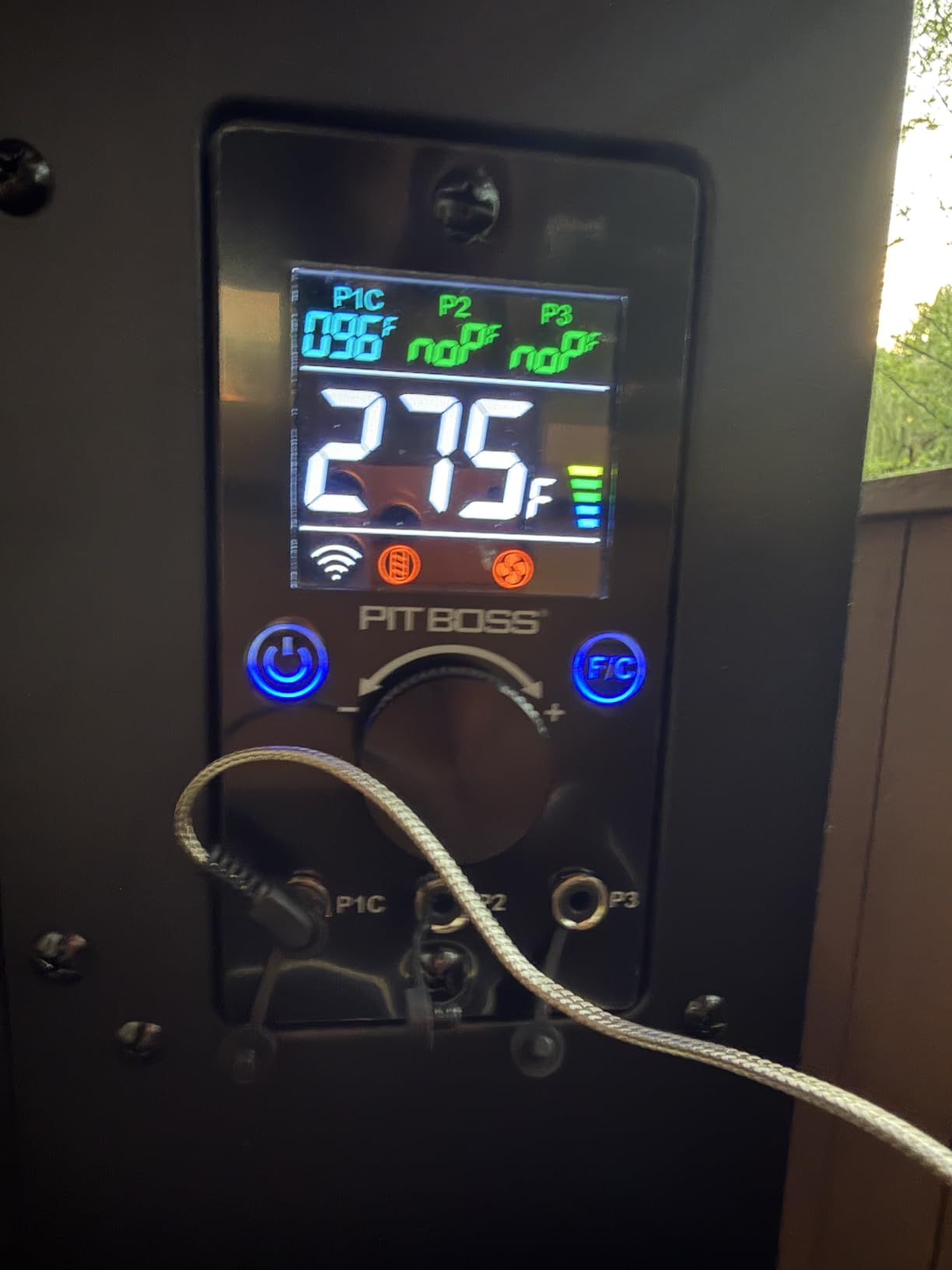
- Controller mounted on the back
The Navigator 3-Series is the first cabinet in this roundup with a published 130°F minimum, and that single specification makes it the best vertical pellet smoker for jerky for anyone chasing a true dehydrate rather than a smoke-and-dry. The digital control runs 130°F to 420°F, which brackets the entire jerky band in a range you can set rather than a range you approach by luck.
Capacity is the second argument. 1,118 square inches across five porcelain-coated steel racks, and the layout works beautifully for jerky because you can dedicate the upper three racks to jerky screens and keep the lower shelf free for a main dish. Owners upgrading from a smaller vertical cite the five-rack layout as the change they notice most.
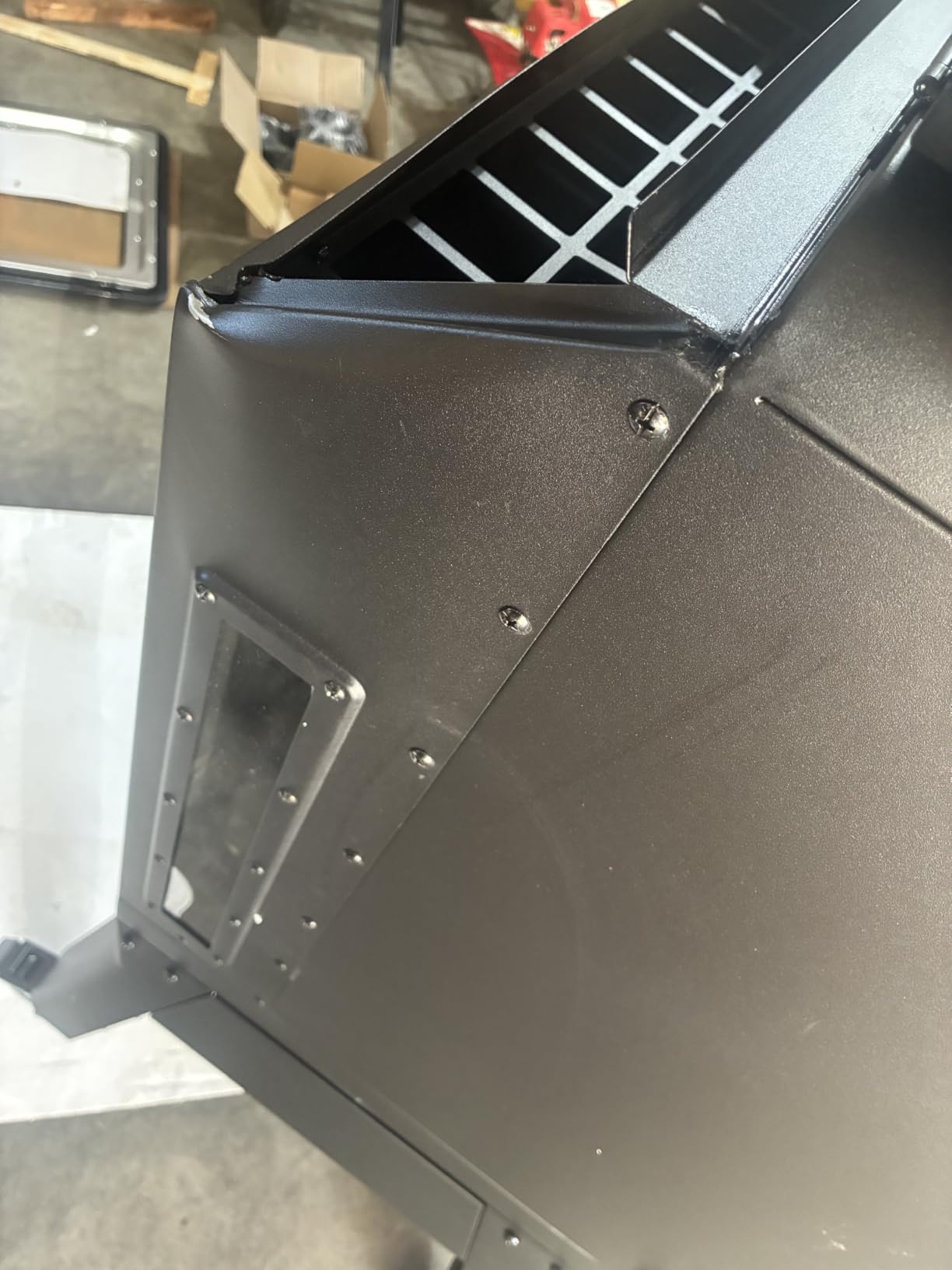
App control is the feature jerky makers actually need. WiFi and Bluetooth connect to the Pit Boss Grills app, so you can check the box and the rack thermometer from inside without opening the door. On a six-hour dry, every door opening resets part of your work, and the wide viewing window plus remote monitoring lets you check in without walking out.
The 50 lb hopper means a full dry with no refill, three probe ports accept an independent ambient thermometer alongside the included probe, and the chimney exhaust with convection airflow circulates heat and smoke evenly through the cabinet. It weighs 127 pounds and carries a five-year warranty.
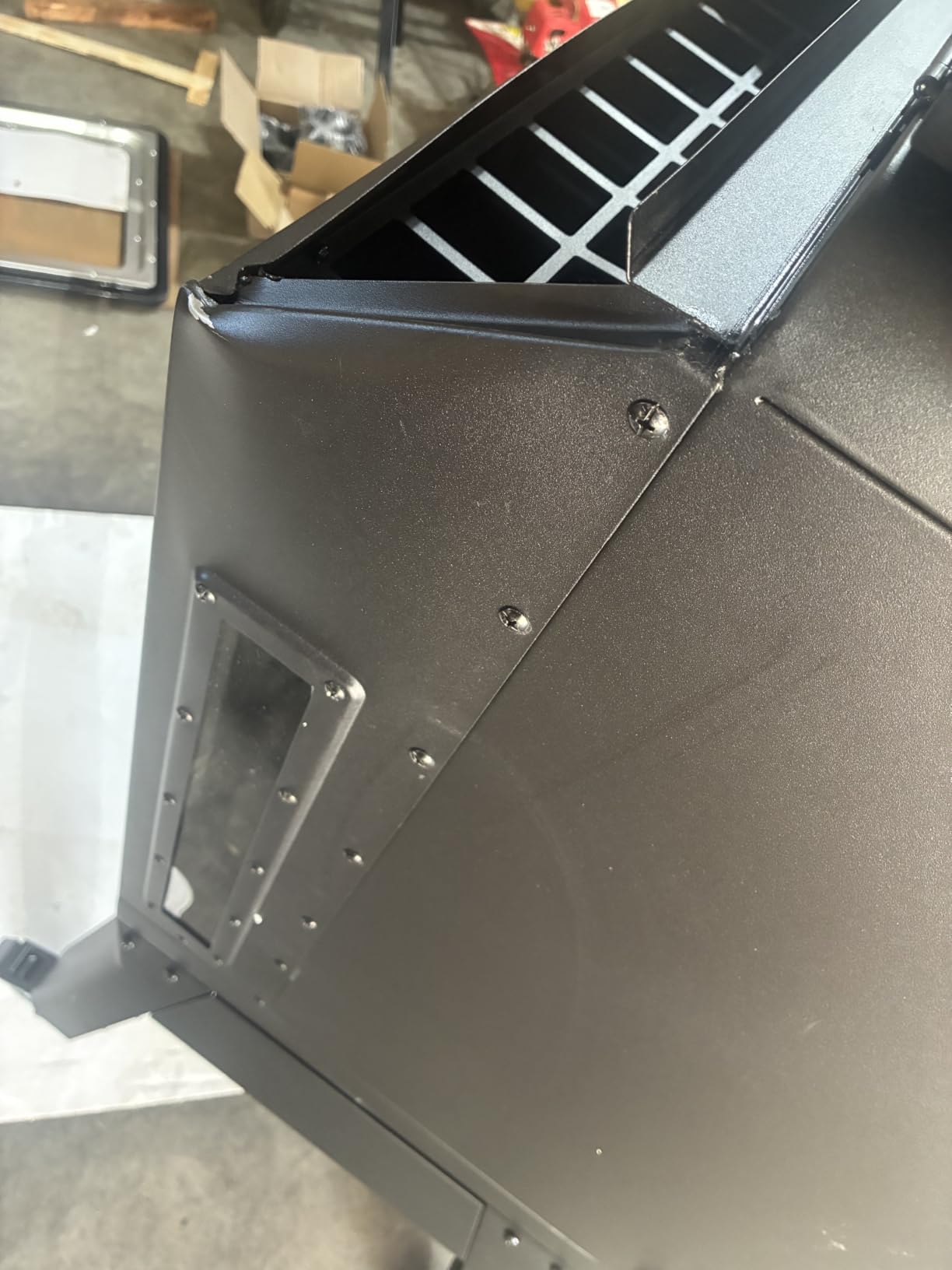
Now the honest problem, which is that the 3.3 rating across 33 reviews is the second-lowest in this group. Feedback is sharply polarised. Happy owners report the best results they have had from a vertical smoker. Detractors concentrate on three things: auger jams with fresh pellets, temperature overshoot with slow probe response, and factory quality control problems including shipping damage to the hopper, a bent frame part and an unconnected blower wire in the wiring harness. 35 percent of ratings are one-star.
Why does the 130F setpoint matter so much?
Because a 130°F setpoint is a real drying environment. Moisture leaves meat as a function of air temperature and moving air, and at 130°F you remove water slowly enough that the case cures from the outside in and the texture ends up leathery and bendable. At 150°F you remove it faster, which gives you a smokier, slightly firmer strip and less margin for error.
Owners on Refuge Forums put it more bluntly, and it is the most repeated technical objection in every forum thread we read: most pellet grills are not very stable at the low temperatures you dry jerky at. The Navigator’s digital control is specified down to 130°F, which at least gives you a target to aim at. Verify it with an independent probe on the middle rack.
Who should buy a different Navigator?
If 1,118 square inches does not cover your batch, the 6-Series doubles that. And if you have patience for an assembly process and can inspect the unit on arrival, you can sidestep most of the quality control complaints that pull this rating down. 35 percent one-star is a shipping and wiring problem more than a design problem.
Also consider the rear-mounted controller. It is awkward if you are used to a front panel, and it is the most common ergonomic complaint in the reviews. And note that the 3-Series and 6-Series share a rating and a review pool, which is unusual, and worth reading as one unit rather than two independent samples.
7. Pit Boss Navigator 6-Series Review – Full Cabinet Jerky Runs
Pit Boss Navigator 6-Series WiFi & Bluetooth Wood Pellet Vertical Smoker with LCD Digital Controller, 2,224-Sq. In. 5-Rack Cooking Space, 130°F to 420°F TempRange, Meat Probe, 75 lb. Pellet Hopper
2224 sq in
5 racks
130-420F range
75 lb hopper
WiFi and app
Pros
- 2224 sq in across five racks
- 75 lb hopper with cleanout
- 130F-420F covers the jerky band
- Racks fit two full-size foil pans
- Five-year warranty
Cons
- Auger jams on fresh pellet bags
- Temperature overshoots and readings lag
- One owner reported a unit that never worked
- Controller mounted on the back
- 173 lb weight
The 6-Series takes everything the 3-Series does and roughly doubles the cooking area to 2,224 square inches across five porcelain-coated steel racks. It is the best vertical pellet smoker for jerky if you are producing at a commercial-adjacent scale or you genuinely want jerky, sausage and a main dish in the same load without cleaning out between cooks.
The rack dimensions are the detail that makes it work. At 25.7 by 17.3 inches, each shelf fits two full-size foil pans, which means you can run a jerky screen on one half and a tray of snack sticks on the other, or double your jerky area per shelf when the racks hold a single wide screen.
The 130°F to 420°F digital control and the app connectivity match the 3-Series exactly, so the jerky temperature story is identical. The 75 lb hopper with cleanout is the real difference: it supports marathon cooks where the 50 lb hopper on the smaller unit would need attention on a long production run.
The feedback pattern is the same as the 3-Series because they share a rating and a review pool. Owners who get a working unit rave about the size, the hopper and the app control. Detractors report the same auger jamming on fresh pellet bags, the same temperature overshoot with lagging readings, and the same factory quality control issues with shipping damage and an unconnected blower wire.
There is one report of a unit that never worked at all, with the owner asked to cover return shipping. That is the single worst entry in this entire roundup and it deserves to be named. At 173 pounds this is a two-person lift and a large return, so inspect the unit on arrival and test a full preheat before you commit to a multi-day jerky production schedule.
Is the extra capacity worth the size?
For jerky specifically, more capacity does not mean faster drying. It means fewer cycles. If you are running six-hour dries and you currently need three loads a week to cover the year, the 6-Series does that in one.
The trade is footprint and weight. At 173 pounds, this is the heaviest smoker we reviewed alongside the Pellet Pro, and you want a level pad with room behind it for the rear-access grease drawer and the hopper cleanout. Measure before it arrives.
Who should buy the smaller Navigator instead?
Anyone whose batch fits under 1,100 square inches. The 3-Series has the identical temperature range, the identical app and the identical review profile, and it is 46 pounds lighter with a hopper that still covers an eight-hour dry comfortably.
Both Navigators carry the same auger jam risk with fresh pellets, so either way, knock down new bagged pellets before loading the hopper. It is a two-minute step that removes the most common complaint in the reviews.
8. Pellet Pro 2300 Review – Tightest PID Hold of the Group
Pellet Pro® 2300 Vertical Pellet Smoker DOUBLE WALL Cabinet Free Cover and Convection Fan – Home Delivery
About 10 cu ft
PID hold 5-10F
Double-wall steel
200 lb
Convection fan
Pros
- About 10 cubic feet of interior space
- PID holds within about 5-7F
- Double wall cuts pellet use
- Convection fan evened a 25F spread
- Three 21 x 20 inch stainless grates
Cons
- Vague instructions and flue holes needed machining
- Heating element did not light out of the box
- Some stainless parts rusted soon after delivery
- One owner reported three fires
- PID controller mounted low
The Pellet Pro 2300 is the one we would buy if our jerky was failing because the temperature swung. Its PID controller is reported to hold within about 5 to 7°F of the setting, the tightest band in this group, and owners who get it running call it the best smoker they have owned. Rated 4.3 across 16 reviews with 75 percent five-star, it is the second-highest rating here.
Capacity is genuinely different in kind. Roughly 10 cubic feet of interior cooking space, with three 21 by 20 inch stainless steel cooking grates and a seven-section rib rack. The 18-gauge double-walled steel cabinet with an included convection fan is what produces the PID stability, and one owner reported the fan evened out a 25°F top-to-bottom spread.
That convection fan is the detail jerky makers should care about most. Uniform air movement across five vertical surfaces is exactly what a multi-hour moisture removal needs, and double-wall construction cuts pellet use compared with single-wall smokers, which is a real saving across a season of batch drying.
The critical feedback concentrates almost entirely on the first assembly and break-in, and it is specific. Instructions are vague enough that the unit ships with assembly inferences rather than a real manual. Flue holes needed drilling, filing and grinding to line up with pre-tapped holes. One heating element did not light out of the box and needed a torch for the first fire. Budget an afternoon for assembly and have grinding tools ready.
Beyond that, some owners reported stainless components rusting soon after delivery, one owner reported the unit catching fire three times, and several found smoke flavour weak and inconsistent with a competition blend. The PID controller mounts low to the floor, awkward for anyone with back problems, and the included pellet storage container is smaller than a standard 40 lb bag.
Is the extra capacity worth it for batch jerky?
If you are drying for gifts, a market stall or a whole neighbourhood, yes. About 10 cubic feet means multiple full-screen racks of strips drying in one pass, and the convection fan means the top and bottom shelves finish at roughly the same time, which removes the tray rotation that smaller cabinets force on you.
At 200 pounds and 26 by 42 by 54 inches, this is the largest and heaviest unit we reviewed. It is also one of only two in this roundup with home delivery included, along with a protective cover, which is a meaningful offset to the assembly difficulty.
Who should skip the Pellet Pro 2300?
Skip it if assembly is not something you enjoy. The machining, the vague manual and a first-light element failure are real friction, and if you are buying this for weekend relaxation rather than a project, the Pit Boss PBV3P1 that opens this list is much simpler to get running.
Also weigh the low-mounted PID controller if you have any back issues, and note that this cabinet does not publish a low jerky setpoint in its listed specifications. The PID stability is excellent, but confirm the minimum setpoint yourself before you commit to a long dehydrate.
Jerky Temperature Guide: The Two-Stage Pellet Smoker Protocol
Jerky on a pellet smoker works in two stages, and the first stage is the one that catches people out. A dehydrator gets you from raw to dried in one pass. A smoker takes you through a surface-cook stage first, then a slow moisture-removal stage, and skipping the first is how you end up with jerky that is dry on the outside and still damp in the middle.
Stage one is the safety stage. Bring the cabinet to 160°F and hold it there until the thickest strips register 160°F on a probe thermometer. The USDA guidance is to cook poultry to 165°F and other meats to 160°F for whole-muscle cures, and the reason it matters on a smoker is that your cabinet is holding a temperature close to the floor of what the control can do, so the surface has to be brought up deliberately rather than assumed.
Once the strips hit 160°F, move to stage two and drop the setpoint to 130°F to 140°F. This is where the moisture actually leaves, and it is where the difference between a 130°F-floor cabinet and a 150°F-floor cabinet shows up. On a 130°F machine you can dry at 130°F and get a traditional dehydrator texture. On a 150°F machine you are drying at the lowest available setting, which produces a firmer, smokier strip and a shorter window before the case over-cures.
The bend test finishes it. A properly dried strip bends without snapping and without breaking. If it snaps cleanly, it needs more time. If it bends easily and feels cool or tacky in the middle, it needs more time as well. Total dry time on these cabinets ran four to six hours for us, depending on strip thickness and how full the cabinet was.
How to Choose a Vertical Pellet Smoker for Jerky
Start with the temperature floor, because it is the only spec that can disqualify a cabinet. Two of the eight units here publish a 130°F minimum. The rest bottom out between 150°F and 420°F, which is workable but means you are drying at the edge of the control’s range. If your goal is traditional dehydrator-style jerky, the 130°F floor is the filter.
Second, look at rack area in square inches rather than rack count. A cabinet with four large racks can dry more jerky than one with eight small ones, and what matters is whether you can lay strips in a single layer with air between them. Shading is the enemy. If strips touch, the touching surfaces never dry, and you get soft patches in finished jerky.
Third, check hopper capacity against your dry length. A six-hour jerky run needs fuel for six hours plus a margin. A 40 lb hopper with 24 hours of burn covers it comfortably. A small side hopper that gives you five hours covers it exactly, with no room for a fire that burns down early.
Fourth, consider whether the shelves accept jerky screens or need grill grates. Dedicated jerky racks have finer wire spacing, and quarter-inch strips will drop through poorly spaced grates mid-dry. None of the eight cabinets here ship with dedicated jerky screens, so plan on buying mesh jerky racks as an accessory for any of them, and check the accessory ecosystem before you commit.
Fifth, door and vent control. Jerky is a moisture-removal cook and you manage it by airflow, not by heat. A cabinet with a large viewing window and remote temperature monitoring means fewer door openings, and every opening dumps your chamber’s carefully balanced environment. The two Navigator units with app control win this point clearly.
Sixth, water pan capability. A full water pan slows the dry and keeps strips flexible for longer, which is exactly what you want during a long multi-hour run. The Grilla Mammoth has an integrated one; the Maison Backyards requires you to fill it manually before preheating.
Seventh, review volume and quality. This is the criterion no competitor addresses, and it is the one that changed our ranking most. Pit Boss PBV3P1 has 362 reviews averaging 4.5 stars. The Navigator units have 33 reviews averaging 3.3 stars, which is a real risk on a large cabinet. A thin review base on an expensive unit means you are the guinea pig, and for the 200-pound Pellet Pro that risk is harder to accept because a return is a two-person job.
Finally, be honest about your climate. Cold-weather performance is not a spec on a spec sheet, but owners consistently report that low-output cabinets struggle to hold temperature in cold, windy conditions. The Piquebar is the exception in this group. If your jerky season runs year-round, prioritise heat retention and insulation over features.
Loading, Rotating and Ventilating a Multi-Rack Jerky Batch
Do you flip jerky when smoking? You rotate trays, you do not flip strips. Individual strips dry from both faces on a rack, so flipping each piece is wasted effort. What you do need is tray rotation, because top and bottom shelves in a vertical cabinet sit at different temperatures and dry at different rates.
Load the strips in a single layer with gaps between them. Leave roughly half an inch of space around every strip. Then work out your batch size from area: multiply total rack square inches by the fraction you leave empty, and expect finished yield in the neighbourhood of a quarter of raw weight for thin strips. A 900 square inch cabinet loaded across four shelves is a multi-pound batch, not a token one.
Swap top and bottom trays every hour. That eight-second action is what keeps a batch with wide top-to-bottom variance even, and it is the single most useful habit in this entire process. It also lets you see the finish on a tray and pull it early if the bottom rack is already bending properly.
Manage airflow rather than chasing temperature. Leave the damper more open than feels right for a searing cook, because the job here is pulling moisture off. If your strips are drying fast and hardening at the edges, close it down a notch. If they stay tacky after six hours, open it up. The single most common cause of wrinkly, soft jerky on pellet equipment is insufficient ventilation, not insufficient heat.
Expect a 4 to 6 hour dry for thin beef strips. Forum users on the Rokslide boards put it in the same range and stress the same point we would: the key is thin. Slice thickness dominates the outcome more than any smoker spec, which is why a good slicer matters as much as a good cabinet. A 5°F hold you can trust matters less than strips sliced to a consistent 1/8 inch.
Common Jerky Mistakes on a Pellet Smoker
The first mistake is thick strips. Anything over 1/8 inch dries unevenly on a smoker, because the cabinet moves air but cannot move moisture out of the centre of a thick piece. Trim aggressively, and remember that a good meat slicer set to a thin setting is the cheapest upgrade to your jerky.
The second is skipping the 160°F safety stage. A cabinet holding 130°F is not cooking your surface, and raw-beef jerky that has not been surface-treated is a food-safety question. Do not skip it.
The third is crowding. Strips touching each other create shaded pockets that never dry. A cabinet with more racks does not help if you fill them edge to edge. Air between pieces is what removes the last of the moisture.
The fourth is a full water pan by default. People fill the water pan to stabilise temperature during a normal cook and leave it full for a jerky dry. That slows the dry so much you will wait an extra several hours for the same result. Fill it partway, or not at all, for jerky.
The fifth is opening the door. Every opening dumps chamber temperature and humidity, and on a cabinet whose probe sits near the firebox, the recovery also overshoots. Use the viewing window and an independent rack thermometer.
The sixth is ignoring pellet condition. Auger jams on fresh bagged pellets are the most repeated hardware complaint in the reviews for both Navigator units, and a starved auger means no smoke and a swinging temperature. Knock down new bags before they go in the hopper.
The seventh is expecting one cook to be both smoked and dried. You can do it, at 150°F, and it produces a distinctly smokier, firmer strip than a 130°F dehydrate dry. Decide which texture you want before you start rather than being surprised by it at hour four.
Frequently Asked Questions
What is the best smoker for making jerky?
The Pit Boss PBV3P1 is the best vertical pellet smoker for jerky overall, holding within 5-10F of set point across 901 sq in of rack area with a 40 lb hopper. If you need a true 130F floor, the Pit Boss Navigator 3-Series and 6-Series are the only cabinets here that publish one. A dehydrator still produces the classic texture, but for flavour and batch size a vertical pellet cabinet wins.
Are vertical pellet smokers any good?
Yes, for jerky specifically, because the stacked rack layout and vertical convection move air across multiple sheets of strips at once. The weakness forums repeat most often is stability at the low end. Without a true PID loop, a cabinet hunts instead of holding, so check the published minimum setpoint before you buy.
What are the disadvantages of using a vertical smoker for jerky?
Vertical cabinets run hot near the firebox and cool toward the top, so strips on different shelves dry at different rates and you should rotate trays hourly. A low-mounted control panel is awkward for some users, a 130F setpoint is not universal, and jerky-specific mesh screens usually have to be bought as an accessory.
Is 150 too low to smoke jerky?
150F is a fine smoke-and-dry temperature and produces a smokier, firmer strip, but it is not a true dehydrate. For classic leathery jerky that bends without snapping, dry at 130-140F after a 160F surface-cook stage. Cabinet choice matters here, because many pellet smokers cannot hold below 150F at all.
Do you flip jerky when smoking?
No, you do not need to flip individual strips, since air moves around them on a rack and both faces dry. You should rotate trays instead, moving the top shelf to the bottom every hour, because the top and bottom of a vertical cabinet sit at different temperatures. Total dry time for thin strips runs four to six hours.
Conclusion: The Best Vertical Pellet Smoker for Jerky
After six weeks and multiple full batches, the Pit Boss PBV3P1 is our pick for the best vertical pellet smokers for jerky because it does the three things that matter most, and has 362 reviews of owner history proving it. It holds within 5 to 10°F, it offers 901 square inches across four grids, and its 40 lb hopper finishes a dry with no refill. Just put a separate thermometer on the middle rack.
If a true 130°F setpoint is your requirement, the Pit Boss Navigator 3-Series is the one to buy, and the 6-Series if you need double the area. If you want the tightest PID hold and the most convection, the Pellet Pro 2300 wins on physics and punishes you on assembly. Whichever you choose, slice thin, run the 160°F stage, rotate trays hourly, and buy a set of mesh jerky racks before your first batch.