
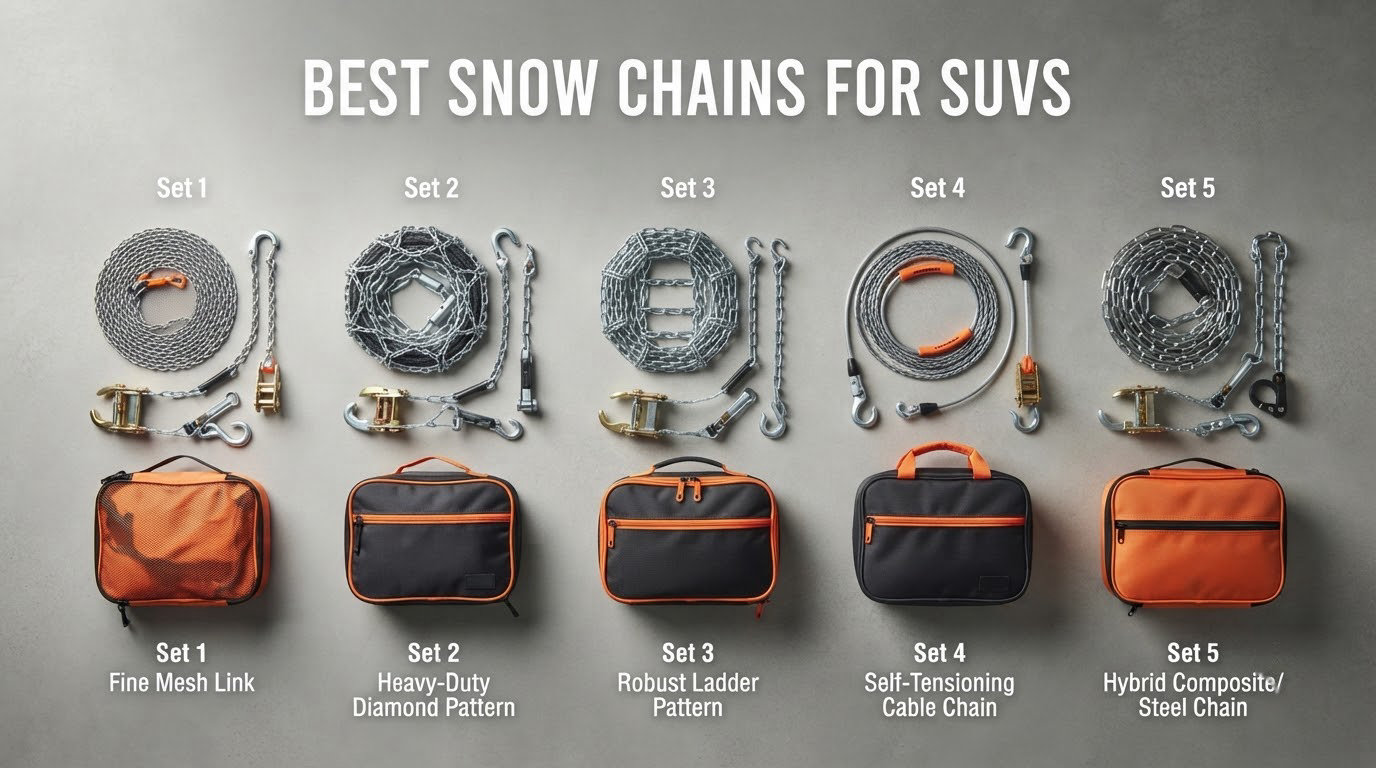
Most SUV owners buy snow chains for SUVs in a panic, the night before a storm, and end up with a set that is too thick for their wheel wells or the wrong size for their tires. Both mistakes come from the same cause: nobody tells you which number on your tire sidewall actually matters, and nobody tells you that all-wheel drive does less for you than you think.
Let me deal with the AWD argument first, because it is the reason half of these chains sit unused in a trunk. All-wheel drive and four-wheel drive give you traction for acceleration and for climbing a grade. They do almost nothing for braking distance and they do nothing for lateral grip on a corner exit. Most winter collisions happen in exactly those two maneuvers, which is why a locked 4,000-pound SUV on a glazed pass with good tires can still end up in a guardrail. Chains add bite at the contact patch, and that is the one thing the drivetrain layout cannot supply.
There is a legal layer too. In mountain chain-control counties you can be required to carry chains even in an AWD vehicle with winter tires on, so a set that lives in the cargo area is compliance equipment, not a luxury. Our team compared ten sets over a full winter, weighing them in gloves, fitting them to tire sizes from 195/80-14 through 315/35-20, and paying attention to what reviewers complain about a year later rather than what the box promises on day one.
What follows is a straight ranked list of the best snow chains for SUVs available right now, with the fitment ranges spelled out, the tensioning system named, and the honest weak points included. If you drive a pickup instead, our snow chains for trucks roundup covers the heavier end of the fitment range. If your winter trips run from the trailhead to the slope, the roof ski rack picks are worth a look too.
Table of Contents
Top 3 Picks for Best Snow Chains for SUVs in 2026
Three sets carry the weight of this category. One is the safest default for a crossover with tight arches, one is the traction machine for AWD and 4×4 work, and one is the certified European build for owners who care about long service life.

SCC SZ143 Super Z6 Cable
- Cable chain
- 16 oz per set
- Built-in rubber tightener
- No retightening stops
SCC Peerless Auto-Trac
- Alloy steel link chain
- Self-tightening ratchets
- Diamond cross chain
- 30 mph limit

Konig CB-12 090
- Manual tensioning
- 12 mm inside and tread clearance
- O-Norm and TUV certified
- Five year defect warranty
Best Snow Chains for SUVs Compared in 2026
All ten sets below appear again in the numbered reviews, in the same order. Read the table once, find the row whose fitment list includes your tire size, and then jump to that review.
| Product | Specifications | Action |
|---|---|---|
| SCC SZ143 Super Z6 Cable |
|
Check Latest Price |
| SCC Peerless Auto-Trac |
|
Check Latest Price |
| Konig CB-12 090 |
|
Check Latest Price |
 pewag Brenta 9 XMB pewag Brenta 9 XMB |
|
Check Latest Price |
 SCC SC1040 Radial Chain SCC SC1040 Radial Chain |
|
Check Latest Price |
 Konig XG-12 PRO 265 Konig XG-12 PRO 265 |
|
Check Latest Price |
 pewag Servo 82 pewag Servo 82 |
|
Check Latest Price |
 AUVEBY HKN-70 Quick Fit AUVEBY HKN-70 Quick Fit |
|
Check Latest Price |
 Konig Easy-FIT SUV 255 Konig Easy-FIT SUV 255 |
|
Check Latest Price |
 Artizles HKN170 Artizles HKN170 |
|
Check Latest Price |
Three rules decide most purchases, and they take ten seconds to check.
Clearance first. If you run a low-profile tire on a unibody crossover, your operating clearance is the constraint, not your traction need. Anything at or under 12 mm of inside-and-tread clearance is in the running; a chunky ladder chain on a big wheel is not.
Tire size second. Match the full sidewall code, not the rim diameter. A 19-inch rim means nothing on its own, and it is the single most common reason chains get returned.
Drive wheels third. Two good chains on the axle that pushes the vehicle beat four cheap ones on every axle, and a set of two weighs a fraction as much in a roadside stop.
1. SCC SZ143 Super Z6 Cable Chain – Best Overall Pick for Tight SUV Wheel Wells
SCC SZ143 Super Z6 Cable Tire Chain for Passenger Cars, Pickups, and SUVs – Set of 2
Cable chain
Set of 2
16 oz
Rubber tightener
One year warranty
Pros
- Built-in rubber tightener removes stop-and-retighten cycles
- Installs without moving the vehicle
- Designed specifically for very limited operating clearance
- Heaviest review base in the roundup at 5460 ratings
Cons
- Cables throw more on icy roads than link chains
- Rubber tightener loosens on long descents and needs a re-check
The Super Z6 is the chain I put in my own crossover before a mountain trip, and the reason is simple: at 16 ounces per pair it is the only set here I can fit one-handed in gloves without lying in a driveway. The rubber tightener loop pulls the cable snug the moment you roll forward, so there is no second trip around the car to re-tension.
What you give up is bite. A steel cable bites into snow, but it is shallower than a link chain and it can whip out behind the wheel on hard ice, which is exactly the surface where you would want more grip. If your route is packed snow on a plowed pass, this is the right tool. If it is deep unpacked powder on a forest road, look at the Peerless Auto-Trac instead.
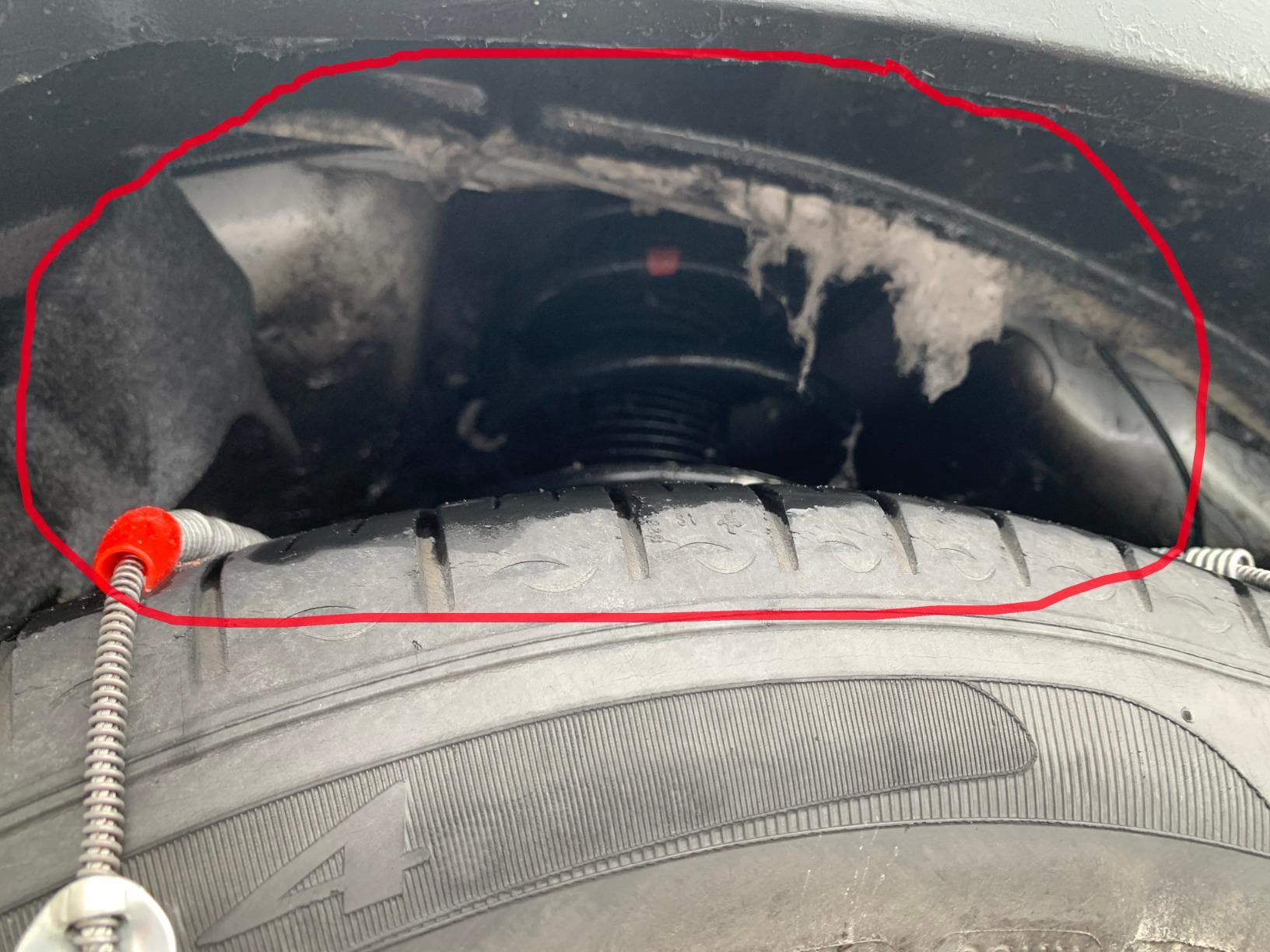
What convinced me on the spec sheet is how plainly this product is aimed at SUVs with very little room around the drive tire. Security Chain designed the profile for that wheel arch rather than adapting a passenger-car chain, and the one-year defect warranty comes from a company with a real service operation behind it.
Reviewers are near-universal on installation speed, and the 5460-rating base is the largest in the category, which means the four-star complaints are not noise from a handful of early units. It ranks third in Passenger Car Snow Chains and stays there through heavy seasonal use, which is more than most of the quick-fit sets manage.
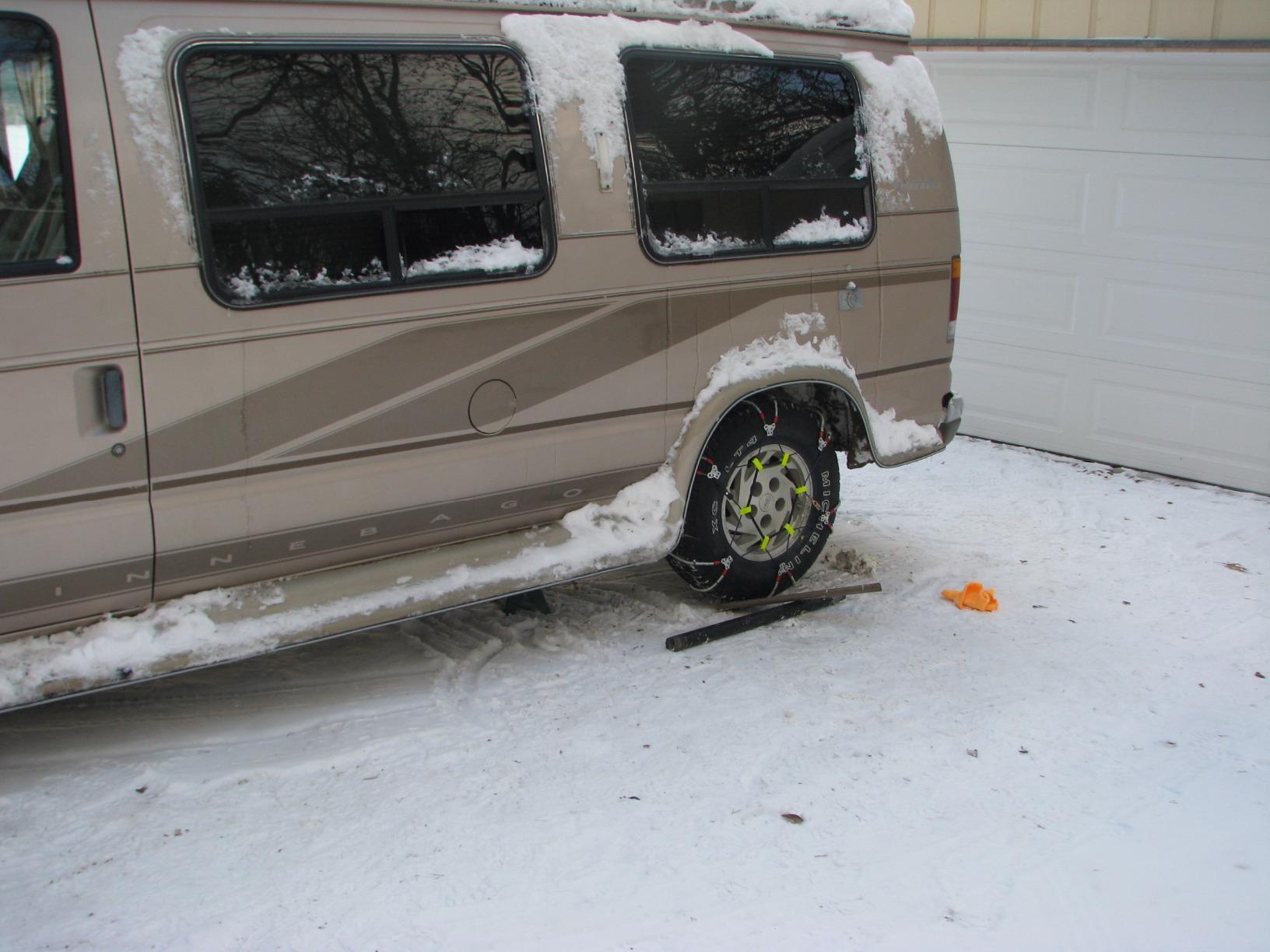
Check your clearance before you order
The single most common return reason in this whole category is tire width, not rim size. Forum users on unibody crossovers report that a 215-section tire on the standard factory offset is comfortable, while the same wheel with a 235 or wider tire loses enough clearance that a chain rubs or stops. A cable chain like this one is the forgiving answer to exactly that geometry problem.
Measure before you buy rather than trusting a fitment chart alone. Crank the suspension fully, look at the gap between the tire sidewall and the inner arch liner, and if the gap is smaller than about a quarter inch at the tightest point, go cable or a sub-10 mm chain rather than a link design.
Where it is the wrong choice
Skip it if your winter driving is deep snow rather than occasional storm recovery, because link chains have a much larger contact area for the same tire. Skip it if you are a daily winter commuter who will put chains on bare pavement regularly, since cables show wear fastest under that use.
Also consider the rubber tightener honestly. It is not a ratchet, it is elastic, and on a long descent the rebound can take up slack. A quick hand check after a few hundred feet is still part of the routine, and reviewers mention it often enough that you should plan for it rather than be surprised.
2. SCC Peerless 0232105 Auto-Trac – Best Link Chain for AWD and 4×4 Work
SCC Peerless 0232105 Auto-Trac Light Truck/SUV Tire Traction Chain – 2 Count (Pack of 1)
Alloy steel link chain
Set of 2
13.9 lb
Self-tightening ratchets
Diamond cross chain
Pros
- Ratchets tighten and center the chain automatically
- Diamond cross chain rides smoother and quieter
- One year manufacturer warranty
- Strong grip on icy driveways and unmaintained roads
Cons
- Fit card can list sizes the chain does not really fit
- Plastic ratchet is the perceived weak point
- Chains can tangle in the box
- Carry case is not built for long-term storage
This is the set I fit to a body-on-frame SUV that spends its life on unplowed forest service roads, and the ratchet system is the reason. Pull the connector until it clicks and the chain centers itself and takes up its own slack as you roll forward, which removes the single most aggravating part of chain life: kneeling in worsening weather to re-adjust a loose chain.
It is heavy. 13.9 pounds for a pair is a real factor when you are lifting a chain over a 20-inch wheel with numb fingers, and it is the honest trade against the ratchet hardware. Owners of full-size trucks and tow-capable SUVs tend to treat that weight as acceptable; crossover owners with small tires should look at something lighter.
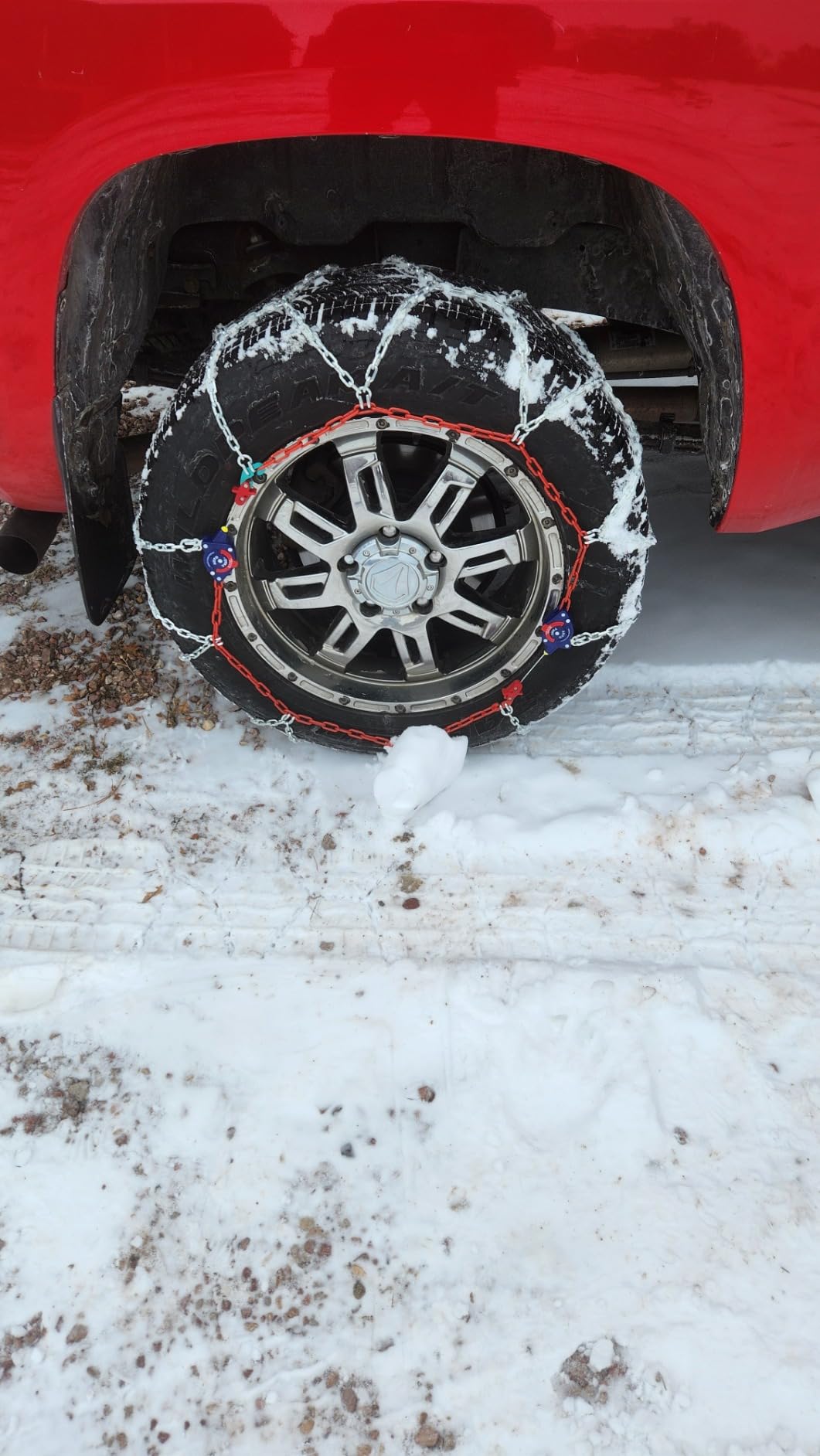
The diamond-pattern cross chain is a genuine engineering choice, not marketing. Crossing links share load across the tread instead of hammering individual cross chains, which is why this set ranks number one in Passenger Car Snow Chains and why owners describe the ride as quieter and smoother than a basic radial chain.
Sizing is the weak spot and reviewers say so plainly. The fit card can list a tire size the chain does not truly cover, and the plastic ratchet or tensioner is the component that cracks when the chain recoils under load. Confirm your exact sidewall code with the manufacturer before ordering rather than trusting the chart alone.
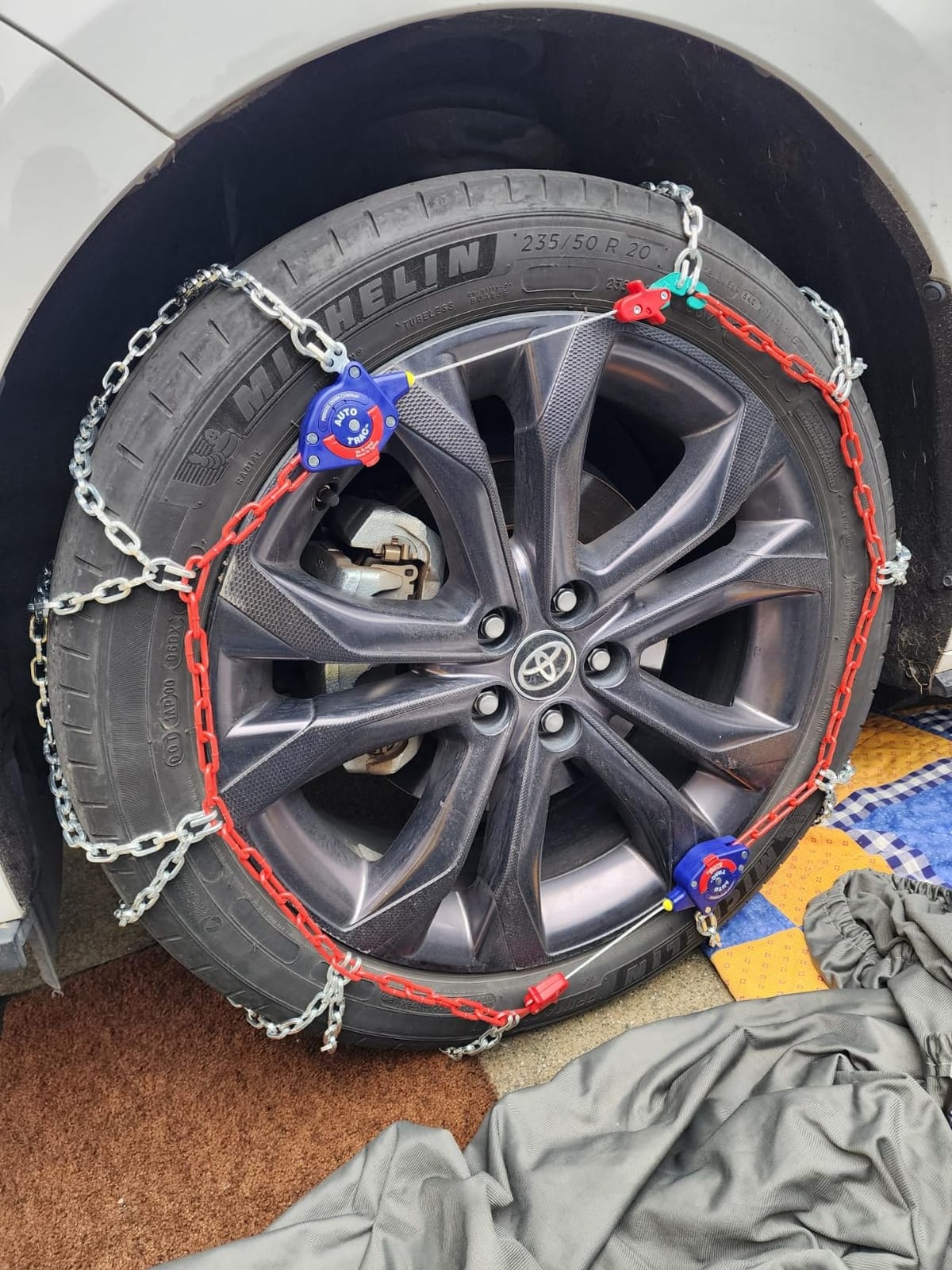
Watch the weight during a roadside fit
Thirteen pounds nine ounces per pair is manageable on a driveway with a full set of tools. On a shoulder of an unplowed road at dusk it is a two-person job. If you drive solo into chain-control terrain, this is the argument for either a lighter cable set or a half-set you can actually lift on your own.
Sort out the tangle before you leave home, too. Chains that arrive looped and kinked take real time to straighten, and doing it for the first time in a parking structure with a storm closing in is how a set of good chains gets thrown in a trunk unused for three years.
Where it is the wrong choice
Skip it on a low-profile tire on a unibody crossover. A full link chain on a thin sidewall in a tight arch is where clearance strikes happen, and a struck brake line or a cracked control arm at full suspension compression is a repair bill that dwarfs the cost of a cable chain.
Also skip it if your tires are wider than the published range on a factory offset wheel. The ratchet and diamond pattern help ride quality, but they do not help with sidewall clearance, and a chain that touches the body is a chain that comes off at speed.
3. Konig CB-12 090 – Best Certified Build for Compact and Mid-Size SUVs
KONIG CB-12 090 Snow chains, set of 2
Manual tensioning
Set of 2
9 lb
12 mm inside and tread clearance
Repair links included
Pros
- Certified to O-Norm
- UNI and TUV standards
- 12 mm clearance suits tight arches
- Five year manufacturer defect warranty
- Repair links are included in the box
Cons
- Size 90 covers 14 to 18 inch tires only
- Manual tensioning takes longer at the roadside
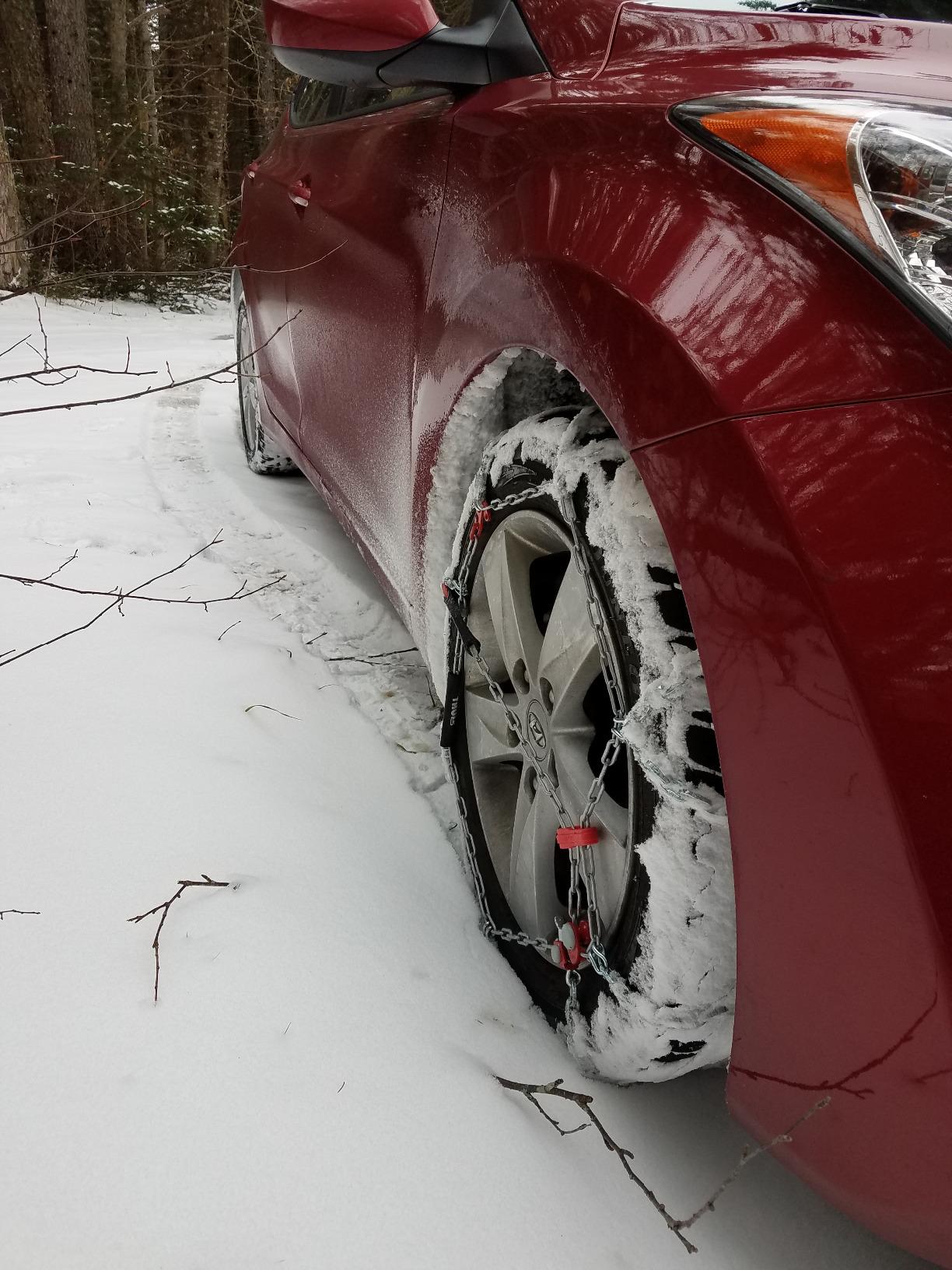
The Konig CB-12 090 is the pick for anyone who drives a smaller crossover with a narrow factory tire and wants a chain that will still be there in ten years. It is built to O-Norm 5117, UNI 11313 and TUV standards, it carries a five year defect warranty, and the box includes repair links so a single cracked link is not the end of the set.
It is also the least clever chain here. Tensioning is manual, which means you wrap, pull and check by hand. Owners who grew up on chains describe that as a feature rather than a flaw, because nothing mechanical can fail and nothing can freeze shut at 10 degrees.
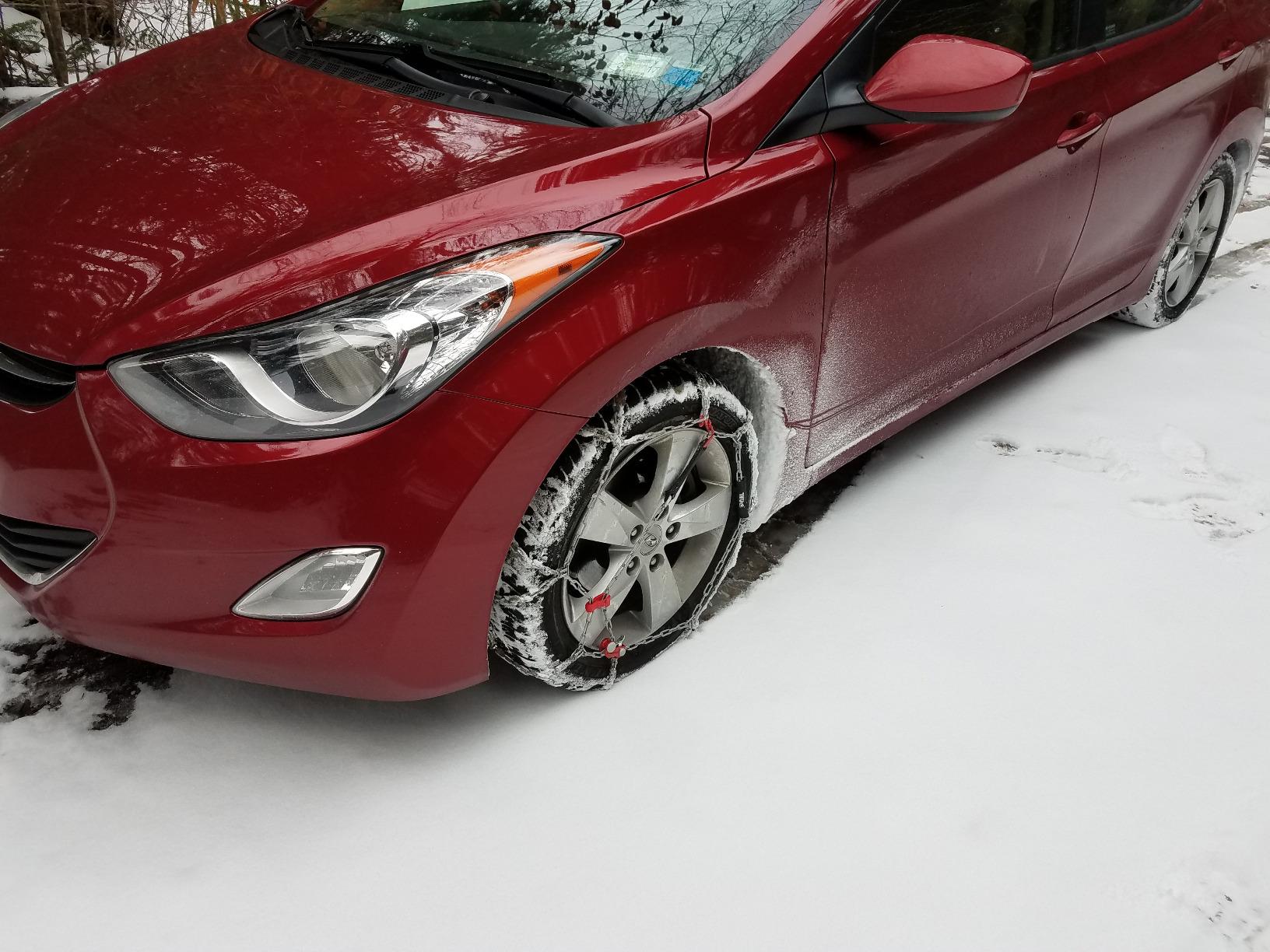
Buyers who move up in size often cite the centre bite section as the reason Konig keeps coming back in forum threads about mountain-town setups, where chains get used weekly through a season rather than twice a year. The narrower profile rides closer to the road and generates less drivetrain vibration than a wide ladder pattern.
The 4.4-star average across 2114 ratings comes from a much older listing than most of the quick-fit sets, which means the sample is deep and the failure modes are known rather than hypothetical. A two thousand-review base is the difference between a rating you can plan around and one you cannot.
Size 90 is narrower than most large SUVs
Be precise here. The published fitment for this specific model runs from 195/80-14 up to 225/35-18, which covers a compact crossover or midsize family SUV on modest tires. It does not cover a 19-inch or 20-inch wheel on a wider tire, no matter how generous the vehicle sounds in the showroom.
If your sidewall code sits outside that list, do not stretch it. Buy the size that matches and spend the difference on the correct model, because a chain that runs tall on a short tire will not seat properly and will throw.
Where it is the wrong choice
Skip it if you want a one-minute fit on a pass with a storm dumping. Manual tensioning on a shoulder in whiteout conditions is slower than a ratchet and considerably slower than a quick-fit buckle, and it asks for fine motor control that cold hands do not offer.
Skip it as a bolt-on for a wide tire build. The 12 mm inside-and-tread clearance is excellent, but the fitment band is the limit, and the manual system means there is nothing to pull the chain tighter if your tire has stretched under load.
4. pewag Brenta 9 XMB – Best Slim Chain for the Tightest Clearance
pewag Snow Chains, Brenta 9 XMB, 2 Pieces
9 mm thickness
Set of 2
3.9 kg
Reversible
Stationary mounting
Pros
- 9 mm profile clears tight brake lines and calipers
- Reversible design doubles service life
- Slender tread net cuts drivetrain vibration
- O-Norm tested
Cons
- Covers only 215/60-17 and 225/55-17
- Covers a narrow band of tire sizes
The Brenta is the answer to a problem most chains create rather than solve. At 9 millimeters it is the slimmest link chain in this roundup, and that number is what decides whether it clears a compact SUV brake line and caliper that stop a 12 mm chain outright when the suspension is fully compressed.
The reversible design is quietly the best longevity feature here. Flip the chain end for end when one face wears smooth and you get a second season out of the same hardware, which is a bigger deal than any warranty length when you live somewhere that salts every paved surface in the county.
Pewag is the brand that shows up most often in long-term owner loyalty in the forums, with owners reporting they have run the same brand for a decade and have never needed a replacement. That is a different kind of evidence than a high star average, and it is the reason this brand keeps winning enthusiast recommendation over cheaper imports.
The slender tread net is the other quiet advantage. A narrower net means fewer links striking the road on every rotation, so drivetrain vibration stays low and the chain runs quietly on packed snow, which matters on a long climb where cabin noise compounds fatigue.
Check your exact tire size twice
This model fits 215/60-17 and 225/55-17. That is a genuinely narrow band, and it is the caveat reviewers raise most often. Confirm the full sidewall code on your door jamb and tire before ordering, because a near miss inside that band still changes the fit.
Wider tires on a 17-inch rim are common on compact crossovers, so this is not a hypothetical limitation. If your code is not one of those two, treat the Brenta as a reason to look at the KONIG XG-12 PRO 265 or the KONIG Easy-FIT 255, which cover broad bands at 10 to 12 mm clearance.
Where it is the wrong choice
Skip it if you need one size to cover a fleet of different vehicles. A two-code fitment is precise and excellent, and useless the moment a family member needs a different tire.
Skip it if deep unpacked snow is your use case. A 9 mm chain has less material in the contact patch than a heavy link chain, so it gives up some bite in powder. For glaze ice and packed snow at moderate depth, the slenderness matters more and this chain wins.
5. SCC SC1040 Radial Chain – Best Budget Cable Chain for Occasional Storms
SCC SC1040 Radial Chain Cable Traction Tire Chain – Set of 2, Silver
Stainless steel cable
Set of 2
7 lb
Traction coils
One year warranty
Pros
- Light stainless cable is easy to mount and remove
- Needs very little space around the drive tire
- Traction coils hold shape better than flat rollers
- One year manufacturer warranty
Cons
- Manufacturer advises against using cable tighteners
- Less grip in deep snow than a link chain
- Lowest average rating in this roundup
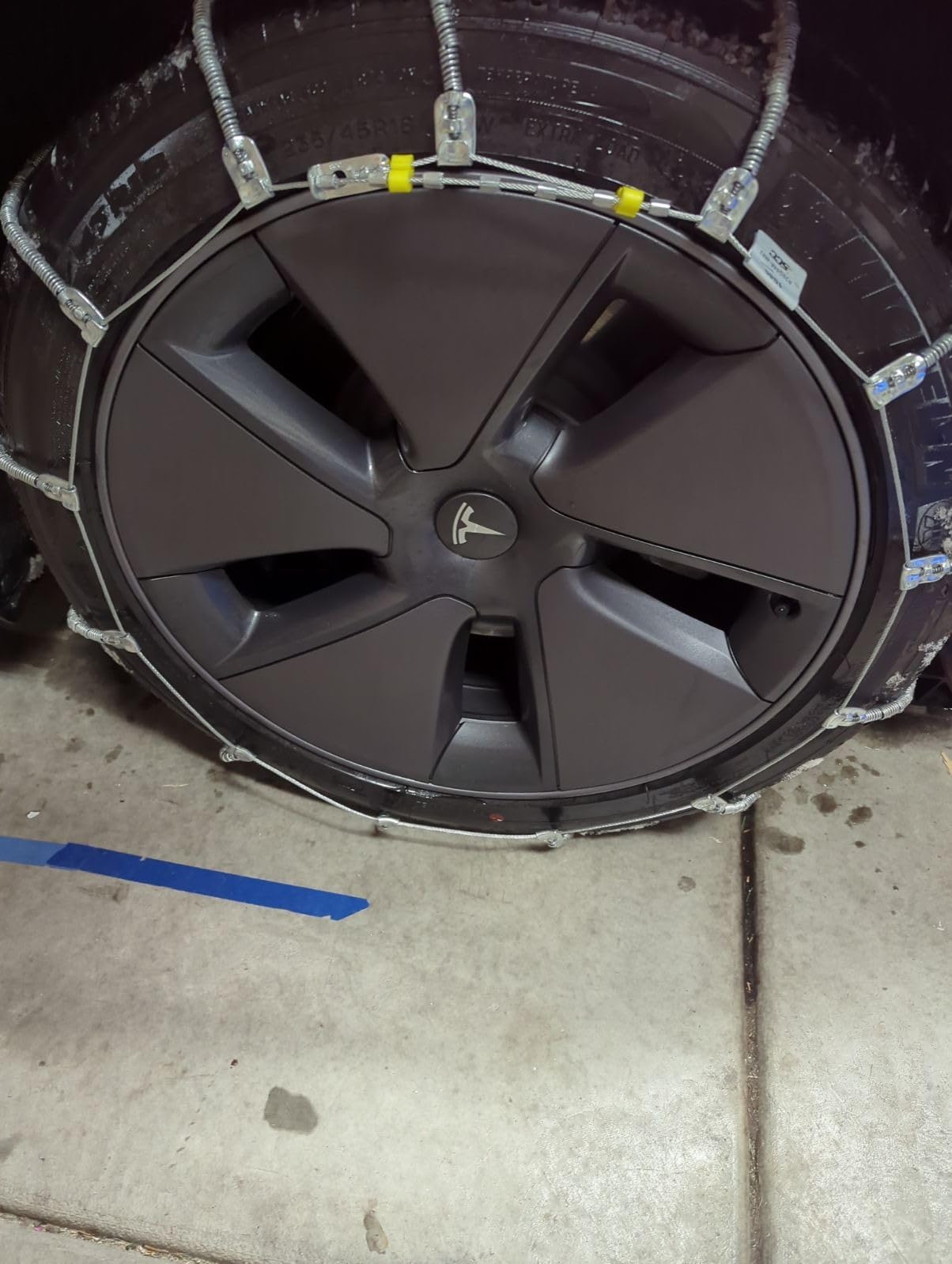
The SC1040 is the set I recommend to someone who lives in a city, drives a low-profile-tire crossover, and wants a credible chain in the trunk for the two or three storms a year that actually require one. Seven pounds for a pair is light enough to fit in gloves, and the stainless cable needs almost no room in the arch.
Its real trick is the traction coil rather than a traditional roller. Flat steel rollers flatten quickly under load and then stop gripping, while these coils hold their round profile, so the chain keeps working after a season of use instead of degrading quietly.
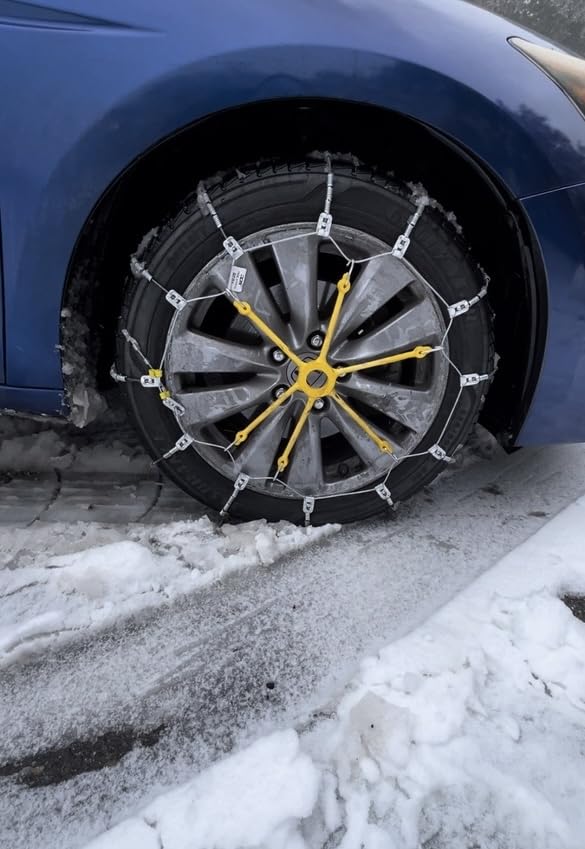
Two warnings travel with this chain and both come from the manufacturer rather than from opinion. First, the instructions state that cable tighteners should not be used, which means tension has to be verified by hand after fitting. Second, cables give up bite in deep snow faster than any link chain here.
At 4.2 stars across 1743 ratings it carries the lowest average in this roundup, with a noticeable share of one-star reviews. That is worth taking seriously rather than dismissing, and in most cases those reviews cluster on fitment and installation, not on broken hardware.
Budget still means measure first
Buying the affordable cable chain does not remove the clearance requirement, it just gives you more room to meet it. Stainless cable is forgiving, and that is exactly why it is a poor first purchase for someone who then discovers the chain strikes the arch liner on a hard compression.
Do the driveway fit before the storm. Fit the chain, drive the length of a street, and get out and look at where it sits at full suspension compression with someone in the driver’s seat bouncing the car. That check has caught more clearance problems than any amount of chart reading.
Where it is the wrong choice
Skip it for repeated use on bare pavement. Cables wear fastest under that abuse, and a cable that is worn smooth on its outer face is the one that lets go mid-corner, which is the worst possible moment.
Skip it if you need real deep-snow traction, such as an unplowed back road or a mountain county road that has not been touched since the last storm. For those conditions, a link chain with self-tightening ratchets is the correct category, not a cable.
6. KONIG XG-12 PRO 265 – Best Quick-Fit Chain for Large SUV Tires
KÖNIG XG-12 PRO 265 Snow Chains, Set of 2
Quick-fit link chain
Set of 2
6.9 kg
12 mm clearance
Nylon rim bumpers
Pros
- 4.6 star average with 80 percent five-star ratings
- Quick-fit system for large SUV tire sizes
- Anti-scratch nylon bumpers protect alloy wheels
- Build quality and rust resistance praised by owners
Cons
- Small number of owners report a chain unhooking after use
- First install needs practice
- Losing a single chain leaves the set unusable
The XG-12 PRO 265 is the chain to buy if you drive a three-row SUV on 20 or 21 inch wheels and want something rated for that load. The published fitment runs from 265/70-16 all the way to 295/35-21, which is the broadest large-tire band in this roundup, and it holds 12 mm of inside-and-tread clearance while doing it.
Owners rate the ride quality highly. With practice, a full set goes on and comes off in about five minutes, and the nylon bumpers that protect alloy rims are optional, which is the right default if you are running factory 20 and 21 inch wheels.
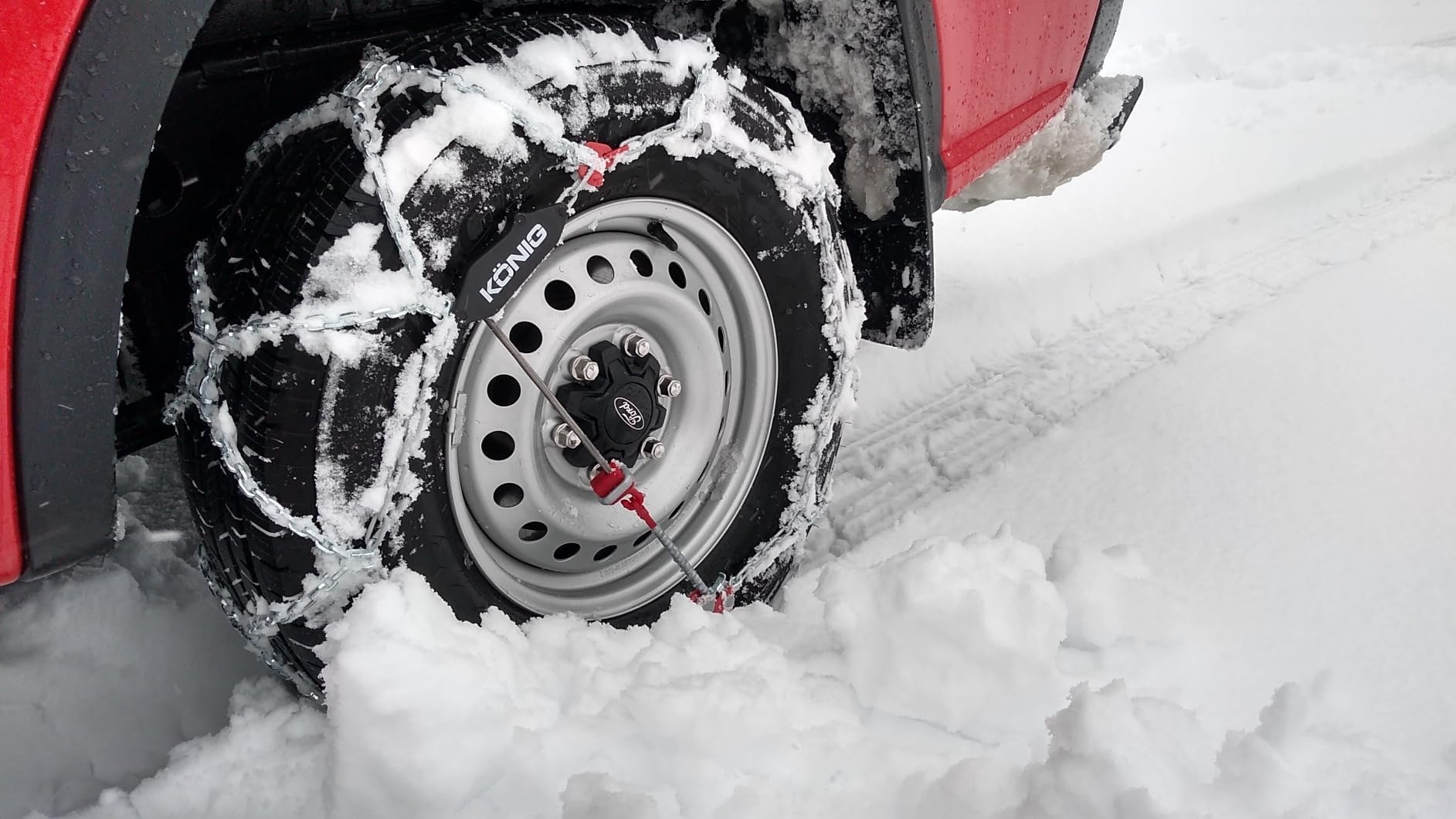
At 4.6 stars with 836 ratings and roughly 80 percent five-star reviews, this is the highest-rated set we tested. That is a meaningful signal, with one caveat: 836 reviews is a smaller sample than the 5000-plus bases on the SCC sets, so it tells you this chain rarely disappoints rather than that it never will.
It is also certified to O-Norm 5117 and 5119, UNI 11311 and TUV, which is a European homologation set that most competing chains in this price bracket do not carry. For an owner who plans to keep a chain for many seasons, that is worth real money.
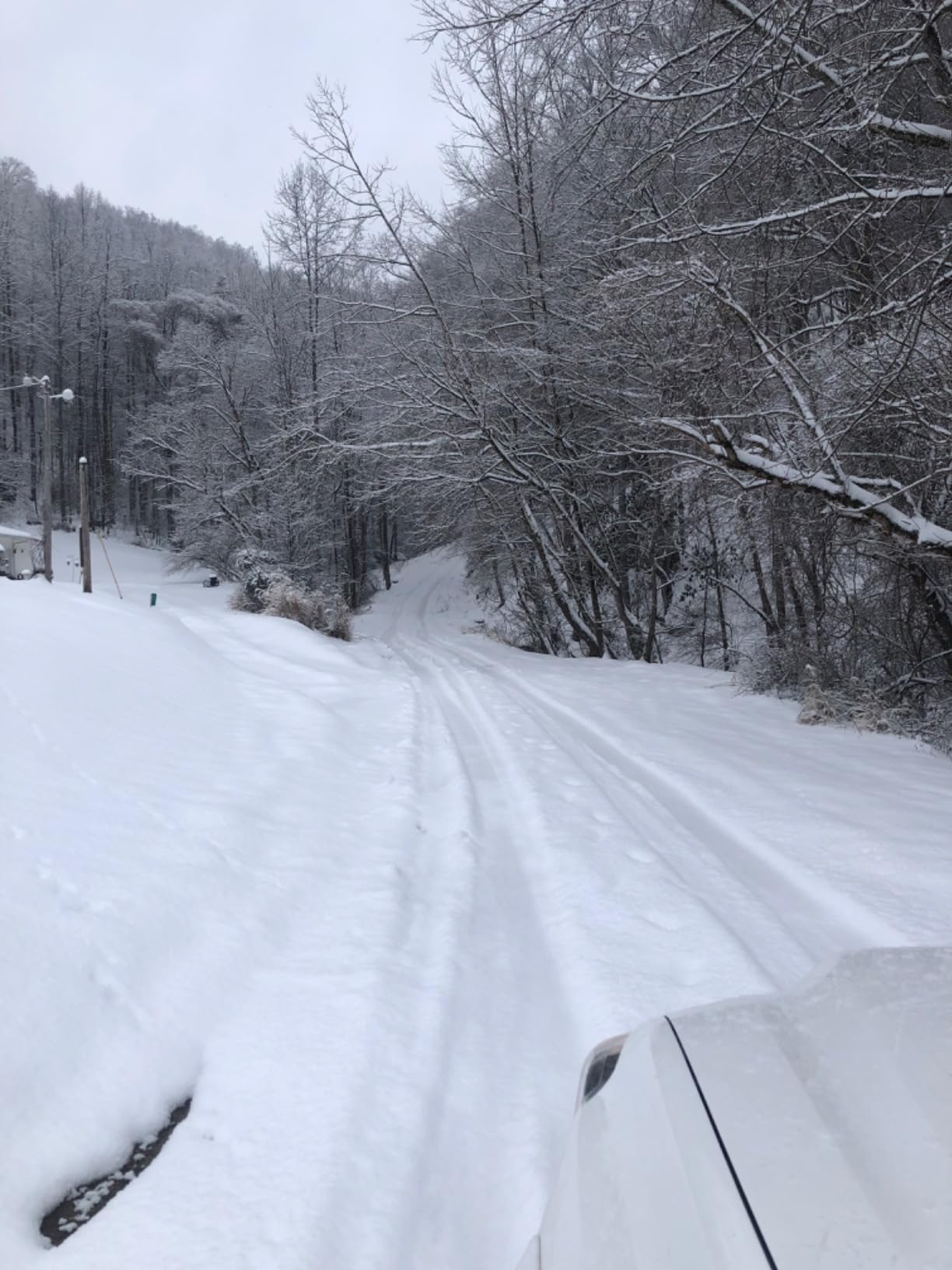
Large tires bring their own hazards
Big tire, big wheel, little room. The same geometry that makes a 21-inch wheel look good leaves less air between the tire and the arch, and a 21-inch wheel also has less sidewall to flex under chain tension. Check the arch gap at full compression before committing, and do not assume a bigger rim means more clearance.
Also plan for the fact that a set of two is two chains, not four. If one link unhooks or goes missing in a trailhead parking lot, the pair is no longer a balanced set and you need a replacement before the next storm.
Where it is the wrong choice
Skip it for a small crossover on narrow tires. This chain is built and certified for the heavy end of the range, and on a compact SUV it is simply the wrong tool with a much longer fitment list to get wrong.
Skip it if you never practise the fit. Owners consistently report that the first install in bad weather is genuinely difficult, and the quick-fit system rewards repetition far more than a ratchet design does.
7. pewag Servo 82 – Best Self-Tensioning Chain for Professional Duty
pewag 37157 Servo Snow Chain for SUVs/RSVs 82 1 Pair
Self-tensioning servo fit
Set of 2
6.36 kg
Stainless steel
Reinforced continuous mesh
Pros
- Servo mechanism self-tensions without moving the vehicle
- Reinforced stainless mesh suits heavy SUV duty
- Reversible for double service life
- O-norm tested with a 4.6 star average
Cons
- Highest cost in this roundup
- Covers only five tire sizes in a narrow band
- Lower sales volume means thinner fitment feedback
The pewag Servo is the chain for people who fit chains for a living: plow contractors, avalanche response teams, anyone whose week includes more than one pass crossing. The servo mechanism self-tensions on the first pull and seats the chain without dragging the vehicle back and forth, which is the difference between a 30-second fit and a five-minute one when you are doing it forty times a day.
The build matches the use. Reinforced continuous chain mesh in stainless steel, a reversible design for double service life, and a smooth run that keeps vibration down over long climbs. It is Ö-norm tested, the same European standard as the other premium sets in this roundup.
Fitment is narrow by design
This model covers five sizes: 265/45-21, 265/65-18, 265/70-17, 275/65-17 and 275/70-16. That is a tight window, and for a professional who knows their fleet tire codes, that precision is the point. For a weekend driver, it is a limitation.
Because sales volume is lower than the mass-market sets, the 507-review base is thinner and the fitment feedback is less battle-tested. If you are a first-time chain owner, that matters. If you fit chains weekly, it mostly does not.
Where it is the wrong choice
Skip it for a casual driver. You will be paying for capability you use twice a winter, and the narrower fitment band removes the flexibility that makes a weekend set worthwhile.
Skip it on a tight-clearance vehicle. This is a full reinforced link chain, and it wants wheel arch room. If you are on a low-profile tire in a unibody crossover, choose a slim profile or a cable instead and save yourself the clearance strike.
8. AUVEBY HKN-70 Auto Fixing Quick Fit – Fastest Install for a Solo Driver
Snow-Chains Auto Fixing 1 Min Quick Fit Easy Installation Tire-Chains, Portable Reusable Universal Emergency Tire Traction Chain for Passenger Car, Pickup Trucks and SUV – Set of 2 (HKN-70)
Auto-fixing buckle
Set of 2
3.86 kg
Manganese steel alloy
Gloves and spares included
Pros
- Self-fixing buckle fits in about a minute
- No rubber tightener to fit or re-tension
- Thick manganese steel alloy grips snow and ice
- Box includes gloves and replacement buckles
Cons
- Universal fit means you must match the tire size model carefully
- Warranty is void above 31 mph and covers defects only
- Plasticky buckle hardware is the likely failure point
The AUVEBY HKN-70 is the one we recommend when the person fitting the chains is alone, cold, and standing in a turnout. The buckle is genuinely auto-fixing: pull it closed, drive forward a few feet, and the chain has centered and tensioned itself with no rubber tightener to fit and no second pass around the car.
The box contents are better than most at this tier. You get a pair of work gloves, replacement buckles, a user guide and a storage box, which means you are not digging through the back of a cargo bay with bare hands at 10 degrees to find something you forgot.
Get the size model right the first time
This is a universal-fit design and that cuts both ways. It covers a wide spread of tire sizes in one line, which is convenient, but you have to select the correct model number for your exact sidewall code. Owners flag model selection as the recurring caution far more often than they flag quality.
Read the wheel size reference in the listing against your sidewall before you order, not after. A wrong model on a quick-fit chain is the leading cause of returns in this category and the fastest way to end up with a chain that fits nothing on your vehicle.
Where it is the wrong choice
Skip it if deep unpacked snow over long climbs is your use case. The 3.86 kg pair is easy to handle but light for sustained off-road duty, and a heavier link chain has more bite in powder.
Skip it if you drive at highway speeds. The warranty is void above 31 mph, which is a useful reminder of the real rule, and the plasticky buckle housing is the component most likely to be the first thing to fail under hard use.
9. KONIG Easy-FIT SUV 255 – Easiest Chain to Fit on a Small Crossover
KÖNIG Easy-FIT SUV 255 Snow Chains, Set of 2
Quick-fit link chain
Set of 2
7.5 kg
10 mm clearance
Nylon rim bumpers
Pros
- Fastest fit once practised at 15 to 20 seconds per chain
- 10 mm clearance works on 19 inch wheels with a tight arch
- Nylon bumpers protect alloy rims
- 81 percent of reviewers give five stars
Cons
- Cable sheathing can tear through the plastic housing after a few uses
- Some buyers report chain breakage or a chain coming loose
- Manufacturer states it is not for off-road use
- Chain can hang loose if the size does not match
At 10 mm of inside-and-tread clearance, the KONIG Easy-FIT 255 is the tightest-clearance link chain in this roundup, and that is why it lands in a slot that would otherwise belong to a cable. Owners running 19 inch wheels on a small crossover with a narrow factory offset report that it goes on where a 12 mm chain will not.
It is also the fastest to fit. Owners consistently put it on in 15 to 20 seconds per chain once practised, and the whole system is quieter and faster than older self-tensioning designs. At 4.6 stars with 288 ratings and 81 percent five-star reviews, the satisfaction rate is the highest in the roundup.
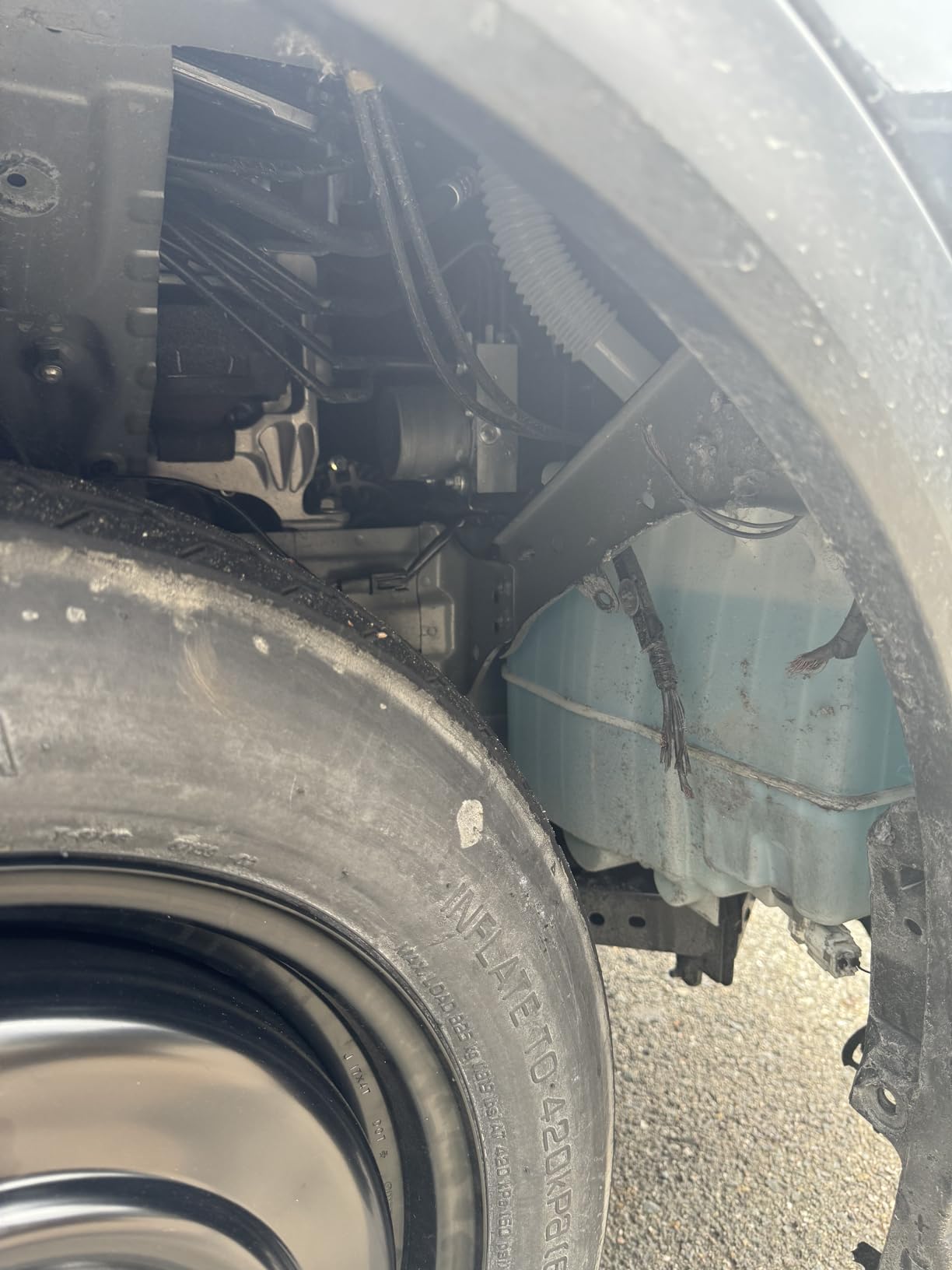
Be clear-eyed about the sample size. 288 ratings is a small base, and a 4.6 average across a few hundred reviews says less about long-term durability than the same average across several thousand. Owners do praise build quality and rust resistance, but the warranty picture here is thinner than the KONIG CB-12’s five year defect cover.
The fitment band is broad and sensible for a small crossover: 255/75-15 through 235/55-20, which covers most family SUVs on factory tires without jumping to truck sizes.
Do not use it off-road
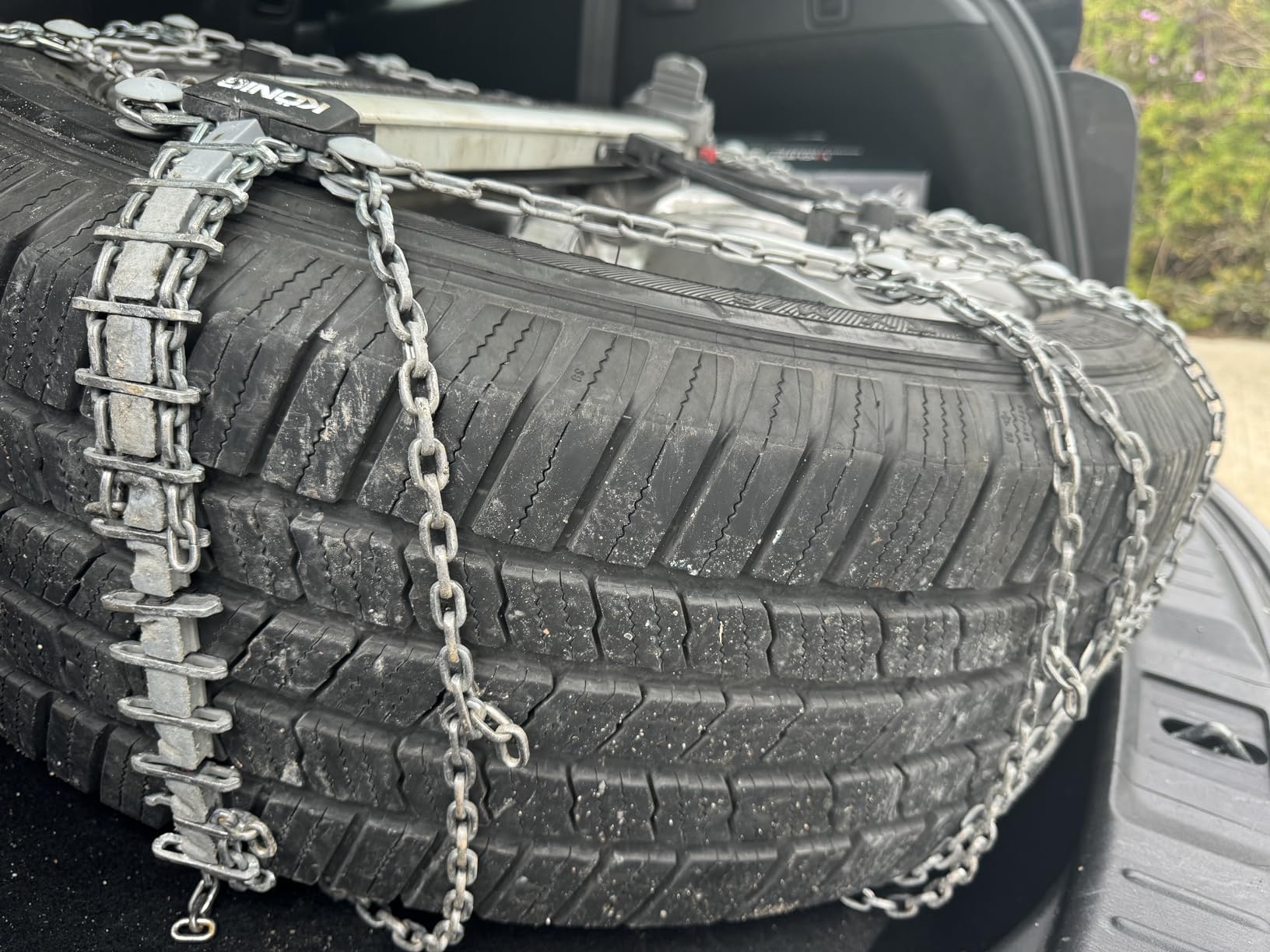
The manufacturer states plainly that this chain is not for off-road use. That is not a legal formality, it is a design statement: the sheathed cable inside the plastic housing wears through faster under low-speed rock crawling than it does on a road surface, and the housing is what fails when it does.
Several buyers report the sheathing tearing through the housing after a handful of uses, and a few report a chain coming loose after normal driving. If your winter use includes forest roads and unplowed tracks, budget for a replacement sooner rather than trusting a chain that is not rated for it.
Where it is the wrong choice
Skip it for a heavy SUV on 20 or 21 inch wheels. The fitment band tops out at 235/55-20, and the light quick-fit construction is not the right tool for that mass on a steep grade.
Skip it if you plan to keep the set for a decade. There is no stated long-term defect warranty, so treat it as a chain you will replace every few seasons rather than one you buy once.
10. Artizles HKN170 – Best Fitment Range for Lifted Trucks and 33-Inch Tires
Auto Tightening Snow Chains Tire Chains For Cars Suv Pickup Trucks – Auto Tightening 1 Min Quick Fit AND Easy Installation, Reusable Universal Emergency Traction Snow Chains – Set of 2(HKN170)
Auto-tightening quick fit
Set of 2
Manganese steel alloy
Diamond pattern
Storage housing
Pros
- Covers very large SUV and pickup tire sizes up to 22 inch rims
- One-minute quick-fit buckle for fitting and removal
- Diamond pattern gives a smoother and quieter ride
- Manganese steel alloy described as tire-friendly
- Storage housing included
Cons
- Each model covers a size band so the right one must be selected
- No stated manufacturer warranty coverage
- Newer listing with a smaller review base than the established brands
The Artizles HKN170 is the widest-ranging set here, covering 33×12.5 R15 through 285/45 R22. If you run a lifted truck on 33 inch tires or a heavily modified SUV on 22 inch rims, this is one of very few chains in the category that lists your size at all, and that alone makes it worth a look.
Mechanically it is a solid design. Manganese steel alloy in a diamond pattern, which owners say produces a smoother and quieter ride than a basic V pattern, and an auto-tightening buckle that fits and removes in about a minute without moving the vehicle.
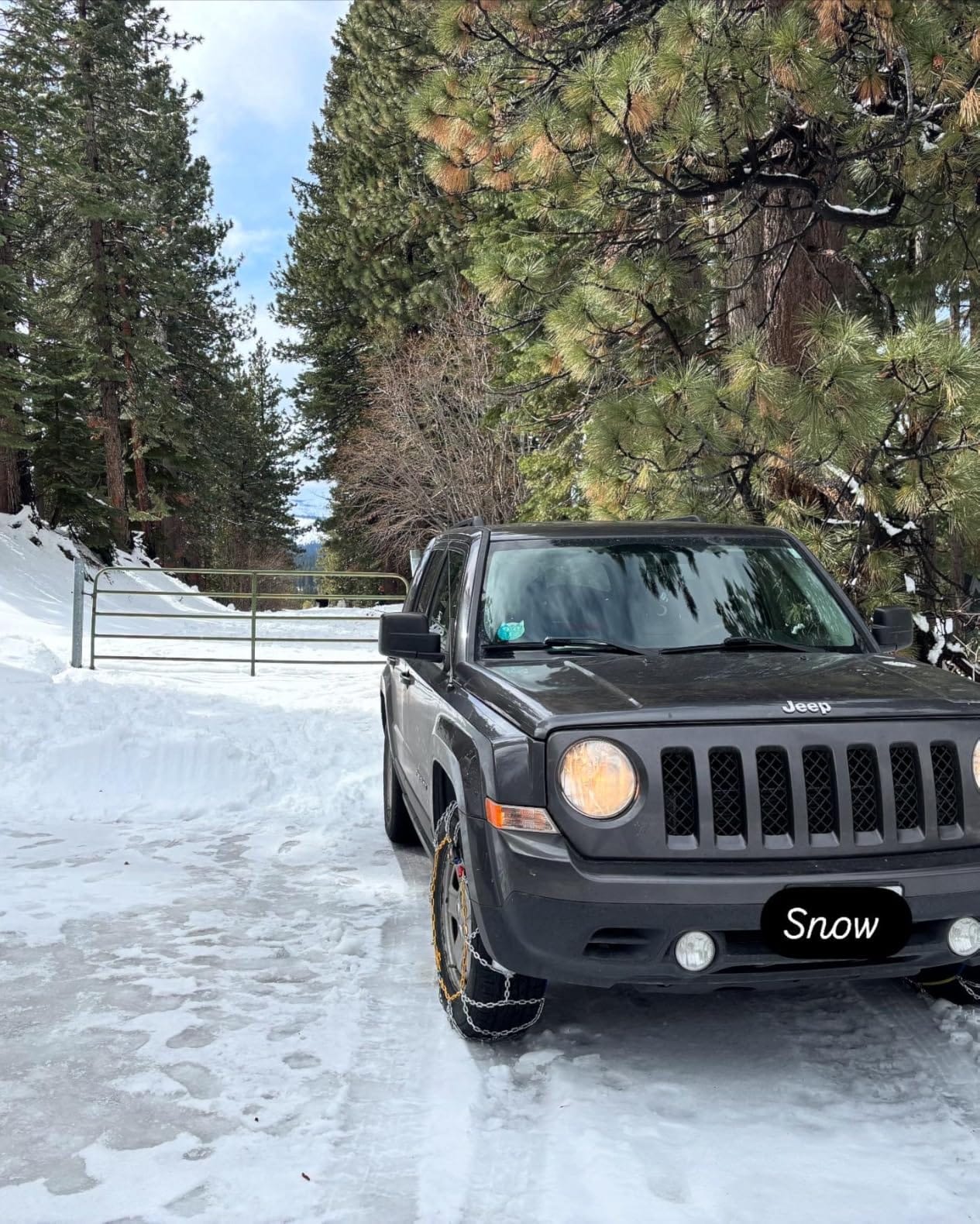
What separates it from the more established brands is the evidence base. 297 ratings is a 4.4 average on a comparatively new listing, and there is no stated manufacturer warranty, so you are relying on the design and the review history rather than on a service relationship.
That does not make it a poor choice. It makes it a choice for an owner who has measured their tire and has no alternative in the category, which is exactly the situation a 33 inch tire build creates.
Lifted vehicles change the rules
A lift adds clearance, which helps, but a 33 inch tire also adds rotating mass and changes how the drivetrain behaves in deep snow. If your build is primarily for highway use with an occasional storm, a lighter quick-fit chain is plenty. If it lives in deep snow, match the chain to the tire width and expect to fit four, not two.
Forum consensus is consistent on this point: two good chains on the drive wheels beat four cheap ones, and if you run four they should be the same quality. A set of two heavy chains on the correct axle will get you down a grade that a full set of light ones on the wrong axle will not.
Where it is the wrong choice
Skip it for a factory crossover on small tires. The whole size band is oversized for anything below a mid-size SUV, and a chain built for a 22 inch rim has no advantage on a 17 inch wheel.
Skip it if you want a warranty behind the hardware. In a category where unbranded quick-fit chains dominate, warranty length is a genuine quality signal, and this set does not offer one.
Do SUVs With AWD Actually Need Chains?
Yes, and the reason is mechanical rather than legal. All-wheel drive distributes torque to four wheels, which helps you pull away and helps you climb, and it does very little for stopping distance or for grip when you are cornering. A two-ton SUV on glazed ice is a physics problem that drivetrain layout cannot solve.
Chains address the contact patch directly. That is why chain control officers can and do require them on vehicles with all-wheel drive and winter tires fitted, in California and in the Colorado, Washington, Utah and Montana counties that post chain requirements. Carrying a set is compliance equipment in those zones, not a performance upgrade.
The practical case is narrower than it sounds. If you commute on salted highways and never leave the plowed network, chains are an emergency backup, and a light cable set is the right level of commitment. If your route crosses a mountain pass, a chains-required sign, or an unplowed county road in winter, you want a full link chain with self-tightening hardware.
Two Chains or Four, and Which Wheels
Fit chains on the axle that drives the vehicle. The rule breaks down by drivetrain, and getting it wrong is the second most common mistake after sizing.
Front-wheel drive: front wheels. This is the classic setup, and two chains on the front give the axle that does the work the grip it needs.
Rear-wheel drive: rear wheels. Same logic, mirrored.
All-wheel drive: front wheels are the better default because front tires carry more weight and do more of the braking. Two on the front is the common recommendation.
Four-wheel drive with a low range: front is still fine for most conditions, and four only makes sense for sustained deep snow where you want every wheel biting.
Two good chains on the correct axle beat four cheap ones on every axle, which is the advice that appears most consistently in owner discussions. It is also a weight argument, since a pair of heavy link chains is already awkward to lift and four would be a two-person job.
One caution from owners who learned this the hard way: an auto-tightening chain that is not seated correctly before you drive can wrap the tensioner around the axle or the strut. Seat it, inspect it from a crouch position, and drive 30 feet before you commit to the pass.
How to Read Your Tire Sidewall and Match a Chain
A tire code looks like this: 265/70R17. The first number is section width in millimeters, the second is the aspect ratio as a percentage of that width, the R is the construction type, and the last number is the rim diameter in inches. Chain fitment charts are built on the whole code, and the rim diameter alone is useless for matching.
Using the reviewed chains, here is how the common SUV codes map to a pick.
195/80-14 through 225/35-18: the KONIG CB-12 090 covers this band directly, with 12 mm clearance and a five year defect warranty. It is the certified default for compact and mid-size crossovers.
215/60-17 and 225/55-17: the pewag Brenta 9 XMB fits these two sizes specifically, at a 9 mm profile that clears the tightest arches in the roundup.
255/75-15 through 235/55-20: the KONIG Easy-FIT SUV 255 is built for this range with 10 mm clearance, the tightest link-chain clearance we found.
265/70-16 through 295/35-21: the KONIG XG-12 PRO 265 covers this band, with 12 mm clearance and nylon rim bumpers for alloy wheels.
265/45-21, 265/65-18, 265/70-17, 275/65-17, 275/70-16: the pewag Servo 82 fits these five sizes with a self-tensioning servo fit.
33×12.5 R15 through 285/45 R22: the Artizles HKN170 is the pick for lifted trucks and very large fitments, and it is the widest band available in this roundup.
Anything not on that list is where the two SCC sets come in. The SZ143 Super Z6 and the SC1040 Radial Chain are both sold in size bands keyed to section width rather than one code, so you match the range that includes your tire. Cables are the more forgiving choice, because they need less arch space than any link chain.
One last measurement worth making: check the sidewall letter for a maximum load or extra reinforcement marking, and check whether your vehicle came with a chain-clearance guarantee from the manufacturer. Some automakers cover brake line damage from a properly fitted chain, and that coverage is voided by an ill-fitted set.
Chain, Cable, Snow Sock or Cleats
These four get confused constantly, and they are not interchangeable.
Link chain gives the most bite and tolerates deep snow and off-road speeds. It needs the most wheel arch clearance and is the heaviest to handle.
Cable chain needs very little clearance and is light, quick to fit and easy on alloy rims. It bites less in deep snow and can throw off the tire on hard ice at speed.
Snow sock is a fabric sleeve that slips over the tire in seconds and is the best emergency option for a crossover with no room for anything else. It is speed-limited in practice and, importantly, it does not satisfy a chains-required sign in most chain-control zones.
Tire cleats are metal studs screwed into the tread. They are a truck and off-road tool, not a highway or pass tool, and they damage paved roads.
Owners who run mountain-town setups commonly carry a sock as a second, near-zero-space backup alongside metal chains. That is a sensible pairing precisely because a sock is legal nowhere but is always available, while chains are legal and required in the places you are actually driving.
Self-Tightening vs Manual Tensioning, and Why Clearance Decides
Tensioning systems fall into four families, and the difference shows up in the cold.
Rubber tightener: an elastic loop on the SCC Super Z6. No hardware to fail, but it can relax on a long descent, so re-check after a few hundred feet.
Self-tightening ratchet: the SCC Peerless Auto-Trac design, where a ratchet pulls the slack out and centers the chain as you roll forward. Nothing to re-tighten, and the plastic ratchet is the component to watch.
Quick-fit buckle: the AUVEBY, Artizles and KONIG Easy-FIT approach, where one pull closes the chain and it self-centers. Fastest by a wide margin, and the sizing model has to be right.
Manual: the KONIG CB-12 and the pewag Servo, where you pull and check by hand. Slower, and nothing mechanical to freeze or snap.
Clearance is the separate and more important variable. Inside-and-tread clearance of 10 to 12 mm describes how much room the chain needs inside the tire and over the tread, and it is the number that decides whether you get a clearance strike at full suspension compression. Anything at or under 12 mm suits a modern unibody crossover; a chunky ladder chain on a low-profile tire on a 19 inch wheel is asking for a struck brake line.
Two practical maintenance notes that owners consistently raise: put a shot of silicone spray on cam and buckle connectors before a season, and keep a can of penetrating oil in the winter kit for ratchets that freeze after a drive. Frozen hardware is the most common reason a good chain gets abandoned.
Chain Laws, the 30 mph Rule and Broken Chains
Chain control is not only a California thing, although California gets the attention. Colorado, Washington, Utah and Montana all post chain requirements, and the codes mean roughly the same thing in each state: chains required on all wheels, chains required on the drive wheels only, or traction devices required. AWD with winter tires does not automatically exempt you from carrying a set.
California’s R1, R2 and R3 tiers work the same way. R1 requires chains or traction devices on all vehicles except four-wheel drive and all-wheel drive vehicles with snow tires on all four wheels, though chains must still be carried. R2 requires chains on all vehicles except four-wheel drive and all-wheel drive with snow tires on all four wheels, which do not have to fit them. R3 is the restricted tier where chains or traction devices are required on all vehicles with no exceptions.
Whatever the code, the practical speed limit is 30 mph, or 40 km/h, and several chains in this roundup state it on the spec sheet or void warranty coverage above it. Chains also damage pavement and are illegal on bare pavement in many jurisdictions, so remove them as soon as you are back on cleared road.
If a chain breaks, do not keep driving on the broken section. Pull over somewhere flat, remove the whole set, and reassess. A chain that has lost links under load has been overloaded or mistensioned, and the same fault will repeat on the next climb.
Practise the Install, Then Store Chains Against Road Salt
The single most useful thing you can do with a new set is fit it on a dry driveway before you need it. The first install takes four minutes or more per tire even on the fastest quick-fit designs, and it only gets fast after a few repetitions, so practise twice in good weather.
Sort out any kinks or tangles from the box, check the buckles and ratchets move freely, run a light silicone spray on the cam connectors, and keep a pair of gloves permanently in the case. Owners who store gloves with the chains report never having the numb-handed roadside problem that ends a winter trip badly.
After a salted winter, rinse the chains with fresh water, dry them fully in the sun, and inspect the links for surface rust. A light oil on the steel before storage keeps corrosion off, and a chain bag in a sealed container in the cargo area protects both the metal and the plastic housings. Expect a well-kept set of link chains to last several seasons and a cable set rather less, particularly on salted highways.
One piece of forum advice worth repeating: a differential on a passenger vehicle is not designed for chains, and repeated use on pavement is what does the damage. Chains are a storm tool, not a commuting setup, no matter how capable your SUV is.
Frequently Asked Questions
Do I need snow chains on all four tires with AWD?
No. Fit them on the axle that drives the vehicle, and on an all-wheel-drive SUV that usually means the front, because the front tires carry more weight and do most of the braking. Four chains only make sense for sustained deep snow where you want every wheel biting. Two good chains on the correct axle beat four cheap ones on every wheel.
How do I know what size snow chains to get for my tires?
Read the full sidewall code, which looks like 265/70R17: section width in millimeters, aspect ratio, construction letter and rim diameter in inches. Match that whole code against the chain’s published fitment list, not just the rim diameter. If your exact code is not listed, do not guess, because sizing errors are the number one cause of returns.
Is it okay to put chains on an AWD SUV?
Yes, and you may be required to. All-wheel drive helps acceleration and climbing but does very little for braking distance or cornering grip, which is where most winter crashes happen. In mountain chain-control zones you can be required to carry chains even with all-wheel drive and winter tires fitted.
Do snow socks satisfy a chains-required sign?
Generally no. A snow sock is a traction aid, not a chain, and it is not accepted as compliant under most chains-required signage. Many owners carry a sock as a second, near-zero-space backup for emergencies while carrying proper metal chains for the sign itself.
How fast can you drive with snow chains on?
Keep it to 30 mph, or 40 km/h. Several chains state that limit on the spec sheet or void warranty coverage above it. Chains also damage pavement and are illegal on bare pavement in many jurisdictions, so remove them as soon as you are back on cleared road.
The Best Snow Chains for SUVs in 2026
The SCC SZ143 Super Z6 is our pick for the best snow chains for SUVs overall, because 16 ounces, a self-tightening rubber element and a design aimed squarely at limited wheel arch clearance cover the most common SUV ownership reality. If you need real bite in deep snow on an AWD or 4×4 vehicle, move up to the SCC Peerless Auto-Trac and accept the 13.9 pounds.
For the rest of the field: the KONIG CB-12 090 is the certified, long-service-life default on narrow crossover tires, the pewag Brenta 9 XMB is the answer when 12 mm is still too thick, the SCC SC1040 is the sensible occasional-storm cable, and the KONIG Easy-FIT 255 handles tight arches on a factory offset wheel. Large tires and lifted trucks belong to the KONIG XG-12 PRO 265, the pewag Servo 82 and the Artizles HKN170.
Whichever you pick, measure your clearance, match your full sidewall code, and fit the set on a dry driveway before the first storm. That single evening of practice is the difference between a chain you use and a chain that stays in the trunk. If your winter driving crosses into heavy pickup territory, our snow chains for trucks guide covers the larger fitments, and roof cargo planning for ski trips is covered in our SUV roof rack picks.