

A parked van in direct summer sun gets dangerously hot in a very short time, and the fix is airflow, not air conditioning. After weeks of comparing specs, reading owner reports and checking the same two questions in every van forum we could find, the best 12V fans for van life come down to two very different jobs: pulling stale air out through a roof penetration, or blowing cool air directly at you while you sleep.
This guide covers both. We spent our time on the roof vent fan side of the market and the portable plug-in side, because almost every competing list we found only covers one of the two. Roof fans move more air and cost more, and they require you to cut a hole in your roof. Portable fans cost little, install in seconds, and only cool the people they point at.
One honest note before we start: a 12V fan ventilates, it does not cool. Moving air over damp skin feels cooler, but nothing on this list drops the temperature inside your van in the way a rooftop air conditioner does. What fans do is remove heat, humidity, cooking smells and condensation, which is the difference between sleeping and not sleeping on a warm night.
We also want to be clear about how this was put together. Every figure below comes from the manufacturer specification sheet or the customer review record for that exact model, and we label them as rated figures rather than our own measurements. We have not run flow meters in a wind tunnel. Where owners report something the spec sheet does not confirm, we say so.
Table of Contents
Top 3 Picks for Best 12V Fans for Van Life (2026)

MAXXAIR Maxxfan Plus 00-04500K
- 10-speed reversible motor
- Rain sensor lid closure
- Ceiling and remote control


RVLOVENT 14 Inch Roof Vent Fan
- 1000 CFM rated airflow
- 45 dB rated noise
- Fits 14x14 inch opening
Our three names cover the realistic range of van builds. The Maxxfan Plus is the fan we would fit first if the roof is already open. The Sirocco II is the portable we would not leave home without. The RVLOVENT is the one to buy when the roof is already open and the budget is tight.
All 12 Picks Compared Side by Side (2026)
| Product | Specifications | Action |
|---|---|---|
| MAXXAIR Maxxfan Plus 00-04500K |
|
Check Latest Price |
| SEEKR Sirocco II 12V Fan |
|
Check Latest Price |
| RVLOVENT 14 Inch Roof Vent Fan |
|
Check Latest Price |
 RoadPro RP-1179 Heavy Duty Fan RoadPro RP-1179 Heavy Duty Fan |
|
Check Latest Price |
 Alagoo 6 Inch Clip-On Fan Alagoo 6 Inch Clip-On Fan |
|
Check Latest Price |
 RoadPro RPSC-857 Tornado RoadPro RPSC-857 Tornado |
|
Check Latest Price |
 F36AR Brushless Roof Vent Fan F36AR Brushless Roof Vent Fan |
|
Check Latest Price |
 Heng’s Vortex I 90043-CR Heng’s Vortex I 90043-CR |
|
Check Latest Price |
 Ventline CW001 14 Inch Roof Vent Ventline CW001 14 Inch Roof Vent |
|
Check Latest Price |
 Heng’s 71112A 12V Powered Vent Heng’s 71112A 12V Powered Vent |
|
Check Latest Price |
 BLACKHORSE-RACING Surface Mount Vent BLACKHORSE-RACING Surface Mount Vent |
|
Check Latest Price |
 SEEKR Ultimate 12V Fan SEEKR Ultimate 12V Fan |
|
Check Latest Price |
Two things stand out in that grid. The first is how little the portable fans draw compared with the roof units, which is the entire reason they suit boondocking. The second is that rated CFM figures across this whole category should be read as marketing rather than measurement, which we explain further down.
1. MAXXAIR Maxxfan Plus 00-04500K Roof Vent Fan
MAXXAIR Maxxfan Plus High Powered 10-Speed RV Intake and Exhaust Fan – Manual or Remote Control Electric Opening, Easy Ceiling Controls, Rain Sensor with Automatic Lid Closure, Smoke (00-04500K)
10-speed reversible DC motor
28W on 12 volts
Rain sensor closes the lid
18.88 x 17.75 x 10 inch
Pros
- Ten speed settings give genuinely fine airflow control
- Rain sensor closes the lid automatically
- Ceiling and remote control both included
- Keeps circulating air even with the lid closed
- Two year limited warranty
Cons
- Vent cover garnish is sold separately
- Plastic construction and plastic blades
This is the fan we would fit first. It runs a 10-speed reversible DC motor at 28 watts, which is the widest control range in the group and the reason owners can dial it down to something genuinely quiet for sleeping rather than choosing between loud and off.
The rain sensor is the feature that separates it from most of the list. It detects water and closes the lid without you doing anything, which is what makes it usable in the wet weather where an exhaust-only unit simply is not.
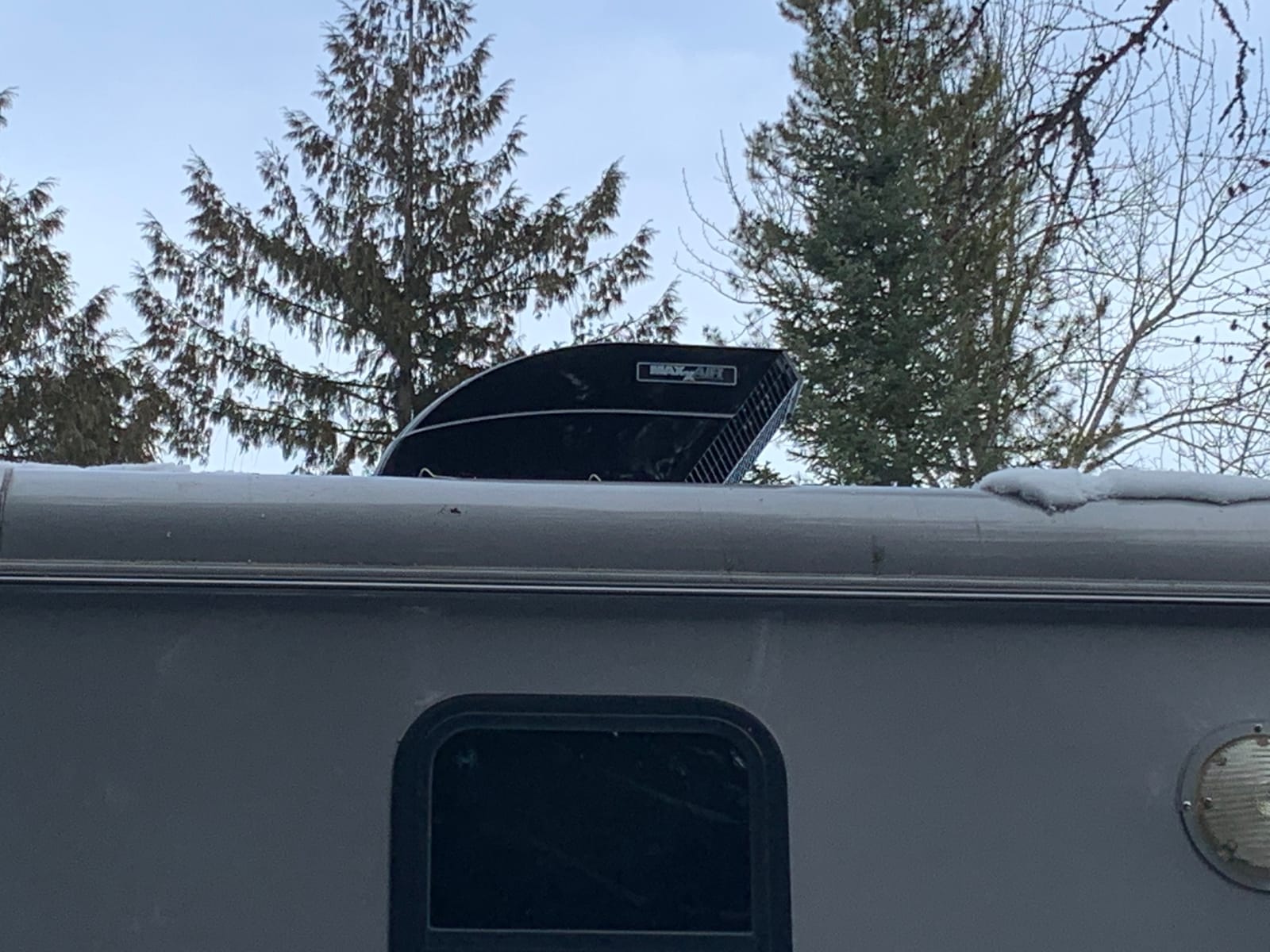
Owner reports across 1,210 reviews are unusually consistent. The airflow gets described as strong and adjustable, the installation as straightforward, and the automatic lid closure as the reason people keep it through a full season. The 4.6 average sits with 80 percent of reviewers giving it five stars.
The persistent complaint is not performance. It is that the interior vent garnish, the FANMATE cover, is not included, so the finished inside look needs a second purchase. Several people also note that everything here is plastic, including the blades.
The unit measures 18.88 inches deep by 17.75 inches wide and 10 inches tall, weighs 5.2 pounds and carries a two year limited warranty. Control is a ceiling-mounted switch with remote option, and it uses a round barrel connector rather than bare wire.
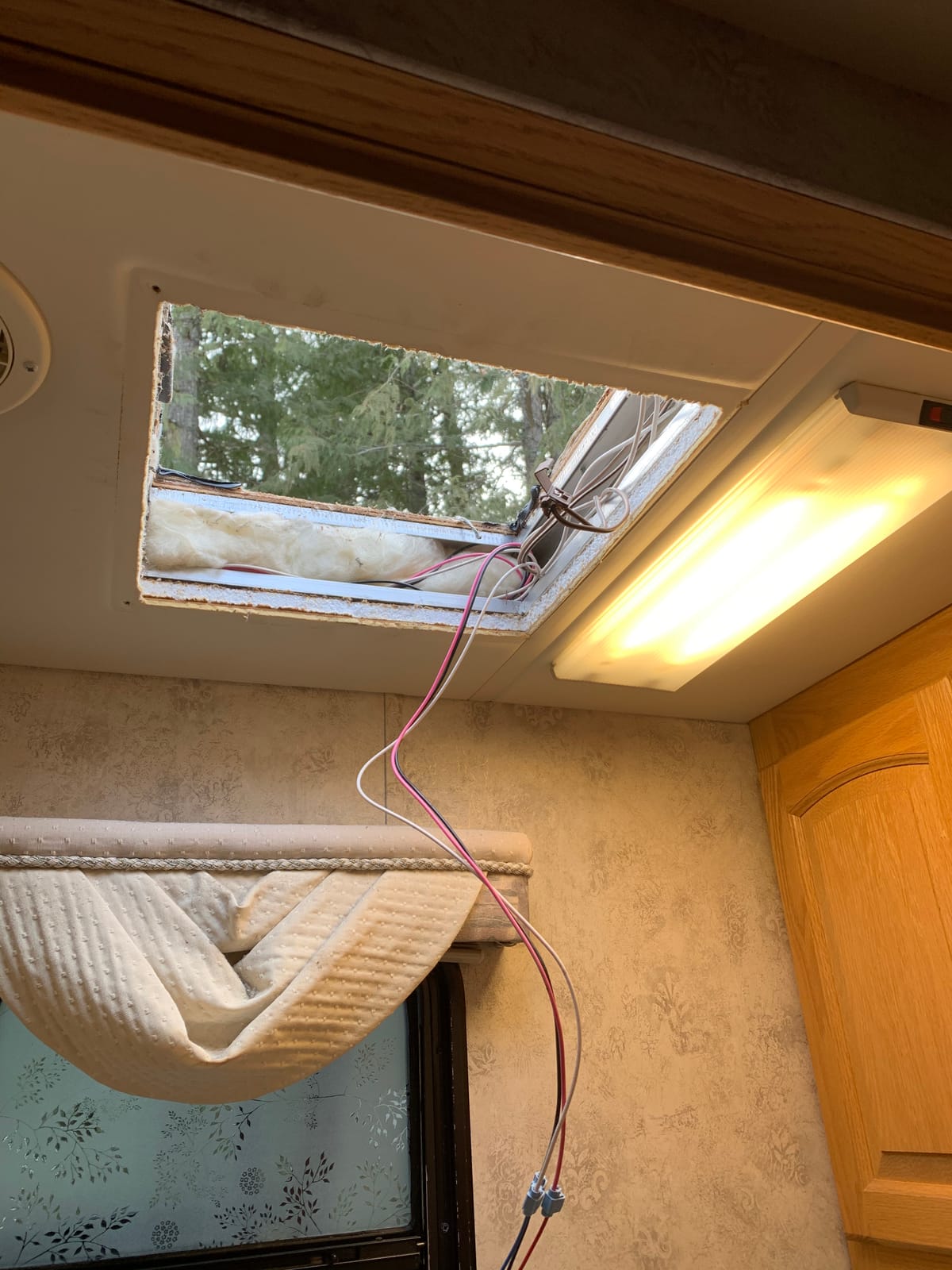
What you get for the money
Ten speeds means you can match the fan to the noise you tolerate, which is the single most common complaint about roof fans in general. Anything rated at 45 dB is fine at low speed and unpleasant at high.
Reversible intake and exhaust lets you pull cool night air in and push hot day air out, using the same hole and the same wiring for both directions.
Where it falls short
It is the most expensive unit in the group, and that price sits right at the point where owners on a tight build budget start choosing a portable fan instead. If money is the deciding factor, entry three or entry twelve will serve you.
The separately sold garnish is annoying rather than serious. Plan for it as a second line item before you start the install.
2. SEEKR Sirocco II 12V Fan
SEEKR Sirocco II™ Fan from by Caframo. 12V/24V Auto-Sensing DC, Omnidirectional Low-Power Draw Fan for Boats and RVs. Hardwire Installation Required. Made in Canada. Black.
185 CFM rated on high
0.35A draw on high at 12V
54 dB on high
Three speeds plus timer
Pros
- 185 CFM from a fan that draws under half an amp
- Gimbaled 360 degree head directs airflow anywhere
- Four auto-off timer settings at 3
- 6
- 9 and 12 hours
- FingerSafe blade and flat stow profile
- Three year warranty
Cons
- Hardwire installation required
- Noticeable noise at 54 dB on high
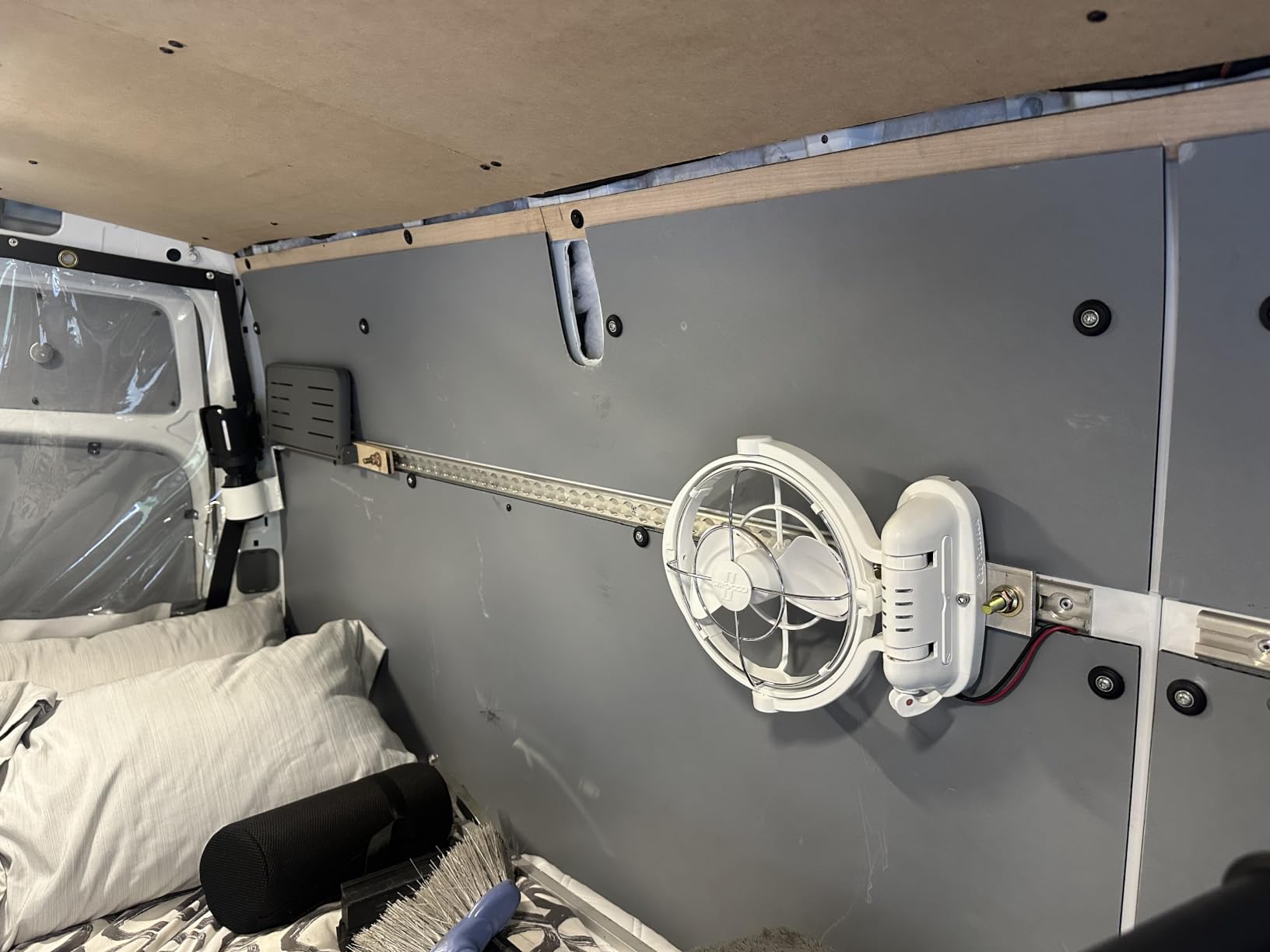
This is the portable fan the van community comes back to, and the numbers explain why. It moves 185 CFM, which is 314 cubic metres per hour, while drawing 0.35 amps on high at 12 volts. That combination is close to unheard of in this category.
Run that on a 100 amp-hour lithium battery for eight hours and you have used under 3 amp-hours. You will not notice it on a boondocking setup, which is exactly why it appears in so many build threads.
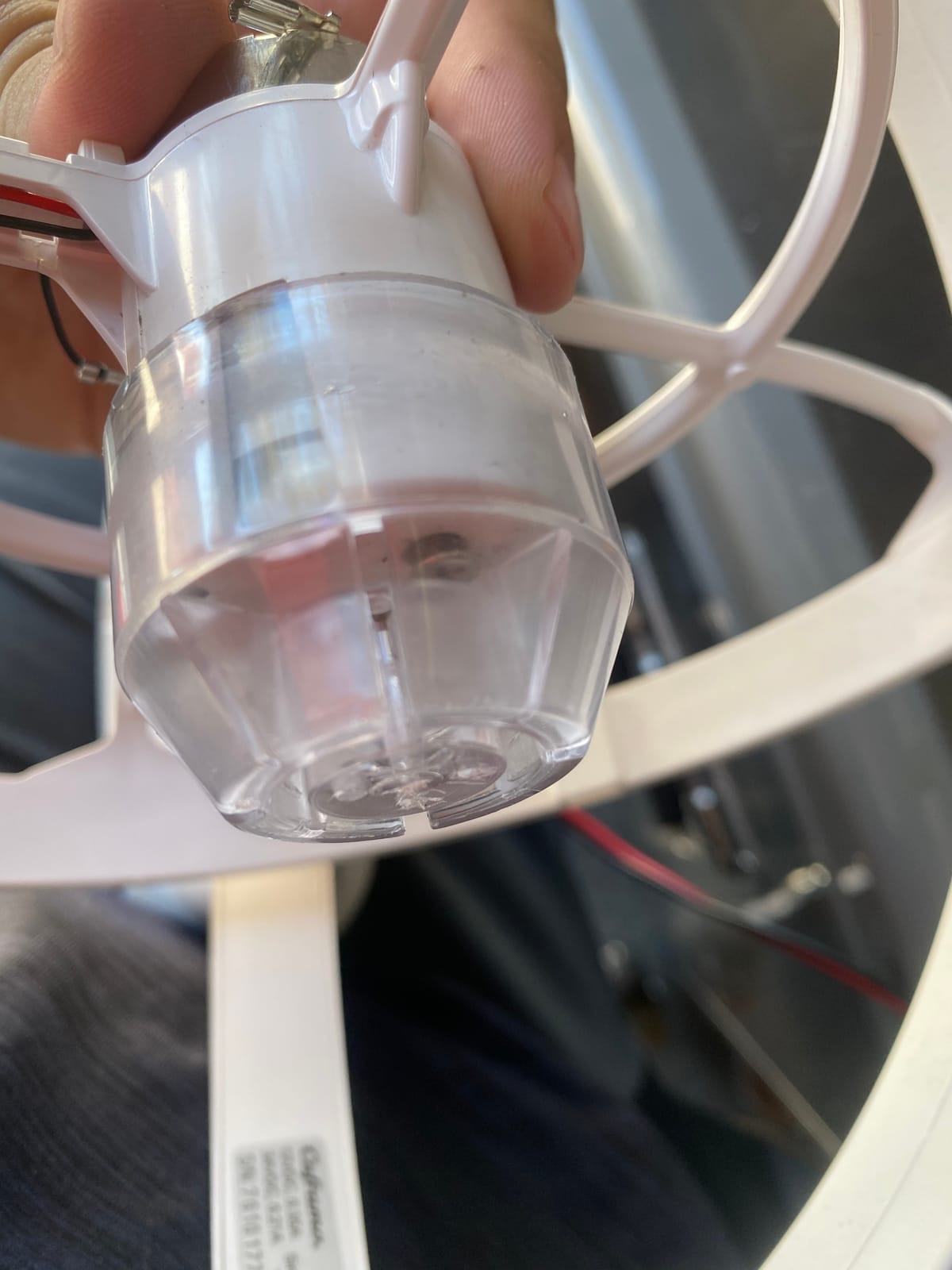
The gimbaled head is the practical part. You can aim it at the bed, at the cooking area or out through an open door without moving the unit, and the whole thing stows flat to 3.8 inches when you need the space. The FingerSafe blade is a genuine comfort if you share the van with small children or a dog.
Owners across 1,336 reviews rate it 4.4, with 75 percent giving five stars. The recurring positives are airflow, adjustability and service life. The two recurring negatives are the hardwire requirement and the 54 dB figure on high.
The electrical side matters more here than for a plug-in fan. This one auto-senses 12 and 24 volt systems, which means the same unit works in a van or a boat, and it uses a long-life brush motor rated for three speeds at 1200, 1500 and 1800 RPM.
Why the low draw matters
Most portable 12V fans fall between half an amp and two and a half amps at full speed. Staying under half an amp means you can leave it running overnight on a modest battery without planning around it.
The four timer settings, at 3, 6, 9 and 12 hours, mean you can set it and stop thinking about it. That matters more in a van than in a house.
Where it falls short
Hardwiring is not a weekend beginner job in an unfinished van. If your electrical system is not built yet, budget the time for a fused circuit rather than assuming a socket exists.
At 54 dB on high it is the loudest portable here. For sleeping, run it on low, where the character is much easier to live with.
3. RVLOVENT 14 Inch 10-Speed Roof Vent Fan
RVLOVENT 12V RV Roof Fan Vent 14” 10 Speed Reversible Manual Lift (NO REMOTE)
1000 CFM rated airflow
45 dB rated noise
18W motor
Fits 14x14 inch openings
Pros
- Highest rated airflow in the group at 1000 CFM
- Reversible intake and exhaust
- Spare bug screen included for cleaning
- Direct fit in standard 14x14 inch openings
- Very quiet on low and medium
Cons
- Manual crank has no rain sensor or remote
- Crank knob feels plasticky
- Interior shroud may need trimming on sloped roofs
If the roof is already open and you want the most air per unit of money, this is the one. The rated airflow figure is 1000 CFM, which is the highest number any product in this list carries, and the listed noise level is 45 dB.
Treat that 1000 figure with care. Rated CFM is measured with the vent open and no bug screen or lid restriction in the way, so real delivered airflow is lower. Even discounted, owner reports describe it as moving noticeably more air than a factory vent.
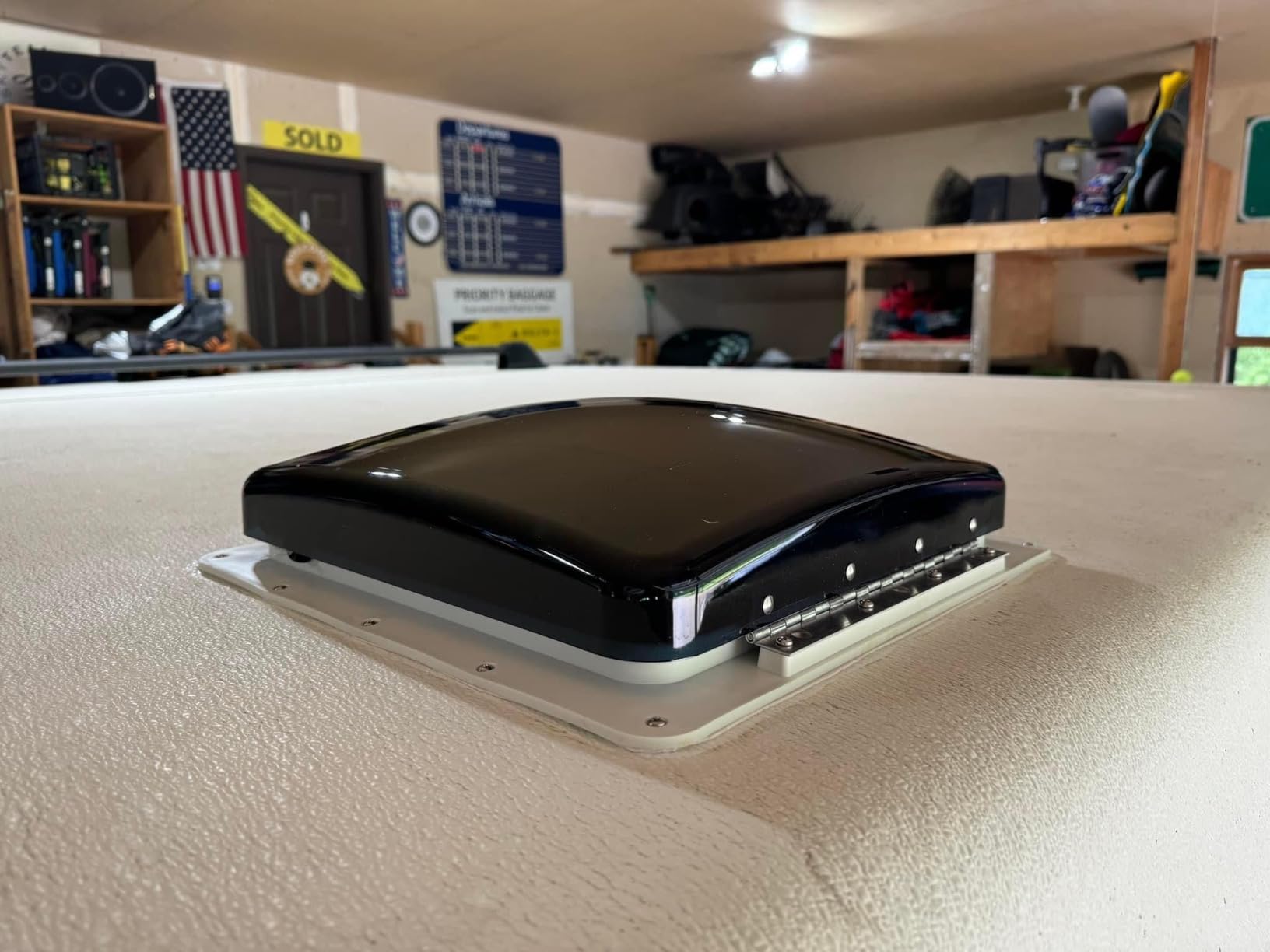
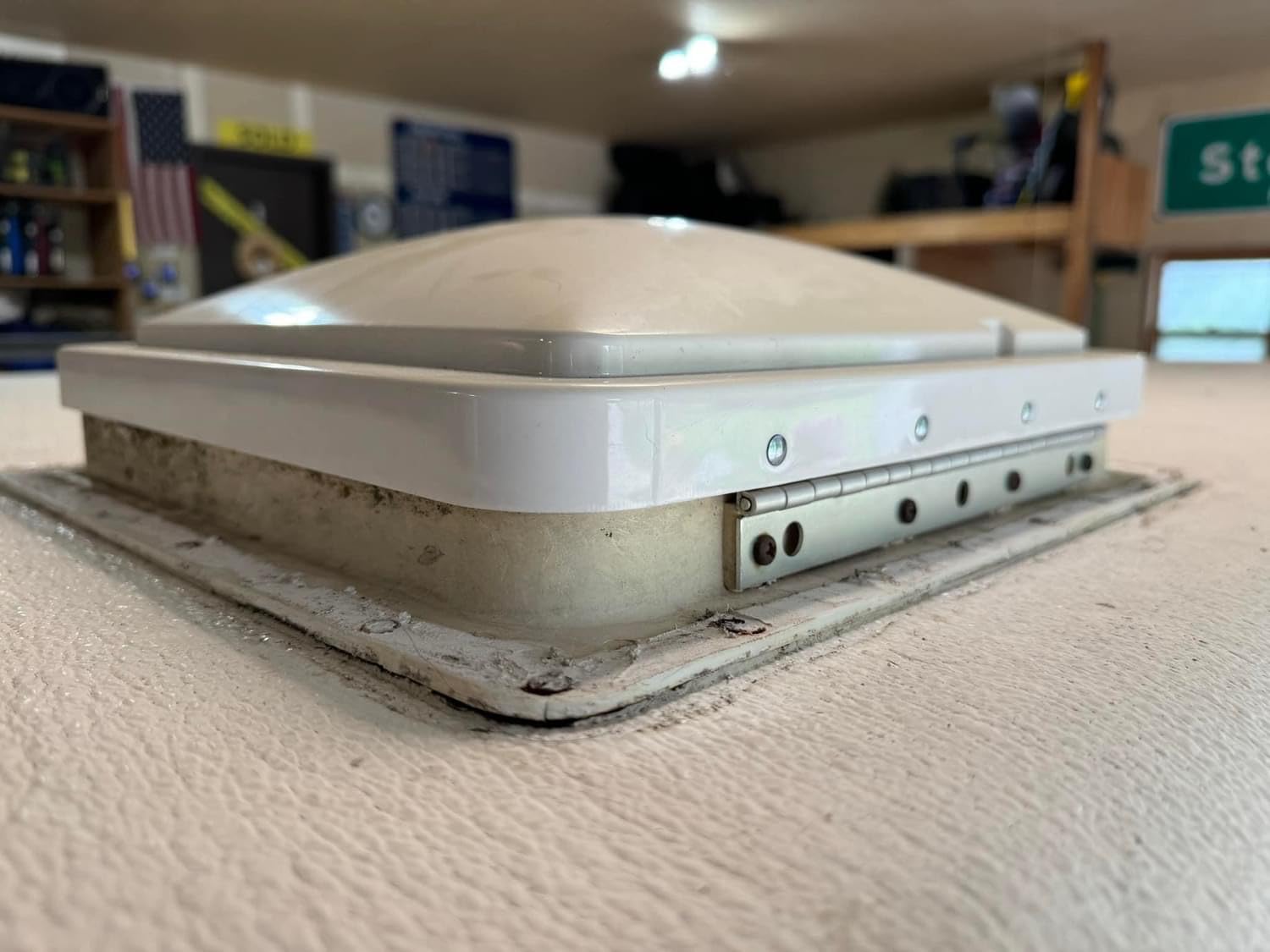
Several buyers report the airflow was strong enough to reduce their air conditioner use, which is the practical test that matters. The unit runs on a canned motor at 18 watts, with reversible intake and exhaust airflow and a UV-resistant polycarbonate cover.
What you give up for the manual control is obvious. There is no rain sensor and no remote, so the lid is opened with a crank and you need to be at the vent to do it. In genuinely wet weather that is a real limitation rather than a minor one.
Owners rate it 4.6 across 1,068 reviews, with 78 percent five stars. Installation labour dominates the complaints: removing an old vent means scraping off sealant, and the interior shroud sometimes needs trimming on a sloped roof.
Best use case
Dry and warm destinations where you are awake and near the vent when the weather turns. The reversible motor means you can pull air in at night and push it out during the day without changing anything.
The included spare screen frame is a small detail that tells you what the manufacturer expects. Clean screens matter more than people assume once you have used one for a season.
Where it falls short
No rain sensor means it cannot be left running through a shower with the lid up. If you travel in wet weather, that is worth paying more to avoid.
The crank knob itself draws repeated criticism for feeling cheap. It works, but it is the part most likely to be the first thing that breaks.
4. RoadPro RP-1179 Heavy Duty 12V Fan
RoadPro RP-1179 Car Fan, Heavy Duty, 12V, Metal, 7.5″
All-metal construction
7.5 inch fan
Two speeds
30 dB rated noise
16W on 12 volts
Pros
- Metal body built for heavy-duty truck use
- Lowest rated noise in the group at 30 dB
- Permanent mounting with hardware included
- Seven foot power cord
- Simple two-speed control
Cons
- Permanent mount cannot be repositioned
- Drilling required for installation
- Heavier than a plastic clip fan
This is the metal-bodied workhorse, and it has the longest review history of anything here at 3,074 reviews averaging 4.2 stars. That record matters more than the rating when you are choosing something to bolt permanently into a vehicle.
The 30 dB rated figure is the lowest in the group, and with only two speeds and a 16 watt draw it stays civil at low. For a fan that sits within reach of your head overnight, that combination is unusually friendly.
It comes with a seven foot cord and mounts permanently on the dash, a top panel or a side panel using included hardware. The blade is 10 inches across inside a 7.5 inch housing.
The trade-off is permanent mounting. Once drilled and wired, it stays exactly where you put it, which is great if you planned the position and frustrating if you did not. There is no clip, no gimbal and no swivel on this unit.
Weighing 1.08 kilograms, it is the heaviest portable here, though most of that is the metal housing doing its job. It carries a one year limited warranty.
Where it fits
A van with a hard interior wall and a plan for a permanent installation. A dash or bulkhead mount in a work van is exactly what this was designed for.
At 30 dB rated it is the quietest spec sheet in the group, which makes it a candidate for anyone whose fan runs near their head.
Where it falls short
No repositioning, ever. If you want one fan to move between the cab and the bed, this is the wrong tool.
The smaller housing limits how much air it moves relative to the bigger portable options further down this list. It cools people well, not rooms.
5. Alagoo 6 Inch Clip-On 12V Fan
Alagoo Car Fan 6” 12V Cool Gadgets Clip Fan for Front Rear Seat Passenger Portable Electric Air Fresh Fan with Cigarette Lighter Plug for Cars/Vehicle SUV, RV
Three speeds
360 degree rotation
9W on 12 volts
50 dB rated noise
8.2 foot cord
Pros
- Large adjustable clip grips seats and interior fixtures
- Stepless speed control rather than fixed steps
- 360 degree rotation on head and clip
- Low 9 watt draw suits socket power
- Clears windshield moisture and pet odour
Cons
- 12V systems only
- Plastic clip and blades
- Needs a socket within reach of the cord
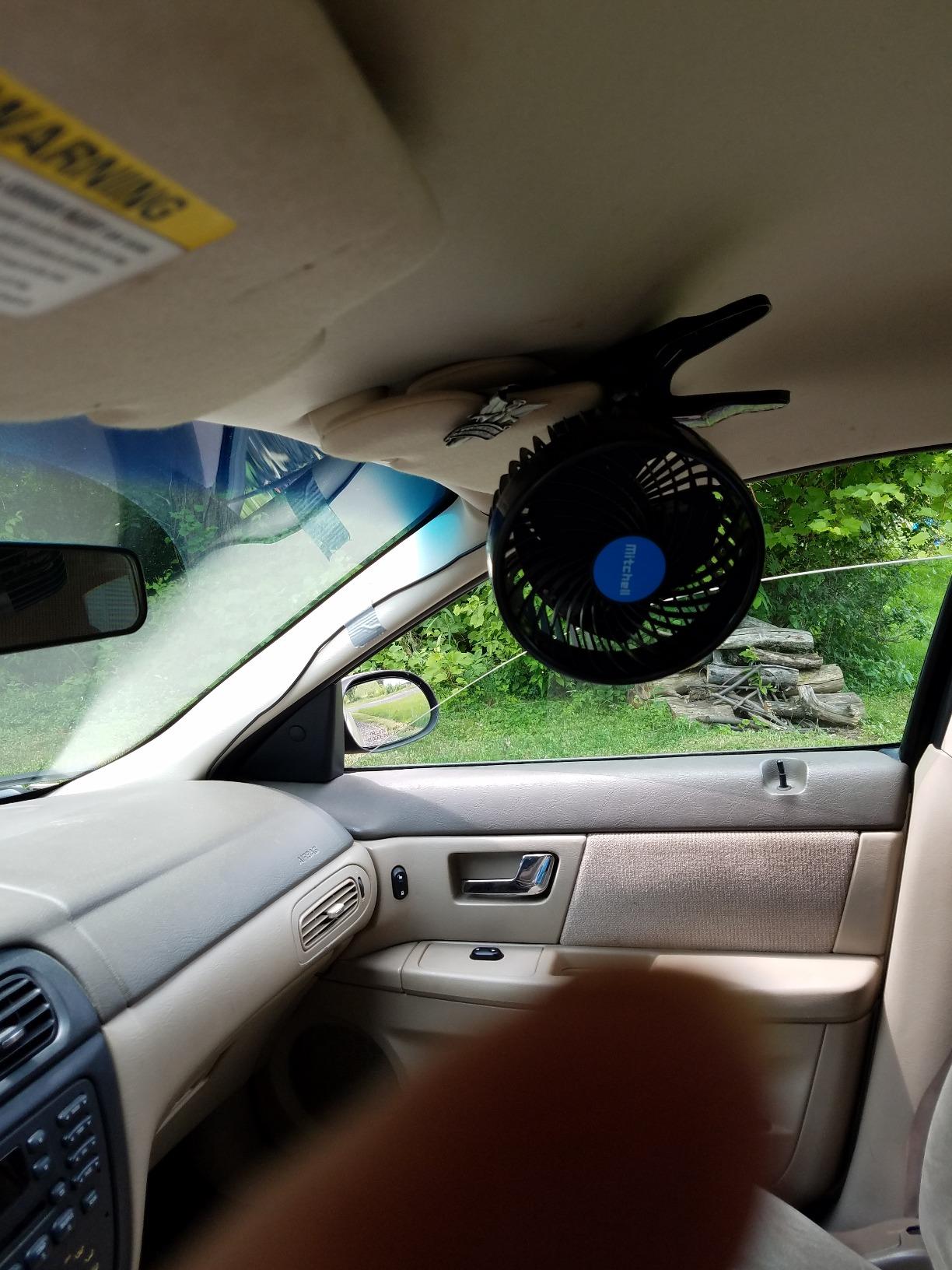
This is the fan for anyone who has decided not to cut a roof and wants something better than a paper fan. The clip opens to two inches and grips a seat back, a shelf edge or a cabinet lip without marking it.
Owners rate it 4.3 across 2,813 reviews, which makes it one of the most proven clip-on fans on the market. What comes up most is the stepless speed control, since you can set the airflow to exactly where you want it rather than picking from three fixed steps.
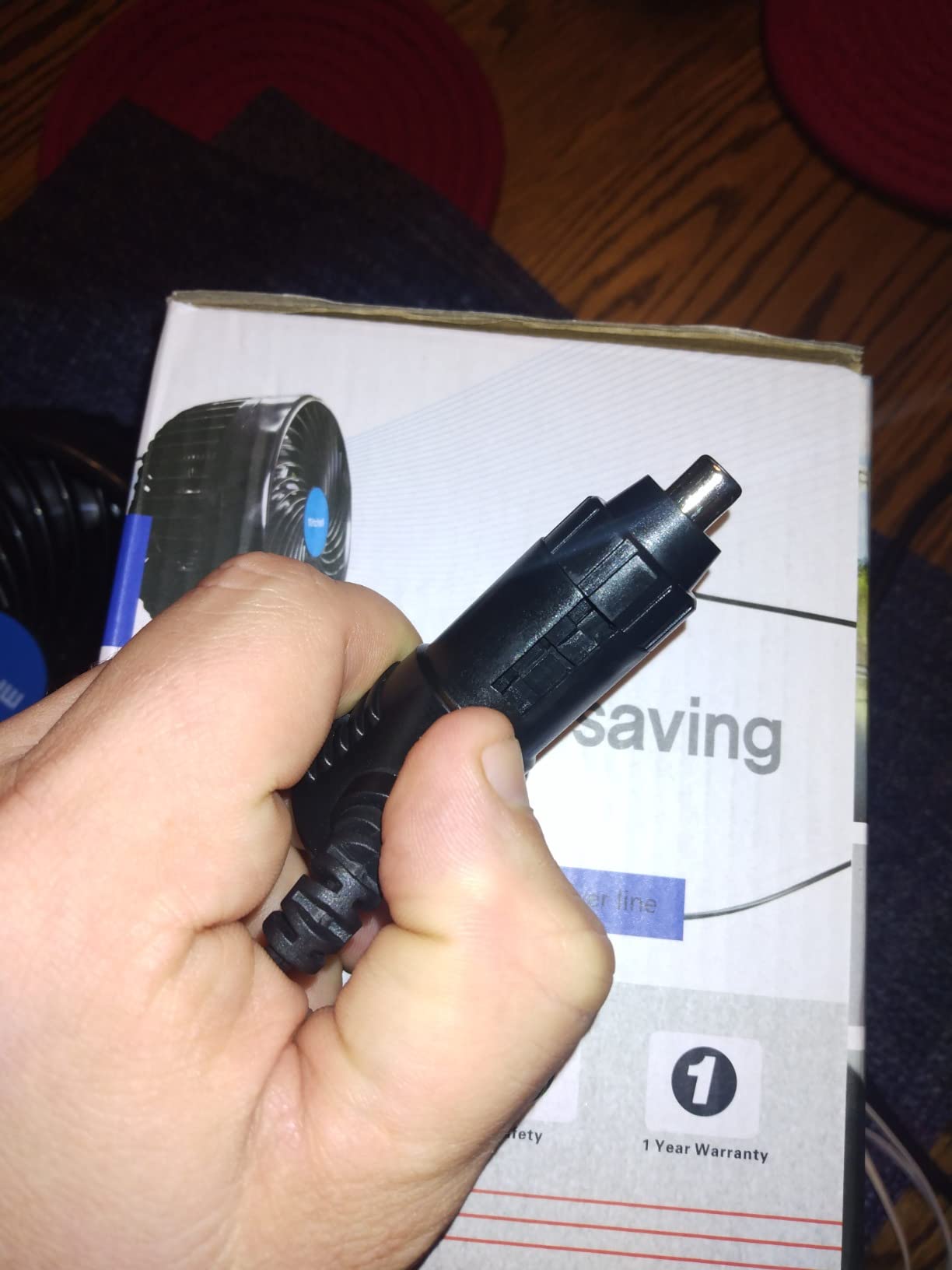
Both the head and the clip rotate through 360 degrees, so you can aim it at a sleeping berth, across a cooking surface or at a windscreen that keeps fogging. The 8.2 foot cable reaches a socket from most interior positions.
At 9 watts it is among the lowest draws here and it runs from a standard cigarette lighter socket, so there is no wiring work at all. That makes it the fastest path to airflow in a van that has no permanent electrical system.
The stated noise level is 50 dB, which is mid-range. At low speed it is considerably less pleasant-sounding than that rated maximum, which is the setting you would use for sleeping.
Best for a first build
If your van has no 12V socket installed yet, this is the cheapest way to find out whether you even want a fan in the bed. Clip it on, plug it in, test it for a week.
The clip means you can move it between the cab and the living space, which solves the fixed-position problem that the permanent-mount units have.
Where it falls short
It is 12 volts only. Running it from a 24 volt truck system requires a converter, and it is not designed for that.
At 7.68 ounces with plastic blades and a plastic clip, it is built for convenience rather than a decade of service. Expect to replace it before the roof fans do.
6. RoadPro RPSC-857 Tornado 12V Fan
RoadPro RPSC-857 12-Volt Tornado Truck Fan with Mounting Clip, Small 12v Cooling Fan, Black
155 CFM rated
5A draw on full speed
45 dB rated noise
11 inch blade
Fused 10A cord
Pros
- Highest rated airflow of any portable fan here
- Swivel base and mounting clip for easy positioning
- Variable speed control
- Fused power cord included
- Compact enough for tight cab spaces
Cons
- Mounting base is a separate purchase
- Draws five amps on high
- Plastic construction
The Tornado is the portable fan to buy when you want the most air from something you can still unplug and move. Its rated 155 CFM comes from an 11 inch blade driven hard enough to pull 5 amps at full speed.
That draw is the whole story of this product. At 5 amps it is by far the thirstiest portable in the group, roughly fourteen times the draw of the Sirocco II. On a house battery you will notice it overnight; off solar it is manageable.
Owners rate it 4.3 across 1,436 reviews with 70 percent five stars. The praise centres on airflow for its size and the swivel base that lets you redirect it without unplugging anything.
Two details worth checking before you commit. The mounting base is optional and not included, so if you want it fixed rather than sitting loose, add that. And the fused cord is long, which matters if the nearest socket is behind the bed.
Variable speed control is on the unit rather than at the socket, so you can trim the draw down whenever five amps is more than you need. That single control is what keeps this fan usable in a van rather than just in a truck.
Where it fits
A van with a decent solar array or a large lithium bank, where power is not the constraint. It also works well aimed through an open door or window to move air across the whole interior.
45 dB rated is quieter than the Sirocco II on paper, though at full speed the difference is small in practice.
Where it falls short
Five amps on high is real. Anyone running this overnight on a small battery needs to set the speed lower or accept the drain.
The missing mounting base is a genuine annoyance given the price point, and the plastic construction means it is not a lifetime purchase.
7. F36AR Brushless 14×14 Roof Vent Fan with LED
RV Roof Vent Fan 14×14 with 4 Color LED Ambiance Light, Reversible Airflow, Ultra-Quiet 12V (24V Max) Vent Fan with Remote & Rain Sensor
674 CFM rated
25 dB rated noise
Brushless motor
Four speed settings
Rain sensor and remote
Pros
- Brushless motor rated at up to 25 dB
- Four colour LED light built into the lid
- Rain sensor closes the lid automatically
- Reversible intake and exhaust
- Fits both US and European standard openings
Cons
- Short interior flange fitted as standard
- Fan continues running after the rain lid closes
- Thin documentation and a basic trim insert
This is the most interesting new entrant in the group. It uses a brushless motor rated at 25 dB, carries a rain sensor and remote, and has a four-colour LED mounted in the lid for night use.
The four speed settings step through 3, 10, 20 and 40 watts, so the low setting draws barely anything. That is the number that matters for someone running a fan all night off solar.
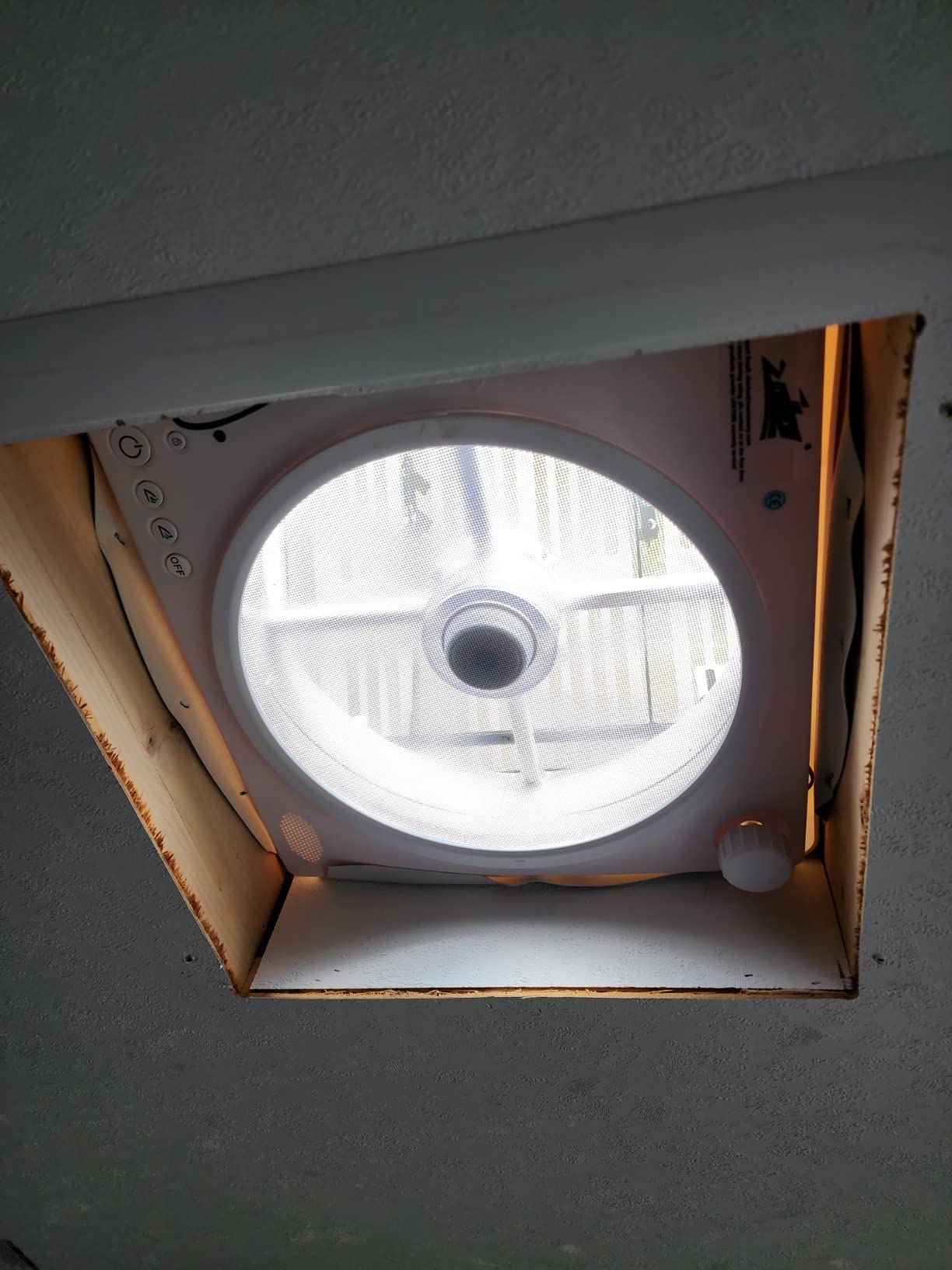
Owners describe it as a quieter alternative to the premium Maxxair units, and the review record backs that up in tone: 4.3 stars across 396 reviews, with airflow, lighting and responsive support the most common positives.
Fitment is broad. It fits 14 inch by 14 inch US openings and 400 by 400 millimetre European ones, and it works with roof thicknesses from 1.5 to 3.3 inches. Rated airflow is 674 CFM.
One safety-related report in the reviews is worth taking seriously. Several owners note the motor keeps running after the rain sensor closes the lid. If you rely on automatic closure, test it in a shower before you trust it overnight.
The warranty is the strongest here: three years of free replacement on all components plus lifetime repair service.
Why brushless matters
A brushless motor has no commutator or brushes to wear, which means it is quieter and rated by the manufacturer at up to five times the service life of a brushed motor. Both this unit and the Heng’s kit below use one.
The low 3 watt setting is the sleeper feature. You can run it at a trickle all night and still clear a surprising amount of condensation.
Where it falls short
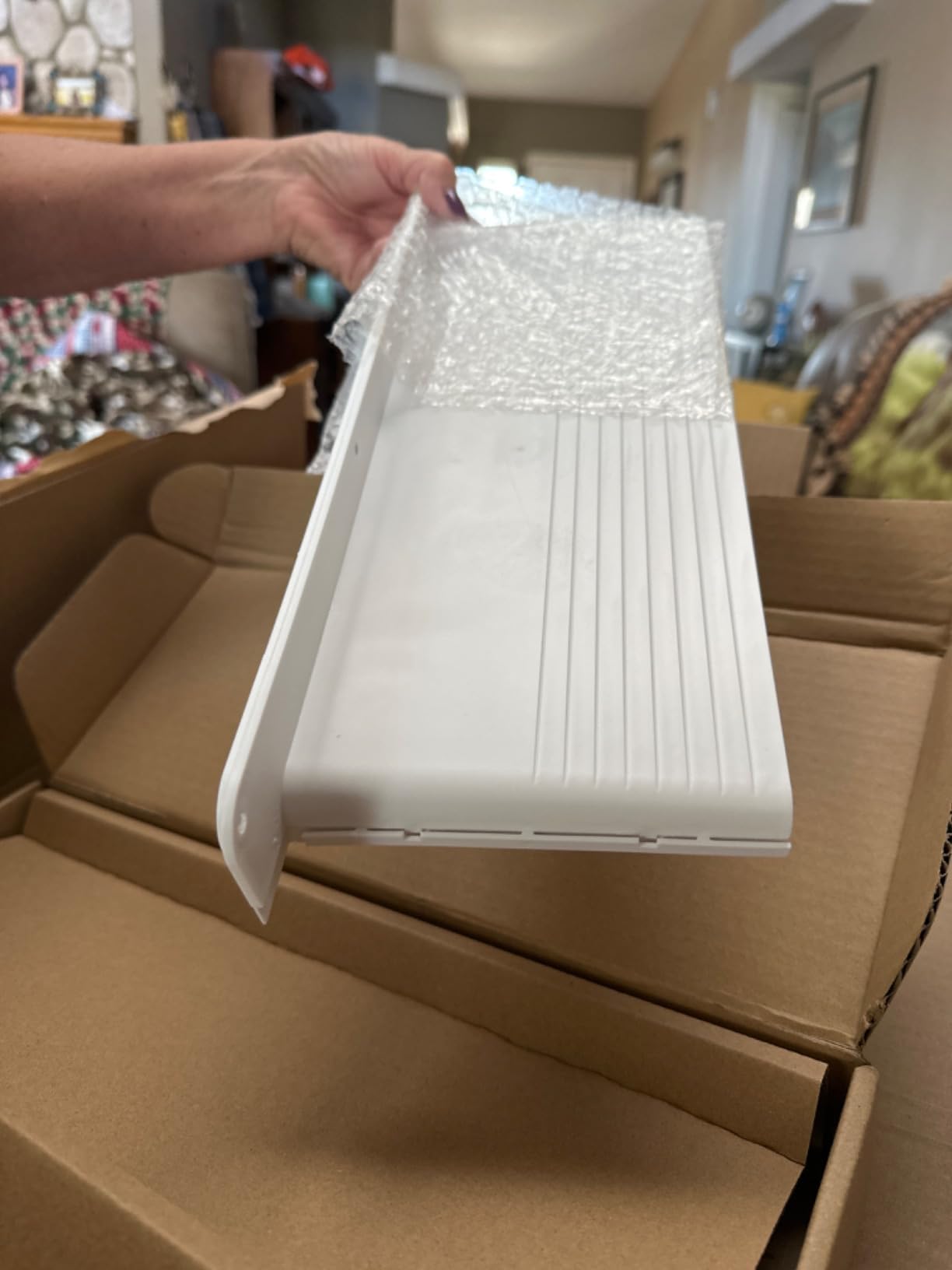
The interior flange fitted as standard is only 3 inches. Thicker roofs need the taller version, which is a separate item, and the basic trim insert that snaps together is not regarded highly.
Instructions are thin. If you are not comfortable with a roof penetration, this is not the fan to learn on.
8. Heng’s Vortex I 90043-CR Upgrade Kit
HENG’S INDUSTRIES 90043-CR Vortex I Upgrade Kit | 12V RV Vent Fan | Powerful Airflow & Ventilation | Easy Install for RVs, Campers, Trailers & Motorhomes | White, Durable, Energy-Efficient Design
9 inch brushless fan
45 dB rated noise
Single speed
Drop-in screen replacement
3.5 pounds
Pros
- Swaps the existing screen with a single screwdriver
- Works with Heng's
- Ventline
- Jensen and Elixir vents
- Brushless motor keeps noise down
- No re-flashing or roof work needed
- Lightest roof unit here at 3.5 pounds
Cons
- Single speed only
- Non-powered vents need extra wiring to convert
- Screwdriver not included
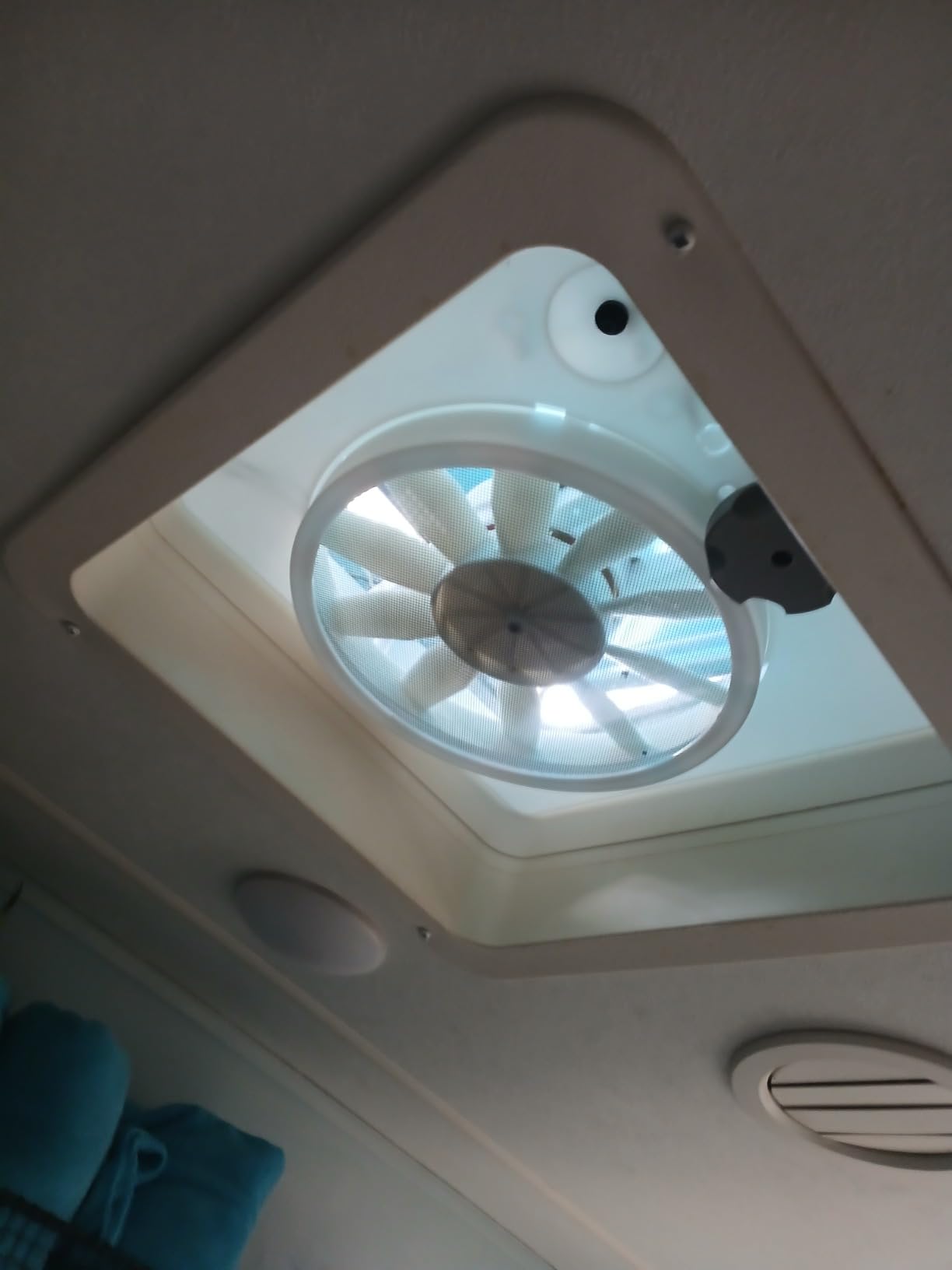
This is the answer for anyone who already has a powered roof vent that underperforms. You take off the old screen, fit this in its place with a Phillips screwdriver, and the airflow improves by a claimed up to 300 percent.
There is no cutting, no sealing and no rewiring if you already have a powered vent. That makes it the lowest-risk upgrade on this entire list, and the reason we would suggest it first to a hesitant owner.
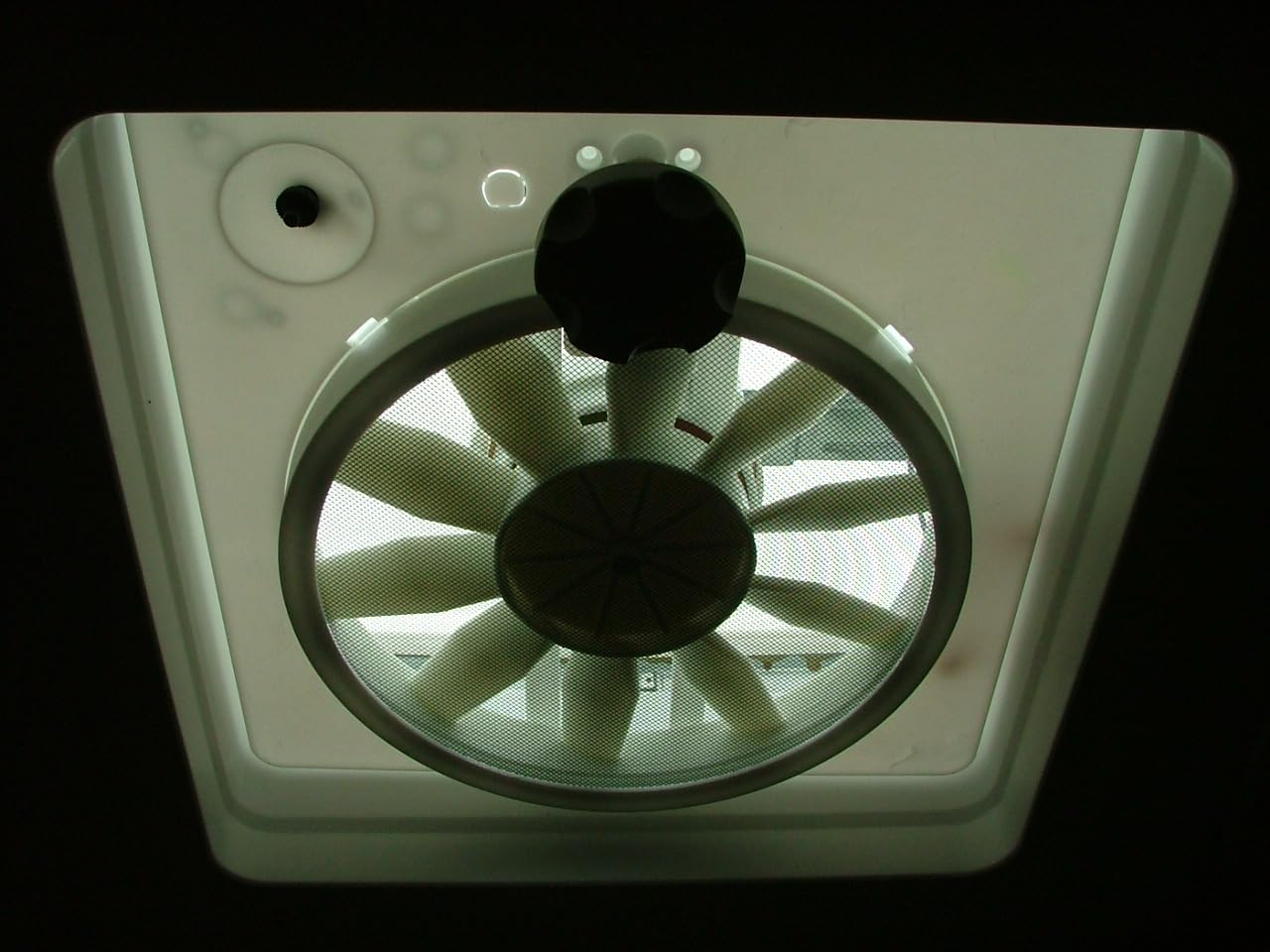
It fits Heng’s, Ventline, Jensen and Elixir powered vents. Owners converting a non-powered vent report it works, but they have to add wiring, which is a different job entirely.
The 9 inch blade and brushless motor are rated at 45 dB. Owners rate it 4.4 across 347 reviews with 72 percent five stars, and the near-installation-free swap is the most common reason given for buying it.
Single speed is the real limitation. You get air or you get no air, with nothing in between, which makes it harder to fine-tune for sleeping than a multi-speed unit.
Best for existing vans
If your van has a factory roof vent with a fan that barely moves air, this fixes it in about five minutes for the cost of one part. Nothing else on this list offers that ratio.
At 3.5 pounds and 14.25 inches square, it drops into a standard opening without changing the roof line.
Where it falls short
One speed is genuinely limiting at night. You cannot slow it down, so you either accept the noise or turn it off.
Converting a non-powered vent needs wiring that is not included, which removes most of the advantage in that scenario.
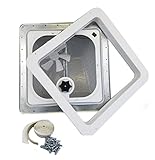
9. Ventline CW001 14 Inch Roof Vent with 12V Fan
Ventline RV Roof Vent White w/ 12 Volt Fan, Putty & Screws¡
14.25 inch lid
3.6W DC motor
Single speed
Comes with putty tape and screws
Fits 14.25 inch opening
Pros
- Complete unit with putty tape
- screws and garnish ring included
- Very low 3.6 watt draw
- Wedge style white lid suits most RV roofs
- Straightforward fit into a standard opening
- Long record of owner satisfaction
Cons
- Sharp galvanized flange
- No remote and no rain sensor
- No mounting sealant beyond the included putty
This is the replacement part, not the upgrade. If a storm has taken out a factory vent and you want the original specification back, this is it, with a 4.6 average across 962 reviews.
The motor draws 3.6 watts, the lowest of any roof unit in the group. It will run essentially indefinitely on a battery bank and is happy to be left on low permanently for condensation control.
Everything needed for the install is in the box: putty tape, screws and a 1.75 inch garnish ring. The lid is the standard white plastic wedge profile used on most RV roofs, so it blends rather than stands out.
The rough opening it fits is 14.25 inches square, which is the standard on most trailers and motorhomes. Check your existing vent before ordering, because this is not the same footprint as the 14 inch units further up the list.
Where it fits
A damaged vent on an older RV where matching the original part matters more than adding features. It is also a sensible second unit for a build that already has a good roof fan but needs air in a second location.
The 3.6 watt draw makes it ideal as a low-draw trickle fan for a humidity-controlled build.
Where it falls short
No rain sensor, no remote, single speed. If your old vent had those, this is a downgrade in features even though it restores function.
The galvanized mounting flange is genuinely sharp and several owners mention it. Wear gloves during the install.
10. Heng’s 71112A 12V Powered Roof Vent
HENG’S INDUSTRIES 14″ RV Roof Vent 12 Volt Powered Fan with WHITE Wedge Style Lid – 1” Garnish Ring | 71112A
14.5 inch cutout
4W draw
Manual crank lid
Alloy steel
5.5mm coaxial power lead
Pros
- Very low 4 watt draw for continuous ventilation
- Alloy steel construction
- Includes a 1 inch inner garnish ring
- Manual crank needs no motorised lid
- Fits the standard 14.5 inch opening
Cons
- Sharp metal flanges
- No caulk
- putty or screws included
- Single speed with no remote or rain sensor
This is the alloy steel version of the basic replacement vent, and it draws 4 watts with a manual crank lid. Owners rate it 4.5 across 517 reviews, which is the second highest average of any replacement vent here.
The steel body is the differentiator from the plastic units in the same price bracket. It is heavier and it is not what you would choose for stealth camping, but it is the option that survives a hard season.
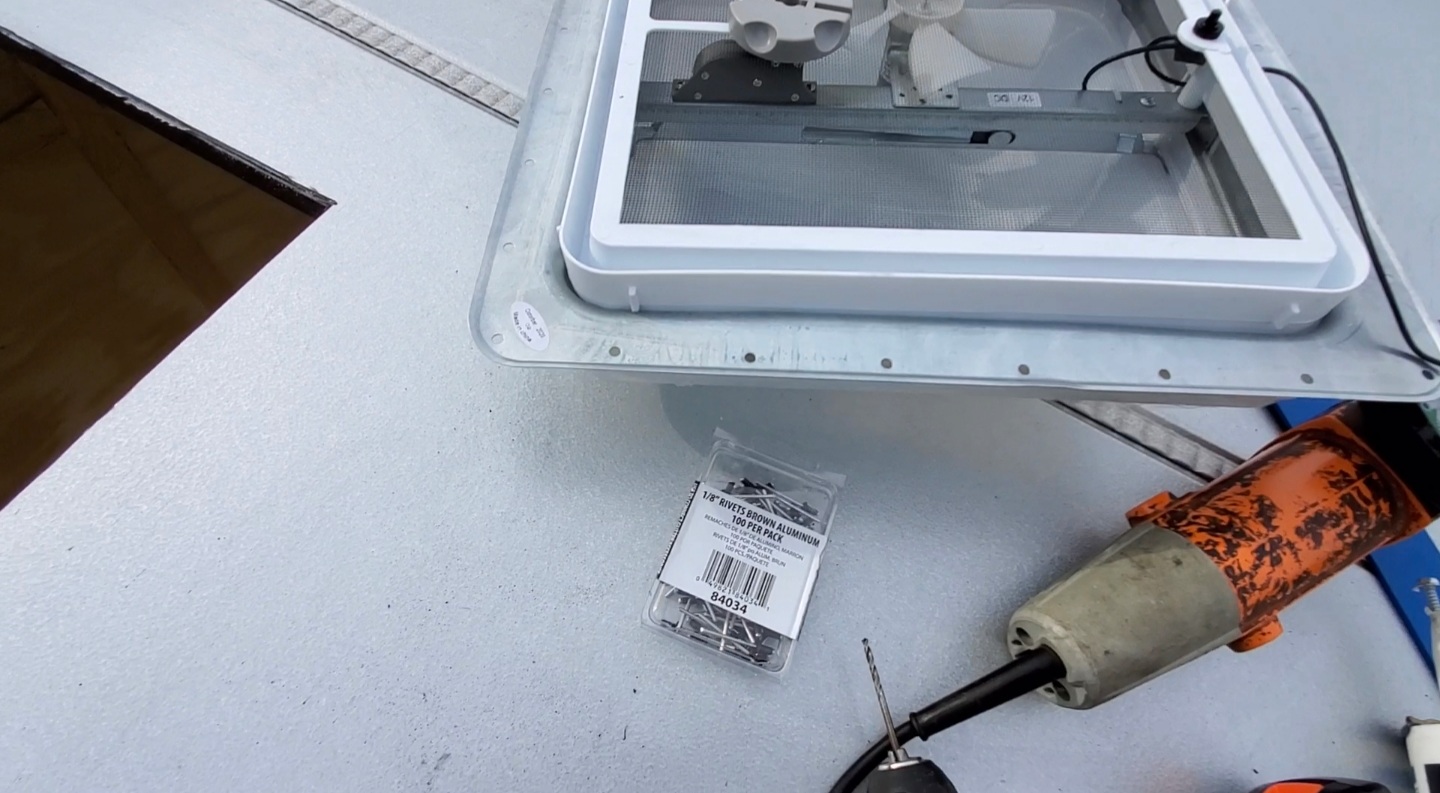
The rough cut-out is 14.5 inches square, with a 16.5 inch exterior flange and a 1 inch inner garnish ring included. The fan lead terminates in a 5.5 by 2.1 millimetre coaxial connector.
Because the crank is manual, there is nothing to fail electronically. That is genuinely valuable in a vehicle that sees vibration and heat every day.
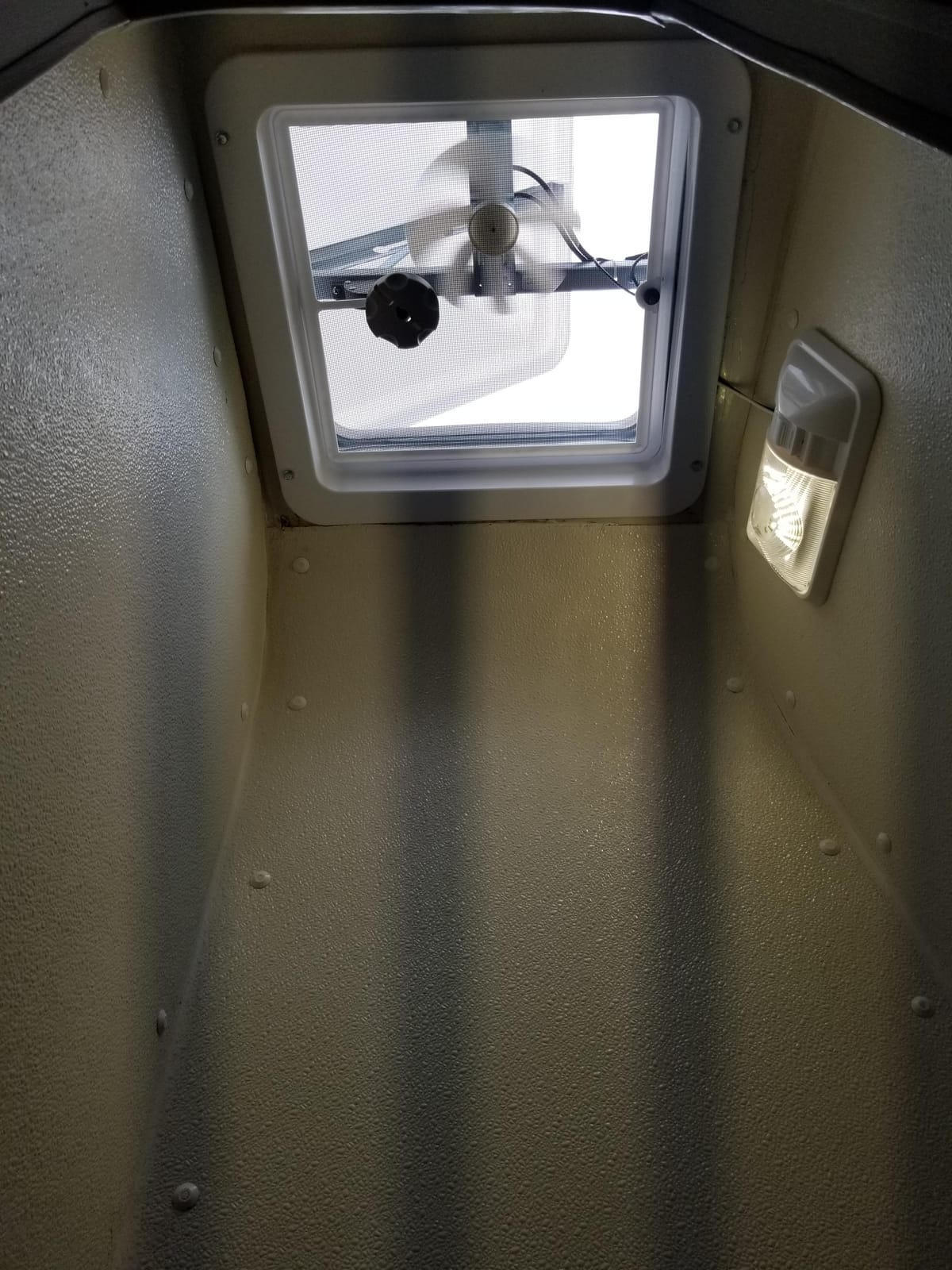
Owners consistently describe the airflow as good for the four watts it uses, which is the fairest way to put it. It moves air steadily and it does not drain anything.
Where it fits
A replacement on a caravan or older motorhome with a 14.5 inch opening. Anyone who prefers a mechanical lid to an electronic one will appreciate the crank.
As a permanent low-draw unit for humidity control, four watts is almost nothing.
Where it falls short
No mounting hardware is included at all. You need to source your own sealant and screws, which is a small extra cost and an easy step to forget.
The flanges are sharp enough that the manufacturer prints a warning about them. Gloves are not optional here.
11. BLACKHORSE-RACING Surface Mount 14 Inch Roof Vent
BLACKHORSE-RACING 14″ RV Roof Vent Fit for Camper Trailer Universal White Lid Roof Vent with 12V RV Vent Fan 6″ Blades White lid Inner for Garnish Ring
Surface mount, no roof drilling
6 inch 12V fan
40 dB rated noise
12 speed settings
70 inch of butyl tape included
Pros
- Mounts on the roof surface with no drilling
- Butyl tape and mounting screw included
- Positive-seal weather stripping holds off heavy rain
- Fits standard trailer roof openings
- Works with existing openings without modifying them
Cons
- All-plastic construction in desert heat
- Crank assembly reports of early failure
- Shallow depth on thicker camper roofs
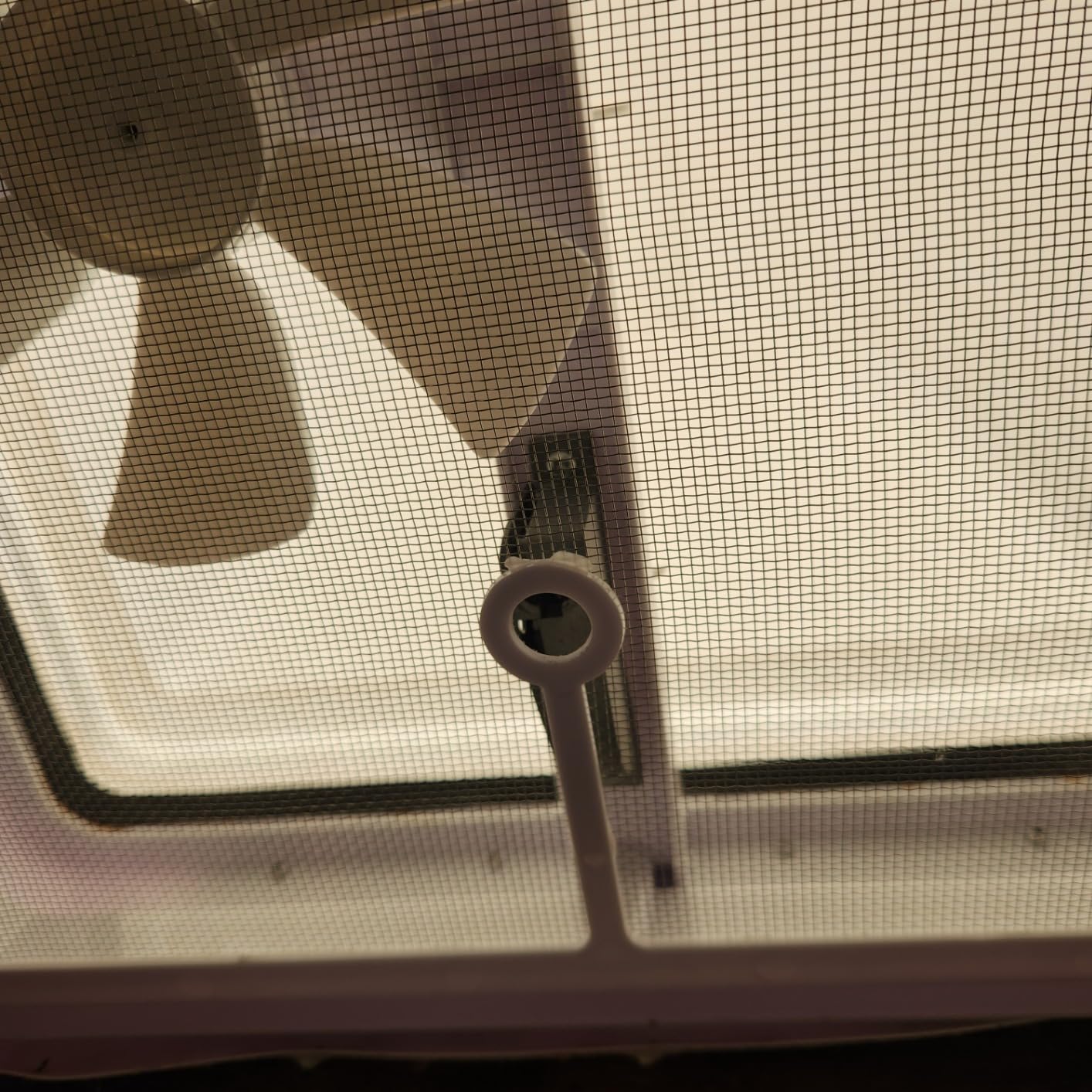
This one solves the problem nobody else on the list addresses. Instead of cutting a hole, it mounts on top of the existing roof opening using a positive-seal strip and butyl tape, so your roof skin stays intact.
Owners rate it 4.2 across 456 reviews, and the reports of fitting standard trailer roof openings without modification are the reason for that. Several mention it holding off heavy rain once properly sealed.
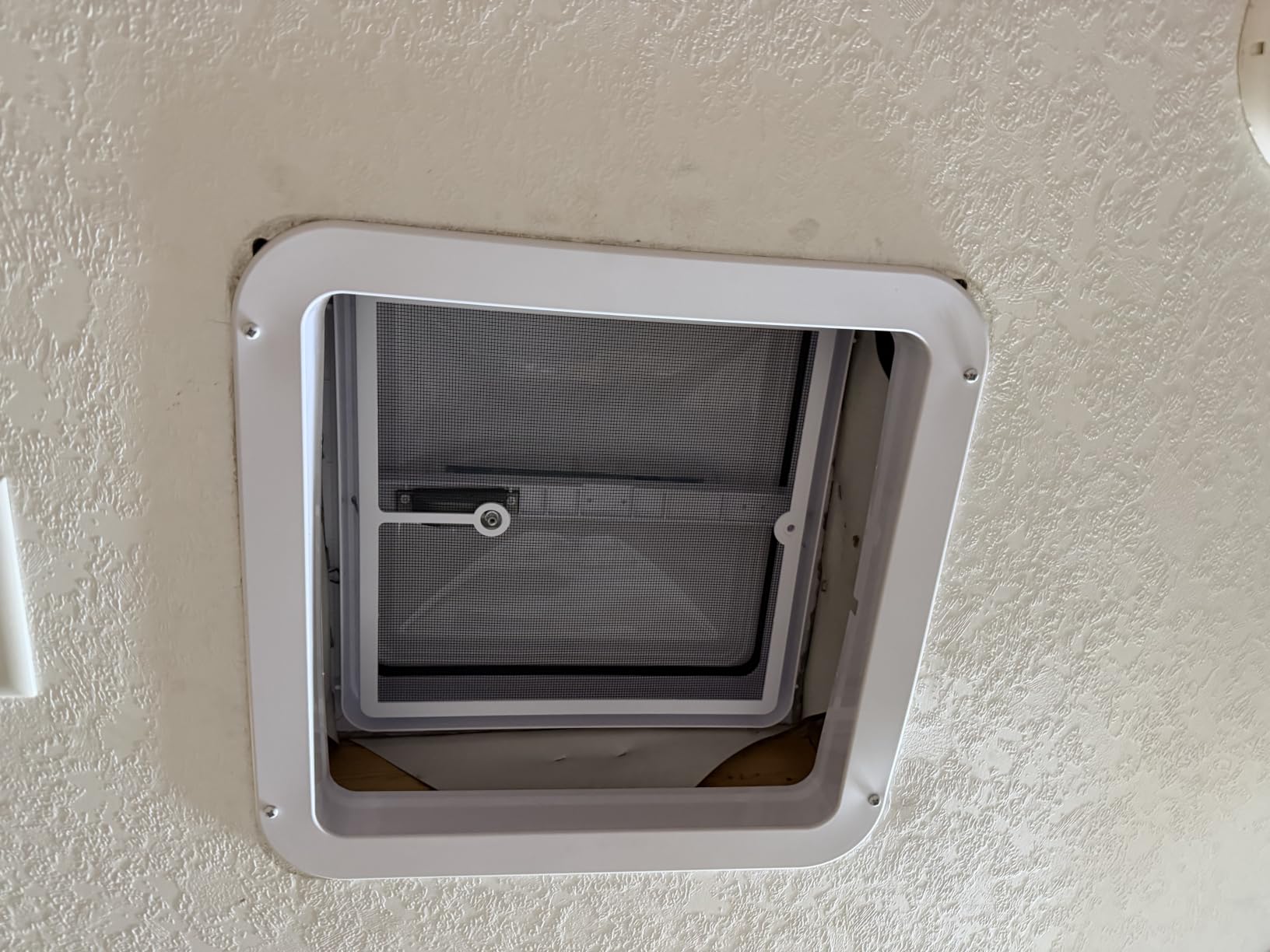
The fan is a 6 inch 12 volt unit with 12 speed settings and a listed noise level of 40 dB. That speed range is unusually fine for a fan at this level, and it lets you trim output down for sleeping.
The package includes 70 inches of three-quarter inch butyl tape, a mounting screw and a fine mesh screen. Everything needed for the surface mount is in the box, which is more than several of the roof units manage.
The trade-off is depth. The listed dimensions are 8.5 inches round by 1.5 inches deep, which is shallow. On a thicker camper roof you can end up short on internal clearance, and some owners report exposure of the insulation in that situation.
Why surface mounting matters
If you are renting, reselling or simply nervous about a roof penetration, this is the compromise most people should look at first. The sealing method is well understood and the failure mode is a leak you can see and reseal.
Twelve speed settings is the widest range on any non-Maxxair unit here.
Where it falls short
All-plastic parts on a roof are a weak point in sustained desert sun. That is a real limitation for anyone building for hot, dry climates.
Reports of the crank assembly failing after limited use mean you should treat the lid mechanism as the part most likely to need attention.
12. SEEKR Ultimate 12V Fan
SEEKR Ultimate™ Fan from by Caframo. Grill-free, whisper-quiet 12V fan with shock-absorbing FingerSafe™ blades, 2-speeds, direct wire connection. Made in Canada. White.
200 CFM rated on high
45 dB rated noise
0.41A on high
Grill-free body
Direct wire connection
Pros
- Highest rated airflow of any portable here at 200 CFM
- Grill-free body with shock-absorbing FingerSafe blades
- Brushless motor suits boat and RV systems
- Compact at 16 ounces
- 0.28A draw on low
Cons
- Direct wire connection needs electrical knowledge
- Only two speed settings
- Permanent screw-down mount
This is the portable to choose if a child or a dog sleeps in the same space as you. The grill-free body means there is no cage to catch a stray finger or a curious paw, and the shock-absorbing FingerSafe blades flex on contact.
The airflow figure is the highest of any portable in this list at 200 CFM rated, with a draw of 0.41 amps on high and 0.28 amps on low. That is roughly a twelfth of the Tornado’s draw for more rated air.
Owners rate it 4.3 across 699 reviews with 71 percent five stars. The brushless motor and the compact grill-free shape come up most often as reasons for satisfaction.
Like the Sirocco II, it wires directly to the vehicle electrical system rather than plugging into a socket. That is better for reliability and worse for convenience, so plan a proper circuit rather than a quick connection.
Two speeds is fewer than most, and the mount is a permanent screw-down. Once fitted it is not going anywhere, which suits a fixed layout and frustrates an experimental one.
Where it fits
A family van, or any van where an open blade guard is a genuine concern. The safety design is the reason to pick it over cheaper clip fans.
At 16 ounces and 5 by 7 by 8 inches it fits where a larger portable will not.
Where it falls short
Direct wiring means it is not a same-day install. If your electrical system is unfinished, this one waits.
Two speeds and a permanent mount leave you little room to adjust the setup later. Both are acceptable once you have decided, and frustrating if you have not.
How to Choose a 12V Fan for Van Life (Buying Guide)
Start with airflow, and treat every CFM number as a rated figure rather than a promise. Air changes per hour is a better comparison than CFM, because it accounts for the size of your interior. As a rough rule, one CFM per cubic foot of interior volume is a common target.
A small cargo van conversion might sit around 100 to 150 cubic feet inside. Divide that by the realistic airflow you will actually get through a vent lid with a bug screen in the way, and you get your answer in minutes per hour.
Noise is the second criterion and the one most people get wrong. Read the dB figure at low speed, not at high. A 45 dB fan at setting two is a background hum; the same fan at setting ten is not.
Brushless DC motors run quieter and last longer than brushed ones. Two units here use them, and the manufacturer claim is up to five times the service life. In a vehicle that vibrates constantly, that matters more than it does in a house.
Reversible motors let you pull cool air in at night and push hot air out during the day through one opening. Exhaust-only units force you to leave a window or a hatch open, which defeats the point in rain.
Rain handling has two levels and the difference is important. A rain shield blocks water when the lid is closed. A rain sensor closes the lid for you when it detects water. Only three units here have a sensor.
A thermostat only matters if you run the fan unattended for long periods. The low-draw units at 3.6 and 4 watts are the ones where always-on makes sense without a thermostat.
Amp draw decides whether boondocking works. Under half an amp is invisible overnight. Five amps is a third of a typical 100 amp-hour lithium bank in a single night on high.
Low-voltage cutoff deserves its own warning. Forum discussion about budget electronics failing when battery voltage sags under load is real, and the practical advice is simple: use a fused circuit close to the battery, keep the wire short, and avoid powering a fan through a long daisy chain of cheap adapters.
On placement, keep the fan clear of roof racks, air intakes and solar panel mounting hardware, and leave yourself room to service the lid mechanism later. Cross-ventilation also works best in pairs: one high exhaust paired with a low intake moves far more air than either alone, which is why several owners run two units.
Finally, remember what a fan does and does not do. It moves air, clears heat and moisture, and removes odours. It does not lower the temperature of the air itself, and in extreme heat some owners move on to a 12V air conditioner instead.
How to Install a 12V Roof Fan Without Leaks
If you have decided to cut, work out your rough opening first. The units here fit 14 inch, 14.25 inch and 14.5 inch square openings, so measure before you cut anything and buy the fan that matches.
Make a cardboard template of the rough opening, trace it on the roof, and cut with a jigsaw from the centre outward. Cutting inward from the edge reduces the risk of catching an edge and tearing the roof skin.
Clean and dry both mating surfaces completely. Seal with butyl tape on the flange and finish with a lap sealant over the top of the flange, which is the layer that actually takes the weather. Dicor-style lap sealant is the standard choice.
Run 12 AWG for a fan circuit from a fused distribution point near the battery, not from a tap off another accessory. Size the inline fuse slightly above the fan’s rated draw and route the cable where it cannot chafe against the roof or the rack.
Test everything before you seal. Run the fan at every speed, run it in both intake and exhaust directions, and if it has a rain sensor, test it with a shower before you trust it overnight. Sealing a unit you have not tested is the expensive mistake.
If you would rather not cut at all, two options here avoid it. The surface mount uses butyl tape over an existing opening, and the clip-on portable units need only a socket.
12V Fan and Solar Power: Battery Life Math
The arithmetic is simple enough to do before you buy anything. Multiply the fan’s rated draw in amps by the hours you intend to run it, and that is your daily consumption in amp-hours.
A portable drawing 0.35 amps for eight hours uses 2.8 amp-hours. The RoadPro Tornado at 5 amps over the same eight hours uses 40 amp-hours, which is 40 percent of a 100 amp-hour lithium bank in one night.
For the roof units, run the low setting overnight. The F36AR steps down to 3 watts and the replacement vents sit at 3.6 and 4 watts, so an all-night trickle costs almost nothing.
A 200 watt panel in good sun will comfortably replace the consumption of one low-draw fan running at night, and will cover a moderate portable fan without touching the battery at all.
Pair the fan with a proper charge controller and a battery monitor. Voltage sags under load are easier to diagnose when you can see the resting voltage, and that is the number that tells you whether a cheap fan’s electronics are coping.
If you are still building out your power system, our guides to portable power stations for van life and smartphones with long battery life cover the rest of the electrical picture.
Frequently Asked Questions
What is the best 12V fan for a van?
The best 12V fan for a van is a reversible roof vent fan with a rain sensor if you can cut a roof opening. The MAXXAIR Maxxfan Plus is our pick for control range and automatic rain closure. If you cannot cut a roof, the SEEKR Sirocco II delivers 185 CFM for under half an amp.
What is the best roof vent fan for a van?
A reversible 10-speed unit with a rain sensor gives you the most usable airflow. The MAXXAIR Maxxfan Plus fits that brief with a 28W motor and automatic lid closure. For a manual-only build in dry weather, the RVLOVENT rates at 1000 CFM and fits a standard 14×14 inch opening.
What is the best portable 12V fan for camper use?
The SEEKR Sirocco II is the best portable 12V fan for camper use, pairing 185 CFM rated airflow with a 0.35A draw on high at 12 volts and a 360-degree gimbaled head. The SEEKR Ultimate is the alternative if you need FingerSafe blades around children or pets.
Are there good alternatives to Maxxair fans for van roofs?
Yes. The Dometic-style replacement vents on this list cover the cheap end, the F36AR adds a brushless motor, rain sensor and LED lighting, the Heng’s Vortex I swaps into an existing powered vent without roof work, and the BLACKHORSE-RACING unit surface mounts over an opening with no drilling at all.
Do I need a roof fan or is a portable fan enough?
A portable fan is enough if you park in the shade in dry weather and can leave windows or a hatch open. A roof fan earns its cut when windows stay closed, when rain makes open windows useless, or when the van sits in direct sun. A roof fan moves air through the whole interior; a portable fan moves air across about one square metre.
How long can a 12V fan run on a 100Ah battery?
Multiply the rated draw by the run time. A 0.35A portable fan over eight hours uses 2.8Ah. A 5A Tornado over eight hours uses 40Ah, or 40 percent of a 100Ah lithium bank. Low-draw roof vents at 3.6W and 4W can run all night with negligible effect.
Final Verdict
The best 12V fans for van life depend on one decision: whether you are cutting a hole. If the roof is open or you are ready to open it, the MAXXAIR Maxxfan Plus gives you the control range and rain handling we would want, with the RVLOVENT as the sensible lower-cost option.
If you are not cutting, the SEEKR Sirocco II is the portable we would pack, and the Alagoo clip-on is the fastest way to test whether a fan in the bed works for you at all. Either way, check our 12V portable coolers guide for the rest of the summer kit.
Whichever you pick, remember what we said at the top. These fans ventilate. They do not cool the air, and no fan on this list will hold a van at a comfortable temperature on its own in extreme heat.