
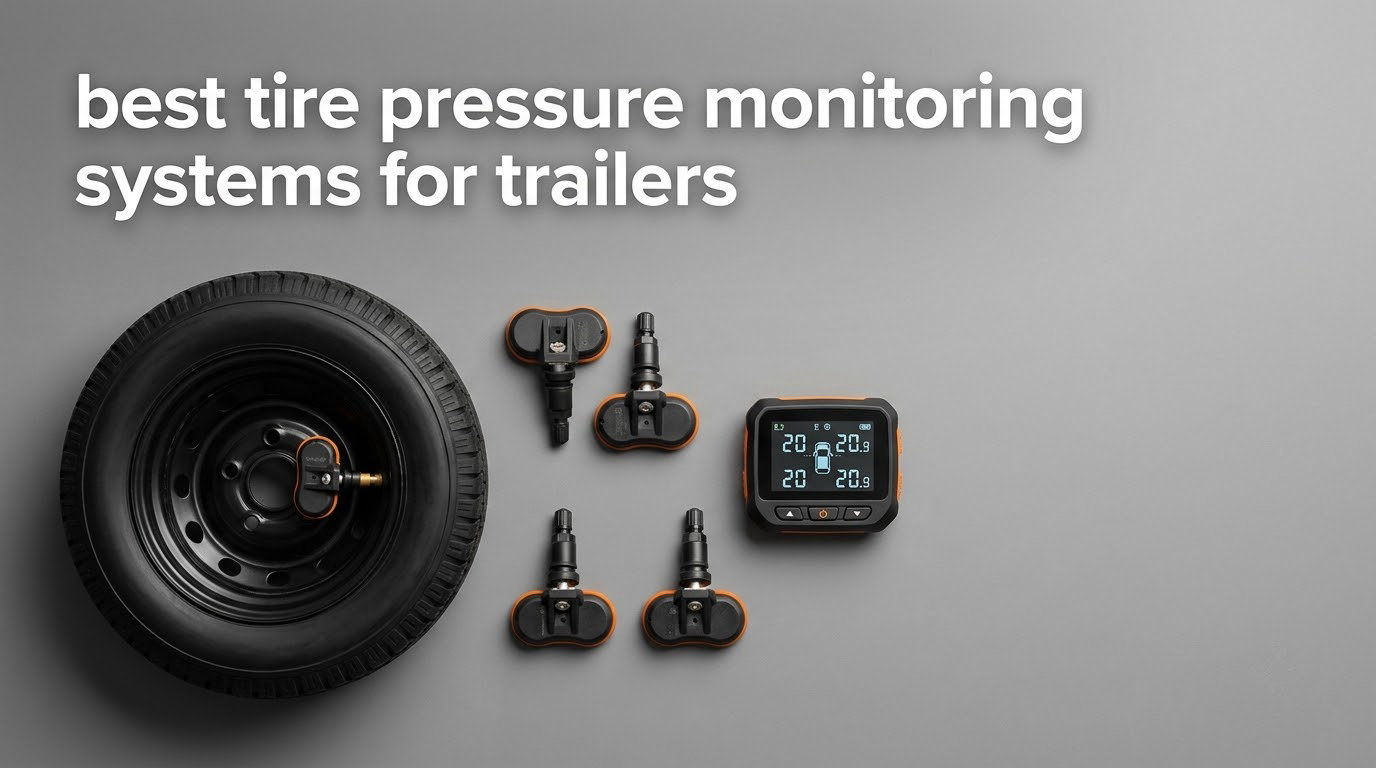
A trailer can lose a tire with almost no warning. The classic case is a slow leak in a spare carrier tire or a slow puncture nobody checks before departure, and by the time you feel the trailer change lanes on the interstate the tire has already been destroyed. A tire pressure monitoring system for trailers puts a sensor on every wheel valve, reports each tire’s pressure and temperature to a display in your tow vehicle, and alarms you the moment one drifts out of range.
Short answer: the best tire pressure monitoring systems for trailers are the Tymate TM2 for most owners, the TireMinder i10 for a dedicated dash display with an included signal booster, and the GUTA GT30 if you tow a heavy rig and want ten tires on one screen. The shortlist below covers eight systems, from a four-sensor solar kit for a small tag-along to an eight-sensor flow-through set for a fifth wheel.
One thing to clear up first, because it comes up constantly in owner forums: your tow vehicle’s factory TPMS does not read trailer tires. Most trucks watch four wheels on the frame and stop there. An aftermarket trailer system is a separate radio link with its own display, and it is the only thing covering the trailer. We compared all eight systems in this roundup on sensor design, alert coverage, range, power, tire capacity and the small annoyances that show up after a season of towing. Last updated September 2026, with a full read of owner feedback across RV and towing forums.
If you still want a gauge check before every trip, our [tested picks for professional tire pressure gauges](https://blog-idcuk.com/best-professional-tires-pressure-gauge/) and [roundup of tire pressure gauges for everyday checking](https://blog-idcuk.com/best-tires-pressure-gauges-for-injections/) are worth a look. A TPMS tells you when something has changed, but a good gauge is still how you set the baseline.
Table of Contents
Top 3 Tire Pressure Monitoring Systems for Trailers

Tymate TM2
- Four external IP67 sensors
- Ten-tire receiver capacity
- Six alarm modes
- Factory-paired sensors

TireMinder i10
- 3.15 inch color display
- 40-tire and 199 PSI range
- Signal booster included
- 6 second scan

GUTA GT30
- Ten tires on one screen
- 188 PSI and 185 F range
- Replaceable sensor batteries
- Wireless sensor setup
Best Tire Pressure Monitoring Systems for Trailers (October 2026)
Every system below reads pressure and temperature from sensors on the wheel valves and reports to a receiver in the cab. The differences that actually matter day to day are how many tires the receiver handles, whether the sensor is a non-flow-through cap you must remove to inflate, whether the sensor battery is replaceable, and whether a signal booster is included. That last point catches people out: a four-sensor kit in the mid-range of this list often leaves the booster out, and a fifth wheel with thirty-plus feet between the kingpin and the truck’s receiver is exactly the setup where a booster stops being optional.
| Product | Specifications | Action |
|---|---|---|
| Tymate TM2 |
|
Check Latest Price |
| TireMinder i10 |
|
Check Latest Price |
| GUTA GT30 |
|
Check Latest Price |
 TST 507 RV 4 Cap TST 507 RV 4 Cap |
|
Check Latest Price |
 TireMinder Smart 10 TireMinder Smart 10 |
|
Check Latest Price |
 Masoll 4 Sensor Masoll 4 Sensor |
|
Check Latest Price |
 GUTA GT20 GUTA GT20 |
|
Check Latest Price |
 TST 507 RV 8 Flow Thru TST 507 RV 8 Flow Thru |
|
Check Latest Price |
1. Tymate TM2 – Best Tire Pressure Monitoring System for Trailers Overall
Tymate TM2 RV Tire Pressure Monitoring System, TPMS Set of 4 Sensors
Four external IP67 sensors
Solar charging with USB
0 to 87 PSI range
Monitors up to 10 tires
Pros
- Sensors screw on like caps
- no rim removal
- Factory-paired and pre-labeled
- Sunlight is not required to keep it powered
- Monitor handles up to 10 tires for a tag-along rig
Cons
- Dim screen in direct sunlight
- Needs a repeater on rigs of 36 feet or more
- Brave false over-temperature alarms on hills
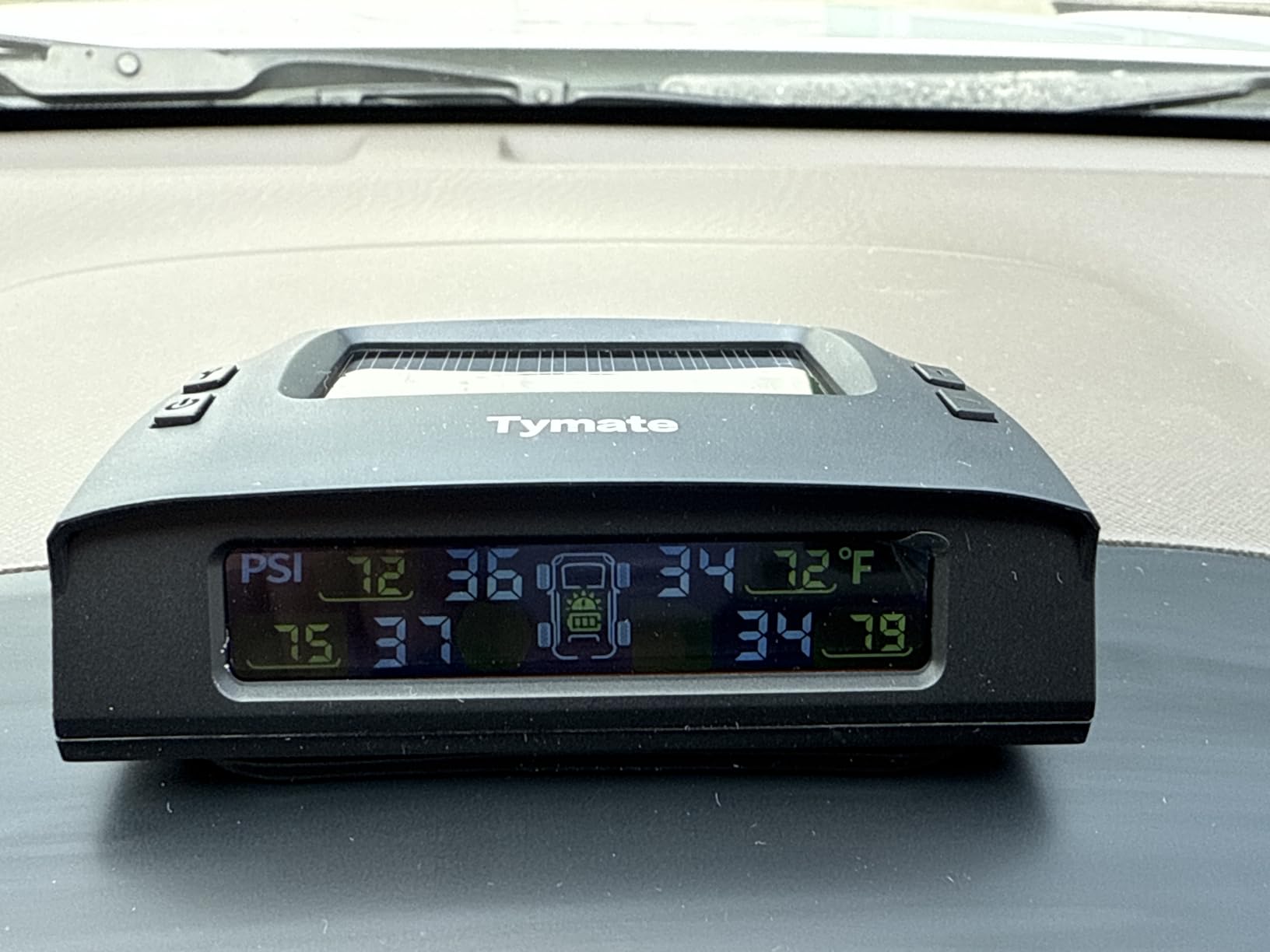
The Tymate TM2 is the system I recommend to most trailer owners, and the reason is simple: it does the job with almost nothing to think about. Four screw-on sensors go on the valve stems, the display comes pre-paired to those exact four sensors, and solar charging on the monitor means you are not hunting for a charging cable every weekend. If you tow a tandem trailer with a spare, you will need more than the four included, but the receiver handles up to ten tires, so the display side is covered.
Installation took me under ten minutes with a floor jack and no wiring at all. The sensors are pre-labeled, so you mark the positions, screw them on, and the display knows which tire is which. Readings land within roughly one to two PSI of a good gauge, and the temperature channel updates alongside the pressure, which matters more than most people expect because a rising tire temperature is an early warning that a tire is being worked too hard.
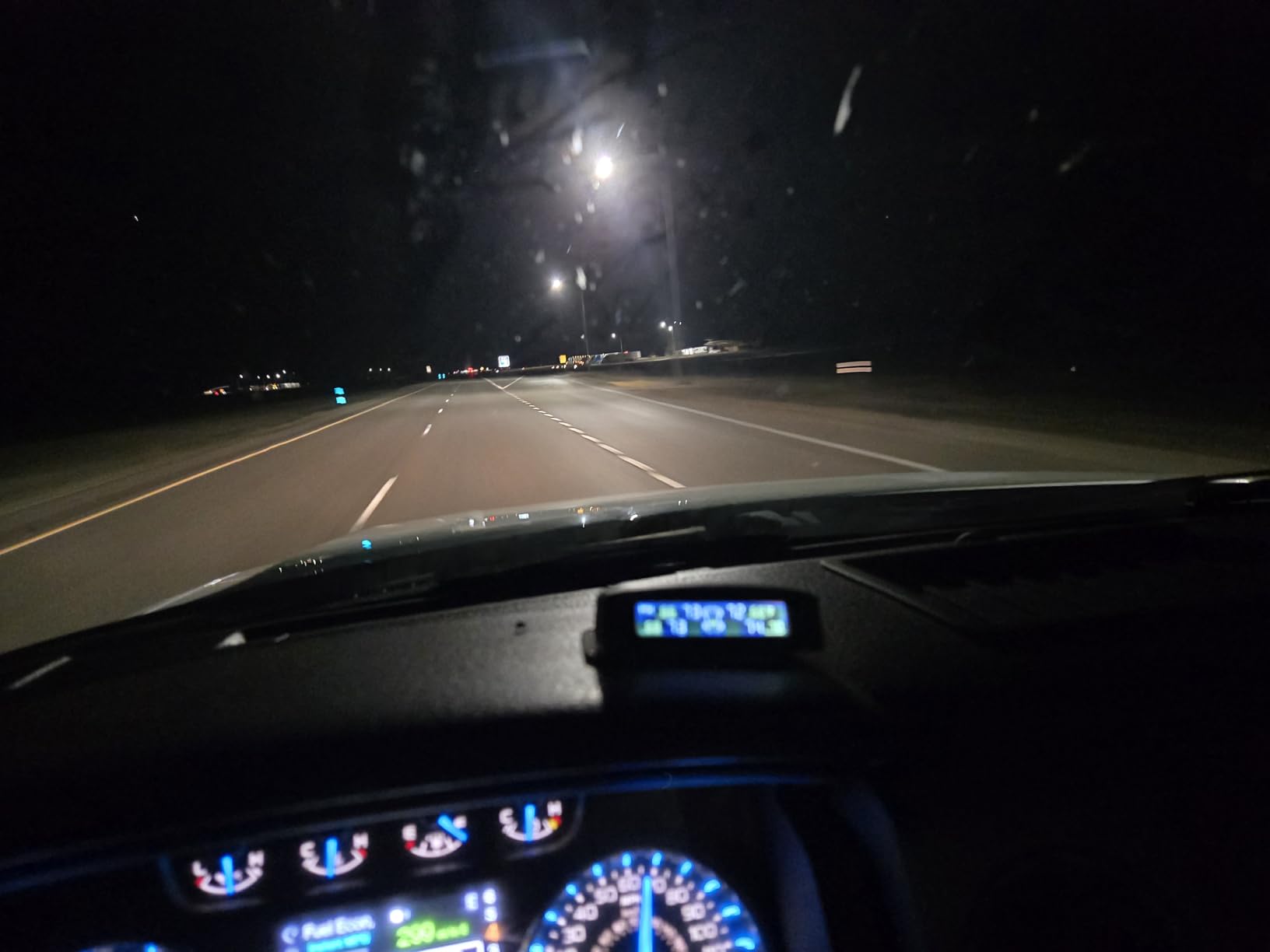
The alarm is genuinely loud. That sounds trivial until you have driven with the display mounted out of your sightline, which is where most owners put it. The six alarm modes cover fast leak, high and low pressure, high temperature, low sensor voltage and lost signal, with the threshold set at plus twenty-five percent to minus fifteen percent of your reference pressure. Multiple buyers describe the system catching a fast leak or a road nail early enough to save the tire, which is exactly what it exists for.
Battery life is the other quiet strength. Each sensor runs on a replaceable CR1632 with a claimed lifespan of up to two years, and low voltage is one of the alert modes rather than a surprise failure. That is a meaningful upgrade over sealed sensors, and it is why I would not swap this unit out after a couple of seasons.
Who the Tymate TM2 suits
This is the pick for a tandem travel trailer, a pop-top, or a bumper-pull where you want a set-and-forget system with no learning curve. The factory pairing means there is no code entry and no menu diving on your first trip, which removes the most common reason a good TPMS ends up unused in a drawer.
Solar charging is the other quiet win. Owners who tow a lot report never thinking about the monitor’s battery, which is not true of the plug-in rechargeable monitors that need a charge roughly every day and a half to two weeks. For seasonal campers who go out for a few weekends a year and then park, that difference decides the purchase.
Who should skip the Tymate TM2
Skip it if you tow a fifth wheel with a long kingpin-to-axle distance and do not want to add a repeater. The manufacturer itself recommends a repeater for total rig lengths of thirty-six feet or more, and owners report signal trouble at around thirty feet of separation between the truck and trailer wheels. That is an extra purchase, not a dealbreaker, but budget for it.
Skip it if your axle pressures sit above eighty-seven PSI, since that is the top of its detection range, and give the temperature alarm some grace if you run sustained grades. Brake heat on a descent can push an outside tire past the threshold and trigger a warning that is technically correct and practically annoying. Owners also note the screen is dim in direct midday sun, which matters if you mount it where you read it rather than where you store it.
2. TireMinder i10 – Best Trailer TPMS With a Big Dedicated Display
TireMinder i10 RV TPMS with 4 Transmitters, Black
3.15 inch color LCD
Four external transmitters
0 to 199 PSI, plus or minus 1 PSI
Rhino booster included
Pros
- Largest screen in this roundup
- 40-tire capacity and a 199 PSI ceiling
- Booster included in the kit
- Six-second scan interval
Cons
- Costs more than basic cap kits
- Transmitters must come off to inflate
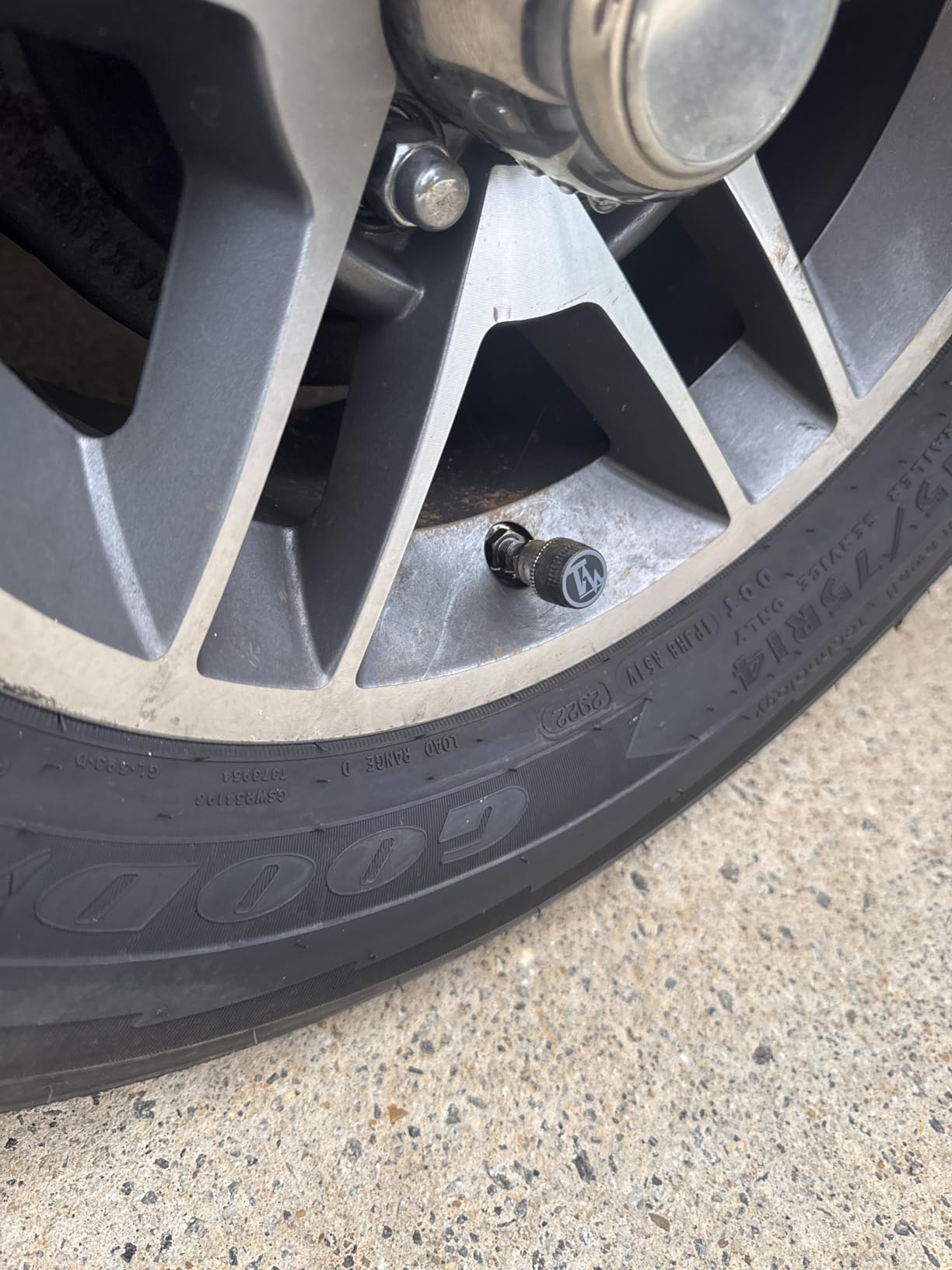
The TireMinder i10 is the pick when you want a real instrument in your cab rather than a phone. The 3.15-inch color LCD is the largest display in this roundup and shows simultaneous pressure or temperature readings, which means you can glance at it from the driver’s seat and read four or more tires without squinting. It is a dedicated unit, so it works with no app, no phone pairing and no firmware drama.
The accuracy spec is the standout. Plus or minus one PSI across a zero to 199 PSI range is the tightest figure any of these systems claims, and owners consistently rank it among the most accurate hardware available. The display also handles up to forty tires from a single unit, so a rig with a fifth wheel, a tag-along and a tow vehicle can be covered by one receiver rather than three.
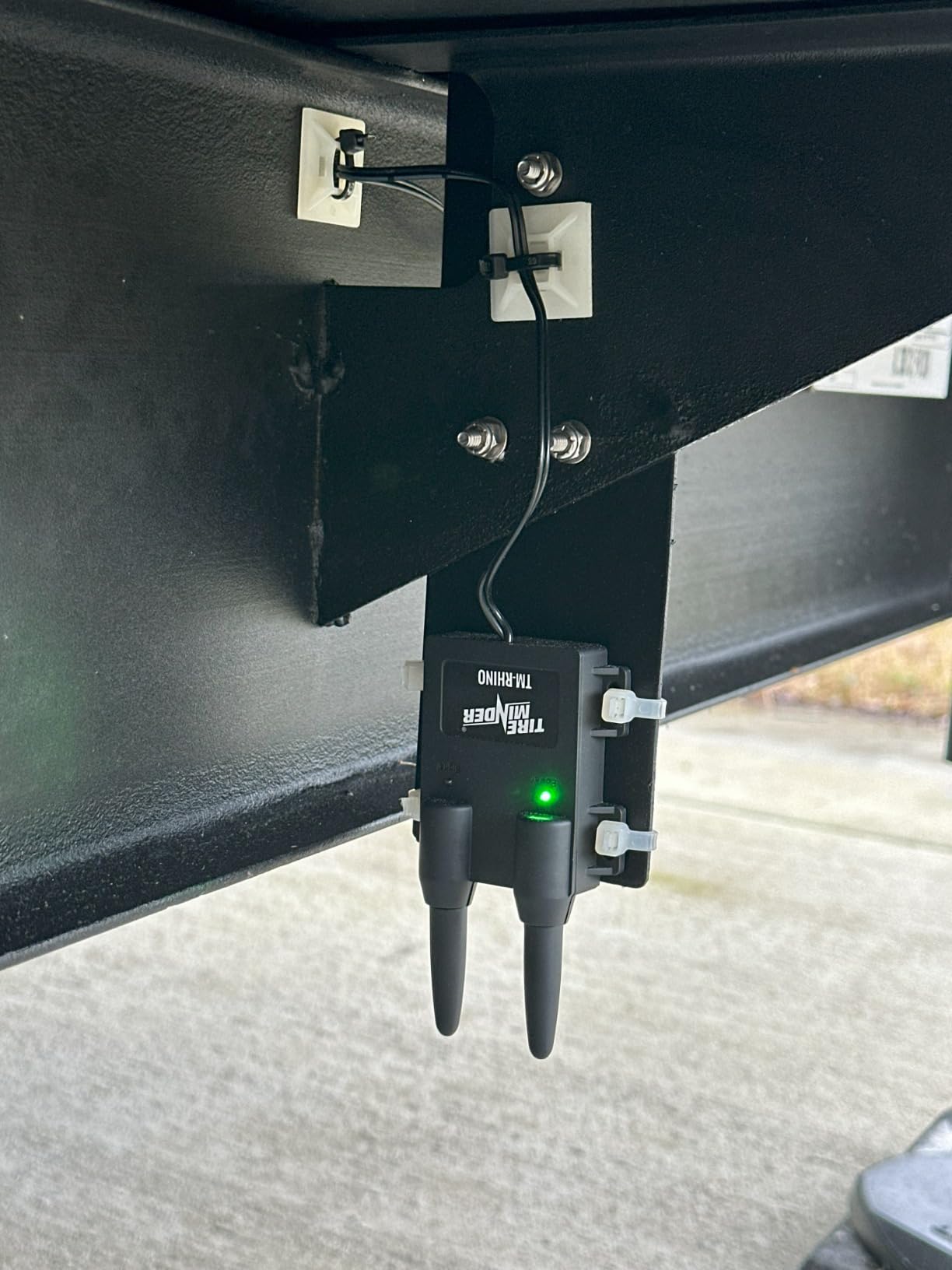
The rhino signal booster is in the box, and that single inclusion saves you the most common second purchase in this category. It matters most on exactly the setups that stress signal: fifth wheels, long trailers, and rigs with a tag-along adding a second trailer’s worth of distance. The scan interval of six seconds is quick enough that a fast leak is caught while it is still a slow leak.
It is also a heavier unit, around 1.8 pounds for the display, transmitters and booster together, so pick a mounting location that holds it steady rather than somewhere it slides on every curve.
Who the TireMinder i10 suits
It suits owners who prefer hardware to software. If you are the kind of person who left your phone in the glovebox on purpose, a standalone display with a big screen and a hardwired power lead is the right tool. The same goes for rigs that already have a lot going on in the cab, since a single screen showing every tire beats unlocking a phone at every stop.
High axle pressures are covered too. With a 199 PSI ceiling, this is one of the few systems here that comfortably handles truck and motorhome tires rather than only light-trailer pressures, which makes it a sensible single-unit choice for a motorhome owner who also tows.
Who should skip the TireMinder i10
Skip it if top tire capacity is your main concern and you are on a budget. Forty-tire capacity is impressive, but you are paying for headroom you may not use, and there are cheaper systems that handle a normal trailer with room to spare.
Skip it if you inflate your tires often. The transmitters are not flow-through, so every top-up means unscrewing a sensor from the valve, which is genuinely awkward on a tandem trailer where the inner duals are already cramped. If your tires hold pressure and you check monthly, that is an acceptable trade. If you top up weekly, it is not.
3. GUTA GT30 – Best Trailer TPMS for Heavy Rigs and Ten Tires
GUTA GT30 Trailer Tire Pressure Monitoring System, RV TPMS with 10 Sensors
Ten cap sensors
188 PSI and 185 F range
Reports every 5 minutes
Replaceable CR2032
Pros
- Ten tires shown on one page
- Highest temperature ceiling in the group
- Wireless sensor setup removes install friction
- CR2032 sensor batteries rated to four years
Cons
- Sensors come off to inflate tires
- Cap sensors need metal valve stems
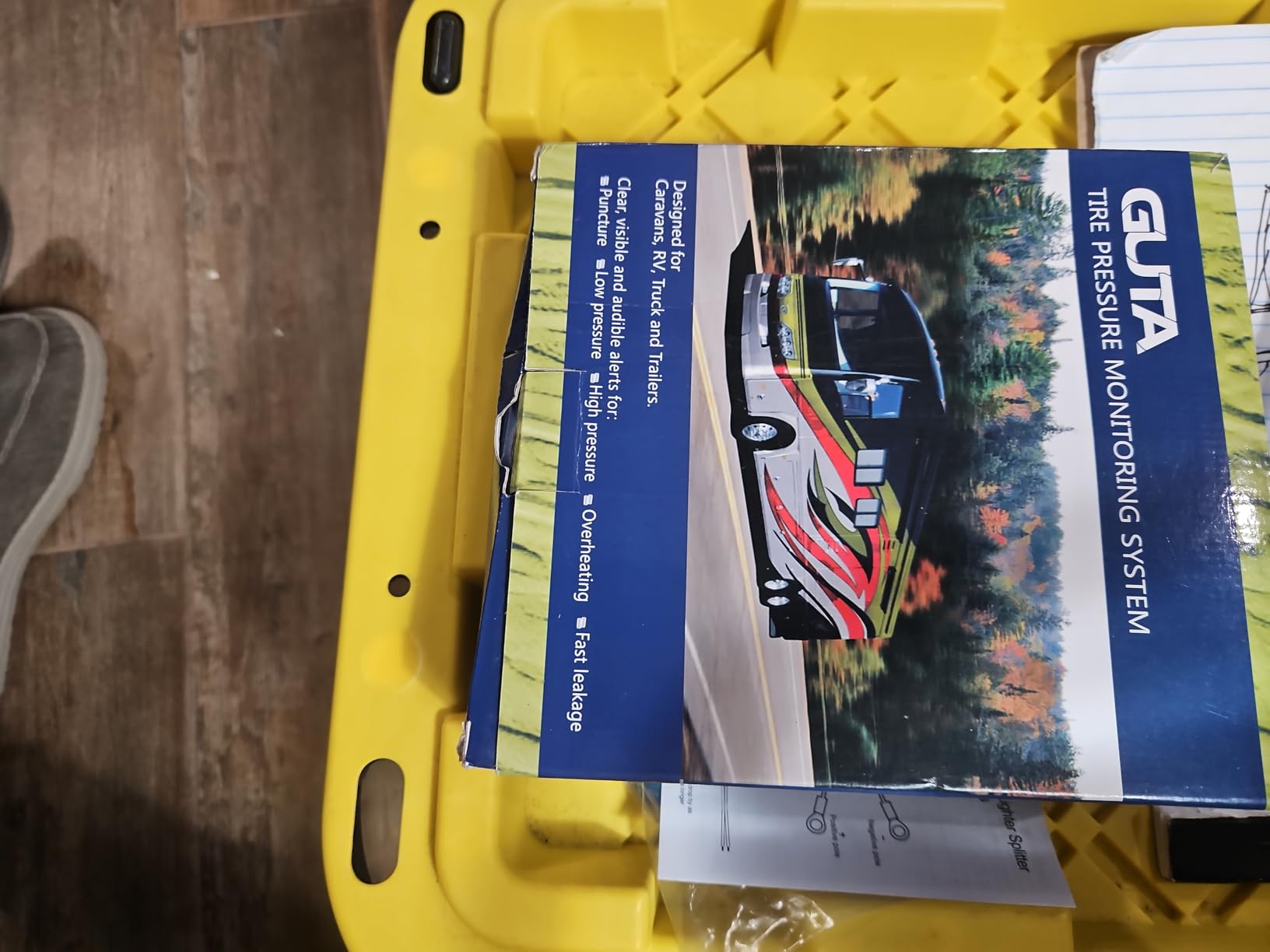
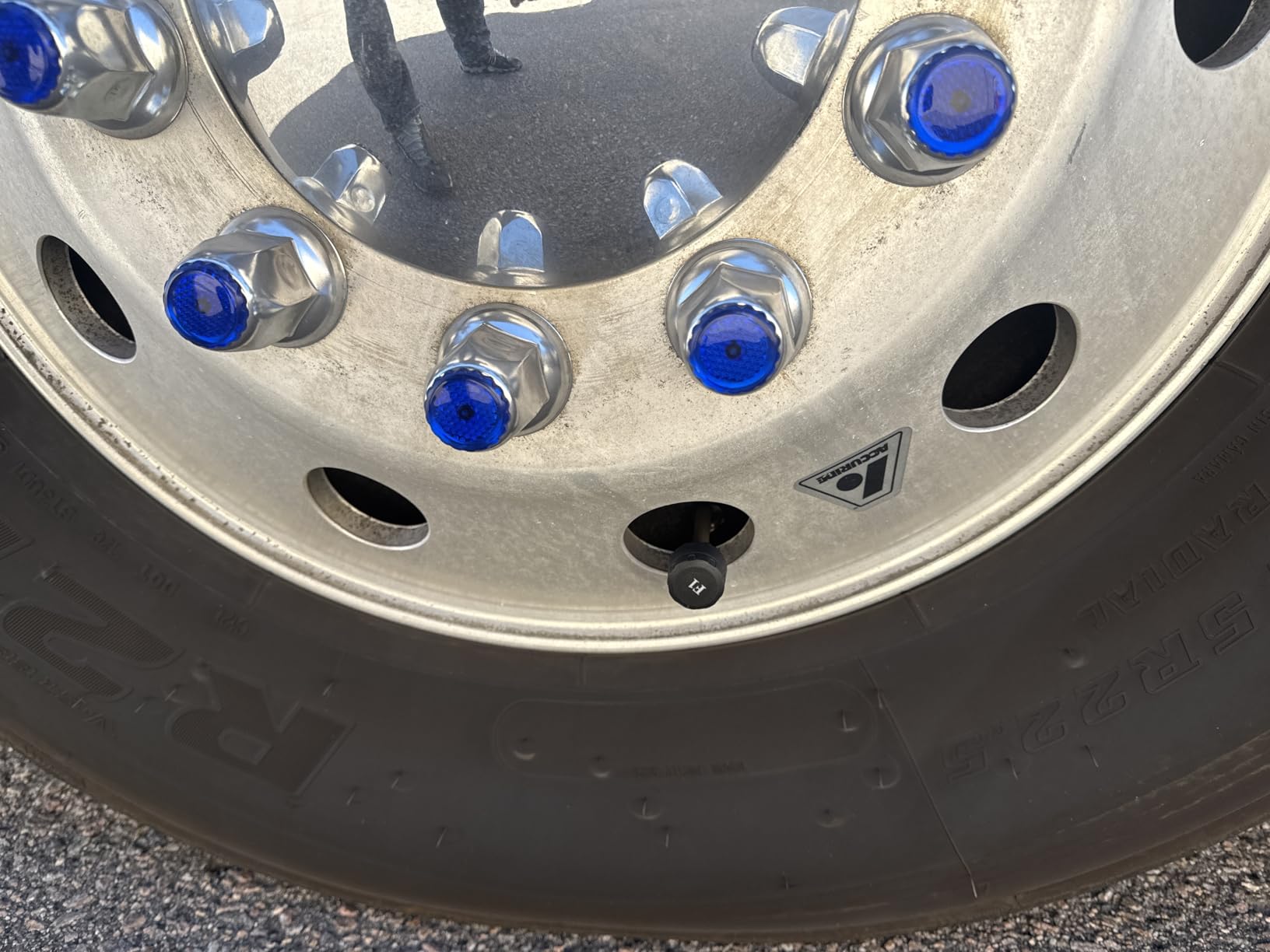
The GUTA GT30 is built for the trailer that carries the load. It ships with ten sensors, shows up to ten tires on a single page, and auto-switches between the front and rear sections of the rig without you pressing anything. The pressure ceiling of 188 PSI and a temperature rating up to 185 F put it in a different class from the light-trailer kits, which is what you want on a heavily loaded axle or a motorhome.
Wireless sensor programming is the feature that saves the most time. Instead of entering codes at install, you mount the sensors and program them from the display, so there is no pairing ritual to get wrong on a trailer with ten wheels. Sensor readings arrive on five-minute intervals, which is slower than the six-second scan some competing displays run, but entirely adequate for pressure loss that develops over a drive.
Battery strategy is the other reason this lands high for long-term owners. The sensors take replaceable CR2032 cells rated at up to four years, so the most common failure mode in this category, a dead sealed sensor, simply does not apply. The monitor itself is a rechargeable lithium pack that runs twelve to fourteen days from a full charge and drops into a power-saving mode after fifteen minutes without motion or vibration.
The display is large at nearly nine inches across, which sounds excessive until you are reading ten tires at highway speed. It fills a dash or a console shelf rather than a small suction mount.
Who the GUTA GT30 suits
This is the one to buy if you tow heavy or you simply do not want to count sensors twice. Ten in the box means a triple-axle fifth wheel with a spare is covered on day one, and the ability to view up to forty-six tires keeps the same receiver useful if you later add a tag-along or a second trailer.
Temperature coverage is the deciding factor for many owners in hot climates and on long desert runs. A 185 F ceiling means the system can alarm on a tire that is genuinely cooking rather than one that is merely warm, and hot-tire warnings are a real blowout precursor, not a nicety.
Who should skip the GUTA GT30
Skip it for a light trailer where four or five sensors would do. The monitor is a substantial physical object and the ten-sensor configuration is more hardware than a small trailer needs. Buy the smaller GUTA variant instead if your rig is modest.
Skip it if your trailer still has rubber valve stems. GUTA recommends cap sensors on metal valve stems, and rubber stems are not recommended for reliable performance. Converting to metal stems is straightforward but it is another job, and it is the single most common installation caveat across external systems in this roundup.
4. TST 507 RV with 4 Cap Sensors – Best for Long-Rig Signal Coverage
TST 507 Series TPMS – RV Tire Pressure Monitoring System with 4 Cap Sensors & Color Display Monitor for Travel Trailers, Campers and Motorhomes
Four cap sensors
3.5 inch color display
Three-year warranty
CR2032 batteries
Pros
- Repeater ships in the kit
- Auto-lock pins the display to the failing tire
- CR2032 batteries are user replaceable
- USA-based support with a three-year warranty
Cons
- One of the costlier kits in this group
- CR2032 changes add recurring maintenance
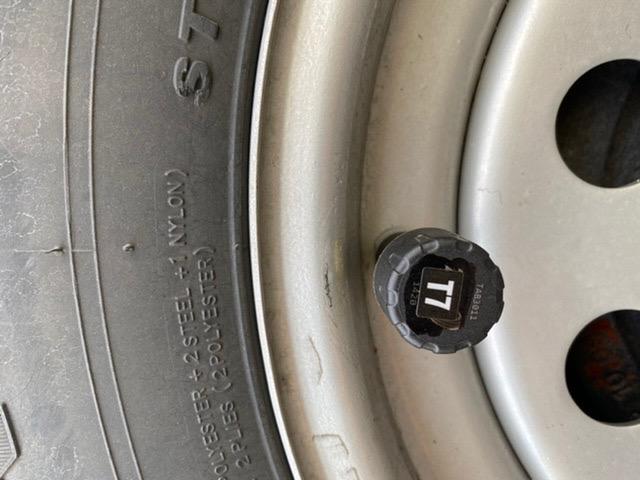
The TST 507 cap configuration is the enthusiast favorite in owner forums, and the reason shows up over and over: the repeater is in the box. On a fifth wheel, a long travel trailer or a rig with a tag-along, signal reach is the difference between a system you trust and one that gives you dropouts at exactly the wrong moment. The kit includes the display, four cap sensors, a repeater, a magnetic mount and a charging cable, so nothing has to be added to make it work as intended.
Auto-lock is the feature I would miss most if I moved to a different brand. When an alert fires, the display locks onto the tire that triggered it rather than flashing a generic warning, which saves you from guessing between eight or ten wheels while pulling over. Alerts cover low pressure, high pressure, fast leaks and high temperature, with audible and visual output.
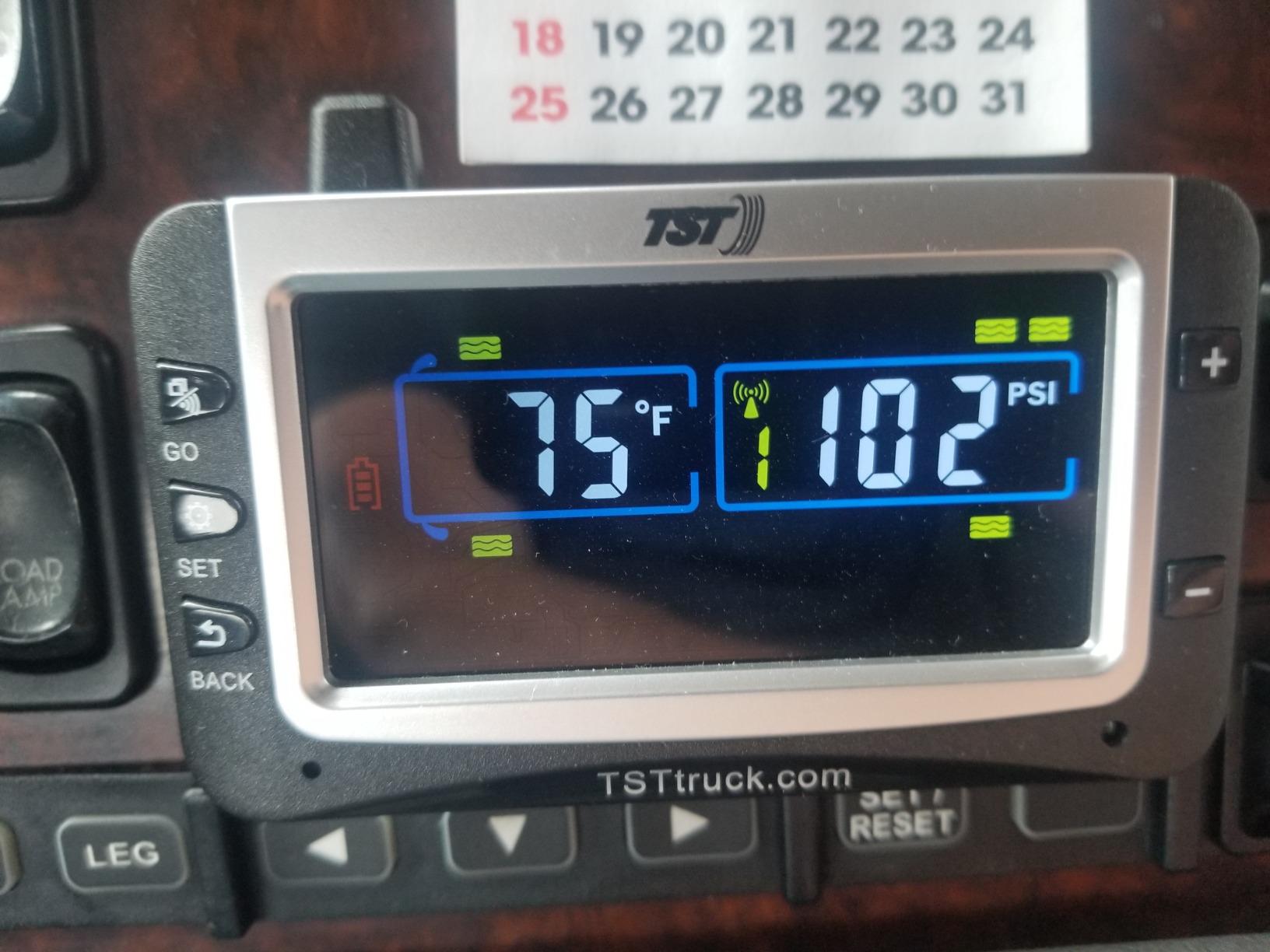
Sensor locations can be swapped after a rotation, which sounds like a small thing until you have turned four tires and re-learned a new layout. The 3.5-inch color display carries a rechargeable battery and a Micro-USB charger, and both a suction cup and a rubber dash mount are included for finding a stable spot.
The system can monitor your tow vehicle plus up to four towables from the same display, so it grows with the rig rather than being retired when you change trailers. Long-term owners are enthusiastic about balance, with several reporting years of towing without a vibration issue from externally mounted sensors and no failures beyond routine battery changes.
Who the TST 507 cap kit suits
It suits fifth wheel and long-trailer owners who have already had a system lose signal and do not want to repeat that. The included repeater plus the ability to swap tire positions after a rotation makes this the low-maintenance option for a rig that moves a lot and turns a lot of tires.
It also suits owners who want warranty support they can actually reach. The three-year warranty is backed by USA-based live customer service, and replacement sensors are straightforward to order, which matters in a category where a single dead sensor should not end your monitoring.
Who should skip the TST 507 cap kit
Skip it if you tow a small trailer and want the lowest-cost way to get alerts. The four-sensor cap kit sits at the pricier end of this list, and for a tandem trailer with good tires and a monthly gauge check, that spend is harder to justify.
Skip it if you top up air frequently. These are cap sensors, not flow-through, so inflation means removing a sensor from each wheel first. Also expect to change CR2032 batteries periodically. That is a small price for user-replaceable cells, but it is maintenance a sealed-sensor system does not have.
5. TireMinder Smart TPMS with 10 Transmitters – Best for App-Based Monitoring
TireMinder Smart TPMS with 10 Transmitters for RVs, MotorHomes, 5th Wheels, Motor Coaches and Trailers
Ten transmitters
Bluetooth adapter
Phone app, iPhone and Android
Six second scan
Pros
- No dash display needed
- Ten transmitters cover a big rig in one kit
- Spare batteries
- locking nuts and o-rings included
- Responsive replacement support
Cons
- Readings can run 5 to 10 PSI above a gauge
- Bluetooth adapter can drop connection or power down
- Some false alarms and implausible temperatures
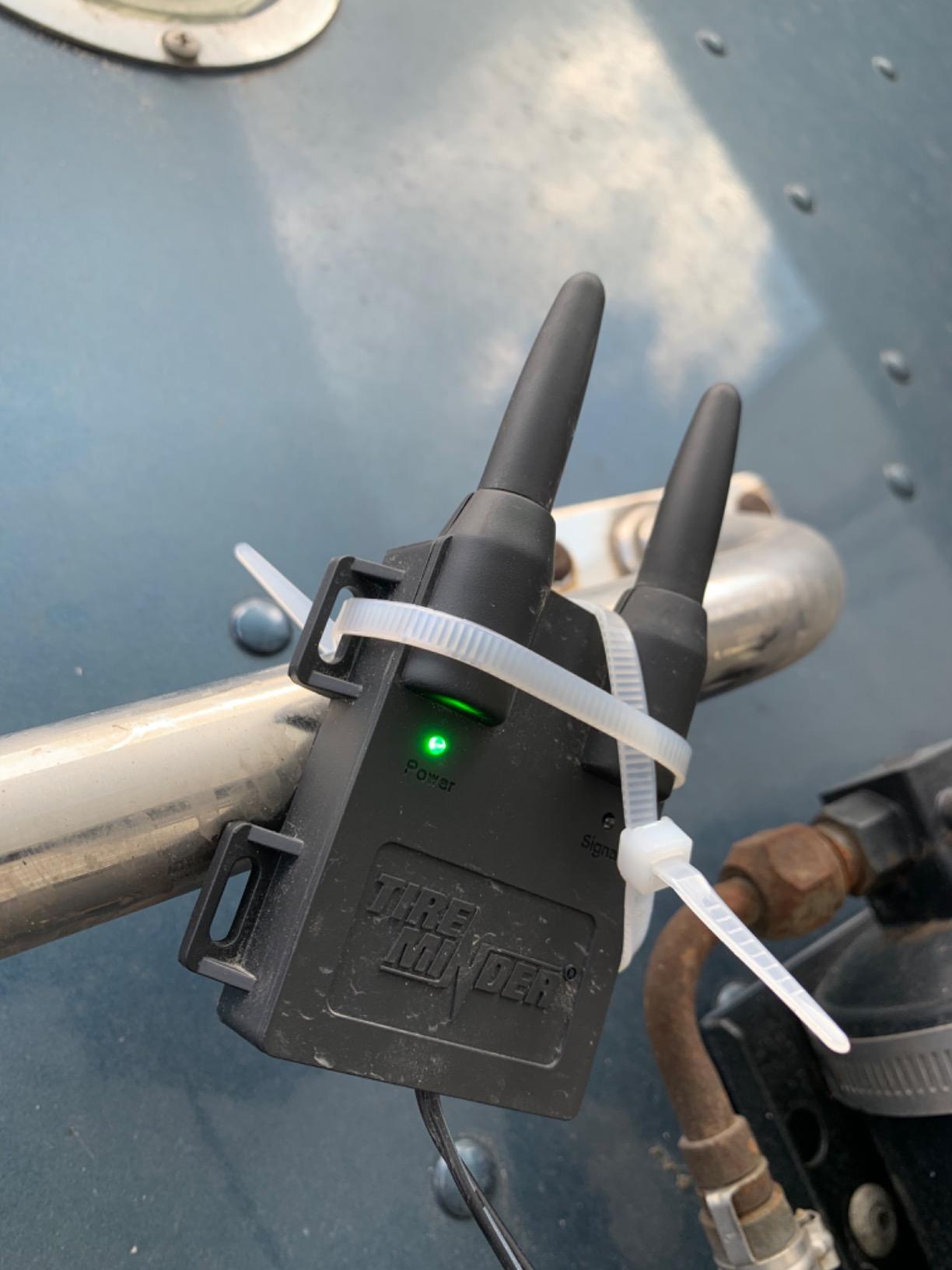
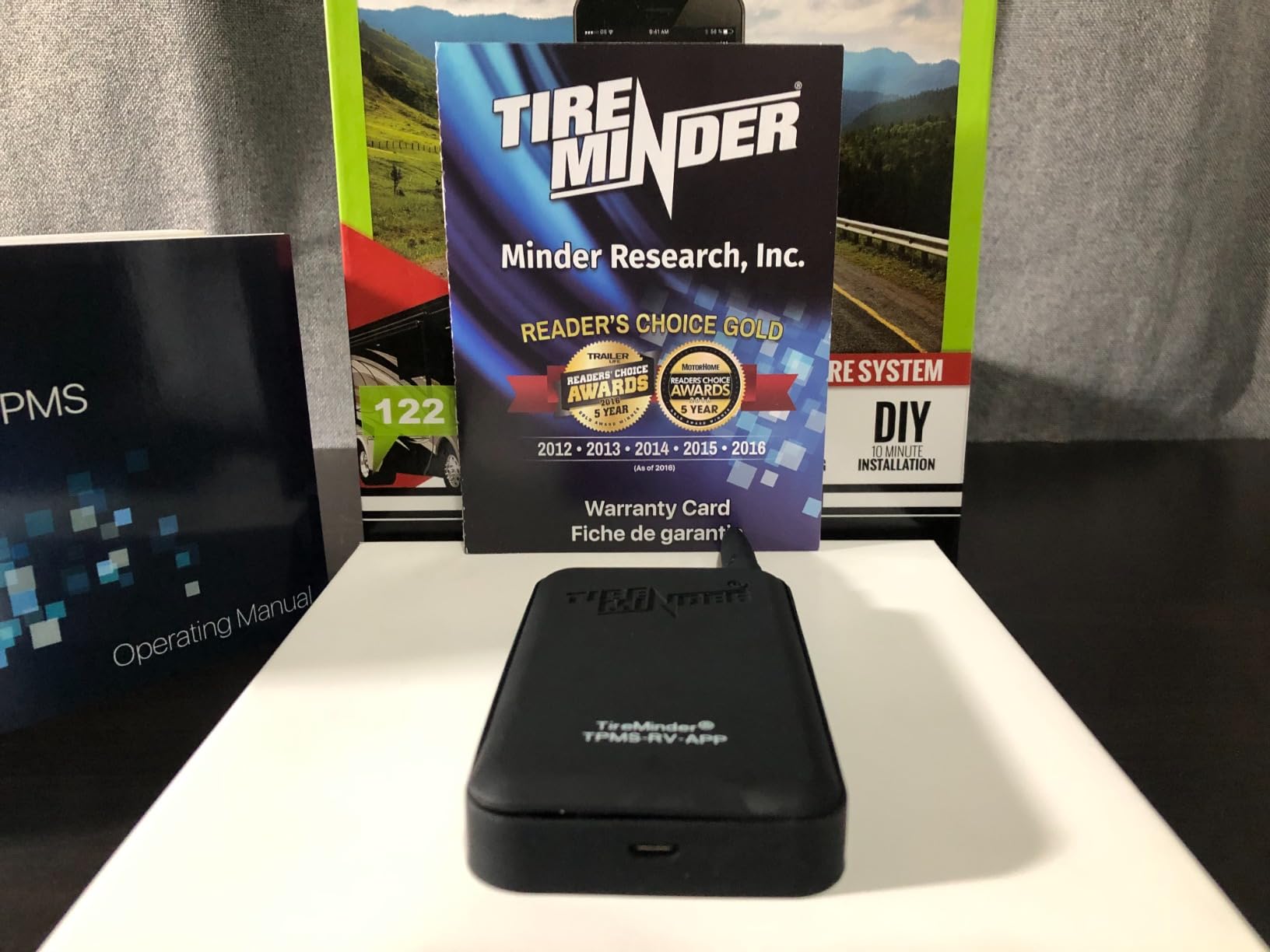
The TireMinder Smart TPMS is the pick if you would rather look at your phone than at a dash-mounted box. Ten transmitters come in the kit along with a Bluetooth adapter, a rhino signal booster, twenty spare CR1632 batteries, locking nuts, o-rings, a locking wrench and a carrying pouch, which makes it the most completely equipped package in this roundup on paper. The app works on iPhone, iPad and Android, and the scan interval is six seconds.
Covering a tow vehicle and a large trailer from one kit is the real argument here. Ten transmitters means a fifth wheel plus spares, or a trailer plus a tag-along, is covered without a second order. The booster and the 433 MHz to Bluetooth adapter are there specifically to hold the link on long rigs.
Owner opinion on this one is genuinely split, and the criticisms are specific enough to plan around. Readings can run five to ten PSI higher than a tire gauge, which is not a failure state but does mean you must set your alarm baselines from the monitor’s own values rather than from the numbers on your tire placard. The Bluetooth adapter has been reported to drop its phone connection or power off when hard-wired, which is worth knowing before you route a cable to it.
There are also reports of recurring false alarms with implausible temperature readings, and of transmitter battery clips failing at the solder joint on some units. Against that, TireMinder’s support is frequently described as responsive, with several owners reporting that negative reviews moved upward after replacement sensors shipped.
Who the TireMinder Smart TPMS suits
It suits owners who already live in a phone app for their rig and who want no extra hardware on the dash. The included accessories are also the best in the group, and for someone maintaining sensors themselves between seasons, twenty spare batteries and a locking wrench in the box remove a real annoyance.
Choose it when tire count is the priority. Ten transmitters in one package is hard to match for a full rig, and the same display and adapter can follow you from trailer to trailer.
Who should skip the TireMinder Smart TPMS
Skip it if you need readings you can trust against a mechanical gauge at a glance, or if a five to ten PSI offset would make you distrust the display. Baseline discipline fixes it, but not everyone wants to relearn how they set alarms on their rig.
Skip it if a hardwired connection is your plan for power. The adapter dropping off or powering down when plugged in permanently is a recurring complaint, and a phone-dependent system has one more failure point between you and the alarm. Its one-year warranty is also the shortest of the TST systems here, which is a fair trade if the app convenience is what you are buying.
6. Masoll RV TPMS with 4 Sensors – Best Budget Trailer TPMS
Masoll RV Tire Pressure Monitoring System,TPMS with 4 Tire Pressure Sensors
Four external solar sensors
Up to 99 PSI, plus or minus 1.5
Factory-paired
Six alarm modes
Pros
- Lowest cost in the roundup
- Under five minutes to install with no wiring
- Highest average rating of the eight
- Readings land within a couple PSI of a gauge
Cons
- 99 PSI ceiling excludes high-pressure truck tires
- Display can wash out in extreme cabin heat
- Weak dash mount
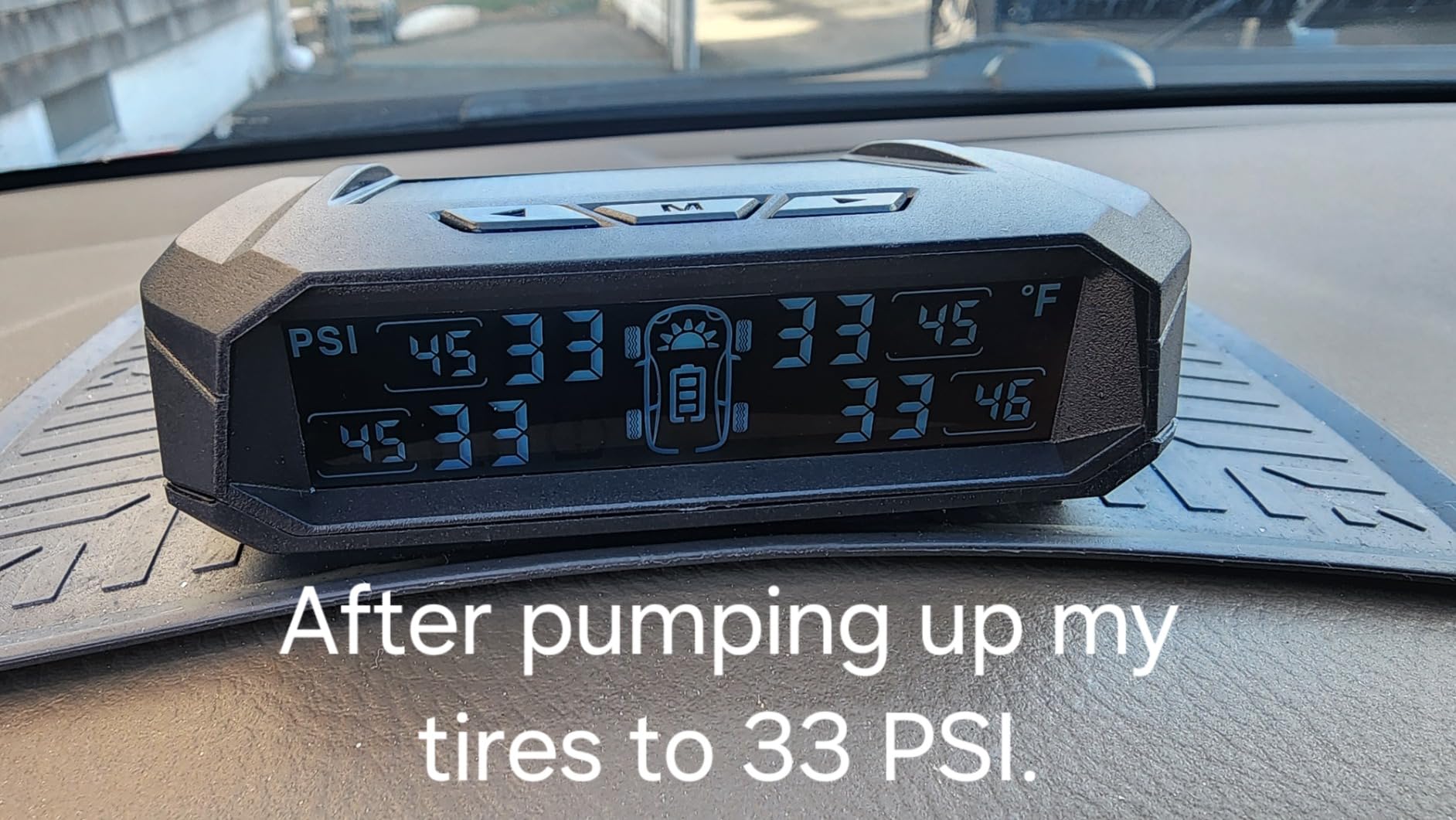
The Masoll is the cheapest way into this category and, more usefully, it carries the highest average rating of the eight systems here at 4.5 across 317 reviews. That combination is unusual. Budget trailer TPMS kits usually trade accuracy for cost, and this one reports within a couple PSI of a conventional gauge while installing in under five minutes with no wiring and no pairing step.
Sensors ship factory-paired and position-marked, so you screw them on in the marked order and the display already knows which tire is which. The monitor charges two ways, from a solar panel on the unit and from the included USB cable, so it can run without a cigarette lighter adapter. Pressure and temperature are monitored on all four tires simultaneously, with six alarm modes covering fast leak, high and low pressure, high temperature, sensor low voltage and lost signal.
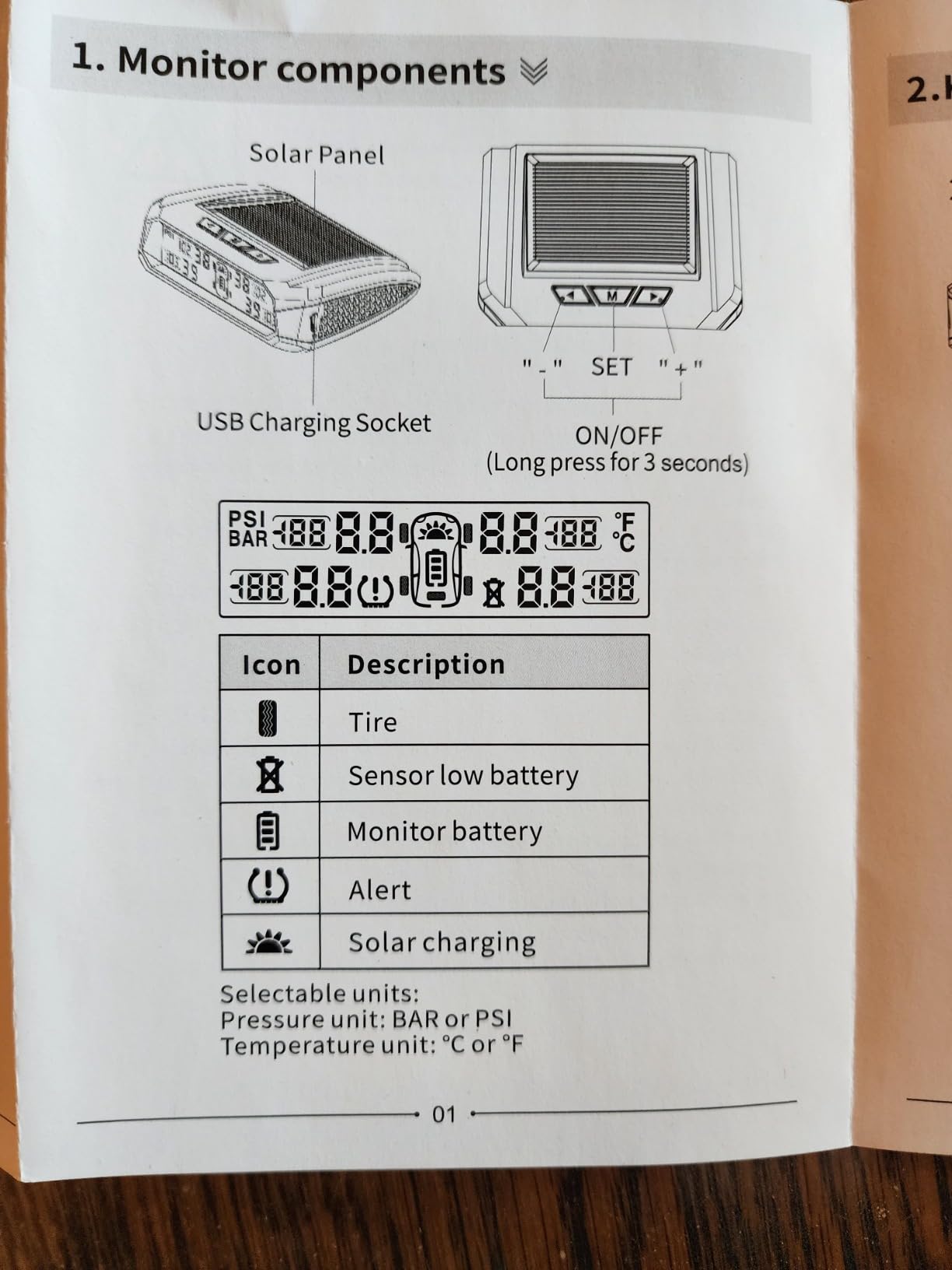
Alert thresholds set themselves. At installation the monitor adopts current pressure as the reference point and alarms between plus twenty-five percent and minus fifteen percent of that value, which removes the most common cause of alert fatigue that owner forums complain about: generic factory defaults set for cars.
Sensor batteries are replaceable CR1632 cells rated at two years, and the sensors are waterproof with an anti-theft design. Buyers report the alarm catching a nail puncture and a slow leak in time to avoid damage, which is the outcome that justifies the purchase.
Who the Masoll suits
It suits a small trailer, a pop-top, or a single-axle rig where four tires is genuinely the right number, and it suits anyone who wants alerts without a large purchase decision. The four sensors cover a tandem trailer’s four wheels, though you would want a fifth for the spare.
It also suits anyone who prefers automatic setup to manual pairing. With no code entry and no reference-pressure calibration to fight, the system is usable within a few minutes of opening the box.
Who should skip the Masoll
Skip it if your tires run above ninety-nine PSI, which is the maximum supported pressure. That rules out high-pressure truck and commercial setups, and it is the clearest hard limit in the roundup.
Skip it if you tow long. A signal booster is required past thirty-eight feet, and the dash mount is not particularly secure, which is unpleasant when the display is the thing you are relying on. Owners also report the screen washing out toward white in extreme cabin heat and recovering once it cools, and external sensors sitting in direct sun can read noticeably hotter than the tire itself. None of that is dangerous, but it is worth knowing before a summer road trip.
7. GUTA GT20 – Best Mid-Range Trailer TPMS With Wide Pressure Range
GUTA GT20 Trailer Tire Pressure Monitoring System, TPMS with 4 Sensors
0 to 188 PSI, -40 to 221 F
Booster reach up to 100 feet
Up to 24 tires
Pre-paired sensors
Pros
- Booster reaches 100 feet on large vehicles
- Widest temperature window in the group
- Handles up to 24 tires
- Display orientation and backlight are adjustable
Cons
- Booster not included in the four-sensor kit
- Monitor battery runs about 15 hours
- Metal valve stems recommended
The GUTA GT20 is the mid-range GUTA, and its argument is range on both ends of the scale. It monitors zero to 188 PSI and temperatures from minus 40 F to 221 F, so it works on a light trailer in a cold-climate winter and on a heavy rig in desert heat with the same hardware. The display also supports up to twenty-four tires, which is more than most owners will ever need and enough for a trailer plus a tag-along plus a tow vehicle.
Adjustable display orientation and backlight are small details that make a real difference on a night run. Being able to flip the screen so it reads correctly regardless of where you mount it, and dim it for a dark highway, removes two of the most common complaints about dash displays in this category.
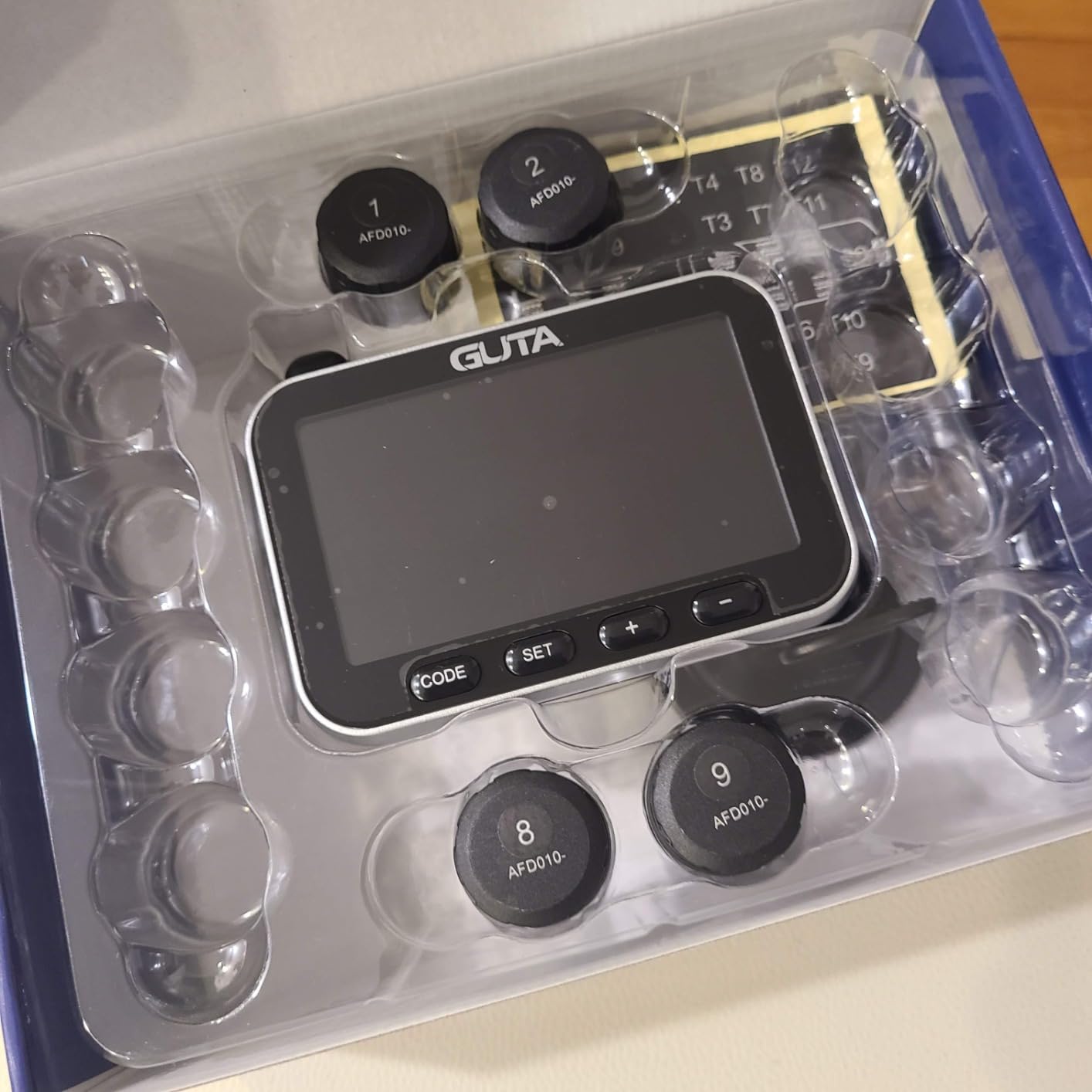
Sensors are pre-labeled and factory-paired, and reference pressure is set automatically after installation with the same plus twenty-five to minus fifteen percent alarm window used by the GT30. Six alert modes cover rapid air loss, abnormal pressure, abnormal temperature and low battery warnings for both the sensors and the monitor.
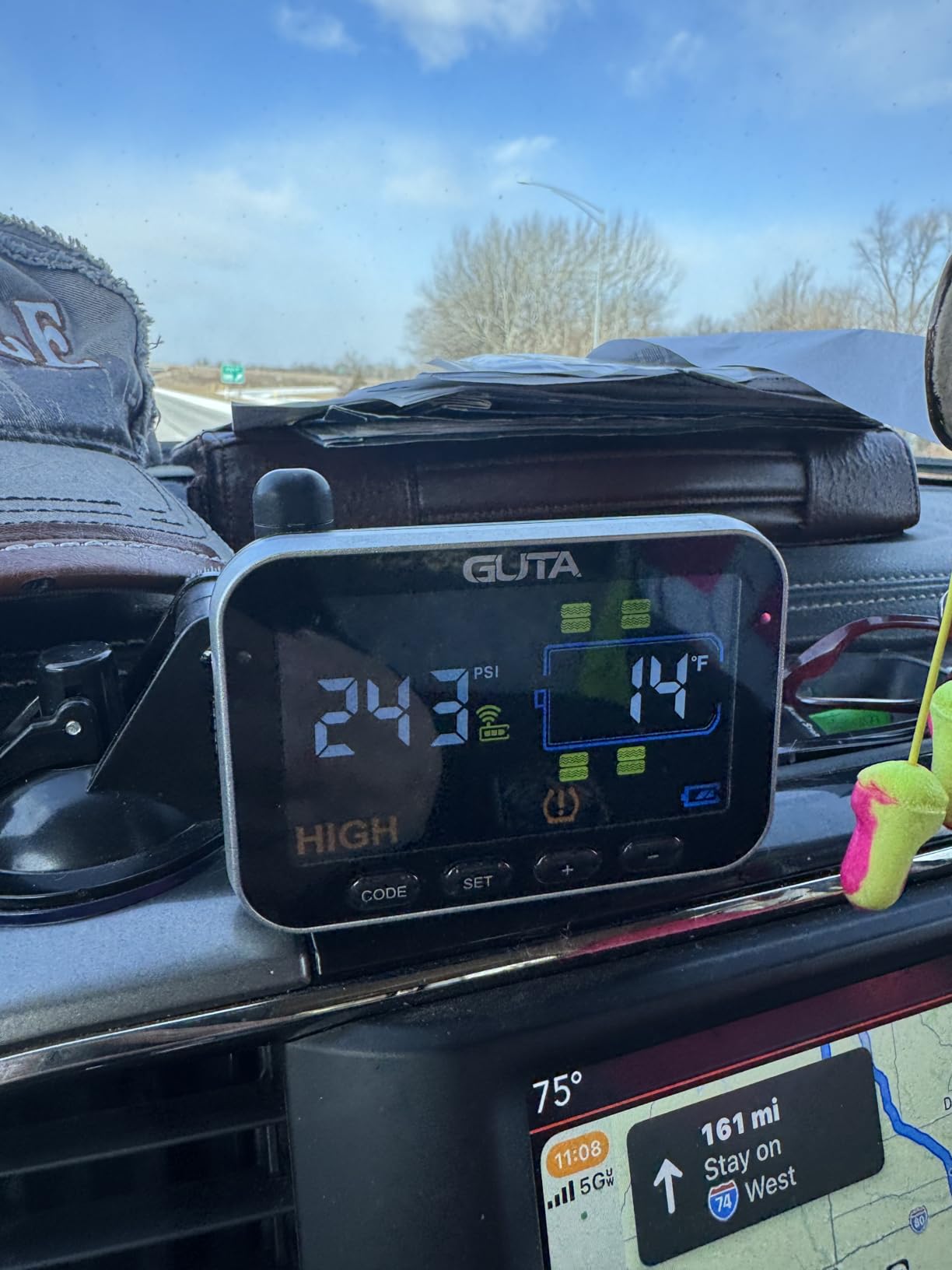
The important caveat is in the box contents. The signal booster is included with the larger configurations but not with the four-sensor kit, so on this version you may need to add one for longer trailers. The booster is rated to hold connectivity up to one hundred feet, which is a genuinely useful number on a fifth wheel with a tag-along.
Who the GUTA GT20 suits
It suits owners who want heavy-duty headroom without moving up to a ten-sensor package, and anyone whose season spans real temperature extremes. A monitoring window that reaches minus 40 F is the difference between a system that stays useful in a Minnesota January and one that makes you wonder what it is reporting.
Twenty-four tire capacity makes it a good fit for a rig with more than one trailer, and the adjustable screen suits owners who have never found a mounting position they liked.
Who should skip the GUTA GT20
Skip it if you tow a short trailer. With no booster in the four-sensor kit, a small rig should buy the larger configuration that includes one rather than adding it later, and if your rig is short you do not need the headroom of twenty-four tires.
Skip it if you want set-and-forget power. The rechargeable monitor runs up to fifteen hours on a full charge under heavy use and sleeps after fifteen minutes of no motion, which is a world away from a solar-charged unit that keeps going as you drive. It also auto-sleeps by design, so be ready to wake it before a pre-trip check.
8. TST 507 RV with 8 Flow-Through Sensors – Best Flow-Through Trailer TPMS
TST 507 Series TPMS – RV Tire Pressure Monitoring System with 8 Flow Thru Sensors & Color Display Monitor for Travel Trailers, Campers and Motorhomes (Metal Valve Stems Required for Flow Thru)
Eight flow-through sensors
Inflate without removal
3.5 inch color display
3-year warranty
Pros
- Top up tires without unscrewing anything
- Eight sensors cover multiple axles or two trailers
- Repeater included
- Auto-lock identifies the failing tire
Cons
- Highest cost in the roundup
- Metal valve stems required
- CR2032 batteries need periodic changes
The eight-sensor flow-through configuration of the TST 507 is the most complete system here for anyone who cares about servicing their tires. A flow-through sensor is a valve stem, not a cap, so you push a standard air chuck onto the exposed end and inflate with nothing removed. Every other external system in this roundup, including the other TST 507, makes you unscrew a sensor from every wheel before you can add air, which is the single most tedious part of owning a cap-style TPMS.
Eight sensors also changes the coverage picture. That is enough for a triple-axle fifth wheel with a spare, or a tandem trailer plus a tag-along, or a trailer and tow vehicle, all on one display. The receiver can monitor the tow vehicle plus up to four towable vehicles, so the hardware is not tied to a single trailer.
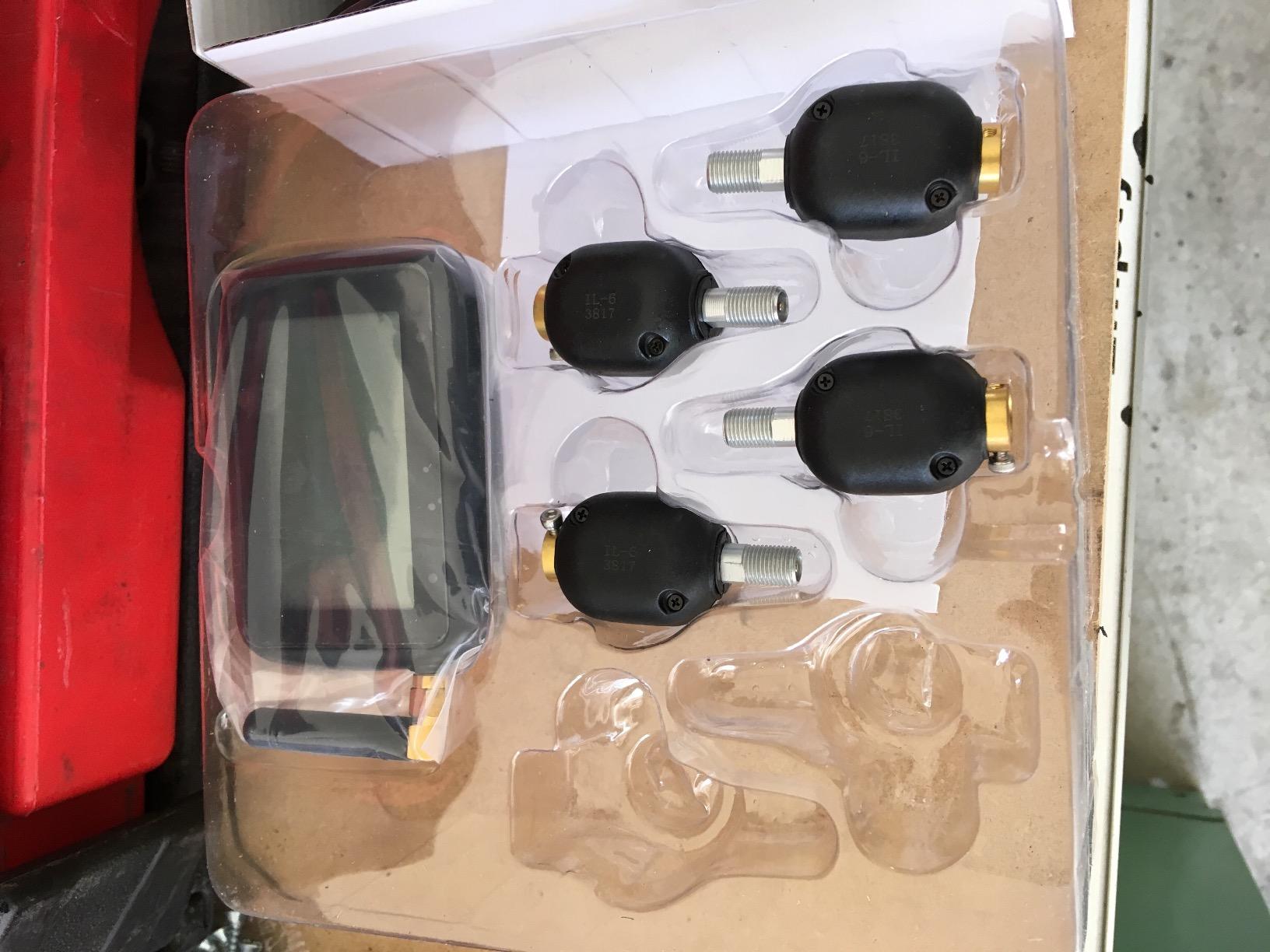
The rest of the package is the same well-regarded 507 platform. A compact 3.5-inch color display with a rechargeable battery and Micro-USB charger, suction cup and rubber dash mounts, alerts for low pressure, high pressure, fast leaks and high temperature, and auto-lock that pins the display to the tire that triggered the warning.
A repeater ships in the kit, and the warranty is three years on the complete system with USA-based live support and three years of EU spare part availability, which is unusually good coverage for a category where replacement sensors matter.
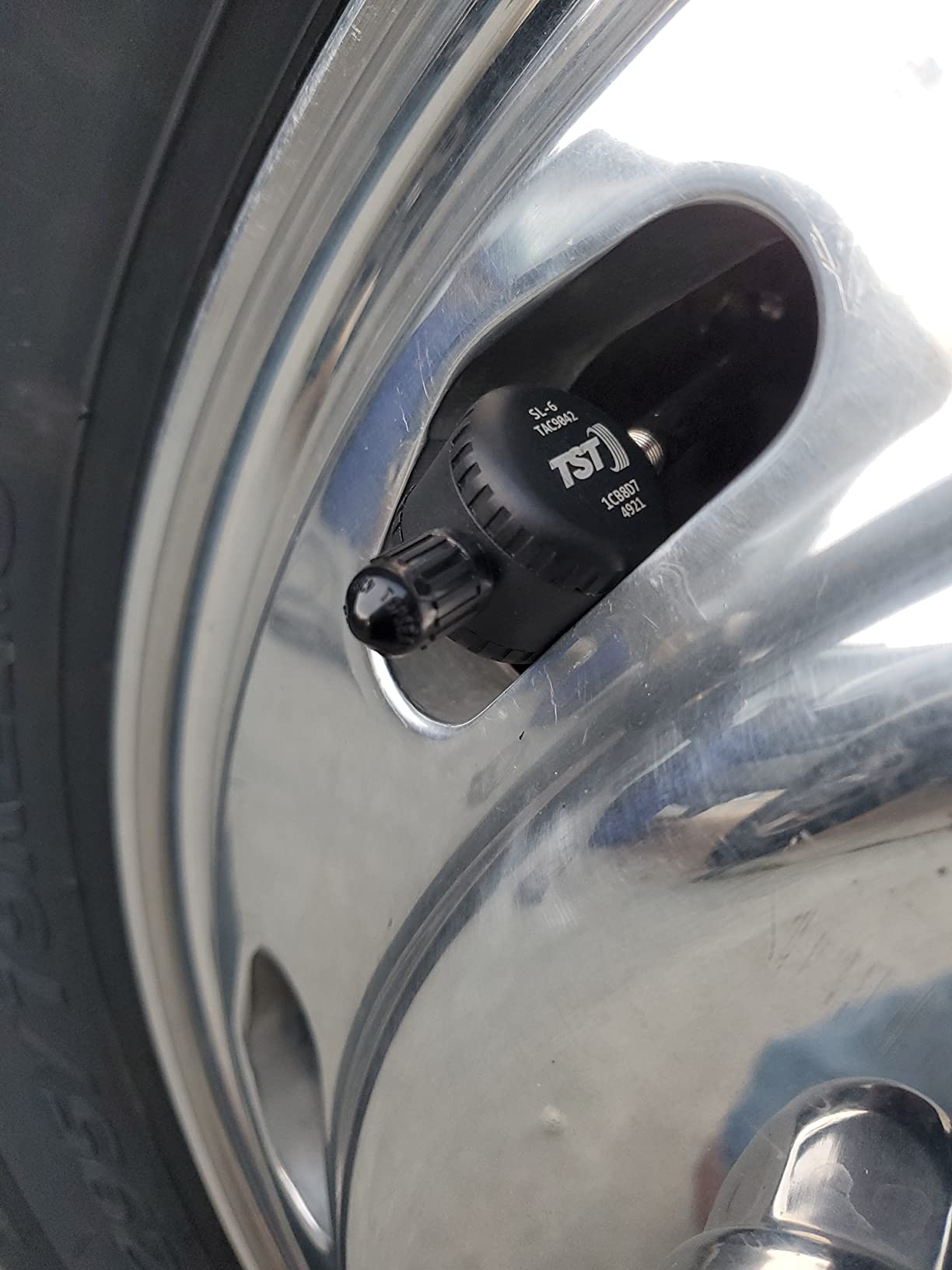
Who the TST 507 flow-through kit suits
It suits owners who check or top up tire pressure regularly, or who simply do not want to make a habit of removing four to eight sensors. Flow-through removes a recurring irritation, and on dual wheels where the inner valve is hard to reach it removes a genuinely unpleasant one.
It also suits anyone whose rig outgrew a four-sensor system, because eight sensors on one display covers a large trailer or two trailers without a second receiver, and user-replaceable CR2032 batteries mean a dead cell is a two-minute fix rather than a return.
Who should skip the TST 507 flow-through kit
Skip it on cost if your rig is a tandem trailer with good tires that you check monthly. This is the most expensive configuration in the roundup, and the flow-through benefit is real but it is not a safety feature.
Skip it if your trailer does not already have metal valve stems. Flow-through installation requires them, and converting a trailer from rubber stems means buying stems and a proper install. That extra work is fine if you are already planning a stem change, and not fine if you are not.
How to Choose a Trailer Tire Pressure Monitoring System
External or internal sensors?
External screw-on sensors are the right default for almost every trailer. They mount on the valve stem in minutes, never affect wheel balance, are visible so you can see if one is missing, and can be swapped between trailers. Internal band-mounted sensors sit inside the tire under the rim, protected from weather and theft, but they require removing the wheel and tire to install and they add mass to the wheel, which means a re-balance after every sensor change.
The balance question comes up constantly in owner forums and it is a legitimate concern. A band-mounted internal sensor adds a small but real imbalance that can produce a vibration at towing speeds. External cap sensors add almost nothing measurable. If you tow a lot of miles and notice vibration after fitting internal sensors, that is why.
Internal hard-stem sensors are the exception rather than the rule. They are the route for replacing an existing internal system on aluminum wheels, and owners pursuing upgrades often turn to that path because the wheels are already off. For a first TPMS purchase on a trailer with good tires, external is the sane starting point.
Flow-through or non-flow-through?
A flow-through sensor is a valve stem you inflate through. A non-flow-through sensor is a cap that seals the valve, so you must remove it to add air. Non-flow-through is genuinely fine if you set pressures when the tires are cold, check monthly, and are comfortable with the extra step. It becomes a nuisance when you top up often, and it is close to impossible on some dual-wheel arrangements.
Among the eight systems here, only the TST 507 eight-sensor configuration is flow-through. Everything else, including the four-sensor TST 507, requires sensor removal for inflation.
Solar power or replaceable batteries?
These are two different questions and owners routinely conflate them. The monitor and the sensors are powered separately.
For the monitor, solar charging is the low-maintenance answer. The Tymate TM2 and the Masoll both charge from a solar panel, so the display keeps running as you drive without a cable or a cigarette lighter adapter. Rechargeable monitors like the GUTA GT20 and the GUTA GT30 need charging, with the GT30 holding twelve to fourteen days and the GT20 about fifteen hours under heavy use, and both sleep automatically after fifteen minutes without motion.
For the sensors, replaceable batteries are the important part. The failure mode owners report most often is a sealed sensor dying in service, so a system with user-replaceable CR1632 or CR2032 cells, and a low battery alert, will outlast one without. The TST 507s, both GUTAs, the TireMinder Smart TPMS and the Masoll all use replaceable cells. Replaceable batteries are maintenance; sealed batteries are a slow countdown to a failed tire position.
Receiver capacity and multi-trailer rigs
Match receiver capacity to the tires you tow, not the sensors in the box. The ranges here run from ten tires on the Tymate TM2 to forty-six tire views on the GUTA GT30 and forty on the TireMinder i10, with the GUTA GT20 supporting twenty-four. Any of these covers a normal trailer.
Multi-trailer rigs are where this becomes decisive. If you tow a fifth wheel and a tag-along, or swap a fifth wheel for a bumper-pull without changing systems, you want capacity above the tire count and a display that can show more than four positions clearly. The 3.5-inch TST 507 and the large GUTA screens handle eight to ten positions far better than a small four-tire unit.
Remember the spare in the count. A trailer with a spare carrier tire has a tire that can lose pressure unseen, which is one of the most common real-world reasons a blowout happens on a trailer.
Range, repeaters and fifth-wheel distance
Radio reach is the most common surprise in this category, and it is purely a function of distance. A tag-along stays within range of a receiver in the tow vehicle. A fifth wheel moves the trailer’s wheels far back, and a fifth wheel plus a tag-along puts a second set of wheels behind the receiver by a considerable margin.
Check what is in the box. The TST 507s, the TireMinder i10 and the TireMinder Smart TPMS include a booster or repeater. The GUTA GT20 includes one in its larger configurations but not in the four-sensor kit. The Tymate TM2 recommends a repeater at total rig lengths of thirty-six feet or more, and the Masoll at thirty-eight feet. The GUTA GT20’s booster is rated to about one hundred feet. If you tow a fifth wheel and the kit does not include a booster, plan to add one.
Alert modes and setting thresholds from the tire placard
Every one of these systems alarms on low pressure, high pressure, fast leak, high temperature, low sensor voltage and lost signal in some combination. Look for fast leak detection and a temperature alarm specifically, since high temperature is the earliest warning of a tire that is about to fail.
Set your thresholds from the tire placard on the trailer, not from a number you found online. Cold inflation pressure is listed on the driver’s side door frame or on a placard inside the trailer, and it is the figure the tire manufacturer and the trailer builder agree on. Inflate cold, meaning before driving more than a mile or so or before the tires have warmed.
Expect hot readings to be higher, and do not chase them. Air pressure rises as a tire heats up, so a tire at highway speed can read several PSI above its cold setting on a warm day, and a heavily loaded axle will run warmer still. Your alarm thresholds are built around a percentage of the reference pressure the monitor stores at setup, which is why the Masoll and both GUTA models set that reference automatically: it keeps you from mistaking a normal hot tire for a problem. If a tire you have just inflated cold reads high after two hours of highway driving, that is physics, not a fault.
Overloaded axles deserve their own attention. If you regularly tow near or above the trailer’s weight rating, watch the temperature channel more closely than the pressure channel, because heat is what destroys a tire.
Factory and camper-installed systems
If your RV or fifth wheel came with a built-in system such as Lippert TireLinc or a camper-installed unit, you have a working starting point. The useful question is coverage. Factory systems vary in how many tires they monitor, whether they include a spare position, and whether temperature is reported. If the built-in system covers every tire you tow and gives you a readable display, keeping it and adding sensors later is a legitimate path.
Going aftermarket is usually justified by tire count, temperature alarms, portability between vehicles, and expandability. The aftermarket sets in this roundup all report temperature, all support more tires than a typical factory unit, and several can move between the truck and the trailer or between two trailers.
Installation, valve stems and winter storage
Check your valve stems first. Cap sensors, including the TST 507 cap kit and both GUTA systems, are recommended for metal valve stems. Rubber stems are not recommended for reliable performance, and converting a trailer to metal stems is a separate job. Flow-through sensors require metal stems outright.
External installs need no wiring and usually no wheel removal, though you still need the trailer supported safely to reach the valves. Plan ten minutes per system. Battery changes happen between seasons rather than mid-trip, and while a system is in storage the sensors are simply not transmitting, so nothing is being consumed beyond normal standby.
When the trailer comes back out in spring, wake the display, confirm each sensor reports, and reset the reference pressure cold, before you inflate anything. If a sensor shows a low battery alert, replace the cell at home rather than at a rest stop. For anyone still doing a manual pre-trip walk-around, our [air pressure gauge roundup](https://blog-idcuk.com/best-tires-air-pressure-gauge/) covers the hardware that pairs well with a TPMS for setting baselines.
Frequently Asked Questions
What is the best tire pressure monitoring system for travel trailers?
For most tandem travel trailer owners the Tymate TM2 is the best fit, with four factory-paired external sensors, six alarm modes including fast leak and high temperature, and a receiver that handles up to ten tires. The TireMinder i10 is the pick if you want the largest dedicated display and a signal booster in the box, and the GUTA GT30 covers heavy rigs where you need ten tires and a 188 PSI range. The best TPMS for a travel trailer is whichever one matches your tire count and rig length, not simply the highest rating.
Which brand of TPMS sensor is considered the most reliable?
Reliability in this category comes down to two things: sensor battery serviceability and radio range. Systems with user-replaceable CR2032 or CR1632 cells, such as both TST 507 configurations, both GUTA models, the TireMinder Smart TPMS and the Masoll, let you swap a dead cell in minutes instead of losing a tire position. The TST 507 is the most consistently recommended name in owner forums, with the included repeater being a big part of why.
Do I need a TPMS for a trailer, or does my truck cover it?
You need a separate trailer system. Factory truck TPMS reads only the truck’s own wheels, so it cannot see pressure on a trailer. An aftermarket trailer sensor is an independent radio device that reports to its own receiver and will not appear in your truck’s cluster or trigger its tire pressure light. That is the single most common misunderstanding we see in owner forums.
How many TPMS sensors do I need for a trailer?
Count the tires on the ground, then add the spare. A tandem travel trailer or fifth wheel with a spare needs five sensors, a triple-axle with a spare needs eight, and a fifth wheel plus a tag-along can reach ten. Then check receiver capacity rather than the sensor count in the box, since the Tymate TM2 ships four sensors but monitors up to ten tires, and the GUTA GT20 ships four and handles up to twenty-four.
What is the recommended tire pressure for a fifth wheel RV?
Use the cold inflation pressure printed on the tire placard inside the fifth wheel or on the driver’s door frame, and set your alarm thresholds as a percentage above and below that figure. Check pressures cold, before driving more than a mile. Hot readings after highway miles will be higher, sometimes by several PSI, and that is normal rather than a fault. No single number works for every trailer, which is why the placard is the only authority.
How long do TPMS sensor batteries last?
Expect roughly two years on the replaceable CR1632 and CR2032 cells used across these systems, with the GUTA GT30 sensors rated for up to four years. Sealed-battery sensors can fail without warning, which is why a low sensor battery alert is worth having. Replace cells between seasons rather than mid-trip, and confirm every sensor reports after the trailer has been stored for a few months.
Will an aftermarket trailer TPMS interfere with my truck’s factory TPMS?
No. The two systems share no radio link and no data, because trailer sensors are not part of the truck’s sensor network. The truck’s display shows only truck tires, the trailer display shows only trailer tires, and neither reads the other. Some owners find it useful to compare the two displays, since a trailer reading that drops while the truck is steady is a clear signal of a trailer-specific leak.
Conclusion
The best tire pressure monitoring system for trailers is the Tymate TM2 for most owners, because it pairs factory-paired external sensors, solar charging and a ten-tire receiver with no setup friction. Pick the TireMinder i10 when you want the biggest dedicated display and a booster in the box, the GUTA GT30 when you tow heavy or run more than six tires, and the TST 507 eight-sensor flow-through kit when inflating without removing anything matters most to you.
Whatever you choose, set your reference pressure cold from the tire placard, count the spare in your sensor total, and confirm a booster is included if you tow a fifth wheel. Reviewed and updated September 2026. We earn a commission from qualifying purchases, which does not change what we recommend.