
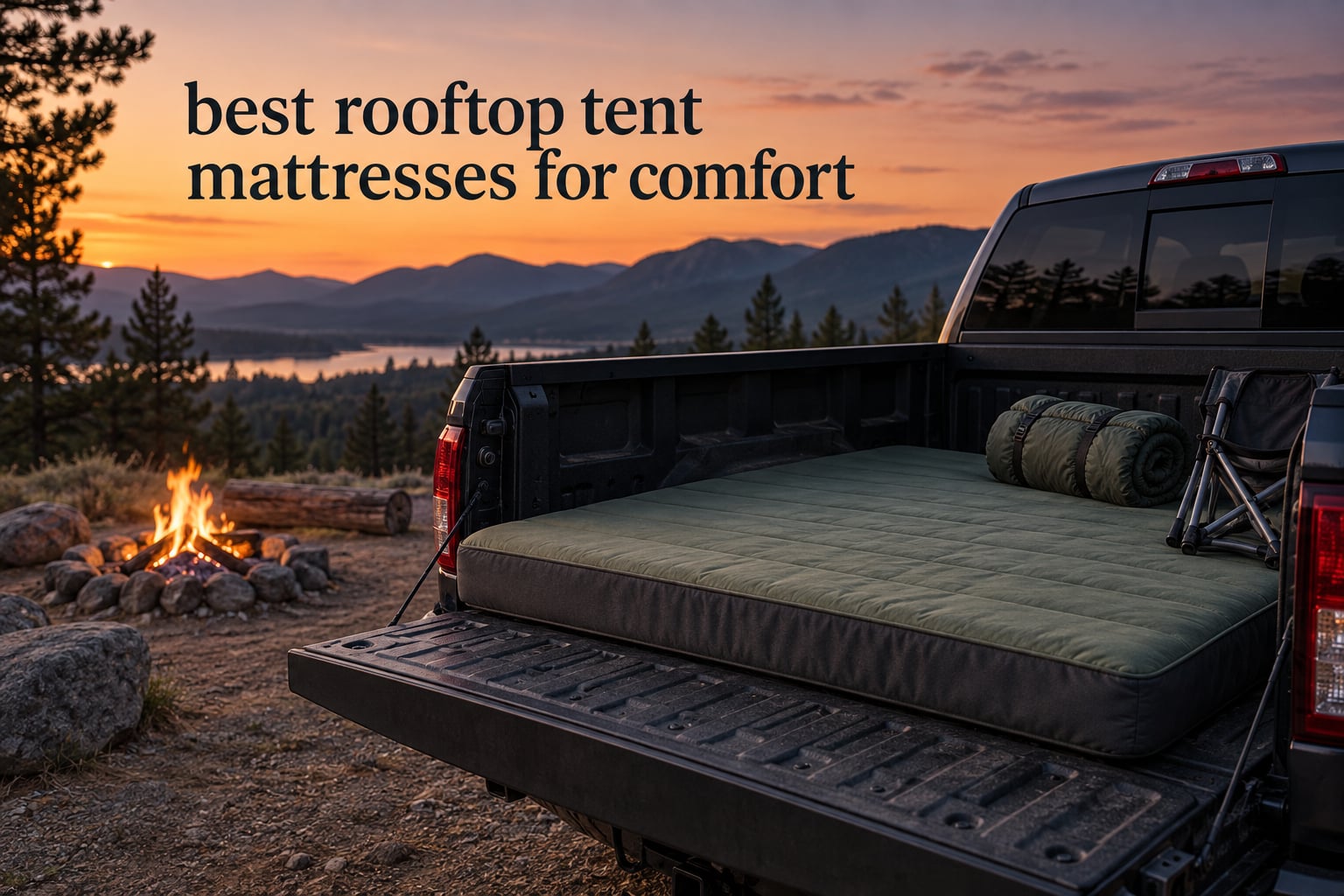
If you already own a rooftop tent, you do not need another tent. You need a different mattress. The thin 2-3 inch pad that came with your tent is the reason the floor reads through your shoulder blades and why you wake up colder than you expected, and replacing it is the single fastest upgrade available to a rooftop tent owner.
That is what this roundup is built around. We pulled ten of the best rooftop tent mattresses for comfort currently on the market, measured them against the questions owners actually ask on r/rooftoptents and r/carcamping, and organised them by sleeper type, insulation and tent width rather than by brand. If you are still choosing the tent itself, start with our guide to the best rooftop tents first, because interior width dictates which mattress you can even use.
Two things up front. We did not field-test these pads in the backcountry, so every spec here comes from the manufacturer listing and from the thousands of owner reviews behind each product, and we tell you exactly what we leaned on. Second, a rooftop tent mattress is a different product class from a backpacking sleeping pad, and shopping carousels mix the two constantly.
Table of Contents
Top 3 Rooftop Tent Mattresses for Comfort in 2026

Hazli Matrix AirCell 4 Inch Queen
- 4 inch memory foam
- No pump or leaks
- Washable waterproof cover
- OEKO-TEX and CertiPUR-US
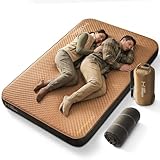
Lost Horizon Option3 4.5 Inch
- R-value 13
- 440 lb capacity
- Adjustable firmness
- Silent surface
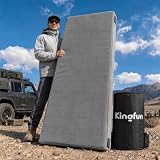
Kingfun 3 Inch Memory Foam
- Gel memory foam layer
- Velcro linkable corners
- Waterproof TPU cover
- CertiPUR-US
Our overall winner is the Hazli Matrix AirCell, the strongest combination of owner rating, review volume and bed-like feel in the group. The Lost Horizon Option3 takes the cold-weather crown on insulation, and the Kingfun is the pick if you want a comfortable two-pad setup built from a single inexpensive mattress.
Best Rooftop Tent Mattresses (October 2026)
| Product | Specifications | Action |
|---|---|---|
| Hazli Matrix AirCell 4 Inch Queen |
|
Check Latest Price |
| Lost Horizon Option3 4.5 Inch |
|
Check Latest Price |
| Kingfun 3 Inch Memory Foam |
|
Check Latest Price |
 Elegear 3.15 Inch Self-Inflating Elegear 3.15 Inch Self-Inflating |
|
Check Latest Price |
 Gaialoop 4 Inch Dual Layer Gaialoop 4 Inch Dual Layer |
|
Check Latest Price |
 ACACIA 4.3 Inch Y-Shaped ACACIA 4.3 Inch Y-Shaped |
|
Check Latest Price |
 Hikenture 4 Inch Electric Pump Hikenture 4 Inch Electric Pump |
|
Check Latest Price |
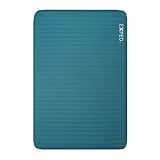 Exped MegaMat Duo Queen Exped MegaMat Duo Queen |
|
Check Latest Price |
 Elegear 4 Inch Full Air and Foam Elegear 4 Inch Full Air and Foam |
|
Check Latest Price |
 EUHAMS Double Self-Inflating EUHAMS Double Self-Inflating |
|
Check Latest Price |
What type of mattress is best for a rooftop tent? A self-inflating pad with an open-cell foam core is the best all-round choice, because the foam cushions pressure points that a hard tent floor amplifies while still blocking cold ground, and the sealed air layer lets you tune firmness. All-foam mattresses win on reliability and quietness, and all-air pads win only on packed size.
1. Hazli Matrix AirCell 4 Inch Queen Foam Mattress
Hazli Matrix AirCell 4 Inch Memory Foam Camping Mattress Pad – Queen Roll Up Mattress for Adults – Double Portable Cot Sleeping Pad-2 Person Floor Mat or Bed Roll – Queen 80″ x 60″ x 4″ Dark Grey
4 inch memory foam
80 x 60 x 4 inch
14.2 kg
Washable waterproof cover
Pros
- Memory foam layer over a high-density base that feels like a real bed
- No pump and no leak risk at 3 AM
- Removable and washable waterproof cover with anti-slip backing
- OEKO-TEX and CertiPUR-US certified materials
- Rolls down and stores without any valves
Cons
- Heaviest pad in the roundup at 14.2 kg
- Traps heat and is uncomfortable in hot weather
- Strong new-foam odour that needs 48 hours of airing
- Outer cover zipper can snag on bunched fabric
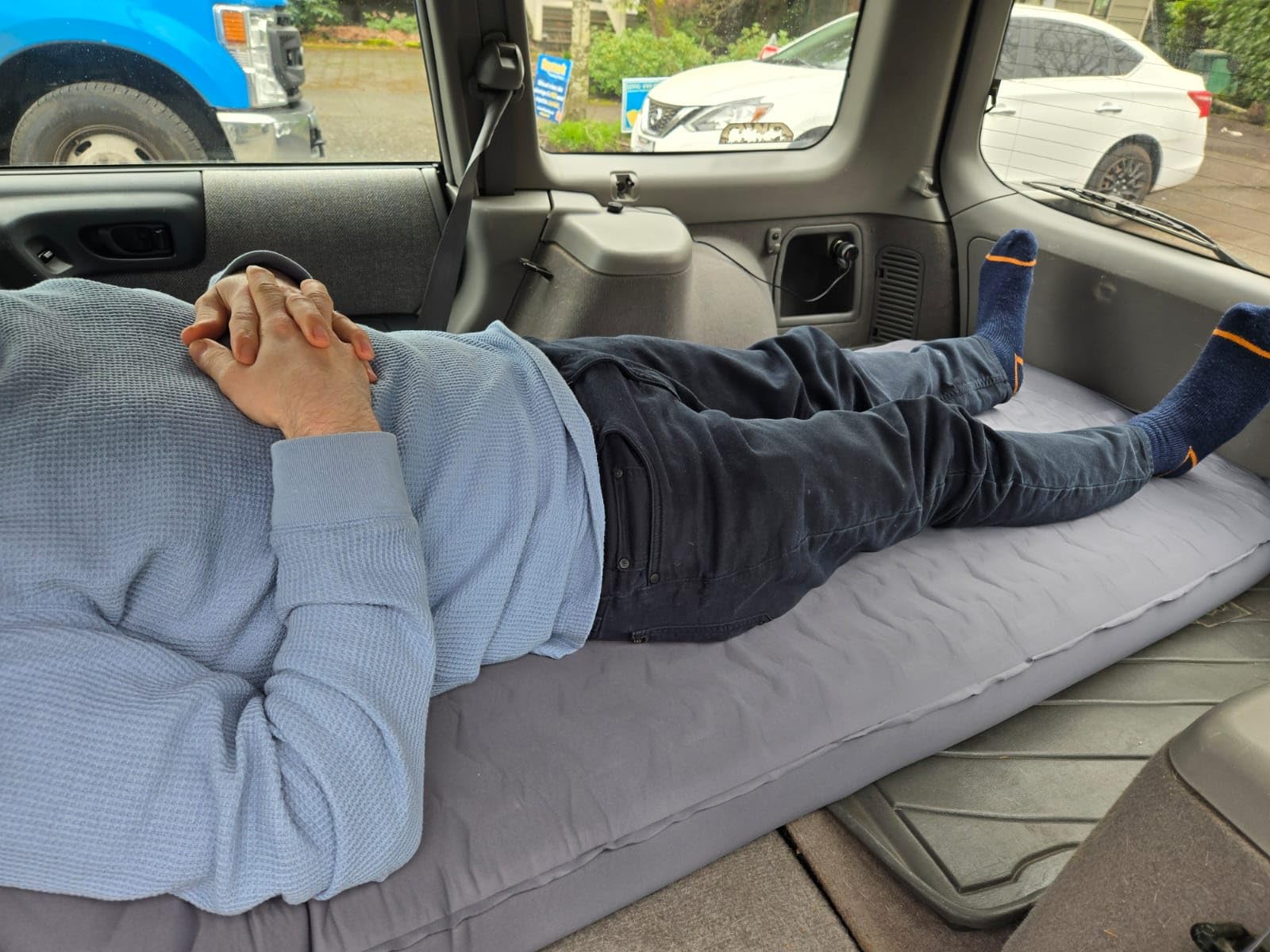
This is the pad we kept coming back to while putting this list together. It is 80 by 60 by 4 inches, which is the largest sleeping surface here, and it is pure foam, so there is no valve to fail and nothing to re-inflate at 3 AM. Owners consistently describe it as the closest thing to a home mattress they have slept on outdoors.
The construction is straightforward and good. A pressure-relieving memory foam comfort layer sits over a high-density support base, which is exactly the stack that keeps a side sleeper’s hips from hitting the floor. Reviewers with back and hip problems single it out, and several mention that stacking two mats turns it into something close to a full mattress.
The cover is where it beats most competitors. It is waterproof, removable and washable, with an anti-slip backing, and it comes with a heavy-duty carry bag with straps and a phone pocket. That is a real upgrade for a tent where condensation is guaranteed and the floor is fabric over metal.
Who it works for and who will be disappointed
It suits couples and anyone who wants genuine bed width, back sleepers, and campers with hip or back pain. The 4.4 rating across more than 3200 reviews is the most heavily validated comfort claim in this roundup, and that volume matters when you are buying something to sleep on for eight hours a night.
It will disappoint anyone weight-limited. At 14.2 kg it is the heaviest pad here, and every kilogram sits on your roof rack and in your fuel bill. It will also disappoint hot sleepers in summer, because memory foam is an excellent insulator in both directions and that cuts both ways.
The practical details before you order
Air it out for two days before your first trip. New memory foam has a genuine odour, owners say, and a rooftop tent is a small enclosed space where that concentrates. Because it arrives rolled rather than vacuum-packed, you can use it the same day, which is a real convenience over foam mats that need days to fluff back.
Check your tent width before you commit. At 60 inches wide, this fills most two-person rooftop tent platforms completely with little to spare, so measure your interior and check for wall or ladder intrusion before ordering. If your tent is narrower, step down to a 50.7 inch double or a single-width pad.
2. Lost Horizon Option3 4.5 Inch Self-Inflating Mattress
Lost Horizon Option3 Self-Inflating Foam Camping Mattress, Full, 4.5″
4.5 inch self-inflating
80 x 52 x 4.5 inch
7.3 kg
R-value 13
Pros
- R-value 13 gives four-season insulation
- 440 lb weight capacity
- Adjustable firmness through air volume control
- Holds air overnight with no nightly re-inflation
- Silent and stable surface with no squeaking
- TPU laminated polyester shell with solid foam core
Cons
- Bulky when rolled and heavy for a rooftop build
- Deflation is slow and usually needs a separately sold electric pump
- Does not accept a standard pump fitting size
- One long-term owner reported a unit that stopped holding air after nearly three years
The Lost Horizon is the cold-night answer. Its R-value of 13 is the highest in this roundup by a wide margin, and combined with 4.5 inches of 12-pound foam filling it is the pad I would put in a tent for shoulder-season desert trips or anything approaching freezing. Owners with back and hip problems describe it as the first pad they can sleep on comfortably all night.
It is a true self-inflating design. Open the valve and the foam pulls in most of the air itself, then you top it off. Because it is a sealed air chamber around solid foam, it does not deflate in the night the way a conventional airbed does, which is the single most common complaint on rooftop tent forums.
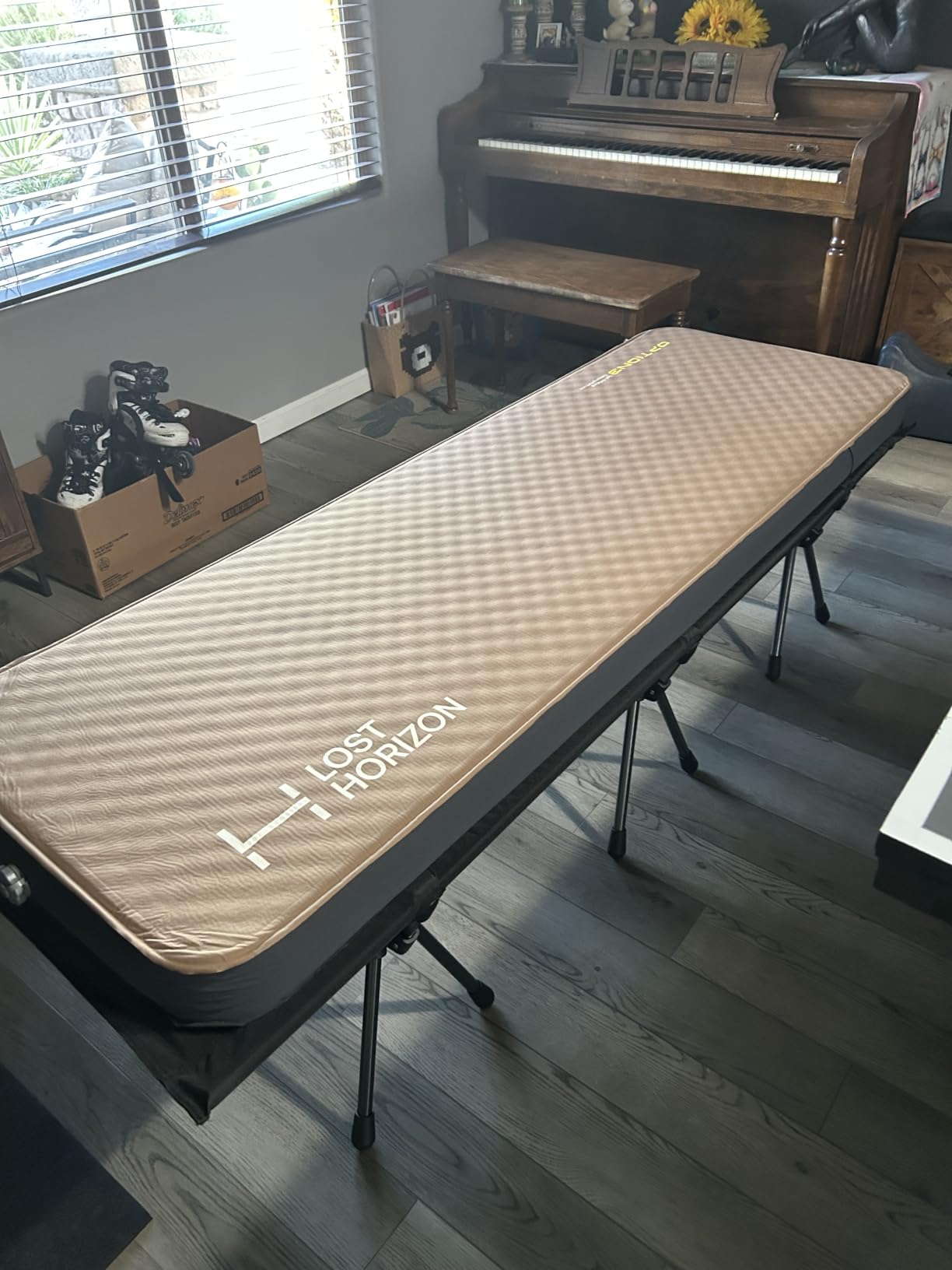
The adjustable firmness is genuinely useful. Add air and it firms up for back sleeping, let some out and it softens for a shoulder. The carry bag doubles as a pump sack, and the TPU laminated polyester shell is quiet, with none of the crinkling that wakes a partner on cheaper nylon pads.
Who it works for and who will be disappointed
Pick this if you camp below 40 degrees, if you sleep cold, or if you want one pad that handles summer and winter without a swap. The 440-pound capacity and 4.5 inch profile also make it a safe choice for heavier side sleepers who bottom out on thinner foam.
Skip it if trunk space or roof weight is tight. At 7.3 kg it is already substantial, and the rolled bulk is the most common complaint in the reviews. The deflation step is genuinely awkward too, and since the valve does not take a standard pump fitting, budget for the optional electric pump rather than assuming your existing one will work.
What to watch in the first year
There is a single long-term report of a unit that stopped holding air after nearly three years, which is worth knowing given the price you are committing. Test it at home for a few nights before a long trip so you find any valve issue in your driveway rather than at a trailhead.
Deflate it partway. Owners who let this one sit slightly under full inflation report a noticeably softer, more forgiving surface than the same pad pumped rock hard. Firmness control is real, and the low end of that range is where the comfort is.
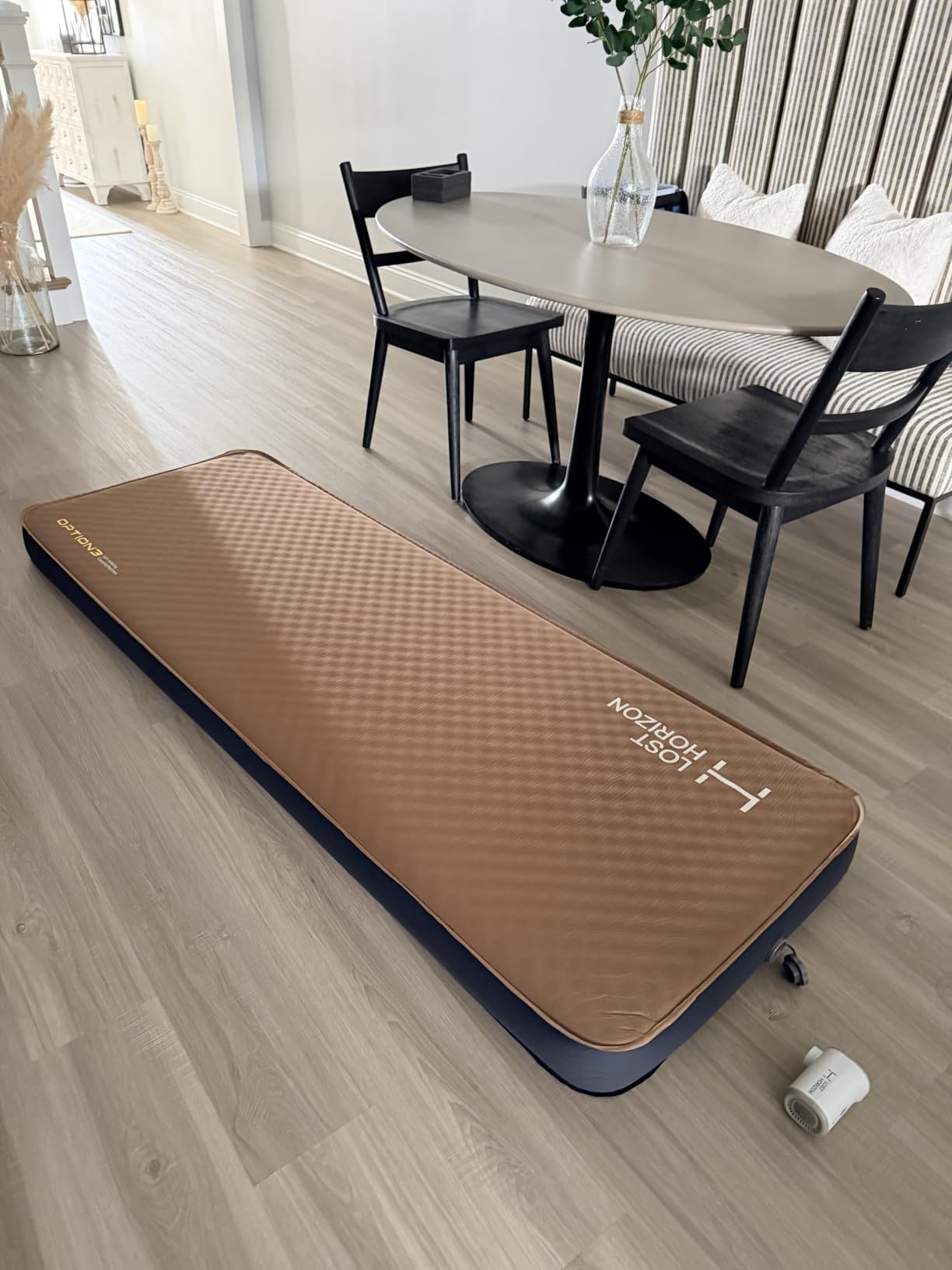
3. Kingfun 3 Inch Memory Foam Camping Mattress
Kingfun 3 Inch CertiPUR-US Memory Foam Camping Mattress, Waterproof Roll up Sleeping Pad for Adults, Comfortable Thick Floor Sleeping Mats for Car Truck Tent with Removable Travel Bag, Single
3 inch two-layer foam
75 x 30 x 3 inch
350 g
CertiPUR-US certified
Pros
- Two-layer build with 1 inch gel memory foam over 2 inch support foam
- Lightest pad in the roundup at 350 g
- Waterproof TPU-coated velboa cover with anti-slip bottom
- Eight Velcro corner connectors let you build a double or king setup
- CertiPUR-US certified foam
Cons
- Only 3 inches thick so less isolating on uneven ground
- Needs up to 72 hours after unpacking to fully expand
- Single-width 30 inch footprint is narrow for one person
The Kingfun is the value pick, and the 4.5 rating across more than 1200 reviews backs that up. At 350 grams it is by far the lightest mattress in this roundup, which matters on a rooftop where every gram is height added to your vehicle and cargo you could be carrying instead.
You get a proper two-layer construction rather than a single slab: 1 inch of gel-infused memory foam over 2 inches of high-density support foam. That is the right stack for a back sleeper or a lighter side sleeper, and reviewers say it holds its shape over long-term use rather than sagging into a hammock shape.
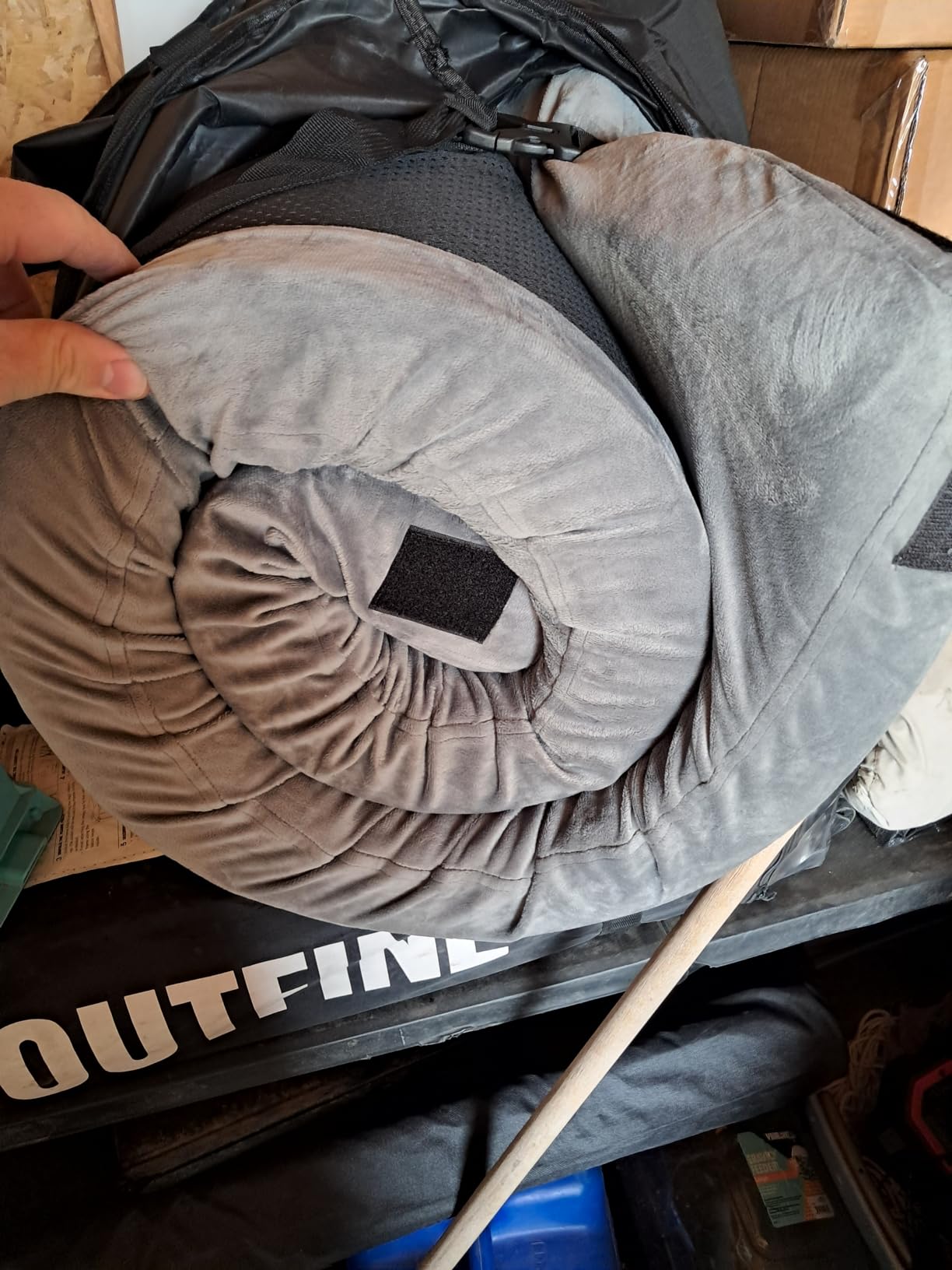
The Velcro corner connectors are the sleeper feature. Eight of them let you zip two or four pads together into a custom double or king, which is how most owners use it as a couple. The cover is a soft velboa with a TPU waterproof coating and an anti-slip bottom, and the travel bag has zippered side pockets.
Who it works for and who will be disappointed
It suits couples on a budget, families building a multi-pad setup, and anyone who wants a comfortable mat for guests, cots or the tent floor without a large weight penalty. The CertiPUR-US certification matters more than it sounds in a small enclosed space where foam off-gassing concentrates.
It is the wrong pick for a heavy side sleeper. At 3 inches, this is thin enough that the tent floor still reads through your shoulder and hip, and buyers moving up from 3 inch to 4 inch pads report the difference as night and day. A side sleeper over 180 pounds should look at one of the 4 inch models instead.
Plan for the expansion time
This arrives vacuum-compressed and can take up to 72 hours to reach full thickness. Unpack it two or three days before your trip and leave it lying flat, ideally with something on top to encourage even recovery. Foam that has not fully expanded is the most common reason a new pad disappoints on night one.
It also serves as a guest mattress or a cot pad, which is why owners rate it so highly for value. If you want one purchase to cover both the tent and the spare bed, this is the most versatile item in the list.
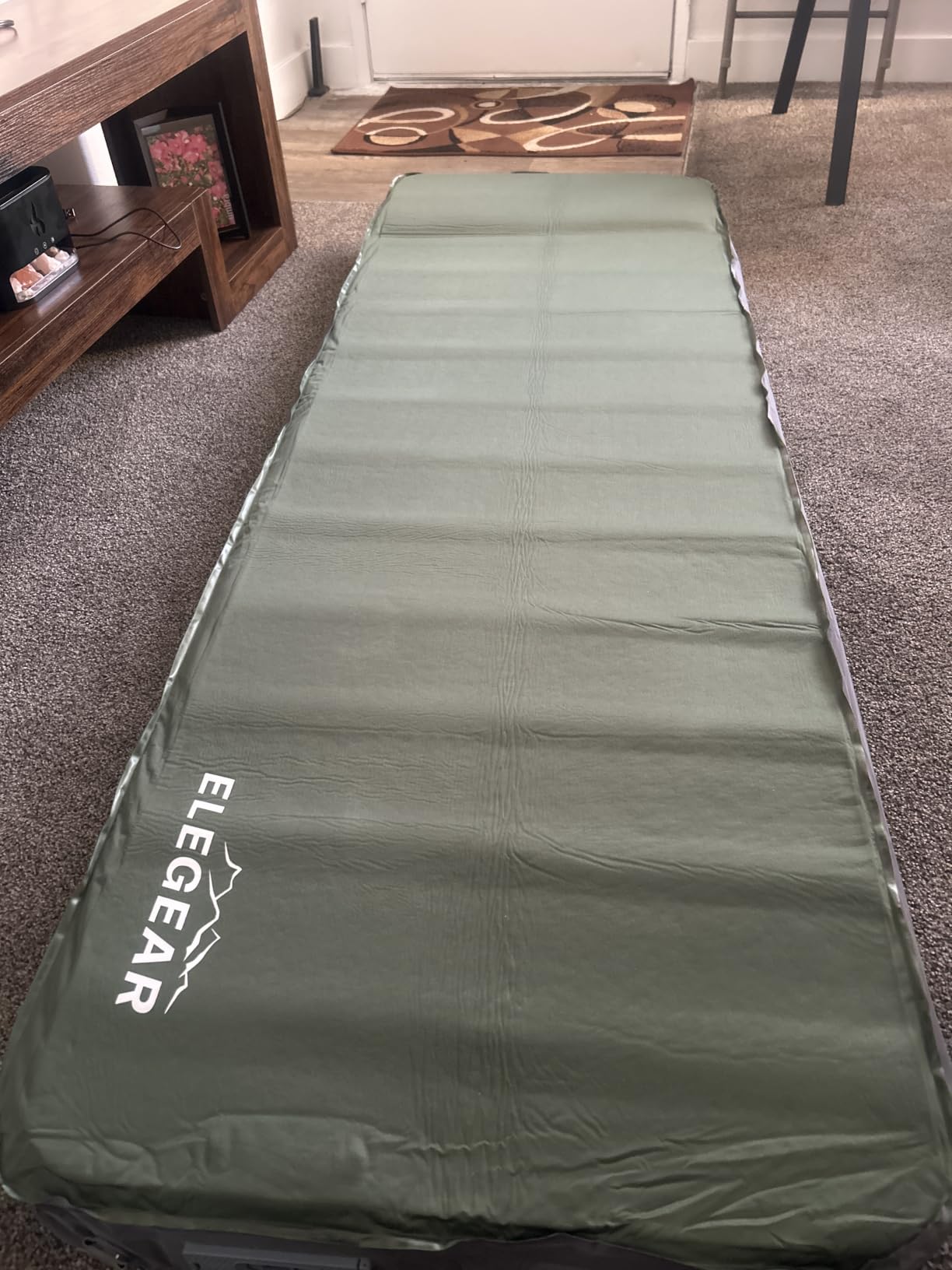
4. Elegear 3.15 Inch Self-Inflating Sleeping Pad
Elegear Self Inflating Sleeping Pad with Pillow 26D Memory Foam 3.15″
3.15 inch self-inflating
77 x 27 x 3.15 inch
8.1 lb
R-value 9.5
Pros
- 26D high-resilience foam versus the 19D used in most competing pads
- Self-inflates in about 20 seconds after first expansion
- Dual-use valve makes deflation and packing straightforward
- Built-in pillow and waterproof TPU layer
- Quiet 50D stretch knit surface that does not crinkle
Cons
- Vacuum-packed so the first inflation can take up to 20 minutes
- Only 27 inches wide which is narrow for larger sleepers
- 3.15 inch profile is thin for side sleeping on a hard floor
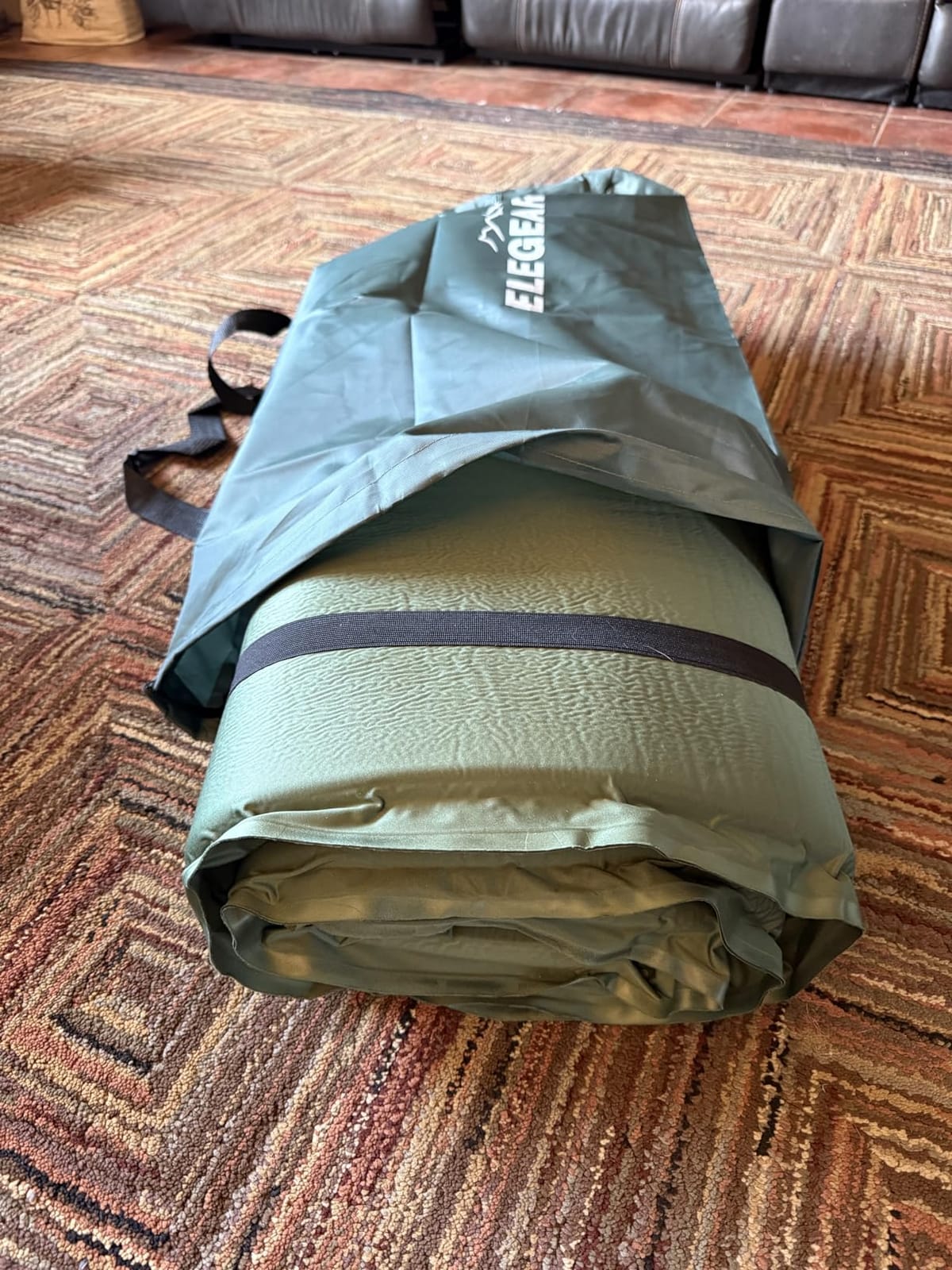
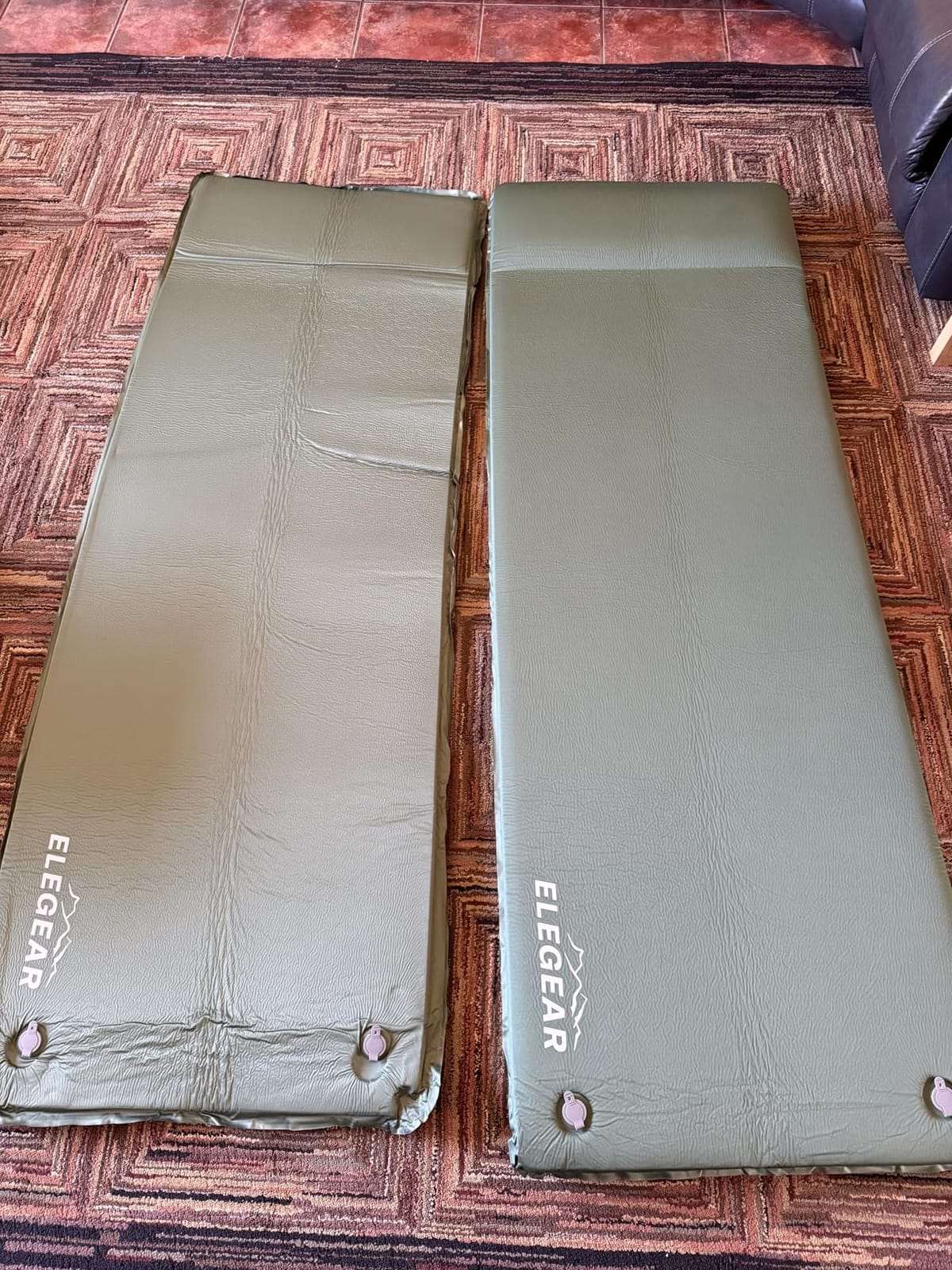
This is the solo camper’s pick, and the technical headline is the foam density. The Elegear uses 26D high-resilience memory foam where most competing pads in this class use 19D, and that difference is the reason owners report it retaining elasticity after repeated compression rather than turning flat.
Once expanded, it self-inflates in about 20 seconds. The dual-use valve handles both directions, which solves the storage problem that plagues thick foam pads, and the R-value of 9.5 makes it genuinely four-season rather than three-season in name only. Capacity is rated at 800 pounds.
There is a built-in pillow, which sounds minor until you are trying to find your own pillow in a dark tent at altitude, and the 50D stretch knit surface is quiet under movement. The waterproof TPU layer keeps the foam dry when condensation soaks the tent floor.
Who it works for and who will be disappointed
It suits solo campers, backpackers who also carry a rooftop tent, and anyone who wants four-season insulation without a heavy foam slab. The R-9.5 rating in a package weighing 8.1 pounds is genuinely efficient, and the density argument means it should outlast cheaper pads of the same thickness.
It will disappoint a side sleeper. At 27 inches wide and 3.15 inches thick, this is a back-sleeper’s pad, and a heavier side sleeper will feel the floor through the hip. It is also not a couples mattress, so if you are sharing a tent this is the wrong footprint entirely.
Handle the first inflation properly
Because it is vacuum-packed, the very first expansion can take up to 20 minutes while the foam recovers its full loft. Do that at home, not at the campsite. After that first cycle the pad inflates in seconds, and the dual valve lets you drop it to about 85 percent full for a softer surface.
At 8.1 pounds with a shoulder carry bag, it is one of the few self-inflating pads here that will not dominate your roof load. That balance of density, insulation and weight is what earns it a place on this list.
5. Gaialoop 4 Inch Dual Layer Foam Mattress
Memory Foam Camping Mattress, Extra Thick 4 Inch Pad, Single, Lapis Blue
4 inch dual-layer foam
75 x 30 x 4 inch
13 lb
2 year warranty
Pros
- 4 inch profile holds up side
- stomach and back sleeping on hard ground
- 30D support foam blended with 40D memory foam
- Removable and washable plush cover with waterproof inner coating
- Includes a pillow
- non-slip bottom
- carry bag and straps
- 2 year manufacturer warranty
Cons
- 13 lb is heavy for anything beyond car camping
- Single-width sizes are narrow and larger sizes stop at 75 inch Full
- Waterproof coating protects the foam but adds to the packed bulk
The Gaialoop exists to solve one problem: side sleeping on a hard surface. At 4 inches with a 30D support foam base blended into 40D memory foam, it is one of the thicker foam pads here, and reviewers consistently say it holds up side sleeping on rocks and sloped ground where 3 inch pads bottom out.
The cover does more than feel nice. There is a waterproof coating inside both the top and bottom covers, which matters because the real enemy of camping foam is dew and condensation soaking in from below overnight. The plush velvet-style cover is removable and washable, so a wet season does not permanently stain the sleeping surface.
It also ships with the small things you would otherwise buy separately: a pillow, a non-slip bottom, and a carry bag with straps. A 2 year manufacturer warranty is longer than most in this roundup, which tells you something about how long the brand expects the foam to last.
Who it works for and who will be disappointed
It suits side sleepers, combination sleepers who move around, and anyone camping on hard or uneven ground. It is a fixed foam pad, so there is no valve, no air loss and nothing to re-inflate. For a back sleeper who just wants a bed, it is one of the most predictable choices here.
It will disappoint weight-conscious builders. At 13 pounds it is one of the heavier pads in the roundup, and foam that thick eats cargo space. Owners running a fuel-sensitive build or a full overland load should weigh the comfort gain against that penalty honestly.
Check the size ceiling before ordering
This line tops out at 75 inch Full. If your rooftop tent interior is wider, this is not the pad, and no amount of comfort makes up for a mattress that does not span the platform. Measure first.
The single-width version at 30 inches is a solo sleeper’s pad, not a couple’s. If you are a couple, look at the double-width models further down the list, or plan to place two of these side by side with a sheet over the seam.
6. ACACIA 4.3 Inch Y-Shaped Self-Inflating Pad
Acacia 4.3″ Thick Self Inflating Sleeping Pad with Foam | Innovative Y-Shaped Telescopic Structure | Ultraportable Camping Mattress | Outdoor Compact Air Mat for Tent Car | Full
4.3 inch self-inflating
80 x 53 x 4.3 inch
10.4 lb
R-value 6
Pros
- Y-shaped telescopic foam structure cuts packed volume by up to 60 percent
- Flat foam-backed surface suits side sleepers better than bubble air mattresses
- 440 pound capacity resists bottoming out
- Two-way valve plus a carry bag that doubles as a pump sack
- Side buckles let you link two pads together
- 3 year warranty with a repair patch included
Cons
- R-6 is the lowest insulation rating among the insulated pads here
- Some buyers report slow air loss at the valve after months of use
- Rolled size is bulky in the larger sizes despite the Y-structure
The ACACIA solves the problem every self-inflating pad has, which is that foam is comfortable and foam is enormous. Its Y-shaped telescopic structure cuts packed volume by up to 60 percent, and in a vehicle where the rolled mattress competes with recovery gear, water, and tools, that is a real saving.
The surface is flat and foam-backed rather than a traditional bubble air mattress, and side sleepers notice that immediately. At 4.3 inches with a 440-pound capacity and adjustable firmness through the two-way valve, it resists bottoming out in a way most pads of this thickness cannot.
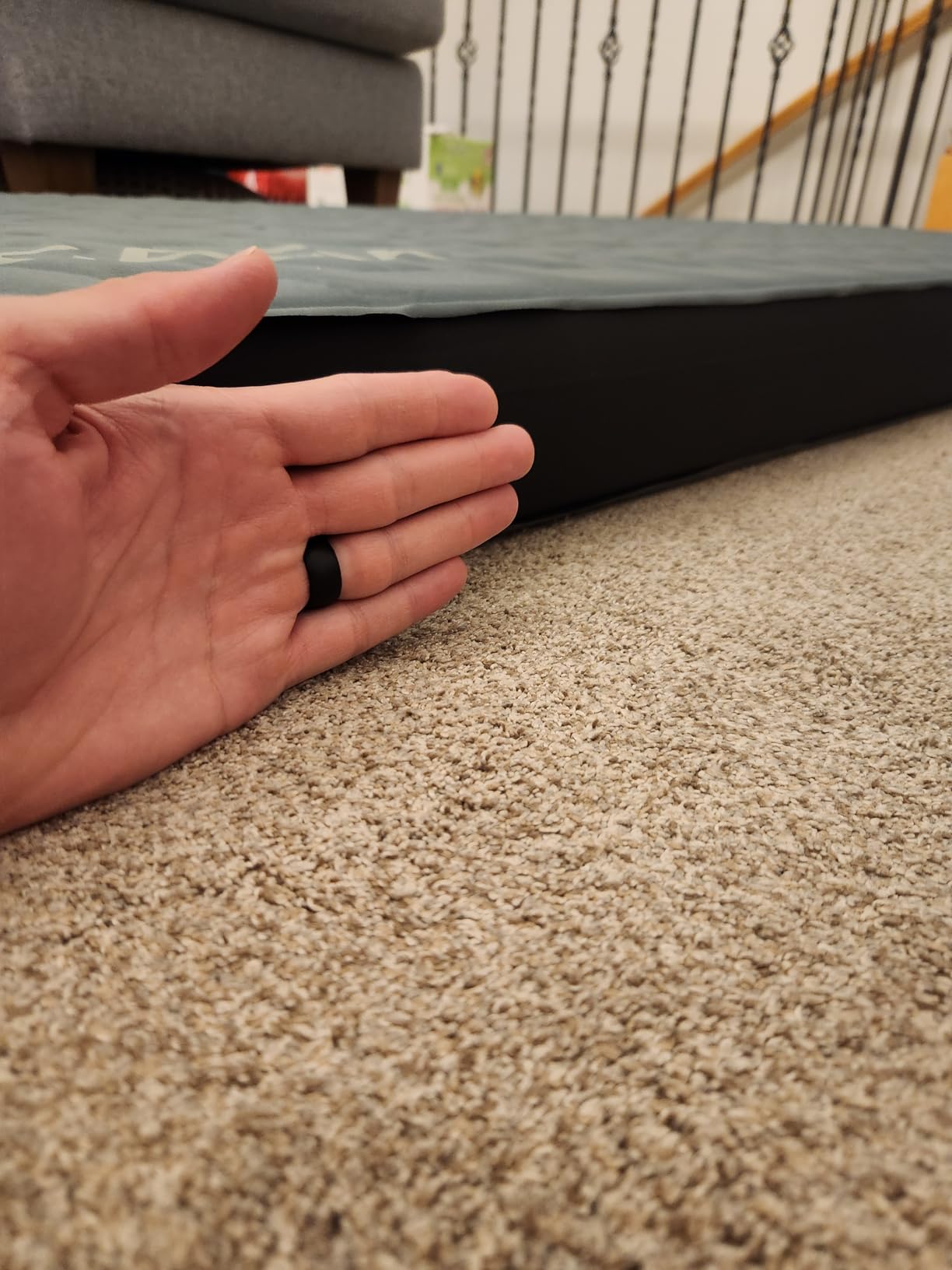
The details are unusually good for the category. Side buckles let you connect two pads into a wider surface, the included carry bag doubles as a pump sack so you can fine-tune firmness, and the box includes a repair patch, connectors and zip ties. The 3 year warranty is tied to service that buyers describe as fast when they have needed a replacement.
Who it works for and who will be disappointed
It suits side sleepers who also care about packed size, couples linking two pads, and campers who want tunable firmness without an electric pump. The 80 by 53 inch footprint is close to the interior dimensions of most two-person rooftop tents, so it is a safe buy in that class.
It is not the pick for deep winter. An R-value of 6 is the lowest among the insulated pads in this roundup, which is fine for three-season trips and cool desert nights but will not carry you through freezing temperatures. If cold is your problem, the Lost Horizon or Hikenture is a better target.
Know the one durability question
Some buyers report slow air loss at the valve after a few months of use, and the patch kit is in the box for exactly that reason. Test the pad at home across several nights before a long trip so you know whether yours has an issue.
Against that, the brand’s service record is genuinely good. Multiple reviewers describe fast replacement or refund resolution on faulty pads, which is a meaningful difference for a product whose whole point is that it never fails on you at 2 AM.
7. Hikenture 4 Inch Self-Inflating Mattress with Electric Pump
Hikenture 4″ Thick Self Inflating Sleeping Pad with Electric Pump, Double
4 inch foam and air
80 x 53 x 4 inch
9.6 lb
R-value 9.5
Pros
- Built-in electric pump inflates in about 90 seconds and self-vacuums on a button
- 4 inch foam filling cradles hips and shoulders
- R-value 9.5 blocks cold and damp ground
- Quiet stretch-knit surface with no crinkling
- Y-structure airflow channels cut roughly 50 percent of the bulk
- 500 pound weight capacity
Cons
- Lowest average rating in this roundup at 4.2
- Built-in pump adds weight and a component that can fail
- Full size is not a true two-person width for larger sleepers
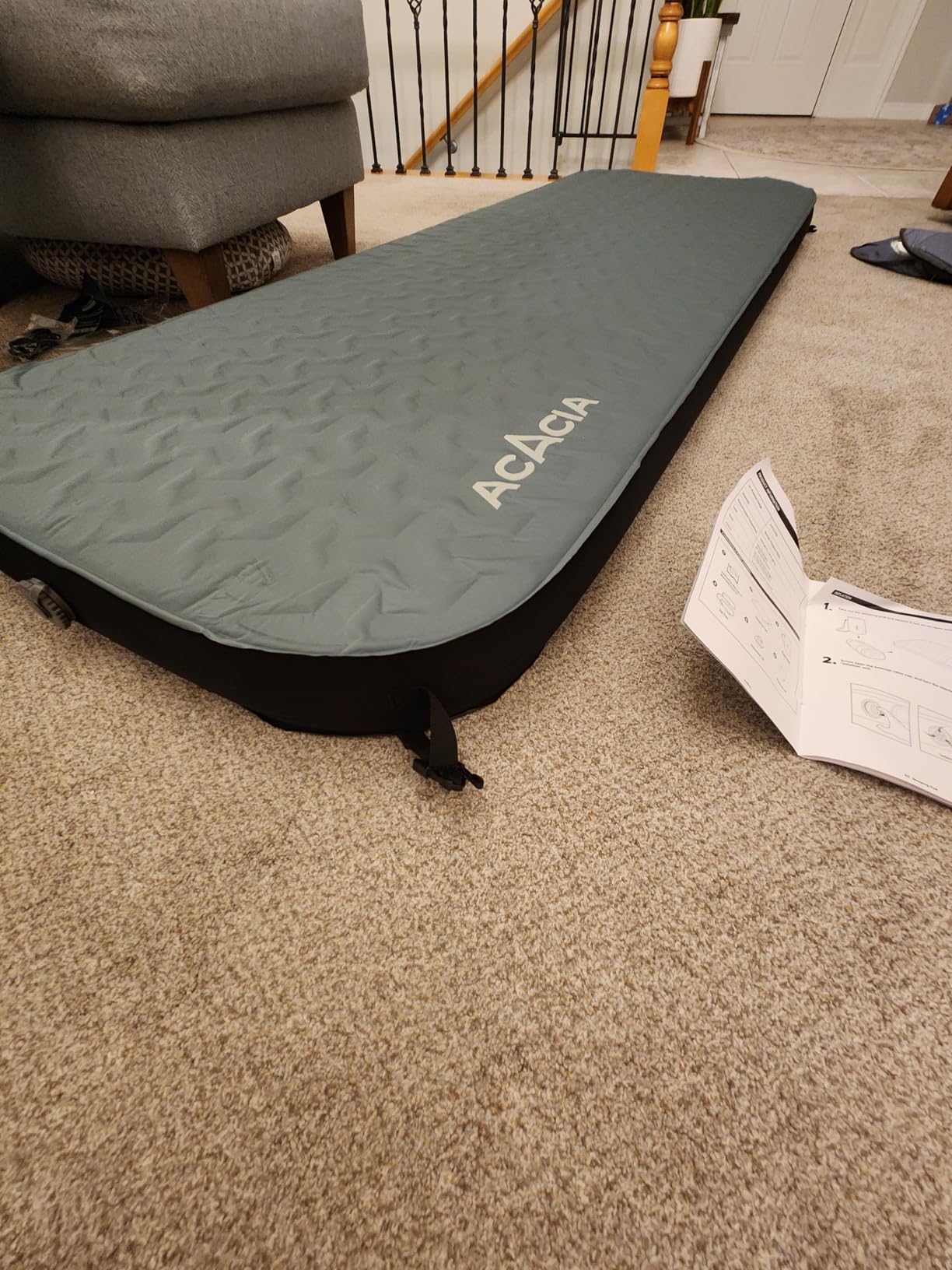
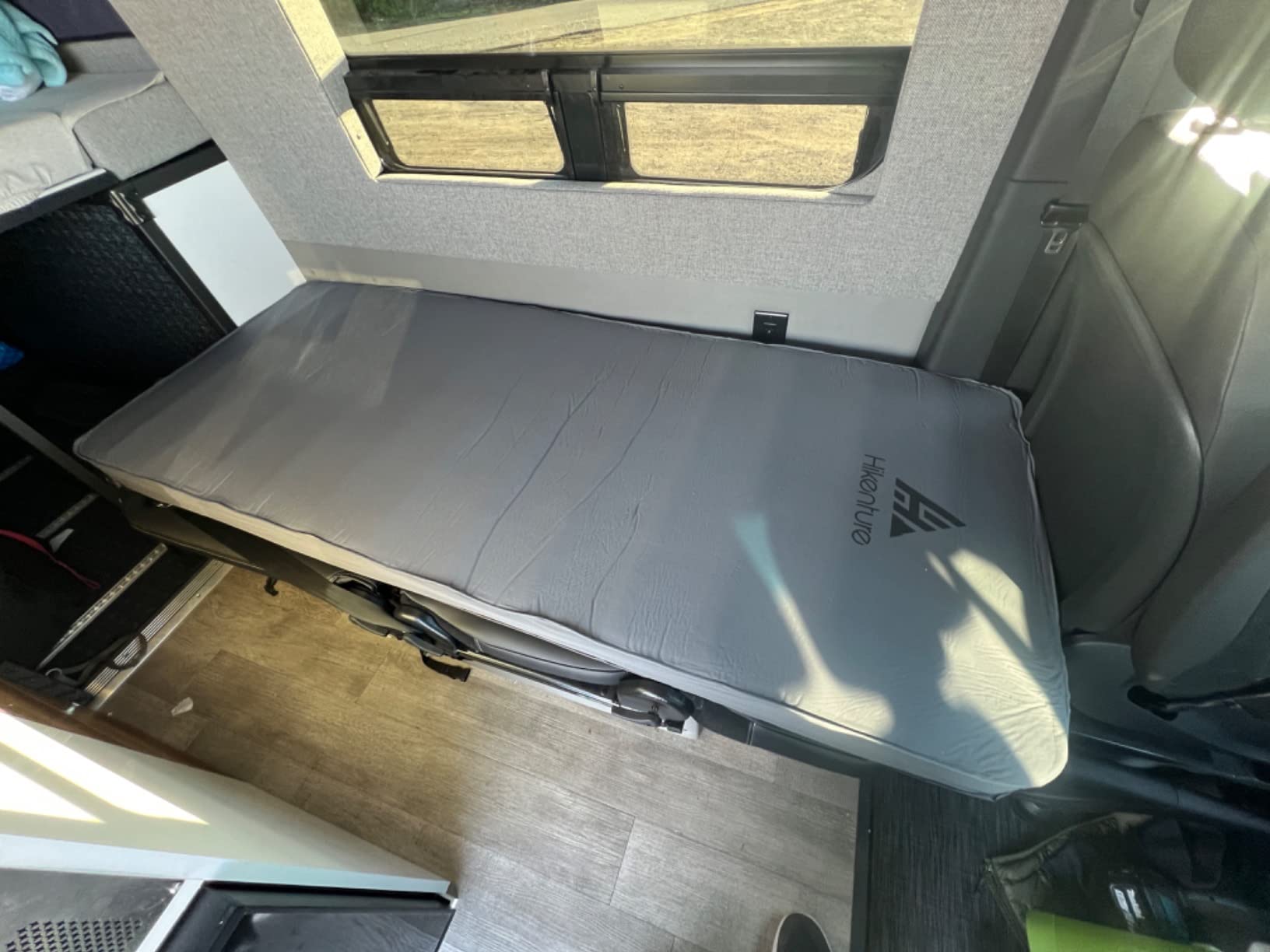
The Hikenture is the one to buy if setup speed is what frustrates you about camping. The built-in electric pump inflates the pad in roughly 90 seconds and then self-vacuums it on a button press, so you go from a packed bundle in the back seat to a made bed before you have finished unloading the tent.
The sleeping surface is genuinely good. Four inches of foam filling cradles hips and shoulders without bottoming out, the R-value of 9.5 handles cold and damp ground well, and the quiet stretch-knit surface stays still when a partner is sleeping beside you. Its listed capacity of 500 pounds is a realistic figure for a foam pad of this profile.
It is also lighter than it looks at first, at 9.6 pounds, and the Y-structure airflow channels cut roughly 50 percent of the bulk compared with a conventional foam core. A manual pump sack variant exists if you would rather not carry a motor.
Who it works for and who will be disappointed
It suits campers who set up late, families with kids who need the bed ready quickly, and anyone who would rather not wrestle a pump sack in the dark. At 80 by 53 inches it fits most two-person rooftop tent platforms.
It is the weakest-rated product in this roundup at 4.2, with a higher share of one and two star reviews than the rest of the list, and the complaints cluster around durability and the pump itself. That is a real caution when the pump is the headline feature, because it is also the most failure-prone part.
Test the pump before you leave
Charge the battery fully before every trip and run the pad through a full inflate and deflate cycle at home. A pump that drains early in a weekend is the difference between a comfortable night and a night spent sleeping on the raw tent floor.
Watch the width closely. Owners note the Full size is not a true two-person width for larger sleepers, so a couple sharing this pad will be edge to edge. If you need genuine bed width, look at the Exped Duo further down.
8. Exped MegaMat Duo Queen
Exped MegaMat Sleeping Pad, Duo Queen
4 inch cored open-cell foam
80 x 59.8 x 4 inch
11.9 lb
R-value 8.1
Pros
- 4 inches of cored open-cell foam with 30 percent more coring for insulation
- 3D vertical sidewalls eliminate edge tapering for a full surface
- Soft 100 percent recycled 4-way stretch tricot shell
- Top-Up pump included for firmness adjustment
- OEKO-TEX 100 certified shell
- Welded side handles and a repair patch in the box
Cons
- Most expensive pad in this roundup
- 11.9 lb and bulky when rolled
- Some long-term owners report occasional seam or valve leaks
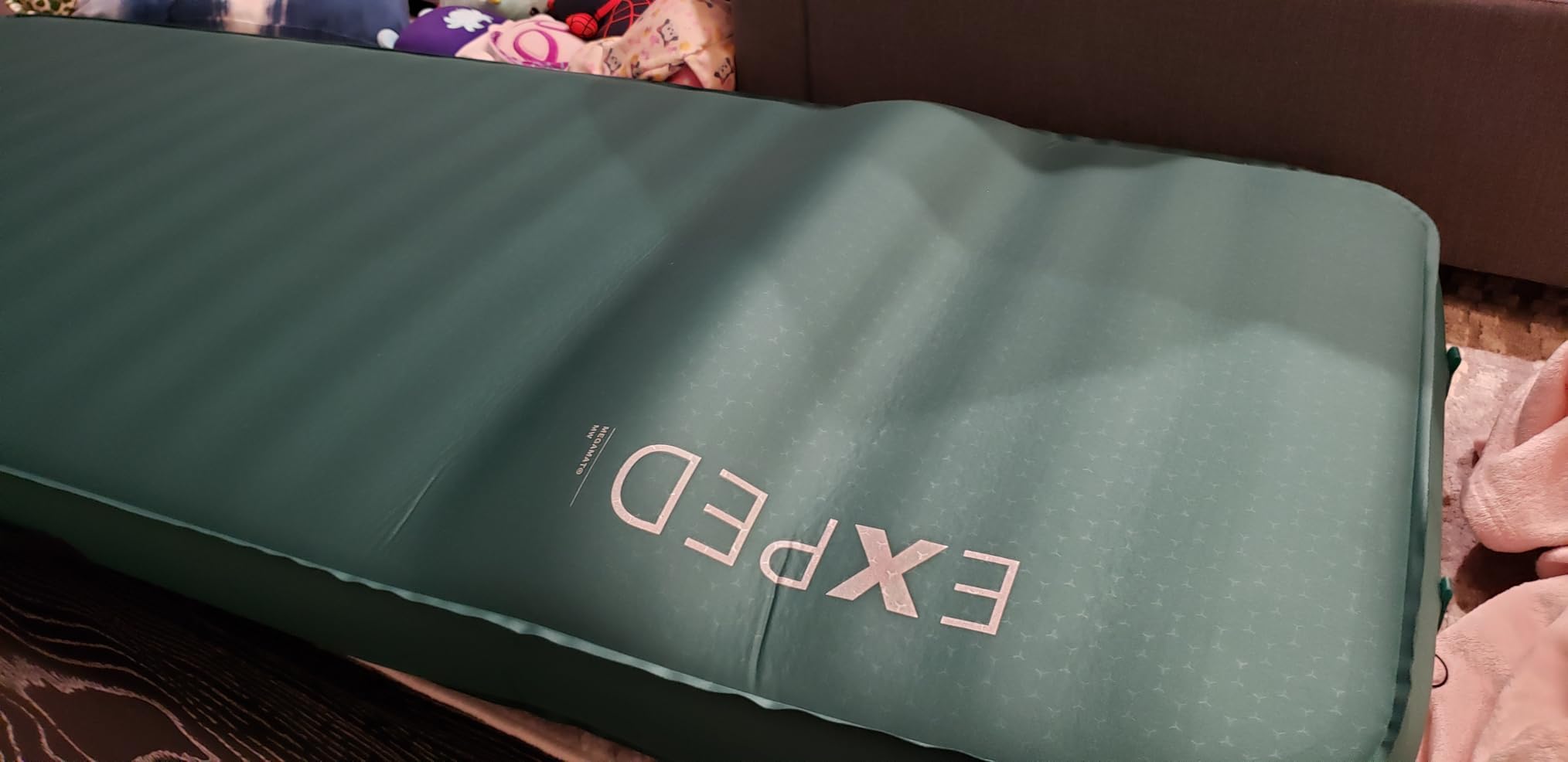
The Exped is the engineering choice. Four inches of cored open-cell polyurethane foam with 30 percent more coring than standard, giving it an R-value of 8.1 and a surface that resists bottoming out. Overlanding communities consistently treat Exped and NEMO as the field-proven names, and this is the pad that reputation attaches to.
Two details separate it from everything else on this list. The 3D vertical sidewalls have no edge tapering, so the full four inches of depth and the full width are usable right to the perimeter, which matters when two people are lying on it. And the shell is a soft 100 percent recycled four-way stretch tricot, OEKO-TEX 100 certified, rather than the scratchy standard nylon most camping foam uses.
A Top-Up pump is included, so you can add air for back sleeping or leave it softer for a shoulder. The welded side handles and included repair patch are details aimed squarely at owners, which fits a community that wants serviceable gear rather than feature lists.
Who it works for and who will be disappointed
It suits couples who want a real bed, side sleepers who hate a tapering edge pressing into their shoulder, and campers who value certified low-emission materials in an enclosed space. At 80 by 59.8 inches the Duo Queen fits a wide SUV platform or a large rooftop tent almost exactly.
It will disappoint anyone working to a strict weight or value budget. It is the most expensive pad in this roundup and rolls up bulky, and the price gap is large. If you are building a budget rooftop, the Kingfun or ACACIA deliver most of the experience for a fraction of the outlay.
Watch the long-term seams
Some long-term owners have hit foam or valve durability issues on Exped mats, so inspect the seams and valve when it arrives and after every few trips. The included repair patch is not a formality; keep it in the bag with the pad.
This Duo is the closest thing to a home mattress in the roundup, and the comfort claim is consistent across reviews rather than anecdotal. Owners point to the plush fabric face, the untapered sidewalls and the included pump as the three reasons it feels different from a camping pad.
9. Elegear 4 Inch Full Air and Foam Mattress
Elegear Air & Foam Self Inflating Sleeping Pad with Electric Pump 4″ Full
4 inch air and foam
79 x 52 x 4 inch
11.8 lb
R-value 9.5
Pros
- Built-in electric pump for one-touch inflation
- deflation and vacuum storage
- 26D hollowed memory foam adapts to body curves with tunable firmness
- 4 inch thickness with a built-in pillow for head and neck support
- R-value 9.5 for four-season use
- 50D knitted fabric with a leak-proof TPU layer
Cons
- Built-in pump battery can drain early and then setup is difficult
- Pump is noticeably noisy compared with manual pump sacks
- Some buyers measured closer to 3 inches and narrower than labelled
- Heavier and bulkier than a traditional air mattress
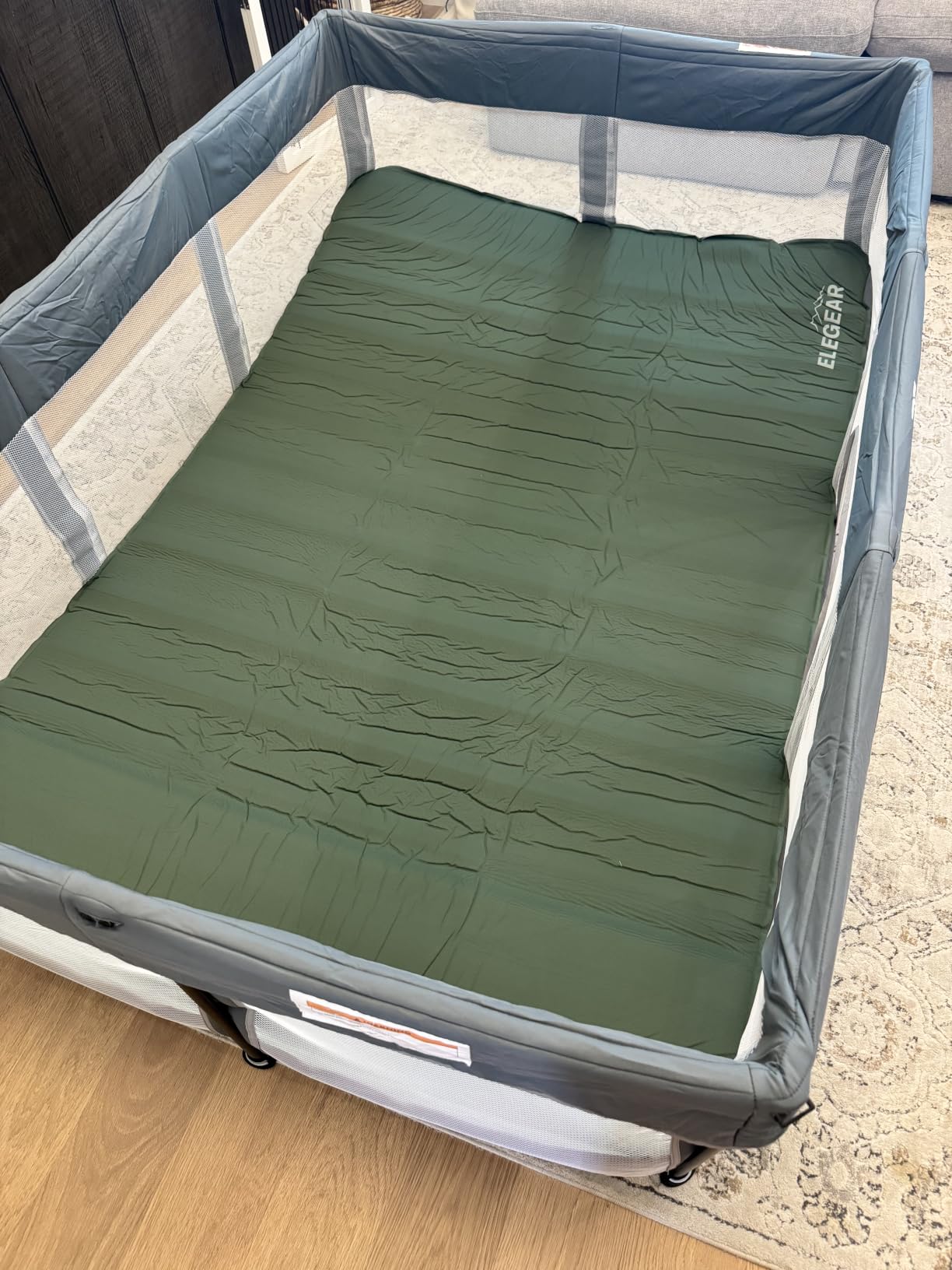
This is the Full-size step up from the Elegear pad earlier in the list, and it is the one to consider if you share a rooftop tent. At 79 by 52 by 4 inches it is a genuine two-person footprint, which the narrower single version is not, and the 26D hollowed memory foam adapts to body curves with firmness you can adjust.
The built-in electric pump handles inflation, deflation and vacuum storage on one touch, which solves the packing problem of a thick foam pad. Later production runs report a much improved pump battery compared with earlier versions, so if you are buying now you are getting the better motor.
Owners widely describe the mattress itself as a big upgrade from a traditional airbed, particularly for back pain, and the built-in pillow handles the head and neck support that a rooftop tent cannot offer. The 50D knitted fabric with a leak-proof TPU layer is quiet and durable.
Who it works for and who will be disappointed
It suits couples who share a rooftop tent, campers who want a bed made in under two minutes, and anyone who wants four-season R-value with a single pad. The vacuum storage means it packs flatter than any fixed foam alternative here.
The pump is the weak point. Battery drain and pump noise are the two most common complaints, and a pump that dies in the field leaves you with a foam pad you cannot inflate. The published 1600 pound capacity is a laboratory figure rather than a real weight limit, so do not read it as permission to host three adults.
Measure on arrival
A few buyers report actual thickness closer to 3 inches than the stated 4, and one reported a width narrower than the Queen label implied. When it arrives, measure it and test your inflation at home before a trip.
Insulation at R-9.5 and 4 inches of 26D foam is a strong combination for shoulder-season and winter travel, and the one-year warranty is the shortest in this roundup, which is a reason to inspect seams and valve carefully in the first year.
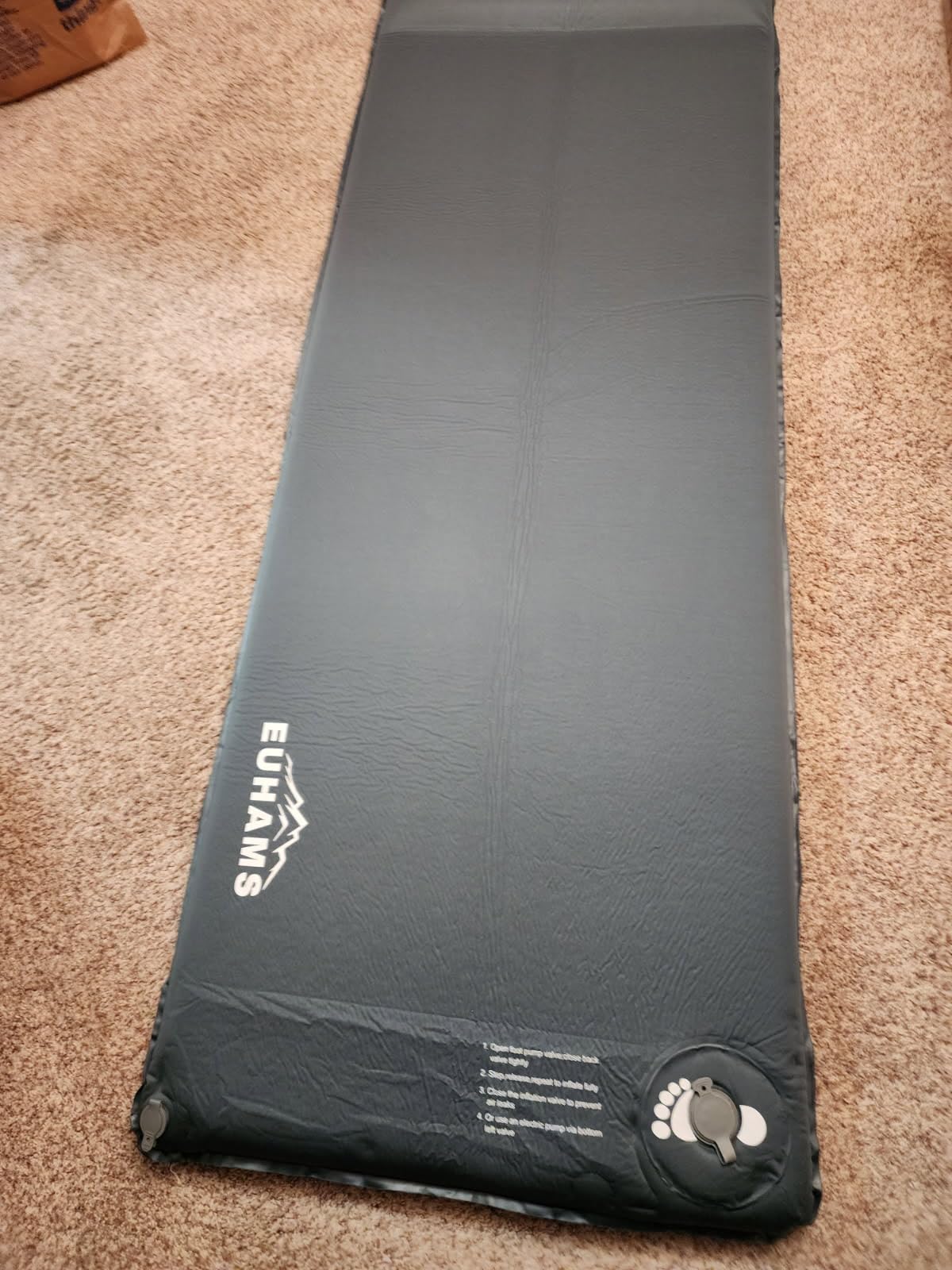
10. EUHAMS Double Self-Inflating Memory Foam Pad
EUHAMS Double Self-Inflating Sleeping Pad for Camping with Memory Foam
2.3 inch double width
78.7 x 50.7 x 2.3 inch
8.3 lb
R-value 9.5
Pros
- Extra-wide 78.7 by 50.7 inch double surface for two
- Built-in foot pump self-inflates in about a minute
- Folds to 23.6 by 13 inches which is unusually compact
- High-density 26D memory foam
- Waterproof TPU coating with tear-resistant 50D stretch polyester
- 800 pound capacity
Cons
- Only 2.3 inches thick and the least ground isolation here
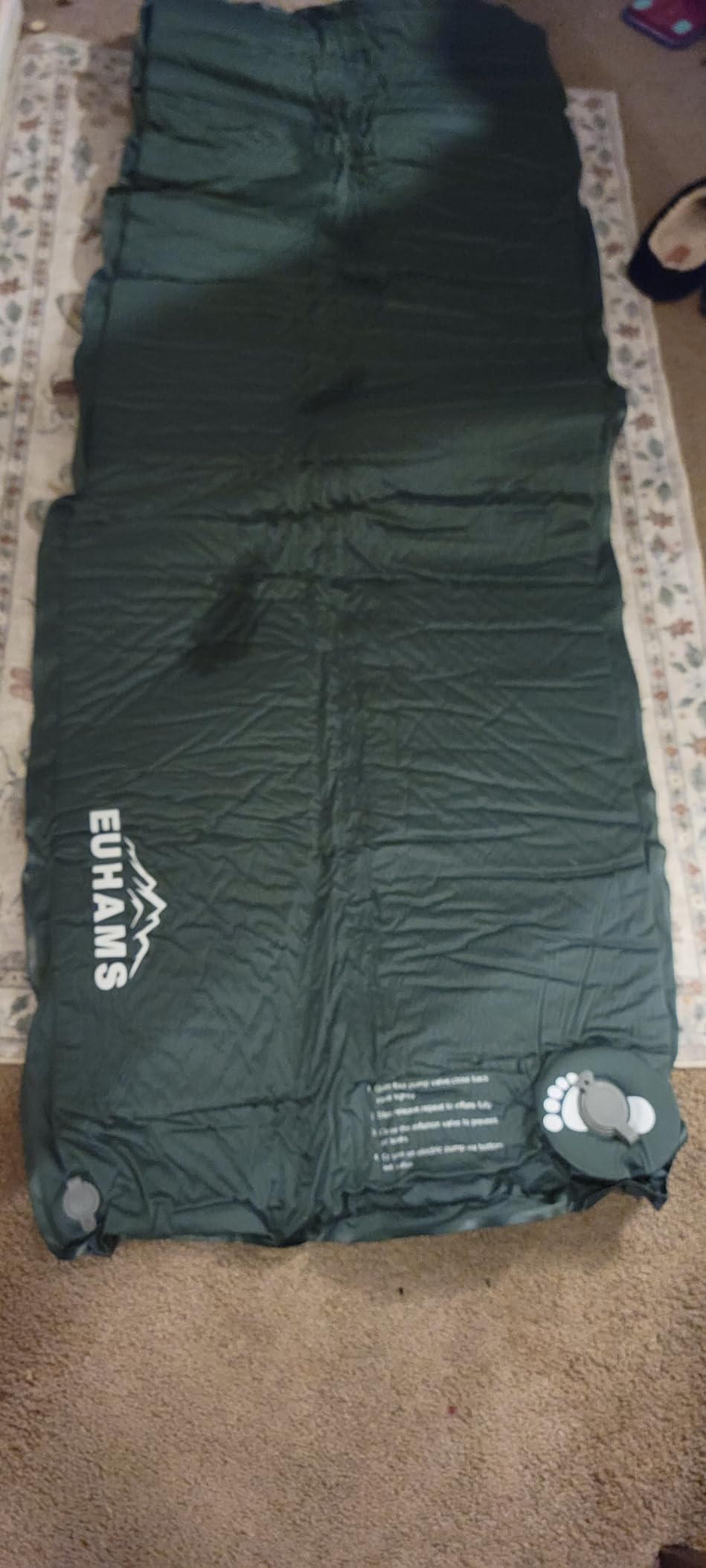
- Vacuum-packed so the first inflation takes 15 to 20 minutes
- Shortest review history in the roundup
The EUHAMS is the budget double, and its argument is efficiency rather than thickness. It packs down to 23.6 by 13 inches while giving you a 78.7 by 50.7 inch sleeping surface for two, which is a genuinely hard combination to find at this weight of 8.3 pounds.
Setup is unusually quick. The built-in foot pump self-inflates the pad in about a minute, no electric motor or separate pump sack required, and the dual-layer valves handle fast deflation. High-density 26D memory foam and a waterproof TPU coating with 50D stretch polyester keep it quiet and dry.
At R-9.5 it is properly insulated for four-season use, which is out of proportion to the rest of the specification sheet and is the reason it earns a place here despite the thinness.
Who it works for and who will be disappointed
It suits couples who care far more about width and pack size than about loft, plus budget builders who want a double surface without a large weight penalty. The fold-down size is the standout, especially if you carry recovery gear, a fridge or a generator alongside the tent.
It will disappoint side sleepers. At 2.3 inches it has the least ground isolation of anything on this list, and a hip or shoulder will feel the tent floor through it. It is a back-sleeper’s mat for two people, and calling it comfortable in the way a 4 inch pad is comfortable would be overselling it.
Do the first inflation at home
Vacuum packing means the first inflation takes 15 to 20 minutes while the foam recovers. After that cycle the foot pump does the work in about a minute, so this is a one-time cost, but plan for it rather than doing it in a campsite at dusk.
With 153 reviews it has the shortest history in the roundup, so long-term durability feedback is thinner than the other products. For the money, and given the 4.5 rating it holds, that is a trade most buyers accept.
What Rooftop Tent Owners Actually Say
The most useful thing we found while researching this roundup was not in any product listing. It was in the forum threads that currently occupy the top of the search results for this question, where owners are far more specific than any manufacturer.
On r/rooftoptents, a Thule Tepui Foothill owner looking to replace the thin pad that came with the tent asked for a self-inflating around 84 by 47 inches, which tells you the sizing problem better than any dimension chart. Another thread on the same subreddit asks the question almost everyone asks first, which is how thick the mattress needs to be before the hard floor stops showing through. A 2 inch foam pad in a rooftop tent is described there as pretty sparse on support and comfort.
On Expedition Portal, a member describes the Exped MegaMat Duo as the single best addition to the rooftop tent they have made, and calls it vastly superior to memory foam for their sleep. On r/overlanding, another owner weighing 195 pounds as a side and stomach sleeper is looking for 6 inches of total thickness, which is a clear signal that one pad is not always enough.
Two owner techniques come up repeatedly and neither appears on a manufacturer page. The first is the 85 percent rule: deliberately under-inflating a thick air mattress makes it softer and far more forgiving. The second is layering, where owners add a 1.5 inch memory foam topper with a custom-fitted sheet on top of a firmer base pad, which resolved a too-firm mattress for one side sleeper and stopped the pad sliding on an inclined floor at the same time.
One counterpoint worth hearing: heat is generally reported as a non-issue inside a rooftop tent, with one owner noting that their small memory foam mattress leaks nothing and inflates in 15 to 20 breaths. The consensus is that overnight air retention matters far more than summer heat, and that owners forgive bulk but do not forgive waking up flat.
How to Choose a Rooftop Tent Mattress
Start with mattress type
There are three types, and the third is a hybrid most owners converge on. All-foam mattresses are pure foam with no air chamber: nothing to fail, no pump, quietest of the three, and the most likely to trap heat. All-air pads are the most compact and the lightest, but they need a pump every time and the surface can shift under you. Self-inflating pads sit in between, with an open-cell foam core inside an airtight outer chamber, so the foam pulls in the air itself and you top off the firmness with a few breaths.
The hybrid is a base pad plus a thinner memory foam topper. Owners on r/rooftoptents and r/carcamping converge on this when a single pad will not solve the problem, and it costs less than buying one very thick premium mattress. If you want the same layered approach on the ground rather than in a tent, our picks for the best hybrid mattresses for couples follow the same logic.
One category warning. Shopping results for this topic are crowded with 3D backpacking pads from Zempire, Sea to Summit and NEMO. Those are engineered to carry your body weight on a moving pack, and they are thin, light and shaped for shoulders and hips in motion. Lying still for eight hours on a flat steel platform is a completely different problem, and those pads are not the answer.
Match thickness to how you sleep
Below 3 inches, the tent floor reads through. Between 3 and 4 inches, back and stomach sleepers are comfortable and side sleepers are only just served. At 4 inches and above, side sleepers stop bottoming out on their hips and shoulders, which is the most common complaint in the threads.
Body weight matters as much as position. As a general rule from owner experience, a side sleeper under 130 pounds can manage a 3 inch pad, a side sleeper between 130 and 200 pounds wants 4 inches or more, and a side sleeper over 200 pounds is usually better served by stacking a 4 inch pad with a 1.5 to 2 inch memory foam topper for 6 inches total. Back and stomach sleepers need less, because their weight distributes across a wider area.
On the question of which rooftop tent has the thickest mattress, the honest answer is that most tents do not come with anything thick, and the thin pads that do ship with tents cluster around 2 to 3 inches. The thickest thing you will find on a rooftop tent platform is one you bring yourself, which is the entire premise of this guide.
Use R-value to pick your season, and watch the summer trade-off
R-value measures resistance to heat loss, and on a rooftop tent it is the difference between sleeping on a cold steel platform and sleeping comfortably. The cheat sheet: R 1 to 3 is summer only, R 3 to 5 covers mild three-season weather, R 6 to 9.5 handles shoulder season and genuine cold, and R 13 will carry you through near-freezing nights. In this roundup the EUHAMS, Elegear and Hikenture sit at R-9.5, ACACIA at R-6, the Exped at R-8.1 and the Lost Horizon at R-13.
Here is the trade-off nobody mentions: a high R-value insulates you from the floor, and it also insulates your own body heat in. In a closed hard-shell tent on a warm night, a heavily insulated pad can leave you damp rather than cold. If you camp in summer heat, a mid-range R-6 to R-8 pad is the more comfortable choice than pushing to the maximum.
Open the tent fabric at night, run a fan, and do not seal yourself into a hot shell with a winter-rated mattress. Foam mats in particular retain heat more than air chambers, which is the opposite of what people expect.
Get the size right before anything else
Sizing mismatch is the number one source of frustration in rooftop tent threads, and it is entirely avoidable. Most two-person rooftop tent interiors run somewhere between 79 by 53 inches and 84 by 47 inches, with wide models nearer 80 by 60 inches. Measure the flat platform, not the fabric walls, and subtract any intrusion from the ladder, hinges or a mounted fan.
Then match the pad to how you sleep in it. A solo camper in a narrow tent wants a 27 to 30 inch single. A couple in a two-person tent wants 50 to 60 inches of width, and many owners link two single pads together to make that work. Anything that cuts across your shoulders while you lie down is the wrong width no matter how good the foam is.
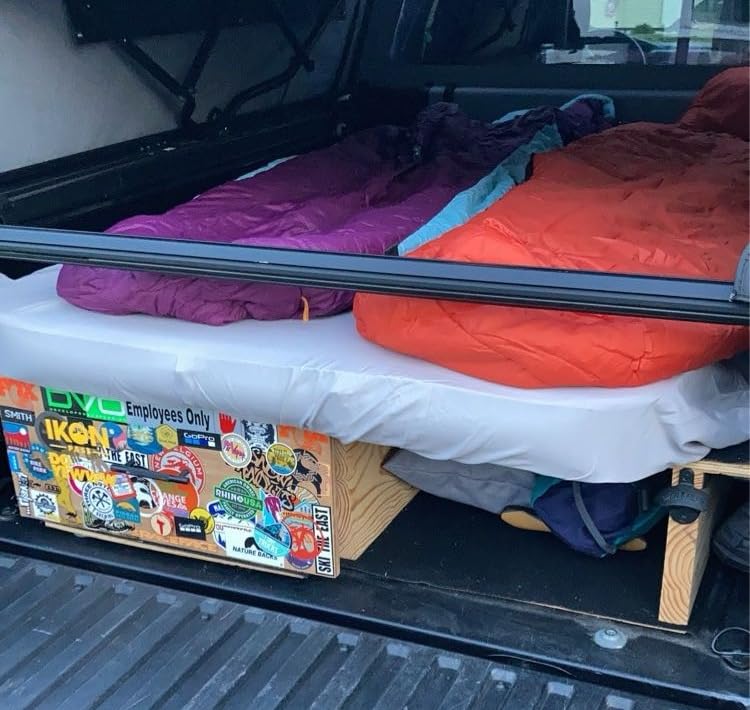
If your build has a raised platform lip, that eats usable width in a way that is not obvious from the outside. Owners who cut foam to fit their own build report that a 2.25 inch high platform with a small cutout on each side changes what will physically fit, so measure twice. For a broader look at sleeping surfaces for vehicle-based camping, our guide to the best RV mattresses for campers covers the sizing questions from the other direction.
Weigh weight and packed size honestly
Every mattress you add is weight on a roof rack, and owners notice both the handling and the fuel penalty. The all-foam pads in this roundup run from 350 grams to 14.2 kg, which is a huge spread. A self-inflating at 8 to 10 pounds is the sensible middle for most builds, and an inflatable air mattress is the choice if your roof load budget is genuinely tight.
Packed bulk is a separate problem from weight. Foam compresses into a cylinder that eats cargo space, and where you store that cylinder is a real question on an overland build. If you need a place to put a rolled mattress, our picks for the best rooftop cargo boxes are worth a look, and inflatable pads from our best camping air mattresses roundup win that round on volume.
Look at surface, noise and maintenance
Surface noise is a comfort factor people forget until a partner is lying next to them. Knitted stretch surfaces and soft tricot are quiet, while cheap coated nylon crinkles with every movement. Both Hikenture and the Exped are quiet by design, and the Elegear single uses a 50D stretch knit for the same reason.
Waterproofing and a non-slip base matter more than they sound, because condensation under a pad in a closed tent is normal and open-cell foam that absorbs moisture will not recover its loft. A waterproof TPU coating and a removable washable cover, as on the Hazli and the Kingfun, protect the investment. Finally, check for a repair patch in the box. Owners want something they can patch, and a serviceable mattress outlasts a feature-rich one every time.
Free Comfort Upgrades That Cost Almost Nothing
Before you spend anything more, five changes will improve almost any rooftop tent mattress.
First, under-inflate. Stop at roughly 85 percent full on any air or self-inflating pad. Owners report this consistently, and a slightly softer surface is far more forgiving on a hip than a rock-hard one.
Second, add a topper. A 1.5 to 2 inch memory foam topper over a firm base pad gets you to the 5 to 6 inches of total thickness that heavy side sleepers want, for a fraction of buying one thick premium mattress.
Third, stop it sliding. A non-slip mat or a piece of grippy matting between the mattress and the tent floor solves the movement problem on an inclined hard shell, and owners report it works better than anything else they tried.
Fourth, lock the topper with a fitted sheet. A custom-fitted sheet over a foam topper keeps it from shifting and makes the whole setup feel more like a bed.
Fifth, manage the temperature. Open the tent fabric at night, and do not seal a high R-value pad inside a hot shell in July. You are trying to manage a small sealed box, not a sleeping bag.
Frequently Asked Questions
What type of mattress is best for a rooftop tent?
A self-inflating pad with an open-cell foam core is the best all-round type for a rooftop tent, because the foam cushions the pressure points a hard floor amplifies while the sealed air chamber lets you tune firmness. All-foam mattresses are the most reliable and quietest option, and all-air pads win only on packed size and weight.
How thick should a rooftop tent mattress be?
At least 3 inches for back and stomach sleepers, and 4 inches or more for side sleepers who want real hip and shoulder relief. Side sleepers over 200 pounds usually do best with a 4 inch base pad plus a 1.5 to 2 inch memory foam topper, which gives 6 inches of total thickness. Most thin pads that come with rooftop tents sit at 2 to 3 inches.
What size mattress should I use in my rooftop tent?
Measure the flat interior platform of your tent first, then subtract any intrusion from the ladder, hinges or a mounted fan. Most two-person rooftop tent interiors run between 79 by 53 inches and 84 by 47 inches, with wider models nearer 80 by 60 inches. Solo campers want 27 to 30 inches of width, and couples want 50 to 60 inches.
How can I make my rooftop tent more comfortable?
Under-inflate any air or self-inflating pad to roughly 85 percent full for a softer surface. Add a 1.5 to 2 inch memory foam topper over a firmer base pad. Lay a non-slip mat under the mattress to stop it moving on an inclined hard shell, and use a fitted sheet to lock the topper in place. Finally, open the tent fabric overnight so you are not sleeping inside a sealed hot box.
Are inflatable rooftop tent mattresses cold?
An uninsulated air mattress is cold, because you are sleeping directly on the tent floor with only trapped air between you and the metal platform. A self-inflating pad with an open-cell foam core solves this, and R-value is the number that tells you how cold it will feel. R 6 to 9.5 covers shoulder season, and R 13 handles near-freezing nights.
Can I use a regular camping mattress in a rooftop tent?
Yes, as long as it is wide enough and thick enough. Standard foam and self-inflating camping pads work well, and many owners use two narrower pads side by side for a couple. What does not work well is a backpacking sleeping pad, because those are thin, light and shaped for carrying weight on a moving pack rather than for supporting a person lying still for hours.
Final Verdict: Who Should Buy Which Rooftop Tent Mattress
The Hazli Matrix AirCell is our pick for the best rooftop tent mattresses for comfort overall, because 4 inches of layered memory foam at 80 by 60 inches has the most owner-validated comfort record on this list. Buy the Lost Horizon Option3 if cold weather is your problem, the Kingfun if value and low weight are yours, and the Exped MegaMat Duo if you want the closest thing to a home bed and can justify the outlay.
One last practical note. Measure your tent interior, order two days early if the mattress is vacuum-packed so the foam can recover its full thickness, and test the whole setup in a driveway before you rely on it in the mountains.