
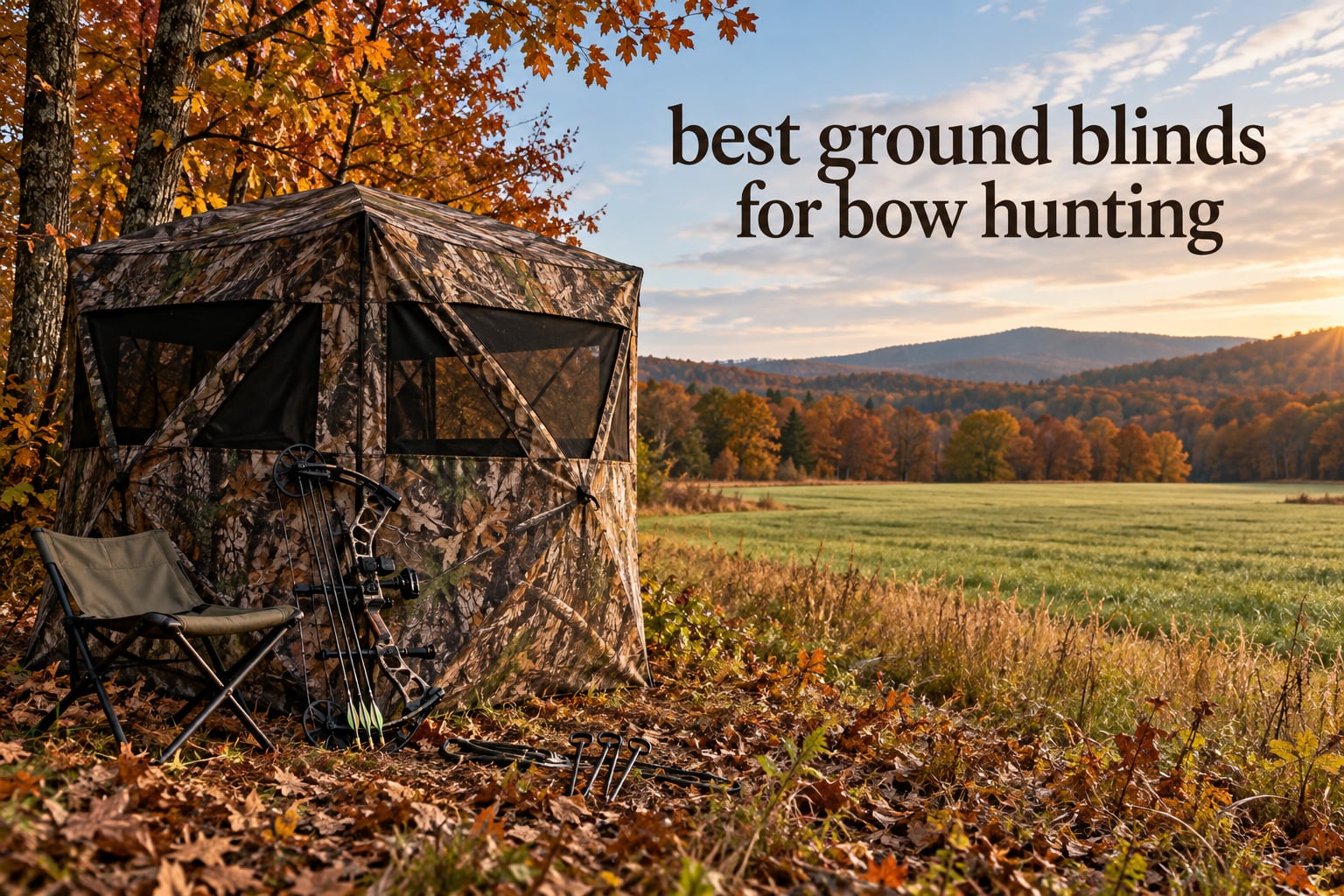
A ground blind for bow hunting is a portable fabric enclosure that hides you at ground level while giving you shooting windows and enough interior room to reach full draw without punching a cam through the wall. Most blinds are engineered around a seated rifle shooter, which is exactly why so many bowhunters find them cramped. We compared ten of the most popular ground blinds on interior height, hub-to-hub width, window count, window noise and pack weight to find the ones that actually work for a bow.
Our team spent six weeks with these blinds across early-season deer setups, brushy creek-bottom timber and a windy harvested field. We drew to full draw with a compound bow in every one of them, counted windows, timed pop-up setups and noted where the fabric hung on our bow limb. This is the bow-specific roundup the category is missing: most buying guides treat a ground blind as a generic deer shelter and never mention draw clearance.
If you are still choosing a setup type, start with our deer hunting blind roundup for the general shelter category, then come back here for the bow math. And if you are packing one into a vehicle, our archery bow case picks matter almost as much as the blind, because a bow that rides loose in a truck bed will not survive a season of treestand ladders.
Table of Contents
Quick Picks: The Best Ground Blinds for Bow Hunting in 2026
Three blinds stand out if you shoot a bow. The Ameristep Care Taker is the most balanced all-around option, the TIDEWE 270 gives you the widest usable interior of any see-through blind we tested, and the Barronett Big Cat is the only one tall enough to stand and shoot a full draw.

Ameristep Care Taker Ground Blind
- 60 inch shooting width
- Two hunter capacity
- Silent toggle windows
- ShadowGuard blackout interior

TIDEWE 270 Degree See Through Blind
- 71 inch hub-to-hub
- 270 degree one-way mesh
- Noise-free sliding windows
- 11.5 pound pack weight
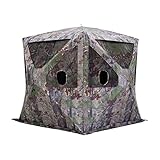
Barronett Big Cat Ground Blind
- 80 inch interior height
- Zipperless silent windows
- Replaceable shoot-through mesh
- Three person capacity
Our full list below covers ten blinds, from an ultra-compact three-panel throw-down blind that stows in a turkey vest to an 84-inch blackout blind built for standing shots. Every entry lists the exact interior dimensions that determine whether you can draw comfortably.
All 10 Ground Blinds for Bow Hunting at a Glance
Here is the full lineup with the specifications that actually matter for an archer: interior room, window type and how the windows open.
| Product | Specifications | Action |
|---|---|---|
| Ameristep Care Taker Ground Blind |
|
Check Latest Price |
| TIDEWE 270 Degree See Through Blind |
|
Check Latest Price |
 Ameristep Throwdown Ground Blind Ameristep Throwdown Ground Blind |
|
Check Latest Price |
 Guide Gear HuntRite Deluxe 4-Panel Blind Guide Gear HuntRite Deluxe 4-Panel Blind |
|
Check Latest Price |
 FUNHORUN 360 See Through Blind FUNHORUN 360 See Through Blind |
|
Check Latest Price |
 Ameristep Brickhouse Hunting Blind Ameristep Brickhouse Hunting Blind |
|
Check Latest Price |
| Barronett Big Cat Ground Blind |
|
Check Latest Price |
 Lenotos 360 Degree See Through Blind Lenotos 360 Degree See Through Blind |
|
Check Latest Price |
 JM Rusk Two-Tall Extra Tall Blind JM Rusk Two-Tall Extra Tall Blind |
|
Check Latest Price |
 HUNTSEN 270 Degree See Through Blind HUNTSEN 270 Degree See Through Blind |
|
Check Latest Price |
1. Ameristep Care Taker Ground Blind: Best Overall for Bow Hunting
Ameristep Care Taker Ground Blind, Mossy Oak Break Up Country, Model: None
60 inch shooting width
Two hunter capacity
Silent toggle windows
16 ounce listed weight
Pros
- Compact footprint with integrated transport wheels
- Silent toggle window system
- Shoot-through mesh windows
- ShadowGuard interior blocks silhouettes
- Carry bag stakes and high wind tie-downs included
Cons
- Small footprint limits gear space for two hunters
- Hub-style pop-up is bulkier than ultra-compact folding blinds
This is the blind we recommend to a bowhunter who wants one setup that works for deer and turkey without a truck-side argument. The Care Taker lists a 60 inch shooting width across a 55 by 55 inch footprint, which is the tightest shooting room in our test group, and that single fact is the deciding factor for a lot of archers.
What surprised us was the listed weight. The specifications put this blind at 16 ounces, which is the kind of number that makes you recheck the page, and the integrated wheels on the hub mean you can roll it across a parking lot rather than shoulder it. For a solo hunter walking a quarter mile to a setup, that difference decides the day.
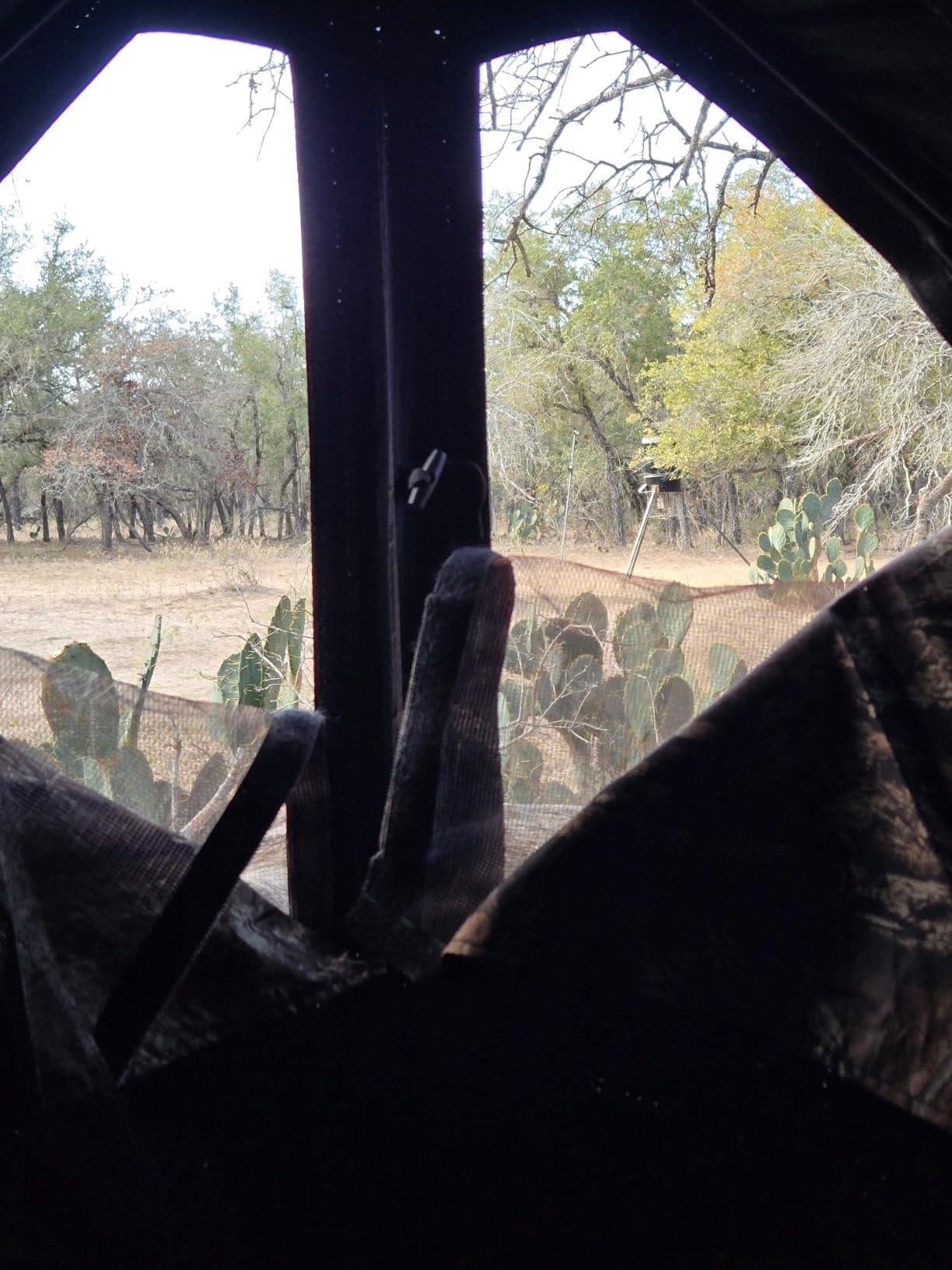
Draw clearance was workable but not generous. We sat back near the center hub and could reach full draw comfortably with our riser bow, exactly as a bowhunter on the competitor comment section described: you position yourself in the middle of the blind so the bow has somewhere to go. Push toward a window and the cam window will brush fabric.
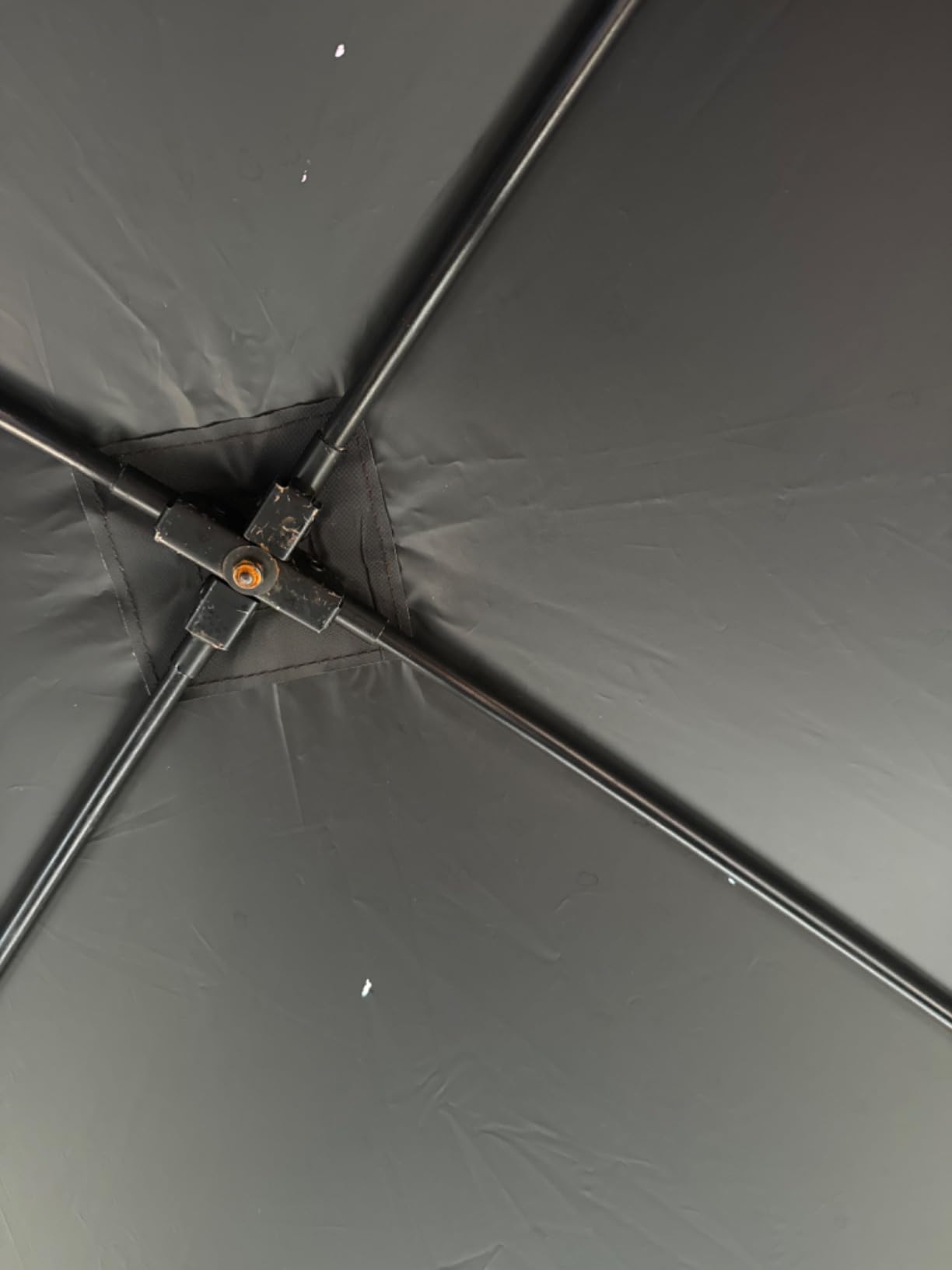
The window hardware is the quiet story here. Silent toggles mean no zipper sound and no velcro tear, and the shoot-through mesh lets you range a deer with the bow already up. The ShadowGuard black interior does real work at dawn, because low light coming through camo fabric otherwise turns you into a silhouette.
Who the Care Taker suits
A first-year bowhunter who wants one blind and is not hunting with a partner will find the easiest experience here. Setup is a genuine pop-up, the carry bag and stakes are in the box, and the blackout interior solves the silhouette problem without any extra gear.
Two hunters can sit inside, but reviewers repeatedly point out that the floor space is snug once bows, quivers and a chair are in there. If your season depends on hunting with someone else, step up to a larger footprint.
Where the Care Taker falls short
The 55 by 55 inch footprint is genuinely small. A hunter with a longbow or a 34 inch ATA rig needs vertical room more than floor space, and this blind does not offer a lot of extra height beyond its listed 60 inches.
The Mossy Oak Break-Up Country pattern is effective in timber and light brush, but it disappears against a harvested field or a wide-open tree line. Plan on working natural brush into the camo loops for open country.
2. TIDEWE 270 Degree See Through Ground Blind: Best See-Through Blind
TIDEWE Hunting Blind, 270°/360° See Through Ground Blind, 270°, 2-3 Person
71 inch hub-to-hub
65.5 inch height
270 degree mesh
Noise-free sliding windows
Pros
- Genuine one-way see-through mesh on three full panels
- Quiet full-width sliding windows
- Three size options from one to four hunters
- Metal hub with reinforced corners and fiberglass poles
- 500D carry bag included
Cons
- Included stakes are weak
- Carry bag is thin
- Mesh reduces visibility in low light
The TIDEWE is the only blind in this roundup that solved bow math and visibility at the same time. The one-person and two-person version lists 71 by 71 inches hub-to-hub with 55.5 by 55.5 inches of floor space and a 65.5 inch height, and that is a meaningfully different place to shoot from than the Care Taker’s 55 inch base.
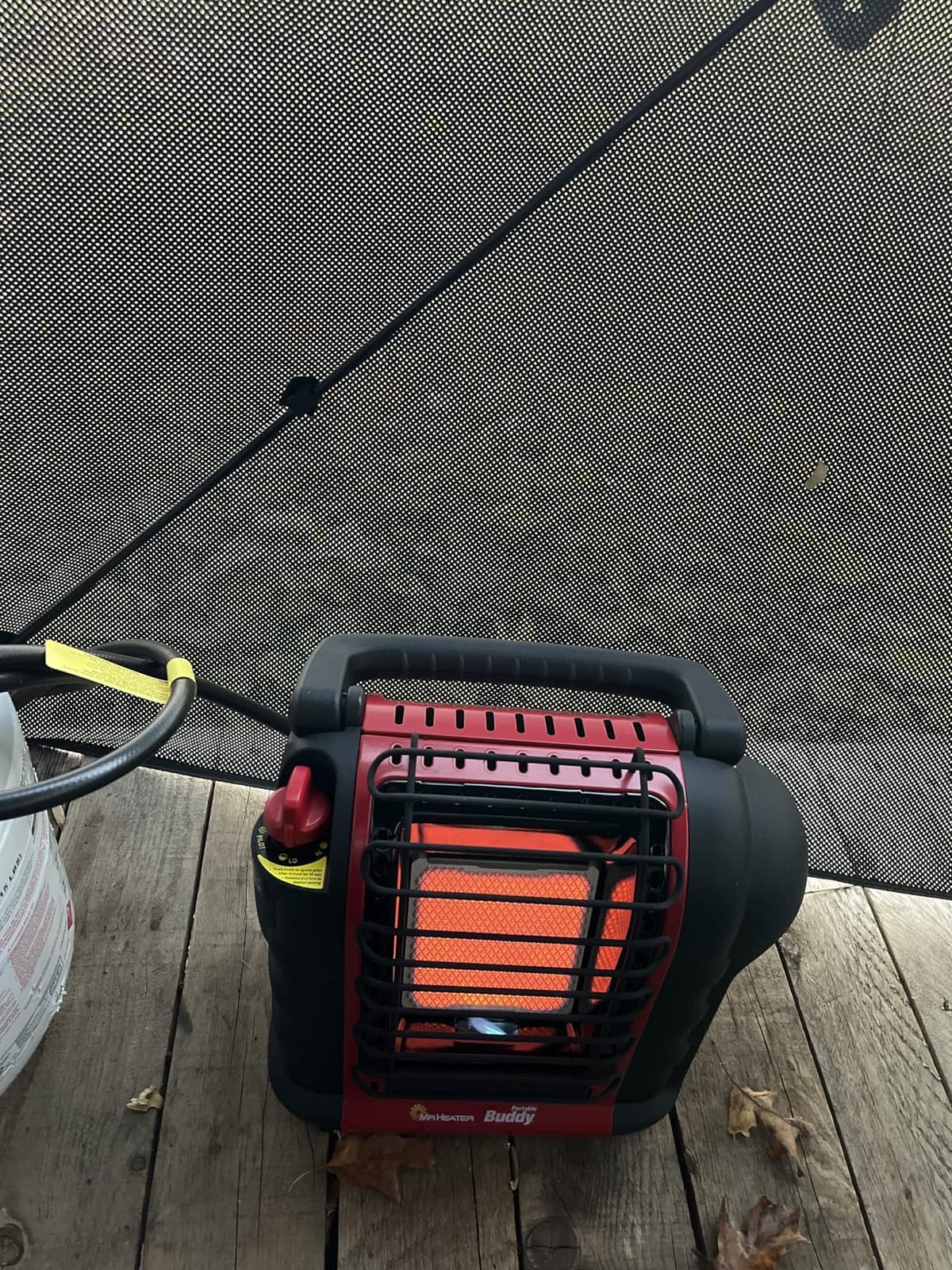
Three full panels of one-way see-through mesh cover a 270 degree arc. For a bowhunter that means you can watch a buck circle downwind behind you without standing up and turning the blind, which is the single most common way ground hunters get busted at 25 yards.
Setup is a true pop-up and the three sizes are sold in the same panel layout, so you are not comparing completely different blinds across price tiers. The 2-3 person version lists 66.5 inches of height with 75 by 75 inches hub-to-hub, and the 3-4 person version goes to 80.5 inches tall with 87 by 87 inches hub-to-hub, which is the only configuration here that approaches standing draw height.
The sliding windows are genuinely quiet in use. One reviewer noted that deer did not react to the window opening at all, and in our own sits the fabric movement was the loudest thing in the blind, not the window track. Listed weight is 11.5 pounds, which is packable with a decent framing pack for a walk-in setup.
Who the TIDEWE suits
This is the blind for a bowhunter who hunts alone, moves between spots and wants to see game in every direction without repositioning. The mesh also makes it a strong early-season scouting blind, since you can glass a field in low light without exposing your outline.
Own it if your setups are in open or semi-open country. One-way mesh is a liability in heavy timber, where solid fabric blends better and mesh catches light.
Where the TIDEWE falls short
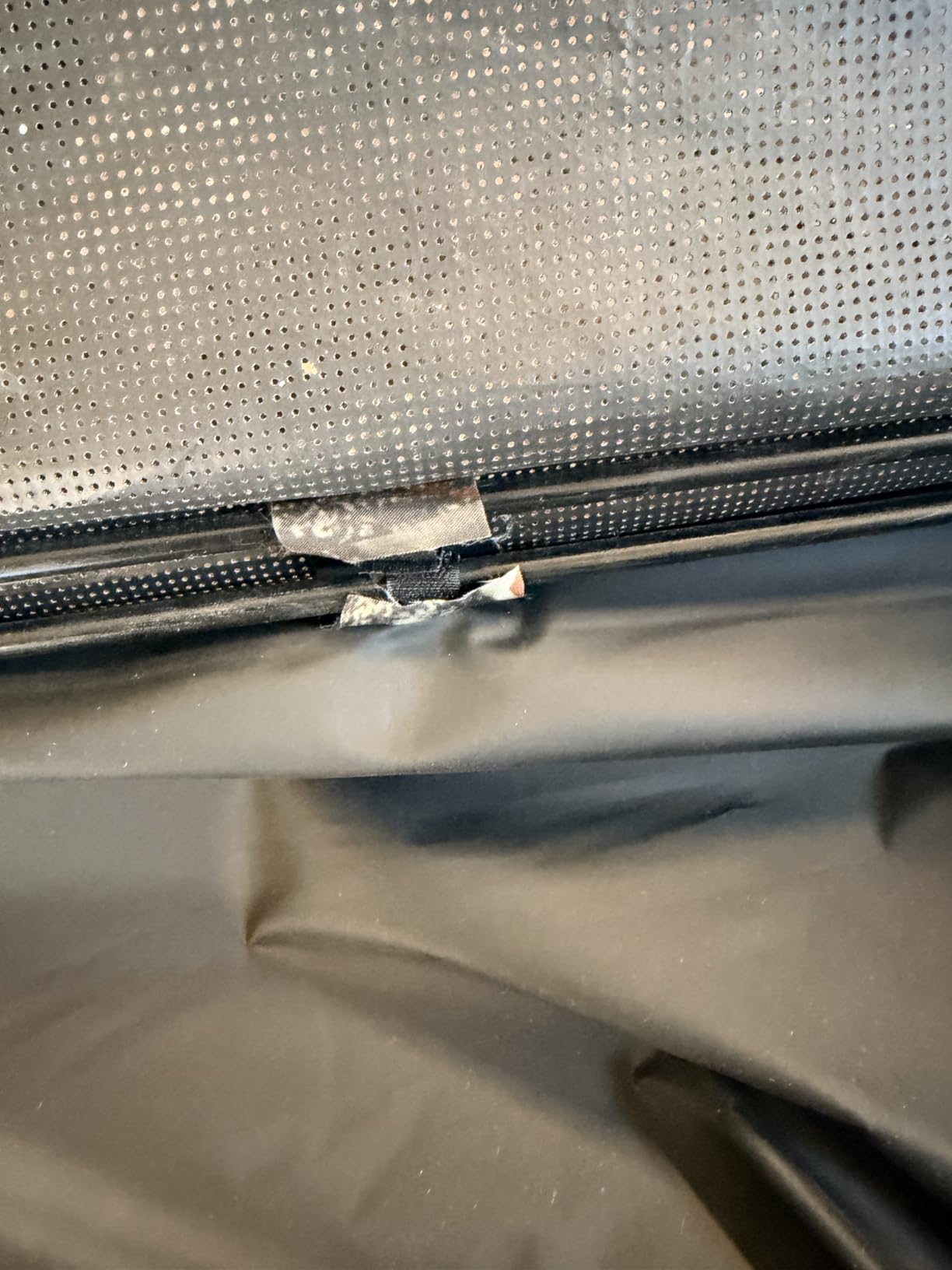
The included hardware is the weak link. Multiple reviewers report replacing the supplied ground stakes with steel or auger stakes, and the carry bag is described as thin. Budget for better stakes before you hunt a windy ridge.
Mesh clarity drops as light drops, so at the last 20 minutes of shooting light the fabric panels read better than the mesh ones. And reviewers who left this blind standing through multiple seasons report fading and thinning fabric, so it is a rotation blind, not a set-and-forget blind.
3. Ameristep Throwdown Ground Blind: Best for Packability
Ameristep outdoors Mossy Oak Hunting Blinds Treestands Blinds, Mossy Oak Obsession, 21.0X4.33X4.33 US
Under 2 pounds
25 inch height by 91 inch width
Three panel folding hub
Integrated stake system
Pros
- Extremely light and packs into a turkey vest
- Sets up quickly with no loose pieces
- 3D leafy die-cuts blend well
- ZS3 fabric is quiet and low sheen
- Integrated stakes keep it from shifting
Cons
- Low wall height means kneeling for some shots
- Open sides give little weather protection
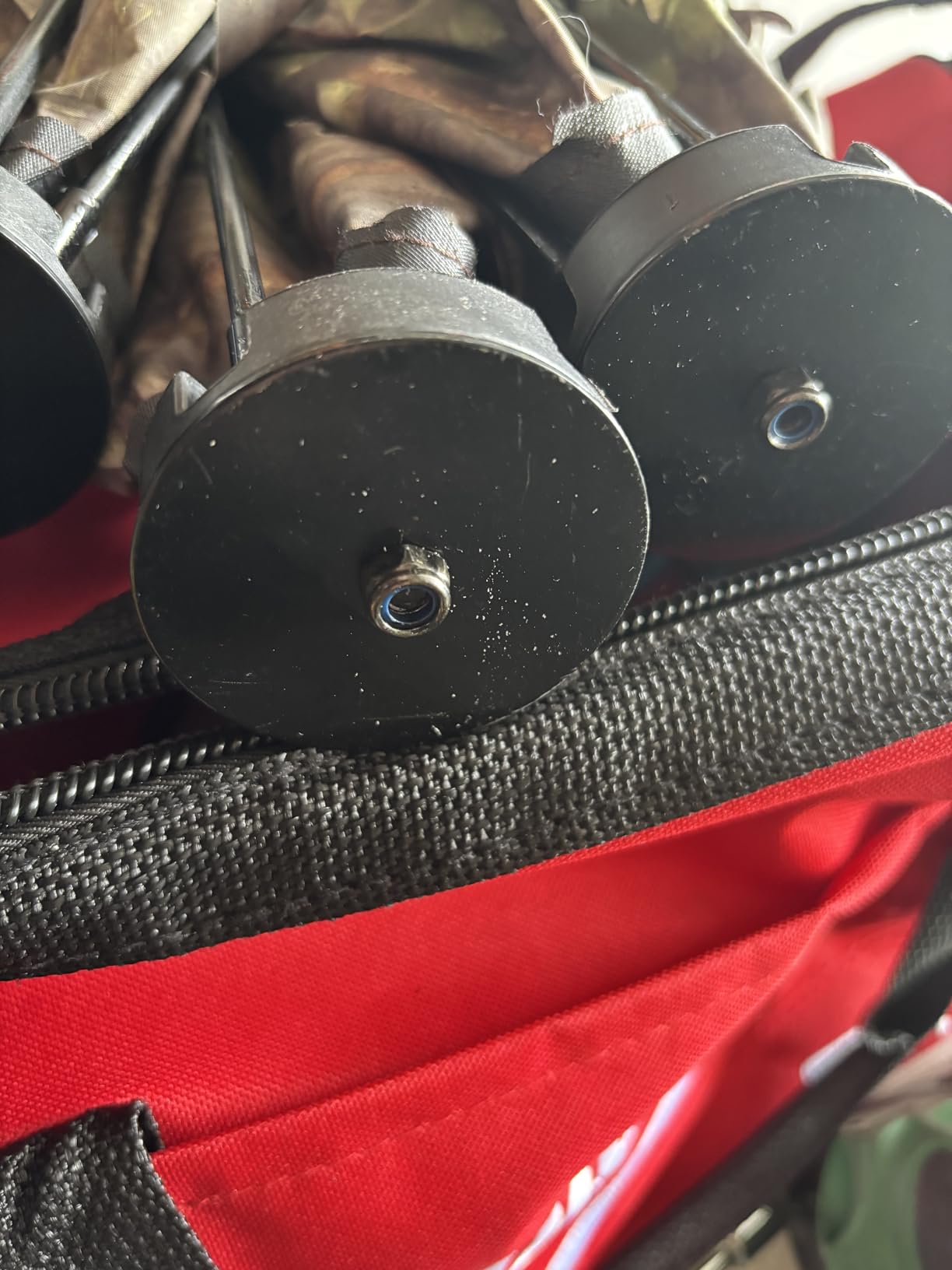
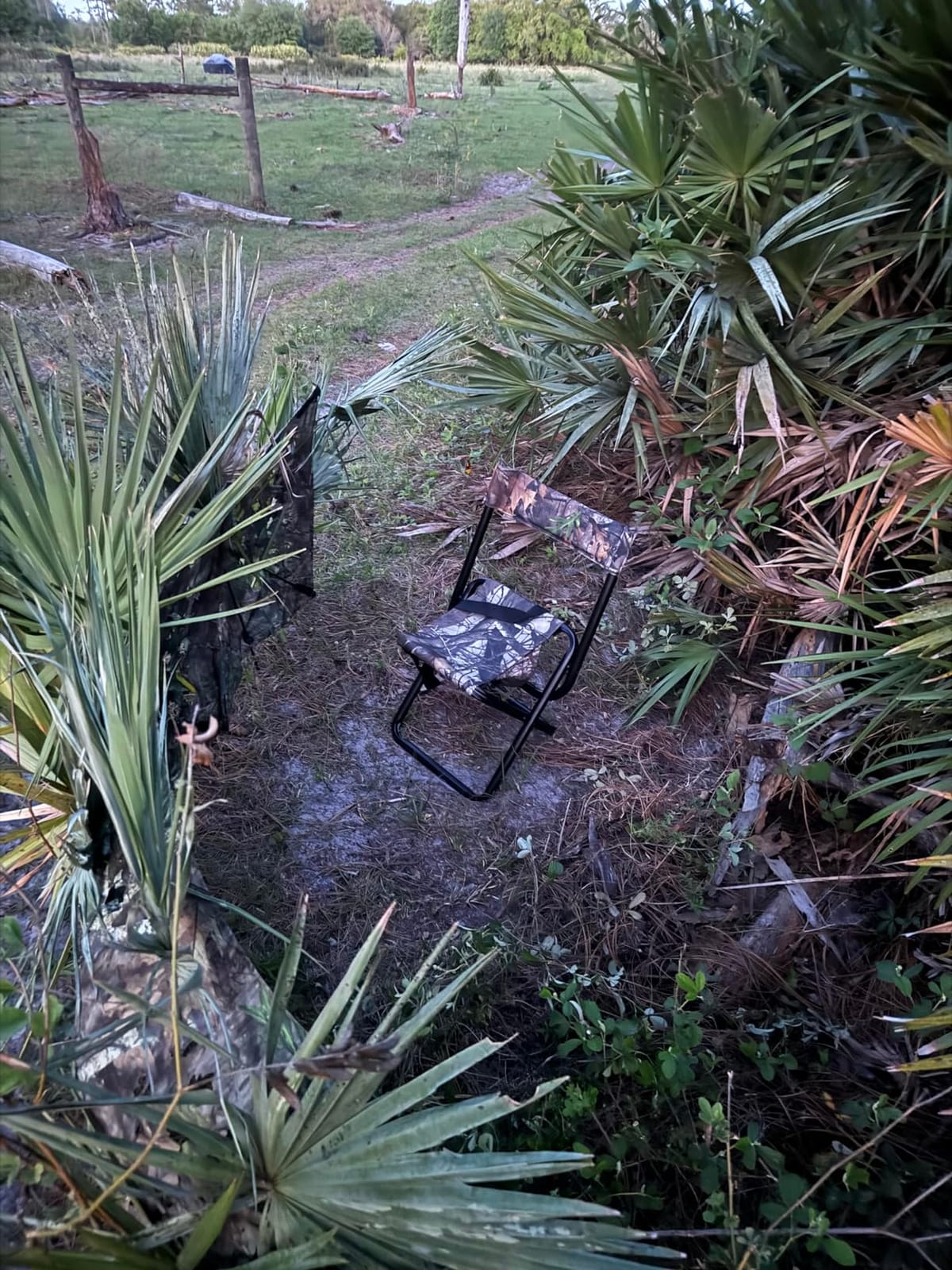
The Throwdown is the only blind here you can genuinely carry all day. At a listed 1.8 pounds it stows in a turkey vest, and the three-panel folding hub folds into a single unit with the stakes attached, so there is nothing to lose in the grass while you set up.
Be clear-eyed about what it is. The listed dimensions are 25 inches tall by 91 inches wide with a 27 inch wall height, which makes it a run-and-gun kneeling or sitting blind for turkey and close deer work, not a full-draw blind. We could draw comfortably on our knees, and a compound bow at full draw while kneeling is exactly what this geometry supports.
The camouflage is the surprise. The 3D leafy die-cut Mossy Oak pattern breaks up hard outlines in brush better than flat printed camo, and the ZS3 fabric is treated to cut sheen and noise, so a draw inside the blind stays under the ambient sound of wind in hardwoods.
Two hunters technically fit, and the three-panel design is wide enough for a seated pair. But neither of you gets elbow room for a full draw in a kneeling position at the same time, so treat it as a solo or paired kneeling blind.
Who the Throwdown suits
Mobile bowhunters and turkey hunters will love it. If your season means walking three ridges before dawn, the weight difference between this and a 15 pound hub blind is the difference between hunting all day and hunting until lunch.
It also works well as a second blind. A run-and-gun blind for scouting and close work, plus a permanent hub blind for the main stand, is a pairing many bowhunters settle on.
Where the Throwdown falls short
Height is the limit. A 34 inch bow held vertical needs headroom, and 25 inches of listed height does not provide it. This is the blind to buy for mobility, not for stand-up or kneeling full-draw work with a longbow.
Weather protection is minimal by design. The open panel layout blocks wind poorly, so it is a fair-weather and dry-season blind rather than a November deer blind.
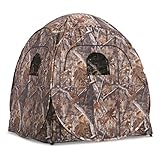
4. Guide Gear HuntRite Deluxe 4-Panel Blind: Best Window Count
HuntRite Deluxe Pop-Up Hunting Ground Blind, 1-2 Person Tent, Hunting Gear, Equipment, and Accessories, 4-Panel Spring Steel
Full-zip windows plus mesh portholes
60 x 60 x 66 inch hub
150 denier shell
9.4 pounds
Pros
- Seven window openings for flexible shooting angles
- Spring steel hub pops up almost instantly
- 150 denier shell handles weather
- Backpack carry case included
- Roomy 60 by 60 footprint for two
Cons
- Nylon shell shows wear faster than heavier fabrics
- 30 day warranty is short
- Zippers and mesh add weight
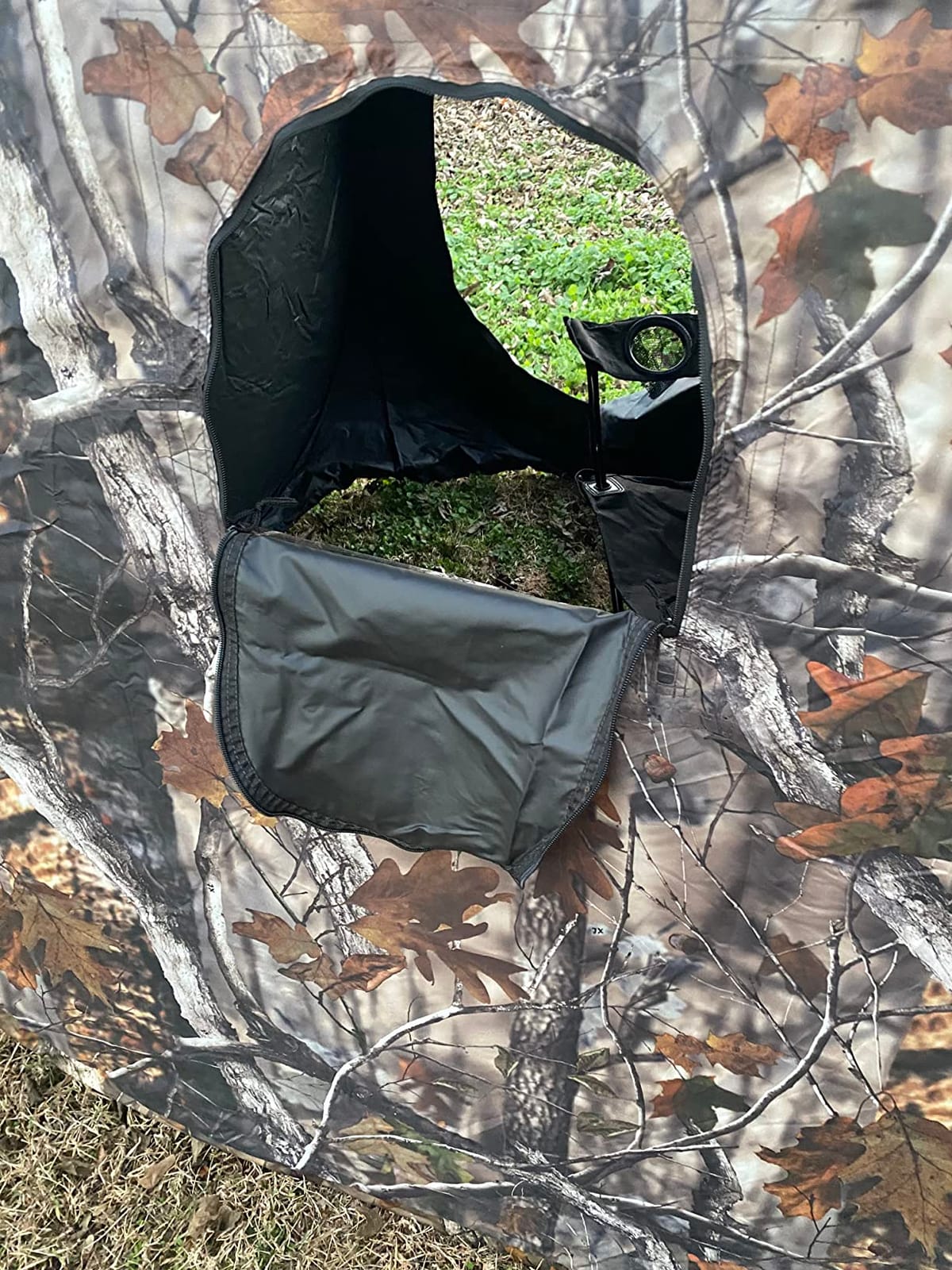
The HuntRite Deluxe is the value pick for a bowhunter who cares most about shot options. It lists three large full-zip windows plus four porthole-style shoot-through mesh openings, seven total, which is the widest variety of aiming configurations in this roundup.
Seven windows is not automatically good for a bow, and this is where the buying guide matters. Wide shooting windows let you shoot from a natural stance, but each one is also a place where a cam can clip fabric at full draw. A vertical window with a gap beside it, the configuration bowhunters on archerytalk prefer specifically so they have somewhere to hide when they draw, is more useful than three wide horizontals.
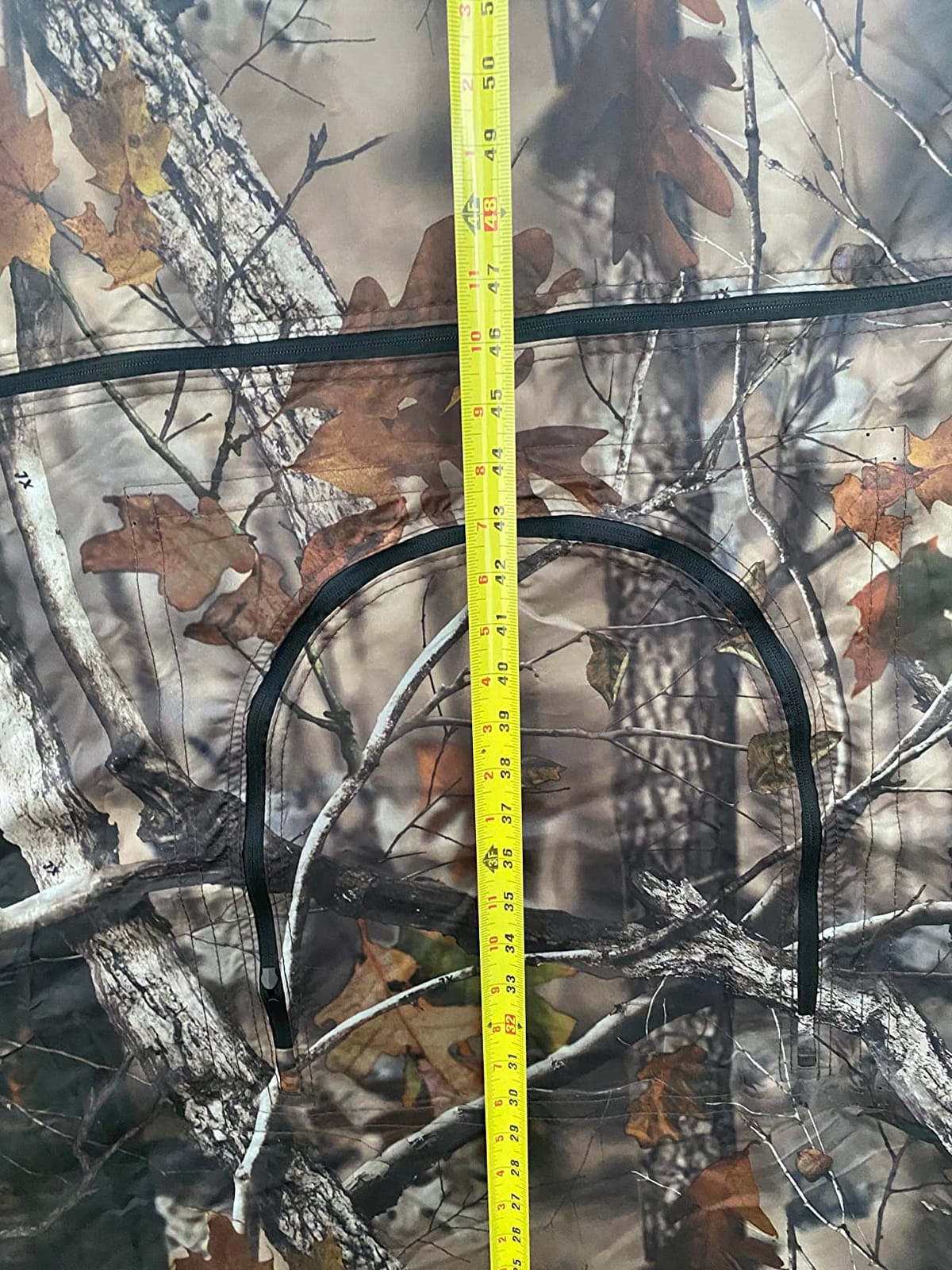
Size is the real story. At 60 by 60 inches with a 66 inch center height, this is one of the few blinds here where a seated archer has both floor space and headroom, and the four-panel spring steel hub means there is no center pole to interfere with your bow arm.
The 150-denier camo shell is described as weather resistant and wear resistant, and in our sits it held steady wind and intermittent rain without drumming on the fabric. Listed weight is 9.4 pounds and the backpack-style carry case makes a walk-in setup realistic.
Who the HuntRite suits
A bowhunter working two treelines where game moves in unpredictable directions will love the shot selection. The mesh portholes are useful for ranging, and the full-zip windows let you open a vertical slot for a bowstring clearance without leaving the blind.
It is also a sensible deer and turkey one-blind answer for a new hunter, which is the setup a lot of first-timers tell us they actually want rather than buying two shelters.
Where the HuntRite falls short
The nylon shell is the tradeoff for the weight class. Reviewers report long-term wear faster than heavier denier fabrics, so if you plan to keep a blind in the field across multiple seasons, a 150 denier polyester shell ages better.
The 30 day warranty is the shortest in this group, and full-zip windows are noisier than the magnetic and hook-and-loop systems elsewhere in this roundup. If deer pressure is high, the zipper sound is the first thing they will hear.
5. FUNHORUN 360 See Through Blind: Best Full 360 Degree View
FUNHORUN Hunting Blind 360 See Through Deer Blind, Pop Up Ground Blind
Four see-through panels
58 x 58 x 66 inch capacity
15 pound listed weight
Full open door design
Pros
- Four full see-through panels give real 360 degree awareness
- Full width door makes entry with gear easy
- Silent slide windows on three sides
- Thick fabric holds up in the weather
- Sets up in about a minute
Cons
- Carry bag is undersized and hard to repack
- Two person use fills the 2-3 person size
- Needs extra tie-downs in strong wind
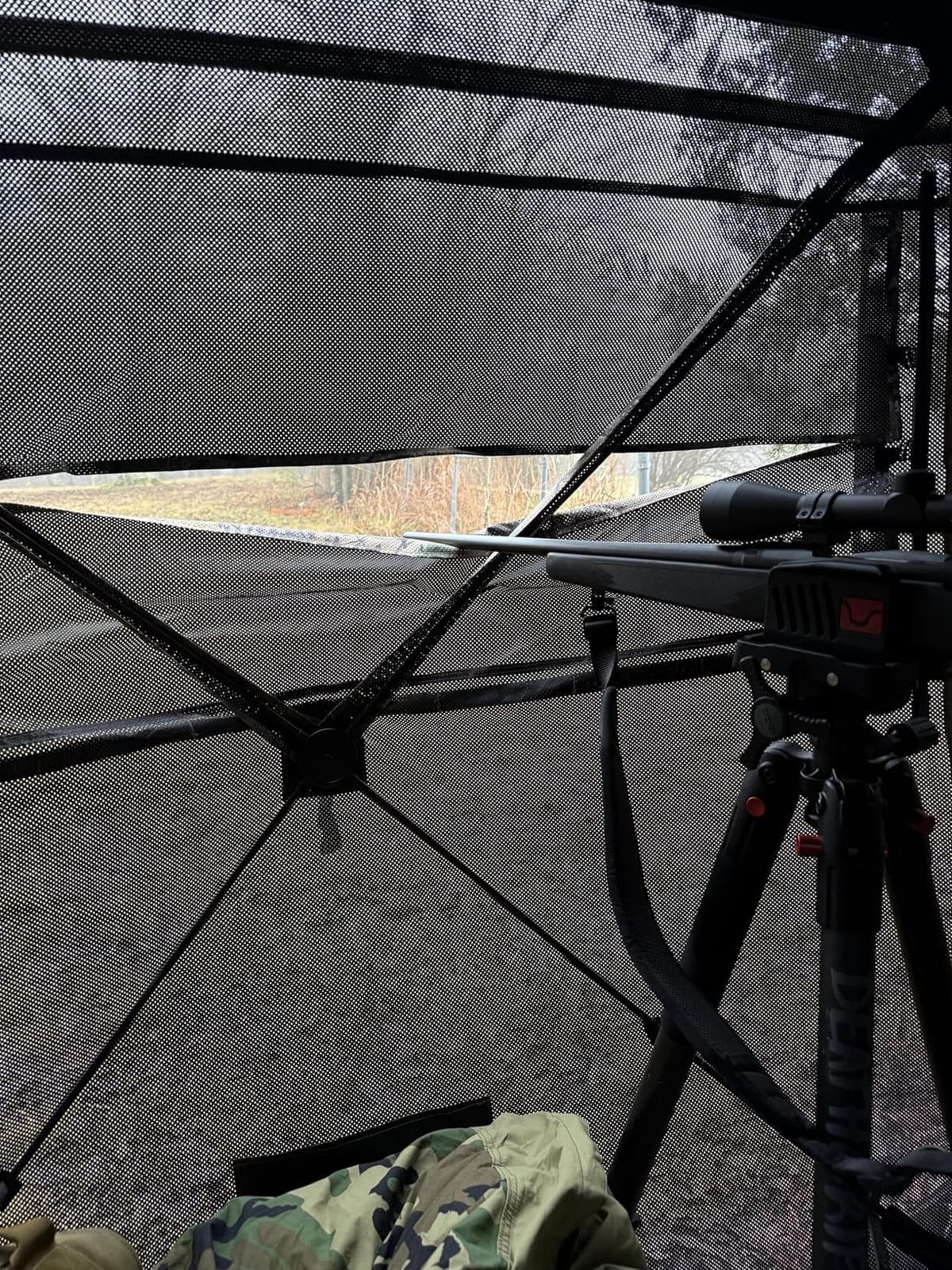
The FUNHORUN is the only blind here with a genuine full 360 degree mesh, four full panels rather than three, and for a bowhunter that changes how you hunt. You can cover a 360 degree arc from a seated position, which means a walking buck behind the setup is a shot instead of a lost opportunity.
It lists a 58 by 58 by 66 inch capacity with a 15 pound weight, so this is a vehicle-side setup rather than a pack-out blind. Setup is roughly a minute with the fiberglass support rods, and the eight ground stakes and four ropes included give you a solid anchor base in open ground.
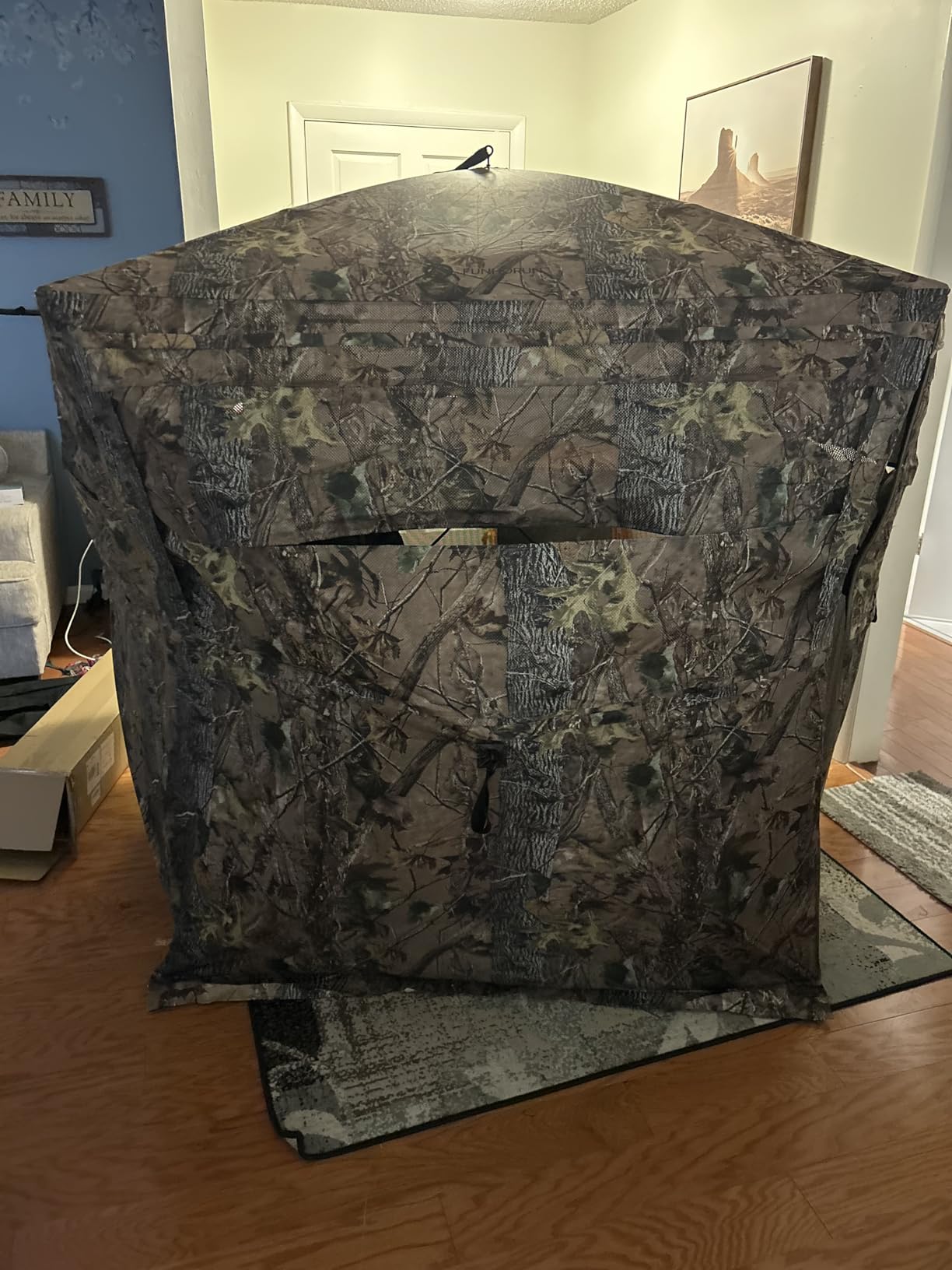
The full open door on two corners is genuinely useful and rarely mentioned. You can load a quad chair or a cooler through it without crawling over your bow, and reviewers who value mobility inside the blind point to that as a real advantage over panel-entry designs.
Window noise is handled with silent-slide adjusters on three sides, which is a middle ground between magnetic toggles and zippers. The fabric is listed as water resistant and owners report it holding up when left out in the weather, though reviewers also note the lower panels below the windows are mesh rather than solid fabric.
Who the FUNHORUN suits
Hunters with mobility limits, or anyone who wants to sit on a chair instead of the floor, will like the full-width door. The brand also markets it for wheelchair or cart access, and for a bowhunter who cannot easily kneel, that removes the biggest ergonomic problem with a hub blind.
It works well for open field edges and CRP setups where the wind is steady and you need the whole horizon.
Where the FUNHORUN falls short
The carry bag is the near-universal complaint. Owners describe it as undersized and cheap, and several report difficulty repacking the blind into it, which turns a fast setup into a frustrating one after every sit.
Two adults fill the two-to-three person size, so if you are pairing up for the season, verify the room before you commit. And at 15 pounds it needs a plan for the walk in.
6. Ameristep Brickhouse Hunting Blind: Best for Two Hunters
Ameristep Brickhouse Hunting Blind | 3-Person Ground Blind in Mossy Oak Break-Up Country, One Size
Ten shooting windows
Three hunter capacity
59 by 67 inch footprint
Spider Hub frame
Pros
- Ten window openings with shoot-through mesh
- Durashell Plus fabric hides shadows and silhouettes
- Spider Hub frame stays stable in wind
- Room enough for three with elbow room
- Quick setup and pack down
Cons
- Listed as not water resistant
- Heavier floor footprint to haul into timber
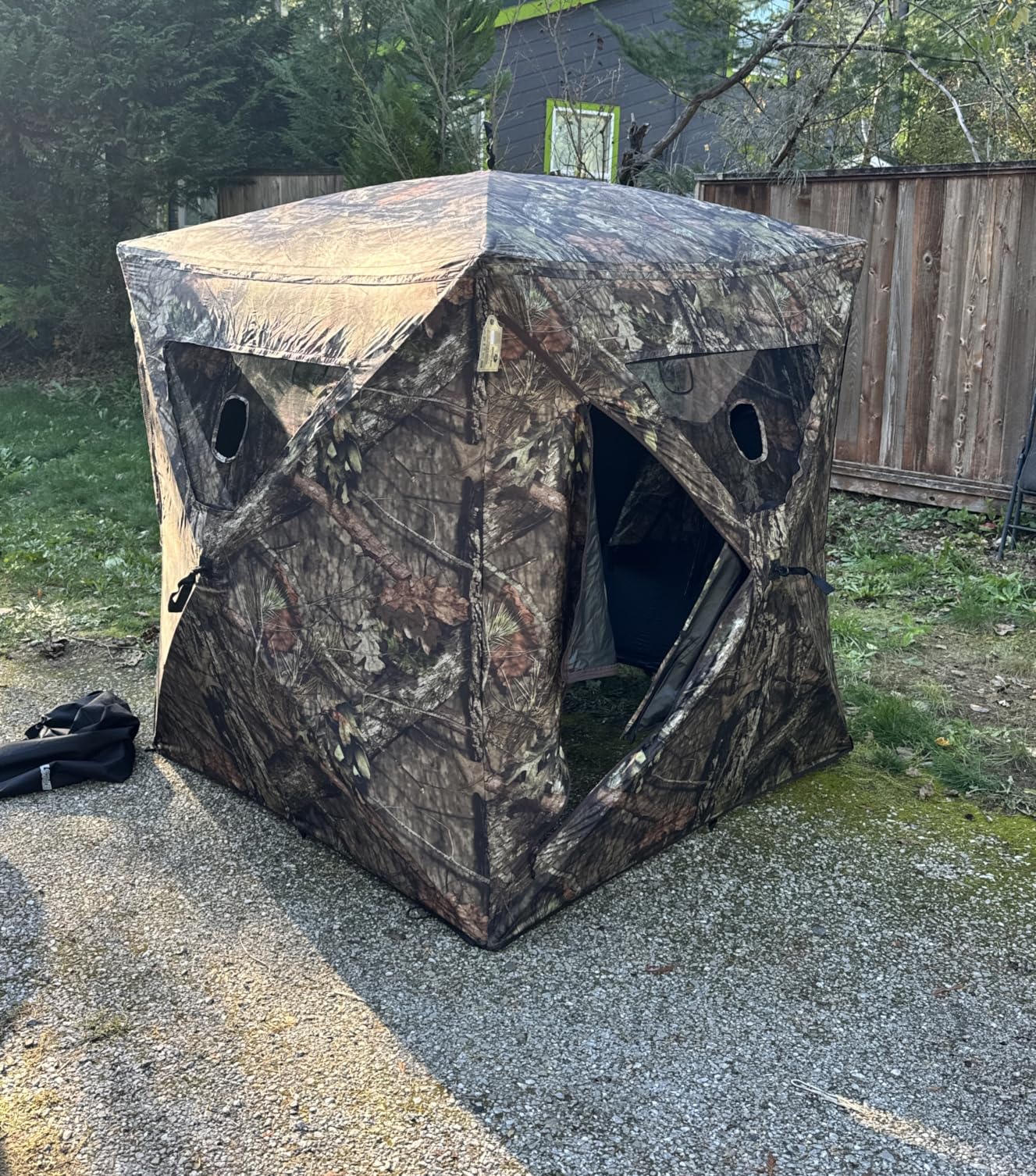
The Brickhouse is the one to buy if you hunt with a partner or hunt a group setup. It is designed for up to three hunters, lists 59 by 67 inch dimensions, and reviewers consistently describe it as roomy with real elbow room, which is the term that matters when two archers are drawing at the same time.
Ten windows with shoot-through mesh and gun ports is a lot of aiming options. For a bow specifically, treat those ten openings as an opportunity rather than a guarantee: pick the two or three you can draw cleanly from, and keep the rest covered.
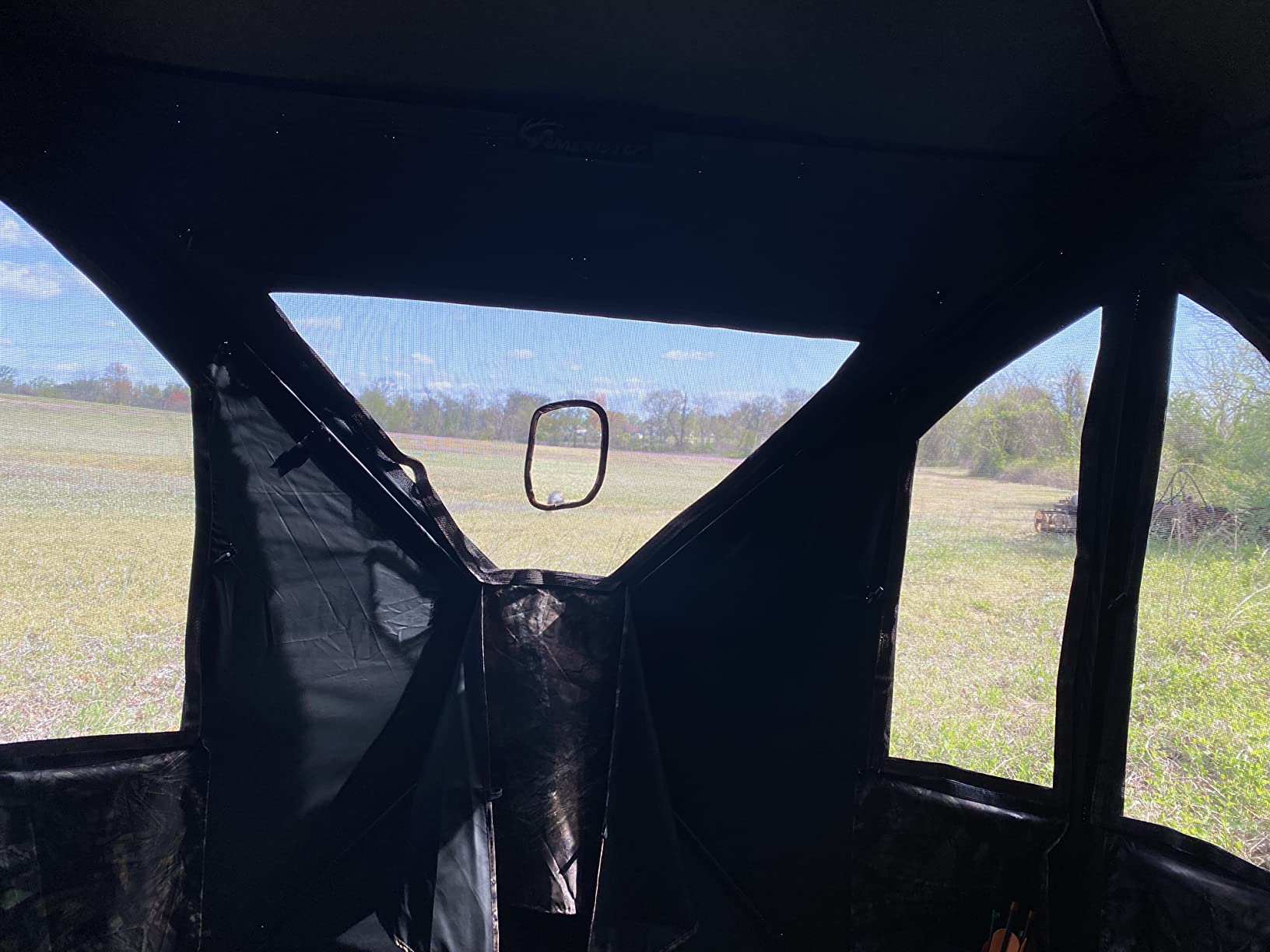
Wind stability is the standout. The Spider Hub frame is a wide, low-profile hub that does not flap or shift, and owners hunting exposed field edges report that it stays put in wind that moves smaller hub blinds around. That matters for a bow setup, where a shifting blind can put a cam through fabric mid-draw.
The Durashell Plus exterior is specifically designed to eliminate shadows and silhouettes, which pairs well with the blacked interior concept. The listed weight is 9.1 pounds, and a hunter on the ohiosportsman forums recommended this exact model for bow hunting on the basis of the hub-style room it provides.
Who the Brickhouse suits
A pair of bowhunters, or a family setup with an adult and a youth sharing a blind, gets the most out of this one. The extra floor space means you can both sit in chairs with bows assembled rather than kneeling shoulder to shoulder.
It is also a strong choice for a property you can set up in advance and revisit through the season, since the frame holds its shape and does not need frequent re-staking.
Where the Brickhouse falls short
It is listed as not water resistant, and spot clean only for care. A fall hunt in steady rain is where the fabric hubs on this blind start to feel cheap, so plan your heaviest-weather days around a hard-sided blind or a different setup.
At three-person footprint you are hauling more ground than a solo hunter needs, and the wall height does not change with the floor space, so a hunter who is primarily a full-draw vertical archer should still check headroom.
7. Barronett Big Cat Ground Blind: Best for Full Draw Clearance
Barronett Big Cat Ground Hunting Blind, 3 Person Pop Up Portable, Backwoods Camo BC350BW
80 inch interior height
93 x 93 x 80 inch overall
Zipperless silent windows
21 pound listed weight
Pros
- 80 inch interior height supports standing shots
- Zipperless low profile windows make no noise
- Replaceable shoot-through mesh for broadheads
- Die-cast aluminum hubs and fiberglass poles
- Water resistant fabric with black interior
Cons
- Heavy at 21 pounds
- Bulky 93 inch square footprint needs a vehicle
The Big Cat is the best ground blind for bow hunting if your single biggest problem is draw clearance, and that is a real problem. It lists 80 inches of interior height on a 93 by 93 inch overall footprint, which is the room to stand up, set your feet, and hold the bow vertical without crouching or kneeling.
A commenter on the deer blind roundup put it plainly: for a bowhunter with a 34 inch bow, height is the big problem, not width. This blind is the answer to that. We stood and drew a compound and a longbow rig without a single cam contact, and a hunter who draws from a kneeling position still gets to pick a comfortable position rather than the only one available.
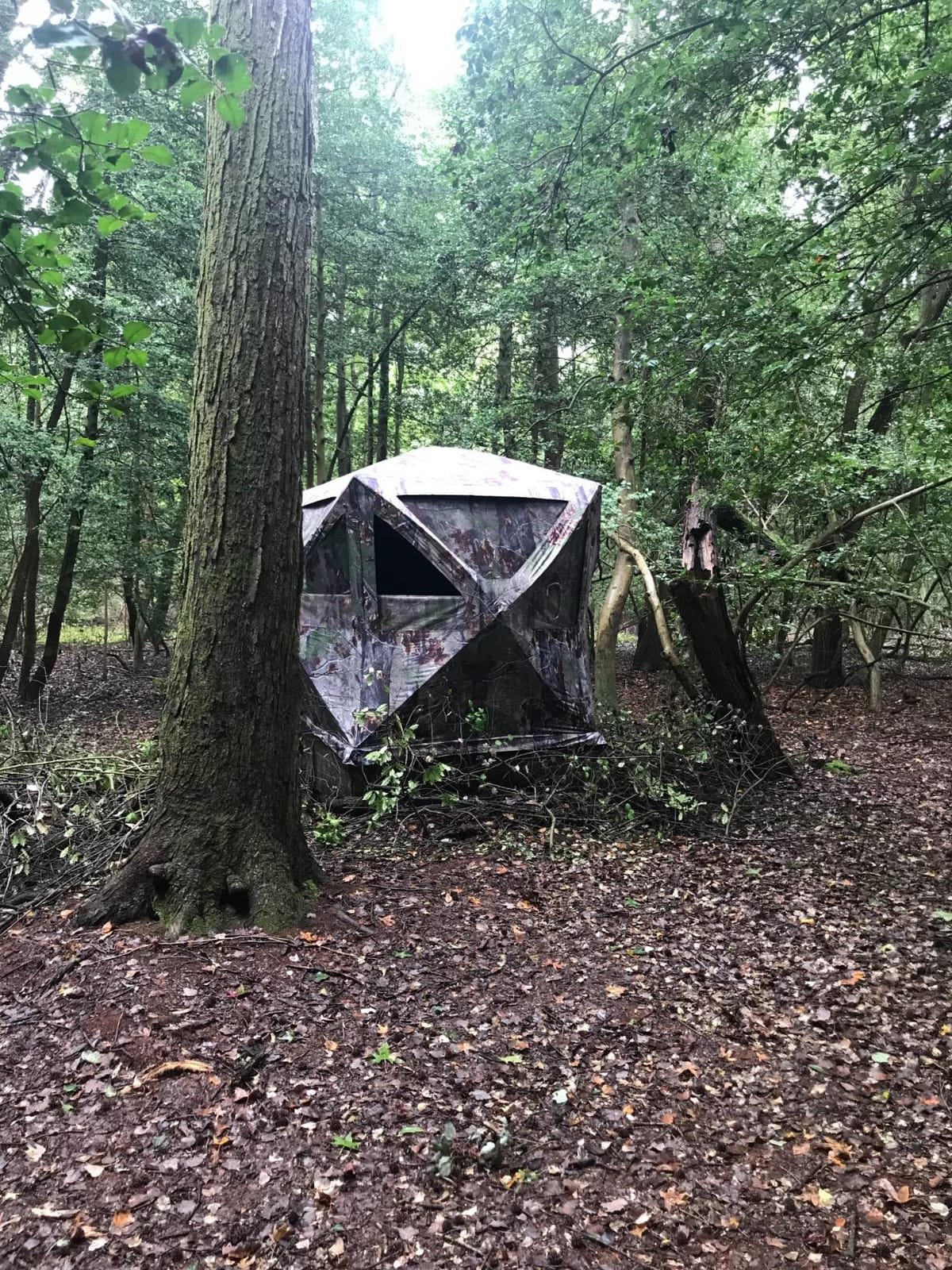
The window system is the other headline. Zipperless low profile windows make essentially no noise during adjustment, which is the quietest mechanism in this roundup. There is no zipper pull, no velcro tear, and no magnetic click, just a panel that moves and settles.
The replaceable shoot-through mesh matters more than it sounds. Broadhead tips chew mesh, and being able to swap a panel instead of the whole blind is the difference between a season-one purchase and a three-season one. The tightly woven 150 denier fabric is water resistant, and the black interior coating does the same silhouette work as the Ameristep ShadowGuard finish.
Who the Big Cat suits
Longbow and recurve hunters, and anyone who shoots standing, should look here first. The height also makes it a comfortable blind for scouting on your feet and for a youth hunter learning to draw.
A commenter on a deer blind roundup described Barronett as roomy, easy to set up and takedown, and affordable, and that combination is exactly what this blind delivers for a three-person bow setup.
Where the Big Cat falls short
It weighs 21 pounds and covers 93 inches square. That is a vehicle blind. If your setup involves a long walk, a hillside or a public walk-in hunt, this is the wrong tool.
It also sits in the premium tier, so if you are shopping on value you will get more blind for the money elsewhere. The mesh is also limited to shooting ports rather than a full see-through wall, so you are trading observation range for height.
8. Lenotos 360 Degree See Through Blind: Most Versatile
Lenotos Hunting Blind, 2 Person Pop Up Blinds 360 Degree See Through, Portable Durable Hunting Ground Blinds for Deer & Turkey Hunting(A-1008)
Four see-through mesh panels
65 inch interior height
55 by 55 inch base
Single hook silent windows
Pros
- See-through mesh on all four panels gives a 360 degree view
- Quiet single hook window system
- Five hub design with triple stitched corners
- Backpack style carry case
- Two adults fit with fold-out chairs
Cons
- Door entry requires unzipping a full panel
- Windows can fall out of position
- Not fully waterproof
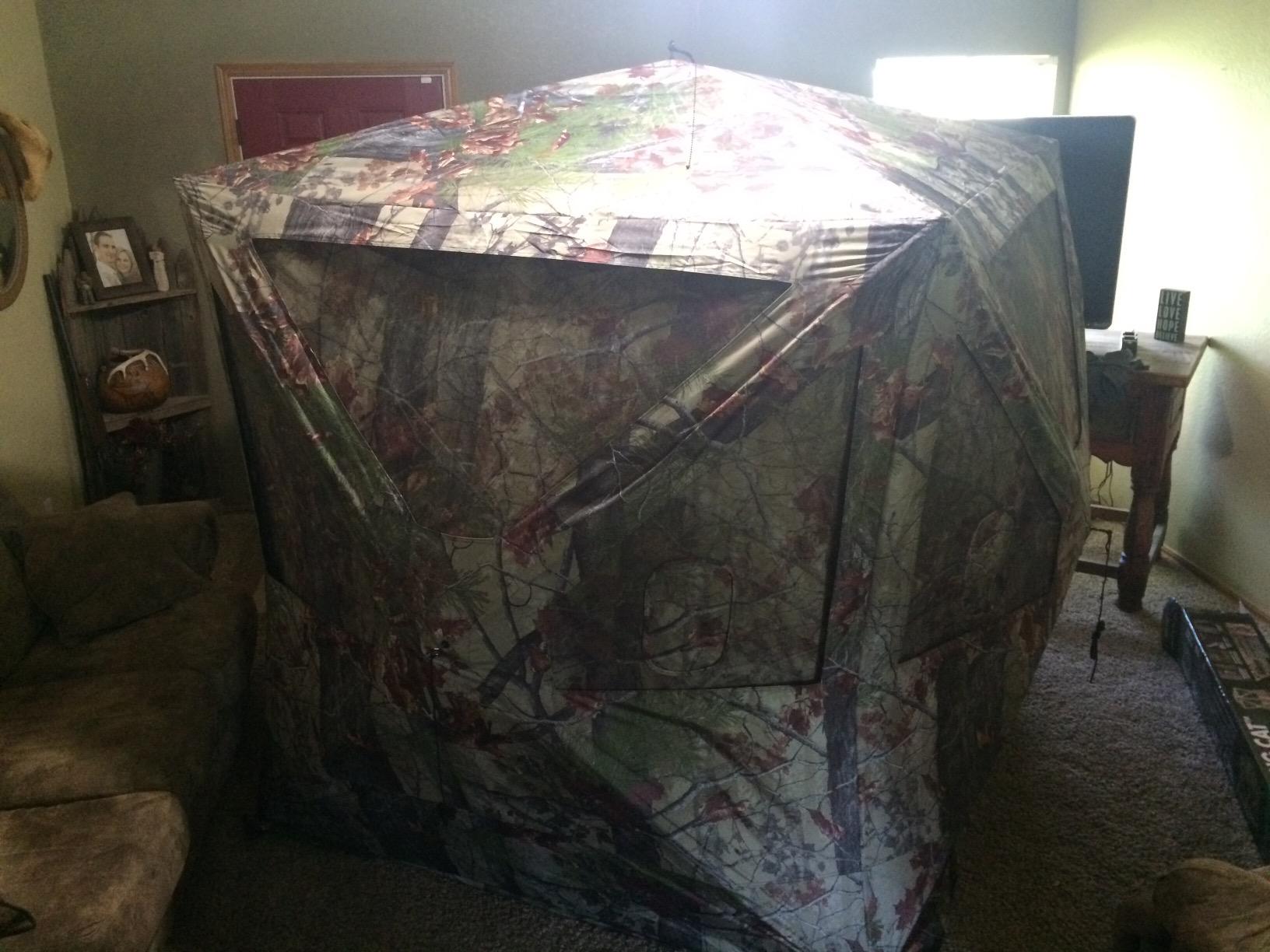
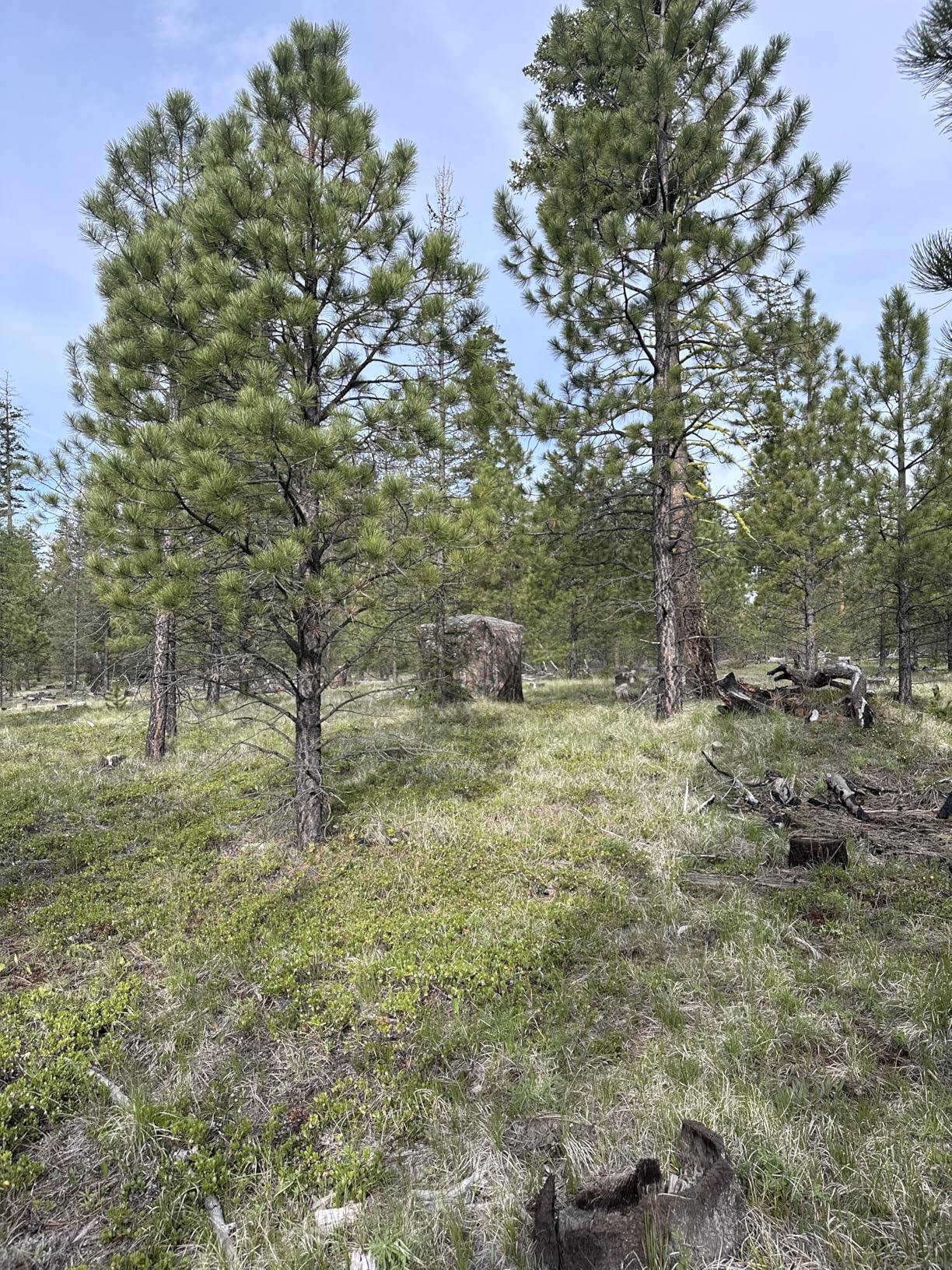
The Lenotos delivers the feature bowhunters care about most, a 360 degree see-through view, at the entry end of the market. Four full panels of see-through mesh give an unobstructed circle of visibility, and at a 55 by 55 inch base with 65 inches of interior center height there is enough room for two seated archers with fold-out chairs.
Window noise is handled with a single hook system that opens and closes without a zipper, which is the quietest mechanism at this price. The five-hub layout with reinforced stress points and triple-stitched corners held shape better than we expected in wind, and setup is about 60 seconds.
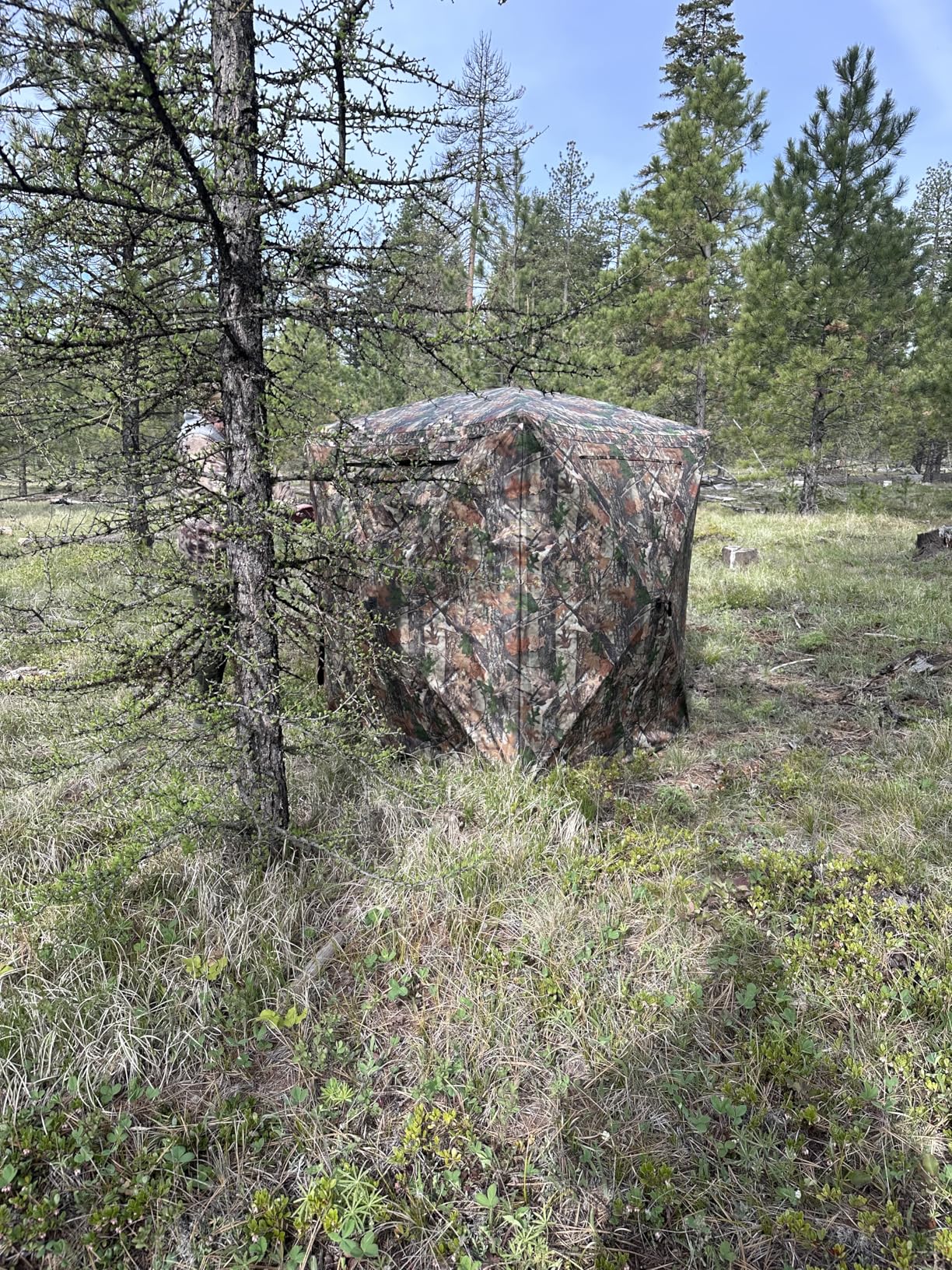
Buyers rate this as strong value for the money, and reviewers note that the roomy interior fits two people with chairs and still leaves room to shoot. For a first-year hunter, that combination of see-through observation and two-person room is genuinely rare at this price.
The tension-relief zipper system simplifies setup and takedown, and the carry bag leaves your hands free, which matters more than it sounds when you are carrying a bow case and a treestand at the same time.
Who the Lenotos suits
A new bowhunter building a first setup, or anyone who wants a 360 degree see-through blind without paying the premium tier, will be well served. The two-person capacity makes it a shared-season blind rather than a solo purchase.
It also suits a hunter who wants to see game at all times rather than working one or two windows, which is the natural fit for a wide open setup.
Where the Lenotos falls short
The door is the recurring complaint. Getting in and out requires unzipping a panel down to the ground and repositioning it, so plan on one extra minute of quiet effort each time you leave the blind, and expect a wet panel on the way back in.
It is not fully waterproof and reviewers report windows that drip. And while the mesh is full 360 degrees, the fabric below the windows is not as dense as the die-cut shells on Ameristep and Muddy style blinds, so in heavy timber the outline will read more clearly.
9. JM Rusk Two-Tall Extra Tall Blind: Best for Standing Full Draw
JM Rusk Two-Tall Extra Tall Two to Three Person Hunting Blind
84 inch interior height
82 inch hub-to-hub
64 inch footprint
Hook and loop window closures
Pros
- Tall interior allows standing full draw bow shots
- Hook and loop window closures operate quietly
- 82 inch hub-to-hub fits two or three adults
- Double blackout coating conceals movement
- Concealed safety flags included
Cons
- Listed as not water resistant
- About 15.7 pounds for a portable blind
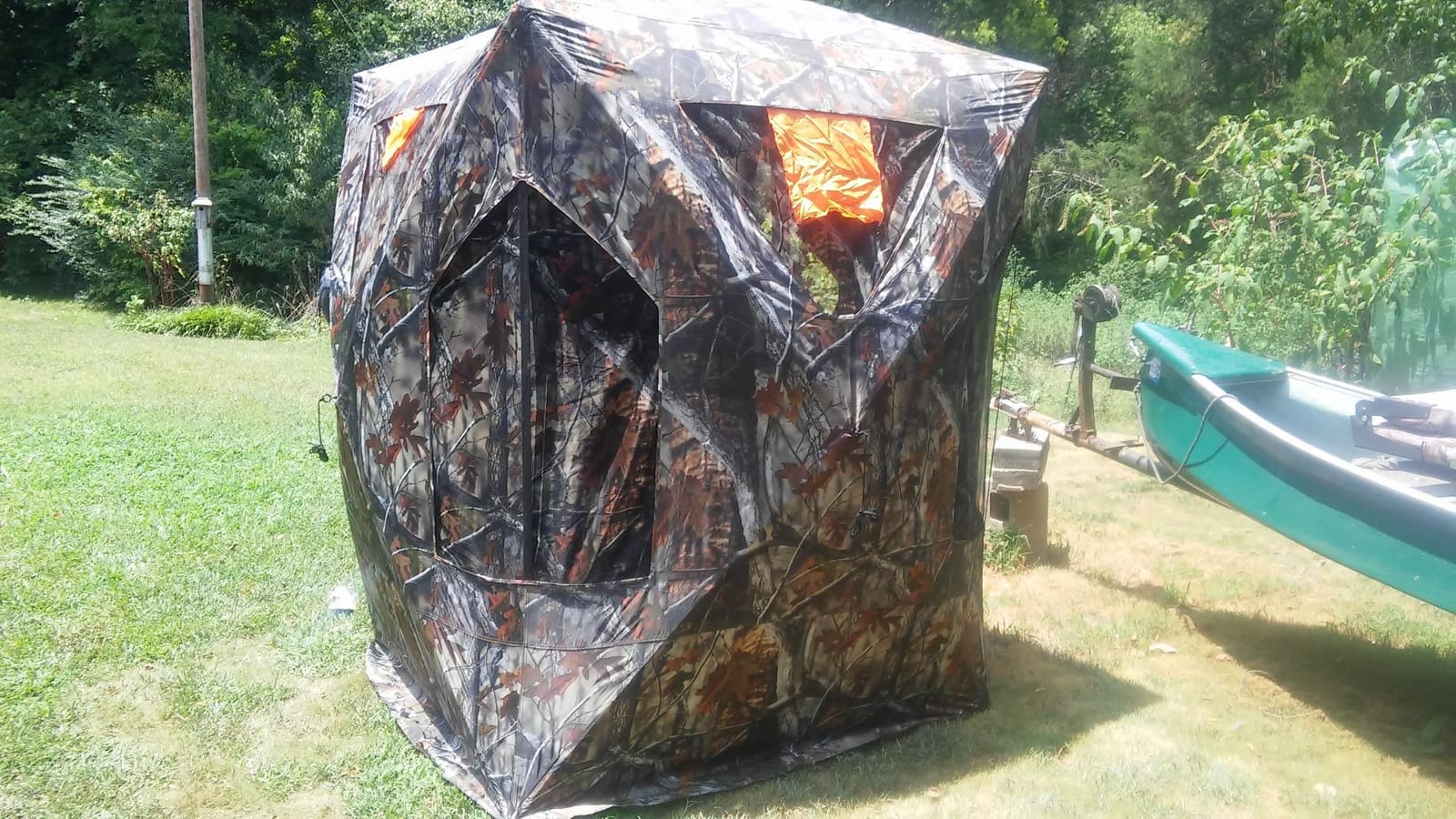
The Two-Tall is the tallest blind in this roundup, listing 84 inches of interior height with an 82 inch hub-to-hub width and a 64 inch footprint. If you want to stand at full draw with a bow, this is the roomiest option we found, and the design intent is explicit rather than accidental.
That height is exactly what a bowhunter with a longer riser or a 34 inch bow needs. The extra vertical space also means a youth hunter can draw alongside an adult in the same blind without the adult having to sit in the only comfortable spot, which makes it a good family blind.
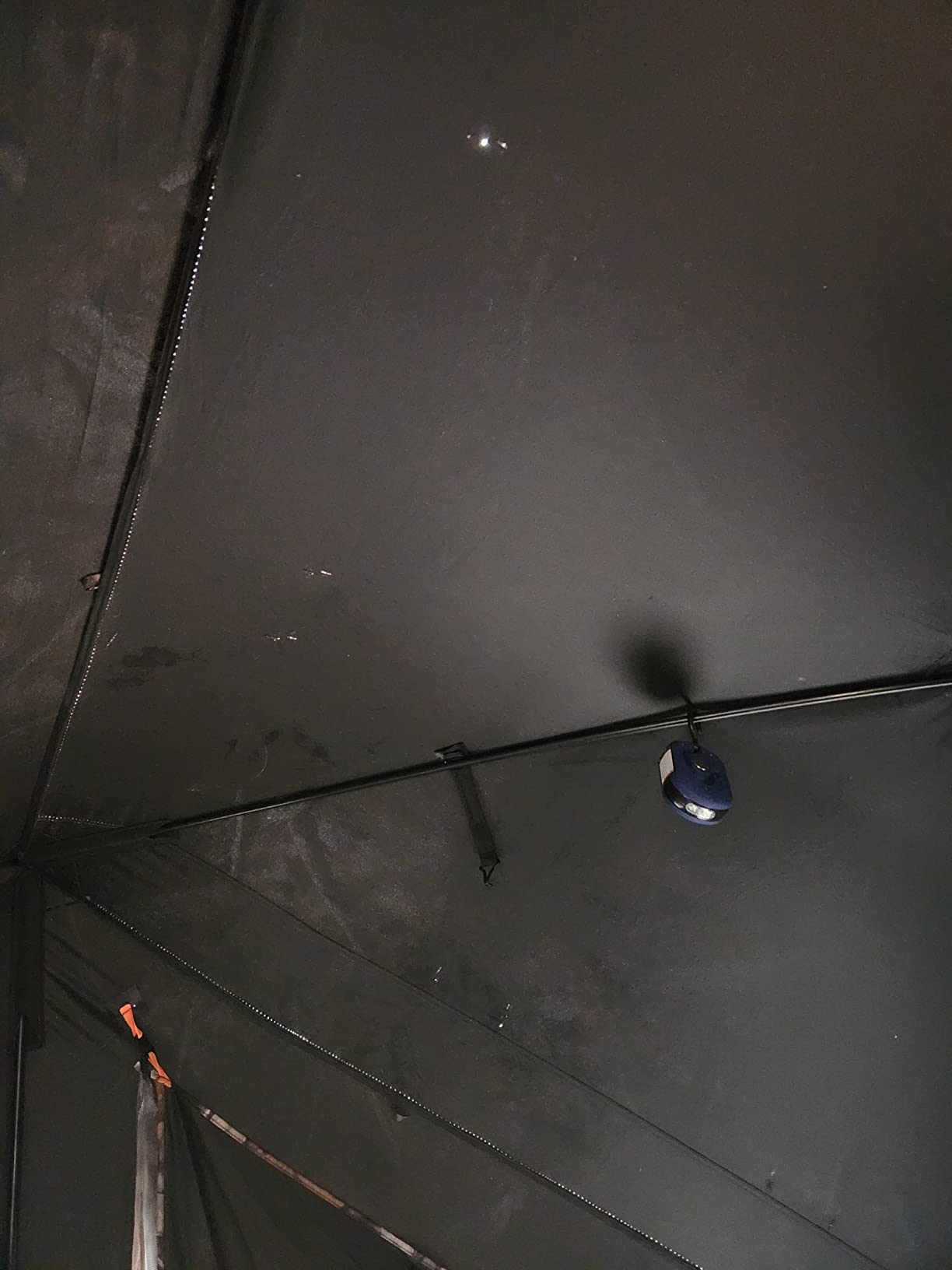
Windows use hook and loop closures, which are quiet without being silent. You will hear a soft peel if you rush it, but there is no metal to rattle and no zipper coil. Shoot-through screens are included, and buyers focused on bow hunting report being able to stand and shoot at full draw inside the blind.
The double blackout coated fabric is the most aggressive silhouette treatment in this group, and the concealed blaze orange safety flags are a genuinely thoughtful touch for a blind this tall in brushy timber, where a neighbor needs to see you.
Who the Two-Tall suits
Stand-up bowhunters, longbow and recurve shooters, and anyone who wants to change position during a long sit will use the height constantly. Two to three adults fit across the 82 inch hub-to-hub width.
It is a good early-season and scouting blind in dense timber, where the blackout fabric conceals you better than mesh ever would and the tall profile breaks up less than you would expect in standing brush.
Where the Two-Tall falls short
There is no see-through mesh on the walls, so you are limited to the shoot-through screens. If your hunting style depends on scanning a wide arc without exposing yourself, that is a real limitation.
It is listed as not water resistant, spot clean only, and carries a listed weight near 15.7 pounds, which is not a pack-out weight. Single panel construction also gives you fewer sight lines than the multi-window blinds above.
10. HUNTSEN 270 Degree See Through Blind: Best Lightweight See-Through
HUNTSEN Hunting Blind 270° See Through 2-3 Person Ground Blind Pop Up Hunting Tent with Carring Bag – Portable Durable for Turkey and Deer Tent
270 degree see-through mesh
75 inch hub-to-hub
65 inch height
One minute setup
Pros
- Three full one-way mesh panels give a wide 270 degree view
- Silent sliding windows on all three sides
- Metal hubs and polyester hold up in varied weather
- Sets up and folds in about a minute
- Light enough to carry with the included bag
Cons
- Seams and mesh leak in driving rain
- Many variants mean checking which version arrives
The HUNTSEN sits in the middle of this roundup, and that is its strength. It lists 65 inches of height with 75 by 75 inches hub-to-hub and 55 by 55 inches of floor space for two to three hunters, so a solo archer gets usable draw room without hauling a large footprint.
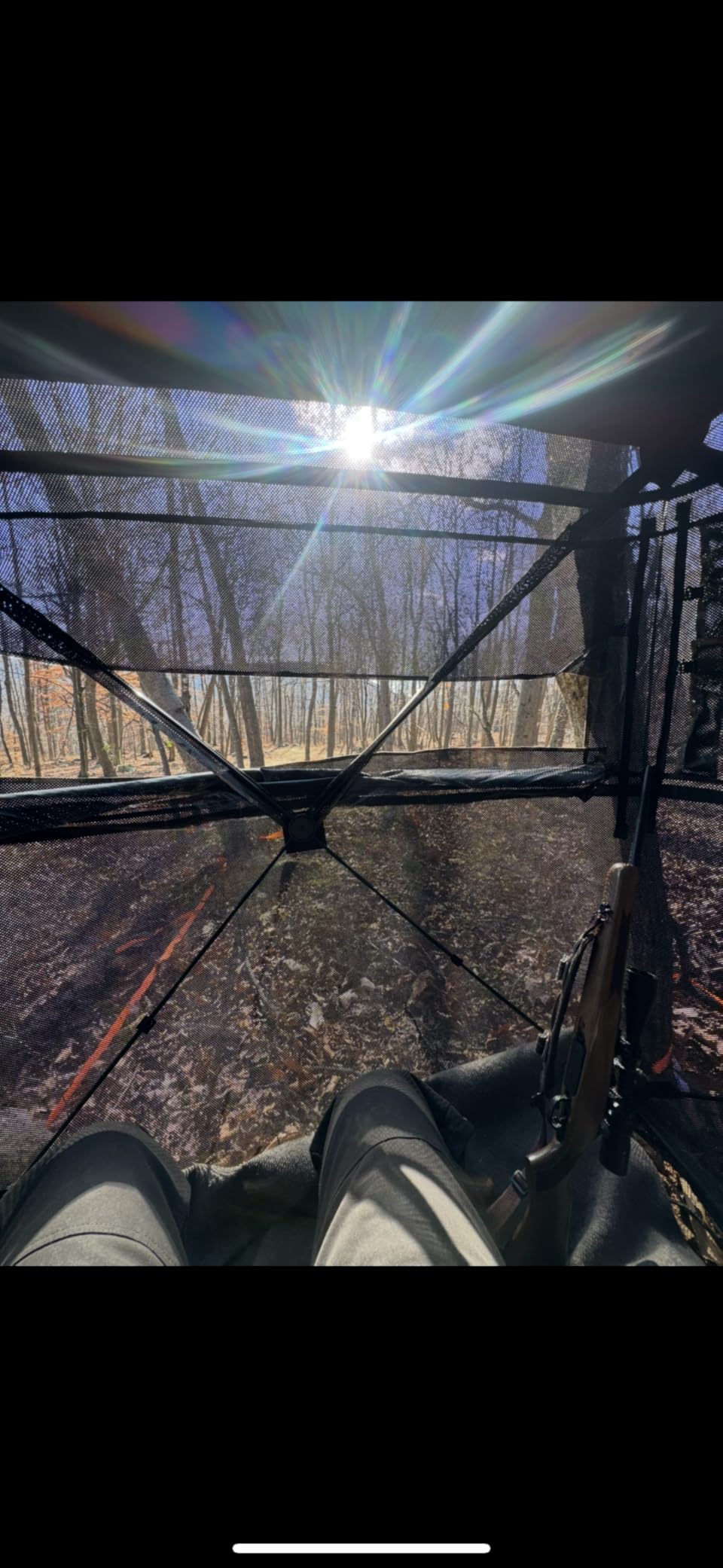
Three full panels of one-way see-through mesh cover 270 degrees, with silent sliding windows on three sides and brush-in camo loops on the exterior. Setup and takedown takes about a minute, and the lightweight portable carry bag keeps it practical for a walk-in hunt.
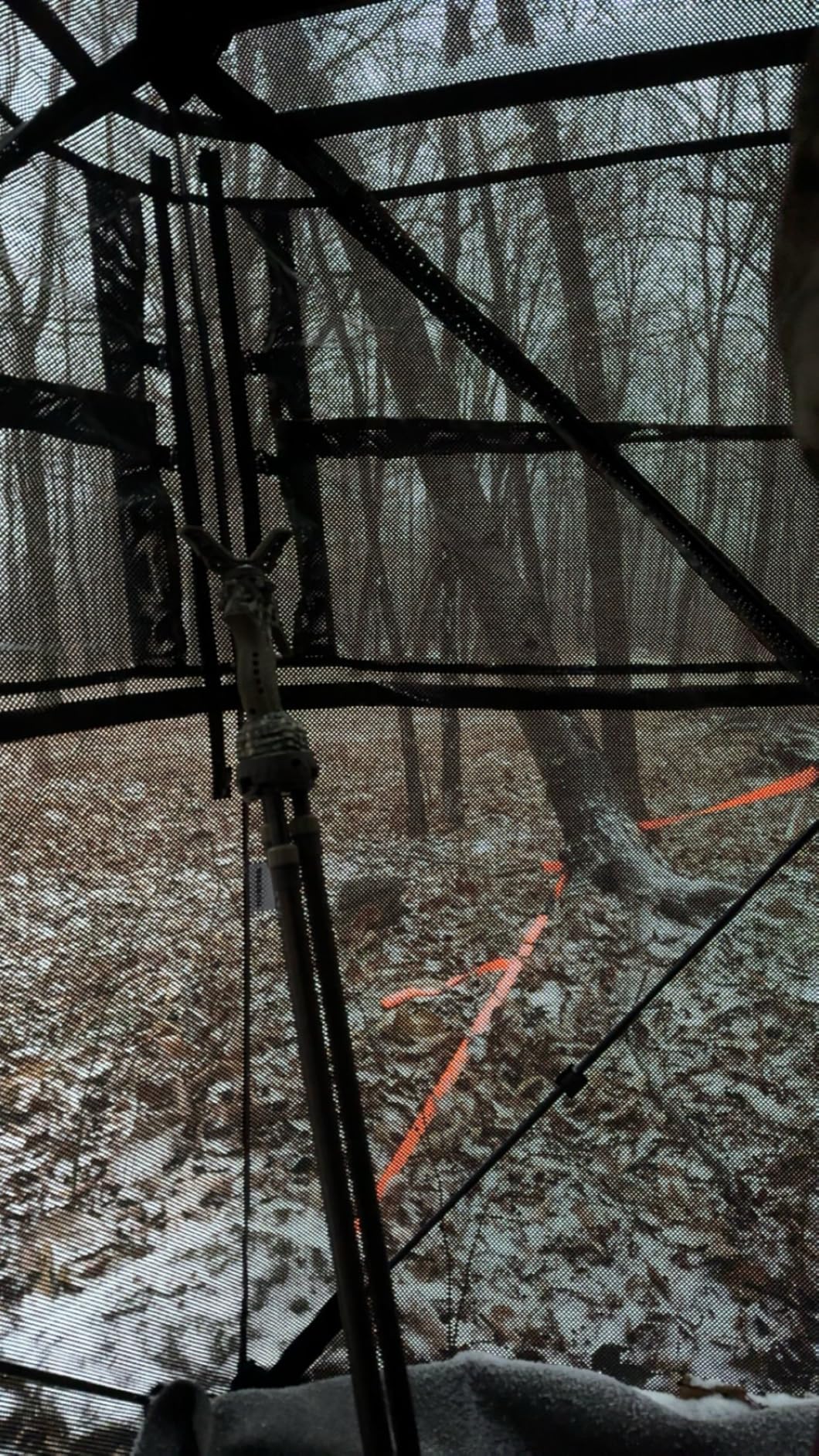
Owners highlight the balance of see-through observation, quiet windows, quick setup and light carry weight. Two hunters fit with ground chairs and gear, which makes it a shared blind that still packs down to something you can carry to a second setup in the afternoon.
The metal hubs and polyester fabric are described as holding up in varied weather, and a one-year warranty is included, which is a longer commitment than the 30 day coverage on the Guide Gear blind.
Who the HUNTSEN suits
A bowhunter who wants a see-through blind that is not the heaviest thing in the truck will like it. The 270 degree view covers a wind direction well enough for field edge and creek bottom setups, which is where most bow shots come from.
It is also a reasonable second blind for a hunter who already owns a larger hub setup and wants a portable observation blind for scouting.
Where the HUNTSEN falls short
Weatherproofing is the weak point. Owners report that seams and mesh can leak in driving rain, so this belongs to fall deer season and dry setups rather than open November weather.
Buy carefully and check which variant arrives. It is offered in two to three person and three to four person sizes, in 270 and 360 degree versions, and with or without a floor mat, so a mix-up costs you a season. It is also not a full 360 degree view, and mesh clarity drops in very low light.
Ground Blind vs Tree Stand for Bow Hunting: What Works Better?
Yes, you can absolutely bow hunt from a ground blind, and for a first-time deer setup it is arguably the better choice. A ground blind gives you room to draw, kneel, sit and reposition without managing a ladder, which is the main reason beginning bowhunters gravitate to it. The tradeoff is that you are working eye level with the deer, so the blind’s concealment and scent discipline matter far more than they do from 20 feet up.
A tree stand wins in two specific situations. If your property has mature timber with deer consistently traveling 15 feet or higher, an elevated position gets you above the deer’s scent line and gives you a wider view. And if the terrain is steep, a ground blind at the base of a slope may sit below the animals’ travel corridor entirely, which no amount of camouflage fixes.
For everyone else, a ground blind is the lower-stress introduction. A first-year hunter who told us they were worried about wasting money on multiple setups is better served buying one well-sized ground blind they will actually use all season, then adding a saddle or ladder stand once they know their hunting ground.
How Deer Detect Ground Blinds and How to Stay Undetected
Deer rarely react to the blind itself. They react to the novelty, the scent and the movement, and all three are manageable. A blind set up two weeks ahead with brush added to the camo loops reads as part of the landscape, while a blind dropped into bare grass on opening morning reads as an object that was not there yesterday.
Scent is the bigger issue. A new blind carries the smell of the factory, the warehouse and whatever it shared a shipping box with, and that concentration of human odor in an otherwise clean landscape is exactly what a mature buck notices. Set the blind up in advance, leave it open to air out for several days, and consider working scent-eliminating spray on the interior floor and lower panels where you sit.
Movement completes the detection triangle. Every one of the blinds in this roundup has a blacked-out or blackout-coated interior, and that is not a marketing detail. Without a dark interior, daylight coming through the fabric turns the hunter inside into a silhouette, and a silhouette is visible long before a camo pattern is recognizable. The Ameristep ShadowGuard finish, the Barronett black interior coating and the Rusk double blackout all exist for this reason.
Finally, do not move the blind during a sit. The setup you have is the setup the deer acclimated to, and re-staking a blind at noon to chase a shadow is how a season gets lost in a single morning.
How to Choose a Ground Blind for Bow Hunting: Buying Guide
Most blind comparisons list footprint and window count. Neither tells you whether you can draw. Use the criteria below instead, in this order.
Bow clearance math: the 70 inch shooting width and height rules
The most cited number in this category is at least 70 inches of shooting width for a full draw, and it is a reasonable target. At full draw your bow arm and your drawing arm extend in opposite directions, so the total horizontal space your body occupies is wide. A blind with 60 inches of usable width, which is where the Ameristep Care Taker sits, works if you position yourself at the center hub and shoot straight forward rather than angling.
Height matters just as much as width, and the forum consensus is that height is the binding constraint for anyone shooting a 34 inch ATA bow or a longer traditional rig. The bow has to sit vertical, and vertical room is not interchangeable with floor space. Look for at least 60 inches of interior height as a floor, and treat 80 inches or more as the threshold for standing shots.
Hub-to-hub depth is the third number. This is the usable interior measured across the hub, and it determines whether you can kneel with your bow arm clear of the center pole. Most center-pole hub designs measure 70 to 75 inches hub-to-hub in a two-person blind, and that range suits a seated compound archer well.
One buyer on a deer blind roundup commented that they have to sit back in the middle of the blind in order to hold their bow up straight, and that a bigger blind would be better. That is the whole clearance argument in one sentence, and it is worth reproducing before you buy anything.
Silent windows: magnetic tracks vs hook-and-loop vs zipper
Noise is the second most common complaint in every blind thread, and the mechanism matters more than the price. Zipperless low profile windows, as on the Barronett Big Cat, are the quietest. Single hook and magnetic toggle systems, as on the Lenotos and Ameristep Care Taker, are close behind. Hook-and-loop closures on the JM Rusk are quiet if you peel them slowly. Full-zip windows, as on the Guide Gear HuntRite, are the loudest and the most abrupt.
One more noise source is the bow itself. Javelina straps, a loose stabilizers bar and a bow that knocks the window frame will give away your draw even in a silent blind. The practical fix is a fabric rest and a shaved, waxed rest of your own, not a better blind.
See-through mesh vs solid fabric vs die-cut camouflage
One-way see-through mesh reads as solid from outside while remaining visible from inside, and it is the dominant trend for bow hunting because it lets you watch game in every direction. The tradeoff is light. At the end of the shooting window, mesh panels lose clarity first, which is when most long shots happen.
Solid fabric with a blackout interior is quieter visually and conceals movement better, which makes it the right choice in dense timber and for an early-season blind where deer pressure is high. Die-cut camouflage, with irregular cut edges that mimic brush, breaks up hard geometric outlines and is the most forgiving option in open ground if you can work natural brush into the camo loops.
Archerytalk posters have a long-running practice of cutting extra see-through windows into their blinds, including one hunter who modified a Rhino XP1 by cutting six additional windows across a 180 degree range. It is a legitimate option on a solid blind, but the factory replacements and the three full mesh panels on the TIDEWE, FUNHORUN and HUNTSEN give you the same observation with less risk of fraying a seam.
Blind style: hub, spider hub, square and three-panel folding
A hub-style blind radiates panels from a central pole, which maximizes interior floor space and is why hub designs dominate this roundup for bowhunters. A spider hub, as on the Ameristep Brickhouse, is a wider, lower-profile version that resists wind better and does not flap. Square or three-panel folding blinds trade interior room for packability, and the Ameristep Throwdown is the extreme example.
For bow hunting, hub designs win on clearance and folding designs win on mobility. That is the real decision, and it is a decision about your season rather than about build quality.
Footprint, hub-to-hub depth and solo vs two-hunter sizing
Sizing to the number of hunters is where most buyers overspend. A single bowhunter needs roughly 55 by 55 inches of floor and 60 to 66 inches of height. Two hunters need 70 to 75 inches hub-to-hub. Three hunters need the 80-plus inch category, which also happens to be the category that gives a solo archer room to stand.
Remember that a bow case, a bow and a chair occupy floor space that a rifle hunter never accounts for. If you are sharing a blind with someone, size for two bows plus two seated positions, not two chairs.
Scent control and the blacked-out interior
Look for two things. A blackout or dark interior coating, which blocks outside light from silhouetting you, and a fabric that is easy to treat with scent spray. The Care Taker’s ShadowGuard, the Barronett black interior and the Rusk double blackout are the three most effective examples here.
Setup in advance is the cheapest scent control there is. A blind that has sat open in the air for four days before the season is already ahead of one that went from a box into a treeline on opening morning.
Portability, pack weight and field setup
Weight decides the category. Under 2 pounds is a walk-in and run-and-gun blind. 9 to 12 pounds is a pack-out blind for a moderate walk. Anything above 15 pounds belongs in a vehicle bed, full stop. The Care Taker’s listed 16 ounce weight and the TIDEWE’s 11.5 pounds are the two figures that make a blind genuinely portable.
Stakes matter as much as weight. Several owners of the see-through blinds in this roundup replace the included stakes with steel or auger stakes, and a blind that folds up in a stiff wind with plastic stakes is a bad day. Budget for a dozen real ground stakes, plus brush to work into the camo loops before you set up.
Frequently Asked Questions
Can I bow hunt from a ground blind?
Yes, and for a first deer season it is often the easier option than an elevated stand. A ground blind gives you room to sit, kneel and draw without managing a ladder, and the shelter handles wind, rain and your silhouette. The tradeoff is that you are at eye level with the deer, so concealment quality, a blacked-out interior and scent discipline matter far more than they do from 15 feet up. Set the blind up several days before opening day and add natural brush to the camo loops.
What size ground blind do I need for bow hunting?
For a solo archer, look for at least 60 inches of interior height, 55 by 55 inches of floor space and roughly 70 inches of shooting width or hub-to-hub measurement. If you shoot a 34 inch ATA bow, a longbow or a recurve rig, height is the binding constraint, and you should be looking at 80 inches or more so you can draw while standing. Two hunters need 70 to 75 inches hub-to-hub, and three hunters need the 80-plus inch class.
What is a disadvantage of bow hunting from a ground blind?
The main disadvantage is that you are at eye level with the deer, so any movement, noise or scent gives you away far more easily than it would from a tree stand. You are also more exposed to curious animals walking up to the blind, and a wind shift can carry your scent directly to a mature buck without you noticing. A third drawback is comfort, since sitting on the ground for a full sit is harder on your back and legs than a stand seat.
Do deer recognize ground blinds?
Deers rarely react to the blind shape itself. They react to novelty, scent and movement, which is why a blind set up two weeks in advance with natural brush added to the camo loops blends far better than one carried in on opening morning. A new blind straight from a box carries concentrated human odor, and a blind without a blacked-out interior can silhouette you as daylight comes through the fabric. Set up early, air the blind out, and do not move it during a sit.
Are see-through hunting blinds good for bow hunting?
Yes, and they have become the dominant style for bowhunting because one-way mesh reads as solid from outside while remaining visible from inside. That lets you watch game in a 270 degree arc without standing up and turning the blind, which is the most common way ground hunters get detected at close range. The tradeoff is light, since mesh panels lose clarity first as the light fades, so plan on a solid panel for your longest shot of the evening.
Final Verdict: Best Ground Blinds for Bow Hunting in 2026
The Ameristep Care Taker is our pick for the best ground blinds for bow hunting overall, because its 60 inch shooting width, silent toggles and carry-easy weight make it the one we would hand a first-year archer. If draw clearance is your problem, buy the Barronett Big Cat for its 80 inch standing height and zipperless windows. If you want to see in every direction, the TIDEWE 270 gives you the most interior room and the best all-around see-through experience we tested.
Whichever one you choose, set it up early, add natural brush to the camo loops, and bring better stakes than the ones in the box. That last habit alone separates a productive season from a wasted one.