
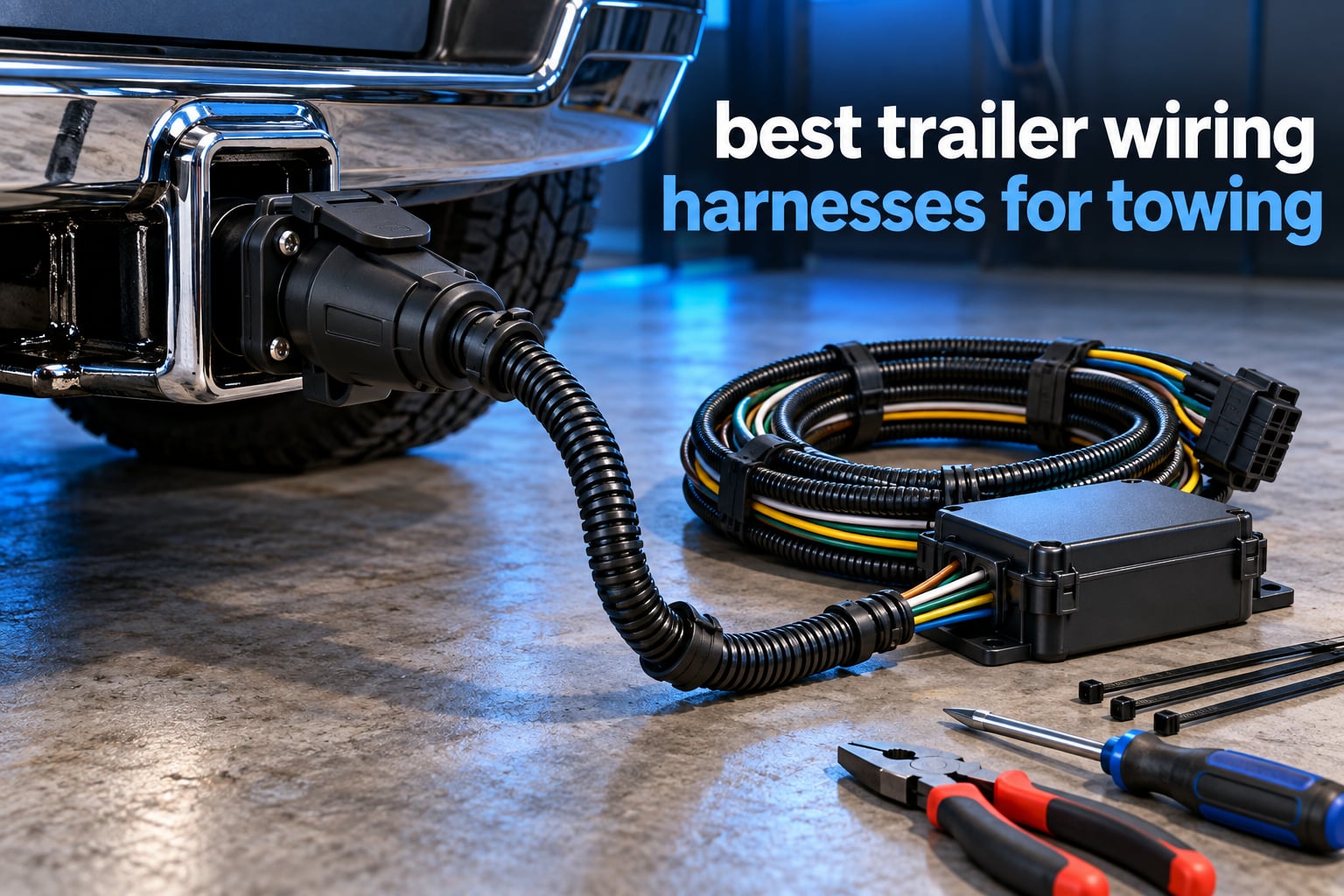
The best trailer wiring harness overall is the CURT 56040, a vehicle-specific T-connector that plugs straight into the factory tail lamp sockets and adds a 4-way flat socket on the hitch without cutting a single wire. It carries a 4.8 rating across more than 3700 owner reviews, and for most people buying a harness for the first time, that combination of rating, review volume and zero-splice installation is the safest bet in 2026.
Trailer wiring is the least glamorous part of a tow setup and the most likely to be done badly. A dead brake light or a flickering turn signal is both a legal problem and a genuine safety hazard, yet the wiring is usually the last thing sorted out and the first thing to corrode. The good news is that the decision is simpler than most forum threads make it sound: match the connector to your trailer, then match the install style to your tow vehicle.
This roundup covers ten harnesses that fall into four real buyer groups. Vehicle-specific T-connectors for people wiring a car or crossover that never had a tow package. Universal 7-way cords with junction boxes for RV, camper and boat trailers. Trailer-side rewire kits for replacing perished wiring on a frame. And component-level parts for patching a single failed connector. If you have not chosen a hitch yet, our trailer hitch roundup covers the ratings and receiver classes that pair with these harnesses.
Before you pick anything, check your tow vehicle owner’s manual for the tow rating and tongue weight limit. If you plan to add electric brakes or a brake controller later, buy the 7-way now — a 4-way flat cannot be upgraded without replacing the whole harness.
Table of Contents
Top 3 Trailer Wiring Harness Picks for 2026
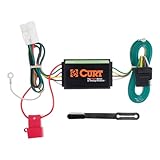
CURT 56040 4-Pin T-Connector
- True plug-and-play fit
- SMT tail light converter
- 4-way flat output
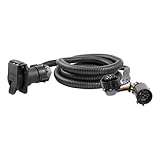
CURT 56070 7-Way Bed Extension
- Adds a 7-way socket in the bed
- Keeps the factory rear socket usable
- Fifth wheel and gooseneck ready

MICTUNING 8FT 7-Way Cord
- Most reviewed in the set
- Seven-circuit junction box
- Open and close grommets included
The three above cover the three most common situations. The CURT 56040 is a vehicle-side fitment for a Subaru. The CURT 56070 adds a full 7-way socket to a truck bed for fifth wheel and gooseneck trailers. The MICTUNING 8FT cord is a universal trailer-side run with a junction box, and it carries more owner reviews than anything else we looked at.
Best Trailer Wiring Harnesses (October 2026)
| Product | Specifications | Action |
|---|---|---|
| CURT 56040 4-Pin Wiring for Subaru |
|
Check Latest Price |
| CURT 56070 7-Foot Truck Bed 7-Way Extension |
|
Check Latest Price |
 Oyviny 22FT Wishbone Trailer Rewire Kit Oyviny 22FT Wishbone Trailer Rewire Kit |
|
Check Latest Price |
| MICTUNING 8FT 7-Way Cord with Junction Box |
|
Check Latest Price |
 TRUE MODS 4 Pin Flat Harness Kit TRUE MODS 4 Pin Flat Harness Kit |
|
Check Latest Price |
 Nilight 7-Way Inline Extension with Box Nilight 7-Way Inline Extension with Box |
|
Check Latest Price |
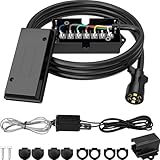 RVGUARD 7-Way Cord and Junction Box Kit RVGUARD 7-Way Cord and Junction Box Kit |
|
Check Latest Price |
 Tekonsha 118727 T-One Connector Assembly Tekonsha 118727 T-One Connector Assembly |
|
Check Latest Price |
 CheeMuii 8FT 7-Way Harness Kit CheeMuii 8FT 7-Way Harness Kit |
|
Check Latest Price |
 CURT 56601 7-Way RV Blade Replacement CURT 56601 7-Way RV Blade Replacement |
|
Check Latest Price |
1. CURT 56040 4-Pin Wiring for Subaru – The Best Overall Trailer Wiring Harness
CURT 56040 4-Pin Wiring for Subaru Ascent, Forester, Outback, Crosstrek
4-Way Flat output
SMT tail light converter
12 oz, 1 year warranty
Pros
- True plug-and-play with no cutting of factory wiring
- SMT circuitry inside the tail light converter
- Compact 12 oz housing that stows neatly
- 4.8 rating across more than 3700 owner reviews
- Fits 2019 to 2026 Ascent and 2009 to 2026 Forester
Cons
- Fits only the listed Subaru models
- Excludes Wilderness variants
- Carries no electric brake or reverse or auxiliary power circuit
This is the harness we recommend to anyone whose tow vehicle never came with factory tow wiring. The 56040 plugs into the existing OEM sockets behind each tail lamp and produces a 4-way flat socket at the hitch. Nothing on the vehicle is cut, stripped or taped, which is the single biggest reason owners recommend it.
The converter is the piece that does the actual work. Modern vehicles run separate brake and turn circuits, while trailers expect them combined on two wires. The SMT tail light converter inside this harness merges those signals and protects the vehicle side from a trailer fault. The whole unit weighs 12 ounces and measures 4 by 2 by 9 inches, so it disappears under a bumper or in a cargo bay.
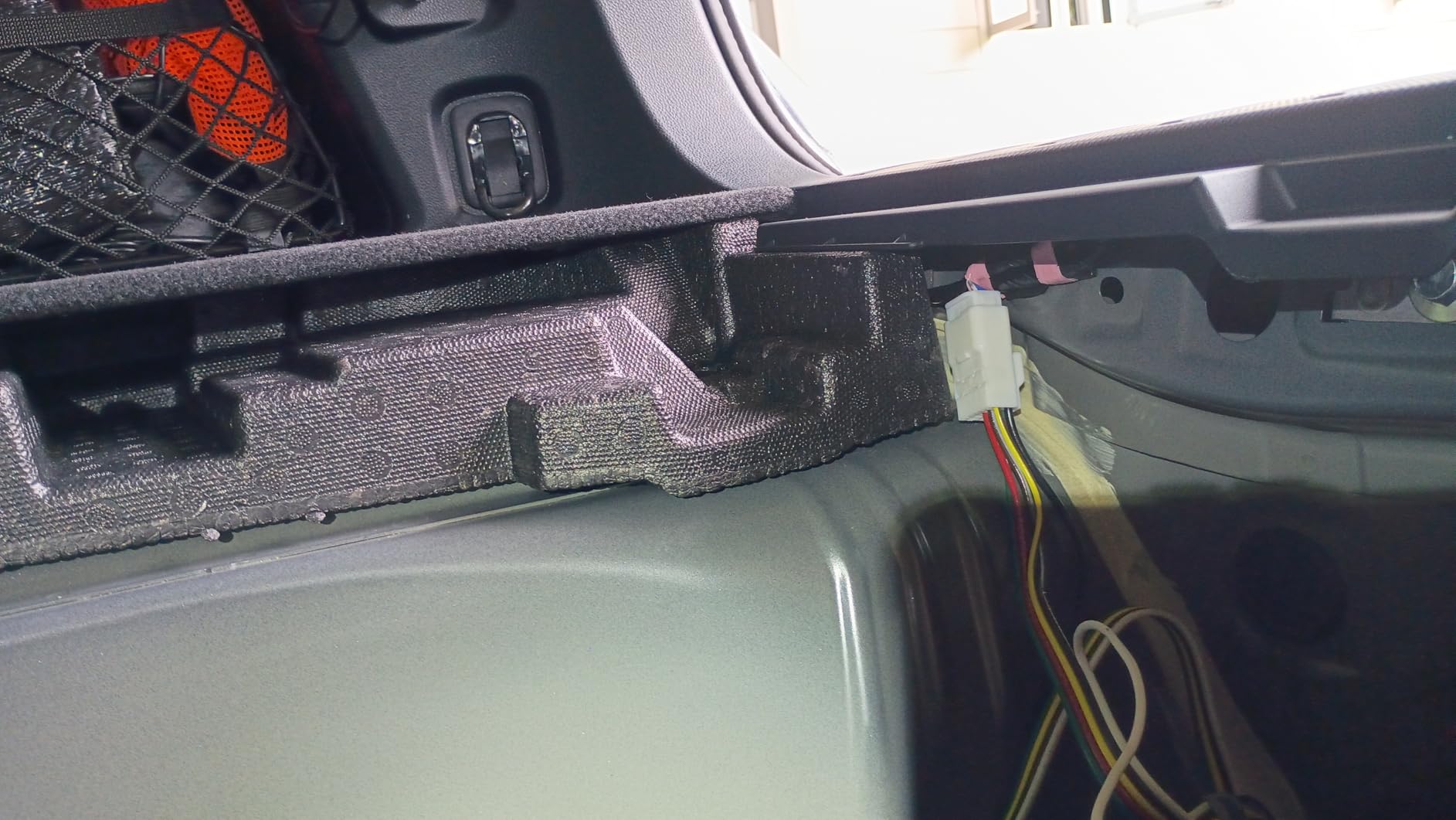
Owners describe the fit as clean and factory-looking, with an 86 percent five-star share in the reviews. The recurring limitation is not build quality but scope: it covers the Ascent, Forester, Outback and Crosstrek, and Wilderness variants are excluded. Check your exact year and trim before ordering.
The honest trade-off is connector count. A 4-way flat carries tail, brake and both turn signals, and nothing else. If you later add electric brakes, a brake controller, reverse lamps or 12V auxiliary power, this harness cannot grow into that job.
Why the plug-in converter design matters
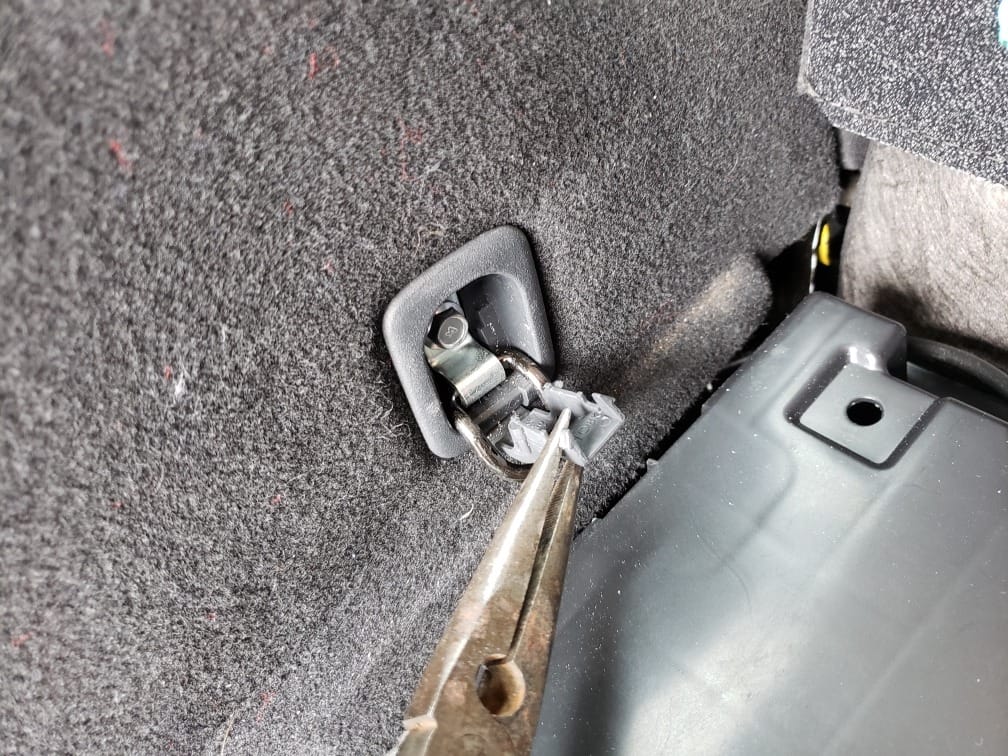
Every forum thread we dug through came back to the same point: owners would rather not splice. Factory tail lamp wiring stays uncut, which protects the vehicle’s warranty and means the harness can be removed in minutes. The powered converter also isolates a short or bad ground on the trailer from the car’s own light circuits.
If you rent trailers occasionally rather than owning one, a vehicle-specific T-connector is the wrong shape of purchase. You would be paying for a permanent install to serve occasional use. In that case a universal 7-way cord with a junction box is the better tool.
Who should pass on this harness
Skip it if you tow an RV, a fifth wheel, a boat with a trailer or anything with electric brakes, because all of those need the full 7-way. It is also the wrong part if your trailer uses a 7-way connector, because this harness only produces a 4-way flat socket on the vehicle side.
2. CURT 56070 7-Foot Truck Bed Extension – Top Rated for Fifth Wheel and Gooseneck
CURT 56070 7′ Truck Bed 7-Way RV Wiring Extension for Select Trucks
7-Way RV blade socket
Rear socket retained
1 year warranty
Pros
- Adds a 7-way socket in the truck bed while keeping the rear socket usable
- No-splice plug-in routing
- Supports fifth wheel and gooseneck hookups
- Dust cover protects the bed socket
- 4.8 rating from 2489 owners
Cons
- Only fits select truck models that already have a factory 7-way socket
- Fixed 7 ft routing length needs bed and frame clearance
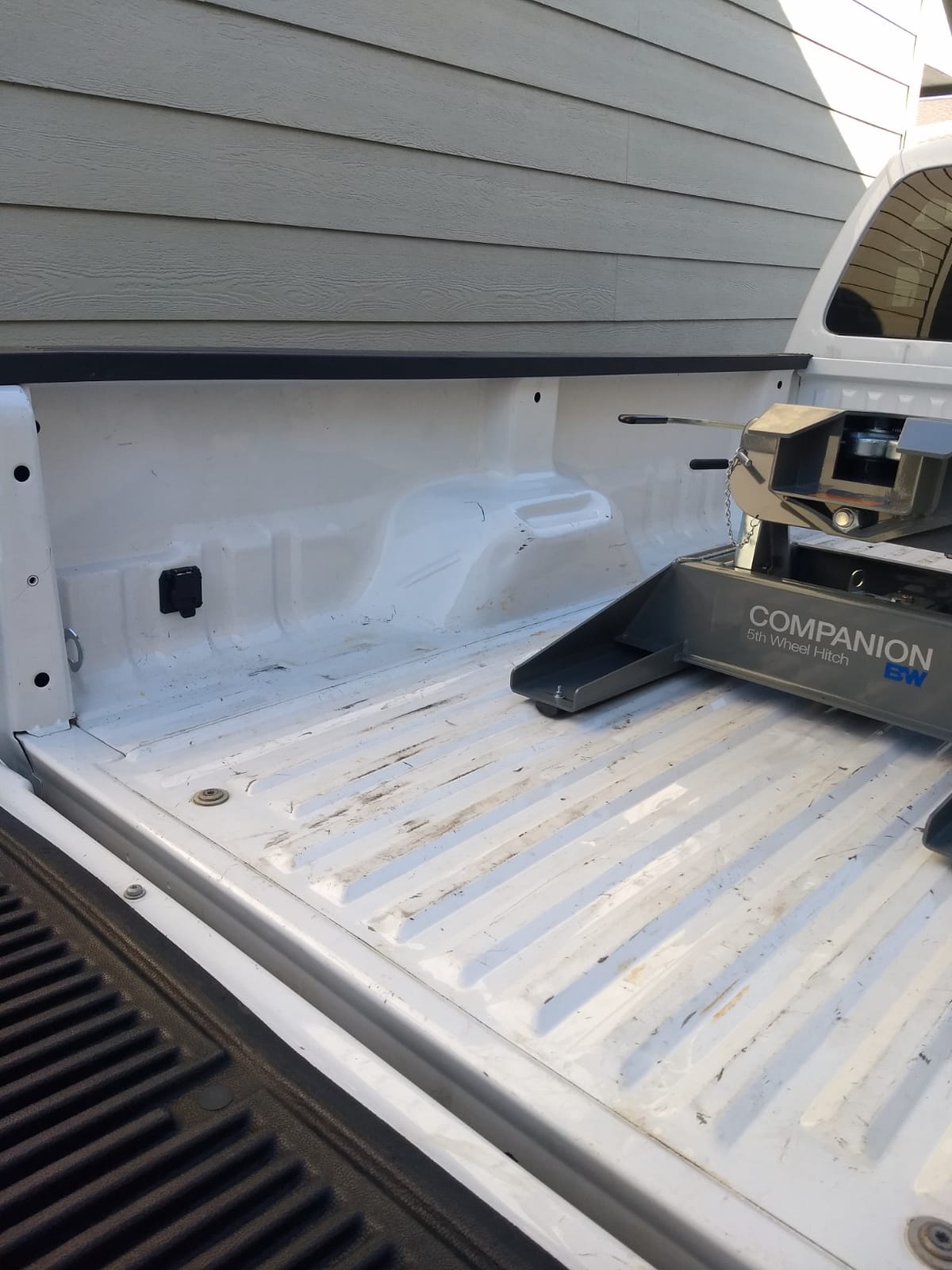
Nothing frustrates a fifth wheel owner more than a cable that will not reach from the bumper to the bed. The 56070 solves that specific problem: it routes a 7-way RV blade socket forward into the truck bed while leaving the factory rear socket in place and usable.
The seven conductors cover tail lamps, brake lamps, reverse lamps, both turn signals, electric brake power and 12V auxiliary power. That is the full set, which is why this is the pick for anyone with a gooseneck or fifth wheel trailer rather than a small utility trailer. It weighs 2.3 pounds and the plug is a standard 7-way RV blade that works with any standard trailer socket.
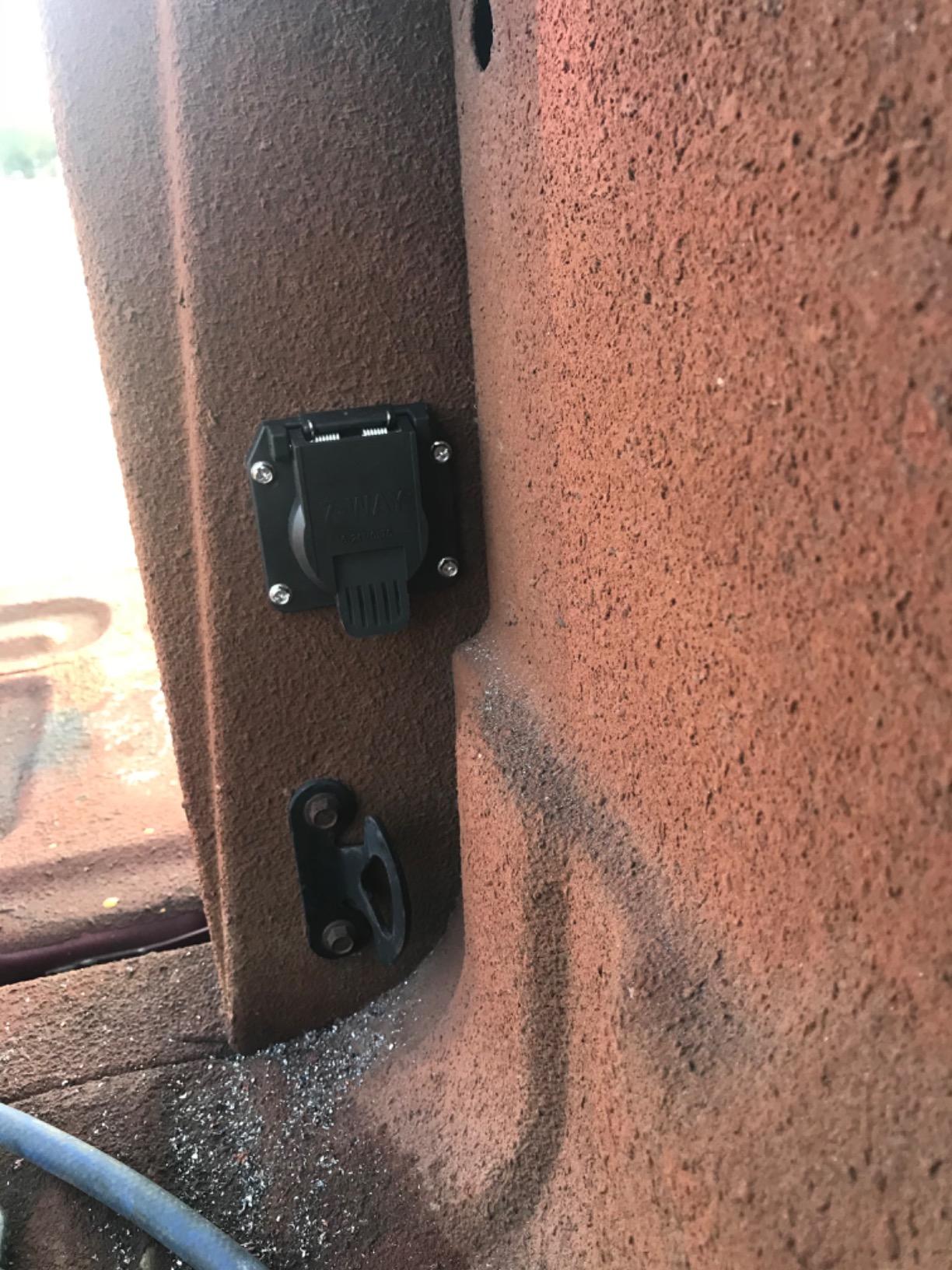
Owners single out the retained rear socket as the deciding feature, and an 87 percent five-star share backs that up. The thing people check first is the fitment list, because this is an extension for trucks that already have a factory 7-way behind the bumper. If your truck has no factory socket, you need a full T-connector kit instead.
The 7-foot length is fixed, so plan the route before you buy, and pass if your truck has no factory 7-way behind the bumper.
When an extension beats a new harness
If your truck already has a working factory 7-way, replacing the whole vehicle-side harness is money spent twice. You are adding reach, not fixing a fault. That is the situation this part is designed for, and it is why we rate it as the best value pick in the set rather than a compromise.
It is also the right upgrade before a long move to a gooseneck. Electric brake circuits and 12V auxiliary power both travel on this cable, so a bed socket means the brake controller wiring stays short and protected rather than stretching across the frame.
When it is the wrong purchase
Pass if your truck lacks a factory 7-way — this part has nothing to plug into. Pass if you tow a small utility trailer and never leave the bumper area, because a 4-way flat is all you need and this is overkill. And measure first: on some short beds, seven feet is more cable than you can route cleanly.
3. Oyviny 22FT 4-Pin Wishbone Rewire Kit – Best for Rebuilding Old Trailer Wiring
Oyviny 4 Pin 5 Wire Trailer Wiring Harness 22FT for Rewiring Both-Side Taillights, Pure Copper Wishbond Trailer Light Kit 4 Way Flat 5 Wire Plug w/Nylon Net Tube Protection
22 ft male 4-flat lead
Plus 2.5 ft ground wire
Pure copper conductors
Pros
- Wishbone split feeds both taillights without crossover wiring
- Pure copper conductors resist corrosion
- Pre-loomed nylon net tubing protects the insulation
- 22 ft of length gives generous routing slack
- Owners report working lights on the first hookup
Cons
- No wiring for side marker lights on larger trailers
- Outer sheath frays when tapped into along the run
- Leg lengths are uneven so measure before installing
Most trailer wiring does not fail because the connector broke. It fails because the loom under the frame turned to powder. This kit replaces the entire trailer-side run in one job, and the wishbone layout is the reason it stands out from cheaper universal cords.
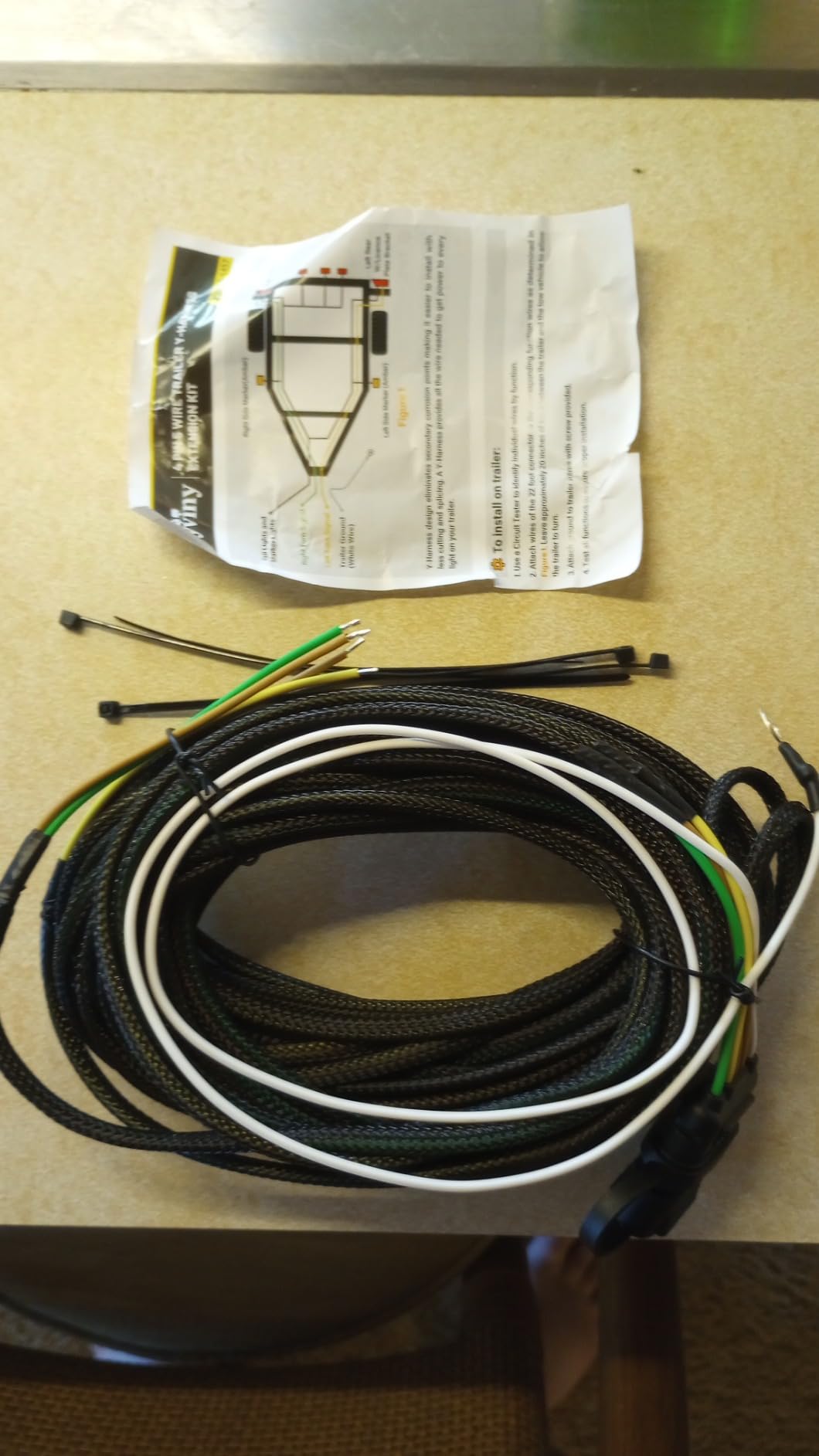
A wishbone harness splits the tail lamp feed so one leg runs to each taillight directly, with no long crossover wire stretched between them under the frame. Fewer long unsupported runs means fewer places for a chafed jacket to let water in. The conductors are pure copper with a thickened PVC coating, and the whole bundle is wrapped in a black nylon net tube that protects the insulation while still being trimmable if you need to route around an obstruction.
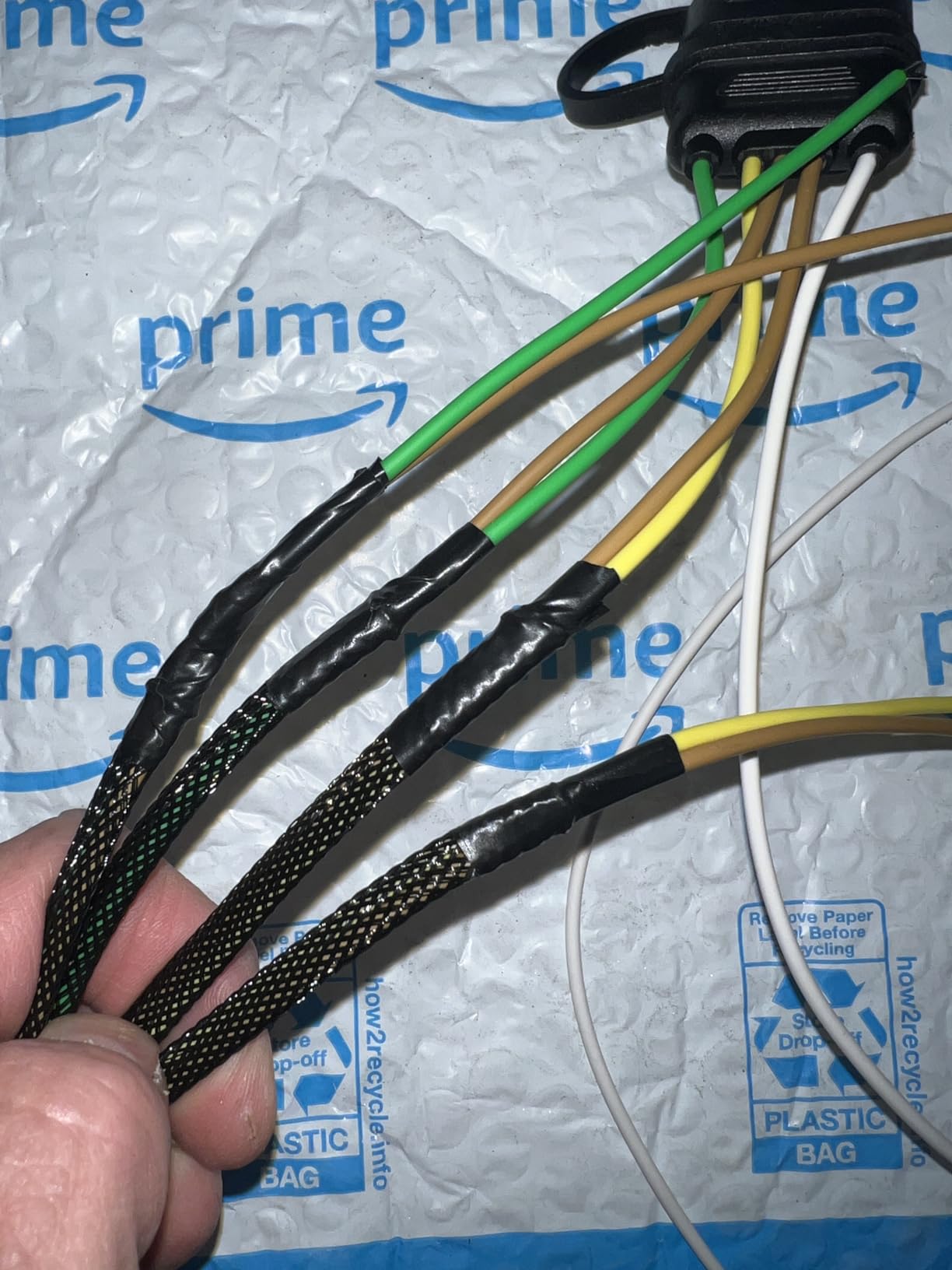
You get 22 feet of male 4-flat lead plus a 2.5 foot ground lead, which is enough to run a boat trailer, an older utility trailer or a small RV frame without splicing to make up length. Owners rebuilding tired factory wishbone wiring report pulling the old loom through and having working lights on the first hookup.
Two things catch people out. First, there is no dedicated side marker circuit, so a wider trailer with side markers will need extra wire. Second, the two legs are not the same length, so measure both sides of the frame before you commit to a routing plan.
Copper versus cheap conductors on a working trailer
Corrosion is the complaint that shows up most often with unbranded trailer wiring, not poor fit. Copper with a thick coating resists the salt spray and the constant wet cycle far better than the thin-gauge wire in discount kits. On a trailer that lives outside or goes down a boat ramp, that difference decides whether you are rewiring again next season.
One practical warning: if you tap into a wire partway along the run, cut the outer sheath cleanly and reseal it, because a frayed sheath is the entry point for the water you are trying to keep out.
Where this kit stops being enough
It is a 4-way flat system. The moment you want electric brakes, reverse lamps or auxiliary power, you need a 7-way kit like the MICTUNING or RVGUARD models further down. It also arrives with no butt splices and no lamp terminations, so budget for a small box of connectors before you start.
4. MICTUNING 8FT 7-Way Cord with Junction Box – Best Value for General 7-Way Work
MICTUNING 7-Way Trailer Cord 8FT with Junction Box Heavy Duty, Waterproof
8 ft cord
Seven-circuit junction box
3 lb, 96 inch cord
Pros
- Junction box keeps all seven circuits organized and labelled
- Heavy copper blade moulded into a solid plug
- Four open and four close grommets let you seal only the cavities you use
- Owners report corrosion-free interiors after years
- Carries all seven lighting and auxiliary circuits
Cons
- Included plug cover is not watertight
- Junction box housing feels large and inexpensive
- Wire colours follow RV convention not utility trailer colours
- Limited clearance between posts needs a deep socket set
This is the most reviewed harness in our entire set, with more than 7100 owner ratings. That volume matters on a wiring product, because the failure modes show up clearly in the data instead of hiding behind a handful of reviews.
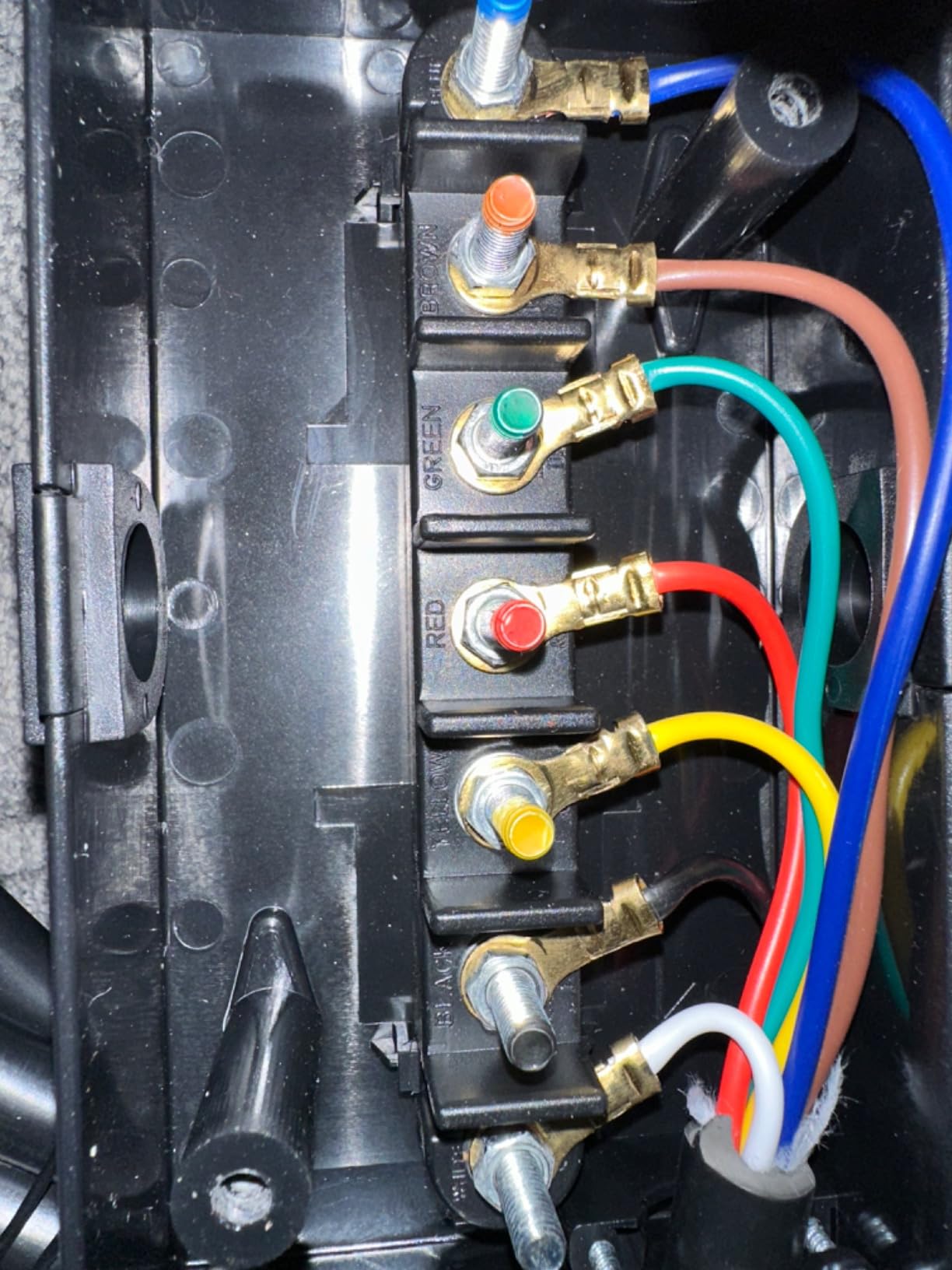
The junction box is the reason people keep buying it. Instead of taping loose wires to a frame rail, you land each of the seven color-marked circuits in a labelled flameproof ABS box. The four open and four close rubber grommets let you seal only the cavities you actually use, which is a small detail that makes a real difference on a part-wired trailer. The 7-way copper blade is moulded into a heavy duty plug, and the whole cord is 96 inches of flexible PVC.
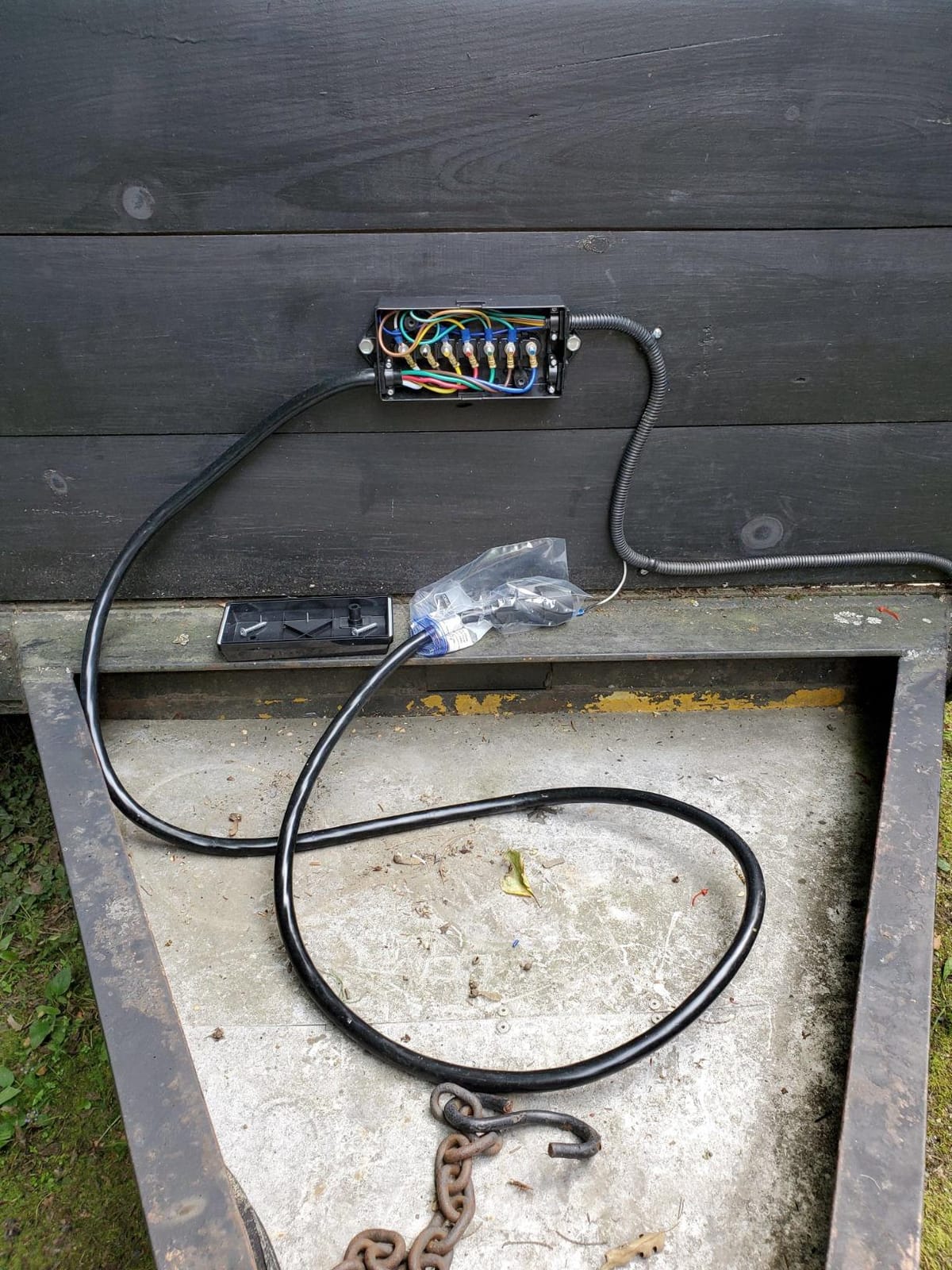
Owners who have had this cord in service report interiors that are still free of corrosion after years and tens of thousands of miles, and they consistently describe faster, tidier wiring jobs than working with loose conductors.
Two honest complaints come up. The included plug cover is not watertight, so standing water can still reach the plug face in winter — treat the cover as a dust cap, not a seal. And the colour code on this variant follows the US travel trailer and RV convention, which is not the same as the 4-wire utility trailer colours, so check the diagram before you land a wire.
Why a junction box earns its place on the frame
Most trailer light faults trace back to a connection made badly, not to a failed lamp. A junction box gives you a fixed, labelled landing point for every circuit, which means a wire can be removed and replaced without disturbing the rest, and a fault can be traced circuit by circuit with a multimeter.
The grommet arrangement is the underrated feature here. Sealing only the cavities you use stops water sitting in empty posts, which is where freeze-thaw damage and green corrosion quietly start. The flip side is that the clearance between posts is tight, so you will want a deep socket set to land the terminals properly.
Who should skip it
Skip it if you only need four circuits. It is a full 7-way build for RV, camper, cargo and boat trailer work, and a 4-way kit does the same job for a utility trailer at a fraction of the bulk. Also skip it if you want a vehicle-side install — this is a trailer cord that plugs into a socket, not a converter that plugs into your car’s tail lamps.
5. TRUE MODS 4 Pin Flat Harness Kit – Budget Pick for Utility Trailers
TRUE MODS 4 Pin Flat Trailer Light Wiring Harness Kit 4 Way 5 Wire for RV
25 ft male and 4 ft female
18 AWG color coded wire
SAE J1128 cable
Pros
- Male and female sides included in one kit
- Wishbone design simplifies taillight runs
- 18 AWG color coded wires for each circuit
- 29 ft of total lead fits narrow and wide frames
- Clean pull-through fit when replacing factory wishbone wiring
Cons
- The 16 inch ground lead is short and can pull loose
- No extra ground length included for splicing
- 4-way flat only with no electric brake or reverse circuit
This kit stands out for a simple reason: you get both ends. Most trailer wiring sold on its own is a single pigtail, and people end up buying a second run to rewire the far side of the frame. Here you get 25 feet of male lead and 4 feet of female lead in one box, plus a wishbone layout that shortens the run to each taillight.
The wire is 18 AWG and colour coded per circuit, rated as SAE J1128 low-voltage primary cable. That rating is worth knowing about — it is the standard that covers the wire used in this class of trailer application, and it tells you the insulation and conductor are specified for the job rather than being generic hookup wire.
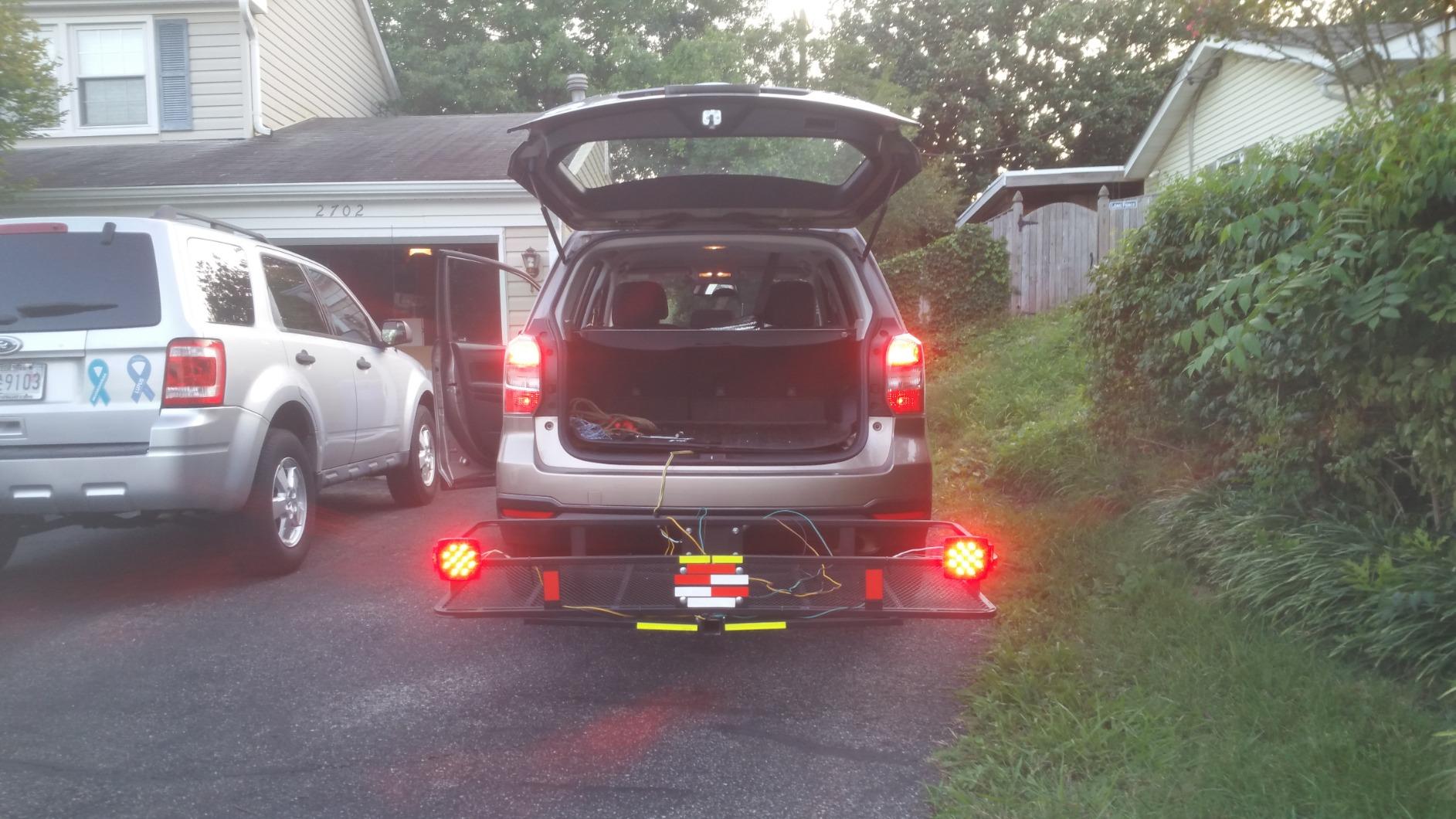
Owners replacing factory wishbone wiring on existing trailers report a clean pull-through fit, which matters because the old loom has to come out first. At roughly 29 feet of total lead, the kit covers trailers either side of 80 inches wide without you improvising extensions.
The most repeated criticism is the 16 inch ground lead. It is short, and on a forward-mounted ground it can work loose. There is no extra ground wire in the box to splice on, so if you need length, plan to buy a short ground pigtail separately. That single limitation explains most of the four-star reviews.
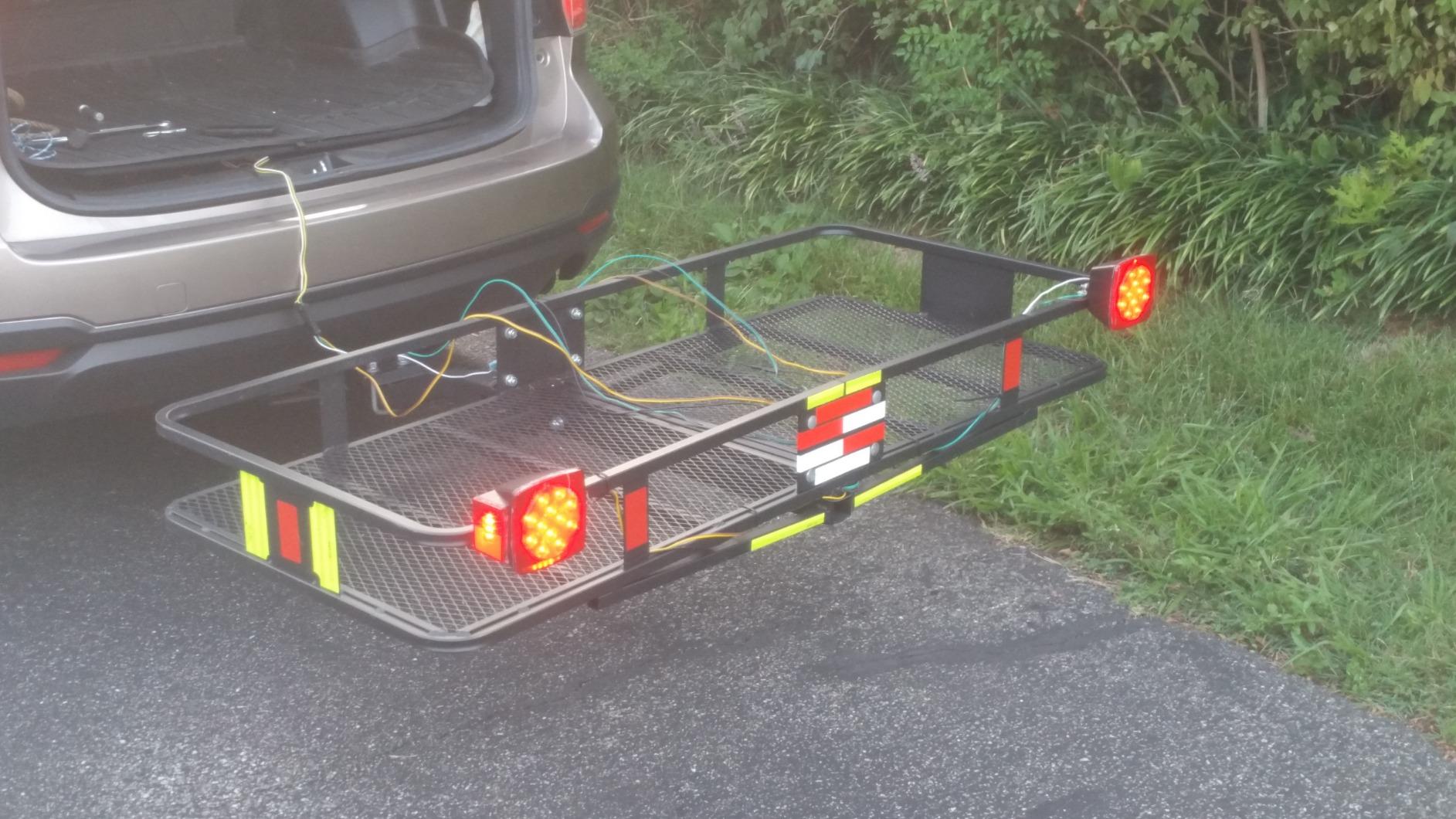
When 18 AWG is enough and when it is not
18 AWG handles lighting circuits comfortably, and that is exactly what this kit is for. It is not sized for electric brakes, for a 12V charging line feeding a trailer battery, or for a heavy accessory carrier. If your load includes any of those, move up a gauge and a connector count rather than pushing 18 AWG harder than it was designed for.
For a small utility trailer, an ATV trailer or a boat trailer with a modest light load, the light gauge is a sensible trade. You are replacing perished wiring, not building a distribution system, and the colour coding saves more time than the heavier conductor would.
When to spend a little more instead
Choose a 7-way kit if the trailer has electric brakes, side markers, reverse lamps or any plan to add a breakaway battery. Choose a longer ground lead before starting, because discovering the shortfall halfway through a frame means pulling the loom back out.
6. Nilight 7-Way Inline Extension with Junction Box – Best Universal 7-Way
Nilight Heavy Duty 7 Way Inline Trailer Plug Extension 8FT w/Junction Box
Universal 7-pin round fit
8 ft cord
Two year warranty
Pros
- Junction box turns a loose wiring mess into an organized install
- Copper blade and PVC coating feel solid in the hand
- Included grommets and seals simplify waterproofing
- Length prevents strain during tight turns
- Owners report working lights on boat and travel trailers
Cons
- Wire colours are non-standard so connections must be verified with a meter
- Colour mismatches mean rearranging the busbar when wire length is tight
- No washers included to secure terminal wires
- Instructions do not cover the safety switch
This is the one to buy when you do not know what trailer is going to end up on the hitch. The fit is universal, the cord is eight feet, and the junction box gives you a labelled landing point for all seven circuits rather than a bundle of bare wires. It is the most flexible option in the roundup.
The copper blade is moulded into a heavy duty plug, and the box carries seven colour-marked poles with four open and four close rubber gaskets for sealing. Owners on campers, boat trailers and travel trailers report all lights working after install, and the length is generous enough that the harness does not pull tight when you make a tight emergency turn with the trailer behind you.
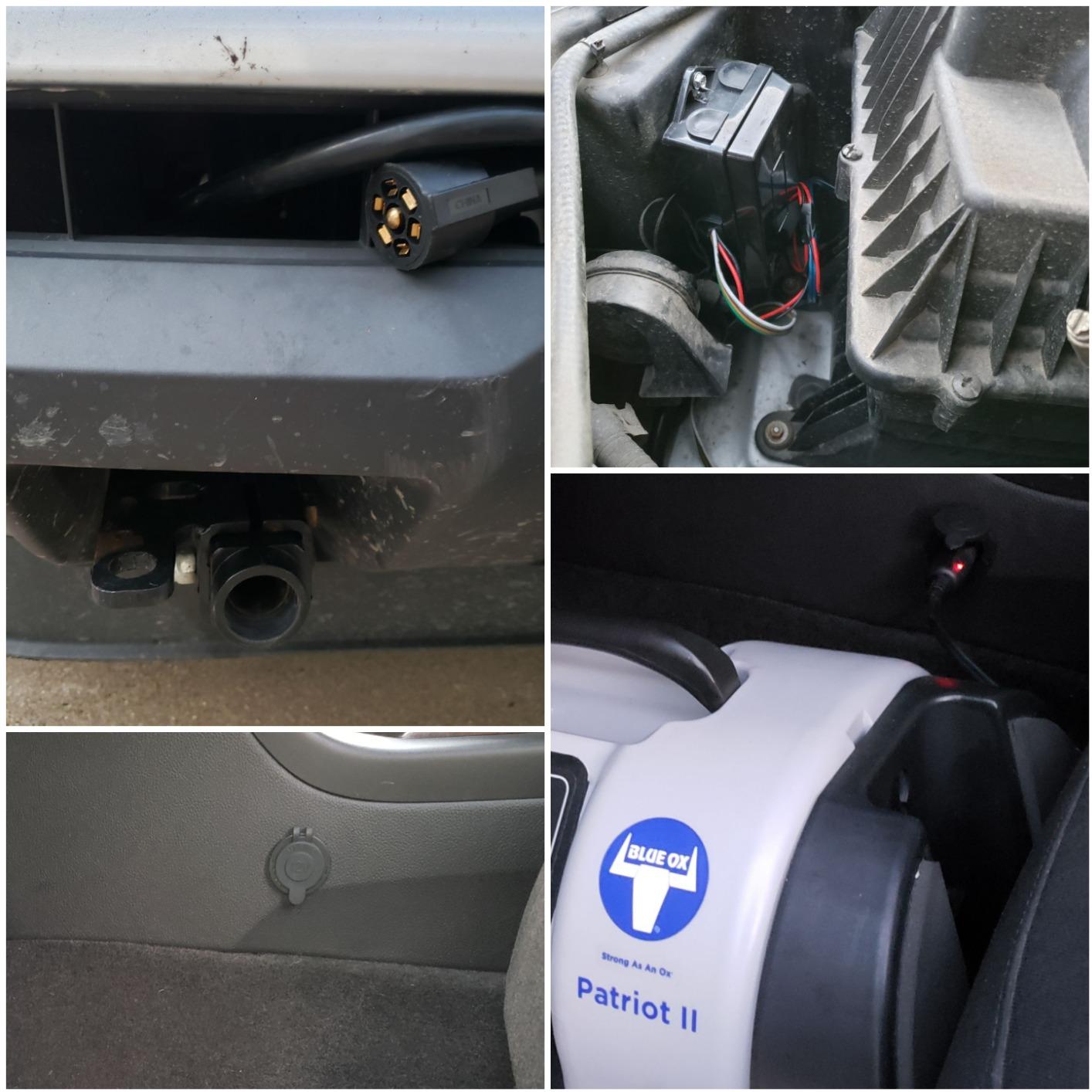
The two year warranty is longer than the one-year cover on most of the vehicle-specific kits here, which matters when you are wiring a trailer you own rather than a truck you will sell in four years.
The critical caveat is the colour code. This harness does not follow the standard US 7-wire convention, and several owners specifically flag that connections must be confirmed with a meter before you trust the lights. If the wire length is tight and a colour does not line up with your socket, you end up rearranging the busbar, which is fiddly work in a confined frame space.
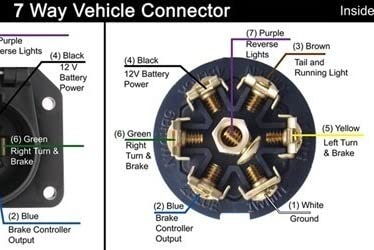
Why verifying colours with a meter is not optional here
Trailer lighting codes have two competing conventions. The SAE arrangement and the traditional blade layout assign different colours to some circuits, and budget cords in this class sometimes use neither. Landing a wire on the wrong post does not produce an obvious error — it produces a turn signal that flashes when you brake, or brake lamps that come on with the turn indicator.
Before you seal the box, test each circuit with a multimeter or a cheap trailer light tester, confirm the function, then seal the grommets. Five minutes of checking costs far less than tracing a fault through a sealed junction box in a wet boat ramp parking lot.
Where the missing hardware bites
No washers are included to secure the terminal wires onto the posts, and the instructions do not cover wiring a breakaway safety switch. Bring your own small hardware kit, and if your trailer has or will have a breakaway battery, treat the switch wiring as a separate job rather than assuming it is covered.
7. RVGUARD 7-Way Cord and Junction Box Kit – Best Complete Kit
RVGUARD 7 Way 8 Foot Trailer Cord with 7 Gang Junction Box Kit
8 ft cord with 7-way plug
7 gang junction box
Breakaway switch and holder
Pros
- Complete kit with cord
- box
- 12V breakaway switch and plug holder
- Copper wire is flexible rather than stiff
- Roomy labelled junction box simplifies terminal work
- No separate purchases needed to finish a trailer wiring setup
Cons
- Colour coding varies slightly by trailer manufacturer
- Breakaway switch connection is not documented
- Sealing the screw holes improves weatherproofing
Most people buying a trailer wiring kit end up making three purchases: a cord, a junction box, and a breakaway switch, because the box rarely includes the safety switch. This one arrives complete, and for a first-time trailer owner that saves a round trip and a mismatched part.
The 12V breakaway switch is the part that matters most for safety. It connects the trailer’s breakaway battery to the trailer brakes, so if the trailer ever separates from the tow vehicle, the brakes apply on their own. Owners who rewire multiple trailers report consistent results from this cord, and they single out the flexible copper wiring as noticeably easier to route than stiffer rubber-sheathed alternatives.
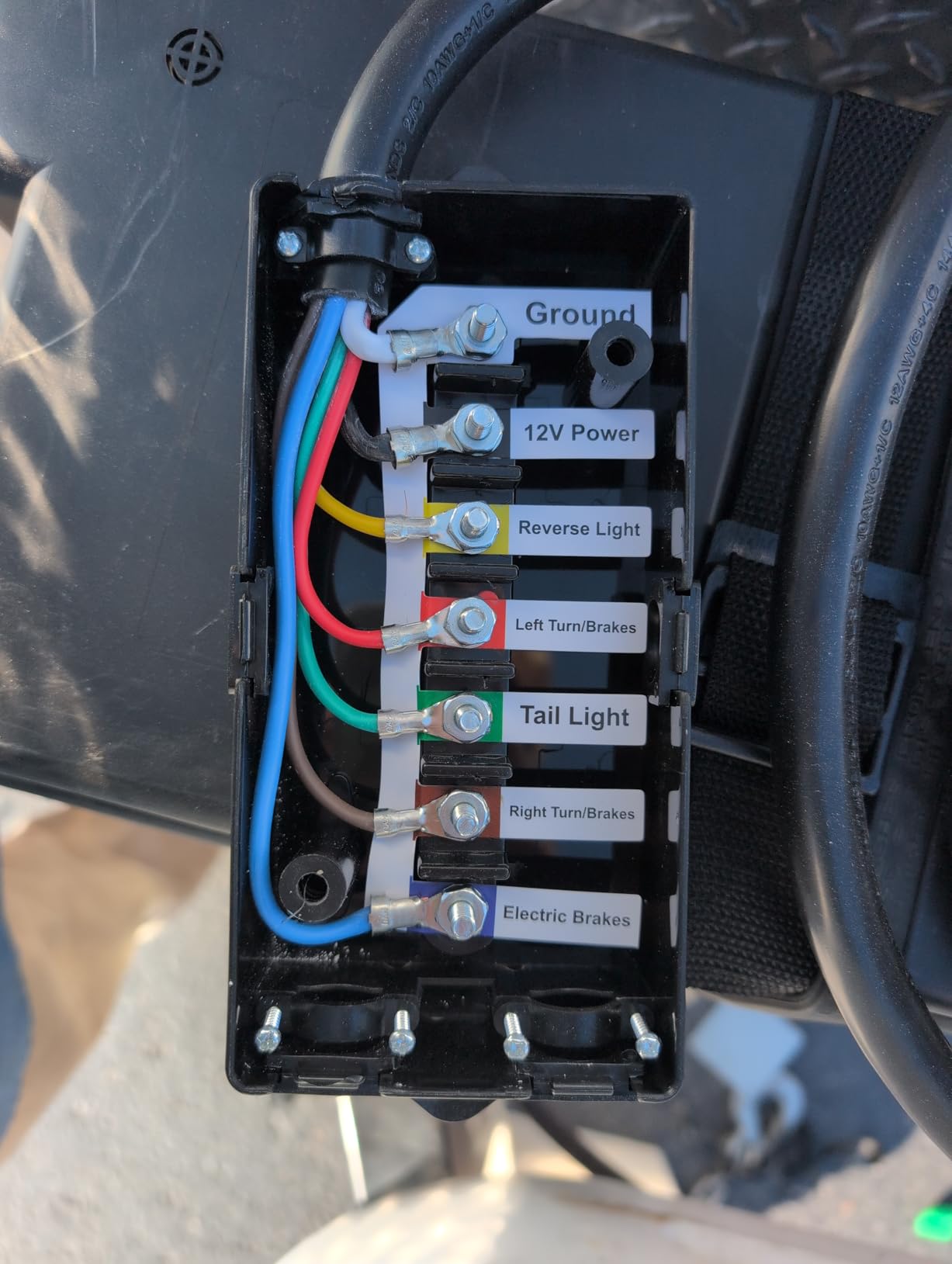
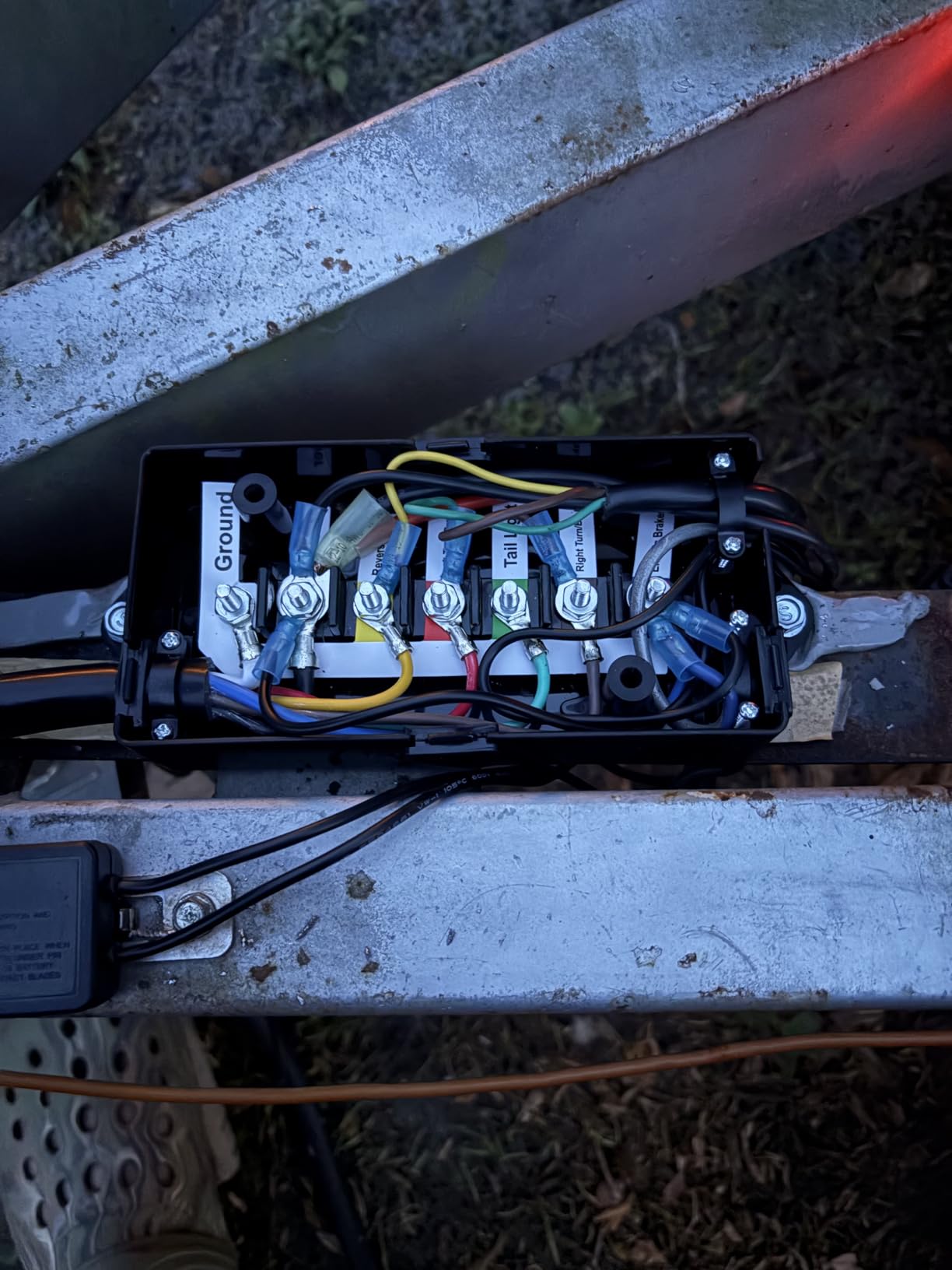
The junction box is roomy and clearly labelled, which makes landing seven terminals straightforward rather than cramped. The plug holder is a small addition, but it keeps the connector off the ground and out of standing water when the trailer is parked.
The documentation is the weak point. The breakaway switch connection is not explained in the paperwork, and the colour coding is described as slightly different from some trailer manufacturers’ layouts. Neither is a dealbreaker, but both mean you should follow your trailer maker’s diagram rather than assuming the colours match.
When the breakaway switch is worth planning for
If your trailer has any meaningful mass behind the hitch, a breakaway system is not an accessory. It is the last thing standing between a mechanical separation and a trailer nobody can steer. This kit includes the switch, and it is one of the few in this roundup that does.
Plan the breakaway cable routing as carefully as the electrical side. It has to be attached to the tow vehicle’s frame, not to the safety chains, and it needs enough slack to deploy fully without snagging on every joint. The switch itself is a short job once the electrical work is finished.
What to check before you close the box
Seal the screw holes where the box mounts. The gaskets protect the cavities, but the fastener entry points are still an opening, and owners who seal them report better long-term behaviour. Also confirm each circuit with a tester before you seal, because the colour coding shifts slightly between manufacturers.
8. Tekonsha 118727 T-One Connector Assembly – Best for a Factory-Style Vehicle Fit
Tekonsha 118727 T-One Connector Assembly with Upgraded Circuit Protected ModuLite HD Module, 1 Pack , Black
4-way flat with plug and cap
16 gauge bonded wire
5A and 7.5A circuit capacity
Pros
- True plug-and-play at the factory connector
- Weatherproof one-piece housing stores under the rear bumper
- ModuLite HD module adds circuit protection to trailer outputs
- Owners rate terminals
- wiring and plugs as first-rate
- Long 12V lead gives slack for under-seat batteries
Cons
- Instruction sheet has errors including battery location guidance
- Install takes roughly 1.5 to 3 hours with the power wire run
- Hard to tuck connectors behind taillights without breaking retaining clips
- Supplied positive lead is barely long enough on some vehicles
Where the CURT 56040 sits in a compact plastic housing, the Tekonsha T-One is built as a one-piece weatherproof assembly that looks factory-installed. It plugs into the vehicle’s OEM harness connector, so again nothing is cut, and the 16 gauge bonded wire with a 4-flat plug and cap gives you a complete vehicle-side kit in a single part.
The electrical ratings are stated rather than implied: 5 amps for the combined stop and turn circuit, and 7.5 amps for the taillight circuit. The upgraded circuit protected ModuLite HD module sits on the trailer outputs, adding a layer of protection that most kits in this class skip entirely.
Owners with previous Tekonsha experience rate the terminals and plugs as first-rate and confirm the kit solves towing on vehicles that never had a factory tow package. This is also the one pick here with a 12V lead long enough to reach a battery mounted under a seat, which removes a real headache on some vehicles.
Plan the install time honestly
This is not a twenty-minute job. Reviews put a completed install at somewhere between 1.5 and 3 hours, and most of that is routing the hot wire to the battery and mounting the module. The dominant criticism is the instruction sheet, which contains errors including battery location guidance that does not match some vehicles, so verify the route against your own vehicle before you trust the diagram.
Tucking the connectors back behind the tail lamp without snapping the retaining clips is the other fiddly step. Budget time for it, and buy a couple of spare trim clips before you start, because they are cheap and they are the part most often broken during this job.
When to choose this over a cheaper T-connector
Choose it when the vehicle is difficult to wire, when you want the factory look and the circuit protection, or when the cable ties supplied with cheaper kits are going to matter in your climate. Skip it if you are on a tight schedule and confident with a screwdriver — a simpler kit with a more predictable instruction sheet may serve you better.
9. CheeMuii 8FT 7-Way Harness Kit – Best for Breakaway Brake Setups
CheeMuii 8FT 7 Way Trailer Wiring Harness Kit & Junction Box 7 Trailer Cord
8 ft cord with junction box
Breakaway switch included
1 year warranty
Pros
- Junction box has seven color-coded terminals for easy identification
- Cord and box rated water resistant and dust resistant
- Includes 12V breakaway switch and plug holder
- Updated detailed wiring instructions included
- Handles all seven lighting and auxiliary circuits
Cons
- Colour code follows most RV standards but varies by manufacturer
- Only a 1 year manufacturer warranty
- Check the 7-pin flat variant against your trailer socket
This kit sits at the top of its category in the sales rankings, and the reason is a combination of completeness and documentation. You get an 8 foot cord, a junction box with seven colour-coded terminals, a 12V breakaway switch and a plug holder. Nothing else has to be sourced to finish the job.
The box and cord are rated water resistant and dust resistant, which is the level you want for outdoor trailer service rather than a claim of full submersion. Colour coding follows most RV trailer standards, and updated detailed wiring instructions are included, which is a meaningful upgrade on kits that hand you a diagram with no narrative.
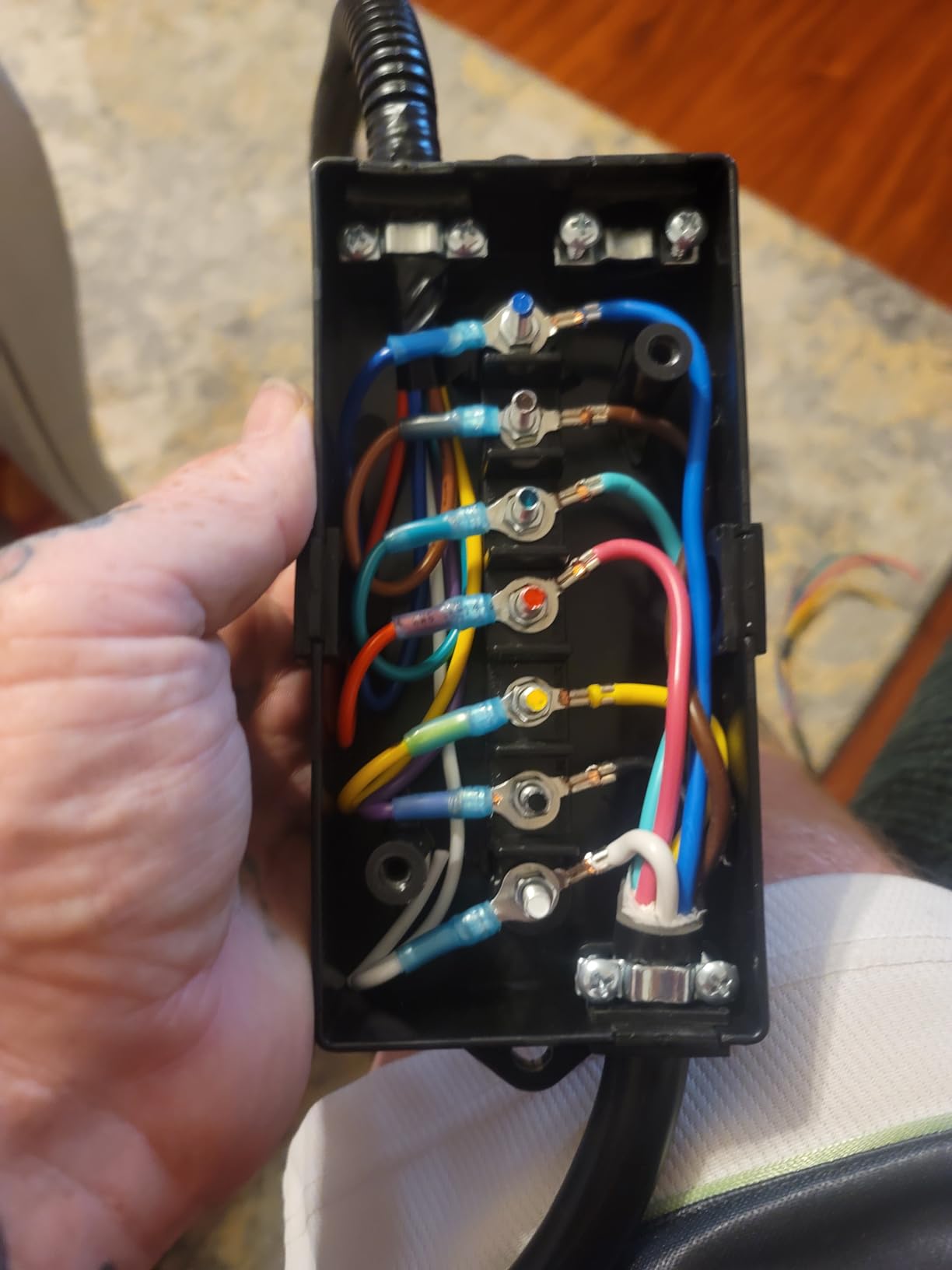
Owners rate the kit format and the labelled box highly, and the clear advice from buyers is to confirm the colour code against your trailer maker’s diagram before wiring. Different manufacturers vary slightly, and landing a wire on the wrong terminal is easy to do and annoying to diagnose.
The warranty is one year, which is shorter than the two years on the Nilight universal cord. That is a fair trade for a kit that includes a breakaway switch, but it is worth knowing if you keep trailers for a long time.
Getting the breakaway system right the first time
The switch is only half of the breakaway system. It needs a charged breakaway battery, a ground on the trailer frame, and a cable routed to the tow vehicle’s frame with enough slack to deploy. Mount the switch where water cannot sit on it, and check the battery before every trip — a breakaway system with a flat battery gives you no protection at all.
Route the switch cable separately from the electrical harness where you can. It is a mechanical cable that will be pulled hard in the one moment it matters, and sharing a path with the wiring loom is how you end up with a chafed light circuit at the same time.
Confirm the connector variant before ordering
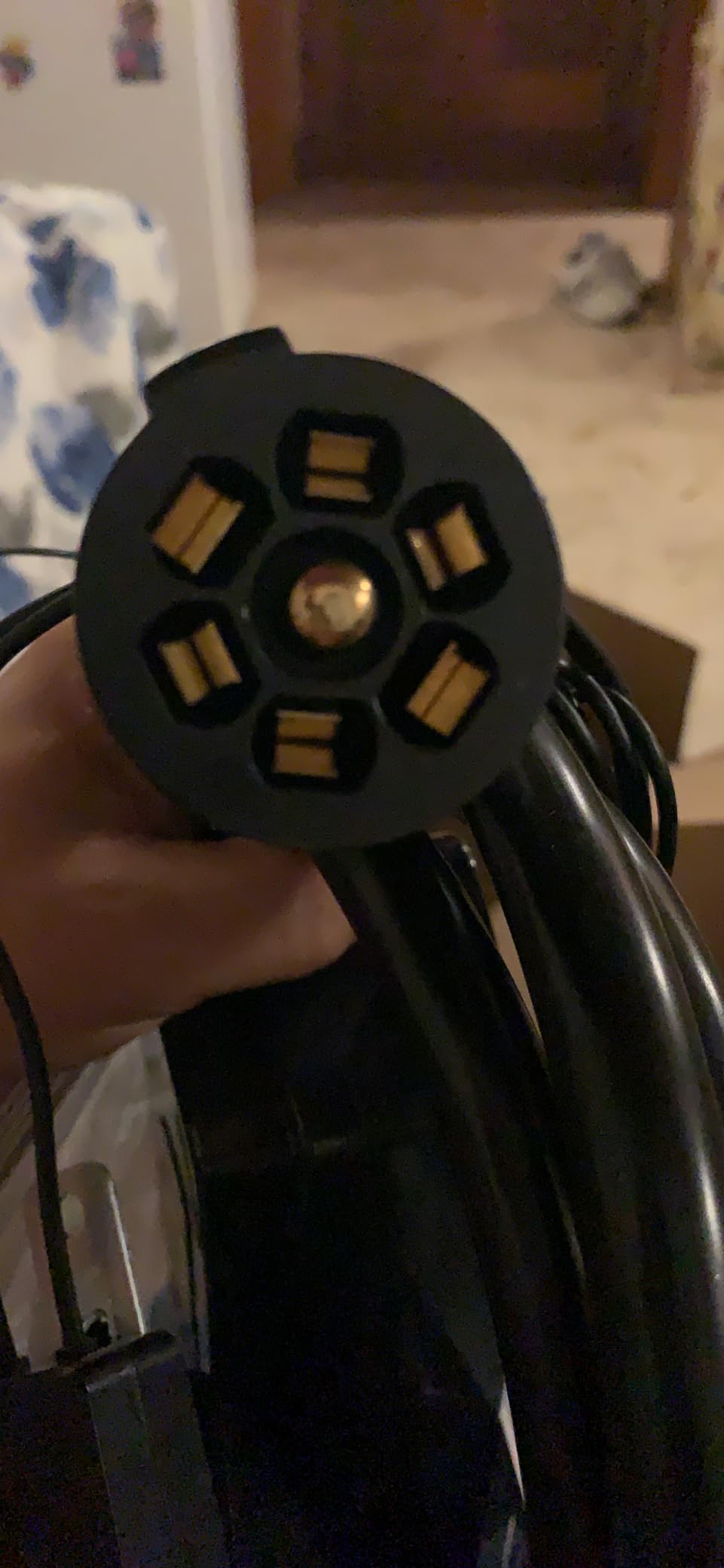
This is listed as a 7-pin flat connector variant, so check it against the socket on your trailer before you buy. A 7-way round and a 7-way RV blade look similar from a distance and are not interchangeable. If the fit is uncertain, a short 7-way to 7-way adapter is a cheap way to solve it without replacing anything.
10. CURT 56601 7-Way RV Blade Replacement – Best for Trailer-Side Connector Replacement
Curt 56601 7-Way RV Blade Replacement Harness
6 ft bulk trailer-end lead
7-way RV blade
1 year warranty
Pros
- Direct replacement for a worn or damaged trailer-end connector
- Interchangeable with other 7-way RV connectors
- Backed by a 1 year limited manufacturer warranty
- Bulk trailer-end format suits rebuilding a pigtail
Cons
- Trailer-end replacement only rather than a full vehicle-side kit
- 6 ft lead is short for many frame runs
- No junction box or breakaway switch included
Sometimes the only thing wrong is the connector. The plastic plug on the tongue has cracked, the pins have gone green, and the rest of the trailer wiring underneath the frame is still perfect. Replacing the entire loom in that situation is waste, and this 6 foot bulk trailer-end lead is the part that fixes it.
It uses a standard 7-way RV blade that is interchangeable with other 7-way RV connectors, so it will mate with the sockets on the vast majority of tow vehicles. The 76 percent five-star share reflects what this is: a competent component-level part rather than a complete kit, and buyers treat it accordingly.
The limitation is length. Six feet is enough to run from a frame-mounted junction box to the coupler on a short trailer, and not enough for a long frame or a fifth wheel bed extension. Measure your actual run before ordering, and add a pigtail or an extension if you are short.
Adapter or replacement harness?
If your trailer connector is fine but your tow vehicle has the wrong socket type, an adapter is the correct answer and this part is the wrong one. A 7-way to 4-way adapter costs a fraction of rewiring anything, and it does not touch a single wire. Replace a connector only when the connector itself is the fault.
Replacing a trailer-end pigtail is a moderate job: cut the old lead, land the seven conductors in your junction box following the diagram, and mount the new plug. The advantage over a full rewire is that your working circuits under the frame stay exactly as they are.
What to pair it with
Pair it with a junction box if your trailer does not have one, because seven bare wires need somewhere to land. Add a dust cap or plug holder so the connector is not sitting in standing water, and treat the frame-side run as a separate inspection — a new plug on an old corroded loom still gives you flickering lights.
How to Figure Out Which Trailer Wiring Harness You Need
Three questions settle it: what does the trailer already have, how many circuits does it need, and what does your tow vehicle’s factory wiring allow. Work through them in that order and the harness choice makes itself.
Step one: look at the trailer, not the tow vehicle. The connector on the trailer tongue tells you the pin count. A 4-way flat is lighting only. A 5-way flat adds electric brakes. A 6-wire and a 7-way RV blade add 12V auxiliary power, and a full 7-way also carries reverse lamps. You cannot add circuits to a connector you do not have, so the trailer sets the ceiling.
Step two: count what you will actually use. Small utility, ATV and boat trailers rarely need more than a 4-way. Travel trailers, fifth wheels, goosenecks, truck campers and anything with a breakaway battery need the 7-way, and the breakaway battery in particular is the reason to stop shopping for the 4-way.
Step three: match the vehicle side. A custom-fit T-connector plugs into the factory tail lamp sockets and never touches your vehicle’s wiring. A universal splice-in kit cuts into the tail lamp wires and adds a converter, which works on anything but is permanent. A pigtail is trailer-side only. Our trailer hitch guide covers matching the hitch class to the trailer weight once the wiring is settled.
Owners overwhelmingly prefer plug-in T-connectors over splicing, and the reason is consistency: factory wiring stays uncut, and the same converter protects the vehicle every time you plug in. The one case where universal wins is occasional or rental use, where a permanent install on a car you do not own makes no sense.
Whichever route you take, the lowest number in the chain governs. A hitch rated below the trailer, a tow rating below the loaded weight, or a tongue weight above the vehicle limit will outweigh any harness decision on this page. One adjacent category worth knowing about: if you are wiring a race sled rather than a trailer, our sled harness guide covers that different set of circuits.
4-Way, 5-Way and 7-Way Connectors Explained
The connector is the decision that matters most, because it determines what the trailer can ever do. A 4-way flat carries four circuits. A 5-way flat carries those four plus electric brake power. A 6-wire adds 12V auxiliary power for a breakaway battery or interior charging. A 7-way RV blade carries all of it plus reverse lamps, and a 7-way round carries the same seven circuits in a different physical shape.
That last point catches people constantly. A 7-way round and a 7-way RV blade both have seven pins and both cover the same functions, but they are physically and electrically keyed differently and are not interchangeable. If your tow vehicle has one and your trailer has the other, the answer is an adapter, not a new harness.
The wire colours follow a standard convention on most quality harnesses: yellow and green are the turn signals, brown is tail and marker lighting, white is ground, red is stop and brake, blue is 12V auxiliary power and orange is reverse. Budget cords frequently depart from that convention, so check each circuit with a meter before sealing a junction box.
Ground deserves its own emphasis. The white wire carries the return path for every light on the trailer, so a single corroded ground produces flickering, dim lamps, lights that behave oddly over bumps, and turn signals that flash with the brakes. It is the first thing to check and the last thing people check.
Installing the Harness and Running the 12V Battery Lead
For a vehicle-side T-connector, the plug-in step itself is genuinely easy: unplug the factory connector behind each tail lamp, attach the T-connector, push it back until it clicks. The hard part comes next, and it is the same hard part on every brand.
The 12V auxiliary lead has to reach the vehicle battery through a firewall grommet. The battery is under the bonnet on most vehicles and under a seat or in the boot on others, and the grommet you need is usually already occupied by the factory main harness bundle. This single step is where most of the time goes, and it is the step most instruction sheets gloss over.
The community workaround that works is to run the lead alongside the existing main harness bundle, through the grommet the factory wires already pass through, then secure it with loom clips or cable ties at roughly 150 mm intervals along the frame. Never drill a new hole for the wire unless you have located a factory grommet you can enlarge, and never route the lead alongside the exhaust or the driveshaft.
Two more practical notes. The double-sided tape supplied with many kits will not hold a converter on a vertical or vibrating surface, so use a proper bracket or a P-clip. And if a kit has been sitting in a box, a parasitic draw concern is worth checking: a converter left permanently connected with a partly drained battery will show up as a vehicle that will not start after a few days parked.
Troubleshooting Flickering or Dead Trailer Lights
Work in a fixed order, because the causes are almost always found in the same sequence. Ground first, then the connection points, then the cable jacket.
Symptoms that change over bumps: chafed jacket where the cable rests against the frame, hitch or a moving part. Follow the loom by hand, feeling for a flat spot, and inspect any area the cable crosses metal under load.
Lights that flicker with brakes applied: a poor ground or a shared ground point that cannot carry the combined load. Clean the frame ground to bare metal, tighten it, and add a short ground wire to a second clean point rather than stacking another ring terminal on a dirty one.
One function dead, everything else fine: a single open circuit. Check the corresponding terminal in the junction box and at the socket, and confirm the wire colour against the diagram for that specific cord — several kits in this roundup use non-standard colours.
All lights dead including markers: start at the socket itself. A bent pin, a cracked plug face or a plug that is not fully seated will kill everything at once. Beyond that, check the vehicle-side fuse for the trailer circuit.
Corrosion and green deposits: treat any affected terminal as replaceable rather than cleanable, and use fresh dielectric grease on clean, dry metal.
Maintenance and Storage Checklist
A wiring harness is cheap to maintain and expensive to ignore. A monthly walk-around while you check tire pressure takes two minutes and catches chafing, kinks and loose connectors before they become failures.
Every three months, inspect the connector faces and the junction box for corrosion, and check that the dust cap is present. Every six months, verify the ground connection and look for rust bleeding down the frame.
Before storage, unplug the connector, cap both ends, and keep the harness off the ground so it does not sit in standing water or under a cover that traps moisture. For boat trailers, rinse the wiring with fresh water after every ramp launch, because salt and fresh water left to dry on a connector is the fastest route to a green contact.
On the vehicle side, check the converter mounting point and cable tie tension a couple of times a year, particularly through a winter with road salt.
Frequently Asked Questions
What is the best trailer wiring harness?
The best trailer wiring harness overall is the CURT 56040 for vehicles that need a simple 4-way flat, because it plugs into the factory tail lamp sockets without cutting any vehicle wiring and carries a 4.8 rating from more than 3700 owners. For a full seven-circuit setup, the MICTUNING 8FT 7-Way cord with junction box has the most owner reviews of anything we tested. Pick based on pin count first, then install style.
Who makes the best 7 pin trailer connector?
CURT, Tekonsha and Hopkins are the three names that consistently appear in owner feedback for vehicle-side 7-way kits, and CURT builds the widest vehicle-specific range. For trailer-side universal 7-way cords, the MICTUNING and Nilight junction box kits lead on review volume. The deciding factor in most forums is not build quality but whether your exact make, model and year appears in the fitment list.
What is a good wire harness kit for trailer lights?
For a small utility or boat trailer, a 4-way flat kit such as the Oyviny 22FT wishbone set is a good match, because the wishbone split runs to both taillights without a long crossover wire and the conductors are pure copper. The TRUE MODS kit is the budget option, including both male and female leads in one box. For an RV or camper, choose a 7-way kit with a junction box instead.
What are the key differences between a 4-pin and a 7-pin trailer harness?
A 4-pin flat carries four circuits: tail lights, brake lights and both turn signals. A 7-way RV blade carries seven: everything the 4-way does, plus electric brake power, 12V auxiliary power for a breakaway battery, and reverse lamps. A 7-way round also carries seven circuits but in a different connector shape and is not interchangeable with a 7-way blade. You cannot upgrade a 4-way without replacing the harness.
What is the difference between a 5 pin and 7 pin trailer plug?
A 5-way flat is a 4-way flat with a fifth pin added for electric brake power, so it suits trailers with brakes but no auxiliary power needs. A 7-way adds 12V auxiliary power and reverse lamps on top of that, which is what a travel trailer with a breakaway battery or a truck camper requires. The practical rule is that a 5-way is the minimum for brakes and a 7-way is the minimum for anything with a breakaway system.
How do I figure out what wiring harness I need?
Start at the trailer: count the pins on the connector already fitted to the tongue. Then list the circuits you actually need, including electric brakes, reverse lamps and a breakaway battery if one is fitted or planned. Finally, check the tow vehicle: a factory 7-way means an extension or adapter, while no factory wiring means a custom-fit T-connector or a universal splice-in converter. Buy for the highest circuit count you might need in future.
Do I need a powered converter for my trailer?
Yes, if your tow vehicle runs separate brake and turn signal wires, which is most modern vehicles. The trailer expects brake and turn signals combined onto two wires, and a powered converter performs that merge while isolating trailer faults from the vehicle’s own light circuits. Custom-fit T-connector kits such as the CURT 56040 and the Tekonsha 118727 both include a converter. A passive splice-in converter only works where the vehicle wiring is already configured for it.
Why do my trailer lights flicker when I turn?
Flickering that appears when you brake is almost always a ground problem. The white wire carries the return path for every trailer light, and a single corroded ground connection causes dim lamps, intermittent flicker and turn signals that flash with the brakes. Clean the frame ground to bare metal, tighten it, and add a second short ground wire to a clean point. If the flicker follows bumps instead, look for a chafed cable jacket first.
Conclusion: How to Choose in 30 Seconds
Count the pins on your trailer connector. Four circuits and a utility trailer means a 4-way flat kit, and the CURT 56040 remains the best trailer wiring harness overall for anyone who wants a fit-and-forget vehicle-side install. Seven circuits, a breakaway battery or electric brakes means a 7-way cord with a junction box, and the MICTUNING 8FT model is the most proven of those by owner volume. Perished wiring under the frame means a rewire kit such as the Oyviny 22FT set, and a cracked plug on an otherwise sound trailer means the CURT 56601 replacement.
Check your tow vehicle’s rating before anything else, since the lowest number in the chain governs. Then install carefully, confirm each circuit with a tester before you seal a junction box, and give the ground connection the attention it deserves. That is the whole decision in 2026.