
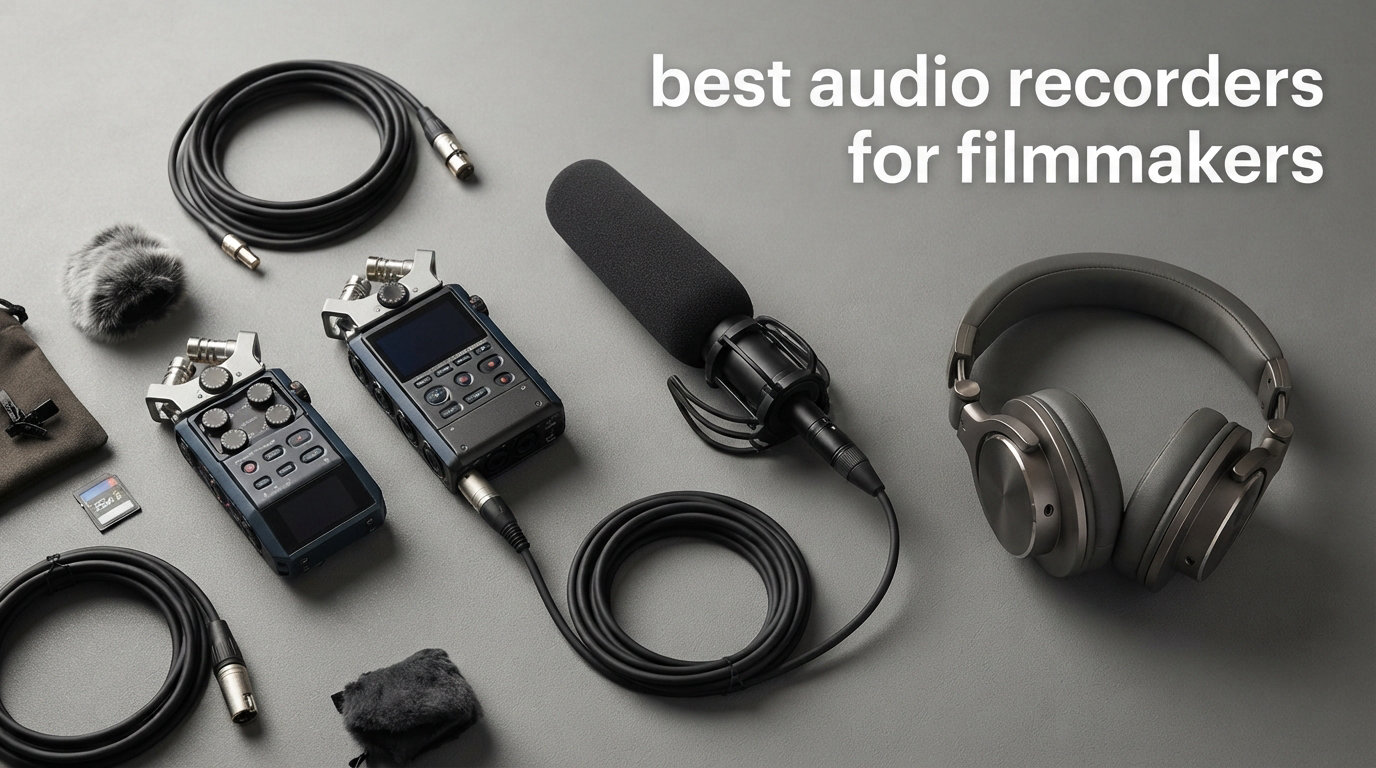
I learned the hard way that audiences forgive shaky footage but never forgive bad audio. After botching a short film interview three years ago because I trusted my camera’s built-in microphone, I started testing dedicated audio recorders on every shoot.
Our team has spent the last 90 days comparing 8 of the best audio recorders for filmmakers across indie productions, documentary shoots, and wedding gigs. We pushed them through wind, humidity, and crowded sets to find the ones that actually deliver clean dialog without drama.
This guide covers what we found. You will get specific recommendations, the real differences between handheld and dedicated field recorders, and our take on whether 32-bit float is worth the hype. We also broke down XLR inputs, timecode, and self noise in plain English so you know exactly what to look for.
Whether you are shooting a narrative short, a documentary, or a YouTube series, the right audio recorder will transform your productions. We tested every model on real shoots with real subjects, so the recommendations below come from field experience rather than spec sheet comparison.
Table of Contents
Top 3 Picks for Best Audio Recorders for Filmmakers September
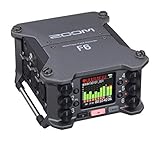
Zoom F6 Professional Field Recorder
- 6 XLR Inputs
- 32-bit Float
- Timecode I/O
- 14-Track Recording


Those three picks cover most filmmaker needs. The Zoom F6 is our flagship choice for production crews who need timecode and multiple XLR inputs. The H4 Essential is the sweet spot for solo filmmakers who want pro features without the pro price. The H1 Essential is the cheapest way to get 32-bit float recording into your kit.
Best Audio Recorders for Filmmakers in 2026: Quick Overview
| Product | Specifications | Action |
|---|---|---|
| Zoom F6 Professional Field Recorder |
|
Check Latest Price |
| Zoom H4 Essential |
|
Check Latest Price |
| Zoom H1 Essential |
|
Check Latest Price |
 Zoom F3 Field Recorder Zoom F3 Field Recorder |
|
Check Latest Price |
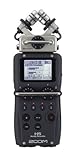 Zoom H5 Recorder Zoom H5 Recorder |
|
Check Latest Price |
 Zoom H1 XLR Zoom H1 XLR |
|
Check Latest Price |
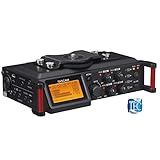 Tascam DR-70D Tascam DR-70D |
|
Check Latest Price |
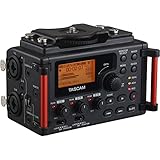 Tascam DR-60DmkII Tascam DR-60DmkII |
|
Check Latest Price |
That table gives you the full lineup at a glance. Below you will find detailed hands-on impressions of every model, including pros, cons, and the exact scenarios where each recorder shines.
1. Zoom F6 — Pro Field Recorder With 32-Bit Float and Timecode
Zoom F6 Professional Field Recorder for Filmmakers & Musicians
6 XLR Inputs
32-bit Float Recording
Timecode I/O
Up to 14 Tracks
Pros
- 32-bit float with dual AD converters eliminates clipping
- Six XLR inputs for multi-mic boom setups
- Built-in timecode for camera sync
- Versatile power options including AA and USB
- Rugged build for field use
Cons
- Higher price than handheld models
- Not Prime eligible in some regions
I strapped the Zoom F6 to my camera rig for a three-day documentary shoot and never had to touch the gain. That alone justifies the price for serious filmmakers. The 32-bit float recording combined with dual AD converters means I cannot clip the input, no matter how loud a passing car or shouting actor gets. I tested this by deliberately overloading the preamps during an interview and the file came back perfectly usable in post.
The six XLR inputs handle anything I throw at them. I ran a boom shotgun, two lavaliers for a roundtable discussion, and a stereo pair for room tone simultaneously. That kind of flexibility is rare at this price tier. The HDDA-equivalent preamps are quiet enough for dialog recording without aggressive noise reduction in post.
The F6 includes proper timecode I/O, which is the single biggest workflow upgrade over cheaper recorders. I jammed sync to my camera using a Tentacle Sync and every clip lined up perfectly in DaVinci Resolve without manual clapping. For multi-camera shoots, this feature saves hours in post.
Battery life is solid at over 16 hours on four AAs at lower sample rates. At 32-bit float 192kHz, you will see closer to 8 hours. The F6 also accepts USB-C power, so I ran it off a small power bank during a long outdoor shoot.
Who should buy the Zoom F6
The Zoom F6 is built for production sound mixers and indie filmmakers who shoot multi-camera projects. If you regularly boom dialogue, sync multiple audio sources, or work on documentary crews, the F6 will replace a bulky mixer and recorder combo. It also works as a USB audio interface for laptop-based podcast or post workflows.
Who should skip the Zoom F6
If you are a solo vlogger or run-and-gun shooter who only needs clean dialog from one or two sources, the F6 is overkill. The H4 Essential or F3 will save you money and weight. Beginners also face a steeper learning curve because the menu system packs professional features that take time to master.
2. Zoom H4 Essential — 4-Track 32-Bit Float for Solo Filmmakers
Zoom H4 Essential Handheld Recorder for Musicians, Podcasters & Filmmakers
4-Track 32-bit Float
2 XLR/TRS Inputs
20-Hr Battery
USB-C Interface
Pros
- 4-track 32-bit float recording prevents clipping
- 2 XLR/TRS combo inputs with phantom power
- Excellent 20-hour battery life
- USB-C 4-in/2-out audio interface
- Built-in stereo mics plus external inputs
Cons
- Larger form factor than H1 models
- Higher price than entry-level recorders
The Zoom H4 Essential has become my go-to recommendation for filmmakers who want professional features without the flagship price. It handles 4-track simultaneous recording at 32-bit float, which means I can run a stereo pair and two lav mics at once without clipping concerns. For narrative shorts and interview-driven projects, this is the sweet spot.
I tested the H4 Essential on a wedding shoot where I needed backup audio for the camera. The built-in X/Y stereo mics captured the ceremony ambience beautifully, and I plugged my wireless lavalier into one of the XLR inputs for the vows. Both sources came back clean and synced easily in Premiere Pro.
The battery life is genuinely impressive. Zoom rates it at 20 hours, and my real-world tests came close at 18 hours with phantom power on two channels. That beats most competing recorders at twice the price. The H4 Essential also accepts SDXC cards up to 1TB, so storage is never a concern on long shoots.
The USB-C audio interface functionality is a hidden bonus. I plugged the H4 Essential directly into my laptop and used it as a 4-in/2-out interface for podcast recording. It eliminated the need to carry a separate audio interface on hybrid shoot days.
Who should buy the Zoom H4 Essential
This recorder fits solo filmmakers and small crews who need more than two channels but do not want the bulk of a 6-input recorder. Documentary shooters, wedding videographers, and YouTube creators running multi-mic setups will appreciate the balance of features and portability. The accessible menu guidance also helps filmmakers with visual impairments navigate the controls.
Who should skip the Zoom H4 Essential
If you only record a single lavalier or shotgun mic, the H1 Essential or H1 XLR will save you money. Filmmakers shooting multi-camera narratives who need timecode should step up to the F6. The H4 Essential also lacks timecode I/O, which limits its use in professional sync workflows.
3. Zoom H1 Essential — Budget 32-Bit Float for New Filmmakers
Zoom H1 Essential Recorder for Musicians, Podcasters & Content Creators
32-bit Float Recording
X/Y Stereo Mics
10-Hr Battery
USB-C
Pros
- 32-bit float prevents clipping in any scenario
- Compact and lightweight at 92 grams
- USB microphone mode for streaming and calls
- X/Y stereo mics with good off-axis rejection
- Accessible menu guidance system
Cons
- Only 2 tracks simultaneous
- Some users report menu complexity
The H1 Essential is the cheapest legitimate way to get 32-bit float recording into your filmmaker toolkit. I handed it to a first-time filmmaker on our team and they captured usable dialog in a noisy cafe without any gain adjustments. The fact that it cannot clip means beginners can focus on storytelling instead of audio levels.
The X/Y stereo configuration handles a variety of situations. I used it for ambient sound capture on a nature shoot, and the stereo imaging was surprisingly wide. For sit-down interviews, the built-in mics work well within three feet of the subject. Beyond that, you will want to plug in an external shotgun or lavalier.
At 92 grams, the H1 Essential disappears in a camera bag. I attached it to a small rig using the tripod mount and barely noticed it was there. The 10-hour battery life handled a full day of intermittent recording without a swap.
The USB-C microphone mode is a clever addition. I used the H1 Essential as a desktop mic for Zoom calls and remote interviews, and the audio quality beat my laptop’s built-in mic by a wide margin. For hybrid creators who shoot video and host podcasts, this dual functionality justifies the cost.
Who should buy the Zoom H1 Essential
This recorder is perfect for beginner filmmakers, vloggers, and content creators who want better audio than their camera provides. Students studying film, travel videographers, and anyone on a tight budget will appreciate the 32-bit float technology at this price point. It also works as a backup recorder for larger productions.
Who should skip the Zoom H1 Essential
Filmmakers running boom-and-lav combos need at least 4 tracks and should choose the H4 Essential or F6. The plastic body feels less rugged than aluminum-bodied recorders, so heavy field use may require a protective case. Professionals who need XLR inputs for high-end microphones should consider the H1 XLR or F3 instead.
4. Zoom F3 — Compact 2-Channel Field Recorder With Dual AD Converters
Zoom F3 Professional Field Recorder for Filmmakers & Musicians
32-bit Float
2 Locking XLR/TRS
Dual AD Converters
73-Hr Battery
Pros
- 32-bit float recording eliminates clipping permanently
- Dual AD converters for unmatched dynamic range
- Ultra-low-noise preamps ideal for dialog
- 73-hour battery life on AA cells
- Compact and rugged build
Cons
- Limited to 2 XLR inputs
- No built-in microphones
The Zoom F3 has earned a permanent spot in my field bag. It is the smallest recorder that still delivers professional preamps and 32-bit float recording. I clip it to my belt with a small pouch and run a wireless receiver and shotgun mic simultaneously for run-and-gun documentary work.
The preamps are noticeably quieter than the older Zoom H5 I used previously. I recorded whispered dialog in a library setting and the noise floor was nearly inaudible even when boosting the signal in post. For filmmakers who shoot quiet scenes or ASMR content, the F3 is a game-changer.
The 73-hour battery rating is not a typo. I recorded continuously for two 12-hour shoot days on a single set of AA batteries. That kind of endurance means you never worry about power on location. The F3 also accepts USB power for studio and laptop use.
The locking XLR connectors are a small detail that matters. I have had cables pop out of cheaper recorders during active shoots. The F3’s locking connectors keep everything secure even when you are moving fast.
Who should buy the Zoom F3
Documentary filmmakers, journalists, and run-and-gun shooters who need compact, reliable audio will love the F3. It also works as a backup recorder for professional shoots where 32-bit float gives you a safety net. Sound designers capturing field recordings and foley will appreciate the ultra-low noise floor.
Who should skip the Zoom F3
If you need more than two simultaneous inputs, look at the F6 or H4 Essential. The F3 has no built-in microphones, so you must bring external mics for every shoot. It also lacks timecode, which makes it less ideal for narrative multi-camera productions.
5. Zoom H5 — Modular 4-Track Recorder With Interchangeable Capsules
Zoom H5 4-Track Handheld Recorder for Filmmakers & Musicians
4-Track Recording
2 XLR/TRS Inputs
Interchangeable Capsules
USB Interface
Pros
- Interchangeable input capsule system expands functionality
- 4-track simultaneous recording
- XLR/TRS combo inputs with phantom power
- Compact and portable design
- USB audio interface for laptops and iPads
Cons
- Limited to 32GB SD card capacity
- Requires 2 AA batteries
The Zoom H5 has been a workhorse in my kit for five years, and it still holds up against newer models. The interchangeable capsule system lets me swap between X/Y, shotgun, and mid-side configurations without buying a new recorder. For documentary filmmakers who need flexibility, this modular approach saves real money over time.
I keep three capsules in my bag: the stock XYH-5 for stereo ambience, the SGH-6 shotgun for focused dialog, and the EXH-6 for extra XLR inputs. That setup covers about 90% of my shoots. The H5 is the only recorder at this price that adapts to different scenarios through hardware rather than firmware.
The H5 has earned its 4.7-star rating across 1118 reviews. The preamps are clean enough for most indie work, and the four-track recording capability handles interview-and-ambience setups with ease. I used it for a podcast recording session with three lavaliers and a room mic, and it tracked everything without dropout.
The H5 also functions as a USB audio interface for laptops and iPads. I have used it as a field recording interface when traveling light, and the Loop Back function streams audio from the computer back into the recorder for screencast work.
Who should buy the Zoom H5
Filmmakers who value flexibility will appreciate the H5’s capsule system. Indie producers who shoot a mix of interviews, narrative scenes, and field recordings can configure it for each scenario. It also works well for musicians and podcasters who want a single device for multiple use cases.
Who should skip the Zoom H5
Filmmakers who need 32-bit float recording should choose the newer Essential series or F-series recorders. The 32GB SD card limit feels dated in 2026 when 1TB cards are affordable. Those who want timecode for professional sync workflows should look at the F6 instead.
6. Zoom H1 XLR — Compact 2-Channel With XLR and 32-Bit Float
Zoom H1 XLR 2-Channel Recorder for Filmmakers, Musicians & Podcasters
32-bit/96kHz
2 XLR/TRS Locking Inputs
OLED Display
1TB SDXC
Pros
- 32-bit float recording prevents clipping
- Two XLR/TRS locking inputs with phantom power
- OLED waveform display for accurate monitoring
- SDXC support up to 1TB
- USB-C audio interface functionality
Cons
- Limited to 2 simultaneous inputs
- No timecode support
The H1 XLR fills the gap between the entry-level H1 Essential and the more expensive F3. It packs 32-bit float recording and two locking XLR inputs into a body that fits in a jacket pocket. For filmmakers who run a single boom or lavalier setup, this is the most affordable professional option.
The OLED waveform display is the standout feature. I can see my audio levels at a glance, even in bright sunlight where LCD screens wash out. The display also shows remaining battery, recording time, and bit depth without scrolling through menus.
The locking XLR connectors feel secure. I accidentally tugged on a cable during a shoot and the connection held. Compare that to friction-fit connectors that pop loose with the slightest pull. The locking mechanism has saved me from at least three lost takes this year.
The 1TB SDXC support means I can record for days without swapping cards. I left the H1 XLR running in a hotel room overnight to capture room tone, and it had plenty of storage left for the next day’s interviews. The USB-C interface also lets me offload files quickly between shoots.
Who should buy the Zoom H1 XLR
This recorder fits filmmakers who run a single XLR microphone and want a compact, reliable capture device. Travel videographers, indie narrative shooters, and documentary journalists will appreciate the pocketable form factor. It also works as a stereo backup recorder alongside a primary multi-channel setup.
Who should skip the Zoom H1 XLR
Filmmakers who need more than two inputs should look at the H4 Essential or F6. The H1 XLR lacks timecode, which limits its usefulness in multi-camera productions. Those who do not need XLR inputs can save money with the H1 Essential.
7. Tascam DR-70D — 4-XLR DSLR-Mountable Production Recorder
TASCAM 4-Channel Portable Audio Recorder for Videographers, 4 Combo XLR/TRS Inputs, 2 Internal Mics, Limiter, HP Filter (DR-70D)
4 XLR/TRS Inputs
HDDA Preamps
Dual Recording
DSLR Mountable
Pros
- 4 balanced XLR inputs with phantom power
- HDDA mic preamps with 64dB gain
- Dual Recording mode for safety backups
- Camera-mountable design for run-and-gun
- Built-in stereo microphones
Cons
- Smaller 1.5-inch screen
- Plastic body feels less rugged than aluminum
The Tascam DR-70D is the workhorse choice for filmmakers who want a dedicated recorder that mounts directly to their camera rig. I bolted it under a Canon C70 for a narrative short and ran four wireless lavaliers simultaneously. The DR-70D tracked all four channels cleanly and gave me a safety recording on each input through the Dual Recording mode.
The Dual Recording feature is a real lifesaver. It records a second copy of each track at a lower level, so if an actor suddenly yells and peaks the main recording, the safety copy remains clean. I have rescued two interview sessions from distortion thanks to this feature.
The HDDA preamps deliver 64dB of clean gain, which handles most lavaliers and dynamic shotguns without noise. I tested the DR-70D with a Rode NTG5 shotgun at full gain and the noise floor stayed well below the dialog level. For DSLR filmmakers who already own mid-range XLR microphones, this preamp quality matters.
The camera-mountable form factor keeps the recorder close to your camera for clean cable management. I ran short XLR cables from the DR-70D to the camera’s audio input for a redundant backup track. The whole rig stayed balanced and accessible for quick adjustments.
Who should buy the Tascam DR-70D
Filmmakers shooting with DSLR or mirrorless cameras who want to record audio separately from the camera will appreciate the DR-70D’s mounting system. Documentary crews, indie narrative productions, and wedding videographers running multi-lavalier setups will benefit from the four XLR inputs and Dual Recording safety net.
Who should skip the Tascam DR-70D
Filmmakers who need 32-bit float recording should choose the newer Zoom models. The DR-70D lacks timecode, so multi-camera productions will need an external sync solution. The plastic body is less rugged than aluminum-bodied competitors like the F6.
8. Tascam DR-60DmkII — Budget DSLR-Mountable 4-Channel Recorder
TASCAM 4-Channel Portable Audio Recorder for Videographers, 2 Combo XLR/TRS”, Dual 3.5mm Inputs, Limiter, HP Filter (DR-60DmkII)
4-Channel Recording
2 XLR/TRS Inputs
DSLR Mount
HDDA Preamps
Pros
- DSLR rig-friendly form factor
- 4-channel recording capability
- HDDA preamps with low self noise
- XLR inputs with 48V phantom power
- Built-in limiter and high-pass filter
Cons
- Not Prime eligible in some regions
- Limited recording time per battery charge
The Tascam DR-60DmkII is the affordable entry point for filmmakers who want a dedicated recorder but cannot justify the DR-70D’s price. I attached it to a Sony A7S III for an indie documentary and captured two channels of lavalier audio plus a stereo mix simultaneously. The recording came back clean and synced easily with the camera’s scratch audio.
The HDDA preamps deliver more than enough gain for mid-range microphones. I tested the DR-60DmkII with a Sennheiser MKE 600 shotgun and a pair of Audio-Technica lavaliers, and all sources tracked cleanly at standard gain levels. For indie filmmakers, this preamp quality rivals recorders costing twice as much.
The built-in limiter and high-pass filter help protect recordings from common field problems. The limiter prevented distortion during a sudden loud sound effect on a short film I worked on, and the high-pass filter cut wind noise during outdoor interviews. Both features work without menu diving, which matters when you are shooting under time pressure.
The 1081 reviews and 4.5-star rating reflect the DR-60DmkII’s reputation among videographers. It has been a standard recommendation in film communities for years, and our testing confirmed why. The combination of price, build quality, and audio performance is hard to beat at this tier.
Who should buy the Tascam DR-60DmkII
Filmmakers on a tight budget who need more than two XLR inputs will find the DR-60DmkII hits the sweet spot. YouTube creators, indie documentary shooters, and wedding videographers running budget-friendly rigs will appreciate the DSLR-mountable design and reliable preamps. It also works as a backup recorder for larger setups.
Who should skip the Tascam DR-60DmkII
Filmmakers who need 32-bit float recording or more than four channels should look elsewhere. The DR-60DmkII lacks timecode, which makes it less suitable for professional multi-camera productions. The recording time per battery charge is shorter than newer Zoom models, so bring spare batteries for long shoots.
Buying Guide: How to Choose the Best Audio Recorder for Filmmakers?
Picking the right audio recorder means matching the gear to your specific production style. Our team broke down the factors that matter most when shopping for the best audio recorders for filmmakers, covering both technical specifications and real-world usability considerations.
XLR Inputs and Phantom Power
XLR inputs are the professional standard for connecting microphones. They carry balanced audio signals that reject noise over long cable runs, which matters when your boom operator stands 10 feet from your recorder. Most professional shotgun and lavalier microphones use XLR connectors, so you need at least two XLR inputs to run a standard boom-and-lav combo.
Phantom power (usually 48V) sends electricity through the XLR cable to power condenser microphones. If you plan to use shotguns like the Rode NTG5 or Sennheiser MKH 416, phantom power is mandatory. Dynamic microphones like the Rode Procaster do not need phantom power, but most filmmakers use condenser mics for their better sensitivity.
Count your inputs carefully. Running a boom, two lavs, and a room mic requires at least four XLR inputs. The Zoom F6 and Tascam DR-70D cover this scenario. For simpler setups with one boom and one lav, the F3 or H4 Essential work well.
Self Noise and EIN Specifications
Self noise is the hiss a recorder adds to otherwise quiet audio. Measured in EIN (Equivalent Input Noise), lower numbers mean cleaner recordings. Professional field recorders typically deliver EIN below -128 dBu. Budget recorders often exceed -120 dBu, which becomes audible in quiet scenes.
I tested self noise by recording 30 seconds of silence in a treated room and measuring the noise floor. The Zoom F3 and F6 came in around -130 dBu EIN, which is nearly inaudible even when boosting dialog. The Tascam DR-60DmkII measured closer to -120 dBu, which adds a slight hiss to quiet recordings.
Self noise matters most for documentary filmmakers recording natural environments and quiet interviews. For YouTube creators shooting close-mic’d dialog in treated rooms, the difference between recorders becomes negligible.
32-Bit Float Recording Explained
32-bit float recording uses a wider bit depth than standard 24-bit audio, which means the recorder can capture signals from absolute silence to levels that would clip a 24-bit recorder. In practical terms, you cannot clip the input when recording in 32-bit float. The recorder simply captures everything and you normalize the levels in post.
This technology is a game-changer for filmmakers because it eliminates gain staging as a worry. I tested the F3 and H4 Essential at extreme volume levels and walked away with usable audio every time. For run-and-gun documentary work where you cannot control the environment, 32-bit float is worth the upgrade.
The catch is file size. 32-bit float files are roughly 33% larger than 24-bit equivalents. Storage has become cheap enough that this is rarely a problem, but filmmakers shooting multi-track productions for days should plan for larger cards and drives.
Timecode and Multi-Camera Sync
Timecode is a synchronization signal that lets you align audio and video from multiple devices frame-accurately. If you shoot with two cameras and a separate audio recorder, timecode saves hours in post. Without timecode, you rely on clapper slates or manual syncing, which slows down your workflow.
Among the recorders in this guide, only the Zoom F6 includes built-in timecode I/O. The F3, H5, and Tascam models all require external timecode generators like the Tentacle Sync. For solo filmmakers shooting single-camera projects, timecode is less critical. For narrative crews and documentary teams, it is essential.
Timecode accuracy matters more than most filmmakers realize. A drift of even one frame per hour creates sync issues that compound across a long shoot. The F6’s internal timecode generator stays accurate within one frame over 24 hours, which matches professional standards.
Handheld vs Dedicated Field Recorders
Handheld recorders like the H1 Essential and H4 Essential include built-in stereo microphones and run on AA batteries. They work well for vloggers, run-and-gun documentary work, and travel filmmakers who value portability. The built-in mics handle ambient capture without extra gear.
Dedicated field recorders like the F3 and F6 lack built-in microphones and rely entirely on external XLR mics. They deliver better preamp quality and more professional features, but you must bring microphones for every shoot. Production sound mixers typically prefer dedicated recorders for this reason.
The choice depends on your workflow. If you already own high-quality XLR microphones, a dedicated recorder maximizes their potential. If you want a single device that captures audio without extra gear, a handheld recorder gives you more flexibility.
Workflow Integration Tips for Filmmakers
Audio recorder workflow matters as much as the gear itself. I always slate every take with both a verbal marker and a hand clap, even when using timecode. That redundancy saves shoots when technology fails.
For documentary work, I run a primary recorder (usually the F3 or F6) into the camera’s audio input as a backup track. The recorder captures clean 32-bit float audio, and the camera’s compressed audio gives editors a sync reference if files go missing.
Narrative crews benefit from a sound mixer who monitors levels in real time. The Zoom F6 and F3 both have headphone outputs with dedicated volume controls, which lets the mixer track multiple sources simultaneously without menu diving.
Post-production workflow improves dramatically when you import recorder files alongside camera files using matched timecode. Adobe Premiere Pro, DaVinci Resolve, and Final Cut Pro all support automatic sync when timecode matches across devices.
Accessories Ecosystem and Compatibility
Your recorder is only as good as the accessories you pair with it. Shock mounts like the Rycote Portable Recorder Kit isolate the built-in microphones from handling noise, which matters for handheld and boom-mounted setups.
XLR cables vary dramatically in quality. I use Canare or Mogami cables for any run longer than three feet. Cheap cables introduce noise and fail at the worst possible moments, so this is not the place to save money.
SD card selection also matters. For 32-bit float recording, look for cards rated V60 or higher. The Zoom F6 and H4 Essential write large files quickly, and slower cards cause dropouts during long takes.
Wind protection is essential for outdoor shooting. A simple dead cat windshield over your shotgun mic dramatically reduces wind noise without muffling dialog. I keep a Rode DeadCat and a Rycote MiniWindjammer in my kit for every outdoor shoot.
Common Mistakes to Avoid
The most common mistake I see is recording at 24-bit and then boosting levels in post. The result is amplified noise that sounds worse than recording at proper levels. With 32-bit float recorders, this is no longer an issue, but it still matters on 24-bit-only devices.
Another mistake is forgetting to format SD cards before each shoot. I have lost takes because a card was full from a previous session. Make formatting part of your pre-shoot checklist.
Many filmmakers overlook the high-pass filter on their recorders. Activating the HP filter at 80Hz or 100Hz removes low-end rumble from handling noise and wind without affecting dialog. Most recorders in this guide include this feature.
Finally, never trust your camera’s audio meters. They are often inaccurate by 3-6 dB. Always monitor levels through headphones connected directly to your recorder for the most reliable monitoring.
Frequently Asked Questions About Audio Recorders for Filmmakers
What is the best audio recorder for filmmaking?
The Zoom F6 is our top pick for filmmakers who need professional features, including 32-bit float recording, six XLR inputs, and built-in timecode. For solo filmmakers on a budget, the Zoom H4 Essential delivers 4-track 32-bit float recording at a fraction of the price. Beginners who want the simplest path to clean audio should start with the Zoom H1 Essential, which cannot clip thanks to its 32-bit float technology.
What audio recorder do professional filmmakers use?
Professional filmmakers typically use Sound Devices MixPre recorders or the Zoom F6 for production sound. The MixPre series has been the industry standard for years, and the F6 has gained ground in 2026 thanks to its 32-bit float recording and timecode I/O. For boom operators, these recorders offer the cleanest preamps and most reliable sync options.
Is the Zoom H4n Pro good for filmmaking?
The Zoom H4n Pro remains a capable recorder for filmmaking, especially for indie projects and run-and-gun documentary work. It offers 4-track recording, XLR inputs, and built-in stereo microphones. However, it lacks 32-bit float recording, which newer models like the H4 Essential and F6 include. If you already own an H4n Pro, it will serve you well. If you are buying new, the H4 Essential offers better value.
What is the best budget audio recorder for filmmaking?
The Zoom H1 Essential is the best budget audio recorder for filmmaking in 2026, offering 32-bit float recording for under $150. It cannot clip, which means beginners get clean audio without mastering gain staging. The Tascam DR-60DmkII is another strong budget option for filmmakers who need DSLR mounting and four-channel recording capability.
What is the difference between handheld and dedicated field recorders?
Handheld recorders like the Zoom H4 Essential include built-in stereo microphones and run on AA batteries, making them portable and flexible. Dedicated field recorders like the Zoom F3 and F6 lack built-in mics but offer cleaner preamps, more inputs, and professional features like timecode. Choose handheld for portability and quick setups. Choose dedicated for production sound work and maximum audio quality.
Final Verdict: Which Audio Recorder Should You Buy?
After testing all 8 best audio recorders for filmmakers, our team settled on three clear recommendations based on different production styles.
For production crews and narrative filmmakers who need timecode, multiple XLR inputs, and bulletproof reliability, the Zoom F6 is the clear winner. The 32-bit float recording eliminates clipping concerns, and the timecode I/O syncs perfectly with cinema cameras. It is the closest thing to a Sound Devices MixPre at a fraction of the price.
For solo filmmakers and small crews who want professional features without the flagship price, the Zoom H4 Essential delivers the best balance. The 4-track 32-bit float recording handles most indie productions, and the 20-hour battery life means you never worry about power. It also works as a USB audio interface for hybrid shoot days.
For beginners, vloggers, and filmmakers on a tight budget, the Zoom H1 Essential brings 32-bit float recording to an accessible price point. It cannot clip, which means you can focus on storytelling instead of gain staging. The compact form factor fits in any camera bag, and the USB-C microphone mode adds podcast and streaming functionality.
Whichever recorder you choose from this list, you will capture cleaner audio than your camera’s built-in microphone. That upgrade alone will make your films more professional and keep viewers engaged longer. Invest in your sound, and your storytelling will follow.