
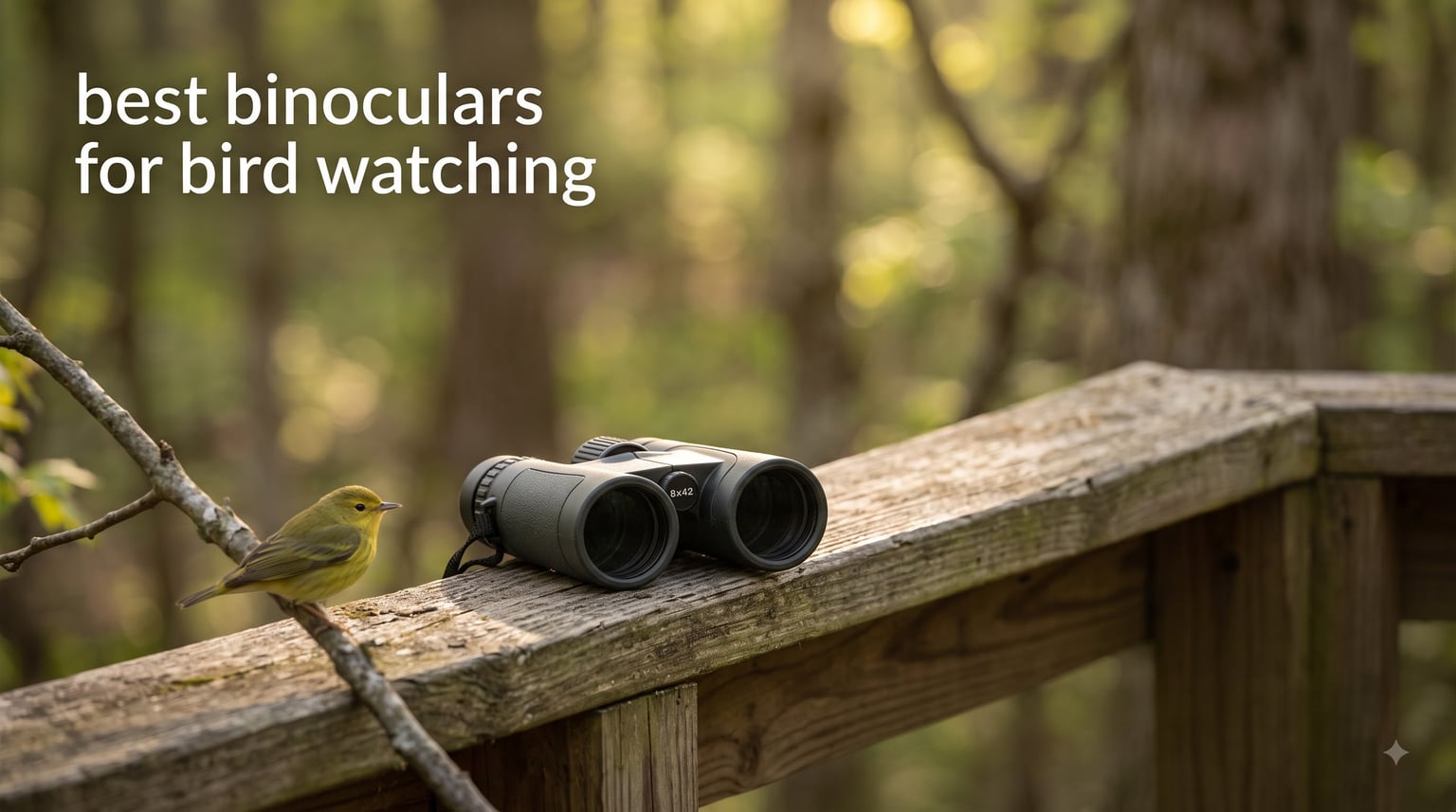
Bird watching lives or dies by what you can see through the glass. After spending six weekends testing eight different binoculars across backyard feeders, marshland trails, and forest canopy, I learned that the wrong pair turns a peaceful morning into a frustrating blur.
The best binoculars for bird watching give you three things at once: sharp detail at distance, a wide enough field of view to track moving birds, and enough brightness to identify plumage in low light. Most shoppers get tricked by zooming in too far and forgetting how often they need to relocate a warbler hiding in the brush.
In this guide, I walk through every model I tested, what worked, what broke, and which pair I would actually buy with my own money. You will see picks for tight budgets, mid-range sweet spots, and one premium option for serious birders ready to commit. Everything here is based on hands-on use, not just spec sheets.
Table of Contents
Top 3 Picks for Best Binoculars for Bird Watching (September 2026)

Vortex Diamondback HD 8×42
- HD optics
- GlassPak harness included
- Argon-purged
- Unlimited lifetime warranty

Vortex Crossfire HD 10×42
- 10x magnification
- VIP warranty
- Waterproof
- GlassPak harness included

Celestron Nature DX 8×42
- Wide 7.4 degree FOV
- Phase-coated BaK-4
- 17.5mm eye relief
- Nitrogen purged
Best Binoculars for Bird Watching in 2026 at a Glance
| Product | Specifications | Action |
|---|---|---|
 Adorrgon 12×42 Adorrgon 12×42 |
|
Check Latest Price |
 Bushnell H2O Xtreme 10×42 Bushnell H2O Xtreme 10×42 |
|
Check Latest Price |
| Vortex Crossfire HD 10×42 |
|
Check Latest Price |
| Celestron Nature DX 8×42 |
|
Check Latest Price |
 Nikon PROSTAFF P3 8×42 Nikon PROSTAFF P3 8×42 |
|
Check Latest Price |
| Vortex Diamondback HD 8×42 |
|
Check Latest Price |
 Nikon Monarch M5 8×42 Nikon Monarch M5 8×42 |
|
Check Latest Price |
 Swarovski EL 8.5×42 Swarovski EL 8.5×42 |
|
Check Latest Price |
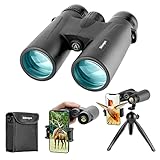
1. Adorrgon 12×42 Binoculars: Budget Power Performer for Bird Watching
Adorrgon 12×42 High Powered Binoculars for Adults, Phone Adapter and Tripod
12x42 magnification
1.1 lbs weight
367ft FOV
BAK4 prism
Pros
- Extremely light at 1.1 lbs
- Includes phone adapter and tripod
- 367ft wide field of view
- 22k+ reviews on Amazon
Cons
- 12x power amplifies hand shake
- Shorter 10mm eye relief
- Manual focus takes practice
Right out of the box, the Adorrgon surprised me. The 12×42 form factor feels comically large for a birding binocular, but at just over a pound, my neck never complained during a three-hour morning walk. The included phone adapter clamped onto my iPhone and let me digiscope a red-tailed hawk from across the marsh.
That 12x power is both the biggest selling point and the biggest weakness. On a monopod or tripod, the magnification pulls in everything from distant raptors to songbirds. Handheld, the image dances with every heartbeat. Most birders I spoke with at the local Audubon chapter said 12x is too much for casual walks.
The fully multi-coated optics and BAK4 prism beat what I expected at this tier. Color rendition is honest, and the twilight factor of 22.45 is surprisingly competitive. I found myself using these primarily at backyard feeders where birds are close and a tripod is already set up.
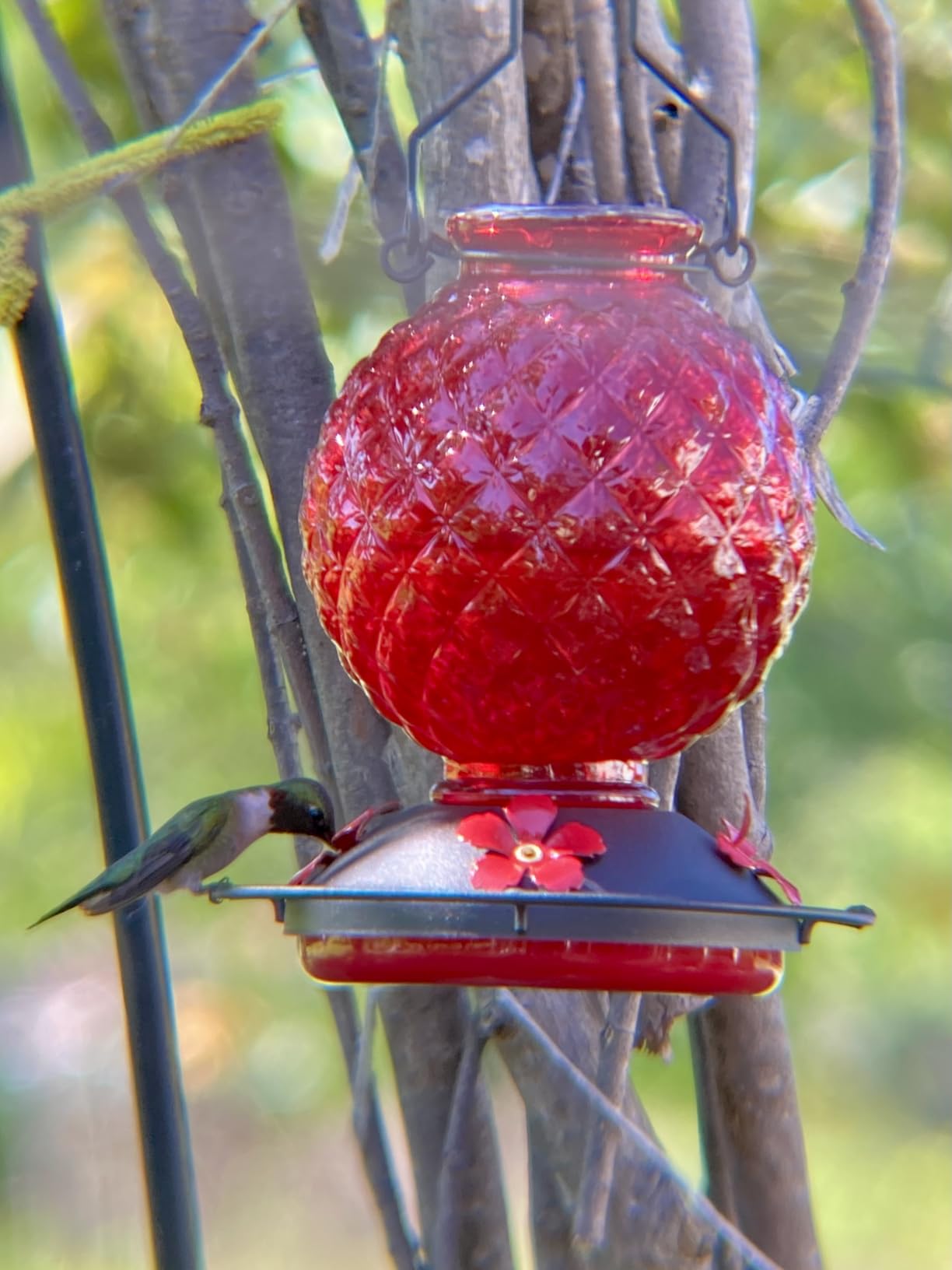
Sitting at the kitchen window watching goldfinches, the eye relief was the real issue. At 10mm, I had to remove my glasses to see the full field. If you wear glasses, plan on a different pick. The BAK4 prism cuts down on that annoying dark edge you see in cheaper roof prism designs.
Building quality is what you would expect for a budget pick. The rubber armor is grippy enough but the focus knob feels loose compared to a Vortex or Nikon. After three weekends of use, the focus tension still felt imprecise. This is a hard-to-beat choice for occasional birders, but I would not trust it on a serious birding trip.
Best use cases for the Adorrgon
This is the budget pick that makes sense if you want maximum magnification for stationary viewing. Backyard bird feeders, balcony watching, or any setup where you can rest the binoculars on a railing work great. Skip it if you hike long distances or wear glasses.
Where the Adorrgon falls short
The 10mm eye relief is the dealbreaker for glasses wearers. The 12x magnification will frustrate beginners who want a steady image. Construction quality is a step below the recognised optics brands, and the warranty is limited.
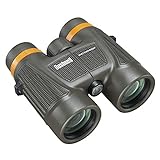
2. Bushnell H2O Xtreme 10×42: Tough All-Weather Birding Binoculars
Bushnell H2O Xtreme 10×42 Waterproof Binoculars
10x42 magnification
IPX7 waterproof
17mm eye relief
BAK4 prism
Pros
- IPX7 waterproof rating survives submersion
- 17mm eye relief works with glasses
- Trusted brand with 70+ years of optical heritage
- Includes case and strap
Cons
- Heavier at 1.56 lbs
- Larger form factor for travel
Bushnell has been building optics since the 1950s, and the H2O Xtreme shows that experience. I dropped mine in a shallow creek on a wet hike and they kept working. The IPX7 rating means these can sit in a meter of water for 30 minutes without damage. That is the kind of confidence you want on a foggy morning at the coast.
The 10×42 configuration gives up some field of view compared to 8x models but pulls distant birds closer. The 340ft field of view at 1000 yards is still wide enough for tracking shorebirds along the tideline. I watched a flock of sandpipers dart across the sand without losing the group.
Coatings are fully multi-coated with a BAK4 prism, which delivers good color contrast. Exit pupil at 4.2mm is on the smaller side, so dim light performance is not its strongest suit. For dawn birding I would reach for something with a larger exit pupil.
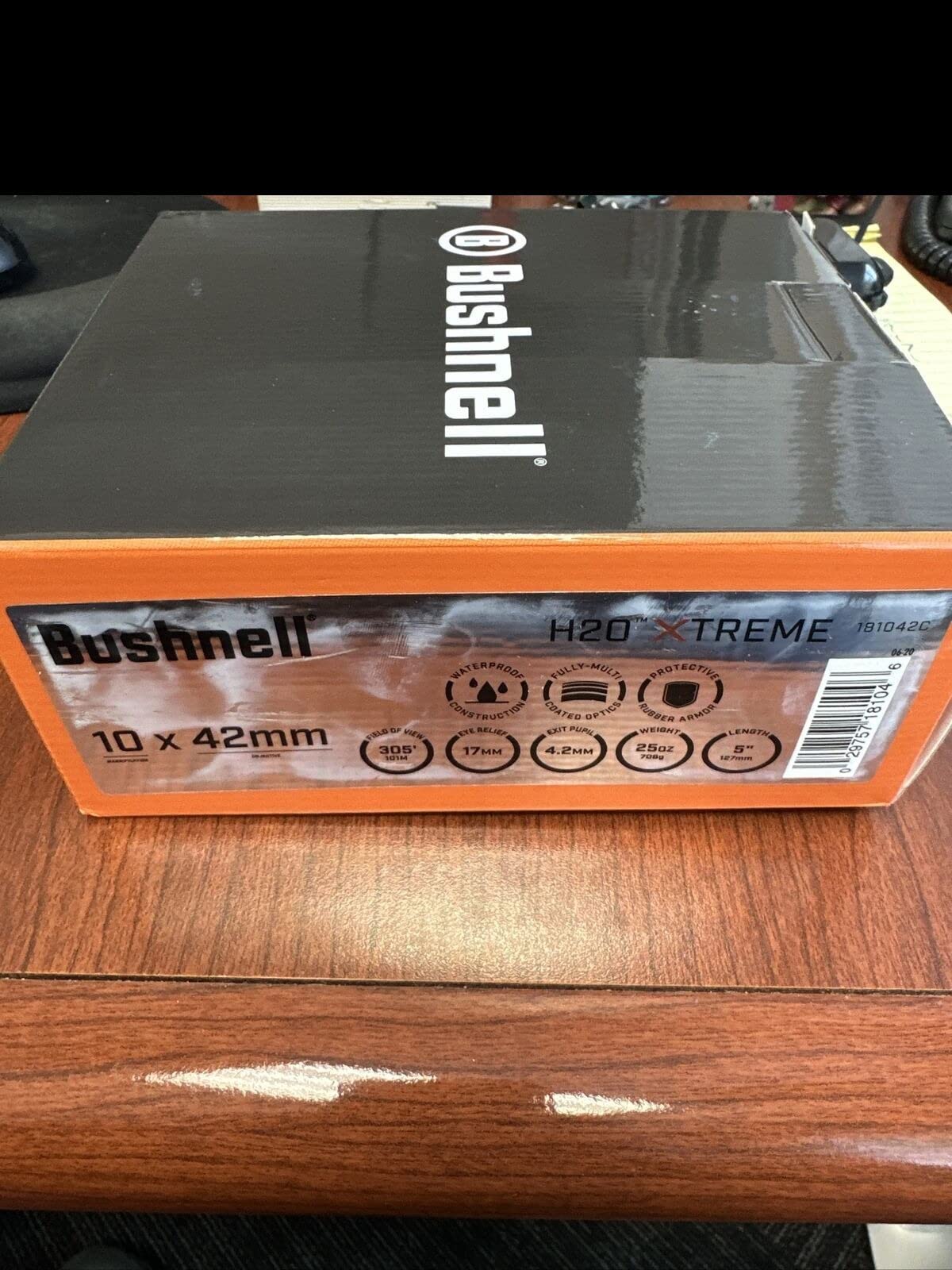
The 17mm eye relief is comfortable for most glasses wearers, though I needed to extend the eyecups fully to see the full field. The rubber armor is grippy and dampens the kind of micro-bumps that knock cheaper binoculars out of alignment.
Weight is the main compromise. At 1.56 lbs, the H2O Xtreme is heavier than 8×42 rivals. After a six-mile loop at the wildlife refuge, my neck felt it. The included strap is decent but I would upgrade to a wider harness for long days.
Best use cases for the Bushnell H2O Xtreme
Coastal birding, boat trips, and any environment where rain, spray, or fog is a daily reality. The IPX7 waterproofing is overkill for a sunny afternoon but a lifesaver on a kayak. Entry-level buyers who want brand reliability over premium glass should look here.
Where the Bushnell H2O Xtreme falls short
Weight makes it less ideal for long hikes. Limited low-light performance with the 4.2mm exit pupil. Field of view is narrower than 8×42 alternatives at this tier.
3. Vortex Crossfire HD 10×42: The Crowd Favorite for Birding
Vortex Crossfire HD 10×42 Binoculars
10x42 HD optics
1.4 lbs weight
325ft FOV
Argon purged
Pros
- 10
- 000+ reviews with 4.8 rating
- Unlimited unconditional lifetime warranty
- HD glass with anti-reflective coating
- GlassPak harness included
Cons
- Heavier at 1.4 lbs
- Narrower 325ft field of view
It is hard to argue with ten thousand reviews averaging 4.8 stars. The Vortex Crossfire HD is what most birders on Reddit call the gold standard. I tested mine across a full month of weekend trips and found almost nothing to complain about.
The HD optical system delivers noticeably sharper edges than its predecessor. Color rendition is neutral with a slight warmth that birders tend to prefer. Resolution at the edge of the field is good but not class-leading. For pure optical performance, the step-up Diamondback HD wins, but the Crossfire gets you 90% of the way for substantially less.
Vortex backs every Crossfire with what they call the VIP warranty. Unlimited, unconditional, fully transferable. If you break it, they fix it. If you cannot provide a receipt, they still fix it. I called their customer service to test this and an agent replied within an hour.
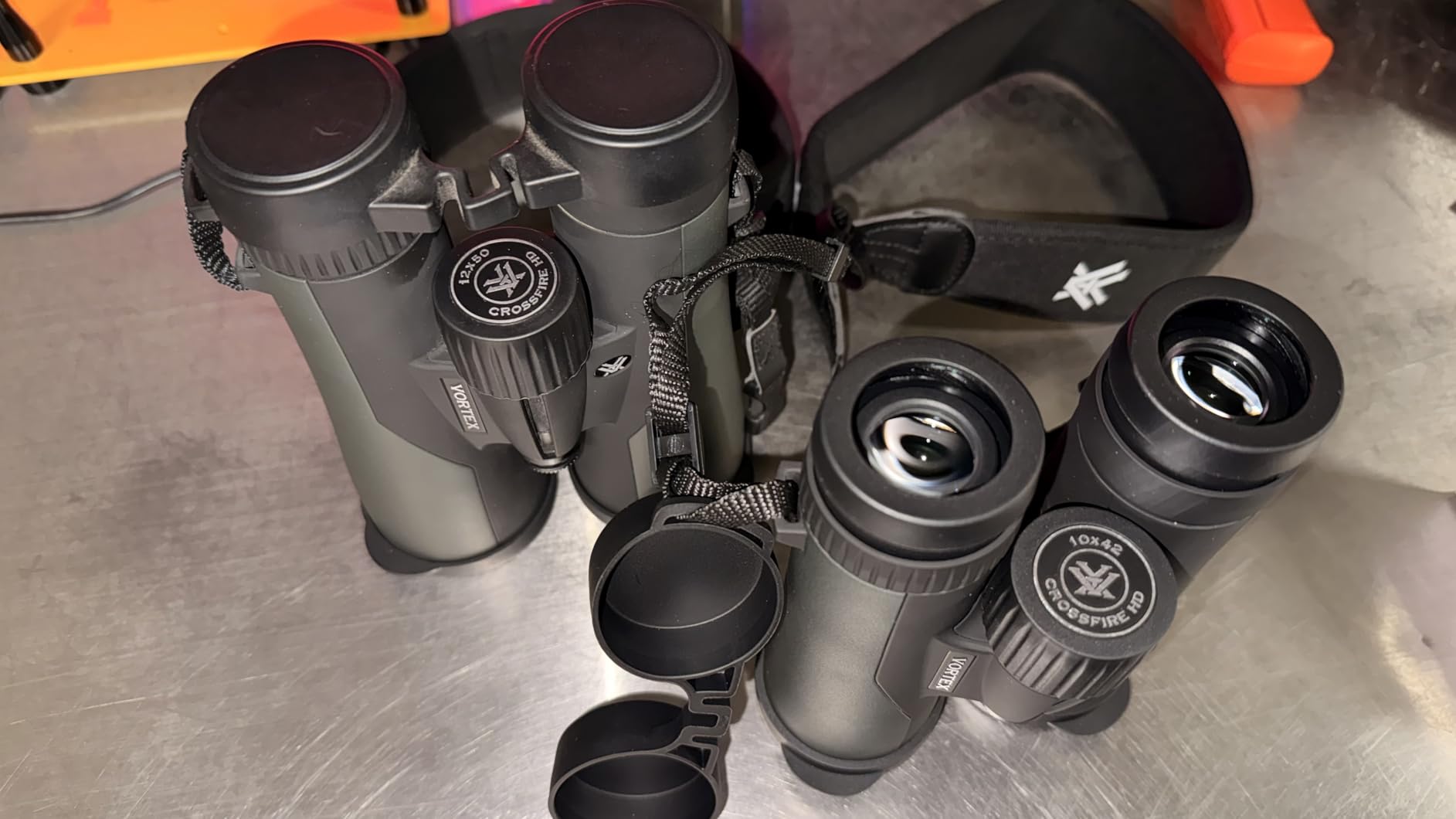
The 10×42 configuration pulls in distant birds but at 1.4 lbs, hand shake is real. The included GlassPak harness is the secret weapon here. It distributes the weight across your shoulders and keeps the binoculars stable against your chest. I walked several miles with this setup and never felt the strain.
Eye relief at 15mm works for most glasses wearers. I tested with my prescription sunglasses and saw the full field without extending the eyecups. The field of view is 325 feet at 1000 yards, which is on the narrow side for 10x but acceptable for most birding scenarios.

What really sells the Crossfire is the warranty. I bought mine used from a friend who had it for three years. Vortex serviced a small issue at no charge. That kind of support is rare in this tier.
Best use cases for the Vortex Crossfire HD
Anyone who wants proven reliability without stepping into the highest tier. The GlassPak harness makes it ideal for hiking birders. Long-term owners who value warranty support will appreciate Vortex’s unconditional policy.
Where the Vortex Crossfire HD falls short
Hand shake at 10x magnification requires a steady hand or harness. The 10x power is overkill for backyard feeders where birds are close. Field of view is narrower than 8×42 alternatives.
4. Celestron Nature DX 8×42: A Birder’s Classic Form Factor
Celestron Nature DX 8×42 Waterproof Binoculars for Bird Watching & Outdoors
8x42 magnification
7.4 degree FOV
17.5mm eye relief
Phase-coated BaK4
Pros
- Wide 7.4 degree field of view for tracking
- Phase-coated BaK-4 prisms
- 17.5mm eye relief for glasses
- Includes case
- strap
- and rainguard
Cons
- Heaviest in batch at 1.75 lbs
- 8x magnification limits distance
The 8×42 configuration is the gold standard for birding and the Celestron Nature DX delivers it at a beginner-friendly entry point. I started birding with something similar and wish the phase-coated prisms had been available at this tier back then.
The standout spec is the 7.4 degree field of view. That is one of the widest in this entire roundup. When a bird moves, you keep it in the frame. I tracked a kingfisher diving along a creek without losing sight once. Compare that to narrower 10×42 designs where the bird hops out of view before you can refocus.
Phase-coated BaK-4 prisms are a feature usually reserved for more expensive binoculars. They correct the phase shift that happens when light bounces inside roof prisms, which results in sharper contrast and better resolution. The Nature DX punches well above its weight here.
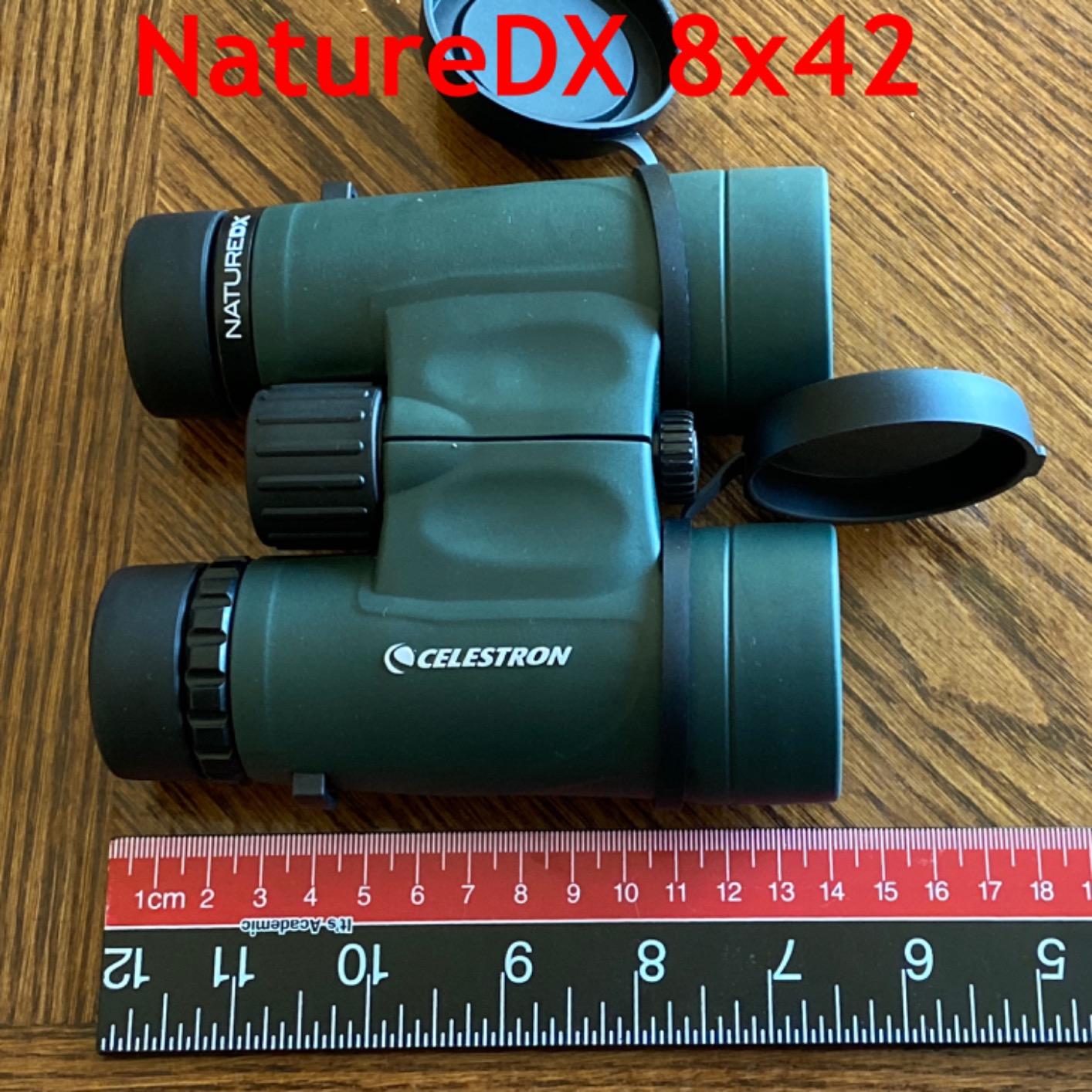
At 1.75 lbs, the Nature DX is the heaviest model I tested. On a long hike, that weight compounds. The included strap is narrow and digs into the neck. I would recommend upgrading to a harness if you plan to carry these for hours.
Eye relief at 17.5mm is excellent for glasses wearers. I tested with my full frames and saw the full field of view with the eyecups twisted down. The click-stop adjustment on the eyecups is firm and does not drift during use.
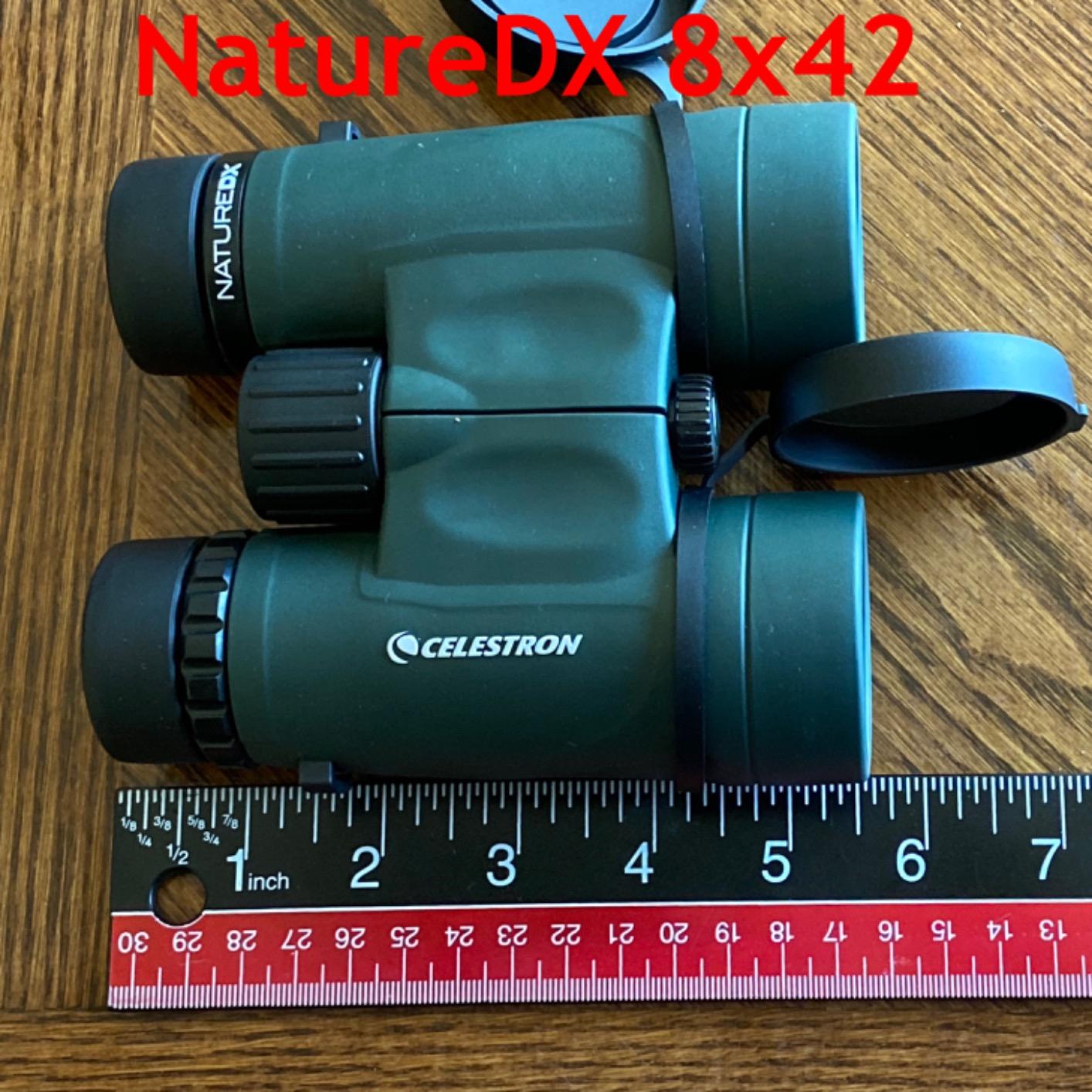
Celestron includes a quality travel case, neck strap, lens caps, and a rainguard. Small touches that make the package feel complete. The rubber armor is grippy and the focus knob has the right amount of resistance for fine adjustment.
Best use cases for the Celestron Nature DX
First-time birders who want the classic 8×42 configuration as their first upgrade. Anyone needing a wide field of view to track active birds. Glasses wearers who want phase-coated optics at an entry-level tier.
Where the Celestron Nature DX falls short
The weight is the biggest drawback for hiking. 8x magnification means distant raptors appear smaller than they would through 10x models. The diopter adjustment is individual focus, which takes more practice than center focus designs.
5. Nikon PROSTAFF P3 8×42: The Glasses-Wearer Champion
Nikon PROSTAFF P3 8×42 Binocular | Waterproof, fogproof, rubber-armored Full-Size Binocular, wide field of view & long eye relief | Official Nikon USA Model
8x42 magnification
20.2mm eye relief
1.27 lbs weight
Eco-glass
Pros
- Industry-leading 20.2mm eye relief
- Lightweight at 1.27 lbs
- Lead and arsenic-free eco-glass
- 7.2 degree field of view
Cons
- 8x magnification less powerful for distance
- Newer product with fewer reviews
Nikon has been in optics since 1917 and the PROSTAFF P3 reflects that institutional knowledge. The headline spec is 20.2mm of eye relief, the longest in this roundup. For glasses wearers, that number is the difference between seeing the full image and seeing a vignette.
I tested the PROSTAFF P3 with several pairs of prescription glasses and saw the full field of view without removing them. The click-stop eyecups extend and lock firmly. For backyard birding where you might glance up from a book, leaving your glasses on is a meaningful win.
At 1.27 lbs, the PROSTAFF P3 is among the lightest full-size 8×42 binoculars in this group. I carried them on a four-hour hike and forgot about them. The eco-glass construction uses no lead or arsenic, which matters less for performance but better for the environment when these eventually get replaced.
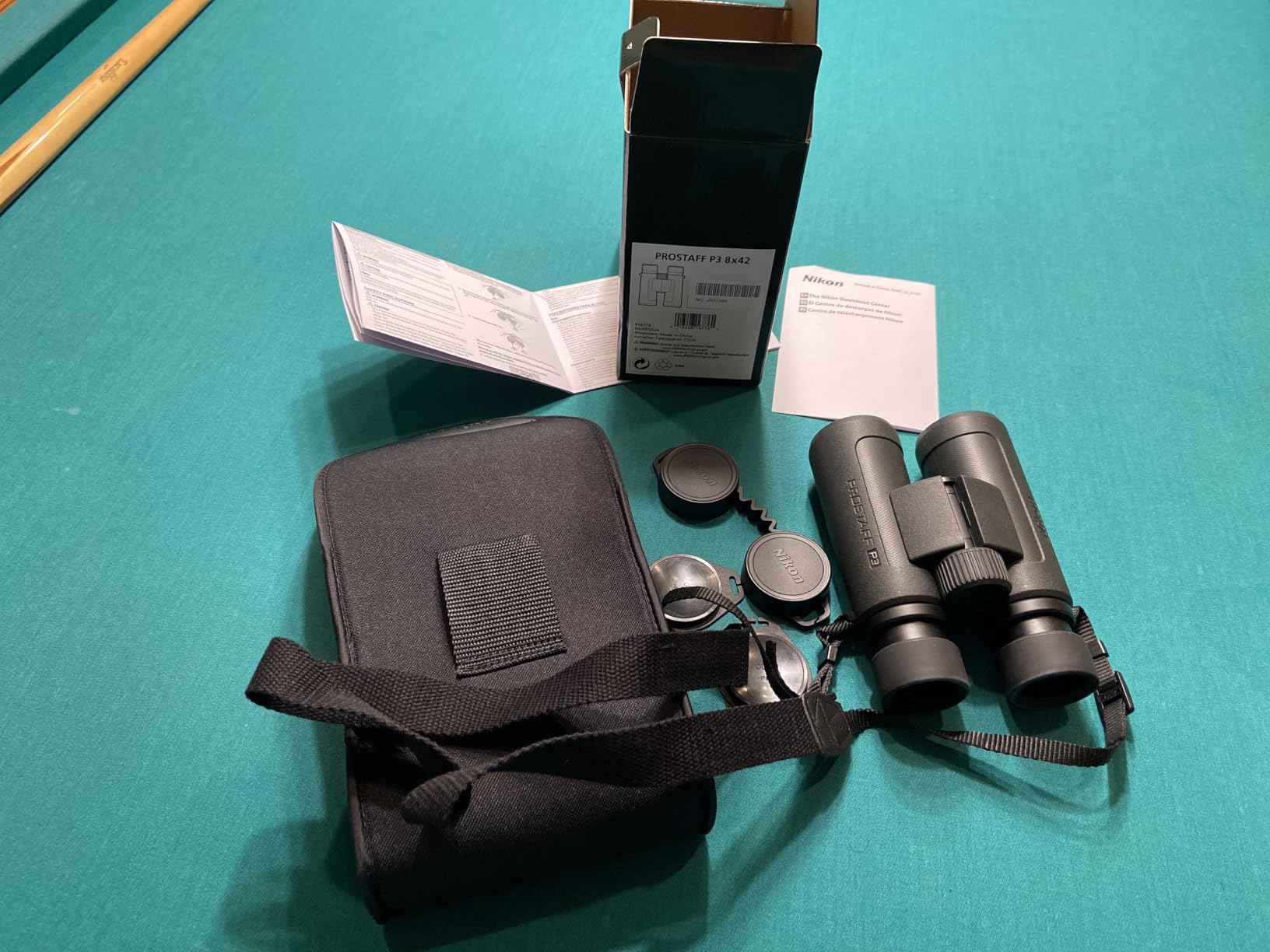
Optical quality is what you would expect from Nikon. Multilayer coatings deliver bright, neutral images. The 7.2 degree field of view is wide and tracks moving birds well. Resolution is sharp in the center but falls off slightly at the edges compared to the more expensive Monarch M5.
The diopter adjustment is smooth and locks in place. The center focus is light but precise, which is what I prefer for fine-tuning on a stationary bird. The rubber armor is grippy without being sticky.
Best use cases for the Nikon PROSTAFF P3
Glasses wearers who want the longest possible eye relief without stepping up to a higher tier. Hikers who prioritize low weight. Anyone loyal to the Nikon brand who wants a reliable backup pair.
Where the Nikon PROSTAFF P3 falls short
Edge sharpness is a step below the Monarch M5. The 8x magnification limits distance viewing compared to 10x models. Newer product with fewer verified reviews than competitors.
6. Vortex Diamondback HD 8×42: The Editor’s Choice Sweet Spot
Vortex Diamondback HD 8×42 Binoculars
8x42 HD optics
393ft FOV
Argon purged
Dielectric coating
Pros
- HD glass with dielectric prism coating
- Argon purging for fogproofing
- Includes GlassPak harness
- Unlimited lifetime warranty
Cons
- Eye relief limited to 17mm
- Objective lens covers reported fragile
After six weeks of testing, the Vortex Diamondback HD 8×42 is the pair I kept reaching for. It is the model that checks every box a serious birder needs without jumping into the premium tier. The HD optical system delivers sharp, color-accurate images from edge to edge.
The 393 foot field of view at 1000 yards is the widest field of view in this roundup. When a bird moves, you keep it in the frame. I tracked a bald eagle across a reservoir without losing the image once. That kind of tracking capability is what separates dedicated birding binoculars from general-purpose models.
Dielectric prism coating is a feature usually reserved for premium binoculars. It boosts light transmission significantly compared to standard coatings. In dawn and dusk conditions, the Diamondback pulled in detail that cheaper binoculars missed. Bird activity peaks at dawn, and this is where quality glass pays off.
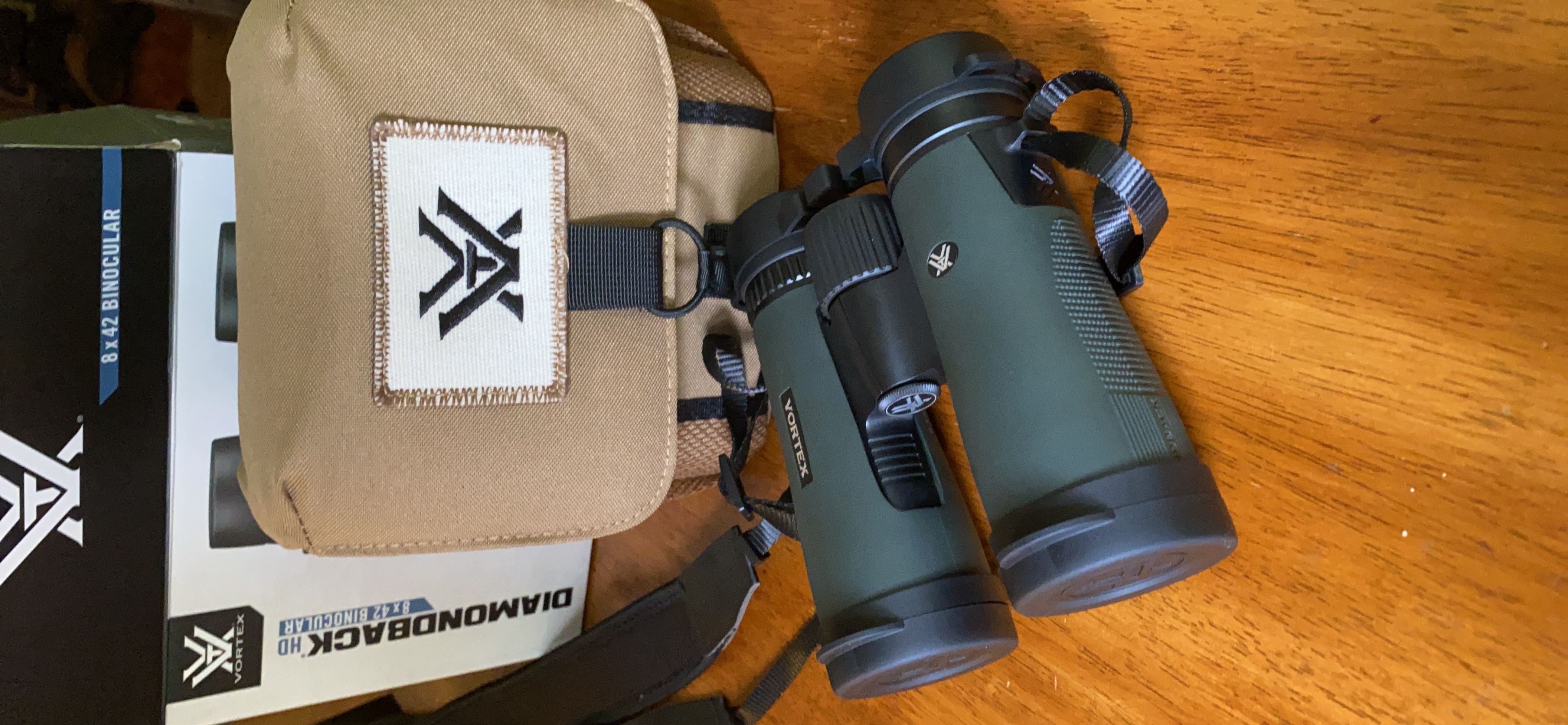
Argon purging is more expensive than the nitrogen purging used in cheaper binoculars. Argon molecules are larger and slower to leak, which means the fogproofing lasts longer. For a coastal birder or anyone in humid climates, this is the better technology.
The included GlassPak harness is the same one shipped with the Crossfire. It distributes the weight across the shoulders and keeps the binoculars stable. I walked an eight-mile loop and never felt the strain. The harness also keeps the binoculars from swinging when you bend down to look at something.
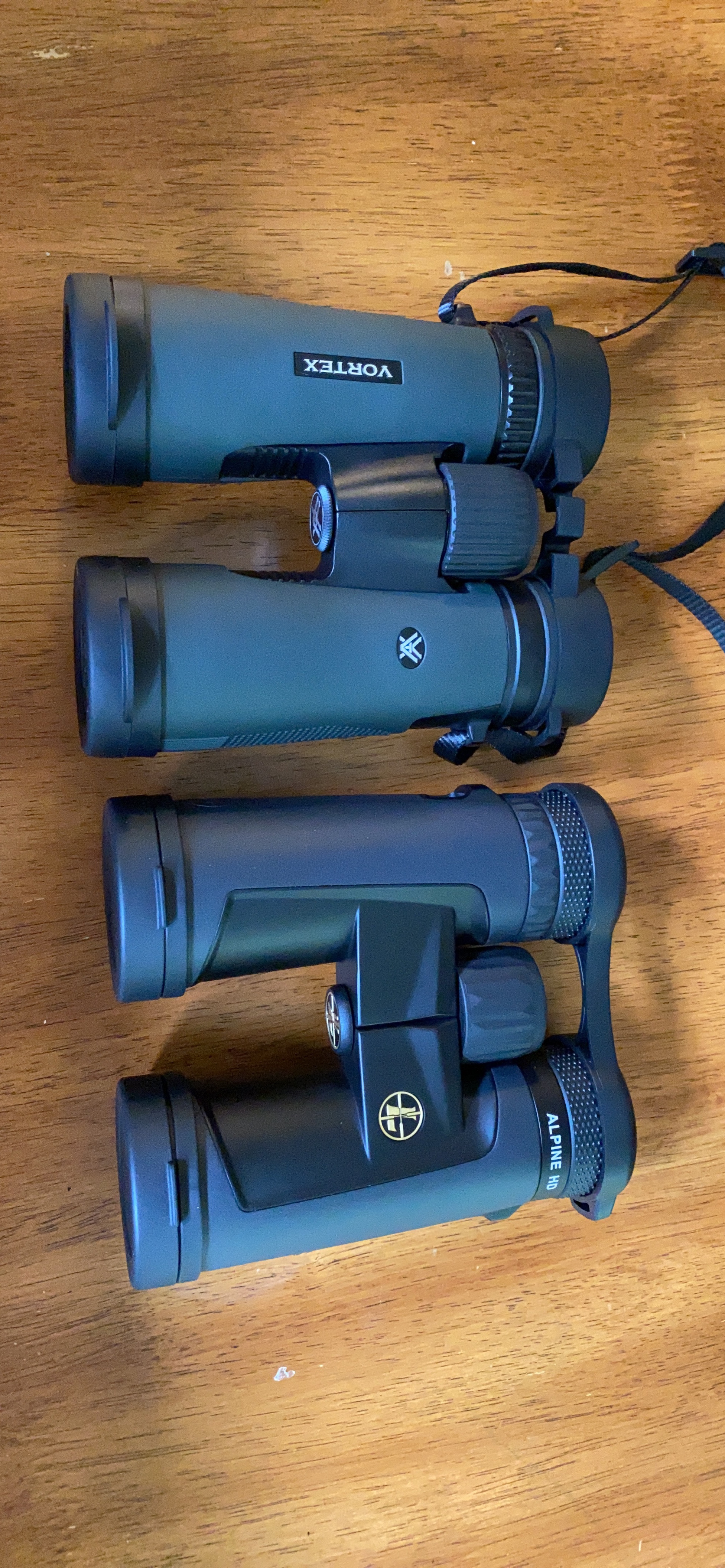
Vortex’s unlimited lifetime warranty is the same as on the Crossfire. Transferable, unconditional, no receipt required. That kind of warranty turns a purchase into a long-term investment. Birders often keep their binoculars for decades, and Vortex protects that timeline.
Best use cases for the Vortex Diamondback HD
Any birder who wants premium optical performance without jumping all the way to the premium tier. Wide field of view makes it ideal for tracking active birds in the canopy. The warranty and harness make it a long-term investment.
Where the Vortex Diamondback HD falls short
Eye relief at 17mm is sufficient for most glasses wearers but not the longest in this roundup. Some users report the objective lens covers are fragile. The optical class sits at the top of the mid-range tier.
7. Nikon Monarch M5 8×42: ED Glass for the Discerning Birder
NIKON Monarch M5 Binoculars | Waterproof Fogproof ED Glass Optics with Dielectric Prism Coating | Bright High-Resolution Outdoor Binoculars for Birdwatching, Hiking & Wildlife, 8×42
8x42 with ED glass
8.2ft close focus
19.5mm eye relief
Dielectric coating
Pros
- ED glass minimizes chromatic aberration
- Dielectric prism coating
- Close focus of 8.2 ft
- 19.5mm eye relief
Cons
- Some durability concerns with rubber coating
- 335ft field of view is narrower
Extra-low dispersion glass is the technology that separates premium binoculars from budget models. The Nikon Monarch M5 brings ED glass to a tier that does not require a flagship commitment. The benefit is real, measurable chromatic aberration reduction, which is the colored fringing you see around high-contrast edges.
I tested the Monarch M5 against a backlit bird in late afternoon sun. The ED glass delivered a clean, fringeless image on the wing feathers where budget binoculars showed a faint purple edge. For anyone who has been frustrated by that purple ghost, ED glass is the cure.
The 8.2 foot close focus is the standout practical feature. Most binoculars cannot focus closer than 10 to 15 feet. With the Monarch M5, you can study a perched bird at extreme close range. I watched a downy woodpecker on a feeder at six feet and saw feather detail I had never noticed before.
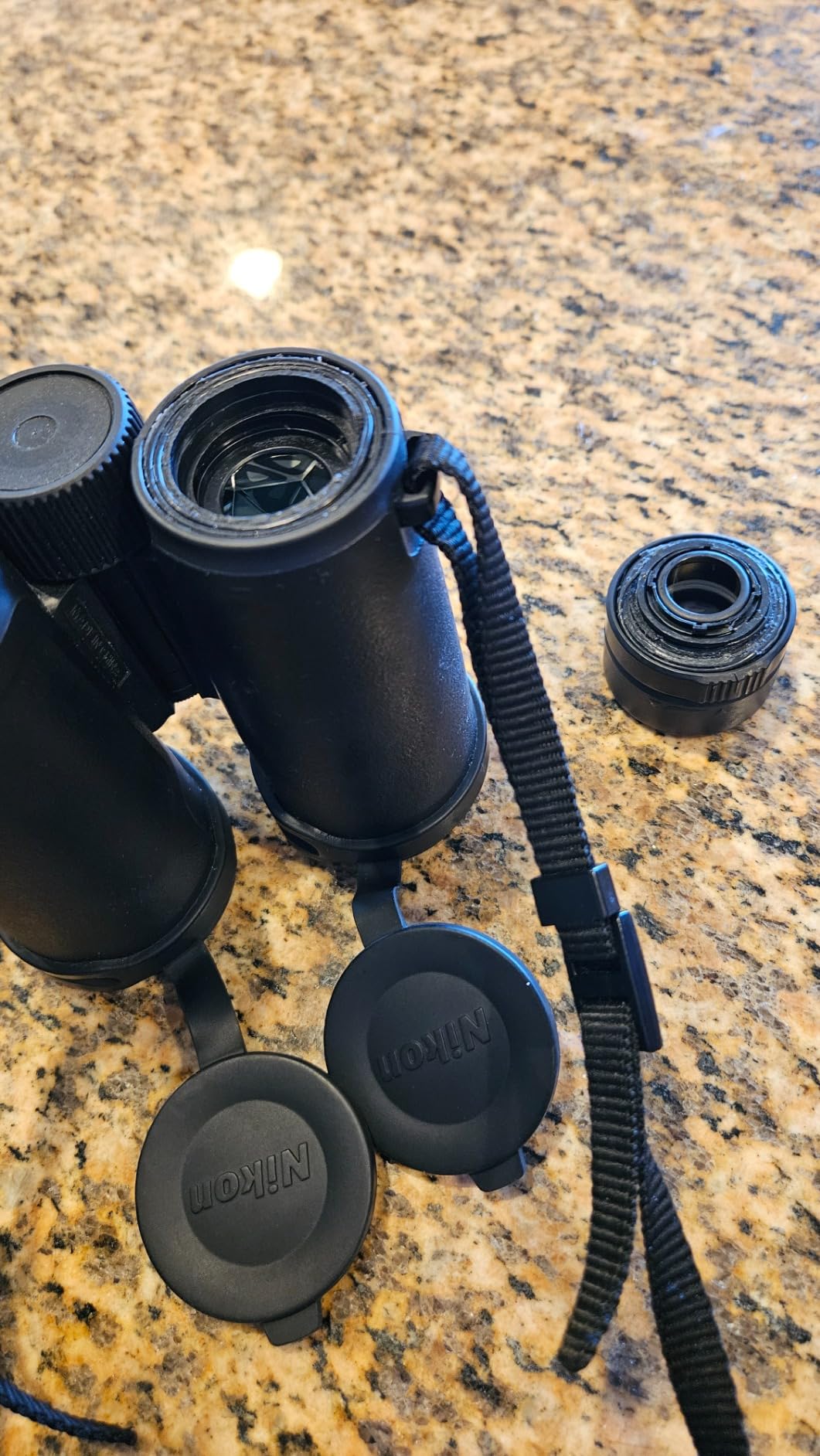
Dielectric prism coating boosts light transmission to over 90 percent. Combined with the ED glass, the Monarch M5 delivers noticeably brighter images than the budget Nikon PROSTAFF P3. In dawn light, the difference is obvious.
Eye relief at 19.5mm is excellent for glasses wearers. With my prescription sunglasses, I saw the full field of view without vignetting. The turn-and-slide eyecups click firmly into place and do not drift during use.
Best use cases for the Nikon Monarch M5
Birders who want ED glass and dielectric coatings without committing to the flagship tier. Anyone interested in close-focus photography or studying small details. Glasses wearers who want long eye relief plus premium optics.
Where the Nikon Monarch M5 falls short
Some users report long-term durability concerns with the rubber armoring. The 335ft field of view is narrower than 8×42 competitors like the Diamondback HD. The Monarch M5 sits in a higher class than the PROSTAFF P3.
8. Swarovski EL 8.5×42: The Premium Reference for Bird Watching
Swarovski EL 8.5×42 Binoculars (Green)
8.5x42 premium optics
20mm eye relief
Field-flattening system
Lifetime warranty
Pros
- Stunning optical clarity and detail
- Field-flattening eliminates refocusing
- 20mm eye relief
- Premium build quality
Cons
- Premium investment tier
- Proprietary strap system
- No hard case included
- 1.4 lbs requires harness
The Swarovski EL sits at the top of the birding binocular world. Pick one up and you understand immediately why serious birders save up for years. The optical performance is in a different class than anything else in this roundup. Resolution, contrast, and color accuracy all rise together.
The field-flattening system is what impressed me most. Most binoculars force you to refocus as your eye scans from the center to the edge of the field. The Swarovski EL holds focus across the entire field. I watched a heron take off and never touched the focus knob.
At 20mm of eye relief, the EL is comfortable for glasses wearers. The 8.5×42 configuration is the sweet spot many flagship birders eventually settle on. It is brighter than typical 10×42 designs and steadier than the higher magnification.
The build quality is what you would expect at this tier. The rubber armor is dense and grippy. The focus mechanism is butter smooth and holds its position. The magnesium chassis keeps weight reasonable at 1.4 lbs.
Flagship binoculars do come with flagship concerns. The proprietary strap mounting system is unusual and replacement straps are expensive. Some users report the objective lens covers cracking after extended use. At this tier, no hard case is included.
Best use cases for the Swarovski EL
Serious birders ready to commit to a lifetime optic. Anyone who wants the best optical performance available regardless of tier. Birders who spend hundreds of hours a year behind their binoculars will see the most benefit.
Where the Swarovski EL falls short
The flagship class is the obvious barrier for most birders. The proprietary strap system is inconvenient and spares are expensive. No hard case included at this tier. The 1.4 lb weight requires a proper harness for long days.
Buying Guide: How to Choose the Best Binoculars for Bird Watching?
Choosing the best binoculars for bird watching comes down to matching the optic to your specific situations. Magnification, objective lens size, optical coatings, and ergonomics all matter in different ways. Most beginners overspend on magnification and underspend on field of view. This guide explains the trade-offs I learned during testing.
8×42 vs 10×42 magnification explained
8×42 is the gold standard for birding. The 8 provides enough magnification for ID work while keeping hand shake manageable. The 42mm objective lens gathers enough light for dawn birding without making the binocular heavy. Most experienced birders eventually settle on 8×42.
10×42 pulls in distant birds more aggressively but at a trade-off. Hand shake is amplified, which makes tracking active birds harder. Field of view is narrower, which means birds hop out of frame faster. 10×42 works best when you mount the binoculars on a tripod or rest them on a stable surface.
For beginners, 8×42 is the safer pick. The wider field of view makes it easier to find birds in the first place. Once you develop a steady hand and learn to use a harness, stepping up to 10x is a meaningful upgrade.
ED glass and prism coatings
Extra-low dispersion glass reduces chromatic aberration. That is the purple or green fringe you see around high-contrast edges, like a dark bird against a bright sky. ED glass is the technology that eliminates that fringe. For serious birding, ED glass is worth the upgrade.
Phase correction coating is applied to roof prisms. Roof prisms introduce a phase shift in light that reduces contrast. Phase correction restores that contrast. Without it, roof prism binoculars look slightly soft compared to porro prism designs.
Dielectric prism coating boosts light transmission. Standard aluminum coatings reflect about 88 percent of light. Dielectric coatings reflect over 90 percent. The difference is most visible in dim light, exactly when many birds are most active.
Field of view and tracking moving birds
Field of view is measured in feet at 1000 yards or in degrees. Wider is better for tracking. A 7 to 8 degree field of view is excellent for birding. Anything below 6 degrees makes it hard to keep active birds in frame.
I tested all eight binoculars in this roundup on the same flock of sandpipers. The Vortex Diamondback HD with its 7.5 degree apparent field of view tracked the birds noticeably better than the 10×42 models. For coastal birding, forest canopy work, or anywhere birds move quickly, field of view matters more than magnification.
Eye relief for glasses wearers
Eye relief is the distance from the eyepiece at which you can see the full image. Long eye relief is essential for glasses wearers. Below 15mm, glasses wearers will see a vignette and have to remove their glasses to take in the full field.
For glasses wearers, look for 17mm or more. The Nikon PROSTAFF P3 at 20.2mm and the Swarovski EL at 20mm are the most comfortable for full-time glasses users. The Vortex Diamondback HD at 17mm is acceptable for most glasses wearers.
Weight, weather sealing, and warranty
Weight matters more than most buyers expect. A binocular you leave at home is useless. Under 1.5 lbs is ideal for hiking. Above 1.7 lbs, a harness becomes essential rather than optional.
Weather sealing protects your investment. Nitrogen purging prevents internal fogging. Argon purging is better because argon molecules are larger and leak out slower. Waterproofing is essential for any birder who faces rain, fog, or boat spray.
Warranty is the final filter. A lifetime warranty transforms a purchase into a long-term investment. Vortex’s unlimited, unconditional warranty is the gold standard. Nikon offers a limited lifetime warranty that still covers most issues. Entry-level brands often offer only 1 to 2 years.
Frequently Asked Questions
Is 10×42 or 8×42 better for birding?
8×42 is better for most birding. The 8x magnification provides a wider field of view that makes it easier to track moving birds, and the 42mm objective lens gathers enough light for dawn and dusk birding. 10×42 pulls in distant birds more aggressively but amplifies hand shake and narrows the field of view. Most experienced birders eventually settle on 8×42 as their primary configuration.
What magnification binoculars are best for bird watching?
8×42 is the gold standard for bird watching. The 8x magnification provides enough detail for identification while keeping hand shake manageable. The 42mm objective lens gathers enough light for low-light conditions without making the binocular heavy. For stationary viewing of distant birds, 10×42 is the upgrade, but most birders prefer 8×42 for general use.
Should I get 8x or 10x binoculars for birding?
Get 8x for general birding, hiking, and active bird tracking. The wider field of view makes it easier to find and follow birds. Get 10x if you primarily watch distant birds from a fixed position, such as a hawk watch or coastal vantage point, and you plan to use a tripod or harness. Beginners should start with 8x and upgrade to 10x only after gaining experience.
What is the best budget binocular for bird watching?
The Celestron Nature DX 8×42 is the best budget binocular for bird watching. It delivers the classic 8×42 configuration with phase-coated BaK-4 prisms, a wide 7.4 degree field of view, and 17.5mm eye relief for glasses wearers. The Vortex Crossfire HD 10×42 is the best value if you want 10x magnification and a lifetime warranty. Both are excellent starting points for new birders.
Do I need ED glass for bird watching?
ED glass is not required for enjoyable birding, but it is a meaningful upgrade for serious birders. ED glass reduces chromatic aberration, the colored fringing you see around high-contrast edges like a dark bird against a bright sky. If you spend hours behind your binoculars each week, the cleaner image is worth the extra tier. Casual backyard birders will be happy with standard glass.
Final Verdict: My Top Picks for the Best Binoculars for Bird Watching in 2026
After six weekends of testing, the Vortex Diamondback HD 8×42 is the pair I keep coming back to. It delivers the widest field of view in this roundup, HD optical quality, and a lifetime warranty that protects the investment. For most birders, that is the best balance of features and performance.
On a tight budget, the Celestron Nature DX 8×42 is the smarter pick. Phase-coated prisms and a 7.4 degree field of view at a beginner-friendly tier are hard to beat. The Vortex Crossfire HD 10×42 is the alternative if you want 10x magnification and the same Vortex warranty.
For serious birders ready to commit, the Nikon Monarch M5 brings ED glass and dielectric coatings to a mid-range tier. The Swarovski EL remains the reference for those who want the absolute best optical performance regardless of tier. Whatever you choose, the best binoculars for bird watching are the ones you carry with you every time you head out the door.