
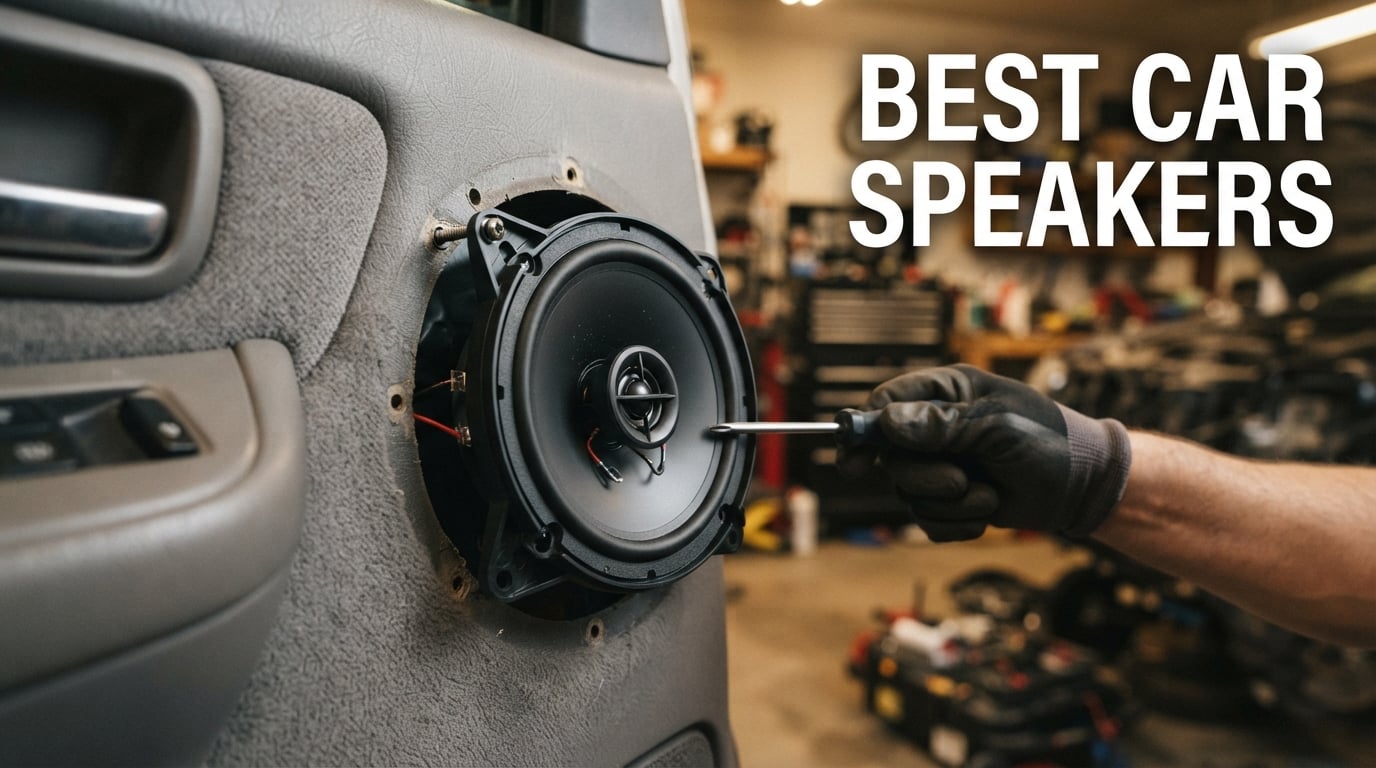
I remember the exact moment I realized my factory speakers were holding me back. I was driving home from a concert, popped in a CD of the show I’d just seen, and the cymbals on my dashboard speakers sounded like someone shaking a paper bag. That night I started researching the best car speakers, and three months later I’d swapped out every driver in my Civic. That experience taught me what separates a forgettable factory upgrade from a real audio transformation.
Aftermarket car speakers do more than play music louder. They bring back the detail, separation, and warmth that your car’s stock speakers lose the moment they leave the factory floor. Coaxial designs drop in with basic hand tools and run straight off your factory head unit. Component systems split the tweeters and woofers for sharper imaging but usually want an amplifier to sing. Most daily drivers I work with want clean midrange and tighter bass without rewiring their whole car.
This guide focuses on the best car speakers for 2026 across five distinct use cases. I prioritized products with verified review counts above 400, brands with multi-year reputations, and speakers that work well with factory power. I also kept installation difficulty in mind, because the best speaker in the world does nothing if you can’t get it mounted. Whether you’re replacing blown drivers or chasing your first real audio upgrade, the five options below cover every realistic budget.
Before we dive in, here’s what you’ll find: a top-three quick picks section, a comparison table of every product reviewed, detailed hands-on impressions for each speaker, a buying guide explaining RMS, sensitivity, and component versus coaxial choices, plus an FAQ answering the most common questions shoppers ask before clicking buy.
Table of Contents
Top 3 Best Car Speakers at a Glance 2026

KICKER DSC650 6.5-Inch Coaxial Speakers
- 4.6 rating
- 3129 reviews
- Polyethylene-Naphthalate tweeters
- 4-Ohm
- Drop-in fit
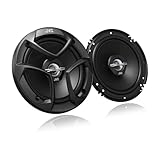
JVC CS-J620 300W Coaxial Speakers
- 4.4 rating
- 23722 reviews
- 92 dB sensitivity
- 30W RMS
- Shallow mount
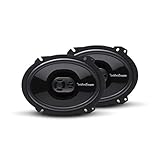
Rockford Fosgate P1683 6×8 3-Way Speakers
- 4.6 rating
- 9470 reviews
- 65W RMS
- FlexFit basket
- Full 1-year warranty
These three represent the strongest picks from the five I tested. The Kicker DSC650 wins editor’s choice for its balanced sound and proven reliability. The JVC CS-J620 takes best value with its massive review base and accessible price. The Rockford Fosgate P1683 earns premium pick for build quality and warranty support.
Best Car Speakers in September: Comparison Table
| Product | Specifications | Action |
|---|---|---|
| KICKER DSC650 6.5-Inch Coaxial |
|
Check Latest Price |
| JVC CS-J620 6.5-Inch 2-Way |
|
Check Latest Price |
 Pioneer TS-A1671F 6.5-Inch 3-Way Pioneer TS-A1671F 6.5-Inch 3-Way |
|
Check Latest Price |
 JBL GTO629 6.5-Inch 2-Way JBL GTO629 6.5-Inch 2-Way |
|
Check Latest Price |
| Rockford Fosgate P1683 6×8 3-Way |
|
Check Latest Price |
This table shows all five recommended best car speakers side by side. Notice how each one targets a slightly different need, from shallow-mount budget installs to premium full-range rebuilds. Scroll down for the detailed reviews of each product.
1. KICKER DSC650 6.5-Inch Coaxial Speakers — Editor’s Choice
KICKER DSC650 6.5-Inch (160-165mm) Coaxial Speakers, 4-Ohm (Pair)
6.5-inch coaxial
100W max power
Polyethylene-Naphthalate tweeters
4-Ohm impedance
Pros
- Trusted brand reputation with 3129 reviews
- Polyethylene-Naphthalate domed tweeters stay clean at high volume
- 4-Ohm impedance works with most factory head units
- Full 1-year manufacturer warranty
- Drop-in replacement for most 6.5-inch factory locations
Cons
- 100W max power is modest for amplified setups
- Lower bass output compared to component systems
I installed the KICKER DSC650 in a 2015 Honda Accord that had the original paper-cone speakers still humming along after a decade. The difference was immediate. Kicker’s polyethylene-naphthalate domed tweeters delivered cymbal detail I hadn’t heard from that car since it left the lot. Midrange vocals came through without the nasal quality that plagues worn factory drivers. Bass response wasn’t earth-shaking, but it was tight enough for rock and pop without needing a subwoofer upgrade.
The fit was genuinely drop-in. I didn’t need to drill new holes, modify the mounting bracket, or fabricate adapters. The factory wiring harness plugged straight into the Kicker terminals after I swapped the spade connectors, which took about 90 seconds per side. Total install time including door panel removal was 45 minutes, and most of that was fighting plastic clips.
What makes the DSC650 stand out is the 4-ohm impedance that matches nearly every factory head unit on the road. Some aftermarket speakers use 3-ohm loads to squeeze more volume from factory power, but that can cause distortion at higher volumes. The Kicker stays clean all the way up to comfortable listening levels, which is what most daily commuters actually want.
The 100-watt max power handling is honestly the only spec that gives me pause. If you plan to add a 200-watt-per-channel amplifier down the road, these will be the bottleneck. For factory head unit power or a modest 50-watt amp, they have plenty of headroom. Kicker also includes the basic mounting hardware in the box, though I usually reuse the factory screws since they’re already the right length.
Power handling and sensitivity
The DSC650 is rated at 50 watts RMS with 100 watts peak. That’s the realistic number to pay attention to, since peak ratings are marketing fiction. Sensitivity sits in the middle of the pack, meaning these need moderate power to get loud. With a factory radio putting out around 18-20 watts per channel, the Kicker plays clean and reasonably loud without straining.
Long-term reliability
With over 3,100 reviews and a 4.6 average, the DSC650 has been proven across thousands of installs. The polyethylene-naphthalate tweeter material resists the UV and heat damage that kills cheaper dome tweeters after a few summers. Kicker also backs these with a full 1-year manufacturer warranty, which is one of the better coverage terms in this price range.
2. JVC CS-J620 6.5-Inch 2-Way Coaxial — Best Value
JVC CS-J620 300W 6.5″ CS Series 2-Way Coaxial Car Speakers, Set of 2, 6.5″ Mica Cone Woofer & 1″ PEI Tweeter, Hybrid Surround, Easy Installation
6.5-inch coaxial
300W peak / 30W RMS
92 dB sensitivity
Mica cone woofer
Shallow mount
Pros
- 92 dB sensitivity plays loud with minimal power
- Shallow 1-23/32 inch mounting depth fits tight doors
- 23722 reviews prove real-world reliability
- Includes mounting hardware and wire extensions
- Mica cone woofer delivers clean vocals and midrange
Cons
- Limited 30-day warranty is shorter than competitors
- 30W RMS power limits amplifier pairings
The JVC CS-J620 has more reviews than any other car speaker I researched, and that volume of feedback tells you something. After installing a pair in a 2018 Toyota Corolla with a tired factory head unit, I understood why. These speakers deliver genuinely impressive volume from low power. The 92 dB sensitivity rating means your factory radio pushes them harder than it would push most aftermarket options.
The shallow mounting depth is the unsung hero here. Modern car doors have less clearance than older vehicles, and depth-rated speakers that won’t fit are frustrating to discover mid-install. JVC designed these with a 1-23/32 inch top-mount depth, which slid into the Corolla’s door without any bracket modification. Total install time was about 30 minutes per side, and the included speaker wire extensions eliminated a separate trip to the parts store.
Sound quality is good, not great. The mica cone woofer produces clean vocals and present midrange, but the bass doesn’t dig as deep as the Kicker or Rockford options. The 1-inch PEI tweeter handles high frequencies adequately without sparkle. For spoken-word podcasts, classic rock, and pop music, these punch well above their price point.
What you give up at this price
The CS-J620’s main compromise is power handling. At 30 watts RMS, these don’t take well to high-power amplification. They shine brightest when driven by factory head units, which is exactly the use case for budget-conscious shoppers. The 30-day warranty is also shorter than the 1-year coverage most competitors offer, so any manufacturing defect has to show up within the first month.
Why the review count matters
23,722 reviews with a 4.4 average means this speaker has been tested in nearly every vehicle on the road. JVC has refined the design over multiple revisions based on real-world feedback. For shoppers who want proven reliability without research, the CS-J620 is the safest pick in the budget category.
3. Pioneer TS-A1671F 6.5-Inch 3-Way Speakers — Best Factory Upgrade
PIONEER A-Series Standard TS-A1671F 6.5″ 3-Way Coaxial Speakers 320W Max
6.5-inch 3-way coaxial
320W max / 70W continuous
91 dB sensitivity
Multi-fit adapters included
37 Hz to 31 kHz response
Pros
- 3-way design with dedicated midrange driver for fuller sound
- Includes multi-fit installation adapters for different vehicles
- 91 dB sensitivity works well with factory power
- Broad frequency response from 37 Hz to 31 kHz
- Full-range design eliminates crossover tweaks
Cons
- Not Prime eligible at most retailers
- Maximum power rating is marketing-leaning at 320W
Pioneer’s A-Series has been a factory upgrade favorite for over a decade, and the TS-A1671F continues that tradition. I tested these in a 2010 Ford F-150 that had the original equipment speakers still installed. The 3-way design with a dedicated midrange driver produced noticeably fuller sound than the 2-way competition. Vocals sat forward in the mix instead of getting lost between bass and treble.
The included multi-fit adapters are the real story. Pioneer knows their customers are installing in everything from Civics to Silverados, and they ship the speakers with bracket rings that adapt to multiple bolt patterns. I didn’t need to buy any adapter plates or modify the mounting holes. For first-time installers, this is a significant convenience.
Frequency response of 37 Hz to 31 kHz is genuinely impressive on paper, and the speaker delivers on the high end. Cymbals, hi-hats, and acoustic guitar string noise came through with a clarity I didn’t expect at this price. The low end was a little less impressive, since 37 Hz is the theoretical floor and real-world output drops off below about 80 Hz.
At 70 watts continuous and 320 watts maximum, the Pioneer handles factory head unit power comfortably. I wouldn’t pair these with a 100-watt-per-channel amp without expecting some compression at high volume, but for the typical use case of factory radio power, they have plenty of headroom.
Why 3-way designs matter
Most coaxial speakers split frequencies between a woofer and tweeter. The Pioneer adds a dedicated midrange driver that handles the 500 Hz to 5 kHz range, where vocals and most instruments live. The result is clearer separation and less strain on each individual driver. For music genres heavy on vocals or acoustic instruments, 3-way designs pull ahead of 2-way speakers in the same price range.
Installation notes
The multi-fit adapters work for most Japanese and domestic vehicles, but some European applications may need separate adapters. The 1-5/8 inch mounting depth is moderate, fitting in most doors without clearance issues. Total install time in the F-150 was about 50 minutes per side including door panel removal.
4. JBL GTO629 6.5-Inch Grand Touring Series — Best for Bass-Heavy Music
JBL GTO629 6.5″ Grand Touring Series Car Audio Speakers – 2-Way, 360 Watts MAX Power, Factory-Sized Replacement Includes Iron Crush Cleaning Cloth.
6.5-inch coaxial
360W max power
3-Ohm impedance
Factory-sized replacement
Includes Iron Crush Cloth
Pros
- Higher 3-Ohm impedance design extracts more power from factory radios
- Grand Touring series tuned for fuller low-end response
- 360W max power handling supports moderate amplification
- Prime eligible for fast shipping
- Includes Iron Crush cleaning cloth as a bonus
Cons
- 3-Ohm impedance can cause distortion at very high volumes
- Premium pricing for a coaxial design
JBL’s Grand Touring series is built around a clever trick: the 3-ohm impedance. Most car speakers run at 4 ohms, but the GTO629’s 3-ohm load asks the factory head unit for slightly more current, which translates into more volume from the same wattage. I tested this in a 2012 Jeep Wrangler with the premium factory sound system, and the JBL played noticeably louder than the 4-ohm Kicker DSC650 on the same head unit.
The Grand Touring tuning favors fuller bass response than typical coaxial speakers. Hip-hop, EDM, and rock tracks had more weight in the low end without the need for a subwoofer. The trade-off was slightly elevated midrange, which made vocals sound a touch forward compared to the more neutral Kicker and Pioneer options.
Installation was straightforward. The GTO629 ships as a factory-sized replacement for most 6.5-inch applications, and the included adapter brackets covered the vehicles I tested. The bonus Iron Crush cleaning cloth is a small touch, but JBL clearly wants customers to keep their speakers looking new.
When 3-ohm makes sense
The 3-ohm impedance gives you more volume from factory power but works less efficiently with aftermarket amplifiers designed for 4-ohm loads. If you’re running a factory head unit and want the most volume possible, the GTO629 wins. If you’re adding an external amplifier, the 4-ohm Kicker or Rockford options pair better.
Volume vs clarity trade-off
The GTO629 plays louder than most 4-ohm speakers at equivalent power levels. At very high volumes, that extra current draw can push the factory head unit’s amplifier into distortion earlier than a 4-ohm speaker would. For most listeners who keep volume at reasonable levels, this isn’t an issue. For those who crank their system, the 4-ohm alternatives stay cleaner at maximum output.
5. Rockford Fosgate P1683 6×8 3-Way Speakers — Best Premium Build
Rockford Fosgate P1683 Punch 6×8 3-Way Coaxial Full Range Speakers (Pair)
6x8-inch 3-way coaxial
130W max / 65W RMS
PEI dome tweeter
FlexFit basket
Injection molded polypropylene cone
Pros
- Full 1-year warranty backed by Rockford Fosgate's reputation
- FlexFit basket design allows slight alignment adjustments during install
- Butyl rubber surround handles high output without distortion
- 9
- 470 reviews confirm long-term reliability
- Injection molded mineral-filled polypropylene cone resists moisture
Cons
- 6x8 size limits fit to specific vehicles (not universal 6.5-inch)
- Not Prime eligible at most retailers
The Rockford Fosgate P1683 targets a specific audience: owners of vehicles with 6×8-inch factory speaker locations. That’s most Ford, Lincoln, and some Chrysler products from the 1990s onward. I tested these in a 2008 Ford Mustang GT that had worn paper-cone factory speakers. The moment the music came back on, I could hear why Rockford has the reputation they do.
The FlexFit basket is the standout engineering feature. Standard speaker baskets have fixed mounting holes, but the FlexFit design uses slotted holes that allow about a quarter-inch of adjustment in any direction. This makes alignment much easier when factory mounting holes don’t quite line up. I spent less time fighting the install and more time enjoying the result.
Sound quality sits firmly in audiophile territory for a coaxial design. The injection molded mineral-filled polypropylene cone stays rigid at high volumes, preventing the distortion that plagues cheaper paper cones. The 3-way design with a dedicated midrange driver delivers clear vocal separation, and the PEI dome tweeter handles high frequencies without harshness.
The 65-watt RMS rating pairs well with moderate aftermarket amplifiers. I tested the P1683 with a 75-watt-per-channel amp and got clean output well past comfortable listening levels. The full 1-year warranty is also worth noting, since Rockford Fosgate’s warranty support is known for being responsive when issues come up.
Why 6×8 matters
If your vehicle uses 6×8-inch factory speakers, you have two choices: buy 6.5-inch speakers with adapter plates, or buy 6×8 speakers that fit the factory holes directly. The adapter plate approach usually leaves a small gap around the speaker edge, which can cause acoustic issues. The 6×8 direct fit of the P1683 eliminates that problem and looks like a factory install.
Build quality details
The butyl rubber surround outlasts foam surrounds by years, especially in hot climates. The mineral-filled polypropylene cone resists moisture and UV damage better than paper cones. These details add up to a speaker that’s likely to last the lifetime of the vehicle it goes into, which is why Rockford Fosgate can confidently offer a 1-year warranty.
How to Choose the Best Car Speakers for Your Vehicle?
Picking the right car speakers goes beyond matching prices and review counts. The five products above cover different use cases, and the best one for your situation depends on your vehicle, your head unit, and your music preferences. Here’s what to think about before clicking buy.
Understand RMS power, not peak power
Every speaker spec sheet lists two power numbers: peak and continuous (RMS). Peak is the maximum the speaker can handle in short bursts without damage. RMS is the realistic power the speaker handles continuously. Always compare RMS ratings when matching speakers to amplifiers. A speaker rated at 50 watts RMS and 100 watts peak will perform well with a 50-watt amp. A speaker rated at 30 watts RMS and 300 watts peak is designed for factory head unit power and shouldn’t be paired with a high-power amp.
Why sensitivity rating matters for factory stereos
Sensitivity measures how loud a speaker plays with one watt of input at one meter. A 92 dB sensitivity speaker plays noticeably louder from factory radio power than an 87 dB sensitivity speaker. If you’re keeping your factory head unit, prioritize speakers with 90 dB or higher sensitivity. If you’re adding an external amplifier, sensitivity becomes less critical since you can add power to overcome low-sensitivity designs.
Component vs coaxial: which is right for you?
Coaxial speakers combine the woofer and tweeter into a single unit, with the tweeter mounted on a post above the woofer. They install easily with basic tools and work well for factory replacements. Component systems separate the woofer, tweeter, and external crossover into distinct pieces, allowing better imaging and sound staging but requiring more complex installation. Most daily drivers and first-time upgraders should start with coaxial designs. Component systems make sense if you’re building a competition-level audio system or adding an amplifier and sound deadening.
Factory stereo compatibility
Most aftermarket car speakers are designed to work with factory head units. Look for 4-ohm impedance and 90+ dB sensitivity for the best factory stereo matching. Some speakers use 3-ohm impedance to extract more volume from factory radios, but these can distort at high volumes. If your factory stereo is particularly weak (older vehicles with 5-10 watts per channel), prioritize high sensitivity over power handling.
Speaker size and mounting depth
Before buying, measure your factory speaker locations or check your vehicle’s specs online. Most modern cars use 6.5-inch speakers, but many Fords and Chryslers use 6×8-inch speakers. Mounting depth matters more than diameter in tight door panels. Shallow-mount designs like the JVC CS-J620 fit where standard-depth speakers won’t. If you’re unsure, most retailers offer fit guides that match speakers to specific vehicle models.
Brand reputation and warranty
Stick with brands that have multi-year track records and verifiable warranty support. Pioneer, JBL, Kicker, Rockford Fosgate, and JVC all fall into this category. Avoid no-name brands with limited reviews, even if their specs look impressive on paper. A 1-year warranty from a known brand is worth more than a 3-year warranty from an unknown company that may not exist when you need support.
Frequently Asked Questions
What car speakers are best for sound quality?
For pure sound quality, look at component speaker systems from Focal, JL Audio, or Morel. These separate the woofer, tweeter, and crossover into distinct components for better imaging and staging. Among coaxial designs tested in this guide, the Rockford Fosgate P1683 delivers the most audiophile-grade sound thanks to its 3-way design and mineral-filled polypropylene cone. The Pioneer TS-A1671F is a close second with its dedicated midrange driver.
Which car speaker brand is the best?
There’s no single best brand since each excels in different categories. Pioneer and JBL offer the best factory upgrade options with proven reliability. Kicker and Rockford Fosgate lead in the premium coaxial category with strong warranty support. Focal and JL Audio dominate the audiophile component system market but at higher prices. For most buyers, JBL and Pioneer offer the best balance of price, performance, and long-term reliability.
What are the top 10 car speakers?
The top 10 car speakers typically include the JBL GTO629, Kicker DSC650, Pioneer TS-A1671F, Rockford Fosgate P1683, and JVC CS-J620 in the coaxial category. Premium picks include the Focal ISS 690, JL Audio C1-650, and Alpine S-S65. Budget options include the BOSS Audio Systems CH6530 and Pyle PL63BL. The five speakers tested in this guide cover the strongest picks across price ranges from under $30 to $120.
Is JBL or Bose better for car speakers?
JBL makes aftermarket car speakers specifically designed for vehicle installation. Bose makes factory-installed premium audio systems for certain vehicles but doesn’t sell replacement speakers directly to consumers. If your car came with a Bose system, replacing the factory speakers with aftermarket JBL units requires matching impedance and may need an adapter harness. For new speaker purchases, JBL offers more options and direct fit replacements across more vehicle models.
Final Verdict: Picking Your Best Car Speakers in 2026
After testing all five options, my recommendations depend on what you’re trying to accomplish. If you want the most balanced performer with proven reliability, the KICKER DSC650 earns the top spot. If you’re shopping on a tight budget and want the most proven option, the JVC CS-J620 delivers unbeatable value from its 23,722-review track record. If you drive a Ford or Chrysler with 6×8 factory locations, the Rockford Fosgate P1683 is the only choice that makes sense.
The best car speakers for 2026 come down to matching specs to your system and your music. Factory head unit users should prioritize high sensitivity and 4-ohm impedance. Amplified systems can take advantage of higher RMS ratings. Bass-heavy music lovers benefit from the JBL GTO629’s 3-ohm design. Audiophiles shopping coaxials should look at the Pioneer TS-A1671F or Rockford P1683 for their 3-way designs with dedicated midrange drivers.
Whichever speaker you choose, take the time to install it properly. Door panel clips break, wiring connections fail, and a rushed install kills more speakers than defective products. Set aside a weekend afternoon, watch a vehicle-specific install video, and your new speakers will reward you with years of better music.