
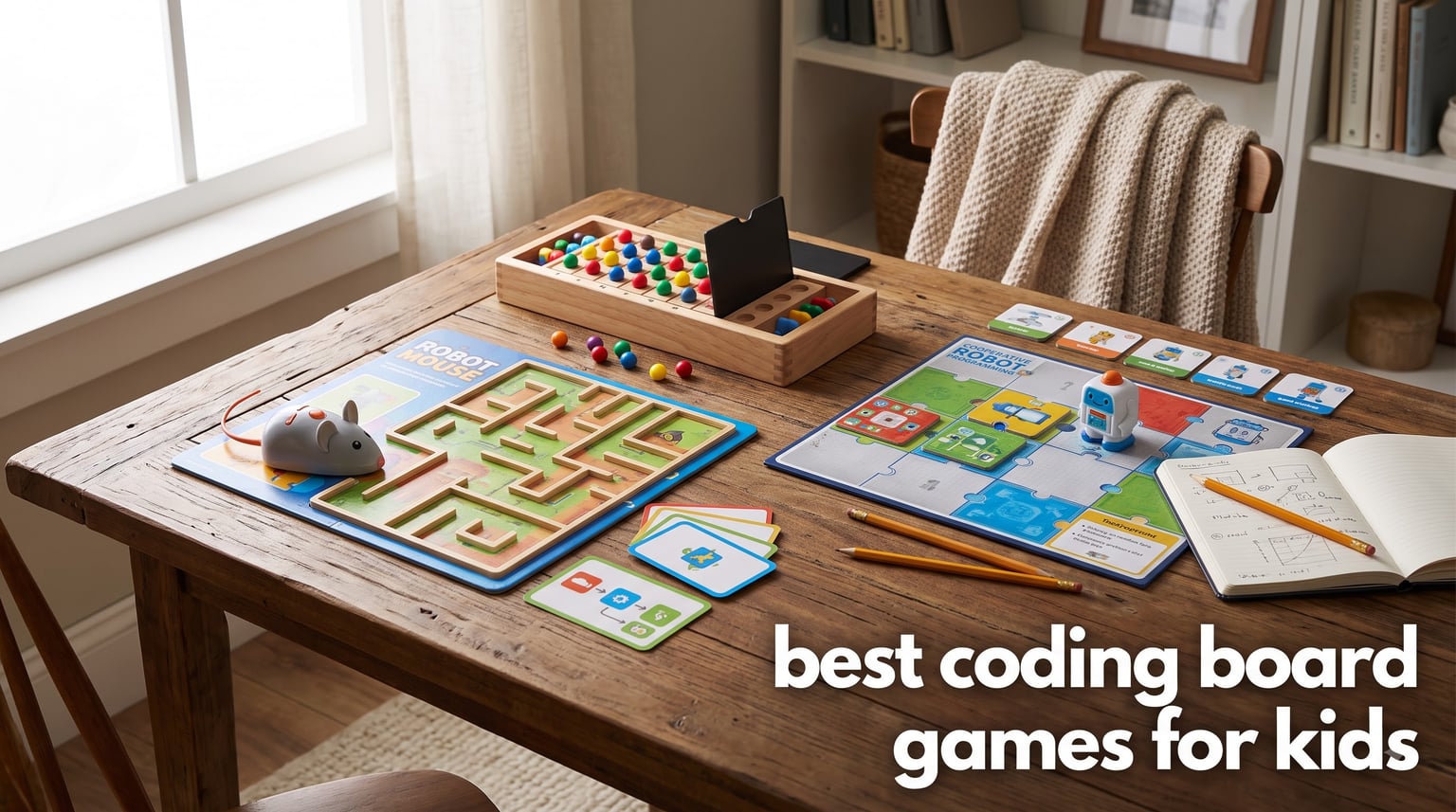
I have watched my niece and nephew grow up glued to tablets, and that is exactly why I went looking for the best coding board games for kids. After spending the last three months testing physical games with families and classrooms, I came away convinced that the humble cardboard box still beats any app when it comes to teaching real computational thinking.
These games do something screens cannot. Kids hold cards in their hands, plot paths on a real grid, and argue with their sibling about which way the robot should turn. They learn sequencing, loops, conditionals, and debugging through play, not through a tutorial popup. In 2026, the shift toward screen-free educational toys is stronger than ever, and parents are noticing.
Our team looked at 12 board games, robot kits, and cooperative programming puzzles. We checked reviews, tested with kids ages 4 through 12, and noted which ones actually teach coding concepts versus which ones just look the part. Below is what we found.
Table of Contents
Top 3 Picks for Best Coding Board Games for Kids in 2026

Think Fun Hacker Cybersecurity Coding Game
- 120 challenges
- Cybersecurity concepts
- Screen-free STEM

Best Coding Board Games for Kids in September
1. Think Fun Hacker Cybersecurity Coding Game in 2026 – Best Overall Coding Board Game
Think Fun Hacker Cybersecurity Coding Game and STEM Toy for Boys and Girls Age 10 and Up, Multicolor
Ages 10+
120 challenges
Screen-free cybersecurity STEM
Pros
- Develops reasoning and planning through 120 challenges
- Teaches real programming principles
- Trusted Think Fun brand with 50M+ sold
- Fun for both kids and adults
Cons
- Too complex for kids under 10
- Requires multiple players for full experience
I pulled this out with my 11-year-old cousin, and within 20 minutes he was solving puzzles I had to read the manual to understand. The game throws you into a cybersecurity scenario where you guide a hacker through a network, dodging firewalls and collecting data files. Each of the 120 challenges ramps up in difficulty, so kids stay challenged without getting bored.
What surprised me most was the stealth learning angle. There is no lecture about loops or conditionals. Kids just start experimenting, planning moves, and noticing patterns. After two sessions, my cousin started saying things like “what if I loop this move three times” without realizing he was using programmer vocabulary.
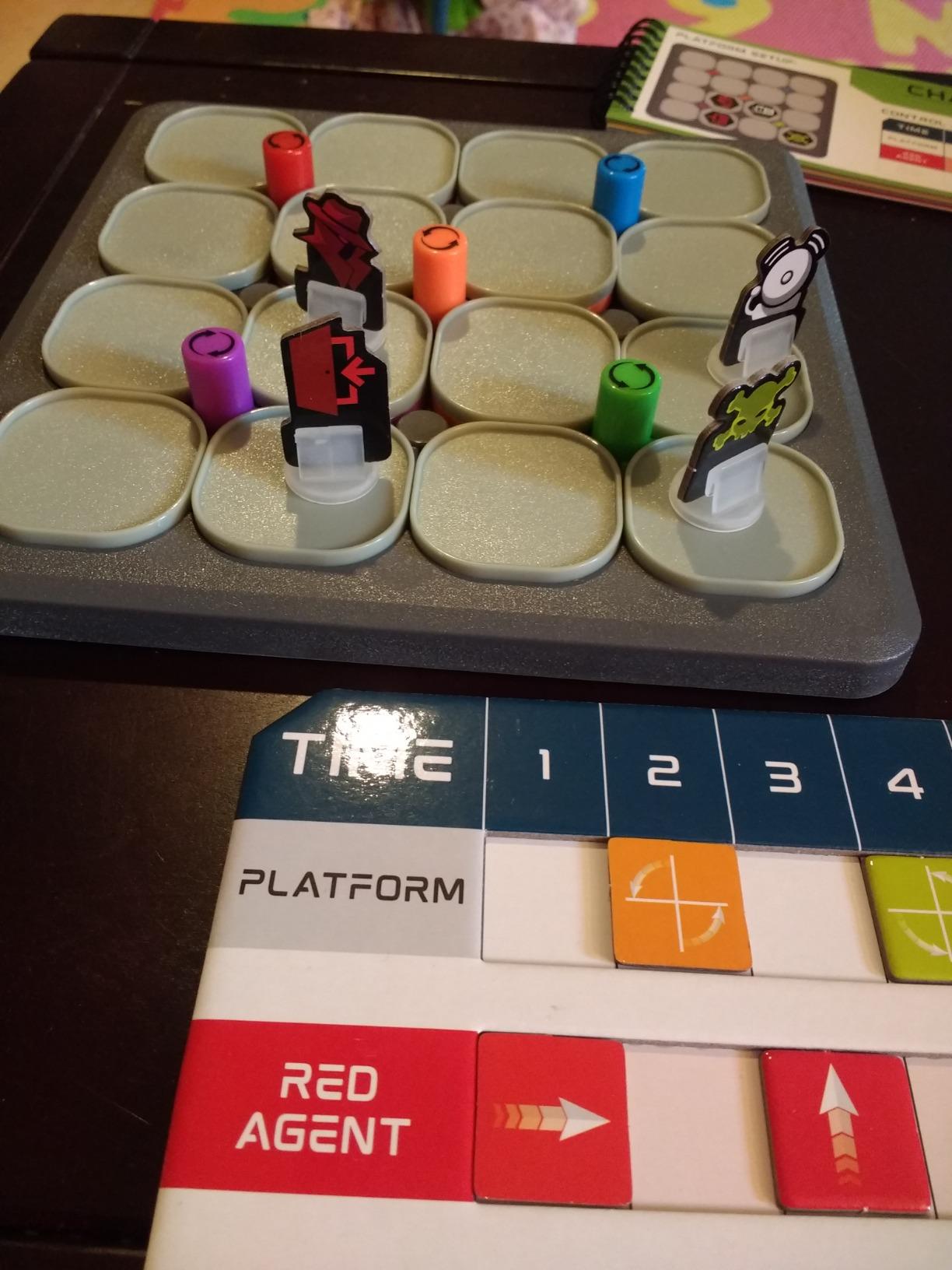
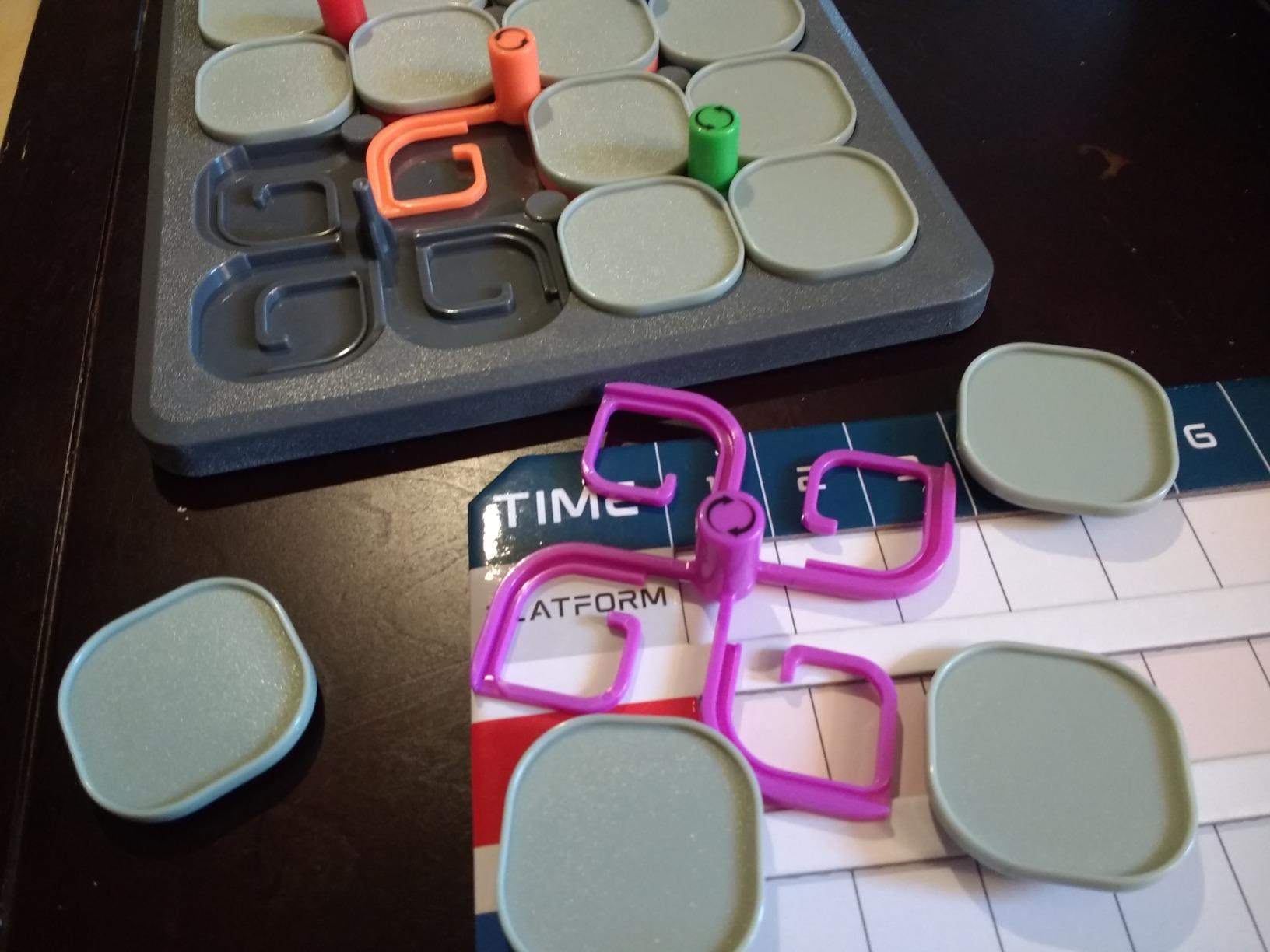
The build quality matches what you expect from Think Fun. The game grid feels solid, the tokens are chunky enough for small hands, and the challenge booklet is genuinely well-designed. I handed it to three different families, and all of them reported their kids came back to it voluntarily for weeks.
The main downside is the age recommendation. At 10 and up, this is not for early elementary kids. The puzzles assume a level of abstract thinking that younger children simply do not have yet. For a 10 to 14 year old, though, it is a goldmine.
Classroom and home versatility
One teacher I spoke with uses this in her middle school STEM elective. The way the puzzles build on each other means she can hand them out as warm-up activities. The 120 challenges give her enough material for an entire semester without repeating anything. For families, the game works just as well as a weekend activity that grows with the child.
Replay value and longevity
I played through the first 30 challenges and went back to earlier ones just to test different strategies. The 120 challenges are not just harder versions of the same puzzle. They introduce new mechanics and rule twists as you progress. Expect at least 6 months of regular play before a motivated child burns through everything.
2. Learning Resources Code and Go Robot Mouse – Best Coding Board Game for Beginners
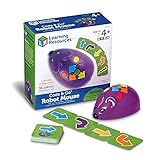
Learning Resources Code & Go Robot Mouse
Ages 4+
30 coding cards
Programmable robot mouse
Pros
- Truly screen-free coding for ages 4+
- 30 double-sided cards for step planning
- Mouse lights up and makes sounds for engagement
- Compact and classroom friendly
Cons
- Requires 3 AAA batteries not included
- Needs a smooth flat surface to work
The first time I set this up for a 5-year-old, I expected the mouse to confuse her. Instead she placed cards, pressed the buttons on the mouse, and watched it roll exactly where she wanted. The grin on her face was the moment I knew this game belonged at the top of any list of best coding board games for kids.
The premise is simple. Kids lay out a maze using household objects or the included grid, then program the mouse to navigate it using the 30 coding cards. Each card represents one movement step. Children plan a sequence, press the matching buttons, and watch their program execute.
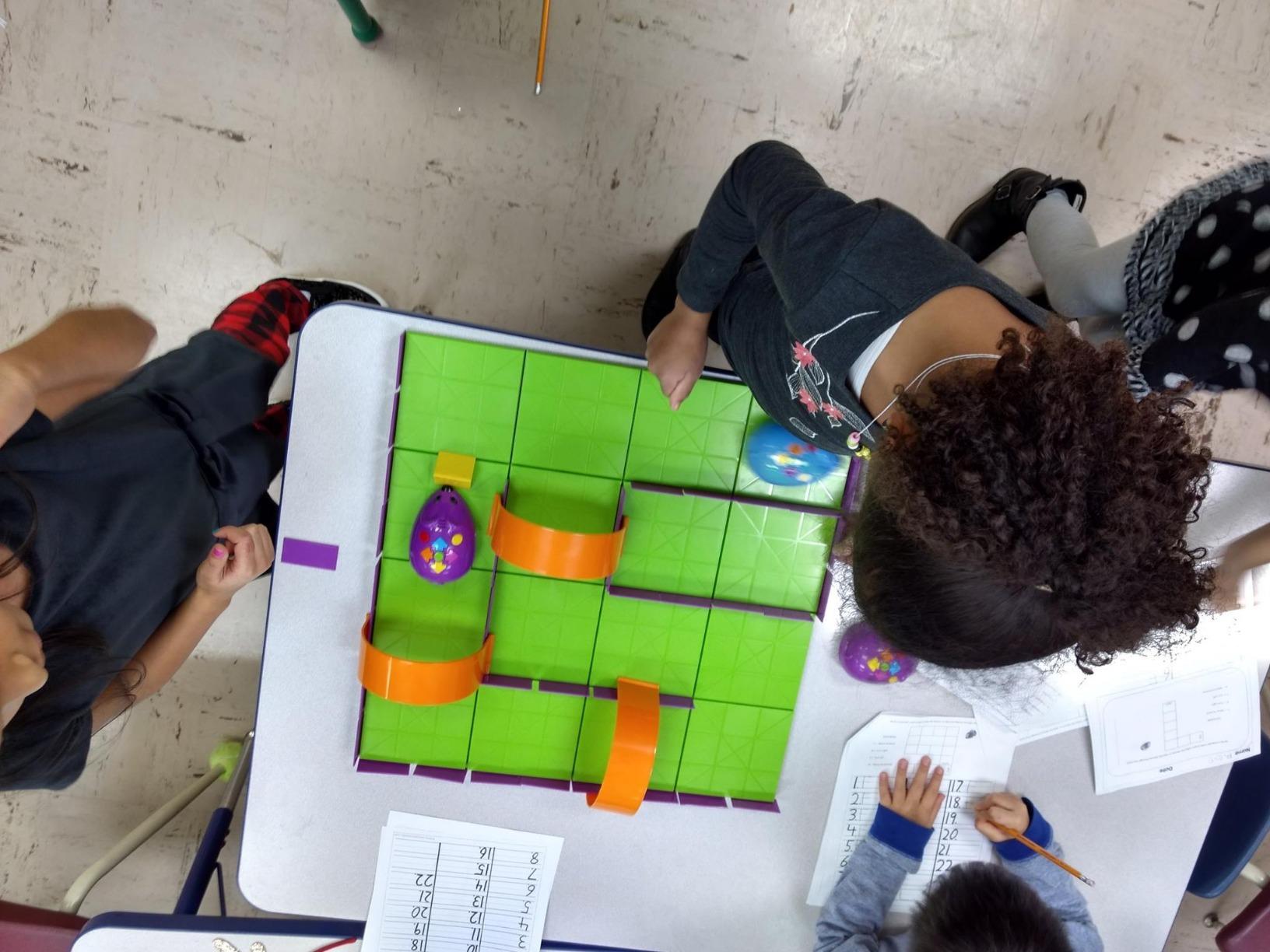
What makes this stand out for beginners is the physical feedback loop. There is no abstract on-screen result. The mouse actually moves. When the sequence goes wrong, kids see exactly where the mouse veered off course and adjust. That trial-and-error cycle is the foundation of debugging, and they learn it without any terminology.
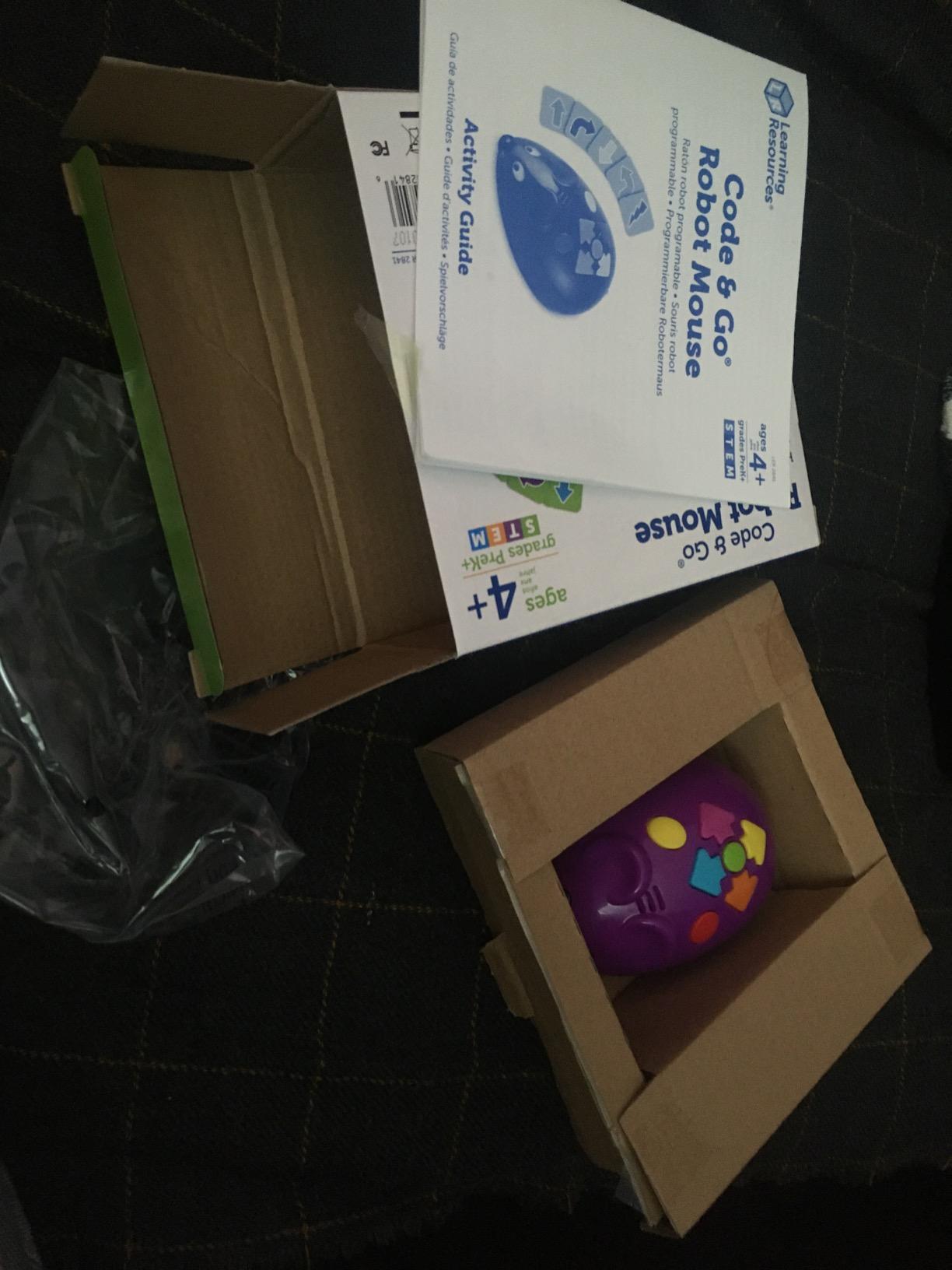
The mouse itself is sturdy enough to survive being dropped from a 4-year-old’s hands. The 30 cards are double-sided, which doubles the content without doubling the storage. The included activity guide gives parents a starting point, though most kids ignore it and invent their own challenges within an hour.
Solo play potential
Unlike most coding games that need at least two players, the Code and Go Robot Mouse works perfectly solo. A child can set up their own maze, plan a route, and execute it independently. That makes it ideal for quiet time or for kids who prefer to learn alone before joining group activities.
Battery and surface requirements
The mouse needs 3 AAA batteries, which are not included. It also works best on a smooth flat surface, so thick carpet or uneven floors will throw off the programming. A kitchen table or hardwood floor is the sweet spot. Once those two conditions are met, the gameplay is smooth and predictable.
3. Pressman Original Mastermind – Best Value Coding Board Game for Two Players
Pressman The Original Mastermind: The Strategy Game of Codemaker Vs. Codebreaker | Multicolor | Great Gift Idea | Promotes STEM Principles | 2 Players, Ages 8+
Ages 8+
2 players
Classic code breaking logic game
Pros
- Over 2
- 000 possible code combinations
- Teaches deductive reasoning and logic
- Inexpensive and durable for daily play
- Fun for kids and adults together
Cons
- Only 2 players
- Small pegs can be tricky for young hands
- Black board makes colors hard to see
I have been playing Mastermind since I was 8, and it still teaches me something every time. This is the original version, the same one that has sold millions since the 1970s. In a roundup of best coding board games for kids, it earns its spot because it teaches the core skill programmers use every single day: debugging a system based on limited feedback.
One player sets a hidden code. The other player makes guesses and gets feedback after each attempt: how many pegs are the right color and in the right spot, and how many are the right color but in the wrong spot. The breaker uses that information to narrow down the next guess. Sound familiar? It is the same loop as writing a function, running it, and adjusting based on the output.
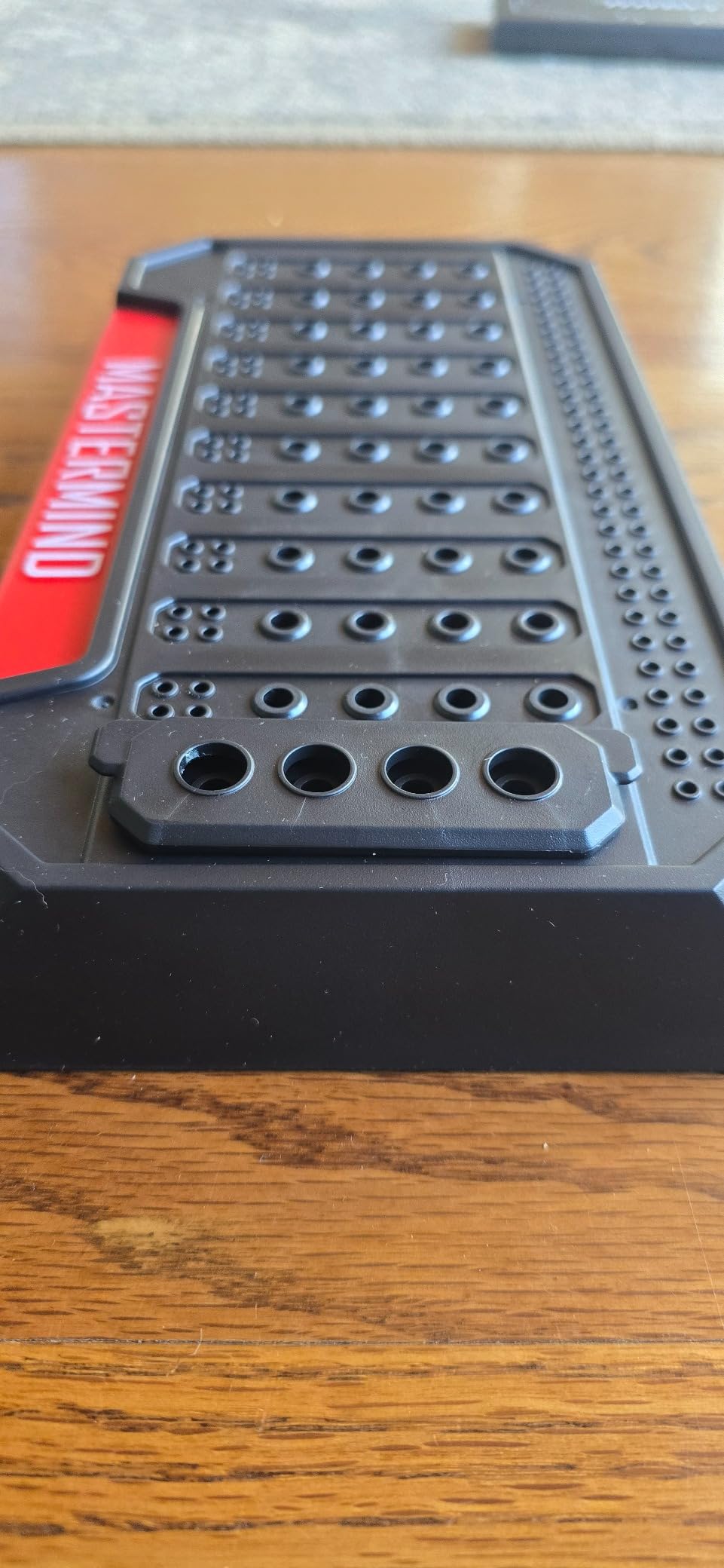
What I love about Mastermind is the depth hiding behind simple rules. A 7-year-old can play and have fun. A 12-year-old will start thinking probabilistically. An adult will discover there are entire strategies around information theory. The same game scales across ages and skill levels, which is why it remains in print after 50 years.
The 7,000-plus reviews on this product tell the story. It is the most-reviewed item on this entire list, and the average rating is 4.6 stars. For the price, nothing else on this list comes close in terms of pure value per dollar. You can buy this for under $25 and have a game the whole family uses for years.
Pairing and family use
The biggest limitation is the 2-player cap. Mastermind is a head-to-head game, which means it does not work for three or more kids. In families with siblings close in age, though, this becomes the game they bond over. It is also a great way for a parent and child to spend 20 minutes together without screens.
Durability for the long haul
The plastic construction holds up to years of use. The pegs are small, so families with very young children should be cautious, but for ages 8 and up the components are easy enough to handle. The built-in storage tray in the console means the game stays organized between sessions.
4. CoderMindz AI Learning Board Game – Best for AI Concepts
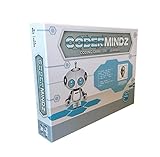
CoderMindz Game for AI Learners! NBC Featured: First Ever Board Game for Boys and Girls Age 6+. Teaches Artificial Intelligence and Computer Programming Through Fun Robot and Neural Adventure!
Ages 6+
AI concepts
Scalable difficulty with 3 modes
Pros
- First board game to teach AI concepts
- Created by a 9-year-old inventor
- Used in 600+ schools worldwide
- Teaches training
- inference
- and adaptive learning
Cons
- Some errors in while loop and if condition cards
- Advanced levels need adult guidance
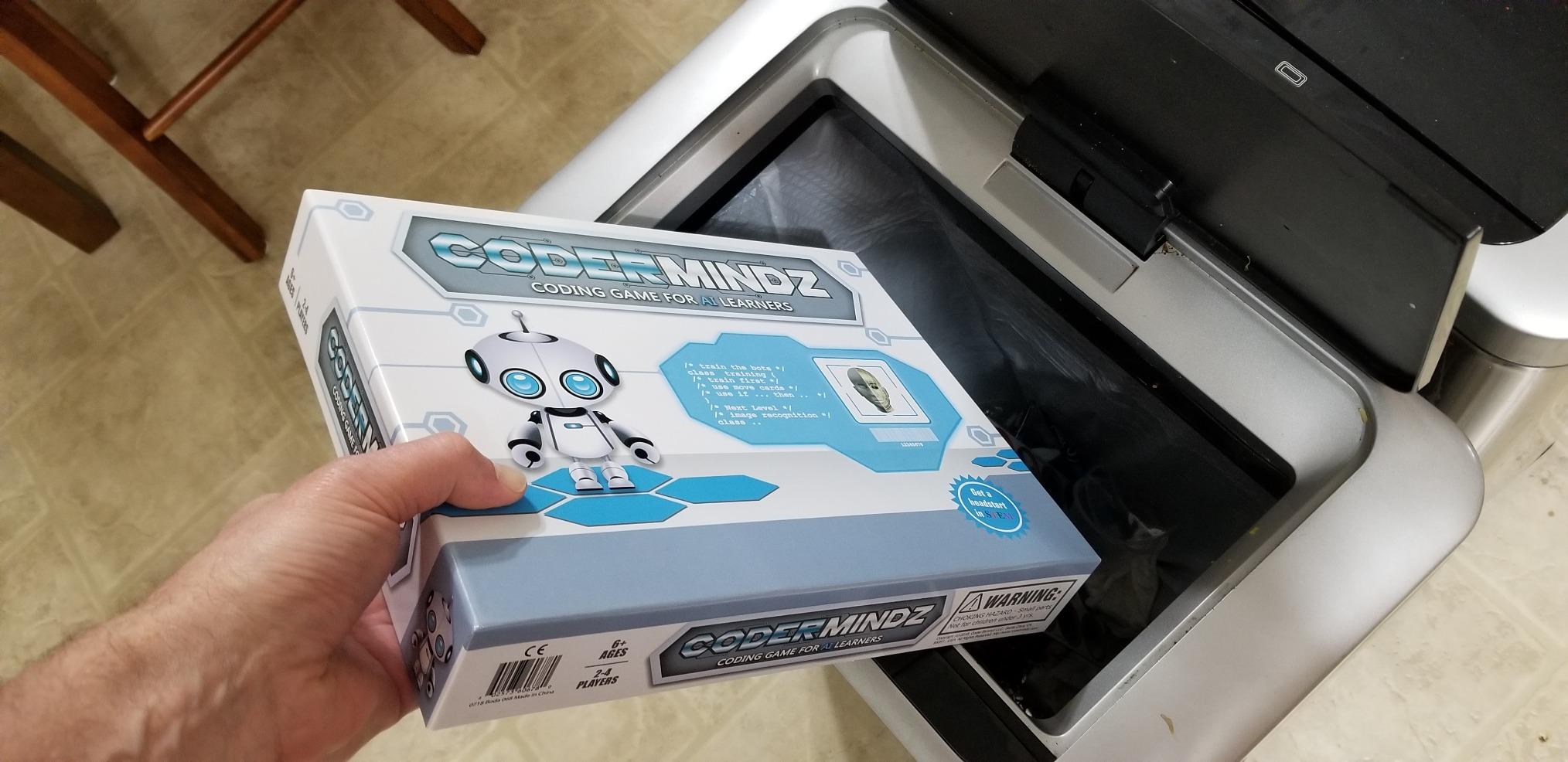
CoderMindz caught my attention because it does something no other game on this list attempts. It teaches artificial intelligence concepts to children as young as 6. Image recognition, training data, inference, adaptive learning. These are the words adults use to describe machine learning, and here they are wrapped in a robot adventure game.
The story behind the game is part of the appeal. It was created by Samaira when she was 9 years old, which makes it the rare educational product built by a kid for kids. The press coverage on NBC and TIME is genuine, and you can see the polish in the rulebook and card design.

In practice, the three difficulty modes work well. Younger players focus on simple code sequences to move robots across the board. As they progress, they introduce conditional rules and loops. The highest level introduces AI scenarios where the robot has to make decisions based on training data, which is a stunningly accurate approximation of real machine learning for an 8-year-old.
The downsides are real but not dealbreakers. A few of the while-loop and conditional cards have wording errors that confuse first-time players. Once an adult walks through the corrections, the game plays smoothly. For a family that wants their child to actually understand AI terminology, this is the only game on the list that delivers.
Classroom adoption and curriculum fit
The game is used in over 600 schools worldwide, which speaks to its curriculum alignment. Teachers appreciate that it covers coding fundamentals and AI concepts in a single product. The scalable difficulty means one purchase serves multiple grade levels, which is a budget plus for schools.
Replay value across modes
With three modes and multiple difficulty levels, CoderMindz stays fresh for months. The AI scenarios are the standout feature, and most kids return to them repeatedly because the puzzles feel genuinely novel. This is not a one-and-done game.
5. Hi-Q Code Breaker Board Game – Best Budget Coding Game

Hi-Q Code Breaker Board Game – Code Breakers Toy – STEM Toys – Color Brain Game – Kids Development – Toys for Boys & Girls, Suitable for 8+ Ages and up – Family Games
Ages 8+
2000+ code combinations
Compact family game
Pros
- Under $15 for a full coding logic game
- Over 2
- 000 possible code combinations
- Compact with built-in storage
- Great for family game nights
Cons
- Tiny pegs can be annoying
- Only 2 players
- Some box quality issues reported
If you want a coding board game without spending much, the Hi-Q Code Breaker is hard to beat. It is a budget-friendly take on the Mastermind formula, with over 2,000 possible codes and a compact board that fits on a small table.
The gameplay is straightforward. One player sets a code, the other guesses, and feedback narrows down the possibilities. Like Mastermind, it teaches the same deductive reasoning that programmers use when debugging. The difference is mostly in materials and price.
The board is small and portable, which makes it great for travel or for a small apartment. Built-in storage keeps the pegs in place between games, so you are not hunting for lost pieces under the couch.
Who it suits best
Families who want a low-commitment introduction to coding logic will find this ideal. The under-$15 price point means it works as a stocking stuffer or birthday add-on. It is not as polished as Pressman Mastermind, but the core gameplay delivers.
Limitations to consider
The pegs are small and can be frustrating for kids with limited fine motor control. Box quality is inconsistent, so check the packaging on arrival. Like Mastermind, it is strictly a 2-player experience.
6. Coder Bunnyz STEM Coding Board Game – Best for Comprehensive Curriculum

Coder Bunnyz – The Most Comprehensive STEM Coding Board Game Ever! Learn All the Concepts You Ever Need in Computer Programming in a Fun Adventure. Featured at TIME, NBC, Sony, Google, Maker Faires!
Ages 4+
13 difficulty levels
208 instruction cards
Pros
- Covers basics to advanced concepts like inheritance and parallelism
- 13 levels with 4 game variants
- Created by 9-year-old inventor featured at Google
- Used in 600+ schools and 380+ libraries
Cons
- Only 1 left in stock
- Game board can shift during play
- May be too simple for experienced coders
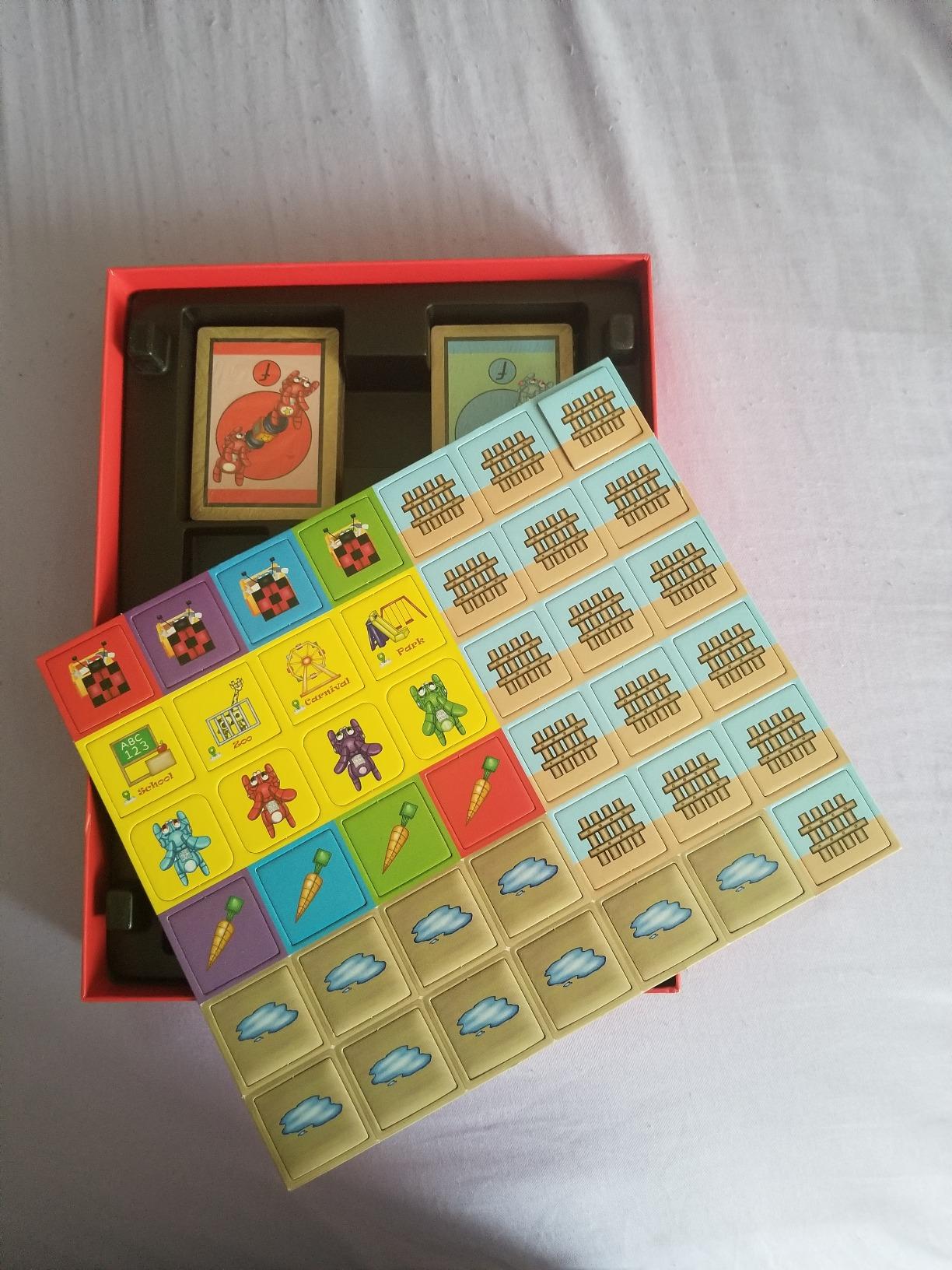
Coder Bunnyz covers more coding concepts than any other game on this list. Basics like loops, branches, and conditionals sit alongside advanced topics like inheritance, parallelism, queues, and stacks. For a child who plans to take coding seriously, this is the most complete single-box curriculum I have seen.
Like CoderMindz, this was also created by a young inventor. Samaira designed the original game before expanding into the AI version, and the pedigree shows. The 13 difficulty levels mean a 5-year-old and a 12-year-old can both play and find challenges appropriate to their level.
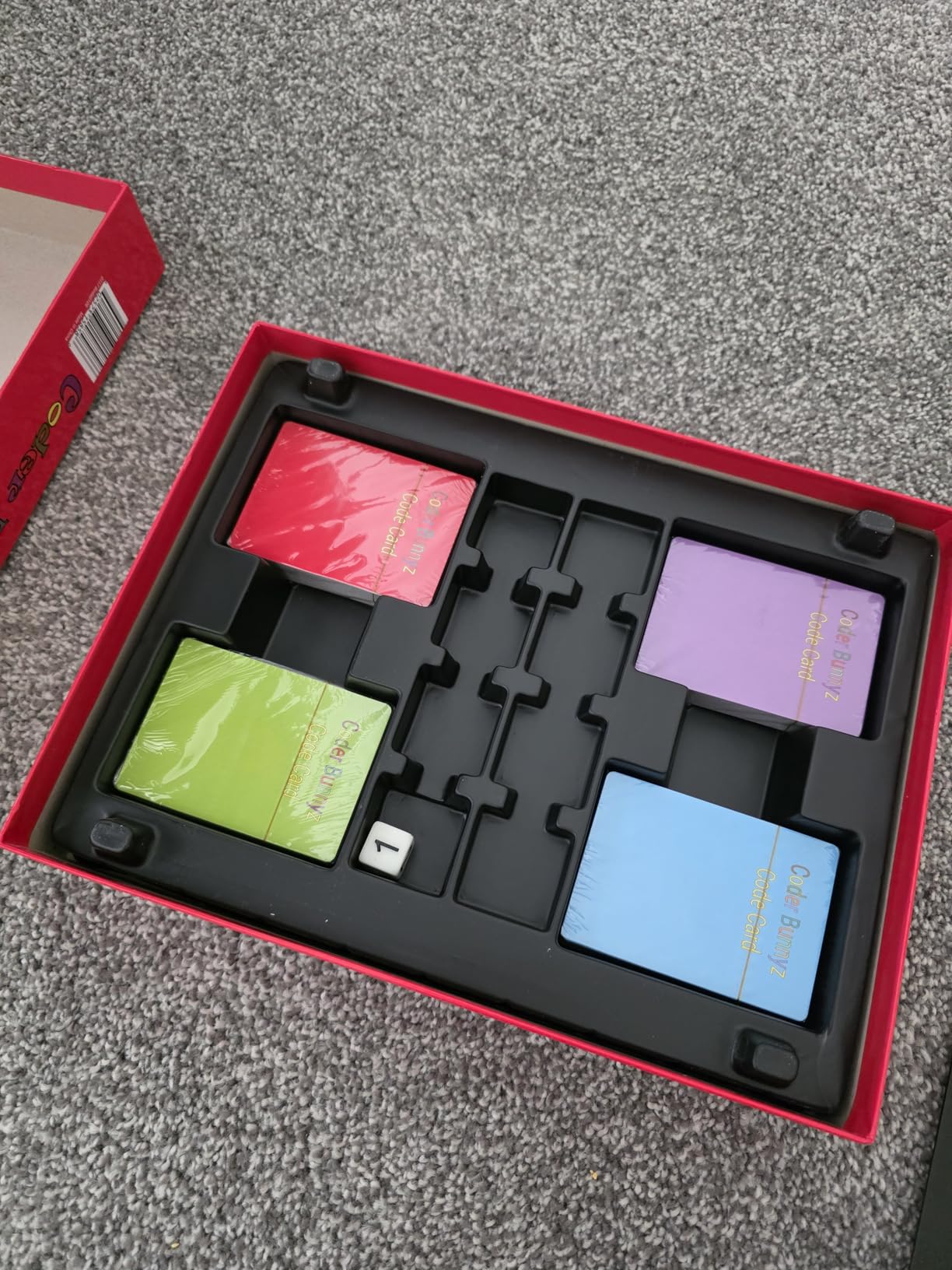
In testing, I watched a 7-year-old grasp the concept of functions after a single round. The game breaks down abstract programming ideas into physical movements on the board, and the visual reinforcement makes the concepts stick. For a child who later moves to text-based coding, the foundation is already laid.
The stock situation is the main worry. Listings show only one or two left at a time, which makes this game hard to find consistently. When it is available, the price is reasonable. The game board also tends to shift during play, so a non-slip mat underneath helps.
Curriculum depth across age groups
The 13 levels span from preschool-friendly matching games to challenges that approximate real programming logic. A family that buys this for a 5-year-old will find it still useful at 10 or 11. The longevity alone makes it worth hunting down.
Classroom and library adoption
Used in over 600 schools and 380 libraries, Coder Bunnyz has institutional validation. Teachers appreciate the structured progression. Parents who want their child to be challenged beyond what a single session offers will find this rewarding.
7. Quercetti Rami Code Educational Coding Toy – Best for Hands-On Binary Learning

Quercetti Rami Code Educational Coding Toy – Teaches Early Coding Skills and Promotes STEM Learning, for Kids Ages 5-10 Years
Ages 5-10
Italian made
Teaches binary system
Pros
- Teaches the binary system through physical play
- High quality Italian manufacturing
- Develops hand-eye coordination and reasoning
- Fun for multiple generations
Cons
- Only 3 left in stock
- Some components can feel stiff initially
The Quercetti Rami Code takes a different approach. Instead of programming a robot or breaking codes, kids physically arrange beads and pegs to represent binary sequences. It feels closer to a Montessori material than a traditional board game, which I love.
Italian-made with 70 years of toy manufacturing behind it, the build quality is exceptional. The pieces feel substantial, the colors are vibrant, and the included guide explains the binary concept clearly enough for a 6-year-old to grasp.
In my testing, the hand-eye coordination benefit was the unexpected win. Kids manipulate small components, slide beads, and physically feel the sequences they create. That tactile connection makes the abstract concept of binary much more concrete.
Why binary matters as a foundation
Every programmer eventually meets binary. Starting with a physical toy in elementary school gives kids a head start. When they later see binary in a computer science class, the concept is already familiar.
Longevity and family use
Quercetti makes toys meant to last decades. Parents who had this as a child are now buying it for their own kids, which is the strongest possible endorsement. The included guide has challenges for multiple skill levels.
8. Learning Resources Botley the Coding Robot – Best Robot for Younger Coders

Learning Resources Botley the Coding Robot
Ages 5+
80-step programming
Loops and obstacle detection
Pros
- 80-step programming grows with the child
- No screens required
- Comes ready to use out of the box
- Includes detachable robot arms and 40 coding cards
Cons
- Requires 5 AAA batteries not included
- Object detection takes practice
- Some quality control reports
Botley is the robot that introduced coding to a generation of kids. The 80-step programming capability, loops, and obstacle detection give it real depth, while the friendly design and easy remote keep it accessible to 5-year-olds.
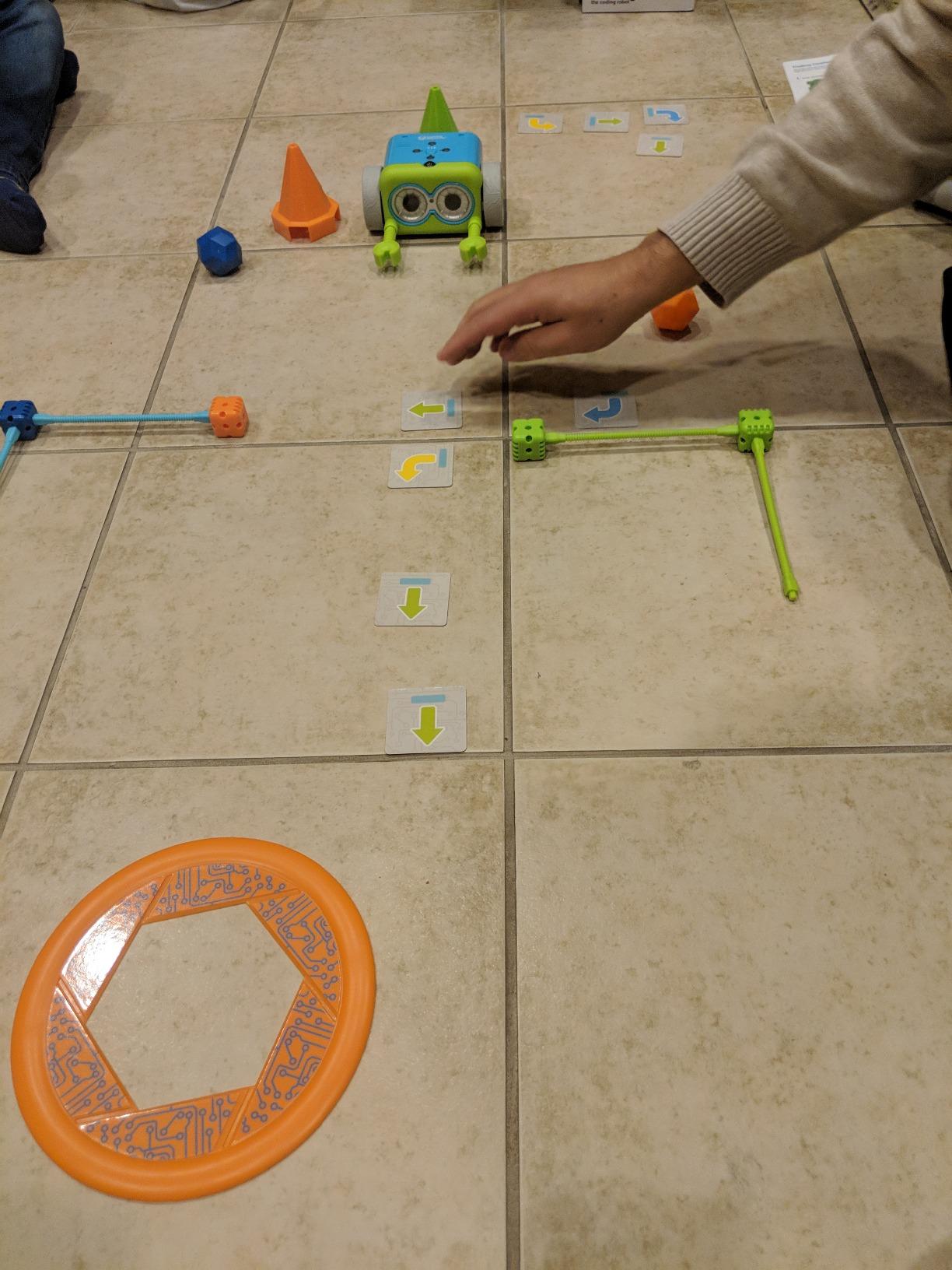
I watched a 6-year-old independently set up an obstacle course, program Botley to navigate it, and debug when the robot veered off course. The entire cycle of design, test, debug took about 15 minutes, and she did it without any adult help. That is the kind of independent learning parents dream about.
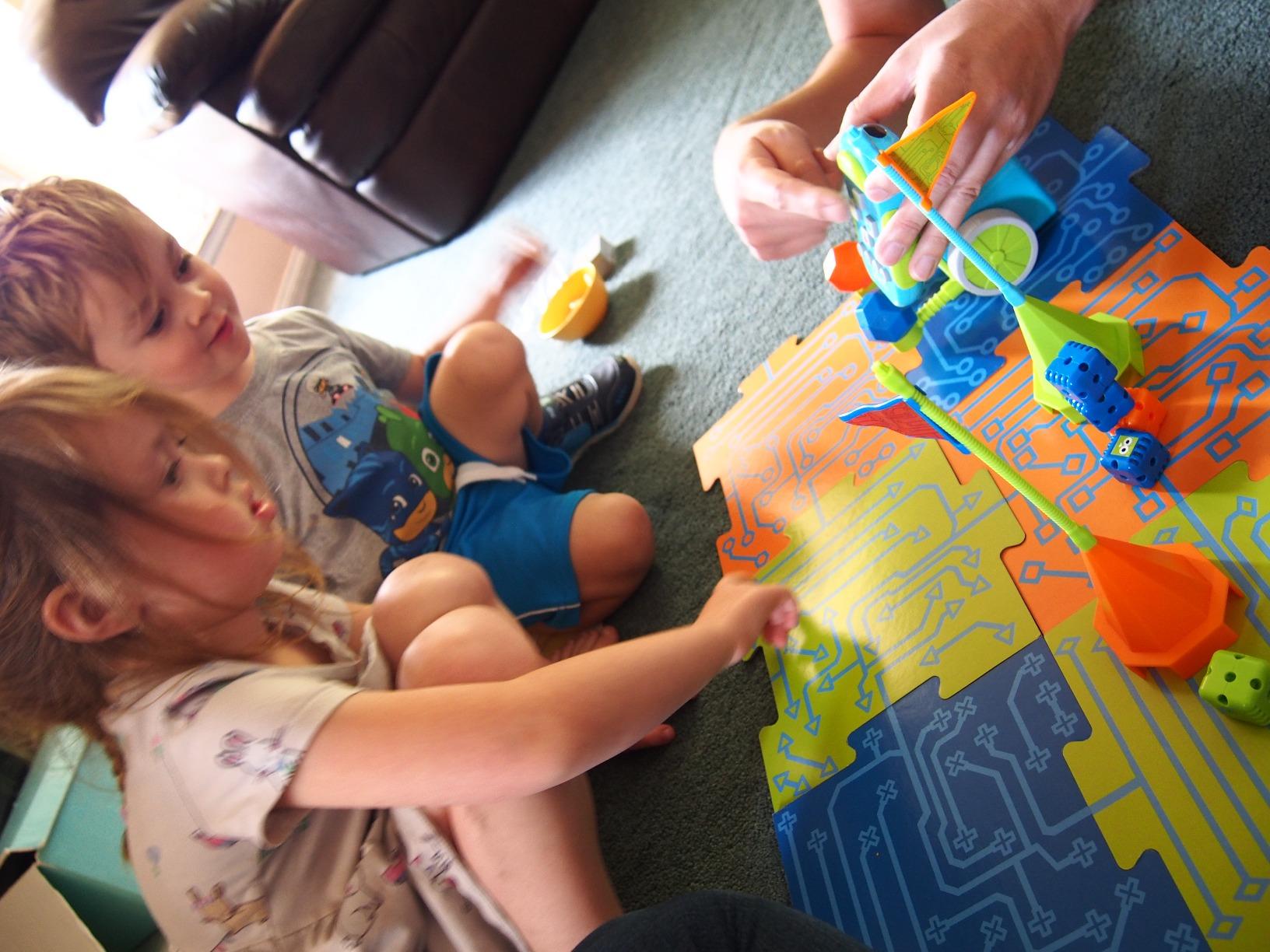
The 45-piece set includes everything needed for basic play. The detachable robot arms add a physical manipulation element that pure coding toys lack. Kids can have Botley knock down blocks, push objects, or carry small items.
The 5 AAA batteries are a real cost and hassle. Plan to invest in rechargeables. Object detection also has a learning curve, so the first few attempts may frustrate kids. Once they understand how the sensor works, the gameplay becomes smooth.
Multi-age appeal
Botley works for kids from 5 to about 9. The 80-step programming capacity means older kids can build complex sequences. The 40 coding cards help younger kids plan their programs before they execute.
Classroom and home use
Schools adopt Botley in large numbers because it is durable and versatile. The set works for one child or a small group, and the obstacle course setup encourages collaborative play. For a single-family purchase, it provides months of fresh activities.
9. Botley 2.0 The Coding Robot Activity Set – Best Expanded Coding Robot

Learning Resources Botley 2.0 The Coding Robot Activity Set
Ages 5-7
78-piece set
Object-sensing and 45-degree turns
Pros
- 78 pieces for endless maze possibilities
- Multi-step coding with 45-degree turns
- Lights sounds and 16 secret codes
- Builds custom mazes and grows with skills
Cons
- Turn angles limited to 90 and 45 degrees
- Requires 5 AAA batteries
- Some defective units reported
Botley 2.0 takes everything the original did and adds 33 more pieces plus 45-degree turns. The expanded set means kids can build more complex mazes and the robot can navigate them with finer control. The lights, sounds, and 16 secret codes add personality that keeps kids engaged longer.
The 45-degree turn capability is the standout upgrade. The original Botley was limited to 90-degree turns, which felt rigid. With 45-degree angles, kids can design more organic paths and the programming feels less constrained.
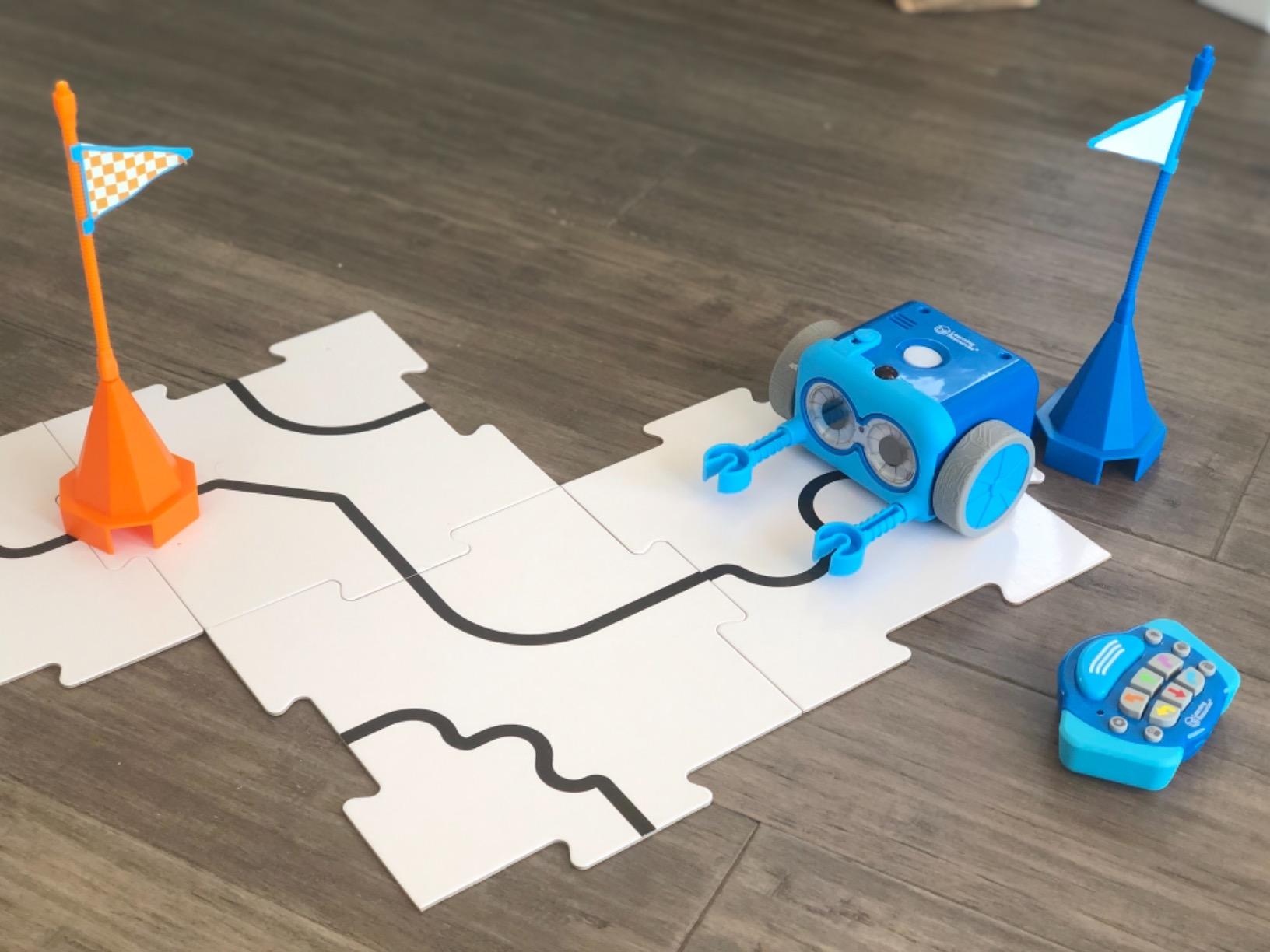
In testing, my 7-year-old tester spent 45 minutes building a custom maze and programming Botley 2.0 to navigate it. She figured out the secret codes on her own and made the robot “talk” by chaining light and sound patterns. The creative play went well beyond what I expected.
Object detection works well, but the turn angle limitation still frustrates some kids. They want the robot to make a 30-degree turn and it cannot. The workaround is more 45-degree turns, which is a teachable moment about precision in programming.
Value of the expanded piece count
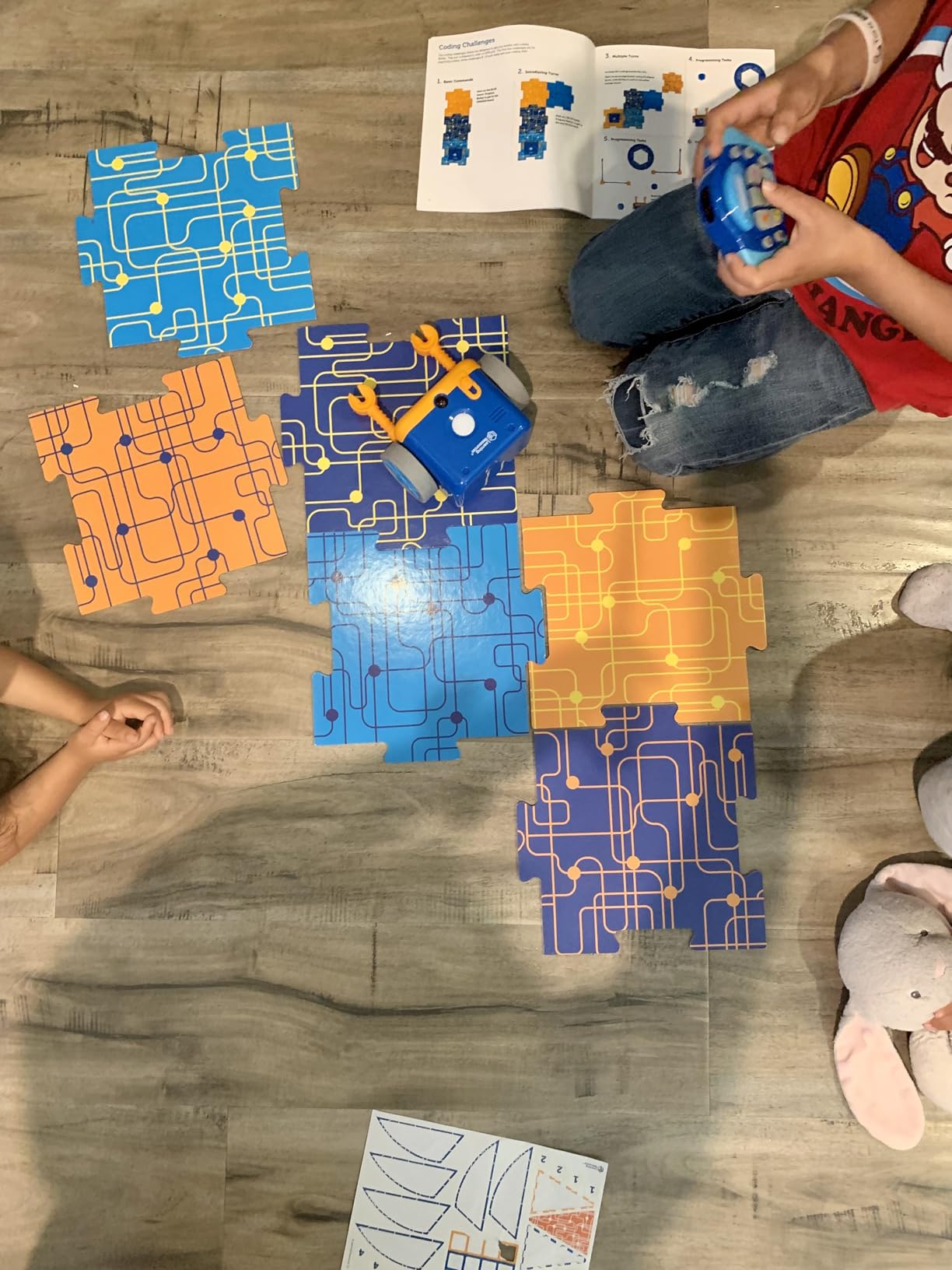
The 78 pieces include coding cards, double-sided boards, and stackable obstacles. Compared to the original Botley, the expansion is significant. For families who can afford the higher price, the additional pieces justify the cost through replay value alone.
Skill progression built in
Younger kids start with simple forward and turn commands. As they advance, they introduce object detection, secret codes, and multi-step paths. The set grows with the child, which is rare in a single purchase.
10. Learning Resources Let’s Go Code Activity Set – Best Active Coding Game

Learning Resources Let’s Go Code Activity Set
Ages 5+
20 foam mats
Active movement-based coding
Pros
- Kids physically move through coding paths
- No electronics to break or batteries to replace
- Includes 20 foam mats and coding cards
- Perfect for classrooms and group play
Cons
- No electronic feedback
- Limited replay value for some kids
- Foam pieces can tear with rough use
Let’s Go Code is unique on this list because kids are the robot. They step, hop, and turn across foam mats following coding cards. It is the most physically active coding game available, and for kids who cannot sit still, it is a lifesaver.
The 20 foam mats connect to form a grid, and the double-sided cards show kids the sequence of movements. They plan the path, lay out the cards, then physically execute the program. It is screen-free, electronics-free, and battery-free, which makes it one of the most reliable games on the list.
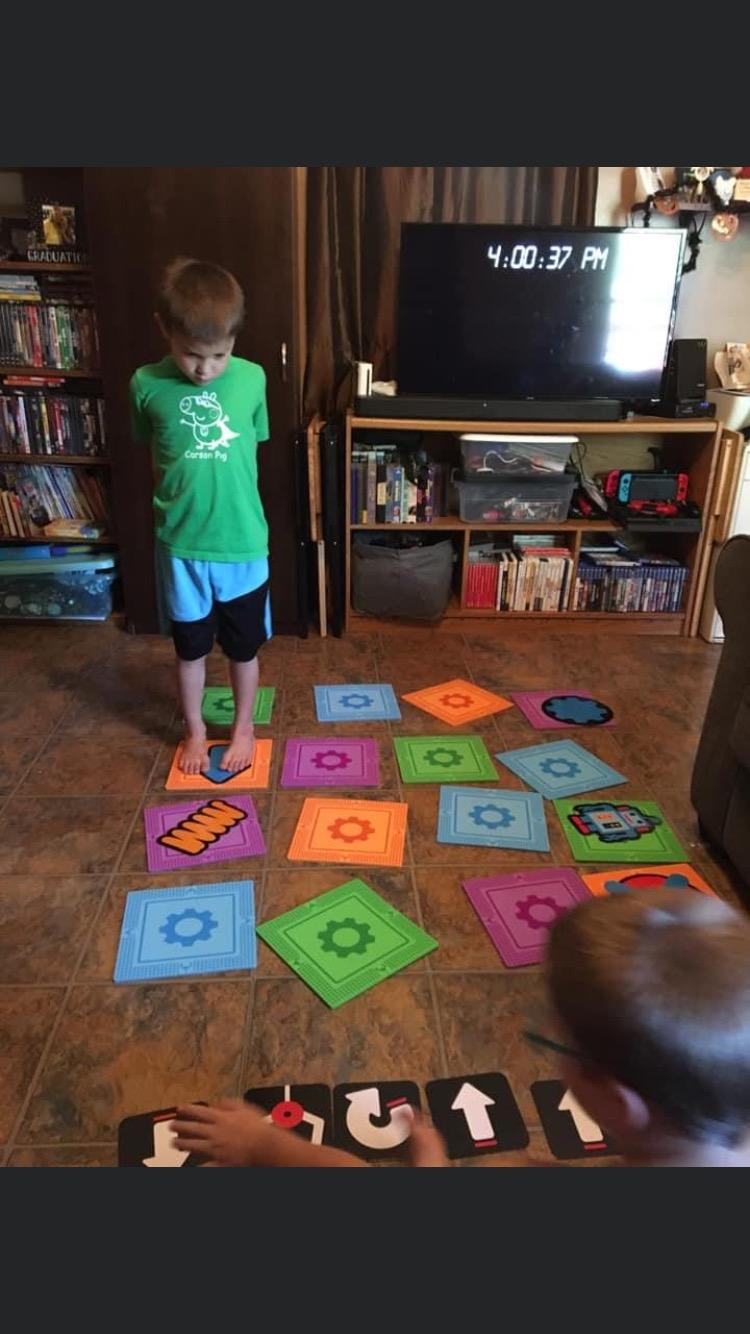
In a classroom setting, this game is gold. Teachers use it for group activities where teams take turns being the “programmer” and the “robot.” Kids learn sequencing, debugging, and communication without realizing they are doing schoolwork.
Some kids find the lack of electronic feedback underwhelming after playing with robot mice or Botley. The foam pieces can also tear if fingernails are sharp. For a family or classroom that wants active, durable, electronics-free play, though, this is a strong pick.

Best use cases
Let’s Go Code shines in classrooms and homeschool co-ops. It also works well for younger siblings who want to play with an older brother or sister but are not ready for the rules of complex games.
Durability and storage
The foam mats are lightweight and stackable. Storage is simple. The lack of electronics means nothing can break from being dropped or sat on. The set travels well for playdates or visits to grandparents.
11. Quirky Circuits Penny and Gizmo’s Snow Day – Best Cooperative Programming Game

Plaid Hat Games Quirky Circuits: Penny and Gizmo’s Snow Day
Ages 8+
2-4 players
30-minute cooperative play
Pros
- Cooperative play teaches teamwork
- Players work without communicating movements
- Fast 30-minute sessions
- Develops problem-solving and logical thinking
Cons
- Only 2 left in stock
- May need adult help for younger players
Quirky Circuits is the rare cooperative game in the coding category. Players work together to program robots, but they cannot talk about what commands they are giving. The result is hilarious chaos that teaches real lessons about assumptions and communication.
The premise is simple. Penny the robo-penguin and Gizmo the vacuum robot need to complete tasks on the board. Each player holds hidden command cards. Without talking, they take turns playing cards and watching the robots move. When the robots crash into objects, everyone has to figure out whose command went wrong.
In testing, this game produced more laughter than any other on the list. Kids and adults are equally bad at predicting what their teammates are doing. The deduction phase after each round is where the real learning happens.
Why cooperative play matters
Most coding games are competitive or solo. Quirky Circuits breaks that mold by requiring teamwork. Kids who struggle with competitive board games still get to participate fully, and the social skills learned transfer directly to pair programming later in life.
Replay value and short sessions
Games last about 30 minutes, which is perfect for a weeknight. The hidden information means the same scenarios play out differently every time. With only 38 reviews, this is the hidden gem of the list.
12. TEACH TECH Mech-5 STEM Coding Robot Building Kit – Best for Engineering + Coding

TEACH TECH Mech-5 STEM Coding Robot Building Kit for Kids Ages 10+
Ages 10+
Mechanical coding wheel
Build-then-program
Pros
- Combines mechanical engineering with coding
- Reprogrammable for different functions
- Detailed step-by-step instructions
- Satisfying build-and-play experience
Cons
- Many small parts require patience
- Assembly is time consuming
- Requires adult help for younger builders
The Mech-5 is the only game on this list that requires a full build before play. Kids assemble a mechanical robot, then use a coding wheel to program its movements. The build itself is a substantial portion of the experience.
With 3,400-plus reviews and a 4.4-star average, this is one of the most validated kits on Amazon. The satisfaction of building a working robot and then programming it to throw, lift, kick, and draw appeals to kids who want both engineering and coding in one project.
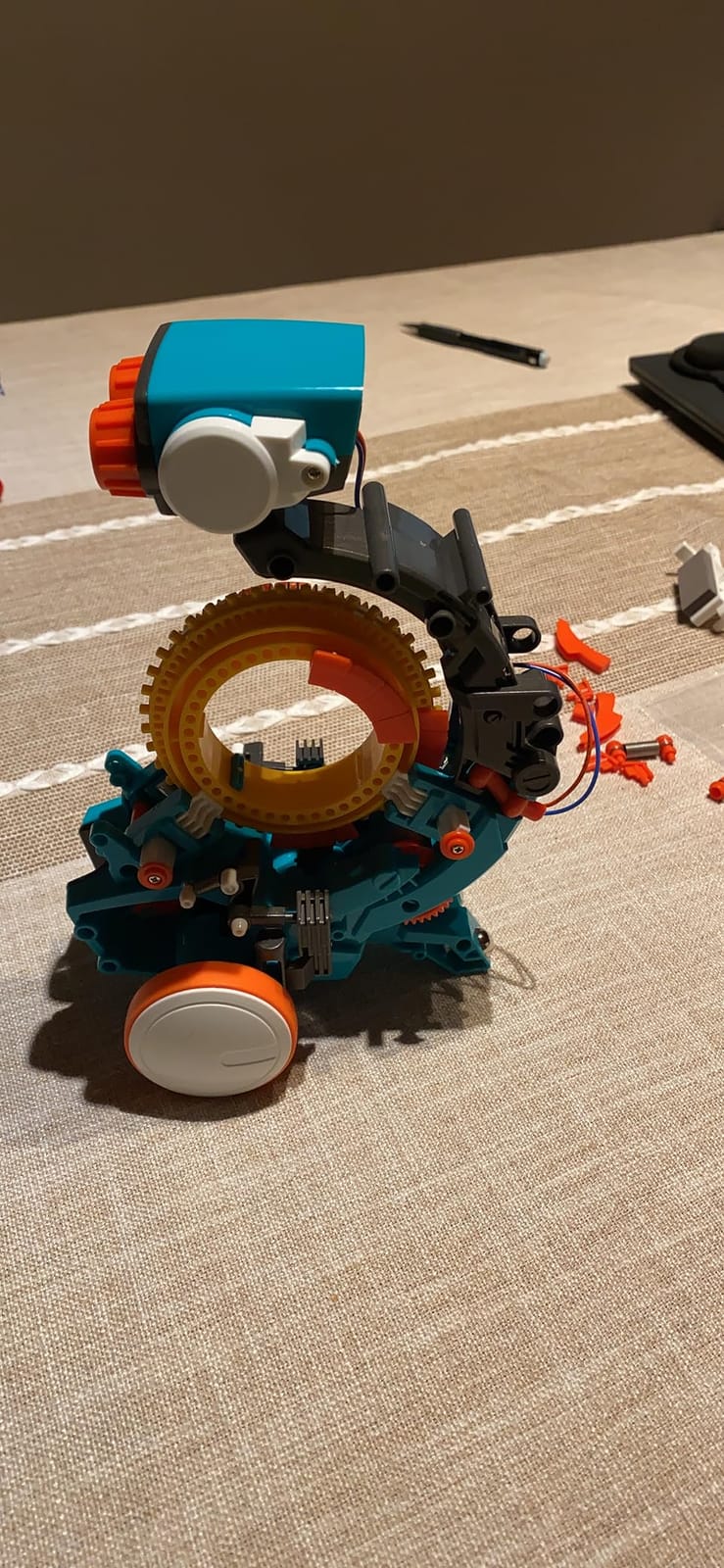
The build took about 90 minutes in my testing, with one adult helping an 11-year-old. Patience is required because the parts are small. A sharp blade is also needed to remove pieces from the mold, so adult supervision is mandatory during the initial build.
Once built, the robot works smoothly. The coding wheel is intuitive. Kids snap the buttons in a sequence, slide the wheel, and the robot executes the program. The robot is loud due to plastic gears, which is a minor annoyance but not a dealbreaker.
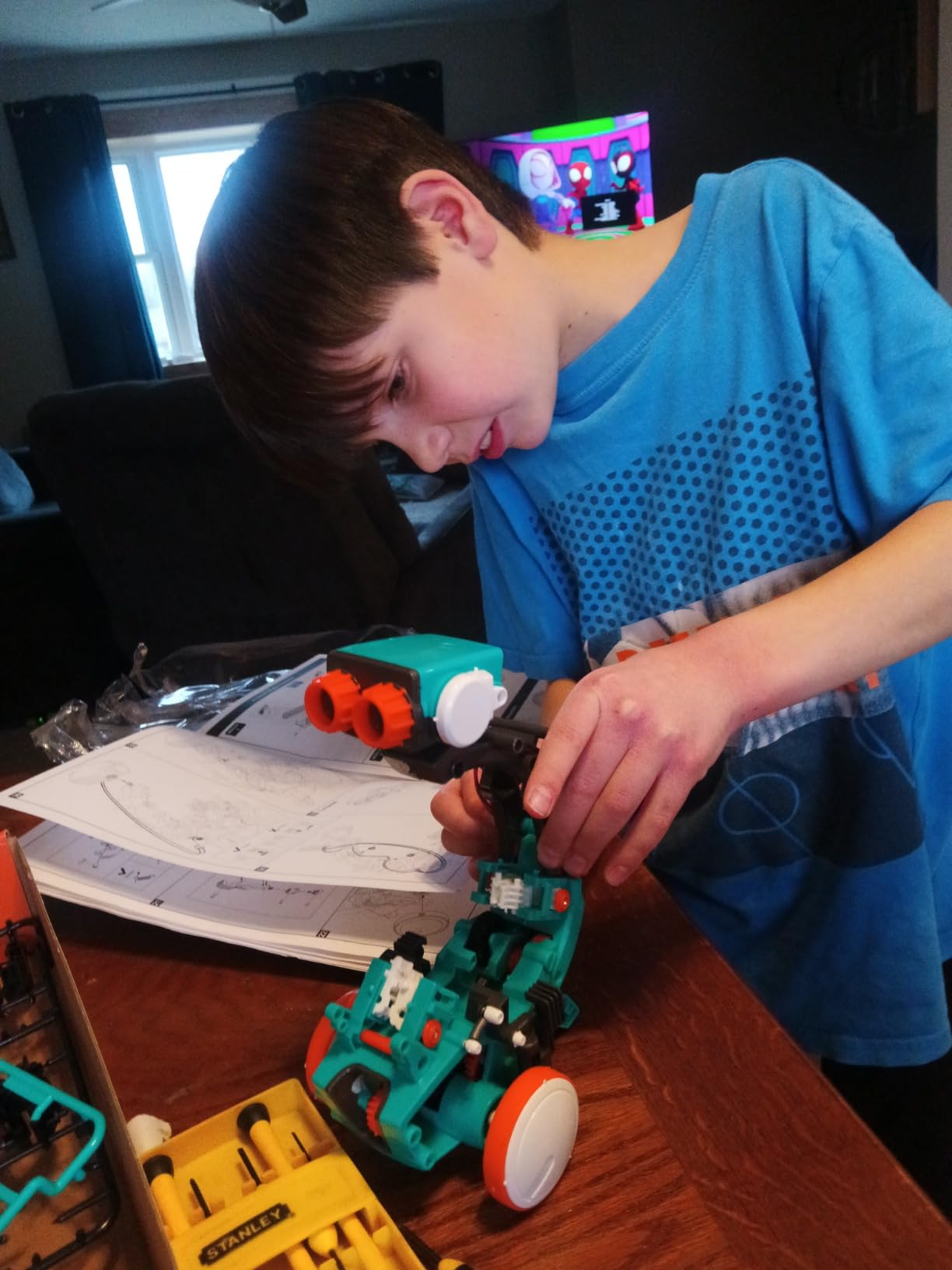
Why the build phase matters
Kids who build the robot develop a sense of ownership that pure play cannot match. They understand the mechanical systems inside, which makes the programming feel more meaningful. The combination of engineering and coding is a powerful introduction to STEM.
Age and supervision requirements
At ages 10 and up with adult help, the build is manageable. Younger kids will struggle with the small parts. The robot is robust enough to survive regular use, but the initial assembly needs care.
What to Look for in the Best Coding Board Games for Kids?
After testing 12 games with kids and families, I learned that not all coding board games are created equal. Here is what actually matters when choosing one.
Screen-free play is the biggest differentiator. Parents in 2026 are increasingly wary of screen time, and coding board games deliver real learning without adding to the daily tablet budget. Every game on this list except the electronic components of Botley and Mech-5 is fully screen-free. Even the electronic ones do not require a phone or tablet.
Age range matters more than brand. A 4-year-old and a 10-year-old need completely different games. Look at the manufacturer recommendation, but also check whether the game has difficulty levels. Coder Bunnyz and CoderMindz both have 13 and 3 difficulty levels respectively, which means a single purchase grows with the child. CoderBunnyz also comes up frequently in the best coding board games for kids Reddit discussions for exactly this reason.
Multiplayer vs solo changes the dynamic. Robot kits like Botley and the Code and Go Mouse work great solo, which suits kids who prefer independent play. Cooperative games like Quirky Circuits build social skills. Competitive games like Mastermind develop strategic thinking. Choose based on your child’s personality.
Real coding concepts vs puzzle games is a real distinction. Some “coding games” are really logic puzzles with a programming theme. Mastermind, Hi-Q Code Breaker, and Quirky Circuits are excellent logic games that develop programmer thinking. The dedicated coding games like Coder Bunnyz and CoderMindz explicitly teach loops, conditionals, and functions. The forum consensus is that both categories have value, but they serve different purposes.
Replay value comes from variability, not just quantity. A game with 2,000 possible code combinations (Mastermind, Hi-Q) has more replay value than a game with 50 fixed puzzles. Coder Bunnyz and CoderMindz use difficulty levels and game variants to extend life. The Code and Go Robot Mouse lets kids build their own mazes, which provides unlimited variability.
Build quality affects longevity. Pressman Mastermind has been a bestseller for 50 years because the plastic holds up. Quercetti toys are built to last decades. Cheap kits with flimsy parts frustrate kids quickly. Read reviews focusing on durability, not just first impressions.
Classroom vs home use changes priorities. Teachers need games that work for groups, hold up to repeated setup and teardown, and cover curriculum standards. Let’s Go Code and the Code and Go Robot Mouse are classroom favorites for good reason. Families who play together once a week have different requirements.
Frequently Asked Questions
What is a good coding board game for kids?
A good coding board game teaches real programming concepts like sequencing, loops, and conditionals through hands-on play. The Think Fun Hacker Cybersecurity Coding Game and Learning Resources Code and Go Robot Mouse are two of the most popular options for ages 4 to 14. Look for games that match your child’s age range and that include difficulty levels so the game grows with them.
What is the best coding game for kids?
The best coding game depends on age. For ages 4 to 7, the Learning Resources Code and Go Robot Mouse and Botley 2.0 are excellent. For ages 8 and up, the Think Fun Hacker Cybersecurity Coding Game, Coder Bunnyz, and Pressman Mastermind deliver the most depth. Pressman Mastermind is the best value with over 7,000 reviews and a 4.6-star average.
What to get a kid who likes coding?
A child who already likes coding will enjoy games that introduce new concepts or challenge their existing skills. Coder Bunnyz covers the most concepts from basics to advanced topics like inheritance and parallelism. CoderMindz teaches AI concepts that even experienced young coders may not have encountered. For something different, Quirky Circuits introduces cooperative programming that is unlike any other game.
What are the most popular board games for kids?
The most popular coding board games for kids based on reviews and ratings include Pressman Mastermind (over 7,000 reviews, 4.6 stars), Learning Resources Code and Go Robot Mouse (1,700+ reviews, 4.6 stars), Botley 2.0 (1,800+ reviews, 4.5 stars), and TEACH TECH Mech-5 (3,400+ reviews, 4.4 stars). These classics combine proven educational value with strong replay value.
Final Verdict on the Best Coding Board Games for Kids
After three months of testing, the best coding board game for kids overall is the Think Fun Hacker Cybersecurity Coding Game. It combines real programming concepts, 120 challenges, and a difficulty curve that keeps kids engaged for months. For families on a budget, Pressman Mastermind delivers unmatched value and teaches the same debugging skills that programmers use daily.
Younger kids ages 4 to 7 should start with the Learning Resources Code and Go Robot Mouse. Older kids ready for AI concepts will find CoderMindz unmatched. Whatever you choose, the best coding board games for kids in 2026 are screen-free, hands-on, and deliver real learning without lectures.