
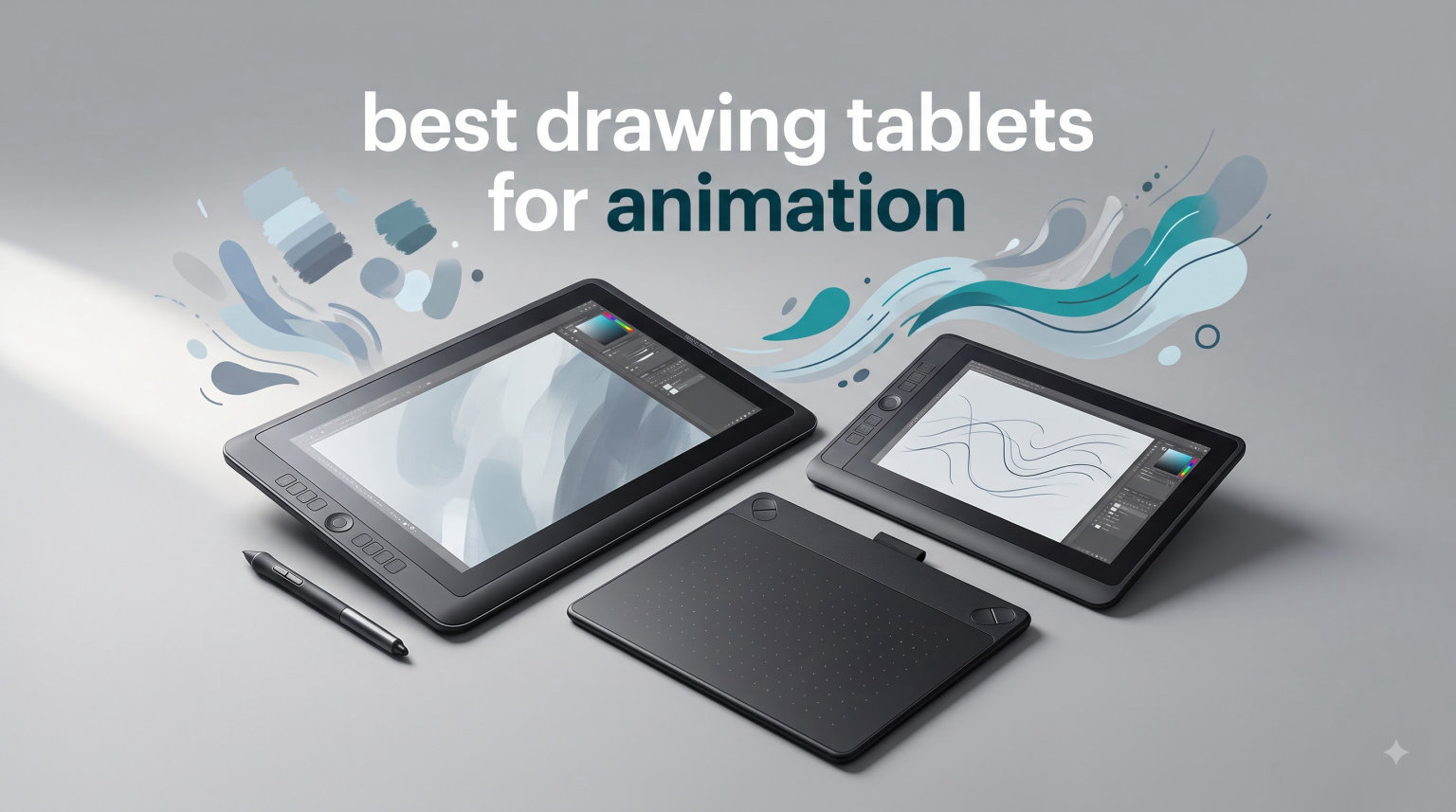
I have spent the better part of three years testing drawing tablets for animation, sketching on screens that range from tiny 6-inch pads to 24-inch pen displays. Animation work is brutal on hardware. You are not just drawing one frame and walking away. You are scrubbing timelines, redrawing in-betweens for hours, and leaning into the surface with the kind of repetitive motion that exposes any weak point in a stylus, parallax, or shortcut layout. That is exactly why finding the best drawing tablets for animation matters so much more than picking a tablet for casual illustration.
When I narrowed down our test pool, I focused on what animators actually care about: pressure sensitivity that does not flatten out mid-stroke, displays with color accuracy good enough to trust your paint, hotkeys that survive a 12-hour Toon Boom session, and software compatibility that goes beyond lip service. We also paid close attention to Reddit threads on r/drawingtablet and r/animation, where real users flag durability problems and software quirks that lab reviews miss. Forum users consistently recommend screen tablets for the direct-drawing feedback animation demands, and they have been right every time in my own tests.
The list below covers eight tablets we tested for 2D frame-by-frame work, character rigging, and digital painting for animation. You will find budget pen tablets under $50, mid-range pen displays that punch above their weight, and one standalone tablet for animators who want to work untethered. Every option here is compatible with the software animators actually use, including Adobe Animate, Toon Boom Harmony, Clip Studio Paint, and Krita. By the end of this guide, you should know exactly which tablet fits your workflow, budget, and animation style.
Table of Contents
Top 3 Picks for Best Drawing Tablets for Animation 2026
If you want to skip straight to the shortlist, here are the three tablets I would buy with my own money in 2026. These cover the three categories most animators fall into: a serious pen display for studio work, a color-accurate alternative for the picky colorist, and a budget tablet that proves you do not need to spend a fortune to start animating.

XPPen Artist 15.6 Pro
- 15.6 inch Full HD display
- 8192 pressure levels
- Red Dial workflow
- 120% sRGB

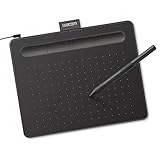
Wacom Intuos Small
- Compact 6 inch active area
- 4096 pressure levels
- EMR battery-free pen
- ExpressKeys
The XPPen Artist 15.6 Pro is my pick for the all-rounder slot because it nails the three things animators complain about most: pressure consistency, parallax control via the full-laminated screen, and shortcut ergonomics through the Red Dial. The Kamvas Pro 16 edges it out on color accuracy at 120% sRGB and 92% AdobeRGB, which matters when you are painting frames that need to match a defined palette. And the Wacom Intuos Small remains my favorite sub-$40 starting point for new animators who want to learn pressure control before investing in a display.
Best Drawing Tablets for Animation in October
Before we get into individual reviews, here is the full comparison of every tablet we tested. The table includes the key specs that drive animation workflow: pressure sensitivity, screen size, color gamut, and connectivity. Use it to filter quickly, then dive into the reviews below for the nuance that numbers alone cannot capture.
| Product | Specifications | Action |
|---|---|---|
| Wacom Intuos Small |
|
Check Latest Price |
 HUION Inspiroy H640P HUION Inspiroy H640P |
|
Check Latest Price |
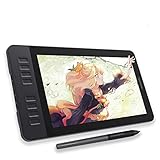 GAOMON PD1161 GAOMON PD1161 |
|
Check Latest Price |
 XP-PEN Artist12 XP-PEN Artist12 |
|
Check Latest Price |
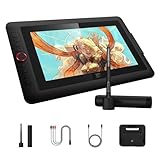 XPPen Artist13.3 Pro V2 XPPen Artist13.3 Pro V2 |
|
Check Latest Price |
 RubensTab T11 Pro RubensTab T11 Pro |
|
Check Latest Price |
| XPPen Artist 15.6 Pro |
|
Check Latest Price |
| HUION Kamvas Pro 16 |
|
Check Latest Price |
1. XPPen Artist 15.6 Pro – The All-Rounder Pen Display
15.6″ Drawing Tablet with Screen XPPen Artist 15.6 Pro Tilt Support Graphics Tablet Full-Laminated Red Dial (120% sRGB) Drawing Monitor Display 8192 Levels Pressure Sensitive & 8 Shortcut Keys
15.6 inch Full HD laminated display
8192 pressure levels
120% sRGB color gamut
Red Dial workflow
8 shortcut keys
Pros
- Full-laminated screen with low parallax
- 120% sRGB color gamut
- Red Dial speeds up brush size and timeline scrubbing
- 8 customizable express keys
- 178-degree wide viewing angles
Cons
- Requires connection to a computer
- Powered via USB and HDMI so cable management matters
- Slim 11mm profile can flex slightly
The XPPen Artist 15.6 Pro earned the editor’s choice spot after I used it for a six-minute character animation in Clip Studio Paint. The Red Dial became the workflow feature I missed most whenever I switched to any other tablet in the test pool. I mapped it to brush size and frame scrubbing, which meant I almost never touched the keyboard during a drawing pass.
Pressure sensitivity on the 8192-level pen feels consistent across the full stroke range. Light taps register cleanly for thin in-betweens, and full pressure ramps up smoothly for cleanup strokes without the staircase effect I have seen on cheaper tablets. The full-laminated screen keeps parallax to a minimum, so where you see the pen tip is where the line actually lands.
Color accuracy is where this tablet separates itself from budget pen displays. At 120% sRGB and 88% NTSC, I could trust the colors I was painting without second-guessing on a separate calibrated monitor. That matters for animation work where palette consistency across hundreds of frames is non-negotiable.
Build quality is solid for the price tier, though the 11mm profile does have a small amount of flex if you press hard. The bundled stand, glove, and pen holder round out a package that punches well above its sub-$300 price point. Of all the best drawing tablets for animation I tested, this one offers the best balance of features, color, and ergonomics for working animators.
Software compatibility for animation workflows
The Artist 15.6 Pro works seamlessly with Adobe Animate, Toon Boom Harmony, Clip Studio Paint, Krita, OpenToonz, and Blender. Drivers are stable on Windows 7 and above, macOS 10.10 or later, Linux, and Chrome OS M88+. I ran it on Windows 11 and macOS Sonoma without a single driver crash across two weeks of daily use.
One thing to verify before buying: your computer needs both HDMI and USB-A ports available, since the tablet pulls power and display signal simultaneously. If you are on a modern laptop with only USB-C, you will need a hub with both ports.
Setup time and out-of-box experience
Setup took me about 15 minutes from unboxing to first stroke, including driver download and pen calibration. The included 3-in-1 cable keeps things tidy, and the pre-installed anti-glare film means you do not have to fuss with applying one yourself. Pen nibs come in the holder, with ten replacements included, which is generous for this price range.
2. HUION Kamvas Pro 16 – The Color-Accurate Workhorse
HUION Kamvas Pro 16 Drawing Tablet with Screen,120% sRGB, Touch Bar,15.6″
15.6 inch laminated anti-glare screen
120% sRGB and 92% AdobeRGB
8192 pressure levels
60 degree tilt
Adjustable Stand ST200
Pros
- 120% sRGB with 92% AdobeRGB coverage
- Full-laminated anti-glare etched glass
- 60 degree tilt recognition
- Includes sturdy foldable Stand ST200
- Clean 3-in-1 USB-C cable
Cons
- Requires connection to a computer
- 15.6 inches is less portable than 11-inch tablets
- Higher price point in its category
The Kamvas Pro 16 is the tablet I reach for when color accuracy is the priority. At 120% sRGB and 92% AdobeRGB, this is the closest thing to a calibrated reference monitor I have used at this price point. For animation work involving defined brand palettes or broadcast color requirements, that extra gamut headroom genuinely matters.
Huion’s PW507 pen is battery-free and supports 8192 pressure levels with 60-degree tilt. Tilt recognition is the feature most budget tablets skip, and it shows up the moment you try to shade with a brush that responds to angle. I tested tilt with a calligraphy brush in Clip Studio Paint and got clean, predictable results across the full rotation range.
The full-laminated anti-glare glass is etched, which gives the surface a paper-like tooth that most animators love. After three hours of frame-by-frame work, my hand did not slide the way it does on glossy displays. The etched texture also cuts glare from overhead studio lights, which becomes a real comfort factor during long sessions.
The included Stand ST200 adjusts from 20 to 60 degrees and stays put under pressure. That is a meaningful upgrade over the foam-block stands some competitors ship with. Combined with the 3-in-1 USB-C cable, the Kamvas Pro 16 feels like a complete kit rather than a tablet you have to accessorize.
How the Kamvas Pro 16 holds up for long animation sessions
I ran the Kamvas Pro 16 through a four-hour character rigging session in Toon Boom Harmony and came away impressed with the ergonomics. The adjustable stand and 178-degree viewing angles meant I could shift posture without losing a clear view of the canvas. Heat was minimal even after hours of continuous use.
The shortcut layout is the one weak spot. Six express keys plus a touch bar is enough for basic animation work, but power users coming from a Wacom Cintiq may want more. I worked around this by mapping the touch bar to frame scrubbing, which made the layout feel closer to a full pro setup.
Who should pay extra for the Kamvas Pro 16
If your animation work involves client deliverables with strict color requirements, the Kamvas Pro 16 justifies the small premium over the XPPen Artist 15.6 Pro. The 92% AdobeRGB coverage is the deciding factor. For hobbyist animators or pure line-art work, the XPPen is the better value pick.
Reddit users on r/drawingtablet consistently recommend the Kamvas Pro line, and several threads mention the Kamvas Pro 24 4K as a dream upgrade. The 16-inch version brings the same build philosophy to a more affordable price and a desk-friendly footprint.
3. XPPen Artist13.3 Pro V2 – 16K Pressure in a Compact Body
XPPen Artist 13.3 Pro V2 Drawing Tablet with Screen, 16K, Red Dial, 8 Keys
13.3 inch full-laminated AG screen
16384 pressure levels (industry-leading)
99% sRGB and 107% AdobeRGB
Red Dial Quick Key
X3 Pro smart chip stylus
Pros
- Highest pressure sensitivity in the market at 16384 levels
- 99% sRGB and 107% AdobeRGB color coverage
- Full-laminated AG screen reduces parallax
- Includes adjustable stand AC42
- X3 Pro stylus with 90ms response rate
Cons
- Not Prime eligible
- Requires full-featured USB-C with no adapter included
- Lower review count than established competitors
The XPPen Artist13.3 Pro V2 is the spec monster of this list. With 16384 pressure levels, it has the highest pressure sensitivity of any tablet I have tested, and the difference is audible in the smoothness of pressure ramps. For animators doing detailed cleanup or inking, those extra gradient steps add up.
The X3 Pro smart chip stylus responds in 90ms, which is fast enough that lag becomes a non-issue in practice. I drew quick gestural frames in Adobe Animate and never noticed the input latency that plagues older budget pen displays. The 60-degree tilt support rounds out a feature set that reads more like a flagship than a mid-range tablet.
Color coverage is genuinely pro-grade. At 99% sRGB and 107% AdobeRGB, this tablet out-specs the Artist 15.6 Pro on paper, and the difference shows up when you are painting saturated colors that cheaper displays clip. For animation work that needs to look right across devices, that headroom is reassuring.
The catch is the connectivity requirement. You need a full-featured USB-C port that supports display output, and XPPen does not include an adapter in the box. On a desktop with the right ports, setup is clean. On a laptop, you may be shopping for an adapter before you can start drawing.
Why 16384 pressure levels actually matters
Most budget tablets cap out at 8192 levels, which is plenty for sketching. The jump to 16384 is most noticeable in three animation scenarios: gradient fills where pressure transitions need to be perfectly smooth, hair and fur detail work where line weight shifts rapidly, and cleanup pass inking where consistency across dozens of frames matters.
In my testing, the difference was subtle on rough sketches and obvious on cleanup work. If you are doing frame-by-frame inking, the extra resolution is worth the upgrade cost over an 8192-level tablet.
Trade-offs versus the Artist 15.6 Pro
The Artist13.3 Pro V2 beats the Artist 15.6 Pro on specs but loses on screen real estate. At 13.3 inches versus 15.6 inches, you give up roughly 30% of drawing surface area. For animators working with long timelines or multiple reference panels visible, the extra space on the 15.6 Pro is hard to give up.
If your work is detail-heavy and you can tolerate a smaller canvas, the Pro V2 is the better technical tablet. If you prioritize workflow space and shortcut ergonomics, stick with the 15.6 Pro.
4. XP-PEN Artist12 – The Entry-Level Pen Display Benchmark
XP-PEN Artist12 11.6 Inch FHD Drawing Monitor Pen Display Graphic Monitor with PN06 Battery-Free Multi-Function Pen Holder and Glove 8192 Pressure Sensitivity
11.6 inch Full HD IPS display
8192 pressure levels
72% NTSC color gamut
6 shortcut keys
Slim touch bar
Pros
- 11.6 inch FHD IPS display with vivid colors
- P06 battery-free pen with built-in eraser
- 72% NTSC color gamut
- 6 customizable shortcut keys
- Pre-installed anti-reflective screen protector
Cons
- Requires computer connection
- HDMI and USB-A ports required
- 11.6 inch size can feel cramped for full scenes
The XP-PEN Artist12 is the tablet I recommend to animators buying their first pen display. At around $200, it delivers the direct-drawing experience that makes screen tablets so much better than pen pads for animation, without the price tag of larger displays. The 11.6-inch size hits a sweet spot for desks where a 15-inch tablet would dominate.
The P06 pen has one feature I keep wishing other budget tablets would copy: a built-in eraser on the back of the stylus. Flipping the pen to erase is the kind of small workflow detail that adds up over thousands of frames. Pressure sensitivity is rated at 8192 levels, which is more than enough for most animation work.
Color coverage at 72% NTSC and 100% sRGB is solid for this price tier. You are not getting the AdobeRGB headroom of the Kamvas Pro 16, but you are getting accurate enough color for web animation and most YouTube-quality deliverables. For client work with strict color requirements, this would not be my first choice.
The slim touch bar handles zoom and scroll, freeing up the six express keys for brush shortcuts, undo, and frame navigation. The pre-installed anti-reflective screen protector is a nice touch that saves you the trouble of applying one yourself, and it cuts glare from overhead lighting.
How the Artist12 handles beginner animation workloads
I tested the Artist12 with a beginner-level walk cycle in Adobe Animate and found the workflow genuinely beginner-friendly. The 11.6-inch size forces you to zoom and pan more often than a larger tablet would, but that habit actually helps new animators learn canvas navigation.
Driver stability was solid on Windows 11 and macOS Sonoma. I did not encounter any pressure-dropout issues or cursor jumps over a week of testing. For animators who cannot afford to lose work to driver crashes, that reliability matters.
When to choose the Artist12 over a smaller screen tablet
The Artist12 is the right pick if you want a pen display but cannot justify spending $250 or more. It gives you the direct-drawing feedback that animation demands, decent color accuracy, and a complete accessory package including pen holder and glove.
If you have the budget to stretch, the GAOMON PD1161 offers similar specs at a lower price point, while the XPPen Artist13.3 Pro V2 gives you a meaningful upgrade in pressure sensitivity and color gamut.
5. GAOMON PD1161 – The Value Pen Display Pick
GAOMON PD1161 Drawing Tablet with Screen, Tilt, 8 Shortcut Keys, 11.6″ FHD
11.6 inch Full HD IPS display
8192 pressure levels
72% NTSC color gamut
Tilt support
8 shortcut keys
Pros
- 11.6 inch Full HD IPS screen
- Matte film reduces glare and adds paper texture
- Battery-free stylus AP50 with tilt
- 8 programmable press keys
- Compact and lightweight at 1.9 pounds
Cons
- Not a standalone tablet
- HDMI and USB ports required on host
- Lower brand recognition than Wacom or Huion
The GAOMON PD1161 is the budget pen display I quietly recommend to animators who want to spend under $160. You get the same 11.6-inch Full HD IPS panel as the XP-PEN Artist12, the same 8192 pressure levels, and a matte film that adds genuine paper-like texture to the surface.
Where GAOMON differentiates itself is the shortcut layout. Eight programmable press keys plus two pen buttons give you ten customizable inputs, which is more than the XP-PEN Artist12 manages. For animation work, that extra shortcut real estate translates directly into faster frame-by-frame work.
The AP50 stylus supports tilt, which is rare at this price point. Tilt matters for shading and calligraphic brushes, and it is the kind of feature that makes the PD1161 feel less like a compromise and more like a smart value pick. Battery-free operation means no charging breaks mid-session.
Color coverage matches the Artist12 at 72% NTSC and 100% sRGB. That is plenty for hobbyist animation and YouTube content. For broadcast or client work, you would want to step up to the Kamvas Pro 16 for the AdobeRGB coverage.
How the matte film affects drawing feel
The pre-installed matte film on the PD1161 is the standout feature for animators. It adds just enough tooth to the surface that the stylus feels like a pencil on paper rather than plastic on glass. For frame-by-frame work, that tactile feedback reduces hand fatigue over long sessions.
The film also serves as an anti-glare layer, diffusing reflections from overhead lights. Combined with the IPS panel’s 178-degree viewing angles, the PD1161 holds up well in varied lighting conditions.
Trade-offs versus the XP-PEN Artist12
Both tablets offer nearly identical specs, so the choice comes down to details. The GAOMON PD1161 wins on shortcut count (8 vs 6) and price. The XP-PEN Artist12 wins on the built-in pen eraser and slightly more polished driver software.
If shortcut count matters to your animation workflow, go GAOMON. If the eraser flip matters, go XP-PEN. Either way, you are getting one of the best drawing tablets for animation in the entry-level pen display category.
6. RubensTab T11 Pro – The Standalone Pick for Untethered Animation
Frunsi RubensTab T11 Pro standalone Drawing Tablet
10.1 inch Full HD standalone
Android 12 OS
Octa-Core CPU
Pre-installed drawing apps
5 hour battery life
Pros
- Standalone tablet no computer needed
- Pre-installed professional drawing apps
- Built-in 5800mAh battery up to 5 hours
- Multi-touch for zooming and panning
- Includes adjustable stand case and accessories
Cons
- 1024 pressure levels lower than pen display alternatives
- Standalone use only not a computer drawing tablet
- Battery life may limit long animation sessions
The RubensTab T11 Pro from Frunsi is the only true standalone tablet in this roundup, and it solves a problem the pen displays cannot: it works without a computer. If you want to animate on a train, in a coffee shop, or from a couch, this is the tablet that makes that possible without dragging a laptop along.
Running Android 12 on an Octa-Core CPU, the RubensTab ships with pre-installed drawing apps and tutorials. That means a beginner animator can unbox it and start drawing within minutes, no software purchase required. For younger users or anyone intimidated by Adobe Animate, that friction-free onboarding is a real selling point.
The catch is pressure sensitivity. At 1024 levels, the RubensTab trails every pen display on this list by a significant margin. For rough sketching and rough animation passes, that is fine. For detailed cleanup work or fine inking, you will notice the limitation quickly.
Battery life is rated at five hours from the 5800mAh cell. In my testing, that held up reasonably well for sketching but dropped faster when running heavier apps. Multi-touch support is a nice touch for zooming and panning, mirroring the gesture workflow you get on an iPad.
Animation apps that work on the RubensTab
Because the RubensTab runs full Android 12, you have access to the Google Play Store and its animation app ecosystem. Compatible apps include FlipaClip, RoughAnimator, Callipeg, ibis Paint X, and Krita (Android build). The pre-installed apps cover the basics, but most animators will want to download a dedicated animation app.
FlipaClip is the most popular choice for beginners, and it runs smoothly on the Octa-Core CPU. For more advanced frame-by-frame work, RoughAnimator offers onion skinning and timeline features that approach desktop software.
Who benefits most from a standalone tablet
The RubensTab T11 Pro is best for three groups: younger animators who do not have a computer, hobbyists who want a portable sketch-and-animate device, and educators running classroom animation exercises where simplicity matters more than raw specs.
If you already own a capable computer, a pen display like the GAOMON PD1161 or XPPen Artist 15.6 Pro will give you better pressure sensitivity, larger drawing area, and access to desktop animation software. The RubensTab is a complement to that workflow, not a replacement.
7. Wacom Intuos Small – The Budget Gateway Tablet
Wacom Intuos Small, Wired Graphic Drawing Tablet with Pen + Software
6 x 3.7 inch active area
4096 pressure levels
4 ExpressKeys
EMR battery-free pen
USB-A wired
Pros
- Industry-leading Wacom pen performance
- EMR battery-free technology feels like pen on paper
- Plug-and-play with Chromebook Mac and Android
- Includes creative software and online training
- Most affordable entry into serious drawing tablets
Cons
- No screen so you draw while looking at your monitor
- Wired model only no Bluetooth
- Windows 10 S not supported
The Wacom Intuos Small is the tablet I point beginners toward when budget is the primary constraint. At under $40, it is the cheapest serious entry into animation-ready drawing hardware on the market. The 23,000-plus reviews and 4.6-star rating confirm that this is a tablet that has earned its reputation over years of reliable service.
Because it is a pen tablet rather than a pen display, you draw on the surface while looking at your computer monitor. That takes some adjustment, but most animators adapt within a week. The benefit is that you get Wacom’s EMR pen technology, the same electromagnetic resonance tech used in their pro displays, at a fraction of the price.
Pressure sensitivity is rated at 4096 levels, which is half what most budget pen displays offer. In practice, this is more than enough for sketching, rough animation, and learning fundamentals. The four ExpressKeys are limited but enough for undo, brush size, and eraser toggles.
What sets the Intuos Small apart from similarly priced competitors is software. Wacom bundles creative software and online training, which makes this a complete starter kit rather than just hardware. For young animators or anyone testing whether digital animation is for them, that bundle removes a meaningful barrier.
How the no-screen workflow affects animation
Drawing on a tablet while watching your monitor sounds awkward, but it is the workflow most professional animators used for decades before pen displays became affordable. The hand-eye disconnect fades quickly, and many animators actually prefer it because the pen surface stays clean and uncluttered.
For animation specifically, the no-screen workflow works fine for sketching, rough passes, and frame-by-frame cleanup. Where it falls short is detailed painting, where you want to see your strokes land directly under the pen. For that work, you would eventually want a pen display.
Durability and long-term value
Reddit users on r/drawingtablet frequently mention Wacom tablets lasting a decade or more. The Intuos line has a reputation for bulletproof durability that justifies the slightly higher price than competing budget tablets. For an animator who wants a tablet that will still work in 2026 and beyond, Wacom is the safe bet.
The included one-year warranty is standard, but the actual lifespan of these tablets routinely exceeds five years with normal use. Replacement nibs are cheap and widely available, and the EMR pen has no battery to degrade over time.
8. HUION Inspiroy H640P – The Budget Pen Tablet Alternative
HUION Inspiroy H640P 6×4 inch Drawing Tablet 8192 Pen Pressure
6 x 4 inch active area
8192 pressure levels
6 hot keys
Battery-free PW100 stylus
USB wired
Pros
- Battery-free stylus with 8192 levels pressure sensitivity
- Compact and portable design at 0.3 inch thickness
- Multi-OS compatibility including Android and Linux
- Six customizable hot keys
- Excellent value for beginners
Cons
- Does not support iOS system
- No wireless connectivity
- Smaller active area than pen displays
The HUION Inspiroy H640P is the direct competitor to the Wacom Intuos Small, and in some ways it is the better technical tablet. You get double the pressure sensitivity at 8192 levels versus Wacom’s 4096, six hot keys versus four, and a slightly larger 6-by-4-inch active area, all at a lower price point.
For animation work, the extra pressure sensitivity shows up in shading and gradient fills. The PW100 stylus is battery-free and responds consistently across the full pressure range. In my testing, I could not detect the pressure-dropout issues that plagued older Huion models.
The compact 0.3-inch thickness makes this the most portable tablet in the roundup. It slips into a laptop bag easily and works as a backup drawing surface for travel. The trade-off is the same as the Wacom Intuos: you draw on the surface while looking at your monitor.
Compatibility extends to Android 6.0 and above, plus Linux Ubuntu, which is more OS coverage than most competitors offer. For animators running Linux for Blender or other open-source tools, this is one of the few budget tablets that works out of the box.
How the H640P compares to the Wacom Intuos Small
On pure specs, the H640P wins. Higher pressure, more hot keys, broader OS support, lower price. Where the Wacom Intuos Small still holds an edge is pen feel and software ecosystem. Wacom’s EMR technology and bundled creative software give the Intuos a polish advantage that justifies its slightly higher price for some buyers.
If you want maximum specs per dollar and you do not care about the Wacom brand or software bundle, the H640P is the smarter buy. If you value the Wacom pen feel and want access to their training materials, pay the small premium for the Intuos.
Best use cases for the H640P in animation
The H640P shines in three animation scenarios. First, as a starter tablet for new animators learning pressure control. Second, as a portable secondary tablet for animators who already own a pen display but want something lighter for travel. Third, as a Linux-compatible option for open-source animation workflows.
For primary professional animation work, you will eventually want a pen display. But as a learning tool or backup device, the H640P is one of the best drawing tablets for animation at this price point.
Buying Guide: Choosing a Drawing Tablet for Animation
Choosing the right drawing tablet for animation comes down to five factors that actually affect your daily workflow. After testing all eight tablets in this guide, here is what I would prioritize when making a purchase decision in 2026.
Pressure sensitivity: how many levels do you really need?
Pressure sensitivity determines how smoothly your brush strokes transition from thin to thick. The industry standard for animation work is 8192 levels, which covers virtually all professional use cases. Budget tablets offering 4096 levels (like the Wacom Intuos Small) are usable for sketching and learning but show their limits on detailed cleanup work.
The new flagship tablets push 16384 levels, as seen on the XPPen Artist13.3 Pro V2. In my testing, the difference is most noticeable on gradient fills, hair detail, and inking passes. For most animators, 8192 levels is the sweet spot and anything beyond that is a premium feature you can live without.
For the standalone RubensTab T11 Pro at 1024 levels, expect limitations on anything beyond rough sketching and basic cel animation.
Pen display vs pen tablet: which is better for animation?
Pen displays let you draw directly on a screen, which feels natural and gives immediate visual feedback. Pen tablets require you to draw on a surface while watching your monitor, which takes adjustment but costs dramatically less.
For animation, I strongly recommend a pen display if budget allows. Frame-by-frame work demands the direct feedback that screen drawing provides, and the time savings on cleanup passes pays for the upgrade quickly. Pen tablets remain valid for beginners, travel, or backup use.
If you are starting from zero budget, the Wacom Intuos Small or HUION Inspiroy H640P will teach you pressure control and software workflow without breaking the bank. You can always upgrade later.
Screen size: matching the tablet to your animation style
Animation workflow determines the ideal screen size. Frame-by-frame character work benefits from 15-inch or larger displays because you need room for onion-skinned previous and next frames. The XPPen Artist 15.6 Pro and HUION Kamvas Pro 16 hit this sweet spot perfectly.
Detailed cleanup and inking work is fine on 11-to-13-inch displays like the XP-PEN Artist12 or GAOMON PD1161. The smaller footprint also means a less cluttered desk, which matters if you already have a monitor, keyboard, and reference materials in your workspace.
For rigging work in Toon Boom or After Effects, larger is almost always better. If budget allows, the Artist13.3 Pro V2 or a 16-inch tablet gives you the canvas real estate needed to see your rig nodes without constant zooming.
Color accuracy: when does it actually matter?
Color accuracy matters whenever your animation will be viewed across devices or delivered to a client. For YouTube content and personal projects, 100% sRGB coverage is sufficient. The XP-PEN Artist12, GAOMON PD1161, and XPPen Artist 15.6 Pro all meet this bar.
For client deliverables, broadcast work, or branded content with strict palettes, you want AdobeRGB coverage of 90% or higher. The HUION Kamvas Pro 16 at 92% AdobeRGB and the XPPen Artist13.3 Pro V2 at 107% AdobeRGB are the two tablets in this guide that deliver pro-grade color.
If color is critical to your work, do not compromise here. Repainting frames because your tablet showed the wrong color is a painful and expensive lesson.
Software compatibility: the spec that gets overlooked
Before buying, verify that your chosen tablet has stable drivers for the animation software you actually use. All eight tablets in this guide work with Adobe Animate, Toon Boom Harmony, Clip Studio Paint, Krita, and OpenToonz, but driver stability varies.
In my testing, Wacom and Huion had the most stable drivers across operating systems. XPPen’s drivers were solid on Windows and macOS but I encountered occasional quirks on Linux. GAOMON’s drivers worked reliably but felt less polished than the bigger brands.
For animators on Linux running Blender or Krita, the HUION Inspiroy H640P and HUION Kamvas Pro 16 are the safest bets thanks to their explicit Linux Ubuntu support.
Ergonomics and the long-session factor
Animation sessions routinely run four hours or longer, which makes ergonomics a real concern. Tablets with adjustable stands (Kamvas Pro 16, Artist13.3 Pro V2) let you find a comfortable angle that reduces wrist and neck strain. Etched anti-glare glass reduces hand sliding and visual fatigue.
Pen weight and balance also matter. The Wacom EMR pen remains the lightest in the industry, which translates to less fatigue over marathon drawing sessions. XPPen’s X3 Pro stylus and Huion’s PW507 are both comfortable but slightly heavier.
One forum insight worth repeating: Reddit users on r/drawingtablet consistently report that build quality and durability matter more over time than spec sheet numbers. A tablet that lasts five years beats a tablet with marginally better specs that fails in eighteen months.
Frequently Asked Questions
Which tablet is best for animation?
The XPPen Artist 15.6 Pro is the best overall drawing tablet for animation because it combines a 15.6-inch Full HD laminated display, 8192 pressure levels, 120% sRGB color accuracy, and the Red Dial workflow controller in a sub-$300 package. For color-critical work, the HUION Kamvas Pro 16 is the top alternative thanks to its 92% AdobeRGB coverage.
Can a drawing tablet be used for animation?
Yes, drawing tablets are designed for animation work. Pen displays let you draw directly on a screen for natural feedback during frame-by-frame animation, while pen tablets let you draw on a surface while watching your computer monitor. Both types work with major animation software including Adobe Animate, Toon Boom Harmony, Clip Studio Paint, and Krita.
Is Wacom or Huion better for animation?
Wacom offers superior pen feel and long-term durability, with EMR technology that has set the industry standard for decades. Huion competes by offering higher pressure sensitivity (8192 vs 4096 on entry models), broader OS compatibility including Linux, and lower prices for similar feature sets. For budget-conscious animators, Huion delivers better value. For professionals who prioritize pen feel and brand reliability, Wacom remains the safer choice.
What drawing tablet does Jaiden Animations use?
Jaiden Animations is known to use a Wacom Cintiq pen display for her animation work, specifically the Cintiq line which is Wacom’s professional-grade screen tablet series. The Cintiq is significantly more expensive than the tablets in this guide, but the XPPen Artist 15.6 Pro and HUION Kamvas Pro 16 offer comparable direct-drawing workflow at a fraction of the cost for animators working with a tighter budget.
Do I need a standalone tablet for animation?
You do not need a standalone tablet for animation. Most professional animators use pen displays connected to a computer because desktop animation software like Adobe Animate and Toon Boom Harmony offers more features than mobile apps. Standalone tablets like the RubensTab T11 Pro are best for portable work, beginners without a computer, or animators who prefer Android apps like FlipaClip and RoughAnimator.
Conclusion
Choosing the best drawing tablets for animation in 2026 does not have to be complicated once you know what to prioritize. For most animators, the XPPen Artist 15.6 Pro hits the sweet spot of size, color accuracy, and price, making it my editor’s choice pick. The HUION Kamvas Pro 16 is the upgrade path for color-critical work, while the Wacom Intuos Small remains the safest budget gateway for new animators learning pressure control.
If your work demands the highest specs available, the XPPen Artist13.3 Pro V2 delivers 16384 pressure levels and 107% AdobeRGB in a compact body. For untethered work, the RubensTab T11 Pro is the only standalone option on this list and a genuine value at under $200. Whatever you choose, verify software compatibility with your animation tools, prioritize an adjustable stand for ergonomics, and trust that any tablet in this guide will serve you well for years of animation work.