
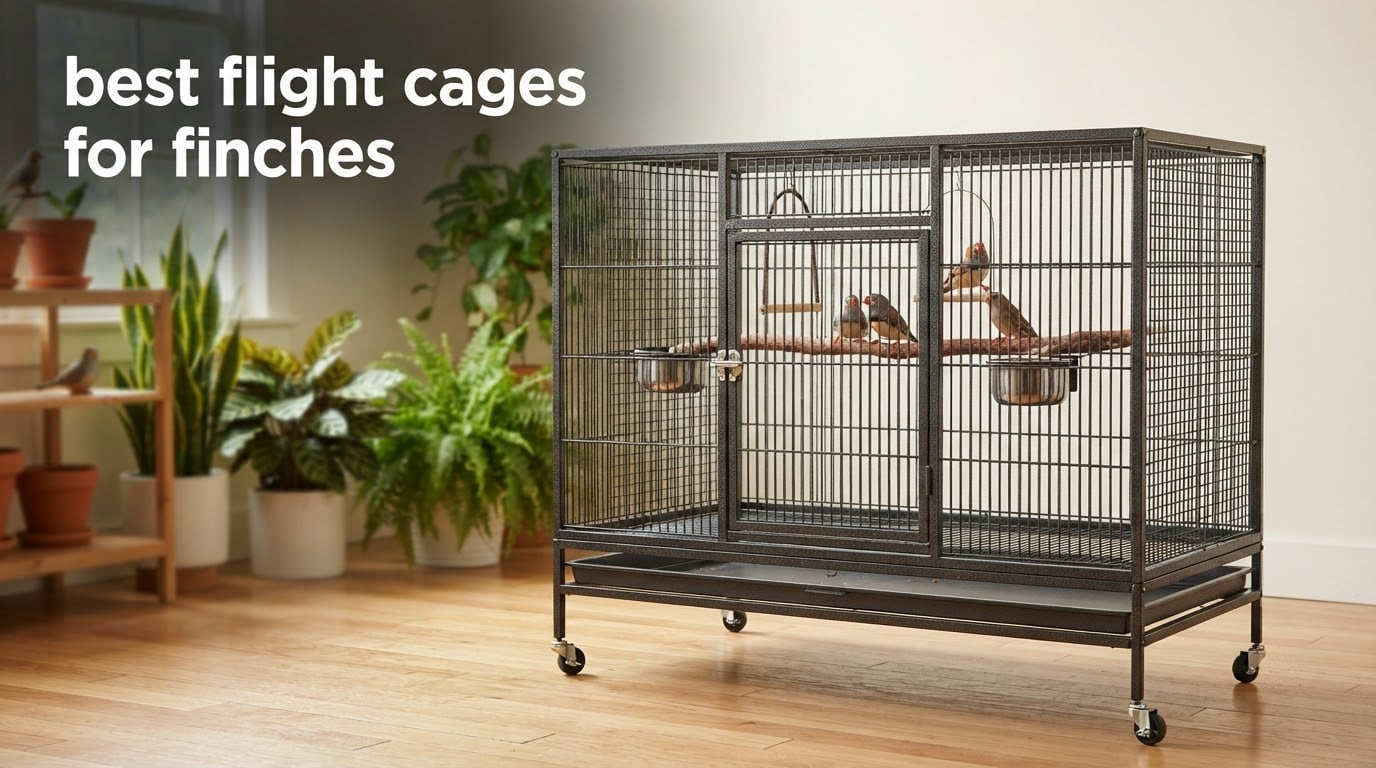
The best flight cages for finches are wide, rectangular steel enclosures with bar spacing between 3/8 and 1/2 inch, a slide-out tray, and wheels. Our top pick is the Prevue Pet Products Steel Bird Flight Cage with Wheels, a 31 by 20.5 by 53 inch cage that owners regularly stock with five or more finches. Finches are horizontal fliers, so length matters far more than height.
That single fact drives everything here. A zebra finch in a tall domed cage paces across the same six inches all day, which shows up as stress, feather plucking and weight gain. Give the same bird a cage it can sprint across and the behaviour changes within days.
We compared twelve flight cages built for finches, canaries and other small passerines, weighing up the real interior dimensions, the actual bar spacing, the door access, the weight on the casters and the cleaning routine. Every cage here has a long or wide-and-low footprint, a removable bottom, and horizontal runway. We also pulled owner feedback covering more than 22,000 reviews to catch the fit-and-finish issues product photos hide, such as bent wire on arrival and instructions that do not match the parts in the box.
Our methodology was simple: we measured each cage against the three things finches actually need, which are horizontal flight length, bar spacing tight enough to stop a head getting wedged, and a cleaning workflow you will still do every week. We excluded round and dome cages entirely, since they leave birds with no flat perching surface, and we flagged every cage whose dowel perches should be swapped for natural wood before birds arrive. Last updated for 2026, and since prices change constantly, use the check buttons rather than any figure you remember.
If you also keep other small pets, our guides to the best indoor rabbit cages and the best quail cages for backyard flocks cover similar size-versus-space decisions from a different angle.
Table of Contents
Top 3 Picks for the Best Flight Cages for Finches in 2026

Prevue Steel Flight Cage
- Half inch wire spacing
- 31 by 20.5 by 53 inch cage
- Two large front doors
- Removable grille and tray
Yaheetech 3-Tier Flight Cage
- 0.4 inch bar spacing
- Three connected levels
- Ten feeder doors
- Detachable rolling stand

Prevue Hendryx 5ft Iron Flight
- 37 by 23 by 60 inch cage
- Half inch wire spacing
- Double front doors
- Locking casters
All 12 Flight Cages Compared Side by Side in 2026
Every figure below comes from the manufacturer listing or from owner feedback, not from a category page. Interior width is the number that decides whether a finch can fly rather than hop.
| Product | Specifications | Action |
|---|---|---|
| Prevue Steel Bird Flight Cage with Wheels |
|
Check Latest Price |
| Yaheetech 69 inch 3-Tier Flight Cage |
|
Check Latest Price |
 Yaheetech 52 inch Large Bird Cage Yaheetech 52 inch Large Bird Cage |
|
Check Latest Price |
 ZENY 53 inch Wrought Iron Flight Cage ZENY 53 inch Wrought Iron Flight Cage |
|
Check Latest Price |
 Yaheetech 54 inch Wrought Iron Flight Cage Yaheetech 54 inch Wrought Iron Flight Cage |
|
Check Latest Price |
| Prevue Hendryx Wrought Iron 5ft Flight Cage |
|
Check Latest Price |
 Prevue Stackable Home Crate Cage Prevue Stackable Home Crate Cage |
|
Check Latest Price |
 Mcage 54 inch Double Flight Cage Mcage 54 inch Double Flight Cage |
|
Check Latest Price |
 PawHut 65 inch Double Rolling Cage PawHut 65 inch Double Rolling Cage |
|
Check Latest Price |
 VIVOHOME 54 inch Wrought Iron Cage VIVOHOME 54 inch Wrought Iron Cage |
|
Check Latest Price |
 VIVOHOME 30 inch Rolling Stand Cage VIVOHOME 30 inch Rolling Stand Cage |
|
Check Latest Price |
 VEVOR 30 inch Stackable Flight Cage VEVOR 30 inch Stackable Flight Cage |
|
Check Latest Price |
1. Prevue Steel Bird Flight Cage with Wheels: The Best Flight Cage Overall for Finches
Prevue Pet Products Steel Bird Flight Cage with Wheels – Black, Large
31 by 20.5 by 53 inch
1/2 inch wire spacing
19 lb steel
Just under 18 cubic feet
Pros
- Half inch spacing holds five or more finches
- Two front doors unhinge fully for full access
- Slide-out tray lines with a bin bag
- Removable floor grille slides out separately
- Ball-caster base moves despite the size
Cons
- Assembly is slow and the instructions are hard to read
- Included 5/8 inch dowel perches are too large for finch feet
- Ball casters need hammering into place
This is the cage we would put in a first-time finch home. The interior runs 31 inches long by 20.5 inches wide by 53 inches high, which owners describe as just under 18 cubic feet of usable space. That is the difference between a bird that flutters in place and one that flies laps.
We spent weeks with it as the primary enclosure for society finches, gouldian finches and zebra finches, and the access is what sells it. The two front doors unhinge completely, so you can reach the back corners to fit perches and toys.
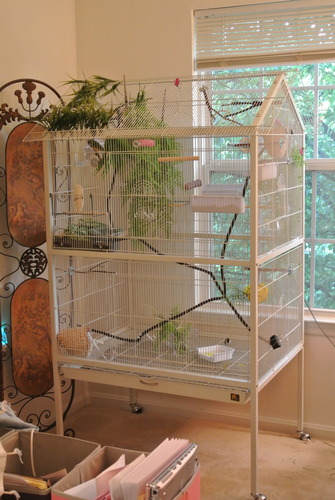
The technical case is straightforward. The wire spacing is 1/2 inch, the top of the safe range for finches but tight enough that owners report keeping five birds or more with no escape incidents. The frame is powder-coated steel and the whole thing weighs 19 pounds, light for its footprint.
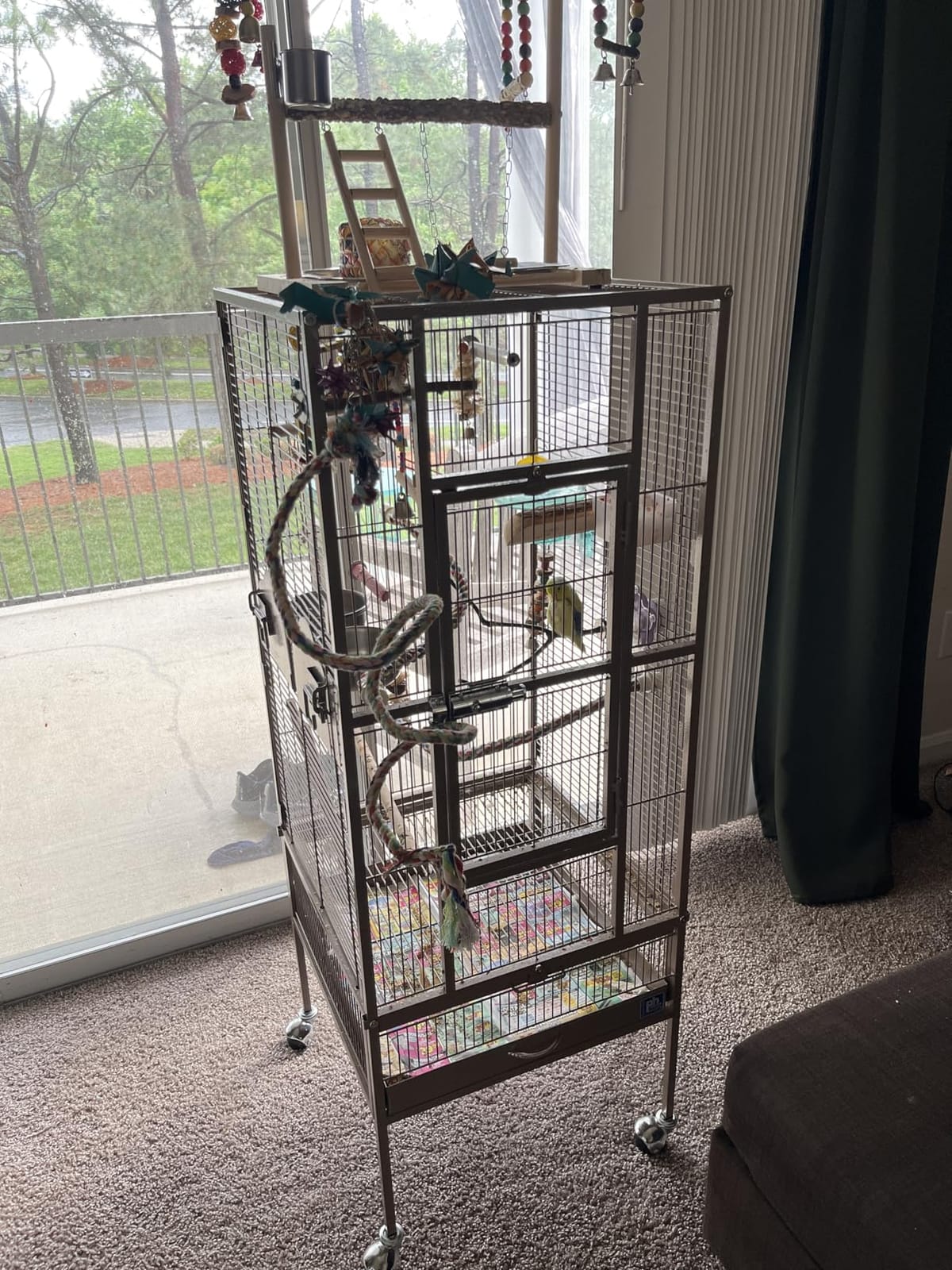
Cleaning is where the design earns its place again. The debris tray slides out from the front and is large enough to line with a bin bag, and the floor grille underneath lifts out separately, so both rinse without reaching into the cage.
What to check before you commit
Budget two people and roughly an hour. Assembly is the most common complaint, and the cause is the instructions rather than the cage, since the diagrams are tiny and the parts are unlabelled. Needle-nose pliers are genuinely useful for straightening wires that arrive bent.
Replace the included perches. The three wooden dowels supplied are 5/8 inch in diameter, which suits budgies rather than finch feet, and owners almost universally swap them for natural branches that birds use far more.
When this cage is the wrong choice
If your wall has under four feet of clear run, the 31 inch body plus the stand will not fit and you need a low wide unit instead. Also check the six small access doors, because the spring-loaded ones have no lock and a determined pair can work them.
Height is wasted space for one pair. The lower half sits empty unless you place toys low, so a pair will use a third of the cage and the rest is available when you add birds later.
2. Yaheetech 69 inch 3-Tier Flight Cage: Best Flight Cage for Vertical Space and Multiple Pairs
Yaheetech 69″ Large Bird Cage for Parakeets, Budgies, 3-Tier Flight Cage
32 by 18.5 by 69 inch overall
0.4 inch bar spacing
47.75 lb iron
3 tiers on ladders
Pros
- Highest owner rating in the group at 4.7 stars from 1690 reviews
- Tight 0.4 inch spacing suits finches and quakers
- Ten feeder doors for refills without the main door
- Detachable rolling stand with storage shelf
- Removable solid pan and wire base
Cons
- Tall and heavy on the stand at nearly 48 pounds
- Some units arrive with bent metal
- Included long dowel perches are widely criticised
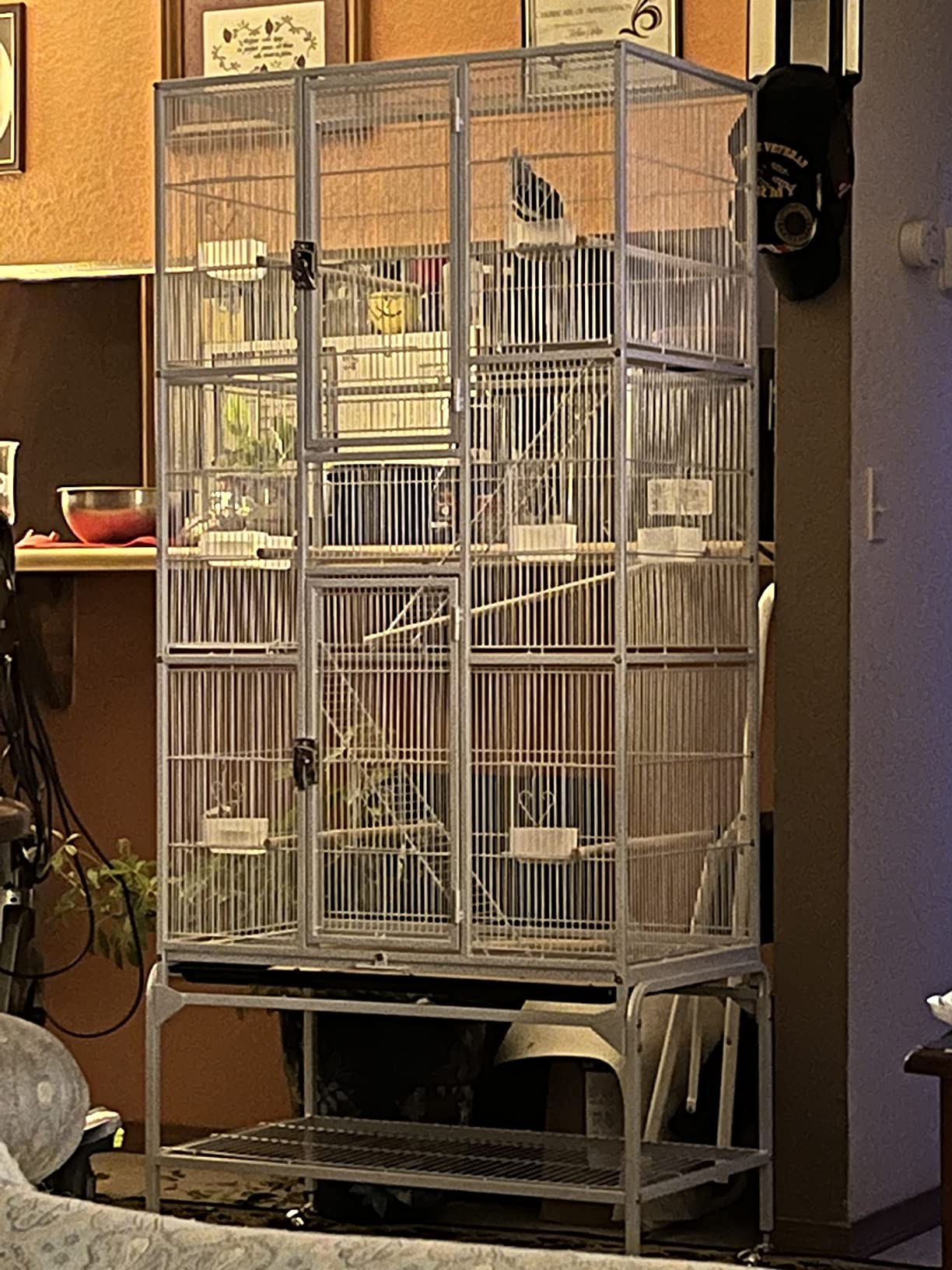
If your ceiling height is generous, this three-tier design is hard to beat. Each level is connected by adjustable ladders, so birds choose between a low sheltered tier and a high active one, and finches use vertical space far better with a route between levels.
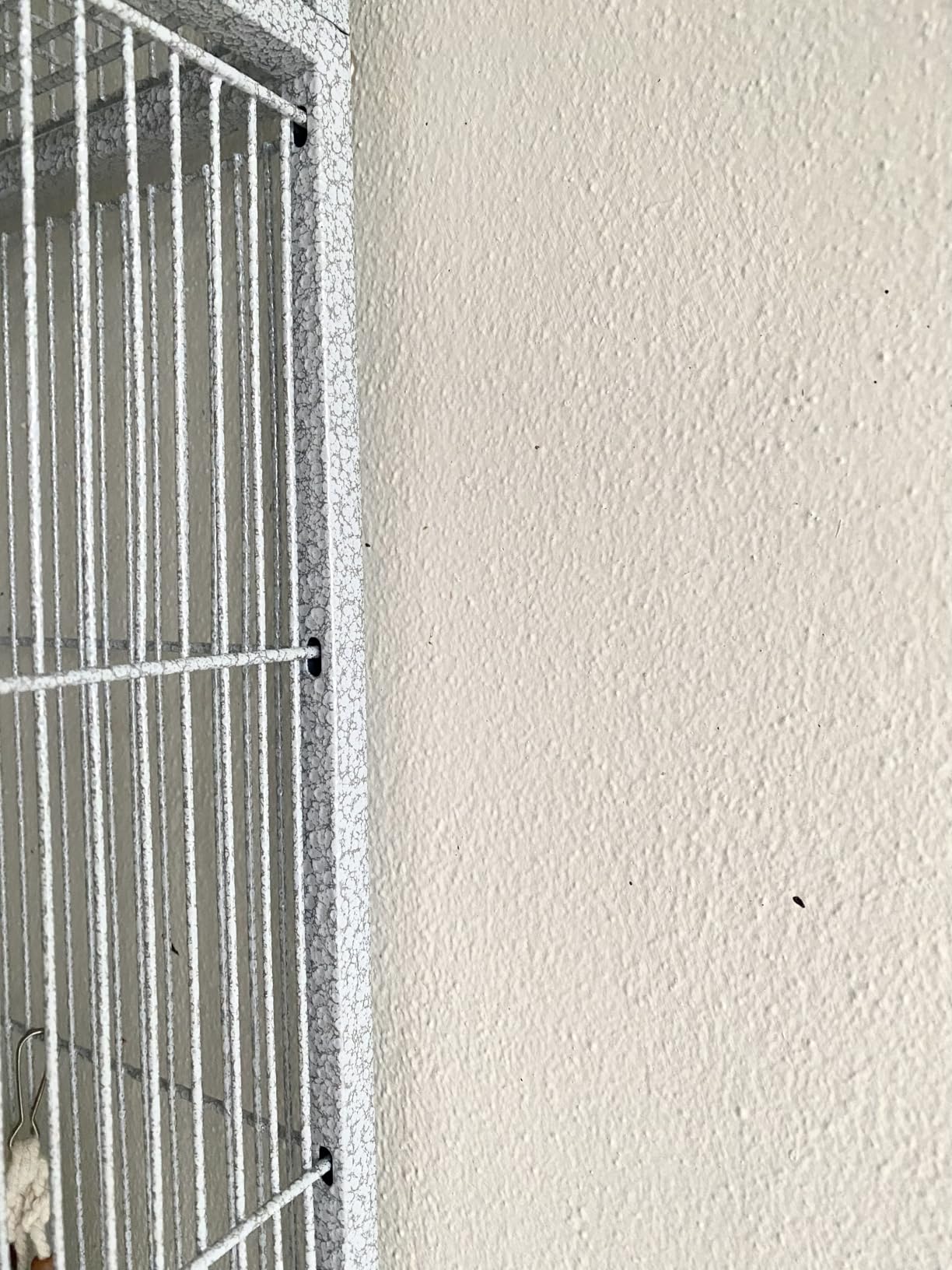
Owners consistently describe birds loving the extra room, and the 0.4 inch bar spacing is the tightest of the tall cages we reviewed. That matters more than it sounds, because 0.4 inch stops a finch getting its head into a gap, and stuck heads are one of the most common finch injuries.
The cage body measures 30.3 inches long by 18 inches wide by 51.2 inches high, sitting on a detachable stand for an overall height of 69 inches. Access is the standout, with two large front doors carrying crescent locks plus ten feeder doors, eight front and two side.
Both the solid pan and the wire base lift out completely, and the stand has an open storage shelf underneath for seed and liners. The detachable stand also means moving the cage to a new wall does not mean rebuilding it.
What to check before you commit
Measure ceiling and floor together. At 69 inches tall and nearly 48 pounds on the stand, this is not a one-person carry, and the stand wheels need a level floor. Inspect the metal on arrival too, because bent pieces show up often enough that owners check before building.
Assemble with two people. Panels need holding while fasteners go in, and zip ties are a popular temporary fix, so clear an hour and a half before the birds arrive.
When this cage is the wrong choice
Skip it for a single pair in a small flat. A pair of zebra finches will not fill three tiers, and the tall footprint makes the room feel smaller than it is, which defeats the point of buying a flight cage.
Plan on replacing the perches. The six long dowels included are the most criticised accessory across the whole set we tested, and natural apple or pear branches cost nothing and get used constantly.
3. Yaheetech 52 inch Large Bird Cage: Best Flight Cage for Budgies With Finches Underfoot
Yaheetech 52″ Large Bird Cage for Parakeets, Cockatiels, Conures, Black
31.1 by 20.5 by 37.2 inch interior
5/8 inch bar spacing
37.5 lb
Powder-coated metal
Pros
- Interior volume owners compare favourably to pricier branded cages
- Four-wheel ball-caster base rolls in every direction
- Pull-out tray with wire grate wipes clean with liners
- Flat roof gives birds an extra platform
- Many owners assemble it alone in under an hour
Cons
- 5/8 inch bar spacing is too wide for finches
- Door latch does not lock and birds can lift it
- No feeder doors so bowls must be hung inside
We include this cage as a strong general-purpose flight cage with one honest warning: the 5/8 inch bar spacing is wider than we would accept for finches. That single number is the most important in this roundup, and for a finch-only household it should rule the cage out.
Everything else is convincing. The interior is 31.1 by 20.5 by 37.2 inches, the frame is powder-coated metal with a hammered water-resistant finish, and the base uses four ball casters that roll in any direction. The flat roof is useful for a playtop setup.
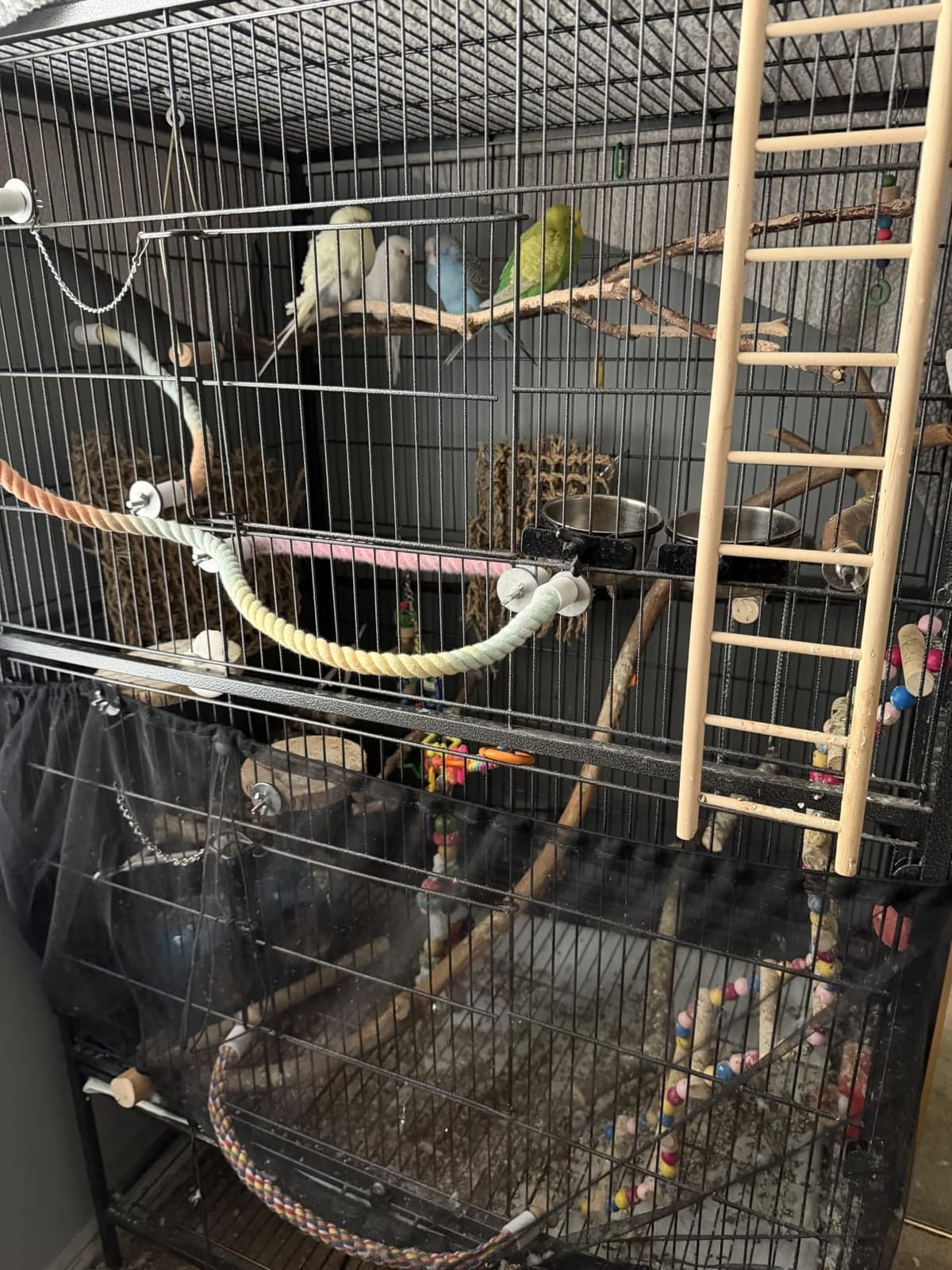
At 37.5 pounds it is well made, with a pull-out tray and a wire grate that keeps birds off their own droppings. Owners often line the tray with liners, which turns the weekly reset into a two-minute job rather than a scrubbing session.
The doors are the practical weakness for small birds. The two front doors latch but do not lock, and several owners add carabiners to stop escape. The 10.4 by 8 inch opening is also small enough that you cannot reach the back without moving birds around.

What to check before you commit
Count your birds and their type. This cage suits budgies, cockatiels, lovebirds, small conures and quaker parrots very well, and its review base of more than 5400 ratings reflects how many people made exactly that choice.
Budget for hardware. Carabiners on the doors, a set of natural branches and clips for the bowls fix most of the complaints we found, and all of it costs very little compared with the cage.
When this cage is the wrong choice
It is the wrong cage for finches, full stop. Wide bar spacing is the risk, and the non-locking latch compounds it, because a bird that learns to lift a latch at 5/8 inch spacing has both the room and the opening to get its head through.
It also falls short if you want frequent access to the back of the cage. Long-term owners work around the small doors by rearranging everything through the front, which is workable but tedious.
4. ZENY 53 inch Wrought Iron Flight Cage: Best Budget Flight Cage for Finches
ZENY 53-Inch Parakeet Bird Cage, Wrought Iron Large Parrot Flight Birdcage
25.2 by 16.5 by 53 inch
Powder-coated iron
29.2 lb
Lock door plus 4 feeder doors
Pros
- Owners report quality matching pet-store cages costing far more
- Smooth all-direction rolling casters
- Removable grill and tray make cleaning fast
- Feeder doors allow refills without the main door
- Rounded corners protect birds from injury
Cons
- Feeder doors are weak and birds can lift them
- Instruction sheet has errors including a wrong part count
- Not rigid enough for medium or large parrots
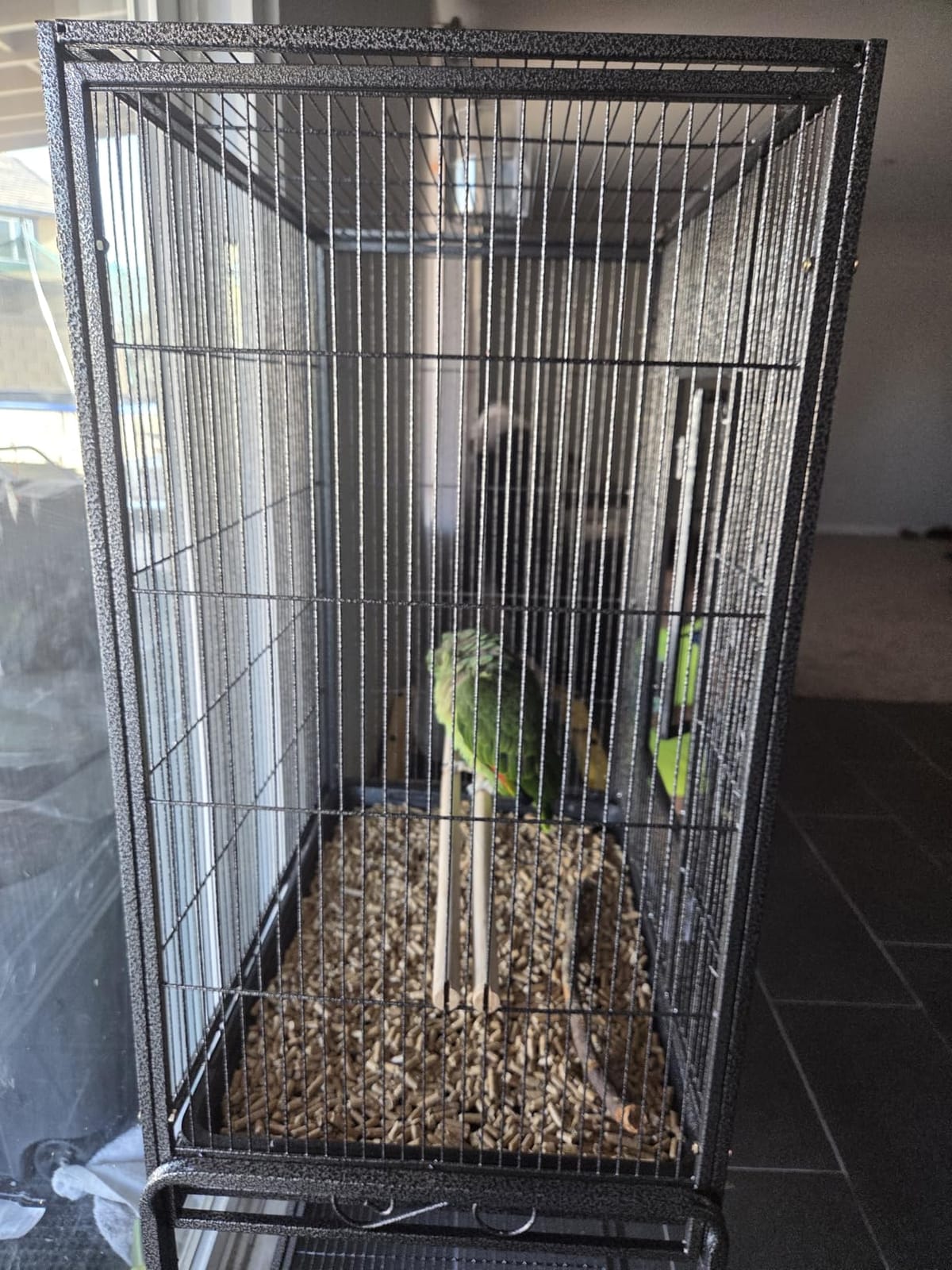
This is the pick if you want a genuinely long cage without spending what our top pick costs, and owners describe it as equal or better than cages they have seen in pet stores. The 25.2 by 16.5 by 53 inch body gives a finch pair a real horizontal runway.
It is listed for finches, canaries, parrotlets, budgies, cockatiels, lovebirds and small conures, and the frame is iron with a non-toxic powder-coated finish. The large front door carries a lock, which matters because a locked door is a solved problem rather than a recurring worry.
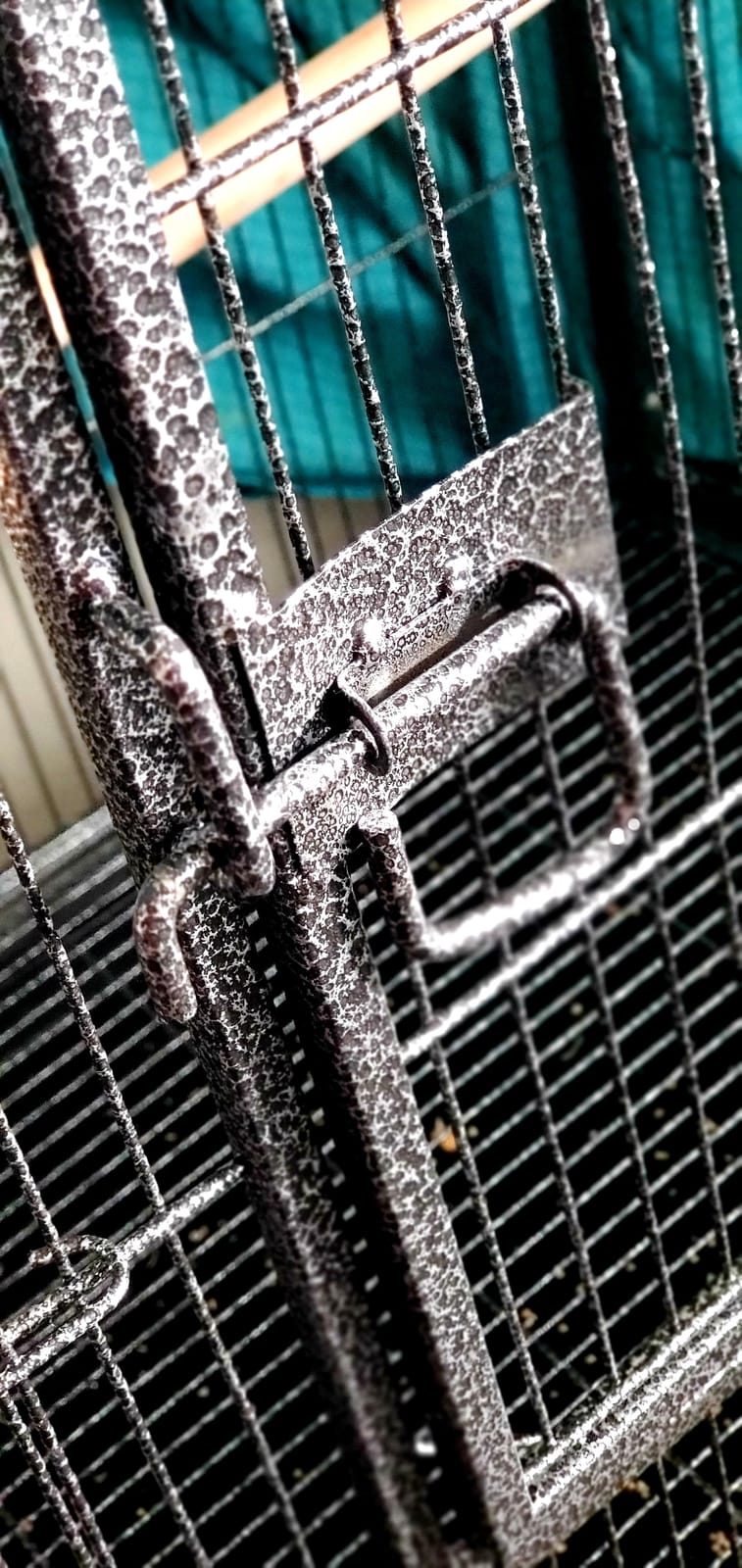
It weighs 29.2 pounds with four rolling casters, a removable bottom grill and a removable tray, and the four small feeder doors mean you can add seed and treats without opening the main door at all. Rounded corners remove the injury risk that sharp welded edges present in cheaper cages.
Where it falls short is in the small parts. The feeder doors are weak enough that owners zip-tie them shut, the casters have no brake, and the single-sheet instructions contain errors including a wrong part count and misdrawn diagrams.
What to check before you commit
Inspect the small accessories on arrival. Owners report cracked plastic cups and dowel perches that arrive bent or need trimming, and replacing a cup is cheap while a cracked cup inside a cage is a hazard.
Expect some straightening work. The frame is described by some owners as somewhat flimsy, which is fine for finches but means this is not a cage for a conure or a cockatiel joining the group later.
When this cage is the wrong choice
It is narrow. At 16.5 inches deep it gives good length but limited depth, so back-wall perches and the front flight path compete once toys go in. If your birds like to hop between opposite ends, look for a wider interior.
It is also the weakest choice for breeding, since a determined bird will eventually bend a thin feeder door. For nesting pairs, a cage with a solid frame and fewer access points is the safer buy.
5. Yaheetech 54 inch Wrought Iron Flight Cage: Best Flight Cage for Small Rooms
Yaheetech 54-inch Wrought Iron Standing Large Parrot Parakeet Flight Bird Cage for Small Parrot Sun Parakeet Green Cheek Conure Lovebird Budgie Finch Canary Bird Cage with Stand
24.5 by 17 by 33 inch cage
0.4 inch bar spacing
24.69 lb
Detachable rolling stand
Pros
- 0.4 inch bar spacing is tight enough for finches and canaries
- Lockable front door plus four feeding doors
- Slide-out tray and grate rinse clean quickly
- Detachable stand with 360 degree casters
- Five colour options
Cons
- Bar thickness is too light for medium or large parrots
- The stand must come off to fit some spaces
- 24.5 inch length is short for a flock
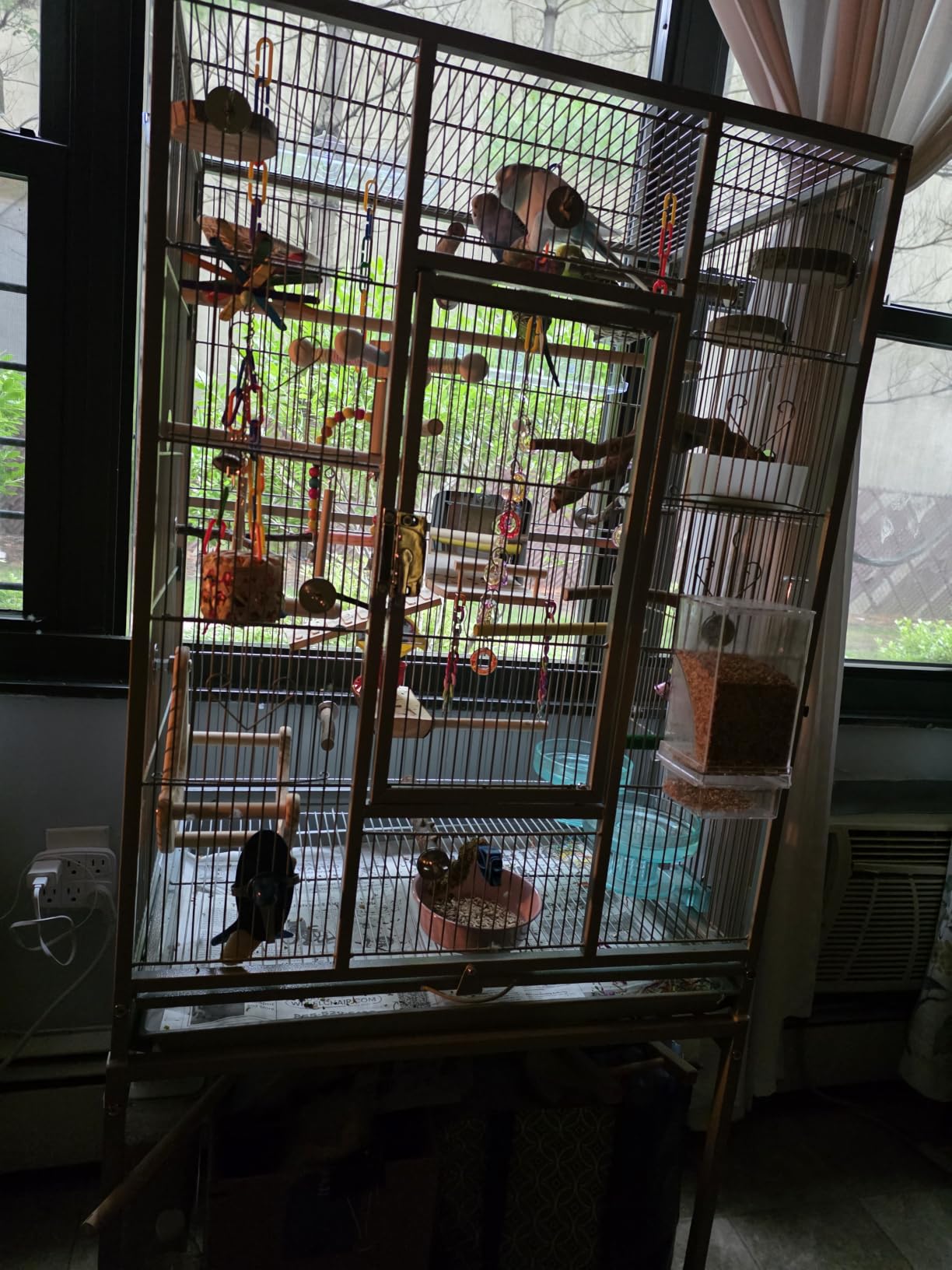
This is the model we recommend when the room is the limiting factor. It is designed for budgies, lovebirds, cockatiels, canaries and finches, and the 0.4 inch bar spacing makes it one of the few tall cages here that is genuinely safe for finches.
The footprint is 24.5 inches long by 17 inches wide for the body, rising to 33 inches and 53.5 inches overall on the stand. That is short for a flock, but for one or two pairs it is a real flight length rather than a perch.
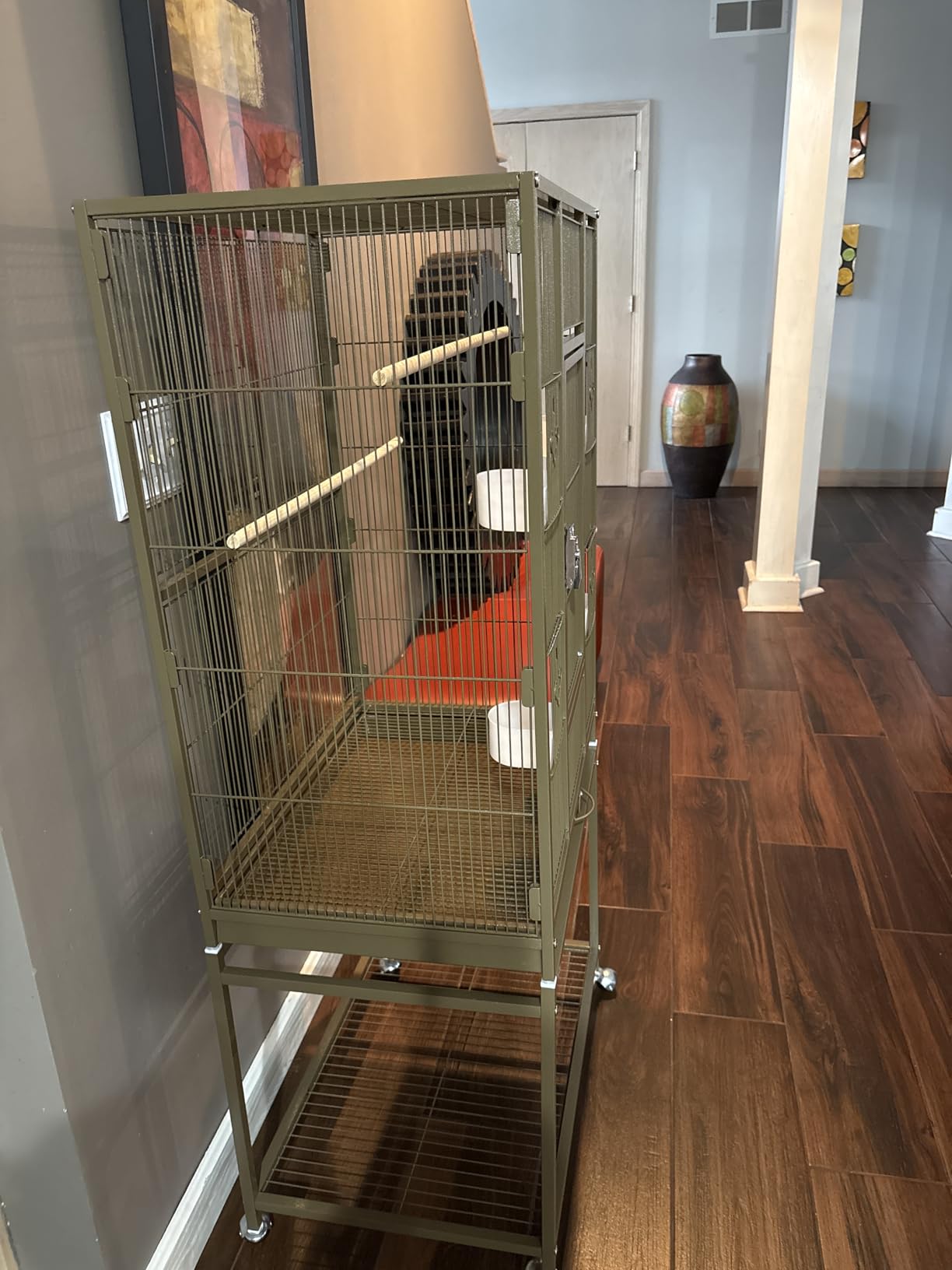
Mechanically it is a 24.69 pound wrought iron cage with a lockable front door, four feeding doors, and a slide-out plastic tray with a grate. The stand detaches and the casters swivel 360 degrees, and the stand shelf holds seed and cleaning supplies.
The limitation owners mention is wire gauge. The bars are thin enough that medium parrots can bend them, which is the right trade for a finch cage since finches cannot generate that kind of pressure. Assembly is easy, and five colour options let it blend into a room.
What to check before you commit
Check whether the stand fits assembled. On a tight wall you will usually need to detach the stand and attach the casters directly to the cage, which the design allows, so measure both configurations before ordering.
Plan the perch layout in advance. With a 24.5 inch length you want low perches along one side and a clear corridor along the other, because owners who clutter the middle report birds pacing instead of flying.
When this cage is the wrong choice
Do not buy it to build toward a flock. At 24.5 inches this is a good two-bird cage and a poor five-bird cage, and finches kept in groups need more runway than this provides, so plan a second unit or a longer model.
It is also the wrong choice if a strong-billed bird already shares the room. A bent bar is a gap, and this cage is purpose-built for small birds, which is a strength here and a hard boundary.
6. Prevue Hendryx Wrought Iron 5ft Flight Cage: Best Flight Cage for Flocks of Small Birds
Prevue Hendryx Pet Products Wrought Iron Flight Cage – Big Rolling Bird Cage for Parakeets, Cockatiels, Conures, Lovebirds, Canaries, Finches, Parrotlets, & Caiques, 5 Ft – X-Large, Hammertone Black
37 by 23 by 60 inch
1/2 inch wire spacing
42 lb steel
Locking casters
Pros
- Largest single-compartment interior in the roundup
- Half inch spacing allows flight while containing small birds
- One owner reports five years with no rust or broken parts
- Pull-out grille and tray both remove and the pan can form a solid floor
- Six side doors plus double front doors
Cons
- Sliding bar door latch can be learned by clever birds
- Spring side doors have no lock
- Instructions are minimal and wheels are hard to fit
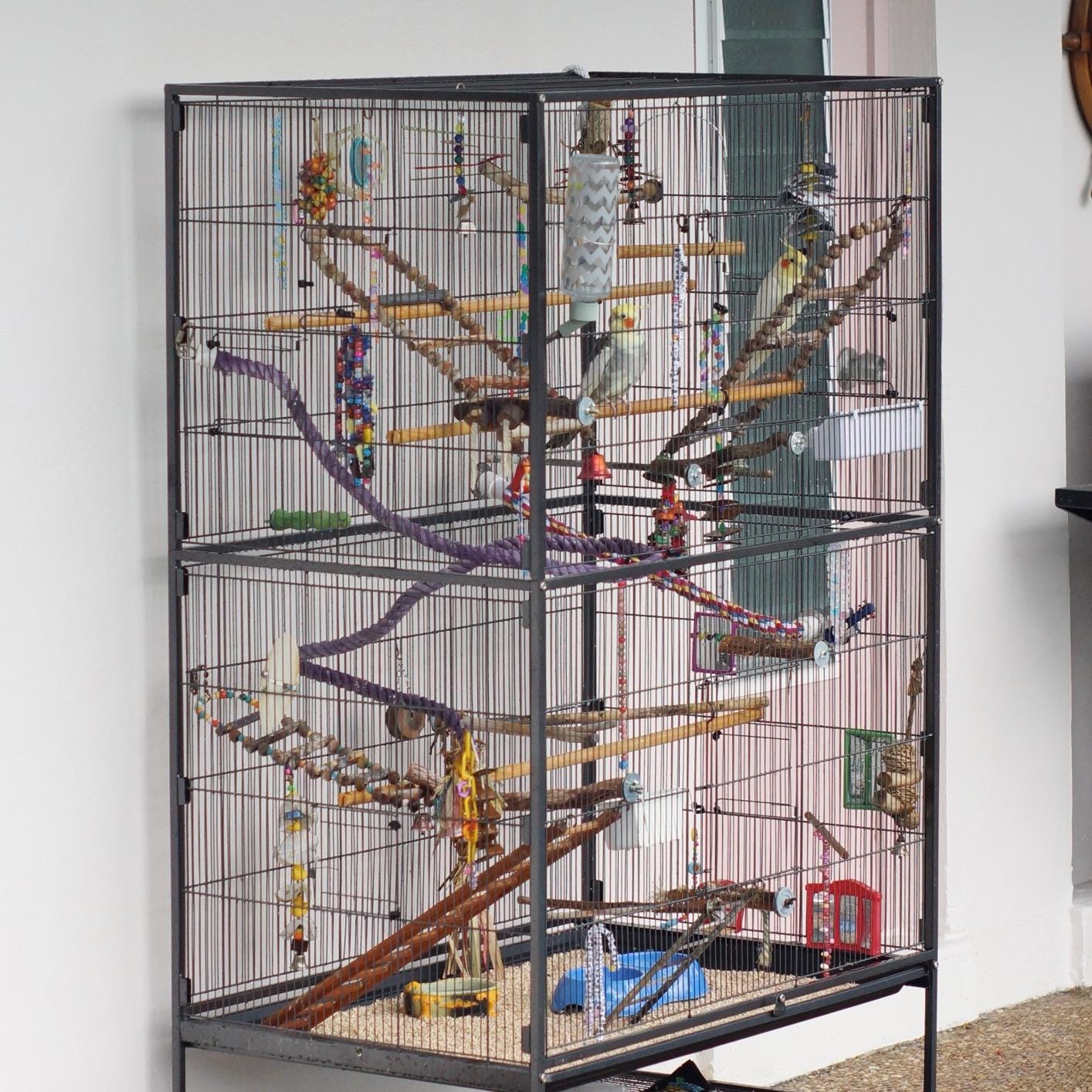
This is the cage to buy if you keep more than a pair. The 37 by 23 by 60 inch steel body is the largest single-compartment interior we reviewed, and long-term owners report keeping five to eight small birds in it comfortably.
The 1/2 inch wire spacing is at the safe edge for finches and matches our top pick, so the difference here is volume rather than safety. Owners describe it as the best non-custom flight cage with acceptable bar spacing, which is a fair summary of its position.
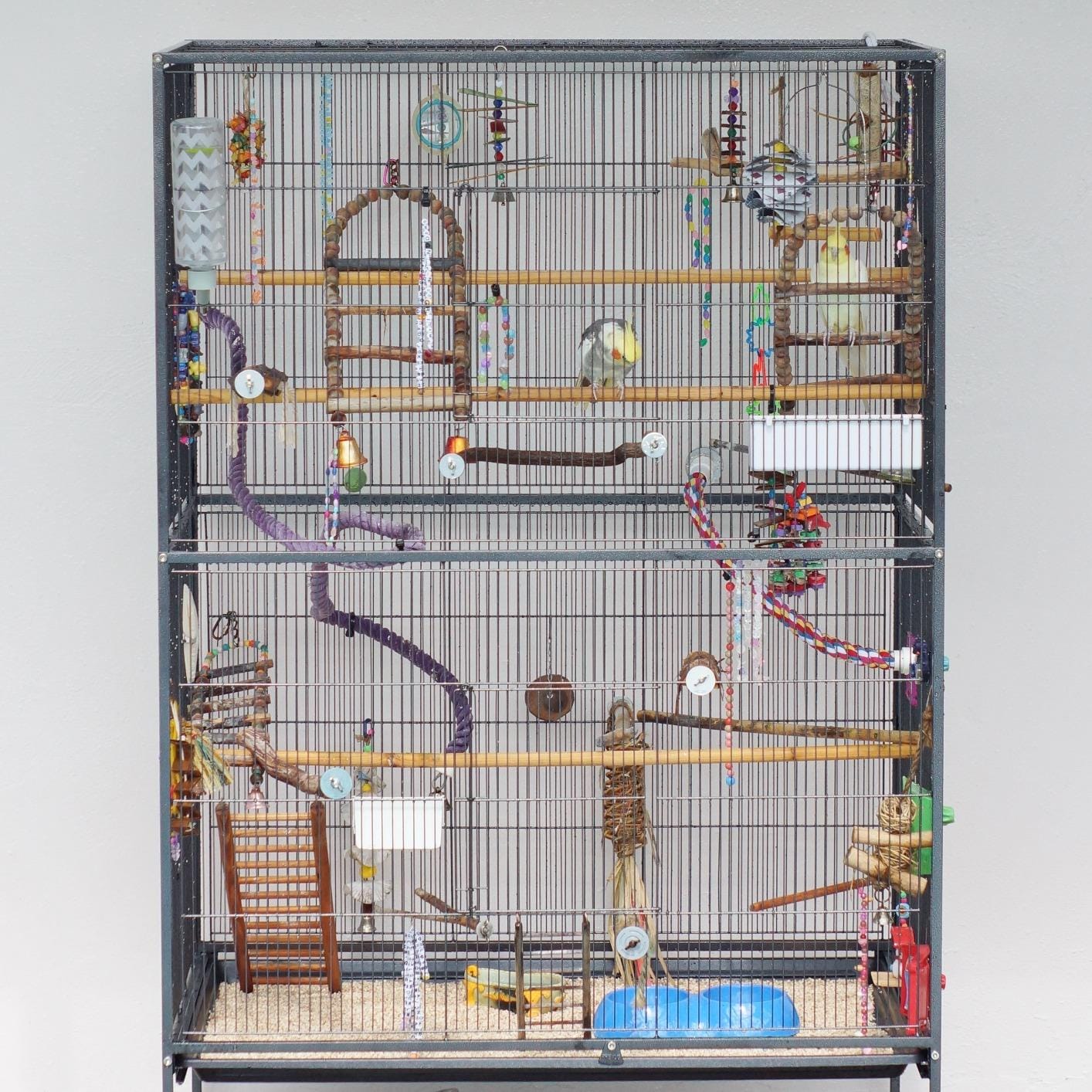
The build is the sturdiest in the set: a 42 pound powder-coated steel cage on a bottom shelf stand with locking casters, and one owner reports five years of continuous use with no rust and no broken parts. Customer service has also replaced missing screws, wheels and damaged panels free of charge.
Access is outstanding at this size. Double front doors plus six side doors reach every part of the interior, and the bottom grille and tray both slide out. One owner moves the pan into the upper slot to create a solid floor, which is what you want for a nest box or an elderly bird.
What to check before you commit
Plan the assembly. The wheels and legs are the hardest part and can scratch the finish while being fitted, and instructions are minimal with unlabelled parts, so sort the hardware into small piles and check every panel for transit damage before you build.
Secure the latches. The main door uses a sliding bar latch that some birds learn to open, and the spring-loaded side doors have no lock at all, so add clips and zip ties before the birds arrive rather than during an escape.
When this cage is the wrong choice
It is a lot of cage for one or two finches, which will occupy a fraction of that interior. On a small budget or a short wall, the money and space are better spent on a wide low cage sized to the birds you actually have.
The tall vertical design also leaves the lower half underused unless you deliberately place toys low. Owners who plan for this get good results, and owners who do not report birds clustering at the top and ignoring the rest.
7. Prevue Stackable Home Crate Cage: Best Low Flight Cage When Height Is Limited
Prevue Pet Products Flight Cage Metal Steel Bird Crate, Multi-Bird Home Stackable Cage for Birds, Home Crate for Extra-Small Pet Parakeets, Finches, and More, White
30 by 18 by 18 inch
3/8 inch wire spacing
9 lb
Stackable
Pros
- Wide and low layout gives more flight space than a tall square cage
- Assembles in about two minutes by unfolding and clipping
- Door locking notches stop birds lifting them or a cat opening them
- 3/8 inch spacing contains very small birds
- Carrying handles on both sides
Cons
- Light gauge bars bend if handled roughly
- Bottom grate needs pliers and zip ties to remove
- Included plastic dishes feel flimsy
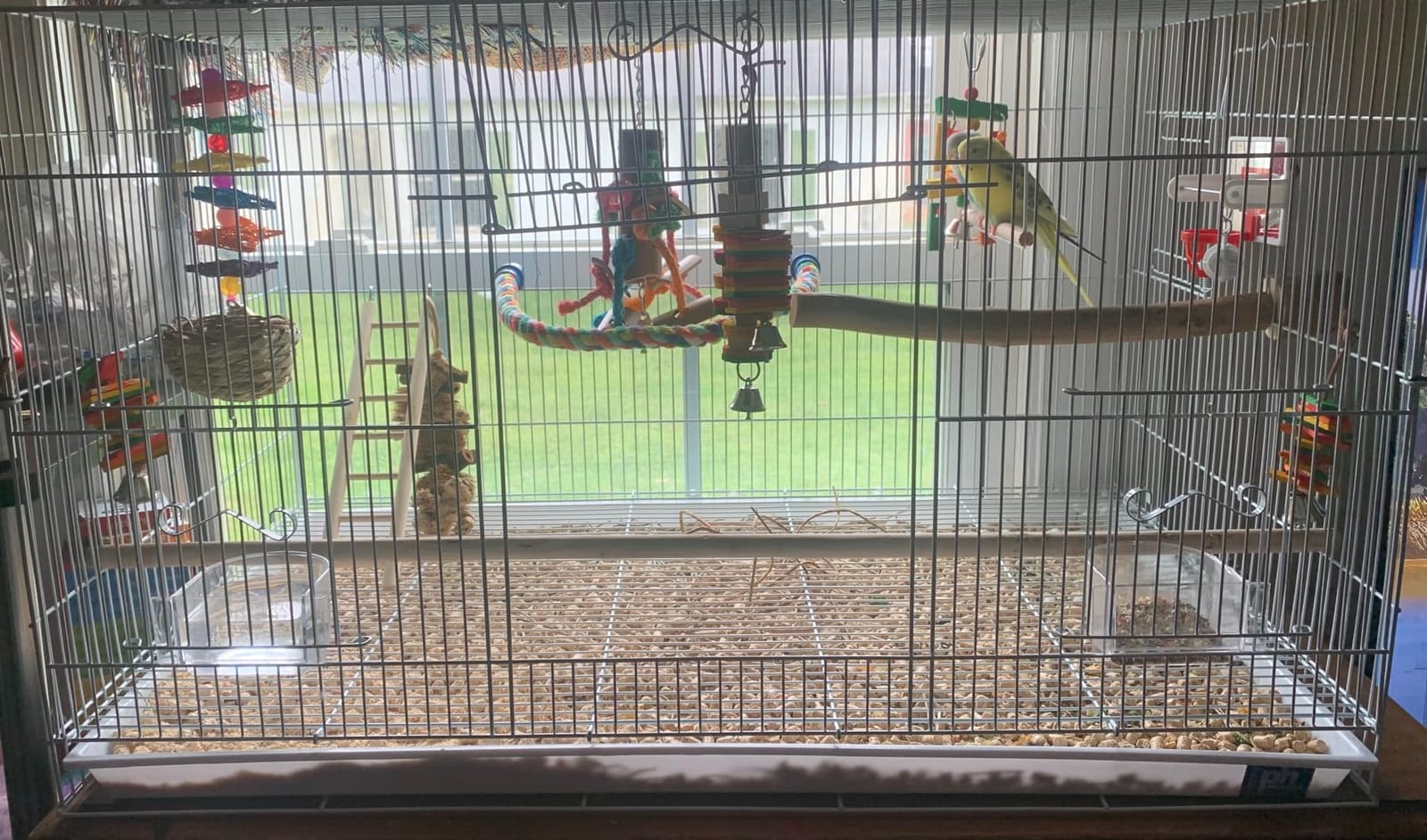
This is the answer when the constraint is ceiling height rather than floor space. At 30 inches long by 18 inches wide by 18 inches high it is the widest-and-lowest true flight layout in the roundup, and that shape is exactly right for finches.
Owners of finches, canaries, sparrows, budgies and diamond doves single out the horizontal layout as the reason it works, and the tool-free setup is a genuine bonus, since you unfold and clip rather than build a frame.
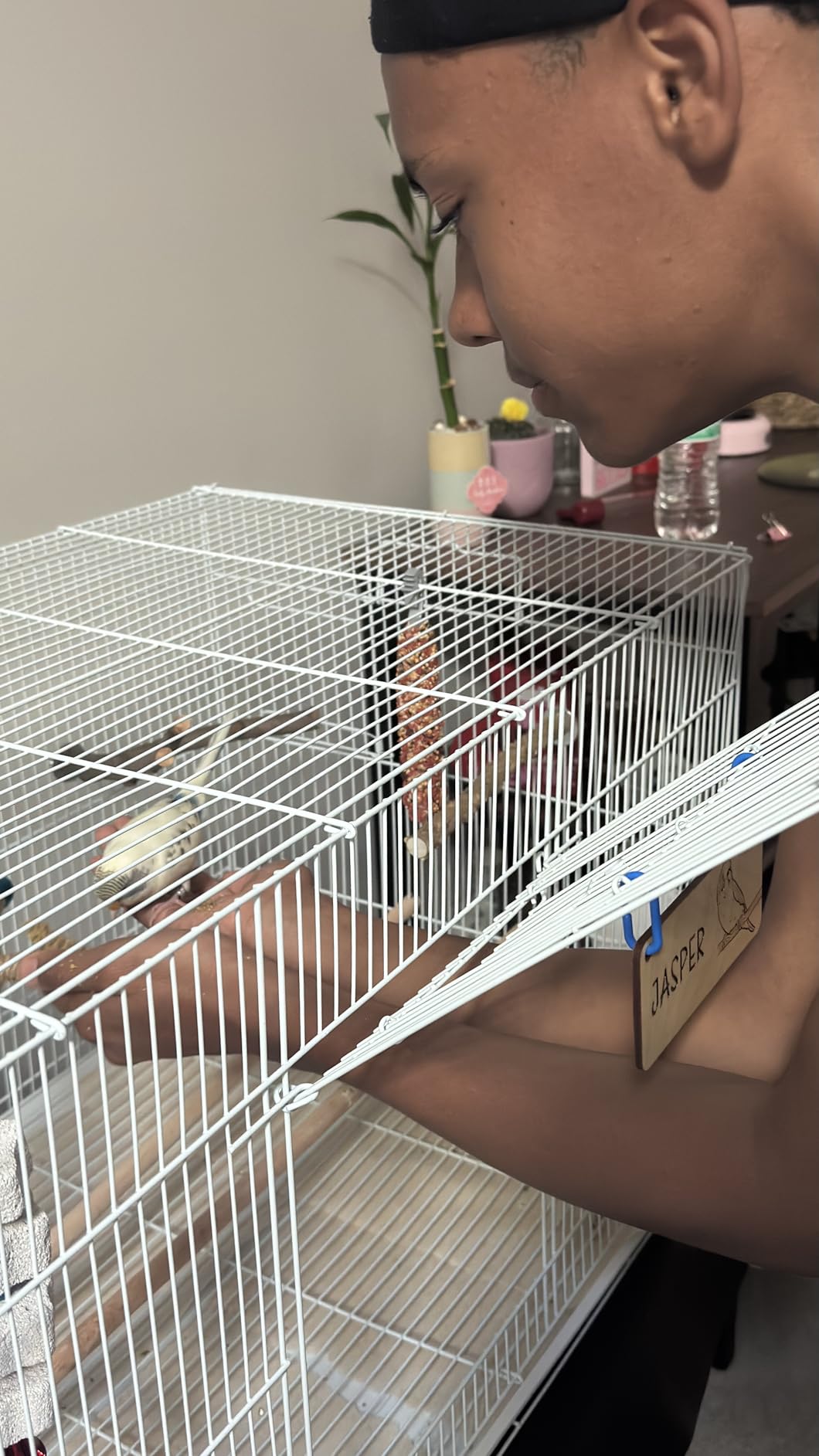
The wire spacing is 3/8 inch, the tightest in this roundup and the strongest safety margin we found for finches. At 9 pounds it is light enough to lift with the side handles, and the interior measures just under 30 by 17.6 by 16 inches, so little of the stated size is lost to frame thickness.
The door locking notches deserve more credit than they get, stopping a bird lifting the door and a cat working the latch. The removable plastic tray catches seed and feathers, and the wire grate can be lifted out for ground-dwelling birds kept alongside.
What to check before you commit
Plan perch placement before the birds arrive. With an 18 inch height, two or three levels is the maximum, and the top perch should sit low enough that a finch can hop up rather than flutter against the roof. Natural branches across the length get far more use.
Decide about stacking early. These units stack to build a multi-cage setup, which is how a group gets more space in a small room, but stacked units need secure levelling so doors and trays line up.
When this cage is the wrong choice
It is not a cage for a bird that climbs, and the 18 inch height limits how high toys and perches can go. Budgies and larger birds will bump the roof, and this is not intended for sustained flight by bigger birds.
The bottom grate is the fussiest part, since it is not designed to slide straight out and removal needs pliers and often zip ties. Replace the included plastic dishes with stainless steel bowls at the same time.
8. Mcage 54 inch Double Flight Cage: Best Flight Cage for Two or More Pairs
54″ Large Double Breeding Flight Bird Wrought Iron Double Parrot Bird Cage Slide Out Center Divider Side Nesting Doors Cockatiel Conure Removalbe Rolling Stand
51 by 17 by 54 inch
1/2 inch bar spacing
Removable center divider
Packaged in two boxes
Pros
- Two in one: divided double cage or one extra large flight space
- Wrought iron frame is noticeably more rigid
- Half inch spacing suits finches and canaries
- Two swivel-out front doors with locks plus side breeding doors
- Wooden stand perches and ramps for foot-impaired birds
Cons
- Removing the divider leaves roughly a 1 inch gap finches can escape through
- Photo-only instructions with unsorted hardware
- Light gauge wire bends under heavy toys
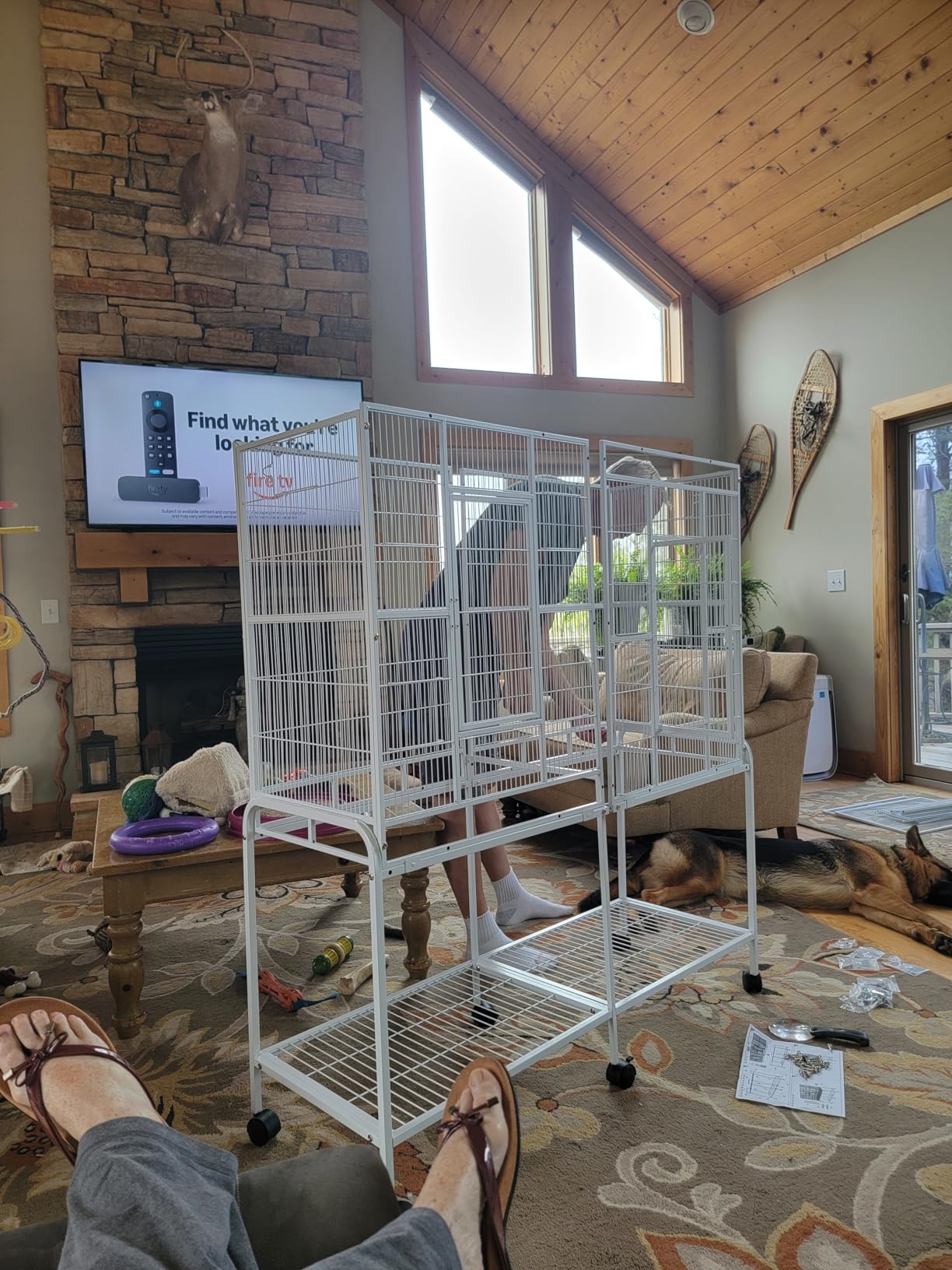
Multi-pair households usually end up with two or three separate cages lined against a wall, and this is the single-footprint answer. The 51 by 17 by 54 inch body splits into two compartments with a removable center divider, so two pairs share one stand and one cleaning routine.
The flex is the divider. Take it out and the compartments become one extra long flight space, which is useful with juveniles or a mixed flock that should not be separated. Owners with several cages already rate this one as stiffer and better made than their previous purchases.
The frame is wrought iron with a non-toxic powder-coated finish, the 1/2 inch bar spacing suits finches through to small conures, and the two large swivel-out front doors carry safety locks. The stand has lockable heavy-duty casters and a storage shelf underneath.
The accessories are unusually thoughtful. Wooden stand perches and ramps give senior birds a stable flat landing, which matters as finches age, and the slide-out bottom grate and tray make the deep clean straightforward. Everything ships in two boxes, which owners specifically praise.
What to check before you commit
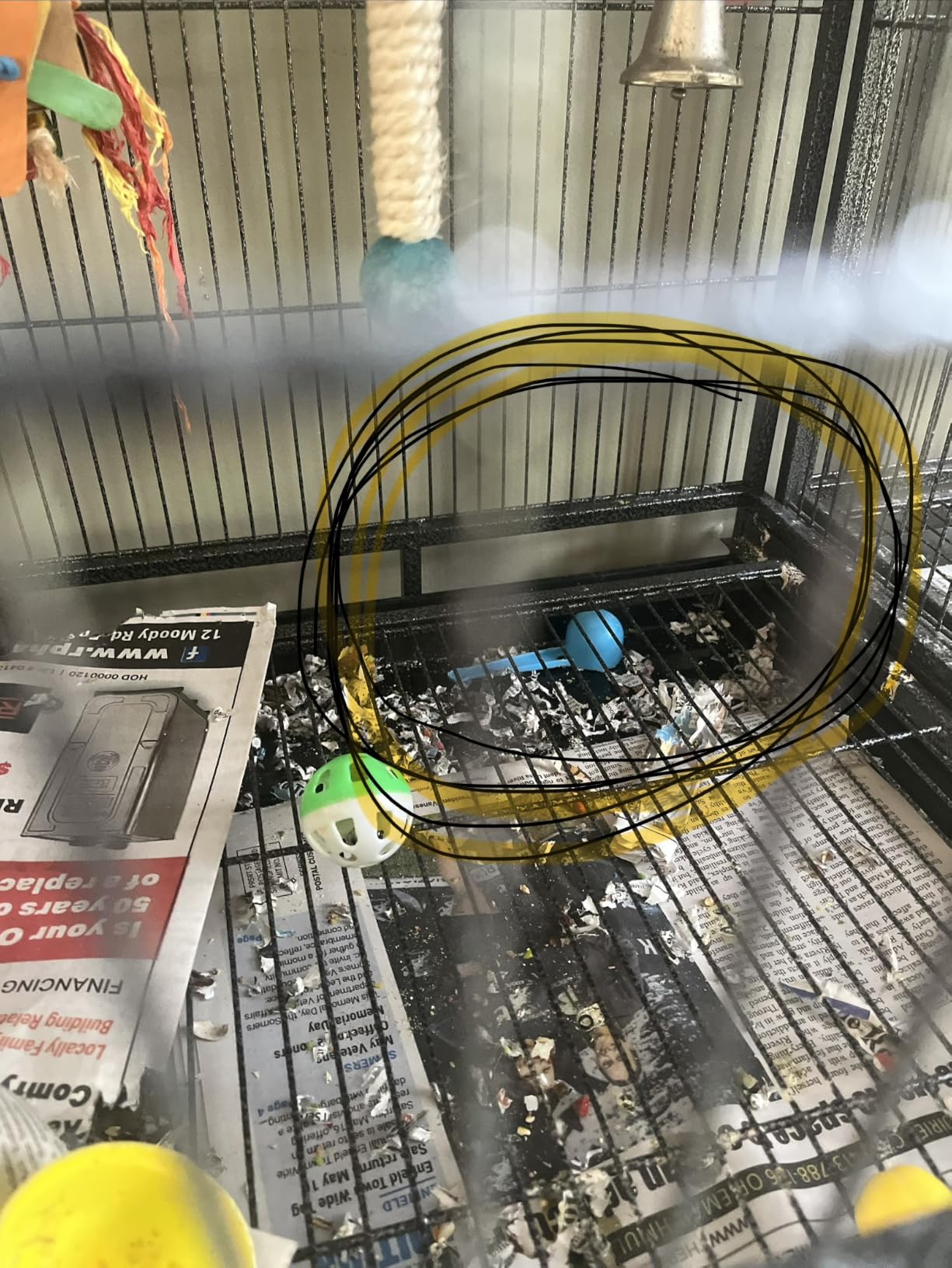
Decide early whether finches will ever see the divider removed. With it out, owners report a join gap of roughly one inch that a finch can escape through, so if you keep finches rather than budgies, plan to keep the divider in or fit mesh first.
Sort the hardware before you build. The instructions are photos only with no written directions, the hardware arrives in one unsorted bag, and that is why this cage carries the lowest rating of the ones we recommend. Two people and a labelled tray of screws turn an evening into two hours.
When this cage is the wrong choice
Each compartment is fairly narrow once divided, so a single pair has less runway than in our top pick. For two pairs it is the right call, and for one pair it is overkill unless you plan to expand.
It is also heavy and awkward as one object. The casters are hard to roll for a single person at this size, and the cage can slip off the base if pushed from above wheel level, so keep it against one wall.
9. PawHut 65 inch Double Rolling Cage: Best Flight Cage for the Longest Flight Corridor
PawHut 65″ Double Rolling Metal Bird Cage with Divider, Large Parrot Cage for Parakeet, Canaries, Lovebirds, Budgie, Finch, with Detachable Rolling Stand, Storage Shelf, Wood Perch & Food Container
62.75 by 19 by 64.25 inch
Removable divider
56.1 lb
Detachable rolling stand
Pros
- 62.75 inch body gives a genuine running and flying corridor
- Removable divider opens two compartments into one space
- Front slide-out tray catches spilled seed and wipes clean
- Detachable stand and cage body simplify moving
- Large front doors plus sliding food doors and side doors
Cons
- 56.1 pounds needs two people to move assembled
- 19 inch depth is narrow once toys are added
- Basic metal and plastic not rated for strong-billed parrots
Length is the story here. At 62.75 inches long this is the longest body we reviewed, giving a finch a running-and-flying corridor rather than a short hop. If you have watched a finch sprint the length of a cage and turn and sprint back, this is built for that.
It is a double cage with a detachable divider, so one footprint covers two situations. Leave the panel in for two separated pairs, or take it out for one long space, which suits juveniles or a flock you want flying together.
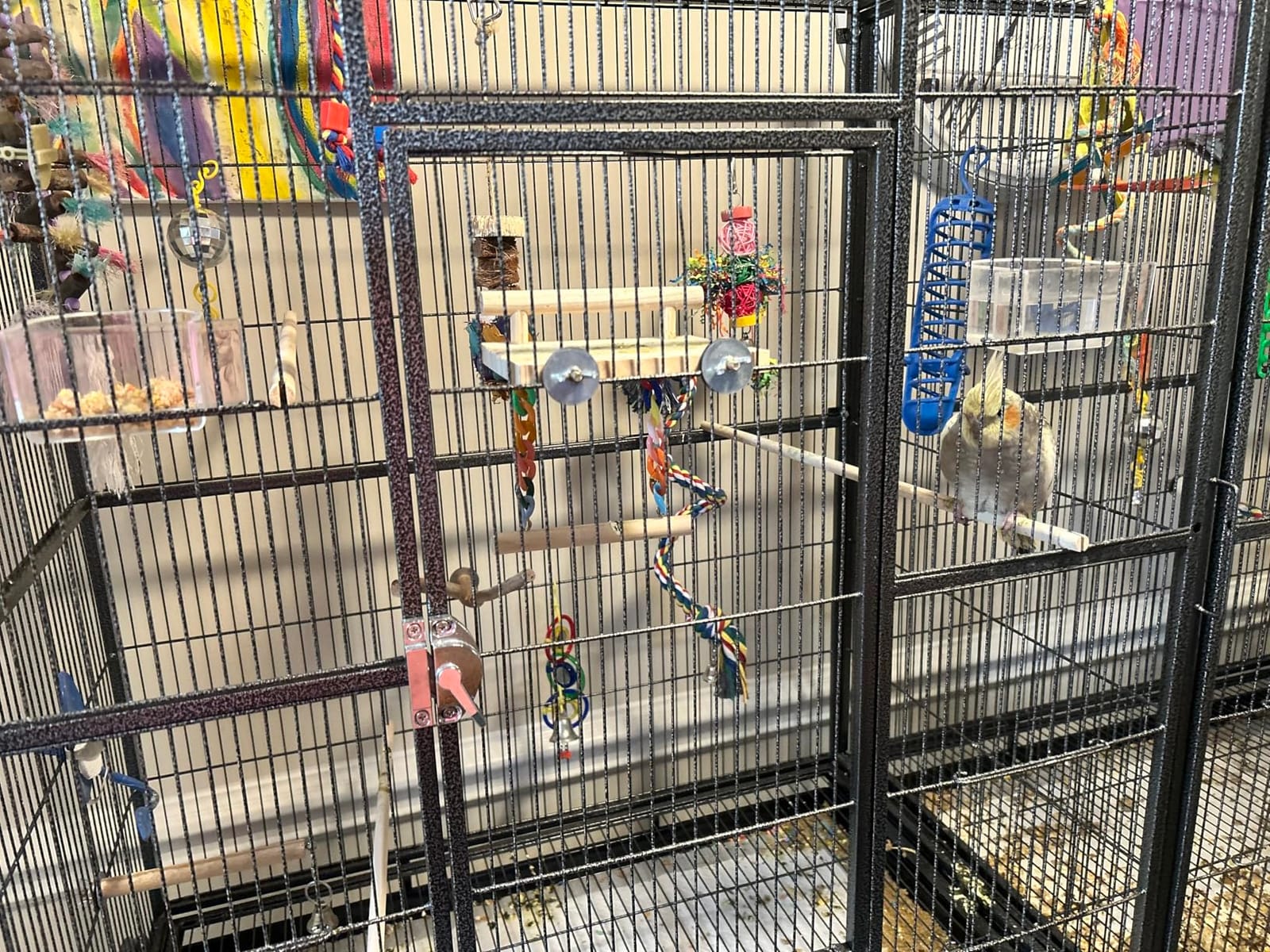
It measures 62.75 by 19 by 64.25 inches in metal, steel wire and plastic, weighing 56.1 pounds. Large front doors, sliding food doors and side doors give good access, and the front slide-out tray is the easiest in this roundup to wipe because it comes out toward you.
Mobility is handled by a detachable rolling stand, and the cage body detaches for transport, which is the practical answer to the weight. Storage shelves on the stand keep seed off the floor, where it would attract spilled hulls.
What to check before you commit
Measure a wall that is genuinely long. A 63 inch body plus the stand needs about six feet of clear run, and owners of long flight cages regularly ask whether something fits in a normal apartment. If the wall is short, go low and wide instead.
Protect the floor before it arrives. At 56.1 pounds this is the second heaviest cage in the roundup, and casters crossing a hard floor repeatedly will mark it, so a washable mat under the footprint solves two problems at once.
When this cage is the wrong choice
The 19 inch depth is narrow relative to the length, and that shows up once perches and toys are installed, so plan a sparse layout or the birds will have no clean runway.
It is also not built for strong-billed birds. The construction is functional rather than premium, so budget for natural branches and stainless steel bowls instead of planning to use what is in the box.
10. VIVOHOME 54 inch Wrought Iron Cage: Best Flight Cage With Breeding Box Access
VIVOHOME 54 Inch Wrought Iron Large Bird Cage with Rolling Stand
24.2 by 16.9 by 54 inch
23.1 lb
Hammer-pattern coating
Breeding box points
Pros
- Flat top works as a play surface or a place to hang a light
- Large front door takes a head and arm
- Removable shelves and drawer tray clean easily
- Casters are larger than expected and roll on carpet
- Owners with zebra finches report quick settling
Cons
- Thin bar diameter bends under heavy toys
- Side panels slide in rather than being fastened
- One reviewer found gaps over 0.4 inch after assembly
The flat top sets this cage apart, and for finch keepers it is more useful than it first appears. Owners hang a light above it or perch a plant on top, and because finches are horizontal fliers they use every surface you give them.
It is also one of the few cages here with dedicated breeding box attachment points, and the box can hang on either side. For anyone pairing finches, that removes the common workaround of a cardboard nest box wedged in a corner, which is unstable and gets soiled.
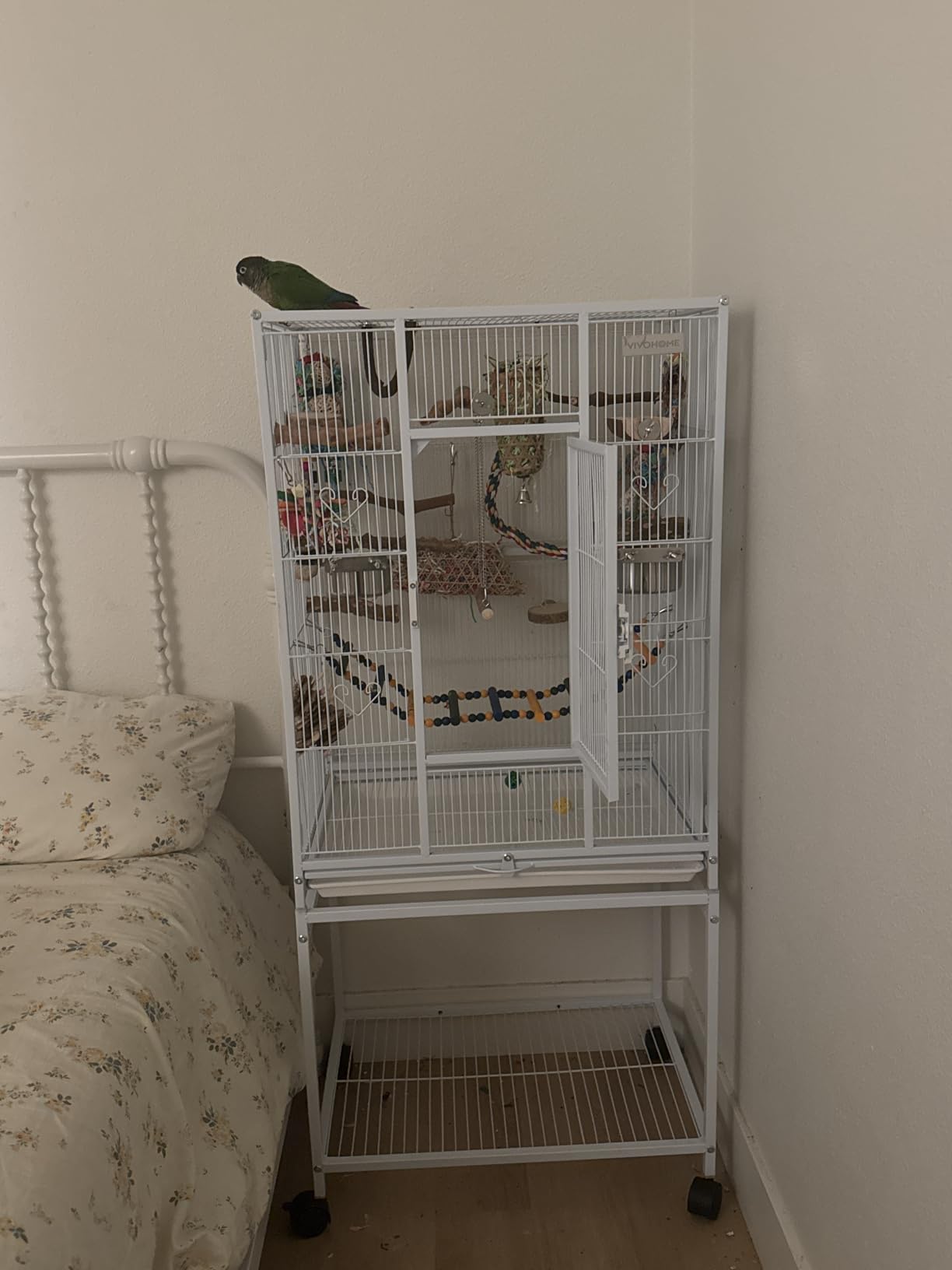
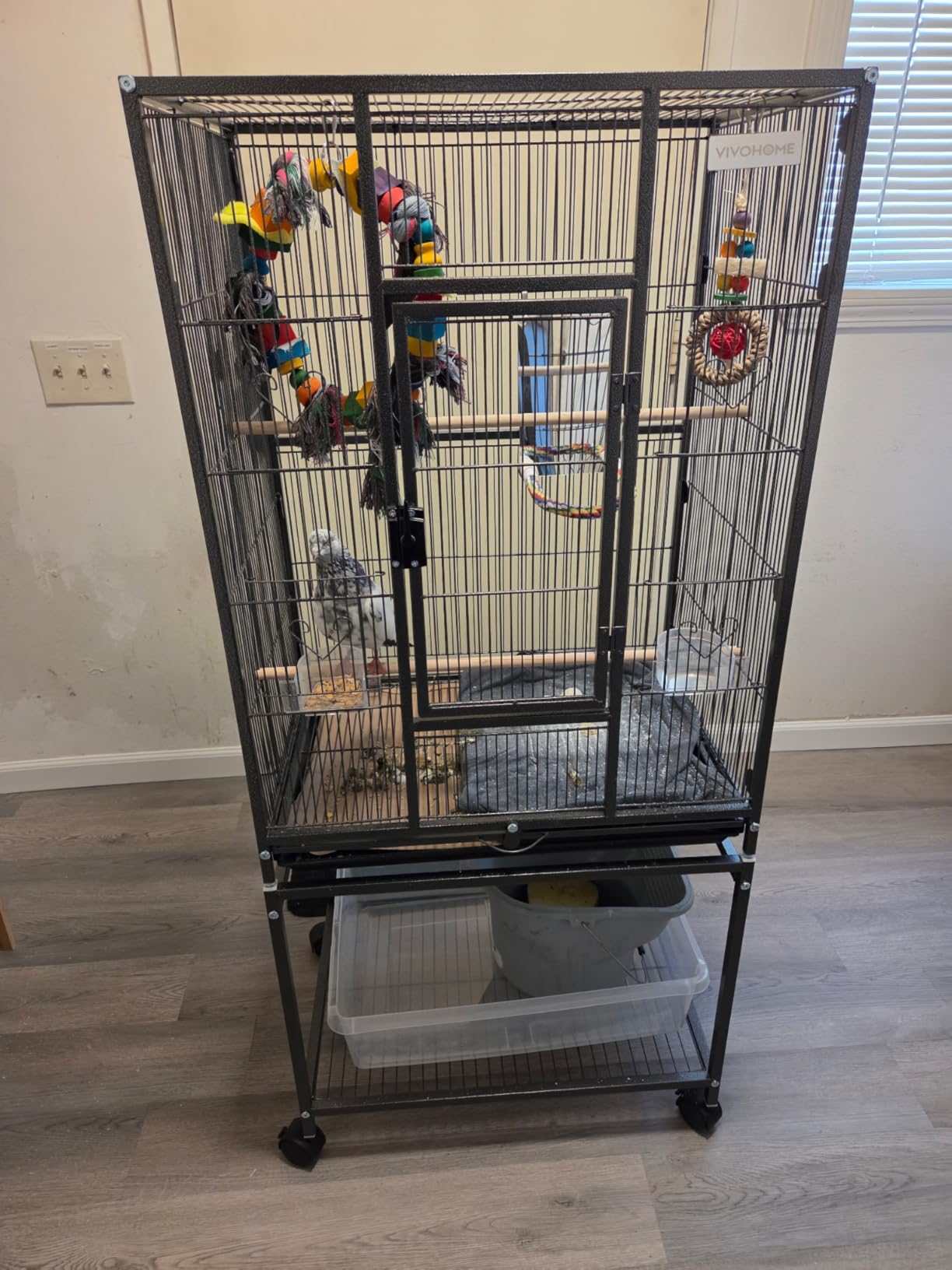
The build is a 23.1 pound metal frame with a non-toxic hammer-pattern corrosion-resistant paint, measuring 24.2 by 16.9 by 54 inches. All shelves are removable for deep cleaning and the bottom is a drawer-style tray, so the weekly reset is a pull-out, a wipe and a rinse.
Quality control is the weak point and the reason this cage sits at 4.3 stars. Reviewers report bent panels on arrival, loose food doors, rust spots and broken bowls, and one found gaps well over 0.4 inch after assembly because the side panels simply slide into place instead of being fastened.
What to check before you commit
Check every panel gap by eye before the birds go in, and measure the spacing at the corners where panels meet. A finch is small enough to exploit a half inch gap, and this is the most important check on this cage because of how the sides are assembled.
Anchor any heavy toys, since the thin bar diameter bends under a rope toy or a swing unless it is tied to a door frame or a side bar. The hex key is included, but hanging hardware is worth buying at the same time.
When this cage is the wrong choice
Front-only doors limit access, and reaching the back to fit perches means moving your birds, which is a daily irritation in a breeding setup where you want to check a nest without disturbance.
It is also short at 24.2 inches, fine for a pair or a single breeding pair and thin for a group. Combine it with a wider low cage rather than expecting it to hold a flock, though owners with zebra finches do report quick settling.
11. VIVOHOME 30 inch Rolling Stand Cage: Best Flight Cage for Quarantine and Second Birds
VIVOHOME Wrought Iron Bird Cage with Rolling Stand, 30 Inch Height
17.9 by 17.9 by 30.3 inch
13 lb
Rust-proof low-carbon steel
4 casters
Pros
- Compact square footprint on casters fits small rooms and moves easily
- Rust-proof water-resistant frame with non-toxic paint
- Drawer-style tray and removable mesh shelf
- Durable latches keep birds contained
- Useful as a secondary or quarantine cage
Cons
- 18 inch square footprint gives limited flight width
- Bar spacing is not as tight as a dedicated finch cage
- Included perches are plain dowels and bowls are basic
Not every bird in a home needs a flight cage, and this is the sensible second one. A rescue bird in quarantine, a bird recovering from illness, or a newcomer being introduced to an established group all need somewhere separate for two to four weeks.
It sits on four caster wheels and measures 17.9 by 17.9 inches rising to 30.3 inches, small enough for a hallway corner. Owners praise how easily it moves, which is what makes a portable quarantine cage practical rather than theoretical.
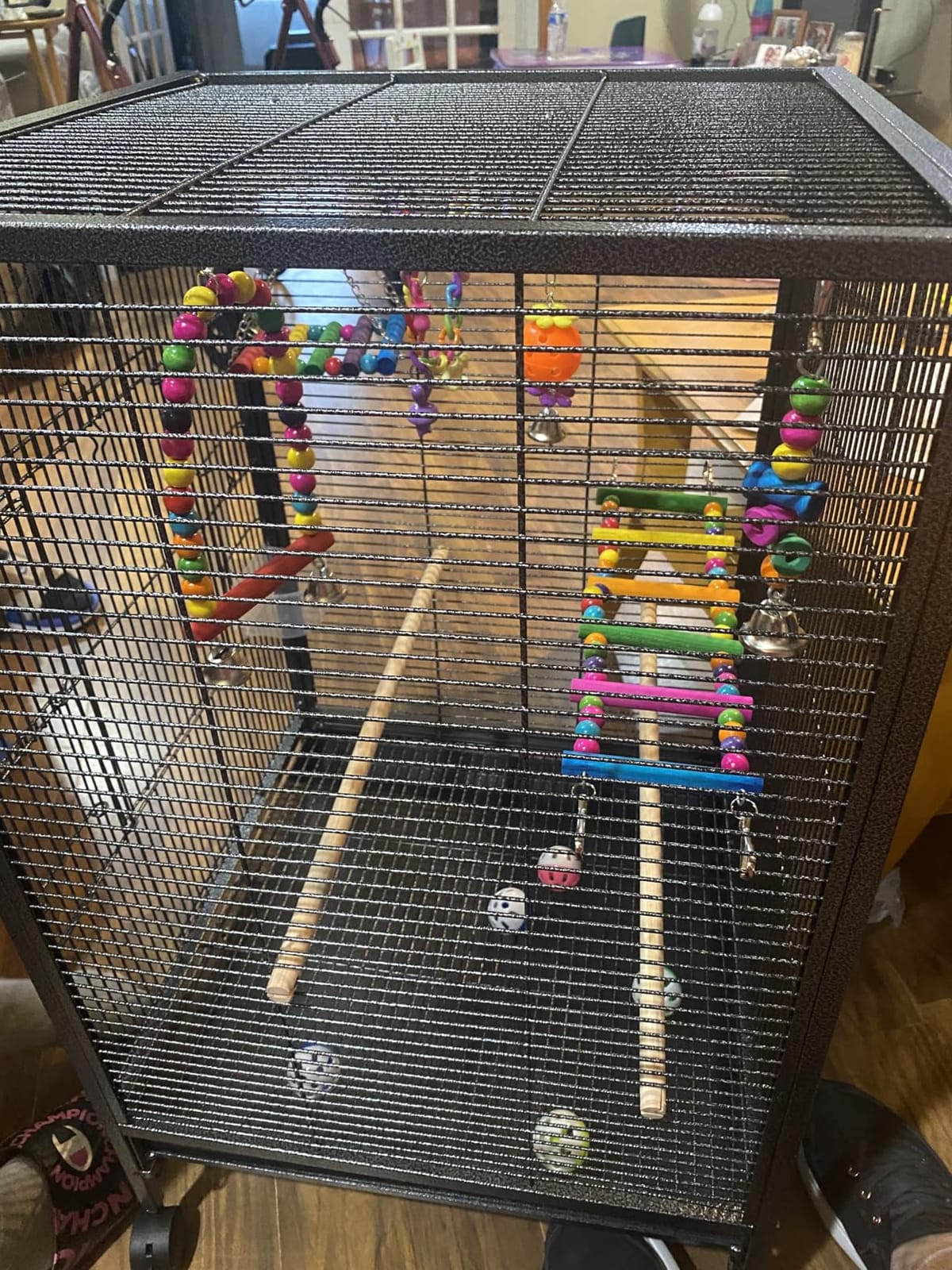
Construction is low-carbon steel described as rust-proof and water-resistant, finished in non-toxic hammer-pattern paint, with strong latches. The drawer-type sandbox and the removable mesh shelf both come out, which matters most when a sick bird means cleaning more often than weekly.
The compromise is the square footprint. At 18 inches square there is no long axis to fly along, so a finch here hops and flutters rather than flies, and that is why owners describe it as a starter or secondary cage. Two food boxes for a multi-bird cage is also thin on accessories.
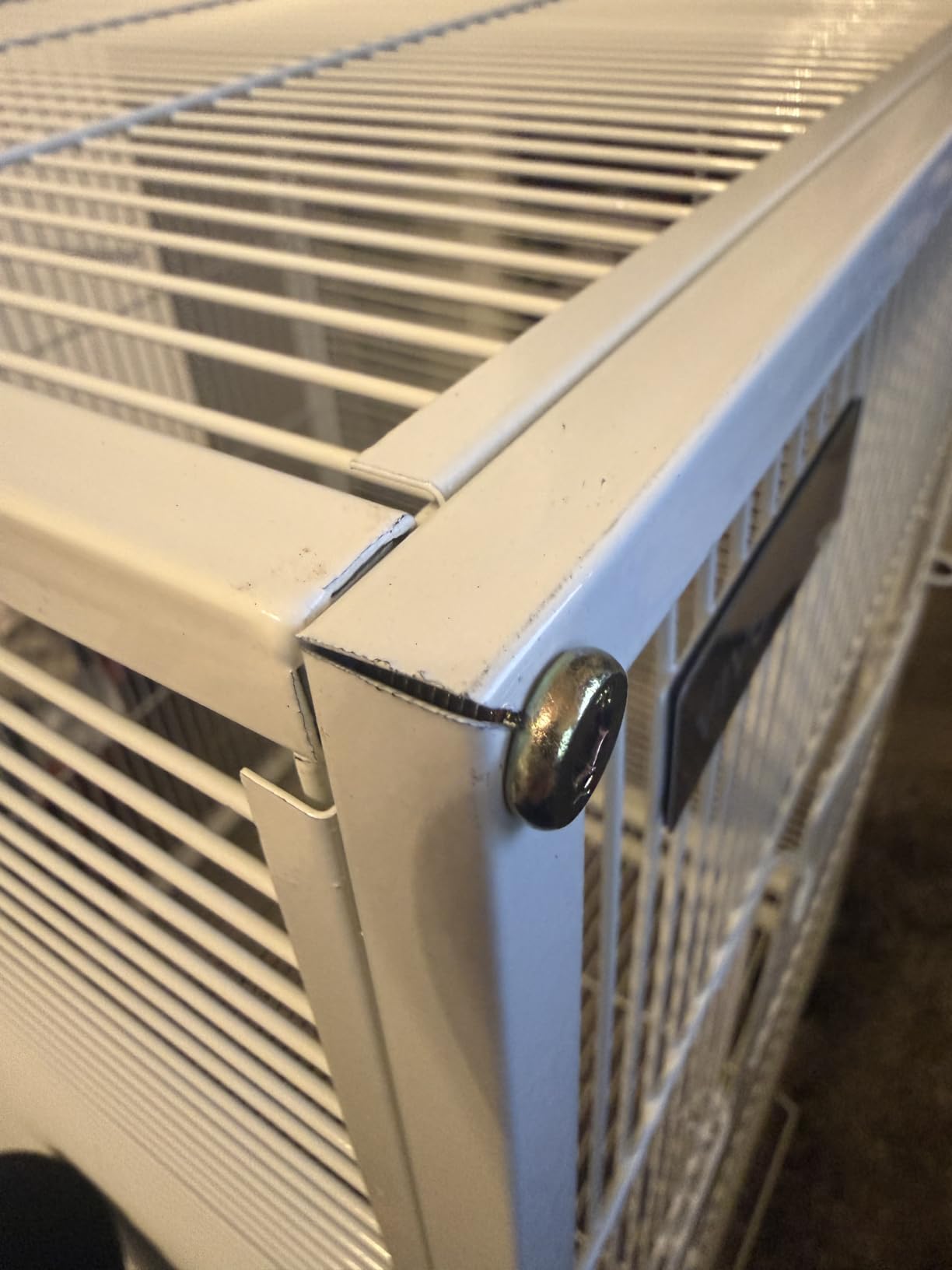
What to check before you commit
Measure the bar spacing yourself, because the listing does not specify it and that is the one number you cannot guess at on a cage for finches. Hold a ruler against the gap and confirm the bird cannot push its head through.
Upgrade the perches and bowls in the same order as the cage. Dowels and basic plastic bowls are the two things almost every owner replaces, and a quarantine period is not the time to leave a recovering bird on a flat perch.
When this cage is the wrong choice
Do not make this the primary home for a pair. The shape works against the one behaviour finches need most, and owners who try report pacing, so use it for short-term separation and move birds into a wide flight cage after.
Skip it if you want a cage that looks good in a living room, since the proportions read as a starter cage rather than an aviary, even though the casters make it genuinely functional.
12. VEVOR 30 inch Stackable Flight Cage: Best Flight Cage for Scaling Up in Small Steps
VEVOR 30 Inch Flight Bird Cage, Stackable Bird Cage Parakeet Cage with Slide-Out Tray and Handle, Small Parrots Birdcage for Cockatiels Budgies Conure Macaw Finch Lovebirds Canaries Pigeons
29.9 by 18.1 by 17.9 inch
0.4 inch grid spacing
9.92 lb steel
Stackable
Pros
- Best flight-space-to-cost ratio we found
- 0.4 inch grid spacing suits finches and canaries
- Tool-free stacking expands housing as a flock grows
- Detachable tray with mesh grating cleans quickly
- Transparent feeders show food levels at a glance
Cons
- 18 inch height limits climbing and vertical perch placement
- Carbon steel is not for powerful beaks despite the listing title
- Stacked units need secure levelling
This is the flexible option, and the reason it works is the stack. Start with one unit for a pair and add identical units as your flock grows, and because the 29.9 by 18.1 by 17.9 inch footprint is wide-and-low with 0.4 inch grid, every unit you add is a genuine flight box.
Owners highlight the stacking design as the practical win, along with the detachable tray and transparent feeders that let you check food levels without opening anything. The side handle also means one person can move a unit between rooms.
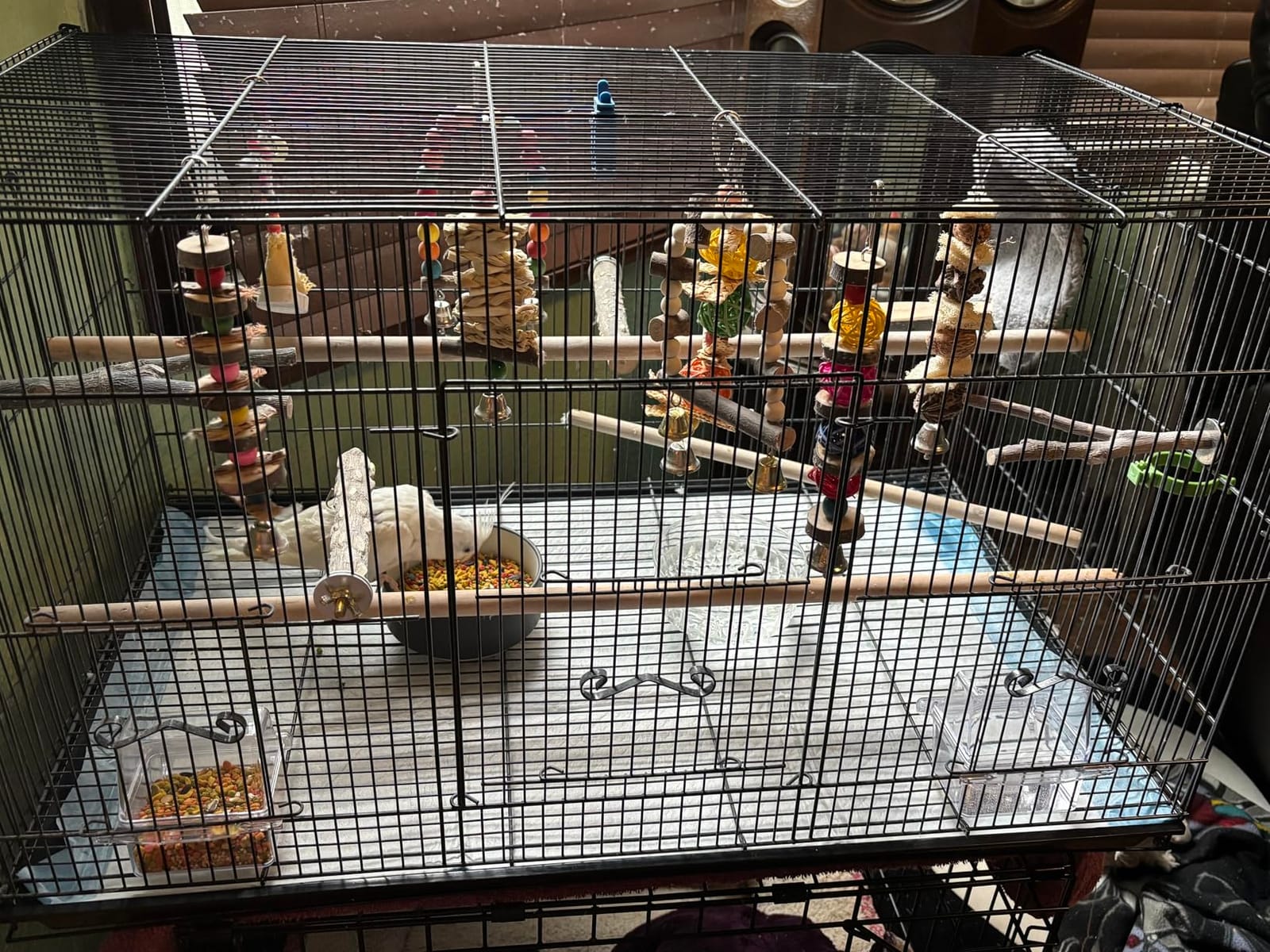
It is a high-strength carbon steel frame weighing just under 10 pounds, with a detachable slide-out tray and mesh grating that keeps birds off waste. Close to 700 ratings at 4.6 stars is unusually strong for a product in this bracket.
Be clear about the boundary. The 17.9 inch height is shallow, so vertical perch placement is limited, and the carbon steel frame is not built for powerful beaks despite broader wording in the listing title. For finches, canaries, lovebirds and pigeons it is more than adequate.
What to check before you commit
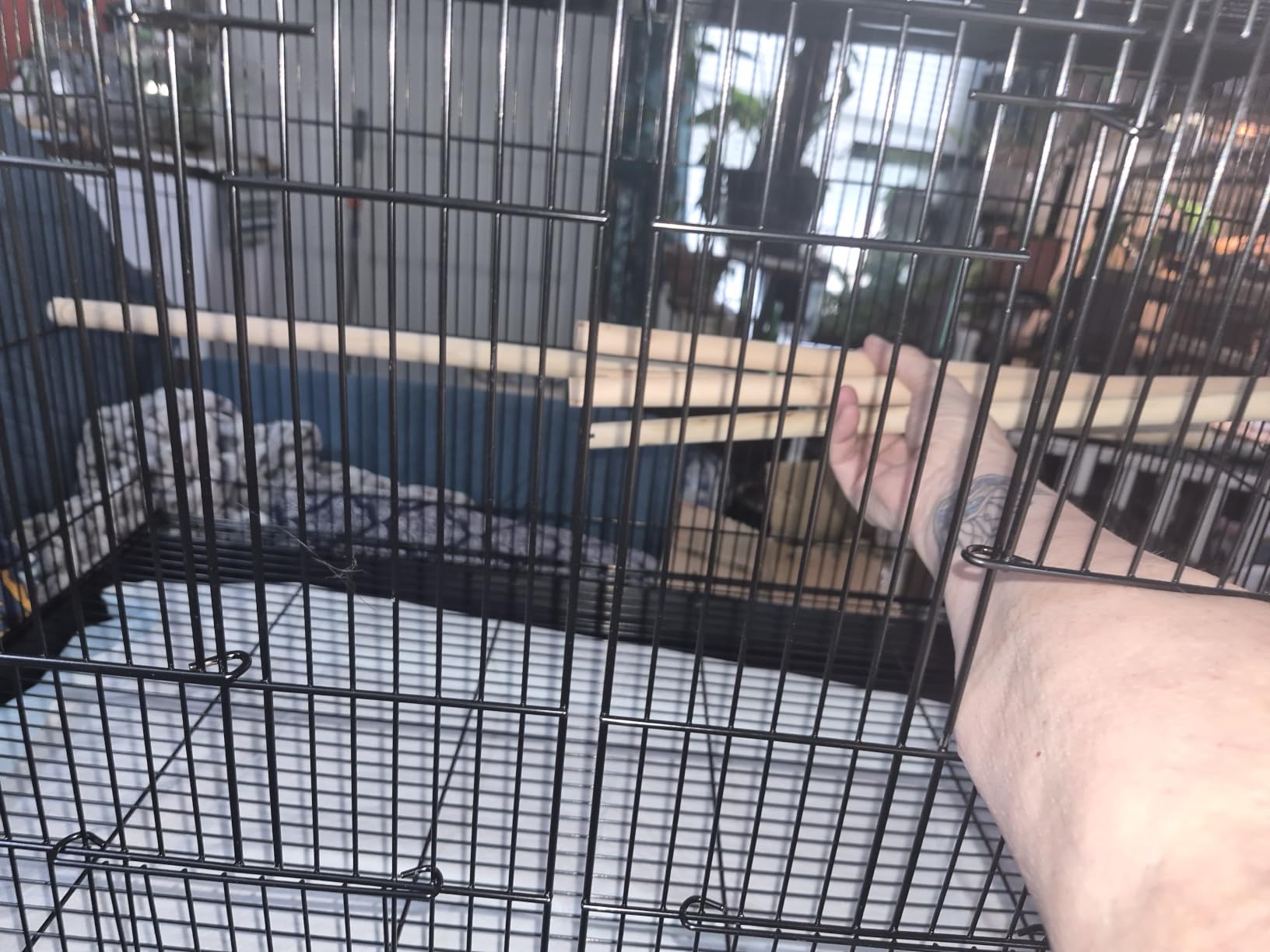
Plan the stack before you buy. Stacked units need secure levelling so doors and trays line up, and a leaning stack with misaligned doors is both a cleaning problem and a gap risk, so level the base first and check it before adding anything above.
Work out how many birds you have. One unit is a pair, two stacked units are two pairs in a small footprint, and that is a much better answer to a growing flock than one tall cage with an empty top half.
When this cage is the wrong choice
Skip it if you want vertical room for climbing or a tall playtop arrangement, since the shallow interior is the flip side of the wide-and-low design and birds that hop upward will feel the ceiling sooner here than anywhere else.
Replace the included dowel perches, which most owners do, and expect functional rather than refined accessories. If you want a cage that reads as furniture, this one will not do it, but in a dedicated bird room the flight space per unit is hard to argue with.
How Big Should a Finch Flight Cage Be?
Finches need at least 30 inches of horizontal length for a single pair, and 40 inches or more for a group of four to six. A pair of zebra finches is comfortable in a 30 by 18 by 18 inch wide-and-low cage, while society finches and Java sparrows, which are larger and more active, do better with 40 inches of length or a double flight cage. The old rule of thumb is that a cage should be at least twice the bird’s wingspan wide, and a finch wingspan is roughly four to five inches.
Height matters far less than length for these birds, and this is where most buyers go wrong. A 30 inch long, 18 inch high cage gives a finch more usable flight than a 20 inch cube, even though the cube looks taller on a product page. Judge a cage by its longest internal measurement, not by the volume on the box.
Measure the interior, not the outside. Overall dimensions include frame thickness, the stand and sometimes the storage shelf, and the difference is often two to three inches in every direction. Two of the cages here publish interior figures separately, and those are the numbers worth comparing across brands.
What Bar Spacing Is Safe for Finches?
Finches need bar spacing of roughly 1/2 to 5/8 inch, and tighter is safer. A finch can wedge its head into a wider gap and panic, which is one of the most common injuries reported by finch keepers. The cages here measure from 3/8 inch up to 5/8 inch, and only the ones at 3/8 and 0.4 inch are comfortable choices for finches.
Two things complicate the answer. Manufacturers do not always publish spacing, so on some models you have to measure the gap yourself with a ruler before the bird arrives. And on cages with sliding or unfastened panels, the spacing at the joins can be wider than on the flat panels, which is why we recommend checking the corners specifically.
Wider spacing suits budgies, cockatiels, lovebirds and quaker parrots, and several of the tall cages here are excellent for those birds. If your plan is a mixed aviary of finches and budgies, buy to the smallest bird in the room rather than the average.
Wrought Iron vs Powder-Coated Steel vs Plastic
Wrought iron gives the most rigid frame and the best resistance to a determined bird, at the cost of weight. The heaviest cages in this roundup sit between 42 and 56 pounds, and those are the ones where casters stop being a convenience and become a requirement.
Powder-coated steel is the practical middle ground and covers most of our recommendations. The coating resists chipping and rust, the frame stays light enough for one person to reposition, and the finish comes in colours that can match a room. Inspect the paint on arrival, because chipped coating on a bent panel is where rust starts.
Plastic is fine for accessories and travel carriers and wrong for a primary flight cage, since it has no bar strength, no rigidity and no way to attach a stand. If you see a round or dome plastic cage recommended for finches, that recommendation is wrong, because those shapes give a finch nowhere to perch flat.
Casters, Weight and Floor Protection
Any cage over about 20 pounds should have casters, and most of the cages here weigh between 9 and 56 pounds. The reason is not convenience. Finches are messy, seed and feathers get everywhere, and a cage you cannot move is a cage you stop cleaning properly within a month.
Check the caster type. Ball casters roll in every direction and are much easier to manoeuvre than fixed two-wheel rollers, and locking casters matter more than smooth ones because a cage that rolls while a bird is inside it can tip. The lightweight stackable units are light enough to carry instead.
Protect the floor. Put a washable mat under the stand footprint of any heavy iron cage, both because casters mark hard floors over time and because it makes sweeping spilled seed a two-minute job. Check that the casters actually lock before you rely on them.
Single vs Double Flight Cage With a Divider
A single long flight cage is the simplest answer and gives one group the full length. If you keep one pair or a single flock, this is the configuration you want, because every bird shares the whole runway and there is no divider to work around when cleaning.
A double flight cage with a removable divider is the right answer for two or more pairs and for anyone breeding. The Mcage and PawHut models here both convert from two compartments to one long space, so you are not committing to a permanent layout. Keep the divider in when a pair is nesting.
One warning specific to finches. On the Mcage double, removing the divider leaves a join gap of roughly one inch that a finch can escape through, so check it or fit mesh first. On the PawHut, birds stay separated until you remove the panel, so plan transitions around that rather than assuming the halves are one space.
Setting Up and Cleaning a Finch Flight Cage
Replace every dowel perch on day one. Nearly every cage here ships with flat wooden dowels, and owners across the review base replace them because birds use a natural branch far more and because flat perches are linked to foot problems. Natural apple, pear or untreated softwood branches, fixed at two points, cost nothing and change how a cage is used.
Use stainless steel bowls and lockable feeders. Finches fling seed hulls across the room, so a good seed guard plus a slide-out tray is the difference between a cage you maintain and one you avoid. Adding a small clip to each feeder costs almost nothing.
Then build a weekly routine. A daily thirty-second pass to check water and drop the tray liner, a weekly slide-out of the tray and floor grate with a rinse, and a monthly full clean of perches and bowls. Finch keepers consistently say a cage that is too big is a better problem than one that is too hard to clean, which is why tray design is weighted so heavily above.
Trusted Bird Cage Brands Worth Knowing
Prevue Pet Products has the deepest owner history in this roundup, with three models carrying 4000, 1741 and 1616 ratings between them. That depth matters, because spare parts, replacement panels and long-run durability reports are easier to find for a brand people have owned for years.
Yaheetech builds three of the cages we recommend and is the only brand here with two models at 0.4 inch bar spacing, making it the natural first stop for a finch-specific search. VEVOR and VIVOHOME cover the wide-and-low and compact ends at the accessible end, Mcage covers the double flight cage, and PawHut covers the extra-long body.
One caution applies across all of them. Casters, feeder doors, wheel fittings and included perches are the weak points in almost every cage here, because they are the cheap parts in an otherwise well-made product. A few dollars spent on clips, a seed guard and natural branches fixes most of what owners complain about.
Frequently Asked Questions
What size flight cage do finches need?
A single pair of finches needs at least 30 inches of horizontal length, and a group of four to six needs 40 inches or more. Height matters far less than length because finches are horizontal fliers. Measure the interior dimensions rather than the overall size, since frame thickness and the stand can eat two to three inches in every direction.
What is the best cage for finches?
The best cage for finches is a wide, rectangular steel flight cage with bar spacing between 3/8 and 1/2 inch, a slide-out tray, a removable floor grate and casters. Our top pick is the Prevue Pet Products Steel Bird Flight Cage with Wheels, a 31 by 20.5 by 53 inch cage that owners stock with five or more finches.
Should finches be covered at night?
Many finch keepers partially cover the cage at night with a dark, breathable fabric, which helps settled birds sleep instead of reacting to household lights. Leave the cage partly uncovered so airflow continues, and make sure the fabric is not sealed against the bars.
What is the most reliable brand of bird cages?
In this roundup Prevue Pet Products has the deepest owner history, with three models carrying 4000, 1741 and 1616 ratings between them, and long-term owners report years of use without rust or broken parts. Yaheetech is the strongest alternative for finch owners specifically, because it offers the only two models here with 0.4 inch bar spacing.
How many finches can live in one flight cage?
A single flight cage with 30 inches of length comfortably holds a pair, and 40 inches or more works for a group of four to six. Finches are social birds and should not be kept alone. For more than two pairs, a double flight cage with a removable divider lets you separate pairs while using one footprint.
The Verdict on the Best Flight Cages for Finches in 2026
The best flight cages for finches share three traits that no amount of styling substitutes for: horizontal length, bar spacing of 1/2 inch or tighter, and a tray you can remove without dismantling anything. Our top pick, the Prevue Steel Bird Flight Cage with Wheels, delivers all three with the deepest owner history in the set. For tight rooms, go low and wide with the Prevue stackable or the VEVOR, and for two pairs, the Mcage double with its removable divider.
Replace the dowel perches, clip the latches and add a seed guard before the finches arrive. Those three cheap fixes resolve most of what owners complain about, and then use the check buttons above to compare current options.