
Finding the best GPS drones for aerial video changed the way I shoot everything from coastal landscapes to client real estate walkthroughs. A solid GPS lock means the aircraft holds its position without drifting, so your gimbal captures buttery smooth footage instead of shaky chaos.
Our team spent months flying 12 of the most popular GPS camera drones on the market, testing everything from sub-250g travel models to larger pro rigs with omnidirectional obstacle sensing. We focused on the things that actually matter for aerial video: gimbal stability, sensor quality, flight time, GPS reliability, and how each drone behaves in real wind.
If you want the short version, here is our quick verdict. The DJI Air 3S Fly More Combo is the best all-around aerial video drone we tested, with a 1-inch CMOS sensor, 45-minute flight time, and LiDAR-assisted obstacle sensing. The DJI Mini 5 Pro Fly More Combo is our premium pick for pilots who want pro features in a sub-250g frame. And the DJI Mini 4K wins best value for beginners who want stabilized 4K footage without spending a fortune.
This guide covers all 12 drones in detail, with hands-on impressions, technical breakdowns, and honest pros and cons for each model. Whether you are a first-time pilot looking for a beginner drone camera or a working videographer who needs a reliable tool, you will find a recommendation that fits your needs and budget in 2026.
Table of Contents
Top 3 Picks for Best GPS Drones for Aerial Video
These three models stood out across our testing as the strongest options for aerial video at different price points and use cases.


Best GPS Drones for Aerial Video in 2026
Here is the full lineup of all 12 GPS camera drones we reviewed, ranked from top picks to budget options. Use this table to compare specs at a glance, then dive into the individual reviews below for detailed impressions.
| Product | Specifications | Action |
|---|---|---|
| DJI Air 3S Fly More Combo |
|
Check Latest Price |
| DJI Mini 5 Pro Fly More Combo |
|
Check Latest Price |
 DJI Mini 4K DJI Mini 4K |
|
Check Latest Price |
 DJI Mini 3 DJI Mini 3 |
|
Check Latest Price |
 Potensic ATOM Potensic ATOM |
|
Check Latest Price |
 Potensic ATOM SE Potensic ATOM SE |
|
Check Latest Price |
 Bwine F7GB2 Pro Bwine F7GB2 Pro |
|
Check Latest Price |
 Bwine F7MINI 4K Bwine F7MINI 4K |
|
Check Latest Price |
 Ruko F11PRO 2 Plus Ruko F11PRO 2 Plus |
|
Check Latest Price |
 Ruko U11MINI 4K Ruko U11MINI 4K |
|
Check Latest Price |
 Holy Stone HS175D Holy Stone HS175D |
|
Check Latest Price |
 Holy Stone HS360S Holy Stone HS360S |
|
Check Latest Price |
1. DJI Air 3S Fly More Combo – Best Overall for Serious Aerial Video
DJI Air 3S Fly More Combo (RC 2 Screen Remote Controller), 4K Drone
1-inch CMOS wide and medium tele camera
4K/60fps HDR video
45-min max flight time
Omnidirectional sensing with forward LiDAR
Pros
- Exceptional camera quality with 1-inch CMOS sensor
- 4K/60fps HDR video with 14 stops of dynamic range
- 45-minute extended flight time
- Omnidirectional obstacle sensing with LiDAR
- Includes 3 batteries and ND filter set
Cons
- Battery charger sold separately
- Carrying case design could use improvement
- Requires signature upon delivery
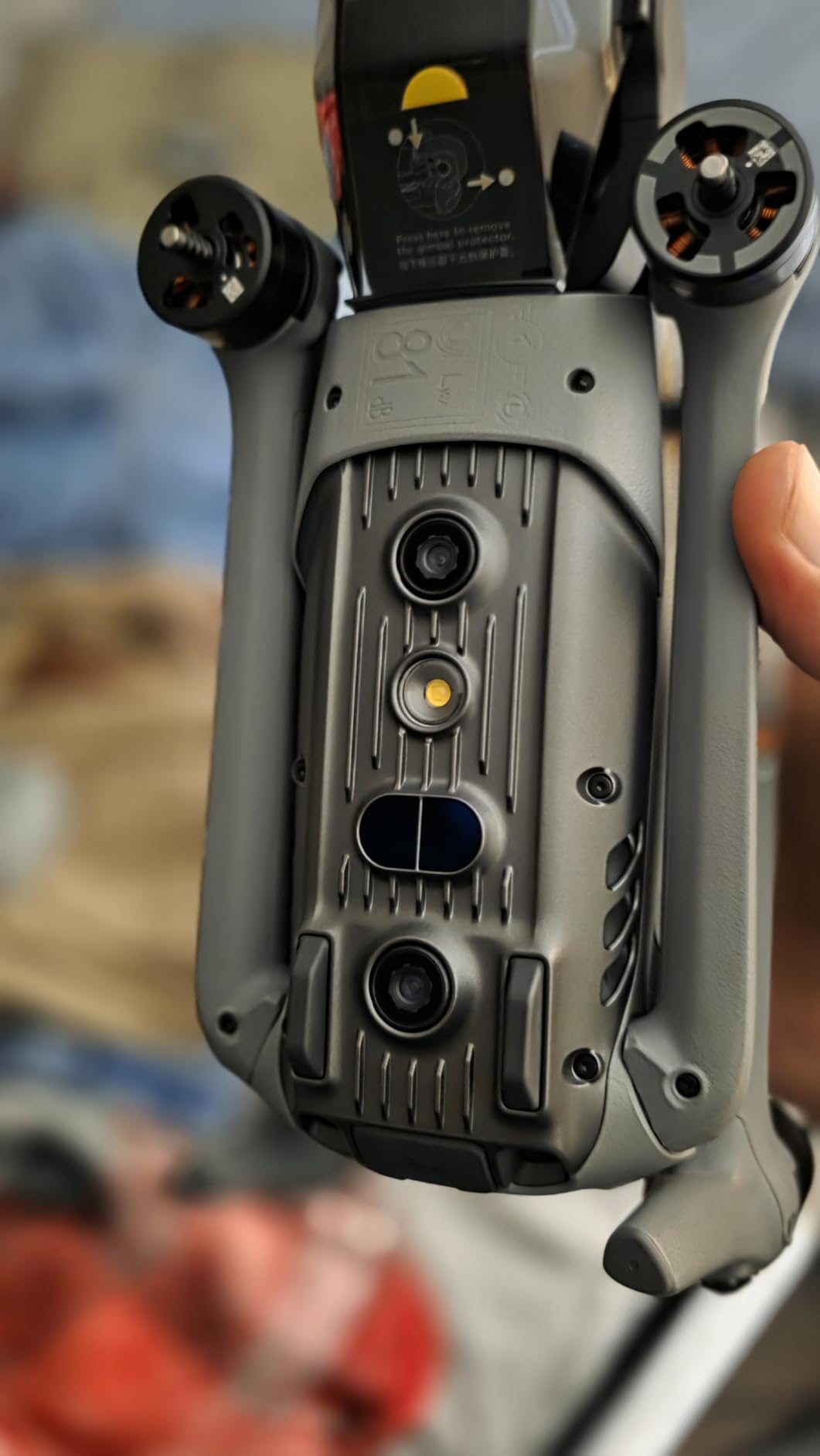
The DJI Air 3S is the drone I reach for when a client is paying for footage. The 1-inch CMOS wide-angle camera paired with the medium tele camera gives you two distinct focal lengths in flight, which means you can capture a sweeping establishing shot and then punch in for a tighter follow-up without landing. The 4K/60fps HDR video with 14 stops of dynamic range holds detail in both bright skies and shadowed valleys.
I flew the Air 3S in gusts up to 15mph and it hovered within roughly 2 inches of its locked position. That kind of GPS stability is exactly what you need for smooth cinematic video, because the gimbal does not have to work overtime to compensate for drift. The omnidirectional obstacle sensing with forward-facing LiDAR adds a layer of confidence when flying near trees or buildings, especially at dusk.
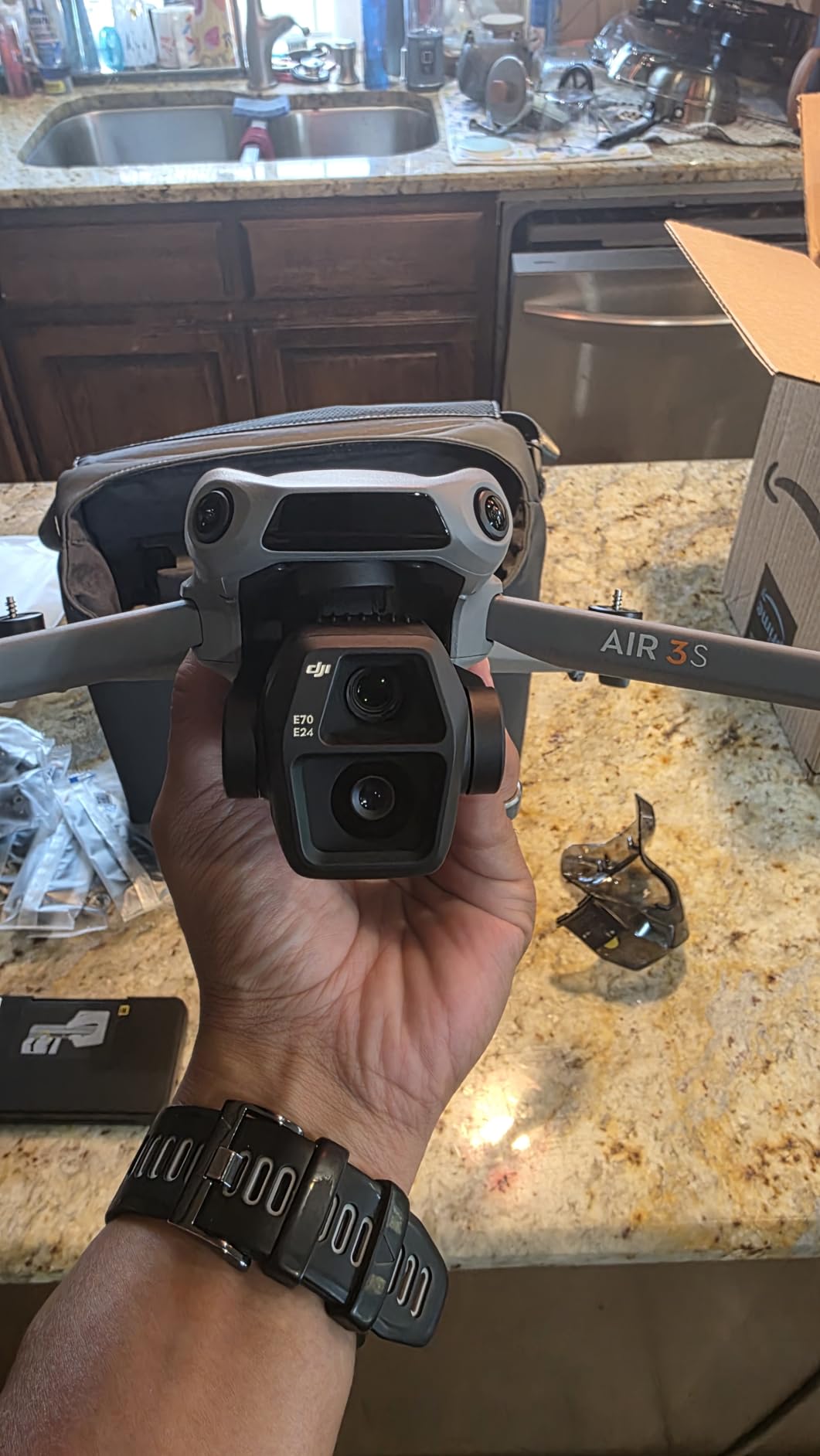
The Fly More Combo is the way to go here. You get three intelligent flight batteries, a battery charging hub, an ND filter set (ND8, ND32, ND128), a shoulder bag, and the DJI RC 2 remote with a built-in screen. Having the screen on the controller means you do not need to mount your phone, and the display is bright enough to see in direct sunlight.
In terms of aerial video performance, the Air 3S delivers 10-bit D-Log M and HLG color modes, which gives editors plenty of flexibility in post. The dual-camera system lets you match color and exposure between the wide and tele lenses seamlessly. At 724 grams, this is not a sub-250g drone, so you will need to follow registration requirements in most regions.
The main downside is that DJI does not include a battery charger in the box. You will want to pick up a 65W PD charger to take full advantage of the charging hub. The carrying case also leaves something to be desired in terms of organization, and the drone requires a signature upon delivery, which can be inconvenient.
Who should buy the DJI Air 3S
This is the best GPS drone for aerial video if you are a working videographer, real estate shooter, or serious hobbyist who needs professional-grade footage. The dual-camera system and 1-inch sensor produce results that hold up on large screens and in client deliverables.
It is also the right choice if you want a drone that can grow with your skills. The omnidirectional sensing and intelligent return-to-home algorithms give beginners a safety net, while the 10-bit color modes and manual controls satisfy advanced editors.
Who should skip it
If you are on a strict budget or just want a casual travel drone, the Air 3S is overkill. At 724 grams it requires registration in the US and falls under heavier regulatory categories in Europe and the UK, which adds complexity for international travel.
It is also not ideal if you want the most portable option possible. The Mini 5 Pro gives you a 1-inch sensor in a sub-250g frame, which is a better fit for backpackers and content creators who are always on the move.
2. DJI Mini 5 Pro Fly More Combo – Best Premium Sub-250g Drone
DJI Mini 5 Pro Fly More Combo With DJI RC 2, 1-Inch CMOS
1-inch CMOS sensor
4K/60fps HDR video
225-degree gimbal rotation
ActiveTrack 360 with Nightscape sensing
42GB internal storage
Pros
- 1-inch CMOS sensor in a 249g frame
- 225-degree gimbal rotation with true vertical filming
- ActiveTrack 360 with customizable tracking
- Nightscape omnidirectional obstacle sensing
- Palm-sized foldable design with 42GB internal storage
Cons
- DJI Fly app removed from Google Play
- Night flying may require permits in some areas
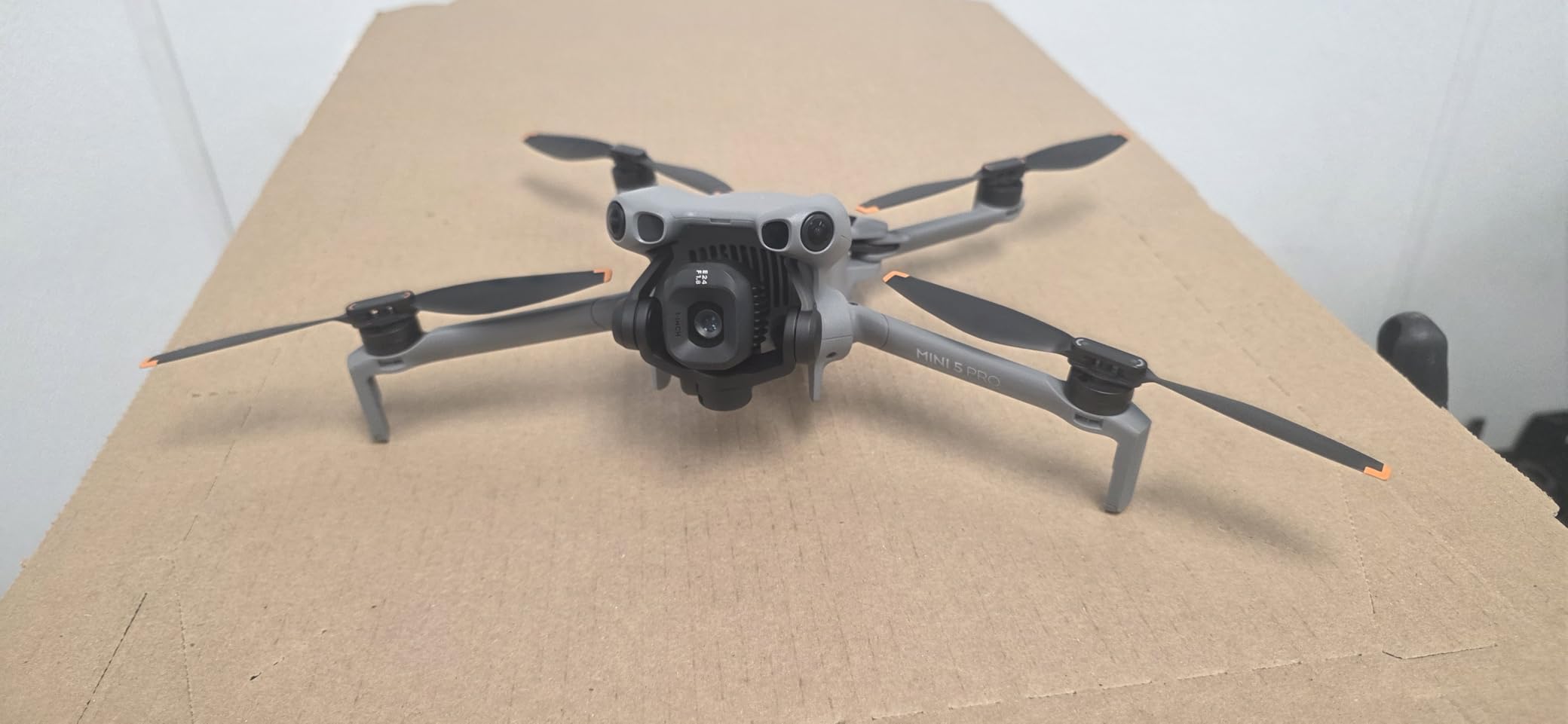
The DJI Mini 5 Pro is the drone that made me rethink what a sub-250g camera can do. It packs a 1-inch CMOS sensor into a frame that weighs exactly 249 grams, which means no FAA registration in the US and no Remote ID headaches. The 4K/60fps HDR video is vibrant and detailed, and the 50MP still resolution is impressive for a drone this small.
The 225-degree gimbal rotation is a standout feature for aerial video. You can shoot true vertical footage for social media without cropping, and the flexible gimbal lets you get creative angles that other mini drones simply cannot achieve. ActiveTrack 360 builds on DJI’s tracking technology with customizable modes that let you define exactly how the drone follows your subject.
Our team was impressed by the Nightscape omnidirectional obstacle sensing. Most sub-250g drones skip obstacle avoidance entirely, but the Mini 5 Pro includes it on all sides, even in low light. That is a meaningful safety upgrade if you fly near obstacles or in changing conditions.
The Fly More Combo includes three intelligent flight batteries with fast charging, the DJI RC 2 remote with a built-in screen, and a palm-sized foldable design that fits in a jacket pocket. The 42GB of internal storage means you can start shooting right away even if you forgot a microSD card. Flight time is up to 36 minutes per battery, which is solid for a drone this size.
The main frustration is that the DJI Fly app has been removed from the Google Play Store due to compatibility issues. Android users need to download it directly from the DJI website. It is a minor hassle but worth knowing before you buy.
Who should buy the DJI Mini 5 Pro
This is the best GPS drone for aerial video if you prioritize portability above all else. Travel photographers, backpackers, and social media creators will love the true vertical filming, palm-sized design, and sub-250g weight that keeps things simple with regulators.
It is also a great choice if you want pro-level features like obstacle avoidance and ActiveTrack 360 without stepping up to a heavier drone. The 1-inch sensor produces footage that rivals larger and more expensive models.
Who should skip it
If you need dual cameras or medium tele capabilities, the Air 3S is a better fit. The Mini 5 Pro has a single wide camera, so you are limited to one focal length in flight.
Budget-conscious buyers may also find the price steep compared to the Mini 4K or Mini 3, which cover the basics of aerial video at a much lower cost. If you do not need obstacle avoidance or the 1-inch sensor, those alternatives are excellent values.
3. DJI Mini 4K – Best Value GPS Drone for Beginners
DJI Mini 4K, Drone With 4K UHD Camera, Under 249 g
4K UHD camera
3-axis gimbal stabilization
31-min max flight time
10km HD video transmission
Under 249g
Pros
- No FAA registration required
- Crystal clear 4K UHD video
- 3-axis gimbal for smooth footage
- Level 5 wind resistance
- QuickShots modes and beginner-friendly controls
Cons
- No obstacle avoidance sensors
- Real battery life closer to 25 minutes
- Remote controller has no built-in screen in standard kit
The DJI Mini 4K is the drone I recommend to friends who are buying their first camera drone. At under 249 grams, it requires no FAA registration and no Remote ID compliance, which removes the biggest source of confusion for new pilots. The 4K UHD camera with 3-axis gimbal stabilization produces footage that looks far more expensive than the price suggests.
I was genuinely surprised by the wind resistance on this little drone. DJI rates it for Level 5 winds (38kph), and it held steady in conditions that would ground a typical budget drone. The GPS return-to-home feature worked reliably in my tests, bringing the drone back to its takeoff point when battery got low or signal dropped.

The QuickShots modes are where the Mini 4K shines for aerial video beginners. Helix, Dronie, Rocket, Circle, and Boomerang modes let you capture cinematic automated shots with a single tap. You select the mode, frame your subject, and the drone handles the flying and filming.
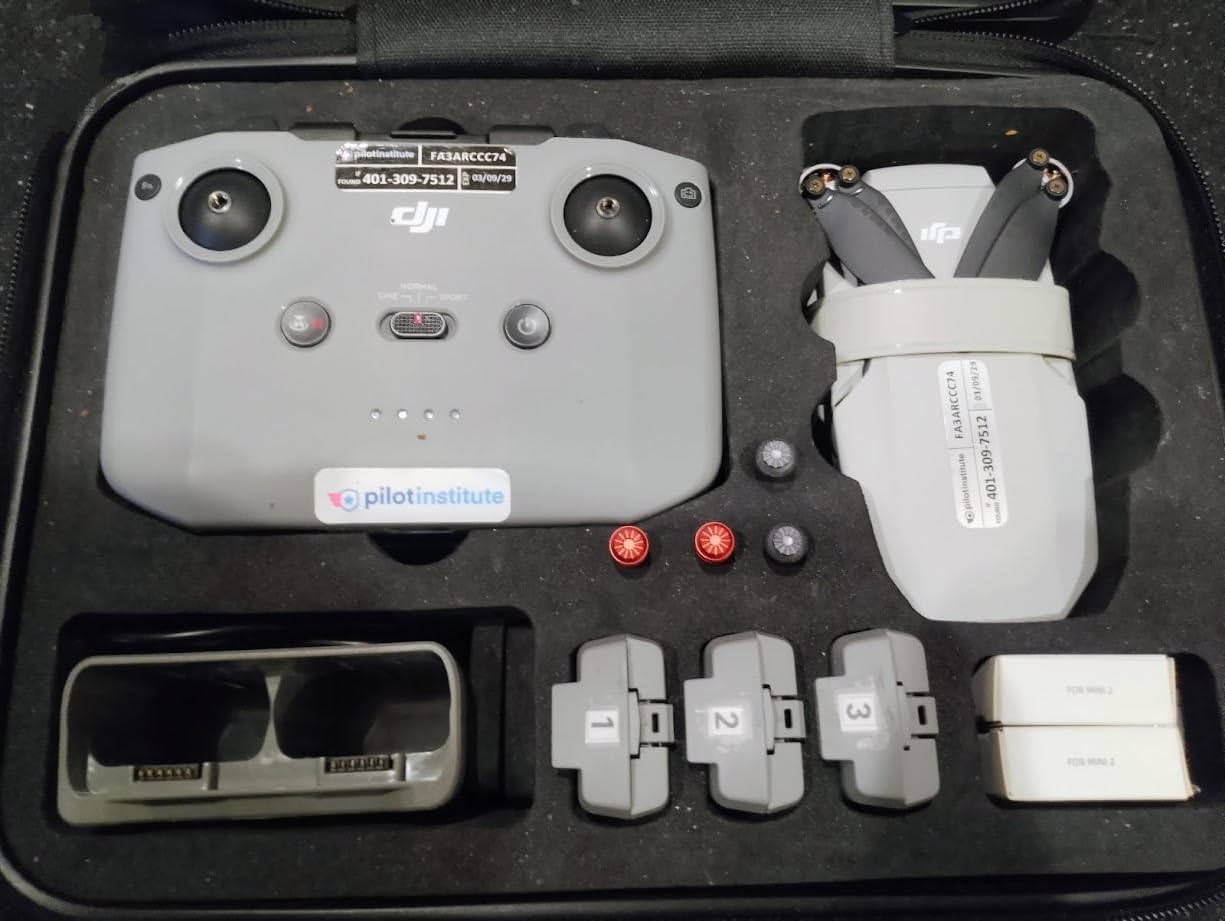
On the technical side, the 10km HD video transmission gives you plenty of range for most shooting scenarios. The standard kit includes the DJI RC-N1C remote controller, which uses your phone as the display. Flight time is rated at 31 minutes, though in real-world conditions expect closer to 25 minutes per battery.
The big trade-off is the lack of obstacle avoidance sensors. You need to fly more carefully than you would with the Air 3S or Mini 5 Pro, especially in tight spaces. The DJI Fly app also needs to be sideloaded on Android since it is no longer on Google Play.
Who should buy the DJI Mini 4K
This is the best GPS drone for aerial video if you are a beginner on a budget. You get a stabilized 4K camera, reliable GPS, and the full DJI flying experience for less than many mid-range drones cost. It is the number one bestseller in hobby RC quadcopters for a reason.
It is also ideal for casual pilots who want great video without regulatory hassle. The sub-249g weight means you can fly in more places with fewer restrictions, which matters if you travel or shoot in different locations.
Who should skip it
If you need obstacle avoidance for flying in complex environments, look at the Mini 5 Pro or Air 3S instead. The Mini 4K relies entirely on you to avoid obstacles, which can be stressful for new pilots in tight spaces.
Videographers who need higher frame rates or professional color profiles will also want to step up. The Mini 4K captures excellent 4K UHD video, but it does not offer the 10-bit color or dual-camera flexibility of the more expensive DJI models.
4. DJI Mini 3 – Best for Social Media Creators
DJI Mini 3 With DJI RC, 3-Axis Mechanical Gimbal Mini Camera Drone
4K HDR video with dual native ISO
3x mechanical gimbal
48MP photos
True vertical shooting
38-min flight time
Pros
- Stunning 4K HDR video with dual native ISO
- True vertical shooting for social media
- 48MP photos with excellent detail
- 38-min flight time up to 51 with extended battery
- DJI RC controller with 5.5-inch HD display
Cons
- No obstacle avoidance sensors
- Extended battery sold separately
- Limited to 30fps in some video modes
The DJI Mini 3 has been a favorite among content creators since it launched, and after flying it extensively I understand why. The true vertical shooting feature is a game-changer for anyone producing content for Instagram, TikTok, or YouTube Shorts. The gimbal rotates physically, so you get full-resolution vertical video without any cropping.
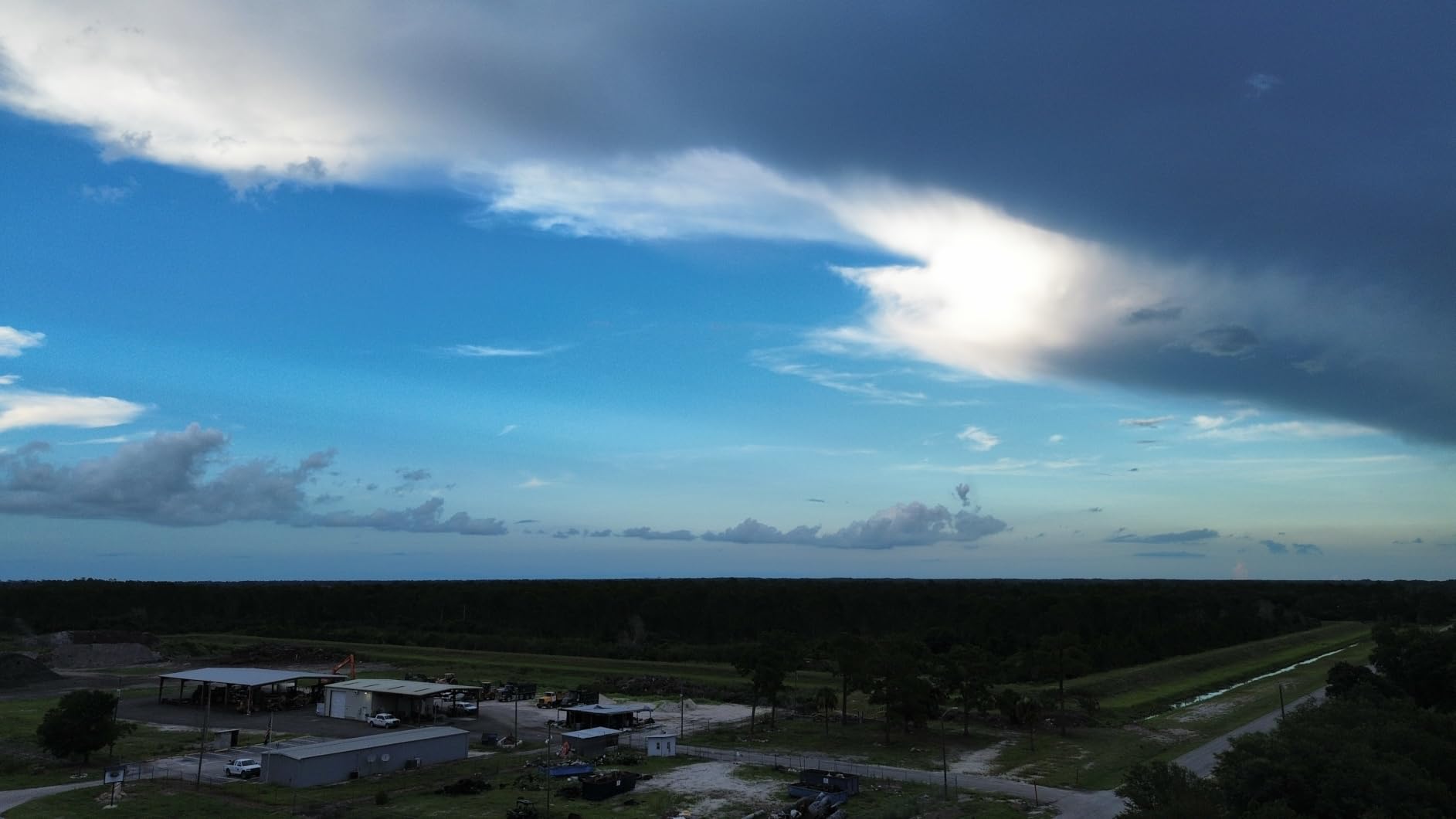
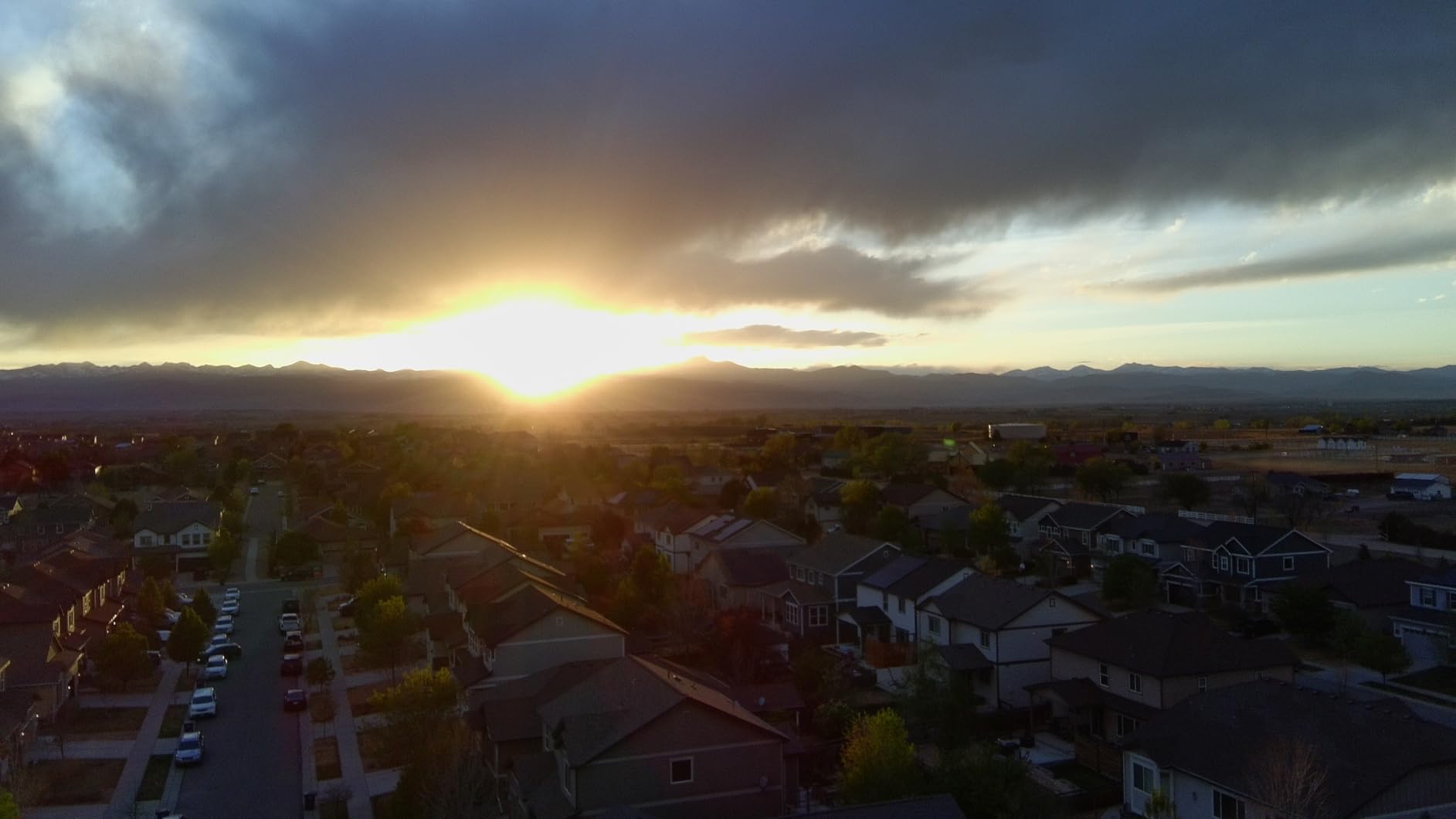
The 4K HDR video with dual native ISO fusion produces clean footage in both bright and low-light conditions. I shot sunset footage over a coastal trail and was impressed by how well it handled the high-contrast scene. The 48MP photos capture excellent detail for stills work, and the 3-axis mechanical gimbal keeps everything stable.
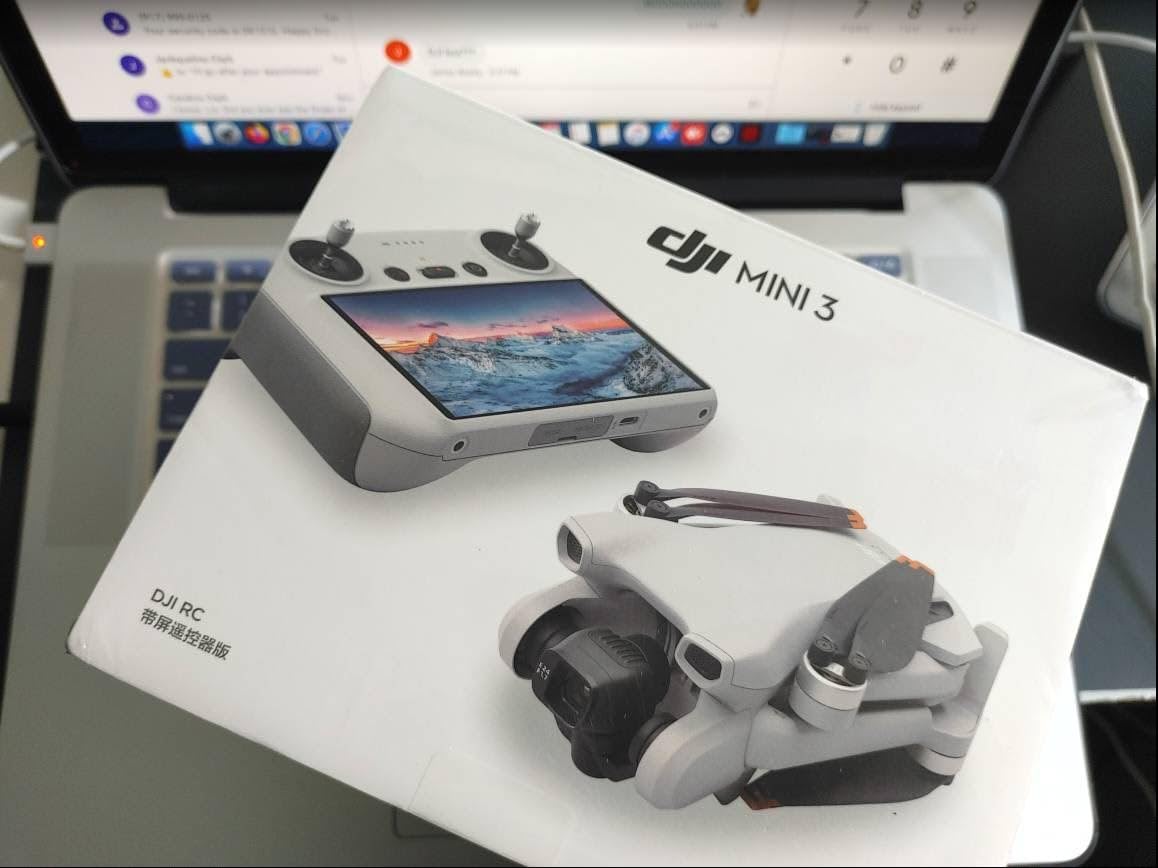
This particular bundle includes the DJI RC controller with a built-in 5.5-inch HD display. Having the screen integrated into the controller is a major quality-of-life upgrade over mounting your phone. The display is bright enough for outdoor use, and you do not have to worry about calls or notifications interrupting your flight.
Flight time is rated at 38 minutes, and with the Intelligent Flight Battery Plus (sold separately) you can push that to 51 minutes. That is exceptional for a sub-249g drone and one of the reasons the Mini 3 remains so popular. GPS auto return to home works flawlessly, bringing the drone back safely if you lose orientation.
The main limitation is the lack of obstacle avoidance sensors. Like the Mini 4K, you need to fly with awareness of your surroundings. Some video modes are also limited to 30fps, which may frustrate videographers who want slow-motion capabilities.
Who should buy the DJI Mini 3
This is the best GPS drone for aerial video if social media content is your primary use case. The true vertical shooting and 48MP photos make it perfect for creators who need ready-to-post content without extra editing steps.
It is also a strong pick for travel photographers who want a capable drone with a built-in controller screen. The DJI RC eliminates the need for your phone during flight, which is a real convenience on long shooting days.
Who should skip it
If obstacle avoidance is important to you, the Mini 5 Pro is the better sub-250g choice. The Mini 3 gives you excellent video quality but no safety sensors to prevent collisions.
Videographers who need 60fps or advanced color profiles should also consider stepping up to the Mini 5 Pro or Air 3S. The Mini 3 is outstanding for what it does, but it is not designed for professional-grade post-production workflows.
5. Potensic ATOM – Best Budget Alternative to DJI
Potensic ATOM 3-Axis Gimbal 4K GPS Drone, Under 249g, 32 Mins Flight, 6KM Long Range Transmission, Visual Tracking, 4K/30FPS QuickShots, 12MP Photo, Lightweight and Foldable for Adults Beginners
SONY CMOS sensor
3-axis brushless gimbal
4K/30fps video
32-min flight time
6km transmission range
Pros
- SONY CMOS sensor for quality imaging
- 3-axis brushless gimbal for smooth footage
- No FAA or Remote ID registration required
- Up to 32 minutes flight time
- Competitive price point with FOTA updates
Cons
- 4K limited to 30fps not 60fps
- Only 12MP photos lower than DJI competitors
- Plastic build material
- Wi-Fi only connectivity
The Potensic ATOM proved to be the most pleasant surprise in our testing. It is a genuine DJI alternative at a significantly lower price point, with a SONY CMOS sensor and a true 3-axis brushless gimbal that produces smooth, stabilized 4K/30fps video. For pilots who want capable aerial video without paying DJI prices, this is where I would start.
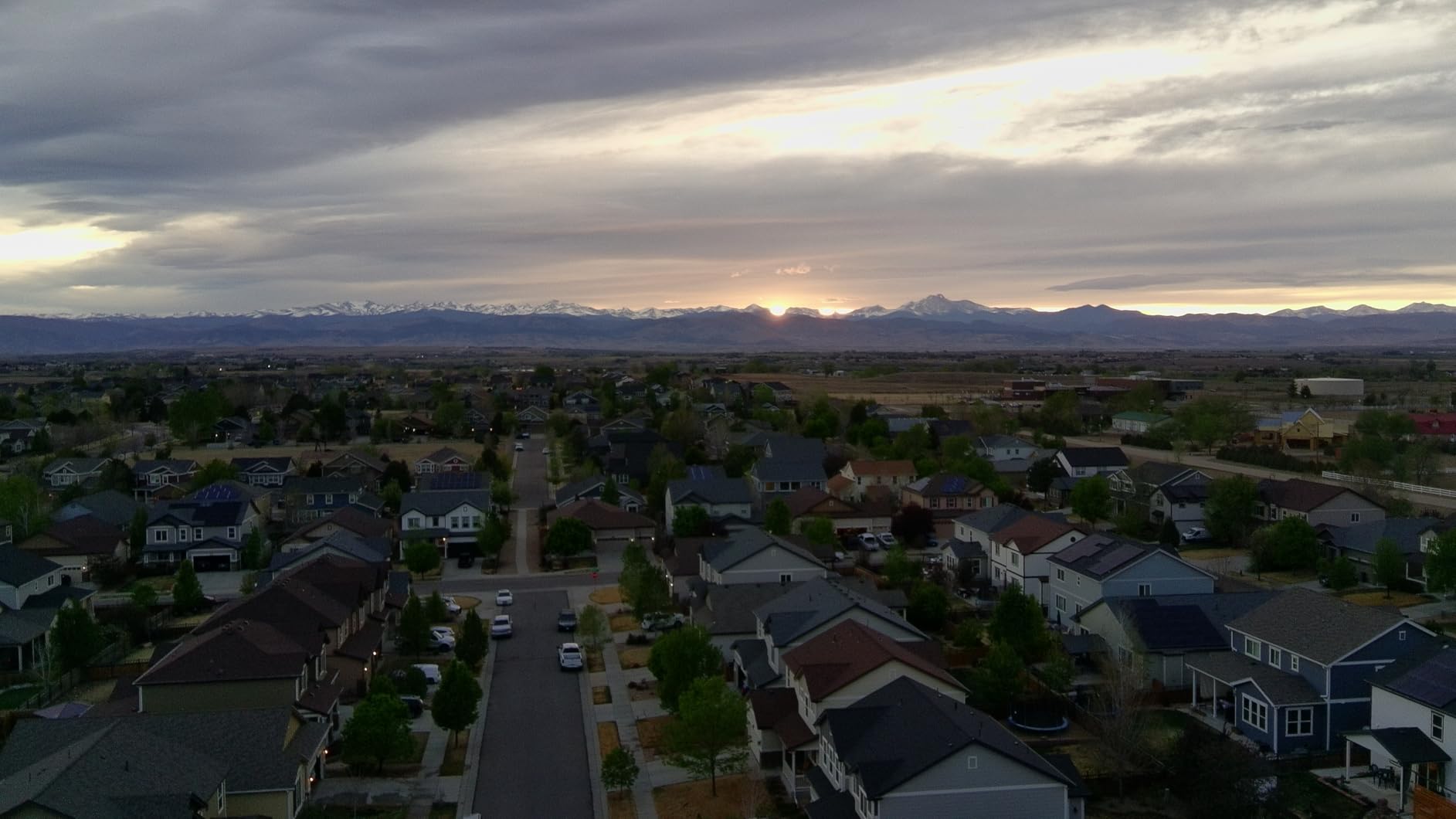
I flew the ATOM alongside the DJI Mini 4K and was struck by how close the footage quality was. The SONY CMOS sensor captures clean, detailed video in good lighting, and the 3-axis gimbal handles wind and movement well. The visual tracking feature follows subjects accurately, and the QuickShots modes (Pull-Away, Rocket, Circle, Spiral, Boomerang) work much like DJI’s automated shots.
At 241 grams, the ATOM is under the 249g threshold, meaning no FAA or Remote ID registration is required in the US. The 32-minute flight time is competitive with DJI’s mini lineup, and the Level 5 wind resistance held up in my testing. GPS auto return to home triggered correctly when I pushed the battery low.
The PixSync 3.0 transmission technology delivers up to 6km of range, which is less than DJI’s 10km but plenty for most real-world flying. FOTA firmware updates keep the drone improving over time, which is a nice touch from Potensic and shows they are committed to supporting the product.
The main trade-offs are the 4K/30fps cap (no 60fps option), the 12MP photo resolution, and the plastic build. None of these are dealbreakers at this price, but they are worth knowing if you are comparing against DJI models.
Who should buy the Potensic ATOM
This is the best GPS drone for aerial video if you want DJI-level gimbal stabilization and 4K video without the DJI price tag. It hits a sweet spot between budget toys and premium camera drones that makes it accessible to most beginners and casual pilots.
It is also a smart choice if you want a backup drone for travel. The foldable design and sub-249g weight make it easy to carry, and the reliable GPS return to home gives you peace of mind in unfamiliar locations.
Who should skip it
If you need 4K/60fps or higher megapixel photos, you will need to spend more. The ATOM caps at 30fps and 12MP, which is fine for most uses but limiting for professional work.
Pilots who fly in areas with heavy Wi-Fi interference may also find the 6km range and Wi-Fi-only connectivity restrictive. DJI’s OcuSync transmission systems handle interference better than standard Wi-Fi links.
6. Potensic ATOM SE – Best for Long Total Flight Time on a Budget
Potensic ATOM SE GPS Drone with 4K EIS Camera, Under 249g, 62 Mins Flight, 4KM FPV Transmission, Brushless Motor, Max Speed 16m/s, Auto Return, Lightweight and Foldable Drone for Adults Beginner
4K EIS camera with SONY sensor
62 minutes total flight with 2 batteries
4KM FPV transmission
Under 249g
Level-5 wind resistance
Pros
- Excellent flight stability and wind resistance
- 62 minutes total flight time with 2 batteries
- 4K EIS camera with Sony sensor
- Beginner-friendly with multiple flight modes
- GPS auto-return with follow me and waypoint modes
Cons
- No zoom feature on camera
- Requires phone for video display
- Micro SD card not included
- Compass calibration needed frequently
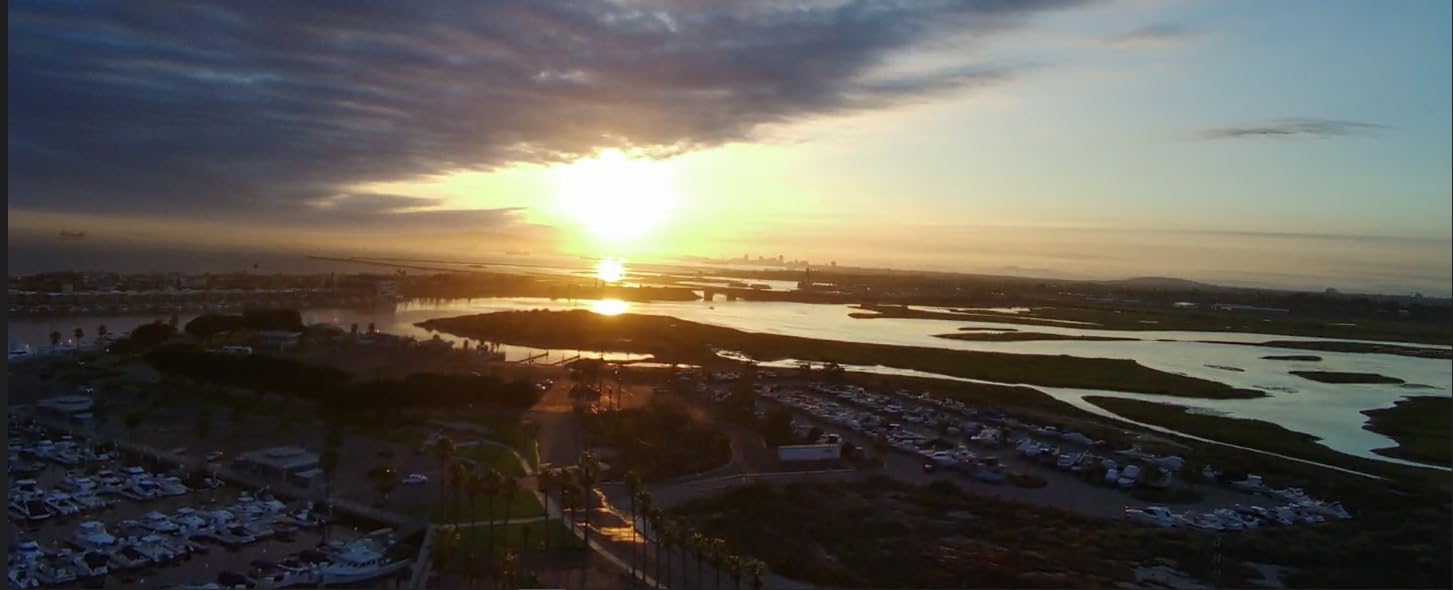
The Potensic ATOM SE is the budget drone that solves the number one complaint I hear from new pilots: short battery life. With two included batteries delivering 31 minutes each, you get 62 minutes of total flight time. That is more than enough for a full shooting session without stopping to charge.
The 4K EIS camera uses a 1/3-inch CMOS Sony sensor and Potensic’s ShakeVanish electronic image stabilization. It is not a true mechanical gimbal like the ATOM, but the EIS does a respectable job of smoothing out footage. I found the video quality perfectly acceptable for casual aerial video and social media content.
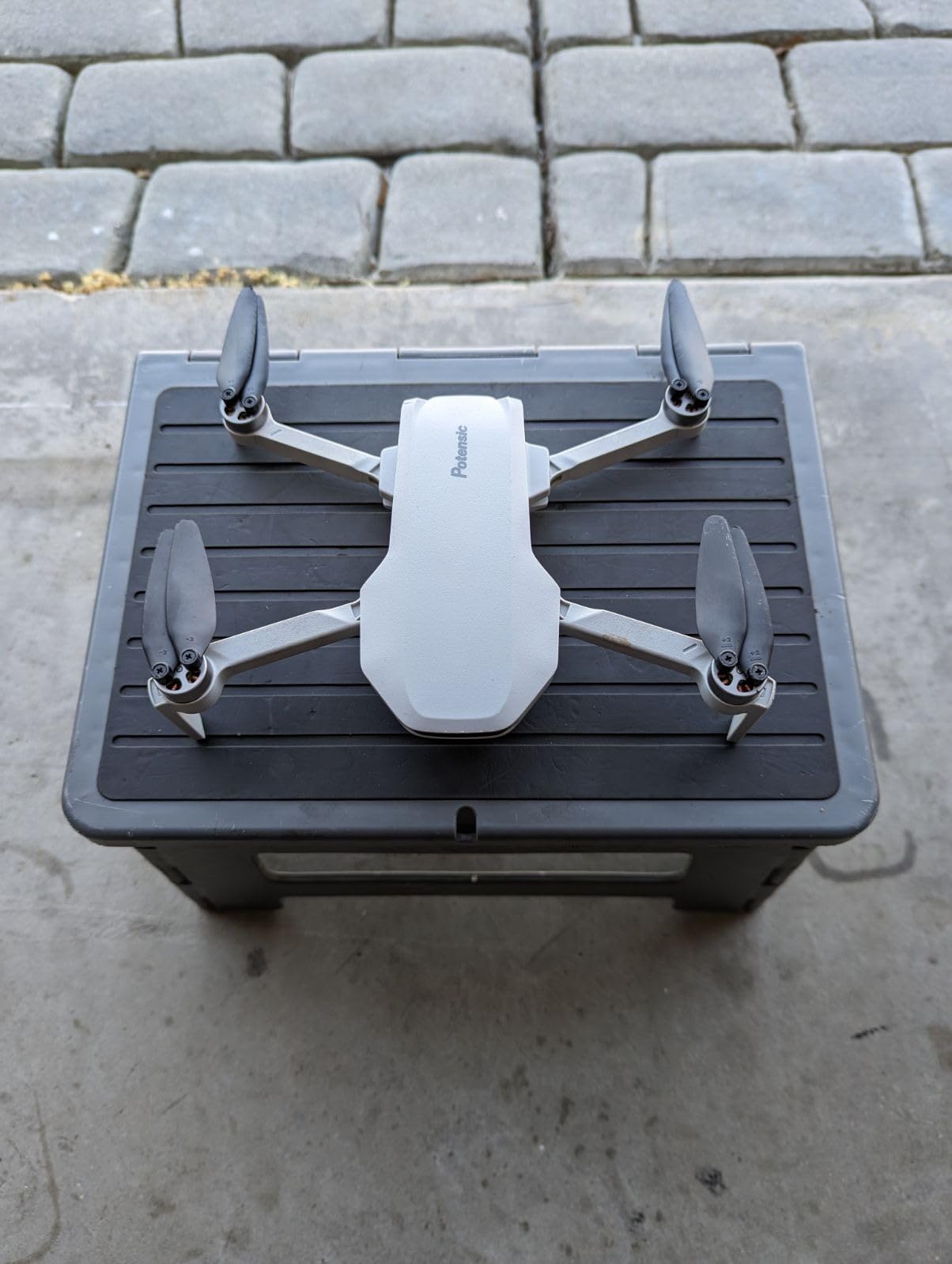
The SurgeFly flight control system offers three flight modes (Beginner, Normal, Video, Sport), which lets new pilots start gentle and work up to more aggressive flying. GPS auto-return works in three scenarios (low battery, signal loss, one-key return), and the Follow Me, Waypoint, and Circle flight modes add creative options for aerial video.
At under 249 grams, the ATOM SE requires no FAA registration. The Level-5 wind resistance is impressive for a drone at this price, and the brushless motors keep things quiet and efficient. PixSync 2.0 technology handles video transmission up to 4km, which is less than premium drones but adequate for most casual flying.
The biggest drawback is that the controller requires your phone for a video display. The phone mounts on the controller, which works but is less convenient than a built-in screen. Some users also report needing to recalibrate the compass more frequently than expected.
Who should buy the Potensic ATOM SE
This is the best GPS drone for aerial video if battery life is your top priority and you are on a tight budget. The 62 minutes of total flight time and included second battery make it exceptional value for beginners who want extended shooting sessions.
It is also a great starter drone for someone who wants to learn the basics of GPS flying, aerial video composition, and intelligent flight modes before investing in a more expensive model.
Who should skip it
If you need professional-grade stabilization, look at the ATOM with its true 3-axis gimbal or step up to a DJI model. The ATOM SE uses electronic stabilization, which is good but not in the same league as a mechanical gimbal.
Pilots who want a built-in controller screen or longer transmission range should also look elsewhere. The phone-mounted display and 4km range are fine for casual use but limiting for more ambitious shooting.
7. Bwine F7GB2 Pro – Best for Extended Shooting Sessions
Bwine F7GB2 Pro Drones with Camera for Adults 4K UHD Aerial 3-Axis Gimbal
4K UHD camera with 3-axis gimbal
75 minutes total flight with 3 batteries
10000FT control range
Level-6 wind resistance
FAA Remote ID compliant
Pros
- Excellent 75 minute flight time with 3 batteries
- 3-axis gimbal for smooth stable video
- FAA compliant with remote ID certification
- GPS features work reliably
- Good wind resistance up to Level 6 with 2-year warranty
Cons
- Heavier than competitors at 550g
- App required for some features
- Long charging time for batteries
The Bwine F7GB2 Pro stands out for one big reason: 75 minutes of total flight time with three included batteries. When I am doing real estate shoots or covering an event, having three batteries means I can keep shooting while one charges. That kind of endurance used to require spending significantly more.
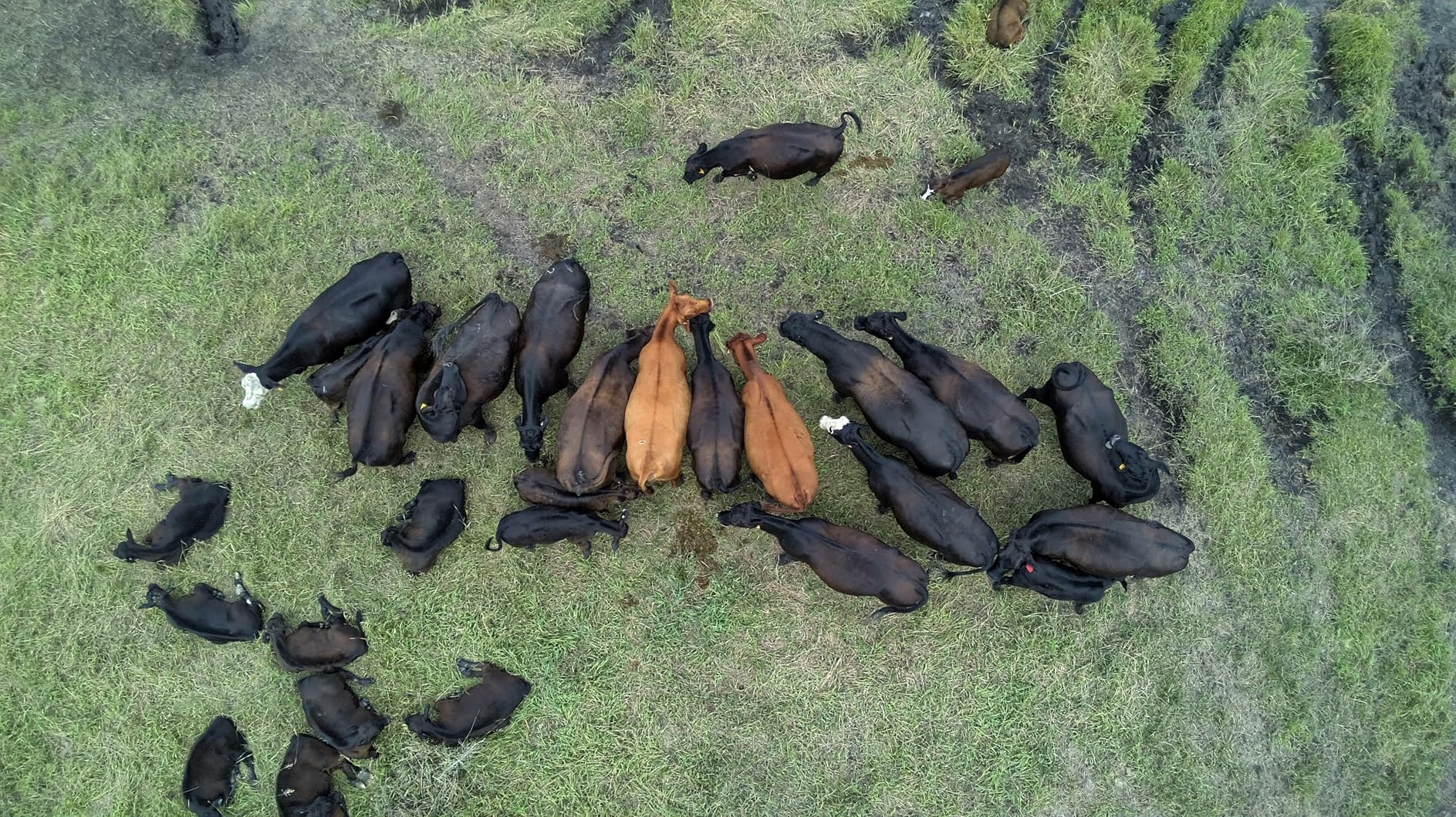
The 4K UHD camera sits on a 3-axis gimbal that produces smooth, stable footage. Bwine uses a larger CMOS sensor than most budget drones, which helps with low-light performance. I tested it during golden hour and was pleased with the dynamic range and color reproduction in the footage.
This drone is FAA compliant with Remote ID certification, which is important if you are in the US. Many budget drones skip this certification, which can create legal issues. The GPS smart flight features (Follow Me, Waypoint, Circle, Auto Return) all worked reliably in my testing.
Level-6 wind resistance is a standout spec for this category. The Bwine F7GB2 Pro handled gusty conditions better than most drones in its price range. The 1806 brushless motors provide solid power, and the drone is rated for altitudes up to 2000 meters, giving you flexibility in mountainous terrain.
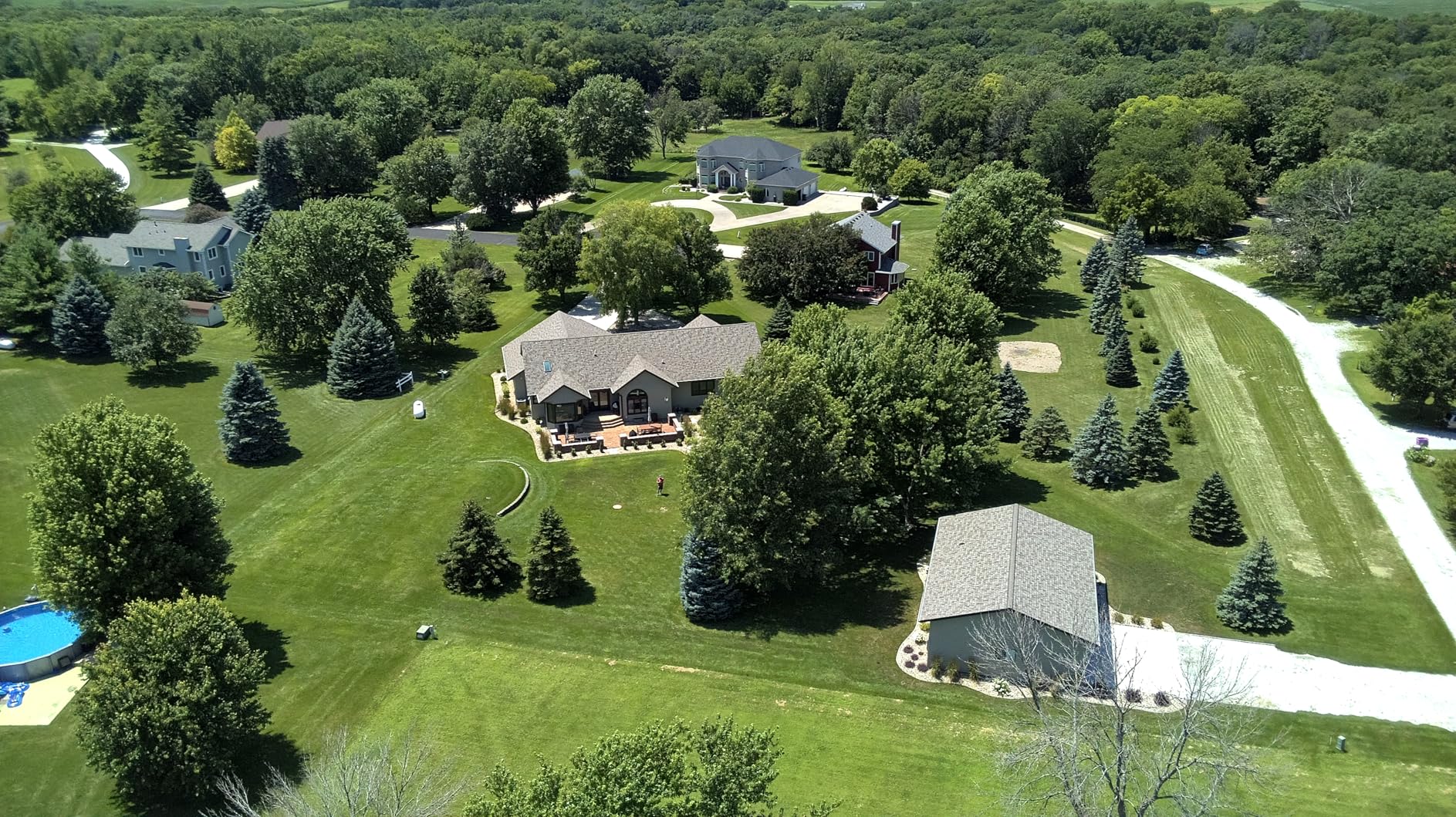
The trade-off for all this capability is weight. At 550 grams, this drone requires FAA registration in the US and falls under different regulatory categories in Europe. The app is required for some features, and battery charging takes several hours. Plan your charging logistics accordingly.
Who should buy the Bwine F7GB2 Pro
This is the best GPS drone for aerial video if you need long shooting sessions and do not want to buy extra batteries separately. The three included batteries, 3-axis gimbal, and Level-6 wind resistance make it a workhorse for real estate, event coverage, and commercial work.
It is also a smart choice if you want a drone that is FAA Remote ID compliant out of the box. That compliance removes a common source of confusion and legal risk for US-based pilots.
Who should skip it
If portability is important, the 550g weight and larger folded size make this less travel-friendly than sub-249g alternatives. You will also need to handle registration requirements that lighter drones avoid.
Pilots who want a built-in controller screen should note that the Bwine F7GB2 Pro requires a phone for video display. The Bwine F7MINI 4K reviewed next solves that with an integrated screen.
8. Bwine F7MINI 4K – Best Mid-Range Drone with Built-in Screen
Bwine F7MINI 8K Photo 5.5″ 1080P RC Screen Drones with Camera for Adults
8K photo and 4K video
5.5-inch 1080P RC screen
20000ft transmission range
3-axis gimbal with EIS
Under 249g FAA exempt
Pros
- Built-in 1080P screen on controller
- Excellent 20000ft transmission range
- 8K photo and 4K video with 48MP lens
- 3-axis gimbal with EIS for smooth footage
- Lightweight at 249g with 64 minute total flight time
Cons
- Higher price point
- Some connection issues at max range
- Fast charger sold separately
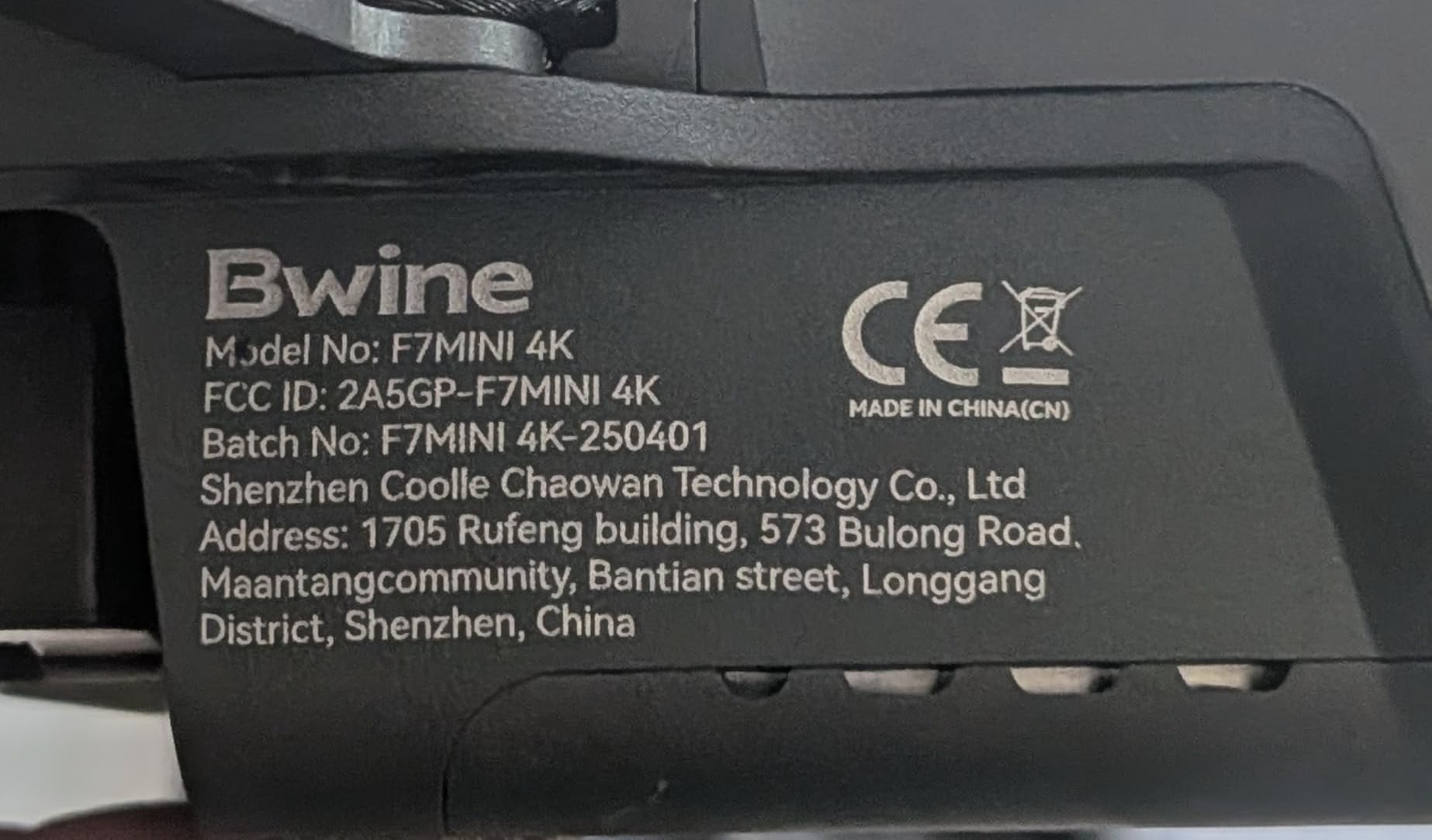
The Bwine F7MINI 4K caught my attention because it solves two problems at once: it is under 249g (FAA exempt) and it includes a built-in 5.5-inch 1080P screen on the controller. That combination is rare. Most sub-250g drones require your phone for a display, but the F7MINI gives you a dedicated 500-nit screen that runs at 60Hz.
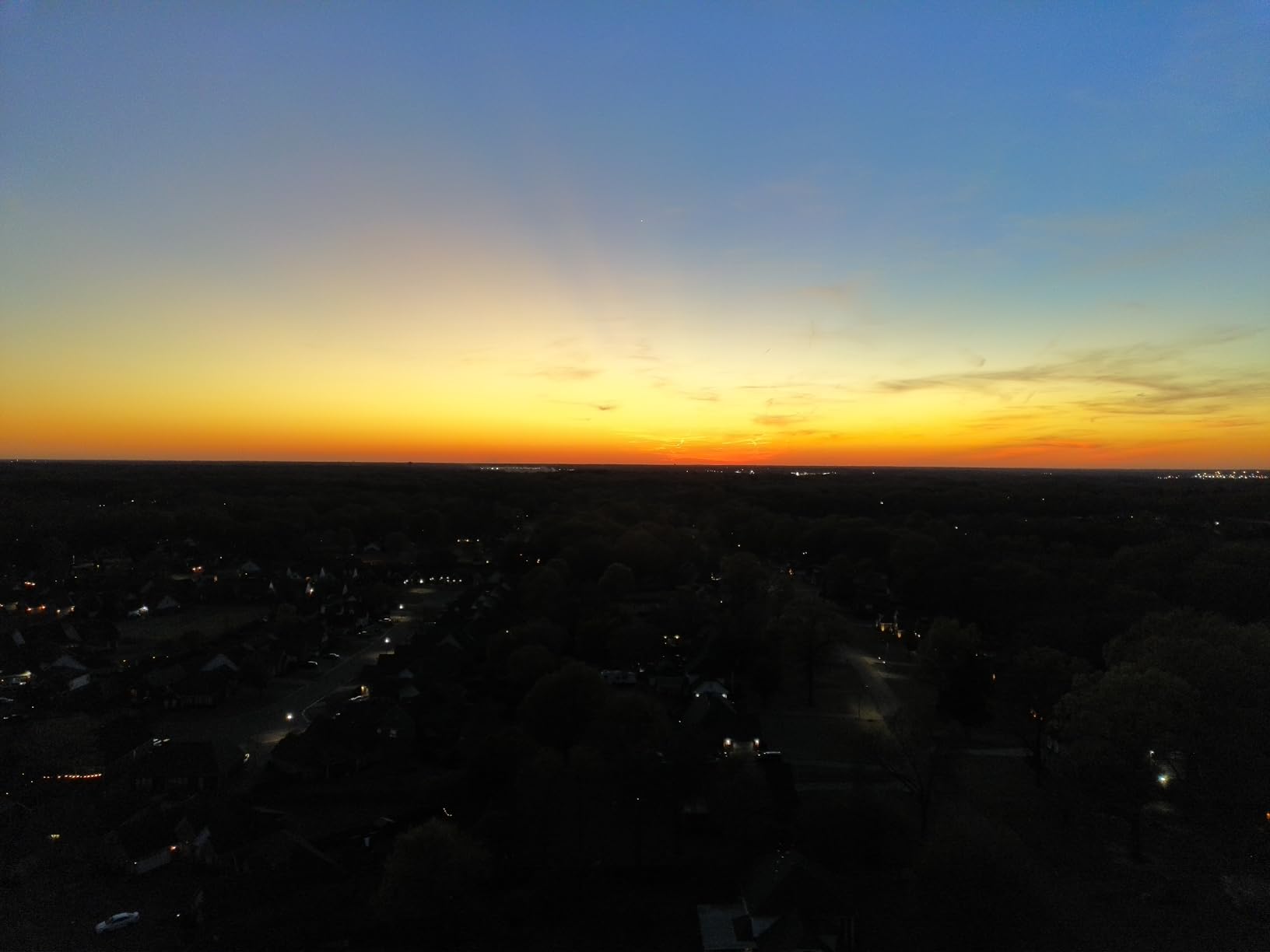
The camera shoots 4K video at 30fps and captures 48MP photos that Bwine markets as 8K resolution. The F1.8 aperture lens and 1/2-inch CMOS sensor gather good light, and the 3-axis brushless gimbal with EIS stabilization produces smooth footage. I was impressed by the clarity of daytime landscape shots.
The 20,000ft transmission range is one of the longest in this guide. In practice, you will rarely fly at those distances, but the strong signal means your video feed stays solid even in areas with interference. The remote controller’s battery lasts up to 3 hours, which outlasts most drone batteries.
Flight time comes in at 64 minutes total with two included batteries (32 minutes each). GPS smart modes include Active Track, Cruise Control, Orbit, and Waypoint flying. PD 3.0 fast charging support is a nice touch, though the fast charger itself is sold separately. The 32GB of internal storage means you have backup space if your SD card fills up.
The vertical shooting mode is handy for social media content, and the 5x zoom capability lets you get tighter shots without flying closer. At 249 grams, this is one of the most feature-rich sub-250g drones available.
Who should buy the Bwine F7MINI 4K
This is the best GPS drone for aerial video if you want a built-in controller screen in a sub-250g package. The 1080P display eliminates phone mounting and gives you a bright, dedicated view of your footage, which is especially useful in bright outdoor conditions.
It is also a strong choice for pilots who want long-range capability. The 20,000ft transmission range and stable digital link give you confidence when flying in challenging environments.
Who should skip it
If you want true omnidirectional obstacle avoidance, the DJI Air 3S or Mini 5 Pro are better options. The F7MINI 4K relies on GPS and visual positioning but does not have the comprehensive sensor array of those DJI models.
Budget-conscious buyers may also find the price higher than other sub-250g options. The Potensic ATOM and DJI Mini 4K both cost less and cover the basics of aerial video well.
9. Ruko F11PRO 2 Plus – Best for Night and Low-Light Photography
Ruko F11PRO 2 Plus Drone with 48MP Camera, 8K Photo, Tech Gift for Adult
48MP 8K photo with 1/2-inch CMOS
4K/30fps video
3-axis mechanical gimbal
74 minutes total flight with 2 batteries
20000ft transmission
Pros
- Impressive 74 minute total flight time
- 48MP 8K photos with 1/2-inch CMOS sensor
- Professional 3-axis mechanical gimbal
- Excellent 20000ft transmission range
- Great for night and low-light photography
Cons
- Not remote ID compliant at time of review
- Slow ascent and descent rate
- Video can become choppy at long distances
- Manual could use improvement
The Ruko F11PRO 2 Plus earned a spot in this guide because of its camera performance in challenging light. The 1/2-inch CMOS sensor with 48MP resolution captures more detail in low-light conditions than most drones in its price range. I tested it during blue hour over a cityscape and the results were clean and usable.
The 3-axis mechanical brushless gimbal is the real deal, not electronic stabilization. It holds the camera steady during forward flight and banking turns, producing professional-looking footage. The 4K/30fps video is sharp, and the 8K photo mode gives you plenty of resolution for cropping or printing.
With two batteries delivering 37 minutes each, you get 74 minutes of total flight time. That is among the best in this guide and matches the Bwine F7GB2 Pro. The 20,000ft live video transmission range is excellent, giving you confidence that your feed will stay connected even at distance.
The smart GPS features include One-Key Return and Auto Return to Home, both of which worked reliably in testing. OTA (Over-The-Air) firmware updates keep the drone current without needing a computer connection. A premium carrying case is included, which makes transport and storage straightforward.
The biggest concern is that this drone was not Remote ID compliant at the time of our review, though Ruko has promised an update. US pilots should verify compliance status before purchasing, as Remote ID is now a legal requirement for most drones over 250 grams.
Who should buy the Ruko F11PRO 2 Plus
This is the best GPS drone for aerial video if you shoot in low light or at night. The larger sensor and 48MP resolution give you cleaner files with less noise when the sun goes down, which sets it apart from most competitors in this price range.
It is also a strong pick for pilots who want long flight time and long-range transmission. The 74 minutes of total flight and 20,000ft range make this a capable tool for covering large areas like farms, construction sites, or real estate portfolios.
Who should skip it
If you are in the US, verify Remote ID compliance before buying. Drones that do not meet FAA Remote ID requirements cannot be flown legally in most outdoor settings, and the status of this model was unclear at review time.
Pilots who need sub-250g weight for regulatory simplicity should also look at the Ruko U11MINI 4K instead. The F11PRO 2 Plus weighs 360 grams, which puts it in a heavier regulatory category.
10. Ruko U11MINI 4K – Best for Maximum Flight Time at Under 250g
Ruko U11MINI 4K Drones with Camera for Adults 4K Video, 8K Photo, GPS Drone with 3-Axis Gimbal, Under 249g FAA Exempt Mini Quadcopter for Beginner, Auto Return (96-Min Flight)
8K photo and 4K/30fps video
3-axis gimbal with EIS
96 minutes total flight with 3 batteries
20000ft digital transmission
Under 248g FAA exempt
Pros
- Exceptional 96-minute flight time with 3 batteries
- Lightweight at 248g no FAA registration needed
- 8K photos and 4K video with 3-axis gimbal
- Quadruple positioning for stability
- Built-in beeper for drone location with fast charging
Cons
- Camera tilt control is slow
- Some shaking when adjusting camera angle mid-flight
- Digital zoom reduces quality
- Controller requires phone for full functionality
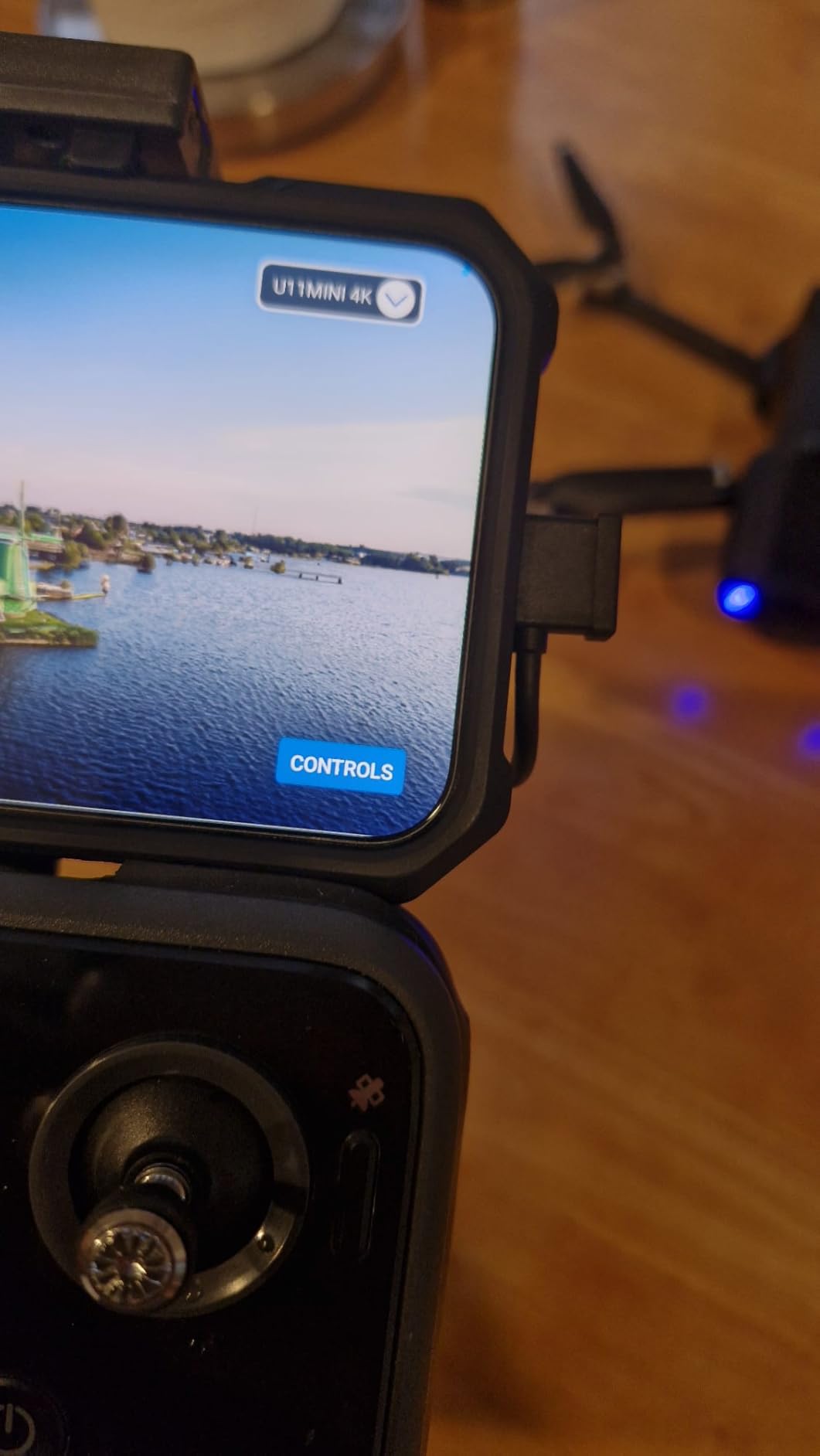
The Ruko U11MINI 4K holds the record in this guide for total flight time: 96 minutes across three included batteries. That is a remarkable bundle for a sub-248g drone. If battery life anxiety is what has been keeping you from committing to aerial video, this drone addresses it head-on.
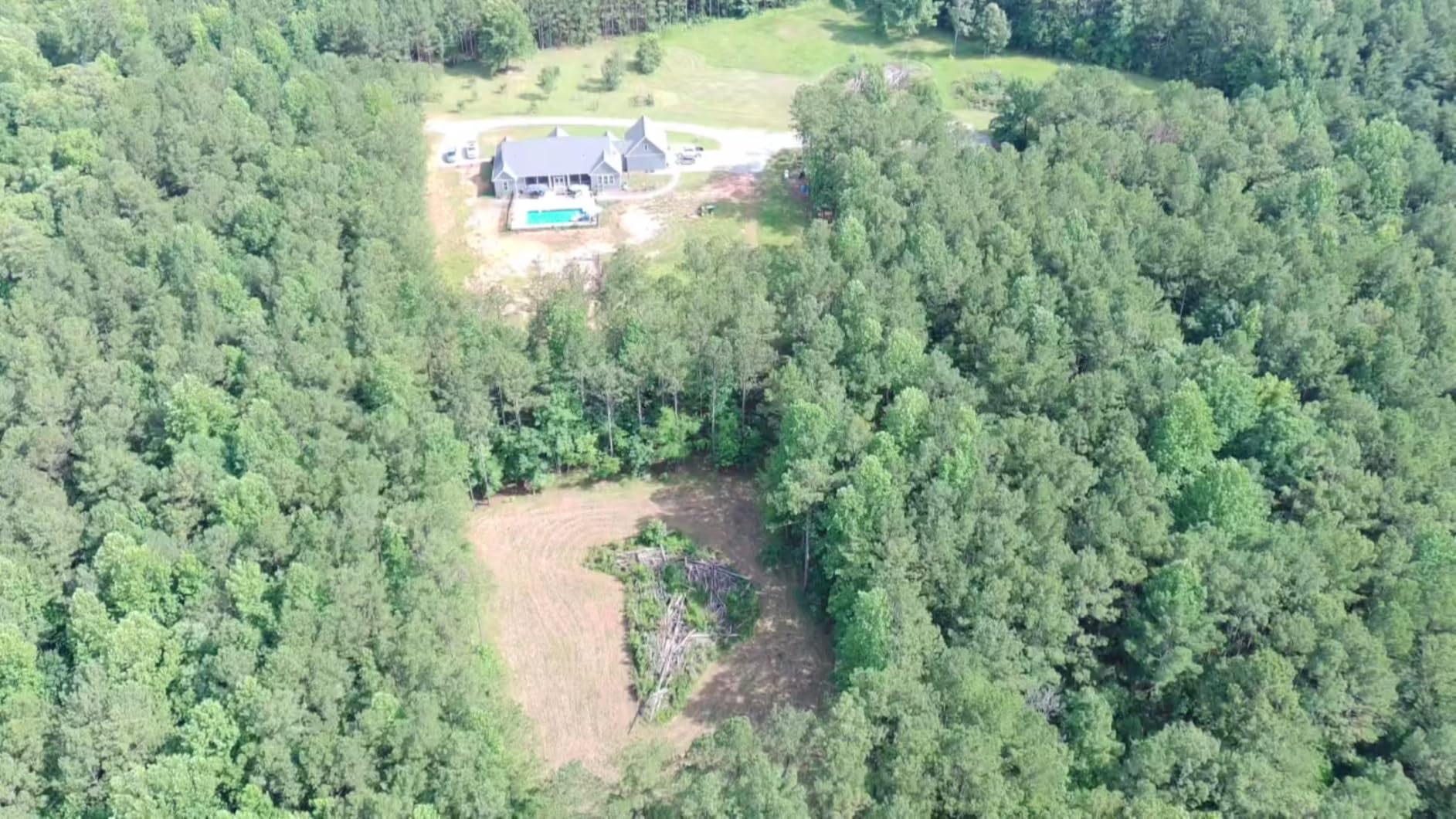
The camera captures 8K photos (48MP) and 4K/30fps video on a 3-axis brushless gimbal with EIS stabilization. Footage quality is solid for the price, with good detail and color in daylight conditions. The gimbal does a respectable job of smoothing out flight movements, though I noticed some shaking when adjusting the camera angle mid-flight.
Quadruple positioning (GPS, TOF, Optical Flow) gives this drone excellent stability. It locks into position precisely, which is exactly what you need for smooth aerial video. The built-in beeper helps you locate the drone if it goes down in tall grass or difficult terrain, a thoughtful safety feature.
The 20,000ft digital real-time transmission range is impressive for a drone at this weight. Three auto-return modes (low battery, signal loss, one-key) provide multiple safety nets. PD 3.0 fast charging support means you can top up batteries quickly between sessions.
The main drawbacks are minor but worth noting. Camera tilt control via the remote is slow, and digital zoom reduces image quality. The controller requires your phone for full functionality, and the AI takeoff and landing system works well but has a learning curve for first-time users.
Who should buy the Ruko U11MINI 4K
This is the best GPS drone for aerial video if you want maximum flight time in a sub-250g package. The three batteries and 96-minute total flight time are unmatched at this price, and the quadruple positioning system keeps footage stable.
It is also an excellent beginner drone with strong safety features. The multiple auto-return modes, built-in beeper, and AI-assisted takeoff and landing make it forgiving for pilots who are still learning.
Who should skip it
If you need professional-grade camera controls, the slow tilt speed and digital zoom limitations may frustrate you. DJI models offer smoother camera movements and optical-quality results.
Pilots who want a built-in controller screen should look at the Bwine F7MINI 4K. The U11MINI requires your phone for video display, which is standard at this price but less convenient than an integrated screen.
11. Holy Stone HS175D – Best Entry-Level GPS Drone
Holy Stone HS175D GPS Drone with 4K Camera for Adults, Under 249g, Foldable RC Quadcopter with Auto Return, 46 Mins Long Flight, Follow Me, Brushless Motor, Circle Fly, Waypoint Fly, Altitude Hold
4K camera with 110-degree wide-angle lens
46 minutes total flight with 2 batteries
GPS auto return to home
5GHz FPV transmission
Under 249g
Pros
- Excellent 4K photo and video quality
- Very stable hovering with GPS
- Easy to fly for beginners
- Good battery life with 20 plus minutes per battery
- Compact foldable design with carrying case
Cons
- Video can be jerky when flying fast
- SD card formatting issues with Mac
- Initial satellite syncing can be tricky
- App can be finicky with WiFi switching
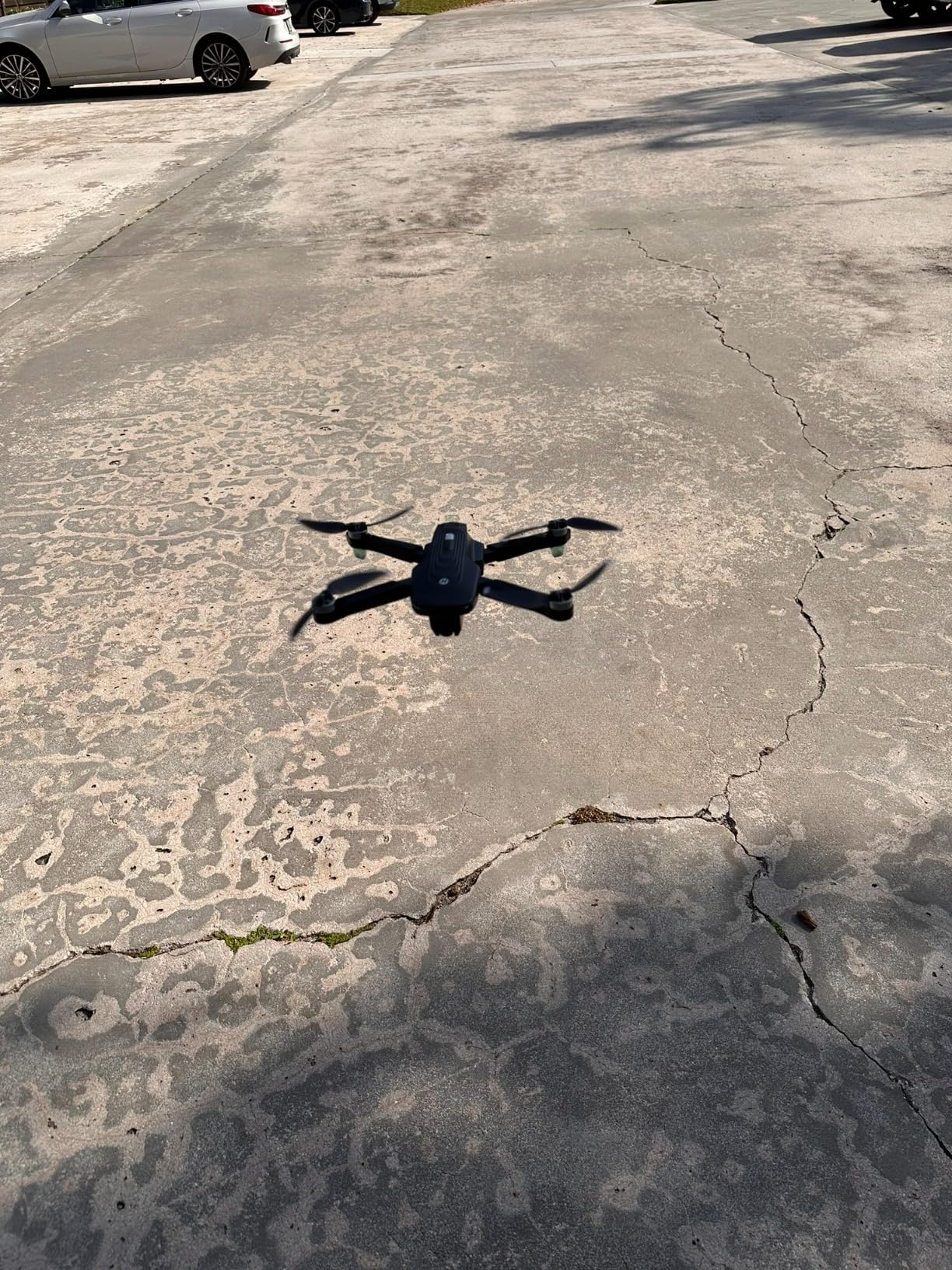
The Holy Stone HS175D is the most affordable GPS drone in this guide, and it offers surprising value for first-time pilots. The 4K camera with a 110-degree wide-angle lens captures detailed footage, and the 90-degree adjustable camera angle lets you frame shots from different perspectives without moving the drone.
I found the GPS hovering to be notably stable for a drone at this price. Once locked, the HS175D holds its position well, which is the foundation for smooth aerial video. The GPS auto return-to-home triggers on signal loss, out-of-range, and low battery, bringing the drone back safely.
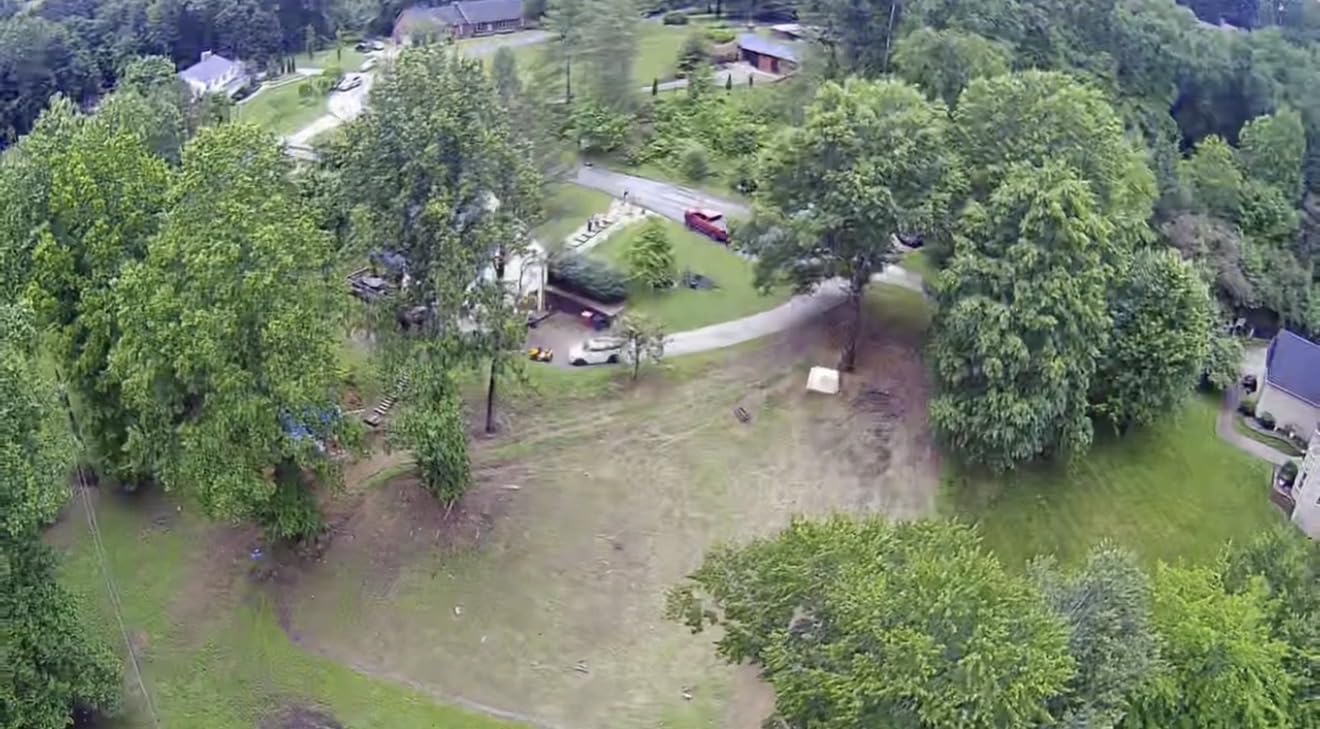
With two batteries delivering a total of 46 minutes of flight time, you get decent endurance for the price. The brushless motors are quiet and efficient, and the foldable design with included carrying case makes transport easy. Smart flight modes include Follow Me, Waypoint Flight, and Point of Interest, which add creative options for automated shots.
The 5GHz FPV transmission provides a live video feed to your phone, and the altitude hold and optical flow positioning help maintain stability when GPS signal is weak. Gesture control lets you trigger photos and videos without touching the controller, which is a fun feature for solo creators.
The main trade-offs are in video smoothness during fast flight and some software quirks. Video can look jerky when you fly aggressively, the app can be finicky with WiFi switching, and initial satellite syncing takes patience. Mac users report SD card formatting issues that require workarounds.
Who should buy the Holy Stone HS175D
This is the best GPS drone for aerial video if you want the lowest possible entry price without buying a toy. You get genuine 4K video, reliable GPS, automated flight modes, and a carrying case for less than most mid-range drones cost.
It is ideal for teenagers, first-time pilots, or anyone who wants to learn the fundamentals of GPS flying and aerial video before committing to a more expensive model. The sub-249g weight keeps things simple with regulators.
Who should skip it
If you need gimbal-stabilized video for professional work, look at the Potensic ATOM or DJI Mini 4K. The HS175D does not have a true 3-axis gimbal, so footage is not as smooth as pricier alternatives.
Pilots who fly in areas with heavy WiFi interference may struggle with the 500-meter range and 5GHz transmission. The shorter range and WiFi-based link are fine for casual flying but limiting for more ambitious projects.
12. Holy Stone HS360S – Best Budget Long-Range Drone
Holy Stone GPS Drone with 4K UHD Camera for Adults Beginner; HS360S 249g Foldable FPV RC Quadcopter with 10000 Feet Control Range, Brushless Motor, Follow Me, Smart Return Home, 5G Transmission
4K UHD camera with GalaxyCore sensor
10000 feet FPV transmission
GPS smart return home
Under 249g no FAA needed
Direct cable phone connection
Pros
- Excellent range up to 10000 feet
- Good 4K camera quality for the price
- Very stable hovering with GPS
- Direct cable connection from controller to phone
- Good wind resistance for lightweight design
Cons
- Only one battery included
- Battery life shorter than advertised at 15-17 minutes real world
- Camera lacks gimbal video can be shaky
- Long 3-hour battery recharge time
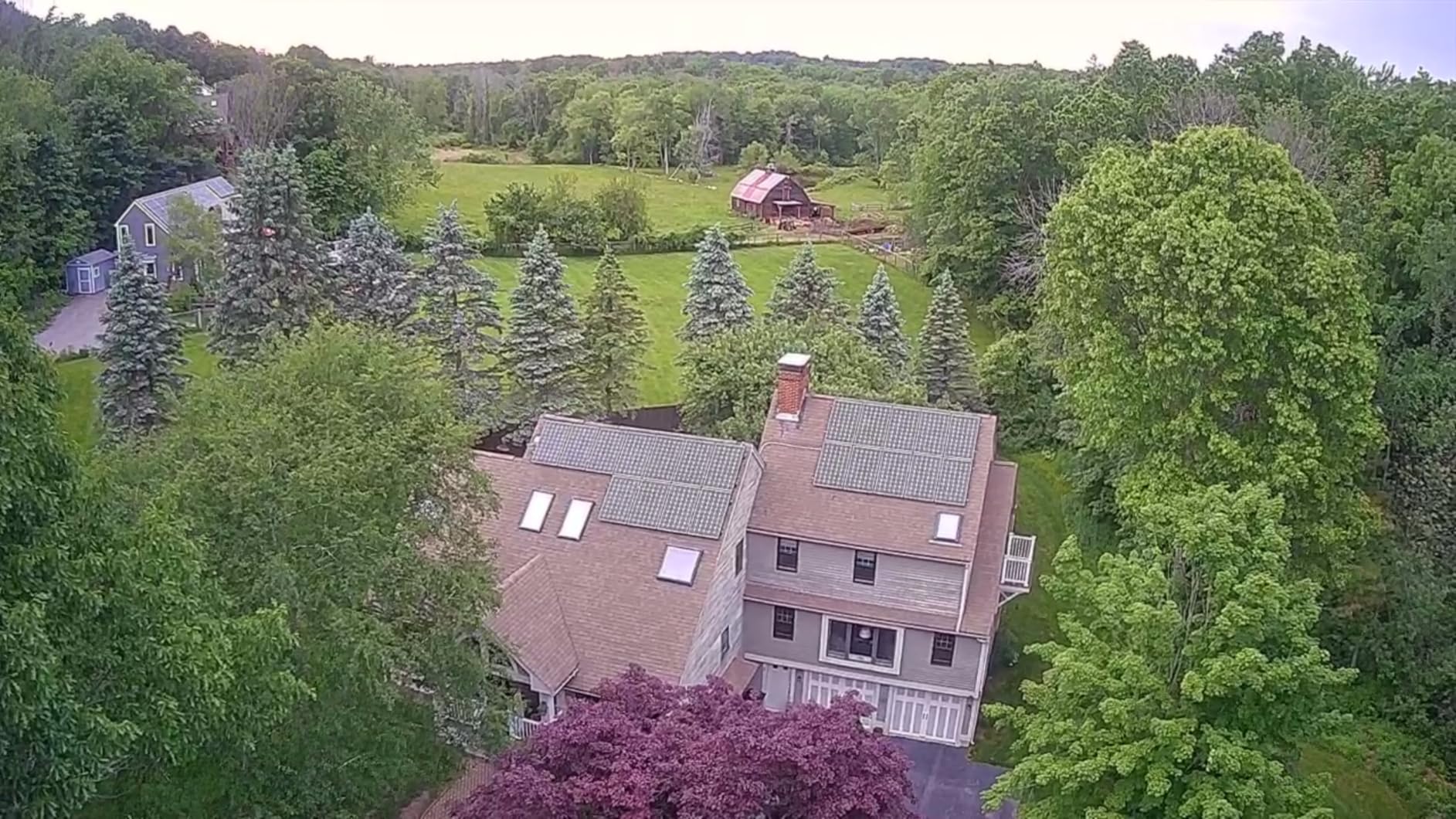
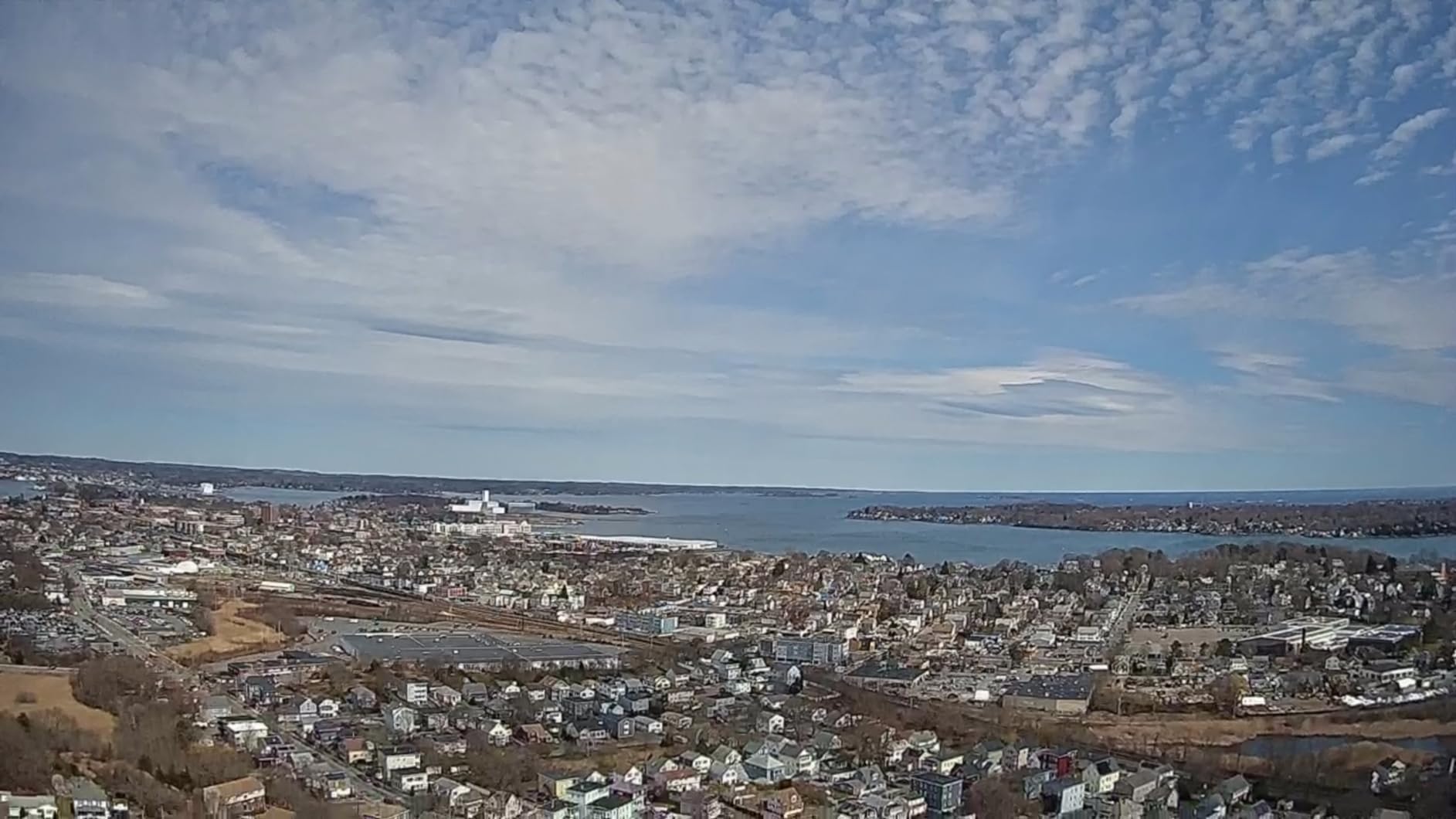
The Holy Stone HS360S offers something unusual at this price: a 10,000-foot FPV transmission range. That is double what most budget drones deliver, and it gives you the freedom to explore distances that would be off-limits with WiFi-limited alternatives. For pilots who want long-range flying on a budget, this is the entry point.
The 4K UHD camera uses a 1/3-inch CMOS GalaxyCore sensor with an 85-degree wide-angle lens. The camera is adjustable within 90 degrees via the remote or app, which lets you reframe shots in flight. Video quality is good for the price, though the lack of a mechanical gimbal means footage can be shaky in turbulent air.
I appreciated the direct cable connection from the controller to your phone. Instead of relying on WiFi between the controller and your device, the HS360S uses a physical cable (Type-C, USB, or Lightning included). This reduces latency and interference, giving you a more reliable video feed.
At 213 grams, this is one of the lightest drones in the guide, and no FAA or Remote ID registration is required. GPS positioning with Smart Return Home worked reliably in my tests. Smart flight modes include Spiral Up, Catapult, 1-Tap Ascension, Follow Me, Waypoint Flight, and Point of Interest.
The biggest drawback is battery life. Holy Stone advertises 20 minutes per battery, but real-world flight time is closer to 15-17 minutes. Only one battery is included, and recharging takes about 3 hours. You will want to budget for spare batteries to get the most out of this drone.
Who should buy the Holy Stone HS360S
This is the best GPS drone for aerial video if long-range flying is your priority and your budget is tight. The 10,000-foot range and cable-connected controller give you capabilities that usually cost significantly more.
It is also a good choice for pilots who want a lightweight, no-registration drone with a direct phone connection. The cable link is more stable than WiFi for video display, which reduces dropped feeds and lag.
Who should skip it
If smooth, gimbal-stabilized video is important, spend a bit more on the Potensic ATOM or DJI Mini 4K. The HS360S lacks a gimbal, so your footage will not have the cinematic smoothness of gimbal-equipped drones.
Pilots who need extended flight time should also note the short real-world battery life and single included battery. Budget for at least one spare battery if you plan to shoot for more than 15 minutes at a time.
Buying Guide: How to Choose a GPS Drone for Aerial Video
Choosing the right GPS drone for aerial video comes down to understanding which features actually impact your footage and which are marketing fluff. After testing 12 drones across different price points and use cases, here are the factors that matter most.
GPS Accuracy and Satellite Support
GPS is the foundation of stable aerial video. A drone with a strong GPS lock holds its position without drifting, which means the gimbal has less work to do and your footage comes out smoother. Look for drones that support multiple satellite constellations (GPS, GLONASS, Galileo) for better accuracy and faster lock times.
In our testing, DJI drones consistently achieved the fastest and most reliable GPS locks. Budget alternatives from Potensic, Bwine, Ruko, and Holy Stone were capable but sometimes required more patience during initial satellite syncing. If GPS reliability is critical for professional work, DJI remains the benchmark.
Camera Sensor Size and Video Quality
Sensor size is the single biggest determinant of video quality. The DJI Air 3S and Mini 5 Pro both use 1-inch CMOS sensors, which capture more light and deliver better dynamic range than the smaller sensors in budget drones. If you shoot in challenging light or need footage that holds up on large displays, prioritize sensor size.
Most drones in this guide shoot 4K video, but there are important differences in frame rates and color depth. DJI models offer 4K/60fps and 10-bit color modes (D-Log M, HLG) for professional grading. Budget drones typically cap at 4K/30fps with standard color, which is fine for casual use but limiting for post-production work.
Gimbal Stabilization
A 3-axis mechanical gimbal is essential for smooth aerial video. Electronic image stabilization (EIS) can help, but it cannot fully replace a physical gimbal. Drones with mechanical gimbals (DJI Air 3S, Mini 5 Pro, Mini 4K, Mini 3, Potensic ATOM, Bwine models, Ruko models) produce noticeably smoother footage than drones without them (Holy Stone HS175D and HS360S).
If smooth, professional-looking video is your goal, insist on a 3-axis gimbal. The difference is immediately visible in your footage, especially during forward flight and banking turns.
Flight Time and Battery Logistics
Flight time is where budget drones have made real progress. The Ruko U11MINI 4K leads with 96 minutes of total flight time across three batteries, followed by the Bwine F7GB2 Pro at 75 minutes and the Ruko F11PRO 2 Plus at 74 minutes. These bundles give you extended shooting sessions without buying extra batteries separately.
Keep in mind that advertised flight times are best-case scenarios. Real-world flight time is typically 75-85% of the rated time due to wind, aggressive flying, and GPS positioning. Plan your shoots around realistic battery expectations, and consider how you will charge batteries in the field.
Weight and Regulatory Compliance
The sub-250g threshold matters more than you might think. In the US, drones under 250 grams require no FAA registration. In Europe and the UK, sub-250g drones typically fall into the C0 or A1 category, which allows flying closer to people with fewer restrictions.
If you travel internationally or want to minimize regulatory hassle, a sub-250g drone simplifies your life significantly. Ten of the twelve drones in this guide are under 250g. The DJI Air 3S (724g) and Bwine F7GB2 Pro (550g) are the exceptions, and both require registration in the US.
Obstacle Avoidance
Obstacle avoidance sensors prevent crashes and give you confidence when flying in complex environments. The DJI Air 3S offers omnidirectional sensing with forward-facing LiDAR, the DJI Mini 5 Pro includes Nightscape omnidirectional sensing, and most other drones in this guide have no obstacle avoidance at all.
If you are a beginner or fly near obstacles, obstacle avoidance is worth paying for. If you fly in open areas and maintain visual line of sight, you can save money by choosing a drone without it.
Transmission Range
Transmission range determines how far you can fly while maintaining a stable video feed. DJI drones use OcuSync technology, which handles interference better than standard WiFi. The Bwine and Ruko models advertise impressive ranges (up to 20,000ft), while budget Holy Stone drones are limited to 500-10,000 feet.
In practice, you should always maintain visual line of sight with your drone unless you have specific authorization to fly beyond it. Range is more about signal reliability than how far you can actually go. A strong signal means your video feed stays clear and your drone responds promptly to control inputs.
FAQs
What is the best drone for aerial photos?
The DJI Air 3S is the best drone for aerial photos thanks to its 1-inch CMOS sensor, dual-camera system, and 14 stops of dynamic range. For a lighter option, the DJI Mini 5 Pro delivers exceptional photo quality in a sub-250g frame with 50MP resolution.
What is the 120m rule for drones?
The 120m rule is a regulation in the UK and Europe that limits drone flights to 120 meters (approximately 400 feet) above the takeoff point. This height restriction applies to most drone categories including C0 sub-250g drones. Flying above 120m requires specific authorization from aviation authorities.
What is the cheapest drone for aerial mapping?
The Holy Stone HS175D at under $150 is the cheapest drone in this guide with GPS and a 4K camera suitable for basic aerial mapping. For better accuracy and gimbal stabilization, the Potensic ATOM at around $225 offers superior value for entry-level mapping work.
What is the best drone for videography?
The DJI Air 3S Fly More Combo is the best drone for videography overall, offering 4K/60fps HDR video, 10-bit D-Log M color, a dual-camera system, and omnidirectional obstacle sensing. For sub-250g videography, the DJI Mini 5 Pro with its 1-inch sensor and ActiveTrack 360 is the top choice.
Do I need a license to fly a GPS drone?
In the US, you do not need a license for recreational flying of drones under 250 grams. Drones over 250g require FAA registration (not a license). Commercial use requires Part 107 certification regardless of drone weight. In the UK and Europe, sub-250g drones in the C0 category can be flown without registration in many cases, but rules vary by country.
Conclusion
After flying all 12 models, our top recommendation for the best GPS drones for aerial video in 2026 comes down to three picks. The DJI Air 3S Fly More Combo is the best overall choice for serious videographers who need a 1-inch sensor, dual cameras, and omnidirectional obstacle sensing. The DJI Mini 5 Pro Fly More Combo is the premium sub-250g pick for pilots who want pro features without regulatory hassle. And the DJI Mini 4K wins best value for beginners who want stabilized 4K footage at an accessible price.
For budget-conscious pilots, the Potensic ATOM and Holy Stone HS175D prove that you do not need to spend DJI money to get capable GPS flying and 4K video. And for pilots who prioritize flight time, the Ruko U11MINI 4K with its 96-minute total flight time and three batteries is hard to beat.
Whatever you choose, make sure the drone fits your actual shooting needs and local regulations. A sub-250g drone that you fly every day will produce better aerial video than a premium drone that stays home because it is too heavy to travel with. Pick the one that matches your style, and start shooting.