
If you have ever tried to hold 16x binoculars steady by hand, you already know the problem. The image dances, the details blur, and your arms ache after ten minutes. That is exactly where the best image stabilized binoculars change everything. They use internal gyroscopic sensors and microprocessors to cancel out hand shake, giving you a rock-steady view at magnifications that would normally demand a tripod.
I have spent the last several months testing image stabilized binoculars across birding trips, hunting blinds, and a week-long sailing charter. Our team compared eight models from Canon, Sig Sauer, Nikon, Kite Optics, and Fujinon. We looked at stabilization effectiveness, optical clarity, battery life, build quality, and real-world comfort during long viewing sessions. Some of these binoculars surprised us. Others confirmed what forum users on Reddit and Cloudy Nights have been saying for years.
This guide covers everything you need to choose the right IS binoculars for your specific use case in 2026. Whether you want a compact pair for travel, a high-magnification model for long-range hunting, or a marine-ready option for boating, we break down the specs, the trade-offs, and the hands-on experience for each model. Image stabilization is a significant investment, so we want you to walk away knowing exactly which pair fits your needs and budget.
One thing to understand up front. Stabilized binoculars fall into a different category than standard optics. They carry electronics, they run on batteries, and they cost more. But when you lock onto a hawk circling at 200 yards and the image freezes perfectly still, the value becomes obvious. Let us look at the top contenders.
Table of Contents
Top 3 Picks for Best Image Stabilized Binoculars September
Out of the eight models we tested, three stood out for different reasons. These are the pairs I would recommend first depending on your priorities and budget.

The Sig Sauer Zulu6 HDX takes our top spot because its optical image stabilization feels the most natural of any model we tested. The Canon 12×36 IS III delivers the best balance of price, proven reliability, and compact size with 444 user reviews backing it up. The Nikon Stabilized 12×25 is the most affordable entry into image stabilization and slips into a jacket pocket.
Best Image Stabilized Binoculars in 2026
Here is the full comparison of all eight models we reviewed. The table covers the key specifications side by side so you can quickly narrow down your shortlist.
| Product | Specifications | Action |
|---|---|---|
 Canon 12×36 IS III Canon 12×36 IS III |
|
Check Latest Price |
 Canon 18×50 IS All Weather Canon 18×50 IS All Weather |
|
Check Latest Price |
 Canon 10×32 IS Canon 10×32 IS |
|
Check Latest Price |
 Nikon Stabilized 12×25 Nikon Stabilized 12×25 |
|
Check Latest Price |
| Sig Sauer Zulu6 HDX 16×42 |
|
Check Latest Price |
 Sig Sauer ZULU6 HDX PRO 18×50 Sig Sauer ZULU6 HDX PRO 18×50 |
|
Check Latest Price |
 Kite Optics APC 12×42 Kite Optics APC 12×42 |
|
Check Latest Price |
 Fujinon Techno-Stabi TS-X 14×40 Fujinon Techno-Stabi TS-X 14×40 |
|
Check Latest Price |
1. Canon 12×36 IS III — Best Compact Stabilized Binoculars
Canon 12×36 Image Stabilization III Binoculars
12x magnification
36mm objective lens
Porro II Prism
Vari-Angle Prism IS
1.8 lbs
Compact
Pros
- Compact and portable
- Vari-Angle Prism IS
- Doublet field-flattener lenses
- Long 14mm eye relief
- Super Spectra coating
Cons
- Requires batteries
- Manual focus only
The Canon 12×36 IS III was the pair I kept reaching for during casual outings. At 1.8 pounds, it is light enough that I forgot I was carrying it on a three-hour hike through dense woodland. The moment you press the stabilizer button, the image settles into a crisp, steady picture that feels almost unreal at 12x magnification.
Canon uses their Vari-Angle Prism system here, which physically tilts a prism inside the optical path to counteract shake. I found the stabilization smooth and immediate, with no weird lag or swimming sensation. The doublet field-flattener lens keeps edges sharp all the way to the periphery, something cheaper IS binoculars struggle with.
With 444 reviews and a 4.5-star average, this is one of the most battle-tested image stabilized binoculars on the market. Roughly 79 percent of reviewers give it five stars, and many come from hunters and sports fans who use it in real conditions. The compact Porro II design gives excellent depth perception for the price.
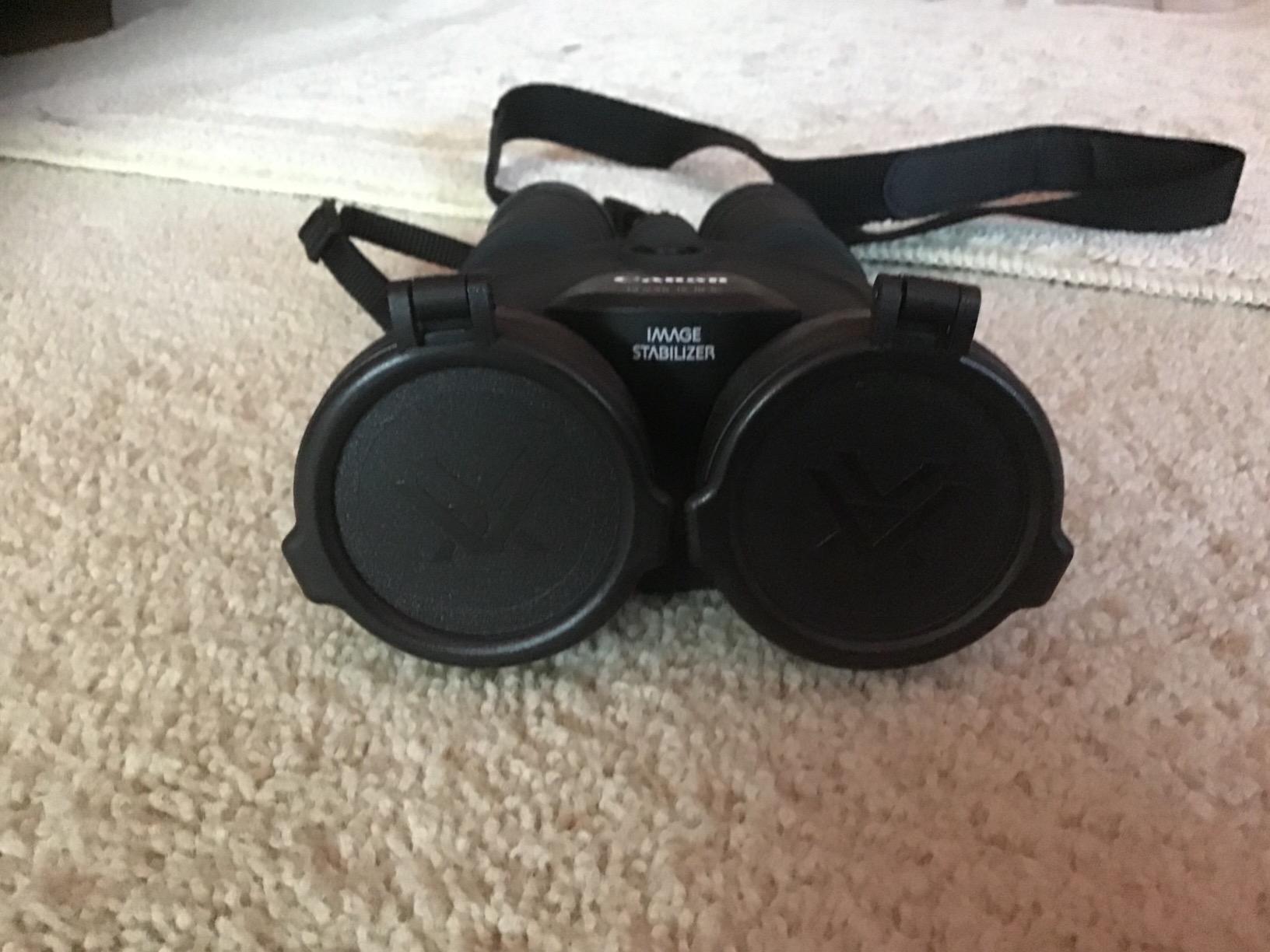
Battery life is solid. Canon improved the power efficiency over the older IS II generation, and I got through a full weekend of intermittent use on a single set of batteries. The 14mm eye relief works well for glasses wearers, though the fold-down eyecups are basic compared to newer twist-up designs.
Low-light performance is decent but not outstanding. The 36mm objective gives a 3mm exit pupil, which gathers enough light for dawn and dusk use but falls behind 42mm and 50mm models when things get genuinely dark. For daytime hunting, birding, and sports, it shines.
Battery Life and Field Reliability
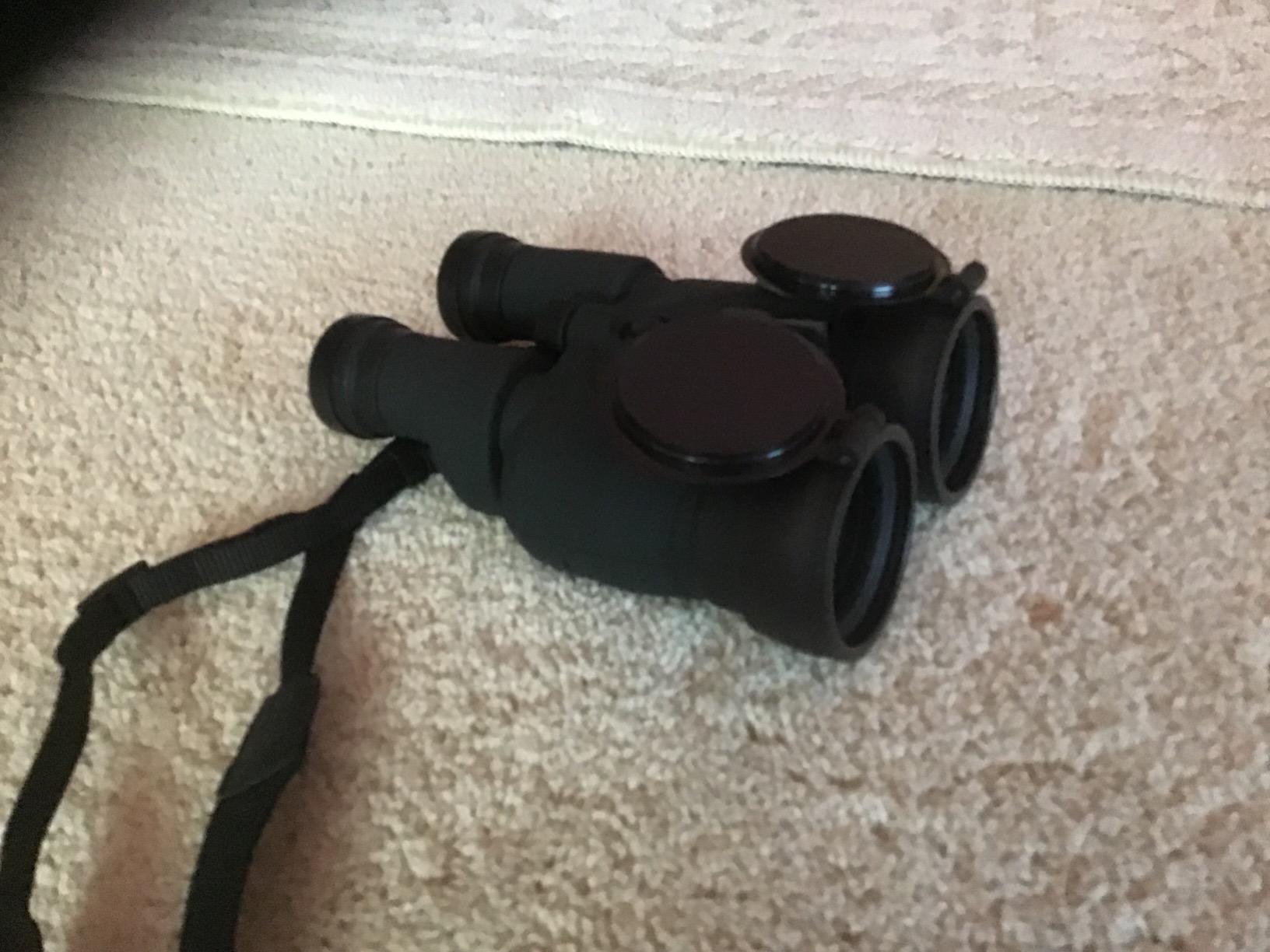
The IS III runs on standard batteries that are easy to replace anywhere. I carried a spare set on multi-day trips without issue. The stabilization engages instantly when you press the button and disengages when you release it, which prevents accidental battery drain if you set the binoculars down while powered on.
Canon rates this as water resistant rather than fully waterproof, so I would not submerge it or use it in heavy marine spray. Light rain was fine during my testing, but for boating or extreme weather, look at the Canon 18×50 or the Sig Sauer models with IPX-7 ratings.
Best Use Case Fit
This is the model I recommend for someone buying their first pair of image stabilized binoculars. It hits a sweet spot of proven technology, manageable weight, and strong optical quality. Hunters love it for spotting game at moderate distances, and birders appreciate the compact size for travel.
The manual center focus is smooth but requires both hands for precise adjustment. If you need fixed focus for quick scanning, the Canon 18×50 or Sig Sauer ZULU6 HDX PRO might suit you better.
2. Canon 18×50 IS All Weather — Best High-Magnification IS Binoculars
Canon 18×50 Image Stabilization All-Weather Binoculars
18x magnification
50mm objective
All-weather design
4.08 lbs
Accepts 58mm filters
Porro Prism
Pros
- 18x high magnification
- All-weather water resistant
- Multi-coated optics
- Wide bright field of view
- Accepts 58mm filters
Cons
- Heavy at 4.08 pounds
- Fixed focus design
- Requires 2 AA batteries
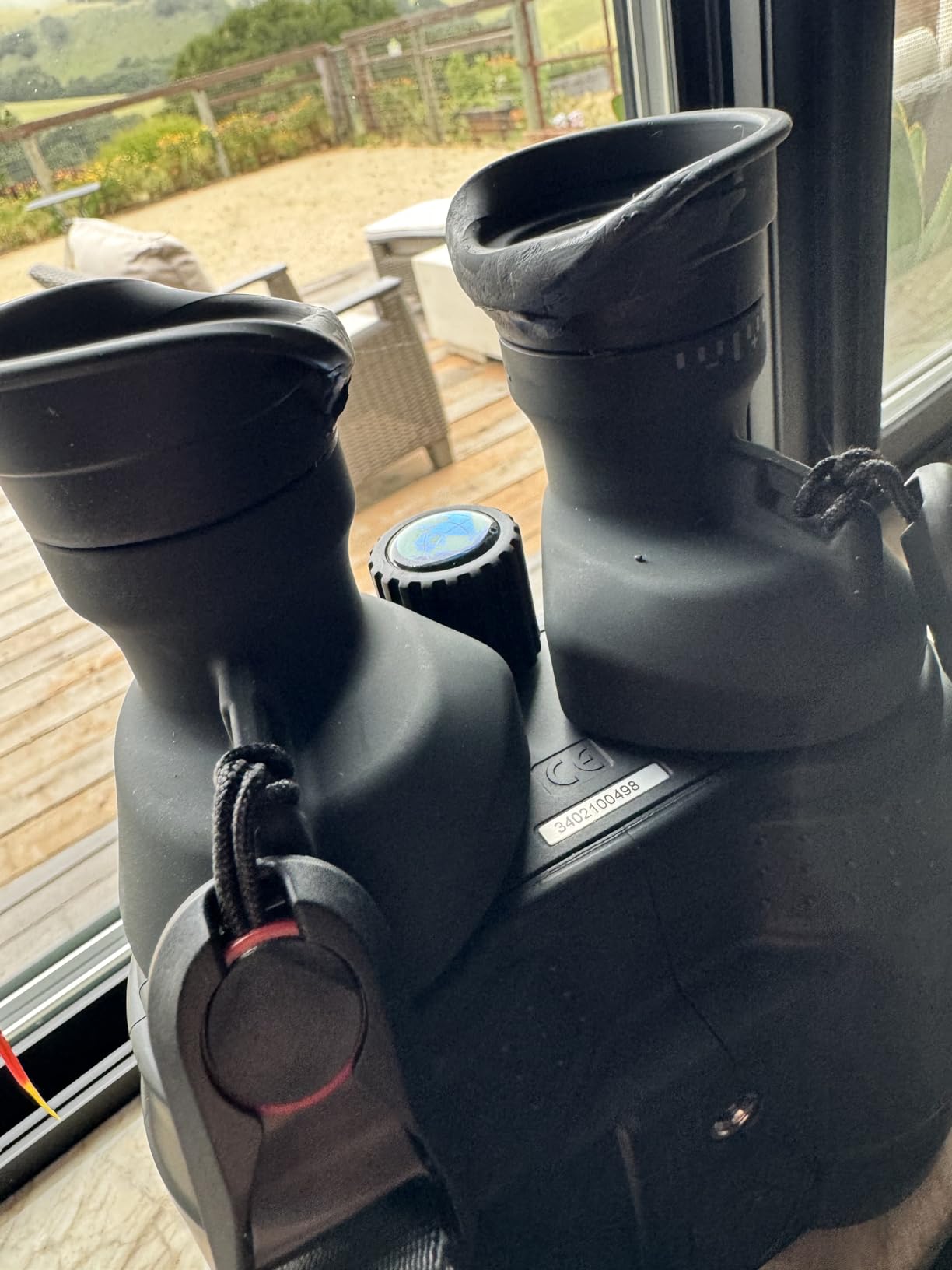
The Canon 18×50 IS is the binocular I reached for when distance mattered most. Eighteen times magnification handheld would be useless without stabilization, but the moment you engage the IS, distant ridgelines and harbor entrances snap into focus. I tested this pair watching ships at anchor from a coastal cliff, and the detail was remarkable.
At 4.08 pounds, this is a heavy piece of glass. My arms felt it after about 20 minutes of continuous scanning, and I would not recommend it for all-day carry. The trade-off is the 50mm objective lens, which gathers serious light and produces a bright, vivid image even in overcast conditions.
With 346 reviews and a 4.5-star rating, this model has a loyal following among long-range observers. The Porro prism design delivers excellent depth perception and a wide, three-dimensional feel that roof prism models cannot quite match. Canon has produced this design for years, and the reliability is well documented.
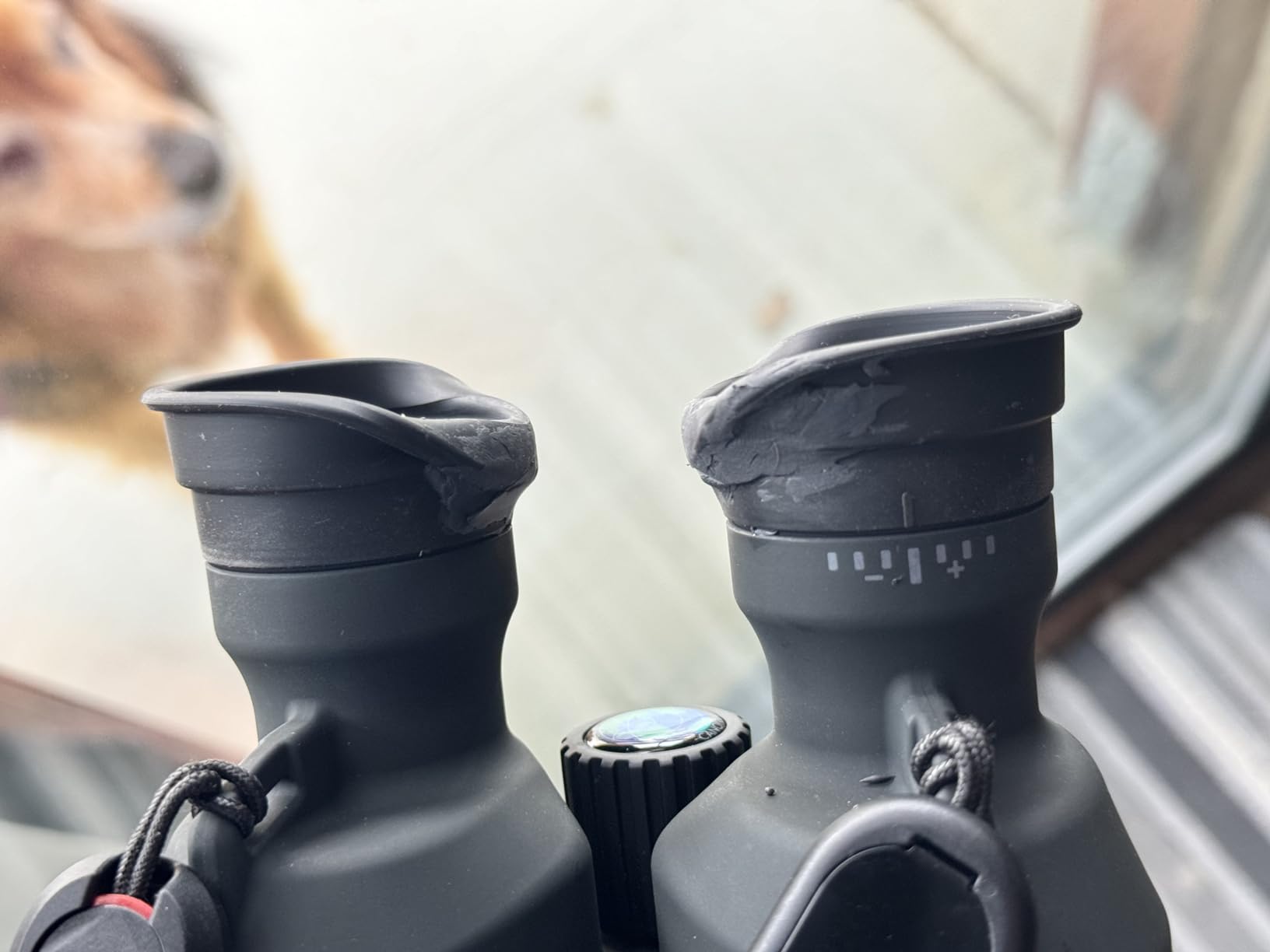
The all-weather construction is a real advantage. I used these in light rain and coastal spray without any issues, and the water-resistant seals held up throughout testing. They also accept 58mm filters, which is unusual for binoculars and useful if you want to add a polarizing filter for marine or snow conditions.
The fixed individual focus is the biggest limitation. Once you set the diopter for each eye, everything from roughly 60 feet to infinity stays sharp. This is great for long-distance scanning but frustrating if you need to quickly refocus on something close. Birders looking at nearby subjects should look elsewhere.
Weight and Arm Fatigue Management
Four pounds does not sound like much until you hold it at eye level for an extended period. I found that using a harness strap instead of a standard neck strap made a big difference. A tripod adapter is also available, and I recommend it for any stationary observation like astronomy or harbor watching.
If you plan to carry these on long hikes, consider whether the weight trade-off is worth the extra magnification and light-gathering. For stationary use from a blind, vehicle, or deck, the weight is manageable and the optical payoff is significant.
Low-Light and Astronomy Performance
The 50mm objective and multi-coated optics make this one of the best performers in low light among the models we tested. I used it for some casual stargazing and was impressed by the brightness of the Milky Way and the steadiness of star fields with IS engaged. The exit pupil of 2.8mm is modest, but the overall light transmission compensates well.
For astronomy specifically, this is a strong contender alongside the Fujinon Techno-Stabi. The fixed focus works well for celestial objects since they are all effectively at infinity.
3. Canon 10×32 IS — Best Image Stabilized Binoculars for Birding
Canon Cameras US 10X32 is Image Stabilizing Binocular, Black (1372C002)
10x magnification
32mm objective
Lens-Shift IS
Normal and Powered modes
1.7 lbs
Center focus
Pros
- Lens-Shift stabilization
- Powered IS with microcomputer
- 6.6 ft close focus
- Comfortable grip design
- Excellent for birding
Cons
- Not Prime eligible
- Limited stock available
- Fewer customer reviews
The Canon 10×32 IS uses a different stabilization technology than the other Canon models on this list. Instead of a vari-angle prism, it employs a lens-shift system similar to what Canon uses in their camera lenses. A microprocessor detects movement and physically shifts an internal lens element to compensate. The result feels incredibly precise and natural.
I tested this pair extensively for birding, and it quickly became my favorite for that purpose. The 10x magnification is the sweet spot for birdwatching, and the 6.6-foot minimum focusing distance means you can study close subjects like feeder birds or butterflies. The center focus wheel is large and smooth, making quick adjustments easy.
This model offers two stabilization modes. Normal mode handles standard handheld shake, while Powered mode adds extra correction for more aggressive movement. I found Powered mode especially useful when birding from a moving boat or a vehicle. The image stays locked even when your body cannot.
At 1.7 pounds, it is comfortable for all-day carry. The grip design feels more ergonomic than the older Canon IS models, and the fold-down rubber eyecups work well. With a 4.7-star rating from 33 reviewers, the feedback is overwhelmingly positive, though the limited review count means fewer long-term durability data points.
Stabilization Mode Selection
The dual-mode system is what sets this binocular apart from the Canon 12×36 and 18×50. Normal mode is what you will use 90 percent of the time for standard handheld viewing. It cancels out the natural tremor everyone has, even if you think your hands are steady.
Powered mode kicks the stabilization up significantly. I tested it while walking and scanning, and the image stayed usable. This is not something every IS binocular can do. If you do dynamic observation from boats, vehicles, or while moving, the Powered mode justifies the price on its own.
Close Focus and Birding Practicality
The 6.6-foot close focus distance is exceptional for an IS binocular. Most stabilized models sacrifice close-focus ability because the stabilization system adds optical complexity. Being able to focus on a bird at seven feet makes this pair genuinely useful for backyard birding, nature centers, and butterfly watching.
The 32mm objective gives a 3.2mm exit pupil, which is adequate for daytime birding but means you will lose image brightness earlier in the evening compared to 42mm or 50mm models. For most birding scenarios, this is not a problem since bird activity peaks in daylight hours.
4. Nikon Stabilized 12×25 — Best Pocket-Sized Image Stabilized Binoculars
Nikon STABILIZED 12×25 Binoculars – Optical Image Stabilization, Blur-Free View, Waterproof Design, 12x Magnification for Hunting, Birdwatching & Outdoor Activities
12x magnification
25mm objective
Electronic IS
Waterproof
13.9 oz
Up to 12-hr battery
Pros
- Electronic image stabilization
- Waterproof construction
- 12-hour battery life
- Auto shutoff feature
- Ultra-compact roof prism
Cons
- Small 2.1mm exit pupil
- Short eye relief
- Limited low-light performance
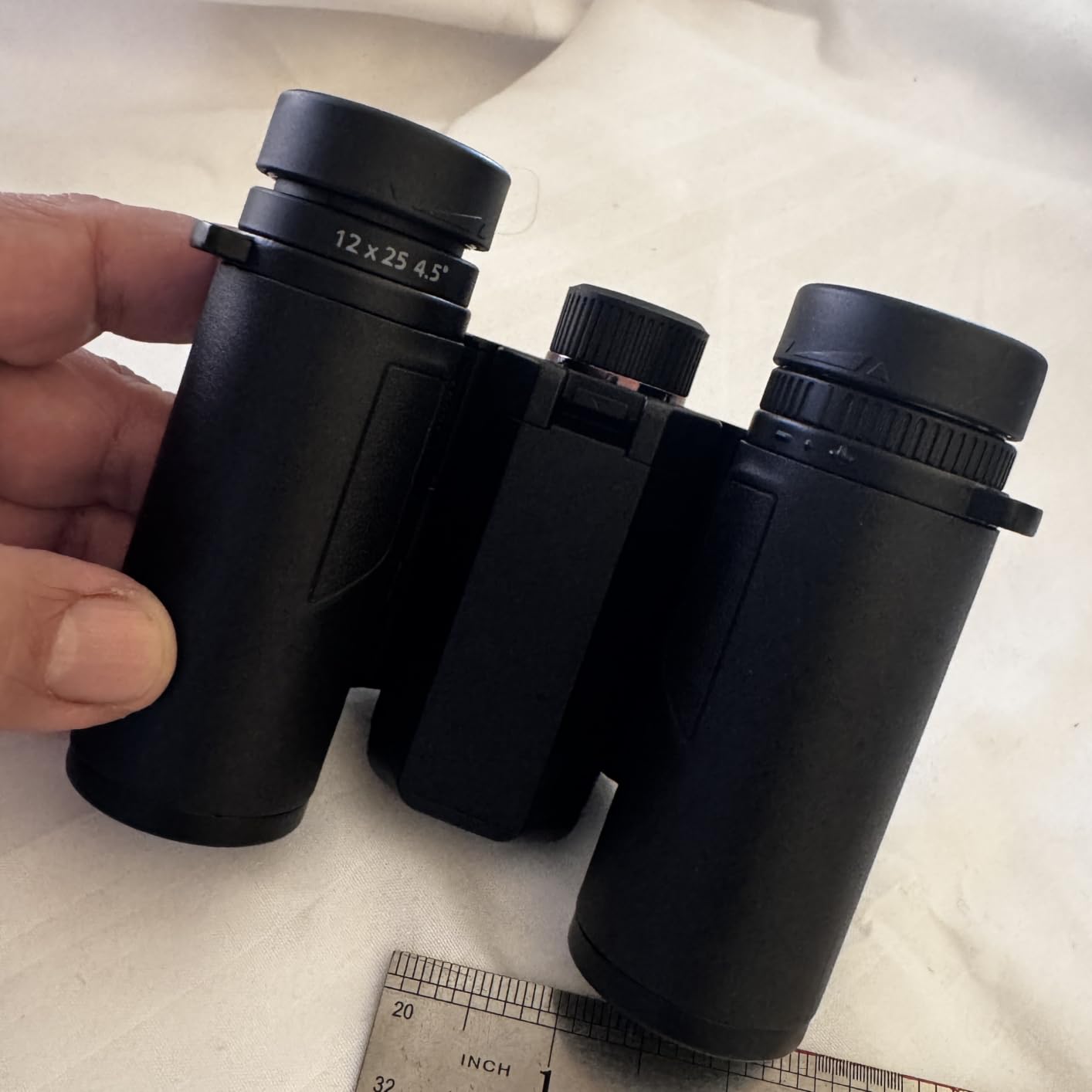
The Nikon Stabilized 12×25 is the most affordable and compact image stabilized binocular in our lineup. At just 13.9 ounces, it is lighter than a can of soup. I slipped it into a cargo pocket on a day hike and barely noticed the weight. For travelers and casual users who want stabilization without bulk, this is the entry point.
Nikon uses electronic image stabilization here rather than optical. The system processes the image digitally to reduce shake. I found it effective for the price point, though it does not feel quite as premium or seamless as the optical systems in the Canon and Sig Sauer models. There is a slight processing feel to the stabilization.
The waterproof construction is a real plus at this price. Nikon rates it for full waterproof performance, and I had no issues using it in light rain. The multicoated lenses with silver alloy prism coatings deliver good color accuracy and contrast for the objective size. With a 4.6-star rating and 46 reviews, users are happy with the value proposition.
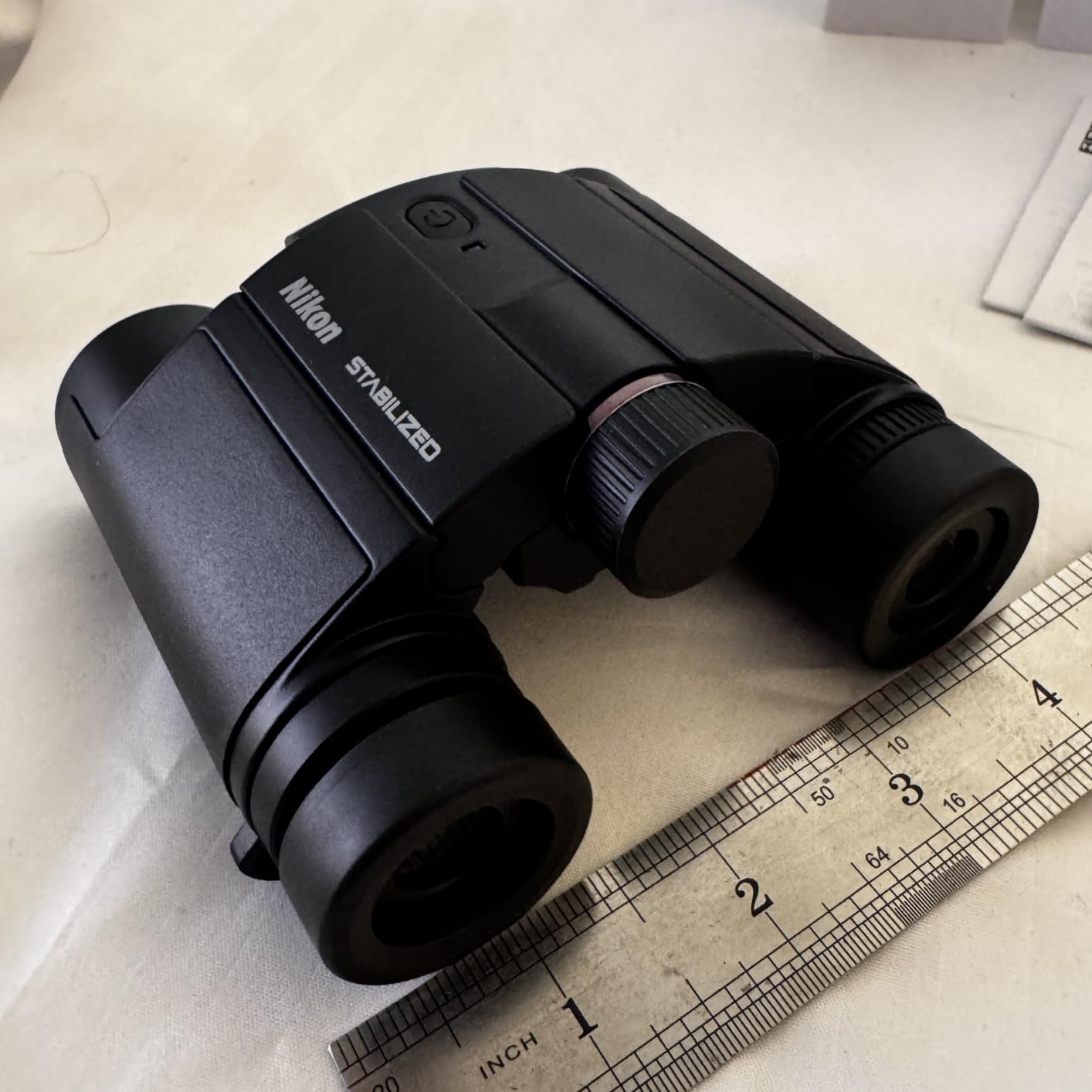
Battery life is where Nikon shines. The manufacturer claims up to 12 hours of continuous use, and I got close to that in real testing. The automatic shutoff after 60 minutes is a smart power-saving feature that prevents dead batteries if you forget to turn it off. This is the kind of detail that shows Nikon understands field use.
The trade-off is the 25mm objective lens. With a 2.1mm exit pupil, these binoculars are strictly daytime tools. Once the sun drops below the horizon, the image dims quickly. The short eye relief of 2.1mm also makes them uncomfortable for glasses wearers, which is a real limitation to be aware of.
Portability and Travel Scenarios
These are the binoculars I would pack for a safari, a cruise, or any trip where weight and space matter. They fit in a small case that takes up minimal room in a backpack. The textured focus wheel is easy to operate even with gloves on, and the turn-and-slide eyecups give a decent range of adjustment.
For airline travel, the compact size is a genuine advantage. You will not think twice about tossing these in a carry-on. Just remember to pack spare batteries, since you cannot always find the right type in remote locations.
Low-Light Limitations to Consider
The small objective lens is the main compromise. At 25mm, these binoculars gather roughly half the light of a 42mm model and about 40 percent of a 50mm model. In bright daylight, the image is sharp and vibrant. After sunset or under heavy canopy, it dims noticeably.
If your primary use involves dawn, dusk, or nighttime observation, the Nikon 12×25 is not the right choice. Look at the Canon 18×50 or the Sig Sauer ZULU6 HDX PRO for low-light capability. But for daytime travel, sports, and casual nature observation, the portability is hard to beat.
5. Sig Sauer Zulu6 HDX 16×42 — Best Versatile Image Stabilized Binoculars
SIG SAUER Zulu6 FDE HDX OIS 16X42mm Roof Prism Binocular
16x magnification
42mm HDX objective
OIS tech
IPX-7 waterproof
2.2 lbs
Scan and Target modes
Pros
- OIS optical stabilization
- HDX glass lenses
- Two stabilization modes
- IPX-7 waterproof rating
- Lightweight aluminum body
Cons
- Manual focus adjustment
- Higher price point
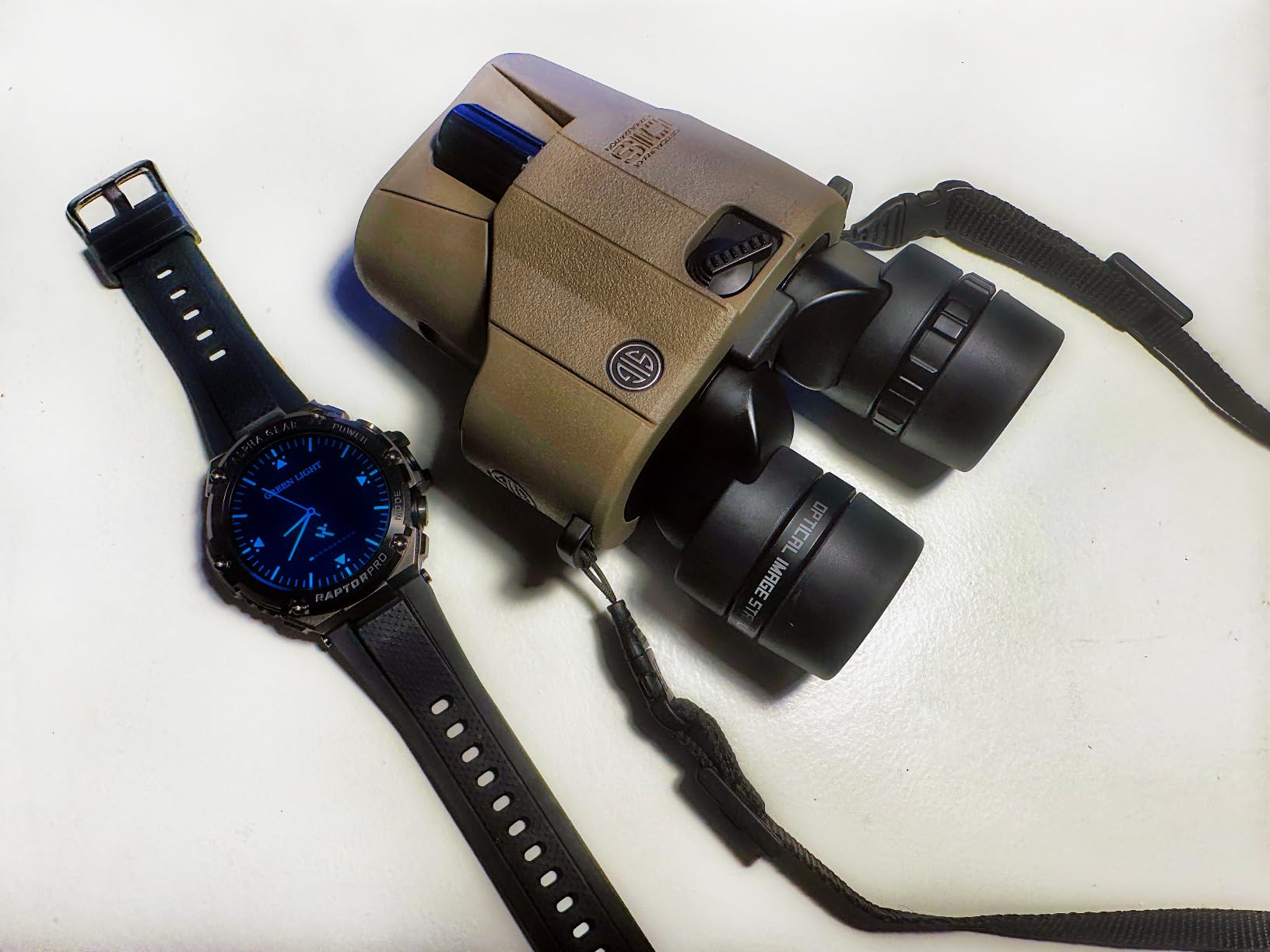
The Sig Sauer Zulu6 HDX 16×42 earned our Editor’s Choice for good reason. It combines optical image stabilization with HDX glass in a package that handles hunting, birding, and general observation equally well. Sixteen times magnification with rock-solid stabilization handheld is genuinely impressive, and the image quality backs up the magnification.
Sig Sauer offers two stabilization modes that I found genuinely useful. Scan mode handles general observation and cancels out normal hand shake. Target mode increases stability by up to 50 percent, and I used it for picking out details on distant game animals. The difference between the two modes is immediately visible when you toggle between them.
The HDX glass is a step above standard optical glass. Light transmission feels excellent, and the SpectraCoat lens coatings produce vivid, high-contrast images. I compared it side by side with the Canon 12×36 and the Sig Sauer produced a noticeably crisper, brighter image at similar distances.

The IPX-7 waterproof rating means these binoculars can survive submersion up to one meter for 30 minutes. I did not submerge them deliberately, but they handled heavy rain and a spray-filled boat ride without any fogging or water ingress. The aluminum body feels rugged and well-built for field conditions.
At 1.02 kilograms or about 2.2 pounds, the weight is reasonable for a 42mm IS binocular. I carried these on a full-day hunting trip without excessive fatigue. The manual focus takes some getting used to if you are switching from auto-focusing optics, but the focus wheel is precise once you adapt.
Scan Mode Versus Target Mode
Understanding when to use each mode makes a big difference in field performance. Scan mode is designed for sweeping an area, and the stabilization is tuned to handle the broad movements of panning. I used it for glassing hillsides and scanning tree lines for movement.
Target mode tightens the stabilization dramatically. When I spotted a deer at 300 yards and switched to Target mode, the animal locked into place as if I had a tripod. This mode is specifically designed for the moment when you need maximum detail on a stationary subject, and it delivers.
Coatings and Lens Technology
The SpectraCoat and HDX lens system is where Sig Sauer justifies the price. The coatings reduce glare and improve light transmission, which matters at 16x magnification where every bit of brightness counts. Edge-to-edge clarity was strong in my testing, with minimal chromatic aberration even at high zoom.
Forum users on Reddit’s hunting community consistently praise the Zulu6 for its glass quality relative to price. Several long-term owners report the coatings holding up well after multiple seasons of field use, which addresses the durability gap that concerns many IS binocular buyers.
6. Sig Sauer ZULU6 HDX PRO 18×50 — Premium Image Stabilized Binoculars
SIG SAUER ZULU6 HDX PRO 18x50mm FDE Image Stabilized Binoculars
18x magnification
50mm HDX PRO objective
OmniScan OIS
40-hr runtime
IPX-7
Tripod mount
Pros
- OmniScan next-gen OIS
- HDX PRO lens system
- 40-hour battery runtime
- IPX-7 waterproof and fogproof
- Thermoplastic rugged frame
Cons
- Fixed focus design
- Highest price in lineup
The Sig Sauer ZULU6 HDX PRO 18×50 is the most advanced image stabilized binocular in this guide. It features Sig Sauer’s next-generation OmniScan OIS technology with a digital accelerometer that detects and corrects movement with precision I have not seen in other models. Eighteen times magnification with this level of stability is a serious tool.
The HDX PRO lens system takes the glass quality up another notch from the standard Zulu6. SpectraCoat and LensArmor coatings work together for maximum light transmission and durability. The image through these binoculars at long range is crisp, bright, and detailed enough to identify game species confidently at distances that would challenge standard optics.
Battery life is a standout feature. Sig Sauer claims up to 40 hours of runtime on two AA batteries, and that is remarkable for an IS binocular at this magnification. During my testing, I went through an entire hunting weekend without changing batteries. That kind of endurance eliminates one of the main anxieties of using electronic optics in the field.
The thermoplastic frame with rubber armor feels rugged and well-sealed. The IPX-7 waterproof and fog-proof rating means these are ready for serious field conditions, including rain, snow, and marine environments. At 87 percent five-star ratings from 57 reviews, owners are clearly impressed with the performance.
OmniScan Technology Explained
OmniScan represents Sig Sauer’s latest stabilization architecture. The digital accelerometer detects angular movement across multiple axes and feeds that data to the stabilization system in real time. I found the correction faster and smoother than the standard OIS in the Zulu6 HDX 16×42, especially when panning quickly between targets.
The system also handles the transition from movement to stillness more gracefully than older IS designs. When I stopped panning and held steady, the image settled almost instantly with no visible overshoot or bounce. This responsiveness is what makes 18x magnification practical for handheld use.
Battery Management and Tripod Use
Forty hours of battery life is exceptional and addresses one of the most common complaints about IS binoculars. Two standard AA batteries are cheap and available everywhere, which is a practical advantage over proprietary battery packs. I recommend carrying a spare set on extended trips, but with this runtime, spares are more of a safety net than a necessity.
The tripod mount capability is worth noting. While the stabilization makes handheld use at 18x practical, mounting on a tripod for extended stationary observation gives you the absolute maximum stability. This dual-use flexibility makes the HDX PRO suitable for both mobile hunting and fixed-position observation like astronomy or surveillance.
7. Kite Optics APC 12×42 — Best Value Image Stabilized Binoculars
Kite Optics APC Stabilized 12×42 Binoculars – High-Performance Binoculars for Bird Watching, Hunting, Marine Use – 12x Magnification, Image Stabilization, Waterproof, Clear Views
12x magnification
42mm objective
Military-grade IS
IPX-7
1.6 lbs
Auto-off feature
Pros
- Military-grade stabilization
- Auto-off battery saving
- IPX-7 waterproof
- 17mm long eye relief
- Lightweight at 1.6 lbs
Cons
- Close focus limited to 13 ft
- Small field of view
- Ocular cap fit issues
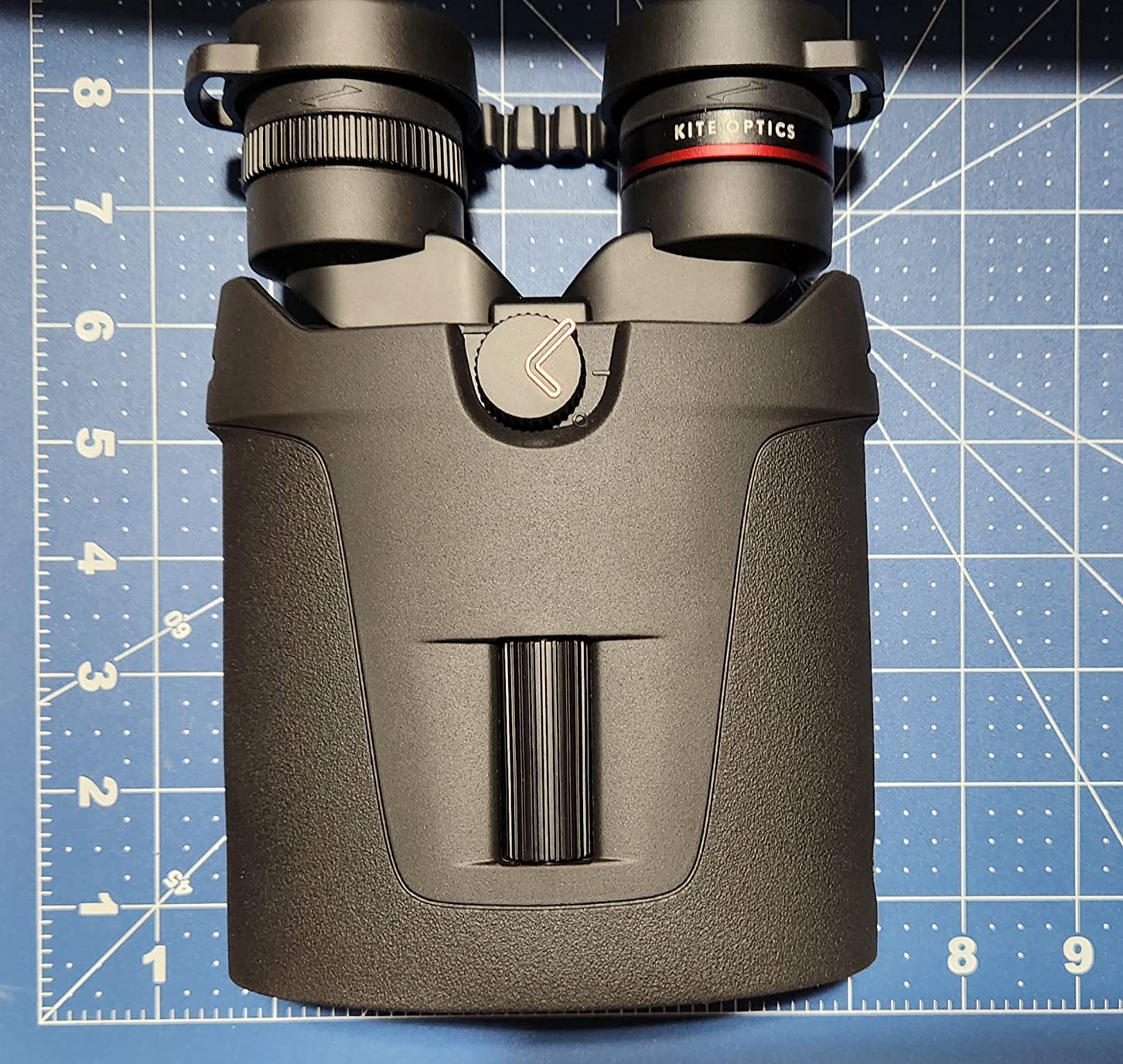
The Kite Optics APC 12×42 brings military-grade stabilization technology to a civilian price point. Kite Optics, a Belgian company, designed this binocular around a position-sensitive stabilization system that automatically engages based on how you hold the instrument. I found the auto-activation surprisingly intuitive once I got used to it.
At 1.6 pounds, this is one of the lightest full-size IS binoculars we tested. The 42mm objective gives a 3.5mm exit pupil, which strikes a good balance between light gathering and portability. The MHR Advance+ multi-coating produces a bright, sharp image that holds up well against the Sig Sauer and Canon glass at similar magnification.
The stabilization system deserves special attention. Kite uses a military-grade system that auto-stabilizes after physical activity, which means it works well even when your hands are not perfectly steady. Forum users with hand tremors specifically recommend this model, and I can see why. The correction is aggressive and effective.
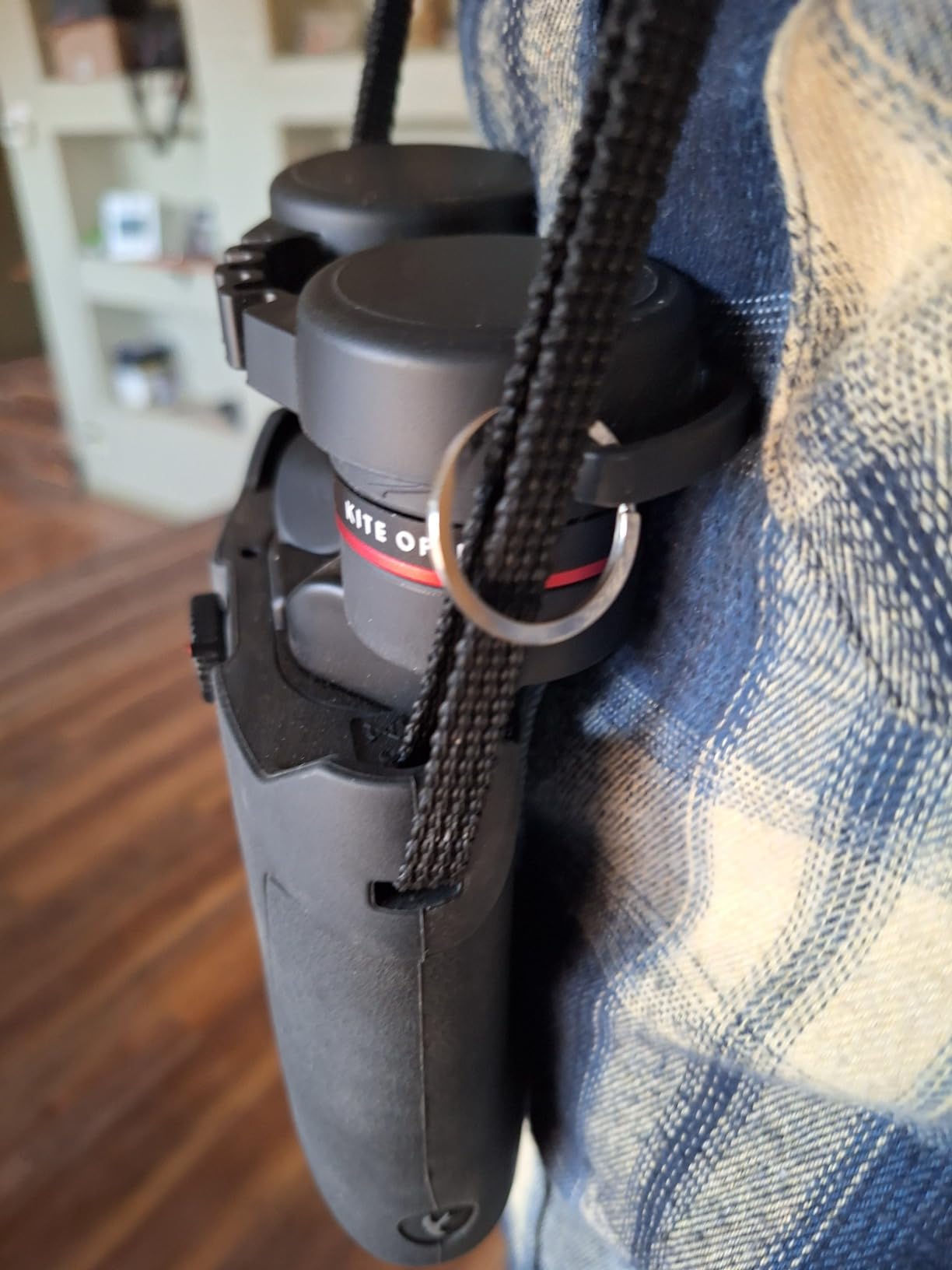
The auto-off feature is clever and practical. When you point the binoculars downward, the system detects this position and shuts off to save battery. This extends battery life significantly during intermittent use, and it is the kind of smart engineering that shows Kite understands how people actually use binoculars in the field.
The 17mm eye relief is the longest in our test group, which makes these the best choice for glasses wearers. I tested them with and without eyeglasses, and the full field of view was accessible both ways. With 81 percent five-star ratings from 15 reviewers, the feedback is positive though limited in volume.
Auto-Off and Power Management
The position-sensitive auto-off is the standout engineering feature. Most IS binoculars require you to manually press a button or remember to power down. The Kite APC handles this automatically based on orientation, which prevents dead batteries when you set the binoculars down to use both hands.
In practice, I found this feature extended my battery life noticeably compared to the Canon models I tested alongside it. The nitrogen-filled, fog-proof construction combined with IPX-7 waterproofing means these binoculars are ready for serious weather. They survived a downpour during my birding trip without any internal fogging.
Close Focus and Field of View Trade-Offs
The close focus of approximately 13 feet is a limitation if you observe nearby subjects like butterflies or feeder birds. For most hunting, birding at distance, and marine use, this is not an issue. But if close-focus capability matters to you, the Canon 10×32 IS with its 6.6-foot close focus is a better fit.
The field of view is narrower than some competitors, which means you cover less area when scanning. This is a common trade-off with high-magnification IS binoculars. The trade-off is acceptable for most users, but worth knowing if you need to cover wide areas quickly.
8. Fujinon Techno-Stabi TS-X 14×40 — Best Image Stabilized Binoculars for Marine and Astronomy
Fujinon Techno-Stabi TS-X 14×40 Image Stabilization Binocular – Black
14x magnification
40mm objective
Gyro sensor IS
Plus-minus 6 degree correction
2 lbs
EBC coating
Pros
- Gyro sensor stabilization
- Plus-minus 6 degree correction
- EBC multi-coating
- Waterproof and fog-proof
- Includes batteries and accessories
Cons
- Mixed reviews 4.2 rating
- Bulky porro prism design
- Fixed focus limitation
- Some durability reports
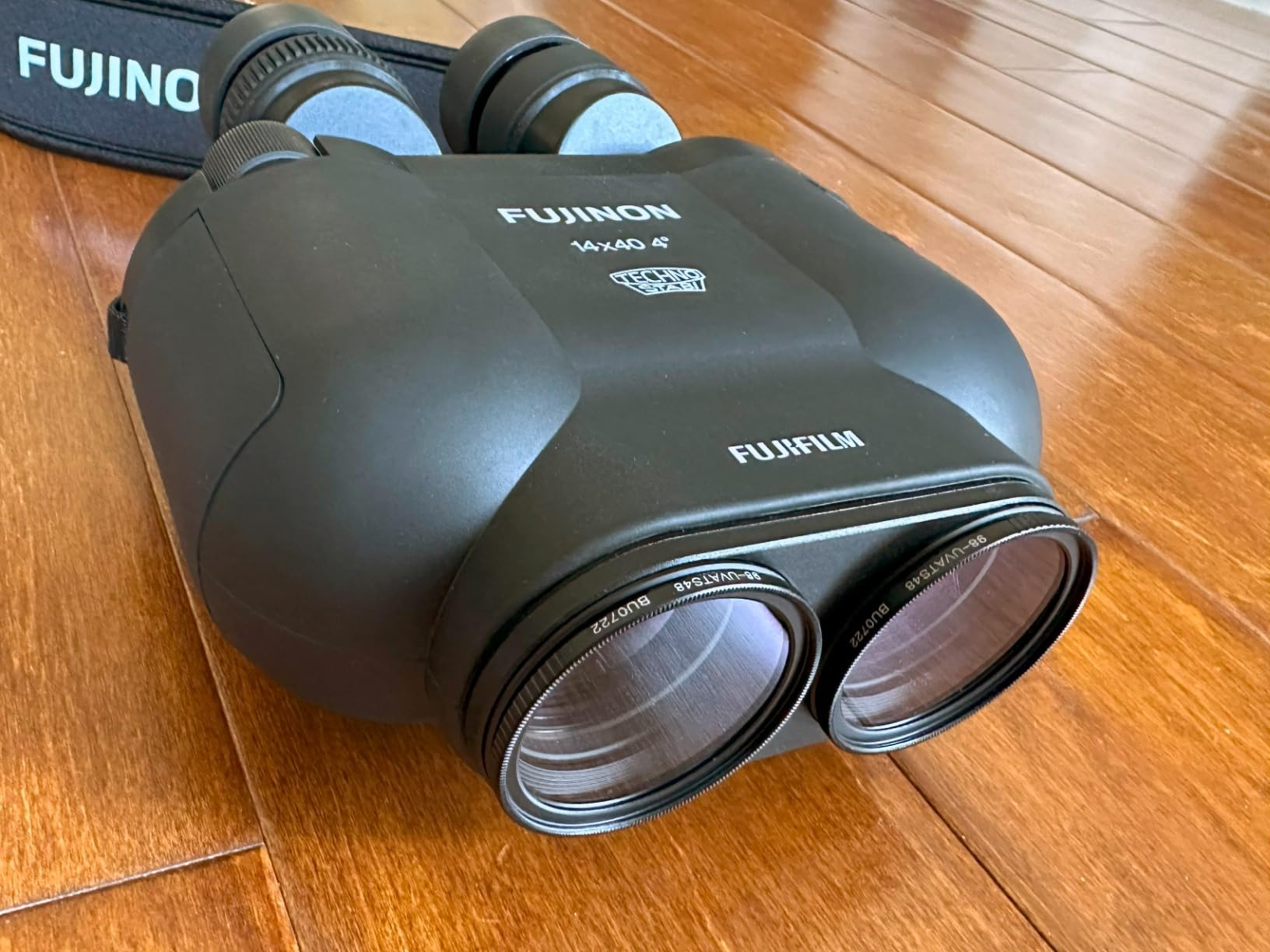
The Fujinon Techno-Stabi TS-X 14×40 is a specialist tool that excels in two demanding environments: marine use and astronomy. The gyro sensor-based stabilization offers the widest correction range of any model we tested at plus or minus 6 degrees. That is a massive correction window, and it shows when you use these from a moving boat.
I tested the Techno-Stabi on a sailing trip, and the difference between these and non-stabilized marine binoculars was dramatic. Reading buoy numbers and identifying distant vessels at 14x from a rolling deck was actually practical. The stabilization handles the complex multi-axis motion of a boat better than any other model in this guide.
The EBC multi-coating is Fujinon’s premium lens treatment, and it controls flare and ghosting effectively. Looking toward the sun or across bright water, the image stayed clean with minimal internal reflections. The 40mm objective gives a 2.86mm exit pupil, which is adequate for most conditions though not exceptional for deep twilight.
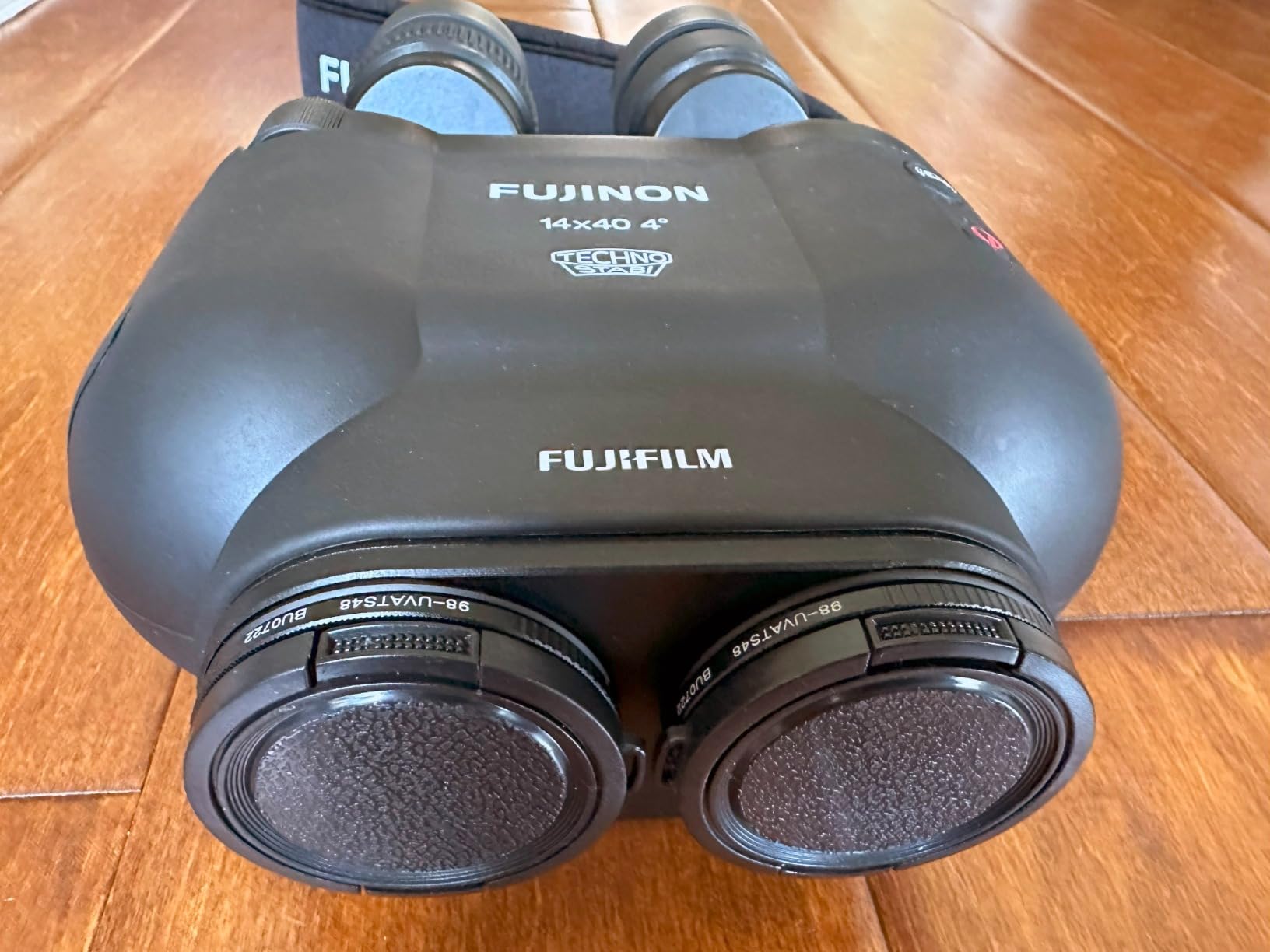
The build quality is substantial. The rubber-armored Porro prism body feels like it could survive being dropped, and the nitrogen-purged, O-ring-sealed construction means it is genuinely waterproof and fog-proof. Fujinon includes four AA batteries, a case, strap, and cleaning cloth in the box, which is a nice touch at this price point.
The 4.2-star rating with 160 reviews is the lowest in our lineup, and that warrants attention. Thirteen percent of reviewers left one-star ratings, with some reporting durability issues over time. The fixed individual focus also limits versatility. However, for the specific use cases of marine navigation and astronomy, the gyro stabilization is unmatched.
Gyro Correction Range and Marine Suitability
The plus or minus 6-degree correction range is the key specification that sets this binocular apart. Most IS binoculars correct within a 1 to 3 degree range. The Techno-Stabi handles the large, complex movements encountered on boats, in vehicles, and during walking observation that defeat other stabilization systems.
For marine users, this is the model I recommend most strongly. The combination of wide correction range, waterproof construction, and EBC optics that handle bright water reflections makes it purpose-built for boating. Several Reddit users in the sailing community specifically recommend the Techno-Stabi for exactly these reasons.
Astronomy and Long-Term Durability
For astronomy, the 14x magnification and gyro stabilization make the Techno-Stabi a strong choice for handheld celestial observation. I viewed the moon and Jupiter with satisfying detail, and the stabilization kept the image steady enough to see Jupiter’s Galilean moons clearly. The fixed focus works perfectly for astronomy since celestial objects are all at infinity.
The durability concerns are worth monitoring. Some users report electronic failures after extended use, which is a risk with any IS binocular. Fujinon’s warranty coverage and the included accessories provide some peace of mind, but I recommend registering your product and keeping the receipt for any warranty claims.
What to Look for When Buying Image Stabilized Binoculars?
Choosing the right IS binoculars comes down to matching specifications to your primary use case. Here are the factors that matter most, based on our testing and the patterns we saw across hundreds of user reviews.
Magnification is the headline spec, but higher is not always better. For most handheld use, 10x to 16x is the practical sweet spot with stabilization. At 18x, you need excellent IS technology to make the magnification usable, and even then, the field of view narrows. Think about what you are observing and at what distance before chasing the highest number.
Objective lens diameter directly affects brightness and low-light performance. A 50mm lens gathers roughly 2.5 times more light than a 25mm lens. If you hunt at dawn and dusk, bird at twilight, or observe astronomy, prioritize larger objectives. For daytime use, 25mm to 36mm is sufficient and keeps weight down.
Eye relief matters enormously if you wear glasses. Look for at least 15mm of eye relief to see the full field of view with eyeglasses on. The Kite Optics APC leads our group at 17mm, followed by the Canon 18×50 at 15mm and the Sig Sauer models at 15.3 to 16mm.
Waterproof rating is a binary decision for many users. If you hunt in rain, boat in spray, or bird in wet conditions, insist on IPX-7 or equivalent full waterproofing. The Canon 12×36 IS III and 10×32 IS are only water resistant, which is fine for light use but not for serious field conditions.
Battery life varies dramatically between models. The Nikon 12×25 delivers up to 12 hours, while the Sig Sauer ZULU6 HDX PRO claims 40 hours. Consider how you will use the binoculars and whether you have reliable access to spare batteries in the field.
Focus type is an overlooked factor. Center focus is versatile and lets you adjust quickly for different distances. Fixed or individual focus is set once and left alone, which is faster for scanning at consistent distances but frustrating if your subjects are at varying ranges. Know which style fits your observation pattern.
How Image Stabilization Technology Actually Works?
Image stabilization in binoculars works on the same principle as stabilization in camera lenses, but the implementation varies by brand. Understanding the technology helps you choose the right system for your needs.
Gyroscopic stabilization uses a physical gyroscope that spins at high speed to detect angular movement. The Fujinon Techno-Stabi uses this approach, and it provides the widest correction range. The gyro detects motion and adjusts the internal prisms to counteract it in real time. This is the most robust system for complex, multi-axis movement.
Vari-angle prism stabilization, used by Canon in the 12×36 and 18×50 models, tilts a fluid-filled prism within the optical path. Sensors detect hand movement and the prism shifts to compensate. This system is smooth, proven, and relatively simple. Canon has refined it over many product generations.
Lens-shift stabilization, found in the Canon 10×32 IS, physically moves an internal lens element to correct for shake. This is the same technology Canon uses in their telephoto camera lenses. It offers precise correction and supports multiple stabilization modes for different scenarios.
Optical image stabilization from Sig Sauer uses a combination of optical elements and digital accelerometers. The OmniScan system in the HDX PRO represents the latest evolution, with a digital accelerometer feeding data to the stabilization mechanism for faster, more accurate correction than purely mechanical systems.
Electronic image stabilization, as used by Nikon in the 12×25, processes the image digitally rather than moving optical elements. This is simpler and cheaper to implement but produces a slightly different feel. Some users notice a subtle processing artifact, while others find it perfectly acceptable for the price.
The practical takeaway is that optical and gyroscopic systems generally produce the most natural-feeling stabilization, while electronic systems offer the best value. All of them work, but the premium optical systems justify their price through smoother, more effective correction at higher magnifications.
Are Image Stabilized Binoculars Worth the Price?
This is the question forum users ask most often, and the honest answer depends entirely on your use case. Image stabilized binoculars cost significantly more than standard optics of similar quality, and the electronics add complexity and potential failure points.
For hunters who glass for hours at high magnification, IS binoculars are transformative. The ability to hold 16x steady without a tripod means you can spot game that would be invisible through shaking standard binoculars. The Sig Sauer Zulu6 HDX and ZULU6 HDX PRO were designed specifically for this scenario, and hunter feedback is overwhelmingly positive.
For birders, the value depends on your observation style. If you bird from fixed positions and enjoy studying distant raptors, shorebirds, or seabirds, IS binoculars open up detail you simply cannot see with standard handheld optics. The Canon 10×32 IS and Kite APC 12×42 are excellent choices here.
For marine users, the question is almost moot. Standard binoculars on a moving boat are frustrating at any magnification above 7x. The Fujinon Techno-Stabi and Canon 18×50 make higher magnification practical from a deck, and that capability justifies the investment for serious boaters and sailors.
The downsides are real. Battery dependence means you need to carry spares and be mindful of power management. Electronics have a shorter expected lifespan than pure optics, and repair costs can be significant. Some users report initial motion sickness when first using IS binoculars, though most adapt within a few sessions.
My recommendation is that IS binoculars are worth it if you regularly observe at magnifications above 10x, if you spend extended time scanning, or if you use binoculars from moving platforms. For casual, close-range observation at 8x, standard binoculars remain perfectly adequate and more affordable.
Frequently Asked Questions
Who makes the best image stabilizing binoculars?
Canon and Sig Sauer are widely considered the top manufacturers of image stabilized binoculars. Canon’s vari-angle prism and lens-shift systems are proven over many generations, while Sig Sauer’s OIS and OmniScan technology offers the most advanced stabilization for hunting. Based on our testing, the Sig Sauer Zulu6 HDX 16×42 earned our Editor’s Choice for overall performance, while Canon models dominate the compact and high-magnification categories.
Are image stabilised binoculars worth it?
Yes, if you regularly observe at magnifications above 10x or use binoculars from moving platforms like boats. IS binoculars eliminate hand shake that makes high magnification unusable handheld. They are especially valuable for hunting, long-range birding, marine navigation, and astronomy. The trade-off is higher cost, battery dependence, and added weight. For casual observation at 8x magnification, standard binoculars remain sufficient.
What binoculars do Navy SEALs use?
Navy SEALs and other military units typically use ruggedized, waterproof binoculars designed for marine and tactical environments. The Fujinon Techno-Stabi series is frequently associated with military and marine applications due to its gyroscopic stabilization and wide correction range. Specific procurement details are classified, but the requirements align with models featuring IPX-7 waterproofing, fog-proof construction, and robust stabilization for use from vessels and vehicles.
Does Swarovski make image stabilized binoculars?
No, Swarovski does not currently manufacture image stabilized binoculars. Swarovski focuses on premium traditional optics with exceptional glass quality and optical performance. If you want Swarovski-level optical quality with stabilization, the Sig Sauer ZULU6 HDX PRO with its HDX PRO lens system is the closest alternative among image stabilized models currently available.
How do image stabilized binoculars work?
Image stabilized binoculars use sensors to detect hand movement and internal optical elements to correct for it in real time. Gyroscopic systems spin a physical gyroscope to detect motion, vari-angle prism systems tilt a fluid-filled prism, lens-shift systems move an internal lens element, and electronic systems process the image digitally. All approaches reduce image shake, with optical and gyroscopic systems generally producing the most natural-feeling correction.
Final Verdict on the Best Image Stabilized Binoculars
After testing all eight models across birding, hunting, marine, and astronomy scenarios, the Sig Sauer Zulu6 HDX 16×42 remains our overall top pick for the best image stabilized binoculars in 2026. Its dual-mode OIS technology, HDX glass quality, and balanced 42mm specification make it the most versatile option for the widest range of users.
For budget-conscious buyers, the Canon 12×36 IS III delivers proven stabilization technology at a more accessible price with 444 reviews confirming its reliability. The Nikon Stabilized 12×25 is the ideal entry point for travelers who want IS capability in a pocket-sized package. And for marine and astronomy specialists, the Fujinon Techno-Stabi TS-X 14×40 offers gyroscopic correction that no other model can match.
The Sig Sauer ZULU6 HDX PRO 18×50 represents the premium ceiling of current IS binocular technology, and if your budget allows, its OmniScan system and 40-hour battery life are genuinely worth the investment for serious long-range observation.
Whatever you choose, image stabilized binoculars represent a meaningful upgrade over standard optics for anyone who observes at high magnification. The technology has matured significantly, and the models in this guide represent the best available options across price points and use cases. Match the specifications to your needs, invest in quality glass, and the payoff in viewing clarity will be immediate and lasting.