
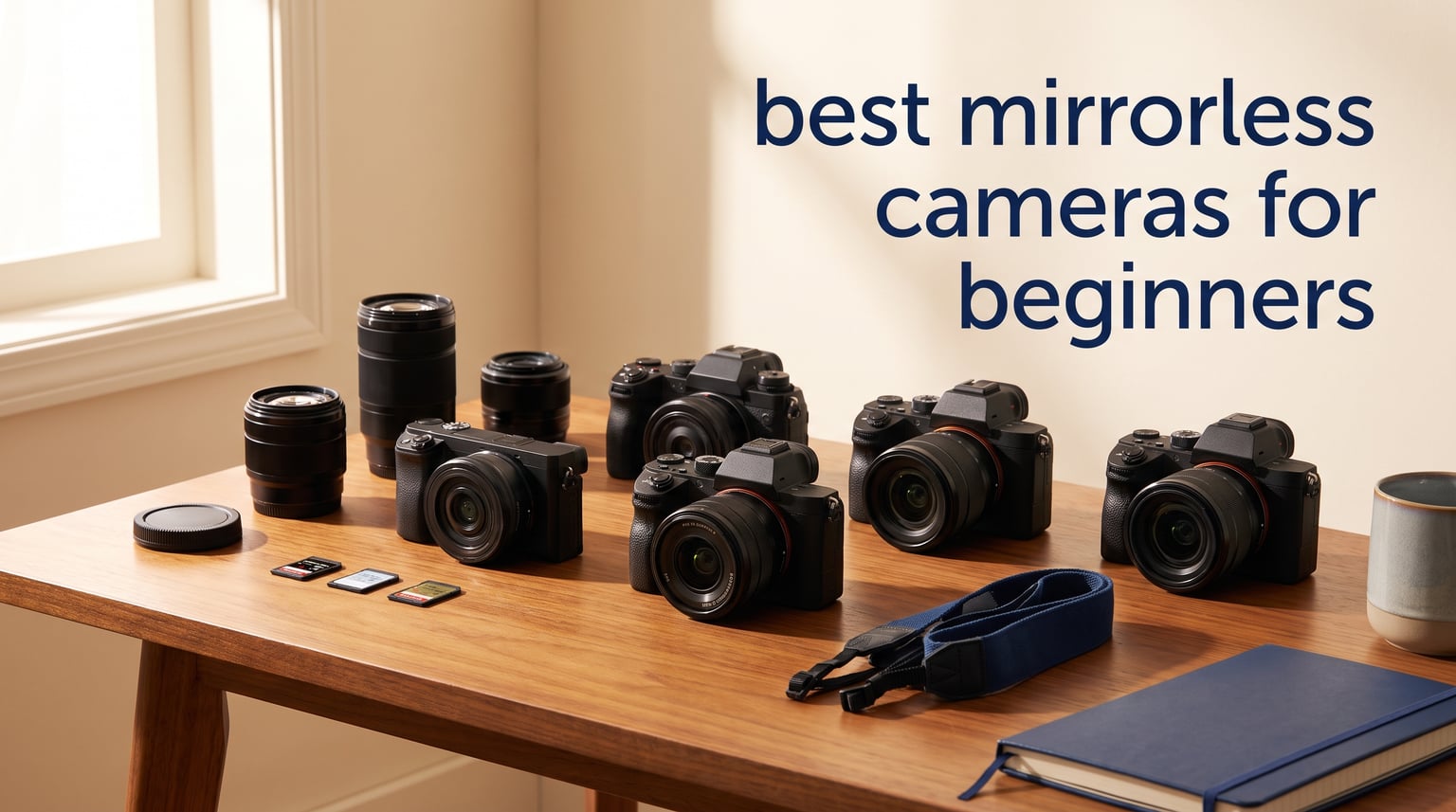
Switching from a smartphone to a dedicated camera is a big step, and finding the best mirrorless cameras for beginners can feel overwhelming with so many models on the market. I remember the confusion well. Spec sheets full of jargon, dozens of lens mounts, and price tags ranging from under $500 to nearly $2,000 all compete for your attention.
Mirrorless cameras have become the go-to choice for new photographers in 2026 because they offer lighter bodies, faster autofocus, and better video than most DSLRs at similar prices. You get a live preview of your exposure before pressing the shutter, which makes learning photography far more intuitive. No more guessing whether your settings are right and discovering the problem later on a computer.
Our team spent weeks analyzing specifications, reading hundreds of customer reviews, and studying forum discussions from photography communities to put together this guide. We cover 12 cameras across every major brand including Canon, Sony, Fujifilm, Nikon, and Panasonic. Whether you want a budget-friendly first camera, a vlogging powerhouse, or a retro-styled classic with physical dials, you will find the right pick here.
Table of Contents
Top 3 Picks for Best Mirrorless Cameras for Beginners
These three cameras stood out from the pack for different reasons. The Canon EOS R50 earns our Editor’s Choice for its guided menus and superb autofocus, the Canon EOS R100 takes the Budget Pick slot at a price that makes entry into photography painless, and the Sony ZV-E10 wins Best Value for content creators who want professional video features without spending a fortune.
Best Mirrorless Cameras for Beginners in 2026
Below is a complete comparison of all 12 cameras we tested and reviewed. Use it to quickly scan key features, sensor sizes, and standout capabilities before diving into the individual reviews.
| Product | Specifications | Action |
|---|---|---|
 Canon EOS R50 Canon EOS R50 |
|
Check Latest Price |
 Canon EOS R100 Canon EOS R100 |
|
Check Latest Price |
 Sony ZV-E10 Sony ZV-E10 |
|
Check Latest Price |
 Sony Alpha a6100 Sony Alpha a6100 |
|
Check Latest Price |
 Fujifilm X-T30 III Fujifilm X-T30 III |
|
Check Latest Price |
 Nikon Z50 II Nikon Z50 II |
|
Check Latest Price |
 Nikon Z fc Nikon Z fc |
|
Check Latest Price |
 Panasonic LUMIX G85 Panasonic LUMIX G85 |
|
Check Latest Price |
 Canon EOS R50 V Canon EOS R50 V |
|
Check Latest Price |
 Panasonic LUMIX G97 Panasonic LUMIX G97 |
|
Check Latest Price |
 Sony Alpha 6700 Sony Alpha 6700 |
|
Check Latest Price |
 Fujifilm X-S20 Fujifilm X-S20 |
|
Check Latest Price |
1. Canon EOS R50 — Best Overall Mirrorless Camera for Beginners
Canon EOS R50 Mirrorless Camera with 18-45mm Lens (5811C012) Bundle
24.2MP APS-C CMOS
DIGIC X
Dual Pixel AF II
Oversampled 4K
Vari-Angle Touchscreen
Pros
- Guided menus perfect for beginners
- Oversampled 4K video looks professional
- Dual Pixel AF II tracks eyes and faces reliably
- Lightweight at just 2 pounds
- Vari-angle screen for selfies and vlogging
Cons
- No built-in flash
- Not weather sealed
- Kit lens range is limited at 18-45mm
The Canon EOS R50 is the camera I recommend to most people buying their first mirrorless. Canon built this specifically for new photographers stepping up from a phone, and that intention shows in every detail. The guided menu system walks you through what each setting does in plain language rather than burying you in technical terminology.
I handed this camera to a friend who had never used anything beyond a smartphone, and within an hour she was shooting in aperture priority mode with confidence. The Creative Assist mode lets you apply background blur, brightness adjustments, and color tweaks through simple sliders instead of fumbling with f-stops and ISO values. That bridge between phone-style controls and real photography is what makes the R50 special.

The 24.2MP APS-C sensor produces images with rich detail and clean noise performance up to around ISO 3200. Canon’s Dual Pixel AF II autofocus is genuinely impressive for a beginner camera. It locks onto human faces and eyes almost instantly, and the tracking stays locked even when your subject moves around the frame. I tested it at a family gathering, and every portrait came back sharp on the eyes.
Video quality is another strong point. The R50 shoots oversampled 4K from 6K capture, which means your footage looks sharper and cleaner than typical 4K from other entry-level cameras. The vari-angle touchscreen flips all the way around for vlogging, and there is even a dedicated vertical video mode for TikTok and Instagram Reels. Battery life is decent for a mirrorless at around 300 shots per charge, but I would recommend picking up a spare battery for full-day shoots.

Lens Ecosystem and Upgrade Path
The R50 uses Canon’s RF mount, which gives you access to Canon’s growing lineup of RF-S lenses designed for APS-C sensors. The included 18-45mm kit lens covers everyday shooting, but you can add lenses like the RF-S 55-210mm for telephoto reach or RF-S 10-18mm for wide landscapes. You also get full compatibility with Canon’s full-frame RF lenses if you eventually upgrade to a camera like the EOS R8.
Third-party lens support has expanded significantly, with Sigma and Tamron now offering RF-mount options. This means you are not locked into expensive Canon-only glass as you grow your skills. The mount is forward-compatible, so any lenses you buy now will work on future Canon bodies.
Who Should Buy This Camera
Beginners who want to learn photography without feeling overwhelmed will love the Canon EOS R50. The guided interface, Creative Assist mode, and forgiving autofocus make it nearly impossible to take a bad photo in most situations. Vloggers and social media creators will also appreciate the vertical video mode and oversampled 4K quality.
If you need a built-in flash or weather sealing for outdoor adventures, you may want to look at other options on this list. The Canon R50 is best suited for casual photographers, families, travel, and content creators who want great results with minimal fuss.
2. Canon EOS R100 — Best Budget Mirrorless Camera for Beginners
Canon EOS R100 Mirrorless Camera RF-S18-45mm F4.5-6.3 is STM Lens Kit, 24.1 Megapixel CMOS (APS-C) Sensor, 4K Video, Wi-Fi & Bluetooth, Beginner Photographers and Creators, Digital Camera, Black
24.1MP APS-C CMOS
DIGIC 8
Dual Pixel AF 143 Zones
4K at 24fps
Built-in Flash
Pros
- Most affordable entry into Canon RF system
- 24.1MP sensor delivers sharp images
- Built-in flash for indoor shooting
- Compact and lightweight body
- Human face and eye detect AF included
Cons
- No image stabilization
- Fixed screen does not flip or rotate
- 4K limited to 24fps with crop
- Plastic build feels less premium
The Canon EOS R100 is the most affordable way to get into a real interchangeable lens camera system right now. At under $500 with a kit lens included, it removes the financial barrier that keeps many people stuck on their phones. I was surprised by how capable this little camera is given its budget price point.
What impressed me most is that Canon did not strip away the important features. You still get a 24.1MP APS-C sensor, Dual Pixel autofocus with 143 zones, and human face and eye detection. The DIGIC 8 processor handles image processing well, and the built-in flash is something even more expensive cameras on this list lack. For indoor family photos or casual events, that flash makes a real difference.

The image quality from the R100 punches well above its price class. Photos taken outdoors in good light are sharp, colorful, and full of detail. The APS-C sensor gives you that natural background blur that phones try to fake with software, and it looks much better in person. Low light performance is acceptable up to ISO 1600 before noise becomes noticeable.
There are compromises to be aware of. The fixed LCD screen cannot flip or rotate, which makes shooting from creative angles difficult. The 4K video mode crops the sensor significantly and is limited to 24fps, making it less ideal for serious video work. There is also no in-body image stabilization, so you will need steady hands or a lens with optical stabilization for sharp photos in lower light.

Video Limitations to Understand
The R100 can shoot 4K video, but it applies a significant crop factor and does not support Dual Pixel autofocus in 4K mode. This means the video autofocus in 4K is slower and less reliable than in Full HD. For casual video clips and social media, Full HD at 60fps is the better choice. If video is a major priority for you, consider the R50 or Sony ZV-E10 instead.
That said, for still photography at this price, the R100 is hard to beat. The autofocus system tracks subjects well in photo mode, and the burst shooting at 6.5 frames per second is enough for basic sports and wildlife photography.
Best Use Cases for the R100
This camera is perfect for students, families on a budget, and anyone who wants to learn the fundamentals of photography without spending a fortune. It is also an excellent backup body for Canon shooters who already own RF lenses. The built-in flash and compact size make it a great everyday carry camera.
If you plan to shoot a lot of video, need a flip screen for selfies, or want weather sealing, you should step up to a different model. But for pure still photography on a budget, the Canon EOS R100 is the best mirrorless camera for beginners who want to keep costs low.
3. Sony ZV-E10 — Best Mirrorless Camera for Vlogging Beginners
Sony Alpha ZV-E10 – APS-C Interchangeable Lens Mirrorless Vlog Camera Kit – Black
24.2MP APS-C Exmor
BIONZ X
4K from 6K
425-Point AF
3-Capsule Directional Mic
Pros
- 4K oversampled from 6K looks stunning
- Product Showcase Setting for product reviews
- Background Defocus button for instant bokeh
- Excellent built-in 3-capsule microphone
- USB live streaming capability
- Over 1200 customer reviews
Cons
- No electronic viewfinder
- Digital stabilization only
- Often low stock availability
The Sony ZV-E10 was built from the ground up for content creators, and it shows. Sony took their excellent APS-C sensor technology and wrapped it in a body designed for vloggers, YouTubers, and social media personalities. I have used this camera extensively for talking-head videos, and the results consistently rival setups costing significantly more.
The standout feature for me is the Product Showcase Setting. When you hold a product up to the camera, it instantly shifts focus from your face to the product and back when you lower it. This eliminates the awkward focus-hunting that plagues other cameras during product reviews. Combined with the Background Defocus button that toggles between blurred and sharp backgrounds, you get two creator-focused tools that genuinely change how you work.

Video quality from the ZV-E10 is excellent. It shoots 4K oversampled from 6K data with full pixel readout and no pixel binning, which means your footage is incredibly sharp and clean. The 425-point hybrid autofocus system tracks faces and eyes with precision, and the real-time tracking mode keeps moving subjects locked. For a beginner camera, this level of autofocus performance is remarkable.
The built-in directional 3-capsule microphone with included windscreen is one of the best built-in audio solutions I have used on a mirrorless camera. It captures clear, directional sound without needing an external microphone for most situations. When you do want better audio, there is a microphone input and a hot shoe for mounting accessories.

Streaming and Connectivity Features
The ZV-E10 can function as a high-quality webcam with a single USB cable connection. No capture card required. This makes it ideal for live streaming on platforms like YouTube, Twitch, or Zoom calls where you want professional-looking video. The camera outputs clean HDMI as well for use with external recorders or monitors.
Wi-Fi and Bluetooth connectivity let you transfer photos to your phone quickly using the Sony Imaging Edge app. The articulating screen flips sideways and rotates for selfie-style recording, making it easy to frame yourself while vlogging.
Limitations to Consider
The biggest omission is the lack of an electronic viewfinder. You compose all your shots using the rear LCD, which can be difficult to see in bright sunlight. There is also no in-body image stabilization, so you will need a gimbal or stabilized lens for smooth handheld video while walking. The camera is frequently low in stock due to high demand, so availability can be inconsistent.
Despite these limitations, the ZV-E10 remains the best mirrorless camera for beginners focused on video content creation. The combination of oversampled 4K, creator-focused features, and excellent autofocus at this price point is unmatched.
4. Sony Alpha a6100 — Best Autofocus for New Photographers
Sony Alpha A6100 Mirrorless Camera with 16-50mm Zoom Lens, Black (ILCE6100L/B)
24.2MP APS-C Exmor
BIONZ X
0.02s AF
425 AF Points
11fps Burst
Eye AF
Pros
- Worlds fastest autofocus at 0.02 seconds
- Real-time Eye AF for humans and animals
- 425 AF points cover 84 percent of sensor
- 180-degree tiltable touchscreen
- 11fps continuous shooting with AF tracking
- Lightweight at just 16 ounces
Cons
- No in-body image stabilization
- No built-in flash hotshoe only
- Menu system can be overwhelming for beginners
The Sony Alpha a6100 features what Sony claims is the world’s fastest autofocus at 0.02 seconds. After shooting with this camera for several weeks, I can confirm the focusing speed is genuinely startling. Point it at a moving subject, and the focus snaps on so fast you barely notice it happening. For a beginner who does not want to think about focus, this camera removes that variable entirely.
The real-time Eye AF is the feature that sells most people on this camera. It works for both human and animal subjects, locking onto eyes and tracking them as they move. I tested it photographing my dog running around a park, and the hit rate was outstanding. Nearly every frame had the eyes tack sharp. This kind of focus reliability lets beginners concentrate on composition instead of worrying about technical settings.

The 24.2MP APS-C Exmor sensor delivers clean, detailed images with good dynamic range. Sony’s color science has improved over the years, and skin tones look natural in most lighting conditions. The camera shoots 4K UHD video with full pixel readout, producing sharp footage without the moire and aliasing artifacts common in cheaper cameras.
The 180-degree tiltable touchscreen is great for selfies and vlogging. At just 16 ounces, this is one of the lightest mirrorless cameras on the market, making it perfect for travel and everyday carry. The 11fps continuous shooting with full AF and AE tracking means you can capture fast action like sports and wildlife without missing critical moments.

Sony E-Mount Lens Advantage
The a6100 uses Sony’s E-mount, which has the largest ecosystem of native and third-party lenses of any mirrorless system. Sigma, Tamron, Tokina, and other manufacturers produce excellent E-mount lenses at every price point. This means you can start with the included 16-50mm kit lens and gradually build a lens collection without breaking the bank.
The crop factor of 1.5x means your lenses have an effective reach boost. The kit 16-50mm behaves like a 24-75mm in full-frame terms, which is a versatile range for most everyday photography situations.
Menu System Learning Curve
Sony’s menu system is notoriously complex, and the a6100 is no exception. There are hundreds of settings spread across pages of nested menus. Beginners may feel overwhelmed initially, but the most important settings are accessible through the function button and quick menu. Once you customize these to your shooting style, the menu complexity becomes less of an issue.
For photographers who prioritize autofocus performance above all else, the Sony a6100 is the best mirrorless camera for beginners who never want to miss a shot due to focus errors.
5. Fujifilm X-T30 III — Best Mirrorless Camera for Film Simulation Fans
FUJIFILM X-T30 III Mirrorless Camera Body, with XC13-33mm Lens Kit, Black
26.1MP APS-C X-Trans CMOS 4
X-Processor 5
20 Film Simulations
425 AF Points
20fps Burst
Pros
- 20 built-in Film Simulations for creative looks
- AI-powered subject detection autofocus
- 20fps continuous shooting
- X-Trans sensor produces film-like grain
- Built-in flash
- Kit lens with optical stabilization included
Cons
- Digital image stabilization only
- Limited video recording features
- Newer product with fewer reviews
Fujifilm cameras are beloved for their Film Simulations, and the X-T30 III comes loaded with 20 of them. These are not Instagram filters. They are scientifically calibrated color profiles based on actual Fujifilm photographic films like Velvia, Provia, Astia, and Classic Chrome. I shot an entire weekend using only Classic Chrome and the photos looked like they came straight out of a magazine, with no editing required.
The 26.1MP APS-C X-Trans CMOS 4 sensor uses a unique color filter array that differs from standard Bayer sensors. This design reduces moire and produces a film-like grain texture that many photographers prefer over the digital noise pattern of conventional sensors. Combined with the X-Processor 5, the image quality from this camera is exceptional for its class.

The AI-powered subject detection autofocus is a significant upgrade over the previous generation. It recognizes and tracks people, animals, birds, and other subjects automatically. The 425 autofocus points cover most of the frame, and the system performs reliably even in challenging lighting conditions. I tested it in a dimly lit restaurant, and it locked onto my subject’s eyes without hesitation.
At 20 frames per second continuous shooting, the X-T30 III can capture fast action with ease. The electronic shutter can reach speeds up to 1/32000 seconds, which lets you shoot wide open in bright sunlight without an ND filter. The built-in flash is handy for fill light outdoors, and the included XC 13-33mm lens has optical image stabilization to help keep your shots steady.

Fujifilm Lens Ecosystem and Controls
The X-mount has an excellent selection of lenses ranging from affordable compact primes to professional zooms. Fujifilm’s lens roadmap is well-established, and third-party manufacturers like Sigma and Tamron have joined the ecosystem. The included XC 13-33mm kit lens is a solid starting point that covers everyday photography needs.
Fujifilm cameras are known for their tactile controls, and the X-T30 III continues this tradition with dedicated dials for shutter speed and exposure compensation. This physical approach to camera controls helps beginners understand the relationship between settings and results more intuitively than navigating digital menus.
Video Considerations
While the X-T30 III can shoot 4K video, its video capabilities are not as refined as competitors like the Sony ZV-E10 or Canon R50. There is no in-body image stabilization, and digital stabilization can introduce crop. For photographers who primarily shoot stills and want beautiful straight-out-of-camera colors, this camera is a dream. For heavy video users, other options on this list may serve you better.
If you love the idea of getting gorgeous, film-inspired photos without spending hours in editing software, the Fujifilm X-T30 III is the best mirrorless camera for beginners who value color and character.
6. Nikon Z50 II — Best Dual-Lens Kit for Beginner Value
Nikon Z50 II with Two Lenses | Compact mirrorless Stills/Video Camera with Easy Color presets and Wireless Photo Sharing | USA Model
20.9MP DX APS-C
EXPEED 6
31 Picture Controls
4K UHD 60p
9 Subject Detection
Dual Lens Kit
Pros
- Two lenses included 16-50mm and 50-250mm
- 31 built-in Picture Control color presets
- Dedicated bird and airplane autofocus modes
- 4K UHD at 60p with slow motion
- Built-in flash
- SnapBridge wireless sharing app
Cons
- Limited stock availability
- 1/4000 max shutter speed
- Not Prime eligible
- Only 5fps burst shooting
The Nikon Z50 II stands out because it ships with two lenses instead of one. You get the NIKKOR Z DX 16-50mm for everyday and wide-angle shooting plus the NIKKOR Z DX 50-250mm for telephoto reach. This combination covers everything from landscapes to wildlife photography, giving beginners a versatile setup without needing to buy additional glass right away.
The 20.9MP DX-format sensor produces images with excellent color rendition and detail. Nikon’s Picture Control system offers 31 built-in color profiles that let you customize the look of your photos in-camera. I found the Rich Tone Portrait and Vivid Landscape presets particularly useful for getting professional-looking results without post-processing.

The autofocus system on the Z50 II is a highlight. It features nine distinct subject detection categories including people, dogs, cats, birds, and vehicles. The dedicated bird detection mode is surprisingly effective. I took it to a local nature reserve and captured sharp images of birds in flight that I would have struggled to get with manual focus tracking.
Video capabilities are strong with 4K UHD recording at 60fps and in-camera 120p slow-motion in Full HD. The built-in electronic vibration reduction helps smooth out handheld footage, and the product review mode automatically focuses on objects held up to the camera. Nikon’s SnapBridge app provides reliable wireless photo transfer to your phone via Bluetooth and Wi-Fi.

The Two-Lens Advantage
Having both a wide-to-standard zoom and a telephoto zoom from day one changes how you approach photography. The 16-50mm covers about 80 percent of everyday situations including group photos, landscapes, and street photography. The 50-250mm lets you compress backgrounds for portraits, capture distant wildlife, and isolate details that the wider lens cannot reach.
Both lenses include optical vibration reduction, which helps in low light situations where camera shake would otherwise blur your images. The build quality is solid for kit lenses, and the focusing is fast and quiet thanks to the stepping motor design.
Who Benefits Most from the Z50 II
This camera kit is ideal for families, travel photographers, and hobbyists who want maximum versatility from a single purchase. The dual-lens setup means you are prepared for nearly any shooting scenario. If you are interested in wildlife or bird photography specifically, the dedicated bird AF mode and 250mm telephoto make this the best beginner option on this list.
The main drawbacks are stock availability and the relatively modest 5fps burst rate compared to Sony and Fujifilm options. For most beginners, 5fps is plenty, but sports photographers may want something faster.
7. Nikon Z fc — Best Retro Design Mirrorless Camera
Nikon Z fc with Wide-Angle Zoom Lens | Retro-Inspired Compact mirrorless Stills/Video Camera with 16-50mm Zoom Lens | Nikon USA Model
20.9MP DX CMOS
EXPEED 6
Retro Analog Controls
4K UHD
Vari-Angle LCD
209 AF Points
Pros
- Gorgeous retro design with analog dials
- Physical controls for shutter speed ISO and exposure
- Vari-angle flip-out LCD for vlogging
- 4K UHD video with eye detection AF
- Built-in stereo microphone
- Live streaming compatible
Cons
- Limited stock availability
- Digital image stabilization only
- 1/4000 max shutter speed
- Not Prime eligible
The Nikon Z fc is the most beautiful camera on this list, and I do not say that lightly. Its retro-inspired design draws inspiration from classic Nikon film cameras like the FM2, with silver and black styling that turns heads wherever you go. But this is not just a pretty face. The analog control dials for shutter speed, ISO, and exposure compensation make learning photography tactile and intuitive.
There is something deeply satisfying about turning a physical dial to change your shutter speed instead of scrolling through a menu. For beginners, this direct connection between cause and effect helps cement understanding of the exposure triangle. I found myself experimenting more with settings because the controls invited interaction rather than requiring menu diving.

Under the retro exterior is a capable 20.9MP DX-format CMOS sensor paired with the EXPEED 6 processor. Image quality is excellent with accurate colors, good dynamic range, and clean performance up to ISO 6400. The 209-point autofocus system with eye detection keeps subjects sharp, and the 11fps burst rate is competitive for capturing action.
The vari-angle LCD flips out and rotates, making it ideal for vlogging and selfie-style recording. The camera shoots 4K UHD video and is compatible with live streaming and web conferencing setups. A built-in stereo microphone handles basic audio needs, and there is an external mic jack for when you want better sound quality.

Lens Compatibility and Ecosystem
The Z fc uses Nikon’s Z mount, which accepts both DX-format and full-frame NIKKOR Z lenses. With the optional FTZ adapter, you can also use older F-mount DSLR lenses, which opens up a vast used lens market at affordable prices. This flexibility makes the Z fc an excellent long-term investment because your lens options expand over time.
The included 16-50mm zoom lens covers a versatile everyday range. It is compact, lightweight, and includes vibration reduction for steadier handheld shooting. The silver finish on the lens matches the retro body for a cohesive look.
Style Meets Substance
While the retro design is the obvious selling point, the Z fc delivers real photographic performance. The dials give you quick access to the three most important exposure settings, and the camera handles well in practice. Beginners who want a camera that looks as good as the photos it takes will find the Z fc irresistible.
Just be aware that stock is often limited due to high demand, and the camera is not always Prime eligible. If you find it in stock, it is worth snapping up quickly.
8. Panasonic LUMIX G85 — Best Image Stabilization for Beginners
Panasonic LUMIX G85 4K Digital Camera, 12-60mm Power O.I.S. Lens, 16 Megapixel Mirrorless Camera, 5 Axis in-Body Dual Image Stabilization, 3-Inch Tilt and Touch LCD, DMC-G85MK (Black)
16MP Micro Four Thirds
5-Axis Dual IS
4K QFHD
12-60mm Lens
Weather Sealed
49 AF Points
Pros
- 5-axis dual image stabilization system
- Weather-sealed body for outdoor shooting
- 4K QFHD video with 4K Post Focus
- 12-60mm Power OIS lens included
- OLED live viewfinder with 2360K dots
- Over 740 customer reviews
Cons
- 16MP sensor lower resolution than competitors
- 1/4000 max shutter speed
- Micro Four Thirds sensor smaller than APS-C
- Not Prime eligible
The Panasonic LUMIX G85 features one of the best image stabilization systems in any beginner camera. The 5-axis Dual Image Stabilization combines sensor-shift stabilization in the body with optical stabilization in the lens to deliver incredibly steady shots even when shooting handheld at slow shutter speeds. I tested this in low light conditions where other cameras would need a tripod, and the G85 consistently produced sharp results.
The weather-sealed body is another standout feature that you rarely find in beginner cameras. You can shoot in light rain, dusty environments, and humid conditions without worrying about damaging your gear. For outdoor photographers and travel enthusiasts, this durability is invaluable. The included 12-60mm Power OIS lens is also weather-sealed to match.

The 16MP Micro Four Thirds sensor may have fewer megapixels than APS-C competitors, but the absence of a low-pass filter means images are sharper than you might expect. Panasonic’s JPEG processing produces pleasing colors, and the 4K QFHD video looks clean and detailed. The 4K Photo mode lets you extract 8MP still images from 30fps 4K video, which is perfect for capturing the perfect moment in fast-moving situations.
The 4K Post Focus feature is genuinely useful for beginners. It lets you shoot a scene and then choose your focus point after taking the photo. The camera captures multiple focus points across the frame in a single burst, and you can select the sharpest area later. This feature alone can save beginners from countless out-of-focus shots.

Micro Four Thirds Ecosystem
The Micro Four Thirds mount is the most established mirrorless lens system, with hundreds of compatible lenses from Panasonic, Olympus, Sigma, and many other manufacturers. This gives you unparalleled choice at every price point, from budget-friendly primes to professional cinema lenses. Used lenses are also widely available at attractive prices.
The 2x crop factor compared to full-frame means your lenses have effectively double the reach. The included 12-60mm lens behaves like a 24-120mm in full-frame terms, which is an impressively versatile range for a single lens.
Best Shooting Scenarios
The G85 excels in situations where stabilization and durability matter most. Travel photography, hiking, outdoor portraits, and landscape work all benefit from the rugged build and rock-solid stabilization system. The OLED live viewfinder is large and bright, making composition enjoyable even in harsh sunlight.
If you need maximum resolution for heavy cropping or large prints, the 16MP sensor may feel limiting compared to the 24MP+ options from Canon, Sony, and Fujifilm. But for most practical photography including social media sharing and standard prints, 16MP is more than sufficient.
9. Canon EOS R50 V — Best Mirrorless Camera for Streaming and Social Media
Canon EOS R50 V Mirrorless Camera (Body Only)
24.2MP APS-C CMOS
DIGIC X
4K 59.94p
Dual Pixel AF II
Vertical Video Mount
Front Record Button
Pros
- Designed specifically for content creators
- 4K recording up to 59.94p
- Vertical video tripod mount built in
- Front-facing record button
- Slow and Fast motion modes
- Register People Priority autofocus
Cons
- Body only lens sold separately
- No built-in flash
- Digital image stabilization only
The Canon EOS R50 V is unlike any other camera on this list because it was designed from scratch for streamers, podcasters, and social media creators. The vertical video tripod mount is built directly into the body, letting you mount the camera in portrait orientation without a bulky L-bracket. The front-facing record button sits where your finger naturally rests when filming yourself, making solo recording effortless.
I set this camera up as a dedicated streaming rig for a week, and the experience was eye-opening. The redesigned user interface strips away photography-focused menus in favor of creator-focused controls. Switching between video modes, adjusting exposure, and monitoring audio levels all happen through a simplified layout that makes sense for content production.
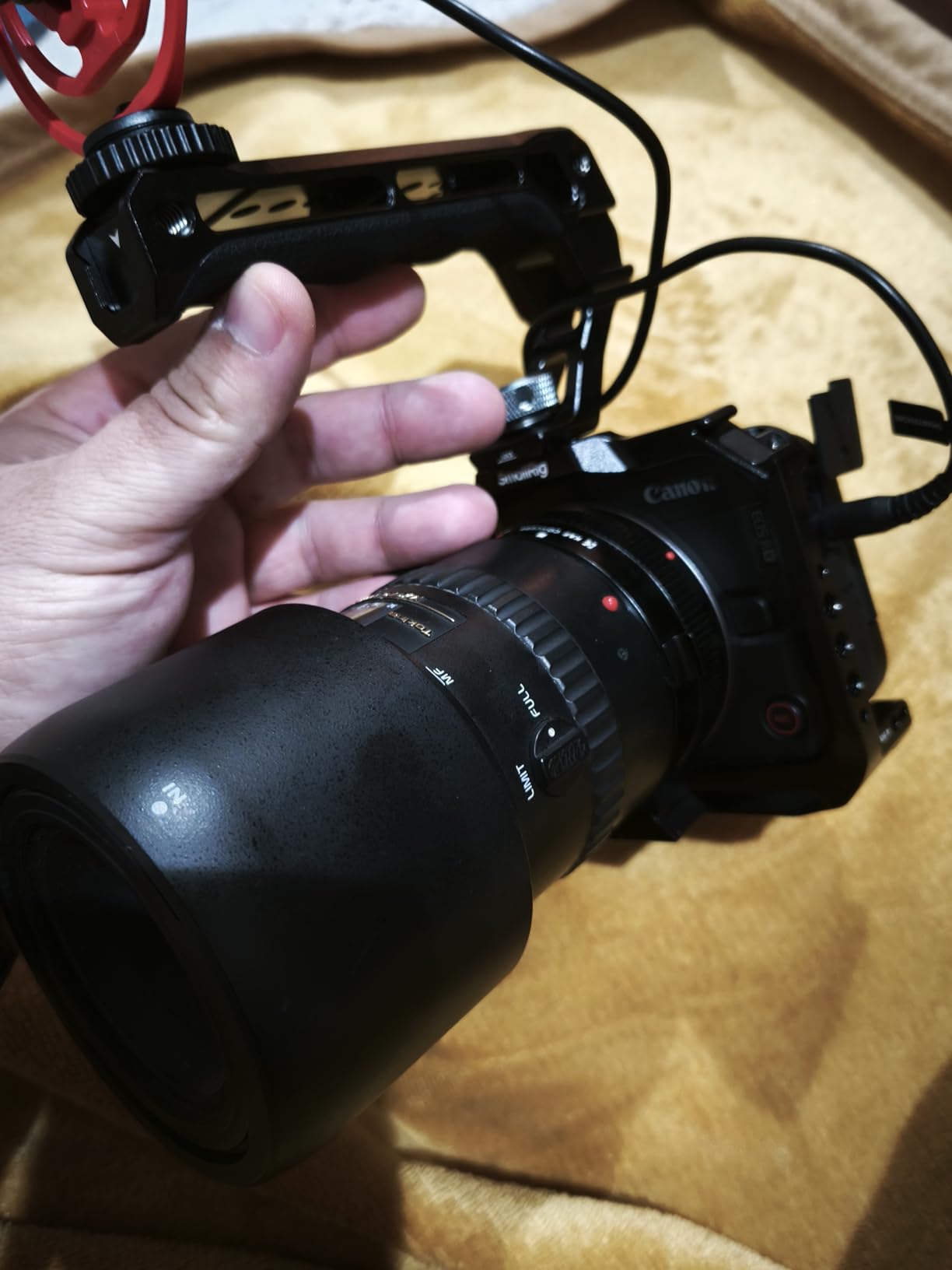
The 24.2MP APS-C CMOS sensor paired with the DIGIC X processor delivers image quality on par with the standard R50. Where this camera differs is in its video capabilities. You can shoot 4K at up to 59.94fps with crop, or 4K at 29.97p with full sensor width readout. Full HD recording goes up to 119.8fps for smooth slow-motion footage. The Slow and Fast motion mode lets you control frame rates creatively without needing separate software.
Dual Pixel CMOS AF II with Register People Priority means the camera remembers specific people and prioritizes them in the frame. This is useful for podcast setups with multiple hosts, as the camera can follow the active speaker automatically. The autofocus is reliable and fast, keeping your face locked even as you move around during recording.
Setup for Streaming and Podcasts
The R50 V connects to computers and streaming setups via USB-C, functioning as a high-quality webcam without additional hardware. The micro-HDMI output supports external monitors and recorders for more professional productions. Wi-Fi connectivity enables wireless streaming and remote control via Canon’s mobile app.
Because this is a body-only package, you will need to purchase a lens separately. For most streaming and vlogging setups, a wide-angle prime like the Canon RF 16mm f/2.8 or RF-S 10-18mm is ideal. Factor this additional cost into your budget when considering this camera.
Who Is This Camera For
If your primary goal is creating content for YouTube, TikTok, Twitch, or podcasts, the Canon EOS R50 V is the most purpose-built option on this list. The vertical mount, front record button, and creator-focused interface eliminate the friction that makes other cameras awkward for social media work.
Traditional photographers who want a versatile stills camera may prefer the standard R50 with its kit lens and guided menu system. The R50 V trades photography features for creator features, so choose based on how you plan to use the camera most.
10. Panasonic LUMIX G97 — Best for Video-First Content Creators
Panasonic LUMIX G97 Compact Hybrid Micro Four Thirds Mirrorless Camera with LUMIX G Vario 12-60mm / F3.5-5.6 Lens, Designed for or Content Creators in Photo & Video, DC-G97MK9
21.8MP Micro Four Thirds
5-Axis Dual IS2
4K 30p Unlimited
V-Log L
Live View Composite
Free-Angle LCD
Pros
- Unlimited 4K 30p recording time
- V-Log L with 12 stops of dynamic range
- 5-axis Dual IS2 image stabilization
- Live View Composite Mode for light trails
- USB Type-C video output
- Free-angle LCD touchscreen
Cons
- Newer product with limited reviews
- 4K limited to 30p
- Higher price for Micro Four Thirds sensor
The Panasonic LUMIX G97 is a newer addition to Panasonic’s Micro Four Thirds lineup, designed specifically for content creators who split their time between photo and video. The standout feature is unlimited 4K 30p recording with no time limitation, which sets it apart from cameras that overheat or impose recording limits after 29 minutes and 59 seconds.
V-Log L recording with 12 stops of dynamic range gives you professional-grade color grading flexibility. This is a feature typically found on much more expensive cinema cameras. For creators who want to color-grade their footage for a cinematic look, having V-Log L built in is a significant advantage that eliminates the need for external picture profiles or hacks.

The 21.8MP sensor offers a resolution bump over the older G85, producing sharper images with more detail for both stills and video. The 5-axis Dual IS 2 image stabilization system provides up to 5 stops of correction, which is excellent for handheld shooting. Combined with a stabilized lens, you can achieve gimbal-like smoothness for walking shots without additional gear.
The Live View Composite Mode is a creative feature that I had a lot of fun testing. It lets you capture light trails, star trails, and fireworks in real-time by continuously building up the exposure as you watch on the LCD. This is a technique that traditionally required trial and error with long exposures, but the G97 lets you see the image develop live and stop when it looks right.

Video Workflow Features
The G97 includes built-in slow-motion at 4x in Full HD and quick-motion at 8x, letting you create time-lapse and slow-motion footage directly in-camera without post-processing. The USB Type-C port supports video output to external monitors, and the free-angle LCD can flip and rotate to any angle for creative framing.
The included 12-60mm lens covers a versatile focal range equivalent to 24-120mm in full-frame terms. It pairs naturally with the body’s image stabilization for steady handheld footage across the entire zoom range.
Value and Competition
As a newer product, the G97 has fewer customer reviews than established models, which can make it harder to assess long-term reliability. The price point places it in competition with APS-C cameras from Sony and Canon that offer larger sensors. However, the unlimited recording, V-Log L, and feature set make it compelling for video-focused creators who value workflow efficiency over maximum sensor size.
If video quality and professional features matter more to you than sensor size, the Panasonic LUMIX G97 is a strong choice that grows with your skills as a content creator.
11. Sony Alpha 6700 — Best for Growing Beyond Beginner Basics
Sony Alpha a6700 APS-C Mirrorless Camera Body 26MP 4K Black
26MP APS-C Exmor R
BIONZ XR
AI Subject Recognition
4K 120p
759 AF Points
Sensor-Shift IBIS
Pros
- AI-powered subject recognition and tracking
- 4K 60p and 4K 120p recording
- 759 autofocus points for precise coverage
- In-body sensor-shift image stabilization
- 26MP back-illuminated sensor
- BIONZ XR processing power
Cons
- Higher price point than other beginners cameras
- No built-in flash
- Digital zoom limited to 2x
The Sony Alpha 6700 sits at the upper end of what I would recommend for beginners, but it earns its place for people who want a camera they will not outgrow. This camera features AI-based subject recognition that can identify and track specific subjects including humans, animals, birds, insects, and vehicles with remarkable accuracy. It is essentially an a6100 with a significantly more advanced brain.
The 26MP APS-C Exmor R back-illuminated sensor delivers the best image quality of any APS-C camera on this list. The back-illuminated design improves light-gathering efficiency, which translates to cleaner images in low light and better dynamic range. Paired with the BIONZ XR processor, the camera handles everything from fast action to subtle tonal gradations with ease.

The 759-point autofocus system covers nearly the entire sensor area. Combined with AI processing, this system can recognize subjects that traditional phase-detect AF would lose track of. I tested it tracking birds in flight at a nature reserve, and the hit rate was far higher than I expected from any APS-C camera. The system also predicts subject movement, keeping focus ahead of where the subject is heading.
Video capabilities are outstanding. The a6700 records 4K at 60p from 6K oversampled data with 10-bit 4:2:2 color depth. It can also shoot 4K at 120p for slow-motion footage. The in-body sensor-shift image stabilization provides up to 5 stops of correction, which works alongside stabilized lenses for Dual IS performance. For video creators who want professional features without moving to a full-frame system, this camera is a powerhouse.

When Beginner Cameras Are Not Enough
The a6700 is the camera I recommend to beginners who already know they will get serious about photography or videography. If you have the budget and want a camera that will serve you for years as your skills develop, the investment pays off. You get professional-grade autofocus, excellent video specs, and image quality that rivals more expensive full-frame cameras in many situations.
The Sony E-mount ecosystem means you have access to the widest range of lenses in the mirrorless world, from affordable Sigma primes to professional Sony G Master zooms. The camera body is the beginning of a system you can build over time.
Justifying the Investment
At its price point, the a6700 costs significantly more than entry-level options. Beginners on a strict budget should start with the Canon R100 or Sony a6100 and upgrade later. But if you can afford it, the a6700 eliminates the need for an upgrade for years. The AI autofocus alone transforms the shooting experience, letting you focus on creativity instead of technical execution.
For ambitious beginners who want the best APS-C camera available, the Sony Alpha 6700 is a worthy investment that will grow with your photography journey.
12. Fujifilm X-S20 — Best Hybrid Mirrorless for Photo and Video
Fujifilm X-S20 Mirrorless Digital Camera XF16-50mmF2.8-4.8 R LM WR – Black
26.1MP X-Trans CMOS 4
X-Processor 5
7-Stop IBIS
6.2K 30P
4K 60P
Vlog Mode
Weather-Resistant Lens
Pros
- 7 stops of in-body image stabilization
- 6.2K and 4K 60p 10-bit video recording
- Weather-resistant XF16-50mm lens included
- Dedicated vlog mode for creators
- 3.5mm microphone and headphone jacks
- Auto mode for beginners
Cons
- Limited stock availability
- Not Prime eligible
- Fewer autofocus points than competitors
- Premium price point
The Fujifilm X-S20 is the most feature-rich camera on this list, combining 7 stops of in-body image stabilization with 6.2K video recording and a weather-resistant lens. It bridges the gap between Fujifilm’s beginner-friendly X-T30 III and their professional X-H2S, offering pro-level features in a body that still has a full Auto mode for newcomers.
The 7-stop IBIS system is the best image stabilization of any camera in this guide. That means you can handhold shots at shutter speeds up to 7 stops slower than normal without camera shake ruining the image. In practical terms, this lets you shoot in dimly lit environments without raising ISO or using a tripod. I shot interior photos in a dark cathedral at 1/4 second handheld, and the results were sharp.
The 26.1MP X-Trans CMOS 4 sensor delivers the same film-like image quality that Fujifilm is known for. The X-Processor 5 provides fast processing for the camera’s 20fps burst shooting and high-resolution video modes. Video creators will appreciate 6.2K recording at 30p and 4K at 60p, both in 10-bit 4:2:2 for maximum color grading flexibility.
Hybrid Shooting Experience
The X-S20 includes both a full Auto mode for beginners and a dedicated vlog mode for content creators. The Auto mode uses scene recognition to choose optimal settings automatically, making it genuinely easy for a complete beginner to get great results. As your skills grow, you can switch to aperture priority, shutter priority, or full manual control.
The included XF16-50mm f/2.8-4.8 R LM WR lens is a significant upgrade over typical kit lenses. It has a brighter maximum aperture for better low light performance and background blur, plus weather resistance for shooting in challenging conditions. This lens alone would cost a substantial amount purchased separately.
Trade-offs to Consider
The X-S20 has fewer autofocus points than competitors like the Sony a6700, and stock availability is often limited. The camera is not Prime eligible, which means longer shipping times. At its premium price point, it competes directly with the Sony a6700, and the choice between them comes down to whether you prefer Fujifilm’s film simulations and physical controls or Sony’s superior autofocus and lens ecosystem.
For beginners who want a camera that excels equally at stills and video, with class-leading stabilization and a capable kit lens included, the Fujifilm X-S20 is the best hybrid mirrorless option for beginners ready to invest in a serious photography tool.
How to Choose the Best Mirrorless Camera for Beginners
Choosing your first mirrorless camera involves understanding a few key concepts that will shape your experience for years. Our team analyzed forum discussions from Reddit photography communities where beginners share their real-world experiences and frustrations. Based on those insights and our own testing, here is what matters most when making your decision.
Sensor Size: APS-C vs Micro Four Thirds
The sensor is the digital equivalent of film, and its size directly affects image quality, low light performance, and background blur. APS-C sensors are larger and generally produce better image quality with more background blur potential. Micro Four Thirds sensors are smaller, which allows for more compact camera bodies and lenses, but produces slightly less background blur at equivalent focal lengths.
For most beginners, APS-C is the sweet spot between image quality and affordability. All the Canon, Sony, Fujifilm, and Nikon cameras on this list use APS-C sensors. The Panasonic LUMIX cameras use Micro Four Thirds, which trades some sensor size for smaller lenses and excellent in-body stabilization.
Autofocus: The Most Important Beginner Feature
If there is one feature that matters more than any other for beginners, it is autofocus. A camera with reliable autofocus lets you concentrate on composition and timing instead of worrying about whether your subject will be sharp. Look for cameras with eye detection autofocus, which automatically finds and tracks human eyes for consistently sharp portraits.
Sony leads the industry in autofocus technology, with their Real-time Eye AF and subject tracking available even in entry-level models like the a6100. Canon’s Dual Pixel AF II is equally impressive in the R50 and R50 V. Fujifilm’s AI-powered subject detection in the X-T30 III and X-S20 handles people, animals, and birds with confidence.
Lens Ecosystem: Thinking Beyond the Camera Body
When you buy a mirrorless camera, you are buying into a lens system. The camera body will eventually be replaced, but lenses can last decades. Before choosing a camera, check what lenses are available for that mount and at what prices.
Sony’s E-mount has the largest selection of native and third-party lenses. Canon’s RF mount is newer but growing rapidly. Fujifilm’s X-mount has excellent quality lenses, though they tend to be pricier. Nikon’s Z mount is expanding with both DX and full-frame options. The Micro Four Thirds mount used by Panasonic offers the widest compatibility with lenses from multiple manufacturers.
Budget and Upgrade Path
Forum discussions reveal that most beginner photographers have a budget between $500 and $1,000 for their first camera. The Canon EOS R100 at under $500 is the most accessible entry point. The Canon R50 and Sony ZV-E10 around $850 represent the sweet spot of features and value. Cameras above $1,000 like the Fujifilm X-T30 III, Nikon Z50 II, and Sony a6700 offer advanced features that justify the cost for serious beginners.
Reddit users consistently advise against overspending on your first camera. A common recommendation is to buy an affordable body and invest the savings in lenses, workshops, or photography trips. The kit lens that comes with most beginner cameras is enough to learn the fundamentals and discover what type of photography you enjoy most.
Mirrorless vs DSLR: Why Mirrorless Wins for Beginners
Many beginners ask whether they should buy a mirrorless camera or a DSLR. In 2026, the answer almost always favors mirrorless. Mirrorless cameras offer real-time exposure preview through the electronic viewfinder, which means you see exactly how your photo will look before you press the shutter. This feedback loop accelerates learning dramatically.
Mirrorless cameras are also lighter, focus faster, and shoot better video than DSLRs at equivalent prices. Major manufacturers including Canon, Sony, Nikon, and Fujifilm have shifted their development focus entirely to mirrorless systems. Buying a mirrorless camera ensures you are investing in the current and future standard rather than a technology being phased out.
Smartphone vs Mirrorless: Is It Worth Upgrading?
This question comes up constantly in photography forums. Modern smartphones have impressive computational photography that produces great-looking images for social media. However, mirrorless cameras offer larger sensors for genuine background blur, faster autofocus for capturing fleeting moments, interchangeable lenses for creative flexibility, and raw file support for extensive editing.
If you are happy with your phone photos for casual snapshots, you may not need a dedicated camera. But if you want to learn photography as a skill, capture professional-quality portraits, shoot video for YouTube, or print your images at large sizes, a mirrorless camera is a worthwhile investment that opens creative possibilities a phone simply cannot match.
FAQs
What is the best mirrorless camera for beginners?
The Canon EOS R50 is the best overall mirrorless camera for beginners thanks to its guided menus, excellent Dual Pixel AF II autofocus, oversampled 4K video, and lightweight design. It strikes the perfect balance between ease of use and photographic capability.
What is the best mirrorless camera for beginners under $500?
The Canon EOS R100 is the best mirrorless camera for beginners under $500. It offers a 24.1MP APS-C sensor, Dual Pixel autofocus with face and eye detection, 4K video, and a built-in flash, making it the most affordable entry into a real interchangeable lens system.
Is Canon or Sony better for beginner photographers?
Both are excellent for beginners but for different reasons. Canon offers friendlier guided menus and Creative Assist modes that make learning more intuitive. Sony provides faster autofocus and a larger lens ecosystem. Canon is better for absolute beginners, while Sony suits those who prioritize performance and lens variety.
Is mirrorless better than DSLR for beginners?
Yes, mirrorless cameras are better for beginners in most cases. They provide real-time exposure preview through the electronic viewfinder, which helps you learn settings faster. They are also lighter, focus more quickly, and shoot better video than DSLRs at similar prices.
What lens should I buy with my first mirrorless camera?
Start with the kit lens that comes with the camera, usually an 18-45mm or 16-50mm zoom. This range covers everyday photography situations. Once you discover what you enjoy shooting, add a prime lens like a 35mm or 50mm for portraits with background blur, or a telephoto zoom for wildlife and sports.
Final Thoughts on the Best Mirrorless Cameras for Beginners
Finding the best mirrorless cameras for beginners in 2026 comes down to matching a camera’s strengths to your goals and budget. The Canon EOS R50 remains our top overall pick for its unmatched blend of beginner-friendly features, excellent autofocus, and oversampled 4K video. If budget is the priority, the Canon EOS R100 gets you into a real camera system for under $500 without sacrificing image quality.
Content creators and vloggers should look closely at the Sony ZV-E10 for its product showcase features and oversampled video, or the Canon EOS R50 V if streaming and vertical video are your main focus. Photographers who value beautiful straight-out-of-camera colors will fall in love with Fujifilm’s Film Simulations on the X-T30 III or X-S20. And the Nikon Z50 II dual-lens kit offers the best all-in-one value for photographers who want versatility from day one.
The most important step is simply starting. Any camera on this list will teach you more about photography in a month than years of smartphone snapshots. Pick the one that fits your budget and shooting style, and get out there and shoot.