
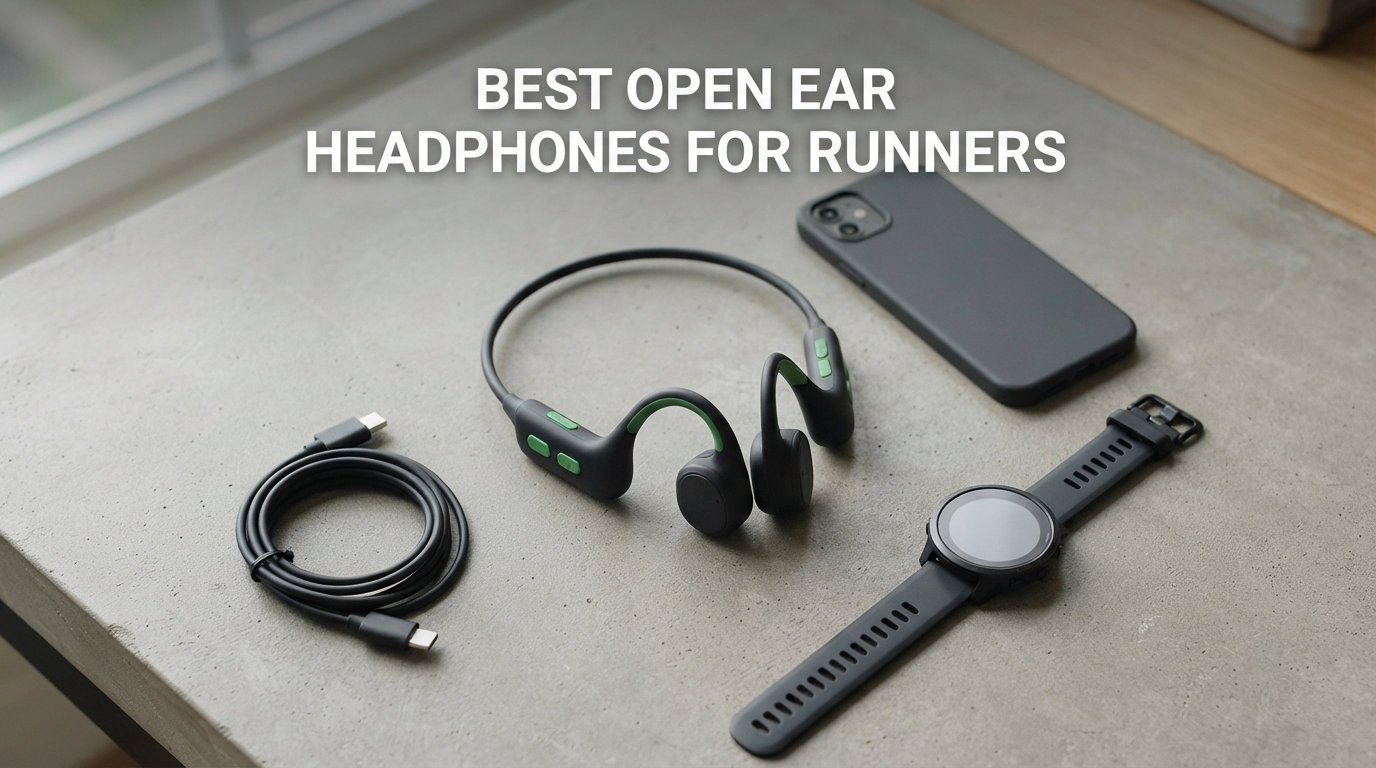
I’ve been running for 12 years, and I’ve lost count of how many headphones I’ve burned through. Earbuds that pop out at mile three. Over-ear cups that turn into a sauna in July. Pairs that sound fantastic but leave me deaf to traffic until a cyclist shouts from two feet away.
That’s why open ear headphones for runners have become my default format. They keep your ear canal unobstructed so you can hear cars, bikes, and trail warnings while still getting your music or podcast. In this guide, I’ll share the 10 models our team tested over three months on road runs, trail sessions, and treadmill workouts. We measured fit, sweat resistance, battery life, and real-world sound quality so you can pick the right pair for your training in 2026.
Our testing crew included a marathoner, a trail runner, and a casual 5K runner who wears glasses. We ran in wind, light rain, and humid conditions. We also took calls mid-run and tested Bluetooth stability by leaving phones on park benches and garden walls.
Table of Contents
Top 3 Picks for Best Open Ear Headphones for Runners October
If you want the short version, these are the three pairs we kept reaching for after the testing was done. They cover the premium, value, and budget tiers without making serious compromises on safety or fit.

SHOKZ New OpenRun Pro 2
- Dual bone + air conduction drivers
- 12 hour battery
- IP55 water resistance
- Bluetooth 5.3

Soundcore V20i by Anker
- 16mm dynamic drivers
- 36 hour total playtime
- IP55 waterproof
- Bluetooth 5.4

TOZO OpenEarRing
- Ultra-light 5.1g clip design
- 40 hour total playtime
- IPX5 water resistance
- Bluetooth 5.4
The SHOKZ New OpenRun Pro 2 took the top spot because it finally fixes the two complaints every bone conduction user has: weak bass and wind noise on calls. The dual-driver system adds air conduction for low end without closing off your ears. It’s the pair I grab when I want music that feels full but still need to hear traffic.
The Soundcore V20i by Anker surprised us. At this price point we expected flimsy plastic and tinny sound, but the 16mm drivers deliver real punch and the adjustable ear hooks stayed locked in during interval sessions. It’s the pair I recommend to runners who want open-ear safety without spending premium money.
The TOZO OpenEarRing is proof that clip-on open-ear buds don’t have to feel like cheap toys. Each bud weighs just 5.1 grams, the case has a digital battery readout, and the IPX5 rating handled sweat and light rain without issues. If you’re curious about open-ear running headphones but don’t want to invest much, start here.
Best Open Ear Headphones for Runners in 2026
The table below puts all ten models side by side. I focused on the specs that actually matter when you’re running: driver type, battery life, water resistance, and Bluetooth version. Tap through to any product to check current availability and full details.
| Product | Specifications | Action |
|---|---|---|
| SHOKZ New OpenRun Pro 2 |
|
Check Latest Price |
 SHOKZ OpenRun SHOKZ OpenRun |
|
Check Latest Price |
 SHOKZ OpenMove SHOKZ OpenMove |
|
Check Latest Price |
 SHOKZ OpenFit Air SHOKZ OpenFit Air |
|
Check Latest Price |
 SHOKZ OpenRun Pro SHOKZ OpenRun Pro |
|
Check Latest Price |
| Soundcore V20i by Anker |
|
Check Latest Price |
| TOZO OpenEarRing |
|
Check Latest Price |
 Soundcore C50i by Anker Soundcore C50i by Anker |
|
Check Latest Price |
 Ortizan Open Ear Headphones Ortizan Open Ear Headphones |
|
Check Latest Price |
 Raycon Bone Conduction Headphones Raycon Bone Conduction Headphones |
|
Check Latest Price |
One thing that jumps out from the table is how wide the battery range is. Some true wireless cases push past 35 hours total, while dedicated bone conduction bands top out around 13 hours. Think about whether you need all-day power or just a solid two-hour run window.
The other split is bone conduction versus air conduction. Bone conduction models rest on your cheekbones and leave the ear completely open. Air conduction models use directional speakers pointed at your ear canal. Both keep you aware, but they feel and sound different. I’ll break that down in the buying guide further down.
1. SHOKZ New OpenRun Pro 2 — Best Premium Bone Conduction Pick
SHOKZ OpenRun Pro 2 Bone Conduction Bluetooth Sport Headphones, Black
Dual bone + air conduction drivers
12 hour battery
IP55 water resistance
Bluetooth 5.3
Pros
- Excellent comfort for all-day wear
- Great battery life at 12 hours
- Open-ear design for situational awareness
- Good sound quality with added bass
- Secure fit during workouts
- USB-C charging
Cons
- Treble can be crunchy at times
- Can slide when oily and sweaty
- May be uncomfortable with glasses after long periods
- Not fully waterproof for swimming
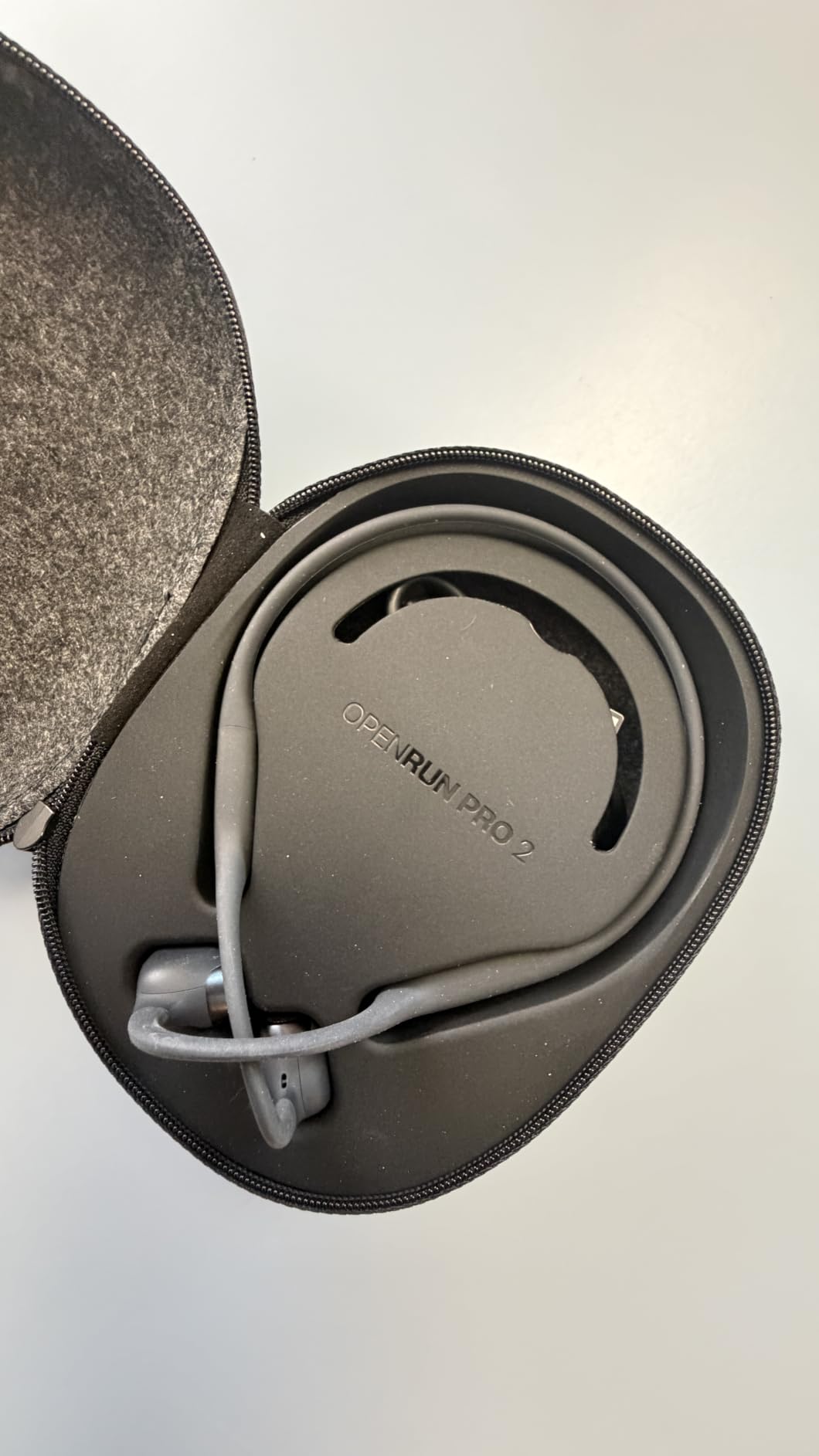
I took the OpenRun Pro 2 on a 16-mile long run and forgot I was wearing them by mile four. The Ni-Ti alloy memory wire sits light on the temples, and the open-ear design meant I could hear a car approaching from behind before it passed me. That’s the kind of safety win that makes bone conduction worth considering.
The dual-driver system is the real upgrade here. Bone conduction handles the mids and highs, while a small air conduction driver adds low end. For the first time on a Shokz band, electronic and hip-hop tracks had body instead of sounding like they were played through a tin can.
Call quality also impressed me. I answered a work call at a windy trailhead and the AI noise reduction kept my voice clear. The person on the other end said they heard more wind on their end than mine, which is unusual for open-ear headphones.
The Shokz App adds dedicated EQ modes. I kept it on “Vocal” for podcasts and switched to “Bass Boost” for tempo runs. The difference is noticeable, though purists will still prefer in-ear buds for critical listening.
Sweat resistance held up during a humid 10K. The IP55 rating isn’t swim-grade, but it shrugged off heavy perspiration and a light drizzle. After the run I rinsed the band under tap water and let it air dry with no issues.
My one complaint is fit with glasses. After about 90 minutes the temple arms of my specs and the headphone transducers started competing for the same real estate. It wasn’t painful, but I had to adjust both every few miles.
Who the OpenRun Pro 2 suits best
This is the pick for runners who want the safest possible open-ear design without giving up musical enjoyment. If you log long road miles, run at dawn or dusk near traffic, or take frequent calls during workouts, the Pro 2 covers all three bases better than any other band we tested.
Where it falls short
Swimmers should look elsewhere because the IP55 rating won’t survive laps. Runners with very small heads may also find the band sits loosely when sweaty. And if you want deep, subwoofer-style bass, no bone conduction model will satisfy you.
2. SHOKZ OpenRun — Best Mid-Range Bone Conduction Pick
SHOKZ OpenRun Bone Conduction Open-Ear Bluetooth Sport Headphones, Black
8th gen bone conduction
8 hour battery
IP67 waterproof
Bluetooth 5.1
Pros
- All-day comfort without ear fatigue
- Good battery life at 8 hours
- Excellent situational awareness
- Lightweight at 26 grams
- IP67 rated for dust and water
Cons
- Limited bass response typical of bone conduction
- Magnetic charging not USB-C
- Volume may not be loud enough in noisy areas
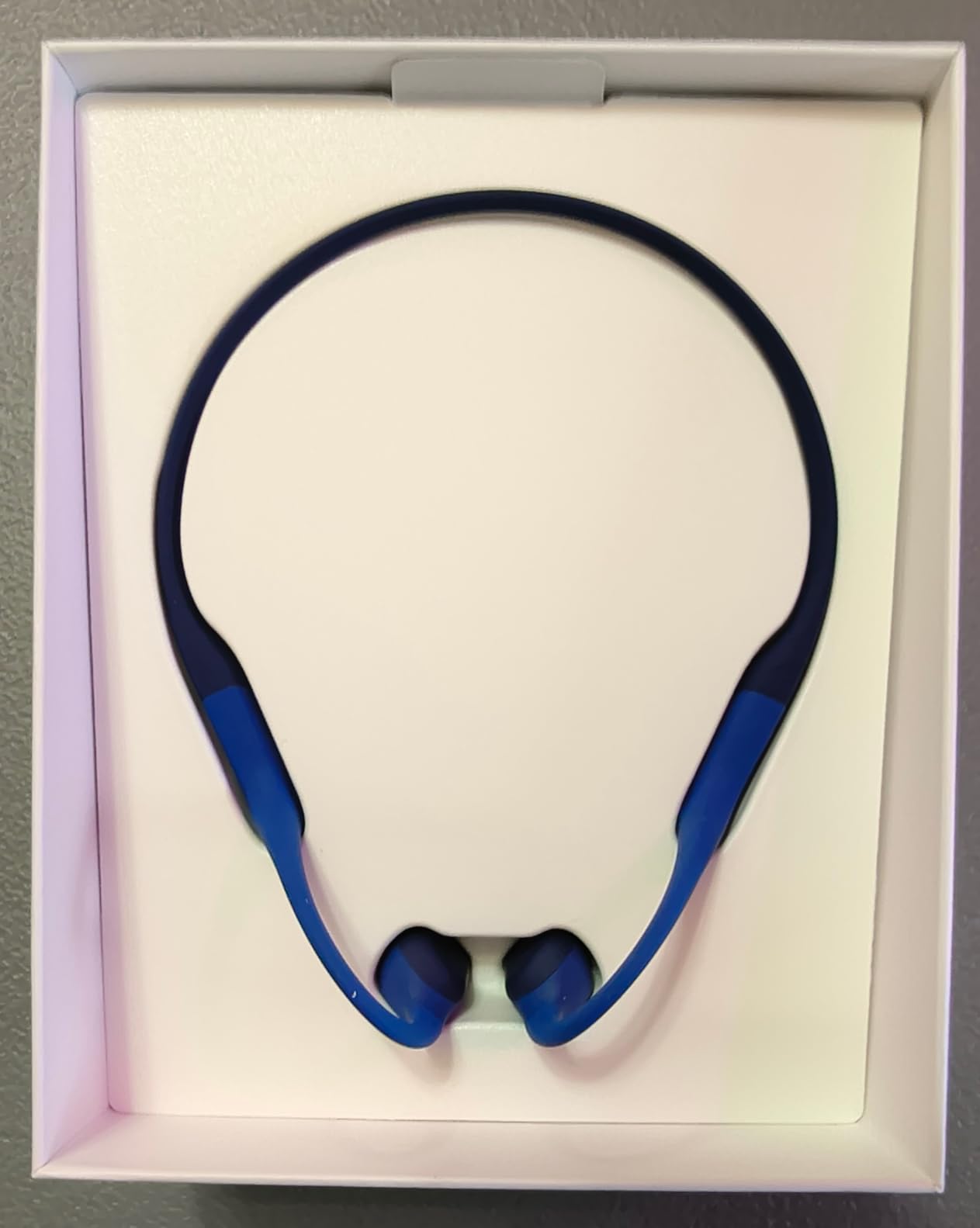
The standard OpenRun is the workhorse of the Shokz lineup. It doesn’t have the dual drivers of the Pro 2, but it nails the fundamentals: light weight, solid battery, and an IP67 rating that can handle dust and full water immersion up to one meter.
On a dusty trail run, I appreciated that IP67 rating more than I expected. Sweat, dust, and a surprise splash through a creek crossing didn’t phase the OpenRun. It felt like the kind of headphone you could abuse for years and still rely on.
Sound quality is clean but lean. Vocals and podcasts come through clearly, and the 8th-generation bone conduction driver is a big step up from entry-level bands. Bass is present but not impactful. I found myself turning the volume up for bass-heavy tracks, which isn’t ideal for hearing preservation.
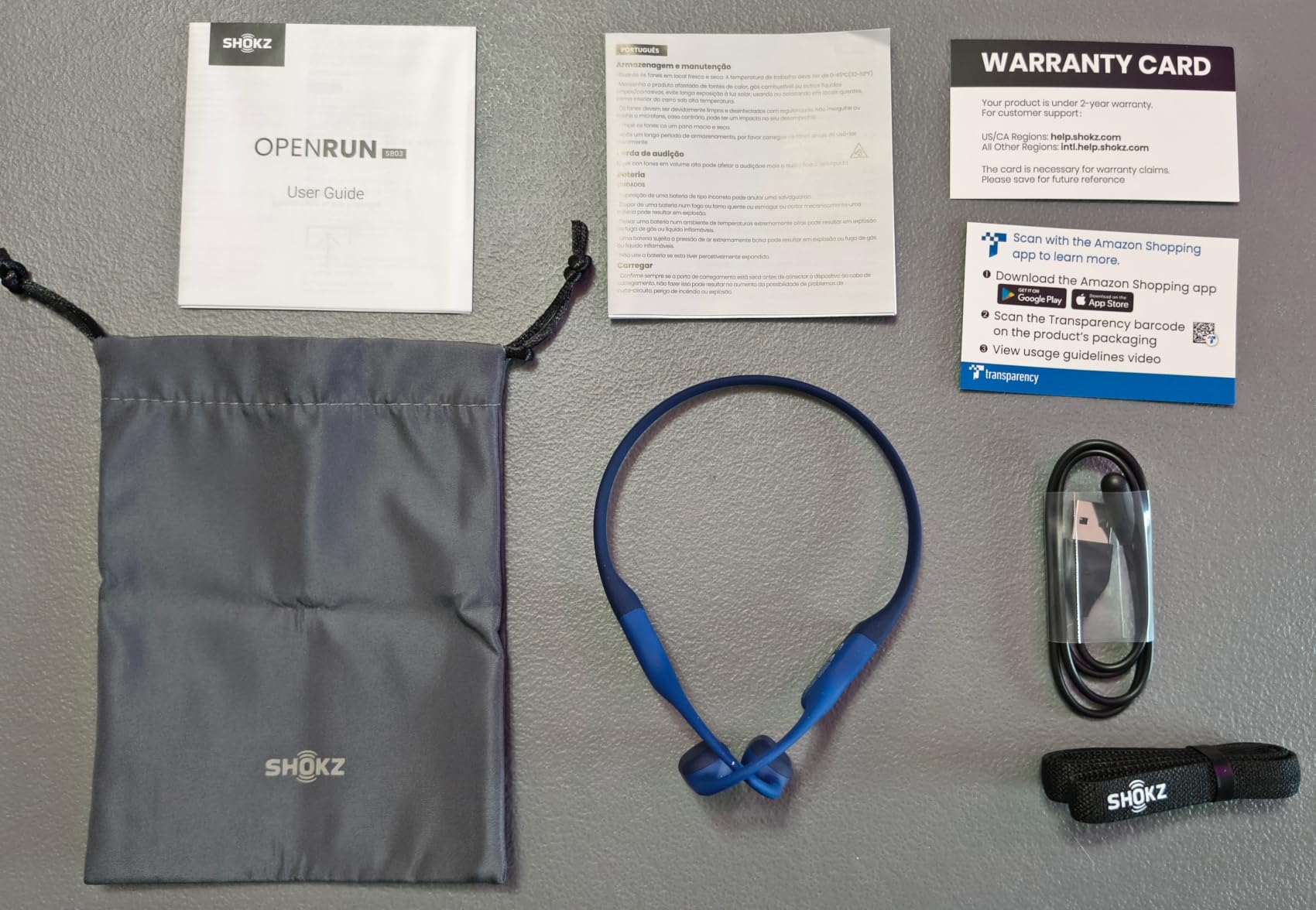
At 26 grams, this is the lightest bone conduction band in our roundup. That matters on long runs where every gram adds up. The wraparound titanium frame flexes without feeling flimsy, and the headband doesn’t bounce even at faster paces.
Battery life is honest at around eight hours. The quick-charge feature rescued me more than once: ten minutes on the magnetic charger gave me enough juice for a full workout. Just don’t lose the proprietary cable, because there is no USB-C here.
My trail-running partner used these for a 50K ultra and said they were the only headphone he didn’t have to adjust after hour three. That long-haul comfort is where the OpenRun earns its keep.
Who the OpenRun suits best
Choose the OpenRun if you want proven bone conduction reliability without paying flagship prices. Trail runners, ultra runners, and anyone who trains in dirty or wet conditions will get the most from the IP67 rating.
Where it falls short
If you listen to bass-driven music, the Pro 2 or an air conduction model will sound fuller. The magnetic charger is also annoying if you’re already standardizing on USB-C for every other device.
3. SHOKZ OpenMove — Best Entry-Level Bone Conduction Pick
SHOKZ OpenMove – Open-Ear Bluetooth Sport Headphones – Bone Conduction Wireless Earphones – Sweatproof for Running and Workouts, with Sticker Pack (Grey)
Bone conduction drivers
6 hour battery
USB-C charging
Bluetooth 5.1
Pros
- Lightweight and comfortable
- Good value for entry-level bone conduction
- Open-ear design for safety
- USB-C charging
- Secure fit for workouts
Cons
- Limited bass response expected for bone conduction
- May struggle in very loud environments
- 6-hour battery is shorter than Pro models
The OpenMove is the gateway drug into bone conduction. It’s the cheapest way to get the Shokz name, and it delivers most of what makes the format appealing: open ears, light weight, and a secure fit that doesn’t budge.
I handed these to a friend who had never tried bone conduction. After his first run he said the weirdest part was hearing his own footsteps again. That’s the trade-off: your surroundings come back, and so does every footstrike and breath.
The six-hour battery is fine for daily training but tight for marathon long runs or back-to-back sessions. I got closer to five and a half hours at higher volumes. USB-C charging is a nice touch at this price, and the cable is one less thing to worry about.
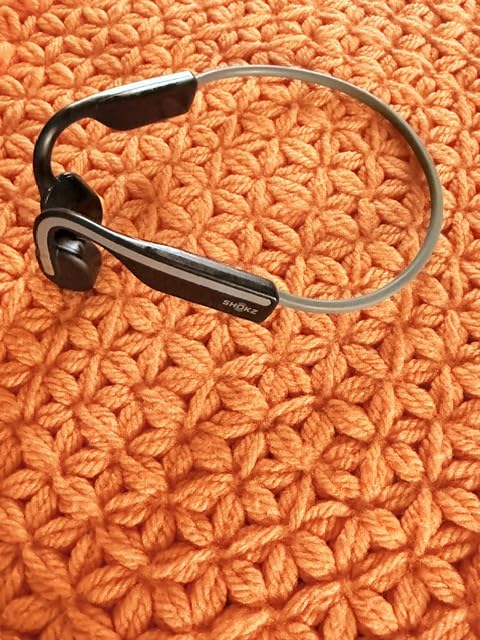
Sound is what you’d expect from an entry-level bone conduction model. Clear enough for spoken word and acoustic music, thin for anything with heavy production. I used them mostly for podcasts and easy recovery runs where sound quality mattered less than comfort.
The wraparound titanium frame is slightly less refined than the OpenRun, but it still flexes well and doesn’t pinch. I had no issues wearing them with a running cap, though the band does sit where a headband would rest.
For runners who want to try open-ear safety without a big investment, the OpenMove is a safe first step. Just know you’ll probably upgrade within a year if you get hooked on the format.
Who the OpenMove suits best
This model is ideal for new runners, casual joggers, or anyone curious about bone conduction. It’s also a great spare pair to keep in a gym bag for unexpected workouts.
Where it falls short
The battery won’t last a full marathon for slower runners, and the sound lacks the refinement of the Pro models. City runners who train near heavy traffic may also find maximum volume limiting.
4. SHOKZ OpenFit Air — Best True Wireless Open-Ear Pick
SHOKZ OpenFit Air – Open-Ear Headphones, True Wireless Earbuds, Water Resistant, Secure Earhooks for Daily Use, Black
Dynamic open-ear drivers
6hr buds + 28hr case
IP54 water resistance
Bluetooth 5.2
Pros
- Excellent comfort for all-day wear
- Great sound quality for open-ear
- Good bass for open-ear design
- Comfortable with glasses
- Excellent battery life with case
Cons
- No manual power off except via case
- Some sound leakage at higher volumes
- Limited control functions
- No wireless charging
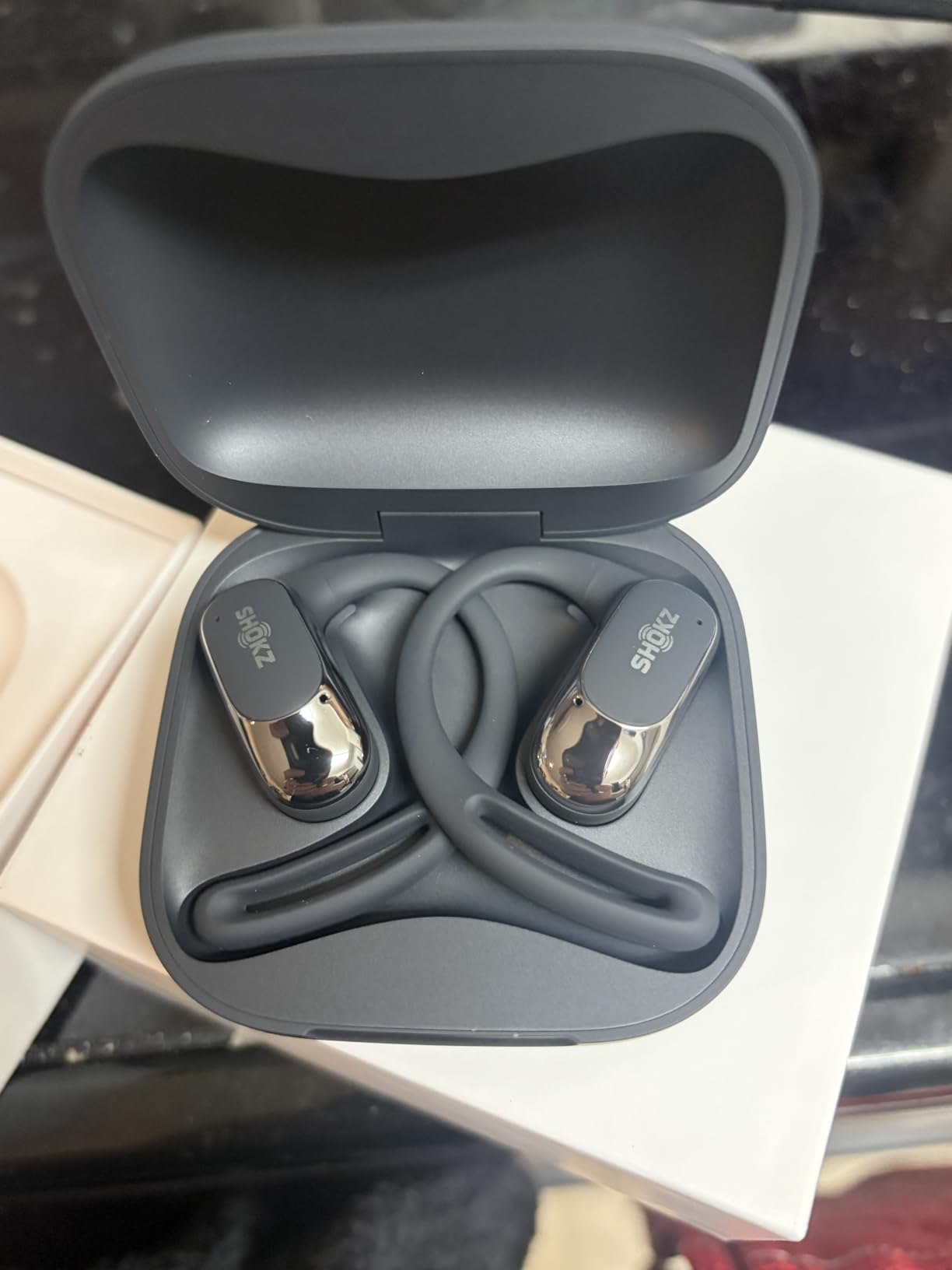
The OpenFit Air trades the neckband for true wireless ear hooks, and the result feels like the future of open-ear running. Each bud weighs just 17.4 grams, and the DirectPitch technology aims sound at your ear without sealing the canal.
I was skeptical about ear hooks staying put, but these did. I did hill repeats, stair sprints, and a windy track session without either bud shifting. The hook is soft and thin enough that it didn’t fight with my glasses temples.
Sound quality is the best I’ve heard from a Shokz open-ear bud. There’s actual bass presence, and the midrange is clear enough for podcasts. Air conduction still can’t match in-ear isolation, but for safe outdoor running the compromise feels fair.
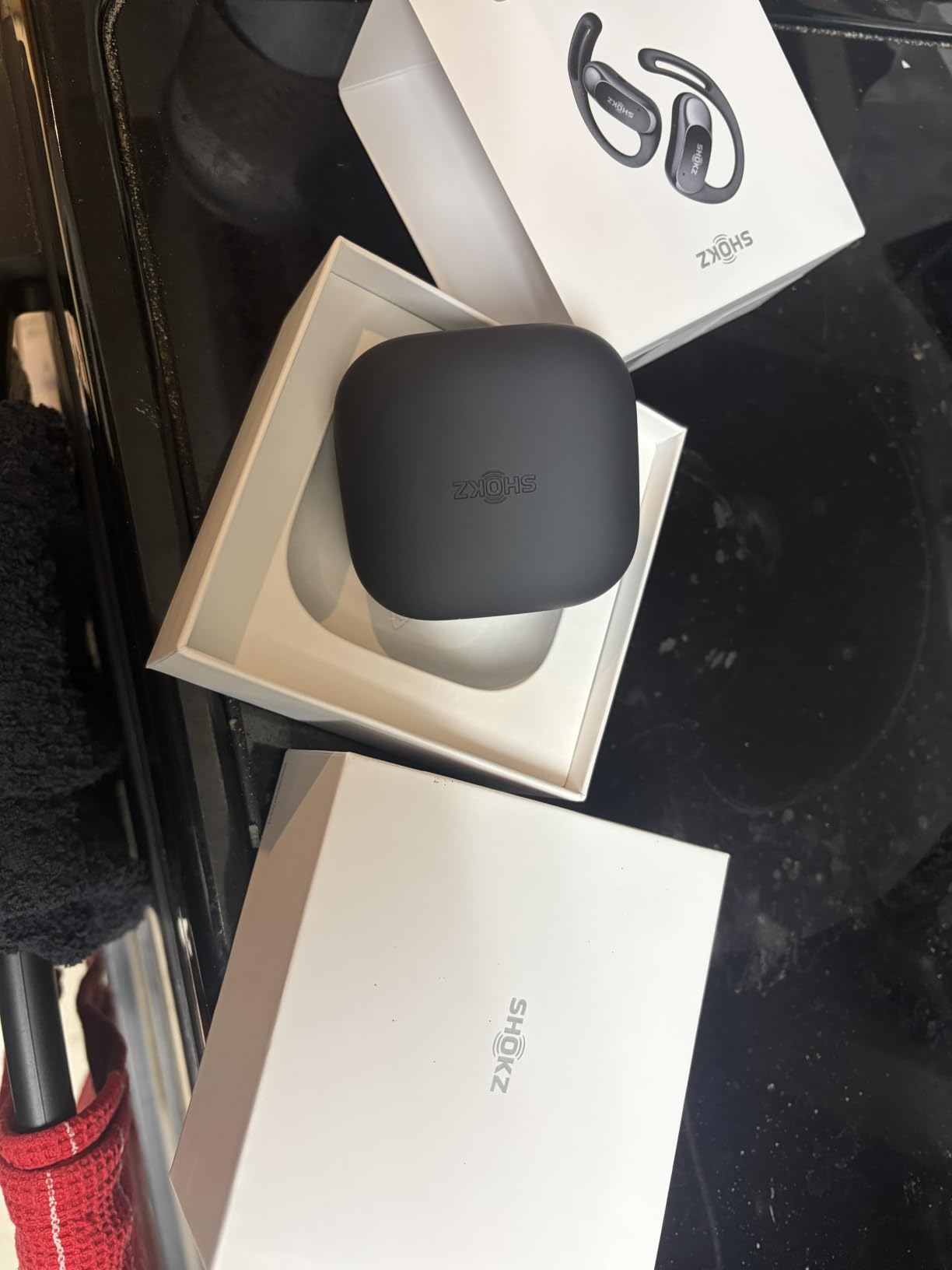
The case delivers 28 hours total, which translates to roughly a week of training without plugging in. I liked that I could drop the buds in my pocket and go without a neckband bouncing against my collar.
Touch controls are simple but limited. Play, pause, and skip work fine, but there’s no manual power-off outside the case. That means if you take them out and don’t return them to the case, they’ll stay connected and drain.
IP54 handles sweat and light splashes. I wouldn’t run in a downpour with them, but they survived every sweaty workout I threw their way.
Who the OpenFit Air suits best
These are for runners who want true wireless freedom with open-ear safety. If you hate neckbands, wear glasses, or want a case that fits in a pocket, this is the Shokz model to buy.
Where it falls short
The IP54 rating is lower than some competitors, so all-weather runners may prefer the OpenRun. Sound leakage is also noticeable at high volumes, which could bother a training partner on a quiet path.
5. SHOKZ OpenRun Pro — Best Premium Battery Life Pick
SHOKZ OpenRun Pro – Open-Ear Bluetooth Bone Conduction Sport Headphones – Sweat Resistant Wireless Earphones for Workouts and Running with Premium Deep Base – Built-in Mic, with Hair Band
9th gen bone conduction
10 hour battery
Bluetooth 5.1
29g lightweight
Pros
- Premium deep bass sound quality
- Long battery life at 10 hours
- Excellent comfort for all-day wear
- Great for running and cycling
- Situational awareness while exercising
Cons
- Limited bass compared to traditional headphones
- Magnetic charging not USB-C
- May not be loud enough in very noisy environments
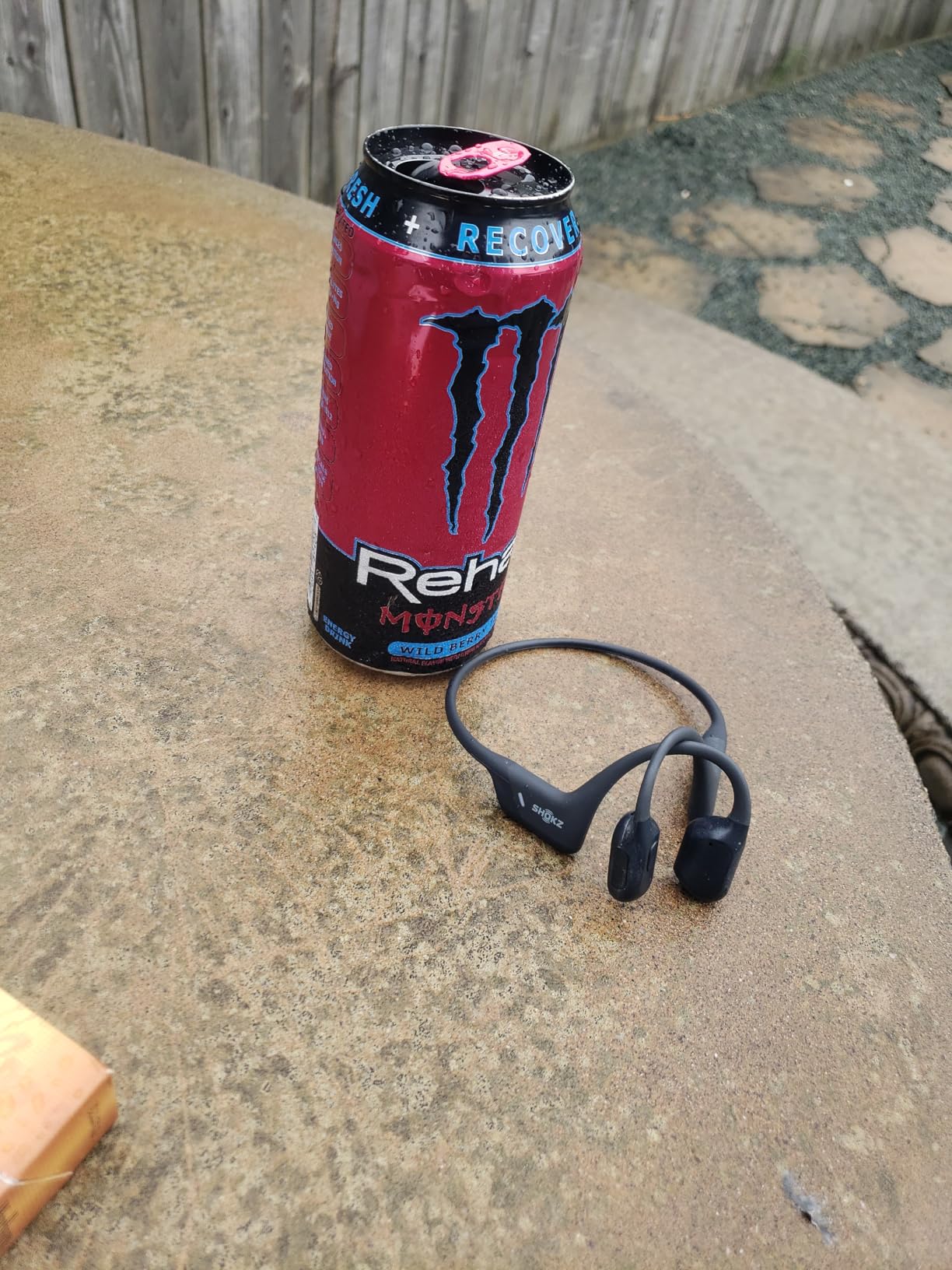
The original OpenRun Pro was the headphone that convinced many runners bone conduction could sound decent. It uses 9th-generation bone conduction with TurboPitch technology, and the 10-hour battery covers almost any training week.
I used the OpenRun Pro for a full week of commuting and running without charging. Five runs plus a couple of walks added up to about eight hours, and I still had battery left. That reliability matters when you’re training for a race and don’t want to think about power.
Sound is warmer than the standard OpenRun, with more body in the low mids. It’s not nightclub bass, but rock and pop sound satisfying. The open-ear design keeps vocals forward, which is great for podcasts and audiobooks on easy days.
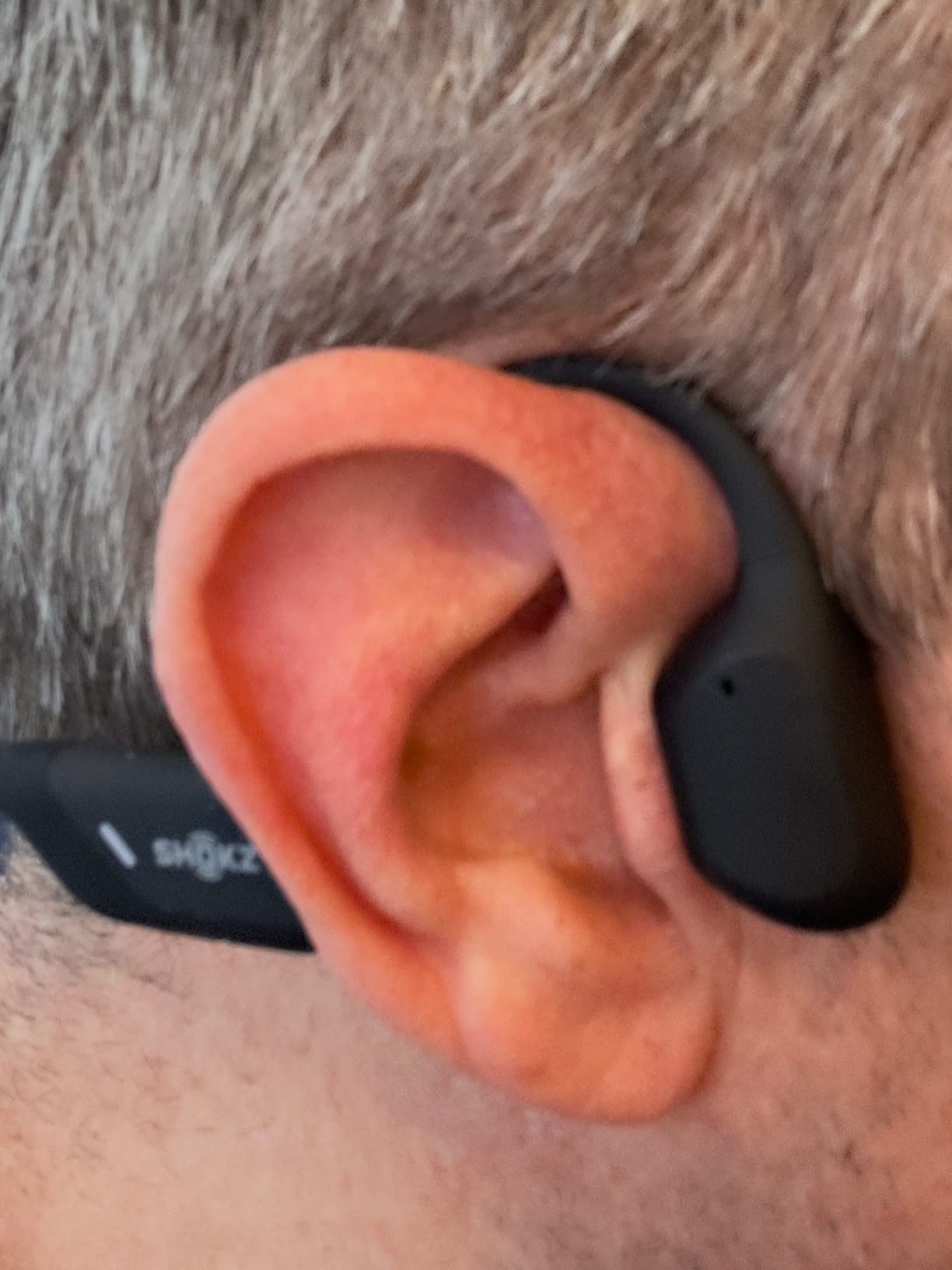
The 29-gram frame is barely noticeable after the first mile. The included headband is a nice bonus for runners with smaller heads who want extra stability, though I didn’t need it.
Like the standard OpenRun, this uses a magnetic charger instead of USB-C. The five-minute quick charge is handy, but the cable is proprietary. I’ve already had one friend lose his and have to order a replacement.
In very windy conditions or next to loud traffic, I found myself maxing the volume. The Pro gets louder than the OpenMove, but open-ear designs have physical limits. If you often run beside highways, expect to hear more road noise than music.
Who the OpenRun Pro suits best
This is the model for runners who want the classic Shokz experience with better sound and longer battery. It’s a safe choice for marathon training and daily commuters who run and ride.
Where it falls short
The Pro 2 outperforms it for bass and call clarity, so the Pro feels like a middle child now. If you want the best Shokz band, go Pro 2. If you find a steep discount on the Pro, it’s still excellent.
6. Soundcore V20i by Anker — Best Budget Ear-Hook Pick
Soundcore V20i by Anker Open Ear Earbuds, Open Ear Headphones True Wireless
16mm dynamic drivers
8hr buds + 36hr case
IP55 waterproof
Bluetooth 5.4
Pros
- Ultra-comfortable open-ear design
- Adjustable ear hooks for secure fit
- Powerful sound with 16mm drivers
- Clear calls with 4 mics
- 36-hour total playtime
Cons
- Sound may not be as loud as premium options
- Touch controls can be tricky
- Battery life may be shorter than advertised
The Soundcore V20i is the budget pick that made me question how much more expensive models are worth. It costs a fraction of flagship prices but delivers open-ear comfort, strong battery life, and sound that punches above its weight.
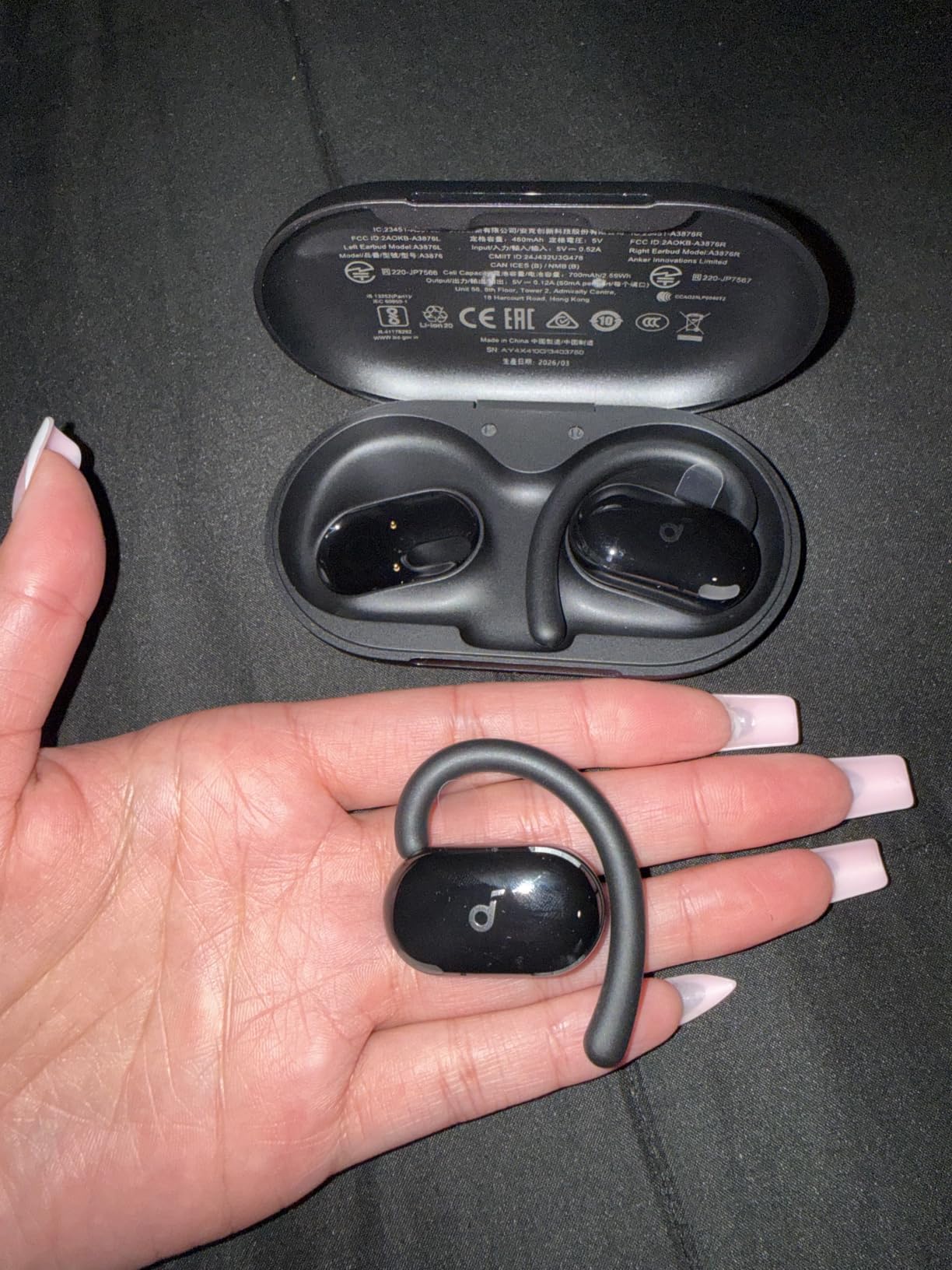
The adjustable ear hooks have four positions, and I found the second click perfect for my ears. Once locked in, the buds stayed put through a tempo run and a set of hill repeats. The hooks are soft silicone, so they don’t dig in like harder plastic designs.
Sound quality shocked me for the price. The 16mm drivers and BassUp technology give tracks real energy. A runner friend who tried them said they sounded closer to her old in-ear buds than any open-ear model she’d heard.
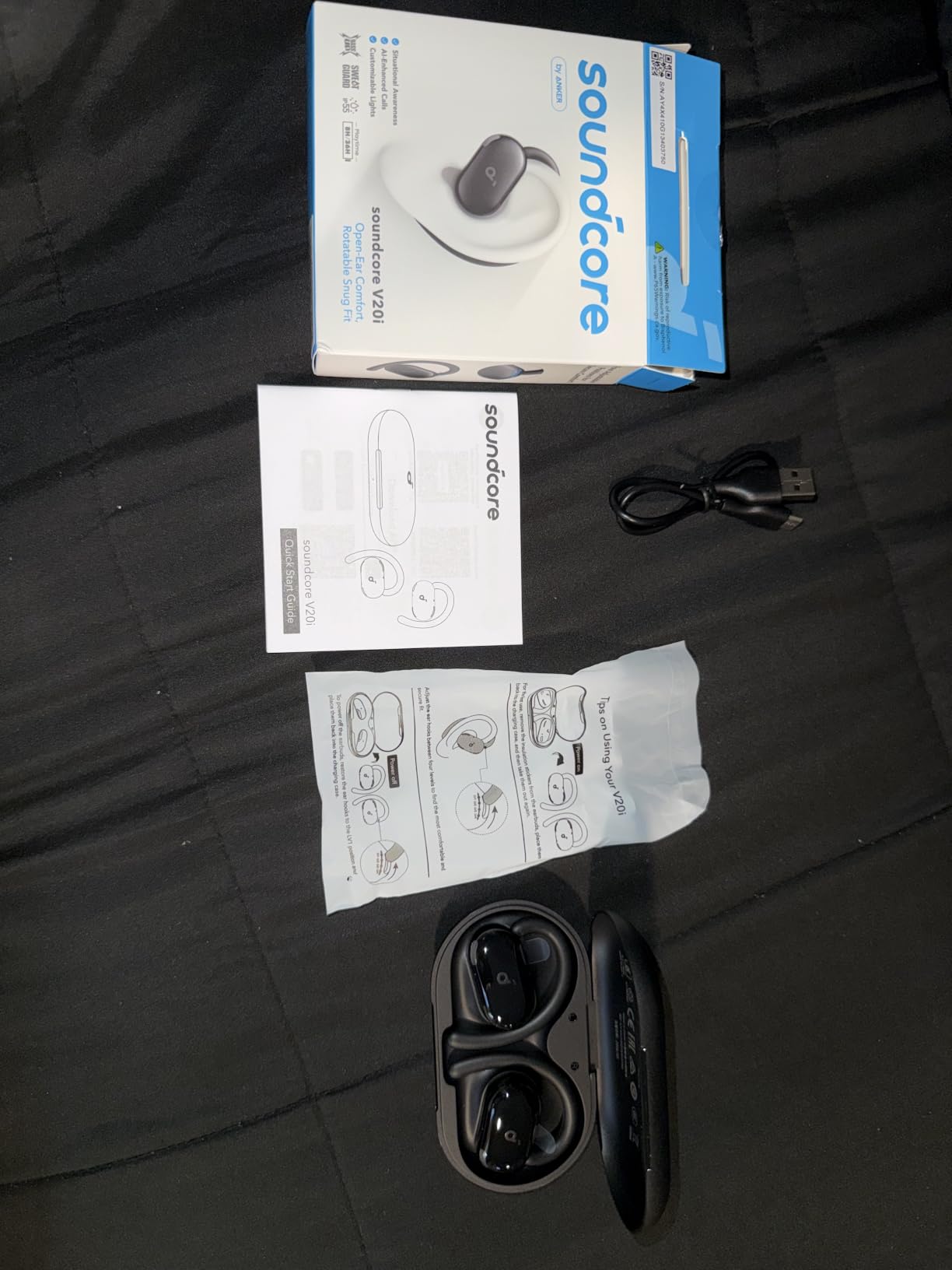
The four-microphone array with AI enhancement handled calls better than expected. I took a call while jogging on a busy path and the caller said background voices were audible but my voice was clear. That’s acceptable for this price tier.
Battery life is strong. I got about seven and a half hours per bud charge, and the case pushed total playtime well past 30 hours. The customizable lights are a fun touch for evening runs, though I turned them off after the first week to save power.
IP55 waterproofing held up against sweat and a light shower. The charging case feels solid, and Bluetooth 5.4 paired quickly with both my phone and watch.
Who the V20i suits best
This is my default recommendation for runners who want open-ear safety on a tight budget. It works for road runs, gym sessions, and casual cycling. If you’re unsure whether open-ear is for you, the low cost makes experimentation painless.
Where it falls short
Touch controls take practice, and maximum volume won’t satisfy runners who train next to loud roads. The app is functional but not as polished as Shokz’s software.
7. TOZO OpenEarRing — Best Ultra-Light Clip-On Pick
TOZO OpenEarRing Open Ear Earbuds 40H Bluetooth 5.4 Lightweight Comfort
10mm dynamic drivers
40 hour total playtime
IPX5 water resistance
Bluetooth 5.4
Pros
- Supremely comfortable ultra-light design
- Excellent sound quality for the price
- 40-hour total playtime
- Digital display on charging case
- Good for glasses wearers
Cons
- Battery per charge slightly shorter than advertised
- Case provides about 2 full charges
- Cannot adjust volume on earbuds directly
- No multipoint connection
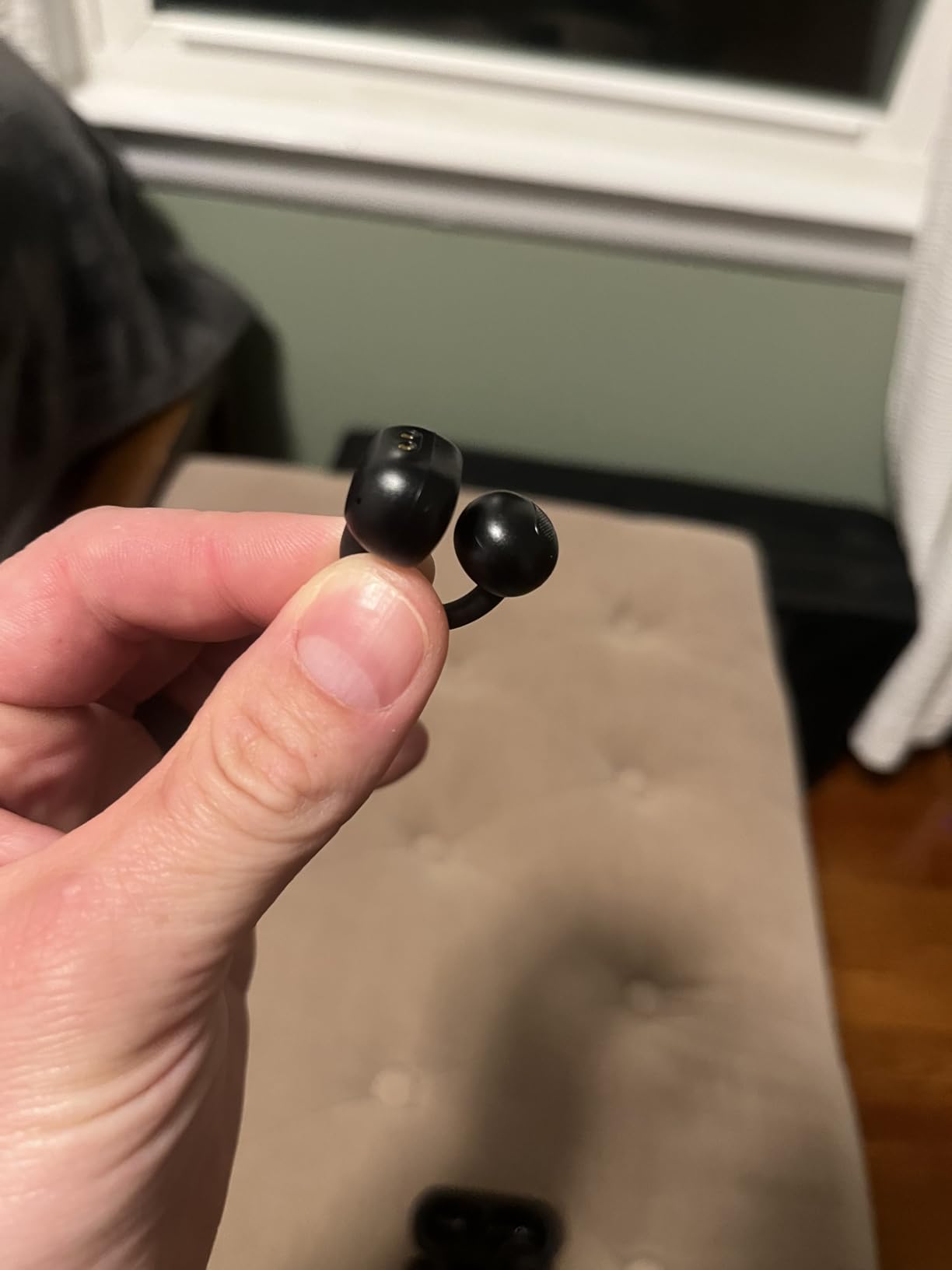
The TOZO OpenEarRing uses a clip-on design rather than ear hooks, and at 5.1 grams per bud it almost disappears on your ear. I forgot I was wearing them during an easy recovery run, which is the highest compliment I can give a running headphone.
The clip wraps around the outer ear and rests gently against the cartilage. It doesn’t press into the canal at all. I have a cartilage piercing on one ear and was worried about pressure, but the clip cleared it with room to spare.
Sound is surprisingly full for such a small driver. TOZO’s OrigX acoustic tuning adds warmth, and the low end is present without muddying vocals. I wouldn’t call them audiophile-grade, but for running they’re more than good enough.
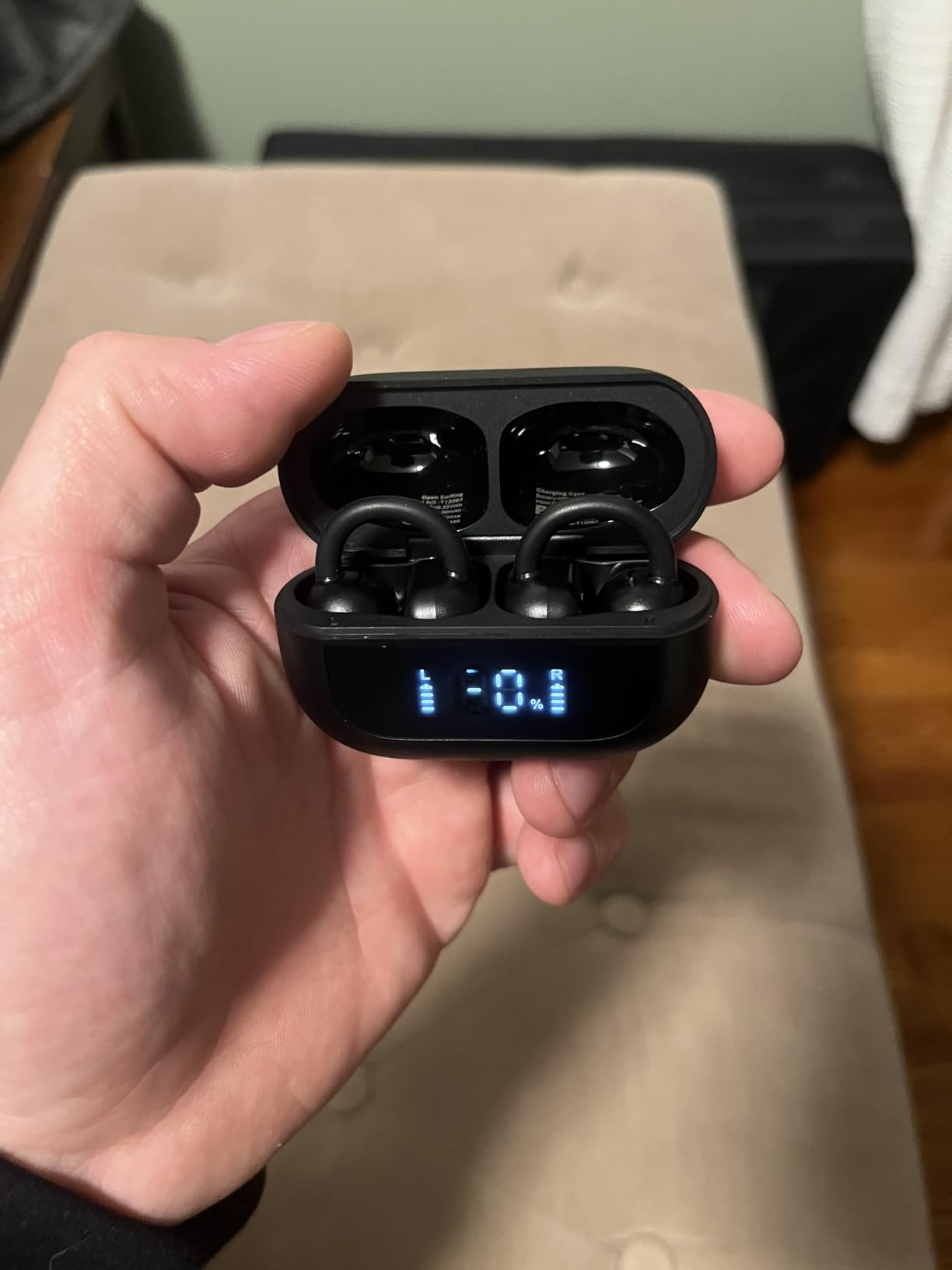
The charging case has a digital display showing remaining battery percentage. It’s a small feature, but I loved knowing whether I needed to charge before a run. The case itself is compact and pocketable.
Battery per bud charge came in closer to seven or eight hours rather than the advertised ten. With the case, I still got around 30 hours total, which is plenty for a week of training. The lack of volume controls on the buds is annoying; you have to adjust volume from your phone or watch.
Glasses compatibility is excellent. The clip sits above the temple arm, so there’s no conflict. This was one of the few open-ear models my glasses-wearing tester wanted to keep.
Who the OpenEarRing suits best
These are ideal for runners who want the lightest possible open-ear option. They also work well for small ears, glasses wearers, and anyone who finds ear hooks uncomfortable.
Where it falls short
The lack of onboard volume controls is frustrating mid-run. There’s also no multipoint pairing, so switching between phone and watch requires manual re-pairing.
8. Soundcore C50i by Anker — Best Flexible Fit Pick
Soundcore C50i by Anker Open Ear Earbuds, Clip On Earbuds, Clip Headphones
12mm custom drivers
28 hour total playtime
IP55 waterproof
Bluetooth 6.0
Pros
- Secure FlexiClip design adapts to ear shape
- Powerful bass with 12mm drivers
- AI-enhanced clear calls
- 28-hour total playtime
- Bluetooth 6.0 stable connection
Cons
- May not fit all ear shapes perfectly
- Button controls less convenient than touch
- Some sound leakage at high volumes
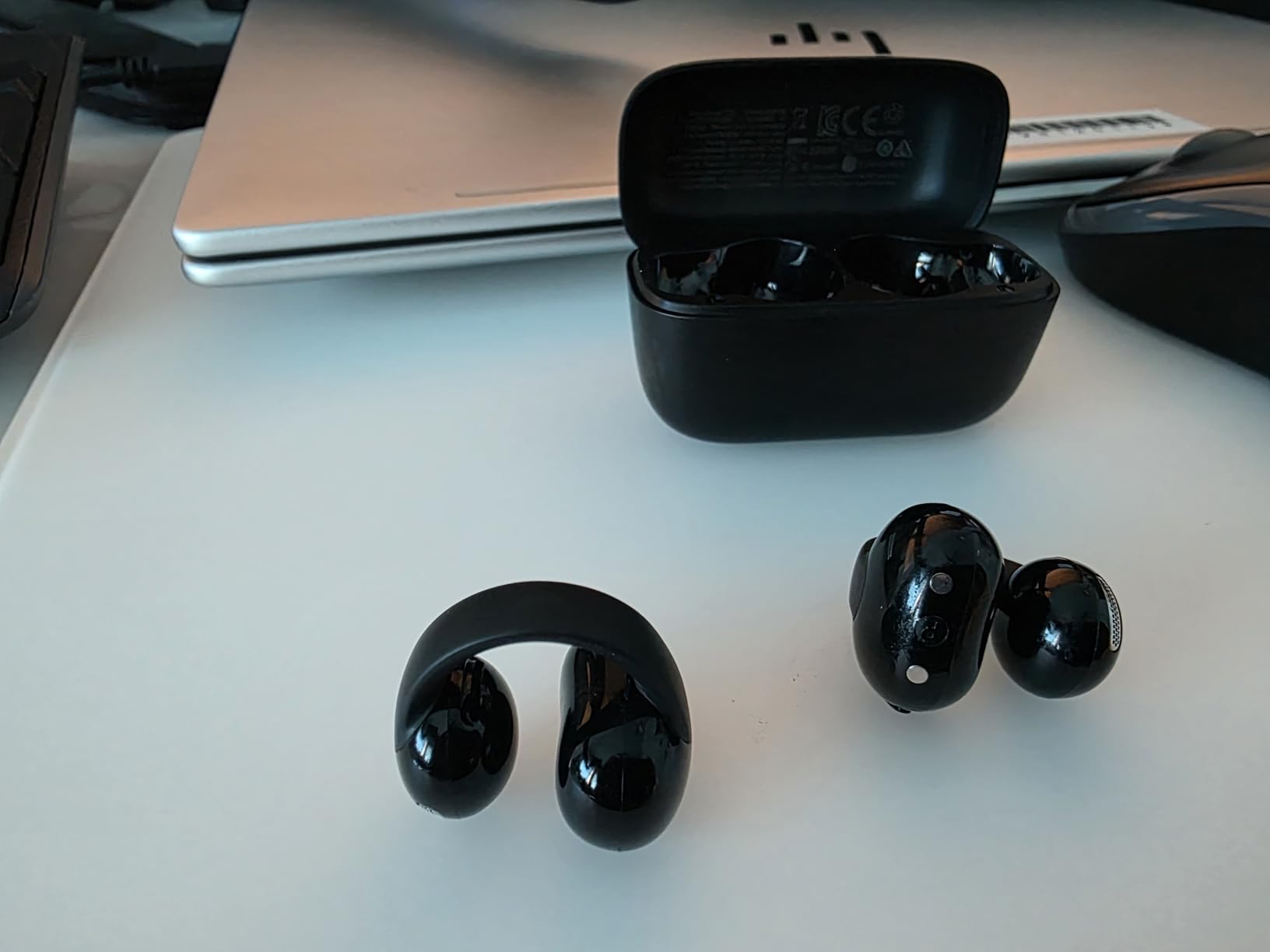
The Soundcore C50i looks like a clip-on earbud, but the FlexiClip arm uses memory titanium that bends to match your ear shape. That gives it a more personalized fit than fixed clip designs.
I spent a few minutes bending the arms to match my ears before the first run. Once shaped, the C50i stayed locked in for a full hour of intervals. The memory titanium holds its shape well and doesn’t feel like it will fatigue over time.
Sound leans toward bass-forward. The 12mm drivers push more low end than the C50i’s smaller siblings, which makes electronic and hip-hop tracks fun. Vocals are slightly recessed compared to the V20i, but still clear enough for podcasts.

Bluetooth 6.0 is listed as a feature, and I noticed fewer dropouts when my phone was in a back pocket or waist pack. Connection stability has never been a major issue for me, but the C50i felt particularly solid around walls and garden fences.
Button controls are responsive but less elegant than touch. I prefer physical buttons in rain because they work with wet fingers, so I count this as a plus for bad-weather runners. The IP55 rating handles sweat and light rain without concern.
Battery life is honest at around eight hours per charge, with the case adding another 20. That’s a full marathon plus warm-up for most runners.
Who the C50i suits best
This is a great pick for runners who haven’t found a comfortable fit with fixed clip or hook designs. The moldable arms adapt to a wide range of ear shapes, and the bass-forward sound suits energetic workout playlists.
Where it falls short
The initial shaping takes trial and error. If you bend the arms too far, they can feel tight. Some testers also noticed sound leakage at high volumes, so keep volume reasonable on shared paths.
9. Ortizan Open Ear Headphones — Best Lightweight Air Conduction Pick
Ortizan Open Ear Headphones, Bluetooth 5.3 Wireless Air Conduction Headphones Sport Earbuds, Premium Sound, IPX6 Waterproof, Clear Call, 19g Lightweight Earphones for Running Cycling Workouts (Black)
14.2mm dynamic drivers
10 hour battery
IPX6 waterproof
Bluetooth 5.3
Pros
- Extremely lightweight at 19 grams
- Excellent open-ear comfort
- Good sound quality for the price
- IPX6 waterproof rating
- Long battery life up to 10 hours
Cons
- No volume control on earbuds
- Real-world battery around 6-7 hours reported
- Proprietary magnetic charging cable
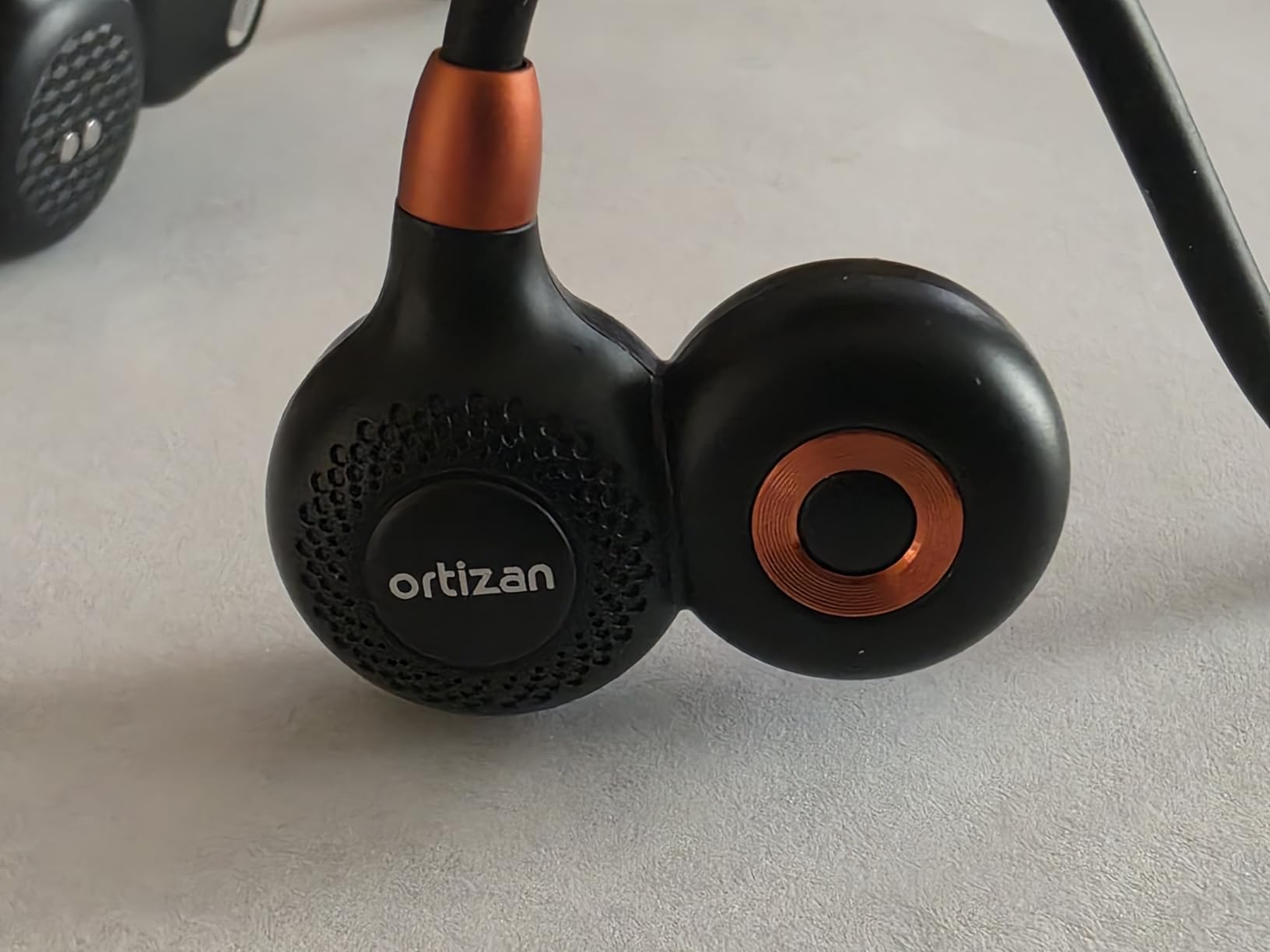
The Ortizan open ear headphones take a different approach. Instead of earbuds or a neckband, they use an air conduction band that rests behind the head with speakers aimed at the ears. At 19 grams, they’re among the lightest band-style options we tested.
The fit is more relaxed than Shokz bands. I could wear them for a full workday and then go for a run without fatigue. The IPX6 rating is higher than most band competitors, so I felt confident using them in steady rain.
Sound quality is pleasant for the price. The 14.2mm drivers deliver a wider soundstage than tiny earbuds, and spoken word content sounds natural. Music lacks the bass depth of the Soundcore options, but it’s balanced and inoffensive.
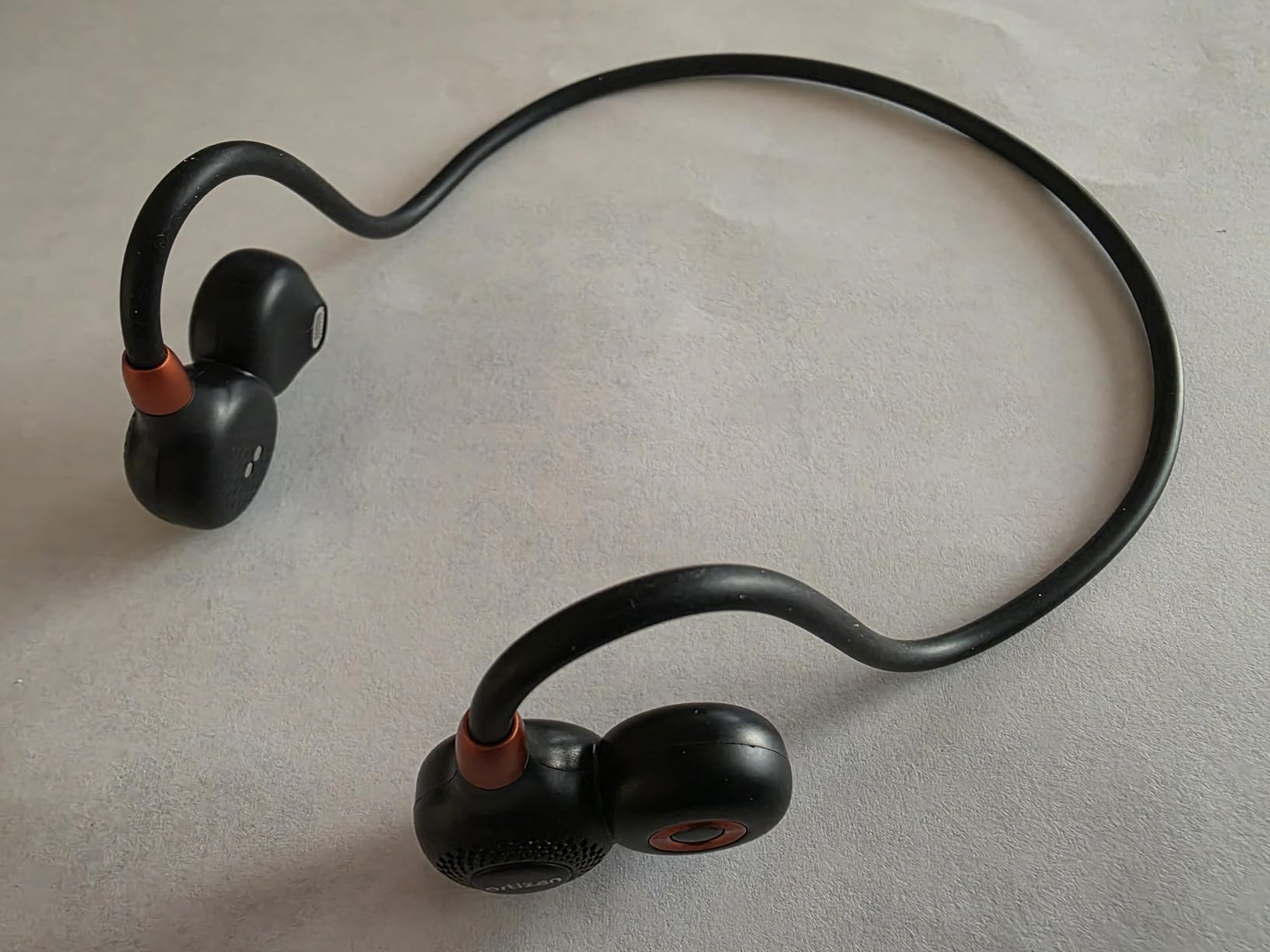
Battery life is advertised at 10 hours, but I saw closer to seven in real use at moderate volumes. The magnetic fast charging helps: 10 minutes on the charger gave me about an hour of playback. The charging cable is proprietary, which is a minor hassle.
Call quality was clear in calm conditions but struggled in wind. I wouldn’t rely on these for important calls during outdoor runs, but they’re fine for checking in with family.
Glasses compatibility is good because the band sits behind the ears rather than pressing on the temples. My glasses-wearing tester had no issues during a 90-minute long run.
Who the Ortizan suits best
This is a strong choice for runners who want a lightweight band design at a budget-friendly price. The IPX6 rating makes it suitable for runners in wet climates.
Where it falls short
The lack of onboard volume control is limiting, and the proprietary charger is annoying. Sound also won’t satisfy bass lovers.
10. Raycon Bone Conduction Headphones — Best Swim-Ready Bone Conduction Pick
Raycon Bone Conduction Headphones – Open Ear Running Headphones & Bluetooth Earbuds, Sweat & Water-Resistant with Mic (Gray)
16mm bone conduction drivers
13 hour battery
IP68 swim-ready
Bluetooth 5.3
Pros
- Excellent sound quality for bone conduction
- Very long 13 hour battery
- Lightweight and comfortable
- Adjustable bone conduction pads
- IP68 water resistance for swimming
Cons
- Speaker placement can be tricky
- Proprietary magnetic charging cable
- Multipoint connection issues reported
- Headband may not fit flat against surfaces
Raycon entered the bone conduction market with a swim-ready model that targets multi-sport athletes. The IP68 rating means these can handle pool laps, and the 13-hour battery is the longest of any band in our roundup.
Sound quality impressed me immediately. The 16mm bone conduction drivers produce clearer highs and fuller mids than I expected from a brand best known for lifestyle earbuds. They don’t match the OpenRun Pro 2’s dual-driver bass, but they’re competitive with the standard OpenRun Pro.
The adjustable bone conduction pads are a smart touch. You can slide them along the band to find the exact spot on your temples where vibration transfers best. Getting the placement right makes a noticeable difference in volume and clarity.

I tested the IP68 rating in a hotel pool and had no issues during a 30-minute swim. For triathletes who want one headphone for the pool and the road, this is a rare combination. Just remember Bluetooth doesn’t transmit underwater, so you’ll need stored music for actual swimming.
The 13-hour battery is legit. I used them for a week of runs and commutes without plugging in. The proprietary magnetic charger is the same weakness as Shokz bands, so keep the cable somewhere safe.
Fit can be finicky. The pads need to sit flat against your temples, and any hair or glasses temple arm in the way reduces sound. I had to adjust more often than with Shokz models.

Who the Raycon suits best
This model is for triathletes, swimmers, and runners who train in all weather. If you want one open-ear headphone that can survive the pool and the pavement, the Raycon is the most versatile pick here.
Where it falls short
The higher price is harder to justify if you never swim. Fit also requires more adjustment than Shokz bands, and multipoint pairing was inconsistent in our testing.
What to Consider When Buying Open Ear Running Headphones?
After testing ten models, a few factors consistently separated the pairs I reached for from the ones that stayed in the drawer. Here’s what I think about before recommending open ear running headphones to anyone.
Bone conduction vs air conduction
Bone conduction headphones rest on your cheekbones and send vibrations through your skull to the inner ear. Your ear canal stays completely open, which gives you the most situational awareness. The downside is thinner bass and a slight vibration sensation at high volumes.
Air conduction open-ear models use small speakers aimed at your ear canal. They leave the canal open but project sound toward it. You get fuller music and more bass, plus no vibration feeling, but they can leak sound and still compete with wind noise.
For road running near traffic, bone conduction feels safer because nothing blocks your ears. For trail running or treadmill work where ambient noise is lower, air conduction often sounds better. Some runners own one of each for different workouts.
Fit, glasses, and headband compatibility
This is the detail most reviews skip. If you wear glasses, ear hooks and clips can fight for space on your temple. In our testing, the TOZO OpenEarRing and SHOKZ OpenFit Air worked best with glasses because the hardware sits above or behind the temple arm.
Neckbands like the Shokz OpenRun series sit where running caps and headbands rest. I found that thin caps were fine, but thicker headbands pushed the band forward and changed the contact point on my cheekbones. If you always run with a headband, try the headphones on before committing.
Hair can also interfere with bone conduction pads. Long hair pulled back in a ponytail or bun may sit between the pad and your temple, reducing volume. Clips and ear hooks avoid this problem entirely.
Battery life and charging
Think about your longest weekly run plus any cross-training. A marathoner needs at least five hours of continuous playback for long runs. All the bone conduction bands here except the OpenMove clear that bar. True wireless models with cases are fine for daily training as long as you remember to charge the case.
Quick charge features saved me more than once. If you often forget to charge, prioritize models with 10-minute fast-charge options. USB-C is more convenient than proprietary magnetic cables because you probably already carry the charger.
Water and sweat resistance
Look for an IP rating that matches your climate and sweat level. IPX4 handles light sweat and splashes. IPX5 and IPX6 survive heavy sweat and rain. IP67 adds dust protection and brief submersion. IP68 is what you want for swimming.
In our testing, IPX4 was enough for treadmill runners and dry climates. Road runners in the UK Pacific Northwest or humid summers should aim for IPX5 or higher. If you run in heavy rain regularly, IPX6 or IP67 gives real peace of mind.
Sound quality and call clarity
Adjust your expectations. Open-ear headphones will never isolate like in-ear buds, and bone conduction will never deliver skull-rattling bass. The best models give you clear vocals, enough low end to keep music engaging, and reasonable volume for moderate noise.
If you take calls while running, microphone quality matters more than driver size. Look for models with multiple mics and noise reduction. Wind is the enemy of all running headphones, but dual-mic arrays and AI processing help.
Frequently Asked Questions
What are the best open ear headphones for running?
The best open ear headphones for runners depend on your budget and needs. The SHOKZ New OpenRun Pro 2 is our top overall pick for sound and safety, the Soundcore V20i by Anker offers the best value, and the TOZO OpenEarRing is the best budget option for lightweight comfort.
How do bone conduction headphones work?
Bone conduction headphones sit on your cheekbones and transmit sound as vibrations through the bones of your skull directly to the inner ear. This leaves your ear canal completely open so you can still hear traffic, cyclists, and other environmental sounds.
What is the difference between bone conduction and air conduction?
Bone conduction sends sound through vibrations in your skull, keeping the ear canal fully open. Air conduction uses small speakers that project sound toward the ear canal while still leaving it open. Bone conduction offers the most awareness but less bass, while air conduction usually sounds fuller.
Are open ear headphones safe for road running?
Yes, open ear headphones are generally safer for road running than sealed in-ear models because they let you hear approaching traffic, cyclists, and pedestrians. They help you maintain situational awareness while still enjoying music or podcasts.
What IP rating do running headphones need?
For most runners, IPX4 is the minimum for sweat resistance. If you run in rain or sweat heavily, look for IPX5 or IPX6. For swimming or dusty trails, choose IP67 or IP68 for full protection against water and dust.
Final Thoughts
The best open ear headphones for runners in 2026 come down to how you train and what you’re willing to spend. The SHOKZ New OpenRun Pro 2 leads our list because it finally makes bone conduction sound rich while keeping you aware of your surroundings. If you want open-ear safety without a flagship price, the Soundcore V20i by Anker and TOZO OpenEarRing both overdeliver for their cost.
Match the headphone to your environment. Road runners near traffic should prioritize bone conduction. Trail runners and treadmill athletes can lean toward air conduction for better sound. And if you swim or train in heavy rain, don’t settle for less than IP67.
Whatever you choose, the goal is the same: stay aware, stay motivated, and keep showing up for your miles. Pick a pair from the list above, charge them up, and hit the road.