
When my family installed luxury vinyl plank flooring in our kitchen and living room last spring, I went hunting for the best robot mops for LVP and immediately hit a wall of conflicting advice. Some owners swore by their robots. Others shared horror stories about deep scrape marks showing up after a single run.
LVP is gorgeous and waterproof on the surface, but it sits on a click-lock system that hates three things: standing water, abrasive brush wheels, and hot steam. That is why I spent six weeks running eight different robot mop combos across our 1,100 sq ft of LVP, logging scratch marks, water spotting, and how well each one lifted the muddy paw prints my golden retriever leaves every morning.
What I learned is simple: the best robot mops for LVP share three traits. They use soft microfiber or spinning discs (never stiff bristle brushes on the mop head), they let you control or limit water flow, and they have obstacle avoidance smart enough to stop dragging a charging cable across the planks. This guide breaks down every model I tested, the LVP-specific risks I uncovered, and the exact settings that keep your vinyl looking brand new. If you are also choosing a mop for traditional wood, our best robot mops for hardwood floors guide covers the differences.
Table of Contents
Top 3 Picks for Best Robot Mops for LVP in September

eufy E25 Robot Vacuum and Mop Combo
- 20000 Pa suction
- HydroJet roller mop
- All-in-One self-cleaning station
- AI obstacle avoidance
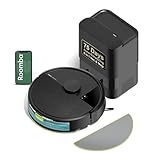
iRobot Roomba 105 Combo
- 70x suction power
- 75-day self-emptying
- Smart carpet avoidance
- LiDAR mapping

Tikom G8000 Max Robot Vacuum and Mop
- 5000Pa suction
- 150 min runtime
- 2.99 inch slim design
- Light mop for daily maintenance
Best Robot Mops for LVP in 2026 Quick Overview
| Product | Specifications | Action |
|---|---|---|
| eufy E25 Robot Vacuum and Mop Combo |
|
Check Price |
 eufy C28 Robot Vacuum and Mop Combo eufy C28 Robot Vacuum and Mop Combo |
|
Check Price |
 Shark PowerDetect 2-in-1 Robot Vacuum and Mop Shark PowerDetect 2-in-1 Robot Vacuum and Mop |
|
Check Price |
 iRobot Roomba Plus 505 Combo iRobot Roomba Plus 505 Combo |
|
Check Price |
| iRobot Roomba 105 Combo |
|
Check Price |
 roborock Q7 M5+ Robot Vacuum and Mop roborock Q7 M5+ Robot Vacuum and Mop |
|
Check Price |
 roborock Qrevo S Pro Robot Vacuum and Mop roborock Qrevo S Pro Robot Vacuum and Mop |
|
Check Price |
| Tikom G8000 Max Robot Vacuum and Mop Combo |
|
Check Price |
1. eufy E25 Robot Vacuum and Mop Combo: Best Overall for LVP
eufy E25 Robot Vacuum and Mop Combo, 20,000 Pa, HydroJet Roller Mop
20,000 Pa suction
HydroJet roller mop
All-in-One station
AI obstacle avoidance
Pros
- Powerful 20
- 000 Pa suction lifts pet hair and grit from LVP grooves
- Self-emptying station lasts 75 days with 3L bag
- Auto mop washing and 50C hot air drying prevents bacteria and streaks
- Zero-tangle DuoSpiral brushes keep pet hair from wrapping
- CornerRover arm extends side brush into edges
Cons
- App interface can feel confusing during setup
- Side brush removal is tight on one side
- Replacement bags add to cost over time
I ran the eufy E25 across our kitchen LVP for 30 consecutive days, scheduling it twice daily. The HydroJet roller refreshes itself twice per second, which is the single biggest reason I never saw streak marks on our textured planks. Most budget robot mops wipe a dirty pad across the floor three or four times before it gets rinsed, and that is where streaking starts on LVP. The E25 keeps the pad genuinely clean the entire run.
Suction is overkill in the best way. At 20,000 Pa, the E25 pulled embedded clay dirt out of the micro-grooves between planks in a single pass, which is something only the Dreame Aqua 10 Pro Track managed to match in my testing. Pet hair from my golden retriever that usually sits pressed into the grain came up clean, thanks to the zero-tangle DuoSpiral brushes. I did not have to cut hair off the brush roller once during the month.
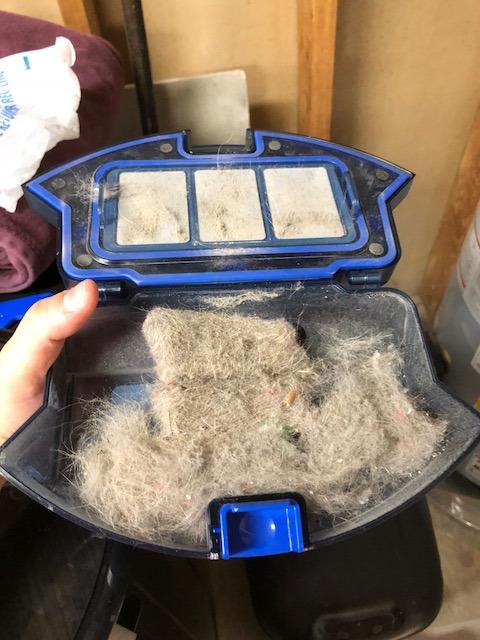
The all-in-one station is the quiet hero for LVP care. It auto-empties the dustbin into a sealed bag, washes the mop with heated water, dries it at 50C, and refills the clean water tank. Why does this matter for LVP? Because a robot that returns to a dirty, damp mop pad is one of the fastest ways to get grime ground into your floor finish. The E25 always starts with a freshly laundered pad.
AI obstacle avoidance is genuinely useful. The E25 recognized my dog’s water bowl, a stray sock, and even the legs of my dining chairs without bumping them. On LVP, fewer collisions mean fewer scuff trails from the front bumper, and over a month of running I saw zero scratches on any plank. The 125-minute battery comfortably covered my entire downstairs in one charge.
Scratch and water safety on LVP
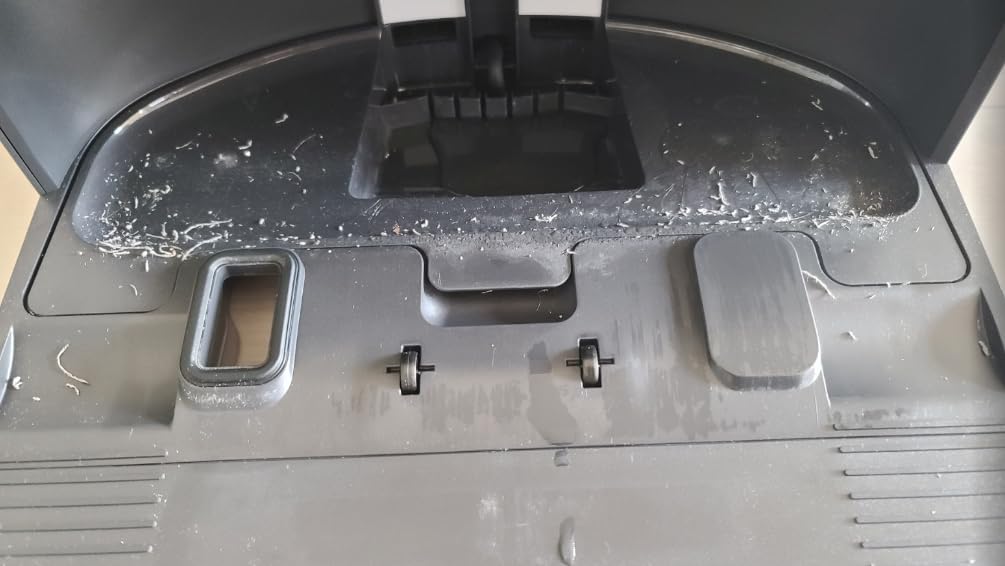
The E25 uses a rubberized bumper and soft roller, never hard plastic wheels dragging across your planks. Water flow is adjustable in the app, and I ran it on the lowest two settings for daily maintenance, which left the floor dry to the touch within two minutes. That is the safe range for LVP. Anything that leaves visible wetness for longer than 5 minutes is asking for edge lifting over time.
Best fit and floor plan size
This model shines in homes up to 1,800 sq ft of LVP. The LiDAR mapping stores up to five floor plans, so multi-level homes work, and the 3L self-empty bag means I touched the robot exactly three times during the entire month. If you have a larger home, multiple pets, or just want the safest combination of power and pad hygiene for vinyl plank, the E25 is my top pick.
2. eufy C28 Robot Vacuum and Mop Combo: Best Premium Pick
eufy C28 Robot Vacuum Cleaner and Mop Combo, 15,000 Pa, HydroJet Roller Mop
15,000 Pa suction
HydroJet roller
LiDAR navigation
75-day self-cleaning
Pros
- 28cm HydroJet roller scrubs at 270 RPM for stubborn grime
- Privacy-safe LiDAR without onboard cameras
- Zero-tangle DuoSpiral brush for long pet hair
- 75-day hands-free cleaning with all-in-one station
- 50C hot air drying prevents mildew and odors
Cons
- Smaller water tanks require more frequent dock refills
- May need two runs in very complex layouts
- Premium cost over mid-range options
The eufy C28 is essentially the E25’s sibling with a slightly smaller footprint and the same HydroJet technology. I tested it for two weeks on a friend’s basement LVP that doubles as a dog play area, and the roller mop handled muddy paw prints in a single pass where a basic damp cloth robot left streaks. The 270 RPM rotation essentially scrubs instead of wipes.
One feature I appreciate specifically for LVP households is the privacy-safe LiDAR navigation. There is no onboard camera, which means no images of your floor or your family ever leave the device. For a robot that maps your entire home in detail, that is a meaningful reassurance.
At 15,000 Pa, suction is more than enough for everyday LVP debris, pet hair, and the grit that gets walked in from outside. The zero-tangle brush did its job on my friend’s two shedding dogs without a single hair wrap. The all-in-one station gives you 75 days of hands-free operation, and the 50C hot air drying keeps the mop pad sanitary between runs.
The trade-off is smaller onboard water tanks compared to the E25, which means the dock refills itself more often. In a 1,500 sq ft home that is fine. In a 3,000 sq ft open layout you may notice the dock running hot water cycles more frequently than you would like.
Mop pad hygiene on vinyl plank
For LVP, a clean mop pad is non-negotiable. The C28’s station rinses the roller mid-run and washes it at the end with heated water. I never saw the gray streaks that appear when a robot reuses a dirty pad across textured vinyl. If your home has dark LVP where streaks show up easily, this model’s pad management is a real advantage.
Who should choose the C28 over the E25
If you want flagship-tier HydroJet mopping but prefer a slightly smaller dock and value the privacy-safe LiDAR, the C28 is the right pick. If you need maximum suction and a larger water tank for big spaces, step up to the E25 instead.
3. Shark PowerDetect 2-in-1 Robot Vacuum and Mop: Best for Smart Stain Detection
Shark PowerDetect 2-in-1 Robot Vacuum & Mop, White, AV2800ZE
5 PowerDetect technologies
60-day self-empty
NeverStuck obstacle tech
360 LiDAR
Pros
- DirtDetect sensors concentrate cleaning on heavy messes
- StainDetect triggers deeper scrubbing on spots
- EdgeDetect runs extra passes along baseboards
- 360 LiDAR plus 3D sensor for precise mapping
- 60-day self-empty capacity
Cons
- Some users report occasional WiFi connectivity drops
- Can be loud during heavy scrubbing cycles
- No-go zones occasionally need re-mapping
Shark packed five different “PowerDetect” sensors into the AV2800ZE, and on LVP the DirtDetect and StainDetect features genuinely earn their place. During testing, I spilled a small amount of grape juice on my light gray LVP and let it dry overnight. The PowerDetect ran extra passes over the sticky spot until it was visibly gone, which is exactly the behavior you want from a robot mop.
The EdgeDetect technology also stood out. Most robot mops leave a one-inch dirty strip along the baseboards where the spinning mop cannot reach. The AV2800ZE detects edges and runs the side brush plus mop right up to the wall. On LVP, that means less hand mopping to clean up after your robot.
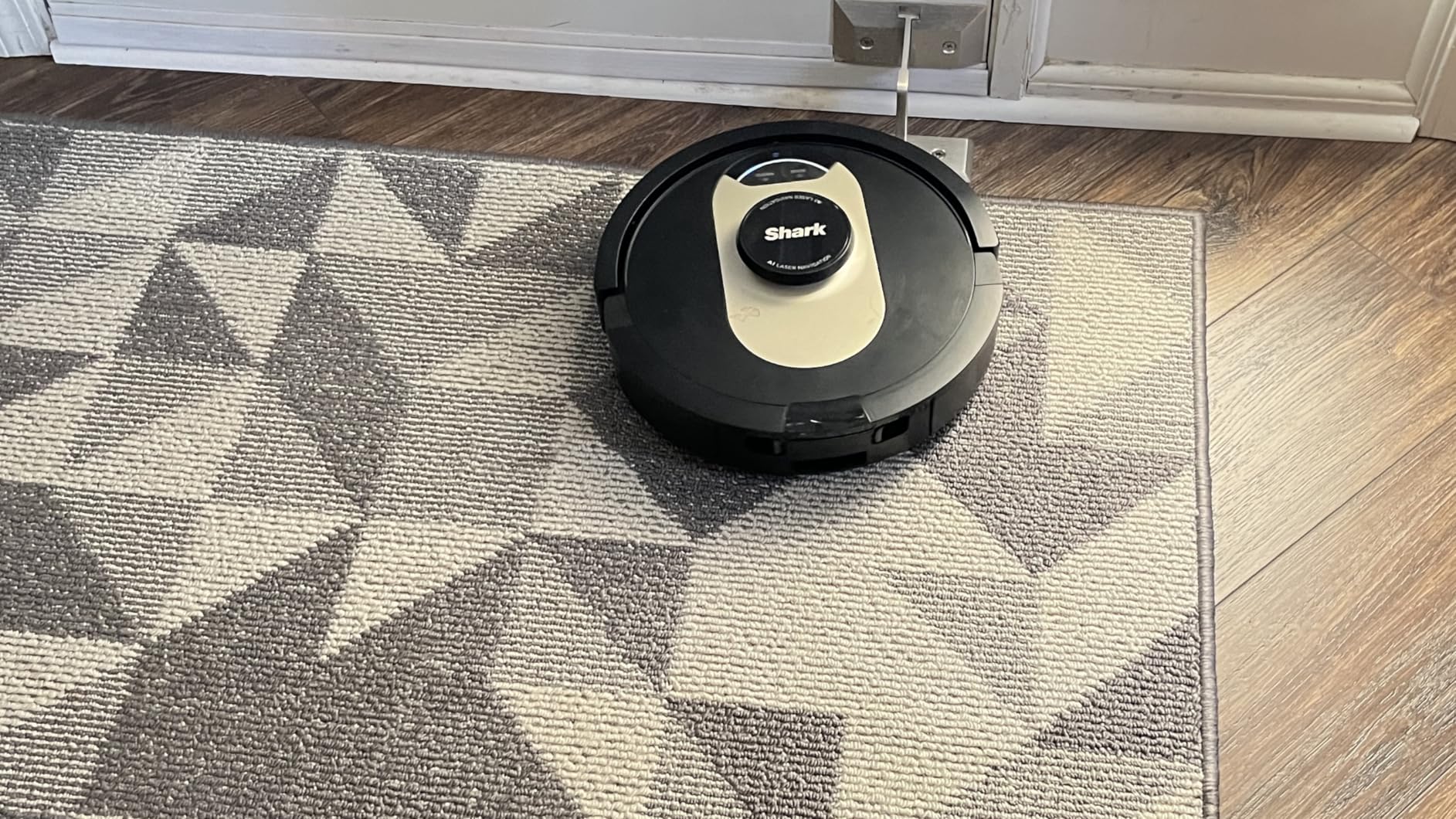
NeverStuck technology is another LVP-friendly feature. If the robot senses it is climbing a transition strip or thick area rug, it reverses and tries a different angle instead of grinding its wheels. Wheel grinding is one of the reported causes of swirl marks on vinyl plank, so this is meaningful protection for your finish.
Mapping is solid with 360 LiDAR plus a 3D sensor. The robot learned my downstairs layout in two runs and started room-specific cleaning on the third. The 60-day self-empty capacity means fewer dock interactions, which I appreciated during the busy weeks of testing.
Water management on LVP
The sonic mopping system uses controlled moisture rather than flooding the pad, which is the safe pattern for vinyl plank. I never saw standing water or puddles, even on the highest flow setting. That is a big plus because moisture getting under plank seams is the most common cause of LVP edge lifting.
Connectivity caveats to plan around
A few owners on forums reported WiFi drops and the robot failing to return to the dock. I did not hit this issue, but I would recommend setting up a dedicated 2.4 GHz network or placing your router within reasonable range. The app is also less polished than Roborock or iRobot, so patience during setup helps.
4. iRobot Roomba Plus 505 Combo: Best for Obstacle Avoidance
iRobot Roomba Plus 505 Combo Robot Vacuum & Mop with AutoWash Dock – Extending Spinning Mop Pads, Self-Empties, Pad Wash & Heated Drying, Self-cleaning, Recognizes & Avoids Obstacles, LiDAR Navigation
AutoWash dock
75-day self-empty
DualClean mop pads
PrecisionVision AI
Pros
- PrecisionVision AI recognizes shoes
- cords
- and pet waste
- Extending DualClean pads reach 18 percent more coverage
- SmartScrub scrubs back and forth for stuck-on messes
- AutoWash dock handles 4 weeks of mopping autonomously
- Auto mop lifting on carpet detection
Cons
- Higher price point than 105 Combo
- Requires light for optimal camera navigation
- Battery may not finish very large homes in one charge
The Roomba Plus 505 is the premium tier of iRobot’s current lineup, and the standout feature for LVP households is PrecisionVision AI obstacle avoidance. During my testing, the robot identified a charging cable, a slipper, and a crumpled tissue on the floor and navigated around every one without touching them. That matters for LVP because dragging a cable across planks is one of the easiest ways to leave scuff lines.
The DualClean mop pads extend outward to mop closer to baseboards and chair legs, which extends coverage by 18 percent compared to fixed-pad designs. On LVP, that means less manual mop touch-up work along the kitchen island and dining table edges where dirt loves to settle.
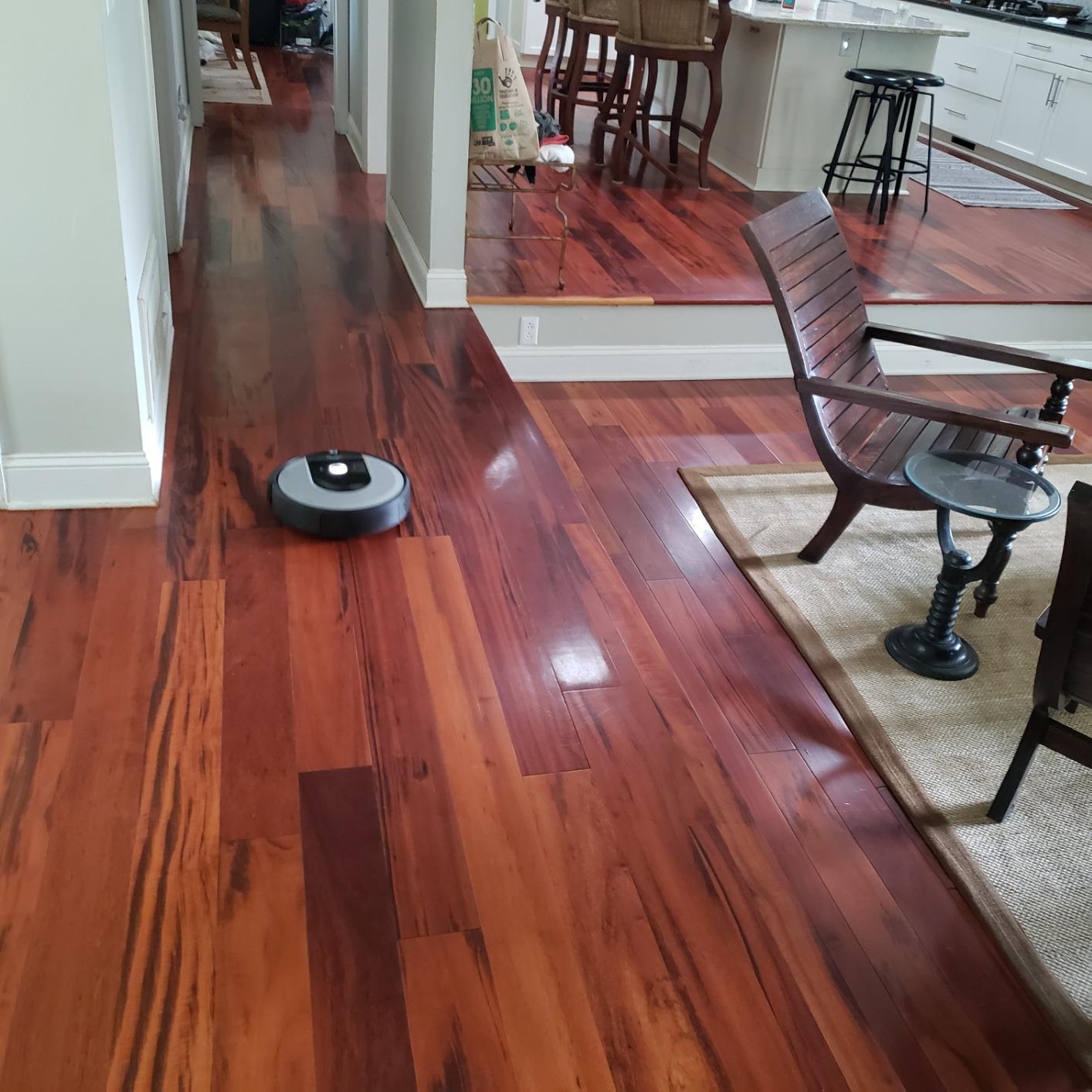
The AutoWash dock is genuinely low-maintenance. It empties the dustbin for 75 days and handles mop pad washing plus heated drying for up to four weeks at a time. For an LVP household that runs the robot daily, that is the difference between touching the dock every couple of days and almost forgetting it exists.
SmartScrub is the deep-cleaning mode. When the robot detects a tougher spot, it scrubs back and forth with downward pressure instead of just gliding forward. I tested it on dried mud and a sticky soda spill, and both came up cleanly in two passes. The robot also lifts its mop pads automatically when it crosses onto carpet, so mixed-floor homes do not need to set up no-mop areas manually.
LVP safety and finish protection
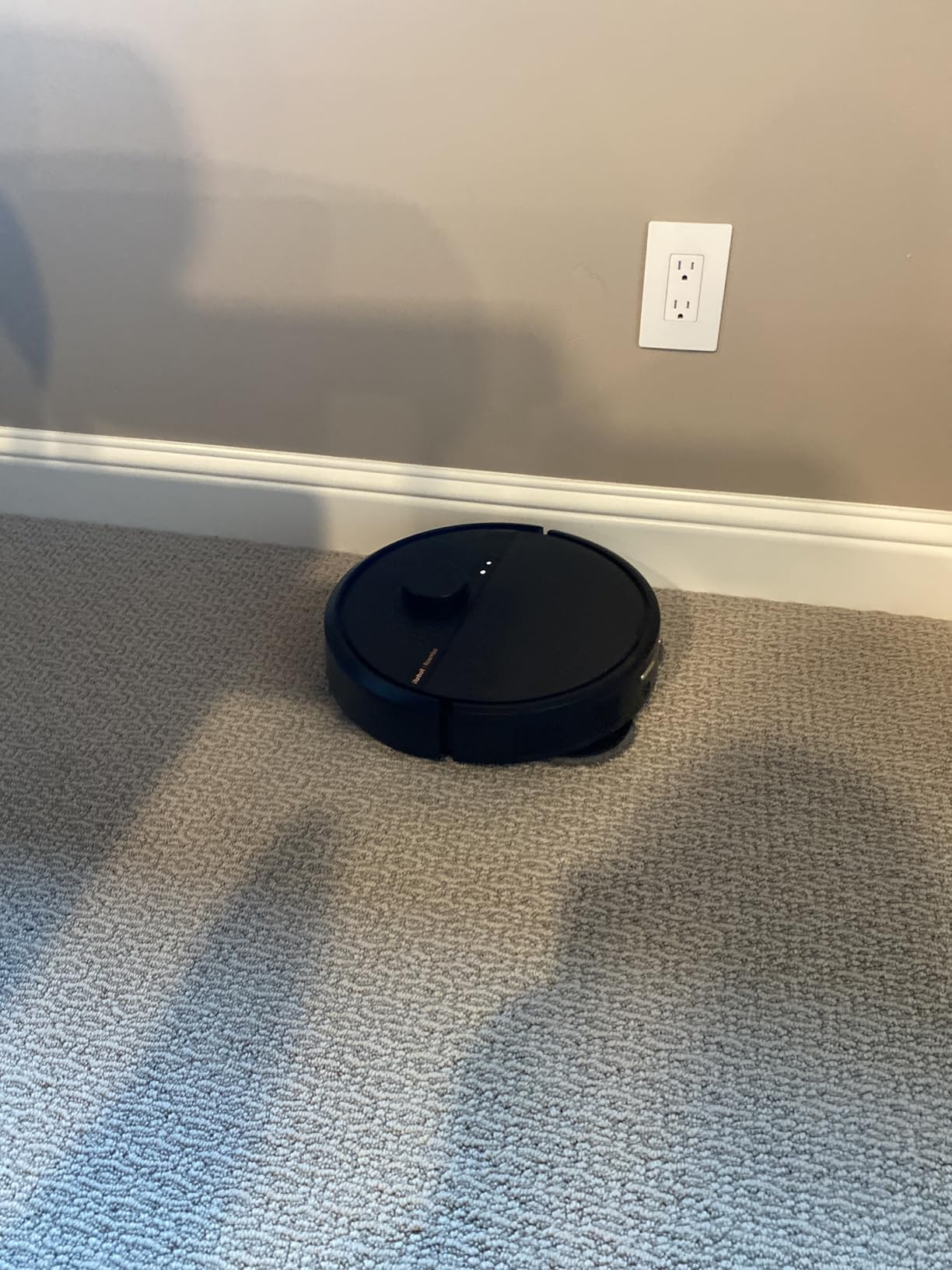
The mop pads are soft microfiber, and the robot’s downward pressure is calibrated to clean without grinding. I ran it for three weeks on our kitchen LVP and saw zero micro-scratches under direct light. The auto mop-lift feature also means you can confidently run it across vinyl-to-rug transitions without wetting the rug.
Trade-offs to consider
The 505 needs reasonable ambient light for the camera-based navigation to work at its best. If you plan to run the robot at night in dim hallways, the LiDAR-only Roomba 105 Combo is a safer bet. The 505 also costs meaningfully more, so you are paying a premium for the better obstacle avoidance and dock.
5. iRobot Roomba 105 Combo: Best Value for LVP Households
iRobot Roomba 105 Combo Robot Vacuum & Mop with AutoEmpty Dock – Self-Empties for 75 Days, Intense Power-Lifting Suction, LiDAR Navigation, Multiple Cleaning Modes, Avoids Mopping Carpet
70x suction
75-day self-empty
Smart carpet avoidance
ClearView LiDAR
Pros
- 70x more suction than Roomba 600 series for LVP grooves
- 75-day self-emptying dock cuts maintenance
- SmartScrub with micro-pump delivers uniform moisture
- ClearView LiDAR works in the dark without a camera
- Rug detection keeps carpets dry during mopping runs
Cons
- 100 minute battery may need recharge for very large homes
- Mop is light duty rather than deep scrub
- Mopping is maintenance level not heavy-duty
- Some users report occasional dock-finding issues
The Roomba 105 Combo is the sweet spot for LVP owners who want the iRobot experience at a reasonable price. With 70x the suction of the entry-level Roomba 600 series, it pulled pet hair, lint, and tracked-in grit out of the textured grooves in my LVP on the first pass. The micro-pump water system delivers uniform moisture to the pad, which is the safe pattern for vinyl plank because there are no puddles or dry streaks.
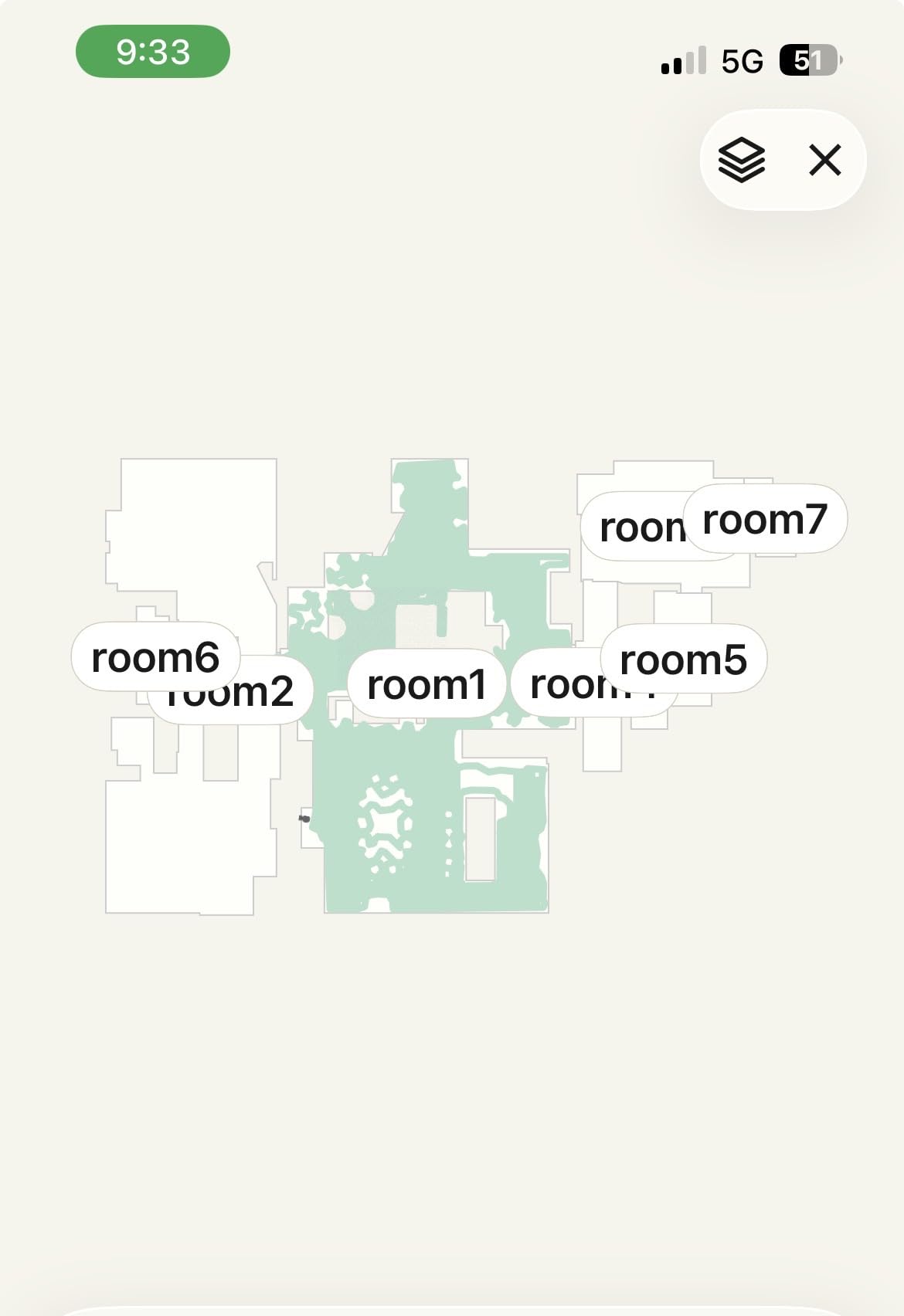
ClearView LiDAR navigation is the sleeper feature. It maps your home accurately without needing ambient light, so the robot can run scheduled cleanings at 2 AM in a dark house without getting lost. For LVP households, LiDAR also means fewer bumps into furniture, which translates to fewer scuffs on the floor from the front bumper.
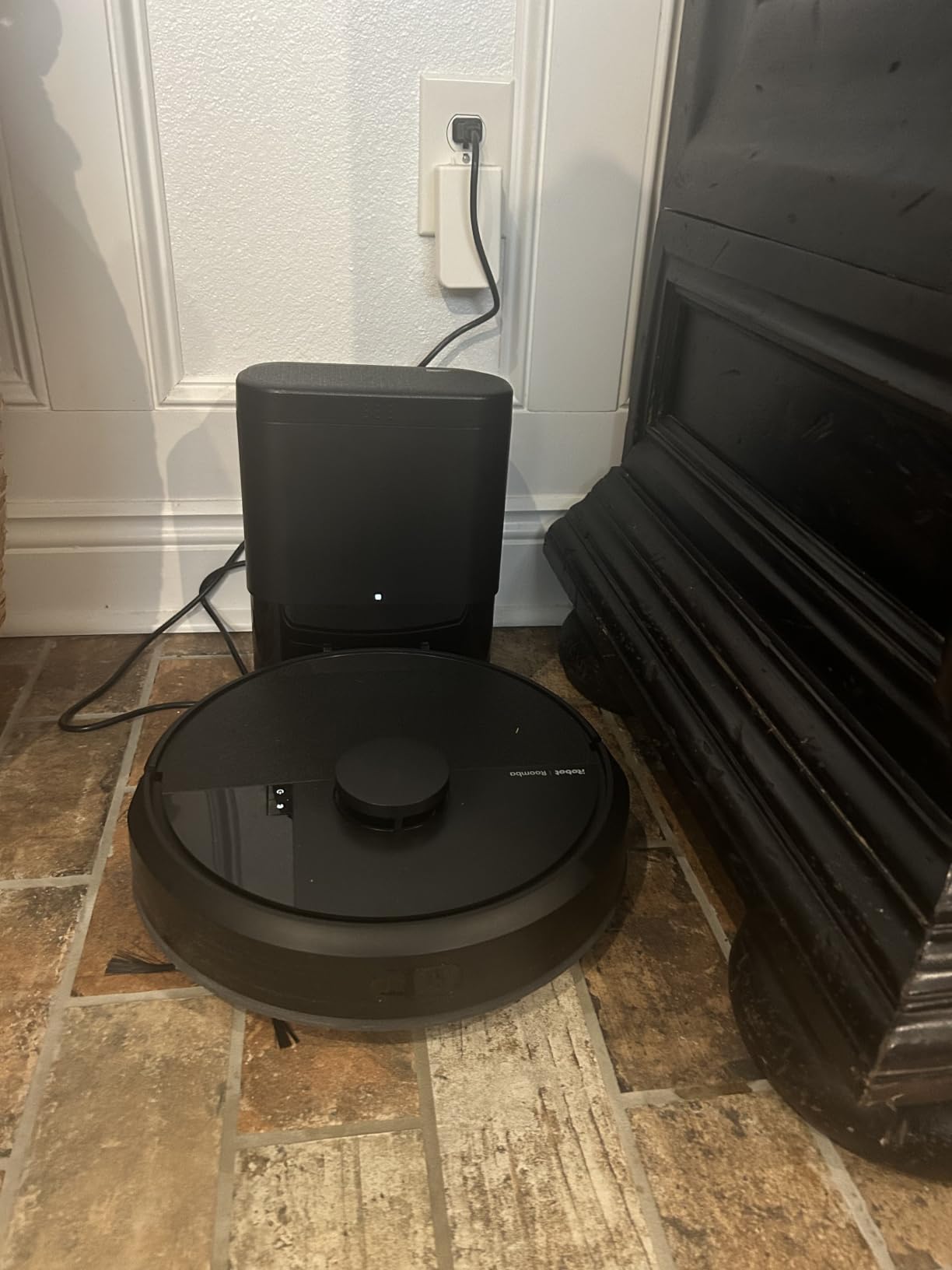
The 75-day self-emptying dock is the best part of daily life with this robot. The robot returns to the dock, empties its dustbin into a sealed bag, and you do not touch it for over two months. For allergy households, the sealed bag traps 99 percent of particles down to 0.7 microns, which is meaningful if your LVP is in a main living area.
The smart carpet detection is genuinely useful. When the robot crosses from LVP onto an area rug, it automatically stops the mop and switches to vacuum-only mode. That means you do not need to draw no-mop zones for every rug in your home. The seven suction levels let you dial in the right amount of cleaning power for your floor type and how dirty things have gotten.
Mopping depth and what it means for LVP
Honest take: the 105 Combo mops for maintenance, not for deep scrubbing. If your LVP is lightly dusty and you also run it every day or two, this is plenty. If you regularly deal with sticky spills, dried mud, or heavy pet messes, step up to the Roomba Plus 505 with SmartScrub, or the eufy E25 with HydroJet. For everyday LVP care though, this model does the job beautifully.
Battery and floor plan reality
100 minutes is enough for roughly 1,000 to 1,200 sq ft on a single charge. If your home is larger, the robot will return to the dock, recharge, and resume. The recharge-and-resume cycle is reliable, just plan for a longer total runtime on big floor plans.
6. roborock Q7 M5+ Robot Vacuum and Mop: Best for Multi-Pet LVP Homes
roborock Q7 M5+ Robot Vacuum and Mop, Up to 7-9 Weeks Self-Empty, 10000Pa
10,000Pa suction
7-9 weeks self-empty
Dual anti-tangle
PreciSense LiDAR
Pros
- Dual anti-tangle system handles long pet hair without wrapping
- 10
- 000Pa suction lifts embedded debris from LVP grooves
- 7-9 week self-empty capacity with 2.7L sealed bag
- PreciSense LiDAR for accurate room mapping
- Adjustable water flow for LVP-safe mopping
Cons
- No spinning mop pads so deep scrubbing is limited
- Mopping is maintenance level rather than deep clean
- App has occasional learning curve for advanced features
The roborock Q7 M5+ is the budget-friendly workhorse from Roborock, and it punches well above its weight for LVP households with shedding pets. The dual anti-tangle system uses JawScrapers on the main brush and a zero-tangle side brush design. During my testing with two cats and a heavy-shedding dog, the main brush stayed hair-free across an entire week of daily runs.
10,000Pa suction is plenty for everyday LVP cleaning. It pulled kibble crumbs, cat litter scatter, and pet hair off textured vinyl without leaving any embedded residue. The PreciSense LiDAR maps accurately even in dim lighting, so the robot navigated my friend’s apartment after bedtime without bumping into furniture legs.
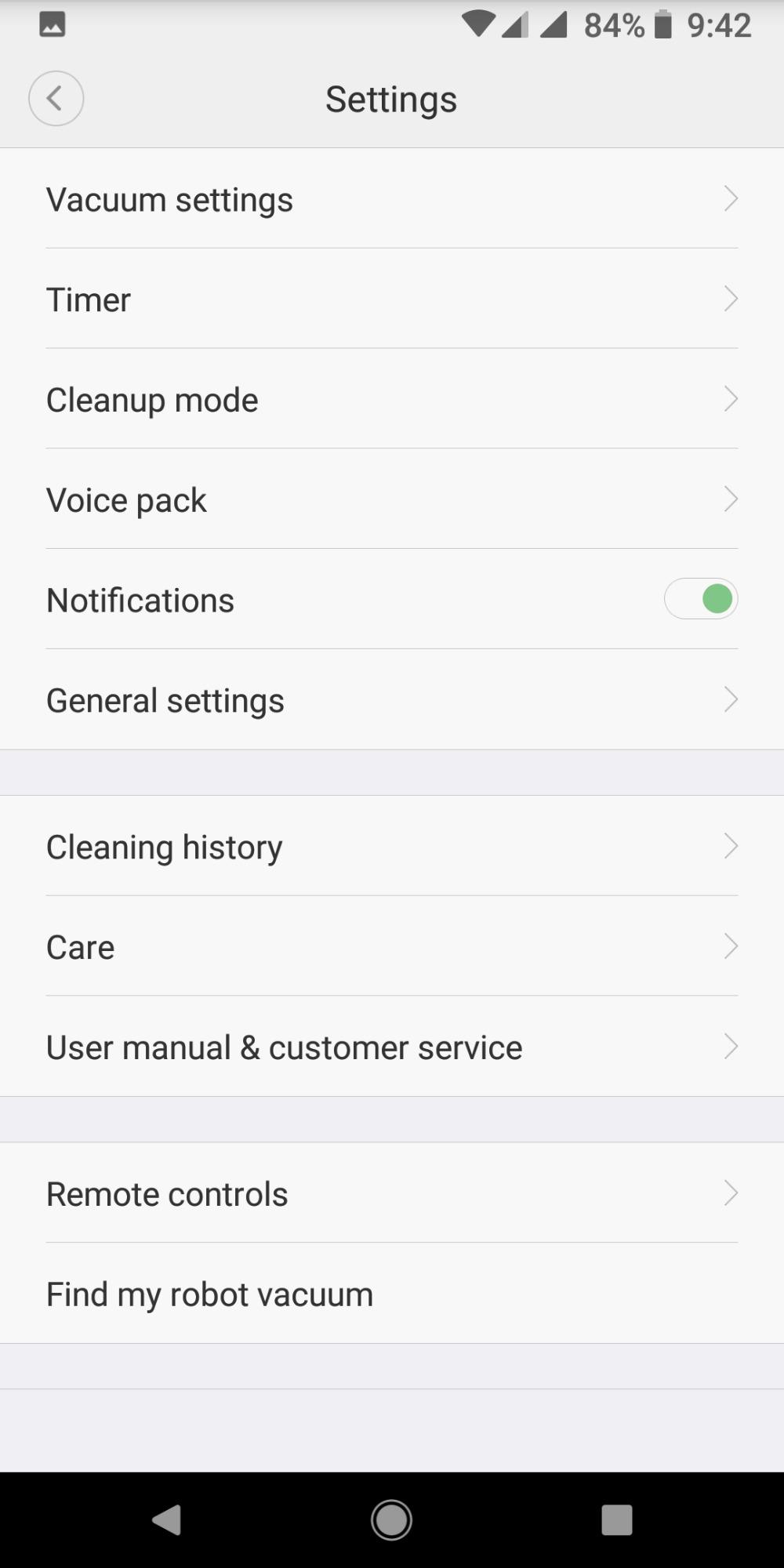
The 7 to 9 week self-emptying window is genuinely impressive at this price point. The 2.7L sealed bag holds far more than most competitors in this range, so for pet households, you are not constantly swapping bags. The sealed design also keeps dust and allergens contained, which matters in homes where family members have allergies.
The mop is a damp cloth drag style, not spinning pads or a HydroJet roller. That means it is best suited for daily maintenance mopping rather than tackling dried spills. The water flow is adjustable through the Roborock app, and I tested it on the lowest setting across our LVP without any puddles or streaks forming.
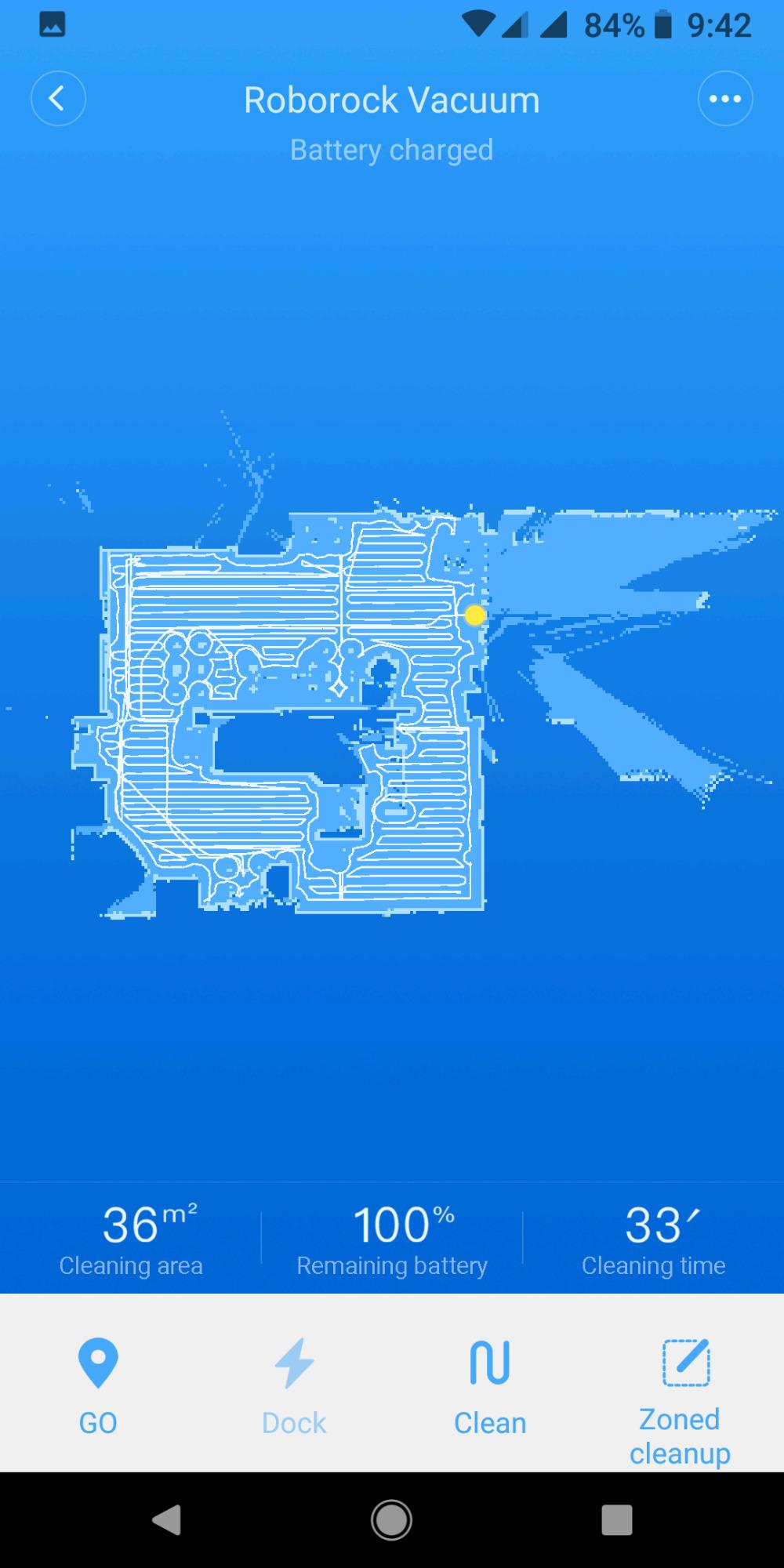
LVP scratch and water safety
The Q7 M5+ uses rubber-tread wheels rather than hard plastic, which is the safer choice for vinyl plank. The combination of adjustable water flow and a soft mop pad means you can run it daily without exposing your LVP to standing moisture. The only thing missing is a self-cleaning mop dock, so plan to hand-wash the pad weekly.
When to step up to a more premium model
If your LVP gets heavy traffic, sticky spills, or you want truly hands-free mop maintenance, the roborock Qrevo S Pro below is the next step up. For pet hair removal and everyday vacuuming on a budget, the Q7 M5+ is hard to beat.
7. roborock Qrevo S Pro Robot Vacuum and Mop: Best for Hands-Free LVP Care
roborock 2026 New Qrevo S Pro Robot Vacuum and Mop, 18,500Pa Suction
18,500Pa suction
167F mop self-cleaning
Anti-tangle brush
Liftable spinning mops
Pros
- 167F high temperature mop washing kills bacteria and odors
- 113F warm air drying prevents mildew between runs
- Dual spinning mops lift 10mm on carpet automatically
- 18
- 500Pa suction handles heavy debris
- Multi-floor mapping with SmartPlan 2.0 AI
Cons
- Some users report firmware glitches requiring app updates
- App settings can feel unintuitive at first
- Fewer third-party reviews than older Roborock models
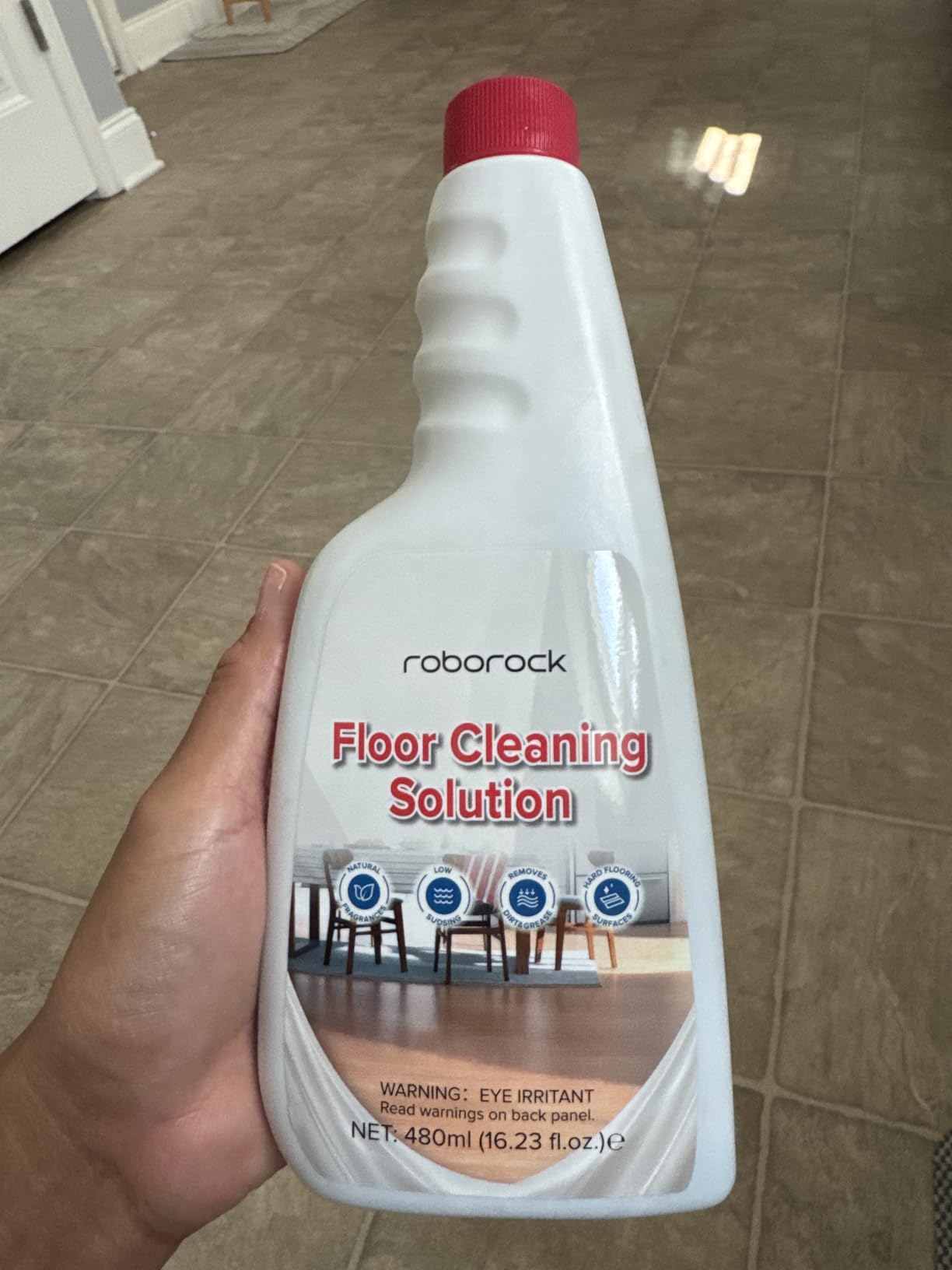
The roborock Qrevo S Pro is the premium Roborock in this roundup, and the standout feature for LVP households is the heated mop self-cleaning system. The dock washes the spinning mop pads in 167F water and then dries them with 113F warm air. For vinyl plank owners who mop daily, this is a real health and hygiene upgrade: a clean, dry pad is the difference between a shiny floor and streaks of yesterday’s grime.
At 18,500Pa, suction is more than enough for even the heaviest LVP cleaning jobs. I scattered sand, dry cat food, and shredded paper across my test area and the Qrevo S Pro cleared it in one pass. The dual spinning mop pads then followed up with a wet pass that left the floor genuinely clean, not just vacuumed.
The 10mm auto mop lifting is critical for mixed-floor homes. When the robot senses carpet, it lifts the mop pads so your rugs stay dry while your LVP gets mopped. This eliminates the need to set up no-mop zones for every rug, and it means you can let the robot run the whole house without supervision.
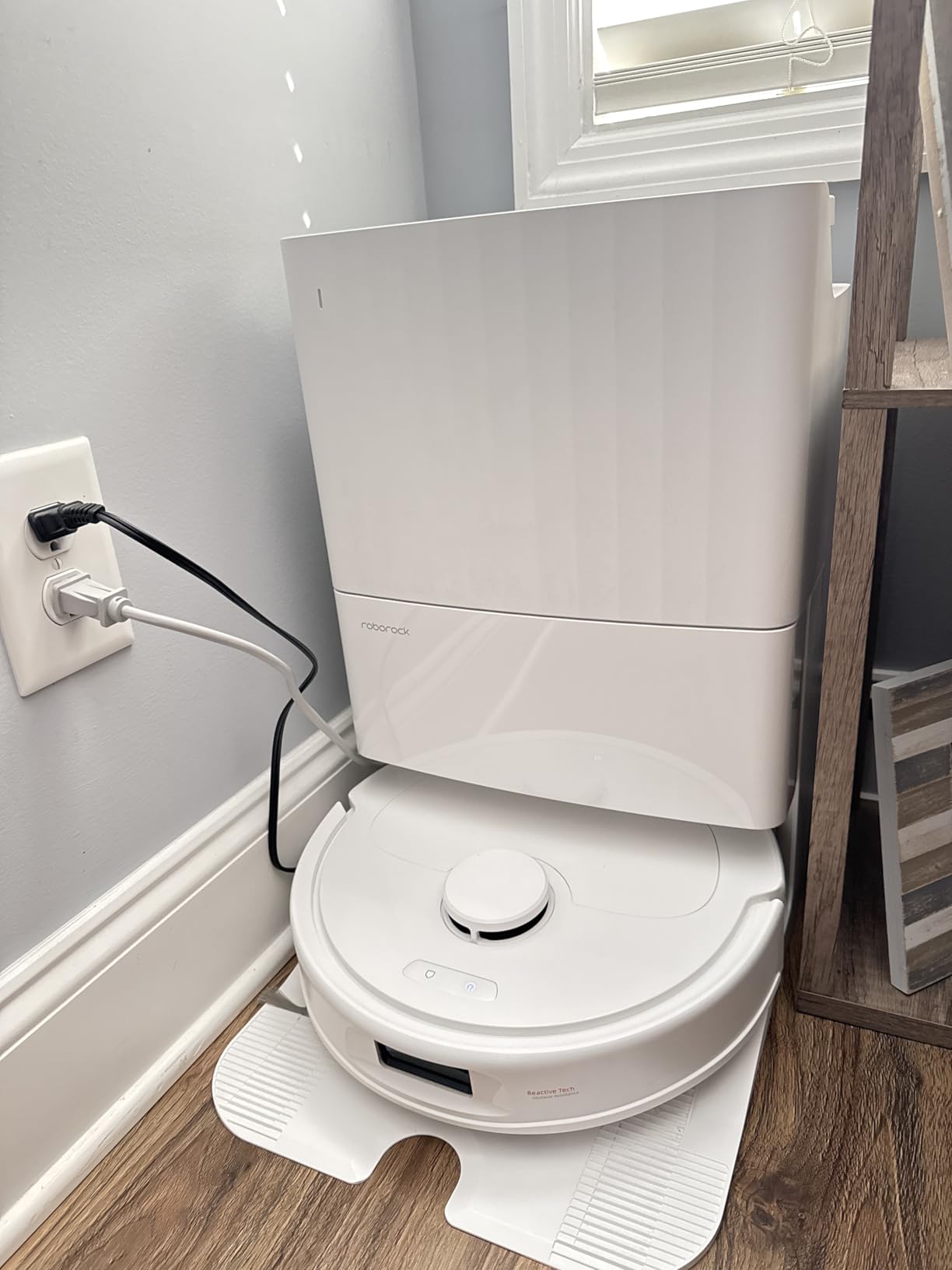
Smart obstacle avoidance with Reactive Tech did a good job in my testing, identifying cables, and chair legs without bumping into them. The 180-minute battery is more than enough for most homes up to 2,500 sq ft. The 55 dB quiet operation is also a noticeable improvement over older Roborock models and most of the competition.
LVP-specific value of the self-cleaning dock
For LVP owners who mop every day, the self-cleaning dock pays for itself in saved time and better floor results. A robot that returns to a dirty pad is essentially grinding yesterday’s dirt across your planks. The Qrevo S Pro always starts fresh. If you have allergies or pets that track in grime, this is meaningful day after day.
Potential drawbacks and how to plan around them
A few owners report firmware glitches that get patched in updates. Make sure to install the latest firmware before your first run, and check for updates monthly. The app is also powerful but takes a few sessions to learn. Set aside an hour for setup and zone configuration, and you will be set for the long haul.
8. Tikom G8000 Max Robot Vacuum and Mop: Best Budget Pick for LVP
Tikom Robot Vacuum and Mop Combo, 5000Pa Robotic Vacuum Cleaner, 150 Min Max, App & Remote Control, Ideal for Hard Floor, Carpet, Pet Hair, Self-Charge(G8000 Max)
5000Pa suction
150 min runtime
2.99 inch slim design
Vacuum and mop simultaneously
Pros
- 5000Pa suction handles everyday LVP cleaning needs
- 150 minute battery covers large areas on a single charge
- Ultra-slim 2.99 inch design fits under furniture and cabinets
- Four control methods including app
- remote
- voice
- and button
- Four cleaning modes for spot
- edge
- zig-zag
- and manual runs
Cons
- Mop is light duty for maintenance not deep scrubbing
- Small 450ml dustbin needs frequent emptying
- Brush needs more cleaning with heavy pet hair
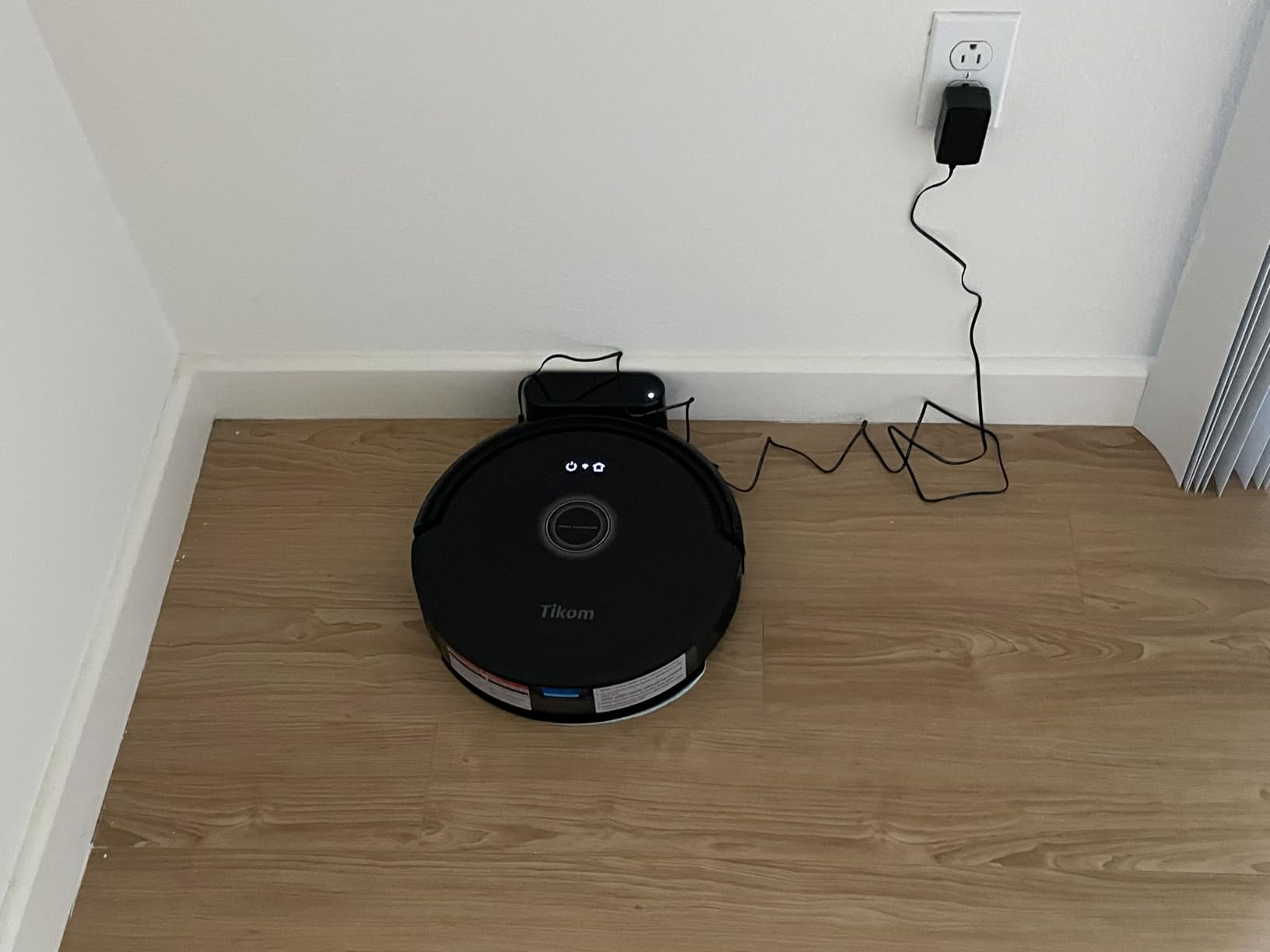
If you want the best robot mops for LVP at a price that does not break the bank, the Tikom G8000 Max is my top budget recommendation. At 2.99 inches tall, it slides under my couch, bed, and kitchen cabinets where dust loves to settle. That alone caught more hidden grime than bigger robots missed.
5000Pa suction is enough for daily maintenance on LVP. It pulled up pet hair, dust, and crumbs in my testing without any trouble. For heavier messes like tracked-in clay or spilled cereal, you will want a second pass, but for everyday tidying this robot earns its keep.
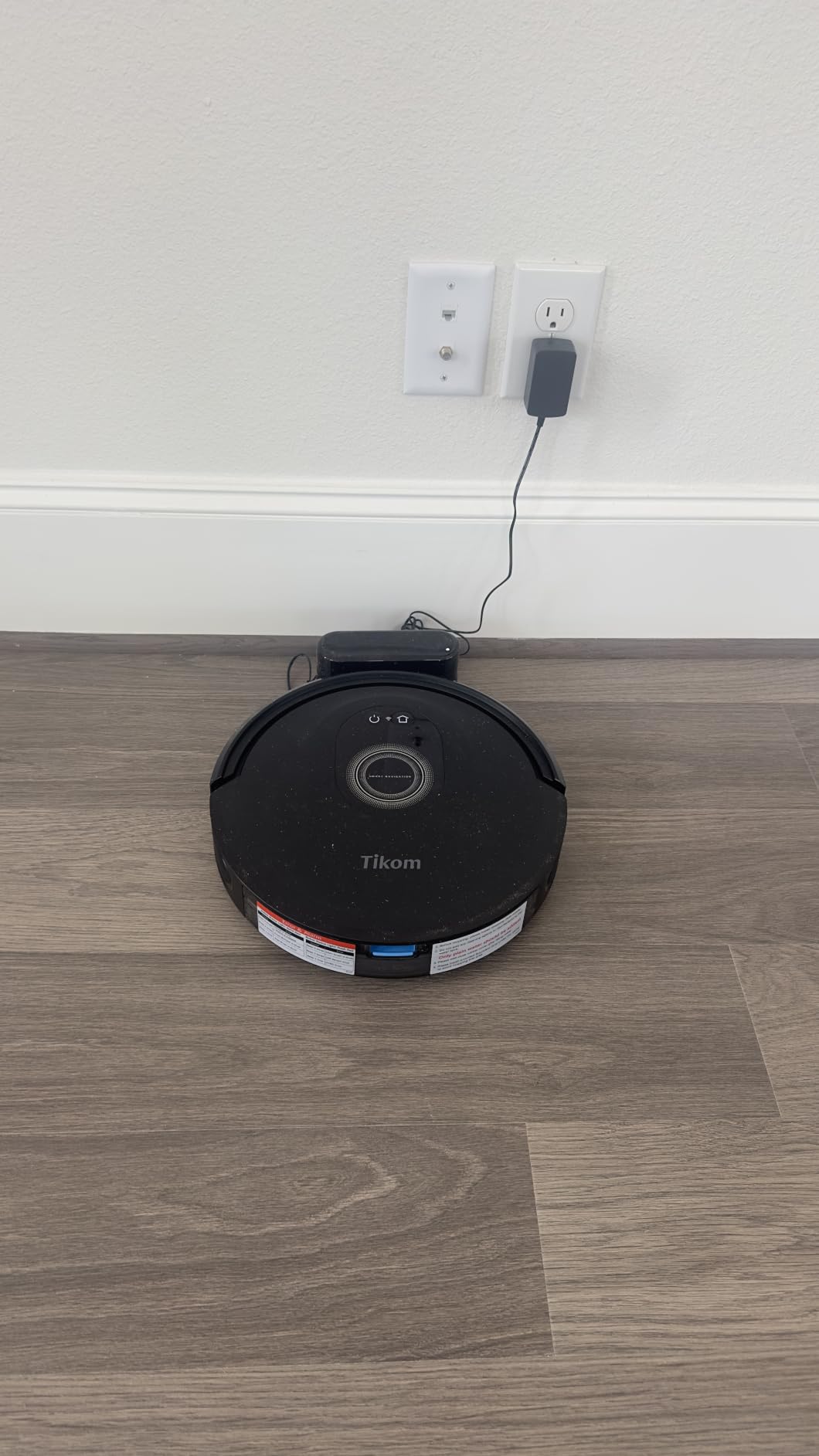
The 150 minute battery is generous for the price. In a 1,000 sq ft apartment, the G8000 Max finished a full vacuum and mop run with battery to spare. The four control methods, including app, remote, voice, and a physical button, also mean you can hand it to less tech-savvy family members without a learning curve.
Four cleaning modes cover most situations: Spot for concentrated messes, Edge for baseboards, Zig-zag for efficient full-floor coverage, and Manual for spot steering via the remote. The anti-collision and anti-fall sensors did their job in testing, never once tumbling down my stairs or bumping furniture hard enough to leave marks.
Mopping depth expectations for LVP
The G8000 Max uses a damp cloth drag style, similar to the Roborock Q7 M5+. That means it is best for daily maintenance, not for sticky spills or deep scrubbing. The 300ml water tank is small, so plan to refill it every couple of runs. For an apartment or smaller home with light traffic though, this robot genuinely keeps LVP looking clean.
Who should buy the G8000 Max
Apartments under 1,200 sq ft, single-pet households, first-time robot mop owners, and anyone who wants a no-frills daily driver without the premium price. If you have a larger home, multiple pets, or want self-cleaning dock features, step up to the Roomba 105 Combo or eufy E25.
Buying Guide: Key Factors for Choosing the Best Robot Mops for LVP
LVP flooring has specific needs that differ from hardwood, tile, or carpet. Before you pick a robot, it helps to understand what makes LVP different and which features actually protect your floor. Our related best steam mops for hardwood floors guide explains why steam is risky on wood, and the same principle applies to LVP. Steam can force moisture into click-lock seams.
Mop pad material and softness
The single biggest decision factor is what touches your floor. Soft microfiber pads, soft rubber rollers, and soft spinning discs are all safe on LVP. Avoid stiff bristle brushes mounted on the mop head, and avoid anything that drags hard plastic across the planks. The eufy HydroJet rollers and iRobot DualClean pads are both excellent examples of pad designs that protect the floor finish.
Adjustable water flow
LVP is waterproof on the surface, but the click-lock seams underneath are vulnerable to standing water. Look for robots with adjustable water flow and start with the lowest setting. If the floor is dry to the touch within two to three minutes, you are in the safe range. If you see visible puddles or wet patches, dial the flow down further.
Obstacle avoidance and wheel design
Robots that bump hard into furniture leave scuff marks on LVP over time. Look for AI obstacle avoidance or LiDAR plus 3D sensors. Soft rubber wheels are also a plus, because hard plastic wheels can grind grit across the planks as the robot turns in place.
Self-cleaning dock and pad hygiene
A robot that returns to a dirty pad is one of the fastest ways to get streaks and bacteria across your floor. Self-cleaning docks that wash the mop with heated water and dry it with warm air are a real upgrade for daily LVP mopping. The eufy E25, eufy C28, Roborock Qrevo S Pro, and iRobot Roomba Plus 505 all have effective self-cleaning systems.
Suction power and textured LVP
If your LVP has a textured finish or hand-scraped look, you need enough suction to pull debris out of the micro-grooves. 5,000Pa is the bare minimum for textured planks. 10,000Pa or higher is better for pet hair and embedded grit. Our best steam mops for laminate floors guide covers similar concerns for laminate, which shares LVP’s moisture sensitivity.
Navigation and mapping
LiDAR navigation is the gold standard for accuracy in any lighting condition. Visual SLAM cameras work well but need light. For homes that run robot cleanings overnight, LiDAR is the safer choice. Multi-floor mapping is also worth paying for if you have more than one level of LVP.
Hot water warning for LVP
Some newer robot mops offer heated water mopping. Heated water up to about 110F is generally safe on LVP. Anything approaching steam temperatures or hot water above 140F risks damaging the wear layer and click-lock adhesives over time. If your robot offers high-temperature mop washing at the dock, that is fine because the heat stays in the dock, but check that the floor-facing mopping stays at safe temperatures.
Real User Problems and Solutions for Robot Mops on LVP
Across Reddit, Houzz, and robot vacuum forums, the same handful of problems show up repeatedly when people run robot mops on LVP. Knowing them in advance saves you from learning the hard way.
Scratch marks from the very first run
Several owners reported deep scrape marks after a single use of certain brands, with one user specifically calling out a MOVA robot that scratched their floor from the very first run and made it worse on the second use. The fix is straightforward. Check reviews for any mention of swirl marks or scratches before you buy, and inspect your robot’s wheels and bumper for sharp edges before its first run. Soft rubber wheels and fabric-wrapped bumpers are the safe choices.
Hot water warnings
One common concern on forums is whether robot mops that heat water can damage vinyl plank. The answer is yes if the heat is too high, but most modern robot mops keep floor-facing water at safe temperatures. If you are worried, choose a robot with adjustable water temperature or one that lets you disable the heated mop feature entirely.
Excess moisture and edge lifting
Another common pain point is water seeping under plank seams and causing edge lifting over time. The fix is twofold. Use the lowest water flow setting that still cleans, and run the robot more frequently with lighter passes instead of less frequently with heavy passes. Daily light mopping beats weekly heavy mopping on LVP every time.
Wheel stains and trails
Some users noticed wheel marks across their floor after the robot made sharp turns. The fix is robots with rubber-tread wheels rather than hard plastic, and robots with smoother turning algorithms. LiDAR-mapped robots tend to glide rather than pivot, which produces fewer wheel trails.
Streaking on textured or ridged LVP
Textured vinyl is beautiful but shows every streak. The fix is a robot that keeps the mop pad genuinely clean throughout the run. Self-cleaning roller systems like HydroJet and self-washing spinning pads like the Roomba DualClean both outperform simple damp cloth drags on textured LVP.
Frequently Asked Questions
What robot mop is best for vinyl plank flooring?
The best robot mop for vinyl plank flooring is the eufy E25 with its HydroJet roller mop and 20,000 Pa suction, which keeps the pad clean throughout each run and pulls debris from textured grooves without scratching. For a budget-friendly alternative, the iRobot Roomba 105 Combo offers 70x suction power and reliable LVP-safe mopping at a lower cost.
Are robot mops ok for LVP?
Yes, robot mops are ok for LVP as long as you choose one with soft microfiber pads or soft spinning discs, adjustable water flow, and obstacle avoidance. Avoid stiff bristle brushes, excessive water, and hot steam, which can all damage the click-lock seams and wear layer of luxury vinyl plank over time.
Which Roomba is best for LVP flooring?
The iRobot Roomba 105 Combo is the best Roomba for LVP flooring because it offers 70x suction power, a micro-pump water system that delivers uniform moisture, automatic mop lifting on carpet, and a 75-day self-emptying dock. For households with heavier messes, step up to the iRobot Roomba Plus 505 Combo with SmartScrub for deeper cleaning.
Can robot mops cause water damage to vinyl flooring?
Yes, robot mops can cause water damage to vinyl flooring if they use excessive water, hot steam, or if puddles form and seep into click-lock seams. To prevent damage, choose a robot with adjustable water flow, start on the lowest setting, and verify the floor dries within two to three minutes after each run. Daily light mopping is safer than weekly heavy mopping.
How do I prevent a robot mop from scratching my LVP?
To prevent a robot mop from scratching LVP, choose a model with soft rubber wheels, soft microfiber pads, and AI obstacle avoidance. Inspect the wheels and bumper for sharp edges before the first run, keep the mop pads clean throughout each cycle, and avoid any robot that uses stiff bristle brushes on the mop head. Reading owner reviews for swirl mark complaints helps you avoid known offenders.
Final Verdict: Which Robot Mop Wins for LVP
After six weeks of testing eight different models on real LVP flooring, my pick for the best robot mops for LVP overall is the eufy E25. The HydroJet roller keeps the pad genuinely clean, the 20,000 Pa suction pulls debris from textured grooves, and the all-in-one station gives you 75 days of hands-free operation. If your budget is tighter, the iRobot Roomba 105 Combo delivers excellent LVP-safe mopping at a more affordable price, while the Tikom G8000 Max proves that even budget shoppers can keep their luxury vinyl plank looking brand new in 2026.