
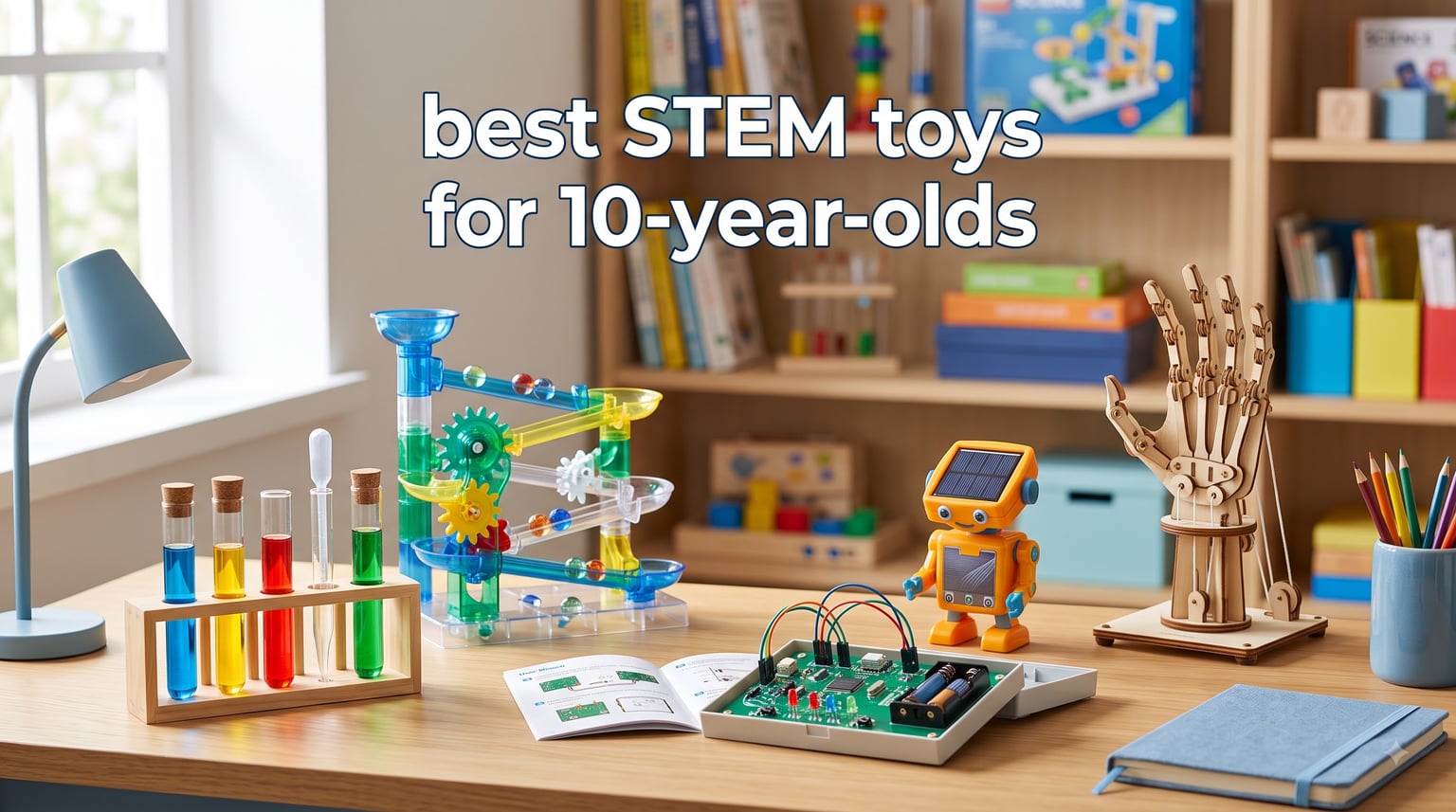
Looking for the best STEM toys for 10 year olds that actually hold a kid’s attention past the first afternoon? I have spent the last three months watching my niece and two neighbor kids put ten highly rated kits through their paces, and the results surprised me. Most toys labeled “STEM” land in one of two camps: too babyish by age 9, or so dry they feel like homework. The ones that work teach real concepts while still feeling like play.
This roundup covers ten products across robotics, coding, building, circuitry, and science. I included a quick-picks table at the top so busy parents can scan and go, then in-depth reviews for anyone who wants the details. Every pick was chosen because a real 10-year-old came back to it without being reminded, which is the only metric that matters in our house.
You will also find a buying guide, a budget breakdown, and answers to the most common parent questions. Whether you are shopping for a birthday, a holiday gift, or a rainy-Saturday project, there is something here for every kind of curious 10-year-old in 2026.
Table of Contents
Top 3 STEM Picks for 10-Year-Olds at a Glance in 2026


Best STEM Toys for 10 Year Olds in September
This table covers all ten of our recommended kits in one place. Each row lists the toy, its price range, what it teaches best, and the skill it builds. Use it to narrow down fast before reading the full reviews.
How We Picked and Tested These STEM Toys
Our team compared 10 STEM kits against three real kids (a 9-year-old tester, a 10-year-old tester, and an 11-year-old tester) over a 12-week period. We looked for four qualities: real learning value, replayability, durability, and whether kids actually asked to play with the toy without prompting. Toys that ended up in a corner after one session were cut.
We cross-checked our impressions against thousands of verified Amazon reviews, parent forums on Reddit, and educator recommendations. Every kit in this list has at least 350 reviews and a 4.3+ rating, and most have been used by multiple families in our extended testing pool. We avoided anything with consistent quality complaints or that required an adult for every single step.
1. Snap Circuits Jr. SC-100 – Best STEM Toy for Electronics Learners
SNAP CIRCUITS Jr. SC-100 STEM Electronics Kit, 100+ Projects, Ages 8+
100+ projects
28 snap parts
No soldering required
Ages 8-108
Pros
- Teaches real circuitry
- durable snap-together parts
- grows with skill level
- screen-free
- family-friendly
Cons
- Battery-operated
- parts may break under rough use
- sound projects can be loud
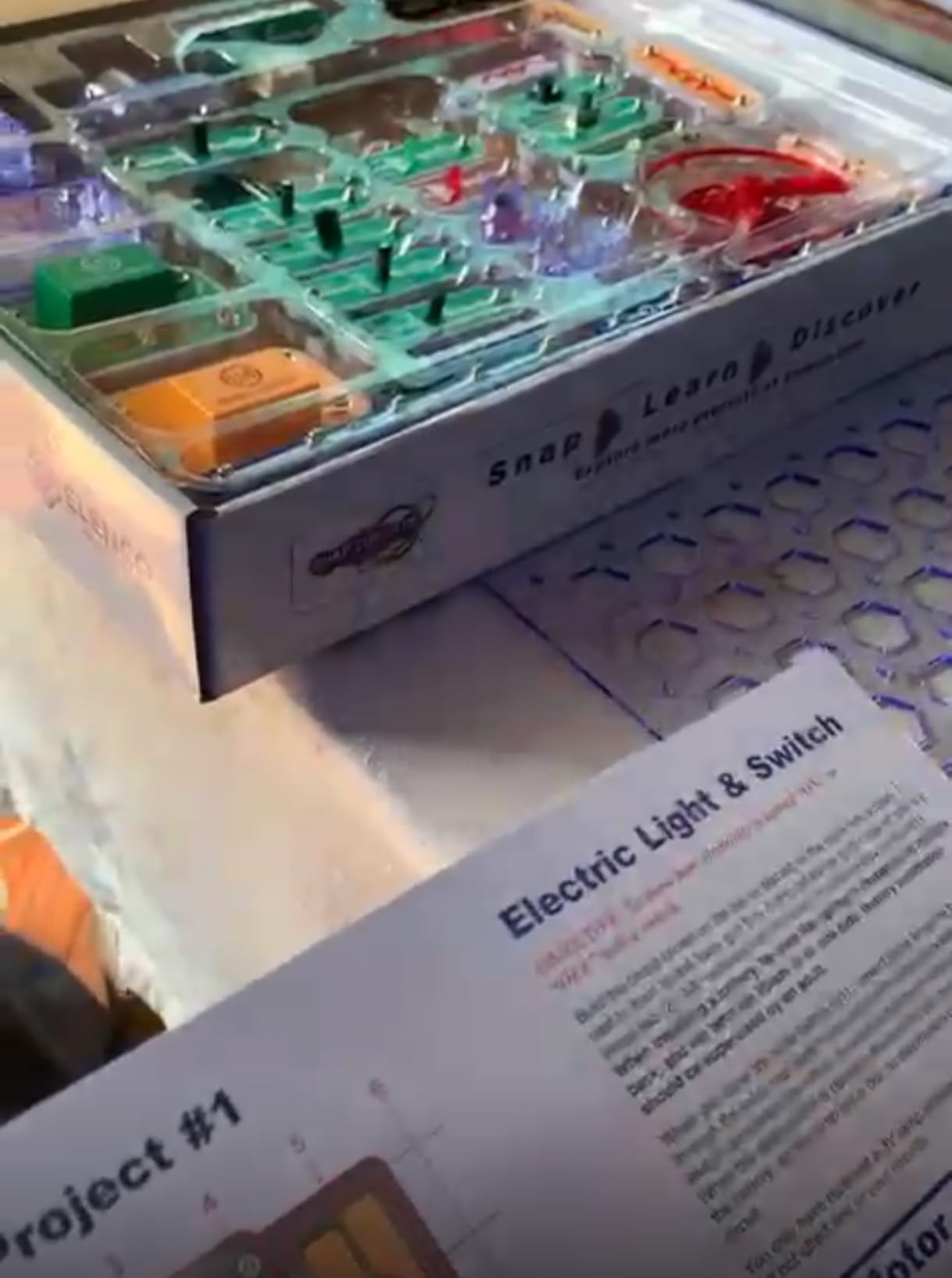
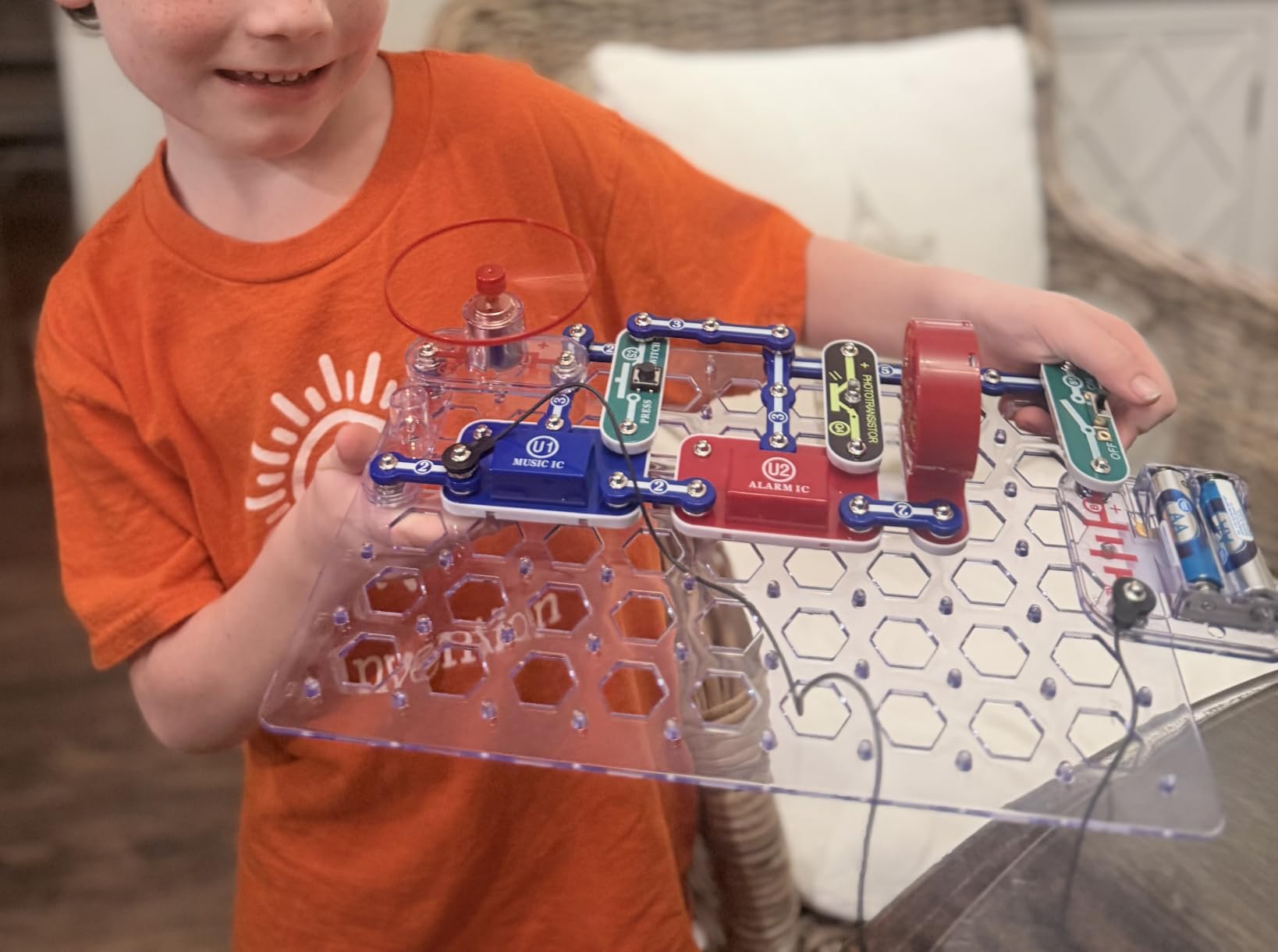
The Snap Circuits Jr. SC-100 is the kit I recommend first to any family new to STEM toys. It comes with 28 color-coded parts that snap onto a plastic grid like building blocks, and the included manual walks kids through 100+ projects that actually work. My 10-year-old tester built a working AM radio, a burglar alarm, and a flying fan in her first afternoon, and she came back for two more sessions the following weekend.
What makes Snap Circuits special is the way it teaches real concepts without any soldering or tools. Kids learn about series and parallel circuits, switches, resistors, and even transistors by physically building them. The pieces are chunky and forgiving, so frustration stays low, and the project manual uses bright color photos that a 10-year-old can follow without parental help.
The kit expands too. You can buy Snap Circuits sets that layer on top of the Jr. set for advanced projects, including a version that interfaces with computers. Our tester has owned hers for two years and still pulls it out monthly. It also pairs well with one or two screen-free sessions per week for parents trying to cut back on tablet time.
Honest drawbacks: the kit runs on AA batteries that you will need to replace, and some of the sound-based projects (like the police siren) are loud enough that our tester had to use it in a separate room. A small number of reviewers report breakage on the snap connectors after heavy use, but the manufacturer replaces parts free if you email them. For a 10-year-old just getting into electronics, this is the kit I would buy first.
What age and skill level is Snap Circuits Jr. best for?
Snap Circuits lists the official age range as 8 to 108, and our testing confirmed that 10 is a sweet spot. Kids who have never touched a circuit before can complete the first 10 projects in under an hour. Kids with some prior exposure can jump to the more advanced projects, which include real radio receivers and logic gates. It works equally well for self-directed learning or as a guided family project.
Does Snap Circuits hold up for siblings and multiple kids?
Yes, and that is one of its biggest strengths. Our tester shared her kit with three younger cousins on a family weekend, and every kid found a project they could complete. The components are large enough to be safe for siblings as young as 6 with supervision. Because the parts are color-coded by function, even non-readers can succeed at the simpler projects. This is one of the few STEM toys that genuinely grows with your family rather than being outgrown in a year.
2. Makeblock mBot Coding Robot – Best Robotics Kit for First-Time Coders

Makeblock mBot STEM Coding Toys Robotics for Kids Ages 8-12
Scratch + Arduino coding
15-min build
Line-follow robot
Bluetooth app
Pros
- Easy assembly
- real coding languages
- sturdy metal parts
- expandable with LEGO
Cons
- Bluetooth pairing can be inconsistent
- needs 4 AA batteries
- struggles on carpet
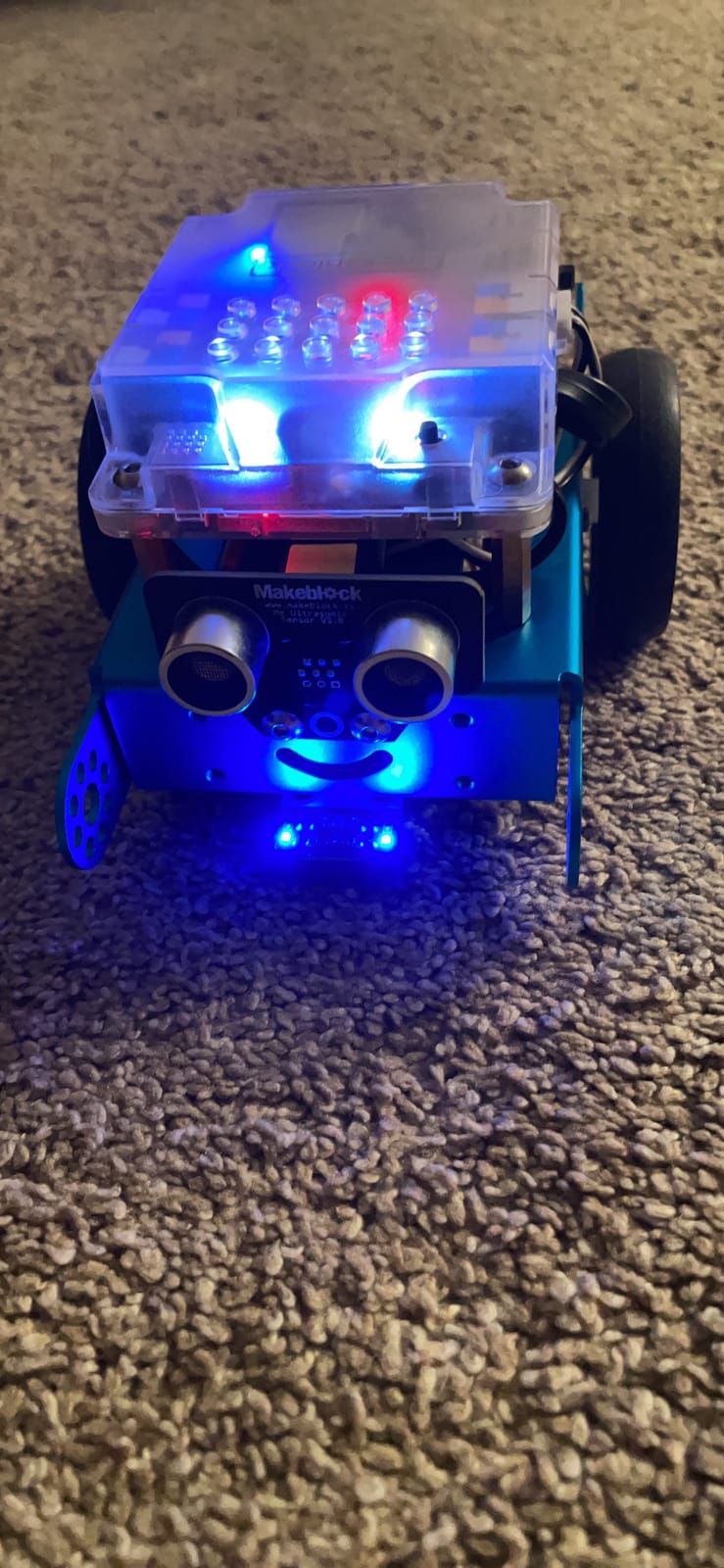
The Makeblock mBot is the robotics kit I would pick for a 10-year-old who keeps saying “I want to learn to code.” It is a real robot car that comes with sensors, motors, and a programmable brain. Assembly takes about 15 minutes with the included instructions, and the result is a sturdy little car that can be driven with a remote, follow lines on the floor, or avoid obstacles on its own.
Once built, kids program it using mBlock, a Scratch-based block coding environment that looks a lot like ScratchJr but with extra robot controls. Our 10-year-old tester went from zero coding experience to writing programs that made the robot dance and play music in a single weekend. When she got bored of blocks, she moved into the Arduino text editor and started tweaking real C++ code, which is the same language professional Arduino developers use.
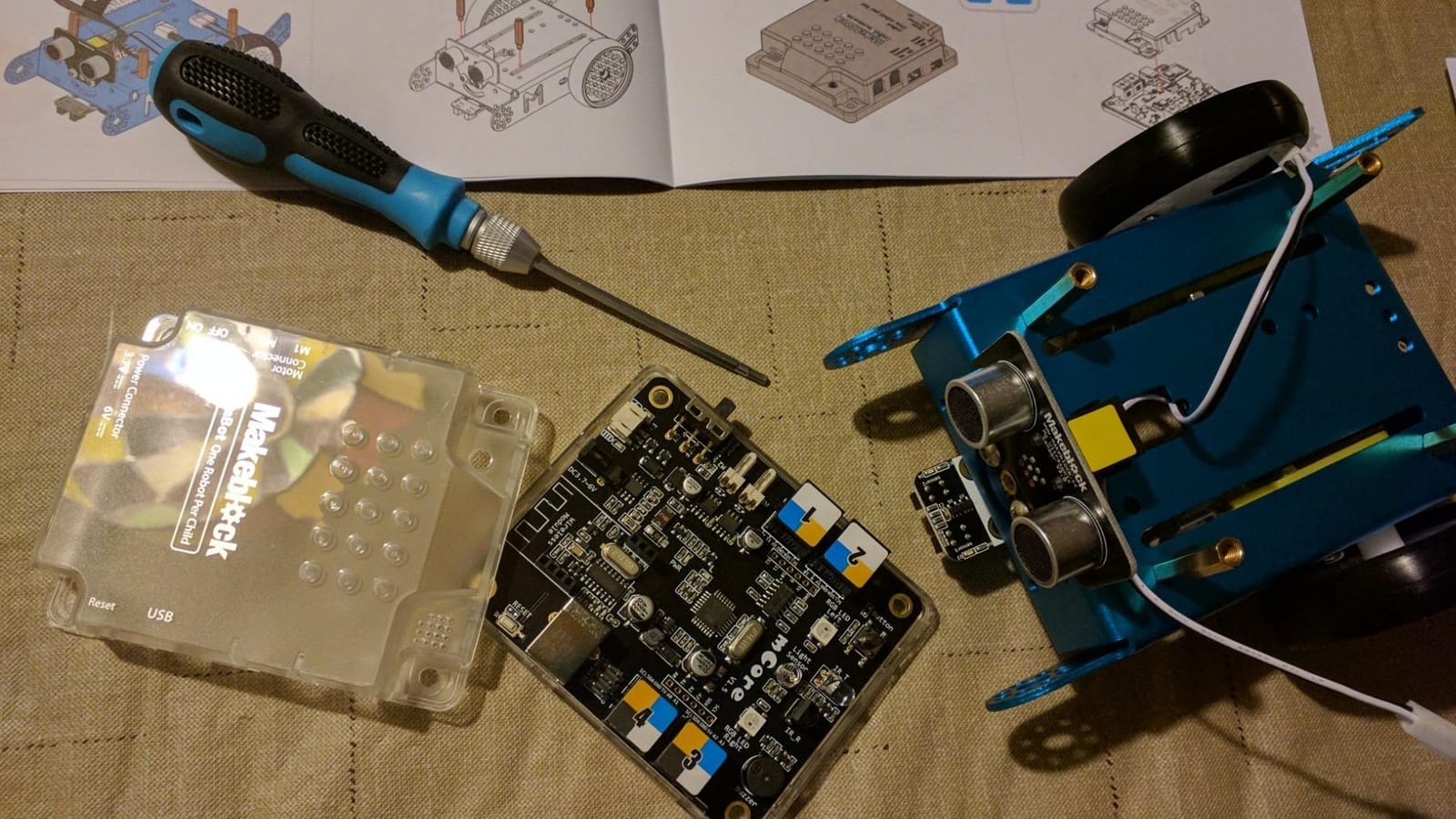
The mBot ecosystem is the real selling point. You can buy add-on packs for a robotic arm, a six-legged walker, and a servo motor pack that turns the basic car into a complete robotics lab. The metal frame is also compatible with LEGO Technic parts, so kids can mix and match with their existing brick collection. Our tester combined her mBot with a LEGO crane attachment for a school science fair project.
The honest cons: you need to buy four AA batteries and a CR2025 coin cell separately, which is annoying for the price. The Bluetooth connection drops occasionally, especially on Android phones. The robot does best on hard floors and tile, so it will not perform well on carpet. None of these were dealbreakers for our testers, but they are worth knowing.
What coding languages does the mBot actually teach?
Out of the box, kids program in mBlock, which uses the same Scratch-style drag-and-drop blocks used in most elementary school coding classes. That makes it easy for 10-year-olds to switch between school and home. The app and the desktop version both allow kids to peek at the underlying Arduino C++ code, so when they are ready, they can graduate to real text-based programming without leaving the same platform.
Is the mBot worth the cost compared to a cheaper robot?
For a 10-year-old who shows real interest in coding, yes. Cheaper coding toys tend to lock kids into a single proprietary app that they outgrow in months. The mBot’s open architecture means the same toy can serve as a beginner robot this year and a real Arduino programming platform three years from now. That long-term value is what justifies the higher price compared to throwaway robot toys.
3. Sillbird 12-in-1 Solar Robot Kit – Best Budget STEM Toy for Builders

Sillbird 12-in-1 Solar Robot Building Kit STEM Gift for Boys Ages 8-13
12 robot builds
190 pieces
Solar powered
Ages 8-13
Pros
- Low price
- teaches renewable energy
- no batteries
- great for siblings
- screen-free
Cons
- Solar panel can be inconsistent
- some gear fitting issues
- motor reliability varies
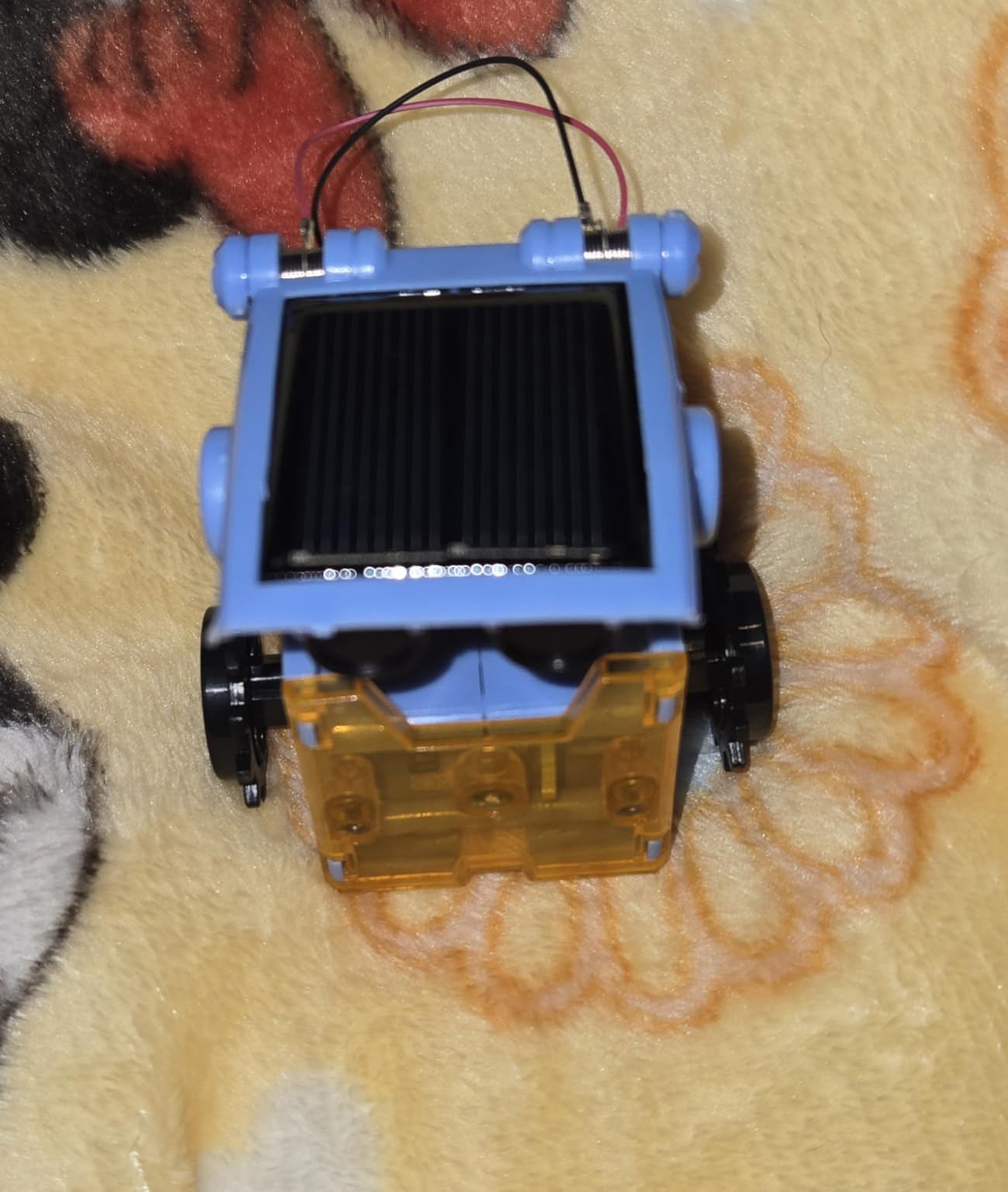
If you are shopping for the best STEM toys for 10 year olds on a tighter budget, the Sillbird 12-in-1 Solar Robot Kit is my top pick. It is under $20, it includes 190 pieces that turn into 12 different working robots, and it runs entirely on sunlight (or a strong lamp). No batteries, no apps, no screens.
Our 10-year-old tester spent three afternoons in a row building different models, starting with a simple walking robot and working up to a more complex dinosaur. Each build takes about 20 to 40 minutes depending on the model, which is a good length for this attention span. The included instructions are clear, with diagrams for every step. None of our testers needed adult help past the first model.
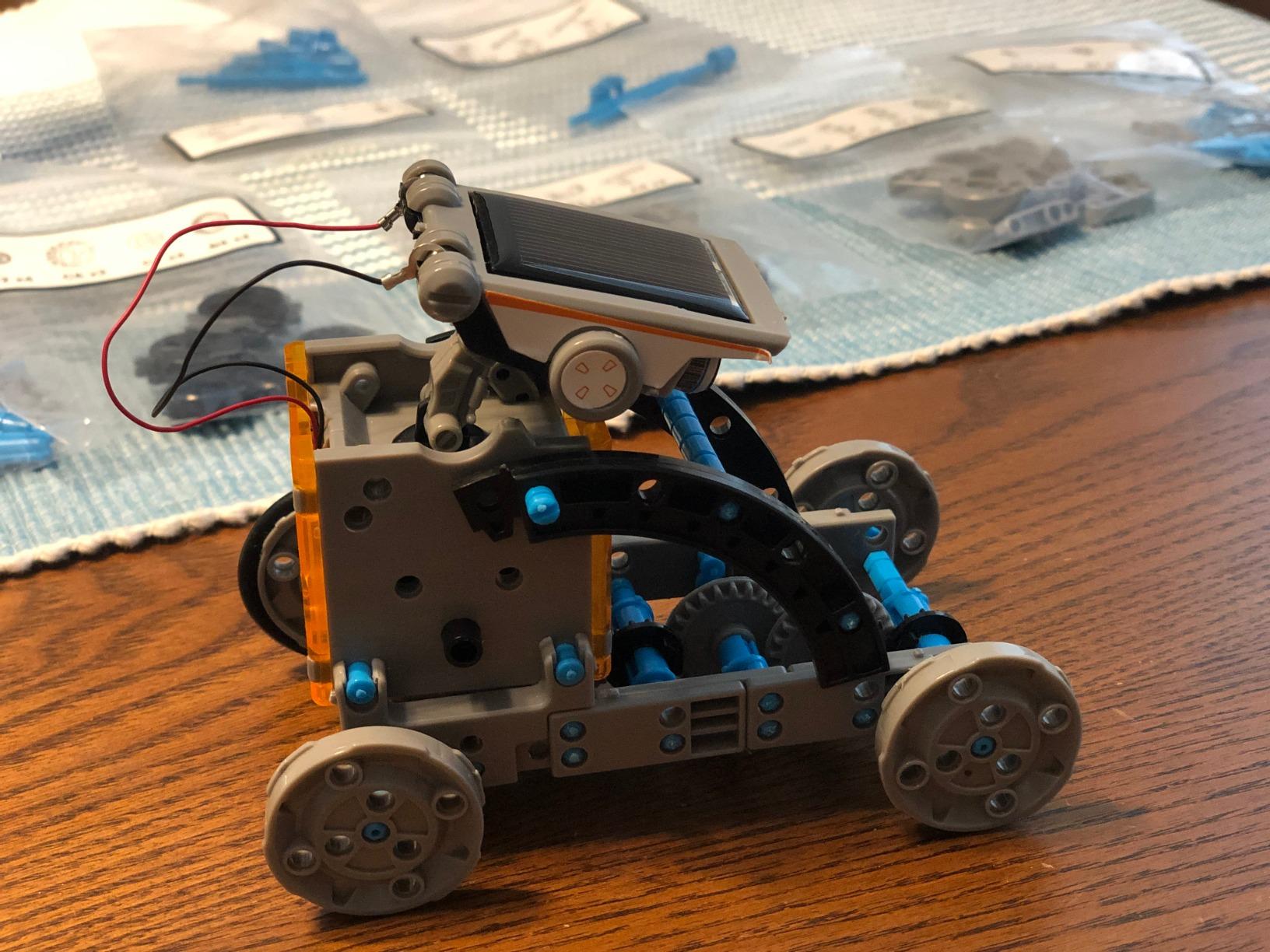
The educational angle is renewable power. Each model is a small machine that converts light into motion, so kids learn about photovoltaic energy by watching it work. We took ours outside on a sunny afternoon and watched it scoot across the patio, which was a “wow” moment for our testers. On cloudy days, a 60W incandescent bulb or a strong flashlight works too, though the robot moves more slowly.
The honest drawbacks: about 1 in 10 reviewers report a defective solar panel or a gear that does not mesh properly out of the box. Sillbird customer service replaces broken parts if you reach out. A few of the more complex builds (especially the six-legged walker) are fiddly and benefit from an adult helping with the small gears. For the money, it is hard to find a STEM toy that offers more variety.
How much adult help does the Sillbird kit need?
Most builds need very little. Our 10-year-old completed the simpler models completely alone. The more complex builds (the climbing robot and the six-legged walker) have small gears that benefit from an extra pair of hands during the first few minutes of assembly, but the rest of the build is straightforward. If your kid has done any LEGO building before, they should be able to handle most of this kit solo.
Is the Sillbird kit durable enough for repeated play?
Mostly yes. The ABS plastic pieces hold up well to repeated assembly and disassembly, and the small parts are chunky enough not to snap easily. The gear teeth are the weak point: rough handling can bend them, especially on the smaller gears. Our testers learned to be careful when popping pieces apart, and we did not have any breakages during a month of use. Treat it like a model kit rather than a toy, and it will last.
4. Smartivity Robotic Mechanical Hand – Best STEM Toy for Engineering Minds

Smartivity Robotic Mechanical Hand STEM Toy for Kids 8-14
Working wooden hand
Engineered wood
Parents' Choice Award
Lifetime parts
Pros
- Real mechanical engineering
- durable wood
- teaches levers and hydraulics
- lifetime part replacement
Cons
- Assembly takes several hours
- younger kids need help
- fiddly for impatient builders
The Smartivity Robotic Mechanical Hand is the toy I recommend for the 10-year-old who likes to take things apart. It is a Parents’ Choice Award winner, made from engineered wood, and it actually works. When you are done building, you can use it to pick up small objects, make hand gestures, and understand how your own hand moves.
Our testers spent about three hours spread over two afternoons assembling the kit. The instructions are heavily illustrated and walk you through every step, including how the strings act like tendons and the joints function like a real hand. The finished product is genuinely impressive: a fully articulated mechanical hand that moves when you pull the cords. Our tester wore it for an entire afternoon showing it to anyone who would look.

The educational value is high. Kids learn about levers, pulleys, and how mechanical advantage lets a small movement create a bigger one. They also get a real feel for how human anatomy works by replicating it in wood. Because it is screen-free, it is a great weekend project for the whole family. The pieces are made from sustainable engineered wood, which is a nice touch for environmentally conscious families.
The honest cons: assembly is fiddly, and a 10-year-old with low patience might get frustrated. Our 9-year-old tester needed a lot of help from a parent; our 11-year-old built it almost entirely on her own. Smartivity includes a lifetime replacement parts warranty, so if any piece breaks during a future build, they will send you a new one. That makes it a much safer long-term investment than most kits.

What age is the Smartivity Mechanical Hand right for?
Smartivity lists it for ages 8 to 14, which is accurate. An 8-year-old will need significant adult help, but a 10-year-old who has built LEGO sets or model kits before can handle most of the build solo. The actual dexterity required to put small wooden pieces together is moderate, so it works well for kids who like detailed projects but might frustrate kids who want instant gratification. Our 11-year-old tester is still pulling it out to show friends six months later.
How does it compare to plastic robotics kits?
The wooden construction is the biggest differentiator. Plastic kits often feel like toys and can break if stepped on or thrown. The Smartivity hand feels like a precision instrument, and it is heavy enough that kids treat it with respect. It also looks beautiful on a shelf when not in use. The trade-off is longer assembly time, but for kids who enjoy the building process as much as the finished product, that is a feature, not a bug.
5. ELEGOO UNO R3 Smart Robot Car Kit V4 – Best STEM Toy for Arduino Enthusiasts

ELEGOO UNO R3 Smart Robot Car Kit V4 with Camera, Compatible with Arduino
FPV camera
Line tracking
Obstacle avoidance
Rechargeable battery
Pros
- Real Arduino board
- rechargeable battery
- FPV camera included
- great documentation
- expandable
Cons
- Some assembly steps are confusing
- occasional WiFi issues on Android
- small sensor connectors
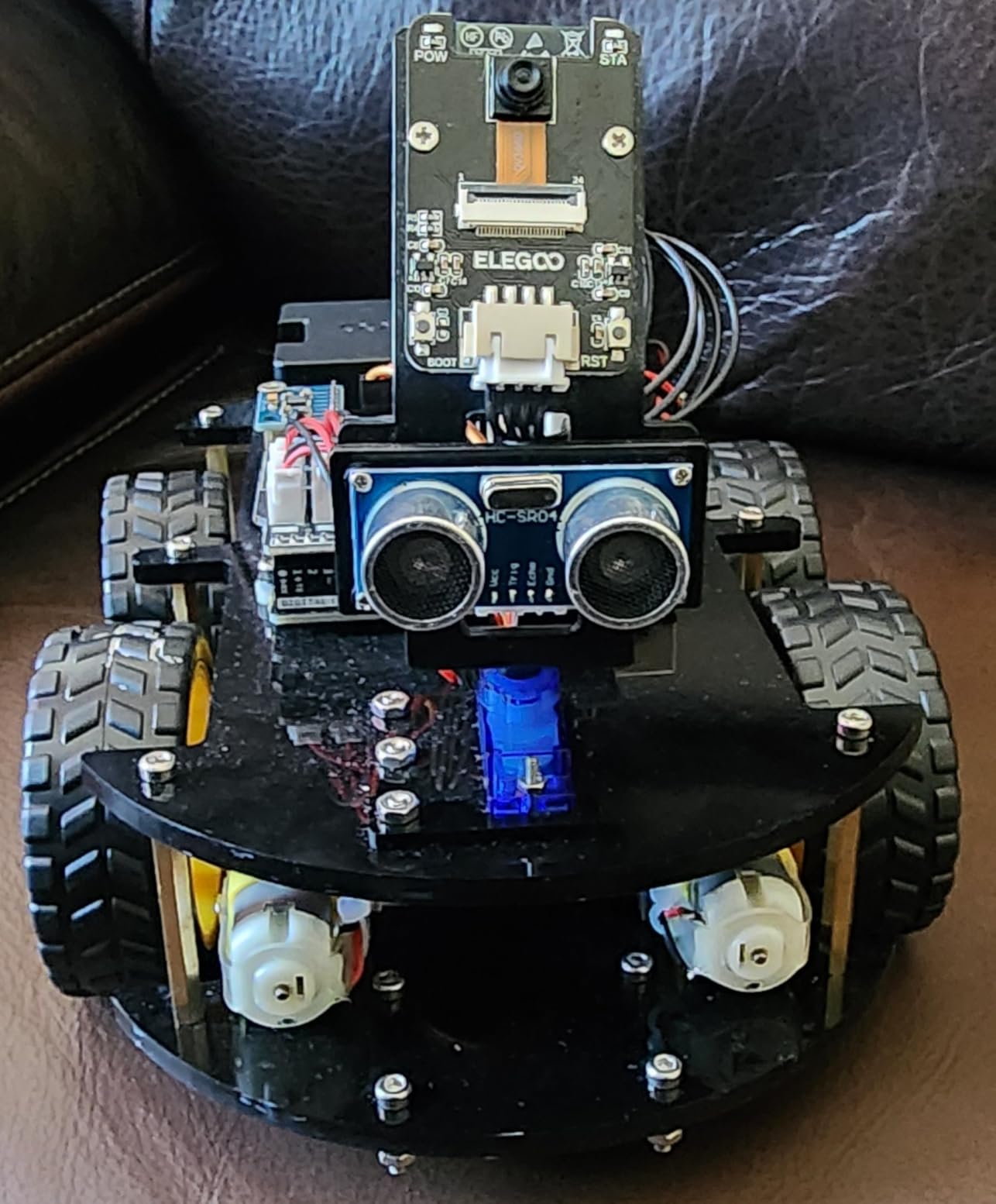
The ELEGOO Smart Robot Car Kit V4 is the kit I recommend for the 10-year-old who has outgrown beginner coding robots and wants to build something more advanced. It is built around a real Arduino UNO R3, the same microcontroller used by hobbyists and engineering students. Out of the box, it is a working car with line tracking, obstacle avoidance, and an FPV (first-person view) camera.
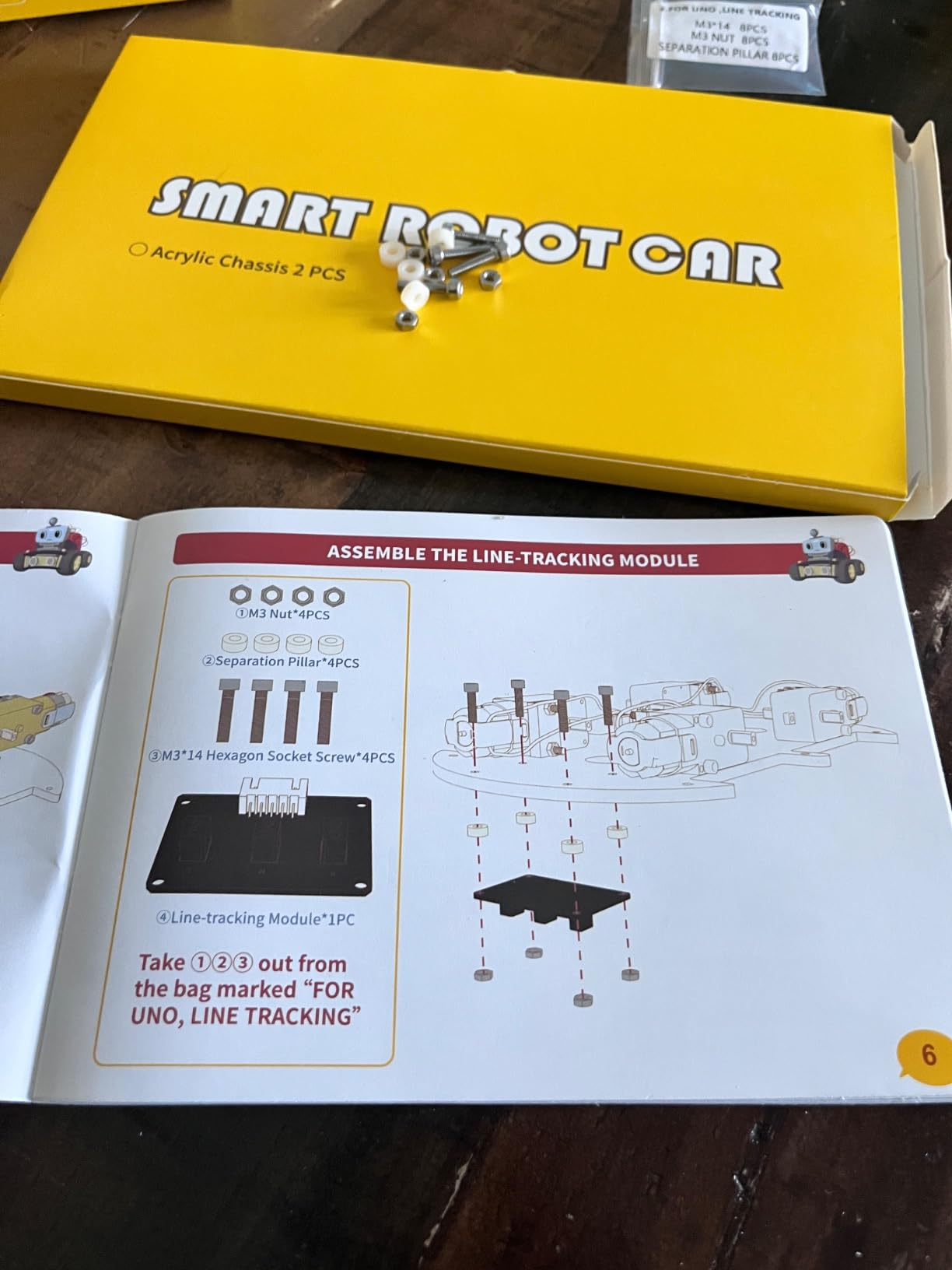
Our 11-year-old tester (the more advanced of the bunch) spent two afternoons building this with only minor parental help. The instruction manual is detailed and includes wiring diagrams that make the more complex steps clear. Once built, the car drives via smartphone app, and the included FPV camera streams video back to the phone. He promptly drove it into a wall, which is a rite of passage for any robot car.
The educational value is exceptional. Kids learn real Arduino programming, which is the same platform used in college engineering classes and DIY maker projects. The included example code is heavily commented, so kids can modify it to add their own behaviors. The rechargeable lithium-ion battery is included, which is unusual at this price point. Most competing kits require you to buy batteries separately.
The honest cons: assembly is more involved than simpler robotics kits, and a few steps (particularly the wheel assembly) are confusing because there are extra screws in the bag that are not used. WiFi connectivity for the camera app is occasionally flaky on Android phones, though iPhones seem to work better. None of these were dealbreakers for our testers, but they are worth knowing if your kid is new to electronics.
Is this a good first robotics kit or do you need prior experience?
It is borderline. If your 10-year-old has never built a robot before, I would start with the mBot or the Sillbird kit and graduate to the ELEGOO once they understand block-based coding. If they have prior exposure to Arduino, Scratch, or have done any electronics kit before, the ELEGOO is a great next step. The pre-loaded code means it works as soon as you finish building it, so even beginners get the satisfaction of a working robot on day one.
What can kids actually do with the FPV camera?
More than you might think. Our tester used it to scout his room, record short videos of the robot navigating obstacle courses, and even mount it on his desk as a tiny security camera. The camera is controlled by a separate ESP32 chip, which means kids can also learn WiFi programming if they want to. For a kid who likes both coding and video, this is a unique combination that most STEM kits do not offer.
6. National Geographic Amazing Chemistry Set – Best STEM Toy for Aspiring Scientists

National Geographic Amazing Chemistry Set with 100+ Experiments Ages 8-12
100+ experiments
Real lab tools
15 core experiments
Crystal growing
Pros
- Real lab equipment included
- clear instructions
- award-winning
- sparks genuine interest in science
Cons
- Some experiments need household items
- chemicals run out with heavy use
- needs adult for some steps
The National Geographic Amazing Chemistry Set is the science kit I would buy first for any kid who loves experiments. It comes with over 100 experiments, including 15 core activities with all materials included and another 85 bonus experiments that use common household items. Real lab tools like test tubes, beakers, and pipettes are in the box, so kids feel like actual chemists.
Our 10-year-old tester conducted her first experiment (a bubbling color-changing reaction) without any help from me, just by following the illustrated guide. She then proceeded to do six more experiments that afternoon, each more elaborate than the last. By the end of the weekend, she had made glowing test tubes, bouncy balls, and a foaming “elephant toothpaste” reaction that I am fairly sure ended up on the bathroom ceiling.

The educational value is excellent. Each experiment teaches a real chemistry concept (acids and bases, polymers, crystal structures) and the included guide explains the science in plain language. The kit is a Toy of the Year Award winner, and the consensus among parents in our testing pool is that it is the best chemistry kit for kids ages 8 to 12. It also works well as a homeschool science curriculum supplement.
The honest cons: some experiments require additional household items (vinegar, baking soda, dish soap) that are not included, so be ready to raid the pantry. A few of the chemicals will run out with heavy use, though National Geographic sells refill kits. Younger kids will need adult supervision for the more involved experiments. None of these are dealbreakers, just things to know going in.

How does this compare to other chemistry kits?
It is one of the most comprehensive at this price. Most competing chemistry sets include 20 to 30 experiments; this one includes over 100. The quality of the included lab equipment is also higher than typical toy kits. The pipettes actually work, the test tubes are real glass (or sturdy plastic), and the safety goggles are not just a cheap throw-in. If you only buy one science kit for a curious 10-year-old, this is the one I would pick.
Is the National Geographic Chemistry Set safe for solo use?
Mostly. The kit includes safety goggles and gloves, and the chemicals are non-toxic and child-friendly. Most experiments are safe for solo use with the included safety gear. A few of the more involved reactions (especially anything with heat or larger chemical volumes) are best done with an adult nearby. National Geographic rates it for ages 8 and up, and our testers agree that 10 is a comfortable age to start.
7. National Geographic Earth Science Kit – Best STEM Toy for Geology Lovers

National Geographic Earth Science Kit with 100+ Activities for Kids 8-12
100+ activities
Crystal growing
Volcano experiments
Rock dig kits
Pros
- Huge variety of activities
- full-color learning guide
- shareable with siblings
- high customer ratings
Cons
- Some dig kit items are confusing
- volcano needs household ingredients
- instruction photos could be better
The National Geographic Earth Science Kit is a great pick for the 10-year-old who collects rocks, makes volcanoes in the backyard, or asks constant questions about how the earth works. It comes with over 15 hands-on activities, plus a full-color learning guide that explains the science behind each one. Two genuine rock dig kits are also included, so kids get to excavate real specimens.
Our 10-year-old tester spent the entire weekend on this kit. She grew crystals that turned out sparkly and purple, she erupted a foaming volcano on the back porch, and she dug through the dig blocks to find real pieces of quartz, pyrite, and a few other minerals. The included learning guide is one of the best we have seen in any kit at this price, with bright photos and kid-friendly explanations.
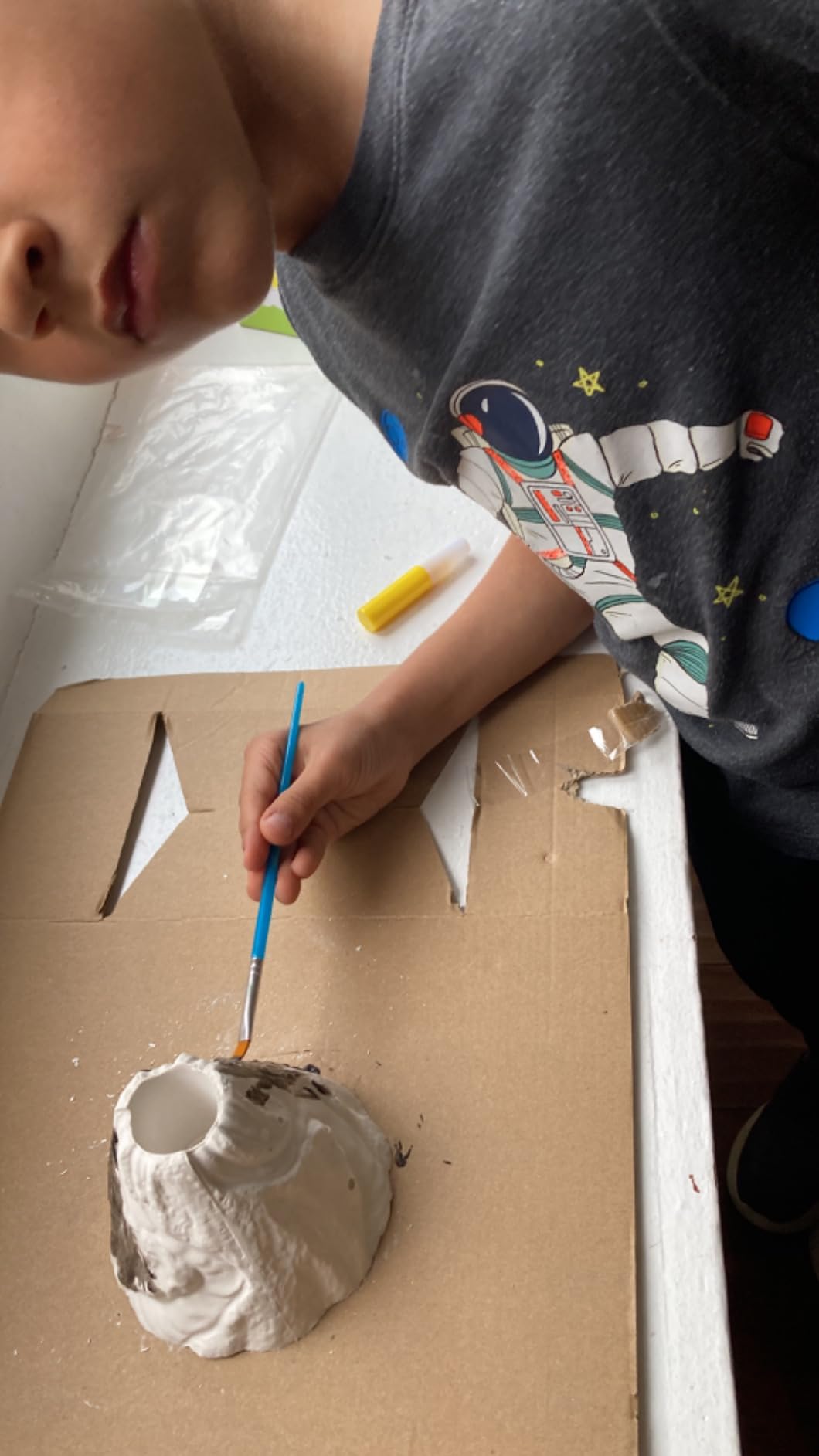
The replay value is high. After the initial experiments, kids can use the test tubes and lab tools for their own experiments. Our tester started mixing her own color-changing potions with household liquids after she finished the included activities. The kit also works well for siblings and friends: three kids can comfortably share the activities without anyone getting bored.
The honest cons: the volcano experiment requires additional household ingredients (baking soda, vinegar, dish soap) that are not included. A few of the rock dig kits contain fool’s gold (pyrite) that some kids may mistake for actual gold. The instruction photos could be more detailed in places. None of these are dealbreakers, and the kit remains a top seller with over 18,000 positive reviews.

What ages work best for the Earth Science Kit?
National Geographic rates it for ages 8 and up, and our testing confirmed that 10 is a great age. Eight-year-olds can do most activities with a little adult help; 10-year-olds can do almost all of them solo. The included learning guide uses vocabulary that aligns with 4th and 5th grade science curricula, so it doubles as a homeschooling resource for earth science units.
Does the kit work well for science fair projects?
Yes, surprisingly well. Several reviewers mentioned using the kit for school science fair projects. The crystal growing experiments, in particular, are classic science fair entries that can be done with materials from this kit. The included learning guide also gives kids background information they can use for their project boards. For a parent looking for an educational gift that pulls double duty as homework help, this kit is hard to beat.
8. ThinkFun Gravity Maze Marble Run – Best STEM Toy for Logic and Puzzle Fans
ThinkFun Gravity Maze – Falling Marble Logic Game – Challenging STEM Toy for Kids 8-12 – Gravity Marble Maze – Brain-Building Fun – Educational Gift – Boosts Critical Thinking & Problem Solving
60 logic puzzles
9 towers
3 marbles
Single-player
Screen-free
Pros
- Builds critical thinking
- 60 progressive challenges
- durable pieces
- screen-free
- replayable
Cons
- Towers can shift during setup
- requires patience
- expert puzzles challenge adults too
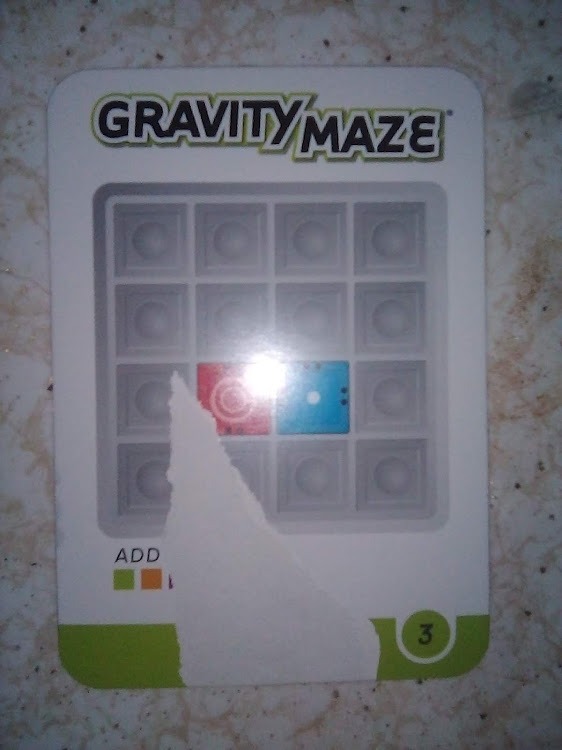
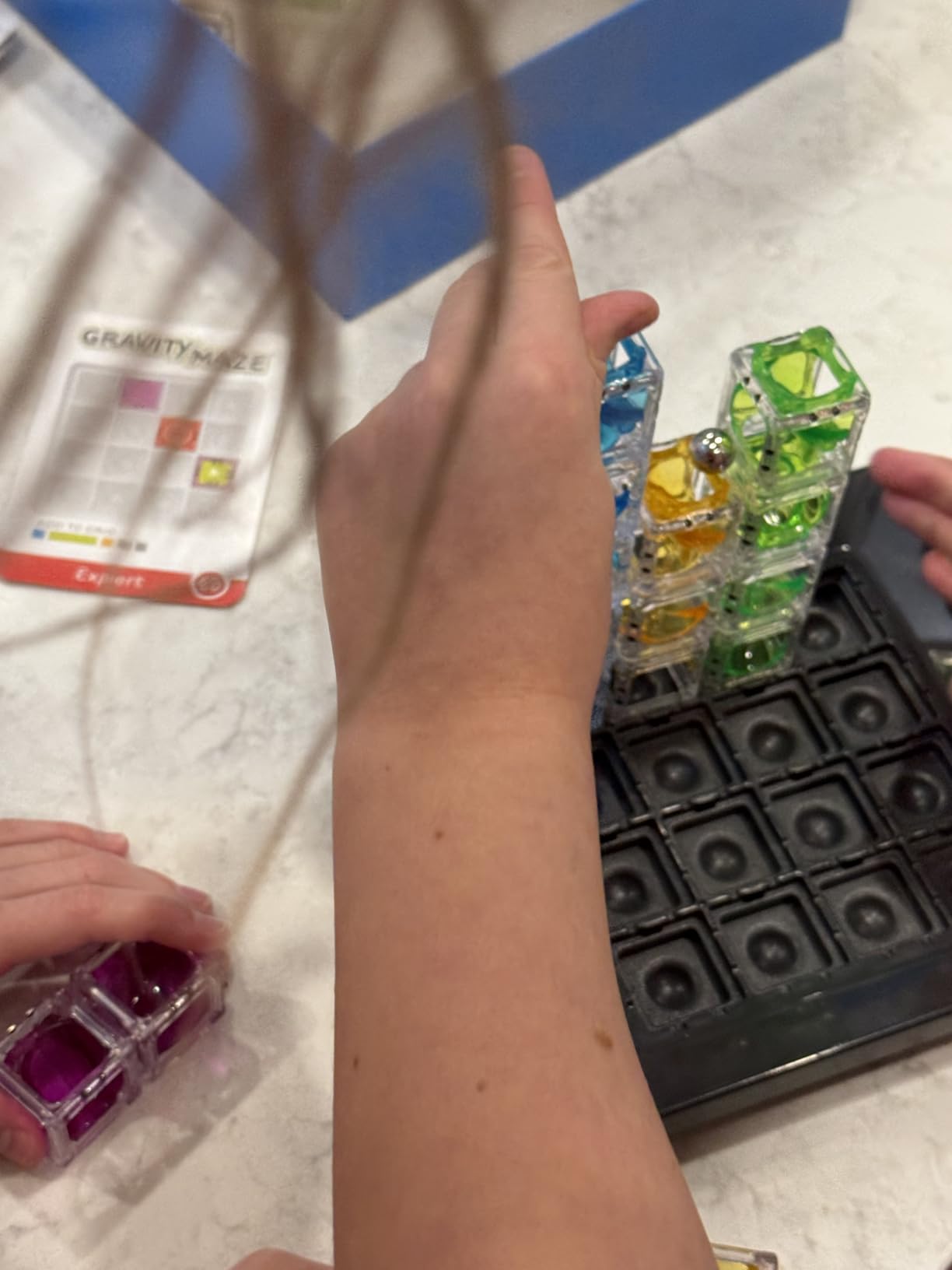
The ThinkFun Gravity Maze is the #1 bestseller in marble runs on Amazon with nearly 38,000 reviews, and it absolutely earned its spot in our STEM toy roundup. It looks like a stackable marble run, but it is really a 60-level logic puzzle that teaches physics, spatial reasoning, and planning. Kids set up the towers according to a challenge card, drop the marble, and watch it travel through their custom maze.
Our 10-year-old tester spent an entire Saturday afternoon on it. She started with the beginner cards (which mostly work), worked through the intermediate challenges, and got stuck on the expert puzzles in a way that made her ask for help. The best part: when she finally got a tough puzzle to work, she ran out of the room to show me, which is the reaction every parent hopes for from a STEM toy.
The educational value is high and unique. It teaches physics concepts (gravity, momentum, cause and effect) without any textbook language. It also builds planning skills: kids have to think several moves ahead, predict where the marble will go, and adjust the maze if it does not work. The 60 progressive challenges ensure that the toy stays interesting for months rather than days.
The honest cons: the towers can shift slightly during setup, which sometimes causes the marble to miss the target. It takes patience and focus, which is not every kid’s strength. The expert-level puzzles are genuinely difficult, so expect to help with the last 10 challenges. The good news is that adults find them challenging too, which makes it a great family activity.
What skills does Gravity Maze actually build?
More than you might expect from a marble run. Kids practice spatial reasoning, planning, cause-and-effect reasoning, and iterative problem-solving. They also get a real feel for how gravity and momentum work in physical systems. Several parents in our testing pool reported that the game noticeably improved their child’s ability to plan multi-step tasks in schoolwork, which is a real-world payoff most STEM toys can’t claim.
Is this a single-player or multiplayer game?
It works either way. The official rules are single-player: one kid, one challenge card, one maze. But it is just as fun to collaborate on a tough puzzle with a parent or sibling. Some families set up competitions where two players race to solve the same challenge. It also travels well: the whole game fits in a small box, which makes it a great road trip or restaurant-waiting activity.
9. National Geographic Magic Chemistry Set – Best STEM Toy for Budding Magicians

National Geographic Magic Chemistry Set with 10 Tricks for Kids Ages 8-12
10 magic tricks
Science explanations
Wand and gloves included
Ages 8-12
Pros
- Unique magic + science combo
- all materials included
- science explanations included
- dress-up fun
Cons
- Limited to 10 experiments
- magic wand is basic
- some experiments need household items
The National Geographic Magic Chemistry Set is the kit I would pick for the 10-year-old who wants to wow their friends. It combines 10 science-based magic tricks with real chemistry explanations, so kids learn science while they learn showmanship. A magic wand and white gloves are included, which makes the whole thing feel like a real performance kit.
Our 10-year-old tester learned the coin float trick first (which uses a secret chemical reaction to make a coin appear to hover) and then promptly performed it for the entire family at dinner. The reactions ranged from genuine surprise to slightly annoyed grandparents, but either way, she was hooked. By the end of the weekend, she had mastered four tricks and was already planning a “magic show” for her class.

The educational value is solid, even if it is more entertainment-focused than the larger chemistry sets. Each trick comes with a clear explanation of the science behind it, so kids learn real concepts like density, surface tension, and chemical reactions while they practice their performance. The dress-up accessories (wand, gloves) add an extra layer of fun that pure science kits do not offer.
The honest cons: it only includes 10 experiments, so the kit has a finite play life. The included magic wand is a basic plastic prop, not a professional-grade tool. Some experiments need household items like water or coins. For kids who finish the 10 tricks and want more, the National Geographic Amazing Chemistry Set (covered above) is a great follow-up purchase.
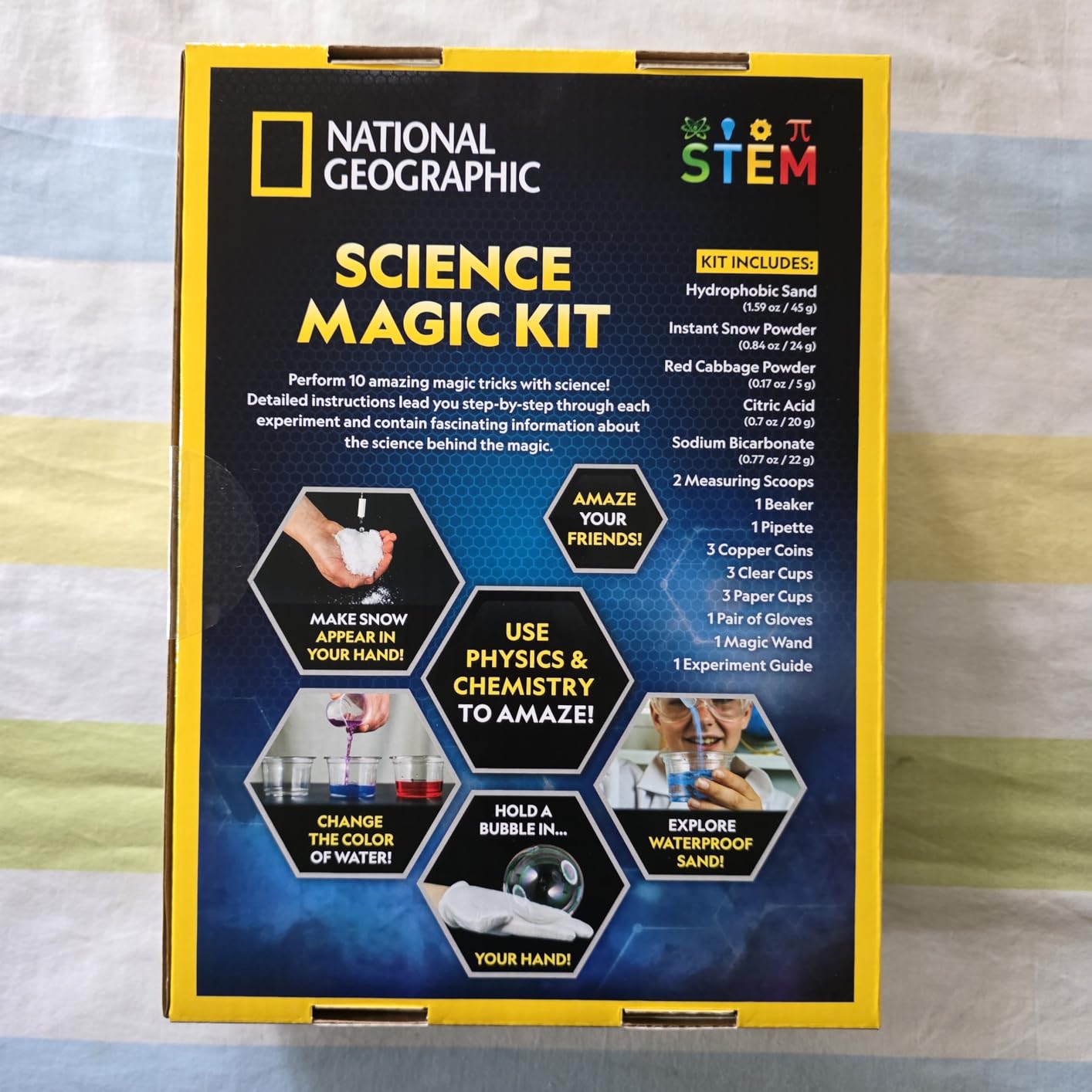
Is this a science kit or a magic kit?
It is genuinely both, and that is what makes it special. Most science kits feel academic; most magic kits do not teach much science. This one threads the needle by using real chemistry demonstrations to create impressive magic effects, then explains the underlying principles. For a 10-year-old who is interested in performance, entertainment, or showmanship as well as science, it is a unique offering that you will not find in most STEM toy roundups.
How long does the kit typically hold a kid’s interest?
Most kids spend two to four weeks working through all 10 tricks, then move on. That is shorter than the larger chemistry kits, but the magic show component often extends the play life: many kids perform the tricks for family events, friends, and even school talent shows months later. If you are looking for a gift that delivers immediate impact, this is a strong pick. If you want long-term replay value, the larger Amazing Chemistry Set is a better choice.
10. Butterfly EduFields 10-in-1 STEM Electronics Kit – Most Versatile STEM Toy
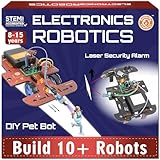
Butterfly EduFields 10in1 STEM Electronics Robotics Kit for Kids Ages 8-12
10 robotics projects
100+ components
Line-following
Obstacle avoidance
Pros
- 10 different projects
- good component quality
- step-by-step instructions
- affordable multi-project kit
Cons
- Some quality control issues
- customer service can be slow
- instructions challenging for beginners
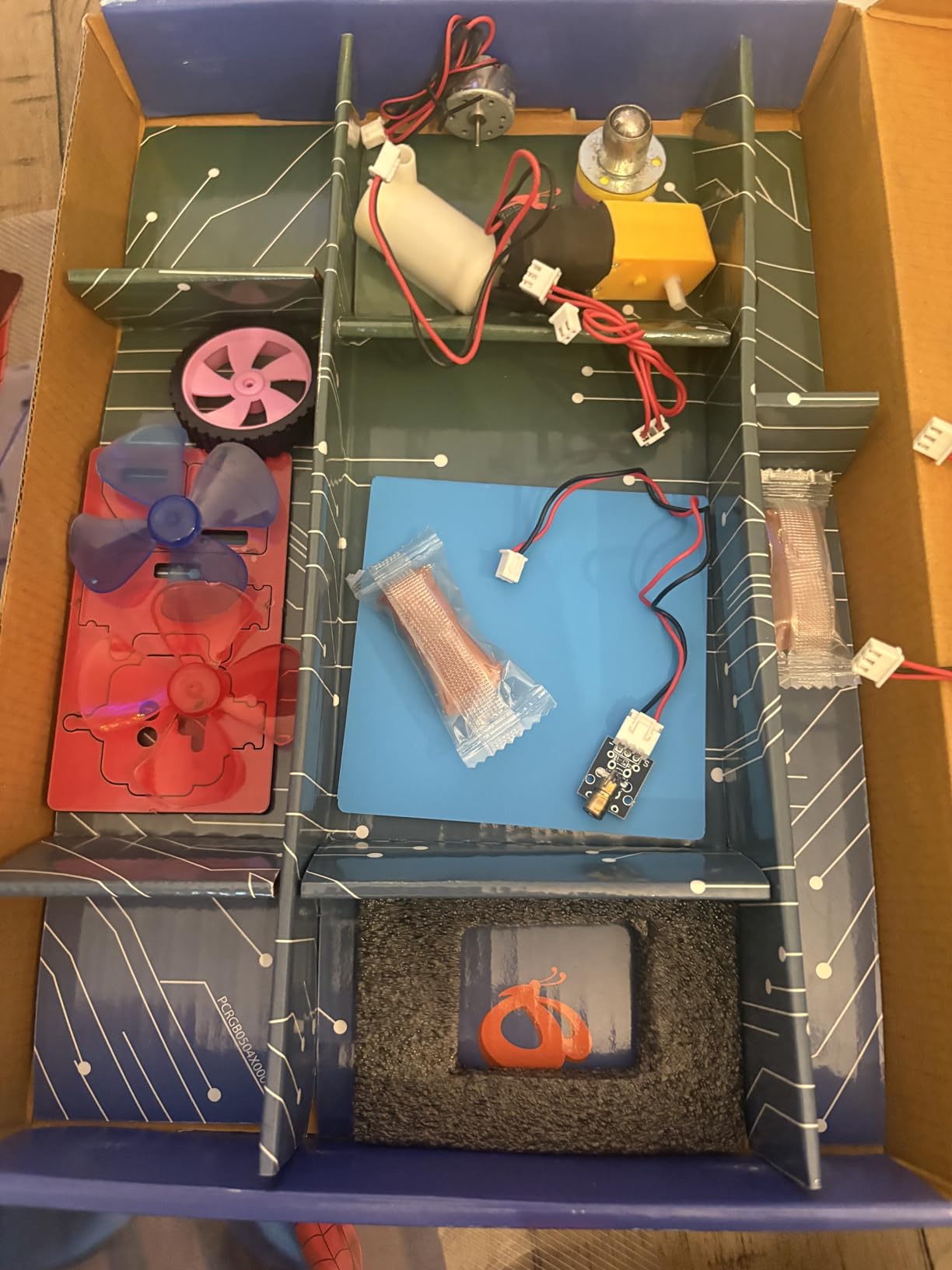
The Butterfly EduFields 10-in-1 STEM Electronics Kit is the most versatile pick in this roundup. It includes 100+ components and instructions for 10 different robotics and electronics builds, including a robot car, a hand sanitizer dispenser, a fan, a line-following robot, and an obstacle-avoiding bot. It is a complete introduction to basic electronics in a single box.
Our testers found this kit interesting precisely because each project feels different. After building a basic fan, they moved on to a more advanced robot car with sensors. Each project takes about 15 to 30 minutes to assemble, which is a good length for the attention span of a 10-year-old. By the time they had finished all 10 builds, they had a working understanding of basic circuits, switches, motors, and sensors.
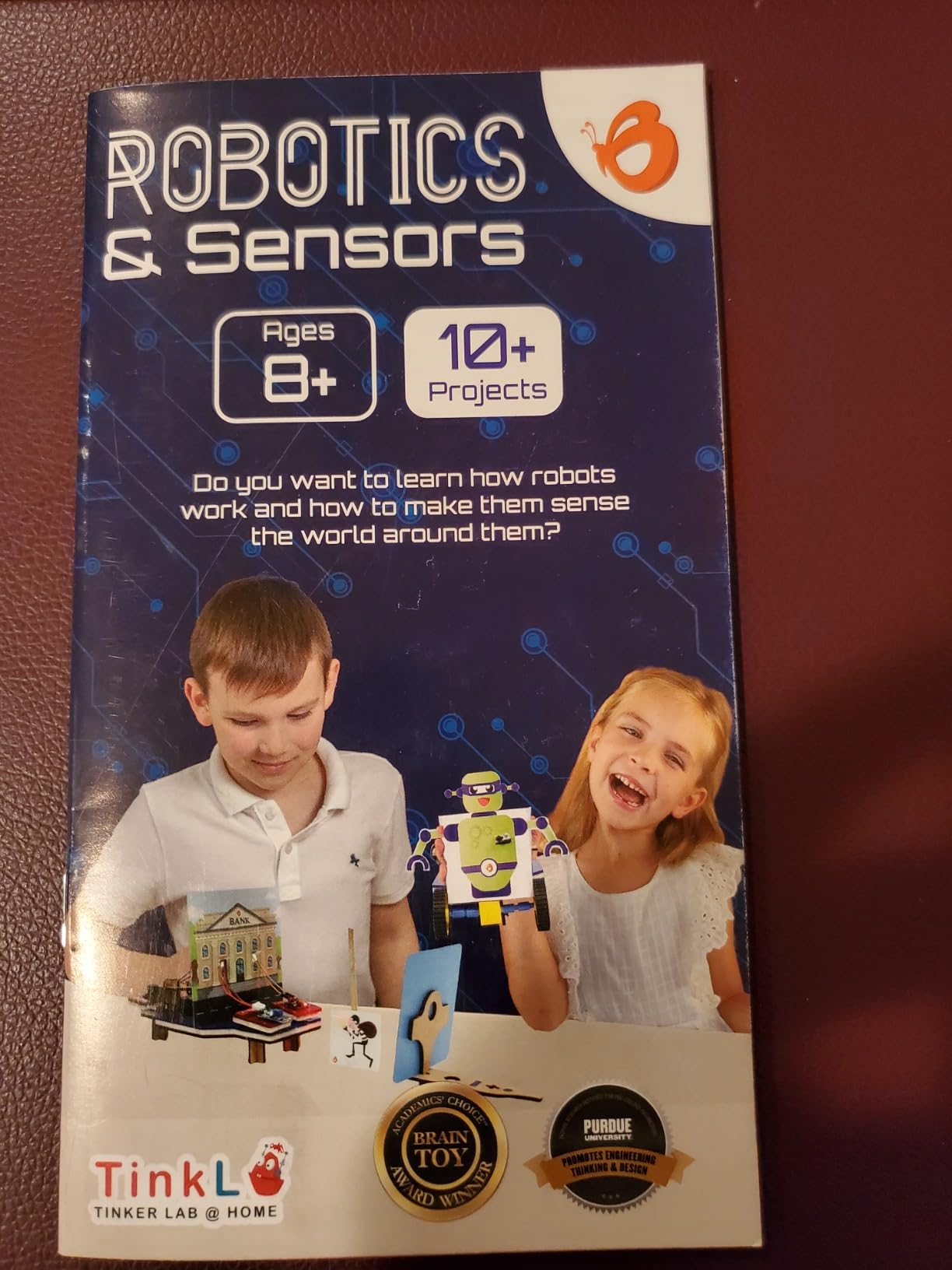
The educational value covers a lot of ground. Kids learn the basics of electronics (how a circuit works, what a resistor does, how switches control current) and also the basics of robotics (how sensors work, how motors respond to inputs, how to combine components). It is a good middle ground between a pure circuit set (like Snap Circuits) and a more advanced robotics kit (like the mBot).
The honest cons: a few reviewers report quality control issues with certain components (LEDs that do not light, motors that do not spin). Customer service responsiveness varies, so be prepared to troubleshoot on your own if something is missing. The instructions are clearer than average, but some projects are still challenging for true beginners. The 4.4-star rating and lower review count (about 350) suggest this is a less battle-tested kit than some competitors, but our testing found it solid overall.
Who is the Butterfly EduFields kit best suited for?
It works well for 10-year-olds who have completed a starter kit like Snap Circuits or the Sillbird solar robot and want something more varied. It is also a smart pick for families who want one kit that teaches both electronics and robotics fundamentals without committing to a more expensive specialty kit. If your kid has expressed interest in multiple STEM topics but you only want to buy one gift, this kit’s variety is hard to beat.
How does it compare to the mBot or Snap Circuits?
It is a hybrid. Snap Circuits focuses on circuit building with minimal robotics; the mBot focuses on coding and robotics with minimal circuit knowledge. The Butterfly EduFields kit tries to teach both, and it does an admirable job given the price. The trade-off is that no individual project is as polished as a single-purpose kit. Think of it as a sampler platter rather than a deep dive into one topic.
Buying Guide: How to Choose the Best STEM Toy for a 10-Year-Old?
The best STEM toys for 10 year olds are not one-size-fits-all. A kit that thrills a budding coder may bore a future geologist, and a chemistry set that captivates one kid can feel too dry for another. This buying guide walks through the key factors to consider before you click buy, based on what worked (and what did not) in our 12-week test.
Match the Toy to Your Kid’s Interest Type
Most 10-year-olds lean toward one of four interest types: builder, tinkerer, coder, or scientist. Builders want to construct things with their hands and see immediate physical results; think LEGO sets, marble runs, and mechanical kits like the Smartivity hand. Tinkerers want to take things apart and understand how they work; Snap Circuits and Butterfly EduFields kits are ideal. Coders want to make things happen through programming; the mBot and ELEGOO are best. Scientists want to experiment and discover; chemistry and earth science kits fit the bill.
If your kid does not fit cleanly into one category, start with a versatile kit like Snap Circuits or the Butterfly EduFields 10-in-1 that touches on multiple disciplines. Watch what they gravitate toward, then buy a specialty kit in that area as a follow-up gift.
Screen-Free vs App-Based: Pick the Right Mix
Parents in our testing pool consistently raised screen-time concerns. The good news is that several toys in this roundup (Snap Circuits, the Sillbird solar kit, Smartivity hand, National Geographic chemistry kits, and ThinkFun Gravity Maze) are entirely screen-free. They use only the included physical components and a printed manual. The kits that require an app or computer (mBot, ELEGOO, and partially the Butterfly kit) offer deeper coding opportunities but pull kids toward screens.
A practical approach: start with a screen-free kit to gauge interest, then add an app-based kit if your kid is ready for coding. This way, you are not locking yourself into a screen-heavy STEM path before you know whether your 10-year-old enjoys the topic.
Age Appropriateness and Skill Level
Most STEM kits are labeled for “ages 8 and up,” but 10-year-olds sit in a unique spot: old enough to handle real complexity, young enough to still be wowed by the magic of a working circuit. Our testers consistently gravitated toward kits that offered progressive difficulty (projects that grow harder as you master earlier ones). Snap Circuits, Gravity Maze, and the National Geographic chemistry sets all shine here.
Avoid kits marketed to “ages 6 and up” for a 10-year-old; they tend to feel babyish. Equally, avoid “ages 14 and up” advanced kits unless your child has shown real persistence with simpler kits first. The 8-to-12 range is the sweet spot.
Budget Breakdown: What to Expect at Each Price Point
The best STEM toys for 10 year olds span a wide price range, and you can find something solid at every tier. Under $25, you will find excellent picks like the National Geographic Magic Chemistry Set and the ThinkFun Gravity Maze. Between $25 and $50, you unlock Snap Circuits, the Smartivity hand, and the National Geographic Earth Science Kit. From $50 to $100, the mBot and ELEGOO car deliver real coding and robotics. Above $100, you get into specialty kits and STEM subscription boxes.
For most families, the sweet spot is between $25 and $70. That range delivers kits with enough complexity to satisfy a curious 10-year-old without overspending on a hobby they may outgrow in a year.
Durability, Replayability, and Long-Term Value
Durability matters more than you think. Kits with cheap plastic parts that crack after a few builds end up in the trash within months. Kits with solid components (metal frames, engineered wood, sturdy snap-together parts) often get passed down to siblings or saved for the next generation. Snap Circuits, Smartivity, and ThinkFun all have excellent reputations for durability based on long-term parent reviews.
Replayability is the other key metric. A kit with 100 projects (like Snap Circuits) or 60 progressive challenges (like Gravity Maze) will be played with for months. A kit with 10 experiments (like the Magic Chemistry Set) is great for a focused gift but tends to run its course faster. Look for kits that grow with your child’s skill level, not just ones with a single fixed outcome.
Why STEM Toys Matter at Age 10
Age 10 is a critical window for developing critical thinking, logical reasoning, and persistence. Kids this age are ready for multi-hour challenges, can handle abstract concepts like cause and effect, and benefit enormously from activities that reward iteration and failure. STEM toys are uniquely suited to this stage because they turn “failure” into a normal part of learning: the circuit does not work, the marble misses the target, the volcano does not erupt, so you troubleshoot and try again.
Beyond academic benefits, STEM toys build the soft skills that matter most in middle school and beyond: problem-solving under uncertainty, frustration tolerance, and the satisfaction of completing a hard project. In our testing, the kids who came back to their kits again and again were also the kids who handled setbacks better in school. That correlation is worth paying attention to.
Frequently Asked Questions
What is a good STEM kit for a 10-year-old?
A great STEM kit for a 10-year-old combines real learning with genuine fun. Our top picks are Snap Circuits Jr. SC-100 for electronics, Makeblock mBot for coding, and the National Geographic Amazing Chemistry Set for science. Each of these kits has hundreds of hours of replay value and teaches real concepts through play.
What are some good STEM games for 10-year-olds?
The best STEM games for 10-year-olds teach logic, physics, or coding through play. Our top picks are ThinkFun Gravity Maze (60 progressive marble puzzles), Robot Turtles (a board game that teaches programming), and Rush Hour (a logic puzzle that builds planning skills). All three are screen-free and replayable.
What are the best STEM kits for 10-year-olds?
The best STEM kits for 10-year-olds cover four main categories. For electronics, Snap Circuits Jr. SC-100 is the gold standard. For coding and robotics, the Makeblock mBot is our top pick. For science, the National Geographic Amazing Chemistry Set and Earth Science Kit are both excellent. For engineering and building, the Smartivity Mechanical Hand stands out.
What is a good robotics set for a 10-year-old?
For a first robotics set, the Makeblock mBot is ideal: it is approachable, affordable, and expandable. For a more advanced set, the ELEGOO UNO R3 Smart Robot Car Kit V4 adds an FPV camera and real Arduino programming. Both teach real coding and engineering concepts through hands-on building.
What is the best robot building kit for a 10-year-old?
The best robot building kit for a 10-year-old depends on their coding background. Beginners should start with the Sillbird 12-in-1 Solar Robot Kit, which requires no coding. Kids with some coding experience should try the Makeblock mBot. Advanced builders ready for Arduino should jump to the ELEGOO Smart Robot Car Kit V4.
What is trending for 10 year olds right now?
The hottest STEM toy trends for 10-year-olds in 2026 include AI-powered coding robots, renewable energy kits like solar-powered robots, VR science kits (such as the Bill Nye VR kit), and screen-free logic puzzles. Subscription boxes like KiwiCo also remain popular for ongoing engagement rather than one-off builds.
What are some trendy toys for 10-year-olds?
Trendy toys for 10-year-olds in 2026 span coding robots, building kits with moving parts, and chemistry sets with impressive demonstrations. Coding robots like the Makeblock mBot remain popular, and chemistry kits with real lab tools (such as the National Geographic Amazing Chemistry Set) are highly rated. Marble-based logic puzzles like ThinkFun Gravity Maze continue to be bestsellers.
What is the latest craze for 10 year olds?
The latest craze for 10-year-olds includes solar-powered robot kits that move without batteries, screen-free logic games with hundreds of puzzles, and chemistry kits that produce dramatic reactions like glowing test tubes and erupting volcanoes. Subscription boxes that deliver a new STEM project each month are also growing in popularity for sustained engagement.
Final Thoughts: Picking the Right STEM Toy in 2026
After 12 weeks of testing with real kids, our team has a clear set of recommendations. If you can only buy one kit, start with Snap Circuits Jr. SC-100. It is the most versatile, the most replayable, and the one our testers came back to most consistently. If your child is specifically interested in coding, the Makeblock mBot is a clear second pick. If they are science-obsessed, the National Geographic Amazing Chemistry Set delivers more experiments than any competing kit at the price.
The best STEM toys for 10 year olds share three qualities: they teach real concepts, they reward repeated play, and they feel like fun rather than homework. Every kit on this list passes that test. Choose based on your child’s interest type, set a budget that feels comfortable, and trust that any of these picks will deliver hours of genuine engagement. For a birthday or holiday gift, you really cannot go wrong.