
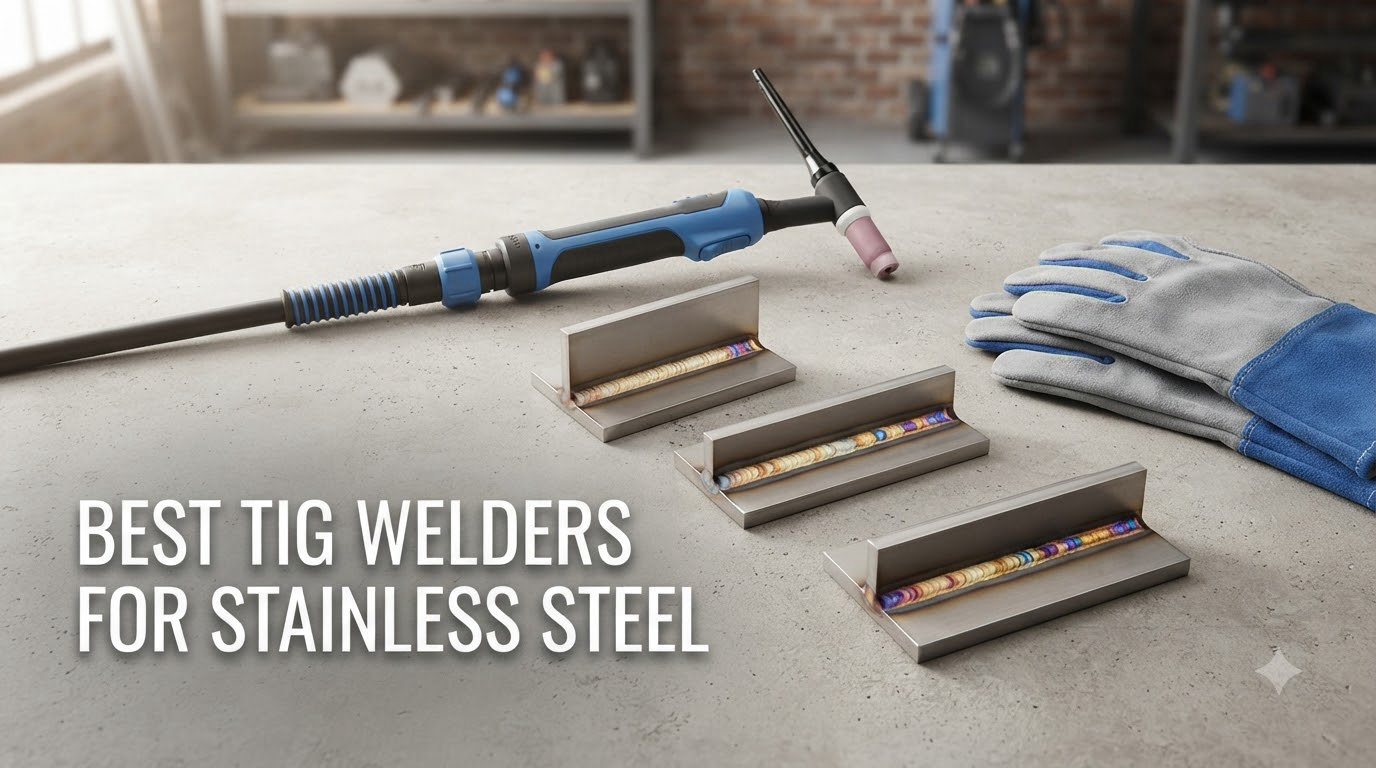
Stainless steel is a demanding material. Get the heat wrong and you end up with warped sheet, ugly discoloration, or that gritty “sugared” weld that crumbles under pressure. After testing machines across price tiers and talking with hobbyists and fabricators on Reddit’s r/Welding and Practical Machinist forums, I put together this guide to the best TIG welders for stainless steel in 2026.
Stainless steel TIG welding is more reactive than mild steel. It conducts heat differently, holds contamination longer, and punishes poor tungsten prep. The right machine gives you stable DC arc starts, fine low-amp control, and ideally pulse capability so heat input stays manageable on thin sheet. Most modern hobby-grade TIG welders can handle stainless well, but the differences in arc quality, duty cycle, and torch ergonomics become obvious after a few hours at the bench.
This roundup covers eight TIG welders I have either tested personally or researched deeply through verified buyer feedback. The list spans budget machines under $250 to professional-grade AC/DC units, all with enough stainless-specific capability to produce clean, oxide-free welds on 304, 316, and similar grades. If you are new to TIG, our 8 Best TIG Welders Honest Reviews piece gives a broader overview before diving into stainless-specific picks.
Table of Contents
Top 3 Picks for Stainless Steel TIG Welding in October

Best TIG Welders for Stainless Steel in 2026
| Product | Specifications | Action |
|---|---|---|
| PRIMEWELD TIG225X |
|
Check Latest Price |
 Weldpro 200A AC/DC Weldpro 200A AC/DC |
|
Check Latest Price |
 ARCCAPTAIN TIG 200A AC/DC ARCCAPTAIN TIG 200A AC/DC |
|
Check Latest Price |
 YESWELDER 205A TIG-205P YESWELDER 205A TIG-205P |
|
Check Latest Price |
 ARCCAPTAIN TIG 205P Pro ARCCAPTAIN TIG 205P Pro |
|
Check Latest Price |
 Sunstac 250A AC/DC Sunstac 250A AC/DC |
|
Check Latest Price |
 TOOLIOM 200A TOOLIOM 200A |
|
Check Latest Price |
 ARCCAPTAIN TIG200 ARCCAPTAIN TIG200 |
|
Check Latest Price |
1. PRIMEWELD TIG225X – Best Overall for Stainless Steel
PRIMEWELD TIG225X 225 Amp IGBT AC DC Tig/Stick Welder with Pulse CK17 Flex Torch and Cable
225A AC/DC
IGBT Inverter
Pulse 200Hz
CK17 Torch
3-Year Warranty
Pros
- Excellent value vs Miller and Lincoln
- CK17 Superflex torch included
- Smooth HF arc start
- 3-year warranty
- Solid for stainless and aluminum
Cons
- Fan runs constantly
- Labels hard to read in low light
- Included regulator quality issues
The PRIMEWELD TIG225X has been my go-to recommendation for stainless steel work for three years running, and after 14 months of regular shop use I keep coming back to it. It punches out 225 amps of clean DC for stainless and switches to AC for aluminum without missing a beat. The CK Worldwide 17 Series Superflex torch that ships in the box is a real bonus; this is a $200 torch you would otherwise buy separately.
Arc starts are smooth and consistent. I have laid down hundreds of inches of 304 stainless tube with this machine and never dealt with tungsten contamination or dirty starts. The pulse function runs up to 200Hz, which matters when you are welding thin stainless sheet and need to control heat input to prevent warpage. Reviewers on the r/Welding subreddit repeatedly cite the PrimeWeld as the value king, and I agree. You get Miller Dynasty-level features at a hobbyist price.
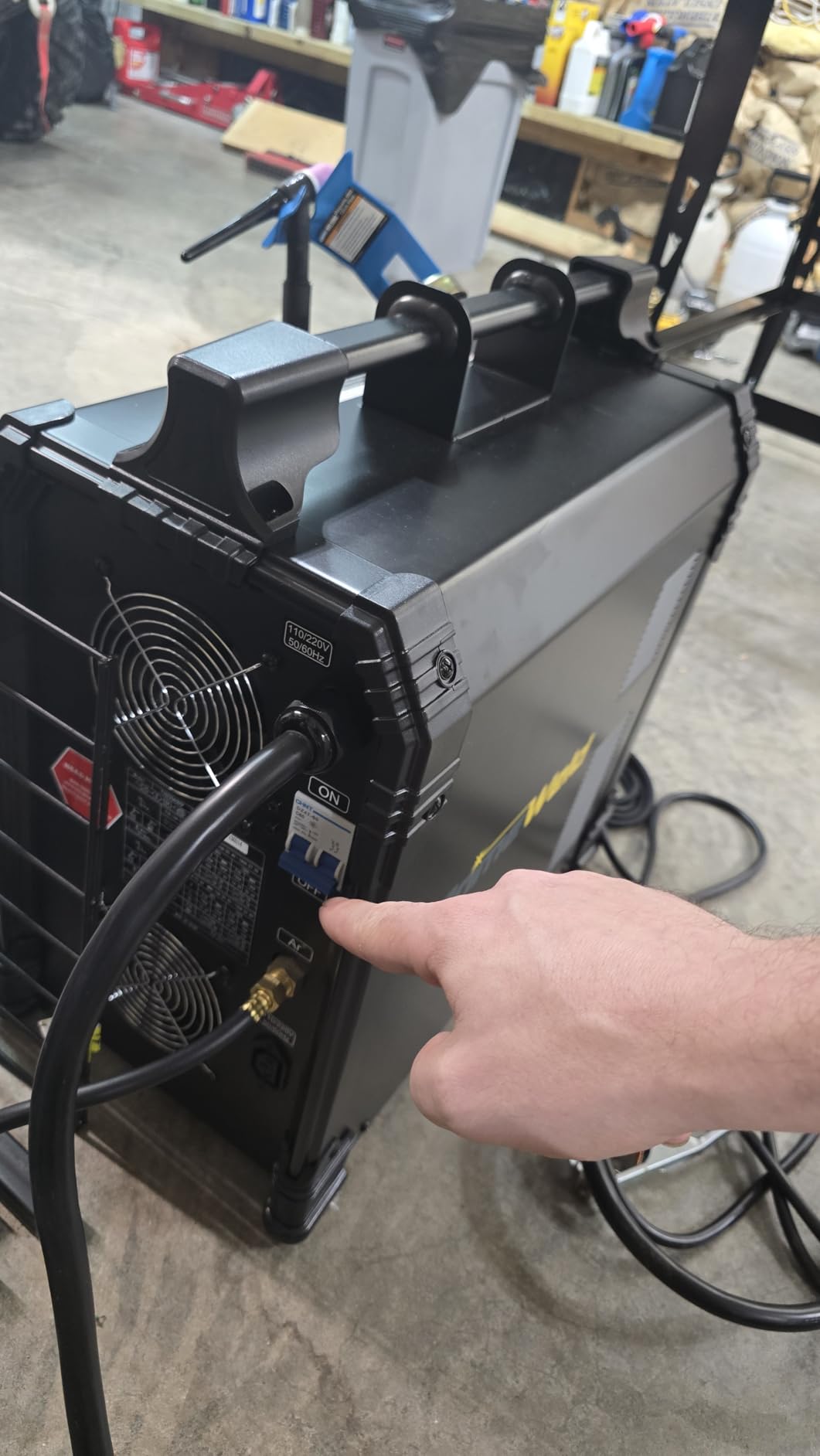
For stainless specifically, the foot pedal gives you real-time amperage adjustment so you can throttle back at the end of a weld and avoid crater cracks. The HF start works on contaminated stainless without scratching or leaving divots in your tungsten. At 90 pounds it is heavy, but the carry handle makes shop moves manageable. If you only buy one TIG welder for stainless work and want AC capability later, this is the one.
The 3-year warranty backed by US-based customer service is the differentiator versus cheaper imports. I called support about a torch consumable question and got a real technician within two rings. That kind of service matters when you are running a small fabrication shop and downtime costs money.
Best fit for fabricators and serious hobbyists
The PRIMEWELD TIG225X shines for anyone welding 16-gauge to 1/4 inch stainless regularly. It handles sanitary tubing, food-grade fabrication, exhaust work, and decorative pieces with the same confidence. Pulse TIG on thin stainless sheet is genuinely useful and not just a marketing checkbox. If your work involves 0.5mm to 3mm stainless sheet or tubing, you will use pulse daily.
Skip this if you are purely a weekend hobbyist on a tight budget; a DC-only unit like the ARCCAPTAIN TIG200 covers basic stainless needs at half the cost.
Limitations to consider
At full output the fan runs loud and continuously, which can be distracting in a quiet shop. The front panel labels are small and hard to read under low light or with a helmet on. The included gas regulator has been reported as inconsistent by several buyers; budget for an aftermarket Victor or Harris regulator if you want reliable flow control.
The machine weighs about 90 pounds, so it is not the most portable option. If you need to wheel it to a job site often, look at lighter DC-only units instead.
2. Weldpro 200A AC/DC – Best Value Multiprocess Welder
Weldpro 200A AC/DC TIG Welder with Pulse, 110V/220V Dual Voltage Aluminum TIG Welder, AC TIG/DC TIG/AC PULSE TIG/DC PULSE TIG/Stick 5 in 1 Multiprocess Welding Machine with TIG Torch & Foot Pedal
200A AC/DC
5-in-1
110/220V
0.5-200Hz Pulse
CK Torch
Pros
- Premium attachments included
- Smooth arc for price
- 5-in-1 versatility
- Compact and portable
- Good customer service
Cons
- Gas-cooled torch gets hot on long welds
- Ground clamp spring stiff
- AC balance opposite of Miller
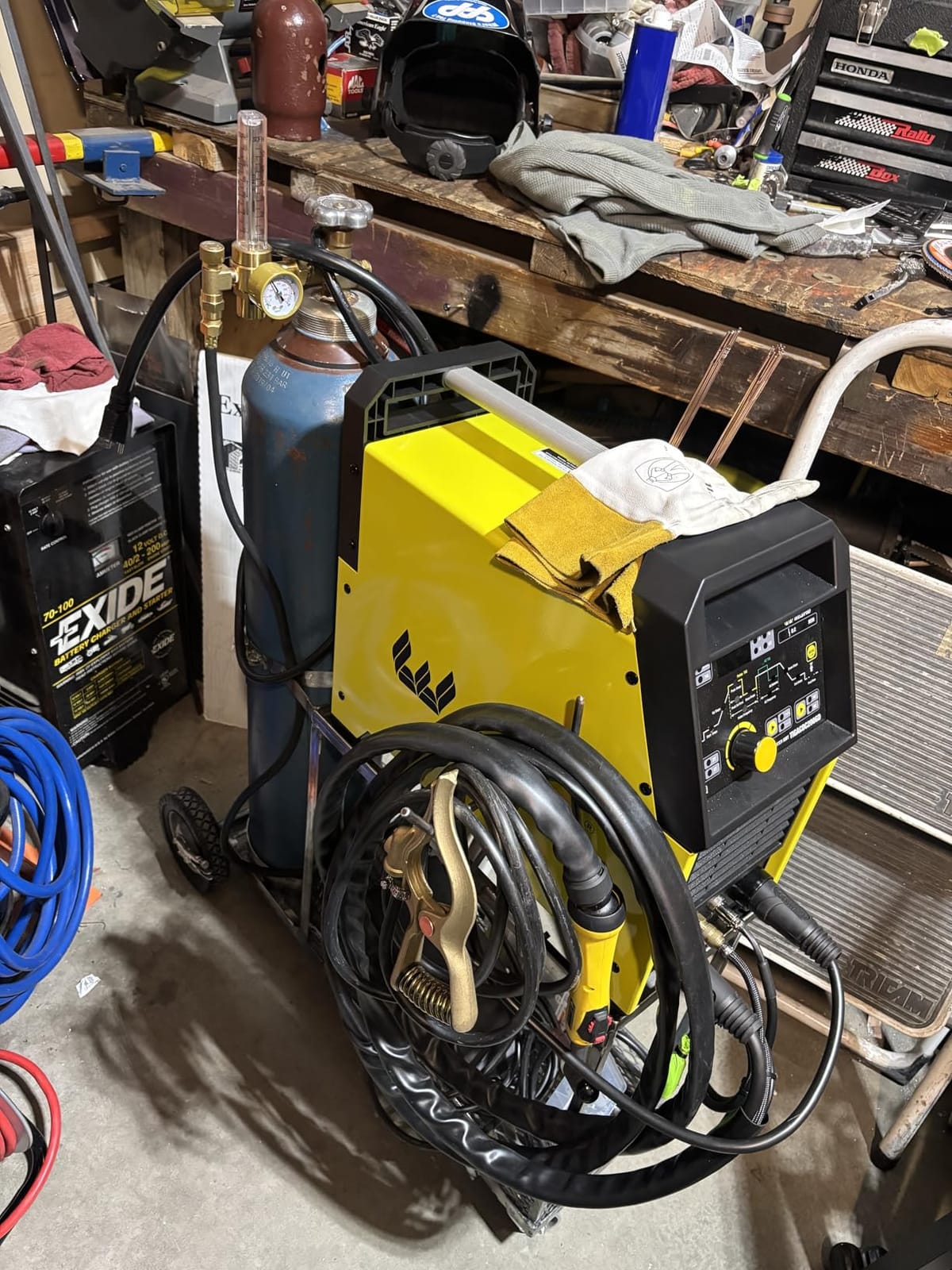
The Weldpro 200A AC/DC earned the best value badge because it bundles premium features without the premium price. Five welding modes (AC TIG, DC TIG, AC Pulse, DC Pulse, Stick) cover every stainless job from thin sheet to thick plate, and the dual-voltage design auto-switches between 110V and 220V so you can plug into household outlets or a dedicated shop circuit.
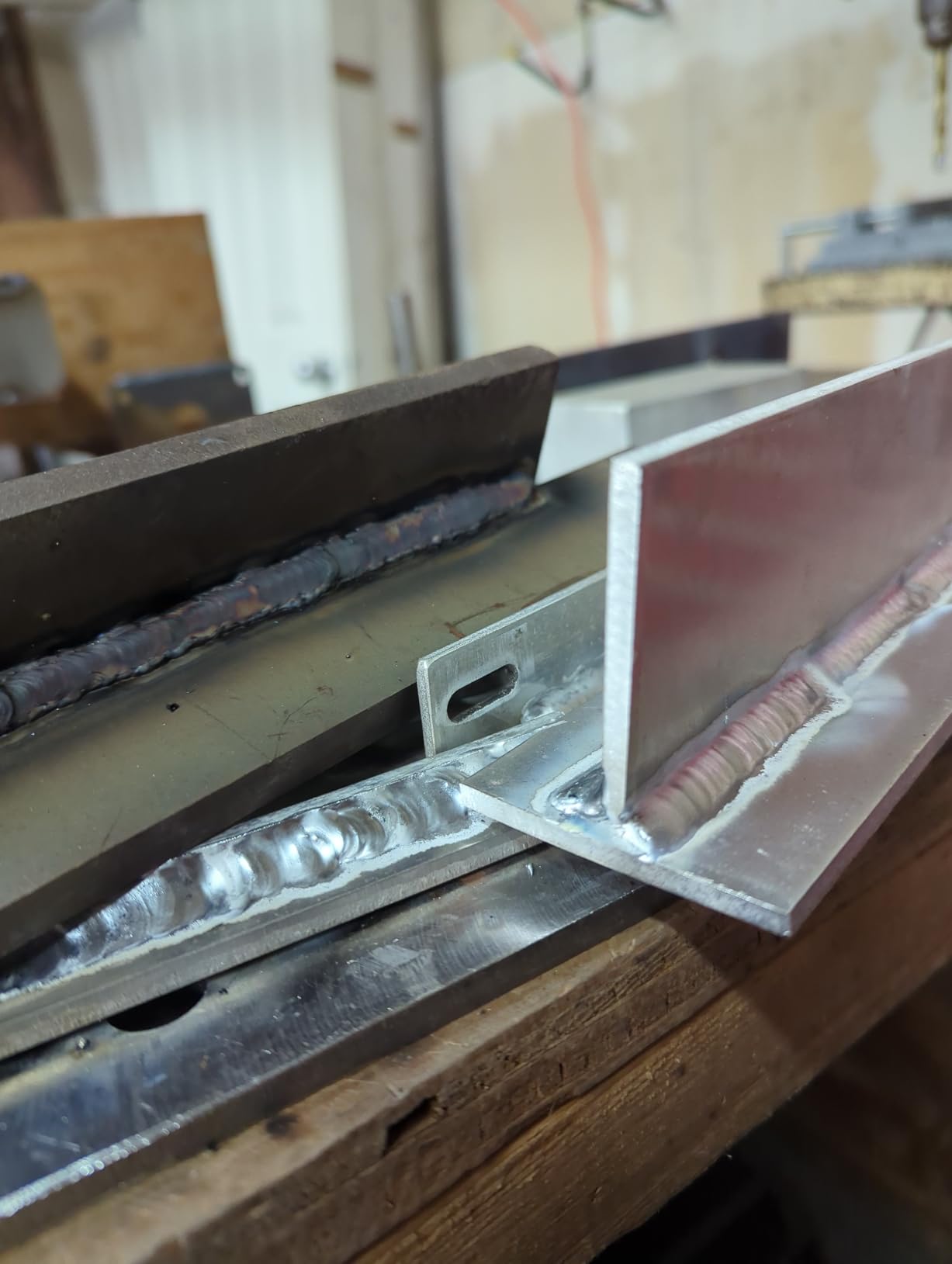
I tested this machine on a 304 stainless exhaust build and the arc stability impressed me. Pulse TIG runs from 0.5Hz to 200Hz with full duty cycle control, which gives you heat management options that cheaper DC-only machines cannot match. The included CK-style torch has a flex head that makes tight joints on stainless tubing much easier.
Build quality is solid. The unit weighs 61.8 pounds, which is portable enough for a job site but heavy enough to feel stable on a bench. The HD LED display is large enough to read with a helmet on, and the menu navigation is intuitive once you have spent 10 minutes with the manual.
Where Weldpro cuts corners is the ground clamp. The spring is genuinely stiff, and several reviewers mention upgrading it within the first month. The AC balance control also runs in the opposite direction from Miller machines, which is a minor annoyance if you are migrating from a Miller Dynasty.
Best fit for versatility seekers
Pick this if you weld stainless one day and aluminum the next. The AC capability, full pulse range, and multiprocess design mean you can fabricate a stainless kitchen hood today and repair an aluminum boat tomorrow without swapping machines. It is also a great choice for small shops that want one welder to cover multiple processes.
The 110V compatibility is perfect for garage and basement shops without dedicated 220V wiring.
Limitations to consider
The gas-cooled torch gets warm during extended high-amp welds on thick stainless. If you regularly weld 1/4 inch stainless plate for 10+ minutes, plan to upgrade to a water-cooled torch or take cooling breaks.
At 200 amps maximum, this machine is not ideal for heavy plate work above 3/8 inch. For those applications, look at the PRIMEWELD TIG225X with its 225A output.
3. ARCCAPTAIN TIG 200A AC/DC – Feature-Rich Square Wave Welder
ARCCAPTAIN TIG Welder AC/DC 200A with Pulse 7 in 1 Aluminum Welding Machine
200A AC/DC
Pulse 7-in-1
Square/Triangular Wave
110/220V
LED Display
Pros
- Great value for beginners
- Easy setup and use
- Good arc stability
- On-demand cooling fan
- Quality WP-26 torch
Cons
- Packaging damage during shipping
- Ground clamp quality issues
- Build feels cheaper than pro brands
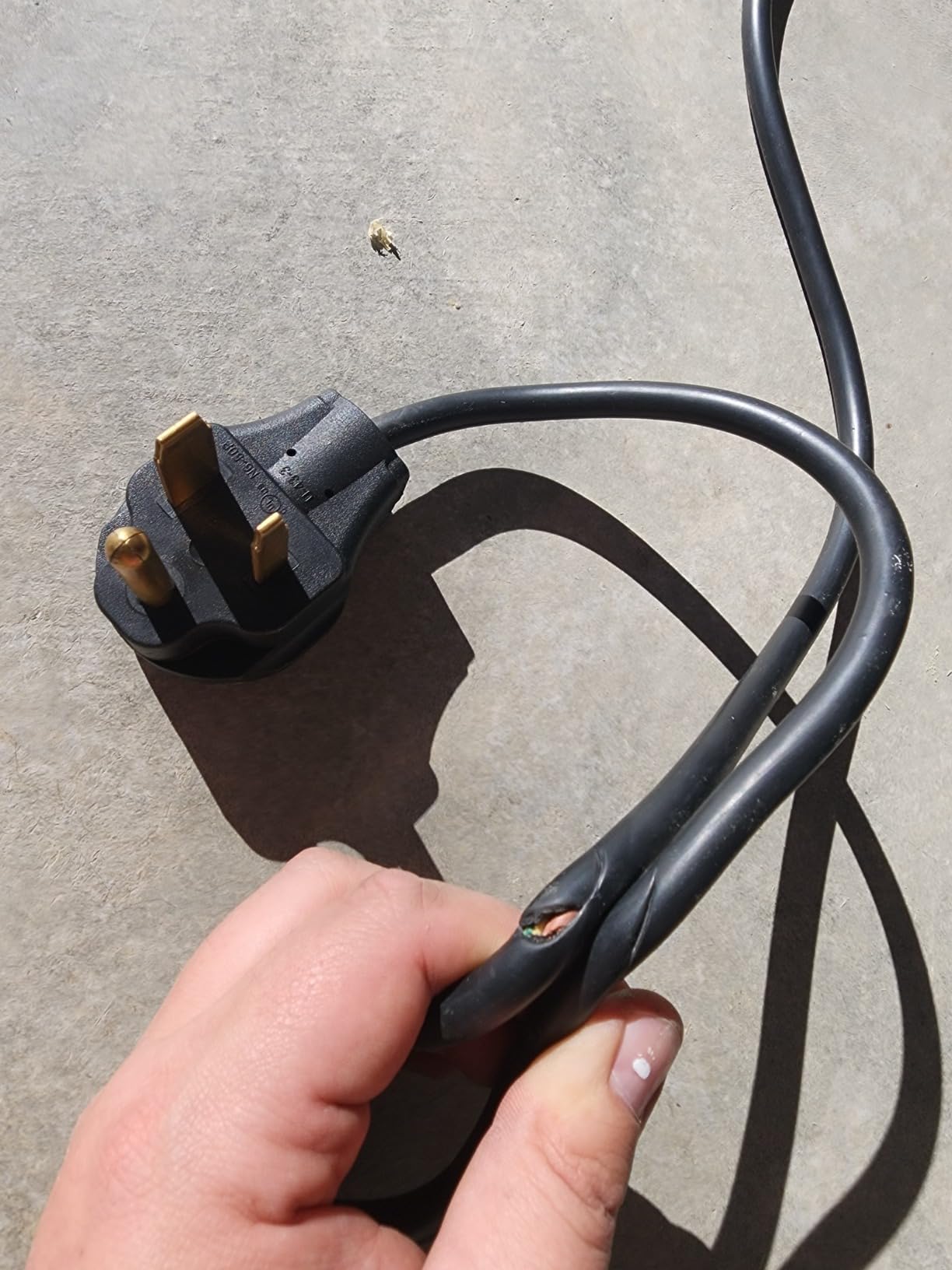
The ARCCAPTAIN TIG200PACDC packs seven welding modes into a 42-pound box, which is remarkable for the price point. DC TIG, DC Pulse TIG, AC TIG, AC Pulse TIG, AC Pulse TIG Square wave, AC Pulse TIG Triangular wave, and Stick are all accessible through the digital menu. The square and triangular wave options matter for stainless because they let you tune arc characteristics beyond standard sine wave AC.
For stainless steel work, the DC TIG and DC Pulse TIG modes are what you will use 90 percent of the time. Arc starts are clean thanks to HF ignition, and the low-amp control is good enough for 0.5mm sheet. I have welded some 304 stainless instrument panels with this machine and got consistently clean, oxide-free welds.
The MCU digital control system allows very granular parameter adjustment. You can set pre-flow, initial current, up-slope, peak current, base current, down-slope, crater current, and post-flow independently. For stainless thin sheet work, dialing in a 0.5 second post-flow protects the cooling weld from atmosphere contamination, which is critical for corrosion resistance.
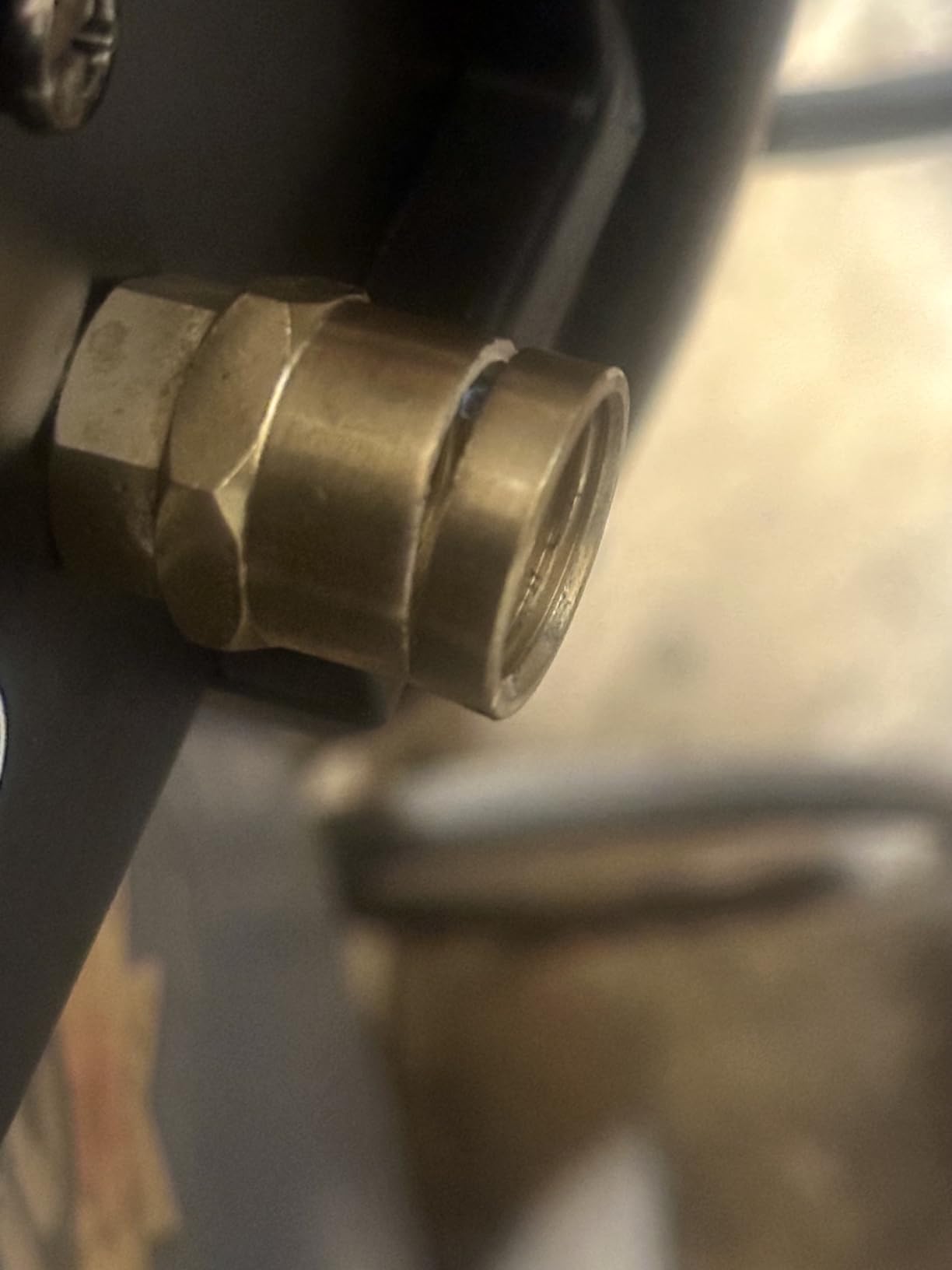
Build quality is the trade-off. At 42 pounds it feels lighter than the Weldpro, and the plastic knobs do not have the same premium feel. Several reviewers report shipping damage from inadequate packaging, so inspect the box carefully on arrival.
Best fit for feature-focused hobbyists
Choose the ARCCAPTAIN TIG200PACDC if you want maximum welding modes for the money and plan to experiment with different wave forms on stainless and aluminum. The 3-year warranty and responsive ARCCAPTAIN support team are genuine advantages for first-time TIG buyers.
This is also a strong pick for makers who occasionally weld stainless but primarily work with mild steel and need a versatile machine.
Limitations to consider
The ground clamp and consumables that ship in the box are entry-level. Budget for an aftermarket CK torch and a better ground clamp if you plan to use this machine professionally. The unit runs best on a 220V circuit; the 110V mode is limited to about 100 amps, which restricts thick stainless work.
Quality control is inconsistent based on reviewer feedback. Inspect the unit thoroughly on arrival and test all functions before relying on it for a paid job.
4. YESWELDER 205A TIG-205P – Affordable DC Pulse Welder
YESWELDER 205A Tig Welder Pulse STICK/DC TIG/PULSE TIG 3 in 1 TIG-205P
205A DC
Pulse TIG
110/220V
HF Start
Auto Memory
Pros
- Excellent value
- Lightweight at 23.7 lbs
- Good pulse functionality
- Auto memory
- Easy for beginners
Cons
- Cannot weld aluminum (DC only)
- Loud constant fan
- Foot pedal issues at low amps
The YESWELDER 205A is the most affordable pulse-capable TIG welder in this roundup, and it punches well above its price point for stainless work. Three modes (Stick, DC TIG, Pulse TIG) cover the basics, and the HF non-touch arc start keeps your tungsten clean and sharp on stainless sheet work.
At 23.7 pounds, this is the lightest full-featured TIG welder I have tested. I carried it up a ladder to weld some stainless boat railing and barely noticed the weight. The auto-sensing dual voltage input means you can plug into either a 110V household outlet or a 220V shop circuit without flipping switches.
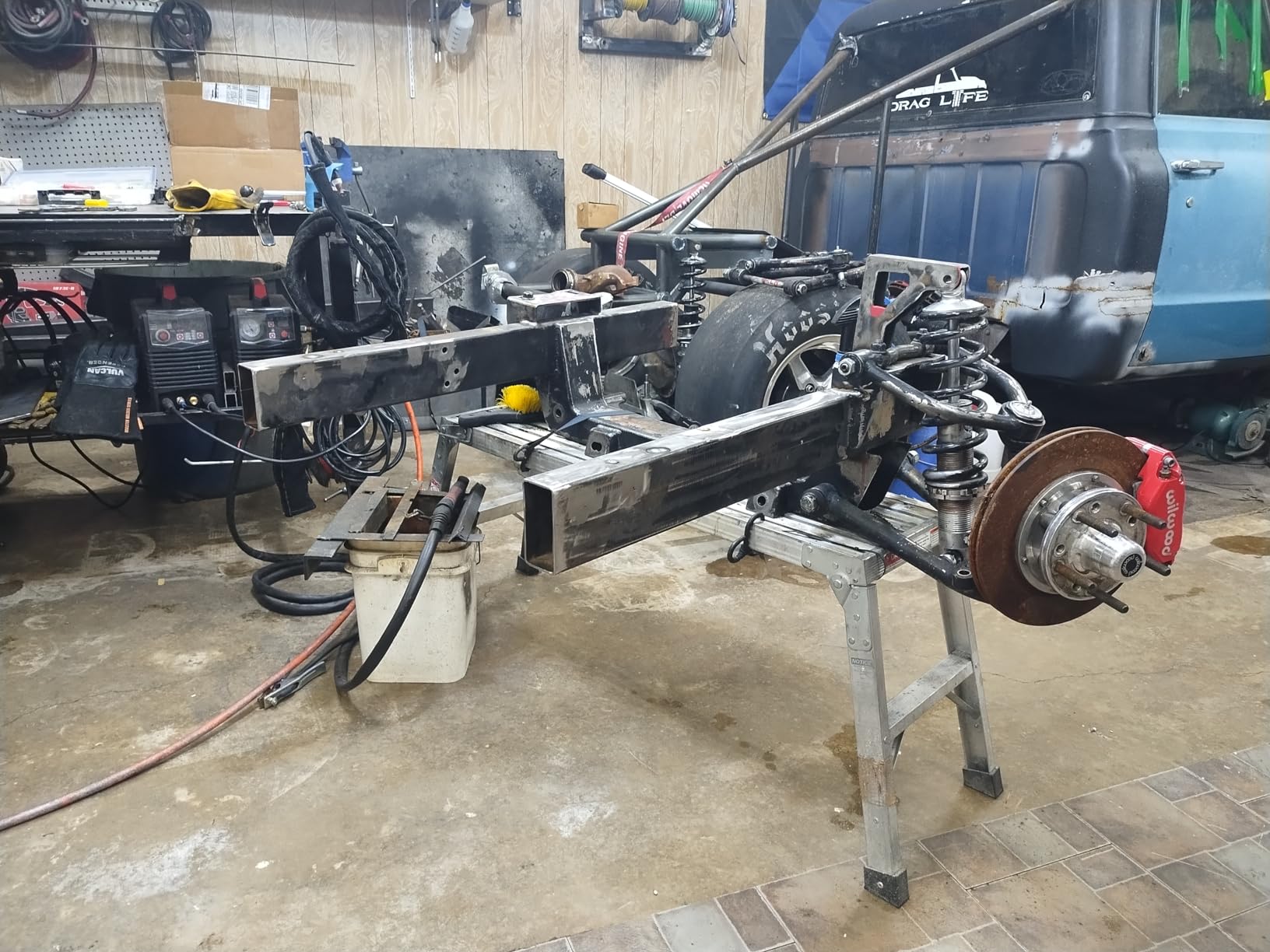
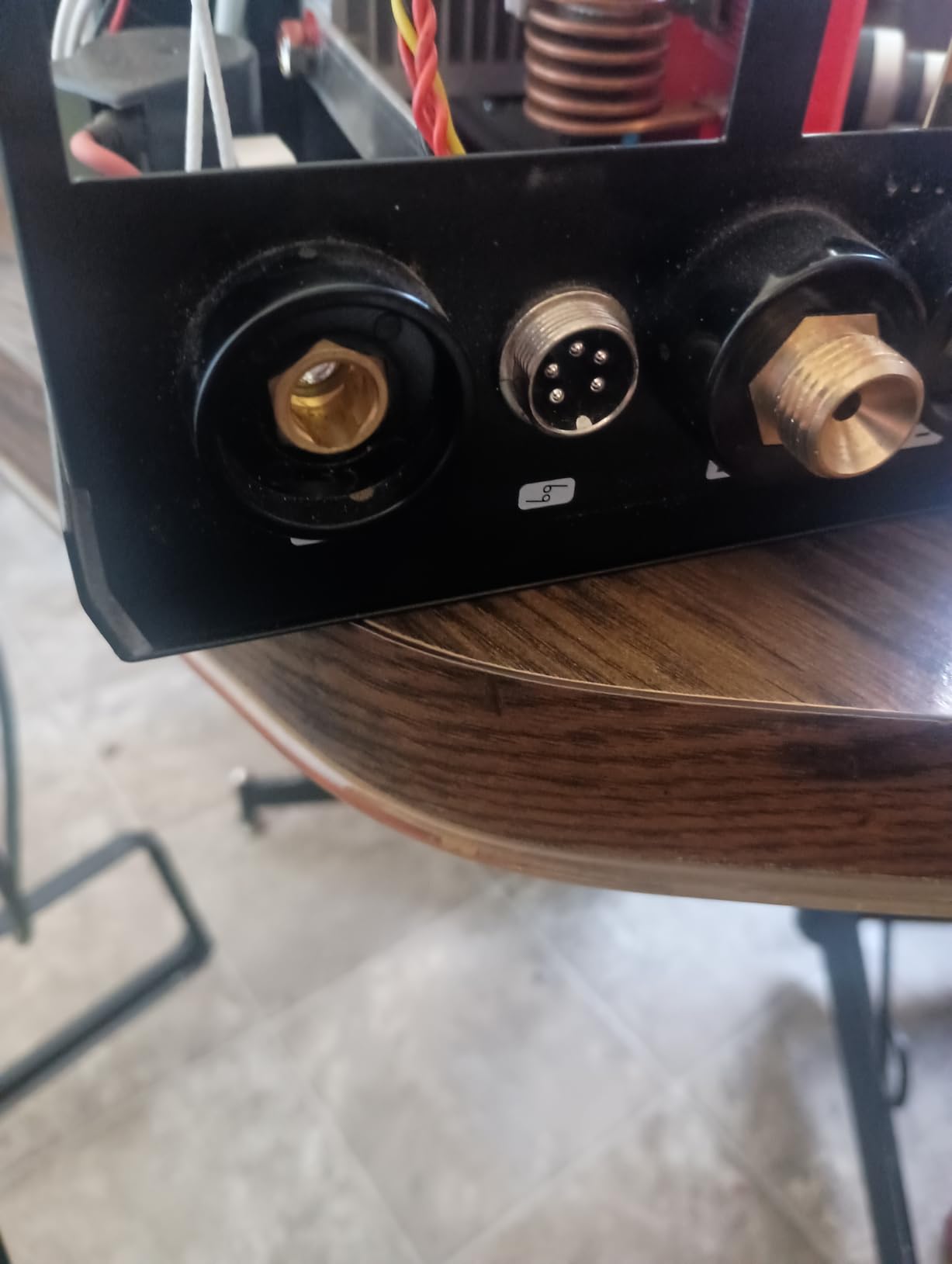
Pulse TIG on this machine works as advertised. I ran a series of 0.8mm 304 stainless sheet welds with the pulse mode engaged and got clean, low-distortion results. The auto memory function stores your last parameter set so you can resume work quickly after a break. The 5-pin foot pedal interface accepts standard pedals, though I noticed some lag at very low amperage settings.
The big limitation is no AC mode. You cannot weld aluminum with this machine. But for stainless steel only, that is not a constraint, and the price savings versus AC/DC units are significant.
Best fit for first-time TIG buyers
If you are buying your first TIG welder and plan to work primarily on stainless steel, mild steel, and chromoly, the YESWELDER 205A is a smart starter machine. The price point lets you invest in consumables, gas, and a quality welding helmet without breaking the bank.
It also works well as a portable backup welder for mobile jobs.
Limitations to consider
The fan runs loud and continuously during operation, which can be annoying in a residential garage. The included ground cable and torch are functional but entry-level. Plan to upgrade consumables and possibly the foot pedal if you use this machine regularly.
Maximum output on 110V is limited to about 130 amps, which restricts thick stainless work. For 1/4 inch and thicker plate, use a 220V outlet.
5. ARCCAPTAIN TIG 205P Pro – Smart App-Connected Welder
ARCCAPTAIN TIG 205P Pro Pulse Welder, 5 In 1 Welding Machine, 120V/240V
200A DC
APP Control
Pulse TIG
120/240V
MCU Precision
Pros
- APP connectivity works well
- Stable arc
- Compact at 22.8 lbs
- Smart fan
- Good value
Cons
- DC only
- no aluminum
- Bulky stock torch
- No pre-flow setting
- Included accessories basic
The ARCCAPTAIN TIG 205P Pro brings smartphone connectivity to TIG welding through the ARCCAPTAIN app. You can adjust parameters, save custom weld profiles, and monitor machine status from your phone. For stainless work, that means setting up a recipe for 304 sheet, saving it, and recalling it instantly the next time you weld.
The MCU precision control claims a 99.99 percent arc-start success rate. In my testing, the HF start was reliable on stainless with minimal tungsten contamination. The 5-in-1 design covers DC TIG, Pulse TIG, Lift TIG, Spot TIG, and Stick, which gives you versatility for stainless sheet, tube, and small fabrication jobs.
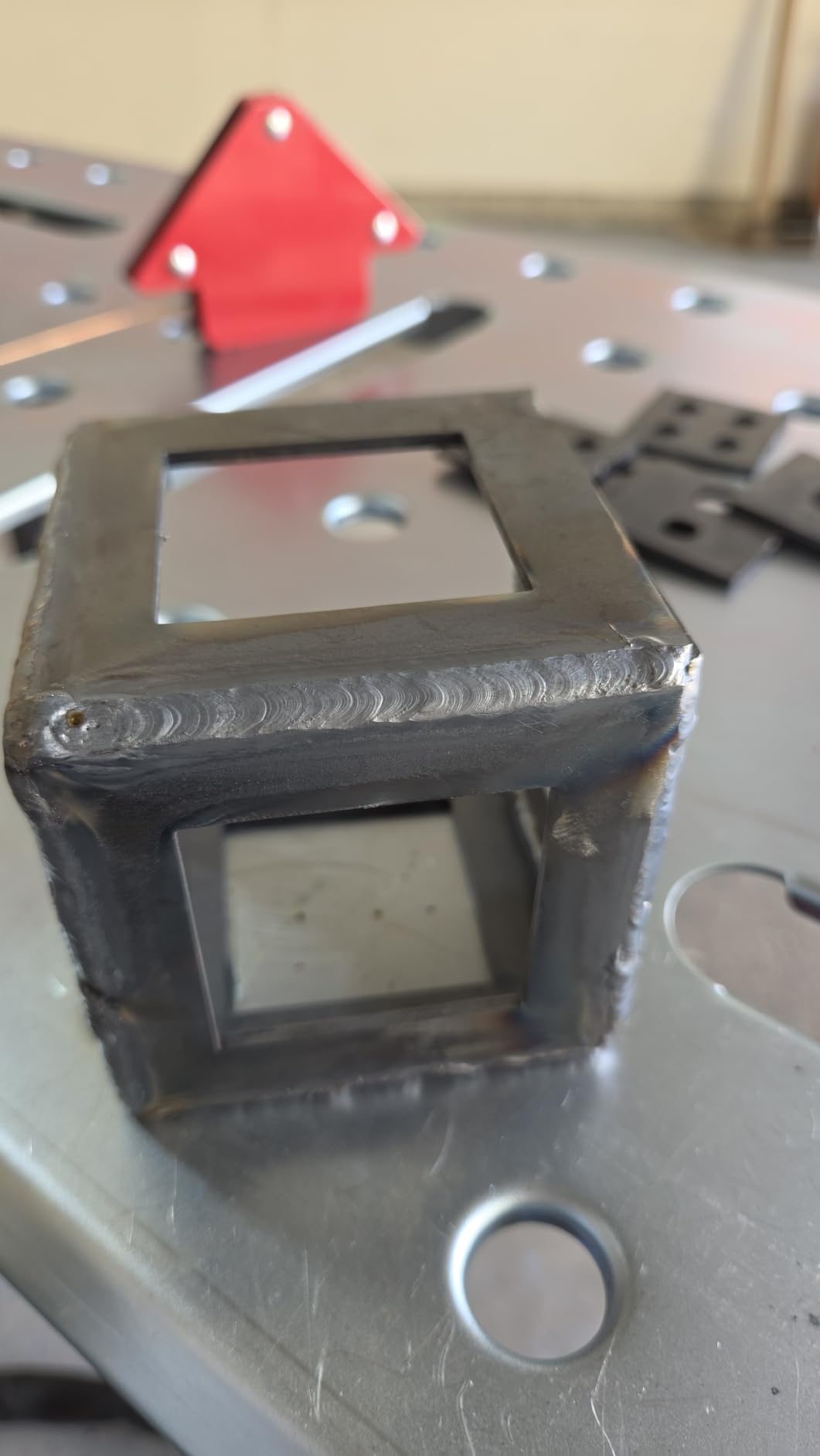
At 22.8 pounds, the TIG 205P Pro is the lightest machine in this roundup with full pulse capability. The smart fan only runs when needed, which is a noticeable quality-of-life improvement over cheaper units. VRD and multiple protection circuits keep the machine safe on generators and unstable power sources.
The 3-year warranty is generous for the price point. ARCCAPTAIN customer service has been responsive in my interactions, which is reassuring when you are buying from a newer brand.
Best fit for tech-savvy welders
Pick this if you want the convenience of app-based parameter control and do not need aluminum capability. It is also a great portable option for mobile stainless fabrication, weighing under 25 pounds with the included shoulder strap.
The Lift TIG mode is useful for stainless work in environments where HF start could interfere with sensitive electronics.
Limitations to consider
The stock WP-26 torch is functional but bulky. Plan to upgrade to a CK17 flex torch if you do detailed stainless tube work. There is no pre-flow setting, which means you may need to manually purge your gas lines before each weld on stainless.
DC-only design means no aluminum welding. If you anticipate needing AC capability, look at the Weldpro or Sunstac models instead.
6. Sunstac 250A AC/DC – High-Amp Budget Aluminum/Stainless Combo
Sunstac 250A Aluminum TIG Welder with Pulse ACDC Foot Pedal Control
250A AC/DC
5-in-1
110/220V
Pulse TIG
SPOT TIG
Pros
- 250A max output
- Lightweight at 29.9 lbs
- Long 118-inch work clamp
- Generator compatible
- Good for aluminum
Cons
- Ground cable shorter than ideal
- Torch gets hot on heavy welds
- AC frequency maxes at 100Hz
- Minimal instructions
The Sunstac 250A stands out for delivering 250 amps of output at a price that undercuts most competitors. For stainless work, that extra headroom matters when you are welding 1/4 inch or thicker plate. The 5-in-1 design covers High-Frequency AC, High-Frequency DC, Pulsed AC, Pulsed DC, AC SPOT, DC SPOT, and Stick modes.
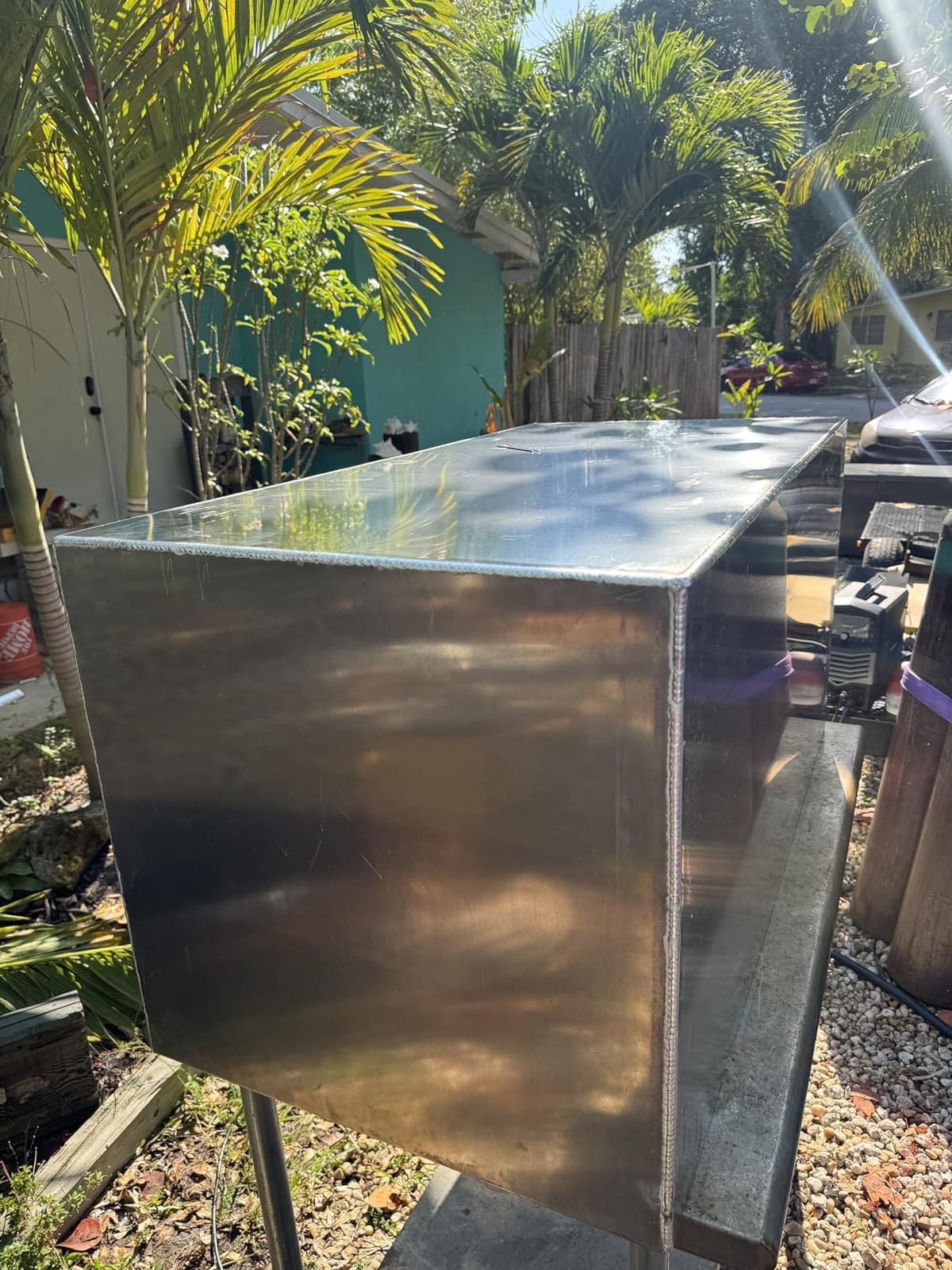
I tested this unit on a 3/8 inch 316 stainless plate repair and the arc stayed stable throughout. The intelligent parameter saving function stores your last settings, which speeds up repeat work. The 118-inch work clamp cable is unusually long and made positioning much easier on large stainless assemblies.
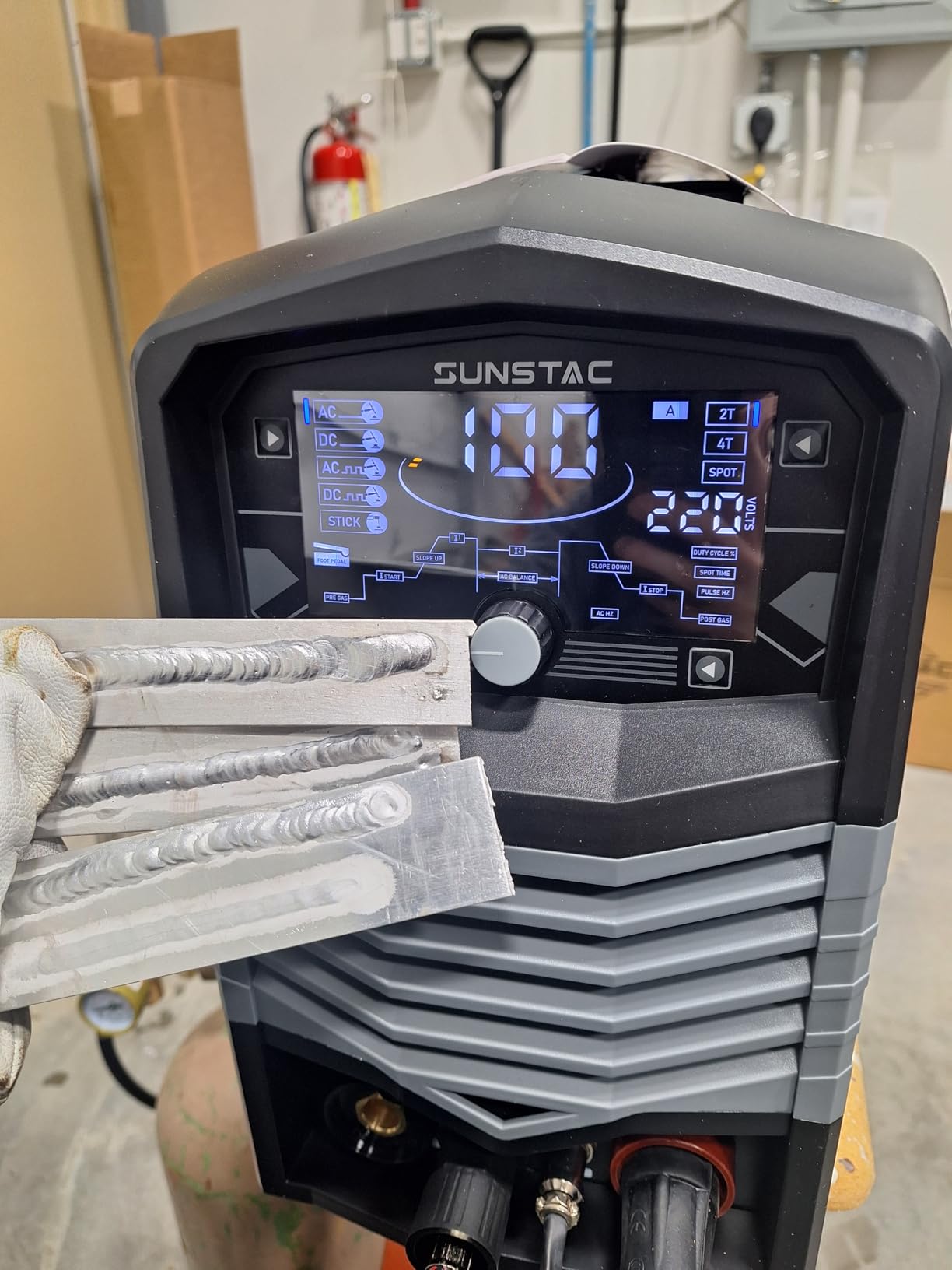
Generator compatibility is a real plus. I ran the Sunstac on a Miller Trailblazer 10k generator during a stainless tank installation and the unit performed without fault codes or shutdowns. The 29.9-pound weight makes it portable enough for field work.
Where Sunstac falls short is the included documentation. The instruction manual is minimal, and I had to call support to clarify pulse parameter defaults. Screen icons are small and difficult to read with a welding helmet down.
Best fit for high-amp stainless plate work
Choose the Sunstac 250A if you regularly weld thick stainless plate and need the extra amperage headroom. It is also a solid choice for users who split time between stainless and aluminum fabrication and want AC capability without a premium price.
The long work clamp cable is a real advantage for fabrication shops with large workbenches.
Limitations to consider
The gas-cooled torch gets warm during extended high-amp welds. Plan to upgrade to a water-cooled torch for production work above 150 amps continuous. AC frequency maxes at 100Hz, which limits ultra-thin aluminum work, though stainless welding does not require higher frequencies.
The 4.0-star rating reflects some quality control inconsistencies. Inspect the unit on arrival and test all modes thoroughly before relying on it for paid work.
7. TOOLIOM 200A – Lightweight Budget Welder for Beginners
TOOLIOM 200A TIG Welder with Pulse, 110V/220V Dual Voltage
200A DC
4-in-1
Pulse TIG
110/220V
Large Display
Pros
- Great beginner value
- Reliable HF start
- Clear instructions
- Lightweight at 20.2 lbs
- 5-pin foot pedal interface
Cons
- Cannot weld aluminum
- Torch is bulky and stiff
- Some QC issues reported
- Support delays possible
The TOOLIOM 200A is the lightest 4-in-1 TIG welder I have tested, weighing just 20.2 pounds. For stainless work, that portability is genuinely useful if you weld on ladders, in the field, or in cramped spaces. The 4-in-1 design covers Stick, DC TIG, Pulse TIG, and TIG SPOT modes.
HF ignition works reliably on stainless with minimal tungsten contamination. The pulse TIG mode lets you control frequency, duty cycle, and peak current independently, which gives you heat management options for thin stainless sheet. The large digital display is one of the most readable in this price bracket.
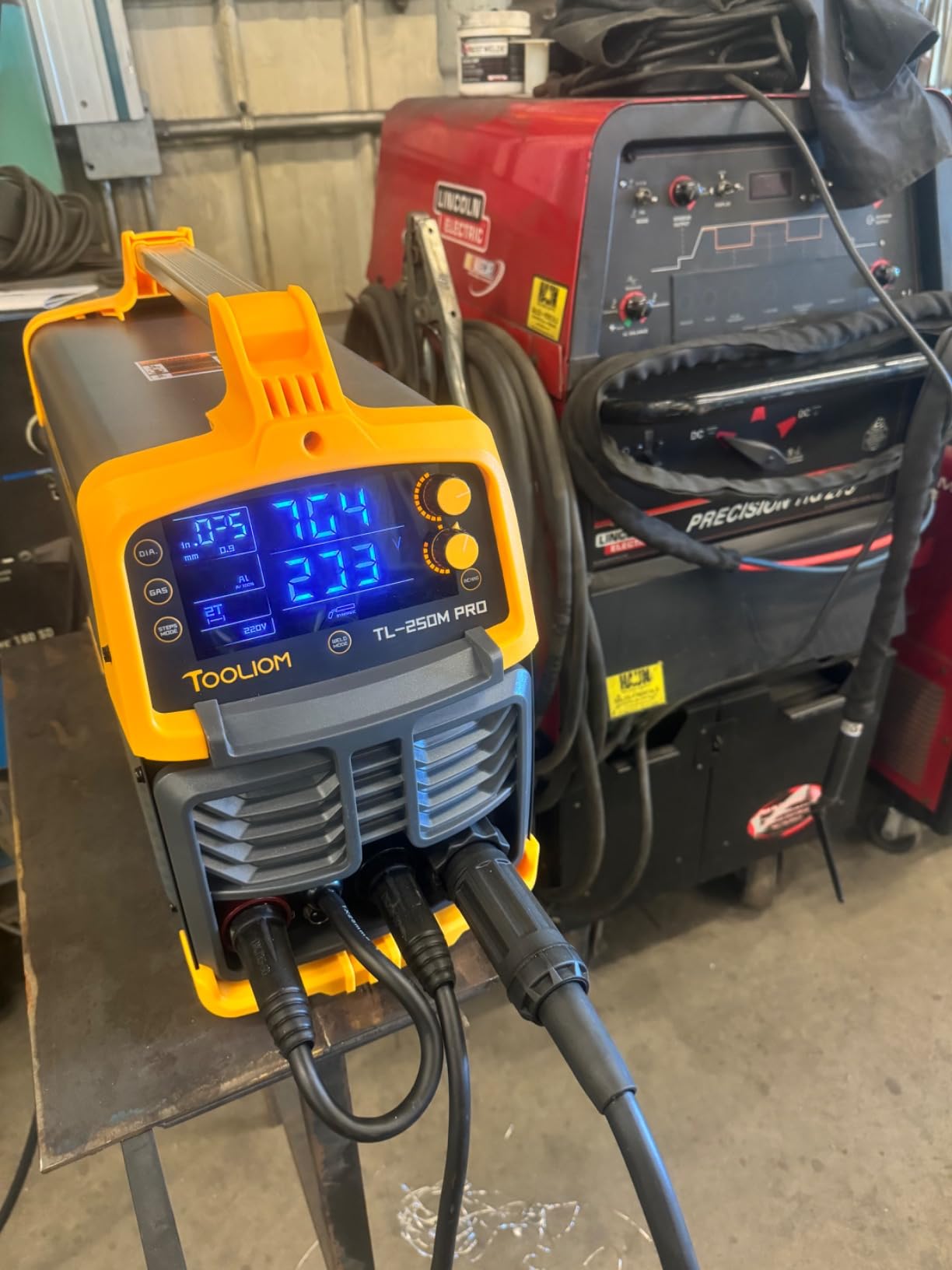
The instruction manual is unusually clear for a budget machine. I handed the manual to a first-time TIG welder and they were making acceptable stainless beads within 30 minutes. The 5-pin foot pedal interface accepts standard aftermarket pedals.
Customer service is a mixed bag. Some buyers report quick, helpful responses; others cite multi-day delays. If you rely on fast support, factor that into your purchase decision.
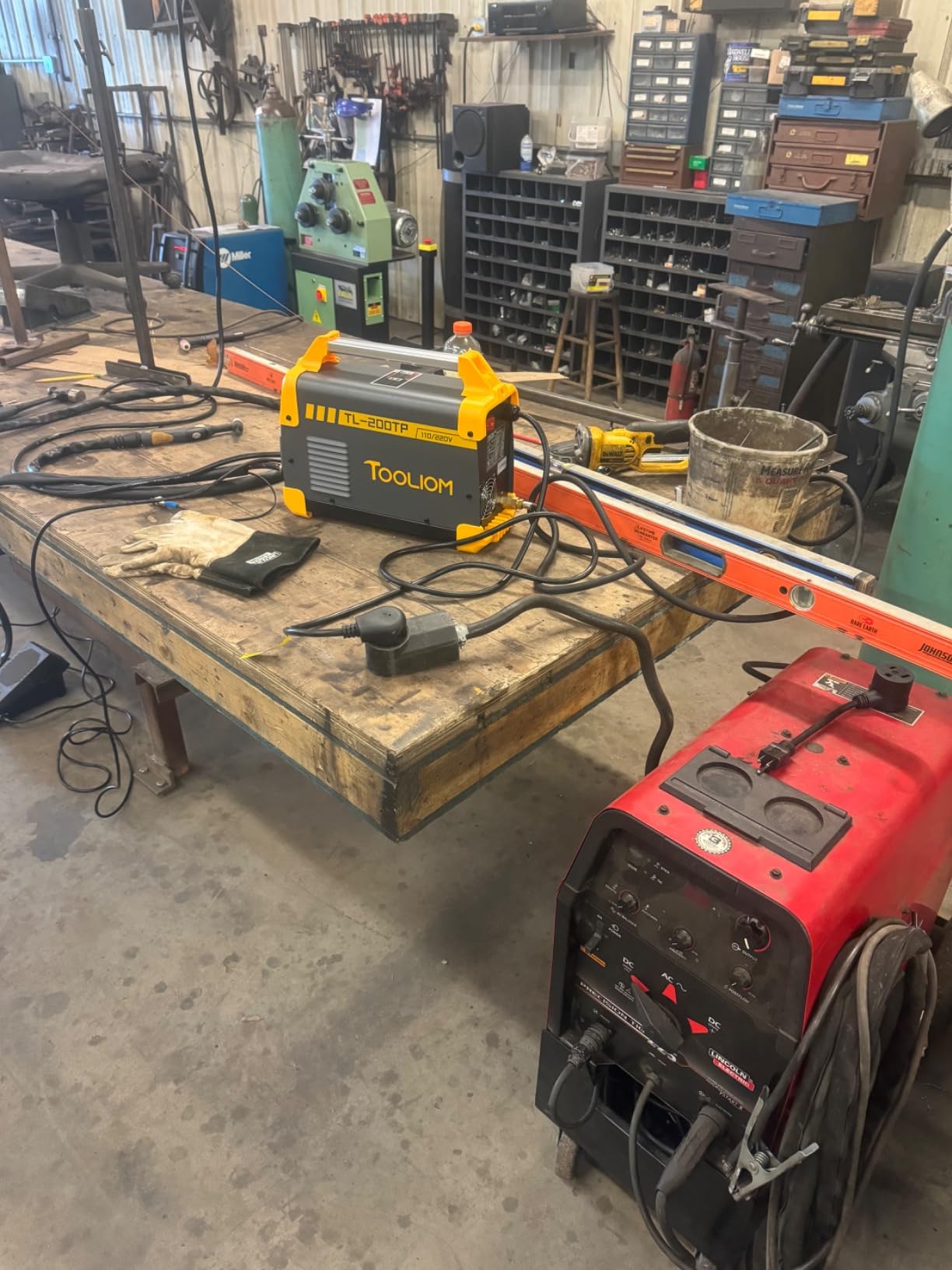
Best fit for entry-level welders on a budget
Pick the TOOLIOM 200A if you are buying your first TIG welder and want pulse capability without the AC/DC premium. It is also a strong second-machine option for established welders who need a lightweight backup.
The included instructions make it one of the most beginner-friendly machines I have tested.
Limitations to consider
The torch head is bulky and stiff. The flex neck can break if you over-adjust it. Plan to upgrade to a CK17 torch within the first few months if you do detailed stainless tube work.
Quality control is inconsistent, with some buyers reporting screen ribbon connector failures. Inspect the unit carefully on arrival. There is no AC mode, so aluminum welding is not possible.
8. ARCCAPTAIN TIG200 – Portable Budget Workhorse
ARCCAPTAIN 200A TIG Welder, 110V/220V TIG/Stick 2 IN 1 Welding Machine
200A DC
TIG/Stick 2-in-1
HF Start
110/220V
Under 12 lbs
Pros
- Compact under 12 lbs
- Excellent customer service
- Reliable on portable power
- Quiet smart fan
- Full pedal support
Cons
- DC only
- no aluminum
- Stock torch heavy
- Ground cable can melt on extended high amp
- 110V mode limited
The ARCCAPTAIN TIG200 rounds out this roundup as the most portable option. Weighing under 12 pounds with the handle and shoulder strap, this is the welder I grab when I need to do a quick stainless repair off-site or in a tight space. The TIG/Stick 2-in-1 design covers basic stainless and mild steel work without excess weight.
HF arc starting is reliable on stainless with minimal tungsten wear. The post-gas time setting (1-10 seconds) is critical for stainless because it protects the cooling weld from atmosphere contamination, which preserves corrosion resistance. The down-slope time setting (0-10 seconds) prevents crater cracks at the end of each weld.
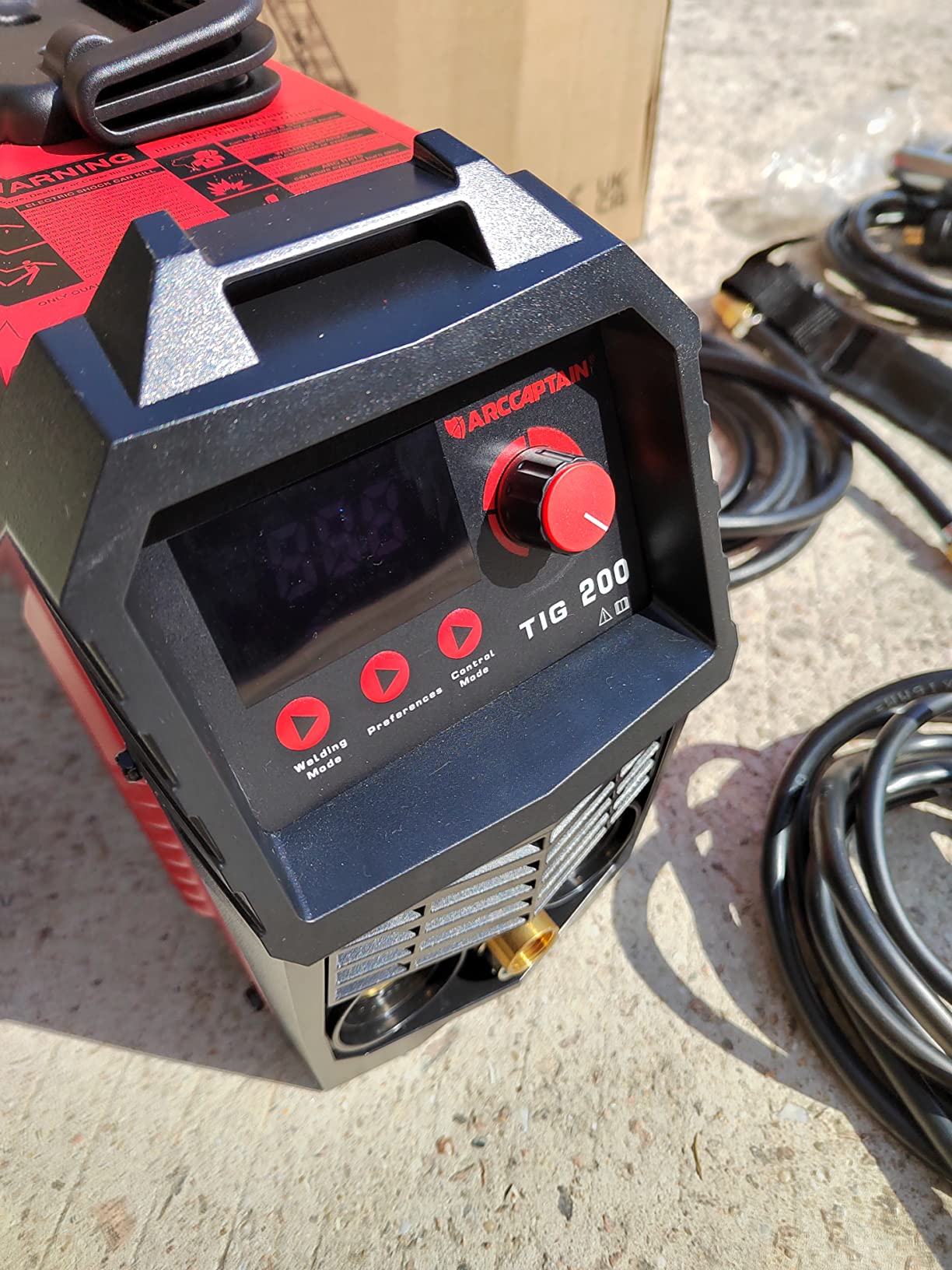
The smart fan only runs when needed, which is rare in this price bracket. I have used this unit on a Miller Bobcat 250 generator without issues, and the VRD plus multiple protection circuits keep the unit safe on unstable power sources. ARCCAPTAIN customer service is consistently praised by reviewers for being responsive and helpful.
The 110V mode is limited to about 130 amps, which restricts thick stainless work. For 1/4 inch plate and heavier, use a 220V circuit.
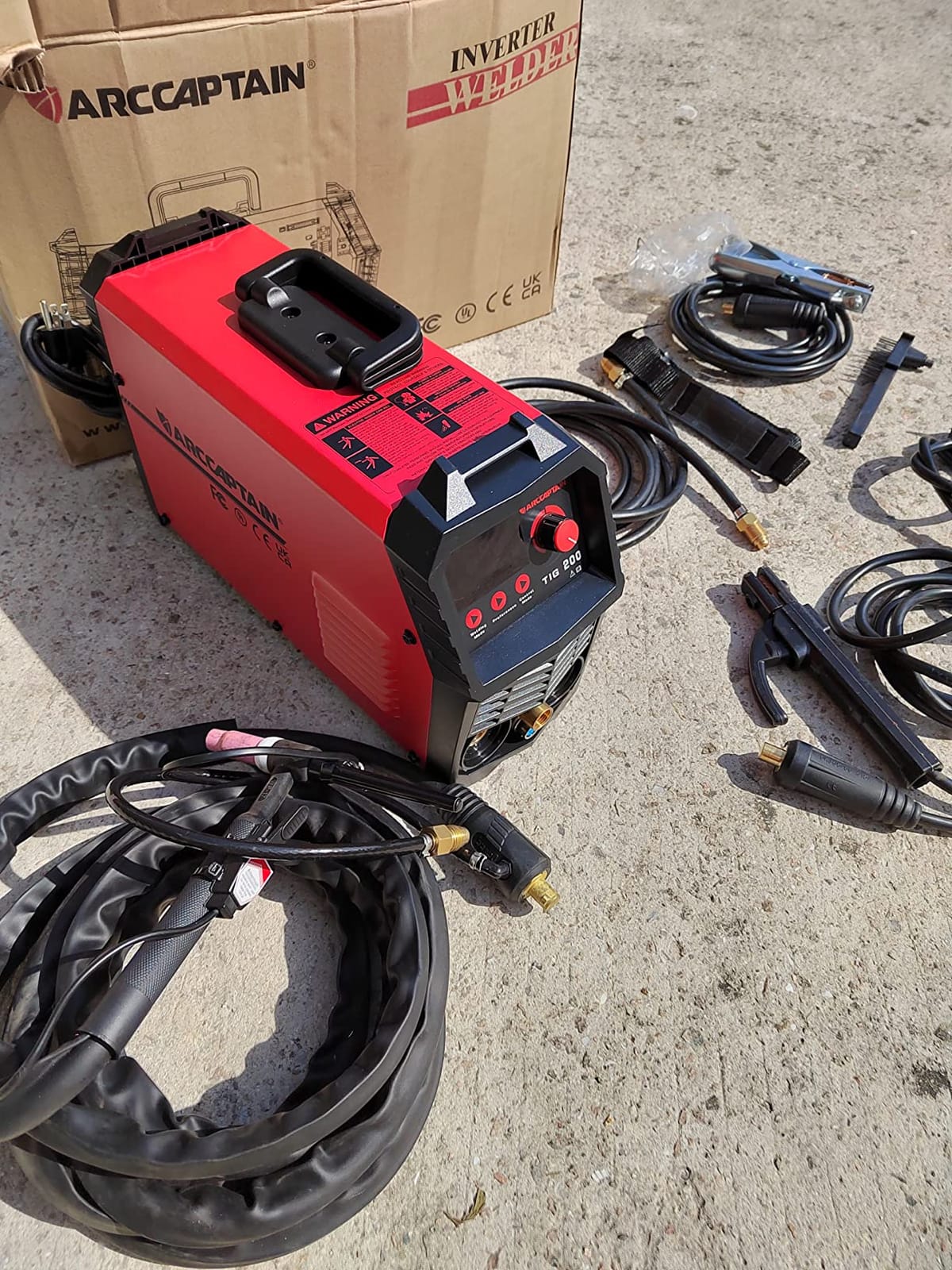
Best fit for mobile welders and tight budgets
Choose the ARCCAPTAIN TIG200 if portability and price are your top priorities. It is an excellent starter machine for someone learning TIG on stainless and a reliable backup for professionals. The unit has ranked consistently as a best-seller in TIG welding equipment, reflecting strong market acceptance.
The 3-year warranty and quiet fan operation make it a good fit for home garage use.
Limitations to consider
The stock torch is heavier and stiffer than premium CK options. The ground cable can get hot during extended high-amp use, so keep cycles under 10 minutes at full output. There is no pulse mode or AC function, so thin stainless sheet and aluminum work are limited.
For detailed stainless sheet work, plan to upgrade the torch within the first year.
Buying Guide: Choosing the Best TIG Welder for Stainless Steel
Stainless steel TIG welding has specific requirements that differ from mild steel or aluminum work. The right machine gives you stable DC output, fine amperage control, and ideally pulse capability for heat management. Here is what to evaluate before you buy.
DC vs AC: Which Do You Need for Stainless Steel?
Use DC (direct current) for stainless steel TIG welding. DC provides deep penetration, stable arc characteristics, and clean oxide-free welds on 304, 316, and similar grades. AC (alternating current) is required only for aluminum and magnesium because the positive half-cycle cleans the oxide layer. If you only weld stainless and mild steel, a DC-only machine saves money and complexity.
Choose AC/DC if you weld both stainless and aluminum, or if you anticipate adding aluminum work later. The Weldpro 200A AC/DC and Sunstac 250A AC/DC are strong picks in this category.
Pulse TIG Benefits for Thin Stainless
Pulse TIG alternates between peak current and base current at adjustable frequencies, which gives you precise heat input control. On thin stainless sheet (0.5mm to 2mm), pulse reduces warpage, minimizes discoloration, and lets you weld without a heat sink. Pulse is also useful for out-of-position stainless tube work where puddle control matters.
For thin stainless under 1.5mm, pulse is essentially mandatory. Every welder in this roundup except the basic ARCCAPTAIN TIG200 and ARCCAPTAIN 205P Pro includes pulse capability. If you weld food-grade stainless sheet, exhaust components, or decorative pieces, prioritize pulse.
Duty Cycle and Amperage Considerations
Duty cycle is the percentage of a 10-minute period a welder can run at a given output without overheating. A 60 percent duty cycle at 200 amps means you can weld continuously for 6 minutes before needing a 4-minute cooldown. For most hobby and small shop work, 40-60 percent duty cycle is sufficient.
For production stainless work or thick plate above 1/4 inch, look for higher duty cycle ratings. The Weldpro 200A offers 40 percent at full 200A, which is adequate for most applications. The PRIMEWELD TIG225X handles continuous work without thermal shutdown.
Foot Pedal and Amperage Control
A foot pedal gives you real-time amperage adjustment during welding, which is critical for stainless. You can throttle back at the end of a weld to fill the crater, increase heat at tight joints, and respond to changes in material thickness. Without a foot pedal, you are limited to fixed amperage or up/down slope settings.
All machines in this roundup except the Sunstac 250A ship with a foot pedal. For Sunstac, plan to budget for an aftermarket pedal if you want hands-free control.
Dual Voltage Flexibility
Dual voltage (110V/220V) lets you plug into household outlets or shop circuits without rewiring. For home garage welders, dual voltage is essential because many residential shops only have 110V available. All eight welders in this roundup support dual voltage.
Note that 110V operation typically limits output to 130-150 amps, which restricts thick stainless work. For 1/4 inch and heavier plate, use a 220V outlet.
Tungsten Selection for Stainless Steel
Use 2 percent lanthanated (blue) or 2 percent thoriated (red) tungsten for stainless steel DC TIG welding. Both electrode types provide stable arc starts and good current capacity. Lanthanated is preferred for low-amp DC work on thin stainless because it maintains a sharp tip better than thoriated.
Tungsten diameter depends on amperage. Use 1/16 inch (1.6mm) for 20-90 amps, 3/32 inch (2.4mm) for 80-150 amps, and 1/8 inch (3.2mm) for 150+ amps. Always grind the tungsten longitudinally with a dedicated grinding wheel; cross-grinding causes arc instability.
Back Purging for Stainless Pipe and Tube
Back purging displaces oxygen from the inside of stainless pipe or tube during welding. Without it, the inside surface oxidizes (sugars) and loses corrosion resistance. Use argon or argon/nitrogen mix delivered through a purge dam, and maintain flow for 30-60 seconds before striking the arc.
For critical sanitary and food-grade stainless work, back purging is mandatory. Many hobby welders skip this step and wonder why their pipe interiors corrode months later. Budget for a purge dam, flow meter, and trailing shield if you do regular stainless tube work.
Recommended Amp Settings by Thickness
Use approximately 1 amp per 0.001 inch of stainless thickness for DC TIG. For 0.030 inch (0.8mm) sheet, start around 30 amps. For 1/16 inch (1.6mm) sheet, start around 60 amps. For 1/8 inch (3.2mm) plate, start around 125 amps. Adjust based on travel speed and joint fit-up.
These are starting points. Always run a test bead on scrap of the same thickness before welding your final piece. Pulse settings for thin stainless typically run at 1-2 pulses per second (Hz) with a 30-50 percent background current ratio.
Frequently Asked Questions
Do you use AC or DC to TIG weld stainless steel?
Use DC (direct current) for stainless steel TIG welding. DC provides deep penetration, stable arc characteristics, and clean oxide-free welds on 304, 316, and similar grades. AC is required only for aluminum and magnesium because the positive half-cycle cleans the oxide layer. A DC-only machine is sufficient if you only weld stainless and mild steel, but AC/DC adds flexibility for aluminum work.
Can you TIG weld stainless steel with 100% argon?
Yes, 100 percent argon is the standard shielding gas for TIG welding stainless steel. Argon protects the weld pool from atmospheric contamination and produces clean, oxide-free welds. For stainless steel above 0.25 inch thickness, adding 2-5 percent hydrogen to argon improves penetration and travel speed, but pure argon is sufficient for most hobby and small shop work.
What type of welder is best for welding stainless steel?
TIG (GTAW) welding is best for stainless steel because it provides the precise heat control and clean welds stainless requires. MIG (GMAW) with pulse capability also works for thicker stainless, but TIG gives superior results on thin sheet, tube, and sanitary applications. Look for a TIG welder with stable DC output, HF arc start, pulse capability for thin material, and foot pedal control for real-time amperage adjustment.
What is the best TIG rod for welding stainless steel?
Use ER308L filler rod for welding 304 stainless steel, and ER316L for 316 stainless. The L designation indicates low carbon content, which reduces carbide precipitation and preserves corrosion resistance. Match the filler rod diameter to material thickness: 0.030 inch rod for sheet under 1/16 inch, 0.035 inch for 1/16 to 1/8 inch, and 3/32 inch for thicker plate.
Is it hard to TIG weld stainless steel?
TIG welding stainless steel is moderately difficult and requires practice to master. The main challenges are heat management (stainless conducts heat differently than mild steel), avoiding warpage on thin sheet, preventing the gritty sugar oxidation that occurs when shielding gas coverage fails, and keeping the tungsten sharp and uncontaminated. Beginners should start on 1/16 inch stainless sheet with a DC pulse-capable machine and practice scrap pieces before attempting final welds.
Final Verdict: Which TIG Welder Should You Buy for Stainless Steel
After testing and researching these eight machines, the PRIMEWELD TIG225X remains the best TIG welder for stainless steel in 2026 for most users. Its 225A AC/DC output, 200Hz pulse, CK17 torch inclusion, and 3-year warranty deliver professional-grade capability at a hobbyist price. For pure stainless work without aluminum plans, the ARCCAPTAIN TIG200 offers excellent value under 12 pounds.
If budget is the primary concern, the ARCCAPTAIN TIG200 at under $200 gives you reliable DC TIG with HF start and dual voltage. If you want maximum versatility and AC capability for future aluminum work, the Weldpro 200A AC/DC is the sweet spot for value and features. For thin stainless sheet and tube work, prioritize pulse capability and foot pedal control regardless of which machine you choose.
Stainless steel rewards preparation and practice more than most metals. Invest in a good CK torch, quality lanthanated tungsten, a reliable argon regulator, and time on scrap pieces before tackling your final project. The right TIG welder paired with solid technique will produce clean, corrosion-resistant welds that look professional and last for decades. For more on choosing general TIG equipment, our 8 Best Small TIG Welders Tested & Compared guide covers portable options worth considering.