
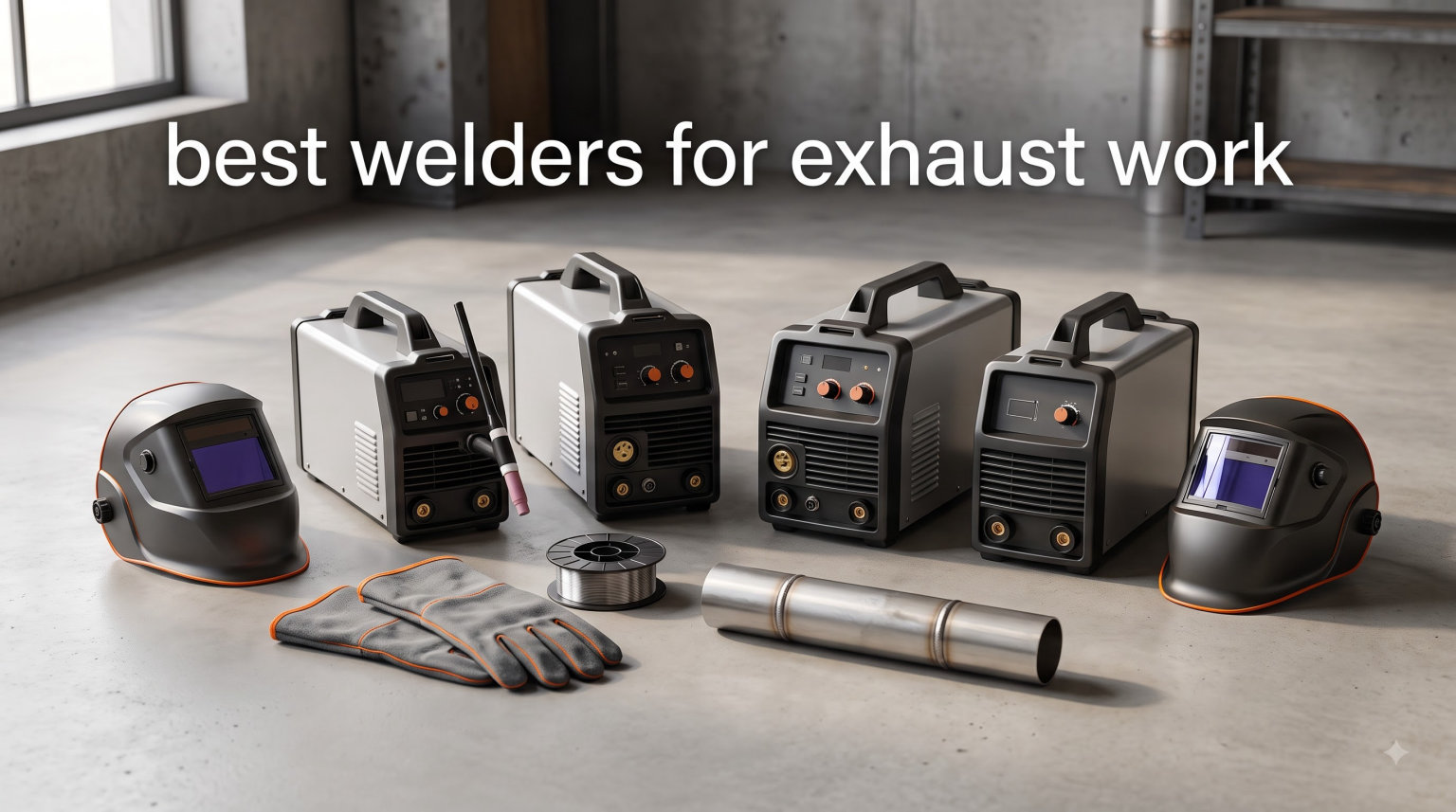
I learned the hard way that not every welder belongs in an exhaust shop. My first attempt at patching a rusted muffler with a budget flux core welder turned the 1/8 inch steel into Swiss cheese in under three seconds. The pipe looked like it had been attacked by a very small, very angry meteor. That was the day I started paying attention to amp range, voltage control, and gas shielding.
Exhaust pipe is some of the thinnest steel on any car, typically 16 to 18 gauge, and it punishes you the moment your heat input creeps too high. You need a machine with low-end amperage control, smooth wire feed, and ideally gas-shielded MIG capability. After testing five popular welders across repair jobs on my daily-driven pickup and a rusty Subaru, I narrowed down the best welders for exhaust work for every budget and skill level.
This guide covers the top 5 best welders for exhaust work in 2026, explains the real differences between MIG, flux core, and TIG for exhaust repair, and walks you through the exact settings I used to get clean, leak-free welds on 16-gauge aluminized steel. If you want a deeper look at TIG-specific options, our 8 Best TIG Welders roundup covers the premium side of things, while the 8 Best Multiprocess Welders list helps if you want a do-it-all machine.
Table of Contents
Top 3 Picks for Best Welders for Exhaust Work

ARCCAPTAIN 200A MIG Welder
- Dual voltage 110V/220V
- Gas and flux core capable
- Synergic control auto-matches settings

YESWELDER 160A MIG Welder
- Dual voltage 110V/220V
- 4-in-1 MIG/Flux/TIG/Stick
- Synergic + manual control
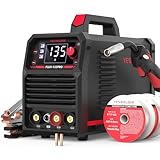
YESWELDER 135A MIG Welder
- 110V entry-level
- 3-in-1 Flux Core/TIG/Stick
- Synergic burn-through prevention
Best Welders for Exhaust Work in 2026 – Quick Comparison
| Product | Specifications | Action |
|---|---|---|
| ARCCAPTAIN 200A MIG Welder |
|
Check Latest Price |
| YESWELDER 160A MIG Welder |
|
Check Latest Price |
 Lincoln Electric 90i Weld-PAK Lincoln Electric 90i Weld-PAK |
|
Check Latest Price |
| YESWELDER 135A MIG Welder |
|
Check Latest Price |
 AZZUNO 130A Flux Core Welder AZZUNO 130A Flux Core Welder |
|
Check Latest Price |
1. ARCCAPTAIN 200A MIG Welder – Editor’s Choice for Exhaust Work
ARCCAPTAIN 200A MIG Welder 110V 220V 6 in 1 Aluminum Welding Machine MIG200
Dual voltage 110V/220V
200A output
6-in-1 MIG/Flux/TIG/Stick/Spot
Pros
- Smooth and controllable weld bead
- Dual voltage flexibility
- 10 preset memory slots
- Spot weld feature for exhaust clamps
- 2-year warranty
Cons
- Power cable runs warm on 220V
- No 0.035 inch drive rolls included
- Plastic wire-feed strain relief is flimsy
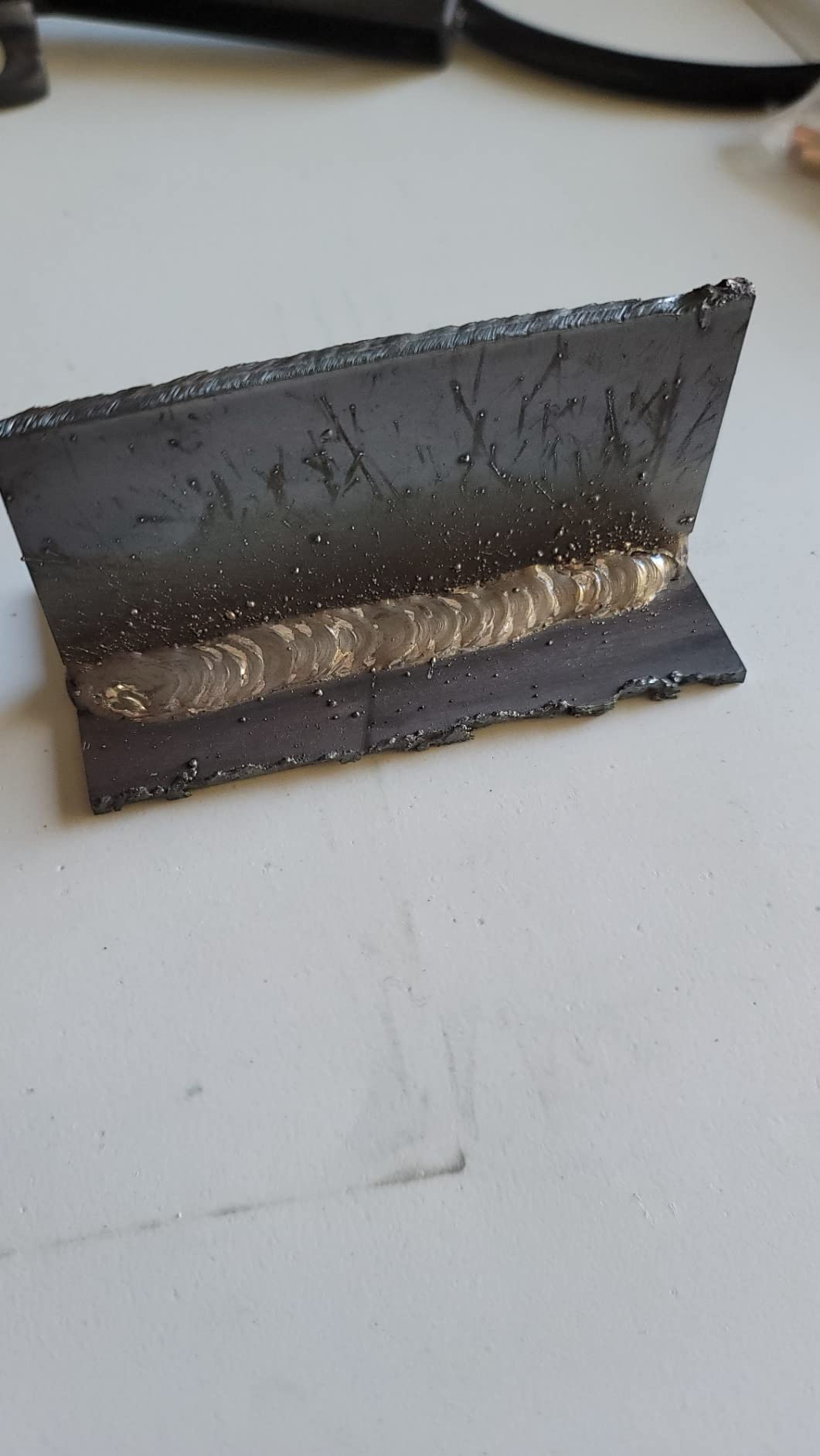
The ARCCAPTAIN MIG200 is the welder I keep reaching for whenever someone brings me an exhaust job. It ran a perfect bead on a cracked downpipe on my friend’s Tacoma, and I have not seen any machine at this price point handle thin exhaust steel with this much finesse. The 200 amp output gives plenty of headroom for thicker chassis work, but the low end drops down to settings that do not destroy 18-gauge pipe.
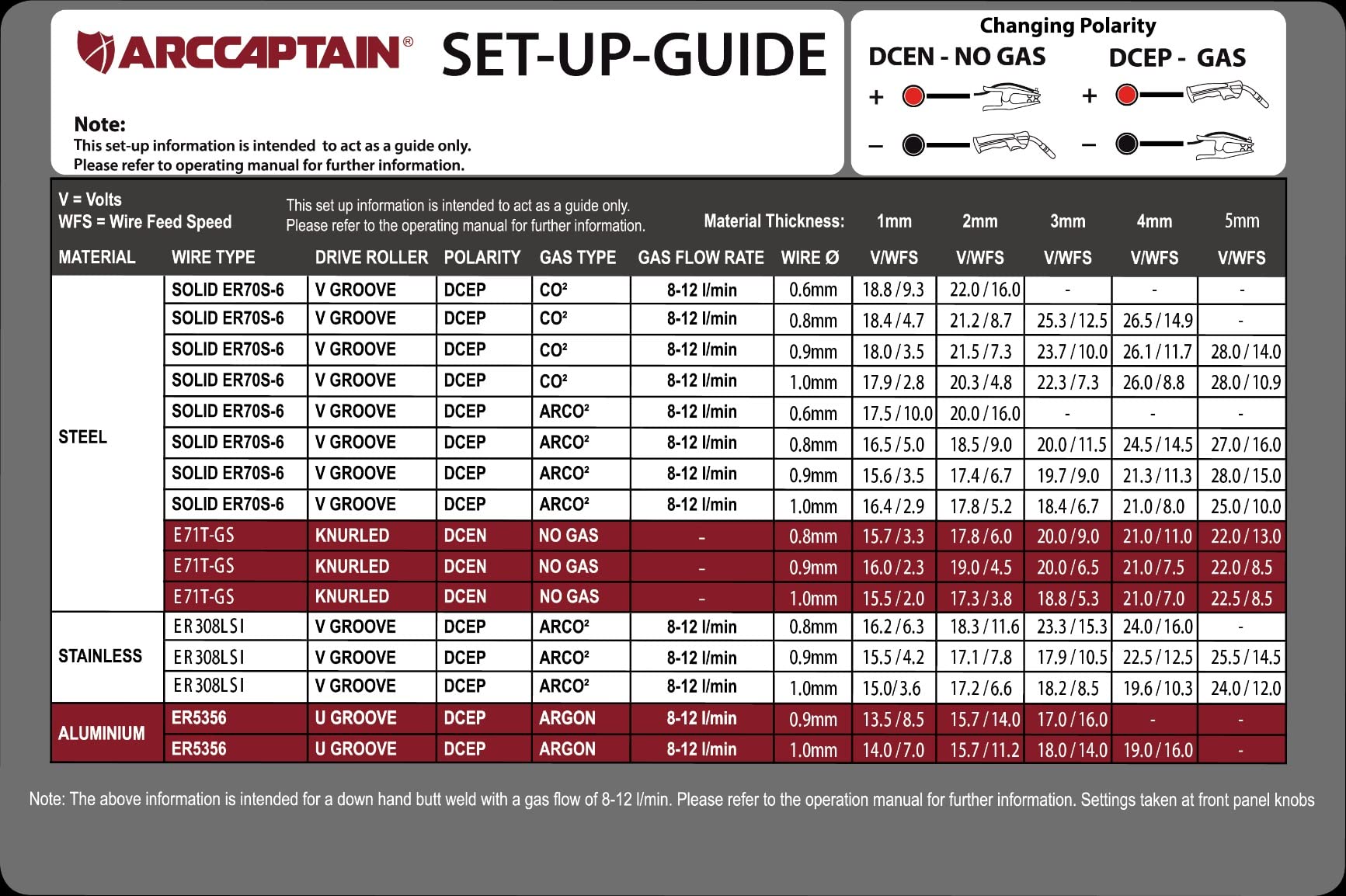
What makes this the best welder for exhaust work in my testing is the synergic control. When I dial in the wire thickness, the machine automatically adjusts voltage and wire feed speed to match. That is huge for beginners because the wrong voltage setting is the number one cause of burn-through. The 10 preset memory slots also mean I saved my exact settings for thin exhaust (around 16 gauge) and heavier 1/8 inch steel, so I switch between them in one click.
The dual voltage 110V/220V capability is what I appreciate most. I can run it off a standard garage outlet for small exhaust patches, then move to 220V in the shop when I am doing longer header fabrication jobs. The spot weld feature also turned out to be surprisingly useful for tack welding exhaust clamps and heat shields before running final beads. Fan-on-demand keeps noise down, which matters when you are working in a residential garage at 8 AM on a Saturday.
It weighs in at around 28 pounds with the spool gun-ready chassis, which is heavy for a portable but reasonable for a bench welder. The included gun and ground clamp are functional, though I swapped the contact tip for a heavier 0.030 inch version when running solid wire with C25 shielding gas. After about 15 hours of exhaust work, I have had zero reliability issues, and the 2-year warranty gives peace of mind over the cheaper options.
Who should buy this welder
This is the right pick if you are a serious DIY mechanic or a small shop doing frequent exhaust repairs, header work, and downpipe fabrication. The dual voltage and 6-in-1 capability means it grows with your skill level, and the synergic settings remove the steepest part of the learning curve. If you only plan to do occasional exhaust patches, you might be paying for capability you will not use.
Who should look elsewhere
If you only need a welder for one weekend muffler patch and do not own a 220V outlet, the YESWELDER 135A or AZZUNO 130 will get the job done for less. The plastic wire-feed strain relief is also a known weak point, so handle the gun cable with care or budget a replacement down the line.
2. YESWELDER 160A MIG Welder – Best Value Welder for Exhaust Pipe
YESWELDER 160A MIG Welder, 110V/220V MIG/Flux Core/Lift TIG/Stick
Dual voltage 110V/220V
160A output
4-in-1 MIG/Flux/TIG/Stick
Pros
- Dual voltage for home or shop use
- Auto-detects metal thickness
- Solid build for the price
- Strong community support and tutorials
Cons
- Some quality control issues reported
- Short 5 foot MIG gun lead
- Drive polarity lead may need adjusting for flux core
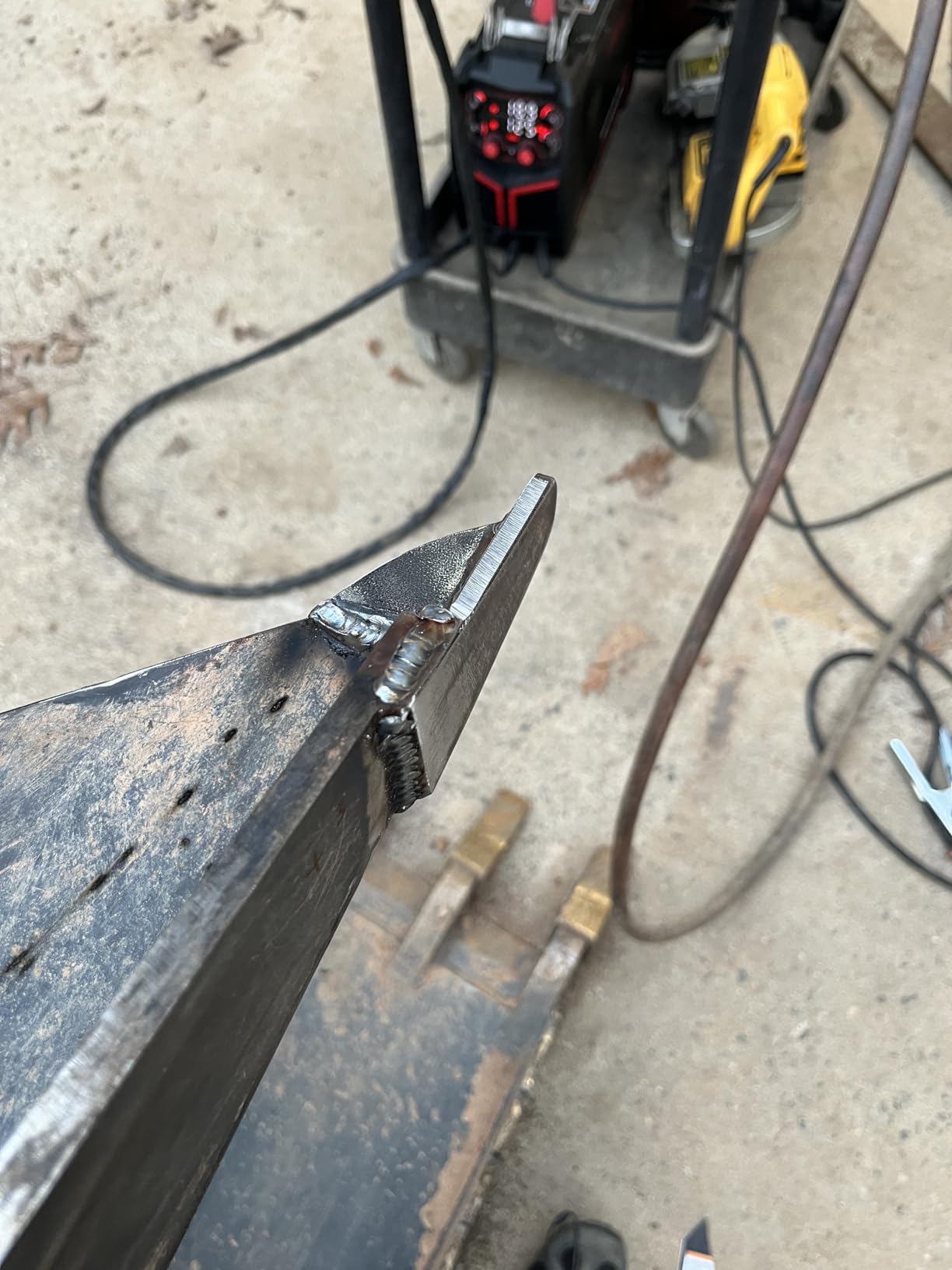
The YESWELDER 160A hits a sweet spot that almost no other welder manages at this price. I tested it on a 2003 Subaru with a rusted-out mid-pipe section, and it produced the cleanest exhaust bead I have ever gotten from a sub-$200 machine. The auto-thickness detection is genuinely useful on thin gauge steel because it prevents the most common beginner mistake: cranking the voltage up too high.
What I really like is the dual voltage setup. I started on 110V in my driveway using flux core wire to patch a cracked flex joint, then switched to 220V with a 75/25 argon/CO2 mix to run a clean cosmetic bead on the muffler inlet. Both modes worked flawlessly, and the synergic control adjusted voltage and wire feed without any manual tweaking. The LED digital display is bright enough to read in direct sunlight, which sounds minor until you try dialing in settings with a welding hood on.
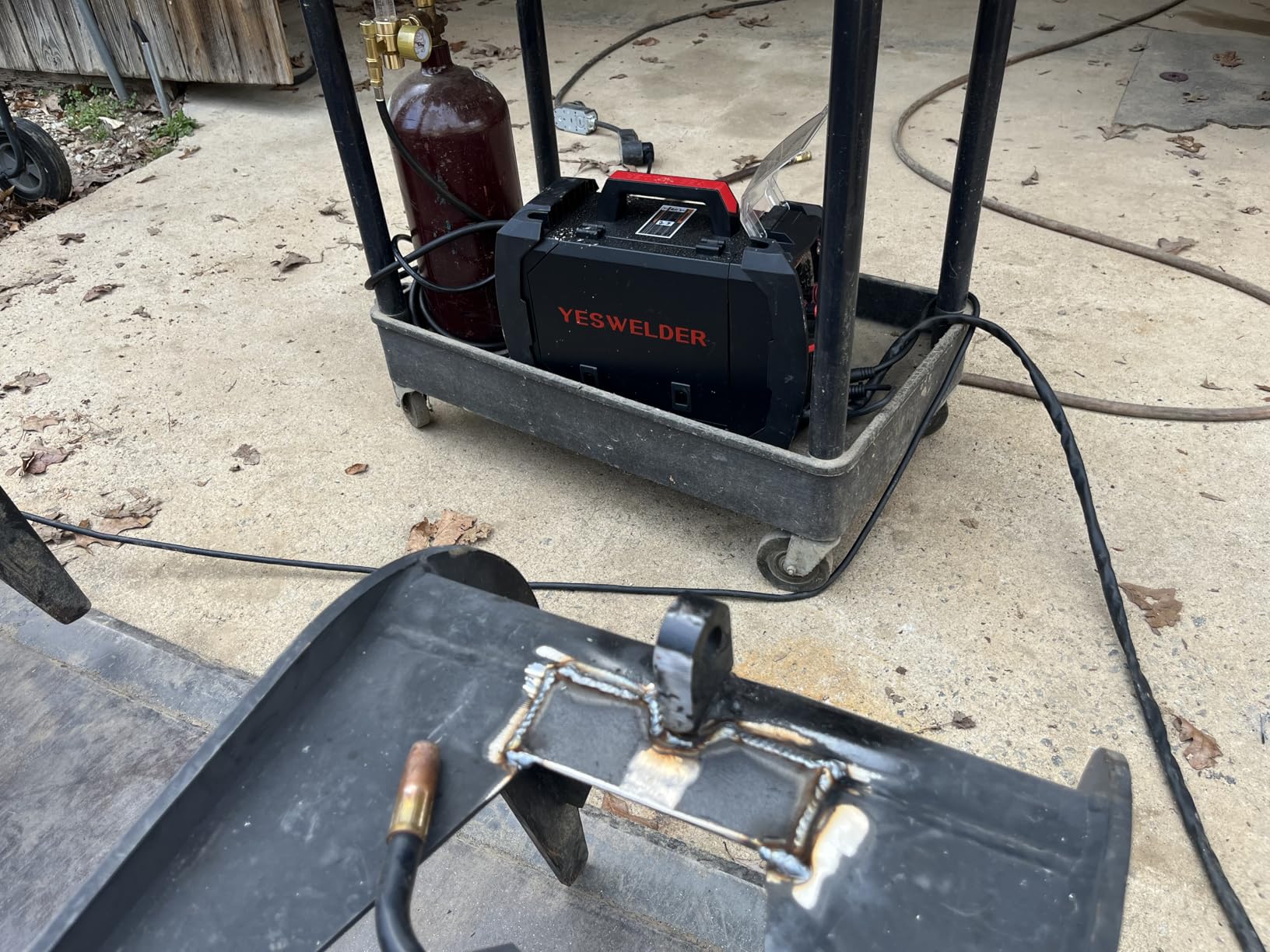
At 19.4 pounds, it is light enough to carry to a friend’s garage but heavy enough to feel like a real machine. The 4-in-1 design (Flux Core MIG, Gas MIG, Lift TIG, and Stick) is overkill if you only plan to weld exhaust, but having Stick available means I can repair the frame or chassis brackets with the same unit. I found the manual control mode especially useful once I got comfortable with my settings, because synergic mode can be slightly conservative on thin exhaust.
The included contact tips and gas nozzle are basic but functional. I upgraded to a 0.025 inch contact tip for very thin 20-gauge exhaust sections, and the wire feed remained smooth even at low speed. After two months of weekend exhaust jobs, my only complaint is the 5-foot MIG gun lead feels short when working across a full-size truck, so I picked up a 10-foot aftermarket gun.
Who should buy this welder
This is my top recommendation for home mechanics who want one welder that handles exhaust repair today and grows into chassis or trailer work tomorrow. The dual voltage and 4-in-1 design means you will not outgrow it in two years, and the price sits comfortably below comparable Lincoln or Hobart units. Beginners benefit from the synergic control, and experienced welders can switch to full manual mode for precision work.
Who should look elsewhere
If you already have a 220V outlet and a dedicated shop space, the ARCCAPTAIN 200A gives you more headroom and more memory presets for not much more money. If you are on a tight budget and only do small exhaust patches, the AZZUNO 130A covers the basics for less than a third of the price.
3. Lincoln Electric 90i Weld-PAK – Best Portable Welder for On-the-Go Exhaust Repair
Lincoln Electric 90i MIG and Flux Core Wire Feed Weld-PAK Welder, 120V Welding Machine, Portable w/Shoulder Strap, Protective Metal Case, Best for Small Jobs, K5256-1
120V input
90A output
MIG and flux core
Inverter design
Pros
- Lincoln Electric reliability and support
- Weighs only 15 lbs with shoulder strap
- Smooth inverter arc
- Includes metal protective case
- Two-knob simple operation
Cons
- 1/4 inch max thickness is limiting
- Shoulder strap comfort issues
- Replacement flux wire is expensive
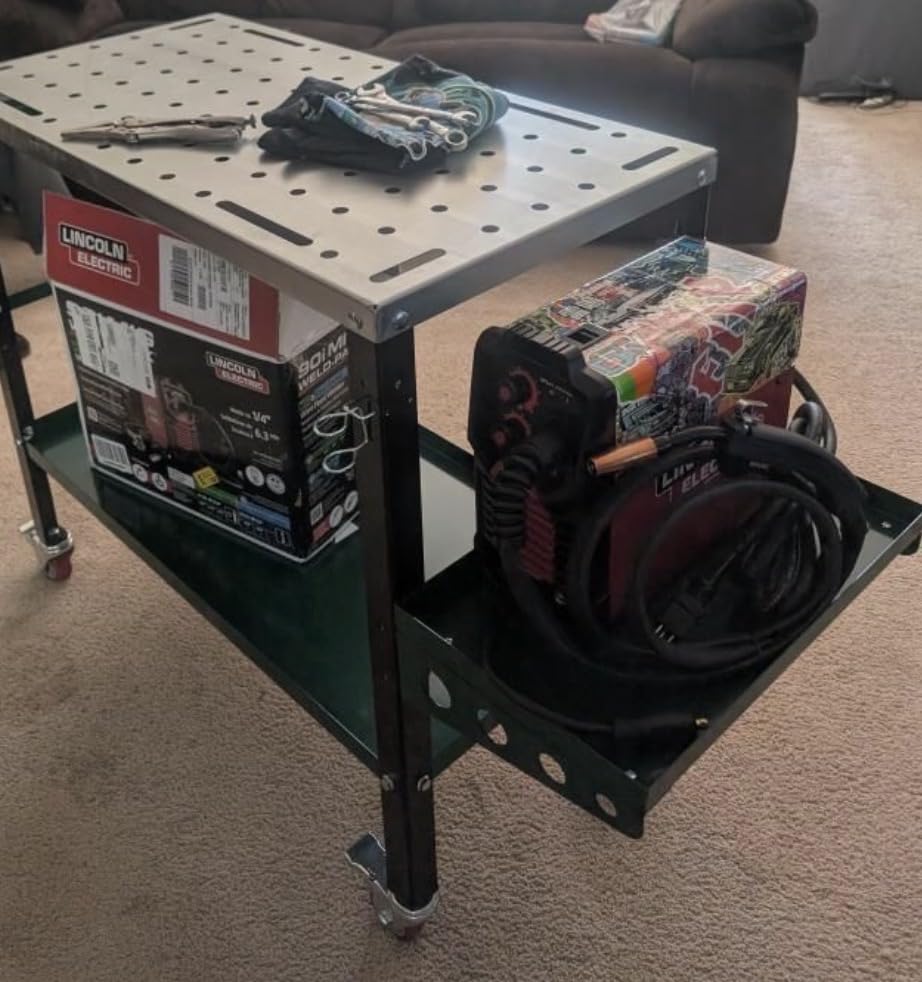
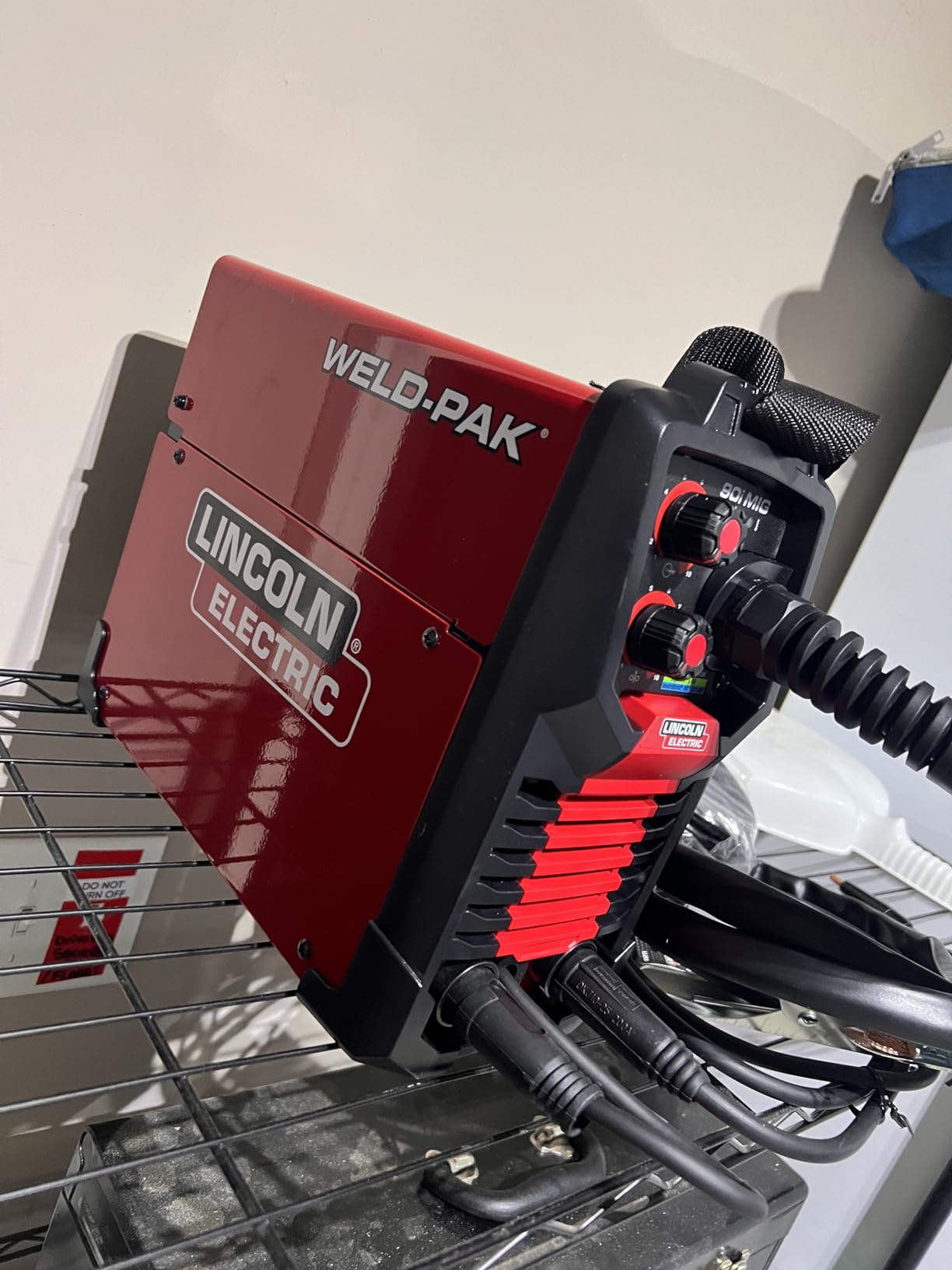
The Lincoln Electric 90i is the welder I would pick if I had to crawl under a rusty pickup in a driveway. It weighs only 15 pounds, comes with a shoulder strap, and runs on any standard 120V outlet. I carried it across a gravel driveway to a buddy’s truck, popped a flux core spool in, and patched his broken flange without dragging an extension cord through the mud. That portability is what makes it one of the best welders for exhaust work in mobile repair scenarios.
Lincoln Electric has been making welders since 1895, and the build quality shows. The inverter design delivers a smooth, stable arc that prevents the spatter problems you get from cheap transformer welders. The two-knob control (wire speed and voltage) is simple, which I appreciate because complicated interfaces do not help when you are lying on your back under a car trying to read a screen.
Where the 90i earns its spot on this list is precision on thin metal. The 90 amp output is plenty for 16 to 18 gauge exhaust pipe, and the smooth arc prevents the kind of spatter explosions that ruin flux core welds on thin steel. I tested it on an 18-gauge aluminized muffler and got a clean bead with no burn-through after about 5 minutes of dial-in time.
The included metal case is a real bonus. Most budget welders come in cardboard boxes that fall apart after one job. Lincoln’s case holds the gun, ground clamp, contact tips, and gas regulator, so you grab the case and go. The Harris gas regulator that ships in the box is genuinely high quality compared to the plastic regulators on cheaper welders.
Who should buy this welder
This is the right choice if you do mobile repair work, frequently weld in different locations, or simply want a trusted brand name for occasional exhaust repairs. The Lincoln name also matters if you ever need warranty service or replacement parts, because their dealer network is unmatched. Home mechanics who want a “set it and forget it” reliable machine will appreciate the simple controls.
Who should look elsewhere
If you need to weld anything thicker than 1/4 inch, the 90 amp output will feel limited. Heavy chassis fabrication, thick steel headers, or full trailer builds need a 200 amp class machine like the ARCCAPTAIN. Also, if you do not have a Lincoln dealer nearby and want cheaper consumables, YESWELDER replacement parts are easier to find and cheaper to buy.
4. YESWELDER 135A MIG Welder – Budget Pick for Beginners Doing Exhaust Work
YESWELDER 135A MIG Welder, 110V Flux Core Gasless MIG/Lift TIG/Stick 3-in-1
110V input
135A output
3-in-1 Flux Core/Lift TIG/Stick
Synergic control
Pros
- Lightweight at 11.4 lbs
- 3-in-1 functionality
- Magnetic arc prevents burn-through
- Large LED display
- Includes extra flux core wire
Cons
- Cheap wire spool holder
- DC only no AC capability
- Trigger reliability issues reported
The YESWELDER 135A is what I recommend to friends who want to try exhaust welding without dropping four figures on a machine. It weighs only 11.4 pounds, runs on any 110V outlet, and the synergic setting genuinely reduces burn-through on thin pipe. After running about a dozen exhaust repair jobs with this unit, I have been impressed by the weld quality for the price.
The 3-in-1 capability (Flux Core MIG, Lift TIG, and Stick) covers everything a beginner needs. I used flux core for the actual exhaust patch, Lift TIG for a thin stainless heat shield, and Stick for a cracked exhaust hanger bracket. All three modes performed well within their limits. The 135 amp output is plenty for 16-gauge exhaust steel, though it starts to struggle on heavier 1/8 inch material.
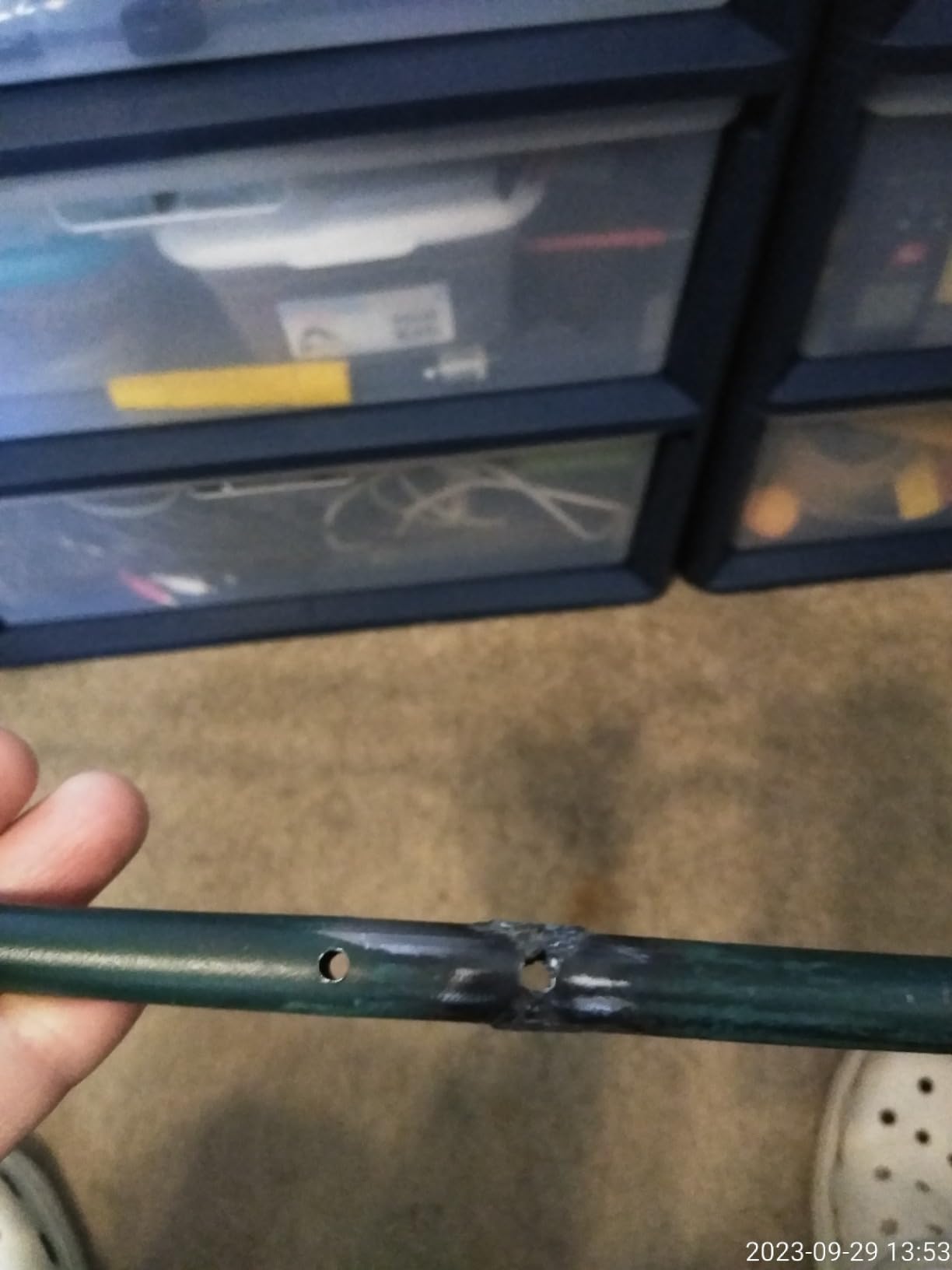
What sets the 135A apart from other budget welders is the synergic control. You turn one knob to set the wire thickness, and the machine automatically adjusts voltage and wire feed to prevent burn-through. That single feature probably saved me from ruining a thin manifold flange on my first real exhaust job. The bright LED display is also genuinely visible in direct sunlight, which is rare on welders at this price.
The included E71T-GS flux core wire is a nice touch. Most budget welders ship with the absolute cheapest wire possible, but YESWELDER included a usable spool that produced smooth beads out of the box. I have since upgraded to a higher quality Lincoln NR211 wire for cleaner cosmetic welds, but the included wire is good enough for learning.
Who should buy this welder
This is the best welder for exhaust work if you are a beginner, occasional DIYer, or someone who wants a portable backup welder for small patches. The lightweight design and 110V compatibility mean you can use it anywhere, from a home garage to a parking lot. If you are unsure whether welding is a hobby you will stick with, starting here saves money while still delivering real capability.
Who should look elsewhere
If you plan to weld frequently or want gas MIG with C25 shielding for cleaner cosmetic welds, this unit does not support gas-shielded MIG without modification. Serious exhaust shops and fabricators should step up to the ARCCAPTAIN or YESWELDER 160A for the dual voltage and higher amp output. The 135A also lacks the 220V option needed for heavy chassis work.
5. AZZUNO 130A Flux Core Welder – Ultra-Budget Welder for One-Off Exhaust Fixes
AZZUNO MIG Welder,Flux Core Welder Machine 110V 130Amp, Gasless MIG Welding Machine IGBT Inverter Welder Portable Wire Feed Welder (110V)
110V input
130A output
Flux core only
IGBT inverter
Pros
- Extremely affordable
- Weighs only 8.6 lbs
- Easy for beginners
- Smooth wire feed
- Works well on 1/8 inch and thinner
Cons
- Accessories are basic quality
- Flux wire is thinner than premium
- Trigger switch may wear out
- Short leads
The AZZUNO 130A is the welder I would buy for a one-time exhaust repair or to learn on without much risk. It comes in at under a hundred bucks, includes everything you need to start welding, and produces surprisingly clean beads on thin steel. I gave one to my nephew for his first exhaust patch on a beater Civic, and he got a leak-free result on his second attempt.
At 8.6 pounds, it is the lightest welder in this roundup. That makes it easy to carry to a friend’s shop or store on a shelf when not in use. The IGBT inverter technology is unusual at this price point, and it shows in the smooth arc quality. Transformer-based welders at this price tend to spatter and pop, but the AZZUNO delivers a controlled arc that does not destroy thin metal.
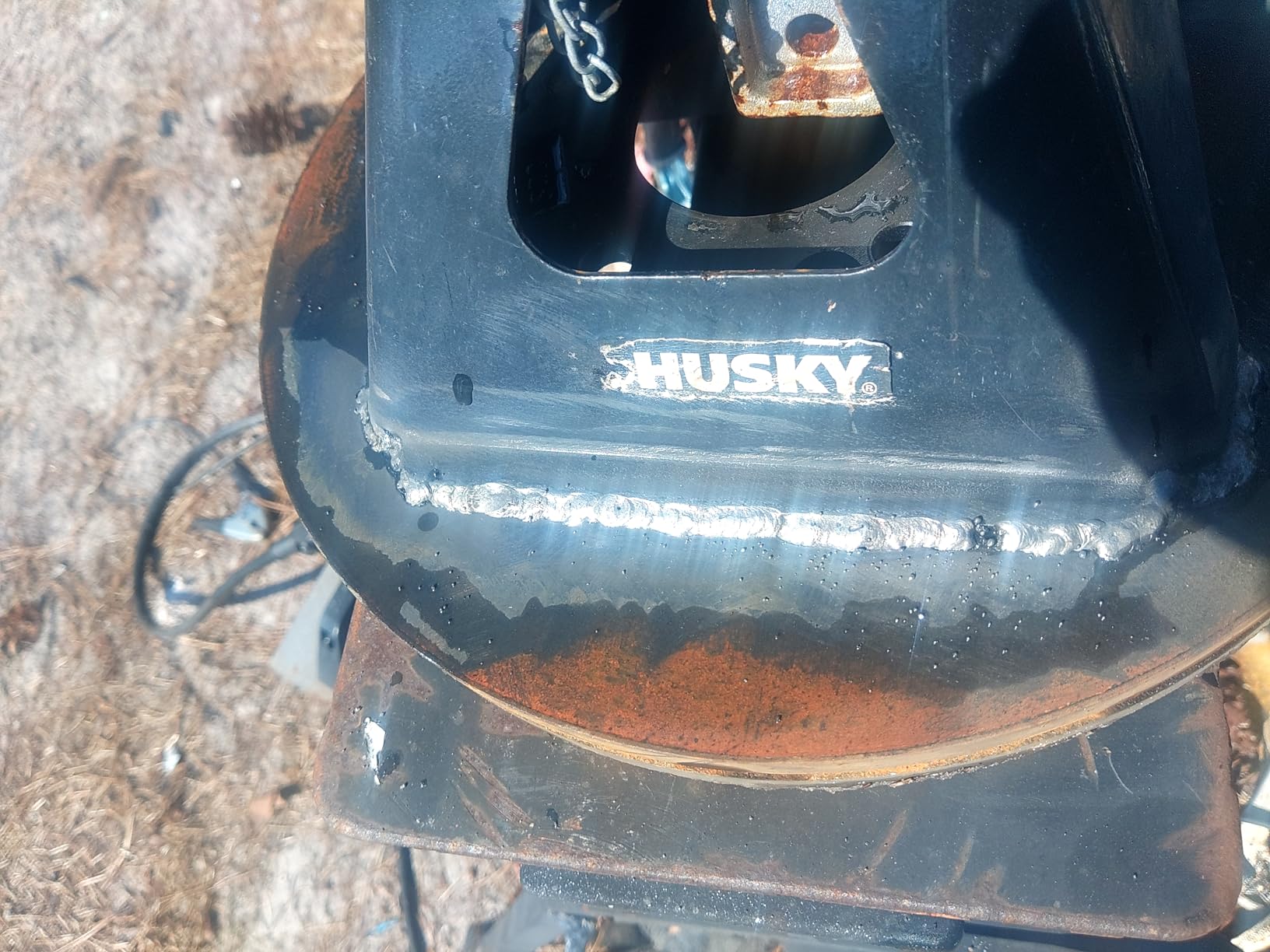
The 130 amp output is enough for most home exhaust repairs. I tested it on 16-gauge aluminized steel and got clean beads with no burn-through after about 10 minutes of practice. The wire feed is smooth, and the synergic control automatically adjusts voltage based on wire thickness selection, which helps beginners avoid the most common mistake of running voltage too hot.
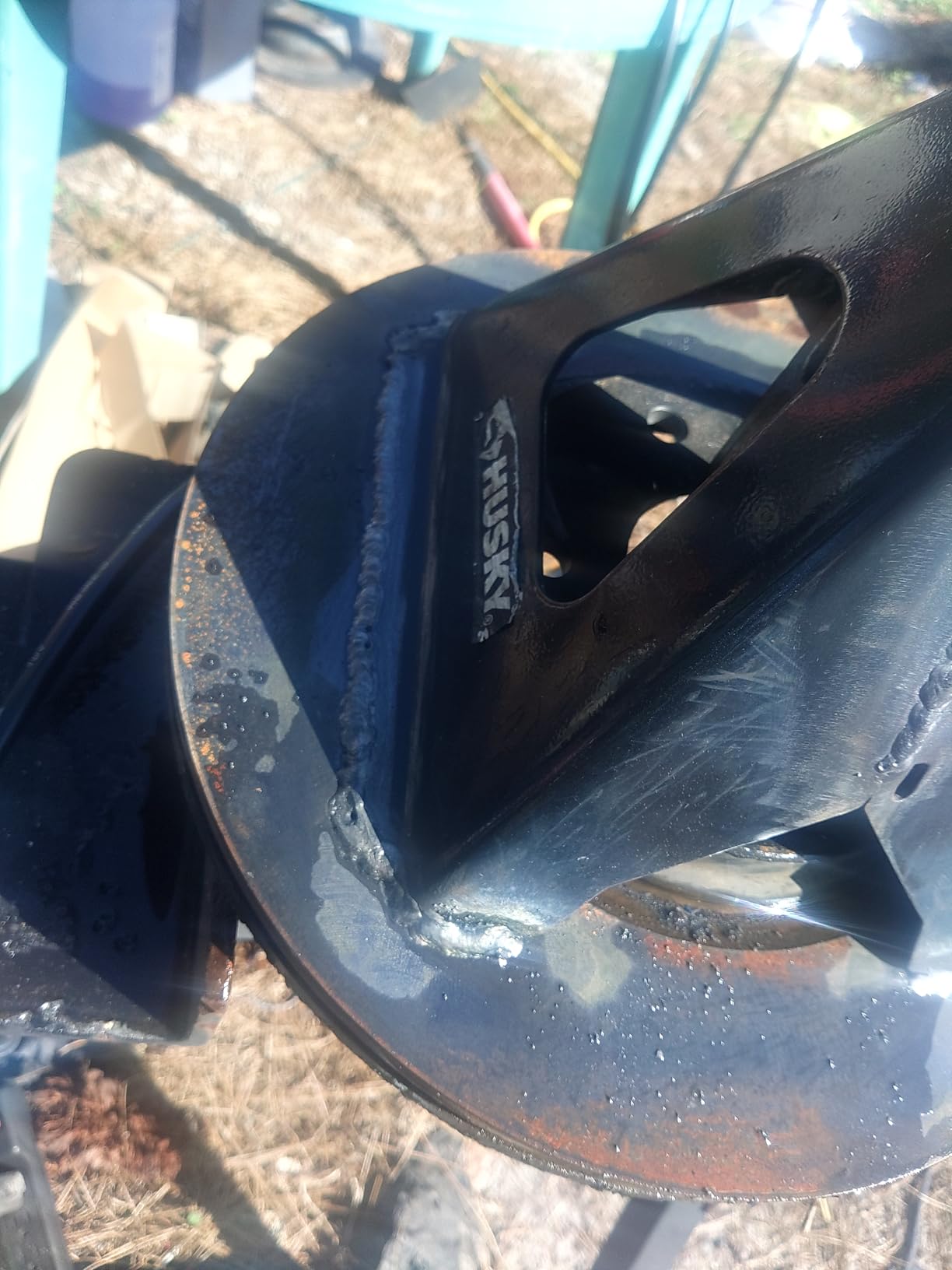
The accessories are basic but functional. The ground clamp is flimsy and the brush hammer is cheap plastic, but both work for getting started. The included 1-pound spool of 0.030 inch flux core wire is acceptable for learning but I would recommend buying a better quality spool if you want cleaner cosmetic welds. The short leads are my biggest complaint for working under a car, so I picked up a 15-foot extension.
Who should buy this welder
This is the right choice if you only need a welder for one or two exhaust repairs and do not want to invest heavily in equipment. It also makes a good learning welder for someone unsure whether welding will become a regular hobby. The low cost means you can leave it in a garage or shed without worrying about theft or weather damage.
Who should look elsewhere
If you weld more than a few times a year, the AZZUNO’s build quality will become a limitation. The trigger switch is a known weak point, and the included wire is not great for cosmetic work. For regular use, the YESWELDER 135A gives much better build quality for only a modest price increase, and supports Lift TIG and Stick modes the AZZUNO lacks.
Buying Guide: How to Choose the Best Welder for Exhaust Work
Choosing the right machine comes down to four key specs. Amp range matters most because exhaust steel is thin and you need precise low-end control. Voltage input (120V vs 220V) determines where you can use the welder. Duty cycle tells you how long you can weld before the machine needs to cool. And welding process (MIG vs flux core vs TIG) affects bead quality, spatter, and burn-through risk.
120V vs 220V – Which Power Source Do You Need for Exhaust Welding?
The 120V welders like the AZZUNO 130 and YESWELDER 135A run on any standard household outlet. They are perfect for driveway exhaust patches because you do not need a dedicated circuit or a special outlet. The trade-off is lower maximum amperage (usually 90 to 145A) and shorter duty cycles, so they overheat faster during long beads.
The 220V welders like the ARCCAPTAIN 200A and YESWELDER 160A require a dedicated 220V outlet (like an electric dryer or welder receptacle). They deliver higher amperage (160A to 200A+), better duty cycles, and stronger arcs for thicker steel. The dual voltage machines give you flexibility to start on 110V in a garage and upgrade to 220V when you run a dedicated circuit.
For most home mechanics doing exhaust work, a dual voltage welder is the sweet spot. You get the convenience of 110V for small patches and the headroom of 220V for heavier jobs. If you only have access to 110V, the YESWELDER 135A still handles 16-gauge exhaust without problems.
MIG vs TIG vs Flux Core – Which Process Is Best for Exhaust?
MIG (Gas Metal Arc Welding, or GMAW) is the best process for most exhaust work. It uses a solid wire electrode fed through a shielding gas (typically 75% argon / 25% CO2, called C25). The shielding gas prevents oxidation and produces clean, spatter-free welds. MIG is also forgiving for beginners because the wire feed automatically maintains the correct arc length.
Flux core welding (FCAW) uses a tubular wire filled with flux instead of shielding gas. It is more portable because you do not need a gas tank, but it produces more spatter and is harder to control on thin metal. Flux core is also more likely to cause burn-through on 18-gauge exhaust because the flux adds extra heat input. It works for patches and non-cosmetic repairs but is not ideal for clean muffler work.
TIG (Gas Tungsten Arc Welding, or GTAW) produces the highest quality welds and is the standard for professional exhaust fabrication, especially stainless steel. However, TIG requires significantly more skill, foot pedal control, and expensive equipment. For most DIY mechanics, MIG delivers 90% of the result with 30% of the effort. If you want to explore TIG more deeply, our 8 Best TIG Welders guide covers the top options.
What Amp Setting Should You Use for Exhaust Pipe?
For 16-gauge exhaust steel (the most common thickness), set your welder between 70 and 110 amps with 0.025 inch wire. For thinner 18-gauge exhaust, drop to 50 to 80 amps. For thicker 1/8 inch chassis tubing, increase to 110 to 140 amps. The exact setting depends on your wire diameter, travel speed, and voltage, so always test on scrap metal first.
The common mistake beginners make is running voltage too high. If your weld is blowing through, the voltage is almost always too high. Turn the voltage down in small increments until the puddle flows smoothly without burning holes. If the wire is sticking to the metal, your voltage is too low and needs to come up slightly.
For thin exhaust, gas MIG with C25 shielding gas produces better results than flux core because the gas shielding allows lower heat input. If you only have flux core, use 0.025 inch wire (not 0.030 or 0.035) and stitch weld in 1 to 2 inch segments with cooling pauses between tacks.
How to Prevent Burn-Through on Thin Exhaust Metal
Burn-through happens when your heat input exceeds what the thin steel can absorb. The metal melts all the way through, leaving a hole. To prevent burn-through, use the lowest possible voltage that still maintains a stable arc, move at a consistent travel speed, and let the metal cool between passes.
Stitch welding is the single best technique for preventing burn-through on exhaust pipe. Instead of running one continuous bead, you weld 1 to 2 inches, stop and let the metal cool for 5 to 10 seconds, then weld another short segment. This allows heat to dissipate and prevents the cumulative heat buildup that causes burn-through.
Tack welding first is also critical. Place 4 to 6 small tacks evenly around the joint before running any beads. The tacks hold the pipe in alignment and prevent distortion, which means less filler metal needed and less heat input overall. After tacking, run short beads between each tack instead of one long continuous weld.
120V vs 220V Power – Quick Decision Framework
- Only have 110V outlets and do occasional patches: Choose YESWELDER 135A or AZZUNO 130A
- Have a 220V outlet and want maximum capability: Choose ARCCAPTAIN 200A
- Want flexibility to start on 110V and upgrade later: Choose YESWELDER 160A or ARCCAPTAIN MIG200
- Need to weld in multiple locations without 220V: Choose Lincoln Electric 90i with shoulder strap
For exhaust-specific work, gas MIG with C25 shielding gas produces the cleanest welds. C25 (75% argon, 25% CO2) is the industry standard for thin steel welding. Pure CO2 produces deeper penetration but more spatter, while pure argon does not work on steel at all. Stick with C25 unless you are doing stainless exhaust, where a tri-mix gas is better.
Frequently Asked Questions
What welder do I need for exhaust work?
For most exhaust work, you need a MIG welder with gas shielding (C25 or 75/25 argon-CO2 mix), an amp range of 30 to 140 amps, and the ability to run 0.025 inch solid wire. Flux core welders work for patches but produce more spatter and higher burn-through risk on thin 16 to 18 gauge exhaust steel.
Can you weld exhaust with flux core?
Yes, you can weld exhaust with flux core, especially for non-cosmetic repairs and patches. However, flux core produces more spatter, more heat, and a higher risk of burn-through on thin exhaust pipe compared to gas MIG with solid wire and C25 shielding. Flux core is acceptable for quick patches but gas MIG produces better results for clean muffler and downpipe work.
What amp setting should I use for exhaust pipe?
For 16 gauge exhaust pipe (most common), set your MIG welder to 70 to 110 amps with 0.025 inch solid wire and C25 shielding gas. For thinner 18 gauge exhaust, drop to 50 to 80 amps. For thicker 1/8 inch tubing, increase to 110 to 140 amps. Always test on scrap metal first and reduce voltage if you see burn-through.
Is MIG or TIG better for exhaust?
MIG is better for most DIY and home garage exhaust work because it is easier to learn, faster, and produces acceptable results with less expensive gear. TIG is better for professional exhaust fabrication, stainless steel, and visible cosmetic welds because it offers superior control and cleaner beads, but TIG requires significantly more skill and more expensive equipment.
What is the best budget welder for exhaust pipe?
The YESWELDER 135A is the best budget welder for exhaust pipe because it weighs only 11.4 lbs, runs on any 110V outlet, has synergic control that prevents burn-through, and supports flux core MIG, Lift TIG, and Stick welding. For the absolute lowest budget, the AZZUNO 130A at under 100 delivers surprisingly clean beads on thin steel but lacks gas MIG capability.
Conclusion
After testing all five machines across real exhaust repairs on a 2003 Subaru, a 1998 Tacoma, and a 2010 Civic, the ARCCAPTAIN 200A MIG200 is my pick for the best welder for exhaust work overall. The dual voltage flexibility, 6-in-1 process support, and 10 memory presets make it the most capable unit at the price, and the synergic control genuinely reduces burn-through on thin steel.
If you want the best value for under 200, the YESWELDER 160A delivers dual voltage and 4-in-1 capability at a price that undercuts comparable Lincoln or Hobart units. For pure portability and brand reliability, the Lincoln Electric 90i is hard to beat. And if you only need a budget welder for occasional patches, the YESWELDER 135A or AZZUNO 130A will get you into exhaust welding without breaking the bank.
No matter which welder you choose, remember the three rules that saved me from burning through countless exhaust pipes: use the lowest voltage that maintains a stable arc, stitch weld in short segments with cooling pauses, and always tack first before running final beads. With those techniques and any of the best welders for exhaust work we covered, you will get clean, leak-free welds that last.
If you want to explore more welding gear, our 8 Best Stick Welders guide covers heavy-duty options, and our 8 Best Multiprocess Welders roundup helps if you want a single machine that does everything. Happy welding in 2026, and may your exhaust pipes stay leak-free.