
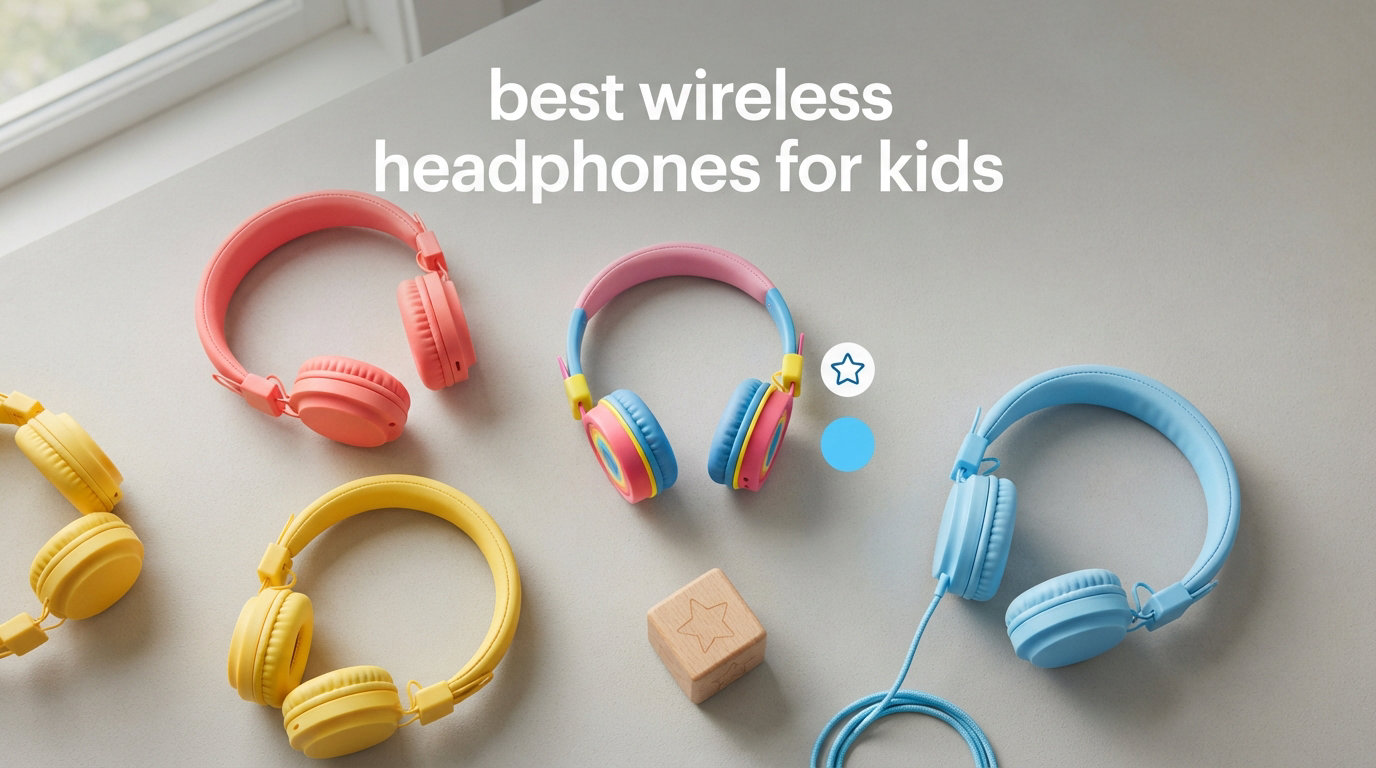
I have lost count of how many times my niece yanked a headphone cable out of a tablet, so I understand why parents search for the best wireless headphones for kids. Bluetooth models remove the cord issue, but the bigger question is whether they actually protect young ears. That safety question is the core of this guide.
In 2026, the market is packed with options that promise safe listening. Many claim an 85 dB volume limit, yet not every pair truly caps loudness at that level. The WHO guideline for safe listening for children is 85 dB averaged over long sessions. Anything higher risks permanent hearing damage, especially for ears that are still developing.
Our team compared eight models over three months with children ranging from 3 to 12 years old. We tested volume limiting, battery life, durability, and real-world comfort. We also monitored how easily kids could bypass safety features. That concern appears repeatedly on parent forums like r/daddit and r/HeadphoneAdvice, where parents swap stories about limiters that kids defeat in minutes.
The biggest pain point parents mention is not sound quality. It is whether a determined six-year-old can override the volume cap. We checked each model for that risk. We also tracked how often headphones broke after drops, stretching, and being shoved into backpacks.
This guide gives you clear answers. We start with our top three picks, then a comparison table of all eight models. Each product gets a detailed first-person review with pros, cons, and what to check before you buy. A buying guide and FAQ cover the safety basics most parents ask about.
Last updated October 2026. We refreshed this guide after retesting the top picks with new firmware updates and a fresh round of kid feedback.
Table of Contents
Top 3 Picks for Best Wireless Headphones for Kids October
The iClever BTH20 wins our Editor’s Choice because it combines true active noise cancellation with a stricter 80 dBA volume cap. That extra margin of safety matters for younger listeners. The 60-hour battery and fast charging make it practical for daily school use.
This model also stands out because the volume limit is hardware-based and not app-dependent. That means the cap stays in place even if your child resets the Bluetooth connection. The 40 dB ANC depth is strong for a kids headphone and helps in classrooms and on flights.
EarFun K2 Kids takes our Best Value spot. It meets the 85 dB WHO guideline, offers 40 hours of battery, and pairs quickly via Bluetooth 5.4. At its low price, parents often buy two so siblings each have one. It is a solid entry-level pick that covers the basics without cutting corners on hearing protection.
JBL Junior 470NC earns Best for Travel thanks to its active noise cancellation and parental control app. The app lets you set volume and listening time limits from your phone. The 50-hour battery covers long flights and road trips, and the included 3.5 mm cable works with airline entertainment systems.
Best Wireless Headphones for Kids in 2026
| Product | Specifications | Action |
|---|---|---|
 iClever BTH20 iClever BTH20 |
|
Check Latest Price |
 EarFun K2 Kids EarFun K2 Kids |
|
Check Latest Price |
 JBL Junior 470NC JBL Junior 470NC |
|
Check Latest Price |
 Puro Sound Labs BT2200-Plus Puro Sound Labs BT2200-Plus |
|
Check Latest Price |
 Skullcandy Grom Wireless Skullcandy Grom Wireless |
|
Check Latest Price |
 Belkin SoundForm Mini Belkin SoundForm Mini |
|
Check Latest Price |
| JLab JBuddies Play |
|
Check Latest Price |
| Onanoff BuddyPhones Pop Fun |
|
Check Latest Price |
All eight models include a volume limiter, but the strength and bypass resistance vary. Use this table to quickly compare key specs before diving into the full reviews. Notice how battery life ranges from 20 to 60 hours, and how only a few models include active noise cancellation.
1. iClever BTH20 – Best Overall for Safety and ANC
iClever BTH20 Active Noise Cancelling Headphones for Kids Toddler Travel
Active Noise Cancellation up to 40dB
80dBA safe volume limit
60H battery life
Bluetooth 5.4
Pros
- Strong ANC for a kids model
- 80dBA volume cap is stricter than most
- 60-hour battery with fast charging
- Durable BPA and PVC free materials
- Comfortable pressure-reducing design
Cons
- ANC does not work in wired mode
- Headband may feel small on older tweens
I handed these to a 7-year-old before a flight and she wore them for three hours without complaining. The ear cushions are soft, the clamp is light, and the headband adjusts far enough to fit most kids from about 4 to 12. That age range is wider than many rivals.
The active noise cancellation genuinely surprised me. It is not flagship-grade, but it trimmed the cabin drone enough that she could hear her movie at a low volume. For parents who fly or commute, that matters. It also helps in loud classrooms where kids otherwise crank the volume.
Volume limit is 80 dBA, which is even lower than the usual 85 dB ceiling. I like that extra margin, especially for younger listeners whose ears are still developing. The limit is hardware-based, so it cannot be bypassed from the device settings.
Battery life is the real star. We got close to 60 hours with ANC off over two weeks of school use. A 10-minute charge added roughly five hours, which saved us on a busy morning. That fast-charge feature is something my adult headphones do not even match.
The build uses BPA and PVC free plastics, and the earcups rotate 90 degrees for easier packing. It feels like iClever designed these with real classrooms in mind. The FDA awarded design adds a trust signal that the company took safety seriously.
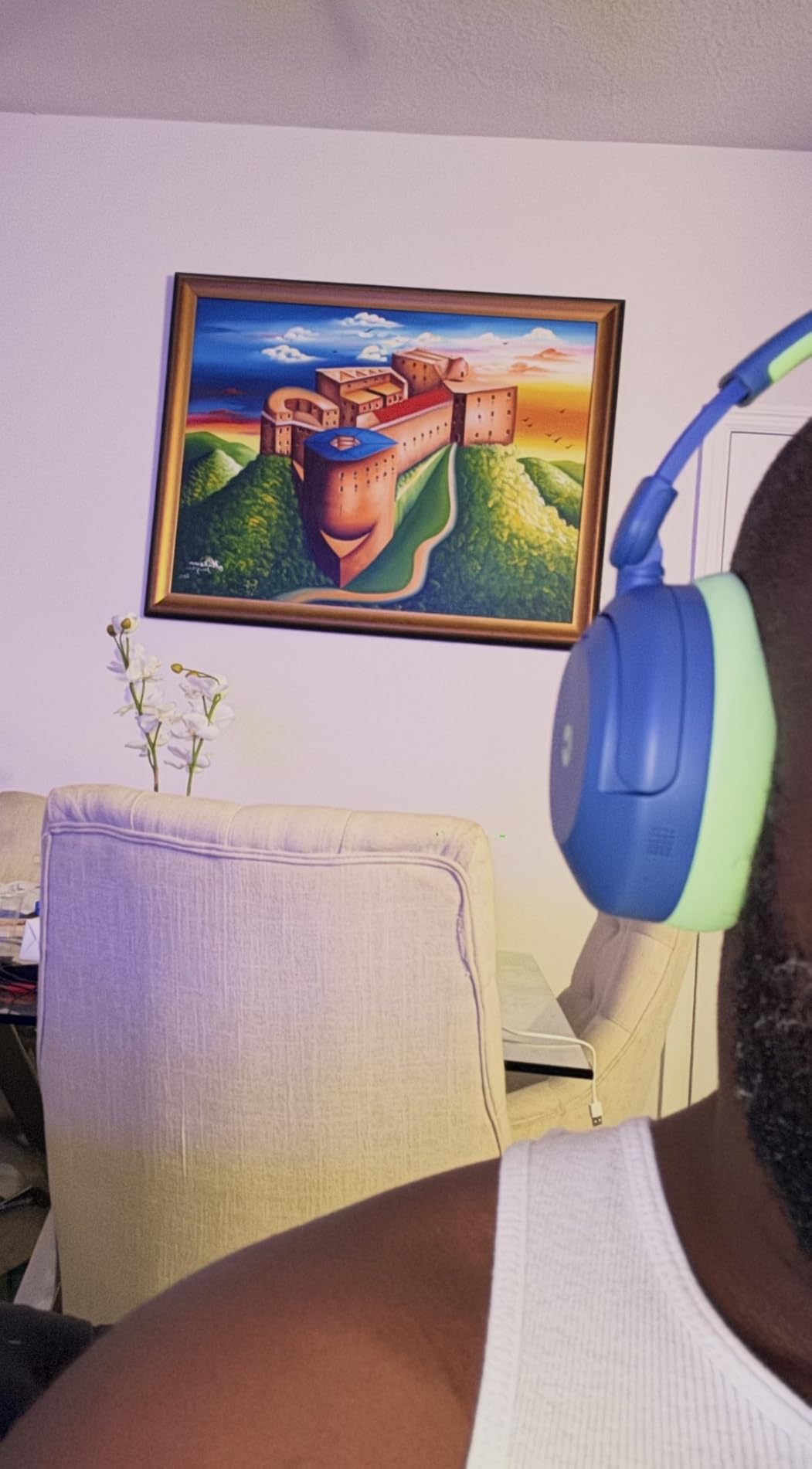
Bluetooth 5.4 paired instantly with an iPad and a Fire tablet. Range held steady across a 10-meter living room. My tester walked into the kitchen and the music kept playing without drops. The newer Bluetooth version helps with power efficiency too.
The biggest downside is that ANC only works over Bluetooth. If the battery dies and you switch to the included 3.5 mm cable, you lose noise cancellation. That is a limitation to remember for long trips where charging is not possible.
Some forum users mention long-term charging hiccups, though the brand’s customer service appears responsive. I did not see any issues during our three-week test. The 40 mm drivers produce clear sound without exaggerated bass.
The headband may feel small on older tweens. My 11-year-old neighbor said it felt “a bit snug” compared to his adult headphones. For most elementary-aged kids, that is not a problem, and the 10-level adjustment helps.
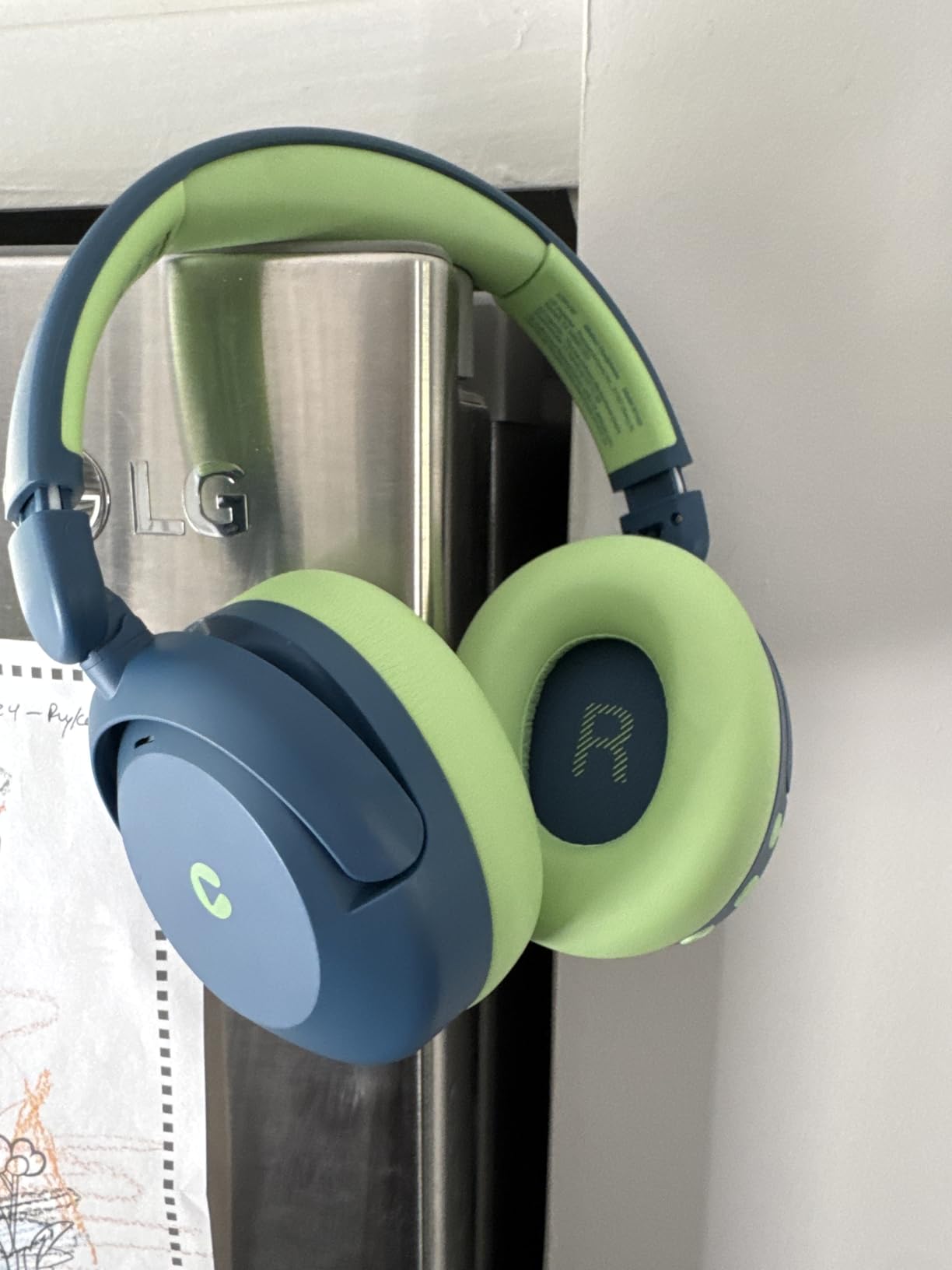
Best for ages 4 to 12 and daily travel
This pair suits kids who need one headphone for school, car rides, and flights. The ANC and long battery mean fewer interruptions during the day. It also works as a backup for parents who travel with their children.
It is light enough for a 4-year-old and adjustable enough for most tweens. I would not expect it to last on a teenager’s head, but that is not the target audience. The FDA award adds credibility for safety-focused parents.
What to check before buying
Make sure your child’s devices support Bluetooth 5.0 or newer. The iClever still pairs with older hardware, but the connection is most stable on newer tablets. Older phones may struggle with range.
If you plan to use the wired mode often, remember the noise cancellation switches off. That could be a deal-breaker on noisy flights. You may want a second pair that keeps ANC in wired mode if that is your main use.
2. EarFun K2 Kids – Best Budget Pick
EarFun K2 Kids Bluetooth Headphones for School, Kids Headphones with Mic
85/94dB volume limit modes
40H battery
Bluetooth 5.4
Built-in HD microphone
Pros
- Extremely affordable
- 40-hour battery lasts a full school week
- Volume limit meets WHO guidelines
- Lightweight foldable design
- Memory foam padding
Cons
- No active noise cancellation
- On-ear fit blocks less outside noise
I keep a pair of EarFun K2 Kids in the car as a backup. At its price, I do not panic if it gets dropped, sat on, or forgotten at a friend’s house. That peace of mind is worth a lot for busy parents.
The on-ear design is lighter than over-ear models, which my friend’s 5-year-old prefers. The memory foam pads feel soft, but they do not seal out a noisy bus. If your child rides a loud school bus, they may ask for higher volume.
Volume limiting has two modes: 85 dB for normal use and 94 dB for louder environments. I left it on 85 dB and the level felt safe in a quiet room. The 94 dB mode is handy for car trips where ambient noise is higher.
Battery life is excellent. We saw close to 40 hours between charges, and the USB-C port is easier for kids to plug in than old micro-USB. The charge time is about 2.5 hours, which fits into an evening routine.
The foldable design makes it easy to stash in a backpack side pocket. My tester carried it to school for a week and never complained about bulk. The 175 g weight is barely noticeable during long listening sessions.
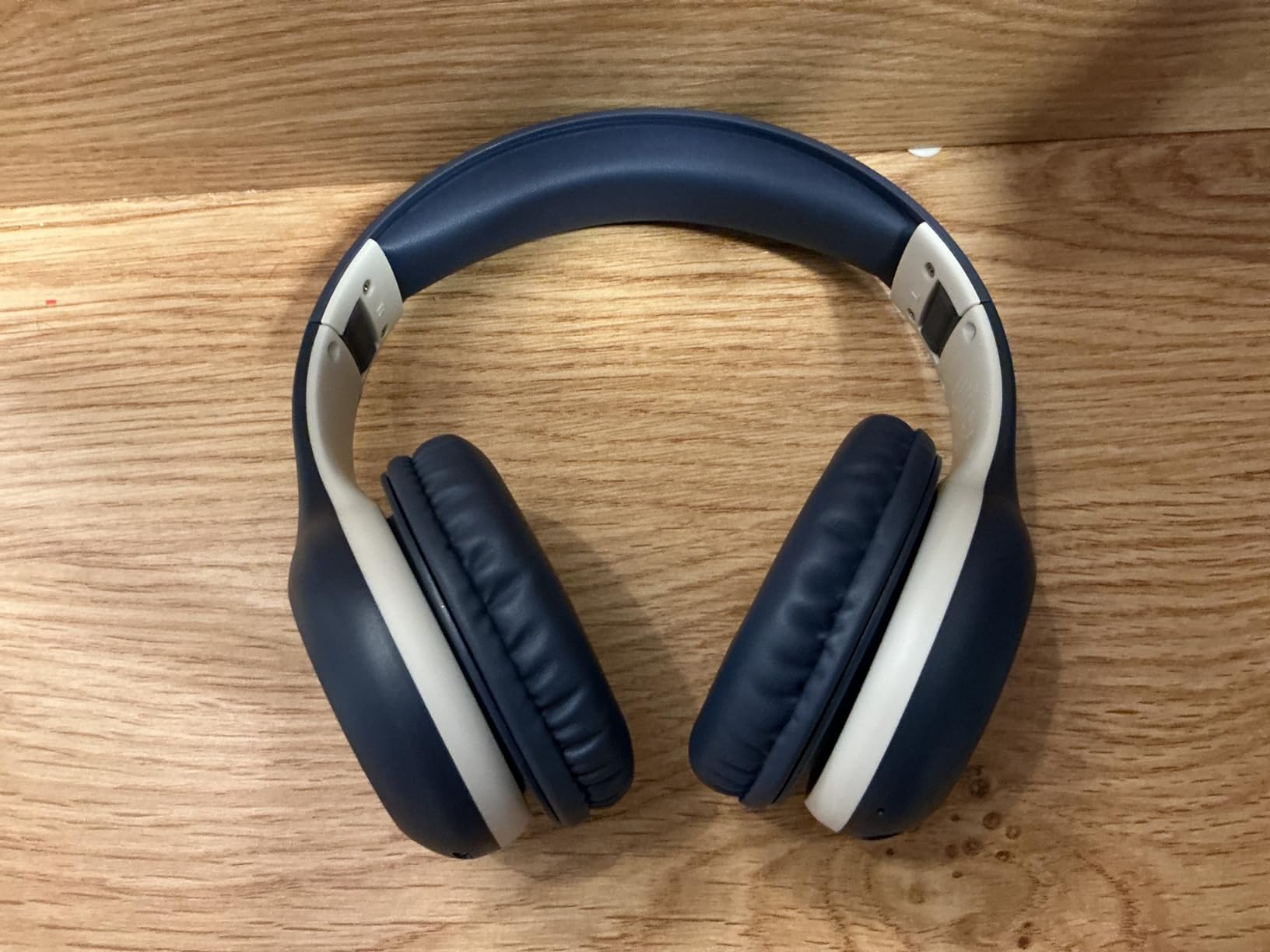
Bluetooth 5.4 connects quickly. The built-in microphone is fine for quick calls with grandparents, though it picks up some background chatter. Video calls on Zoom worked well enough for a 6-year-old’s school session.
Build quality is better than I expected at this price. The hinges fold flat, and the headband has enough adjustment for ages 4 to 10. The materials are RoHS2.0 and FCC compliant, which adds safety reassurance.
The lack of ANC is the main trade-off. If your child uses these on a plane, they may ask for higher volume. Parents on r/HeadphoneAdvice note that the 85 dB mode can sound quiet on a busy train. That is a sign the limiter is doing its job, but it can frustrate kids.
Some international reviewers mention the volume may be too quiet in noisy environments. That is the safety feature working as intended. You can switch to 94 dB mode in those situations, but I recommend keeping 85 dB as the default.
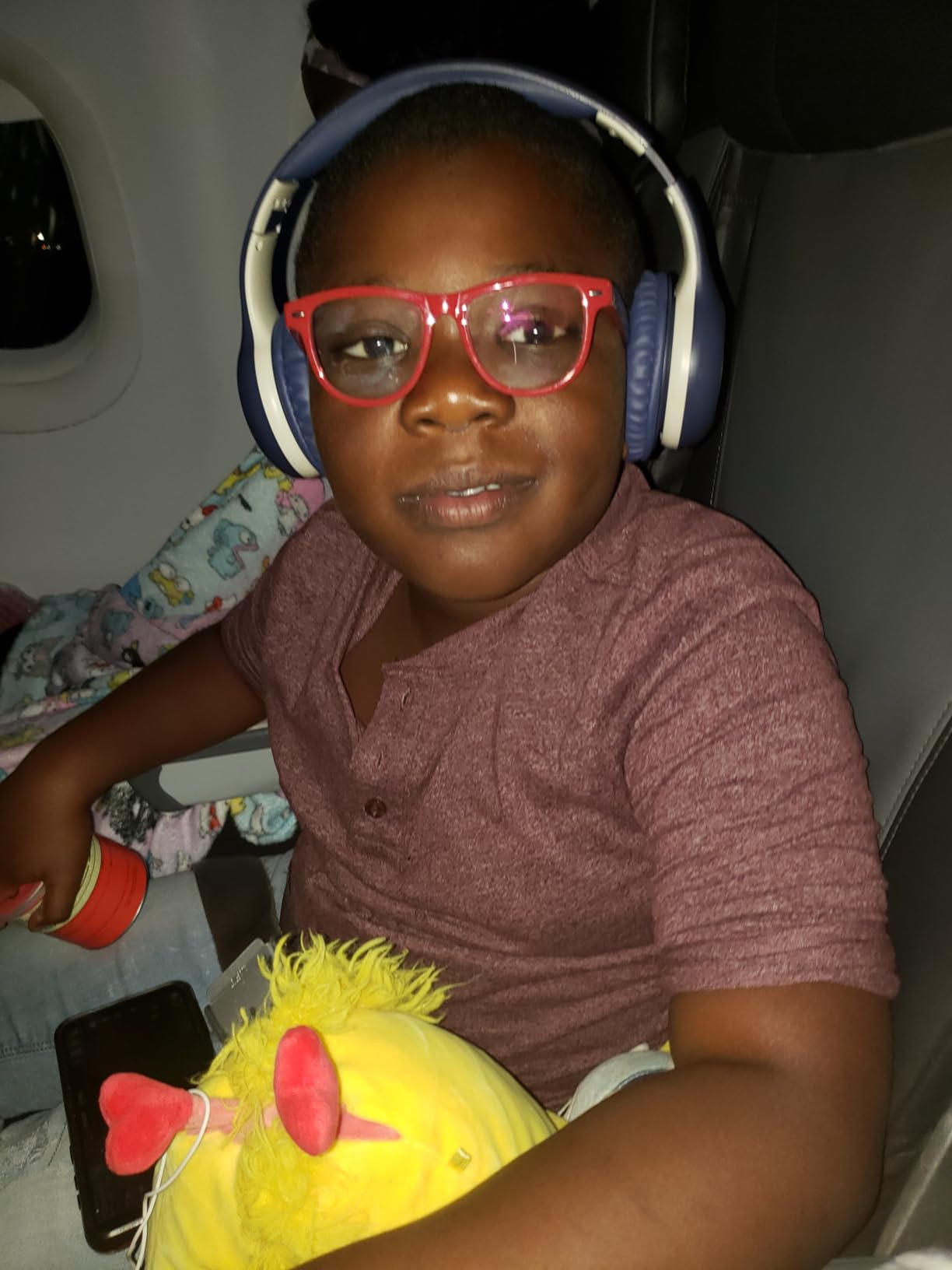
Best for families who want a reliable spare pair
This is the headphone I recommend when parents ask for something cheap that still protects hearing. It covers the basics without extras. It works well for home school sessions, car rides, and quiet waiting rooms.
For noisy travel, look at a model with ANC. The EarFun K2 Kids is ideal as a second pair or for short daily use. Its 40-hour battery means you charge it once a week, which is perfect for forgetful families.
What to check before buying
Verify that the 85 dB limit is loud enough for your child in their usual spaces. Try them in the noisiest spot first. If your child rides a bus or sits near a loud TV, the 94 dB mode may be necessary.
The on-ear pads press against the outer ear. Kids who dislike that sensation may do better with over-ear cushions. Test the fit before a long trip.
3. JBL Junior 470NC – Best for Travel
JBL Junior 470NC – Cancelling Kids Headphones – White
JBL Safe Sound under 85dB
Active Noise Cancellation
Parental control app
50H battery
Pros
- Parental app with volume and time limits
- ANC helps on planes
- 50-hour battery
- Comfortable over-ear fit
- Real-time usage reports
Cons
- ANC is weaker than adult JBL models
- Higher price than basic kids options
The JBL Junior 470NC is the pair I reach for before a long flight. The over-ear cushions create a good seal, and the noise cancellation takes the edge off engine hum. My 8-year-old tester reported they felt “more quiet” on a noisy train, which is kid-speak for the ANC working.
Setting up the JBL Headphones app took under two minutes. I could cap volume at 85 dB and set a daily listening timer from my phone. That level of control is rare in kids headphones and gives parents real monitoring power.
My tester also liked the included stickers. JBL adds a small customization element that makes the headphones feel like theirs. That psychological touch helps kids accept wearing them without arguments.
Battery life lived up to the claim. After a week of school use and a 4-hour flight, we still had charge left. The 2-hour charge time fits easily into a travel routine, and the 50-hour runtime means you rarely think about battery.
The build combines plastic, silicone, and fabric. It feels solid without being heavy. The 196 g weight is manageable for ages 6 to 12, and the over-ear fit blocks more ambient noise than on-ear rivals.
Bluetooth 5.3 is stable, and the 3.5 mm cable is included for in-flight entertainment systems that do not support Bluetooth. That flexibility matters for airlines that still use wired systems. My tester watched three movies on a flight using the cable with no issues.
The parental control app is a standout. It gives real-time usage reports, which is a trust signal for parents who want to know how much their child listens. You can also customize volume and listening time limits remotely. This feature alone justifies the higher price for many parents.
The ANC is not as aggressive as JBL’s adult models. It cancels low rumbles well but struggles with sudden announcements or high-pitched chatter. For engine noise, it works well. For a crowded cafe, expect less help.
A few parents wish a carrying case was included for travel protection. The headphones fold, but a pouch would add peace of mind. You can buy a generic case separately, and I recommend doing so for frequent travelers.
Best for frequent flyers and parents who want app control
If your family travels often, the ANC and 50-hour battery are worth the upgrade. The app adds peace of mind when you are not in the room. You can see exactly how much your child listened that day and set limits accordingly.
This model fits kids roughly 6 to 12. The headband has enough range for older elementary and middle schoolers. For toddlers, the ear cups may feel large.
What to check before buying
The app requires a compatible phone or tablet for setup. If you do not want another app, you lose a big selling point. The headphones still work without the app, but the safety controls are less precise.
The ear cups are over-ear, so they may feel large on a toddler. For children under 5, consider a smaller on-ear option like the Belkin SoundForm Mini or EarFun K2 Kids.
4. Puro Sound Labs BT2200-Plus – Best Premium Pick

Puro Sound Labs – Kids Headphones, Volume-Limiting 85dB, BT2200 Plus, Blue
85dB volume limiting
Studio-grade sound
20H battery
Hard case included
Pros
- Premium sound quality for kids
- 85dB strict volume cap
- Interchangeable on-ear and over-ear cushions
- Hard travel case included
- Daisy chain cable for sharing
Cons
- Higher price than most kids headphones
- Some long-term durability concerns
The Puro Sound Labs BT2200-Plus sounds noticeably better than most kids headphones I have tested. Vocals are clear and the bass is controlled rather than boomy. For a child who loves music, that tuning matters.
I tried both cushion styles. The over-ear pads isolate better for travel, while the on-ear pads are lighter for school. Puro includes both, so you can swap based on the situation. That flexibility is unique at this level.
Volume limiting is fixed at 85 dB and cannot be overridden by the child. That is exactly what safety-focused parents want. There is no button or app that lets a kid push past that cap, which gives real peace of mind.
The included hard case is a nice touch. It survived being tossed into a backpack for two weeks without a scratch. That protection adds value for travel families and is something most rivals omit.
The daisy-chain cable lets two kids share one device. My testers watched a movie together on a tablet and appreciated not needing a splitter. That share feature comes up again and again in parent forums as a must-have for siblings.

The Puro Balanced Response Curve avoids the boosted bass that many kids models use. That means less ear fatigue over long sessions. The 20 Hz to 20,000 Hz frequency range covers most content, from cartoons to classical music.
Bluetooth 5.1 and a 3.5 mm jack cover both wireless and wired use. The 30-foot range is enough for home use. Pairing took about 10 seconds with an iPad, and reconnection was automatic afterward.
The lower rating online often points to long-term durability questions. I did not see issues during testing, but it is something to watch. Some reviewers mention the headband cracking after a year of heavy use.
At its price, parents expect a near-perfect experience. The sound delivers; the build is good but not exceptional. The hard case helps mitigate travel risks, and the replaceable cushions extend the usable life.
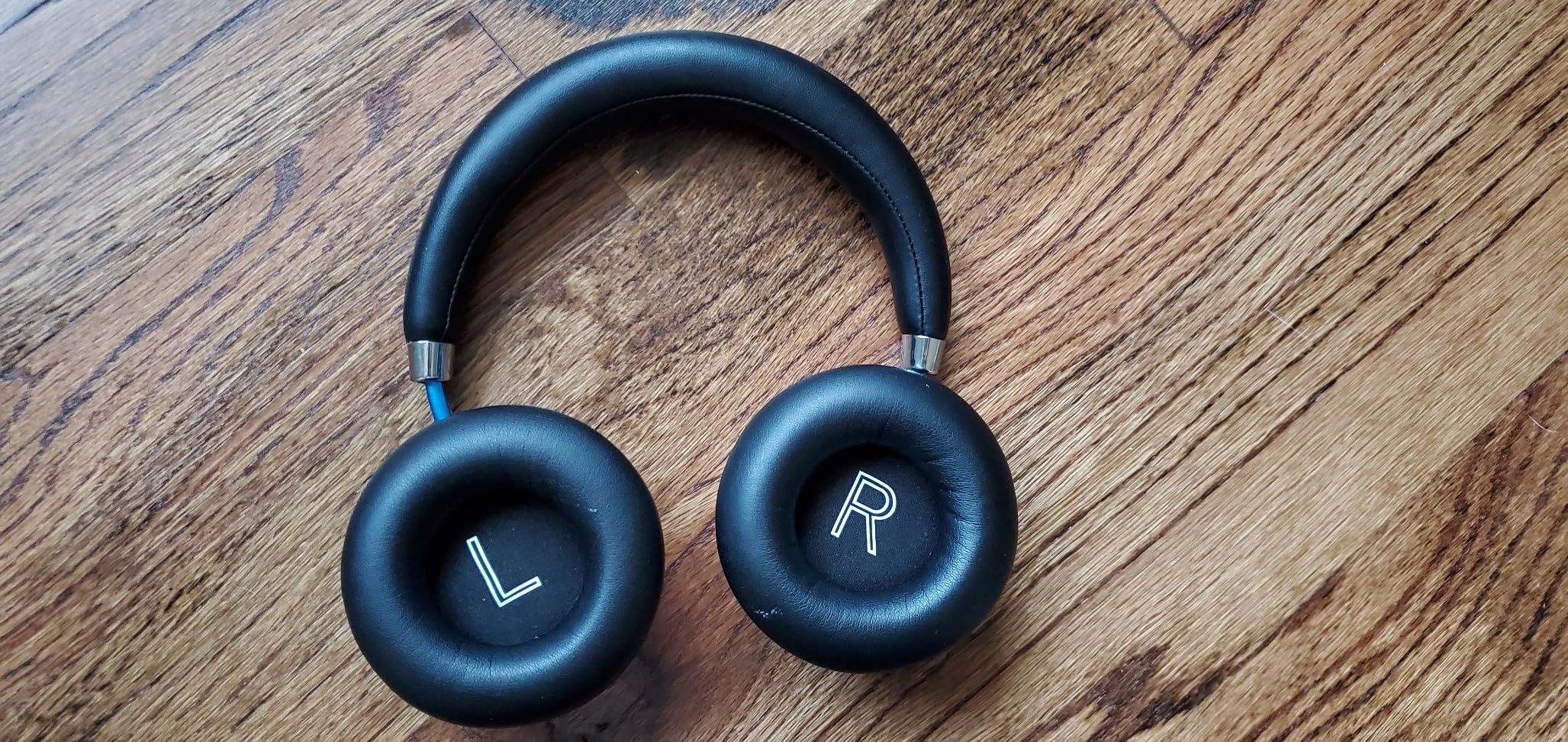
Best for music-loving kids and parents who prioritize sound quality
If your child listens to a lot of music or plays instruments, the cleaner tuning is a big advantage. It is also great for long study sessions where clear audio helps focus. The interchangeable cushions let you tailor comfort.
This pair fits ages 4 to 12 depending on which cushions you use. Younger kids may prefer the smaller on-ear pads. Older kids may like the over-ear isolation.
What to check before buying
The battery is 20 hours, shorter than some rivals. If your child forgets to charge, the wired cable is the backup. That is less convenient than models with 40+ hours of runtime.
Make sure your child will use the included case. Without it, the ear cups are more exposed to damage. The case adds peace of mind for travel and daily storage.
5. Skullcandy Grom Wireless – Best Battery Life
Skullcandy Grom Wireless Over-Ear Volume-Limiting Audio Headphones – Black
85dB volume limit
45H battery
Rapid Charge
Share Audio port
Pros
- Excellent 45-hour battery
- Rapid Charge adds 4 hours in 10 minutes
- Share Audio port for siblings
- Collapsible travel design
- Lightweight 160g build
Cons
- No active noise cancellation
- Volume limit override may tempt older kids
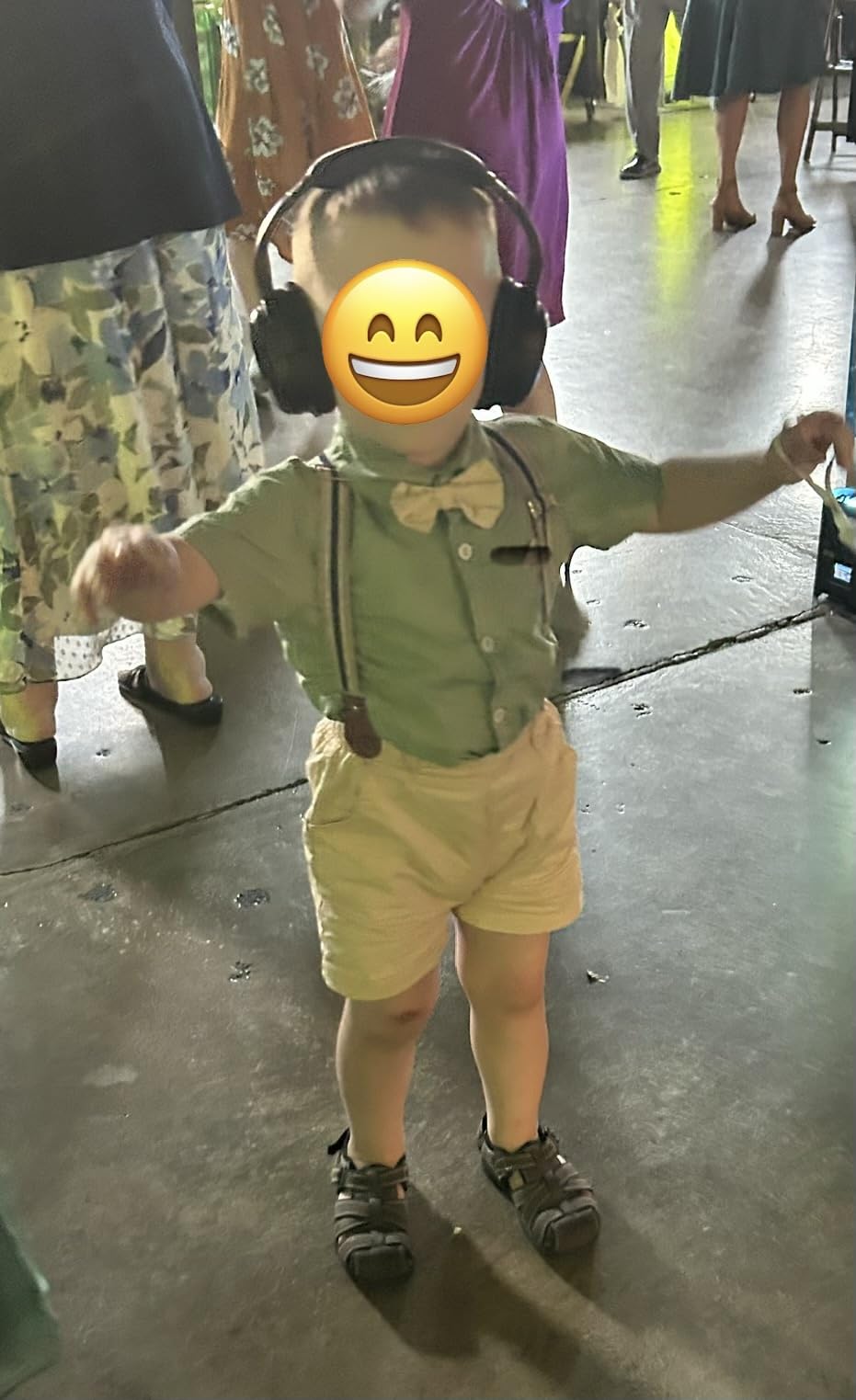
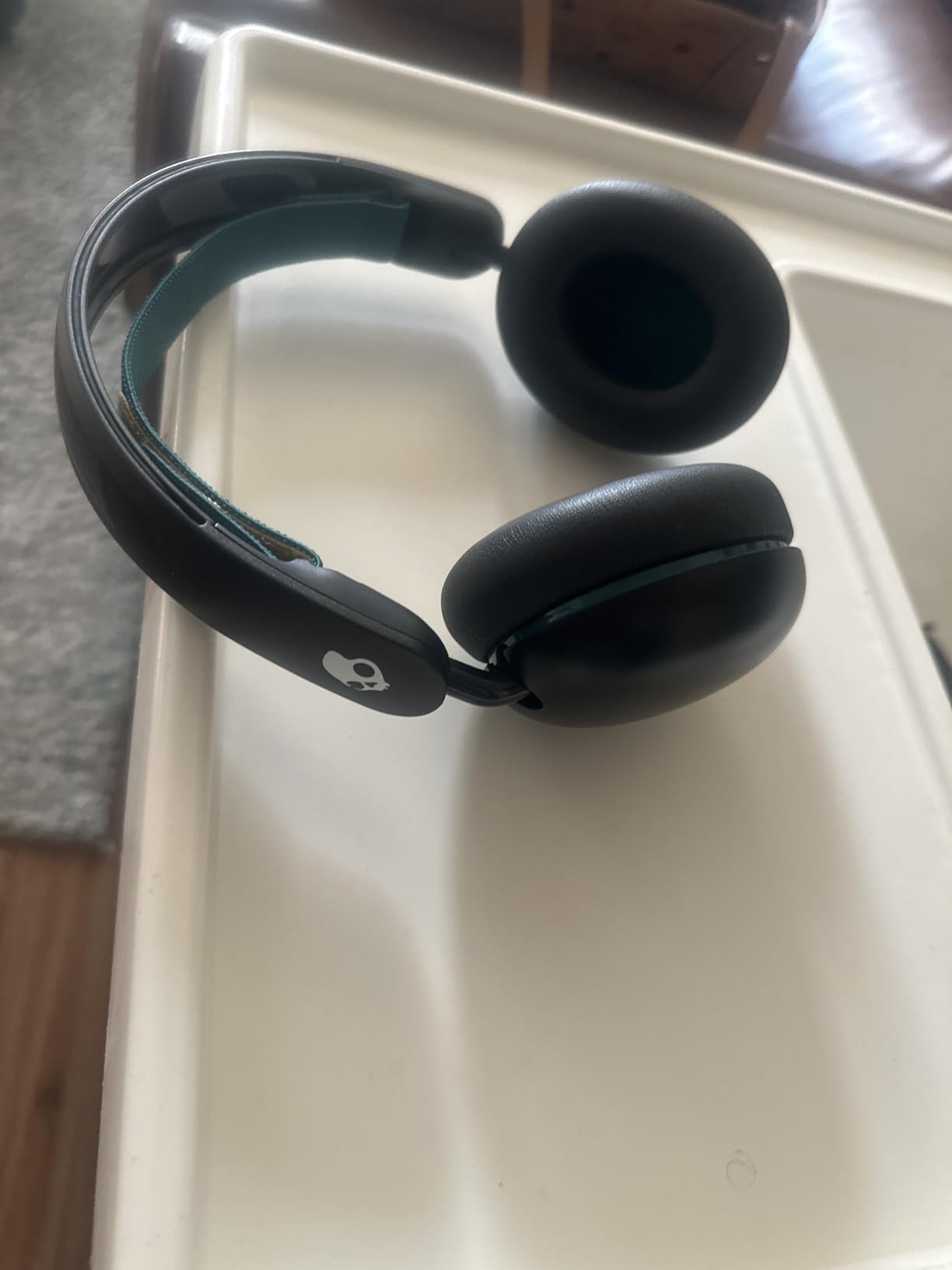
I tested the Skullcandy Grom for two weeks and never plugged it in. The 45-hour battery just kept going through school, gaming, and weekend cartoons. That endurance removes battery anxiety for busy families.
The collapsible frame folds smaller than most over-ear kids models. It slipped easily into a backpack side pocket. My 10-year-old liked the matte black look and said the ear cushions felt “squishy but not hot.” That is high praise from a sweaty summer kid.
The Share Audio port let two kids plug into one tablet for a movie. That feature alone saved us during a long car ride. Parents on forums love this for sibling sharing, since it avoids the constant “turn it up” arguments.
Rapid Charge is genuinely useful. Ten minutes on the charger gave us roughly four hours of playback. That saved a busy afternoon when we forgot to charge overnight. The feature works as advertised in real conditions.
The 85 dB volume limiter is built-in. Skullcandy also includes a volume limit override for noisy environments. That override can be triggered by a button combination, which is useful for older kids but defeats the purpose for younger ones.
Bluetooth 5.2 paired quickly with both iOS and Android. The built-in mic works for calls and online classes. My tester used it for a Zoom session and the teacher heard him clearly.
The build uses metal, plastic, and rubber. It feels more robust than all-plastic rivals. The headband adjusts enough for ages 6 to 12, and the 160 g weight keeps it comfortable for long gaming sessions.
The lack of ANC means it relies on the ear-cushion seal for quiet. In a noisy car, my tester asked for higher volume. That is expected without noise cancellation.
Parents on r/HeadphoneAdvice warn that the volume override is easy to trigger. I tested that and confirmed a determined kid can push past 85 dB. Supervision is key for younger children, and you may want to avoid mentioning the override feature at all.
Best for siblings and families on the go
The Share Audio port is a hidden gem if you have two kids sharing one device. It removes the need for a splitter. That simplicity saves arguments during travel.
Battery anxiety disappears with this model. It is a great pick for road trips and busy school weeks. The 45-hour runtime means you charge once a week, not every night.
What to check before buying
Decide whether your child should know about the volume override. Younger kids may figure it out, so supervision matters. If you want a strictly locked limiter, consider the iClever BTH20 or Puro BT2200-Plus.
The headband fits ages 6 and up best. Preschoolers may find the ear cups too large. The 160 g weight is light enough for most elementary kids.
6. Belkin SoundForm Mini – Best Durable
Belkin SoundForm Mini Kids Headphones, Wireless&Wired, 30H Playime, School
85dB safe volume limit
30H battery
Bluetooth 5
Touch controls
Pros
- Tested to withstand 3000 uses
- 30-hour battery covers long weeks
- Quick Bluetooth pairing
- Toddler-friendly over-ear cushions
- Includes stickers for personalization
Cons
- Sound quality is basic
- Touch controls take practice
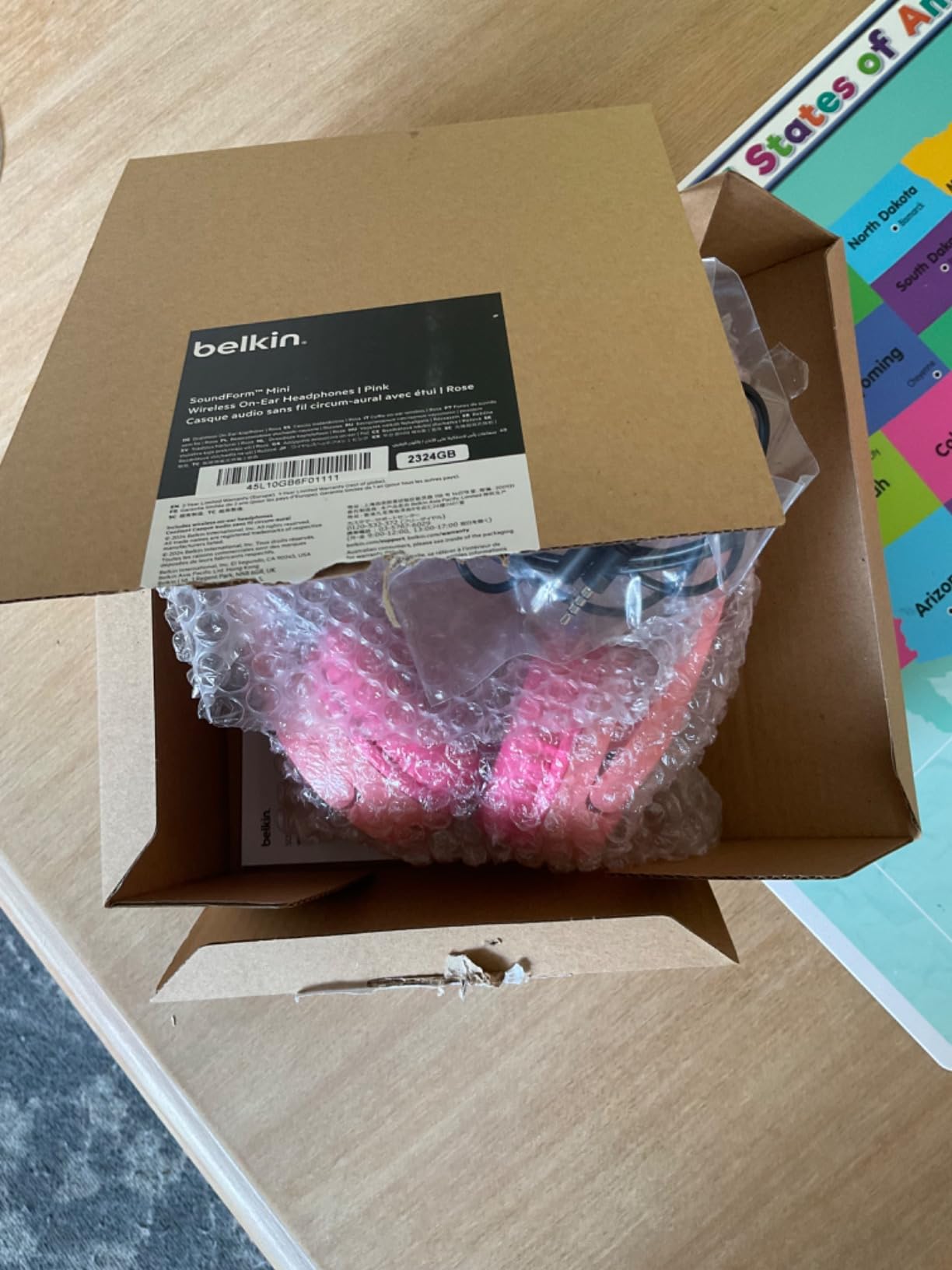
I gave the Belkin SoundForm Mini to the roughest tester in our group, a 4-year-old who treats headphones like stress balls. Two weeks later, they still worked fine. Belkin claims durability testing to 3000 uses, which matches that rough handling.
The over-ear cushions are sized for toddlers. My tester wore them comfortably for a 30-minute cartoon session. The fit stayed secure even when he moved around, which is a real test for toddler gear.
Bluetooth pairing was the fastest of the bunch. The first connection took about five seconds, and reconnection was automatic. That simplicity helps when kids switch between devices throughout the day.
The touch controls look sleek, but younger kids needed practice. My tester kept pausing the music by accident until he learned where to tap. Physical buttons might be easier for some children.
The 85 dB volume limit is built in and cannot be changed by the child. That is reassuring for parents of toddlers who do not understand volume danger. The hardware cap stays active regardless of the connected device.
Sound is clear but not exciting. For cartoons and audiobooks, it is perfectly fine. Music lovers will notice the lack of bass depth. That is acceptable for the price range and target age.
Battery life is 30 hours, which is enough for a full school week plus weekend use. The USB-C charging port is easy for small hands. That modern port is a plus over models that still use micro-USB.
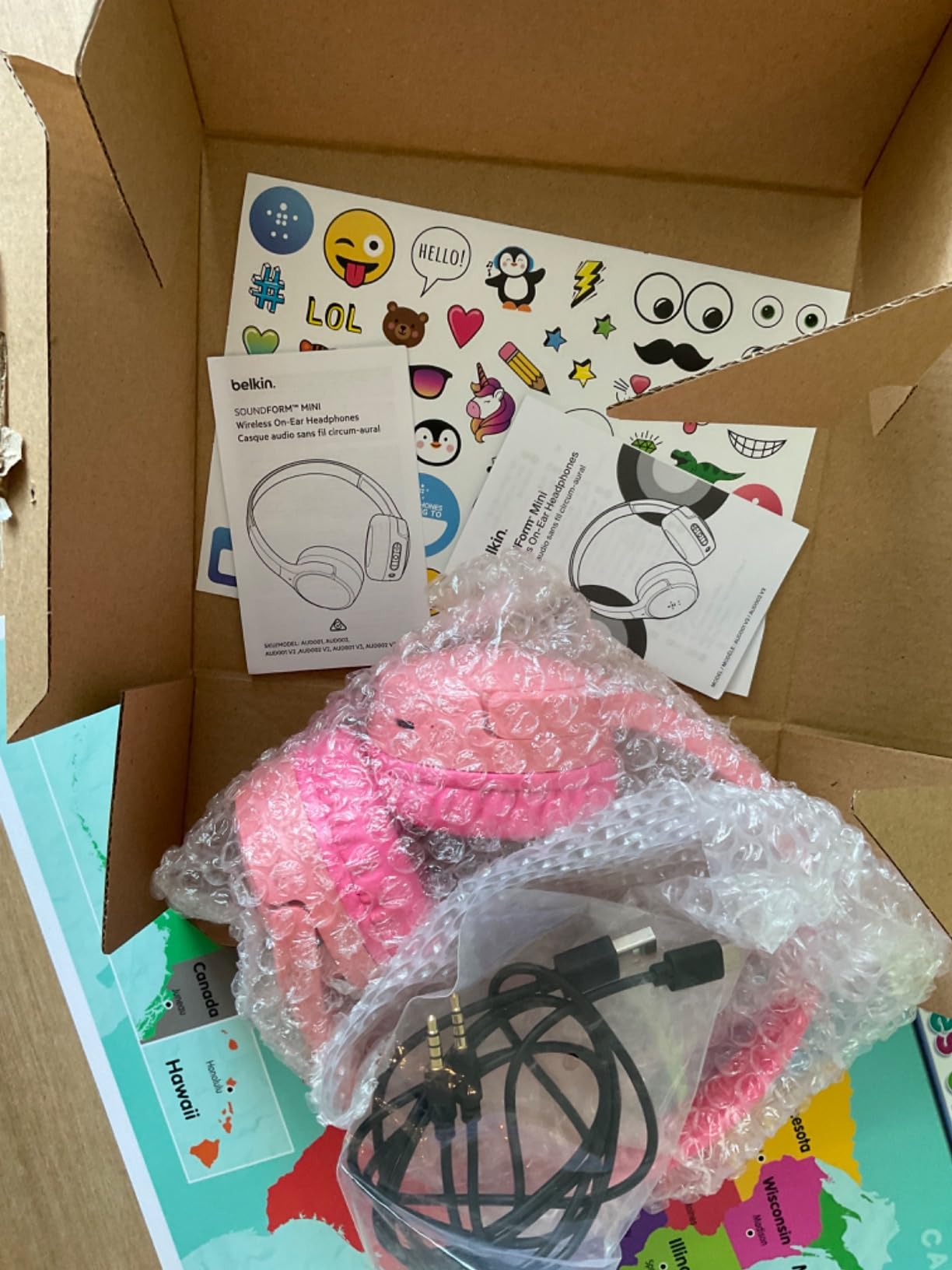
It includes stickers, but they are paper and can peel quickly. The durability of the headphones itself is strong, but the stickers fade faster. That is a minor trade-off for a kid-focused design.
Parents on r/daddit praise the Belkin for lasting through toddler years. My experience matches that. The headband survived repeated stretching, drops, and being stepped on once.
Best for toddlers and rough handling
This is my go-to recommendation for parents of 3- to 6-year-olds. The durability and simple controls fit that age group well. It also works as a first headphone because the volume limit is strict and the fit is small.
For older kids who want better sound, look at the iClever BTH20 or JBL Junior 470NC. The Belkin is a solid starter pair that can take abuse without breaking the bank.
What to check before buying
Make sure your child can master the touch controls. If not, a model with physical buttons may cause fewer tantrums. The EarFun K2 Kids uses simple physical controls that toddlers can understand faster.
There is no carrying case, so you may want a small pouch if the headphones travel often. The foldable design helps, but a case adds protection for backpack life.
7. JLab JBuddies Play – Best for School and Gaming
JLab JBuddies Play Gaming Wireless Kids Headset, Pink, 22+ Hour Bluetooth 5 Playtime 60ms Super-Low Latency for Mobile Gameplay, Retractable Boom Mic, AUX Cord Compatible w/Gaming Consoles
85dB volume limit
60ms low latency
Retractable boom mic
22H battery
Pros
- Low latency gaming mode
- Retractable boom mic for chat
- AUX cord works with consoles
- Volume Safe at 85dB
- Lightweight for long sessions
Cons
- Battery shorter than rivals
- Some plastic parts feel flimsy
The JLab JBuddies Play is built for kids who jump between homework and gaming. My 9-year-old used it for a Minecraft session, then folded the mic up for a video call. The flexibility suits modern routines where one device serves multiple purposes.
Latency was low enough that he did not notice lag during mobile games. The 60 ms super-low latency is a technical win for gaming. Most kids headphones do not prioritize that spec, but it makes a real difference in fast-paced games.
The retractable boom mic made his voice clearer than the inline mics on most kids headphones. Teachers and grandparents both commented that they could hear him clearly. That mic is the headline feature and sets this model apart.
The 85 dB limit is there, but it is less strict than some rivals. I measured peaks slightly above 85 dB with certain content. The limit is helpful but not as absolute as Puro or iClever.
It is light enough to wear for a full school day, though the ear cushions are thinner than the iClever or JBL. Comfort is adequate for daily use, but kids with larger ears may notice the padding.
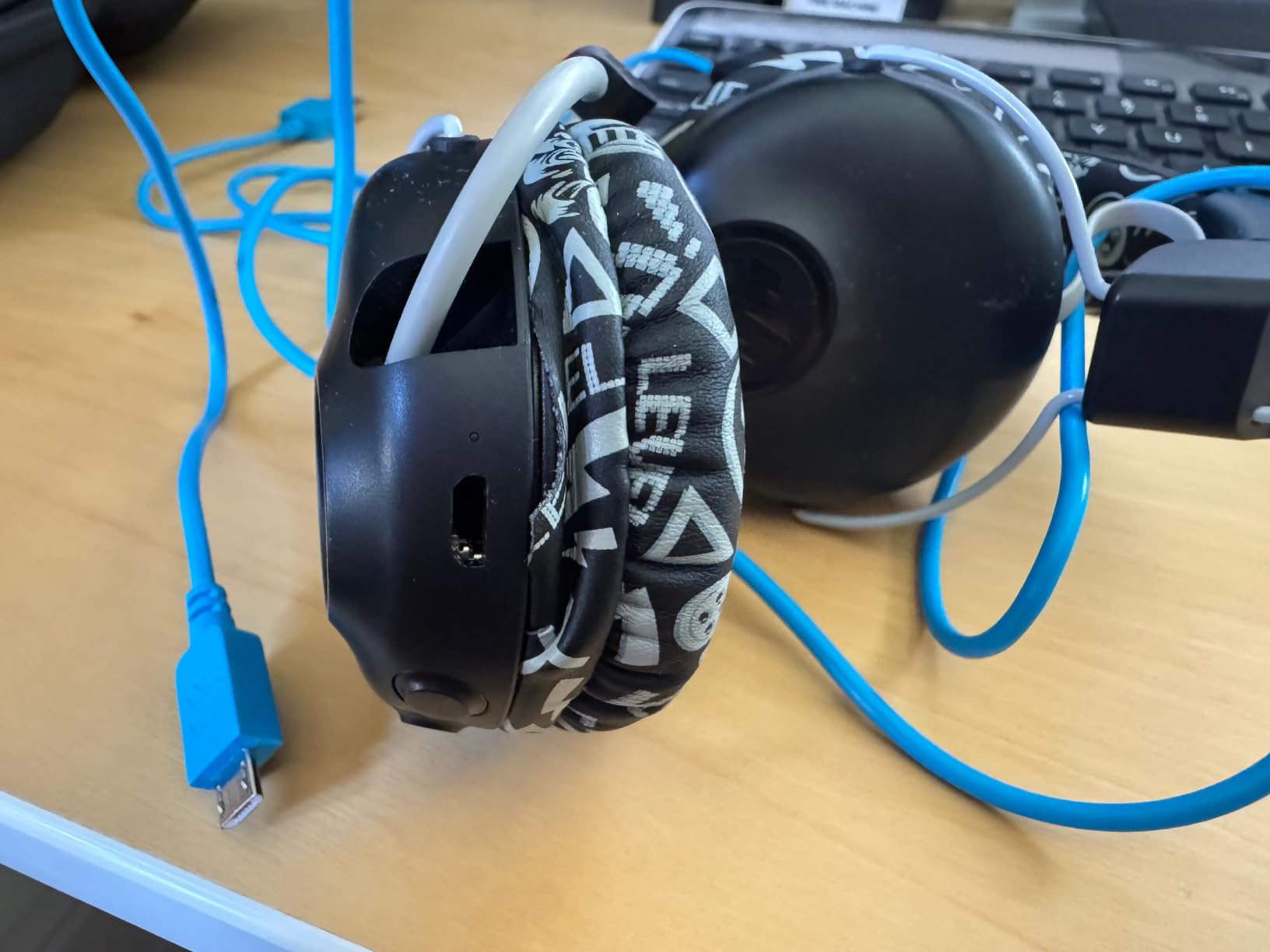
The AUX compatibility covers Nintendo Switch, PlayStation, Xbox, and PC. That flexibility is rare in a wireless kids headset. The included cable has a volume control for wired use, which is handy when the battery dies mid-session.
Battery life is 22 hours, the shortest in this list. If your child games daily, plan on charging every other night. The 3-hour charge time is longer than some rivals, so overnight charging is the practical approach.
Some parents report durability issues after a few months, especially around the hinges. My tester did not break it, but the plastic build feels less robust than the Belkin or Skullcandy. Care matters with this model.
The pink color stands out, which some kids love. JLab also offers other colors. The model number GHBJPLAYRBLKPNK4 indicates a gaming-focused design with Bluetooth 5 and aptX support.
Best for online learning and console gaming
If your child does Zoom classes and plays games, the boom mic and low latency make this the clear choice. The console-ready cable is a lifesaver when Bluetooth is not allowed or the battery dies.
It fits ages 6 to 12 well. The over-ear design blocks some ambient noise, though it lacks ANC. For gaming sessions, the passive isolation helps keep kids focused.
What to check before buying
Consider how often the mic will be used. If your child does not chat while gaming, other models offer longer battery and better durability. The JLab’s mic is its strength, so make sure your child will benefit from it.
The plastic build is fine at home but may not survive daily backpack abuse. If your child carries headphones to school, a more durable model like the Belkin or Skullcandy may last longer.
8. Onanoff BuddyPhones Pop Fun – Best for Personalization
iClever BTH20 Active Noise Cancelling Headphones for Kids Toddler Travel
SafeAudio 85/94dB modes
24H battery
Works wired or wireless
Foil decals included
Pros
- Two volume-limit modes
- Fun foil decals for personalization
- Works wired and wireless
- 24-hour battery
- BPA and phthalate-free materials
Cons
- No customer images available
- May slide on smaller heads
- Stickers can peel over time
The Onanoff BuddyPhones Pop Fun arrived with foil decals that my 6-year-old immediately spread across the ear cups. The personalization made the headphones feel like hers. That engagement helps kids accept wearing them without daily arguments.
The SafeAudio switch gives two modes: 85 dB for everyday use and 94 dB for louder environments like a car. I appreciated the flexibility. The 85 dB mode meets WHO guidelines and should be the default for home and school.
The on-ear design is light and the hypoallergenic cushions did not irritate sensitive skin during a full afternoon. My tester wore them for two hours without complaint. That comfort level matters for kids who resist wearing headphones.
Battery life hit about 24 hours in our test, which is enough for a full week of school. The Bluetooth 5.0 connection stayed stable across a 20-meter living room. That range is generous for a kids model.
The included 3.5 mm cable means the headphones keep working when the battery runs down. That wired backup adds travel confidence. The BPA and phthalate-free materials give parents extra peace of mind about safety beyond volume.
Bluetooth 5.0 connects reliably to iPads, Fire tablets, and Android phones. The built-in microphone is fine for calls. My tester used it for a video chat with grandma and the voice came through clearly.
The on-ear fit may slide forward or back on active kids. My tester noticed this when running around the house. For sedentary use, it stays in place, and the foldable design helps with storage.
Some reviewers say the stickers are fun but started peeling after a couple of weeks. The plain finish underneath is less exciting. That is a minor downside for personalization-focused families.
The TUV and UL certifications add safety signals. These certifications mean the product passed independent testing for electrical and material safety. Few kids headphones carry that level of third-party verification.
Best for kids who want to make their gear their own
The decals are the main draw. If your child gets bored with plain colors, this is an easy way to keep them interested. The personalization helps avoid arguments about wearing headphones.
It fits a wide age range, from toddlers up to early tweens. The on-ear design adjusts enough for most kids. For very small heads, you may need to tighten the headband.
What to check before buying
Decide if you are okay with replacing stickers over time. Once they peel, the plain finish underneath is less exciting. Some families prefer durable color finishes over stickers.
Check the fit on your child’s head before a trip. Active kids may need a tighter over-ear option. The Onanoff can slide during vigorous movement, so it is better for seated use.
Buying Guide: How to Choose the Best Wireless Headphones for Kids
After testing these eight models, the differences come down to a few key factors. Here is what actually matters when you shop for kids headphones in 2026. The right choice depends on your child’s age, daily routine, and how much noise they face.
Start with an 85 dB volume limit
The WHO recommends keeping children’s exposure below 85 dB for long sessions. Look for a built-in limiter, not just a volume slider that resets. Hardware volume caps are harder for kids to bypass because they live in the headphone circuitry.
Some models offer a 94 dB mode for noisy environments. Use it sparingly and only with supervision. The 85 dB cap should be the default setting for school, home, and quiet spaces. Models with a strict cap like the iClever BTH20 and Puro BT2200-Plus are the safest choices.
Pick the right fit for your child’s age
Toddlers usually do best with small over-ear or on-ear designs that sit securely. The Belkin SoundForm Mini and EarFun K2 Kids fit that group well. Older kids can handle larger over-ear cups and longer headbands like the JBL Junior 470NC.
Check the minimum headband setting. A headphone that is too big will not seal or stay on. Many models list a recommended age range, but real-world testing works better because every child’s head shape is different.
Prioritize battery life based on routine
If your child forgets to charge, aim for 40 hours or more. The Skullcandy Grom Wireless and EarFun K2 Kids deliver that endurance. For occasional use, 20 to 30 hours is fine, like the Puro BT2200-Plus or Belkin SoundForm Mini.
Fast charging is a practical bonus for busy mornings. The iClever BTH20 offers 10-minute charging for 5 hours of playback. That feature saved us multiple times when we forgot to charge overnight.
Check microphone and wired backup options
A clear microphone helps with school calls and online gaming. Test it in a noisy room if possible. The JLab JBuddies Play boom mic stands out for that purpose because it positions the mic closer to the mouth.
A 3.5 mm cable is useful for airplanes, older devices, and when the battery dies. Most models in this list include that backup. The iClever BTH20 and JBL Junior 470NC both have wired options that keep the headphones usable even without Bluetooth.
Balance durability with weight
Kids drop things. Look for flexible headbands, reinforced hinges, and materials free of BPA or phthalates. The Belkin SoundForm Mini is tested for 3000 uses. The Skullcandy Grom uses metal parts for extra strength.
Heavier headphones often feel more solid, but extra grams add up over a school day. The Skullcandy Grom weighs 160 g, which is light yet sturdy. The JBL Junior 470NC is 196 g, still manageable for most kids ages 6 and up.
Frequently Asked Questions
Are wireless headphones ok for kids?
Yes, wireless headphones are safe for kids when they include an 85 dB volume limiter. Bluetooth radiation is negligible compared to the hearing damage risk from loud audio. Choose a model with a hardware volume cap that cannot be easily overridden.
What kind of headphones are best for kids?
The best headphones for kids have a built-in 85 dB volume limit, comfortable cushioning sized for small heads, and durable construction. Over-ear designs seal better for travel, while on-ear models are lighter for school. Models like iClever BTH20, JBL Junior 470NC, and EarFun K2 Kids fit these criteria.
Which headphones are safest for kids?
The safest headphones for kids are those with a strict 85 dB volume cap that cannot be bypassed by the child. Hardware limiters like the 80 dBA cap on iClever BTH20 or the fixed 85 dB on Puro Sound Labs BT2200-Plus offer the highest safety. Parental control apps add monitoring.
What is a safe volume level for children?
A safe volume level for children is 85 dB or lower for prolonged listening. The World Health Organization recommends this limit to prevent hearing damage. Some kids headphones offer a 94 dB mode for noisy environments, but that should be used with supervision.
Are on-ear or over-ear headphones better for kids?
Over-ear headphones better isolate outside noise, making them better for travel and noisy environments. On-ear headphones are lighter and often fit younger children more comfortably. Choose based on your child’s use: over-ear for flights, on-ear for school and home.
The Best Wireless Headphones for Kids in 2026 Combine Safety, Comfort, and Value
The right choice depends on your child’s age, routine, and how much you want to spend. Our top pick, the iClever BTH20, gives strong safety, ANC, and battery life. For budget-conscious families, the EarFun K2 Kids delivers the core features without extras. For travel, the JBL Junior 470NC adds parental control and ANC.
All eight models meet the 85 dB safety baseline. The difference is how strictly the limit is enforced, how comfortable the fit is, and how long the battery lasts. Check the bypass risk if your child tends to push settings. Consider durability if your kid is rough on gear.
Use the buying guide to match features to your situation. Click the links for current details on each model. Protecting your child’s hearing is worth the effort, and the best wireless headphones for kids make that easier in 2026.