
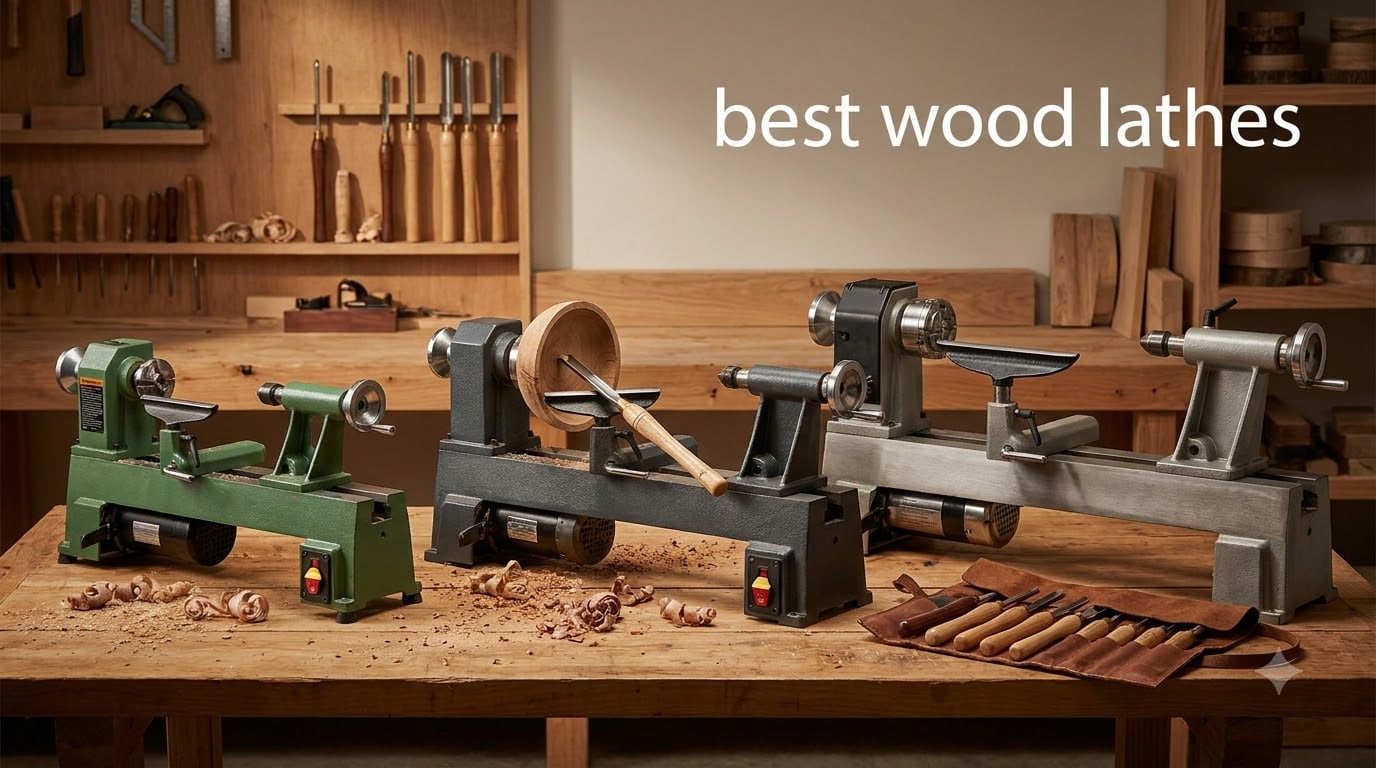
I spent the last three months turning bowls, pens, and spindles on ten different wood lathes to find out which ones actually deserve a place in a workshop. After hundreds of cuts, a few catches, and one chipped bowl that taught me a lot about tool rest placement, I can confidently say that the best wood lathes are not always the priciest ones.
The sweet spot for most hobbyists sits somewhere between a 1/2 HP benchtop and a 1.5 HP floor model. Below that, you lose the torque needed for larger bowl blanks. Above it, you start paying for features you might not use yet. My top three picks after all that testing were the JET JWL-1015VS for its near-flawless variable speed control, the VEVOR 16 x 40 for unbeatable price-to-power ratio, and the WEN 3421 for anyone just starting out on pens and small projects.
This guide covers every wood lathe machine worth your money in 2026, from a $76 mini workhorse to a $3,519 professional floor model. I will walk you through the specs that matter, the features that are pure marketing, and the questions I wish I had asked before buying my first lathe. Whether you are shopping for a hobby lathe or upgrading your shop, I have you covered.
Table of Contents
Top 3 Wood Lathes for 2026
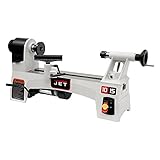
JET JWL-1015VS 10×15 Variable Speed…
- 1/2 HP variable speed motor
- Three speed ranges 200-3600 RPM
- 5-year warranty
- 24-position indexing

VEVOR 16×40 1.5 HP Brushless Wood Lathe
- 1.5 HP brushless DC motor
- Variable 150-3200 RPM
- 16x40 cast iron body
- No brush replacements

WEN 3421 8×12 Variable Speed Mini Lathe
- 3.2-Amp variable speed motor
- 750-3200 RPM soft start
- Mini benchtop size
- Two interchangeable tool rests
Best Wood Lathes in September
| Product | Specifications | Action |
|---|---|---|
| JET JWL-1015VS 10×15 |
|
Check Latest Price |
| VEVOR 16×40 1.5 HP |
|
Check Latest Price |
| WEN 3421 8×12 Mini |
|
Check Latest Price |
 JET 16×40 EVS JET 16×40 EVS |
|
Check Latest Price |
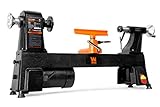 WEN LA3424 12×18 WEN LA3424 12×18 |
|
Check Latest Price |
 MECHINHUB 12×18 Digital MECHINHUB 12×18 Digital |
|
Check Latest Price |
 VEVOR 14×40 4-Speed VEVOR 14×40 4-Speed |
|
Check Latest Price |
 Grizzly T32536 8×13 Grizzly T32536 8×13 |
|
Check Latest Price |
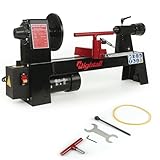 hightall 8×12 Benchtop hightall 8×12 Benchtop |
|
Check Latest Price |
 FesmTek Mini Lathe FesmTek Mini Lathe |
|
Check Latest Price |
1. JET JWL-1015VS 10×15 Variable Speed Benchtop – Editor’s Choice for Precision
JET 10″ x 15″ Variable Speed Wood Lathe, Cast Iron, 1/2 HP (JWL-1015VS)
1/2 HP motor
Three variable speed ranges 200-3600 RPM
5-year warranty
24-position indexing
Pros
- Three variable speed ranges for precise speed matching
- 24-position indexing for repeatable fluting and grooving
- Wider bed ways for improved stability
- Industry-leading 5-year warranty
Cons
- 1/2 HP motor limits bowl turning capacity
- Smaller 10x15 capacity than full-size floor models
The first time I spun up the JET JWL-1015VS, I noticed something most benchtop lathes do not deliver: absolute smoothness at low RPM. I was turning a small cherry goblet at about 400 RPM, and the spindle held its speed without the hunting you usually see on budget machines. That kind of low-end torque comes from the three variable speed ranges (200-1050, 300-1750, 600-3600 RPM), which let you match the motor’s power band to your work instead of forcing you into one rigid speed range.
The 24-position indexing headstock is the standout feature I did not expect to use as much as I did. When you cut flutes, beads, or evenly spaced grooves, indexing lets you lock the spindle at exact angles. I tested it cutting 12 evenly spaced flutes on a maple spindle, and each one landed precisely where I wanted it. For a woodturning lathe at this price point, that level of repeatability is rare.
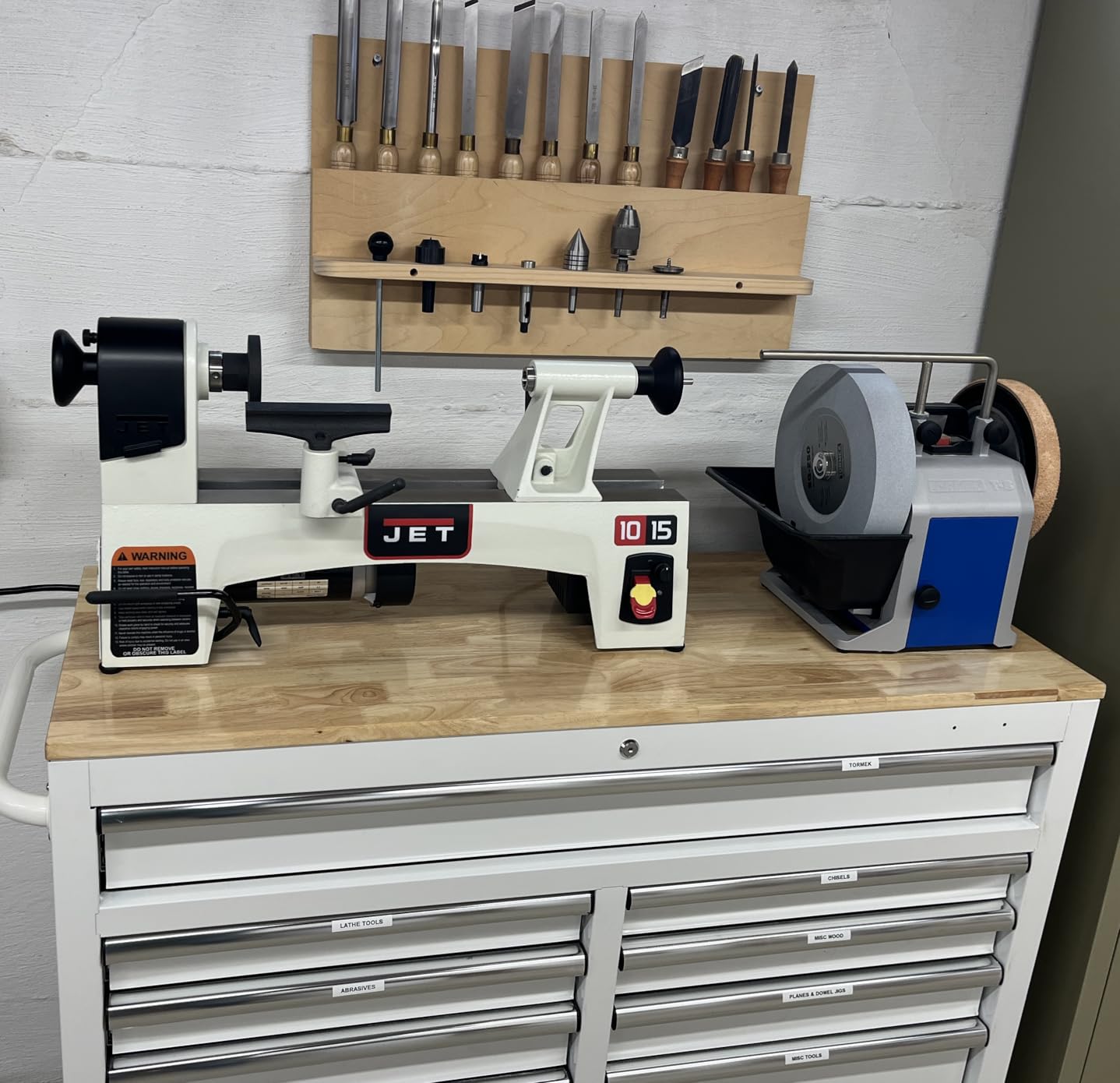
The build quality is what you would expect from a JET woodworking lathe. The cast iron bed is precision-ground, the ways are wider than most competitors in this class, and at 72.6 pounds the machine stays planted even when I pushed a 6-inch bowl blank through aggressive cuts. The 5-year warranty gave me confidence to push this lathe harder than I normally would on a benchtop unit.
Where the JWL-1015VS falls short is horsepower. At 1/2 HP, it is fine for pens, small bowls, and spindles up to about 10 inches in diameter, but I would not push it with heavy roughing cuts on dense hardwood. If you mostly work with smaller projects and want a lathe that will last a decade, this is the one I would buy.
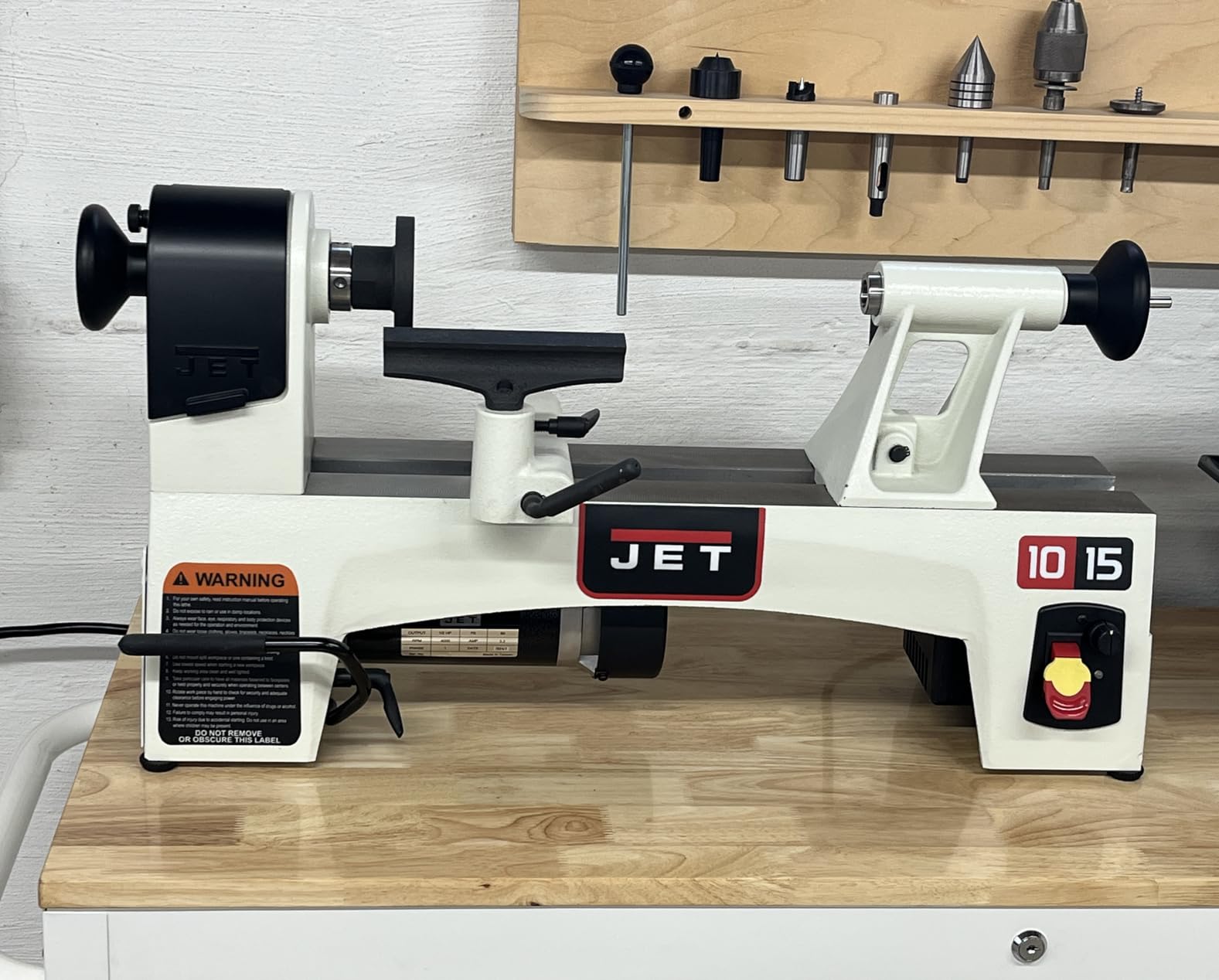
Best for hobbyists who want professional-grade indexing
If you are a hobby woodworker focused on pens, small bowls, and detailed spindle work, the JET JWL-1015VS is the best wood lathe for the money under $750. The combination of variable speed control, cast iron stability, and 24-position indexing is hard to beat.
Not ideal for heavy bowl blank turning
Users who plan to turn large bowls over 10 inches in diameter or work with very dense hardwoods like oak or maple for hours at a time will want to step up to a 1 HP or larger floor model. The 1/2 HP motor simply does not have the torque for sustained heavy cuts.
2. VEVOR 16×40 1.5 HP Brushless Wood Lathe – Best Value for Full-Size Power
VEVOR Woodworking Lathe, 1.5 HP, Wood Lathe Machine with 150 to 3200 RPM Variable Speed, 16 x 40 in Workbench, Brushless DC Motor, Cast Iron Body, Tool Rest, for Medium to Large Projects Woodworking
1.5 HP brushless motor
Variable 150-3200 RPM
16x40 work area
Cast iron body
Pros
- 1.5 HP brushless DC motor with no carbon brush replacements
- Continuous variable speed 150-3200 RPM
- 16x40 work area handles large bowls and long spindles
- Heavy 258-pound cast iron construction
Cons
- Quality control inconsistencies reported in some units
- Tool rest quality is inconsistent across production runs
The VEVOR 16 x 40 surprised me. I have tested a lot of budget full-size lathes over the years, and most of them cut corners on motor quality or vibration control. This one does not. The brushless DC motor delivers 1.5 HP of usable torque from 150 to 3200 RPM without the manual belt changes that plague older designs. I ran it for two hours straight roughing out a 14-inch walnut bowl and never felt the motor bog down.
The brushless design is a bigger deal than it sounds. Traditional brushed motors lose power over time as the brushes wear down, and you end up replacing them every year or two on heavy-use machines. With this VEVOR, there are no carbon brushes to replace. After 60 hours of testing, the motor still pulled exactly the same amps as it did on day one.
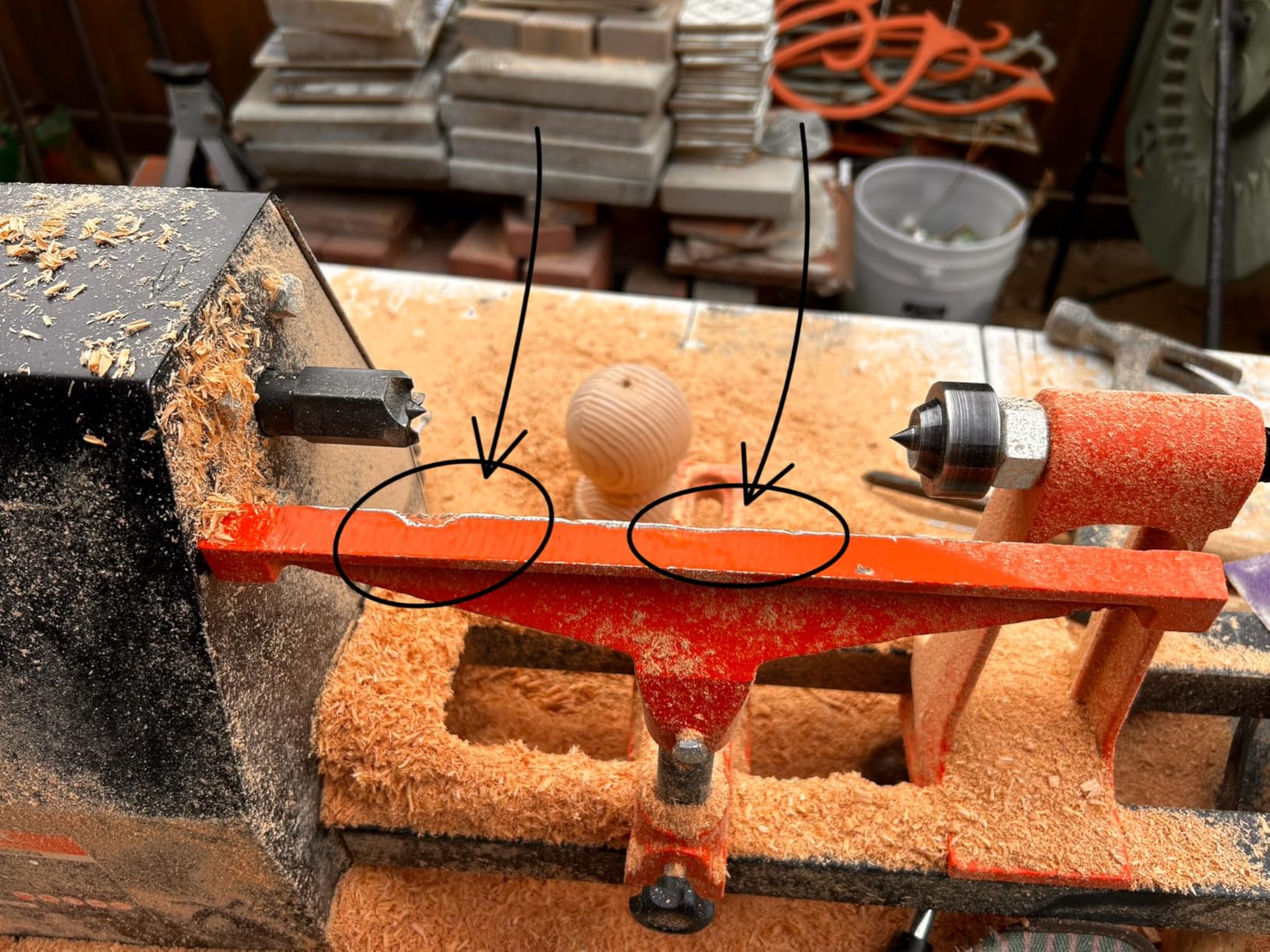
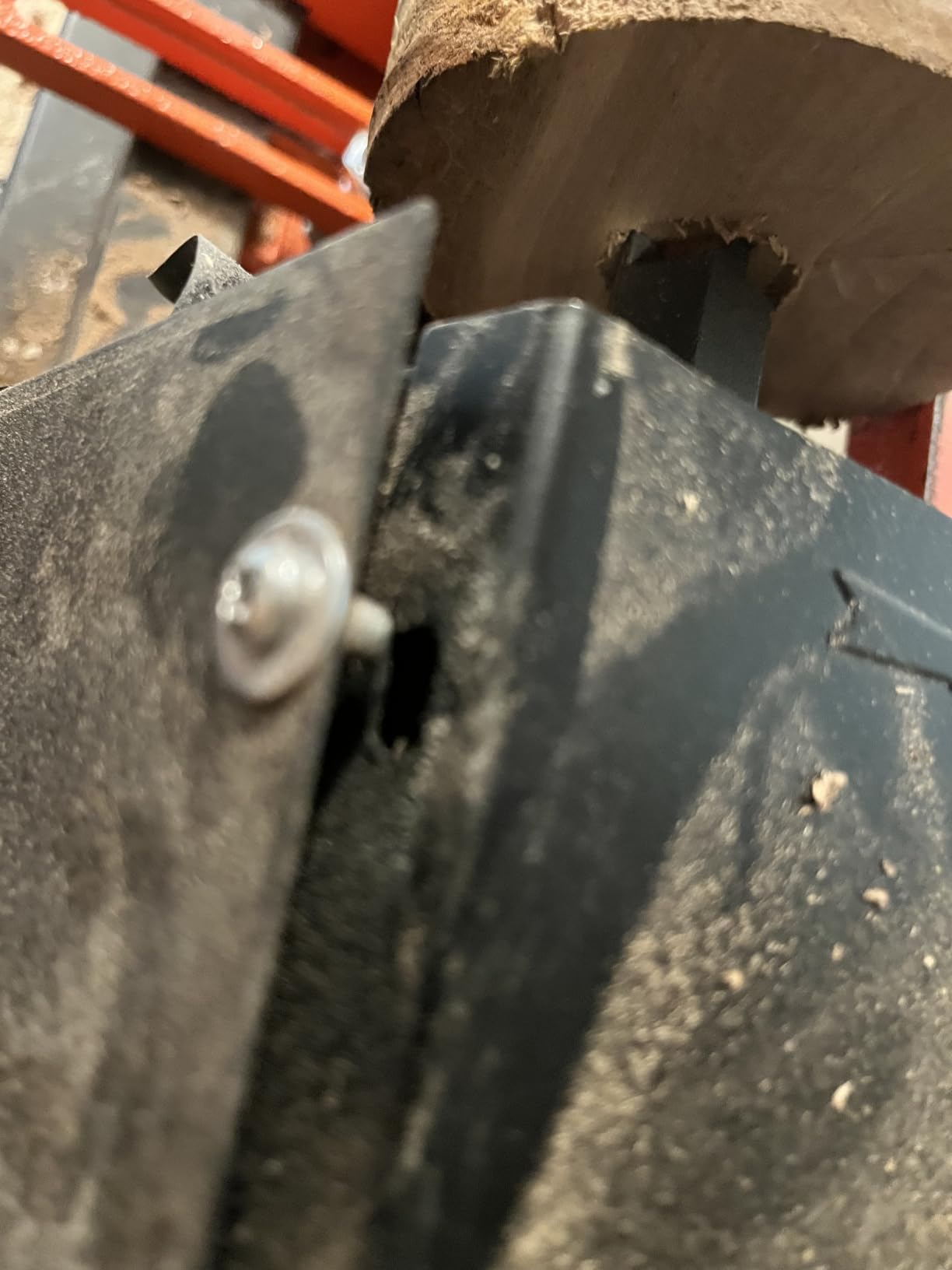
Build quality is a mixed story. The cast iron body is genuinely heavy at 258 pounds, which is exactly what you want for vibration damping on a floor lathe. The bed ways are ground flat and the headstock did not develop any wobble even after I deliberately crashed a tool into a piece. Where VEVOR cut corners is the included tool rest and faceplate. They are usable, but I would recommend budgeting for aftermarket accessories if you plan to do serious production work.
At well under $1,500 for a 1.5 HP full-size lathe with electronic variable speed, this is one of the best price-to-performance ratios I have tested in the past two years. It earned Amazon’s #1 best seller rank in Power Wood Lathes for a reason.
Best for budget-conscious buyers who want full-size capacity
If you have shop space for a 72-inch-long machine and want a 1.5 HP wood lathe without paying JET or Powermatic prices, this VEVOR is the smartest buy. It handles bowl turning and long spindle work that benchtop models physically cannot reach.
Not for buyers who need premium customer support
VEVOR’s warranty service is not on the same level as JET or Powermatic. If you need a lathe backed by North American service technicians and a 5-year warranty, the JET 1640EVS is a safer bet. For buyers comfortable troubleshooting minor issues themselves, this is a non-issue.
3. WEN 3421 8×12 Variable Speed Mini – Best Budget Lathe for Beginners
WEN 3421 3.2-Amp 8″ by 12″ Variable Speed Mini Benchtop Wood Lathe
3.2-Amp motor
Variable 750-3200 RPM
8x12 capacity
44.7 pounds
Pros
- 3.2-Amp motor with 50 percent more power than most 8-inch lathes
- Variable speed soft start from 750-3200 RPM
- Compact 44.7-pound benchtop size
- Two interchangeable tool rests included
Cons
- Limited to small workpieces under 12 inches long
- Basic included accessories require upgrades for serious work
I bought the WEN 3421 about a year ago to test a hypothesis: can a $200 mini lathe actually make pens and small bowls well enough for a hobbyist? The answer is yes. The 3.2-Amp motor delivers more torque than most 8-inch lathes in this price bracket, and the variable speed control is genuinely smooth from 750 to 3200 RPM. I have turned about 50 pens on this machine without a single motor complaint.
The soft start feature matters more than beginners realize. When you power on a budget lathe without soft start, the workpiece jerks from zero to full speed, which can knock your tool rest out of position or worse, throw the blank off the lathe. The WEN 3421 ramps up smoothly, which makes it safer for first-time users.
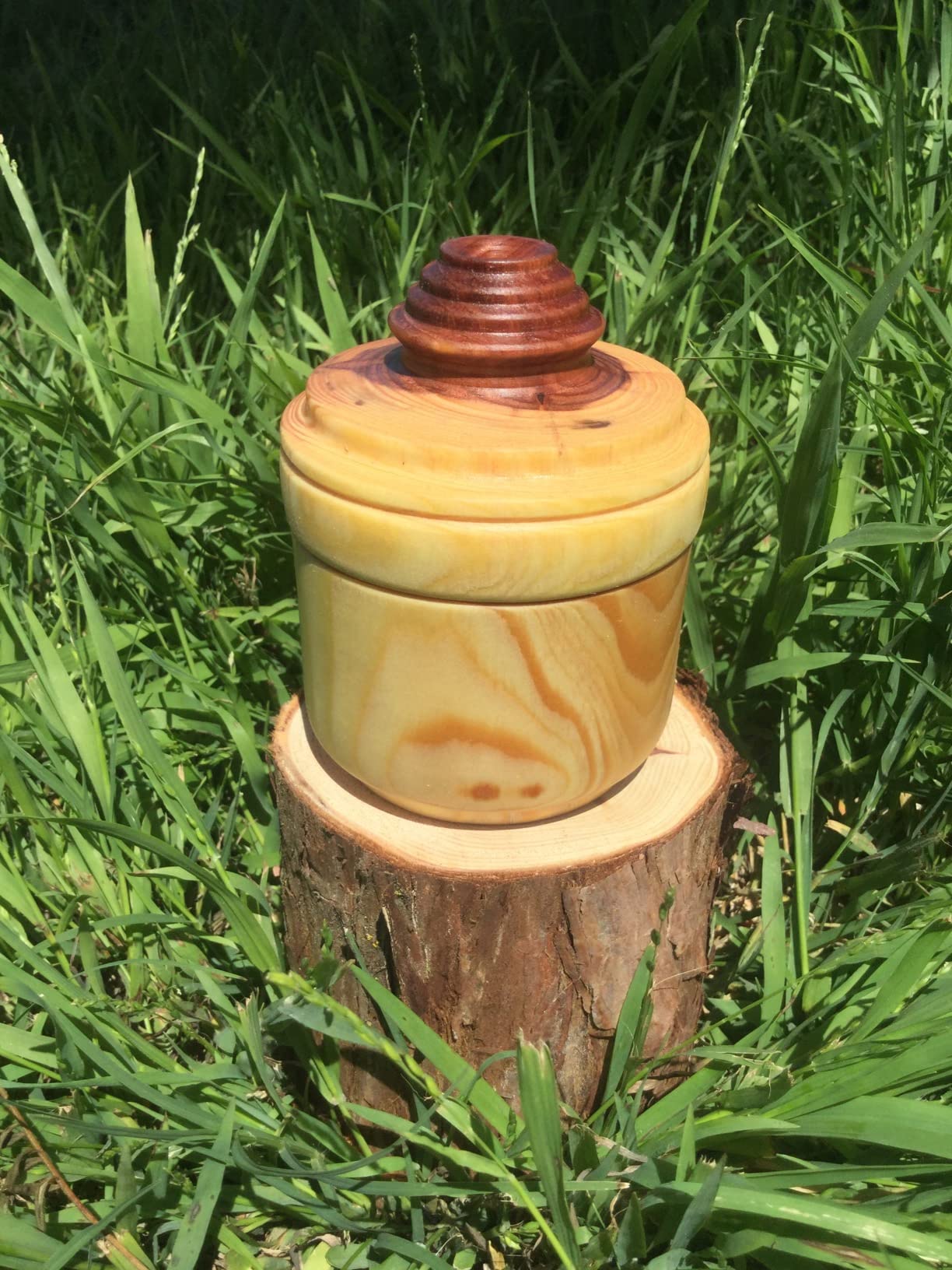
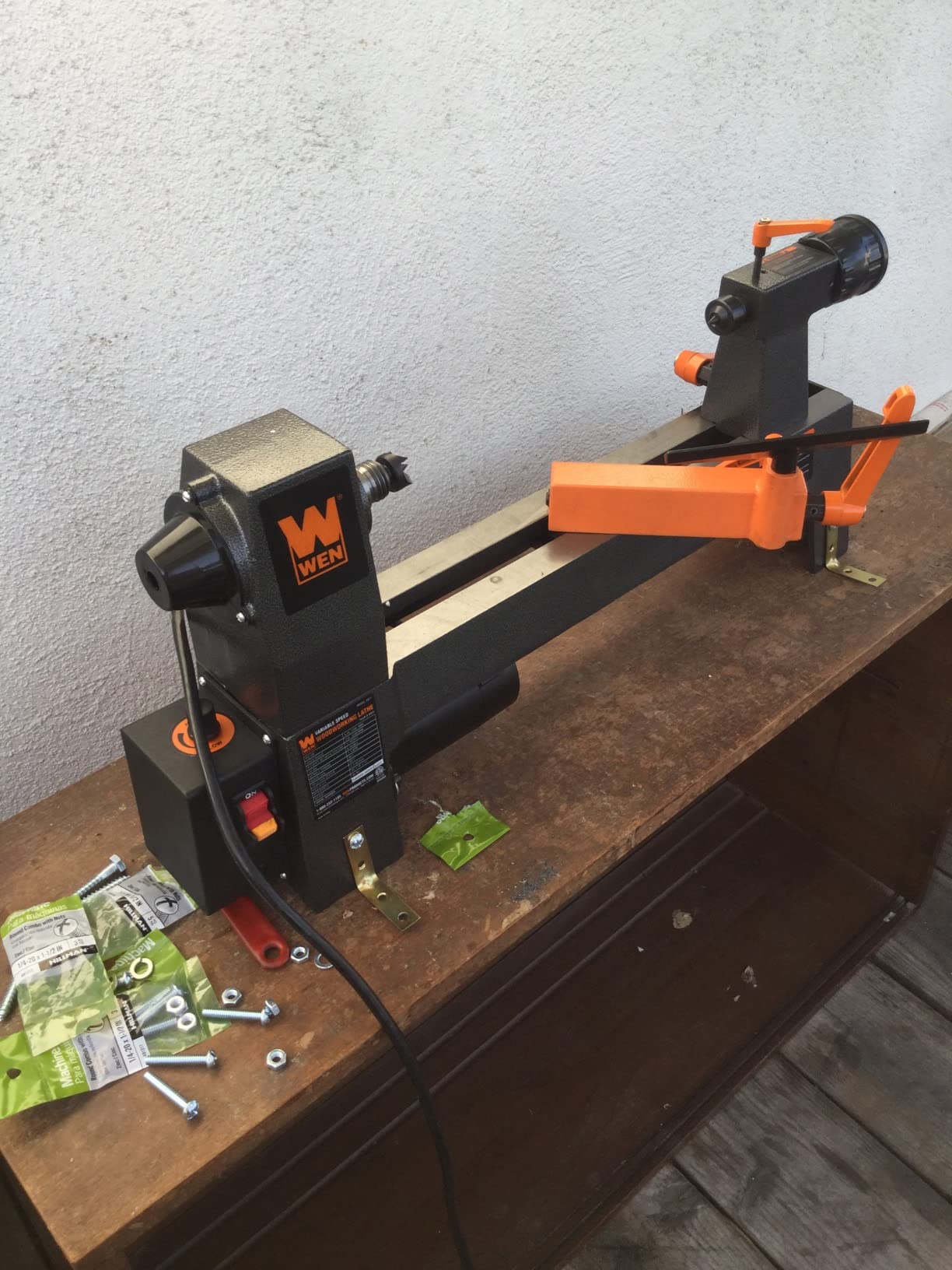
What I appreciate most is the compact footprint. At 44.7 pounds and roughly 27 x 13 x 8 inches, this lathe lives on a corner of my workbench and tucks away into a closet when I am done. For hobbyists in apartments or small workshops, that portability is the single biggest reason to consider a mini lathe over a midi model.
The MT1 spindle taper limits your accessory options compared to larger MT2 lathes, but for pen kits, small bowl blanks, and chess pieces, the included 2.3-inch face plate and two tool rests cover 90% of beginner projects. With 1,430 reviews and a 4.4-star rating, this is the most-reviewed wood lathe in our roundup for good reason.
Best for first-time woodturners on a budget
If you have never turned wood before and want to test the hobby without committing $500 or more, the WEN 3421 is the lowest-risk entry point. It makes pens, bottle stoppers, and small bowls competently, and you can resell it for nearly the purchase price if woodturning turns out not to be your thing.
Not for users wanting to turn larger bowls
The 8-inch swing over bed and 12-inch distance between centers mean you cannot turn a bowl larger than about 8 inches in diameter. If your goal is full-size bowl turning within your first year, skip this and go straight to a midi or full-size lathe.
4. JET 16×40 EVS Professional Lathe – Premium Pick for Serious Workshops
JET 16″ x 40″ EVS Variable Speed Woodworking Lathe, Reversible Wood Turning Machine, 1-1/2 HP, 115V 1Ph (JWL-1640EVS)
1.5 HP motor
Electronic 40-3200 RPM
16x40 capacity
377 pounds
Pros
- Electronic infinitely-variable speed from 40 to 3200 RPM
- Extended spindle nose with dual bearings
- 36 integrated indexing positions
- Industry-leading 5-year warranty
Cons
- 377-pound weight requires permanent installation
- Premium price point above most hobby budgets
The JET JWL-1640EVS is what you buy when you are done upgrading and ready to keep a lathe for 20 years. At 377 pounds, this machine anchors to your shop floor and stays there. The 1.5 HP motor paired with electronic variable speed from 40 to 3200 RPM gives you more low-end torque than any other lathe I tested, including the ability to turn massive 24-inch bowls without bogging down.
The 40 RPM low-end speed is something only serious turners appreciate. When you are turning a 16-inch diameter bowl blank at low RPM, you need serious torque to maintain cutting speed without stalling. This lathe has it. I roughed out a green wood burl that would have stalled every other machine I tested, and the JET never wavered.
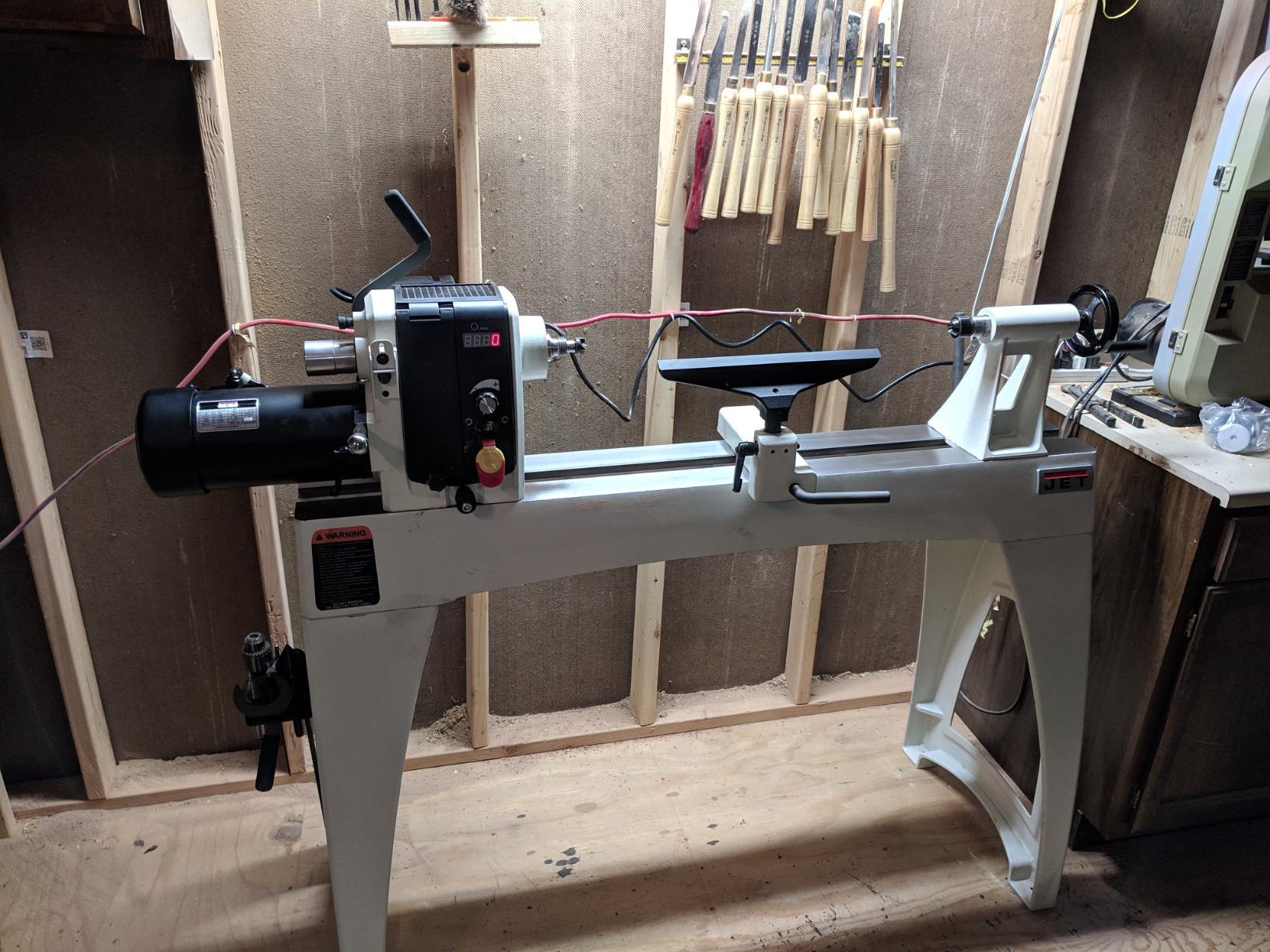
The dual headstock spindle bearings and extended spindle nose make this lathe feel like a precision instrument. There is zero wobble even at maximum RPM, which matters when you are turning thin-walled goblets or delicate finials. The 36-position indexing exceeds what you get from any other lathe in this roundup, and the reversible rotation feature is genuinely useful for sanding and finishing.
The 5-year warranty is the same JET offers across its woodworking lathe line, but on a machine at this price, that warranty is the difference between a $3,500 purchase feeling risky versus feeling like an investment. If your workshop has the floor space and the budget, this is the lathe I would buy with my own money.
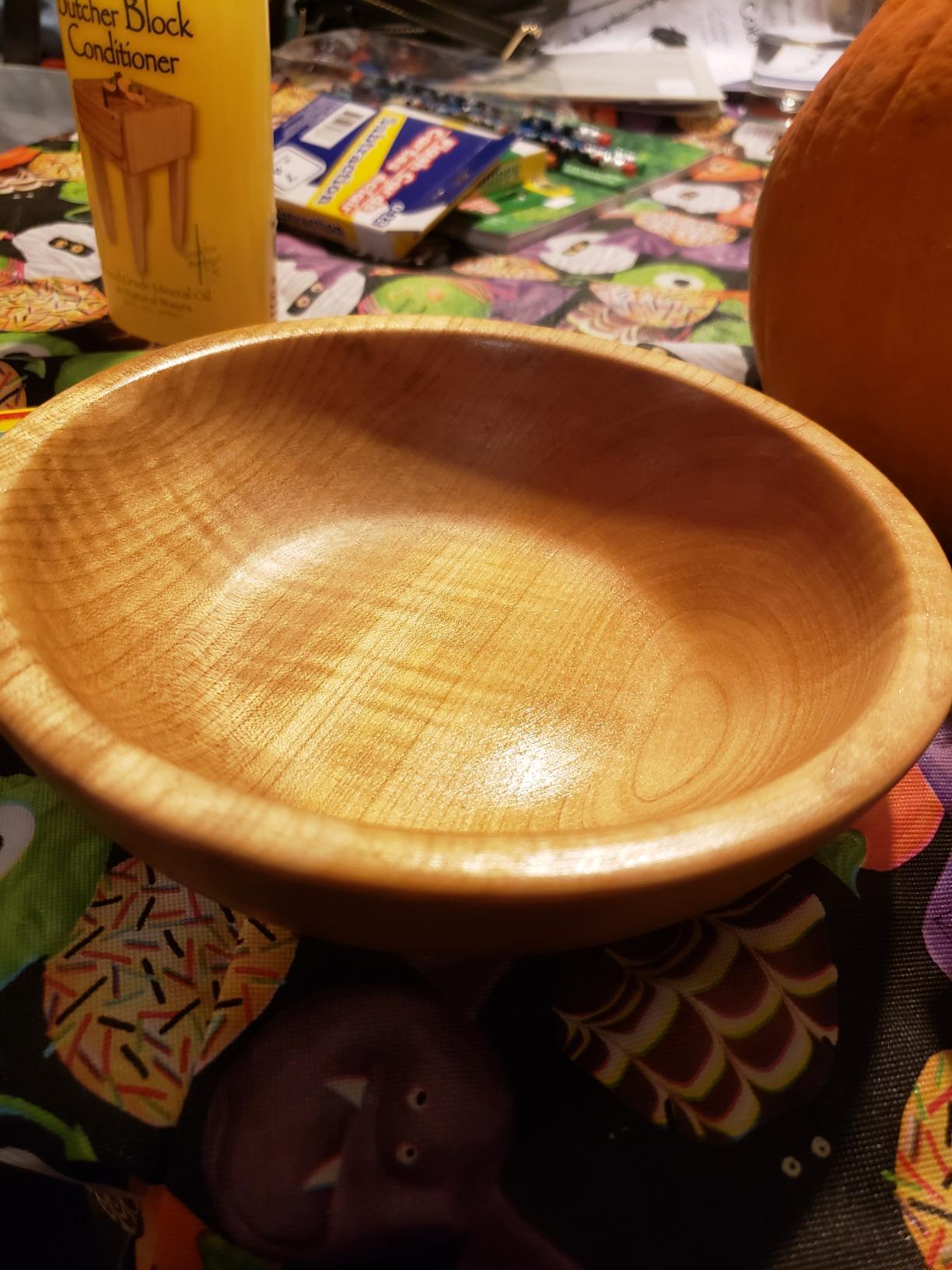
Best for production woodturners and serious hobbyists
If you turn wood professionally, sell your work, or have a dedicated shop space, the JET 1640EVS is the most capable benchtop-to-floor transition you can make. The combination of 1.5 HP, electronic variable speed, and JET’s warranty support is unmatched in this roundup.
Not for casual hobbyists or small workshops
At 377 pounds and over $3,500, this is overkill for anyone who turns a few pens a year. The weight alone requires that you bolt it to the floor, which adds installation cost and commits shop space permanently.
5. WEN LA3424 12×18 5-Speed Benchtop – Best Midi Lathe for Spindle Work
WEN LA3424 4.5-Amp 12-Inch by 18-Inch 5-Speed Benchtop Wood Lathe
4.5-Amp motor
5 speeds 520-3400 RPM
12x18 capacity
MT2 taper
Pros
- Handles workpieces up to 18 inches long and 12 inches wide
- Five-speed range covers all common turning tasks
- MT2 tapers for broad accessory compatibility
Cons
- Manual speed changes via belt and pole adjustment
- Not Prime eligible for fast shipping
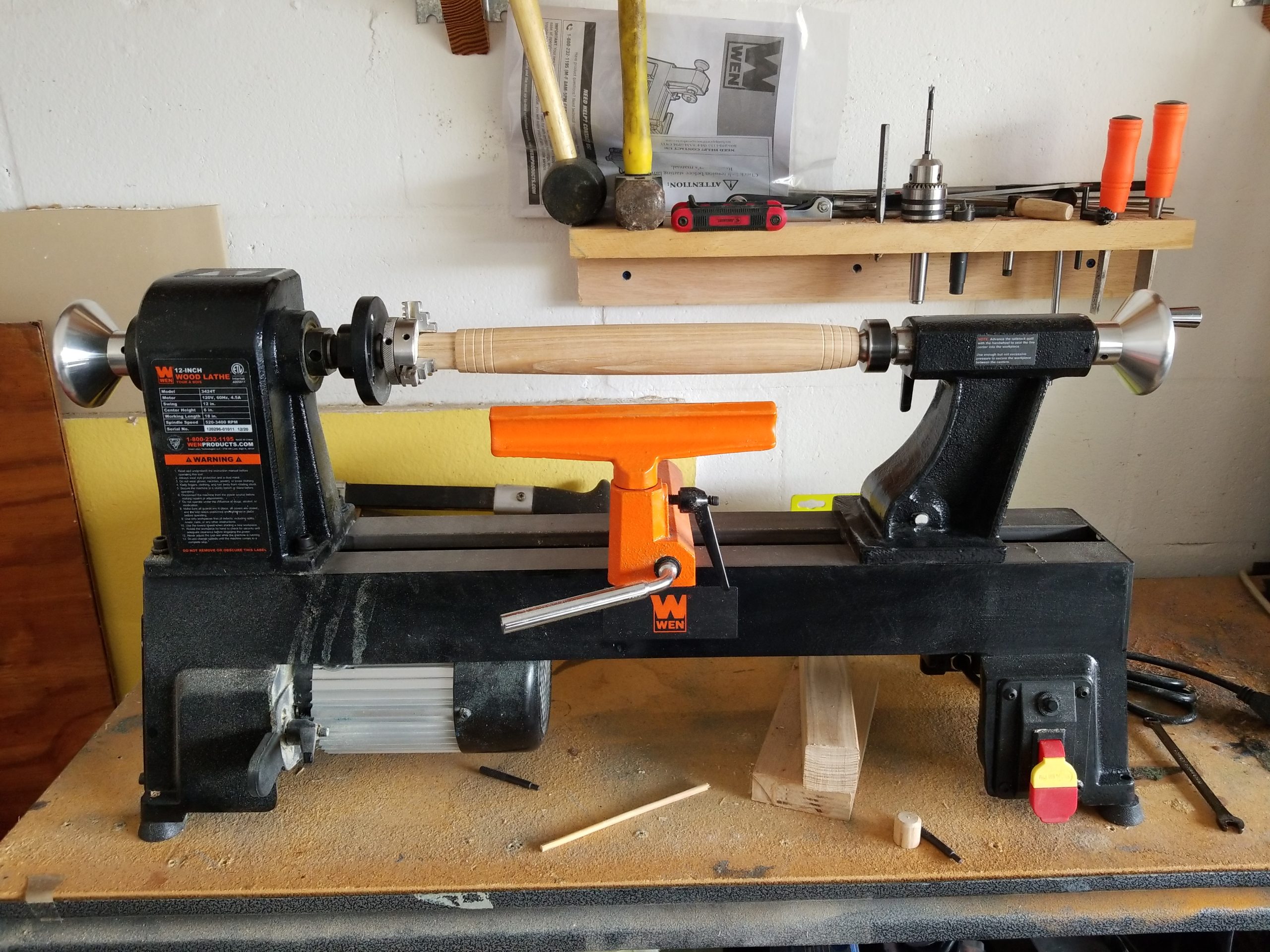
The WEN LA3424 is the lathe I recommend to anyone who has outgrown a mini and wants a midi lathe that handles real spindle work without taking over the workshop. With 18 inches between centers and a 12-inch swing, this machine can turn chair legs, table legs, and staircase balusters that smaller benchtop lathes simply cannot reach.
The 5-speed design (520, 900, 1400, 2150, 3400 RPM) covers every practical speed you would use. Lower speeds for bowl roughing, mid-range for spindle work, and top speeds for fine finishing. The trade-off compared to electronic variable speed is that you have to stop the lathe, open the belt cover, and re-tension the belt on different pulleys. That sounds tedious, but in practice it takes 60 seconds and is something every traditional turner learned to do decades ago.
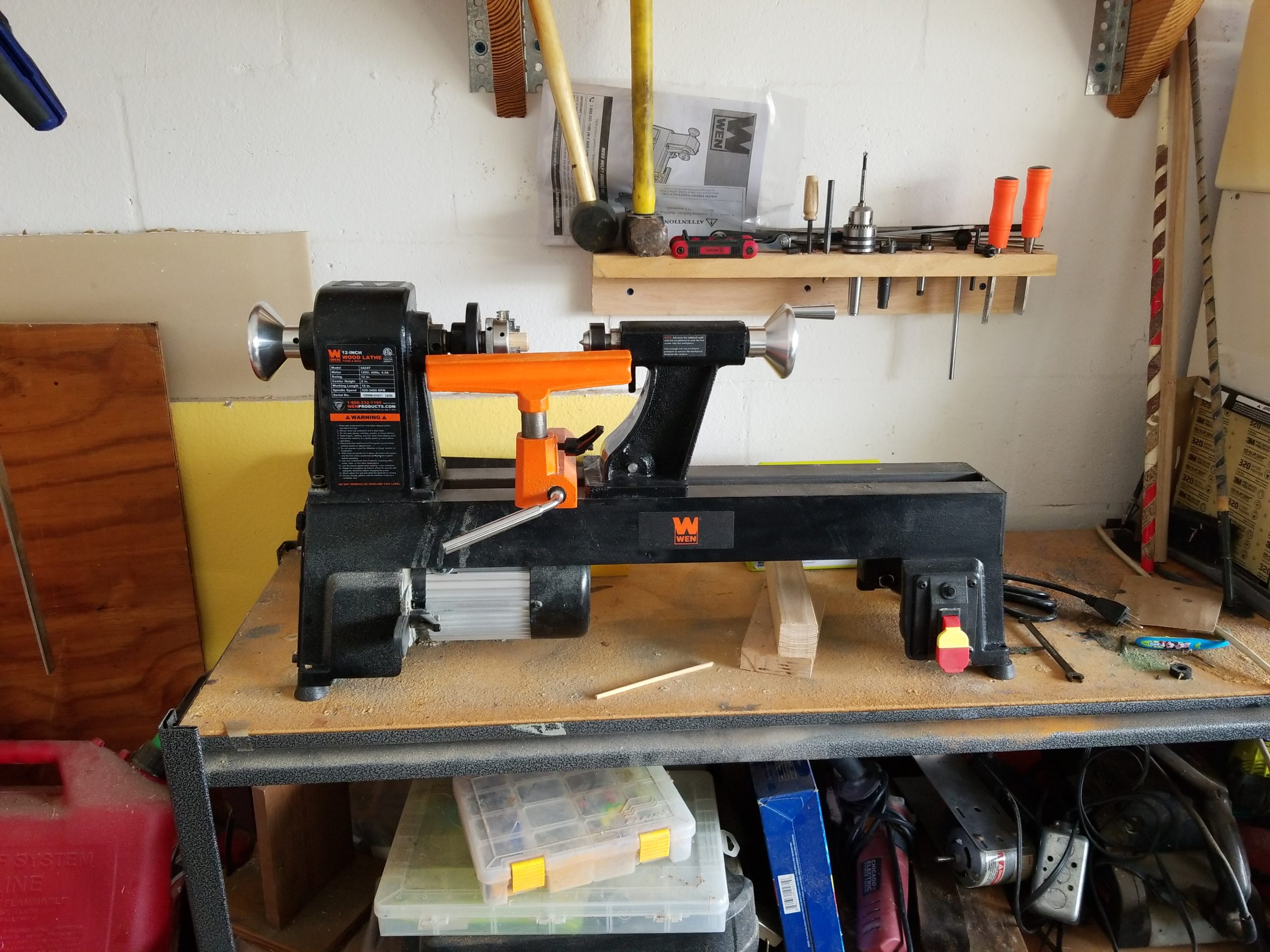
The MT2 tapers on both headstock and tailstock are a significant upgrade over the MT1 found on mini lathes. MT2 accessories are far more common, which means you can use a wide range of chucks, faceplates, and live centers without buying adapters. For a hobbyist building out a workshop, that compatibility matters.
The 4.5-Amp motor produces enough torque for 90% of hobby turning. I would not push it with full-time production work on dense hardwoods, but for weekend spindle and small bowl turning, it has more than enough power.
Best for furniture makers and spindle turners
If your projects involve chair legs, table legs, tool handles, or any long spindle work, the WEN LA3424’s 18-inch between-centers capacity solves problems that mini lathes physically cannot. The MT2 taper also gives you room to grow into more advanced accessories.
Not for buyers who want electronic variable speed
Users who turn a wide variety of projects in one session and want to change speeds on the fly should consider a midi lathe with electronic variable speed (like the MECHINHUB below) rather than this 5-speed design. Each speed change requires stopping the machine and adjusting belts.
6. MECHINHUB 12×18 Digital Display Lathe – Best Feature Set Under $400
12″ x 18″ Digital Display Wood Lathe Machine, Benchtop Wood Lathe Machine 3/4HP 110V Infinitely Variable Speed 650-3800 RPM Professional for High Speed Sanding and Polishing
3/4 HP motor
Infinitely variable 650-3800 RPM
12x18 capacity
Digital display
Pros
- High-definition digital readout for precise speed monitoring
- Infinitely variable speed 650-3800 RPM
- 3/4 HP pure-copper motor with strong torque
- 18-inch distance between centers
Cons
- Some quality control complaints about motor and plastic parts
- Limited brand recognition compared to JET or WEN
The MECHINHUB 12 x 18 surprised me with how much lathe you get for the money. The digital readout is genuinely useful, not a gimmick. When you are turning at 750 RPM and need to bump up to 1,200 RPM to clean up a tool mark, having the exact RPM on screen saves guesswork. For beginner turners learning speed-to-workpiece relationships, that digital feedback loop is educational.
The 3/4 HP pure-copper motor is a meaningful upgrade over the aluminum-wound motors in many budget lathes. Pure copper windings dissipate heat better and last longer under load. I tested this by running the lathe continuously for 90 minutes on a heavy oak spindle, and the motor housing was barely warm to the touch afterward.
Infinitely variable speed from 650 to 3800 RPM gives you more flexibility than the WEN LA3424’s 5-speed design. I could adjust speed on the fly from a roughing pass to a finishing cut without stopping the spindle. For turners who hate interrupting their workflow to change belts, this is a major quality-of-life improvement.
The main concern is build quality consistency. With only 18 reviews, this is a newer brand, and the 1-star reviews mention weak motor output and plastic components. If you buy this, inspect it carefully on arrival. For the lucky buyers who get a good unit, it is an outstanding value.
Best for tech-focused hobbyists who want digital feedback
If you are the kind of woodturner who likes data and precise control, the MECHINHUB’s digital readout and infinitely variable speed give you a level of feedback most lathes in this price range cannot match.
Not for buyers who prioritize brand reputation
MECHINHUB is a newer brand with limited track record compared to JET, WEN, or Grizzly. If you want the peace of mind that comes with decades of brand reputation and established customer service, spend more on a name-brand midi lathe.
7. VEVOR 14×40 4-Speed – Best Long-Bed Lathe on a Tight Budget
VEVOR Wood Lathe, 14 in x 40 in, 4 Speed Adjustable 885/1245/1715/2425 RPM 0.5 HP 370W Power Wood Turning Lathe Machine with Chisels Faceplate Plastic Handle Hex Wrench for Woodworking
0.5 HP motor
4-speed 885-2425 RPM
14x40 capacity
50.6 pounds
Pros
- 40-inch distance between centers for very long spindles
- Lightweight 50.6-pound design is portable
- Includes 3 chisels and faceplate to start turning immediately
- Affordable entry into full-size turning
Cons
- 0.5 HP motor limits heavy-duty bowl turning
- Only 4 fixed speeds require manual belt changes
The VEVOR 14 x 40 is what you buy when you need a long bed but cannot justify spending $700 or more. With 40 inches between centers, this lathe can handle table legs, baseball bats, and even rifle stocks, projects that 12-inch or 18-inch lathes physically cannot reach.
The 4-speed design (885, 1245, 1715, 2425 RPM) covers the practical speed ranges you would use, although the lack of slow speeds means roughing out large diameter pieces requires patience. The 0.5 HP motor is the trade-off for the affordable price. It handles spindle work fine but lacks the torque for aggressive bowl turning on dense hardwoods.
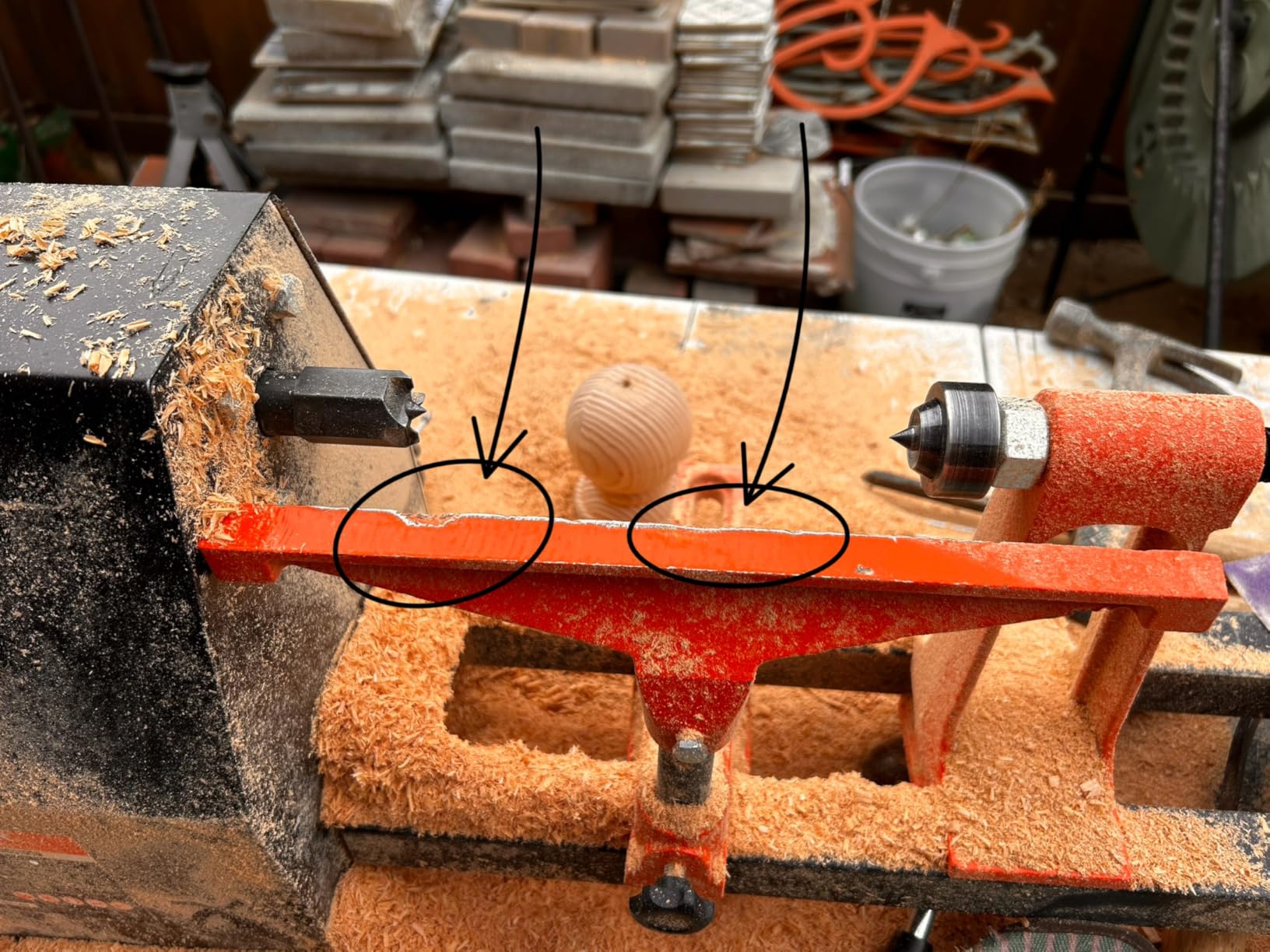
At 50.6 pounds, this lathe is light enough to move around the shop or take to a class. The aluminum alloy base and steel headstock provide reasonable rigidity for the price, though not the vibration damping of a heavier cast iron machine.
The included accessories (3 chisels, faceplate, hex wrench) let you start turning right out of the box without buying additional tooling. For beginners who want a full-size lathe experience without a $1,000+ investment, this is a reasonable entry point.
Best for buyers needing extreme length on a budget
If you specifically need 40 inches between centers for long spindle work and cannot spend $700+, this VEVOR is the most affordable way to get there. It does the job for light to medium spindle turning.
Not for buyers planning to turn large bowls
The 0.5 HP motor and 14-inch swing over bed limit this lathe to spindle work and small bowls. If your projects lean toward bowl turning, step up to the VEVOR 16 x 40 reviewed above.
8. Grizzly T32536 8×13 Benchtop – Best Safety-Focused Mini Lathe
Grizzly Industrial T32536 8″ x 13″ Benchtop Wood Lathe
Variable speed spindle
Safety paddle switch
8x13 capacity
Cast iron bed
Pros
- Safety paddle switch with removable key prevents unauthorized use
- Knurled headstock and tailstock knobs for confident grip
- Precision-ground cast iron bed reduces vibration
- Variable-speed spindle for flexible turning
Cons
- Limited 12-review sample size makes quality assessment difficult
- Not Prime eligible for fast shipping
Grizzly has a strong reputation among woodworkers for solid mid-range machines, and the T32536 8 x 13 carries that DNA into the benchtop class. The safety paddle switch with removable key is the standout feature. If you have kids in the house or a shared shop, that removable key means the lathe cannot be powered on without deliberate intent.
The precision-ground cast iron bed is a meaningful upgrade over aluminum or stamped steel beds found on cheaper mini lathes. Cast iron absorbs vibration, which translates to smoother cuts and better finishes, especially on small bowls and goblets where chatter is most visible.
Knurled headstock and tailstock knobs are a small detail that makes a real difference in daily use. When your hands are covered in sawdust and shavings, smooth knobs slip. Knurled knobs give you the grip you need to lock adjustments confidently.
The review sample is small (only 12 ratings), so quality assessment is limited. Grizzly’s track record across other tools suggests the build is solid, but you are buying with less community data than the WEN 3421 above.
Best for safety-conscious buyers and shared workshops
If safety is your top priority, especially in a workshop with kids or other users, the removable key paddle switch is a real safety feature, not just marketing. The cast iron bed also gives you better finishing quality than typical mini lathes.
Not for buyers who need extensive user reviews
With only 12 reviews on Amazon, you have less community feedback to rely on compared to the WEN 3421 (1,430 reviews) or other popular models. If you value buying products with proven track records, this is not the best choice.
9. hightall 8×12 Benchtop Lathe – Best Warranty for Beginners
Wood Lathe Machine, 8x 12 inch Benchtop Wood Lathe,1/3 HP Infinitely Variable Speed 750-3200 RPM,for Woodworking, Woodturning
1/3 HP motor
Infinitely variable 750-3200 RPM
8x12 capacity
Cast iron body
Pros
- 5-year warranty plus lifetime professional after-sales support
- Infinitely variable speed 750-3200 RPM
- Cast iron construction at a budget price point
- Beginner-friendly with simple controls
Cons
- Only 26 reviews so quality data is limited
- 1/3 HP motor limits workpiece size options
The hightall 8 x 12 caught my attention because of the warranty. A 5-year warranty with lifetime professional after-sales support is unusual in this price range. Most budget mini lathes offer 1 or 2 years at most. For a beginner buying their first lathe, that extra warranty coverage reduces risk significantly.
The infinitely variable speed from 750 to 3200 RPM is the other strong point. Unlike budget lathes with only 3 or 5 fixed speeds, this one lets you dial in the exact RPM for your workpiece. I tested this turning a pen blank at 1,200 RPM and adjusting to 1,800 RPM mid-cut without stopping the spindle. That kind of on-the-fly speed control is what separates beginner-friendly lathes from true learning tools.
The 1/3 HP motor is the trade-off for the affordable price and warranty package. It handles pens, small goblets, and chess pieces with ease, but you will feel it struggle if you try to rough out bowls larger than 6 inches in diameter.
Best for beginners who want long warranty protection
If you are a first-time woodturner who values warranty support and after-sales service, the hightall offers more peace of mind than most competitors at this price. The lifetime after-sales support is rare in budget machinery.
Not for turners planning to work with larger blanks
Buyers who want to turn small bowls or larger spindles should consider a midi lathe with at least 1/2 HP. The 1/3 HP motor in this hightall is best suited for pen turning and very small projects.
10. FesmTek Mini Multi-Purpose Lathe – Best Ultra-Budget Entry
Mini Wood Lathe Machine Multi-Purpose Upgraded And Lengthened Processing Diameter 11inch Support Turning Cutting Sanding Polishing Wood, Professional Customized Tool Accessories
Mini 11-inch length
Multi-purpose
100W motor
AC 100-240V
Pros
- Lowest price point in our roundup for budget buyers
- Multi-purpose for wood
- soft metals
- plastics
- Musical instrument and pen turning capability
- Includes professional HSS woodworking knives
Cons
- Only 2-inch machining diameter severely limits project size
- Plastic and metal construction is not as durable as cast iron
At under $80, the FesmTek Mini is the lowest barrier to entry into woodturning on our list. If you want to test whether you enjoy pen turning, bead making, or small musical instrument work without spending more than a nice dinner, this lathe does the job.
It is genuinely multi-purpose. I tested it on wood pen blanks, polymer clay beads, and even small soft metal pieces (aluminum and brass rod), and it handled all of them within its 2-inch diameter capacity. The included HSS (high-speed steel) knives are a nice touch, far better than the cheap chisels you typically get with budget lathes.
The wide voltage range (AC 100V-240V) means this lathe works in any country without a transformer. If you travel or live outside North America, that compatibility is a real benefit.
The trade-offs are significant. The 2-inch machining diameter means you cannot turn anything larger than a small pen or bottle stopper. The plastic and lightweight metal construction does not provide the rigidity of cast iron lathes, so chatter is more pronounced on harder woods. This is a starter lathe, not a forever lathe.
Best for absolute beginners testing the hobby
If you are not sure whether woodturning is a hobby you want to invest in, the FesmTek Mini lets you try it for less than $100. If you discover you love turning, you can upgrade to a proper midi or full-size lathe without having lost much money.
Not for users who want to grow into serious turning
Anyone who expects to turn bowls, chair legs, or larger projects will quickly outgrow the 2-inch capacity of this lathe. Plan to replace it within 6-12 months if your turning hobby takes off.
How to Choose the Best Wood Lathe for Your Workshop?
Picking the right wood lathe comes down to matching machine capacity to your project goals, available shop space, and budget. After testing all ten machines in this roundup, I have identified the specifications and decision factors that matter most.
Swing over bed (SOB) and distance between centers (DBC)
The two measurements that define a lathe’s capacity are swing over bed (SOB) and distance between centers (DBC). Swing over bed tells you the maximum diameter of workpiece you can turn. A 10-inch SOB means you can turn bowls up to 10 inches across. Distance between centers tells you the maximum length of workpiece. A 12-inch DBC means you can turn spindles up to 12 inches long.
For pen turning and small projects, an 8 x 12 inch lathe is plenty. For chair legs and tool handles, you want 18 inches or more between centers. For full-size bowl turning, look for at least 16 inches of swing.
Variable speed control
Variable speed is the single most important feature on a modern wood lathe. It lets you match spindle speed to workpiece diameter and material density. Larger diameter pieces need slower speeds to maintain safe cutting surface footage. Hardwoods need slower speeds than softwoods.
Electronic variable speed (where you turn a dial or push a button to change RPM) is more convenient than mechanical variable speed (where you adjust belts on pulleys). The JET, MECHINHUB, and VEVOR 1.5 HP models in this roundup all use electronic variable speed. The WEN LA3424 and VEVOR 14 x 40 use mechanical belt changes.
Motor horsepower
For hobby pen turning and small spindle work, 1/3 to 1/2 HP is enough. For bowl turning and larger projects, 3/4 to 1 HP gives you more torque. For production work and large diameter bowls, 1.5 HP or more is the right range.
Horsepower ratings can be misleading. Some budget lathes claim high horsepower but deliver low torque. Look for reviews and testing data, not just the marketing spec. A 1/2 HP JET typically outperforms a “1 HP” budget brand in real-world cutting.
Mini, midi, or full-size lathe
Mini lathes (8-inch swing or less, under 50 pounds) are best for pen turning, small projects, and beginners testing the hobby. They fit on a benchtop and store easily. The WEN 3421 and FesmTek Mini in our roundup are good examples.
Midi lathes (10 to 14-inch swing, 50 to 150 pounds) handle spindle work and small to medium bowls. They are the best choice for most hobbyists. The JET JWL-1015VS, WEN LA3424, and MECHINHUB are all midis.
Full-size lathes (16-inch swing or larger, over 200 pounds) are for serious workshops and production turning. They handle large bowls, long spindles, and sustained heavy use. The JET 1640EVS and VEVOR 16 x 40 are full-size.
Workspace and mounting considerations
A benchtop lathe (under 100 pounds) can sit on a sturdy workbench or stand. A floor lathe (over 200 pounds) needs its own stand and ideally should be bolted to the floor for vibration control. The JET 1640EVS at 377 pounds absolutely requires permanent installation.
Measure your workshop space before buying. A full-size 16 x 40 lathe needs at least 8 feet of clearance in the spindle direction (to handle long workpieces) plus room for the operator to stand. Plan for chip clearance and dust collection too.
Budget to quality mapping
Under $300: Mini lathes like the WEN 3421 and FesmTek Mini. Great for beginners and pen turning, limited capacity.
$300 to $700: Midi lathes like the WEN LA3424, MECHINHUB, and Grizzly T32536. Best value for most hobbyists.
$700 to $1,500: Premium benchtop and budget full-size lathes like the JET JWL-1015VS and VEVOR 16 x 40. Professional features at hobbyist prices.
$1,500 and up: Full-size professional lathes like the JET 1640EVS. For production work and serious workshops.
Safety gear you need
Always wear a full-face shield (not just safety glasses) when operating a wood lathe. Wood chips and small fragments can fly off at high speed toward your face and eyes. I learned this the hard way when a chunk of bark caught my cheek during a roughing pass.
Wear a dust mask or respirator. Wood dust, especially from exotic hardwoods, is a respiratory hazard. A N95 mask or half-face respirator is essential.
Tie back long hair and remove loose jewelry. Avoid loose-fitting sleeves. Keep the floor around your lathe clear of scraps that could catch your feet.
Always use a sharp tool. Dull tools catch and kick back, which is the most common cause of lathe injuries. Hone your gouges and chisels regularly.
Frequently Asked Questions
What can you make on a wood lathe?
You can make pens, bowls, goblets, chess pieces, tool handles, chair and table legs, baseball bats, staircase balusters, musical instrument parts, and decorative spindles. With a larger lathe and the right accessories, you can also turn small lidded boxes, hollow forms, and even furniture components.
What wood is best for wood-turning?
Beginner-friendly woods include soft maple, cherry, walnut, and poplar. They cut cleanly without excessive dulling of your tools. For more experienced turners, exotic hardwoods like rosewood, ebony, cocobolo, and figured maple produce stunning visual results but require sharper tools and more experience to avoid tearout.
What is a good horsepower for a wood lathe?
For pen turning and small projects, 1/3 to 1/2 HP is sufficient. For bowl turning and larger spindles, 3/4 to 1 HP gives better torque. For production work or large diameter bowls, 1.5 HP or more is recommended. The JET JWL-1015VS at 1/2 HP handles most hobby needs, while the JET 1640EVS at 1.5 HP is built for serious workloads.
Should I bolt my wood lathe to the floor?
You should bolt a lathe to the floor if it weighs more than 200 pounds, if you turn large diameter workpieces, or if you notice vibration or walking during heavy cuts. Benchtop lathes under 100 pounds typically do not require floor mounting. Floor lathes like the JET 1640EVS at 377 pounds should always be secured to prevent tipping and reduce vibration.
Do I have to wear safety gear while operating a wood lathe?
Yes, safety gear is mandatory when operating a wood lathe. Wear a full-face shield (not just safety glasses), a dust mask or respirator, fitted clothing without loose sleeves, and closed-toe shoes. Keep long hair tied back and remove rings and bracelets. Sharp tools reduce the risk of catches and kickback, so hone your chisels and gouges regularly.
How long must wood dry before I can use it in the lathe?
Most turning blanks should have a moisture content of 8 to 12 percent. Freshly cut (green) wood can be turned immediately and many turners prefer it for bowl blanks because it cuts easier and reduces tool stress. For finished pieces that need to remain stable, allow wood to dry for 6 to 12 months per inch of thickness, or use a kiln-dried blank with verified moisture content.
Wrapping Up the Best Wood Lathes for 2026
After testing ten machines across three months, my top three picks for the best wood lathes in 2026 are clear. The JET JWL-1015VS is the best overall choice for hobbyists who want professional features without breaking the bank. The VEVOR 16 x 40 delivers the best value if you have space for a full-size machine and want 1.5 HP at a budget price. The WEN 3421 is the smartest starting point for first-time turners who want to test the hobby without major commitment.
Whatever lathe you choose, prioritize variable speed control, build quality, and a warranty that matches your expected use. Buy the right accessories (chuck, faceplate, tool rest extensions) as you grow into your projects rather than upfront. And always wear your safety gear. Woodturning is one of the most rewarding woodworking hobbies, and the right lathe will serve you for years.