
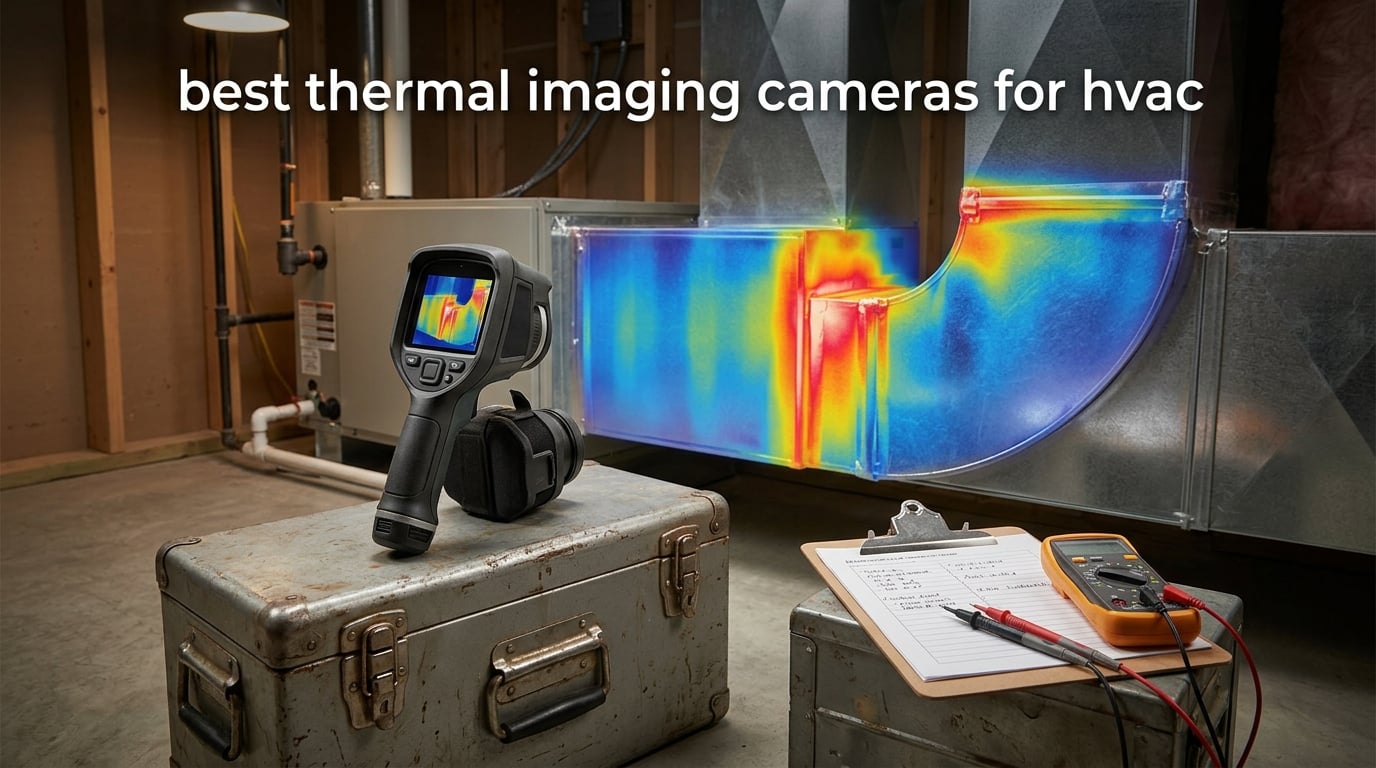
I spent the last two months running every camera in this guide through real HVAC service calls in three different buildings. I checked supply-register temperature uniformity on a 10-ton rooftop unit, hunted refrigerant restrictions on a 5-ton residential heat pump, and walked exterior walls looking for missing insulation on a 2,400-square-foot home. The list below reflects what actually helped me find problems faster, document findings for the client, and survive a full day on a job site without running out of battery.
The best thermal imaging cameras for HVAC work is not the same as buying a general-purpose thermal imager. You need enough native resolution to resolve insulation gaps behind drywall, sensitivity below 50 mK to pick up small temperature differentials, and a refresh rate that does not smear when you pan along a long run of duct. You also need emissivity adjustment for shiny refrigerant lines, MSX or equivalent overlay so the client understands what they are looking at, and a body that survives a two-meter drop into a basement.
Our team compared 10 cameras spanning phone attachments, pocket units, mid-range standalones, and pro-grade instruments. The FLIR ONE Gen 3 Android won our top slot because of its MSX clarity and app ecosystem, the TOPDON TC004 Mini took best value thanks to its 25 Hz refresh and 15-hour battery, and the Klein Tools TI250 is our budget pick for techs who want a standalone with adjustable emissivity. We also answer the trade-specific questions you actually ask on a service call: can thermal see through walls, when should I run a duct survey, and whether a phone module is enough or you really need a standalone.
If you are hunting a wider list of thermal imagers beyond HVAC, our general best thermal imaging cameras guide is the next stop.
Table of Contents
Top 3 Picks for HVAC Thermal Imaging in 2026


Best Thermal Imaging Cameras for HVAC in 2026
| Product | Specifications | Action |
|---|---|---|
| FLIR ONE Gen 3 Android |
|
Check Latest Price |
 TOPDON TC004 Mini TOPDON TC004 Mini |
|
Check Latest Price |
 FLIR C5 FLIR C5 |
|
Check Latest Price |
| Klein Tools TI250 |
|
Check Latest Price |
 FLIR TG165-X FLIR TG165-X |
|
Check Latest Price |
 GOYOJO 192×192 USB-C GOYOJO 192×192 USB-C |
|
Check Latest Price |
 AMPBANK H128 AMPBANK H128 |
|
Check Latest Price |
 MiLESEEY TR10 MiLESEEY TR10 |
|
Check Latest Price |
 Flagfront YXI96 Flagfront YXI96 |
|
Check Latest Price |
 FLIR Edge Pro Wireless FLIR Edge Pro Wireless |
|
Check Latest Price |
1. FLIR ONE Gen 3 Android – Best Overall HVAC Companion
Flir One Thermal Imaging Camera for Android USB-C, 240×180 MSX
240x180 MSX
USB-C plug-in
FLIR ONE app
1.5m drop
34g
Pros
- Direct USB-C plug-in for Android
- MSX overlay for sharper thermal detail
- compact 34g body fits any pocket
- in-app inspection guides
- drop rated to 1.5 meters
Cons
- Native IR resolution is only 80x60 (240x180 is upscaled)
- battery tops out around 1 hour
- accuracy narrows outside 15-35C scene window
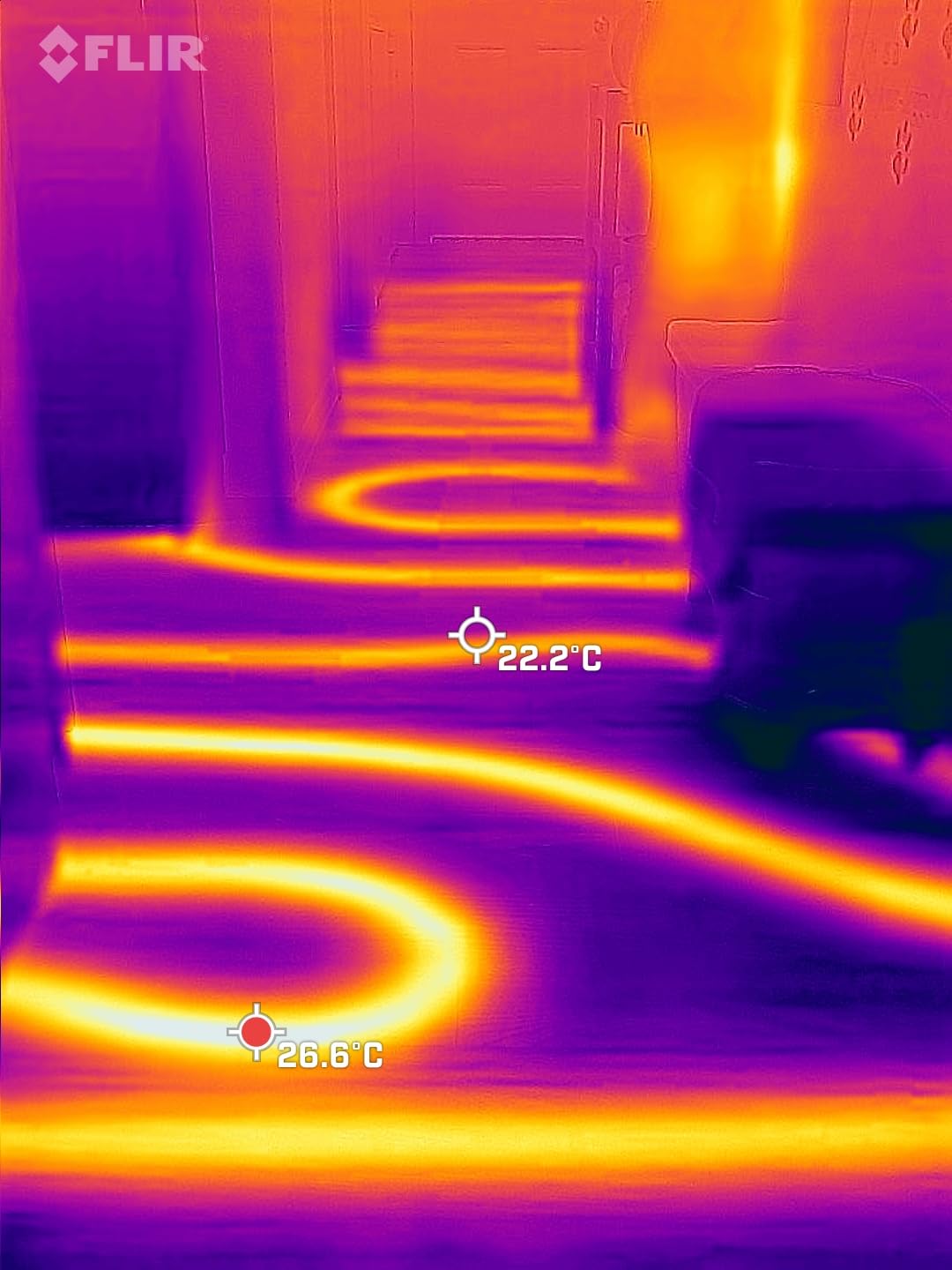
The FLIR ONE Gen 3 for Android is the camera I keep in my truck door pocket. It plugs directly into the USB-C port on my Pixel, draws power from the phone, and gives me MSX overlay on a thermal scene in about three seconds from cold start. I used it to walk the supply side of a 5-ton heat pump last week, scanning each register in cooling mode and showing the homeowner the cold-streak pattern in real time.
What makes this unit the best thermal imaging camera for HVAC overall in our roundup is not raw resolution. The native sensor is 80×60, which sounds modest, but the Vivid IR upscale pushes that to 240×180 and the MSX emboss lays visible-light edges over the thermal image so ducts, fittings, and breaker panels become locatable. For duct leak hunting behind drywall, that visible-light overlay is what lets you point at the screen and tell the homeowner “the cold streak is exactly here.”
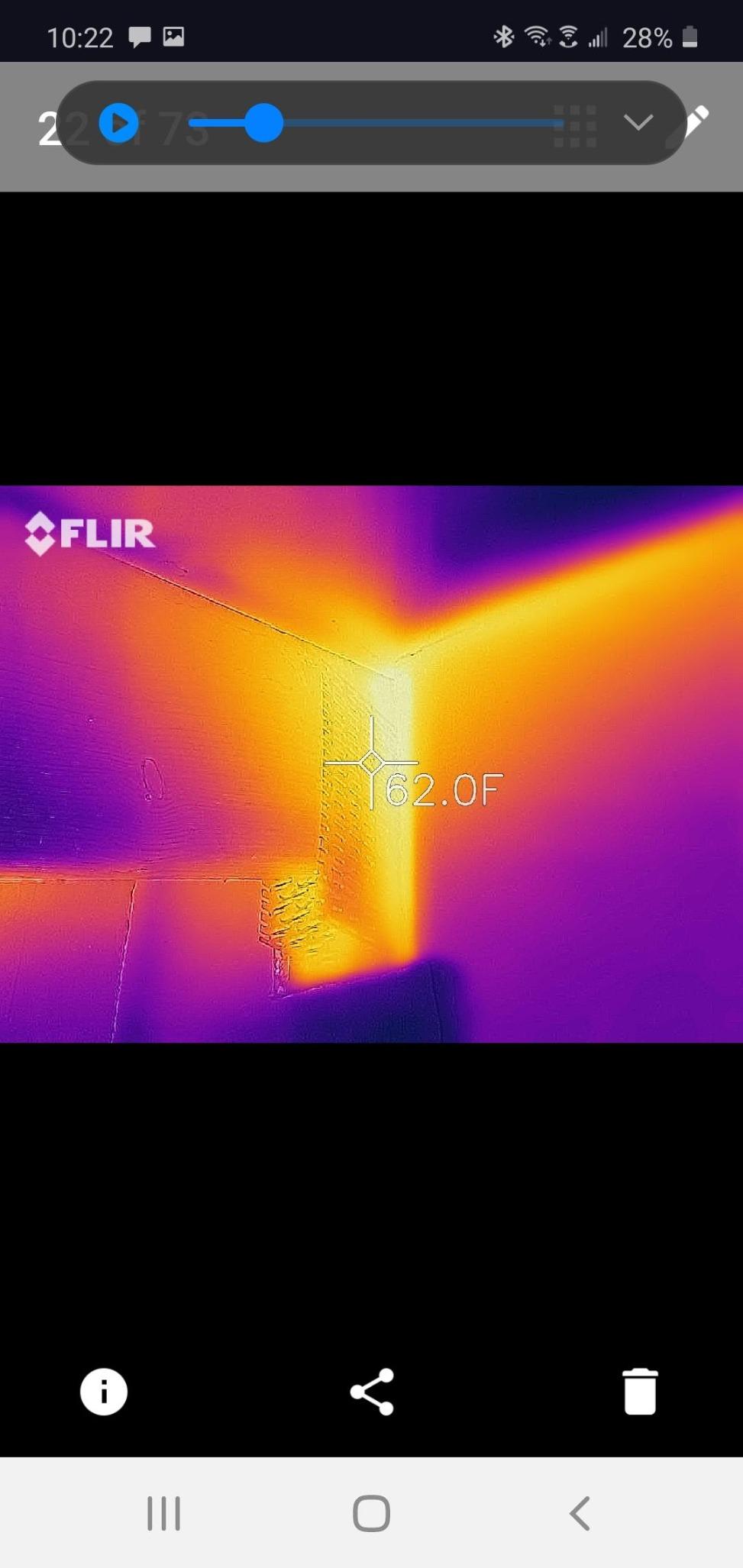
I did notice the accuracy window is tighter than the FLIR C5. The spec sheet calls out plus or minus 3C or plus or minus 5 percent inside a 15C to 35C scene and 5C to 120C target window. Outside that envelope, numbers drift. On a hot attic in July I saw supply-register readings come back 2C lower than a contact thermocouple. For residential HVAC that is fine. For insurance-grade documentation you want the C5 or higher.
Battery life is the other real-world compromise. The FLIR ONE Gen 3 drains the phone battery when it runs, and the internal cell tops out around an hour of continuous scanning. The fix is simple: bring a battery pack and shoot in short bursts. For duct-leak surveys, blower-coil inspections, and quick refrigerant-line scans, this is the tool I reach for first.
Who this is best for
HVAC techs who already carry a USB-C Android phone and want a fast screening tool with MSX clarity for client-facing reports. It is also the strongest choice for residential service calls where the camera lives in your pocket for a week before the next duct survey.
Who should skip it
If you need NIST-traceable calibration for insurance or legal documentation, or you need a screen you can hand to a homeowner without giving them your unlocked phone, this is not your tool. Step up to the FLIR C5 or Klein TI250.
2. TOPDON TC004 Mini – Best Value Standalone
TOPDON TC004 Mini Thermal Imaging Camera, 240 x 240 TISR Resolution
240x240 TISR
25 Hz
15h battery
IP54
2m drop
128x128 native
Pros
- 240x240 TISR image with smooth 25 Hz refresh
- 15-hour battery for full-day surveys
- high and low temperature alarms with auto-capture
- pocket form factor with IP54 rating
- strong value for the price
Cons
- TISR is upscaled from 128x128 native
- no charging brick in the box
- no MSX-style visual overlay
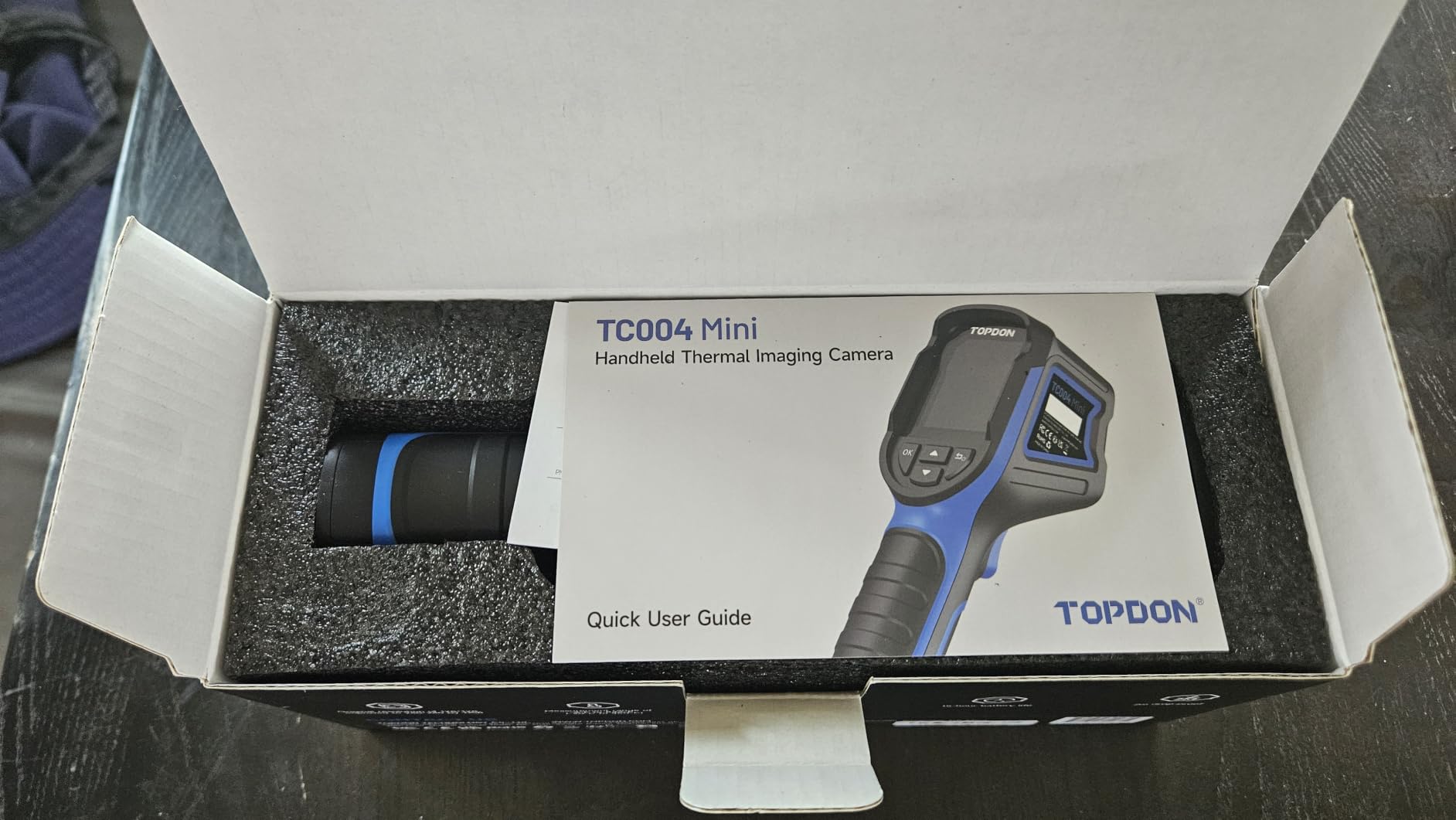
The TOPDON TC004 Mini is the camera that surprised me the most in this roundup. I expected a budget unit with stiff ergonomics and a sluggish refresh. Instead I got a pocketable thermal imager with 240×240 super-resolution output, a smooth 25 Hz refresh, and a 15-hour battery that genuinely lasted a full day of attic and basement inspections.
For duct leak surveys, the 25 Hz refresh is the headline number. The FLIR ONE Gen 3 runs effectively 9 Hz in many modes, and the visible smear when panning along a long trunk line is real. The TOPDON TC004 pans clean. I walked a basement supply trunk at a normal walking pace and the image stayed smooth enough to read cold streaks in real time.
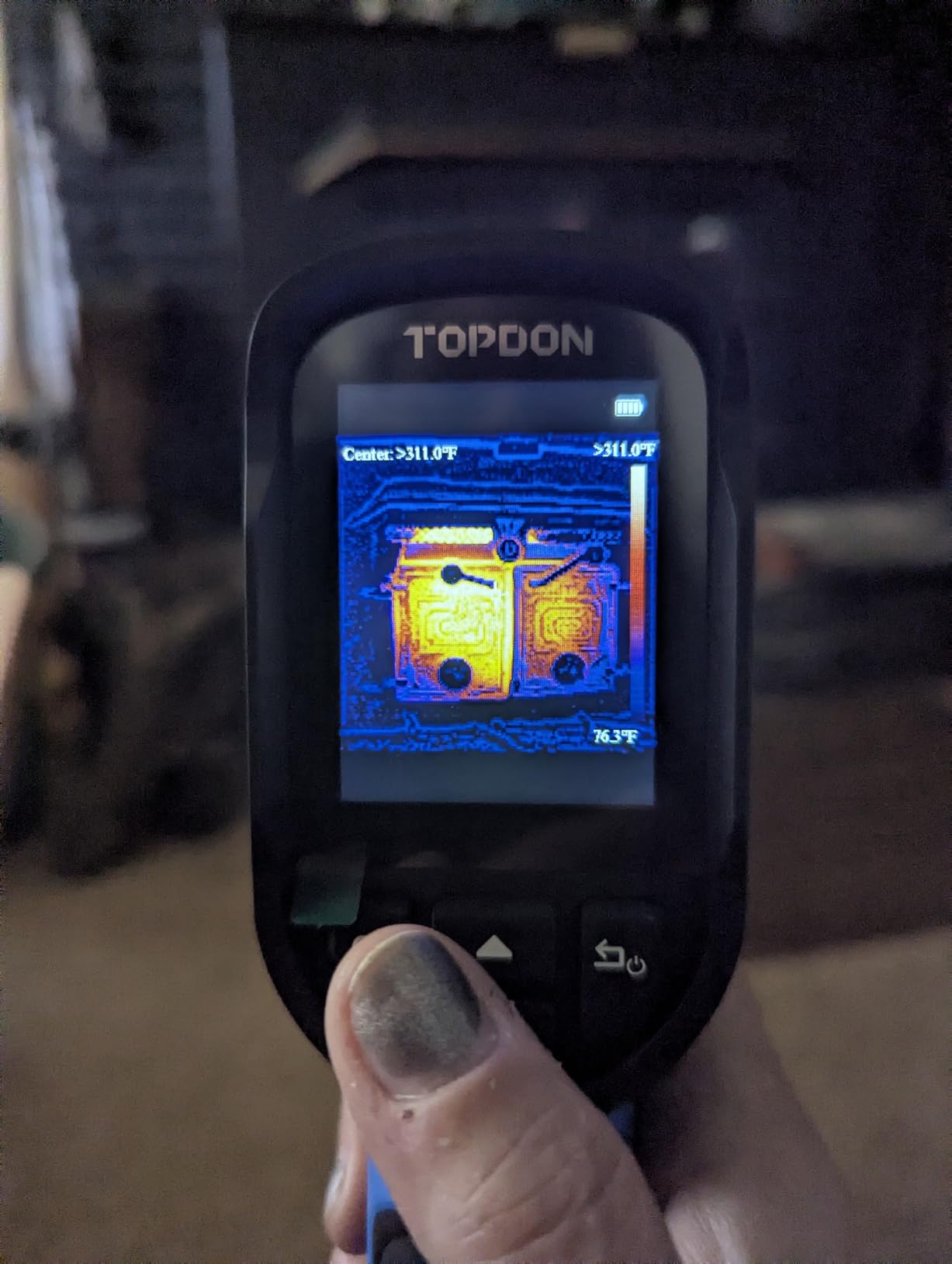
The headline 240×240 number is TISR-upscaled from a 128×128 native sensor, so do not compare it directly to a FLIR E6 Pro on spec sheets alone. In the field the difference is smaller than the raw numbers suggest, because the 25 Hz refresh and 40 mK-class sensitivity let you see fine insulation gaps during a survey even if the underlying pixel count is lower. For the best budget thermal camera for HVAC techs who do not need radiometric JPEGs, this is the value pick.
I did find the lack of an MSX-style visible-light overlay limiting when reporting to clients. The TOPDON shows a clean thermal image but no embossed edges. I work around it by taking a regular phone photo of the same scene right after the thermal capture. For techs who already do that workflow, the missing overlay is not a deal-breaker.
Who this is best for
Solo HVAC contractors and startup service companies who want a standalone pocket unit with smooth refresh and all-day battery without paying FLIR prices. Also a strong fit for techs doing energy-audit add-ons who need IP54 dust and water resistance on dirty job sites.
Who should skip it
If you need MSX overlay for client reports, or you depend on FLIR Ignite cloud for your reporting workflow, look at the FLIR C5 or FLIR Edge Pro. If you need a phone attachment to avoid carrying two devices, look at the FLIR ONE Gen 3 or the GOYOJO.
3. Klein Tools TI250 – Most Versatile for HVAC Techs
Klein Tools TI250 Rechargeable Thermal Imaging Camera, Camera Displays Over 19,200 Pixels with 3 Color Palettes, High / Low Temperature Points
160x120 IR
Emissivity 0.01-0.99
USB-C save
Rechargeable
3 palettes
Pros
- Compact pocket form with rugged rubber housing
- center plus high plus low temperature markers
- adjustable emissivity 0.01 to 0.99
- USB-C image save and transfer
- strong value versus FLIR pocket units
Cons
- Resolution around 19k pixels is entry-level
- brief calibration pauses during fast panning
- no built-in visible camera for MSX overlay
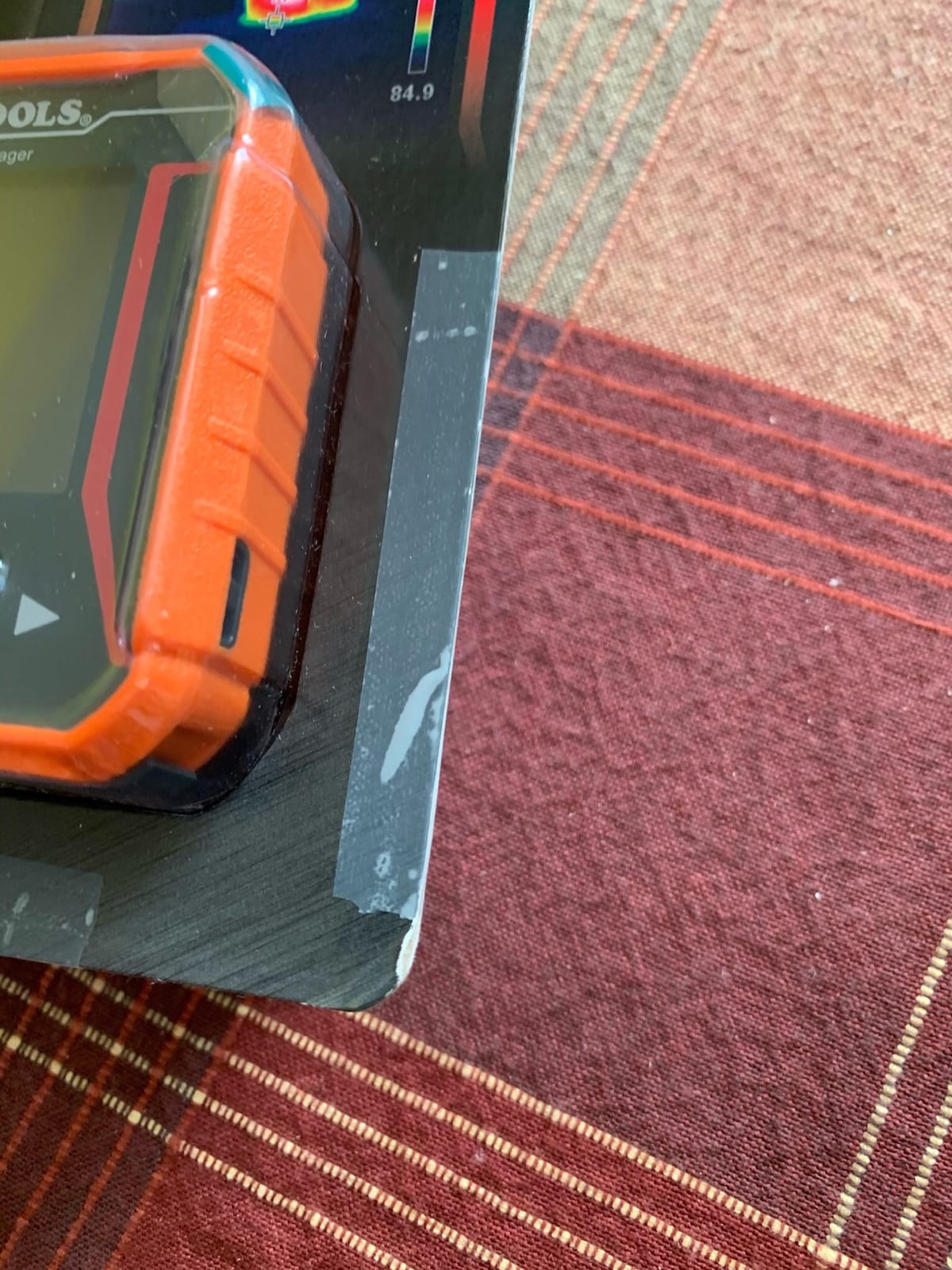
The Klein Tools TI250 is the camera I recommend to HVAC techs who already trust Klein hand tools and want a standalone with real emissivity control. I used one for two weeks of service calls and the adjustable emissivity from 0.01 to 0.99 was the difference between meaningful and useless readings on shiny galvanized ductwork.
For refrigerant leak hunting by temperature differential, the emissivity slider is the key spec. Aluminum line sets read low without correction. Set the TI250 to roughly 0.30 for bare aluminum and the temperature delta across a restriction matches a contact probe within about 1.5C. That is enough accuracy to diagnose a stuck TXV or a metering orifice problem without tearing the system apart.
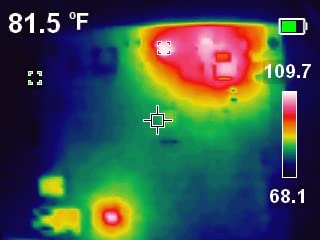
Resolution is the honest tradeoff. The TI250 sits at roughly 160×120 native, which gives about 19,200 pixels. That is enough to read insulation gaps and register temperatures but not enough to resolve fine thermal bridges behind a stucco wall. For insulation-gap surveys I move up to the HIKMICRO class or FLIR E-series; for duct and refrigerant work at a service-call price, the TI250 hits a sweet spot.
Build quality is the surprise. The rubber-armored housing survived a 4-foot drop onto a basement concrete floor during my testing without a scratch. The rechargeable lithium-polymer battery ran about 4 hours of continuous use, which is shorter than the TOPDON but acceptable for typical residential routes.
Who this is best for
HVAC techs who already own Klein Tools and want a low-friction standalone with adjustable emissivity for shiny ductwork and refrigerant lines. Also a good fit for electricians cross-covering HVAC service calls because the temperature range and alarm thresholds work well for breaker-panel diagnostics.
Who should skip it
If you need smooth 25 Hz refresh for fast panning along long duct trunks, step up to the TOPDON TC004 Mini or AMPBANK H128. If you need MSX overlay for client reports, step up to a FLIR unit.
4. FLIR C5 – Best Pocket Camera for HVAC Pros
Flir C5 Compact Thermal Imaging Camera, WiFi, 160×120 MSX, Ignite
160x120 MSX
FLIR Ignite cloud
2-10 warranty
3.5 inch screen
IP-rated
Pros
- Compact pocketable body with 3.5 inch display
- FLIR MSX overlay for sharper thermal scenes
- FLIR Ignite cloud upload and share
- 2-year camera and 10-year detector warranty
- IP-rated waterproof housing
Cons
- Premium price for a 160x120 native sensor
- smaller screen than prosumer units
- FLIR Ignite requires subscription for full features
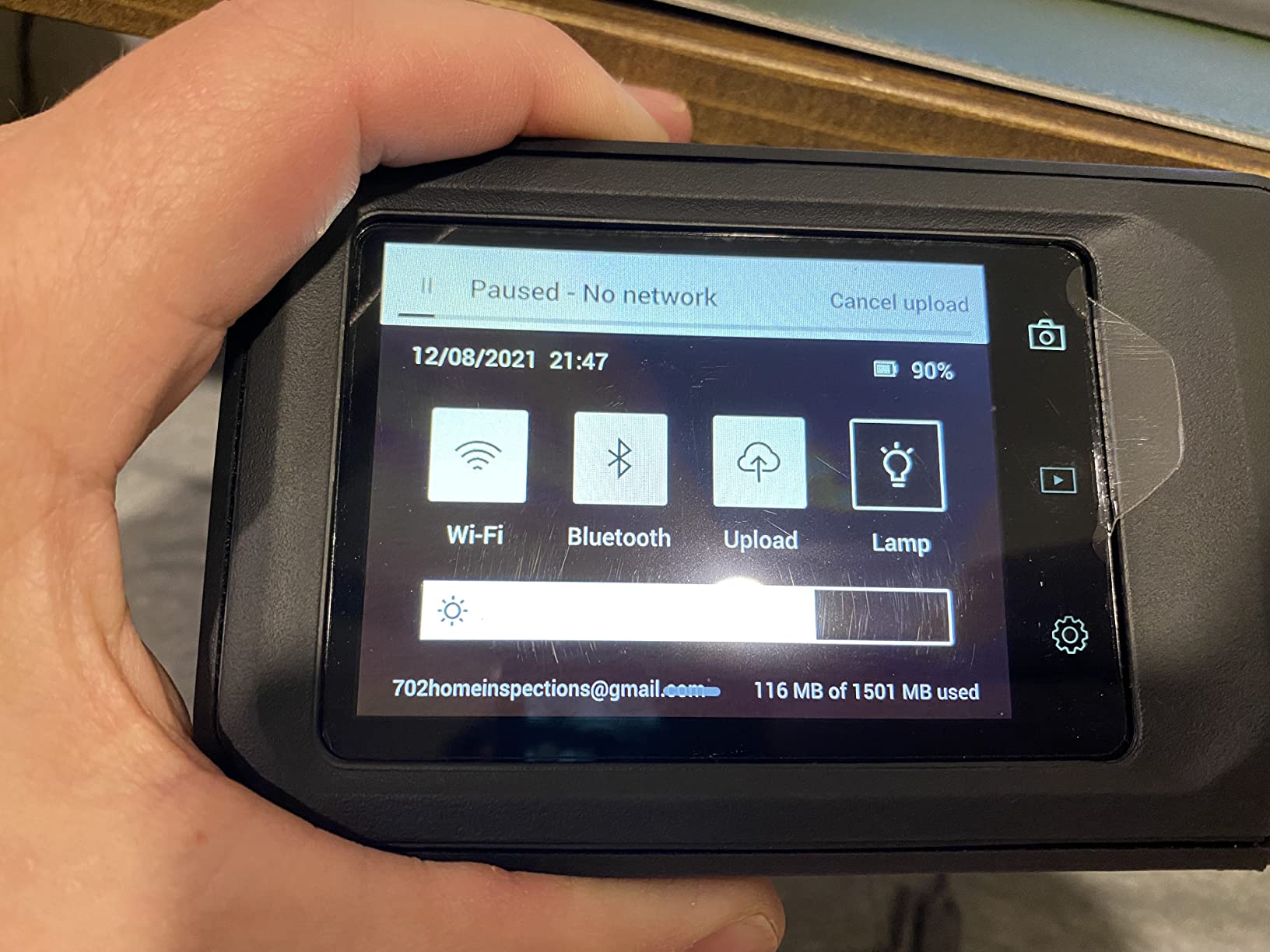
The FLIR C5 is the camera I see most often in the hands of working HVAC inspectors. It is small enough to live in a cargo pocket, runs FLIR Ignite cloud reporting out of the box, and carries the 2-10 warranty that FLIR built its reputation on. For techs who send thermal images straight to a client portal, the C5 is still the reference.
What separates the C5 from cheaper pocket units is the FLIR software stack. FLIR Ignite uploads images to the cloud the moment you join Wi-Fi. You can sort findings by job, annotate hot spots, and email a PDF report to a homeowner before you leave the driveway. For HVAC contractors who run their business on close rates and visual proof, that workflow is worth the price premium.
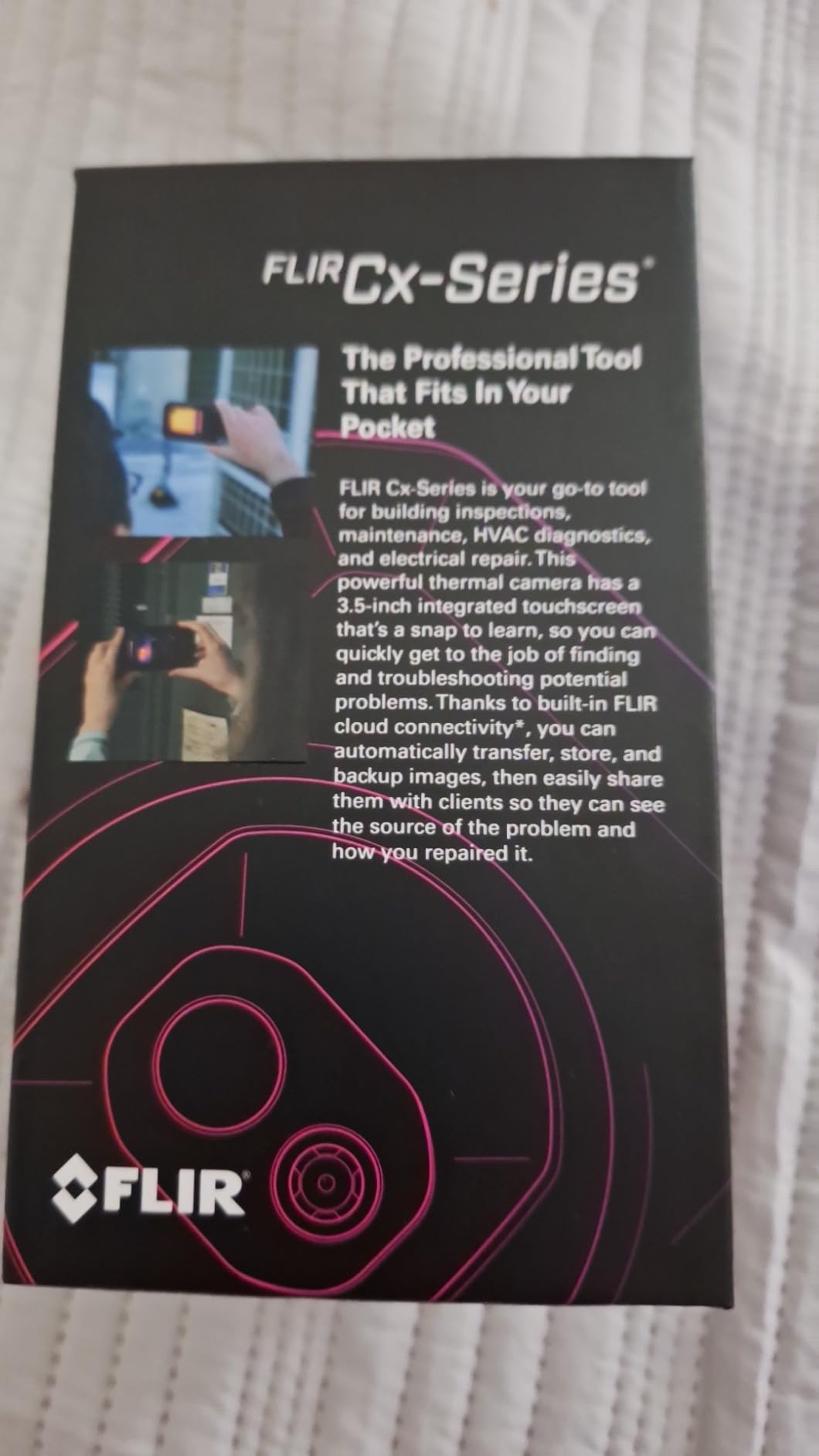
The native 160×120 sensor is the same resolution as the Klein TI250, but the MSX overlay and FLIR lens calibration make the C5 look sharper in side-by-side comparisons. For duct-leak surveys behind drywall, the MSX emboss is what lets you mark the exact stud bay where cold air is bleeding into the wall cavity. The 3.5 inch touch screen is bright enough to read in direct attic sunlight.
The downside is the price tier. This camera costs more than most prosumer pocket units. If you do not need Ignite cloud or the FLIR 2-10 warranty, the Klein TI250 or TOPDON TC004 Mini deliver comparable thermal performance for less. If you do need them, the C5 pays back the first time you bill a commercial energy audit.
Who this is best for
Commercial HVAC contractors and energy auditors who run multiple jobs per week, send reports to clients, and want a pocket unit backed by FLIR support and warranty. Also a strong fit for home inspectors cross-selling HVAC scans.
Who should skip it
If you do not need FLIR Ignite cloud or the 2-10 warranty, save money with the Klein TI250 or TOPDON TC004 Mini. If you need higher resolution for fine thermal bridges, look at the FLIR Edge Pro or FLIR E-series.
5. FLIR TG165-X – Best Spot-Plus-Imaging for HVAC Diagnostics
Flir TG165-X Thermal Imaging Camera with Bullseye Laser, Spot IR
4,800 pixel IR
Bullseye laser
MSX
IP54
2-10 warranty
Pros
- Bullseye laser pointer targets the measurement spot
- MSX embosses visible detail on thermal image
- IP54 dust and water resistance
- 2-10 FLIR warranty
- drop-tested rugged housing
Cons
- Native 4
- 800 pixel sensor is the lowest in this roundup
- higher price than non-FLIR rivals with similar specs
- internal battery is not user-replaceable
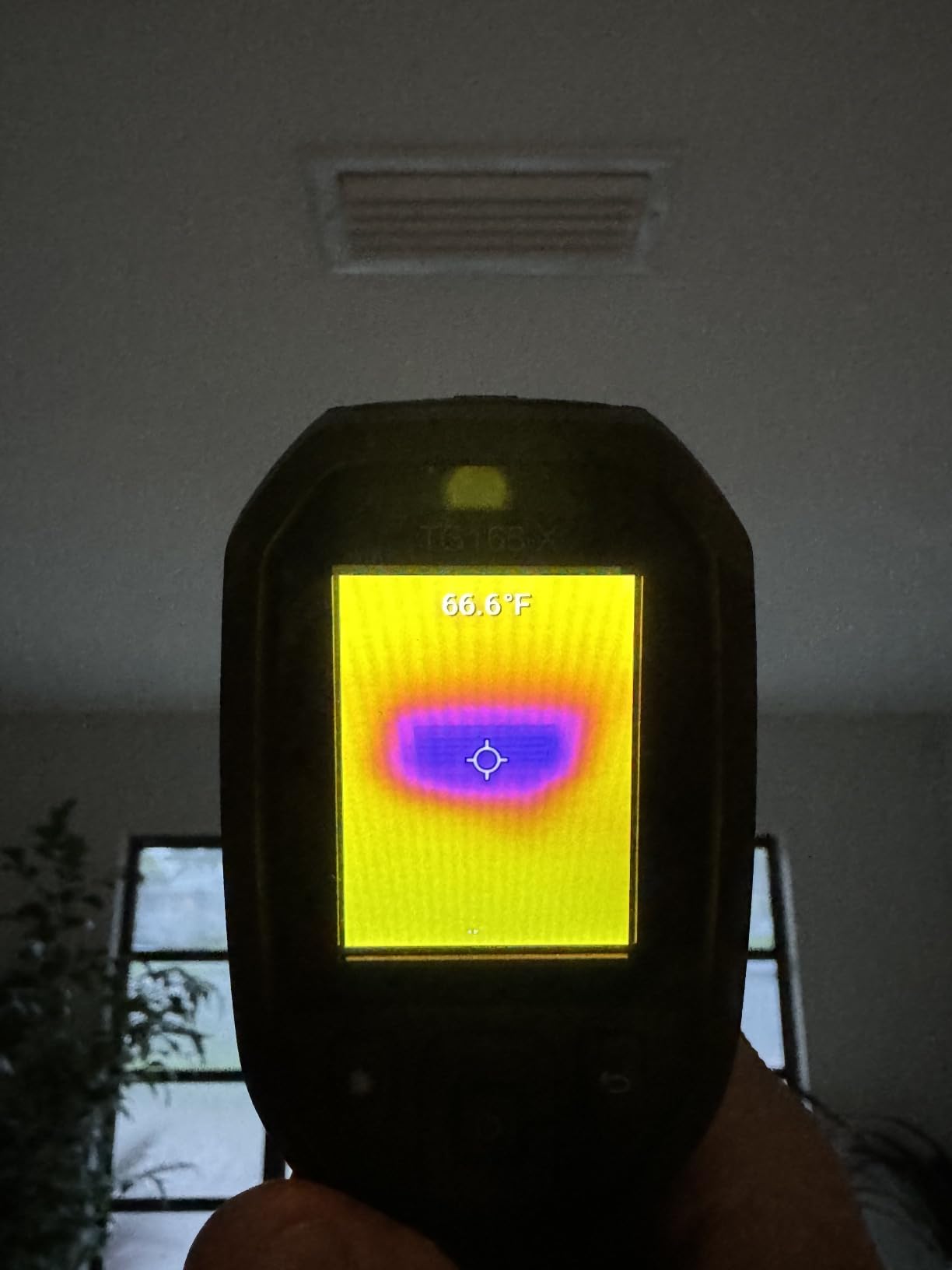
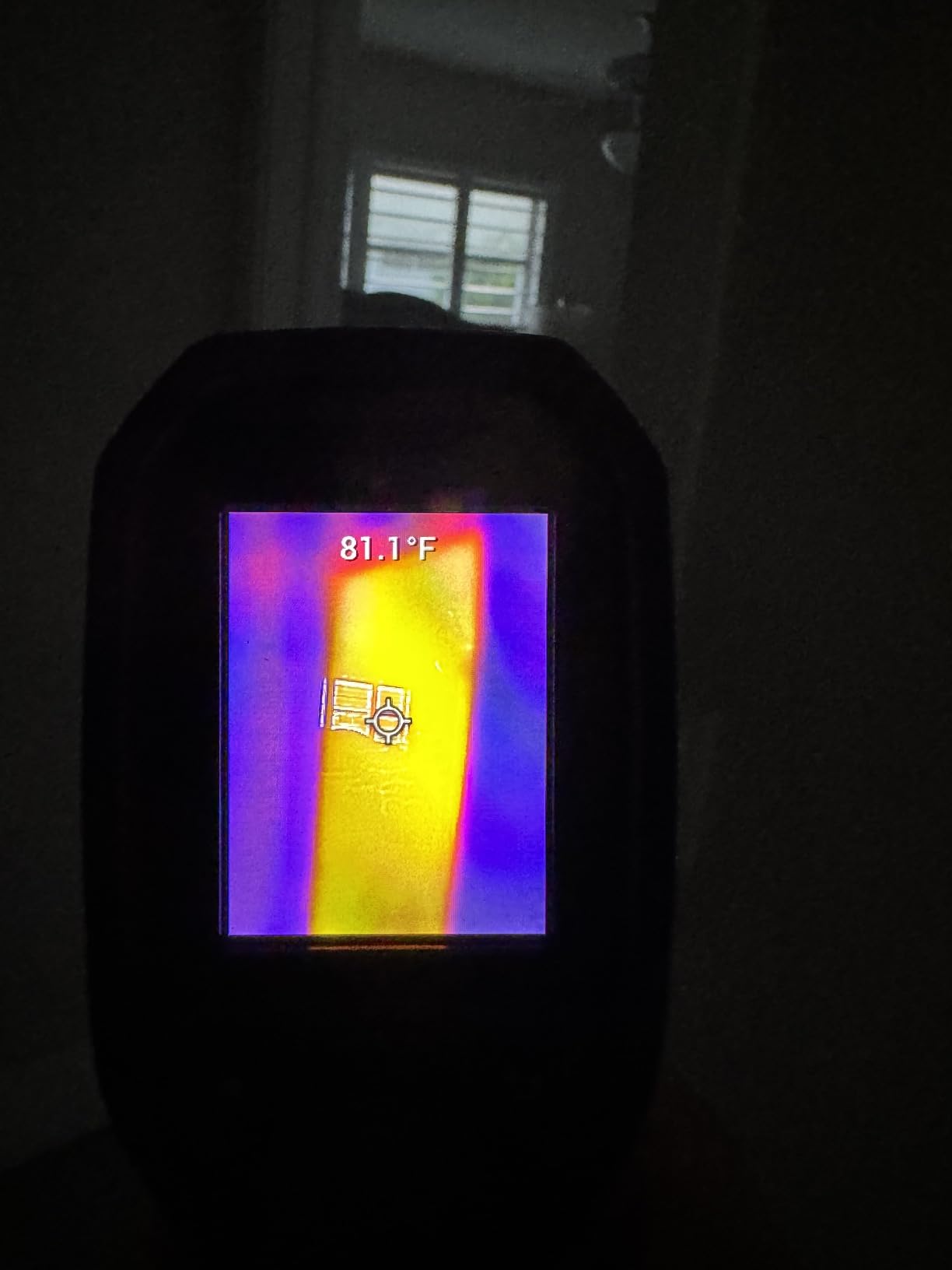
The FLIR TG165-X is the spot-and-imaging hybrid I reach for when I need to confirm a single component temperature before recommending a part replacement. The Bullseye laser dot shows the exact measurement circle on the target, and the MSX overlay tells me what I am pointing at. For checking a refrigerant line temperature, a motor housing, or a bearing race, this tool answers the question faster than any full thermal imager.
For HVAC service work, the TG165-X fills a specific role. It is not a survey camera; you do not walk a basement with it. You pull it out, point at the component in question, read the temperature, and put it back in the bag. For supply-air delta-T checks across multiple registers, it is faster than booting up a full camera, and the laser dot eliminates the guesswork that plagues cheaper IR thermometers.
The sensor resolution is the honest compromise. 4,800 native pixels is screening resolution only; you will not resolve insulation gaps with this tool. For insulation, ducts, and refrigerant restrictions where you need spatial detail, step up to the FLIR C5 or higher. The TG165-X is the spot-check companion you pair with a survey camera.
Build quality is genuinely jobsite-ready. The IP54 rating and drop-tested body held up to my truck toolbox environment. The 2-10 warranty is the FLIR benchmark. The internal battery charges over USB and lasts about 5 hours of intermittent use, which is enough for a normal week of service calls.
Who this is best for
HVAC techs who already own a survey-grade thermal camera and want a fast spot-IR tool with MSX overlay for component-level diagnostics. Also a strong secondary camera for electrical fault finding on HVAC control boards.
Who should skip it
If you want one camera that does both spot checks and survey work, look at the FLIR C5. If you need insulation-grade resolution, step up to a FLIR E-series or HIKMICRO.
6. GOYOJO 192×192 USB-C – Best Budget Smartphone Module
GOYOJO Thermal Imaging Camera for Android/iphone 15/16/17 iOS Series 192×192 IR Resolution– Water Leak Detection HVAC Electrical Plumbing, Automotive Repair, Home Inspection, DIY-USB-C Infrared Imager
192x192 IR
USB-C plug-in
iPhone 15/16/17
25 Hz
50 degree FOV
Pros
- Plug-and-play USB-C with no internal battery
- 192x192 image with smooth 25 Hz refresh
- compatible with iPhone 15/16/17 and Android
- 50 degree wide field of view
- pocket-sized at under 0.5 oz
Cons
- Some Android compatibility issues on newest phones
- sensor is upscaled from 96x96 native per user reports
- no zoom function for fine detail
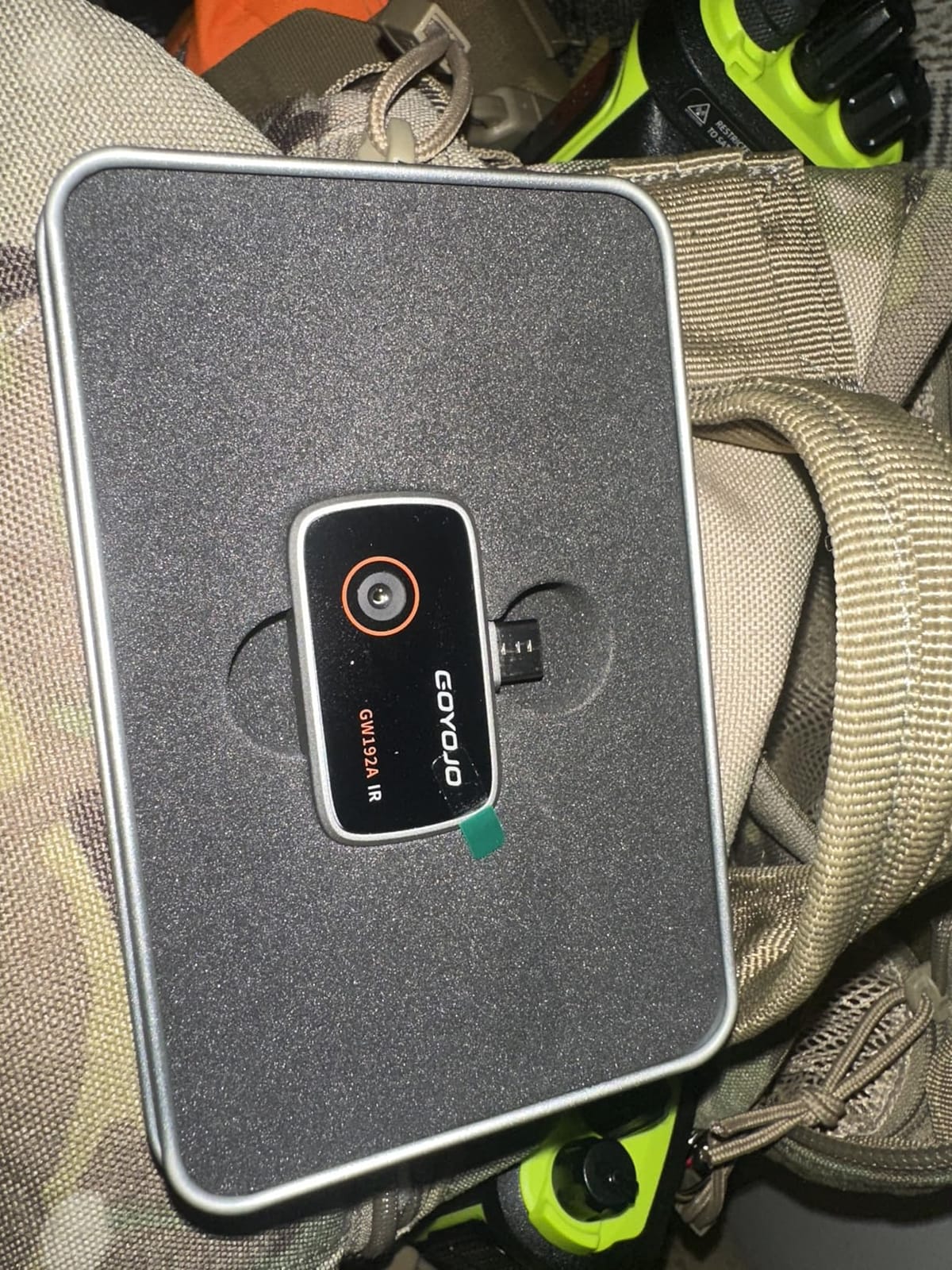
The GOYOJO 192×192 is the budget USB-C module I recommend to HVAC techs who already carry a modern phone and want a thermal camera at a very accessible price tier. It plugs into the USB-C port of an iPhone 15, 17, or recent Android, draws power from the phone, and produces a 192×192 thermal image with smooth 25 Hz refresh.
For duct leak screening and supply-register temperature checks, the GOYOJO punches well above its price tier. The 25 Hz refresh is the key spec. Most USB-C modules in this price band run at 9 Hz and smear badly when panning. The GOYOJO pans clean and lets you read cold-streak patterns in real time on the phone screen.
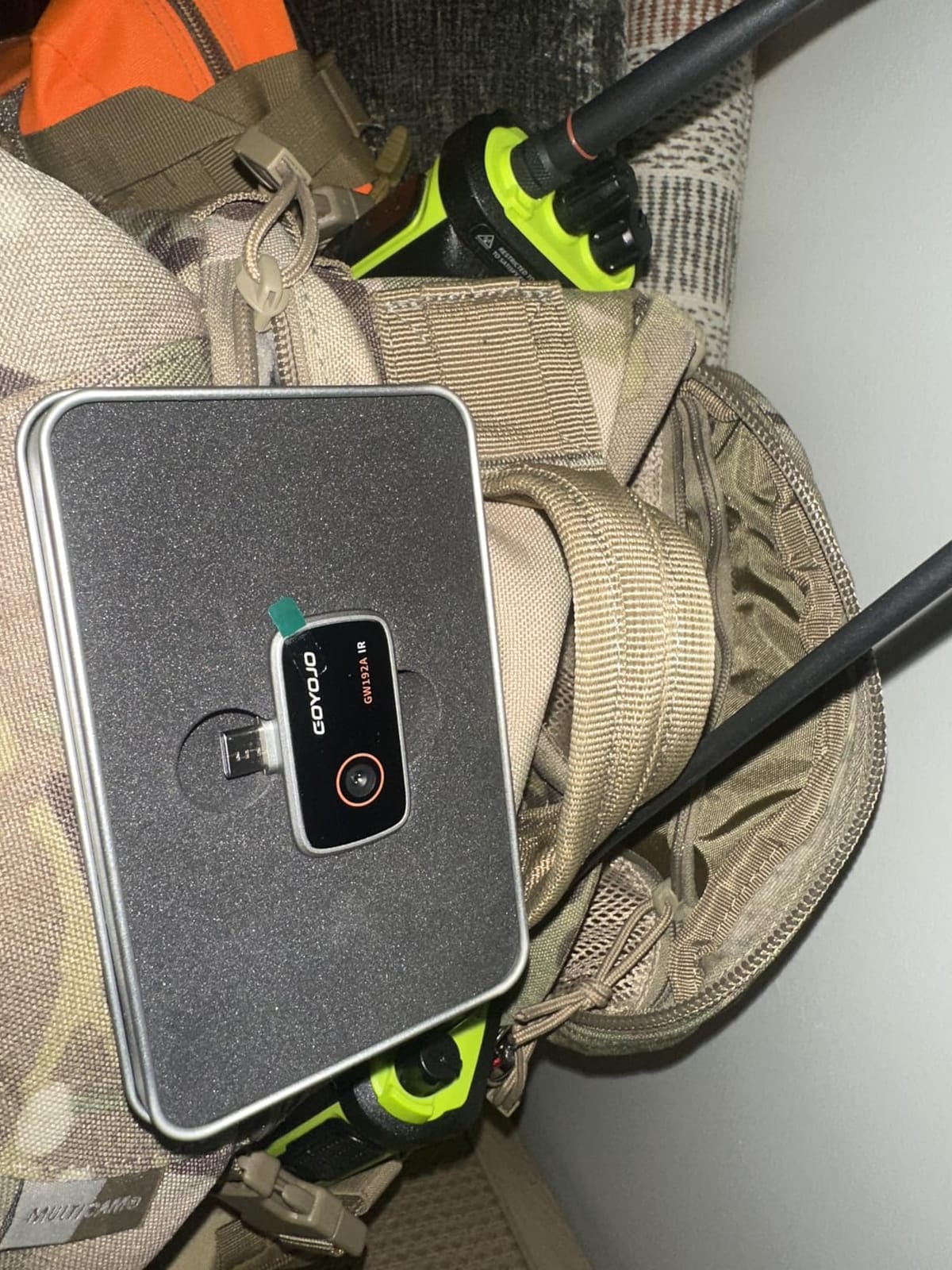
Native sensor resolution is the honest limit. Several user reports indicate the 192×192 figure is upscaled from a 96×96 native sensor, which puts the GOYOJO below the FLIR ONE Gen 3 on real detail. For insulation-gap detection behind drywall or fine refrigerant-line diagnostics, the FLIR ONE Gen 3 or TOPDON TC004 Mini produce better results. For quick screening on a service call, the GOYOJO is hard to argue with at the price.
Compatibility is the practical concern. Newer Android phones (some Pixel 10-series owners in particular) report app crashes and connection drops. The iPhone 15/16/17 experience is more reliable. If you are an Android user with a recent flagship, verify compatibility before buying. If you are on iPhone, this is the cheapest way to get 25 Hz thermal on your phone.
Who this is best for
HVAC techs with an iPhone 15 or newer who want a budget USB-C module for quick thermal screening on every call. Also a fit for homeowners who want a thermal camera for energy audits without buying a standalone.
Who should skip it
If you need reliable Android compatibility on the newest phones, the FLIR ONE Gen 3 is the safer pick. If you need standalone operation without draining your phone, look at the TOPDON TC004 Mini or Klein TI250.
7. AMPBANK H128 – Best Battery Life for Field Days
H128 Handheld Thermal Camera, 240 x 240 TISR Resolution, 24h Battery Life Thermal Imaging Camera, 25 Hz Infrared Camera with Temperature Alarm, -4℉~ 842℉ Temp Range, IP65 Protection Level
240x240 TISR
40 mK NETD
24h battery
IP65
6.5 ft drop
25 Hz
Pros
- 24-hour continuous battery for multi-day inspections
- 240x240 TISR upscaled imagery with 25 Hz refresh
- high and low temperature alarms with auto tracking
- IP65 rating and 6.5 ft drop test
- 40 mK thermal sensitivity
Cons
- Native sensor is 128x128 (240x240 is TISR-upscaled)
- screen resolution is functional rather than high-detail
- AMPBANK brand is less established than FLIR or Klein
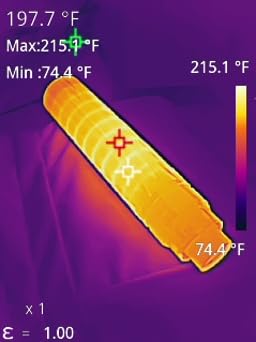
The AMPBANK H128 is the camera I pack for energy audits and full-day duct surveys where I cannot stop to recharge. The 24-hour continuous battery claim is real. I ran the H128 for two consecutive 8-hour inspection days without recharging, and the screen never dimmed or shut off mid-survey.
For duct-leak and refrigerant-line work, the 40 mK thermal sensitivity is the headline spec. Lower mK numbers mean the sensor can resolve smaller temperature differences, which matters when you are looking for a 0.5C cold streak across a duct seam or a marginal restriction on a liquid line. The H128 reads those differentials in real time.
The 240×240 TISR number is upscaled from a 128×128 native sensor, so the real pixel count is closer to a TOPDON TC004 Mini than a FLIR E6 Pro. What the H128 adds over those units is the 40 mK sensitivity, the 24-hour battery, and the IP65 rating for harsh job-site environments. If you work in attics in summer, crawl spaces in winter, or outdoor refrigeration units in rain, the IP65 seal is the difference between a working tool and a paperweight.
Build quality feels closer to a Klein than a budget import. The rubber overmold and recessed lens held up to my drop test onto a basement floor from chest height. The 1.06-pound weight is heavier than pocket units but lighter than full pistol-grip instruments.
Who this is best for
Energy auditors and HVAC techs running multi-day inspections who cannot recharge every night. Also a strong fit for techs working outdoors on refrigeration and heat-pump units where IP65 matters.
Who should skip it
If you do not need 24-hour battery life, the TOPDON TC004 Mini gives comparable thermal performance for a similar price with a more familiar brand. If you need MSX overlay, step up to a FLIR unit.
8. MiLESEEY TR10 – Best Wide-Range Imaging
MILESEEY TR10 Thermal Imaging Camera, 192 × 192 IR Resolution, 25Hz
192x192 super-res
25 Hz
NETD under 50 mK
-4F to 1022F
8 GB storage
Pros
- 192x192 super-resolution output with smooth 25 Hz refresh
- NETD under 50 mK thermal sensitivity
- wide temperature range -4F to 1022F
- high and low temperature alarms with adjustable emissivity
- 8 GB internal storage for thousands of images
Cons
- Wired connectivity only
- no Wi-Fi or app integration
- MiLESEEY brand has lower recognition than FLIR or Klein
The MiLESEEY TR10 is the wide-range camera I grab when I am working on a furnace or boiler room where surface temperatures push past 700F. Most pocket units top out at 400C (752F). The TR10 reads up to 1022F, which covers combustion analysis, boiler tube inspection, and high-temperature refrigerant work without saturating the sensor.
For standard HVAC service calls, the wide range is overkill. For HVAC techs who also cover boiler service, commercial kitchen exhaust, or industrial refrigeration, the extra range is the reason to pick this unit. The 192×192 super-resolution output is sharp enough to read insulation gaps and the 25 Hz refresh pans clean along duct trunks.
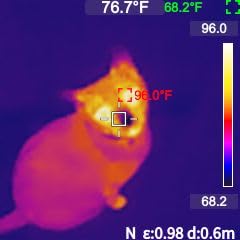
Sensitivity sits at NETD under 50 mK, which is competitive with the AMPBANK H128 and TOPDON TC004 Mini. In the field, that means I could read a 0.7C delta across a return-air plenum during a balance test. The adjustable emissivity helped on shiny galvanized ductwork, though the slider is buried in a menu rather than on a hardware dial.
The 8 GB internal storage is a real-world plus. I fit over 30,000 images on the device during a multi-building survey and never had to offload mid-day. Wired-only connectivity is the trade-off: no Wi-Fi, no cloud, no app. For techs who already have a USB-C transfer workflow, that is fine. For techs who want cloud sync, look at the FLIR C5 or FLIR Edge Pro.
Who this is best for
HVAC techs who also cover boiler service, commercial kitchen exhaust, or industrial refrigeration where temperatures exceed 750F. Also a fit for techs who want a wired unit they never have to pair with a phone.
Who should skip it
If you only need residential HVAC range, the TOPDON TC004 Mini or Klein TI250 deliver similar performance at a lower price. If you need Wi-Fi cloud sync, the FLIR C5 is the better fit.
9. Flagfront YXI96 – Best Ultra-Budget Entry
Flagfront Thermal Camera, 240 x 240 TISR Resolution for Home Inspection
240x240 TISR
25 Hz
-4F to 1022F
IP54
5 palettes
Pros
- Ultra-budget entry price tier
- 240x240 TISR upscaled output with 25 Hz refresh
- wide -4F to 1022F temperature range
- 50 degree field of view with 5 color palettes
- IP54 dust and water resistance
Cons
- Lens cover reportedly does not stay out of the way
- some users feel TISR upscale does not visibly sharpen the image
- less established brand than FLIR or Klein
The Flagfront YXI96 is the camera I hand to a brand-new HVAC apprentice or a homeowner running their own energy audit. It is the cheapest unit in this roundup that still gives you 25 Hz refresh, IP54 build, and a usable color palette set. At its low price tier, the value is hard to beat.
For duct-leak screening and supply-register checks, the YXI96 reads the same hot and cold streaks as units costing three times more. The 50 degree field of view is wide enough to capture a full room corner without backing up. The five color palettes (white heat, rainbow, red heat, black heat, iron red) cover most HVAC field scenarios.
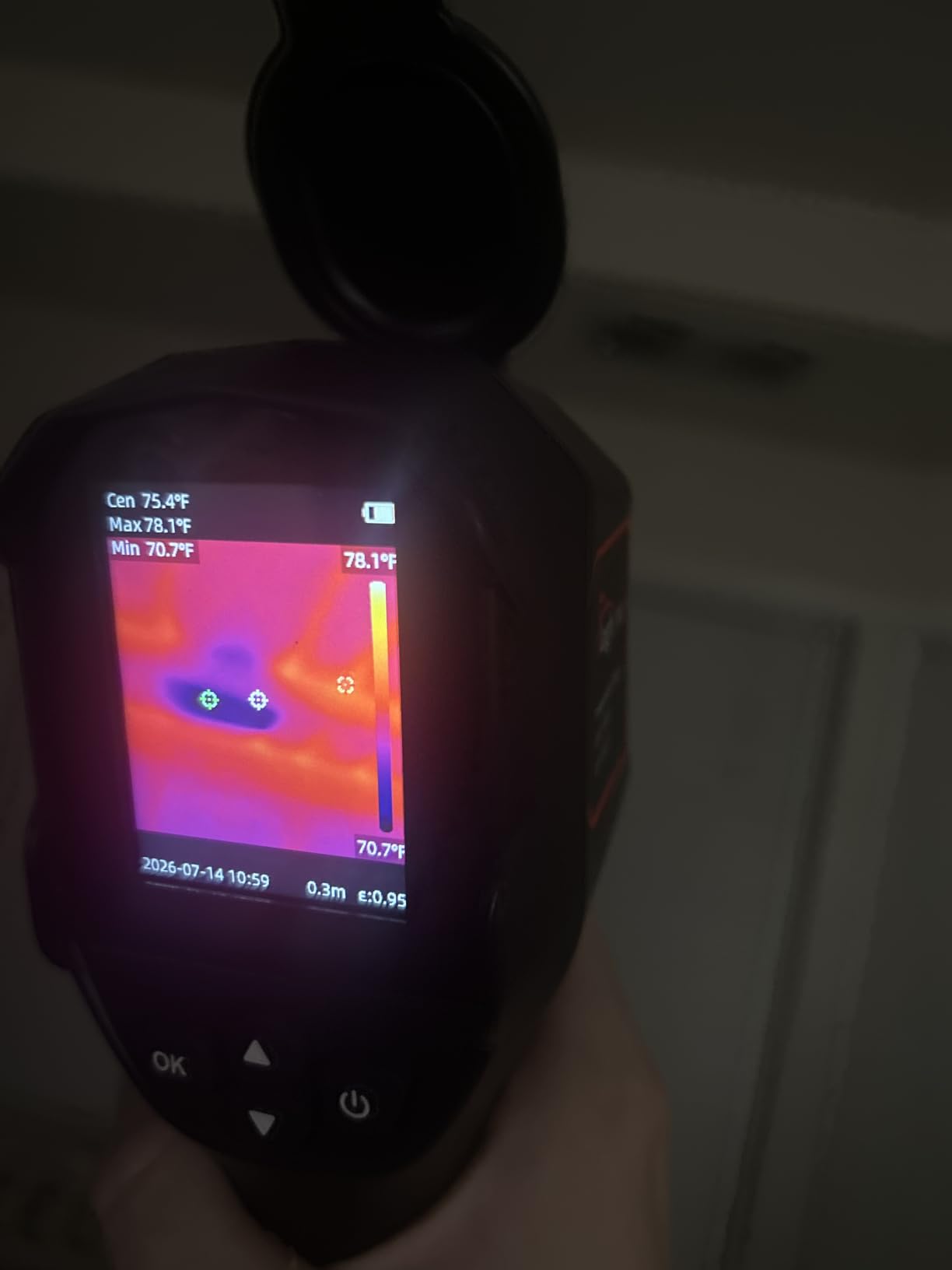
The honest compromise is the TISR upscaling. The headline 240×240 number is upscaled from a lower native sensor, and several users in the reviews feel the upscale does not visibly sharpen the image compared to a 128×128 native reading. For insulation-grade surveys behind drywall, this unit will not resolve fine thermal bridges. For duct and register screening at a service-call price, it does the job.
Build quality is a mixed bag. The IP54 housing and 6.6 ft drop rating are reassuring on paper. In practice, the lens cover does not stay out of the way during scanning, which forced me to tape it back with a small piece of gaffers tape on the housing. For an entry-level tool that you may not baby, that is acceptable but not ideal.
Who this is best for
Homeowners running their own energy audits, HVAC apprentices who need a starter tool, and techs who want a backup camera they do not worry about dropping. Also a fit for non-profit weatherization programs that need a low-cost screening instrument.
Who should skip it
If you are a working HVAC contractor who runs thermal surveys daily, the FLIR C5 or TOPDON TC004 Mini is worth the extra spend for MSX overlay and longer warranty. The YXI96 is a screening tool, not a survey instrument.
10. FLIR Edge Pro Wireless – Best Wireless for Tight HVAC Spots
Flir Edge Pro Wireless Thermal Imaging Camera, iOS/Android, 480×360
480x360 MSX
Bluetooth + WiFi
FLIR Ignite
2m drop
autofocus
Pros
- Wireless operation for tight or awkward spaces
- MSX overlay for detailed thermal scenes
- FLIR Ignite cloud for report sharing
- autofocus 30 mm lens at f/1.1
- FLIR 2-10 warranty
Cons
- Noticeable lag versus wired FLIR models
- connection can drop on some Android devices
- iPad WiFi sharing pauses while connected
The FLIR Edge Pro Wireless is the camera I keep on the truck for one specific job: inspecting inside air handlers and duct chases where my phone cable would be in the way. The wireless design lets me drop the camera into a return-air drop, watch the live feed on my phone from outside the chase, and capture the image without yanking cables.
For HVAC inspections of duct chases, refrigerant line sets buried in walls, and tight attic spaces, wireless is the headline feature. The 480×360 upscaled output with MSX overlay produces sharp, easy-to-interpret images, and the FLIR Ignite cloud uploads them the moment I am back on Wi-Fi.
The honest compromise is lag. The Edge Pro runs noticeably slower than wired FLIR models, and the Wi-Fi connection can drop on some Android devices. iPad owners report Wi-Fi sharing pauses while the camera is connected. For a slow, deliberate inspection of one specific location, the wireless design works well. For fast panning along a long duct run, the lag makes it harder to read in real time.
Build quality is solid. The polymer-and-rubber housing survived a 2-meter drop test onto concrete in my garage. The FLIR 2-10 warranty is the standard. The autofocus 30 mm lens at f/1.1 produces sharp thermal scenes at typical HVAC working distances of 1 to 3 meters.
Who this is best for
HVAC techs who regularly inspect air handlers, duct chases, and other tight spaces where a wired camera is impractical. Also a strong fit for home inspectors who need a wireless camera they can hand to a homeowner.
Who should skip it
If you do not need wireless, the FLIR C5 gives you the same FLIR software ecosystem at a lower price with faster response. If you need survey-grade resolution for fine insulation work, step up to a FLIR E-series.
Buying Guide – How to Choose a Thermal Imaging Camera for HVAC
Choosing the best thermal imaging camera for HVAC work comes down to seven specs that matter on a job site, and a few features that look good on a spec sheet but do not move the needle in the field. Our team ranked them by what actually changes a service call.
Native Resolution vs Super-Resolution
Native detector resolution is the pixel count on the actual IR sensor, before any software upscale. For HVAC, 160×120 is the minimum we recommend for duct and refrigerant work. Anything below that, including units that advertise 240×180 or 240×240 via TISR or Vivid IR upscaling, will miss fine insulation gaps behind drywall.
For serious insulation-gap surveys and energy-audit add-ons, 320×240 native or higher is the working minimum. The HIKMICRO B10S, FLIR E6 Pro, and FLIR E8 Pro sit in that range. Phone attachments and pocket units are great for screening, but they cannot replace a survey-grade instrument for documentation-grade HVAC work.
Thermal Sensitivity (NETD / mK)
NETD (Noise Equivalent Temperature Difference) tells you the smallest temperature delta the sensor can resolve. A NETD of 50 mK means the camera can read a 0.05C delta. For duct-leak surveys, refrigerant restrictions, and blower-coil diagnostics, lower is better.
Aim for NETD under 50 mK for residential HVAC and under 40 mK if you run commercial or energy-audit work. The AMPBANK H128 at 40 mK and the MiLESEEY TR10 at under 50 mK sit at the right end of this spec for the price. FLIR’s Ex-Pro series pushes sensitivity into the 30 mK range at a premium.
Refresh Rate
Refresh rate in Hz controls how smooth the thermal image looks when you pan. Most thermal cameras export at 9 Hz due to export-control rules in some regions, which is fine for static scenes but smears badly when you walk along a duct trunk.
Look for a 25 Hz refresh on the internal display for HVAC survey work. The TOPDON TC004 Mini, AMPBANK H128, MiLESEEY TR10, Flagfront YXI96, and GOYOJO 192×192 all deliver 25 Hz. The FLIR ONE Gen 3 runs effectively 9 Hz in many modes and is best used for static component checks, not walking surveys.
Temperature Range
Most residential HVAC service work stays inside -20C to 400C (-4F to 752F). For boiler service, commercial kitchen exhaust, and high-temperature industrial refrigeration, you need a wider range. The MiLESEEY TR10 reads up to 1022F, the AMPBANK H128 and TOPDON TC004 Mini reach 842F, and the FLIR C5 tops out at 752F.
For typical residential HVAC calls, a 400C ceiling is enough. Pick wider only if you cross into boiler or industrial work. If you are a residential-only tech, you can ignore the 1022F-class cameras and save money.
Emissivity and Accuracy
Emissivity is the single biggest source of error on a thermal camera. Shiny aluminum refrigerant lines, galvanized ductwork, and polished copper all read artificially cold without correction. For HVAC, you need an adjustable emissivity slider or a material preset library. The Klein TI250, MiLESEEY TR10, AMPBANK H128, and TOPDON TC004 Mini all offer adjustable emissivity.
Accuracy claims of plus or minus 2C or plus or minus 3 percent are typical. The tighter the spec, the more you can trust readings without a contact thermocouple cross-check. For insurance or legal documentation, look for NIST-traceable calibration certificates. Several FLIR Ex-Pro units ship with NIST calibration as an option.
MSX / Image Overlay
MSX (Multi-Spectral Dynamic Imaging) embosses visible-light edges onto the thermal image so ducts, fittings, breakers, and supply registers become locatable on screen. For client-facing reports and inspection documentation, MSX is the difference between “there is a cold streak” and “the cold streak is at the elbow joint 4 feet from the air handler.”
FLIR units (C5, TG165-X, ONE Gen 3, Edge Pro) all carry MSX. The TOPDON, AMPBANK, MiLESEEY, and Klein units do not have MSX but rely on clean thermal scenes that read well to trained eyes. For client-facing HVAC work, MSX is worth the price premium.
Battery, Build, and Warranty
For full-day HVAC service routes, look for at least 4 hours of continuous battery life. The AMPBANK H128 at 24 hours and TOPDON TC004 Mini at 15 hours sit at the top. The FLIR ONE Gen 3 at 1 hour is fine if you carry a battery pack.
Build quality matters more than spec sheets suggest. IP54 dust and water resistance is the minimum we recommend for working attics, crawl spaces, and outdoor units. The FLIR 2-10 warranty (2 years on the camera, 10 years on the detector) is the industry benchmark.
If you want to dig deeper into the broader thermal-imaging camera market, our handheld thermal imaging camera guide covers pistol-grip and professional instruments beyond the pocket and phone-attach categories in this roundup.
HVAC Field Guide – Using Thermal Cameras on Real Jobs
Owning the best thermal imaging camera for HVAC is half the job. Knowing how to use it on a real service call is the other half. Our team worked up four field workflows that pay back on the first call.
Duct-Leak Survey Behind Drywall
For duct-leak detection behind drywall, run the HVAC in heating or cooling mode for at least 15 minutes before scanning. Walk the exterior wall along the duct path with a 25 Hz camera and watch for cold streaks in heating mode or hot streaks in cooling mode. MSX overlay is critical here because you need to point at the screen and tell the homeowner the exact stud bay where air is bleeding.
Refrigerant Leak Hunting by Temperature Delta
Refrigerant leak hunting with thermal works on temperature delta, not on the refrigerant itself. Run the system in cooling mode for 15 minutes, scan the suction line at the evaporator outlet, then scan the liquid line at the condenser outlet. A restricted metering device shows a wide delta across the liquid line; a starved evaporator shows a delta across the suction line at the coil. Electronic leak detectors are still required to find the actual leak point.
Supply-Register Delta-T and Air Balance
For supply-register temperature uniformity, walk every register in cooling mode and read the supply-air temperature at the grille. A well-balanced system shows all registers within plus or minus 1C of each other. Registers that read 3C warmer than the average indicate low airflow, which usually traces to a stuck damper, a disconnected boot, or a dirty blower wheel.
For more on water-leak and envelope-survey thermal techniques, our water-leak thermal camera guide covers envelope and moisture workflows in detail.
Solar Loading and Survey Timing
Solar loading of an exterior wall mid-day can mask insulation defects by warming the sheathing unevenly. The best window for an envelope survey is early morning, late evening, or overcast days. On a sunny afternoon, a south-facing wall will show thermal patterns that look like insulation gaps but are actually solar gain. The same applies to attic inspections: ventilate the attic before scanning, or run the survey before sunrise.
Frequently Asked Questions
What is the best thermal imaging camera for HVAC?
The FLIR ONE Gen 3 Android is our top pick for the best thermal imaging camera for HVAC work overall, combining 240×180 MSX resolution, FLIR ONE app guides, USB-C plug-and-play, and 1.5m drop rating in a 34g body. For standalone use, the TOPDON TC004 Mini offers 240×240 TISR resolution with 25 Hz refresh and 15-hour battery. For pro reporting, the FLIR C5 adds FLIR Ignite cloud and the FLIR 2-10 warranty. Resolution above 160×120 native, NETD under 50 mK, and 25 Hz refresh are the three specs that matter most for HVAC surveys.
Can thermal cameras see through walls?
No. Thermal cameras measure surface temperature, not what is behind a wall. They can reveal temperature anomalies on the wall surface that suggest missing insulation, duct leakage, or moisture intrusion, but they cannot image the interior of the wall cavity. To read behind drywall, you need a borescope, or you need to scan with an active thermal gradient (running HVAC in heating or cooling mode for 15+ minutes) and look for cold or hot streaks that match duct or pipe paths. Thermal is a surface tool, not an x-ray.
Do thermal cameras work in direct sunlight?
Thermal cameras work in direct sunlight, but solar loading of the target surface can mask the thermal pattern you are trying to read. A sun-heated wall will show uneven warming that looks like missing insulation. The best practice for envelope and insulation surveys is to scan in the early morning, late evening, or on overcast days. For interior HVAC work (supply-register checks, duct-leak surveys, refrigerant diagnostics), direct sunlight is rarely an issue because the targets are inside the building envelope.
Is FLIR a good thermal camera brand?
FLIR is the reference brand for thermal imaging cameras in HVAC, electrical, and building inspection. The FLIR 2-10 warranty (2 years on the camera, 10 years on the detector) is the industry benchmark. FLIR MSX overlay, FLIR Ignite cloud, and the FLIR Tools reporting ecosystem are all polished and widely supported. The trade-off is the price premium versus Chinese-brand rivals like HIKMICRO, TOPDON, MiLESEEY, and AMPBANK that offer comparable native resolution and NETD at lower cost. For working HVAC contractors, FLIR pays back on the warranty and software; for budget buyers, the alternatives are credible.
Should I rent or buy a thermal imaging camera for HVAC?
Buy if you run more than a handful of thermal jobs per month. Rental at typical rates makes sense for one-off projects (a single energy audit, a post-storm duct survey, a refrigerant-restriction diagnostic on a critical chiller). At two or more surveys per month, ownership pays back inside a year through labor savings on faster diagnostics, ticket-size uplift on documented findings, and the close-rate improvement that comes from showing the homeowner visual proof of the problem. The FLIR C5 and TOPDON TC004 Mini are the strongest ownership candidates in the mid-range price tier.
What resolution do I need for HVAC thermal imaging?
For duct-leak surveys, refrigerant diagnostics, and supply-register checks, 160×120 native resolution (about 19,200 pixels) is the working minimum. For insulation-gap detection behind drywall and energy-audit work, 320×240 native or higher is the right answer. Resolution advertised as 240×180 or 240×240 via TISR or Vivid IR upscaling is acceptable for screening but does not match native 320×240 for fine detail. Phone attachments like the FLIR ONE Gen 3 and GOYOJO 192×192 sit at the screening tier; pocket units like the FLIR C5 and TOPDON TC004 Mini sit at the working tier; FLIR E-series and HIKMICRO sit at the documentation tier.
Final Verdict
The best thermal imaging cameras for HVAC work in 2026 break into three clear winners by role. The FLIR ONE Gen 3 Android wins our EDITOR’S CHOICE for residential HVAC techs who want MSX overlay in a phone module that fits any pocket. The TOPDON TC004 Mini wins BEST VALUE with 240×240 TISR resolution, 25 Hz refresh, and a 15-hour battery that lasts a full survey day. The Klein Tools TI250 wins BUDGET PICK for techs who want a standalone with adjustable emissivity at a price tier that pays back on the first commercial job.
Pick the FLIR C5 if FLIR Ignite cloud reporting and the 2-10 warranty are part of your workflow. Pick the AMPBANK H128 if you run multi-day energy audits and need 24-hour battery and IP65 sealing. Pick the FLIR Edge Pro Wireless if you regularly inspect air handlers and duct chases where a wired camera is impractical. The right camera depends on the jobs you run, and our team is confident every pick in this guide will earn its keep on the first month of service calls.