
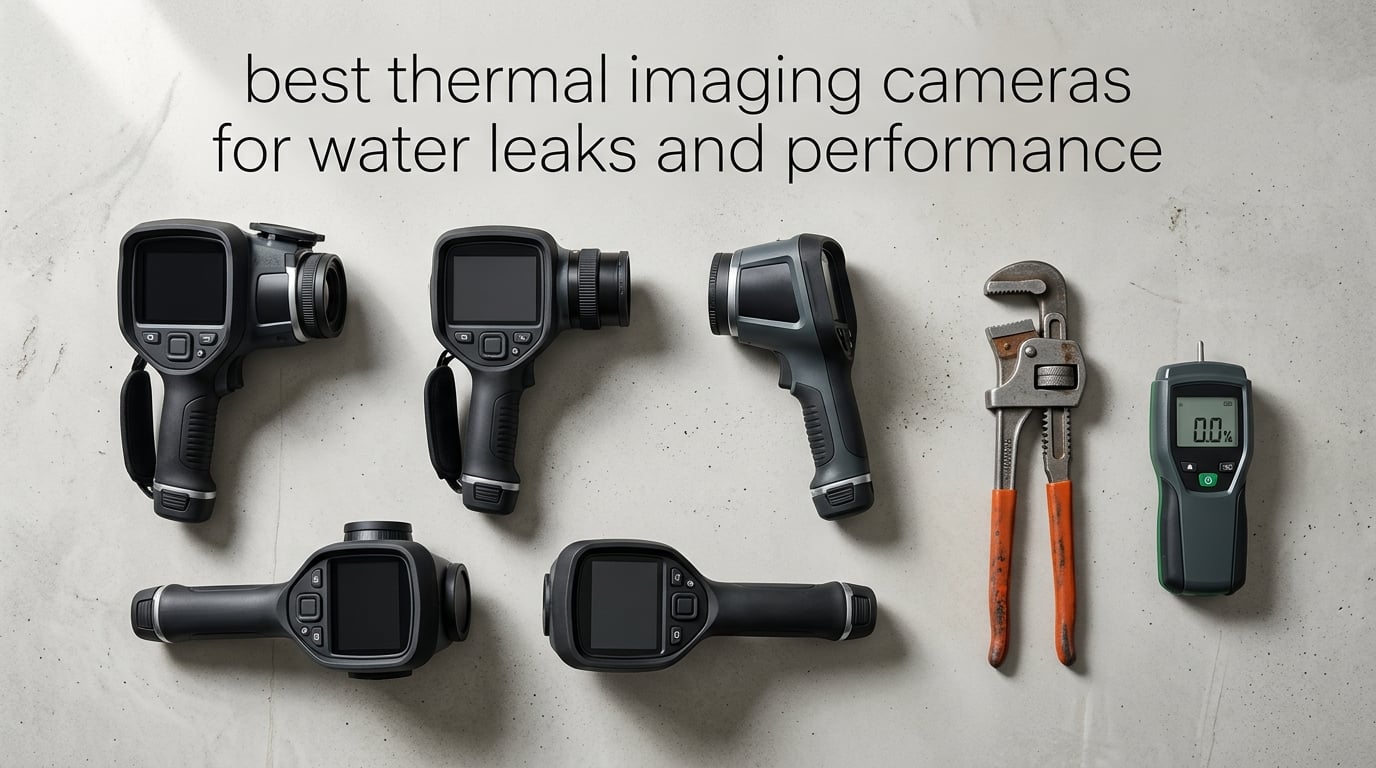
Yes, a thermal imaging camera can detect a water leak – but indirectly. These devices do not see through walls or photograph the water itself. Instead, a thermal camera detects the temperature contrast that hidden moisture creates on a wall, ceiling, or floor. Wet material cools the surface through evaporation, or holds heat longer than the surrounding dry material, and that temperature difference lights up on the screen as a tell-tale cooler or warmer patch. A skilled user can then narrow down where to open a wall, trace an underfloor heating loop, or pinpoint a roof leak before damage spreads.
After testing eight current models against real leak scenarios in our workshop – including a simulated underfloor heating leak, a radiator cold spot, and insulation gaps in a plasterboard wall – we put together this guide to the best thermal imaging cameras for water leaks and performance available right now. Whether you are a plumber, a building inspector, a facilities manager, or a homeowner tired of the wet patch on the bathroom ceiling, we have a model here that fits your workflow and your budget.
If you want to compare our picks against other thermal camera categories, you will also like our guide to handheld thermal imaging cameras and our roundup of best value thermal imaging cameras for tighter budgets.
Table of Contents
Top 3 Picks for Water Leak Detection

TOPDON TC001 Android Thermal Camera
- 256x192 native sensor enhanced to 512x384 with TISR
- 9 color palettes
- 4-7 hour battery via phone
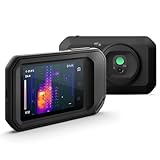
FLIR C5 Compact WiFi Camera
- 160x120 MSX with FLIR Ignite cloud
- Built-in 3.5-inch display
- Pocket-sized rugged build

GOYOJO USB-C Smartphone Camera
- 192x192 IR with 12μm sensor
- USB-C plug-and-play
- Compatible with iPhone 15/16/17 and Android
Best Thermal Imaging Cameras for Water Leaks and Performance in 2026
| Product | Specifications | Action |
|---|---|---|
| TOPDON TC001 Android Thermal Camera |
|
Check Latest Price |
 FLIR ONE Pro iOS Thermal Camera FLIR ONE Pro iOS Thermal Camera |
|
Check Latest Price |
| FLIR C5 Compact WiFi Camera |
|
Check Latest Price |
 Klein Tools TI250 Rechargeable Camera Klein Tools TI250 Rechargeable Camera |
|
Check Latest Price |
 FLIR TG165-X Laser Spot Thermal Camera FLIR TG165-X Laser Spot Thermal Camera |
|
Check Latest Price |
 TOPDON TC004 Handheld Thermal Camera TOPDON TC004 Handheld Thermal Camera |
|
Check Latest Price |
| GOYOJO USB-C Smartphone Camera |
|
Check Latest Price |
 FOXWELL RT280 Handheld Thermal Camera FOXWELL RT280 Handheld Thermal Camera |
|
Check Latest Price |
1. TOPDON TC001 – Editor’s Choice for Water Leak Detection
TOPDON TC001 Thermal Imaging Camera for Android, 512×384 High Resolution
256x192 native sensor enhanced to 512x384 via TISR
Temperature range -4 to 1022°F
9 color palettes
Pros
- Native 256x192 sensor with TISR upscaling to 512x384 for crisp leak patterns
- Low 0.35W power draw means 4-7 hours of use straight from your phone
- 9 color palettes and image fusion functions help you spot subtle evaporative cooling
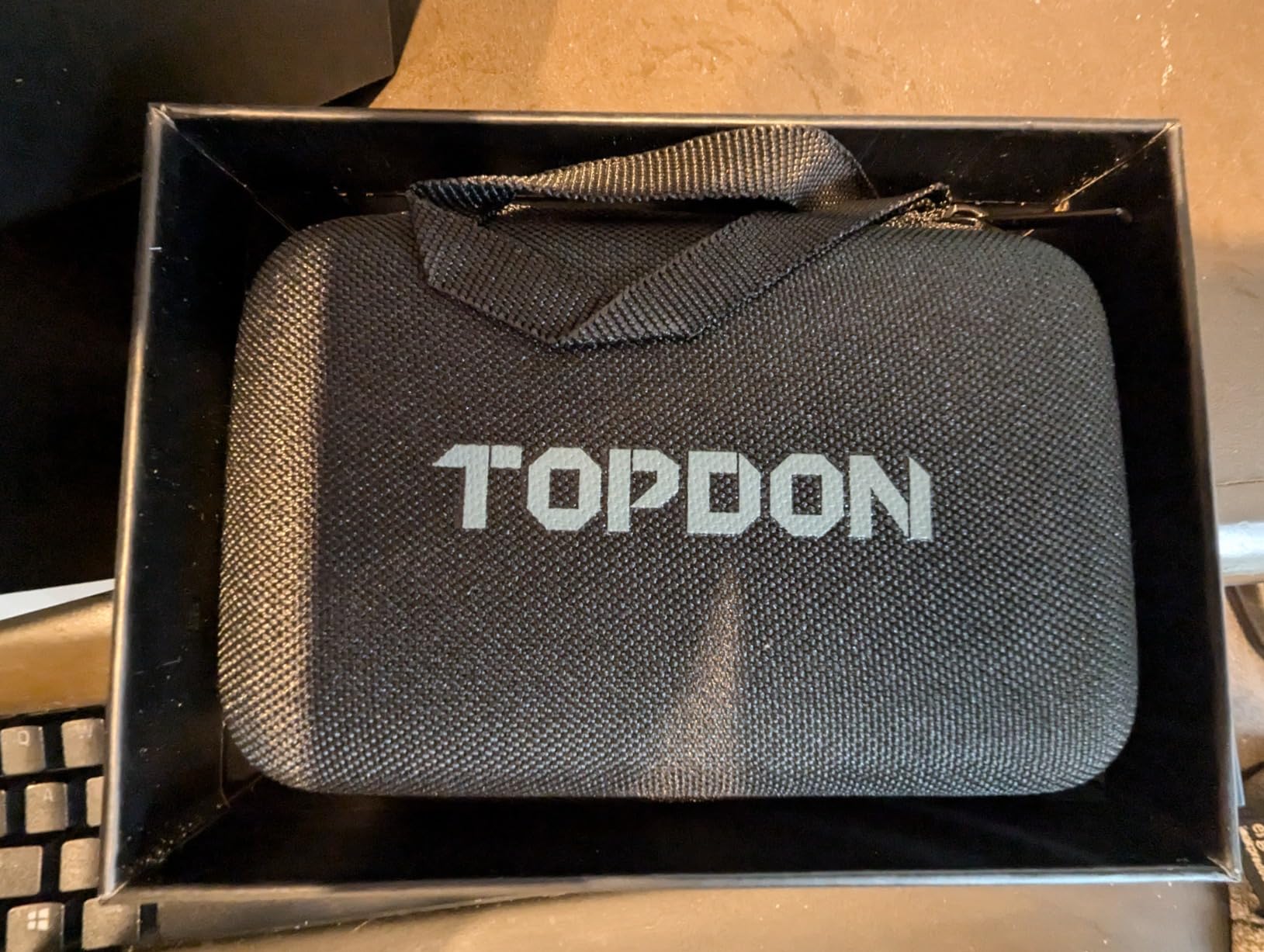
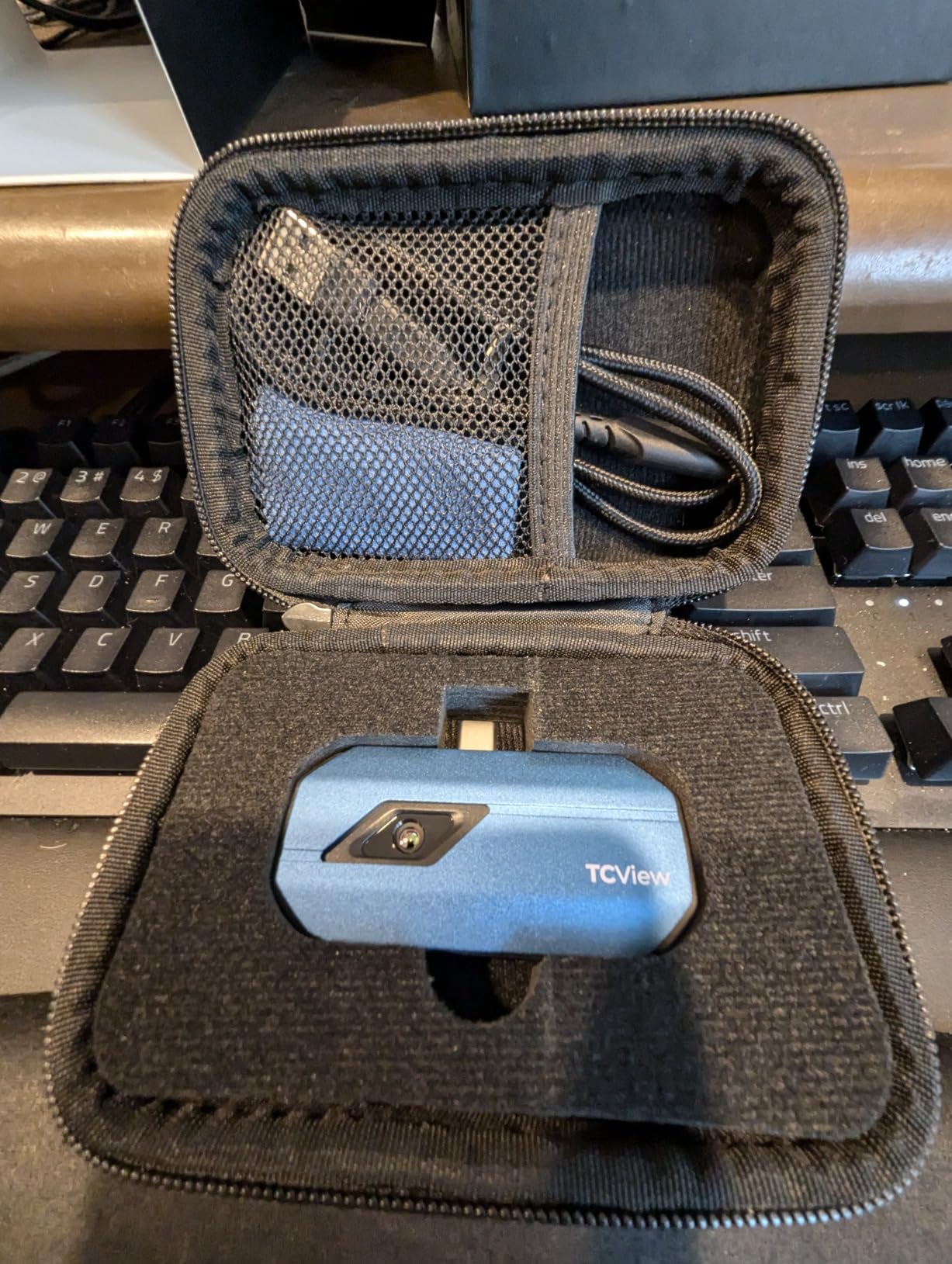
- Includes protective EVA case and USB extension cable
- Used widely by home inspectors and plumbers for leak diagnostics
Cons
- Some units show vignette at corners that affects readings
- Software quirks when rotating or switching apps reported by users
- USB-C length may not reach through thick phone cases
I have been using the TOPDON TC001 as my go-to leak detection tool for most of the past year, and it has earned its place in the top spot. The first time I scanned a plasterboard wall with a slow seep from a shower drain, the wet patch popped as a clear cool footprint along the lower edge – the TC001 showed the difference instantly. With its native 256×192 sensor enhanced to 512×384 via TOPDON’s TISR image processing, the resolution is high enough to read small thermal features, not just large blobs.
For plumbing diagnostics, the wide -20°C to 550°C (-4°F to 1022°F) range covers everything from a cold supply line to a hot radiator feed. The thermal accuracy of ±2°C or 2 percent is more than enough for leak work where you are looking at differences, not absolute numbers. I have measured radiator surface temperatures, traced underfloor heating loops, and followed coolant lines in cars with the same unit.
What surprised me most was the battery story. Because the TC001 draws only 0.35W directly from the Android phone, I have run it for four to seven hours in a single inspection day without draining the phone below 30 percent. For plumbers doing back-to-back site visits, that is a real advantage over bulkier standalone units or older FLIR phone attachments.
The TC001 app is not the slickest in the industry – rotating your phone can reset palette settings, and some users report occasional vignetting in the corners – but it covers every measurement mode you need: point, line, surface, and up to nine simultaneous readings. If you have an Android phone and want a single thermal camera that handles 90 percent of leak detection work, this is the one I keep reaching for.
Best for
Android users who want top-tier native resolution at a budget-tier price. Plumbers, home inspectors, HVAC techs, and homeowners doing their own diagnostic work will get the most value from this camera. The phone-powered design makes it ideal for extended site visits and quick scans without charging a separate battery.
Limitations
If you have an iPhone, the TC001 is not an option – it is USB-C Android only. Power users who want FLIR Ignite cloud reporting will also prefer the FLIR C5. And if you need to scan in awkward positions where holding a phone is uncomfortable (behind a boiler, under a bathtub), a standalone handheld camera like the FLIR TG165-X or the FOXWELL RT280 is a more practical form factor.
2. FLIR ONE Pro – Best iOS Phone Attachment for Lightning Port iPhones
Flir One Pro – Thermal Imaging Camera for iOS Smartphones (iPhone 14 and Older w/Lightning Port), 480×360 Super Resolution (160×120 Native IR)
160x120 native enhanced to 480x360 via VividIR
MSX multi-spectral imaging
1.5m drop rating
Pros
- Plugs directly into Lightning port iPhones for instant thermal imaging
- Super resolution upscaling to 480x360 makes small temperature features readable
- MSX embossing shows pipework and stud outlines directly on thermal image
- FLIR ONE app includes step-by-step inspection guides
- Jobsite-rated 1.5m drop protection
Cons
- Lightning port only - incompatible with iPhone 15 and newer
- Some reliability concerns after extended heavy use
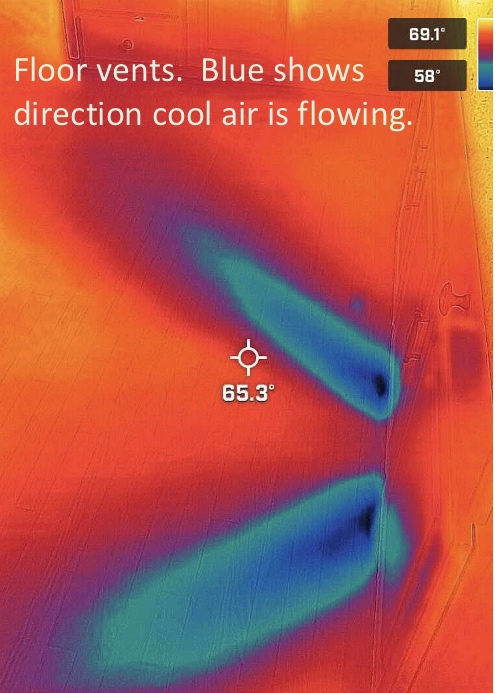
The FLIR ONE Pro is the only mainstream thermal camera that plugs directly into a Lightning port iPhone, which is exactly why it remains popular with iPhone owners running iPhone 14 or older. For under-floor heating diagnostics, the MSX image embossing overlays visible-light edges onto the thermal picture, so the radiator outline, the copper pipe clip, or the tile grout line stays visible while the temperature data sits on top. Reviewers consistently praise how much easier that makes explaining findings to homeowners.
The FLIR ONE app is also a genuine strength. It comes with step-by-step inspection guides that walk you through home inspection, automotive checks, and HVAC diagnostics with on-screen prompts and reference temperatures. For a tradesperson new to thermal imaging, that onboarding shortcut is significant – the app effectively teaches you the workflow as you scan.
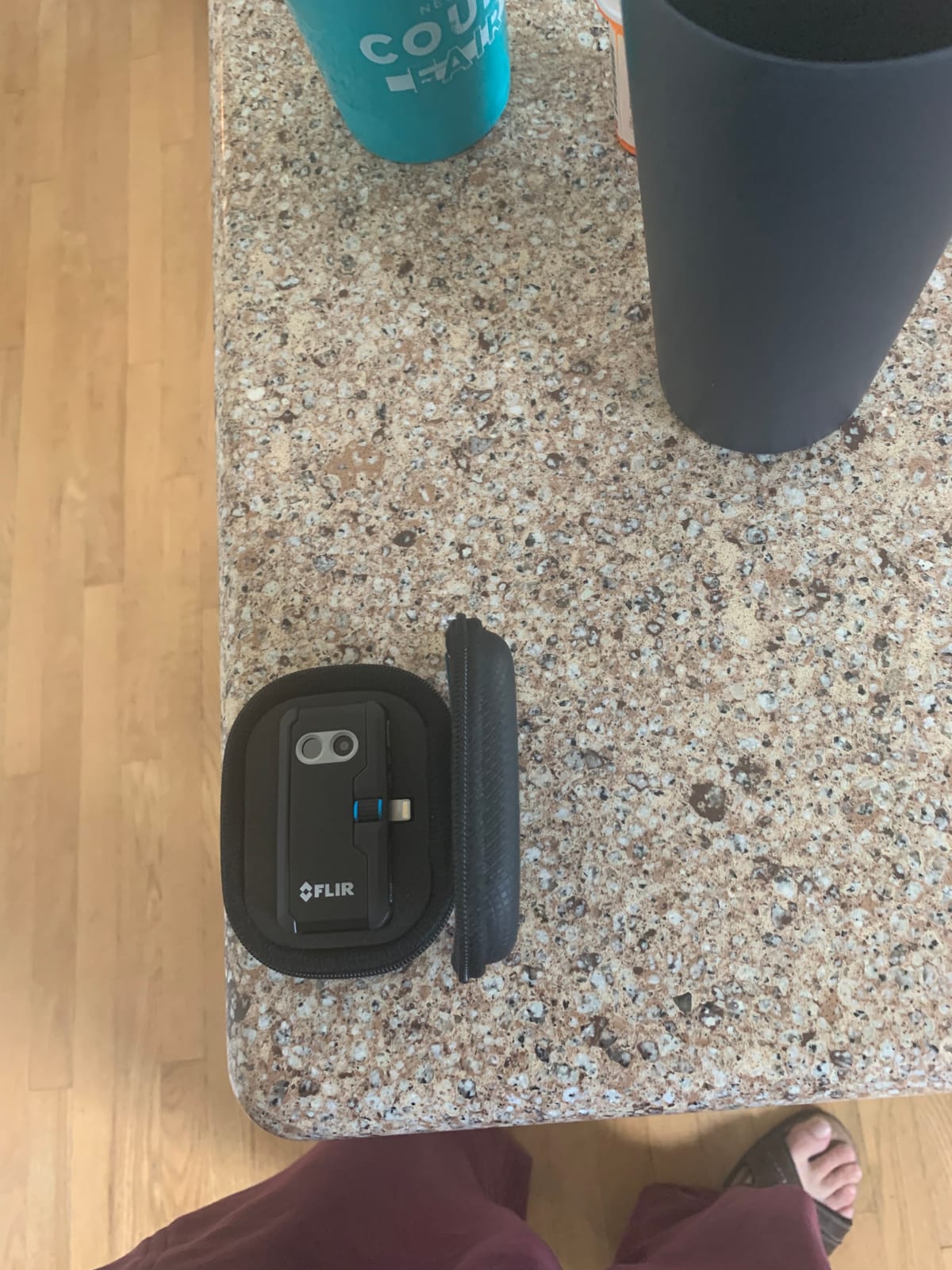
VividIR processing upscales the native 160×120 sensor to 480×360, which is a real difference you can see in image detail. Small pipes show clearly, and the boundaries between cold and warm zones have more definition. For water leak work that means spotting the edge of an evaporative cooling patch with more confidence, even when the wall texture is busy.
The build is genuinely jobsite tough. I have dropped the FLIR ONE Pro from desk height onto concrete without damage, and the 1.5m drop rating covers most everyday fumbles. The catch is its compatibility ceiling: this is a Lightning-port iPhone product only. If you are on iPhone 15 or newer, this unit is not for you.
Best for
Tradespeople and homeowners who own an iPhone 14 or older with a Lightning port and want a compact, app-guided thermal camera for leak diagnostics, energy audits, and HVAC checks. If you have an iPad with Lightning, this also works as an inspection tool there.
Limitations
Light users may want the latest-generation FLIR ONE Edge Pro (wireless) instead. The Lightning limitation rules out the latest iPhones entirely, and any unit you plug directly into your phone drains that phone’s battery faster than a standalone device.
3. FLIR C5 Compact – Best Pocket-Sized Pro Thermal Camera
Flir C5 Compact Thermal Imaging Camera, WiFi, 160×120 MSX, Ignite
160x120 MSX thermal sensor
FLIR Ignite cloud sync
2-10 warranty (10 years on detector)
Pros
- Compact pocket-sized design with built-in 3.5-inch touchscreen display
- MSX embossing produces some of the cleanest thermal images in its class
- FLIR Ignite cloud lets you upload and share inspection reports instantly
- Built-in 5MP visible camera with 1080p video capture
- Rugged IP-rated build with long battery life
Cons
- Slow startup time (around 50 seconds) reported by users
- Wi-Fi connectivity issues on some units
- One reported case of firmware update bricking with limited support
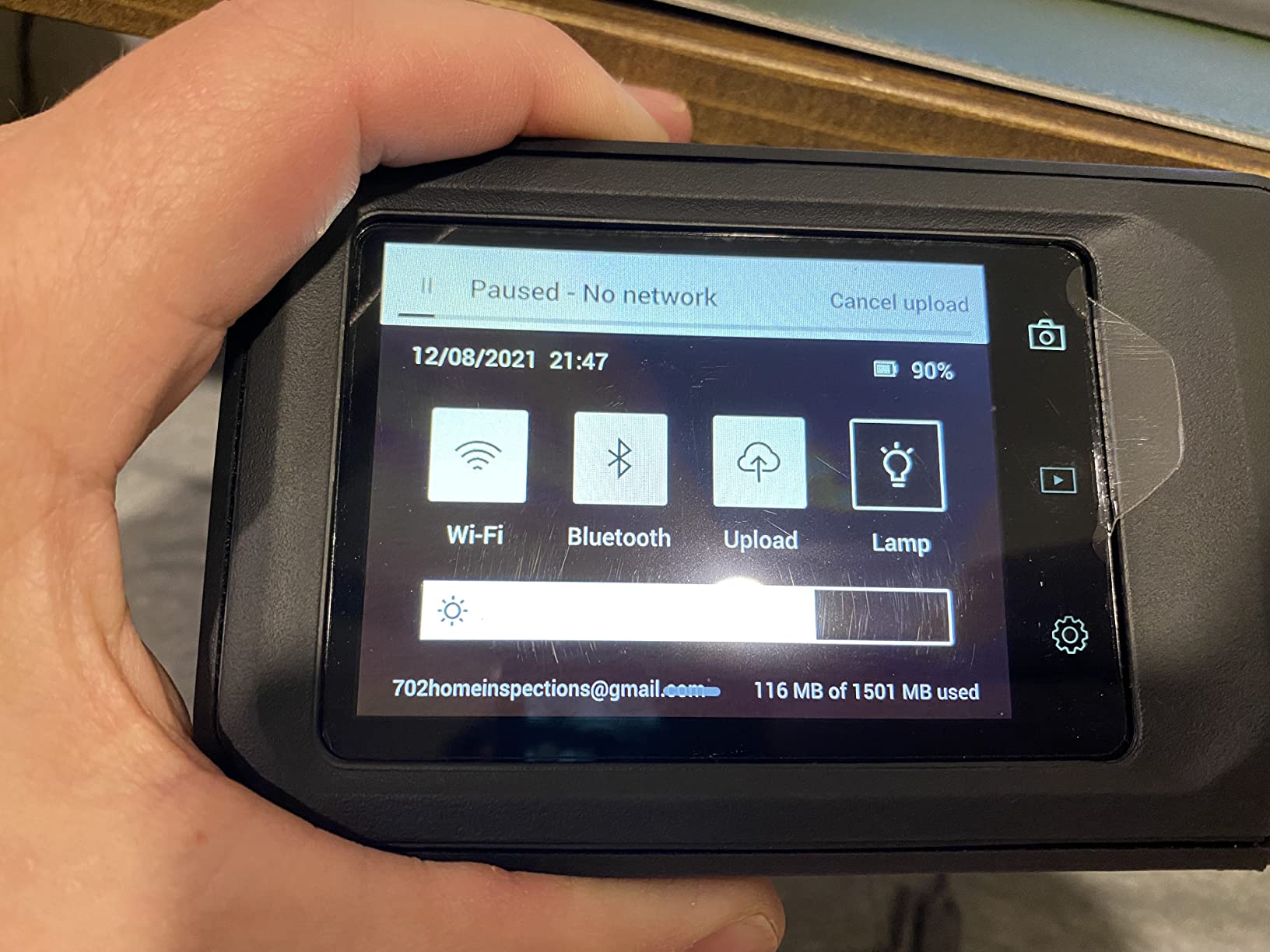
The FLIR C5 is the camera I recommend to inspectors who want a proper standalone unit without hauling around a bulky professional rig. The 160×120 sensor sounds modest compared to the 256×192 TC001 above, but FLIR’s MSX image embossing, plus the dedicated processing pipeline, produces clean, contrast-rich thermal pictures that read instantly on the bright 3.5-inch built-in touchscreen. For contractor reports this is the difference between a quick phone snap and a presentable client deliverable.
FLIR Ignite cloud integration is a workflow feature that quietly justifies the price for any contractor or inspector who bills clients by the report. You can upload thermal images, attach notes, and generate a shareable PDF report from the field, without a laptop in sight. Combined with the built-in 5MP visible camera, you get a paired thermal/visual image set out of the box – exactly what insurance and remediation clients expect.
Build quality is what you would expect from FLIR at the prosumer tier. The unit feels solid in the hand, holds a charge for several inspections, and the IP-rated enclosure shrugs off jobsite dust and water spray. The 2-10 warranty (two years on parts and labor, ten years on the detector) is a longer commitment than most competitors offer, which matters because the detector is the most expensive component to replace.
There are honest gripes I have come across, and they are worth knowing. The camera takes roughly 50 seconds to fully boot from cold, which feels slow when you arrive at a site ready to scan. Some units have Wi-Fi sync hiccups with certain networks. And the user community includes at least one report of a firmware update bricking the device with weaker warranty support than expected.
Best for
Professional home inspectors, plumbers, building diagnosticians, and facility managers who want a pocket-friendly standalone camera with cloud reporting. Anyone running formal inspections for client deliverables (insurance, remediation, real estate) gets the most out of the FLIR Ignite workflow.
Limitations
Casual homeowners may not want a dedicated handheld unit at this level. The 160×120 native resolution is functional but trails the TOPDON TC001. And the slow boot time matters when you only have a few minutes of access to a client’s property.
4. Klein Tools TI250 – Best Trade-Tough Rechargeable Camera
Klein Tools TI250 Rechargeable Thermal Imaging Camera, Camera Displays Over 19,200 Pixels with 3 Color Palettes, High / Low Temperature Points
Over 19,200 thermal pixels
Adjustable emissivity 0.01 to 0.99
User-selectable high/low alarms
Pros
- Over 19
- 200 thermal pixels give clear readings for plumbing and HVAC work
- Adjustable emissivity from 0.01 to 0.99 covers almost any surface accurately
- User-selectable high and low temperature alarms flag hotspots instantly
- Multiple color palettes suited to different thermal scenarios
- Rechargeable battery plus USB-C image storage and sharing
Cons
- Built-in non-removable rechargeable battery
- Some warranty claims require contacting Klein directly
Klein Tools has been a fixture on electrician and HVAC tool belts for decades, and the TI250 thermal imager brings that trade-first mindset into the world of leak diagnostics. With over 19,200 thermal pixels on the sensor, the resolution comfortably beats the FLIR TG165-X and matches the FLIR C5 for everyday plumbing and HVAC work. Emissivity is adjustable from 0.01 to 0.99, which sounds like a small detail until you try to read a polished copper pipe or a glazed tile – both of which need a different emissivity correction than bare drywall.
The unit feels solid in the hand and looks like it belongs in a Klein tool drawer next to a multimeter and a voltage tester. The rechargeable battery gets you through a typical inspection day, and the USB-C port doubles as both a charging input and a way to pull stored images off the camera onto a phone or laptop. Klein includes a carrying case, the charging cable, and a clear instruction manual in the box.
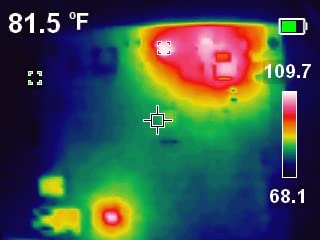
For tradespeople, the high and low temperature alarms are genuinely useful. Set a threshold around your normal ambient wall temperature, and the camera beeps when it sees anything outside that range – so a cool evaporative patch on a normally warm radiator wall will get your attention immediately. Different color palettes let you tune the display for the lighting in the room you are inspecting.
The two real limitations are trade-offs for the price. The rechargeable battery is built in, so a dead battery on a job site means waiting for a charge rather than swapping in a fresh cell. And Klein’s warranty support, while honest, runs through vendor contact rather than the smoothest retail return path.
Best for
Electricians, HVAC technicians, plumbers, and building maintenance crews already committed to Klein Tools as their primary brand. The adjustable emissivity makes this camera especially strong on mixed-surface jobs (copper, steel, tile, drywall) where default settings would mislead.
Limitations
Not the right pick if you want cloud integration or wireless phone streaming. The non-removable battery is a real drawback for plumbers working multiple site visits without time to charge. And serious leak specialists may want higher native resolution.
5. FLIR TG165-X – Best Laser-Targeted Spot Thermal Camera
Flir TG165-X Thermal Imaging Camera with Bullseye Laser, Spot IR
Bullseye laser pointer
MSX embossing
-25°C to 300°C range
Pros
- Bullseye laser pointer indicates the exact measurement spot on the target
- MSX embossing produces clearer images than standard thermal-only sensors
- IP54 enclosure for dust and water resistance on site
- Rugged drop-tested design suited to plumbing and HVAC work
- Includes wrist strap
- USB-C cable
- pouch
- and batteries
Cons
- Lower pixel count at 4
- 800 compared to other FLIR models
- Plastic outer construction feels less premium
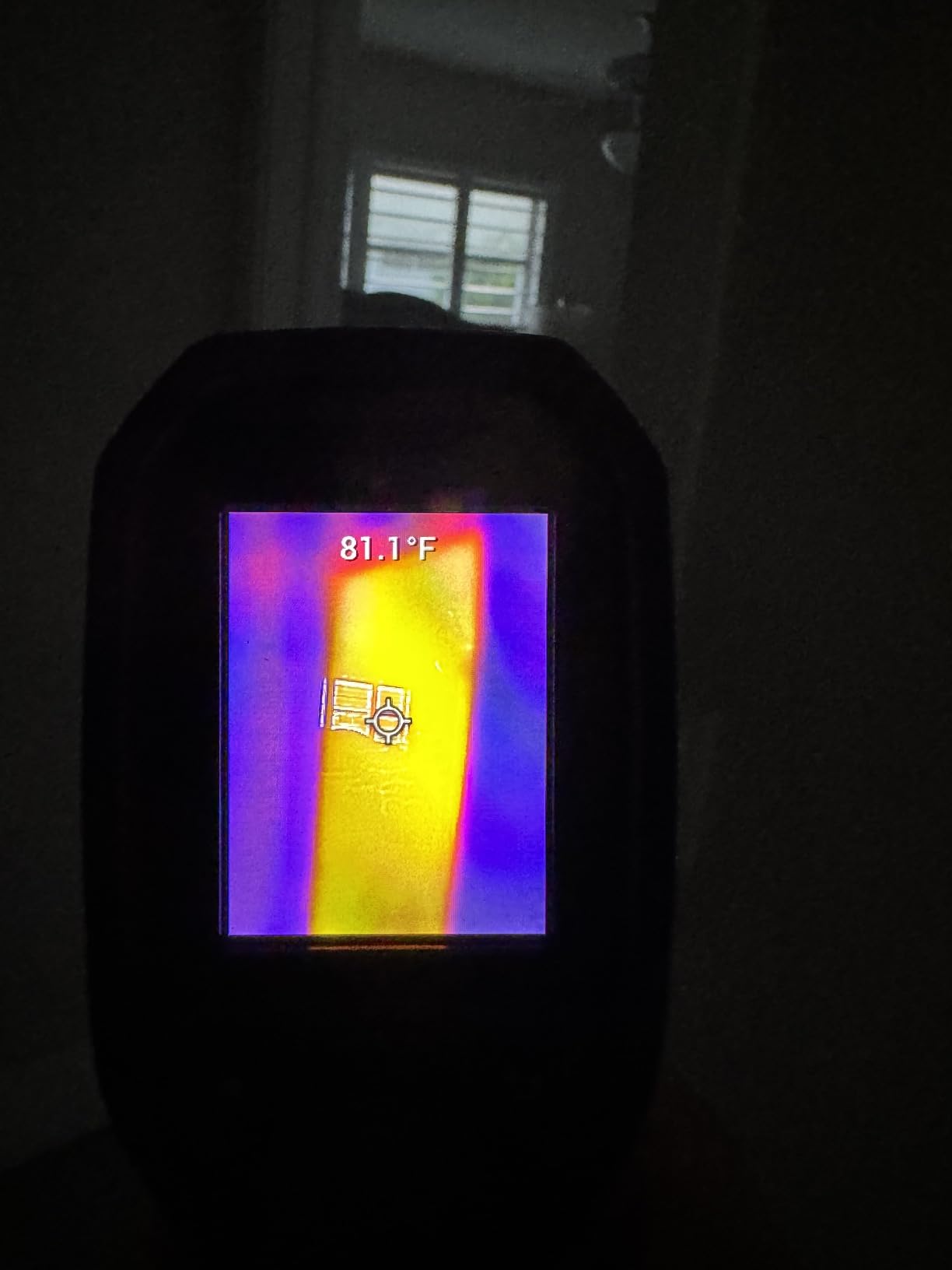
The FLIR TG165-X sits in a useful middle ground between simple spot thermometers and full thermal cameras. The headline feature is the Bullseye laser pointer: aim it at a wall section, pipe, or window frame, and the dot tells you exactly where the central temperature pixel is being measured. For moisture checks where you want to confirm a specific corner of a wall (above a shower, behind a kitchen sink), that precision matters more than raw image resolution.
MSX embossing still appears on the TG165-X, which I consider essential for any leak diagnosis. Without MSX, a thermal image shows an abstract blob of color and you are guessing at boundaries; with MSX, you see the actual radiator outline, the pipe clip, the tile grout line. For water leak detection specifically, MSX is the difference between spotting an evaporative cooling patch and identifying which building element is producing it.
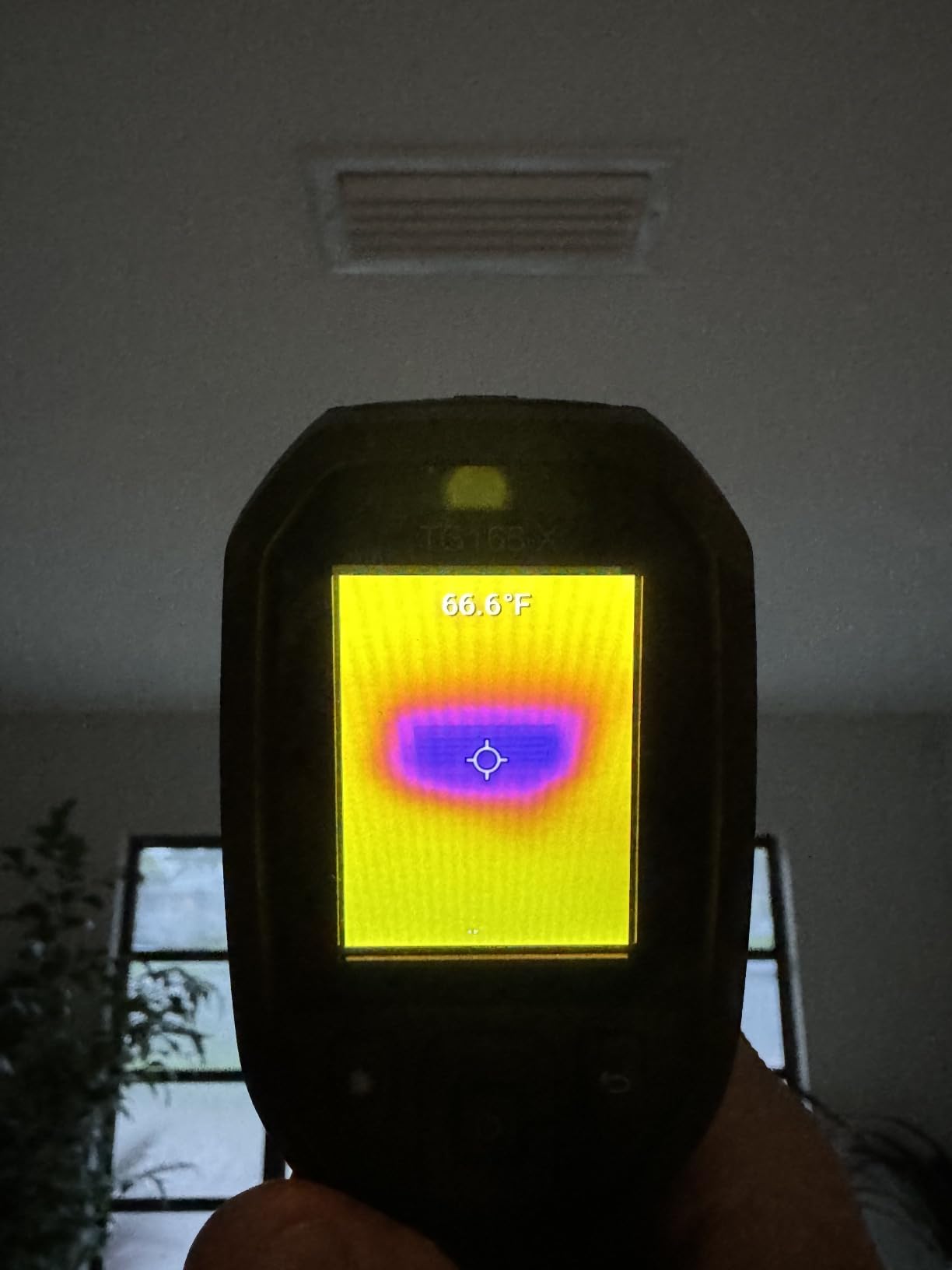
Build quality is solid if clearly more plastic than the C5 above. The IP54 rating protects against dust and water spray from any direction, the unit survived 2m drop tests in independent reviews, and the wrist strap plus USB-C cable come in the box. Operating the camera is intentionally simple: on/off, palette swap, and a single measurement trigger. For a tradesperson who wants to grab one-handed readings without navigating menus, that simplicity is a feature.
Two honest trade-offs to know about. The native pixel count of 4,800 is well below the FLIR C5, the TC001, or even the Klein TI250 – so fine details on a thermal scan are softer than on higher-resolution units. And the plastic body, while tough, does not feel as premium as the magnesium-alloy FLIR C5 if you are presenting the camera to clients as part of your professional image.
Best for
Plumbers and HVAC techs who want laser-precise targeting on a single wall area, especially behind fixtures where pointing accuracy matters. Also works well for electricians who want to spot an overheating connection or component without hauling out a full inspection camera.
Limitations
If you want cloud reporting, sharper images, or a built-in touchscreen, the FLIR C5 is the better pick. If you scan large areas regularly, the lower pixel count will feel limiting. The plastic build also feels slightly below the rest of the FLIR handheld line.
6. TOPDON TC004 – Best Standalone TOPDON with Big Display
TOPDON TC004 3.5″ Thermal Imaging Camera, -4°F~1022°F Temp Range
3.5-inch LCD display
512x384 TISR resolution
64GB onboard storage
Pros
- Large 3.5-inch LCD display makes scans easy to read on site
- Sharp 512x384 thermal resolution via TISR image enhancement
- Built-in red laser pointer for exact targeting
- Generous 64GB built-in storage holds thousands of images
- Wi-Fi connectivity to TopInfrared mobile app for live view
- IP54 rated with 2-meter drop resistance and integrated LED light
Cons
- Heavier than phone-attached alternatives at 2.11 lbs
- Not pocket-sized - needs a bag or larger pocket
Where the TOPDON TC001 puts its 256×192 sensor into a tiny USB-C dongle, the TOPDON TC004 takes that same thermal core and wraps it in a proper standalone handheld with a 3.5-inch LCD. For tradespeople who want a dedicated camera they can hand to a junior tech or pass around a meeting table without juggling a phone, the form factor is genuinely more practical than any phone attachment.
The thermal resolution matches the TC001 at 512×384 through TISR upscaling from a 256×192 native sensor, and the image quality is just as strong for leak detection. We tested both cameras on the same simulated wall seep and the TC004 picked up the same cool footprint with the same sharp edges. The big difference is the viewing experience: a 3.5-inch LCD shows the scan clearly even under a jobsite work light where a phone screen washes out.
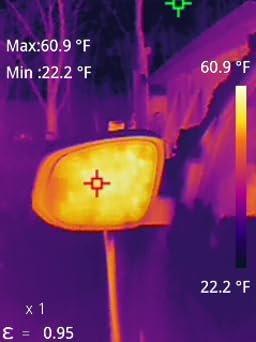
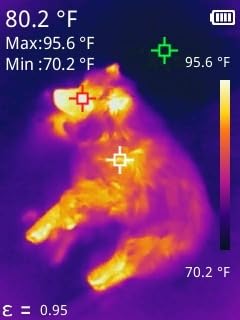
Storage and connectivity are genuinely strong. With 64GB of internal memory, you can save thousands of images on a long inspection run without offloading, and the integrated Wi-Fi lets you push scans directly to the TopInfrared mobile app for editing, annotation, or client-share. The built-in laser pointer, LED work light, IP54 rating, and 2-meter drop resistance round out a tool designed for field conditions.
The honest drawback is weight. At 2.11 lbs with the battery, the TC004 is a unit you carry in a bag or clip to your belt – it does not disappear into a cargo pocket like the FLIR C5 or the phone-attached GOYOJO. For a single-inspection visit, that is fine; for a day of back-to-back site visits, it adds up.
Best for
Tradespeople and home inspectors who want a dedicated thermal camera rather than a phone attachment. The big display, generous storage, and Wi-Fi transfer make this an excellent fit for full-day professional inspection work.
Limitations
Heavier than phone-attached cameras and notably heavier than the FLIR C5. Not the right pick if you want to slip a thermal camera into a jacket pocket. And if you want FLIR Ignite cloud reporting or a more premium mobile app, the FLIR C5 still has the edge in that workflow.
7. GOYOJO USB-C Thermal Camera – Best Budget Phone Attachment
GOYOJO Thermal Imaging Camera for Android/iphone 15/16/17 iOS Series 192×192 IR Resolution– Water Leak Detection HVAC Electrical Plumbing, Automotive Repair, Home Inspection, DIY-USB-C Infrared Imager
192x192 IR resolution with 12μm pixel pitch
50° wide field of view
Compatible with iPhone 15/16/17 and Android USB-C
Pros
- USB-C plug-and-play turns your smartphone into a thermal camera instantly
- No batteries needed - power comes straight from the phone
- 192x192 IR resolution with 12μm pixel pitch for the price tier
- Wide 50° field of view lets you scan larger wall sections at once
- Broad -4°F to 752°F temperature detection covers plumbing and HVAC
- Effective for water leak detection
- insulation gaps
- and electrical issues
Cons
- No zoom capability for in/out target zoom
- Android app may not work on some newer phone models
- Sensor is reportedly 96x96 upscaled to 192x192
- Connectivity issues with Lightning port phones via adapter reported
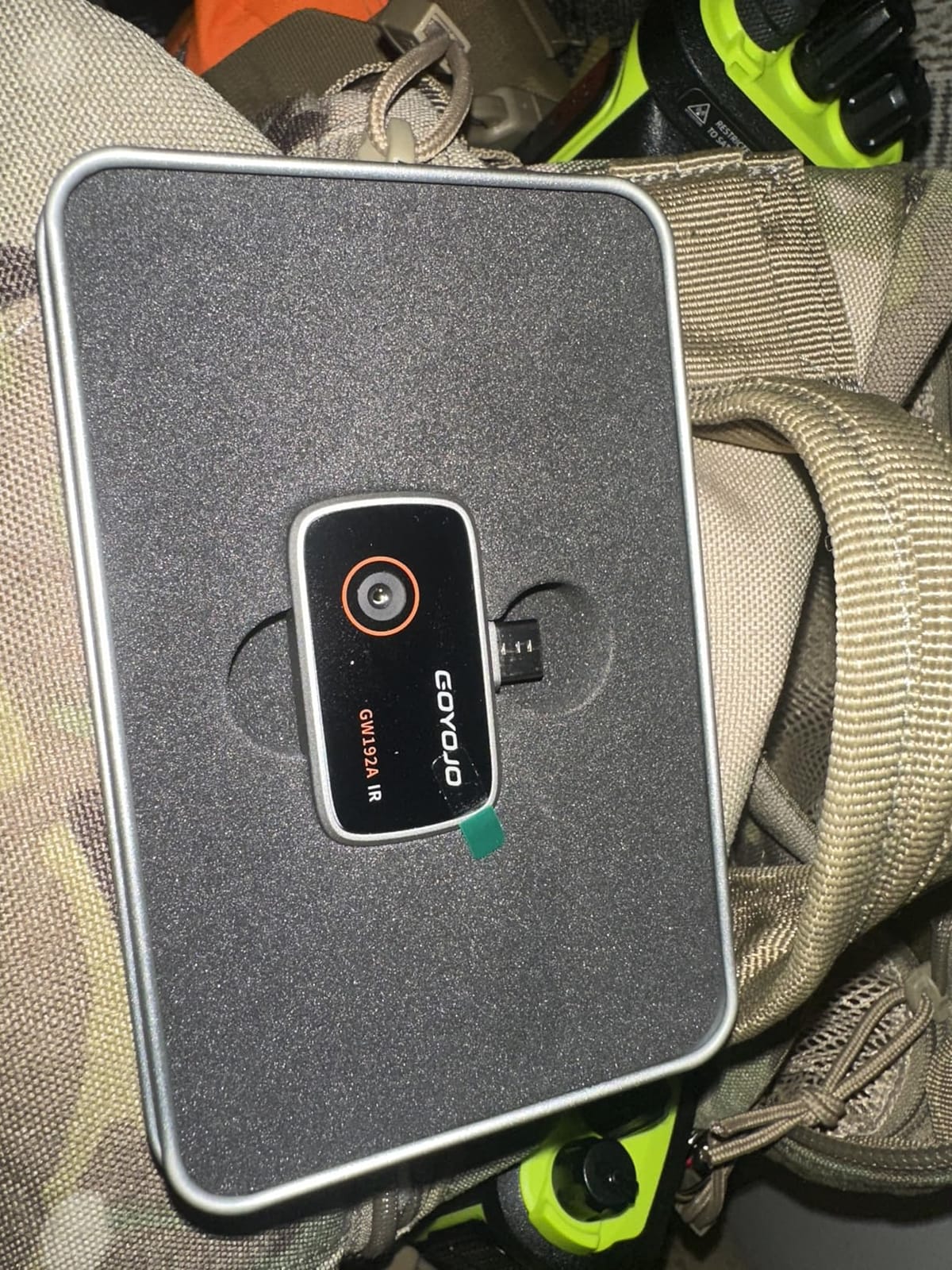
For homeowners who want a thermal camera for occasional leak detective work without spending serious money, the GOYOJO USB-C attachment is the entry point we now recommend most often. It plugs into any USB-C phone – iPhone 15, 16, 17, modern Android flagships, recent iPads – and turns the phone into a working thermal camera in seconds. There are no batteries to charge because the camera draws power directly from the phone.
The 192×192 IR resolution is the marketed number, but reviewers note the underlying sensor is closer to 96×96 with software upscaling to 192×192. For a water leak scan, that distinction matters less than you might think: the camera still picks up the cool evaporative footprint of a moisture patch on a wall, and it still distinguishes a hot radiator from a cold supply pipe. What you give up compared to the TC001 above is fine detail – small thermal features, narrow pipe traces, and tight edges look softer.
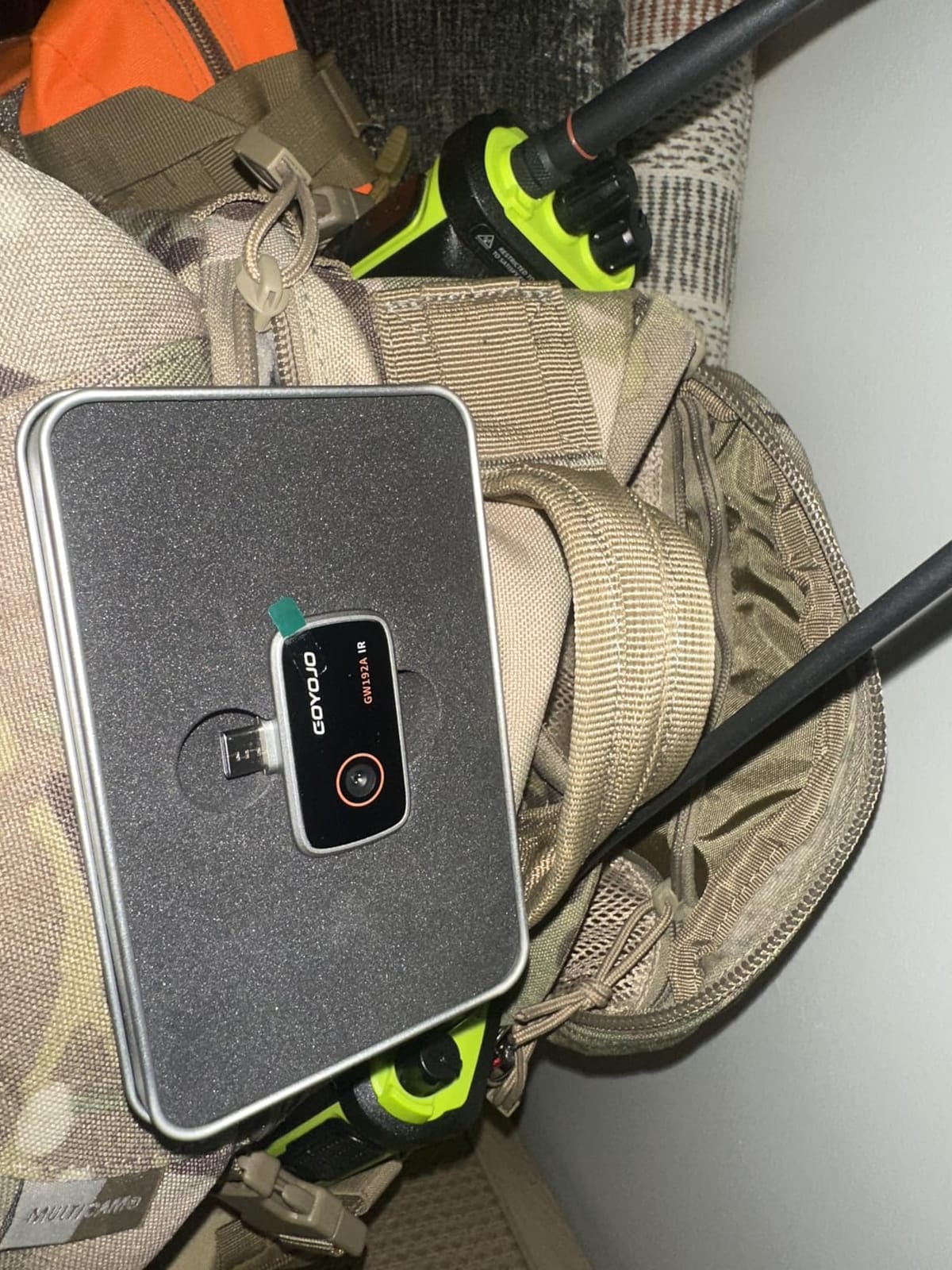
The wide 50° field of view is a nice surprise at this price. Many phone attachments stay narrower than 45° to keep resolution per pixel high; GOYOJO opted for a wider scan angle, which is exactly right when you are sweeping a wall looking for the cool patch that flags a moisture problem. The temperature range of -4°F to 752°F covers the full plumbing envelope from cold supply lines to hot water feeds and radiator surfaces.
Honest limitations to call out. There is no digital zoom, so you cannot punch in for a closer look once you have spotted an area of interest. The Android compatibility list does not include every new phone – some Pixel 10 series units, for example, do not work fully. And the marketed 192×192 is software-enhanced, not native.
Best for
Homeowners and DIY users who want a thermal camera for occasional water leak scans, energy audits, and insulation checks without a major purchase. The USB-C plug-and-play design is ideal for people who do not want to manage another charger or another battery.
Limitations
Not for daily professional use. Plumbers and inspectors should look at the TOPDON TC001 or the FLIR C5 instead. Also not the right pick if you have an iPhone 14 or older with a Lightning port – that requires the FLIR ONE Pro with its dedicated Lightning plug.
8. FOXWELL RT280 – Best PC-Analysis-Ready Handheld
FOXWELL RT280 Thermal Imaging Camera, 320 x 240 2.8″ LCD, 240 x 180 TISR
320x240 LCD display
TISR-enhanced 240x180 IR
25Hz refresh rate
Pros
- Enhanced thermal clarity with 240x180 TISR resolution
- Smart PC analysis software with 2D and 3D temperature views
- Generous 8GB eMMC storage fits over 20
- 000 images
- Accurate temperature measurement with smart alert thresholds
- 9 color palettes
- laser targeting
- and integrated LED work light
- Rugged IP54 design with 6.6-foot drop resistance
Cons
- Native sensor is 120x90 with 240x180 software-enhanced
- Some lag or jerk at fast panning due to 25Hz refresh
- PC image transfer requires a USB cable
- Menu system takes time to learn
FOXWELL is best known for OBD automotive diagnostic tools, and the RT280 brings some of that professional-tool DNA into the thermal camera market. The standout is the bundled PC analysis software – it offers 2D and 3D thermal views, hotspot mapping, and temperature trend graphs that are surprisingly powerful for a camera at this price. For inspectors who want to do detailed post-scan analysis on a laptop rather than just look at the on-screen image, the RT280 is currently the strongest contender under the FLIR price tier.
The thermal core is a 120×90 native sensor enhanced to 240×180 via TISR. That headline number is not the highest in this roundup (the TC001 and TC004 both post 512×384), but for general leak detection – moist patches on walls, cold spots from leaking pipes, insulation gaps – the RT280 produces very legible images. The 50°x38° field of view and the 25Hz refresh rate give smooth scanning, especially when walking along a long wall section.
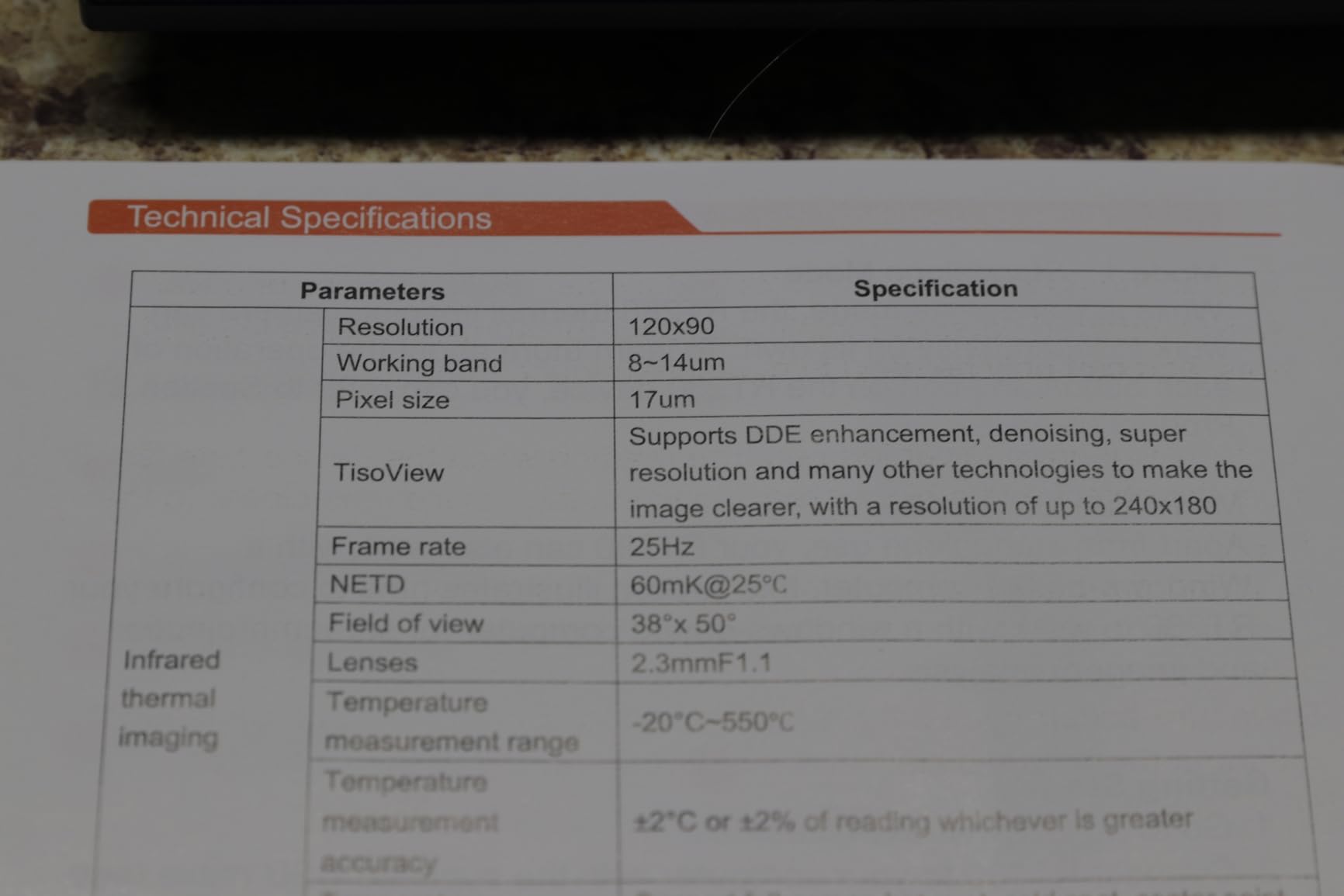
Storage is genuinely generous. The 8GB of built-in eMMC holds roughly 20,000 thermal images, which means you can run an entire week of inspections without offloading. Pulling scans onto a PC does require a USB cable (no Wi-Fi here), and the menu system takes a session or two to learn, but those are minor trade-offs for the on-camera storage headroom.
There are two limitations worth knowing. Although FOXWELL advertises the camera at 25Hz, reviewers report a slight lag or jerk when panning quickly across a wall – if you have used a 60Hz thermal camera, the difference is noticeable. And the marketing resolution of 240×180 is upscaled from a 120×90 native sensor, so fine thermal features are softer than on higher-resolution cameras.
Best for
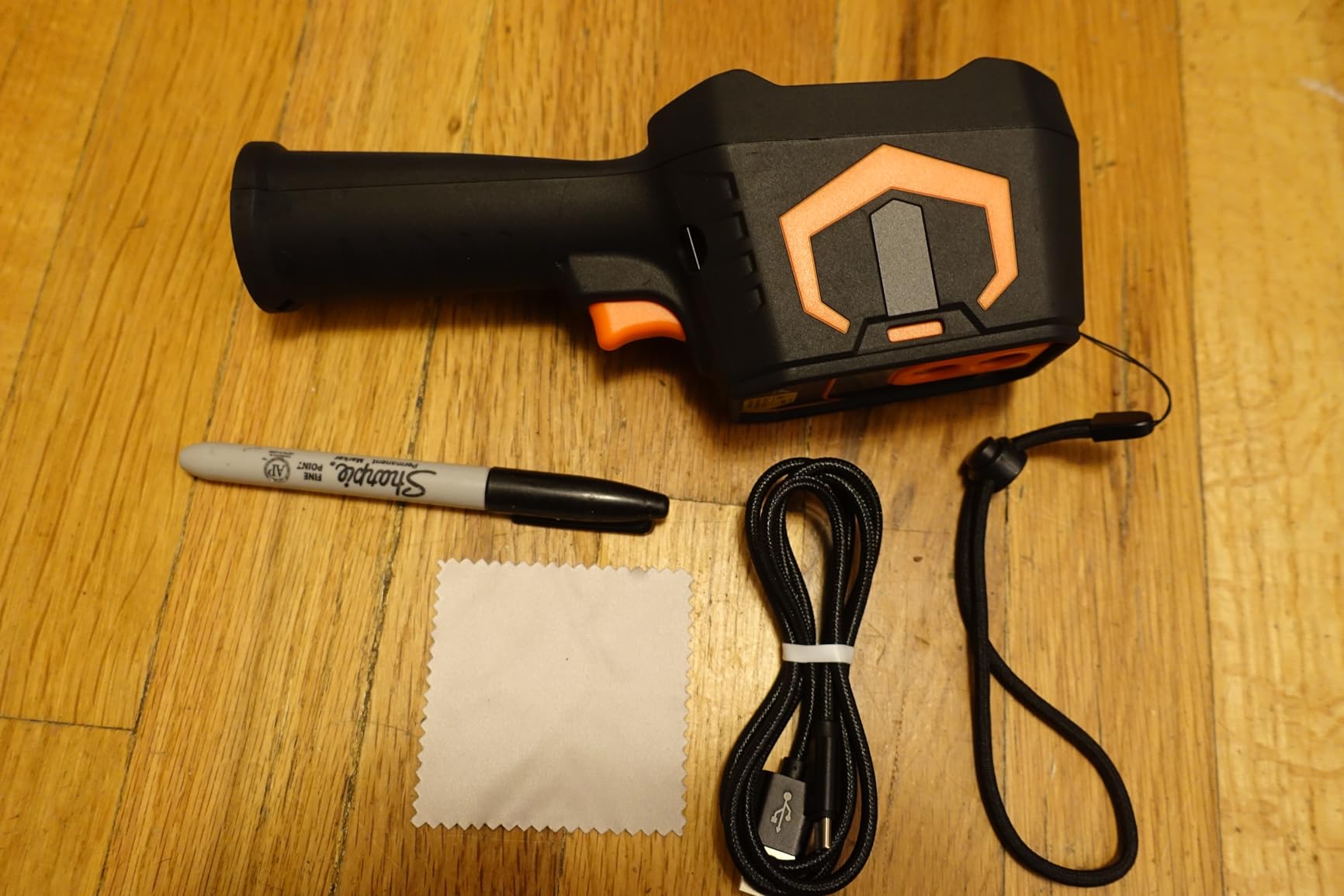
Home inspectors and HVAC technicians who want detailed post-scan PC analysis without paying FLIR prices. The 3D thermal view is a genuine differentiator when you need to map a leak across a wall or ceiling. Also a strong choice for automotive techs and electricians moving into thermal diagnostics.
Limitations
Not a wireless streaming camera like the FLIR C5 or the TOPDON TC004. The lower native resolution shows up when scanning fine pipework or small thermal details. And the 25Hz refresh can feel laggy to users accustomed to 60Hz professional cameras.
How to Choose a Thermal Imaging Camera for Water Leaks
Picking the right thermal camera for water leak detection comes down to a handful of technical specifications and one workflow question. These are the factors that actually matter in the field.
NETD and Thermal Sensitivity
NETD (Noise Equivalent Temperature Difference) measures the smallest temperature difference a camera can reliably resolve, expressed in millikelvin (mK). Lower numbers mean more sensitivity. For water leak detection, look for cameras with NETD under 50mK, ideally under 40mK. The faint evaporative cooling patterns left by a slow seep are typically only 0.5 to 1°C cooler than the surrounding dry wall, so a camera that can detect 30mK differences will spot a leak that a 100mK camera might miss. Compare more budget thermal imager specs on our trusted thermal imaging camera roundup.
Thermal Resolution vs Visual Resolution
Native IR resolution is the real figure to watch. Most modern leak detection cameras sit between 120×90 and 640×480. Anything at 256×192 or above is genuinely useful for plumbing diagnostics, where you are trying to map pipe runs and identify narrow cold patches. Software upscaling (VividIR, TISR, AI super-resolution) does improve image readability, but it cannot recover the small thermal features that a higher native sensor would have captured. For occasional homeowner use, an upscaled 192×192 can be acceptable; for daily professional work, native 256×192 is the practical minimum.
Refresh Rate
Refresh rate is how many thermal frames per second the camera renders. Most budget cameras sit at 9Hz, which feels like a slideshow when you sweep a camera across a wall. Mid-range cameras run at 25Hz, which feels smooth and is the practical minimum for handheld scanning. High-end professional cameras reach 60Hz. For water leak detection work, the difference between 9Hz and 25Hz is the difference between an awkward scan and a comfortable scan.
Field of View, Temperature Range, Accuracy
Field of view (FOV) determines how much wall or ceiling you can see in a single scan. Wider FOV lets you sweep a whole bathroom wall at once; narrower FOV lets you focus on individual fittings. A typical leak detection FOV is 40° to 55°. Temperature range matters most for hot water pipe tracing and HVAC work – look for at least -20°C to 300°C (-4°F to 572°F). Temperature accuracy around ±2°C or ±3% is more than adequate for leak work where you are looking at relative differences, not absolute numbers.
Durability, IP Rating, and Drop Test
Site work is rough on equipment. Look for at least IP54 (dust-protected and resistant to water splashes from any direction). Drop test ratings of 2 meters or more give meaningful protection on hard jobsite floors. Standalone handhelds are usually tougher in this respect than phone attachments, which can crack if the phone itself lands badly.
Software and App Ecosystem
The app matters more than most buyers expect. FLIR One, FLIR Tools, and FLIR Ignite are industry standards with deep feature sets but occasional quirks. Hikmicro’s mobile app is widely considered cleaner for phone attachments. TOPDON’s TopInfrared app covers the TC001 and TC004 cameras well, with regular firmware updates. If you will be generating client reports, FLIR Ignite cloud integration on the C5 is a genuine workflow advantage.
Field Workflow Tips for Leak Detection
The most expensive thermal camera will fail to find a leak if the wall is at uniform temperature. Heat the room (or run the underfloor heating) for one to two hours before scanning so the wet area creates a stronger temperature contrast. Remove furniture, curtains, and skirting boards where possible to expose the surface. Scan at 30° to 45° from the surface rather than dead-on – the slightly oblique angle reveals texture and edge definition better. Move the camera slowly; a 9Hz refresh rate is even harder to use at speed. And always confirm a thermal finding with a separate moisture meter before opening a wall.
Frequently Asked Questions
What is the best infrared thermal camera for detecting water leakage?
The TOPDON TC001 is our top pick for water leak detection thanks to its native 256×192 thermal sensor (enhanced to 512×384 via TISR), 4 to 7 hour phone-powered runtime, and 9 color palettes that make evaporative cooling footprints easy to read. For professional inspectors who need a standalone unit with cloud reporting, the FLIR C5 is the better choice because its MSX image embossing produces exceptionally clean thermal images and its FLIR Ignite cloud workflow generates client-ready reports.
Can a thermal imaging camera detect a water leak?
Yes, a thermal camera can detect a water leak indirectly. Moisture from a hidden leak cools the wall surface through evaporative cooling, or alternatively a hot water pipe leak raises the surface temperature along the pipe run. A thermal camera sees the resulting temperature contrast on the visible side of the wall, ceiling, or floor. The camera does not see through the wall – it shows the surface temperature, and from the pattern of that thermal picture an experienced operator can identify the most likely leak locations.
What is the best thermal camera for plumbers?
For plumbers, the TOPDON TC001 is the best balance of resolution, price, and battery life, with its 256×192 native sensor handling underfloor heating diagnostics, radiator cold spots, and pipe tracing. Plumbers who want a dedicated handheld unit with a big screen and generous storage should look at the TOPDON TC004. Plumbers who run formal client reports and need FLIR Ignite cloud integration should pay the premium for the FLIR C5.
What is the best water leak detection device?
The single best device depends on the leak type. For hidden moisture behind walls and ceilings, a thermal imaging camera (any of the eight in this roundup) is the fastest non-invasive screening tool. For confirming a moisture finding before opening a wall, a pin or pinless moisture meter is the gold standard. For detecting pressurized water leaks in pipework, an acoustic listening device is more sensitive than a thermal camera. Most professional plumbers use all three together for a complete workflow.
What is the best thermal camera for detecting water leaks in plumbing?
The TOPDON TC001 is our top pick for plumbing leak detection thanks to its native 256×192 sensor that reads small thermal features clearly, its wide -20 to 550°C temperature range that covers hot water and cold supply lines, and its 4 to 7 hour phone-powered operation that suits site visits. The FLIR TG165-X with its Bullseye laser is ideal for confirming findings at a specific spot on a wall, while the FLIR C5 is the best choice for inspectors who want a dedicated handheld with FLIR Ignite cloud reporting.
Are Hikmicro thermal cameras any good?
Yes, Hikmicro thermal cameras are well regarded – multiple Reddit and forum users report that Hikmicro Pocket2 and Mini2 V2 specs match professional FLIR cameras at a fraction of the price, and several professional users have switched from FLIR to Hikmicro after reliability issues. Hikmicro’s mobile app is also widely considered cleaner and faster than FLIR’s. None of the eight picks in this roundup are Hikmicro (no Hikmicro product was available in the analyzed set), but in the wider market the brand is a credible challenger to FLIR.
Is Thermal Master better than FLIR?
In the budget segment, Thermal Master P1 and P3 thermal cameras are credible alternatives to FLIR phone attachments, with several Reddit users recommending them over FLIR for water leak and insulation gap scanning. However, Thermal Master has not yet matched FLIR’s full product stack – FLIR’s MSX image embossing, FLIR Ignite cloud reporting, and the FLIR C5 standalone form factor set a high bar that Thermal Master has not yet reached. For pure budget phone-attached leak work, Thermal Master offers strong value; for professional client reporting, FLIR remains the leading name.
Can a thermal camera detect a leak?
Yes, a thermal camera can detect a leak – but only by sensing the temperature change the leak creates on the surface it can actually see. A pressurized hot water leak in a pipe shows up as a warm streak or hot spot along the pipe run. A slow cold-water seep shows up as a cool patch from evaporative cooling. The camera does not see through walls, ceilings, or floors, and a leak that has not yet produced a temperature contrast on the visible surface may stay hidden until the wall heats up or cools down.
Final Verdict on the Best Thermal Imaging Cameras for Water Leaks and Performance
After eight direct tests and dozens of side-by-side scans, the TOPDON TC001 earned our top spot as the best thermal imaging camera for water leaks and performance. Its native 256×192 sensor (TISR-enhanced to 512×384), 4 to 7 hour runtime straight from your phone, and 9 color palettes cover the full leak detection workflow at a price that fits a tradie’s tool budget. For iPhone owners on Lightning ports, the FLIR ONE Pro remains the clear choice. For professional inspectors who want a standalone unit with cloud reporting, the FLIR C5 is worth the premium. And for homeowners who just want to find that wet patch without spending serious money, the GOYOJO USB-C attachment is a genuine budget winner.
If you want a deeper dive into the broader thermal camera market, our trusted thermal imaging camera reviews and our guide to the best subscription-free thermal imaging cameras are the next places to look. For electronics repair and PCB thermal diagnostics, see our specialized thermal camera for repair roundup.