

The MaxxAir MaxxFan Deluxe 7500K is the best van roof vent for camper conversions in 2026. It moves air in both directions, runs in the rain, and comes with a remote and a thermostat in one sealed unit. Our two runners-up are the RVLOVENT 1000 CFM if you want maximum airflow without electronics, and the MaxxAir MaxxFan Plus 4500K if you would rather the lid closed itself when rain arrives.
I spent weeks comparing ten roof vents for our own conversion, reading spec sheets against each other and checking customer feedback line by line. The short version is that most van roof vents fall into one of three camps: an all-in-one premium unit, a mid-range reversible fan, or a cheap replacement vent that bolts straight over an existing hole.
That third group matters more than it sounds. If you are converting a van that already has a factory vent, the cutout work is already done and your choice narrows sharply. If you are cutting the hole yourself, roof thickness and ceiling build-up depth decide more than brand name does. Both cases are covered below.
The thing nobody tells you at the start is that a roof fan is only half of a ventilation system. Moving air out of a sealed box does almost nothing unless air can get back in, which is why we cover low-level intake vents separately. We also cover leaks, because water ingress around a vent collar is the single most common complaint from van owners and no roundup we read addresses it properly. Our portable power station guide covers the other half of the electrical budget.
Table of Contents
Top 3 Van Roof Vent Picks for 2026

MaxxAir MaxxFan Deluxe 7500K
- 10-speed reversible fan
- Thermostat
- Built-in rain cover
- Remote control

MaxxAir MaxxFan Plus 4500K
- 10-speed reversible fan
- Rain sensor auto-close
- Runs with lid closed
- Ceiling controls

All 10 Best Van Roof Vents Compared Side by Side in 2026
Every van roof vent below fits a standard 14 x 14 inch roof opening unless noted, and all of them run on 12V. The columns that decide most builds are airflow, roof thickness range and whether the unit can operate with the lid closed while it rains.
| Product | Specifications | Action |
|---|---|---|
| MaxxAir MaxxFan Deluxe 7500K |
|
Check Latest Price |
| MaxxAir MaxxFan Plus 4500K |
|
Check Latest Price |
| RVLOVENT 14 Inch 1000 CFM |
|
Check Latest Price |
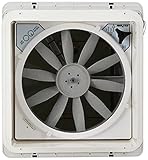 MaxxAir Original Maxxfan 4401K MaxxAir Original Maxxfan 4401K |
|
Check Latest Price |
 caqeg 14 Inch Vent and Fan Combo caqeg 14 Inch Vent and Fan Combo |
|
Check Latest Price |
 2012 Heavy Duty 14 Inch Voice LED 2012 Heavy Duty 14 Inch Voice LED |
|
Check Latest Price |
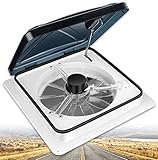 Starvent 6-Speed Reversible Starvent 6-Speed Reversible |
|
Check Latest Price |
 2012 F36AR Quiet Brushless 2012 F36AR Quiet Brushless |
|
Check Latest Price |
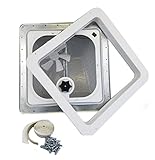 Ventline Ventadome CW001 Ventline Ventadome CW001 |
|
Check Latest Price |
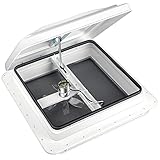 Livpow 14 x 14 Reversible Livpow 14 x 14 Reversible |
|
Check Latest Price |
1. MaxxAir MaxxFan Deluxe 7500K – All-in-One Winner
MAXXAIR Maxxfan Deluxe Vent, Fan and Vent Cover All in One – Powerful 10-Speed Reversible Fan with Thermostat, Built-in Rain Cover, Remote Control, Intake & Exhaust Fan, Smoke (00-07500K)
12V 60W
10 speeds
Reversible intake and exhaust
Fits 14x14 openings
Thermostat and remote
Pros
- Vent
- fan and rain cover in one sealed unit
- 10-speed reversible fan with a thermostat
- Runs in rain and while driving
- Tool-free removable insect screen
- Fits standard 14 x 14 roof openings
Cons
- Highest price point in the group
- Remote and thermostat add setup complexity
- 10 plastic blades need periodic cleaning
The MaxxFan Deluxe 7500K is the one most van builders end up fitting, and it has the largest review base of anything we tested. The fan, lid and rain protection form a single moulded assembly rather than a fan bolted into a separate cover, which removes the seam where most leaks start. It moves air both ways on the same ten-speed control, so you can pull cooking fumes out on exhaust and draw cool night air in on intake.
Our conversion has one mounted over the bed, which turned the remote into an essential feature rather than a nicety, because on-unit controls at the ceiling are unreachable from a bunk. The thermostat is the part I now use most: set it to the temperature you want to sleep at and the fan modulates on its own instead of running flat out all night.
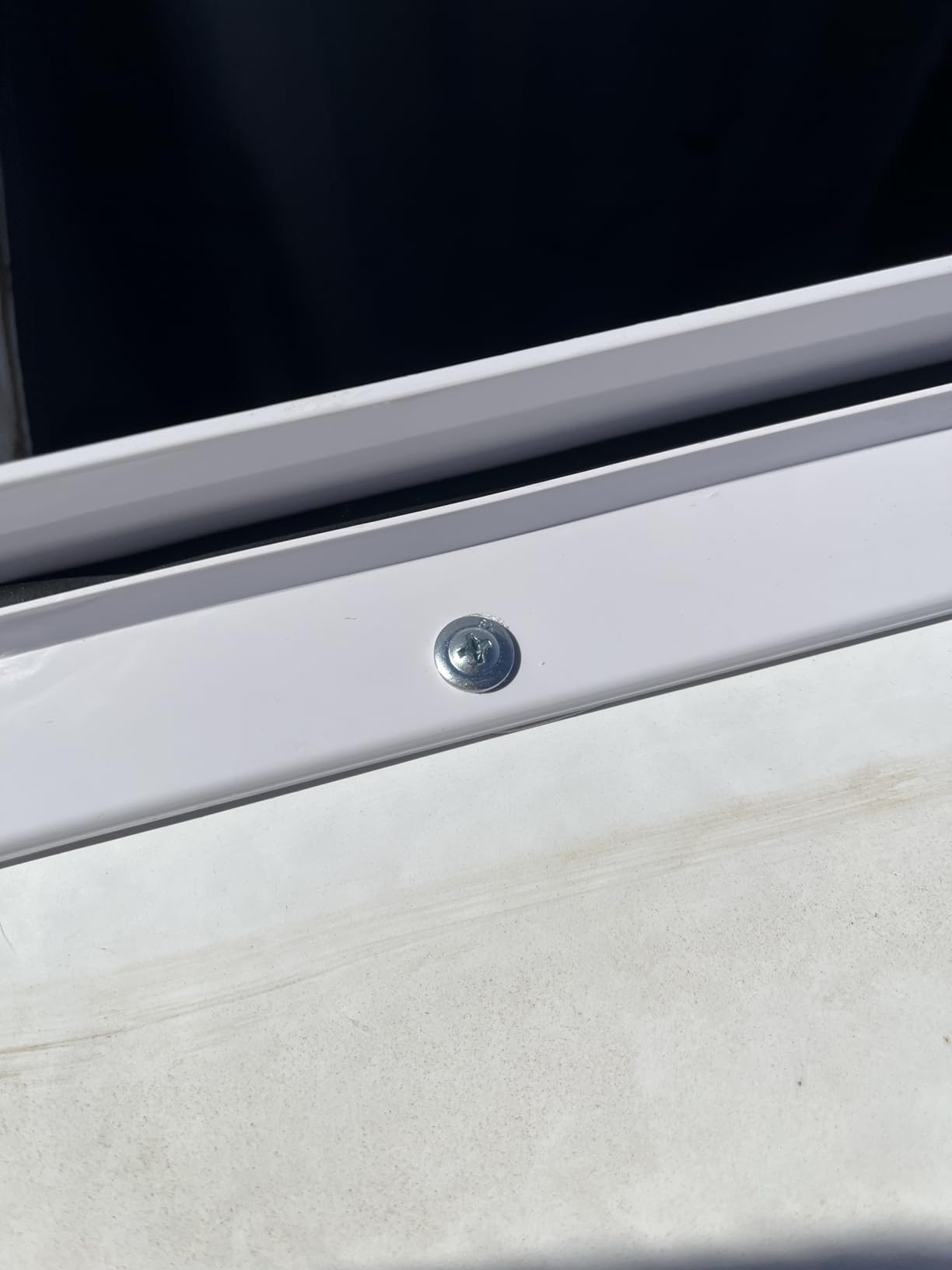
It is a 60W, 12V, 10-blade plastic fan in a low-profile dome measuring 5.23 inches tall, with a lifetime limited warranty on the lid that tells you where the manufacturer expects the failure point to be. The interior insect screen lifts out without tools, so cleaning it after a season of bugs takes about a minute. What you give up is money, and electronics: owners report remotes going unresponsive and units misbehaving when charging voltage climbs, so fuse the circuit and regulate your charging voltage.
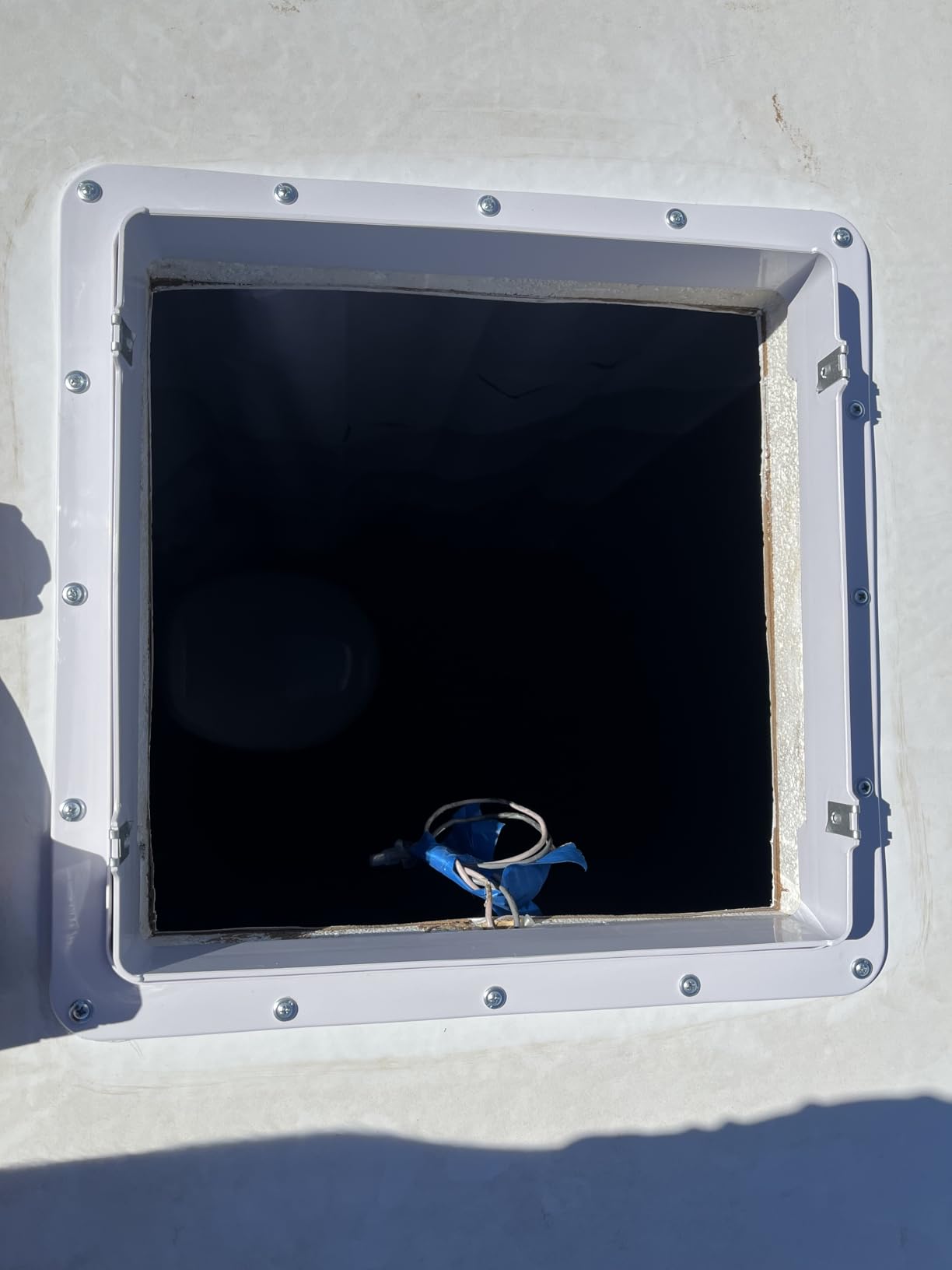
What the Deluxe 7500K does better than the rest
Rain handling is the quiet hero. The lid is a full rain shield rather than a sensor that slams shut, so you can leave the fan running in a downpour or drive with it on high, and van owners describe running in the rain as close to mandatory. Reversible airflow matters just as much, because an exhaust-only fan in a sealed van stalls with no replacement air.
Where the Deluxe 7500K is the wrong choice
Measure the 5.23 inch dome height against your rack clearance before you drill; our roof rack comparison covers that arithmetic. It is also the wrong pick for a first build where budget is tight or the van might change, because swapping a premium vent later can mean a second cutout.
2. MaxxAir MaxxFan Plus 4500K – Rain Sensor and Lid-Closed Cooling
MAXXAIR Maxxfan Plus High Powered 10-Speed RV Intake and Exhaust Fan – Manual or Remote Control Electric Opening, Easy Ceiling Controls, Rain Sensor with Automatic Lid Closure, Smoke (00-04500K)
12V 28W
10 speeds
Reversible
Rain sensor
Manual or remote open
Pros
- High-powered 10-speed reversible intake and exhaust fan
- Rain sensor closes the lid automatically
- Circulates air with the lid closed
- Waterproof tabs for tool-free cover fitting
- Ceiling controls plus remote
Cons
- FANMATE vent cover sold separately
- Among the most expensive options
- Remote also part of the electronics risk
The MaxxFan Plus 4500K takes a different approach to the Deluxe, swapping the fixed rain cover for a rain sensor. That trade gives you a fan that closes its own lid the moment it detects water, which suits people who would rather not think about whether the van is open when a storm rolls through at night.
The feature we like most is running with the lid shut, which makes it a usable ceiling fan in summer rain and a decent way to move moisture after a shower. Pair that with ten speeds and reversible airflow and the unit earns its place even in cool weather.
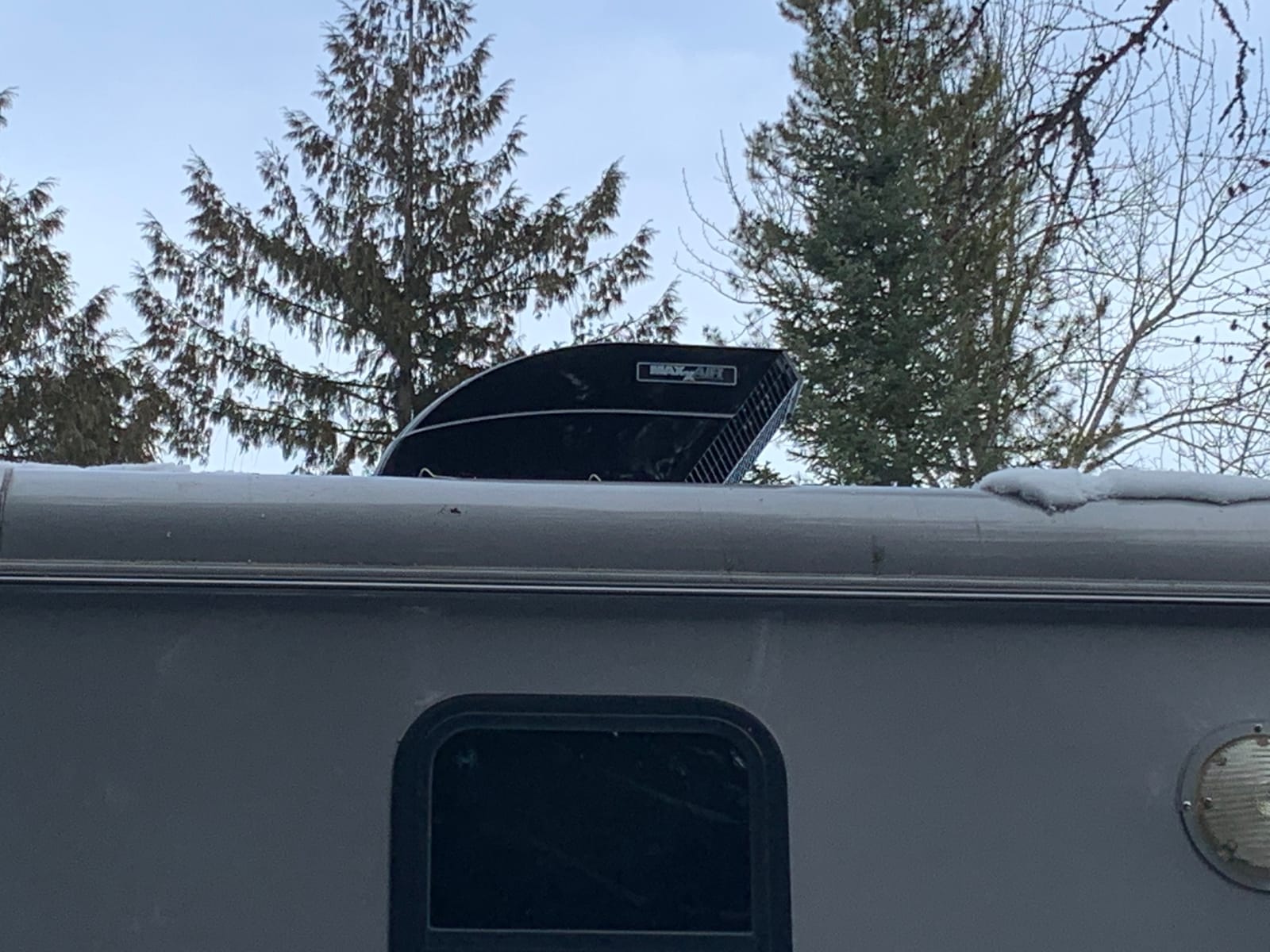
It runs on a 28W DC motor with ten plastic blades on a 14 inch span and comes in white or smoke tint. Waterproof moulded tabs let a FANMATE vent cover fit without tools, though that cover is a separate purchase, and a round barrel connector makes the wiring job quick. Warranty is two years limited. The catch is that a sensor is not a shield: owners report the lid closing in high humidity when nothing is falling, so if you plan to run the fan unattended through a wet weekend, the 7500K’s fixed rain cover is the safer bet.
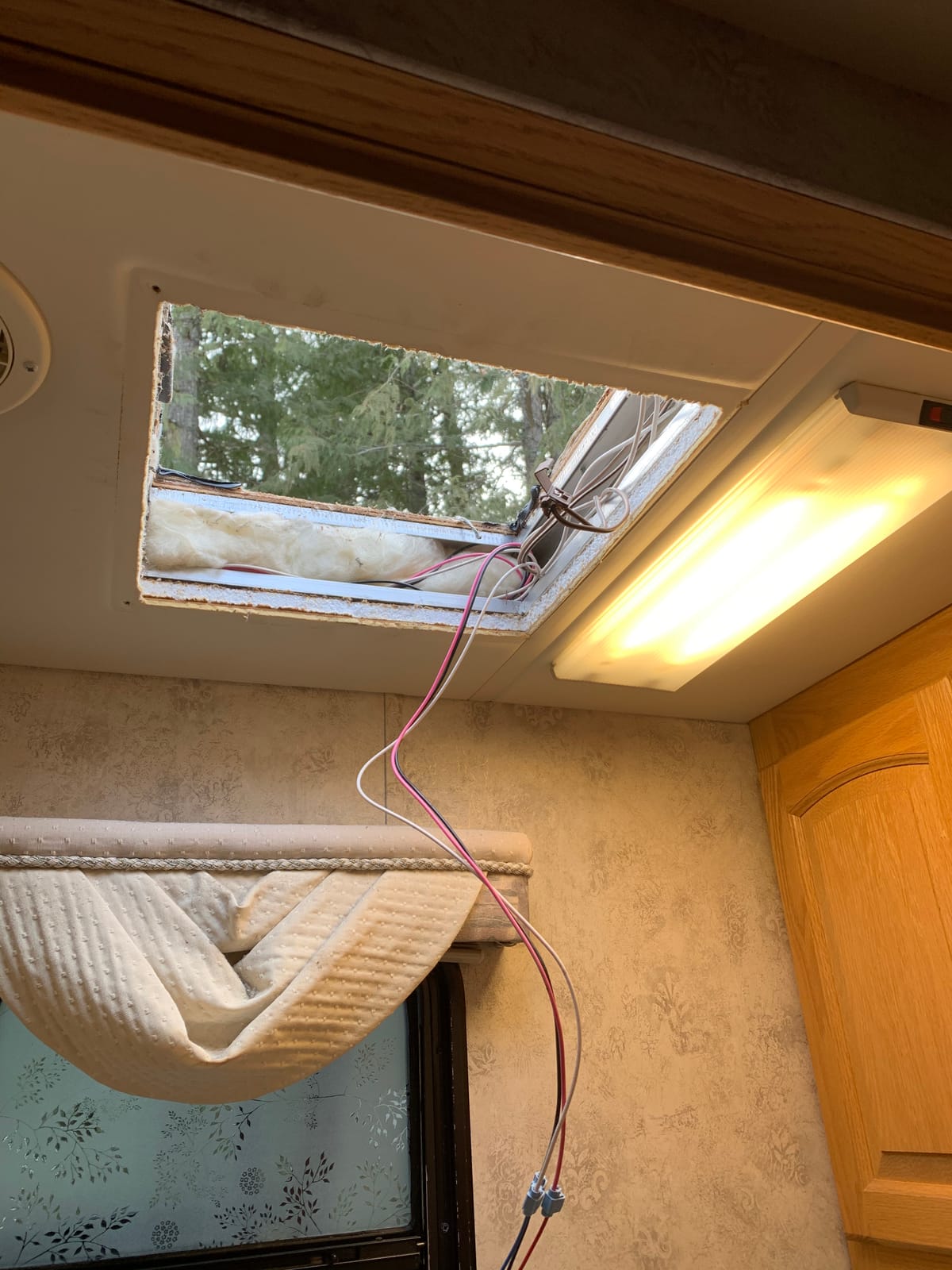
Best reasons to choose the Plus 4500K
Anyone who camps in exposed sites or leaves the van closed for days will value automatic closure more than running in rain, and it is the cleaner choice on a low roof where the fixed rain cover on the Deluxe adds height you do not have spare. Ceiling controls plus remote give you both options, and the 28W motor is easier on a modest battery bank.
Best reasons to skip it
You are paying close to premium money for a unit whose lid stops working when you most want air moving, and the FANMATE cover is an extra cost for something included on the Deluxe. Check roof clearance against the 10 inch overall height listed for the assembly before you commit.
3. RVLOVENT 14 Inch 1000 CFM – High Airflow Without Electronics
RVLOVENT 12V RV Roof Fan Vent 14” 10 Speed Reversible Manual Lift (NO REMOTE)
12V 18W
Up to 1000 CFM
45 dB
3 power levels
Manual crank
Pros
- Moves up to 1000 CFM on a 24W motor
- Quiet enough on low and medium speeds
- Manual crank removes remote electronics
- Spare insect screen frame in the box
- Straightforward 14 x 14 fitting
Cons
- No remote and no rain sensor on this variant
- Removing old sealant is the slow part of the job
- Interior garnish may need trimming on sloped roofs
The RVLOVENT is one of the stronger airflow performers here and the simplest of them. There is no remote, no sensor and no thermostat, just a manual crank, three power levels and a fan rated to move up to 1000 CFM. For most vans that is more air than the space can use, and several owners mention replacing a louder branded fan with it.
Three speeds sounds stingy next to the ten-speed units, but a van is a small box, so the gap between setting three and setting six matters far less than the gap between this motor and a budget canned motor. The 45 dB rating also makes it one of the easier units to sleep under.
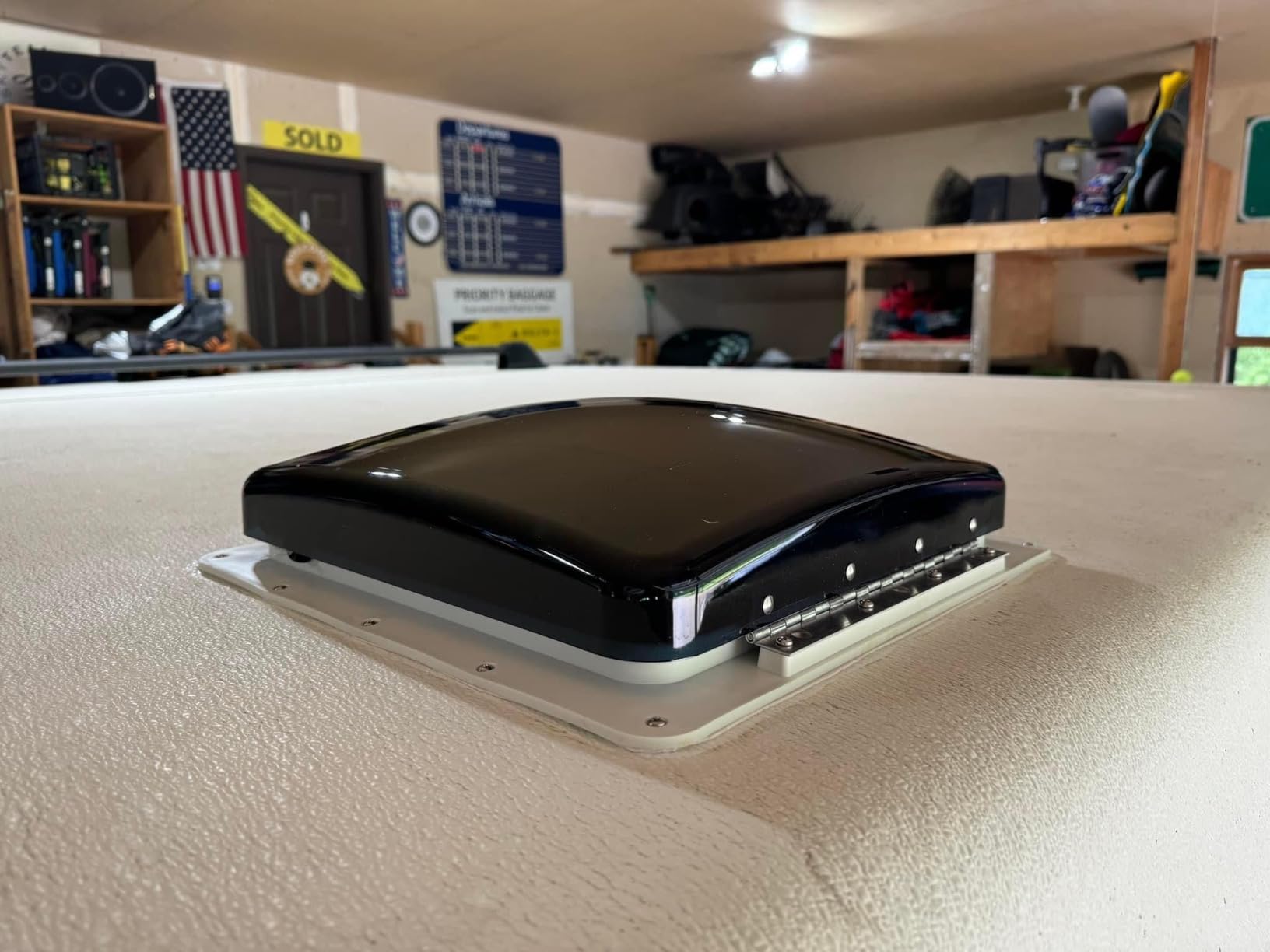
It fits the standard 14 x 14 inch opening, the polycarbonate cover is UV resistant for a roof that bakes all day, and airflow reverses for intake or exhaust. The box includes the fan, a built-in fuse, spare 5A slow fuses, an extra screen frame, screws and a white interior garnish. Be realistic about the install labour: reviewers say the swap itself is quick and the real work is scraping old sealant off the previous unit.
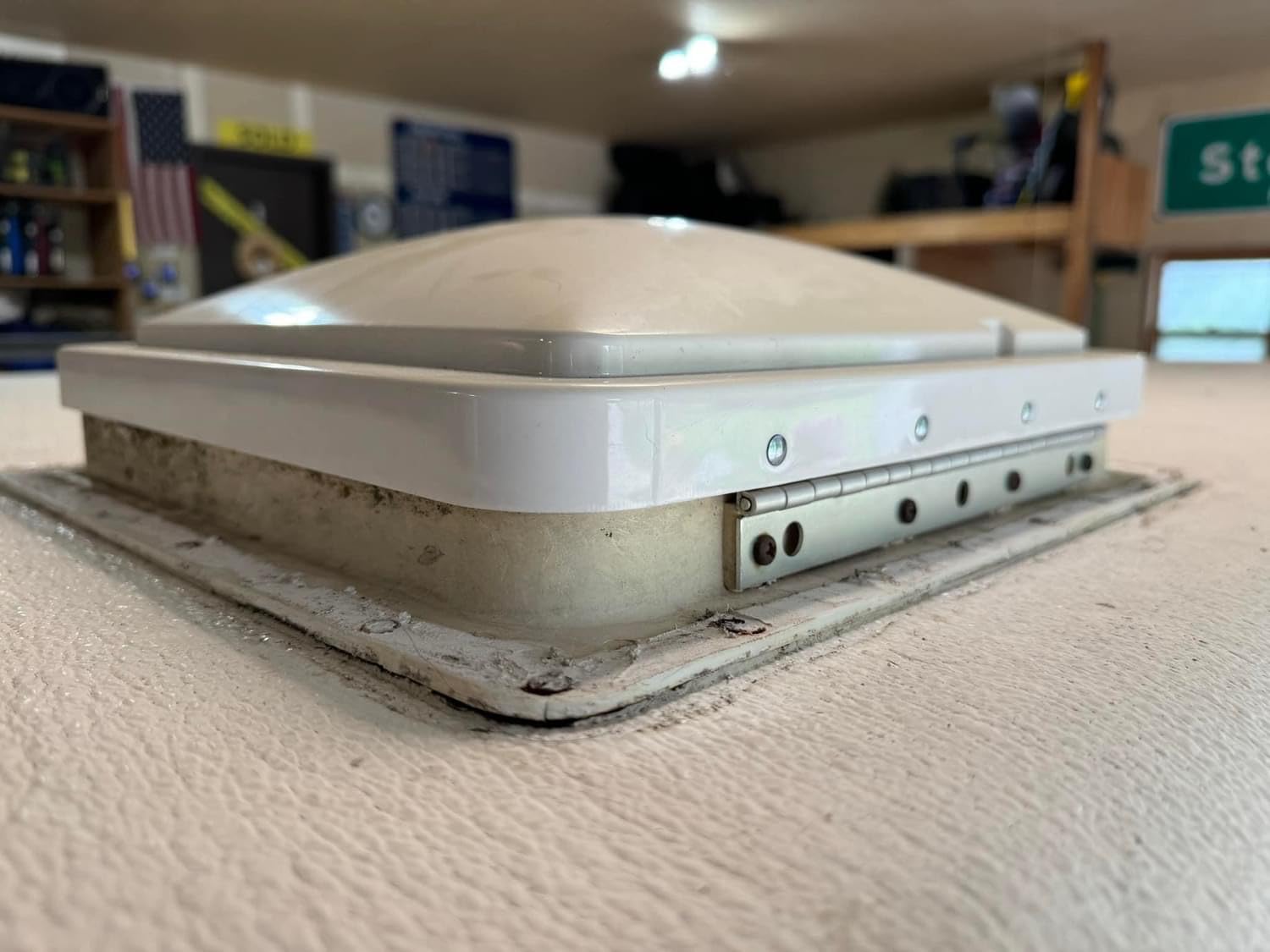
Where this fan earns its slot
Off-grid builds on a small battery bank. Eighteen watts with three clean power levels is simple to budget, a manual crank cannot fail electronically, and if your roof already has a hole this is the shortest route to a strong fan. There is also no powered lid to protect, though wind can affect the constant speed.
Where it falls short
You give up the ability to run the fan with the lid shut in the rain and there is no sensor to close it for you, which matters on an unattended van in a wet climate. Three fixed speeds also mean no fine control for overnight sleeping.
4. MaxxAir Original Maxxfan 4401K – Simple Exhaust-Only Unit
MAXXAIR Original Maxxfan – Vent, Fan & Rain Protection All-in-One, High Powered 4-Speed Exhaust Only Fan, Manual Knob Control, 14″” x14, Smoke (00A04401K)
12V
4 speeds
Exhaust only
Manual knob
14 x 14 opening
Pros
- Vent
- fan and rain protection in one unit
- Exhaust clears stale air and odours efficiently
- Ceiling knob needs no control wiring beyond power
- Waterproof tabs accept an optional cover
- Two-year limited warranty
Cons
- Exhaust only so it cannot pull fresh air in
- Only 4 speeds against 10 on the reversible models
- Older dated model number confuses buyers
The Original Maxxfan is the oldest design here and it does one job: pushing bad air out. That narrowness is exactly why it is on this list. If your van has a working low-level intake vent and you only need extraction, a four-speed exhaust fan with a ceiling knob is simpler and cheaper than anything reversible.
It is also all-in-one, like the Deluxe, so you get rain protection without buying a separate cover. The ceiling knob is the only control, which means no remote battery to replace, no sensor to fail and no menu to learn.
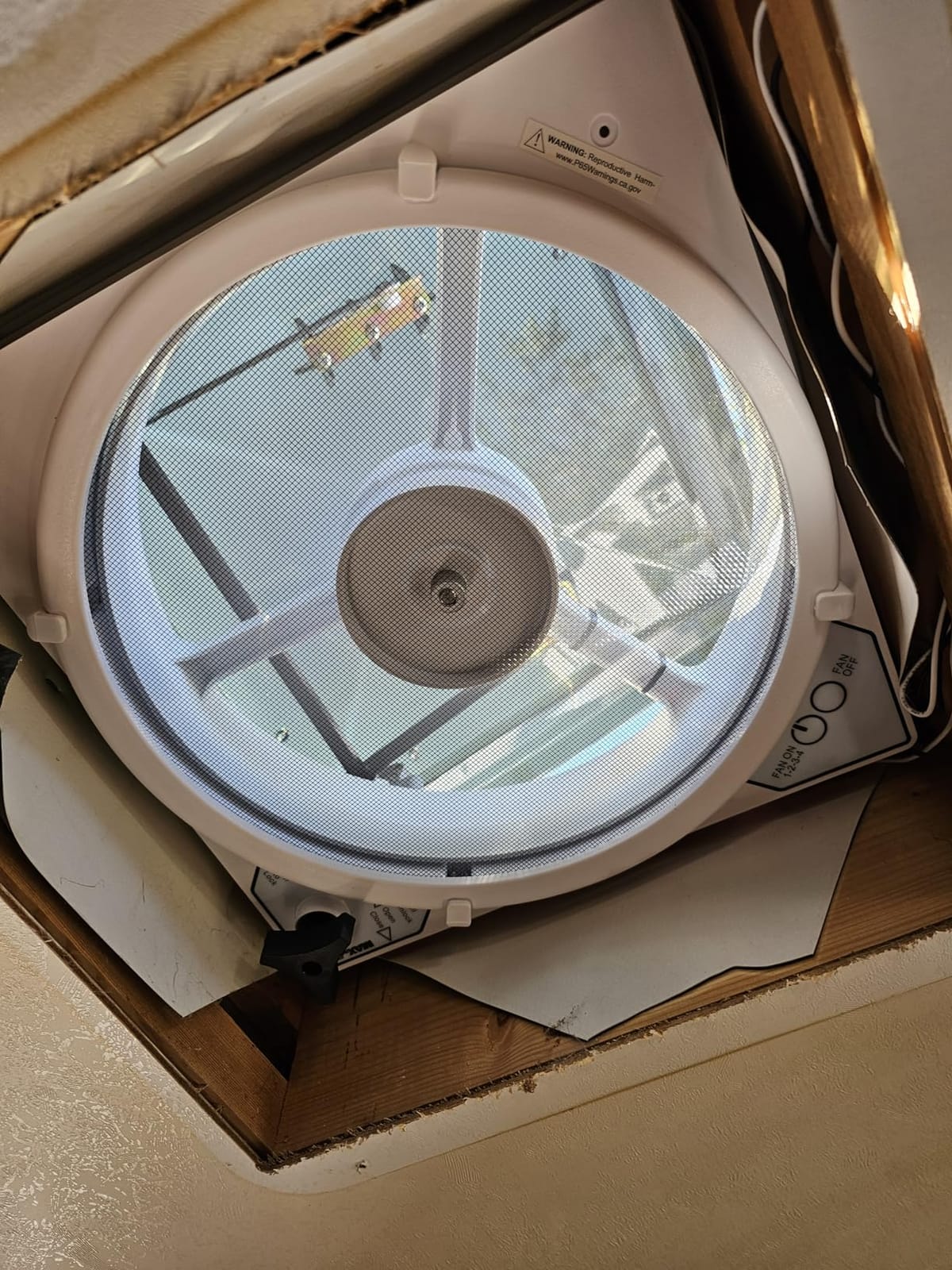
It is a 12V unit taking a standard 14 x 14 opening, supplied in smoke, with a two-year limited warranty and moulded waterproof tabs that let an optional FANMATE cover fit without tools. Note the model numbering is genuinely confusing: this 4401K has fewer features than the 4000K despite the higher number, and that pattern holds across both MaxxAir and Dometic. At 10 pounds it is not a light unit, so check your roof rack load; our kayak and cargo roof rack guide covers load planning.
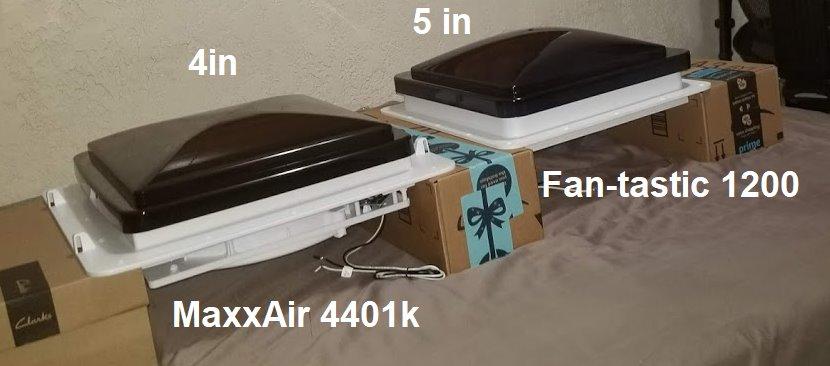
Reasons to buy this over a reversible fan
Exhaust-only plus a low-level intake vent is a proven architecture and it moves a surprising volume of air when the inlet is properly sized, so if you have already cut a low-level vent you do not need reversibility to get a good result. The manual knob also makes this the easiest unit here to fix in a field breakdown.
Reasons it is the wrong call
Without a low-level intake, an exhaust-only fan in a sealed van performs poorly and builders often misread that as a bad fan. Four speeds is also the minimum useful number, with no fine low setting, so overnight running is louder than the reversible units at their quietest.
5. caqeg 14 Inch Budget Vent and Fan Combo
14″ RV Roof Vent for Camper Trailer Universal White Lid Roof Vent with 12V RV Vent Fan 6″ Blades White lid Inner for Garnish Ring
12V 24W
Single speed
Fits 1.25 to 2.25 inch roofs
2-wire install
Pros
- Drops into standard 14 x 14 openings
- Two-wire install with garnish ring and screws included
- Keeps moving air with the lid closed in rain
- Entry-level cost for a complete unit
- Black or white lid options
Cons
- Single-speed fan so airflow cannot be tuned
- Thin plastic lid and frame crack if handled roughly
- Roof thickness must be measured before ordering
The caqeg is one of the most-reviewed units in the category, and 4.4 stars across 904 reviews is a strong result for the money. It is a complete vent and fan assembly with a white lid, six 6-inch plastic blades and a single speed. Nothing about it is clever; that is the point.
Airflow keeps going with the lid closed, so it can run in rain and while driving. That single feature puts it above most units at this price and makes it a reasonable second vent for a two-fan build where the expensive unit goes over the bed and this one handles daytime circulation.

It fits roofs between 1-1/4 inch and 2-1/4 inch thick, so measure your build-up before ordering and nothing else will surprise you. The fan is held with butyl tape on a 2-wire design with a garnish ring and screws in the box, and printed instructions are included, which is more than some premium units manage. At 4.4 pounds it is kind to a roof rack, but handle the plastic gently because the lid and frame crack if you lever against them.
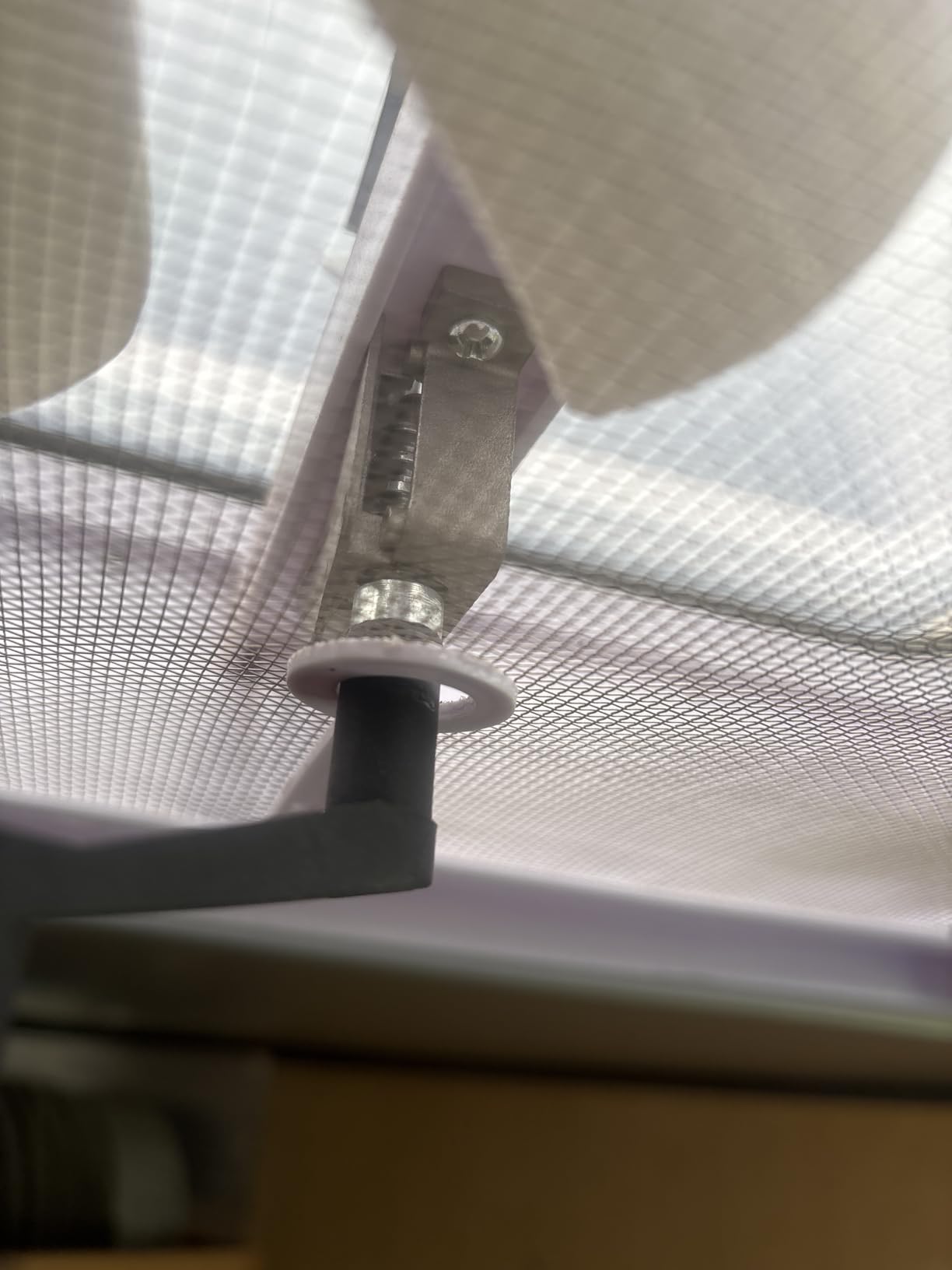
Good reasons to buy it
First-time builders, school runs and anyone who wants a working vent for the least outlay. If your build will later get a premium unit over the bed, this is a competent second fan for the middle of the van, and the choice of lid colours makes it easier to match an existing roof rather than leaving a white patch.
Bad reasons to buy it
One speed. There is no way to turn it down for sleeping, and a single-speed fan that is loud at 2am will keep you awake no matter how good the motor is. Some buyers also report the white acrylic being darker than expected, letting little light through, so look at a smoke or clear dome if daylight matters.
6. 2012 Heavy Duty 14 Inch – Voice Control and LED
Heavy Duty 14″ RV Roof Vent Fan, Whisper-Quiet Voice Control, Colorful LED
12V 25W
Brushless motor
4 speeds
Voice plus remote
Rain sensor
Pros
- Brushless motor stays quiet at higher speeds
- Voice control alongside remote and push buttons
- Four LED colours including red night vision
- Rain sensor with adjustable 50-degree lid angle
- Reversible intake and exhaust with a timer
Cons
- Weighs 12 pounds
- more than most here
- Only four speed settings
- Higher one-star share than the established brands
This is the unit to look at if your idea of a van roof vent includes saying a command out loud. It is voice control ready alongside the included remote and on-unit buttons, so you can change speed, timer or lighting without touching anything, which matters when the fan sits above the bed and the remote is under a sleeping bag.
Underneath the gadgetry sits a brushless DC motor driving a three-blade airflow design, and that is where the quietness comes from: a brushless motor has no commutator brush to wear, which is usually why it outlives the canned motors in cheaper units. Four speeds, reversible airflow, and a rain sensor that closes the lid on the first drop.
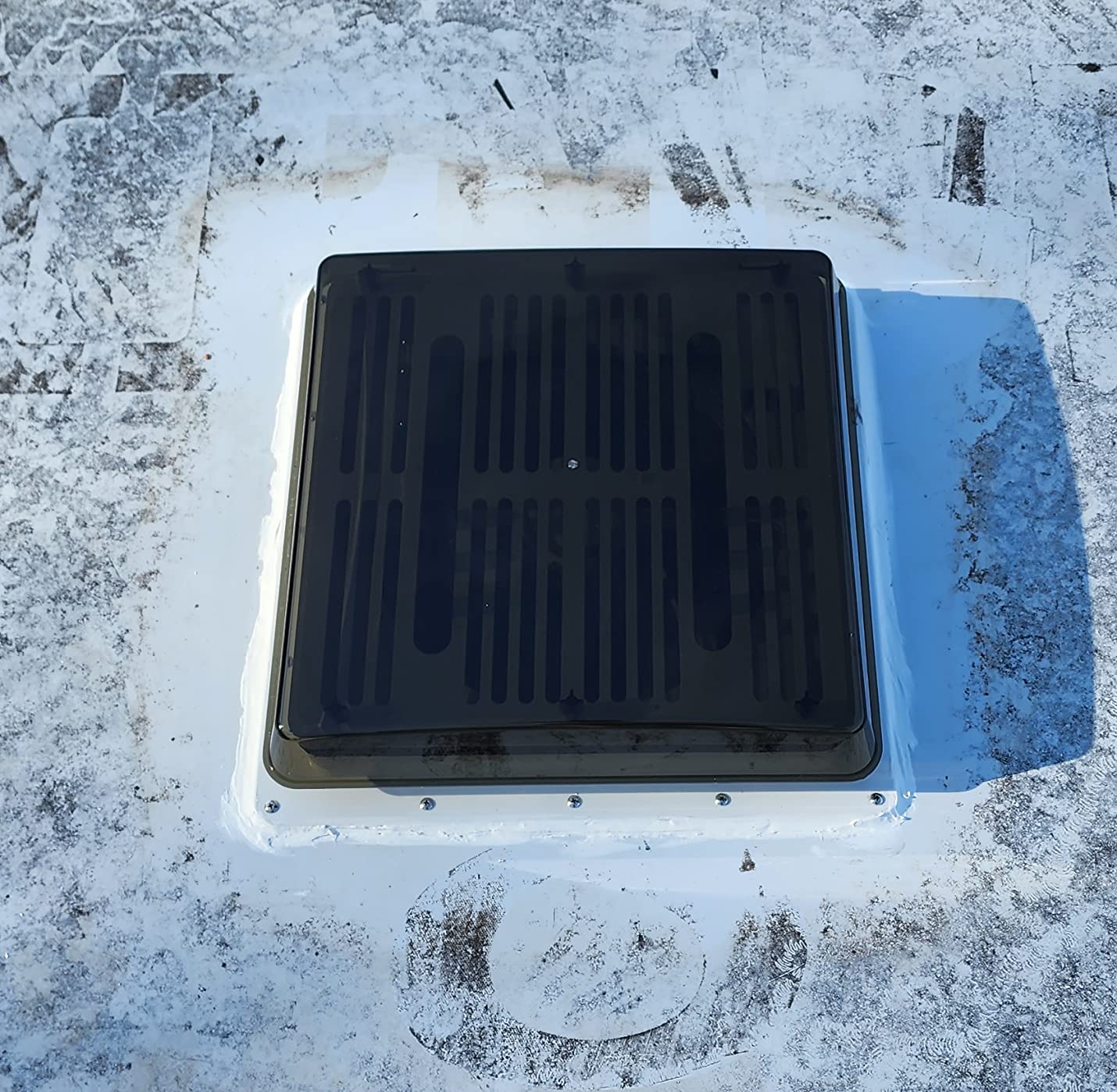
It fits a standard 14 inch opening, is CE, FCC and RoHS marked, and carries a two-year full warranty. The housing and lid use 1mm thicker reinforced ABS and polycarbonate than typical, and the lid angle adjusts up to 50 degrees. A 1-8 hour timer with auto shutoff is genuinely useful for a fan running while you are out, and the four LED colours run warm white, amber, red night vision and cool blue.
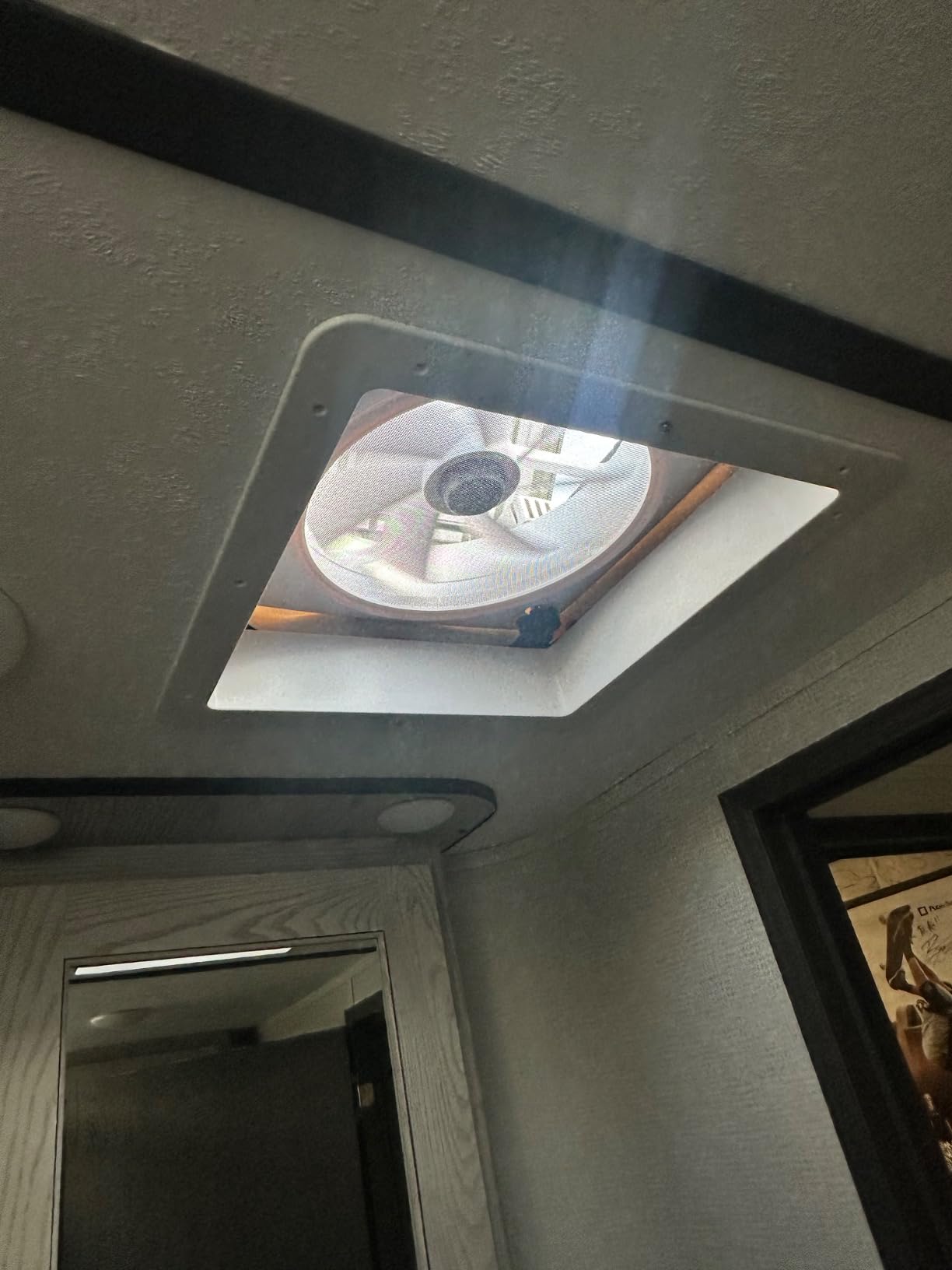
Best fit for your build
Tech-forward builds where smart assistant integration matters, and anyone who wants lighting under the vent rather than a second strip. The timer lets the fan clear a hot van before you get back without draining the battery all day. Twelve pounds is heavy though, so check that load rating before adding roof storage above the vent.
Worst fit for your build
Only four speeds is thin for a reversible unit at this feature level, and if you want fine-grained control for sleeping or a slow intake on a still night, this is not it. A 7 percent one-star rating share also means a longer tail of accessory and control complaints than the established brands attract.
7. Starvent 6-Speed Reversible – Widest Roof Thickness Range
Starvent RV Roof Vent Fan 6-Speed-Reversible
12V 6 speeds
Reversible
1100 CFM
Fits 1.16 to 5.5 inch roofs
59.5 dB
Pros
- Six speeds with reversible airflow at a mid-range cost
- Speeds one to three are effectively silent
- Runs as a ceiling fan with the lid closed
- Transparent blades pass daylight through the smoked dome
- Handles roof thicknesses from 1.16 to 5.5 inches
Cons
- Manual lid crank feels cheap and its gears are a reported failure point
- Top speeds are noticeably louder than the low settings
- Buttons are ignored while the fan changes speed
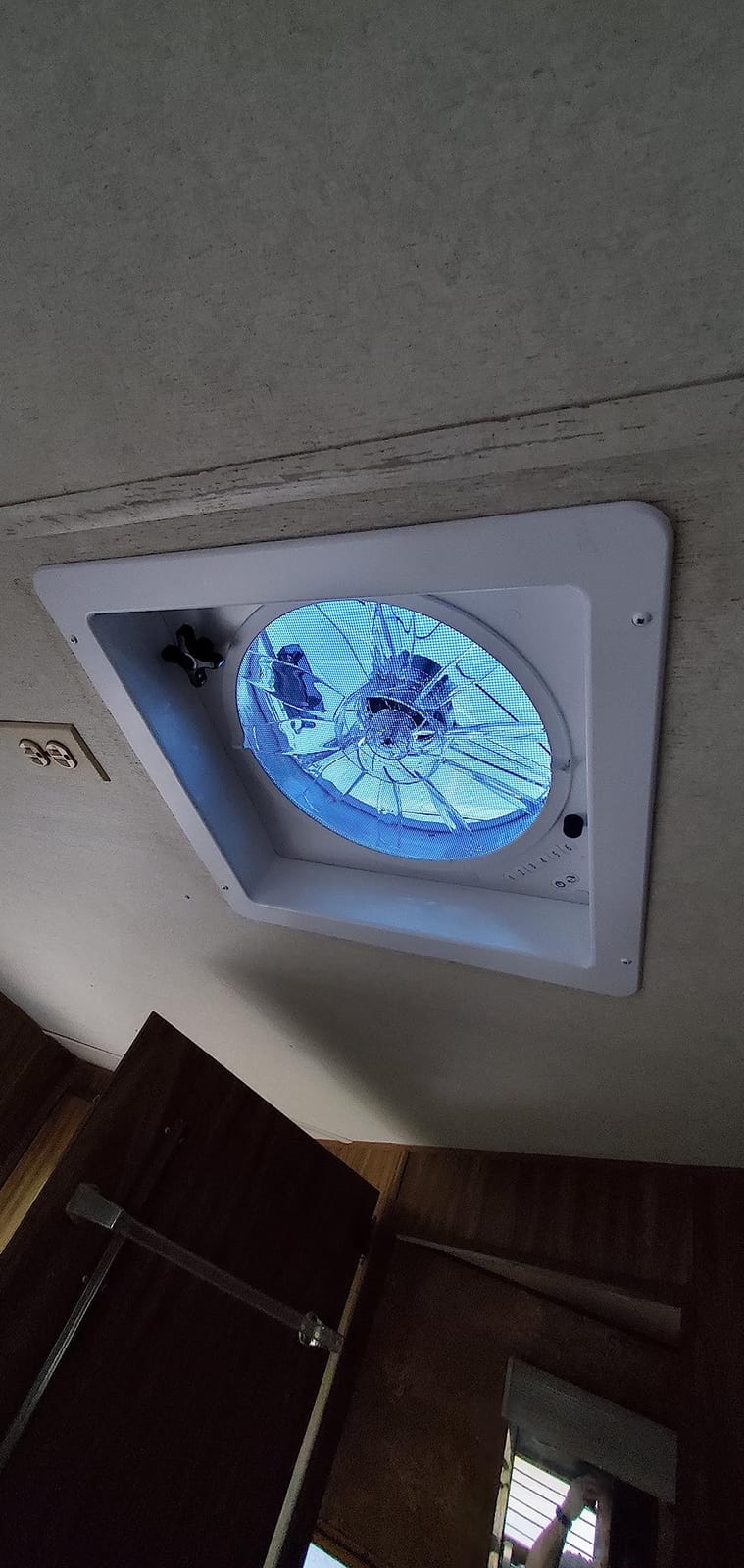
The Starvent is the one to buy if your roof is thick. A 1.16 inch to 5.5 inch thickness range covers everything from a bare ribbed panel with a thin headliner to a properly insulated high-roof conversion with a timber frame and vapour barrier. Almost every other unit here tops out around 3.3 inches and starts near 1.25 inches.
Six reversible speeds at 1100 CFM rated airflow puts it near the top on paper for volume, and the slow ramp avoids the sudden noise jolt that makes cheap fans startling at night. Speeds one to three are reported as effectively silent, which is the range you would actually use overnight.
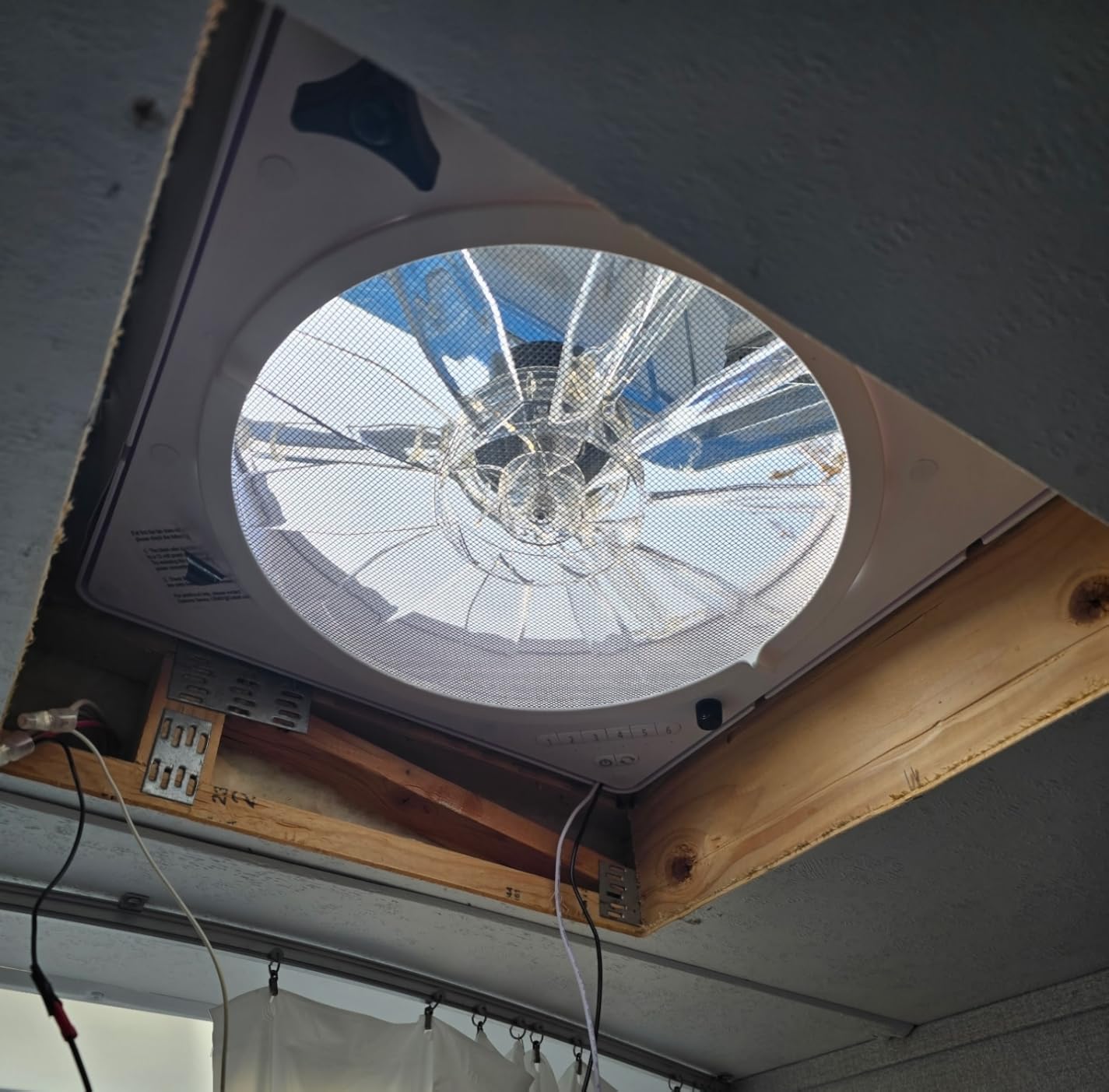
It is 12V with a 22.2 watt-hour DC motor, 17 plastic blades on a 5 inch span running at 1350 rpm, in a smoked dome. Installation is a 2-wire design with a white interior trim ring, screws and a removable screen supplied, backed by a two-year limited warranty. The catch is that 4.2 stars is the second-lowest rating here, with a 10 percent one-star share, and the complaints cluster around the manual lid crank, which reviewers describe as flimsy with gears that are a reported failure point.
Why builders pick it
Thick roofs. If you have built up a ceiling with insulation, a headliner and a frame, most 14 x 14 fans will not reach far enough, and this one does. That single fact can be worth more than any feature list, and it is also a value replacement when a failed premium fan leaves you with a hole and a budget.
Why it is the wrong buy
At 59.5 dB the top speeds are loud, and any fan that stops responding to a button press mid-transition will irritate you every single time. The removable screen mesh lifting to rub the blades is another complaint worth taking seriously, and if you want one fan for a decade the electronics-free units here are a steadier bet.
8. 2012 F36AR – Quiet Brushless Unit for Sleeping
RV Roof Vent Fan 14×14 with 4 Color LED Ambiance Light, Reversible Airflow, Ultra-Quiet 12V (24V Max) Vent Fan with Remote & Rain Sensor
12V 40W
25 dB brushless
674 CFM
4 speeds at 3/10/20/40W
Rain sensor
Pros
- Brushless motor inaudible on the lowest setting
- 25 dB or lower at low power
- Moves air in both directions
- Runs with the lid shut for venting a shower
- Screen turns a quarter turn for cleaning
Cons
- Rain sensor closes the lid but leaves the fan running
- Short 3 inch interior flange on some builds
- Instructions are thin
If the fan sits directly above your head, noise decides the purchase and nothing else competes. This brushless unit is rated at 25 dB or lower on its low setting, and owners describe it as inaudible at speed one and barely audible at the next step up. For a van bedroom that is the single most valuable number in this roundup.
The four speeds draw 3W, 10W, 20W and 40W, so the low settings are cheap as well as quiet, which is the practical side of fan affinity laws: the quiet settings are the efficient ones, and you get real ventilation without spending battery capacity you need for something else.
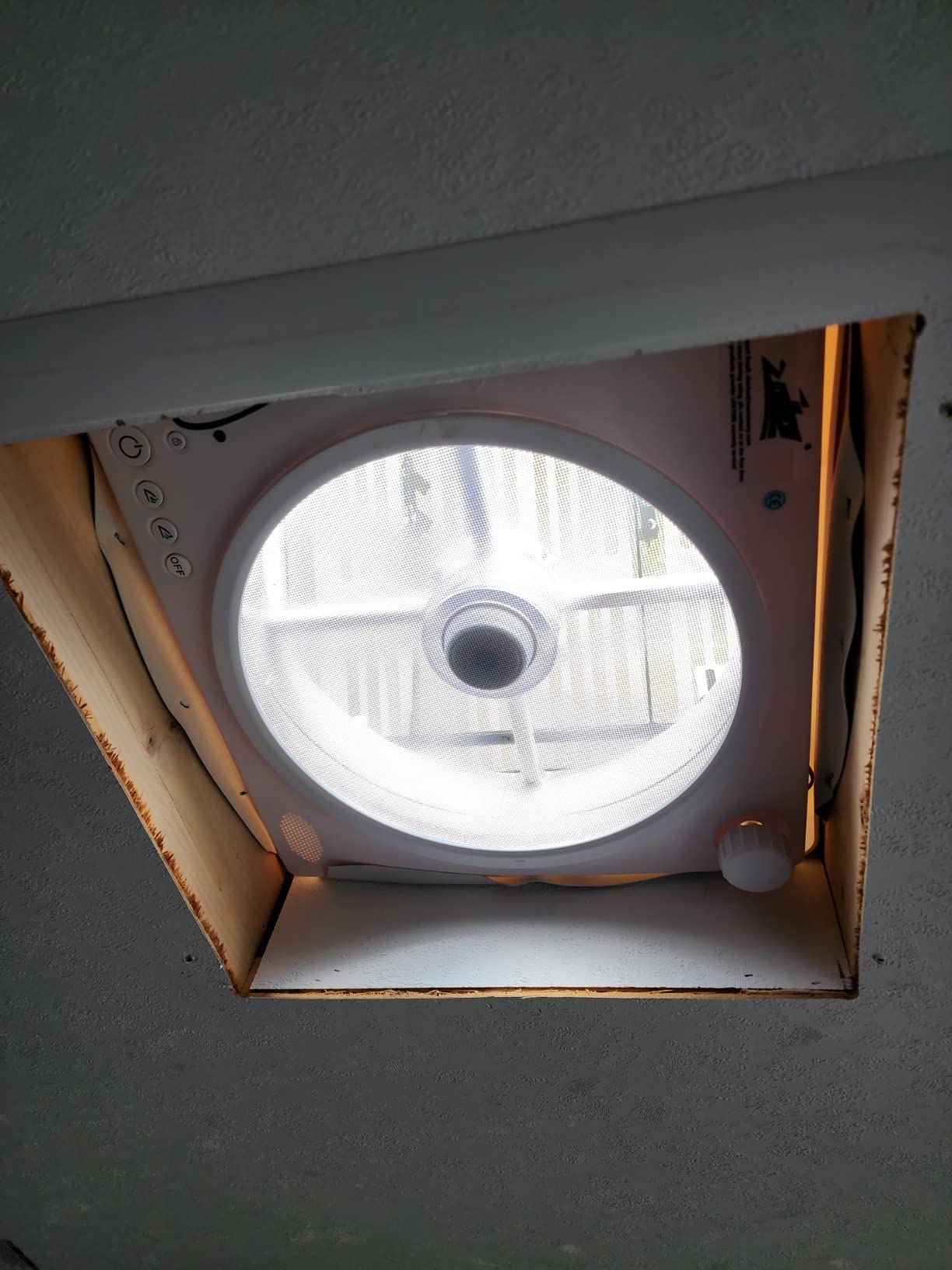
It moves 674 CFM with seven curved, dynamically balanced 4-inch blades, plenty for a single van living space. Dynamic balancing keeps wind noise in a 10-45 dB band across the levels, the rain-sensing cover closes automatically and the lid holds any angle up to 50 degrees. It fits 14 x 14 inch US openings and 400 x 400 mm European ones with roof thickness from 1.5 to 3.3 inches, and warranty is three years of free parts plus lifetime repair service.
Best reasons to buy this one
Sleeping directly under a fan, full stop. A brushless motor rated at 25 dB or lower is the number that matters in that position, and the red LED option lets you check the fan without lighting up the van. Running it with the lid shut also makes it a good shower and bathroom vent, a use most roof fans are never sold against.
Best reasons to skip it
The rain sensor closes the lid but does not switch the fan off, which several owners find odd rather than reassuring, so a spinning fan under a closed lid needs a fuse you have thought about. Some builds also ship with a 3 inch interior flange, so measure your ceiling build-up depth before ordering and budget for a longer trim ring if you need one.
9. Ventline Ventadome CW001 – Lowest Power Draw
Ventline RV Roof Vent White w/ 12 Volt Fan, Putty & Screws¡
12V 3.6W
Single speed
Fits 14.25 inch opening
Putty and screws included
Pros
- Very low 3.6W draw for off-grid builds
- Garnish ring
- putty tape and screws in the box
- Fits the common 14.25 inch factory opening
- Wedge-shaped white lid matches white trim
Cons
- Single speed with no direction control
- Galvanised mounting flange is sharp
- 1.75 inch garnish ring is shallow
The Ventadome is an established part, and 4.6 stars across 962 reviews with only 2 percent one-star ratings shows how well it has landed. It is a complete vent and 12V fan in one white wedge-shaped lid, and one of the cheapest ways to put moving air into a van that already has the factory opening.
What makes it interesting for off-grid builds is the 3.6W draw, well below what most 14 x 14 units pull even on low, so you can run it for hours on a small bank. There is no remote, no sensor and no thermostat to complicate the wiring or fail later. It fits a 14.25 x 14.25 inch rough opening, the common factory size in many vans, with six plastic blades on a 14.25 inch span driven by a DC motor with touch and push button control.
Handle the galvanised mounting flange carefully, since the manufacturer lists it as sharp. The 1.75 inch garnish ring in the box is shallower than many interior trims, so if your headliner sits proud of the flange you may need a deeper trim ring.
Best fit for your build
Replacing a tired factory vent on a budget, and off-grid builds where every amp-hour counts. Single speed is fine for background circulation and 3.6W means it can stay on nearly all day without showing on the battery monitor, which also makes it a sensible first conversion choice.
Where it is the wrong choice
You get no reversible airflow, so it can only push air out. Without a low-level intake vent it will underperform, and it gives you no way to close the lid when rain arrives, so if your build needs intake mode for night cooling or cross-ventilation, save it for extraction.
10. Livpow 14 x 14 – Direct Replacement Fit
Livpow RV Roof Vent With 12V Fan Reversible 14″ x 14″
12V
Reversible
One-piece seamless frame
Fits 1.25 to 2.25 inch roofs
Pros
- Reversible 12V fan for intake and exhaust
- One-piece seamless frame resists leaks
- Direct fit over common factory openings
- 2-wire install with garnish ring and screws
- Low price and low power draw
Cons
- Louder than premium 12V units
- Supplied screws are mismatched in length
- No sealing putty in the box
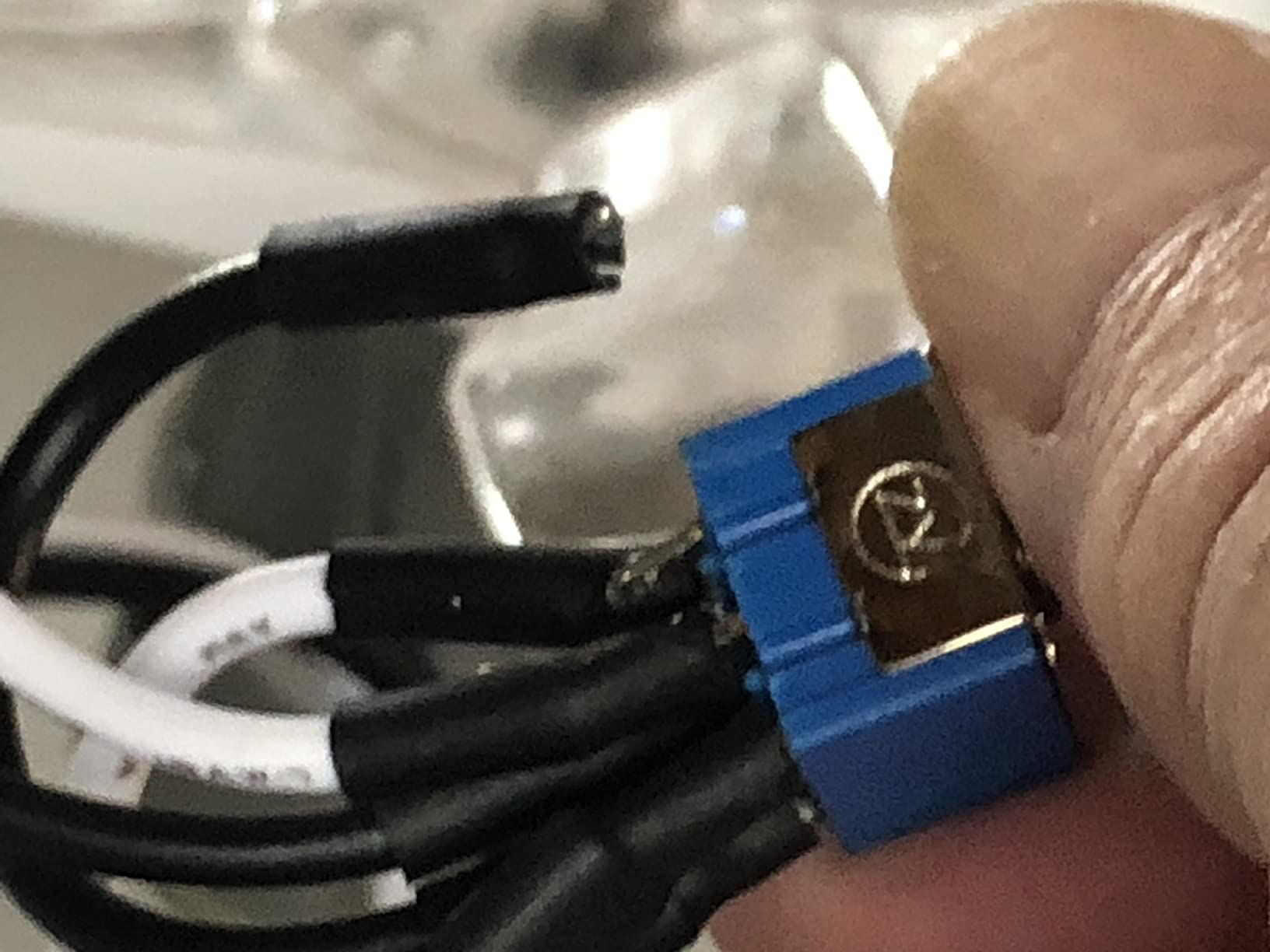
The Livpow is one of the least expensive reversible units here, and it scores lowest at 4.1 stars across 337 reviews with a 10 percent one-star share. We are including it because for one specific job it is the right answer, and pretending otherwise would not help you.
That job is a direct swap over an existing Ventline, Jensen or Elixir vent in a roof between 1-1/4 and 2-1/4 inches thick. The one-piece seamless frame is why it is here at all: with no assembled seams to fail it is described as leak resistant and weather tight, which is what you are buying when you replace a leaking factory vent.
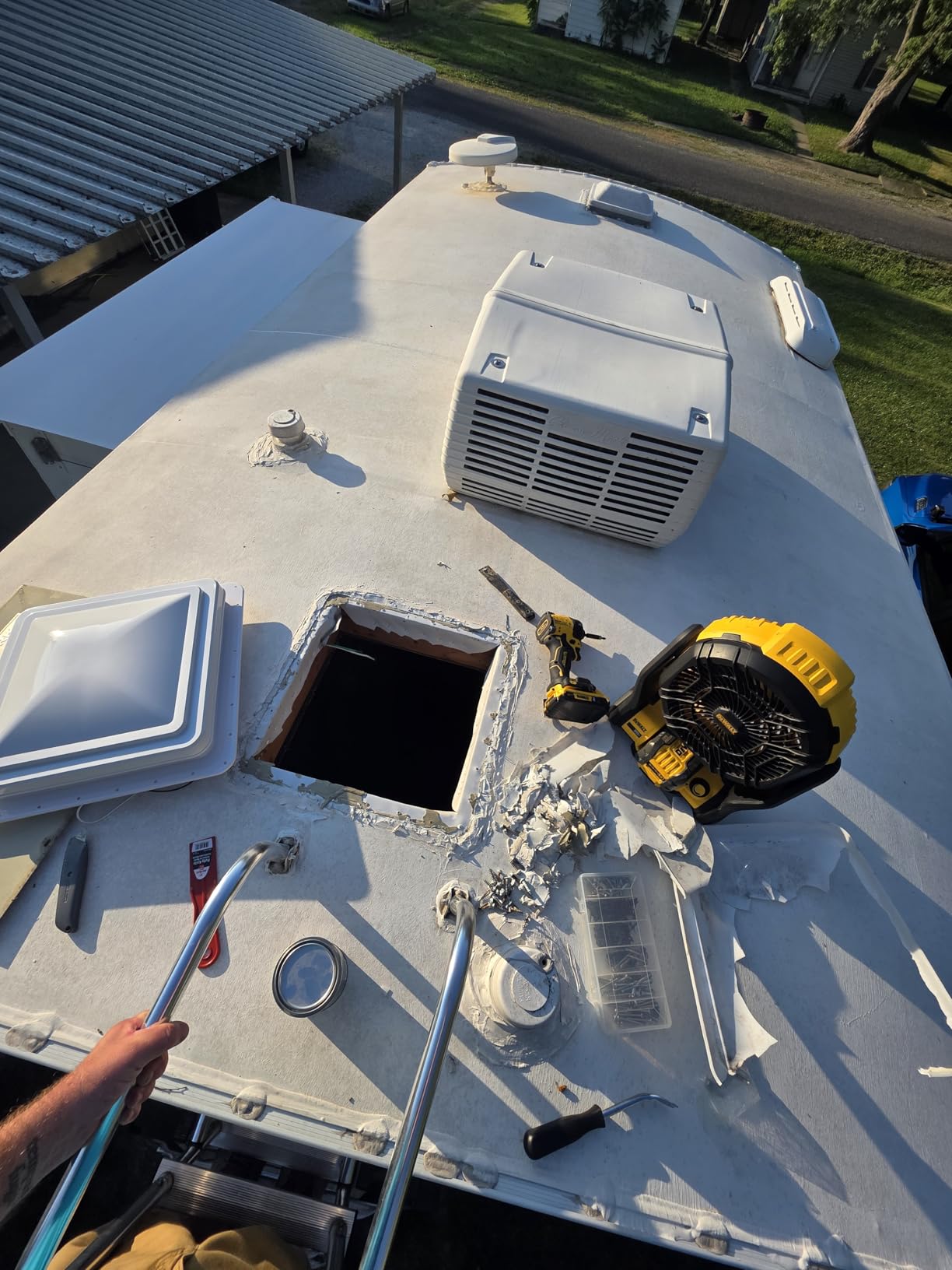
The fan reverses for intake and exhaust, the translucent white lid passes some light, and the box includes a garnish ring, screws and a manual on a 2-wire design. The hardware is the weak point: reviewers report the crank handle screws as too long and wobbly while the garnish screws are too short, and no sealing putty is included, so bring your own butyl tape and screw assortment.
Why you might buy it anyway
It is reversible at a price point where most reversible units jump sharply, and on a budget build with a factory hole already in the roof that is hard to argue with. The seamless frame also makes it a sensible fix for a vent already leaking at the flange seams, and the low power draw suits a solar-only van.
Why it is the wrong buy
Noise is the recurring complaint, and if the fan goes over the bed this is the unit you will regret, because loudness here is a motor problem rather than a fitment problem. There are also reports of the lid not latching closed in wind and the fan switch failing, which is a leak risk you may be creating deliberately.
MaxxAir or Dometic Fan-Tastic: Which Brand Should You Buy?
If you only want one brand name, MaxxAir is the safer answer. Across van forums the MaxxFan is described as the industry standard, with Dometic Fan-Tastic as the other recognised name, and MaxxAir takes the top slots in every roundup we read for both rating volume and feature depth. Dometic remains a perfectly good second choice, and the Fan-Tastic 3350 and 7350 are what most builders end up with when a MaxxFan is out of reach.
The practical difference is the ladder inside each range. MaxxAir offers a ten-speed reversible fan with a thermostat and a built-in rain cover at the top, ten speeds with a rain sensor in the middle, and a four-speed exhaust-only unit at the bottom. Dometic covers similar ground with the 1250 at the entry, then 2250, 3350 and 7350 at the top. Both brands use a 14 x 14 inch cutout, so they are interchangeable in the same hole.
One trap worth flagging: the model numbers carry no logic. The MaxxFan 4401K has a higher number than the 4000K and fewer features. Judge by the feature set and the review count, not the digits. We have listed ratings and review volumes next to every unit above so you can do exactly that.
How to Choose a Van Roof Vent: Cutout Size, Roof Depth and Ceiling Build-Up
Measure before you buy, because the cutout is the one decision you cannot easily undo. Most of these units want a 14 x 14 inch opening, the Ventadome wants 14.25 x 14.25 inch, and the European standard is 400 x 400 mm. Draw the square on cardboard, tape it to the roof, trace it, then check the same span on the inside of the van before cutting anything.
Roof thickness decides whether the unit reaches your ceiling. Standard van roofs are thin steel with a headliner, and almost anything fits. A converted van with insulation, a timber frame and a vapour barrier can be 3 inches thick or more, and the collar has to bridge all of it. The Starvent reaches 5.5 inches, the 2012 F36AR reaches 3.3 inches, and most others stop around 2.25 inches. Measure the build-up in three places and take the largest.
Height matters for rack clearance. The MaxxFan Deluxe sits 5.23 inches above the roof, so add that to your rack height before planning kayak or bike storage above it. Low-profile builds on solar-heavy roofs should plan the vent and panel layout together, because a raised lid can shadow panels and cut charging output at the wrong time of day.
Then decide reversible or exhaust-only. A reversible fan creates its own circulation path and works far better in a small sealed space. An exhaust-only fan is cheaper and simpler but needs a low-level inlet to move air at all. Finally, check whether the fan will sit above your bed, because that single fact usually decides the remote question for you.
Do You Need a Low-Level Intake Vent With Your Roof Fan?
Yes, unless your fan is reversible. Extraction only works when replacement air arrives somewhere, and a van with the doors shut has very few paths for it. A louvred drop-out vent or a blast gate low on the back wall, opposite the roof fan, is the standard fix and costs far less than a second fan.
Placement matters. If the fan is toward the front of the van, put the low-level intake at the back, and the reverse if the fan is at the rear. You want the air to travel the length of the living space so it sweeps past you rather than short-circuiting out of the same corner.
Size the inlet generously and keep the blast gate closed when you are not actively venting, otherwise you have given away the insulation you paid for. This is also how UK and EU motorhome certification treats fresh air supply, separately from the permanent ventilation free area.
Leaks: Prevention and What to Check When Water Gets In
Leaks are common after a vent install, but they are usually a seal problem rather than a fan problem. Owners report vents professionally fitted and leaking within two weeks, and small voids in the caulk bead showing up a year later. If water appears under the collar after rain, work through this list before blaming the unit.
First, look at the rain shadow behind the dome. Water can track in behind an open lid and pool on the flange, then drip down the wall between studs. Second, check the butyl tape bed. If you can see daylight or feel a gap under the flange, lift the unit, clean the metal and re-bed it properly. Third, inspect the caulk bead and the screw heads, because silicone fails faster than butyl and screw heads are a classic path.
Fourth, verify the flange sits flat on the roof skin and not on a lap joint or a structural rib. Fifth, check the dome seal and the lid closure, since a lid that does not latch in wind lets water in at the edge. If all five check out and it still drips, suspect the ceiling build-up rather than the vent, because water can travel a long way along insulation before it shows on a surface.
How to Install a Van Roof Vent and Waterproof the Cutout
Install the vent while the ceiling is open. It is dramatically easier before the headliner and insulation go on, and cutting a hole afterwards leaves visible gaps around a frame that was never sized for it.
Measure three ways: the hole length, the width and the depth of the ceiling build-up. Then trace a cardboard template onto the roof with a marker, checking the position against your solar panels, rack legs and any other vents, and leave room for the garnish ring to land on solid material rather than on the edge of the cut.
Cut the opening with a jigsaw, drilling a pilot hole inside the line and working corner to corner rather than driving straight through the sheet. File or deburr the cut edge afterwards, because the raw steel edge is what cuts your hands and your butyl tape later, and vacuum out the swarf inside the van too.
Test fit the unit before sealing anything: confirm the flange sits flat, the lid opens fully and the collar reaches your ceiling, trimming the inner cover rather than forcing it. Then clean both surfaces, bed continuous butyl tape under the flange and set the unit down on the tape rather than sliding it.
Finally, screw the flange down evenly, run a bead of lap sealant over every screw head and the perimeter, and let it cure fully before running water over the joint. Wire the fan through an appropriately rated fuse, keep the run short and confirm polarity works before you close the ceiling.
When Not to Install a Roof Vent at All
Some builders argue the best roof vents are no roof vents, and there is a real case behind that. On a short low-roof van, the volume lost to the collar and the hole can cost more than the ventilation gains. In a hot, arid climate the incoming air may be hotter than what you are expelling, so a fan adds a hole and a parasitic load for little cooling.
If your roof is fully occupied by solar, a raised lid may shadow panels and reduce charging. A low-profile or unpowered skylight plus a 12V circulator fan gives you most of the benefit with none of the roof-height penalty. Pick your ventilation strategy to fit the roof you actually have, not the one in the photograph.
Frequently Asked Questions
What is the best roof vent for a camper van?
The MaxxAir MaxxFan Deluxe 7500K is our pick for most conversions. Its 10-speed reversible fan moves air both ways, the built-in rain cover lets it run in wet weather, and the thermostat and remote make it usable from a bed. The RVLOVENT 14 inch unit is the alternative if you want maximum airflow with no electronics to fail.
What are the best roof vent fans for RVs and campers?
For this roundup the shortlist is the MaxxFan Deluxe 7500K for all-round use, the RVLOVENT 14 inch 1000 CFM unit for pure airflow, the 2012 F36AR for quiet overnight running at 25 dB or lower, the Starvent 6-Speed for thick roofs up to 5.5 inches, and the Ventadome CW001 for off-grid builds on a tight power budget.
What is the best roof vent for a van?
For a high-roof van built as a camper, a reversible 14 x 14 inch unit such as the MaxxFan Deluxe 7500K covers the most ground. For a plain cargo van you are only using for weekend trips, a cheaper reversible unit like the Starvent or Livpow is usually enough. Match the unit to your roof thickness before anything else.
Which is better, MaxxAir or Fantastic fan?
MaxxAir generally wins on feature depth and review volume, and its Deluxe range is the most common choice among van builders. Dometic Fan-Tastic units such as the 3350 and 7350 remain strong alternatives with the same 14 x 14 inch cutout, so both drop into the same hole. Compare on speed count, rain handling and rating volume rather than model numbers.
Is it common for roof vents to leak?
Occasional leaks after installation are common, and the cause is nearly always the seal rather than the fan. Water usually enters at the caulk bead, the screw heads, a failed butyl tape bed, or the gap behind the dome when the lid is open in wind. Checking those four points in order resolves most cases without replacing the unit.
My roof vent boot is leaking. How can I fix it?
Lift the vent and inspect the butyl tape bed for gaps or daylight. Clean both mating surfaces, re-bed the flange with fresh butyl tape, set it down without sliding it, then cover every screw head and the perimeter with lap sealant. If the flange is bridging a lap joint rather than flat steel, build it up with a reinforcing plate before resealing.
How do I install a roof vent in my van?
Measure the hole in length, width and ceiling depth, trace a cardboard template, mark the roof, then cut with a jigsaw working corner to corner from a pilot hole. Deburr the steel edge and vacuum out swarf. Test fit the unit, bed it on butyl tape, screw the flange evenly, seal every screw head with lap sealant, and only then wire in the fan through a proper fuse.
Do I need a floor vent or blast gate with a roof fan?
You need a low-level inlet if your roof fan only extracts. With the van closed, an exhaust fan has almost no replacement air, so performance drops sharply. A louvred drop-out vent or blast gate opposite the fan fixes this, and keeping it shut when not venting preserves your insulation. Reversible fans create their own path and need it far less.
Final Verdict
The MaxxAir MaxxFan Deluxe 7500K is the best van roof vent for camper conversions in 2026 because it combines a reversible ten-speed fan, a genuine rain cover, a thermostat and a remote in one unit with the strongest review history in this group. It costs the most and it is the one we would fit.
If the budget is tighter, the RVLOVENT 1000 CFM gives you more air than most vans can use at a fraction of the cost, and the 2012 F36AR is the one to buy when the fan sits above your head. Pair whatever you choose with a low-level intake vent, install it while the ceiling is open, and check the seal every year after the first wet season.