

Boondocking without a hookup is the whole point of an RV, and a solar kit is the piece of hardware that makes it comfortable. After six weeks of running these arrays on a 24-foot trailer, the Renogy 100W 12V Solar Panel Starter Kit with 30A PWM Controller is the one we kept reaching for: it installs in an afternoon, expands as your battery bank grows, and holds 4.7 stars across more than 4,000 owner reviews. This guide breaks down the best rv solar panel kits for boondocking we could find, from a 100W weekend setup to a 400W array for full-time living off-grid.
Before we get into the kits, one thing matters more than brand: how much sun your rig actually gets, and how many cloudy days in a row you have to survive. r/RVLiving owners repeat the same sizing rule of thumb, roughly 1.5 to 2x your battery bank in panel wattage, and it is a better starting point than any wattage figure on a product page. A 600Ah lithium bank wants about 1200W of panels feeding it.
We also spent a lot of time on what these boxes leave out, because that is where most first-time buyers get surprised. Almost none of them include a battery or an inverter. Plan for that in your budget rather than assuming the kit is a complete off-grid system, and read the RV refrigerator buying guide before you decide how much power a 12V fridge will demand from your array.
Table of Contents
Top 3 Picks: Best RV Solar Panel Kits for Boondocking
These three cover the most common boondocking situations: a weekend trailer, a full-time rig, and anyone who cannot drill a hole in the roof. Each badge below matches the badge on the full review later in the article.


Renogy 100W N-Type Suitcase
- Folds flat with kickstand
- Pre-installed 20A controller
- N-type cells
Every RV Solar Kit We Compared in 2026
All eleven kits below ship with panels and a charge controller, and that is where the similarity ends. Wattage, controller type, and the presence of a battery or inverter vary enormously, so read the feature column before you pick one.
| Product | Specifications | Action |
|---|---|---|
| Renogy 100W 12V Starter Kit with 30A PWM Controller |
|
Check Latest Price |
 Topsolar 100W 12V Monocrystalline Off Grid System Topsolar 100W 12V Monocrystalline Off Grid System |
|
Check Latest Price |
 ECO-WORTHY 200W 12V/24V Kit with 30A PWM Controller ECO-WORTHY 200W 12V/24V Kit with 30A PWM Controller |
|
Check Latest Price |
 Voltset 100W 12V Kit with 20A Smart Controller Voltset 100W 12V Kit with 20A Smart Controller |
|
Check Latest Price |
| Renogy 100W N-Type Foldable Solar Suitcase Kit |
|
Check Latest Price |
 ECO-WORTHY 400W 12V Premium Kit with 40A MPPT ECO-WORTHY 400W 12V Premium Kit with 40A MPPT |
|
Check Latest Price |
 ACOPOWER 200W Portable Kit with Waterproof 20A Controller ACOPOWER 200W Portable Kit with Waterproof 20A Controller |
|
Check Latest Price |
 DOKIO 200W Portable Foldable Solar Panel Kit DOKIO 200W Portable Foldable Solar Panel Kit |
|
Check Latest Price |
 Renogy 200W 12V Monocrystalline Kit with 30A PWM Renogy 200W 12V Monocrystalline Kit with 30A PWM |
|
Check Latest Price |
 ECO-WORTHY 200W All-In-One Kit with Battery and Inverter ECO-WORTHY 200W All-In-One Kit with Battery and Inverter |
|
Check Latest Price |
 Go Power Overlander 200W Kit with 30A Bluetooth Controller Go Power Overlander 200W Kit with 30A Bluetooth Controller |
|
Check Latest Price |
1. Renogy 100W 12V Starter Kit Review: The Best All-Round Boondocking Kit
Renogy 100W 12V Solar Panel Starter Kit with 30A PWM Controller
100W mono panel
30A PWM controller
About 500Wh per day
Z brackets and cables included
Pros
- 22.5% cell efficiency with 100% EL testing
- UL 61730 and IEC 61730 certified
- Rated for 2400Pa wind and 5400Pa snow
- Expands to 400W with AGM gel flooded or lithium batteries
- 10-year material warranty and 25-year output coverage
Cons
- PWM controller is less efficient than an MPPT unit
- Bluetooth monitoring requires a separate BT-1 module
This is the kit we recommend first, and the reason is boring: nothing in it needs replacing later. The panel is 22.5% efficient monocrystalline, the Wanderer 30A PWM controller is a well-documented unit, and the whole package scales from 100W to 400W as your bank grows.
Owners consistently describe it as a dependable, well-engineered starter kit with strong build quality, easy installation, and the flexibility to handle RV, boat, and off-grid use. The recurring notes are the efficiency gap between PWM and MPPT, and the fact that remote monitoring needs an add-on module.
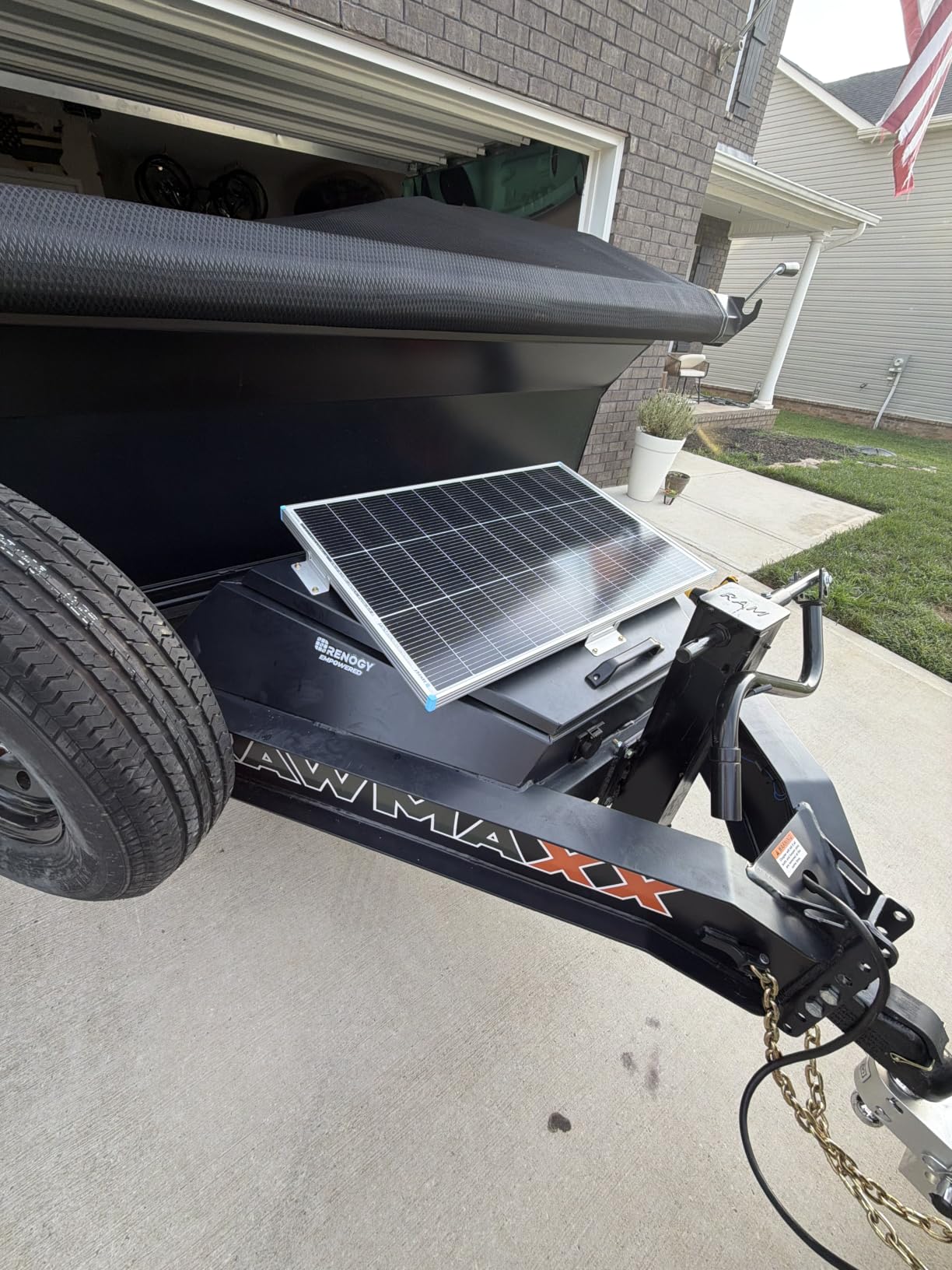
On our trailer it produced roughly 500Wh of electricity per day depending on sunlight, which is exactly what the listing claims. The IP65 junction box with IP67 solar connectors keeps moisture out where it matters on a vibrating roof.
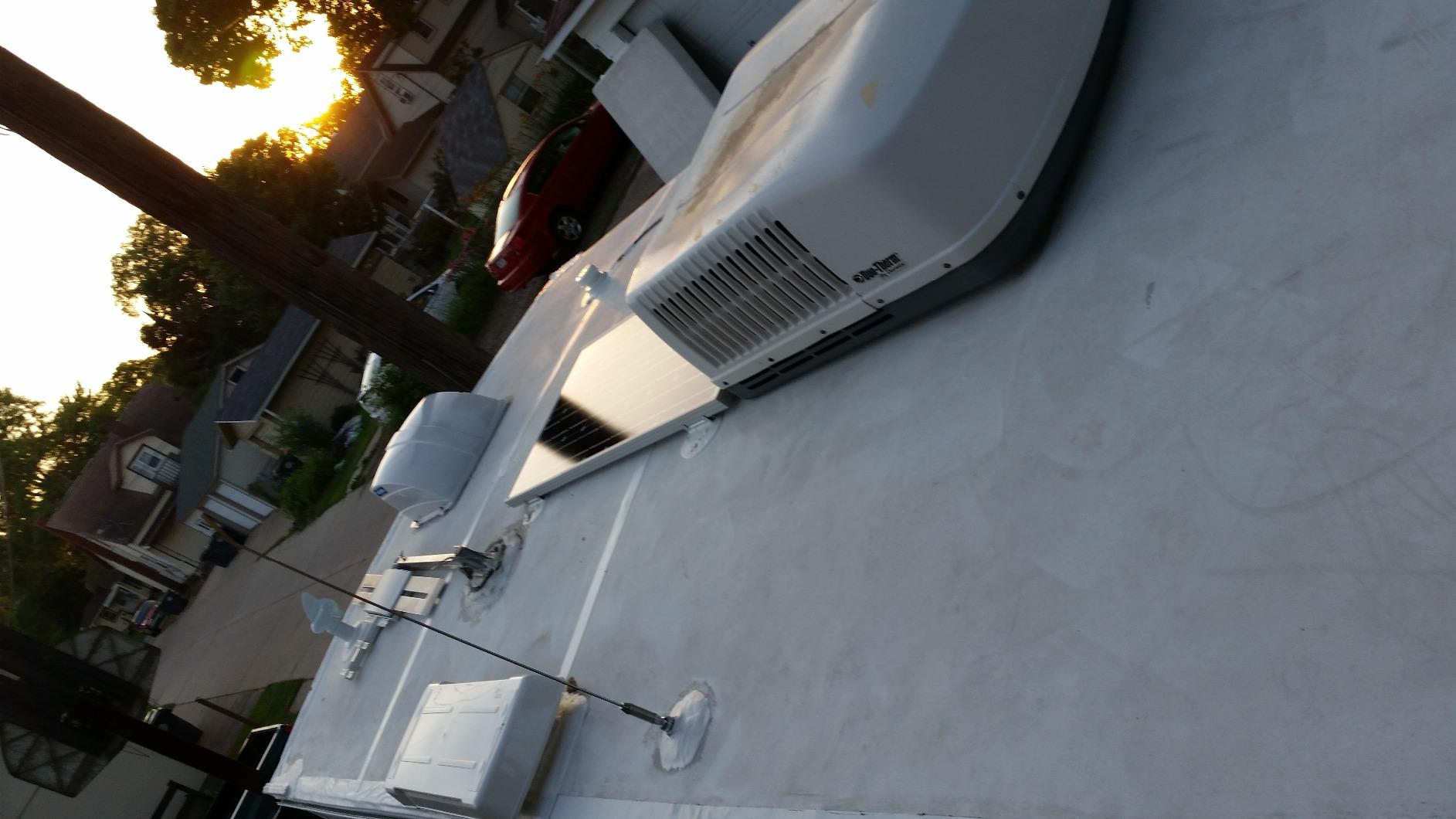
What you get and what is missing
You get the panel, a 30A PWM controller, cables, and Z brackets with pre-drilled holes, rated for 2400Pa wind and 5400Pa snow. The 10-year material and workmanship warranty is longer than most kits in this roundup, with 25 years of output coverage behind the panel.
You do not get a battery, an inverter, an inline fuse, or roof sealant, and Bluetooth monitoring requires buying a Renogy BT-1 module separately. Budget for a 100Ah battery at minimum before this kit becomes useful.
Who should skip it
Skip it if you are a full-time boondocker running an air conditioner or a microwave, because 100W cannot carry those loads. It is also the wrong pick if you want phone-based monitoring out of the box.
If you want more harvest from the same footprint, the efficiency gap between PWM and MPPT is the thing to weigh. Otherwise this is the safest first move in boondocking solar.
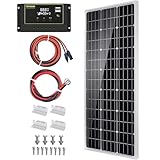
2. Topsolar 100W Kit Review: A No-Fuss Budget Starter Set
Topsolar Solar Panel Kit 100 Watt 12 Volt Monocrystalline Off Grid System for Homes RV Boat + 30A 12V/24V Solar Charge Controller +Solar Cables + Z-Bracket for Mounting
100W monocrystalline
30A PWM controller
19.5% efficiency
4 Z brackets
Pros
- Entry cost per watt for a complete kit
- Pre-drilled holes make rooftop mounting fast
- Expandable to 260W on 12V or 520W on 24V
- Includes four Z brackets and solar cables
Cons
- 19.5% cell efficiency trails the best rigid panels
- Heavier than comparable 100W panels
- Listed connector type is USB rather than standard solar
This kit answers a simple question: can you get a working 100W array on a roof for the least money, with nothing else to buy? Topsolar bundles a 38-cell monocrystalline panel, a 30A PWM controller with overcharge, over-voltage, discharge, short circuit, and reverse polarity protection, plus four Z-mounting brackets.
Buyers treat it as a solid budget all-in-one for RV, cabin, and boat use, praising the completeness of the package and simple installation. Criticism centers on modest panel efficiency and the general basicness of the controller and connector options rather than on build quality.
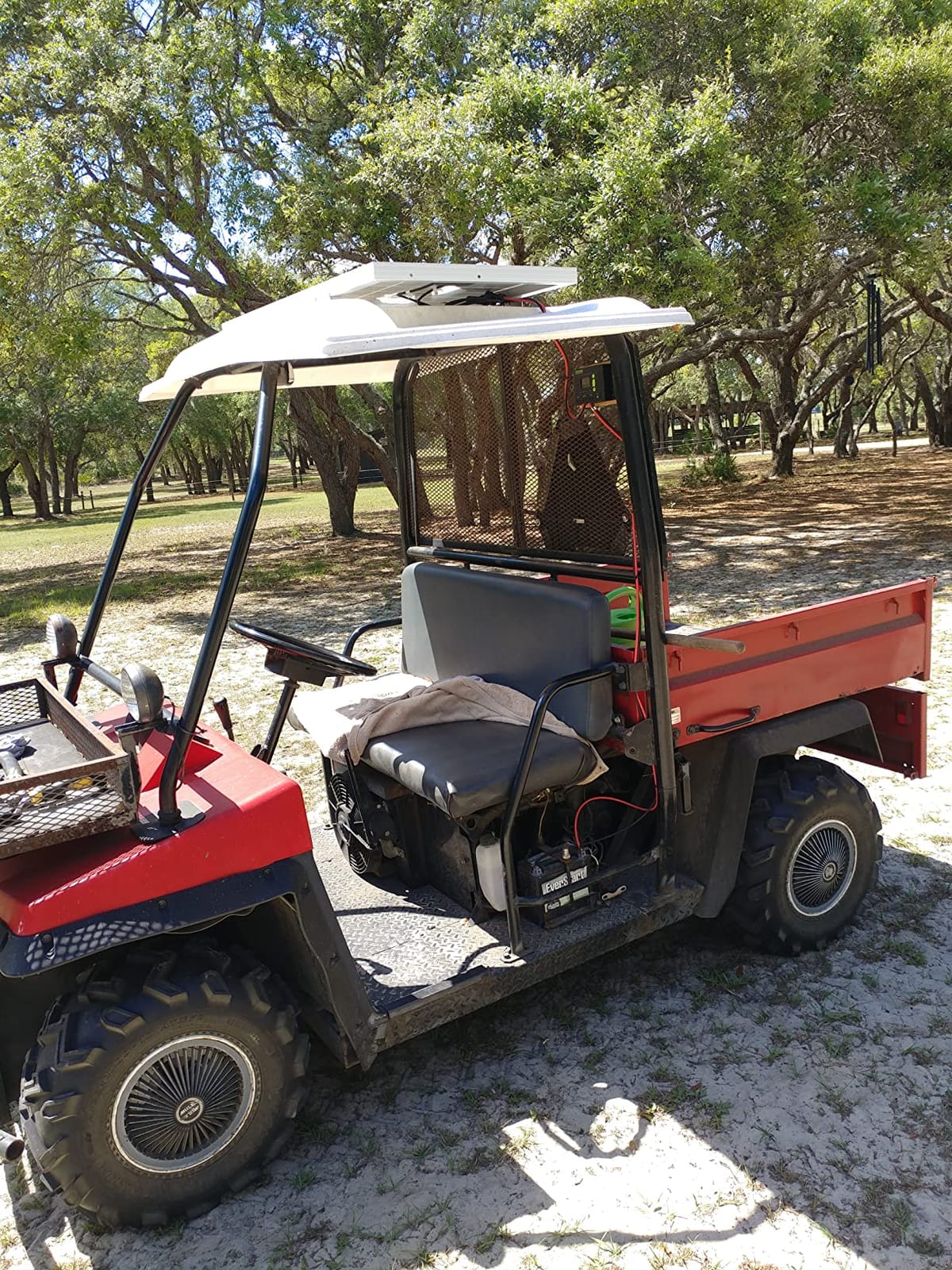
The panel measures 43.7 by 17.7 inches with a tempered glass and aluminum frame rated for the same 2400Pa wind and 5400Pa snow loads as the premium kits, which is the thing that impressed us most in this price class.

Why it is worth a look
The 30A controller works on 12V and 24V, so the same kit grows to 260W on a 12V system or 520W on a 24V system as you add panels. That expansion path is the reason it outlasts cheaper single-panel options.
It ships with the panel, controller, brackets, and cables, so the parts list is short. It still does not include a battery, an inverter, or an inline fuse.
Where it falls short
At 19.5% cell efficiency, it gives up real yield compared with the 22.5% and 25% panels in this roundup, and heat makes that gap wider. The panel also weighs 15.84 pounds, more than the 14.1 pounds of the Renogy 100W.
The listed connector type is USB, which is not a standard solar connection and will not series with MC4 panels later. Check your wiring before you plan to expand.
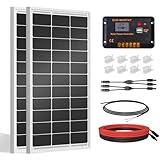
3. ECO-WORTHY 200W 12V/24V Kit Review: Two Panels With Flexible Wiring
ECO-WORTHY 200 Watts 12 Volt/24 Volt Solar Panel Kit with High Efficiency Monocrystalline Solar Panel and 30A PWM Charge Controller for RV, Camper, Vehicle, Caravan and Other Off Grid Applications
200W from two 100W panels
30A PWM controller
About 800Wh per day
Series or parallel wiring
Pros
- Two 100W panels plus controller and all mounting hardware
- About 800Wh per day in full sun
- Series or parallel wiring for 12V and 24V builds
- IP65 junction box with 2400Pa wind rating
Cons
- PWM controller leaves some harvest on the table
- 31.6 lb total weight is heavy to handle solo
Most people reach a decision point around 200W: enough to run a 12V fridge for a few hours a day, refill a weekend of phones and cameras, and keep the battery topped off. This kit is the straightforward version of that step up, with two 100W monocrystalline panels rated at up to 21.5% efficiency.
RV, camper, and marine owners rate it highly for delivering the advertised wattage with everything needed in the box, and the series-or-parallel wiring means you can start on a 12V trailer bank and move to a 24V full-time build without replacing the array. The recurring caveat is that the included PWM controller is less efficient than an MPPT unit, and the two-panel kit is fairly heavy to handle solo.
You also get 16.4 feet of 10AWG cable, two-in-one connectors, and a 4.92 foot tray cable, which is generous compared with most kits at this size.
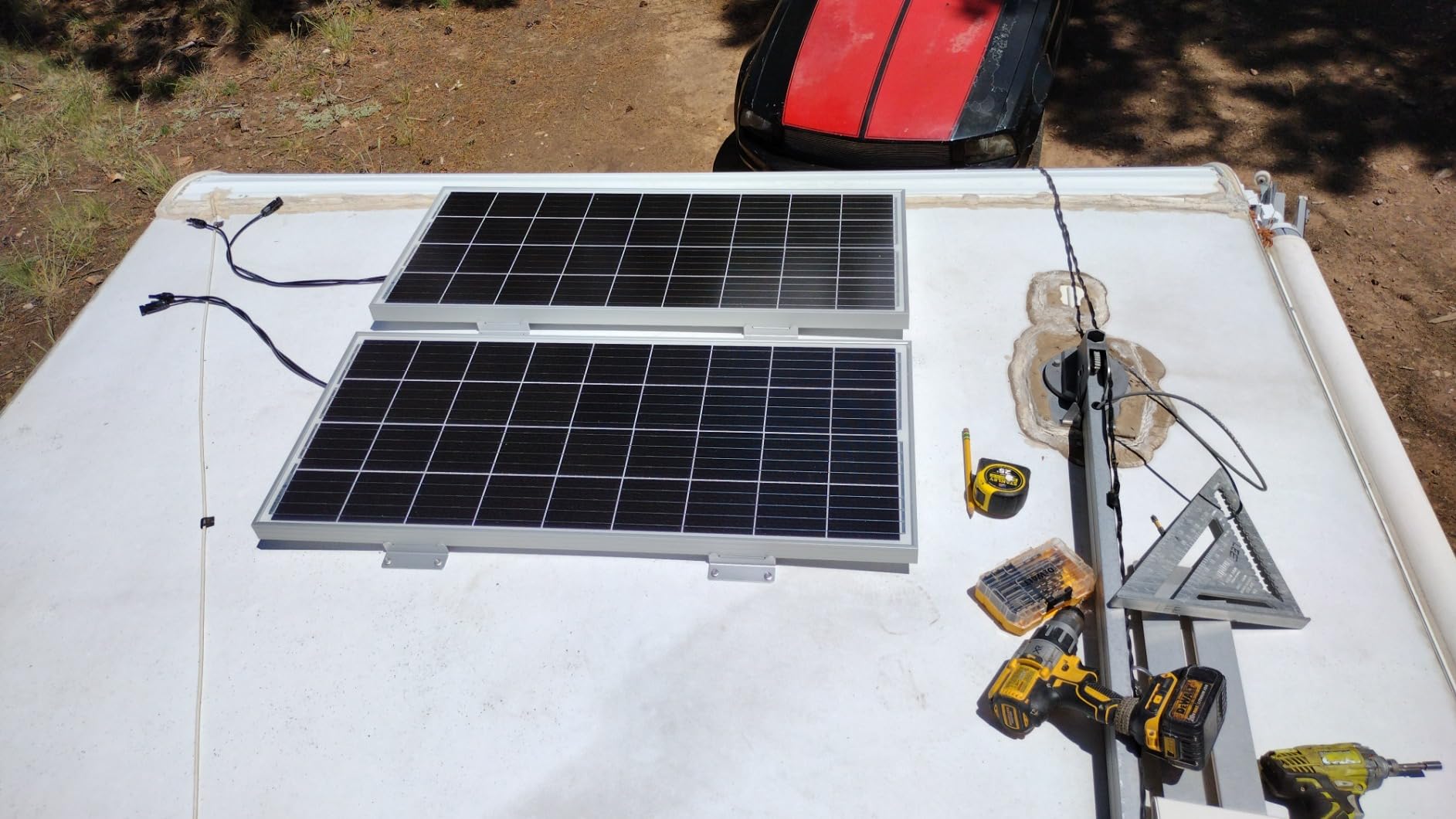
How it fits a boondocking budget
At roughly 800Wh of daily output under 4 hours of full sunshine, this is the first kit in the lineup that meaningfully moves the needle on a 12V fridge. Pair it with a 200Ah bank and a fridge, lights, and phone charging become routine rather than a rationing exercise.
The 1-year support and 24/7 technical hotline is thinner coverage than Renogy offers, so register the kit and read the manual before mounting.
The catch to plan around
At 31.6 pounds for the pair, mounting is a two-person job on most roofs, and a rigid monocrystalline panel has no forgiveness for a bad roof seal. Budget real time for the penetration detail.
You still need to add a battery, an inverter if you want AC outlets, an inline fuse, and sealant. Nothing in this category changes that rule.
4. Voltset 100W Kit Review: The Simplest Wiring in the Lineup
Voltset 100W 12V Solar Panel Kit with 20A Smart Charge Controller
100W monocrystalline
20A smart controller with LCD
USB and Type-C ports
4 Z brackets
Pros
- LCD voltage readout plus USB and Type-C ports
- Plug and play alligator clip wiring needs no tools
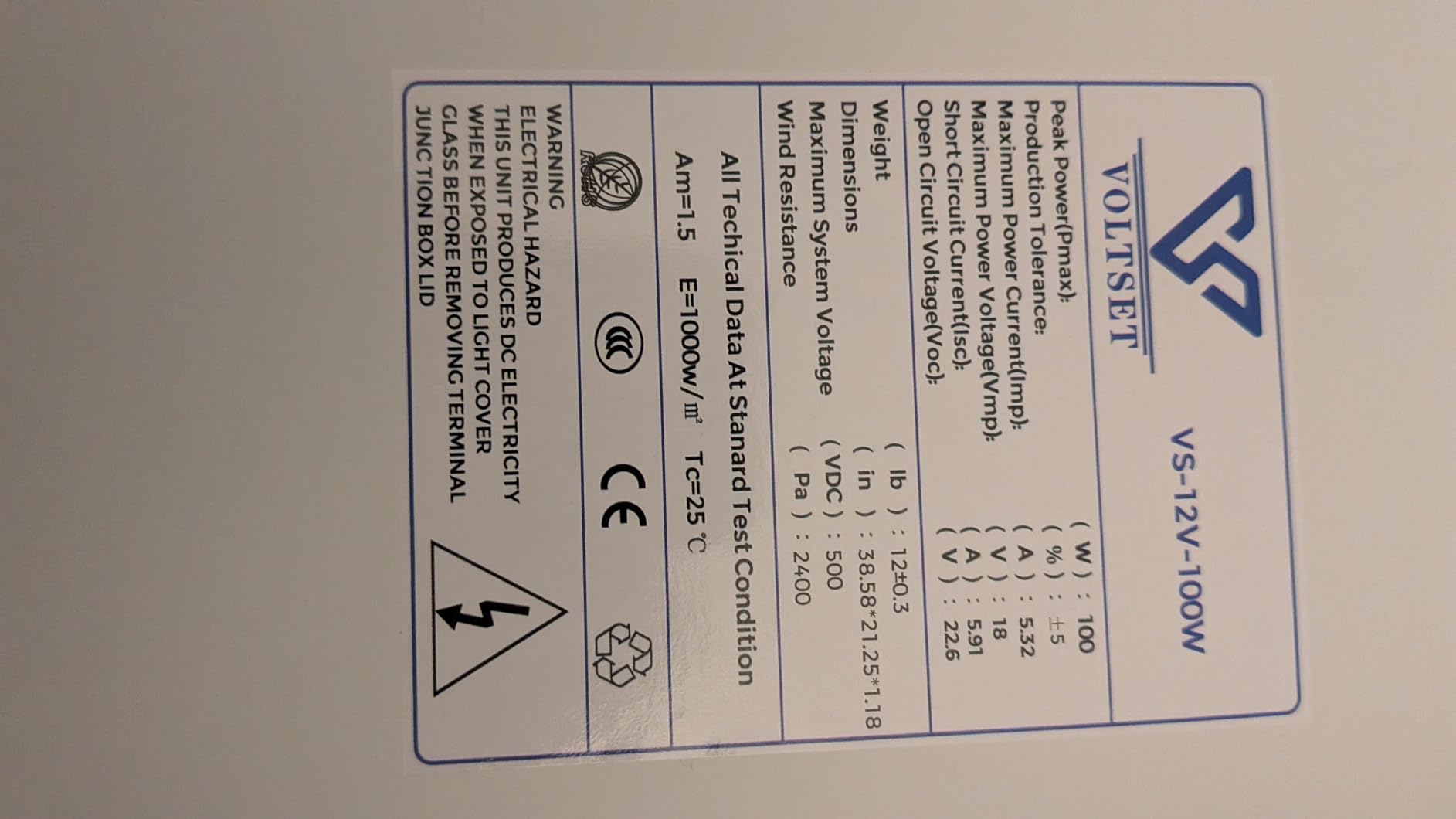
- IP67 panel with a stated 25-year lifespan
- Works with LiFePO4 AGM gel and flooded batteries
Cons
- Battery type selection uses a small hold-to-press button
- Smaller footprint fills slowly in poor light
This is the kit to buy if the phrase DC wiring makes you want to put the box down. The included alligator clip cable means the panel, controller, and battery connect without crimping, stripping, or a torque wrench, which removes the single biggest reason people abandon a solar install halfway.
Owners mention the LCD display and built-in USB and Type-C ports most often, along with how quickly the kit goes from unboxing to charging. Reviewers like the wide battery compatibility and easy installation, with only minor complaints about navigating the controller’s small buttons.
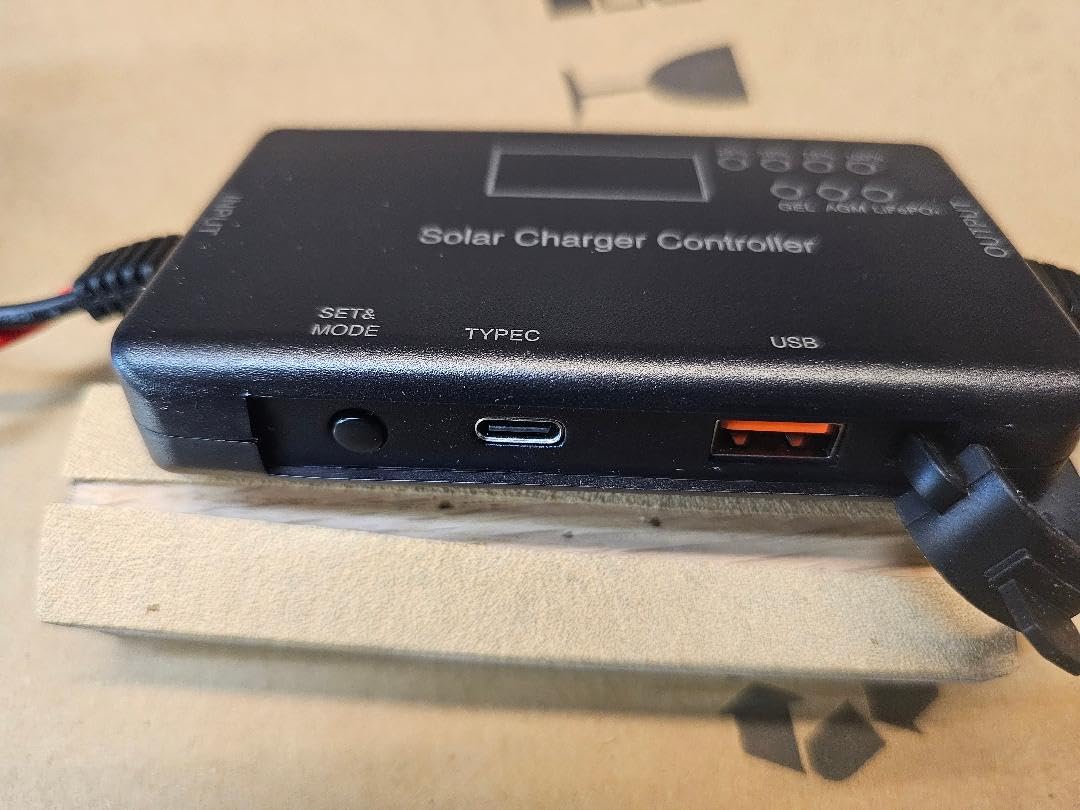
Protection circuits cover overcharge, overvoltage, overcurrent, short circuit, reverse polarity, and overheating, and the panel is IP67 rated for waterproofing, rust resistance, and wind. Output is more than 500Wh per day in sufficient sunlight, which puts it on par with the other 100W kits here, and it works with LiFePO4, AGM, Gel, Flooded, and lithium ion batteries.
Where the convenience pays off
The USB and Type-C ports let you charge a phone or a small device straight from the controller, which is a genuinely useful feature on a campsite where everyone is fighting over one outlet.
The LCD gives you a live voltage readout, which turns a black-box install into something you can actually troubleshoot when a cloudy week leaves you wondering whether the panel or the battery is at fault.
What to watch out for
Selecting the battery chemistry means pressing and holding a small button rather than flipping a dedicated switch, which is fiddly in the dark and easy to get wrong once.
The panel footprint is smaller than the other 100W kits in this roundup, so it fills more slowly in poor light. It is a weekend-camping solution, not a full-time off-grid array.
5. Renogy 100W N-Type Suitcase Review: Best Portable Option, No Drilling
Renogy 100W Portable Solar Panel, 25% High Efficiency Solar Panel Kit with 20A Charger Controller for 12V Battery&Power Station, N-Type Foldable Solar Panels w/Tempered Glass for RV, Camping Off-Grid
100W N-type foldable
Pre-installed 20A PWM controller
Folds to 24.8 x 2 x 2.8 inches
Pros
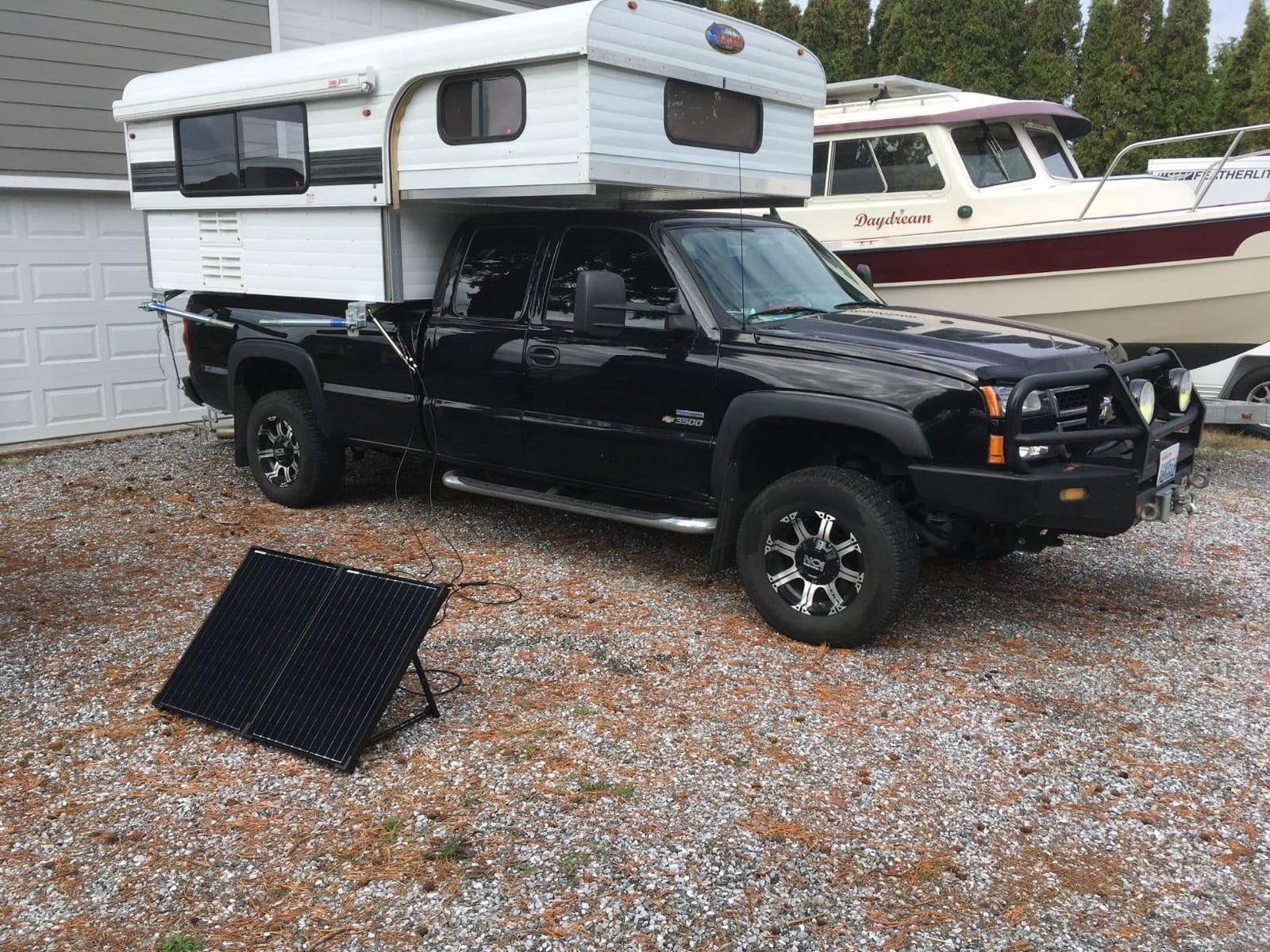
- Folds into a suitcase with a kickstand so no roof drilling
- Controller pre-installed in the case for plug and play
- N-type cells hold output in low light
- Five-year materials and workmanship warranty
Cons
- Current limited to roughly 5A on a 12V battery so real output is below rated
- Light duty latches and support arms
- Clip cables can fray at the strain relief
If you move the rig often, panel placement is the problem that no fixed roof array solves. A suitcase panel can be carried twenty feet into the sun while the trailer stays in shade, and r/RVLiving owners repeatedly call portable power stations the answer for exactly this reason.
Boondock campers and RV owners widely praise the suitcase format, the adjustable stand, and the pre-wired controller, reporting 5 to 7 amps of real output. The single most common technical caveat is that a 100W panel charging a 12V battery is limited by its 5A output, so treat it as a lightweight top-up panel rather than a primary array, plus occasional complaints about light-duty latches and fraying clip cables.
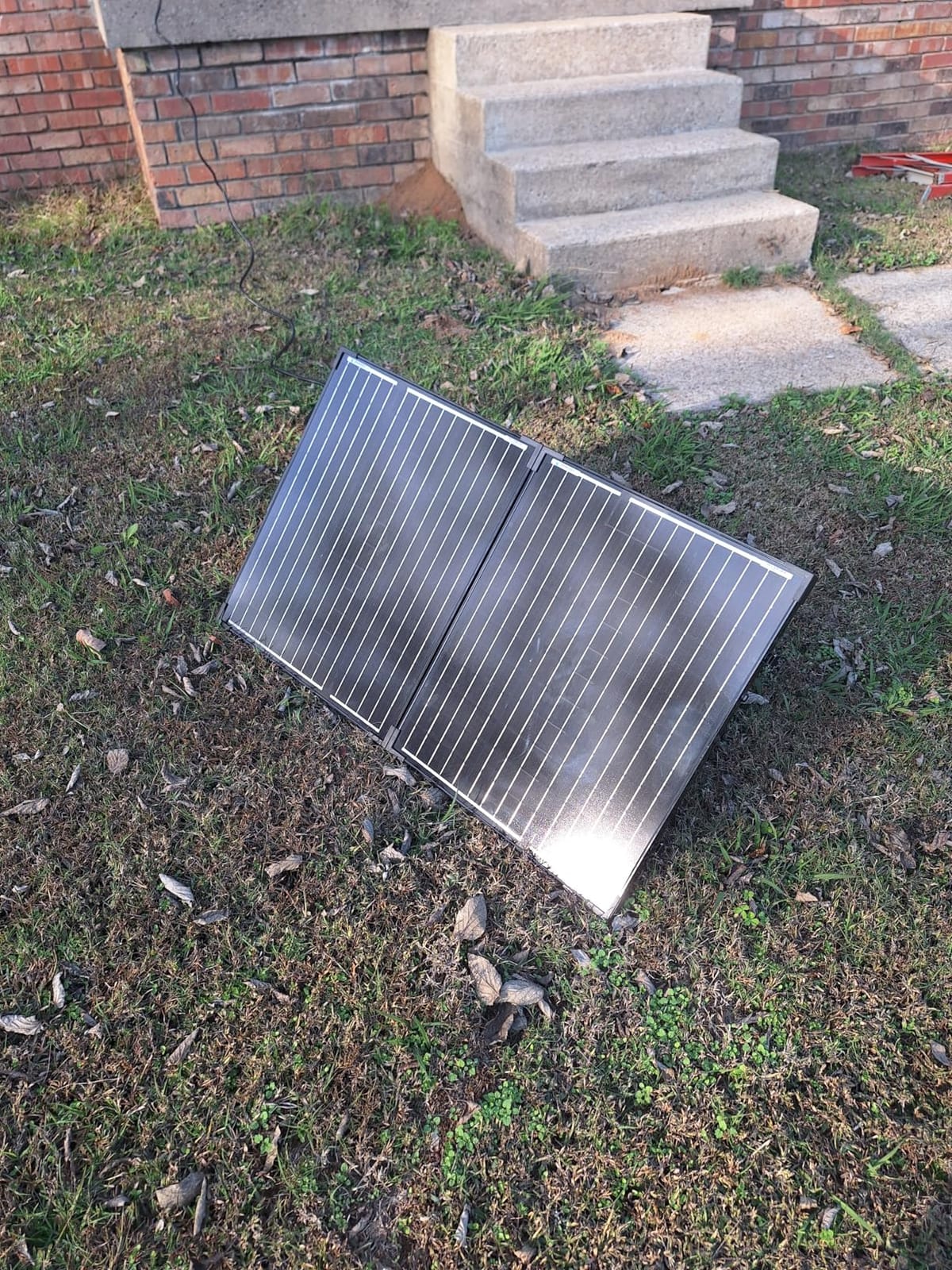
The technical reality is worth stating plainly. A 100W panel at 21.47 volts maximum pushes about 4.7 amps, so on a 12V battery bank the panel, not the controller, is the bottleneck. Plan on 40 to 60W of real charging and treat the 500Wh-per-day figure as a bright-day ceiling. The build is where this one earns its keep: reinforced corners, aluminum rivets, low-iron tempered glass, an IP65 junction box, and bypass diodes.
Why portability is worth the compromise
Owners running multiple units report they keep working year after year, and the five-year materials and workmanship warranty is a reasonable commitment for portable hardware. The 20A controller is already bolted into the case with 4-stage charging and a 15A fused alligator lead.
It is compatible with 12V power stations and with gel, AGM, flooded, and lithium batteries, so it works as a weekend add-on or a rescue panel for a bigger fixed system.
Where the numbers disappoint
The wattage on the label is not what reaches your battery on a 12V system. If your goal is to run a 12V fridge for hours a day, pair this with a power station with its own battery rather than a bare 12V lead-acid bank.
The latches and support arms are the first parts to fail, and the alligator clip connectors can fray where the cable meets the strain relief. Treat the case as a travel case, not as a permanent mount.
6. ECO-WORTHY 400W Premium Kit Review: The Only True Full-Time Array Here
ECO-WORTHY 400 Watt 12 Volt Premium Solar Panel Kit :4pcs 100W Solar Panel+ 40A MPPT Charge Controller+ Bluetooth Module+ Mounting Z Brackets, 400W 12V Solar Power Off Grid System for Home, RV, Boat.
4 x 100W panels to 400W
40A MPPT controller
BT-02 Bluetooth module
About 1.6kWh per day
Pros
- Largest array in the lineup at 400W for about 1.6kWh per day
- 40A MPPT controller with 99% tracking efficiency
- BT-02 module streams panel battery and load data
- Pre-drilled shelves and Y-branch cables speed installation
- Wider aluminum frames and bypass diodes
Cons
- Heaviest and bulkiest kit at roughly 72 lb so roof mounting needs two people
- Only nine items in the box for four panels
If you are moving from weekend camping to living off-grid full time, this is the only kit in the roundup that delivers a real daily energy budget: an average of 1.6kWh per day depending on sunlight. That is enough to carry a large 12V fridge, a CPAP machine, laptops, and lighting on a 200Ah to 300Ah LiFePO4 bank.
With a smaller review base, owners still report strong output and praise the MPPT controller and Bluetooth monitoring as the upgrade over cheaper PWM kits. The main practical complaints are the weight and bulk of the four-panel array and the small number of included accessories.
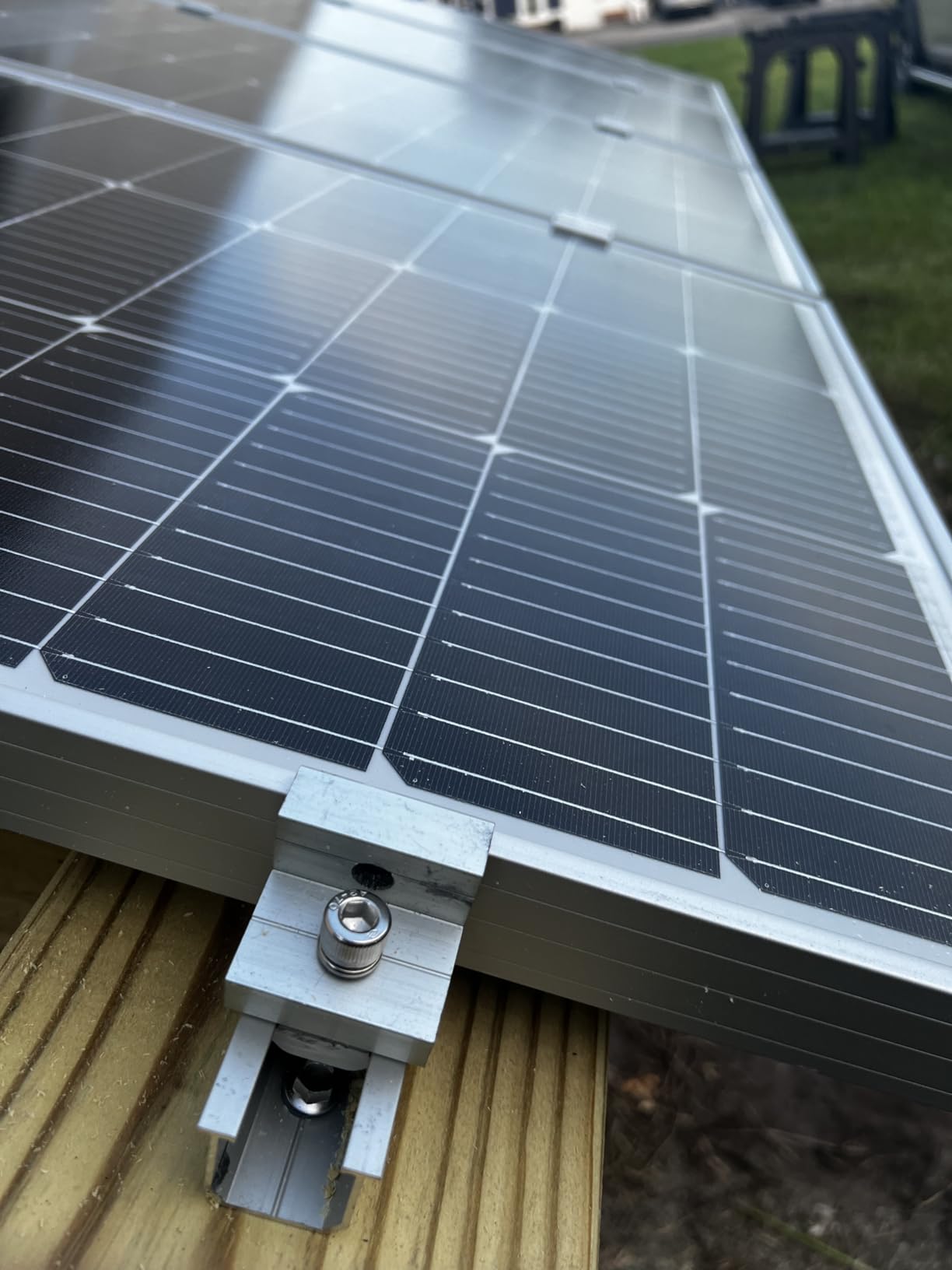
The controller is the reason this kit produces more from the same panels as the 400W you would get from a PWM setup. The 40A MPPT unit has 99% tracking efficiency and 98% peak conversion efficiency, which the manufacturer puts at about 40% better than PWM.
The BT-02 Bluetooth 5.0 module streams panel, battery, and load data to a phone from up to 82 feet away, so you can check state of charge from inside the cab. Each panel has a pair of 35-inch cables with pre-installed bypass diodes in an IP65 junction box, on 3.2mm low-iron glass with aluminum alloy frames rated for 2400Pa wind and 5400Pa snow loads.
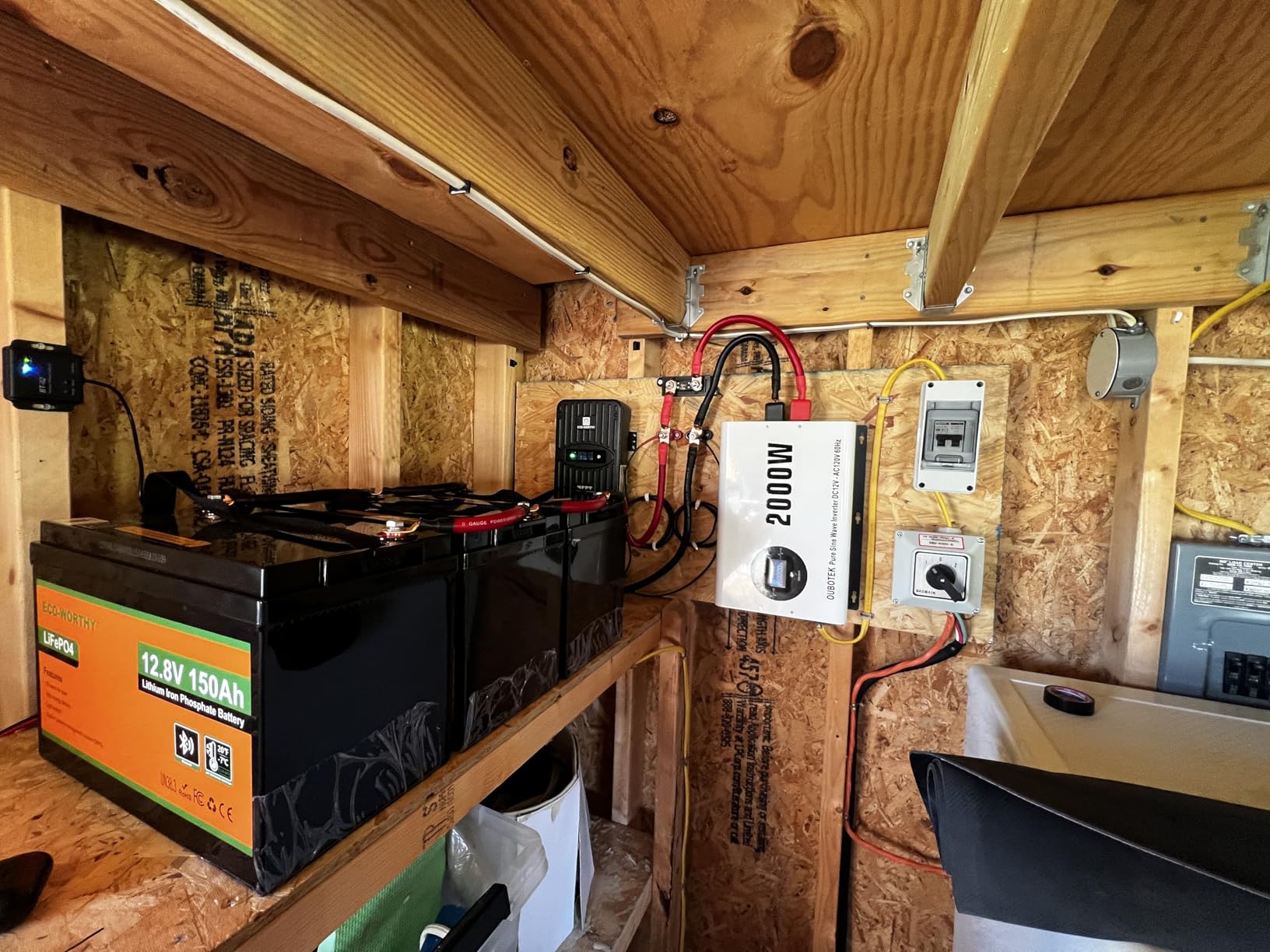
What full-timers gain
Monitoring matters more the longer you live off-grid. Seeing amperage in real time tells you whether a shortfall is weather, a shading problem, or a bank that needs more capacity, and that is information most kit bundles never give you.
The panels use 3.2mm low-iron glass with 35mm wide aluminum alloy frames, 2 to 5mm wider than typical, rated for 2400Pa wind and 5400Pa snow loads.
What full-timers should budget for
At roughly 72 pounds for the array, this is a two-person roof job, and a four-panel layout uses most of the roof real estate on a typical trailer. Nine items in the box for four panels means you will likely buy extra mounting or cable hardware.
You still need to add a battery, an inverter, an inline fuse, and a breaker. And for full-time winter use, most owners in the forums pair this with a DC-DC alternator charger rather than trying to size panels for the worst week of the year.
7. ACOPOWER 200W Portable Kit Review: Built for Trailers and Boats
ACOPOWER 200W Portable Solar Panel Kit, Waterproof 20A Charge Controller for 12V Battery and Solar Generator for RV, Camper Trailer& Marine Black
200W foldable panel
Waterproof 20A controller
Adjustable kickstands
MC4 and Anderson connectors
Pros
- 200W folding panel and a waterproof 20A controller in one package
- Carry handle and kickstands for easy deployment
- MC4 and Anderson connectors cover battery and power station hookups
- Protection against overcharge overload short circuit and reverse connection
Cons
- Larger and heavier than most 200W portable panels
- Basic controller with no display or Bluetooth monitoring
This one straddles the line between portable and fixed. At 200W it carries meaningful charging weight, and the foldable format with a carry handle and adjustable kickstands means a boater or trailer owner can set it up in minutes without touching a roof.
Reviewers like that the panel and a protected controller arrive together in a foldable, handle-equipped package that works with both 12V batteries and portable power stations, with 200 watts at 19.36 volts and 11.67 amps of current. Given the modest review count, the recurring notes are about the size and weight of the foldable panel and a fairly basic controller without monitoring.
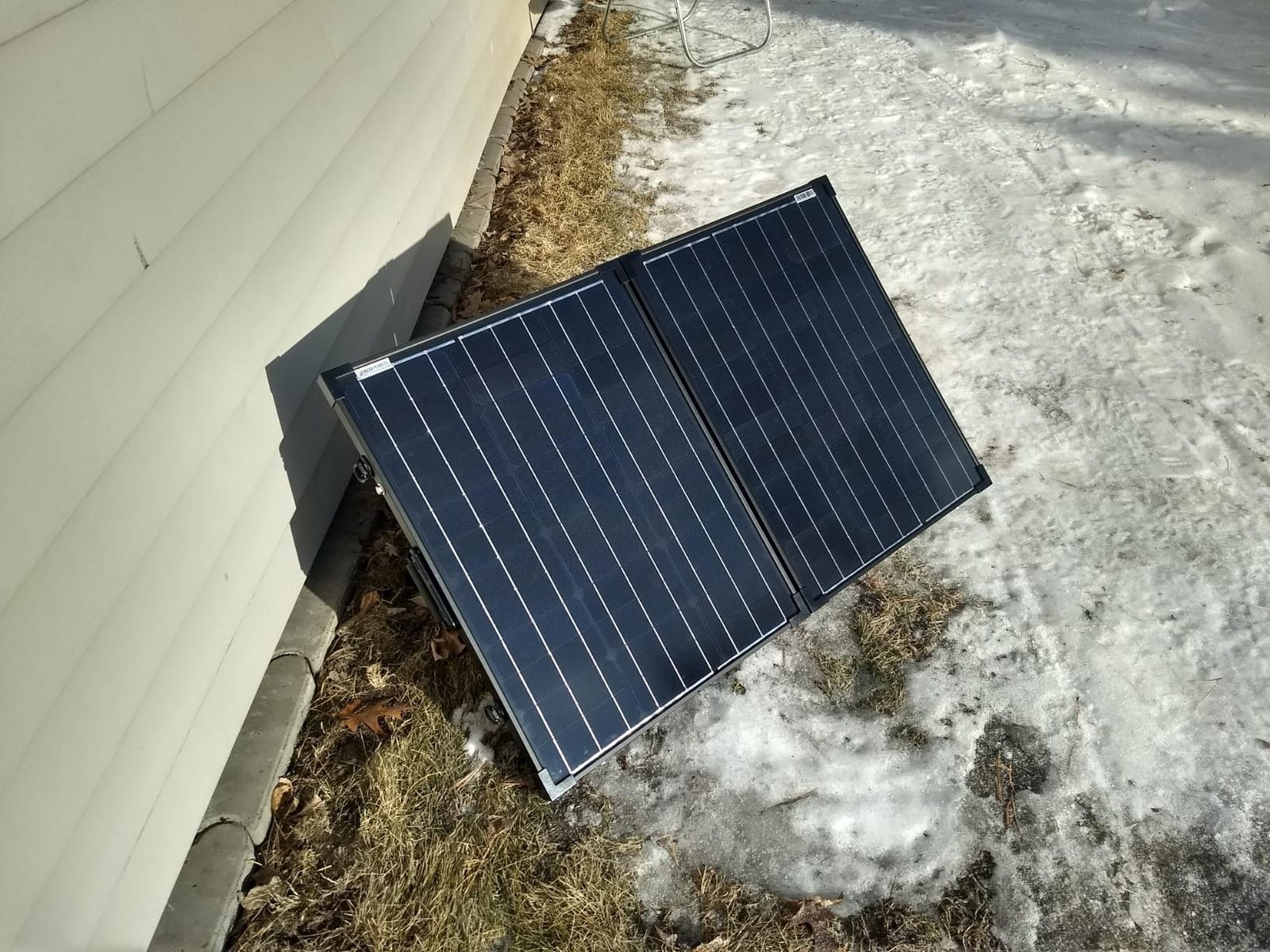
The waterproof 20A controller is the other half of the package, and its protection set covers overcharge, overload, short circuit, and reverse connection. That is the right feature list for a damp cockpit or a marina slip, where a controller failure means a dead trip rather than a delayed one.
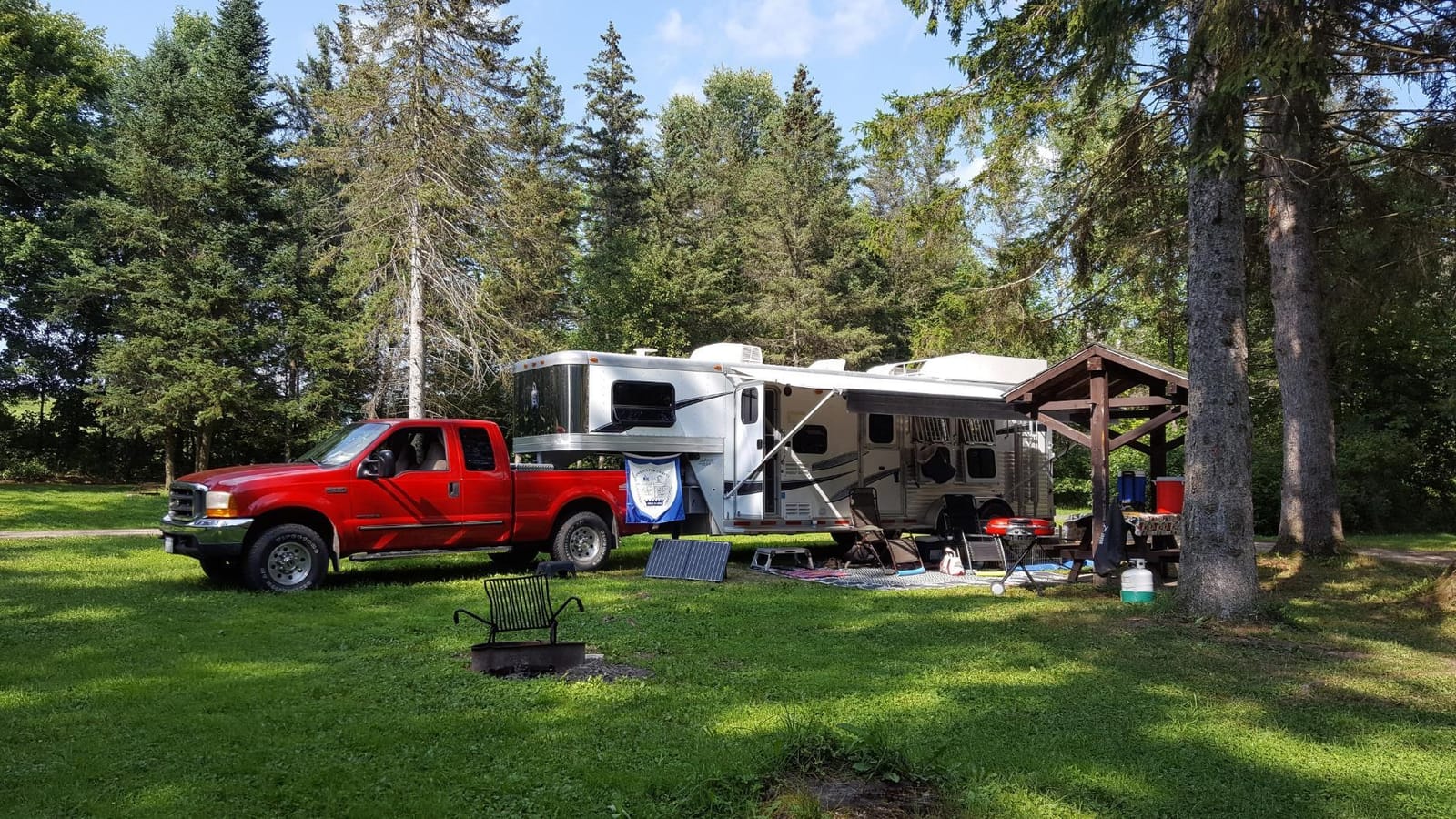
Why marine and trailer owners like it
The dual connector situation is the quiet strength. MC4 and Anderson connectors both being present means the same panel can feed a fixed 12V bank with MC4 wiring or plug into a portable power station without an adapter, which is not true of every portable kit, and it works with 12V batteries, power stations, RVs, trailers, and boats alike.
Where it is not the answer
At 11.61 kilograms it is larger and heavier than most 200W portable panels, so the portability advantage narrows the moment you have to carry it far from the vehicle.
The controller has no display and no Bluetooth monitoring, so you are guessing at state of charge. If remote monitoring matters to you, spend up.
8. DOKIO 200W Foldable Kit Review: Lightest Panel, Most Divisive Results
DOKIO 200W Portable Foldable Solar Panel Kit for 12V Battery Charging
200W class foldable panel
Weighs 9.7 lb
9.84 ft cable with PWM controller
Dual USB ports
Pros
- Lightest and thinnest option here at 9.7 lb for a 200W class panel
- 9.84 ft cable lets the panel sit in sun while the controller stays shaded
- Dual USB ports for phones and small devices
Cons
- Real output often lands near half the rated wattage in heat
- SAE and XT60 connectors will not series with MC4 panels
- Reports of output declining after about two years
This is the most polarised kit in the lineup, and we include it with a clear warning because the weight saving is genuinely real. At 9.7 pounds and folding to 20 by 27 by 1.1 inches, it is the only 200W-class panel here you can carry in one hand up a set of boat steps. Many owners love the low weight, thin fold, and low cost per watt, logging 80 to 150W depending on conditions, while a steady stream of reviews report roughly half the rated output, heat-softened SAE connectors that lose contact, and declining performance after about two years.
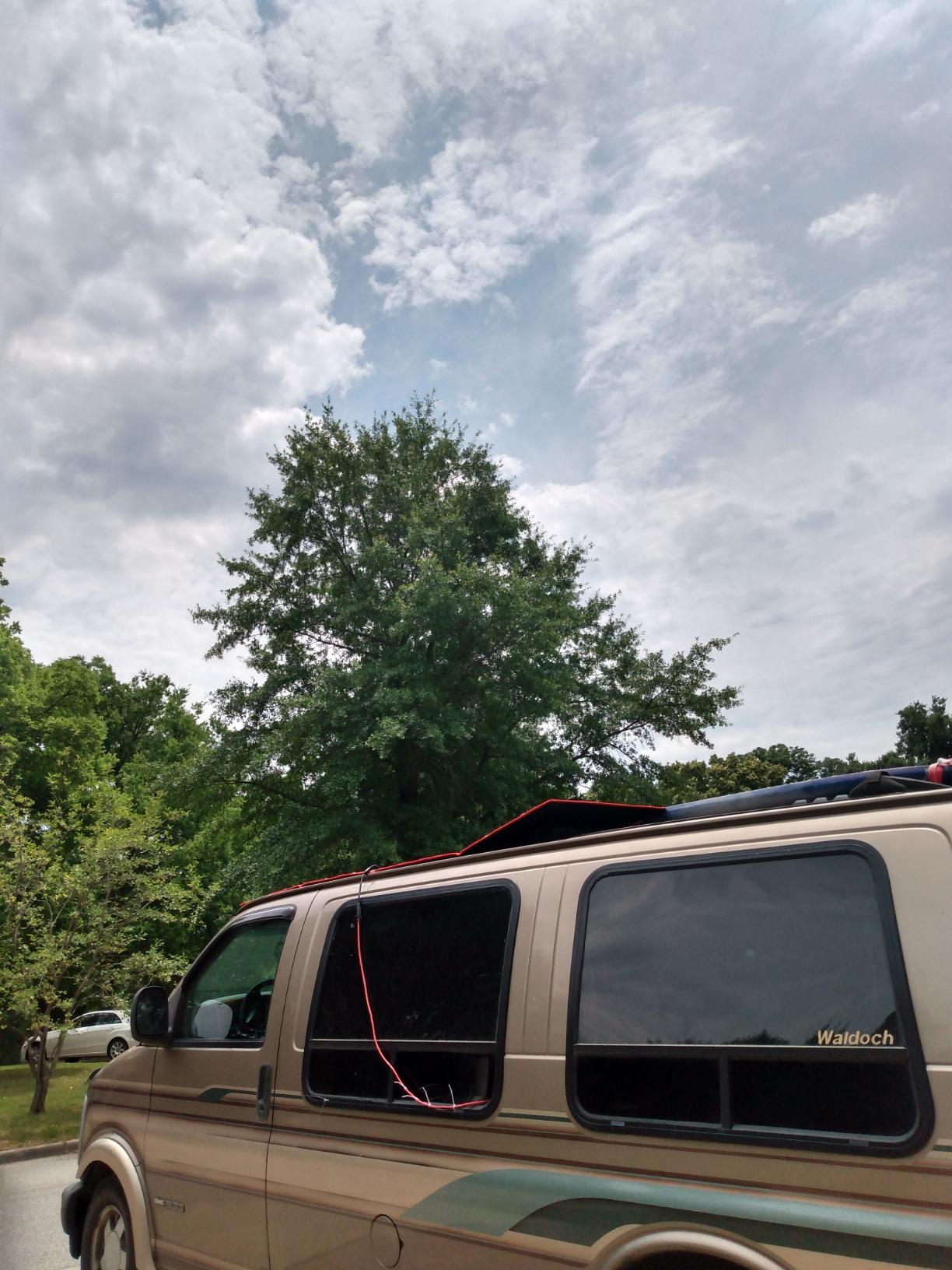
The 3-meter cable is the cleverest part. It lets the panel sit in full sun while the charge controller stays shaded, which is exactly the placement problem rigid roof panels create on a small trailer where the only clear surface is the wrong one. The manufacturer also notes that power stations may cap input, for example at 100 to 150W, so check your station’s limit before assuming the panel delivers its rating.
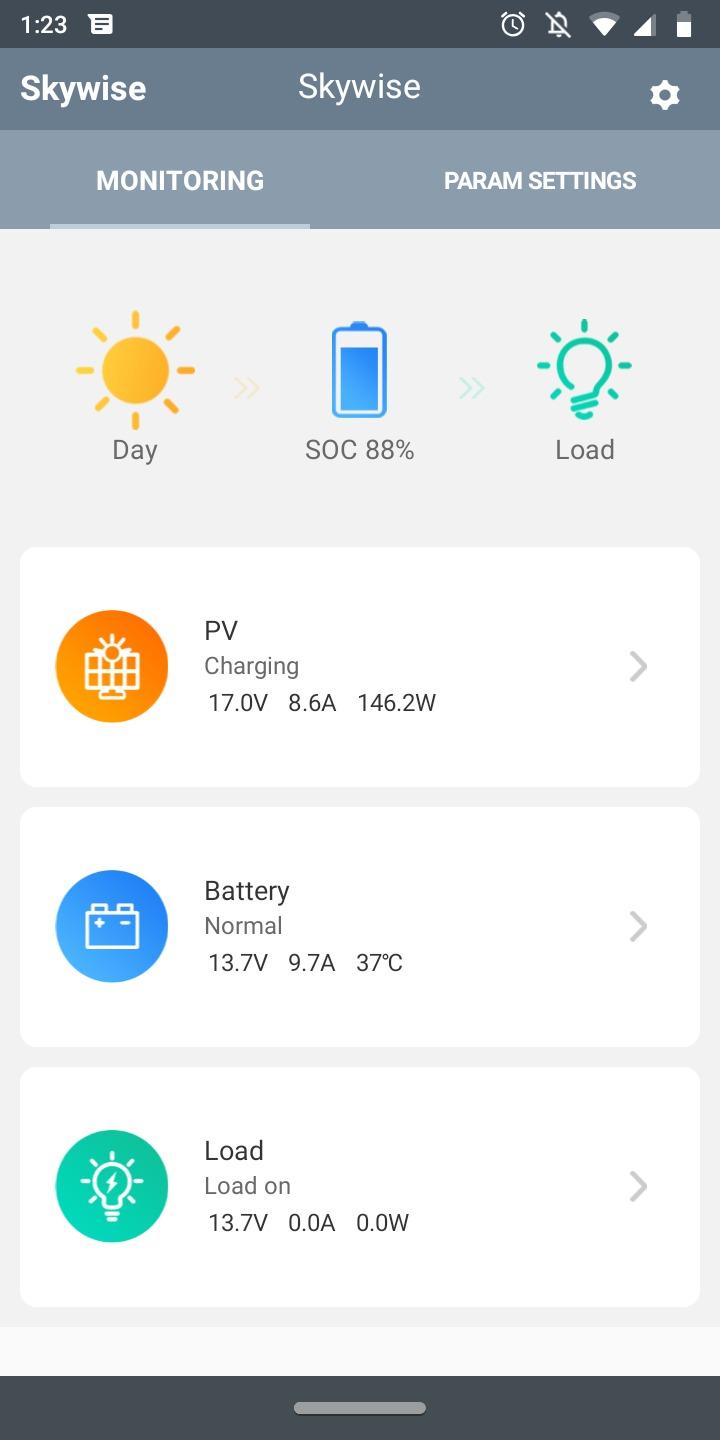
When the design genuinely wins
For a weekend camper who cannot or will not drill a roof, or anyone moving a panel around a campsite to chase the sun, the thin fold and 9.7-pound weight solve a real problem no rigid panel can. The dual USB ports charge phones and small devices from a 12V battery, and the standalone PWM controller has reverse polarity, overcharge, overload, and short circuit protection.
When to look elsewhere
If you are sizing a primary array, do not build a plan around the 220W rating. Owners frequently report real output closer to half the rated wattage, especially in heat, and that gap grows with ambient temperature.
There are three more reasons to hesitate: SAE and XT60 connectors are non-standard and cannot be wired in series with MC4 panels, some buyers received the wrong XT60 load connector and had to order a replacement, and the fabric edges, tie-down rings, and stitching can fray or come undone. The included controller menu is also difficult to navigate and is not LiFePO4 aware.
9. Renogy 200W 12V Kit Review: Best Value for a Real Boondocking Setup
Renogy 200W 12V Monocrystalline Solar Panel Kit + 30A PWM Charge Controller
2 x 100W panels to 200W
30A PWM controller
About 1000Wh per day
Expandable to 400W
Pros
- Two 100W panels and a 30A controller for about 1000Wh per day
- 22% cells with bypass diodes for cloudy conditions
- Four-stage charging with four battery type options
- Complete kit with cables Z brackets and pre-drilled holes
- Five-year materials and workmanship warranty
Cons
- PWM controller is less efficient than MPPT alternatives
- Published weight and dimensions do not match the actual panel
This is where most RVers should end up. Two 100W panels at 22% efficiency plus a 30A controller deliver an average of 1,000Wh per day based on 5 hours of direct sun, which is the threshold where boondocking stops being an adventure and starts being normal life.
It is a well-regarded middle-of-the-line option. Owners report solid real-world charging for RV and boat use and appreciate the complete, ready-to-mount package with a five-year warranty. The consistent caveats are the efficiency gap of PWM versus MPPT and inconsistent published dimensions and weight for the listing.
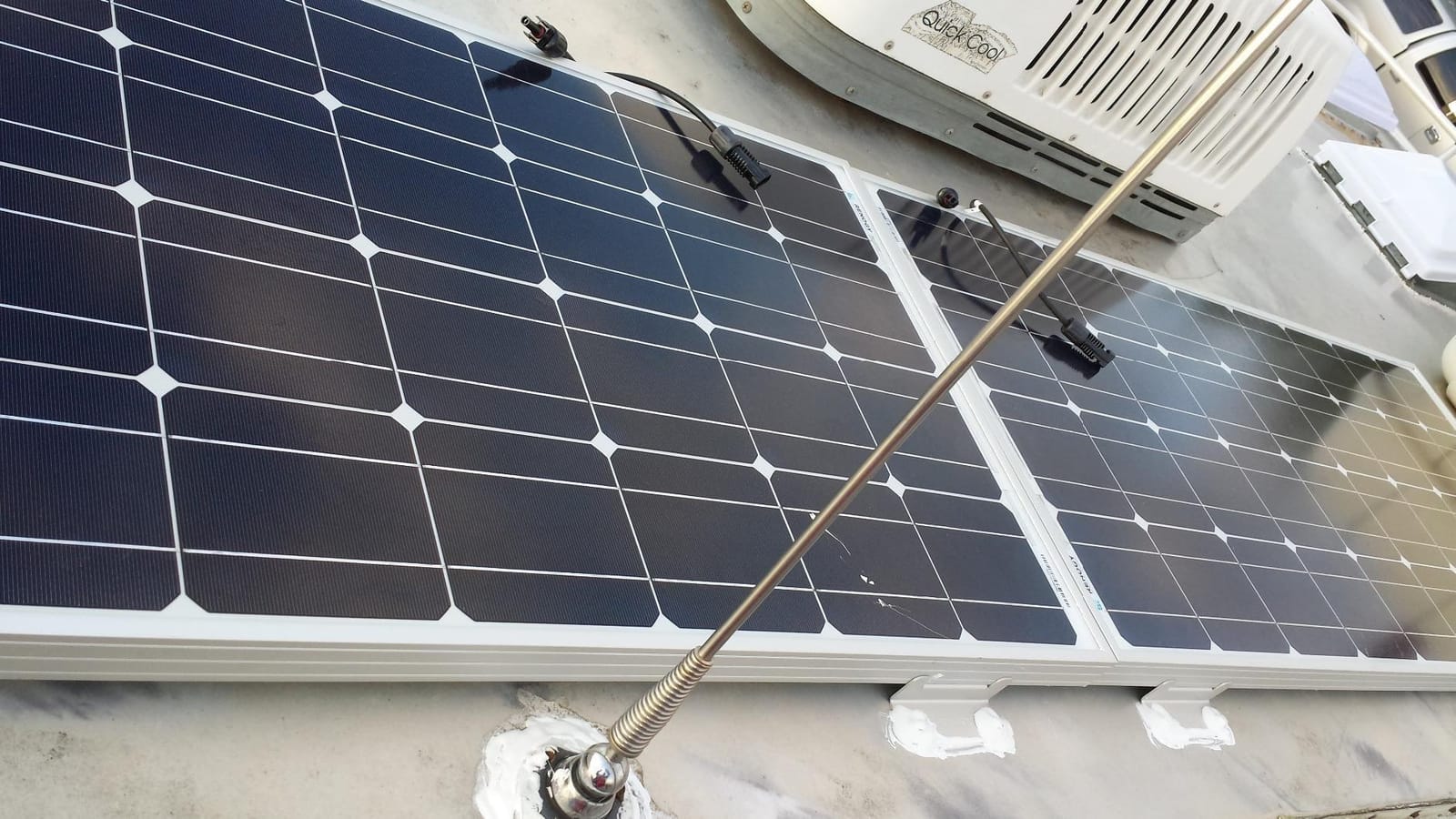
Technical details are handled properly for a kit at this level: bypass diodes and a TPT back sheet for low-light and heat performance, multi-layer encapsulation against physical damage, and reverse polarity, overcharging, overload, and short circuit protection. The Wanderer 30A controller runs 4-stage charging across bulk, boost, float, and equalization, works with sealed, gel, flooded, and lithium batteries, and expands to 400W.
Why this is the value pick
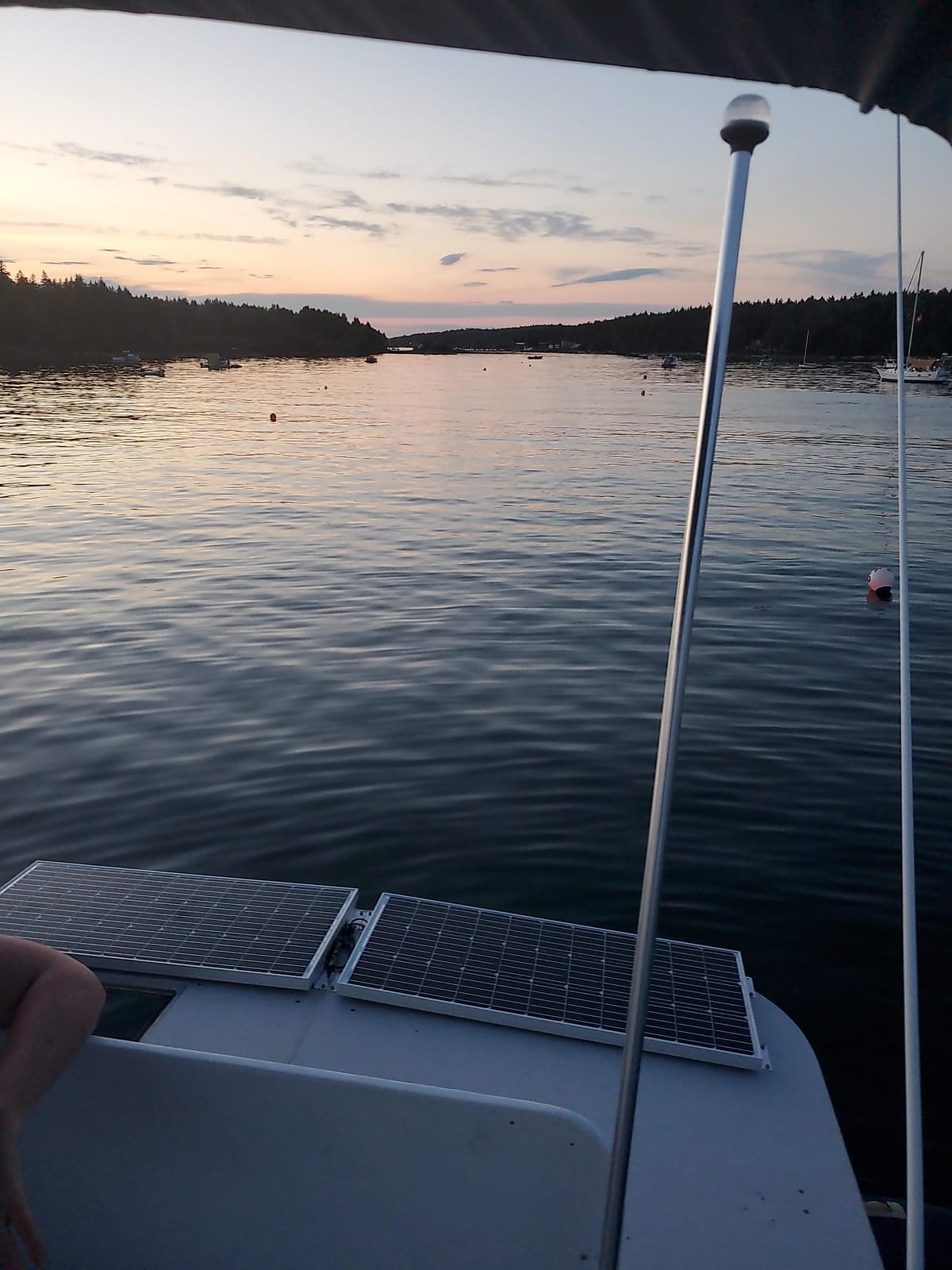
Comparing the daily figures across this roundup, the 100W kits cluster around 500Wh per day and this one sits at 1,000Wh per day for a modest step up in cost. The 22% cells, backed by bypass diodes, are what make cloudy-day performance acceptable rather than theoretical, and everything needed for the roof is in the box: cables, Z brackets, and pre-drilled mounting holes.
What to know before you order
The listed weight and dimensions do not reflect the actual panel size, so measure your mounting area rather than trusting the listing. That is a documentation problem rather than a build problem, but it is the kind of thing that shows up halfway up a ladder. As with the 100W Renogy, the PWM controller also costs you efficiency relative to MPPT, so if you plan to grow past 400W, do the math on a 40A MPPT controller before expanding.
10. ECO-WORTHY 200W All-In-One Kit Review: The Only Box With Battery and Inverter
ECO-WORTHY 200 Watt 12V Complete Solar Panel Starter Kit for RV Off Grid
200W N-type panels
30A LiFePO4 charger
50Ah LiFePO4 battery
600W pure sine wave inverter
Pros
- Only kit here that includes a 50Ah battery and a 600W inverter
- 600W pure sine wave inverter with 20ms UPS switching
- LiFePO4 battery rated for 4000 to 15000 deep cycles
- 25 percent N-type panels with dual sided light capture
- Beginner oriented with every accessory included
Cons
- Lowest average rating in the lineup with a 10 percent one-star share
- XT60 interface is capped at 30A
- Bulkier and heavier than panel plus controller kits
Every other kit in this guide stops at the charge controller. This one continues: two 100W N-type panels, a 30A smart LiFePO4 charger, a 12V 50Ah LiFePO4 battery, and a 600W pure sine wave inverter, in a single box. For someone who wants a working system on day one without sourcing four components from four vendors, nothing else here does that.
Buyers who want a single-box off-grid system appreciate having panels, controller, LiFePO4 battery, and a 600W inverter together without sourcing parts separately. The lower rating reflects complaints about component quality and confusion over the several overlapping system variants, plus the 30A ceiling on the XT60 battery connection.
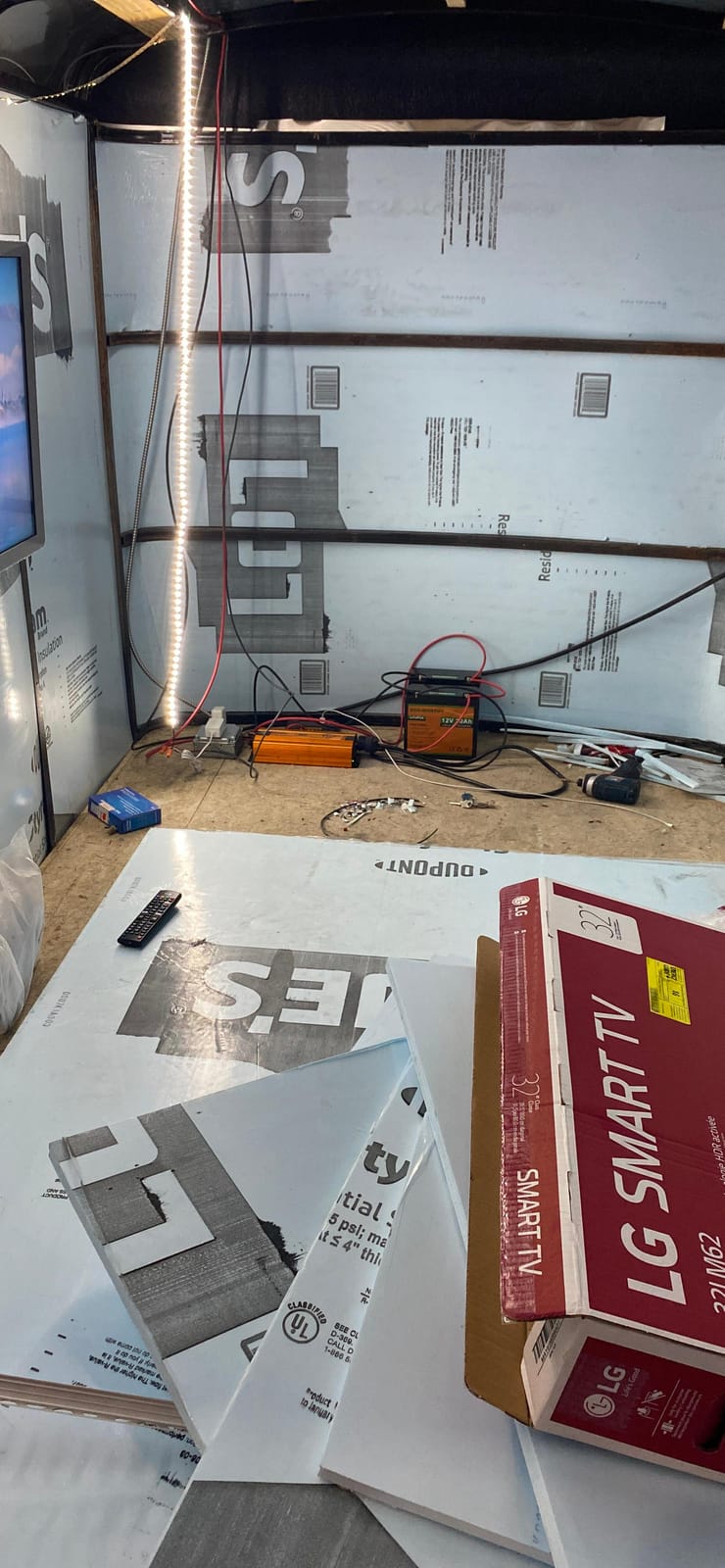
The inverter detail is the one to notice. A 600W pure sine wave inverter with 20ms UPS auto-switching and adjustable 5A to 40A charging current is a real advantage over modified sine wave units, which can cause problems with CPAP machines, variable-speed fans, and sensitive electronics. Anderson plug-and-play connections keep the wiring beginner-friendly, and daily output is roughly 800Wh with about 4 hours of sunlight.
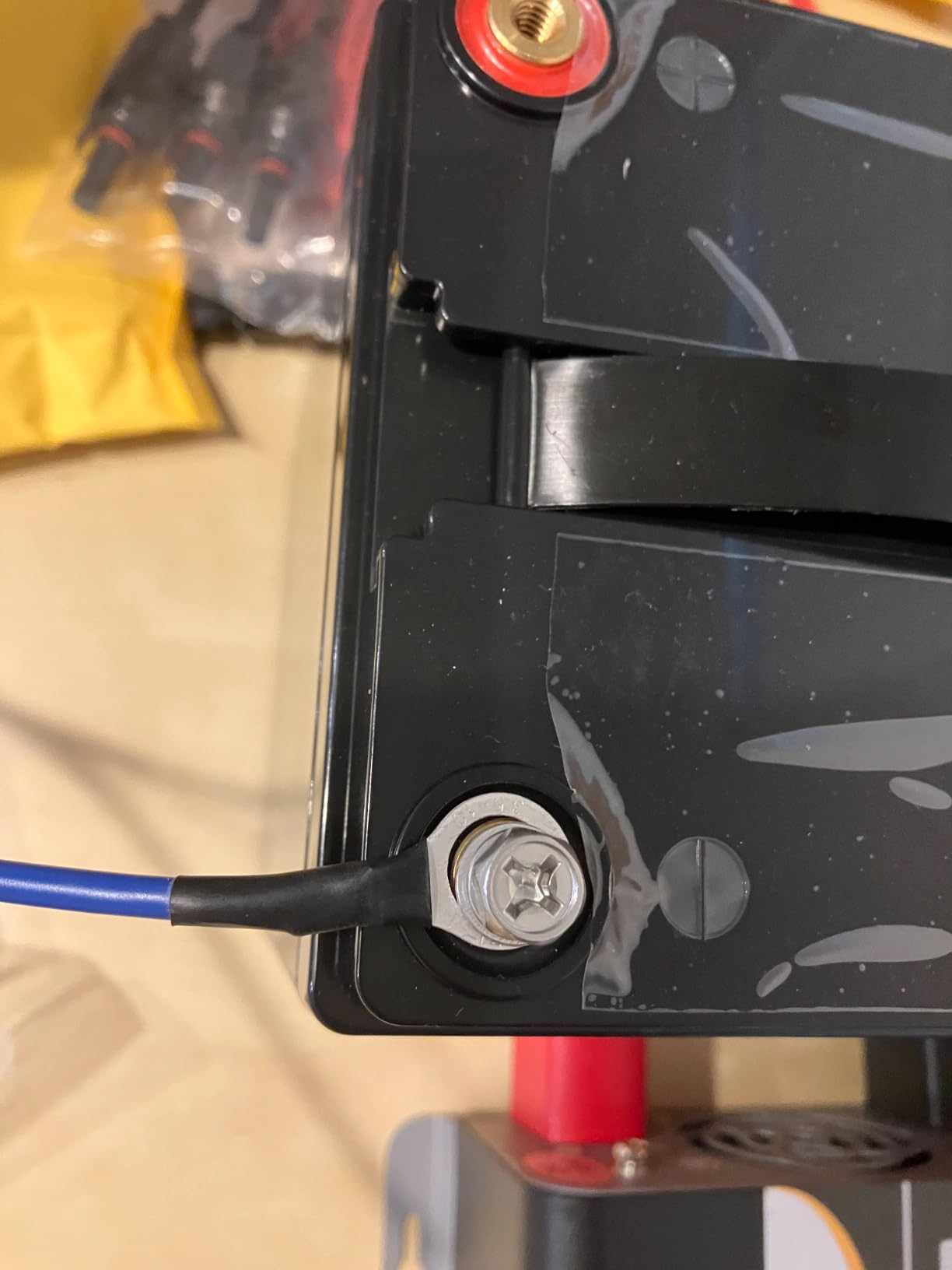
Who this genuinely suits
A first-time RVer who wants lights, a laptop, a phone, and a small TV running without ever touching a 30A shore power pedestal. The battery is a genuine LiFePO4 unit rated for 4000 to 15000 deep cycles, against roughly 300 to 400 for lead acid, and the charger has 0V activation plus 3-stage charging with app and button control. It is also a good demonstration rig if you want to learn the whole chain, panels to controller to battery to inverter, without a roof penetration.
Why the rating is the lowest here
At 4.1 stars with a 10% one-star share, this kit has more reported problems than anything else we tested. Component quality complaints and overlapping product variants that leave you with more than you need are the two recurring themes.
The XT60 battery interface is limited to 30A, which restricts high-draw setups, and the whole package is bulkier and heavier than a panel-plus-controller kit because the battery and inverter are inside it. Check the variant carefully before ordering.
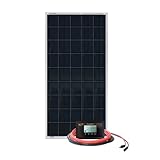
11. Go Power Overlander 200W Kit Review: Long Cables and Long Coverage
Go Power Overlander 200W 12V Solar Panel Charging Kit
200W monocrystalline module
30A Bluetooth PWM controller
Two 25 ft solar output cables
Expandable to 600W
Pros
- Only kit here with two 25 ft output cables for long roof runs
- Bluetooth controller with a phone app for charge voltage and current
- Expandable to 600W on the same controller
- 25-year limited output power warranty
Cons
- Heaviest kit at 35 lb with a large 59 by 26.3 inch panel
- Bluetooth app is reported as buggy and needs frequent re-pairing
- Requires roof caulking and wiring skill
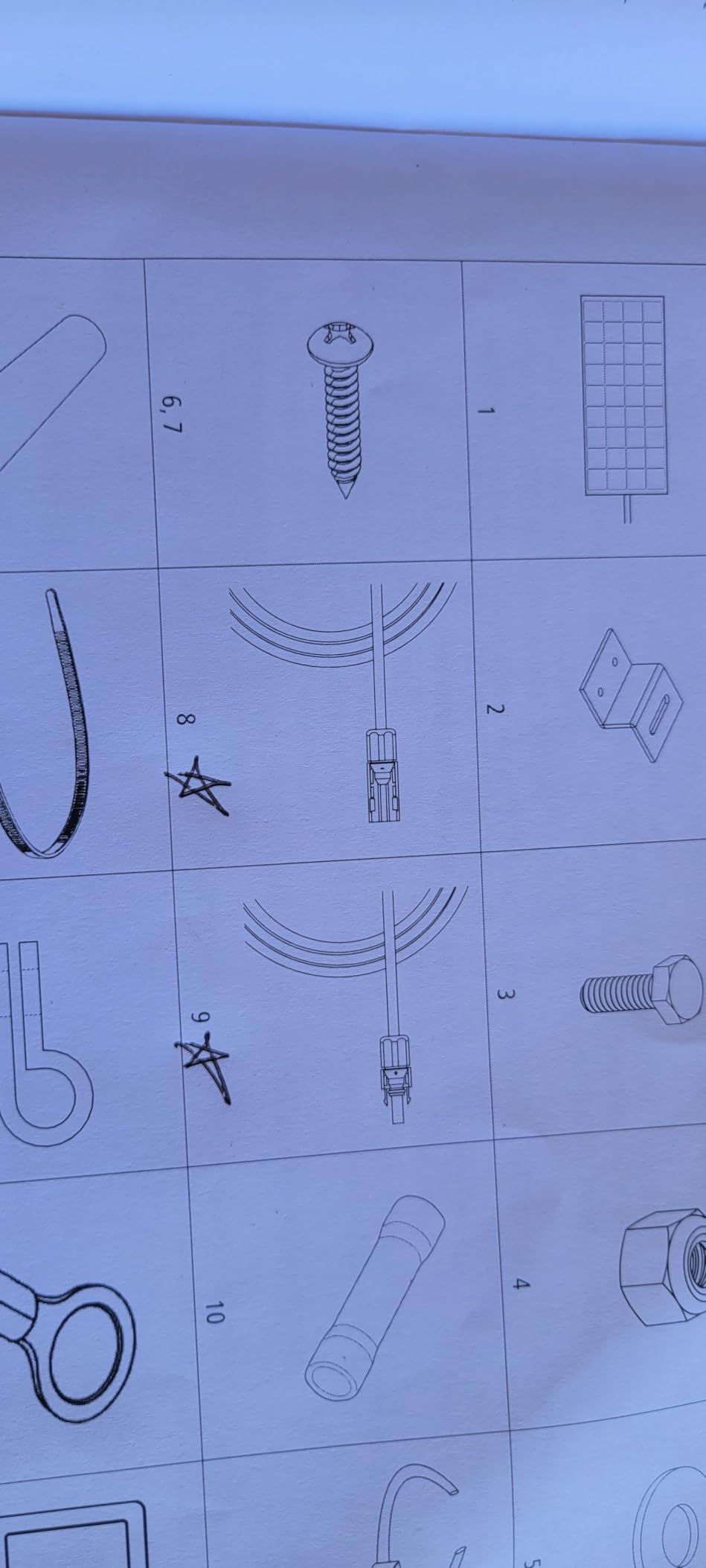
Go Power built this kit around a specific problem: getting power from a big panel on the roof down to a battery bank mounted under the bed or behind a wall. The two 25-foot #10 gauge solar output cables, one red and one black, mean you can run the panel to the far end of a long trailer without buying extra wire, and owners report around 8 amps of real charging with the generator rarely needed.
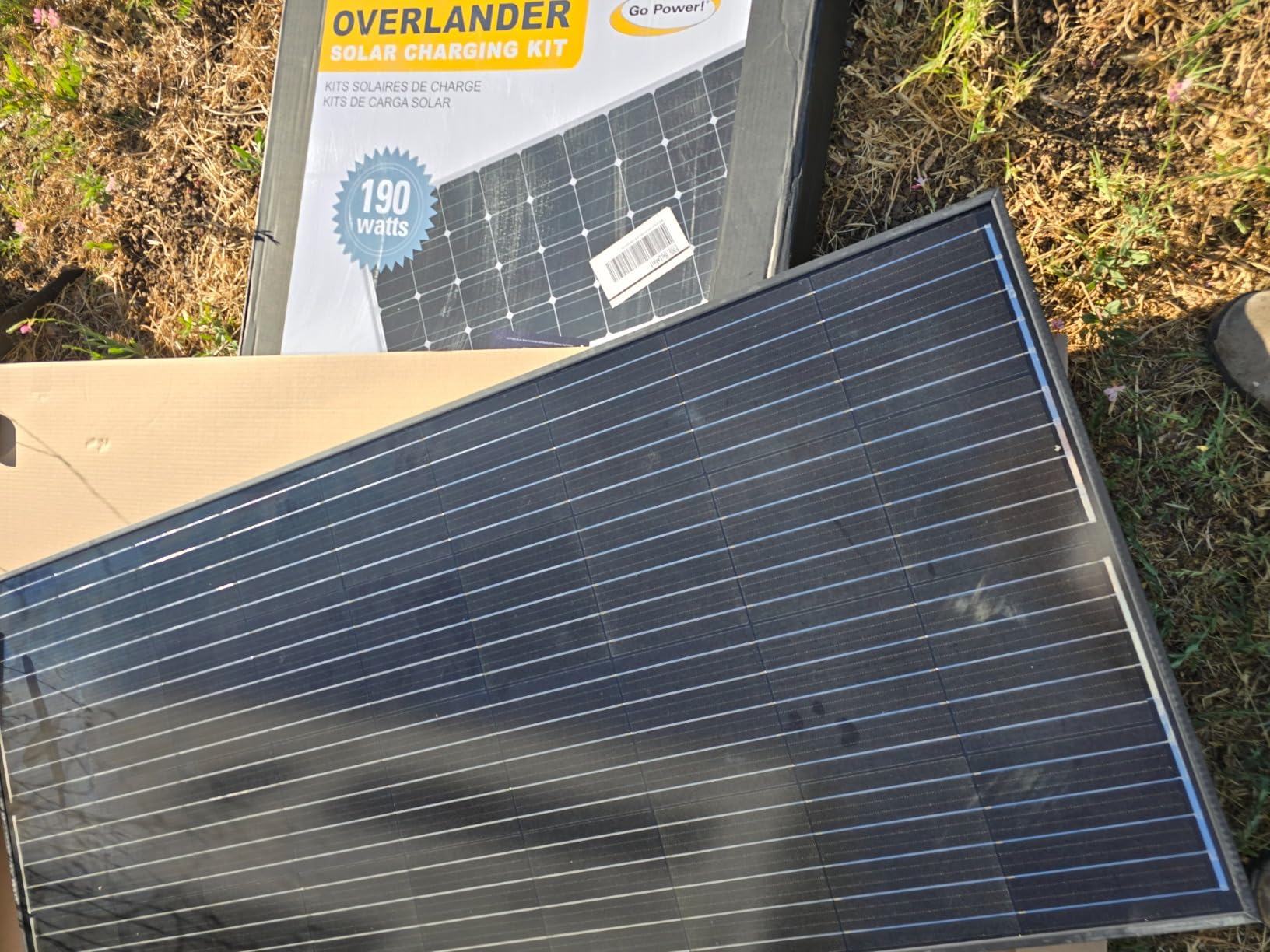
The 200W module, model GP-PV-200M, provides 9.6 amps of charging capability, and the 30-amp single-bank Bluetooth PWM controller, model GP-SB-PWM-30-BT, expands to 600 watts on the same unit. The warranty is the other standout: 25 years of limited solar panel output power coverage on a maintenance-free design rated for decades of service.
Why the cable length matters more than it sounds
Voltage drop is the quiet killer of RV solar. Every foot of undersized cable between panel and controller costs you real harvest, and under-bed battery layouts are exactly where installers cheat on wire length. Having 25 feet of #10 gauge cable in the box removes that decision entirely.
Owners report that the panel comfortably runs an inverter, which is the arrangement that makes a 200W array feel oversized for a weekend trip.
What you give up
At 35 pounds and a 59 by 26.3 inch panel, this is the heaviest and physically largest kit in the roundup, and it is difficult to lift onto a roof alone. Plan the layout before you unbox it.
It also requires roof caulking and some wiring skill that a beginner may not have, and the Bluetooth app is reported as buggy with frequent re-pairing. If you have never wired a battery, read our RV setup checklist alongside an install guide, or pay a technician.
How Much Solar Do You Need to Boondock?
Match the array to your camping style, then size the battery to the array, not the other way around. The community rule of thumb in r/RVLiving is to plan for roughly 1.5 to 2x your battery bank in panel wattage, so a 600Ah lithium bank wants about 1200W of panels feeding it.
Weekend campers on hookup-free overnights usually land between 100W and 200W. Regular boondockers running a 12V fridge, lights, and phone charging want 200W to 400W. Full-time off-grid RVers who also want an inverter for laptops, a CPAP machine, or small appliances need 400W and up paired with a 200Ah-plus LiFePO4 bank.
The 100W panel produces about 500Wh per day in good conditions, a 200W array about 800Wh to 1,000Wh per day, and a 400W array about 1.6kWh per day. Then discount for the environment: reporting across the RV community puts real-world output at 70 to 85% of rated panel capacity, with dirty panels losing a further 15 to 25%.
Winter is the hard case. Generation drops 40 to 60% in low-season months, and multi-day overcast stretches drain the bank faster than the array can refill it. That is the shortfall most often solved not with bigger panels but with a DC-DC alternator charger while driving.
MPPT vs PWM and How to Size Your Charge Controller
MPPT and PWM are the two controller types in this roundup, and the difference shows up as energy you never collect. An MPPT controller tracks the panel’s maximum power point and converts that higher voltage down to your battery voltage efficiently; a PWM controller simply chops the panel output to match the battery, so the difference between the two voltages is lost as heat.
The ECO-WORTHY 400W kit quantifies it at 99% tracking efficiency and 98% peak conversion efficiency, which the manufacturer puts at about 40% better than PWM. On a 100W panel that gap is real but not transformative. On a 400W array it is the difference between a bank that refills by late afternoon and one that does not, and it is the main reason MPPT is worth the extra cost on anything above 300W.
Sizing is arithmetic. Divide panel watts by your system voltage, multiply by 1.25 as a safety factor, then round up to the next controller size. At 12V, a 400W array needs about 42 amps, so a 50A MPPT controller is the correct choice. The same 400W on a 24V bank needs about 21 amps, so a 30A controller is enough. Working back from the other end, a 30A controller handles roughly 360W at 12V and roughly 720W at 24V.
That leaves the question of how you know what size MPPT you need. Answer it in three steps: list your panel watts, confirm your system voltage, and run the formula. If you already have a controller, check whether it is expandable before replacing it, since most kits here scale to 400W or 600W on the controller that is already in the box.
What These Kits Do and Do Not Include
This is the section that saves the most money, because the most repeated complaint pattern in RV solar forums is discovering after the box opens that the kit was never a complete system. Only one kit in this roundup, the ECO-WORTHY all-in-one, includes a battery and an inverter.
Here is what a standard panel-plus-controller kit gives you: the panels, a charge controller, mounting Z brackets, and some length of solar cable. Here is what you almost always need to buy separately: a deep-cycle or LiFePO4 battery bank, a pure sine wave inverter if you want AC outlets, an inline fuse on the controller-to-battery run, appropriately gauged battery cable, a breaker or disconnect, roof penetration sealant, and a weatherproof cable entry gland.
The missing inline fuse is the item that turns a small mistake into a burned controller or a fire. Undersized wiring between the controller and the battery is the second most common fault, and both are cheap to fix if you know about them before you start.
On warranty, check whether the coverage names RV and mobile use. The Go Power panel carries 25 years of limited output power coverage and the ECO-WORTHY 400W panels carry a 10-year material warranty with 25-year output coverage, while the DOKIO foldable is covered for one year. For a panel that lives on a vibrating roof, that spread matters.
LiFePO4 versus lead-acid is the other decision to make now rather than later. LiFePO4 is rated for 4,000 to 15,000 deep cycles against roughly 300 to 400 for lead acid, and it can be discharged far deeper without damage. If you plan to run your bank below half charge regularly, a lithium bank pays for itself in longevity alone.
Roof Mounting, Shade, and Winter Output
Wire in the correct order or you can damage a controller before the first sunny day. Connect the battery to the charge controller first, then the panels, and reverse the order when you shut down. Panels produce voltage in any daylight, and a controller with no battery reference voltage can misbehave immediately.
Mounting is where most leaks start. The failure pattern in forums is consistent: a panel goes up, the roof gets wet, and the sealant never fully cured. Use self-leveling lap sealant under every bracket, avoid drilling into pooled water, and let the sealant set before you tighten anything. A weatherproof cable entry gland matters as much as the brackets.
Shade is the other silent performance killer, and r/RVLiving raises it constantly. A roof vent, an antenna, or an air conditioning unit can shade one panel in a series string and drag the whole string down, which is why bypass diodes are worth having. Keep panels clear of vents and antennas, and if your rig parks next to a tree line, expect a real loss even on a clear day.
Location often matters more than brand. Boondockers who move frequently report that some spots are excellent for solar and some are terrible, and that a portable suitcase or power station is the answer when the rig and the sun disagree. A good parking spot can outperform an expensive array in bad placement.
Finally, decide in advance how you will handle a three-day overcast stretch in January. Solar alone may not cover it, which is why DC-DC alternator charging has become the standard answer among full-timers. A DC-DC charger draws from your alternator while the engine runs, giving you a reliable top-up without waiting for sunlight. If you are still planning your camp comforts, our boondocking setup guide covers the other essentials for staying out long.
Frequently Asked Questions
Will a 200W solar panel run a 12V fridge?
Yes, but it manages rather than dominates. A 200W array produces roughly 800Wh to 1,000Wh per day, and a typical 12V RV fridge draws 40 to 60Ah per day, which is 480 to 720Wh. A 200W kit will keep the fridge running and top off a 200Ah bank on a clear day, but expect to run the generator on overcast days unless you add DC-DC alternator charging.
Is 400W solar enough for an RV?
For most full-time boondockers, yes. A 400W array produces about 1.6kWh per day, which covers a 12V fridge, lighting, phone charging, a CPAP machine, and laptop use indefinitely. Discount for real conditions: 70 to 85% of rated output is typical, and winter generation drops 40 to 60%. Heavy loads like an air conditioning compressor or microwave still need a generator.
What size MPPT charge controller do I need for 400W of solar?
Divide your panel watts by system voltage and multiply by 1.25. For 400W on a 12V bank that is 400 divided by 12, times 1.25, or about 42 amps, so round up to a 50A MPPT controller. The same 400W on a 24V bank needs about 21 amps, so a 30A controller is enough.
How many solar panels do I need to run my RV?
One 100W panel is a weekend supplement that produces about 500Wh per day. Two 200W-class panels, or one 400W array, produce roughly 1,000Wh to 1,600Wh per day, which is the range where a 12V fridge, lights, and electronics run without a generator. Full-timers running an inverter for larger loads want 600W to 1200W and a 200Ah-plus LiFePO4 bank.
Do RV solar kits include a battery and inverter?
Almost never. A standard kit contains panels, a charge controller, mounting brackets, and some cable. You will need to buy a deep-cycle or LiFePO4 battery, an inverter for AC outlets, an inline fuse, battery cable, a breaker, roof sealant, and a cable entry gland separately. Only all-in-one bundles such as the ECO-WORTHY 200W kit here include a 50Ah battery and a 600W inverter.
Bottom Line: Which RV Solar Kit Should You Buy in 2026?
Start with the Renogy 100W 12V Solar Panel Starter Kit with 30A PWM Controller if you are new to boondocking solar. It is the best-balanced kit in the lineup, rated 4.7 across more than 4,000 reviews, certified to UL 61730 and IEC 61730, and expandable to 400W on the same controller, so nothing you buy now gets wasted.
Move up to the Renogy 200W kit when you want a fridge and real weekend autonomy, or the ECO-WORTHY 400W MPPT array when you are boondocking full time and want phone monitoring. Pick the Renogy N-Type suitcase if you would rather not drill a hole in your roof, and the ECO-WORTHY all-in-one box if you want AC outlets on day one without wiring anything.
Whatever you choose, remember the two rules that matter most: buy the battery and inverter separately, and connect the battery to the controller before the panels. Pick the best rv solar panel kits for boondocking carefully, get the basics right in 2026, and you will have quiet, self-sufficient camping for years.