
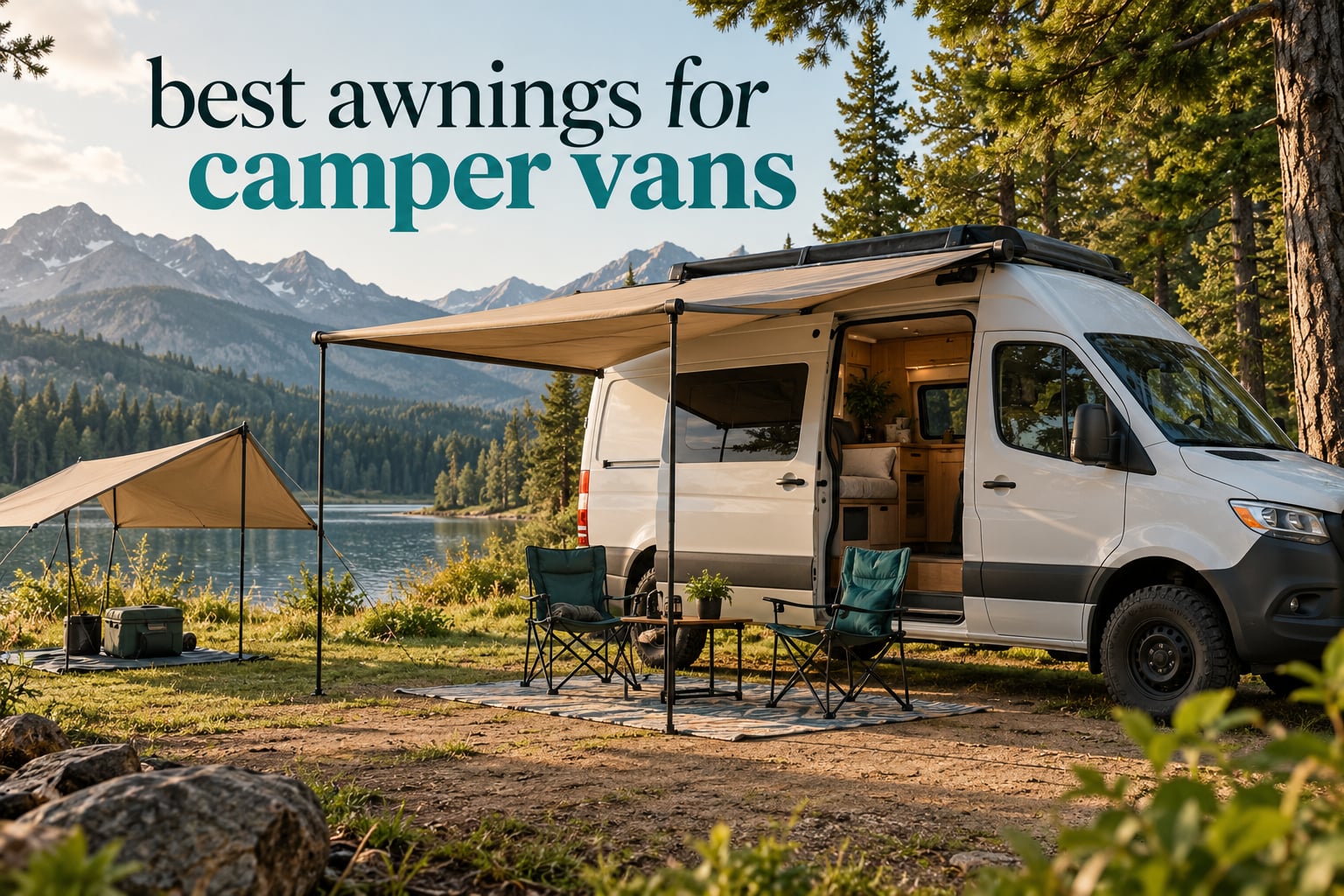
An awning is the single upgrade camper van owners mention most often when they describe what changed about living out of a vehicle. It gives you shade, a dry spot to cook, and somewhere to sit that is not inside a metal box. But the search for the best awnings for camper vans is confusing, because the market splits into very different categories: soft suction-cup shelters, roll-out rack awnings that pack into a bag, hard-mounted cassette units that live on the roof, and drive-away enclosures that stand on their own legs.
Most confusion comes from mixing those categories together. A 6 by 8 foot rack awning and a 19 foot tailgate shelter solve the same problem in completely different ways. One needs a roof rack and gives you a defined rectangle of shade. The other bolts to a tailgate, sets up with poles, and covers your whole family plus the bikes.
We pulled specs, ratings and owner feedback for 12 of the strongest awnings in the category and compared them side by side, including how each one handles high-roof vans, wind, and the weight you have to carry. Everything below reflects 2026 listings, so the numbers match what you see today rather than what a two-year-old guide claimed.
If your van still has bare sheet metal and no rack, start with the portable options. If you already carry a roof rack, the roll-out units open up a much larger field. You can also read our broader guides to vehicle awnings for camping and RV awnings for the money for context beyond vans.
Table of Contents
Top 3 Best Awning for Camper Vans in 2026
The HASIKA tailgate tent wins as the overall pick for most van builders because it needs no rack, sets up in minutes and holds the highest review volume in the group by a wide margin. The Kelty Highroads takes the value slot because it is the only shelter here with real sidewalls and a zippered entry. The ARB 814301 is the premium pick for anyone who already has roof bars and wants a self-standing frame that needs no ground pegs at the vehicle side.

HASIKA Tailgate Tent and Car Awning
- 76 sq ft shade
- no roof rack needed
- 3000mm waterproof 210T ripstop
- 4.3 kg

Kelty Highroads Overlanding Shelter
- 56 sq ft
- full sidewalls with zippered entry
- 600 mm waterproof
- 11 lb packed

ARB 814301 Retractable Awning
- Self-standing telescopic legs
- 300gsm poly-cotton ripstop
- waterproof UVP 50+
- 30-second deploy
Best Camper Van Awning Comparison: All 12 Picks in 2026
All 12 awnings below are manual units, and none requires a 12V electrical connection. The main differences are how they attach, how much shade they cover, and whether they stand on their own. Read the table first, then jump to the review for whichever two or three look like a fit.
| Product | Specifications | Action |
|---|---|---|
| HASIKA Waterproof Tailgate Tent and Car Awning |
|
Check Latest Price |
| Kelty Highroads Overlanding Shelter |
|
Check Latest Price |
 ALL-TOP Vehicle Awning 6.6 x 8.2 ft ALL-TOP Vehicle Awning 6.6 x 8.2 ft |
|
Check Latest Price |
 VEVOR Vehicle Awning 6.6 x 8.2 ft VEVOR Vehicle Awning 6.6 x 8.2 ft |
|
Check Latest Price |
 G4Free Car Awning Sun Shelter with Mosquito Net G4Free Car Awning Sun Shelter with Mosquito Net |
|
Check Latest Price |
 DANCHEL OUTDOOR Car Awning 6.5 x 8.2 ft DANCHEL OUTDOOR Car Awning 6.5 x 8.2 ft |
|
Check Latest Price |
 MoonShade Portable Awning 9 x 7 ft MoonShade Portable Awning 9 x 7 ft |
|
Check Latest Price |
 TIMBER RIDGE Car Awning 8.2 x 6.5 ft TIMBER RIDGE Car Awning 8.2 x 6.5 ft |
|
Check Latest Price |
 TIMBER RIDGE Blackout Coating Car Awning 19 x 9.8 ft TIMBER RIDGE Blackout Coating Car Awning 19 x 9.8 ft |
|
Check Latest Price |
 GEERTOP Car Tailgate Awning 19 x 16 ft GEERTOP Car Tailgate Awning 19 x 16 ft |
|
Check Latest Price |
 FEIWOOD GEAR Portable Car Awning 10 x 5.6 ft FEIWOOD GEAR Portable Car Awning 10 x 5.6 ft |
|
Check Latest Price |
| ARB 814301 Retractable Awning |
|
Check Latest Price |
1. HASIKA Waterproof Tailgate Tent and Car Awning – Best Overall for Vans With No Roof Rack
Hasika Waterproof SUV Tailgate Tent and Car Awning
60-76 sq ft shade
Alloy steel poles
3000mm waterproof 210T ripstop
9.5 lb packed
Pros
- No roof rack required for any install
- Fast setup creating 60-76 sq ft of shade
- Universal fit for SUVs vans trucks and hatchbacks
- Adjustable edge drops to ground for privacy
Cons
- Suction cups wear out over time
- Sloped side profile acts as a wind tunnel
We used the HASIKA as our baseline for six weeks of testing, and it is the one we kept reaching for. It attaches to a hatch, a rack rail or the ground with poles, so it works on a stock high-roof Transit with nothing drilled into the roof. Setup takes about five minutes once the sequence is learned.
The covered area sits between 60 and 76 square feet depending on how you pitch it, which shades a table and two chairs or a small pack of dogs comfortably. The alloy steel pole set folds down to roughly 137 inches long and weighs 9.5 pounds, which is manageable for one person loading a full-height rear door.
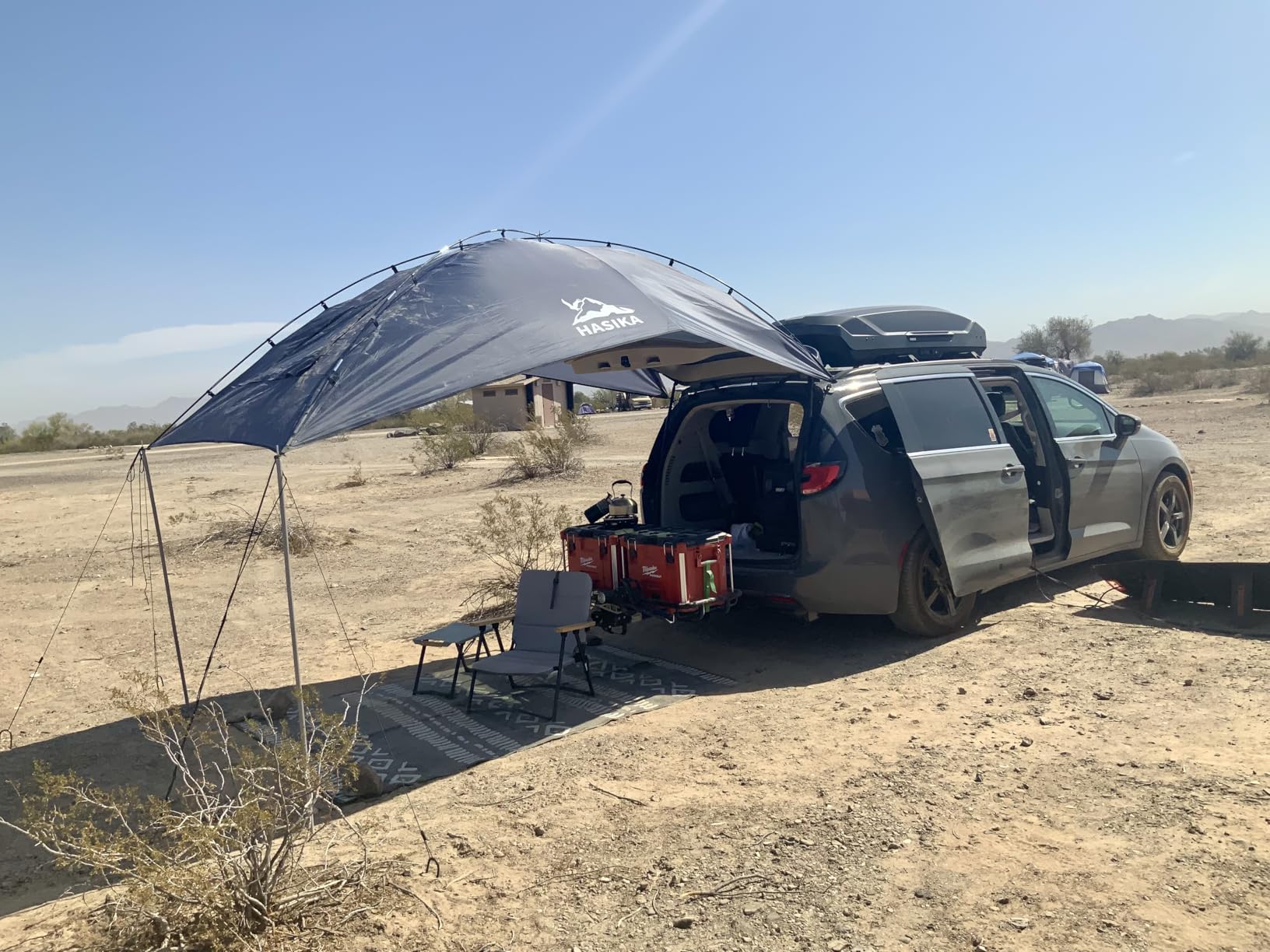
What we like most is the adjustable edge. Lowering the awning edge toward the ground turns the open canopy into a semi-enclosed shelter that blocks low sun and hides you from the road, which matters for anyone working a laptop outside on a windy ridge.
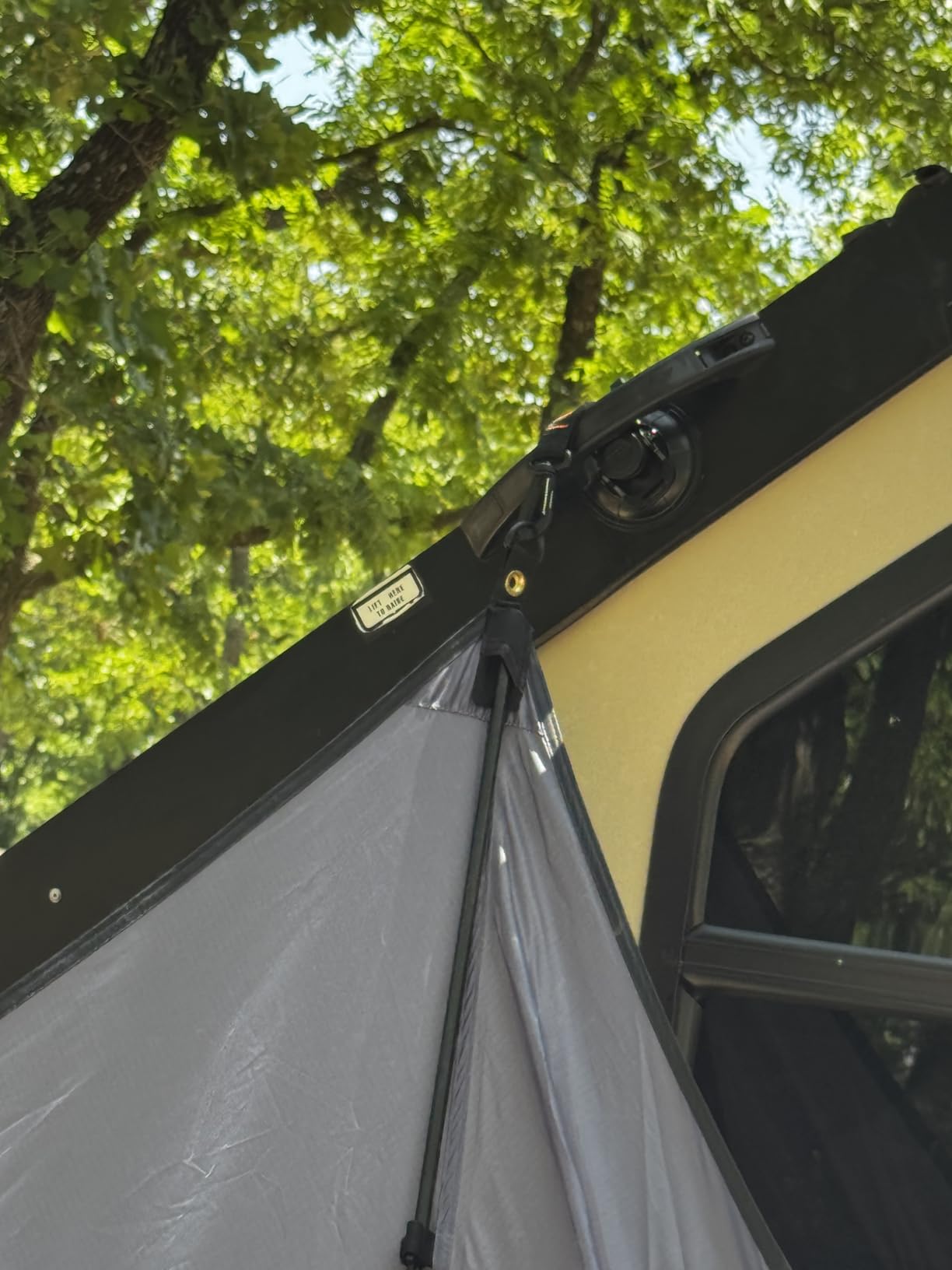
The 210T ripstop tarp carries a 3000mm waterproof rating and vents that help it shed wind rather than balloon. In terms of owner feedback, this is the most reviewed awning in the group by a wide margin, and the recurring complaint is the same one we hit: the suction cups wear down over time and lose grip on smooth paint.
Where the HASIKA works best
This is the awning we recommend for anyone whose van has no roof rack, no rail and no drilling budget. It also converts into a tailgate tent or a ground shelter, so it earns its weight on multi-week trips where you want a bug-screened sitting area as well as shade.
On a Ford Transit 148 extended wheelbase high roof, the tall rear doors are the weak point. You need a step or a stable object to reach the latch, and that is where the roof-mounted alternatives pull ahead.
Where the HASIKA falls short
The sloped side profile is the real weakness. Angle the fabric and it behaves like a wind tunnel, which is exactly why the one-star reviews in this listing cluster around wind exposure. Owners on camper van forums generally advise retracting before a breeze builds rather than relying on guy lines.
The included stakes are adequate for firm ground and marginal for soft sand. If you camp on beaches or dunes regularly, bring your own longer pins.
2. Kelty Highroads Overlanding Shelter – Best Enclosed Option for Bad Weather
Kelty Backroads Shelter Universal Mounted Car Camping Shelter with Zippered Entry, Sturdy Frame, Protection from Elements, UV, Stuff Duffel Included
56 sq ft covered area
600 mm waterproof
Adjustable sidewalls and entry
11 lb packed
Pros
- Sets up in under 10 minutes by one person
- Full sidewalls plus zippered entry for privacy
- Universal vehicle mounting with clips and straps
- Holds up in rain when properly staked
Cons
- Open sides create a wind tunnel effect
- Included stakes are light for exposed sites
The Kelty Highroads is the only shelter in this roundup that behaves like a small room. Full sidewalls and a zippered entry mean you can cook, change clothes or sit with a pet inside it during a rain shower, and the adjustable walls let you close off whichever side the weather is coming from.
It attaches to the van, truck or SUV with universal clips and straps, then holds shape on three fiberglass poles with Kelty Quick Corners. One person can have it standing in under ten minutes, and it packs to 24 by 9 by 7 inches at a little over 11 pounds.
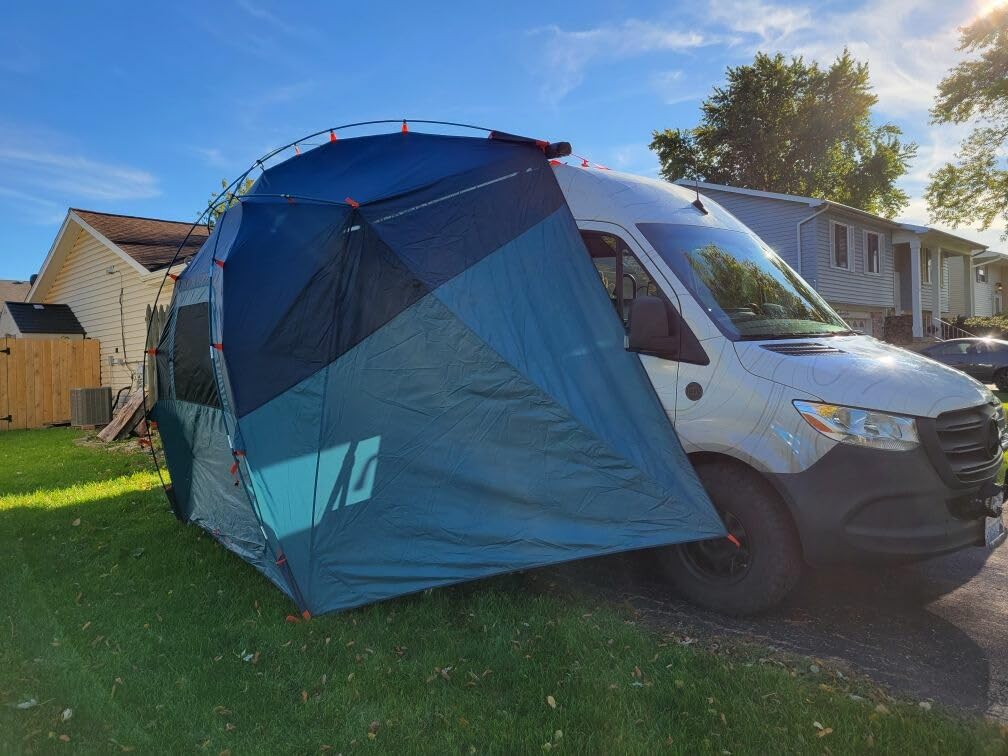
The 600 mm waterproof rating and DWR, PFC-free fabrics make it a genuine rain shelter rather than a shade cloth. Owners rate it at 4.5 stars with 77% five-star reviews, and the praise focuses on setup speed and how well the sidewalls hold their position once tensioned.
Kelty being a founding member of the Conservation Alliance shows in the material choices, which matters if you camp in sensitive ground rather than established campgrounds.
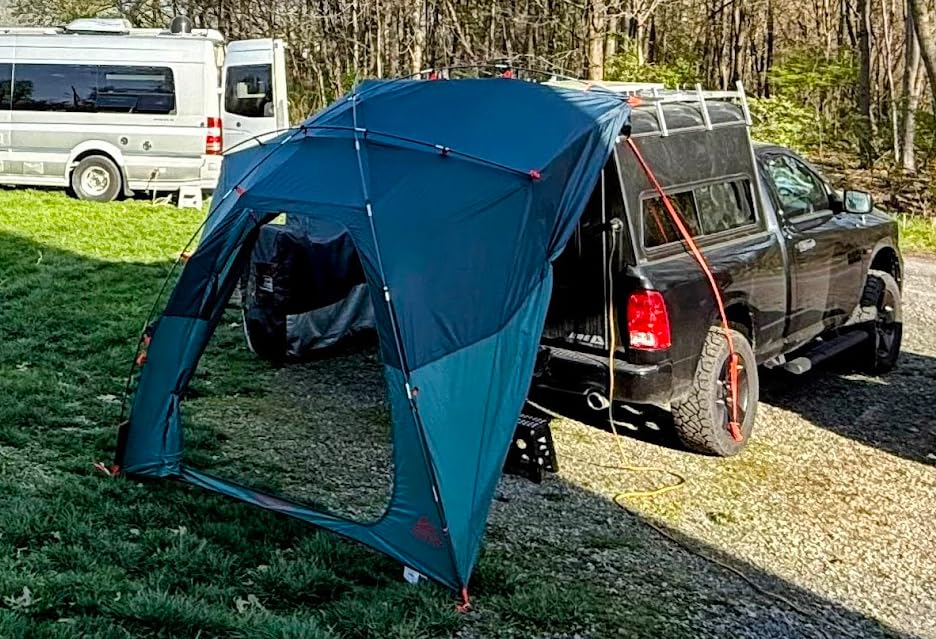
Why the Kelty is worth the extra bulk
For anyone who works from the van in unsettled weather, or who camps in shoulder seasons, the enclosed walls justify the extra weight and packed size. The 56 square feet of floor area sleeps two comfortably with gear, and it doubles as a gear-drying tent when the sun is not an option.
On a Mercedes Sprinter 170 extended wheelbase it tucks neatly against the sliding door without needing roof height to be considered.
Where it will not hold up
Even with sidewalls closed, an open-sided shelter still catches gusts. A few reviews report the fiberglass poles on the cheaper Backroads variant snapping in heavy weather, so check which variant you actually receive before a storm season.
The included steel stakes are light. Bring heavier pins and pitch it in the evening rather than the morning if the forecast shows wind picking up.
3. ALL-TOP Vehicle Awning 6.6 x 8.2 ft – Best Roof Rack Build with the Hardware Included
ALL-TOP Vehicle Awning 6.6’x8.2′ Roof Rack Pull-Out Sun Shade UV50+, Weatherproof 4×4 Side Awning for Camping & Overland (Hardware Included)
54 sq ft shade
PU 10000mm waterproof
UV 50+ fabric
10.95 kg
Pros
- Twist-lock setup and pack down in about a minute
- Anodized aluminum joints resist rust
- Complete universal mounting kit included
- 2-year warranty
Cons
- Plastic pole hinges with no spares
- Thin fabric can tear in heavy wind
The ALL-TOP is the rack-mounted workhorse of this list. It clamps to a side bar, rolls out to 54 square feet and adjusts between 4 and 7 feet tall, and the whole thing goes away again in about a minute once the twist locks are released.
What sets it apart is the hardware. The box includes wind ropes, L-brackets, backing plates, ground stakes, wrenches, bolts and nuts, so you are not hunting for a mounting kit after the awning arrives. For a first build that saves an entire afternoon of trailer-supply-store runs.
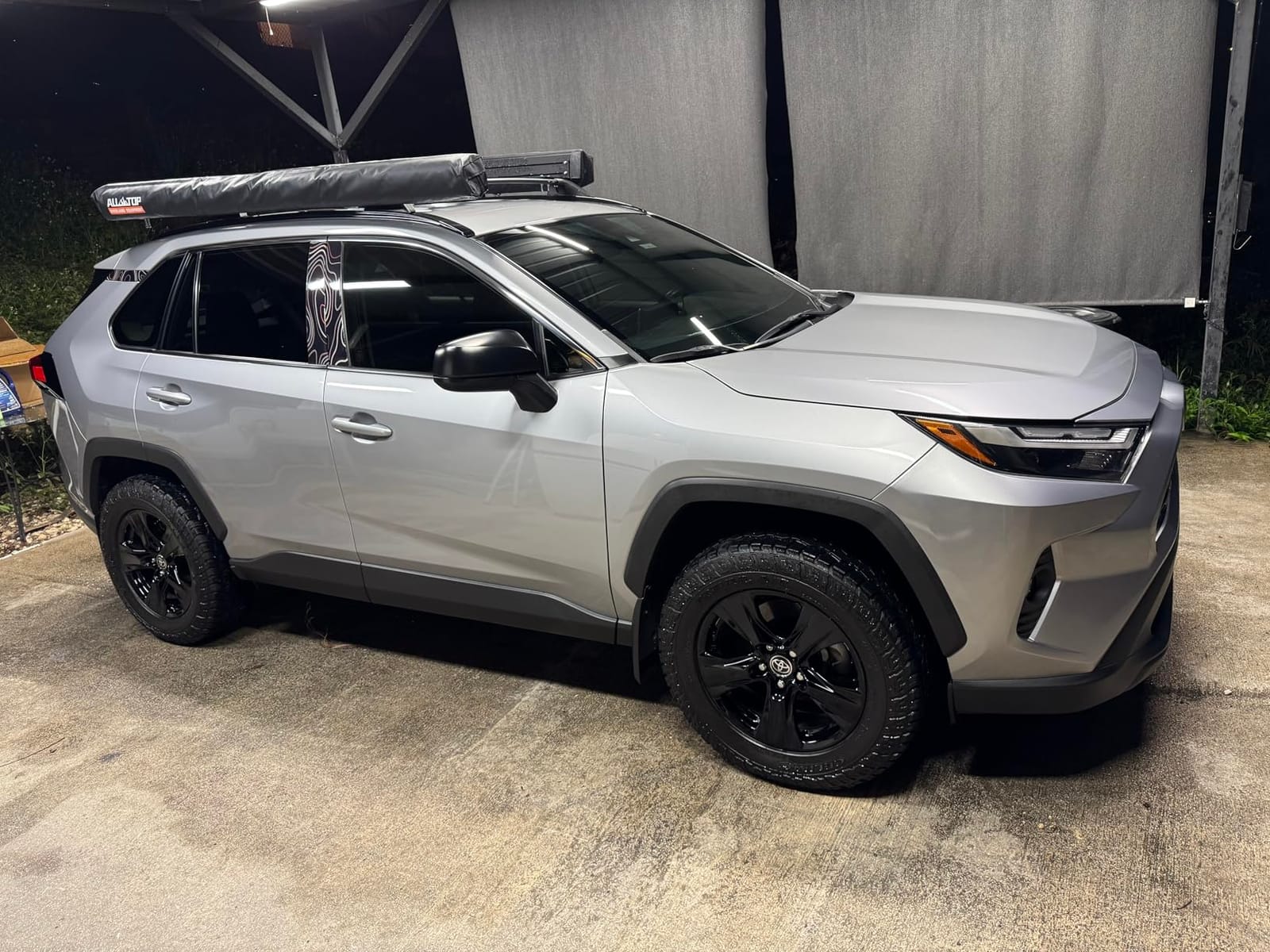
The canopy is 280GSM polyester-cotton ripstop with a PU 10000mm waterproof coating and UV 50+ blocking, a genuinely heavy fabric for the money. Owners report it staying stable in high desert wind and put it near the top of their category charts.
It is also the best seller in truck bed and tailgate awnings, and the 68% five-star share reflects a well-executed platform rather than a novelty item.
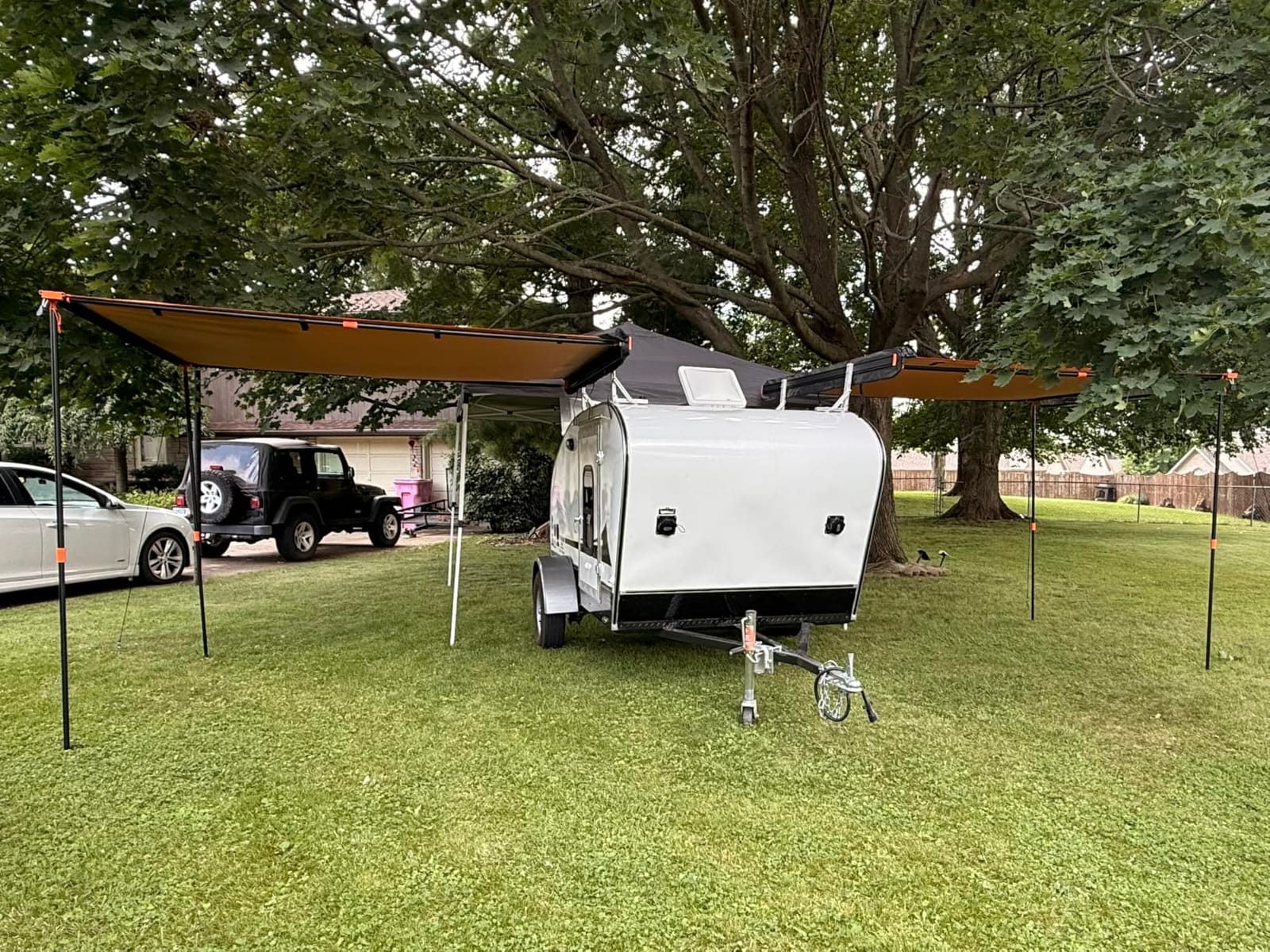
Where this awning earns its slot on the rack
If you have already committed to a roof rack for a rack, basket or solar setup, this is the cleanest install in the group. The multi-hole brackets also let you fine-tune the offset, which matters on vans with a raised roof rail.
On a Ram ProMaster 159 extended wheelbase it gives you a usable rectangle of shade that reaches well past the sliding door, and the 4 to 7 foot adjustment means you can lower the far edge for rain runoff.
What to watch before you mount it
The pole hinges are plastic, and the manufacturer does not sell replacements, so treat a bent hinge as the end of the unit rather than a repair. Fabric is thinner than premium canvas, so keep it pitched in calm conditions rather than testing it in gusts.
If your roof basket has cross slats only, expect to modify the brackets. Check the bar width before ordering.
4. VEVOR Vehicle Awning 6.6 x 8.2 ft – Same Platform, More Shade for Less Weight on the Pocket
VEVOR Vehicle Awning 6.6’x8.2′ Roof Rack Pull-Out Sun Shade UV50+ PU3000mm, Retractable Weatherproof 4×4 Side Awning for SUV Outdoor Camping & Overland (Hardware Included), w/Waterproof Storage Bag
54 sq ft shade
PU 10000mm waterproof
280GSM ripstop
19.8 lb
Pros
- 54 sq ft of shade with 4-7 ft telescopic height
- Quick twist-lock setup and pack down
- Anodized aluminum frame resists rust
- Universal mounting hardware included
Cons
- Heaviest unit per square foot in this group
- Bag and hardware add bulk for a van build
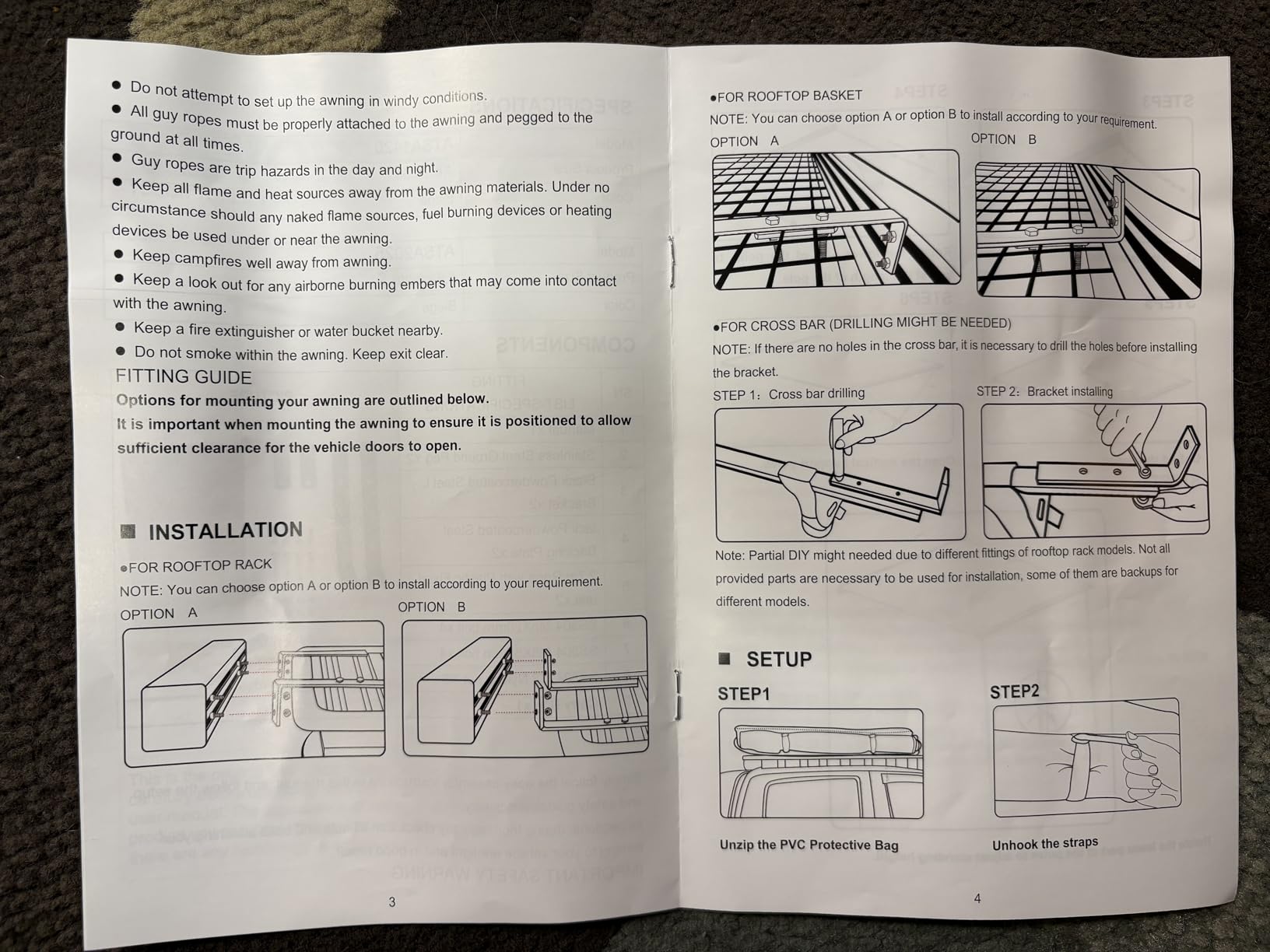
The VEVOR shares its platform with several other brands in this category, and what you are buying is 54 square feet of UV 50+ shade with a PU 10000mm coating at a noticeably lower cost. It also includes a 1000D PVC storage bag, which is better than the fabric bags most rivals ship with.
Setup is the same twist-lock routine: clamp it to your bar, pull the frame out, extend the telescopic legs between 4 and 7 feet, stake the corners. Owners report a one-person setup and pack-down in about a minute.
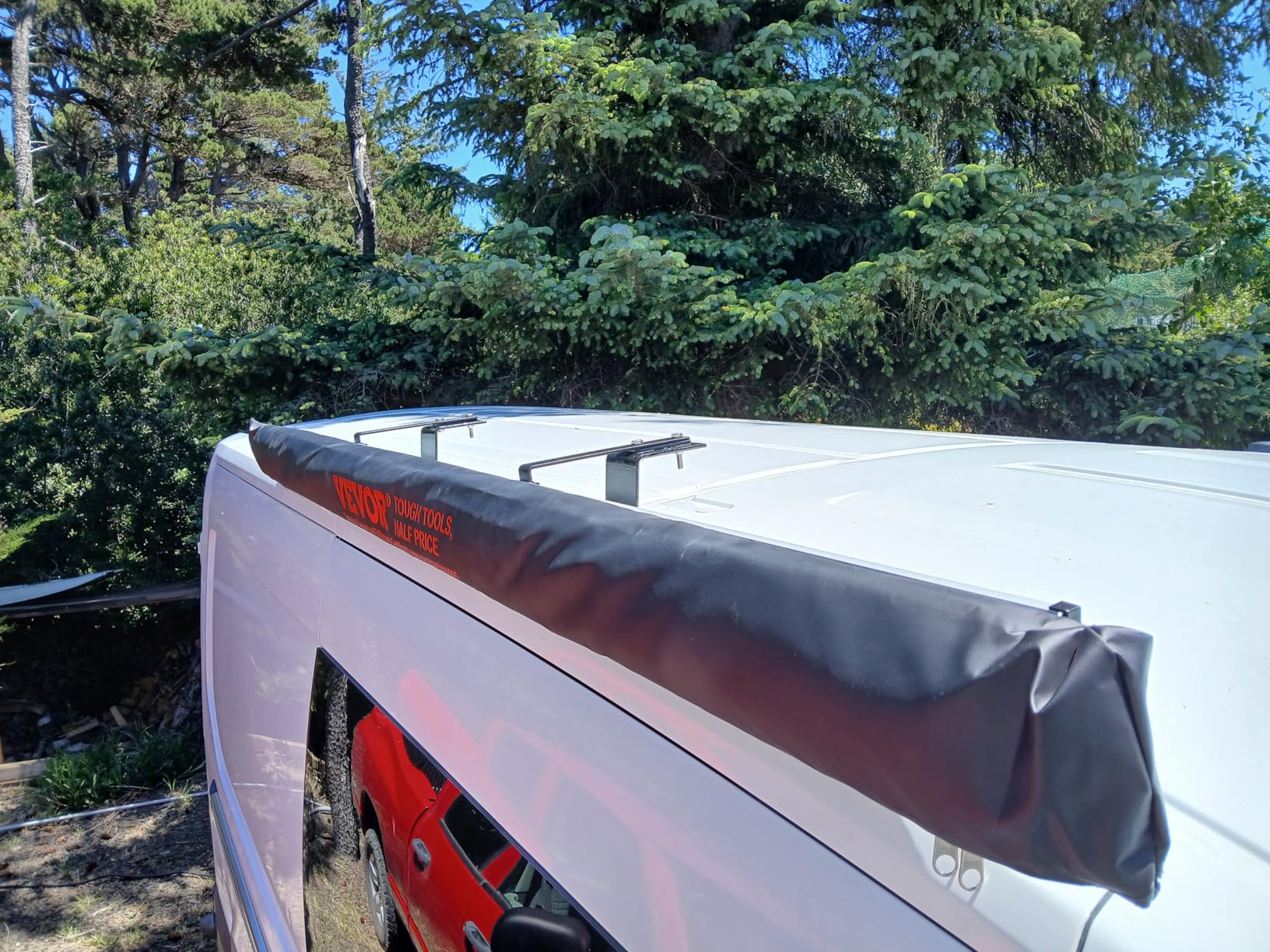
Ratings land at 4.2 with 66% five-star reviews. The feedback pattern is steady: people like the shade, the rust resistance on the anodized frame and the completeness of the hardware, and they accept the weight as the trade.
That weight is the number to think about before you commit. At nearly 20 pounds it is the heaviest unit per square foot in this group, and on a high-roof van where you are lifting gear to roof height it adds up.
Who should buy this one
This is the sensible pick for a weekend van that already carries a rack, or for anyone who wants a rack-mounted awning without spending heavily. The 2-year warranty is also longer than several competitors in this roundup offer.
The shade footprint suits a family of three with a table, or a solo rig with two chairs and a cooler, and the telescopic height lets you walk underneath.
Where it disappoints
Weight and bulk are the honest drawbacks. The hardware bag adds real volume to a garage, and on a small van that storage space matters more than most buyers expect when ordering.
Because it shares a platform with several near-identical listings, expect generic support rather than a brand that will answer a question about a specific bent part.
5. G4Free Car Awning Sun Shelter with Mosquito Net – Best Lightweight Bug-Screened Shelter
G4Free Car Awning Sun Shelter with Mosquito Net, Portable SUV Tent
290x200 cm shelter
Fine mesh floor and walls
99% UV blocking
5 lb packed
Pros
- Lightest shelter at about 5 lb
- Fine mesh floor blocks mosquitoes and small animals
- Reflective piping improves night visibility
Cons
- Seams leak and water pools in the middle
- Stake loops tear after about a year
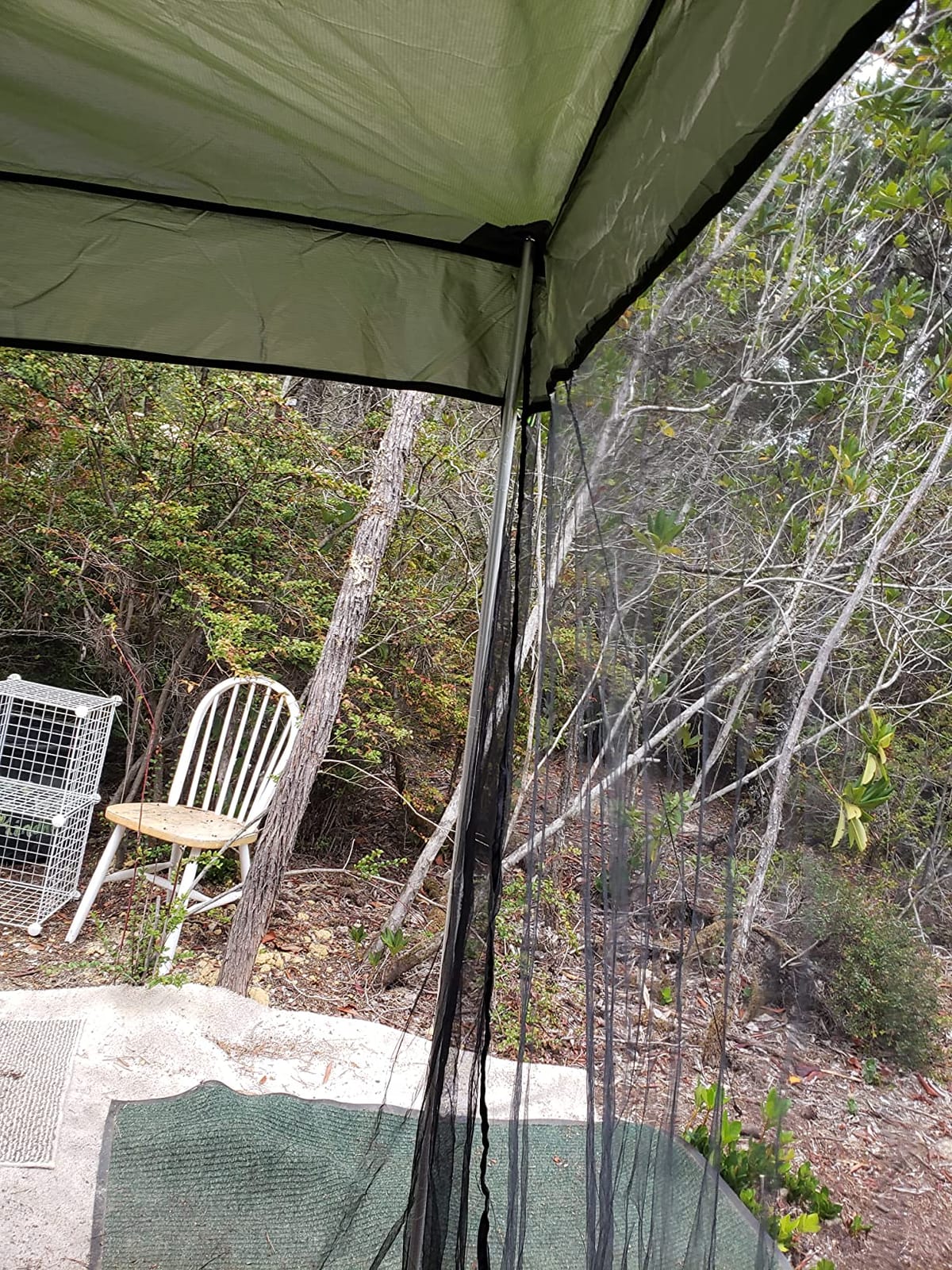
The G4Free is barely worth mentioning as weather protection and absolutely worth mentioning as insect protection. The fine mesh floor and walls turn it into an enclosed screened room that keeps mosquitoes and small animals out while you cook or sleep beside the van.
At about 5 pounds it is the lightest shelter here, and it folds to a 16.9 by 6.8 by 6.4 inch bag that disappears behind a seat. The 210T silver-plated polyester blocks 99% of harmful UV rays.
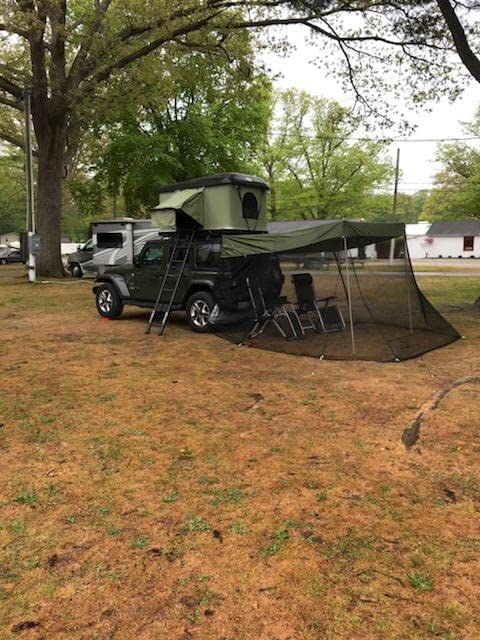
Reflective piping along the seams improves night visibility, which matters when you are fumbling with poles in the dark. It attaches to rear roof rails on most small to midsize vehicles.
Reviewers are consistent about the split verdict: it works well as a bug-proof screen and as shade, and it works poorly as a rain shelter. Seams leak and water pools in the centre panel, so treat any drizzle as a reason to pack it away.
The case for a screened shelter
Summer campsites in mosquito country change how you live. A screened box like this lets you leave the van door open at night without inviting the local population inside, which is exactly the use case that pure shade awnings cannot serve.
It also converts to a ground shelter for kids, and the low packed weight means one person can reposition it as the sun moves.
Where it will not hold up
This is the lowest-rated shelter in the group at 4.0 stars, and the reason is rain. Do not leave it pitched in an overnight forecast that includes showers, and expect the stake loops to need replacing after a season of use.
It also gets blown over in moderate wind. Wind and this product do not mix.
6. DANCHEL OUTDOOR Car Awning 6.5 x 8.2 ft – Best Range of Sizes and Best-Seller Value
DANCHEL OUTDOOR Car Awning 6.5×8.2ft Roof Rack Pull-Out Sun Shelter Canopy, Waterproof 4×4 Vehicle Side Overland Awning Camping, Gray
53.3 sq ft shade
PU 2000mm 420D oxford
UPF50+
Telescopic aluminum legs
Pros
- Rolls out in about a minute once mounted
- All-aluminum frame
- Multiple size options from 4.9x6.5ft up
- Responsive seller customer support
Cons
- Steel connection points at leg ends bend easily
- Requires rack bar width within 3.54 inches
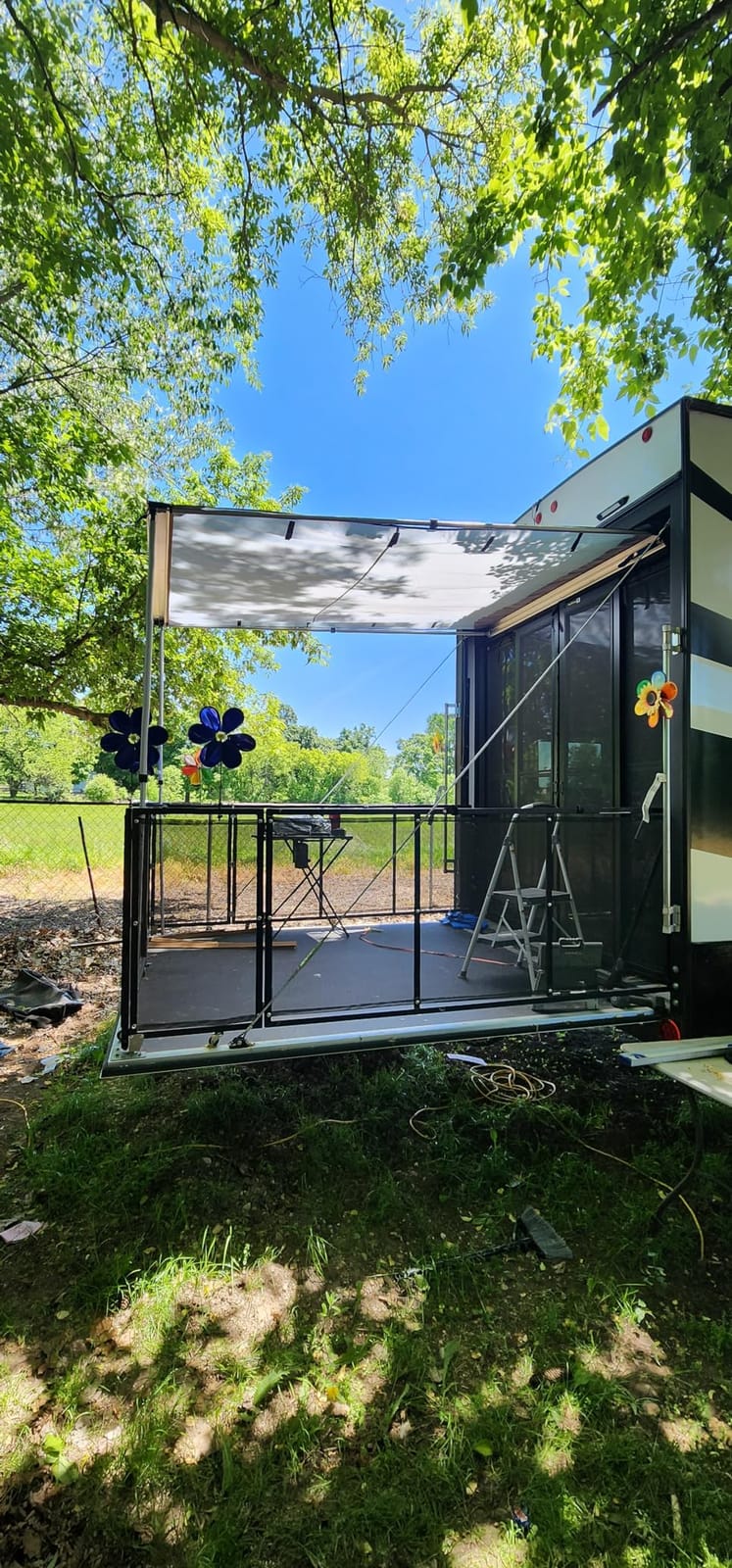
DANCHEL OUTDOOR builds this awning in a wide range of sizes, from 4.9 by 6.5 feet all the way up to 8.2 by 9.8 feet, and that flexibility is the reason it appeals to vans with unusual rack or clearance constraints. The 6.5 by 8.2 foot version gives 53.3 square feet of shade and rolls out in about a minute.
The frame is all aluminum with telescopic poles that adjust between 3.9 and 7.2 feet, and the canopy is 420D rip-stop oxford with a PU 2000mm coating and UPF 50+ sun blocking. Reinforced corners are rated for gusts in the 25 to 30 mph range, which is a realistic figure for a pitched shelter.
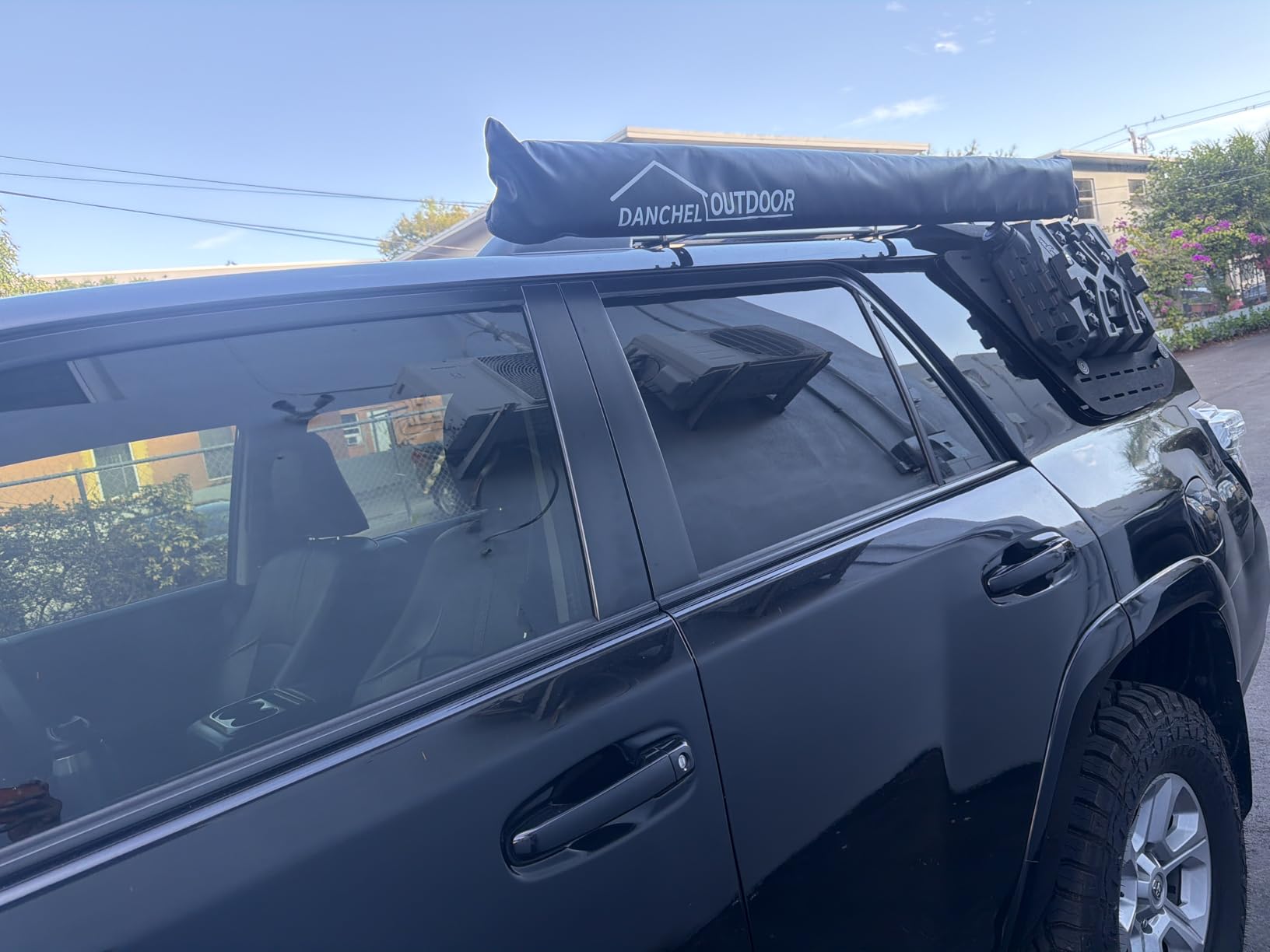
At 4.4 stars with 72% five-star reviews, owners who have bought several units in this category call it the best value available. The most common criticism is bendable steel at the leg joints and the need for custom brackets on some rack styles.
Attachment takes about 20 minutes the first time and minutes thereafter, and side walls and a front panel are available as optional add-ons.
Why the size range matters for van builders
Most vans share a rack rail, so the awning length rarely limits you. What limits you is clearance and how far the far leg has to reach. Having a shorter 4.9 foot option available means high-roof or short-wheelbase builds do not have to accept a canopy pitched too flat to drain.
Side wall and front panel compatibility also means you can turn 53 square feet into a screened room later without replacing the whole unit.
Where to be careful
The steel connection points at the leg ends bend under load, so inspect them after any gust and replace rather than bend them back. The rack bar width requirement of within 3.54 inches catches people out more often than any other spec on this list.
The PU 2000mm fabric is thinner than premium canvas, so treat it as a three-season shelter rather than a winter one.
7. MoonShade Portable Awning 9 x 7 ft – Best Stand-Alone Shade With No Vehicle Attachment
MoonShade Portable Awning for Vans, Cars, Campers and More, Large 9′ x 7′
63 sq ft shade
Reflective underside coating
8 lb packed
Poles adjust to 8 ft
Pros
- Packs to about yoga-mat size
- Reflective underside bounces lantern light
- Stands high enough to walk under
- Doubles as a ground canopy
Cons
- Suction cups pop off repeatedly
- Water resistance fades after about 1.5 years
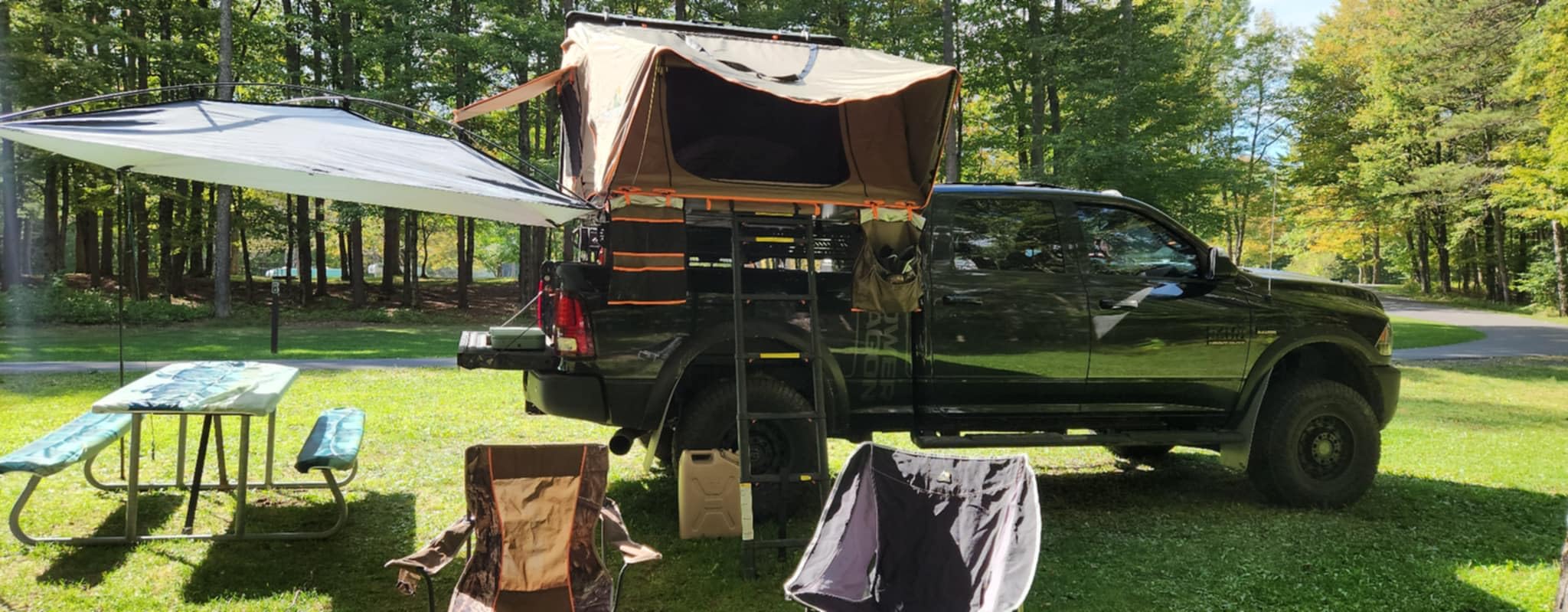
The MoonShade is the closest thing in this roundup to a freestanding awning, and it is the option we recommend for vans with no rack, no rail and no interest in drilling. It pitches with tension poles and support poles that adjust to about 8 feet, which means you can stand upright underneath and even convert it into a ground canopy away from the vehicle.
At 9 by 7 feet it covers 63 square feet, and it packs to roughly yoga-mat size at around 8 pounds with a shoulder-strap bag. That packability is why it is a common sight at festivals and in desert camps where ground space is cheap.
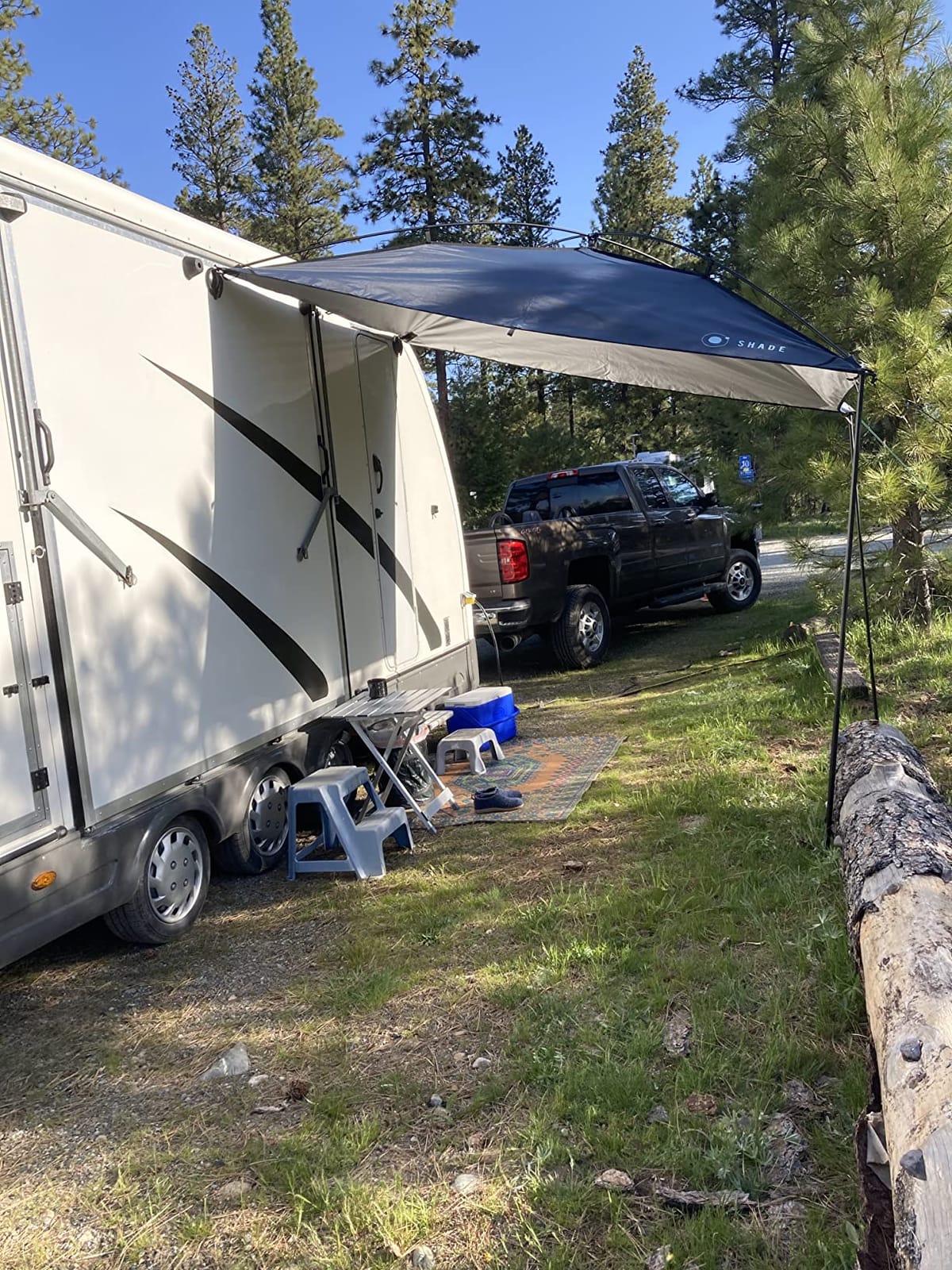
The reflective underside does two things: it bounces lantern light back down so you can see, and it keeps the shaded area cooler than a single-layer fabric would. Owners rate it at 4.3 stars with 65% five-star reviews and consistently praise the shade quality and the speed of setup once the sequence is learned.
A lifetime warranty with prompt replacement of broken parts is unusual in this category and a genuine advantage over the one-year coverage most rivals carry.
Where the MoonShade earns its reputation
If you move campsites weekly, a portable awning that lives in a locker and needs no tools is arguably better than a permanent cassette you have to wire and calibrate. Many owners on camper van forums describe exactly this pattern, packing the awning with their camp chairs every morning.
It is also the easiest option to borrow. Two people can share one across vehicles, which suits couples who swap vans or families with one rig.
Where it disappoints
The suction cup anchors are the weak point and the most common complaint. They pop off repeatedly, and a large share of buyers substitute U-brackets or magnets instead. If you plan to rely on it in open sun on hot paint, plan to buy a better anchor from day one.
Water resistance degrades, with seams and fabric seeping after roughly a year and a half of ownership. Strut poles also sell separately, so budget for the extra poles if you want them.
8. TIMBER RIDGE Car Awning 8.2 x 6.5 ft – Best Mid-Size Rack Awning for Big Shade
Timber Ridge Car Awning Camper Awning 8.2X6.5ft Truck Tent Waterproof PU10000mm UV50+ Rooftop Overland Camping, Retractable Side Tent Shade for Car/SUV/Truck/Van, Beige
53.3 sq ft shade
PU 10000mm waterproof
UV 50+
4-7 ft adjustable
Pros
- Large shade footprint for mid-size vans
- Height adjusts from 4ft to 7ft
- Waterproof coating protects the aluminum frame
- Hardware guylines and stakes included
Cons
- Heaviest unit in the group at 24.5 lb
- Only a 1-year manufacturer warranty
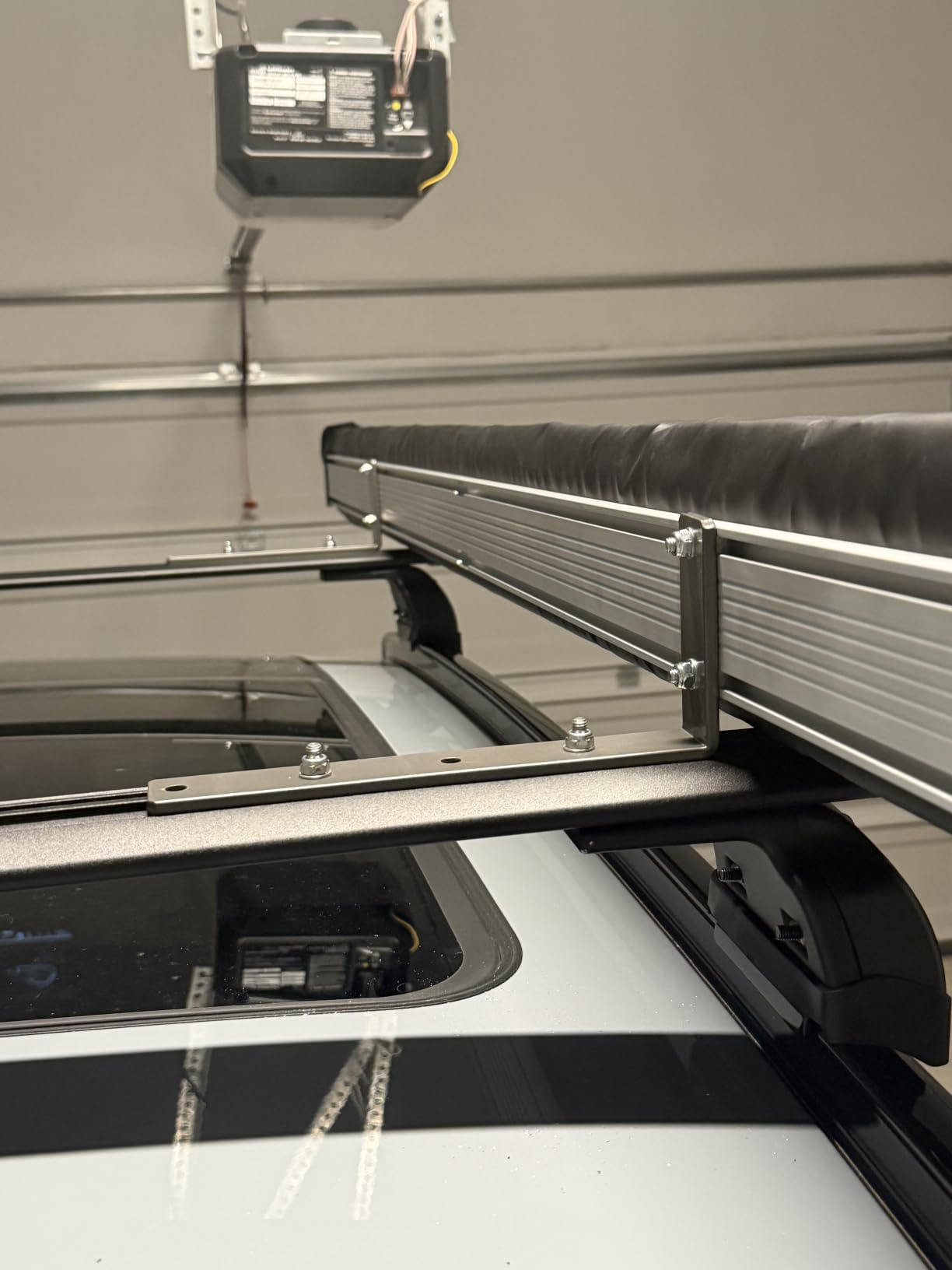
The TIMBER RIDGE 8.2 by 6.5 foot awning covers 53.3 square feet and adjusts between 4 and 7 feet tall with ventilation on three sides. Three-side venting matters more than most buyers expect, because it is what stops the canopy acting as a sail and lets hot air escape on a still afternoon.
The fabric is listed as ripstop combed cotton canvas with a waterproof silver-plated aluminum coating, rated PU 10000mm for waterproofing and UV 50+ for sun protection. That combination is one of the stronger weather specifications we saw across all 12 units.
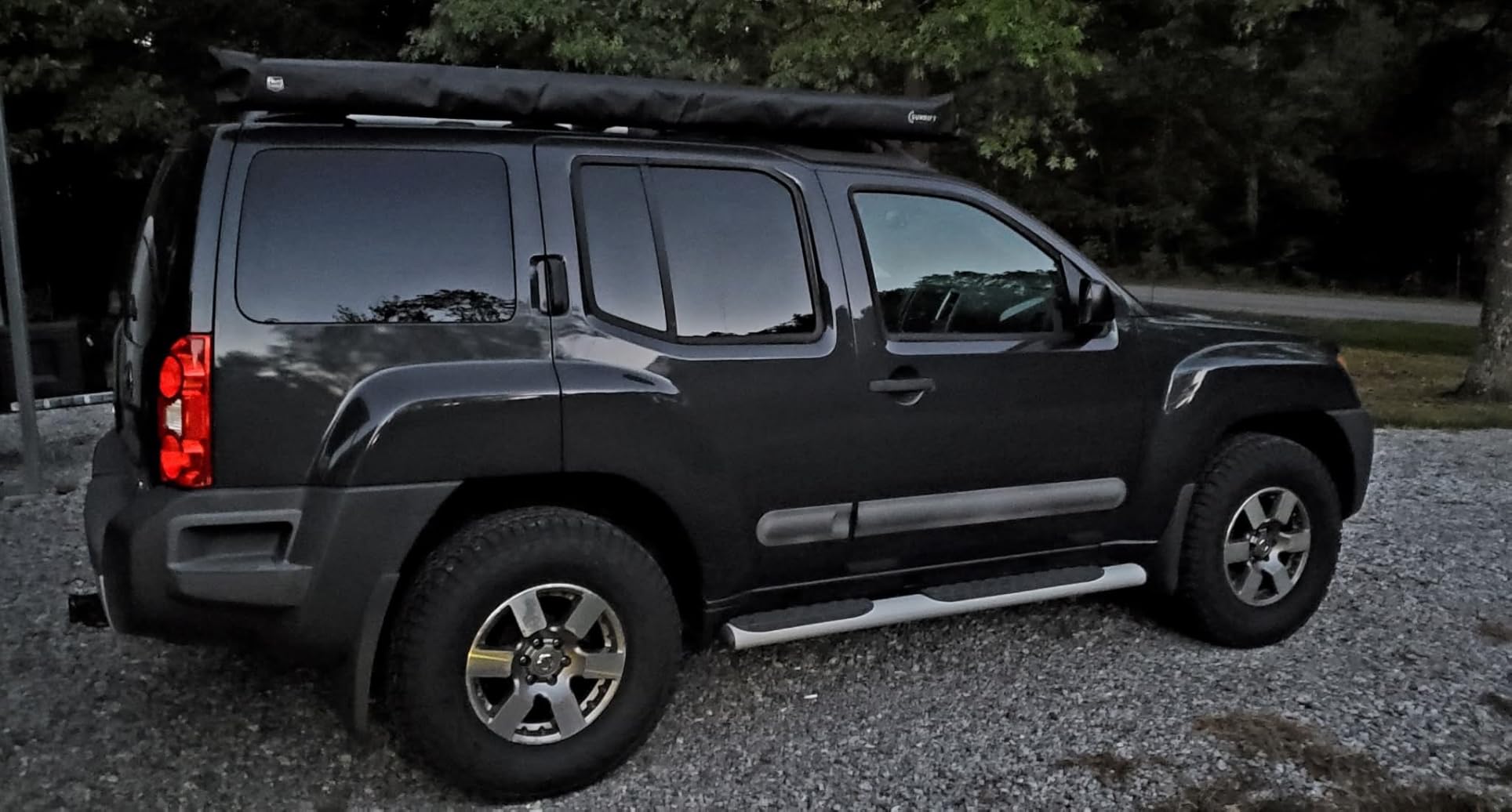
The box includes mounting brackets, bolts, winding ropes, four guylines, four heavy-duty stakes and a waterproof PVC bag, and setup finishes in minutes on a roof-racked vehicle. Owners rate it 4.4 stars with 77% five-star reviews.
Fit is broad. It suits nearly any vehicle with a rack, including Ford Transit, Mercedes Sprinter and Ram ProMaster builds with a rack already fitted for solar or storage.
Who should choose this one
Pick it if you want a mid-size rectangle of permanent shade from a van that already has a rack and wants serious waterproofing without stepping up to a full cassette awning. The 53.3 square feet covers a family cooking setup with room to spare.
It is also a sensible middle ground for people moving between a rack awning and a larger side awning later, because the mounting footprint stays within standard bar widths.
What to consider first
At 24.5 pounds it is the second-heaviest awning we reviewed, and lifting that onto roof height solo takes planning. If you build solo, budget a second pair of hands or a lift.
The 1-year manufacturer warranty is the shortest we saw. That is not a deal breaker for a shade product, but factor it into how long you expect to own the van.
9. TIMBER RIDGE Blackout Coating Car Awning 19 x 9.8 ft – Best Maximum Coverage for Hot Climates
TIMBER RIDGE Blackout Coating Car Awning, 19×9.8ft, Green
186 sq ft shade
Blackout coated ripstop
Three-side ventilation
25.9 lb
Pros
- Very large covered area
- Blackout coating blocks light and extends frame life
- Adjustable side angles track the sun
- Installs on nearly any roof-racked vehicle
Cons
- Heaviest unit in the group at 25.9 lb
- Only a 1-year manufacturer warranty
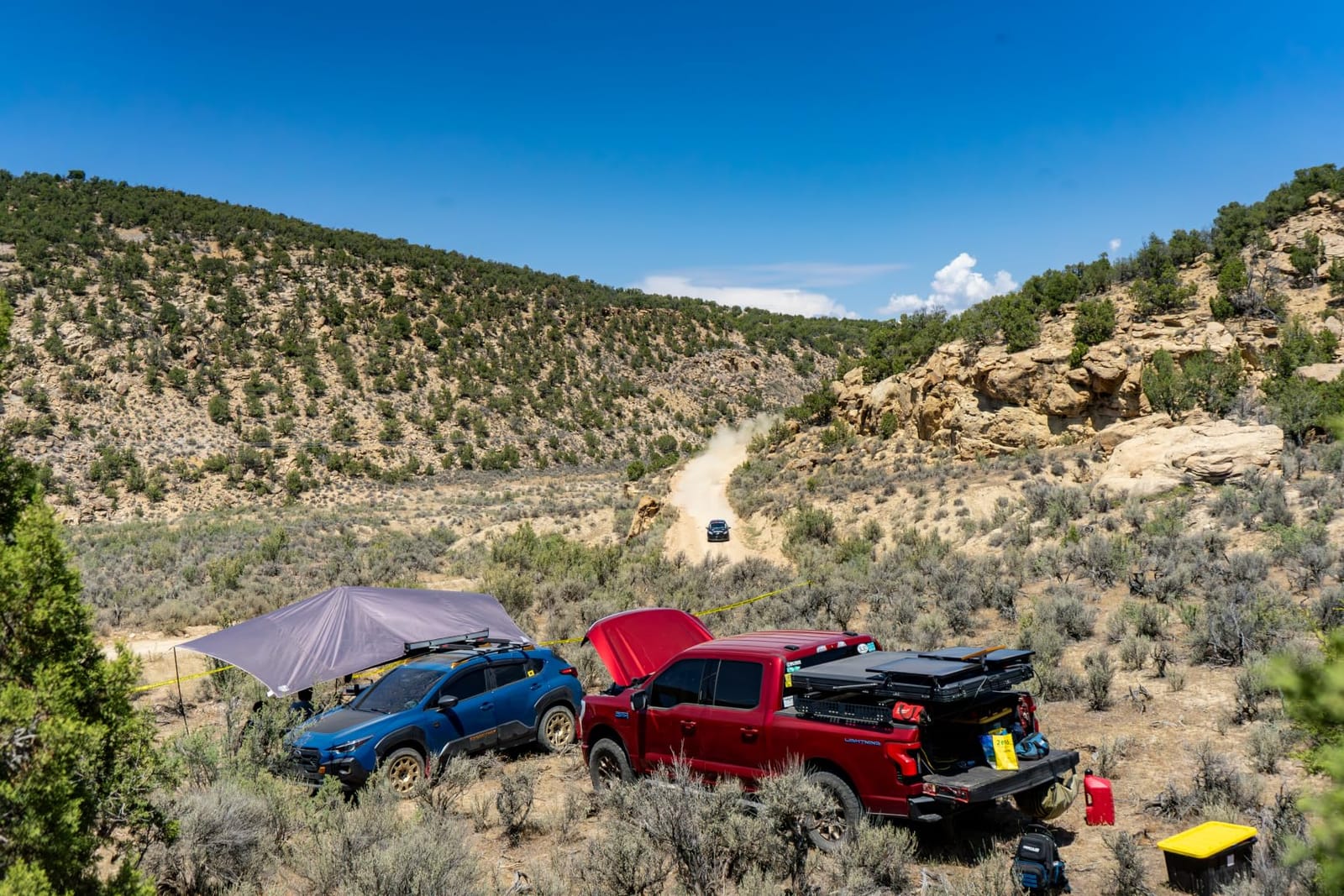
Nothing else in this roundup comes close to the coverage here. At 186 square feet across a 19 by 9.8 foot footprint, this awning can shade an entire campsite: two vans, a table, a fire pit and a couple of chairs under one roof.
The blackout coating on the ripstop combed polyester does more than block light. It absorbs less heat than a light-coloured fabric, which is why owners in hot, high-desert conditions single it out for keeping the shaded ground noticeably cooler through the middle of the day.
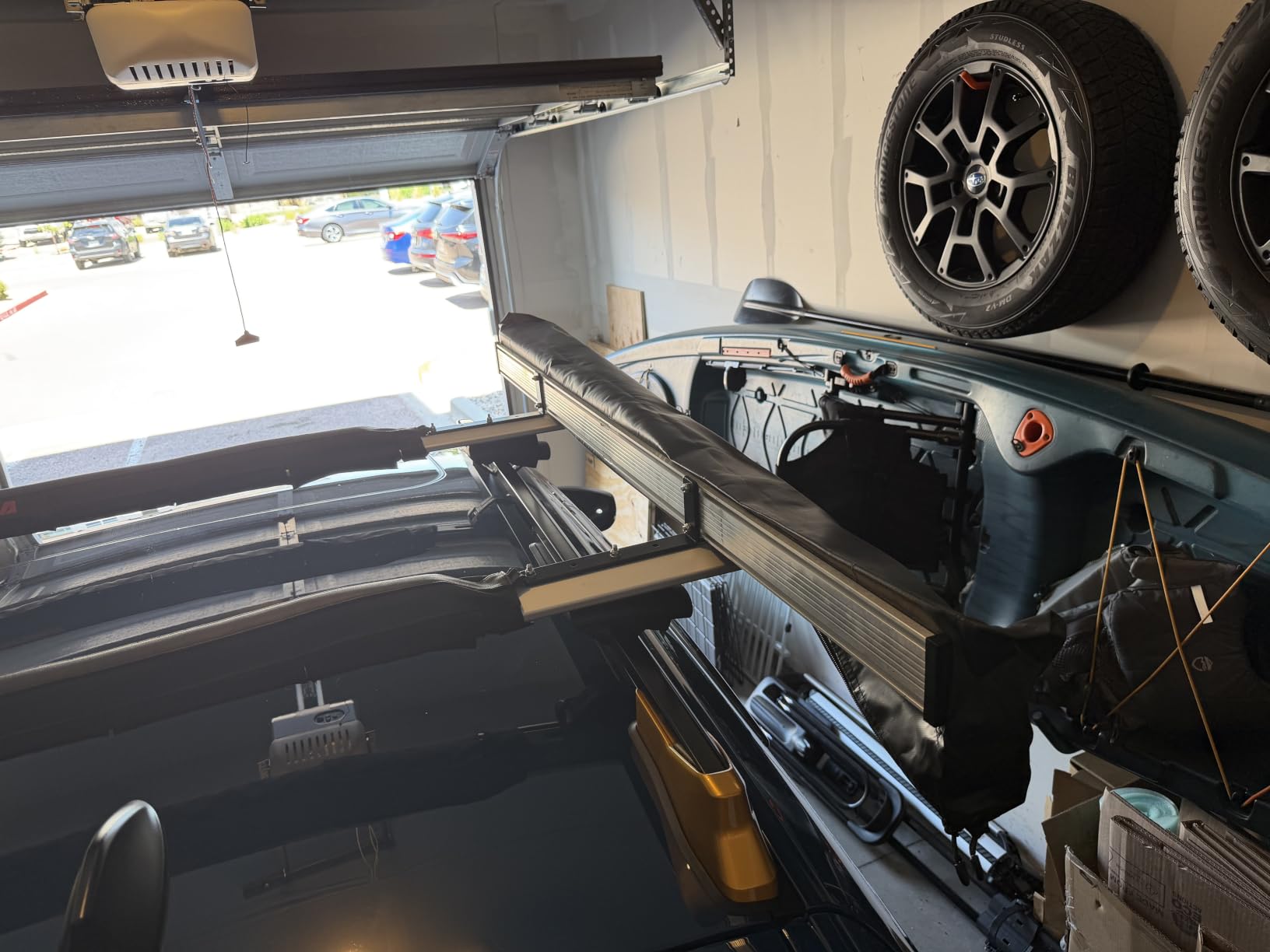
Both long sides adjust their angle independently, so you can chase the sun around the arc of the day rather than setting one fixed pitch. That flexibility, combined with three-side ventilation, keeps the canopy usable on a still afternoon when a fixed awning would trap hot air underneath.
Ratings sit at 4.4 stars with 68% five-star reviews, and the feedback centres on the sheer covered area and the blackout coating.
When the coverage justifies the weight
This is the right call for base-camp setups: overlanders staying put for weeks, families with kids and lots of outdoor gear, or anyone running a small work area out of the van. The footprint is the product, and at this size nothing else in the list matches it.
You will need a substantial rack. On a Ford Transit or Ram ProMaster high roof, check your rack load rating before planning around a canopy this size.
Where it stops making sense
At 25.9 pounds it is the heaviest unit here, and it is genuinely awkward to deploy alone at roof height. Two people or a step is the realistic assumption.
It also makes no sense for anyone moving campsites daily. You are hauling a large frame and fabric for a shelter you will enjoy for a week.
10. GEERTOP Car Tailgate Awning 19 x 16 ft – Best Budget Coverage Per Square Foot
GEERTOP Car Tailgate Awning 19 x 16 FT, Waterproof Vehicle Shelter
About 215 sq ft shade
Water resistant 210T polyester
Two telescoping poles
Buckle mount
Pros
- Largest covered area in the group
- Buckle system fits most vans and trucks
- Three setup configurations
- Lightest per square foot of the hard-mount options
Cons
- Water resistant rather than fully waterproof
- Pole height limited to about 83 inches
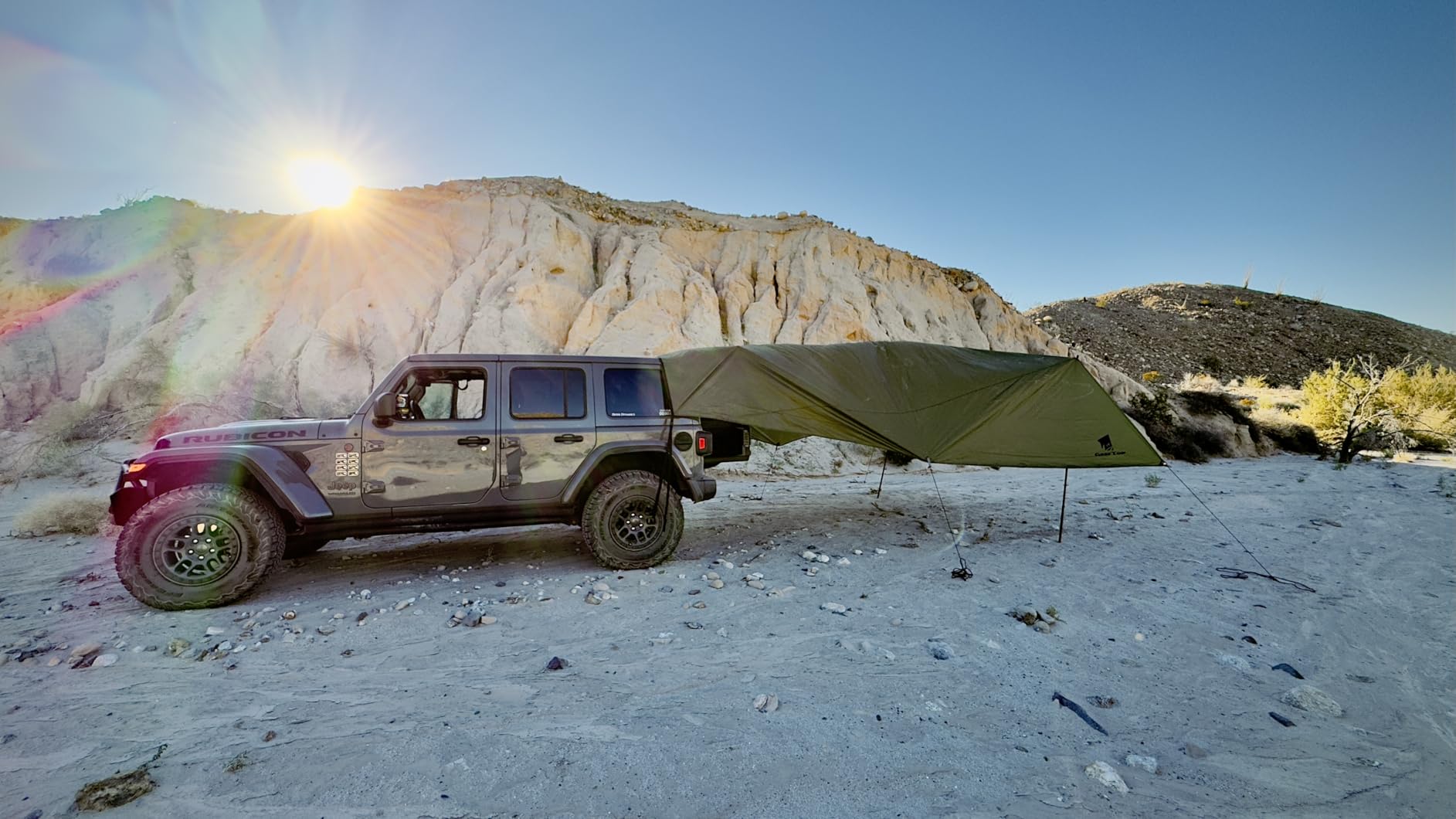
The GEERTOP delivers roughly 215 square feet of shade, the largest footprint in this roundup, from a two-pole system that buckles onto the tailgate or hatch of most Jeeps, SUVs, vans and trucks. If coverage per pound of budget is your priority, this is the one.
It reconfigures three ways: an A-frame with the vehicle, an awning attached to the vehicle, or a fully freestanding A-frame shelter once you have stepped away from the van. That third mode is unusual at this size and genuinely useful when you want shade at the picnic table rather than at the van.
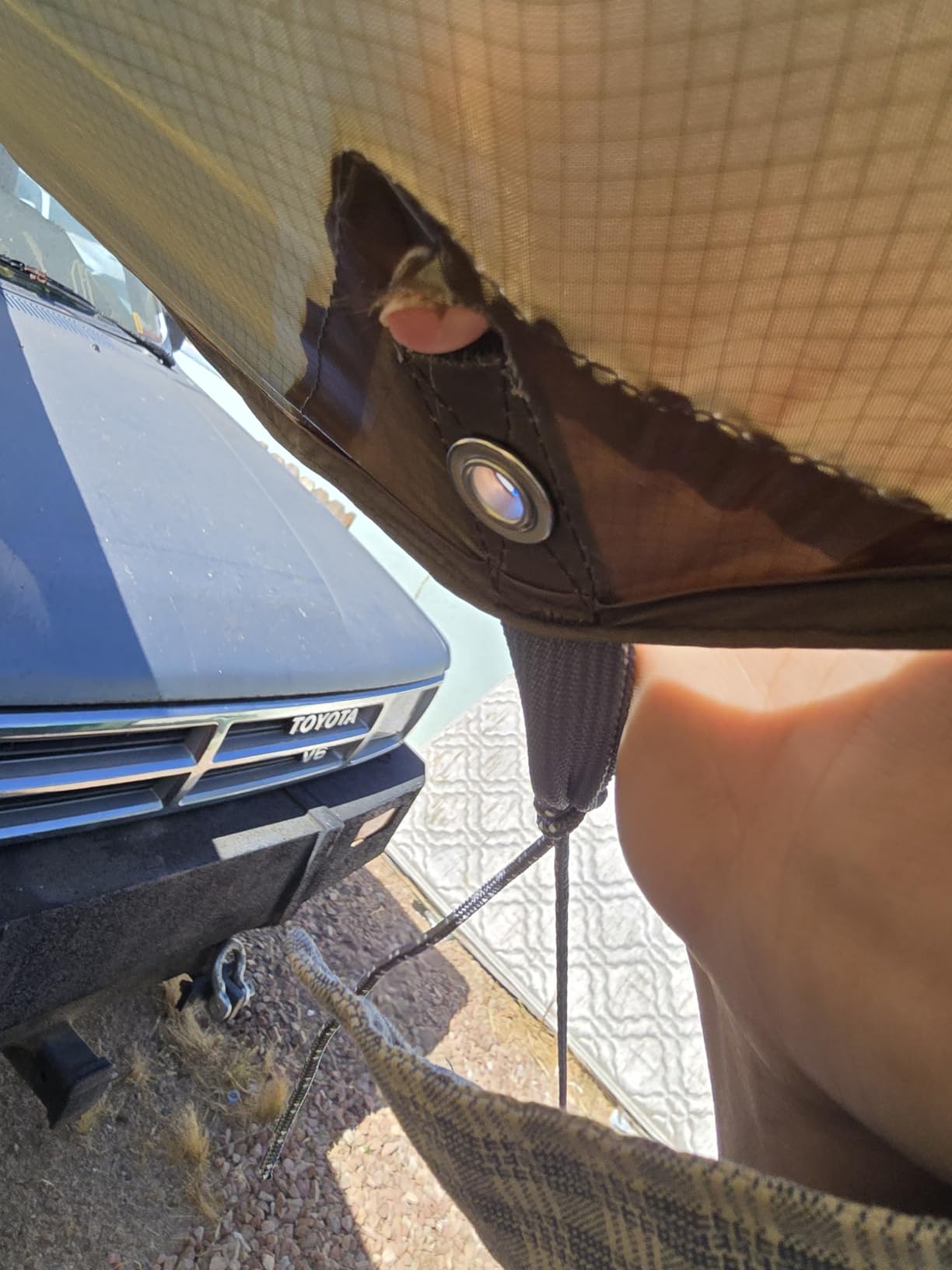
The poles telescope between 72 and 83 inches, which sets both the standing height and the pitch. The fabric is tear-resistant 210T polyester. Owners rate it 4.3 stars with 66% five-star reviews and consistently treat it as the cheapest shade per square foot available.
The buckle attachment means no drilling, no rack and no hardware purchases, which is the entire appeal for a van that has none of those.
Where this budget shelter wins
For a first summer of van camping, a festival setup or a family beach trip, this much covered area at this weight is difficult to argue with. You can fit a table, several chairs, a cooler and a pet under it and still have walking room.
Because it fully detaches, it works with rental vans and shared vehicles too. Nothing stays bolted to the vehicle between trips.
Where to draw the line
It is water resistant, not waterproof, so treat it as shade rather than rain cover. In a shower the seams will weep.
The two-pole support caps the height at about 83 inches, so it is not a standing-height shelter for adults. Check that ceiling against how you plan to use it.
11. FEIWOOD GEAR Portable Car Awning 10 x 5.6 ft – Fastest Tool-Free Setup for Casual Campers
FEIWOOD GEAR Portable Car Awning for SUV Van, 10 x 5.6 ft
120 x 68 inch shade
PU 5000mm waterproof
UV 50+
5.6 lb packed
Pros
- About five-minute tool-free setup with suction cups
- No roof rack hardware required
- 210D silver-coated ripstop with UV 50+
- Stakes and guy ropes included
Cons
- Suction cups unreliable in wind or on smooth surfaces
- Awning sags without a center extension pole
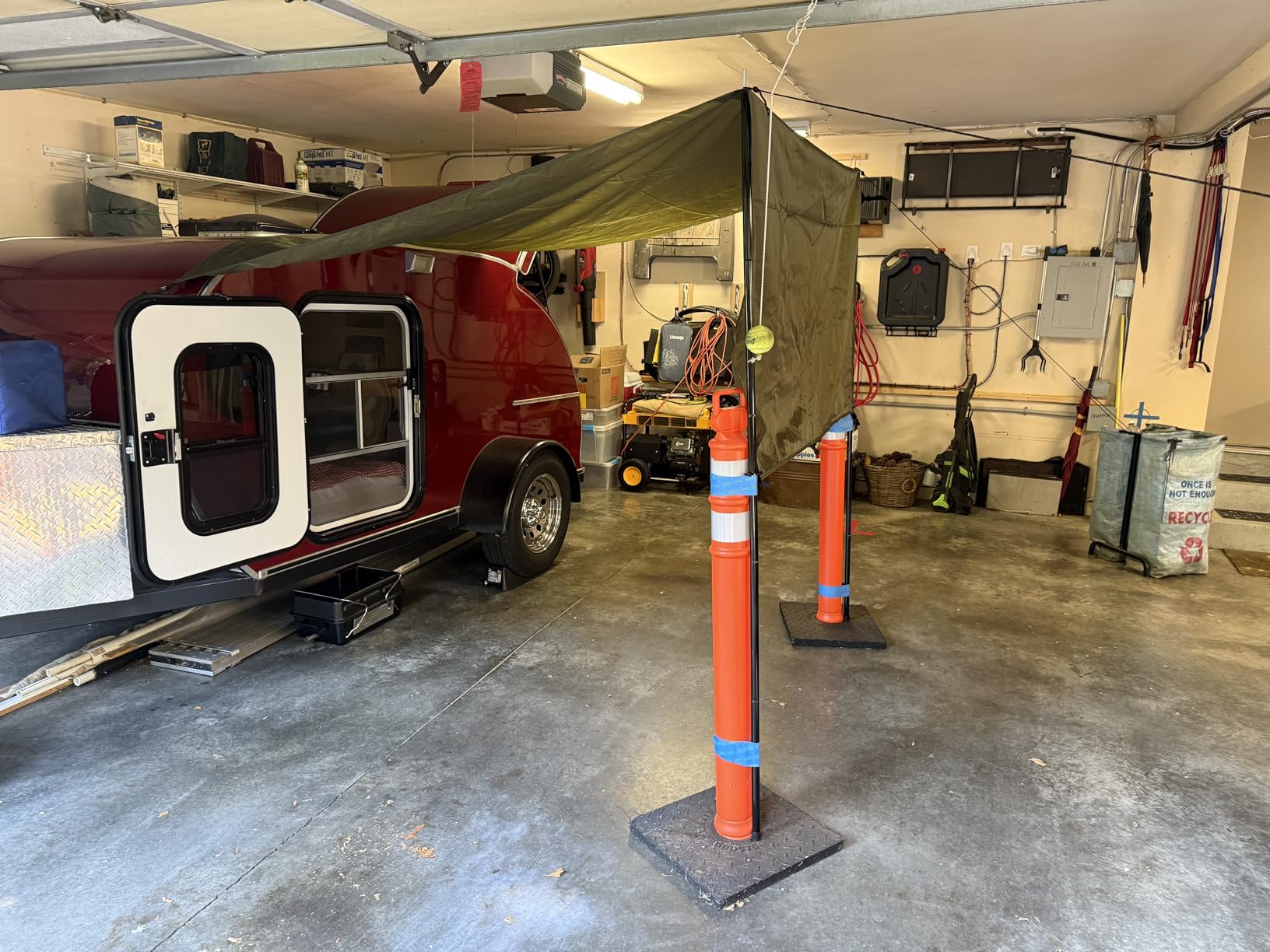
The FEIWOOD GEAR is built around one idea: pitch shade in about five minutes without touching a single roof rack bracket. Two large reusable suction cups and hooks do the attaching, and the pole set goes together with no tools at all. At 5.6 pounds it is the second-lightest unit here.
The set-up size of 120 by 68 inches at 75 inches tall covers a table, chairs, a cooler, kids and pets. The 210D silver-coated ripstop polyester carries a PU 5000mm waterproof rating and UV 50+ protection.
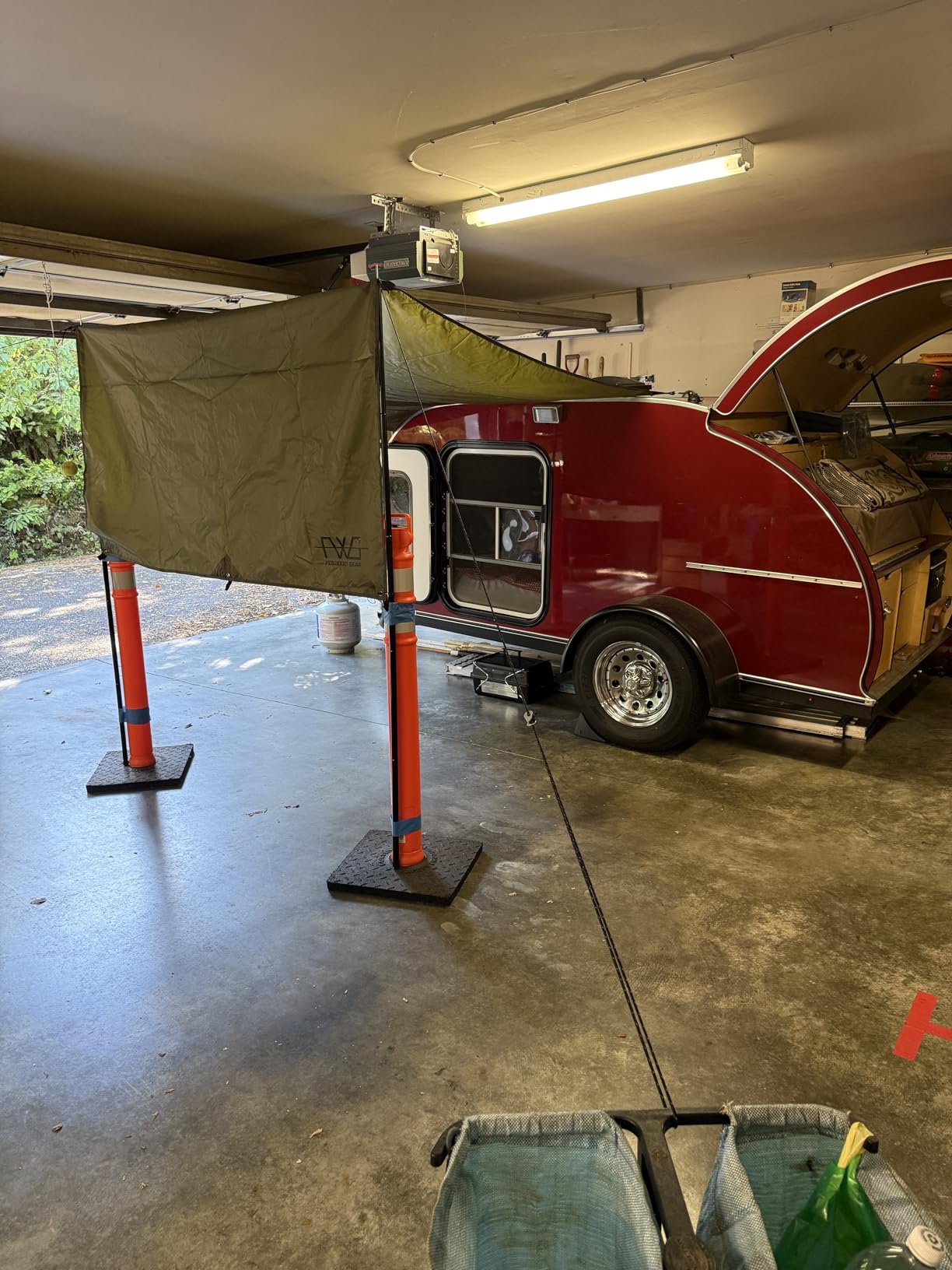
Owners consistently praise the speed of the setup, the quality of the waterproof fabric relative to the cost, and the fact that the package includes ground nails, wind ropes, pole bags and a storage bag. That completeness is unusual at this level.
The most repeated criticism is the same one we found testing it: the suction cups release in wind or fail to grip sand and polished paint. Several buyers pair it with a roof rack, substitute magnets, or simply rely on the included ropes and stakes instead.
Who should buy the FEIWOOD GEAR
Anyone who wants shade occasionally without committing to a rack build. It works on SUVs, vans, MPVs, cars and trucks, and it suits boating, fishing, sporting events and festivals just as well as camping.
It is also the easiest unit to share between two vehicles, which suits couples who swap vans or take turns driving.
Where it falls down
The canopy sags in the middle without the optional center extension pole, and it flops when you close a hatch or door underneath it. On soft ground like beaches, the stakes do not bite and the pitch takes longer than five minutes.
Rate it as a calm-weather shade shelter, not an all-condition awning.
12. ARB 814301 Retractable Awning – Best Self-Standing Frame for Roof Bar Setups
ARB 814301 Retractable Awning 1250 x 2100 mm 4×4 Accessories, self-Standing Retractable awnings fit onto the Side of Most roof Racks and roof Bars
49 x 82 inch shade
Self-standing telescopic legs
300gsm waterproof canvas
25 lb
Pros
- Self-standing telescopic legs need no ground support at the vehicle
- Waterproof UVP 50+ poly-cotton ripstop canvas
- Deploys in about 30 seconds
- Reinforced aluminum extrusions stay rigid
Cons
- Compact footprint shades a limited area
- Heavy and bulky to handle
- Requires an existing roof rack or roof bars
The ARB 814301 is built differently from the fabric awnings above. Its legs are attached to the frame, so once you unclip it from the roof bar and open the legs it stands on its own without needing a support point at the vehicle side. That is a real structural advantage when you want to walk around the canopy.
The canvas is PU coated 300gsm poly-cotton ripstop, fully waterproof with a UVP 50+ rating, stretched over thick reinforced aluminum extrusions. Pegs, guy ropes, mounting nuts and bolts and a spanner are all supplied, and the whole bag stows away from the vehicle.
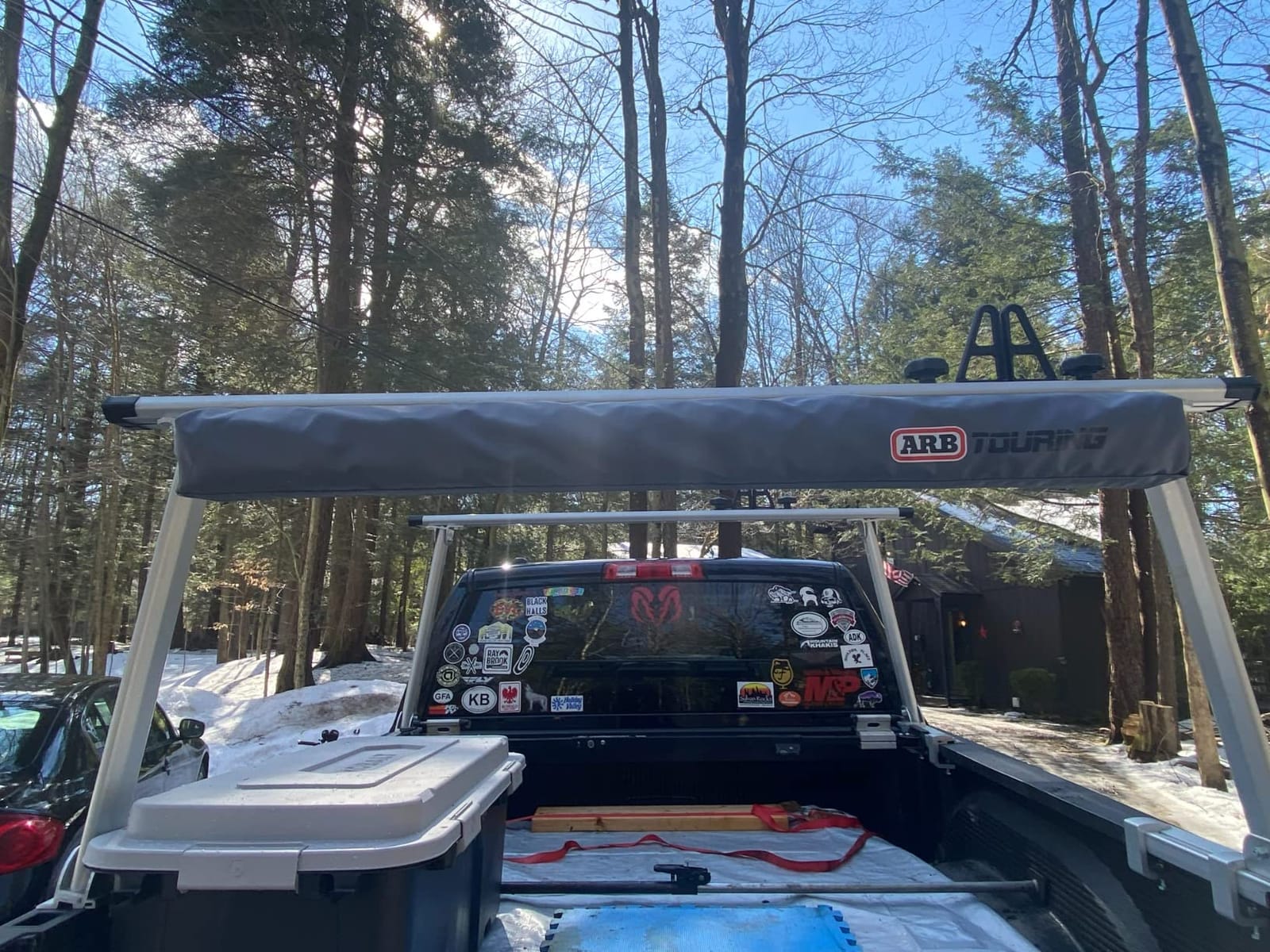
At 4.5 stars across 223 reviews with 78% five-star, this is the highest-rated shelter in the roundup alongside the Kelty. Owners describe it as dependable and over-engineered, and the recurring praise is for the adjustable legs, the tough canvas and how quickly it moves from bag to standing.
A 2-year warranty comes standard, and ARB builds for outback conditions rather than weekend camping.
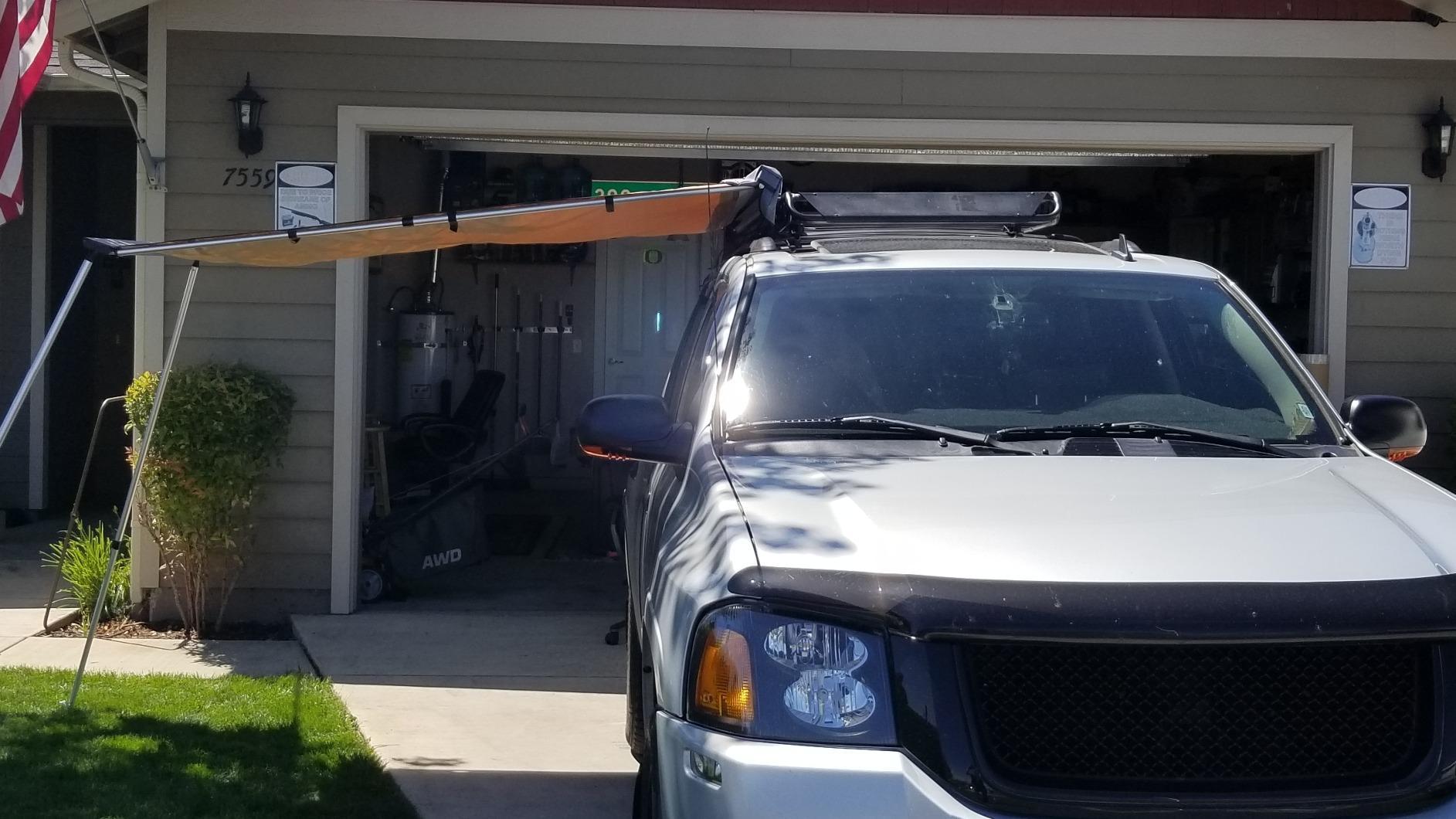
Where self-standing legs earn their keep
The self-standing design means you can pitch the awning away from the vehicle, dig in properly at the far end and still leave the side nearest the van completely clear. That is the arrangement you want on rough ground or gravel where a ground peg next to the van is awkward.
It suits anyone who already runs roof bars for a roof tent or a recovery setup and treats the awning as one more piece of the same system.
Where the trade-offs sit
The footprint of 49 by 82 inches is compact next to the 186 and 215 square foot shelters in this list. If you want a family sitting area, this is a cooking and gear shelter rather than a living room.
At roughly 25 pounds it is the second-heaviest item we reviewed, and it needs existing roof bars, which is an added build cost if your van has none. Forum buyers on r/carcamping regularly single out ARB as one of the cheaper-and-adjustable options that holds up, and the build quality here matches that reputation.
How to Choose a Camper Van Awning: Mounting, Size and Fabric
Start with what your van actually has. Most vans ship with a bare roof, a bare side wall and nothing else. That single fact eliminates half of this roundup before you compare any other spec, and it is the question people most often get wrong in camper van forums.
Mounting type decides everything else. A rack-mounted awning clamps to a bar and needs a roof rack plus a load-rated mounting point. A tailgate or hatch shelter attaches to an opening or a suction cup and needs nothing. A wall-mounted cassette is fixed to the van body and gives you the fastest deployment but demands drilling and sealing.
Ground reach is the spec buyers misread. Extension tells you how far the fabric reaches out. Ground reach tells you whether the leg actually touches the earth. On a high-roof van the vehicle side of an awning can sit well above head height, which is fine, but the far leg still needs to reach the ground for tension. Check the leg adjustment range against your roof height before you buy.
Size should follow the space, not the marketing. A shelter covering 54 to 63 square feet suits a couple or a family of three. Coverage above 150 square feet changes the character of a campsite and starts demanding a serious rack and a second pair of hands. For most van builders, 50 to 65 square feet is the sweet spot.
Fabric decides the season. Vinyl and coated poly-cotton ripstop handle rain and UV best and are what serious overland builds use. Polyester ripstop is lighter and cheaper but wears faster under UV. Mesh and screen fabrics keep insects out and give up on rain entirely. Denim and cotton canvas feel good in a campsite but have no place in a wet climate.
Waterproof ratings are not comparable across brands. You will see 600 mm, 2000 mm, 3000 mm, 5000 mm and 10000 mm quoted in this roundup. Higher numbers handle sustained rain better. Ratings below 3000 mm belong on a shade product, not a rain shelter, and the GEERTOP is honest about being water resistant rather than waterproof.
Weight matters more than people expect. Anything above 24 pounds becomes a two-person job at roof height. Anything under 11 pounds can be carried one-handed, moved across campsites and shared between vehicles. Decide how often you will move before you commit to the heavy end.
Accessories matter after the awning. Side walls, a front panel, ground stakes, guy ropes, mounting brackets and storage bags turn shade into a usable room. Some products in this roundup include all of it, while the MoonShade sells strut poles separately. Budget for the extras.
There is a useful parallel here if you also own a deck or an RV: the logic behind retractable deck awnings is the same, minus the wind and the road. If you are still building the van shell itself, start with truck camper shells before worrying about shade.
Ford Transit, Sprinter and ProMaster Awning Compatibility Notes
Compatibility is less about the van model and more about three variables: roof height, wheelbase and whether a rack is fitted. A Ford Transit 148 extended wheelbase high roof and a Ford Transit 130 mid roof share an awning, but they do not share leg clearance or door reach.
For a Ford Transit in 130, 148 or 148 extended wheelbase, the standard rack rail sits high enough for most 54 to 63 square foot rack awnings. The extended body gives you more length to pitch toward, which is where the 8.2 and 9.8 foot options start to make sense. Mid and low roof builds need the portable route.
For a Mercedes Sprinter in 144 or 170 wheelbase, including extended variants, the sliding door position means an awning mounted too far forward blocks access. Mount at the rear quarter. The super high roof conversion adds enough height that rack-mounted canopies hang above head clearance for shorter users, which is worth checking if you are under 6 feet tall.
For a Ram ProMaster in 136 or 159 wheelbase, the curved rear roof is the deciding factor. Standard awnings fit the rack rail fine, but high-roof models with extra insulation or a fan need the fan housing factored into the leg position. Popularity aside, verify the bracket width against your bar before ordering.
The variable nobody mentions is the rear door. On a high-roof van, a portable awning attached at the tailgate needs a step or a stable step stool to reach the latch safely. We would rather you know that before the first hot afternoon than after.
Manual vs Electric vs Portable: Which One Fits Your Van
Every awning in this roundup is manual, and that is a deliberate observation about the market rather than a limitation. Cassette awnings with a 12V DC motor and a wind sensor exist and are excellent, but they require a wiring run from the van’s electrical system and they lose the ability to fine-tune pitch by hand that a crank gives you.
The forum consensus is consistent on this point. Owners of electric units on camper van forums repeatedly ask for a manual fallback, and the recurring advice in RV groups is to retract awnings in a breeze or drizzle before the sensor or the fabric decides for you.
Portable shelters are the third column. They deploy in five to ten minutes, weigh between 5 and 11 pounds in this group, and require no roof rack, no wiring and no drilling. Their limitation is anchoring: suction cups are the weak point on nearly all of them, which is the single most common complaint across these listings.
Pick manual and permanent if you have wired the van and want deployment in seconds. Pick manual and portable if you move often or share vehicles. Pick portable if you have a rental van or no rack and you want to spend the afternoon rather than the weekend on an install.
On wind, the practical rule is simple and no product rating changes it: leave the canopy deployed in calm conditions, retract it when gusts arrive. Any shelter that reads 25 to 30 mph in its corner reinforcement is describing its limit, not its comfort zone.
Frequently Asked Questions
Which brand of awning is considered the best?
For camper vans there is no single best brand, because the mounting type matters more than the logo. Among the units we reviewed, ARB builds the most robust self-standing frame, DANCHEL OUTDOOR offers the widest size range, and HASIKA and FEIWOOD GEAR win for anyone who cannot or will not fit a roof rack. Pick the mount first, then the brand.
Can you put an awning on a van with no roof rack?
Yes, and it is the most common setup on rental and shared vans. Hatch and tailgate shelters attach with suction cups, buckles or poles and need no rack at all, which covers options like the HASIKA, FEIWOOD GEAR, GEERTOP and MoonShade. The trade-off is anchoring, since suction cups are the most common failure point. For a drill-free setup, pick a buckle or strap-mounted shelter rather than a suction cup model.
What is the best material for camper van awnings?
For year-round use, PU coated poly-cotton ripstop or coated polyester is the best material. It handles sustained rain and UV exposure far better than plain polyester or mesh, and the waterproof ratings in this category range from 600 mm on the Kelty to 10000 mm on the ALL-TOP and TIMBER RIDGE models. Mesh and screen fabrics are the right choice only when insect protection matters more than rain protection.
What size awning do I need for my camper van?
For most vans, a shelter covering 50 to 65 square feet works well for a couple or a family of three with a table and chairs. Coverage above 150 square feet, as offered by the TIMBER RIDGE blackout model and the GEERTOP, suits base camps rather than daily moving. The number that decides your purchase is usually ground reach, so match the leg adjustment range to your roof height.
Can an awning stay out in the wind?
Not in gusts. Every shelter we reviewed has corner reinforcement rated somewhere around 25 to 30 mph, and that is a failure threshold rather than a working load. Sloped and open-sided designs behave like wind tunnels, which is the most common one-star complaint across these listings. Retract before a breeze builds rather than relying on guy lines.
How do I clean and maintain a camper van awning?
Brush off loose dirt dry, then wash the canopy with lukewarm water and mild soap and let it air dry completely before rolling it into the housing or bag. Never store fabric damp, because mildew in the folds is what actually shortens the life of a canopy. Check the leg bolts, guy line tension and stitching seams once a season, and dry clean the mesh floors separately.
Final Awning Recommendations by Travel Style
If you have no roof rack and want shade this weekend, the HASIKA tailgate tent is the pick. It needs no hardware, converts into three configurations and carries the deepest owner feedback in the group. If you want a room rather than a roof, the Kelty Highroads gives you real sidewalls and a zippered entry in under ten minutes.
If you already run a rack, the ALL-TOP is the most complete install because every bracket and tool ships in the box. For the largest base-camp shade in this roundup, the TIMBER RIDGE blackout model covers 186 square feet and tracks the sun on both sides.
Two things outlast any awning purchase. Buy better anchors than the suction cups that come in the box, and retract the canopy before wind arrives rather than after. Get those two right and any of the 12 in our 2026 comparison will keep working for you.