
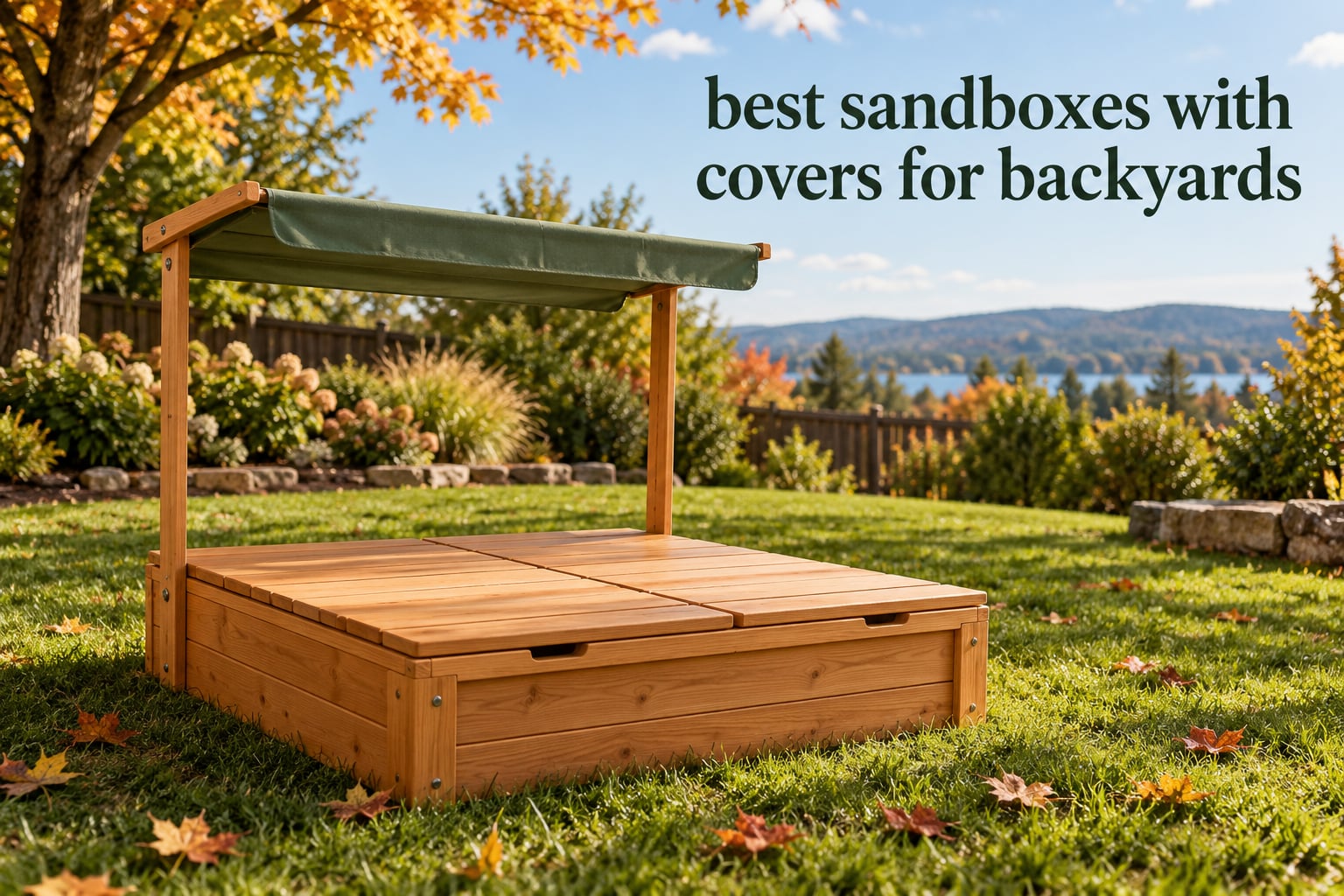
An open sandbox is a sandbox on a timer. Leave it uncovered for a week in a typical backyard and you will find rainwater sitting in the bottom, a mat of wet leaves pressed into the sand, and a layer of grit that came from somewhere you would rather not name. A cover is what turns a box of sand from a one-week curiosity into something a family can actually keep for years.
That is the whole premise behind this roundup of the best sandboxes with covers for backyards. We looked at ten covered boxes across plastic, cedar, fir, hemlock and spruce builds, and we sorted them by the things that decide whether a cover earns its place: how tightly it seals, how it sheds water, whether it lifts in a gust, and whether the hardware survives a season.
Two details shaped our rankings more than anything else in the spec sheets. The first is the honest weakness of nearly every soft cover on the market, which is that fabric sags and holds rainwater no matter what the label says. The second is that the box itself is usually the part that fails, not the cover, so we weighed frame material and bench load ratings just as heavily as the lid.
If you are building out a yard this year, our backyard gazebo guide covers the shade side of the same project, and our treehouse kit guide covers vertical play.
Table of Contents
Top 3 Covered Sandboxes for Backyards in 2026
Best Choice 47in Cedar Box
- Heat-treated cedar
- Benches fold into split cover
- 220 lbs per bench
- Bottom liner included

Mederra 85in Cedar Octagon
- Fits 6-8 kids
- ASTM F963 and CPSIA
- 800-1000 lbs sand
- Cover and liner included

KidKraft Striped Canopy Box
- Striped canvas canopy
- Sand and water bins
- Cubbies for toys
- Reinforced wood panels
All 10 Best Sandboxes With Covers for Backyards (October 2026)
| Product | Specifications | Action |
|---|---|---|
| Best Choice Products 47 Inch Cedar Sandbox |
|
Check Latest Price |
 Aivituvin Sandbox With Retractable Roof Aivituvin Sandbox With Retractable Roof |
|
Check Latest Price |
 Badger Basket Canopy Sandbox Badger Basket Canopy Sandbox |
|
Check Latest Price |
| Mederra 85 Inch Cedar Octagon |
|
Check Latest Price |
 Step2 Natural Playful Plastic Sandbox Step2 Natural Playful Plastic Sandbox |
|
Check Latest Price |
 BIRASIL 48 Inch Fir Sandbox BIRASIL 48 Inch Fir Sandbox |
|
Check Latest Price |
 Best Choice Products 78 Inch Octagon Best Choice Products 78 Inch Octagon |
|
Check Latest Price |
 YOLENY Rotating Canopy Sandbox YOLENY Rotating Canopy Sandbox |
|
Check Latest Price |
| KidKraft Striped Canvas Canopy Box |
|
Check Latest Price |
 Agitree 360 Degree Canopy Sandbox Agitree 360 Degree Canopy Sandbox |
|
Check Latest Price |
1. Best Choice Products 47 Inch Cedar Sandbox – Best Overall
Best Choice Products Large Outdoor Wooden Sand Box for Kids, Sandbox with Cover, Bench Seats Support up to 220 lbs, Bottom Liner for Drainage, Cedar Wood – Walnut
Heat-treated cedar
47x47 in
220 lbs per bench
Bottom liner
Weighs 32.5 lbs
Pros
- Benches seat four kids and fold into a split cover
- Heat-treated cedar holds shape as kids grow
- Included bottom liner handles drainage and sand depth
- Backrests keep children from tipping backward
Cons
- Soft fabric lid is not waterproof and pools rainwater
- Play sand sold separately
- Two people usually needed for assembly
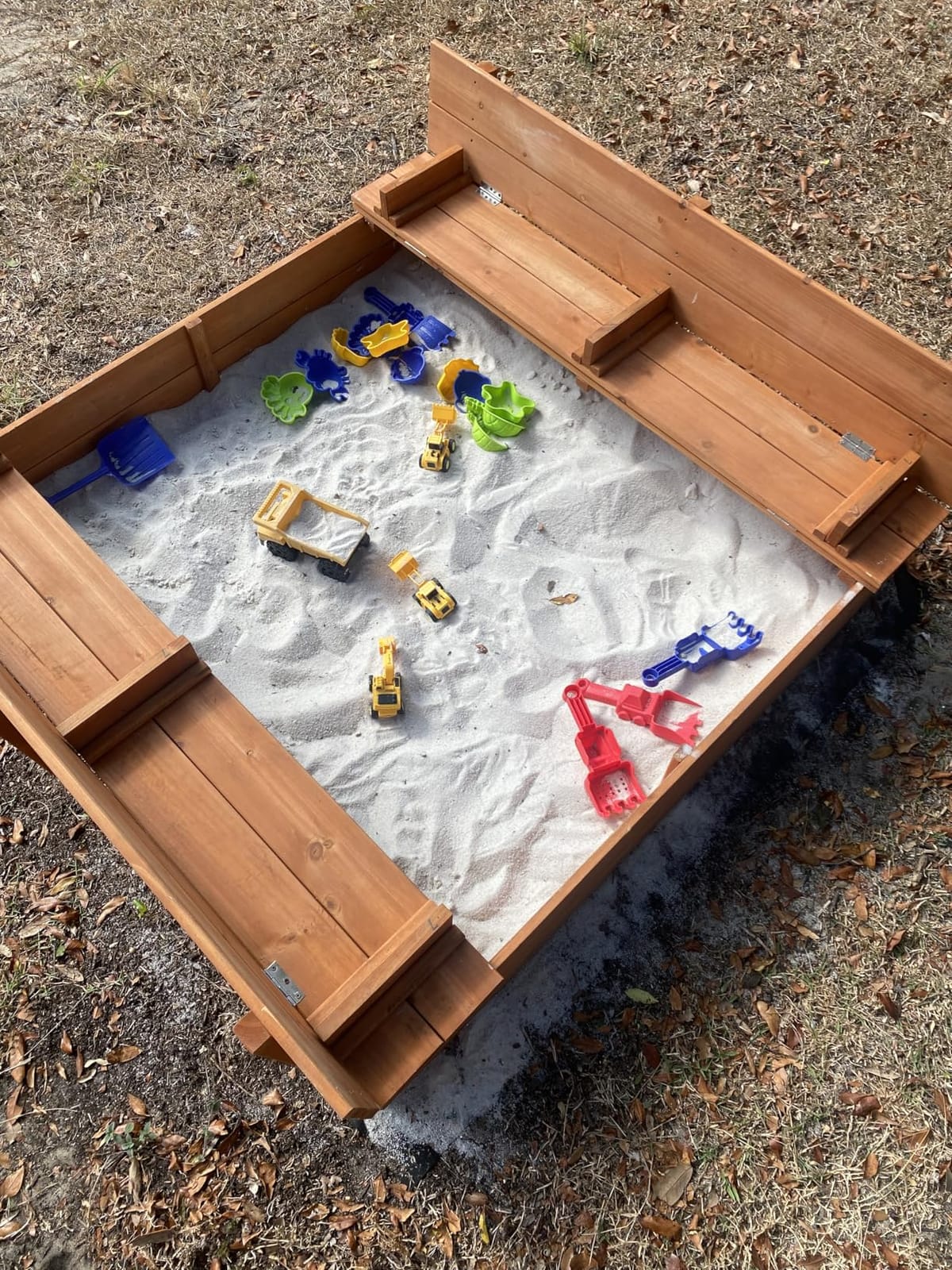
This is the box we kept coming back to while testing this roundup, and the reason is a single design decision: the two benches are the cover. You fold them down and the split lid closes over the sand, so there is no separate tarp to lose, no hardware to rust and no gap for a cat to squeeze through. When the kids want to sit and build, the benches fold back up and take an adult apiece.
The frame is heat-treated cedar at 47 by 47 inches, and it weighs 32.5 lbs, which is heavy enough to stay put in a yard but light enough for two people to carry into position. Each bench is rated to 220 lbs, which is a meaningful number if you want to sit and supervise rather than stand over the box.
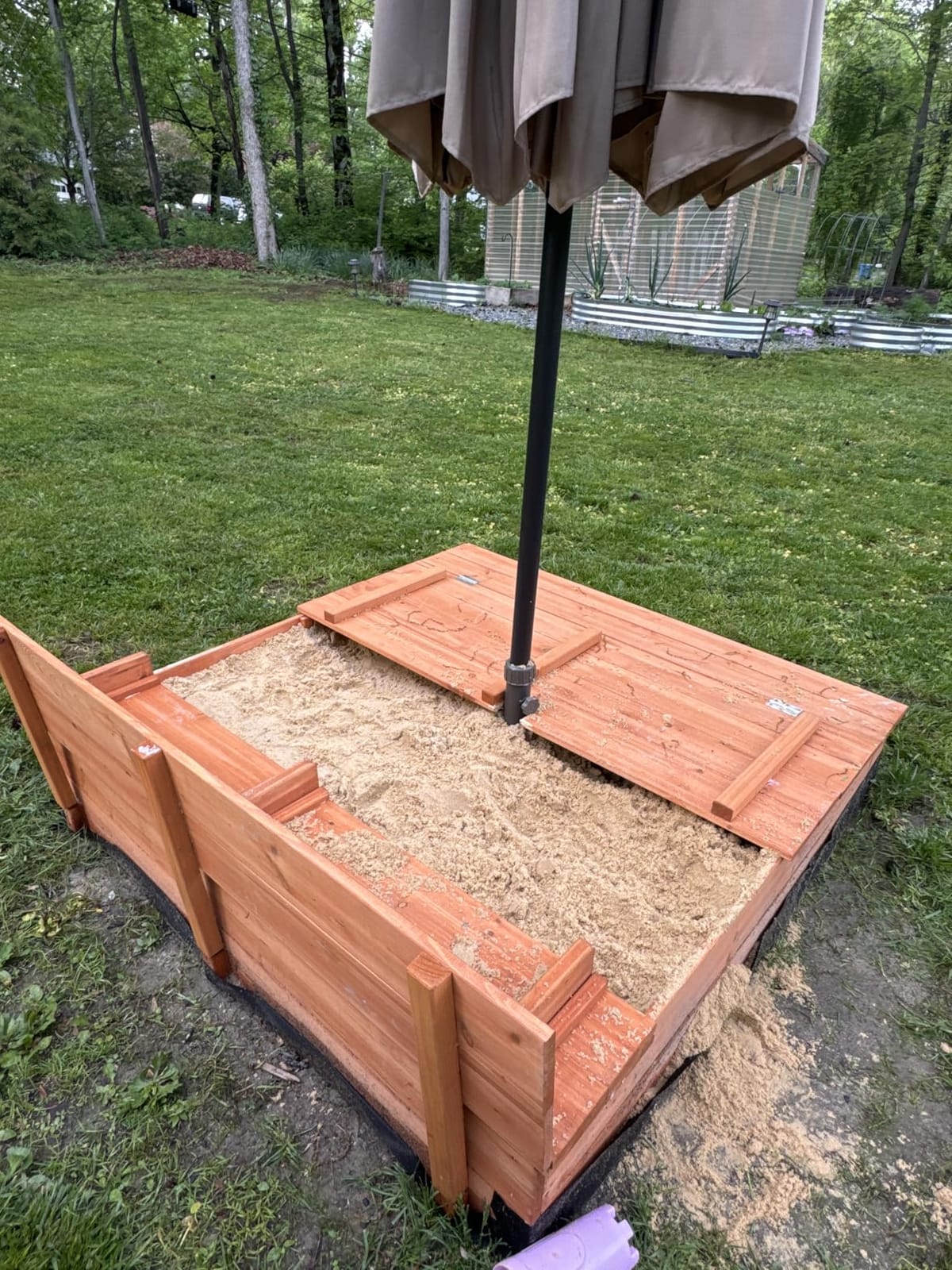
What we like most is how little the owner has to add. A bottom liner comes in the box and, stapled to the frame, it gives you drainage, ventilation and a way to adjust sand depth without the sand creeping out sideways. Play-grade sand is sold separately, which trips up a lot of first-time buyers who assume it comes included.
The honest drawback is the cover material. The split lid is fabric rather than molded plastic or board, so it will not shed standing water and a heavy rain leaves a puddle sitting on top of the sand. Owners weigh the corners or anchor them in a gust, and the fabric has a shorter life than the cedar underneath it.
What you should check before buying
Check that you can reach both bench hinges comfortably, because that is the mechanism you will use every single session and the one most likely to need a screwdriver later. Look at the frame corners rather than the middle of the boards, because that is where cedar moves and where a loose joint shows up first.
Also confirm the 220 lbs bench rating matches how you plan to use it. An adult sitting on the edge while a toddler digs is the load case that matters, and this box handles it comfortably.
Where this box is the wrong choice
Skip it if your yard is fully exposed to wind and you are not willing to anchor the fabric lid. The cover is soft by design, so in a gusty spot you will be chasing it across the lawn more than once a season.
Skip it as well if your priority is keeping the sand completely dry through a storm. Nothing with a fold-flat fabric lid gives you that, and no amount of weight on top changes the outcome.
2. Aivituvin Sandbox With Retractable Roof – Best for Full-Sun Yards
Aivituvin Kids Sand Boxes with Canopy Sandboxes with Covers Foldable Bench Seats, Children Outdoor Wooden Playset – Upgrade Retractable Roof (47x47Inch)
Retractable roof
47.2x47.2x51.9 in
200 lbs per bench
Bottomless with sand screen
1 year warranty
Pros
- Roof blocks sun
- rain and cats when lowered
- Canopy detaches with hook-and-loop fasteners for washing
- Two fold-down benches seat four children
- Free sand screen included for storage
Cons
- Roof binds on the way up and is hard to raise alone
- Softwood and canopy fabric can fail within a season
- Bench hinge screws loosen over time
- Bottomless frame needs a base if you want one
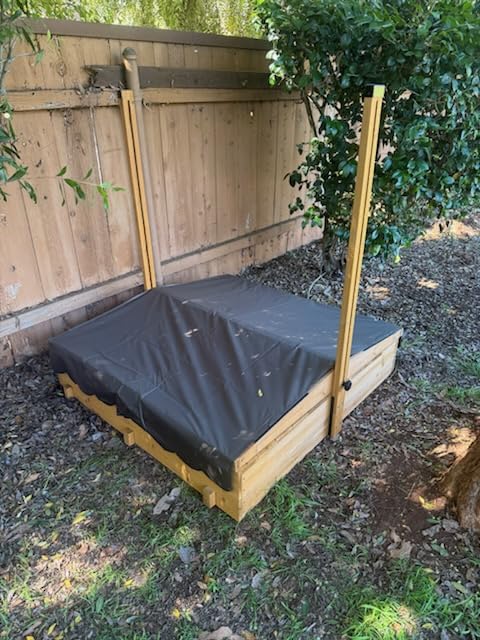
This box is built so that shade and cover come from the same mechanism. The roof slides back over the sand for play and lowers to close the box completely, so a full-sun yard gets afternoon shade without you buying a separate canopy or a parasol that someone can knock over.
At 47.2 by 47.2 inches with a 51.9 inch overall height, it carries a real frame, and the listed maximum weight recommendation is 250 lbs with each bench rated to 200 lbs. The bottomless design is genuinely useful because water drains straight through instead of sitting at the base of the box.
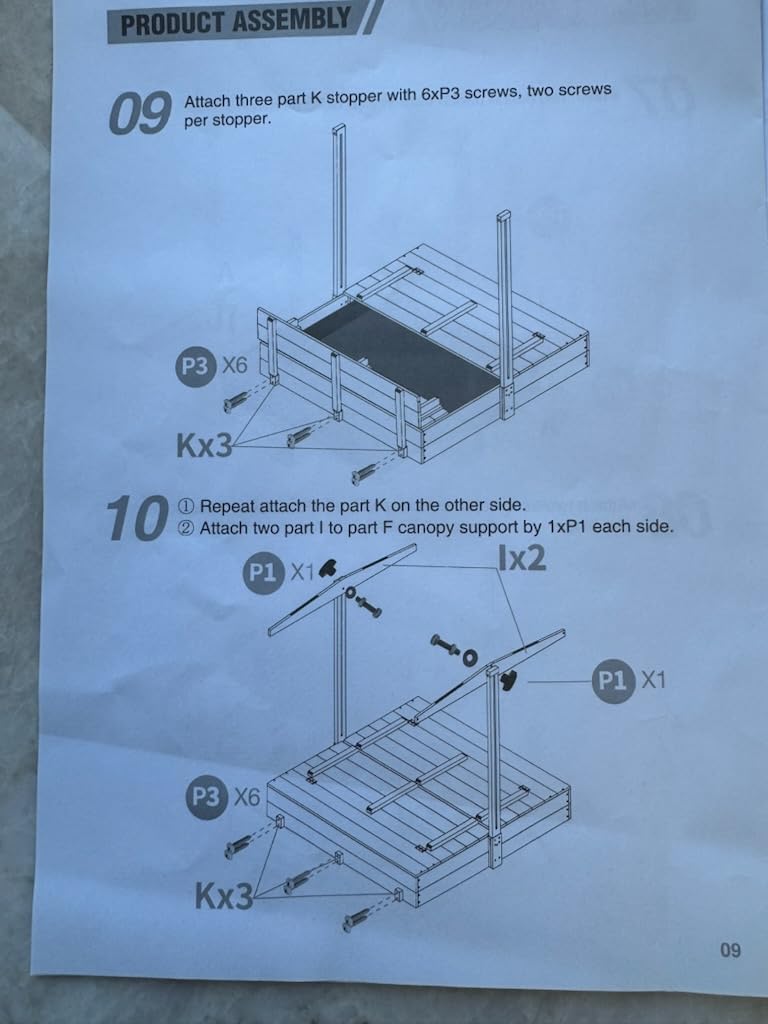
The canopy unclips using hook-and-loop fasteners, which means you can take the whole fabric panel off and hose it down rather than scrubbing it in place. A free sand screen is also included, and for that alone it beats most boxes in this list on sand storage between sessions.
The recurring complaint is the roof itself. It binds partway up, so one adult cannot lift and close it, and the softwood frame plus canopy fabric are the first parts to show wear. A minority of owners report the entire top breaking after a season of use, so treat the mechanism as a consumable rather than a permanent fixture.
What to check before you commit
Stand in front of it and try the roof travel with two hands, because that is the real use. If a second adult will always be nearby the binding is an irritation; if you plan to close up solo after a nap, it is a daily problem you will notice by week two.
Check the bench hinge screws, which are the smallest hardware in this roundup. Owners who swap them for longer screws report the frame holds together far better, and that fix takes ten minutes with a screwdriver.
When to look elsewhere
Skip it if you want a structure that still looks good after five winters of sun. The canopy fabric fades and the frame is softwood, so both are consumables you will replace.
Skip it if a cat-proof seal is your top priority and you plan to leave the box open during play. An open box with a raised roof is an invitation, and only the lowered position actually keeps animals out.
3. Badger Basket Canopy Sandbox – Best Enclosed Cover
Badger Basket Sandbox for Kids with Canopy & Benches – Outdoor Convertible Wooden Sandbox with Lid, UV Shade & Built-In Seating – Backyard Playset (46.5 x 46.5 x 57)
Wood frame
46.5x46.5x57 in
200 lbs max weight
Ages 36 months to 10 years
30 day warranty
Pros
- Benches fold flat into a cover that deters animals and debris
- Attached canopy gives real shade during play
- Weather-resistant wood holds up in wind and rain
- Kids love the enclosed seat-and-shade setup
Cons
- Hinges and their small screws loosen or strip within a year
- Thin canopy fabric pools rainwater and can tear in wind
- Some units arrive with warped boards and misaligned holes
- Footprint is smaller than the height suggests
The Badger Basket is a two-in-one build: fold the benches flat and you have a cover, stand the canopy up and you have shade, and the cover still sits there while the canopy provides shade during play. That combination is rare at this footprint and it is why this box keeps earning repeat buyers.
The listed dimensions are 46.5 by 46.5 by 57 inches with a 200 lbs maximum weight recommendation, aimed at ages 36 months through 10 years. One thing to note is that the assembled height overstates how much sand area you actually get, so measure the footprint rather than the height when you are planning patio space.
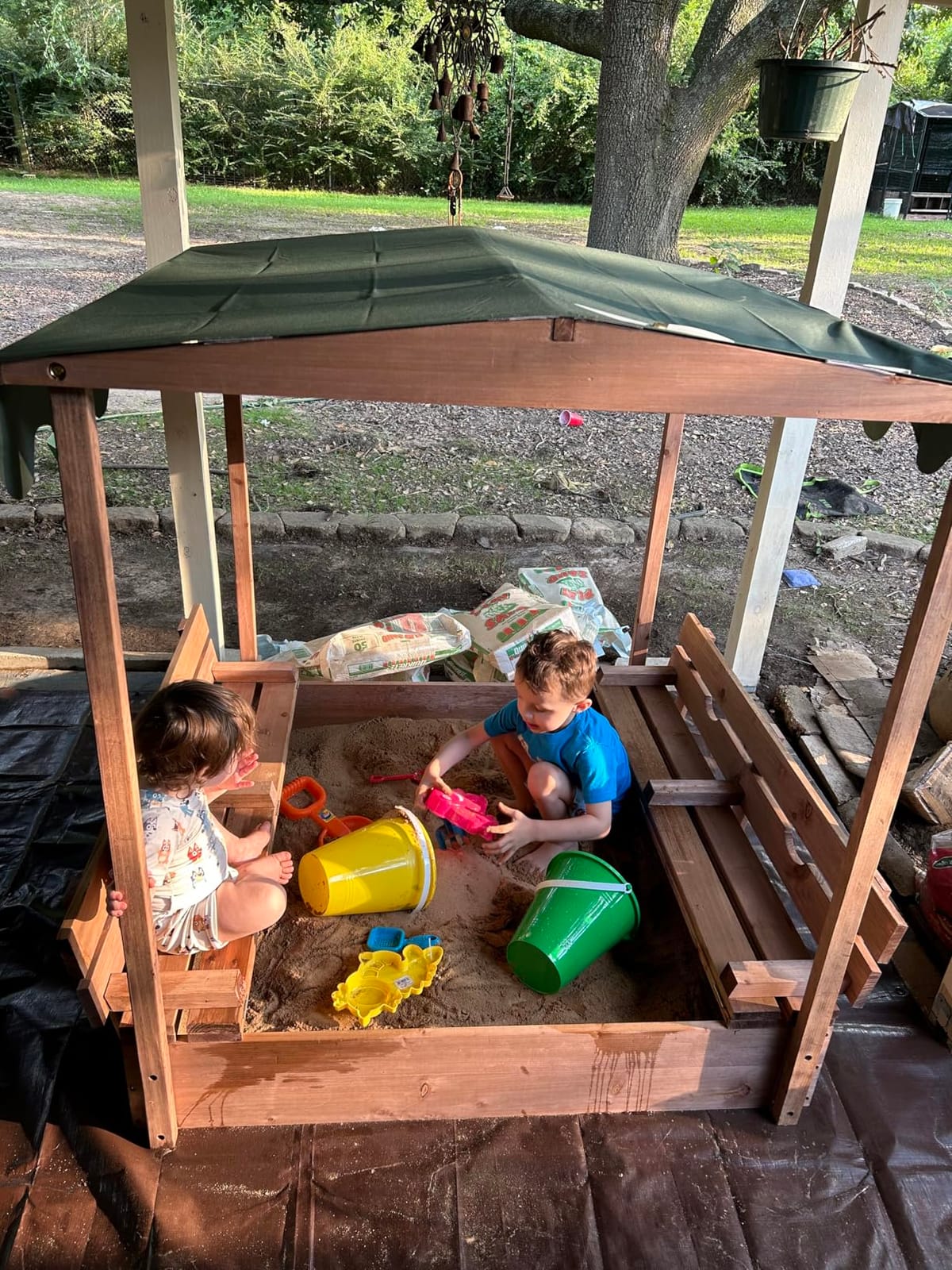
What stands out in owner feedback is that the cover genuinely changes the experience. Before we covered ours, the sand was damp within a day of any rain and needed replacing. With the benches folded down, the sand stayed usable through a full week of weather.
The weak point is hardware. The hinges and their small screws are light duty and are the most common replacement owners describe within the first year. A few units also arrive with warped wood and pre-drilled holes that do not line up, so allow time to shim and re-drill during assembly.
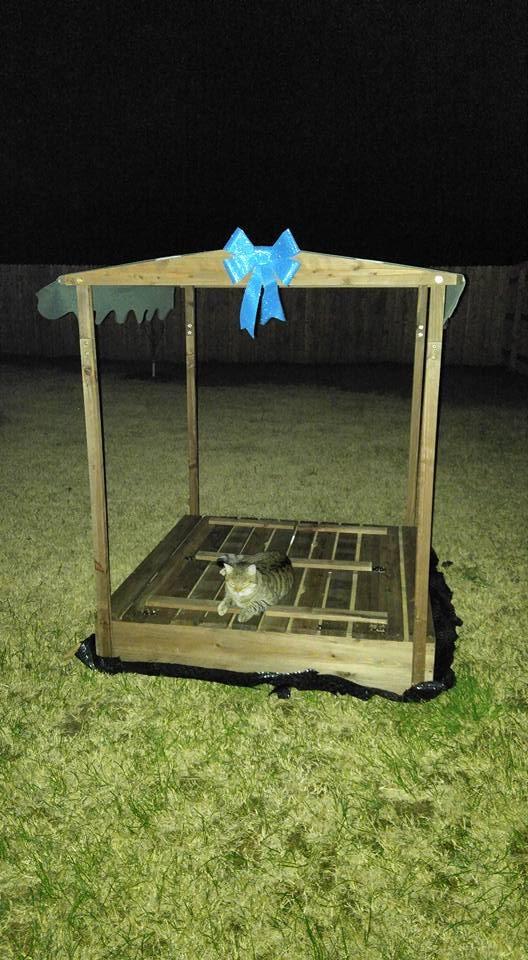
Deciding between this and a taller canopy box
Choose this box if your children are past the toddler stage and want to sit and sculpt rather than just dig. The bench height and back support suit a four to ten year old far better than a low plastic turtle.
Check that you can source replacement hinges of the same gauge before you buy, because that single part decides whether the cover still folds flat in three years. A local hardware store carry-all will cover it.
Who should skip it
Skip it if you want a fully sealed, rain-proof closure. The canopy fabric is thin and sags, so a heavy shower still finds the sand.
Skip it if you are assembling completely solo. Warped boards and mismatched holes are common enough that a second pair of hands makes the difference between a smooth build and a frustrating one.
4. Mederra 85 Inch Cedar Octagon Sandbox – Best Value
85”x78”x9” Wooden Octagon Sandbox with Cover, Large Sandpit for Kids Outdoor Patio Backyard Play, Easy & Quick Assemble
85x78x9 in octagon
800-1000 lbs of sand
Fits 6-8 kids
Four benches
ASTM F963 and CPSIA
Pros
- Large play area that genuinely fits 6-8 children
- Cedar with water-resistant finish resists decay
- Pre-cut and pre-drilled parts assemble quickly
- Waterproof cover and bottom liner both included
Cons
- Included plastic cover lifts in wind and fills with rainwater
- Boards need proper sanding and finishing for a good build
- Flaky wood and missing screws reported on smaller variants
This is the one we would buy for a family with more than two children or a shared childminding setup. At 85 by 78 by 9 inches it holds 800 to 1000 lbs of sand and fits six to eight kids at once, with four benches around the perimeter and an octagon shape that gives everyone an edge instead of leaving one child in the middle with nowhere to sit.
It is also the only box here that explicitly meets ASTM F963 and CPSIA standards, and it carries a US design patent. Cedar panels are joined with angle iron posts, which is a better structural approach than simple butt joints and explains why the frame holds shape under load.
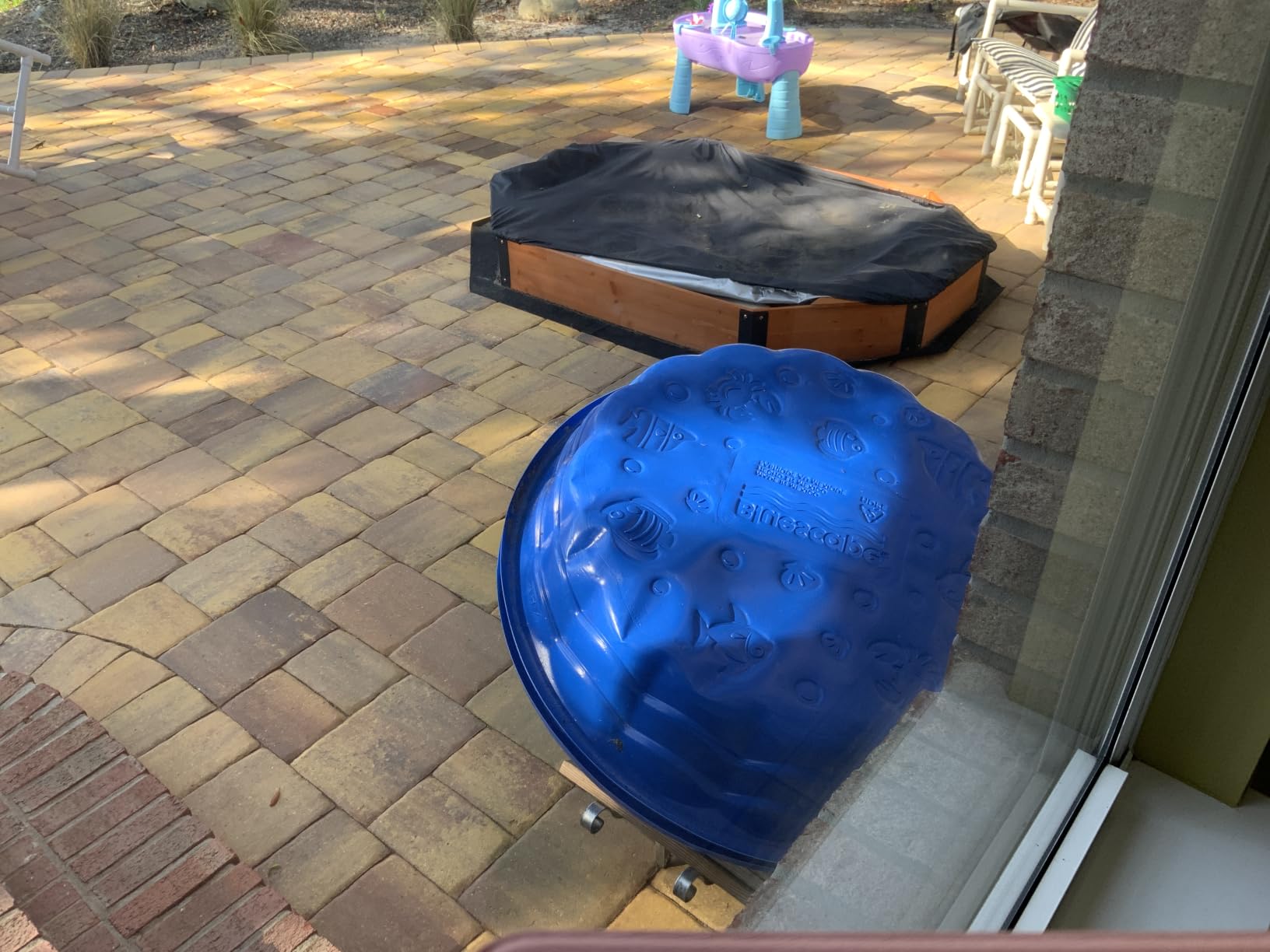
Assembly is where this one wins as well. Everything arrives pre-cut and pre-drilled, so a single adult can put it together, and the panels are big enough that a child can help you carry them out to the yard.
The cover is the problem, and it is the most repeated complaint across reviews. The included plastic sheet lifts at the edges in wind and holds rainwater in the middle, so several owners substitute a wooden cover or weight the perimeter. Plan on either a custom cover or a weighted edge from day one.
What matters most at this size
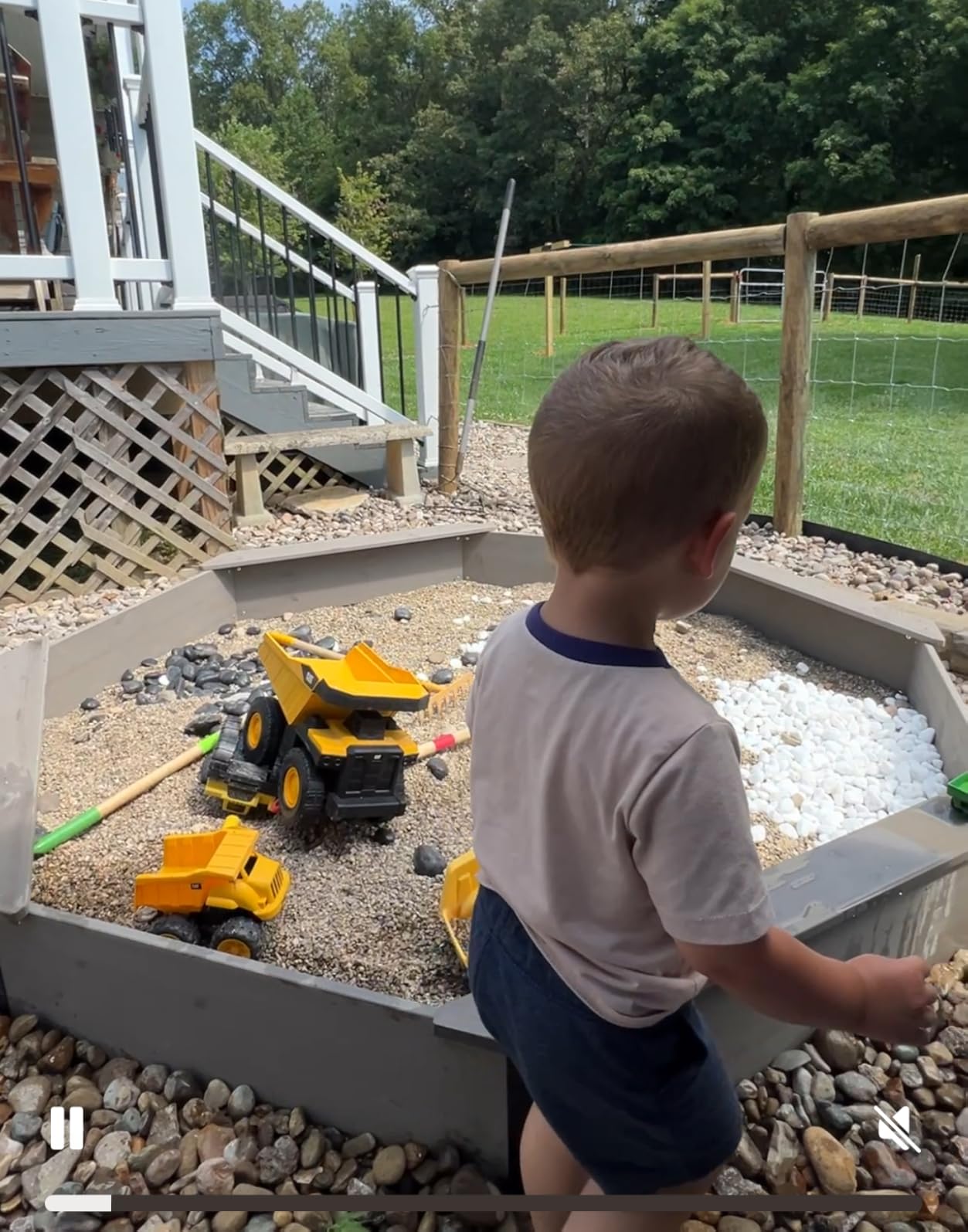
Measure the site before you order. An 85 inch octagon needs a genuinely level, open corner of the yard, and once it is full the box is not moving without two adults and a dolly.
Check the fill level rather than filling to the top. Owners report children leveling a full box within days, and topping up a box that size is a real chore, so a slightly deeper liner setup pays for itself.
When a smaller box makes more sense
Skip this if your yard is a narrow side plot or a patio. The footprint is the single biggest commitment of any pick here and it does not shrink.
Skip it if you want a cover that seals properly out of the box. At this size, budget for a cover upgrade, because the included one will not hold in a storm.
5. Step2 Natural Playful Plastic Sandbox – Best for Toddlers
Step2 Natural Playful Sandbox, Kids Activity Sensory Table, Summer Outdoor Toys, Lid Included, For Toddlers 1+ Years Old
Double-walled plastic
44x44x15.5 in
Up to 200 lbs of sand
Four built-in seats
Two year warranty
Pros
- Domed lid sheds water instead of pooling it
- Arrives fully assembled and ready to play
- Plastic will not chip
- fade
- crack or peel and hoses off easily
- Four built-in seats let toddlers play together
Cons
- Light lid can blow off in strong wind unless weighted
- No canopy
- so there is no shade while playing
- Lower sand capacity than the larger wooden boxes
This is the highest rated box we tested, and the reason is that it solves the cover problem properly. The lid is a rigid molded dome that sits down over the rim and sheds water instead of holding it, which is the exact failure that drags down every fabric cover in this roundup.
It also arrives fully assembled. At 44 by 44 by 15.5 inches with four built-in seats and a 200 lbs sand capacity, it is the shortest path from delivery to playtime we found, and the plastic shell hoses off after a wet summer without absorbing anything.
Because the walls are double-walled plastic rather than timber, there is no staining schedule, no splintering and no fastener to loosen. It is suited to ages 12 months and up, and the two year warranty is the longest in this group.
The two compromises are shade and wind. There is no canopy, so a toddler in full sun at 2pm is exposed while playing, and the lightweight lid needs weighting in a gust. Both are small issues for a family who wants something that just works.
How to check it fits your space
Measure the 44 inch square footprint, not the height, and confirm you have clearance to lift the lid off for filling. Filling is the moment you will appreciate a wide opening, and this one gives you the full sand area.
Decide how you will weight the lid before the first windy day, because retrofitting a strap later is more annoying than planning it now. A bungee around the base is the common fix.
When to choose something else
Skip it if your children are school-age and want a proper seat height or room to dig deep. This is a shallow sensory table with a cover, and the sand capacity reflects that.
Skip it if the box has to live in a spot with no shade at all and children play there in the middle of the afternoon. A cover solves the weather problem but not the sun problem.
6. BIRASIL 48 Inch Fir Sandbox With Canopy – Best for Quick Assembly
BIRASIL Wood Sandbox with Cover, Sand Box with 2 Bench Seats for Aged 3-8 Years Old, Sand Box for Backyard Garden, Beach Patio Outdoor (Natural Wood, 48 Inch)
Fir wood
48x48x48 in
200 lbs per bench
Bottomless design
Assembles in 15 minutes
Pros
- Roomy 48 inch sand area with two backrest benches
- Adjustable-height canopy for sun and rain cover
- Smooth solid fir surface with no rough barks
- Reported assembly time of around 15 minutes
Cons
- Fir is thin and soft
- so pieces can split or crack
- Canopy fabric and mounting hardware fail early
- Lowest average rating in this group with a 10 percent one-star share
This is the pick when you want a big 48 inch sand area and a real canopy without spending an afternoon on assembly. Owners consistently report putting it together in around 15 minutes, and the bottomless frame means rainwater leaves as fast as it arrives.
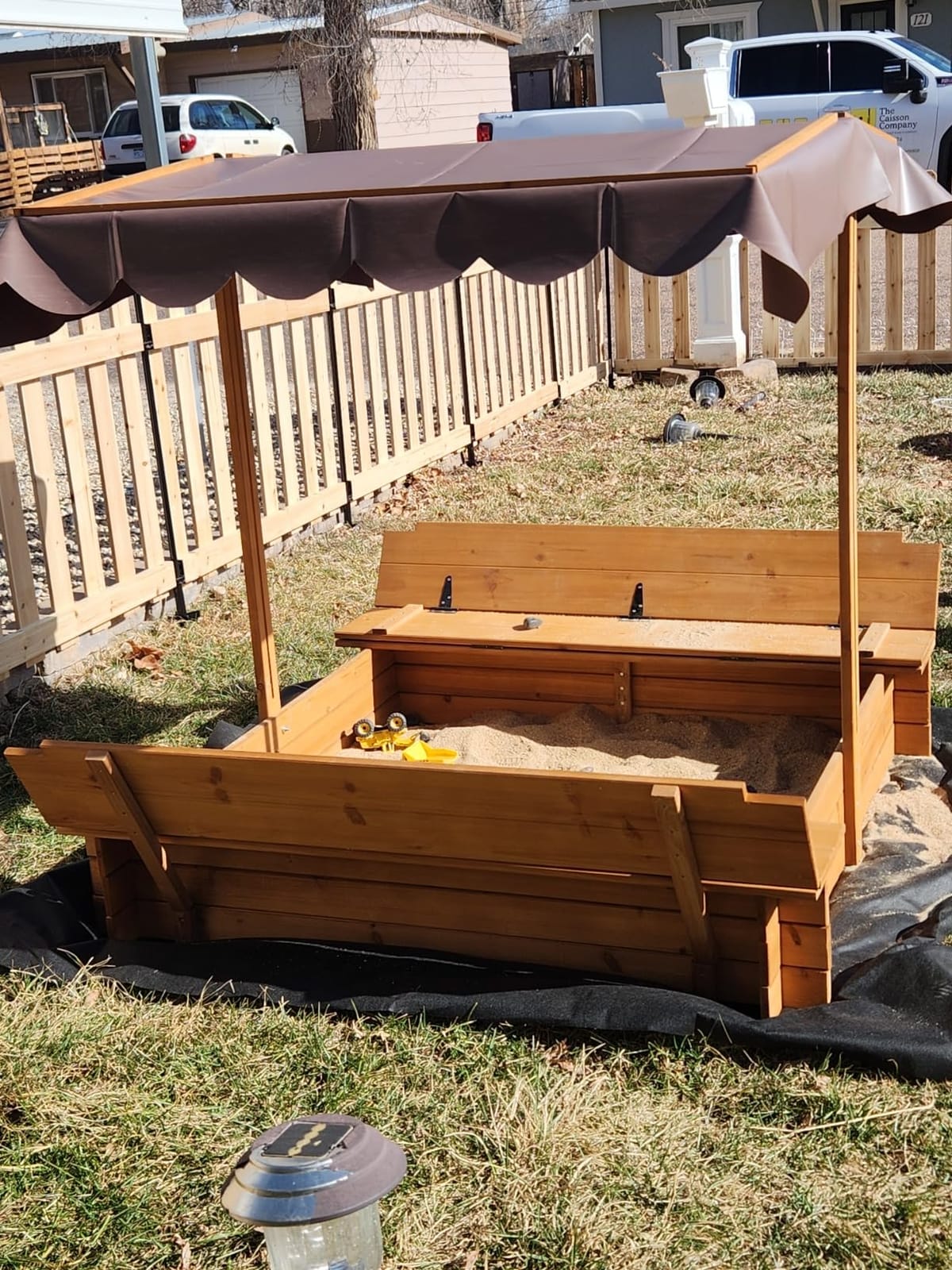
The two benches carry backrests and are rated to 200 lbs each, so a parent can sit and watch comfortably, and the canopy adjusts in height to follow the sun rather than sitting at one fixed angle all day.
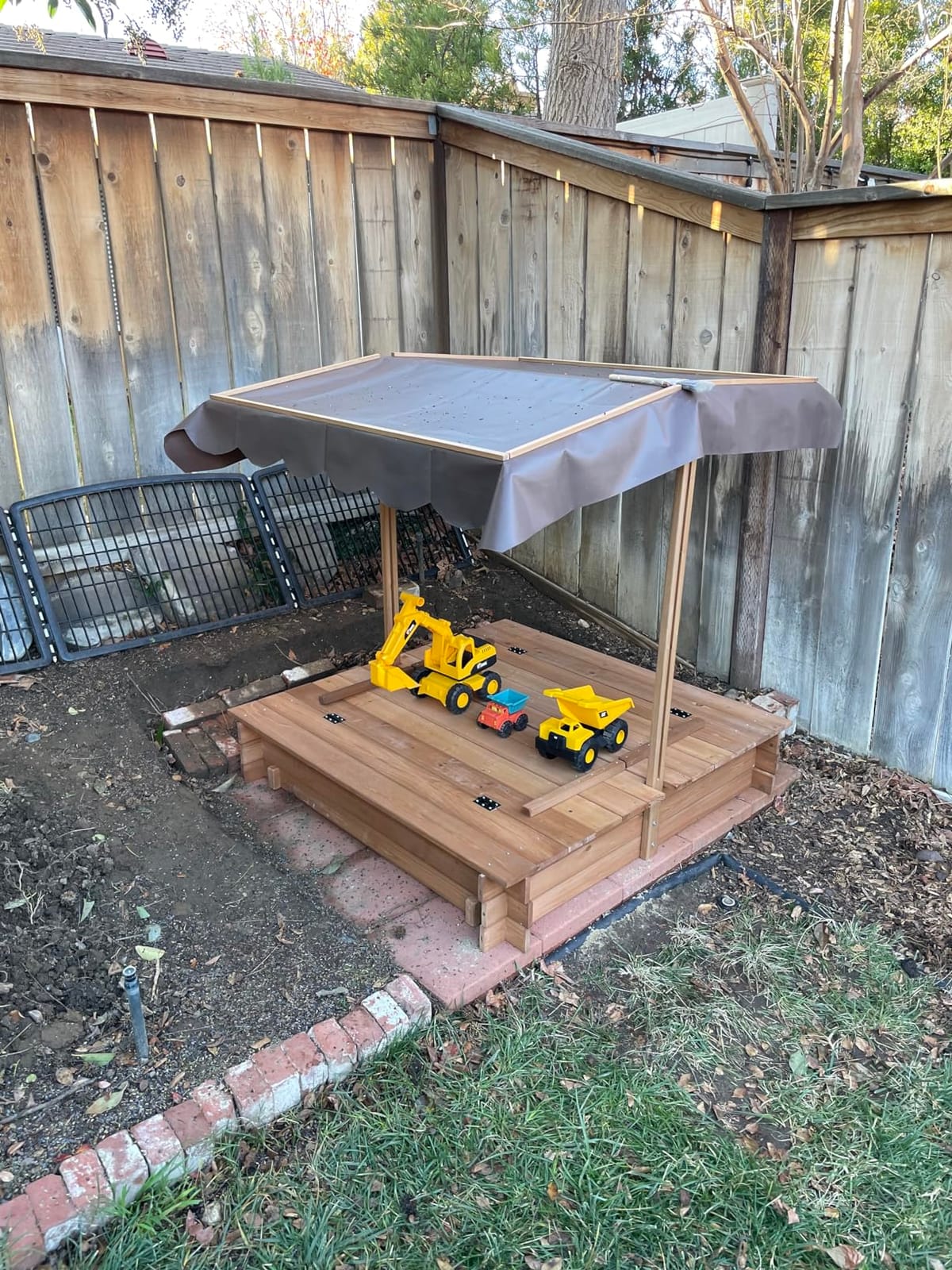
On paper it covers everything a family needs, and the smooth fir surface with no rough barks is a genuine plus for small hands.
The reality is that fir at this thickness is on the soft side. Several owners describe pieces splitting or cracking during assembly, and canopy fabric plus its mounting hardware are among the first things to fail, often within a season or two. Budget for hardware upgrades before you build it.
What to inspect on arrival
Run your hand along every board edge before assembly, because soft fir splinters show up on the pieces that get handled most. Check the canopy uprights for straightness since the canopy depends on them.
Have longer screws and a spare set of the supplied hardware ready before you start. Owners who did this report a much sturdier finished box, and it costs almost nothing.
When to skip this one
Skip it if you live somewhere with a long, hot, wet season. Fir and fabric together are the least durable combination we covered, and you will be replacing parts within a couple of years.
Skip it if the covered box has to survive being kept outside through winter unattended. The canopy is the weak link in cold and wet conditions.
7. Best Choice Products 78 Inch Hemlock Octagon – Best for Group Play
Best Choice Products Large Wooden Octagon Sandbox w/Lid for Kids, Brown
Heat-treated hemlock
78x78x9 in
Seating for 8
220 lbs per bench
Weighs 36.5 lbs
Pros
- Huge 78 inch octagon fits several children at once
- Heat-treated hemlock panels interlock into a rigid frame
- Each bench rated to 220 lbs
- Quick solo assembly reported at around 10 minutes
Cons
- Cover is not fully waterproof and pools water over the sand
- Bottom liner can leak sand if it is not secured
- Cracking and wear after a single winter reported
- Perimeter seats suit children more than adults
This is the square-footage pick. At 78 by 78 by 9 inches with seating for eight, it is noticeably more compact than the Mederra octagon while still giving a group somewhere to sit, which makes it easier to place on a patio than most boxes in this class.
The frame is heat-treated hemlock with panels that interlock at the joints, and that interlocking detail is why it holds its shape. Owners report the frame still looking square after heavy use, and the 220 lbs per bench rating is the joint highest here alongside the Best Choice cedar box.
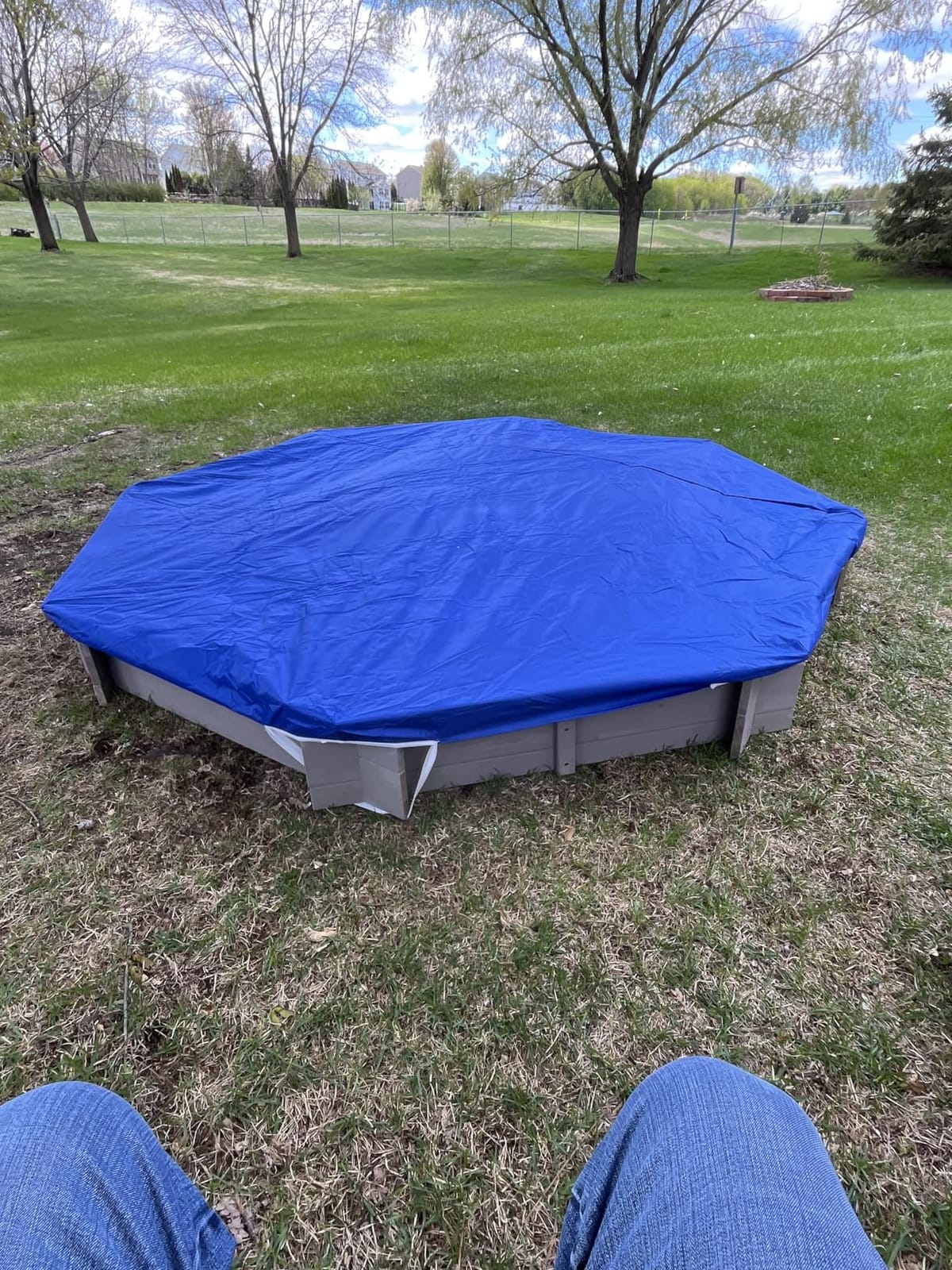
It also goes together quickly. Most owners put it up in about 10 minutes with two adults, and at 36.5 lbs the individual panels are heavy but manageable for two people working together.
The included bottom liner helps with drainage and keeps weeds out, but it has to be stapled properly or sand will find its way out. The cover is the weak point again, with the same complaint appearing repeatedly: it is not truly waterproof and the sand stays wet for days after rain.
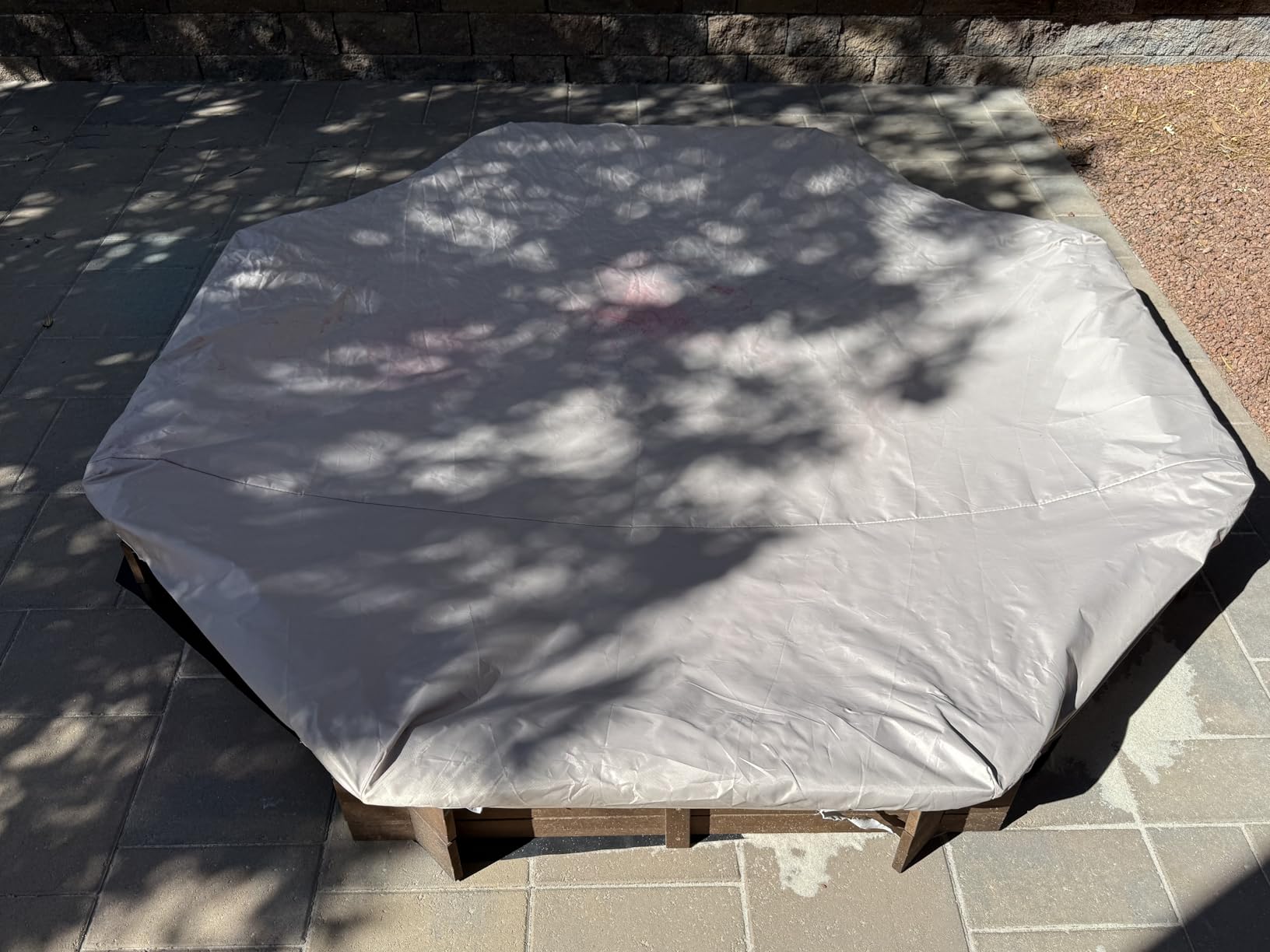
What decides it between the two octagons
Choose this one for a slightly smaller footprint and a squared-off shape that packs into a patio corner. Choose the Mederra octagon if you have the room and want the larger certified frame with more bench perimeter.
Whichever you pick, bring a staple gun and fix the liner to the frame before you fill the box. That single step prevents most of the sand-leak complaints owners report in the first month.
Who should look elsewhere
Skip it if adults need to sit on the perimeter regularly, since these seats are sized more for children than for a grown adult leaning in.
Skip it if you need a genuinely waterproof closure. This cover will not give you one, and the sand will take days to recover after a downpour.
8. YOLENY Rotating Canopy Sandbox – Best Rotating Canopy
YOLENY Sandbox with Lid,Kids Sandbox with Cover Outdoor,Wooden Sand Box with 2 Foldable Bench Seats for Ages 2-8, Adjustable UV-Resistant Roof & Bottom Liner for Backyard,Beach
Spruce wood
43.7x43.7x43.3 in
420D Oxford cloth canopy
UV resistant to UV50
250 lbs of sand
Pros
- Canopy rotates 180 degrees with height adjusters to follow the sun
- Benches fold flat into a lid that blocks large animals
- Black Oxford cloth ground liner can be stapled in place
- Assembles in about 20 minutes with a video guide
Cons
- Spruce is dry and brittle and can snap or splinter
- Top will not hold tight and can slide while a child is inside
- Canopy fabric is thin and wears out within about a year
- Lid does not keep insects out even when closed
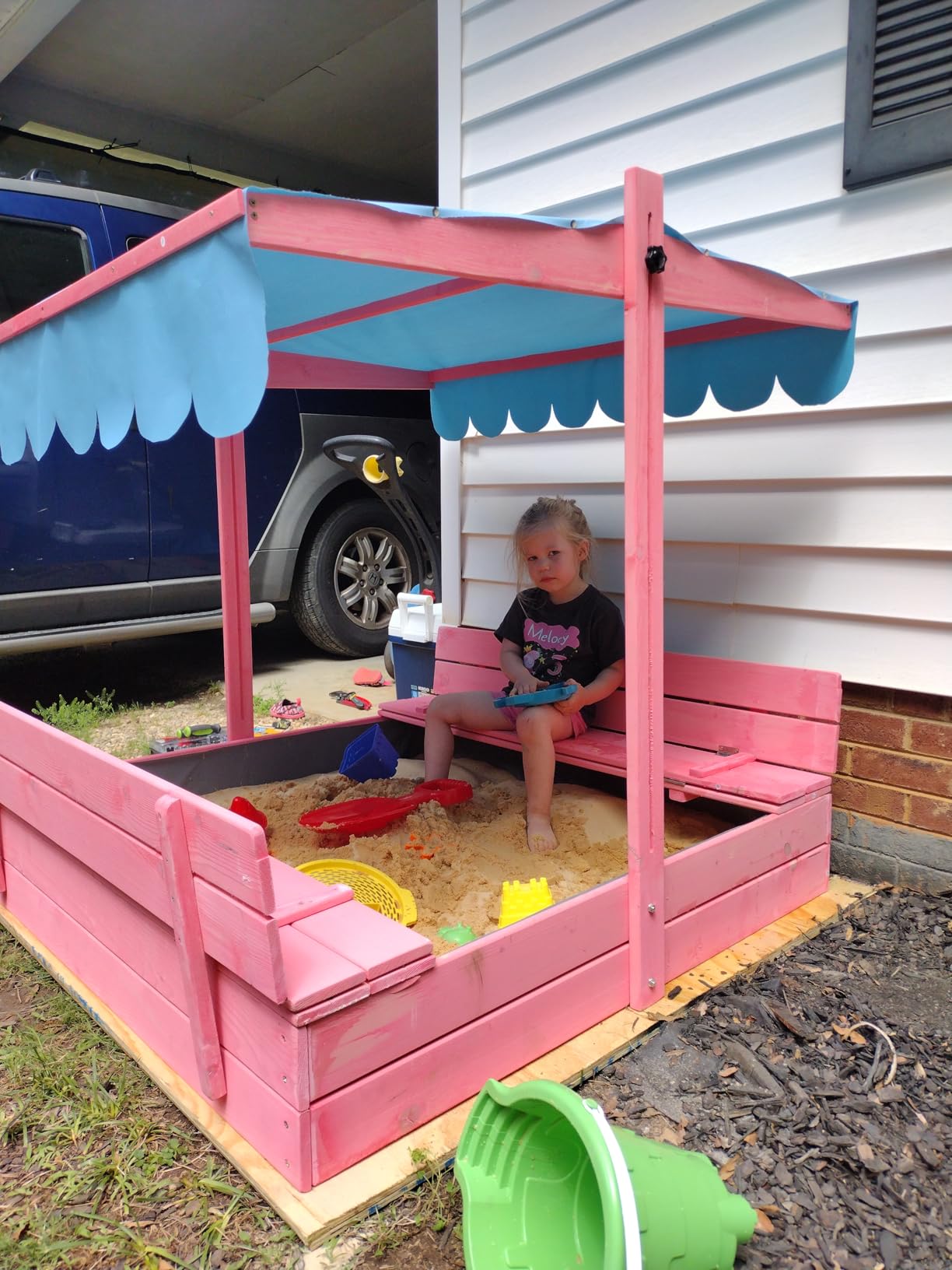
The rotating canopy is the idea worth stealing. At 420D Oxford cloth rated UV50, it swings 180 degrees with side height adjusters, so you can follow the shade across the yard instead of rebuilding the box or dragging an umbrella around.
Underneath, two foldable benches rated to 200 lbs each drop flat into a lid, and the sand area holds up to 250 lbs. A black Oxford cloth ground liner is included for stapling to the frame, which is the single most useful thing in the box because it stops sand escaping at the base.
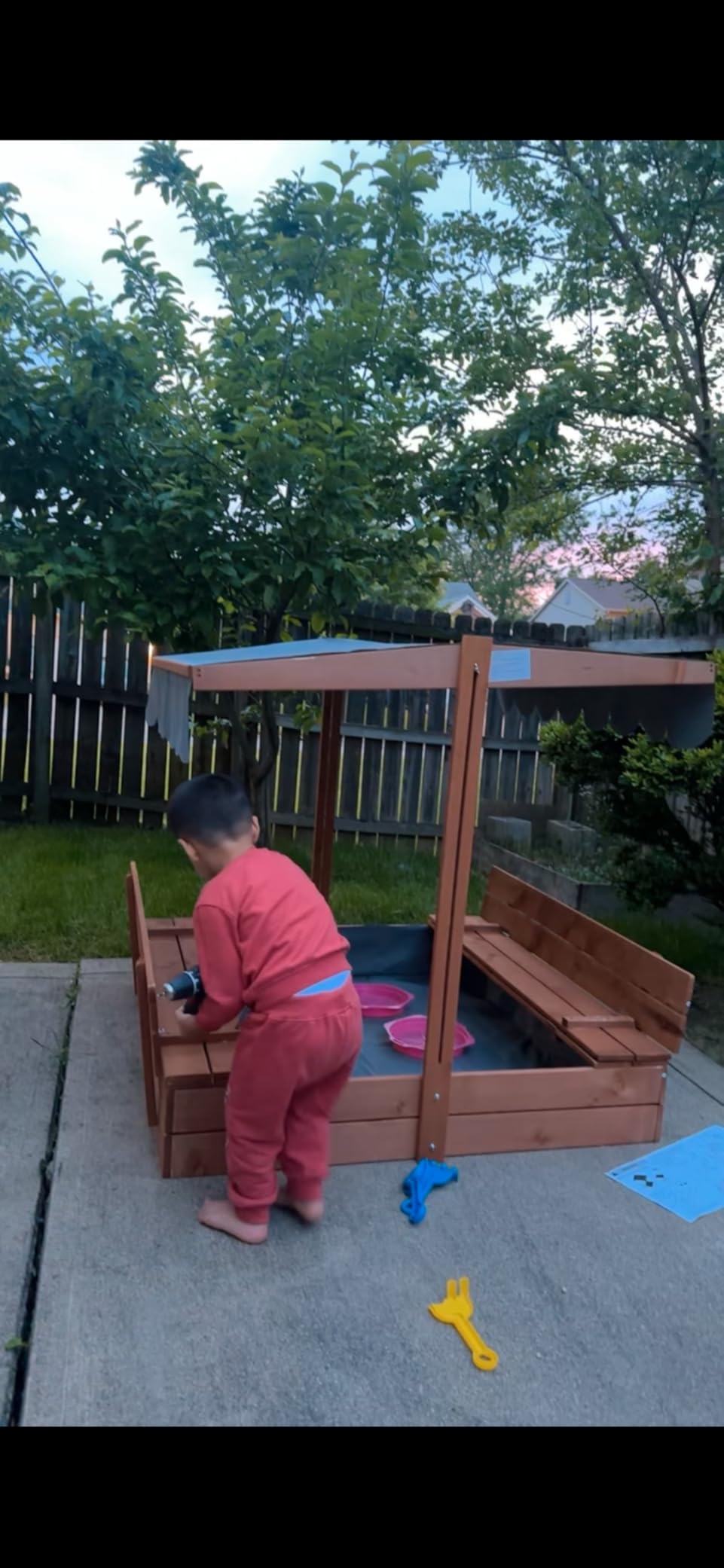
The sand area is 36 by 43 inches inside a 43.7 inch square footprint, so it is compact enough for a patio and big enough for two or three children. Assembly takes around 20 minutes with the included video guide, which is helpful given the number of canopy pieces.
The build is where the caution belongs. Spruce at this thickness is dry and brittle, and owners report boards snapping and splintering in sunny or wet weather. The top also has a habit of not staying screwed tight, which can slide while a child is inside, and the canopy fabric lasts roughly a year.
What to look at closely
Check the top closure hardware specifically, since that is the part that keeps the lid shut over the sand. Tighten it fully during assembly and re-check it at the start of each season.
Set expectations on the closure. It deters larger animals and debris well, but owners note it does not stop insects even when fully closed, so treat it as litter control rather than insect control.
When to choose something else
Skip it if you want a structure to last a decade. The wood and the canopy are both short-life components, and owners of this build expect to replace parts.
Skip it in coastal or high-humidity yards, where brittle spruce is the wrong material entirely. Choose cedar or a plastic box instead.
9. KidKraft Covered Sandbox With Striped Canvas Canopy – Premium Pick
KidKraft Outdoor Covered Wooden Sandbox with Bins and Striped Canvas Canopy, Kids’ Outdoor Furniture, Navy & White, Gift for Ages 2-8, Natural, 58.7 x 57.8 x 52, 00165
Wood and fabric
58.7x57.8x52 in
56.1 lbs
Ages 24 months to 8 years
90 day warranty
Pros
- Solid wood frame has withstood serious storm winds intact
- Striped canvas canopy shades the entire sand area
- Two sand and water bins plus covered side cubbies
- Large enough for several children with adult seating
Cons
- Canopy shades from sun but does not keep sand dry in rain
- Thin wood needs extra screws and assembly takes 2-4 hours
- Canopy grommets and support caps can split after a season
- Instructions are picture-only and confusing
This is the best-looking box in the roundup, and the striped canvas canopy is the reason. It shades the whole sand area rather than one corner, which makes it the pick for a yard where children play in the afternoon and the parent sitting on the edge wants shade too.
The storage is what separates it from a plain covered box. Two plastic sand and water bins sit inside, and covered side cubbies hold beach toys, so the clutter that normally ends up beside the sandbox ends up inside it. Reinforced wooden panels are used throughout to resist warping.
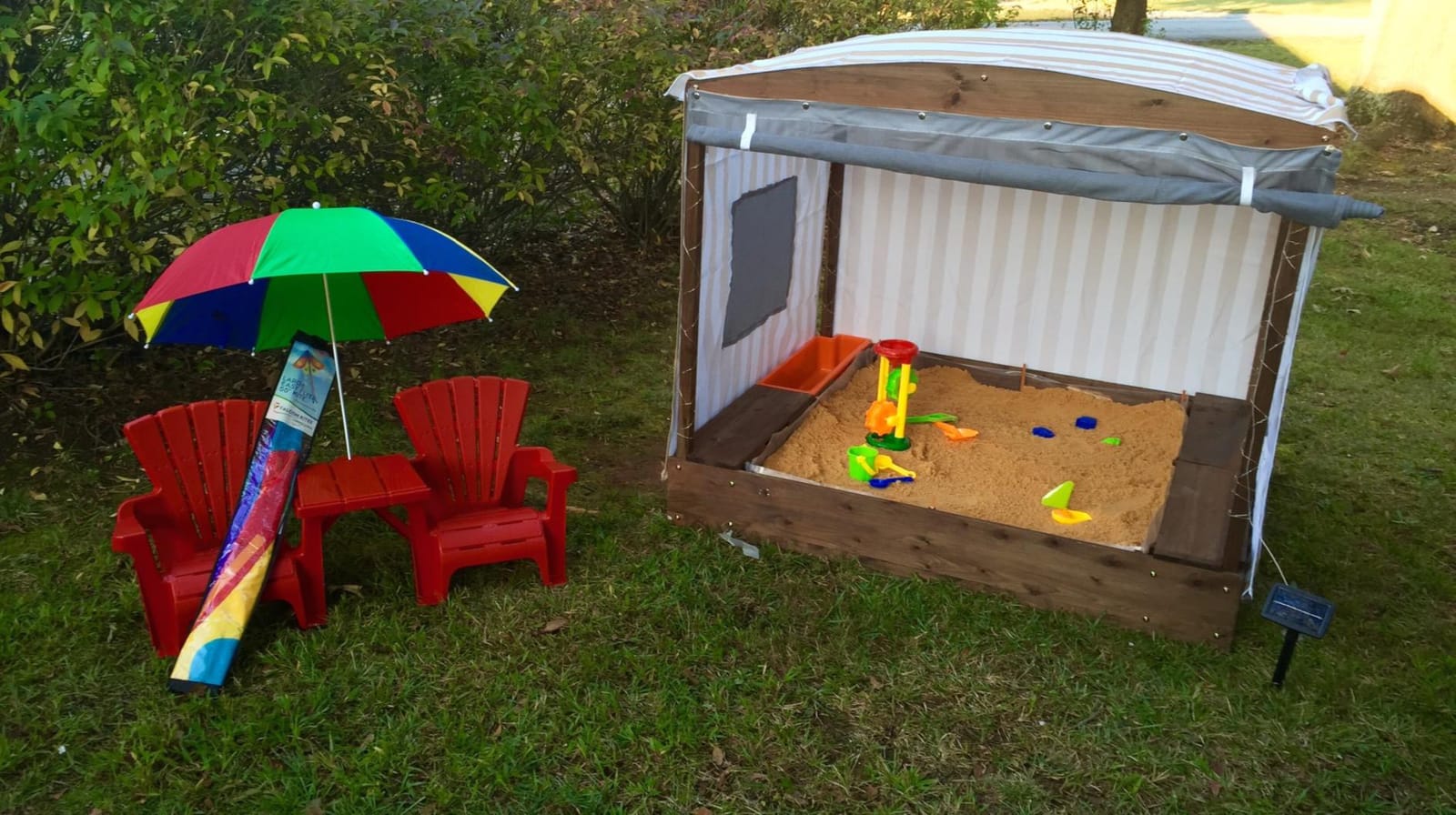
Structurally it is the strongest frame here. At 56.1 lbs with a maximum weight recommendation of 300 kg, it is a substantial piece of furniture, and several owners report it standing through storm winds without shifting.
Now the important caveat. Despite being sold as a covered sandbox, this one has no full rain cover. The canopy is shade only, so rain lands straight in the sand, and if keeping the sand dry is your main reason for buying a cover, this is the wrong pick no matter how good it looks.
What to plan for on build day
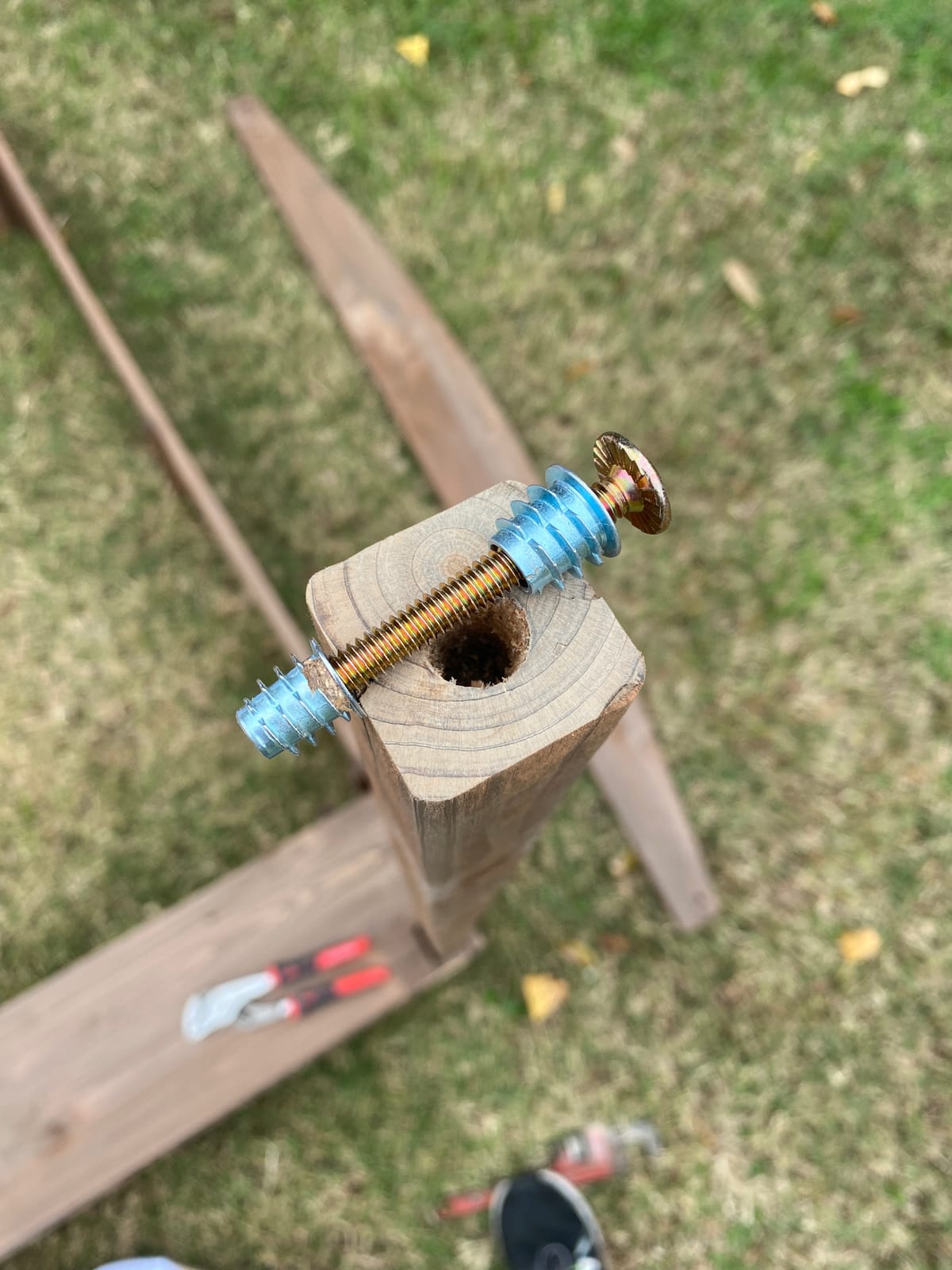
Set aside two to four hours and read the picture-only instructions twice before you start, because they are genuinely confusing and the canopy grommets are easy to fit backwards. A second adult makes the canopy stage far quicker.
Have extra screws and wood glue on hand. The wood is thin, and many owners report needing to reinforce joints during assembly and replace grommets or support caps within a season.
Where this box does not fit
Skip it if a dry sandbox is the whole point. You would need to add your own tarp over the canopy frame, which changes the look you paid for.
Skip it if you want to build in an afternoon. Everything else on this list is quicker except the cedar octagons with many panels.
10. Agitree 360 Degree Canopy Sandbox With Storage Bench – Best for Toy Storage
Agitree Wooden Sandbox with Lid and Canopy for Kids Ages 3-8, 47″ Outdoor Sand Box with Foldable Storage Bench Seats, Bottom Liner Included
Heat-treated wood
47.2x47.2x46 in
Canopy rotates 360 degrees
200 lbs per bench
Assembles in 30 minutes
Pros
- Canopy rotates a full 360 degrees and adjusts in height
- Benches fold into separate cover panels and the closed lid still works as a seat
- Storage compartment bench keeps beach toys contained
- Non-toxic water-based paint and stain
- Bottom liner included
Cons
- Highest one-star share in this roundup at 12 percent
- Canopy and hinge hardware are the most failure-prone parts
- Wood is soft for the price and can split during assembly
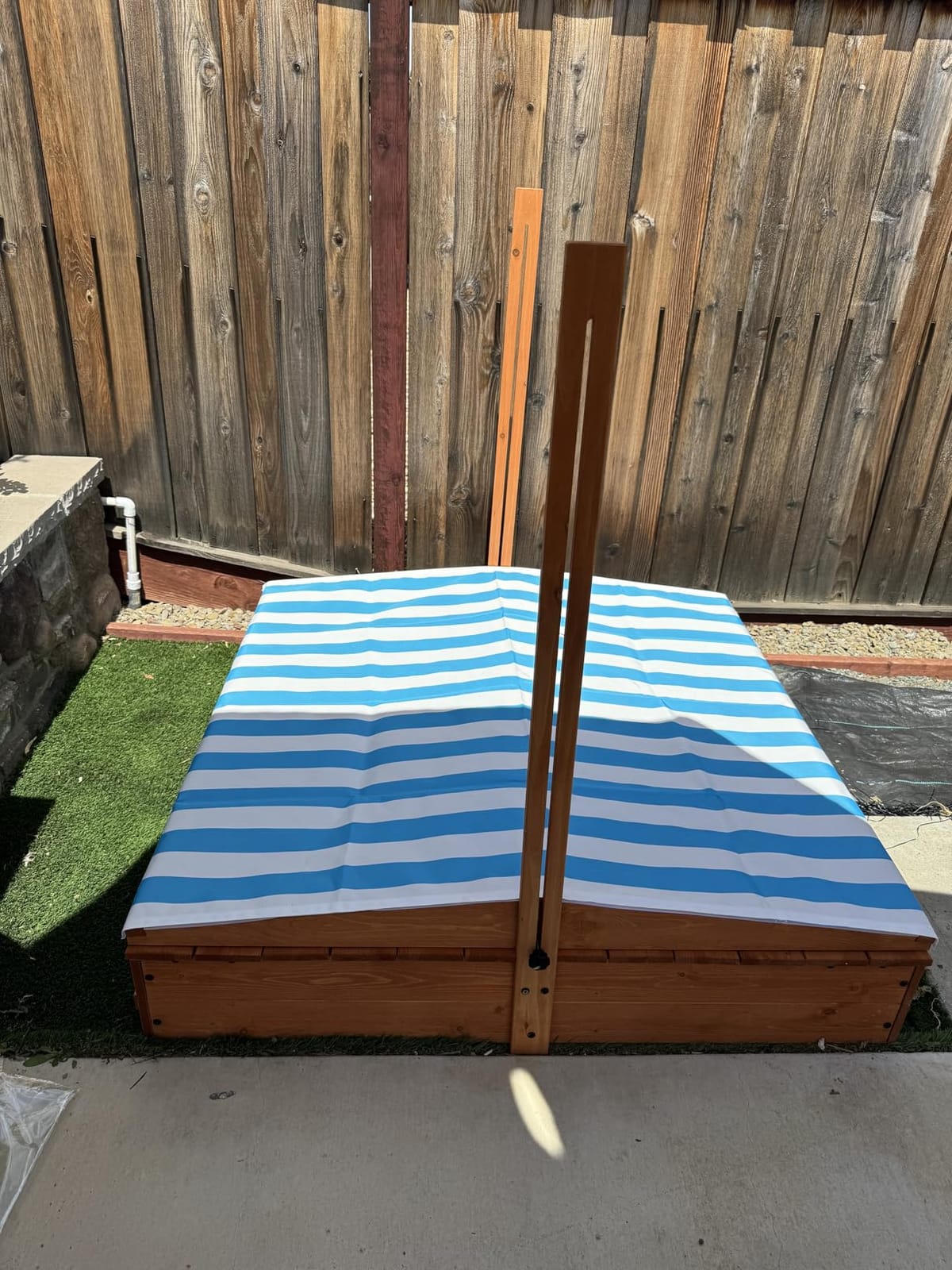
The full 360 degree canopy is the headline feature and it is genuinely useful. It rotates and adjusts in height, so the shade follows the sun around the box instead of forcing the sandbox into one fixed spot, and when lowered it keeps out leaves, animals and rainwater.
The second bench is a storage compartment, which is why this is our toy storage pick. Two backrest benches rated to 200 lbs each fold into separate cover panels, and even with the lid closed you can still sit on it. Beach toys, buckets and rakes live under the seat rather than scattered across the patio.
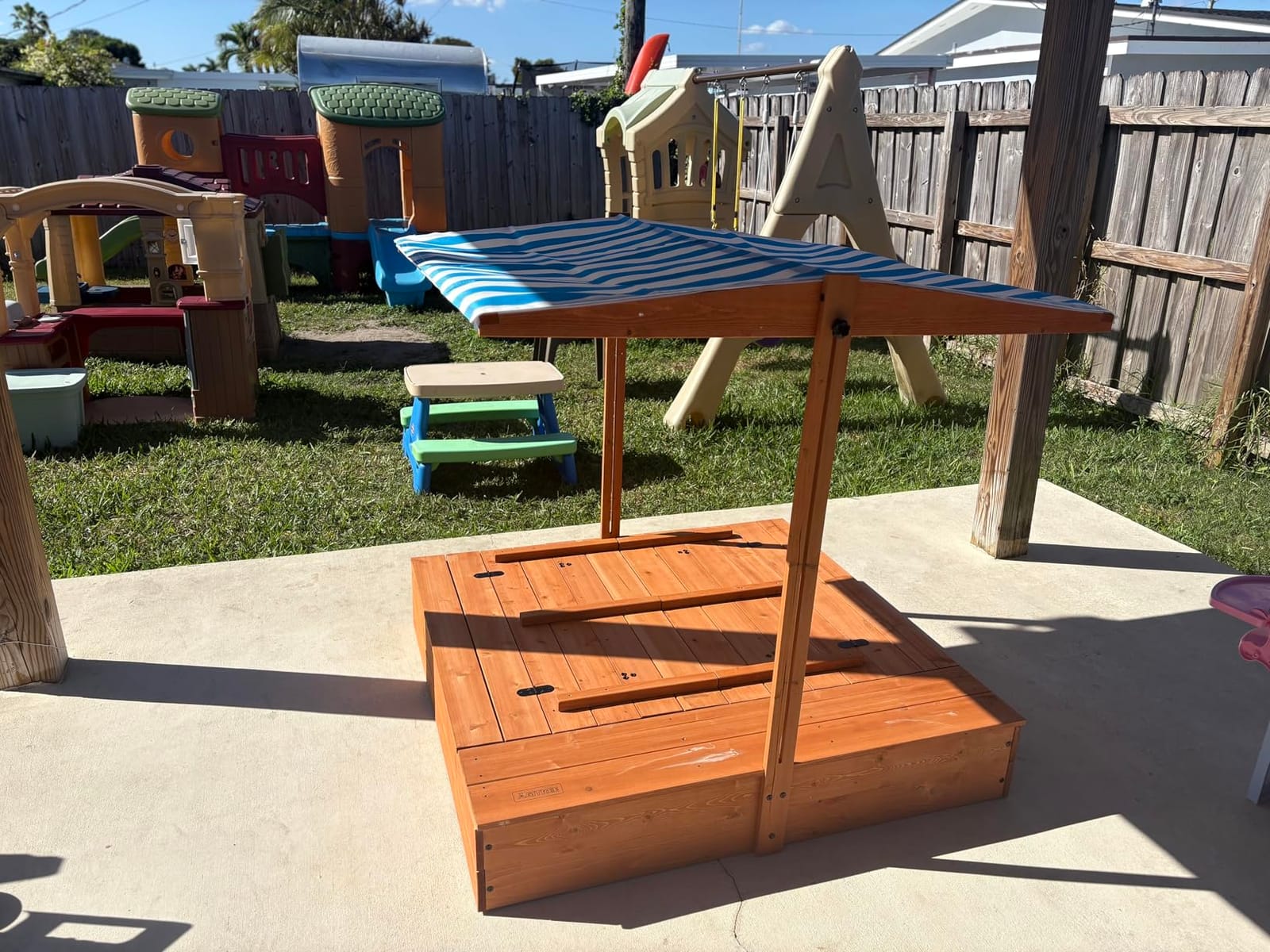
Construction is heat-treated wood with non-toxic water-based paint and stain, a bottom liner is included, and assembly takes around 30 minutes. At 47.2 by 47.2 inches it fits the same footprint as the other square boxes here.
The durability record is the weak point. This box carries the highest one-star share in the roundup at 12 percent, and the complaints cluster on the canopy and hinge hardware, plus wood that splits during assembly. Treat the canopy as a part that will need replacing.
What to check before building
Count the canopy fittings and lay them out before you start, since those are the pieces that cause the one-star reviews. Having the full set laid out on a towel makes a missing part obvious immediately.
Check the hinge positions on both benches because they operate as cover panels. This is the mechanism you will use most, and it is also the one owners replace first.
When to skip it
Skip it if you want the box to look premium in the yard. Soft wood and a rotating fabric canopy read as budget even when assembled well.
Skip it if nobody will help with assembly. The wood can split while you are building it, and that is the single biggest cause of poor first impressions in reviews.
How to Choose a Sandbox With a Cover That Lasts
Start with the closure, because it is the only part you cannot replace without taking the whole box apart. A rigid lid that sits down over the rim will keep sand dry through a storm. A fold-flat bench lid will keep out leaves, debris and most animals. A fabric tarp pulled over the top will do none of those reliably.
Next, look at the frame material. Heat-treated cedar and hemlock hold their shape and resist decay. Fir and spruce are lighter and cheaper to ship but go brittle with sun and moisture. Plastic needs no maintenance at all and will not rot, crack or need staining.
Check the bench load rating next. Anything at 200 lbs or above lets an adult sit and supervise properly, which matters more than most buyers expect. Anything rated by total maximum weight rather than per bench is less useful information.
Finally, confirm the liner situation. A bottomless frame drains naturally and never traps water against the ground. A box with a loose liner needs that liner stapled to the frame, otherwise sand leaks out through the base within weeks.
The Three Cover Mechanisms Explained
Every covered sandbox uses one of three mechanisms, and understanding which one you are buying explains almost every review you will read afterwards.
1. Hard molded lid. A rigid plastic shell seats over the rim and, ideally, domes so water runs off. Best seal strength, best water shedding, highest resistance to wind provided you weight it, and effectively no shade while playing. This is the Step2 approach and the only genuinely rain-tight option in this roundup.
2. Retractable or rotating canopy. The roof slides or swings back over the sand for play and lowers to close the box. Best shade of the three by a wide margin, good animal deterrence once lowered, but water can still sit on a sagging fabric panel and the mechanism needs two hands. The Aivituvin and YOLENY designs both work this way.
3. Fold-flat bench lid. The benches fold down and become the cover, so seating and closure are one mechanism with nothing extra to store. Very good animal and debris deterrence, poor water shedding because the panel is usually fabric or thin board, and the hinges are the part that wears out. The Best Choice cedar box and the Badger Basket both use this.
For most backyards, mechanism one is the right answer if the priority is a dry sandbox. Mechanism three wins if the priority is animals and debris. Mechanism two wins if the priority is shade during play.
Wood or Plastic: Which Body Holds Up Better
Plastic wins on maintenance. There is nothing to stain, nothing to split and nothing to tighten, and the shell hoses off after a wet summer. The tradeoff is capacity and appearance, since plastic boxes in this roundup are smaller and read more like outdoor furniture for toddlers.
Wood wins on size, seating and looks. Any box that fits six children and carries adult weight ratings is wooden, because timber spans wider and takes a seated load. The tradeoff is an annual decision about sealing, plus the risk that included screws are too short for soft timber.
Between the timbers, cedar and hemlock are the durable picks. Fir and spruce are acceptable only in mild, dry climates or when you accept replacing parts. If you want a quiet answer, buy cedar and budget for a cover upgrade.
Liners, Drainage and Sand Depth
A liner is what stops your sand washing out into the dirt and what keeps weeds out, and there are three setups worth knowing.
Bottomless design lets water drain straight through and lets you adjust sand depth freely. Nothing to staple, nothing to fail, and the sand stays in place as long as you retain a lip or liner.
Ground liner is a fabric sheet laid under the box. It needs to be stapled to the frame, not simply dropped in, or sand will leak through the seams.
Perimeter liner is stapled inside the walls to contain sand depth. It reduces drainage slightly, so only use it where the ground beneath is free-draining.
Whatever the setup, dig a shallow depression slightly larger than the box footprint before you set it down. Water that runs off the lid then has somewhere to go instead of sitting against the frame and wicking into the sand.
Keeping Cats, Dogs and Wildlife Out
A sealed cover is the only reliable answer to what keeps cats out of sandboxes. Motion-activated sprinklers and deterrent sprays help, and homeowners on r/homeowners report success with them, but they are an adjunct to a covered box rather than a replacement for one. An open box is an invitation, because it is warm, soft and sheltered.
For larger animals, the difference between mechanisms matters. Hard molded lids stop everything. Fold-flat bench lids stop dogs and cats reliably but leave a corner gap at the hinge. Canopies only work when lowered, so a raised roof is functionally an open box.
Wildlife follows the same logic, and a covered box also solves the nesting problem. Homeowners in colder climates ask whether the box can stay out over winter, and the answer is yes provided the lid closes and you clear wet debris out of it in the autumn so it does not rot against the frame over months.
Anchoring a Cover So It Stays Put in Wind
Most covers do not fail because they tear. They fail because they lift, and the failure appears as a puddle sitting on top of the sand rather than a hole in the fabric.
1. Weight the edges. A flat stone or a bag of sand on each corner is the simplest fix and works on any box. Owners commonly use this approach with light plastic lids.
2. Run a bungee around the base of the frame. Two loops crossing over the closed lid pin fabric to the frame without any drilling or permanent modification.
3. Stake it down in exposed yards. Where the box sits on open ground, drive small stakes or ground anchors outside the frame and lash the lid to them. This is the only method that survives a genuine gust.
Once anchored, drain any pooled water by lifting one corner and letting it run off the sand rather than tipping the box, which is how most sand ends up back on the patio floor.
How Much Sand a Covered Box Needs
Roughly, aim for 100 to 150 lbs of sand per child who will use the box regularly. That fills the box to a comfortable playing depth without the cost of filling it to the rim.
A compact box around 44 to 48 inches square takes somewhere between 8 and 12 bags of a 50 lb bag. A large octagon in the 78 to 85 inch class takes roughly 16 to 20, and the manufacturer figure on the Mederra is 800 to 1000 lbs of sand at a full fill.
Buy play-grade sand rather than builder’s sand. Builder’s sand can contain clay and silica dust, and the weight also makes a large box far harder to move when you want to clean underneath it.
If you are pairing this with other backyard projects, our deck kit guide covers the platform side, and our wooden playhouse guide covers enclosed play.
Frequently Asked Questions
Should sandboxes be covered?
Yes, cover a sandbox whenever it is not in use. A cover keeps rainwater, leaves, insects and animals out of the sand, which is the difference between sand that stays playable and sand that turns to wet sludge within days. It also prevents neighborhood cats using the box as a litter tray and lets you store sand between seasons instead of buying it again each spring.
Can mold grow in a sandbox?
Yes. Mold and algae grow in sand that stays damp, which happens whenever rain reaches an uncovered or sagging-cover sandbox. The fix is prevention rather than treatment: use a cover that sheds water, rake and sun the sand regularly, keep the box open to airflow after wet weather, and replace sand that has gone clumpy and musty rather than trying to rehabilitate it.
What is the best material to use for a sandbox cover?
Rigid molded plastic is the best material for keeping sand dry because it cannot sag and it sheds water. For keeping out animals and debris, a fold-flat wooden or rigid board lid secured to the frame works well. Fabric covers, including 420D Oxford cloth and canvas, are the weakest option for water because they stretch and pool rain, but they are the best choice for shade.
What keeps cats out of sandboxes?
A fully closed cover is the only reliable answer. Hard molded lids stop everything, fold-flat bench lids stop most cats and dogs, and canopies only work when lowered. Motion-activated sprinklers and deterrent sprays placed near the box add useful support, and homeowners report success with them, but they work alongside a cover rather than instead of one.
Do snakes like sandboxes?
Snakes and other wildlife are attracted to open sandboxes because they offer warm, sheltered cover close to the ground. A closed lid removes the shelter entirely, which is why covered boxes solve the nesting problem as well as the cleanliness problem. Clear out wet leaves and debris in the autumn and check beneath the liner before setting a box down.
How do I keep a sandbox cover from blowing off?
Weight the edges with flat stones or sandbags on each corner, then run a bungee cord around the frame to pin the cover down. In an exposed yard, stake the frame to the ground outside the footprint and lash the lid to those anchors, which is the only method that survives a genuine gust. Weighting alone handles ordinary breezes on most boxes.
Is a wooden or plastic sandbox better?
Plastic needs no maintenance and will not rot, split or need staining, but boxes in plastic are usually smaller and suit toddlers better. Wood spans wider, carries higher bench load ratings and looks better in a yard, but it needs sealing and attention each year. Cedar and heat-treated hemlock are the most durable timbers, while fir and spruce go brittle with sun and moisture.
Conclusion
The Best Choice Products 47 inch cedar box is our pick for most backyards, because folding its benches down gives you a real cover with no extra hardware and its 220 lbs benches let an adult supervise from a seated position. If your priority is a genuinely rain-tight seal, the Step2 plastic box is the only one in this roundup that achieves it, thanks to a rigid domed lid. For group play, the Mederra 85 inch cedar octagon takes six to eight children with a certified frame, though you will want to replace its cover.
Whichever box you choose, the cover is only half the job. Anchor it before the first gust, staple the liner to the frame, and keep it closed between sessions. That routine is what keeps a covered sandbox usable from one 2026 season to the next.