
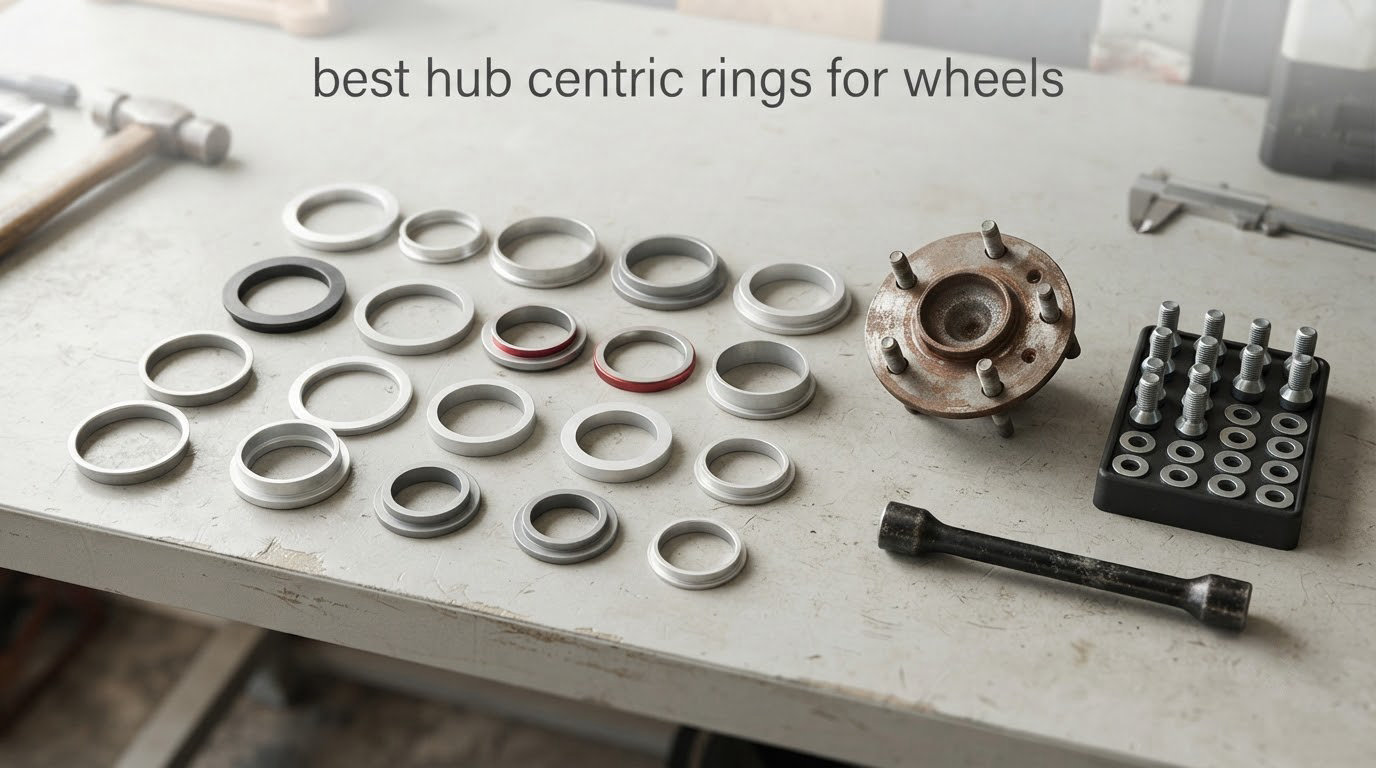
Hub centric rings are the cheapest part of a wheel upgrade and the one people agonise over the least, until the steering wheel starts shaking at 70 mph. A ring is a precision annulus that sits between the wheel’s centre bore and the hub’s pilot bore, so the wheel gets located by machined metal rather than by five tapered lug nuts trying to hold it in place.
When a wheel’s centre bore is larger than the hub it bolts onto, the gap is a small lateral slop multiplied by every revolution of the wheel. That imbalance grows with speed, and the driver feels it first through the pedals and the steering wheel. A correctly sized ring removes the slop. The rest of this guide covers the ten best hub centric rings for wheels we could justify on fit accuracy, material and owner feedback, then the measuring procedure that decides which of them you actually need.
One correction before the list, because it matters: a ring does not change your bolt pattern, your wheel offset or your load rating, and it does not carry the car’s weight. It is a centring part, nothing more. Everything below is sized in millimetres, and every measurement we quote comes from the product data rather than from a general idea of what fits.
Table of Contents
Top 3 Hub Centric Picks in 2026
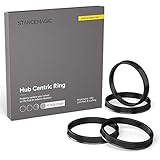
StanceMagic 64.1 to 73.1 Polycarbonate
- 64.1mm ID to 73.1mm OD
- Polycarbonate construction
- Set of 4 rings


Our team compared ten sets against the same criteria: published ID and OD dimensions, material, whether the listing states both diameters clearly, and how owners describe the fit after installation. The three above are the ones with the strongest combination of clear sizing, honest materials and a large enough owner base to trust.
Best Hub Centric Rings for Wheels (October 2026)
| Product | Specifications | Action |
|---|---|---|
| StanceMagic 64.1 to 73.1 Polycarbonate |
|
Check Latest Price |
| Wheel Connect 106 to 78.1 ABS |
|
Check Latest Price |
| GoldenSunny 72.6 to 57.1 Aluminium |
|
Check Latest Price |
 GoldenSunny 73.1 to 67.1 Aluminium GoldenSunny 73.1 to 67.1 Aluminium |
|
Check Latest Price |
 X AUTOHAUX 73.1 to 63.4 Plastic X AUTOHAUX 73.1 to 63.4 Plastic |
|
Check Latest Price |
 A ABSOPRO 72.6 to 64.1 Alloy A ABSOPRO 72.6 to 64.1 Alloy |
|
Check Latest Price |
 DCVAMOUS 73.1 to 64.1 Alloy DCVAMOUS 73.1 to 64.1 Alloy |
|
Check Latest Price |
 Wheel Accessories Parts 78.10 to 70.30 Wheel Accessories Parts 78.10 to 70.30 |
|
Check Latest Price |
 X AUTOHAUX 73.1 to 64.1 Alloy X AUTOHAUX 73.1 to 64.1 Alloy |
|
Check Latest Price |
 Circuit Performance 72.56 to 57.1 Circuit Performance 72.56 to 57.1 |
|
Check Latest Price |
Every row above is a single fixed size. That is how ring sizing works: one number for the wheel, one for the hub, no adjustment. If your measurements do not match a row exactly, keep reading, because the measuring procedure below is where most people go wrong.
1. StanceMagic 64.1mm to 73.1mm Polycarbonate Rings
StanceMagic Hubcentric Rings (Pack of 4) – 64.1mm ID to 73.1mm OD – Black Poly Carbon Plastic Hubrings Hub – Only Compatible with Honda Acura with 64.1mm Vehicle Hubs and 73.1mm Wheel Centerbore
64.1mm ID to 73.1mm OD
Black polycarbonate
4 hub rings
1.6 ounces
Pros
- Highest review volume in the hub centric category
- Snug flush fit on the hub
- Black finish suits most wheel hardware
- Removes centrebore-related vibration
Cons
- Only fits the 64.1 to 73.1mm pairing
- Sizing must be verified with a micrometer
- Polycarbonate is not a permanent fix
This is the set we return to most often. The pairing is 64.1mm inner diameter to 73.1mm outer diameter, which is one of the most common combinations on modern Honda, Acura and Tesla fitments, and the ring itself is black polycarbonate with a 1.6 ounce total weight for all four. Each piece is a plain annulus with no branding, which is exactly what you want sitting inside a wheel barrel where nobody will see it.
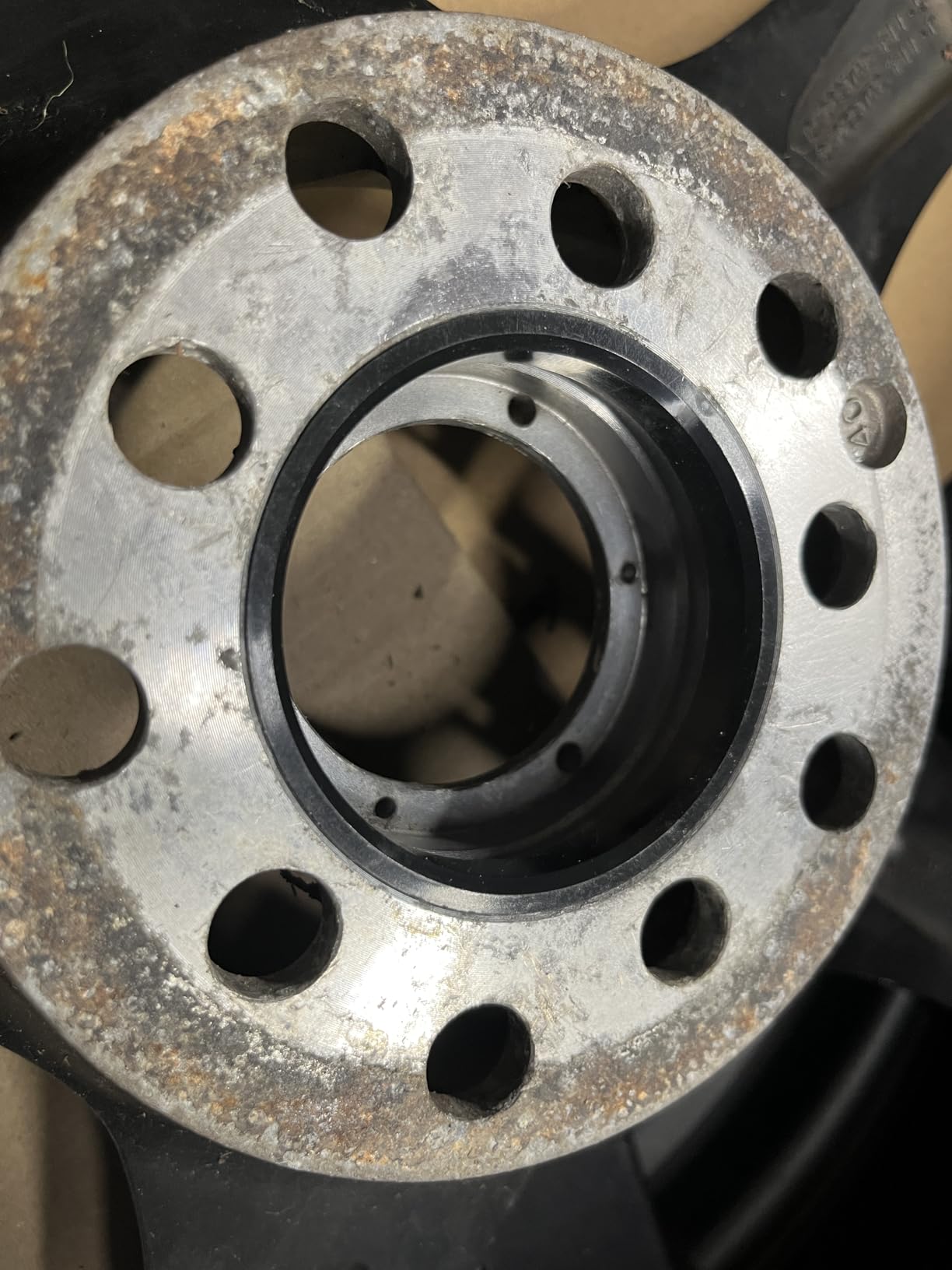
Owner feedback is the reason this one leads the list. With more than 4,400 reviews behind it, the pattern is consistent: the rings seat flush on the hub lip, the wheel stops hunting, and the vibration that used to appear between 60 and 75 mph goes away. Multiple owners describe the fit as having no perceptible play once the wheel is pulled onto the studs.
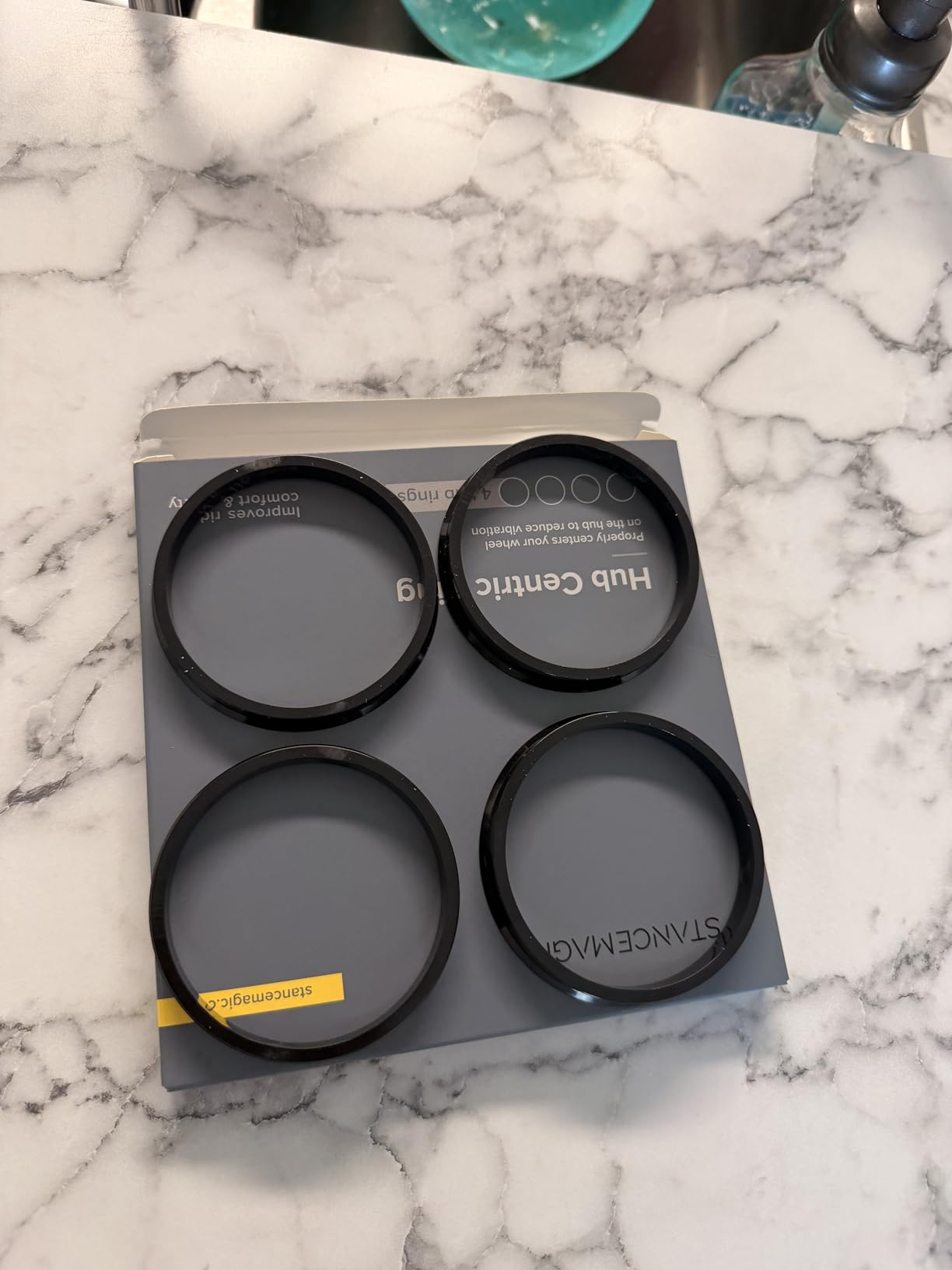
The spec sheet is unusually clear for a marketplace listing. The 64.1mm inner diameter is called out as matching the vehicle hub lip diameter, and the 73.1mm outer diameter as matching the wheel centre bore, with a one-year limited warranty on manufacturing defects. Both numbers are labelled, which is the single best sign that a seller understands the part.
One thing the listing does well is state compatibility honestly. It covers select Honda and Acura models plus Tesla Model S, 3, X and Y from 1986 onward, and it does not pretend to fit everything. It ranks first in the Hub Centric Rings category on Amazon, which reflects search volume rather than a lab test, but it does explain why so many buyers end up here.
Who this set suits
Anyone running a 64.1mm hub with wheels that have a 73.1mm centre bore, which covers a very large share of modern front-drive and crossover fitments. It is also the safest recommendation for a first-time buyer because the size is confirmed on the listing, the tolerances are reported tight and a defective set can be replaced under the warranty.
It also works well as a cheap fix for a car that already runs tapered lug nuts. If the wheel centres properly with the ring in place, the coning action of the nuts has less to fight against and pre-load stays more even between studs.
Where it falls down
Polycarbonate is the trade-off. It will not corrode and it will not melt under normal braking temperatures, but the forum consensus is clear that a deformed plastic ring can make vibration worse rather than better. One Golf GTI owner reported swapping included plastic rings for aluminium and finding a deformed ring underneath, which is the single most repeated warning in this whole category.
It also only fits one size pairing. If your hub is 64.1mm but your wheels have a 72.6mm centre bore, this is the wrong ring regardless of how well it is reviewed. Measure first, then come back to the list.
2. WHEEL CONNECT 106mm to 78.1mm ABS Rings
WHEEL CONNECT Hub Centric Rings, 106 to 78.1, Set of 4, ABS Plastic Hubrings, O.D:106 (106.1) – I.D:78.1mm.
OD 106mm to ID 78.1mm
ABS plastic
Set of 4
7.4 ounces
Pros
- Highest average rating in the group
- Covers the hard-to-find 106mm truck bore
- Simple installation with no special tools
- Precise fit reported on half-ton trucks
Cons
- One ring in a set reported off-spec
- ABS can crack after long service
- Sizing must be confirmed by the buyer
This is the one to look at if your vehicle has a 106mm class hub, because mainstream passenger-car rings stop well short of that number. The pairing is 106mm outer diameter to 78.1mm inner diameter, moulded in ABS plastic, sold as a set of four and weighing 7.4 ounces. That is heavier than the 73mm rings simply because the annulus is much larger.
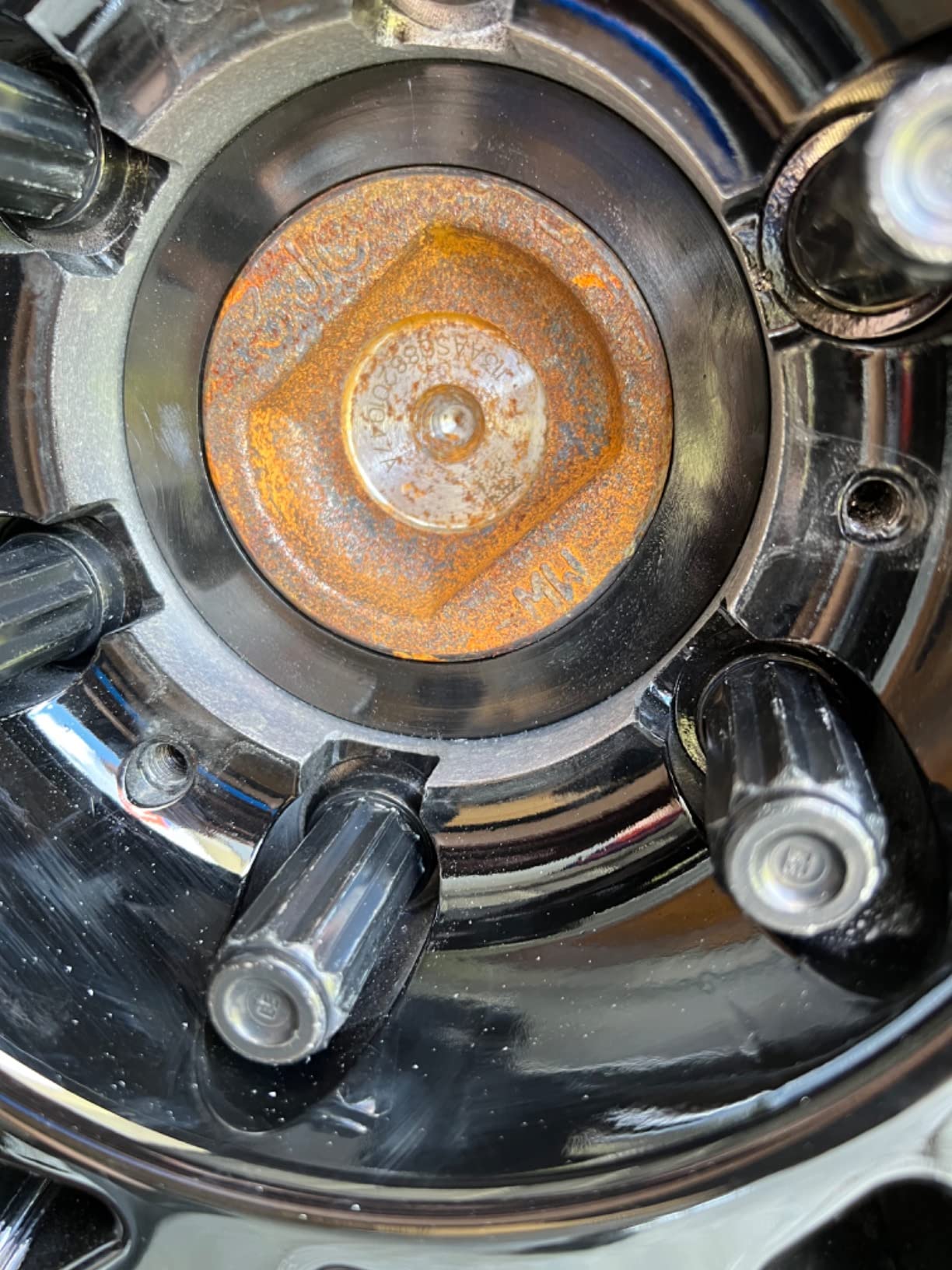
Owners on Chevrolet Silverado 1500 and Ford F-150 builds report the two things that matter: a precise fit and a marked reduction in vibration once fitted. A 4.7 average across more than 550 reviews is the highest rating of any ring in this guide, which says something about how forgiving a large-bore fitment is when the numbers are right.
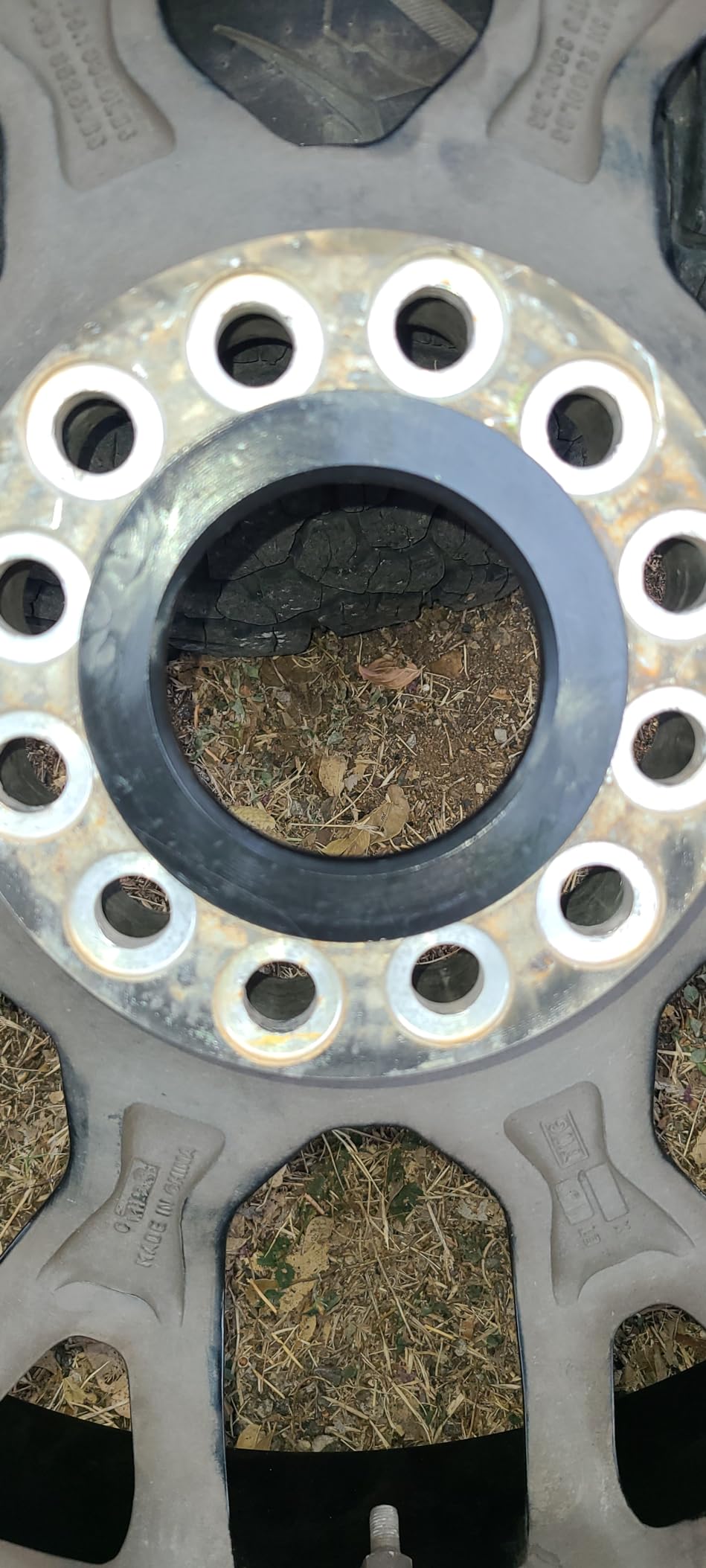
The listing names the manufacturer’s part number, HR1060-7810, and states both diameters with their jobs spelled out. That detail is worth something on trucks, where the difference between a 106mm bore and something adjacent can mean scraping a heavy brake rotor on a badly fitted wheel. Measure the hub pilot carefully and confirm against your own wheel’s centre bore before ordering.
It is also a Canadian brand that designs and services in Canada, which matters mostly if you need to chase a size question. The product data does not state where the rings are made, so do not assume.
Who this set suits
Truck and offroad owners with 106mm wheel centre bores and 78.1mm hub pilots, and anyone running a 6-lug wheel where the passenger-car size charts simply do not go. It is also a reasonable choice for a heavy SUV build that tows and carries load, because the plastic is corrosion resistant and the geometry is simple.
If you do not know your hub pilot diameter, this is the ring to measure before you buy anything. A caliper across the hub pilot, read at the narrowest point, takes two minutes and removes the single biggest source of ordering errors in this category.
Where it falls down
At least one owner reported a ring in a set that was not bored to spec and needed machining to fit, and another noted ABS cracking after roughly a year of service. That is a minority report, not a pattern, but it is the reason we would not put an aluminium option at this bore size ahead of it, because we could not find one in this group.
The 7.4 ounce weight is not an issue for a truck but it is a small penalty if you are swapping wheels often. Installation on a large-bore fitment also takes more care, since a slightly out-of-square ring can be much harder to seat by hand.
3. GoldenSunny 57.1mm to 72.6mm Aluminium Rings
GoldenSunny 57.1 to 72.6 Aluminum Hubcentric Rings, Pack of 4
72.6mm bore to 57.1mm hub
10mm aluminium
Pack of 4
6.4 ounces
Pros
- True 72.6mm dimension rather than a 72.56mm mislabel
- Aluminium resists heat and corrosion
- Vibration resolved on many VW
- Audi and Pontiac builds
- Good value against metal ring pricing
Cons
- One buyer found two rings lathed to mismatched ID
- Single size pairing only
- Requires accurate measurement first
Aluminium is the answer to the most-asked question in this category, and this set makes the case cheaply. The pairing is a 57.1mm hub bore to a 72.6mm wheel centre bore, machined aluminium with a 10mm thickness, sold as a pack of four at 6.4 ounces. The manufacturer part number is RING72.6-57.1.
The 72.6mm figure is the point of this product. A lot of listings label that diameter as 72.56mm, which is a different number and produces a ring that can sit slightly proud or slightly loose in the bore. One owner in the reviews specifically praises the accurate 72.6mm dimension for use with Enkei wheels, which is the kind of detail you only notice when the fit is exact.
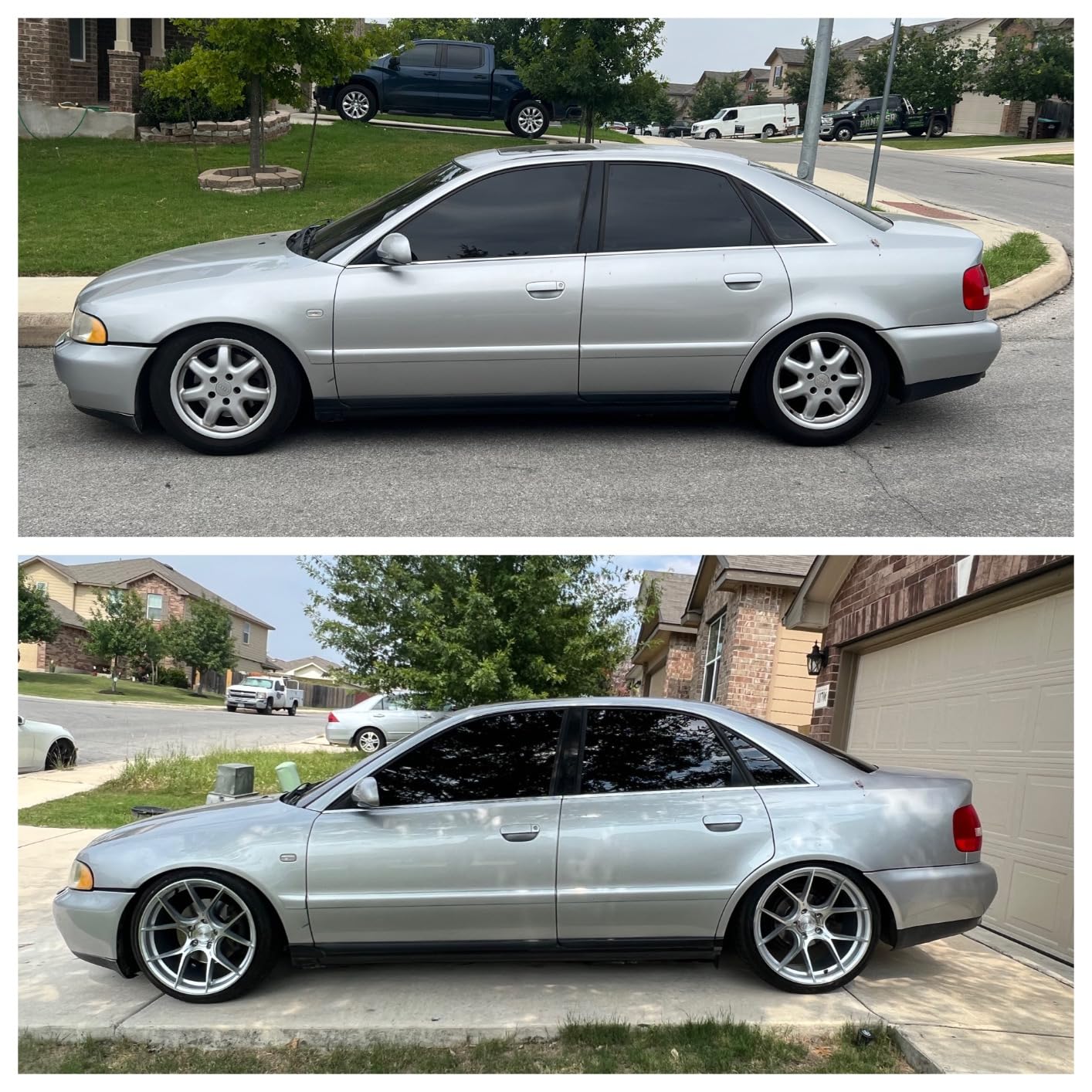
It suits many Audi, Volkswagen and Pontiac platforms built around the 57.1mm hub, and owners on those cars report that long-standing highway vibration disappeared after fitting them. The listed thickness of 10mm also means the ring seats deep enough to keep the wheel’s mounting face in the right relationship to the hub face, which matters for people who care about clearance.
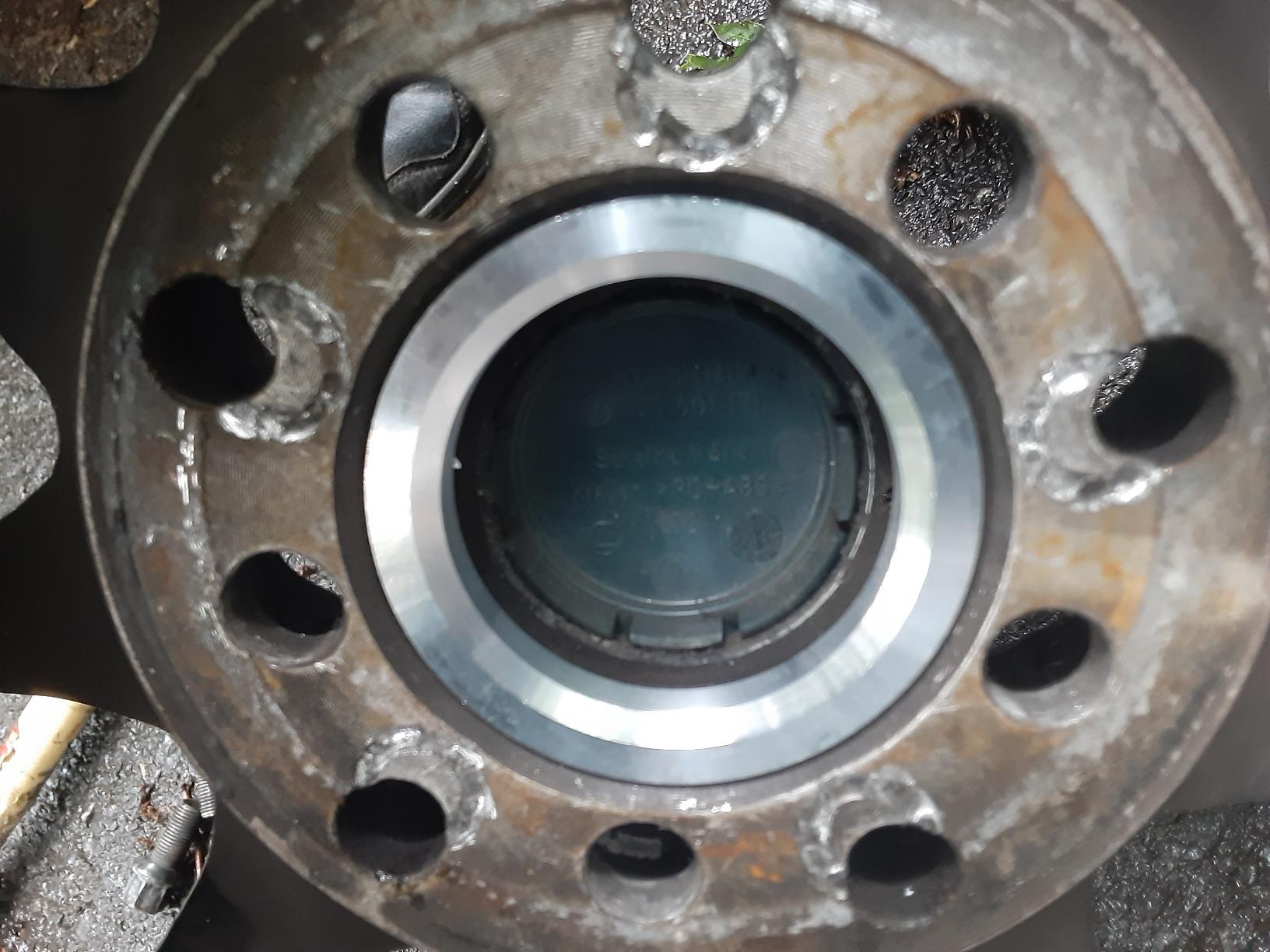
Pre-installing with anti-seize and tapping the wheel home with a rubber mallet is the installation approach owners recommend, and it works well with a metal ring. Aluminium on aluminium can bond over time, so a light film of anti-seize on the hub pilot is a habit worth keeping.
Who this set suits
European and older front-drive platforms with a 57.1mm hub bore, particularly where a 72.6mm bore wheel is being fitted. It is also the first set we would try for anyone who has already had a plastic ring deform on them, because aluminium will not crack or soften the way a cheap plastic ring can.
For a car that sees track days, hillclimbs or long motorway runs, a metal ring is the low-maintenance choice. NASIOC forum users have reported running aluminium rings on Racing Hart wheels for more than three years without them ever seizing to the hub.
Where it falls down
One reviewer found two of the four rings not lathed to matching inner diameters and had to modify them, which is a quality-control issue rather than a design problem but still worth knowing about. Check each ring with a caliper before you press any of them in, because a ring that is a few tenths out will not seat properly.
At 10mm thick and machined from metal, this set will also sit further out than a thin plastic ring. On a car with tight brake clearance, check the relationship between the wheel mounting face and the hub before you commit.
4. GoldenSunny 73.1mm to 67.1mm Aluminium Rings
73.1mm OD to 67.1mm ID Hub Centric Rings, Silver Aluminum, Pack of 4
73.1mm OD to 67.1mm ID
10mm aluminium
Pack of 4
3.17 ounces
Pros
- Aluminium holds heat far better than plastic
- Clean fitment reported on Hyundai
- Kia and Mazda
- Simple drop-in installation
- Lightest of the aluminium sets here at 3.17 ounces
Cons
- Only fits the 73.1 and 67.1mm pairing
- Measurements must be confirmed by the buyer
- Single application
- no size variants in the pack
This is the same manufacturer and the same 10mm aluminium construction as the previous pick, in a different diameter pairing: 73.1mm outer diameter to 67.1mm inner diameter. It weighs 3.17 ounces for four rings, which makes it the lightest metal set in the group, and it is finished in silver.
It targets the 67.1mm hub family, which covers a lot of Hyundai, Mitsubishi, Kia and Mazda applications. Owners on those cars report clean fitment and successful vibration removal, and the 4.7 average here comes from a smaller but consistently positive review base than the two leading sets.
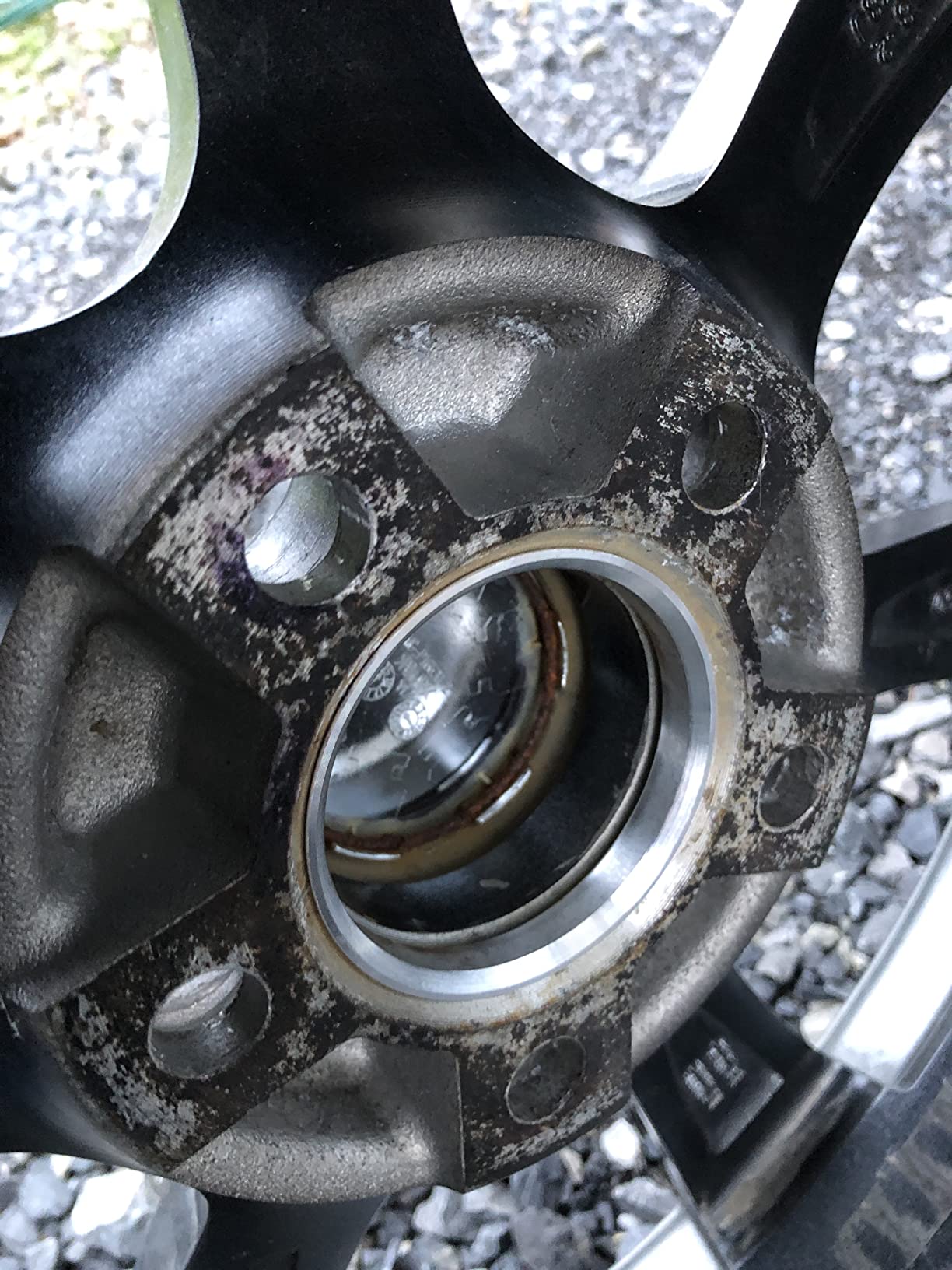
What we like about this listing is that it says the same thing twice in different ways: the 73.1mm matches the wheel centre bore and the 67.1mm matches the vehicle hub bore, with the ring thickness called out at 10mm for proper installation. Sizing transparency is the first thing to check on any ring listing, and this one passes.
It is also a straightforward drop-in. Nothing about the install differs from any other 73mm ring, so if you have fitted rings before you already know the drill.
Who this set suits
Korean and Japanese platforms with a 67.1mm hub pilot and aftermarket wheels with a 73.1mm centre bore. It is a good pick for a daily-driven car where you want a metal ring but do not want the extra weight of a larger annulus.
Choose this over a plastic equivalent if the car tows, climbs, races or sits in traffic that generates brake heat. Metal does not soften, crack or creep, and a 4.7 rating from owners on those cars suggests the tolerances hold up.
Where it falls down
It is one size and one size only. The pack contains four rings in the same pairing, so there is no mixing and no fallback if one is out of tolerance. Verify with a caliper before installation.
It also has fewer reviews than the leading sets, so the evidence base is thinner. The rating is high, but the sample is smaller, and a buyer who wants the largest volume of owner feedback should start with the StanceMagic set instead.
5. X AUTOHAUX 73.1mm to 63.4mm Plastic Rings
X AUTOHAUX Car Hub Centric Rings Wheel Bore Center 73.1mm OD to 63.4mm ID – 4pcs Black Plastic
73.1mm OD to 63.4mm ID
Black plastic
4 pieces
2.46 ounces
Pros
- Lowest cost four-piece set in this group
- Installs directly to correct centring
- Black finish blends with wheel hardware
- Light at 2.46 ounces for all four
Cons
- Plastic is less durable under heat than aluminium
- Only fits the 73.1 and 63.4mm pairing
- No material grade stated in the listing
This is the budget entry, and it does a specific job: a 73.1mm outer diameter to a 63.4mm inner diameter in black plastic, four pieces, 2.46 ounces. The 63.4mm hub bore is less common than 64.1mm, so buyers of this set usually know exactly why they need it, which is a good sign.
Owners describe it as a working solution that centres the wheel and reduces vibration, with the plastic build being the trade-off they accept against metal rings. The 4.4 average is the joint-second-lowest in the group, but for a part that only does one job, functional is functional.

Other bore sizes are offered under the same brand name, so if your centre bore is 73.1mm but your hub measures something other than 63.4mm, look at the wider range rather than forcing this pairing. The product data lists this specific size only, so confirm the numbers on the listing you actually buy from.
The technical description is straightforward: the outer diameter matches the wheel centre bore, the inner diameter matches the vehicle hub bore, and the ring corrects minor dimensional differences between the two. That is the entire job, stated plainly.
Who this set suits
A 63.4mm hub with 73.1mm wheels, on a car used mainly for commuting where brake temperatures stay moderate. It is also a sensible first ring for anyone who wants to test whether a centrebore gap is causing their vibration before spending on metal.
If your wheels came with a thin plastic ring already in them and it feels loose in the bore, replacing it with a properly dimensioned set like this is the cheapest possible fix. A ring that rattles is worse than no ring at all.
Where it falls down
Heat is the weakness. Plastic is less durable under prolonged braking temperatures than aluminium, and the listings for this product do not state a material grade beyond black plastic, so there is no way to judge how rigid it will stay in a hard-driven car.
The 4.4 rating reflects that. Owners are generally positive about function, but this is the set we would not put on a track car, a tow rig or anything that spends its life in the mountains.
6. A ABSOPRO 72.6mm to 64.1mm Alloy Rings
A ABSOPRO Car Hub Centric Rings OD 72.6mm to ID 64.1mm Hub Centric Rings Wheel Bore Center Spacer Aluminum Alloy Red (Set of 4)
OD 72.6mm to ID 64.1mm
Aluminium alloy
Set of 4
4.1 ounces
Pros
- Heat and corrosion resistant alloy
- Reported to fix high-speed shake
- Installs without special tools
- Wide range of size options under the same brand
Cons
- One buyer received only two rings in a four-piece order
- Size-specific fitment only
- Some owners report a faint metal rattle
The interesting thing about this set is the combination. You get a genuine 72.6mm outer diameter, which is the size that matters for a lot of European wheel fitments, paired with a 64.1mm hub bore, which is one of the most common pilot diameters in the world. In aluminium alloy with a red anodized finish, four rings at 4.1 ounces.
Owners report that these removed wheel wobble and high-speed vibration on setups ranging from Jeeps and Tahoes to VW Octavias and Italian cars. That range is encouraging, because it suggests the tolerance holds up across different hub designs rather than only on one platform.
Who this set suits
Anyone with a 64.1mm hub and a 72.6mm centre bore, which is one of the more useful pairings for a European car running Japanese or American wheels. The alloy construction suits a car that sees motorway miles or a summer track day.
The same brand covers a wide range of OD and ID combinations, so if your measurements are near but not exact to this pairing, check whether a neighbouring size is listed before ruling the brand out.
Where it falls down
One buyer reported receiving only two rings in a four-piece order. That is a fulfilment problem rather than a product problem, but count the pieces the moment the set arrives, because a missing ring means a wheel running without centring.
Some owners also note a faint rattle from the metal on metal fit that plastic does not produce. It is not a fault, but if your car is quiet at idle you may hear it over bumps until the ring beds in.
7. DCVAMOUS 73.1mm to 64.1mm Alloy Rings
4pc Wheel Hub Centric Rings 73.1 to 64.1, Alloy Aluminum Hubcentric Rings
73.1mm OD to 64.1mm ID
Aluminium alloy
4 pieces
4.2 ounces
Pros
- Alloy resists heat and impact better than plastic
- Anodized finish resists corrosion
- Corrects hub and wheel dimension mismatches
- Part number DCV027HCR for cross-referencing
Cons
- Only fits the 73.1 and 64.1mm pairing
- Hub and bore must be measured before ordering
- Small review base at 192 ratings
This is the pairing most aftermarket wheel buyers actually need: a 64.1mm hub bore with wheels that have a 73.1mm centre bore. It is machined aluminium alloy with an anodized oxidation finish, four pieces at 4.2 ounces, part number DCV027HCR.
Owners generally report that these alloy rings centre their wheels properly and view them as sturdier than plastic alternatives. The stated resistance to heat and impact is the reason we would reach for alloy over polycarbonate on a car that is driven hard or lives somewhere hot.
The dimensional language in the listing is correct and consistent, which is worth noting given how often retailers get it backwards. The 73.1mm outer diameter corresponds to the wheel centre bore and the 64.1mm inner diameter corresponds to the vehicle hub, and the product is described as a spigot-style ring filling the gap between them.
Anodizing is a small detail that pays off over years. It is a surface conversion rather than a coating, so it will not chip off the way paint can, and it will not corrode the way bare cast aluminium can.
Who this set suits
Drivers on the 64.1mm hub family fitting 73.1mm wheels, particularly those who have already had a plastic ring deform and want a part that will not. If your wheel came with a cheap plastic ring in the bore, this is the direct replacement.
It is also a good choice on a car that stores outdoors or sees winter salt, because anodized alloy shrugs off both better than uncoated metal and far better than most plastics over a long service life.
Where it falls down
It is a single size pairing with no variants in the pack, so a small measurement error leaves you with a set that will not fit. Measure twice.
The review base is also on the smaller side at 192 ratings. The rating is good, but if you want the reassurance of thousands of owners reporting the same result, the StanceMagic set offers far more of it, in plastic.
8. Wheel Accessories Parts 78.10mm to 70.30mm Polycarbonate Rings
Wheel Accessories Parts 4 Pcs Poly Carbonate Hub Centric Rings OD 78.10mm ID 70.30mm Fits Many Vintage Buick Chevrolet Oldsmobile Pontiac Hubs
78.10mm OD to 70.30mm ID
Polycarbonate
4 pieces
0.96 ounces
Pros
- Covers a classic American bore few rings list
- Very light at 0.96 ounces for four
- Precision manufactured for a tight fit
- Engineered to withstand braking temperatures
Cons
- Limited to one 78.10 and 70.30mm sizing
- Polycarbonate is less heat resistant than metal
- Small review base of 76 ratings
This set exists because a large part of the wheel world is not covered by 73mm rings. The sizing is 78.10mm outer diameter to 70.30mm inner diameter, in black polycarbonate, four pieces weighing just 0.96 ounces. It targets vintage Buick, Chevrolet, Oldsmobile and Pontiac hubs, which are exactly the fitments that mainstream listings ignore.
Restoring an old car usually means sourcing original-style wheels, and those wheels almost always have a centre bore larger than the hub that made them. A ring in this size range is the difference between the wheel centring properly and the car developing a shimmy on the motorway that nobody can trace.
Who this set suits
Owners of classic American cars running original or reproduction wheels where 78.10mm is the relevant centre bore and 70.30mm the hub diameter. If you are rebuilding a wheel package for a vintage build, this is the size you need and there are few alternatives.
It is also a sensible choice where weight matters, since a lighter ring marginally reduces unsprung mass on an older car with period suspension. The listed design intent is that the hub carries the vehicle load rather than the lug nuts, which is exactly how a ring should function.
Where it falls down
Polycarbonate is less heat resistant than metal, and a car that does hard braking on a classic stop-start route can work the bore hotter than a modern daily. The same brand also offers metal variants in this size family, which is the better choice for a hard-driven car.
It is one pairing only. Confirm both numbers against your own measurements before ordering, and do not assume a 70.3mm hub and a 70.30mm hub are interchangeable on an older vehicle where tolerances varied between production years.
9. X AUTOHAUX 73.1mm to 64.1mm Aluminium Alloy Rings
X AUTOHAUX 4pcs 73.1 to 64.1 mm Aluminium Alloy Hub Centric Rings
73.1mm OD to 64.1mm ID
Aluminium alloy
4 pieces
3.98 ounces
Pros
- Alloy holds up better under heat than plastic
- Corrects hub and wheel dimension mismatches
- Usable on all four wheel positions
- Light at 3.98 ounces for four
Cons
- Only fits the 73.1 and 64.1mm pairing
- Hub and centre bore must be measured first
- Small review base of 54 ratings
Same 73.1mm to 64.1mm pairing as the previous alloy set, different brand and a different feel in the hand. This one is aluminium alloy in a natural finish, four pieces at 3.98 ounces, part number a20041400ux0012.
Owners who upgraded from plastic to this alloy version report better centring and better vibration control, which lines up with the broader material picture in this category. The listed claim that it will not melt in extreme driving conditions is the practical reason people move to metal on a hard-driven car.
Who this set suits
The 64.1mm hub and 73.1mm centre bore combination again, for drivers who want metal rather than plastic and have a good reason for it. A car that carries a roof box through summer, or one that spends its life on motorway commutes, is a good candidate.
The listing states the rings are suitable for front and rear, and for both sides, which is a small but useful confirmation that all four positions are covered by the same part.
Where it falls down
With 54 ratings, this is the thinnest review base in the group apart from one, and the 4.4 average reflects some mixed feedback beyond basic vibration correction. That is not disqualifying for a simple machined part, but it is less evidence than the leading sets offer.
If the same size is available from a brand with a much larger owner base in plastic, the honest trade is between proven volume and metal durability. Decide based on how hard you drive and how long you intend to keep the wheels.
10. Circuit Performance 72.56mm to 57.1mm Polycarbonate Rings
Circuit Performance 72.56mm OD to 57.1mm ID Black Plastic Polycarbonate Hub Centric Rings
72.56mm OD to 57.1mm ID
Black polycarbonate
Set
1.6 ounces
Pros
- 72.56mm OD suits many BMW and European wheels
- Lightweight polycarbonate at 1.6 ounces
- Straightforward centring function
- Long-standing part number for cross-reference
Cons
- Lowest average rating here at 4.2 stars
- Only 32 ratings to judge by
- Plastic is less heat resistant than aluminium
The 72.56mm outer diameter is the number most European listings quote, and it is the diameter many BMW and other European wheels are drilled to. Paired with a 57.1mm hub bore, this set covers a large slice of the European market in black polycarbonate, weighing 1.6 ounces.
We are ranking this one last on evidence, not on function. The 4.2 average is the lowest of the ten, and with only 32 ratings the sample is small enough that the spread matters. The mixed feedback is mostly about expectations rather than fitment, with the bore size itself being the thing owners value.
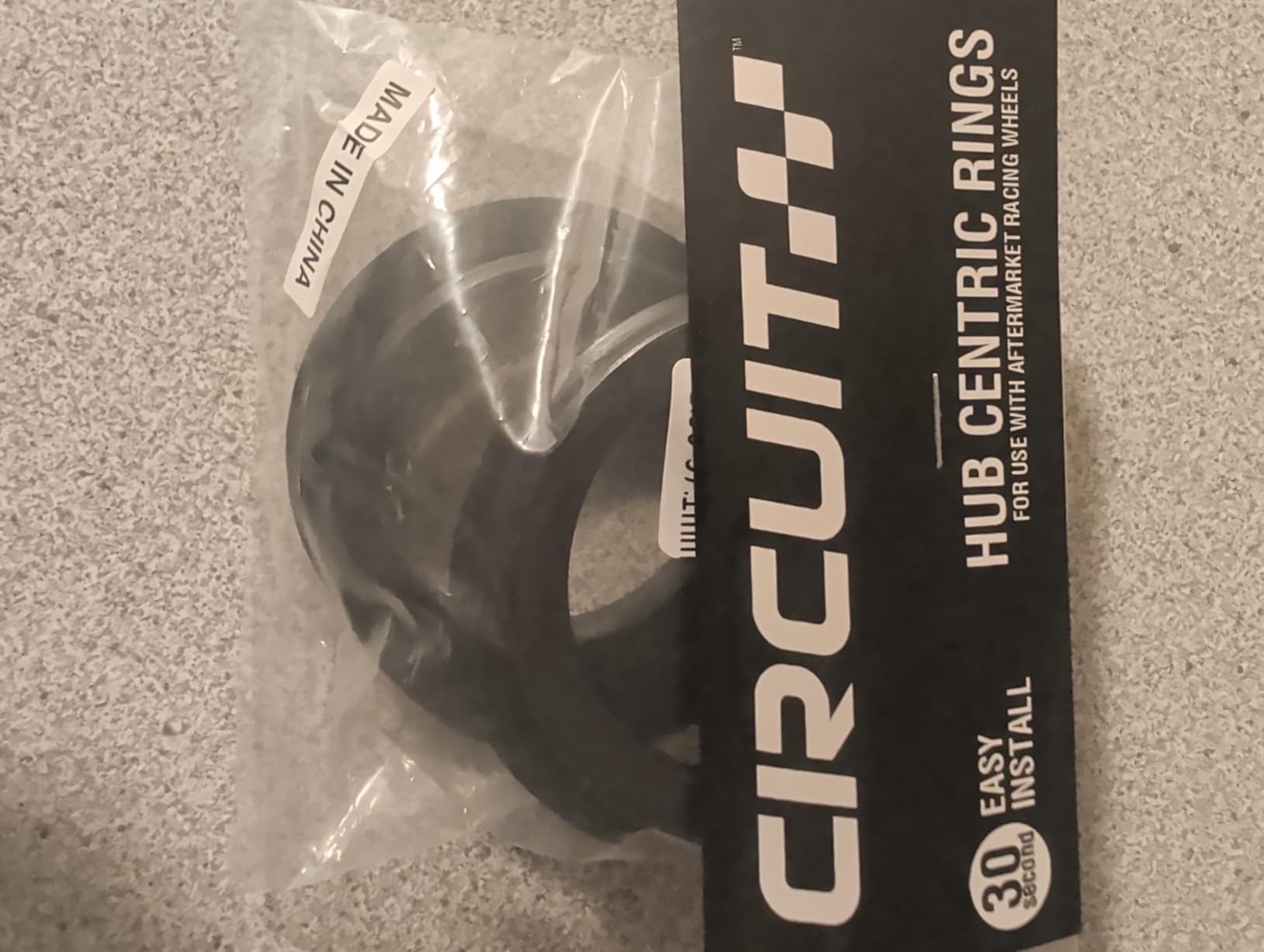
Check the diameter carefully before ordering. If your wheel is truly 72.56mm this is the right ring, but a wheel drilled to 72.6mm wants a 72.6mm ring, and the difference between the two labels is the difference between a correct fit and a ring that sits proud in the bore. This is exactly the labelling confusion that trips people up across this category.
It has been available since 2016 under part number CP-SET-HRN-72.56-57.1, which is useful if you are matching against a factory ring on a car you already own.
Who this set suits
European and Japanese cars with a 57.1mm hub and wheels drilled to the 72.56mm bore, including many BMW applications. For a normally driven car on mild climate roads, polycarbonate is entirely adequate for this job.
If you want metal in this size family and cannot find it locally, a custom-machined ring from a specialist is a reasonable route. The part is simple enough that a machine shop can turn one from stock bar in an afternoon.
Where it falls down
Polycarbonate softens with heat, and this set offers no heat resistance claim beyond the material name. On a car that does repeated hard braking, expect to inspect it periodically rather than fitting it and forgetting it.
The rating spread is the real drawback. Where other sets here report consistent fits, this one carries some dissatisfaction beyond the basic vibration correction, and with only 32 reviews there is not enough owner history to argue against that.
How to Measure the Ring Size You Actually Need
You need two numbers and nothing else: the outside diameter of your hub pilot and the inside diameter of your wheel’s centre bore. A ring is named as hub to wheel, so a 73.1mm wheel bore on a 66.1mm hub wants a 73.1 to 66.1 ring. Getting the order of those two numbers backwards is the single most common mistake people make on this part.
Step one, measure the wheel. Take a caliper and measure the inside of the centre bore across the mounting face, not the outer lip of the wheel. Read it in millimetres and write it down as your outer diameter. If you want a tool that handles larger spans comfortably, our measuring wheels buying guide explains the options. Step two, measure the hub. With the wheel off, caliper across the pilot bore that the ring will sit on, reading at its narrowest point, and write that as your inner diameter.
Step three, order the inner diameter slightly larger than what you measured. This is the counter-intuitive part and it comes straight from people who have done it: one Acadia Forum user measured a 74.5mm hub and concluded the ring should be 74.8 or 74.9mm so it presses on properly. A ring the same size as the hub will sit loose, rattle and give you the vibration you paid to remove.
Step four, sanity-check against the sizes in the table above. A 73.1mm wheel bore is extremely common, as are 72.6mm, 78.10mm and the 106mm truck size, and hub pilots cluster around 57.1mm, 64.1mm, 66.1mm, 67.1mm, 70.3mm and 78.1mm. If your two numbers do not land on a combination you can see, do not guess, because a ring is machined to a fixed tolerance.
Plastic vs Aluminium Hub Centric Rings
Aluminium is the better material for heat resistance, dimensional stability and long-term durability. Polycarbonate is lighter, cheaper in most cases, and entirely adequate on a normally driven car. The failure mode to avoid is a deformed plastic ring, which reintroduces the exact vibration you bought the ring to fix.
Across the forums, the aluminium-over-plastic argument comes down to one recurring story: owners who swapped included plastic rings for metal found a deformed or cracked plastic ring underneath. One Golf GTI owner described bad vibration with the supplied plastic rings, changed to aluminium, and discovered a deformed ring in the bore. Users on r/f150, r/GR86 and r/civic broadly agree that a vibration appearing after fitting aftermarket wheels is usually a centrebore mismatch, and rings are the first thing tried.
Weight rarely decides it. The aluminium sets in this group run from 3.17 ounces to 7.4 ounces for four rings, and the plastic sets from 0.96 ounces to 2.46 ounces. That is a difference of a few ounces spread across four corners, which is not a meaningful factor next to fit accuracy.
Corrosion separates them more clearly. Polycarbonate will not rust and will not corrode, but it can crack or take a permanent set under repeated heat cycles. Aluminium resists both heat and impact, and the anodized sets hold their surface better over years. The one caveat with metal is that it can bond to a metal hub over time, so a light film of anti-seize on the pilot is sensible practice.
For a car that stays on mild roads and moderate speeds, plastic is fine and the cost difference is trivial. For anything driven hard, exposed to winter salt, or expected to stay on the car for many years, aluminium is the safer long-term buy. Whatever you choose, measure the ring with a caliper before you press it in, because inconsistent machining inside a set is the one quality issue reported across multiple brands here.
What a Hub Centric Ring Does Not Change
A hub centric ring changes exactly one thing: it closes the gap between the wheel centre bore and the hub pilot so the wheel is located concentrically. That is the whole function, and understanding the boundary of it prevents a lot of wasted money.
It does not change your bolt pattern. A 5×114.3 wheel on a 5×114.3 hub is a 5×114.3 car whether or not a ring is fitted. It does not change wheel offset, which is a dimensional relationship between the wheel mounting face and the centreline of the wheel, and a ring sitting in the bore has no effect on it.
It does not change your load rating. The load rating of a wheel is a property of the wheel itself, verified to a standard, and a plastic or aluminium annulus in the centre bore does not add or subtract from it. It also does not carry the car’s weight. The hub face carries the vehicle load, the studs and lug nuts clamp the wheel, and the ring does the locating. The listing for the vintage American set puts it plainly: designed so the hub carries vehicle load rather than the lug nuts.
What it does do is ease wheel installation, because a ring that seats properly gives you a positive location for the wheel while you are starting the nuts. On a car with tapered 60-degree conical seat lug nuts, it also means the coning action pulls the wheel into a concentric position against a machined surface rather than into whatever clearance exists between the bolt circle and the bore.
Hub Centric Rings vs Wheel Spacers vs Adapters
Rings, spacers and adapters get conflated constantly because they are all sold as small discs that go between the hub and the wheel. They solve completely different problems and only one of them is about centring.
A hub centric ring is purely a locating part. It fills a diameter gap and nothing else. A wheel spacer moves the wheel outward from the hub face, changing effective offset and stance, and on stud-mount designs it can also carry load through extended studs. An adapter converts one bolt pattern to another, for example from 5×100 to 5×114.3, which is a completely different job and a much bigger engineering decision.
Can you use a spacer instead of a ring? A spacer will change your offset, which changes scrub radius and can change handling and bearing load, and it will not reliably solve a centring gap unless its own centre bore happens to be the right size for your hub. Some owners do run a spacer that happens to also centre the wheel, but that is a side effect of a part you bought for a different reason.
If your question is purely about a vibration on a wheel with a larger centre bore, a ring is the correct part and nothing else. If you want a wider stance, that is a spacer conversation, and it deserves its own measurement work around clearance to suspension and brake components.
Is Your Vibration Really a Hub Ring Problem?
A steering wheel shake at highway speed is the most common way people arrive at hub rings, and it is not always the cause. Rings are cheap to test, so they get blamed for symptoms that would have persisted anyway. Before you order anything, work through this list.
If the vibration appeared immediately after fitting new wheels and is felt most strongly in the pedals at 60 to 80 mph, a centrebore gap is the leading suspect. One r/vwgolf owner fitted new plastic 73.1mm rings and saw a 70 to 85 mph vibration improve significantly but not disappear, which is the classic pattern of a second cause still being present.
If the shake is felt in the seat rather than the pedals, think tire pressure imbalance, a worn tire, or a wheel that is out of balance. If it is felt only through the steering wheel and changes as you brake, suspect a warped rotor or a caliper dragging. If it started after a tire change, a bent rim from a pothole is ahead of the ring in the diagnosis.
Also check that the ring is actually in the bore. A loose ring, a ring installed upside down if the profile is asymmetric, or a missing ring after a tyre change will produce the same symptom as no ring at all. And check the tyre sensor, because a failing TPMS sensor on one corner can read as a vibration on some cars.
Our order of operations: torque the wheels properly, check pressures cold, confirm the wheel is balanced, then inspect the ring. If the shake is gone, the ring was the problem. If it is not, you have saved yourself a return and you now know the ring was never the issue.
How to Install Rings Without Crushing Them
Installation takes five minutes and the common mistake is a five-second one: tightening the first lug nut fully before the others, which tilts the wheel and crushes the ring out of round. A crushed ring gives you a permanent rattle and a vibration you cannot shift.
Start by putting a light film of anti-seize or silicone on the hub pilot. On metal rings this prevents them bonding to the hub over years, which makes a future wheel change unpleasant. Then place the ring in the wheel bore and make sure it sits flat and square rather than cocked on the bore lip.
Slide the wheel on over the studs, and only finger-tighten the lug nuts. Push the wheel fully in so the ring bottoms out against the hub face, then tighten in a star pattern to half torque, then again to full torque in the same pattern. Never fully tighten one nut first. That sequence is what keeps the ring concentric instead of pinched.
If the ring will not seat by hand, do not force it with a hammer against the wheel face. Confirm the diameters again. A ring that needs a lot of force to install is usually the wrong size, and forum users who have learned this the hard way measure the hub one more time rather than hitting the wheel harder.
While the wheel is off, look at the old ring. If it is oval, cracked, visibly deformed or loose in the bore, that deformation is likely the source of the vibration you have been living with. Replace all four at once, not one, because a set that has been compressed in service rarely returns to round.
Do Rings Matter With Tapered Lug Nuts?
Yes, and the argument that five tapered nuts already centre the wheel is worth taking seriously before you dismiss it. A 60-degree conical seat nut does pull the wheel in as it tightens, which gives some centring. The disagreement is about how much, and what happens over time.
The honest answer is that conical seats centre the wheel against whatever the taper finds first, which is not necessarily the hub pilot. The nut defines the cone, not the hub, and the wheel bore is only a clearance fit against that cone. On a wheel with an oversized centre bore, the taper has a wider region of material to work with and the resulting concentricity depends on the bore’s roundness and the taper’s condition, not on a machined datum.
A ring supplies that datum. The wheel then locates on metal, and the lug nuts clamp a wheel that is already in the right place instead of pulling it there. The sceptic’s view is that a thin plastic annulus cannot hold weight, and that part is correct, because it is not supposed to. It is a locating part in a joint that is already located by the hub face and the studs.
Forum consensus lands somewhere practical. Audizine users describe rings as stopping the unwanted shakiness that occurs when the wheel is only centred by the lug bolts. ClubLexus members put it plainly: wheels designed to be hub-centric without rings are the best, but rings are perfectly safe and work well. A tapered seat does not make a ring harmful, and it does not make one unnecessary.
The place where scepticism has real force is on cheap plastic. A ring with poor tolerance or a deformed one is worse than a well-made metal ring, and in that case the sceptic is right that the part is not doing its job. Buy a ring with a stated OD and ID, check it with a caliper, and the objection loses most of its force.
If your interest in rings has drifted away from wheels entirely, we have covered the other categories too: the best engagement rings for the money, the best smart rings for sleep tracking, and the best gymnastic rings for home gyms are all covered in their own buying guides.
Frequently Asked Questions
Do hub-centric rings make a difference?
Yes, when the wheel centre bore is larger than the hub pilot. The ring’s outside diameter presses into the wheel bore and its inside diameter fits over the hub, so the wheel is located by machined metal instead of by lug bolts alone. That removes the lateral play which causes a vibration that grows with speed. If the wheel is already hub-centric, or if the vibration came from a bent rim, an unbalanced wheel or a worn tire, a ring will not change anything.
What is better, plastic or aluminium hub-centric rings?
Aluminium is better for heat resistance, dimensional stability and long service life, and it will not crack or take a permanent set the way cheap polycarbonate can. Polycarbonate is lighter, will not corrode, and is perfectly adequate on a normally driven car in a mild climate. Owners who swapped deformed plastic rings for aluminium consistently report the vibration returning to normal. Choose metal for hard driving, towing, winter salt or a long-term build.
Which hubcentric rings are the best?
It depends entirely on your two diameters. The strongest general picks in our comparison are the StanceMagic 64.1mm to 73.1mm polycarbonate set for its huge owner base and tight fit, the Wheel Connect 106mm to 78.1mm ABS set for hard-to-find truck bores, and the GoldenSunny 72.6mm to 57.1mm aluminium set for accurate European sizing at a low cost. Match the numbers first, then choose the material.
How do I figure out what size hub-centric rings I need?
Measure two things. Use a caliper inside the wheel centre bore at the mounting face and write that down as the outer diameter. Then caliper across the hub pilot bore on the car, at its narrowest point, and write that down as the inner diameter. Order the inner diameter slightly larger than measured so the ring presses on properly, and remember rings are named hub to wheel, so a 73.1mm wheel bore on a 66.1mm hub wants a 73.1 to 66.1 ring.
Is it safe to run hub-centric rings?
Yes. A ring is a locating part, not a structural one. The hub face carries the vehicle load, the studs and lug nuts clamp the wheel, and the ring simply removes the gap that lets the wheel wobble. It does not change your bolt pattern, wheel offset or load rating. Fit it flat and square, tighten the lug nuts in a star pattern, and do not fully tighten the first nut before the others or you can pinch the ring out of round.
Best Hub Centric Rings for Wheels in 2026
The best hub centric rings for wheels are the ones whose two published diameters match your wheel centre bore and your hub pilot, and nothing else matters more than that. The StanceMagic 64.1mm to 73.1mm polycarbonate set is our top pick because more than 4,400 owners report the same tight, flush fit and the same vibration disappearing.
For 106mm truck and offroad bores, the Wheel Connect 106mm to 78.1mm set covers ground that mainstream passenger-car rings do not reach. For 72.6mm bore wheels, the GoldenSunny 72.6mm to 57.1mm aluminium set gives you an accurately machined ring in a material that will not deform, and the alloy alternatives cover the 64.1mm hub family in either plastic or metal depending on how hard you drive.
Measure before you order, order the inner diameter slightly larger than your measured hub, and fit the ring in all four bores. If the vibration is still there afterwards, the problem is almost certainly a bent rim, a balance issue or a tire, not a centring gap.