
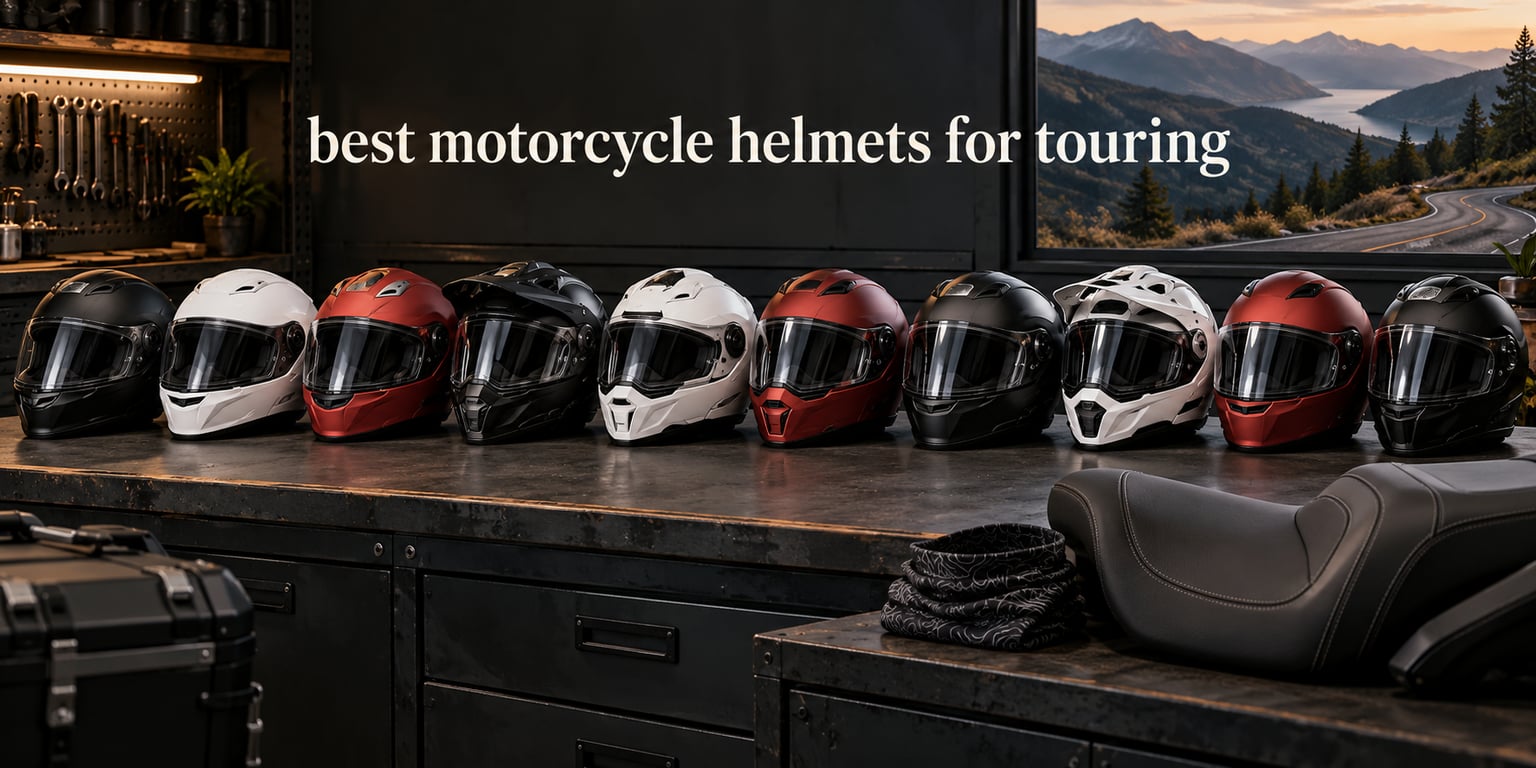
Short answer: the best motorcycle helmets for touring are the ScorpionEXO T520 if noise is your top priority, the ILM ILM-313 if you want the most proven all-rounder, and the BELL Qualifier if you want the strongest feature set without flagship spending. All three are full-face designs, and all three meet FMVSS 218.
Wind noise inside a helmet at highway speed can run past 100 decibels, and riders who spend eight-hour days in that environment finish a trip tired in a way that has nothing to do with the saddle. That is why the best motorcycle helmets for touring are not the same as the best helmets for a Sunday blast. Touring rewards a tight neck roll, acoustic cheek pads, ventilation that does not whistle, a liner that survives day three, and a head shape that matches yours before anything else.
We put ten helmets through the same filter: published certification first, then fit and head shape, then shell weight and neck fatigue, then noise control, and only then features like sun visors and Bluetooth pockets. The list deliberately spans full-face and modular formats, because riders who want to talk at a fuel stop and riders who want a sealed chin bar are solving different problems and both are legitimate touring choices.
One thing to say up front: we did not crash-test helmets in a laboratory, and nobody should read this list as if we did. Every protection claim here comes from the published certification of the model, and every comfort and noise comment comes from owner feedback on record. Where we differ from most roundups is that we tell you which question to ask in the shop, which is head shape.
If you are still building out your kit, our guides to the best full face motorcycle helmets for touring and the best modular motorcycle helmets for commuters go deeper on format choice, and we have separate roundups for helmets for women and for men where sizing runs differently.
Table of Contents
Top 3 Picks for the Best Motorcycle Helmets for Touring in 2026
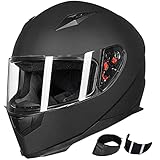
ILM ILM-313 Full Face Helmet
- DOT FMVSS 218 certified
- Lightweight ABS shell
- Clear and smoked visors included
- Quick release clasp

BELL Qualifier Full-Face Helmet
- FMVSS 218 certified
- NutraFog II anti-fog shield
- Velocity Flow ventilation
- Bluetooth speaker pockets
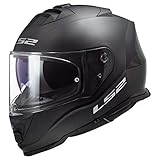
LS2 Assault with SunShield
- KPA shell
- Pinlock-ready shield
- Inner drop-down sun shield
- Active chin and top vents
All 10 Best Motorcycle Helmets for Touring Compared in 2026
The table below is the fast version. Every helmet on it is DOT certified, and the two ScorpionEXO modulars also carry ECE 22.06 approval, which adds rotational impact testing to the US requirement. Read the quick overview, then jump to the review that matches your riding.
| Product | Specifications | Action |
|---|---|---|
| ILM ILM-313 Full Face Helmet |
|
Check Latest Price |
| BELL Qualifier Full-Face Helmet |
|
Check Latest Price |
| LS2 Assault with SunShield |
|
Check Latest Price |
 ScorpionEXO T520 Touring Helmet ScorpionEXO T520 Touring Helmet |
|
Check Latest Price |
 HJC C91 Modular Helmet HJC C91 Modular Helmet |
|
Check Latest Price |
 HJC i91 Modular Helmet HJC i91 Modular Helmet |
|
Check Latest Price |
 ScorpionEXO AT960 Modular ScorpionEXO AT960 Modular |
|
Check Latest Price |
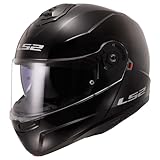 LS2 Strobe II Modular LS2 Strobe II Modular |
|
Check Latest Price |
 ScorpionEXO GT930 Transformer ScorpionEXO GT930 Transformer |
|
Check Latest Price |
 LEM Carver Modular Helmet LEM Carver Modular Helmet |
|
Check Latest Price |
1. ILM ILM-313 Full Face Helmet – Best All-Rounder for Touring
ILM Full Face Motorcycle Helmets for Adult Men and Women DOT Model ILM-313
ABS shell
DOT FMVSS 218
3 lb listed weight
Clear plus smoked visor
Pros
- Around 9600 owner reviews to draw on
- Streamlined shell that cuts wind noise
- Clear and smoked visors in the box
- Removable washable liner pads
- Quick release clasp works with gloves
Cons
- Entry-level shell and liner build
- No integrated sun shield
- No anti-fog insert included
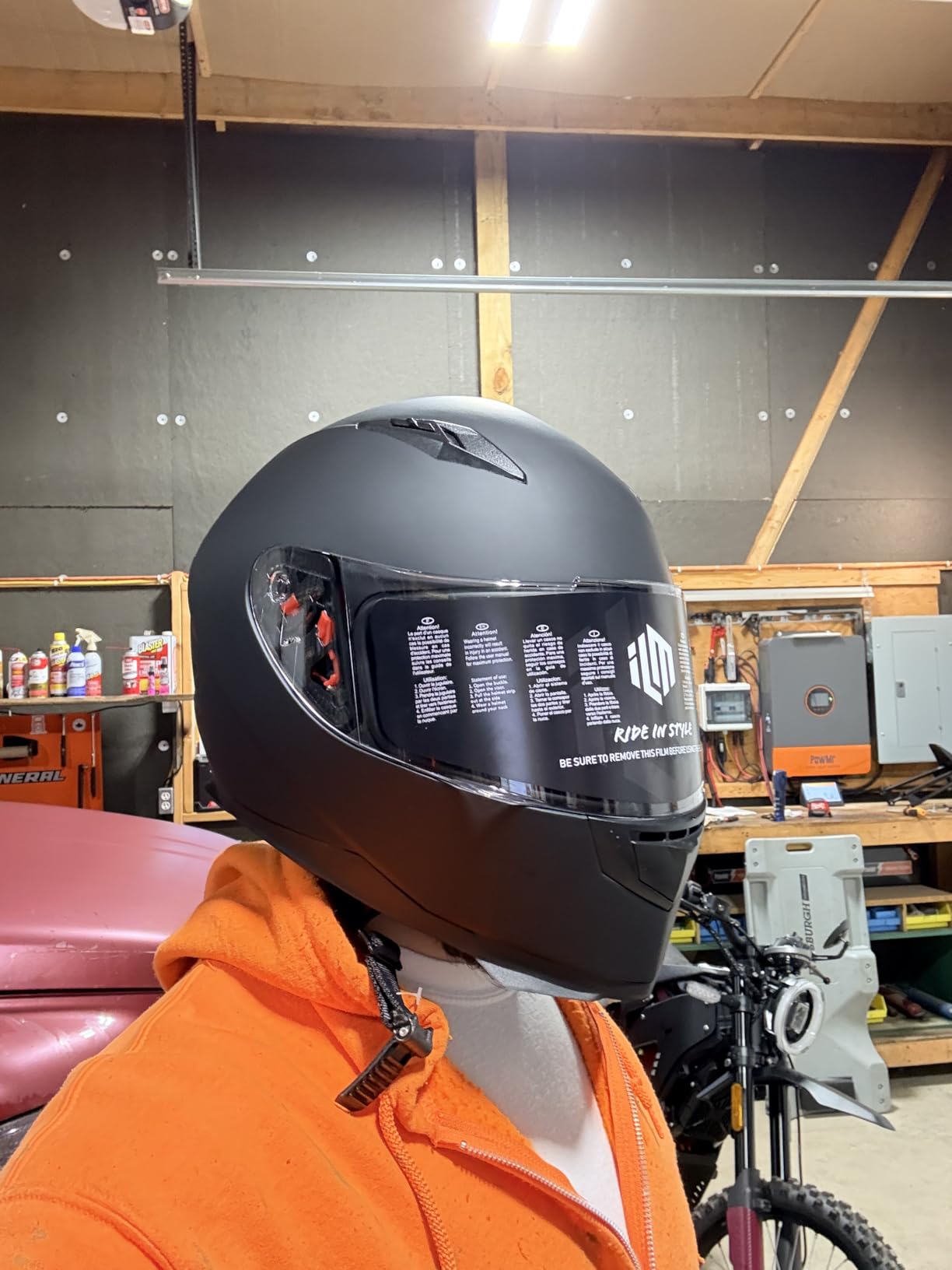
This is the helmet we put first because of evidence volume rather than hype. Around 9600 owner reviews at a 4.5 average is the largest feedback base in the group, and when a spec claim shows up consistently across thousands of independent riders it tends to survive real use. The shape listed as aerodynamic, the 3-pound listed weight, and the inclusion of both a clear and a smoked visor all show up again and again in owner feedback.
On a full-face tourer the shell does the first half of the quietness job. Owners specifically credit the streamlined shell with reducing wind noise and drag at highway speed, and that is the single most common positive comment in the record. It is a modest claim from an entry-level lid, not a promise of silence.
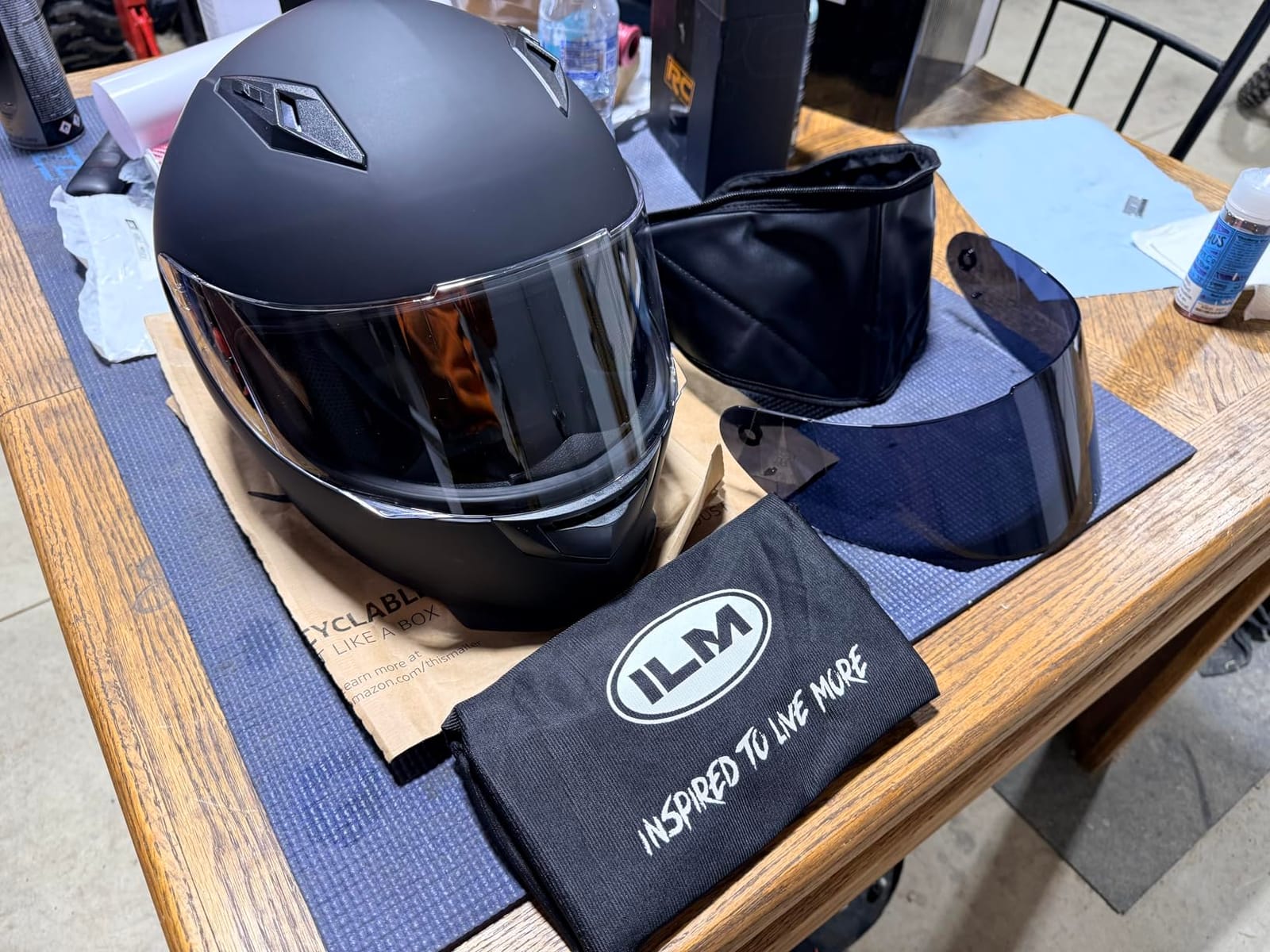
The bundled kit is unusually generous for this tier. You get a tinted visor, a neck scarf for cold starts, and a helmet bag, which means nothing needs buying before the first ride. The quick release clasp is the detail touring riders notice most, because working a buckle with winter gloves at a petrol station is a small misery that repeats all season.
Break-in is fast. The removable inner lining pads mould to a fairly universal shape within a few rides, and reviewers consistently report an easy fit. That is convenient if you are between head shapes, since the ILM errs toward a forgiving middle ground rather than an aggressive sport fit.
The honest limitation is build tier. The ABS shell and foam are entry-level, and the visor set has no integrated sun shield, so you will be swapping visors at stops rather than flicking one down. Cheek pad comfort also softens sooner than premium foam. If you ride a lot and keep helmets for five years, that matters.
Who should buy the ILM ILM-313
Buy it if you are a first-time rider, if you ride a commuter bike in mixed weather, or if you want a proven DOT-certified lid without research. It also suits riders who need a spare helmet for a passenger or a second bike, because the cost of a poor fit is lower.
It is equally a good touring pick on a mid-size bike ridden mostly upright, where the quietness gap against a premium shell narrows considerably. Pair it with earplugs and a neck buff on long highway stretches and most owners say the ride becomes unremarkable, which is the point.
Who should skip the ILM ILM-313
Skip it if you ride a sport-touring machine in a tucked position and want a race-derived shell, or if you need a drop-down sun shield for a glare-heavy route. Do not buy it expecting ECE 22.06 rotational protection, because this lid carries DOT only.
Also weigh up the replacement cycle. A touring rider covering heavy annual mileage will likely retire this helmet on comfort before the shell ever wears out, and a cheaper lid means a second purchase sooner.
2. BELL Qualifier Full-Face Helmet – Best Feature Set for the Money
BELL Qualifier Full-Face Motorcycle Helmet – Matte Black, X-Large
FMVSS 218
NutraFog II shield
Speaker pockets
4.9 lb listed
Pros
- Feature set drawn from Bell Star line
- NutraFog II anti-fog shield
- Integrated Bluetooth speaker pockets
- Padded wind collar and quick-dry liner
Cons
- Runs small so many riders size up
- Wind noise and chin bar gap in cool weather
- No chin curtain included
- No tinted visor in the box
The Qualifier is a thoroughly specified full-face lid, and BELL has a long record in the sport segment. It borrows directly from the Star line, which is why you get a proper anti-fog shield, an aerodynamic shell, and integrated speaker pockets rather than the bare-bones treatment most competitors settle for at this level.
Owners rate it 4.6 across more than 4200 reviews, and the single loudest theme in that record is sizing. Riders are told again and again to order a size up, and that advice is worth more here than any feature line. Get the size right and the complaints largely disappear; get it wrong and nothing else on the helmet will help you.
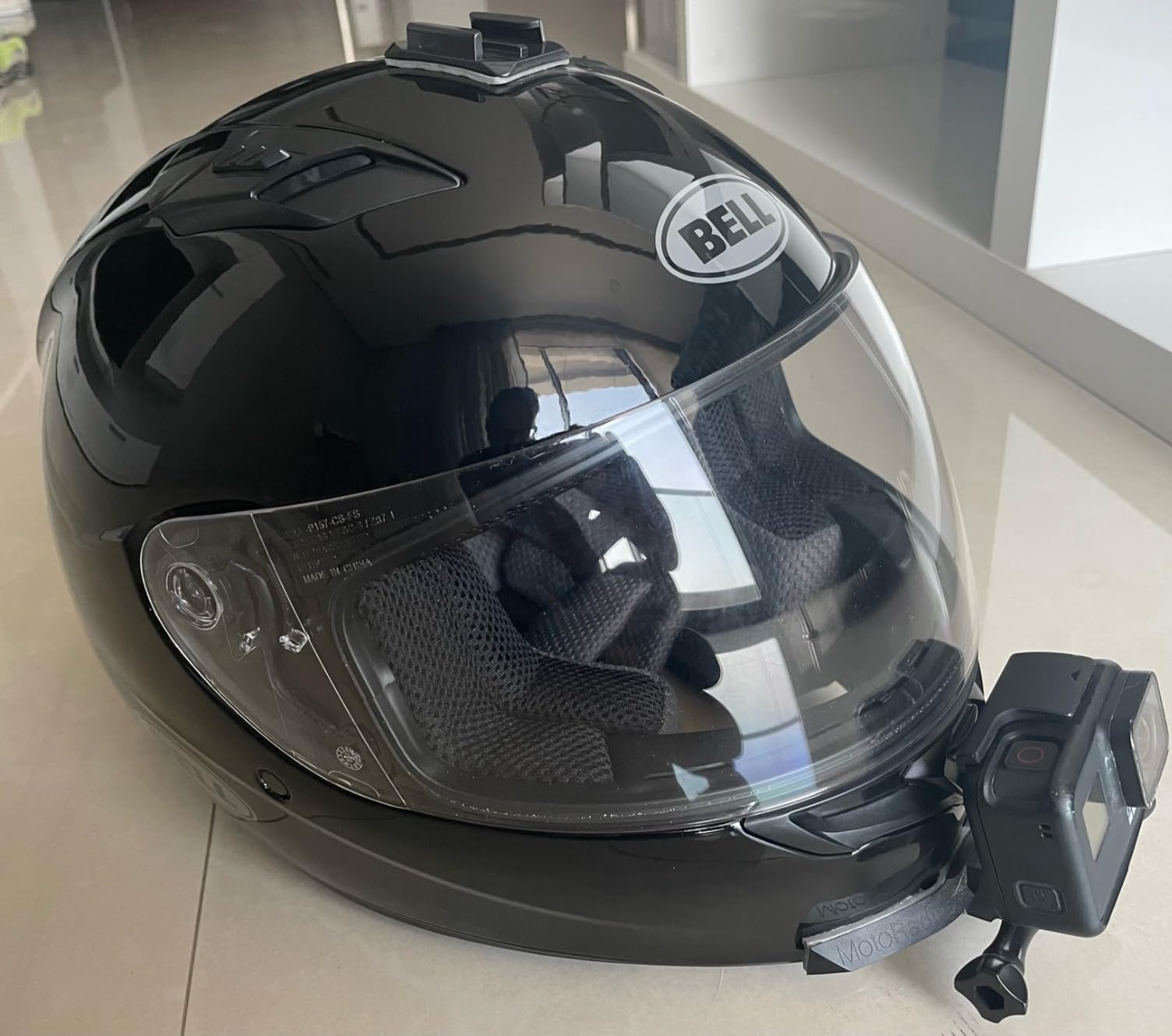
The NutraFog II shield is a genuine asset for touring. It is clear, scratch resistant, and ratchets smoothly through its positions, which matters when you are dealing with rain on a four-hour stretch rather than a five-minute urban hop. Velocity Flow ventilation uses a removable quick-drying liner, so sweat management over consecutive hot days is handled.
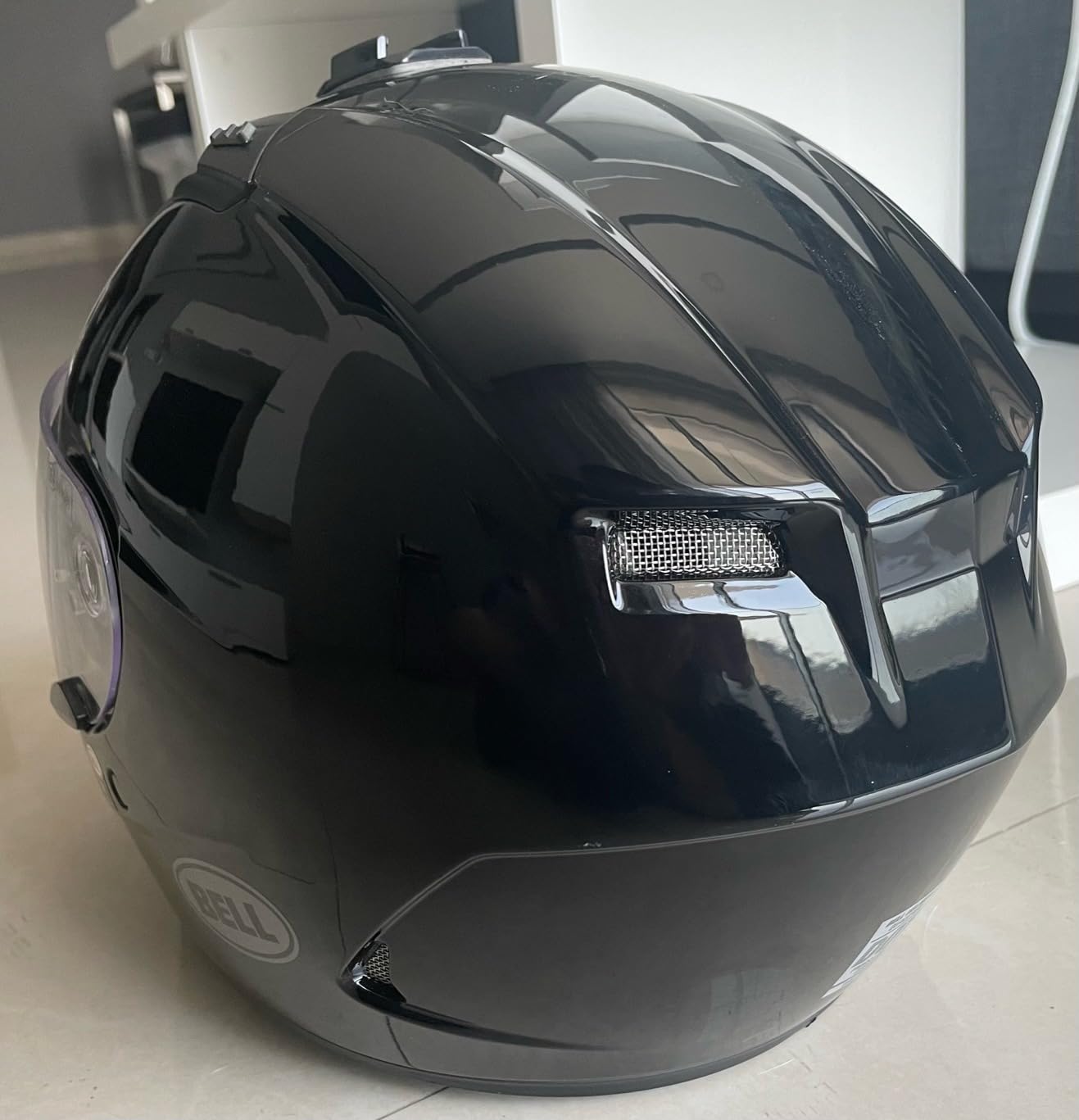
Noise is where the Qualifier shows its price tier. Reviewers note noticeable wind noise and a gap over the chin bar in cool weather, and no chin curtain or breath box is included. On a cruiser with a tall screen this is manageable; on a sport-touring bike at speed the noise is the most persistent complaint owners report, which is worth knowing before you commit.
Who should buy the BELL Qualifier
Buy it if you want Bluetooth speaker pockets without paying for a comms-ready premium shell, and if your routes mix rain, urban stop-and-go, and highway. Riders who wear glasses will find the wide eye port workable, and the padded wind collar adds a little comfort at the neck on long days.
It is also a strong first touring helmet for someone who will keep it for a few seasons rather than a decade. The quick-drying liner is washable, which matters when a week of riding is a week without laundry.
Who should skip the BELL Qualifier
Skip it if noise reduction is the reason you are shopping, because that chin bar gap is a real limitation for a tourer. Riders with a very round head should also be cautious, since the fit reports lean toward the small side rather than the wide side.
If you ride a bike with no windscreen, add a chin curtain to your parts list. It is a cheap fix for the gap and does more for wind noise than any upgrade you can make to the shell.
3. LS2 Assault Full Face Helmet with SunShield – Best Rated With a Sun Visor
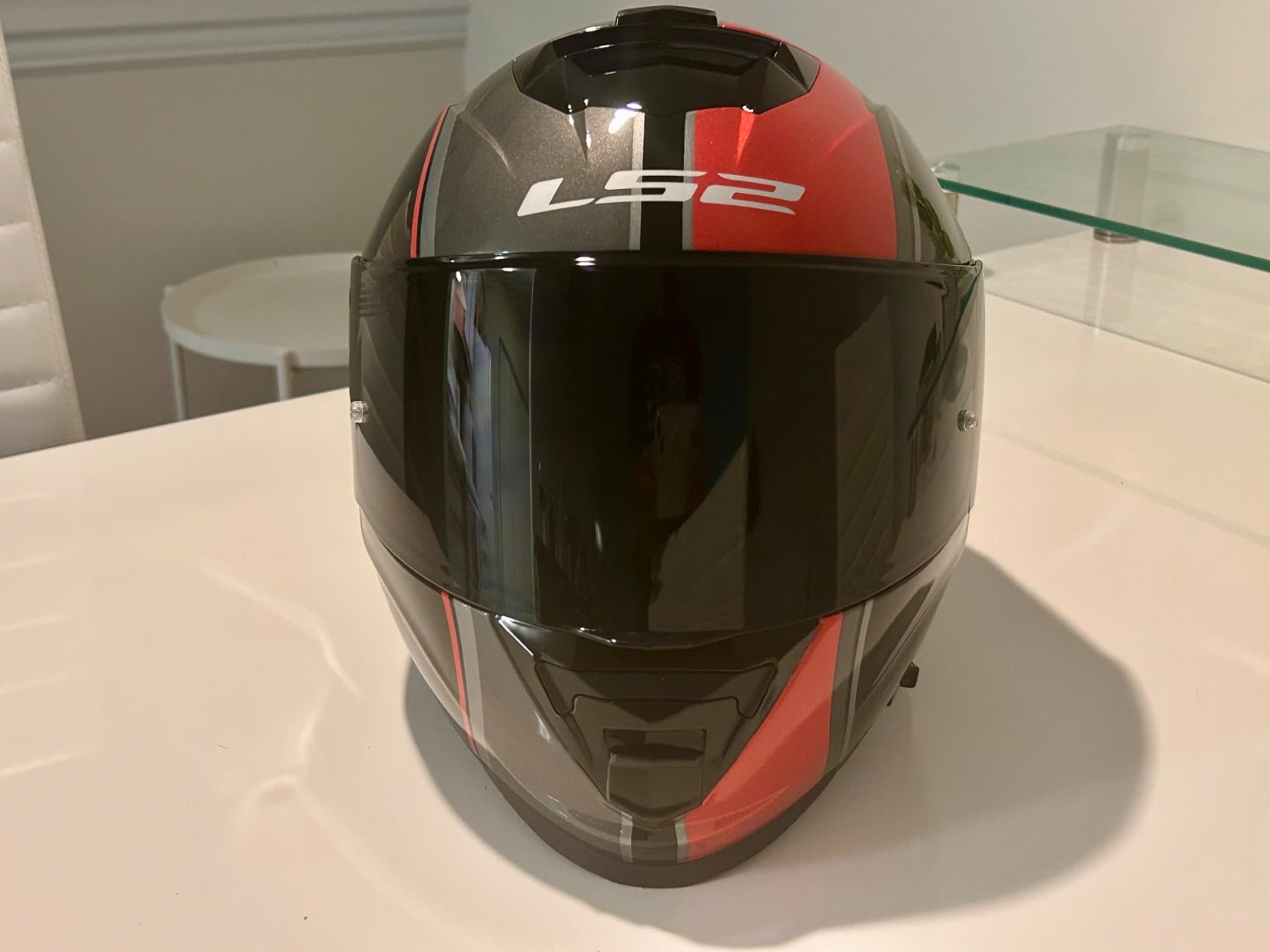
LS2 Helmets Assault Full Face Motorcycle Helmet W/ SunShield (Matte Black – Large)
KPA shell
Inner sun shield
Pinlock-ready shield
DOT FMVSS 218
Pros
- KPA shell blends polymer and aramid fibers
- Sun shield and Pinlock-ready shield in one package
- Active chin and top vents
- Removable liner and neck curtain
Cons
- Wind noise climbs above 40 mph when upright
- Cheek pads tight for the first rides
- Shield only ratchets fully open or closed
The Assault is the technical pick on this list. Its Kinetic Polymer Alloy shell mixes polymer with aramid fibers to deliver something close to composite performance at a mid-level weight, and that shell construction is the reason it earns a 4.6 rating with 77 percent of buyers handing over five stars.
The feature that changes a touring day is the inner drop-down sun shield combined with a Pinlock-ready shield. You can carry one visor for the whole trip, tint without stopping, and still fit an anti-fog insert when the temperature drops at altitude. Very few lids in this category give you all three.

Ventilation is genuinely active, with chin and top vents that open and close rather than being fixed louvers. Riders report the removable liner and neck curtain keeping noise low and the fit secure, and the removable liner means a long trip in hot weather is survivable without a permanently soaked foam liner.
Break-in is the one thing to budget time for. Cheek pads are reported as very tight for the first few rides, then they settle. That is a normal liner break-in rather than a fit fault, but on a first tour give it a hundred miles before you judge the comfort.
The recurring gripe is noise in a specific condition: riding upright, wind noise increases noticeably above 40 mph. On a sport-touring tuck the sealed shell handles it much better, so this helmet suits riders whose position changes with the road.
Who should buy the LS2 Assault
Buy it if you ride a wide mix of roads and want one helmet to cover sunny afternoon runs and cold early starts. Riders on adventure and dual-sport style bikes who sit upright most of the time will appreciate the KPA shell weight and the active vents.
It is a strong choice for first-time touring buyers who want a sun visor from day one and do not want to carry a spare shield. The KPA shell also ages better than ABS in sunlight, which matters if the helmet lives on a tank bag in the sun.
Who should skip the LS2 Assault
Skip it if your main complaint is wind noise and you sit upright on a motorcycle with no windscreen. The noise reports at highway speed are consistent enough that you should choose a different model rather than hope the position changes.
Also skip it if you want a visor that ratchets to intermediate positions for precise glare control. This shield only opens fully or closes fully, which is a limitation the drop-down sun visor partly compensates for.
4. ScorpionEXO T520 Full Face Touring Helmet – Best for Quiet Highway Touring
ScorpionEXO T520 Full Face Touring Motorcycle Helmet with Bluetooth Ready Speaker Pockets DOT ECE Approved Nama-Shimi (Black/Chameleon – Medium)
Dual density EPS
Aero skirt
4.8 lb listed
DOT and ECE
Pros
- Aero skirt and sealed eye port cut wind noise
- AirFit inflation dials cheek pad seal tighter
- Everclear shield holds off fog in cold and rain
- Comfortable for all-day riding
- Works with prescription glasses
Cons
- Sun visor can creep down over bumps
- Cheek foam degrades faster with heavy use
- Runs slightly large and can feel hot
- No Pinlock insert included
If noise is the reason you are reading a touring helmet roundup, start here. The T520 ships with an aero skirt chin curtain and a sealed eye port, and owners describe the result in plain terms: very quiet at speed. That is the configuration most riders chasing quietness are actually buying.
The AirFit cheek pad inflation system is the underrated part. By inflating the pads you pull the sealing surface tighter around your cheeks and jaw, and riders use it specifically to cut noise further. It is also the answer to the most common touring fit problem, since a helmet that seals at the cheeks is a helmet that stops whistling.
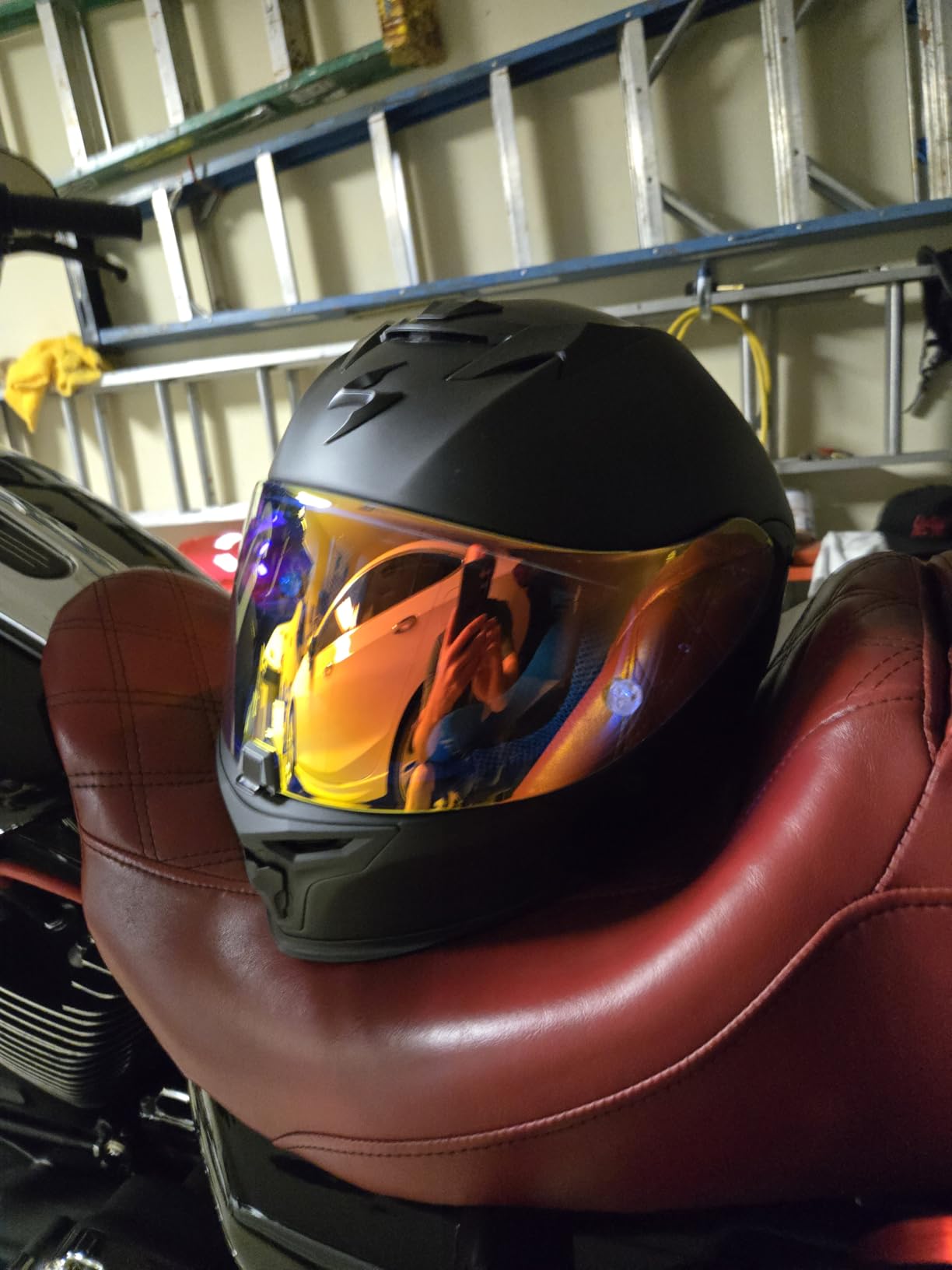
It carries both DOT and ECE certification, with 3 shell sizes and a five-year warranty. The Everclear shield stays fog-free in rain and cold according to owners, and the KwikWick C liner wicks moisture away. Comfortable enough for all-day riding is a direct quote from the owner record, and it works with prescription glasses, which widens who can wear it.
Expect it to run slightly large. That suits riders between shapes, but it can feel warm on very hot days if you leave the vents wide open, and the cheek pad foam is a standard type that can break down with heavy use over a long ownership period.
The drop-down sun visor can creep down over bumps, which is a small but real annoyance on a twisty section at speed. Some riders reset it at every fuel stop; others accept it. No Pinlock insert is included, so without one the shield will fog in cold rain, and that is a real gap for a helmet marketed at highway riders.
Who should buy the ScorpionEXO T520
Buy it if your touring is highway-heavy, if you wear glasses, or if you have previously owned a helmet that whistled at the cheek pads. Touring riders who commute in winter and ride long summer days will find the vent and liner combination more than adequate.
It is also the sensible pick if you plan to fit a Bluetooth unit later. The speaker pockets are large diameter, and filling those voids with a comms unit is reported by riders to reduce wind noise as well as add audio.
Who should skip the ScorpionEXO T520
Skip it if heat is your main enemy, because the slightly large fit runs warm. Riders in high summer desert touring should test ventilation before committing rather than trusting the spec sheet.
Skip it if you want the strongest rotational certification available, since ECE approval here is not stated as 22.06. And if you ride in cold rain, budget for a Pinlock insert, which is not in the box.
5. HJC C91 Modular Helmet – Best Modular for Touring
HJC C91 Solid Modular Motorcycle Helmet with HJ-17 Pinlock Shield, DOT Approved (Semi Flat Black, Medium)
Modular flip-up
3.5 lb listed
DOT FMVSS 218
Sun visor
Pros
- One-hand flip-up chin bar locks in both positions
- Integrated dark smoke sun visor deploys smoothly
- Removable washable cheek and crown pads
- Pinlock-ready HJ-17 shield
Cons
- Runs small so most riders need to size up
- Heavier than some competing modulars
- A little windier than a full-face at speed
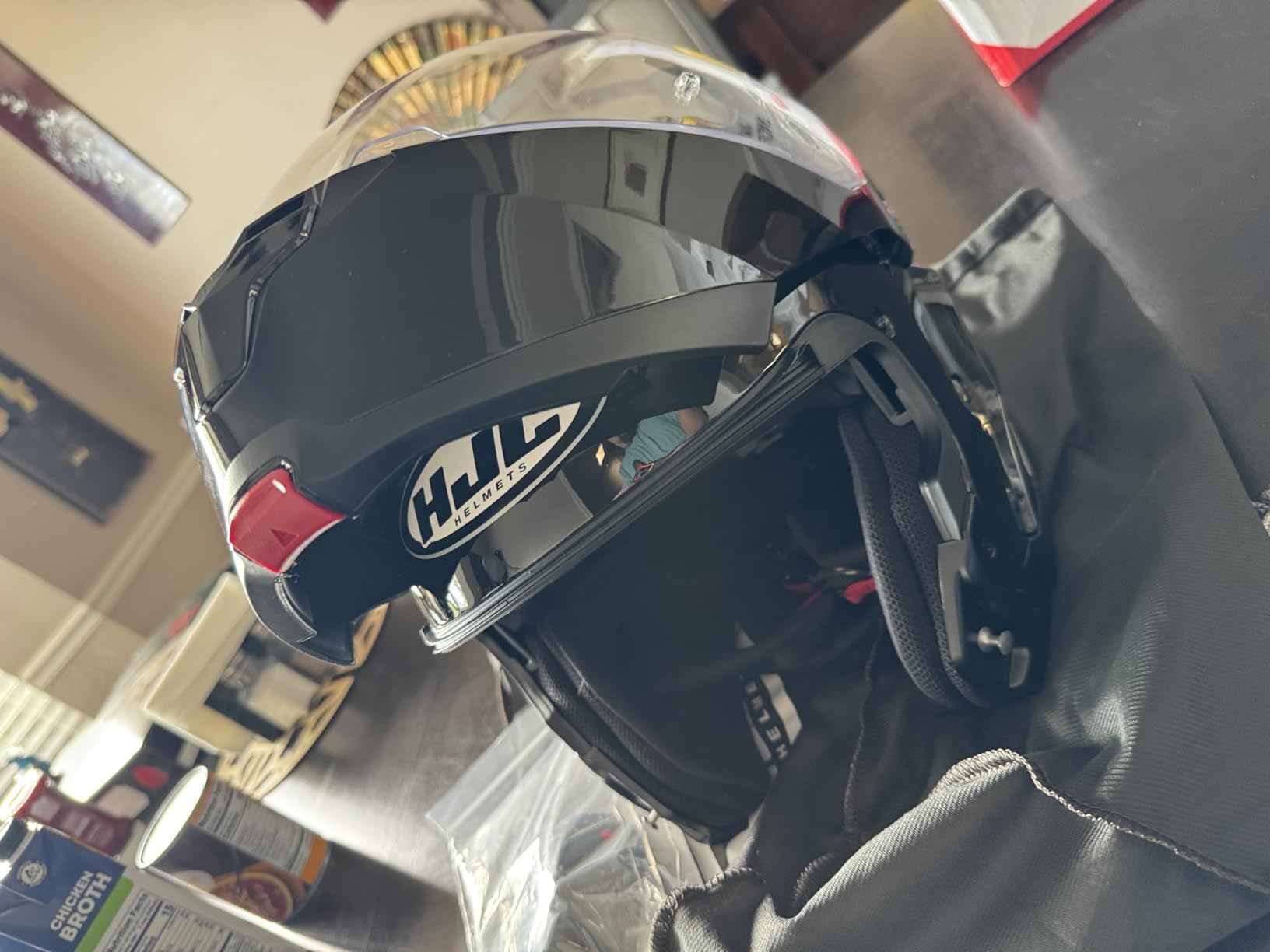
The C91 is the modular that touring riders actually ask for. At 3.5 pounds listed it is one of the lighter chin-bar designs here, and the mechanism is the point: an easy one-hand flip that locks securely in both the up and down positions, so you can talk, drink coffee, or deal with sunglasses without taking the helmet off.
The oval shell shape is worth flagging for fit. HJC is a brand that leans oval, and if your head is long from front to back this sits well; if it is broad and round you will want to try the other modular on this list before you commit.
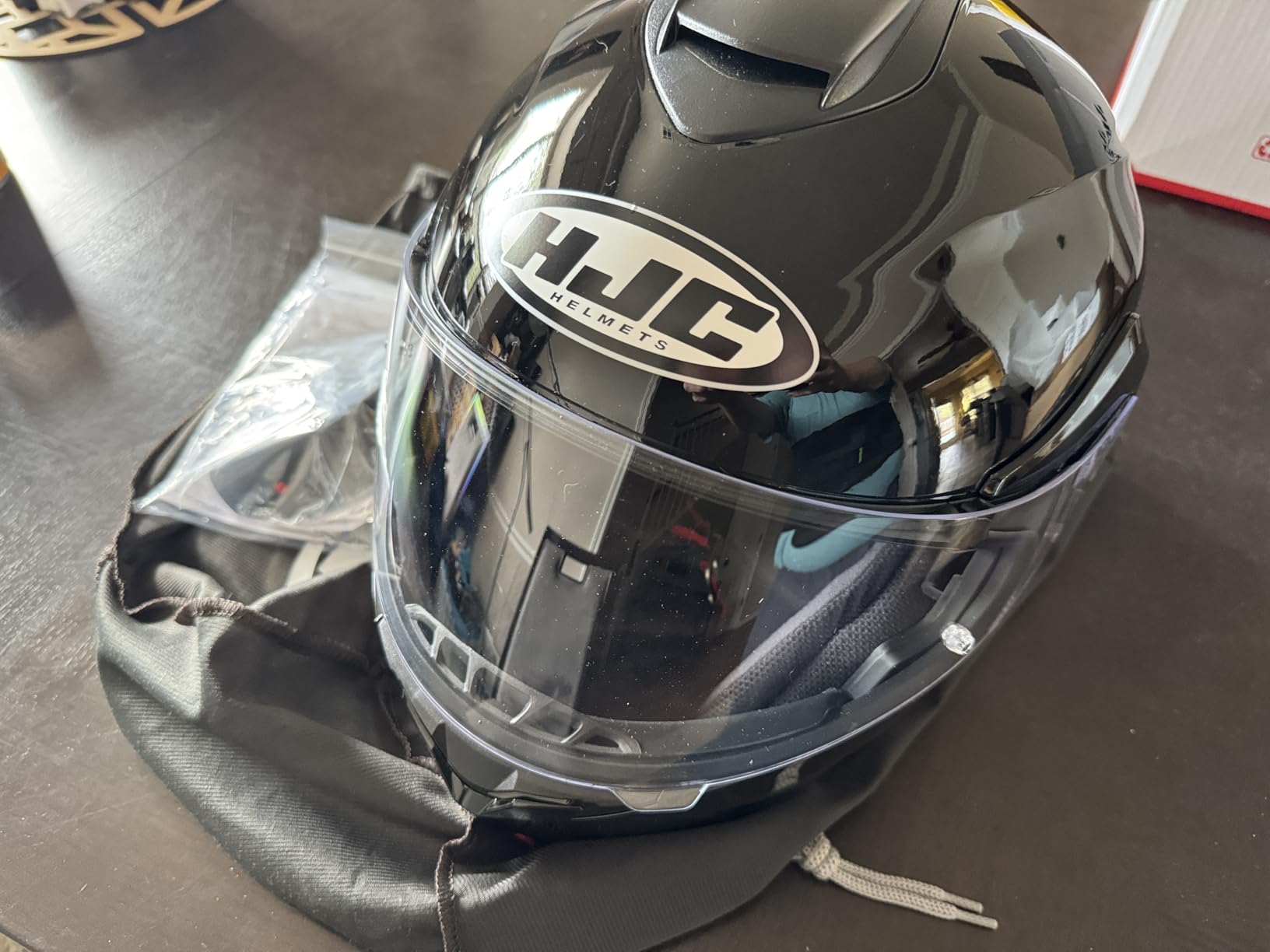
Feature-wise it carries a Pinlock-ready HJ-17 shield with 99 percent UV protection and a RapidFire tool-free replacement system, plus an integrated dark smoke sun visor with anti-scratch coating. The removable washable cheek and crown pads and the moisture-wicking quick-drying liner are what make a hot multi-day modular bearable, and the CAD-designed chin bar is adjustable.
Owners rate it 4.4 from 638 reviews, and size is the dominant theme: order up. Beyond fit, the flip-up action, the integrated sun visor, and removable padding draw repeated praise. Speaker pockets and Smart HJC readiness mean a Bluetooth unit is a straightforward add-on.
The honest drawback is acoustic. Reviewers describe it as a little windier on the highway than full-face designs, and that is physics rather than a fault, because the chin bar hinge and the sealing gap are an opening a full-face does not have. Wear earplugs and it becomes a non-issue.
Who should buy the HJC C91
Buy it if you ride a cruiser or touring bike where you interact with other riders at stops, take frequent breaks, or wear prescription glasses and change them often. The oval-leaning shape suits long oval heads particularly well.
It also works for riders splitting their year between commuting and touring, since the chin bar down gives you a proper full-face on the highway and the same helmet handles urban riding without swapping lids.
Who should skip the HJC C91
Skip it if your head is broad and round, or if you are sensitive to high-frequency wind noise and will not wear earplugs. Riders on sport-touring bikes in a permanent tuck gain nothing from the flip-up and carry the weight of one.
If weight is your main concern, note it is heavier than some competing modulars. Check the LEM Carver or the LS2 Strobe II first if neck fatigue over long days is your deciding factor.
6. HJC i91 Modular Helmet – Best Modular With a Pinlock Insert Included
HJC i91 Solid Modular Motorcycle Helmet with HJ-33 Pinlock Shield, DOT Approved (Semi Flat Metallic Blue, X-Large)
Pinlock insert fitted
Multi-step sun visor
3.5 lb listed
DOT FMVSS 218
Pros
- Anti-fog insert included in the box
- Multi-step sun visor gives usable tint range
- Interchangeable cheek pads across sizes
- Lightweight modular that flips up easily at stops
Cons
- Smaller review base than the other HJC
- Bluetooth communicator sold separately
The i91 solves the one problem modular riders complain about most: fog on a long, cold, wet highway run. The standard Pinlock insert and the dark smoke sun visor are both fitted before it leaves the box, so there is nothing to buy and nothing to fit incorrectly on the side of the road.
That is a meaningful advantage over the C91, which is Pinlock-ready but does not include the insert. For a rider whose trip crosses cold mornings and rain, having the anti-fog solution already mounted is worth a lot on day one.
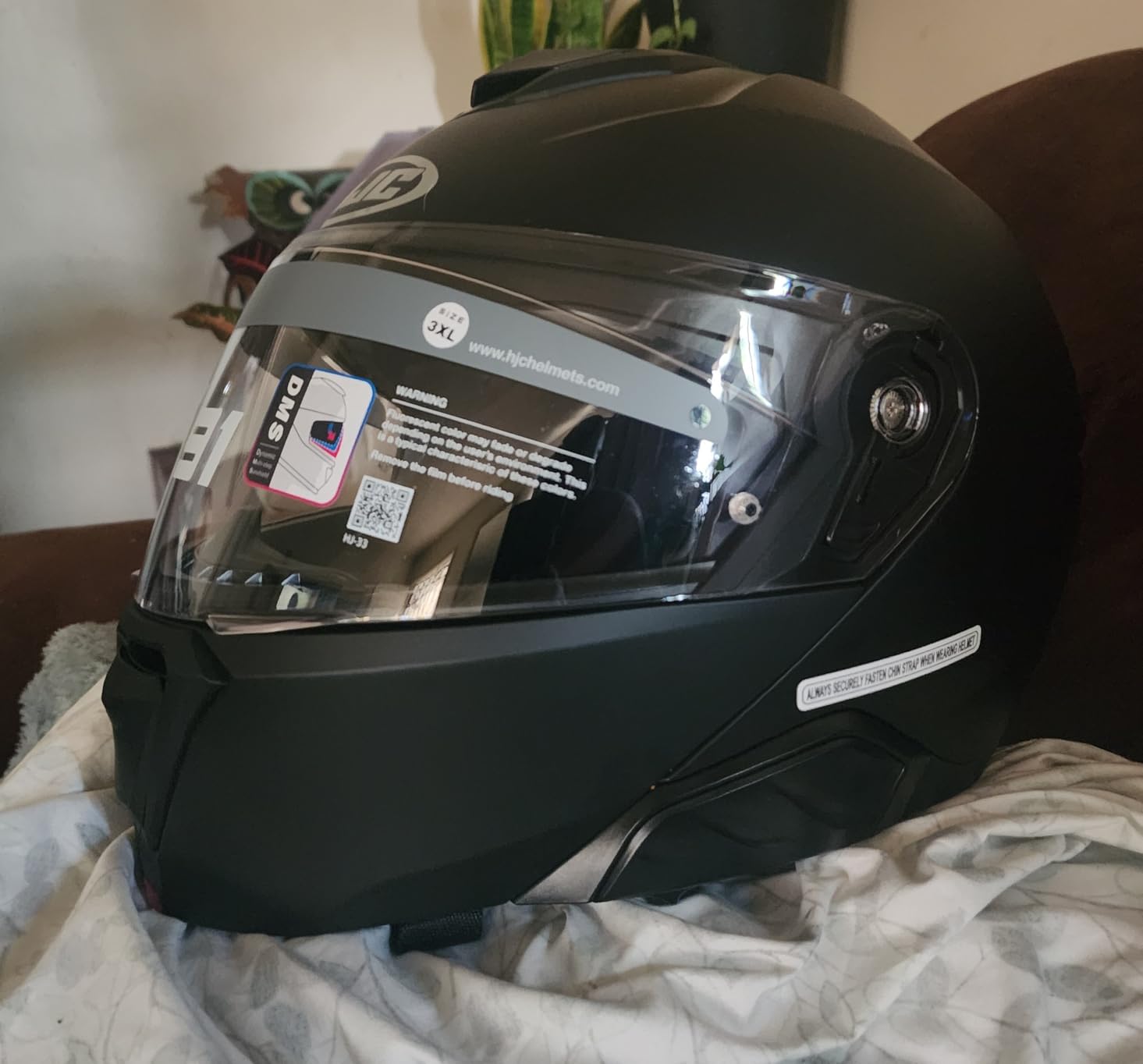
Owners also like the multi-step sun visor, which gives a usable range of tint positions rather than a single dark state, and the interchangeable cheek pads across sizes, which allow a more tailored fit than a single-size liner. The advanced polycarbonate composite shell and CAD-designed chin bar sit behind a moisture-wicking quick-drying liner with removable cheek and crown pads.
It is a light modular at 3.5 pounds listed and easy to flip up at stops, with advanced channeling ventilation and Smart HJC readiness for 21B and 50B Bluetooth units. The catch is that the communicator hardware itself is sold separately, so plan for that as an extra line item.
Be honest about the sample size. With 113 reviews the owner record is thinner than the rest of this list, and it is the smallest group where long-term durability is genuinely less well documented. The 79 percent five-star share is encouraging, but it is early data rather than a decade of it.
Who should buy the HJC i91
Buy it if you tour through cold or wet conditions and want fog-free vision without an extra purchase. Riders who ride through winter, or who plan a long season in variable weather, will feel the included insert immediately.
It is also a good pick if you want a step-adjustable sun visor for dawn-to-dusk riding, and for anyone who prefers a polycarbonate composite shell over a heavier adventure-style modular.
Who should skip the HJC i91
Skip it if you want the highest confidence in long-term durability, because there is less long-term owner feedback available at this review volume. Riders keeping a helmet for a decade should prefer a model with a deeper record.
Skip it if you assume Bluetooth is included, since it is not. And if budget is the deciding factor, the same features are available in cheaper builds without the insert fitted.
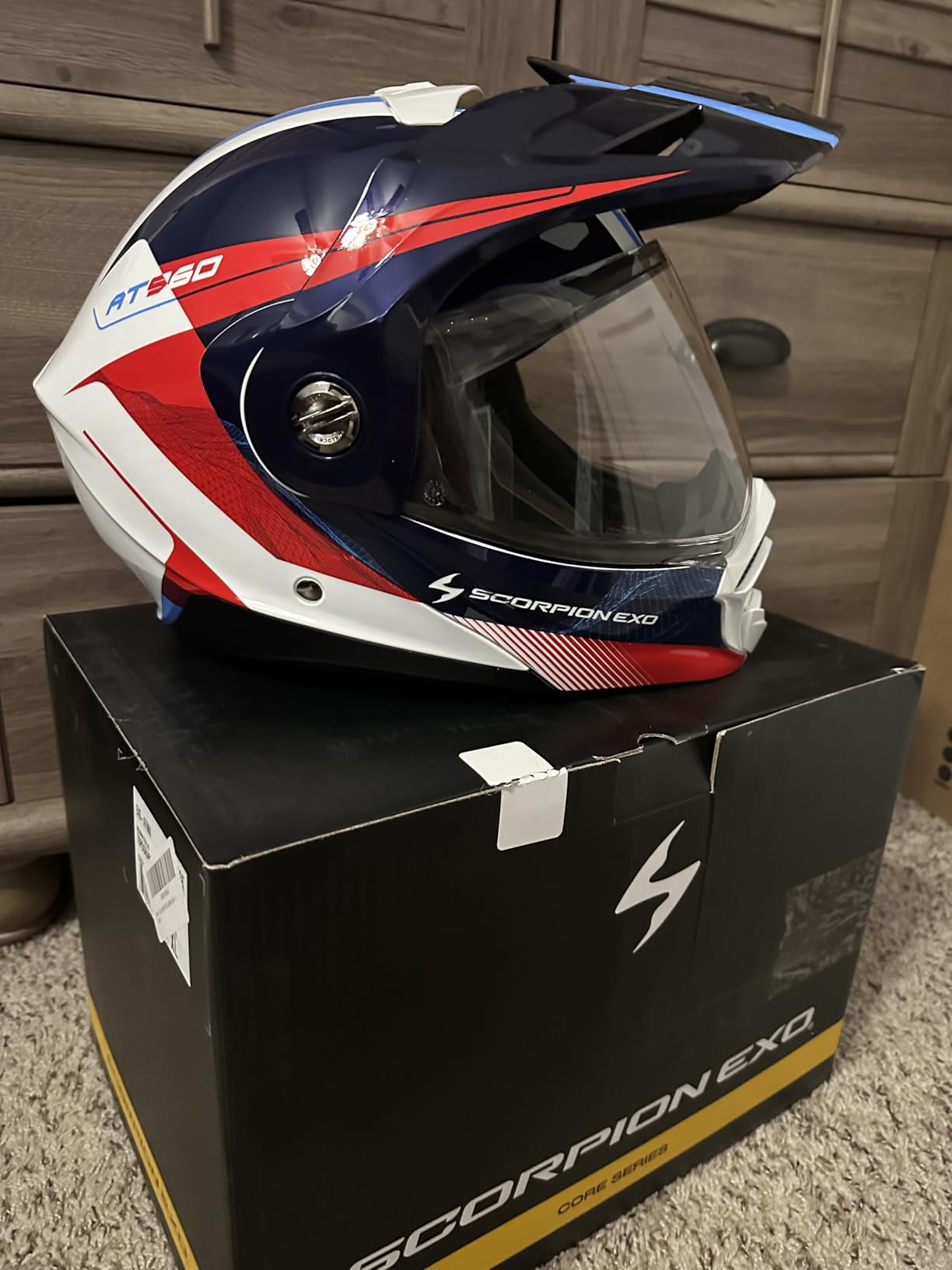
7. ScorpionEXO AT960 Modular – Best for Adventure Touring
ScorpionEXO AT960 Modular Adventure Street Motorcycle Helmet with Bluetooth Ready Speaker Pockets DOT ECE Approved Monk (Phantom – X-Large)
DOT and ECE 22.06
Peak visor
5.8 lb listed
Aero skirt
Pros
- Three formats in one helmet
- Removable peak visor cleans up highway aerodynamics
- Dual DOT and ECE 22.06 certification
- Wide eye port for downward visibility
Cons
- Close to the heaviest shell in our group at 5.8 pounds
- Bulkier than a full-face when the chin bar is up
The AT960 is built around versatility, and the reason is the removable external peak visor. With the chin bar up and the peak fitted, it becomes a genuine open-face adventure lid for slow off-road sections; take the peak off and put the bar down and it is a touring full-face. Riders who cover mixed terrain with one piece of gear end up loving this.
It also carries dual DOT and ECE 22.06 certification, which is a higher test bar than the previous European standard because it adds rotational impact testing. For riders who cross borders, that dual homologation solves a real logistics problem.
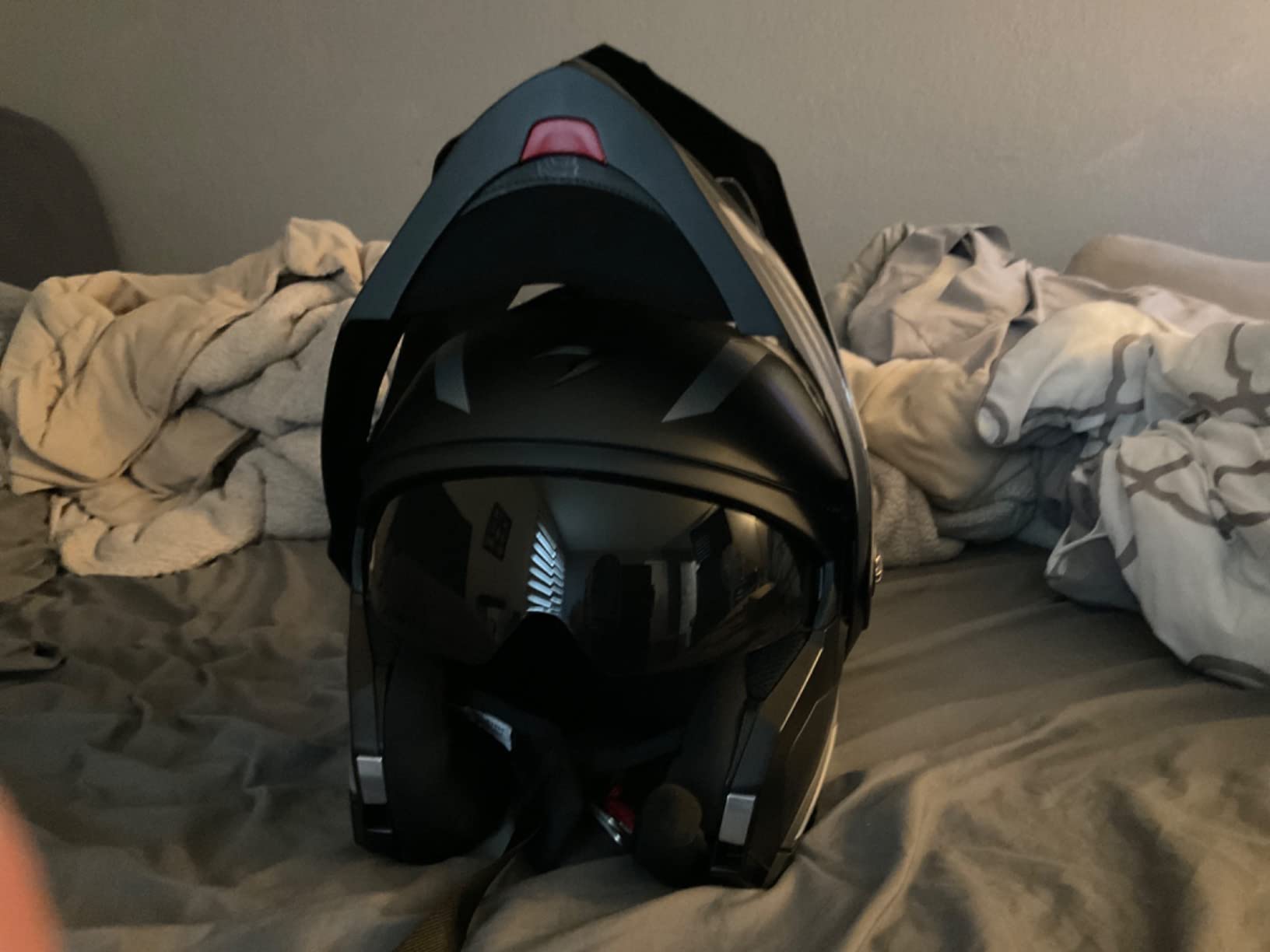
The wide eye port gives good peripheral and downward visibility, which matters when you are picking lines on a gravel road or checking traffic at an intersection. The breath deflector and aero skirt both work against wind noise, and the retractable Speedview drop-down sun visor plus the Everclear fog-free shield with 95 percent UV protection mean one visor can handle a full day.
Weight is the reservation that comes up most, and the owner record puts it at 5.8 pounds listed. Over a multi-day tour that is real. Neck fatigue accumulates, and a heavy modular is heaviest exactly when you want it light, on the last two hours of a long day with nothing left in the tank.
The other reservation is the hinge. When the chin bar is up the helmet is bulkier than a full-face, and that bulk catches wind. There is also no free peak in the box for some configurations, so check what ships with the version you are buying before planning a trip around it.
Who should buy the ScorpionEXO AT960
Buy it if your touring includes unpaved sections, if you ride an adventure bike upright, or if you want ECE 22.06 approval for international travel. Riders who take one bike across several countries will value the dual certification above almost everything else.
It also suits anyone who values eye port visibility for low-speed maneuvering, and it is a strong choice for riders who want a peak visor they can remove rather than permanently accept.
Who should skip the ScorpionEXO AT960
Skip it if neck fatigue is already an issue on long rides, because at 5.8 pounds this is close to the heaviest shell in our group. Riders running multi-day high-mileage tours will feel the difference by day two.
Skip it if you ride a sport-touring bike in a tuck. The bulk of the hinge has no benefit there, and you give up lightness for versatility you will never use.
8. LS2 Strobe II Modular Helmet – Best for Hot Weather Touring
LS2 Helmets Strobe II Modular Motorcycle Helmet W/ SunShield (Gloss Black – Large)
KPA shell
ECE 22.06 rotational
Drop-down sun shield
5 lb listed
Pros
- Meets ECE 22.06 rotational energy management
- Single-lever linkage locks in both positions
- Good airflow through chin and top vents
- Roomy interior that still accommodates glasses
Cons
- Sizing runs slightly tight
- Limited color and sun shade options in the US
- Stiff rocker mechanism with gloves
The Strobe II is the modular to look at if your touring season is mostly heat. Owners specifically report good airflow through the chin vent and top vent without overheating in the eighties and nineties Fahrenheit, and in a touring helmet that is the difference between a day you enjoy and a day you count down.
It is also one of the few modulars here with ECE 22.06 rotational energy management, which LS2 achieves through its AREM technology, on top of DOT FMVSS 218 approval. The KPA shell provides energy-managing flexibility where a pure polycarbonate shell would be more brittle.
Unlike some of the flaghips, the Strobe II is unashamedly a value build, and the owner record says so. Build quality and modular convenience draw the praise, the single-lever linkage locks cleanly in both the up and down positions, and the interior is reported as roomy while still feeling secure, which is good news if you wear glasses.
Sizing is the main caution. It runs slightly tight and buyers often exchange up a size, so treat the first fit as a fitting session rather than a final answer. The rocker mechanism can also be stiff to operate with gloves, which is awkward at a fuel stop with cold or wet hands.
Options are limited in the US market: only black and white colorways are offered, with no clear or amber internal sun shade options. At 5 pounds listed, weight sits in the middle of the modulars here, and the venting is the reason to accept it.
Who should buy the LS2 Strobe II
Buy it if you ride through hot months, sit upright, and want real ventilation over quietness. Riders on touring bikes with a tall windscreen in summer will get the airflow they need without moving up a price bracket.
It is a strong pick for riders who wear glasses and want room in the cheek area, and for anyone who values a current rotational standard in a modular at a mid-level price.
Who should skip the LS2 Strobe II
Skip it if quietness matters more than airflow, because wide-open vents and reduced sealing pull in opposite directions. This is the clearest example of the tradeoff on our list rather than a compromise that avoids it.
Skip it if you want choice in colorways or a clear internal sun shade, since the US range is narrow. Riders who are between sizes should also confirm fit early, because exchanges cost time you may not have before a trip.
9. ScorpionEXO GT930 Modular Transformer – Best for Dual DOT and ECE Touring
ScorpionEXO GT930 Modular Helmet Solid (Matte Black – Medium)
Transformer design
5.9 lb listed
DOT and ECE 22.06
Free peak visor
Pros
- Converts between full-face and open-face riding
- Dual DOT and ECE 22.06 homologation
- Aero skirt and sealed eye port tame highway noise
- Tool-less shield changes
- Five-year warranty
Cons
- Heaviest full-face style option here at 5.9 pounds
- Open-face configuration is louder than the full-face setup
The GT930 takes the transformer idea further than the AT960 by including a free peak visor in the box, so the open-face configuration is genuinely usable rather than theoretical. Owners like the flexibility, the quietness with the aero skirt fitted, and the dual US and European certification for international touring.
That certification is the reason to consider it. DOT and ECE 22.06 P/J approval covers both the US legal standard and the current European standard with rotational testing, so a rider who crosses borders does not have to choose which standard the helmet was built to. The warranty runs five years from purchase.
Mechanically it is well specified: a tool-less shield change system, a retractable Speedview drop-down sun visor, an Everclear fog-free shield with 95 percent UV protection, and large diameter EXO-COM speaker pockets. The advanced polycarbonate shell uses dual density EPS, and the KwikWick C liner is removable and washable.
The catch is weight, at 5.9 pounds listed, which owners name as the main reservation. It is the heaviest full-face style option here, and on a long day that is felt in the neck rather than the head. Open-face mode is also louder than the full-face setup, as it will be on any modular in that configuration.
Who should buy the ScorpionEXO GT930
Buy it if you cross borders regularly, if you want one helmet for a hot season of stopped-up riding and a cold season of highway miles, or if you dislike buying two lids and rotating them.
It suits riders who fit comms units regularly, since the large diameter speaker pockets avoid the shallow-pocket problem that stops many systems seating properly, and who value the tool-less shield change when swapping tints at the roadside.
Who should skip the ScorpionEXO GT930
Skip it if you ride long distances with a heavy neck already. At 5.9 pounds this is the wrong direction for a rider whose fatigue is weight-driven, and a lighter full-face will serve a multi-day tour better.
Skip it if your plan is to ride mostly open-face. The extra mass of the flip mechanism buys you very little in that mode, and noise rises as the seal is broken.
10. LEM Carver Fiberglass Modular Helmet – Budget Pick
LEM Modular Motorcycle Helmets Fiberglass, Full Face Motorcycle Helmet Flip Up for Touring, DOT Certified, Release Sun Visor & Removable Comfort Liner, Lightweight Street Bike Helmet (White, L)Carver
Fiberglass shell
Listed 2.38 kg
DOT FMVSS 218
Flip-up chin bar
Pros
- Light shell for a modular
- Quick release buckle and one-handed chin bar
- Removable washable interior liner
- Instant-deploy tinted sun visor
Cons
- Only a 1 month warranty listed
- Smallest review base in this group
- Fiberglass shell is less refined than composites
The Carver is the one to buy when budget is the deciding factor and you still want a chin bar. The fiberglass shell is listed at 2.38 kg, and owners most often mention the light shell, the easy modular operation, and the value for money, which is a sensible combination for a first touring helmet or a backup lid.
It is a retro-styled oval modular with a quick release buckle, a one-handed flip-up chin bar, an instant-deploy tinted sun visor, and a removable washable interior liner. The multi-language manual covers English, Spanish, and French, which is a small detail that matters more than expected on an international trip.
Be realistic about what a fiberglass shell is. Owners note it is heavier and less refined than composite alternatives at similar weight, and fiberglass is more prone to cracking across multiple impact points than an aramid-blended shell. It is DOT FMVSS 218 certified, which is the legal minimum and a genuine standard, but it is not the higher ECE bar.
The warranty is the detail that gives us pause. Only a 1 month warranty is listed, compared with five years on several models here, and with 85 reviews it has the smallest review base in the group, so long-term durability is less well documented. Treat it as a helmet you will replace sooner rather than one you hand down.
Who should buy the LEM Carver
Buy it if you want a modular on a tight budget, if you are buying a first touring helmet for occasional long trips, or if you need a second helmet for a passenger or a second bike.
Riders who ride in hot conditions with frequent stops will like the quick one-handed operation, and anyone who wants a retro appearance with a tinted visor deployed instantly gets both.
Who should skip the LEM Carver
Skip it if you ride high mileage every year and expect to keep a helmet for a full replacement cycle, because a 1 month warranty and a thin owner record make that a gamble. Riders who want ECE 22.06 or Snell certification should look elsewhere, and anyone expecting the lowest weight in a modular will be disappointed, since fiberglass is not the light answer it sounds like.
Wind Noise, Earplugs and the Quiet vs Ventilation Tradeoff
Wind noise is the single most common complaint in touring helmet ownership, so it deserves a straight answer rather than a spec line. Four things decide how noisy a helmet is: a smooth rounded shell that avoids buffeting turbulence, a tight neck roll and chin curtain that seal the collar, acoustic cheek pads that absorb the mid-frequency roar, and correct fit, because a helmet that does not seal around your face and neck leaks no matter what badge is on the shell.
On our list the ScorpionEXO T520 addresses all four directly with an aero skirt, a sealed eye port, and inflatable AirFit cheek pads. The BELL Qualifier and the LS2 Assault are the opposite case, both earning comments about wind noise and an unsealed chin bar. Nothing about the brand name predicted that; it came down to the sealing components.
You cannot have maximum quiet and maximum airflow at the same time. Open a chin vent on a highway run and you buy cooling with a column of noise. Close it and the helmet is quieter and warmer. The LS2 Strobe II is a clear example of choosing airflow, the ScorpionEXO T520 of choosing quiet. Decide which one your climate and your bike demand, because there is no free upgrade here.
Now the earplug question, which riders argue about more than any other part of the kit. Our position is that they are still worth wearing on a quiet helmet. Even the best sealing design does not remove the low-frequency pressure that builds around your ears in a sealed space, and riders who combine a well-sealed helmet with earplugs and a neck buff report the difference between a bearable road and an exhausting one.
Bike type changes the answer more than the helmet does. A sportbike tuck puts your head inside the airflow and is the quietest position by far. An upright adventure bike behind a tall screen is loud at the ears regardless of what you wear. A cruiser with a short screen sits somewhere between, and the neck roll matters most there. If you have never measured, do not assume a quiet helmet will fix an upright position behind a bad screen.
Buying Guide: Certification, Head Shape and the 2-2-2 Rule
Start with certification, because it is the only part of this decision that cannot be improved later. FMVSS No. 218, administered by NHTSA, is the United States legal minimum and covers impact attenuation. UNECE Regulation No. 22.06 is the current European standard and adds rotational and multi-point impact testing, so it is the stronger of the two where it is offered. Snell standards are voluntary private marks that track organisers ask for, and they are worth having if you ride at a track.
Our view is that ECE 22.06 is the target to shop for. A helmet with DOT plus ECE gives you the US legal requirement and the higher European test bar in one shell, which is exactly what the ScorpionEXO AT960 and the ScorpionEXO GT930 offer, and what the LS2 Strobe II approaches with its rotational energy management.
Certification does not, however, tell you whether the helmet fits. And fit is the second criterion, because a cheaper certified helmet that fits your head protects you better than an expensive one that does not. Riders report buying the wrong head shape repeatedly and only discovering it after break-in, which is the most common expensive mistake in this whole category.
Head shapes come in three practical families: round, intermediate oval, and long oval. Round is widest across the forehead with limited front-to-back length. Long oval is narrow across the temples and noticeably longer from brow to the back of the skull. Intermediate oval sits between them and is the most common shape. Brands differ systematically, so if a Shoei fits you an intermediate oval, another brand in the same nominal size may be a completely different shape.
On the long oval side, riders on r/motorcyclegear single out the Arai Signet-X as purpose-built for that shape and describe the difference versus intermediate-oval helmets as dramatic. That is the pattern worth remembering: model lines are frequently designed for one shape rather than scaled evenly, and buying by brand name alone is how people end up cycling through helmets. If your head sits between two families, try both in person and pick the one that seals at the cheeks, not the one that feels tight at the temples.
The 2-2-2 rule is the fastest way to confirm a fit in a shop:
1. Two fingers. Slide two fingers between the chin strap and your jaw. If you cannot, it is too tight. If you can fit more than two, it will not hold.
2. Two seconds. With the strap fastened, try to pull the helmet down toward your shoulders. If it moves meaningfully, the retention system is not doing its job.
3. Two centimetres. With the chin bar in place and visor down, you should have roughly two centimetres of movement between the inside of the shell and your forehead. A helmet that cannot move at all will be painful by hour three; one that moves more will let the wind in.
Third criterion is weight, and the reason is neck fatigue. The spread across this list runs from about 3 pounds for the ILM and the two HJC modulars to nearly 6 pounds for the two ScorpionEXO modulars. That gap seems small on a bike and becomes obvious on day three of a multi-day tour, when neck muscles that stabilise your head are the muscles that tire first. If you already have neck problems, buy light.
Fourth is features, and here the useful ones for touring are narrower than the spec sheets suggest. A drop-down sun visor saves stops. A Pinlock-ready shield matters in cold rain, and the insert is an extra purchase on some models and fitted on others. Speaker pockets matter if you will fit a comms unit, and pocket depth is a fit issue, not just an audio one, because shallow pockets stop the speaker sitting against your ear. Cheek pad comfort is the feature you feel on hour eight.
Finally, plan the replacement cycle. A touring rider covering heavy annual mileage should treat five years as a reasonable ceiling and high mileage as a reason to go earlier, because foam and cheek pads age faster than shells and a compressed cheek pad quietly destroys both comfort and the acoustic seal. Replace immediately after any impact, even a small one, and treat a drop or a hard scrape as an impact. Avoid second-hand helmets entirely, since you cannot know what has happened to them.
Frequently Asked Questions
What type of helmet is best for touring?
A full-face helmet is best for most touring riders because it seals at the neck, carries a chin curtain, and gives the lowest wind noise of any format. A modular is the better choice if you want to talk, drink, or change glasses at stops without removing the helmet. On our list the ScorpionEXO T520 is the quietest full-face option and the HJC C91 is the strongest modular for long trips.
What is the 2 2 2 rule when fitting a helmet on your head?
The 2-2-2 rule is a fit check with three parts. Two fingers should fit between your chin strap and your jaw, so it is snug but not tight. The helmet should not move more than about two centimetres when you push it down with the strap fastened. And it should take about two seconds of fussing to put on, which usually signals the shell size is correct.
What is the quietest touring motorcycle helmet?
Among the ten helmets we reviewed, the ScorpionEXO T520 is the quietest for touring. It ships with an aero skirt chin curtain and a sealed eye port, and its AirFit cheek pad inflation system lets you pull the seal tighter around your jaw to cut noise further. Quietness still depends on fit and riding position, so add earplugs for long highway runs.
Are modular helmets as quiet as full-face helmets?
No. Modular helmets are always somewhat noisier than full-face designs because the chin bar hinge and its sealing gap create an opening a full-face does not have. Owners of the HJC C91, the LS2 Strobe II, and the ScorpionEXO modulars all describe a little extra highway wind noise. A good chin curtain and earplugs close most of the gap, and the convenience is often worth it on a multi-day trip.
How often should I replace a motorcycle helmet?
Replace a helmet every five years as a default, and sooner if you ride high annual mileage, because foam, liner, and cheek pads degrade faster than the shell. A compressed cheek pad also destroys the acoustic seal, so noise rising over the life of a helmet is a real replacement signal. Replace immediately after any impact, even a minor drop, and never buy a second-hand helmet.
Best Motorcycle Helmets for Touring: Final Verdict
The best motorcycle helmets for touring come down to two questions. If wind noise is destroying your days, the ScorpionEXO T520 is the pick, because the aero skirt, sealed eye port, and inflatable cheek pads are the configuration that actually reduces noise. If you want the most proven all-rounder with the deepest owner record on this list, the ILM ILM-313 takes the top spot, with the BELL Qualifier behind it on features.
For modular riders, the HJC C91 is the value choice and the HJC i91 is the one with the anti-fog insert already fitted. Weight-sensitive riders should steer clear of the ScorpionEXO modulars that run past 5 pounds and start with a lighter full-face.
Whatever you buy, buy it in person, check the head shape first, and buy earplugs at the same time. That last habit does more for a long tour than any upgrade you can bolt on later.