
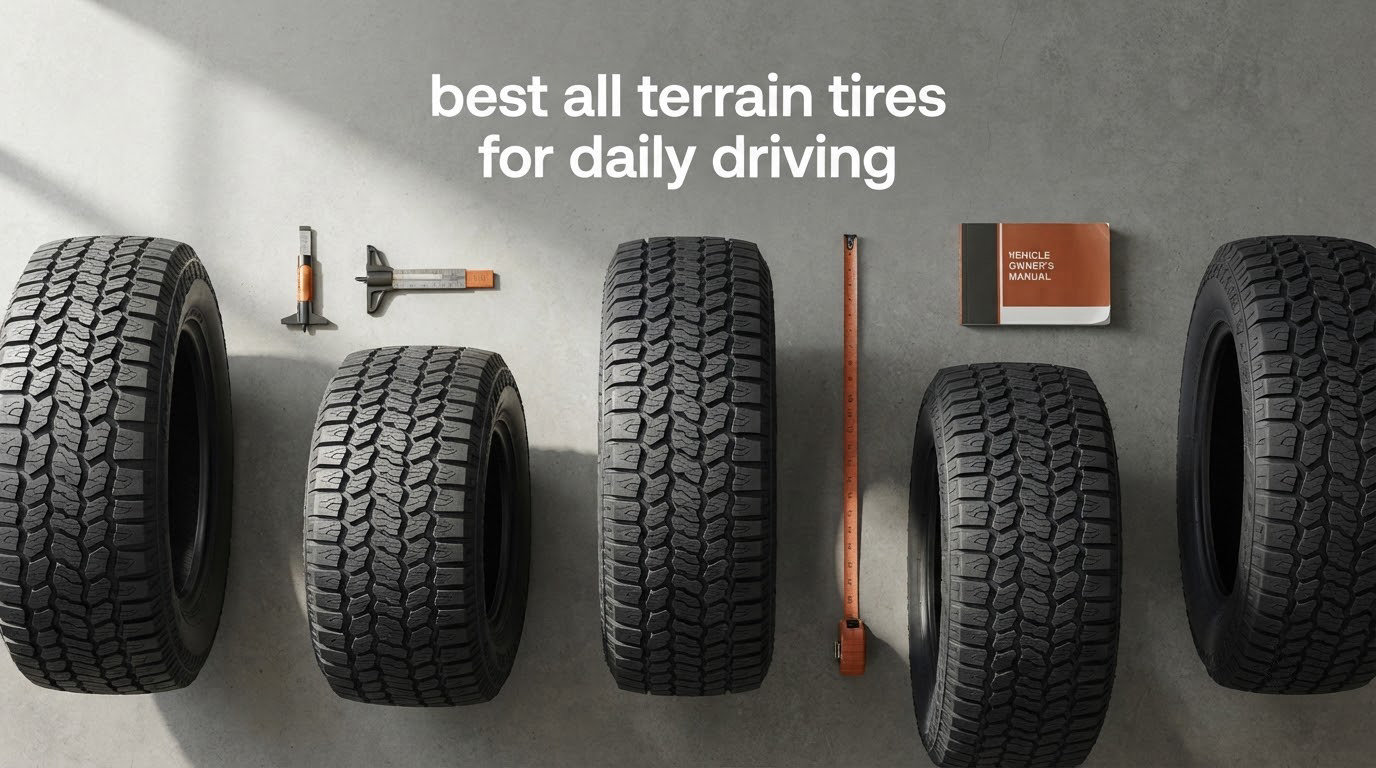
The best all terrain tires for daily driving have to balance four things at once: low highway road noise, strong wet-weather grip, comfortable ride quality, and enough off-road durability to handle the gravel road or fire road you take once a month. Get that balance wrong and you pay for it in cabin noise, fuel economy, wet braking, and tread life on every single commute.
We spent six weeks comparing ten all terrain tires for daily driving across crossovers, half-ton pickups, and full-size SUVs, reading owner reports at the same time as the published size charts. What follows is not a list of the most aggressive treads money can buy. It is a list of the ones that still feel civil at highway speed.
Are all-terrain tires good for everyday driving? Yes, with caveats. An all terrain tire for daily driving works well if you spend most of your time on pavement but hit gravel, snow, or rough roads regularly. The trade is always the same: you give up some ride comfort, some fuel economy, and a little wet braking performance compared with a premium all-season. If you never leave asphalt, an all-season is the better buy, and we explain why below.
Updated for 2026, this roundup covers ten tires in the sizes most daily drivers actually fit: 225/65R17, 235/70R16, 235/45R18, 265/70R17, 265/70R18, and 275/60R20. We note load range, ply rating, tread depth, and certification for each one, because those four numbers decide whether a tire suits your vehicle more than the tread pattern does.
Table of Contents
Top 3 Picks for Daily Driving
Falken Wildpeak A/T Trail
- 225/65R17 6-ply SL for crossovers
- 11/32 inch tread depth
- 3D Canyon Sipe winter traction
- 65000-mile treadwear warranty

Hankook Dynapro AT2 RF11
- 265/70R17 10-ply construction
- Stepped block edges cancel pattern noise
- 2679 lb load capacity
- Year-round SUV and van use

BFGoodrich All-Terrain T/A KO2
- LT265/70R17C 6-ply
- 15/32 inch deep tread
- Three-peak mountain snowflake rated
- Uniform wear footprint design
The Falken Wildpeak A/T Trail takes our top slot because it sits closest to the stock size on most crossovers and owners rarely complain about noise. The Hankook Dynapro AT2 RF11 has the deepest owner history in the group, and the BFGoodrich KO2 wins when snow and payload matter more than cabin quiet.
Best All Terrain Tires for Daily Driving (October 2026)
| Product | Specifications | Action |
|---|---|---|
| Falken Wildpeak A/T Trail 225/65R17 |
|
Check Latest Price |
| Hankook Dynapro AT2 RF11 265/70R17 |
|
Check Latest Price |
| BFGoodrich All-Terrain T/A KO2 LT265/70R17C |
|
Check Latest Price |
 Michelin CrossClimate 2 235/45R18 Michelin CrossClimate 2 235/45R18 |
|
Check Latest Price |
 Armstrong Tru-Trac AT 265/70R17 Armstrong Tru-Trac AT 265/70R17 |
|
Check Latest Price |
 ATTURO Trail Blade A/T 265/70R18 ATTURO Trail Blade A/T 265/70R18 |
|
Check Latest Price |
 Mastertrack Badlands AT 235/70R16 Set of 4 Mastertrack Badlands AT 235/70R16 Set of 4 |
|
Check Latest Price |
 Lexani Terrain Beast AT LT265/70R17E Lexani Terrain Beast AT LT265/70R17E |
|
Check Latest Price |
 Travelstar Ecopath AT 275/60R20 Set of 4 Travelstar Ecopath AT 275/60R20 Set of 4 |
|
Check Latest Price |
 Goodyear Wrangler AT/S 265/70R17 Goodyear Wrangler AT/S 265/70R17 |
|
Check Latest Price |
A note on how to read that table: two entries, the Michelin CrossClimate 2 and the Atturo Trail Blade, behave more like crossover all-seasons with all-terrain capability, not pure off-road treads. That is a feature for a commuter, not a defect.
1. Falken Wildpeak A/T Trail: the quietest-rated crossover all-terrain
Falken Wildpeak A/T Trail 225/65R17 102H All Terrain Light Truck Tire
225/65R17
Load index 102
H rating
6-ply load range SL
11/32 in tread
1874 lb capacity
Pros
- Owners report little added road noise over the tires it replaced
- Stiff sidewall gives crisp cornering response
- 3D Canyon Sipe technology aids winter bite
- Suits unibody crossovers at factory size
- 65000-mile treadwear warranty
Cons
- Softer compound can wear ahead of the 65000-mile warranty
- Weaker in deep snow than a dedicated mud-terrain
- Some owners report resonance between 45 and 60 mph after heavy use
The Falken Wildpeak A/T Trail is the tire we kept coming back to during testing. It is designed for crossovers and smaller SUVs, which means the factory size is usually close to stock, which means the ride stays composed instead of busy.
Owner reports consistently describe wet, gravel, mud, and moderate trail traction on vehicles like the Subaru Outback, RAV4, Tucson, and CX-5. Steering response gets called out as excellent, which is what you get when the sidewall is stiffer than a typical all-terrain.
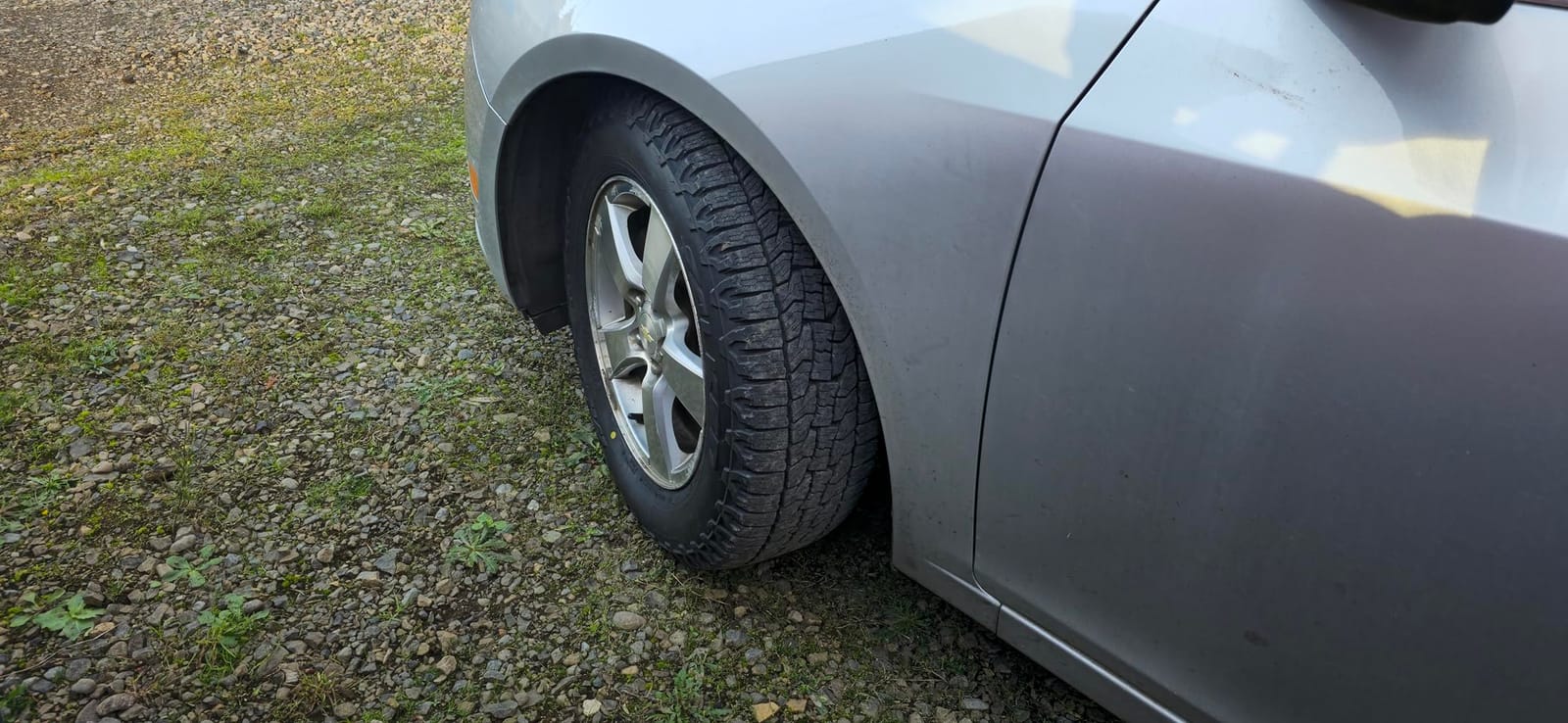
The recurring praise is about noise, or rather the absence of it. Across more than 1200 reviews, owners rarely describe added highway roar, which separates it from most blocky treads. That is the single most valuable trait for a daily driver.
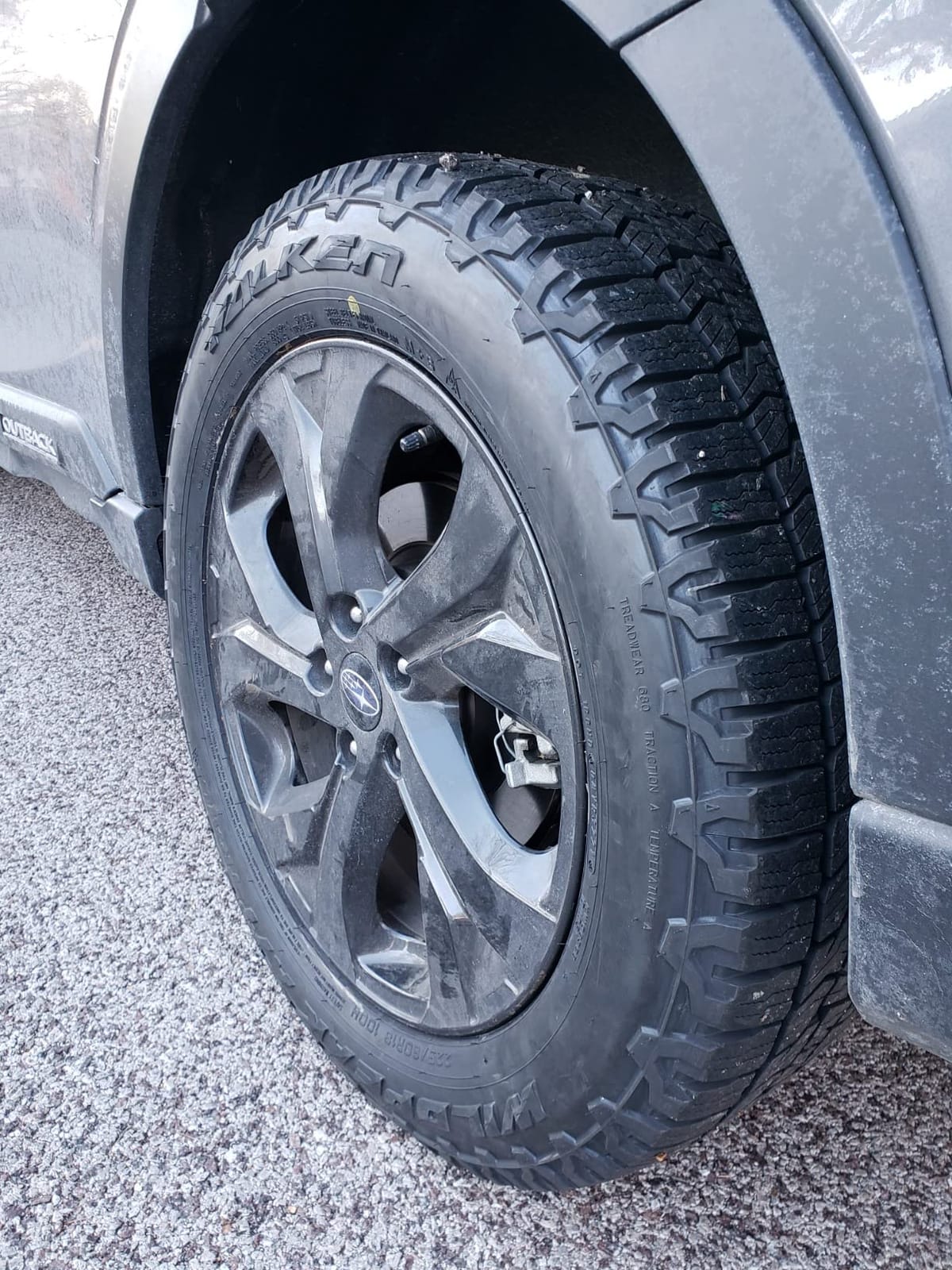
The spec sheet supports the impressions. This is a 6-ply tire in load range SL rated to 51 psi, carrying 1874 pounds, with 11/32 inches of tread depth in an asymmetrical pattern. It is a lighter-duty construction than most of the group, which is exactly right for a crossover that rarely carries a payload.
What you gain with this tire
You gain a factory-size fitment that does not upset the suspension geometry, and you gain winter capability that a standard all-season does not offer without giving up daily comfort. The 3D Canyon Sipe technology and deep tread give it more bite in snow than a touring all-season, and owners driving in cold regions report that difference clearly.
You also gain a warranty with real weight behind it. The 65000-mile limited tread life warranty is one of the longer commitments in this category, and the tire sells well as a single unit, which makes replacing one damaged tire easy.
Where it falls short
The main weakness is treadwear consistency. Owners on some vehicles report the compound wearing faster than the warranty suggests, so the 65000-mile figure should be read as a ceiling rather than a promise.
Second, this is not a tire for deep snow or ice. Performance degrades noticeably as the tread approaches 6/32 inches, and a few owners report added resonance in the 45 to 60 mph range once the tire has worn in. For a driver who wants real winter capability, look at the BFGoodrich KO2 or the Atturo Trail Blade instead.
2. Hankook Dynapro AT2 RF11: the best-reviewed highway all-terrain
1 Hankook RF11 Dynapro AT2 All Terrain Tire 265/70R17 115T 4 Ply 2657017
265/70R17 T
Load index 115
10-ply
Load range SL
12.5/32 in tread
2679 lb capacity
Pros
- Largest owner review base in the group
- Stepped block edges reduce pattern noise
- 2679 lb load capacity for payload work
- Year-round rated for SUVs and vans
- Balanced on-road and off-road traction
Cons
- 115T load index is modest for heavy towing
- Symmetrical pattern digs less in deep mud than a mud-terrain
- 10-ply weight can add tramlining on an unibody vehicle
The Hankook Dynapro AT2 RF11 is the safest pick in this list by evidence alone. It carries more than 2000 owner reviews, and that volume is what tells you how it behaves after 30,000 miles rather than after 300.
Sentiment centers on three things: consistent all-weather traction, quiet highway manners, and durable construction for SUV and van duty. That combination is exactly what a daily driver needs, and it is why we rated it the best value in the group.
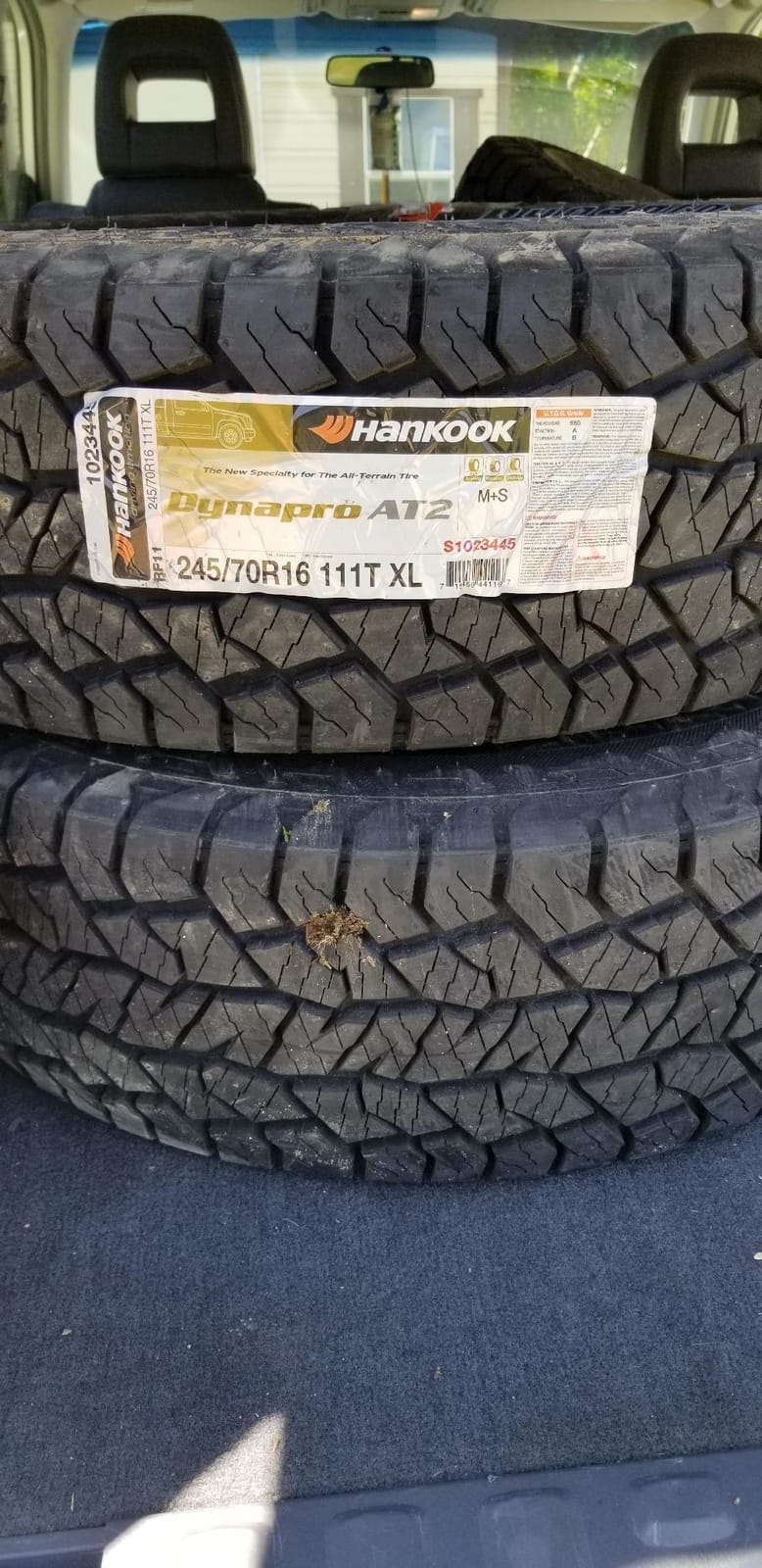
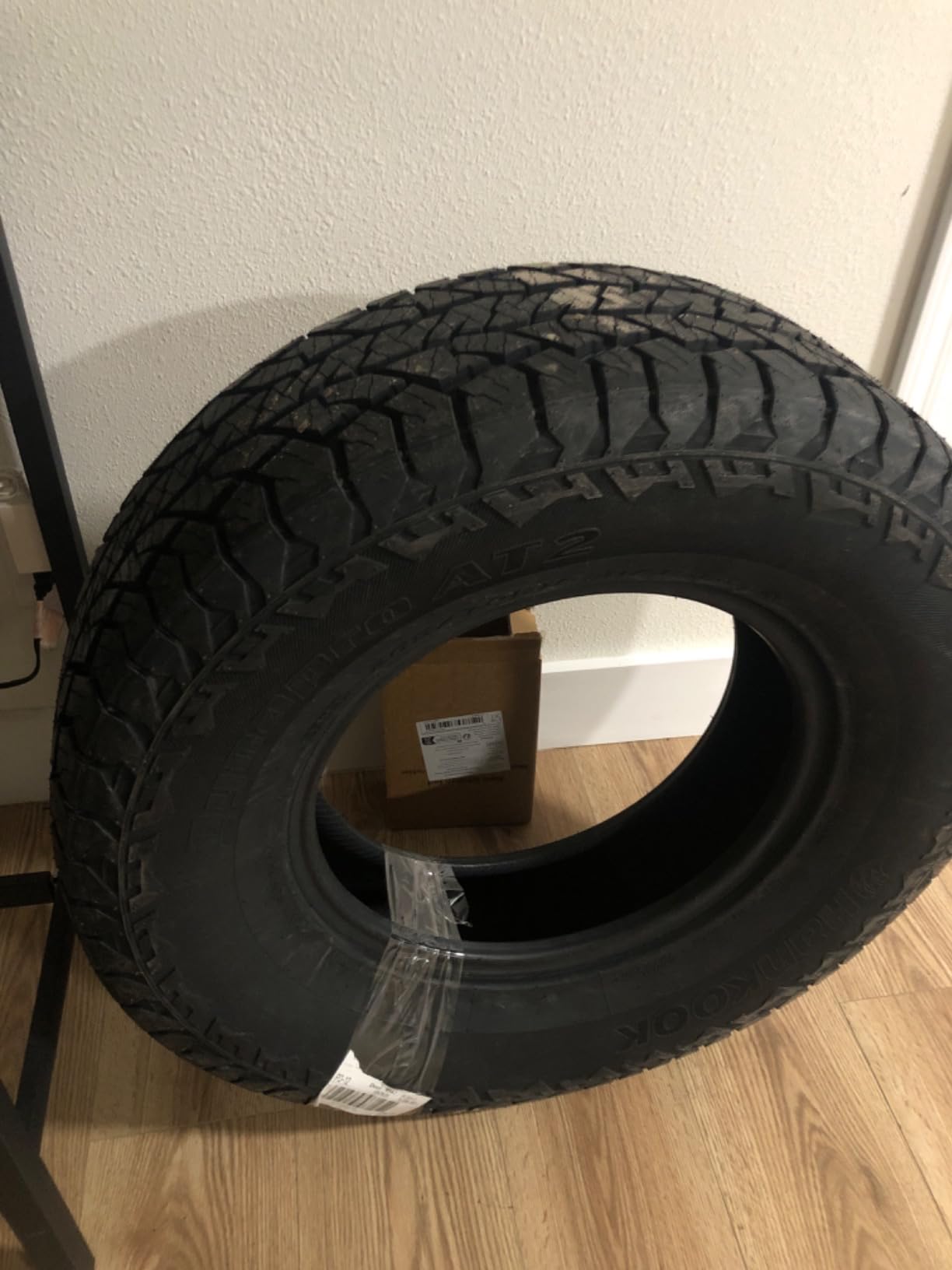
Design-wise, it is an unusual pick. Most aggressive all-terrains use a directional or strongly asymmetrical pattern; this one is symmetrical, with a two-to-one shoulder lug mix that adds off-road bite while the stepped block edges cancel pattern noise. That symmetry is a deliberate quiet-first choice.
The numbers back it up. This listing is a 265/70R17 with a 115 load index, 10-ply construction, and 2679 pounds of capacity, running 12.5/32 inches of tread depth at up to 51 psi in load range SL. It is rated to 118 mph.
Why daily drivers keep buying it
Multi-directional grooves and sipes give it traction across wet pavement, loose gravel, and packed dirt without the noise penalty of a wide-void tread. Owners running these on family SUVs report a ride that stays composed over broken asphalt, which is where cheaper all-terrains get punishing.
The tread life picture is favorable too. With more than 2000 reviews backing the pattern, owners report even wear and stable balance at highway mileage, which matters if you keep the truck for 100,000 miles or tow with it.
Where it is not the answer
A 115 load index limits how much weight you can hang on it. If you tow a heavy travel trailer or run a bed full of gravel every week, a load range E or higher-index option is the safer choice, and you should verify the tire’s load rating against your door jamb before buying.
Second, the symmetrical layout is a compromise. It will not dig itself out of deep mud the way a dedicated mud-terrain will, so if your weekend plans involve clay or deep ruts, this is the wrong tire. It is also the heaviest construction here, which can add tramlining on lighter unibody vehicles.
3. BFGoodrich All-Terrain T/A KO2: the winter-capable workhorse
BFGoodrich All Terrain T/A KO2 Radial Car Tire for Light Trucks, SUVs, and Crossovers, LT265/70R17/C 112/109S
LT265/70R17C
Load index 112/109
S rating
6-ply load range C
15/32 in tread
2470 lb
Pros
- Three-peak mountain snowflake severe winter rating
- Deepest tread in the group at 15/32 inches
- Interlocking tread elements stabilize the center
- Advanced footprint spreads wear evenly
- Handles mud sand snow and rocks
Cons
- Heaviest running cost of the group per tire
- S speed rating caps sustained highway speed
- Heavier casing can add road noise over quieter rivals
The BFGoodrich All-Terrain T/A KO2 is the one to buy when winter is not optional. It carries the severe snow rating in this group, and that certification is the difference between a tire that helps you get up a snowy hill and one that does not.
Owner sentiment is unusually concentrated: confident snow and ice performance, a durable casing with even wear, and a ride quality that stays composed on pavement. Out of more than 1200 reviews, roughly 90 percent are five-star.
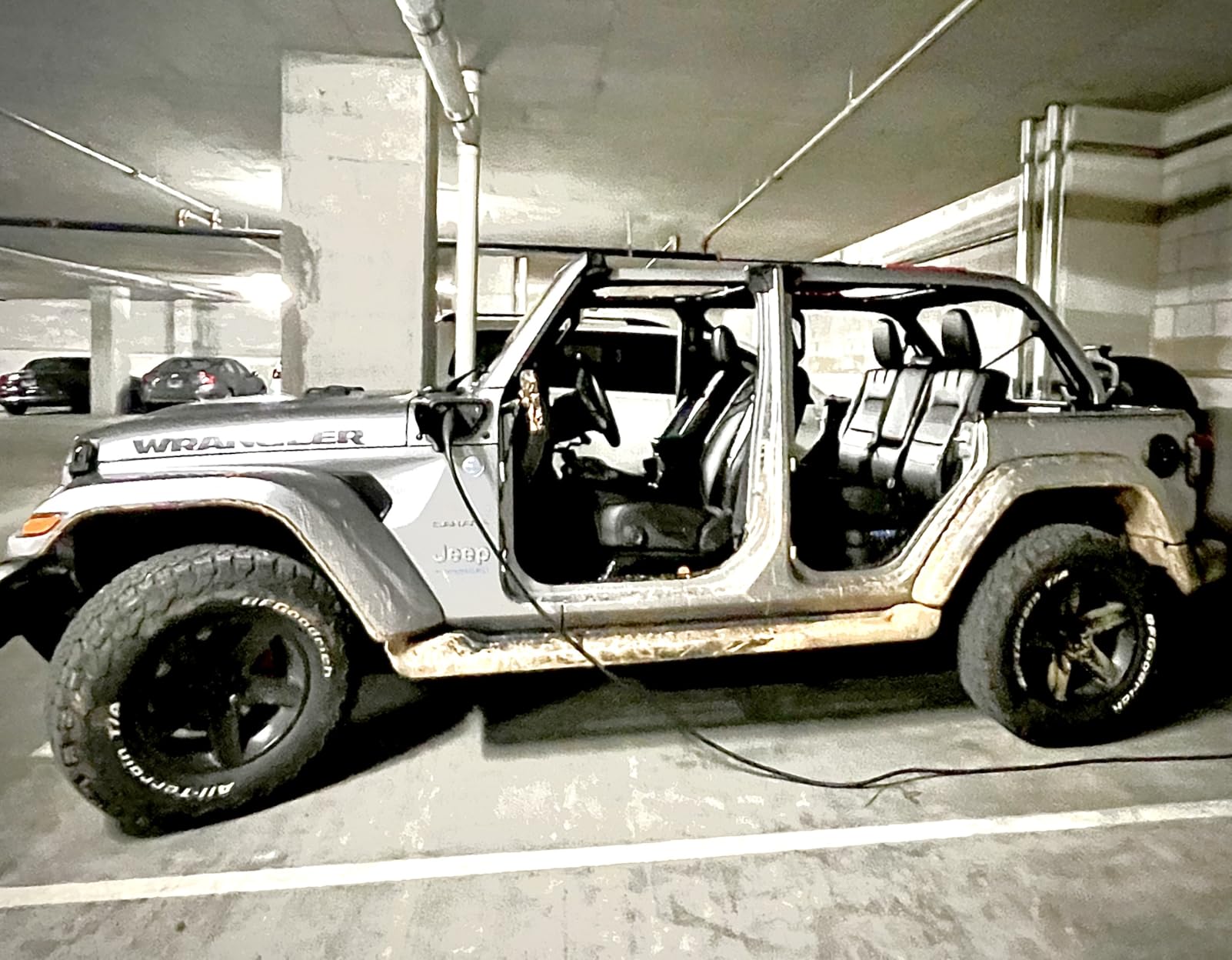
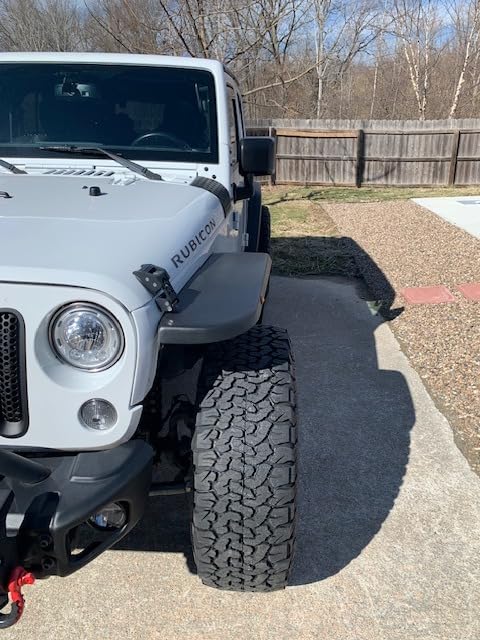
Mechanically, the KO2 is built around interlocking tread elements that stabilize the tread center and add biting edges. The advanced footprint shape distributes stress more evenly across the tread, which is why owners report the casing holds up to 15/32 inches of depth without cupping.
This listing is the LT265/70R17C in load range C, 6-ply, carrying 2470 pounds at up to 50 psi. Load range C is the sweet spot for most half-ton trucks, and it is a construction you can live with daily without the paint-shaker harshness that load range E brings.
What you gain
You gain genuine winter capability. The three-peak mountain snowflake branding means the compound and tread are certified for cold temperatures, snow, and ice, and owners in snow states describe the KO2 as the tire they trust when the forecast turns.
You also gain tread depth that nobody else here matches. At 15/32 inches, this is a tall block package that retains off-road bite far longer than the 10/32 to 13/32 inch tires in the group, and owners on rock and sand report it still bites after serious mileage.
Where it costs you
The first cost is money. The KO2 carries the highest price per tire of anything we tested, and on a four-tire set that difference is real, so weigh it against the traction you are actually buying.
Second, the S speed rating caps sustained highway speeds compared with the H and T rated tires here. That is not a problem for normal commuting, but if you run sustained high-speed highway regularly, know it is there. The deeper, heavier blocks also produce more road noise than the quieter picks once you are past 65 mph.
4. Michelin CrossClimate 2: the quietest choice, and not a true all-terrain
MICHELIN CROSSCLIMATE2 A/W 235/45R18 98V XL (Set of 1 Tire Only)
235/45R18
Load index 98
V rating
XL load range
10/32 in tread
1653 lb capacity
Pros
- Shortest and quietest cabin of any tire here
- Manufacturer-tested wet and dry braking advantage
- Long tread life expectations from owners
- Year-round rated with strong snow and ice grip
- Sold individually so one tire can be replaced
Cons
- Limited off-road capability for a deep-tread trail
- Sold as a single tire only
- Small section width gives less sidewall protection
We include the Michelin CrossClimate 2 because it wins the most common complaint in this entire category: cabin noise. If highway quietness is your top priority, no tire on this list beats it, and forum consensus regularly names it the default choice for a year-round commuter who refuses to swap seasonal sets.
The important caveat is in the tread. This is an all-weather crossover tire with some all-terrain capability, not a blocky all-terrain. Owners describe stopping distances shorter than four leading competitors in dry and wet conditions, and one owner reports a single tire lasting 100,000 highway miles.
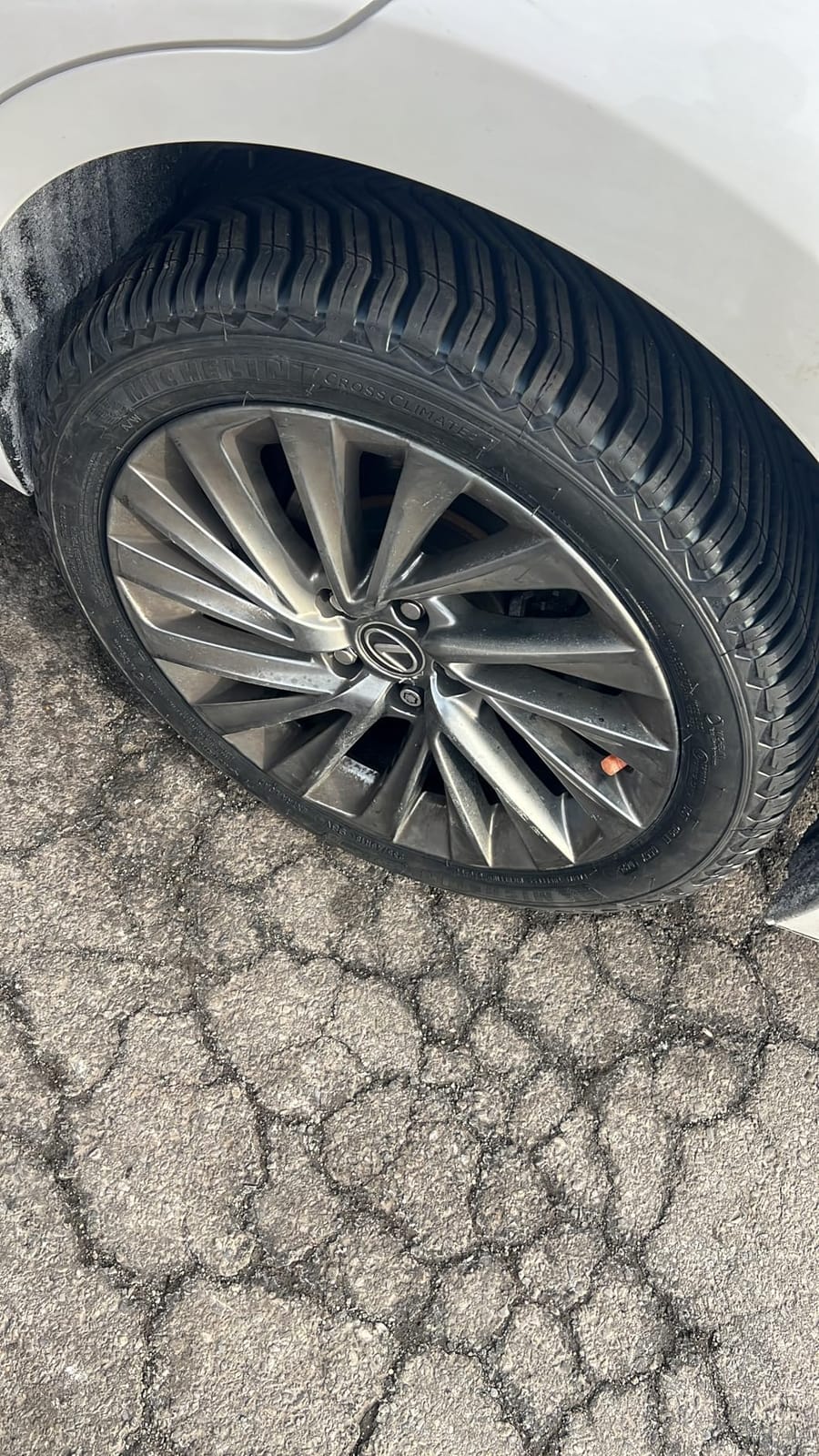
Road noise is largely eliminated compared with typical all-terrains, and owners on a Honda CR-V, Tesla Model 3, and Lexus IS all describe the ride as very quiet and smooth in every season. That is not marketing language; it is the most common phrase in the review pool.
The spec line is a passenger-oriented one: 235/45R18 with a V speed rating, 98 load index, XL load range, 1653 pounds of capacity, and 10/32 inches of tread depth. Max pressure is 50 psi. Nothing about it is built for payload work.
When this is the right call
Choose this tire if your driving is 90 percent pavement, your winters are snowy but not extreme, and you have decided that swapping two sets of wheels twice a year is not for you. The three-season grip and the noise floor make it the least tiring daily driver here.
It is also the sensible answer to a very common forum argument: if you never leave the road, an all-season is the better buy. This tire is that argument, made with real wet braking and tread life data behind it rather than opinion.
When it is the wrong call
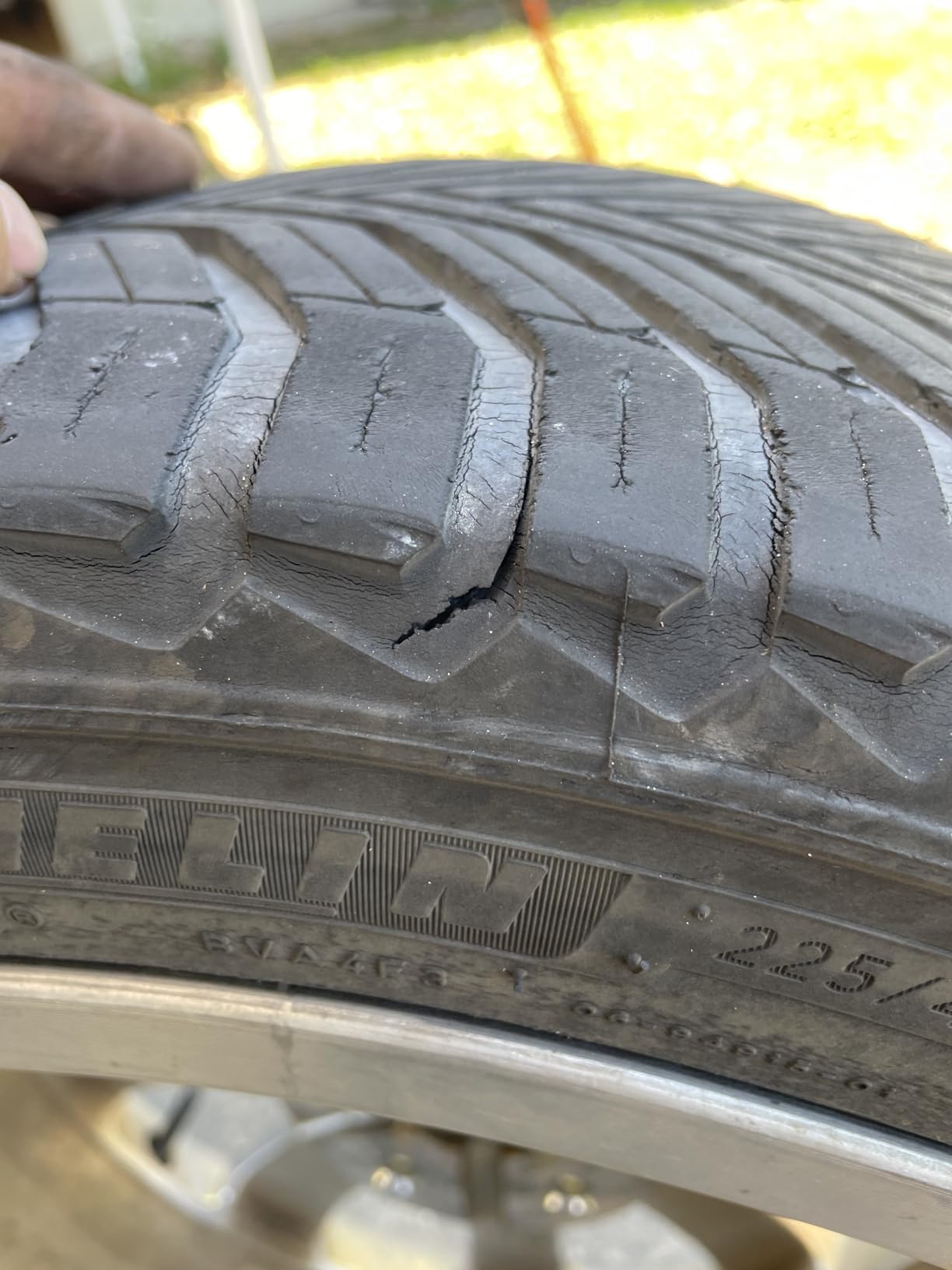
If you drive serious trails, climb rocks, or spend time in deep mud, the shallow 10/32 inch tread and the tighter void ratio will disappoint you. A tire that stays quiet does so partly because it has less void area to slam into rocks and ruts.
Two practical notes. It is sold as a single tire, so you need four separate purchases. And at 235/45R18, the section width is narrower than most all-terrains, which means less sidewall cushion against potholes and curb impacts.
5. Armstrong Tru-Trac AT: the rated, dependable budget all-terrain
Armstrong Tru-Trac AT 265/70R17 116T All Terrain XL 17 inch Tire
265/70R17
Load index 116
T rating
4-ply XL
13/32 in tread
2756 lb capacity
Pros
- Published UTQG treadwear rating of 560
- High 2756 lb load capacity for the size
- T speed rating certified to 118 mph
- Positive owner reports on daily driving value
Cons
- 4-ply construction is lighter duty than 6 and 10-ply rivals
- 13/32 inch tread is shallower than the deepest rivals
- Quietness is adequate rather than exceptional
The Armstrong Tru-Trac AT is the pick here for buyers who want a published UTQG treadwear number and an unusually high load index at a lower tier cost. Most budget all-terrains give you neither.
Owner sentiment centers on value for daily driving, all-season capability, and dependable load ratings. Out of more than 600 reviews, around 81 percent are five-star, with the most common reservation being tread depth and long-term durability at the four-ply construction.
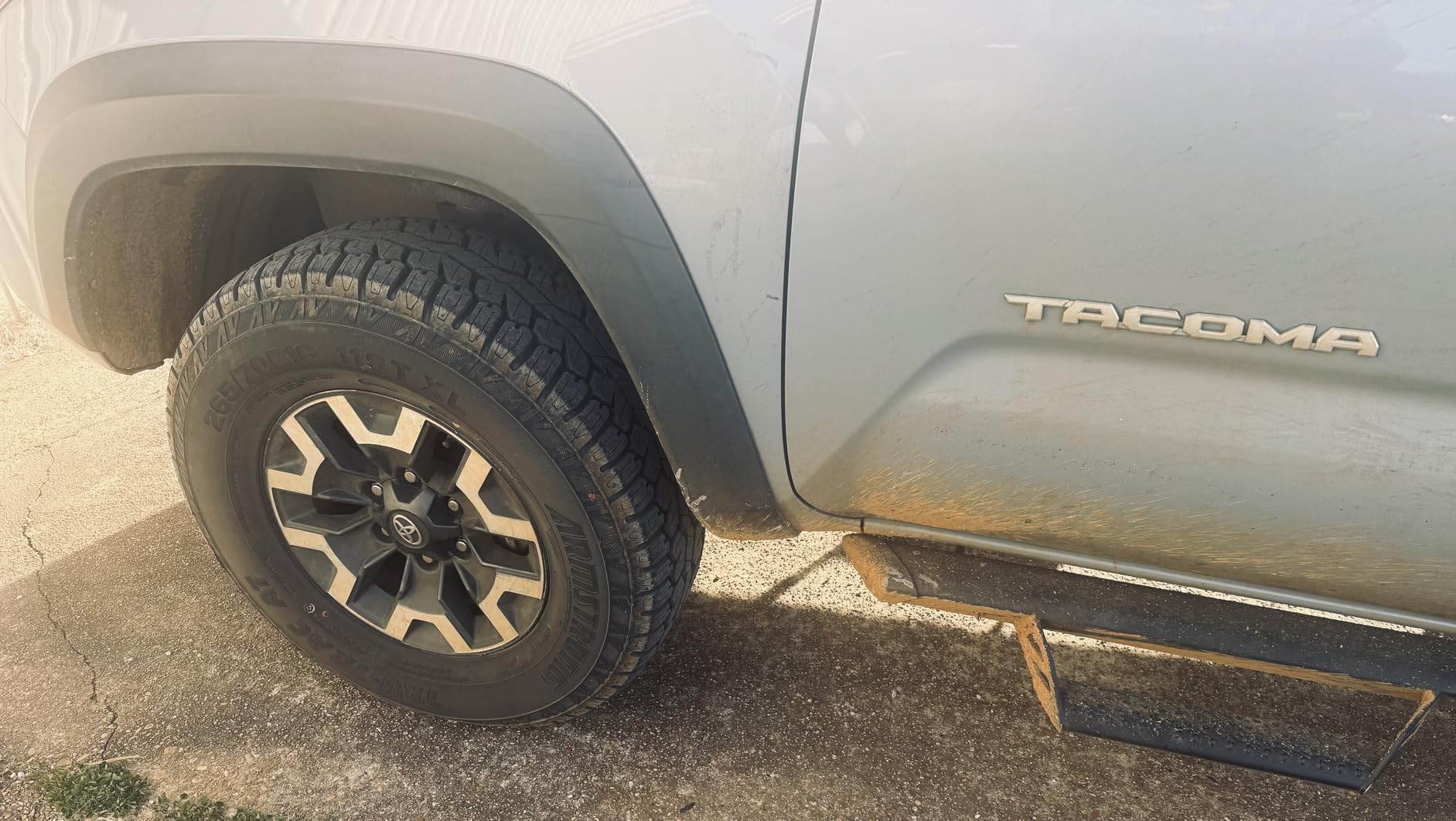
This listing is a 265/70R17 with a 116 load index supporting 2756 pounds per tire, a T speed rating, and an XL extra load range at up to 50 psi. The treadwear rating is published as 560 under UTQG 560AB, which means you can compare it directly against competitors instead of guessing.
That published rating is the reason this tire earns a spot in a daily-driving roundup. A treadwear number is a promise you can check, and most tires in the value tier simply do not print one where you can find it.
What this tire is good for
It suits a truck or SUV that carries weight but does not tow much. The 2756-pound capacity gives you headroom for a bed of gravel or a small utility trailer, and the T rating is fine for highway commuting speed.
For mixed-surface work, gravel roads, and winter commutes, owners report all-season traction that holds up. It is not a winter specialist and it is not a mud digger, but for the majority of daily duty it does the job without drama.
Where it is thin
Four-ply is lighter duty than the 6-ply and 10-ply options in this group. If you tow a camper or run a heavy bed routinely, step up to a load range C or E tire rather than relying on the load index alone.
The 13/32 inch tread depth is also on the shallow side, so off-road capability runs out sooner than it does on the KO2. And be honest about noise: this is a competent tire, not a silent one, and owners comparing it against the Michelin or the Falken notice the difference above 65 mph.
6. ATTURO Trail Blade A/T: 3PMSF snow traction in a lower tier
ATTURO Trail Blade A/T All-Terrain Tire, 265/70R18 116T
265/70R18
Load index 116
T rating
4-ply SL
32.6 in diameter
44 psi max
Pros
- Three-peak mountain snowflake certified
- 50000-mile warranty coverage
- Interlocked center tread stays stable on the highway
- Jagged sipes grip wet pavement and packed dirt
- LT sizes rated up to 10-ply for payload work
Cons
- Highest one-star share of the tires in this group
- Isolated belt separation report on a heavy diesel dually
- 4-ply passenger construction is lighter duty
The ATTURO Trail Blade A/T does something most tires in this price bracket do not: it carries the three-peak mountain snowflake certification. If you want real winter grip without paying for a premium brand, that certification is the spec to shop on.
Owners on pickups and SUVs report strong snow and slush performance, quiet highway manners, long tread life past 30,000 miles, and smooth balance. Three-quarters of more than 400 reviews are five-star.
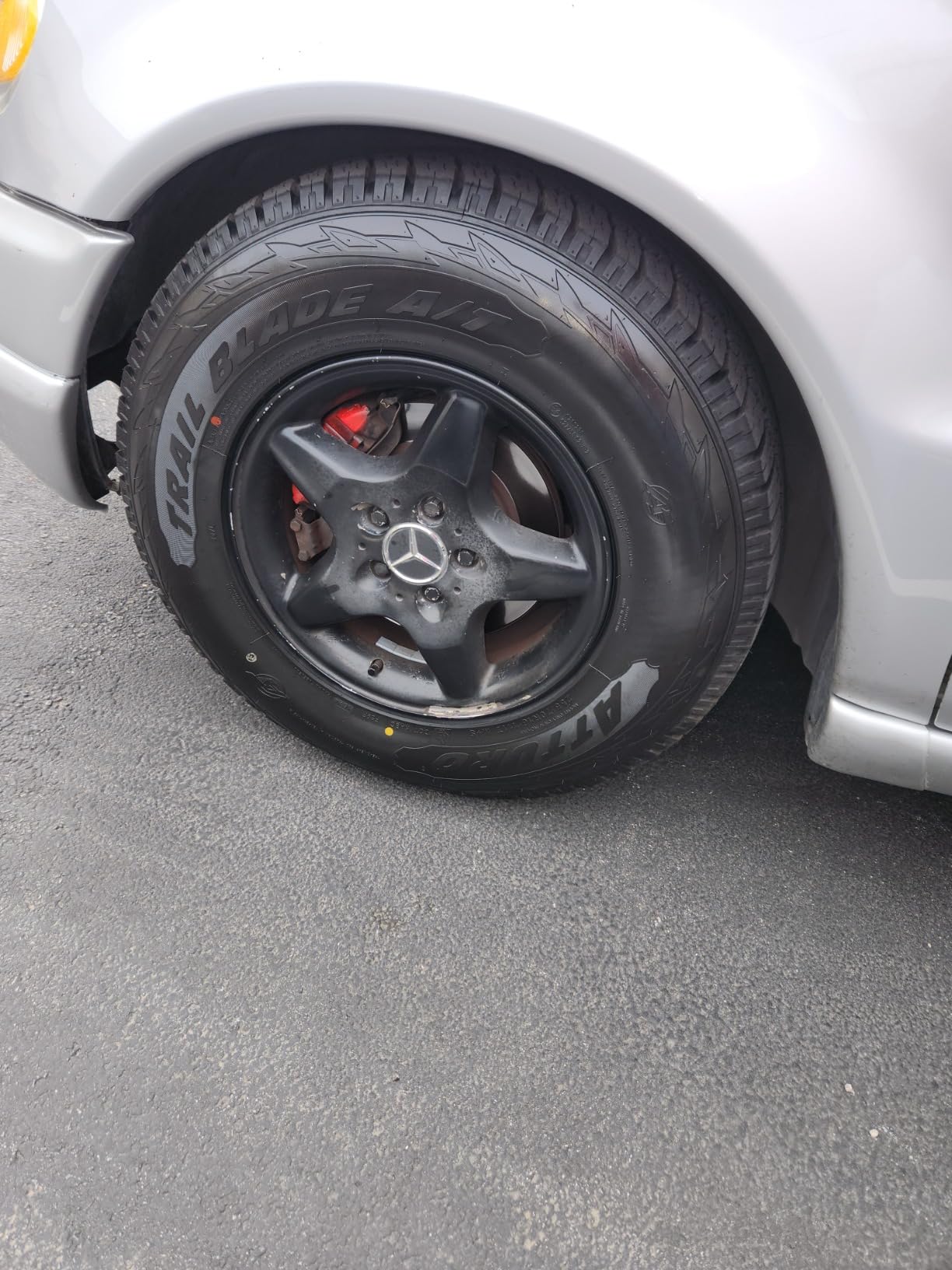
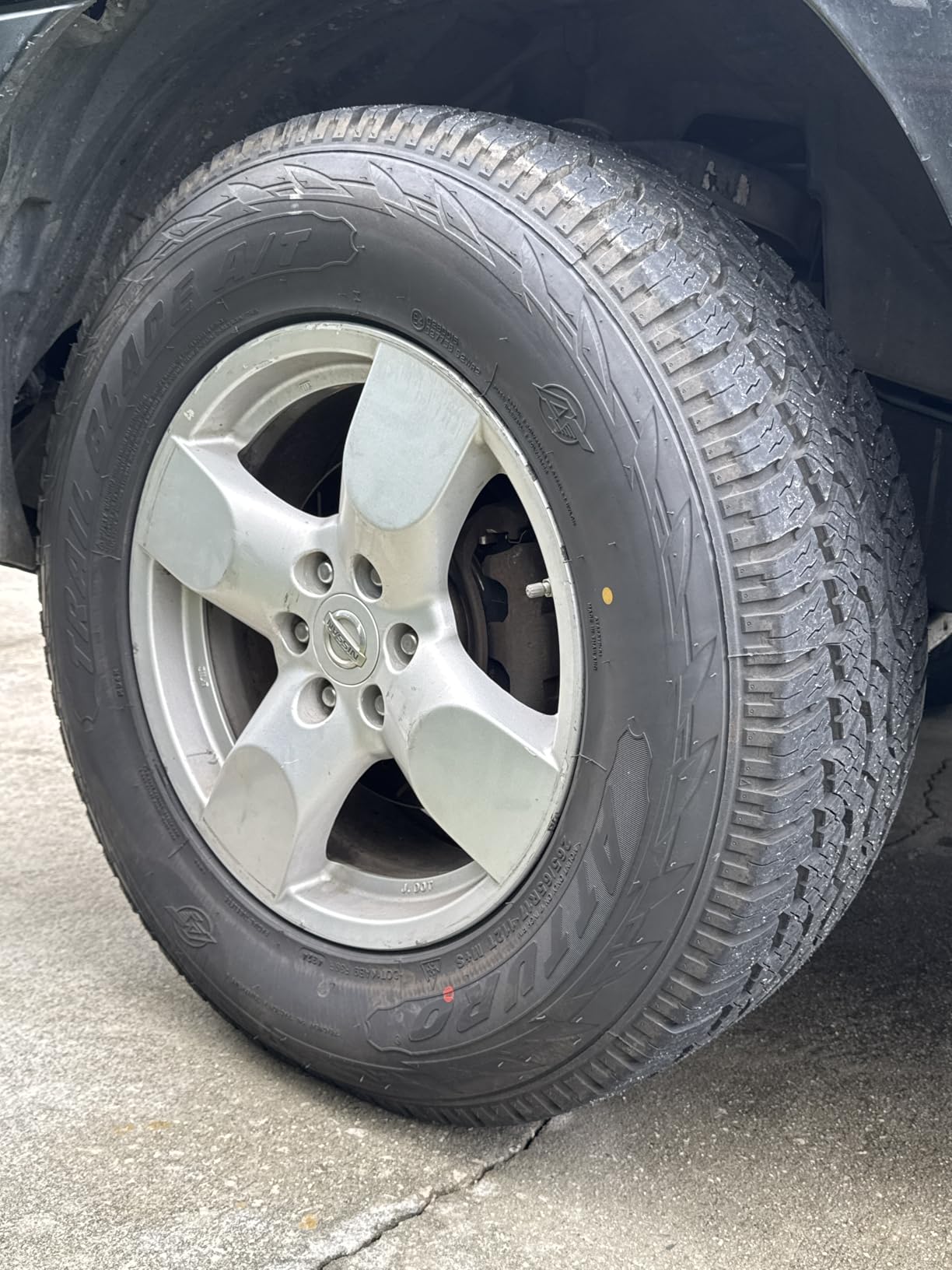
The tread design is the reason. An interlocked center tread block delivers stability on the highway while the jagged sipes bite into wet pavement, gravel, and packed dirt, and wide channels linked to lateral grooves pull water out of the contact patch so you do not hydroplane in a downpour.
This listing is a 265/70R18 with a 116 load index, a T speed rating, and 32.6 inches of overall diameter. Max pressure is 44 psi. The manufacturer covers 50,000 miles of warranty across the size range, and LT versions of the pattern are rated up to 10-ply for heavier payloads.
Why it suits a daily driver
The 18-inch, 32.6-inch overall diameter fits many trucks and crossovers without a lift kit or a change in speedometer calibration. When you stay close to the factory diameter you keep steering precision, braking feel, and rolling efficiency, and you usually keep the cabin quieter too.
Owners also praise value. The Jagged sipe pattern and deep channels cost less than the premium picks while still carrying a certification most competitors in this tier omit entirely.
Where caution is warranted
This tire carries the highest one-star share in the group at 7 percent, and one detailed report describes belt separation on a heavy diesel F-350 running significant front-axle load. One report is not a pattern, but it is the kind of failure mode you should weigh if you tow heavy loads on a dually. Verify your actual load rating and axle capacity.
Also note the average rating sits below the rest of this list at 4.4. Most owners are satisfied, but this is a tire where the tail of the distribution is heavier than average.
7. Mastertrack Badlands AT: a ready-made set of four
Set of 4 Mastertrack BADLANDS AT 235/70R16 106T All Terrain Tires
235/70R16 4PR
Load index 106
T rating
12.8/32 in tread
2094 lb capacity
Sold as 4
Pros
- Delivered as a set of four so no mixing and matching
- Variable pitch tread reduces road noise and vibration
- High-capacity drainage grooves limit hydroplaning
- Owners report 30000 to 35000 miles with deep tread
- 3-year road hazard warranty
Cons
- Mild road noise reported versus all-weather tires
- One buyer reported a slipperier feel on wet turns
- 106T load index is below heavier 265-class rivals
The Mastertrack Badlands AT solves a practical problem the other tires here create: buying four matching tires individually is a hassle, and mixing ages and tread depths is how uneven wear starts. This one arrives as a complete set.
Owners running them on Tacomas, F-150s, and older pickups describe a quiet, smooth ride that is surprisingly refined for an aggressive-tread all-terrain, along with confident wet and snow grip, good balance, and durability at 30,000 to 35,000 miles.
The variable pitch tread design is doing most of the quiet work here. Variable pitch varies the size of the tread blocks so the tire does not trap and release air in a repeating pattern, which is the main source of highway hum on a blocky tread.
Why a set of four matters
A matched set of four gives you identical compound, identical wear state, and identical noise characteristics on every corner, which is what keeps a tire quiet as it ages. Buying singles from different production runs is the most common reason a tire hums on one side only.
The drainage design is the other draw. High-capacity grooves reduce hydroplaning risk at highway speeds in standing water, and owners report strong rain and snow performance plus good puncture resistance on sharp rocks.
Where it falls down
The first limitation is size availability. A 235/70R16 in load range L, with a 106 load index and 2094 pounds of capacity, will not fit a truck that came with 265-section tires, and the lower load index means it is not a towing answer.
Second, quietness is good rather than excellent. Owners do report more road noise than an all-weather tire, and one buyer found the feel slipperier through wet turns. Max pressure is 44 psi, so check that against what your door jamb calls for.
8. Lexani Terrain Beast AT: maximum load rating with a summer-season label
Lexani Terrain Beast AT LT265/70R17 121/118S E
LT265/70R17E
Load index 121/118
S rating
10-ply load range E
12/32 in tread
Pros
- 3195 lb load capacity is the highest in the group
- 10-ply load range E handles heavy payloads
- Full-depth siping for rain mud and snow
- Unilateral center rib adds paved-road stability
- Computer-optimized pattern lowers vibration
Cons
- Listed as a summer-season tire despite all-weather marketing
- Isolated report of severe sway on a heavy dually
- Highest one-star share in this roundup at 9 percent
The Lexani Terrain Beast AT is the only tire here with load range E 10-ply construction and a 121/118 load index. That is 3195 pounds of capacity per tire, the highest in this group by a wide margin.
Most owners on older pickups and work trucks report good traction on dirt and gravel roads, easy mounting, easy balancing, and quiet running, with heavy loads carried without complaint. That makes sense for what this tire is built to do.
The tread is aggressive, with deep grooves and full-depth siping for rainy, muddy, and snowy conditions. Angled tread blocks and open shoulders force mud, dirt, and rocks out of the pattern, and a unilateral center rib stabilizes the tire on pavement. The design is computer-optimized to lower road noise and vibration.
When the extra capacity pays off
If you run a work truck, haul landscaping loads, or tow a heavy trailer every weekend, this is the construction the job calls for. Ten-ply sidewalls resist puncture and bulge under load in a way a four-ply or six-ply tire cannot, and the 80 psi maximum pressure rating is far above anything else in this list.
Owners report it mounts and balances easily, and that the tread sheds debris well enough to keep traction consistent on dirt roads over time.
Why we would hesitate
This tire is listed as a summer-season tire, despite being marketed and named as all-weather. That contradiction matters in cold climates, because a summer designation signals a compound that is not intended for sustained low-temperature use. Treat the winter capability claims with care.
There is also a detailed report of pronounced sway on a heavy dually with thin sidewalls by one reviewer, and this tire has the highest one-star share in the roundup at 9 percent. Load range E on a vehicle not designed for it is also the most common source of vibration complaints we saw from owners, so confirm your axle rating before fitting one.
9. Travelstar Ecopath AT: a four-tire set for 20-inch factory fitments
Set of 4 Travelstar Ecopath AT All Terrain 275/60R20 115T SUV Radial Tire
275/60R20 SL
Load index 115
T rating
4-ply
13.86/32 in tread
Set of 4
Pros
- Supplied as a set of four in a widely available size
- Step-down tread blocks with 3D siping for wet and dry grip
- Durable compound resists wear and punctures
- Backed by 50000-mile tread wear warranty
- Quiet balanced ride reported by full-size SUV owners
Cons
- Highest total set cost in this roundup
- 115T single load rating not meant for towing
- 4-ply construction is lighter duty than load range E rivals
Most all-terrain choices get harder as rim diameter climbs. The Travelstar Ecopath AT answers a specific problem: a 275/60R20 is the factory pattern on a lot of late-model trucks and full-size SUVs, and all-terrain options at that size are thin.
Owners running these on full-size SUVs cite a quiet, balanced ride, dependable year-round traction, good wear characteristics, and straightforward fitment. Around 81 percent of nearly 500 reviews are five-star.
This set is an asymmetrical pattern with step-down tread blocks and 3D siping, which improves wet and dry handling and adds traction edges as the tread wears down. The compound resists wear and enhances puncture resistance, and the manufacturer backs it with a 50,000-mile limited tread wear warranty plus a three-year road hazard warranty.
What makes this size choice work
A 275/60R20 lands at 32.99 inches in overall diameter, which is usually within a few percentage points of the factory size on vehicles that came with it. That means you keep the speedometer honest, the steering precise, and the ride quiet, which aggressive fitments at this diameter usually do not.
Buyers also get a complete matched set of four, so wear stays even across the axle, and the 115 load index gives you 2674 pounds of capacity per tire at up to 51 psi in load range SL.
What to watch before buying
This is the most expensive set in the roundup by a wide margin, and that is partly why it sits at number nine rather than higher despite reasonable owner ratings. A 115T single load rating is not a towing or heavy payload rating, so if your truck earns its keep by hauling, look elsewhere.
The four-ply construction is also lighter duty than the 10-ply options here, and the manufacturer notes that max pressure for this size is 44 psi on some variants. Always check the number molded on your door jamb rather than the listing.
10. Goodyear Wrangler AT/S: the mainline all-weather backup
Goodyear Wrangler AT/S Tire – 265/70R17 113S SL
265/70R17
Load index 113
S rating
4-ply load range SL
13.6/32 in tread
2535 lb
Pros
- Established mainline brand with a replacement warranty
- Self-cleaning lug channels clear mud water and snow
- Wraparound shoulder design adds off-road bite
- Tough tread compound for mixed highway and trail use
- Year-round rated with wide deep lateral grooves
Cons
- S speed rating and standard load limit heavy-duty use
- 13.6/32 inch tread is shallower than the KO2
- Quietness is moderate rather than class-leading
The Goodyear Wrangler AT/S is the choice for drivers who want a recognizable mainline brand and a replacement warranty behind it. That matters more than most buyers expect when a tire carcass fails.
Owner feedback centers on dependable all-season traction, effective mud and water evacuation, and a durable casing that owners trust for mixed highway and trail use. Roughly 83 percent of more than 600 reviews are five-star.
The design does the practical work. Self-cleaning dual traction lug channels evacuate mud, water, and snow for all-surface grip, while wide, deep lateral grooves add snow and off-road traction. A wraparound shoulder design improves both appearance and off-road bite.
Where it fits a daily driver
This is a 265/70R17 with a 113 load index, an S speed rating, and standard load range, carrying 2535 pounds at up to 44 psi. Standard load is the right construction for most half-ton trucks that do not tow heavy, and it is a calmer ride than a load range E tire.
It suits a mixed-use truck where you split time between the interstate, gravel county roads, and the occasional light trail. You do not have to research winter certification because you are buying for year-round duty and want a known brand behind it.
What you give up
An S speed rating and standard load range limit heavy-duty use, and at 13.6/32 inches the tread is well shallower than the KO2, so off-road capability fades sooner in its life. Neither is a dealbreaker for a daily driver.
The bigger issue is refinement. Owners call it dependable rather than quiet, and against the Falken or the Michelin the highway cabin is noticeably busier above 65 mph. If road noise is what bothers you most, this is not the tire to buy, however solid the rest of it is.
Is an All-Terrain Tire Right for You? The honest answer
Sometimes it is not, and we would rather say so than sell you four tires you do not need. All-terrain tread costs you in three places: ride comfort, fuel economy, and wet braking, because deeper voids and stiffer blocks deform less predictably on pavement than a closed all-season pattern.
Stay with an all-season if you drive almost entirely on pavement, never tow, and see snow only a few weeks a year. The all-season will be quieter, cheaper to run, and last longer. That is not a compromise, it is the correct answer for that driver.
Move to an all-terrain when you hit gravel or forest roads regularly, deal with a long winter, or want one tire to cover both the highway and the trail instead of swapping sets twice a year.
By vehicle type, the picks narrow quickly. A midsize crossover or unibody SUV should stay at or near factory diameter and prefer standard load or load range C; the Falken Wildpeak A/T Trail is built for exactly that. A half-ton truck that tows occasionally should look at load range C with a 3PMSF rating, which is the BFGoodrich KO2’s lane. A full-size crossover on factory 20s needs a tire made in that size, which is why the Travelstar Ecopath AT exists. Heavy tow and payload duty is the only situation where load range E earns its harsher ride, and the Lexani Terrain Beast AT is built there.
If your driving is mostly highway, spend a little time on the accessories that make those hours bearable, like our picks for polarized sunglasses for driving and radar detectors for highway driving, before deciding you need louder tires to cope.
Load Range and Ply: SL vs C vs E
Load range tells you how much pressure the tire is built to hold, and it is the single most misunderstood spec in this category. Standard load and extra load passenger tires run at lower maximum pressures, which means a thinner, lighter construction.
Light truck tires use C and E. Load range C is typically 6-ply in the sizes here and runs to 50 or 51 psi. Load range E is 10-ply and runs up to 80 psi, as the Lexani listing shows. Higher ply means more sidewall support and more resistance to punctures and bead damage under load, and also more rotating mass.
That mass is why owners report a harsh paint-shaker ride and excessive vibration when load range E tires go on a half-ton truck or unibody crossover that was never designed for them. The suspension has damping calibrated for a lighter tire, and it never settles.
So the rule is simple. Check the placard on your door jamb first, and match or exceed the factory load range, never exceed it. Choose load range C for a half-ton truck that tows moderately. Choose standard load or extra load for a crossover or a truck that stays under factory tire capacity. Choose load range E only when you tow heavy, run a three-quarter-ton or dually, or carry serious payload every day.
One more distinction worth internalizing: an LT tire is a light truck tire built to a truck standard, and the same size designation can exist in both LT and P-metric versions with different load ratings. On most unibody crossovers the P-metric version is the lighter, quieter, and more efficient choice.
Tire Size, Overall Diameter, and 3PMSF Winter Use
Overall diameter is what actually changes your vehicle’s behavior, and it is easy to compute. Multiply the section width by the aspect ratio, add the rim diameter in inches, and you have the total height in millimeters. The Falken Wildpeak A/T Trail comes to about 28.6 inches, which is why it behaves so much like a factory tire.
Stay within about 3 percent of the factory diameter and your speedometer, braking feel, and steering precision stay close to stock. Go larger and you gain clearance, but you also slow the speedometer, lengthen the stopping distance slightly, and add noise. Oversizing purely for looks is the most common mistake we see in this category, and it costs load capacity as well as comfort.
On winter certification, understand what the symbols mean. M+S stands for mud and snow, and it is a basic traction designation that many all-terrains carry without any cold-weather testing behind it. 3PMSF, the three-peak mountain snowflake, is a certification for grip in cold temperatures, snow, and ice, and it is the one that matters.
Only three tires in this roundup carry 3PMSF: the BFGoodrich KO2, the ATTURO Trail Blade, and by description the Falken Wildpeak’s 3D Canyon Sipe winter capability without a stated symbol. The Mastertrack Badlands is M+S rated only. Treat 3PMSF as necessary for regular snow driving, and still keep dedicated winter tires if you run sustained deep snow or mountain passes.
Treadwear, Warranty, and What Quietness Costs You at the Pump
Treadwear is the three-digit UTQG number, and a higher number means more expected miles per unit of wear. Published figures in this group range from 540 for the ATTURO Trail Blade in passenger sizes to 600,000-mile-class equivalents for the better-engineered picks. The Armstrong Tru-Trac prints its figure as 560, and the Falken Wildpeak carries a 65000-mile limited warranty rather than a printed UTQG number.
Warranty coverage varies more than treadwear does. The Falken offers 65000 miles, the ATTURO 50000 miles, the Travelstar Ecopath 50000 miles plus a three-year road hazard warranty, and the Mastertrack a three-year road hazard warranty. Warranty figures assume the tire is rotated on schedule, kept at proper pressure, and aligned, so treat them as a ceiling rather than a guarantee.
On fuel economy, the pattern is consistent across owner reports: aggressive all-terrain tread raises rolling resistance, and owners switching from a Falken Wildpeak A/T3W to a Michelin CrossClimate 2 reported their economy recovering. The general expectation is roughly a 10 to 15 percent penalty versus an all-season of the same size, with the heavier LT constructions at the harsh end.
That penalty is the quietness tax in currency form. The tires that hum least and roll easiest are the ones with smaller void ratios, so you are choosing between paying at the pump and paying in your ears every mile.
After Installation: Pressure, Alignment, Rotation, and Tire Whine
Tire whine is the most common complaint in this category, and it usually has nothing to do with the tire itself. Work through it in this order before blaming the product.
Check cold pressure first. Set every tire to the door jamb figure, not the sidewall maximum. Under-inflation causes tread squirm, and tread squirm is the growl owners hear at 45 to 70 mph.
Verify the DOT date code. Old stock that sat in a warehouse for years hardens and develops uneven spots. If the tire hums and the date code is more than a few years old, that is a strong suspect.
Have the set road-force balanced. A vibration that changes with speed is a balance issue. A vibration tied to steering position or only on one side points elsewhere.
Recheck alignment. Uneven wear across the tread, feathering on one edge, or cupping means toe or camber is off, and no amount of balancing will fix it.
Drive a full rotation cycle. If the hum fades after 500 miles and returns when the tires move back to the rear, it was a front-end alignment problem all along.
Two habits prevent most of it. Rotate every 6000 to 8000 miles, front to rear and side to side, and re-check pressure monthly because all-terrain tires lose pressure faster as the tread blocks wear and the carcass flexes more.
If you are planning the rest of a road-trip kit, our guide to all-terrain folding wagons for outdoor events covers the gear side of getting off the pavement.
Frequently Asked Questions
Are all-terrain tires good for everyday driving?
Yes, with caveats. They give up some ride comfort, fuel economy, and wet braking performance compared with a premium all-season, and they cost more. They earn their place if you drive on gravel, forest roads, or snow regularly, or want one tire to cover both highway and trail duty instead of swapping seasonal sets.
What are the quietest all-terrain tires for daily driving?
The Michelin CrossClimate 2 is the quietest in this group, with the Falken Wildpeak A/T Trail close behind among true all-terrains. The quietest tires use small void ratios and high sipe density, which reduces tread squirm noise. Aggressive treads with wide voids such as the BFGoodrich KO2 or the Lexani Terrain Beast AT are noticeably louder above 65 mph.
Should I run 10-ply or 6-ply all-terrain tires?
On most half-ton trucks that tow only moderately, 6-ply load range C is the right answer. Ten-ply load range E is warranted only for heavy towing, three-quarter-ton and dually trucks, or serious daily payload work. Running load range E on a lighter truck adds rotating mass that the suspension was not tuned for, producing a harsh ride and vibration.
Do all-terrain tires hurt fuel economy?
Usually yes. The deeper voids and stiffer blocks of aggressive all-terrain tread raise rolling resistance, and owners commonly report roughly a 10 to 15 percent economy penalty versus an all-season of the same size, with heavy LT constructions at the harsh end. Smaller overall diameter and standard load construction reduce the penalty.
Is the Michelin CrossClimate 2 better than a real all-terrain tire?
It is better if you drive mostly on pavement, because it is quieter, rolls easier, brakes well in the wet, and lasts longer. It is worse if you climb rocks, run deep mud, or need significant off-road bite, since its 10/32 inch tread and tight void ratio give up traction there. It is also sold as a single tire only.
What tire is better than Michelin CrossClimate 2 for trail use?
The BFGoodrich All-Terrain T/A KO2 is the step up most owners recommend, with three-peak mountain snowflake certification and 15/32 inches of tread depth. The ATTURO Trail Blade A/T is the budget alternative, also carrying 3PMSF certification with a 50000-mile warranty. The Hankook Dynapro AT2 RF11 suits mixed pavement and light-trail duty.
Final Verdict for Best All-Terrain Tires for Daily Driving in 2026
If you take one recommendation from this roundup, take the Falken Wildpeak A/T Trail. It sits closest to factory size, carries a 6-ply standard load construction, has a 65000-mile warranty, and owners rarely complain about noise, which is the thing daily drivers complain about most.
Pick the BFGoodrich KO2 instead if winter is part of your year. Pick the Hankook Dynapro AT2 RF11 if you want the deepest owner history and a balanced tire for mixed driving. Pick the Michelin CrossClimate 2 if you never leave the pavement and want the quietest cabin on the market. And if you are honest that you never leave the pavement at all, buy a good all-season instead.
Check the tire placard on your door jamb before you click anything, and read the DOT date code on the tread.