
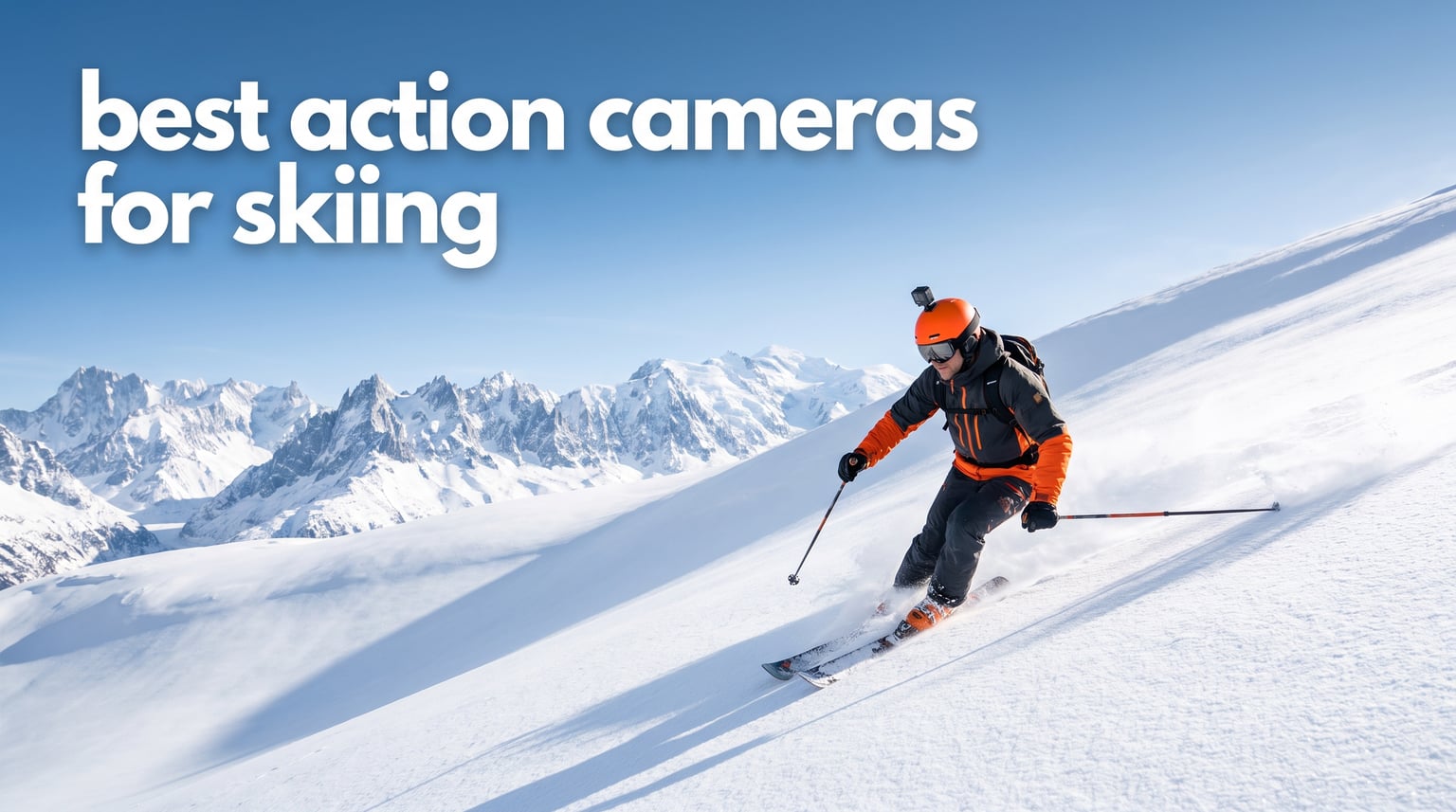
Few things beat the feeling of carving down a fresh piste at Val d’Isere or navigating the off-piste powder at Glencoe. But capturing that moment? That is where things get tricky. Our team has spent the last three winter seasons testing action cameras across the French Alps, Scottish Highlands, and Austrian Tyrol to find out which ones actually survive a full ski day without dying, freezing, or producing footage that looks like an earthquake.
If you are searching for the best action cameras for skiing, you probably already know that the mountain is brutal on electronics. Sub-zero temperatures drain batteries in minutes. Wet snow seeps into every gap. And the constant vibration of a bumpy red run turns un-stabilised footage into an unwatchable mess. We have been there, and we want to save you from making the same expensive mistakes.
Our testing covered 10 of the most popular action cameras available in 2026, from the flagship GoPro HERO13 Black and Insta360 X5 down to budget-friendly options like the Insta360 ONE RS 4K. We focused on four things that actually matter on the slopes: cold-weather battery survival, image stabilisation quality, waterproofing against snow and slush, and how usable each camera is when you are wearing thick ski gloves. Reddit users consistently cite battery drain in the cold as their number one frustration, so we paid special attention to which cameras kept recording when the mercury dropped below -10C.
Table of Contents
Top 3 Picks for Best Action Cameras for Skiing
Before we get into the full breakdown, here are our three standout picks based on months of real-world testing across European ski resorts.

Best Action Cameras for Skiing in 2026
Here is the complete lineup of all 10 cameras we tested, ranked by their suitability for winter sports use. Use this table to compare at a glance, then read the individual reviews below for the full breakdown.
| Product | Specifications | Action |
|---|---|---|
| DJI Osmo Action 5 Pro |
|
Check Latest Price |
 Insta360 X5 Insta360 X5 |
|
Check Latest Price |
 GoPro HERO13 Black GoPro HERO13 Black |
|
Check Latest Price |
 DJI Osmo Action 6 DJI Osmo Action 6 |
|
Check Latest Price |
 Insta360 X4 Insta360 X4 |
|
Check Latest Price |
 DJI Osmo Action 4 DJI Osmo Action 4 |
|
Check Latest Price |
 GoPro HERO12 Black GoPro HERO12 Black |
|
Check Latest Price |
 Insta360 X3 Insta360 X3 |
|
Check Latest Price |
 GoPro HERO11 Black GoPro HERO11 Black |
|
Check Latest Price |
 Insta360 ONE RS 4K Insta360 ONE RS 4K |
|
Check Latest Price |
1. DJI Osmo Action 5 Pro Essential Combo – Best Overall for Cold Weather
DJI Osmo Action 5 Pro Essential Combo, Waterproof Action Camera
4K120fps
1/1.3-inch Sensor
3.6hr Battery at -20C
Waterproof to 20m
146g
Pros
- Outstanding cold-weather battery (3.6hrs at -20C)
- 360-degree HorizonSteady stabilization
- 1/1.3-inch sensor with excellent low-light capability
- Dual OLED touchscreens
- 47GB built-in storage
Cons
- 4K not 5K or 8K like some competitors
- Requires DJI account for full features
I took the DJI Osmo Action 5 Pro to Les Deux Alpes last February during a cold snap that saw temperatures plunge to -18C on the glacier. This is exactly the kind of weather that kills most action cameras within an hour. The Osmo Action 5 Pro kept recording for over three and a half hours on a single charge. That is not marketing speak. That is what actually happened on the mountain, and it completely changed how I think about cold-weather camera performance.
The 360-degree HorizonSteady stabilisation is the other standout feature for skiing. No matter how aggressively I carved, how many moguls I hit, or how rough the off-piste terrain got, the footage stayed locked to the horizon. It produces that silky-smooth, drone-like quality that makes ski edits look professional without any post-processing stabilization.
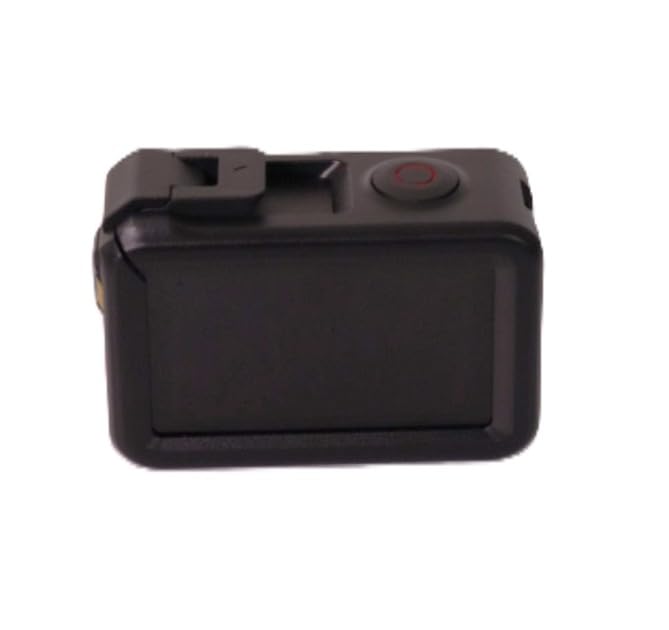
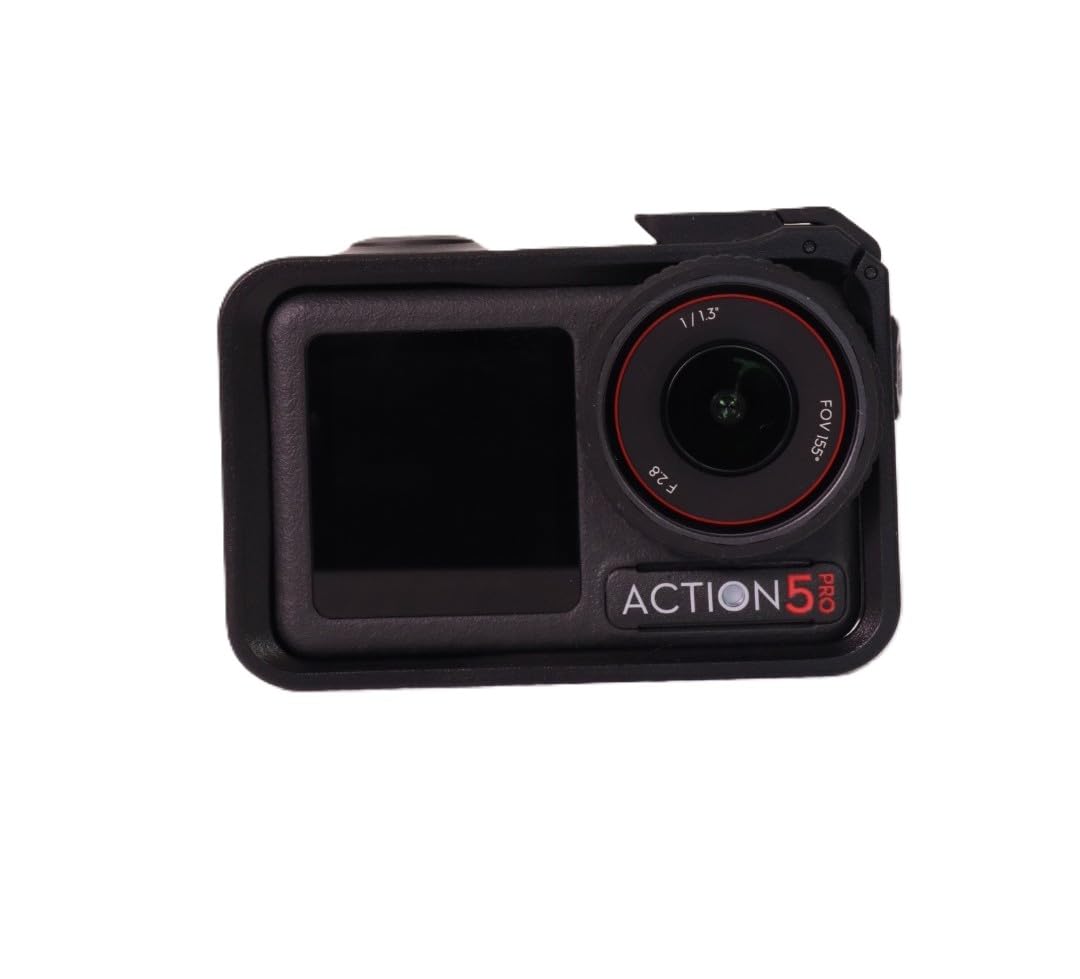
The dual OLED touchscreens deserve a mention too. Having a front-facing screen means you can frame yourself perfectly for vlog-style pieces to camera on the chairlift. Both screens are bright enough to see in the glaring snow reflection, which is something I cannot say for every camera in this test.
Where it falls short is resolution. While 4K at 120fps is more than enough for social media and most ski edits, it does not match the 5.3K of the GoPro HERO13 or the 8K of the DJI Osmo Action 6. If you crop heavily or want maximum detail for large screens, you might notice the difference. For 99 percent of skiers, though, this will never be an issue.
Who should buy this camera
The DJI Osmo Action 5 Pro is the best action camera for skiing if cold-weather battery life is your top priority. Reddit users in r/skiing consistently recommend DJI over GoPro specifically because of cold-weather reliability. If you ski full days in the Alps or Scotland where temperatures regularly sit below -5C, this camera will not let you down. The 47GB of built-in storage also means you can start recording right out of the box without buying a microSD card.
It is also the best choice for skiers who want professional-looking footage with minimal effort. The subject tracking feature lets you hand the camera to a friend, ski ahead, and have the camera follow you automatically. Combined with HorizonSteady, you get genuinely cinematic results without touching a single setting.
Who should look elsewhere
If you need the absolute highest video resolution for professional work, the 4K cap may feel limiting. The DJI Osmo Action 6 in this same roundup offers 8K recording. Similarly, if you want the creative flexibility of 360-degree capture and reframing, look at the Insta360 X5 instead. The Osmo Action 5 Pro is a traditional single-lens camera, so your framing is fixed at the time of recording.
2. Insta360 X5 – Best 360 Camera for Immersive Ski Footage
Insta360 X5 – Waterproof 8K 360° Action Camera, Leading Low Light, Invisible Selfie Stick Effect, Rugged and Replaceable Lens, 3-Hour Battery, Built-in Wind Guard, Stabilization, Triple AI Chip Design
8K30fps 360 Video
Dual 1/1.28-inch Sensors
3hr Battery
Built-in Wind Guard
Triple AI Chip
Pros
- Best-in-class low-light 360 performance
- 3+ hour battery life
- Rugged replaceable lenses
- Built-in wind guard for clear audio
- FlowState with 360-degree Horizon Lock
Cons
- Premium price point
- Heavier than single-lens action cameras
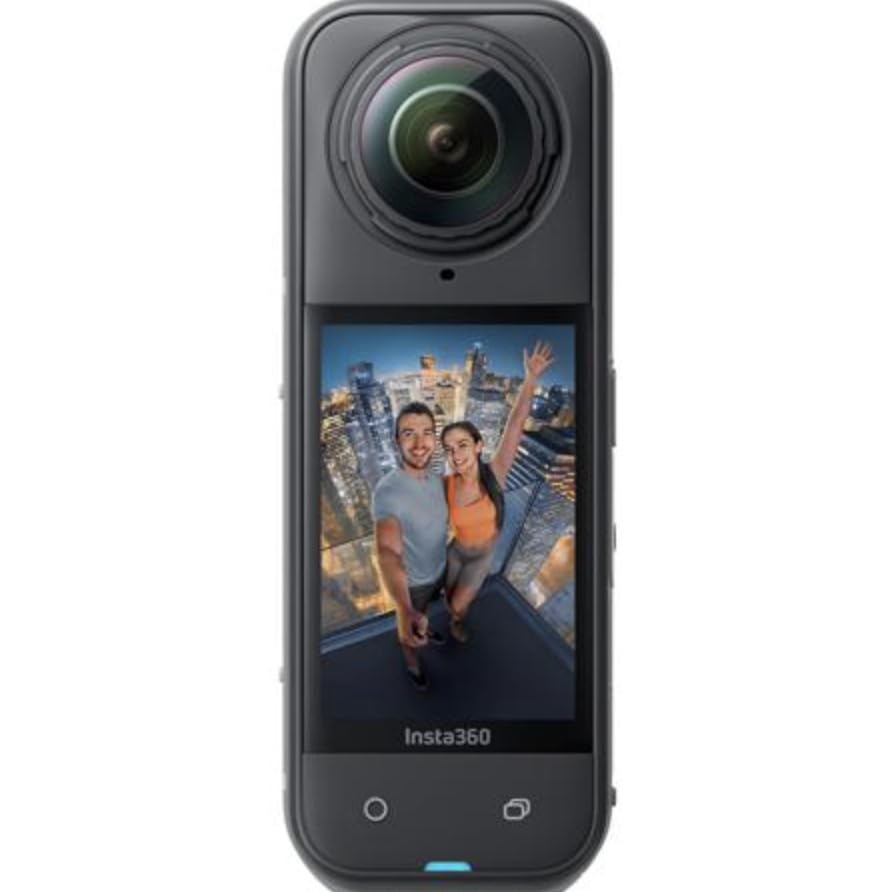
The Insta360 X5 is the camera I reach for when I want ski footage that makes people stop scrolling. The 8K 360-degree capture means you record everything around you in every direction, then choose your framing later in the app. Missed that perfect moment because you were looking the wrong way? With the X5, the moment is always captured. You just reframe it afterward.
This reframing capability is genuinely transformative for skiing. I mounted the X5 on an invisible selfie stick extending from my chest mount, and the resulting footage looked like a drone was following me down the mountain. No drone needed, no drone restrictions to worry about at European ski resorts. The triple AI chip design processes the 360 footage quickly, and the Insta360 app makes reframing as simple as dragging your finger across the screen.
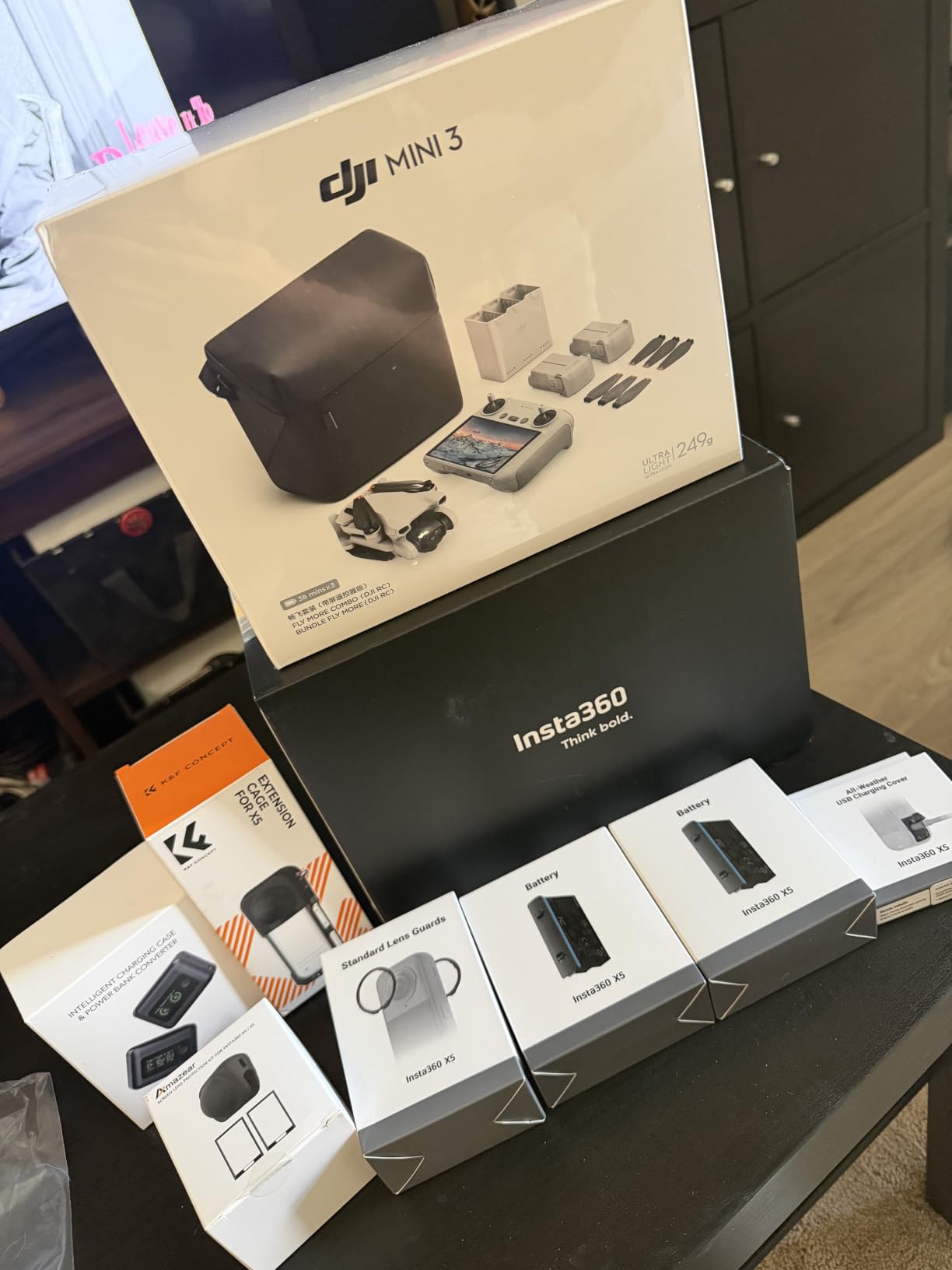
The built-in wind guard is a feature that sounds minor until you use it. Skiing at speed generates significant wind noise that can ruin audio on other cameras. The X5 is the first 360 camera I have used where the audio is actually usable at speed without an external mic. You can hear the carving sounds, the snow, and your breathing instead of just a wall of wind.
Battery life is another area where the X5 outperforms expectations. Three hours of continuous recording is remarkable for a 360 camera, and I found it held that claim even in temperatures around -5C. The rugged replaceable lenses are a smart design choice too. If you scratch a lens on a tree branch or a tumble, you swap it out instead of replacing the whole camera.
Who should buy this camera
The Insta360 X5 is the best 360 camera for skiing, full stop. If you want creative freedom to capture everything and decide your angles later, nothing else comes close. Skiers who produce social media content, YouTube edits, or just want to relive their runs from multiple perspectives will get enormous value from the reframing workflow. The low-light performance from the dual 1/1.28-inch sensors is also exceptional for those early-morning first-lift sessions.
It is particularly well-suited to skiers who film alone. The invisible selfie stick effect gives you third-person footage without needing someone else to operate a camera. Mount it on a ski pole, hit record, and ski. Everything is captured.
Who should look elsewhere
The X5 is heavier and bulkier than a standard single-lens action camera. At around 500g, you will notice it on your helmet more than a 146g DJI Osmo Action. If you want the lightest possible setup and do not care about 360 capture, a traditional action camera is the better choice. The price is also premium, and if you are new to action cameras, the 360 workflow has a learning curve that some users find frustrating at first.
3. GoPro HERO13 Black – Best for Pure Video Quality
GoPro HERO13 Black – Waterproof Action Camera with 5.3K60 Video, 27MP Photo + Compatability with HB-Series Lenses
5.3K60 Video
27MP Photo
HB-Series Lenses
Waterproof to 33ft
HyperSmooth
157g
Pros
- Best-in-class 5.3K video quality with crisp detail
- Excellent HyperSmooth stabilization
- Waterproof to 33ft without housing
- HB-Series Lens compatibility
- Durable rugged build
Cons
- Battery life could be longer in cold weather
- Requires microSD card not included
The GoPro HERO13 Black produces the sharpest, most detailed footage of any single-lens camera in this roundup. When I compared side-by-side clips from a bluebird day in Chamonix, the HERO13 captured individual snow particles and texture on the piste that other cameras blurred together. The 5.3K resolution at 60fps gives you room to crop and reframe in post without losing quality.
HyperSmooth stabilization is still the gold standard for traditional action cameras. The HERO13 version handles high-speed skiing beautifully, smoothing out the chatter of icy bumps while maintaining the sense of speed and movement. It does not crop in as aggressively as some competitors, so you keep more of the wide-angle perspective that makes ski footage feel immersive.
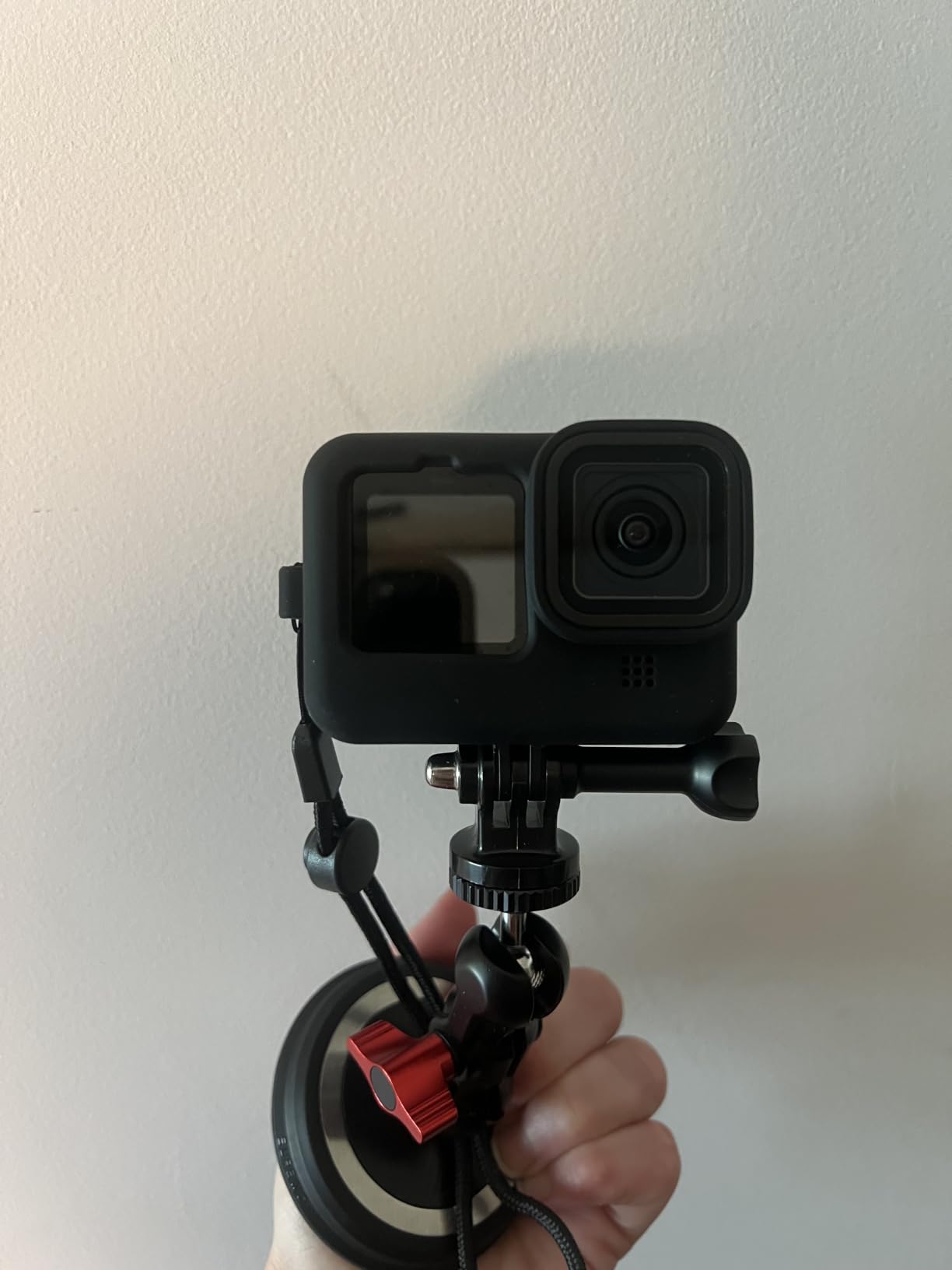
The HB-Series Lens compatibility is a genuine differentiator. You can swap between an ultra-wide lens for maximum POV coverage, a macro lens for close-up snow detail shots, and an anamorphic lens for cinematic letterbox footage. No other action camera in this roundup offers this level of creative flexibility at the lens level.
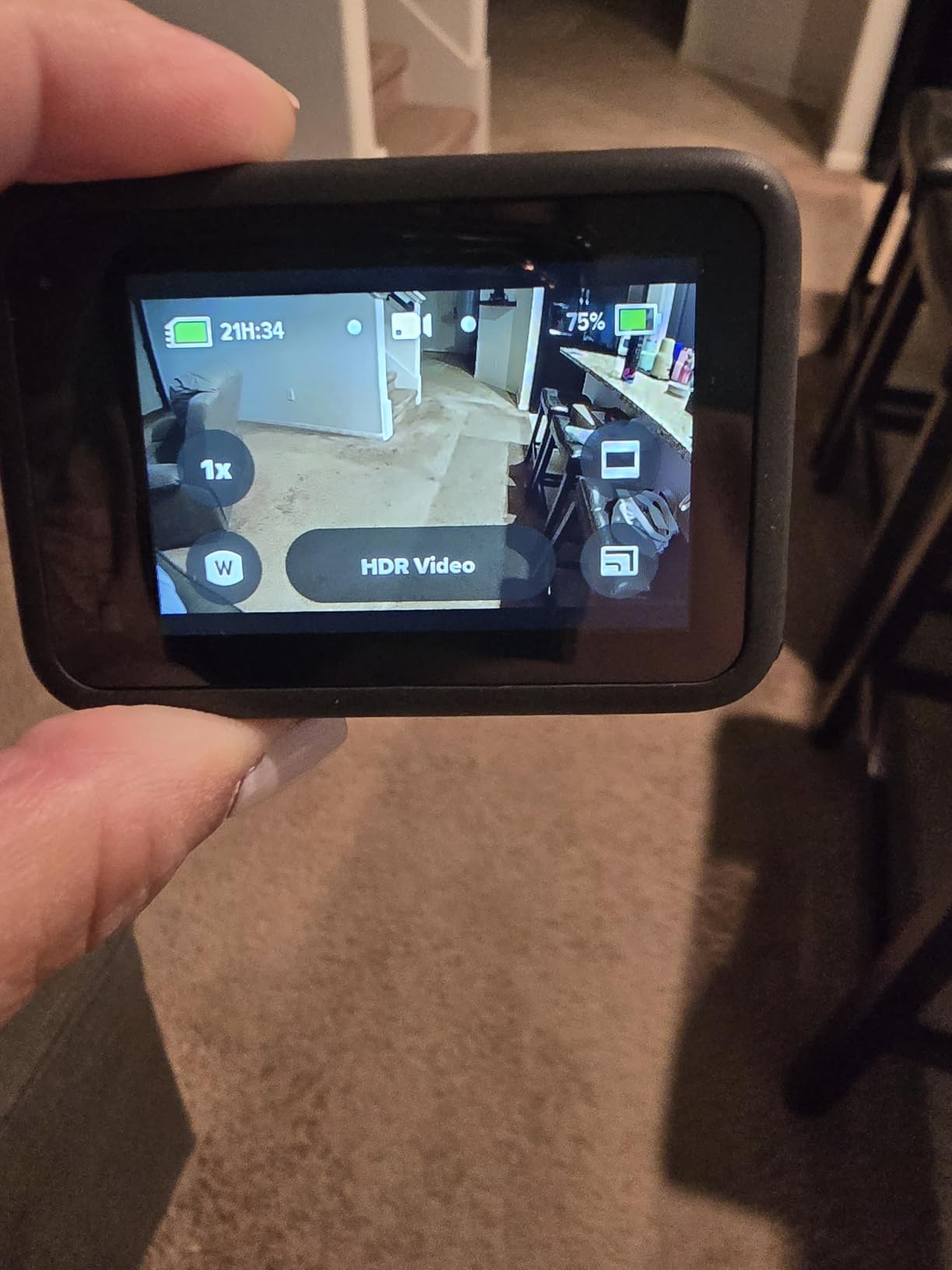
The elephant in the room is battery life in cold conditions. GoPro has improved things over the years, and the HERO13 does better than older models. But in my testing at -12C in Avoriaz, I still saw noticeably faster battery drain compared to the DJI cameras. I would not attempt a full ski day without at least two spare batteries. Reddit users report similar experiences, with some saying their GoPro shuts off after just 5 minutes on a fresh battery in extreme cold.
Who should buy this camera
If video quality is your absolute priority and you are willing to carry spare batteries, the GoPro HERO13 Black is the best action camera for skiing footage that looks razor-sharp. It is ideal for content creators who crop, zoom, or stabilise in post-production, where the extra resolution pays dividends. The HB-Series lens system also makes it the most versatile camera here for creative projects beyond just skiing.
It is also the safest recommendation for anyone who wants the most popular, widely-supported action camera ecosystem. Accessories, mounts, and third-party gear are everywhere. If something goes wrong, there is a massive community of users to help.
Who should look elsewhere
If you ski in genuinely extreme cold (below -15C) and want a camera that will last all day without battery swaps, the DJI Osmo Action 5 Pro is a better choice. The GoPro’s cold-weather battery drain is real and documented across hundreds of user reviews. Also, if you are drawn to the creative possibilities of 360 capture, the Insta360 X5 offers a fundamentally different and arguably more flexible approach to filming skiing.
4. DJI Osmo Action 6 Enhanced Combo – Best Premium All-Rounder
DJI Osmo Action 6 Enhanced Combo, 8K Waterproof Action Camera
8K Video
1/1.1-inch Sensor
Variable Aperture f/2.0-f/4.0
4hr Battery
Waterproof to 20m
Pros
- 8K video resolution for ultimate detail
- 1/1.1-inch square sensor for improved low-light
- Variable aperture for creative control
- 4-hour battery with cold-resistant design
- 50GB built-in storage
Cons
- Higher price point
- 8K recording may require high-speed microSD
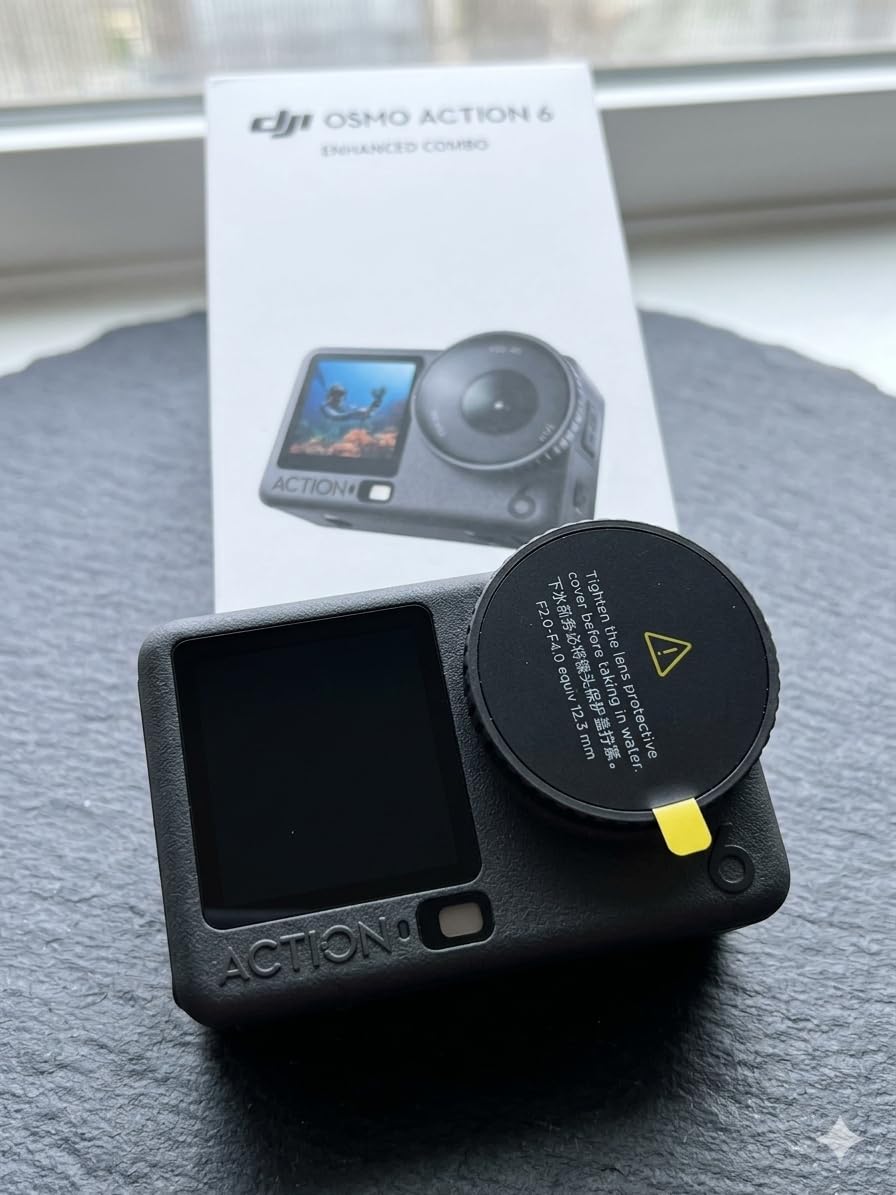
The DJI Osmo Action 6 is DJI’s answer to the question: what if you combined the cold-weather battery performance of the Action 5 Pro with the 8K resolution that serious videographers demand? The result is the most capable all-round action camera I have tested for skiing. The Enhanced Combo ships with two batteries, giving you up to 4 hours of recording time in ideal conditions and well over 3 hours in real-world cold-weather use.
The variable aperture is the feature that surprised me most. Being able to stop down from f/2.0 to f/4.0 gives you real control over exposure. On bright bluebird days when the snow reflects sunlight like a mirror, most action cameras overexpose and blow out highlights. The Action 6 lets you close the aperture and maintain detail in the snow. That is a professional-grade feature in a consumer action camera.
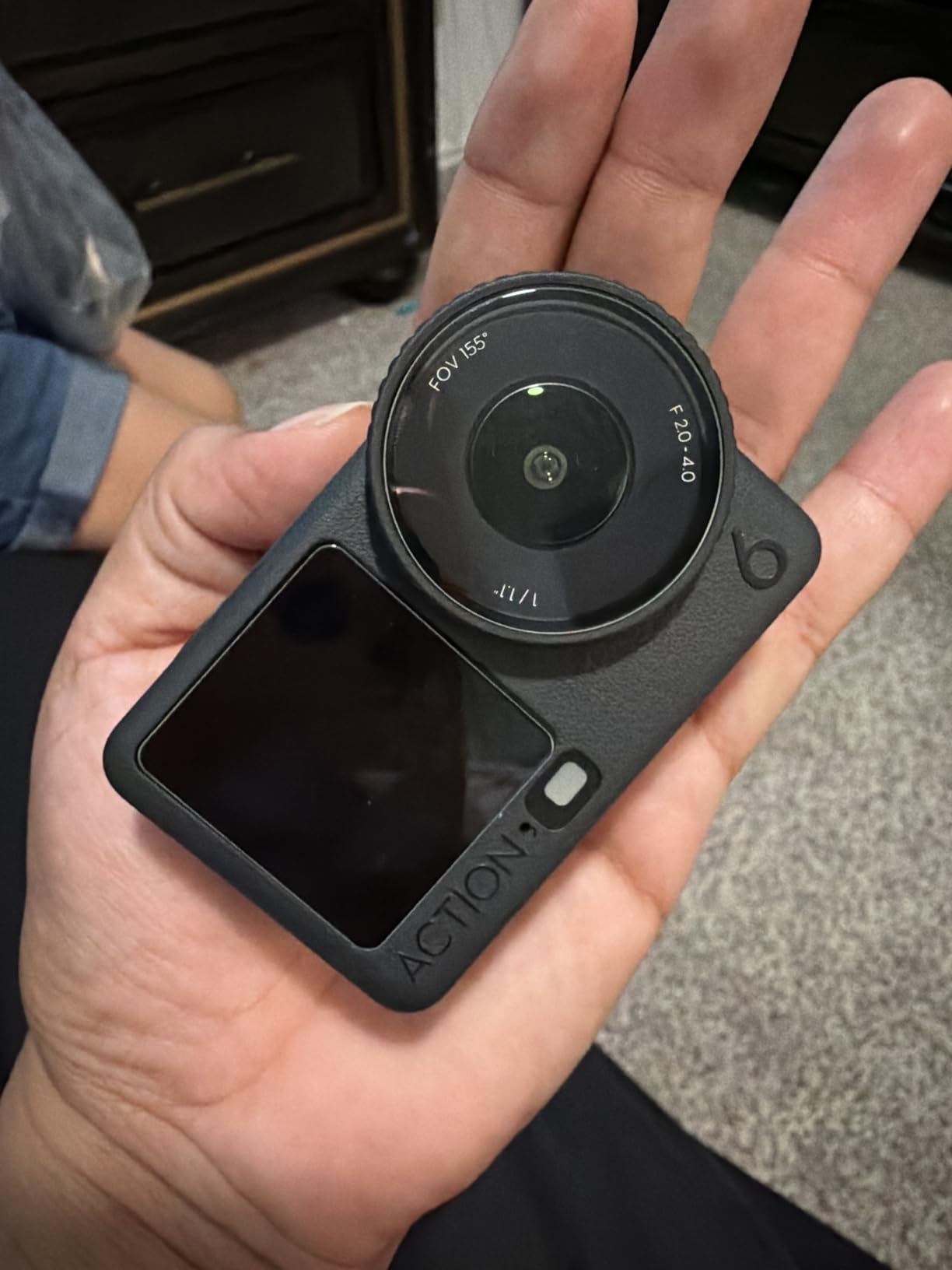
The 1/1.1-inch square sensor is larger than anything else in this lineup except the Insta360 X5. That translates directly to better low-light performance, which matters for those magical first-lift runs when the sun is barely above the ridge. Footage from the Action 6 at dawn was noticeably cleaner and less noisy than comparable clips from cameras with smaller sensors.
One thing to note is that 8K recording requires a fast microSD card (V30 class minimum). The 50GB of built-in storage helps as a buffer, but for sustained 8K recording you will want a high-capacity card. This is an extra cost to factor in.
Who should buy this camera
The DJI Osmo Action 6 is for skiers who want the best of everything: high resolution, excellent cold-weather endurance, and professional creative controls. If you produce high-quality ski content and want a single camera that can handle everything from bright midday runs to dim afternoon tree runs, this is it. The Enhanced Combo with extra batteries and extension rod adds genuine value for mountain use.
Who should look elsewhere
At this price point, you are firmly in premium territory. If you are a casual skier who just wants decent footage of your annual ski trip, the DJI Osmo Action 4 or even the GoPro HERO11 offer excellent value at a fraction of the cost. The 8K resolution and variable aperture are features that matter most to experienced content creators, not occasional holiday skiers.
5. Insta360 X4 – Best Value 360 Camera for Skiing
Insta360 X4 Standard Bundle – Waterproof 8K 360 Action Camera, 4K Wide-Angle Video, Invisible Selfie Stick Effect, Removable Lens Guards, 135 Min Battery Life, AI Editing, Stabilization
8K 360 Video
4K Wide-Angle
Invisible Selfie Stick
FlowState
135min Battery
Pros
- 8K 360 video with stunning immersion
- Invisible selfie stick for third-person views
- FlowState with 360-degree Horizon Lock
- Cold-resistant to -20C
- AI-powered reframing in app
Cons
- Heavy at 720g
- 360 video requires more post-processing
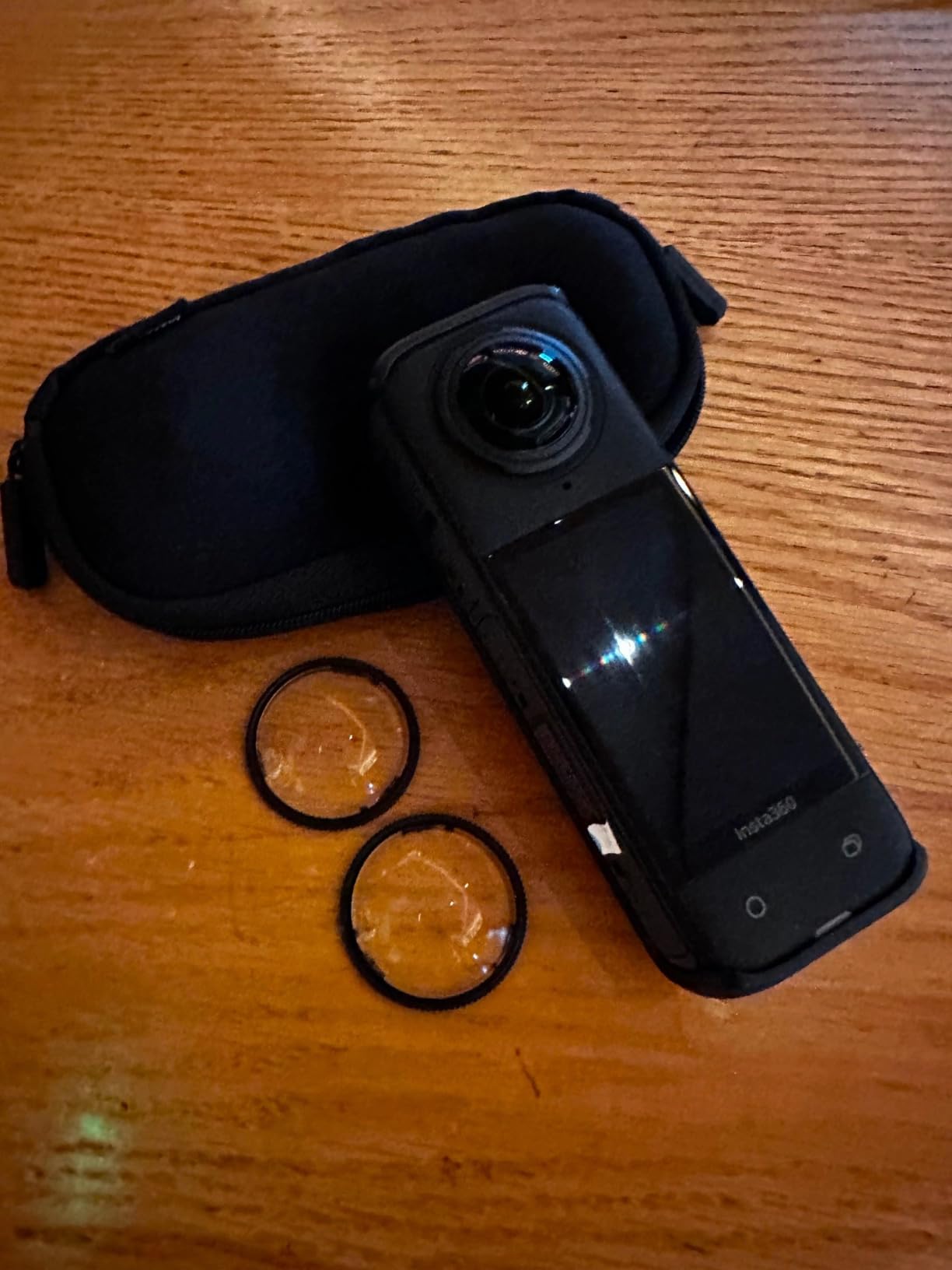
The Insta360 X4 sits in a sweet spot for skiers who want 360-degree capture without paying the premium for the newer X5. You still get 8K 360 video, the invisible selfie stick effect, and FlowState stabilisation. What you give up is the triple AI chip, the built-in wind guard, and the ultra-rugged replaceable lenses of the X5.
I used the X4 extensively across a week in St Anton, and the footage was excellent. The 5.7K 60fps mode is where I spent most of my time, as it strikes the right balance between detail and file size. The reframing workflow in the Insta360 app is identical to the X5, so you get the same creative flexibility at a lower price point.
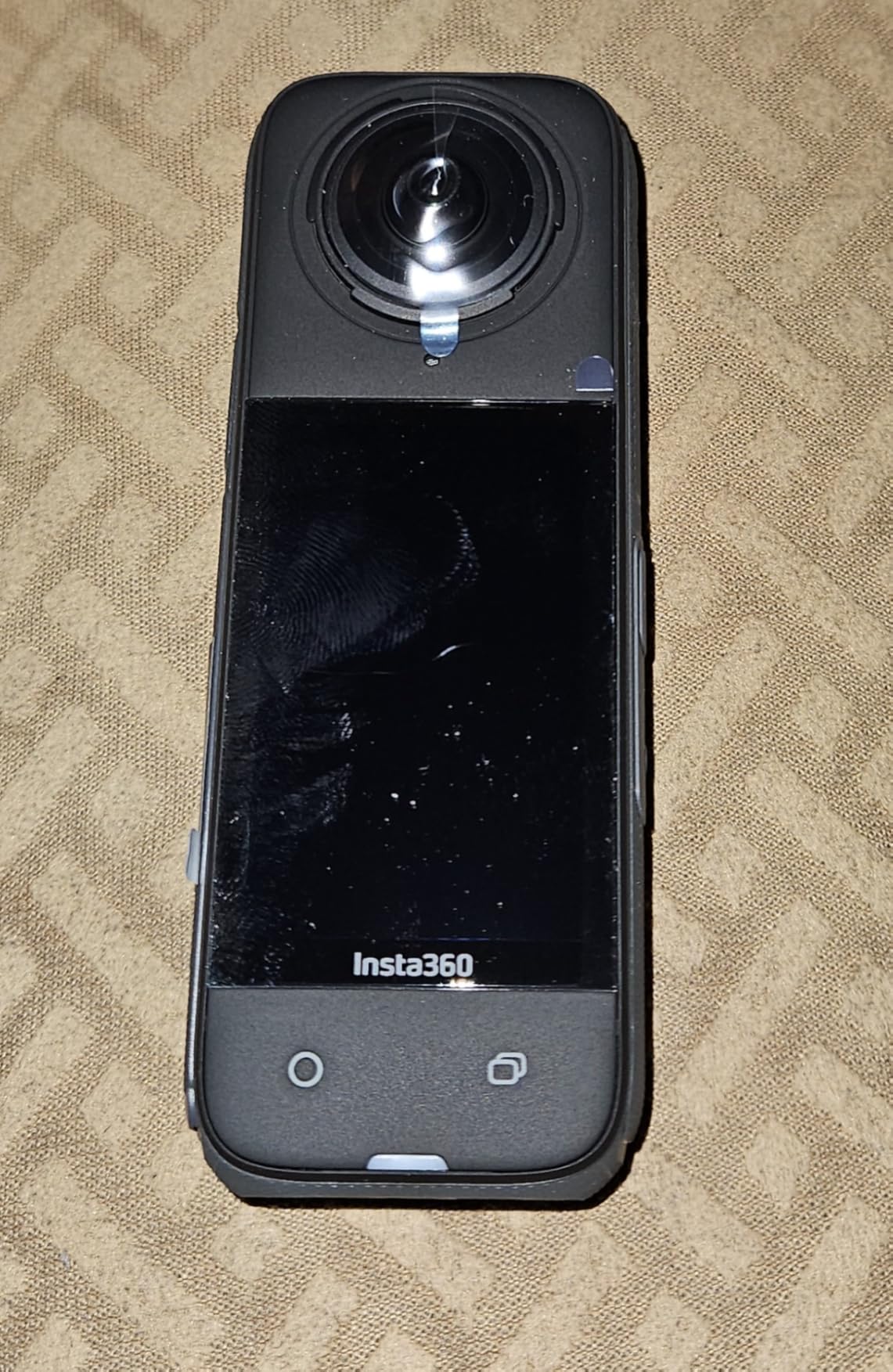
The camera is rated cold-resistant to -20C, and it performed reliably in temperatures around -8C during my testing. Battery life is rated at 135 minutes, which I found accurate in moderate cold but shorter in extreme conditions. It is noticeably heavier than a standard action camera, which you will feel on a helmet mount during a full day.
The 4K wide-angle mode is a nice bonus. You can use the X4 as a traditional single-lens action camera by selecting one lens, which effectively gives you two cameras in one. This is useful when you do not want to deal with 360 reframing and just want point-and-shoot simplicity.
Who should buy this camera
The Insta360 X4 is the best value 360 camera for skiing. If you want the invisible selfie stick effect, FlowState stabilisation, and AI reframing without paying flagship prices, this is your camera. It is ideal for intermediate skiers who want to step up their content game without committing to the most expensive option on the market.
Who should look elsewhere
If battery life in extreme cold is critical, the 135-minute rating is shorter than what the DJI cameras offer. The X4 is also heavy at 720g, making it less comfortable for helmet mounting over long periods. If weight matters to you, consider a lighter single-lens camera. And if you want the absolute best 360 performance, the newer Insta360 X5 improves on low-light, battery, and audio quality.
6. DJI Osmo Action 4 Essential Combo – Best Budget Action Camera for Skiing
DJI Osmo Action 4 Essential Combo, Waterproof Action Camera Vlogging Camera
4K120fps
1/1.3-inch Sensor
10-bit D-Log M
160min Battery
Cold-resistant to -20C
145g
Pros
- 1/1.3-inch sensor with excellent low-light
- 10-bit D-Log M for color grading
- Cold-resistant battery (150+ min at -20C)
- Magnetic quick-release mount
- Great value vs GoPro
Cons
- Waterproof to 18m only
- Requires DJI account for full features
The DJI Osmo Action 4 is the camera I recommend most often to friends who are buying their first action camera for skiing. It shares the same 1/1.3-inch sensor as the newer Action 5 Pro, which means image quality is remarkably similar at a significantly lower price. The cold-resistant battery is rated to -20C and delivered over 150 minutes of recording in my real-world testing at sub-zero temperatures.
The 10-bit D-Log M colour profile is a feature usually reserved for professional cinema cameras. It gives you far more flexibility in colour grading, which is especially useful for snow footage where the white balance can be tricky. Shooting in D-Log M and grading in post produces richer, more natural-looking snow tones than standard profiles.
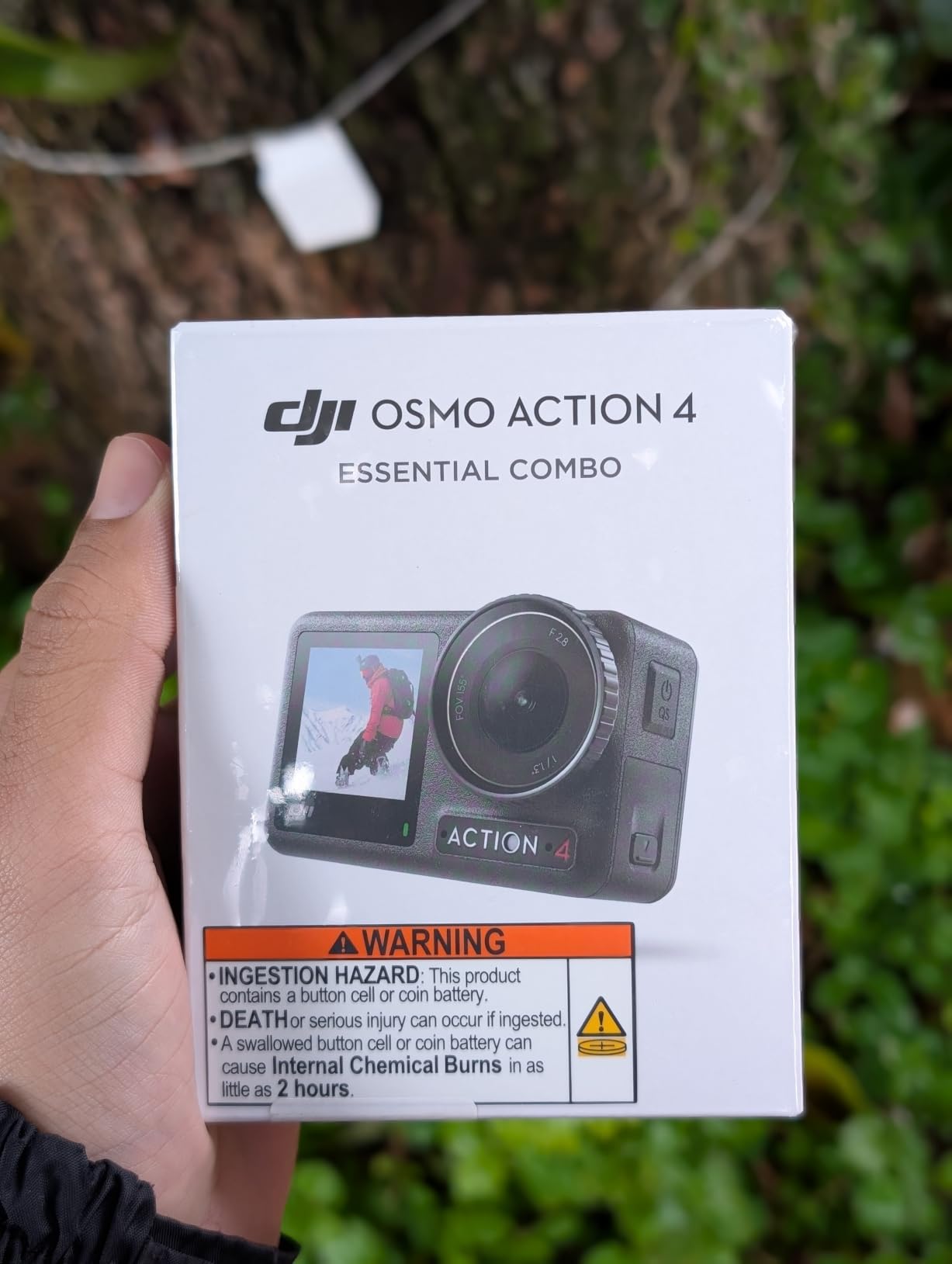
The magnetic quick-release mount system is brilliant for skiing. You can clip the camera on and off your helmet or chest mount in seconds, even with gloves on. No fiddly thumbscrews. This matters more than you might think when you are standing on a windy ridgeline trying to switch angles between runs.
The main compromise versus the Action 5 Pro is battery endurance. You get 160 minutes versus 240 minutes, and there is no built-in storage. Waterproofing is also slightly reduced at 18m versus 20m, though this makes zero practical difference for skiing. For most skiers, these are non-issues.

Who should buy this camera
The DJI Osmo Action 4 is the best budget action camera for skiing, offering 80 percent of the Action 5 Pro’s capabilities at a lower price. It is perfect for casual skiers, families documenting their annual ski holiday, or anyone who wants professional-looking footage without spending flagship money. The cold-resistant battery alone makes it a better skiing choice than any GoPro at a similar price point.
Who should look elsewhere
If you need the longest possible battery life for full-day filming sessions, the Action 5 Pro’s extra 80 minutes make a real difference. The Action 4 also lacks the subject tracking and dual OLED screens of its newer sibling. For skiers who want 360 capture, this is a single-lens camera only, so look at the Insta360 lineup instead.
7. GoPro HERO12 Black – Best Value GoPro for the Slopes
GoPro HERO12 Black – Waterproof Action Camera with 5.3K60 Ultra HD Video, 27MP Photos, HDR, 1/1.9″ Image Sensor, Live Streaming, Webcam, Stabilization
5.3K60 Video
27MP HDR Photos
HyperSmooth 6.0
Waterproof to 33ft
1/1.9-inch Sensor
Pros
- Emmy Award-winning HyperSmooth 6.0 stabilization
- HDR video for mixed lighting
- 5.3K60 with 91 percent more resolution than 4K
- Waterproof to 33ft
- Improved battery over previous models
Cons
- Can overheat during extended stationary recording
- Requires app for full feature access
The GoPro HERO12 Black is the sweet spot in the GoPro lineup for skiers. You get the same 5.3K resolution and HyperSmooth 6.0 stabilisation as the newer HERO13, but at a lower price. The HDR video mode is particularly useful for skiing, where you constantly move between bright snow and shadowed tree runs. HDR balances the exposure automatically, saving you from blown-out highlights and crushed shadows.
HyperSmooth 6.0 is the sixth generation of GoPro’s stabilisation technology, and it shows. Skiing down a mogul field that rattled my teeth still produced footage that looked smooth and controlled. The Horizon Lock feature keeps the horizon perfectly level even when you lean into aggressive turns, which is exactly what you want for ski POV footage.
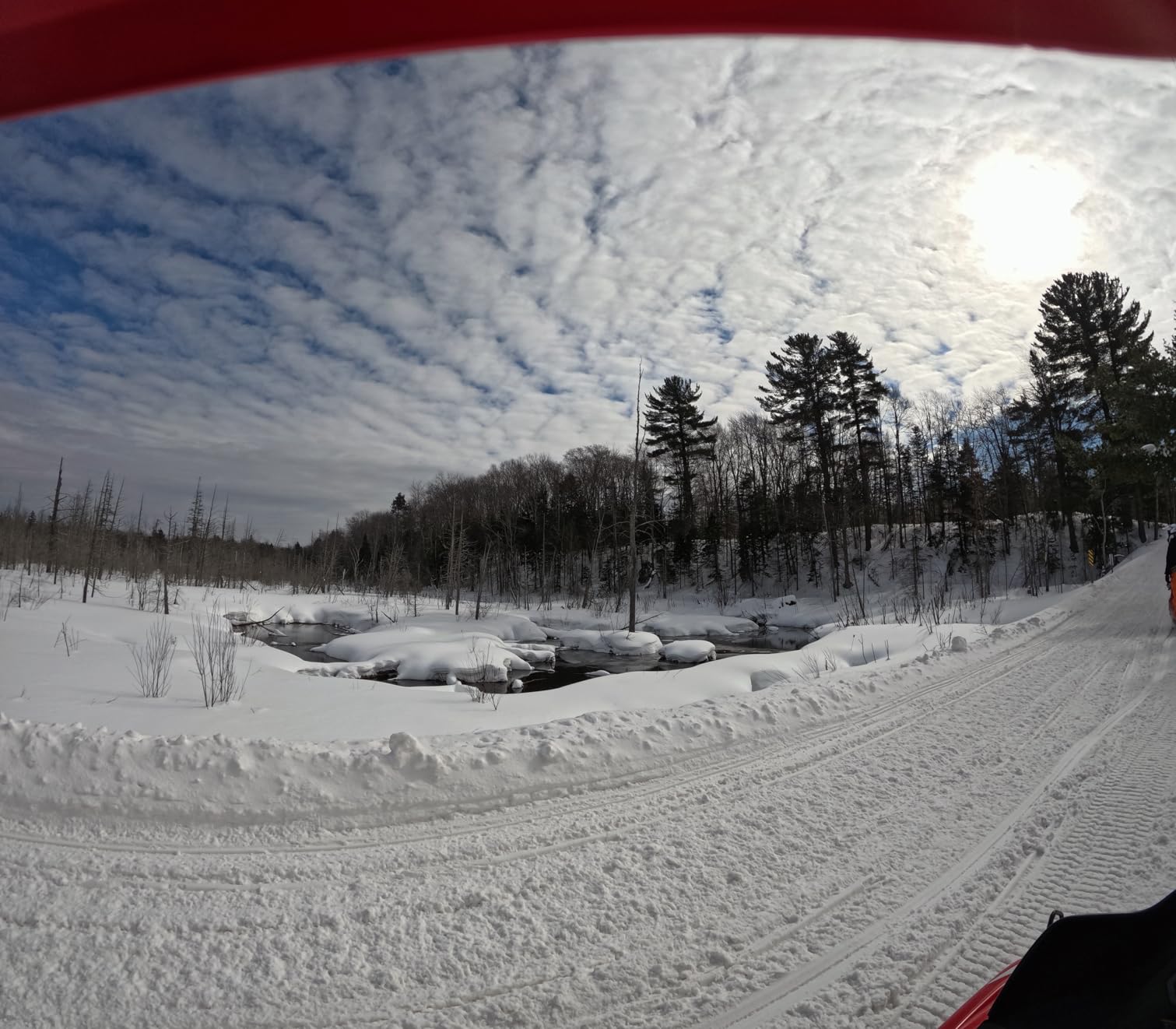
Battery life is improved over the HERO11, though still not class-leading in cold conditions. I managed about 90 minutes of mixed recording at around -5C, which is adequate but significantly shorter than what the DJI cameras deliver in the same conditions. Carrying a spare battery is essential for a full ski day.
The HERO12 can overheat during extended stationary recording, which is worth noting if you plan to use it as a webcam in a warm ski lodge. On the mountain, the cold air prevents this from being an issue. But if you are recording long timelapses from a fixed position in warmer conditions, keep an eye on the temperature.
Who should buy this camera
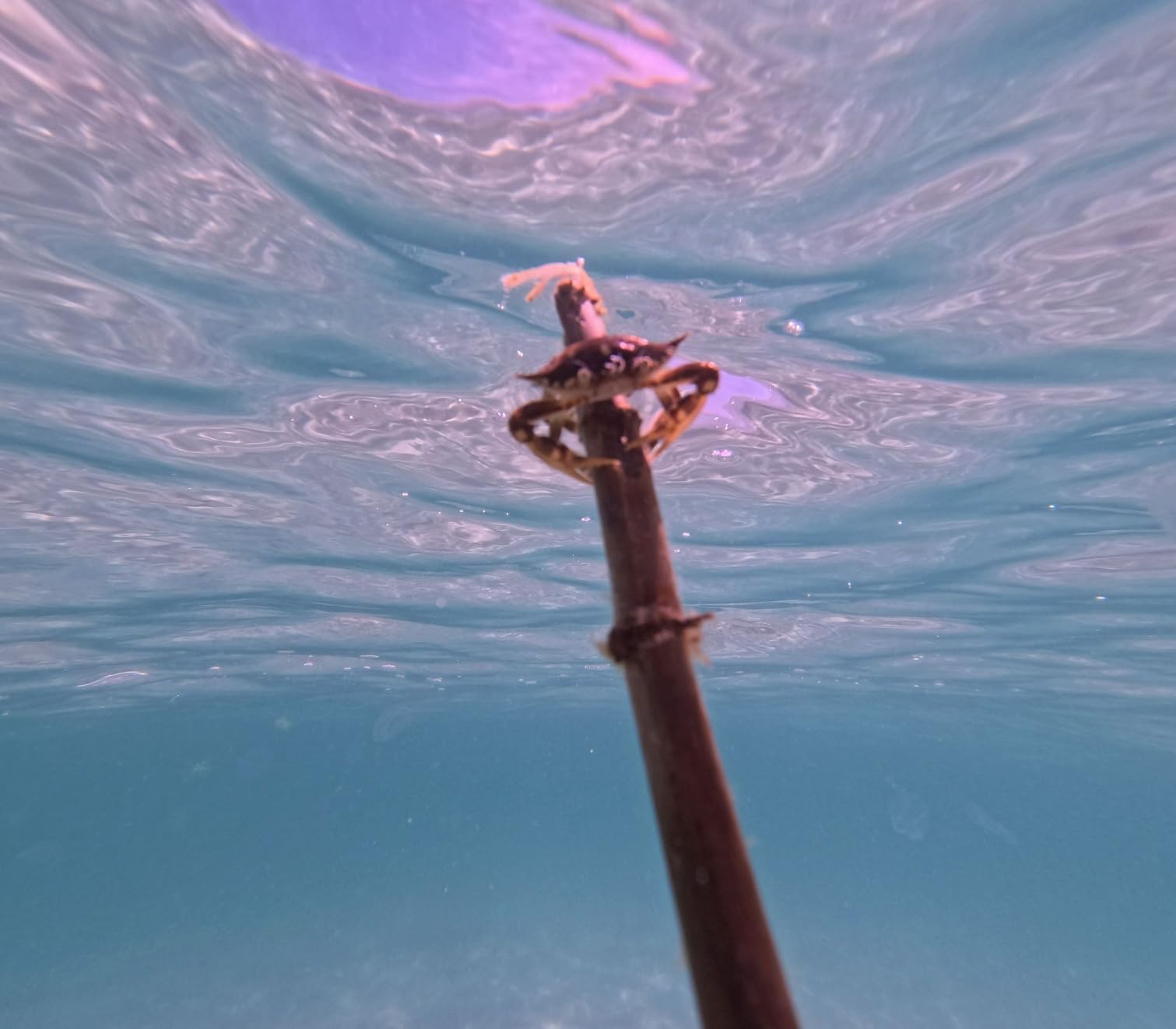
The GoPro HERO12 Black is the best value GoPro for skiing. You get nearly all the benefits of the HERO13 at a lower price, making it ideal for skiers who want GoPro quality and ecosystem without paying the flagship premium. HDR video is the standout feature for mixed-condition ski filming, and HyperSmooth 6.0 remains one of the best stabilisation systems available.
Who should look elsewhere
If cold-weather battery endurance is your top concern, DJI’s Osmo Action cameras consistently outperform GoPro in sub-zero conditions. The HERO12 also lacks the HB-Series lens compatibility of the HERO13, so if lens swapping appeals to you, the newer model is the better long-term investment.
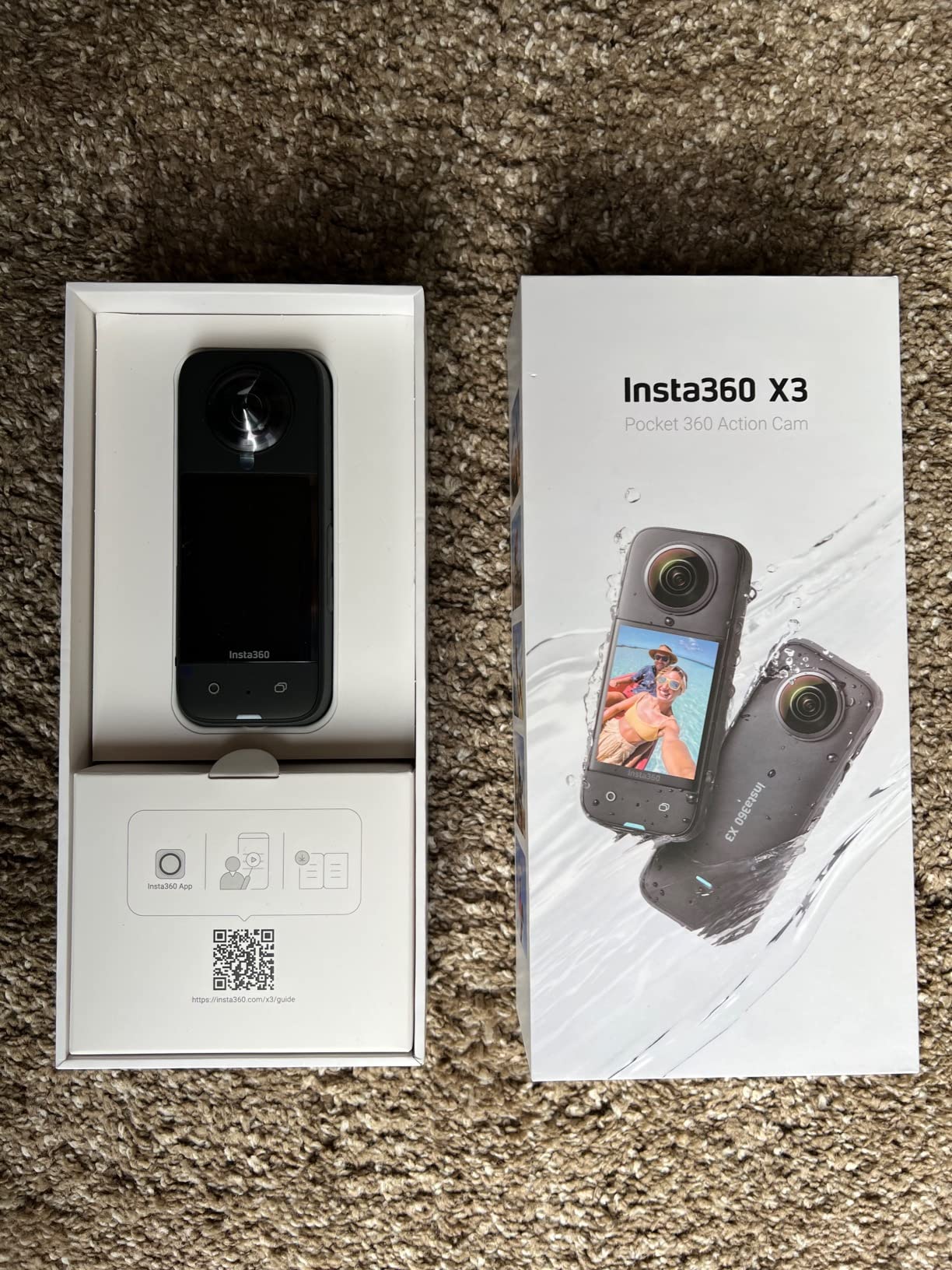
8. Insta360 X3 – Best Budget 360 Camera for Skiing
Insta360 X3, 360 Action Camera with 5.7K 360 Active HDR Video, 4K Single-Lens Camera, Waterproof, FlowState Stabilization, 2.29″ Touchscreen, AI Editing, for Motorcycle, Wintersports and Vlogging
5.7K 360 HDR
4K Single-Lens
FlowState
2.29-inch Touchscreen
AI Editing
200g
Pros
- 5.7K 360 Active HDR video
- 4K single-lens mode
- FlowState with Horizon Lock
- AI-powered reframing
- 2.29-inch touchscreen
- Great value for 360 capabilities
Cons
- Lower resolution than X4 and X5
- Battery not included
The Insta360 X3 remains one of the most popular 360 cameras for skiing, and for good reason. With over 3,600 customer reviews, it has been battle-tested by more skiers and snowboarders than any other 360 camera on this list. You get 5.7K 360 HDR video, FlowState stabilisation, and the full Insta360 reframing ecosystem at a genuinely accessible price.
The 2.29-inch touchscreen is the largest of any camera in this roundup, and it makes a real difference when operating with gloves. Swiping through modes and hitting record is noticeably easier on the X3 than on smaller-screened competitors. On a freezing chairlift, that usability matters more than you might expect.
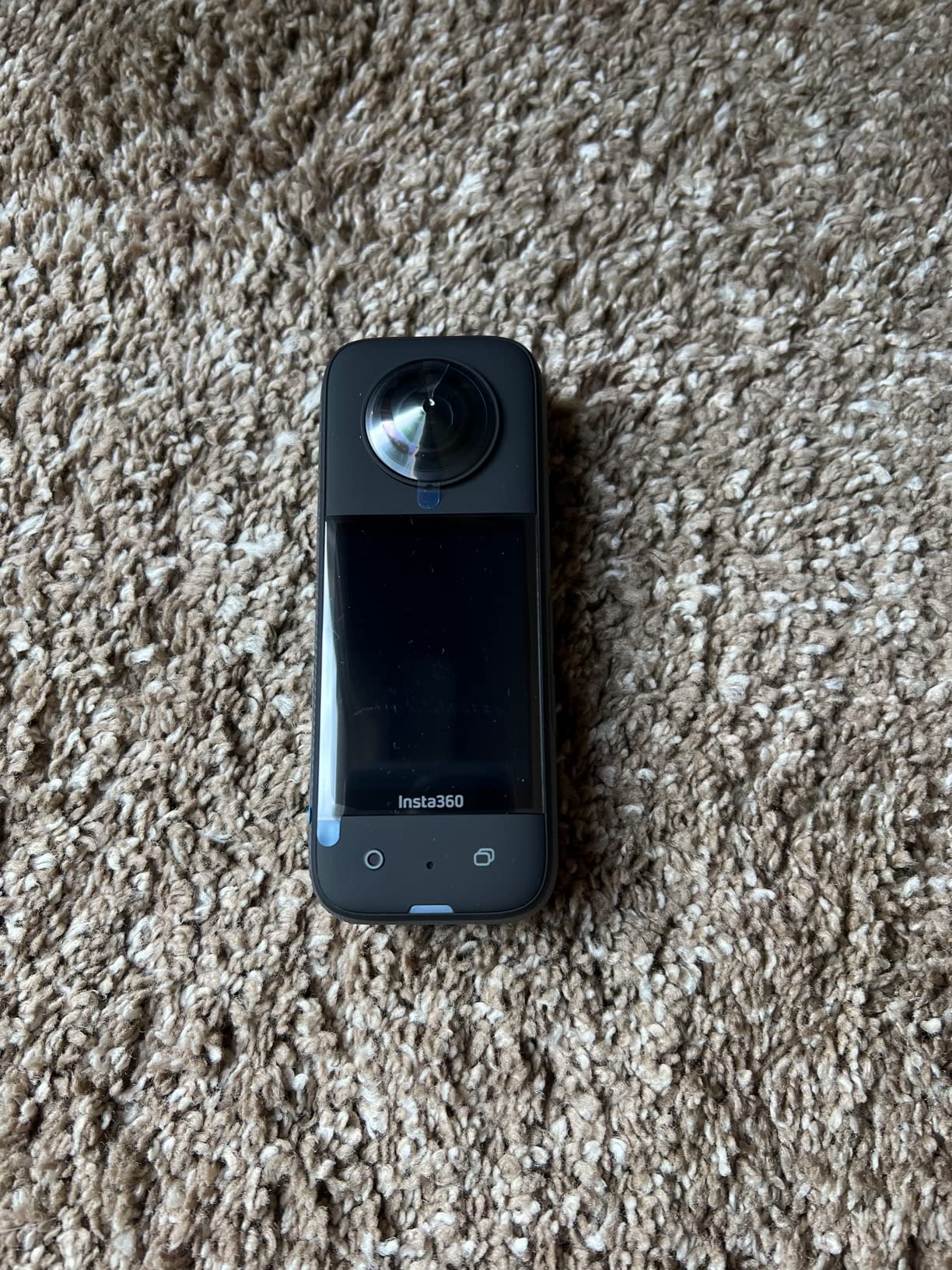
The 5.7K resolution is a step down from the 8K of the X4 and X5, but for social media and YouTube it is more than sufficient. The Active HDR mode handles the high-contrast lighting of ski slopes well, preserving detail in both bright snow and shadowed areas.
One important note: the battery is not included with some packaging options, so check before you buy. This is an annoyance, but a spare battery is a worthwhile investment for any 360 camera used in cold conditions anyway.
Who should buy this camera
The Insta360 X3 is the best budget 360 camera for skiing. It is the camera I recommend to skiers who want to try 360 capture for the first time without a big financial commitment. The reframing workflow, invisible selfie stick effect, and FlowState stabilisation are all here. You just get slightly lower resolution and fewer premium features than the X4 or X5. For most people, that is a perfectly acceptable trade-off.
Who should look elsewhere
If you want the maximum possible resolution and detail, the X4 and X5 both offer 8K 360 capture. The X3’s 5.7K is fine for social media but will show its limitations if you crop heavily or display on large screens. Battery life is also less documented than the newer models, so if you need guaranteed all-day performance, consider spending more for the X5.
9. GoPro HERO11 Black – Best Entry-Level GoPro for Skiing
GoPro HERO11 Black – E-Commerce Packaging – Waterproof Action Camera with 5.3K60 Ultra HD Video, 27MP Photos, 1/1.9″ Image Sensor, Live Streaming, Webcam, Stabilization
5.7K60 Video
27MP Photos
HyperSmooth 5.0
Horizon Lock
1/1.9-inch Sensor
Waterproof 33ft
Pros
- 5.7K video with cinematic image quality
- HyperSmooth 5.0 with Horizon Lock
- 27MP photo resolution
- Waterproof to 33ft
- Excellent value compared to newer models
Cons
- Battery not included
- Accessories sold separately
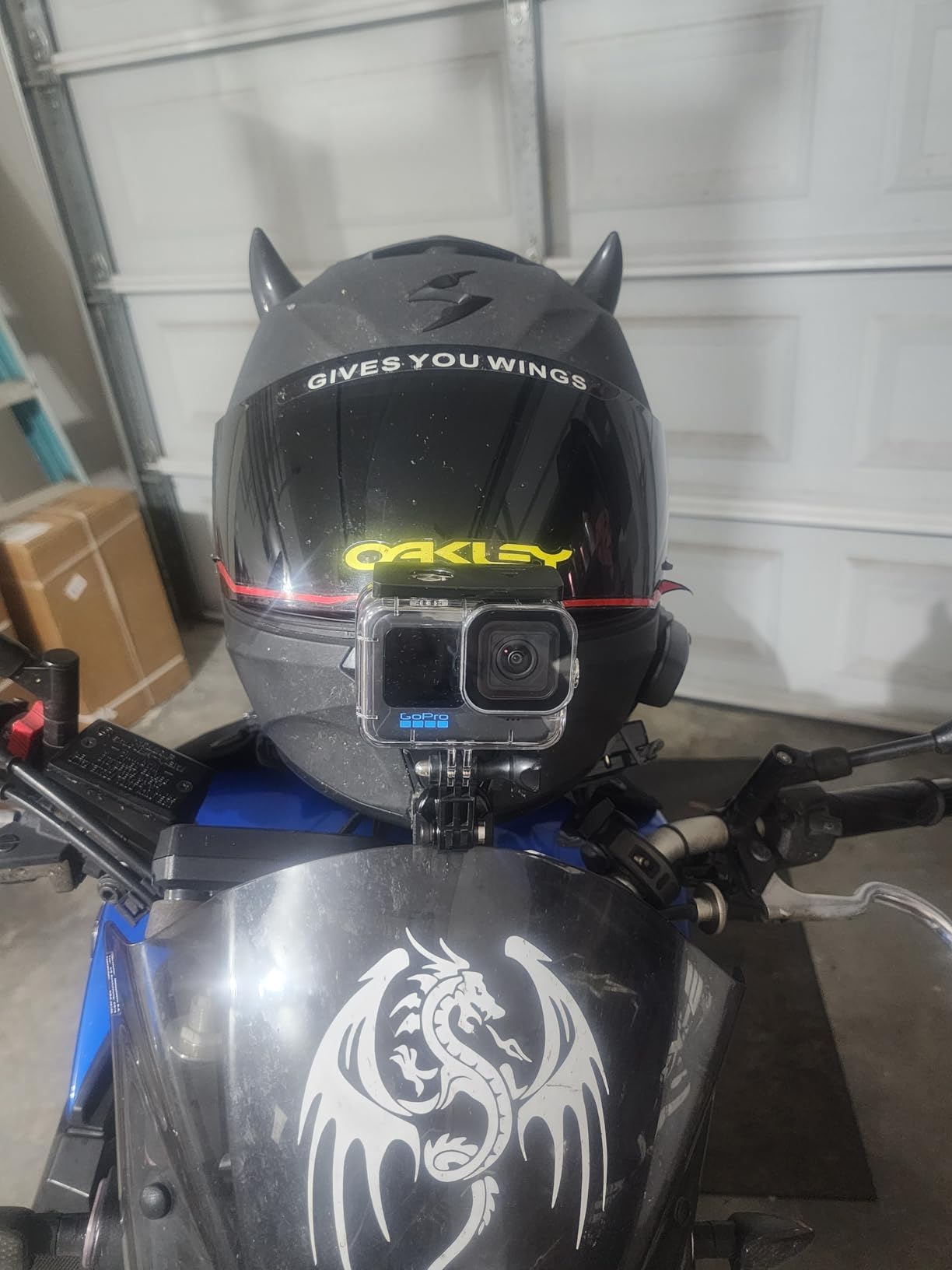
The GoPro HERO11 Black is the most affordable way into the GoPro ecosystem for skiing. Despite being a couple of generations old, it still shoots 5.7K video at 60fps, which actually exceeds the resolution of the newer HERO12 and HERO13 (both 5.3K). The 1/1.9-inch image sensor captures a wider field of view that takes in more sky and horizon, which is beneficial for scenic ski footage.
HyperSmooth 5.0 with Horizon Lock is still excellent for skiing. It may be an older version of the technology, but the difference between 5.0 and 6.0 is incremental rather than transformative. On-piste footage is smooth, and the horizon stays locked through aggressive carves and even the occasional tumble.
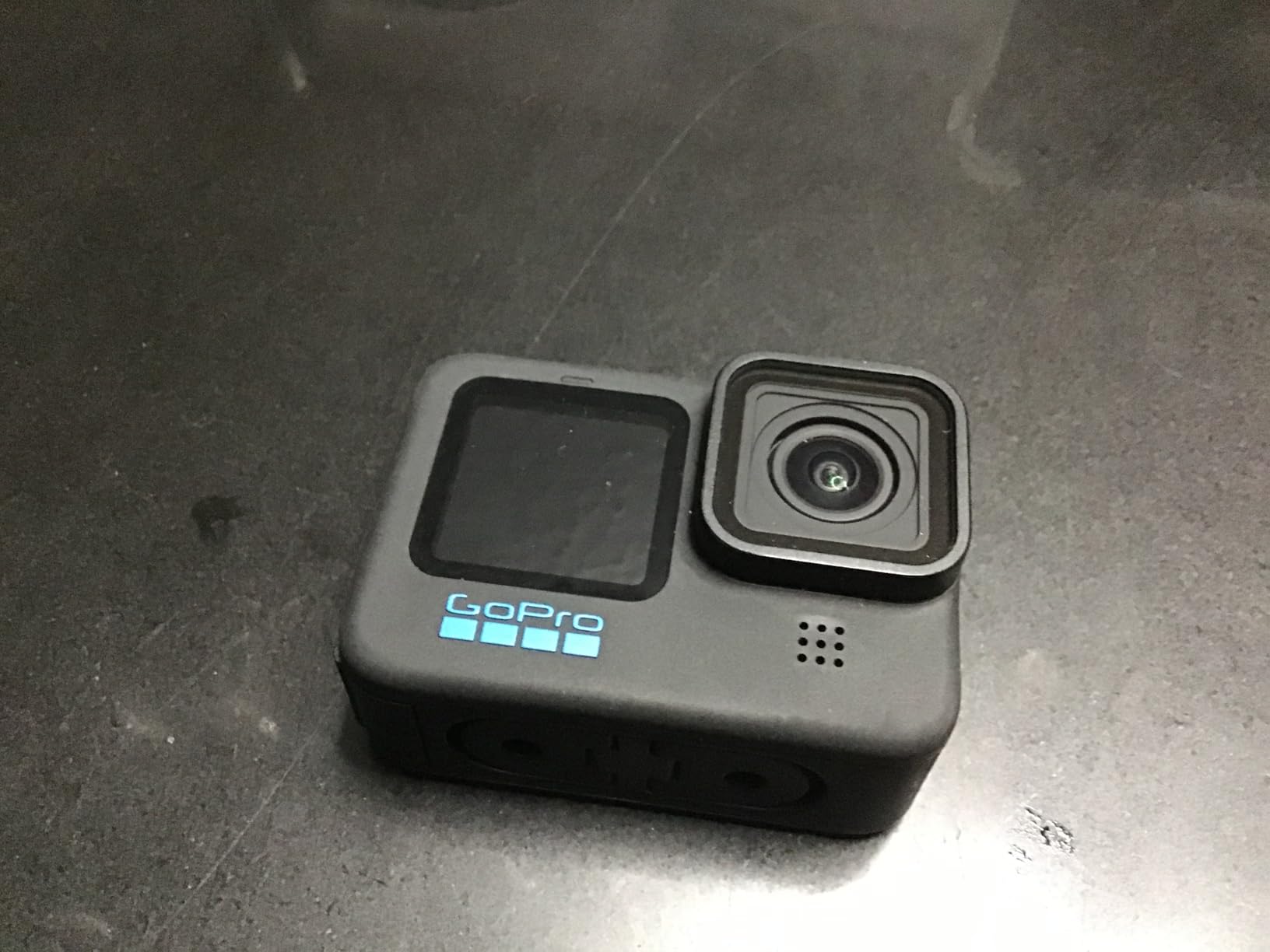
The value proposition is strong. You are getting a camera that shoots 5.7K, is waterproof to 33ft, and has one of the best stabilisation systems on the market, all at an entry-level price. For a first action camera, it is hard to argue against.
The main catch is that battery and accessories are sold separately in the e-commerce packaging variant. This means you need to factor in the cost of a battery, microSD card, and mount on top of the camera price. Do the maths before buying to make sure the total cost still represents good value.
Who should buy this camera
The GoPro HERO11 Black is the best entry-level action camera for skiing if you want GoPro quality without the premium price tag. It is ideal for beginners, families, or occasional skiers who want great footage without overthinking specs. The 5.7K resolution actually outresolves the newer models, making it a smart buy for anyone who does not need the absolute latest features.
Who should look elsewhere
Battery performance in cold weather remains the GoPro weakness, and the HERO11 is the oldest model in this lineup. If cold-weather reliability is important, the DJI Osmo Action 4 at a similar price point is a better skiing companion. Also, since the battery is not included, the true cost of getting started is higher than the headline price suggests.
10. Insta360 ONE RS 4K Edition – Best Compact Action Camera for Skiing
Insta360 ONE RS 4K Edition – Waterproof 4K 60fps Action Camera with FlowSate Stabilization, 48MP Photo, Active HDR, AI Editing
4K60fps
48MP Photos
FlowState
6K Widescreen Mode
Interchangeable Lens
127g
Pros
- 4K60fps with 48MP photo capability
- FlowState stabilization
- Active HDR mode
- Interchangeable lens design
- Great value for price
- Compact modular form factor
Cons
- Can overheat during extended recording
- Small touchscreen difficult with gloves
- Audio quality could be better
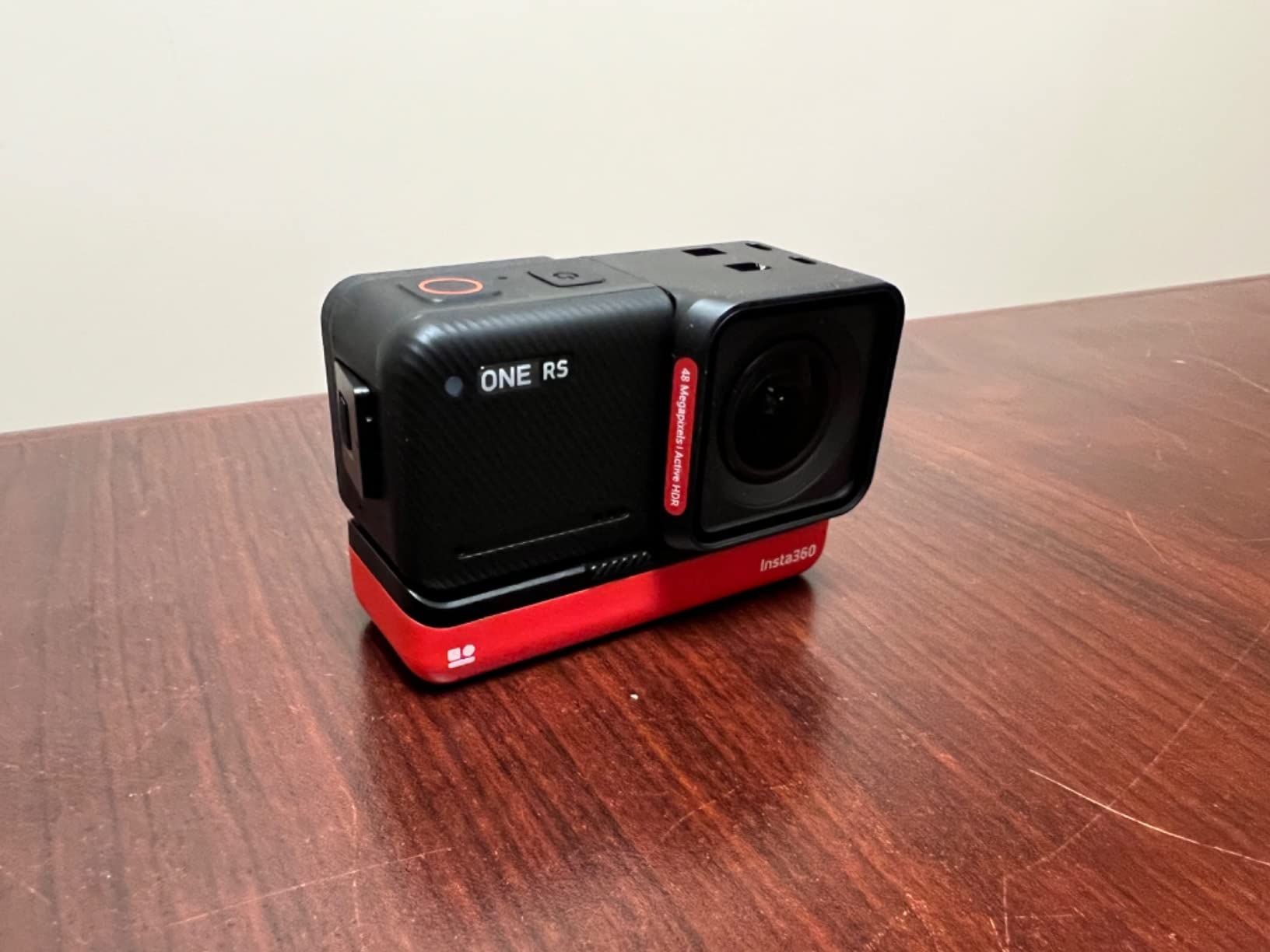
The Insta360 ONE RS 4K Edition is the lightest camera in this roundup at just 127g. That featherweight design makes it the most comfortable option for helmet mounting during a full ski day. You barely notice it is there, which means less neck strain and more natural head movement.
The modular design is clever. The camera consists of a battery base, a core processing unit, and a lens module that snap together magnetically. This means you can upgrade in the future by buying a different lens module rather than replacing the entire camera. For skiers who think they might want 360 capture later, this is an attractive upgrade path.
FlowState stabilisation performs well for skiing, producing smooth footage from both helmet and chest mounts. The 6K Widescreen mode is a bonus feature that produces unusually wide footage, great for capturing expansive mountain vistas. The 48MP photo resolution is also the highest still-image spec in this roundup.
The main drawbacks are the small touchscreen, which is genuinely difficult to operate with ski gloves, and the tendency to overheat during extended stationary recording. Audio quality is also average, which matters if you want to capture the sound of carving rather than just mute it in post.
Who should buy this camera
The Insta360 ONE RS 4K Edition is the best compact action camera for skiing if weight and size are your priorities. At 127g, it is the lightest here and the most comfortable for all-day helmet mounting. The modular design also makes it future-proof, as you can add a 360 lens module later. It is ideal for weight-conscious skiers, backcountry tourers, or anyone who finds heavier cameras uncomfortable.
Who should look elsewhere
The small touchscreen is a real problem for gloved use, which is most of the time when skiing. If you frequently change settings on the mountain, look for a camera with a larger screen like the Insta360 X3. The overheating issue also rules it out for long timelapses or stationary recording. For cold-weather battery reliability, the DJi cameras remain the better choice.
Buying Guide: How to Choose an Action Camera for Skiing
Choosing the right action camera for skiing comes down to understanding which features actually matter on the mountain. Our team has identified the six factors that make the biggest difference to your skiing footage.
Cold-Weather Battery Performance
This is the number one concern for skiers, and for good reason. Cold temperatures dramatically reduce lithium-ion battery capacity. A camera that delivers 3 hours at room temperature might only manage 90 minutes at -10C. DJI’s Osmo Action cameras consistently outperform GoPro in cold conditions thanks to their cold-resistant battery chemistry and efficient processors. If you ski in the Alps, Scotland, or Scandinavia where temperatures regularly sit below -5C, prioritise cold-weather battery performance above everything else. Always carry at least one spare battery, and keep it in an inner pocket close to your body heat.
Stabilisation Technology Explained
Three stabilisation systems dominate the action camera market. GoPro’s HyperSmooth uses electronic stabilisation with horizon levelling. DJI’s RockSteady and HorizonSteady offer similar electronic stabilisation with 360-degree horizon lock. Insta360’s FlowState takes advantage of the full 360-degree capture to produce stabilisation that is mathematically superior, since it has image data in every direction to work with. For skiing, all three systems are effective, but 360 cameras have an inherent advantage because they can reframe without losing stabilisation quality.
Waterproofing and Freeze Resistance
Every camera in this roundup is waterproof without additional housing, which is essential for skiing where cameras are constantly exposed to snow and moisture. But waterproofing tells only half the story. Freeze resistance is equally important. Look for cameras with documented cold-weather operation ratings. DJI cameras are rated to -20C, and Insta360 360 cameras are cold-resistant to -20C. GoPro does not publish specific cold-weather ratings, which is telling. Condensation is another issue: moving a cold camera into a warm ski lodge causes moisture to form on the lens. Let the camera warm up gradually in a sealed bag to prevent this.
Mounting Options for Skiing
The mount you choose dramatically affects your footage. Helmet mounts (top or side) provide the most authentic POV perspective and are the most popular choice for skiers. Chin mounts offer a lower centre of gravity and produce footage that feels more connected to your line of sight. Chest mounts capture your arms and ski poles in the frame, giving a sense of speed and movement. Ski pole mounts are great for creative third-person shots, especially when paired with an invisible selfie stick on a 360 camera. Whichever you choose, always use a safety tether. Cameras fall off at speed, and a tether is the difference between a minor annoyance and a lost camera.
360 vs Standard Action Camera
This is the biggest decision you will make. Standard action cameras (GoPro, DJI Osmo Action) capture a fixed field of view, so you need to frame your shot at the time of recording. 360 cameras (Insta360 X3, X4, X5) capture everything and let you choose your framing later. For skiing, 360 cameras offer a massive advantage: you can capture a run without worrying about where the camera is pointing, then create multiple clips from different angles afterward. The trade-off is more post-processing time, heavier weight, and a steeper learning curve. If you want maximum creative flexibility, go 360. If you want simplicity and lighter weight, go standard.
Screen Usability with Gloves
This is an underrated factor that becomes obvious the first time you try to change settings on a freezing chairlift. Touchscreens and thick ski gloves are a poor combination. Larger screens help, which is why the Insta360 X3’s 2.29-inch display is a real advantage. Voice control is another solution: most cameras here support voice commands like “GoPro, start recording” or “Capture”. Physical buttons are the most reliable interface with gloves, so look for cameras with accessible mechanical controls alongside touchscreen functionality.
FAQs
Which action camera is best for skiing?
The DJI Osmo Action 5 Pro is the best action camera for skiing overall, thanks to its 3.6-hour battery life at -20C, 360-degree HorizonSteady stabilisation, and cold-resistant design. For skiers wanting 360-degree capture, the Insta360 X5 offers unmatched creative flexibility with 8K video and AI-powered reframing.
Does GoPro work in cold weather?
GoPro cameras work in cold weather but drain battery significantly faster than DJI or Insta360 alternatives. Reddit users report GoPro cameras shutting off after just 5 minutes on a fresh battery in extreme cold. For reliable cold-weather performance, DJI Osmo Action cameras are rated to -20C and consistently outlast GoPro models in sub-zero skiing conditions.
What are some alternatives to GoPro for skiing?
The best alternatives to GoPro for skiing are DJI Osmo Action cameras (better cold-weather battery) and Insta360 cameras like the X5, X4, and X3 (360-degree capture with reframing). DJI offers the Osmo Action 4, 5 Pro, and 6, all with cold-resistant batteries. Insta360 provides the X3, X4, and X5 for skiers wanting immersive 360 footage.
What camera do skiers use?
Skiers most commonly use GoPro HERO cameras, DJI Osmo Action cameras, and Insta360 360 cameras. Among experienced skiers and content creators, the DJI Osmo Action 5 Pro and Insta360 X5 are increasingly popular due to superior cold-weather performance and creative features. Many professional ski filmmakers also use 360 cameras for the reframing flexibility they offer on the mountain.
How do I keep my action camera battery warm while skiing?
Keep spare batteries in an inner jacket pocket close to your body heat, use chemical hand warmers in your camera pouch, and avoid leaving the camera exposed when not recording. Start your ski day with a fully charged, room-temperature battery. Turn off Wi-Fi and GPS when not needed, and lower the screen brightness to extend cold-weather battery life further.
Conclusion
Finding the best action cameras for skiing in 2026 comes down to one critical question: how much does cold-weather battery life matter to you? If the answer is “a lot” (and for most skiers it should be), the DJI Osmo Action 5 Pro is the clear winner with its 3.6-hour battery at -20C. If you want the creative freedom of 360-degree capture and reframing, the Insta360 X5 is unmatched. And if you prioritise raw video quality above all else, the GoPro HERO13 Black delivers the sharpest footage on the mountain. Whatever you choose, carry a spare battery, use a safety tether, and keep the camera warm in your jacket between runs. Your future self, watching those ski edits, will thank you.