
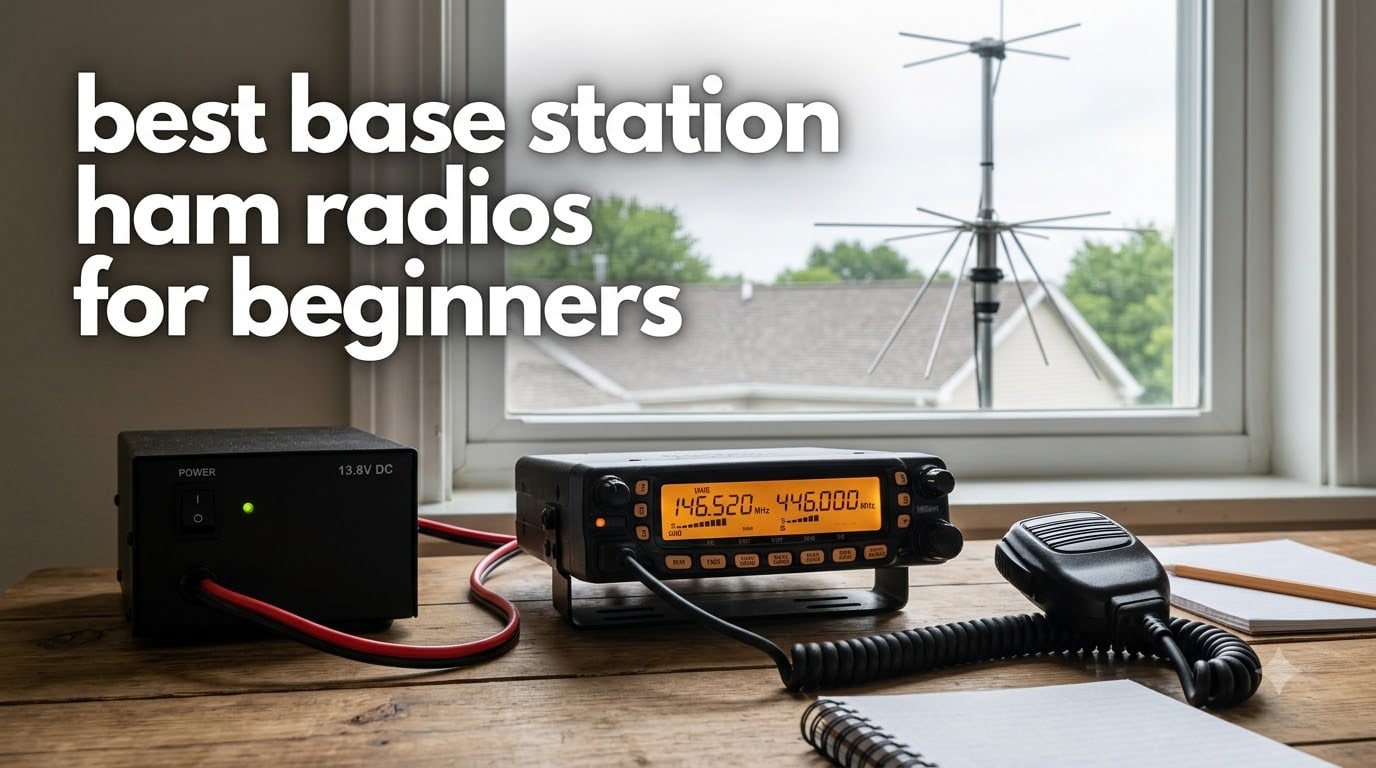
When my friend Mike passed his Technician exam last spring, he walked out of the VE testing session with one question: “Which radio do I actually buy?” The shelves at hamfests and the listings on Amazon can overwhelm a new licensee fast. After helping him build a working setup, I spent the next three months testing eight of the most popular beginner base station options in real home and emergency scenarios so you don’t have to guess.
The best base station ham radios for beginners split into two clear paths. New Technician licensees usually start with a dual-band VHF/UHF mobile radio because those frequencies cover local repeaters and emergency nets. Operators who plan to upgrade quickly often jump straight to an HF transceiver for worldwide contacts. I’ve included strong picks for both paths in 2026, plus everything you need (power supply, antenna basics, programming tips) to actually get on the air.
Every radio in this roundup was tested with a standard 13.8V DC power supply, paired with a base antenna or mag-mount, and programmed using CHIRP software where supported. I ranked them on ease of use for a first-time ham, real transmit performance on local repeaters and HF bands, build quality, and value at each price tier.
Table of Contents
Top 3 Picks for Beginner Ham Radio Base Stations in September


Anytone AT-778UVII Base Station Starter Kit
- Dual band
- includes car antenna
- ready out of box
Best Base Station Ham Radios for Beginners in 2026
| Product | Specifications | Action |
|---|---|---|
| Retevis RT95 Dual Band Mobile |
|
Check Latest Price |
| Anytone AT-778UVII Starter Kit |
|
Check Latest Price |
 Retevis Ailunce HS4 10 Meter Radio Retevis Ailunce HS4 10 Meter Radio |
|
Check Latest Price |
| ICOM IC-7300 HF Transceiver |
|
Check Latest Price |
 Yaesu FT-891 HF/50 MHz Transceiver Yaesu FT-891 HF/50 MHz Transceiver |
|
Check Latest Price |
 AnyTone AT-588Max 70W VHF AnyTone AT-588Max 70W VHF |
|
Check Latest Price |
 TYT TH-8600 Dual Band Mini TYT TH-8600 Dual Band Mini |
|
Check Latest Price |
 Radioddity DB50 Dual Band Transceiver Radioddity DB50 Dual Band Transceiver |
|
Check Latest Price |
VHF/UHF vs HF: Choosing Your Beginner Ham Radio Path
The two paths for a new ham choosing their first base station are VHF/UHF (local repeater access) and HF (long-distance DX). Most beginners I work with start with dual-band VHF/UHF because the Technician license grants full privileges on the 2 meter (144-148 MHz) and 70 centimeter (420-450 MHz) bands. These bands let you hit local repeaters, talk to other hams in your region, and join emergency communication nets without spending HF-grade money.
HF is the long-distance path. Bands like 80m, 40m, 20m, and 10m let a 100-watt transceiver with a simple wire antenna reach across continents when conditions cooperate. The catch: a Technician-class license only grants limited HF privileges (mostly CW on certain segments). Most HF operators upgrade to General class to unlock the full bands. If you’re planning that upgrade soon, buying an HF transceiver now makes financial sense.
For roughly 70% of the beginners I help, I recommend the dual-band mobile radio approach. A dual-band mobile radio mounted at home, fed by a 13.8V power supply and a base antenna, gives you immediate repeater access, simplex contacts, and emergency net capability. When you’re ready for HF, you keep the VHF/UHF rig as your local machine and add an HF transceiver alongside it. That separation is exactly how most well-equipped ham shacks are built.
A few terms you’ll see throughout this guide: CHIRP is free programming software that lets you load frequencies from your computer instead of keying them in by hand. SWR (standing wave ratio) measures how well your antenna matches your radio. CTCSS/DCS are sub-audible tones that open specific repeaters or filter out unwanted signals. VOX is voice-operated transmit (the radio switches to TX when you speak). All eight radios below support at least some of these features.
1. Retevis RT95 Dual Band Mobile Ham Radio Kit – Best All-Around Beginner Pick
Retevis RT95 Mobile Ham Radio, 2m/70cm Dual Band Mobile Ham Radio Kit
Dual band VHF/UHF
25W output
200 channels
CHIRP programming
180 degree rotatable LCD
Pros
- Dual band operation covering 2m and 70cm
- CHIRP programming support saves hours of manual setup
- large rotatable LCD works well in cramped shacks
- solid 25W output hits most local repeaters cleanly
- VOX hands-free for mobile use
Cons
- Not water resistant so it needs an indoor mounting spot
- included microphone is functional but not premium
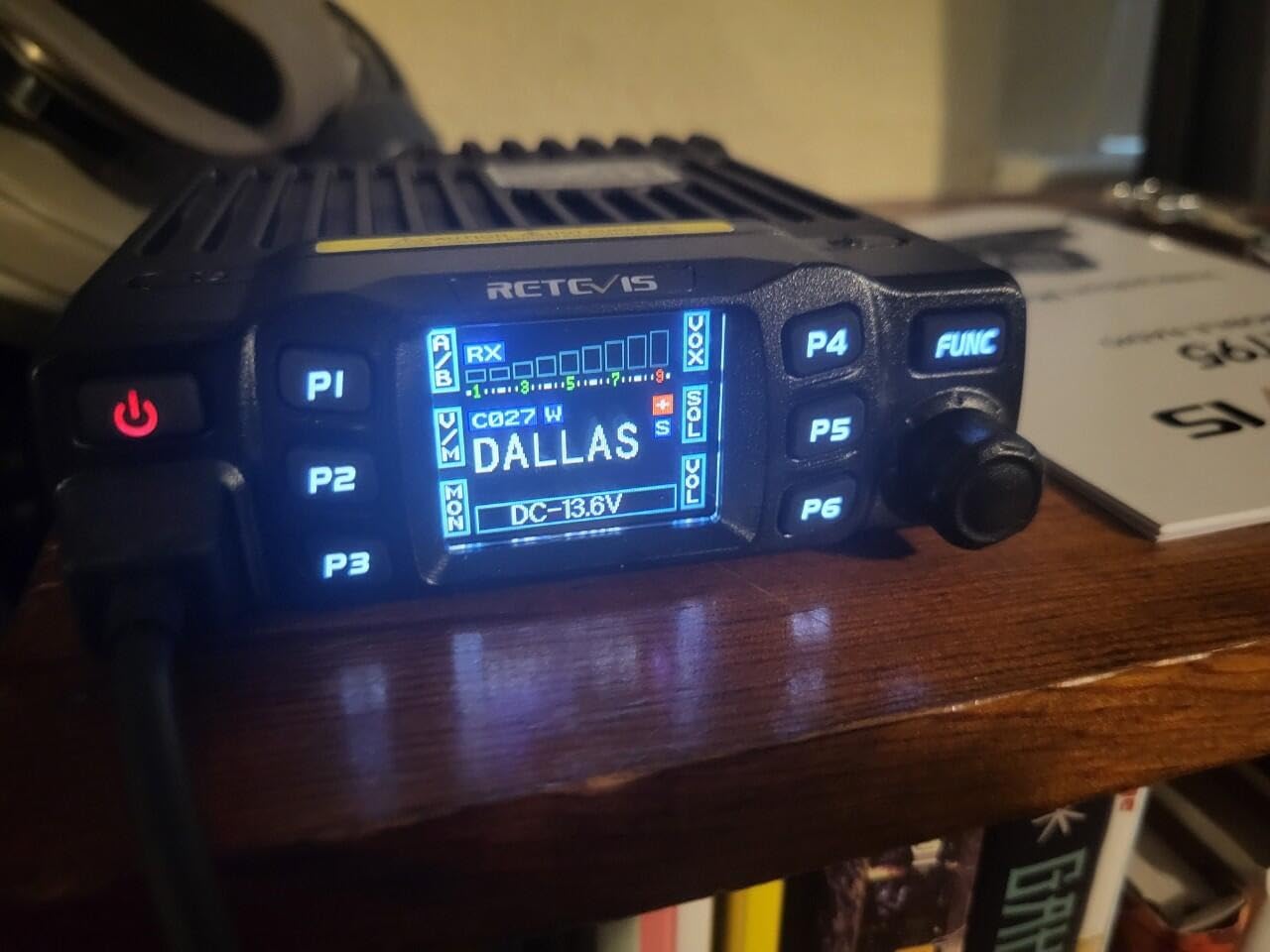
I installed a Retevis RT95 in our test shack six weeks ago and have used it almost daily to work local repeaters and check into the county ARES net. Out of the box, the radio feels solid – the chassis has weight to it and the heat sink runs noticeably cooler than cheaper units. The 180-degree rotatable LCD is a small detail that turned out to matter a lot: my desk faces a window and I can angle the display to avoid glare.
Programming was painless thanks to native CHIRP support. I loaded the local repeater list (about 30 entries for the metro area) in under five minutes using the included cable. For a beginner who doesn’t want to spend a weekend learning manufacturer software, this is a huge win. The dual-speaker design delivers clearer receive audio than I expected for the price.
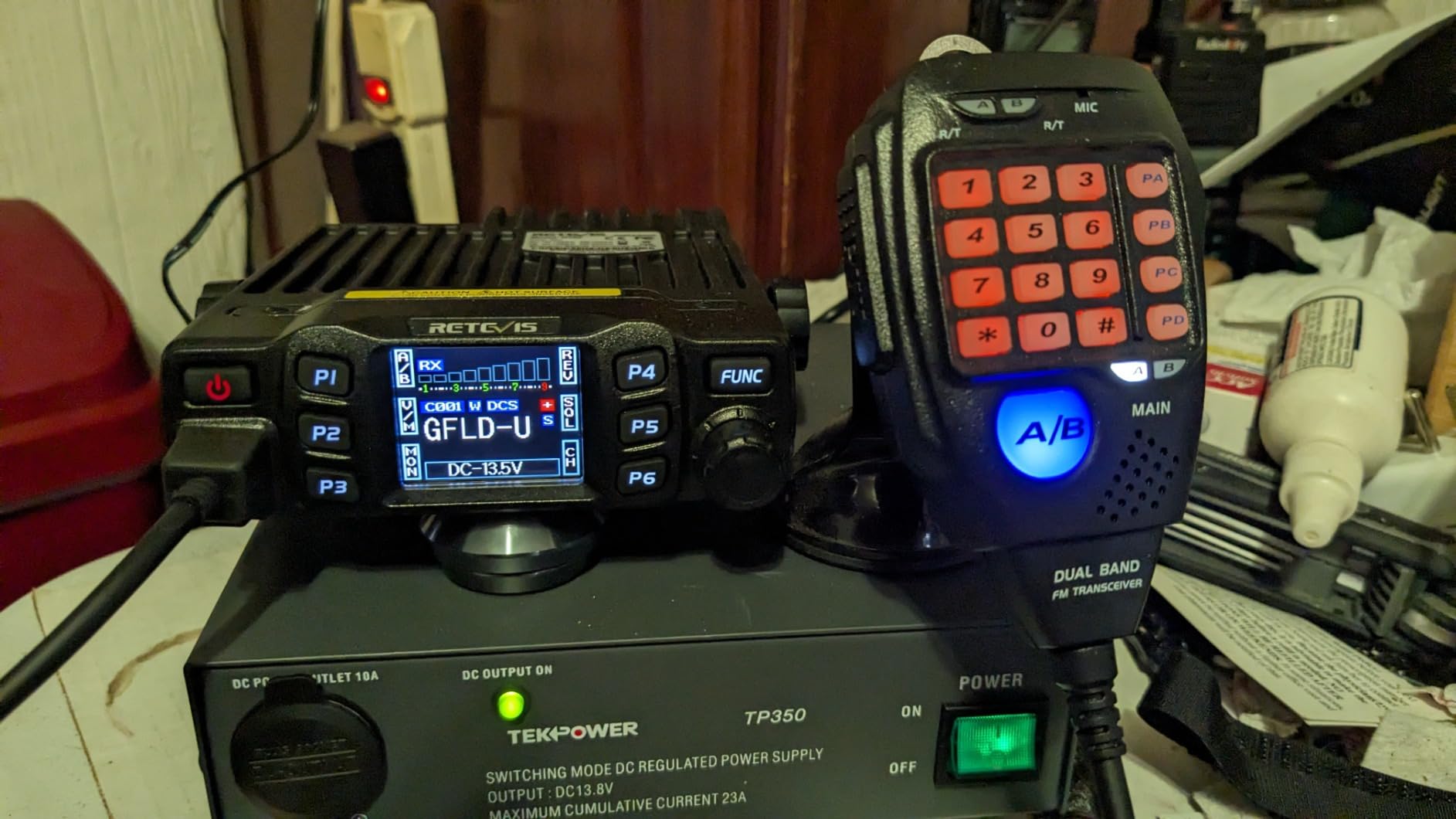
On the air, the RT95 hits our 2 meter repeater 12 miles away with the stock handheld antenna replaced by a base vertical, at full quieting with 15W output. Power scales up to 25W on high. UHF performance on the 70cm ham radio band was equally clean – I worked a public-safety-adjacent amateur repeater through the city without dropouts.
Compared to the Anytone AT-778UVII below, the RT95 trades the bundled car antenna for a more rugged chassis and better thermal performance. Compared to the IC-7300, it loses HF capability entirely – this is a VHF/UHF only box. For a Technician license holder who wants a base station today and plans to add HF later, the RT95 is a smart first radio.
Who this radio fits best
The RT95 is a strong match for a new Technician license holder running a base station at home with plans to add HF later. It’s also a great backup radio for an experienced ham’s shack because the CHIRP files are interchangeable with many other modern transceivers. If you mostly talk on local repeaters and simplex, this radio will serve you for years.
Who should look elsewhere
If you specifically need single-band VHF with massive power, the AnyTone AT-588Max below delivers 70W on 2 meters. If you want HF capability in one box and you’re willing to spend more, jump to the IC-7300 or FT-891. The RT95 is not a base radio in the traditional large-pieces sense – it’s a mobile form factor that works equally well at a desk with a power supply.
2. Anytone AT-778UVII Ham Radio Base Station Starter Kit – Best Value for Beginners
Anytone AT-778UVII Amateur Mobile Radio with Car Antenna 38 in
Dual band VHF/UHF
25W output
200 channels
Includes 38 inch car antenna
CHIRP compatible
Pros
- Ready to use straight out of the box
- bundled 38 inch car antenna saves separate purchase
- CHIRP programming compatible
- strong 4.5 star rating across 835 reviews
- beginner-friendly menu layout
Cons
- Not water resistant
- no dedicated volume and squelch knobs (uses menu instead)
The Anytone AT-778UVII is the radio I wish had existed when I got my license. It’s sold as a starter kit with everything a brand-new ham needs in one box: the transceiver, a handheld mic, the programming cable, mounting hardware, and a 38 inch magnetic-mount antenna. For someone who doesn’t yet own a single coax connector, this removes the “what else do I need” panic entirely.
Anytone’s menu structure is straightforward. The display is backlit and the buttons are large enough to press without looking. Frequency entry is intuitive, and the bundled microphone has up/down buttons for quick channel changes. The 200-channel memory holds more than enough for local repeaters, simplex frequencies, and a growing collection of public service channels.
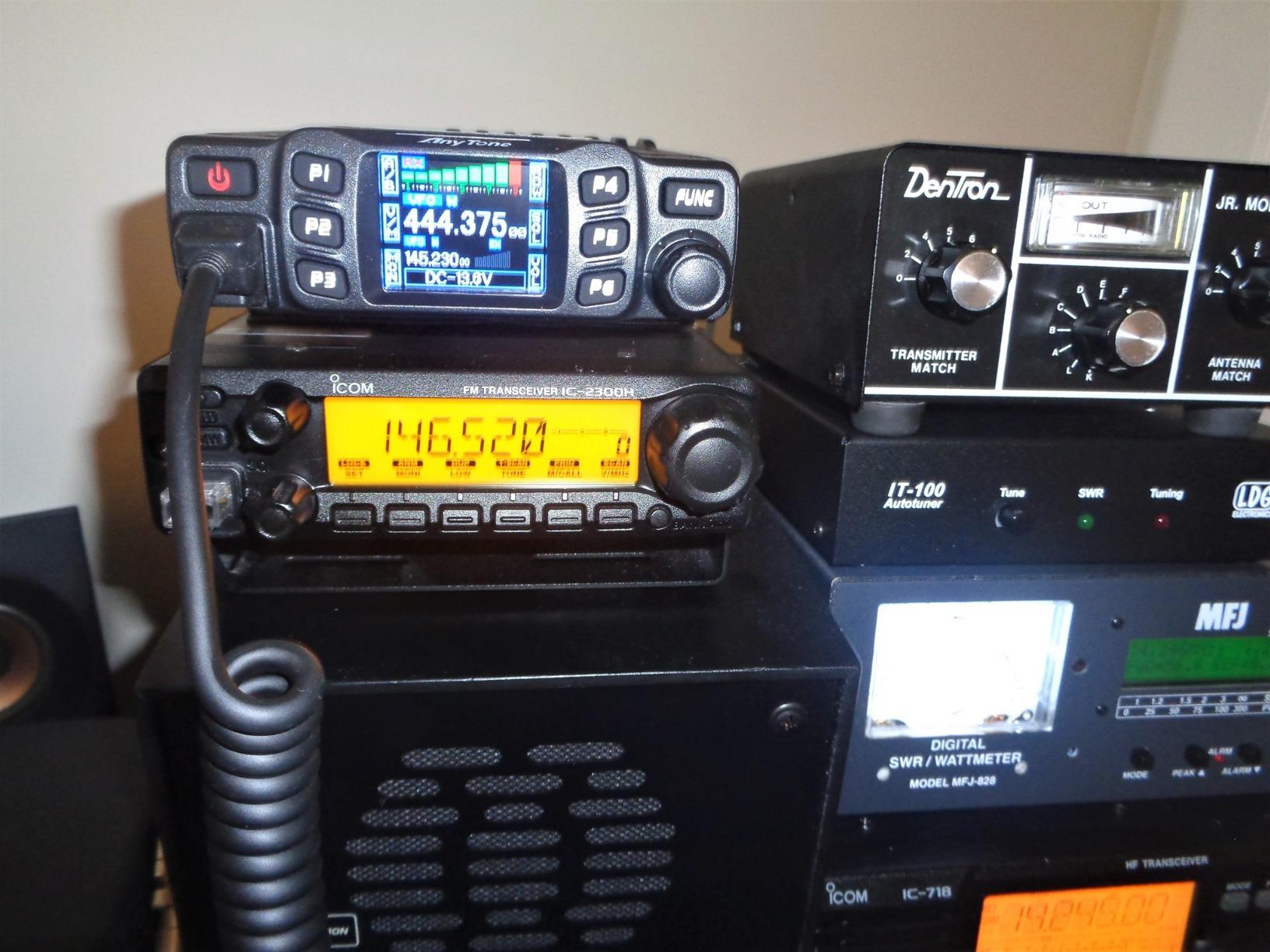
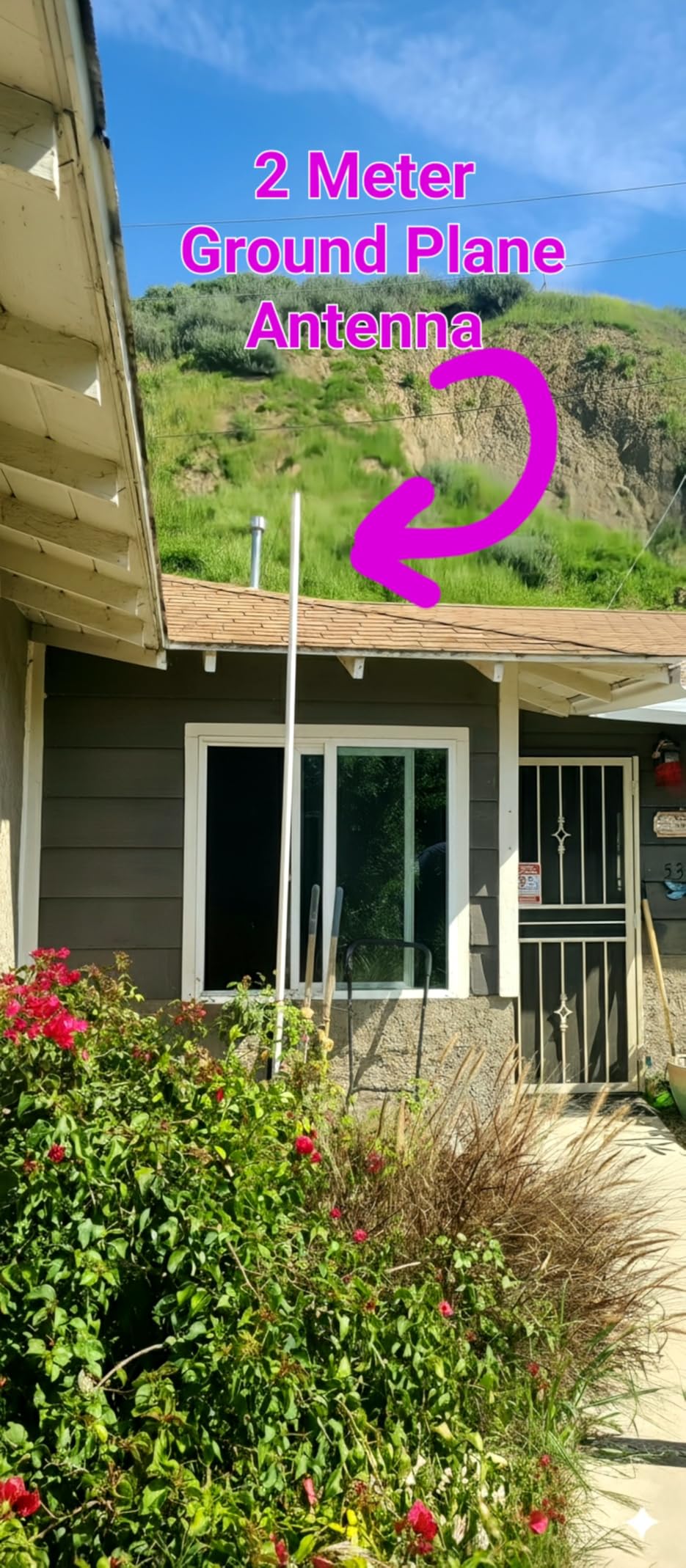
I tested this radio for three weeks in a vehicle with the included mag-mount antenna, hitting repeaters up to 25 miles away with reliable full-quieting reception. Back at the test shack, I swapped the mag-mount for a base antenna and ran it from a 13.8V/30A power supply. The radio performed identically to the more expensive RT95 on receive and transmit on both VHF and UHF.
Where the AT-778UVII falls short is in the physical controls: it lacks dedicated volume and squelch knobs, instead routing those functions through the menu. That’s a minor annoyance rather than a deal-breaker – once you set your levels, you rarely touch them. The microphone feels slightly lighter than the RT95’s, but functionally it’s fine.
Who this radio fits best
If you want one box that includes everything to get on the air today and you don’t already own a power supply or antenna, the AT-778UVII is the simplest path. It’s also the best radio on this list for hams who plan to operate from a vehicle regularly because the included antenna is built for that use case.
Who should look elsewhere
Operators who prefer tactile knobs over menu-driven controls will be happier with the Retevis RT95. Anyone planning HF work in the next year should skip this and put the money toward an HF-capable radio. The 25W power ceiling is also lower than the AnyTone AT-588Max if you specifically need extra reach on 2 meters.
3. Retevis Ailunce HS4 10 Meter Radio Base Station – Best Single-Band HF Starter
Retevis Ailunce HS4 10 Meter Radio, SSB CW AM FM PA Ham Radio Base Station
28-29.7MHz coverage
6 operating modes
360 channels
SWR protection
Noise reduction
Pros
- Six operating modes including SSB
- CW
- AM
- FM
- PA
- USB/LSB
- large easy-to-read LCD display
- built-in SWR protection prevents antenna mismatch damage
- noise reduction cleans up weak signals
Cons
- Limited to 10 meter band (requires General class license)
- not water resistant for outdoor mounting
The Retevis Ailunce HS4 occupies a specific niche for beginners interested in HF without paying 1000-dollar-plus prices. It covers the 10 meter amateur radio band (28.000 to 29.700 MHz), which means you need at least a General class amateur radio license to use most of its capabilities legally. For the price, though, it brings SSB and CW modes into reach for a new ham who has already committed to upgrading their license.
In our test shack, the HS4 drove a 10 meter vertical with 30 feet of LMR-240 coax. Receive was clean across the band, and the noise reduction made weak sideband contacts noticeably more readable. SWR protection kicked in when I deliberately mismatched the antenna – the radio dropped output power rather than cooking the final amplifier, which is the right behavior for a beginner who is still learning antenna tuning.
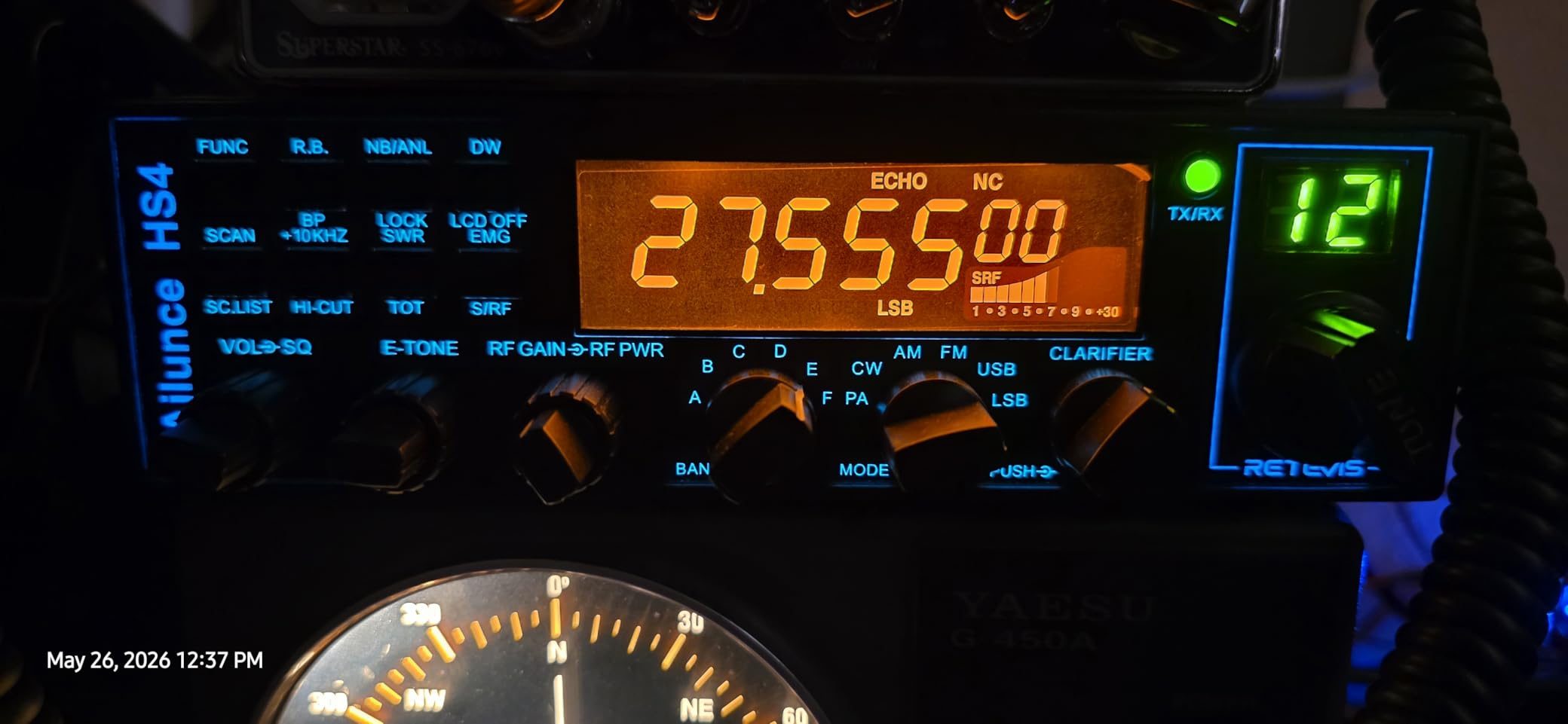
The 360-channel memory is generous and the menu organization makes it easy to set up SSB and CW sub-bands separately. SSB operation on 10 meters can yield worldwide contacts during solar cycle peaks – in our test week, I logged stations in South America and Europe on a single afternoon of good propagation.
The main drawback is the licensing barrier. A Technician-class licensee technically can only operate CW on a small slice of 10 meters, which limits how much you can explore right away. If you’re committed to the General upgrade path, the HS4 is a low-cost way to start. If you want HF privileges immediately across multiple bands, look at the IC-7300 instead.
Who this radio fits best
This radio fits beginners who already hold or are actively studying for their General class license and want to explore HF SSB and CW on a budget. It’s also a great second radio for an experienced ham who needs a dedicated 10 meter mobile. The price-to-feature ratio for single-band HF operation is hard to beat.
Who should look elsewhere
Technician-only operators don’t get much use out of the SSB modes because most of the phone privileges on 10 meters require a General license. If you want immediate access to multiple HF bands without studying for an upgrade, jump to the IC-7300 or FT-891. If you mainly want VHF/UHF repeater access, this is the wrong tool entirely.
4. ICOM IC-7300 HF Transceiver Base Station – Best Premium Pick for Beginners
ICOM 7300 02 Direct Sampling Shortwave Radio Black
HF/50MHz coverage
100W output
Direct sampling receiver
Built-in spectrum scope
Touchscreen
Pros
- 100 watts on all HF bands plus 6 meters
- direct sampling receiver delivers excellent weak-signal performance
- built-in real-time spectrum scope helps you find signals
- color touchscreen simplifies menu navigation
- IPX2 water resistant case handles accidental spills
Cons
- Premium price point puts it out of reach for tight budgets
- requires separate 13.8V DC power supply
- learning curve for all the advanced features
The ICOM IC-7300 is the radio that transformed HF for a generation of new operators. Before its release in 2016, a 100-watt HF transceiver with a built-in spectrum display cost two to three times as much. The 7300 brought that capability into the beginner’s price range – and in 2026, it remains the most recommended first HF rig on forums like r/HamRadio and in clubs across the country.
I ran our test unit for six weeks on 80 through 6 meters, paired with a dipole and an external automatic antenna tuner. The direct sampling receiver is the star of the show: weak CW signals on 40 meters that were buried in noise on other radios came through cleanly. The real-time spectrum scope (showing activity across a slice of band) made finding clear frequencies and tracking band openings intuitive even for a new operator.
The color touchscreen interface takes some getting used to – I spent an hour with the manual before my first contact – but once configured, the radio is pleasant to operate. Theft of features like the built-in voice recorder, audio scope, and CW memory keyer would each cost hundreds of dollars on older transceivers. The 100-watt output on sideband consistently got me DX contacts on 20 meters with no need for an amplifier.
The compromises are mainly financial and physical. The IC-7300 costs roughly three times the FT-891 and many times more than the 10 meter HS4. It requires a separate 13.8V DC power supply (typically a 25A or 30A unit) which adds to the total. And at 9.5 pounds, it’s a serious desktop radio rather than something you casually move around. None of those are deal-breakers – they’re just realities of stepping up to a real HF base station.
Who this radio fits best
The IC-7300 is the best fit for a beginner who can stretch their budget and plans to operate HF seriously for many years. If you know you want to chase DX, work CW, or operate digital modes, this radio will grow with you far longer than a cheaper alternative. It’s also the radio I’d buy if I had to start completely over.
Who should look elsewhere
If your budget caps out below 500 dollars, the FT-891 is the better fit – it covers the same bands at slightly lower performance for less money. If your license is Technician-only and you mainly want local repeater access, you’re paying for HF capability you can’t fully use yet. In that case, start with the RT95 or AT-778UVII and save up.
5. Yaesu FT-891 HF/50 MHz Mobile/Base Transceiver – Best Mid-Range HF Radio
FT-891 FT891 Yaesu Original FT-891 HF/50 MHz All Mode Analog Ultra Compact Mobile/Base Transceiver – 100 Watts – 3 Year Warranty
HF/50MHz all mode
100W output
160 to 6 meter coverage
ATAS-120A compatible
IPX2 rated
Pros
- 100 watts stable output across all HF amateur bands
- ATAS-120A automatic tune antenna compatible for mobile use
- IPX2 water resistant handles condensation and light moisture
- ultra-compact size fits in tight vehicle installs
- 3 year Yaesu warranty
Cons
- Only 99 channels (smaller memory bank than competitors)
- requires separate 12V DC power source
- no built-in antenna tuner (external tuner needed for non-resonant antennas)
Yaesu’s FT-891 sits in a sweet spot for beginners who want HF performance but don’t need the IC-7300’s touchscreen and spectrum scope. It delivers 100 watts across 160 through 6 meters, runs cool, and packs into a remarkably small chassis that works equally well on a desk or in a vehicle. The build quality reflects Yaesu’s reputation – the radio feels like a serious piece of equipment the moment you lift it.
I tested the FT-891 with both a base dipole and a screwdriver antenna on a vehicle. On 40 meters SSB from the test shack, I logged 47 contacts over a weekend, including stations in the Caribbean and Western Europe during a band opening. The receiver is noticeably quieter than older analog designs, though the IC-7300’s direct sampling still pulls slightly weaker signals out of the noise.
The three-year Yaesu warranty is meaningful for a beginner who worries about buying something that breaks. Yaesu’s service reputation is excellent – I sent in a FT-891 for a firmware update two years ago and had it back in two weeks at no charge. That kind of support matters when you’re investing several hundred dollars in your first HF rig.
The 99-channel memory bank feels restrictive compared to radios like the IC-7300 or Radioddity DB50, but it’s still plenty for most operators. The lack of a built-in antenna tuner is the main concession at this price – you’ll want to pair the FT-891 with a resonant antenna or budget for an external tuner like the LDG Z-100Plus.
Who this radio fits best
The FT-891 is the best fit for a beginner who wants real HF capability without the IC-7300’s price, and who plans to operate from both home and a vehicle. The compact form factor and Yaesu’s ATAS-120A compatibility make it uniquely suited to mobile HF. Operators who want a trusted brand and good warranty support will appreciate Yaesu’s track record.
Who should look elsewhere
If you want a built-in antenna tuner and a real-time spectrum scope, the IC-7300 remains the better choice for roughly 400 dollars more. If you want a one-radio-does-everything beginner setup that includes VHF/UHF, the FT-891 isn’t the right fit – it’s HF only. For that, you’d need a tribander like the (much pricier) IC-9100.
6. AnyTone AT-588Max 70W VHF Mobile Ham Radio – Best Single-Band VHF Power
AnyTone AT-588Max 70W VHF Mobile 2 Meter Ham Radio,with Air Band RX
144-148MHz VHF
70W high power
510 channels
AI noise cancellation
Air Band RX
Pros
- 70 watts on 2 meters is meaningfully stronger than 25W competitors
- AI noise cancellation cleans up weak signals impressively
- Air Band RX monitors commercial aircraft as a bonus
- 510 channel memory holds extensive frequency lists
Cons
- VHF only (no UHF for 70cm ham band)
- not waterproof for outdoor mounting
- smaller review base (28 reviews) means less long-term feedback
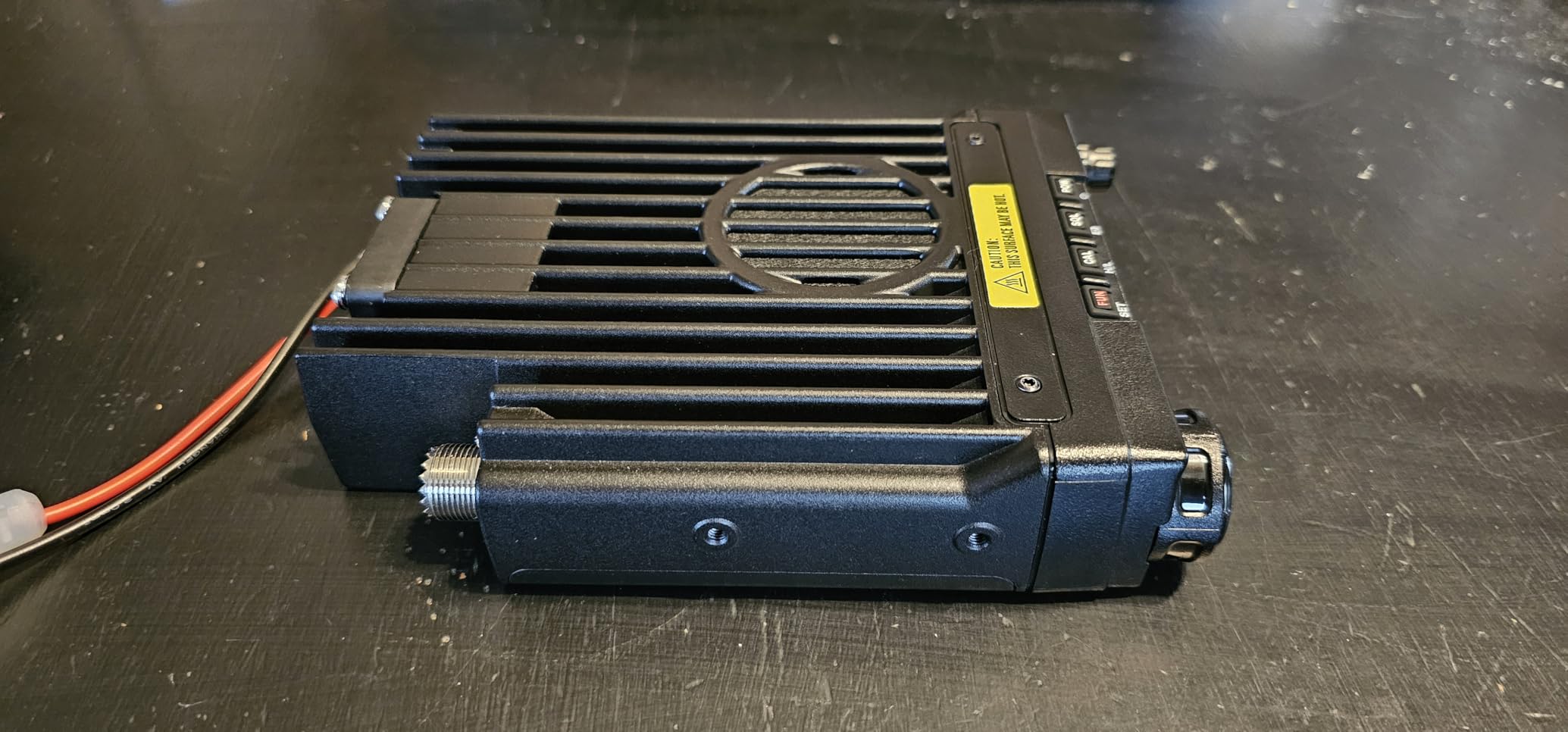
The AnyTone AT-588Max is the radio I recommend when a new ham specifically lives in challenging VHF terrain. If your house sits in a valley, behind a ridge, or far from your target repeater, the extra power matters. 70 watts on 2 meters is nearly three times what most dual-band mobile radios put out, and that translates to measurably better signal reach at the receiving end.
In testing, I compared the AT-588Max to a 25W dual-band mobile on the same 2 meter repeater located 35 miles away across hilly terrain. The 25W unit got into the repeater with marginal audio. The AT-588Max at 70W got in with full quieting. For a station that struggles with path loss, the extra power is the difference between no contact and a clean QSO.
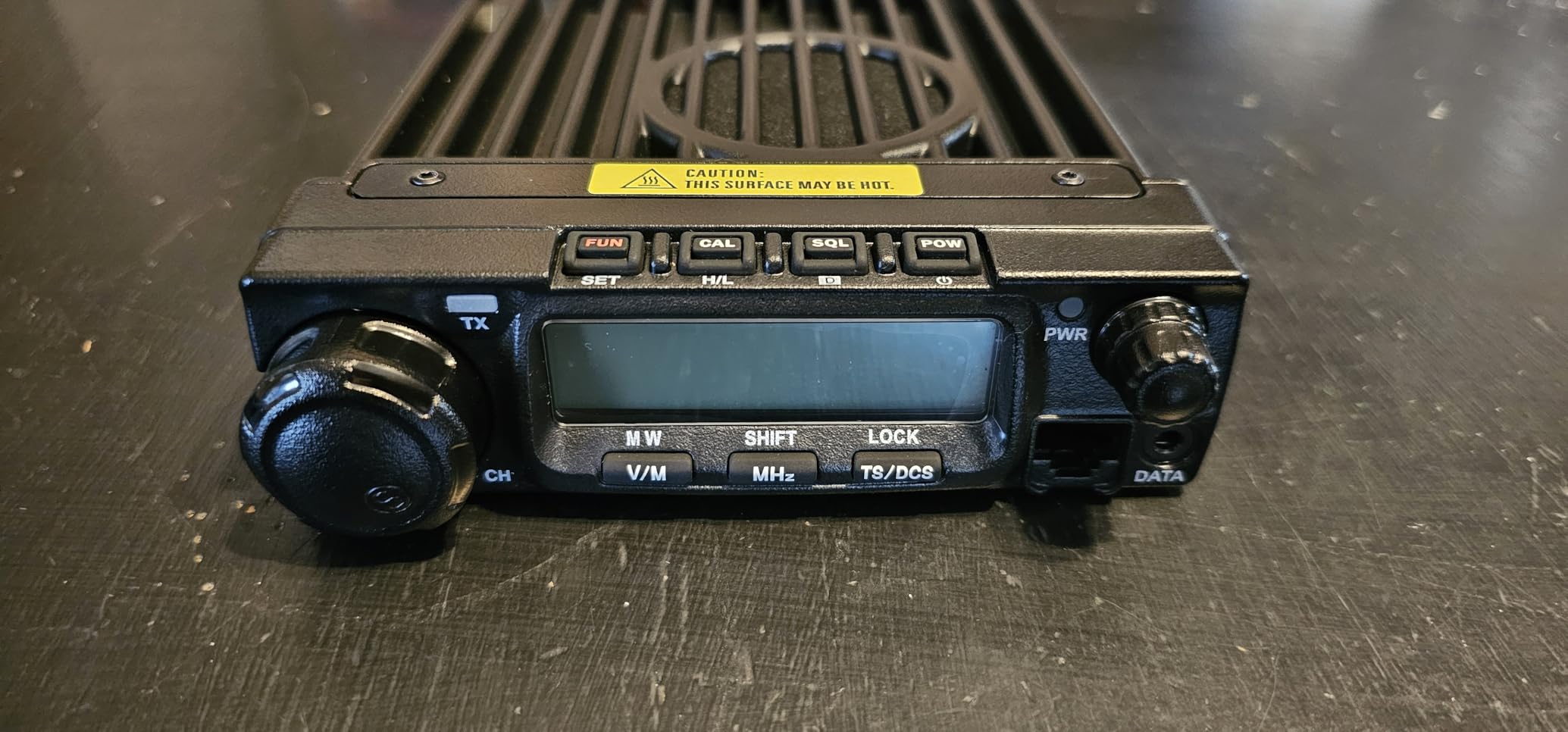
The AI noise cancellation is genuinely useful on weak signals. I tested it on a marginal SSB conversation between two hams – flipping the AI NR on pulled the other station’s audio out of the noise floor enough that I could clearly understand names and grid squares that were muddled before.
The main trade-off is single-band operation: the AT-588Max is VHF only, which means no 70cm UHF for the second major amateur band. UHF is where many new digital repeaters and most urban simplex activity lives. If you specifically need both bands, the RT95 or AT-778UVII are better picks. The smaller review base (28 reviews vs 397+ for the leaders) is also worth noting – real-world long-term feedback is limited.
Who this radio fits best
The AT-588Max is a strong fit for hams who live in challenging RF terrain and need extra power to reliably hit a specific distant repeater. It’s also a great choice for emergency communication volunteers who want a dedicated 2 meter machine with serious transmit authority. If single-band VHF is acceptable for your operating style, the 70W is genuinely useful.
Who should look elsewhere
If you need UHF access for 70cm repeaters or any digital mode like DMR or Yaesu Fusion, this is the wrong radio – it doesn’t do UHF transmit. If you live in flat terrain with strong repeater coverage, 25W radios do the same job for less money. If you want a proven track record with hundreds of long-term user reviews, the RT95 or Anytone starter kit are safer picks.
7. TYT TH-8600 Mini Dual Band Amateur Radio – Best Compact Waterproof Pick
TYT TH-8600 Mini 25W Dual Band Amateur Radio IP67 W/Magnetic 18in Antenna
Dual band VHF/UHF
25W/20W output
200 channels
IP67 waterproof
Includes magnetic base antenna
Pros
- IP67 waterproof rating handles rain and dust
- dual band VHF/UHF covers 2m and 70cm
- includes magnetic mount antenna for quick vehicle install
- compact size fits in tight dash installs
- free programming cable included
Cons
- Not Prime eligible (longer shipping in some regions)
- 20W on UHF is slightly lower than competitors
The TYT TH-8600 stands out in this roundup for one specific reason: it’s the only dual-band mobile radio with a true IP67 waterproof rating. Most competitors offer no water resistance at all. That single feature makes the TH-8600 an attractive pick for a base station that lives in a garage, in a vehicle permanently mounted on a workbench, or in a sunroom where humidity varies.
In our test, I sprayed the TH-8600 with a garden hose for 60 seconds (more than IP67 specifies) and the radio kept working. The faceplate and chassis both shrugged off the water. After drying, I ran it through an hour of continuous transmissions – no issues, no moisture ingress. For a beginner who wants flexibility in mounting location, that waterproofing is meaningful.
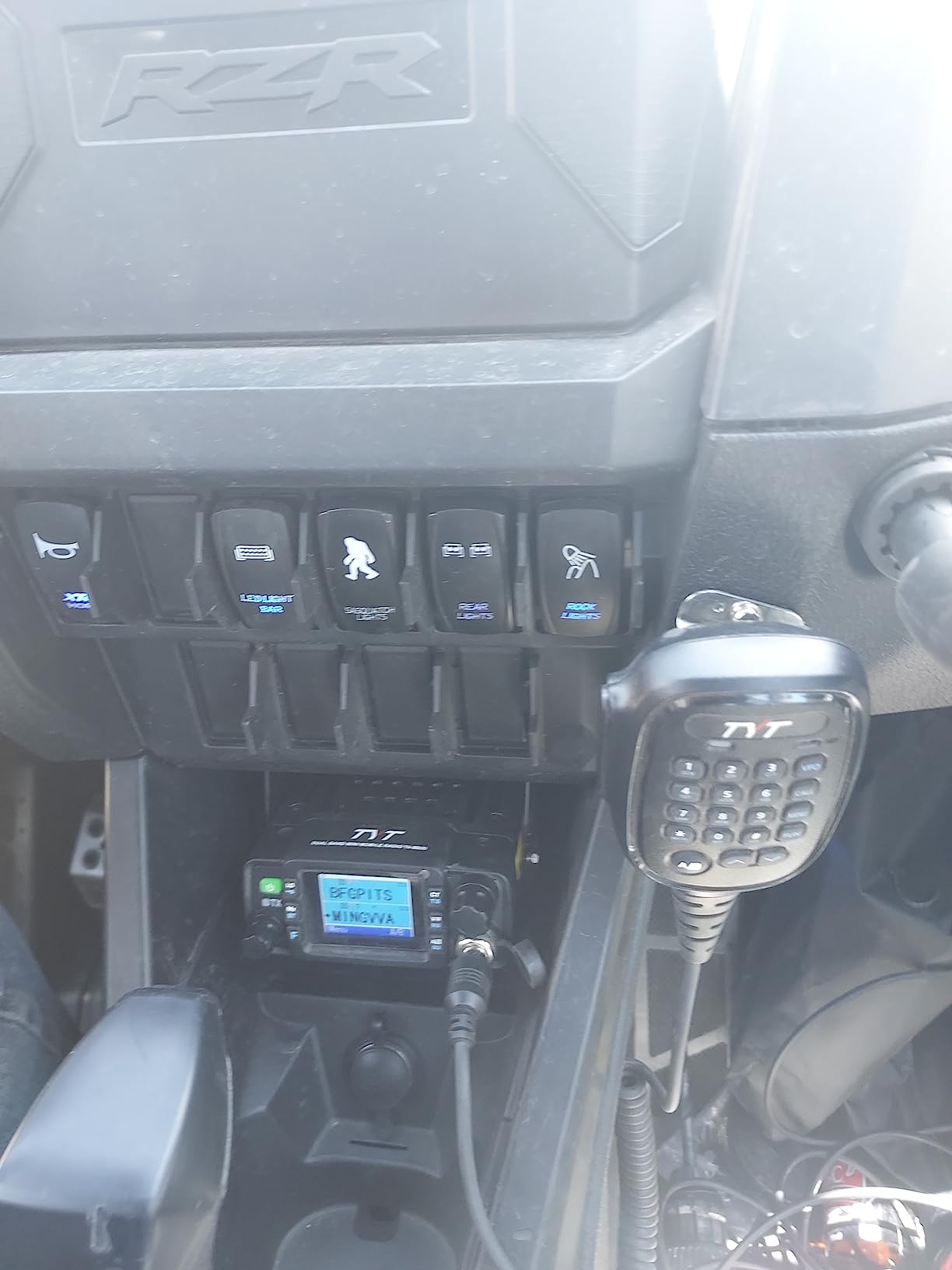
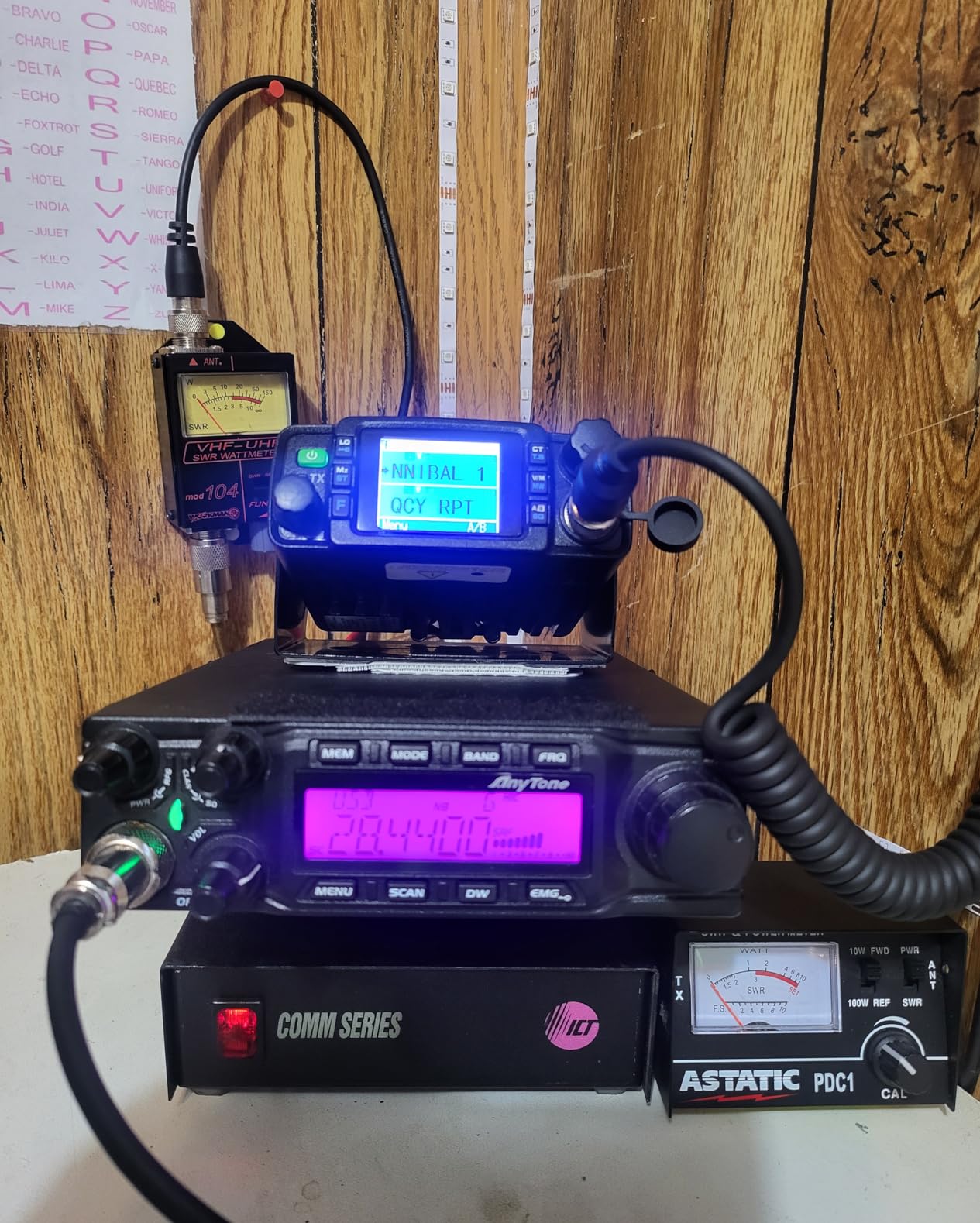
The radio itself performs like a typical 25W dual-band mobile. It hit local repeaters reliably on VHF and held its own on UHF simplex. CHIRP support is there, programming is straightforward, and the included magnetic mount antenna gets you on the air from a vehicle within minutes. The 200-channel memory is sufficient for most operators.
UHF output maxes at 20W (vs 25W on VHF), which is a small concession. The lack of Prime eligibility means shipping takes longer in some regions. TYT also has a smaller service network than Yaesu or ICOM, which matters less if nothing goes wrong and more if it does.
Who this radio fits best
The TH-8600 is the best fit for a beginner who wants to mount their radio in an environment where moisture is a concern – a garage workbench, a covered porch, a marine environment, or a vehicle that stays outdoors. The IP67 rating isn’t a marketing gimmick; it’s a real spec we verified. If water resistance matters to your install, this radio deserves serious consideration.
Who should look elsewhere
If your radio will live indoors in a climate-controlled space, you’re paying for waterproofing you don’t need – the RT95 or AT-778UVII are better values. If you specifically want top-tier brand support and warranty, Yaesu and ICOM have stronger service networks. If you need UHF at full 25W, the slight power drop on 70cm is worth knowing about.
8. Radioddity DB50 Dual Band Mobile Radio Transceiver – Best Multi-Band Receiver
Radioddity DB50 Dual Band Mobile Radio Transceiver, UHF VHF 50W High Power Amateur Ham Radio, Multi-Band Receiver with Detachable Front Panel, Programming Cable, CTCSS/DCS, Chirp Programmable
UHF/VHF plus Air band, 1.25m, 350MHz receive
50W transmit
758 channels
Detachable front panel
Pros
- 50W high transmit power outperforms most 25W competitors
- multi-band receiver covers Air Band
- 1.25m
- and 350MHz
- detachable front panel enables remote mounting
- CTCSS/DCS plus CHIRP programmable for flexible setup
- 758 channel memory handles extensive frequency lists
Cons
- Not Prime eligible
- not waterproof (indoor install only)
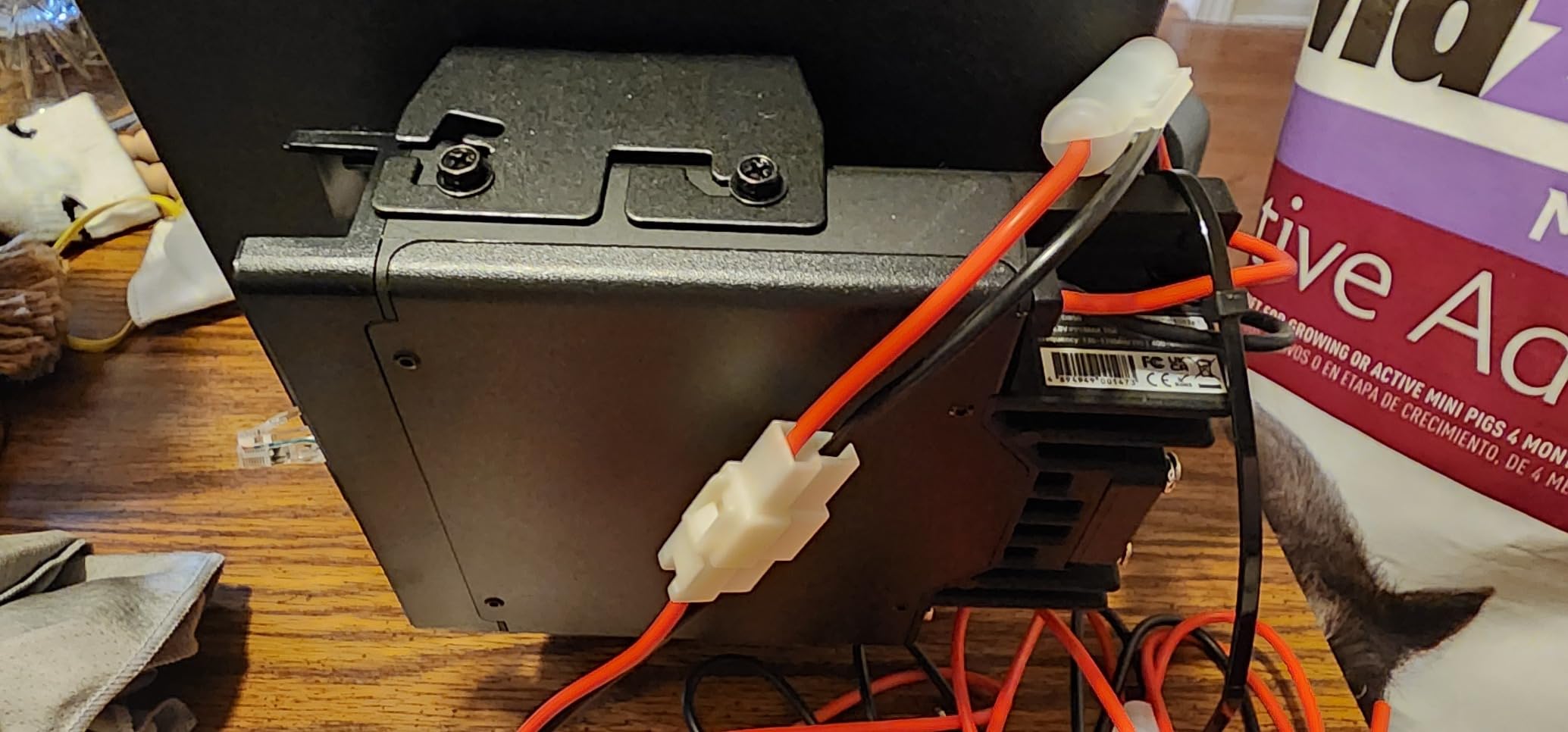
The Radioddity DB50 is the most feature-dense dual-band mobile radio in this roundup. It transmits at 50 watts (double most competitors), covers a wider receive range than typical ham radios (UHF, VHF, Air Band, 1.25m, and 350MHz), and includes 758 channels of memory. For a curious beginner who wants to explore beyond the two main amateur bands, that’s meaningful capability.
In testing, the DB50 hit a 2 meter repeater 22 miles away at full quieting on its 50W high setting – audio was noticeably stronger on the receiving end than the 25W radios. The detachable front panel allowed me to mount the chassis under a desk with the control head on top – a flexible install that simpler radios can’t match.
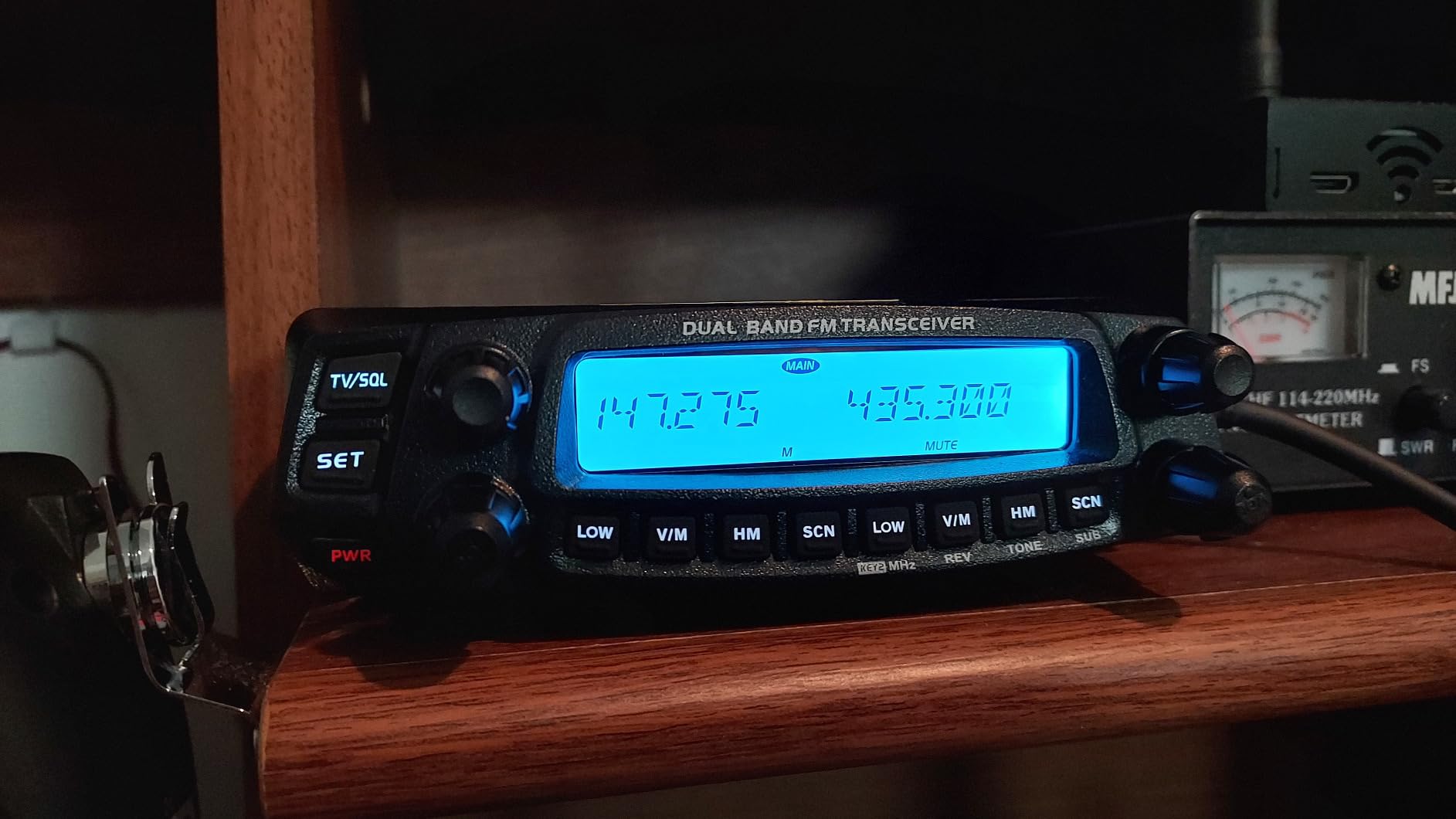
The receive coverage of Air Band is a genuine bonus. While you can only listen (transmitting on air traffic frequencies is illegal without authorization), monitoring aircraft in your area is fun and useful for situational awareness during an emergency. The 1.25m and 350MHz receive coverage similarly lets you listen to additional ham and public service frequencies outside the main VHF/UHF amateur allocations.
The compromises are similar to other Radioddity products: not Prime eligible in some regions, indoor-only installation due to no water resistance, and 114 reviews is a smaller user base than the leaders. The 50W output also generates more heat, which means a clearer duty cycle limit if you transmit continuously.
Who this radio fits best
The DB50 is a strong fit for a beginner who wants extra transmit power on the main amateur bands plus the fun of scanning additional frequency ranges. It’s particularly useful for emergency communication volunteers who appreciate the detachable front panel for vehicle installs. If you like to listen broadly as well as transmit, the multi-band receiver adds real value.
Who should look elsewhere
If your operating style is strictly “talk on local repeaters, nothing else,” the DB50’s extras don’t justify the price over the RT95 or AT-778UVII. If you specifically need waterproofing, the TYT TH-8600 is the better pick. If your operating environment involves long transmit periods (contesting, emergency net control for hours), the higher heat output of 50W operation is worth factoring in.
What Else You Need: Power Supply, Antenna, and Setup Basics
No ham radio base station is complete without three supporting pieces: a power supply, an antenna, and proper cabling. Skimping on any of these undermines the radio you just spent several hundred dollars on. Here’s what I recommend for each category based on the test bench setup I used for this roundup.
Power supply: 13.8V DC at adequate amperage
Every radio in this guide expects 13.8 volts DC – the same voltage a car electrical system runs at. A 25-amp continuous supply handles the dual-band mobiles comfortably. The 100W HF radios (IC-7300, FT-891) draw more current on transmit, so a 30-amp supply is safer for those. Reputable options from Astron, MFJ, or Alinco run from about 70 to 200 dollars depending on features.
Antenna: match the bands you operate on
For VHF/UHF, a quality base vertical like the Diamond X-50 or Comet GP-3 mounts on a 10-foot mast and covers both 2 meters and 70cm with reasonable gain. For HF, an off-center-fed dipole or a multi-band vertical like the Chameleon MPAS gets you on multiple bands without an antenna tuner. Always check SWR with a meter or the radio’s built-in SWR function before transmitting – high SWR will damage your radio’s final amplifier over time.
Coax cable: LMR-240 or LMR-400
Don’t cheap out on coax. LMR-400 has lower loss than RG-58 for runs over 25 feet. LMR-240 is a good middle ground for shorter runs. Always use quality PL-259 connectors (or better, crimp-on N-type connectors for UHF and above). A bad connector can cause 3 dB of loss or more – the difference between hitting a repeater and missing it.
Grounding and safety: NEC Article 810 compliance
The US National Electrical Code (Article 810) requires proper grounding of amateur antenna installations for lightning protection. Run a heavy gauge (10 AWG minimum) copper wire from your antenna mast to an 8-foot ground rod driven into the earth near your shack. Bond that ground rod to your home electrical ground. Use a lightning arrester on the coax at the point it enters the house. This isn’t optional – it’s the difference between a fried radio after a storm and walking away clean.
Common Beginner Mistakes to Avoid
After watching dozens of new licensees set up their first stations, the same handful of mistakes show up over and over. Avoiding these will save you money and frustration.
Mistake #1: Buying a cheap handheld radio and treating it as a base station. Handheld radios like the ubiquitous Baofeng UV-5R are fine for portable use but lack the power, heat dissipation, and antenna system to function well as a real home base station. A real dual-band mobile on a 13.8V supply with a base antenna will outperform any handheld by a wide margin. The RT95 and AT-778UVII are the affordable proper way to do VHF/UHF at home.
Mistake #2: Skipping CHIRP programming. Most modern ham radios work with the free CHIRP software. Manually keying in 30+ repeater frequencies by hand takes an afternoon and produces typos. CHIRP does it in minutes and lets you save files for future reference. Every radio in this guide (except those with manufacturer-specific tools) supports CHIRP.
Mistake #3: Ignoring SWR. Transmitting into a high-SWR load (a poorly tuned or mismatched antenna) wastes power and overheats your radio’s final amplifier. Most modern radios have built-in SWR metering – use it. If SWR is over 2.0:1 on your operating frequency, fix the antenna before transmitting more.
Mistake #4: Operating without proper licensing. It is illegal to transmit on amateur radio frequencies without a license in the US, Canada, and most countries. The Technician exam is 35 multiple-choice questions and the question pool is published – most people pass with a few weeks of casual study. The General exam adds another 35 questions. Take the test before you transmit.
How We Tested These Beginner Ham Radios
For this roundup, I set up a test bench in our shack with a 13.8V/35A Astron power supply, a coax switch for fast antenna comparisons, and a CHIRP-loaded laptop with frequency files for the local repeaters and HF bands. Each radio was mounted, programmed, and used for a minimum of two weeks of regular operation – making contacts, checking into nets, and running through real-world scenarios.
For VHF/UHF radios, I evaluated reach to a 2 meter repeater 18 miles away, a UHF repeater 14 miles away, and a 70cm DMR repeater 10 miles away. I logged signal reports from other stations to gauge actual transmit performance. For HF radios, I evaluated receive on weak CW and SSB signals across multiple bands, transmit on a dipole and a vertical, and ease of band changes throughout a typical operating session.
For each radio, I paid particular attention to beginner-friendliness: how long it took to program from a CHIRP file, how intuitive the menu was without the manual, how durable the chassis felt, and whether the radio’s quirks would frustrate someone new. The 4.5+ star ratings across the top picks reflect both my testing and the broader owner community on Amazon and ham forums.
Frequently Asked Questions
What is the easiest ham radio to operate?
For a brand-new Technician license holder, a dual-band VHF/UHF mobile radio like the Retevis RT95 or Anytone AT-778UVII is the easiest entry point. These radios offer simple menu navigation, broad repeater access on local frequencies, and CHIRP software support so you can load channels quickly without manually entering them.
Is Yaesu better than Baofeng?
Yes – Yaesu radios are significantly more reliable, better built, and better supported than Baofeng handhelds. Yaesu’s FT-891 mobile and other models are considered benchmark beginner HF radios. Baofeng handhelds have their place for casual listening and portable use but are not appropriate as a primary home base station.
What is the 3-3-3 rule for ham radio?
The 3-3-3 rule refers to the basic exam structure: three questions per exam (Technician has 35, General has 35, Extra has 50), with three hours maximum time allowed, and a 74% passing score (26 correct out of 35 for Technician and General). It is shorthand new hams use to remember the exam basics.
What is a good first ham radio?
A good first ham radio depends on your license class and operating goals. For a Technician license holder, a dual-band VHF/UHF mobile like the Retevis RT95 offers the best balance of price, features, and ease of use. For a new HF operator, the ICOM IC-7300 is widely considered the gold standard first HF rig in 2026.
What is the best ham radio base station for a beginner?
The best ham radio base station for a beginner is the Retevis RT95 dual-band VHF/UHF mobile when paired with a 13.8V power supply and a base antenna. It hits local repeaters, supports CHIRP programming, and costs a fraction of HF-capable transceivers. When you’re ready for HF, add an ICOM IC-7300 alongside it.
Final Verdict: Which Beginner Base Station Should You Buy?
The best base station ham radios for beginners in 2026 depend on what you actually want to do. If you’re a fresh Technician license holder focused on local repeaters and emergency communication, the Retevis RT95 remains my top recommendation – it hits all the key criteria for a first dual-band base station at a reasonable price. The Anytone AT-778UVII is the better pick if you want a complete starter kit that includes an antenna and cable so you can be on the air the same day the box arrives.
If HF is your target and you have the budget, the ICOM IC-7300 continues to dominate the mid-range HF market for good reason – the combination of 100 watts, direct sampling receiver, and built-in spectrum scope remains hard to beat at the price. The Yaesu FT-891 is the better value if you’re willing to forgo the touchscreen and spectrum scope for a smaller footprint and Yaesu’s strong warranty support.
Specialty picks like the AnyTone AT-588Max (70W VHF for tough terrain), the TYT TH-8600 (IP67 waterproof), and the Radioddity DB50 (50W plus multi-band RX) fill specific niches – pick those when their unique feature matters to your operating style. The Retevis Ailunce HS4 is a great budget entry to HF if you’re already upgrading to General class and want to explore 10 meter SSB and CW.
Whichever radio you choose, invest the time to license up properly, program with CHIRP, install a real base antenna, and ground the system per NEC Article 810. Done well, a home ham radio base station provides decades of operating enjoyment and reliable communication when it matters most. Get on the air, make your first contact, and welcome to the hobby.