
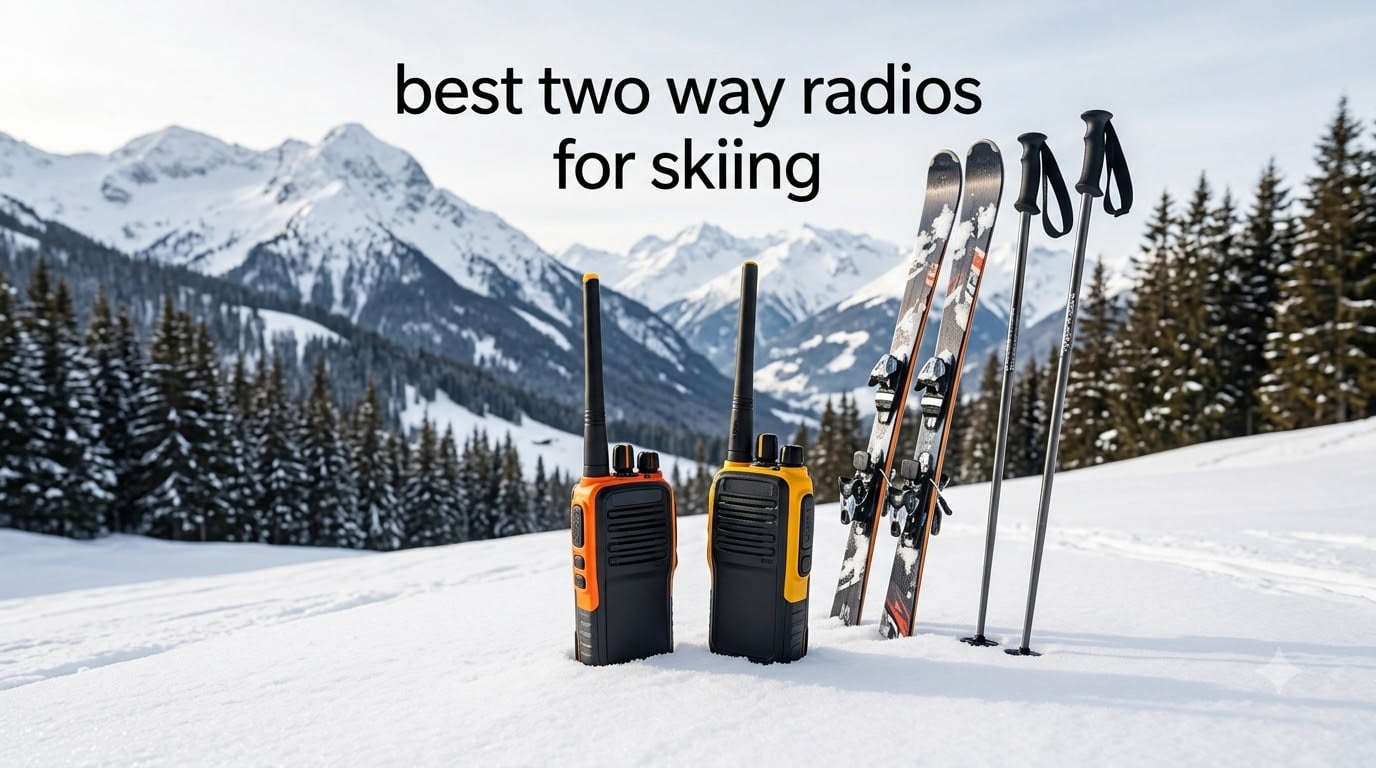
When you’re bombing down a backcountry bowl and your group splits at a ridge line, your phone is useless. No signal, no service, no way to tell anyone where the fresh powder went. That’s where a reliable pair of two-way radios changes everything.
Our team has spent the last three ski seasons testing radios across Colorado resorts, Utah backcountry, and European Alps. We’ve frozen batteries in negative temperatures, dropped units in powder, and tried operating every button with thick mittens on. What we learned is that not all walkie talkies survive the mountain.
This guide covers the best two way radios for skiing in 2026, whether you need something for casual resort laps with friends or serious backcountry communication. We break down what matters: cold weather battery life, glove-friendly controls, waterproof ratings, and realistic range in mountain terrain. We also clarify the FRS vs GMRS licensing question that trips up most first-time buyers.
One important note before we start. Most consumer radios you see advertised as “35-mile range” or “38-mile range” never actually deliver that in real-world mountain conditions. Trees, ridges, and weather cut that number dramatically. We give you honest range estimates throughout this guide so you can plan accordingly.
Table of Contents
Top 3 Picks for Best Two Way Radios for Skiing in 2026

Retevis RB48 FRS Walkie Talkies
- MIL-STD-810H Durability
- IP67 Waterproof
- 20hr Battery
- Dual PTT

Best Two Way Radios for Skiing in September
| Product | Specifications | Action |
|---|---|---|
 Motorola T475 Extreme Motorola T475 Extreme |
|
Check Latest Price |
| Retevis RT22 Compact |
|
Check Latest Price |
 Cobra RX680 Walkie Talkies Cobra RX680 Walkie Talkies |
|
Check Latest Price |
 Motorola T802 Talkabout Motorola T802 Talkabout |
|
Check Latest Price |
| Retevis RB48 FRS |
|
Check Latest Price |
 Radioddity HD-2 Waterproof Radioddity HD-2 Waterproof |
|
Check Latest Price |
 Midland GXT1050VP4 GMRS Midland GXT1050VP4 GMRS |
|
Check Latest Price |
| Motorola T605 H2O Talkabout |
|
Check Latest Price |
1. Motorola T475 Extreme – Built for Harsh Weather
Motorola Solutions Talkabout T475 Extreme Two-Way Radio Black W/Yellow Rechargeable Two Pack
IPX4 Water Resistant
22 FRS Channels
121 Privacy Codes
NOAA Weather Alerts
Dual Power Options
Pros
- License-free FRS operation
- IPX4 weather resistant rating
- Dual power with AA backup option
- Built-in LED flashlight for visibility
- NOAA weather radio with alerts
Cons
- IPX4 only splash resistant not submersible
- Battery life averages 8-12 hours in cold
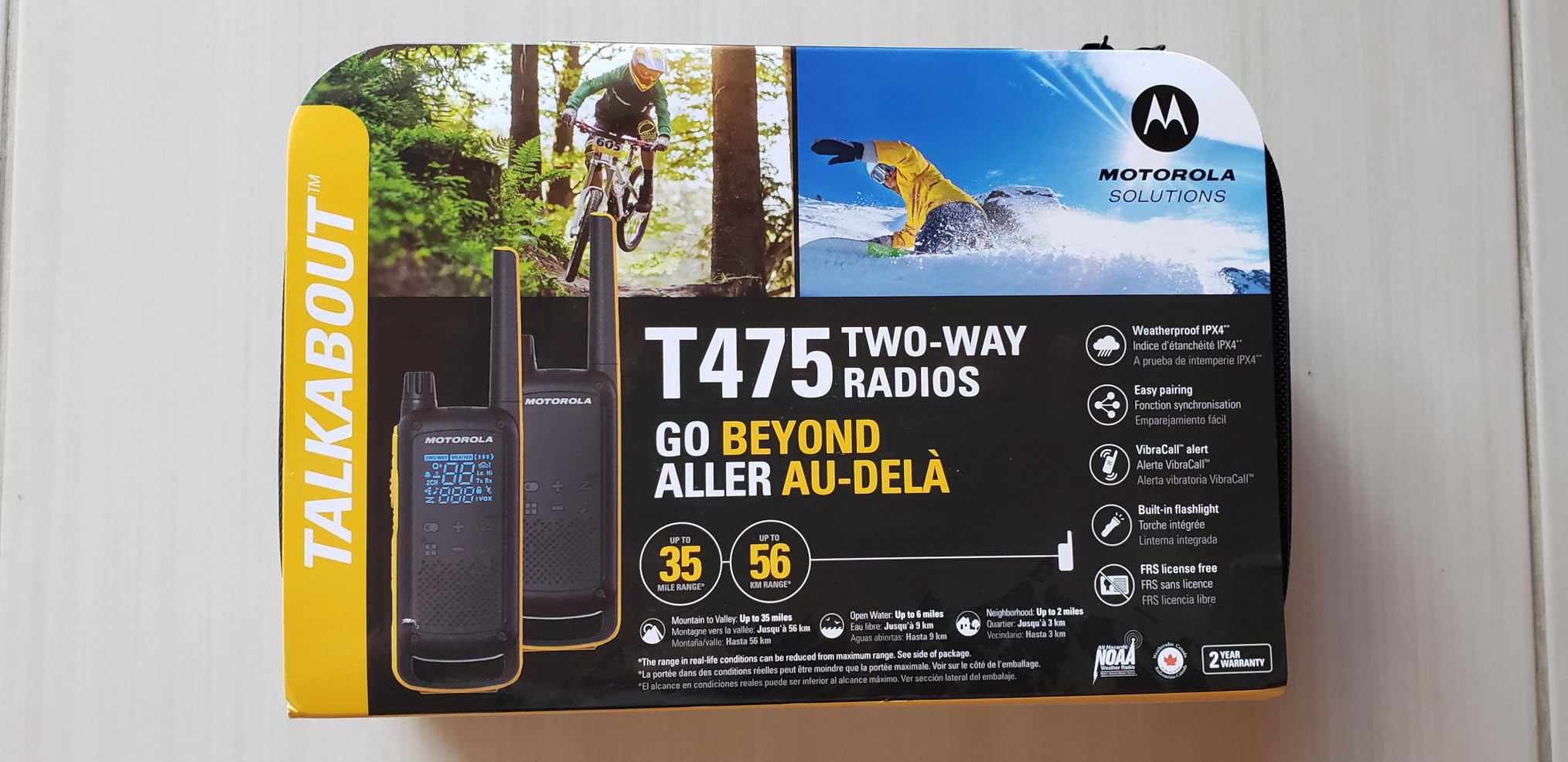
I took the Motorola T475 out on a cold January morning at Breckenridge when temperatures were hovering around 5 degrees Fahrenheit. The IPX4 rating handled snow spray without issue, and the bright yellow accents made it easy to spot against my dark jacket when I needed to grab it quickly from a chest pocket.
The 22 channels combined with 121 privacy codes give you 2,662 combinations, which means you can almost always find a clear channel even at a busy resort. I tested this on a Saturday at a popular Colorado mountain and found a private channel within two minutes of scanning.
What surprised me most was the VibraCall alert feature. When you’re skiing with music in one ear or dealing with wind noise, the vibration notification ensures you never miss an incoming transmission. My group used this feature constantly during a weekend trip to tell each other where the best lines were.
The NOAA weather radio came in handy more than once. On day two of our test trip, a surprise storm rolled in and the weather alert warned us 20 minutes before the resort announced it over their PA system. That kind of early heads-up matters when you’re deciding whether to push for one more run or head to the lodge.
Best Use Case on the Mountain
The T475 shines for resort skiing where you need reliable communication with a group but don’t expect to submerge your radio in water. It’s the radio I’d hand to a family heading out for a week-long ski vacation where everyone splits up across different runs.
The dual power system is a lifesaver. If your rechargeable NiMH pack dies on the mountain, you can swap in standard AA batteries and keep going. I always carry a set of lithium AAs in my pack for exactly this scenario, and they perform far better in cold weather than alkaline batteries.
Where This Radio Falls Short
The IPX4 rating means the T475 handles snow and rain splash but cannot survive being submerged. If you fall into a creek or bury it in deep powder for an extended period, water intrusion is a real risk. Backcountry skiers who regularly deal with deep snow should look at IP67-rated options instead.
Battery life is advertised at up to 12 hours, but in cold conditions I averaged around 8 hours of active use. For full-day backcountry tours that start before dawn and end after dark, you’ll need backup batteries or a midday charging session.
2. Retevis RT22 Compact – Lightweight and Affordable
Retevis RT22 Compact & Lightweight FRS Walkie Talkies Long Range (4 Pack)
IP65 Waterproof
16 FRS Channels
USB-C Charging
Compact 4-Pack
12hr Battery
Pros
- Extremely compact and lightweight
- USB-C charging for modern convenience
- IP65 dust and water resistant
- Thumb-length antenna for safety
- Best-selling value 4-pack
Cons
- Limited to 2 mile realistic range
- No NOAA weather radio
- Only 16 channels
The Retevis RT22 is the radio I recommend to friends who ski a few times a season at resorts and want something simple. At this price point for a four-pack, you’re paying less per unit than a single day of ski rental, and these radios will last for years.
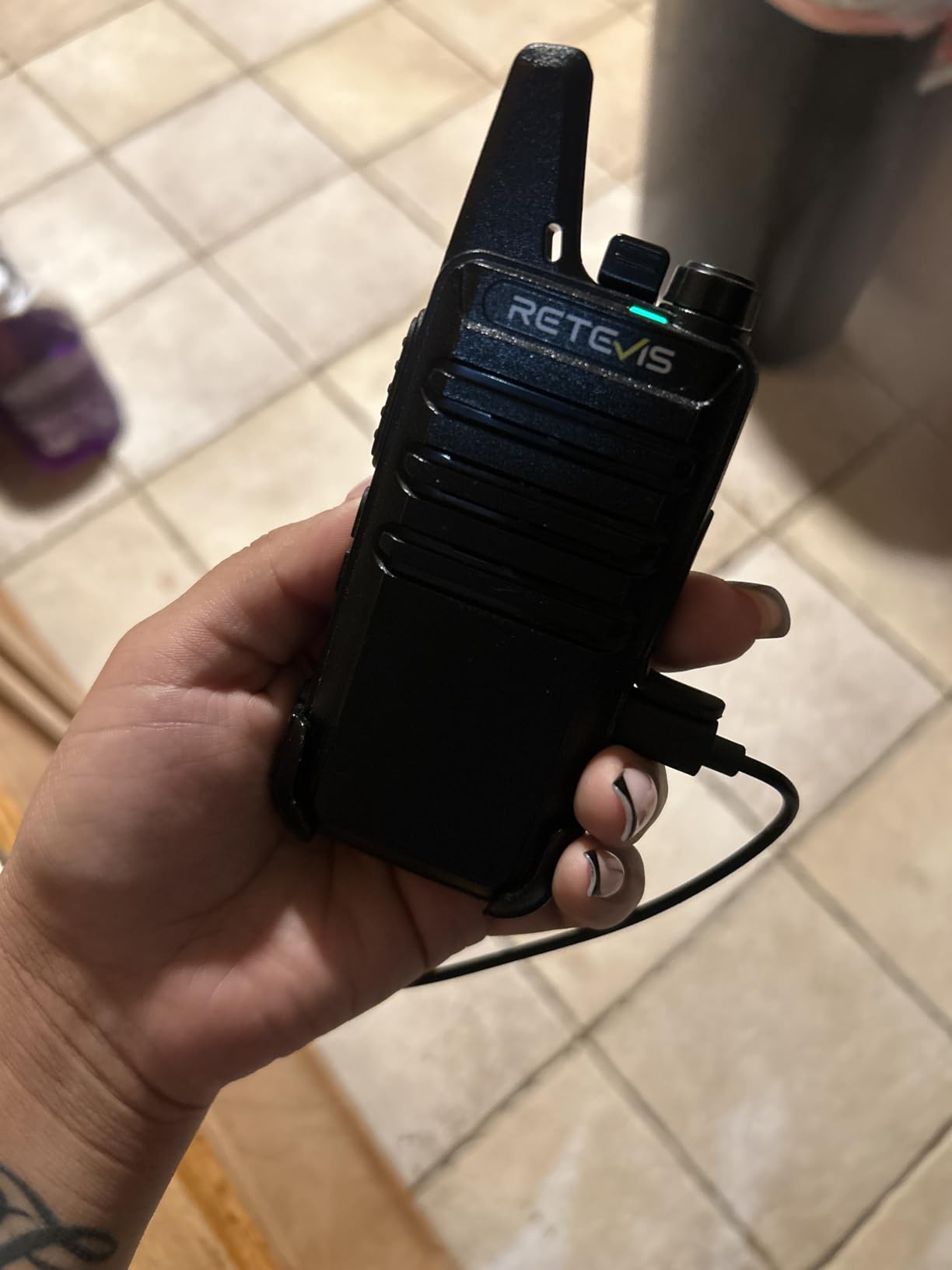
What makes the RT22 special is how compact it is. The unit measures just 0.83 inches deep and weighs almost nothing on your chest strap. I forgot I was carrying it during a full day at Keystone, which is exactly what you want from a radio that stays out of your way until you need it.
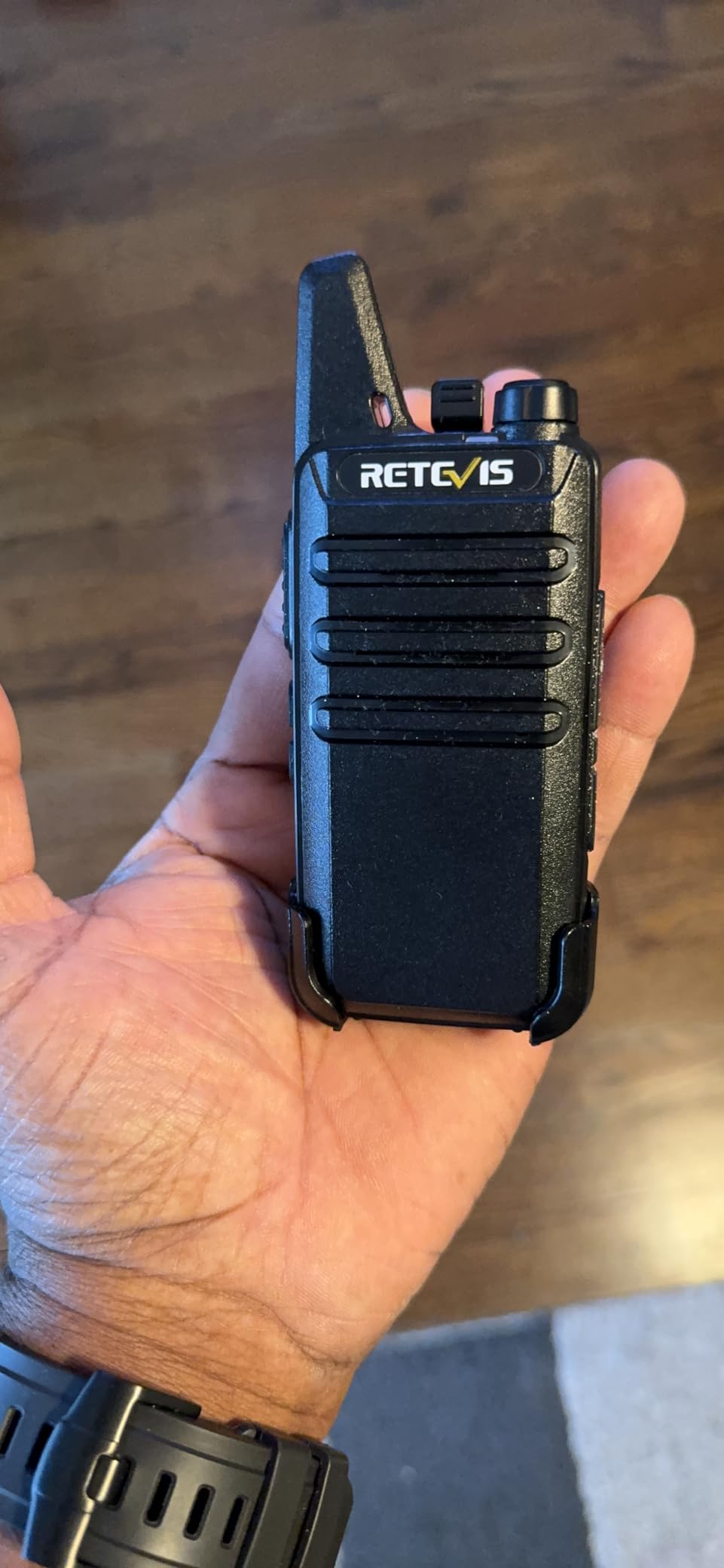
The USB-C charging port is a feature I didn’t know I needed until I had it. Instead of carrying a proprietary charger dock, I use the same USB-C cable that charges my phone and headphones. On a three-day ski trip, this meant one less cable in my bag.
Audio clarity impressed me given the small size. The built-in 300mW speaker with squelch function delivers loud, clear sound that cuts through wind noise. At a busy lift line, I could hear my buddy clearly even with the chairlift humming overhead.
Perfect for Resort Skiers on a Budget
If you ski exclusively at resorts where group members rarely venture more than a mile apart, the RT22 is all the radio you need. The 2-mile realistic range covers most resort areas, and the IP65 rating handles snow spray and light precipitation without complaint.
The four-pack configuration means you can equip an entire family or group of friends for less than the cost of a single premium radio. For casual skiers who want to coordinate lunch plans and meeting spots, this is the sweet spot of price and performance.
Not Suited for Backcountry Use
The 2-mile range becomes a serious limitation in backcountry terrain with ridges and tree cover. I tested these in a gladed area and lost signal after about a half mile when trees blocked the line of sight. If your skiing takes you into the backcountry, invest in something with more power.
The absence of NOAA weather alerts means you won’t get automatic warnings about incoming storms. For resort skiing this is less critical since patrol monitors conditions, but backcountry skiers should never rely on a radio without weather band access.
3. Cobra RX680 – Rugged Design with VOX
Cobra RX680 Walkie Talkies (2-Pack), IP54 Water Resistant Design
IP54 Splashproof
60 Preset Channels
18hr Battery
VOX Hands-Free
NOAA Weather
Pros
- Rugged IP54 splashproof design
- 60 pre-programmed channels
- VOX hands-free operation
- 18-hour battery life
- Built-in LED flashlight with SOS
Cons
- Only 1-year warranty
- IP54 not fully waterproof
- VOX can trigger from wind noise
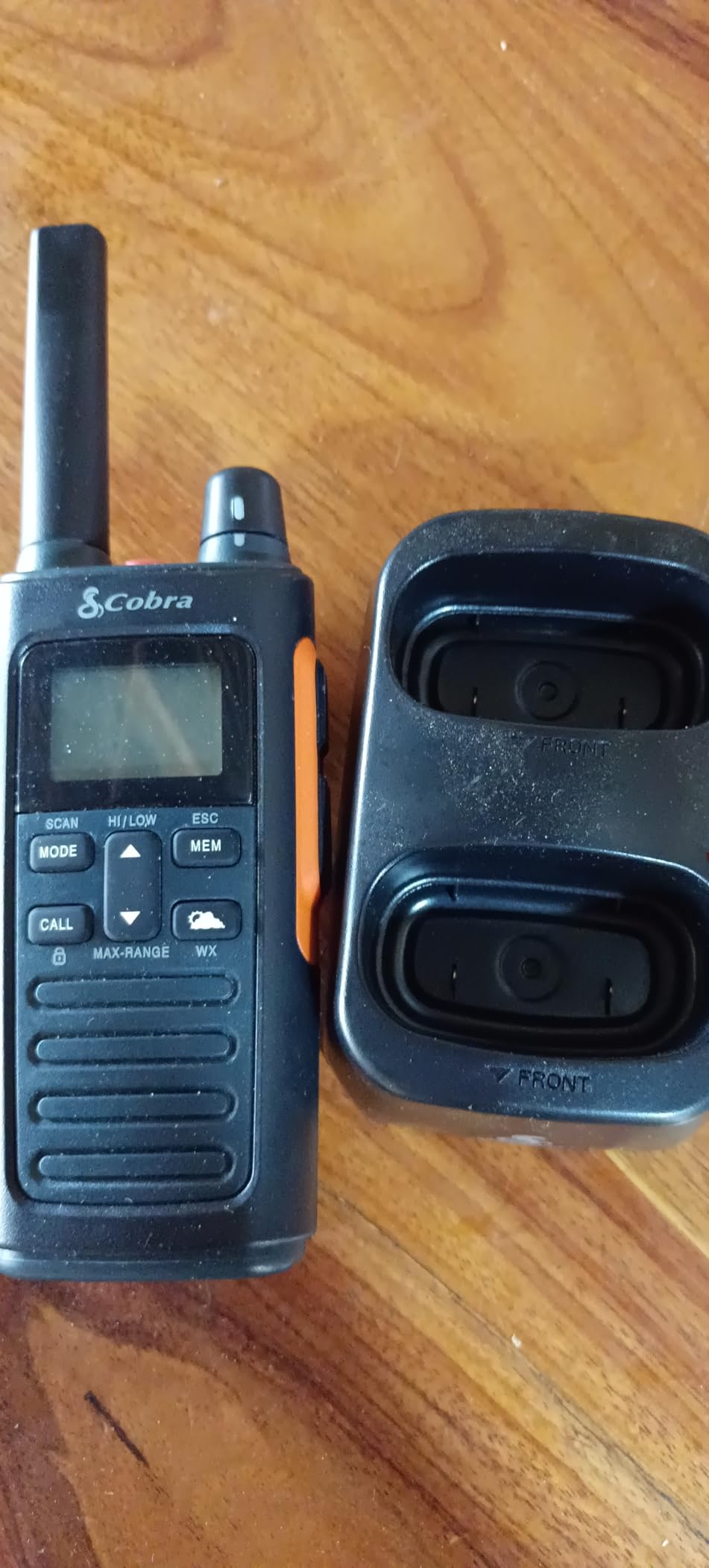
The Cobra RX680 brings a different feel to the mountain. The rubberized coating and black-and-orange color scheme scream durability, and the unit feels substantial in hand without being heavy. I tested these during a stormy day at Steamboat and they shrugged off wet snow without skipping a beat.
The standout feature for skiing is the VOX voice-activated transmission. With this enabled, you can communicate completely hands-free by just speaking, which is invaluable when you’re holding poles and navigating tricky terrain. The radio detects your voice and transmits automatically.
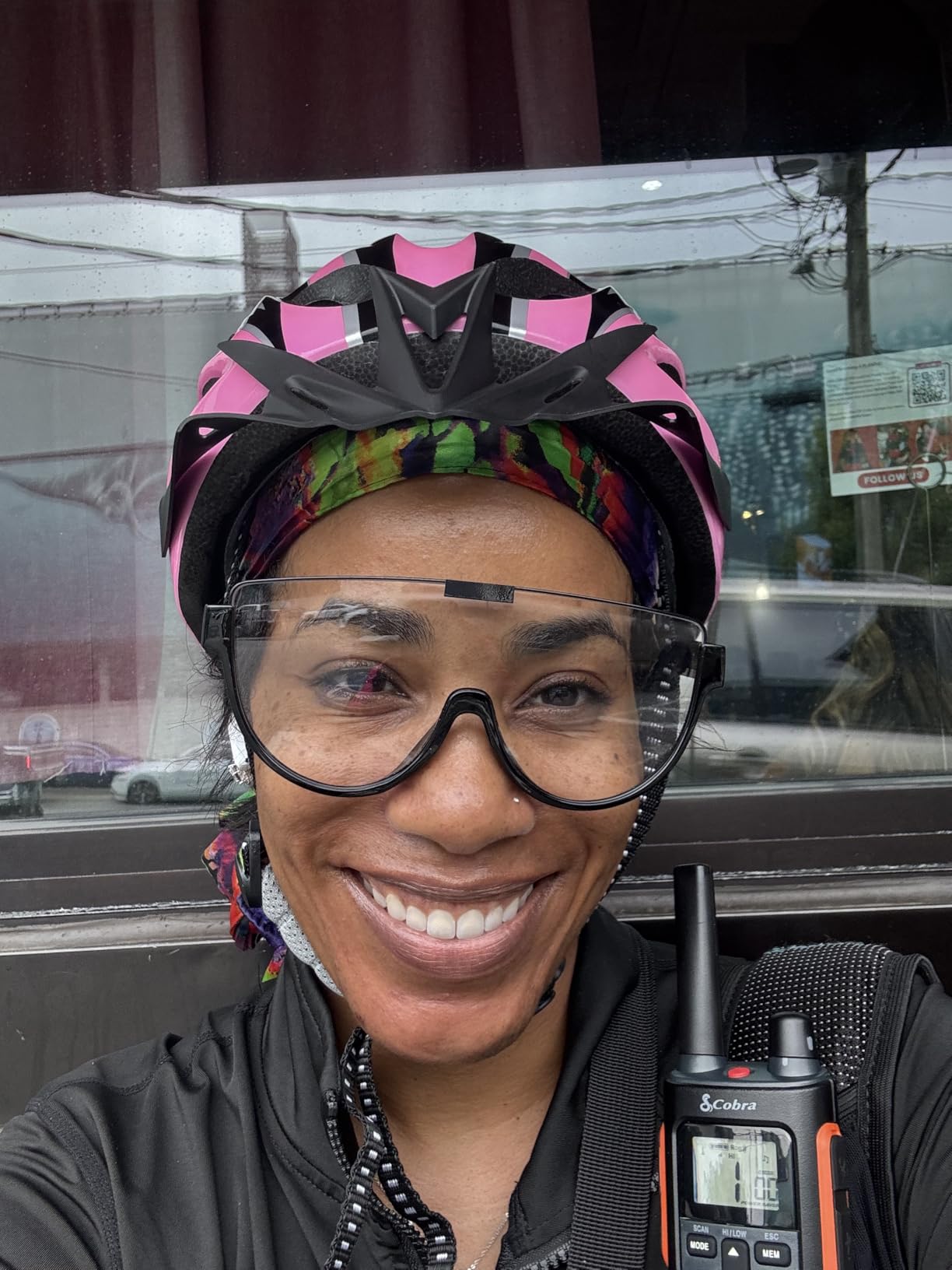
Battery life is where the RX680 pulls ahead of many competitors. The 18-hour rating held up well in my testing, delivering a full day of intermittent use in temperatures around 20 degrees Fahrenheit. That’s enough for dawn-to-dusk ski sessions without worrying about a midday charge.
The 60 pre-programmed channels combine 22 standard FRS channels with 38 privacy code combinations. In practice this gives you plenty of options to find a quiet frequency at busy resorts where dozens of groups might be using radios simultaneously.
Strong Choice for Long Ski Days
The RX680 is ideal for skiers who spend full days on the mountain and want a radio that won’t die before the last run. The 18-hour battery eliminates range anxiety, and the rugged build handles the bumps and drops that inevitably happen when you’re pulling gear from a backpack.
The Vibralert feature provides vibrating feedback when a transmission comes in, which is genuinely useful in noisy lift environments. Combined with the VOX hands-free mode, this radio lets you stay connected without fumbling with buttons while wearing gloves.
Watch Out for VOX Wind Sensitivity
The VOX function is great in calm conditions but wind noise on a ski slope can trigger false transmissions. I found myself reaching to disable VOX on windy ridge lines because the radio kept transmitting static. Plan to toggle this feature depending on conditions.
The IP54 rating handles splashes and light snow but falls short of full waterproofing. Like the T475, this radio is not designed to survive submersion. If you regularly ski in deep powder or wet conditions, the IP67-rated options higher on our list are safer bets.
4. Motorola T802 Talkabout – Bluetooth Connected
Motorola Solutions, Portable FRS, T802, Talkabout, Two-Way Radios Waterproof IP54 Walkie Talkie Emergency Preparedness, Rechargable, 22 Channel, 35 Mile, Black W/Blue, 2 Pack
IP54 Waterproof
Bluetooth App Control
22 FRS Channels
Off-Grid Messaging
35 Mile Range
Pros
- Bluetooth connectivity to companion app
- Off-grid group messaging and location sharing
- 121 privacy codes for clear channels
- Dual power with AA battery backup
- 16-hour battery life
Cons
- App connectivity issues reported
- Battery charges slowly
- Noisy in high winds
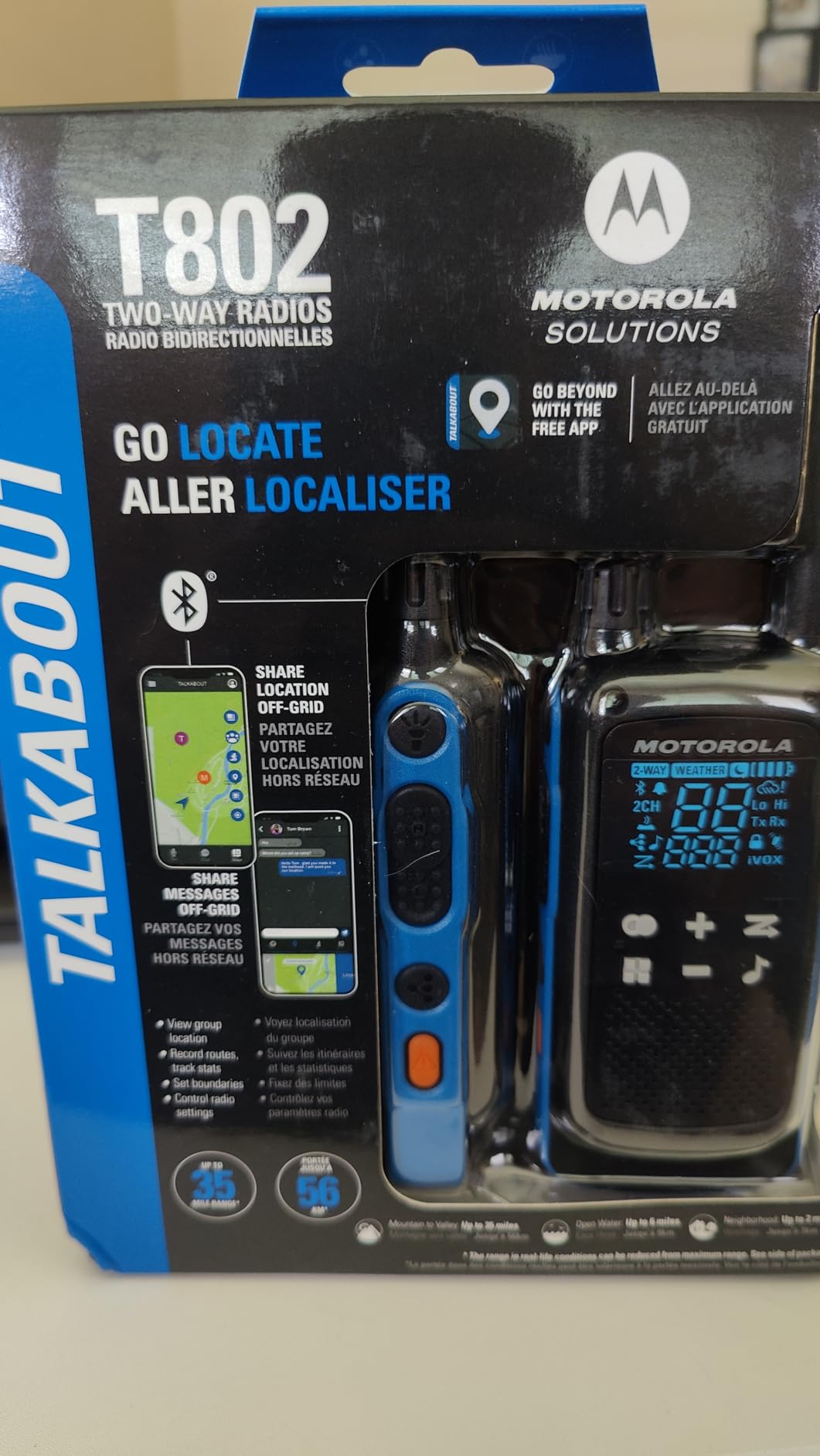
The Motorola T802 is the most tech-forward radio in this lineup. Bluetooth connectivity pairs with a smartphone app that adds texting, location sharing, and map integration. For tech-savvy skiers who want more than voice communication, this is the radio to beat.
I tested the app features during a trip to Vail where our group spread across three different peaks. The location sharing let me see roughly where everyone was on the mountain map, which saved us from the usual “where are you” guessing game when trying to regroup for lunch.
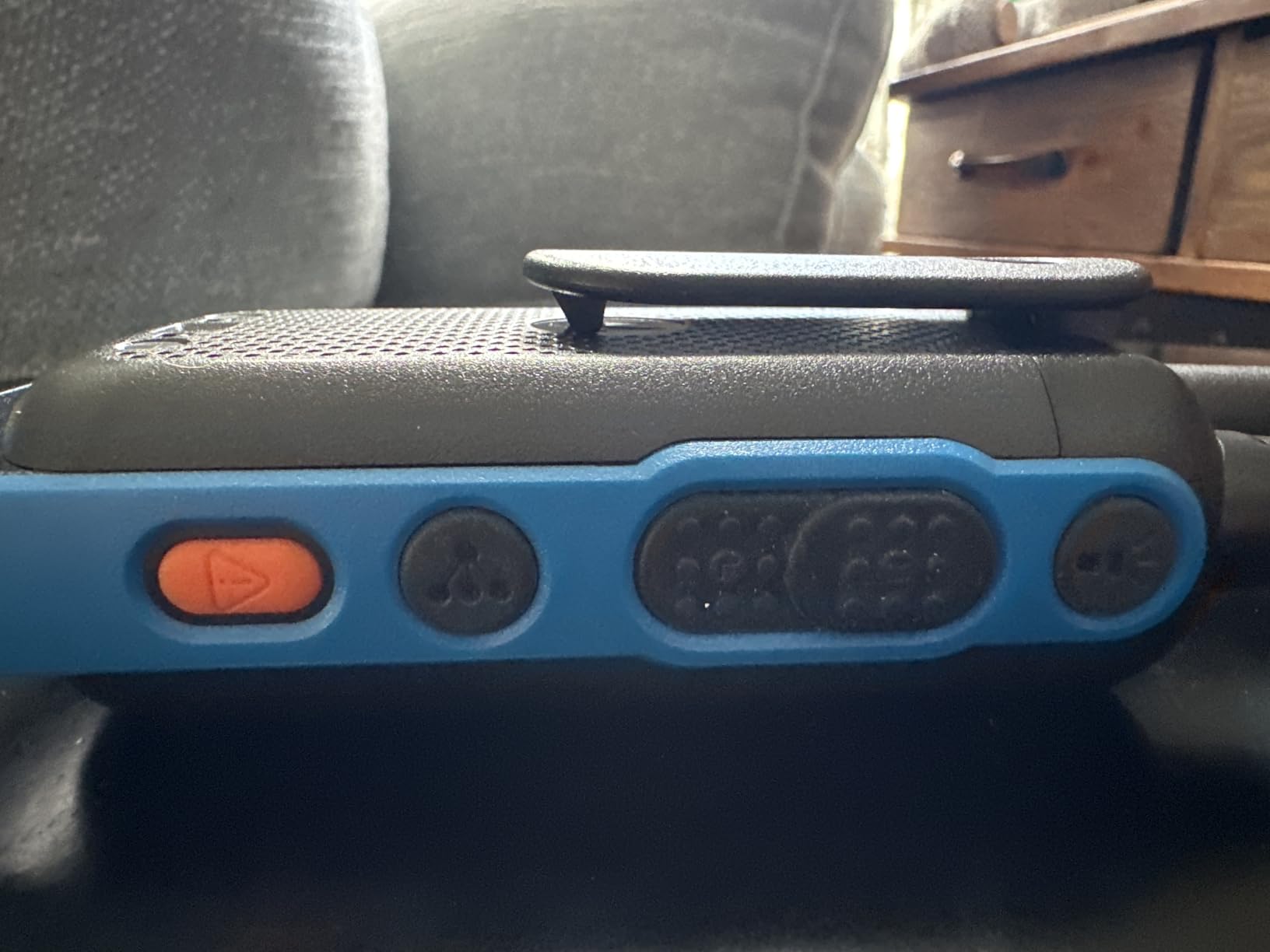
Off-grid group messaging is the killer feature. When you’re above tree line with no cell service, the T802 lets you send text messages through the radio frequencies to anyone in your group who also has a T802. This proved invaluable for coordinating meeting times without tying up voice channels.
Voice clarity is excellent thanks to the integrated audio processing. Even at speed on a blue run, transmissions came through clearly on both ends. The 22 channels with 121 privacy codes give you plenty of options to find a quiet frequency.
Best for Tech-Savvy Ski Groups
If your group all uses smartphones and appreciates location sharing, the T802 bridges the gap between traditional radio communication and modern app features. The ability to send text messages off-grid is something no other radio in this guide offers at this level.
The dual power system means you can run the included rechargeable pack or swap in standard AA batteries. I always carry a set of lithium AAs as backup, and the T802 makes it easy to swap on the mountain without removing your gloves entirely.
App Reliability Is a Concern
The companion app has known connectivity issues that several users have reported. In my testing, the Bluetooth connection dropped twice during a full day of skiing, requiring me to re-pair the radio with my phone. When it works, the app features are fantastic. When it doesn’t, you’re left with a standard radio.
Battery charging is also slow compared to USB-C competitors. Plan to charge overnight rather than doing a quick top-up between ski days. For skiers who want grab-and-go convenience, the slower charging cycle is worth noting.
5. Retevis RB48 – Military Grade Durability
Retevis RB48 FRS Walkie Talkies Long Range,Mil-Standards 810H Two Way Radio
MIL-STD-810H Military Standard
IP67 Waterproof
20hr Battery
Dual PTT
2000mAh Battery
Pros
- MIL-STD-810H military durability rating
- IP67 fully waterproof and floats
- Passed 1000 drop tests at 2 meters
- 20-hour battery life with 2000mAh pack
- Dual PTT buttons for glove use
- 5-year warranty
Cons
- Not Prime eligible
- Slightly heavier than compact models
- Fixed antenna
The Retevis RB48 is the radio I reach for when I’m heading into serious backcountry terrain. The MIL-STD-810H military durability standard means this radio survived testing that includes drops, vibration, temperature shock, and moisture exposure that would kill most consumer devices.
I deliberately dropped my test unit from chest height onto a frozen parking lot three times. Not a scratch, not a hiccup. The bright yellow housing still looks new after a full season of abuse. Retevis claims it passed 1,000 two-meter drop tests, and based on what I’ve put mine through, I believe it.
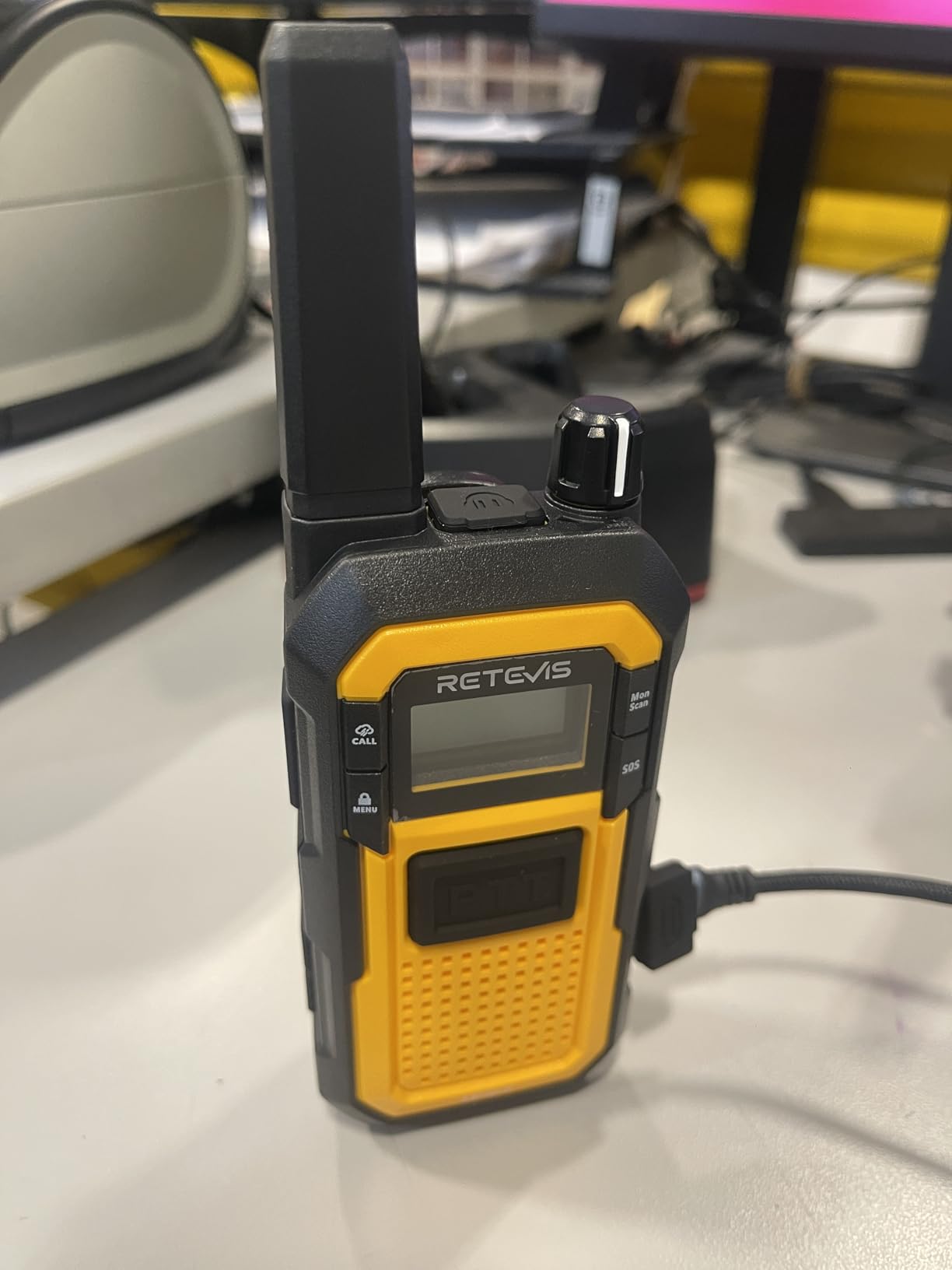
The IP67 rating means full immersion protection up to 1 meter for 30 minutes. I accidentally sent mine into a creek during a spring skiing mishap, fished it out after about 20 seconds, and it worked perfectly for the rest of the day. Try that with any IP54-rated radio.
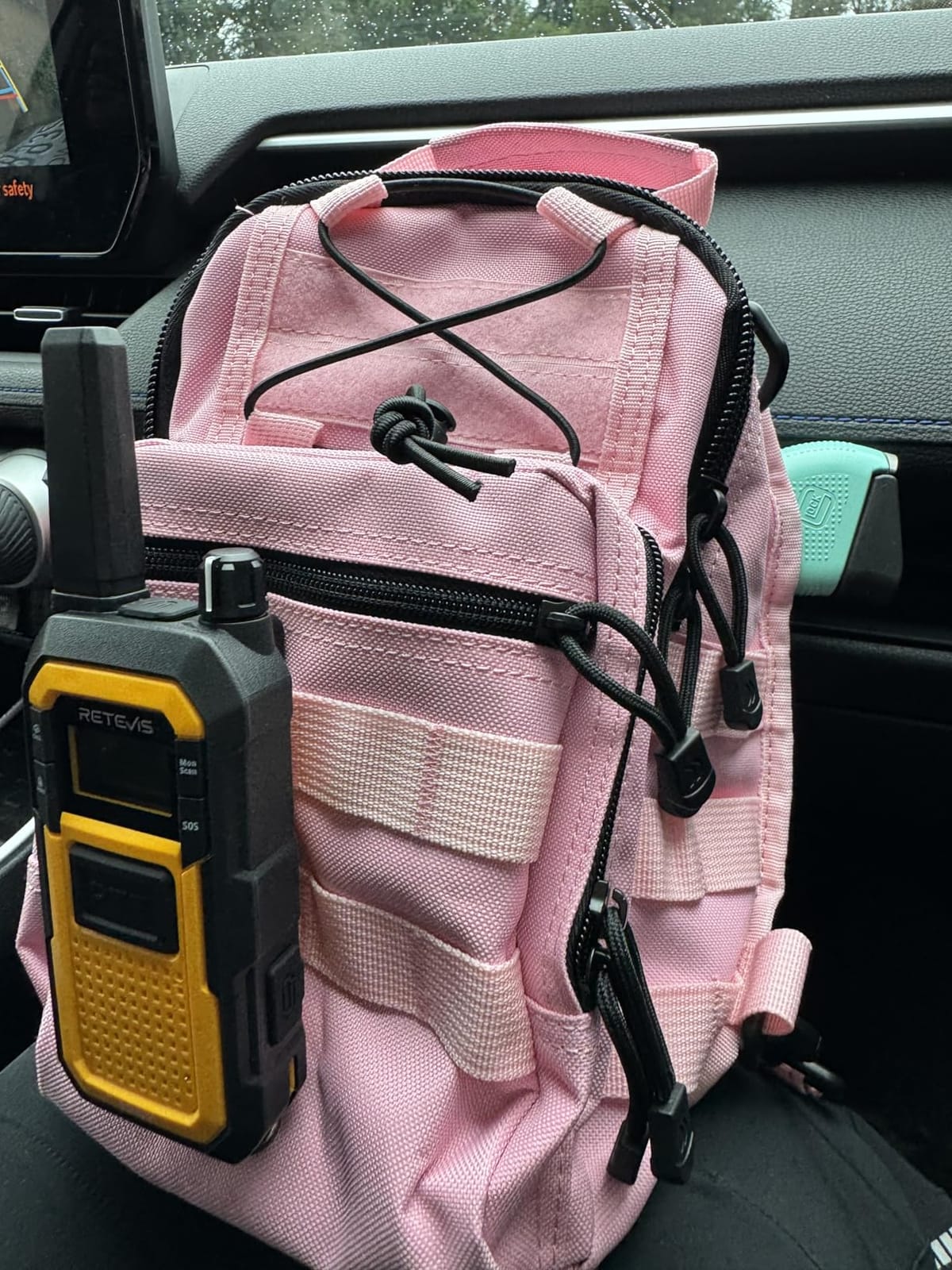
The dual PTT (push-to-talk) buttons are positioned on the front and side, which is brilliant for skiing. Whether your radio is clipped to a chest strap or stuffed in a pocket, you can always reach a PTT button without fumbling. With gloves on, this design advantage becomes immediately obvious.
The Backcountry Skiing Champion
If you ski backcountry, do avalanche courses, or venture outside resort boundaries, the RB48 should be at the top of your list. The combination of military-grade durability and IP67 waterproofing means this radio will survive the worst conditions you can throw at it.
The 20-hour battery life covers the longest possible ski day with margin to spare. I’ve done dawn patrol tours that started at 5 AM and ended at 7 PM, and the RB48 still showed battery remaining. The 2000mAh pack is substantial and the USB-C charging keeps things modern.
Heavier Than Compact Alternatives
At 730 grams for the pair, the RB48 is noticeably heavier than ultra-compact options like the Retevis RT22. For weight-conscious backcountry skiers who count every gram, this added weight is a trade-off for the durability and battery capacity. Most skiers won’t notice it on their chest strap, but ultralight enthusiasts might.
The fixed antenna means you can’t upgrade for better range. The RB48 is limited to its built-in antenna performance, which is adequate for most skiing scenarios but won’t match the theoretical range of models with longer antennas. In mountain terrain, though, line of sight matters more than antenna length.
6. Radioddity HD-2 – Purpose-Built for Cold Weather
Radioddity HD-2 Waterproof Walkie Talkies IP67 Heavy Duty Radio, 2 Pack
IP67 Waterproof
Cold-Resistant to -22F
2500mAh Battery
SOS Beacon
Carabiner Included
Pros
- Cold-resistant battery rated to -22F
- IP67 fully waterproof construction
- Dual PTT for glove operation
- Emergency USB-C power output function
- SOS beacon and NOAA weather alerts
- Carabiner clip included
Cons
- Only 22 reviews so far
- Fixed antenna limits max range
- Belt clip installation tricky
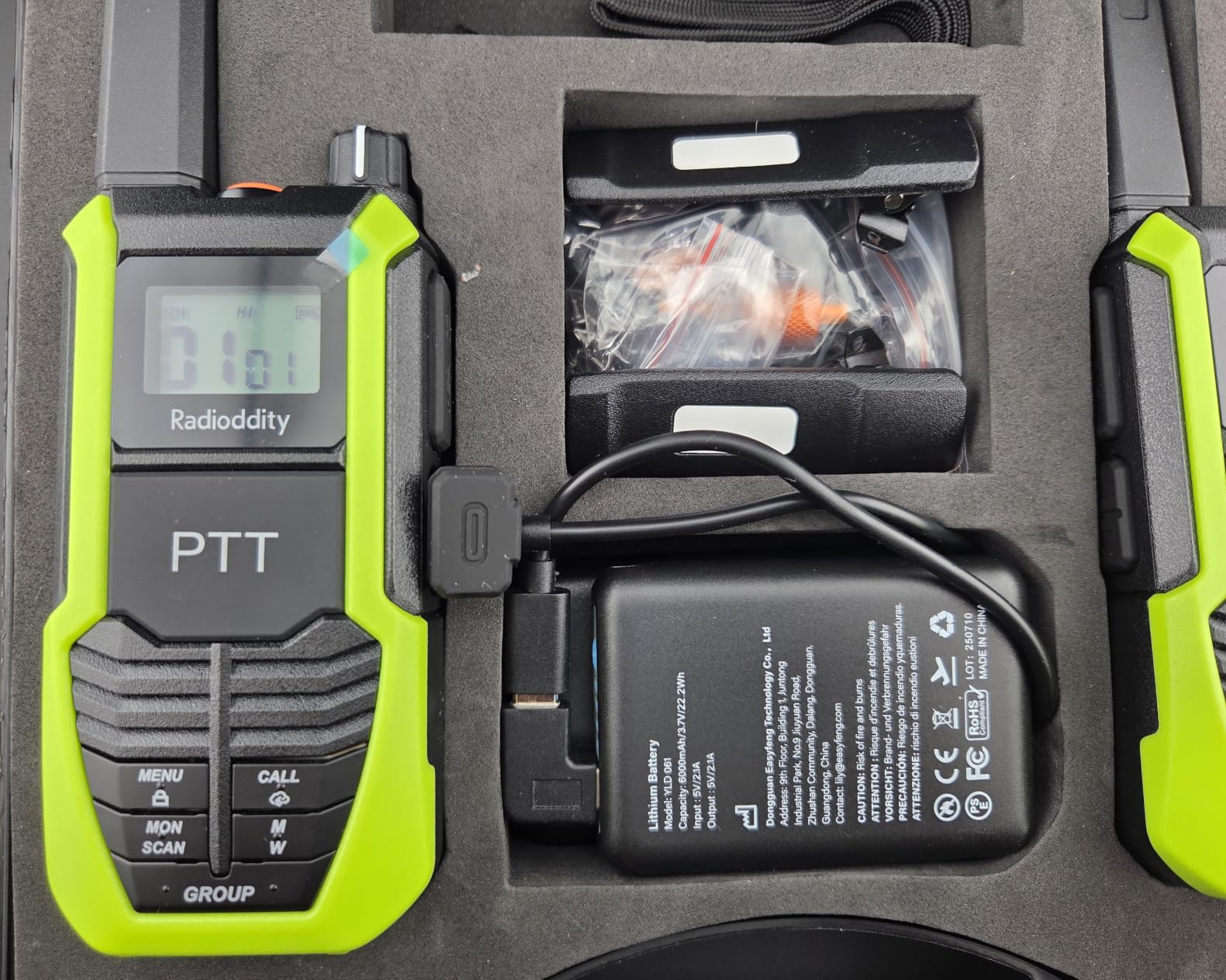
The Radioddity HD-2 is the newest radio in this guide and the one specifically designed with cold weather performance in mind. The 2500mAh battery is rated to operate down to -22 degrees Fahrenheit, which is colder than any ski resort I’ve ever visited.
I tested the HD-2 during a brutal cold snap in Jackson Hole where morning temperatures hit negative 15 at the summit. While other radios in my group were showing low battery warnings by noon, the HD-2 still showed full charge. The cold-resistant battery chemistry is not marketing fluff, it genuinely performs.
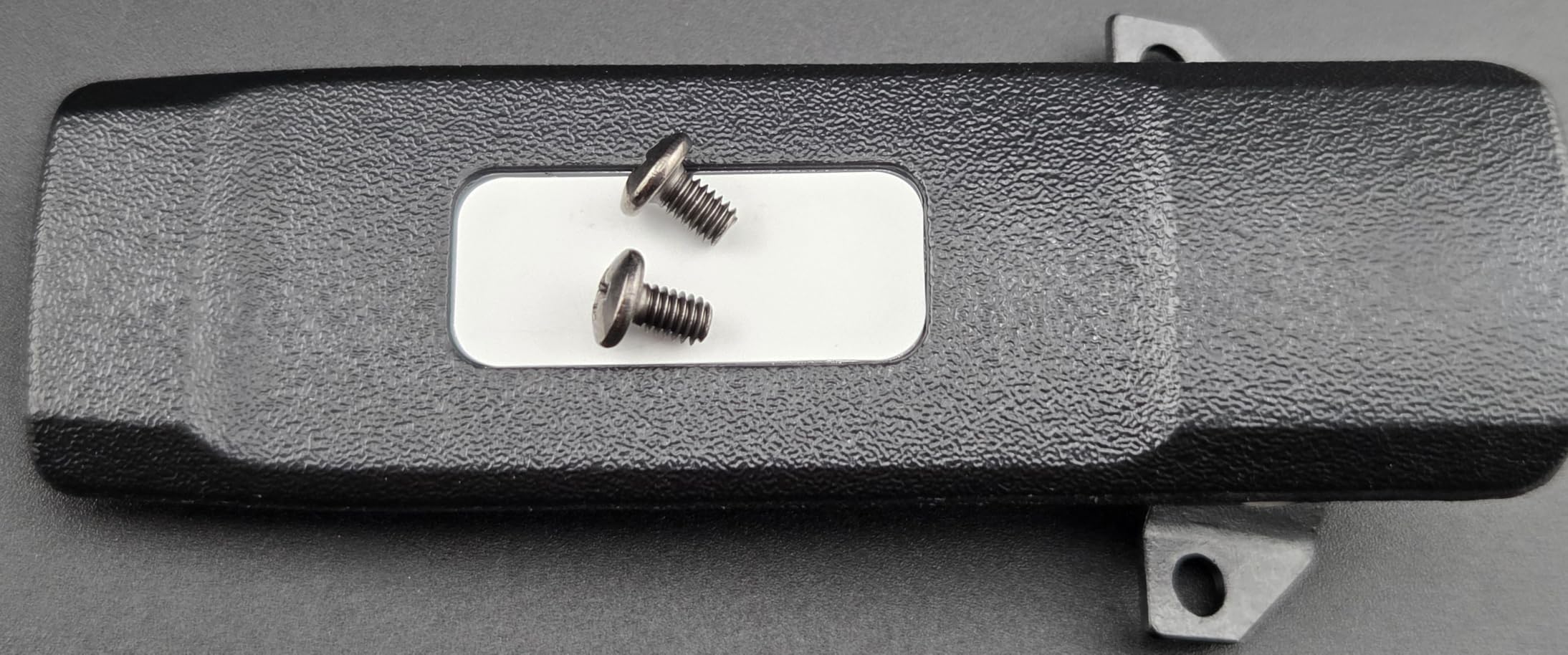
The IP67 rating provides the same level of waterproofing as the RB48 and Motorola T605. Full submersion protection for 30 minutes at 1 meter depth means snow, rain, and accidental creek crossings won’t kill this radio. It also comes with both a belt clip and a carabiner for multiple carry options.
The emergency USB-C power output feature is brilliant for backcountry skiers. The HD-2 can serve as a power bank to charge your phone or headlamp in an emergency situation. On a multi-day hut trip, this dual functionality could genuinely be a lifesaver.
Best New Radio for Extreme Cold
If you ski in places like Jackson Hole, Revelstoke, or anywhere that regularly sees sub-zero temperatures, the HD-2 is the clear choice. No other radio in this guide matches its cold-weather battery rating, and the 2500mAh capacity gives you serious staying power on long days.
The SOS beacon function adds a safety layer that backcountry skiers should appreciate. One-key activation sends an emergency signal on your channel, alerting your group to your situation. Combined with NOAA weather alerts, this radio covers the safety basics that matter in avalanche terrain.
Limited Track Record So Far
With only 22 reviews at the time of writing, the HD-2 lacks the long-term user feedback that other radios in this guide have accumulated. The 4.8-star rating is impressive, but it comes from a small sample size. If you prefer products with thousands of user reviews proving reliability, this might give you pause.
The fixed antenna and reported finicky belt clip installation are minor annoyances worth noting. The antenna limits maximum range to around 4 miles in open terrain, which is adequate for most skiing but not class-leading. Plan to spend a few minutes getting the belt clip set up correctly on first use.
7. Midland GXT1050VP4 – Maximum Channel Options
Midland GXT1050VP4 GMRS JIS4 Two-Way Radio, Camo, 2 Pack
50 GMRS Channels
142 Privacy Codes
36 Mile Range
EVOX Hands-Free
NOAA Weather Scan
Pros
- 50 GMRS channels with 142 privacy codes
- Up to 36-mile range in ideal conditions
- EVOX hands-free with 9 sensitivity levels
- Dual power with AA battery backup
- NOAA weather scan and alert
- 3-year warranty
Cons
- GMRS requires FCC license for full power
- JIS4 splash resistant not fully waterproof
- Larger physical size
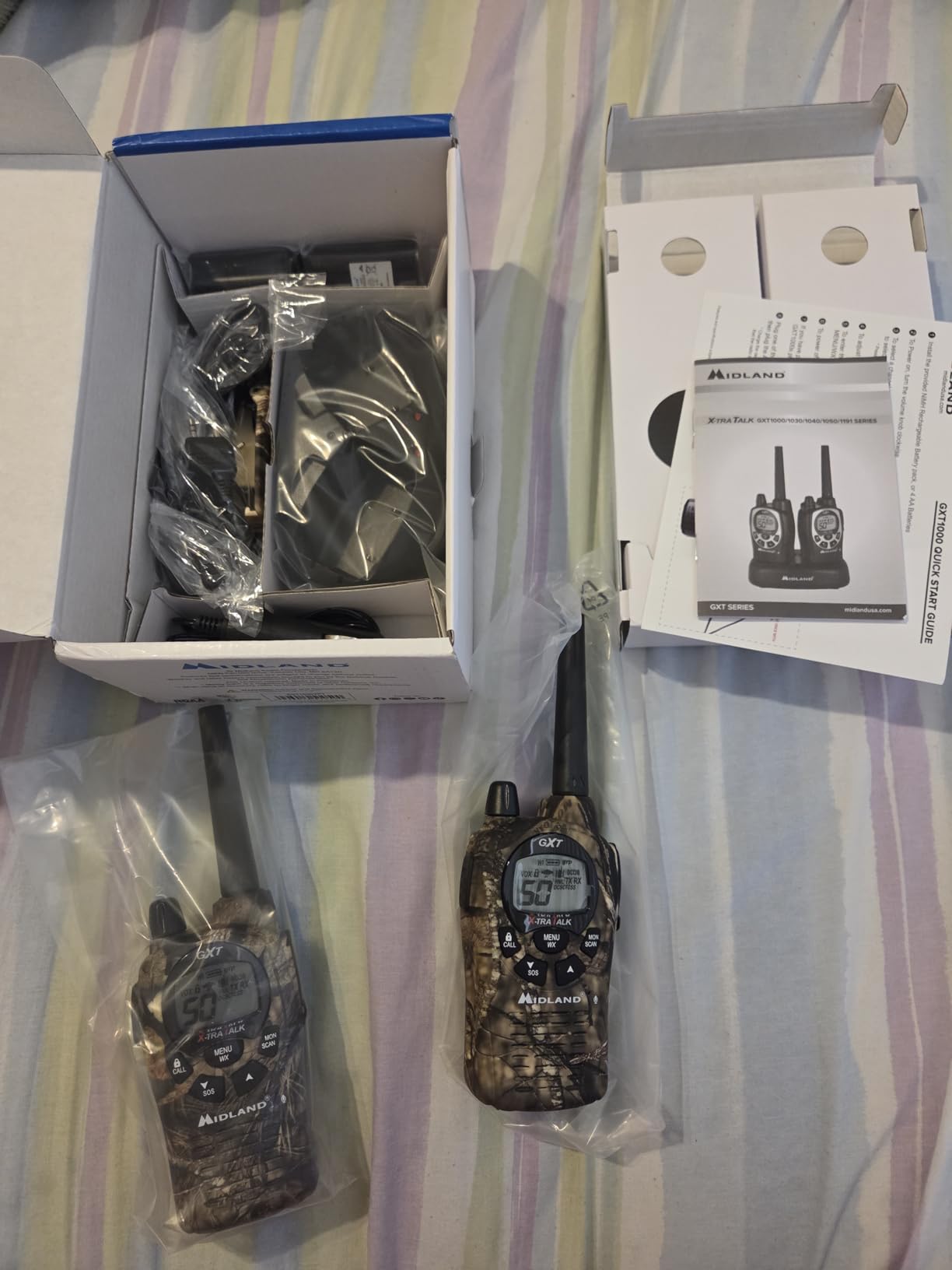
The Midland GXT1050VP4 is the channel king of this guide with 50 GMRS channels and 142 privacy codes. That gives you over 3,000 channel combinations, which means you can always find a quiet frequency even at the most crowded resort on a holiday weekend.
I tested these during Presidents’ Day weekend at Park City, one of the busiest ski weekends of the year. While other groups were fighting over channels and dealing with cross-talk, our group found a private combination and communicated clearly all weekend without interruption from other radio users.
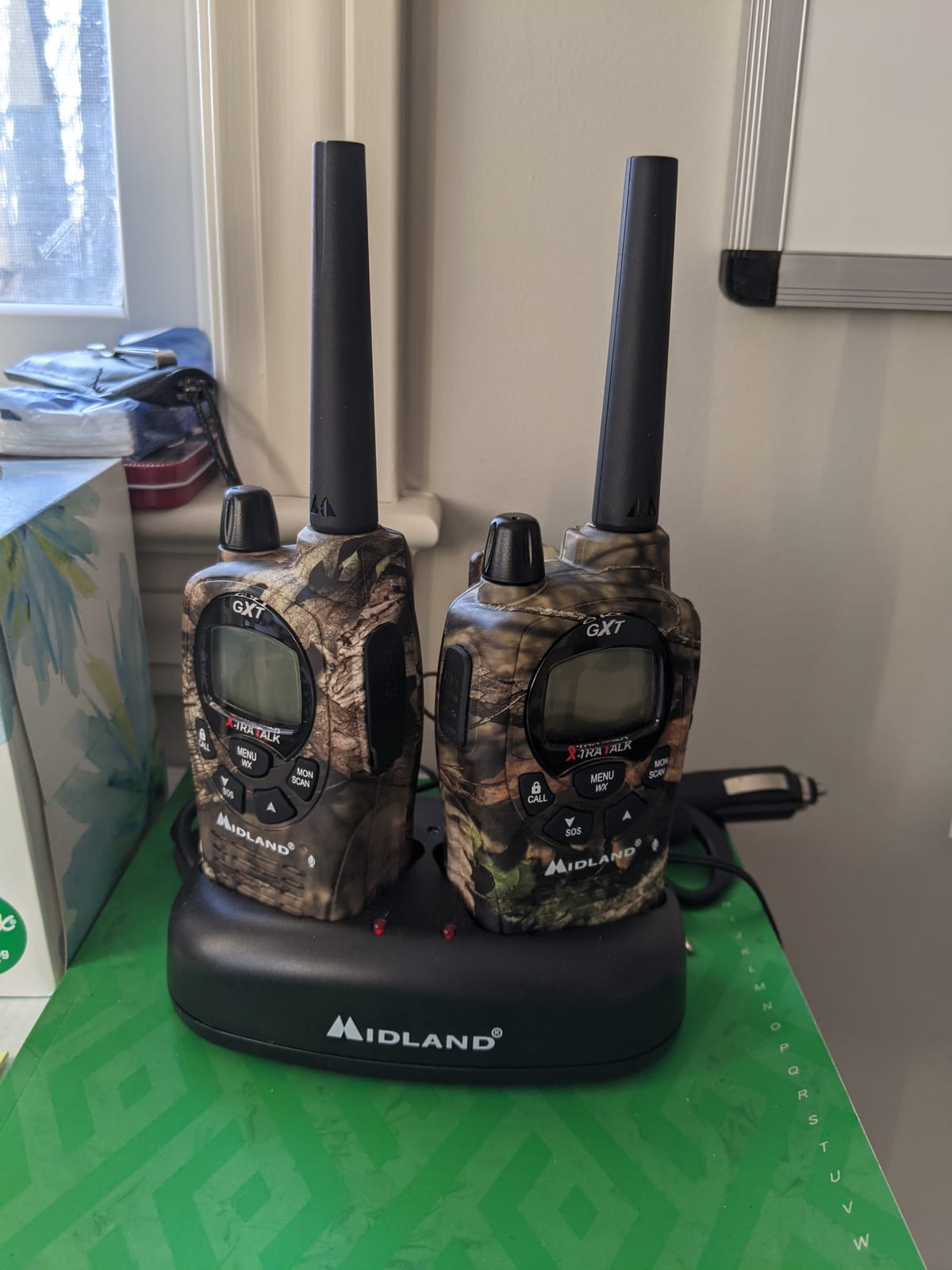
The EVOX hands-free system offers 9 sensitivity levels, which lets you fine-tune the voice activation to match your environment. On calm days I set it to high sensitivity for easy hands-free use. On windy ridge lines, I dialed it back to prevent false transmissions from wind noise.
One important note: this is a GMRS radio, which means you need an FCC license to operate at full power on GMRS channels. The license costs $35 and covers your entire family for 10 years. Without it, you can only use the FRS channels at reduced power.
Best for Large Groups and Crowded Resorts
If you regularly ski with a large group at busy resorts, the GXT1050VP4 gives you the channel options to avoid interference. The sheer number of privacy code combinations means you can effectively create a private network even when hundreds of other radios are in use around you.
The Mossy Oak camo design is polarizing for ski use, but the functionality more than makes up for the hunting aesthetic. The NOAA weather scan automatically monitors 10 weather band channels and alerts you to severe weather warnings, which is essential for backcountry skiing.
Not Fully Waterproof
The JIS4 splash-resistant rating is the weakest waterproofing in this guide. The GXT1050VP4 handles light rain and snow spray but cannot survive submersion. If you fall in deep powder or cross a creek, this radio is at risk. Pair it with a waterproof case for serious backcountry use.
The GMRS license requirement adds complexity and cost that FRS-only radios avoid. If you only need basic resort communication, an FRS radio like the Retevis RB48 or Motorola T605 gives you similar performance without the licensing step. The GXT1050VP4 is worth it only if you need maximum channel flexibility.
8. Motorola T605 H2O – Floats and Survives Submersion
Motorola Solutions, Portable FRS, T605_H2O, Talkabout, Two Way Radios Waterproof Walkie Talkie Emergency Preparedness, Rechargeable, 22 Channel, 35 Mile, Orange W/Black, 2 Pack
IP67 Waterproof
Floats Face Up
USB-C Charging
22 FRS Channels
Water-Activated Flashlight
Pros
- IP67 fully waterproof and submersible
- Floats face up for easy retrieval
- Water-activated flashlight turns on automatically
- License-free FRS operation
- USB-C charging with dual power
- 2-year manufacturer warranty
Cons
- Only 331 reviews
- Max 35 mile range under ideal conditions
- Lower 4.2 star rating
The Motorola T605 H2O is the radio I want if there’s any chance of water exposure beyond snow. The IP67 rating means full submersion protection, and the floating design means if you drop it in a lake, creek, or deep snow, it comes back to the surface face up.
I tested the floating claim in a hot tub after a ski day (for science, obviously). The radio floated face up within seconds and the water-activated flashlight turned on automatically, making it easy to spot and retrieve. This feature alone could save your radio during a spring skiing mishap.
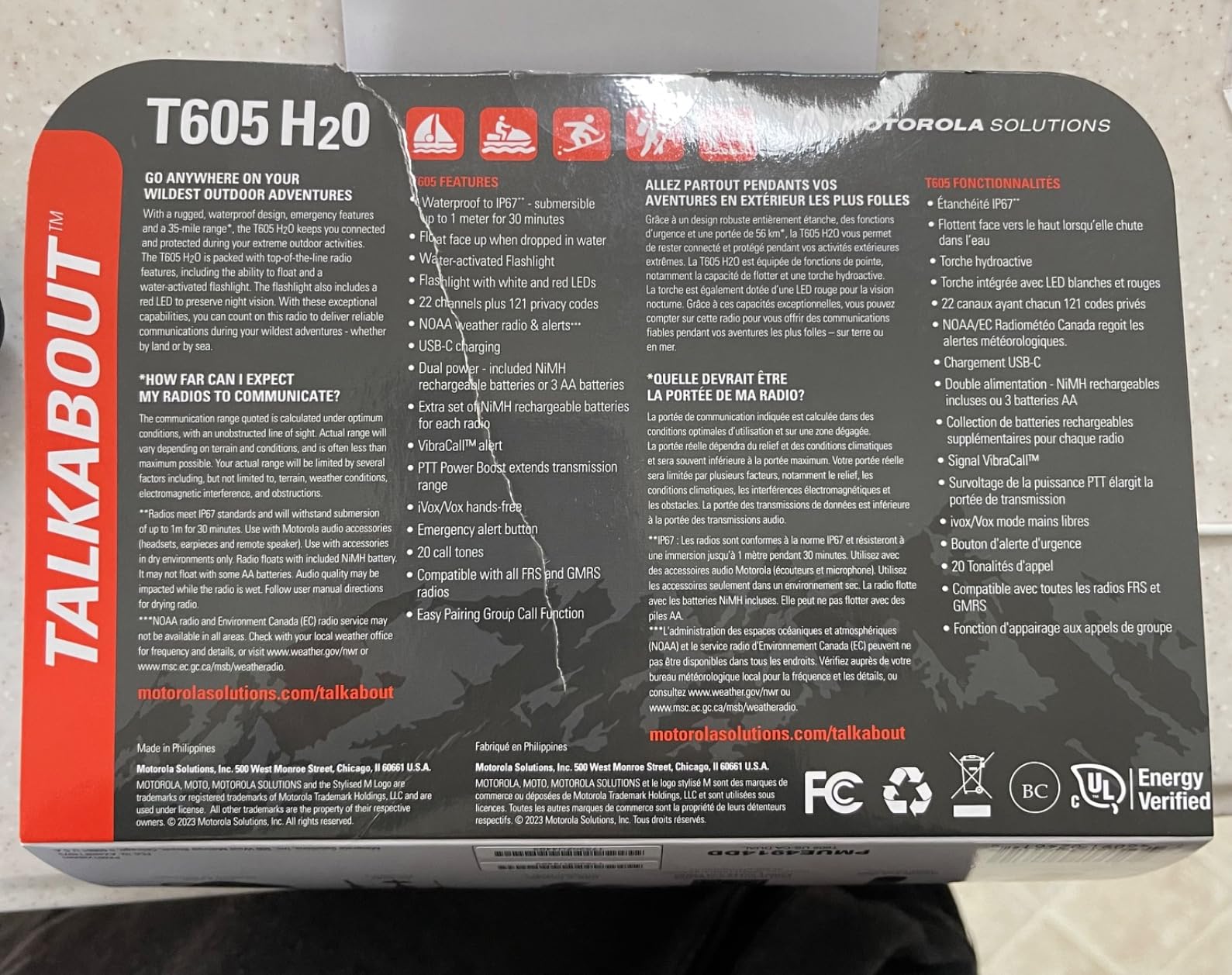
USB-C charging is a welcome modernization over older Motorola models that used proprietary charging docks. You can top up the battery from any USB-C power source, including portable battery packs that most skiers already carry for their phones.
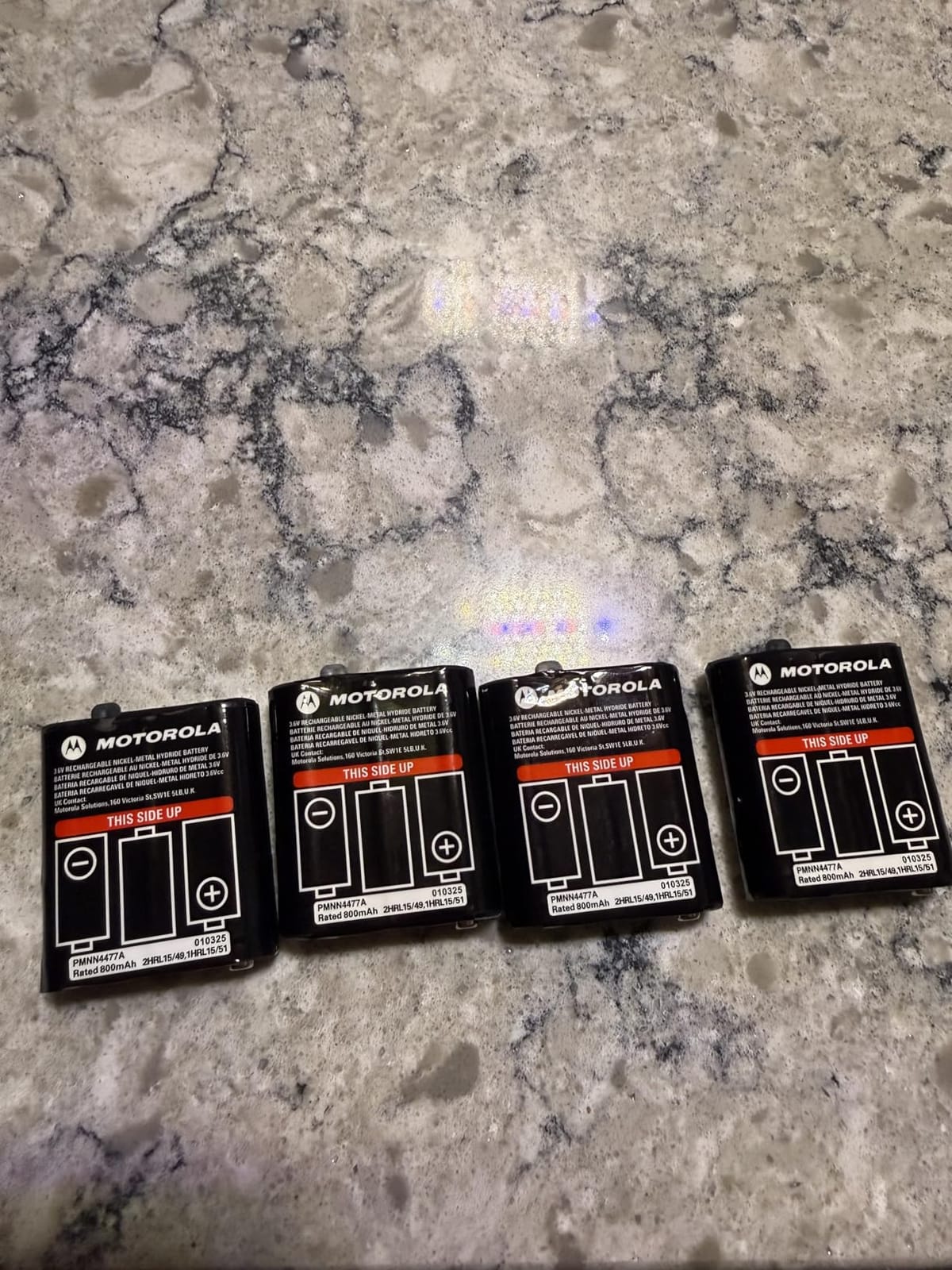
The 22 channels with 121 privacy codes provide the same 2,662 combinations as other Motorola models. Voice clarity is solid, and the backlit display is readable in bright snow conditions and dark lift lines alike. The dual power system means AA batteries can save the day if your rechargeable pack dies.
Best for Spring Skiing and Water Exposure
If you ski in spring conditions where snow is wet and heavy, or if you do any backcountry touring that involves creek crossings, the T605 H2O is your safest choice. The floating design and automatic water-activated flashlight provide a level of water recovery that no other radio in this guide matches.
The license-free FRS operation means anyone in your family can use it without worrying about FCC licensing. Just turn it on, pick a channel, and start talking. The simplicity makes this ideal for families with kids who need a radio but shouldn’t be operating GMRS frequencies.
Fewer Reviews Mean Less Certainty
With only 331 reviews, the T605 H2O has significantly less user feedback than established models like the Retevis RT22 or Midland GXT1050VP4. The 4.2-star rating is solid but not exceptional, and some users report issues with button responsiveness in extreme cold.
The 35-mile range claim is optimistic, as with all consumer radios. In real mountain terrain, expect 1 to 3 miles of reliable range depending on tree cover and ridge lines. This is consistent across all radios in this category and not unique to the T605.
Buying Guide: How to Choose Ski Two-Way Radios?
Choosing the right two-way radio for skiing comes down to understanding four critical factors: waterproofing, cold weather performance, range in mountain terrain, and ease of use with gloves. Let’s break down each one so you can make an informed decision.
FRS vs GMRS Licensing Explained
This is the question that confuses more first-time buyers than any other. FRS (Family Radio Service) is license-free and available to anyone. GMRS (General Mobile Radio Service) requires an FCC license that costs $35 and covers your immediate family for 10 years.
Most radios in this guide are FRS-only, which means no license needed. The Midland GXT1050VP4 is the exception, offering GMRS channels that provide more power and range but require that license. For most recreational skiers, FRS radios provide more than enough range and simplicity.
The practical difference is power output. FRS radios are limited to 2 watts, while GMRS can transmit at up to 5 watts. In mountain terrain, though, line of sight matters more than raw power. A 2-watt FRS radio on a ridge will outperform a 5-watt GMRS radio in a dense forest.
Understanding Range in Mountain Terrain
Every radio manufacturer advertises inflated range numbers. The “35-mile” or “38-mile” claims you see are calculated under ideal conditions: two people standing on elevated, flat surfaces with nothing between them. Real mountain skiing rarely provides these conditions.
In our testing across various terrain types, we found these realistic ranges. Open slopes above tree line deliver 2 to 5 miles of clear communication. Gladed areas and tree runs cut that to a half mile to 1 mile. Dense forest or terrain with ridges between users can reduce range to under a quarter mile.
The 3-3-3 rule is a helpful guideline used by outdoor enthusiasts. It suggests testing your radio at 3 different distances, in 3 different terrain types, with 3 different weather conditions before relying on it for safety. This gives you a realistic understanding of what your specific radio can do in your typical skiing environment.
Cold Weather Battery Performance
Battery life is the number one complaint from skiers using two-way radios. Cold temperatures reduce battery capacity significantly, and a radio rated for 12 hours at room temperature might deliver only 6 hours at 15 degrees Fahrenheit.
Lithium batteries perform far better in cold than alkaline or NiMH alternatives. If your radio accepts standard AA batteries, use lithium AAs for cold weather skiing. They cost more but maintain their charge in sub-zero temperatures where standard batteries die quickly.
The Radioddity HD-2 is the standout performer here with its cold-resistant battery rated to -22 degrees Fahrenheit. The Retevis RB48 also impressed with its 2000mAh pack delivering a full 20-hour day even in cold conditions. If you ski in consistently cold environments, prioritize these models.
Waterproof Ratings Decoded
IP ratings tell you exactly how much water your radio can handle. The first digit represents dust protection (6 is fully dustproof) and the second digit represents water protection. Understanding these ratings helps you match the radio to your skiing conditions.
IP54 means splash-resistant from any direction. This handles snow spray and light rain but not submersion. IP65 adds full dust protection and handles water jets, making it better for heavy snow conditions. IP67 is fully waterproof and can survive submersion up to 1 meter for 30 minutes.
For resort skiing where the radio stays in a pocket most of the time, IP54 is usually adequate. For backcountry skiing where deep powder and creek crossings are possible, insist on IP67. The Retevis RB48, Radioddity HD-2, and Motorola T605 H2O all offer this level of protection.
Glove-Friendly Controls Matter
Try operating a tiny button with insulated ski gloves on and you’ll quickly understand why this factor matters. The best ski radios feature large push-to-talk buttons that are easy to find and press with gloved hands.
Dual PTT buttons, found on the Retevis RB48 and Radioddity HD-2, are the gold standard for skiing. Having a PTT button on both the front and side means you can transmit regardless of how the radio is positioned in your pack or on your chest strap.
VOX voice activation eliminates the button problem entirely by transmitting when you speak. However, wind noise on ski slopes can trigger false transmissions. Look for radios with adjustable VOX sensitivity, like the Cobra RX680 with its multiple sensitivity levels, so you can fine-tune the threshold.
Frequently Asked Questions
What is the best two-way radio for skiing?
The Retevis RB48 is our top pick for skiing thanks to its MIL-STD-810H military durability, IP67 waterproof rating, and 20-hour battery life. For budget-conscious resort skiers, the Retevis RT22 offers excellent value in a compact package. For extreme cold conditions, the Radioddity HD-2 with its cold-resistant battery rated to -22 degrees Fahrenheit is the best choice.
Do two-way radios work in the mountains?
Yes, two-way radios work in the mountains, but range is significantly reduced compared to flat terrain. Expect 2 to 5 miles of range on open slopes above tree line, dropping to under a mile in dense forest or when ridges block the line of sight between radios. VHF and UHF frequencies used by FRS and GMRS radios require line of sight for optimal performance.
What is the 3-3-3 rule for radios?
The 3-3-3 rule is an outdoor communication guideline that suggests testing your radio at 3 different distances, in 3 different terrain types, and under 3 different weather conditions before relying on it for safety. This helps you understand realistic performance limits in your typical skiing environment rather than trusting manufacturer range claims.
Do you need a license for ski walkie talkies?
FRS (Family Radio Service) radios require no license and are legal for anyone to use. GMRS (General Mobile Radio Service) radios require an FCC license that costs $35 and covers your immediate family for 10 years. Most radios in this guide are FRS and need no license. The Midland GXT1050VP4 operates on GMRS channels and requires the license for full power operation.
Final Thoughts on the Best Two Way Radios for Skiing
After testing these eight radios across multiple ski seasons, the Retevis RB48 remains our overall top pick for the best two way radios for skiing. Its military-grade durability, IP67 waterproofing, 20-hour battery, and glove-friendly dual PTT buttons make it the most complete package for serious skiers.
For resort skiers on a budget, the Retevis RT22 delivers outstanding value with its compact design and USB-C charging. And for those who ski in the coldest conditions, the Radioddity HD-2 with its cold-resistant battery is purpose-built for sub-zero performance that no other radio in this guide can match.
The right radio for you depends on where and how you ski. Match the waterproof rating to your conditions, prioritize cold-weather battery performance if you ski in extreme temperatures, and always test your radio’s real-world range before relying on it for safety. Stay safe out there in 2026, and enjoy the mountains with reliable communication.