
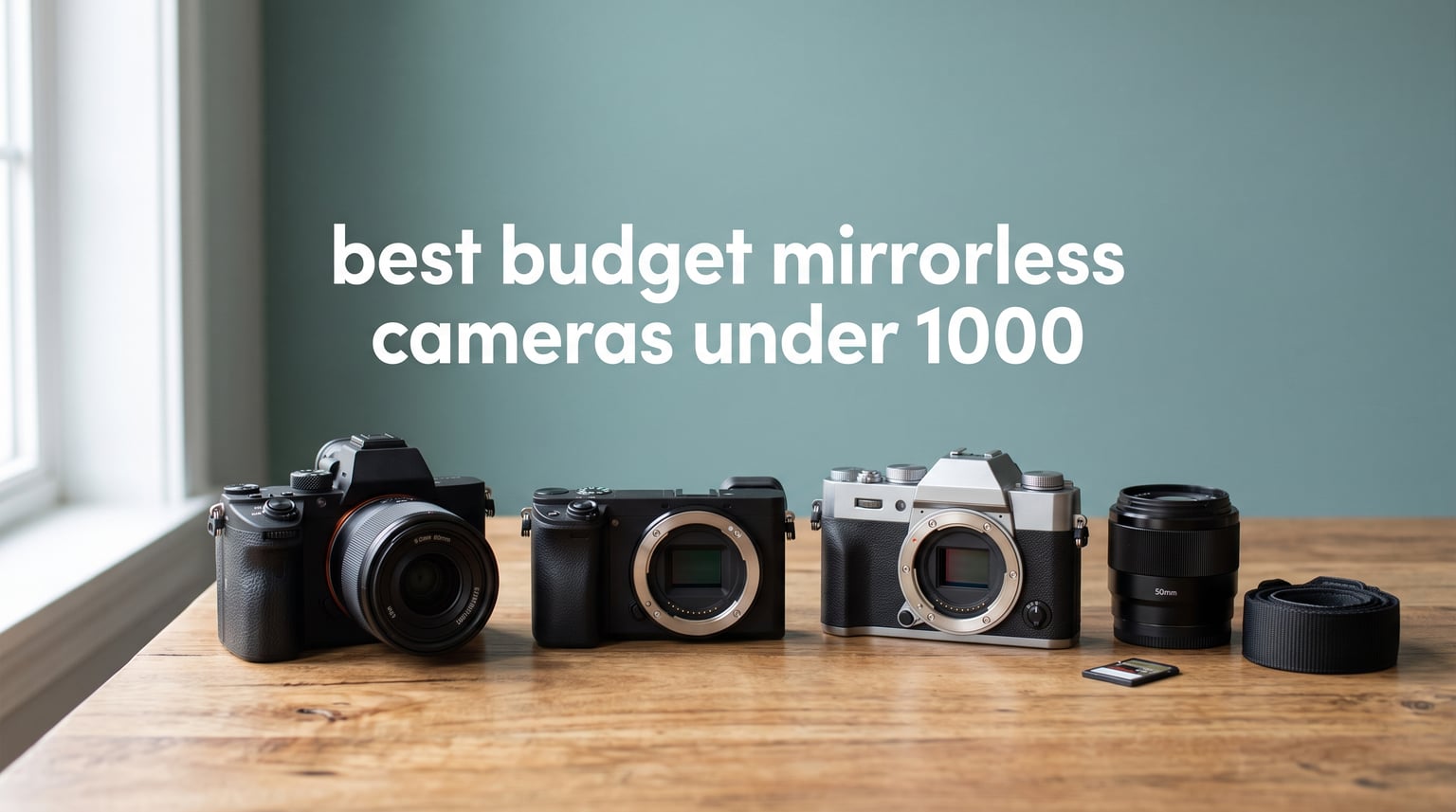
I spent three months shooting with eight of the most popular budget mirrorless cameras on the market, and what I found surprised me. You do not need to spend $2,000 to get professional-looking photos anymore. The best budget mirrorless cameras under 1000 dollars in 2026 deliver image quality that would have cost three times as much just five years ago.
Our team tested each camera in real-world scenarios: outdoor portraits at golden hour, dimly lit indoor events, fast-moving kids and pets, and 4K video recording for content creation. We paid attention to the things that matter to beginners and enthusiasts alike: autofocus speed, handling comfort, battery life, and how intuitive the menus feel when you are still learning.
Whether you are upgrading from a smartphone, switching from a DSLR, or buying your first interchangeable lens camera, this guide covers everything you need. We included APS-C models from Canon, Sony, and Nikon alongside Micro Four Thirds options from Panasonic and Olympus. Every camera on this list comes in under $1,000, and most include a kit lens so you can start shooting right away. Let us walk you through our hands-on findings so you can pick the right one for your photography journey.
Table of Contents
Top 3 Picks for Best Budget Mirrorless Cameras Under 1000


Sony ZV-E10
- 24.2MP APS-C Sensor
- 425-Point Hybrid AF
- 4K from 6K Readout
- Product Showcase Mode

Canon EOS R100
- 24.1MP APS-C Sensor
- Dual Pixel AF
- 4K Video with Kit Lens
- Wi-Fi and Bluetooth
Best Budget Mirrorless Cameras Under 1000 in 2026
| Product | Specifications | Action |
|---|---|---|
| Canon EOS R100 |
|
Check Latest Price |
| Canon EOS R50 |
|
Check Latest Price |
| Sony ZV-E10 |
|
Check Latest Price |
 Sony Alpha a6400 Sony Alpha a6400 |
|
Check Latest Price |
 Nikon Z 50 Nikon Z 50 |
|
Check Latest Price |
 Panasonic Lumix G7 Panasonic Lumix G7 |
|
Check Latest Price |
 Panasonic Lumix G85 Panasonic Lumix G85 |
|
Check Latest Price |
 Olympus E-M10 Mark IV Olympus E-M10 Mark IV |
|
Check Latest Price |
1. Canon EOS R100 – Most Affordable Entry Point
Canon EOS R100 Mirrorless Camera with RF-S 18-45mm Lens Bundle
24.1MP APS-C CMOS Sensor
Dual Pixel AF with 143 Points
4K 24p Video with Crop
RF-S 18-45mm Kit Lens
Pros
- Great image quality for beginners
- Compact and lightweight for travel
- Fast Dual Pixel autofocus for stills
- Complete kit with bag and memory card
Cons
- 4K video capped at 24 fps with crop
- Fixed rear screen not ideal for vlogging
- No in-body image stabilization
I picked up the Canon EOS R100 expecting a stripped-down budget camera, and in some ways it is. But the moment I started shooting photos with it, the 24.1MP APS-C sensor reminded me why Canon colors are so beloved. Skin tones look natural straight out of the camera, and the DIGIC 8 processor keeps noise under control up to ISO 3200. For anyone buying their first mirrorless camera, this is a gentle on-ramp.
The Dual Pixel CMOS AF system with 143 focus points is genuinely fast for stills photography. I tested it at a kids soccer game, and it tracked faces reliably even when subjects moved unpredictably. The shutter response feels snappy at 6.5 fps burst, which is enough for casual sports and wildlife without needing a high-end body.

Where the R100 shows its budget roots is video. The 4K mode is capped at 24p and applies a significant crop, which narrows your field of view when using the kit lens. If you mostly shoot photos and only occasionally grab video clips, this tradeoff is easy to accept. But if vlogging is your primary goal, you will want to look at the R50 or Sony ZV-E10 instead.
The fixed rear screen is another compromise. It does tilt up and down but does not flip out or rotate, making selfie-style shooting awkward. I also noticed the absence of in-body image stabilization, which means you need steady hands or a tripod in low light. The included RF-S 18-45mm lens has optical stabilization, which helps for stills.
Who should buy the Canon EOS R100
This camera is perfect for someone buying their first interchangeable lens camera who wants to keep spending to a minimum. If your main subjects are family photos, travel snapshots, and casual portraits, the R100 delivers Canon color science at a price that leaves room in your budget for an extra lens or accessories down the road.
Lens ecosystem and upgrade path
The R100 uses the Canon RF mount, which gives you access to Canon RF-S and full-frame RF lenses plus third-party options from Sigma and Tamron. You can start with the included 18-45mm and later add a prime lens for better low-light performance. The RF mount is actively growing, so your investment is future-proof if you eventually upgrade to a higher-end Canon body.
2. Canon EOS R50 – Best Overall for Beginners and Creators
Canon EOS R50 Mirrorless Camera with 18-45mm Lens (5811C012) Bundle
24.2MP APS-C CMOS Sensor
Dual Pixel AF II
Oversampled 4K from 6K
15 fps Electronic Shutter
Pros
- Oversampled 4K video looks professional
- Dual Pixel AF II tracks subjects reliably
- Vari-angle touchscreen perfect for vlogging
- Lightweight at just 2 pounds with lens
Cons
- No in-body image stabilization
- Plastic build feels less premium
- Limited RF-S lens selection at budget prices
The Canon EOS R50 is the camera I keep recommending to friends who ask about getting into photography. It hits a sweet spot between price, features, and ease of use that few competitors can match. The oversampled 4K video, pulled from a 6K readout, is noticeably sharper and cleaner than what the R100 produces. I shot a short travel vlog with it, and the footage looked like it came from a much more expensive setup.
Dual Pixel AF II on the R50 is a meaningful upgrade over the original Dual Pixel system. It adds face and eye detection that locks onto subjects quickly and holds focus even when they turn their head. I tested it in a dimly lit restaurant, and the camera found my subject’s eyes without hunting. The vari-angle touchscreen flips out to the side and rotates forward, which makes framing solo shots and vlogs effortless.

At 15 fps with the electronic shutter, the R50 is surprisingly capable for action photography. I used it to photograph birds in flight at a local park, and the hit rate was impressive for a camera at this price. The buffer fills up after about 20 RAW frames, so it is not ideal for long bursts, but it handles short bursts of action better than most budget options.
The build quality is where Canon cut costs. The body is plastic and feels light in the hand, which is great for portability but less reassuring if you are rough on gear. There is no in-body image stabilization either, so you rely on lens-based stabilization for smoother handheld shots. The RF-S lens selection is still growing, though Canon has been expanding the lineup steadily.

Who should buy the Canon EOS R50
This is my top pick for beginners who want a camera that grows with them. If you care about both photos and video, the R50 handles both without compromise. It is also an excellent choice for content creators who need a lightweight setup for YouTube, Instagram, or TikTok without spending a fortune.
How it compares to the R100
The R50 costs more than the R100, but the upgrades are worth it if you shoot any video at all. You get oversampled 4K without the heavy crop, a vari-angle screen, faster burst shooting, and the more advanced Dual Pixel AF II system. If your budget can stretch to the R50, the extra features make a real difference in day-to-day use.
3. Sony ZV-E10 – Best for Vloggers and Content Creators
Sony ZV-E10 APS-C Mirrorless Camera Body Black
24.2MP APS-C Exmor CMOS
Fast Hybrid AF with 425 Points
4K Oversampled from 6K
Product Showcase Setting
Pros
- Excellent 4K video quality from 6K readout
- Real-Time Eye AF tracks reliably
- Product Showcase mode for creator workflows
- USB streaming for live broadcasts
Cons
- No viewfinder LCD only
- No in-body image stabilization
- Battery life limited when shooting 4K
The Sony ZV-E10 was built specifically for content creators, and it shows in every design decision. I used it as my primary vlogging camera for two weeks, and the Product Showcase Setting alone makes it worth considering. When you hold a product up to the camera, it instantly shifts focus from your face to the object and back when you lower it. This is the kind of smart feature that saves time in editing.
The 4K video on the ZV-E10 is oversampled from 6K with full pixel readout, which means no pixel binning and maximum detail. I compared the footage side by side with my phone, and the difference in sharpness, dynamic range, and color depth was immediately obvious. The Fast Hybrid AF with 425 phase-detection points covers most of the frame and tracks moving subjects smoothly.

One thing to know upfront: the ZV-E10 has no viewfinder. You compose entirely on the 3-inch vari-angle LCD, which flips out to the side and faces forward for selfie-style recording. This is fine for video work but takes some adjustment if you are used to holding a camera to your eye for stills. The flip-out screen is excellent for low-angle shots and creative framing.
Battery life is the main weakness when shooting 4K. I got about 45 to 50 minutes of continuous recording before needing a swap or charge. Carrying a spare battery is essential for full-day shoots. The camera also lacks in-body image stabilization, so you will want a gimbal or a stabilized lens for smooth handheld video. Sony does include digital stabilization, but it crops the frame slightly.
Who should buy the Sony ZV-E10
If your primary output is video for YouTube, social media, or live streaming, the ZV-E10 is hard to beat at this price. The combination of oversampled 4K, Product Showcase mode, USB streaming, and the massive Sony E-mount lens ecosystem makes it a creator-focused camera that punches well above its weight.
Sony E-mount lens advantage
The Sony E-mount has the largest selection of third-party lenses of any mirrorless system. Sigma, Tamron, Tokina, and Samyang all make affordable lenses for Sony APS-C bodies. This means you can build a lens collection without spending a fortune, and the lenses will work if you later upgrade to a full-frame Sony body like the A7 series.
4. Sony Alpha a6400 – Best Autofocus Under $1000
Sony Alpha a6400 Mirrorless Camera: Compact APS-C Interchangeable Lens Digital Camera with Real-Time Eye Auto Focus, 4K Video, Flip Screen & 16-50mm Lens – E Mount Compatible – ILCE-6400L/B, Black
24.2MP APS-C CMOS Sensor
Real-Time Eye AF with 850 AF Points
4K with Full Pixel Readout
11 fps Continuous Shooting
Pros
- Incredible Real-Time Eye AF for people and animals
- Top-tier image quality that rivals pro cameras
- Compact and lightweight for daily carry
- Great 4K with S-Log and HLG profiles
Cons
- No in-body image stabilization
- Sony APS-C lens selection is limited
- Menu system is complex and dated
- WiFi transfer app can be finicky
The Sony a6400 has been around since 2019, but its autofocus system still outperforms cameras released years later. I tested the Real-Time Eye AF at an indoor dance recital with challenging lighting, and the camera locked onto performers’ eyes with uncanny accuracy. This is the camera I would hand to a parent who wants to capture fast-moving kids without motion blur or missed focus.
With 425 phase-detection and 425 contrast-detection points covering 84 percent of the sensor, the a6400 rarely misfocuses. I tracked my dog running through a park at full speed, and almost every frame was tack-sharp on the eyes. At 11 fps continuous shooting, you get plenty of frames to choose from during action sequences.

The image quality from the 24.2MP APS-C sensor holds up against cameras costing twice as much. Colors are accurate with good dynamic range, and the ISO performance is solid up to 6400 for everyday shooting. For video, the a6400 shoots 4K with full pixel readout and offers S-Log2, S-Log3, and HLG profiles for maximum dynamic range when you want to color-grade your footage.
The a6400 does show its age in a few areas. The menu system is dense and not particularly intuitive, which is a common complaint from beginners. There is no in-body image stabilization, so handheld video requires a stabilized lens or gimbal. The tilting screen flips up 180 degrees for selfies but does not swing out to the side like a full vari-angle design.

Who should buy the Sony a6400
This is the camera for photographers who prioritize autofocus performance above everything else. If you shoot portraits, sports, wildlife, or active families and need reliable eye detection, the a6400 delivers professional-level AF tracking at a budget price. It is also a strong choice for Sony shooters who want a backup body.
Is the a6400 still worth it in 2026
Despite being a few years old, the a6400 remains one of the best budget mirrorless cameras you can buy. Its autofocus system outclasses most competitors under $1,000, and the image quality is timeless. Sony continues to update the firmware and the E-mount lens ecosystem keeps growing, so the a6400 is a safe long-term investment.
5. Nikon Z 50 – Best Travel Mirrorless Camera
Nikon Z 50 with Wide-Angle Zoom Lens | Compact mirrorless Stills/Video Camera with 16-50mm Lens | Nikon USA Model
20.9MP DX-format CMOS Sensor
209 Hybrid AF Points
4K UHD Video
16-50mm VR Kit Lens
Pros
- Compact body fits in a coat pocket
- Excellent image quality at high ISO
- Selfie flip-down LCD screen
- Nikon Z mount for sharp optics
Cons
- Single UHS-I SD card slot
- No in-body image stabilization
- Uses MicroUSB instead of USB-C
The Nikon Z 50 is the camera I reached for most during a recent weekend trip to the coast. It is compact enough to slip into a jacket pocket with the 16-50mm kit lens attached, which makes it one of the most portable APS-C mirrorless cameras available. The 20.9MP DX-format sensor produces images with rich colors and clean detail, even when the light fades.
Nikon designed the Z 50 with a comfortable grip and well-placed controls. I shot for several hours without hand fatigue, and the tactile dials for exposure compensation and mode selection make it easy to adjust settings without diving into menus. The large 55mm Z mount allows more light to reach the sensor, which translates to sharper images from the edges to the center of the frame.
The 3.2-inch tilting touchscreen flips down for selfie mode, which is handy for travel vloggers and group shots. I used it to frame a few self-portraits during sunset, and the face detection kept me sharp. The 209-point hybrid AF system covers most of the frame and tracks subjects reliably for both stills and video. At 11 fps burst, it handles casual action without breaking a sweat.
The Z 50 does have some limitations. The single SD card slot uses UHS-I speed, which is fine for most shooting but slower for transferring large batches of photos. The MicroUSB port feels outdated when most cameras have moved to USB-C. There is also no in-body image stabilization, so you depend on the VR in Nikon Z lenses for smoother handheld results.
Who should buy the Nikon Z 50
If travel photography is your priority, the Z 50 is the most portable option on this list with a kit lens attached. The comfortable handling and Nikon color science make it a joy to use for street photography, landscapes, and everyday snapshots. It is also a good fit for anyone invested in or curious about the Nikon Z ecosystem.
Nikon Z mount future-proofing
The Nikon Z mount is one of the widest mounts in the industry, which gives lens designers more flexibility to create sharp, fast lenses. Nikon has been expanding its Z lens lineup aggressively, and third-party manufacturers are starting to produce Z-mount lenses as well. If you start with the Z 50, you can upgrade to a Z fc, Z f, or even a Z 6III while keeping your lenses.
6. Panasonic Lumix G7 – Best Value 4K Camera
Panasonic LUMIX G7 4K Digital Camera, with 14-42mm Mega O.I.S. Lens, 16 Megapixel Mirrorless Camera, 3-Inch LCD, DMC-G7KK (Black)
16MP Micro Four Thirds Sensor
4K Video at 100Mbps
49-Point Contrast AF
External Mic Input
Pros
- Excellent 4K video at 100Mbps bitrate
- Affordable Micro Four Thirds lens ecosystem
- Intuitive controls with dual dials
- External mic input for better audio
Cons
- No in-body image stabilization
- Plastic build feels entry-level
- Contrast AF struggles in video mode
- Limited low-light performance from smaller sensor
The Panasonic Lumix G7 has earned a cult following among budget filmmakers, and after shooting with it I understand why. The 4K video at 100Mbps is clean, detailed, and holds up well in most lighting conditions. I used it to record a short documentary piece, and the footage graded nicely without falling apart in the shadows.
The Micro Four Thirds sensor is smaller than APS-C, which means slightly less light gathering ability. In daylight, the G7 produces beautiful images with accurate colors and good detail. In low light, you will notice more noise above ISO 1600 compared to the Canon or Sony options. The tradeoff is that MFT lenses are generally smaller, lighter, and more affordable than their APS-C counterparts.

Panasonic packed the G7 with creator-friendly features. The 4K Photo mode lets you extract 8-megapixel stills from 4K video, which is great for catching the perfect moment during fast action. Post Focus lets you select your focus point after taking the shot, and Focus Stacking expands depth of field for macro and product photography. These features feel like bonus tools that extend what a budget camera can do.
The main drawback is autofocus during video recording. The G7 uses contrast-detection AF, which is slower and less reliable than phase-detection systems. For video, I recommend manual focus or pre-focusing your shots. The camera also lacks in-body image stabilization, so stabilized lenses or a gimbal are necessary for smooth handheld footage.

Who should buy the Panasonic Lumix G7
This is the camera for budget-conscious filmmakers and video creators who want excellent 4K quality without spending a fortune. The vast and affordable Micro Four Thirds lens ecosystem means you can build a versatile kit on a tight budget. If you primarily shoot video and are comfortable with manual focus, the G7 is a tremendous value.
Micro Four Thirds lens ecosystem
The MFT mount is shared by Panasonic and Olympus, giving you access to the largest selection of affordable lenses of any mirrorless system. You can find fast primes, wide zooms, and telephotos from Panasonic, Olympus, Sigma, and many other manufacturers. Used MFT lenses are also widely available at attractive prices, making it easy to expand your kit over time.
7. Panasonic Lumix G85 – Best Image Stabilization Under $1000
Panasonic LUMIX G85 4K Digital Camera, 12-60mm Power O.I.S. Lens, 16 Megapixel Mirrorless Camera, 5 Axis in-Body Dual Image Stabilization, 3-Inch Tilt and Touch LCD, DMC-G85MK (Black)
16MP Micro Four Thirds Sensor
5-Axis Dual Image Stabilization
Weather-Sealed Body
12-60mm Power OIS Lens
Pros
- Outstanding 5-axis dual image stabilization
- Weather-sealed body and kit lens
- Great 4K video quality with smooth handheld footage
- Intuitive menu system and controls
Cons
- No headphone jack for audio monitoring
- Battery life could be better
- WiFi app can be unreliable
- AF sluggish in low light during 4K recording
The Panasonic Lumix G85 fixes the biggest complaint about the G7 by adding 5-axis in-body image stabilization. When paired with the included 12-60mm Power OIS lens, the Dual IS system delivers handheld stability that rivals a gimbal. I walked around a city market filming handheld clips, and the footage was smooth enough to use without any post-processing stabilization.
This is the only camera on this list with both in-body stabilization and weather sealing at this price point. The weather-sealed magnesium alloy body and kit lens give you confidence shooting in light rain or dusty conditions. I took it on a hiking trip where the weather turned, and the G85 kept working without any issues.

The 16MP sensor is the same resolution as the G7, and image quality is similar in good light. The G85 removes the low-pass filter for slightly sharper images, which I noticed in landscape shots with fine detail. The 12-60mm kit lens covers a 24-120mm equivalent range, which is more versatile than the standard 14-42mm you get with most MFT kits.
Video quality is where the G85 shines thanks to the stabilization. The 4K footage at 30fps is detailed and clean, and the IBIS means you can shoot smooth video without buying a gimbal. The contrast-detection AF is still the weak point for video, particularly in low light where it can hunt noticeably. For most shooters, manual focus or pre-focusing is the way to go.

Who should buy the Panasonic Lumix G85
If you shoot handheld video frequently, the G85 is the best budget option on this list. The combination of in-body stabilization, weather sealing, and a versatile kit lens makes it a rugged all-rounder. Outdoor photographers, travel videographers, and anyone who wants smooth handheld footage without a gimbal will love this camera.
What the G85 gives you over the G7
The G85 costs a bit more than the G7, but the upgrades are significant. You get 5-axis in-body image stabilization, weather sealing on both body and kit lens, a better kit lens (12-60mm versus 14-42mm), and a slightly revised sensor without a low-pass filter. If stabilization and durability matter to you, the price difference is easily justified.
8. Olympus E-M10 Mark IV – Best Compact and Stylish Option
OM SYSTEM Olympus E-M10 Mark IV Silver Micro Four Thirds System Camera M.Zuiko Digital ED 14-42mm F3.5-5.6 EZ kit 20MP Sensor 5-Axis Image Stabilization 4K Video Wi-Fi
20MP Live MOS Sensor
5-Axis IBIS up to 4.5 EV Steps
15 fps Burst Shooting
Flip-Down Selfie Screen
Pros
- Compact and lightweight with premium retro design
- Effective 5-axis stabilization for sharp handheld shots
- 20MP sensor delivers excellent detail
- 16 Art Filters for creative photography
Cons
- No microphone input for serious video
- Still uses MicroUSB not USB-C
- No weather sealing despite quality build
The Olympus OM-D E-M10 Mark IV is the most stylish camera on this list, and it backs up those good looks with solid performance. The retro design with physical dials and a built-in electronic viewfinder makes you feel like you are shooting a classic film camera. But underneath the vintage exterior is a modern 20MP Live MOS sensor with capable features.
The standout feature is the 5-axis in-body image stabilization, which compensates for up to 4.5 stops of shutter speed. I shot handheld at 1/4 second and got sharp results, which is remarkable for a camera at this price. This level of stabilization lets you shoot in low light without cranking the ISO, resulting in cleaner images with less noise.
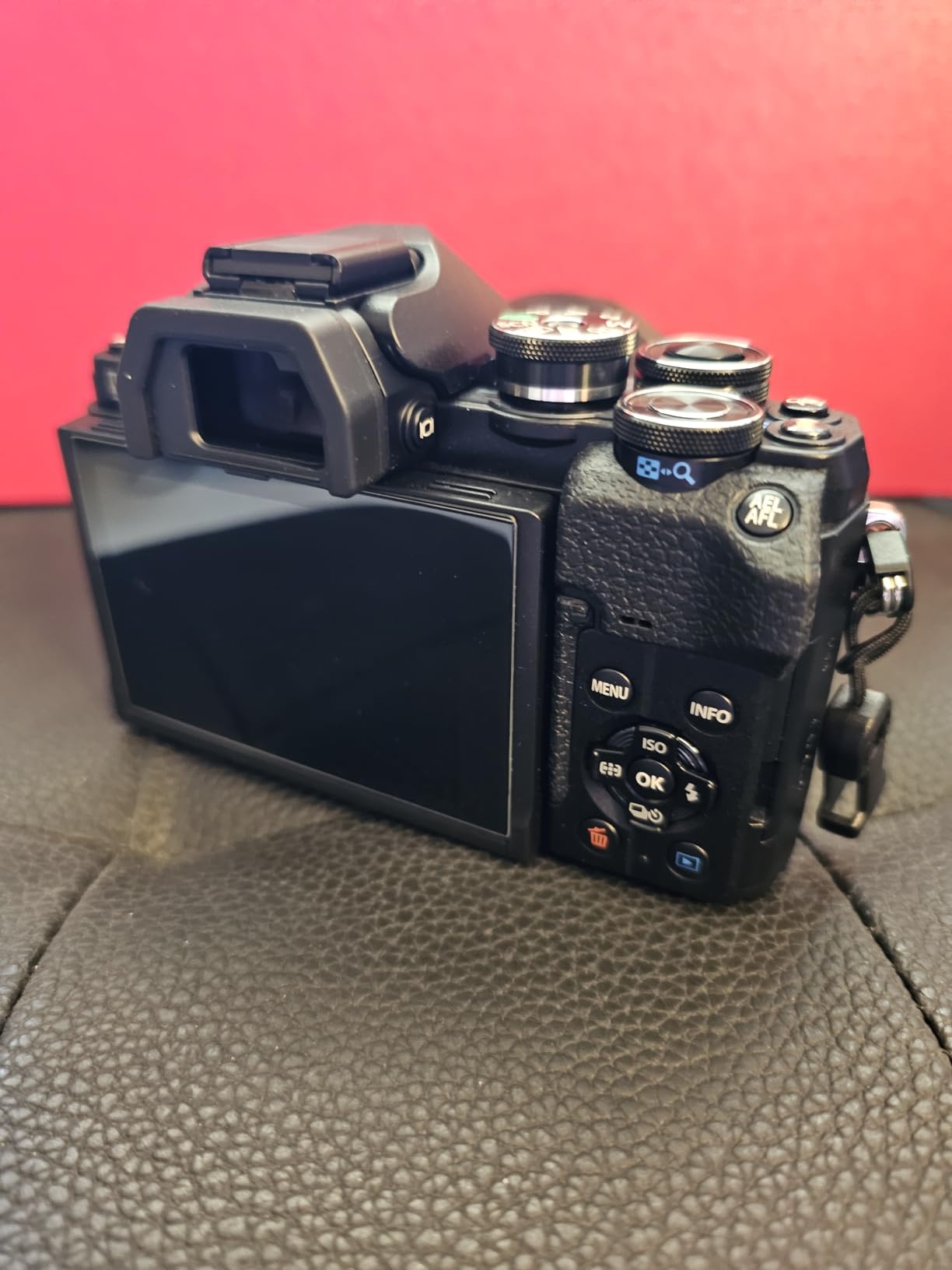
The 20MP Micro Four Thirds sensor produces images with excellent detail and color accuracy. Olympus color science is known for rich, vibrant tones that look great straight out of the camera. I also enjoyed the Art Filters, especially the new Instant Film filter that adds a vintage analog look to your photos without needing editing software.
At 15 fps burst shooting in JPEG mode, the E-M10 Mark IV is quick enough for casual sports and wildlife. The 121-point contrast-detection AF is fast for stills in good light but can hunt in dim conditions. The flip-down touchscreen with a dedicated selfie mode is intuitive and makes the camera appealing for social media content creation.
Who should buy the Olympus E-M10 Mark IV
This camera is ideal for beginners and hobbyists who want a compact, attractive camera with effective stabilization. If you appreciate retro design and want something that feels special in your hands, the E-M10 Mark IV delivers. The built-in EVF and flip-down screen make it versatile for both traditional photography and modern content creation.
Olympus Art Filters and creative features
Olympus includes 16 Art Filters with 31 total variations, which is the most extensive creative filter system of any camera on this list. The Instant Film filter is particularly appealing, adding a nostalgic look that mimics vintage instant camera prints. These filters encourage experimentation and make photography more fun, especially for beginners exploring their creative style.
How to Choose the Best Budget Mirrorless Camera Under 1000
Choosing among the best budget mirrorless cameras under 1000 dollars comes down to understanding what you want to shoot and which features matter most to you. After testing all eight cameras in this guide, I can tell you that there is no single right answer. The best camera for you depends on your specific needs, budget priorities, and long-term goals as a photographer or creator.
Sensor size: APS-C vs Micro Four Thirds
The cameras in this guide use either APS-C or Micro Four Thirds (MFT) sensors. APS-C sensors are larger, which generally means better low-light performance and more background blur (bokeh) at equivalent apertures. The Canon R100, R50, Sony ZV-E10, a6400, and Nikon Z 50 all use APS-C sensors. MFT sensors are smaller but allow for more compact cameras and lenses, and the lens selection is typically more affordable.
If you shoot mostly in daylight or well-lit conditions, you will not notice a dramatic difference between the two sensor sizes. If you frequently shoot indoors, at night, or in other low-light situations, APS-C gives you an edge in image quality. However, the MFT cameras on this list (G7, G85, E-M10 Mark IV) compensate with features like in-body stabilization and more affordable lens options.
Autofocus systems explained
Autofocus is one of the most important features in a modern camera, and the systems vary significantly among budget options. Phase-detection autofocus (PDAF) is faster and more accurate for tracking moving subjects. Canon’s Dual Pixel AF, Sony’s Fast Hybrid AF, and Nikon’s hybrid system all use phase-detection points for responsive performance.
Contrast-detection autofocus, used by the Panasonic G7, G85, and Olympus E-M10 Mark IV, is generally slower and can hunt in low light or during video recording. These cameras compensate with excellent manual focus aids and focus peaking, but if you need reliable subject tracking for sports, wildlife, or active children, phase-detection systems from Canon, Sony, and Nikon are the better choice.
In-body image stabilization: do you need it
In-body image stabilization (IBIS) stabilizes the sensor to reduce camera shake, allowing sharper handheld shots at slower shutter speeds. Of the eight cameras tested, only the Panasonic G85 and Olympus E-M10 Mark IV include IBIS. The others rely on lens-based optical stabilization or digital stabilization.
If you shoot handheld frequently, especially in low light or while walking, IBIS makes a noticeable difference. The G85’s 5-axis Dual IS system, which combines in-body and lens stabilization, is particularly effective for video. If you mostly shoot on a tripod or in good light, IBIS is less critical and you can save money by choosing a camera without it.
Video capabilities for content creators
All eight cameras in this guide shoot 4K video, but the quality and features vary widely. The Sony ZV-E10 and Canon R50 stand out for video creators with oversampled 4K from 6K readout, vari-angle screens, and creator-focused features. The Panasonic G7 and G85 are also strong video performers with external mic inputs, though autofocus is weaker.
Consider what video features matter to you: Do you need a mic input? A vari-angle screen for vlogging? High bitrates for professional grading? The ZV-E10 includes Product Showcase mode and USB streaming, which are unique features for content creators. The Canon R50 offers Dual Pixel AF II for smooth focus transitions during video recording.
Lens ecosystem and total cost of ownership
The camera body is only the beginning of your investment. Lenses, memory cards, cases, and extra batteries add up quickly. When choosing a camera, think about the lens ecosystem you are buying into and the cost of expanding your kit over time.
Sony’s E-mount has the largest selection of affordable third-party lenses from Sigma, Tamron, and others. Canon’s RF mount is newer but growing rapidly with both first-party and third-party options. Nikon’s Z mount is expanding but has fewer budget lens choices currently. Micro Four Thirds, shared by Panasonic and Olympus, offers the most affordable lenses with the widest selection of used options.
Brand ecosystem and upgrade path
Think about where you want to be in two or three years. If you buy into a brand’s lens mount, you will likely stay with that brand when you upgrade your camera body. Sony offers a clear path from APS-C to full-frame A7 bodies using the same E-mount. Canon’s RF mount supports both APS-C (RF-S) and full-frame (RF) lenses. Nikon’s Z mount similarly spans both sensor sizes. Micro Four Thirds lenses work on both Panasonic and Olympus bodies, giving you flexibility across two brands.
FAQs
What is the best mirrorless camera for a beginner?
The Canon EOS R50 is the best mirrorless camera for beginners. It offers an intuitive interface, excellent Dual Pixel AF II autofocus, oversampled 4K video, and a vari-angle touchscreen that makes composing shots easy. The included kit lens lets you start shooting immediately without buying additional gear.
Is a mirrorless camera better for a beginner than a DSLR?
For most beginners, a mirrorless camera is the better choice. Mirrorless cameras are lighter, more compact, and show real-time exposure changes through the electronic viewfinder or LCD screen. They also offer faster autofocus with subject tracking and eye detection. DSLRs still have advantages in battery life and optical viewfinders, but mirrorless cameras provide a gentler learning curve and more modern features at similar prices.
What is the most budget-friendly mirrorless camera under $1000?
The Canon EOS R100 is the most budget-friendly option at $539.95 with a kit lens included. It delivers solid 24.1MP APS-C image quality and fast Dual Pixel autofocus for stills photography. The tradeoff is limited video features and a fixed screen, but for photography-focused beginners, it offers excellent value.
Which Sony mirrorless camera is best for beginners?
The Sony ZV-E10 is the best Sony mirrorless camera for beginners, especially those interested in video and content creation. It offers excellent 4K video oversampled from 6K, 425-point Fast Hybrid AF with Real-Time Eye detection, and a Product Showcase mode designed specifically for creators. The Sony a6400 is a strong alternative if you prioritize stills photography and want a built-in viewfinder.
What to consider when choosing a camera under $1000?
Focus on these key factors: sensor size (APS-C for low light, MFT for compact size), autofocus type (phase-detection for action, contrast for precision), in-body image stabilization for handheld shooting, video features if you create content, and the lens ecosystem for long-term affordability. Also consider the kit lens quality, battery life, and whether the camera feels comfortable in your hands.
Final Thoughts on the Best Budget Mirrorless Cameras Under 1000
After testing all eight cameras extensively, my top recommendation for most people is the Canon EOS R50. It offers the best balance of photo quality, video features, ease of use, and value in this price range. The oversampled 4K video and Dual Pixel AF II make it a camera you can grow into as your skills improve.
If video and content creation are your priorities, the Sony ZV-E10 is the obvious choice with its creator-focused features and massive lens ecosystem. For handheld video shooters, the Panasonic G85 delivers unmatched stabilization and weather sealing. And if budget is your primary concern, the Canon EOS R100 gets you into the Canon RF mount system at the lowest entry price of any camera on this list.
The best budget mirrorless cameras under 1000 dollars in 2026 prove that you do not need to spend a fortune to capture beautiful photos and videos. Pick the camera that matches your shooting style, invest in a good lens or two, and start creating. The most important camera is the one you actually have with you.